AW | 2021 01 28 10:38 | AIRLINES / AIRPORTS / GOVERNMENT
Huelguistas de Interjet acusan al AICM buscar expulsarlos
Autoridades del Aeropuerto Internacional Ciudad de México (AICM) de expulsar a Interjet de la aeroestación instalando placas metálicas alrededor de los 25 mostradores de la aerolínea de presupuesto mexicana. El Aeropuerto de la Ciudad de México ha realizado un encapsulamiento de los mostradores de Interjet, en donde trabajadores de la aerolínea se encuentran desde el 8 de Enero de 2021, fecha en la que estalló la huelga de la compañía aérea. Miembros del Sindicato de la Sección 15 de la CTM, que representa a más de 4.800 trabajadores, denunciaron que las autoridades del aeropuerto capitalino han instalado placas metálicas alrededor de los veinticinco mostradores de Interjet, los cuales se encuentran a la altura de la Puerta 4 del aeropuerto capitalino.
Una fuente ligada al sindicato que pidió el anonimato, ha expresado que detentan expulsar a los trabajadores que mantienen el resguardo de los aparadores en donde Interjet recibía a los pasajeros. El AICM es administrado y operado por el propio Gobierno Federal, por lo que las acciones, calificadas por los huelguistas como acoso, corresponden al propio aeropuerto que dirige Jesús Rosano. “No pueden sacarnos, el derecho a huelga es un derecho de los trabajadores. Cuando la autoridad resuelva y termine el proceso, entonces se liberarán esos espacios, porque son del aeropuerto capitalino”, dijo la fuente sindical Sección 15 CTM.
La huelga de trabajadores estalló debido a que la empresa aérea, fundada por la familia Alemán, dejó de pagar 8 quincenas consecutivas a sus trabajadores, sin prestaciones y tras el alto de operaciones desde la segunda semana de diciembre. Interjet buscó derribar el movimiento huelguista, al argumentar que la mayoría de los empleados no estaba de acuerdo con el paro de labores; sin embargo, las autoridades laborales están a la espera de la realización de una segunda votación para validar o echar atrás la huelga.
Interjet accuses expulsion from AICM
Interjet strikers accuse the AICM of seeking to expel them
Authorities of the Mexico City International Airport (AICM) to expel Interjet from the air station by installing metal plates around the 25 counters of the Mexican budget airline. The Mexico City Airport has encapsulated the Interjet counters, where airline workers have been since January 8, 2021, the date on which the airline strike broke out. Members of the Union of Section 15 of the CTM, which represents more than 4,800 workers, denounced that the authorities of the capital airport have installed metal plates around the twenty-five Interjet counters, which are located at Gate 4 of the capital airport.
A source linked to the union who requested anonymity, has expressed that they are trying to expel the workers who maintain the protection of the sideboards where Interjet received passengers. The AICM is administered and operated by the Federal Government itself, so the actions, described by the strikers as harassment, correspond to the airport itself, run by Jesús Rosano. “They can’t get us out, the right to strike is a workers’ right. When the authority resolves and ends the process, then those spaces will be released, because they are from the capital airport”, said the union source Section 15 CTM.
The workers’ strike broke out because the airline company, founded by the Alemán family, stopped paying 8 consecutive fortnights to its workers, without benefits and after the stoppage of operations since the second week of December. Interjet sought to overthrow the strike movement, arguing that the majority of employees did not agree with the work stoppage; however, the labor authorities are waiting for a second vote to validate or reverse the strike.
AW | 2021 01 28 09:27 | AIRLINES MARKET / GOVERNMENT
Mercado doméstico en medio de limitaciones internacionales
El Gobierno de la República Argentina ha solicitado a las aerolíneas reducir las frecuencias de los vuelos internacionales por el repunte de los contagios de Coronavirus en diferentes países y por temor a que la emergencia sanitaria se intensifique en el país, ha significa un nuevo golpe para la industria de la aviación y el turismo que intenta recuperarse de los efectos de la pandemia. La Dirección Nacional de Migraciones, el Ministerio de Salud y la Administración Nacional de Aviación Civil (ANAC) les solicitaron a las líneas aéreas recortar temporalmente sus frecuencias en un 30% desde y hacia los Estados Unidos, Europa y México. En el caso de Brasil, se reducirán a la mitad. Aplica no solo para próximas compras de boletos, sino también para pasajeros con tíckets ya emitidos, que programaron viajes de vacaciones o de negocios a estos países.
La Decisión Administrativa 2/2021 no especifica cuándo debe entrar en vigencia la medida, aunque recomienda que se aplique «con la mayor brevedad posible, de modo que sea conocida por los viajeros de manera inmediata». La restricción se pondría en práctica desde el 1 de Febrero de 2021, dado que se deben cumplir procesos técnicos, como la aprobación por parte de la ANAC de los itinerarios. El texto aclara que la decisión se tomó en virtud de la situación epidemiológica y con el fin de acompañar los operativos de refuerzo interministeriales en el Aeropuerto de Ezeiza. En consecuencia, las aéreas se encuentran trabajando para ajustar la oferta, acorde a los requisitos de las autoridades. La mayoría ofrecerá la opción de reprogramar los vuelos sin cobro de penalidades ni tarifa extra, aunque dependerá de cada caso particular.
Vuelos internacionales
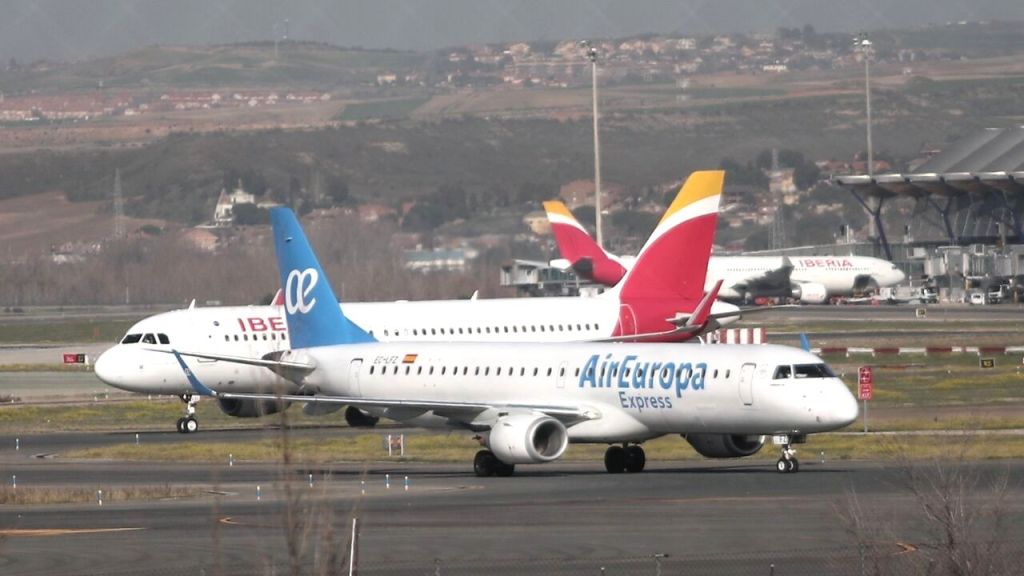
La compañía española Air Europa, ahora perteneciente al Grupo Iberia, dejará de volar tres veces a la semana, como venía efectuando desde Diciembre 2020. Tendrá dos frecuencias semanales en Febrero 2021 y espera volver a ampliar su operación en Marzo 2021. El CEO, Diego García, ha expresado que las actualizaciones se verán reflejadas en el sitio web de la aerolínea y se aguarda la respuesta de la ANAC para su aprobación. En la primera semana de 02/2021, Air Europa planea volar desde Ezeiza a Madrid el Martes 02/02 y el Sábado 06/02. A partir de la segunda semana del mes, pasaría a hacerlo los Jueves y Sábados. Desde la capital española, Madrid, están previstas partidas el Lunes 01/02 y el Viernes 05/02. Desde la segunda semana, las salidas se trasladarían a los Miércoles y Viernes. Las operaciones continuarán realizándose en las mismas aeronaves: en los Airbus A330-200 y Airbus A350-900, con una capacidad para 288 y 348 pasajeros, respectivamente.
Aerolíneas Argentinas ha redactado la nueva reprogramación a la ANAC y espera dar a conocer su nuevo itinerario antes de que termine la semana. Tendrá un total de 38 vuelos, entre todos los destinos alcanzados por la medida: Cancún, Florianópolis, Madrid, México DF, Miami, Río de Janeiro, Salvador de Bahía y San Pablo. Anteriormente, hacia Marzo 2020, estas mismas rutas totalizaban 258 vuelos. En las últimas semanas, Aerolíneas redujo el número de vuelos internacionales, producto de la caída de la demanda y las restricciones que aplicaron algunos países, como los Estados Unidos, con el pedido obligatorio de un test PCR para ingresantes, y la cuarentena que exigen otros, tras el rebrote de contagios en Europa. Por el momento, tiene suspendidas las rutas que conectan Buenos Aires—Roma y Buenos Aires—Nueva York, y aún no hay fecha estipulada para su regreso. Desde la compañía han comunicado que el factor de ocupación de sus vuelos está en alrededor del 60% de su capacidad.
Latam Airlines Brasil solo tiene afectada la ruta a San Pablo—Buenos Aires, siendo la única conexión de vuelos directos con Argentina, tras el cierre de su filial local. «Vamos a presentar una propuesta del 50%, que implica cinco vuelos semanales versus los 10 que tenemos hoy», anticiparon.
American Airlines han explicado que, a partir del 1 de Febrero de 2021, se reducirá la operación hacia Argentina, estableciendo una frecuencia diaria Miami—Buenos Aires y tres frecuencias semanales a Dallas/Fort Worth—Buenos Aires. «Trabajaremos para reacomodar a nuestros clientes impactados», expresaron desde la aerolínea.
En tanto las aerolíneas low-cost no se verán afectadas por las reprogramaciones debido a que no han reiniciado sus operaciones a nivel regional. Desde el inicio de la pandemia, Flybondi Líneas Aéreas no ha retomado sus vuelos a San Pablo, Porto Alegre, Florianópolis y Río de Janeiro. JetSmart Airlines Argentina tampoco ha reiniciado sus operaciones regionales, mientras que JetSmart Airlines Chile continuará volando la ruta Santiago de Chile—Buenos Aires.
Anticipan que posiblemente este escenario derive en un aumento de los precios, ante una menor oferta de vuelos. «Los niveles de ventas vienen muy bajos, a excepción de Miami, que es el destino que mejor performa en la red internacional, aunque ahora, con las restricciones que impuso los Estados Unidos, seguro haya una merma. En el sector doméstico, la ocupación llega al 70%, por debajo de lo que nos gustaría. La situación se torna crítica», aseguró otro conocedor de la industria.
El pedido de reducción de las frecuencias fue realizado por el Ministerio de Salud semanas atrás, a partir del avance del Covid-19 a nivel mundial. De esta manera, el Gobierno dio luz verde a su solicitud, que había quedado en stand-by, a la espera de la evolución de la pandemia. «El Ministerio de Salud nacional quiere cerrar todo desde el 28 de Diciembre. Las aerolíneas están al tanto de esta situación y se le informó oportunamente a la Asociación Internacional de Transporte Aéreo (IATA). Esta decisión es consecuencia de la negociación y se evitó así el cierre de fronteras», explicaron fuentes allegadas al Gobierno. En tanto, la cartera que conduce Ginés González García tiene previsto, la semana próxima, solicitarle a Brasil que evalúe la posibilidad de agilizar la entrega del resultado del PCR en menos de 72 hs. a los argentinos que contratan su provisón cuando se encuentran de visita en su territorio, a los efectos de reconsiderar la proporción de la reducción de viajeros. De acuerdo a la resolución, la medida queda supeditada a una revisión periódica de la situación epidemiológica, con miras a reestablecerse con la mayor brevedad posible. Las aerolíneas continuarán esperanzadas para retomar sus itinerarios de vuelos para reactivar sus alicaídas ventas.
Argentina domestic overflight
Domestic market amid international constraints
The Government of the Argentine Republic has asked the airlines to reduce the frequencies of international flights due to the rebound in Coronavirus infections in different countries and for fear that the health emergency will intensify in the country, it has meant a new blow for the aviation and tourism industry trying to recover from the effects of the pandemic. The National Directorate of Migration, the Ministry of Health and the National Civil Aviation Administration (ANAC) asked the airlines to temporarily cut their frequencies by 30% to and from the United States, Europe and Mexico. In the case of Brazil, they will be cut in half. It applies not only to future ticket purchases, but also to passengers with already issued tickets, who have scheduled vacation or business trips to these countries.
Administrative Decision 2/2021 does not specify when the measure should take effect, although it recommends that it be applied «as soon as possible, so that it is immediately known to travelers». The restriction would be put into practice from February 1, 2021, since technical processes must be followed, such as the approval by the ANAC of the itineraries. The text clarifies that the decision was made by virtue of the epidemiological situation and in order to accompany the inter-ministerial reinforcement operations at the Ezeiza Airport. Consequently, the airlines are working to adjust the offer, according to the requirements of the authorities. Most will offer the option of rescheduling flights without charging penalties or extra fees, although it will depend on each particular case.
International flights
The Spanish company Air Europa, now part of the Iberia Group, will stop flying three times a week, as it has been doing since December 2020. It will have two weekly frequencies in February 2021 and expects to expand its operation again in March 2021. The CEO, Diego García has stated that the updates will be reflected on the airline’s website and the ANAC’s response is awaited for approval. In the first week of 02/2021, Air Europa plans to fly from Ezeiza to Madrid on Tuesday 02/02 and Saturday 06/02. As of the second week of the month, it would happen on Thursdays and Saturdays. Departures from the Spanish capital, Madrid, are scheduled for Monday 01/02 and Friday 05/02. From the second week, the departures would be moved to Wednesdays and Fridays. Operations will continue to be carried out on the same aircraft: on the Airbus A330-200 and Airbus A350-900, with a capacity for 288 and 348 passengers, respectively.
Aerolíneas Argentinas has drafted the new rescheduling to ANAC and hopes to announce its new itinerary before the end of the week. It will have a total of 38 flights, among all the destinations reached by the measure: Cancun, Florianópolis, Madrid, Mexico City, Miami, Rio de Janeiro, Salvador de Bahia and São Paulo. Previously, towards March 2020, these same routes totaled 258 flights. In recent weeks, Aerolíneas reduced the number of international flights, as a result of the drop in demand and the restrictions applied by some countries, such as the United States, with the mandatory request of a PCR test for new entrants, and the quarantine required by others , after the reappearance of infections in Europe. At the moment, the routes that connect Buenos Aires-Rome and Buenos Aires-New York are suspended, and there is still no date set for his return. From the company they have communicated that the load factor of their flights is around 60% of their capacity.
Latam Airlines Brasil has only affected the route to São Paulo-Buenos Aires, being the only direct flight connection with Argentina, after the closure of its local subsidiary. «We are going to present a 50% proposal, which implies five weekly flights versus the 10 we have today», they anticipated.
American Airlines have explained that, as of February 1, 2021, the operation to Argentina will be reduced, establishing a daily frequency Miami-Buenos Aires and three weekly frequencies to Dallas/Fort Worth-Buenos Aires. «We will work to re-accommodate our impacted customers», they said from the airline.
Meanwhile, the low-cost airlines will not be affected by the rescheduling because they have not restarted their operations at the regional level. Since the beginning of the pandemic, Flybondi Líneas Aéreas has not resumed its flights to São Paulo, Porto Alegre, Florianópolis and Rio de Janeiro. JetSmart Airlines Argentina has not restarted its regional operations either, while JetSmart Airlines Chile will continue to fly the Santiago de Chile-Buenos Aires route.
They anticipate that possibly this scenario will lead to an increase in prices, given a lower offer of flights. «Sales levels are very low, with the exception of Miami, which is the destination that performs the best in the international network, although now, with the restrictions imposed by the United States, there will surely be a decrease. In the domestic sector, employment it reaches 70%, below what we would like. The situation becomes critical», said another industry insider.
The request to reduce the frequencies was made by the Ministry of Health weeks ago, based on the advance of Covid-19 worldwide. In this way, the Government gave the green light to his request, which had been on standby, pending the evolution of the pandemic. «The national Ministry of Health wants to close everything from December 28. The airlines are aware of this situation and the International Air Transport Association (IATA) was informed in a timely manner. This decision is the result of negotiation and was thus avoided. the closing of borders», explained sources close to the Government. Meanwhile, the portfolio led by Ginés González García plans, next week, to ask Brazil to evaluate the possibility of expediting the delivery of the PCR result in less than 72 hours to the Argentines who hire their provision when they are visiting in its territory, in order to reconsider the proportion of the reduction of travelers. According to the resolution, the measure is subject to a periodic review of the epidemiological situation, with a view to reestablishing itself as soon as possible. Airlines will remain hopeful to resume their flight schedules to reactivate their slumping sales.
AW | 2021 01 27 07:42 | GOVERNMENT / AIR TRAFFIC / AIRLINES
Gobierno disminuye frecuencias exterior por medidas sanitarias
El Martes 26/01 la Administración Nacional de Aviación Civil (ANAC) de la República Argentina notifica la orden de disminuir las frecuencias de los vuelos internacionales. En medio de la suba de casos de Coronavirus en el mundo y por temores a la segunda ola en el país, el Gobierno ha solicitado la reducción en un 50% los vuelos desde y hacia Brasil y en un 30% a Estados Unidos, Europa y México, por la situación sanitaria. Esta medida regiría a partir del 1 de Febrero de 2021 por solicitud del Ministerio de Salud a partir de la situación epidemiológica de los distintos países.
Anteriormente, en Diciembre 2020 el Gobierno había cerrado las fronteras con Gran Bretaña, ante la preocupación por una nueva cepa del virus, como así también se había decidido revisar toda la política migratoria con Brasil y el resto de los países limítrofes, pero no se había abordado ninguna medida específica.
La ANAC requerirá de las líneas aéreas la adecuación de los vuelos a la nueva solicitud requerida por pedido del Ministerio de Salud, por lo que deberán confeccionar una nueva programación más reducida de vuelos internacionales. El documento emitido por el organismo de aviación expresa: «Las líneas aéreas que operen desde y hacia Estados Unidos, México y Europa deberán modificar sus programaciones regulares a los fines de reducir en un treinta por ciento los vuelos semanales de pasajeros provenientes de dichos destinos. […] Deberán modificar sus programaciones regulares a los fines de reducir en un cincuenta por ciento los vuelos semanales de pasajeros provenientes de dichos destinos. […] Cabe señalar que la citada cartera aclara que realizará una revisión periódica de la situación epidemiológica, con miras a restablecer los ingresos a la mayor brevedad posible. Hasta tanto ello sea posible, esta Autoridad aprobará las programaciones horarias en función de la decisión informada».
Adecuación aerolíneas
Aerolíneas Argentinas ha expresado que continuaba reduciendo la cantidad de vuelos internacionales en las últimas semanas, producto de la caída de la demanda que se produjo por el pedido obligatorio de PCR para ingresar a Estados Unidos y tras el rebrote de contagios en Europa. La aerolínea KLM suspendía temporalmente los vuelos entre la Argentina y Amsterdam por las medidas que dispuso el Gobierno de los Países Bajos para frenar el avance del Covid-19. Esto incluye un toque de queda desde las 20.30 hs. hasta las 04:30 hs, vigente hasta el 10 de Febrero de 2021, y la prohibición de los vuelos provenientes del Reino Unido, Sudáfrica y América del Sur. El último vuelo que conectó Buenos Aires y Amsterdam de la empresa fue el Viernes 22/01. Para los viajeros que ya tenían los vuelos comprados para otras fechas fueron reubicados en vuelos de Air France del mismo grupo de la compañía KLM, pero se requerirá revisar este esquema nuevamente por las restricciones del Gobierno argentino. Alitalia informó también que cancelaron las frecuencias de Febrero y Marzo de la ruta Roma-Ezeiza-Roma y retomarán las operaciones a partir de Abril 2021. El motivo de la cancelación está relacionado con la actual situación relativa al Covid-19 y las restricciones de ingreso de turistas desde la Argentina a Italia.
Argentina reduces foreign flights
Government reduces international flights due to health measures
On Tuesday 01/26, the National Civil Aviation Administration (ANAC) of the Argentine Republic notified the order to reduce the frequencies of international flights. Amid the rise in Coronavirus cases in the world and fears of the second wave in the country, the Government has requested a 50% reduction in flights to and from Brazil and 30% to the United States, Europe and Mexico, due to the health situation. This measure would take effect from February 1, 2021 at the request of the Ministry of Health based on the epidemiological situation of the different countries.
Previously, in December 2020 the Government had closed the borders with Great Britain, due to concern about a new strain of the virus, as well as it had also been decided to review the entire migration policy with Brazil and the rest of the neighboring countries, but it had not been addressed no specific measures.
The ANAC will require the airlines to adapt the flights to the new request required by request of the Ministry of Health, for which they will have to draw up a new, more reduced schedule of international flights. The document issued by the aviation organization states: «The airlines that operate to and from the United States, Mexico and Europe must modify their regular schedules in order to reduce weekly passenger flights from said destinations by thirty percent. […] They must modify their regular schedules in order to reduce weekly passenger flights from said destinations by fifty percent. […] It should be noted that the aforementioned portfolio clarifies that it will carry out a periodic review of the situation epidemiological, with a view to restoring income as soon as possible. Until this is possible, this Authority will approve time schedules based on the informed decision».
Airline adaptation
Aerolíneas Argentinas has expressed that it continued to reduce the number of international flights in recent weeks, as a result of the fall in demand that occurred due to the mandatory request of PCR to enter the United States and after the reappearance of infections in Europe. The airline KLM temporarily suspended flights between Argentina and Amsterdam due to the measures ordered by the Government of the Netherlands to stop the advance of Covid-19. This includes a curfew from 08:30 p.m. until 04:30 a.m., effective until February 10, 2021, and the ban on flights from the United Kingdom, South Africa and South America. The last flight that connected Buenos Aires and Amsterdam of the company was on Friday 01/22. Travelers who already had the flights purchased for other dates were relocated to Air France flights of the same group of the KLM company, but this scheme will be required to be reviewed again due to the restrictions of the Argentine Government. Alitalia also reported that they canceled the February and March frequencies of the Rome-Ezeiza-Rome route and will resume operations from April 2021. The reason for the cancellation is related to the current situation regarding Covid-19 and the entry restrictions of tourists from Argentina to Italy.
El Aeropuerto Internacional Chengdu/TianfuTFU/ZUTF está un paso más cerca del lanzamiento después de realizar su primer vuelo de prueba. El nuevo aeropuerto es una aeroestación que se está construyendo para servir a Chengdu, la capital de la Provincia de Sichuan y un importante centro aéreo. El sitio del aeropuerto ha sido elegido en la Ciudad de Lujia, Jianyang, Chengdu, a 51 kilómetros (32 millas) al sureste del centro de Chengdu. Lleva el nombre de la Nueva Zona de Tianfu, una zona de desarrollo para Chengdu en la que se encuentra el aeropuerto. La construcción comenzó en Mayo de 2016 y el aeropuerto está programado para abrir en 2021. Operará como un segundo aeropuerto para Chengdu con el aeropuerto internacional de Chengdu Shuangliu existente continuando operando. Chengdu, la capital de la Provincia de Sichuan y situada en el suroeste del país, posee el Aeropuerto Shuangliu, el segundo aeropuerto más ocupado de China el año pasado detrás del Aeropuerto Guangzhou/Baiyun.
El Gobierno de Sichuan dijo que se espera que el nuevo aeropuerto se lance antes del 30 de Junio de 2021. La segunda prueba del aeropuerto se llevará a cabo en Marzo 2021. El Gobierno de la República Popular de China ha pasado cuatro años completando la primera fase de la construcción. Unas seis aerolíneas chinas han traído sus aviones para participar en pruebas aeroportuarias. El Boeing 747-8 de China Southern Airlines, el Airbus A380 de China Southern Airlines, el Boeing 777-300ER de China Eastern Airlines, el Boeing 737 de Lucky Air, el Airbus A330 de Sichuan Airlines y el Comac ARJ21 de Chengdu Airlines han aterrizado en el aeropuerto respectivamente.
Chengdu se convertirá en la tercera ciudad de China en poseer dos aeropuertos internacionales después de Beijing y Shanghai. El aeropuerto de Tianfu se encuentra a 50 kilómetros al sureste de Chengdu. Cuenta con seis pistas y cuatro terminales con capacidad de diseño para aceptar 90 millones de pasajeros cada año. La primera fase de la construcción del aeropuerto incluyó tres pistas y dos terminales que cubrieron 600.000 metros cuadrados. Se espera que el aeropuerto atienda a 40 millones de pasajeros para 2025.
Las aerolíneas se están preparando para el servicio en Tianfu. Air China ha invertido US$ 941 millones para una base en el aeropuerto. Espera doble capacidad en el aeropuerto en cinco años mediante la adición de 150 aviones. China Eastern Airlines va a cambiar su servicio a Tianfu. Lucky Air, una aerolínea con sede en Kunming, seleccionará el aeropuerto de Tianfu como su centro de operaciones.
Se espera que el Aeropuerto de Tianfu proporcione servicios internacionales fuera de Chengdu y ampliará su mapa de rutas a Europa, Oriente Medio y Asia Central y Sureste. Los servicios a Hong Kong, Taiwán, Macao y rutas nacionales se mantendrán en el aeropuerto de Shuangliu. Se espera que las aerolíneas cambien sus rutas al nuevo aeropuerto en dos años. Mientras tanto, la industria de la aviación está viendo una creciente preocupación por la competencia de los aeropuertos de la región. Chongqing, la metrópolis cercana a Chengdu, posee el Aeropuerto Internacional de Jiangbei, con capacidad para más de 40 millones, está esperando una competencia con el nuevo aeropuerto. Además, Chongqing y las ciudades cercanas han solicitado proyectos de expansión aeroportuaria y nuevas aplicaciones aeroportuarias para satisfacer la demanda futura.
Como resultado de la enorme demanda interna, la industria de la aviación china ha estado creciendo rápidamente en décadas. La Commercial Aircraft Corporation of China (COMAC) ha desarrollado con éxito sus propios aviones a medida que el país sigue ampliando sus instalaciones de infraestructura, proyectos como el Aeropuerto Daxing de Beijing se han puesto en marcha en 2019. Según Fred Lam, CEO del Aeropuerto Internacional de Hong Kong, China tiene más de 130 nuevos aeropuertos en construcción.
Tianfu Airport approach
Chinese Tianfu Airport towards launch
Chengdu/Tianfu International Airport TFU/ZUTF is one step closer to launch after conducting its first test flight. The new airport is an airstation that is being built to serve Chengdu, the capital of Sichuan Province and a major air hub. The site of the airport has been chosen in Lujia City, Jianyang, Chengdu, 51 kilometers (32 miles) southeast of downtown Chengdu. It is named after the Tianfu New Zone, a development zone for Chengdu in which the airport is located. Construction began in May 2016 and the airport is scheduled to open in 2021. It will operate as a second airport for Chengdu with the existing Chengdu Shuangliu International Airport continuing to operate. Chengdu, the capital of Sichuan Province and located in the southwest of the country, has Shuangliu Airport, the second busiest airport in China last year behind Guangzhou/Baiyun Airport.
The Sichuan Government said the new airport is expected to launch before June 30, 2021. The second test of the airport will take place in March 2021. The Government of the People’s Republic of China has spent four years completing the first. construction phase. Some six Chinese airlines have brought their planes to participate in airport tests. China Southern Airlines Boeing 747-8, China Southern Airlines Airbus A380, China Eastern Airlines Boeing 777-300ER, Lucky Air’s Boeing 737, Sichuan Airlines Airbus A330 and Chengdu Airlines COMAC ARJ21 have landed at the airport respectively.
Chengdu will become the third city in China to have two international airports after Beijing and Shanghai. Tianfu Airport is located 50 kilometers southeast of Chengdu. It has six runways and four terminals with the design capacity to accept 90 million passengers each year. The first phase of the airport’s construction included three runways and two terminals covering 600,000 square meters. The airport is expected to serve 40 million passengers by 2025.
Airlines are preparing for service in Tianfu. Air China has invested US$ 941 million for a base at the airport. It expects double capacity at the airport in five years by adding 150 aircraft. China Eastern Airlines is changing its service to Tianfu. Lucky Air, an airline based in Kunming, will select Tianfu Airport as its hub.
Tianfu Airport is expected to provide international services outside of Chengdu and will expand its route map to Europe, the Middle East, and Central and Southeast Asia. Services to Hong Kong, Taiwan, Macao and domestic routes will be maintained at Shuangliu Airport. The airlines are expected to change their routes to the new airport in two years. Meanwhile, the aviation industry is seeing growing concern about competition from the region’s airports. Chongqing, the metropolis near Chengdu, owns the Jiangbei International Airport, with a capacity of more than 40 million, it is waiting for a competition with the new airport. In addition, Chongqing and nearby cities have requested airport expansion projects and new airport applications to meet future demand.
As a result of huge domestic demand, the Chinese aviation industry has been growing rapidly for decades. The Commercial Aircraft Corporation of China (COMAC) has successfully developed its own aircraft as the country continues to expand its infrastructure facilities, projects such as Beijing’s Daxing Airport have been launched in 2019. According to Fred Lam, Airport CEO Hong Kong International, China has more than 130 new airports under construction.
AW | 2021 01 25 10:47 | GOVERNMENT / AIRPORTS / AVIATION ORGANISMS
Organismo ORSNA aumenta tasa de aeroestación
Las autoridades del Organismo Regulador del Sistema Nacional de Aeropuertos (ORSNA) de la República Argentina ha confirmado un incremento del 11,8%, aumento de la Tasa de Uso de Aerostación (TUA) para los vuelos en el país. Esta medida actualmente está en vigencia desde hace días, por lo que va a afectar los pasajes aéreos nacionales e internacionales.
La reacción de los organismos internacionales frente a la incomprensión del Gobierno de Argentina de aumentar las tasas aeroportuarias ante una difícil situación que atraviesa la aviación comercial mundial, no hace otra cosa que ser repudiable. La Asociación Internacional de Internacional de Transporte Aéreo (IATA), la Asociación Latinoamericana y del Caribe de Transporte Aéreo (ALTA) y la Junta de Representantes de Compañías Aéreas (JURCA), enviarán una nota al ORSNA reclamando anular el aumento de la tasa de aeroestación.
La Cámara de Líneas Aéreas en la República Argentina, JURCA es una entidad formada en el año 1981 que agrupa a más del 90% de las aerolíneas nacionales y extranjeras de transporte de pasajeros y carga que operan desde y hacia la Republica Argentina. El Presidente de JURCA, Diego García, ha destacado en medios locales que, «si bien el aumento no parece un monto extraordinario sobre el valor total del pasaje, se suma a una carga pesada de impuestos y percepciones, que ya encarecen mucho el costo de volar a otros países. La mayoría de los gobiernos tomó medidas como la reducción de tasas de uso de aeroestación, aterrizaje y despegue, para tratar de aliviar el costo para que eso impacte positivamente en una reducción de precios para el pasajero». En el escrito del reclamo de estas agrupaciones se informa de que las operaciones aéreas en la Argentina es más costoso que en la mayoría de los aeropuertos de América Latina, demostrando, además, que el aumento sería de US$ 6,00 Dólares por pasajero a US$ 57 Dólares, lo cual profundizará más la crisis del sector y alejaría futuras inversiones.
Posición del Gobierno
El Gobierno de Argentina había congelado la Tasa de Uso de Aeroestación doméstica hasta fines de 2021, con el objetivo de colaborar con el resurgimiento del sector aerocomercial local, que en este momento se encuentra limitado a la operación de Aerolíneas Argentinas, JetSmart Airlines Argentina y Flybondi Líneas Aéreas. Según la resolución del ORSNA, la medida adoptada tiene como objetivo “no afectar la competitividad y productividad del sector; mientras se genera el resurgimiento del mismo, buscando alcanzar niveles crecientes de conectividad aérea para el beneficio de los usuarios y la potenciación de los impactos directos e indirectos del transporte aerocomercial”.
El ORSNA también indicó que Argentina mantiene tasas para vuelos domésticos muy por debajo del promedio de la región, que es de US$ 16 Dólares detallando que “las tasas aeronáuticas, correspondientes a operaciones domésticas que se efectúan en la Argentina, se encuentran no sólo entre las menos costosas de la región, sino del mundo, optándose, criteriosamente, por la decisión de no incrementarlas para lograr ganancias de productividad y competitividad de los distintos actores del sector del transporte aerocomercial”.
La carta conjunta de IATA-ALTA-JURCA ha establecido una reunión con el titular del ORSNA para “considerar un aumento en la TUA del 11.8%, representada en US$ 6 Dólares por pasajero, implicaría un incremento artificial de los precios que a su vez conllevaría a una contracción mayor en la demanda, que actualmente ya se encuentra contraída, profundizando la crisis en el sector y evitando la recuperación del mercado aéreo internacional argentino. Cabe mencionar que operar en Argentina es más costoso que operar en la mayoría de los aeropuertos de Latinoamérica; en varios casos es más de 100% más caro”.
Argentina increases airport tax
ORSNA organism increases airstation rate
The authorities of the Regulatory Body of the National Airport System (ORSNA) of the Argentine Republic have confirmed an increase of 11.8%, an increase in the Air Station Use Rate (TUA) for flights in the country. This measure is currently in effect for days, so it will affect national and international air tickets.
The reaction of international organizations to the incomprehension of the Argentine Government to increase airport charges in the face of a difficult situation that world commercial aviation is going through, does nothing but be reprehensible. The International Association of International Air Transport (IATA), the Latin American and Caribbean Air Transport Association (ALTA) and the Board of Representatives of Air Companies (JURCA), will send a note to the ORSNA claiming to cancel the increase in the air station rate .
The Chamber of Air Lines in the Argentine Republic, JURCA is an entity formed in 1981 that brings together more than 90% of the national and foreign airlines for passenger and cargo transport that operate to and from the Argentine Republic. The President of JURCA, Diego García, has highlighted in local media that, «although the increase does not seem like an extraordinary amount over the total value of the ticket, it adds to a heavy burden of taxes and fees, which already make the cost of fly to other countries. Most of the governments took measures such as the reduction of rates of use of air station, landing and takeoff, to try to alleviate the cost so that this has a positive impact on a reduction in prices for the passenger». In the brief of the claim of these groups it is reported that air operations in Argentina are more expensive than in most airports in Latin America, showing, in addition, that the increase would be US$ 6.00 per passenger to US$ 57 Dollars, which will further deepen the crisis in the sector and would deter future investments.
Government position
The Government of Argentina had frozen the Domestic Air Station Use Rate until the end of 2021, with the aim of collaborating with the resurgence of the local commercial aviation sector, which at this time is limited to the operation of Aerolíneas Argentinas, JetSmart Airlines Argentina and Flybondi Líneas Aéreas. According to the ORSNA resolution, the measure adopted is aimed at “not affecting the competitiveness and productivity of the sector; while the resurgence of the same is generated, seeking to reach increasing levels of air connectivity for the benefit of users and the enhancement of the direct and indirect impacts of commercial air transport”.
The ORSNA also indicated that Argentina maintains rates for domestic flights well below the average for the region, which is US$ 16, detailing that «aeronautical rates, corresponding to domestic operations carried out in Argentina, are not only between the least expensive in the region, but in the world, choosing, judiciously, by the decision not to increase them in order to achieve gains in productivity and competitiveness of the different actors in the commercial air transport sector”.
The joint letter of IATA-ALTA-JURCA has established a meeting with the head of the ORSNA to “consider an increase in the TUA of 11.8%, represented in US$ 6 Dollars per passenger, would imply an artificial increase in prices that in turn It would lead to a greater contraction in demand, which is currently contracted, deepening the crisis in the sector and preventing the recovery of the Argentine international air market. It is worth mentioning that operating in Argentina is more expensive than operating in most of the airports in Latin America; in several cases it is more than 100% more expensive”.
VoePass opera 33 destinos en apoyo a vacunación contra Covid-19
La aerolínea regional brasileña VoePass Linhas Aéreas participa en la campaña nacional de vacunación poniendo a disposición sus aviones del Gobierno Federal para transportar de forma gratuita la vacuna contra el virus Covid-19. En un comunicado, la aerolínea dijo que está operando en 33 destinos operados por la compañía, en todas las regiones del país, colaborando de esta manera con el mayor alcance de la campaña de inmunización entre los brasileños.
Time do Bem
VoePass pone a disposición sus aviones que operan en el Amazonas para realizar el transporte gratuito de las donaciones recibidas por el Proyecto Time do Bem, un grupo de voluntarios de la sociedad civil, formados para ayudar a minimizar las consecuencias causadas por la crisis de oxígeno en el Estado. El transporte gratuito a las ciudades de Carauari, Coari, Eirunepé, Lábrea, Parintins, San Gabriel da Cachoeira y Tefé será realizado por ATR 42 y 72 aviones que ya operan en la región. «Nuestro objetivo es conseguir estas donaciones lo antes posible y así contribuir a ayudar a la población en este momento de necesidad», dice Eduardo Busch, CEO de VoePass Linhas Aéreas.
En asociación con el Proyecto Time do Bem, la empresa llevará a cabo el transporte siempre y cuando haya una demanda. «Cada contribución es muy importante para ayudar a salvar vidas en el Amazonas. La colaboración de VoePass en este momento crítico que el Estado apruebe será fundamental para hacer las donaciones factibles y obtener lo necesario en las unidades de salud», declara Júlia Regina Gabriel, voluntaria del proyecto. El Viernes 22/01 Parintins (AM), recibió 2.244 dosis de Coronavac, además de materiales y equipos para su aplicación, a través del vuelo operado por MAP Linhas Aéreas. «Con la pandemia comenzamos a poner nuestros aviones de pasajeros a disposición para el transporte de carga. Nuestros aviones permiten un desplazamiento seguro y eficaz para las vacunas», comenta Eduardo Busch.
Acerca de VoePass
La compañía posee trece aeronaves turbohélices ATR 42/ATR 72 en su flota. Con 25 años de actividad, la compañía opera en el segmento regional de tercer nivel contando con certificación IOSA y es responsable del mantenimiento total de su flota, con la certificación RBAC 145 por la Agencia Nacional de Aviación Civil (ANAC) de Brasil, siendo también certificada por European Union Aviation Safety Agency (EASA).
Desde la reanudación de las operaciones el 23 de Julio de 2020, después de un período de unos 3 meses con vuelos suspendidos debido a la pandemia, la compañía ha trabajado de manera planificada para ofrecer más posibilidades de destinos y conexiones para sus pasajeros, siguiendo todas las recomendaciones y protocolos de higiene, con medidas especiales de limpieza y desinfección de aeronaves.
VoePass supports vaccination in Brazil
VoePass operates 33 routes in support of vaccination against Covid-19
The Brazilian regional airline VoePass Linhas Aéreas participates in the national vaccination campaign by making its planes available to the Federal Government to transport the vaccine against the Covid-19 virus for free. In a statement, the airline said that it is operating in 33 destinations operated by the company, in all regions of the country, thus collaborating with the greater scope of the immunization campaign among Brazilians.
«Time do Bem»
VoePass makes its aircraft operating in the Amazon available to carry out the free transport of donations received by the Time do Bem Project, a group of civil society volunteers, trained to help minimize the consequences caused by the oxygen crisis in the state. Free transportation to the cities of Carauari, Coari, Eirunepé, Lábrea, Parintins, San Gabriel da Cachoeira and Tefé will be carried out by aters 42 and 72 aircraft that already operate in the region. «Our goal is to get these donations as soon as possible and thus contribute to helping the population in this time of need», says Eduardo Busch, CEO of VoePass Linhas Aéreas.
In association with the Time do Bem Project, the company will carry out the transport as long as there is a demand. «Each contribution is very important to help save lives in the Amazon. The collaboration of VoePass at this critical moment that the State approves will be fundamental to make feasible donations and obtain what is necessary in the health units», declares Júlia Regina Gabriel, project volunteer. On Friday 01/22 Parintins (AM), received 2,244 doses of Coronavac, as well as materials and equipment for its application, through the flight operated by MAP Linhas Aéreas. «With the pandemic, we began to make our passenger planes available to transport cargo. Our planes allow a safe and efficient movement for vaccines», comments Eduardo Busch.
About VoePass
The company has thirteen ATR 42/ATR 72 turboprop aircraft in its fleet. With 25 years of activity, the company operates in the third level regional segment with IOSA certification and is responsible for the total maintenance of its fleet, with the RBAC 145 certification by the National Civil Aviation Agency (ANAC) of Brazil, being also certified by the European Union Aviation Safety Agency (EASA).
Since the resumption of operations on July 23, 2020, after a period of about 3 months with flights suspended due to the pandemic, the company has worked in a planned way to offer more possibilities of destinations and connections for its passengers, following all hygiene recommendations and protocols, with special cleaning and disinfection measures for aircraft.
VoePass apoia vacinação no Brasil
VoePass opera 33 destinos em apoio à vacinação contra Covid-19
A companhia aérea regional brasileira VoePass Linhas Aéreas participa da campanha nacional de vacinação, disponibilizando seus aviões ao Governo Federal para o transporte gratuito da vacina contra o vírus Covid-19. Em nota, a companhia aérea disse estar presente em 33 destinos operados pela empresa, em todas as regiões do país, colaborando assim com o maior alcance da campanha de imunização entre os brasileiros.
Tempo do bem
O VoePass disponibiliza suas aeronaves em operação na Amazônia para realizar o transporte gratuito das doações recebidas pelo Projeto Time do Bem, grupo de voluntários da sociedade civil, treinados para ajudar a minimizar as consequências da crise de oxigênio no O estado. O transporte gratuito para as cidades de Carauari, Coari, Eirunepé, Lábrea, Parintins, São Gabriel da Cachoeira e Tefé será realizado por aeronaves aters 42 e 72 que já operam na região. “Nosso objetivo é conseguir essas doações o mais rápido possível e, assim, contribuir para ajudar a população neste momento de necessidade”, afirma Eduardo Busch, diretor-presidente da VoePass Linhas Aéreas.
Em parceria com o Projeto Time do Bem, a empresa fará o transporte enquanto houver demanda. “Cada contribuição é muito importante para ajudar a salvar vidas na Amazônia. A colaboração do VoePass neste momento crítico que o Estado aprova será fundamental para viabilizar doações e obter o que for necessário nas unidades de saúde”, declara Júlia Regina Gabriel, voluntário do projeto. Na sexta-feira, 22/01, Parintins (AM), recebeu 2.244 doses do Coronavac, além de materiais e equipamentos para sua aplicação, por meio do voo operado pela MAP Linhas Aéreas. “Com a pandemia, passamos a disponibilizar nossos aviões de passageiros para o transporte de cargas. Nossos aviões permitem uma movimentação segura e eficiente de vacinas”, comenta Eduardo Busch.
Sobre VoePass
A empresa possui treze aeronaves turboélice ATR 42/ATR 72 em sua frota. Com 25 anos de atividade, a empresa atua no segmento regional de terceiro nível com certificação IOSA e é responsável pela manutenção total de sua frota, com a certificação RBAC 145 pela Agência Nacional de Aviação Civil (ANAC) do Brasil, sendo também certificado pela European Union Aviation Safety Agency (EASA).
Desde a retomada das operações em 23 de Julho de 2020, após um período de cerca de 3 meses com vôos suspensos devido à pandemia, a empresa tem trabalhado de forma planejada para oferecer mais possibilidades de destinos e conexões para seus passageiros, acompanhando todos recomendações e protocolos de higiene, com medidas especiais de limpeza e desinfecção para aeronaves.
Aerolíneas vuela hacia Moscú para traer más vacunas
La compañía aérea de la República Argentina, Aerolíneas Argentinas, ha comunicado la programación del tercer vuelos especial para el transporte de vacunas anti-Covid para Argentina. El vuelo AR1602 despegará desde el Aeropuerto Internacional de Ezeiza EZE/SAEZ sin escalas hacia el Aeropuerto Sheremetyevo SVO/UUEE de Moscú, Federación Rusia.
El viaje para este Domingo 24/01 se realizará entre las 15:00 y 17:00 horas [Hora Local Argentina/-3UTC], regresando este Lunes 25/01. El tiempo de carga en el aeropuerto ruso será de aproximadamente cinco horas, aún no determinándose el horario de regreso de la aeronave Airbus A330-200. El vuelo estará a cargo de diez tripulantes con el fin de traer otra partida de vacunas para superar las cantidades de los viajes anteriores.
Third flight to Russia from Aerolíneas
Aerolíneas fly to Moscow to bring more vaccines
The airline company of the Argentine Republic, Aerolíneas Argentinas, has announced the programming of the third special flight for the transport of anti-Covid vaccines for Argentina. Flight AR1602 will take off from Ezeiza EZE / SAEZ International Airport non-stop to Sheremetyevo SVO/UUEE Airport in Moscow, Russian Federation.
The trip for this Sunday 01/24 will take place between 3:00 p.m. and 5:00 p.m. [Argentina Local Time/-3UTC], returning this Monday 01/25. The loading time at the Russian airport will be approximately five hours, the return time of the Airbus A330-200 aircraft has not yet been determined. The flight will be in charge of ten crew members in order to bring another batch of vaccines to exceed the amounts of the previous trips.
Ethiopian Airlines contra oferta acerca accidente ET-302
Los abogados estadounidenses que representan a Ethiopian Airlines, que perdieron 157 pasajeros y tripulación en el segundo accidente aéreo de un Boeing 737 MAX el 10 de Marzo de 2019, han aconsejado al transportista que no acepte el acuerdo de partes que The Boeing Company ha ofrecido, sino más bien, que demande al fabricante por daños punitivos en los Estados Unidos.
En una carta escrita con urgencia enviada el Domingo 17/01, los abogados con sede en Chicago advirtieron al CEO etíope Tewolde Gebre Mariam que la oferta es groseramente corta de lo que la aerolínea podría ganar ante un jurado estadounidense, particularmente porque Boeing recientemente aceptó la responsabilidad por fraude criminal durante la certificación del avión por parte de los reguladores. El acuerdo que Boeing ha ofrecido es una mera fracción del daño real, dijeron los abogados a Tewolde, y aceptarlo inevitablemente dejará dinero sustancial sobre la mesa y sería un tremendo error político y financiero para Ethiopian Airlines. Sin embargo, al igual que muchas aerolíneas, Ethiopian ahora está desesperado por dinero en efectivo. Antes del accidente de 2019 del vuelo ET-302, Ethiopian Airlines, de propiedad estatal, era la aerolínea más grande y exitosa de Africa. Perdió el negocio después de la tragedia y la posterior puesta a tierra de la flota 737 MAX. Luego, el año pasado, sus ingresos se desplomaron aún más cuando la pandemia COVID-19 paralizó los viajes aéreos.
La carta transmite la preocupación de los abogados de que las negociaciones de liquidación directa entre Boeing y la dirección de la aerolínea están cerca de hacer y que un acuerdo «financieramente desastroso» puede ser inminente. Ofrece una mirada rara dentro de lo que normalmente son negociaciones secretas. Y con el MAX de vuelta en el aire y el segundo aniversario del segundo accidente acercándose, destaca un impulso de Boeing para concluir las discusiones de compensación de los clientes y poner la crisis MAX detrás de ella.
La carta del bufett DiCello Levitt Gutzler que Ethiopian Airlines contrató para proporcionar asesoramiento sobre sus reclamaciones contra Boeing, está firmada por su socio cofundador Adam Levitt. Boeing declinó hacer comentarios por las discusiones con su cliente. Ethiopian Airlines no respondió a una solicitud de comentario por correo electrónico. La carta de Levitt argumenta que el Acuerdo de Enjuiciamiento Diferido de Boeing con el Departamento de Justicia (DOJ) a principios de este mes de enero 2021 proporciona una nueva influencia legal etíope debido a la admisión por parte de Boeing de su conducta criminal. El acuerdo del Departamento de Justicia evita una acusación de fraude criminal contra Boeing con una multa relativamente ligera de US$ 244 millones de Dólares. También exonera explícitamente a la alta dirección al mismo tiempo que se antepuso el fraude a dos pilotos técnicos de Boeing que tergiversaron a las compañías aéreas los detalles del nuevo software de control de vuelo en el MAX, el Sistema de Aumento de Características de Maniobra (MCAS) que fue un factor clave que contribuyó a ambos accidentes. Sin embargo, Boeing admitió en el acuerdo de enjuiciamiento diferido que las acusaciones de fraude que involucraban a los dos pilotos eran verdaderas y exactas y reconoció que la empresa es responsable de actos delictivos por parte de sus empleados.
Ethiopian vs. Boeing offer
Ethiopian Airlines against offer regarding accident ET-302
US attorneys representing Ethiopian Airlines, which lost 157 passengers and crew in the second Boeing 737 MAX plane crash on March 10, 2019, have advised the carrier not to accept the parties agreement that The Boeing Company has offered, but rather, suing the manufacturer for punitive damages in the United States.
In an urgently written letter sent on Sunday 01/17, Chicago-based attorneys warned Ethiopian CEO Tewolde Gebre Mariam that the offer is grossly short of what the airline could win before a US jury, particularly as Boeing recently accepted liability for criminal fraud during the plane’s certification by regulators. The settlement Boeing has offered is a mere fraction of the actual damage, lawyers told Tewolde, and accepting it will inevitably leave substantial money on the table and would be a tremendous political and financial mistake for Ethiopian Airlines. However, like many airlines, Ethiopian is now desperate for cash. Prior to the 2019 crash of Flight ET-302, state-owned Ethiopian Airlines was the largest and most successful airline in Africa. It lost business after the tragedy and subsequent grounding of the 737 MAX fleet. Then last year, its revenue plummeted even further when the COVID-19 pandemic brought air travel to a standstill.
The letter conveys the lawyers’ concern that direct settlement negotiations between Boeing and the airline’s management are close to being done and that a «financially disastrous» deal may be imminent. It offers a rare look into what are normally secret negotiations. And with the MAX back in the air and the second anniversary of the second accident approaching, it highlights a push from Boeing to wrap up customer compensation discussions and put the MAX crisis behind it.
The letter from the DiCello Levitt Gutzler law firm that Ethiopian Airlines retained to provide advice on its claims against Boeing is signed by its co-founding partner Adam Levitt. Boeing declined to comment for discussions with its client. Ethiopian Airlines did not respond to an email request for comment. Levitt’s letter argues that Boeing’s Deferred Prosecution Agreement with the Department of Justice (DOJ) earlier this January 2021 provides new Ethiopian legal influence due to Boeing’s admission of its criminal conduct. The Justice Department settlement avoids a criminal fraud charge against Boeing with a relatively light fine of US $ 244 million. It also explicitly exonerates senior management at the same time that fraud was brought before two Boeing technical pilots who misrepresented to airlines the details of the new flight control software on the MAX, the Maneuvering Characteristics Augmentation System (MCAS). ) which was a key contributor to both accidents. However, Boeing admitted in the deferred prosecution agreement that the allegations of fraud involving the two pilots were true and accurate and acknowledged that the company is responsible for criminal acts by its employees.
AW | 2021 01 22 16:41 | AVIATION / AIRLINES / GOVERNMENT
Aeroméxico negocia con Gobierno Brasil arrendamiento especial
La aerolínea Aeroméxico y el Gobierno de Brasil, a través del Banco Nacional de Desarrollo Económico y Social (BNDES), Brasilmex Leasing y Wilmington Trust Company, se encuentran bajo negociaciones sobre un acuerdo de arrendamiento especial de aeronaves por el uso de horas block y mantenimiento de diez aeronaves Embraer E-190 operadas por la filial Aeroméxico Connect.
El Gobierno brasileño señaló el 30 de Junio de 2020, cuando el Grupo Aeroméxico inició su proceso de reorganización financiera bajo el Capítulo 11 de la Ley de Quiebras de Estados Unidos, la aerolínea tenía una deuda de MX$ 96.738.589 Pesos mexicanos por diversos préstamos firmados en los documentos operativos de arrendamiento. El acuerdo continúa bajo el análisis para el requerimiento de la aprobación de la Justicia, delinea las obligaciones de Aeroméxico para mantener en estado de aeronavegabilidad las diez aeronaves Embraer E190 arrendadas. Este movimiento forma parte de la estrategia de la aerolínea para reducir costos y riesgos mediante la modificación de los contratos de arrendamiento de 72 aeronaves de su flota, para pasar de una renta mensual a un pago por hora (PBH). Es el segundo acuerdo que busca concretar Aeroméxico en este sentido, luego de que, en noviembre, la aerolínea y DBV Bank presentaran una moción similar sobre el arrendamiento de un Boeing 737-700, matrícula N784XA.
Aeroméxico también se encuentra buscando la aprobación de la Corte de Justicia para minimizar costos con otras dos instituciones financieras, de acuerdo con un documento presentado al a corte en Octubre 2020. La firma estadounidense U.S. Export-Import Bank, que alquila ocho aeronaves, Boeing 787-8 (2) y Boeing 737-8 (5); mientras que MUFG Bank posee en alquiler tres aeronaves Boeing. Hasta la fecha, la aerolínea no ha presentado un documento a la corte en el que pida la aprobación final de estos acuerdos.
Aeroméxico continúa en Enero 2021 con las negociaciones con las empresas arrendadoras «en un esfuerzo para apoyar a los deudores en sus esfuerzos para racionalizar su flota mientras minimizan los costos administrativos y cargas asociadas con las aeronaves y protegiendo los derechos e intereses respectivos de las contrapartes”, sostiene la aerolínea.
Brazil and Aeromexico hourly lease
Aeroméxico negotiates special lease with the Brazilian Government
The airline Aeroméxico and the Government of Brazil, through the National Bank for Economic and Social Development (BNDES), Brasilmex Leasing and Wilmington Trust Company, are under negotiations on a special aircraft lease agreement for the use of block hours and maintenance of ten Embraer E-190 aircraft operated by the Aeroméxico Connect subsidiary.
The Brazilian Government pointed out on June 30, 2020, when the Aeroméxico Group began its financial reorganization process under Chapter 11 of the United States Bankruptcy Law, the airline had a debt of MX$ 96,738,589 Mexican pesos for various loans signed on the lease operating documents. The agreement continues under the analysis for the requirement of the approval of the Justice, outlines the obligations of Aeroméxico to maintain the ten leased Embraer E190 aircraft in a state of airworthiness. This movement is part of the airline’s strategy to reduce costs and risks by modifying the lease contracts of 72 aircraft in its fleet, from a monthly rent to a pay per hour (PBH). It is the second agreement that Aeroméxico seeks to conclude in this regard, after, in November, the airline and DBV Bank presented a similar motion on the lease of a Boeing 737-700, registration N784XA.
Aeroméxico is also seeking the approval of the Court of Justice to minimize costs with two other financial institutions, according to a document presented to the court in October 2020. The US firm U.S. Export-Import Bank, which leases eight aircraft, Boeing 787-8 (2) and Boeing 737-8 (5); while MUFG Bank has three Boeing aircraft for rent. To date, the airline has not presented a document to the court asking for final approval of these agreements.
Aeroméxico continues in January 2021 with the negotiations with the leasing companies «in an effort to support the debtors in their efforts to rationalize their fleet while minimizing the administrative costs and charges associated with the aircraft and protecting the respective rights and interests of the counterparties» , maintains the airline.
AW | 2021 01 22 15:55 | AIRLINES ROUTES/ GOVERNMENT
Aerolínea de fomento LADE suma ruta Ezeiza-Merlo
El Ministro de Defensa, Agustín Rossi, y el Gobernador de San Luis, Alberto Rodríguez Saá, anunciaron el acuerdo entre LADE (Líneas Aéreas Del Estado) y la Provincia de San Luis, República Argentina, para implementar vuelos de fomento turístico y comercial que operarán entre el Aeropuerto Internacional Ezeiza EZE/SAEZ y el Aeropuerto Merlo/Valle del Conlara RLO/SAOS, con aeronaves pertenecientes a la Fuerza Aérea Argentina. “Estamos muy comprometidos con la reactivación de LADE. Valoramos esta oportunidad que se da de conjugar esta demanda que tenía la provincia de San Luis con esta posibilidad que tiene nuestra línea del Estado de brindar ese servicio. LADE es la única línea aérea del Estado que es una línea de fomento”, expresó Agustín Rossi durante la videoconferencia que mantuvo este Jueves 20/01 con el Gobernador puntano, Alberto Rodríguez Saá para celebrar el convenio.
El titular de Defensa destacó la función social de LADE Líneas Aéreas para llegar a destinos a donde no llegan las firmas comerciales. “Fue concebida fundamentalmente para tratar de hacer lo que las líneas comerciales no hacen y estuvo destinada gran parte de su historia fundamentalmente a eso. LADE viene de una situación difícil. Hasta se evaluó la posibilidad de cerrarla durante la gestión del gobierno anterior. Nosotros desde que llegamos al Ministerio y, fundamentalmente, desde que el Xavier Julián Isaac asumió la Jefatura de la Fuerza Aérea, nos comprometimos claramente en volver a poner a LADE en el lugar que creemos que tiene que estar, y en esa dirección estamos trabajando. A fin del año pasado empezamos a recuperar el circuito tradicional de vuelos que tenía, sobre todo en la Patagonia. Seguiremos ampliando todos los circuitos que venía llevando LADE” y para ello resaltó que la aerolínea de fomento cuenta con un personal muy calificado.
Por su parte, el Gobernador de San Luis, Rodríguez Saá manifestó su satisfacción por el regreso de los vuelos al Aeropuerto Valle del Conlara, ya que “es muy importante para el desarrollo y crecimiento de todos los pueblos y ciudades en una amplia región. Estamos orgullosos de que LADE entre de nuevo en los cielos y es un gran logro para San Luis que LADE confíe en la provincia, por eso acompañaremos el crecimiento de esta línea de fomento”, afirmó el funcionario.
El primer avión un Fokker F28 Mk-1000 de LADE ha arribado este Viernes, 22 de Enero de 2020 a la provincia puntana proviene del Aeropuerto Internacional de Ezeiza, con una capacidad de 50 pasajeros. En este vuelo llegaron agentes turísticos que recorrerán la zona para conocer el gran abanico de propuestas que ofrece la provincia con el objetivo de generar un intercambio que sirva para el desarrollo de paquetes turísticos. Dicho acuerdo quedó rubricado entre LADE y EDA (Ente de Desarrollo Aeronáutico), que tiene por compromiso brindar un servicio no regular de traslado aéreo hacia y desde la Provincia de San Luis, en aeronaves pertenecientes a la Fuerza Aérea Argentina. El convenio tiene una duración de 6 meses, con opción a prórroga por 6 meses más a convenir, en el cual el traslado de pasajeros (hasta 50 pasajeros por vuelo y 15 kg de carga por pasajero).
La Provincia de San Luis contará con la operación de vuelos especiales de LADE para la reactivación de la actividad turística. Son vuelos no regulares entre el Aeropuerto Internacional Ministro Pistarini en Ezeiza y el Aeropuerto Internacional Valle del Conlara en San Luis. En esta primera etapa se prevén 8 vuelos hasta el mes de Junio 2021, considerando fines de semana largos y fechas especiales.
De la videoconferencia realizada entre el Ministro de Defensa Agustín Rossi y el Gobernador de San Luis Alberto Rodríguez Saá, participaron también el Jefe de la Fuerza Aérea, Brigadier Xavier Isaac; el Director de LADE, Comodoro Mayor Fabián Vidal Arbeletci; la Secretaria de Investigación, Política Industrial y Producción para la Defensa, Daniela Castro; la Secretaria Administrativa de la UNDEF (Universidad de la Defensa Nacional), Dolores Lucero Belgrano, y Mariano de Miguel, Subsecretario de Investigación Científica y Política Industrial para la Defensa. Por San Luis lo hicieron el Gobernador de la Provincia de San Luis, Alberto Rodríguez Saá, Natalia Zabala Chacur, Jefa de Gabinete de Ministros, Sebastián Anzulovich, Secretario de Transporte, y Luís Macagno, Coordinador de la Secretaría de Turismo.
LADE incorporates Merlo destination
Development airline LADE adds Ezeiza-Merlo route
The Minister of Defense, Agustín Rossi, and the Governor of San Luis, Alberto Rodriguez Saá, announced the agreement between LADE (Líneas Aéreas Del Estado) and the Province of San Luis, Argentina Republic, to implement flights for tourism and commercial promotion that will operate between the International Airport Ezeiza EZE/SAEZ and the Merlo/Valle del Conlara RLO/SAOS Airport, with aircraft belonging to the Argentine Air Force. “We are very committed to the reactivation of LADE. We value this opportunity to combine this demand that the province of San Luis had with this possibility that our state line has to provide this service. LADE is the only airline in the State that is a development line”, expressed Agustín Rossi during the videoconference that he held this Thursday, 01/20 with the San Luis Governor, Alberto Rodríguez Saá to celebrate the agreement.
The Minister of Defense highlighted the social function of LADE Líneas Aéreas to reach destinations where commercial firms do not. “It was conceived primarily to try to do what commercial lines don’t, and much of its history was devoted primarily to that. LADE comes from a difficult situation. The possibility of closing it was even evaluated during the administration of the previous government. Since we arrived at the Ministry and, fundamentally, since Xavier Julián Isaac assumed the Headquarters of the Air Force, we have clearly committed ourselves to putting LADE back in the place we think it should be, and we are working in that direction. At the end of last year we began to recover the traditional flight circuit that it had, especially in Patagonia. We will continue to expand all the circuits that LADE had been carrying” and for this he stressed that the development airline has highly qualified personnel.
For his part, the Governor of San Luis, Rodríguez Saá expressed his satisfaction with the return of the flights to the Valle del Conlara Airport, since «it is very important for the development and growth of all towns and cities in a wide region. . We are proud that LADE is once again in the skies and it is a great achievement for San Luis that LADE trusts in the province, that is why we will accompany the growth of this line of development», said the official.
The first aircraft, a LADE Fokker F28 Mk-1000, has arrived this Friday, January 22, 2020 in the province of San Luis from the Ezeiza International Airport, with a capacity of 50 passengers. On this flight, tourist agents arrived who will visit the area to learn about the wide range of proposals offered by the province with the aim of generating an exchange that serves for the development of tourist packages. Said agreement was signed between LADE and EDA (Ente de Desarrollo Aeronáutico), which is committed to providing a non-regular air transfer service to and from the Province of San Luis, in aircraft belonging to the Argentine Air Force. The agreement has a duration of 6 months, with the option of an extension for 6 more months to be agreed, in which the transfer of passengers (up to 50 passengers per flight and 15 kg of cargo per passenger).
The Province of San Luis will have the operation of special LADE flights for the reactivation of tourist activity. They are non-scheduled flights between the Ministro Pistarini International Airport in Ezeiza and the Valle del Conlara International Airport in San Luis. In this first stage, 8 flights are planned until June 2021, considering long weekends and special dates.
The videoconference held between the Minister of Defense Agustín Rossi and the Governor of San Luis Alberto Rodríguez Saá was also attended by the Chief of the Air Force, Brigadier Xavier Isaac; the Director of LADE, Comodoro Mayor Fabián Vidal Arbeletci; the Secretary for Research, Industrial Policy and Production for Defense, Daniela Castro; the Administrative Secretary of the UNDEF (National Defense University), Dolores Lucero Belgrano, and Mariano de Miguel, Undersecretary for Scientific Research and Industrial Policy for Defense. For San Luis, the Governor of the Province of San Luis, Alberto Rodríguez Saá, Natalia Zabala Chacur, Chief of Cabinet of Ministers, Sebastián Anzulovich, Secretary of Transportation, and Luís Macagno, Coordinator of the Ministry of Tourism did.