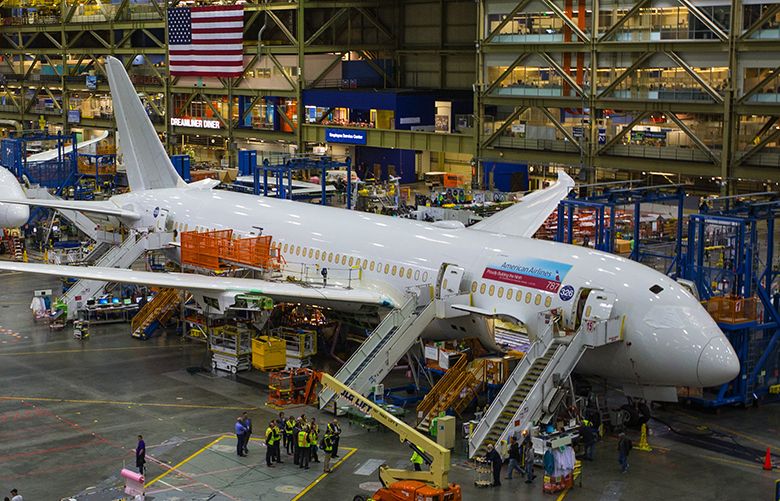
Boeing y la importación del aluminio

Resultado de imagen para Boeing line assembly

AW | 2018 03 06 23:57 | INDUSTRY

Boeing-Logo.svgLas trabas a la importación del aluminio perjudica a la competitividad de Boeing frente a las aerolíneas chinas

Airbus se frota las manos con el anuncio de Donald Trump de aumentar el proteccionismo sobre metales de alto valor estratégico e industrial. Su propuesta de gravar con aranceles del 25% a las importaciones de acero y del 10% de aluminio impacta de lleno sobre Boeing, que ve como su competitividad se tambalea frente a estas medidas.

El aumento del precio en el aluminio puede perjudicar los costes de Boeing, ya que el Resultado de imagen para Boeing Arconic80% de la estructura de un avión necesita este metal. El principal proveedor de Boeing de este componente es Arconic.

El Presidente de Estados Unidos, Donald Trump anticipó la estrategia del gobierno que la industria estadounidense del acero y el aluminio han sido históricamente perjudicadas por los acuerdos comerciales de otros países, y que trabajará por un comercio justo.

Boeing tiene una imagen pública muy vinculada a la administración de Trump: su director ejecutivo Dennis Muilenburg mantiene una relación muy cercana con el mandatario norteamericano. Además el fabricante como otras empresas obtuvieron jugosos beneficios de la reforma fiscal de la Casa Blanca sus resultados crecieron un 67%. Los analistas recuerdan que desde que Trump ganó las elecciones las acciones de la firma subieron un 146% hasta ahora.

Represalias de Beijing

El gobierno chino puede aprovechar la guerra comercial para castigar a Boeing y catapultar las ventas de su avión COMAC C919. Pero el aumento de los costes no es el único problema. Boeing puede ser víctima de represalias por parte del gobierno chino, un mercado en el que Airbus no perderá un segundo en seducir. La mayoría de los clientes más importantes en China son las aerolíneas estatales, o que están en poder de bancos controlados por el gobierno. Los pocos compradores independientes podrían recibir fuertes presiones de Beijing para cancelar los pedidos.

El gobierno chino ve una oportunidad de oro para impulsar a COMAC, la empresa que fabrica el avión C919 y que pretende romper el duopolio de Boeing y Airbus, para desplazar al 737 y al A320 de los cielos del país. Comac espera entregar 785 aeronaves a partir del 2021, aunque por ahora todos sus clientes son aerolíneas chinas. Si la guerra comercial entre el gigante asiático y EEUU recrudece, Boeing se encaminará sin remedio hacia una colisión. AIRWAYS® AW-Icon TXT

Resultado de imagen para Boeing line assembly

Boeing and the import of aluminum

Boeing-Company-LogoThe obstacles to the importation of aluminum harms Boeing’s competitiveness against Chinese airlines

Airbus rubs its hands with the announcement of Donald Trump to increase protectionism over metals of high strategic and industrial value. His proposal to impose tariffs of 25% on imports of steel and 10% of aluminum impacts fully on Boeing, which sees its competitiveness falter in the face of these measures.

The increase of the price in the aluminum can damage the costs of Boeing, since 80% of the structure of an airplane needs this metal. Boeing’s main supplier of this component is Arconic.

The President of the United States, Donald Trump, anticipated the government’s strategy that the US steel and aluminum industry has been historically harmed by trade agreements of other countries, and that it will work for fair trade.

Boeing has a public image closely linked to the Trump administration: its executive director Dennis Muilenburg maintains a very close relationship with the US president. In addition to the manufacturer and other companies obtained juicy benefits from the White House tax reform their results grew by 67%. Analysts remember that since Trump won the election, the company’s shares have risen 146% so far.

Beijing retaliation

The Chinese government can take advantage of the trade war to punish Boeing and catapult sales of its COMAC C919 plane. But the increase in costs is not the only problem. Boeing may be the victim of reprisals by the Chinese government, a market in which Airbus will not lose a second in seducing. Most of the most important customers in China are state airlines, or those held by government-controlled banks. The few independent buyers could receive strong pressure from Beijing to cancel orders.

The Chinese government sees a golden opportunity to boost COMAC, the company that manufactures the C919 aircraft and that aims to break the duopoly of Boeing and Airbus, to displace the 737 and the A320 from the skies of the country. Comac expects to deliver 785 aircraft starting in 2021, although for now all its customers are Chinese airlines. If the trade war between the Asian giant and the US intensifies, Boeing will be heading hopelessly towards a collision. A \ W


Ξ A I R G W A Y S Ξ
SOURCE:  Airgways.com
DBk: Boeing.com / Ainonline.com / Seekingalpha.com
AW-POST: 201803062357AR

A\W   A I R G W A Y S ®

Boeing finaliza producción línea 767

Resultado de imagen para Boeing.com 767

AW | 2018 03 06 01:47 | INDUSTRY

Boeing-Logo.svgThe Boeing Co. ha anunciado la finalización del Programa 767

Boeing ha comunicado oficialmente la finalización del Programa 767 este Lunes, 5 Marzo 2018 para revitalizar el afamado avión de pasajeros Boeing 767 mientras sigue evaluando opciones para un prometedor nicho en el mercado de aeronaves.

Inicialmente hubo especulaciones que la línea de aviones 767 se reactivaría para ofrecer a las aerolíneas un respaldo de bajo precio en caso de que se demorara un nuevo avión del mercado medio propuesto.

Los informes del otoño pasado sugirieron que Boeing podría reanudar la producción del pasajero 767-300ER para actuar como puente hasta que la NMA se estrene en el período de 2024 a 2025. Se entendió que United Airlines había expresado interés.

Resultado de imagen para 767 PROGRAM

ENSAMBLAJE DE LA LÍNEA BOEING 767

Resultado de imagen para Boeing 767El presidente ejecutivo de Boeing, Dennis Muilenburg, dijo en noviembre pasado que el fuselaje tenía un «amplio interés de los clientes» en el 767 más allá de los usos militares y de cargueros.

Ha habido algo de especulación en el mercado respecto a que Boeing podría volver a producir los 767 de fuselaje ancho para ofrecer a las aerolíneas una opción de bajo precio en caso de que un avión nuevo propuesto para el mercado de categoría media sufra retrasos, o en caso de que Boeing decida no seguir adelante con ese proyecto. “Traer de vuelta la versión de pasajeros del 767, simplemente no lo veo”, comentó a periodistas Randy Tinseth, vicepresidente de marketing comercial de Boeing, en una teleconferencia.

La reanudación de la producción solo actuaría como un puente hasta la NMA y no proporcionaría a las aerolíneas un avión con los motores y la economía de la próxima generación que están buscando.

Tinseth dice hoy que los clientes potenciales para la NMA, que tiene como objetivo reemplazar a las viejas flotas 757 y 767, le dicen a Boeing que están contentos de esperar una entrada en servicio tan tarde como en 2025.

El NMA tiene capacidad para 220-270 pasajeros y tiene un alcance de alrededor de 5.000nm, dice. American Airlines, Delta Air Lines y United Airlines han expresado su interés en la NMA, y el presidente ejecutivo de Delta, Ed Bastian, habría informado a los pilotos en febrero que a la aerolínea le gustaría lanzar la nueva aeronave. Los tres operadores estadounidenses operaban un total combinado de 238 757 y 153 767 con una edad promedio de 20,1 años y 20,4 años, respectivamente, según muestra Flightfleets Analzyer.

Boeing se enfrenta a la competencia de Airbus para algunos de los mercados de reposición 757 y 767. El armador europeo entregará su primer A321LR este año apuntando a algunos 757 transatlánticos y las aerolíneas, incluidas American y United, están considerando que el A330-800NEO reemplace sus 767 flotas.  AIRWAYS® AW-Icon TXT

Resultado de imagen para 767 PROGRAM

Boeing completes production line 767

Boeing-Logo.svgThe Boeing Co. has announced the completion of the 767 ProgramResultado de imagen para Boeing.com 767 logo

Boeing has officially announced the completion of the 767 Program this Monday, March 5, 2018 to revitalize the famed Boeing 767 passenger jet while still evaluating options for a promising niche in the aircraft market.

Initially there was speculation that the 767 aircraft line would be reactivated to offer airlines low-price support should a proposed new mid-market aircraft be delayed.

Reports last fall suggested that Boeing could resume production of the 767-300ER passenger to act as a bridge until the NMA opens in the period from 2024 to 2025. It was understood that United Airlines had expressed interest.

Boeing Chief Executive Dennis Muilenburg said last November that the fuselage had a «broad customer interest» in the 767 beyond military and cargo uses.

There has been some speculation in the market that Boeing could re-produce the wide-body 767 to offer airlines a low-priced option in the event that a new aircraft proposed for the mid-market market suffers delays, or if Boeing decides not to go ahead with that project. «Bring back the passenger version of the 767, I just do not see it,» Randy Tinseth, vice president of commercial marketing at Boeing, told reporters in a teleconference.

The resumption of production would only act as a bridge to the NMA and would not provide the airlines with a plane with the engines and economy of the next generation that they are looking for.

Tinseth says today that potential customers for the NMA, which aims to replace the old 757 and 767 fleets, tell Boeing that they are happy to expect an entry into service as late as 2025.

The NMA has capacity for 220-270 passengers and has a range of around 5,000nm, he says. American Airlines, Delta Air Lines and United Airlines have expressed interest in the NMA, and Delta Chief Executive Ed Bastian would have informed pilots in February that the airline would like to launch the new aircraft. The three US operators operated a combined total of 238 757 and 153 767 with an average age of 20.1 years and 20.4 years, respectively, according to Flightfleets Analzyer.

Boeing faces competition from Airbus for some of the 757 and 767 replacement markets. The European owner will deliver its first A321LR this year targeting some 757 ocean liners and airlines, including American and United, are considering the A330-800neo replace its 767 fleets. A \ W


Ξ A I R G W A Y S Ξ
SOURCE:  Airgways.com
DBk: Boeing.com / Ainonline.com
AW-POST: 201803060147AR

A\W   A I R G W A Y S ®

Airbus podría recortar fuerza laboral

Resultado de imagen para Airbus A380 Program

AW | 2018 03 03 17:48 | INDUSTRY

Logo_Airbus_2014.svgAirbus planea reubicar o eliminar 3.600 empleos en los programas de la industria

Airbus está evaluando la reubicación o despido de personal debido a una disminución en las tasas de producción del Programa A380 y el A400M. El fabricante informará a los sindicatos en una reunión del Comité Europeo el 7 de Marzo 2018 en Toulouse, Francia de su deseo de comenzar a negociar su plan de adaptación laboral.

Las fábricas de Bremen y Augsburgo (Alemania), la planta de Sevilla (España), y Filton (Reino Unido) serán el foco de las conversaciones. Otros dos sitios alemanes en Hamburgo y Stade también podrían verse afectados. Un portavoz de Airbus no ha permitido dar información certera al respecto, pero que no especularía sobre los números, y agregó que los ajustes de tarifas del A380 y A400M no eran nuevos. «Cualquier impacto en la fuerza de trabajo será discutido primero con nuestros interlocutores sociales y siempre nos esforzamos por encontrar las mejores soluciones para nuestros empleados. Tenemos un buen historial en la gestión de estos problemas», expresó el vocero de Airbus, que confirmó que el tema será discutido en la reunión de la próxima semana.

Airbus ha ajustado las tasas de producción de su avión A380 debido a la baja demanda y planea reducir la tasa de entrega de su avión de transporte militar A400M como parte del rediseño de la hoja de ruta del programa. AIRWAYS® AW-Icon TXT

Resultado de imagen para Airbus A380 Program

Airbus could cut workforce

Airbus_Group_Logo_2014.svgAirbus plans to relocate or eliminate 3,600 jobs in industry programs

Airbus is evaluating the relocation or dismissal of personnel due to a decrease in production rates of the A380 Program and the A400M. The manufacturer will inform the unions at a meeting of the European Committee on March 7, 2018 in Toulouse, France of his desire to begin negotiating his plan for job adaptation.

The factories of Bremen and Augsburg (Germany), the plant in Seville (Spain), and Filton (United Kingdom) will be the focus of the talks. Two other German sites in Hamburg and Stade could also be affected. An Airbus spokesman has not allowed to give accurate information to the respect, but that would not speculate on the numbers, adding that the tariff adjustments of the A380 and A400M were not new. «Any impact on the workforce will be discussed first with our social partners and we always strive to find the best solutions for our employees, we have a good track record in managing these problems», said the Airbus spokesperson, who confirmed that the The issue will be discussed at the meeting next week.

Airbus has adjusted production rates for its A380 aircraft due to low demand and plans to reduce the delivery rate of its A400M military transport aircraft as part of the redesign of the program’s roadmap. A \ W


Ξ A I R G W A Y S Ξ
SOURCE:  Airgways.com
DBk: Airbus.com / Japantimes.co.jp / Cnet.com
AW-POST: 201803031748AR

A\W   A I R G W A Y S ®

Acuerdo Boeing-Irán Air

Resultado de imagen para Boeing-Iran Air

AW | 2018 03 03 17:33 | AIRLINES / INDUSTRY / GOVERNMENT

Boeing-Company-LogoLa Corte Federal de Justicia de EEUU dictamina que las víctimas del terrorismo deben ver el contrato de Boeing con Irán Air

La Justicia de Estados Unidos dictaminó esta semana que Boeing debe hacer público su contrato de U$S 16 mil millones con Iran Air, un acuerdo histórico hecho posible por el Acuerdo Nuclear de Irán en 2015, en respuesta a solicitudes de descubrimiento presentadas por víctimas de ataques terroristas palestinos en Israel.

Las solicitudes buscan información sobre el contrato de U$S 16 mil millones entre Boeing y la aerolínea Iran Air para 80 aviones comerciales. Boeing hasta ahora se ha negado a presentar documentación respaldatoria del acuerdo entre la manufacturera y la aerolínea iraní.

Estados Unidos se unió a la Unión Europea, el Reino Unido, Rusia y China en la firma del Joint Comprehensive Plan of Action (JCPOA) conocido comúnmente como el Acuerdo Nuclear de Irán, es un acuerdo internacional sobre el programa nuclear de Irán alcanzado en Viena el 14 de julio de 2015 entre Irán, el P5 (los cinco miembros permanentes del Consejo de Seguridad de las Naciones Unidas: China, Francia, Rusia, Reino Unido, Estados Unidos y Alemania ), y la Unión Europea.

En particular, EEUU acordó permitir la venta de aviones comerciales a la República Islámica de Irán. El acuerdo Boeing-Iran Air es la primera gran transacción comercial entre compañías estadounidenses e iraníes desde la Revolución islamista de 1979.

El Presidente estadounidense, Donald Trump, se oponía personalmente al acuerdo de Boeing con Irán, basado en evidencia de que compañías aéreas iraníes aparentemente civiles han transportado armas a grupos terroristas como Hezbolá en el Líbano, una violación de las leyes y los términos del JCPOA. AIRWAYS® AW-Icon TXT

Resultado de imagen para Boeing-Iran Air

Boeing-Iran Air Agreement

The US Federal Court of Justice rules that victims of terrorism should see the Boeing contract with Iran Air

US Justice ruled this week that Boeing must make public its US $ 16 billion contract with Iran Air, a historic agreement made possible by the Iran Nuclear Agreement in 2015, in response to discovery requests filed by victims of Palestinian terrorist attacks in Israel.

The requests seek information about the U$S 16 billion contract between Boeing and the airline Iran Air for 80 commercial aircraft. Boeing has so far refused to submit supporting documentation of the agreement between the manufacturer and the Iranian airline.

 United States joined the European Union, the United Kingdom, Russia and China in the signing of the Joint Comprehensive Plan of Action (JCPOA) commonly known as the Nuclear Agreement of Iran, is an international agreement on Iran’s nuclear program reached in Vienna on July 14, 2015 between Iran, P5 (the five permanent members of the Security Council of the United Nations: China, France, Russia, the United Kingdom, the United States and Germany), and the European Union.

In particular, the United States agreed to allow commercial aircraft to be sold to the Islamic Republic of Iran. The Boeing-Iran Air agreement is the first major commercial transaction between US and Iranian companies since the 1979 Islamist Revolution.

US President Donald Trump was personally opposed to Boeing’s agreement with Iran, based on evidence that apparently civilian Iranian air carriers have transported weapons to terrorist groups such as Hezbollah in Lebanon, a violation of the laws and terms of the JCPOA. A \ W


Ξ A I R G W A Y S Ξ
SOURCE:  Airgways.com
DBk: Boeing.com / Frotpagemag.com / Wikimedia.org
AW-POST: 201803031733AR

A\W   A I R G W A Y S ®

Embraer estudia avión menor capacidad

Resultado de imagen para Embraer sede

AW | 2018 03 02 17:11 | INDUSTRY

1280px-Embraer_logo.svgEmbraer ha señalado su interés en desarrollar un avión comercial de menor capacidad

Rodrigo Silva e Souza, Vicepresidente de Marketing de Embraer Commercial Aviation, confirmó durante una reunión en la base de la empresa brasileña en Sao José dos Campos, el 22 de Febrero 2018 que el fabricante hacia un futuro próximo no desarrollaría ningún avión más grande que el E195-E2, que puede acomodar hasta 146 pasajeros en una configuración de alta densidad.

Embraer ha dicho en repetidas ocasiones que no tiene la intención de competir con Airbus y Boeing y sus respectivas familias Airbus A320 y Boeing B737 en el segmento por encima de 150 asientos. Souza cree que un avión más grande reduciría las eficiencias que un jet regional puede ofrecer en rutas delgadas contra los narrowbodies tradicionales. El papel del E2, es servir como un avión complementario a tipos más grandes.

Embraer podría considerar bajo estudio construir un avión de menor capacidad, de esta manera el constructor brasileño se concentraría en un segmento regional donde la oferta de la industria de aviones en el rango de los 40-80 pasajeros está poco desarrollada.

El miembro más pequeño de la familia de reactores regionales, el E175-E2, puede configurarse con hasta 90 asientos, y está programado para entrar en servicio en 2021. Imagen relacionadaEmbraer optó por no desarrollar un sucesor del E170, que puede acomodar a 78 pasajeros, para reforzar las ventas del E175-E2.

Rodrigo Silva e Souza señala que Embraer tiene un pequeño equipo que estudia la posibilidad de desarrollar un avión turbopropulsor regional, conocido como «Programa E3«, pero dice que el argumento comercial para dicho programa no es fácil de cerrar.

Boeing-Embraer

Boeing ha acercado una propuesta a Embraer para la compra de acciones a finales de 2017. Desde Embraer, más bien discute la posibilidad de formar parte de una alianza aunque la Boeing posea una parte de las acciones en el plano aerocomercial. Embraer sostuvo que la industria de defensa no está a la venta, por lo que deja por tierra una posible fusión. AIRWAYS® AW-Icon TXT

Resultado de imagen para Embraer factory

Embraer studies smaller airplane capacity

embraer logoEmbraer has indicated its interest in developing a smaller capacity commercial aircraft

Rodrigo Silva e Souza, Vice President of Marketing at Embraer Commercial Aviation, confirmed during a meeting at the base of the Brazilian company in Sao Jose dos Campos on February 22, 2018 that the manufacturer would not develop any aircraft larger than the company in the near future. E195-E2, which can accommodate up to 146 passengers in a high-density configuration.

Embraer has repeatedly said it has no intention of competing with Airbus and Boeing and their respective families Airbus A320 and Boeing B737 in the segment above 150 seats. Souza believes that a larger plane would reduce the efficiencies that a regional jet can offer on thin routes against traditional narrowbodies. The role of E2, is to serve as a complementary aircraft to larger types.

Embraer could consider under construction to build a lower capacity aircraft, so the Brazilian constructor would concentrate on a regional segment where the supply of aircraft industry in the range of 40-80 passengers is underdeveloped.Resultado de imagen para Embraer png

The smallest member of the family of regional reactors, the E175-E2, can be configured with up to 90 seats, and is scheduled to enter service in 2021. Embraer chose not to develop a successor to the E170, which can accommodate 78 passengers, to reinforce sales of the E175-E2.

Rodrigo Silva e Souza points out that Embraer has a small team that studies the possibility of developing a regional turboprop aircraft, known as «E3 Program«, but says that the commercial argument for this program is not easy to close.

Boeing-Embraer

Boeing has approached a proposal to Embraer for the purchase of shares at the end of 2017. From Embraer, rather discusses the possibility of being part of an alliance although the Boeing owns a part of the actions in the commercial plane. Embraer argued that the defense industry is not for sale, so it leaves a possible merger to the ground. A \ W

Resultado de imagen para Embraer sede

Embraer estuda irmão mais novo para a família E2

Embraer-logo[1].decryptedKLRA Embraer indicou seu interesse em desenvolver um avião comercial de menor capacidade

Rodrigo Silva e Souza, vice-presidente de marketing da Embraer Commercial Aviation, confirmou durante uma reunião na base da empresa brasileira em São José dos Campos, em 22 de fevereiro de 2018, que o fabricante não desenvolveria nenhuma aeronave maior do que a empresa no futuro próximo. E195-E2, que pode acomodar até 146 passageiros em uma configuração de alta densidade.

A Embraer repetidamente disse que não tem intenção de competir com a Airbus ea Boeing e suas respectivas famílias Airbus A320 e Boeing B737 no segmento acima de 150 lugares. Souza acredita que um avião maior reduziria as eficiências que um jato regional pode oferecer em rotas finas contra corpos estreitos tradicionais. O papel do E2, é servir como uma aeronave para complementar para tipos maiores.

Resultado de imagen para Embraer pngA Embraer poderia considerar em construção construir uma aeronave de menor capacidade, então o construtor brasileiro se concentraria em um segmento regional onde o fornecimento de aeronaves na faixa de 40-80 passageiros está subdesenvolvido.

O menor membro da família de reatores regionais, o E175-E2, pode ser configurado com até 90 lugares e está programado para entrar no serviço em 2021. A Embraer optou por não desenvolver um sucessor do E170, que pode acomodar 78 passageiros, para reforçar as vendas do E175-E2.

Rodrigo Silva e Souza aponta que a Embraer possui uma pequena equipe que estuda a possibilidade de desenvolver uma aeronave turbopropulsor regional, conhecida como «Programa E3«, mas diz que o argumento comercial para este programa não é fácil de fechar.

Boeing-Embraer

A Boeing abordou uma proposta à Embraer para a compra de ações no final de 2017. A Embraer discute a possibilidade de fazer parte de uma aliança, embora a Boeing possua parte das ações no plano comercial. A Embraer argumentou que a indústria da defesa não está à venda, então deixa por terra uma possível fusão.. A \ W


Ξ A I R G W A Y S Ξ
SOURCE:  Airgways.com
DBk: Embraer.com / Uol.com.br
AW-POST: 201803021711AR

A\W   A I R G W A Y S ®

E190-E2 certificada por la aviación

Resultado de imagen para E190-E2

AW | 2018 03 01 14:55 | INDUSTRY

1280px-Embraer_logo.svgEmbraer recibe la certificación ANAC, FAA y EASA para el E190-E2

Embraer recibió, el Miércoles 28 Febrero 2018, la certificación de la Agencia Nacional de Aviación Civil (ANAC) para el avión regional brasileño Embraer E190-E2. El lanzamiento de la segunda generación de la familia de E-Jets de Embraer fue hecho el 17 de Junio 2003.

Embraer confirmó en 2017 que la primera entrega del E190-E2 será para el cliente de lanzamiento Widerøe, la mayor aerolínea regional de Noruega, que ha encomendado tres aviones en compra firme y otros 12 en opciones de compra. Widerøe iniciará operaciones regulares con la aeronave en Abril 2018.

Los otros contratos firmados por Embraer para los E2 están formados por 25 firmes más 25 opciones para la AerCap de Holanda; 25 solicitudes firmes con AirCastle, de los Estados Unidos; 25 firmes más 25 opciones para Air Costa, India; diez pedidos firmes para la china IBCB, otros 100 firmes y 10 opciones para la estadounidense Skywest, además de 2 aviones para la china Tianjin Airlines. Un cliente no revelado encargó 10 aviones pedido firme y 10 en opciones. Embraer ha asegurado 74 pedidos en firme para el E190-E2.

Certificación ANAC Brasil

Embraer recibió la certificación de aeronavegabilidad para el E190-E2 por parte de reguladores brasileños, europeos y estadounidenses, antes de la primera entrega al operador de lanzamiento Wideroe. La certificación se produce aproximadamente 56 meses después de que el programa se lanzó a mediados de 2013 en el salón aeronáutico de París.

Resultado de imagen para E190-E2 Png

EMBRAER E190-E2 RECIBE CERTIFICACIÓN TOTAL DE ANAC, EASA Y FAA

Cuatro prototipos de E190-E2 completaron más de 2.000 horas en pruebas de vuelo y 45.000 horas de pruebas en tierra. El avión fue certificado por la autoridad de aviación civil de Brasil (ANAC), la Agencia Europea de Seguridad Aérea (EASA) y la Administración Federal de Aviación de los Estados Unidos (FAA).

«La certificación de hoy del E190-E2 marca un hito fundamental en el programa. Ahora es razonable anticipar una aceleración de las discusiones comerciales con los operadores de todo el mundo», dice John Slattery, presidente y director ejecutivo de Embraer Commercial Aviation.

Embraer planea entregar el primer E195-E2 en la primera mitad de 2019, seguido por el E175-E2 en 2021. En el caso de Azul Linhas Aéreas Brasileñas será la primera operadora del E195-E2. La compañía cuenta con 30 pedidos en firme y 20 derechos de compra del jet.

Según Embraer, el E190-E2 es mejor que la especificación original y más eficiente que otras aeronaves de pasillo único. Con respecto al consumo de combustible, el avión probó ser un 1,3% mejor de lo esperado, lo que representa una mejora del 17,3% con respecto al E190 de generación actual y casi el 10% más que su competidor directo.

Embraer dijo que las pruebas mostraron que el E190-E2 será la aeronave con los intervalos de mantenimiento más largos en el mercado de aviones de pasillo único, de 10.000 horas de vuelo, para chequeo de rutina, y sin límite de calendario para usos típicos de E-Jets. Esto representa 15 días adicionales de utilización de la aeronave en un período de diez años en comparación con los E-Jets de la generación actual. Además, la aeronave proporciona beneficios hasta un 50% mayor si se compara con los chorros de mayor tamaño.

El Presidente de Embraer, Paulo César de Souza e Silva dijo que la certificación del primer jet de la nueva familia E2 es un benchmark (referencial) en la industria. «Entregamos en el plazo, en el presupuesto y superando los requerimientos iniciales, y la certificación está siendo hecha simultáneamente por los tres principales órganos de la aviación en el mundo», expresó el ejecutivo. Las agencias civiles de Brasil, ANAC; de los Estados Unidos, FAA; y Europa, EASA, dieron hoy los certificados para el E190-E2. AIRWAYS® AW-Icon TXT

Resultado de imagen para E190-E2 ANAC certification

Embraer E190-E2 certified by aviation

embraer logoEmbraer receives the ANAC, FAA and EASA certification for the E190-E2

Embraer received, on Wednesday 28 February 2018, the certification of the National Civil Aviation Agency (ANAC) for the Brazilian regional aircraft Embraer E190-E2. The launch of the second generation of the Embraer E-Jets family was made on June 17, 2003.

Embraer confirmed in 2017 that the first delivery of the E190-E2 will be for the launch customer Widerøe, the largest regional airline in Norway, which has entrusted three aircraft in firm purchase and another 12 in purchase options. Widerøe will begin regular operations with the aircraft in April 2018.

The other contracts signed by Embraer for the E2 are made up of 25 firm plus 25 options for the AerCap of the Netherlands; 25 firm applications with AirCastle, from the United States; 25 firm plus 25 options for Air Costa, India; ten firm orders for the Chinese IBCB, another 100 firm and 10 options for the American Skywest, plus 2 aircraft for the Chinese Tianjin Airlines. An undisclosed customer ordered 10 firm order planes and 10 in options. Embraer has secured 74 firm orders for the E190-E2.

ANAC Brazil Certification

Embraer received the airworthiness certification for the E190-E2 from Brazilian, European and US regulators, before the first delivery to the launch operator Wideroe. The certification occurs approximately 56 months after the program was launched in mid-2013 at the Paris Air Show.

Four prototypes of E190-E2 completed more than 2,000 hours in flight tests and 45,000 hours of ground testing. The aircraft was certified by the Civil Aviation Authority of Brazil (ANAC), the European Aviation Safety Agency (EASA) and the Federal Aviation Administration of the United States (FAA).

Resultado de imagen para E190-E2 Png

EMBRAER E190-E2

«Today’s E190-E2 certification marks a major milestone in the program», said John Slattery, president and CEO of Embraer Commercial Aviation, «It is now reasonable to anticipate an acceleration of business discussions with operators around the world».

Embraer plans to deliver the first E195-E2 in the first half of 2019, followed by the E175-E2 in 2021. In the case of Azul Linhas Aéreas Brasileñas, it will be the first operator of the E195-E2. The company has 30 firm orders and 20 jet purchase rights.

According to Embraer, the E190-E2 is better than the original specification and more efficient than other single-aisle aircraft. With regard to fuel consumption, the airplane proved to be 1.3% better than expected, which represents an improvement of 17.3% compared to the current generation E190 and almost 10% more than its direct competitor.

Embraer said that the tests showed that the E190-E2 will be the aircraft with the longest maintenance intervals in the market of single-aisle aircraft, of 10,000 hours of flight, for routine check-up, and without a calendar limit for typical uses of E-Jets This represents 15 additional days of use of the aircraft over a period of ten years compared to the E-Jets of the current generation. In addition, the aircraft provides benefits up to 50% higher compared to larger jets.

The President of Embraer, Paulo César de Souza e Silva said that the certification of the first jet of the new E2 family is a benchmark (referential) in the industry. «We deliver within the deadline, in the budget and exceeding the initial requirements, and the certification is being done simultaneously by the three main aviation bodies in the world», the executive said. The civil agencies of Brazil, ANAC; of the United States, FAA; and Europe, EASA, today gave certificates for the E190-E2. A \ W

Resultado de imagen para E190-E2

Embraer E190-E2 certificado pela aviação

Embraer-logo[1].decryptedKLR.jpgA Embraer recebe a certificação ANAC, FAA e EASA para o E190-E2

A Embraer recebeu, na quarta-feira 28 Febreiro 2018, a certificação da Agência Nacional de Aviação Civil (ANAC) para a aeronave regional brasileira Embraer E190-E2. O lançamento da segunda geração da família Embraer E-Jets foi feito em 17 de junho de 2003.

Resultado de imagen para E190-E2 PngA Embraer confirmou em 2017 que a primeira entrega do E190-E2 será para o cliente de lançamento Widerøe, a maior companhia aérea regional da Noruega, que confiou três aeronaves em compra firme e outras 12 em opções de compra. Widerøe iniciará operações regulares com a aeronave em abril de 2018.

Os outros contratos assinados pela Embraer para o E2 são constituídos por 25 empresas mais 25 opções para a AerCap dos Países Baixos; 25 aplicações firmes com AirCastle, dos Estados Unidos; 25 empresas mais 25 opções para a Air Costa, Índia; dez pedidos firmes para o IBCB chinês, mais uma centena de empresas e 10 opções para o Skywest americano, além de 2 aeronaves para a companhia chinesa Tianjin Airlines. Um cliente não divulgado encomendou 10 aviões de ordem firme e 10 em opções. A Embraer garantiu 74 pedidos firmes para o E190-E2.

Certificação ANAC Brasil

A Embraer recebeu a certificação de aeronavegabilidade para o E190-E2 de reguladores brasileiros, europeus e norte-americanos, antes da primeira entrega ao operador de lançamento Wideroe. A certificação ocorre aproximadamente 56 meses após o lançamento do programa em meados de 2013 no Paris Air Show.

Quatro protótipos do E190-E2 completaram mais de 2.000 horas em testes de vôo e 45.000 horas de teste no solo. A aeronave foi certificada pela Autoridade de Aviação Civil do Brasil (ANAC), pela Agência Européia de Segurança da Aviação (EASA) e pela Administração Federal de Aviação dos Estados Unidos (FAA).

«A certificação E190-E2 de hoje marca um marco importante no programa», disse John Slattery, presidente e CEO da Embraer Commercial Aviation, «Agora é razoável antecipar uma aceleração das discussões comerciais com operadores de todo o mundo».

A Embraer planeja entregar o primeiro E195-E2 no primeiro semestre de 2019, seguido do E175-E2 em 2021. No caso da Azul Linhas Aéreas Brasileiras, será o primeiro operador do E195-E2. A empresa possui 30 pedidos firmes e 20 direitos de compra a jato.

De acordo com a Embraer, o E190-E2 é melhor do que a especificação original e mais eficiente que outros aviões de um só corredor. No que diz respeito ao consumo de combustível, o avião mostrou-se 1,3% melhor do que o esperado, o que representa uma melhoria de 17,3% em relação à geração atual E190 e quase 10% a mais do que o seu concorrente direto.

A Embraer disse que os testes mostraram que o E190-E2 será a aeronave com os intervalos de manutenção mais longos no mercado de aeronaves de um só corredor, de 10.000 horas de vôo, para check-up de rotina e sem limite de calendário para usos típicos de E-Jets Isso representa 15 dias adicionais de uso da aeronave durante um período de dez anos em comparação com os E-Jets da geração atual. Além disso, a aeronave oferece benefícios até 50% maiores em relação aos jatos maiores.

O presidente da Embraer, Paulo César de Souza e Silva, disse que a certificação do primeiro jato da nova família E2 é uma referência (referencial) na indústria. «Entregamos dentro do prazo, no orçamento e superamos os requisitos iniciais, e a certificação está sendo realizada simultaneamente pelos três principais órgãos de aviação do mundo», disse o executivo. As agências civis do Brasil, ANAC; dos Estados Unidos, FAA; e a Europa, a EASA, deram hoje certificados para o E190-E2. A \ W


Ξ A I R G W A Y S Ξ
SOURCE:  Airgways.com
DBk: Embraer.com
AW-POST: 201803011455AR

A\W   A I R G W A Y S ®


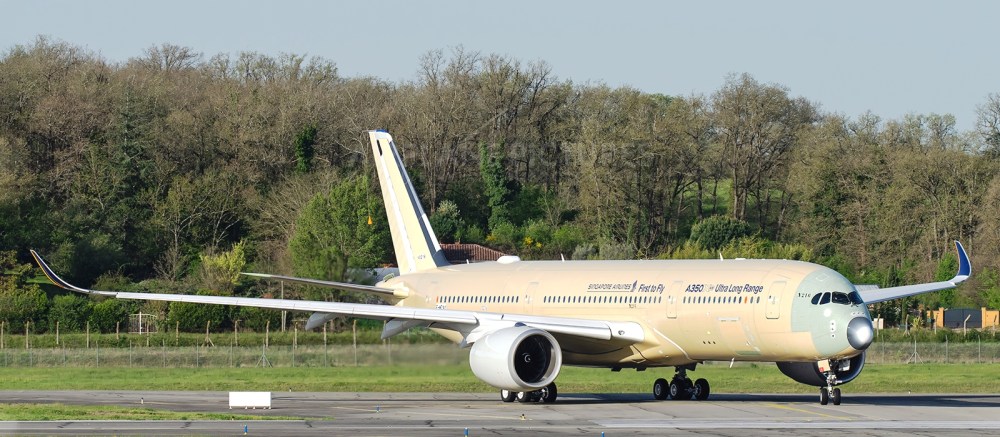
Airbus lanza el primer A350-900ULR

Airbus A350-900ULR

AW | 2018 02 28 12:52 | INDUSTRY

Logo_Airbus_2014.svgAirbus lanza nueva variante del A350-900ULR con autonomía expandida

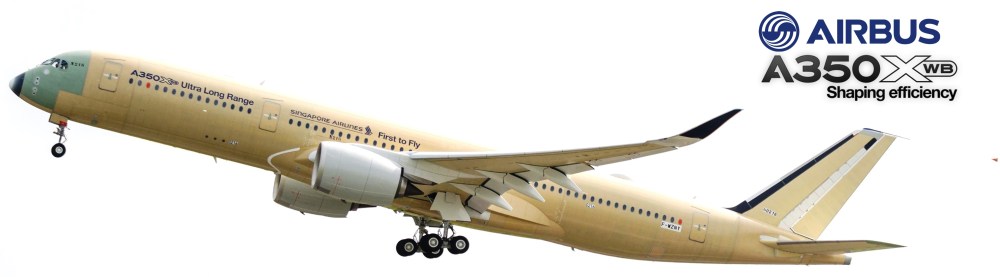
Airbus Group ha lanzado la nueva variante del A350, el A350-900ULR (Ultra Long Range) de ultra largo alcance.

Airbus ha lanzado el primer Airbus A350-900ULR (Ultra Long Range) fuera del salón de actos. Según el fabricante de la aeronave, la aeronave ofrece un rango de vuelo mayor que cualquier avión de pasajeros.

Singapore Airlines ha pedido siete unidades, que la emplearía para vuelos entre Singapur y Nueva York. Eso lo convierte en el vuelo programado más largo del mundo. Singapore Airlines es un usuario importante del A350-900 y tiene 21 unidades en servicio, de un total de 67 unidades. El A350-900 estándar se utiliza en vuelos desde Singapur al aeropuerto de Schiphol y al aeropuerto de Düsseldorf.

Especificaciones del A350-900ULR

El A350-900ULR tendrá una autonomía de casi 18.000 kilómetros (9.700 nm) sin repostar en unas veinte horas, todo un logro para la industria de la aviación comercial. Para aumentar el alcance del vuelo del A350-900, Airbus proporcionó una capacidad de almacenamiento adicional de 24,000 litros de combustible. Además, se realizaron mejoras aerodinámicas, como winglets más grandes en los extremos del ala. La aeronave, que aún está equipada con sus motores Rolls-Royce Trent XWB, se está transfiriendo a una estación al aire libre para pruebas en tierra, dice el fuselaje.

Airbus agrega que se someterá a un programa corto de pruebas de vuelo para verificar las modificaciones que le dan al -900ULR sus capacidades de largo alcance, incluido el sistema de combustible adaptado que proporciona 24,000 litros de combustible extra. Tendrá un peso máximo de despegue de 280tn. La fase de prueba también medirá el rendimiento mejorado derivado de las mejoras aerodinámicas, incluidas los winglets extendidos, informa Airbus. AIRWAYS® AW-Icon TXT

AW-700899350.jpg

Airbus launches the first A350-900ULR

2000px-Logo_Airbus_A350.svg

Airbus launches new variant of the A350-900ULR with expanded autonomy

Airbus Group has launched the new variant of the A350, the ultra long-range A350-900ULR (Ultra Long Range).

Airbus has launched the first Airbus A350-900ULR (Ultra Long Range) outside the auditorium. According to the manufacturer of the aircraft, the aircraft offers a range of flight greater than any passenger plane.

AW-700837733.png

SINGAPORE AIRLINES WILL BE THE LAUNCH CLIENT OF THE AIRBUS A350-900ULR

Singapore Airlines has ordered seven units, which it would use for flights between Singapore and New York. That makes it the longest scheduled flight in the world. Singapore Airlines is an important user of the A350-900 and has 21 units in service, out of a total of 67 units. The standard A350-900 is used on flights from Singapore to Schiphol Airport and Düsseldorf Airport.

Specifications of the A350-900ULR

Resultado de imagen para A350 logoThe A350-900ULR will have a range of almost 18,000 kilometers (9,700 nm) without refueling in about twenty hours, quite an achievement for the commercial aviation industry. To increase the flight range of the A350-900, Airbus provided an additional storage capacity of 24,000 liters of fuel. In addition, aerodynamic improvements were made, such as larger winglets at the ends of the wing. The aircraft, which is still equipped with its Rolls-Royce Trent XWB engines, is being transferred to an outdoor station for ground tests, the fuselage says.

Airbus adds that it will undergo a short flight test program to verify the modifications that give the -900ULR its long-range capabilities, including the adapted fuel system that provides 24,000 liters of extra fuel. It will have a maximum takeoff weight of 280tn. The test phase will also measure the improved performance derived from aerodynamic improvements, including extended winglets, reports Airbus. A\W


Ξ A I R G W A Y S Ξ
SOURCE:  Airgways.com
DBk: Airbus.com / Airgways.com
AW-POST: 201802281255AR

A\W   A I R G W A Y S ®

COMAC recibe orden Huarong Financial

201003250414195121.jpg

AW | 2018 02 27 13:35 | INDUSTRY

COMAC_logoCOMAC de la República de China recibe importante orden para sus aviones C-919 y ARJ 21-700

La industria de COMAC recibió un pedido sustancial para el ARJ21 y el C919, confirmando el interés por parte de Corporación Huarong Financial Leasing de China ARJ21.SVGpor un pedido de veinte ARJ21-700 y treinta C919.

Según COMAC, hay pedidos en los libros de 453 ARJ21-700 y 815 C919. El ARJ21-700 es una aeronave operativa en los márgenes dentro de la República de China, transportando un máximo de 105 pax distribuidos en dos clases. El C919 sigue avanzando hacia las certificaciones y podrá transportar 168 pax. AIRWAYS® AW-Icon TXT

os-comac-c919-20170505.jpg

COMAC receives order from Huarong Financial

COMAC of Republic of China receives important order for its aircraft C-919 and ARJ 21-700

1419825158942.pngThe COMAC industry received a substantial order for the ARJ21 and the C919, confirming the interest of China Huarong Financial Leasing Corporation for an order of twenty ARJ21-700 and thirty C919.

According to COMAC, there are orders in the books of 453 ARJ21-700 and 815 C919. The ARJ21-700 is an aircraft operating on the margins within the Republic of China, transporting a maximum of 105 passengers distributed in two classes. The C919 continues to move towards certifications and will be able to transport 168 pax. A \ W


Ξ A I R G W A Y S Ξ
SOURCE:  Airgways.com
DBk: Comac.cn
AW-POST: 201802271335AR

A\W   A I R G W A Y S ®


Boeing participaría en Embraer

Resultado de imagen para Boeing-Embraer

AW | 2018 02 26 16:14 | INDUSTRY

The Boeing Company estaría más cerca de formalizar una alianza comercial con Embraer S.A.

Resultado de imagen para E190 E2 pngThe Boeing Company solicitó la aprobación del Gobierno de Brasil para una asociación con Embraer S.A. que crearía una nueva firma enfocada en la aviación comercial, excluyendo la unidad de defensa de Embraer. El gigante americano tendría una participación del 51% en una empresa conjunta que se negocia actualmente con el fabricante brasileño de aviones Embraer.

Boeing aceptó la exigencia del gobierno brasileño de que la compañía estadounidense no tenga más de un 51% de participación controladora. La propuesta de Boeing le daría una participación del 80% al 90% en un nuevo negocio de aviones comerciales regionales con una asociación con Embraer.

Embraer es el tercer fabricante de aviones más grande del mundo y el líder en el mercado de jets regionales de 70 a 130 asientos.Con el acuerdo propuesto, Boeing sería el líder del mercado de aviones de pasajeros más pequeños, creando una competencia más dura para el programa de aviones CSeries diseñado por Bombardier Inc. respaldado por su rival europeo Airbus SE.

Resultado de imagen para EMBRAER-BOEING

GAMA DE AVIONES REGIONALES EMBRAER E2

Boeing desea ganar un mercado arrebatado por la alianza Bombardier-Airbus después de la disputa por los aranceles impuestos por el Gobierno de Estados Unidos. La pérdida de Boeing ante los tribunales ha hecho necesario forjar una alianza comercial con Embraer para contrarrestar el avance de una línea de productos completos que ofrecerá Airbus en adelante.


Alianza Boeing-Embraer

Imagen relacionadaEl plan inicial de Boeing para comprar Embraer fue rechazado por el gobierno brasileño porque no quería que una empresa extranjera controlara su unidad de defensa por razones estratégicas de seguridad.

El gobierno de Brasil mantendría una participación de oro en Embraer, una antigua empresa estatal, que le da poder de veto sobre las decisiones estratégicas, incluido el impulso de Boeing para un acuerdo.

El jueves, el ministro de Defensa de Brasil, Raúl Jungmann, dijo a la prensa que Boeing había entendido la negativa de Brasil a ceder el control de Embraer. Dijo que las negociaciones sobre la creación de una tercera compañía avanzaban bien.  AIRWAYS® AW-Icon TXT

Imagen relacionada

Boeing would participate in Embraer

The Boeing Company would be closer to formalizing a commercial alliance with Embraer S.A.

The Boeing Company requested the approval of the Government of Brazil for a partnership with Embraer that would create a new firm focused on commercial aviation, excluding the Embraer defense unit. The American giant would have a 51% stake in a joint venture that is currently being negotiated with Brazilian aircraft manufacturer Embraer.

Boeing accepted the requirement of the Brazilian government that the US company does not have more than a 51% controlling stake. The Boeing proposal would give it an 80% to 90% stake in a new regional commercial aircraft business with a partnership with Embraer.


EMBRAER_NOVEMBER-2017_Book-RI-2-e1515807417667.jpg

Embraer is the third largest aircraft manufacturer in the world and the leader in the regional jet market of 70 to 130 seats. With the proposed agreement, Boeing would be the market leader in smaller passenger aircraft, creating tougher competition for the CSeries aircraft program designed by Bombardier Inc. backed by its European rival Airbus SE.

Boeing wants to win a market snatched by the alliance Bombardier-Airbus after the dispute over tariffs imposed by the United States Government. The loss of Boeing before the courts has made it necessary to forge a commercial alliance with Embraer to counteract the advance of a complete line of products that Airbus will offer in the future.

Boeing-Embraer Alliance

Boeing’s initial plan to buy Embraer was rejected by the Brazilian government because it did not want a foreign company to control its defense unit for strategic security reasons.

The Brazilian government would maintain a gold stake in Embraer, a former state-owned company, which gives it veto power over strategic decisions, including Boeing’s push for an agreement.

On Thursday, Brazil’s defense minister, Raul Jungmann, told reporters that Boeing had understood Brazil’s refusal to give up control of Embraer. He said negotiations on the creation of a third company were going well. A \ W

Resultado de imagen para EMBRAER-BOEING

A Boeing participaria da Embraer

A Boeing Company estaria mais próxima da formalização de uma aliança comercial com a Embraer S.A.

A Boeing Company solicitou a aprovação do Governo do Brasil para uma parceria com a Embraer S.A. que criaria uma nova empresa voltada para a aviação comercial, excluindo a unidade de defesa da Embraer. O gigante americano teria uma participação de 51% em uma joint venture que atualmente está sendo negociada com a fabricante brasileira de aeronaves Embraer.

A Boeing aceitou o requisito do governo brasileiro de que a empresa norte-americana não possui mais de uma participação de controle de 51%. A proposta da Boeing proporcionaria uma participação de 80% a 90% em um novo negócio regional de aeronaves comerciais com parceria com a Embraer.


Imagen relacionada

A Embraer é o terceiro maior fabricante de aeronaves do mundo e líder no mercado de jatos regionais de 70 a 130 lugares. Com o acordo proposto, a Boeing seria o líder do mercado em aeronaves de passageiros menores, criando uma concorrência mais forte para o programa de aeronaves da CSeries, projetado pela Bombardier Inc., apoiado por seu rival europeu Airbus SE.

A Boeing quer ganhar um mercado arrebatado pela alilanza Bombardier-Airbus após a disputa sobre as tarifas impostas pelo governo dos Estados Unidos. A perda da Boeing perante os tribunais tornou necessário forjar uma aliança comercial com a Embraer para contrariar o avanço de uma linha completa de produtos que a Airbus oferecerá no futuro.

Aliança Boeing-Embraer

Resultado de imagen para EMBRAER-BOEINGO plano inicial da Boeing para comprar a Embraer foi rejeitado pelo governo brasileiro porque não queria que uma empresa estrangeira controle sua unidade de defesa por razões de segurança estratégica.

O governo brasileiro manteria uma participação de ouro na Embraer, uma antiga empresa estatal, que lhe dá poder de veto sobre decisões estratégicas, inclusive o impulso da Boeing para um acordo.

Na quinta-feira, o ministro da Defesa do Brasil, Raúl Jungmann, disse aos jornalistas que a Boeing entendeu a recusa do Brasil em desistir do controle da Embraer. Ele disse que as negociações sobre a criação de uma terceira empresa estavam indo bem. A \ W


Ξ A I R G W A Y S Ξ
SOURCE:  Airgways.com
DBk: Embraer.com / Airgways.com / Bloomberg.com
AW-POST: 201802261614AR

A\W   A I R G W A Y S ®

Batalla mercado motores para A320NEO’s

A320NEO Pegasus

AW | 2018 02 26 14:14 | INDUSTRY

Logo_Airbus_2014.svgUntitled-2.jpgLa pulseada por una mayor cuota de mercado para la motorización del A320NEO’s

Resultado de imagen para CFM logo557894_airbus_house_a320_neo_f-wneo_herpa_wings_200_scale_model_plasticCFM International y Pratt & Whitney han competido para suministrar motores para la familia A320NEO desde que se lanzó el programa New Engine Option (NEO) en 2010.

La disputa por un segmento de la motorización de la familia de aviones Airbus A320NEO’s para las aerolíneas está forzando una clara ventaja hacia CFM que obstenta el 56% de los Resultado de imagen para LEAP 1A vs PW1100G engine pedidos formulados y el 57% de las entregas realizadas, mientras que Pratt & Whitney se mantiene en un 44% de los pedidos efectuados.

Los problemas ocasionados con los motores Pratt & Whitney PW1100G-JM y los múltiples retrasos de las entregas ha permitido a CFM International ampliar la cuota de mercado. Existe una cartera de pedidos de 2.500 aviones de la familia A320NEO en orden que aún no tienen una asignación de motor, lo que brinda una gran oportunidad para que Pratt & Whitney reduzca la diferencia.

Pratt & Whitney dijo que el problema estaba relacionado con el sello del borde de la cuchilla en el cubo de popa del compresor de alta presión (HPC) en el motor PW1100G-JM que alimenta el A320NEO. Mientras tanto, Airbus dijo que había informado a los clientes y operadores de A320NEO afectados, y agregó que actualmente hay 113 aviones A32NEO propulsados ​​por Pratt & Whitney que vuelan con 18 clientes.

Aerolíneas cambian motorización

Royal Brunei Airlines se convirtió recientemente en el segundo cliente de la familia A320NEO. El cambio en los proveedores de motores por parte de Royal Brunei se produce solo unos meses antes de la entrega del primer avión de la aerolínea. Royal Brunei se vio afectada por los retrasos en la entrega de PW1100G, al igual que prácticamente cualquier otro cliente de PW1110G. La decisión de cambiar al LEAP-1A debería proporcionar más certeza en su calendario de entregas de A320NEO.

Qatar Airways fue el cliente de lanzamiento original del Pratt & Whitney PW1110G para el A320NEO y fue muy elocuente cuando el programa comenzó a experimentar retrasos relacionados con los motores en 2015. Ha cambiado de proveedor de motores, abandonando sus contratos iniciales con Pratt & Whitney en favor de CFM, finalizó rechazando la entrega del primer lote de Pratt & Whitney. Los A320NEO’s con motor PW1110G después de la producción de los mismos. Qatar luego convirtió su pedido de 34 A320NEO’s a A321NEO’s, aumentando su compromiso con los A321NEO’s de un pedido original de 16 aviones a 50 aviones. Qatar declaró a fines de 2017 que había seleccionado el LEAP-1A para los 50 aviones. Actualmente, Qatar tiene 50 A321NEO’s pedidos, y las entregas comenarán durante el 2018.

Lufthansa se convirtió en el operador de lanzamiento del primer A320NEO’s del mundo con motores de la Pratt & Whitney en Enero 2016.

Un cronograma de entregas confiable es importante para cualquier aerolínea. El mercado alcanzado por CFM representa a más de 1.800 aviones Airbus A320NEO un 56% de órdenes, mientras que Pratt & Whitney ha sido seleccionado para alimentar a más de 1.400, un 44%.

Pratt & Whitney ha seguido experimentando reveses y retrasos técnicos en 2018, lo que ha provocado una mayor incertidumbre con el calendario de entregas a las aerolíneas este año.

Las previsiones para la industria de motores son claves tanto para el constructor como para las aerolíneas. Las entregas del motor CFM LEAP-1A no han tenido retrasos por lo que lo convierte un una clara ventaja hacia el futuro.

AW-70083779.pngMercado motorización familia A320NEO’s

Pratt & Whitney tiene el 44% de la cartera de pedidos a pesar de los reveses. Si bien perder a Royal Brunei y Qatar es obviamente decepcionante para Pratt & Whitney, los 57 aviones representan una proporción del orden del 3% de los pedidos de la familia A320NEO’s.

Alrededor de 6.000 aviones de la familia A320NEO’s están en orden. CFM ha sido seleccionado para alimentar a más de 1.800 de estos aviones, mientras que Pratt & Whitney ha sido seleccionado para alimentar a más de 1.400. Las aerolíneas y compañías de leasing que han ordenado los 2.400 aviones restantes aún no han especificado las selecciones de motor.

Pratt & Whitney gana clientes

Pratt & Whitney ha seguido obtener nuevos clientes. El mayor contrato reciente fue con Delta Air Lines en Diciembre de 2017, que cubrió 100 A321NEO’s que se entregarán a partir de 2020.

En el Singapore Airshow 2018, Pratt & Whitney anunció nuevos acuerdos PW1100G con Aircalin para motorizar dos A320NEO con entregas en 2020. Swiss cerró un acuerto por 15 A320NEO’s / A321NEO’s. Las entregas a Swiss están programadas para comenzar en 2019. Pratt & Whitney también firmó un contrato en el Salón Aeronáutico de Singapur con la empresa de leasing BOC Aviation, con sede en Singapur, que cubre motores para 12 A320neos / A321neos.

CFM ha representado el 57% de las entregas hasta el momento. Actualmente hay en servicio con motores LEAP-1A 136 A320NEO’s y 16 A321NEO’s, en comparación con 91 A320NEO’s con motor PW1100G. Existen cinco A320NEO’s alimentados por Pratt & Whitney que están fuera de servicio.

Entregas de motores

Pratt & Whitney ha entregado casi un 30% menos de motores para A320neos, a pesar de tener el primer motor para entrar en servicio.

P&W entregó el primer par de motores PW1100G a Lufthansa y CFM entregó seis meses después el LEAP-1A en Julio 2016 a Pegasus de Turquía.

El PW1100G fue inicialmente el motor principal del Programa A321NEO, y las entregas debían comenzar a fines de 2016. Sin embargo, CFM terminó asumiendo el rol de proveedor principal debido a retrasos en Pratt & Whitney. El primer A321NEO con motor CFM se entregó en Abril de 2017 a Virgin America, mientras que el primer Pratt & Whitney A321NEO tuvo un retraso hasta Septiembre de 2017 a Hawaiian Airlines.

Las entregas A320/A321NEO’s impulsadas por Pratt & Whitney se sufrido una desaceleración en 2018, lo que ha provocado una mayor incertidumbre con el calendario de entregas a las aerolíneas este año. No ha habido entregas A321NEO de Pratt & Whitney en lo que va del año, mientras que ha habido dos entregas de A321NEO impulsadas por CFM a Interjet y Virgin America.

También ha habido un solo A320NEO con motor Pratt & Whitney a Air China en 2018. Se han entregado 12 A320NEO’s acon planta motriz de CFM en lo que va del año, de un total a 136 unidades desde la primera entrega en Julio 2016.

Revisión motores PW1100G

La actual entrega de A321NEO’s propulsados ​​por Pratt & Whitney en 2017, solo tres están actualmente en servicio. El primer avión de Volaris aún no entró en servicio, ya que se entregó a finales de 2017. Las aeronaves de Air Astana, Hawaiian Airlines y VietJet entraron en servicio a fines de 2017, pero fueron retiradas del servicio a principios de este mes debido a problemas relacionados con el motor. Los únicos A321NEO’s propulsados ​​por Pratt & Whitney que actualmente operan son dos aviones para All Nippon Airways y uno para Hawaiian Airlines.

Imagen relacionada

Existen 15 A320NEO’s propulsados ​​por Pratt & Whitney que actualmente están fuera de servicio. La mayoría de estos aviones se entregaron en el 4Q2017, y uno fue entregado a principios de 2018.

EASA emitió una directiva de aeronavegabilidad de emergencia el 9 Febrero 2018 después de varias incidencias de paradas en vuelo del motor y despegues rechazados. La FAA siguió con una directiva similar el 14 Febrero 2018, citando una falla en el sello del filo de la navaja que podría conducir a un cierre en vuelo y despegues rechazados.

Pratt & Whitney declaró el 21 Febrero 2018 que había encontrado una solución y había lanzado una configuración revisada para reparar el sello del borde de la cuchilla en el compresor de alta presión. El avión conectado a tierra por este problema debe volver a ponerse en servicio durante las próximas semanas, y las entregas de aviones nuevos deben reanudarse. Los problemas de dentición con nuevos motores y aviones no son inusuales. Pratt & Whitney eventualmente debería superar todos los problemas y volver a encarrilarse con las entregas. Su cartera de pedidos relativamente sólida y el hecho de que haya habido solo dos aerolíneas que hayan cambiado los proveedores de motores indican que el impacto a largo plazo de los múltiples retrasos puede no ser significativo. AIRWAYS® AW-Icon TXT


a320neo (2)

Battle market engines for A320NEO’s

AW7000087Arm wrestling with a greater market share for the A320NEO’s motorization

CFM International and Pratt & Whitney have competed to supply engines for the A320NEO family since the New Engine Option (NEO) program was launched in 2010.

modelo-executive-a320neo-escala-1100The dispute over a segment of the motorization of the Airbus A320NEO’s family of airlines is forcing a clear advantage towards CFM that accounts for 56% of the orders formulated and 57% of deliveries made, while Pratt & Whitney remains in 44% of orders placed.

The problems caused by the Pratt & Whitney PW1100G-JM engines and the multiple delivery delays have allowed CFM International to expand its market share. There is an order book of 2,500 A320NEO family aircraft in order that do not yet have an engine allocation, which provides a great opportunity for Pratt & Whitney to reduce the difference.

Pratt & Whitney said the problem was related to the blade edge seal on the aft hub of the high pressure compressor (HPC) on the PW1100G-JM engine that powers the A320NEO. Meanwhile, Airbus said it had informed affected A320NEO customers and operators, adding that there are currently 113 A32NEO aircraft powered by Pratt & Whitney that fly with 18 customers.

Airlines change motorization

Royal Brunei Airlines recently became the second customer of the A320NEO family. The change in the suppliers of engines by Royal Brunei occurs only a few months before the delivery of the first aircraft of the airline. Royal Brunei was affected by the delays in the delivery of PW1100G, just like virtually any other PW1110G customer. The decision to switch to LEAP-1A should provide more certainty in its A320NEO delivery schedule.

Qatar Airways was the original launch customer of the Pratt & Whitney PW1110G for the A320NEO and was very eloquent when the program began to experience engine-related delays in 2015. It has changed its engine supplier, abandoning its initial contracts with Pratt & Whitney in In favor of CFM, it ended up rejecting the delivery of the first batch of Pratt & Whitney. The A320NEO’s with PW1110G engine after the production thereof. Qatar then converted its order from 34 A320NEO’s to A321NEO’s, increasing its commitment to the A321NEO’s from an original order of 16 aircraft to 50 aircraft. Qatar declared in late 2017 that it had selected LEAP-1A for the 50 aircraft. Currently, Qatar has 50 A321NEO’s orders, and deliveries will begin during 2018.

Lufthansa became the launching operator for the first A320NEO’s in the world with Pratt & Whitney engines in January 2016.

A reliable delivery schedule is important for any airline. The market reached by CFM represents more than 1,800 Airbus A320NEO aircraft with 56% orders, while Pratt & Whitney has been selected to feed more than 1,400, 44%.

Pratt & Whitney has continued to experience setbacks and technical delays in 2018, which has caused greater uncertainty with the delivery schedule to airlines this year.

Forecasts for the motor industry are key for both the builder and the airlines. The deliveries of the LEAP-1A CFM engine have not been delayed, making it a clear advantage in the future.

A320NEO’s family motorization market

Pratt & Whitney has 44% of the order book despite setbacks. While losing to Royal Brunei and Qatar is obviously disappointing for Pratt & Whitney, the 57 aircraft represent a proportion of the order of 3% of the orders of the A320NEO family.

Around 6,000 aircraft of the A320NEO family are in order. CFM has been selected to feed more than 1,800 of these aircraft, while Pratt & Whitney has been selected to feed more than 1,400. The airlines and leasing companies that have ordered the remaining 2,400 aircraft have not yet specified the engine selections.

Pratt & Whitney win clients

Pratt & Whitney has continued to obtain new clients. The largest recent contract was with Delta Air Lines in December 2017, which covered 100 A321NEO’s that will be delivered from 2020.

At the Singapore Airshow 2018, Pratt & Whitney announced new PW1100G agreements with Aircalin to motorize two A320NEO with deliveries in 2020. Swiss closed an agreement for 15 A320NEO’s / A321NEO’s. Deliveries to Swiss are scheduled to begin in 2019. Pratt & Whitney also signed a contract at the Singapore Airshow with the Singapore-based leasing company BOC Aviation, which covers engines for 12 A320neos / A321neos.

CFM has represented 57% of deliveries so far. Currently there are in service with LEAP-1A 136 A320NEO’s and 16 A321NEO’s engines, compared to 91 A320NEO’s with PW1100G engine. There are five A320NEO’s powered by Pratt & Whitney that are out of service.

Engine deliveries

Pratt & Whitney has delivered almost 30% less engines for A320neos, despite having the first engine to enter service.

P&W delivered the first pair of PW1100G engines to Lufthansa and CFM delivered the LEAP-1A in July 2016 to Pegasus of Turkey six months later.

The PW1100G was initially the main engine of the A321NEO Program, and deliveries were to begin in late 2016. However, CFM ended up assuming the role of primary supplier due to delays at Pratt & Whitney. The first A321NEO with CFM engine was delivered in April 2017 to Virgin America, while the first Pratt & Whitney A321NEO was delayed until September 2017 to Hawaiian Airlines.

Deliveries A320 / A321NEO’s driven by Pratt & Whitney suffered a slowdown in 2018, which has caused greater uncertainty with the delivery schedule to airlines this year. There have been no deliveries of A321NEO by Pratt & Whitney so far this year, while there have been two deliveries of A321NEO driven by CFM to Interjet and Virgin America.

There has also been a single A320NEO with Pratt & Whitney engine to Air China in 2018. 12 A320NEO’s have been delivered to the CFM power plant so far this year, from a total of 136 units since the first delivery in July 2016.

Revision engines PW1100G

The current delivery of A321NEO’s propelled by Pratt & Whitney in 2017, only three are currently in service. The first Volaris aircraft has not yet entered service, as it was delivered at the end of 2017. Air Astana, Hawaiian Airlines and VietJet aircraft entered service at the end of 2017, but were removed from service earlier this month due to problems related to the engine. The only A321NEOs powered by Pratt & Whitney that currently operate are two aircraft for All Nippon Airways and one for Hawaiian Airlines.

Resultado de imagen para engine PW1100G

REVISION OF A PRATT & WHITNEY PW1100G ENGINE

There are 15 A320NEO’s powered by Pratt & Whitney that are currently out of service. Most of these aircraft were delivered in 4Q2017, and one was delivered in early 2018.

EASA issued an emergency airworthiness directive on 9 February 2018 after several incidences of engine stops and rejected takeoffs. The FAA followed a similar directive on February 14, 2018, citing a flaw in the razor-edge seal that could lead to a shutdown in flight and rejected takeoffs.

Pratt & Whitney stated on February 21, 2018 that it had found a solution and had released a revised configuration to repair the blade edge seal on the high pressure compressor. The plane grounded by this problem must be put back into service in the coming weeks, and deliveries of new aircraft must be resumed. Teething problems with new engines and aircraft are not unusual. Pratt & Whitney should eventually overcome all the problems and get back on track with the deliveries. Its relatively solid order book and the fact that there have been only two airlines that have changed engine suppliers indicate that the long-term impact of multiple delays may not be significant. A \ W


Ξ A I R G W A Y S Ξ
SOURCE:  Airgways.com
DBk: Airbus.com / Aviationvoice.com / Airgways.com
AW-POST: 201802261414AR

A\W   A I R G W A Y S ®