Enfrentan amenaza legal a lucrativo acuerdo de tarjetas
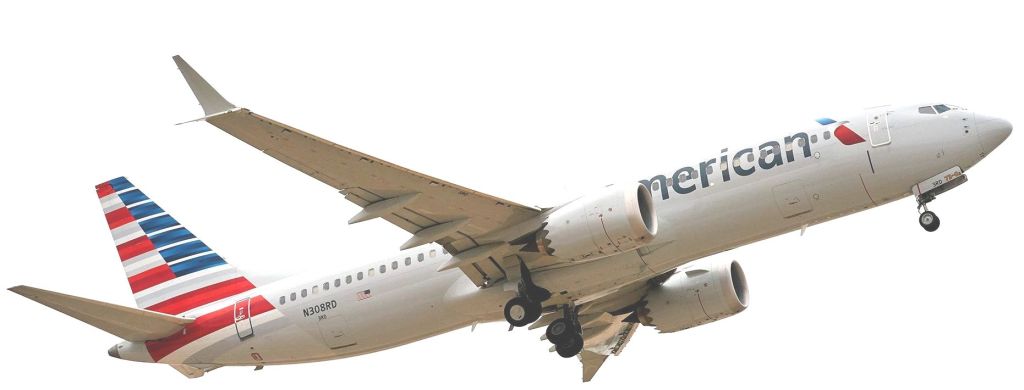
Banco Santander Brasil SA puede seguir adelante con una demanda que alega que la pandemia de Coranavirus devaluó un acuerdo de tarjeta de marca de diez años con American Airlines Inc. por valor de cientos de millones de Dólares para la aerolínea, dictaminó un Juez Federal de Nueva York. La Jueza Federal de Distrito Rachel Kovner en Brooklynn Nueva York, dijo el Jueves 30/09 que el banco puede continuar con su reclamo de que el cese temporal de vuelos de la aerolínea a Brasil durante la pandemia la excusó de pagar a la aerolínea millones de dólares al año para adquirir millas de premio para los titulares de tarjetas.
El acuerdo, que alcanzó la marca de cuatro años en Abril 2021, permite al Banco Santander emitir tarjetas de pago de la marca American Airlines a clientes en Brasil, pero requiere que compre un número no revelado de millas de premio cada año. American había instado a Rachel Kovner a desestimar el caso, diciendo que el contrato tiene una disposición que permite al banco rescindir el acuerdo si la cuota de mercado de la aerolínea disminuye en más del 50%. Una suspensión de meses de vuelos a Brasil al comienzo de la pandemia no cumplió con los criterios, dijo. La Jueza Federal dijo que el banco podría proceder argumentando que la interrupción imprevista causada por la pandemia lo excusó de cumplir con el contrato. Pero desestimó su afirmación de que el contrato terminó el verano pasado bajo una disposición de fuerza mayor. Kovner no explicó su razonamiento, pero dijo que emitirá una opinión. El caso es Banco Santander Brasil SA v. American Airlines Inc, Tribunal de Distrito de los Estados Unidos, Distrito Este de Nueva York, No. 1:20-cv-03098.
American-Santander legal threat
Face legal threat to lucrative card deal
Banco Santander Brasil SA may go ahead with a lawsuit alleging that the Coranavirus pandemic devalued a ten-year brand card agreement with American Airlines Inc. worth hundreds of millions of dollars for the airline, a New Federal Judge ruled. York. Federal District Judge Rachel Kovner in Brooklyn in New York said on Thursday 09/30 that the bank may continue with its claim that the temporary cessation of the airline’s flights to Brazil during the pandemic excused it from paying the airline millions of dollars a year to purchase award miles for cardholders.
The agreement, which reached the four-year mark in April 2021, allows Banco Santander to issue American Airlines-branded payment cards to customers in Brazil, but requires it to purchase an undisclosed number of award miles each year. American had urged Rachel Kovner to dismiss the case, saying the contract has a provision that allows the bank to terminate the deal if the airline’s market share declines by more than 50%. A months-long suspension of flights to Brazil at the start of the pandemic did not meet the criteria, she said. The Federal Judge said the bank could proceed arguing that the unforeseen interruption caused by the pandemic excused it from complying with the contract. But she dismissed her claim that the contract ended last summer under a force majeure provision. Kovner did not explain her reasoning, but said she will issue an opinion. The case is Banco Santander Brasil SA v. American Airlines Inc, United States District Court, Eastern District of New York, No. 1: 20-cv-03098.
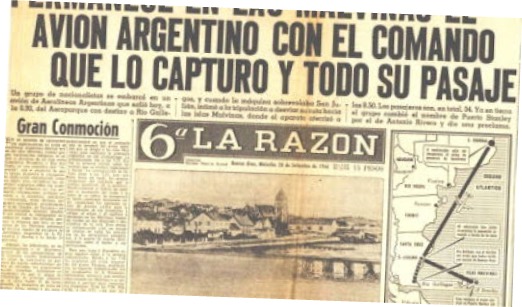
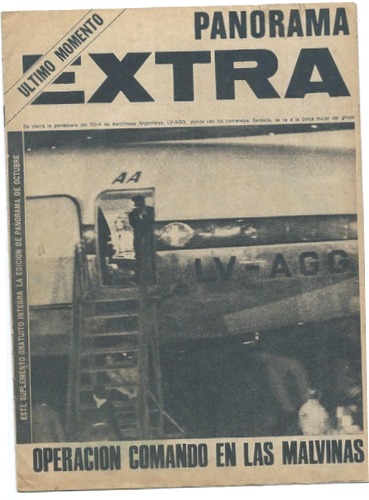
Hace 55 años, un grupo de jóvenes nacionalistas desvió un avión hacia las Malvinas, para reivindicar la soberanía argentina, mientras el Príncipe Felipe de Edimburgo visitaba Buenos Aires. A las 06:05 AM del 28 de Septiembre de 1966, dos jóvenes ingresan a la cabina del Douglas DC-4 de Aerolíneas Argentinas. Sonriendo le dicen al piloto “cambiamos de rumbo, vamos a Malvinas”. El Comandante Ernesto Fernández García sonríe también creyendo que es una broma. Los jóvenes exhiben sus armas y repiten “no tanta risa, esto es en serio”. El Piloto aduce no conocer la ruta. “Rumbo uno cero cinco”, replica y le entrega las cartas de navegación. El Comandante obedece la orden y enfila rumbo a Malvinas con 42 pasajeros a bordo. Estaba en marcha el “Operativo Cóndor”.
El vuelo AR648 de Aerolíneas había despegado a las 00:45 horas del Aeropuerto Jorge Newbery/AEP hacia Rio Gallegos. Mezclados entre los pasajeros lo abordaron dieciocho miembros del comando fuertemente armados. Este era el primer secuestro aéreo en la República Argentina. Unos años después se tornará casi una moda secuestrar un avión.
Comando Condor
Los integrantes del Comando Cóndor pertenecían a una escisión de Tacuara, llamada Movimiento Nueva Argentina (MNA). Los dirigía Dardo Cabo, de 25 años, periodista, hijo de Armando Cabo, un histórico dirigente de la Unión Obrera Metalúrgica, Lo secundaba Alejandro Giovenco, de 21 años, apodado el Chicato a causa del grueso aumento de sus lentes. La periodista y dramaturga María Cristina Verrier, de 27 años, era la tercera al mando del grupo. Su padre, César Verrier, había sido Juez de la Suprema Corte de Justicia. Los otros integrantes eran Ricardo Ahe, de 20 años de edad, empleado; Norberto Karasiewicz, 20 años, metalúrgico; Andres Castillo, 23 años, bancario; Aldo Omar Ramírez, 18 años, estudiante; Juan Carlos Bovo, 21 años, metalúrgico; Pedro Tursi, 29 años, empleado; Ramón Sánchez, 20 años, obrero; Juan Carlos Rodríguez, 31 años, empleado; Luis Caprara, 20 años, estudiante; Edelmiro Jesús Ramón Navarro, 27 años, empleado; Fernando José Aguirre, 20 años, empleado; Fernando Lisardo, 20 años, empleado; Pedro Bernardini, 28 años, metalúrgico; Edgardo Salcedo, 24 años, estudiante; y Víctor Chazarreta, 32 años, metalúrgico. La edad promedio del grupo era de 22 años. Todos eran peronistas.
Para garantizar la buena difusión del hecho subió al avión con un nombre falso Héctor Ricardo Garcia, Director del diario Crónica y la revista Así, quien viajando con los comandos se garantizaba la primicia. García alegará ante la justicia que fue convocado a viajar un día antes por Dardo Cabo, quien le anticipó un episodio importante, pero sin decir de qué se trataba. Según la investigación de Roberto Bardini, “los periodistas Américo Rial , Emilio Abras y el mismo Dardo Cabo todos militantes del Movimiento Nueva Argentina (MNA), trabajaban en Crónica. y convencieron mucho antes del operativo a Héctor Ricardo García de viajar en el DC-4 de Aerolíneas Argentinas”.
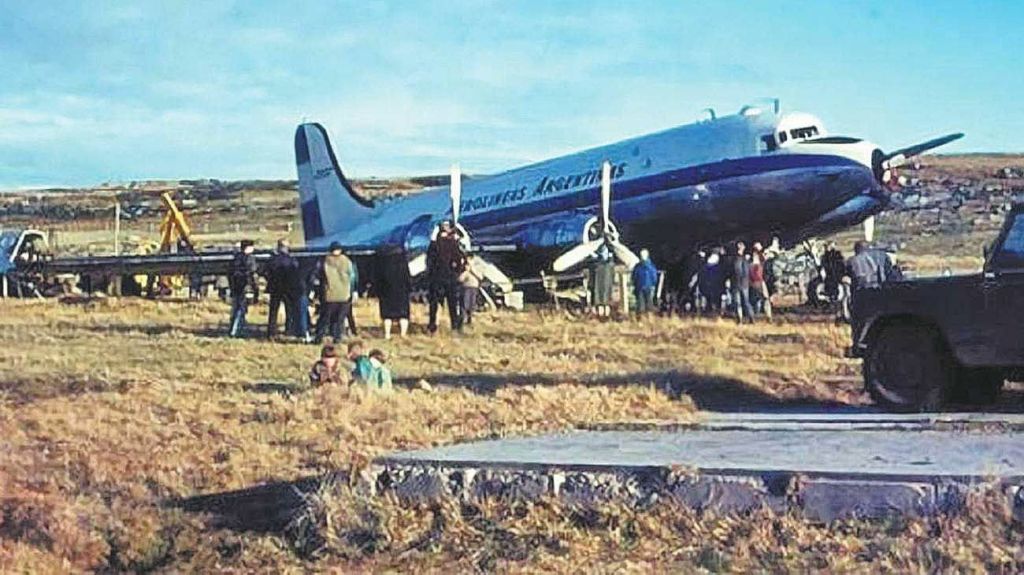
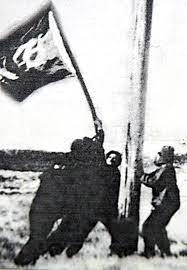
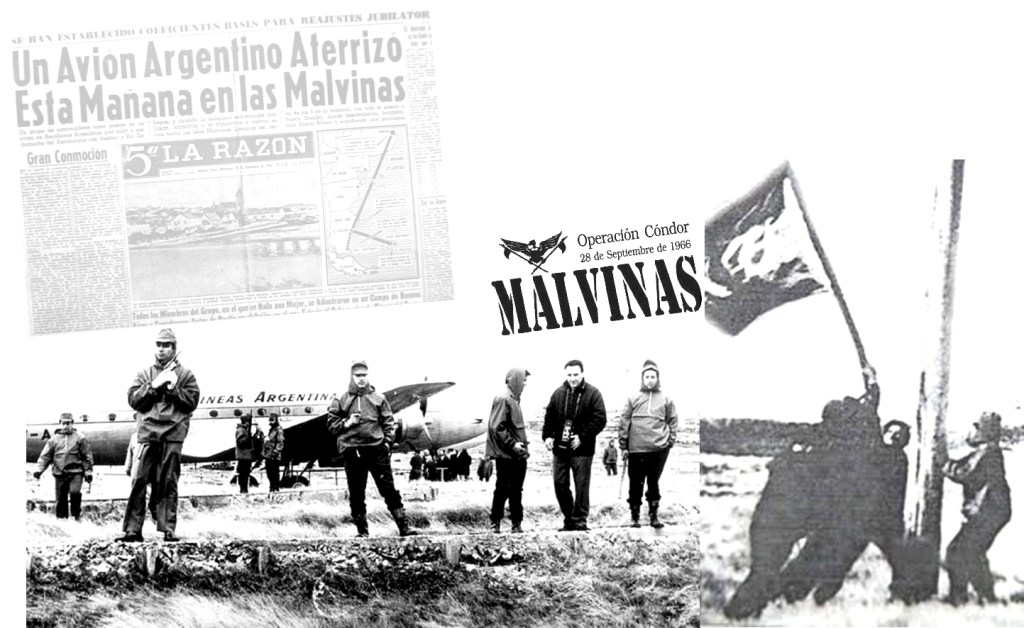
Aterrizaje del DC-4 a las 09:00 hs. de la mañana, el avión realizó tres pasadas rasantes sobre Puerto Stanley, rebautizada por los comandos “Puerto Rivero” en homenaje a la gesta del gaucho Rivero, buscando dónde aterrizar. Las islas no tenían aeródromo y lo más parecido era una pista de carreras cuadreras de tierra, donde finalmente bajo el avión. Ya en tierra los comandos descendieron e izaron siete banderas argentinas en distintos puntos cercanos. Luego tomaron posiciones de defensa alrededor de la aeronave, mientras se acercaban con mezcla de sorpresa y curiosidad habitantes de la isla. Entre ellos un joven Jefe de Policía al mando de seis efectivos que fue tomado como rehén.
Armando Cabo y Cristina Verrier se dirigieron a la casa del Gobernador interino, ante quien se presentaron anunciando que “como argentinos, hemos venido a esta tierra para quedarnos, ya que la consideramos nuestra”. Un isleño de origen chileno traducía las palabras que el gobernador no terminaba de entender. Recuperado de su sorpresa les ordenó: “fuera de aquí, ustedes no están en su casa”.
En la improvisada pista, ya varios jeeps Land Rover habían sido estacionados bloqueando el movimiento del avión, y casi un centenar de civiles voluntarios bien armados, rodeaban a prudente distancia todo el escenario. Los comandos hicieron bajar a los pasajeros del avión, entre quienes se encontraba el Gobernador de Tierra del Fuego e Islas Malvinas, Almirante Jose Maria Guzmán. Los pasajeros fueron alojados por los kelpers, mientras el comando seguía en el avión. A treinta y seis horas del arribo, la posición del comando era muy débil, carecían de alimentos y abrigo y estaban rodeados por una fuerza numerosa, ahora reforzada por una docena de militares británicos. El Sacerdote católico Rodolfo Roel los convenció de dejar el avión y trasladarse e su iglesia. Los comandos se formaron frente a una de las banderas izada en un mástil de hierro, cantaron el himno nacional, rezaron un padre nuestro, le entregaron las armas al piloto del avión y recuperando las banderas se retiraron hacia la iglesia. No hubo acto de rendición.
La misión estaba cumplida. Allí permanecieron hasta la llegada del buque Bahía Buen Suceso enviado por el Gobierno argentino para evacuarlos hacia Ushuaia. En 1982, el Bahía Buen Suceso prestó servicio como barco logístico durante la guerra de Malvinas. Los ingleses lo atacaron en Bahía Zorro donde quedó varado. Al terminar la guerra fue remolcado a aguas más profundas donde fue hundido por un submarino británico.
En Septiembre de 1966 gobernaba el dictador Juan Carlos Onganía. Los cóndores eligieron la fecha porque en esos días se encontraba de visita en nuestro país nada menos que el Príncipe Felipe de Edimburgo, consorte de la Reina Isabel II. Era una visita no oficial: llegó en su calidad de Presidente de la Federación Ecuestre Internacional, ya que el país organizaba el Campeonato Mundial de Hipismo por esos días. Incluso pudo jugar un “picadito amistoso” de polo con el dictador en el Club Militar San Jorge.
Los cóndores no estaban solos. En Buenos Aires algunas decenas de jóvenes hicieron manifestaciones de apoyo y cayeron presos, entre ellos el casi adolescente periodista Roberto Bardini. También en Rosario cinco jóvenes intentaron tomar el consulado británico y fueron desalojados por una fuerza de 50 policías fuertemente armados. La CGT y las 62 Organizaciones se expresaron a favor de los cóndores y amenazaron con un paro nacional si eran condenados. En Ushuaia fueron juzgados y encarcelados. La mayoría solo por nueve meses. Pero Dardo Cabo, Alejando Giovenco y Juan Carlos Rodriguez, por tener antecedentes, purgaron tres años de cárcel.
El jefe del grupo, Dardo Cabo, años después pasó a militar en Montoneros. El 8 de Enero de 1977, estando detenido en La Plata, fue sacado del penal y fusilado. Jorge Money fue asesinado el 17 de Mayo de 1975 por la Triple A. Alejandro Giovenco militante de la ultraderechista Concentración Nacional Universitaria (CNU), sobrevivió a un atentado de Montoneros, pero le explotó una bomba que llevaba en su portafolio y murió el 18 de Febrero de 1974. Miguel Angel Castrofini fue asesinado por el ERP22, el 8 de Marzo de 1974. Juan Carlos Rodríguez, vinculado a Lorenzo Miguel, murió asesinado por la CNU de La Plata. Aldo Omar Ramírez militó en Montoneros y fue secuestrado el 1 de Septiembre de 1977 y permanece desaparecido.
No está claro cuál era el plan de los cóndores. Cómo iban a resistir o a retirarse de Malvinas luego del complicado desembarco. El avión no tenía más combustible y las ruedas estaban enterradas en la turba malvinense. Tal vez el plan llegaba hasta donde pudieron hacer, izar la bandera argentina sobre nuestro suelo. Lo pagaron con años de cárcel y pusieron en riesgo sus vidas. Eran años en que la militancia por una causa representaba mucho más que obtener un cargo electivo o un buen puesto en el estado. Aquel vuelo AR648 marcaría el comienzo de una historia de secuestros aéreos que convulsionarían a la aviación comercial de Argentina.
55th anniversary of Operation Condor
Heading One-zero-five, Falkland Islands target
55 years ago, a group of young nationalists diverted a plane to the Islas Malvinas (Falklands Islands), to claim Argentine sovereignty, while Prince Felipe of Edinburgh was visiting Buenos Aires. At 06:05 AM on September 28, 1966, two young men enter the cabin of the Douglas DC-4 of Aerolíneas Argentinas. Smiling they say to the pilot «we change course, we are going to Malvinas». Commander Ernesto Fernández García also smiles, believing that it is a joke. Young people show their weapons and repeat «not so much laughter, this is serious». The Pilot claims not to know the route. «Heading one zero five», he replies and hands her the navigation charts. The Commander obeys the order and heads towards the Malvinas with 42 passengers on board. The «Condor Operation» was underway.
Aerolineas flight AR648 had taken off at 00:45 hours from Jorge Newbery Airport/AEP to Rio Gallegos. Mixed among the passengers, eighteen heavily armed commando members boarded him. This was the first air hijacking in the Argentine Republic. A few years later it will become almost a fashion to hijack a plane.
Commando Condor
The members of the Comando Condor belonged to a division of Tacuara, called the New Argentina Movement (MNA). They were led by Dardo Cabo, 25, a journalist, son of Armando Cabo, a historical leader of the Metallurgical Workers Union, seconded by Alejandro Giovenco, 21, nicknamed the Chicato because of the thick magnification of his glasses. The journalist and playwright María Cristina Verrier, 27, was the third in command of the group. Her father, César Verrier, had been a Justice of the Supreme Court of Justice. The other members were Ricardo Ahe, 20, an employee; Norberto Karasiewicz, 20 years old, metallurgist; Andres Castillo, 23 years old, bank; Aldo Omar Ramírez, 18 years old, student; Juan Carlos Bovo, 21 years old, metallurgist; Pedro Tursi, 29 years old, employee; Ramón Sánchez, 20 years old, worker; Juan Carlos Rodríguez, 31 years old, employee; Luis Caprara, 20 years old, student; Edelmiro Jesús Ramón Navarro, 27 years old, employee; Fernando José Aguirre, 20 years old, employee; Fernando Lisardo, 20 years old, employee; Pedro Bernardini, 28 years old, metallurgist; Edgardo Salcedo, 24 years old, student; and Víctor Chazarreta, 32 years old, metallurgist. The average age of the group was 22 years. They were all Peronists.
To guarantee the good diffusion of the event, Héctor Ricardo Garcia, Director of the newspaper Crónica and the magazine Así, got on the plane under a false name, who, traveling with the commandos, guaranteed the scoop. García will allege in court that he was summoned to travel the day before by Dardo Cabo, who anticipated an important episode, but without saying what it was about. According to Roberto Bardini’s investigation, “journalists Américo Rial, Emilio Abras and Dardo Cabo himself, all militants of the New Argentina Movement (MNA), worked in Crónica. and they convinced Héctor Ricardo García long before the operation to travel on the Aerolíneas Argentinas DC-4”.
Landing of the DC-4 at 09:00 am. In the morning, the plane made three low passes over Puerto Stanley, renamed by the commandos «Puerto Rivero» in homage to the deed of the gaucho Rivero, looking for a place to land. The islands did not have an airfield and the closest thing was a dirt quad-track racing track, where the plane finally got off. Once on land, the commandos descended and raised seven Argentine flags at different nearby points. They then took up defense positions around the aircraft, as the island’s inhabitants approached with a mixture of surprise and curiosity. Among them a young Chief of Police in command of six troops who was taken hostage.
Armando Cabo and Cristina Verrier went to the house of the interim Governor, before whom they presented themselves announcing that «as Argentines, we have come to this land to stay, since we consider it ours». An islander of Chilean origin translated the words that the governor did not quite understand. Recovered from his surprise, he ordered them: «Get out of here, you are not in his house».
On the makeshift runway, several Land Rover jeeps had already been parked blocking the plane’s movement, and nearly a hundred well-armed civilian volunteers surrounded the entire stage at a safe distance. The commandos made the passengers get off the plane, among whom was the Governor of Tierra del Fuego and the Malvinas Islands, Admiral José María Guzmán. The passengers were accommodated by the kelpers, while the command was still on the plane. Thirty-six hours after arrival, the command position was very weak, they lacked food and shelter, and were surrounded by a large force, now reinforced by a dozen British servicemen. The Catholic priest Rodolfo Roel convinced them to leave the plane and move to his church. The commandos formed in front of one of the flags hoisted on an iron pole, sang the national anthem, prayed our Father, handed the weapons to the pilot of the plane and, recovering the flags, they retired towards the church. There was no act of surrender.
The mission was accomplished. They remained there until the arrival of the ship Bahía Buen Suceso sent by the Argentine Government to evacuate them to Ushuaia. In 1982, the Bahía Buen Suceso served as a logistics ship during the Malvinas War. The English attacked him in Bahía Zorro where she was stranded. At the end of the war she was towed into deeper waters where she was sunk by a British submarine.
In September 1966, the dictator Juan Carlos Onganía ruled. The condors chose the date because in those days he was visiting our country no less than Prince Philip of Edinburgh, consort of Queen Elizabeth II. It was an unofficial visit: he arrived in his capacity as President of the International Equestrian Federation, since the country organized the World Equestrian Championships in those days. He was even able to play a “friendly mince” of polo with the dictator at the San Jorge Military Club.
The condors were not alone. In Buenos Aires some dozens of young people made demonstrations of support and were arrested, among them the almost adolescent journalist Roberto Bardini. Also in Rosario, five young men tried to take over the British consulate and were evicted by a force of 50 heavily armed policemen. The CGT and the 62 Organizations spoke out in favor of the condors and threatened a national strike if they were convicted. In Ushuaia they were tried and jailed. Most only for nine months. But Dardo Cabo, Alejando Giovenco and Juan Carlos Rodriguez, for having a criminal record, served three years in prison.
The head of the group, Dardo Cabo, years later became a soldier in Montoneros. On January 8, 1977, while he was detained in La Plata, he was taken from the prison and shot. Jorge Money was assassinated on May 17, 1975 by Triple A. Alejandro Giovenco, a militant of the far-right National University Concentration (CNU), survived an attack by Montoneros, but a bomb that he carried in his briefcase exploded and died on 18 February 1974. Miguel Angel Castrofini was assassinated by the ERP22, on March 8, 1974. Juan Carlos Rodríguez, linked to Lorenzo Miguel, was assassinated by the CNU of La Plata. Aldo Omar Ramírez was a member of Montoneros and was kidnapped on September 1, 1977 and remains missing.
It is not clear what the condors’ plan was. How they were going to resist or withdraw from the Malvinas after the complicated landing. The plane had no more fuel and the wheels were buried in the Falklands mob. Perhaps the plan went as far as they could, hoisting the Argentine flag over our soil. They paid for it with years in jail and put their lives at risk. They were years in which the membership for a cause represented much more than obtaining an elective office or a good position in the state. That AR648 flight would mark the beginning of a story of air hijackings that would convulse Argentina’s commercial aviation.
Aerolínea proyecta extender operaciones en Quito y Guayaquil
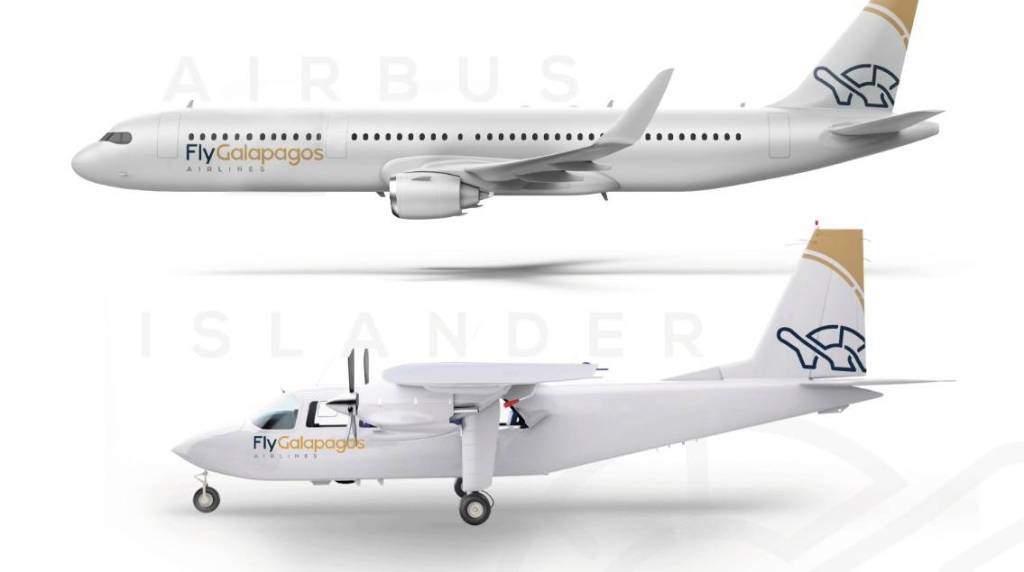
La aerolínea Fly Galápagos ha anunciado la expansión de los servicios aéreos hacia Quito y Guayaquil. Las nuevas rutas hacia el continente permitirá enlazar las Islas Galápagos con el continente para promocionar el turismo en la isla. El nivel de tráfico de pasajeros que mueve ese territorio hace que las compañías aéreas busquen obtener rutas muy lucrativas.
Antes de la pandemia operaban tres aerolíneas, que se disputaban un promedio de 22.000 pasajeros que entraban mensualmente a esa provincia. Tras la quiebra de la aerolínea TAME, Latam Airlines y Avianca Ecuador quedaron en el mercado. Aeroregional se sumó este año tras obtener parte de las frecuencias de TAME. Equinoxair y Galápagos Airways, aerolíneas en formación, obtuvieron licencia para las rutas que aún no han realizado operaciones comerciales.
Fly Galápagos expande servicios
Aerolínea proyecta extender operaciones en Quito y Guayaquil
La aerolínea Fly Galápagos ha anunciado la expansión de los servicios aéreos hacia Quito y Guayaquil. Las nuevas rutas hacia el continente permitirá enlazar las Islas Galápagos con el continente para promocionar el turismo en la isla. El nivel de tráfico de pasajeros que mueve ese territorio hace que las compañías aéreas busquen obtener rutas muy lucrativas.
Antes de la pandemia operaban tres aerolíneas, que se disputaban un promedio de 22.000 pasajeros que entraban mensualmente a esa provincia. Tras la quiebra de la aerolínea TAME, Latam Airlines y Avianca Ecuador quedaron en el mercado. Aeroregional se sumó este año tras obtener parte de las frecuencias de TAME. Equinoxair y Galápagos Airways, aerolíneas en formación, obtuvieron licencia para las rutas que aún no han realizado operaciones comerciales.
AW | 2021 10 02 13:43 | AIR TRAFFIC / AIRLINES / AVIATION ORGANISMS
IATA beneplácita con decisiones en Argentina
Con el fin de las restricciones al tránsito en la República Argentina, las aerolíneas esperan recuperar cien por ciento de las rutas que se perdieron por la pandemia. La Asociación de Transporte Aéreo Internacional (IATA) recibió con satisfacción las últimas decisiones adoptadas por el Gobierno argentino de levantar la mayoría de las actuales restricciones a los vuelos internacionales cuando se cumplan catorce (14) días desde que el 50% de la población del país haya completado su esquema de vacunación, ha generado optimismo en el sector aerocomercial. Se estima que se puede arribar a esa situación a mediados de este mes de Octubre 2021.
A partir del 01/11 se habilitará la entrada de todos los extranjeros, permitiendo desobligar a realizar una prueba de antígeno al entrar a la Argentina ni tampoco permanecer en cuarentena. En tanto, deberán contar con una vacunación completa y una prueba PCR negativa de máximo 72 horas previas al embarque.
Las medidas fueron bien recibidas por la IATA. “La decisión del Gobierno de Argentina de permitir gradualmente la reapertura del transporte aéreo en el país es una buena noticia en varios frentes. En primer lugar, restablece la libertad de viajar, que será especialmente bienvenida por aquellos a quienes se les impidió volar durante los últimos dieciocho meses. Además, las aerolíneas ahora podrán planificar con mayor previsibilidad y recuperar la conectividad que se ha perdido durante este tiempo. Esto será un impulso para la reconstrucción de la economía argentina, especialmente a través de la contribución del turismo y los negocios internacionales”, dijo Peter Cerdá, Vicepresidente Regional para Las Américas.
Según los cálculos de IATA, la reapertura de las fronteras de la Argentina a los viajeros internacionales permitirá que las aerolíneas comiencen a recuperar las cien por ciento de las rutas estimadas nacionales e internacionales que se perdieron como resultado de la pandemia. También estimaron que se comenzará a generar los US$ 1.779 millones de contribución directa al PBI de la Argentina que se pusieron en riesgo mientras estaban vigentes las limitaciones. Y detallaron que de esta forma se podrán apoyar y mantener los 21.470 puestos de trabajo locales y la contribución total anual de US$ 22.500 millones que el sector aporta al PBI de la Argentina.
“Este anuncio marca un cambio importante en la gestión de los riesgos del Covid-19, pasando de las medidas generales a nivel nacional a la evaluación del riesgo individual. El siguiente reto es encontrar un sistema para no excluir a los viajeros que no estén vacunados y que tendrán que seguir cumpliendo cuarentena, incluidos los menores que en la mayoría de los casos ni siquiera están contemplados en las campañas de inoculación en sus países de origen”, sostuvo Peter Cerdá.
L️as últimas medidas del Gobierno de Argentina dispusieron un avance progresivo en los cupos para el ingreso de pasajeros en vuelos internacionales. Entre este Viernes 01/10 y el 03/10 se habilitarán 2.300 plazas diarias; entre el 04/10 y el 10/10 serán 21.000 plazas semanales (unas 3.000 diarias); y a partir del día 11/10 28.000 plazas semanales (4.000 diarias). En tanto, a los catorce (14) días de alcanzar el 50% de la población con esquema de vacunación completo, se eliminan los cupos al tránsito de pasajeros.
Algunas empresas aéreas ya comenzaron a anticipar su aumento en la programación de vuelos para los próximos meses. Esta semana, Aerolíneas Argentinas anticipó que pasará de diez salidas diarias de vuelos internacionales en Octubre 2021 a unas dieciséis en n11/2021 y 12/2021 y a veinticinco en Enero de 2022. Actualmente, la cantidad de pasajeros que viaja a Europa representa apenas un 13% de los números previos a la pandemia. En el caso de los vuelos domésticos, la empresa prevé alcanzar en 2022 el 61% de los vuelos pre-pandemia, mientras que en asientos será un 75%. Todas las provincias tendrán seis o más vuelos por semana y se van a programar 31 intertramos, con 96 frecuencias por semana entre destinos que no pasan por Buenos Aires. Según la empresa, hay una aceleración de la cantidad de de reservas para volar últimos meses de 2021 y primeros meses de 2022, potenciada por el plan oficial de Previaje. “La hipótesis positiva, a futuro para la temporada de verano, es que vamos a estar con entre 75% y 80% de los pasajeros que volaron en enero de 2020. Y tenemos capacidad para agregar oferta adicional”, señaló Fabián Lombardo, Director Comercial de la empresa el Jueves 30/09 durante un encuentro con periodistas. Los datos de Aerolíneas Argentinas muestran que en vuelos domésticos en los primeros cuatro meses del este año se transportó cerca del 40% de los pasajeros en comparación con las cifras preCovid, luego hubo una caída —por las restricciones que solo permitían viajar al personal esencial— con porcentajes entre 20% y 18% y a partir de julio una recuperación. En septiembre viajaron 422.004 pasajeros, un 50% en comparación con los meses previos a la pandemia.
Sin embargo, la recuperación de los destinos internacionales será más lenta. Actualmente, la cantidad de pasajeros que viaja a Europa representa apenas un 13% de los números previos a la pandemia. Para los vuelos regionales, la cifra es apenas del 2% y para los vuelos dentro de América sin contar los Estados Unidos (por ejemplo al Caribe) es de 7%. Las mejores cifras, en tanto, se dan en los viajes a los Estados Unidos, donde la cantidad de pasajeros representa un 38% respecto a los número pre-Covid.
Argentina deepens flexibility
IATA welcomes decisions in Argentina
With the end of the traffic restrictions in the Argentine Republic, the airlines hope to recover one hundred percent of the routes that were lost due to the pandemic. The International Air Transport Association (IATA) received with satisfaction the latest decisions taken by the Argentine Government to lift most of the current restrictions on international flights when fourteen (14) days have elapsed since 50% of the country’s population has completed its vaccination schedule, it has generated optimism in the commercial aviation sector. It is estimated that this situation can be reached in the middle of this month of October 2021.
As of 11/01, the entry of all foreigners will be enabled, allowing them to undo an antigen test when entering Argentina or to remain in quarantine. Meanwhile, they must have a complete vaccination and a negative PCR test for a maximum of 72 hours prior to shipment.
The measures were well received by IATA. “The decision of the Government of Argentina to gradually allow the reopening of air transport in the country is good news on several fronts. First, it restores the freedom to travel, which will be especially welcomed by those who have been prevented from flying for the past eighteen months. Additionally, airlines will now be able to plan with greater predictability and regain connectivity that has been lost during this time. This will be a boost for the reconstruction of the Argentine economy, especially through the contribution of tourism and international business”, said Peter Cerdá, Regional Vice President for The Americas.
According to IATA calculations, the reopening of Argentina’s borders to international travelers will allow airlines to begin recovering the one hundred percent of the estimated national and international routes that were lost as a result of the pandemic. They also estimated that the US$ 1,779 million of direct contribution to Argentina’s GDP that was put at risk while the limitations were in force will begin to be generated. And they detailed that in this way they will be able to support and maintain the 21,470 local jobs and the total annual contribution of US$ 22,500 million that the sector contributes to Argentina’s GDP.
“This announcement marks a major shift in Covid-19 risk management, moving from general measures at the national level to individual risk assessment. The next challenge is to find a system to not exclude travelers who are not vaccinated and who will have to continue serving quarantine, including minors who in most cases are not even included in the inoculation campaigns in their countries of origin», said Peter Cerdá.
The IATA asked the Chief of Staff to organize meetings between the authorities and the industry to work in coordination on the steps that allow this reopening. Key priorities for the sector are elimination of quarantines without affecting unvaccinated minors and accepting antigen tests as an alternative to PCR in any instance where testing is required. The quota will gradually increase up to two weeks after 50% of the population is vaccinated with two doses.
The latest measures of the Government of Argentina provided a progressive advance in the quotas for the entry of passengers on international flights. Between this Friday 01/10 and 03/10, 2,300 places will be opened per day; between 04/10 and 10/10 there will be 21,000 places per week (about 3,000 per day); and as of October 11, 28,000 places per week (4,000 daily). Meanwhile, fourteen (14) days after reaching 50% of the population with a complete vaccination scheme, the quotas for passenger transit are eliminated.
Some airlines have already begun to anticipate their increase in flight schedules for the coming months. This week, Aerolíneas Argentinas anticipated that it will go from ten daily departures of international flights in October 2021 to about sixteen in 11/2021 and 12/2021 and to twenty-five in January 2022. Currently, the number of passengers traveling to Europe represents only 13 % of pre-pandemic numbers. In the case of domestic flights, the company expects to reach 61% of prepandemic flights by 2022, while in seats it will be 75%. All provinces will have six or more flights per week and 31 intertramos will be scheduled, with 96 frequencies per week between destinations that do not pass through Buenos Aires. According to the company, there is an acceleration in the number of reservations to fly in the last months of 2021 and the first months of 2022, boosted by the official Pre-trip plan. «The positive hypothesis, in the future for the summer season, is that we will be with between 75% and 80% of the passengers who flew in January 2020. And we have the capacity to add additional offer», said Fabián Lombardo, Commercial Director of the company on Thursday 09/30 during a meeting with journalists. Data from Aerolíneas Argentinas show that in domestic flights in the first four months of this year about 40% of passengers were transported compared to the pre-Covid figures, then there was a drop-due to restrictions that only allowed essential personnel to travel. with percentages between 20% and 18% and a recovery from July. In September, 422,004 passengers traveled, 50% compared to the months before the pandemic.
However, the recovery of international destinations will be slower. Currently, the number of passengers traveling to Europe represents just 13% of pre-pandemic numbers. For regional flights, the figure is barely 2% and for flights within America excluding the United States (for example to the Caribbean) it is 7%. The best figures, meanwhile, are for trips to the United States, where the number of passengers represents 38% compared to pre-Covid numbers.
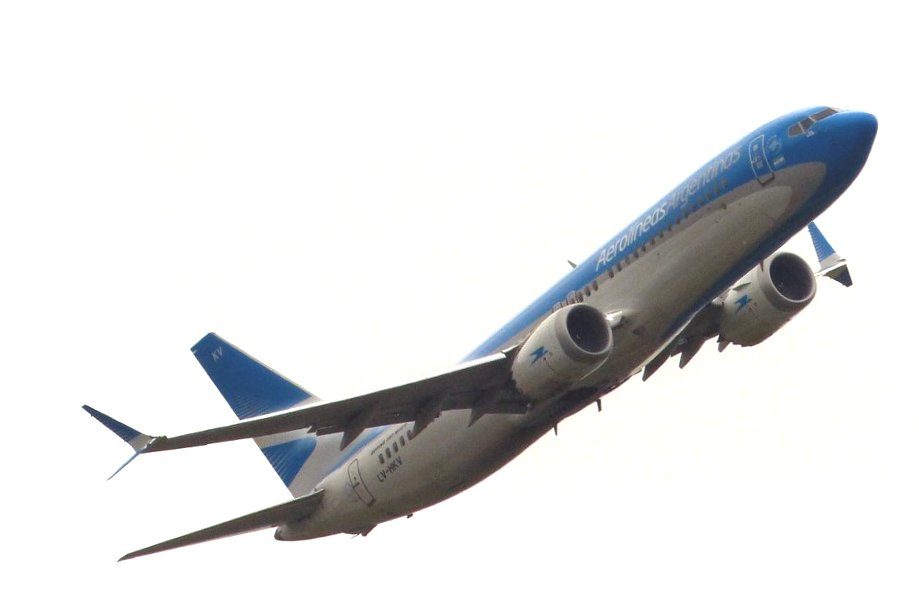
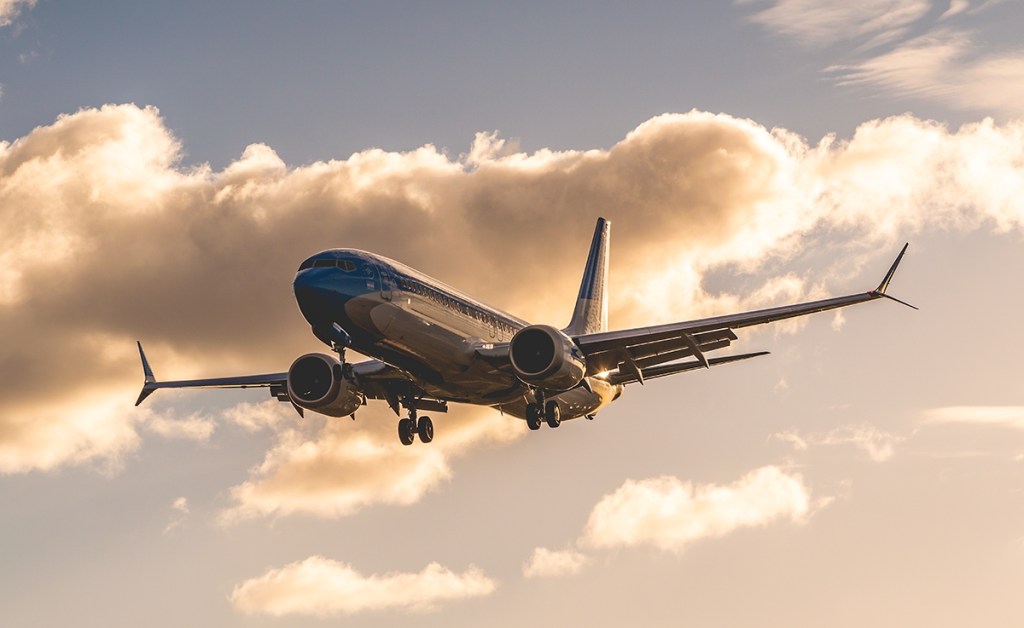
Este Viernes 01/10 Aerolíneas Argentinas ha reactivado el cuarto Boeing 737-8 MAX matrícula LV-HKV, después de más de dos años de incursión en tierra. La aeronave se encontraba almacenada en el Aeropuerto Jorge Newbery/AEP desde Marzo de 2019.
La compañía ha determinado limitar las operaciones de la línea 737 MAX a vuelos domésticos, por lo que la programación regional establecida para operaciones a países regionales/internacionales como los destinos Bogotá, Lima, Punta Cana, Río de Janeiro, Sao Paulo, etcétera.
Aerolíneas Argentinas cuenta con cinco Boeing 737-8 MAX en su flota: LV-GVD: Activo, LV-GVE: Almacenado (EZE), LV-HKU: Activo, LV-HKV: Activo, LV-HKW: Activo. La aerolínea establece que estarían operativos la totalidad de la flota hacia Diciembre 2021 deberían estar operativos todos los Boeing 737-8 MAX de Aerolíneas Argentinas hacia la apertura de las rutas internacionales.
Respecto a las órdenes adicionales remanentes de la línea 737 MAX, la compañía mantiene reprogramado doce unidades fueron órdenes diferidas producto del impacto de la pandemia. Las rutas domésticas, la aerolínea continúa con su programación de reactivación para alcanzar los niveles de pre-pandemia.
Aerolíneas reactivates 4th Boeing 737 MAX
Aerolíneas Argentinas reactivates LV-HKV aircraft
This Friday 01/10 Aerolíneas Argentinas has reactivated the fourth Boeing 737-8 MAX registration LV-HKV, after more than two years of incursion on the ground. The aircraft was stored at the Jorge Newbery/AEP Airport since March 2019.
The company has determined to limit the operations of the 737 MAX line to domestic flights, therefore the regional programming established for operations to regional/international countries such as the destinations Bogotá, Lima, Punta Cana, Rio de Janeiro, Sao Paulo, etc.
Aerolíneas Argentinas has five Boeing 737-8 MAXs in its fleet: LV-GVD: Active, LV-GVE: Stored (EZE), LV-HKU: Active, LV-HKV: Active, LV-HKW: Active. The airline establishes that the entire fleet would be operational by December 2021, all the Boeing 737-8 MAX of Aerolíneas Argentinas should be operational towards the opening of international routes.
Regarding the remaining additional orders of the 737 MAX line, the company has rescheduled twelve units that were deferred orders as a result of the impact of the pandemic. The domestic routes, the airline continues with its reactivation programming to reach pre-pandemic levels.
Modulos que contribuirán misiones de Artemis a la Luna
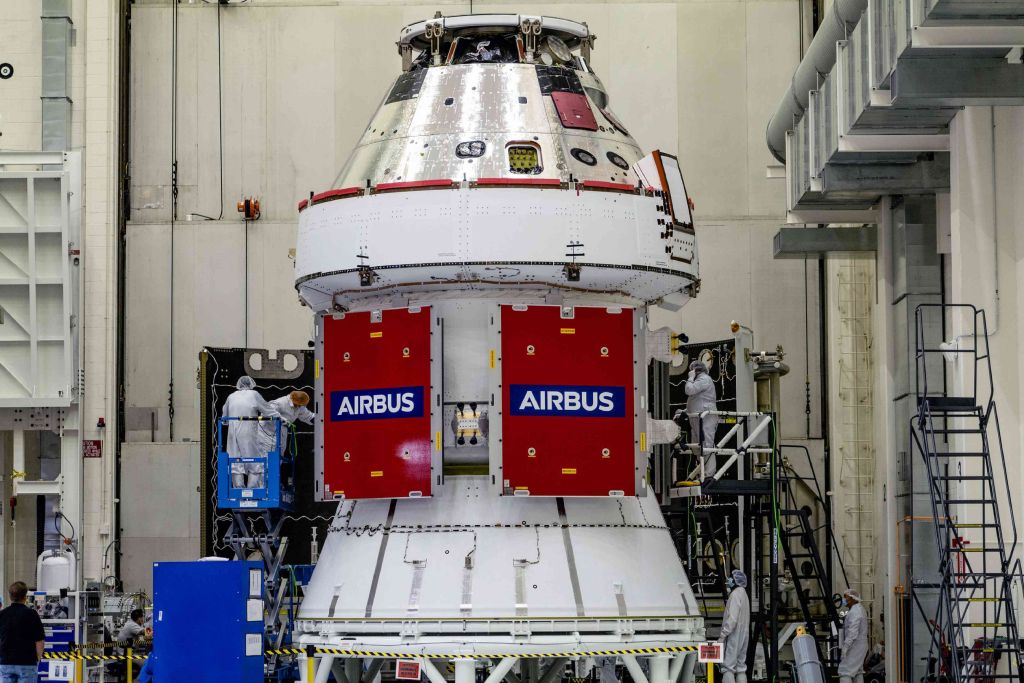
Entrega del 2º Módulo de Servicio Europeo: de Europa a la Luna. El Miércoles 6 de Octubre de 2021, los representantes de los medios de comunicación están invitados a participar en una visita virtual a la sala limpia de Airbus para la entrega del Módulo de servicio europeo ESM-2 y para ver ESM-3, ambas partes clave de la contribución de Europa a la Misiones de Artemis a la Luna.
Orion es la próxima nave espacial de exploración de la NASA que enviará humanos al espacio. Está diseñado para enviar astronautas al espacio más lejos que nunca, más allá de la Luna a los asteroides e incluso a Marte.
La European Space Agency (ESA) ha contratado y supervisa el desarrollo del Módulo de servicio europeo, la parte de la nave espacial Orion que proporciona aire, electricidad y propulsión. Al igual que la locomotora de un tren tira de los vagones de pasajeros y suministra energía, el módulo de servicio europeo impulsará el módulo de tripulación Orion a su destino y de regreso a la Tierra.
Durante la visita virtual, podrá ver los Módulos de servicio europeos ESM-2, que estarán listos para su envío al Centro Espacial Kennedy de la NASA, y ESM-3, que está en proceso de finalización a fines de 2022. El primer módulo, ESM-1, está completamente integrado con la cápsula Orion y ahora se encuentra en los preparativos finales para su lanzamiento en Artemis I, la primera misión lunar sin tripulación. La segunda misión Artemis, con ESM-2, llevará hasta cuatro astronautas en un sobrevuelo alrededor de la Luna y ESM-3 llevará a los primeros humanos en aterrizar en la Luna desde diciembre de 1972.
Programa del Miércoles 6 de Octubre de 2021: 11:00 Inicio del programa con una breve introducción de los ponentes. 11:15 Preguntas y respuestas 11:45 Fin del programa Posteriormente, se cargará una grabación en la TV web de la ESA: Enlace de TV web de la ESA: https://www.esa.int/ESA_Multimedia/ESA_Web_TV Canal de YouTube de Airbus: https://www.youtube.com/airbusds
Airbus presents ESM-2/ESM-3 modules
Modules that will contribute Artemis missions to the Moon
Delivery of the 2nd European Service Module: from Europe to the Moon. On Wednesday October 6, representatives of the media are invited to participate in a virtual tour of the Airbus Cleanroom for the delivery of the European Service Module ESM-2 and to see ESM-3, both key parts of Europa’s contribution to the Artemis Missions to the Moon.
Orion is NASA’s next exploration spacecraft that will send humans into space. It is designed to send astronauts into space further than ever, beyond the Moon to asteroids and even to Mars.
The European Space Agency (ESA) has contracted and oversees the development of the European Service Module, the part of the Orion spacecraft that provides air, electricity and propulsion. Like a train locomotive pulling passenger cars and supplying power, the European service module will propel the Orion crew module to its destination and back to Earth.
During the virtual tour, you will see the European Service Modules ESM-2, which will be ready for shipment to NASA’s Kennedy Space Center, and ESM-3, which is in the process of completion in late 2022. The first module, ESM-1, is fully integrated with the Orion capsule and is now in final preparations for launch on Artemis I, the first unmanned lunar mission. The second Artemis mission, with ESM-2, will carry up to four astronauts on a flyby around the Moon and ESM-3 will carry the first humans to land on the Moon since December 1972.
Program for Wednesday, October 6, 2021: 11:00 Start of the program with a brief introduction by the speakers. 11:15 Questions and Answers 11:45 End of program Subsequently, a recording will be uploaded to the ESA web TV: ESA web TV link: https://www.esa.int/ESA_Multimedia/ESA_Web_TV Airbus YouTube Channel: https://www.youtube.com/airbusds
AW | 2021 10 02 01:27 | AIR INVESTIGATION / AVIATION SAFETY / GOVERNMENT
Los grandes peces se escapan del proceso judicial Secuelas de los accidentes aéreos del 737 MAX
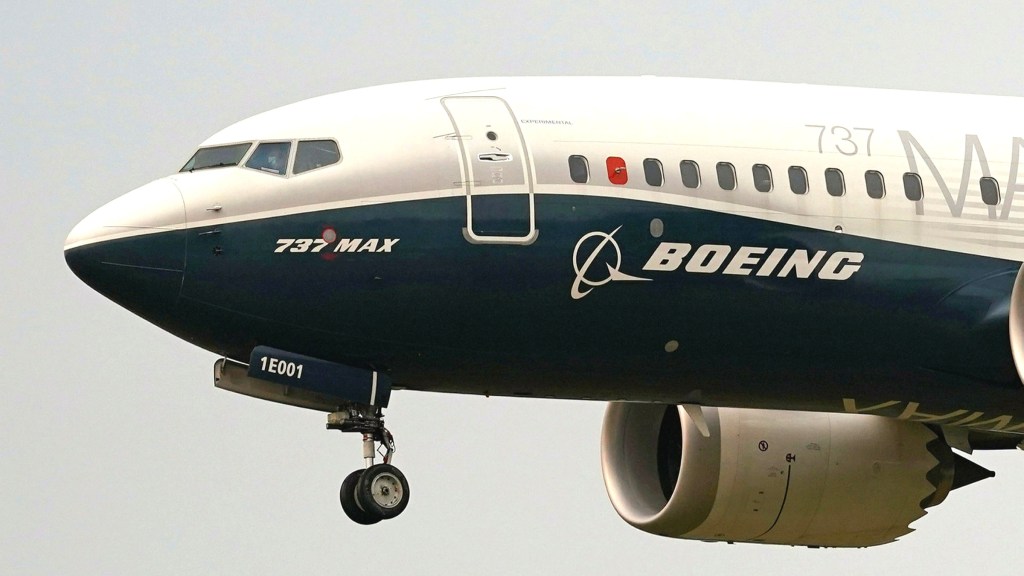
Las decisiones y eventos que precedieron a dos accidentes aéreos de la línea Boeing 737 MAX continúan trayendo serias dificultades en los procesos judiciales. Después de los accidentes aéreos que involucraron a dos aeronaves Boeing 737-8 MAX causando la muerte de las 346 personas a bordo, los fiscales solo persiguen a un par de empleados de nivel medio del gigante americano The Boeing Company. El fiscal que cortó el acuerdo con Boeing ahora trabaja para el bufete de abogados de Boeing. Algo huele a pescado podrido.
Sistema bajo escrutinio
Boeing instaló un sistema de software en su 737 MAX que, basado en lecturas de un solo sensor, empujó automáticamente la nariz del avión hacia abajo. El software no permitía una simple anulación manual por parte de los pilotos. Además, Boeing ocultó la existencia y el funcionamiento de este sistema a los pilotos, llegando a eliminar información sobre él de los borradores de los manuales de operación. Por lo tanto, el sistema de Boeing violó dos principios básicos de aviación. Primero la desinformación a los pilotos sobre cómo funciona su avión y cuáles son sus parámetros operativos. En segundo lugar, siempre permitir que los pilotos anulen fácilmente los controles automatizados, o como dijo un ex piloto de avión de combate F-15, «Cada vez que tiras del palo, las casas deberían hacerse más pequeñas».
Numerosas personas dentro de Boeing y la Administración Federal de Aviación (FAA) conocían estas características, así como su violación de los principios fundamentales. Boeing convenció a la FAA para que los permitiera dejándose convencer.
Después del segundo accidente del Boeing 737 MAX, los gobiernos de todo el mundo incursionaron la aeronave en cuestión. Las investigaciones sugirieron desde el principio que un solo sensor defectuoso en cada avión activó el software, que obligó a los aviones hacia una inmersión nariz hacia abajo. Las tripulaciones, sin darse cuenta de la existencia del sistema, no pudieron desconectarlo, perdieron el control y se estrellaron.
Juego de la culpa
La FAA y Boeing quedaron bajo el escrutinio del Congreso de los Estados Unidos y de los medios de comunicación. Los burócratas de la FAA afirmaron que Boeing los engañó. En particular, la FAA se quejó de que Boeing no reveló los cambios tardíos en el sistema de software crítico denominado Sistema de Aumento de Características de Maniobra (MCAS). Estos cambios aumentaron la probabilidad y el grado en que el sistema automáticamente sumergiera el avión nariz hacia abajo. La FAA, después del hecho, sostiene que si solo hubiera sabido sobre este cambio, nunca habría certificado el 737 MAX.
Boeing enfrentó posibles cargos criminales que podrían haber excluido a la compañía de contratos gubernamentales: una sentencia de muerte. Numerosos directores, funcionarios y empleados de Boeing también se enfrentaron a una investigación criminal y un posible enjuiciamiento. Boeing decidió cooperar y llegar a un acuerdo. La compañía ofreció dos empleados de nivel medio, Mark Forkner y su adjunto, Patrik Gustavsson. Boeing argumentó que ambos empleados, sin la dirección de los superiores, engañaron a la FAA al no actualizarla sobre los cambios en el sistema de software MCAS. La compañía fue multada por un valor de US$ 244 millones de Dólares y un acuerdo de enjuiciamiento diferido. El acuerdo incluso exoneró expresamente a la alta gerencia de Boeing. Al final del día, la FAA desvió la atención de sí misma. Boeing recibió una palmada en la muñeca, y los directores y altos directivos de la compañía se fueron libres.
Los informes indican que el Gobierno Federal acusará a Mark Forkner y Patrik Gustavsson. Los correos electrónicos revelados apuntan a una conducta licenciosa anunciando un engaño a las aerolíneas para que renunciaran al entrenamiento en el simulador del 737 MAX, expresando una fantasía como un truco mental del Jedi. Pero los mismos correos electrónicos que lo demuestran como un imbécil también sugieren que no engañó a sabiendas a la FAA, al menos en los cambios en el sistema de software que la FAA afirma que fueron tan cruciales. Mark Forkner probablemente argumentará que nunca engañó intencionalmente a la FAA y que alguien más en Boeing tenía la obligación de actualizar a la FAA sobre cualquier cambio en el sistema. Buscarán presionar a Mark Forkner para que se declare culpable.
Peces grandes se escapan
La culpabilidad de Mark Forkner no establecerá la inocencia de la FAA o Boeing. Tanto Boeing como institución, así como la FAA, sabían que el sistema MCAS del 737 MAX violaba los principios básicos de la aviación. La pregunta que surge es ¿cómo lograron el personal mayor de la FAA y Boeing un escape tan limpio? Un último hecho puede ser el más revelador: Erin Nealy Cox, la Fiscal Federal que dirigió el caso Boeing 737 MAX, dejó el Departamento de Justicia para convertirse en socia de Kirkland & Ellis. Esa firma, con ganancias por socio de capital que promedian los US$ 6,2 millones de Dólares, sirve actualmente como asesor externo de The Boeing Company. Más detalles reveladores permiten observar que su incorporación a la firma de buffet fue anunciada por su nuevo socio, Mark Filip. Como abogado de Boeing, Mark Filip firmó el Acuerdo de Enjuiciamiento Diferido en nombre de la compañía. Mark Filip, por cierto, también llegó a Kirkland & Ellis desde el Departamento de Justicia, donde emitió el muy promocionado «Memorando Filip», que establece los «Principios de enjuiciamiento Federal de organizaciones empresariales», aunque usted no lo crea. Algo aquí huele muy mal, tal vez sea el pez grande se ha escapado intencionalmente.
Framework case of the Boeing 737 MAX
Big fish escape the judicial process Aftermath of the 737 MAX plane crashes
The decisions and events that preceded two Boeing 737 MAX air crashes continue to bring serious difficulties in the legal proceedings. After the air crashes involving two Boeing 737-8 MAX aircraft killing all 346 people on board, prosecutors are only going after a couple of mid-level employees of the American giant The Boeing Company. The prosecutor who cut the deal with Boeing now works for the Boeing law firm. Something smells like rotten fish.
System under scrutiny
Boeing installed a software system in its 737 MAX that, based on readings from a single sensor, automatically pushed the nose of the plane down. The software did not allow for a simple manual override by the pilots. In addition, Boeing concealed the existence and operation of this system from the pilots, even removing information about it from draft operating manuals. Therefore, the Boeing system violated two basic aviation principles. First, the misinformation to the pilots about how their plane works and what its operating parameters are. Second, always allow pilots to easily override automated controls, or as one former F-15 fighter jet pilot put it, «Every time you pull the stick, the houses should get smaller».
Many people within Boeing and the Federal Aviation Administration (FAA) were aware of these characteristics, as well as their violation of fundamental principles. Boeing convinced the FAA to allow them by being persuaded.
After the second Boeing 737 MAX accident, governments around the world raided the aircraft in question. Investigations suggested early on that a single faulty sensor on each plane triggered the software, forcing the planes into a nose-down dive. The crews, unaware of the existence of the system, were unable to disconnect it, lost control and crashed.
Blame game
The FAA and Boeing came under the scrutiny of the United States Congress and the media. FAA bureaucrats claimed that Boeing misled them. In particular, the FAA complained that Boeing failed to disclose late changes to the critical software system called the Maneuvering Characteristics Augmentation System (MCAS). These changes increased the probability and the degree to which the system would automatically submerge the aircraft nose down. The FAA, after the fact, maintains that if it had only known about this change, it would never have certified the 737 MAX.
Boeing faced possible criminal charges that could have excluded the company from government contracts a death sentence. Numerous Boeing directors, officers and employees also faced a criminal investigation and possible prosecution. Boeing decided to cooperate and reach an agreement. The company offered two mid-level employees, Mark Forkner and his deputy, Patrik Gustavsson. Boeing argued that both employees, without direction from superiors, misled the FAA by not updating it on the changes to the MCAS software system. The company was fined US$ 244 million and a deferred prosecution agreement. The deal even expressly exonerated Boeing’s top management. At the end of the day, the FAA diverted attention from itself. Boeing was slapped on the wrist, and the company’s directors and senior managers went free.
Reports indicate that the Federal Government will indict Mark Forkner and Patrik Gustavsson. The emails revealed point to licentious conduct announcing a hoax for airlines to give up training on the 737 MAX simulator, expressing a fantasy like a mind trick from the Jedi. But the same emails that prove him a jerk also suggest that he did not knowingly mislead the FAA, at least on the changes to the software system that the FAA claims were so crucial. Mark Forkner will likely argue that he never intentionally misled the FAA and that someone else at Boeing had an obligation to update the FAA on any changes to the system. They will seek to pressure Mark Forkner to plead guilty.
Big fish run away
Mark Forkner’s guilt will not establish the innocence of the FAA or Boeing. Both Boeing as an institution, as well as the FAA, knew that the MCAS system of the 737 MAX violated the basic principles of aviation. The question that arises is how did senior FAA and Boeing personnel achieve such a clean escape? One last fact may be the most telling: Erin Nealy Cox, the US Attorney who led the Boeing 737 MAX case, left the Justice Department to become a partner at Kirkland & Ellis. That firm, with earnings per equity partner averaging US$ 6.2 million, currently serves as an outside advisor to The Boeing Company. More revealing details show that her incorporation into the buffet firm was announced by her new partner, Mark Filip. As an attorney for Boeing, Mark Filip signed the Deferred Prosecution Agreement on behalf of the company. Mark Filip, by the way, also came to Kirkland & Ellis from the Justice Department, where he issued the highly touted «Filip Memorandum,» which sets out the «Principles of Federal Prosecution of Business Organizations», believe it or not. Something here smells really bad, maybe it’s the big fish that has escaped intentionally.
ExpressJet se relanza con nueva denominación comercial en Reno
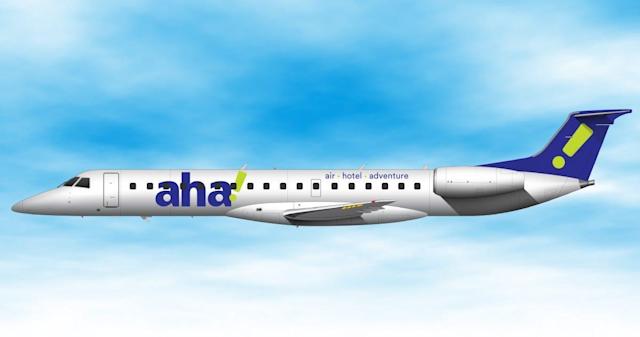
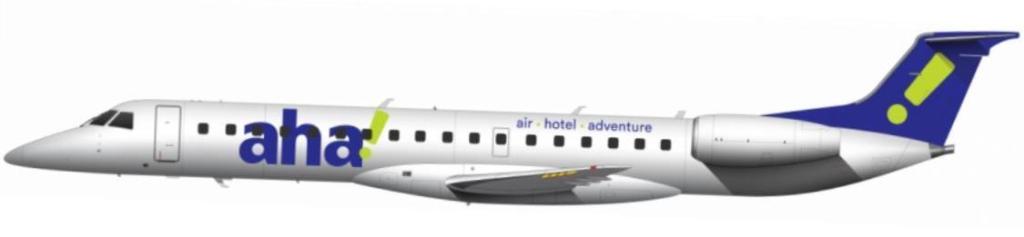
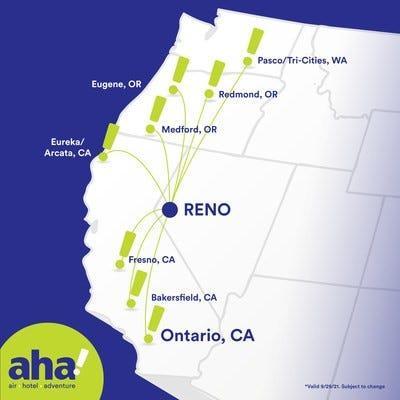
ExpressJet Airlines, con sede en College Park, se ha mutado de denominación comercial y como antigua aerolínea regional fuera de la base de Atlanta; ahora operando desde Reno, Estado de Nevada (NV). Esta semana, ExpressJet anunció planes para operar vuelos desde el Aeropuerto Internacional Reno-Tahoe a ocho ciudades de California (CA), Washington (WA) y Oregon (OR) bajo una nueva marca de ocio llamada Aha!, cuyo acrónimo significa Aire-Hotel-Aventura.
ExpressJet, anteriormente conocida como Atlantic Southeast Airlines (ASA), fue una aerolínea regional para Delta Connection durante décadas, y luego fue una aerolínea regional de United Express antes de cerrar el año 2020. La pérdida del contrato de Delta ha significado el fin de la era para la aerolínea regional de Atlanta. En Abril 2021, ExpressJet presentó una solicitud ante el Departamento de Transporte (DOT) de Estados Unidos para reanudar el servicio de las aerolíneas. El CEO de ExpressJet, Subodh Karnik, dijo que su objetivo era servir a las ciudades que perdieron el servicio sin escalas a lo largo de los años debido a fusiones y adquisiciones de aerolíneas y otros factores. También reconoció que eso probablemente significaría vuelos entre ciudades más pequeñas, en lugar de centros como Atlanta.
Startup Aha!
Aha! esperaba comenzar a volar en Junio 2021, sin embargo, no fue hasta el 30/07 que el DOT emitió una orden declarando a ExpressJet apto para reanudar el vuelo como aerolínea certificada. Ahora, la nueva etapa de la aerolínea regional planea comenzar a volar el 24 de Octubre de 2021 totalmente renovada. Sus primeros vuelos serán a Reno desde Pasco/Tri-Cities, Washington; Medford, Redmond y Eugene, Oregón; y Bakersfield, Ontario, Arcata-Eureka y Fresno/Yosemite, California. Los vuelos serán tres veces por semana entre los destinos con aviones regionales Embraer ERJ145 de 50 asientos. La compañía dijo que planea crecer a más de veinte ciudades en 2022.
Subodh Karnik es el inversor mayoritario en ManaAir LLC, que adquirió la compañia aérea ExpressJet de la aerolínea regional SkyWest en 2019. El propietario mayoritario de ExpressJet es ahora KAir Enterprises LLC, que tiene a United Airlines como propietario minoritario.
ExpressJet renamed Aha!
ExpressJet relaunches under new Reno-based brand name
College Park-based ExpressJet Airlines has changed its business name and former regional airline out of the Atlanta base; now operating out of Reno, Nevada State (NV). This week, ExpressJet announced plans to operate flights from Reno-Tahoe International Airport to eight cities in California (CA), Washington (WA) and Oregon (OR) under a new leisure brand called Aha!, which acronym stands for Air-Hotel-Adventure.
ExpressJet, formerly known as Atlantic Southeast Airlines (ASA), was a regional carrier for Delta Connection for decades, then a United Express regional carrier before closing in 2020. The loss of the Delta contract has spelled the end of the era for the Atlanta regional carrier. In April 2021, ExpressJet filed an application with the United States Department of Transportation (DOT) to resume airline service. ExpressJet CEO Subodh Karnik said his goal was to serve cities that lost nonstop service over the years due to airline mergers and acquisitions and other factors. He also acknowledged that that would likely mean flights between smaller cities, rather than hubs like Atlanta.
Startup Aha!
Aha! expected to begin flying in June 2021, however, it was not until 07/30 that the DOT issued an order declaring ExpressJet fit to resume flight as a certified airline. Now, the new stage of the regional airline plans to start flying on October 24, 2021 completely renewed. Your first flights will be to Reno from Pasco/Tri-Cities, Washington; Medford, Redmond and Eugene, Oregon; and Bakersfield, Ontario, Arcata-Eureka and Fresno/Yosemite, California. Flights will be three times a week between destinations with 50-seat Embraer ERJ145 regional aircraft. The company said it plans to grow to more than twenty cities in 2022.
Subodh Karnik is the majority investor in ManaAir LLC, which acquired the ExpressJet airline from regional airline SkyWest in 2019. ExpressJet’s majority owner is now KAir Enterprises LLC, which has United Airlines as a minority owner.
AW | 2021 10 01 21:30 | INDUSTRY / AVIATION TECHNOLOGY
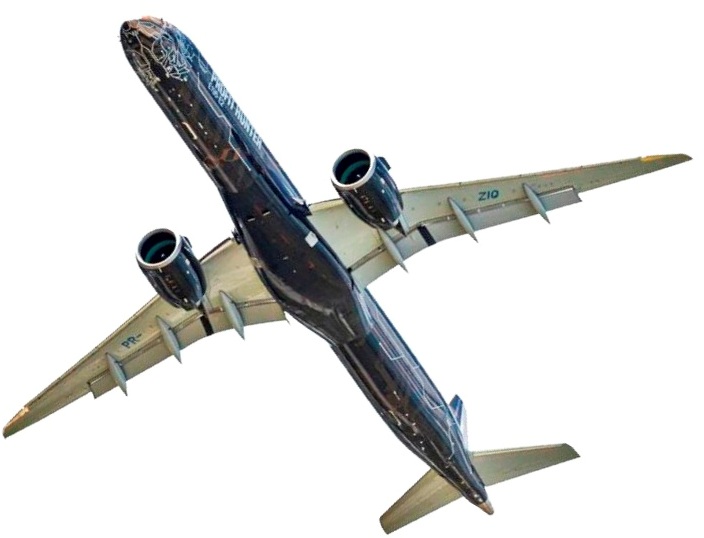
Embraer continúa ensayos ruidos en E175-E2
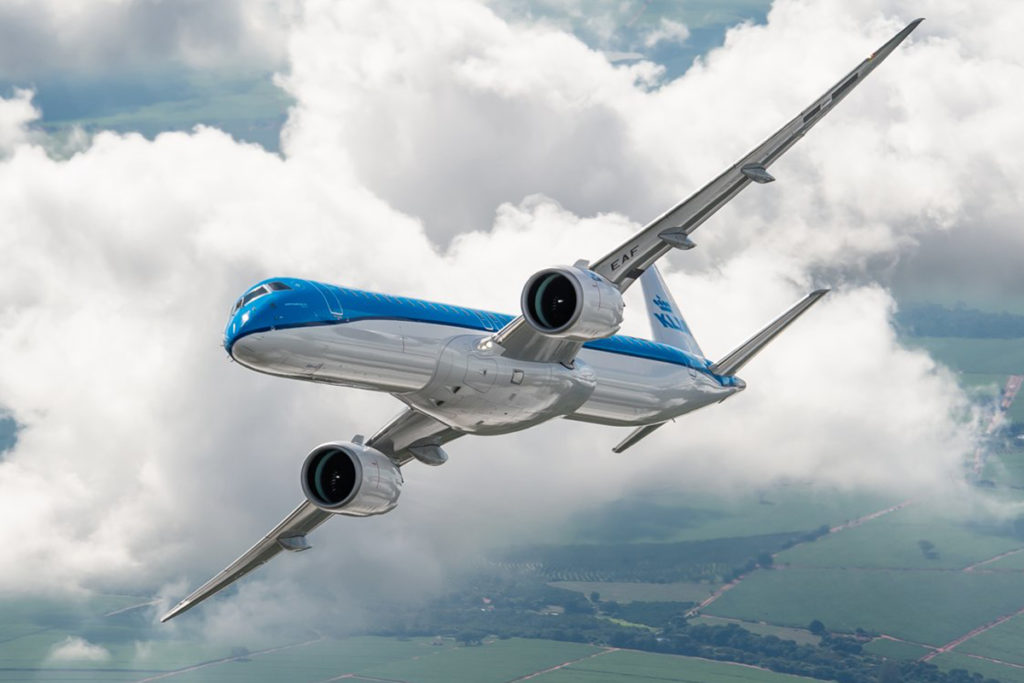
Embraer continúa evaluando la sonoridad de los nuevos E2-Jets persiguiendo bajar los decíbeles de ruido mejorando su condición como aeronave silenciosa. El tercer mayor fabricante de aviones del mundo, ha ganado muchos elogios de los clientes de los aviones E190-E2 y E195-E2 de segunda generación más modernos en los últimos años por la reducción de las emisiones de ruido, entre otros aspectos destacados.
Los países del mundo continúan marcando la presión sobre la aviación para reducir sus impactos en el medio ambiente, la huella de ruido que experimenta la población en las cercanías de los aeropuertos es uno de los aspectos incluidos en esta nueva realidad que el segmento tratará en los próximos años y décadas. El fabricante brasileño continúa avanzando en sus proyectos de reducción de ruido de la nueva familia de aviones más eficientes, buscando dar atención en el E175-E2, el miembro más pequeño de los tres modelos de la generación más actualizada.
Embraer ha presenta información visual sobre cómo se realizan los ensayos de las pruebas prácticas de vuelo del modelo para capturar los sonidos emitidos y estudiar cómo reducirlos aún más. El equipo montado en su Unidad de Gavião Peixoto, en el interior de São Paulo, del que participan ingenieros y pilotos, comentan los aspectos de la operación, como la disposición de los micrófonos y la precisión del lugar donde el avión necesita volar. «Nuestro equipo de treinta ingenieros y técnicos tardó varias semanas en instalar equipos sensibles hace unos meses en nuestras instalaciones de prueba en Gavião Peixoto. Los dispositivos midieron el ruido de despegue y aterrizaje de nuestro E-Jet más nuevo, el E175-E2, a medida que el avión pasaba a la certificación. El proceso está altamente coordinado entre las tripulaciones de tierra y los pilotos que deben volar el E2 en varios ángulos, velocidades y altitudes para construir un perfil de ruido para la aeronave a partir de casi 70,000 muestras de sonido generadas por segundo, capturadas en 96 micrófonos», dijo Embraer en su comunicado.
Embraer E2 sound system test
Embraer continues noise tests on E175-E2
Embraer continues to evaluate the loudness of the new E2-Jets in pursuit of lowering the decibels of noise, improving their status as a silent aircraft. The third-largest aircraft manufacturer in the world, it has won much praise from customers for the most modern second-generation E190-E2 and E195-E2 aircraft in recent years for reduced noise emissions, among other highlights.
The countries of the world continue to put pressure on aviation to reduce its impact on the environment, the noise footprint experienced by the population in the vicinity of airports is one of the aspects included in this new reality that the segment will deal with in the years and decades to come. The Brazilian manufacturer continues to advance its noise reduction projects for the new family of more efficient aircraft, seeking to pay attention to the E175-E2, the smallest member of the three models of the most up-to-date generation.
Embraer has presented visual information on how the model’s practical flight tests are carried out to capture the emitted sounds and study how to reduce them further. The team assembled at its Gavião Peixoto Unit, in the interior of São Paulo, in which engineers and pilots participate, comment on the aspects of the operation, such as the arrangement of the microphones and the precision of the place where the plane needs to fly. «Our team of thirty engineers and technicians took several weeks to install sensitive equipment a few months ago at our test facility in Gavião Peixoto. The devices measured the takeoff and landing noise of our newest E-Jet, the E175-E2, to as the aircraft progressed to certification. The process is highly coordinated between ground crews and pilots who must fly the E2 at various angles, speeds and altitudes to build a noise profile for the aircraft from nearly 70,000 samples of sound generated per second, captured at 96 microphones», Embraer said in its statement.
Teste do sistema de som Embraer E2
Embraer continua testes de ruído no E175-E2
A Embraer continua avaliando o loudness dos novos jatos E2-Jets em busca de diminuir os decibéis de ruído, melhorando seu status de aeronave silenciosa. Terceira maior fabricante de aeronaves do mundo, ela ganhou muitos elogios dos clientes pelas mais modernas aeronaves de segunda geração E190-E2 e E195-E2 nos últimos anos por reduzir as emissões de ruído, entre outros destaques.
Os países do mundo continuam pressionando a aviação para reduzir o seu impacto no meio ambiente, a pegada sonora vivida pela população do entorno dos aeroportos é um dos aspectos incluídos nesta nova realidade que o segmento vai atender nos anos e nas próximas décadas. A fabricante brasileira continua avançando em seus projetos de redução de ruído para a nova família de aeronaves mais eficientes, buscando dar atenção ao E175-E2, o menor integrante dos três modelos da geração mais atual.
A Embraer apresentou informações visuais de como são realizados os testes práticos de voo do modelo para captar os sons emitidos e estudar como reduzi-los ainda mais. A equipe montada na Unidade Gavião Peixoto, no interior de São Paulo, da qual participam engenheiros e pilotos, comenta aspectos da operação, como a disposição dos microfones e a precisão do local por onde o avião deve voar. “Nossa equipe de trinta engenheiros e técnicos levou várias semanas para instalar equipamentos sensíveis há alguns meses em nossa instalação de testes em Gavião Peixoto. Os aparelhos mediram o ruído de decolagem e aterrissagem de nosso mais novo E-Jet, o E175-E2, conforme o aeronave progrediu para a certificação. O processo é altamente coordenado entre as equipes de solo e os pilotos que devem voar no E2 em vários ângulos, velocidades e altitudes para construir um perfil de ruído para a aeronave a partir de quase 70.000 amostras de som geradas por segundo, capturadas em 96 microfones“, a Embraer disse em seu comunicado.
Airbus Defence and Space y sus socios Fraunhofer IIS, Fraunhofer FOKUS, Bundeswehr University Munich y Eurescom han lanzado recientemente un proyecto para estudiar la entrega de estándares basados en 5G y más allá de los servicios de comunicación 5G en una infraestructura espacial. El uso de satélites contribuirá en gran medida a los Objetivos de Desarrollo Sostenible de la ONU para una sociedad mejor y un crecimiento sostenible en todos los sectores industriales.
La infraestructura de red basada en el ritmo muy pronto complementará las redes móviles terrestres 5G que se están implementando actualmente. Esto conducirá a que las comunicaciones por satélite se conviertan en una parte integrada e indispensable del ecosistema global de telecomunicaciones con el potencial de hacer crecer los segmentos de mercado existentes, como el backhauling, y expandirse a nuevas áreas como las redes híbridas y la Internet de las Cosas (IoT).
El estudio, que está financiado por la Agencia Espacial Europea (ESA), propondrá una visión integral de cómo una infraestructura espacial 5G y más allá de 5G puede proporcionar servicios para consumidores e industrias que brindan rendimiento, confiabilidad, resiliencia y seguridad.
El consorcio propondrá una infraestructura de red no terrestre (NTN) y escenarios de implementación para brindar servicios de comunicación avanzados de manera oportuna y rentable. Además, se centrará en la preparación de una futura hoja de ruta de tecnología de comunicaciones por satélite en línea con los conceptos emergentes de 6G para que una NTN desempeñe un papel aún mayor en la oferta de conectividad global.
Los objetivos clave del estudio son: Consolidar los requisitos para respaldar una variedad de industrias y consumidores, de acuerdo con las partes interesadas y los reguladores de la industria. Definir servicios que respalden estos segmentos de mercado a mediano (2025) y largo plazo más allá de 2030. Definir la arquitectura general del sistema y sus componentes. Para definir la convergencia y la integración del sistema con 5G y más allá de las redes terrestres 5G, teniendo en cuenta las normas pertinentes, como la tercera Generation Partnership Project. Elaborar hojas de ruta en apoyo del desarrollo, validación e implementación de la arquitectura propuesta y sus componentes, incluida la investigación necesaria. Establecer recomendaciones de mecanismos de financiamiento con modelos válidos de adquisición y despliegue para la realización de la infraestructura propuesta.
El estudio debe completarse a mediados de 2022 y producirá un documento de posición que describa los principales hallazgos del estudio. Se hará especial hincapié en proponer conceptos para la infraestructura espacial 5G y recomendaciones de tecnología y hojas de ruta de demostración, así como modelos asociados de implementación y adquisición.
5G for space infrastructure
Airbus/partners study 5G standards space infrastructure
Airbus Defense and Space and its partners Fraunhofer IIS, Fraunhofer FOKUS, Bundeswehr University Munich and Eurescom have recently launched a project to study the delivery of standards based on 5G and beyond 5G communication services in a space infrastructure. The use of satellites will contribute greatly to the UN Sustainable Development Goals for a better society and sustainable growth in all industrial sectors.
The rhythm-based network infrastructure will very soon complement the 5G land mobile networks that are currently being deployed. This will lead to satellite communications becoming an integrated and indispensable part of the global telecommunications ecosystem with the potential to grow existing market segments, such as backhauling, and expand into new areas such as hybrid networks and the Internet of Things (IoT).
The study, which is funded by the European Space Agency (ESA), will propose a comprehensive vision of how a space infrastructure 5G and beyond 5G can provide services for consumers and industries that provide performance, reliability, resilience and security.
The consortium will propose a non-terrestrial network (NTN) infrastructure and deployment scenarios to provide advanced communication services in a timely and cost-effective manner. In addition, it will focus on preparing a future satellite communications technology roadmap in line with emerging 6G concepts for an NTN to play an even greater role in delivering global connectivity.
The key objectives of the study are: Consolidate requirements to support a variety of industries and consumers, in agreement with stakeholders and industry regulators. Define services that support these market segments in the medium (2025) and long-term beyond 2030. Define the general architecture of the system and its components. To define the convergence and integration of the system with 5G and beyond 5G terrestrial networks, taking into account the relevant standards, such as the third Generation Partnership Project. Prepare roadmaps in support of the development, validation and implementation of the proposed architecture and its components, including the necessary research. Establish recommendations for financing mechanisms with valid acquisition and deployment models to carry out the proposed infrastructure.
The study is due to be completed by mid-2022 and will produce a position paper outlining the study’s main findings. Special emphasis will be placed on proposing concepts for 5G space infrastructure and technology recommendations and demonstration roadmaps, as well as associated deployment and procurement models.