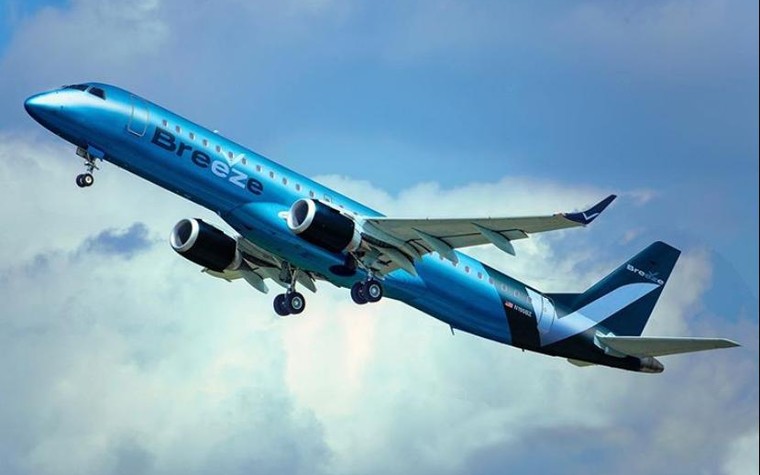
Breeze arrienda 15 Embraer E190 para lanzamiento servicio
Breeze Aviation ha anunciado que ha firmado un acuerdo para arrendar 15 Embraer E190-E1 de Nordic Aviation Capital (NAC) para un lanzamiento de servicio planificado programado en los Estados Unidos para Mayo 2021, ha comunicado la compañía.
Originalmente planeaba arrendar E195 de la aerolínea brasileña Azul y comenzar a volar a fines de 2020, Breeze optó por aprovechar la caída de las tasas de arrendamiento debido a la pandemia de Coronavirus al firmar una nueva hoja de términos con NAC. Breeze espera finalizar la documentación de arrendamiento con NAC el 31 Julio 2020. La compañía espera tomar los 14 aviones restantes en el transcurso de los próximos ocho meses.
Breeze y Airbus acordaron diferir la entrega del primero de los 60 cuerpos estrechos A220-300 por seis meses hasta Agosto 2021. Los planes requieren que Airbus entregue el segundo en Septiembre y luego otro por mes a partir de Enero 2022. Breeze planea comenzar a operar vuelos charter este Noviembre fuera de Minneapolis-St. Aeropuerto Internacional Paul. La aerolínea espera que sus operaciones iniciales programadas conecten la costa atlántica, el sur de los EE.UU., Texas y el medio oeste. Los planes requieren que Breeze comience a volar un A220 desde la costa atlántica hasta California en Octubre 2021.
Breeze Aviation, una aerolínea de bajo costo, estima que sus requerimientos de capital bajo la prueba de aptitud financiera del DOT totalizarán USS 61.6 millones, lo que representa tres meses de operaciones regulares a un costo estimado de US$ 21.3 millones y costos preoperativos de US$ 40.3 millones.
Breeze startup in May 2021
Breeze leases 15 Embraer E190 for service launch
Breeze Aviation has announced that it has signed an agreement to lease 15 Embraer E190-E1 from Nordic Aviation Capital (NAC) for a planned service launch scheduled in the United States for May 2021, the company has reported.
Originally planning to lease E195 from Brazilian airline Azul and start flying in late 2020, Breeze chose to take advantage of falling lease rates due to the Coronavirus pandemic by signing a new term sheet with NAC. Breeze expects to finalize the lease documentation with NAC on July 31, 2020. The company expects to take the remaining 14 aircraft over the course of the next eight months.
Breeze and Airbus agreed to defer delivery of the first of 60 narrow A220-300 bodies for six months until August 2021. Plans require Airbus to deliver the second in September and then another per month starting in January 2022. Breeze plans to begin operating. charter flights this November outside of Minneapolis-St. Paul International Airport. The airline expects its initial scheduled operations to connect the Atlantic coast, the southern United States, Texas and the Midwest. Plans require Breeze to start flying an A220 from the Atlantic coast to California in October 2021.
Breeze Aviation, a low-cost airline, estimates that its capital requirements under DOT’s financial fitness test will total US$ 61.6 million, representing three months of regular operations at an estimated cost of US$ 21.3 million and US preoperational costs US$ 40.3 million.
Ξ A I R G W A Y S Ξ PUBLISHER: Airgways.com DBk: Nac.dk / Flybreeze.com / Airgways.com AW-POST: 202007170001AR
ANAC Brasil suspende regla para evitar pérdida de slots
La Agencia Nacional de Aviación Civil (ANAC) de la república de Brasil ha extendido la medida para evitar la pérdida de slots (horarios de aterrizaje y despegue en los aeropuertos) debido a la falta de regularidad en las operaciones de las aerolíneas en el país. La suspensión de esta regla es válida por la crisis sanitaria de alcance mundial, que terminaría en Octubre 2020 y para la próxima temporada, que se extiende de Marzo a Octubre 2021. Las medidas están orientadas para ayudar económicamente a las líneas aéreas en Brasil en las temporadas bajas.
La legislación aeronáutica vigente en Brasil expresa que las aerolíneas deben tener operaciones regulares para mantener sus frecuencias horarias (slots) en los aeropuertos durante la siguiente temporada alta de verano meridional. Sin embargo, la reducción en la red debido a la pandemia de Coronavirus ha llevado a las aerolíneas a no alcanzar los objetivos establecidos en el índice de regularidad. Con este escenario de baja demanda, la ANAC ha suspendido la regla, evitando pérdidas económicas para las empresas. La decisión está en línea con el movimiento de otras autoridades internacionales en apoyo del sector durante la pandemia. La exención se aplica exclusivamente a las frecuencias horarias históricas, siempre que su devolución ocurra hasta cuatro semanas antes de la operación. Todas las demás franjas horarias asignadas a las aerolíneas serán monitoreadas según lo dispuesto en la Resolución N° 338/2014, tanto con el propósito de otorgar el historial para la próxima temporada equivalente como para promover el buen uso de la infraestructura del aeropuerto.
ANAC Brazil extends slots rules
ANAC Brazil suspends rule to avoid loss of time frequencies
The National Civil Aviation Agency (ANAC) of the Republic of Brazil has extended the measure to prevent the loss of slots (landing and take-off times at airports) due to the lack of regularity in airline operations in the country. The suspension of this rule is valid for the worldwide health crisis, which would end in October 2020 and for the next season, which runs from March to October 2021. The measures are aimed at financially helping airlines in Brazil in the low seasons.
The aeronautical legislation in force in Brazil states that airlines must have regular operations to maintain their time slots at airports during the following southern summer high season. However, the reduction in the network due to the Coronavirus pandemic has led airlines to not achieve the objectives established in the regularity index. With this low demand scenario, ANAC has suspended the rule, avoiding economic losses for companies. The decision is in line with the movement of other international authorities in support of the sector during the pandemic. The exemption applies exclusively to historical time frequencies, provided that their return occurs up to four weeks before the operation. All other time slots assigned to airlines will be monitored in accordance with the provisions of Resolution No. 338/2014, both for the purpose of granting the record for the next equivalent season and to promote the proper use of airport infrastructure.
ANAC Brasil amplia regras de slots
ANAC Brasil suspende regra para evitar perda de slots
A Agência Nacional de Aviação Civil (ANAC) da República do Brasil estendeu a medida para evitar a perda de faixas horárias (horários de pouso e decolagem nos aeroportos) devido à falta de regularidade nas operações aéreas no país. A suspensão desta regra é válida para a crise mundial da saúde, que terminaria em outubro de 2020 e para a próxima temporada, que vai de março a outubro de 2021. As medidas visam ajudar financeiramente as companhias aéreas no Brasil na região. estações baixas.
A legislação aeronáutica em vigor no Brasil estabelece que as companhias aéreas devem ter operações regulares para manter seus horários nos aeroportos durante a alta temporada do verão seguinte. No entanto, a redução na rede devido à pandemia de Coronavírus levou as companhias aéreas a não atingir os objetivos estabelecidos no índice de regularidade. Com esse cenário de baixa demanda, a ANAC suspendeu a regra, evitando perdas econômicas para as empresas. A decisão está alinhada ao movimento de outras autoridades internacionais em apoio ao setor durante a pandemia. A isenção se aplica exclusivamente a frequências de tempo históricas, desde que o retorno ocorra até quatro semanas antes da operação. Todos os outros horários atribuídos às companhias aéreas serão monitorados de acordo com as disposições da Resolução nº 338/2014, tanto com o objetivo de conceder o recorde para a próxima temporada equivalente como de promover o uso adequado da infraestrutura aeroportuária.
Ξ A I R G W A Y S Ξ PUBLISHER: Airgways.com DBk: Anac.gov.br / Airgways.com / Mercadoeeventos.com.br / Exame.com, Germano Lüders AW-POST: 202007161324AR
La crisis sanitaria está experimentando un número cada vez más elevado de reclamaciones de usuarios de aerolíneas a nivel mundial. El caos provocado en España ha disparado las reclamaciones de las cancelaciones provocadas por la pandemia de Coronavirus. Las previsiones estiman para finales de 2020 continuarán más complicadas para solucionar las reclamaciones y conflictos entre pasajeros y aerolíneas.
Según la Asociación de Líneas Aéreas (ALA) de España, el caos en los viajes provocado por el Coronavirus ha disparado las reclamaciones a las compañías por las cancelaciones de los vuelos en unas 400.000 solicitudes. Aunque las cifras oficiales no están disponibles, la plataforma Reclamador.es señala que desde el pasado 24 Marzo 2020 lleva tramitadas más de 3.650 reclamaciones por vuelos cancelados por el Coronavirus, de las 10.000 registradas este año. Este panorama, explica Almudena Velázquez, Codirectora legal de la firma, se debe a que las aerolíneas “han intentado imponer al consumidor un bono por el importe del vuelo sin informarles adecuadamente de sus derechos”. La Comisión Europea (CE), ha tomado cartas en el asunto en Mayo 2020 para recordar que los pasajeros pueden pedir la devolución del billete y que solo ellos pueden elegir entre esta opción y los vales. Sin embargo, las compañías niegan malas prácticas y afirman que, poco a poco, están cumpliendo con los reintegros.
Solicitud reembolsos
El estudio Aretxabaleta Abogados, según Ainhoa Bilbao, socia de ha expresado asesora legal de aerolíneas, la situación pudo ser confusa en un primer momento, agravada por la falta de personal y problemas de liquidez. Pero, en general, afirma, “las compañías tienen clara la normativa y la están aplicando”. Algo sobre lo que discrepa Olalla Carballo, abogada experta en consumo, según denuncia, en la práctica, se está dificultando el proceso de solicitud del reembolso, primando el bono o el cambio de fechas del vuelo. Como señala, la emergencia sanitaria por el Coronavirus se considera “una circunstancia extraordinaria”, lo que significa que no hay una compensación extra, pero “el viajero tiene derecho al reembolso del precio del billete en el plazo de siete días”, tal y como recoge el Reglamento Europeo 261/2004 sobre Derechos de los Pasajeros. Si la aerolínea rechaza esta solicitud, explica la letrada, el consumidor tiene dos opciones: presentar una reclamación ante la Agencia Estatal de Seguridad Aérea (AESA) para que emita un informe sobre la procedencia del reembolso (no vinculante), pero de gran ayuda si se litiga, o bien acudir directamente a la vía judicial en un proceso verbal que, si no supera los € 2.000 Euros, no exige abogado ni procurador.
Nuevo procedimiento
El problema de estos litigios es que, aunque afectan a muchísimos pasajeros, son de baja cuantía y se dirimen en los ya sobrecargados juzgados de en lo Mercantil, sobre los que también van a recaer los Concursos de Acreedores. En Madrid, por ejemplo, la media para resolver un asunto es de casi 11 meses, lo que puede disuadir a consumidores de perseguir reclamaciones de € 200 Euros.
El Ejecutivo ha planteado la posibilidad de crear un procedimiento administrativo, desarrollando una ley de 2017, que otorgaría ejecutividad a las resoluciones de AESA. Sin embargo, no convence a los abogados de consumo, que temen la desprotección de los pasajeros. En tanto, Almudena Velázquez expresa que “se tarda entre seis y ocho meses en conseguir una sentencia, y que, además, la mitad de las disputas no llegan a juicio, ello no justifica que se sustraigan del ámbito judicial”. En su experiencia, el proceso con AESA es igual de lento, por lo que sería una solución claramente insuficiente. Además, a falta de más detalles sobre el proyecto, supondría que los jueces expertos en esta materia no revisarían las resoluciones. En cualquier caso, opina Ainhoa Bilbao, está vía no debería ser obligatoria para el consumidor, pues, de lo contrario, “se podría vulnerar su derecho de acceso a la justicia”.
Rebrotes
Las últimas medidas sanitarias aprobadas en diferentes lugares en España para controlar los rebrotes del virus podrían elevar las reclamaciones a las compañías, siendo los casos de aquellos ciudadanos que se queden en tierra por el confinamiento y que no hayan sido previsores contratando un seguro. “La ley no regula el derecho de reembolso en caso de que el vuelo no esté cancelado y sea el pasajero el que no puede viajar”, explica Olalla Carballo. Sin embargo, cree que hay argumentos para defender el reembolso. En primer lugar, se podría alegar que es un caso de fuerza mayor, que suspende la exigibilidad de la obligación de pago. Además, el ciudadano viene obligado a cumplir las restricciones de movilidad. Por último, también se podría invocar la cláusula Rebus sic Stantibus que permite la revisión de los contratos por circunstancias anómalas sobrevenidas.
Spain claims air tickets
Judicial collapse threatens to extend passengers/airline litigation
The health crisis is experiencing an increasing number of claims by airline users worldwide. The chaos caused in Spain has triggered claims for cancellations caused by the Coronavirus pandemic. The forecasts estimate for the end of 2020 will continue to be more complicated to solve the claims and conflicts between passengers and airlines.
According to the Spanish Airlines Association (ALA), the chaos in travel caused by the Coronavirus has triggered claims to companies for flight cancellations in some 400,000 requests. Although official figures are not available, the Reclamador.es platform indicates that since March 24, 2020, it has processed more than 3,650 claims for flights canceled by the Coronavirus, out of the 10,000 registered this year. This panorama, explains Almudena Velázquez, Legal Co-Director of the firm, is due to the fact that the airlines «have tried to impose on the consumer a voucher for the amount of the flight without adequately informing them of their rights». The European Commission (EC), has taken letters in the matter in May 2020 to remember that passengers can request the return of the ticket and that only they can choose between this option and the vouchers. However, the companies deny bad practices and affirm that, little by little, they are complying with the reimbursements.
Refund request
The Aretxabaleta Abogados study, according to Ainhoa Bilbao, a partner of an airline legal adviser, the situation could be confusing at first, aggravated by the lack of personnel and liquidity problems. But, in general, she says, «the companies are clear about the regulations and are applying them». Something about which Olalla Carballo, an expert consumer lawyer, disagrees, according to the complaint, in practice, the refund request process is becoming more difficult, giving priority to the voucher or the change of flight dates. As he points out, the Coronavirus health emergency is considered “an extraordinary circumstance”, which means that there is no extra compensation, but “the traveler is entitled to reimbursement of the ticket price within seven days”, as includes the European Regulation 261/2004 on Passenger Rights. If the airline rejects this request, explains the lawyer, the consumer has two options: file a claim with the State Aviation Safety Agency (AESA) to issue a report on the origin of the refund (non-binding), but very helpful if is litigated, or go directly to the court in a verbal process that, if it does not exceed € 2,000, does not require a lawyer or attorney.
New procedure
The problem with these lawsuits is that, although they affect many passengers, they are of small amounts and are settled in the already overburdened commercial courts, on which the Bankruptcy Proceedings will also fall. In Madrid, for example, the average time to resolve an issue is almost 11 months, which can discourage consumers from pursuing claims of € 200 Euros.
The Executive has raised the possibility of creating an administrative procedure, developing a 2017 law, which would grant AESA resolutions enforcement. However, it does not convince consumer lawyers, who fear the lack of protection of passengers. Meanwhile, Almudena Velázquez states that «it takes between six and eight months to obtain a sentence, and that, in addition, half of the disputes do not go to trial, this does not justify their removal from the judicial sphere». In her experience, the process with AESA is just as slow, so it would be a clearly insufficient solution. Furthermore, in the absence of more details about the project, it would mean that the expert judges in this matter would not review the resolutions. In any case, Ainhoa Bilbao believes, this route should not be compulsory for the consumer, because, otherwise, “their right of access to justice could be violated”.
Sprouts
The latest sanitary measures approved in different places in Spain to control virus outbreaks could raise claims to companies, being the cases of those citizens who remain ashore due to the confinement and who have not been foresight contracting insurance. «The law does not regulate the right of reimbursement in the event that the flight is not canceled and it is the passenger who cannot travel», explains Olalla Carballo. However, she believes there are arguments to defend the refund. Firstly, it could be argued that it is a case of force majeure, suspending the enforceability of the payment obligation. Furthermore, citizens are obliged to comply with mobility restrictions. Finally, the Rebus sic Stantibus clause could also be invoked, which allows the review of contracts due to unexpected anomalous circumstances.
Ξ A I R G W A Y S Ξ PUBLISHER: Airgways.com DBk: Alaspain.com / Seguridadaerea.gob.es / Airgways.com / Aeropuertos.net AW-POST: 202007161211AR
Acreedores aprueban Plan Reestructuración South African Airways
Los acreedores de South African Airways (SAA) finalmente aprobaron el Plan de Reestructuración de la aerolínea, descartando el final de sus actividades por el momento y allanando el camino para la reanudación de sus operaciones. Durante la votación que tuvo lugar el Martes 14 Julio 2020, el 86% de los acreedores votaron a favor del plan que requerirá alrededor de US$ 600 millones del Gobierno sudafricano para rescatar South African Airways. El gobierno sudafricano, el único accionista de SAA, ya ha mostrado simpatía por el plan de reestructuración, principalmente porque involucra a posibles inversores estratégicos dispuestos a inyectar capital en la aerolínea. El Junio 2020, los acreedores votaron a favor del aplazamiento de la decisión de aceptar o rechazar el plan de reestructuración que fue presentado por el rescate Profesionales Empresas en África del Sur (BRP) en el último el día, el 17 Junio 2020.
El anterior Director Comercial de SAA, Philip Saunders, fue nombrado Director Ejecutivo interino de la nueva aerolínea que se espera que surja de la reestructuración. Kgathatso Tlhakudi, Director General interino del Ministerio del Departamento de Empresas Públicas, dijo que el Gobierno pronto designará un consultor de transacciones para buscar socios estratégicos dispuestos a invertir en la aerolínea.
La reestructuración de la compañía necesita una inyección de capital de un millón de dólares para pagar US$ 175 millones en compensación por los reembolsos; US$ 128 millones en despidos; US$ 99 millones para cubrir pagos de arrendadores, US$ 35 millones a otros acreedores y US$ 164 millones de inyección directa de capital en la operación. La mayoría de estos pagos pueden hacerse dentro de los tres años, de acuerdo con el plan.
Perspectivas de SAA
El Gobierno de Sudáfrica había expresado que apoyaría el proyecto y que el deseo de participar era precisamente ver que SAA emergiera del proceso de reestructuración, siendo viable y sostenible como una aerolínea nacional. Para eso, sin embargo, será necesario una reestructuración y reducción. Después del proceso de reestructuración, South African Airways tendrá solo seis aviones en la flota, en principio en esta primera etapa de adaptación a la crisis sanitaria mundial.
Desde Julio 2020 hasta Febrero 2021, la perspectiva es mantener solo seis aviones de cuerpo estrecho y mil empleados, un número muy diferente de la flota de 44 aviones y 5.000 empleados que existían antes de la recuperación judicial. Después de Febrero 2021, la idea es aumentar la flota a 19 aviones durante los próximos nueve meses y poco después recibir siete A350-900 que llegarían en Diciembre 2021, lo que llevaría la flota a 26 aviones y la compañía tendría unos 2.900 empleados. A pesar de los recortes con la aprobación del proceso de reestructuración, casi todos los destinos operados por South African Airways en el país y en todo el continente africano permanecerán en funcionamiento, así como otras nueve rutas intercontinentales.
SAA Restructuring Plan Approved
Creditors Approve South African Airways Restructuring Plan
South African Airways(SAA) creditors finally approved the airline’s Restructuring Plan, ruling out the end of its activities for the time being and paving the way for the resumption of operations. During the vote that took place on Tuesday, July 14, 2020, 86% of creditors voted in favor of the plan that will require around US $ 600 million from the South African Government to rescue South African Airways. The South African government, SAA’s sole shareholder, has already shown sympathy for the restructuring plan, mainly because it involves potential strategic investors willing to inject capital into the airline. In June 2020, creditors voted in favor of the postponement of the decision to accept or reject the restructuring plan that was presented by the Bailout Professionals Companies in South Africa (BRP) on the last day, June 17, 2020.
Former SAA Commercial Director Philip Saunders was named interim CEO of the new airline expected to emerge from the restructuring. Kgathatso Tlhakudi, acting Director General of the Ministry of the Department of Public Enterprises, said the government will soon appoint a transaction consultant to seek strategic partners willing to invest in the airline.
The company’s restructuring needs a US$ 1 million capital injection to pay US$ 175 million in compensation for the rebates; US$ 128 million in layoffs; US$ 99 million to cover payments from lessors, US$ 35 million to other creditors and US$ 164 million of direct injection of capital into the operation. Most of these payments can be made within three years, according to the plan.
SAA perspective
The Government of South Africa had expressed that it would support the project and that the desire to participate was precisely to see SAA emerge from the restructuring process, being viable and sustainable as a national airline. For that, however, a restructuring and reduction will be necessary. After the restructuring process, South African Airways will have only six aircraft in the fleet, initially in this first stage of adaptation to the global health crisis.
From July 2020 to February 2021, the prospect is to maintain only six narrow-body aircraft and 1,000 employees, a very different number from the fleet of 44 aircraft and 5,000 employees that existed before the judicial recovery. After February 2021, the idea is to increase the fleet to 19 aircraft over the next nine months and shortly thereafter receive seven A350-900s that would arrive in December 2021, bringing the fleet to 26 aircraft and the company would have about 2,900 employees. Despite the cuts with the approval of the restructuring process, almost all destinations operated by South African Airways in the country and throughout the African continent will remain operational, as well as nine other intercontinental routes.
SAL herstruktureringsplan goedgekeur
Krediteure keur die herstruktureringsplan van die Suid-Afrikaanse Lugdiens goed
Die krediteure van die Suid-Afrikaanse Lugdiens (SAL) het die herstruktureringsplan van die lugdiens finaal goedgekeur en voorlopig die einde van sy aktiwiteite uitgesluit en die weg gebaan vir die hervatting van die bedrywighede. Tydens die stemming wat op Dinsdag 14 Julie 2020 plaasgevind het, het 86% van die krediteure ten gunste van die plan gestem wat ongeveer US$ 600 miljoen van die Suid-Afrikaanse regering sal benodig om die Suid-Afrikaanse Lugdiens te red. Die Suid-Afrikaanse regering, die enigste aandeelhouer van die SAL, het reeds simpatie betoon vir die herstruktureringsplan, hoofsaaklik omdat dit potensiële strategiese beleggers behels wat bereid is om kapitaal in die lugdiens te spuit. In Junie 2020 het krediteure ten gunste van die uitstel van die besluit om die herstruktureringsplan wat op die laaste dag, 17 Junie 2020, aangebied is, te aanvaar of te verwerp.
Die voormalige kommersiële direkteur van die SAL, Philip Saunders, is as waarnemende uitvoerende direkteur van die nuwe lugredery aangewys wat na verwagting uit die herstrukturering sou voortspruit. Kgathatso Tlhakudi, waarnemende direkteur-generaal van die ministerie van die departement van openbare ondernemings, het gesê die regering sal binnekort ‘n transaksiekonsultant aanstel om strategiese vennote te soek wat bereid is om in die lugdiens te belê.
Die herstrukturering van die maatskappy het ‘n kapitaalinspuiting van US$ 1 miljoen nodig om US$ 175 miljoen te vergoed vir die korting; 128 miljoen dollar aan ontslag; US$ 99 miljoen om betalings van verhuurders, US$ 35 miljoen dollar aan ander krediteure te dek, en direkte kapitaalinspuiting van US$ 164 miljoen in die onderneming. Volgens die plan kan die meeste van hierdie betalings binne drie jaar gedoen word.
SAA vooruitsigte
Die regering van Suid-Afrika het uitgespreek dat hy die projek sou ondersteun, en dat die begeerte om deel te neem juis was om die SAL te voortspruit uit die herstruktureringsproses, lewensvatbaar en volhoubaar as ‘n nasionale lugdiens. Daarvoor is ‘n herstrukturering en vermindering egter nodig. Na die herstruktureringsproses sal South African Airways slegs ses vliegtuie in die vloot hê, aanvanklik in hierdie eerste fase van aanpassing by die wêreldwye gesondheidskrisis.
Van Julie 2020 tot Februarie 2021 is die perspektief om slegs ses smal-liggaamsvliegtuie en 1.000 werknemers in stand te hou, ‘n heel ander nommer as die vloot van 44 vliegtuie en 5 000 werknemers wat bestaan het voor die geregtelike herstel. Na Februarie 2021 is die idee om die vloot in die volgende nege maande tot 19 vliegtuie te vergroot en kort daarna sewe A350-900’s te ontvang wat in Desember 2021 sou aankom, wat die vloot op 26 vliegtuie te staan bring en die maatskappy sou ongeveer 2.900 werknemers hê. Ondanks die besnoeiings met die goedkeuring van die herstruktureringsproses, sal byna al die bestemmings wat deur die Suid-Afrikaanse Lugdiens in die land en regdeur die Afrika-kontinent bedryf word, operasioneel bly, sowel as nege ander kontinentale roetes.
Ξ A I R G W A Y S Ξ PUBLISHER: Airgways.com DBk: Flysaa.com / Airgways.com / Thenational.ae AW-POST: 202007151557AR
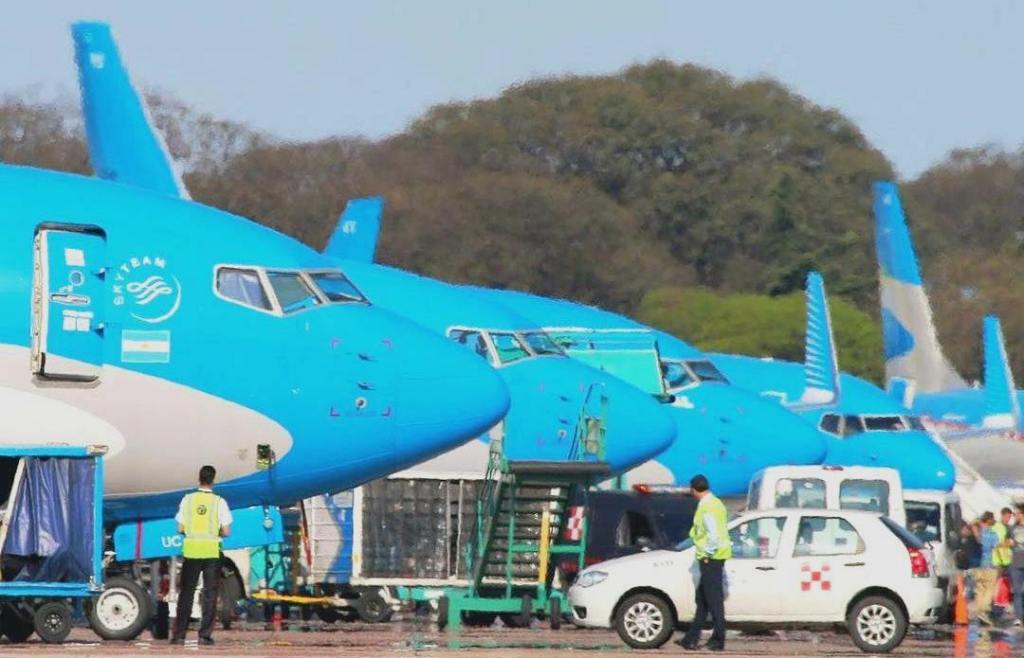
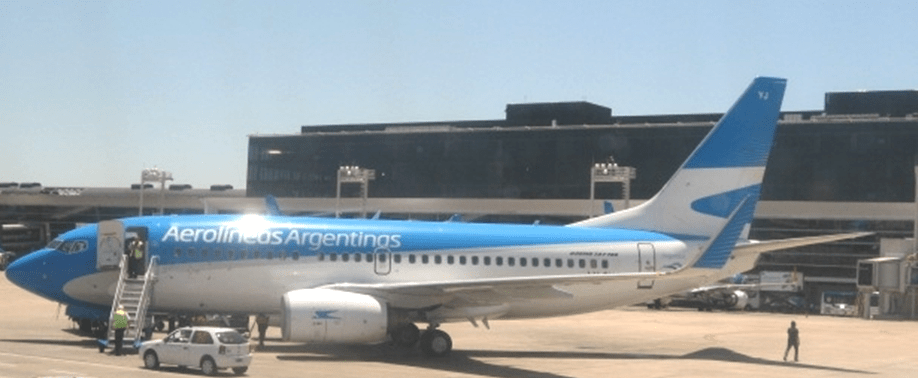
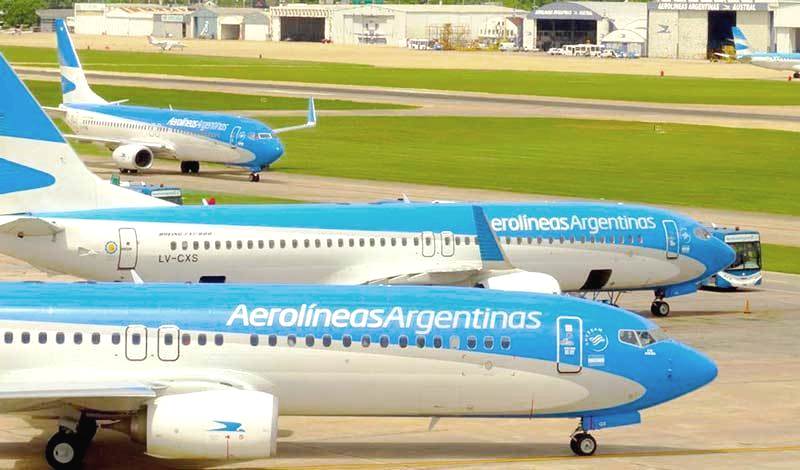
El impacto de la crisis sanitaria en el mundo ha provocado que Aerolíneas Argentinas registrara una caída del 97% de facturación producto de las restricciones a los vuelos. El CEO Pablo Ceriani, ha emitido un comunicado en el que expresa varias medidas que con las que busca salvar a ambas compañías ante el panorama incierto de la industria. La Gerencia está trabajando en varias medidas para sobrevivir, evitando el mismo futuro de otras compañías en el mundo, como es el caso local de Latam Airlines Argentina que está concluyendo sus operaciones en el país.
Una de las medidas más candentes y conflictivas es la fusión de Aerolíneas Argentinas/Austral Líneas Aéreas en una solo compañía. Tras las Asambleas realizadas el 6 Julio 2020, la Gerencia había comunicado avanzar sobre la sinergia total del grupo Aerolíneas. “La fusión ya fue informada a ambas asambleas de accionistas y las gerencias de operaciones y de seguridad operacional ya comenzaron a a trabajar en conjunto”, expresó Pablo Ceriani.
La fusión operativa entre ambas compañías, Aerolíneas Argentinas y Austral, es un proyecto de larga data e incluso figuraba en los planes de la compañía antes de su reestatización. Pero nuevamente el Directorio de la empresa volvió a anunciar qué convenio se estaría por realizar en el corto plazo. Aerolíneas y Austral se fusionan para enfrentar la pandemia, se estarán terminando la documentación oficial en los próximos días, para presentarla de manera oficial ante la Administración Nacional de Aviación Civil (ANAC) de Argentina. La unión representa la desaparición de la marca Austral, por lo que sus trabajadores, como los pilotos agrupados en la Unión de Aviadores de Líneas Aéreas (UALA) además de los representantes del Programa de Propiedad Participada (PPP) de la línea, expresaron su inconformidad. Esta posible eliminación de Austral, plantearía otra preocupación, dejaría de existir la organización gremial UALA.
La compañía aborda la creación de dos nuevas unidades de negocios, una que promueva la reconversión de parte de su flota hacia una empresa de cargas puesto que es el sector que continúa reactivado a través del flujo comercial local e internacional. Y en segundo lugar, otra que ofrezca servicios de mantenimiento para terceros. Para el sindicato de la Asociación Técnicos Aeronáuticos (APTA), estas decisiones serían más necesarias que nunca, las cuales asegurarán su trabajo y originarán mayores ingresos en divisas fuertes a la empresa, por lo que promueve aumentar al máximo la eficiencia, productividad y facturación de la compañía.
Otras de las acciones que presentó Pablo Ceriani para el salvataje es la suspensión de 4.000 de los 12.000 trabajadores de Argentinas Argentinas y Austral Líneas Aéreas, quienes si bien aún cobran el 100% de su salario, no obtienen ganancias extras. Asimismo Aerolíneas lanzó un plan de jubilación anticipada dirigida a mil colaboradores.
The impact of the health crisis in the world has caused Aerolíneas Argentinas to register a 97% drop in billing as a result of flight restrictions. CEO Pablo Ceriani has issued a statement in which he expresses several measures with which he seeks to save both companies in the face of the uncertain landscape of the industry. Management is working on various measures to survive, avoiding the same future of other companies in the world, such as the local case of Latam Airlines Argentina, which is concluding its operations in the country.
One of the hottest and most contentious measures is the merger of Aerolíneas Argentinas/Austral Líneas Aéreas into one company. After the Assemblies held on July 6, 2020, Management had communicated progress on the full synergy of the Aerolíneas group. «The merger has already been reported to both shareholders’ meetings and the operations and safety management have already started to work together», said Pablo Ceriani.
The operational merger between the two companies, Aerolíneas Argentinas and Austral, is a long-standing project and was even included in the company’s plans prior to its reestablishment. But again the company’s Board of Directors again announced what agreement would be made in the short term. Aerolíneas and Austral merge to face the pandemic, they will be finishing the official documentation in the coming days, to present it officially before the National Civil Aviation Administration (ANAC) of Argentina. The union represents the disappearance of the Austral brand, so its workers, such as pilots grouped in the Union of Airline Aviators (UALA) as well as representatives of the Line’s Participated Property Program (PPP), expressed their disagreement. This possible elimination of Austral, would raise another concern, the union organization UALA would cease to exist.
The company addresses the creation of two new business units, one that promotes the reconversion of part of its fleet to a cargo company since it is the sector that continues to be reactivated through the local and international commercial flow. And secondly, another that offers maintenance services for third parties. For the union of the Aeronautical Technicians Association (APTA), these decisions would be more necessary than ever, which will ensure their work and will generate greater income in hard currency for the company, which is why it promotes maximizing the efficiency, productivity and turnover of the company.
Other actions that Pablo Ceriani presented for the rescue is the suspension of 4,000 of the 12,000 workers of Argentinas Argentinas and Austral Líneas Aéreas, who, although they still receive 100% of their salary, do not obtain extra profits. Aerolíneas also launched an early retirement plan aimed at 1,000 employees.
Ξ A I R G W A Y S Ξ PUBLISHER: Airgways.com DBk: Aerolineas.com / Airgways.com / Aviones.com AW-POST: 202007151527AR
Tribunal de São Paulo decreta quiebra de Avianca Brasil
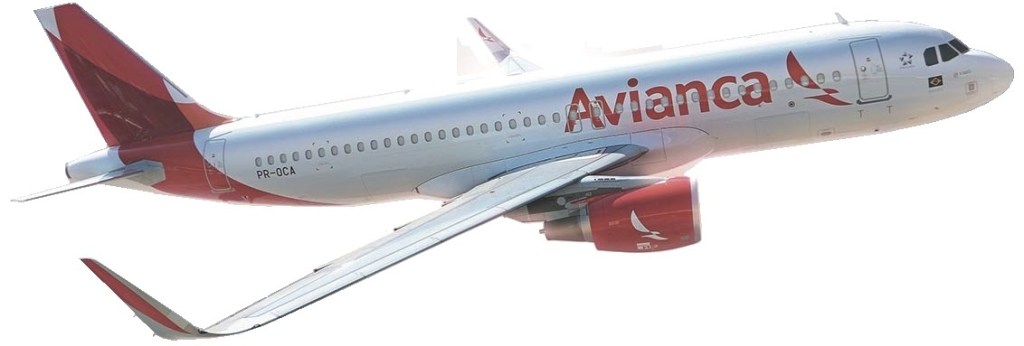
El Tribunal Federal de São Paulo, Brasil ha decretado el Martes 14 Julio 2020 la quiebra de Avianca Brasil / Oceanair Linhas Aéreas S.A., en una decisión tomada por el Juez Tiago Henriques Papaterra Limongi, del 1er Banco de Quiebras y Recuperación Judicial. La aerolínea se había declarado en bancarrota ante el Tribunal de São Paulo seis 6 años atrás, después de más de un año y medio de recuperación judicial llena de agitaciones y disputas comerciales.
Se esperaba la quiebra de la compañía desde los primeros meses de la reorganización judicial, que comenzó en Diciembre 2018, después de cancelaciones de vuelos, paradas de bases, regreso de aviones y la suspensión de operaciones en Mayo 2019. Sin embargo, la compañía, incluso se había ganado la vida, después de que la Justicia de São Paulo rechazara la declaración de quiebra en Septiembre 2019.
Avianca Brasil tenía préstamos de Gol y Latam Airlines Brasil e incluso recibió una propuesta de compra de Azul Linhas Aéreas, todos interesados en sus activos, principalmente las franjas horarias (slots) de la compañía en los aeropuertos de São Paulo/Congonhas y Rio/Santos Dumont. Sin embargo, la crisis causada por la pandemia hizo que la recuperación de la compañía fuera inviable, aún más en un escenario de un sector aéreo financieramente frágil y la caída de la demanda, debido a la pandemia.
Fundada en 1998 como Oceanair, la compañía pasó a llamarse Avianca Brasil después de un acuerdo con la colombiana Avianca Holdings. Según el holdings el contrato para el uso de la marca finalizó en Agosto 2019. Ahora, después del fallo de quiebra de Avianca Brasil, la compañía tendrá sesenta días para presentar la lista de sus activos.
Court decrees Avianca bankruptcy
São Paulo court decrees bankruptcy of Avianca Brasil
The Federal Court of São Paulo, Brazil has decreed the bankruptcy of Avianca Brasil / Oceanair Linhas Aéreas S.A. on Tuesday, July 14, 2020, in a decision made by Judge Tiago Henriques Papaterra Limongi, of the 1st Bankruptcy and Judicial Recovery Bank. The airline had filed for bankruptcy before the São Paulo Court six 6 years ago, after more than a year and a half of judicial recovery full of turmoil and commercial disputes.
The bankruptcy of the company was expected from the first months of the judicial reorganization, which began in December 2018, after flight cancellations, base stops, return of planes and the suspension of operations in May 2019. However, the company, He had even made a living, after the São Paulo Justice rejected the bankruptcy declaration in September 2019.
Avianca Brasil had loans from Gol Linhas Aéreas and Latam Airlines Brasil and even received a purchase proposal from Azul Linhas Aéreas, all interested in its assets, mainly the company’s slots at the airports São Paulo/Congonhas and Rio/Santos Dumont. However, the crisis caused by the pandemic made the company’s recovery unfeasible, all the more so in a scenario of a financially fragile airline sector and falling demand, due to the pandemic.
Founded in 1998 as Oceanair, the company was renamed Avianca Brasil after an agreement with Colombia’s Avianca Holdings. According to the holding companies, the contract for the use of the brand ended in August 2019. Now, after the bankruptcy of Avianca Brasil, the company will have sixty days to present the list of its assets.
Tribunal decreta falência da Avianca
Tribunal de São Paulo decreta falência da Avianca Brasil
O Tribunal Federal de São Paulo, Brasil decretou a falência da Avianca Brasil / Oceanair Linhas Aéreas S.A. na terça-feira, 14 de julho de 2020, em uma decisão do juiz Tiago Henriques Papaterra Limongi, do 1º Banco de Recuperação Judicial e de Falências. A companhia havia declarado falência perante o Tribunal de São Paulo seis seis anos atrás, depois de mais de um ano e meio de recuperação judicial cheia de tumultos e disputas comerciais.
A falência da empresa era esperada desde os primeiros meses da recuperação judicial, iniciada em dezembro de 2018, após cancelamentos de vôos, paradas de base, retorno de aviões e suspensão de operações em maio de 2019. No entanto, a empresa, Ele ainda ganhava a vida, depois que a Justiça de São Paulo rejeitou a declaração de falência em setembro de 2019.
A Avianca Brasil possuía empréstimos da Gol e da Latam Airlines Brasil e até recebeu uma proposta de compra da Azul Linhas Aéreas, todas interessadas em seus ativos, principalmente nos slots da empresa nos aeroportos de São Paulo/Congonhas e Rio/Santos Dumont. No entanto, a crise causada pela pandemia inviabilizou a recuperação da empresa, ainda mais em um cenário de setor aéreo financeiramente frágil e com queda na demanda, devido à pandemia.
Fundada em 1998 como Oceanair, a empresa passou a se chamar Avianca Brasil após um acordo com a Colombian Avianca Holdings. Segundo as holdings, o contrato de uso da marca terminou em agosto de 2019. Agora, após a falência da Avianca Brasil, a empresa terá sessenta dias para apresentar a lista de seus ativos.
Ξ A I R G W A Y S Ξ PUBLISHER: Airgways.com DBk: Tjsp.jus.br / Aviancaholdings.com / Avianca.com.br / Airgways.com AW-POST: 202007151343AR
Republic Airways se está preparando para enviar avisos WARN al 40% de su fuerza laboral antes de la fecha de expiración del 30 Septiembre 2020 para recibir ayuda federal. La aerolínea vuela aviones regionales en nombre de las principales aerolíneas estadounidenses. Con la reducción del tamaño de los operadores principales, la compañía podría reducir su fuerza laboral.
La aerolínea regional estadounidense se está preparando para enviar avisos WARN al 40% de su fuerza laboral compuesta por pilotos, personal de mantenimiento, empleados administrativos y operativos y asistentes de vuelo, esperando que lleguen estos permisos a partir del 1 Octubre 2020.
La Ley Federal de Estados Unidos exige que los grandes empleadores, como las aerolíneas, notifiquen con 60 días de antelación, cumpliendo estos avisos WARN con ese requisito. Recibir un aviso de WARN no significa que se esté cortando un trabajo. Sin embargo, sí significa que se puede reducir una posición. Esencialmente, es una advertencia estar preparado para el potencial de un permiso, pero no necesariamente una garantía de que el trabajo de una persona no existirá.
Enviar avisos al inicio a un gran número de empleados significa que el transportista tiene cierta flexibilidad adicional cuando se trata de despedir empleados. Si bien no está claro exactamente cuántas personas serán suspendidas al final, lo más probable es que no sea del 40%. Los números ahora también le dan a la aerolínea la oportunidad de trabajar con los sindicatos para encontrar opciones. Algunos empleados pueden considerar jubilaciones anticipadas o salidas voluntarias, lo que reduciría el número de permisos y probablemente traería a algunos empleados un paquete de salida reforzado. La aerolínea regional está tratando de orientar estos avisos es poder presionar al Gobierno Federal para obtener más fondos, aunque desde el Gobierno no está interesado en proporcionar miles de millones de Dólares a las aerolíneas, al menos no sin garantías adicionales como asientos bloqueados.
Republic Airways es una aerolínea regional que opera en nombre de las principales aerolíneas estadounidenses. La aerolínea solo opera aviones Embraer E170 y E175 para United Express, Delta Connection y American Eagle. Sin embargo, el problema es que Republic tiene un potencial de vuelo limitado. La aerolínea no puede volar tanto y donde quiera. En cambio, tiene que trabajar con aerolíneas y solo puede volar un cierto porcentaje de las operaciones de la aerolínea. Con los transportistas principales cada vez más pequeños, Republic tendrá que volar menos. Esto es lo que impulsará la necesidad del transportista de suspender a los empleados.
Perspectivas Republic Airways
Permitir el WARN 40% de la fuerza laboral de la aerolínea sería un duro golpe para la aerolínea. Tal vez la compañía puede estar emergiendo con una estructura más pequeña de la crisis actual, es poco probable que Republic Airways se reduzca en un 40% más pequeño.
Republic 40% personal on WARN permit
Republic Airways prepares 40% personal WARN notices
Republic Airways is preparing to send WARN notices to 40% of its workforce before the expiration date of September 30, 2020 for federal aid. The airline flies regional aircraft on behalf of major US airlines. By reducing the size of the main operators, the company could reduce its workforce.
The US regional airline is preparing to send WARN notices to 40% of its workforce made up of pilots, maintenance personnel, administrative and operational employees, and flight attendants, waiting for these permits to arrive as of October 1, 2020.
United States Federal Law requires large employers, such as airlines, to notify 60 days in advance, with these WARN notices meeting that requirement. Receiving a warning from WARN does not mean that a job is being cut. However, it does mean that one position can be reduced. Essentially, it is a warning to be prepared for the potential of a permit, but not necessarily a guarantee that a person’s job will not exist.
Sending early notices to large numbers of employees means that the carrier has some additional flexibility when it comes to laying off employees. While it is unclear exactly how many people will be suspended in the end, it is most likely not 40%. The numbers now also give the airline a chance to work with unions to find options. Some employees may consider early retirement or voluntary departure, which would reduce the number of leaves and would probably bring some employees a reinforced exit package. The regional airline is trying to target these notices is to be able to pressure the Federal Government to obtain more funds, although the Government is not interested in providing billions of Dollars to the airlines, at least not without additional guarantees such as blocked seats.
Republic Airways is a regional airline that operates on behalf of major American airlines. The airline only operates Embraer E170 and E175 aircraft for United Express, Delta Connection and American Eagle. However, the problem is that Republic has limited flight potential. The airline cannot fly as much and anywhere. Instead, you have to work with airlines and can only fly a certain percentage of the airline’s operations. With smaller and smaller major carriers, Republic will have to fly less. This is what will drive the carrier’s need to suspend employees.
Republic Airways perspective
Allowing WARN 40% of the airline’s workforce would be a severe blow to the airline. Perhaps the company may be emerging with a smaller structure from the current crisis, Republic Airways is unlikely to shrink by 40% smaller.
Ξ A I R G W A Y S Ξ PUBLISHER: Airgways.com DBk: Rjet.com / Airgways.com AW-POST: 202007151155AR
Corte Internacional Justicia respalda a Qatar disputa bloqueo aéreo
La Corte Internacional de Justicia (CIJ), la principal corte de la ONU, ha respaldado a Qatar Airways en una disputa con cuatro países vecinos que impusieron un bloqueo aéreo hace más de tres años. El organismo con sede en La Haya, Reino Unido de los Países Bajos, ha rechazado el 14 Julio 2020 una apelación de Bahrein, Egipto, Arabia Saudita y los Emiratos Árabes Unidos (EAU) contra una decisión anterior de la Organización de Aviación Civil Internacional (OACI) sobre el espacio aéreo soberano.
La OACI dictaminó en 2018 que tenía jurisdicción para manejar el reclamo de Qatar de que sus vecinos habían violado una convención que regula el paso libre de aviones de Qatar Airways a través del espacio aéreo extranjero. Los cuatro vecinos de Qatar no estuvieron de acuerdo, alegando que la OACI no era el organismo adecuado para juzgar en la disputa. Los cuatro países árabes cortaron lazos con el Gobierno de Qatar en Junio 2017, acusando al país de respaldar a los extremistas, junto con otras acusaciones negadas por el Gobierno qatarí. Una serie de medidas punitivas incluyeron la prohibición de los aviones de Qatar Airways de su espacio aéreo, el cierre de la única frontera terrestre de Qatar (con Arabia Saudita) y la expulsión de los ciudadanos de Qatar.
El principal servicio regional de noticias, Al Jazeera, informó que el gobierno de Qatar acogió con beneplácito el fallo del Martes 14/07, diciendo que llevará a los países bloqueadores a enfrentar la justicia por violar las reglas de la aviación internacional. «Confiamos en que la OACI finalmente considerará estas acciones ilegales. Esta es la última de una serie de resoluciones que exponen el continuo desprecio de los países bloqueadores por el derecho internacional y el debido proceso. Paso a paso, sus argumentos se desmantelan y se reivindica la posición de Qatar», dijo el Ministro de Transporte y Comunicaciones, Jassim Saif Ahmed Al Sulaiti, en un comunicado oficial.
La OACI ahora es libre de continuar lidiando con el caso. El fallo traerá una gran satisfacción personal al CEO de Qatar Airways Group, Akbar Al Baker, quien también es Secretario General del Consejo Nacional de Turismo de Qatar y CEO del Aeropuerto Internacional de Hamad y Qatar Duty Free, entre otros roles clave dedicados al servicio nacional. El CEO de Qatar Airways expresó en Octubre 2019 en el Trinity Forum de Doha, que la República de Qatar «es autosuficiente como economía, nos ha hecho más independientes y orgullosos. Y le ha demostrado al mundo que no importa cuán pequeño seas, cuando se trata de soberanía, dignidad, autoestima, incluso una pequeña nación puede enfrentarse a las grandes naciones. Hemos demostrado lo que el liderazgo y la estabilidad pueden hacer por las personas. Y tenemos altas expectativas de nuestra capacidad de entrega. Perdimos 18 destinos de la noche a la mañana y perdimos un mercado de US$ 1,75 mil millones cuando llegó el bloqueo, pero no rehuimos la expansión. Reemplazamos los 18 destinos con 34 nuevos. Seguimos recibiendo nuevos aviones y estamos presionando a Airbus y Boeing para que sigan abasteciendo nuestra demanda. Continuamos construyendo nuestra infraestructura y pensando en el futuro. No tenemos malas intenciones con nadie. Queremos ser los mejores y trabajar con otros. Si dan un paso hacia nosotros, daremos 1,000 pasos hacia ellos. Pero han puesto todas sus cartas sobre la mesa, lo que nunca debe hacer en diplomacia. Tienes que mantener la puerta abierta».
Perspectivas Qatar Airways
Durante la crisis, Qatar Airways mantuvo una red global que nunca cayó por debajo de los 30 destinos. También ayudó a repatriar a cerca de dos millones de personas.
Qatar Airways planea reanudar casi dos tercios de su red anterior a la pandemia antes de fin de mes si las restricciones de viaje continúan disminuyendo en todo el mundo. Esto significa que el número de vuelos casi se duplicaría en Julio 2020 con cerca de 3.500 programados, en comparación con poco menos de 2.100 en Junio 2020.
ICJ supports Qatar Airways
International Court of Justice backs Qatar air dispute
The International Court of Justice (ICJ), the main UN court, has backed Qatar Airways in a dispute with four neighboring countries that imposed an air blockade more than three years ago. The body based in The Hague, United Kingdom of the Netherlands, rejected on 14 July 2020 an appeal by Bahrain, Egypt, Saudi Arabia and the United Arab Emirates (UAE) against a previous decision of the International Civil Aviation Organization ( ICAO) over sovereign airspace.
ICAO ruled in 2018 that it had jurisdiction to handle Qatar’s claim that its neighbors had violated a convention regulating the free passage of Qatar Airways aircraft through foreign airspace. The four residents of Qatar disagreed, claiming that ICAO was not the proper body to judge in the dispute. The four Arab countries severed ties with the Qatar government in June 2017, accusing the country of backing the extremists, along with other allegations denied by the Qatari government. A series of punitive measures included a ban on Qatar Airways planes from its airspace, the closure of Qatar’s only land border (with Saudi Arabia), and the expulsion of Qatari citizens.
The main regional news service, Al Jazeera, reported that the Qatari government welcomed the ruling on Tuesday 07/14, saying it will lead blocking countries to face justice for violating international aviation rules. «We are confident that ICAO will finally consider these actions illegal. This is the latest in a series of resolutions that expose the blocking countries’ continued disregard for international law and due process. Step by step, their arguments are dismantled and vindicated the position of Qatar», said the Minister of Transport and Communications, Jassim Saif Ahmed Al Sulaiti, in an official statement.
ICAO is now free to continue dealing with the case. The ruling will bring great personal satisfaction to the CEO of Qatar Airways Group, Akbar Al Baker, who is also Secretary General of the Qatar National Tourism Council and CEO of Hamad International Airport and Qatar Duty Free, among other key roles dedicated to national service. The CEO of Qatar Airways expressed in October 2019 at the Trinity Forum in Doha, that the Republic of Qatar «is self-sufficient as an economy, it has made us more independent and proud. And it has shown the world that no matter how small you are, when you it’s about sovereignty, dignity, self-esteem, even a small nation can take on the great nations. We have shown what leadership and stability can do for people. And we have high expectations of our ability to deliver. We lost 18 destinations overnight in the morning and we lost a market of US$ 1.75 billion when the blockade came, but we did not shy away from expansion. We replaced the 18 destinations with 34 new ones. We continue to receive new aircraft and we are putting pressure on Airbus and Boeing to continue to supply our We continue building our infrastructure and thinking about the future. We have no bad intentions with anyone. We want to be the best and work with others. If they take a step towards us, we will take 1,000 steps towards them. But they have put all their cards on the table, which they should never do in diplomacy. You have to keep the door open».
Qatar Airways perspective
During the crisis, Qatar Airways maintained a global network that never fell below 30 destinations. It also helped repatriate nearly two million people.
Qatar Airways plans to resume almost two-thirds of its pre-pandemic network before the end of the month if travel restrictions continue to decrease worldwide. This means that the number of flights would almost double in July 2020 with about 3,500 scheduled, compared to just under 2,100 in June 2020.
تدعم محكمة العدل الدولية الخطوط الجوية القطرية
محكمة العدل الدولية تدعم نزاع قطر الجوي
دعمت محكمة العدل الدولية ، المحكمة الرئيسية للأمم المتحدة ، الخطوط الجوية القطرية في نزاع مع أربع دول مجاورة فرضت حصارا جويا قبل أكثر من ثلاث سنوات. رفضت الهيئة المتمركزة في لاهاي ، المملكة المتحدة لهولندا ، في 14 يوليو 2020 ، استئنافًا مقدمًا من البحرين ومصر والمملكة العربية السعودية والإمارات العربية المتحدة ضد قرار سابق صادر عن منظمة الطيران المدني الدولي ( منظمة الطيران المدني الدولي) فوق المجال الجوي السيادي.
قضت منظمة الطيران المدني الدولي في عام 2018 أن لديها اختصاصًا للتعامل مع ادعاء قطر بأن جيرانها انتهكوا اتفاقية تنظم المرور الحر لطائرات الخطوط الجوية القطرية عبر المجال الجوي الأجنبي. ولم يوافق سكان قطر الأربعة على ذلك ، زاعمين أن منظمة الطيران المدني الدولي ليست الهيئة المناسبة للحكم في النزاع. قطعت الدول العربية الأربع علاقاتها مع حكومة قطر في يونيو 2017 ، متهمة البلاد بدعم المتطرفين ، إلى جانب مزاعم أخرى نفتها الحكومة القطرية. تضمنت سلسلة الإجراءات العقابية حظراً على طائرات الخطوط الجوية القطرية من أجواءها ، وإغلاق الحدود البرية الوحيدة لقطر (مع السعودية) ، وطرد المواطنين القطريين.
وذكرت خدمة الأنباء الإقليمية الرئيسية ، الجزيرة ، أن الحكومة القطرية رحبت بالحكم يوم الثلاثاء 07/14 ، قائلة إنها ستؤدي إلى منع الدول من مواجهة العدالة بسبب انتهاك قواعد الطيران الدولية. «نحن واثقون من أن الايكاو ستعتبر في النهاية هذه الأعمال غير قانونية. وهذا هو الأحدث في سلسلة من القرارات التي تكشف التجاهل المستمر للدول المحظورة للقانون الدولي والإجراءات القانونية الواجبة. خطوة خطوة ، يتم تفكيك حججهم وإثبات صحتها وقال وزير النقل والاتصالات جاسم سيف احمد السليطي في بيان رسمي «موقف قطر».
منظمة الطيران المدني الدولي حرة الآن لمواصلة التعامل مع القضية. وسيجلب الحكم ارتياحًا شخصيًا كبيرًا للرئيس التنفيذي لمجموعة الخطوط الجوية القطرية أكبر الباكر ، الذي يشغل أيضًا منصب الأمين العام لمجلس قطر الوطني للسياحة والرئيس التنفيذي لمطار حمد الدولي وقطر للأسواق الحرة ، من بين أدوار رئيسية أخرى مخصصة للخدمة الوطنية. . أعرب الرئيس التنفيذي للخطوط الجوية القطرية في أكتوبر 2019 في منتدى ترينيتي في الدوحة ، أن جمهورية قطر «مكتفية ذاتيا كاقتصاد ، فقد جعلتنا أكثر استقلالية وفخرًا. وأظهرت للعالم أنه مهما كنت صغيرًا ، عندما إنها تتعلق بالسيادة والكرامة واحترام الذات ، حتى الأمة الصغيرة يمكنها أن تتحمل الدول العظيمة. لقد أظهرنا ما يمكن أن تقدمه القيادة والاستقرار للناس. ولدينا توقعات عالية بقدرتنا على الإنجاز. لقد فقدنا 18 وجهة بين عشية وضحاها في الصباح وخسرنا سوقًا بقيمة 1.75 مليار دولار عندما جاء الحصار ، لكننا لم نخجل من التوسع. استبدلنا الوجهات الـ 18 بـ 34 وجهة جديدة. وما زلنا نستقبل طائرات جديدة ونضغط على إيرباص وبوينج لمواصلة تزويدنا نواصل بناء بنيتنا التحتية والتفكير في المستقبل. ليس لدينا نوايا سيئة مع أي شخص. نريد أن نكون الأفضل ونعمل مع الآخرين. إذا اتخذوا خطوة تجاهنا ، سنتخذ 1000 خطوة تجاههم. لكنهم وضعوا جميع أوراقهم على الطاولة ، وهو ما لا يجب أن يفعلوه في الدبلوماسية. عليك ان تبقي الباب مفتوحا «.
توقعات الخطوط الجوية القطرية
خلال الأزمة ، حافظت الخطوط الجوية القطرية على شبكة عالمية لم تهبط إلى ما دون 30 وجهة. كما ساعدت في إعادة قرابة مليوني شخص إلى وطنهم.
تخطط الخطوط الجوية القطرية لاستئناف ما يقرب من ثلثي شبكتها قبل الوباء قبل نهاية الشهر إذا استمرت قيود السفر في الانخفاض في جميع أنحاء العالم. وهذا يعني أن عدد الرحلات سيتضاعف تقريبًا في يوليو 2020 مع حوالي 3500 رحلة مقررة ، مقارنة بـ 2100 في يونيو 2020.
Ξ A I R G W A Y S Ξ PUBLISHER: Airgways.com DBk: Icj-cij.org / Qatarairways.com / Airgways.com AW-POST: 202007151127AR
Garuda Indonesia habla con Airbus para retrasar las entregas 2020
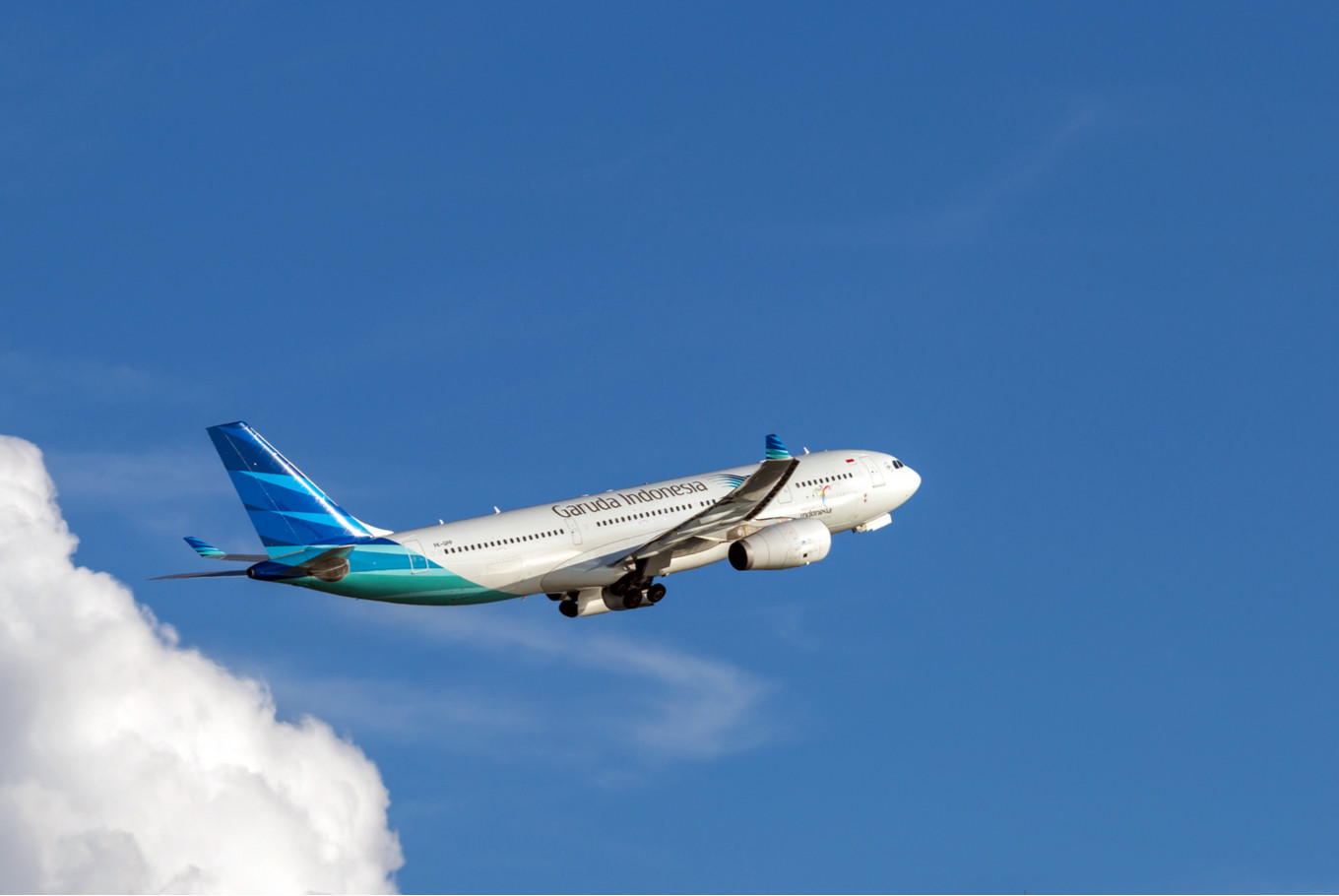
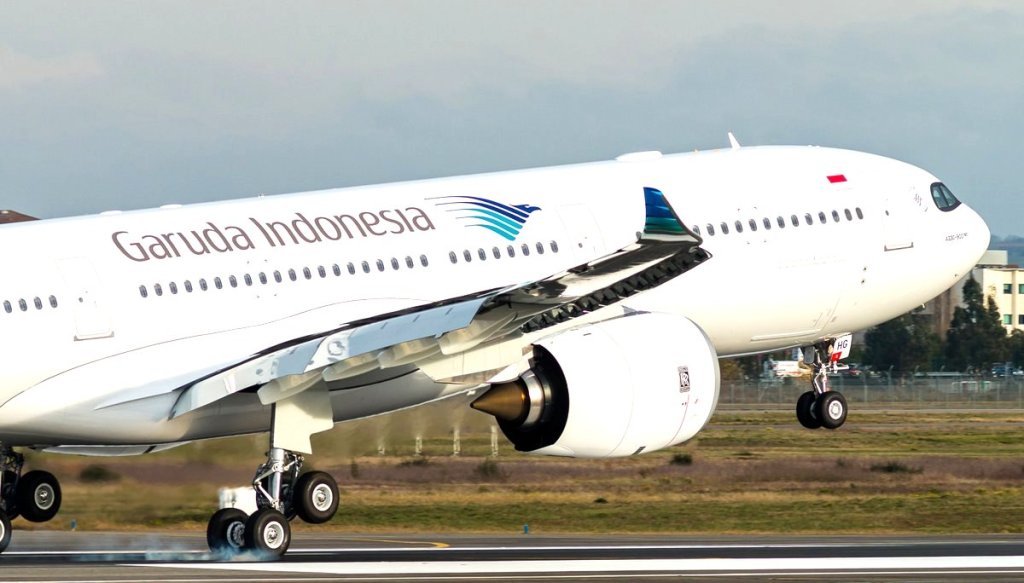
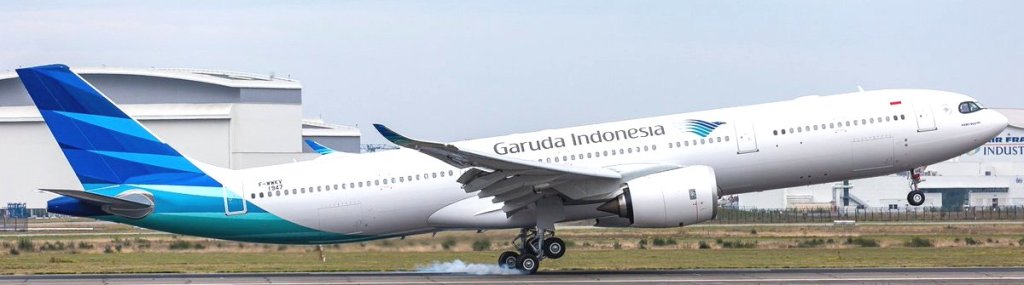
La aerolínea indonesia Garuda Indonesia Airlines está en conversaciones con Airbus Group para retrasar las entregas de cuatro aviones para este año 2020, dijo el Martes 14/07 su Presidente Ejecutivo Irfan Setiaputra, ya que el brote de Coronavirus restringe los viajes y reduce la demanda. «Este año deberíamos recibir cuatro aviones Airbus, pero estamos negociando para retrasar eso», dijo el CEO Irfan Setiaputra en una audiencia parlamentaria.
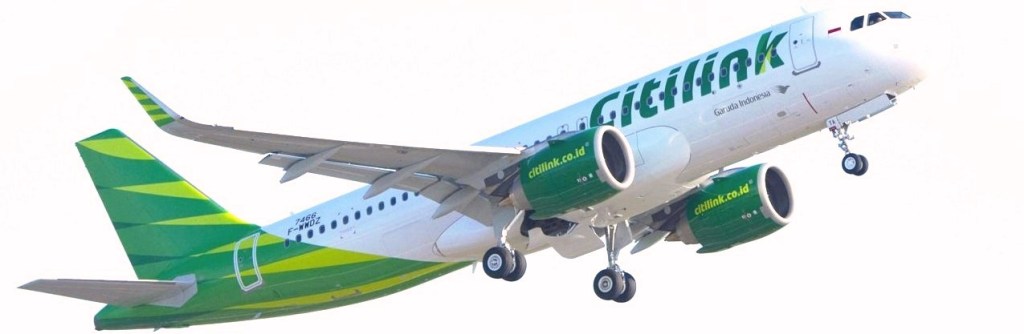
Garuda tiene nueve A330NEO en orden con Airbus que aún no se han entregado, según el libro de pedidos del constructor europeo, mientras que su brazo de bajo costo Citilink tiene 25 A320NEO en orden.
Garuda enfrenta dificultades financieras después del impacto de la pandemia causando una interrupción importante en los viajes mundiales, lo que resultó en una caída del 90% en el volumen de pasajeros en la aerolínea. La compañía se vio obligada a buscar la extensión del vencimiento de sus bonos islámicos de US$ 500 millones que vencen en Junio 2020 y buscar nuevos préstamos del Gobierno. Mientras tanto, Garuda también está reestructurando su arrendamiento de aeronaves buscando un precio de arrendamiento más bajo o extendiendo el período, dijo Irfan Setiaputra.
La aerolínea está buscando rescindir los contratos inadecuados para este nuevo escenario de cambios en la manera de viajar. Doce de sus arrendadores han acordado una reestructuración, según el material de presentación de Garuda en el Parlamento, mientras que seis se han negado a dar el aplazamiento del alquiler. Todavía está en negociaciones con otros trece arrendadores. «Hoy en día hay una serie de arrendadores que castigaron nuestros aviones por nuestra incapacidad para realizar pagos», dijo Irfan Setiaputra.
Garuda delays orders from Airbus Group
Garuda Indonesia talks to Airbus to delay 2020 deliveries
Indonesian airline Garuda Indonesia Airlines is in talks with Airbus Group to delay deliveries of four planes to this year 2020, its Chief Executive Irfan Setiaputra said on Tuesday 14/07, as the Coronavirus outbreak restricts travel and reduces demand. «This year we should receive four Airbus planes, but we are negotiating to delay that», CEO Irfan Setiaputra said at a parliamentary hearing.
Garuda has nine A330NEOs on order with Airbus that have yet to be delivered, according to the European builder’s order book, while its low-cost Citilink arm has 25 A320NEOs on order.
Garuda faces financial difficulties after the impact of the pandemic causing a major disruption to world travel, resulting in a 90% drop in passenger volume on the airline. The company was forced to seek the extension of the maturity of its US$ 500 million Islamic bonds maturing in June 2020 and to seek new government loans. Garuda, meanwhile, is also restructuring its aircraft lease by seeking a lower lease price or extending the period, Irfan Setiaputra said.
The airline is seeking to terminate inappropriate contracts for this new scenario of changes in the way of traveling. Twelve of his landlords have agreed to a restructuring, according to Garuda’s filing in Parliament, while six have refused to postpone the rent. It is still in negotiations with thirteen other landlords. «Today there are a number of lessors who punished our planes for our inability to make payments», said Irfan Setiaputra.
Garuda menunda pesanan dari Airbus Group
Garuda Indonesia berbicara dengan Airbus untuk menunda pengiriman 2020
Maskapai penerbangan Indonesia, Garuda Indonesia Airlines, sedang dalam pembicaraan dengan Airbus Group untuk menunda pengiriman empat pesawat hingga tahun 2020 ini, kata Ketua Eksekutifnya, Irfan Setiaputra, Selasa 14/07, ketika wabah Coronavirus membatasi perjalanan dan mengurangi permintaan. «Tahun ini kami harus menerima empat pesawat Airbus, tetapi kami sedang bernegosiasi untuk menunda itu», kata CEO Irfan Setiaputra pada sidang parlemen.
Garuda memiliki sembilan A330NEO yang dipesan dengan Airbus yang belum dikirim, menurut buku pesanan pembangun Eropa, sementara lengan Citilink yang berbiaya rendah memiliki 25 A320NEO yang dipesan.
Garuda menghadapi kesulitan keuangan setelah dampak pandemi yang menyebabkan gangguan besar pada perjalanan dunia, yang mengakibatkan penurunan 90% volume penumpang pada maskapai. Perusahaan ini terpaksa mencari perpanjangan jatuh tempo dari obligasi Islam US$ 500 juta yang jatuh tempo pada Juni 2020 dan untuk mencari pinjaman pemerintah baru. Sementara itu, Garuda juga merestrukturisasi sewa pesawatnya dengan mencari harga sewa yang lebih rendah atau memperpanjang periode, kata Irfan Setiaputra.
Maskapai ini berusaha untuk mengakhiri kontrak yang tidak pantas untuk skenario baru perubahan dalam perjalanan ini. Dua belas tuan tanahnya telah menyetujui restrukturisasi, menurut pengajuan Garuda di Parlemen, sementara enam menolak untuk menunda sewa. Masih dalam negosiasi dengan tiga belas tuan tanah lainnya. «Hari ini ada sejumlah lessor yang menghukum pesawat kami karena ketidakmampuan kami untuk melakukan pembayaran», kata Irfan Setiaputra.
Ξ A I R G W A Y S Ξ PUBLISHER: Airgways.com DBk: Garuda.com / Thejakartapost.com / Airgways.com / Shutterstock.com AW-POST: 202007141955AR
Aerolíneas Argentinas abonaría salario adeudado Junio 2020
En el marco de las negociaciones entre Aerolíneas Argentinas y los gremios aeronáuticos se ha acordado el pago parcial adeudado del salario del mes de Junio 2020. En un comunicado interno de la aerolínea, el próximo Jueves 16/07 será abonado el 50% restante de los sueldos de mes de Junio.
La compañía ha tenido un arrastre de un déficit creciente, sumado el período de complexión particular de pandemia de Coronavirus y la supresión de los vuelos a nivel mundial producto de la transmisión de la enfermedad. Aerolíneas, al no poder operar de forma regular desde finales del mes de Marzo 2020 no puede disponer de ingresos propios y suficientes para pagar los salarios en forma total, razón por la cual debió esperar a que el Estado Argentino aprobara una partida extra de dinero y para cumplimentar con el acuerdo alcanzado con los sindicatos aeronáuticos.
Aerolíneas would pay debt wages
Aerolíneas Argentinas would pay salary owed June 2020
In the framework of the negotiations between Aerolíneas Argentinas and the aeronautical unions, the partial payment due of the salary for the month of June 2020 has been agreed. In an internal statement from the airline, next Thursday 16/07, the remaining 50% of the June salaries.
The company has had an increasing deficit drag, added to the particular complexion period of the Coronavirus pandemic and the suppression of flights worldwide as a result of the transmission of the disease. Aerolíneas, since they have not been able to operate regularly since the end of March 2020, cannot have their own and sufficient income to pay wages in full, which is why they had to wait for the Argentine State to approve an extra amount of money and to fulfill the agreement reached with the aeronautical unions.
Ξ A I R G W A Y S Ξ PUBLISHER: Airgways.com DBk: Aerolineas.com / Airgways.com AW-POST: 202007141117AR