Regulador CAAC supervisará prueba finales hacia certificación
Commercial Aircraft Corp of China (COMAC) ha finalizado en su mayoría el diseño de su jet de cuerpo estrecho C919, allanando el camino para que el regulador de aviación de China supervise las pruebas finales de vuelo, dijo el fabricante el Viernes 27/11. Diseñado para competir directamente con el Airbus A320 y Boeing 737 en el mercado de aviones con alrededor de 150 asientos, el C919 es la punta de lanza de los esfuerzos de China para romper un poderoso duopolio occidental de décadas de dominio aéreo.
COMAC dijo que la Administración de Aviación Civil de China (CAAC) ha emitido la Autorización de Inspección de Tipo del C919, lo que significa que ya no podría haber ajustes importantes en la estructura de las aeronaves. El fabricante ha dicho que espera obtener el Certificado de Aeronavegabilidad para el C919 del regulador de aviación de China el próximo año 2021, lo que le permitiría comenzar a entregar el jet a las aerolíneas nacionales.
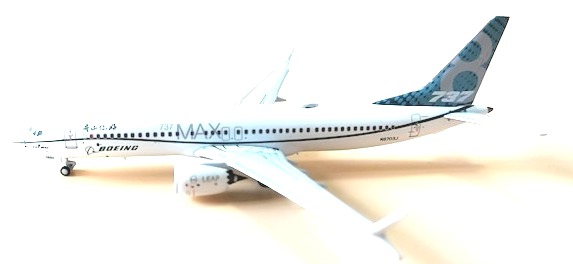
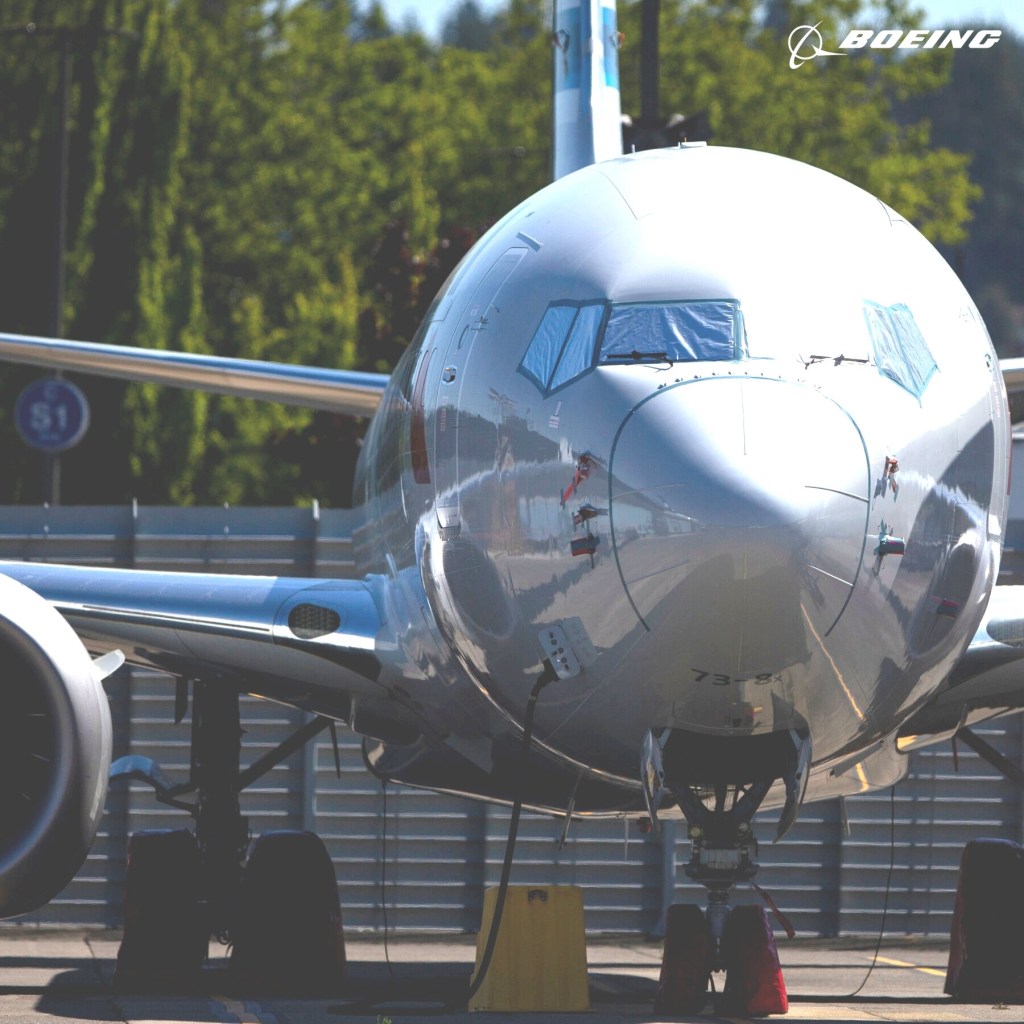
China, el primer país en poner a tierra el Boeing 737 MAX después de dos accidentes aéreos, no ha establecido un calendario para el regreso al servicio del avión fabricado en Estados Unidos. Pero la Federal Aviation Administration (FAA) ha levantado su prohibición de vuelo sobre la línea 737 MAX la semana pasada, aliviando una crisis de seguridad que dejó a su principal exportador con una reputación empañada y cientos de aviones inactivos.
COMAC completes design of C919
Regulator CAAC will supervise final tests towards certification
Commercial Aircraft Corp of China (COMAC) has mostly completed the design of its C919 narrow-body jet, paving the way for China’s aviation regulator to oversee final flight tests, the manufacturer said on Friday 11/27. Designed to compete directly with the Airbus A320 and Boeing 737 in the market for airplanes with around 150 seats, the C919 is the spearhead of China’s efforts to break a powerful Western duopoly of decades of air dominance.
COMAC said that the Civil Aviation Administration of China (CAAC) has issued the Type Inspection Authorization of the C919, which means that there could no longer be any major adjustments to the aircraft structure. The manufacturer has said that it hopes to obtain the Certificate of Airworthiness for the C919 from the Chinese aviation regulator next year 2021, which would allow it to start delivering the jet to domestic airlines.
China, the first country to ground the Boeing 737 MAX after two plane crashes, has not set a timetable for the return to service of the US-made jet. But the Federal Aviation Administration (FAA) lifted its flight ban on the 737 MAX line last week, alleviating a safety crisis that left its top exporter with a tarnished reputation and hundreds of idle planes.
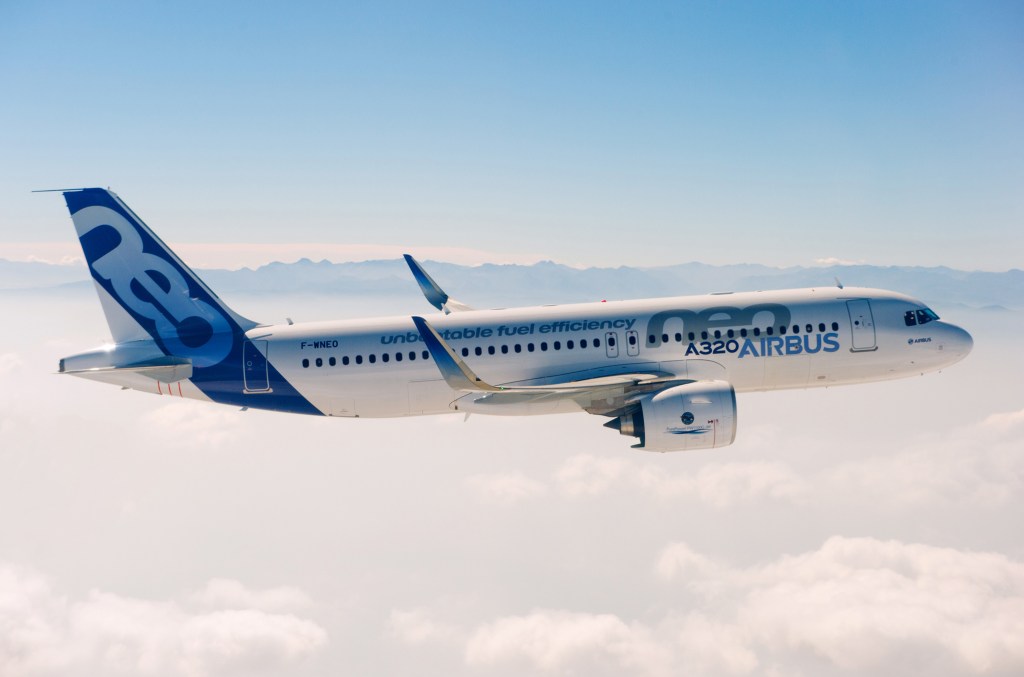
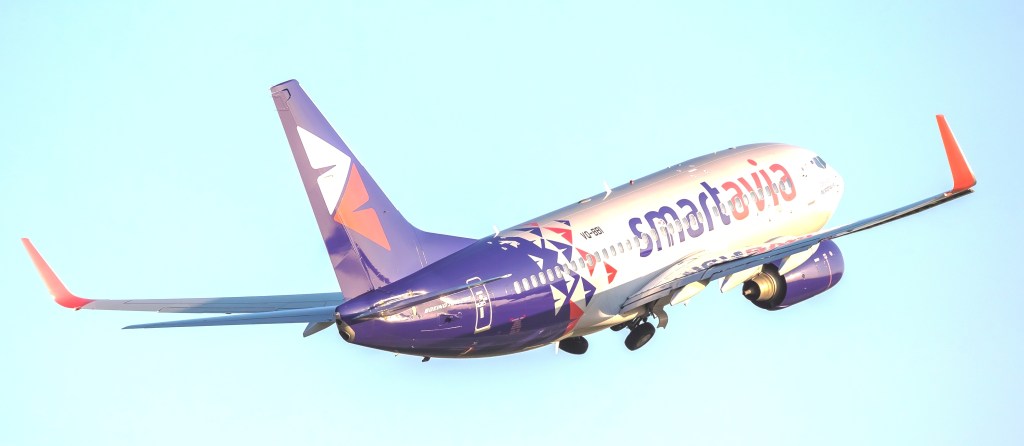
Smartavia de la Federación Rusia se encuentra evaluando la incorporación de aeronaves Airbus A320NEO como parte de una actualización de la flota de la compañía aérea. El estudio establece adquirir la nueva línea A320 New Engine Option hacia el 2021 y aumentar su tráfico de pasajeros con una demanda cercana a 3 millones de pasajeros por año. Durante el año siguiente, la aerolínea tiene la intención de recibir A320NEO (3) tres de estos aviones bajo condiciones de arrendamiento. «La estrategia de desarrollo de la compañía supone un aumento en el tráfico de pasajeros en el período post-pandemia, y debemos estar listos para ello», dijo Sergey Savostin, CEO de Smartavia. Actualmente, Smartavia su flota está compuesta por catorce aviones Boeing 737-500/700/800. Los aviones de la serie 500 han sido dados de baja siendo reemplazados por Boeing 737 Next Generation.
La aerolínea, continuará centrándose en vuelos regulares dentro de Rusia y en el extranjero y trabajando en programas chárter. «El desarrollo de nuevas tecnologías requerirá recursos y esfuerzos adicionales, pero al final obtendremos aviones aún más nuevos y eficientes que permitan a la aerolínea lograr resultados operativos y financieros significativos», dijo Sergey Savostin.
El A320NEO es la última y más avanzada versión de aviones de pasajeros de cuerpo estrecho de la Familia A320. Están equipados con nuevos motores capaces de gastar un 15% menos de combustible que el A320. Los costos de operación de estos aviones son un 8% más bajos que los de sus predecesores y un 10% menos de emisiones que la serie A320CEO. Airbus ha introducido cambios significativos en el diseño de la línea A320NEO, incluyendo la modificación del ala y sus terminaciones para reducir la resistencia al aire, y para la comodidad de los pasajeros este avión está equipado con un sistema de purificación de aire mejorado y tiene un compartimiento de equipaje más espacioso. Los aviones A320NEO son aeronaves relativamente nuevas en el mercado de Rusia que han estado en servicio desde 2017.
Smartavia studies incorporating A320NEO
Smartavia will update fleet incorporating A320NEO
Smartavia of the Russian Federation is evaluating the incorporation of Airbus A320NEO aircraft as part of an update to the airline’s fleet. The study establishes acquiring the new A320 New Engine Option line by 2021 and increasing its passenger traffic with a demand close to 3 million passengers per year. During the following year, the airline intends to receive three A320NEO (3) of these aircraft under lease terms. «The company’s development strategy assumes an increase in passenger traffic in the post-pandemic period, and we must be ready for it», said Sergey Savostin, CEO of Smartavia. Currently, Smartavia’s fleet is made up of fourteen Boeing 737-500/700/800 aircraft. The 500 series aircraft have been decommissioned and replaced by the Boeing 737 Next Generation.
The airline will continue to focus on regular flights within Russia and abroad and to work on charter programs. «The development of new technologies will require additional resources and efforts, but in the end we will get even newer and more efficient aircraft that allow the airline to achieve significant operational and financial results», said Sergey Savostin.
The A320NEO is the latest and most advanced narrow-body passenger aircraft version of the A320 Family. They are equipped with new engines capable of consuming 15% less fuel than the A320. The operating costs of these aircraft are 8% lower than their predecessors and 10% lower emissions than the A320CEO series. Airbus has made significant changes to the design of the A320NEO line, including modification of the wing and its finishes to reduce air resistance, and for the comfort of passengers this aircraft is equipped with an improved air purification system and has a more spacious luggage compartment. The A320NEO aircraft are relatively new aircraft on the Russian market that have been in service since 2017.
Smartavia изучает A320NEO
Smartavia обновит флот за счет A320NEO
Российская Федерация Smartavia оценивает включение самолетов Airbus A320NEO в рамках обновления парка авиакомпании. Исследование предполагает приобретение новой линейки опций двигателя A320 к 2021 году и увеличение его пассажиропотока с учетом спроса, близкого к 3 миллионам пассажиров в год. В течение следующего года авиакомпания намерена получить три таких самолета A320NEO (3) на условиях аренды. «Стратегия развития компании предполагает увеличение пассажиропотока в постпандемический период, и мы должны быть к этому готовы», сказал Сергей Савостин, генеральный директор Smartavia. В настоящее время флот Smartavia насчитывает четырнадцать самолетов Boeing 737-500/700/800. Самолеты серии 500 были выведены из эксплуатации и заменены на Boeing 737 Next Generation.
Авиакомпания и дальше будет выполнять регулярные рейсы по России и за границу, а также работать над чартерными программами. «Разработка новых технологий потребует дополнительных ресурсов и усилий, но в конечном итоге мы получим еще более новые и более эффективные самолеты, которые позволят авиакомпании добиться значительных операционных и финансовых результатов», сказал Сергей Савостин.
A320NEO новейшая и наиболее совершенная версия узкофюзеляжных пассажирских самолетов семейства A320. Они оснащены новыми двигателями, способными потреблять на 15% меньше топлива, чем A320. Эксплуатационные расходы этих самолетов на 8% ниже, чем у их предшественников, и на 10% меньше выбросов, чем у самолетов серии A320CEO. Airbus внес значительные изменения в конструкцию линейки A320NEO, включая модификацию крыла и его отделки для уменьшения сопротивления воздуха, а для удобства пассажиров этот самолет оснащен улучшенной системой очистки воздуха и имеет более вместительное багажное отделение. Самолеты A320NEO относительно новые воздушные суда на российском рынке, находящиеся в эксплуатации с 2017 года.
AW | 2020 11 25 15:37 | AIRLINES / INDUSTRY / GOVERNMENT
Boeing intenta paralizar demanda por US$ 1.000 millones
The Boeing Company está intentando paralizar la demanda presentada por Norwegian Air Shuttle ASA hacia Marzo 2019. La aerolínea de descuento noruega está solicitando una compensación a la industria de aviación estadounidense por su flota en tierra de aviones Boeing 737-8 MAX. Norwegian Air ha sido la primer aerolínea que había presentado públicamente que exigirá que Boeing pague por el tiempo perdido de vuelo; muchas aerolíneas habían seguido su ejemplo.
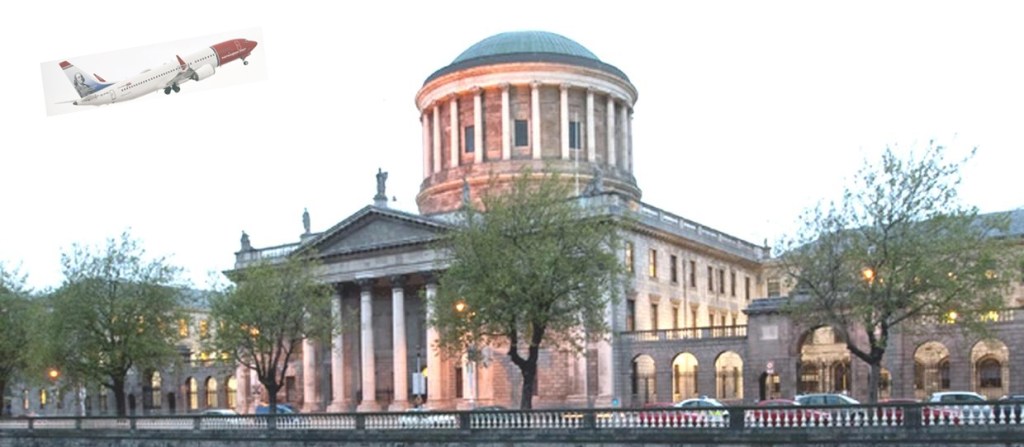
Norwegian Air ha presentado contra el fabricante de aviones estadounidense Boeing por un valor de US$ 1.000 millones de Dólares en resarcimientos por el tiempo de la puesta en tierra de sus unidades adquiridas. La actuación está teniendo lugar en el Juzgado de Michael Quinn, en la República de Irlanda, ante el que se presentó la suspensión de pagos de Norwegian Air Shuttle, con sede en Oslo, y la quiebra de cinco subsidiarias todas ellas con sede en Irlanda. El Juzgado se ha convertido en el centro del drama de la compañía noruega, en el que cada día aparecen historias sobre la agonía de los últimos meses de esta aerolínea. El proceso judicial ha desvelado que Norwegian tenía presentada una demanda de mil millones de Dólares por daños y perjuicios contra Boeing en los tribunales estadounidenses para recuperar el costo de 18 de los Boeing 737-8 MAX almacenados. Ahora esta petición de Boeing contra la demanda debe ser vista el 15 de Diciembre de 2020, ocho días después de que el caso irlandés de la aerolínea se presente ante el Tribunal Superior de Dublín.
Norwegian Air había comprado 18 aviones Boeing 737 MAX por un valor de US$ 1.000 millones de Dólares, pero no pudo utilizarlos tras la decisión de los reguladores de aviación internacionales de ponerlos en tierra por cuestiones de seguridad operativa. Posteriormente, el grupo escandinavo canceló un pedido de 92 aeronaves adicionales. En cualquier aerolínea esta situación habría sido problemática pero para Norwegian fue la gota que colmó su vaso de las desgracias. La demanda presentada incluye reclamos por daños al no poder usar los aviones y también repercute en los costes de mantenimiento. Norwegian calcula que el no poder utilizar el 737 MAX supuso pérdidas por valores a US$ 185 millones sólo en 2019, agravando su crisis financiera. El importe llega a los mil millones de Dólares al solicitar la devolución de los aviones. Al parecer, continúa con poca claridad que la acción judicial en Irlanda impida acciones judiciales de los acreedores en otras jurisdicciones, donde la compañía acarrea un déficit que alcanza los US$ 6.000 millones de Dólares.
Boeing vs Norwegian Air for 737 MAX
Boeing tries to stall US$ 1 billion lawsuit
The Boeing Company is attempting to paralyze the lawsuit filed by Norwegian Air Shuttle ASA by March 2019. The Norwegian discount carrier is seeking compensation from the US aviation industry for its ground fleet of Boeing 737-8 MAX aircraft. Norwegian Air was the first airline to publicly present that it would require Boeing to pay for lost flight time; many airlines had followed suit.
Norwegian Air has filed against the US aircraft manufacturer Boeing for a value of US$ 1,000 million in compensation for the time of the grounding of its acquired units. The action is taking place in the Court of Michael Quinn, in the Republic of Ireland, before which the suspension of payments of Norwegian Air Shuttle, based in Oslo, and the bankruptcy of five subsidiaries all based in Ireland was presented. The Court has become the center of the drama of the Norwegian company, in which stories appear every day about the agony of the last months of this airline. The court process has revealed that Norwegian had filed a lawsuit of one billion dollars for damages against Boeing in the US courts to recover the cost of 18 of the Boeing 737-8 MAX in storage. Now this Boeing petition against the lawsuit is due to be heard on December 15, 2020, eight days after the airline’s Irish case is filed in Dublin High Court.
Norwegian Air had purchased 18 Boeing 737 MAX aircraft for a value of US$ 1 billion, but was unable to use them following the decision of international aviation regulators to ground them for operational safety reasons. Subsequently, the Scandinavian group canceled an order for 92 additional aircraft. In any airline this situation would have been problematic but for Norwegian it was the last straw. The lawsuit filed includes claims for damages due to not being able to use the airplanes and also affects maintenance costs. Norwegian estimates that failing to use the 737 MAX led to losses of US$ 185 million in 2019 alone, compounding its financial crisis. The amount reaches one billion dollars when requesting the return of the aircraft. Apparently, it remains unclear that the legal action in Ireland prevents legal actions from creditors in other jurisdictions, where the company has a deficit of US$ 6 billion.
Boeing vs Norwegian Air for 737 MAX
Boeing prøver å stoppe søksmål på 1 milliard dollar
The Boeing Company prøver å lamme søksmålet fra Norwegian Air Shuttle ASA innen mars 2019. Det norske lavprisselskapet søker erstatning fra den amerikanske luftfartsindustrien for sin bakkeflåte på Boeing 737-8 MAX-fly. Norwegian Air var det første flyselskapet som offentlig presenterte at det ville kreve at Boeing betalte for tapt flytid; mange flyselskaper hadde fulgt etter.
Norwegian Air har søkt mot den amerikanske flyprodusenten Boeing om en verdi på US$ 1 000 millioner i erstatning for tidspunktet for grunnstøting av sine ervervede enheter. Handlingen finner sted i Retten til Michael Quinn, i Irland, før suspensjonen av betalingen av Norwegian Air Shuttle, basert i Oslo, og konkursen til fem datterselskaper som alle er basert i Irland, ble presentert. Domstolen er blitt sentrum for dramaet til det norske selskapet, der historier dukker opp hver dag om kvalen de siste månedene til dette flyselskapet. Rettsprosessen har avdekket at Norwegian hadde anlagt en søksmål på en milliard dollar for erstatning mot Boeing for de amerikanske domstolene for å få tilbake kostnadene på 18 av Boeing 737-8 MAX i lagring. Nå skal denne Boeing-begjæringen mot søksmålet behandles 15. desember 2020, åtte dager etter at flyselskapets irske sak er anlagt i Dublin High Court.
Norwegian Air hadde kjøpt 18 Boeing 737 MAX-fly til en verdi av 1 milliard Dollar, men klarte ikke å bruke dem etter avgjørelsen fra internasjonale luftfartsmyndigheter om å begrunne dem av operasjonelle sikkerhetsmessige årsaker. Deretter kansellerte den skandinaviske gruppen en bestilling på 92 ekstra fly. I ethvert flyselskap ville denne situasjonen ha vært problematisk, men for Norwegian var det det siste strået. Søksmålet som inngis inkluderer krav om erstatning på grunn av ikke å kunne bruke flyene og påvirker også vedlikeholdskostnadene. Norwegian anslår at manglende bruk av 737 MAX førte til tap på 185 millioner Dollar bare i 2019, noe som forverret finanskrisen. Beløpet når en milliard Dollar når vi ber om retur av flyet. Det ser ut til at det fortsatt er uklart at rettssaken i Irland forhindrer rettslige handlinger fra kreditorer i andre jurisdiksjoner, der selskapet har et underskudd som når 6000 millioner.
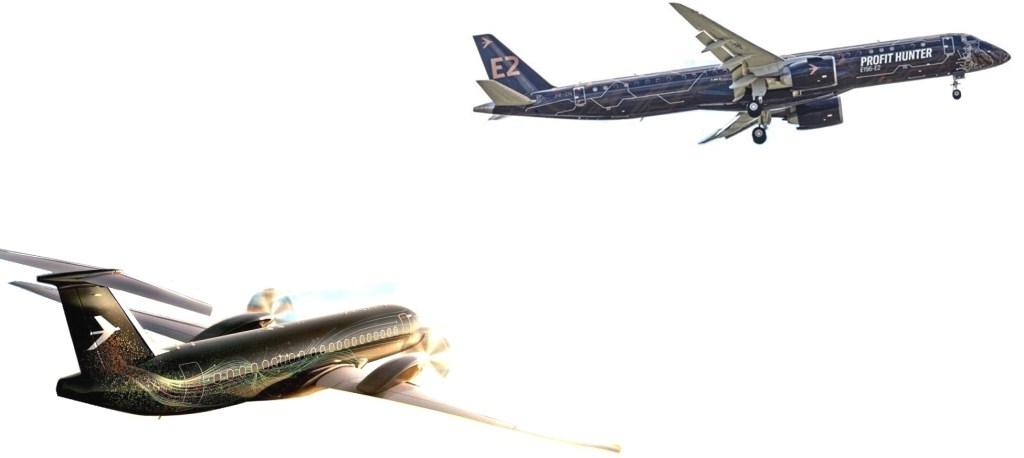
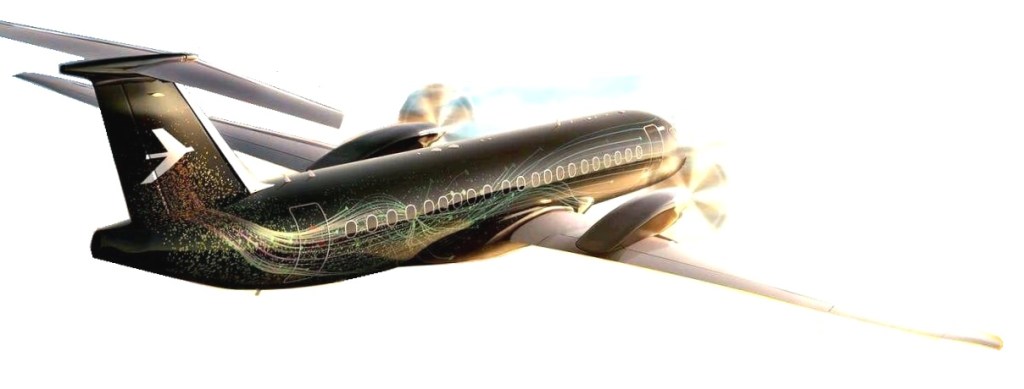
La compañía brasileña Embraer está en conversaciones activas con socios potenciales para construir un nuevo turbohélice regional del Programa E3 y podría optar por una combinación de respaldo industrial y financiero, ha expresado el Jefe de la División Comercial del fabricante de aviones. En un intento por recuperar el impulso después de que fracasara la alianza con The Boeing Company para alcanzar un acuerdo de fusión por valor de los US$ 4.000 millones de Dólares en Abril 2020, el tercer fabricante mundial de aeronaves comerciales continúa posicionando su avión regional E2 como una solución compacta para los transportistas que tratan de reducir el riesgo después de la crisis de Coronavirus. «Estamos activamente en conversaciones con asociaciones, pero no puedo entrar en más detalles ahora. También el tipo de asociación, ya sea industrial o financiera, está muy abierto. Estamos mirando todas las opciones, o podría ser una combinación de las dos. No descartamos a nadie en este momento», dijo el Director Ejecutivo de Aviación Comercial, Arjan Meijer, en una entrevista.
Los analistas dicen que tal desarrollo podría costar valores aproximados a los US$ 2.000 millones de Dólares. Tal movimiento podría sacudir un nicho rentable dominado por el consorcio franco-italiano ATR Aircraft de Europa, que antes de la crisis pronosticaba una demanda de 20 años de 3.020 turbohélices por valor de US$ 80.000 millones de Dólares.
Las ventajas comparativas de las aeronaves turbohélices pueden ser más eficientes que los jets en viajes cortos y poder acceder a rutas donde los jets no pueden volar, sea por demanda/costos o por infraestructuras inadecuadas. Pero la demanda está desacelerada debido a un exceso de aviones usados y la exposición del mercado a los pequeños operadores duramente golpeados por la actual pandemia. ATR Aircraft solo ha entregado un avión en el período Enero-Septiembre 2020.
Próxima generación
Los turbohélices también son vistos como uno de los primeros en enfrentarse a la competencia futura de una propulsión alternativa como el hidrógeno. Arjan Meijer dijo que el diseño de Embraer sería alimentado convencionalmente, pero reduciría las emisiones y el ruido. Pero una decisión de lanzamiento se extendería más allá de 2021 a medida que la industria se centra en la recuperación.
Socios referentes
Embraer había tratado previamente de desarrollar su turbohélice E3 como parte de su vinculación con la compañía americana Boeing. Ahora dice que sólo quiere alianzas dirigidas por proyectos y la unidad comercial no está a la venta.
Entre los países cuyas industrias han expresado interés en los turbohélices se encuentran Corea del Sur, dijeron fuentes de la industria. La sueca SAAB AB rechazó la especulación de algunos funcionarios de la industria de que podía examinar la empresa, habiendo dejado de construir turbohélices civiles en 1999 para centrarse en la defensa. «Saab no tiene planes de reiniciar el desarrollo y la producción de aeronaves civiles. Su enfoque de inversión también siguió siendo la defensa, incluidos fuertes lazos con Brasil», dijo un portavoz de la compañía sueca.
Análisis mercado
Los analistas de mercado dicen que Embraer se ha quedado aislado mientras que el rival de su avión regional E2 insignia, el A220 diseñado en Canadá y Estados Unidos, disfruta de un renacimiento respaldado por el nuevo propietario Airbus Group, una asociación que Embraer esperaba resistir haciendo equipo con Boeing.
Arjan Meijer expresó que la reciente caída de las órdenes más representativas de aviones E2 esperaban el acuerdo de Boeing, seguido rápidamente por la pandemia, hizo caer algunos intereses de compras. Pero las consecuencias de la pandemia a impulsando las caídas de ventas en toda la industria aeronáutica mundial.
Perspectivas mercado
Si bien la mayoría de las previsiones sugieren una recuperación completa del tráfico para 2024-25, «para nuestro segmento por debajo de 150 pasajeros, creemos que se recuperará mucho antes. Las aerolíneas que tienen capacidad para volar aviones más pequeños lo hacen», dijo Arjan Meijer.
Cuando los viajes internacionales se recuperen, las aerolíneas que sirven a los centros también usarán aviones alimentadores más pequeños. Eso lo pone en desacuerdo con las aerolíneas de bajo costo que ven los centros como obsoletos y reducen los precios para llenar sus modelos más grandes de Airbus y Boeing. «Creemos firmemente que las aerolíneas tendrán que centrarse en la rentabilidad», dijo el Director de Embraer Commercial Aircraft. También ha expresado que Embraer se mantuvo comprometido con el E2 más pequeño, el E175-E2, que está excluido de los mercados estadounidenses debido a las reglas sindicales por las cláusulas de Alcance sobre el tamaño de los aviones utilizados por algunas compañías regionales. Embraer continuará en el segmento de hasta los 150 asientos: «Embraer se centra en ampliar nuestro liderazgo en el segmento de hasta 150 asientos».
Las perspectivas de la industria de aviación brasileña continuará mirando hacia el futuro con optimismo. «Somos una empresa fuerte y tenemos una buena posición de efectivo, por lo que estamos muy seguros de mirar hacia adelante», dijo Arjan Meijer.
Embraer seeks partners for E3
Embraer seeks partnership E3 turboprops program
The Brazilian company Embraer is in active talks with potential partners to build a new regional turboprop E3 Program and could opt for a combination of industrial and financial support, said the head of the commercial division of the aircraft manufacturer. In an attempt to regain momentum after the failure of the alliance with The Boeing Company to reach a merger agreement worth US$ 4 billion in April 2020, the world’s third largest commercial aircraft manufacturer continues to position its E2 regional aircraft as a compact solution for carriers trying to reduce risk after the Coronavirus crisis. «We are actively in talks with associations, but I cannot go into more details now. Also the type of association, be it industrial or financial, is very open. We are looking at all options, or it could be a combination of the two. We do not rule out to anyone at this time», said Executive Director of Commercial Aviation Arjan Meijer in an interview.
Analysts say such a development could cost around US$ 2 billion. Such a move could shake up a profitable niche dominated by Europe’s Franco-Italian ATR Aircraft consortium, which prior to the crisis was forecasting a 20-year demand for 3,020 turboprops worth US$ 80 billion.
The comparative advantages of turboprop aircraft can be more efficient than jets on short trips and be able to access routes where jets cannot fly, either due to demand/costs or inadequate infrastructure. But demand is slowing due to a glut of used jets and market exposure to small carriers hit hard by the current pandemic. ATR Aircraft has only delivered one aircraft in the period January-September 2020.
Next Generation
Turboprops are also seen as one of the first to face future competition from alternative propulsion such as hydrogen. Arjan Meijer said that the Embraer design would be conventionally powered, but reduce emissions and noise. But a launch decision would extend beyond 2021 as the industry focuses on recovery.
Referring partners
Embraer had previously tried to develop its E3 turboprop as part of its relationship with the American company Boeing. Now he says he only wants project-led partnerships and the business unit is not for sale.
Among the countries whose industries have expressed interest in turboprops are South Korea, industry sources said. Sweden’s SAAB AB rejected speculation by some industry officials that it could examine the company, having stopped building civilian turboprops in 1999 to focus on defense. «Saab has no plans to restart development and production of civil aircraft. Its investment focus also continued to be defense, including strong ties with Brazil», said a spokesman for the Swedish company.
Market analysis
Market analysts say Embraer has become isolated as the rival to its flagship E2 regional jet, the Canadian and US-designed A220, enjoys a renaissance backed by new owner Airbus Group, a partnership Embraer hoped to resist by doing. team with Boeing.
Arjan Meijer said that the recent drop in the most representative orders for E2 aircraft awaited the Boeing deal, quickly followed by the pandemic, dropping some purchasing interests. But the consequences of the pandemic are driving sales declines throughout the global aeronautical industry.
Market prospects
While most forecasts suggest a full recovery in traffic by 2024-25, «for our segment below 150 passengers, we believe it will recover much sooner. Airlines that have the capacity to fly smaller aircraft do so,» he said. Arjan Meijer.
When international travel picks up, airlines serving the hubs will also use smaller feeder planes. That puts him at odds with low-cost airlines who view the hubs as outdated and cut prices to fill their larger Airbus and Boeing models. «We strongly believe that airlines will have to focus on profitability», said the Director of Embraer Commercial Aircraft. He has also expressed that Embraer remained committed to the smaller E2, the E175-E2, which is excluded from the US markets due to union rules for the Scope clauses on the size of the planes used by some regional companies. Embraer will continue in the up to 150 seat segment: «Embraer is focused on expanding our leadership in the up to 150 seat segment».
The prospects for the Brazilian aviation industry will continue to look to the future with optimism. «We are a strong company and we have a good cash position so we are very confident to look forward», said Arjan Meijer.
Embraer busca parceiros para a E3
Embraer busca parceria programa turboélices E3
A brasileira Embraer está em conversas ativas com potenciais parceiros para a construção de um novo turboélice regional Programa E3 e pode optar por uma combinação de apoio industrial e financeiro, disse o chefe da divisão comercial da fabricante de aeronaves. Em uma tentativa de recuperar o ímpeto depois que a aliança com a The Boeing Company falhou em chegar a um acordo de fusão de US$ 4 bilhões em Abril de 2020, o terceiro maior fabricante de aeronaves comerciais do mundo continua a posicionar suas aeronaves regionais E2 como uma solução compacta para transportadores que tentam reduzir o risco após a crise do Coronavirus. “Estamos conversando ativamente com as associações, mas não posso entrar em mais detalhes agora. Também o tipo de associação, seja industrial ou financeira, é muito aberto. Estamos analisando todas as opções, ou pode ser uma combinação das duas. Não descartamos a qualquer pessoa neste momento», disse o Diretor Executivo de Aviação Comercial Arjan Meijer em uma entrevista.
Analistas dizem que tal desenvolvimento pode custar cerca de US$ 2 bilhões. Tal movimento poderia abalar um nicho lucrativo dominado pelo consórcio franco-italiano ATR Aircraft, que antes da crise previa uma demanda de 20 anos por 3.020 turboélices no valor de US$ 80 bilhões.
As vantagens comparativas de aeronaves turboélice podem ser mais eficientes do que jatos em viagens curtas e ser capaz de acessar rotas onde os jatos não podem voar, seja devido à demanda/custos ou infraestrutura inadequada. Mas a demanda está diminuindo devido ao excesso de jatos usados e à exposição do mercado a pequenas companhias aéreas duramente atingidas pela atual pandemia. A ATR Aircraft entregou apenas uma aeronave no período de janeiro a Setembro de 2020.
Próxima geração
Os turboélices também são vistos como um dos primeiros a enfrentar a concorrência futura de propulsão alternativa, como o hidrogênio. Arjan Meijer disse que o projeto da Embraer seria movido de forma convencional, mas reduziria as emissões e o ruído. Mas uma decisão de lançamento se estenderia além de 2021, já que a indústria se concentra na recuperação.
Parceiros de referência
A Embraer já havia tentado desenvolver seu turboélice E3 como parte de seu relacionamento com a empresa americana Boeing. Agora ele diz que quer apenas alianças lideradas por projetos e que a unidade de negócios não está à venda.
Entre os países cujas indústrias manifestaram interesse em turboélices está a Coreia do Sul, disseram fontes da indústria. A SAAB AB da Suécia rejeitou a especulação de alguns funcionários da indústria de que poderia examinar a empresa, tendo parado de construir turboélices civis em 1999 para se concentrar na defesa. “A Saab não tem planos de reiniciar o desenvolvimento e a produção de aeronaves civis. Seu foco de investimentos também continuou sendo a defesa, incluindo fortes laços com o Brasil”, disse um porta-voz da empresa sueca.
Análise de mercado
Analistas de mercado dizem que a Embraer ficou isolada como rival de seu principal jato regional E2, o canadense e americano A220, que renasce com o apoio do novo proprietário Airbus Group, parceria que a Embraer espera resistir. equipe com a Boeing.
Arjan Meijer disse que a recente queda nas encomendas mais representativas de aviões E2 aguardava o negócio da Boeing, seguido rapidamente pela pandemia, reduzindo alguns interesses de compra. Mas as consequências da pandemia estão provocando declínios nas vendas em toda a indústria aeronáutica global.
Perspectivas de mercado
Embora a maioria das previsões sugira uma recuperação total do tráfego em 2024-25, «para nosso segmento abaixo de 150 passageiros, acreditamos que se recuperará muito mais cedo. As companhias aéreas que têm capacidade para voar em aeronaves menores o fazem», disse ele. Arjan Meijer.
Quando as viagens internacionais aumentarem, as companhias aéreas que atendem aos hubs também usarão aviões alimentadores menores. Isso o coloca em desacordo com as companhias aéreas de baixo custo, que consideram os hubs desatualizados e reduzem os preços para abastecer seus modelos maiores de Airbus e Boeing. “Acreditamos fortemente que as companhias aéreas terão que focar na lucratividade”, disse o Diretor de Aviões Comerciais da Embraer. Ele também expressou que a Embraer continua comprometida com o menor E2, o E175-E2, que está excluído do mercado norte-americano devido às regras sindicais pelas cláusulas de Escopo sobre o tamanho dos aviões usados por algumas empresas regionais. A Embraer continuará no segmento de até 150 assentos: «A Embraer está focada em expandir nossa liderança no segmento de até 150 assentos».
As perspectivas para a indústria aeronáutica brasileira continuam a olhar para o futuro com otimismo. «Somos uma empresa forte e temos uma boa posição de caixa, por isso estamos muito confiantes para olhar para frente», disse Arjan Meijer.
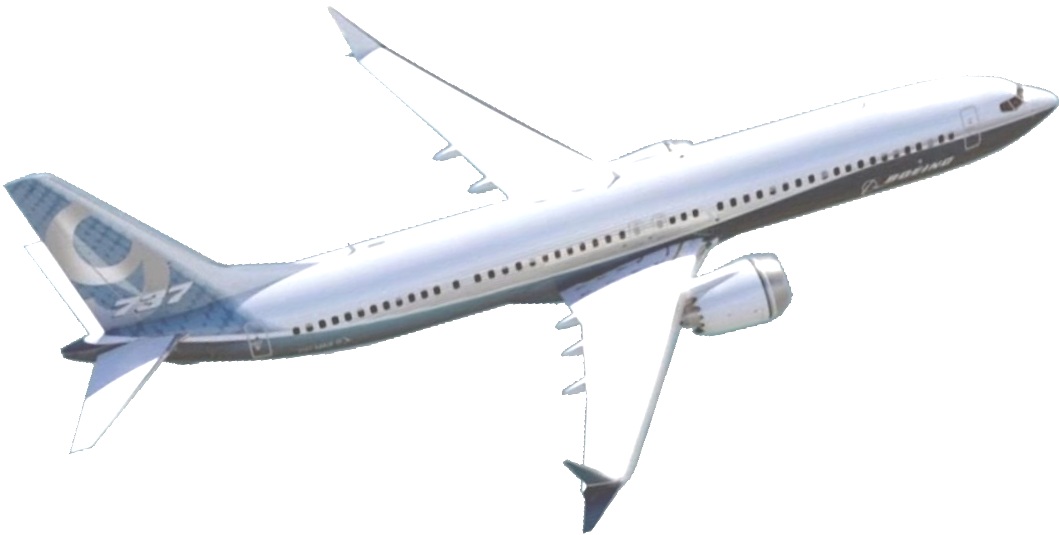
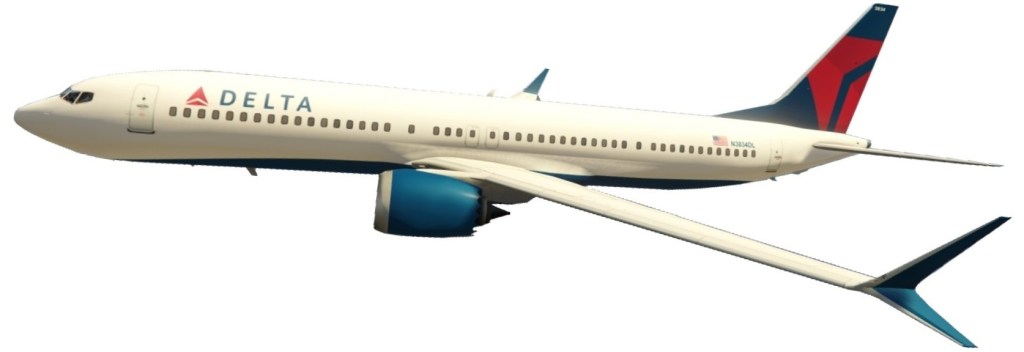
Boeing confirma nuevo cliente Delta Air Lines para 737 MAX
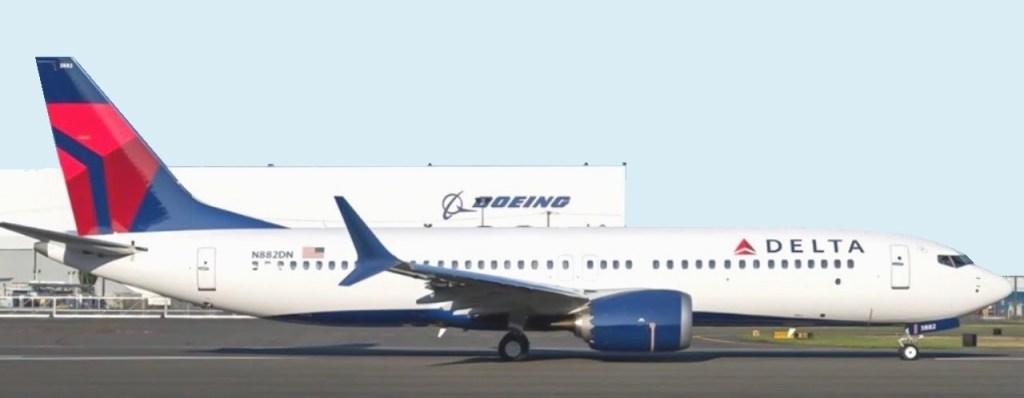
Delta Air Lines (DAL) está considerando comprar el Boeing 737 MAX para su flota, después de la incursión de la aeronave por el espacio de veinte meses tras evaluaciones de seguridad operativa por parte de los organismos de aviación internacionales. La mega-aerolínea con sede en Atlanta, Estado de Georgia, ha esperado que Boeing despeje los cielos para el cuestionado 737 MAX para estudiar la compra de la cuarta generación del Boeing 737, después de la aprobación de la Administración Federal de Aviación (FAA) para levantar la conexión a tierra del avión con problemas. «Estamos hablando con Boeing sobre muchas cosas diferentes, el MAX incluido. Si hay una oportunidad en la que nos sintamos cómodos adquiriendo el MAX no tendríamos dudas haciendo eso», dijo el CEO de Delta Air Lines, Ed Bastian.
El nuevo cliente potencial viene a arrojar oxígeno al Programa 737 MAX que ha estado golpeado por cancelaciones y reprogramaciones de su extensa cartera de pedidos que ha visto reducirse en más de 1.040 este año 2020. Casi 600 han sido retirados del atraso y casi 450 han sido cancelados por los transportistas. El atraso ahora se sitúa en torno a 4.300 unidades. El Boeing 737 MAX recibió la aprobación de la FAA el 18 de Noviembre de 2020 para volver a entrar en el servicio después de un proceso de revisión de seguridad integral y metódico que tardó 20 meses en completarse.
El retorno a los cielos del Boeing 737 MAX ha comenzado su carrera de despegue para poner el avión en el aire que tomará varias semanas para que las aerolíneas reacondicionen sus aeronaves y capacitación de tripulación de vuelo. American Airlines (AAL) está poniendo el 737 MAX de nuevo en su horario de vuelo el 29/12, mientras que Southwest Airlines (LUV) y United Airlines (UAL) no esperan que el 737 MAX vuelva al servicio hasta el primer trimestre de 2021 (1Q2021).
El principal proveedor de Boeing 737 MAX, Spirit AeroSystems (SPR) y el proveedor de motores General Electric (GE) han anunciado fuertes subas en las operaciones bursátiles después de la feliz noticia del retorno de la aeronave a los cielos.
Escrutinio adicional 737 MAX
En 2019, la Agencia de Seguridad Aérea de la Unión Europea (EASA) envió una lista de criterios separados de la FAA que Boeing necesitaba abordar antes de que la agencia aprobara el 737 MAX para el vuelo. La EASA continúa trabajando para levantar la puesta a tierra del Boeing 737 MAX en Enero 2021. «Queríamos llevar a cabo un análisis totalmente independiente de la seguridad de este avión, por lo que realizamos nuestros propios controles y pruebas de vuelo. Todos estos estudios nos dicen que el 737 Max puede volver al servicio. Hemos empezado a poner en marcha todas las medidas. Es probable que en nuestro caso adoptemos las decisiones, lo que le permitirá volver al servicio, en algún momento de Enero», dijo el Sábado 22/11 a los espectadores del Foro Aéreo de París virtual el Director Ejecutivo de la EASA, Patrick Ky.
Mientras tanto, la Canadian Aviation Regulation (CAR) ha comunicado que continúan en su proceso de validación independiente y están retrasando la aprobación del 737 MAX, pero esperan que sea pronto retorne a los cielos.
La Agencia Nacional de Aviación Civil (ANAC) de Brasil no está levantando su actual prohibición de la familia Boeing 737 MAX todavía, aunque reconoce que continúa realizado estudios de conclusión en los ajustes finales de su propio proceso de recertificación.
El regulador de aviación civil de los Emiratos Árabes Unidos, la General Authority of Civil Aviation (GCAA) ha informado este Domingo 22/11 que anunciaría un horario de regreso para el Boeing 737 MAX de manera oportuna después de que los Estados Unidos levantaran la semana pasada una prohibición de vuelo luego de veinte meses de incursión en tierra.
En cuanto a China, la Civil Aviation Administration of China (CAAC), el primer país en poner en tierra el Boeing 737 MAX en Marzo de 2019, aún no está listo para levantar la puesta a tierra. La CAAC dijo a la televisión estatal la semana pasada que es necesario cumplir tres criterios antes de levantar la puesta a tierra. Los cambios de diseño 737 MAX necesitan ser aprobados, los pilotos necesitan ser completamente entrenados y la causa de los dos accidentes mortales fue identificada por los investigadores.
Delta repositions Boeing 737 MAX
Boeing confirms new Delta Air Lines customer for 737 MAX
Delta Air Lines (DAL) is considering purchasing the Boeing 737 MAX for its fleet, following the aircraft’s foray into space twenty months after operational safety assessments by international aviation agencies. The Atlanta, Georgia-based mega-airline has waited for Boeing to clear the skies for the questioned 737 MAX to study the purchase of the fourth-generation Boeing 737, after approval from the Federal Aviation Administration (FAA). to lift the ground connection of the problem plane. «We’re talking to Boeing about a lot of different things, including the MAX. If there is an opportunity where we feel comfortable acquiring the MAX we would have no hesitation doing that», said Delta Air Lines CEO Ed Bastian.
The new potential client comes to throw oxygen into the 737 MAX Program that has been hit by cancellations and rescheduling of its extensive order book that has seen a reduction of more than 1,040 this year 2020. Almost 600 have been withdrawn from the backlog and almost 450 have been canceled by carriers. The backlog now stands at around 4,300 units. The Boeing 737 MAX received FAA approval on November 18, 2020 to re-enter service after a comprehensive and methodical safety review process that took 20 months to complete.
The return to the skies of the Boeing 737 MAX has begun its takeoff run to put the plane in the air that will take several weeks for airlines to refit their aircraft and flight crew training. American Airlines (AAL) is putting the 737 MAX back on its flight schedule on 12/29, while Southwest Airlines (LUV) and United Airlines (UAL) do not expect the 737 MAX to return to service until the first quarter of 2021. (1Q2021).
Major Boeing 737 MAX supplier Spirit AeroSystems (SPR) and engine supplier General Electric (GE) have announced sharp gains in trading after the happy news of the aircraft’s return to the skies.
Additional scrutiny 737 MAX
In 2019, the European Union Aviation Safety Agency (EASA) sent out a list of separate FAA criteria that Boeing needed to address before the agency approved the 737 MAX for flight. EASA continues to work to lift the grounding of the Boeing 737 MAX in January 2021. «We wanted to carry out a totally independent analysis of the safety of this aircraft, so we carried out our own controls and flight tests. They say that the 737 Max can return to service. We have started to implement all the measures. It is likely that in our case we will adopt the decisions, which will allow it to return to service, sometime in January», he said on Saturday 22/11 to the spectators of the virtual Paris Air Forum the Executive Director of EASA, Patrick Ky.
Meanwhile, the Canadian Aviation Regulation (CAR) has communicated that they continue in their independent validation process and are delaying the approval of the 737 MAX, but they hope that it will soon return to the skies.
Brazil’s National Civil Aviation Agency (ANAC) is not lifting its current ban on the Boeing 737 MAX family yet, although it acknowledges that it continues to conduct concluding studies on the final adjustments to its own recertification process.
The United Arab Emirates’ civil aviation regulator, the General Authority of Civil Aviation (GCAA) reported this Sunday 11/22 that it would announce a return schedule for the Boeing 737 MAX in a timely manner after the United States lifted the week. passed a flight ban after twenty months of incursion on the ground.
As for China, the Civil Aviation Administration of China (CAAC), the first country to ground the Boeing 737 MAX in March 2019, is not yet ready to lift the ground. The CAAC told state television last week that three criteria need to be met before lifting the ground. The 737 MAX design changes need to be approved, the pilots need to be fully trained, and the cause of the two fatal crashes has been identified by investigators.
AW | 2020 11 19 11:15 | INDUSTRY / AVIATION SAFETY
Boeing responde aprobación FAA para reanudar operaciones 737 MAX
La Administración Federal de Aviación (FAA) de los Estados Unidos ha rescindido este 18/11 la orden que detuvo las operaciones comerciales de Boeing 737-8 y 737-9. La medida permitirá a las aerolíneas que están bajo la jurisdicción de la FAA, incluidas las de los Estados Unidos, tomar las medidas necesarias para reanudar el servicio y Boeing comience a realizar entregas. «Nunca olvidaremos las vidas perdidas en los dos trágicos accidentes que llevaron a la decisión de suspender las operaciones. Estos eventos y las lecciones que hemos aprendido como resultado han remodelado nuestra empresa y centrado aún más nuestra atención en nuestros valores fundamentales de seguridad, calidad e integridad», dijo David Calhoun, Director Ejecutivo de The Boeing Company.
A lo largo de los últimos veinte meses, Boeing ha trabajado estrechamente con las aerolíneas, proporcionándoles recomendaciones detalladas sobre el almacenamiento a largo plazo y asegurando que su aporte fue parte del esfuerzo por devolver los aviones al servicio de forma segura.
Una Directiva de Aeronavegabilidad (AD) emitida por la FAA detalla los requisitos que deben cumplirse antes de que los transportistas estadounidenses puedan reanudar el servicio, incluyendo la instalación de mejoras de software, completar modificaciones de separación de cables, realizar entrenamiento de pilotos y llevar a cabo actividades exhaustivas de despreservación que garanticen que los aviones estén listos para el servicio. «La directiva de la FAA es un hito importante. Continuaremos trabajando con los reguladores de todo el mundo y nuestros clientes para devolver el avión al servicio en todo el mundo», dijo Stan Deal, Presidente y Director Ejecutivo de Boeing Commercial Airplanes.
Además de los cambios realizados en el entrenamiento de aviones y pilotos, Boeing ha tomado tres pasos importantes para reforzar su enfoque en la seguridad y la calidad:
1 · Alineación organizacional: Más de 50.000 ingenieros se han reunido en una sola organización que incluye una nueva unidad de seguridad de productos y servicios, unificando las responsabilidades de seguridad en toda la empresa. 2 · Enfoque cultural: Los ingenieros han sido más capacitados para mejorar la seguridad y la calidad. La empresa está identificando, diagnosticando y resolviendo problemas con un mayor nivel de transparencia e inmediatez. 3 · Mejoras en el proceso: Mediante la adopción de procesos de diseño de próxima generación, la empresa está permitiendo mayores niveles de calidad por primera vez.
La FAA ha levantado la orden que suspendió las operaciones de la línea 737 MAX para aerolíneas bajo su jurisdicción, incluidas las de los Estados Unidos. Seguimos trabajando con otros reguladores y aerolíneas globales mientras toman medidas para devolver el avión al servicio en sus jurisdicciones. Tras la aprobación de la FAA, otros reguladores mundiales están revisando a fondo la capacitación propuesta. Los reguladores establecerán los requisitos finales de capacitación. Colaboramos con pilotos, ingenieros y expertos en seguridad para crear una propuesta integral que pedía que los pilotos actuales 737-8 y 737-9 completaran formación adicional, revisaran exhaustivamente la documentación técnica y demostraran sus conocimientos en un simulador de vuelo de movimiento completo calificado por el regulador. Pilotos de más de 80 de las aerolíneas del mundo probaron las mejoras de primera mano en un simulador de vuelo en movimiento completo. También revisaron el material del curso y la documentación técnica. Cada aerolínea trabajará directamente con su regulador para determinar su enfoque de capacitación y recibir la aprobación para su curso de formación.
Regreso al servicio
Si un avión fue fabricado después de que el pedido fue emitido o ya está en la flota de un cliente, tiene que pasar por un riguroso proceso definido por la FAA antes de volver al servicio. Los aviones que han estado en almacenamiento deben someterse a un proceso de activación integral antes de que puedan considerarse listos para su devolución al servicio. Después de preparar cada avión, se inspeccionará minuciosamente con un sólido conjunto de criterios definidos por la FAA. Hemos estado trabajando codo con codo con nuestros clientes para garantizar un almacenamiento seguro y ahora estamos listos para apoyarlos a medida que devuelven sus aviones de forma segura al servicio comercial.
Aerolíneas & 737 MAX
American Airlines se encuentra preparada para ser el relanzamiento de la vuelta a la programación de vuelo del 737 MAX, confirmando este 18/11 que planea comenzar a operar el avión el próximo 29/12 en el servicio entre Miami y Nueva York. La compañía ha expresado la flexibilidad diciendo que los pasajeros no tendrán que viajar en el 737 MAX si no lo desean. «Si un cliente prefiere no volar en este avión, proporcionaremos flexibilidad para garantizar que puedan volver a acomodarse fácilmente», dijo American en un mensaje a los empleados. El CEO Gary Kelly de Southwest Airlines ha dicho a los empleados que confía en las correcciones realizadas en el Boeing 737 MAX, destacando también la necesidad de «miles de horas de trabajo, inspecciones y actualizaciones de software antes de que cualquiera de nuestros clientes aborde un Southwest 737 MAX». Southwest ha comunicado que no transportará pasajeros en el avión hasta el segundo trimestre del año entrante (2Q2021). Alaska Airlines dice que planea tomar la entrega de su primer 737 MAX en Enero 2021, cuando los pilotos comenzarán los entrenamiento de simulador y vuelo real antes de entrar en servicio en Marzo 2021.
Boeing 737 MAX approval statement
Boeing responds to FAA approval to resume 737 MAX operations
The Federal Aviation Administration (FAA) of the United States has rescinded this 18/11 the order that stopped the commercial operations of Boeing 737-8 and 737-9. The move will allow airlines under FAA jurisdiction, including those in the United States, to take the necessary steps to resume service and Boeing to begin making deliveries. «We will never forget the lives lost in the two tragic accidents that led to the decision to suspend operations. These events and the lessons we have learned as a result have reshaped our company and further focused our attention on our core values of safety, quality and safety. integrity», said David Calhoun, CEO of The Boeing Company.
Over the past twenty months, Boeing has worked closely with airlines, providing detailed recommendations on long-term storage and ensuring that their input was part of the effort to safely return aircraft to service.
An Airworthiness Directive (AD) issued by the FAA details the requirements that must be met before U.S. carriers can resume service, including installing software upgrades, completing cable spacing modifications, conducting pilot training, and carrying out carry out comprehensive preservation activities to ensure aircraft are ready for service. «The FAA leadership is an important milestone. We will continue to work with regulators around the world and our customers to return the aircraft to service around the world», said Stan Deal, President and CEO of Boeing Commercial Airplanes.
In addition to changes made to airplane and pilot training, Boeing has taken three important steps to reinforce its focus on safety and quality:
1 · Organizational alignment: More than 50,000 engineers have come together in a single organization that includes a new product and service security unit, unifying security responsibilities across the company. 2 · Cultural approach: Engineers have been more trained to improve safety and quality. The company is identifying, diagnosing and solving problems with a higher level of transparency and immediacy. 3 · Process improvements: By adopting next-generation design processes, the company is enabling higher levels of quality for the first time.
The FAA has lifted the order that suspended operations of the 737 MAX line for airlines under its jurisdiction, including those of the United States. We continue to work with other global airlines and regulators as they take steps to return the aircraft to service in their jurisdictions. Following FAA approval, other global regulators are thoroughly reviewing the proposed training. Regulators will establish final training requirements. We collaborated with pilots, engineers, and safety experts to create a comprehensive proposal that required current 737-8 and 737-9 pilots to complete additional training, comprehensively review technical documentation, and demonstrate their knowledge on a full-motion flight simulator rated by the regulator. Pilots from more than 80 of the world’s airlines tested the improvements first-hand in a full-motion flight simulator. They also reviewed the course material and technical documentation. Each airline will work directly with its regulator to determine its training approach and receive approval for its training course.
Return to service
If an aircraft was manufactured after the order was issued or is already in a customer’s fleet, it has to go through a rigorous process defined by the FAA before returning to service. Aircraft that have been in storage must undergo a comprehensive activation process before they can be considered ready for return to service. After each aircraft is prepared, it will be thoroughly inspected against a robust set of criteria defined by the FAA. We have been working closely with our customers to ensure safe storage and are now ready to support them as they safely return their aircraft to commercial service.
Airlines & 737 MAX
American Airlines is prepared to be the relaunch of the return to the flight schedule of the 737 MAX, confirming this 11/18 that it plans to start operating the aircraft on 12/29 in the service between Miami and New York. The company has expressed flexibility by saying that passengers won’t have to ride the 737 MAX if they don’t want to. «If a customer prefers not to fly on this aircraft, we will provide flexibility to ensure they can easily re-accommodate», American said in a message to employees. Southwest Airlines CEO Gary Kelly has told employees that he is confident in the fixes made on the Boeing 737 MAX, also highlighting the need for «thousands of man hours, inspections and software updates before any of our customers board a Southwest 737 MAX». Southwest has announced that it will not transport passengers on the plane until the second quarter of the following year (2Q2021). Alaska Airlines says it plans to take delivery of its first 737 MAX in January 2021, when pilots will begin simulator training and actual flight before entering service in March 2021.
Boeing observa un mercado creciente de carga aérea
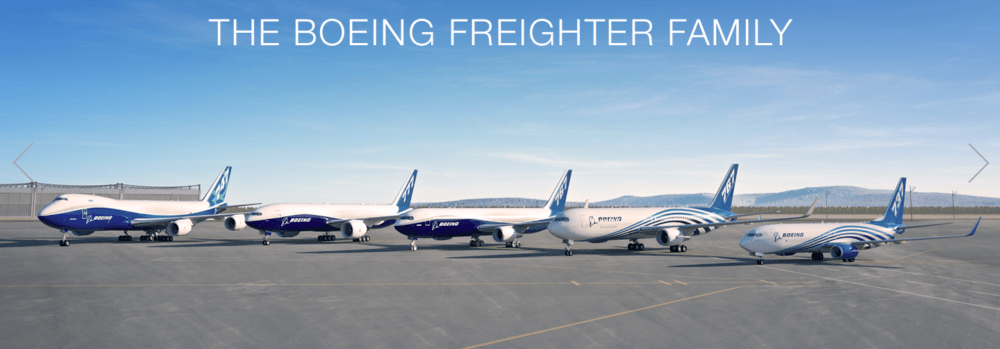
The Boeing Company ha expresado en un comunicado que se necesitan más cargueros para apoyar las cadenas de suministro mundiales y la expansión del comercio electrónico. World Air Cargo Forecast 2020 (WACF) ha previsto un crecimiento de la flota de más del 60% en 20 años, incluidos los cargadores nuevos y convertidos. Los operadores de transporte de mercancías cumplen con los requisitos del mercado para transportar suministros médicos y abordar las tendencias del comercio electrónico.
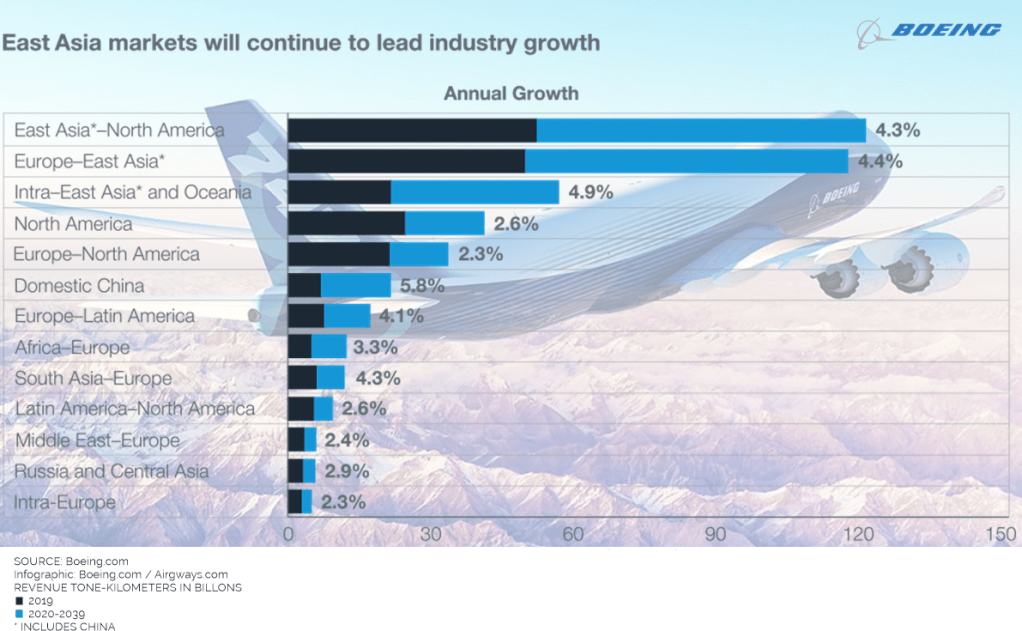
Boeing ha publicado este 17/11 su Pronóstico Mundial de Carga Aérea (WACF), que refleja los impactos y oportunidades del COVID-19, así como una demanda sustancial a largo plazo de cargueros en las próximas dos décadas. El WACF, que se ha permitido un repunte del comercio mundial y el crecimiento a largo plazo, prevé la demanda de 2.430 cargueros en los próximos 20 años, incluidos 930 nuevos cargueros de producción y 1.500 cargueros convertidos en aviones de pasajeros.
Según las nuevas previsiones, el tráfico mundial de carga aérea crecerá a un ritmo del 4% anual en los próximos 20 años. Este crecimiento está influenciado por el comercio y el crecimiento de los envíos exprés para apoyar la expansión de las operaciones de comercio electrónico. Con estos desarrollos y la necesidad probada de capacidad de carga dedicada para apoyar el sistema de transporte mundial, se espera que la flota mundial de carga aérea crezca más de un 60% hasta 2039. «Los operadores de carga han estado en una posición única en 2020 para cumplir con los requisitos del mercado en cuanto a velocidad, confiabilidad y seguridad, el transporte de suministros médicos y otros bienes para personas y comunidades de todo el mundo. De cara al futuro, los cargueros dedicados serán aún más críticos para competir en los mercados de carga aérea; transportan más de la mitad del tráfico de carga aérea, y las aerolíneas que los operan obtienen casi el 90% de los ingresos de la industria de carga aérea», dijo Darren Hulst, Vicepresidente de Marketing Comercial.
Además de proyectar la demanda a largo plazo de cargueros, el WACF proporciona información sobre el rendimiento de la carga aérea durante la pandemia, incluyendo lo siguiente: El comercio electrónico, que estaba creciendo a tasas de dos dígitos antes de la pandemia, ha acelerado su impacto en el mercado de la carga aérea a medida que más empresas se desplazaban a plataformas de venta en línea. Año hasta septiembre, los transportistas exprés aumentaron el tráfico en un 14%. La carga del vientre de los pasajeros, que en 2019 representaba aproximadamente la mitad de la capacidad mundial de carga aérea, se redujo significativamente cuando las aerolíneas estacionaron miles de aviones. Los operadores de carga respondieron operando por encima de los niveles normales de utilización, y el tráfico de los transportistas de carga crecieron un 6%. En lo que va de 2020, aproximadamente 200 aerolíneas utilizaron más de 2.000 aviones de cuerpo ancho de pasajeros para operaciones solo de carga para generar flujo de efectivo y apoyar las cadenas de suministro globales. Estos cargueros de pasajeros han asumido parte del déficit de capacidad y, en algunos casos, han generado beneficios trimestrales para los transportistas a pesar de las operaciones mínimas de pasajeros.
World air cargo perspective
Boeing sees growing air cargo market
The Boeing Company has said in a statement that more freighters are needed to support global supply chains and the expansion of electronic commerce. World Air Cargo Forecast 2020 (WACF) has forecast fleet growth of over 60% in 20 years, including new and converted loaders. Freight transport operators meet market requirements to transport medical supplies and address e-commerce trends.
Boeing released its World Air Cargo Forecast on 11/17, reflecting the impacts and opportunities of COVID-19, as well as substantial long-term demand for freighters over the next two decades. The WACF, which has allowed for a rebound in world trade and long-term growth, forecasts demand for 2,430 freighters over the next 20 years, including 930 new production freighters and 1,500 freighters converted to passenger aircraft. According to the new forecasts, world air cargo traffic will grow at a rate of 4% per year in the next 20 years.
This growth is influenced by commerce and the growth of express shipping to support the expansion of e-commerce operations. With these developments and the proven need for dedicated cargo capacity to support the global transportation system, the global air cargo fleet is expected to grow by more than 60% through 2039. «Cargo operators have been in a unique position in 2020 to meet the market requirements for speed, reliability and safety, transportation of medical supplies and other goods for people and communities around the world. Looking ahead, dedicated freighters will be even more critical to compete in the air cargo markets; they carry more than half the air cargo traffic, and the airlines that operate them derive nearly 90% of the revenue from the air cargo industry», said Darren Hulst, Vice President of Commercial Marketing.
In addition to projecting long-term demand for freighters, the WACF provides information on the performance of air cargo during the pandemic, including the following: Electronic commerce, which was growing at double-digit rates before the pandemic, has accelerated its impact on the air cargo market as more companies moved to online sales platforms. Year to September, express carriers increased traffic by 14%. Passenger belly loading, which in 2019 accounted for about half of the world’s air cargo capacity, dropped significantly as airlines parked thousands of planes. Freight operators responded by operating above normal levels of utilization, and freight carrier traffic grew 6%. So far in 2020, approximately 200 airlines have used more than 2,000 wide-body passenger aircraft for cargo-only operations to generate cash flow and support global supply chains. These passenger freighters have assumed part of the capacity deficit and, in some cases, have generated quarterly benefits for carriers despite minimal passenger operations.
Despidos totalizan hacia finales 2020 a 30.000 empleados
The Boeing Company, el gigante fabricante estadounidense aeroespacial, ha anunciado 7.000 despidos, con lo que su total asciende a 30.000 para el año 2020. La compañía citó el impacto de la pandemia de Coronavirus en la industria aérea como la causa subyacente, y también anunció que no había pedidos de aeronaves comerciales para el mes de Octubre 2020, el segundo mes consecutivo donde no ha habido órdenes. Boeing tiene la intención de hacer estos recortes a pesar de recibir US$ 17 mil millones de Dólares en dinero de rescate Federal a principios del 1Q2020.
El colapso de los nuevos pedidos es impulsado por la paralización de la industria aérea por la pandemia de Coronavirus, con la cantidad de pasajeros disminuyendo en el orden del 65 por ciento. Esto a su vez ha dado lugar a una ola de consolidaciones y cierres de rutas, sinergias de compañías y quiebras declaradas. Según OAG Aviation Worldwide, la industria aérea redujo 47.756 rutas aéreas que operaron en Enero 2020 a 33.416 en Noviembre 2020, lo que representa una disminución del 30 por ciento. En Marzo 2020, mientras regateó al Congreso por una parte del rescate corporativo de billones de Dólares bajo la Ley CARES, la industria aérea retuvo los puestos de empleos de los trabajadores como rescate, amenazando con decenas de miles de recortes a menos que el Gobierno Federal interviniera. Al final, la industria aérea prometió sólo retrasar los despidos hasta el 30 de Septiembre de 2020. El grupo industrial Airlines for America (A4A) anunció que las aerolíneas estadounidenses han arrojado 90.000 de los 460.000 empleos en la industria desde Marzo 2020, una reducción del 20 por ciento. Southwest Airlines también amenaza los despidos por primera vez en su historia a menos que los trabajadores acepten recortes salariales del 10 por ciento.
Southwest Airlines utiliza tradicionalmente variantes de los aviones Boeing 737 y fue el mayor cliente para el 737 MAX. Se vio obligado a cancelar miles de vuelos después de que el 737 MAX fuera puesto en tierra, y como resultado Southwest está considerando comprar aviones Airbus A220, una aeronave regional que se adapta perfectamente a la demanda actual de tráfico en el mercado que observa la compañía con sede en Dallas/Love Field Airport, en Texas.
Boeing y Airbus se encuentran actualmente en el centro de las medidas de guerra comercial entre Estados Unidos y Europa por conflictos de ayudas económicas gubernamentales recíprocas. En represalia por el aumento de los aranceles estadounidenses, la Unión Europea (UE) impuso la semana pasada aranceles del 15 por ciento para los aviones estadounidenses. Sin embargo, Airbus, al igual que con las principales empresas manufactureras, mantiene operaciones en todo el mundo, incluidos los Estados Unidos permitiendo salir beneficiada por la postura política europea. En 2015 abrió una planta en Mobile, Alabama con capacidad para producir de 40 a 50 aviones A220 y A320 por año, estas se encuentran libres de los impuestos arancelarios de importación en Estados Unidos.
En el intento de reducir los costos de mano de obra, Boeing ha anunciado planes para cambiar toda la producción de su nuevo 787 Dreamliner de Everett, Washington a North Charleston, Carolina del Sur. La Asociación Internacional de Maquinistas (IAM), que tiene 35.000 miembros en Boeing, no ha hecho nada para montar una defensa de puestos de trabajo en las instalaciones de Everett, llamando a los trabajadores en su lugar a esperar hasta 2024 cuando el contrato está listo para la renegociación. En 2014, bajo el falso pretexto de la seguridad laboral, el IAM forzó mediante una votación sobre un contrato cargado de concesiones, que había eliminado las pensiones para las nuevas contrataciones, después de que fuera rechazada inicialmente por la membresía.
Boeing announces 7,000 additional layoffs
Layoffs total 30,000 employees by the end of 2020
The Boeing Company, the US aerospace giant, has announced 7,000 layoffs, bringing its total to 30,000 by 2020. The company cited the impact of the Coronavirus pandemic on the airline industry as the underlying cause, and also announced that there were no commercial aircraft orders for the month of October 2020, the second consecutive month where there have been no orders. Boeing intends to make these cuts despite receiving US$ 17 billion in Federal bailout money in early 1Q2020.
The collapse of new orders is driven by the paralysis of the airline industry by the Coronavirus pandemic, with the number of passengers decreasing in the order of 65 percent. This in turn has led to a wave of consolidations and route closures, company synergies and declared bankruptcies. According to OAG Aviation Worldwide, the airline industry reduced 47,756 air routes that operated in January 2020 to 33,416 in November 2020, representing a 30 percent decrease. In March 2020, while haggling to Congress over a portion of the trillion-dollar corporate bailout under the CARES Act, the airline industry withheld worker jobs as a ransom, threatening tens of thousands of cuts unless the Federal Government intervene. In the end, the airline industry promised to only delay layoffs until September 30, 2020. The industrial group Airlines for America (A4A) announced that US airlines have shed 90,000 of the 460,000 jobs in the industry since March 2020, a reduction of the 20 percent. Southwest Airlines also threatens layoffs for the first time in its history unless workers agree to 10 percent pay cuts.
Southwest Airlines traditionally uses variants of the Boeing 737 aircraft and was the largest customer for the 737 MAX. It was forced to cancel thousands of flights after the 737 MAX was grounded, and as a result Southwest is considering purchasing Airbus A220 aircraft, a regional aircraft that is perfectly suited to the current traffic demand in the market that the company observes. based at Dallas/Love Field Airport in Texas.
Boeing and Airbus are currently at the center of the trade war measures between the United States and Europe over conflicts of reciprocal government economic aid. In retaliation for the increase in US tariffs, the European Union (EU) last week imposed 15 percent tariffs on US aircraft. However, Airbus, as with the main manufacturing companies, maintains operations throughout the world, including the United States, allowing it to benefit from the European political position. In 2015 it opened a plant in Mobile, Alabama with the capacity to produce 40 to 50 A220 and A320 aircraft per year, these are free of import duties in the United States.
In an attempt to reduce labor costs, Boeing has announced plans to shift all production of its new 787 Dreamliner from Everett, Washington to North Charleston, South Carolina. The International Association Machinists (IAM), which has 35,000 members at Boeing, has done nothing to mount a jobs defense at the Everett facility, calling instead on workers to wait until 2024 when the contract is ready. for renegotiation. In 2014, under the false pretense of job security, the IAM forced through a vote on a concession-laden contract that had eliminated pensions for new hires, after it was initially rejected by membership.
Embraer S.A. ha anunciado la presentación oficial del futuro avión híbrido en Brasil denominado STOUT (Short Take Off Utility Transport), una aeronave desarrollada en asociación con la Fuerza Aérea Brasileña (FAB) que se ha presentado con los primeros detalles al mundo aeronáutico. El futuro avión utilitario tuvo sus primeros detalles revelados el Viernes 13/11 durante un seminario organizado por el Ministerio de Defensa de la República de Brasil.
El nuevo concepto STOUT utilizará tecnología híbrida, con motores turbohélice y eléctricos y cuatro juegos de hélices. Aunque todavía está en la fase de estudio, el nuevo transporte logístico-táctico tendrá dimensiones similares al turbohélice EMB-120 Brasilia, pero la misma configuración que el C-390 Millenium, con ala alta y rampa de carga trasera, así como una cola en T. El avión podrá transportar 30 soldados o tres toneladas de carga a distancias de 2.425 km (1.310 nm). El desarrollo y prestaciones del nuevo concepto de la línea Embraer se utilizará en la región amazónica, que tiene una infraestructura aeroportuaria deficiente. «El nuevo avión tendrá en cuenta varias necesidades operativas, como el transporte de carga y personal en las zonas selváticos, el lanzamiento de un paracaidista, la extracción de palés y el transporte de pacientes», dijo el Comandante de la Fuerza Aérea, Teniente Brig. Antonio Carlos Moretti Bermúdez, durante la presentación del proyecto. La intención de la FAB es sustituir sus antiguos aviones de transporte turbohélice C-95 Bandeirante y C-97 por el nuevo modelo, que tendrá una corta capacidad de despegue y aterrizaje. A finales del año pasado se firmó un Memorándum de Entendimiento entre Embraer y el gobierno brasileño para desarrollar el proyecto, pero aún no es un plazo claro para su producción.
Embraer STOUT presentation
Embraer to develop tactical turboprop aircraft
Embraer S.A. has announced the official presentation of the future hybrid aircraft in Brazil called STOUT (Short Take Off Utility Transport), an aircraft developed in association with the Brazilian Air Force (FAB) that has been presented with the first details to the aeronautical world. The future utility aircraft had its first details revealed on Friday 11/13 during a seminar organized by the Ministry of Defense of the Republic of Brazil.
The new STOUT concept will use hybrid technology, with turboprop and electric engines and four sets of propellers. Although it is still in the study phase, the new logistics-tactical transport will have similar dimensions to the EMB-120 Brasilia turboprop, but the same configuration as the C-390 Millenium, with a high wing and rear loading ramp, as well as a tail in T. The aircraft will be able to carry 30 soldiers or three tons of cargo over distances of 2,425 km (1,310 nm). The development and performance of the new Embraer line concept will be used in the Amazon region, which has a poor airport infrastructure. «The new aircraft will take into account various operational needs, such as transporting cargo and personnel in jungle areas, dropping a paratrooper, removing pallets and transporting patients», said Air Force Commander Lt. Brig. . Antonio Carlos Moretti Bermúdez, during the presentation of the project. The intention of the FAB is to replace its old C-95 Bandeirante and C-97 turboprop transport aircraft with the new model, which will have a short take-off and landing capacity. At the end of last year, a Memorandum of Understanding was signed between Embraer and the Brazilian government to develop the project, but it is not yet a clear deadline for its production.
Apresentação da Embraer STOUT
Embraer desenvolverá aeronaves turboélice táticas
A Embraer S.A. anunciou a apresentação oficial da futura aeronave híbrida no Brasil denominada STOUT (Short Take Off Utility Transport), uma aeronave desenvolvida em parceria com a Força Aérea Brasileira (FAB) que foi apresentada com os primeiros detalhes ao mundo aeronáutico. A futura aeronave utilitária teve seus primeiros detalhes revelados na sexta-feira 13/11, durante seminário organizado pelo Ministério da Defesa da República do Brasil.
O novo conceito STOUT usará tecnologia híbrida, com motores turboélice e elétricos e quatro conjuntos de hélices. Embora ainda em fase de estudos, o novo transporte logístico-tático terá dimensões semelhantes ao turboélice EMB-120 Brasília, mas a mesma configuração do C-390 Millenium, com asa alta e rampa de carregamento traseira, além de uma cauda em T. A aeronave será capaz de transportar 30 soldados ou três toneladas de carga em distâncias de 2.425 km (1.310 nm). O desenvolvimento e a atuação do novo conceito de linha da Embraer serão utilizados na região amazônica, que possui uma infraestrutura aeroportuária precária. “A nova aeronave levará em consideração várias necessidades operacionais, como transporte de carga e pessoal em áreas de selva, queda de um paraquedista, remoção de paletes e transporte de pacientes”, disse o Comandante da Força Aérea, Tenente Brig. . Antonio Carlos Moretti Bermúdez, durante a apresentação do projeto. A intenção da FAB é substituir suas antigas aeronaves de transporte turboélice C-95 Bandeirante e C-97 pelo novo modelo, que terá capacidade de decolagem e pouso curta. No final do ano passado, foi assinado um Memorando de Entendimentos entre a Embraer e o governo brasileiro para desenvolver o projeto, mas ainda não há um prazo definido para sua produção.
Desarrollo mercado positivo por impulso de recertificación
The Boeing Company tiene un impulso positivo debido a los horarios para la puesta a punto de su línea Boeing 737 MAX en sintonía con las noticias sobre vacunas para combatir la crisis sanitaria mundial. La recertificación de la línea 737 MAX es inminente, mientras que los mercados han dado un cierto impulso positivo recientemente en las noticias acerca de las vacunas para descomprimir la situación forzosa de cuarentenas.
A principios de Enero de 2020, Boeing tenía muy pocas maneras de comprimir la línea de tiempo y que se centra en un cambio significativo que Boeing hizo a la arquitectura de la computadora de Control de Vuelo del MCAS, que es un cambio que podría tomar alrededor de 12-15 meses para ser completamente certificado. A finales de Julio 2020 quedó claro que Boeing estaría trabajando en cambios significativos en la arquitectura, acercándonos a mediados de Noviembre 2020 para las aprobaciones de recertificación de la línea 737 MAX, aunque podría existir ciertos retrasos adicionales, pero éstos estarían relacionados a la pandemia actual.
Un gran impulso positivo en el programa Boeing 737 MAX después de los vuelos de recertificación de la FAA estarían dando nueva vida al principal producto de Boeing. El organismo publicó un NPRM (Aviso de Elaboración de Reglas Propuestas) que parece haber sido buena aceptación por las agencias de aviación canadienses y europeas, que luego siguieron con sus propios vuelos de evaluación antes de dirigirse a la Junta de Standarización de Vuelos y a la revisión de la Junta de Evaluación de Operaciones Conjuntas en Gatwick para revisar los cambios propuestos a los requisitos de capacitación.
Inicialmente esperábamos que la FAA hiciera que el informe del FSB estuviera disponible para el 1 Octubre 2020, lo que permitiría que las partes del proceso que más tiempo consumen se terminaran hacia el 06/11. La revisión de la FAA podría completarse hacia 18 de Noviembre de 2020. A partir de ahí, los últimos pasos a completar son la Notificación de Aeronavegabilidad Continua a la Comunidad Internacional (CANIC) que indica que está pendiente una directiva, seguida de la Directiva sobre Aeronavegabilidad (AD) que exigiría que se realizaran cambios en el Boeing 737 MAX antes de que la aeronave pueda volver al servicio aerocomercial.
737 MAX, apalancamiento económico
Para la compañía Boeing, el 737 MAX representa la línea más audaz de los productos de aviación comercial, proporcionando un elemento de movimiento de precios adicionales, diferenciándose de las demás unidades de programas de producción como el 777 y 787 pero que actualmente no representan las mejores opciones de ventas. Muy detrás está la línea 747, que solamente considerarán una sobrevida a la versión carguera más allá de los diez años. Cuatro productos activos, donde el principal best-seller en ventas continúa almacenado a punto de entrar en escena. Tras la aproximación de la recertificación del Boeing 737 MAX y la cercanía de una vacuna para la cura del Coronavirus permitirán eliminar las dos grandes barreras que condicionaban el retorno del best-seller de la compañía americana.
Boeing 737 MAX market impact
Positive market development driven by recertification
The Boeing Company has positive momentum due to the timing for the overhaul of its Boeing 737 MAX line in tune with news about vaccines to combat the global health crisis. The recertification of the 737 MAX line is imminent, while the markets have given some positive momentum recently in the news about vaccines to decompress the forced situation of quatents.
In early January 2020, Boeing had very few ways to compress the timeline and that focuses on a significant change that Boeing made to the MCAS Flight Control computer architecture, which is a change that could take around 12-15 months to be fully certified. At the end of July 2020 it became clear that Boeing would be working on significant changes in the architecture, approaching mid-November 2020 for recertification approvals for the 737 MAX line, although there could be certain additional delays, but these would be related to the current pandemic.
A big positive boost in the Boeing 737 MAX program after the FAA recertification flights would be giving new life to Boeing’s flagship product. The body released an NPRM (Notice of Proposed Rules Development) that appears to have been well accepted by Canadian and European aviation agencies, which then followed up with their own evaluation flights before going to the Flight Standardization Board and review. of the Joint Operations Evaluation Board at Gatwick to review proposed changes to training requirements.
We initially expected the FAA to make the FSB report available by October 1, 2020, which would allow the most time-consuming parts of the process to be completed by 11/06. The FAA review could be completed by November 18, 2020. From there, the last steps to complete are the Continuous Airworthiness Notification to the International Community (CANIC) indicating that a directive is pending, followed by the Directive on Airworthiness (AD) that would require changes to be made to the Boeing 737 MAX before the aircraft can return to commercial air service.
737 MAX, economic leverage
For the Boeing company, the 737 MAX represents the boldest line of commercial aviation products, providing an element of additional price movement, differentiating it from other production program units such as the 777 and 787 but which currently do not represent the best. sales options. Far behind is the 747 line, which will only consider the freighter version to survive beyond ten years. Four active products, where the main best-seller in sales continues to be stored about to enter the scene. After the approach of the recertification of the Boeing 737 MAX and the proximity of a vaccine for the cure of the Coronavirus, they will allow the elimination of the two great barriers that conditioned the return of the best-seller of the American company.















![Delta-Logo[1]](https://airgways.com/wp-content/uploads/2020/11/delta-logo1.jpg)


![aa-timeline-FUTURE-3[1] - copia (2)](https://airgways.com/wp-content/uploads/2020/11/aa-timeline-future-31-copia-2.png)