Boeing preservar competitividad futura

AW | 2020 10 28 00:55 | INDUSTRY

Boeing lucha por mantenerse competitivo hacia el futuro

Boeing_Isologotype

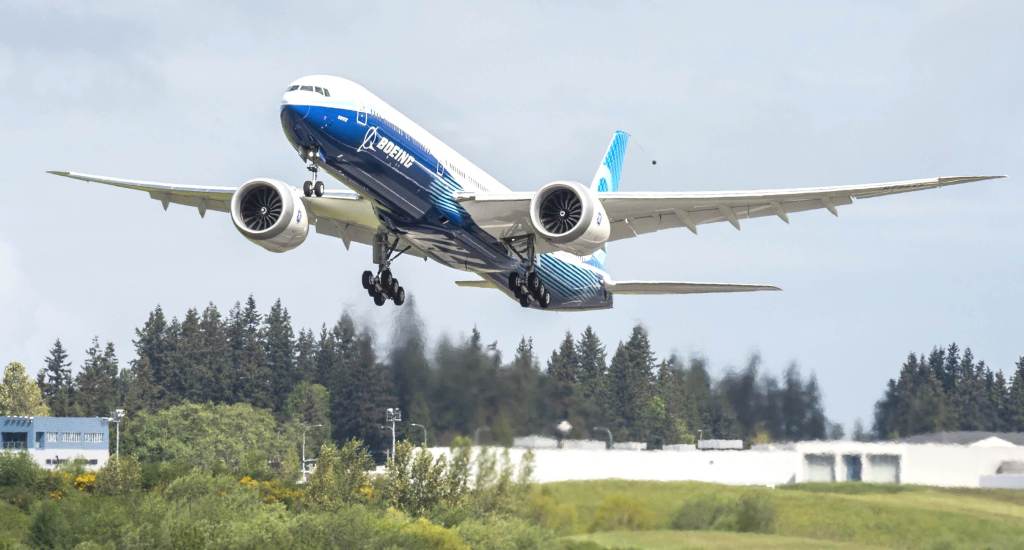
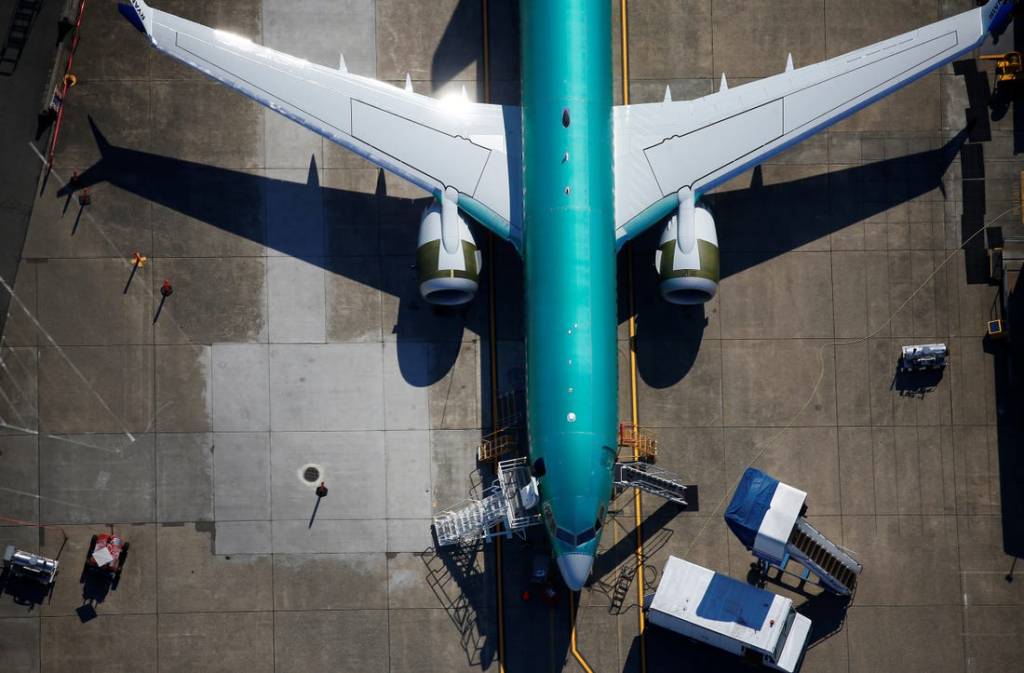
Los mayores compradores de aviones comerciales del mundo creen que The Boeing Company, que se prevé que reporte más pérdidas financieras al Miércoles 28/10, haya caído significativamente por debajo de la paridad con su rival Airbus Group, con opciones limitadas de recuperación a medida que sangra dinero en efectivo durante la crisis de la aviación impulsada por la pandemia. Los ejecutivos de las principales compañías de arrendamiento de aeronaves dijeron que el líder de la aviación comercial del país enfrenta enormes desafíos, con sus Boeing 737 MAX aún para reanudar los vuelos comerciales y las perspectivas de su nuevo avión 777X aplastado por la dramática contracción de los viajes aéreos internacionales.

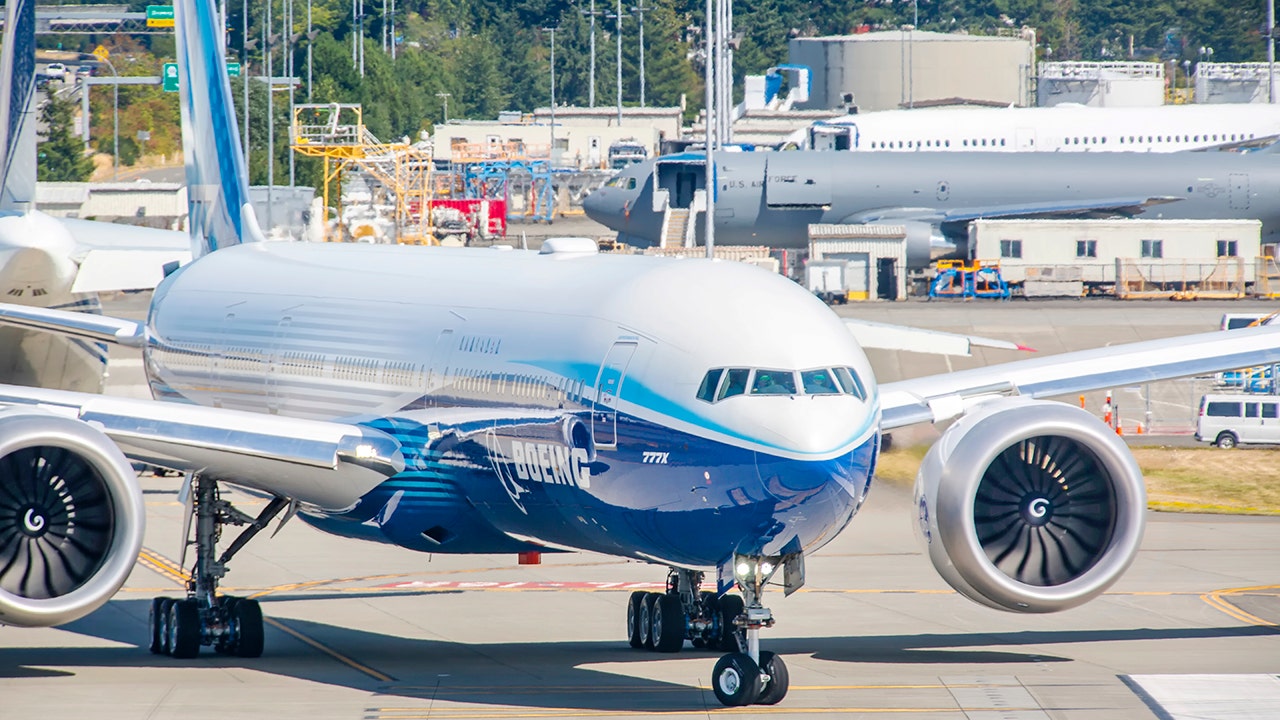
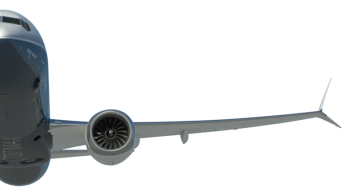
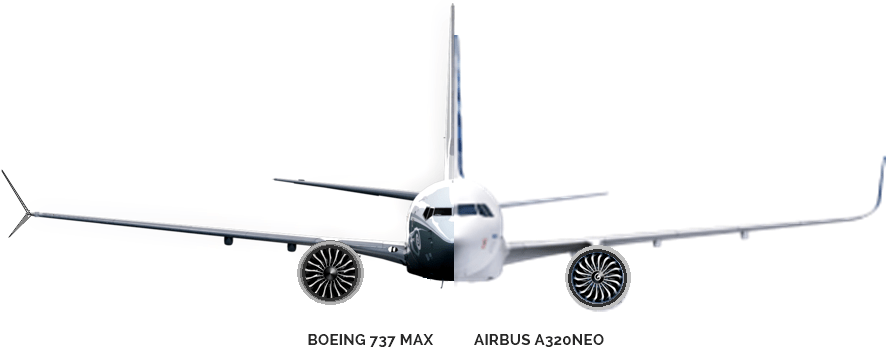
En el mercado de aviones más pequeños de pasillo único, las ventas de la familia Airbus A320neo, especialmente el modelo A321NEO de gran alcance, han superado con creces a las del 737 MAX. «El mercado ha hablado. Airbus realmente tiene una ventaja al frente en el tamaño superior del mercado de pasillo único. Sin duda, Boeing ha perdido posición contra Airbus durante la crisis MAX», dijo John Plueger, Director Ejecutivo de Air Lease Corporation (ALC), con sede en Los Angeles, que posee o tiene por pedido una flota de casi 800 aviones Boeing y Airbus. En el otro extremo de la escala de jets, Boeing ha dominado tradicionalmente el sector de aviones de cuerpo ancho más grande. Sin embargo, el nuevo 777X, con capacidad para más de 400 pasajeros, está en problemas. Las grandes aerolíneas internacionales de larga distancia que lanzaron el avión gigante no pueden esperar llenarlo a raíz de la pandemia global. Esas aerolíneas «querrán expulsar las entregas bastantes años. El 777X tendrá su día, pero será en el futuro», dijo Gus Kelly, Director Ejecutivo de AerCap, con sede en Irlanda, el menor de aviones más grande del mundo, con una flota de más de 1.000 aviones comerciales grandes y más de 300 por pedido. En un correo electrónico, el Presidente de ALC y eminente empresario de la aviación Steve Udvar-Hazy dijo del 777X que el jetmaker necesita ralentizar las tasas de producción y centrarse en lo que las aerolíneas necesitan en lugar de lo que Boeing le gustaría vender.

Envuelto en una desaceleración de la aviación sin precedentes históricamente y aún a la espera de la aprobación de su 737 MAX para volar de nuevo, el gigante industrial estadounidense y la piedra angular de la economía manufacturera del Estado de Washington se está reduciendo despidiendo a miles de empleados, recortando la producción y vendiendo activos, incluyendo importantes bienes raíces. Además de los aproximadamente 450 aviones MAX estacionados y a la espera de la autorización de la Administración Federal de Aviación (FAA) para su entrega, Boeing tiene un número creciente de 787 Dreamliners terminados almacenados en el Aeropuerto Victorville, California. Esos 787 fueron construidos para aerolíneas, incluyendo China Southern Airlines, Hainan Airlines y Juneyao Airlines de China, Norwegian Air, Qatar Airways y Qantas Airways de Australia que no puede tomarlos en este momento, y en el caso de Hainan Airlines y Norwegian Air, nunca pueden tomarlos. El Analista de investigación aeronáutica de Bank of America, Ron Epstein estimó la semana pasada que el inventario en exceso MAX y 787 representa alrededor de US$ 20 mil millones de Dólares en aviones estacionados y no entregados. La dirección de la compañía este mes anunció que consolidará la producción de 787 Dreamliner en Carolina del Sur, abandonando para el próximo verano la línea de producción original en Everett.

Boeing ha cerrado indefinidamente su lujoso Centro de Liderazgo en St. Louis, Missouri (MO)., heredado de McDonnell Douglas Corporation, y el programa allí para preparar a los futuros ejecutivos desarrollado durante años de amplio poder corporativo. A principios de este mes, el CEO de Boeing Commercial Airplanes, Stan Deal, dijo a los empleados que la compañía puede vender su campus de la sede local en Longacres, parte de una revisión de gran alcance de las propiedades de la compañía. Todo esto refleja una crisis de efectivo que ya era grave debido a la puesta en marcha del 737 MAX y se intensificó cuando el Coronavirus se apoderó del tráfico aéreo global.

Los analistas de Wall Street estiman que Boeing en los últimos tres meses ha quemado más de US$ 5.000 millones de Dólares de su acumulación de dinero de 32.000 millones de dólares. Aunque el Wall Street Journal informó la semana pasada que Boeing está empezando a mirar un nuevo diseño de avión que desafiaría el éxito del Airbus A321NEO XLR, los expertos en aviación son muy escépticos.

El Analista de Bernstein Research, Doug Harned, calificó la noción de absurda. «Boeing está quemando efectivo a niveles nunca antes vistos, en un momento en que la demanda ha desaparecido. Las nuevas inversiones importantes en este momento no tendrían sentido», dijo Doug Harned a los inversores. Rob Spingarn, Analista de Credit Suisse, ha expresado que con los recortes de empleos en el Estado de Washington, incluyendo las jubilaciones de muchos trabajadores mayores y con más experiencia, Boeing ahora puede carecer de «el talento necesario para lanzar con éxito un avión de hoja limpia comercialmente viable».

Posición mercado

La familia Airbus A320NEO ha acumulado un atraso de casi 6.000 pedidos, incluyendo más de 3.000 para el A321NEO y sus dos variantes de largo alcance, el LR y XLR. El atraso de la empresa de la familia 737 MAX de Boeing se ha reducido debido a cancelaciones a poco más de 3.300 órdenes. Airbus ha revalidado todos sus pedidos y aunque algunos pueden caer en el próximo año, tiene un alto grado de confianza que la mayoría de ellos se mantendrán sólidos. Airbus ha agregado que si Boeing lanzara un nuevo avión, Airbus ya tiene una respuesta probable alineada, colocar un nuevo ala compuesta ligera en el A321NEO para mejorar su aerodinámica, lo que podría lograrse mucho más rápido que el desarrollo de Boeing de un avión totalmente nuevo.

Boeing se enfrenta a otras barreras, con los fabricantes de motores, que acaban de gastar miles de millones de Dólares en el desarrollo de la nueva generación de motores LEAP para el Boeing 737 MAX y GTF de Airbus, pues tendrían poco interés en invertir en el mediano plazo en un nuevo motor para suplantar esos modelos. La misma renuencia a canibalizar los productos existentes se aplicaría por igual a Boeing. «Si Boeing lanzara un avión de este tipo, ¿qué pasaría con el MAX? La gente no va a comprarlo y Boeing necesita ese flujo de efectivo del MAX. Tengo que imaginar que es una venta difícil en la sala de juntas en Chicago», Gus Kelly, de AerCap.

Arrendadores, pulso industrial

John Plueger y Gus Kelly, entre los jugadores más poderosos del mundo de las aerolíneas, alquilan aviones a aerolíneas en todos los rincones del mundo, y tienen un dedo en el pulso del mercado. Al considerar el desarrollo de un nuevo jet, tanto Airbus como Boeing consultan directamente con ellos sobre lo que el mercado quiere. Los arrendadores representan el 40% de todas las ventas de aviones comerciales, y debido a la pandemia esa cifra probablemente se acerque a la mitad de todas las ventas, aumentando su influencia de consulta de mercado.

Gus Kelly dijo que cuando llegue una recuperación, las aerolíneas saldrán financieramente más débiles, centradas en pagar la deuda pública. A falta de efectivo, muchas más aerolíneas evitarán el costo inicial de capital de una compra directa y alquilarán sus aviones a compañías de leasing.

Perspectivas industria

John Plueger y Gus Kelly continúan confiando en que la industria aérea se recuperará con el tiempo. «Fundamentalmente, el transporte aéreo comercial mejora la condición humana. La gente necesita conseguir lugares, necesita ver a la familia, necesita hacer negocios. Hay una demanda acumulada para los viajes aéreos», sostiene John Plueger

rotate5 (2)

AW-Airbus-line_002

Pero en el corto plazo, el 777X y el 737 MAX presentan desafíos que amenazan con disminuir las tasas de producción en Everett y Renton, respectivamente. El 777X, que tuvo su primer vuelo de prueba en Enero 2020 se suponía que entraría en servicio este año. Boeing ha postergado la primera entrega hacia el 2022, pero la pandemia puede mantener la demanda 777X muy baja hasta mediados de la década. Cathay Pacific Airlines, uno de los clientes del lanzamiento del 777X, reveló la semana pasada que ha aplazado sus primeras entregas hacia el 2025.

La tendencia lejos de los grandes aviones de cuerpo ancho ya era evidente antes de la pandemia y ahora se ha acelerado considerablemente. Boeing ve el 777X como el sucesor natural de su Boeing 747 y del Airbus A380. Pero en la pandemia, las aerolíneas han retirado prematuramente ambos aviones y no están buscando reemplazos en ningún momento pronto. «Si vuelas un avión enorme, hay enormes costos asociados. Las aerolíneas simplemente no pueden permitirse volar aviones que no creen que puedan llenar», expresó Gus Kelly.

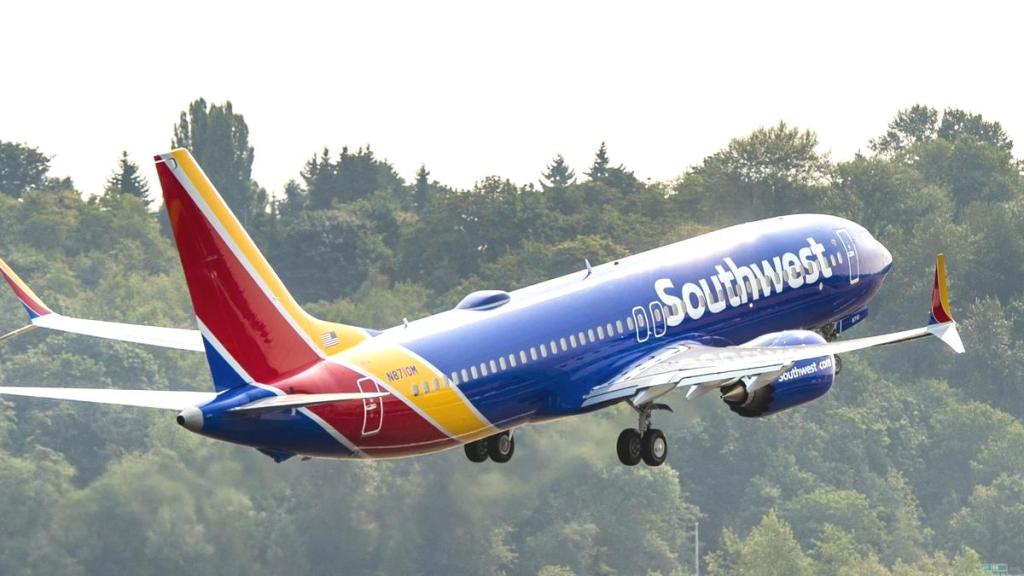
El mercado para los aviones más pequeños como la línea 737 MAX que vuelan principalmente rutas nacionales debería recuperarse de la pandemia mucho más rápidamente. Para que Boeing se aproveche, el 737 MAX debe salir de la crisis de confianza que aterrorizó al mundo de la aviación desde los dos accidentes aéreas en Indonesia y Etiopía. John Plueger dijo que el problema inmediato de Boeing es conseguir que las aerolíneas tomen los cientos de 737 MAX ya construidos que han sido almacenados durante muchos meses, donde se esperaría grandes descuentos de adquisición. «Para tratar de expulsarlos, francamente, se requerirán concesiones de precios que sean convincentes. Boeing necesita tomar medidas agresivas. Es más importante que Boeing los haga volar, incluso a un costo económico adicional», ha comentado John Plueger. Gus Kelly estuvo de acuerdo, pero dijo que una vez que esos aviones en exceso se mueven fuera, Boeing puede confiar en las ventas robustas del modelo principal el Boeing 737-8 MAX. Dijo que el jet ofrece una economía de operación casi idéntica a su competidor directo el A320NEO, confiando que será un avión excelente en ventas hacia el futuro. La tarea más difícil de Boeing será vender los modelos MAX más grandes como los MAX 9 y MAX 10. «El MAX 9 no ha funcionado. Eso está siendo reemplazado por el MAX 10», dijo Gus Kelly. Pero al mismo tiempo el MAX 10 debe competir contra el rango más largo del A321NEO como los modelos A321NEO LR y A321NEO XLR de mayor alcance.

Se espera que la FAA el próximo mes apruebe el Boeing 737 MAX para volar pasajeros de nuevo, y el jet probablemente regresará a los cielos de Estados Unidos y Europa a principios del próximo año 2021. Para Boeing, eso comienza lo que promete ser una larga y lenta salida de la peor crisis de su historia, y junto con ella, las valiosas lecciones aprendidas.

Boeing preserve future competitiveness
Boeing struggles to stay competitive into the future

Boeing_Isologo.svg

The world’s largest commercial aircraft buyers believe The Boeing Company, expected to report further financial losses as of Wednesday 10/28, has fallen significantly below parity with rival Airbus Group, with limited recovery options as it cash bleeds during the pandemic-fueled aviation crisis. Executives from major aircraft leasing companies said the country’s commercial aviation leader faces daunting challenges, with its Boeing 737 MAXs yet to resume commercial flights and prospects for its new 777X jet crushed by the dramatic contraction of international air travel.

In the market for smaller single-aisle aircraft, sales of the Airbus A320neo family, especially the powerful A321NEO model, have far exceeded those of the 737 MAX. «The market has spoken. Airbus really has a head start in the superior size of the single aisle market. Boeing has certainly lost its position to Airbus during the MAX crisis», said John Plueger, Chief Executive Officer of Air Lease Corporation (ALC ), based in Los Angeles, which owns or has on order a fleet of nearly 800 Boeing and Airbus aircraft. At the other end of the jet scale, Boeing has traditionally dominated the larger wide-body aircraft sector. However, the new 777X, which seats more than 400 passengers, is in trouble. The big international long-haul airlines that launched the giant jet can’t wait to fill it up in the wake of the global pandemic. Those airlines «will want to push out deliveries for years to come. The 777X will have its day, but it will be in the future», said Gus Kelly, CEO of Ireland-based AerCap, the world’s largest smallest aircraft with a fleet of more than 1,000 large commercial aircraft and more than 300 per order. In an email, LAC President and eminent aviation entrepreneur Steve Udvar-Hazy said of the 777X that the jetmaker needs to slow production rates and focus on what airlines need rather than what Boeing would like to sell.

Engulfed in a historically unprecedented aviation slowdown and still awaiting approval of its 737 MAX to fly again, the American industrial giant and the cornerstone of Washington State’s manufacturing economy is shrinking by laying off thousands of employees, cutting production and selling assets, including important real estate. In addition to the approximately 450 MAX aircraft parked and awaiting clearance from the Federal Aviation Administration (FAA) for delivery, Boeing has a growing number of finished 787 Dreamliners in storage at Victorville Airport, California. Those 787s were built for airlines including China Southern Airlines, Hainan Airlines and Juneyao Airlines from China, Norwegian Air, Qatar Airways, and Qantas Airways from Australia that you can’t take them right now, and in the case of Hainan Airlines and Norwegian Air, never they can take them. Bank of America Aeronautical Research Analyst Ron Epstein estimated last week that the MAX and 787 excess inventory represents about US$ 20 billion worth of parked and undelivered aircraft. The company’s management this month announced that it will consolidate production of the 787 Dreamliner in South Carolina, abandoning the original production line in Everett by next summer.

Boeing has indefinitely closed its luxurious Leadership Center in St. Louis, Missouri (MO), inherited from McDonnell Douglas Corporation, and the program there to prepare future executives developed over years of broad corporate power. Earlier this month, Boeing Commercial Airplanes CEO Stan Deal told employees that the company may sell its local headquarters campus in Longacres, part of a far-reaching review of the company’s properties. All of this reflects a cash crisis that was already severe due to the launch of the 737 MAX and intensified when the Coronavirus took over global air traffic.

Wall Street analysts estimate that Boeing in the past three months has burned more than US$ 5 billion of its US$ 32 billion money accumulation. Although the Wall Street Journal reported last week that Boeing is beginning to look at a new aircraft design that would challenge the success of the Airbus A321NEO XLR, aviation experts are highly skeptical.

Bernstein Research Analyst Doug Harned called the notion absurd. «Boeing is burning cash at levels never seen before, at a time when demand has waned. Major new investments right now would be meaningless«, Doug Harned told investors. Credit Suisse Analyst Rob Spingarn has said that with job cuts in Washington State, including the retirements of many older and more experienced workers, Boeing may now lack «the talent to successfully launch a jetliner commercially viable clean sheet».
Market position

The Airbus A320NEO family has accumulated a backlog of nearly 6,000 orders, including more than 3,000 for the A321NEO and its two long-range variants, the LR and XLR. The backlog of Boeing’s 737 MAX family business has been reduced due to cancellations to just over 3,300 orders. Airbus has revalidated all of its orders and while some may drop in the next year, it has a high degree of confidence that most of them will remain strong. Airbus has added that if Boeing were to launch a new aircraft, Airbus already has a likely answer lined up, putting a new lightweight composite wing on the A321NEO to improve its aerodynamics, which could be accomplished much faster than Boeing’s development of an entirely new aircraft. .

Boeing faces other barriers, with engine manufacturers just spending billions of dollars developing the new generation of LEAP engines for the Airbus Boeing 737 MAX and GTF, having little interest in investing in the engine. medium term on a new engine to supplant those models. The same reluctance to cannibalize existing products would apply equally to Boeing. «If Boeing launched such a plane, what would happen to the MAX? People are not going to buy it and Boeing needs that cash flow from the MAX. I have to imagine it’s a tough sell in the boardroom in Chicago», Gus Kelly of AerCap.

Landlords, industrial pulse

John Plueger and Gus Kelly, among the world’s most powerful players in airlines, lease planes from airlines in every corner of the world, and they have a finger on the pulse of the market. When considering the development of a new jet, both Airbus and Boeing consult directly with them about what the market wants. Lessors account for 40% of all commercial aircraft sales, and due to the pandemic that number is likely to be close to half of all sales, increasing their market consulting influence.

Gus Kelly said that when a recovery comes, airlines will come out financially weaker, focused on paying off public debt. In the absence of cash, many more airlines will avoid the initial capital cost of a direct purchase and lease their planes to leasing companies.

Industry perspective

John Plueger and Gus Kelly remain confident that the airline industry will recover over time. «Fundamentally, commercial air travel improves the human condition. People need to get places, they need to see family, they need to do business. There is pent-up demand for air travel», says John Plueger.

But in the short term, the 777X and 737 MAX present challenges that threaten to lower production rates at Everett and Renton, respectively. The 777X, which had its first test flight in January 2020, was supposed to enter service this year. Boeing has delayed the first delivery to 2022, but the pandemic may keep 777X demand very low until the middle of the decade. Cathay Pacific Airlines, one of the 777X launch customers, revealed last week that it has postponed its first deliveries to 2025.

The trend away from large wide-body aircraft was already apparent before the pandemic and has now accelerated considerably. Boeing sees the 777X as the natural successor to its Boeing 747 and the Airbus A380. But in the pandemic, airlines have prematurely recalled both planes and are not looking for replacements anytime soon. «If you fly a huge plane, there are huge costs associated with it. Airlines just can’t afford to fly planes that they don’t think they can fill», Gus Kelly said.

The market for smaller aircraft such as the 737 MAX line that primarily fly domestic routes should recover from the pandemic much more quickly. For Boeing to take advantage of it, the 737 MAX must emerge from the crisis of confidence that has terrified the aviation world since the two air crashes in Indonesia and Ethiopia. John Plueger said Boeing’s immediate problem is getting airlines to take the hundreds of already-built 737 MAXs that have been in storage for many months, where deep purchase discounts would be expected. «To try to drive them out, frankly, will require compelling price concessions. Boeing needs to take aggressive action. It is more important that Boeing fly them, even at additional economic cost», said John Plueger. Gus Kelly agreed, but said that once those excess aircraft are moved out, Boeing can rely on robust sales of the flagship Boeing 737-8 MAX. He said the jet offers almost identical operating economy to its direct competitor the A320NEO, confident that it will be an excellent aircraft for future sales. Boeing’s toughest task will be selling the bigger MAX models like the MAX 9 and MAX 10. «The MAX 9 hasn’t worked. That is being replaced by the MAX 10», said Gus Kelly. But at the same time the MAX 10 must compete against the longer range of the A321NEO like the longer range A321NEO LR and A321NEO XLR models.

The FAA is expected next month to approve the Boeing 737 MAX to fly passengers again, and the jet will likely return to the skies of the United States and Europe early next year 2021. For Boeing, that begins what promises to be a long one. and slow exit from the worst crisis in its history, and along with it, the valuable lessons learned.


PUBLISHER: Airgways.com
DBk: Boeing.com / Seattletimes.com / Airgways.com
AW-POST: 202010280055AR

A\W   A I R G W A Y S ®
ETW amplía programa A321C

AW | 2020 10 27 21:44 |INDUSTRY / ENGINEERING

ST Engineering/Airbus ampliarán programa conversión A321C

ETW_ST_Airbus

ST Engineering de Singapur y Airbus Group dijeron que establecerían nuevos emplazamientos en China, Alemania y Estados Unidos hacia 2023 para convertir aviones de pasajeros A321 en cargueros después de que el primero entrara en servicio con Qantas Airways el Martes 27/10. Singapore Technologies Engineering Ltd. y Elbe Flugzeugwerke GmbH JV (ETW) con Airbus Group SE han continuado con el plan para expandirse más allá de Singapur lo que le permite convertir alrededor de 25 aviones cada año para satisfacer la creciente demanda de aviones de carga, dijeron en un comunicado. ST Engineering posee el 55% de EFW, mientras que Airbus posee el 45% restante.

Aproximadamente la mitad de la carga aérea transportada en todo el mundo normalmente vuela en el vientre de los aviones de pasajeros en lugar de en los cargueros dedicados. Pero los recortes de vuelo relacionados con la pandemia debido a la débil demanda de viajes han exprimido la capacidad de carga aérea. «La finalización de nuestro primer A321P2F es oportuna, ya que el programa puede ayudar a las aerolíneas a dar nueva vida a los aviones infrautilizados, lo que de otro modo sufriría un aterrizaje más duro en su valor residual», dijo Jeffrey Lam, Presidente de la División Aeroespacial de ST Engineering. La firma de asesoramiento Ishka dice que el valor de mercado de un avión de pasajeros A321 de 10 años ha caído un 16% a 21,5 millones de dólares desde enero, mientras que la tasa de arrendamiento mensual ha bajado un 33%.

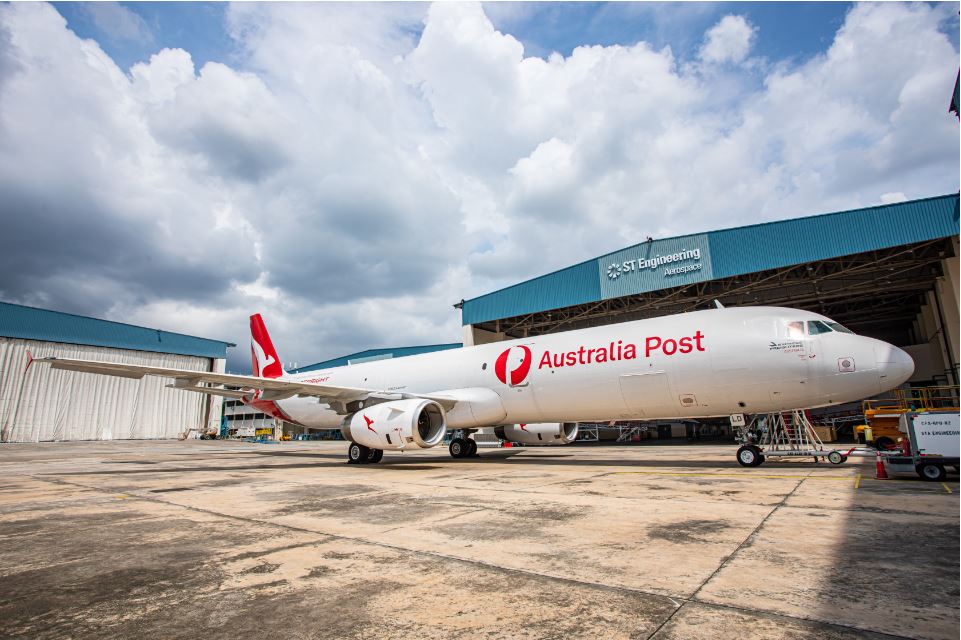
El primer carguero convertido en A321 es operado por Qantas Airways en nombre de Australia Post e incluye una gran puerta de carga principal que se acciona hidráulicamente y está bloqueada eléctricamente, dijo la empresa conjunta.

ETW expand A321C program

Airbus selects EFW as early-adopter for aircraft cabins of the future -  AviTrader Aviation News

ST Engineering/Airbus to expand A321 freighter conversion program

Singapore’s ST Engineering and Airbus Group said they would establish new sites in China, Germany and the United States by 2023 to convert A321 airliners into freighters after the former entered service with Qantas Airways on Tuesday 10/27. Singapore Technologies Engineering Ltd. and Elbe Flugzeugwerke GmbH JV (ETW) with Airbus Group SE have continued the plan to expand beyond Singapore allowing it to convert around 25 aircraft each year to meet the growing demand for cargo aircraft, they said in a statement. . ST Engineering owns 55% of EFW, while Airbus owns the remaining 45%.

About half of the air cargo transported around the world normally flies in the belly of passenger jets rather than on dedicated freighters. But pandemic-related flight cuts due to weak travel demand have squeezed air cargo capacity. «The completion of our first A321P2F is timely as the program can help airlines breathe new life into underutilized aircraft that would otherwise suffer a harder landing at their residual value», said Jeffrey Lam, President of ST Engineering’s Aerospace Division. Advisory firm Ishka says the market value of a 10-year-old A321 airliner has fallen 16% to US$ 21.5 million since January, while the monthly lease rate is down 33%.

The first freighter converted to the A321 is operated by Qantas Airways on behalf of the Australia Post and includes a large main cargo door that is hydraulically actuated and electrically locked, the joint venture said.


PUBLISHER: Airgways.com
DBk: Airbus.com / Stengg.com / Elbeflugzeugwerke.com / Airgways.com
AW-POST: 202010272144AR

A\W   A I R G W A Y S ®

Embraer apuesta Programa E3

AW | 2020 10 26 22:18 | INDUSTRY

Embraer perspectivas por programa turbohélices

Embraer_Isologotype

Embraer S.A. continúa avanzando hacia la definición del Programa E3 de nuevas aeronaves turbohélice. El fabricante de aviones brasileño ha citado esta posibilidad cuando el CEO de la compañía, Francisco Gomes Neto, ha declarado que esta es una de las prioridades hacia los próximos años. La compañía aeroespacial está trabajando en dos proyectos de aviones, el modelo de un nuevo concepto de avión de pasajeros turbohélice de transporte regional y un nuevo avión militar y que debería tener propulsión híbrida. Este último proyecto está planificado en asociación con la Fuerza Aérea Brasileña (FAB).

Según el ejecutivo, Embraer está trabajando en la apertura de nuevos mercados como un avión turbohélice para la aviación comercial. «Tenemos un buen proyecto. Creemos que es un buen producto, y ahora estamos buscando socios que nos ayuden a desarrollarnos», dijo Francisco Gomes Neto.

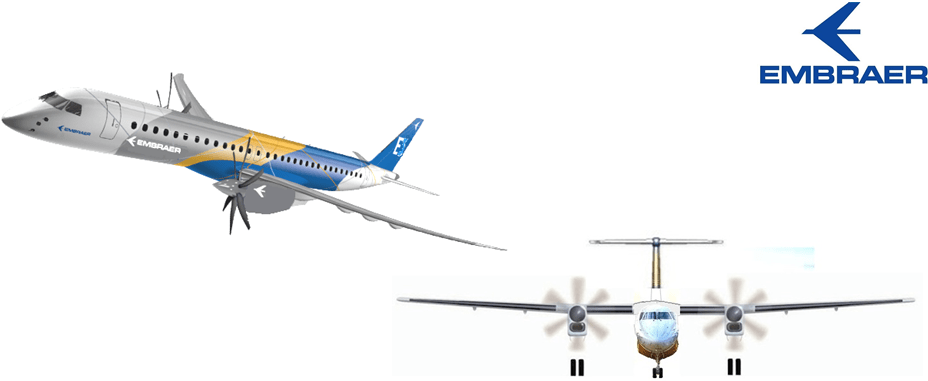
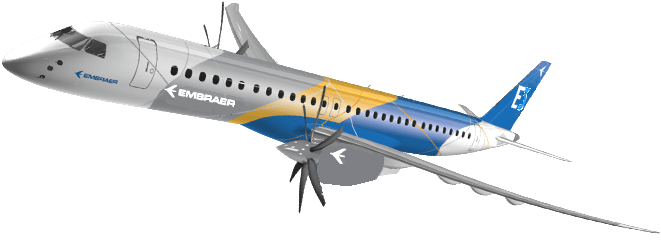
EMBRAER PROYECTARÁ EL DENOMINADO PROGRAMA E3 TURBOPROP: ¿SERÁ UN PROGRAMA DE ALA ALTA O ALA BAJA?

Embraer E3

La compañía aeroespacial Embraer S.A. había anunciado el Programa E3 bajo un desarrollo de un nuevo modelo de aeronave turboprop, pero que su diseño nunca ha sido revelado. Pero, para poner en marcha el proyecto, Embraer necesitará algunos socios dispuestos a aportar fondos. La compañía reveló que el avión regional será capaz de transportar hasta 100 pasajeros, lo que lo colocaría en un mayor nivel de capacidad en comparación con el ATR 72 de ATR Aircraft y Dash 8Q-400 de De Havilland Canada.

Perspectivas Embraer

Después del proceso de integración fallida Boeing-Embraer, el CEO de Embraer está absolutamente seguro que la compañía no tiene la intención de vender ninguna de sus divisiones hacia el futuro. Después del acuerdo frustrado con The Boeing Company, Gomes Neto dijo que «No tenemos la intención de vender una unidad completa como lo hicimos con Boeing. Ahora estamos trabajando diferentes modelos de negocio para los proyectos».

Embraer bets on the E3 Program

Embraer outlook by turboprops program

Embraer S.A. it continues to advance towards the definition of the E3 Program for new turboprop aircraft. The Brazilian aircraft manufacturer has cited this possibility when the CEO of the company, Francisco Gomes Neto, has declared that this is one of the priorities for the coming years. The aerospace company is working on two aircraft projects, the model of a new concept turboprop airliner for regional transport and a new military aircraft, which should have hybrid propulsion. This latest project is planned in partnership with the Brazilian Air Force (FAB).

According to the executive, Embraer is working on opening new markets such as a turboprop aircraft for commercial aviation. «We have a good project. We believe it is a good product, and now we are looking for partners to help us develop», said Francisco Gomes Neto.

Embraer E3

The aerospace company Embraer S.A. had announced the E3 Program under a development of a new turboprop aircraft model, but its design has never been revealed. But to get the project off the ground, Embraer will need some partners willing to contribute funds. The company revealed that the regional jet will be capable of carrying up to 100 passengers, which would put it at a higher level of capacity compared to ATR Aircraft’s ATR 72 and De Havilland Canada’s Dash 8Q-400.

Embraer perspectives

After the failed Boeing-Embraer integration process, the CEO of Embraer is absolutely certain that the company does not intend to sell any of its divisions in the future. After the frustrated deal with The Boeing Company, Gomes Neto said that «We do not intend to sell a complete unit as we did with Boeing. We are now working on different business models for the projects».

Embraer aposta no Programa E3

Perspectivas da Embraer pelo programa turboélices

Embraer_Isologotype.svg

Embraer S.A. continua avançando na definição do Programa E3 para novas aeronaves turboélice. A fabricante brasileira de aeronaves citou essa possibilidade quando o presidente da empresa, Francisco Gomes Neto, declarou que essa é uma das prioridades para os próximos anos. A empresa aeroespacial trabalha em dois projetos de aeronaves, o modelo de um novo conceito de avião turboélice para transporte regional e uma nova aeronave militar, que deverá ter propulsão híbrida. Este último projeto é realizado em parceria com a Força Aérea Brasileira (FAB).

Segundo o executivo, a Embraer está trabalhando na abertura de novos mercados, como o turboélice para a aviação comercial. “Temos um bom projeto. Acreditamos que é um bom produto, e agora estamos em busca de parceiros que nos ajudem no desenvolvimento”, disse Francisco Gomes Neto.

Embraer E3

A empresa aeroespacial Embraer S.A. anunciou o Programa E3 no âmbito do desenvolvimento de um novo modelo de aeronave turboélice, mas seu design nunca foi revelado. Mas para fazer o projeto decolar, a Embraer precisará de alguns parceiros dispostos a contribuir com recursos. A empresa revelou que o jato regional será capaz de transportar até 100 passageiros, o que o colocaria em um nível mais alto de capacidade em comparação ao ATR 72 da ATR Aircraft e ao Dash 8Q-400 da De Havilland Canada.

Perspectivas da Embraer

Após o fracassado processo de integração Boeing-Embraer, o CEO da Embraer tem absoluta certeza de que a empresa não pretende vender nenhuma de suas divisões no futuro. Após o frustrado negócio com a The Boeing Company, Gomes Neto afirmou que “Não pretendemos vender uma unidade completa como fizemos com a Boeing. Estamos agora a trabalhar em diferentes modelos de negócio para os projectos”.


PUBLISHER: Airgways.com
DBk: Embraer.com / Airgways.com
AW-POST: 202010262218AR

A\W   A I R G W A Y S ®

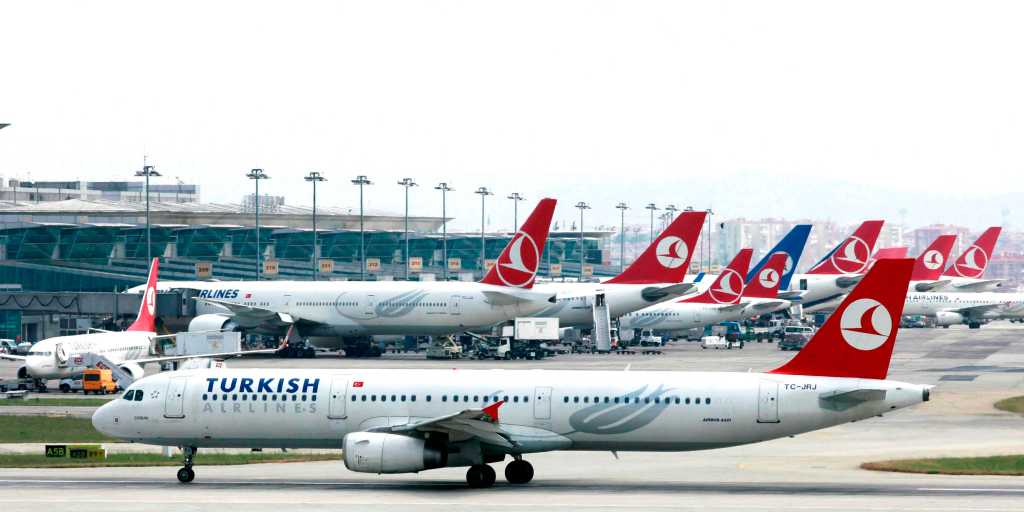
Turkish revisa plan de flota

AW | 2020 10 26 18:01 | AIRLINES / INDUSTRY

Turkish revisa plan de flota con Airbus

Turkish Airlines_Isologotype

Turkish Airlines ha comunicado que ha modificado su plan de flota con Airbus Group debido al impacto de la pandemia Coronavirus en la industria de la aviación. La aerolínea de bandera turca ha acordado con el fabricante de aeronaves posponer algunas entregas y revisar sus órdenes pendientes para encajar en sus capacidades operativas y financieras, dijo la aerolínea el Viernes 23/10. Turkish Airlines no reveló detalles sobre su nuevo plan de flota hacia el futuro.

En Marzo 2020, el Presidente de Turquía, Recep Tayyip Erdogan, ordenó la suspensión de todos los vuelos internacionales desde y hacia el país para contener la pandemia de Coronavirus. Turquía reinició los vuelos internacionales a partir del 11 de Junio de 2020.

Turkish revises fleet plan

Turkish reviews fleet plan with Airbus due to pandemic crisis

Turkish Airlines Isotype

Turkish Airlines has communicated that it has modified its fleet plan with Airbus Group due to the impact of the Coronavirus pandemic on the aviation industry. The Turkish flag carrier has agreed with the aircraft manufacturer to postpone some deliveries and review its pending orders to fit its operational and financial capabilities, the airline said on Friday 10/23. Turkish Airlines did not disclose details about its new fleet plan going forward.

In March 2020, the President of Turkey, Recep Tayyip Erdogan, ordered the suspension of all international flights to and from the country to contain the Coronavirus pandemic. Turkey restarted international flights as of June 11, 2020.

Türkiye filo planını revize ediyor

Türk salgın kriz nedeniyle filo planını Airbus ile gözden geçiriyor

Turkish Airlines Isologotype

Türk Hava Yolları, koronavirüs salgınının havacılık sektörüne etkisi nedeniyle filo planını Airbus Grubu ile değiştirdiğini duyurdu. Havayolu, 10/23 Cuma günü yaptığı açıklamada, Türk bayraklı havayolu şirketinin, bazı teslimatları ertelemek ve bekleyen siparişlerini operasyonel ve mali yeteneklerine uyacak şekilde gözden geçirmek için uçak üreticisiyle anlaştığını söyledi. Türk Hava Yolları, bundan sonraki yeni filo planı ile ilgili detayları açıklamadı.

Mart 2020’de Türkiye Cumhurbaşkanı Recep Tayyip Erdoğan, koronavirüs pandemisini kontrol altına almak için ülkeye ve ülkeden tüm uluslararası uçuşların askıya alınmasını emretti. Türkiye, 11 Haziran 2020 itibarıyla dış hat uçuşlarına yeniden başladı.


PUBLISHER: Airgways.com
DBk: Turkishairlines.com / Airgways.com / Reuters.com
AW-POST: 202010261801AR

A\W   A I R G W A Y S ®

DHC entrega 8Q-400 a Ethiopian

De Havilland Canada Delivers Two Dash 8-400 Aircraft to Ethiopian Airlines

AW | 2020 10 24 01:55 | AIRLINES / INDUSTRY

De Havilland Canadá entrega dos Dash 8-400 a Ethiopian Airlines

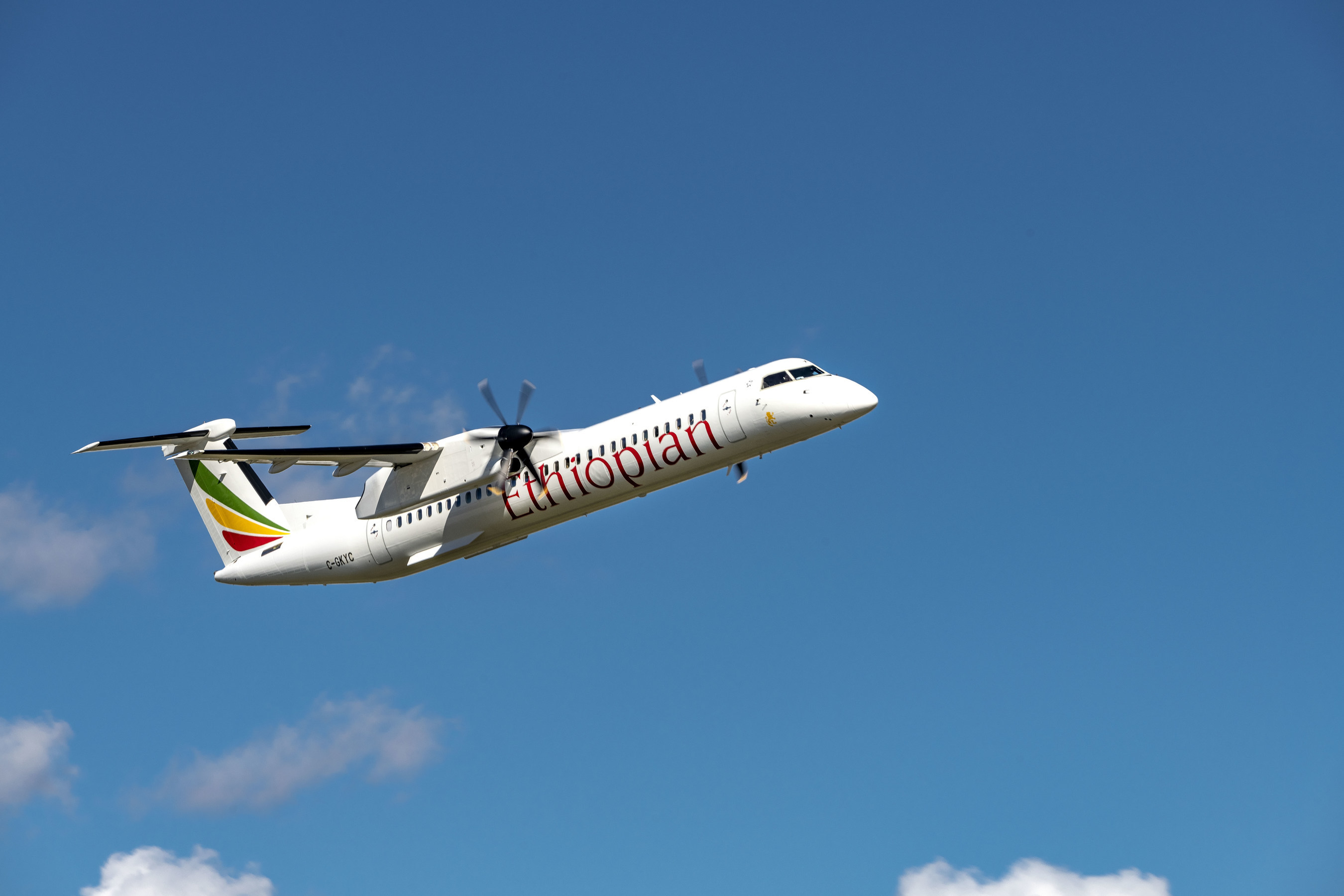
De Havilland Aircraft Canada Limited ha anunciado la entrega de otros dos aviones Dash 8-400 a Ethiopian Airlines, incluyendo el hito de la 30º aeronave Dash 8-400 de la aerolínea. El avión número 30, el MSN 4617, se prepara para partir hacia el centro de Etiopía en Addis Abeba, junto con el avión MSN 4615. Ethiopian dio la primera bienvenida al Dash 8-400 en su flota en Marzo de 2010.

«Este hito de la 30º entrega pone de relieve nuestra confianza en el avión Dash 8-400 y es un testimonio del éxito conjunto en el apoyo a nuestra red y asociaciones estratégicas con varias compañías aéreas en toda Africa. El avión Dash 8-400 continúa proporcionando la flexibilidad operativa, la capacidad de rendimiento excepcional, la capacidad y la comodidad de los pasajeros que necesitamos. Lo más importante es que el avión Dash 8-400 apoya la estrategia de liderazgo de costos en la que confiamos en nuestro mercado, especialmente en estos momentos sin precedentes durante la pandemia COVID-19», dijo Tewolde Gebre Mariam, Director Ejecutivo del Grupo Ethiopian Airlines.

«Felicitamos a Ethiopian Airlines por continuar una trayectoria de crecimiento fenomenal y aumentar la conectividad dentro de Africa. Ethiopian ha tomado enormes medidas positivas para fortalecer sus capacidades con la adquisición del primer simulador Dash 8-400 para Africa y recientemente mediante la adición de un segundo simulador; lograr el reconocimiento como Centro de Servicio Autorizado; y demostrando el valor de una configuración de clase ejecutiva en aeronaves regionales en Africa. Ciertamente esperamos más ejemplos del liderazgo continuo de Ethiopian y el éxito de sus asociaciones estratégicas en curso con ASKY Airlines, Malawi Airlines, Ethiopian Mo-ambique Airlines y Tchadia Airlines en la operación de aviones Dash 8-400 en toda Africa», dijo Sameer Adam, Vicepresidente Regional de Ventas Europa y Rusia, Oriente Medio, Africa y América del Sur/Caribe.

La flota de más de 155 aviones Dash 8 Series en Africa incluye más de 90 aviones Dash 8Q-400. En todo el mundo, más de 155 aerolíneas, compañías de arrendamiento y otras organizaciones han pedido casi 1.300 aviones Dash 8. La flota de aviones Dash Serie 8 en todo el mundo soporta diversos modelos operativos de aerolíneas como compañías de bajo costo, conectores de red y aviones regionales punto a punto. También se despliegan en operaciones híbridas de carga de pasajeros y operaciones de carga total, y muchos proporcionan una plataforma ideal para operaciones de misión especial, incluyendo la lucha contra incendios, la búsqueda y el rescate, la evacuación médica y la vigilancia costera.

De Havilland Canada sigue centrándose en ofrecer un apoyo excepcional a los operadores de aeronaves Dash 8 y actualmente está ayudando a los clientes que necesitan ayuda para actualizar sus modelos de utilización de flota y recuperación de red durante la pandemia.

HKIA flight detail

DHC delivers 8Q-400 to Ethiopian

De Havilland Canada delivers two Dash 8-400s to Ethiopian Airlines

De Havilland Aircraft Canada Limited has announced the delivery of two additional Dash 8-400 aircraft to Ethiopian Airlines, including the milestone of the airline’s 30th Dash 8-400 aircraft. The 30th aircraft, MSN 4617, is preparing to depart for central Ethiopia in Addis Ababa, along with MSN 4615. Ethiopian first welcomed the Dash 8-400 to its fleet in March 2010.

«This 30th installment milestone underscores our confidence in the Dash 8-400 aircraft and is a testament to our joint success in supporting our network and strategic partnerships with various airlines across Africa. The Dash 8-400 aircraft continues providing the operational flexibility, exceptional performance capability, passenger capacity and comfort that we need. Most importantly, the Dash 8-400 aircraft supports the cost leadership strategy we rely on in our market, especially in these unprecedented moments during the COVID-19 pandemic», said Tewolde Gebre Mariam, Executive Director of Ethiopian Airlines Group.

«We congratulate Ethiopian Airlines for continuing a trajectory of phenomenal growth and increasing connectivity within Africa. Ethiopian has taken enormous positive steps to strengthen its capabilities with the acquisition of the first Dash 8-400 simulator for Africa and recently by adding a second simulator; achieving recognition as an Authorized Service Center; and demonstrating the value of a business class configuration on regional aircraft in Africa. We certainly look forward to more examples of Ethiopian’s continued leadership and the success of its ongoing strategic partnerships with ASKY Airlines, Malawi Airlines, Ethiopian Moambique Airlines and Tchadia Airlines in the operation of Dash 8-400 aircraft throughout Africa», said Sameer Adam, Regional Vice President of Sales Europe and Russia, Middle East, Africa and South America / Caribbean.

The fleet of more than 155 Dash 8 Series aircraft in Africa includes more than 90 Dash 8Q-400 aircraft. Worldwide, more than 155 airlines, leasing companies, and other organizations have ordered nearly 1,300 Dash 8 aircraft. The Dash 8 Series aircraft fleet worldwide supports various airline operating models such as low-cost carriers, network connectors. and regional point-to-point aircraft. They are also deployed in hybrid passenger load operations and full load operations, and many provide an ideal platform for special mission operations, including fire fighting, search and rescue, medical evacuation and coastal surveillance.

De Havilland Canada continues to focus on providing exceptional support to Dash 8 aircraft operators and is currently assisting customers who need assistance in updating their fleet utilization and network recovery models during the pandemic.

File:Ethiopian Airlines De Havilland Canada DHC-8-402Q Dash 8  Stehmann-2.jpg - Wikimedia Commons

DHC livre 8Q-400 à l’Éthiopien

De Havilland Canada livre deux Dash 8-400 à Ethiopian Airlines

De Havilland Aircraft Canada Limited a annoncé la livraison de deux autres appareils Dash 8-400 à Ethiopian Airlines, y compris le jalon du 30e appareil Dash 8-400 de la compagnie aérienne. L’avion numéro 30, MSN 4617, se prépare à partir pour le centre de l’Éthiopie à Addis-Abeba, avec le MSN 4615. L’Éthiopien a accueilli pour la première fois le Dash 8-400 dans sa flotte en mars 2010.

«Cette 30e tranche de lancement souligne notre confiance dans l’avion Dash 8-400 et témoigne de notre succès commun à soutenir notre réseau et nos partenariats stratégiques avec diverses compagnies aériennes à travers l’Afrique. L’avion Dash 8-400 continue offrant la flexibilité opérationnelle, la capacité de performance exceptionnelle, la capacité de passagers et le confort dont nous avons besoin. Plus important encore, l’avion Dash 8-400 soutient la stratégie de leadership des coûts sur laquelle nous nous appuyons sur notre marché, en particulier ces moments sans précédent pendant la pandémie COVID-19», a déclaré Tewolde Gebre Mariam, directeur exécutif d’Ethiopian Airlines Group.

«Nous félicitons Ethiopian Airlines d’avoir poursuivi sa trajectoire de croissance phénoménale et de connectivité croissante en Afrique. Ethiopian a pris d’énormes mesures positives pour renforcer ses capacités avec l’acquisition du premier simulateur Dash 8-400 pour l’Afrique et récemment en ajoutant un second simulateur; obtention de la reconnaissance en tant que centre de service agréé et démonstration de la valeur d’une configuration de classe affaires sur des avions régionaux en Afrique. Airlines, Ethiopian Moambique Airlines et Tchadia Airlines dans l’exploitation des avions Dash 8-400 dans toute l’Afrique», a déclaré Sameer Adam, vice-président régional des ventes Europe et Russie, Moyen-Orient, Afrique et Amérique du Sud/ Caraïbes.

La flotte de plus de 155 avions Dash 8 Series en Afrique comprend plus de 90 appareils Dash 8Q-400. Dans le monde entier, plus de 155 compagnies aériennes, sociétés de crédit-bail et autres organisations ont commandé près de 1 300 appareils Dash 8. La flotte d’appareils Dash 8 Series dans le monde prend en charge divers modèles d’exploitation de compagnies aériennes tels que des transporteurs à bas prix et des connecteurs réseau. et les aéronefs régionaux point à point. Ils sont également déployés dans des opérations hybrides de chargement de passagers et des opérations de chargement complet, et beaucoup constituent une plate-forme idéale pour les opérations de mission spéciales, y compris la lutte contre les incendies, la recherche et le sauvetage, l’évacuation médicale et la surveillance côtière.

De Havilland Canada continue de se concentrer sur la fourniture d’un soutien exceptionnel aux exploitants d’aéronefs Dash 8 et aide actuellement les clients qui ont besoin d’aide pour mettre à jour leurs modèles d’utilisation de leur flotte et de récupération du réseau pendant la pandémie.

Ethiopian Airlines Receives Two De Havilland Dash 8-400s | Airways Magazine

DHC 8Q-400 ን ለኢትዮጵያ ያቀርባል

ዲ ሃቪላንድላንድ ካናዳ ሁለት ዳሽን ከ8-400 ዎቹ ለኢትዮጵያ አየር መንገድ ታደርሳለች

ደ ሃቪልላንድ ኤሮፕላን ካናዳ ሊሚትድ የአየር መንገዱ 30 ኛ ዳሽ 8-400 አውሮፕላን እመርታ ጨምሮ ሁለት ተጨማሪ ዳሽ 8-400 አውሮፕላኖችን ለኢትዮጵያ አየር መንገድ ማድረሱን አስታወቀ ፡፡ አውሮፕላን ቁጥር 30 ፣ ኤም.ኤስ.ኤን 4617 ከኤም.ኤስ.ኤን 4615 ጋር ወደ መካከለኛው ኢትዮጵያ ለመሄድ በዝግጅት ላይ ነው ፡፡ የኢትዮጵያ አየር መንገድ ለመጀመሪያ ጊዜ ዳሽን 8-400 ን በመርከብ መርከቧ ውስጥ ለመጀመሪያ ጊዜ አቀባበል አደረገ ፡፡

ይህ 30 ኛ የጭነት ምዕራፍ በዳሽ 8-400 አውሮፕላን ላይ ያለንን እምነት የሚያጎላ ሲሆን በመላው አፍሪካ ካሉ የተለያዩ አየር መንገዶች ጋር ኔትወርክን እና ስትራቴጂካዊ አጋርነቶችን በመደገፍ በጋራ ስኬታማ መሆናችን ማሳያ ነው ፡፡ ዳሽ 8-400 አውሮፕላኖችም ቀጥለዋል የአሠራር መለዋወጥን ፣ ልዩ የሥራ አፈፃፀም ችሎታን ፣ የተሳፋሪ አቅምን እና የምንፈልገውን ምቾት በመስጠት በጣም አስፈላጊው ነገር ዳሽ 8-400 አውሮፕላን በገቢያችን ላይ የምንመካበትን የወጪ አመራር ስትራቴጂ ይደግፋል ፡፡ የኢትዮጵያ አየር መንገድ ቡድን ዋና ዳይሬክተር አቶ ተወልደ ገብረ ማሪያም በበኩላቸው በ COVID-19 ወረርሽኝ ወቅት እነዚህ ታይቶ የማይታወቁ ጊዜያት ነበሩ ፡፡

የኢትዮጵያ አየር መንገድ በአፍሪካ ውስጥ አስደናቂ የእድገት ጎዳናን በመቀጠሉ እና እንኳን ደስ አላችሁ እንላለን ፡፡ የኢትዮጵያ አየር መንገድ የመጀመሪያውን የ ‹ዳሽ 8-400› አስመሳይን በመግዛት አቅሙን ለማጠናከር እና በቅርቡ ሁለተኛ በመደመር እጅግ መልካም እርምጃዎችን ወስዷል ፡፡ አስመሳይ ፣ እንደ የተፈቀደ አገልግሎት ማዕከል እውቅና ማግኘቱ እና በአፍሪካ ውስጥ ባሉ የክልል አውሮፕላኖች ላይ የንግድ ደረጃ ውቅር ዋጋን ማሳየት ነው፡፡የኢትዮ Ethiopianያ የቀጣይ አመራር ቀጣይነት እና ከ ASKY አየር መንገድ ፣ ማላዊ ጋር ቀጣይነት ያለው ስትራቴጂካዊ አጋርነት ስኬታማነት ምሳሌዎችን በእርግጠኝነት እንጠብቃለን ፡፡ አየር መንገዶች ፣ የኢትዮጵያ ሞአምቢክ አየር መንገድ እና ቻዲያ አየር መንገድ በመላው አፍሪካ በዳሽ ከ8-400 አውሮፕላኖችን በማንቀሳቀስ ላይ መሆናቸውን የገለጹት የሽያጭ አውሮፓ እና ሩሲያ ፣ መካከለኛው ምስራቅ ፣ አፍሪካ እና ደቡብ አሜሪካ / ካሪቢያን የክልሉ ምክትል ፕሬዝዳንት ሳሜር አደም ናቸው ፡፡

በአፍሪካ ውስጥ ከ 155 ዳሽ 8 ተከታታይ አውሮፕላኖች መርከቦች ከ 90 በላይ ዳሽ 8 ኪ -400 አውሮፕላኖችን ያጠቃልላል ፡፡ በዓለም ዙሪያ ከ 155 በላይ አየር መንገዶች ፣ የኪራይ ኩባንያዎች እና ሌሎች ድርጅቶች ወደ 1,300 የሚጠጉ ዳሽ 8 አውሮፕላኖችን አዘዙ፡፡የዳሽ 8 ተከታታይ የአውሮፕላን መርከቦች በዓለም ዙሪያ እንደ ዝቅተኛ ዋጋ አጓጓriersች ፣ የአውታረ መረብ አያያctorsች ያሉ የተለያዩ አየር መንገድ የሥራ ሞዴሎችን ይደግፋሉ ፡፡ እና ክልላዊ ነጥብ-ወደ-ነጥብ አውሮፕላን. እነሱም በድቅል የመንገደኞች ጭነት ሥራዎች እና ሙሉ ጭነት ሥራዎች ውስጥ ተሰማርተዋል ፣ እና ብዙዎች የእሳት አደጋን ፣ ፍለጋን እና ማዳንን ፣ የህክምና ማፈናቀልን እና የባህር ዳርቻን መቆጣጠርን ጨምሮ ለልዩ ተልእኮ ስራዎች ተስማሚ መድረክን ይሰጣሉ ፡፡

ዴ ሃቪልላንድ ካናዳ ለዳሽ 8 አውሮፕላኖች ኦፕሬተሮች ልዩ ድጋፍ በመስጠት ላይ ማተኮርዋን የቀጠለች ሲሆን በአሁኑ ወቅት በወረርሽኙ ወቅት የመርከቦቻቸውን አጠቃቀም እና የኔትወርክ መልሶ ማግኛ ሞዴሎችን ለማዘመን ድጋፍ የሚፈልጉ ደንበኞችን እየረዳች ነው ፡፡


PUBLISHER: Airgways.com
DBk: Dehavilland.com / Wikipedia.org / Airgways.com
AW-POST: 202010240155AR

A\W   A I R G W A Y S ®
Programa Boeing 777X bajo presión

AW | 2020 10 23 20:22 | INDUSTRY

Depresión aviación amenaza demanda y tasas de producción futuras

El panorama de la industria de aeronaves comerciales junto con la demanda a corto plazo de nuevos aviones es prácticamente nula, por lo que los fabricantes de aviones se encuentran preocupados por la situación, aunque en el plazo largo las perspectivas de reactivación pudieran cambiar para mejor.

El actual Programa Boeing 777X de The Boeing Company pudiera considerarse bajo presión significativa que potencialmente podría desencadenar pérdidas de alcance hacia adelante para el programa. Los cambios en la huella del programa en las instalaciones de Boeing en Everett (WA) amenazan la rentabilidad del Boeing 777X, reconociendo cierta presión sobre los beneficios potenciales, derivada de una variedad de factores, por lo que la compañía continúa evaluando la situación.

La compañía Boeing emplea un método de contabilidad por bloques de aeronaves y hacia una etapa de cinco años vista dentro de un marco donde puede estimar los costos e ingresos de múltiples bloques de aeronaves y esos costos e ingresos se promedian para calcular un margen promedio del programa. El riesgo contraído es que las estimaciones de costos no pudieran ser las ajustadas a la realidad y en ese caso Boeing se verá obligado a reconocer los cargos cuando el margen del programa caiga por debajo de cero. Para el programa Boeing 787, esto es un gran problema, ya que la brecha entre lo que Boeing cree que es el margen promedio y lo que hasta ahora se ha realizado en beneficios difiere en miles de millones de Dólares. Para el programa Boeing 777X, ese mismo método de contabilidad podría desencadenar una pérdida incluso antes de iniciar las primeras entregas de aeronaves a las aerolíneas.

Widebodies bajo presión

El Programa Boeing 777X fue lanzado en 2013. Como todo avión, existen etapas en el tiempo para su desarrollo, rollout y entregas a las líneas aéreas. Esos tiempos no han alcanzado para que el programa alcance la madurez para soportar una depreciación del transporte de gran porte. Las compañías aéreas que han solicitado al fabricante americano que desarrolle el Boeing 777X han estado bajo una presión financiera significativa debido a la baja demanda de los viajes y los precios más bajos del petróleo que afectan la demanda de nuevos aviones para apoyar el crecimiento. La futura demanda del Boeing 777X está siendo puesta bajo fuego, como así también redujo la demanda de nuevos aviones de gran porte de otros fabricantes mundiales de aeronaves en el segmento de asientos más de 400 pasajeros.

Boeing ha reducido la tasa de producción de la línea Boeing 777/777X con un factor de producción de dos aviones por mes, lo que representa una tasa extremadamente baja porque incluyen a los aviones 777/777F/777X que atentaría a la rentabilidad del programa. Esto significa que algunas eficiencias en el sistema serán más bajas a medida que la producción se vuelva más eficiente en tasas de producción más altas. Con la menor tasa de producción, también habrá un aumento de la absorción de los costes fijos por unidad y a eso hay que añadir otro elemento. Ese otro elemento es que las huellas del programa en Everett cambiarán significativamente en 2021 y 2022.

Otro elemento que presiona el programa son los retrasos. Actualmente las primeras entregas se retrasan hasta 2022. Esto refleja en cierta medida la preferencia del cliente por no aceptar el Boeing 777X para 2021. Otro aspecto de retrasos ha sido los problemas de motor que provocaron un retraso hacia el 2021 y el programa también tuvo otro contratiempo durante las pruebas presurizadas, pero eso podría no haber causado necesariamente ningún retraso adicional.

Proceso certificación 777X

Con todos los elementos citados anteriormente, el proceso hacia la certificación será más lento de lo previsto debido a la confianza deteriorada entre Boeing y la Administración Federal de Aviación (FAA). Por lo tanto, hay retrasos por varias razones y, aunque los retrasos están resultando útiles para los clientes de Boeing 777X en medio de la caída de la demanda, los retrasos probablemente requieren que Boeing proporcione compensaciones a los clientes ya sea en forma de reembolso de estos clientes o reduciendo realmente el precio de venta, que es la forma no preferida de liquidar compensaciones.

Perspectivas 777X

La perspectiva del Programa 777X se encuentra condicionada a un incremento de los mayores costos por la mayor absorción de los gastos generales impulsada por los cambios en la huella del programa, las menores tasas de producción, las menores ganancias de eficiencia también impulsadas por las menores tasas de producción y la compensación potencial del cliente debido a que las entregas se retrasan.

Boeing 777X program under pressure

Aviation depression threatens demand and future production rates

The outlook for the commercial aircraft industry along with the short-term demand for new aircraft is practically nil, so aircraft manufacturers are concerned about the situation, although in the long term the prospects for reactivation could change for the better.

The Boeing Company‘s current Boeing 777X Program could be considered under significant pressure that could potentially trigger forward range losses for the program. Changes to the program’s footprint at Boeing’s Everett (WA) facility threaten the profitability of the Boeing 777X, recognizing some pressure on potential profits stemming from a variety of factors, so the company continues to assess the situation.

The Boeing company uses an aircraft block accounting method and towards a five-year stage view within a framework where it can estimate the costs and revenues of multiple aircraft blocks and those costs and revenues are averaged to calculate an average program margin. The risk incurred is that the cost estimates may not be realistic, and in that case Boeing will be forced to recognize charges when the program margin falls below zero. For the Boeing 787 program, this is a huge problem, as the gap between what Boeing believes to be the average margin and what has been realized so far in profit differs by billions of Dollars. For the Boeing 777X program, that same accounting method could trigger a loss even before the first aircraft deliveries to airlines begin.

Boeing plans delayed 777X jet's first flight this week: sources | Fox  Business

Widebodies under pressure

The Boeing 777X Program was launched in 2013. Like all aircraft, there are stages in time for its development, rollout, and delivery to airlines. Those times have not been enough for the program to reach the maturity to withstand a depreciation of large-scale transportation. The airlines that have asked the American manufacturer to develop the Boeing 777X have been under significant financial pressure due to low demand for travel and lower oil prices that affect demand for new aircraft to support growth. Future demand for the Boeing 777X is being put under fire, as well as reducing the demand for new large aircraft from other global aircraft manufacturers in the segment seating more than 400 passengers.

Boeing has reduced the production rate of the Boeing 777/777X line with a production factor of two aircraft per month, which represents an extremely low rate because they include the 777/777F/777X aircraft that would undermine the profitability of the program. This means that some efficiencies in the system will be lower as production becomes more efficient at higher production rates. With the lower production rate, there will also be an increase in the absorption of fixed costs per unit and to that we must add another element. That other element is that the program’s footprints at Everett will change significantly in 2021 and 2022.

Another element that presses the program is the delays. Currently the first deliveries are delayed until 2022. This reflects to some extent the customer’s preference not to accept the Boeing 777X by 2021. Another aspect of delays has been the engine problems that caused a delay towards 2021 and the program also had another mishap during pressurized testing, but that might not have necessarily caused any additional delay.

777X certification process

With all the elements cited above, the process towards certification will be slower than anticipated due to deteriorating trust between Boeing and the Federal Aviation Administration (FAA). Therefore, there are delays for a number of reasons, and while the delays are proving helpful to Boeing 777X customers amid falling demand, the delays likely require Boeing to provide compensation to customers either in the form of reimbursement of these customers or actually lowering the selling price, which is the non-preferred way of settling offsets.

Perspective 777X

The outlook for the 777X Program is conditioned to an increase in higher costs due to greater absorption of general expenses driven by changes in the program footprint, lower production rates, lower efficiency gains also driven by lower rates production costs and potential customer compensation due to delayed deliveries.


PUBLISHER: Airgways.com
DBk: Boeing.com / Seekingalpha.com / Airgways.com
AW-POST: 202010232022AR

A\W   A I R G W A Y S ®

American/Southwest aplazan 737 MAX

AW | 2020 10 23 16:27 | AIRLINES / INDUSTRY

American/Southwest postergan entregas del Boeing 737 MAX

American Airlines y Southwest Airlines han anunciado este Jueves 22/10 el aplazamientos de orden y recortes para la aeronave Boeing 737 MAX. American tiene una entrega diferida de 18 aviones 737 MAX que estaban destinados a ser entregados en 2021 y 2022 y los llevará a una nueva línea de tiempo durante 2023 y 2024. El Director Financiero Derek Kerr dijo que tendría que haber una mejora sustancial en el entorno de la demanda para justificar tomar los jets antes de tiempo. Southwest, el mayor cliente de la línea MAX, ha comunicado que puede reestructurar su pedido después de aceptar tomar no más de 48 de los aviones hasta Diciembre del próximo año 2021. Tanto el calendario de nuevas entregas como el precio de la orden de Southwest continúan sobre la mesa, dijo el CEO Gary Kelly. «En este mundo en el que vivimos, estamos hablando con ellos sobre todo. No estoy contento de que el Max se haya retrasado por ahora acercándose a dos años y todavía no sabemos cuándo lo tendremos en servicio. Estamos viendo los precios en un entorno completamente nuevo y obviamente necesitamos certidumbre en torno al período MAX», dijo Gary Kelly.

American planea reintroducir el 737 MAX en Diciembre 2020 en una ruta de Miami a Nueva York, a la espera de la aprobación de los reguladores estadounidenses. Pero Southwest no ve el jet volando como parte de su flota hasta el segundo trimestre del próximo año. Eso es un reflejo de los desafíos logísticos involucrados con traer aviones a escena, pero también una señal de que Southwest ya tiene aviones más que suficientes para atender la necesidad de poner en el aire inmediatamente al 737 MAX.

Airbus también se enfrenta a revisiones de pedidos a raíz de la pandemia y una recuperación más lenta de lo esperado en los viajes aéreos. American dijo que había retrasado algunas entregas del fabricante de aviones europeo, y Delta Air Lines dijo la semana pasada que había empujado hacia fuera la entrega de US$ 5 mil millones de Dólares en aviones Airbus hasta después de 2022.

Pero la prolongada puesta a tierra del Boeing 737 MAX ha hecho que el avión sea particularmente vulnerable. Más de 1.000 aviones de cuarta generación de la línea 737 han sido retirados del atraso de Boeing este año, ya sea porque los pedidos fueron cancelados directamente o porque las entregas retrasadas y las finanzas estresadas en el comprador hacían dudoso que se llenarían. Actualmente hay 3.357 aviones Boeing 737 MAX en orden antes de contabilizar cualquier posible corte futuro por parte de Southwest y otras compañías. La familia de aviones A320 rival de Airbus tenía un atraso de 5.992 al final del tercer trimestre, lo que le da una cuota del 64 por ciento del mercado de aviones de pasillo único, señala Rob Stallard, Analista de Vertical Research Partners. Es probable que la demanda de esos aviones se recupere más rápido que la de los modelos de doble pasillo utilizados para viajes de largo alcance.

Antes de la pandemia, la idea era que el retraso relativamente largo de Airbus protegería un poco a la inversa la cuota de mercado de Boeing porque las aerolíneas ansiosas por capitalizar un auge de la demanda de viajes no querían unirse a la parte posterior de la línea Airbus. Esa lógica ya no se mantiene en un entorno en el que las compañías aéreas se están reduciendo.

Cuando se le preguntó si Southwest consideraría abandonar su posición histórica como un portaaviones all-Boeing y añadir el modelo A220 más pequeño de Airbus a su flota, Gary Kelly dijo: «Lo único que admitiría de buen grado es que si alguna vez hubiera un escenario para hacer un cambio en el tipo de avión sería ahora. No estamos desesperados por hacer crecer la aerolínea y puede que no lo estemos por mucho tiempo».

Southwest reiteró los beneficios de eficiencia de combustible del Boeing 737 MAX en su convocatoria de ganancias el Jueves 22/10. Pero los comentarios de Gary Kelly sobre los precios deberían ser particularmente preocupantes para los inversores de Boeing porque Southwest probablemente ya obtuvo un descuento notable por comprar a granel. Tal vez lo más importante, una vez que la pandemia haya terminado y una vez que los reguladores permitan que el 737 MAX vuele de nuevo, no hay una manera fácil de salir de la desventaja competitiva de Boeing.

Perspectivas futuras

A medida que la puesta a tierra del 737 MAX se prolongó y la estrategia de Boeing de simplemente adaptar diseños de décadas a nuevos motores se vio bajo un duro escrutinio, se especuló que tal vez la compañía debería empezar de nuevo y llegar a un verdadero sucesor del modelo 737. La lógica de esto sólo se ha hecho más fuerte con la pandemia, pero el balance de Boeing también se ha vuelto mucho más estresado.

American/Southwest postpone 737 MAX

American/Southwest airlines delay deliveries of Boeing 737 MAX

American Airlines and Southwest Airlines have announced this Thursday 10/22 the order postponements and cuts for the Boeing 737 MAX aircraft. American has a deferred delivery of 18 737 MAX aircraft that were intended to be delivered in 2021 and 2022 and will take them to a new timeline during 2023 and 2024. Chief Financial Officer Derek Kerr said there would have to be a substantial improvement in the environment. demand to justify taking the jets ahead of time. Southwest, the largest customer of the MAX line, has communicated that it can restructure its order after agreeing to take no more than 48 of the planes until December of next year 2021. Both the schedule of new deliveries and the price of the Southwest order continue on the table, said CEO Gary Kelly. «In this world we live in, we are talking to them about everything. I am not happy that the Max has been delayed for now approaching two years and we still do not know when we will have it in service. We are seeing prices in a completely again and obviously we need certainty around the MAX period», said Gary Kelly.

American plans to reintroduce the 737 MAX in December 2020 on a route from Miami to New York, pending approval from US regulators. But Southwest doesn’t see the jet flying as part of its fleet until the second quarter of next year. That’s a reflection of the logistical challenges involved with bringing aircraft to the scene, but also a sign that Southwest already has more than enough aircraft to address the need to get the 737 MAX into the air immediately.

Airbus is also facing order reviews in the wake of the pandemic and a slower-than-expected recovery in air travel. American said it had delayed some deliveries from the European aircraft maker, and Delta Air Lines said last week it had pushed out the delivery of US$ 5 billion worth of Airbus jets until after 2022.

But the prolonged grounding of the Boeing 737 MAX has made the plane particularly vulnerable. More than 1,000 fourth-generation 737 aircraft have been pulled from Boeing’s backlog this year, either because orders were canceled outright or because late deliveries and strained finances on the buyer made it doubtful they would be filled. There are currently 3,357 Boeing 737 MAX aircraft on order before accounting for any possible future outages by Southwest and other companies. Airbus’ rival A320 family of aircraft was 5,992 behind at the end of the third quarter, giving it a 64 percent share of the single-aisle aircraft market, says Rob Stallard, Analyst at Vertical Research Partners. Demand for those jets is likely to rebound faster than that for twin-aisle models used for long-range travel.

Before the pandemic, the idea was that Airbus’ relatively long delay would back-protect Boeing’s market share somewhat because airlines eager to capitalize on a boom in travel demand didn’t want to join the back of the line. Airbus. That logic no longer holds in an environment where airlines are downsizing.

When asked if Southwest would consider abandoning its historic position as an all-Boeing carrier and adding Airbus’s smaller A220 model to its fleet, Gary Kelly said: «The only thing I would gladly admit is that if there ever was a scenario to make a change in aircraft type would be now. We are not desperate to grow the airline and we may not be for long».

Southwest reiterated the fuel efficiency benefits of the Boeing 737 MAX in its earnings call on Thursday 10/22. But Gary Kelly’s comments on pricing should be particularly concerning to Boeing investors because Southwest likely already got a notable discount for buying in bulk. Perhaps most importantly, once the pandemic is over and once regulators allow the 737 MAX to fly again, there is no easy way out of Boeing’s competitive disadvantage.

Future perspectives

As the 737 MAX’s grounding dragged on and Boeing’s strategy of simply adapting decades-old designs to new engines came under harsh scrutiny, it was speculated that perhaps the company should start over and come up with a true successor. of the 737 model. The logic of this has only grown stronger with the pandemic, but Boeing’s bottom line has also become much more stressed.


PUBLISHER: Airgways.com
DBk: Boeing.com / Smh.com.au / Airgways.com / Gettyimages.com / Bizjournals.com
AW-POST: 202010231627AR

A\W   A I R G W A Y S ®

Airbus proyecta ampliar producción

AW | 2020 10 23 14:55 | INDUSTRY

Airbus prepara ampliación producción línea A320NEO próximo 2021

Airbus SE Group ha pedido a los proveedores que estén preparados para un posible impulso de producción de su familia de aviones A320NEO en hasta un 18% para el segundo semestre de 2021, dijo el Viernes 23/10 el fabricante europeo de aviones, un movimiento que sugiere que la empresa está lo suficientemente segura que puede mantener las entregas a pesar de una reciente ronda de cortes de capacidad y aplazamientos de pedidos por parte de los principales clientes.

Airbus planea aumentar producción de A320 mostrando confianza de mercado. Si bien no se ha tomado ninguna decisión, se ha dicho a los proveedores que estén listos para soportar una tasa mensual de 47 aviones de la familia A320NEO por mes a partir del próximo mes de Julio 2020. «Hemos hecho una reevaluación de la situación y han perfeccionado el plan para los programas de la familia A320 basado en nuestra visión actual del mercado», dice la compañía. Antes de la pandemia, Airbus había estado produciendo aviones de la serie A320 al mes, pero bajó su objetivo a 40 en abril a medida que el virus se propagaba en Europa y Estados Unidos.

La noticia se produce cuando la industria aeroespacial sigue paralizada por las consecuencias de la pandemia de coronavirus. Airbus redujo su tasa de producción en aproximadamente un tercio para adaptarse a la creciente demanda de viajes y lo que se espera sean años de tráfico reducido. En ese momento, Airbus, que estaba lidiando con muchas solicitudes de las compañías aéreas para aplazar o cancelar pedidos, decidió reducir su producción de aviones A320 a un promedio de 40 al mes en comparación anteriormente con una línea de producción de 60 unidades mensuales.

Después de una reevaluación del mercado en 3Q2020, el gigante aeroespacial planea mantener este nivel de producción para su jet narrowbody más vendido hasta el 2Q2021, y ha pedido a su cadena de suministro que proteja una tasa de hasta 47 aviones al mes para estar listos para cuando el mercado se recupere. «Las adaptaciones previstas son la mejor combinación que podemos hacer hoy en día y están en línea con las estimaciones globales del mercado de los niveles de tráfico que se remontan entre 2023 y 2025. Esto refleja la opinión de que vemos que el mercado de pasillo único vuelve primero», dijo Airbus Group.

Por otro lado, la tasa de producción de sus aviones A330 y A380 de cuerpo ancho continuará siendo la misma. Airbus entregó 145 aviones en su tercer trimestre y sólo 13 eran aviones de cuerpo ancho, dijo el banco de inversión Jefferies. Las entregas de los rentables aviones A320 cayeron en tres en el trimestre en comparación con el mismo período del año pasado, añadió la correduría. Sin embargo, Jefferies Financial Group, una empresa de diversificación Financiera cree que «ese aumento sólo ocurriría si el inventario de aeronaves fuera despejado en los próximos nueve meses». Airbus dijo que la decisión no es definitiva, sino una preparación para cuando se cumplan ciertas condiciones. «Esta crisis no tiene precedentes y todavía hay mucha incertidumbre», dijo la compañía aeroespacial europea.

Airbus plans to expand production

Airbus prepares A320NEO line production expansion for next year

Airbus SE Group has asked suppliers to be prepared for a possible production boost of its A320NEO family of aircraft by up to 18% by the second half of 2021, the European aircraft manufacturer said on Friday 23/10, a move that suggests the company is confident enough that it can sustain deliveries despite a recent round of capacity outages and order deferrals by major customers.

Airbus plans to increase A320 production showing market confidence. While no decision has been made, suppliers have been told to be ready to support a monthly rate of 47 A320NEO family aircraft per month starting next July 2020. «We have made a reassessment of the situation and they have refined the plan for the A320 Family programs based on our current vision of the market», says the company. Before the pandemic, Airbus had been churning out A320 series jets a month, but lowered its target to 40 in April as the virus spread in Europe and the United States.

The news comes as the aerospace industry remains paralyzed by the consequences of the coronavirus pandemic. Airbus cut its production rate by about a third to accommodate growing travel demand and what is expected to be years of reduced traffic. At the time, Airbus, which was dealing with many requests from airlines to postpone or cancel orders, decided to reduce its production of A320 aircraft to an average of 40 a month compared to previously a production line of 60 units per month.

After a market reassessment in 3Q2020, the aerospace giant plans to maintain this level of production for its best-selling narrowbody jet through 2Q2021, and has asked its supply chain to protect a rate of up to 47 aircraft per month to be ready to go. when the market recovers. «The planned adaptations are the best combination we can make today and are in line with global market estimates of traffic levels going back between 2023 and 2025. This reflects the view that we see the single aisle market come back first», Airbus Group said.

On the other hand, the production rate of its A330 and A380 wide-body aircraft will remain the same. Airbus delivered 145 planes in its third quarter, and only 13 were wide-body jets, investment bank Jefferies said. Deliveries of the profitable A320 jets fell by three in the quarter compared to the same period last year, the brokerage added. However, Jefferies Financial Group, a financial diversification company believes that «this increase would only occur if the aircraft inventory was cleared in the next nine months». Airbus said the decision is not final, but rather a preparation for when certain conditions are met. «This crisis is unprecedented and there is still a lot of uncertainty», the European aerospace company said.


PUBLISHER: Airgways.com
DBk: Airbus.com / Airgways.com
AW-POST: 202010231455AR

A\W   A I R G W A Y S ®

Mitsubishi bascula desarrollo SpaceJet

AW | 2020 10 23 00:20 | INDUSTRY

Mitsubishi Heavy vascilante sobre desarrollo regional de aviones

Mitsubishi Heavy Industries Ltd. está considerando reducir drásticamente su personal y presupuesto para desarrollar el primer avión de pasajeros fabricado en el país, congelando efectivamente la operación en medio de una caída de la demanda causada por la nueva pandemia de Coronavirus y el desplome de las ventas de aeronaves a nivel mundial, dijeron fuentes cercanas al asunto el Jueves 22/10.

La filial japonesa Mitsubishi Aircraft Corp. ha estado desarrollando un pequeño avión llamado Mitsubishi SpaceJet MA90, anteriormente conocido como Mitsubishi Regional Jet (MRJ). Su entrega inicial a All Nippon Airways Co., originalmente prevista para 2013, se ha pospuesto a 2021, o posiblemente más tarde, debido a problemas con las piezas y la falta de expertos técnicos. El nuevo avión de pasajeros, si se lanzara con éxito, sería el primer avión comercial fabricado en Japón en medio siglo después del avión turbohélice YS-11 por Nihon Aircraft Manufacturing Corp., una empresa público-privada.

El Gobierno de Japón había presionado para el desarrollo de aviones construidos en el país a principios de la década de 2000 después de que el proyecto YS-11 no diera sus frutos como negocio. Como resultado, Mitsubishi Heavy lanzó el proyecto regional de aviones en 2008 y el primer vuelo tuvo lugar en noviembre de 2015. Se espera que Mitsubishi Heavy anuncie la decisión el 30 de Octubre de 2020 cuando desvele una nueva estrategia de negocio a mediano plazo, expresaron fuentes de la compañía.

La entrega del Mitsubishi SpaceJet se ha retrasado seis veces hasta ahora a pesar de que alrededor de ¥ 1 billón de Yenes (US$ 9.600 millones de Dólares ) ya han sido vertidos en el desarrollo del avión. El SpaceJet está diseñado para transportar alrededor de 90 pasajeros con lo que la compañía llama eficiencia de combustible cambiante. Mitsubishi Heavy probablemente continuará apuntando a un certificado de tipo para el jet, dijeron las fuentes.

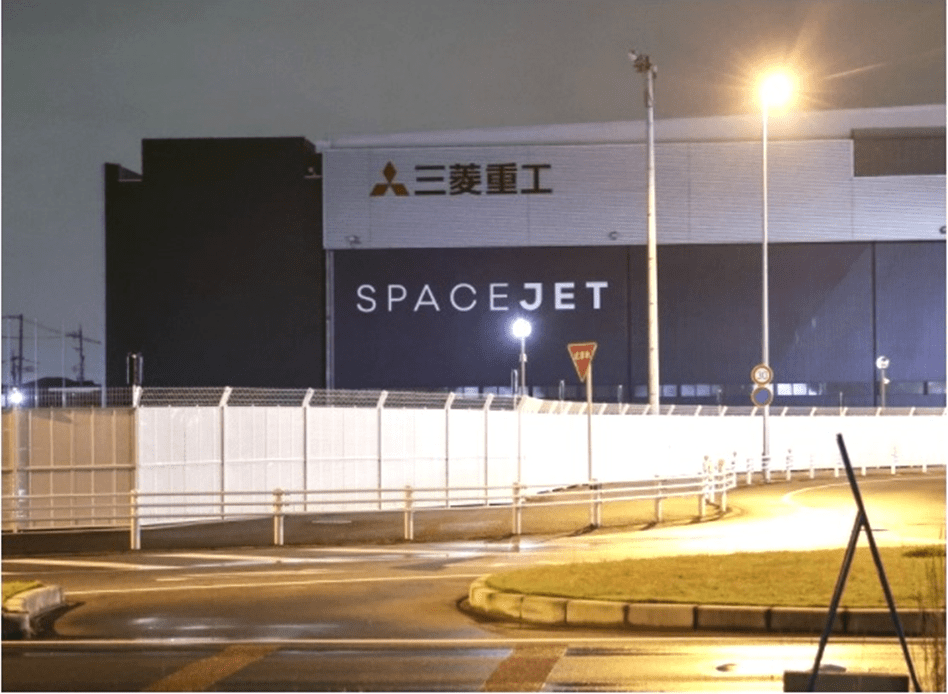
La planta de montaje de Mitsubishi Heavy para Mitsubishi SpaceJet se encuentra localizada en Toyoyama, Prefectura de Aichi, Japón. Mitsubishi Heavy registró una pérdida operativa por primera vez en dos décadas debido a los costos de desarrollo de SpaceJet. En Mayo 2020, el Presidente Seiji Izumisawa dijo que la compañía revisaría el calendario de desarrollo en su conjunto y dio a conocer un plan para reducir a más de la mitad el gasto para el proyecto a unos ¥ 60 mil millones de Yenes en el año fiscal 2020 hasta Marzo 2021.

Perspectivas SpaceJet

Es probable que Mitsubishi Heavy decida qué hacer con el desarrollo regional de aviones mientras evalúa la demanda de vuelos. Incluso antes de la pandemia de coronavirus, muchas compañías aéreas habían cambiado su enfoque a aviones más pequeños debido a su eficiencia de combustible en medio de una creciente conciencia sobre el cambio climático. Pero las aerolíneas están luchando ahora, ya que la pandemia ha llevado a muchos países a imponer restricciones de viaje, lo que resulta en una caída en la demanda de aviones comerciales.

Mitsubishi SpaceJet development scale

Mitsubishi Heavy vacillating on regional aircraft development

Mitsubishi Heavy Industries Ltd. is considering drastically reducing its staff and budget to develop the first domestically manufactured passenger jet, effectively freezing the operation amid a drop in demand caused by the new Coronavirus pandemic and plummeting sales. of aircraft worldwide, sources close to the matter said on Thursday 10/22.

The Japanese subsidiary Mitsubishi Aircraft Corp. has been developing a small aircraft called the Mitsubishi SpaceJet MA90, formerly known as the Mitsubishi Regional Jet (MRJ). Its initial delivery to All Nippon Airways Co., originally scheduled for 2013, has been postponed to 2021, or possibly later, due to parts issues and a lack of technical experts. The new airliner, if launched successfully, would be the first commercial aircraft manufactured in Japan in half a century after the YS-11 turboprop aircraft by Nihon Aircraft Manufacturing Corp., a public-private company.

The Japanese government had lobbied for the development of domestically built aircraft in the early 2000s after the YS-11 project failed to bear fruit as a business. As a result, Mitsubishi Heavy launched the regional aircraft project in 2008 and the first flight took place in November 2015. Mitsubishi Heavy is expected to announce the decision on October 30, 2020 when it unveils a new medium-term business strategy, they said. company sources.

Delivery of the Mitsubishi SpaceJet has been delayed six times so far despite the fact that around ¥ 1 trillion yen (US $ 9.6 billion) has already been poured into the development of the aircraft. The SpaceJet is designed to carry around 90 passengers with what the company calls changing fuel efficiency. Mitsubishi Heavy will likely continue to target a type certificate for the jet, the sources said.

Mitsubishi Heavy’s assembly plant for Mitsubishi SpaceJet is located in Toyoyama, Aichi Prefecture, Japan. Mitsubishi Heavy posted an operating loss for the first time in two decades due to SpaceJet development costs. In May 2020, President Seiji Izumisawa said the company would review the development schedule as a whole and unveiled a plan to cut spending for the project by more than half to about ¥ 60 billion yen in the fiscal year. 2020 to March 2021.

Perspectives SpaceJet

Mitsubishi Heavy is likely to decide what to do with regional aircraft development while assessing demand for flights. Even before the coronavirus pandemic, many airlines had switched their focus to smaller jets due to their fuel efficiency amid growing awareness of climate change. But airlines are struggling now, as the pandemic has prompted many countries to impose travel restrictions, resulting in a drop in demand for commercial jets.

三菱スペースジェット開発規模

地域の航空機開発に揺れ動く三菱ヘビー

Mitsubishi Heavy Industries Ltd.は、新たなコロナウイルスのパンデミックと販売の急落による需要の減少の中で、国内初のパッセンジャージェットを開発するためにスタッフと予算を大幅に削減することを検討しています。世界中の航空機の、問題に近い情報筋は木曜日10/22に言った。

日本の子会社であるMitsubishiAircraft Corp.は、Mitsubishi SpaceJet MA90(旧称Mitsubishi Regional Jet(MRJ))と呼ばれる小型航空機を開発しています。 2013年に予定されていたオールニッポンエアウェイズへの最初の納品は、部品の問題と技術専門家の不足により、2021年またはそれ以降に延期されました。新しい航空会社は、打ち上げに成功すれば、官民企業である日本航空機製造株式会社によるYS-11ターボプロップ航空機に続いて、半世紀で日本で製造された最初の商用航空機となるでしょう。

日本政府は、YS-11プロジェクトがビジネスとして実を結ぶことができなかった後、2000年代初頭に国産航空機の開発に働きかけました。その結果、三菱ヘビーは2008年に地域航空機プロジェクトを開始し、2015年11月に初飛行が行われました。三菱ヘビーは2020年10月30日に新しい中期事業戦略を発表する決定を発表する予定です。会社の情報源。

すでに約1兆円(96億米ドル)が開発に投入されているにもかかわらず、三菱スペースジェットの納品はこれまでに6倍遅れている。 SpaceJetは、同社が「変化する」燃料効率と呼んでいる約90人の乗客を運ぶように設計されています。三菱ヘビーは、ジェット機の型式証明書を引き続きターゲットにする可能性が高いと情報筋は述べた。

Mitsubishi SpaceJetのMitsubishiHeavyの組立工場は、日本の愛知県豊山にあります。三菱ヘビーは、SpaceJetの開発費により、20年ぶりに営業損失を計上しました。 2020年5月、泉澤誠二社長は、開発スケジュール全体を見直すと発表し、事業費を半減して約600億円にする計画を発表した。 2020年から2021年3月まで。

展望SpaceJet

三菱ヘビーは、フライトの需要を評価しながら、地域の航空機開発をどうするかを決定する可能性があります。コロナウイルスの大流行の前でさえ、多くの航空会社は、気候変動への意識が高まる中、燃料効率のために焦点をより小さなジェット機に切り替えていました。しかし、パンデミックにより多くの国が旅行制限を課すようになり、商用ジェット機の需要が減少したため、航空会社は現在苦戦しています。


PUBLISHER: Airgways.com
DBk: Mitsubishiaircraft.com / Airgways.com
AW-POST: 202010230020AR

A\W   A I R G W A Y S ®
China Express ordena 100 COMAC

AW | 2020 10 22 23:57 | AIRLINES / INDUSTRY

China Express Airlines cartera pedidos por 100 COMAC

China Express Airlines | LinkedIn

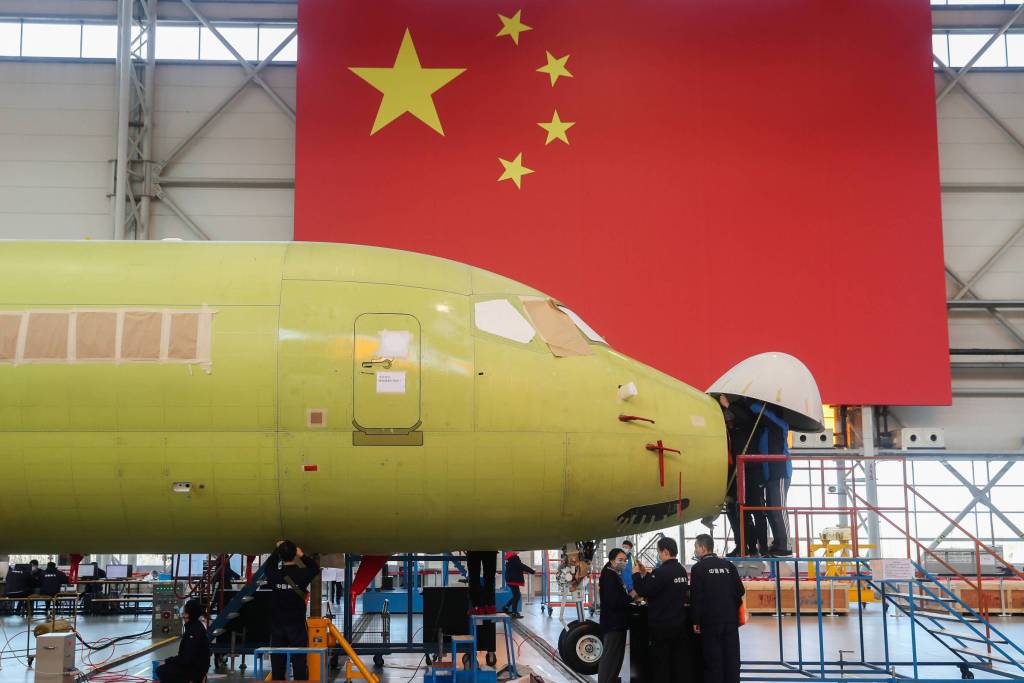
China Express Airlines ha confirmado sus intenciones de ampliar su flota con 100 nuevos aviones de la línea China Commercial Aircraft Company (COMAC). La aerolínea planea adquirir 100 aviones del fabricante aeroespacial estatal chino. El 20 de Octubre de 2020, China Express Airlines anunció que la aerolínea tiene la intención de obtener un total de 100 aviones COMAC. La cartera de pedidos comprende inicialmente 50 ARJ 21-700ER, estando la compra sigue estando sujeta a la aprobación del accionista aéreo. De aprobarse, la aerolínea esperaba recibir cincuenta aviones nuevos con una entrega programada en 2020 (2), en 2021 (6), en 2022 (8), en 2023 (9), en 2024 (10) y en 2025 (15).

Mientras que la primera mitad de la orden estaba lista para consistir en los ARJ21, China Express Airlines aún no ha especificado cómo se compondría la otra mitad de la orden. La otra mitad de la orden de 100 podría estar formada homogéneamente de C919 o combinada de C919/ARJ21 simultáneamente. Sin embargo, el COMAC C919, como opción alternativa a Airbus A320 o Boeing 737, aún no ha recibido su certificación.

La aerolínea ha estado apuntando a complementar la flota con 100 aviones desde Junio de 2020, cuando inicialmente anunció la intención de presentar la empresa en la Bolsa de Shenzhen. En ese momento, China Express Airlines firmó un acuerdo de asociación estratégica con COMAC en virtud del cual la aerolínea compraría un total de 100 aviones ARJ21 y C919, cuyos envíos comenzarían a partir de 2020. Mientras que otros gigantes de la fabricación de aeronaves como Airbus o Boeing sufren una disminución en la demanda de su producción, el pedido de los aviones desarrollados en el país podría impulsar significativamente la producción de un fabricante estatal chino COMAC.

China Express orders 100 COMAC

China Express Airlines order book for 100 COMAC

China Express Airlines has confirmed its intentions to expand its fleet with 100 new aircraft from the China Commercial Aircraft Company (COMAC) line. The airline plans to acquire 100 aircraft from the Chinese state-owned aerospace manufacturer. On October 20, 2020, China Express Airlines announced that the airline intends to procure a total of 100 COMAC aircraft. The order book initially comprises 50 ARJ 21-700ER, the purchase being still subject to the approval of the airline shareholder. If approved, the airline expected to receive fifty new aircraft with a scheduled delivery in 2020 (2), in 2021 (6), in 2022 (8), in 2023 (9), in 2024 (10) and in 2025 (15).

While the first half of the order was set to consist of ARJ21s, China Express Airlines has not yet specified how the other half of the order would be composed. The other half of the order of 100 could be made homogeneously from C919 or conbinate from C919/ARJ21 simultaneously. However, the Comac C919, as an alternative option to Airbus A320 or Boeing 737, has not yet received its certification.

The airline has been aiming to supplement the fleet with 100 aircraft since June 2020, when it initially announced the intention to list the company on the Shenzhen Stock Exchange. At that time, China Express Airlines signed a strategic partnership agreement with COMAC under which the airline would purchase a total of 100 ARJ21 and C919 aircraft, shipments of which would begin from 2020. While other aircraft manufacturing giants such as Airbus o Boeing suffer a decrease in the demand for their production, the order of the planes developed in the country could significantly boost the production of a Chinese state manufacturer COMAC.

中國快運訂購100架中國商飛

中華民航訂購100架民航飛機的訂單

China Express Airlines is certified as a 3-Star Airline | Skytrax

中國快運航空已確認打算用中國商用飛機公司(COMAC)系列的100架新飛機來擴充機隊。該航空公司計劃從這家中國國有航空製造商那裡購買100架飛機。 2020年10月20日,中國快運航空宣布,該航空公司計劃採購100架中國商飛飛機。訂單最初包含50架ARJ 21-700ER,但購買仍需獲得航空公司股東的批准。如果獲得批准,該航空公司預計將在2020年(2),2021(6),2022(8),2023(9),2024(10)和2025(15)接收五十架新飛機。

雖然該訂單的前半部分設定為由ARJ21組成,但中國快運航空尚未具體說明該訂單的另一半將如何組成。 100的另一半可以從C919均勻製造,也可以同時從C919/ ARJ21合成。但是,作為空客A320或波音737的替代選件的Comac C919尚未獲得認證。

自2020年6月最初宣布有意在深圳證券交易所上市以來,該航空公司一直致力於為機隊增加100架飛機。當時,中國快運航空公司與中國商飛簽署了戰略合作協議,根據協議,該航空公司將購買100架ARJ21和C919飛機,從2020年開始發貨。而其他飛機製造巨頭,如空客o波音公司的生產需求下降,在該國開發的飛機訂單可能會大大提高中國國有飛機製造商中國商飛的產量。


PUBLISHER: Airgways.com
DBk: Chinaexpressair.com / Comac.cn / Airgways.com
AW-POST: 202010222357AR

A\W   A I R G W A Y S ®