Diversificando inversiones en Boeing

Resultado de imagen para Boeing building Chicago

AW | 2018 11 13 12:07 | INDUSTRY

Boeing-Logo.svgEl fabricante de aviones de Estados Unidos continúa haciendo inversiones inteligentes para el futuro

El último ejercicio de reportes 3Q2018, Boeing obtuvo ganancias en el fueron sólidas. Los reportes parecen fortalecer al fabricante americano después de enfrentar dificultades en la distribución de insumos para las aeronaves a través de las diferentes empresas contratadas por Boeing.

Un análisis de los diferentes sectores de la industria de Boeing permitirá conocer el estado de las líneas de ensamblajes, como así el proceso de diversificación de las inversiones en otras empresas.

Línea 787

La línea Boeing 787 continúa disfrutando de un impulso positivo. Boeing comenzó el mes Octubre 2018 con una nota fuerte con el anuncio de que United Airlines sumando 9 órdenes adicionales de aviones Boeing 787-9 con un valor de precio de lista de US$ 2,5 billones, que se suman al fuerte impulso que está disfrutando el «Dreamliner».

Air Lease Corporation entregó los primeros Boeing 787 a EVA Air y Air Tahiti Nui, mientras que Juneyao Airlines se convirtió en la primera compañía privada en recibir un avión de fuselaje ancho. Por lo tanto, hay un gran impulso positivo en términos de pedidos y primeras entregas a las aerolíneas, lo que es un hito importante en el proceso de finalización de pedidos.

Línea 737 MAX

Durante el mes, se agregaron a S7 Airlines (Rusia) y SpiceJet (India) como operadores para el Boeing 737-8 MAX y el se concretó el primer cliente para el Boeing Business Jet MAX.

Un trágico suceso tuvo lugar el 29 Octubre 2018, cuando el vuelo JT-610 de la aerolínea Lion Air se estrelló en el Mar de Java 13 minutos después de despegar. El avión accidentado, un Boeing 737-8 MAX, llevaba a bordo a 181 pasajeros y 8 miembros de la AW-77000021tripulación. El accidente marcó el primer accidente con el Boeing 737-8 MAX matando a todas las personas a bordo. Los resultados preliminares han demostrado que, a pesar de los problemas anteriores con el indicador de velocidad del aire, el sensor de ángulo de ataque que proporcionó el error ahora se considera como el principal contribuyente al accidente, donde los datos erróneos del sensor dieron lugar a una acción de recorte automática que dio lugar a una tendencia a la disminución. La investigación aún está en curso, pero Boeing proporcionó un boletín del manual de operaciones que aborda el problema. La FAA, la Administración Federal de Aviación, emitió una directiva de aeronavegabilidad ya que considera que todos los aviones Boeing 737-8 MAX y Boeing 737-9 MAX pueden sufrir el mismo problema.

El problema parece estar relacionado con la capacidad de controlar la aeronave en ciertas circunstancias, podría ser algo sorprendente que el Boeing 737 MAX no haya sido conectado a tierra. En este momento, la investigación completa aún está en curso y se basa en los pasos y recomendaciones adicionales que se pueden esperar. Posiblemente una de las razones por las que el Boeing 737 MAX no se ha conectado a tierra es porque Boeing podría proporcionar instrucciones a las tripulaciones de vuelo sobre cómo manejar el problema.

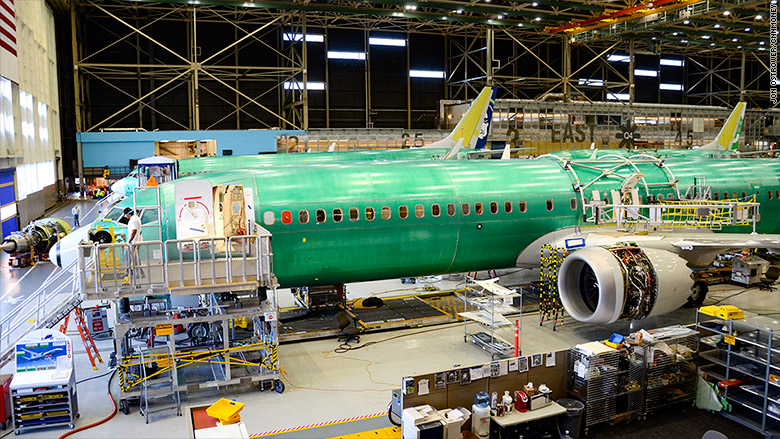
Resultado de imagen para Boeing 737 max assembly line KansasBOEING HA TENIDO PROBLEMAS CON LAS ENTREGAS DE MOTORES LEAP 1-B PARA LOS BOEING 737 MAX

El fabricante de aeronaves americano también reafirmó las perspectivas de mercado para el sector de carga aérea que suministró a principios de este año.

Diversificando negocios

Boeing continúa invirtiendo y finalizando acuerdos que permiten al fabricante de aviones crecer en el mercado de servicios y soporte, así como nuevas tendencias y tecnologías del mercado.

AW-BA-SHFFLDBoeing ha abierto su primera planta en Europa denominada Boeing Sheffield, de procesamientos de insumos que producirá componentes para la línea Boeing 737 y Boeing 767. La compañía expandirá su conocimiento de MRO y reducirá costos.

Boeing anunció en Febrero 2017 que abrirá una planta de producción en Sheffield, Reino Unido, el primer sitio de fabricación de la compañía en Europa. El permiso de planificación para el sitio se otorgó en el verano de 2017 y la ceremonia de apertura de la fábrica tuvo lugar en Septiembre 2017, con la apertura de las instalaciones el 25 Octubre 2018.

Boeing Sheffield fabricará más de 100 componentes diferentes de sistemas de actuación de alta tecnología para los modelos 737 y 767, a partir de materias primas procedentes del Reino Unido. Estos componentes se utilizarán en el borde posterior de las alas. Los sistemas de activación del borde de salida son responsables de extender y retraer las alas del ala durante las diferentes fases de vuelo. Las aletas agregan sustentación para permitir el despegue y el aterrizaje a velocidades más bajas, y proporcionan resistencia para ayudar a desacelerar el avión.

Resultado de imagen para KLX Inc. logoBoeing finalizó la adquisición de KLX, que es un distribuidor líder de piezas. Es una adquisición realizada a principios de 2018 y se adapta perfectamente a la estrategia de Boeing.

Resultado de imagen para Flightdocs logoBoeing no solo pretende expandir las ventas de piezas de repuesto, sino que también aumenta su enfoque en los programas, servicios y datos. Ahí es donde encaja el acuerdo de Boeing con Flightdocs. Ambas partes han firmado un acuerdo de varios años para comercializar y vender exclusivamente la plataforma Enterprise de Flightdocs, una solución de servicio completo de mantenimiento, cumplimiento y gestión de inventario para el mercado de aviación general y de negocios. Las compañías también han firmado un Memorando de Entendimiento (MOU) para integrar la plataforma Flightdocs Enterprise con el portafolio de compañías, productos y servicios de Boeing Global Services, incluidos Aviall, Inventory Locator Services y Jeppesen.

Resultado de imagen para Adient logoLa empresa conjunta entre Boeing Adient maximizarán los esfuerzos de desarrollo, fabricación y venta de asientos de aeronaves, que pretende mejorar la calidad de los asientos, pero sobre todo puede verse como la respuesta de Boeing a la mayor demanda de asientos de aeronaves a medida que aumenta la producción de aeronaves en un esfuerzo por agilizar el proceso.

Resultado de imagen para Disruptive Computing and NetworksBoeing anunció una nueva organización de Disruptive Computing and Networks (DC&N) para desarrollar soluciones informáticas y de comunicaciones para aplicaciones aeroespaciales comerciales y gubernamentales avanzadas. La inteligencia artificial y la computación avanzada no son lo primero que se conectaría a Boeing, pero con los productos de Boeing cada vez más orientados a los datos, incluyendo el enlace ascendente y el enlace descendente de datos, los diseños se vuelven más avanzados y el enfoque en sistemas autónomos la computación avanzada se vuelve intrínsecamente más importante invertir en Boeing.

Resultado de imagen para robotic skies logoBoeing, junto con Robotic Skies, se ajusta a la estrategia de la compañía; Boeing y sus subsidiarias Jeppesen y Aviall se unieron a Robotic Skies, un proveedor de servicios de soporte de sistemas de aeronaves no tripuladas comercial líder, para desarrollar y ofrecer servicios de optimización y análisis, análisis, y mantenimiento, reparación y revisión de la cadena de suministro líderes en la industria para el comercio y Mercados UAS civiles. La cooperación entre las compañías permitirá a Boeing aumentar sus capacidades en el espacio de soporte de UAV.

Resultado de imagen para Accion Systems logoBoeing ha invertido en Accion Systems que apunta a desarrollar capacidades de propulsión electrónica para una amplia variedad de satélites. Como el sistema de propulsión es más pequeño, los satélites pueden volverse más pequeños. En los lanzamientos de vuelos espaciales y satélites, estamos viendo una tendencia a llevar nuevas capacidades al espacio y estamos viendo el objetivo de reducir los costos al reducir la carga útil de los satélites.

página principalThe Boeing Co. y Safran Group acordaron una alianza en Junio 2018 para diseñar, construir y dar servicio conjuntamente a las Unidades de Energía Auxiliar (APU), creando un mejor valor para los clientes y para ambas compañías. Una APU es un motor a bordo que se utiliza principalmente para arrancar los motores principales y los sistemas de aeronaves de potencia en tierra y, si es necesario, en vuelo.

El acuerdo establecerá una relación importante entre dos de las compañías aeroespaciales líderes en el mundo para trabajar conjuntamente en productos y capacidades de servicio ampliadas para beneficiar tanto a los clientes como a la industria en general. Ambas compañías tendrán una participación del 50 por ciento en la sociedad, que tendrá su sede en los Estados Unidos. La finalización de la transacción está sujeta a las condiciones habituales, incluida la autorización reglamentaria y antimonopolio. Se espera que el acuerdo se cierre en la segunda mitad de 2018.

El Futuro de Boeing

El fabricante estadounidense ha identificado a lo largo de estos últimos años falencias en la distribución de suministros a Boeing y ha tomado medidas sorprendentes para eliminar las fallas en las entregas de suministros. Los casos más conocidos fueron AeroSystems en Wichita, Kansas, y CFM International, una compañía de Safran Aircraft Engines y General Electric (GE) para impulsar el desarrollo del motor LEAP que propulsan la nueva cuarta generación de aeronaves Boeing 737 MAX.

Para Boeing existen dos razones principales para invertir en el espacio de piezas. El primero es evaluar los ingresos postventa y el segundo es abordar ciertos cuellos de botella en la cadena de suministro.

The Boeing Company continúa invirtiendo en la creación, adquisiciones y alianzas de empresas para proporcionar tecnologías de ahorro de costos y reducción de la crisis de línea de soportes de insumos. El 2018 Boeing ha diversificado sus estrategias para continuar desarrollándose hacia el futuro.AW-Icon-TXT

Resultado de imagen para Boeing building Chicago

Diversifying investments in Boeing

Boeing-Company-LogoThe US aircraft manufacturer continues making smart investments for the future

The last reporting exercise 3Q2018, Boeing made gains in the were solid. The reports seem to strengthen the American manufacturer after facing difficulties in the distribution of supplies for aircraft through the different companies hired by Boeing.

An analysis of the different sectors of the Boeing industry will allow to know the state of the assembly lines, as well as the process of diversification of investments in other companies.

Resultado de imagen para Boeing 787 assembly line

Line 787

The Boeing 787 line continues to enjoy a positive momentum. Boeing began the month of October 2018 with a strong note with the announcement that United Airlines adding 9 additional orders of Boeing 787-9 aircraft with a list price value of US $ 2.5 billion, adding to the strong momentum that is enjoying the «Dreamliner».

Air Lease Corporation delivered the first Boeing 787s to EVA Air and Air Tahiti Nui, while Juneyao Airlines became the first private company to receive a wide-body aircraft. Therefore, there is a great positive momentum in terms of orders and first deliveries to airlines, which is an important milestone in the order completion process.

Line 737 MAX

AW-BBJMAX737.jpgDuring the month, S7 Airlines (Russia) and SpiceJet (India) were added as operators for the Boeing 737-8 MAX and the first customer for the Boeing Business Jet MAX was completed.

A tragic event took place on October 29, 2018, when flight JT-610 of the airline Lion Air crashed in the Java Sea 13 minutes after takeoff. The crashed plane, a Boeing 737-8 MAX, had 181 passengers and 8 crew members on board. The accident marked the first accident with the Boeing 737-8 MAX killing all people on board. Preliminary results have shown that, despite the above problems with the air velocity indicator, the angle of attack sensor that provided the error is now considered as the main contributor to the accident, where erroneous sensor data resulted in an automatic clipping action that resulted in a decreasing trend. The investigation is still ongoing, but Boeing provided a bulletin of the operations manual that addresses the problem. The FAA, the Federal Aviation Administration, issued an airworthiness directive since it considers that all Boeing 737-8 MAX and Boeing 737-9 MAX aircraft may suffer the same problem.

The problem seems to be related to the ability to control the aircraft in certain circumstances, it might be somewhat surprising that the Boeing 737 MAX has not been grounded. At this time, the full investigation is still ongoing and is based on the additional steps and recommendations that can be expected. Possibly one of the reasons why the Boeing 737 MAX has not been grounded is because Boeing could provide instructions to flight crews on how to handle the problem.

The American aircraft manufacturer also reaffirmed market prospects for the air cargo sector that it supplied earlier this year.

Diversifying business

Boeing continues to invest and finalize agreements that allow the aircraft manufacturer to grow in the services and support market, as well as new market trends and technologies.

Boeing has opened its first plant in Europe called Boeing Sheffield, for input processing that will produce components for the Boeing 737 and Boeing 767 lines. The company will expand its knowledge of MRO and reduce costs.

INAUGURATION OF BOEING SHEFFIELD IN THE UNITED KINGDOM

Boeing announced in February 2017 that it will open a production plant in Sheffield, United Kingdom, the company’s first manufacturing site in Europe. The planning permission for the site was granted in the summer of 2017 and the opening ceremony of the factory took place in September 2017, with the opening of the facilities on October 25, 2018.

Boeing Sheffield will manufacture more than 100 different components of high-tech actuation systems for the 737 and 767 models, from raw materials from the United Kingdom. These components will be used on the back edge of the wings. The exit edge activation systems are responsible for extending and retracting the wings of the wing during the different phases of flight. The fins add lift to allow takeoff and landing at lower speeds, and provide resistance to help slow the plane.

Boeing finalized the acquisition of KLX, which is a leading parts distributor. It is an acquisition made in early 2018 and is perfectly adapted to Boeing’s strategy.

Boeing not only aims to expand sales of spare parts, but also increases its focus on programs, services and data. That’s where the Boeing agreement fits with Flightdocs. Both parties have signed a multi-year agreement to market and sell exclusively the Flightdocs Enterprise platform, a full service maintenance, fulfillment and inventory management solution for the general and business aviation market. The companies have also signed a Memorandum of Understanding (MOU) to integrate the Flightdocs Enterprise platform with the portfolio of Boeing Global Services companies, products and services, including Aviall, Inventory Locator Services and Jeppesen.

The joint venture between Boeing and Adient will maximize the development, manufacturing and sale of aircraft seats, which aims to improve the quality of the seats, but above all can be seen as Boeing’s response to the increased demand for aircraft seats as increases aircraft production in an effort to streamline the process.

Boeing announced a new Disruptive Computing and Networks (DC&N) organization to develop information and communications solutions for commercial and advanced government aerospace applications. Artificial intelligence and advanced computing are not the first thing that would connect to Boeing, but with Boeing’s increasingly data-driven products, including uplink and data downlink, the designs become more advanced and the focus on autonomous systems advanced computing becomes intrinsically more important to invest in Boeing.

Boeing, along with Robotic Skies, conforms to the company’s strategy; Boeing and its subsidiaries Jeppesen and Aviall joined Robotic Skies, a leading commercial unmanned aircraft systems support service provider, to develop and offer optimization and analysis, analysis, and maintenance, repair and overhaul services Supply leaders in the industry for trade and civil UAS markets. The cooperation between the companies will allow Boeing to increase its capabilities in the UAV support space.

Boeing has invested in Accion Systems that aims to develop electronic propulsion capabilities for a wide variety of satellites. As the propulsion system is smaller, the satellites can become smaller. In launches of space flights and satellites, we are seeing a trend to bring new capabilities to space and we are seeing the goal of reducing costs by reducing the payload of satellites.

The Boeing Co. and Safran Group agreed to an alliance in June 2018 to jointly design, build and service Auxiliary Power Units (APU), creating better value for customers and both companies. An APU is an on-board engine that is used primarily to start the main engines and aircraft systems of power on the ground and, if necessary, in flight.

The agreement will establish an important relationship between two of the world’s leading aerospace companies to work together on products and expanded service capabilities to benefit both customers and the industry in general. Both companies will have a 50% stake in the company, which will be based in the United States. The completion of the transaction is subject to the usual conditions, including regulatory and antitrust authorization. The agreement is expected to close in the second half of 2018.

Resultado de imagen para Boeing 737 max assembly line KansasMOTOR LEAP 1-B MANUFACTURED BY CFM INTERNATIONAL

The Future of Boeing

The US manufacturer has identified over the past few years shortcomings in the distribution of supplies to Boeing and has taken surprising measures to eliminate faults in the supply of supplies. The best-known cases were AeroSystems in Wichita, Kansas, and CFM International, a company of Safran Aircraft Engines and General Electric (GE) to promote the development of the LEAP engine that propel the new fourth generation of Boeing 737 MAX aircraft.

For Boeing there are two main reasons to invest in the parts space. The first is to evaluate post-sales income and the second is to address certain bottlenecks in the supply chain.

The Boeing Company continues to invest in the creation, acquisitions and alliances of companies to provide cost saving technologies and reduction of the line crisis of input supports. 2018 Boeing has diversified its strategies to continue developing into the future. A \ W


Ξ A I R G W A Y S Ξ
SOURCE: Airgways.com
DBk: Boeing.com / Boeing.co.uk / Safran-group.com / Safran-aircraft-engines.com / Airgways.com / Aeroimages.com / Reuters.com
AW-POST: 201811131207AR

A\W   A I R G W A Y S ®

Tercer prototipo COMAC C919

AW-7505571

AW | 2018 11 12 23:19 | INDUSTRY

COMAC_logoCOMAC Corp. ha terminado el ensamblaje del tercer prototipo del avión C919

COMAC ha logrado el encendido para su tercer prototipo de prueba de vuelo C919, ya que continúa trabajando para lograr un primer vuelo para la aeronave para finales de año. El fabricante chino de aviones COMAC ha iniciado los sistemas y motores a bordo del tercer prototipo C919. Es muy probable que el avión aún vuele antes de finales de 2018.

Los dos primeros prototipos 101 y 102 se encuentran actualmente en Jiangxi, realizando extensos vuelos de prueba en Xian, Shandong y Jiangxi. La aeronave 102 fue transferida desde el sitio de prueba de Shandong a Jiangxi a fines del mes pasado. El fabricante chino está utilizando seis aviones de prueba de vuelo para el programa de cuerpo estrecho, y también tiene dos reactores de prueba en tierra que están siendo sometidos a pruebas de estática y fatiga. El fabricante completará el proceso de certificación con seis dispositivos de prueba de vuelo. Además, dos dispositivos son probados y cargados estáticamente.

Ha asegurado 815 compromisos para la aeronave impulsada por CFM International LEAP-1C, con el objetivo de lograr la certificación y entrar en servicio en el período 2020-2021. AW-Icon-TXT


Third prototype COMAC C919

COMAC Corp. has completed the assembly of the third prototype of the C919 aircraft

COMAC has achieved the ignition for its third prototype of flight test C919, since it continues working to achieve a first flight for the aircraft by the end of the year. Chinese aircraft manufacturer COMAC has started systems and engines aboard the third prototype C919. It is very likely that the plane will still fly before the end of 2018.

The first two prototypes 101 and 102 are currently in Jiangxi, carrying out extensive test flights in Xian, Shandong and Jiangxi. Aircraft 102 was transferred from the Shandong test site to Jiangxi late last month. The Chinese manufacturer is using six flight test aircraft for the narrow body program, and it also has two ground test reactors that are undergoing static and fatigue tests. The manufacturer will complete the certification process with six flight test devices. In addition, two devices are tested and statically charged.

It has secured 815 commitments for the aircraft driven by CFM International LEAP-1C, with the aim of achieving certification and entering service in the period 2020-2021. A\W


Ξ A I R G W A Y S Ξ
SOURCE: Airgways.com
DBk: Comac.cn
AW-POST: 201811122319AR

A\W   A I R G W A Y S ®

Getafe apoya empleados subcontratados

Resultado de imagen para Getafe Illescas Airbus

AW | 2018 11 12 21:33 | INDUSTRY

Getafe e Illescas consideran maniobra ilegal despidos de Airbus

Getafe ha registrado una proposición al Pleno del Ayuntamiento para apoyar a los 70 trabajadores subcontratados de Airbus. Las fábricas de Getafe e Illescas, que resultarán despedidos en plena huelga tras la ruptura por parte de Airbus del contrato con las empresas ID Logistics e ISS Facility, que prestaban servicios subcontratados, defenderán las posiciones de los trabajados despedidos.

Las empresas subcontratistas ID Logistics e ISS Facility de Airbus venían llevando a cabo una huelga indefinida desde el día 5 Noviembre 2018, con concentraciones diarias en las puertas de las factorías de Illescas y de Getafe, al objeto de defender su derecho de subrogación por el cambio de empresa prestataria ID Logistics por ISS Facility, después de que se comunicara la no renovación de 17 personas, algunas de ellas con una antigüedad superior a los 20 años.

Ahora Getafe quiere que el Pleno del Ayuntamiento de Getafe muestre “el rechazo a la suspensión del contrato de Airbus con las empresas prestatarias, por considerar ésta una maniobra ilegal” contra el derecho a huelga de su plantilla y que se apoyen las movilizaciones de los trabajadores.AW-Icon-TXT

Resultado de imagen para Getafe Illescas Airbus

Getafe supports outsourced employees

Getafe and Illescas consider illegal maneuvering of Airbus

Getafe has registered a proposal to the City Council Plenary to support the 70 Airbus subcontracted workers. The factories of Getafe and Illescas, which will be dismissed in full strike following the breach by Airbus of the contract with the companies ID Logistics and ISS Facility, which provided subcontracted services, will defend the positions of the dismissed workers.

The subcontractor companies ID Logistics and ISS Facility of Airbus had been carrying out an indefinite strike since November 5, 2018, with daily rallies at the doors of the factories of Illescas and Getafe, in order to defend their right of subrogation for the change of borrower company ID Logistics by ISS Facility, after the notification of the non-renewal of 17 people, some of them older than 20 years.

Now Getafe wants the Getafe City Council Plenary to show «the rejection of the suspension of the contract of Airbus with the borrowing companies, considering it an illegal maneuver» against the right to strike of its staff and to support the mobilizations of the workers . A\W

Ξ A I R G W A Y S Ξ
SOURCE: Airgways.com
DBk: Airbus.com / Twitter.com/cgtgetafe / Voxpopuli.com
AW-POST: 201811122133AR

A\W   A I R G W A Y S ®

Joint Venture Boeing-Safran

Image result for Safran headquarters

AW | 2018 11 10 19:55 | INDUSTRY

Boeing y Safran anuncian Joint Venture

Boeing-Logo.svgThe Boeing Company y Safran SA formalizaron una alianza después de las aprobaciones regulatorias para comenzar su empresa conjunta para el diseño, la construcción y el mantenimiento de unidades de potencia auxiliar. Las compañías Boeing-Safran nombraron a Etienne Boisseau como Director Ejecutivo de la empresa conjunta.

Image result for SafranEl acuerdo establece una asociación entre dos de las compañías aeroespaciales líderes en el mundo para trabajar en conjunto en los productos de APU y ampliar las capacidades de servicio para beneficiar a los clientes y la industria. Ambas compañías tienen una participación del 50% en la empresa conjunta. El equipo inicial realizará trabajos de diseño en San Diego, California.

Boeing y Safran han recibido aprobaciones regulatorias para una empresa conjunta para que puedan comenzar a diseñar, construir y dar servicio a las unidades de potencia auxiliar de las aeronaves (APU), tableros de motores que se utilizan principalmente para arrancar los motores principales y los sistemas de los aviones de potencia mientras están en tierra y en vuelo.

«Safran se enorgullece de lanzar esta empresa conjunta con Boeing para ofrecer APU de vanguardia y mejorar el valor para el cliente. Juntos, estamos comprometidos a brindar soluciones innovadoras, altamente tecnológicas y competitivas en costos a los clientes globales. confiando en que este equipo conjunto proporcionará productos y servicios de primera clase dentro de la mejor organización industrial integrada», dijo Philippe Petitcolin, CEO de Safran.

«Estamos abiertos para los negocios y nos complace ofrecer aún más valor a nuestros clientes durante el ciclo de vida de su inversión. Esta empresa conjunta fortalece las capacidades verticales de Boeing a medida que continuamos expandiendo nuestra cartera de servicios. Al realizar inversiones estratégicas que aceleran nuestros planes de crecimiento, También estamos proporcionando a nuestros clientes soluciones de servicios innovadoras y ampliadas», dijo Stan Deal , Presidente y CEO de Boeing Global Services.

Safran actualmente suministra una amplia gama de componentes a los programas comerciales y de defensa de Boeing, incluso como socio para producir el motor LEAP-1B de CFM para el 737 MAX (a través de CFM International, una empresa de riesgo compartido de 50/50 entre Safran Aircraft Engines y GE). Boeing y Safran también son socios de MATIS, una empresa conjunta en Marruecos que produce productos de cableado para varias compañías de fuselaje y motores.

La empresa conjunta combina el conocimiento de los clientes y aviones de Boeing y la experiencia de Safran en el diseño y producción de sistemas complejos de propulsión. AIRWAYS® AW-Icon TXT

Image result for Safran engine

Joint Venture Boeing-Safran

Boeing and Safran announce Joint Venture

The Boeing Company and Safran SA formalized an alliance after regulatory approvals to start their joint venture for the design, construction and maintenance of auxiliary power units. The Boeing-Safran companies named Etienne Boisseau as Executive Director of the joint venture.

The agreement establishes a partnership between two of the world’s leading aerospace companies to work together on APU products and expand service capabilities to benefit customers and the industry. Both companies have a 50% stake in the joint venture. The initial team will carry out design work in San Diego, California.

Boeing and Safran have received regulatory approvals for a joint venture so they can begin designing, building and servicing aircraft auxiliary power units (APUs), engine boards that are mainly used to start main engines and systems. of power planes while they are on land and in flight.

«Safran is proud to launch this joint venture with Boeing to offer cutting-edge APUs and enhance customer value, and together, we are committed to providing innovative, highly technological and cost-competitive solutions to global customers, trusting that this joint team It will provide first class products and services within the best integrated industrial organization», said Philippe Petitcolin, CEO of Safran.

«We are open for business and we are pleased to offer even more value to our clients during the life cycle of their investment.» This joint venture strengthens Boeing’s vertical capabilities as we continue to expand our portfolio of services, making strategic investments that accelerate our growth plans, we are also providing our customers with innovative and expanded service solutions», said Stan Deal, President and CEO of Boeing Global Services.

Safran currently supplies a wide range of components to Boeing’s commercial and defense programs, including as a partner to produce the CFM LEAP-1B engine for the 737 MAX (through CFM International, a 50/50 joint venture). between Safran Aircraft Engines and GE). Boeing and Safran are also partners of MATIS, a joint venture in Morocco that produces wiring products for several fuselage and engine companies.

The joint venture combines Boeing’s customer and aircraft knowledge and Safran’s expertise in the design and production of complex propulsion systems. A \ W

44533_O.jpg

Joint Venture Boeing-Safran

Boeing et Safran annoncent une joint venture

The Boeing Company et Safran SA ont formalisé une alliance après les approbations réglementaires nécessaires au démarrage de leur entreprise commune pour la conception, la construction et la maintenance de groupes auxiliaires de puissance. Les sociétés Boeing-Safran ont nommé Etienne Boisseau au poste de directeur exécutif de la joint-venture.

L’accord établit un partenariat entre deux des plus grandes entreprises aérospatiales du monde afin de travailler ensemble sur les produits APU et d’étendre les capacités de service au profit des clients et du secteur. Les deux sociétés détiennent une participation de 50% dans la coentreprise. L’équipe initiale effectuera des travaux de conception à San Diego, en Californie.

Boeing et Safran ont reçu les approbations réglementaires nécessaires à la création d’une entreprise commune afin de pouvoir commencer à concevoir, construire et entretenir des unités auxiliaires de bord (APU), des platines motrices principalement utilisées pour démarrer les moteurs et systèmes principaux. des avions de puissance pendant qu’ils sont sur la terre et en vol.

«Safran est fier de lancer cette entreprise commune avec Boeing afin de proposer des APU de pointe et d’accroître la valeur client. Ensemble, nous nous engageons à fournir des solutions innovantes, hautement technologiques et concurrentielles sur le plan des coûts, à des clients du monde entier. Il fournira des produits et des services de première classe au sein de la meilleure organisation industrielle intégrée», a déclaré Philippe Petitcolin, PDG de Safran.

«Nous sommes ouverts aux affaires et nous sommes ravis d’offrir encore plus de valeur à nos clients tout au long du cycle de vie de leur investissement.» Cette coentreprise renforce les capacités verticales de Boeing à mesure que nous développons notre portefeuille de services, en réalisant des investissements stratégiques qui accélèrent nos plans de croissance, nous proposons également à nos clients des solutions de services innovantes et étendues», a déclaré Stan Deal, président et chef de la direction de Boeing Global Services.

Actuellement, Safran fournit une large gamme de composants aux programmes commerciaux et de défense de Boeing, notamment en tant que partenaire pour la production du moteur CFM LEAP-1B du 737 MAX (par l’intermédiaire de CFM International, une entreprise commune à 50/50). Safran Aircraft Engines et GE). Boeing et Safran sont également partenaires de MATIS, une coentreprise au Maroc qui produit des produits de câblage pour plusieurs entreprises de fabrication de fuselage et de moteurs.

L’entreprise commune associe les connaissances de Boeing aux clients et aux avions et l’expertise de Safran dans la conception et la production de systèmes de propulsion complexes. A \ W


Ξ A I R G W A Y S Ξ
SOURCE: Airgways.com
DBk: Boeing.com / Safran-group.com / Industryweek.com / Wikimedia.org
AW-POST: 201811101955AR

A\W   A I R G W A Y S ®

Fuerte reestructuración en Bombardier

Image result for Bombardier Aerospace Montreal headquarters

AW | 2018 11 10 18:44 | INDUSTRY

Bombardier_Logo.svg.pngBombardier Inc. recortará 5.000 empleos en reestructuración

Image result for Viking Air Ltd headquartersLa compañía canadiense Bombardier Inc. recortará 5.000 empleos en todo el mundo y venderá su línea turbohélice QSeries en un intento por agilizar las operaciones, anunció el jueves la compañía en un comunicado.

La reducción del 7% de su fuerza laboral en toda la organización se producirá en los próximos 12 a 18 meses, mientras que los miembros clave del equipo de ingeniería aeroespacial se redistribuirán a su segmento de aeronaves en pleno auge. Los recortes se concentrarán en el negocio aeroespacial y afectarán a 3.000 trabajadores en Canadá, dijo el portavoz de la compañía, Simon Letendre. Se ha reducido más de 15.000 empleos en sus divisiones aeroespaciales y ferroviarias en todo el mundo desde 2015.

El grupo con sede en Montreal también anunció la venta de activos no esenciales por un total de alrededor de US$ 900 millones, incluido el programa de aeronaves turbohélices regionales QSeries y la marca registrada de Havilland Canada, que se vendió por unos US$ 300 millones a un fondo de inversión canadiense. El simulador de vuelo y la firma de entrenamiento CAE, acordó adquirir el segmento de entrenamiento de vuelo de los aviones comerciales de Bombardier, que se prevé que genere regalías de US$ 800 millones.

El anuncio de la reestructuración se produjo cuando la compañía reportó un ingreso neto de US$ 167 millones en el tercer trimestre, en comparación con una pérdida de US$ 11 millones del año anterior. «Continuamos haciendo progresos sólidos en la ejecución de nuestro plan de cambio. Con los anuncios de hoy, hemos puesto en marcha la siguiente ronda de acciones necesarias para liberar todo el potencial de la cartera de Bombardier», dijo el jefe de Bombardier, Alain Bellemare, sobre el esfuerzo de reestructuración. A pesar de los fuertes cambios de reestructuración la firma continuará siendo proactiva en el enfoque y la racionalización de la organización mostrando optimismo sobre las perspectivas de la compañía.

Programas Q400

Bombardier anunció la venta del Programa QSeries a una subsidiaria de Longview por aproximadamente US$ 300 millones al grupo Viking Air Ltd. Bombardier desprogramará su división de la línea turbohélice Q400, anunció este Jueves, 7 Octubre 2018. La compañía Viking Air Ltd. fabrica un avión turbohélice Twin Otter, tiene la intención de mantener las cadenas de suministro para la serie Q400 que actualmente se extiende sus unidades en China, Irlanda y México. El acuerdo, que está programado para cerrarse en la segunda mitad de 2019, posiciona a Longview en más del triple de sus ingresos anuales a US$ 1 mil millones.

AW-CJC ChungBOMBARDIER SE DESPRENDE DEL PROGRAMA QSERIES

La compañía Bombardier, con sede en Montreal, dijo en su comunicado de ganancias del 3Q2018 que esperaba registrar ganancias netas de US$ 250 millones por la venta de la línea Q400 y los certificados de tipo e IP para versiones más pequeñas del avión con doble propulsor a la empresa matriz de Viking Air Longview Capital, que ha construido un negocio en aviones que ha adquirido de Bombardier y que fue desarrollado por el extinto fabricante de aviones canadiense De Havilland Canada (DHC). Boeing había adquirido la división de aviones turbohélice De Havilland Canada y posteriormente Bombardier se hizo de la empresa comprándola a Boeing en 1992.

El Q400 es un turbohélice de mayor rendimiento que el ATR de la competencia, pero los observadores dicen que muchas aerolíneas regionales no han visto la necesidad de sus capacidades al precio más alto correspondiente. Forecast International espera que el CRJ y el Q400 sean un cuarto distante en el mercado de aeronaves regionales con 503 ventas en los próximos 15 años, detrás de Embraer con ventas proyectadas de 1.519 jets regionales, y ATR con 1.207 turbopropulsores.

La decisión de vender la línea de la QSeries, dijo Bellemare, se tomó «porque creemos que hay un mejor propietario que nosotros para mantener este programa».

AW-7000BC700.png

Longview Aviation Capital

La adquisición de la línea de producción de aviones de pasajeros turbohélice QSeries de Bombardier es el siguiente paso lógico en el plan de crecimiento de Longview Aviation Capital Corp., mantener las alas canadienses en alza. La compañía dice que el acuerdo de US$ 300 millones para continuar la fabricación de la línea Bombardier Dash 8 Series 100, Q200 y Q300, Q400 lo convertirá en el mayor fabricante de aviones turbohélices comerciales de Norteamérica.

Con base en Victoria, Estado de British Columbia, en el extremo oeste de Canadá, la administración de la compañía anticipa alrededor de US$ 1 mil millones en ingresos en el primer año de su nueva empresa. «Nos complace unir toda la línea de productos De Havilland bajo la misma bandera por primera vez en décadas. Uno de los aspectos interesantes de esta transacción serán las oportunidades que rodean al resurgimiento de la marca de Havilland», dijo Dave Curtis, Presidente de Longview Aviation Capital.

Mientras Bombardier se enfoca en su plan de cambio, Longview Aviation Capital, en cambio, ha sido una empresa aeroespacial canadiense en alza desde que se estableció en 2016 como la empresa matriz de Viking Air Ltd. y Pacific Sky Aviation Inc. Desde entonces, la compañía ha aumentado su fuerza laboral a 612 empleados: 433 en Victoria y 179 en Calgary, donde se ubican las plantas de ensamblaje de Viking Air Ltd.

Viking fabrica la serie Canadian Twin Otter 400 y posee los certificados para seguir fabricando piezas y brindando soporte de producto para los aviones DHC-1 a DHC-7 de De Havilland Canada. También produce los anfibios Canadair 215 y CL-415, ambos bombarderos de agua, que formaron parte de las adquisiciones de 2016 de Longview. La compañía también dice que satisface una demanda mundial constante de piezas y soporte de aviones confiables construidos en Canadá, como el Twin Otter y el Dash 7, que aún se encuentran ampliamente desplazados desde regiones polares a regiones subtropicales del mundo.

684486-113616627.jpg

Programa Canadair CRJ

CANADAIR IsologotypeBombardier dijo que continuará explorando opciones estratégicas para su línea de aviones comerciales remanentes, los jets regionales CRJ Series, mientras busca devolverla a la rentabilidad. Con respecto a la línea de aeronaves jet CRJ, el CEO dijo que esperaba ver más movimiento de los proveedores para reducir los costos en la línea de aviones regionales CRJ, y señaló que Bombardier sigue perdiendo dinero en su fabricación.  Las entregas de la serie CRJ y Q400 para el trimestre totalizaron sólo cinco aviones, mientras que los pedidos netos totalizaron once.

El nuevo avión Global 7500 de la compañía, el jet de negocios más grande y de mayor alcance en el mercado, mientras tanto, ha sido certificado como digno de vuelo, allanando el vía para su entrada en servicio en Diciembre 2018.

Existe una gran demanda de aviones regionales en medio del auge de los viajes aéreos en todo el mundo: Forecast International proyecta que se producirán 6,086 aviones regionales en el período de 15 años desde 2018 hasta 2032, pero la capacidad de Bombardier para competir en el segmento ha disminuido.

Bombardier fue pionero en el mercado de aviones regionales en la década de 1990 con el CRJ, una versión extendida de su avión de negocios Challenger, pero el envejecimiento del fuselaje se ha superado en los últimos años con los aviones Ejets más nuevos de Embraer.

Los Sindicatos

Los líderes sindicales y de la oposición en Quebec se manifestaron en contra del movimiento de Bombardier el jueves para despedir a 5.000 trabajadores, incluidos 500 en Ontario y 2.500 en Quebec, como parte de un plan de reestructuración que recorta más del 12% de sus posiciones canadienses.

Mary Ellen McIlmoyle, presidenta de un local de Unifor que representa a algunos de los 2.100 trabajadores en el ala aeroespacial de Bombardier en Downsview, dijo que sus miembros se sienten traicionados. Habían expresado que durante la negociación en Abril 2018, la compañía dijo que mantenían la línea Q400, pero la realidad fue un gran shock cuando descubrimos que se dieron la vuelta y lo vendieron.

La falta de certeza de los trabajadores acerca de la instalación de Downsview, que forma cabinas y alas, entre otros componentes, después de 2021 es su mayor preocupación. Renaud Gagne, del Sindicato Unifor, que representa a los trabajadores aeroespaciales canadienses, advirtió que «los despidos envían un mensaje preocupante para el futuro de la industria». Bombardier tiene un contrato de arrendamiento de la propiedad hasta 2021, con una opción de prórroga de dos años, está claro que para la fuerza laboral se tendrán que mudar a British Columbia.

Las Finanzas

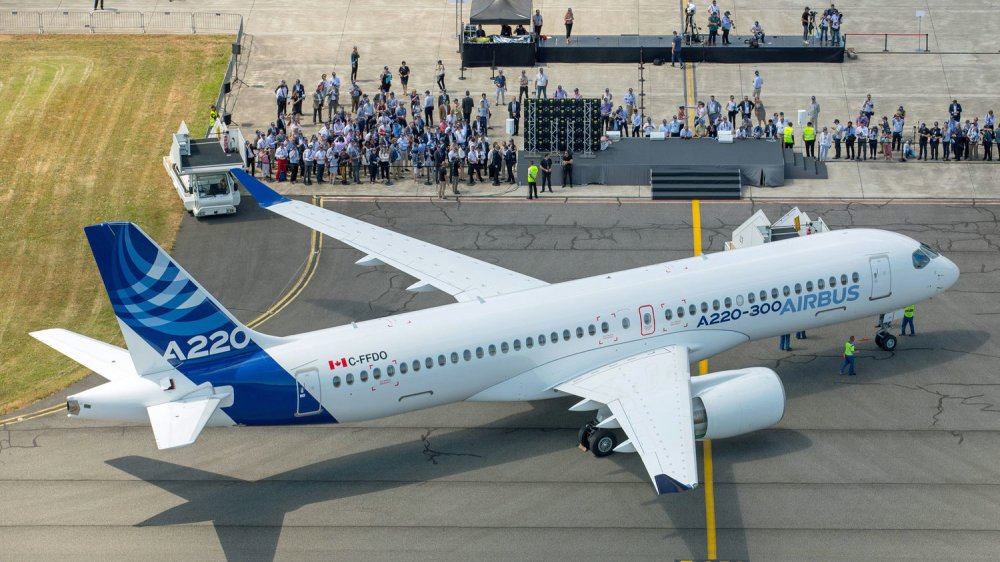
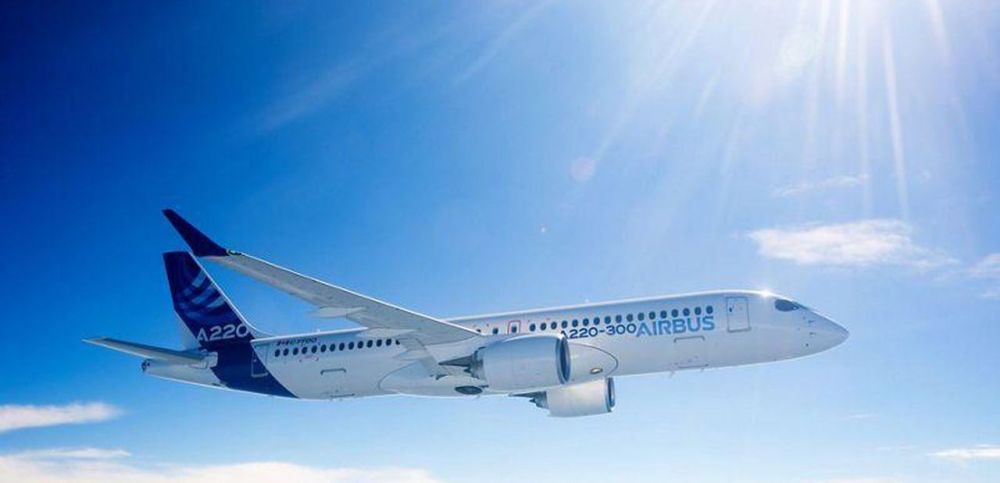
Bombardier registró ganancias trimestrales de cuatro centavos por acción, por encima del consenso de los analistas que esperaban una ganancia de dos centavos. El fuerte beneficio se produjo a pesar de una caída del 5% en las ventas trimestrales del mismo período del año anterior a US$ 3.6 mil millones. En todo el ejercicio del año 2018, Bombardier espera ingresos de aproximadamente US$ 16.5 mil millones, en el límite AW-A220.jpginferior de su rango de orientación. Para compensar la diferencia, el fabricante canadiense de aeronaves había decidido ceder el control del 50.01% de su filial dedicada a las aeronaves CSeries, ahora conocida como Airbus A220, al gigante europeo Airbus Group a cambio de utilizar las ventas y la comercialización de Airbus para incremento de las ventas de CSeries.

Bombardier proporcionó una manera de esquivar los fuertes deberes de impuestos arancelarios por el Departamento de Comercio de los Estados Unidos como resultado de una queja comercial de supuestos subsidios por parte del Gobierno de Quebec al Programa CSeries interpuesta por Boeing. Así la línea CSeries fue cedida bajo el ala de Airbus para ser fabricado en la planta de Airbus en Mobile, Alabama.

Alain Bellemare fue contratado en 2015 para apuntalar a la compañía que tenía serios problemas financieros con el Programa CSeries. El Gobierno de Quebec tuvo que acudir a su rescate en 2015 con un rescate de US$ 1 mil millones a cambio de una participación del 16,44% en CSeries, dejando a Bombardier con el 33,55% de la propiedad. El CSeries, cuando se lanzó oficialmente en 2016, fue el primer diseño nuevo en la categoría de 100 a 150 asientos en más de 25 años. Bellemare notó que el acuerdo con Airbus se completó más rápido de lo esperado, y que todos los riesgos relacionados con el desarrollo de las CSeries, que habían sufrido importantes retrasos y sobrecostos, ahora han sido dejado detrás. AIRWAYS® AW-Icon TXT


Image result for Viking Air Ltd headquarters

Strong restructuring in Bombardier Inc.

199px-Viking_Air_logo.svgBombardier Inc. will cut 5,000 jobs in restructuring

Canadian company Bombardier Inc. will cut 5,000 jobs worldwide and sell its QSeries turboprop line in an attempt to streamline operations, the company said in a statement on Thursday.

The 7% reduction of its workforce throughout the organization will occur in the next 12 to 18 months, while key members of the aerospace engineering team will be redistributed to its booming aircraft segment. The cuts will focus on the aerospace business and will affect 3,000 workers in Canada, company spokesman Simon Letendre said. It has reduced more than 15,000 jobs in its aerospace and rail divisions around the world since 2015.

The Montreal-based group also announced the sale of non-essential assets for a total of about US$ 900 million, including the QSeries regional turboprop aircraft program and the Havilland Canada trademark, which sold for about US$ 300 million. to a Canadian investment fund. The flight simulator and CAE training firm agreed to acquire the flight training segment of Bombardier’s commercial aircraft, which is expected to generate royalties of US$ 800 million.

The announcement of the restructuring occurred when the company reported a net income of US$ 167 million in the third quarter, compared to a loss of US$ 11 million the previous year. «We continue to make solid progress in executing our change plan with today’s announcements, we have launched the next round of actions needed to unlock the full potential of the Bombardier portfolio», said Bombardier boss Alain Bellemare. , about the restructuring effort. Despite the strong restructuring changes, the firm will continue to be proactive in the approach and rationalization of the organization, showing optimism about the company’s prospects.

dash[1] - copiaPrograms Q400

Bombardier announced the sale of the QSeries Program to a Longview subsidiary for approximately US$ 300 million to the Viking Air Ltd. Group.  Bombardier will deprogram its division of the Q400 turboprop line, announced this Thursday, October 7, 2018. The company Viking Air Ltd. manufactures a Twin Otter turboprop aircraft, intends to maintain supply chains for the Q400 series that currently extends its units in China, Ireland and Mexico. The agreement, which is scheduled to close in the second half of 2019, positions Longview more than triple its annual revenues to US$ 1 billion.

The Bombardier company, based in Montreal, said in its 3Q2018 earnings release that it expected to record net profits of US$ 250 million from the sale of the Q400 line and type and IP certificates for smaller versions of the double-propeller aircraft. to the parent company of Viking Air Longview Capital, which has built an aircraft business that it acquired from Bombardier and was developed by the late Canadian aircraft manufacturer De Havilland Canada (DHC). Boeing had acquired De Havilland Canada’s turbo-prop aircraft division and Bombardier subsequently acquired the company from Boeing in 1992.

The Q400 is a higher-performance turboprop than the competition’s ATR, but observers say that many regional airlines have not seen the need for their capabilities at the corresponding higher price. Forecast International expects the CRJ and Q400 to be a distant quarter in the regional aircraft market with 503 sales over the next 15 years, behind Embraer with projected sales of 1,519 regional jets, and ATR with 1,207 turboprops.

The decision to sell the QSeries line, Bellemare said, was taken «because we believe there is a better owner than us to maintain this program».

Longview Aviation Capital

The acquisition of Bombardier’s QSeries turboprop passenger aircraft production line is the logical next step in the Longview Aviation Capital Corp. growth plan, keeping Canadian wings on the rise. The company says the US$ 300 million agreement to continue manufacturing the Bombardier Dash 8 Series 100, Q200 and Q300, Q400 line will make it the largest manufacturer of commercial turbocharged aircraft in North America.

Based in Victoria, State of British Columbia, in the extreme west of Canada, the company’s management anticipates around US$ 1 billion in revenues in the first year of its new company. «We are pleased to unite the entire De Havilland product line under the same banner for the first time in decades. One of the interesting aspects of this transaction will be the opportunities surrounding the resurgence of the Havilland brand», said Dave Curtis, President of Longview. Aviation Capital.

While Bombardier focuses on its change plan, Longview Aviation Capital, on the other hand, has been a Canadian aerospace company since it was established in 2016 as the parent company of Viking Air Ltd. and Pacific Sky Aviation Inc. Since then, the The company has increased its workforce to 612 employees: 433 in Victoria and 179 in Calgary, where the assembly plants of Viking Air Ltd. are located.

Viking manufactures the Canadian Twin Otter 400 series and holds the certificates to continue manufacturing parts and providing product support for the DHC-1 to DHC-7 aircraft of De Havilland Canada. It also produces the amphibians Canadair 215 and CL-415, both water bombers, which were part of the 2016 Longview acquisitions. The company also says it meets a consistent global demand for parts and support from reliable aircraft built in Canada, such as the Twin Otter and Dash 7, which are still widely displaced from polar regions to subtropical regions of the world.

Canadair CRJ Program

Bombardier said it will continue to explore strategic options for its line of remaining commercial aircraft, the regional Canadair CRJ jets, while seeking to return it to profitability. With regard to the CRJ jet aircraft line, the CEO said he expected to see more movement from suppliers to reduce costs in the regional CRJ aircraft line, and noted that Bombardier continues to lose money in its manufacture. Deliveries of the CRJ and Q400 series for the quarter totaled only five aircraft, while net orders totaled eleven.

The company’s new Global 7500 aircraft, the largest and most powerful business jet on the market, meanwhile, has been certified as worthy of flight, paving the way for its entry into service in December 2018.

There is a great demand for regional aircraft in the midst of the worldwide air travel boom: Forecast International projects that 6,086 regional aircraft will be produced in the 15-year period from 2018 to 2032, but Bombardier’s ability to compete in the segment It has decreased.

Bombardier pioneered the regional aircraft market in the 1990s with the CRJ, an extended version of its Challenger business jet, but the aging of the fuselage has been overcome in recent years with Embraer’s newest E aircraft.

Unions

Union and opposition leaders in Quebec demonstrated against the Bombardier movement on Thursday to lay off 5,000 workers, including 500 in Ontario and 2,500 in Quebec, as part of a restructuring plan that cuts more than 12% of their positions Canadians

Mary Ellen McIlmoyle, president of a Unifor store that represents some of the 2,100 workers at Bombardier’s aerospace wing in Downsview, said her members feel betrayed. They had expressed that during the negotiation in April 2018, the company said that they maintained the Q400 line, but the reality was a great shock when we discovered that they turned around and sold it.

The lack of certainty of the workers about the installation of Downsview, which forms cabins and wings, among other components, after 2021 is their main concern. Renaud Gagne, of the Unifor Union, which represents Canadian aerospace workers, warned that «the dismissals send a worrisome message for the future of the industry». Bombardier has a lease on the property until 2021, with a two-year extension option, it is clear that for the workforce they will have to move to British Columbia.

BCA-C-Series-LP-960X525-en

The finances

Bombardier posted quarterly earnings of four cents per share, above the consensus of analysts who expected a profit of two cents. The strong profit came despite a 5% drop in quarterly sales from the same period of the previous year to US$ 3.6 billion. Throughout the year 2018, Bombardier expects revenues of approximately US$ 16.5 billion, at the lower limit of its guidance range. To compensate for the difference, the Canadian aircraft manufacturer had decided to cede control of 50.01% of its subsidiary dedicated to the CSeries aircraft, now known as Airbus A220, to the European giant Airbus Group in exchange for using Airbus sales and marketing to Increase in sales of CSeries.

Bombardier provided a way to circumvent the heavy tariff duty duties of the US Department of Commerce as a result of a commercial complaint of alleged subsidies from the Government of Quebec to the CSeries Program filed by Boeing. Thus the CSeries line was transferred under the wing of Airbus to be manufactured at the Airbus plant in Mobile, Alabama.

Alain Bellemare was hired in 2015 to shore up the company that had serious financial problems with the CSeries Program. The Government of Quebec had to come to his rescue in 2015 with a bailout of US$ 1 billion in exchange for a 16.44% stake in CSeries, leaving Bombardier with 33.55% ownership. The CSeries, when officially launched in 2016, was the first new design in the 100 to 150 seat category in more than 25 years. Bellemare noted that the agreement with Airbus was completed faster than expected, and that all the risks related to the development of the CSeries, which had suffered significant delays and cost overruns, have now been left behind. A \ W


Bombardier-Q400.jpg

Forte restructuration de Bombardier Inc.

bombardier_old-svg.pngBombardier Inc. supprimera 5 000 emplois en restructuration

La société canadienne Bombardier Inc. supprimera 5 000 emplois dans le monde et vendra sa ligne à turbopropulseur QSeries afin de rationaliser ses opérations, a annoncé la société dans un communiqué publié jeudi.

La réduction de 7% de ses effectifs dans l’ensemble de l’organisation se produira dans les 12 à 18 prochains mois, tandis que les membres clés de l’équipe d’ingénierie aérospatiale seront redistribués à son segment en plein essor. Les coupes se concentreront sur l’industrie aérospatiale et toucheront 3 000 travailleurs au Canada, a déclaré le porte-parole de la société, Simon Letendre. Depuis 2015, il a réduit plus de 15.000 emplois dans ses divisions aérospatiale et ferroviaire du monde entier.

Le groupe basé à Montréal a également annoncé la vente d’actifs non essentiels pour un total d’environ 900 millions de dollars US, y compris le programme d’avions à turbopropulseurs régionaux QSeries et la marque de commerce Havilland Canada, qui s’est vendue à environ 300 millions de dollars US. à un fonds d’investissement canadien. Le simulateur de vol et l’entreprise de formation CAE ont convenu d’acquérir le segment de la formation au pilotage des avions commerciaux de Bombardier, qui devrait générer des redevances de 800 millions de dollars US.

L’annonce de la restructuration a eu lieu lorsque la société a annoncé un bénéfice net de 167 millions USD au troisième trimestre, contre une perte de 11 millions USD pour l’exercice précédent. «Nous continuons de progresser dans l’exécution de notre plan de changement avec les annonces d’aujourd’hui. Nous avons lancé la prochaine série d’actions nécessaires pour libérer tout le potentiel du portefeuille de Bombardier», a déclaré le chef de Bombardier, Alain Bellemare, à propos de l’effort de restructuration. Malgré les importants changements apportés à la restructuration, le cabinet continuera à adopter une approche proactive et à rationaliser son organisation, faisant preuve d’optimisme quant aux perspectives de l’entreprise.

Programmes Q400

Bombardier a annoncé la vente du programme Q400 à une filiale de Longview pour environ 300 millions de dollars américains au groupe Viking Air Ltd. Bombardier déprogrammera sa division de la ligne d’avions à turbopropulseurs Q400, annoncée ce jeudi 7 octobre 2018. La société Viking Air Ltd., qui fabrique un avion à turbopropulseurs Twin Otter, a l’intention de maintenir les chaînes d’approvisionnement de la série Q400, qui agrandit actuellement ses unités. en Chine, en Irlande et au Mexique. L’accord, qui devrait être finalisé au second semestre de 2019, positionne Longview plus du triple de son chiffre d’affaires annuel à 1 milliard de dollars américains.

Image result for Bombardier Q400 assembly lineMONTAGE DE LA LIGNE DU BOMBARDIER Q400

La société Bombardier, basée à Montréal, a déclaré dans son communiqué sur les résultats du 3T2018 qu’elle espérait enregistrer un bénéfice net de 250 millions de dollars US provenant de la vente de la ligne Q400 et des certificats de type et IP pour de plus petites versions de l’avion à double hélice. à la société mère de Viking Air Longview Capital, qui a construit une entreprise aéronautique acquise par Bombardier et développée par le dernier constructeur aéronautique canadien De Havilland Canada (DHC). Boeing avait acquis la division avions à turbopropulseurs de De Havilland Canada et Bombardier avait ensuite acquis la société de Boeing en 1992.

Le Q400 est un turbopropulseur plus performant que l’ATR de la concurrence, mais des observateurs affirment que de nombreuses compagnies aériennes régionales n’ont pas compris la nécessité de leurs capacités au prix plus élevé correspondant. Forecast International prévoit que le CRJ et le Q400 constitueront un trimestre éloigné sur le marché des avions régionaux avec 503 ventes au cours des 15 prochaines années, derrière Embraer avec des ventes prévues de 1 519 avions régionaux et l’ATR avec 1 207 avions à turbopropulseur.

Bellemare a déclaré que la décision de vendre la ligne QSeries avait été prise «parce que nous croyons qu’il existe un meilleur propriétaire que nous pour maintenir ce programme».

Longview Aviation Capital

L’acquisition de la chaîne de production d’avions de passagers à turbopropulseurs QSeries de Bombardier est la prochaine étape logique du plan de croissance de Longview Aviation Capital, qui permet de maintenir les ailes canadiennes à la hausse. La société affirme que l’accord de 300 millions de dollars américains visant à poursuivre la fabrication des lignes Bombardier Dash 8 Séries 100, Q200 et Q300, Q400 en fera le plus grand fabricant d’avions commerciaux suralimentés par turbocompresseur en Amérique du Nord.

Basée à Victoria, dans l’État de la Colombie-Britannique, à l’extrême ouest du Canada, la direction de la société prévoit des revenus d’environ 1 milliard de dollars américains pour la première année de sa nouvelle société. «Nous sommes ravis de réunir toute la gamme de produits De Havilland sous la même bannière pour la première fois depuis des décennies.» L’un des aspects intéressants de cette transaction sera les opportunités offertes par le renouveau de la marque Havilland», a déclaré Dave Curtis, président de Longview. Capitale de l’aviation.

Bien que Bombardier se concentre sur son plan de changement, Longview Aviation Capital, d’autre part, est une entreprise canadienne de l’aérospatiale depuis sa création en 2016 en tant que société mère de Viking Air Ltd. et de Pacific Sky Aviation Inc. La société compte désormais 612 employés: 433 à Victoria et 179 à Calgary, où se trouvent les usines de montage de Viking Air Ltd.

Viking fabrique la série canadienne Twin Otter 400 et détient les certificats lui permettant de continuer à fabriquer des pièces et à fournir un support produit pour les avions DHC-1 à DHC-7 de De Havilland Canada. Elle produit également les amphibiens Canadair 215 et CL-415, tous deux des bombardiers à eau, qui faisaient partie des acquisitions de Longview en 2016. La société affirme également qu’elle répond à une demande mondiale constante de pièces et de support provenant d’aéronefs fiables construits au Canada, tels que les Twin Otter et Dash 7, qui sont encore largement déplacés des régions polaires vers les régions subtropicales du monde.

Programme CRJ Canadair

cq5dam.web.320.225Bombardier a déclaré qu’elle continuerait à explorer les options stratégiques pour sa gamme d’avions commerciaux restants, les avions à réaction régionaux Canadair CRJ, tout en cherchant à la rentabiliser. En ce qui concerne la ligne d’avions à réaction CRJ, le PDG a indiqué qu’il espérait que les fournisseurs se déplaceraient davantage afin de réduire les coûts de la gamme d’avions régionaux CRJ, et a indiqué que Bombardier continuait de perdre de l’argent lors de sa fabrication. Les livraisons des séries CRJ et Q400 n’ont totalisé que cinq avions au cours du trimestre, tandis que les commandes nettes en ont totalisé 11.

Le nouvel avion Global 7500 de la société, l’avion d’affaires le plus grand et le plus puissant du marché, a quant à lui été certifié digne de vol, ouvrant ainsi la voie à sa mise en service en décembre 2018.

La demande d’avions régionaux est forte en plein boom mondial du trafic aérien: Forecast International prévoit la production de 6 086 avions régionaux entre 2018 et 2032, mais la capacité de Bombardier à faire face à la concurrence dans ce segment cela a diminué.

Bombardier a été le pionnier du marché des avions régionaux dans les années 90 avec le CRJ, une version étendue de son avion d’affaires Challenger, mais le vieillissement du fuselage a été surmonté ces dernières années avec le dernier avion E d’Embraer.

Les syndicats

Les dirigeants syndicaux et d’opposition du Québec ont manifesté jeudi contre le mouvement Bombardier pour licencier 5.000 travailleurs, dont 500 en Ontario et 2 500 au Québec, dans le cadre d’un plan de restructuration réduisant de plus de 12% leurs postes. Canadiens

Mary Ellen McIlmoyle, présidente d’un magasin Unifor représentant quelques-uns des 2 100 travailleurs de l’aile aérospatiale de Bombardier à Downsview, a déclaré que ses membres se sentaient trahis. Ils l’avaient indiqué lors de la négociation d’avril 2018, la société avait déclaré qu’elle maintenait la ligne Q400, mais la réalité a été un choc énorme lorsque nous avons découvert qu’ils se sont retournés pour la vendre.

Le manque de certitude des travailleurs quant à l’installation de Downsview, qui forme des cabines et des ailes, entre autres composants, après 2021, constitue leur principale préoccupation. Renaud Gagne, du syndicat d’Unifor, qui représente les travailleurs canadiens de l’aérospatiale, a averti que «les licenciements envoient un message inquiétant pour l’avenir de l’industrie». Bombardier a un bail sur la propriété jusqu’en 2021, avec une option de prolongation de deux ans, il est clair que la main-d’œuvre devra être mutée en Colombie-Britannique.

Des finances

Bombardier a publié un bénéfice trimestriel de quatre cents par action, supérieur au consensus des analystes qui tablaient sur un bénéfice de deux cents. Le solide bénéfice a été atteint malgré une baisse de 5% des ventes trimestrielles par rapport à la même période de l’année précédente, pour atteindre 3,6 milliards de dollars américains. Au cours de l’année 2018, Bombardier prévoit des revenus d’environ 16,5 milliards USD, à la limite inférieure de sa fourchette prévue. Pour compenser cette différence, l’avionneur canadien avait décidé de céder le contrôle de 50,01% de sa filiale dédiée aux avions CSeries, désormais baptisée Airbus A220, au géant européen Airbus Group, en échange de l’utilisation des ventes et du marketing d’Airbus Augmentation des ventes de CSeries.

Bombardier a fourni un moyen de contourner les droits de douane élevés imposés par le Département du commerce des États-Unis à la suite d’une plainte commerciale concernant de prétendues subventions du gouvernement du Québec au programme CSeries déposé par Boeing. Ainsi, la ligne CSeries a été transférée sous l’aile d’Airbus pour être fabriquée à l’usine Airbus de Mobile, en Alabama.

Alain Bellemare a été embauché en 2015 pour consolider l’entreprise confrontée à de graves problèmes financiers avec le programme CSeries. Le gouvernement du Québec a dû venir à sa rescousse en 2015 avec un renflouement de 1 milliard de dollars américains en échange d’une participation de 16,44% dans CSeries, laissant à Bombardier une participation de 33,55%. Lors de son lancement officiel en 2016, le CSeries était le premier nouveau design de la catégorie des 100 à 150 places depuis plus de 25 ans. Bellemare a précisé que l’accord avec Airbus avait été conclu plus rapidement que prévu et que tous les risques liés au développement de la CSeries, qui avaient subi des retards importants et des dépassements de coûts, étaient désormais laissés de côté. A\W


Ξ A I R G W A Y S Ξ
SOURCE: Airgways.com
DBk: Bombardier.com / Ctvnews.ca / Thestar.com / Vikingair.com / Lvav.ca / Theglobeandmail.com / Airgways.com / JCJ Chung Studios
AW-POST: 201811101844AR

A\W   A I R G W A Y S ®


AIRBUS O&D Octubre/2018

Resultado de imagen para Airbus assembly line A320

AW | 2018 11 10 12:07 | INDUSTRY

Logo_Airbus_2014.svgAirbus detalla las órdenes y entregas para Octubre 2018

Airbus registró un total combinado de 85 pedidos en octubre para las versiones NEO de sus familias de aviones de avión A320 y A330 de pasillo único, mientras que entregaba 81 aviones de las líneas de productos A220, A320 y A330 y A350 XWB durante el mes.

Liderando el nuevo negocio fueron 67 reservas para el bimotor A321NEO y A320NEO. El pedido en firme de Vietjet por 50 aviones A321NEO trajo a la familia de aviones A320 ordenados hasta la fecha por esta aerolínea. También se incluyó en la cartera de pedidos de octubre la adquisición de 17 aviones A320NEO por parte de la alemana Lufthansa.

A330NEO: la última versión de la popular familia de motores bimotores A330 de Airbus. Un cliente no revelado adquirió 10 A330-900, y Kuwait Airways realizó un pedido de ocho de las versiones más cortas de A330-800 del fuselaje.

El nuevo negocio en octubre llevó los pedidos netos de Airbus para el período de enero a octubre de 2018 a 340 aviones. Estaba compuesto por 264 aviones de un solo pasillo (250 A319/A320/A321NEO y 14 A319/A320/A321CEO) y 76 aviones de ancho ancho (22 aviones A330NEO y A330CEO, junto con 36 A350 XWB y 14 A380s).

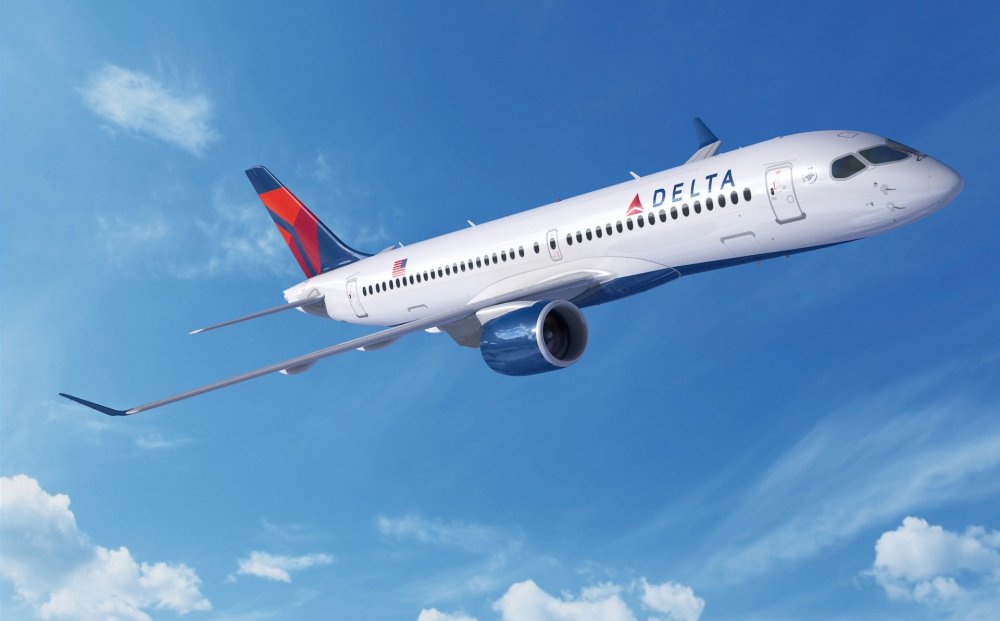
Las entregas de octubre se hicieron a 40 clientes, con dos A220, 67 aviones de la familia A320 (de los cuales 48 eran aviones A320 / A321NEO), tres A330-200/A330-300 y nueve A350 XWB en las versiones A350-900 y A350-1000. Entre los hitos significativos de entrega durante el mes se encuentra el primer A220 proporcionado a un operador de Estados Unidos, Una versión A220-100 recibida por Delta Air Lines. Además, Airbus superó la marca de entrega de 500 para sus aviones A320NEO/ A321NEO en Octubre 2018. La acumulación total de aviones de pasajeros de Airbus se estima en 7.386 aviones, lo que representa aproximadamente nueve años de producción al ritmo actual. AIRWAYS® AW-Icon TXT

AW-7744Airbusfleet.jpg

AIRBUS O&D October / 2018

Airbus_Group_Logo_2014.svgAirbus details the orders and deliveries for October 2018

Airbus registered a combined total of 85 orders in October for the NEO versions of its families of single-aisle A320 and A330 aircraft, while delivering 81 aircraft from the A220, A320 and A330 and A350 XWB product lines during the month.

Leading the new business were 67 reserves for the twin engine A321NEO and A320NEO. The firm order of Vietjet for 50 A321NEO aircraft brought the family of A320 aircraft ordered to date by this airline. The acquisition of 17 A320NEO aircraft by the German Lufthansa was also included in the order book for October.

A330NEO: the latest version of the popular family of twin-engine A330 engines from Airbus. An undisclosed customer acquired 10 A330-900, and Kuwait Airways placed an order for eight of the shorter versions of A330-800 of the fuselage.

The new business in October brought the net orders of Airbus for the period from January to October 2018 to 340 aircraft. It consisted of 264 single aisle aircraft (250 A319/A320/A321NEO and 14 A319/A320/A321CEO) and 76 wide-width aircraft (22 A330NEO and A330CEO aircraft, together with 36 A350 XWB and 14 A380s).

October deliveries were made to 40 customers, with two A220, 67 aircraft of the A320 family (of which 48 were A320/A321NEO aircraft), three A330-200/A330-300 and nine A350 XWB in the A350-900 versions and A350-1000. Among the significant delivery milestones during the month is the first A220 provided to a US operator, An A220-100 version received by Delta Air Lines. In addition, Airbus exceeded the delivery mark of 500 for its A320NEO/A321NEO aircraft in October 2018. The total accumulation of Airbus passenger aircraft is estimated at 7,386 aircraft, representing approximately nine years of production at the current rate. A \ W


Ξ A I R G W A Y S Ξ
SOURCE: Airgways.com
DBk: Airbus.com / Airlineratings.com
AW-POST: 201811101207AR

A\W   A I R G W A Y S ®

Nuevo diseño alar para Sukhoi Superjet

Imagen relacionada

AW | 2018 11 09 18:00 | INDUSTRY

Las modificaciones al SSJ-100 presentan una mayor relación de grosor alar y barrido reducido

El Instituto Aero-hidrodinámico Central de Rusia (TsAGI) recibió instrucciones de Sukhoi Civil Aircraft Company (SCAC), fabricante de la serie de aviones regionales Superjet SSJ-100, para diseñar nuevas modificaciones de ala para los futuros miembros de la familia SSJ, incluidos la versión abreviada SSJ-75. El modelo de 75 asientos, actualmente en desarrollo, requiere un ala más pequeña.

El instituto ya ha diseñado y producido modelos aerodinámicos para dos opciones alternativas de ala, las cuales, según una declaración, «incorporan una relación de aspecto de ala mejorada, mayor rendimiento de elevación y tecnología de producción simplificada en comparación con la ala SSJ100 existente», además de una reducción Peso estructural, informes de laboratorio de investigación de aviación líderes de Rusia. La primera opción presenta una mayor relación de grosor y la segunda, reducción de barrido. Los nuevos modelos de ala han sido sometidos a pruebas de túnel de viento trans-acústico de TsAGI, al igual que el modelo de ala de base, y los experimentos han demostrado con éxito las ventajas de los nuevos diseños.

“Según nuestros cálculos preliminares, las soluciones ofrecidas por los expertos de TsAGI junto con las mejoras estructurales sugeridas por SCAC, conducirán a una mejora de casi el 10 por ciento de la eficiencia de combustible de la aeronave. Más adelante, estas modificaciones se pueden usar para futuros miembros de la familia SSJ», dice TsAGI. El mes pasado, el instituto comenzó la investigación del programa Sukhoi Superjet 75. Cuando se completen las pruebas, la organización ofrecerá recomendaciones para reducir los niveles de ruido en la cabina del modelo avanzado. AIRWAYS® AW-Icon TXT


AW-7000865677.jpg

New design alar for Sukhoi Superjet

The modifications to the SSJ-100 have a higher ratio of wing thickness and reduced sweep

The Central Aerohydrodynamic Institute of Russia (TsAGI) received instructions from Sukhoi Civil Aircraft Company (SCAC), manufacturer of the Superjet 100 regional aircraft series SSJ-100, to design new wing modifications for future members of the SSJ family, including the abbreviated version SSJ-75. The 75-seat model, currently under development, requires a smaller wing.

The institute has already designed and produced aerodynamic models for two alternative wing options, which, according to one statement, «incorporate an improved wing aspect ratio, higher lift performance and simplified production technology compared to the existing SSJ100 wing», in addition to a structural Weight reduction, Russia’s leading aviation research laboratory reports. The first option has a greater thickness ratio and the second one has a reduction of sweep. The new wing models have been subjected to TsAGI trans-acoustic wind tunnel tests, as has the base wing model, and the experiments have successfully demonstrated the advantages of the new designs.

«According to our preliminary calculations, the solutions offered by the experts of TsAGI along with the structural improvements suggested by SCAC, will lead to an improvement of almost 10 percent in the fuel efficiency of the aircraft. Later, these modifications can be used for future members of the SSJ family», TsAGI says Last month, the institute began the research of the Sukhoi Superjet 75 program. When the tests are completed, the organization will offer recommendations to reduce the levels of noise in the cabin of the advanced model.

Resultado de imagen para Sukhoi SSJ-100 assembly

Новый дизайн для Sukhoi Superjet

Модификации SSJ-100 имеют более высокое отношение толщины крыла и уменьшенную развертку

Центральный аэрогидродинамический институт России (ЦАГИ) получил инструкции от Гражданской авиационной компании Сухой (SCAC), производителя серийных самолетов серии Superjet SSJ-100, для разработки новых модификаций крыла для будущих членов семейства SSJ, включая сокращенная версия SSJ-75. 75-местная модель, в настоящее время разрабатываемая, требует меньшего крыла.

Институт уже разработал и выпустил аэродинамические модели для двух альтернативных вариантов крыла, которые, согласно одному из заявлений, «включают улучшенное соотношение сторон крыла, «более высокие показатели подъема и упрощенные технологии производства по сравнению с существующим крылом SSJ100»,  в дополнение к структурному снижению веса, сообщает ведущая российская авиационная исследовательская лаборатория. Первый вариант имеет больший коэффициент толщины, а второй имеет уменьшение развертки. Новые модели крыла были подвергнуты испытаниям трансакустической аэродинамической трубы ЦАГИ, как и модель базового крыла, и эксперименты успешно продемонстрировали преимущества новых конструкций.

«Согласно нашим предварительным расчетам, решения, предлагаемые экспертами ЦАГИ, а также структурные улучшения, предложенные SCAC, приведут к улучшению почти на 10 процентов в топливной эффективности самолета. Позже эти изменения могут быть использованы для будущих членов семьи SSJ», сказал ЦАГИ. В прошлом месяце институт начал исследование программы Sukhoi Superjet 75. Когда тесты будут завершены, организация предложит рекомендации по снижению уровней шум в кабине усовершенствованной модели. A \ W


Ξ A I R G W A Y S Ξ
SOURCE: Airgways.com
DBk: Scac.ru / Rusaviainsider.com / Airgways.com
AW-POST: 201811091800AR

A\W   A I R G W A Y S ®

Boeing menor entregas en 10/2018

Resultado de imagen para assembly line Boeing 737 max

AW | 2018 11 08 22:10 | INDUSTRY

Boeing-Logo.svgEl fabricante americano Boeing informará menores entregas en Octubre en medio de retrasos en los proveedores

El Oficial Principal de Finanzas de Boeing, Greg Smith, advierte que las entregas de los aviones para Octubre 2018 a las aerolíneas serán más bajas de lo normal antes de recuperarse en el período Noviembre-Diciembre 2018, según estimaciones del constructor estadounidense. Las demoras en las entregas están relacionadas en medio de retrasos persistentes en los motores y otros componentes del proveedor CFM International.

«Las entregas para el resto del año se volverán a cargar.Verá un octubre más ligero de lo que normalmente vería, y verá un perfil de entrega más alto que el de producción para noviembre y diciembre. Aún no estamos recuperados por completo y no esperamos hacerlo hasta fin de año», dijo Gred Smith hoy en una conferencia en la sede de Chicago.

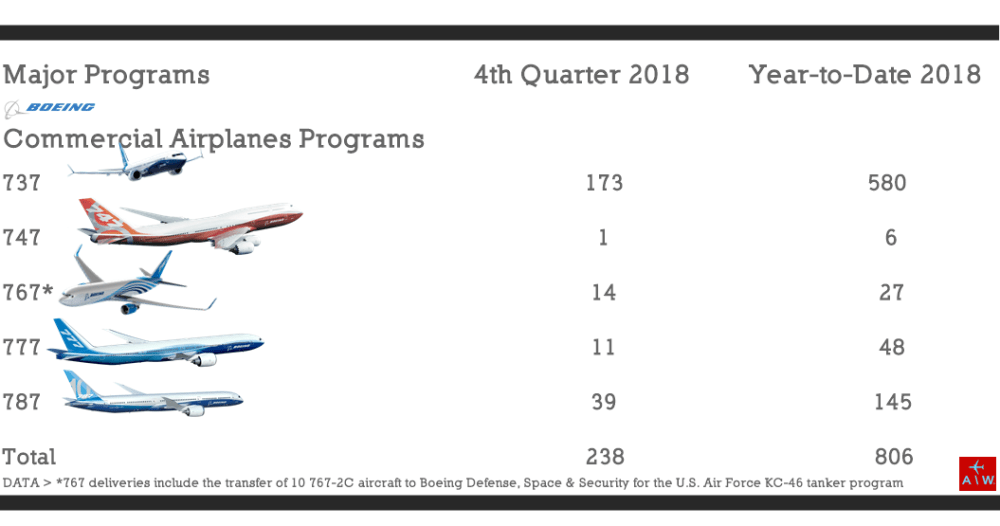
A pesar del declive de entregas de aeronaves, Boeing espera que libere sus pedidos y entregas para Octubre de la próxima semana. La compañía estima nuevamente ingresar en la normalización de la cadena de entregas. Con la crisis de entrega de piezas de proveedores, está en camino a entregar otro año récord de ventas de aviones, totalizando 568 aviones en los primeros nueve meses de 2018. AIRWAYS® AW-Icon TXT

AW-7000006555.jpg

Boeing minor deliveries on 10/2018

The American manufacturer Boeing will report lower deliveries in October amid delays in suppliers

The Chief Financial Officer of Boeing, Greg Smith, warns that the deliveries of the aircraft for October 2018 to the airlines will be lower than normal before recovering in the period November-December 2018, according to estimations of the American constructor. Deliveries delays are related in the midst of persistent delays in the engines and other components of the CFM International provider.

«Deliveries for the rest of the year will be reloaded. You will see a lighter October than you would normally see, and you will see a delivery profile higher than the production profile for November and December, we are not fully recovered yet and we do not expect Do it until the end of the year», Gred Smith said today at a conference at the Chicago headquarters.

Despite the decline in aircraft deliveries, Boeing expects it to release orders and deliveries by October of next week. The company again considers entering the normalization of the delivery chain. With the crisis of delivery of parts suppliers, is on track to deliver another year record sales of aircraft, totaling 568 aircraft in the first nine months of 2018. A \ W


Ξ A I R G W A Y S Ξ
SOURCE: Airgways.com
DBk: Boeing.com / Aviationweek.com
AW-POST: 201811082110AR

A\W   A I R G W A Y S ®

Próximo 737 línea Boeing Zhoushan

AW-7002472

AW | 2018 11 07 16:57 | INDUSTRY

Boeing-Logo.svgEl primer Boeing 737-8 MAX saldrá de la línea de terminaciones en Zhoushan, ChinaFK,4923,36,737-max-round-pin

Las instalaciones de Boeing Zhoushan en el este de China ayudan al gigante de la aviación de los Estados Unidos a sortear los aranceles de represalia de Beijing en los aviones fabricados en Estados Unidos. Los aviones de pasajeros estadounidenses pronto despegarán de las únicas instalaciones de fabricación de Boeing fuera de Seattle, Washington, que estarán en funcionamiento en China a finales de 2018. La instalación de Zhoushan se conoce oficialmente como Boeing 737 Completion and Delivery Center, propiedad conjunta del gigante de la aviación de Estados Unidos y la COMAC formalizando un Joint Venture.

Trabajos en Boeing Zhoushan

El primer avión que saldrá de su línea de terminaciones en la enorme planta tipo del Aeropuerto de Zhoushan en la Provincia de Zhejiang, este de China. La fábrica contempla los acabados finales de la línea 737 MAX, la cuarta y más moderna generación de aeronaves narrowbodies.

Boeing está listo para subcontratar algunos trabajos previos a la entrega a la nueva planta china: después de que las secciones del fuselaje se atornillan entre sí y se instalen los motores y la aviónica, los 737 nuevos ya pedidos por las compañías chinas volarán a Zhoushan desde la fábrica de Renton cerca de Seattle. Allí, los Boeing 737 se someterán a un trabajo de pintura para deshacerse de su distintivo revestimiento protector verde mientras se instalan los asientos y otras secciones de la cabina de pasajeros. Después de alcanzar su capacidad máxima, la planta de Zhoushan podrá realizar trabajos de acabado en alrededor de 100 Boeing 737 por año, según estimaciones de Boeing. La planta de Zhoushan también tendrá la tarea de convertir los antiguos aviones de pasajeros 737 en cargueros para transportar carga a través de China.

Mercado del 737

Las aerolíneas líderes, incluidas Air China, China Eastern, China Southern y Hainan Airlines, operan una importante flota de 737, y los modelos Max más nuevos se incorporan a medida que se negocian nuevos acuerdos. Según un informe emitido por Boeing en Septiembre 2018, el mercado chino necesitará unos 400 transportistas de carga modificados a partir de aviones de pasajeros en los próximos 20 años, lo que representa el 33% de la demanda total mundial.

La planta de Zhoushan, cerca de Shanghai, la base de operaciones de China Eastern y Shanghai Airlines, también puede dar a Boeing un viento de cola tan necesario en un momento en que las grandes empresas están sufriendo las consecuencias de la guerra comercial entre Estados Unidos y China.

Beijing ha seleccionado ciertos aviones fabricados en Estados Unidos para una tarifa de represalia del 25%, pero la planta de Zhoushan puede defender a Boeing: ahora que se están agregando toques finales a los nuevos 737 para los transportistas chinos en una instalación china, un tratamiento preferencial de Pekín así se justifica bajo el nombre de «producción localizada».

Es la primera vez que Boeing ha expandido parte de su sistema de producción del 737 en el extranjero, al igual que en su tiempo lo hizo McDonnell Douglas y  Shanghai Aviation Industrial Corporation. Boeing tiene la imperiosa necesidad de estar más cerca de los clientes chinos, calificando al proyecto como un gran avance en la cooperación entre Estados Unidos-China en industrias de alta tecnología.  AIRWAYS® AW-Icon TXT

Resultado de imagen para boeing 737 Hello zhoushan

Next 737 line Boeing Zhoushan

TB21XXOedUnyKJjSZFpXXb9qFXa_!!21771064The first Boeing 737-8 MAX will leave the line of completions in Zhoushan, China

The Boeing Zhoushan facility in eastern China is helping the US aviation giant bypass Beijing’s retaliatory tariffs on US-made aircraft. US passenger planes will soon be taking off from Boeing’s only manufacturing facilities outside Seattle, Washington, which will be operational in China by the end of 2018. The Zhoushan facility is officially known as the Boeing 737 Completion and Delivery Center, jointly owned by the US aviation giant and COMAC, formalizing a Joint Venture.

Jobs in Boeing Zhoushan

The first aircraft that will leave its line of terminations in the huge plant type of Zhoushan Airport in Zhejiang Province, east China. The factory contemplates the final finishing of line 737 MAX, the fourth and most modern generation of narrowbodies aircraft.

Boeing is ready to outsource some pre-delivery work to the new Chinese plant: after the fuselage sections are screwed together and engines and avionics are installed, the 737 new ones already ordered by Chinese companies will fly to Zhoushan from the Renton factory near Seattle. There, the Boeing 737 will undergo a paint job to get rid of its distinctive green protective coating while installing the seats and other sections of the passenger cabin. After reaching its maximum capacity, the Zhoushan plant will be able to perform finishing work on around 100 Boeing 737 per year, according to Boeing estimates. The Zhoushan plant will also have the task of converting the old 737 passenger aircraft into freighters to transport cargo through China.

Inflight200-IF737MAX001-B737-MAX-8-N87040-Boeing-House-Colours-Rear-View.jpg

737 Market

Leading airlines, including Air China, China Eastern, China Southern and Hainan Airlines, operate a large fleet of 737, and the newer Max models are incorporated as new deals are negotiated. According to a report issued by Boeing in September 2018, the Chinese market will need about 400 cargo carriers modified from passenger aircraft in the next 20 years, representing 33% of the total world demand.

The Zhoushan plant, near Shanghai, the base of operations of China Eastern and Shanghai Airlines, can also give Boeing a much needed tailwind at a time when large companies are suffering the consequences of the US trade war. and China.

Beijing has selected certain aircraft manufactured in the United States for a retaliatory rate of 25%, but the Zhoushan plant can defend Boeing: now that final touches are being added to the new 737s for Chinese carriers in a Chinese facility, a treatment Beijing’s preferential treatment is justified under the name of «localized production».

It is the first time that Boeing has expanded part of its 737 production system abroad, just as McDonnell Douglas and  Shanghai Aviation Industrial Corporation. Boeing has the urgent need to be closer to Chinese customers, calling the project a breakthrough in US-China cooperation in high-tech industries. A \ W


Ξ A I R G W A Y S Ξ
SOURCE: Airgways.com
DBk: Boeing.com / Atimes.com / Airgways.com
AW-POST: 201811071657AR

A\W   A I R G W A Y S ®

Cuestionan índice dB al Airbus A220

AW-70001116.jpg

AW | 2018 11 07 16:24 | INDUSTRY / AVIATION SAFETY / ENGINEERING

Advierten altos niveles sonoros en Aeropuerto de Zurich del A220

AW-70090221.jpgLa aerolínea Swiss Air Lines recibió la llegada de su último avión regional Airbus A220, bautizado «Whisperjet», prometiendo a los vecindarios alrededor del Aeropuerto de Zurich que sería un 50% más silencioso que los aviones más convencionales.

El Aeropuerto de Zúrich ha recibido quejas en su línea telefónica de ruidos de sonidos inusuales cuando el A220 pasa por encima del vecindario. Un reclamo de los lugareños cercano al Aeropuerto de Zurich, Suiza, se han quejado por el alto nivel de ruido en la aproximación final al aeropuerto. La unidad filial de Lufthansa ha traído preocupación por el reclamo de la gente que expresan un «extraño aullido» cuando llega a tierra, enfureciendo a las personas que viven en la trayectoria de vuelo. «Es incluso más fuerte que otras máquinas que vuelan. Lo han estado describiendo como temporal mientras hacen evaluaciones, pero durante nueve meses no ha desaparecido», dijo Klaus Stoehlker, portavoz de la Fundación Contra el Ruido de Aeronaves con sede en Zurich.

Estudio al A220

El avión, desarrollado por Bombardier y ahora parte de la línea de Airbus, no infringe las reglas y el sonido en los estudio de sonoridad (dB), que dura unos segundos, no ha generado tarifas más altas que se aplican a los aviones más ruidosos.

Airbus y Swiss Air Lines dijeron que están al tanto de la situación y que están en contacto cercano con el fabricante de motores Pratt & Whitney, que analiza el ruido, comparado por algunos con la «llamada de apareamiento de una orca», para determinar su causa. El portavoz de Pratt & Whitney expresó: «El sonido ocurre ocasionalmente durante los movimientos del acelerador cuando el A220 tiene poca potencia. La huella de ruido total del avión aún representa una mejora del 75% en los aviones más antiguos».

Reputación del Whisperjet

El problema, que afecta a los modelos A220 aparentemente al azar, corre el riesgo de manchar las credenciales del avión como ideal para aeropuertos con ruido limitado. Los centros que incluyen Frankfurt operan estrictos toques de queda nocturnos, mientras que London City, que Swiss también sirve con el avión, restringe los vuelos de fin de semana.

El nombre de Whisperjet se ha aplicado a una variedad de aviones durante décadas, incluidos el BAE-146 y el Boeing 727 de Eastern Airlines, cuyos motores montados en la cola hicieron que la parte delantera de la cabina fuera silenciosa, pero la parte trasera especialmente ruidosa.

Airbus y Bombardier anunciaron su asociación para buscar una solución a una disputa comercial en la que Estados Unidos amenazaba con aranceles de hasta el 300% en los aviones CSeries. Las tarifas amenazadas siguieron a una queja formal presentada por Boeing que alegaba subsidios injustos para el avión de fabricación canadiense, que fue impulsado por una gran orden de Delta Air Lines con sede en Atlanta. Estados Unidos finalmente confirmó los subsidios injustos, pero retiró los aranceles porque dijo que Boeing no podía probar el daño de ellos. Sin embargo, eso no sucedió antes de que Bombardier buscara refugio en un acuerdo con el gran rival de Boeing, Airbus, que permitiría el ensamblaje de aviones CSeries con destino a Estados Unidos en la línea de ensamblaje de Airbus en Alabama.

El acuerdo terminó dándole a Airbus una participación mayoritaria en la línea CSeries. Desde entonces, Boeing ha seguido los planes para consolidar su propia sociedad con el rival brasileño de Bombardier, Embraer, extendiendo aún más la rivalidad entre Boeing y Airbus.

Bombardier y Embraer se han centrado tradicionalmente en jets regionales, pero cada uno ha introducido nuevas líneas de aviones que pueden acomodar de 100 a 150 pasajeros, según el modelo y la configuración. Las alianzas Boeing-Embraer y Airbus-Bombardier potenciaran las demandas de más aviones regionales, pero deberán afilar las sinergias para estar a la altura de la demanda actual. AIRWAYS® AW-Icon TXT

Resultado de imagen para A220 Zurich Airport

They question the dB index to the Airbus A220

High sound levels are warned in Zurich Airport of A220

The airline Swiss Air Lines received the arrival of its latest regional aircraft Airbus A220, baptized «Whisperjet», promising neighborhoods around Zurich Airport that it would be 50% quieter than more conventional aircraft.

Zurich Airport has received complaints on its telephone line for unusual sound noises when the A220 passes over the neighborhood. A complaint from the locals near the Zurich Airport, Switzerland, have complained about the high noise level in the final approach to the airport. The subsidiary unit of Lufthansa has brought concern for the claim of people who express a «strange howl» when it reaches the ground, infuriating people who live in the flight path. «It’s even stronger than other flying machines, they’ve been describing it as temporary while doing evaluations, but for nine months it has not disappeared», said Klaus Stoehlker, spokesman for the Zurich-based Aircraft Noise Foundation.

Studio A220

LX_A220-300_Klein_Dach.pngThe aircraft, developed by Bombardier and now part of the Airbus line, does not violate the rules and sound in the study of loudness (dB), which lasts a few seconds, has not generated higher rates that apply to noisier aircraft.

Airbus and Swiss Air Lines said they are aware of the situation and are in close contact with the engine manufacturer Pratt & Whitney, which analyzes the noise, compared by some with the «mating call of an orca», to determine its cause. Pratt & Whitney spokesman said: «The sound occurs occasionally during throttle movements when the A220 has low power, the total noise footprint of the aircraft still represents a 75% improvement in older aircraft».

Reputation of the Whisperjet

The problem, which affects A220 models apparently at random, runs the risk of staining the credentials of the aircraft as ideal for airports with limited noise. Centers that include Frankfurt operate strict nighttime curfews, while London City, which Swiss also serves with the plane, restricts weekend flights.

Whisperjet’s name has been applied to a variety of aircraft for decades, including the BAE-146 and the Eastern Airlines Boeing 727, whose tail-mounted engines made the front of the cab silent, but the rear especially noisy.

Airbus and Bombardier announced their partnership to seek a solution to a commercial dispute in which the United States threatened tariffs of up to 300% on CSeries aircraft. The threatened tariffs followed a formal complaint filed by Boeing alleging unfair subsidies for the Canadian-made aircraft, which was driven by a large order of Delta Air Lines based in Atlanta. The United States finally confirmed the unfair subsidies, but withdrew the tariffs because it said that Boeing could not prove the damage of them. However, that did not happen before Bombardier sought refuge in an agreement with Boeing’s big rival, Airbus, which would allow the assembly of CSeries aircraft bound for the United States on the Airbus assembly line in Alabama.

The agreement ended up giving Airbus a majority stake in the CSeries line. Since then, Boeing has followed plans to consolidate its own partnership with Bombardier’s Brazilian rival, Embraer, further extending the rivalry between Boeing and Airbus.

Bombardier and Embraer have traditionally focused on regional jets, but each has introduced new lines of aircraft that can accommodate from 100 to 150 passengers, depending on the model and configuration. The Boeing-Embraer and Airbus-Bombardier alliances will boost the demands of more regional aircraft, but they will have to sharpen the synergies to keep pace with current demand. A \ W


Ξ A I R G W A Y S Ξ
SOURCE: Airgways.com
DBk: Airbus.com / Airgways.com / Zurich-airport.com
AW-POST: 201811071624AR

A\W   A I R G W A Y S ®