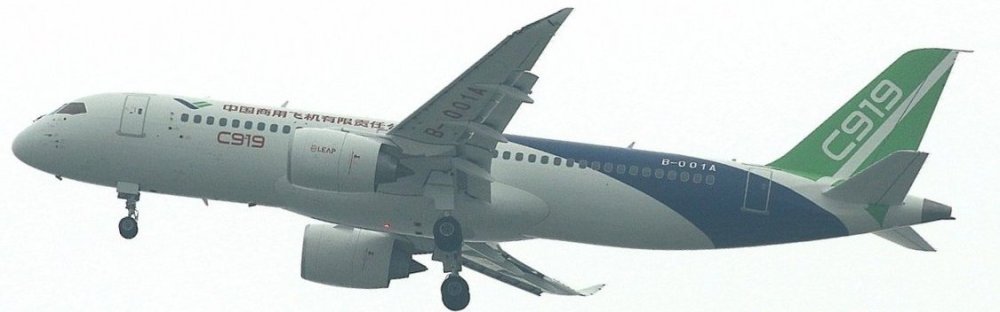
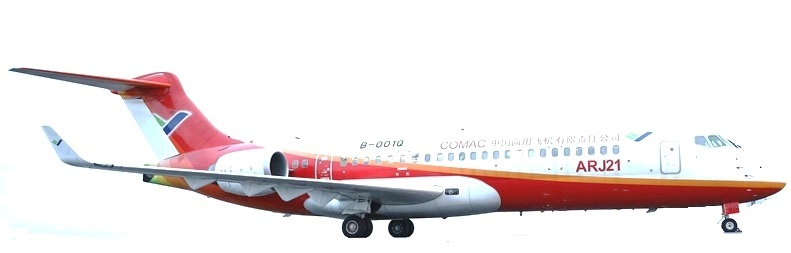
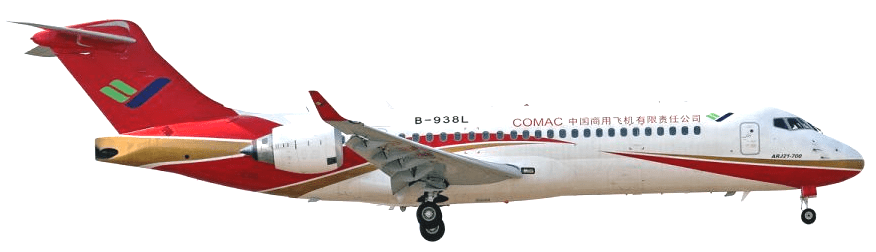
COMAC conforma venta de ARJ 21-700

AW-70440472.png

AW | 2018 11 07 15:25 | INDUSTRY

COMAC_logoCOMAC ha recibido pedidos de 528 ARJ-21 de 24 clientes en Airshow China 2018

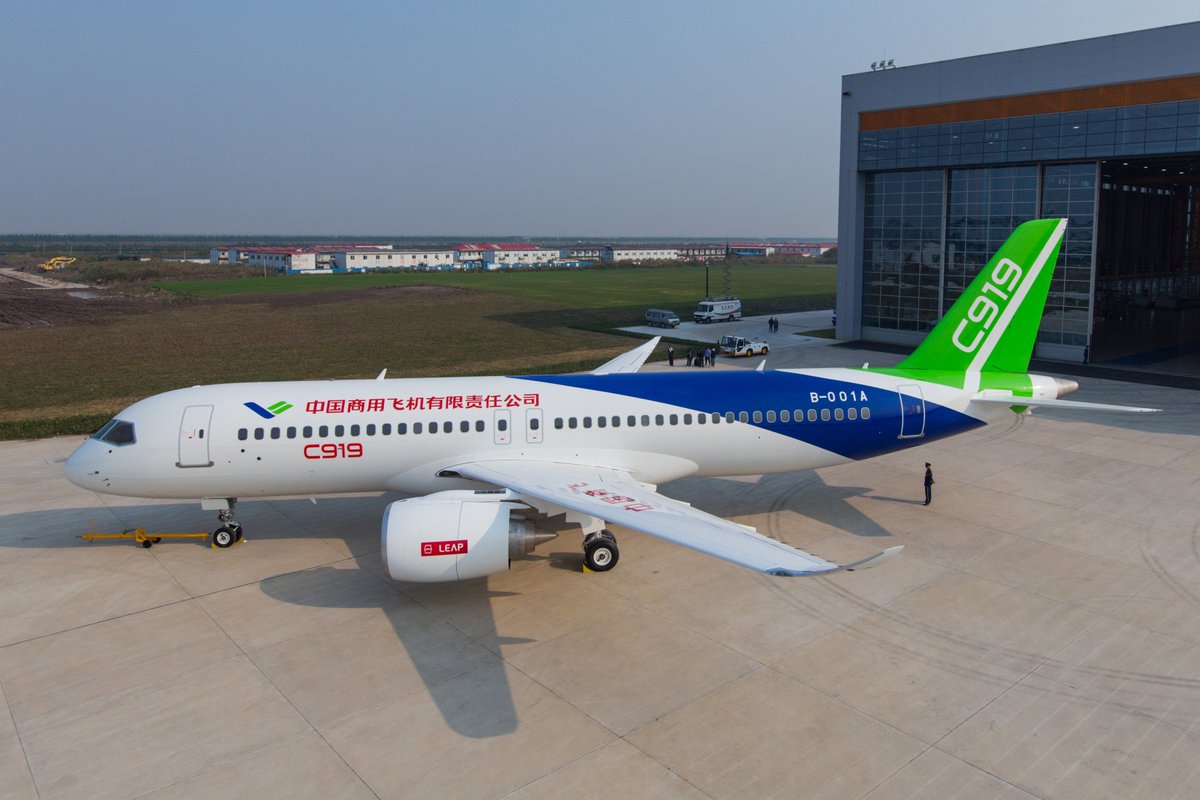
COMAC (Commercial Aircraft Corp.) de China, firmó acuerdos para vender 30 aeronaves ARJ 21-700 en Airshow China 2018. La empresa cofundada por COMAC, Puyin Financial Leasing, Shanghai Pudong Development Bank y Shanghai International Group, acordaron la compra de 15 aeronaves ARJ 21-700 más 15 adicionales.

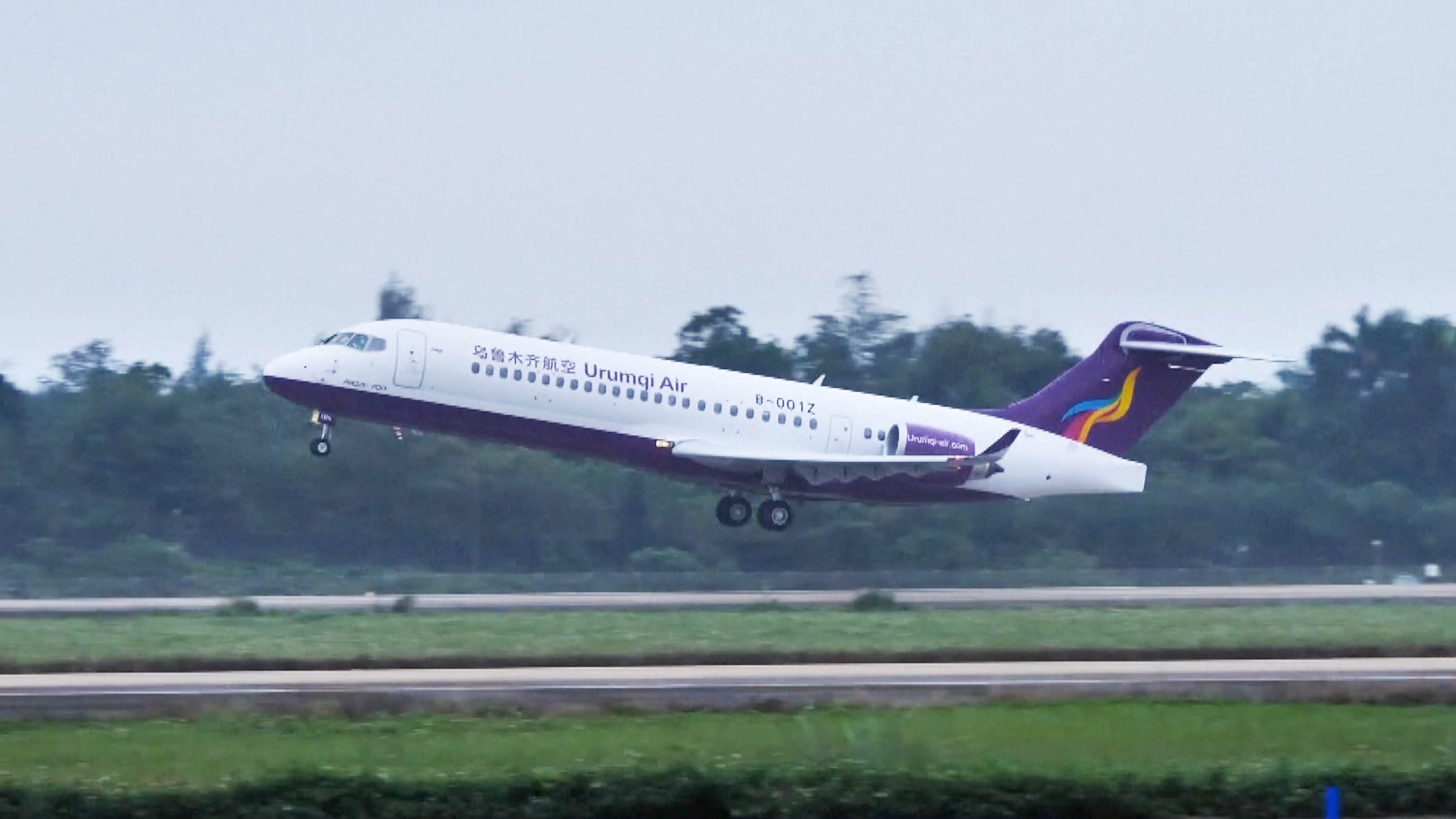
El fabricante chino acordó la entrega de dos ARJ 21-700 a Urumqi Air para fines de este año, y tres adicionales en 2019. Eso convertirá a Urumqi Air en la tercera aerolínea nacional en recibir el avión detrás de las aerolíneas Chengdu Airlines y Genghis Khan Airlines. Urumqi Air ordenó que se entregaran cinco aviones de este tipo en 2018 (2) y 2019 (3). Urumqi Air es una filial del grupo chino HNA. COMAC ya ha entregado ocho ARJ21 a Chengdu Airlines, que se utilizan en las rutas desde Chengdu en la Provincia Sichuan (región sudoeste) para viajar a 20 ciudades de todo el país, incluida Shanghai en la costa este. Tres ARJ21 adornados con los logotipos de Chengdu Airlines, Genghis Khan Airlines y Urumqi también realizaron demostraciones en el espectáculo de aviación, un evento de seis días que comenzó en Zhuhai, Provincia de Guangdong, en el día de ayer. La compañía de leasing china Puyin Leasing firmó una intención de compra para COMAC por quince ARJ21-700 con opciones para otros quince.

En Septiembre 2018, Genghis Khan Airlines también ordenó los ARJ21-700 necesarios.A mediados de Octubre 2018, Tianjiao Airlines emitió una orden por 25 aviones ARJ 21-700. Recientemente, Conviasa de Venezuela estaría negociando el interés por incorporar el avión avanzado de China.  AIRWAYS® AW-Icon TXT

Resultado de imagen para Comac ARJ21 chengdu urumqi genghis khan

COMAC makes sale of ARJ 21-700

COMAC has received 528 ARJ-21 orders from 24 customers at Airshow China 2018

ARJ21.SVG

COMAC (Commercial Aircraft Corp.) of China, signed agreements to sell 30 aircraft ARJ 21-700 in Airshow China 2018. The company co-founded by COMAC, Puyin Financial Leasing, Shanghai Pudong Development Bank and Shanghai International Group, agreed to purchase 15 ARJ 21-700 aircraft plus 15 additional aircraft.

The Chinese manufacturer agreed to deliver two ARJ 21-700s to Urumqi Air by the end of this year, and three additional ones in 2019. This will make Urumqi Air the third national airline to receive the plane behind the Chengdu Airlines and Genghis Khan airlines. Airlines Urumqi Air ordered that five aircraft of this type be delivered in 2018 (2) and 2019 (3). Urumqi Air is a subsidiary of the Chinese group HNA. COMAC has already delivered eight ARJ21s to Chengdu Airlines, which are used on routes from Chengdu in Sichuan Province (southwestern region) to travel to 20 cities across the country, including Shanghai on the east coast. Three ARJ21s emblazoned with the logos of Chengdu Airlines, Genghis Khan Airlines and Urumqi also held demonstrations at the aviation show, a six-day event that began in Zhuhai, Guangdong Province, yesterday. The Chinese leasing company Puyin Leasing signed a purchase intention for COMAC for fifteen ARJ21-700 with options for another fifteen.

In September 2018, Genghis Khan Airlines also ordered the required ARJ21-700s. By mid-October 2018, Tianjiao Airlines issued an order for 25 ARJ 21-700 aircraft. Recently, Conviasa de Venezuela would be negotiating the interest to incorporate the advanced plane of China. A \ W


Ξ A I R G W A Y S Ξ
SOURCE: Airgways.com
DBk: Comac.cc / Airgways.com
AW-POST: 201811071525AR

A\W   A I R G W A Y S ®

ATR ve demanda 1.100 turboprop a China

ATR_China_Photo.jpgAW | 2018 11 07 15:00 | INDUSTRY

LOGO_ATR - copiaATR prevé demanda de 1.100 aeronaves turbohélice para la Región China

ATR Aircraft ha publicado hoy su nuevo Pronóstico del Mercado Chino en el Salón Aeronáutico de Airshow China 2018 que se desarrolla en la Ciudad de Zhuhai, donde estima un mercado total para 1.100 aviones turbohélices en los próximos 20 años.

Los cálculos de ATR predicen que la aviación regional será ocho veces más grande en 2037 que en la actualidad. Se estima que la demanda de unos 300 turbohélices conectará 200 aeropuertos regionales, creando cerca de 700 nuevas rutas en este segmento regional. Se requerirá que estos aviones presten servicios en los segmentos de aviación regional y aviación general en rápido desarrollo de la República de China. ATR prevé que en 2037 el 87% de la actividad de aviación regional y general provendrá de rutas de nueva creación, calculadas en un total de cerca de 2.200.

La compañía franco-italiana de fabricación de estos prestigiosos turboprop estiman una demanda de 800 ATR 42-600 que conectarán 300 aeropuertos con la creación de 1.500 nuevas rutas.

Resultado de imagen para ATR 42-600 chinaAbriendo mercados

Los turbohélices ATR son abridores de rutas probados, iniciando en promedio de más de 100 rutas nuevas por año, logrando una introducción de mercado de rutas en 2017 de hasta 155 nuevas destinos. Los aviones de la Series 600 de ATR tienen una ventaja de quemado de combustible del 40% inferiores sobre su competidor turbohélice y pueden acceder a pistas cortas donde otras aeronaves no pueden servir. Gracias a estas ventajas económicas y su flexibilidad operativa, los aviones ATR han sido la opción preferida de las aerolíneas regionales desde 2010, convirtiendo a ATR en el líder en la conexión de personas y pequeñas comunidades, para negocios o turismo.

El pronóstico del mercado predice que el uso de modelos de actividad de cada ruta se correlaciona con sus características. El modelo matemático resultante se basa en 5.000 rutas nacionales existentes en China y estima el potencial de actividad en cada par de aeropuertos que aún no se han realizado. Esto proporciona un desglose de cuántas nuevas rutas se crearán en los próximos 20 años para cada región y cuántas aeronaves se necesitarán para atenderlas. El uso de aviones turbohélices regionales hará que la aviación regional sea sostenible.

Aviación en China

La aviación china ha experimentado un tremendo crecimiento exponencial de la flota, y ahora es siete veces más grande que en 1998. Este crecimiento se dirigió principalmente a grandes flujos de tráfico, con aviones de gran capacidad. Durante el mismo período, la flota regional se duplicó, sin embargo, a pesar de este crecimiento, la aviación regional sigue siendo significativamente subdesarrollada en China. Los aviones regionales representan actualmente apenas el 2% de la flota total de China en comparación con el promedio mundial del 25%. La flota china actualmente carece de la capacidad adaptada necesaria para operar rutas regionales económicamente. Cuando el tráfico es limitado, el uso de aviones grandes no es sostenible a menos que esté muy subvencionado.

Actualmente, las aeronaves grandes que son más costosas de operar y requieren subsidios del gobierno para compensar o ser rentables se están utilizando para rutas regionales con flujos de tráfico escasos. Las aeronaves regionales atenderían estas rutas de manera más eficiente, con mejores costos operativos y de viaje, lo que significaría que se requerirían menos subsidios.  AIRWAYS® AW-Icon TXT

Resultado de imagen para ATR 42-600 china

ATR sees demand 1,100 turboprops in China

ATR forecasts demand for 1,100 turboprop aircraft for the China Region

AW-7008884ATR Aircraft today released its new Chinese Market Forecast at the Airshow China 2018 Airshow taking place in Zhuhai City, where it estimates a total market for 1,100 turboprop aircraft over the next 20 years.

The ATR calculations predict that regional aviation will be eight times larger in 2037 than it is today. It is estimated that the demand of some 300 turboprops will connect 200 regional airports, creating about 700 new routes in this regional segment. These aircraft will be required to provide services in the rapidly developing regional aviation and general aviation segments of the Republic of China. ATR anticipates that in 2037 87% of regional and general aviation activity will come from newly created routes, calculated in a total of about 2,200.

The French-Italian manufacturing company of these prestigious turboprop estimates a dementia of 800 ATR 42-600 that will connect 300 airports with the creation of 1,500 new routes.

Opening markets

Resultado de imagen para ATR 72-600 pngThe ATR turboprops are proven route openers, initiating an average of more than 100 new routes per year, achieving a market introduction of routes in 2017 of up to 155 new destinations. The ATR Series 600 aircraft have a fuel burning advantage of 40% lower on their turboprop competitor and can access short runways where other aircraft can not serve. Thanks to these economic advantages and their operational flexibility, ATR aircraft have been the preferred choice of regional airlines since 2010, making ATR the leader in connecting people and small communities, for business or tourism.

The market forecast predicts that the use of activity models for each route correlates with their characteristics. The resulting mathematical model is based on 5,000 existing national routes in China and estimates the potential for activity in each pair of airports that have not yet been completed. This provides a breakdown of how many new routes will be created in the next 20 years for each region and how many aircraft will be needed to serve them. The use of regional turboprop aircraft will make regional aviation sustainable.

Aviation in China

Chinese aviation has experienced tremendous exponential growth of the fleet, and is now seven times larger than in 1998. This growth was mainly driven by large traffic flows, with large capacity aircraft. During the same period, the regional fleet doubled, however, despite this growth, regional aviation is still significantly underdeveloped in China. Regional aircraft currently account for only 2% of China’s total fleet compared to the world average of 25%. The Chinese fleet currently lacks the adapted capacity needed to operate regional routes economically. When traffic is limited, the use of large aircraft is not sustainable unless it is heavily subsidized.

Currently, large aircraft that are more expensive to operate and require government subsidies to compensate or be profitable are being used for regional routes with scarce traffic flows. Regional aircraft would serve these routes more efficiently, with better operating and travel costs, which would mean that fewer subsidies would be required. A\W


Ξ A I R G W A Y S Ξ
SOURCE: Airgways.com
DBk: Atraircraft.com / Airgways.com
AW-POST: 201811071500AR

A\W   A I R G W A Y S ®

GKN/COMAC/AVIC Joint Venture en China


AW-79990002.png

AW | 2018 11 07 14:25 | INDUSTRY

GKN Aerospace, COMAC y AVIC forman una empresa conjunta en China

En el Salón Aeronáutico de Airshow China 2018 en Zhuhai, las compañías GKN Aerospace del Reino Unido, COMAC SAMC (Shanghai Aircraft Manufacturing Company) y AVIC International (Aviation Industry Corporation de China) firmaron un Acuerdo Marco para establecer una empresa conjunta para la fabricación de estructuras aeronáuticas en China.

Este acuerdo marco consagra el progreso realizado por las partes desde la firma de un Memorandum de Entendimiento (MoU) en Septiembre 2017 y representa un hito importante en su cooperación conjunta. La empresa conjunta está programada para comenzar la producción el 4Q2021 en una nueva instalación con tecnología de punta. Las ubicaciones están siendo evaluadas actualmente. La empresa conjunta fabricará productos para el mercado civil aeroespacial. Este desarrollo coloca a los socios en el corazón del mercado aeroespacial asiático, que es un mercado de crecimiento clave para el futuro. La nueva empresa conjunta abrirá nuevas oportunidades de negocios para el negocio de aeroestructuras líder en la industria de GKN Aerospace y sus socios.

GKN Aerospace y sus socios podrán, como resultado de la empresa conjunta, ofrecer a sus clientes aeroestructuras tecnológicamente avanzadas, tanto metálicas como compuestas, que tienen un historial comprobado en el mercado global. Después del período de puesta en marcha, el alcance de la empresa conjunta se ampliará para incluir la capacidad de diseño y desarrollo.

La expansión a Asia es una parte importante de la estrategia de crecimiento a largo plazo y el modelo operativo global de GKN Aerospace. Este verano, GKN Aerospace anunció una nueva planta de sistemas de cableado en Pune, India, y en octubre, GKN Aerospace inauguró oficialmente una nueva planta de investigación y reparación de motores aeronáuticos en Johor, Malasia. GKN Aerospace ahora opera siete instalaciones en Asia, entregando sistemas de cableado, transparencias y servicios en China, India, Malasia, Singapur, Tailandia y Turquía.

Con esta empresa conjunta china, el negocio de GKN Aerospace tendrá su primera empresa de aeroestructuras en la región de Asia-Pacífico. El establecimiento de la empresa conjunta está sujeto al cumplimiento de ciertas condiciones, incluidas, entre otras, las aprobaciones de las autoridades pertinentes.

John Pritchard, Director Ejecutivo de Aeroestructuras y Sistemas Europa y Asia, dijo: «Estamos orgullosos de ampliar nuestra presencia en China trabajando junto con nuestros socios comprometidos COMAC, SAMC y AVIC. Prevemos que la combinación de nuestros equipos dedicados conjuntos, liderazgo tecnológico y amplia experiencia aeroespacial dará lugar a oportunidades de crecimiento emocionantes. Esta será la primera empresa de aeroestructuras de GKN Aerospace en China. Refuerza nuestra asociación y compromiso duraderos con este país. Tenemos que estar cerca de nuestros clientes y socios y apoyar el sólido crecimiento de la industria aeroespacial en China».  AIRWAYS® AW-Icon TXT

GKN, COMAC and AVIC Joint Venture in China

GKN Aerospace, COMAC and AVIC form a joint venture in China

At the Airshow China 2018 Air Show in Zhuhai, the companies GKN Aerospace of the United Kingdom, COMAC SAMC (Shanghai Aircraft Manufacturing Company) and AVIC International (Aviation Industry Corporation of China) signed a Framework Agreement to establish a joint venture for the manufacture of aeronautical structures in China.

This framework agreement enshrines the progress made by the parties since the signing of a Memorandum of Understanding (MoU) in September 2017 and represents an important milestone in their joint cooperation. The joint venture is scheduled to begin production on 4Q2021 in a new facility with state-of-the-art technology. The locations are currently being evaluated. The joint venture will manufacture products for the civil aerospace market. This development places the partners at the heart of the Asian aerospace market, which is a key growth market for the future. The new joint venture will open new business opportunities for the industry-leading aerostructures business of GKN Aerospace and its partners.

GKN Aerospace and its partners may, as a result of the joint venture, offer their customers technologically advanced aerostructures, both metallic and composite, that have a proven track record in the global market. After the start-up period, the scope of the joint venture will be expanded to include design and development capacity.

The expansion to Asia is an important part of GKN Aerospace’s long-term growth strategy and global operating model. This summer, GKN Aerospace announced a new cabling system plant in Pune, India, and in October, GKN Aerospace officially opened a new aeronautical engine research and repair facility in Johor, Malaysia. GKN Aerospace now operates seven facilities in Asia, delivering cabling systems, transparencies and services in China, India, Malaysia, Singapore, Thailand and Turkey.

With this Chinese joint venture, GKN Aerospace’s business will have its first aerostructures company in the Asia-Pacific region. The establishment of the joint venture is subject to compliance with certain conditions, including, among others, the approvals of the relevant authorities.

John Pritchard, Executive Director of Aerostructures and Systems Europe and Asia, said: «We are proud to expand our presence in China by working together with our committed partners COMAC, SAMC and AVIC, and we anticipate that the combination of our dedicated teams, technological leadership and broad Aerospace experience will lead to exciting growth opportunities, this will be GKN Aerospace’s first aerostructures company in China, reinforcing our long-standing partnership and commitment to this country, we must be close to our customers and partners and support the solid growth of the industry. aerospace in China». A \ W


Ξ A I R G W A Y S Ξ
SOURCE: Airgways.com
DBk: Adsadvance.co.uk / Gkn.com / Avic-intl.cn / Comac.cc
AW-POST: 201811071425AR

A\W   A I R G W A Y S ®

Vuelo inaugural del Airbus A330-800

AW-700330800.jpg

AW | 2018 11 05 10:29 | INDUSTRY

Logo_Airbus_2014.svgAirbus efectuó el primer vuelo del A330-800 en Aeropuerto Toulouse, Francia

El primer Airbus A330-800 con registro MSN1888 despegó esta mañana en Blagnac en Toulouse, Francia, a las 10:31 am [hora local], para su vuelo inaugural sobre el sudoeste de Francia. Realizará las pruebas dedicadas de vuelo requeridas para esta nueva variante. El programa de prueba de vuelo del A330-800NEO en curso preparará la nueva aeronave para la certificación tipo europea.

La tripulación en la cabina del piloto comprende: Pilotos de pruebas experimentales Malcolm Ridley y François Barré y el Ingeniero de pruebas de vuelo Ludovic Girard. Mientras tanto, la supervisión de los sistemas de la aeronave y el rendimiento en tiempo real en la estación del ingeniero de pruebas de vuelo (FTE) son Catherine Schneider y José Corugedo Bermejo. El programa de desarrollo de certificación del A330-800 durará alrededor de 300 horas de pruebas de vuelo, allanando el camino para la certificación en 2019.

Lanzado en Julio 2014, la última generación de la familia de aviones de Airbus, el A330neo se basa en la probada economía, versatilidad y confiabilidad del A330CEO, a la vez que reduce el consumo de combustible en un 14% más por asiento. Las dos versiones de NEO, el A330-800 y el A330-900, tienen capacidad para 257 y 287 pasajeros, respectivamente, en una disposición de asientos de tres clases, están impulsados ​​por los motores Rolls-Royce Trent 7000 de última generación, ofrecen nuevas comodidades de cabina de «Airspace» y cuentan con un nuevo ala de mayor tamaño con dispositivos de aleta Sharklet.

El A330 tiene una de las familias de widgets más populares de la historia, ya que ha recibido más de 1.700 pedidos de 120 clientes. Más de 1.400 A330 vuelan con más de 120 operadores en todo el mundo. El A330neo es la última incorporación a la familia líder de ancho de Airbus, que también incluye el A350 XWB y el A380, todos ellos con un espacio y una comodidad inigualables combinados con niveles de eficiencia sin precedentes y una capacidad de alcance sin igual.  AIRWAYS® AW-Icon TXT

A330-900neo-MSN1813-First-Flight-by-Airbus.jpgAW-7A330800.jpegResultado de imagen para a330-800neo inaugural flight

Inaugural flight of the Airbus A330-800

Airbus made the first flight of the A380-800 at Toulouse Airport, France

The first Airbus A330-800 with registration MSN1888 took off this morning at Blagnac in Toulouse, France, at 10:31 a.m. [local time], for its inaugural flight over southwestern France. It will perform the dedicated flight tests required for this new variant. The flight test program of the A330-800NEO in progress will prepare the new aircraft for European type certification.Resultado de imagen para a330-800neo logo

The crew in the cockpit comprises: Pilots of experimental tests Malcolm Ridley and François Barré and Flight Test Engineer Ludovic Girard. Meanwhile, the supervision of the aircraft systems and the real-time performance at the flight test engineer (FTE) station are Catherine Schneider and José Corugedo Bermejo. The A330-800 certification development program will last around 300 flight test hours, paving the way for certification in 2019.

Launched in July 2014, the latest generation of the Airbus family of aircraft, the A330neo is based on the proven economy, versatility and reliability of the A330CEO, while reducing fuel consumption by 14% more per seat. The two versions of NEO, the A330-800 and the A330-900, have capacity for 257 and 287 passengers, respectively, in a seating arrangement of three classes, are powered by the latest generation Rolls-Royce Trent 7000 engines , offer new «Airspace» cabin amenities and feature a new larger wing with Sharklet fin devices.

The A330 has one of the most popular widget families in history, having received more than 1,700 orders from 120 customers. More than 1,400 A330s fly with more than 120 operators around the world. The A330neo is the latest addition to Airbus’ leading width family, which also includes the A350 XWB and the A380, all with unparalleled space and comfort combined with unprecedented levels of efficiency and unparalleled reach capability. A \ W

Resultado de imagen para a330-800neo inaugural flight

Vol inaugural de l’Airbus A330-800

Airbus effectue le premier vol de l’A380-800 à l’aéroport de Toulouse, en France

Le premier Airbus A330-800 avec immatriculation MSN 1888 a décollé ce matin à Blagnac, à Toulouse, en France, à 10 h 31 [heure locale], pour son vol inaugural dans le sud-ouest de la France. Il effectuera les tests en vol dédiés requis pour cette nouvelle variante. Le programme d’essais en vol de l’A330-800NEO en cours préparera le nouvel avion à la certification de type européenne.

DYuPRBjW4AAmlOQ.jpg

L’équipage dans le poste de pilotage comprend: des pilotes d’essais expérimentaux Malcolm Ridley et François Barré et l’ingénieur d’essais en vol Ludovic Girard. Catherine Schneider et José Corugedo Bermejo sont chargés de la supervision des systèmes de l’aéronef et des performances en temps réel de la station d’ingénierie d’essais en vol (FTE). Le programme de développement de la certification A330-800 durera environ 300 heures de test en vol, ouvrant la voie à la certification en 2019.

Lancé en juillet 2014 et faisant partie de la dernière génération d’appareils Airbus, l’A330neo repose sur l’économie éprouvée, la polyvalence et la fiabilité de l’A330CEO, tout en réduisant de 14% la consommation de carburant par siège. Les deux versions de NEO, l’A330-800 et l’A330-900, ont une capacité respective de 257 et 287 passagers, réparties en trois classes, et sont propulsées par les moteurs Rolls-Royce Trent 7000 de dernière génération, offre de nouveaux équipements de cabine «Airspace» et dispose d’une nouvelle aile plus grande avec des ailerons Sharklet.

L’A330 est l’une des familles de widgets les plus populaires de l’histoire, ayant reçu plus de 1 700 commandes de 120 clients. Plus de 1 400 A330 volent avec plus de 120 opérateurs dans le monde. L’A330NEO est le dernier-né de la famille des largeurs principales d’Airbus, qui comprend également l’A350 XWB et l’A380, le tout avec un espace et un confort inégalés, associé à des niveaux d’efficacité et à une portée inégalés. A \ W


Ξ A I R G W A Y S Ξ
SOURCE: Airgways.com
DBk: Airbus.com / Airgways.com
AW-POST: 201811051029AR

A\W   A I R G W A Y S ®

Airbus A220 gira demostración mundial

AW-7008551.pngAW | 2018 11 06 09:58 | INDUSTRY

AW-70090221Visitando 5 ciudades en 4 países para mostrar su eficiencia y comodidad inigualables

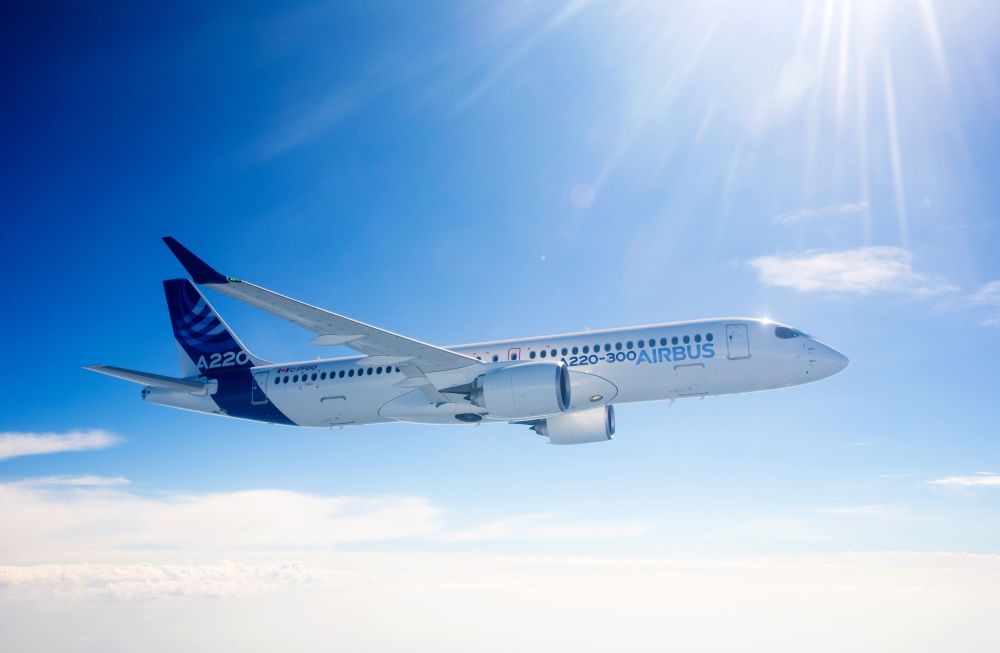
Airbus volará un avión de pasillo único AirBaltic A220-300 de nueva generación a cinco ciudades en cuatro países como parte de una gira mundial de demostración. El A220-300 asistirá por primera vez al show aéreo de Zhuhai (China) desde el 5 de noviembre hasta el 8 de noviembre, antes de volar a Chengdu el 9 de noviembre. El avión continuará su viaje con una escala en Koh Samui (Tailandia) el 10 de noviembre antes de volar a Katmandú (Nepal) el 11 de noviembre. Después de eso, el airBaltic A220 irá a Estambul (Turquía) el 12 de noviembre, antes de regresar a su base de operaciones en Riga (Letonia) el 14 de noviembre.

El recorrido de demostración A220 es una gran oportunidad para que Airbus muestre a su nuevo miembro de la familia frente a las aerolíneas y los medios de comunicación y ofrezca una vista de cerca de las características sobresalientes, la comodidad y el rendimiento de la aeronave, que benefician tanto a los operadores como a los pasajeros.

El A220-300 de airBaltic cuenta con un cómodo arreglo de cabina capaz de acomodar a 145 pasajeros con total comodidad. La aerolínea letona ya opera 13 A220-300 de un total de 50 pedidos.

El A220 es el único propósito de aeronave construido para el mercado de 100-150 asientos, ofrece una eficiencia de combustible insuperable y una verdadera comodidad en un solo pasillo. El A220 reúne aerodinámica de vanguardia, materiales avanzados y los motores PW1500G de última generación de Pratt & Whitney para ofrecer un consumo de combustible por asiento al menos un 20 por ciento menor en comparación con los aviones de la generación anterior. Con un alcance de hasta 3.200 nm (5020 km), el A220 ofrece el rendimiento de aviones más grandes de un solo pasillo. Con un libro de pedidos de más de 400 aviones hasta la fecha, el A220 tiene todas las credenciales para ganar la mayor parte del mercado de aviones de 100 a 150 asientos. AIRWAYS® AW-Icon TXT

Resultado de imagen para #A220TourResultado de imagen para #A220Tour

Airbus’ A220 embarks on a world demonstration tour

Visiting 5 cities in 4 countries to showcase its unbeatable efficiency and comfort

Logo_Airbus_2014.svgAirbus will fly an airBaltic Airbus A220-300 new generation single aisle aircraft, to five cities in four countries as part of a world demonstration tour. The A220-300 will first attend the Zhuhai airshow (China) from November 5th until November 8th before flying to Chengdu on November 9th. The aircraft will continue on its journey with a stopover in Koh Samui (Thailand) on November 10th before flying to Kathmandu (Nepal) on November 11th. After that the airBaltic A220 will go to Istanbul (Turkey) on November 12th before returning to its home base in Riga (Latvia) on November 14th.

The A220 demonstration tour is a great opportunity for Airbus to showcase its newest family member in front of airlines and media and to offer a close up view of the aircraft`s outstanding characteristics, comfort, and performance, that benefit both operators and passengers alike.

AirBaltic’s A220-300 features a comfortable cabin arrangement able to accommodate 145 passengers in true widebody comfort. The Latvian airline already operates 13 A220-300s out of a total of 50 ordered.

The A220 is the only aircraft purpose built for the 100-150 seat market, it delivers unbeatable fuel efficiency and true widebody comfort in a single aisle aircraft. The A220 brings together state-of-the-art aerodynamics, advanced materials and Pratt & Whitney’s latest-generation PW1500G geared turbofan engines to offer at least 20 percent lower fuel burn per seat compared to previous generation aircraft. With a range of up to 3,200 nm (5020 km), the A220 offers the performance of larger single aisle aircraft. With an order book of over 400 aircraft to date, the A220 has all the credentials to win the lion’s share of the 100- to 150-seat aircraft market. A \ W


Ξ A I R G W A Y S Ξ
SOURCE: Airgways.com
DBk: Airbus.com / Airgways.com
AW-POST: 2018110609580AR

A\W   A I R G W A Y S ®

Huelga en Airbus España

AW-70066555.jpg

AW | 2018 11 04 18:58 | INDUSTRY

Logo_Airbus_2014.svg.pngHuelga indefinida en la fábrica de Airbus en Illescas ante el despido de 17 trabajadores

El sindicato CGT para los trabajadores de una de las empresas colaboradoras de Airbus Illescas, ISS Facility que está subcontratada en la fábrica illescana ha convocado a la huelga a los trabajadores de la factoría de Getafe y al resto en Illescas en solidaridad con los compañeros que van a ser despedidos.

La CGT llama a la huelga indefinida a los trabajadores de ISS Facility en Airbus en Illescas. El conflicto comenzó con el cambio de empresa, los representantes sindicales recibieron la notificación de que se dejaba de trabajar con ID Logistics y que se quedaban fuera 17 trabajadores, algunos con 25 años de antigüedad.

Según un comunicado de prensa del sindicato, la nueva empresa solo ha sido contratada para una parte del trabajo por lo que “le sobran” 17 trabajadores, aunque en el contrato de la empresa saliente recoge “de forma muy clara” que si hay subrogación de empresas, también quedará subrogada el 100% de la plantilla, según le notificaron por escrito en la extinción del contrato. La huelga arranca el Lunes 5 Noviembre 2018, desde la medianoche. La CGT informa de que los trabajadores de esta empresa realizan un trabajo de vital importancia para la multinacional aeronáutica, ya que son los encargados de realizar los movimientos y la limpieza de los útiles para poder fabricar las piezas de avión de fibra de carbono que se hacen en Illescas.

La huelga que también se manifiesta en Getafe en solidaridad con los trabajadores de Illescas aseguran que la presión sindical será un factor importante en este proceso y llaman a la unidad de los trabajadores, al igual que lo hacen con los compañeros de la factoría de Airbus en Getafe, quienes aun habiendo sido subrogados en este último caso al 100% de la plantilla, tienen convocada la huelga de igual manera para solidarizarse con los despedidos y conseguir presionar a las empresas, que son las que deben dar solución a esta situación, como únicos responsables de la misma. La CGT cree que es un escarmiento a la plantilla porque ha sabido organizarse y defenderse en diferentes negociaciones de manera muy satisfactoria y por último aseguran que este sindicalismo combativo es el que Airbus quiere eliminar de raíz para que no prospere el ejemplo. AIRWAYS® AW-Icon TXT

Imagen relacionada

Strike on Airbus Spain

Indefinite strike at the Airbus factory in Illescas before the dismissal of 17 workers

Logo_Airbus_2014.svg.pngThe CGT union for the workers of one of the companies that collaborate with Airbus Illescas, ISS Facility, which is subcontracted in the Illescana factory, has called the strike to the workers of the Getafe factory and the rest in Illescas in solidarity with the colleagues who are going to be fired.

The CGT calls the indefinite strike to the ISS Facility workers at Airbus in Illescas. The conflict started with the change of company, the union representatives received the notification that they stopped working with ID Logistics and that 17 workers were left out, some of them 25 years old.

According to a press release from the union, the new company has only been hired for part of the work, so there are «over» 17 workers, although in the contract of the outgoing company it says «very clearly» that if there is subrogation of companies, will also be subrogated 100% of the workforce, as notified in writing in the termination of the contract. The strike starts on Monday 5 November 2018, from midnight. The CGT informs that the workers of this company carry out a work of vital importance for the aeronautical multinational, since they are in charge of carrying out the movements and the cleaning of the tools to be able to manufacture the pieces of carbon fiber airplane that are made in Illescas.

The strike also manifested in Getafe in solidarity with the workers of Illescas ensure that the union pressure will be an important factor in this process and call for the unity of the workers, as they do with the colleagues of the Airbus factory in Getafe , who have been subrogated in the latter case to 100% of the workforce, have called the strike in the same way to show solidarity with the dismissed and get pressure on companies, which are the ones that must solve this situation, as sole responsible Of the same. The CGT believes that it is a warning to the workforce because it has managed to organize itself and defend itself in different negotiations in a very satisfactory way and finally they say that this combative unionism is the one that Airbus wants to eliminate at the root so that the example does not prosper. A \ W


Ξ A I R G W A Y S Ξ
SOURCE: Airgways.com
DBk: Airbus.com / Finanzas.com / Dclm.es / Airgways.com
AW-POST: 201811041858AR

A\W   A I R G W A Y S ®


Brasil aval Joint Venture Boeing-Embraer

Resultado de imagen para Boeing-Embraer airgways.com

AW | 2018 11 03 17:43 | INDUSTRY

Boeing-Embraer-Logo.pngAval del nuevo Presidente de Brasil para Joint Venture Boeing-Embraer

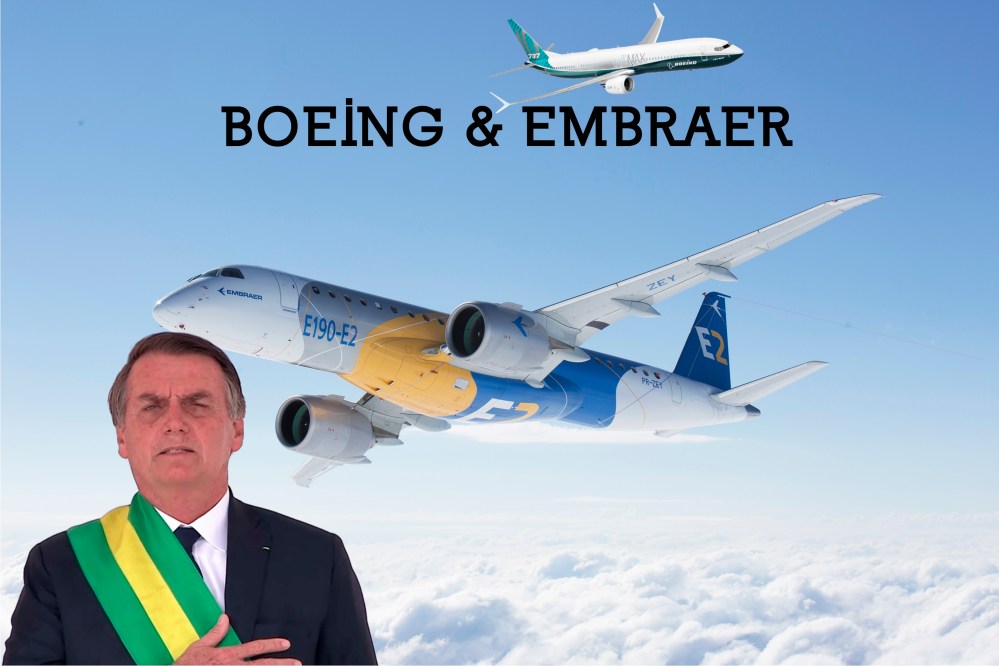
El Presidente electo Jair Bolsonaro apoyará el acuerdo entre la estadounidense Boeing y la brasileña Embraer en el área de la aviación comercial. Las previsiones de la nueva unidad de negocios formada por el Joint Venture entre Boeing y Embraer sea aprobado lo más rápidamente en el ámbito del Gobierno Federal de Brasil. Luego del proceso electoral, miembros del equipo económico de Bolsonaro dijeron que quería conocer detalles del acuerdo antes de que el gobierno de Michel Temer lo aprobara.

Embraer y Boeing tienen un memorando de entendimiento cerrado (MoU) desde principios de Julio 2018, pero que necesita ser avalado por el Gobierno Federal de Brasil, aunque se esperaba la definición de la elección para analizar los términos de la combinación comercial entre los fabricantes.

La Unión tiene una acción especial de Embraer, una acción llamada Golden Share, que le da derecho a vetar o aprobar temas estratégicos para la empresa con sede en São José dos Campos.

El nuevo Presidente electo de Brasil, Jair Bolsonaro confirmó su aval al negocio. «La fusión de Embraer con Boeing sigue sin ningún problema para avalar». El futuro Ministro de Defensa, general de la reserva Augusto Heleno, dijo que el equipo económico aprobaba el negocio, pero que quería conocer los detalles del acuerdo. Según el actual Ministro de Defensa, Joaquim Silva y Luna, es cuestión de tiempo que el acuerdo sea aprobado en el gobierno Temer, que ya se mostró favorable a la combinación comercial entre Boeing y Embraer.

El presidente de Embraer, Paulo Cesar de Souza e Silva, también se mostró optimista con la aprobación del negocio. «Estamos en el proceso de finalizar las negociaciones con Boeing, el proyecto tiene todo para salir bien, estamos caminando. La elección no cambia nada, no es proyecto sólo de la Embraer, pero para Brasil», dijo el ejecutivo.

Presidente de Embraer planea aprobar el acuerdo con accionistas aún en 2018. Embraer espera que el acuerdo con el gobierno federal esté aprobado en las próximas semanas para conseguir llevarlo a la apreciación de sus accionistas. La empresa informó que convocará una asamblea general extraordinaria para esa evaluación, pero que sólo puede realizarse 30 días después de la aprobación del gobierno federal. La expectativa del fabricante brasileño es que esta asamblea ocurra aún este año, y que el acuerdo sea aprobado. Tras la evaluación de los accionistas, el acuerdo con Boeing tendrá que pasar por órganos reguladores.

Con ello, según el presidente de Embraer, Paulo Cesar de Souza e Silva, la combinación comercial entre las dos empresas sólo deberá estar completamente concluida en el 3Q2019. «Una vez hecha esa aprobación de los accionistas tenemos los órganos y la expectativa es que sea a lo largo de 2019. No vemos un escenario donde esa operación tendría fin en el primer semestre, pero mucho más probable para el segundo semestre»AIRWAYS® AW-Icon TXT

Resultado de imagen para Boeing-Embraer

Presidency Brazil endorses Joint Venture Boeing-Embraer

Guarantee of the new President of Brazil for Joint Venture Boeing-Embraer

The elected President Jair Bolsonaro will support the agreement between the American Boeing and the Brazilian Embraer in the area of ​​commercial aviation. The forecasts of the new business unit formed by the Joint Venture between Boeing and Embraer will be approved as quickly as possible within the scope of the Federal Government of Brazil. After the electoral process, members of Bolsonaro’s economic team said they wanted to know details of the agreement before the Michel Temer government approved it.

Embraer and Boeing have a closed memorandum of understanding (MoU) from the beginning of July 2018, but that needs to be endorsed by the Federal Government of Brazil, although the definition of the election was expected to analyze the terms of the commercial combination between the manufacturers.

The Union has a special Embraer action, an action called Golden Share, which entitles it to veto or approve strategic issues for the company based in São José dos Campos.

The new President-elect of eBrasil, Jair Bolsonaro confirmed his endorsement of the business. «The merger of Embraer with Boeing continues without any problem to endorse». The future Minister of Defense, general of the reserve Augusto Heleno, said that the economic team approved the business, but that he wanted to know the details of the agreement. According to the current Minister of Defense, Joaquim Silva and Luna, it is a matter of time before the agreement is approved by the Temer government, which has already favored the commercial combination between Boeing and Embraer.

The president of Embraer, Paulo Cesar de Souza e Silva, was also optimistic with the approval of the business. «We are in the process of finalizing the negotiations with Boeing, the project has everything to go well, we are walking, the election does not change anything, it is not only Embraer’s project, but for Brazil», said the executive.

President of Embraer plans to approve the agreement with shareholders still in 2018. Embraer expects that the agreement with the federal government will be approved in the coming weeks to get it to the appreciation of its shareholders. The company reported that it will convene an extraordinary general assembly for that evaluation, but that it can only be done 30 days after the approval of the federal government. The expectation of the Brazilian manufacturer is that this assembly will happen even this year, and that the agreement will be approved. After the evaluation of the shareholders, the agreement with Boeing will have to go through regulatory bodies.

With this, according to the president of Embraer, Paulo Cesar de Souza e Silva, the commercial combination between the two companies should only be completely completed in 3Q2019. «Once that approval of the shareholders is made, we have the bodies and the expectation is that it will be throughout 2019. We do not see a scenario where that operation would end in the first semester, but much more likely for the second semester». A\W

Resultado de imagen para Boeing-Embraer

Presidência do Brasil aprova Joint Venture Boeing-Embraer

Garantia do novo Presidente do Brasil para Joint Venture Boeing-Embraer

O Presidente eleito Jair Bolsonaro apoiará o acordo entre a americana Boeing e a brasileira Embraer na área de aviação comercial. As previsões da nova unidade de negócios formada pela Joint Venture entre a Boeing e a Embraer serão aprovadas o mais rápido possível no âmbito do Governo Federal do Brasil. Depois do processo eleitoral, membros da equipe econômica de Bolsonaro disseram que queriam saber detalhes do acordo antes de o governo de Michel Temer aprová-lo.

A Embraer e a Boeing têm um memorando de entendimento (MoU) fechado desde o início de julho de 2018, mas que precisa ser endossado pelo governo federal do Brasil, embora a definição da eleição devesse analisar os termos da combinação comercial entre os fabricantes.

A União tem uma ação especial da Embraer, uma ação chamada Golden Share, que lhe dá direito de vetar ou aprovar questões estratégicas para a empresa sediada em São José dos Campos.

O novo presidente eleito da eBrasil, Jair Bolsonaro, confirmou seu endosso ao negócio. «A fusão da Embraer com a Boeing continua sem nenhum problema para endossar». O futuro ministro da Defesa, general da reserva Augusto Heleno, disse que a equipe econômica aprovou o negócio, mas que ele queria conhecer os detalhes do acordo. Segundo o atual ministro da Defesa, Joaquim Silva e Luna, é uma questão de tempo até que o acordo seja aprovado pelo governo Temer, que já favoreceu a combinação comercial entre a Boeing e a Embraer.

O presidente da Embraer, Paulo César de Souza e Silva, também se mostrou otimista com a aprovação do negócio. «Estamos em processo de finalização das negociações com a Boeing, o projeto tem tudo para dar certo, estamos caminhando, a eleição não muda nada, não é só o projeto da Embraer, mas para o Brasil», afirmou o executivo.

O presidente da Embraer pretende aprovar o acordo com os acionistas ainda em 2018. A Embraer espera que o acordo com o governo federal seja aprovado nas próximas semanas para levá-lo à apreciação de seus acionistas. A empresa informou que convocará uma assembléia geral extraordinária para essa avaliação, mas isso só pode ser feito 30 dias após a aprovação do governo federal. A expectativa da fabricante brasileira é que essa montagem aconteça ainda este ano, e que o acordo seja aprovado. Após a avaliação dos acionistas, o acordo com a Boeing terá que passar por órgãos reguladores.

Com isso, segundo o presidente da Embraer, Paulo César de Souza e Silva, a combinação comercial entre as duas empresas só deve estar completa no 3T2019. «Uma vez que a aprovação dos acionistas é feita, nós temos os corpos e a expectativa é de que seja ao longo de 2019. Não vemos um cenário em que essa operação terminaria no primeiro semestre, mas muito mais provável no segundo semestre». A \ W


Ξ A I R G W A Y S Ξ
SOURCE: Airgways.com
DBk: Transportes.gov.br / Boeing.com / Embraer.com / Airgways.com
AW-POST: 201811031743AR

A\W   A I R G W A Y S ®

Concorde hace su viaje final

Resultado de imagen para Concorde

AW | 2018 11 03 14:38 | INDUSTRY / HISTORY

Resultado de imagen para Aerospace Bristol logoEl último Concorde hace su viaje final

La aviación comercial ingresó en 1976 en la era supersónica dando inicio al primer vuelo comercial del Concorde. Un avión Concorde de la British Airways, el último avión supersónico estacionado por más de 13 años hizo su viaje final. En el Aeropuerto Filton, de la ciudad de Bristol, en el Reino Unido, el Concorde de British Airways, Alpha Foxtrot Nº 216, fue llevado de su vieja morada al Museo Aeroespacial de Bristol, el cual abrirá antes de que termine el 2018. Alpha Foxtrot no sólo fue el último Concorde construido para British Airways, sino que fue el último en entrar en servicio en 1979 y el último en volar en el 2003.

De acuerdo con Aerospace Bristol, la movilidad del avión se realizó gracias a la ayuda de ingenieros de Airbus y de British Airways. Usando una grúa tradicional, la nave viajó a un hangar especialmente construido quitándole una pared de forma temporal para permitir al avión de pasajeros supersónico entrara en el mismo, lo que dejó apenas 1 metro de distancia entre cada pared y la parte más ancha de las alas.

Alpha Foxtrot es el último de los 18 Concorde’s sobrevivientes que han hallado una casa permanente. En los años 80’s, el avión supersónico, franco-inglés, se consideró un proyecto de la magnitud de mandar un hombre a la Luna. El primer prototipo del Concorde hizo su vuelo en 1969 y su primer modelo en producción entró en 1976.

A diferencia de las aerolíneas comerciales, el Concorde podía volar a una velocidad de Mach 2.04 (2,180 km/hora), más del doble de la velocidad del sonido y poder llevar hasta 128 con la comodidad de ir en primera clase. Y aunque se esperaba el gran éxito comercial, los altos costos de la operación más el costo de los combustibles en los años 1970s, amén de las regulaciones ecológicas que prohibían el operar dicho avión en algunas partes de Tierra, restringiendo sus vuelos a un par de rutas intercontinentales, terminaron por cerrar los vuelos supersónicos.

Finalmente, solamente 20 Concorde’s se construyeron, que fueron empleados por Air France y British Airways, y eso ocurrió debido a las regulaciones que los respectivos gobiernos impusieron a este superavión. A pesar de eso, el Concorde parecía ser el favorito de la clase alta. El accidente del Concorde destruyó el avión Nº 203 de Air France al despegar del Aeropuerto Charles de Gaulle, en el año 2000. El servicio del Concorde se mantuvo hasta el 2003 cada vez con menor frecuencia, y fue retirado de servicio de las flotas de British Airways y Air France por motivos económicos por el aumento del combustible hizo inviables mantenerlos en el aire.

Alpha Foxtrot fue el Concorde número veinte de construcción y el último que se construyó. Entró en servicio en Abril 1979 y fue el último Concorde en volar, aterrizando en Filton el 26 Noviembre 2003. Desde esa fecha los gastos de mantener el avión en tierra han sido responsabilidad de Airbus del Reino Unido. “No podemos estar más contentos al dar la bienvenida al Concorde Nº 216 a su nuevo hogar en Aerospace Bristol”, dijo Ian Gray, del Museo Aeroespacial de Bristol. AIRWAYS® AW-Icon TXT

Resultado de imagen para Concorde Aerospace BristolResultado de imagen para Concorde Aerospace BristolResultado de imagen para Concorde Aerospace Bristol

Historia del Concorde

British-Airways-Concorde-transparent-background

El Aérospatiale-BAC Concorde fue un avión supersónico utilizado para el transporte de pasajeros. Fue construido a partir de los trabajos conjuntos de los fabricantes British Aircraft Corporation (británico) y Aérospatiale (francés). En 1969 realizó su primer vuelo, entró en servicio en 1976 y voló durante 27 años, hasta su salida de circulación en 2003. Sus principales destinos fueron los aeropuertos de Londres Heathrow, París-Charles de Gaulle, John F. Kennedy y Washington-Dulles, los dos últimos pertenecientes a Estados Unidos. Podía llegar a los destinos en la mitad de tiempo que un avión comercial convencional debido a su velocidad supersónica.​

El avión es considerado como un ícono de la aviación y una maravilla de la ingeniería. Se construyeron un total de 20 aviones en Francia y Reino Unido, seis de ellos eran prototipos y aviones de prueba. Siete fueron entregados a Air France y otros siete a British Airways. Su nombre «Concorde», proviene de la unión y colaboración de Francia y el Reino Unido en el desarrollo y fabricación del aparato. Su desarrollo y fabricación fueron una gran inversión económica para las empresas BAC y Aérospatiale.​ Además, los gobiernos francés y británico habían dado generosas subvenciones a British Airways y Air France para el desarrollo y adquisición del aparato.

El grave accidente de uno de los Concorde el 25 Julio 2000, el único en 27 años de servicio​ y otros factores como la escasa rentabilidad, precipitaron su retiro definitivo. Su último vuelo fue el 26 de noviembre de 2003. Fue el primer avión a reacción supersónico en ser usado de manera comercial, puesto en servicio el 21 Enero 1976, antes del también supersónico Tupolev Tu-144, la competencia soviética del Concorde, que entró en servicio de pasajeros el 1 Noviembre 1977. A \ W

Concorde makes its final journey

The last Concorde makes its final journey

Commercial aviation entered in 1976 in the supersonic era, starting the first commercial flight of the Concorde. A Concorde aircraft of British Airways, the last supersonic aircraft parked for more than 13 years made its final journey. At the Filton Airport, in the city of Bristol, in the United Kingdom, the British Airways Concorde, Alpha Foxtrot No. 216, was taken from its old home to the Bristol Aerospace Museum, which will open before the end of 2018. Alpha Foxtrot was not only the last Concorde built for British Airways, but it was the last to enter service in 1979 and the last to fly in 2003.

According to Aerospace Bristol, the aircraft’s mobility was made possible thanks to the help of engineers from Airbus and British Airways. Using a traditional crane, the ship traveled to a specially built hangar by temporarily removing a wall to allow the supersonic passenger plane to enter it, leaving just 1 meter between each wall and the widest part of the wings.

Alpha Foxtrot is the last of 18 surviving Concorde’s who have found a permanent home. In the 80’s, the supersonic aircraft, Franco-English, was considered a project of the magnitude of sending a man to the Moon. The first Concorde prototype made its flight in 1969 and its first model in production entered in 1976.

Unlike commercial airlines, the Concorde could fly at a speed of Mach 2.04 (2,180 km/hour), more than twice the speed of sound and can carry up to 128 with the convenience of going first class. And although the great commercial success was expected, the high costs of the operation plus the cost of fuel in the 1970’s, in addition to the ecological regulations that prohibited the operation of said aircraft in some parts of the Earth, restricting its flights to a couple of intercontinental routes, ended by closing the supersonic flights.

246048513031212.png

Finally, only 20 Concorde’s were built, which were used by Air France and British Airways, and that happened due to the regulations that the respective governments imposed on this supercar. Despite that, the Concorde seemed to be the favorite of the upper class. The Concorde accident destroyed the No. 203 aircraft of Air France when taking off from Charles de Gaulle Airport, in 2000. The Concorde service was maintained until 2003 less and less frequently, and was withdrawn from service by British fleets Airways and Air France for economic reasons because of the increase in fuel made it unviable to keep them in the air.

Alpha Foxtrot was the twentyth Concorde building and the last one to be built. It entered service in April 1979 and was the last Concorde to fly, landing at Filton on November 26, 2003. Since that date the costs of keeping the plane on the ground have been the responsibility of Airbus of the United Kingdom. «We can not be happier to welcome Concorde No. 216 to its new home at Aerospace Bristol,» said Ian Gray, of the Bristol Aerospace Museum. A \ W

History of the Concorde

Taxi1.jpg

The Aérospatiale-BAC Concorde was a supersonic aircraft used to transport passengers. It was built from the joint works of the manufacturers British Aircraft Corporation (British) and Aérospatiale (French). In 1969 he made his first flight, entered service in 1976 and flew for 27 years, until his departure from circulation in 2003. His main destinations were the airports of London Heathrow, Paris-Charles de Gaulle, John F. Kennedy and Washington-Dulles, the last two belonging to the United States. It could reach destinations in half the time of a conventional commercial jet because of its supersonic speed.

The plane is considered an icon of aviation and a marvel of engineering. A total of 20 aircraft were built in France and the United Kingdom, six of them were prototypes and test aircraft. Seven were delivered to Air France and another seven to British Airways. Its name «Concorde», comes from the union and collaboration of France and the United Kingdom in the development and manufacture of the device. Its development and manufacturing were a great economic investment for BAC and Aérospatiale companies, and the French and British governments had generously given British Airways and Air France subsidies for the development and acquisition of the device.

The serious accident of one of the Concorde on July 25, 2000, the only one in 27 years of service and other factors such as poor profitability, precipitated its definitive retirement. His last flight was on November 26, 2003. It was the first supersonic jet aircraft to be used commercially, put into service on January 21, 1976, before the also supersonic Tupolev Tu-144, the Soviet Concorde competition, which entered in passenger service on November 1, 1977. A \ W


video-camera_318-50337

Ξ A I R G W A Y S Ξ
SOURCE: Airgways.com
DBk: Aerospacebristol.org / Airlineratings.com / Wikimedia.org / Thebristolmag.co.uk
AW-POST: 201811031438AR

A\W   A I R G W A Y S ®

Dificultades de mercado del SSJ-100

Resultado de imagen para Yakutia Airlines Sukhoi SSJ-100 png

AW | 2018 11 03 12:44 | INDUSTRY / AIRLINES

logo_sukhoiUn tercio de las aeronaves Sukhoi Superjet SSJ-100 ya no vuela

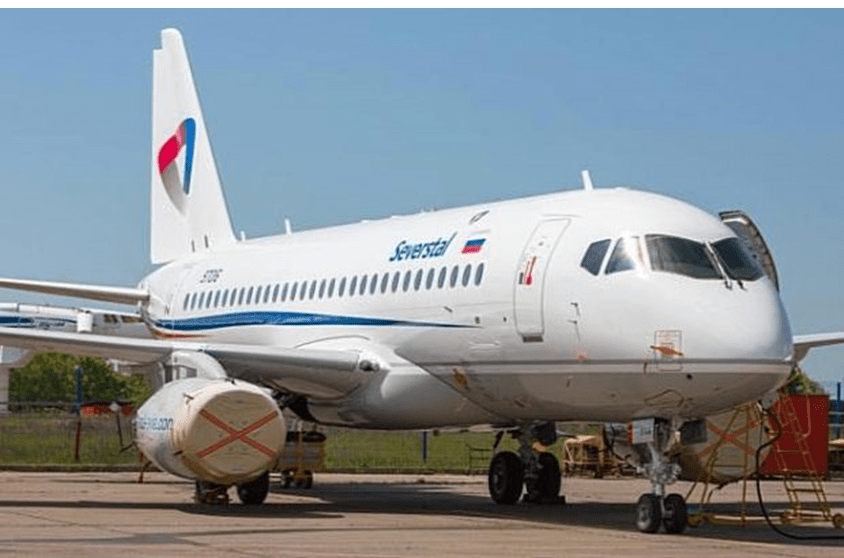
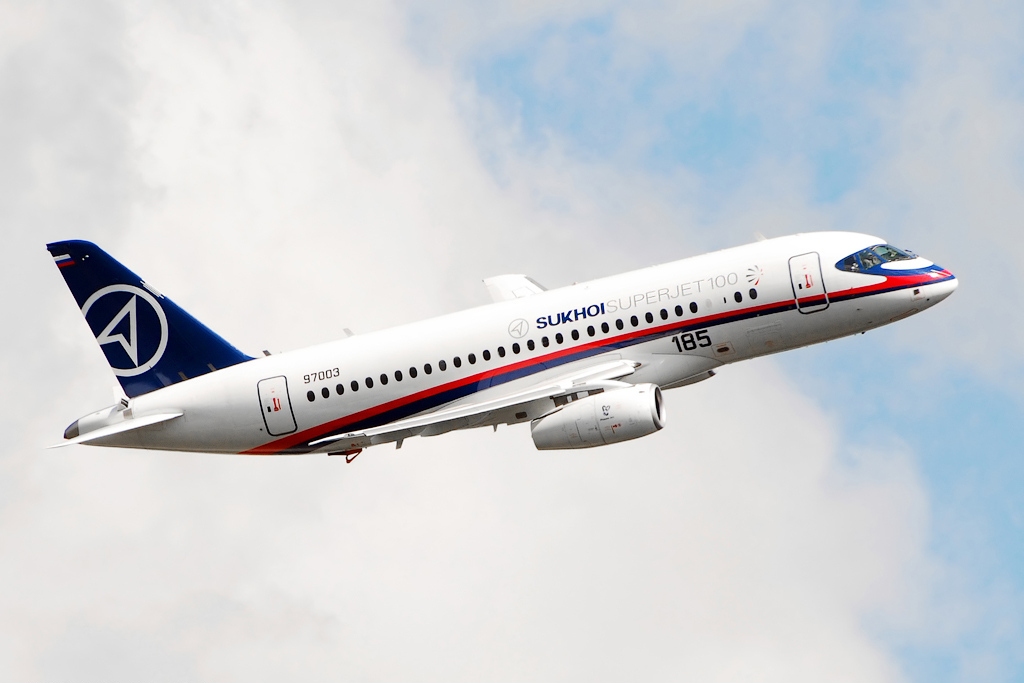
Alrededor de un tercio de los aviones Sukhoi Superjet SSJ-100 de los mayores clientes de aerolíneas del mundo ha permanecido en tierra. Los movimientos de las aeronaves SSJ-100 en compañías como Aeroflot, Interjet, Yamal Airlines, Gazprom Avia y Azimuth Airlines, representan más de la mitad de los aviones producidos por este modelo. Pero después de diez años de producción y ventas, el difícil destino del avión ruso se ha hecho notar, donde las fallas en la postventa y el área de mantenimiento convierten a las aerolíneas en un blanco de dificultades.

Sukhoi y el soporte técnico

Boris Rybak, Director General de la consultora Infomost, consideró que el sistema posventa es bastante precario. «Se ha formado un sistema de soporte técnico bastante exótico para el servicio posventa, que no corresponde a la maneras modernas de cómo se hace esto. Se tomaron muchas decisiones inusuales que no son típicas en el mercado global de mantenimiento. Una aeronave tiene una gran cantidad de sistemas con una enorme cantidad de componentes. La propia Sukhoi suministra estos componentes y elementos de sistemas, pero lo hace de manera lenta y cara. Pero lo principal es que son lentos», afirmó Boris Rybak. El problema principal es que Sukhoi Aircraft se responsabiliza de todos los procesos de mantenimiento y de suministro de repuestos y componentes, pero sin contar con los recursos suficientes para hacerlo.

Boris Rybak apuntó que la práctica mundial es un poco distinta y que generalmente las piezas de los aviones se pueden comprar en el mercado a varios proveedores independientes de otras aerolíneas. Es decir, hay un mercado grande y rápido de partes. «No temo decir que otros errores han sido cometidos. Pero este es probablemente uno de los fundamentales. No hay nada sorprendente. Sukhoi es un fabricante de aviones militares que se mantienen en operación de una manera ligeramente diferente. La compañía nunca ha creado sistemas de servicio posventa para aviones comerciales. No tienen experiencia en este asunto», concluyó Rybak.

El fabricante está en contacto constante con las aerolíneas que operan su aeronave. Los sistemas de servicio postventa existen, la compañía está trabajando para mejorarlos, expresa el fabricante Sukhoi Aircraft.

El periódico Vedomosti, escribió que el SSJ-100 vuela poco debido a problemas con el servicio postventa, el alto costo y la falta de piezas de repuesto, y también por el largo tiempo de entrega. Según el periódico, ha habido casos en que en la aerolínea rusa Aeroflot no voló más de un tercio del parque.

En Septiembre 2018, Alexander Rubtsov, Presidente de Sukhoi Civil Aircraft, dijo: «No tiene sentido producir aviones que están inactivos debido a la falta de piezas de repuesto y motores». Como resultado, la compañía decidió construir almacenes de repuestos adicionales cerca de grandes centros de aviación, así como hangares adicionales para estacionar y dar servicio a aeronaves. Pero hasta ahora este proyecto no ha sido implementado.

Aerolíneas que pierden protagonismo

528078_large.pngLa aerolínea rusa Aeroflot Russian Airlines es el mayor cliente de las aeronaves SSJ-100, pero lo considera el avión menos seguro de su flota. Esto se traduce que a partir del 29 Octubre 2018, de los 50 aviones SSJ100, no habían volado más de seis días seguidos quince aeronaves. De estos, sólo uno permaneció en tierra desde el 18/10/2018 y dos desde el 19/10/2018. El resto de la flota dejó de volar antes.

A pesar de los problemas, en septiembre, Aeroflot firmó un acuerdo con United Aircraft Building Corporation para el suministro de otros 100 aviones Superjet. Se entregarán a la aerolínea rusa más grande desde 2019 hasta 2026.

Aeroflot «considera este avión de pasajeros como una carga social», dijeron tres personas cercanas a KLA a Vedomosti. Anteriormente, en abril, la compañía emitió un documento interno titulado «Estado de la seguridad de vuelo en febrero de 2018». De esto se deduce que los incidentes ocurrieron más a menudo con los aviones Superjet SSJ-100 en la flota de la compañía que con otros modelos de aeronaves. En el documento de Aeroflot, el nivel de seguridad de la aeronave SSJ-100 se denominó «medio», mientras que para todas las aeronaves fabricadas por Airbus y Boeing se designó como «alto».

Resultado de imagen para Yakutia Airlines Sukhoi SSJ-100 pngUN SUKHOI SSJ-100 DAÑADO DE YAKUTIA AIRLINES

La aerolínea Yakutia Airlines también ha criticado duramente el sistema de soporte técnico de los cuatro SSJ-100 que posee en su flota. La aerolínea ha sido suspendida para realizar vuelos internacionales. A finales de Agosto 2018, Ivan Vinokurov, Director de la flota de Yakutia Airlines, en una entrevista con Aviation Transport Observation, declaró que su compañía no excluye que en el futuro pueda negarse a operar sus cinco Superjet, debido a la baja confiabilidad. A principios de Octubre 2018, el Superjet SSJ-100 de Yakutia Airlines sufrió graves daños durante un aterrizaje fallido en Yakutsk. Como informó más tarde el Ministro de Transporte de la República, lo más probable es que la aeronave no esté sujeta a recuperación.

Yamal Airlines posee 16 Superjet SSJ-100. Según Flightradar24, un avión hizo el último vuelo el 4 Octubre 2018, tres más no vuelan desde finales de Septiembre 2018.RA-89080_SU95(LR)_Azimuth_VKO_UUWW_(37742561274).jpg

Azimuth Airlines desde principios de Octubre 2018, un avión SSJ-100, construido hace cuatro años, no vuela. El resto de la flota de SSJ-100 permanece operativa.

Gazprom Avia, una aerolínea de Rusia ha informado que una aeronave SSJ-100 no vuela desde el 15/09/2018, otra desde 15/10/2018.

Brussels Airlines desprograma SSJ-100

Resultado de imagen para Brussels Airlines Sukhoi SSJ-100 pngLa aerolínea belga Brussels Airlines ha decidido desprogramar y dar de baja la flota de aeronaves regionales Sukhoi SSJ-100. La aerolínea belga ha decidido reemplazar los aviones de fabricación rusa por aeronaves Bombardier CRJ-900 de fabricación canadiense.

La aerolínea Brussels Airlines arrendó cuatro Sukhoi Superjet SSJ-100 a su homóloga irlandesa CityJet por un plazo de dos años. Sin embargo, debido a que el fabricante de la aeronave no pudo reparar rápidamente un Superjet y los vuelos se cancelaron, los belgas decidieron rescindir el contrato antes de lo previsto.

Cityjet-SSJ-wet-leased-to-Brusslers-airlines.jpg

La Directora de la aerolínea, Christina Foerster, anunció la desprogramación de los SSJ-100 lo antes posible. Según el medio belga, un avión Bombardier ya reemplazó a un SSJ-100 en la ruta Bruselas-Nantes. Los otros tres Superjet 100 dejarán gradualmente la flota de Brussels Airlines. El 1 Marzo 2019 entrará en vigor el nuevo contrato que sucederá al acuerdo firmado con CityJet y todos los SSJ-100 ya no serán parte de la flota.

Interjet vende los SSJ-100

El mayor operador extranjero de aeronaves rusas Superjet es la compañía mexicana InterJet con 22 SSJ-100, de los cuales 8 unidades permanecen inoperativas. Una aeronave permanece en tierra desde Agosto 2018. Cuatro aviones fueron aparcados en 09/2018. Dos aeronaves dejaron de volar a principios de 10/2018, otro avión dejó de volar el 11/10/2018.

Anteriormente, la aerolínea mexicana Interjet, principal comprador internacional de los Sukhoi Superjet 100, anunció que vendería los aviones. La razón son los problemas con el servicio posventa. Pero además los problemas de Interjet están relacionados con el hecho de que la compañía se equivocó en el diseño de configuración de la aeronave, al elegir la versión de 93 plazas, aunque podría reconfigurar las aeronaves para 103 asientos. Como resultado, esto condujo a una disminución en los ingresos y un deterioro en la posición financiera.

En Enero 2018, la agencia Bloomberg informó que cuatro de los 22 aviones SSJ-100 de la flota de la compañía mexicana Interjet no vuelan, porque se usan como una fuente de piezas de repuesto para el resto de los aviones de la compañía. La aerolínea mexicana declaró posteriormente que esta información acerca de la canibalización de parte de la flota de los aviones SSJ-100 no era cierta.

El retiro de los aviones rusos SSJ-100 y el costo de los despidos pasaron factura a la aerolínea Interjet. La aerolínea registró una pérdida neta de МX$ 979.8 millones de песос de Julio a Septiembre 2018, en contraste con la utilidad de MX$ 232.2 mdp del mismo periodo del año pasado, de acuerdo con los resultados financieros que presenta a sus acreedores, pues no cotiza en el mercado de capitales.

Estos resultados también estuvieron presionados por los gastos de operación, que se elevaron 32.5% en el tercer trimestre frente al mismo periodo del año anterior. “Este incremento en gastos está reflejando el desfase gradual de operaciones de la flota SSJ100 y el gasto no recurrente que se generó por los finiquitos a empleados que fueron separados de la compañía, como resultado de una reducción de la estructura de costos fijos y de una reducción parcial por cuanto a los empleados directamente relacionados a la flota SSJ100”, detalló Interjet en su reporte.

Un par de factores más abonaron a las pérdidas de la aerolínea: el aumento del precio promedio por litro de combustible, que elevó los gastos 60.2% anual; así como la depreciación del peso frente al dólar, pues muchos de sus gastos están dolarizados.

El Consejo Directivo de la empresa que encabeza la familia Alemán decidió en septiembre reducir la flota de aeronaves Sukhoi e incorporar 20 aeronaves A320NEO, del fabricante europeo Airbus, que se sumarán al pedido ya existente de 35 aviones de esta misma firma. Su expectativa es incrementar en más de 3.6 millones el número de asientos en los próximos tres años. AIRWAYS® AW-Icon TXT

Resultado de imagen para Sukhoi SSJ-100 factory

Market difficulties of the SSJ-100

One third of Sukhoi Superjet SSJ-100 aircraft no longer fly

AW-70008877About a third of the Sukhoi Superjet SSJ-100 aircraft from the world’s largest airline customers have remained on the ground. The movements of SSJ100 aircraft in companies such as Aeroflot, Interjet, Yamal Airlines, Gazprom Avia and Azimuth Airlines, represent more than half of the aircraft produced by this model. But after ten years of production and sales, the difficult fate of the Russian aircraft has been noted, where failures in after-sales and maintenance make airlines a target of difficulties.Resultado de imagen para Sukhoi SSJ-100 factory

Sukhoi and technical support

Boris Rybak, General Director of the consultancy Infomost, considered that the after-sales system is quite precarious. «A rather exotic technical support system has been formed for after-sales service, which does not correspond to modern ways of doing this, and many unusual decisions were made that are not typical of the global maintenance market. number of systems with a huge number of components, Sukhoi itself supplies these components and system elements, but it does so slowly and expensively, but the main thing is that they are slow», said Boris Rybak. The main problem is that Sukhoi Aircraft is responsible for all maintenance processes and supply of spare parts and components, but without sufficient resources to do so.

Boris Rybak pointed out that the global practice is a bit different and that aircraft parts can usually be purchased in the market from several independent suppliers of other airlines. That is, there is a large and fast market of parts. «I am not afraid to say that other mistakes have been made, but this is probably one of the fundamental ones. There is nothing surprising, Sukhoi is a manufacturer of military aircraft that remain in operation in a slightly different way. after-sales service for commercial aircraft, they have no experience in this matter», Rybak concluded.

The manufacturer is in constant contact with the airlines that operate their aircraft. The after-sales service systems exist, the company is working to improve them, says the manufacturer Sukhoi Aircraft.

The Vedomosti newspaper wrote that the SSJ-100 flies little because of problems with after-sales service, high cost and lack of spare parts, and also because of the long delivery time. According to the newspaper, there have been cases in which the Russian airline Aeroflot did not fly more than a third of the park.

In September 2018, Alexander Rubtsov, President of Sukhoi Civil Aircraft, said: «There is no point in producing aircraft that are inactive due to the lack of spare parts and engines». As a result, the company decided to build additional spare warehouses near large aviation centers, as well as additional hangars to park and service aircraft. But until now this project has not been implemented.

Airlines that lose prominence

The Russian airline Aeroflot Russian Airlines is the largest client of the SSJ-100 aircraft, but considers it the least safe aircraft in its fleet. This means that as of October 29, 2018, of the 50 SSJ100 aircraft, fifteen aircraft had not flown more than six consecutive days. Of these, only one remained on land since 10/18/2018 and two since 10/19/2018. The rest of the fleet stopped flying before.

Despite the problems, in September, Aeroflot signed an agreement with United Aircraft Building Corporation to supply another 100 Superjet aircraft. They will be delivered to the largest Russian airline from 2019 to 2026.

Aeroflot «considers this passenger plane as a social burden», said three people close to KLA to Vedomosti. Previously, in April, the company issued an internal document entitled «State of flight safety in February 2018.» From this it follows that the incidents occurred more often with Superjet SSJ-100 aircraft in the company’s fleet than with other aircraft models. In the Aeroflot document, the security level of aircraft SSJ-100 was called «medium», while for all aircraft manufactured by Airbus and Boeing it was designated as «high».

Yakutia Airlines has also harshly criticized the technical support system of the four SSJ-100 that it has in its fleet. The airline has been suspended for international flights. At the end of August 2018, Ivan Vinokurov, Director of the Yakutia Airlines fleet, in an interview with Aviation Transport Observation, stated that his company does not exclude that in the future it could refuse to operate its five Superjet, due to the low reliability. At the beginning of October 2018, the Superjet SSJ-100 of Yakutia Airlines suffered serious damage during a failed landing in Yakutsk. As reported later by the Republic’s Minister of Transportation, the aircraft is most likely not subject to recovery.

Yamal Airlines has 16 Superjet SSJ-100. According to Flightradar24, an airplane made the last flight on October 4, 2018, three more do not fly since the end of September 2018.

Azimuth Airlines since early October 2018, an SSJ-100 aircraft, built four years ago, does not fly. The rest of the SSJ-100 fleet remains operational.

Gazprom Avia, a Russian airline has reported that an SSJ-100 aircraft does not fly since 09/15/2018, another since 10/15/2018.

Brussels Airlines deprograms SSJ-100

The Belgian airline Brussels Airlines has decided to deprogram and cancel the Sukhoi SSJ-100 regional aircraft fleet. The Belgian airline has decided to replace the Russian-made aircraft with Canadian-made Bombardier CRJ-900 aircraft.

The airline Brussels Airlines leased four Sukhoi Superjet SSJ-100 to its Irish counterpart CityJet for a period of two years. However, because the manufacturer of the aircraft could not quickly repair a Superjet and the flights were canceled, the Belgians decided to terminate the contract earlier than planned.

The airline’s Director, Christina Foerster, announced the deprogramming of the SSJ-100 as soon as possible. According to the Belgian media, a Bombardier aircraft has already replaced an SSJ-100 on the Brussels-Nantes route. The other three Superjet 100 will gradually leave the Brussels Airlines fleet. On March 1, 2019 will enter into force the new contract that will succeed the agreement signed with CityJet and all SSJ-100 will no longer be part of the fleet.

Interjet sells the SSJ-100

The largest foreign operator of Russian Superjet aircraft is the Mexican company InterJet with 22 SSJ-100, of which 8 units remain inoperative. An aircraft remains on land from August 2018. Four aircraft were shut down on 09/2018. Two aircraft stopped flying at the beginning of 10/2018, another plane stopped flying on 10/11/2018.

Resultado de imagen para Interjet Sukhoi SSJ-100

Previously, the Mexican airline Interjet, the main international buyer of the Sukhoi Superjet 100, announced that it would sell the aircraft. The reason is the problems with after-sales service. But in addition the problems of Interjet are related to the fact that the company made a mistake in the configuration design of the aircraft, when choosing the version of 93 seats, although it could reconfigure the aircraft for 103 seats. As a result, this led to a decrease in revenues and a deterioration in the financial position.

In January 2018, the Bloomberg agency reported that four of the 22 SSJ-100 aircraft of the Mexican company Interjet’s fleet do not fly, because they are used as a source of spare parts for the rest of the company’s aircraft. The Mexican airline later stated that this information about the canibalization of part of the fleet of the SSJ-100 aircraft was not true.

The withdrawal of the Russian SSJ-100 aircraft and the cost of the dismissals took its toll on the Interjet airline. The airline registered a net loss of MX$ 979.8 million from July to September 2018, in contrast to MX$ 232.2 million in the same period of last year, according to the financial results presented to its creditors, as it did not It is quoted in the capital market.

These results were also pressured by operating expenses, which rose 32.5% in the third quarter compared to the same period of the previous year. «This increase in expenses is reflecting the gradual lag of operations of the SSJ100 fleet and the non-recurring expense that was generated by the terminations of employees who were separated from the company, as a result of a reduction in the structure of fixed costs and a partial reduction in terms of employees directly related to the SSJ100 fleet», explained Interjet in his report.

A couple of factors more paid to the losses of the airline: the increase in the average price per liter of fuel, which raised expenses 60.2% per annum; as well as the depreciation of the peso against the dollar, since many of its expenses are dollarized.

The Board of Directors of the company headed by the German family decided in September to reduce the Sukhoi aircraft fleet and incorporate 20 A320neo aircraft, from the European manufacturer Airbus, which will be added to the existing order of 35 aircraft of the same firm. Their expectation is to increase the number of seats by more than 3.6 million over the next three years. A \ W

Resultado de imagen para Sukhoi SSJ-100 factory

Проблемы рынка SSJ-100

logo_suhoyОдна треть самолетов SSJ-100 Sukhoi Superjet больше не летает

Около трети самолета Sukhoi Superjet SSJ-100 от крупнейших авиакомпаний мира по всему миру остались на месте. Движения самолетов SSJ100 в таких компаниях, как Аэрофлот, Интерджет, Ямал, Газпром Авиа и Азимут, представляют более половины самолетов, выпускаемых этой моделью. Но после десяти лет производства и продаж была отмечена сложная судьба российских самолетов, где неудачи в послепродажном обслуживании и авиалинии создают проблемы для авиакомпаний.

Сухой и техническая поддержка

Борис Рыбак, генеральный директор консалтинговой компании Infomost, считает, что послепродажная система довольно опасна. «Для службы послепродажного обслуживания была сформирована довольно экзотическая система технической поддержки, которая не соответствует современным способам этого решения, и было принято множество необычных решений, которые не характерны для глобального рынка обслуживания. количество систем с огромным количеством компонентов, сам Сухой поставляет эти компоненты и элементы системы, но делает это медленно и дорого, но главное, что они медленны»,  сказал Борис Рыбак. Основная проблема заключается в том, что Sukhoi Aircraft отвечает за все процессы обслуживания и поставки запасных частей и компонентов, но без достаточных ресурсов для этого.

Борис Рыбак отметил, что глобальная практика немного отличается и что части самолетов обычно можно купить на рынке у нескольких независимых поставщиков других авиакомпаний. То есть, существует большой и быстрый рынок деталей. «Я не боюсь сказать, что были сделаны другие ошибки, но это, вероятно, один из фундаментальных. Нет ничего удивительного, Сухой производитель военных самолетов, которые по-прежнему работают несколько иначе. послепродажное обслуживание коммерческих самолетов, у них нет опыта в этом вопросе »,  заключил Рыбак.

Производитель находится в постоянном контакте с авиакомпаниями, которые эксплуатируют свои самолеты. Системы послепродажного обслуживания существуют, компания работает над их улучшением, говорит производитель Sukhoi Aircraft.

Газета «Ведомости» писала, что SSJ-100 мало летает из-за проблем с послепродажным обслуживанием, высокой стоимостью и отсутствием запасных частей, а также из-за длительного времени доставки. По данным газеты, были случаи, когда российская авиакомпания «Аэрофлот» не летала более трети парка.

В сентябре 2018 года президент ОАО «Гражданские самолеты Сухого» Александр Рубцов сказал: «Нет смысла производить самолеты, которые неактивны из-за отсутствия запасных частей и двигателей». В результате компания решила построить дополнительные запасные склады вблизи крупных авиационных центров, а также дополнительные ангары для парковки и обслуживания самолетов. Но до сих пор этот проект не был реализован.

По словам руководителя аналитической службы агентства «Авиапорт» Олега Пантелеева, в каждом из случаев, описанных выше, причины разные. В целом, российские компании страдают от ежегодного снижения трафика, которое происходит после окончания высокого сезона. И в этот момент, по его словам, «естественный излишек летательного аппарата» прибывает, считает он.

Проблемы Interjet, по его словам, связаны с тем, что компания допустила ошибку в дизайне салона при выборе версии 93 места, хотя она могла заказать номер на 103 места. В результате это привело к снижению доходов и ухудшению финансового положения.

Авиакомпании, потерявшие известность

Российская авиакомпания Аэрофлот Русские авиалинии является крупнейшим клиентом самолета SSJ-100, но считает ее наименее безопасным самолетом в своем парке. Это означает, что по состоянию на 29 октября 2018 года из 50 самолетов SSJ100 пятнадцать самолетов не пролетели более шести последовательных дней. Из них только один остался на суше с 18/10/2018 и два с 10/19/2018. Остальная часть флота перестала летать раньше.Resultado de imagen para Sukhoi SSJ-100 factory

Несмотря на проблемы, в сентябре Аэрофлот подписал соглашение с United Aircraft Building Corporation о поставке еще 100 самолетов Superjet. Они будут доставлены в крупнейшую российскую авиакомпанию с 2019 по 2026 год.

Аэрофлот рассматривает этот пассажирский самолет как социальную нагрузку, сказали Ведомостям три человека, близкие к ОАК. Ранее в апреле компания выпустила внутренний документ под названием «Состояние безопасности полетов в феврале 2018 года». Из этого следует, что инциденты случались чаще с самолетами Superjet SSJ-100 в парке компании, чем с другими моделями самолетов. В документе Аэрофлота уровень безопасности самолета SSJ-100 был назван «средним», в то время как для всех самолетов, выпускаемых Airbus и Boeing, он был обозначен как «высокий».

Авиакомпания Якутия также резко критиковала систему технической поддержки четырех SSJ-100, которые она имеет в своем флоте. Авиакомпания была приостановлена ​​для международных рейсов. В конце августа 2018 года директор флота Якутская авиалиния Иван Винокуров в интервью Авиатранспортное наблюдение заявил, что его компания не исключает, что в будущем она может отказаться от эксплуатации своих пяти Superjet из-за низкой надежности. В начале октября 2018 года Superjet SSJ-100 авиакомпании Якутия понес серьезный ущерб во время неудачной посадки в Якутске. Как сообщил позднее министр транспорта Республики, самолет, скорее всего, не подлежит восстановлению.

У авиакомпании Ямал 16 Superjet SSJ-100. По данным Flightradar24, самолет совершил последний полет 4 октября 2018 года, еще три не летают с конца сентября 2018 года.

Azimuth Airlines с начала октября 2018 года, самолет SSJ-100, построенный четыре года назад, не летает. Остальная часть парка SSJ-100 остается в рабочем состоянии.

Авиакомпания Газпром, российская авиакомпания, сообщила, что самолет SSJ-100 летает не с 15 августа 2012 года, а с 10/10/2018.

Brussels Airlines депрограммирует SSJ-100

Бельгийская авиакомпания Brussels Airlines решила депрограммировать и отменить региональный самолетный парк Sukhoi SSJ-100. Бельгийская авиакомпания решила заменить самолеты российского производства канадскими самолетами Bombardier CRJ-900.

Авиакомпания Brussels Airlines арендовала четыре Sukhoi Superjet SSJ-100 своему ирландскому коллеге CityJet сроком на два года. Однако, поскольку производитель самолета не смог быстро восстановить Superjet, и рейсы были отменены, бельгийцы решили расторгнуть контракт раньше запланированного.

Директор авиакомпании Кристина Фёрстер объявила о депрограммировании SSJ-100 как можно скорее. По данным бельгийских СМИ, самолет Bombardier уже заменил SSJ-100 на трассе Брюссель-Нант. Остальные три Superjet 100 постепенно покинут флот Brussels Airlines. 1 марта 2019 года вступит в силу новый контракт, который будет успешным с соглашением, подписанным с CityJet, и все SSJ-100 больше не будут частью флота.

Interjet продает SSJ-100

Крупнейшим иностранным оператором российского самолета Superjet является мексиканская компания InterJet с 22 SSJ-100, из которых 8 единиц остаются в нерабочем состоянии. Самолет остается на суше с августа 2018 года. Четыре самолета были отключены 09/2018. Два самолета прекратили летать в начале 10/2018 года, еще один самолет перестал летать 10/11/2018.

Ранее мексиканская авиакомпания Interjet, главный международный покупатель Sukhoi Superjet 100, объявила, что будет продавать самолет. Причина заключается в проблемах послепродажного обслуживания. Но, кроме того, проблемы Interjet связаны с тем, что компания допустила ошибку в конфигурации конфигурации самолета при выборе версии из 93 мест, хотя она могла бы перенастроить самолет на 103 места. В результате это привело к снижению доходов и ухудшению финансового положения.

В январе 2018 года агентство Bloomberg сообщило, что четыре из 22 самолетов SSJ-100 мексиканской компании Interjet не летают, потому что они используются как источник запасных частей для остальных самолетов компании. Позднее мексиканская авиакомпания заявила, что эта информация о захвате части флота самолетов SSJ-100 не соответствует действительности.

Вывод российского самолета SSJ-100 и стоимость увольнений повлек за собой урон авиакомпании Interjet. Авиакомпания зарегистрировала чистый убыток в размере 979,8 млн. Долл. США с июля по сентябрь 2018 года, в отличие от 232,2 млн. MX за аналогичный период прошлого года, согласно финансовым результатам, представленным кредиторам, поскольку это не Он цитируется на рынке капитала.

На эти результаты также повлияли операционные расходы, которые выросли на 32,5% в третьем квартале по сравнению с аналогичным периодом прошлого года. «Это увеличение расходов отражает постепенное отставание операций флота SSJ100 и единовременные расходы, которые были вызваны прекращением деятельности сотрудников, которые были отделены от компании, в результате сокращения структуры постоянных затрат и частичное сокращение числа сотрудников, непосредственно связанных с флотом SSJ100», пояснил Interjet в своем отчете.

Несколько факторов, более уплаченных за потери авиакомпании: увеличение средней цены за литр топлива, что увеличило расходы на 60,2% годовых; а также обесценение песо по отношению к доллару, поскольку многие из его расходов являются долларовыми.

Совет директоров компании во главе с немецкой семьей решил в сентябре сократить парк самолетов Sukhoi и включить 20 самолетов A320NEO от европейского производителя Airbus, который будет добавлен к существующему заказу 35 самолетов той же фирмы. Их ожидания состоят в том, чтобы увели. A\W


Ξ A I R G W A Y S Ξ
SOURCE: Airgways.com
DBk: Sukhoi.org / Airgways.com / Cnn.com / Expansion.mx / Leehamnews.com / Ainonline.com / Finavia.fi
AW-POST: 201811031244AR

A\W   A I R G W A Y S ®


Boeing China inicia ops en 12/2018

Resultado de imagen para Boeing China factory

AW | 2018 11 02 22:34 | INDUSTRY

Boeing-Logo.svgLa planta china de Boeing comenzará a operar en Diciembre 2018

The Boeing Co. comenzará sus operaciones en su planta de terminación de la línea Boeing 737 en la República de China en Diciembre 2018. Boeing ha invertido US$ 33 millones de dólares el año pasado en una empresa conjunta con COMAC (Commercial Aircraft Corp de China) para supervisar la planta, tomando una participación mayoritaria. La planta, en la ciudad oriental de Zhoushan, instalará interiores y el área de pintura.

El Presidente de Boeing China, John Bruns, expresó que la fábrica entregará solo un avión en 2018 y luego aumentará gradualmente la producción hasta que alcance un objetivo de entrega de 100 aviones al año. Air China recibirá el primer avión producido.

Rivalizando en Oriente

Boeing y su rival europeo Airbus están expandiendo su presencia en China a medida que compiten por pedidos en el creciente mercado de la aviación. Airbus tiene una planta de terminación de A330 en la ciudad oriental de Tianjin. Boeing también renovó los contratos de producción del 737 con AVIC Aircraft y Shanghai Aircraft Manufacturing Co Ltd, y reconoció a cinco nuevas compañías chinas como proveedores elegibles.

Los analistas han expresado su preocupación de que Boeing eventualmente podría verse afectado por las disputas comerciales en curso entre los Estados Unidos y China, aunque los productos chinos no han sido afectados por los aranceles. AIRWAYS® AW-Icon TXT

Resultado de imagen para Boeing China Zhoushan factory

Boeing China starts ops on 12/2018

The Chinese Boeing plant will start operating in December 2018

The Boeing Co. com will begin operations at its completion plant on line Boeing 737 in the Republic of China in December 2018. Boeing has invested US $ 33 million last year in a joint venture with COMAC (Commercial Aircraft Corp of China) to supervise the plant, taking a majority stake. The plant, in the eastern city of Zhoushan, will install interiors and paint area.

Boeing China President John Bruns said the factory will deliver only one plane in 2018 and then gradually increase production until it reaches a delivery target of 100 aircraft a year. Air China will receive the first airplane produced.

Rivalizing in the Orient

Boeing and its European rival Airbus are expanding their presence in China as they compete for orders in the growing aviation market. Airbus has an A330 completion plant in the eastern city of Tianjin. Boeing also renewed the 737 production contracts with AVIC Aircraft and Shanghai Aircraft Manufacturing Co Ltd, and recognized five new Chinese companies as eligible suppliers.

Analysts have expressed concern that Boeing could eventually be affected by ongoing trade disputes between the United States and China, although Chinese products have not been affected by tariffs. A \ W


Ξ A I R G W A Y S Ξ
SOURCE: Airgways.com
DBk: Boeing.com / Reuters.com / Seattletimes.com
AW-POST: 201811022234AR

A\W   A I R G W A Y S ®