Boeing exhibirá CST-100 en Congreso Astronáutico Internacional
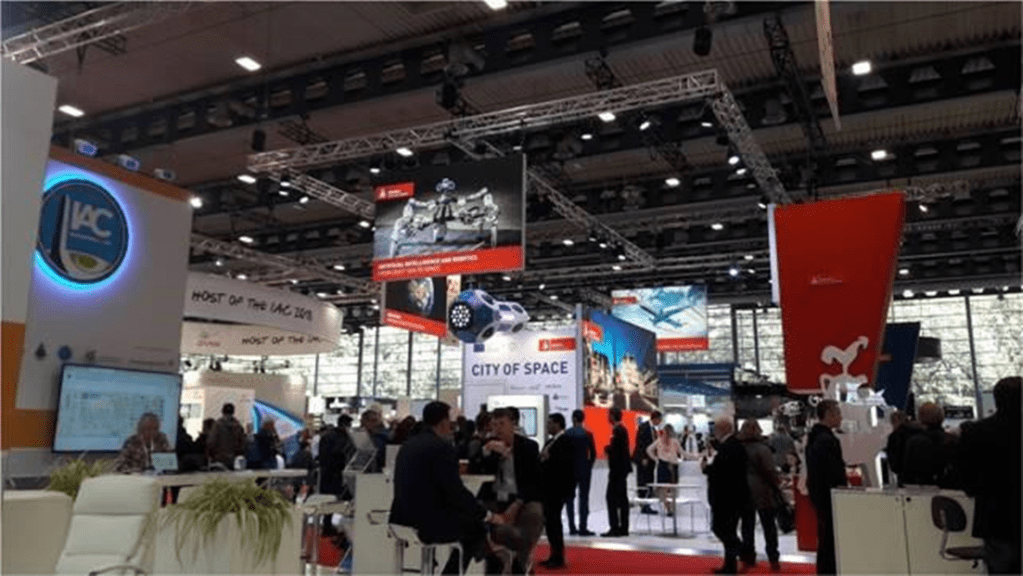
The Boeing Company exhibirá su portafolio de Órbita Terrestre Baja al Espacio Profundo en el Congreso Astronáutico Internacional (IAC) en la exhibición virtual que presentará al CST-100 Starliner, el sistema de lanzamiento espacial, la estación espacial internacional, los satélites y el X-37B ganador del Premio Collier.
The CyberSpace Edition, que se llevará a cabo del 12 al 14 de Octubre 2020, con una exhibición virtual innovadora en línea en www.iac2020.org. Desarrollada para simular un stand real en la feria, la exhibición exhibirá la nave espacial CST-100 Starliner Commercial Crew; el laboratorio en órbita de la Estación Espacial Internacional (ISS); el cohete espacial profundo Space Launch System (SLS); el avión espacial X-37B; y satélites comerciales y gubernamentales.
“Como miembro de la Federación Astronáutica Internacional, Boeing aplaude a los organizadores del IAC por reunir a la industria espacial en un entorno virtual. Esperamos conectarnos virtualmente con la NASA, nuestros socios globales y la audiencia más amplia para demostrar el progreso que se ha logrado en todos nuestros programas espaciales”, dijo David Rogalski, Director de Space and Launch Global Sales and Marketing. Los puntos de acceso en el stand virtual llevarán a los asistentes no solo a ver los productos de Boeing, sino también a conocer la misión compartida de la compañía con la NASA, la Fuerza Aérea y la Fuerza Espacial de los EE.UU. y socios globales.
Boeing ha completado recientemente o se está acercando a importantes hitos en su cartera espacial. El Starliner de la compañía se está preparando para su segunda prueba de vuelo orbital sin tripulación. La ISS construida y sostenida por Boeing celebrará su vigésimo año de investigación en tecnología, ciencia y habitación humana el 2 de Noviembre de 2020. La primera etapa central construida por Boeing para el SLS de la NASA ha completado seis de las ocho pruebas clave en el Centro Espacial Stennis que culminarán en un incendio caliente de los cuatro motores RS-25 durante hasta ocho minutos. Recientemente, la división Satellite Systems de Boeing recibió uno de los tres contratos de desarrollo para construir un prototipo de carga útil de satélite y desarrollar una nueva arquitectura de comunicaciones por satélite segura y resistente para el Programa Evolved Strategic SATCOM (ESS) de la Fuerza Espacial de Estados Unidos.
CST-100 in Astronautical Congress
Boeing to Exhibit CST-100 at International Astronautical Congress
The Boeing Company will showcase its Deep Space Low Earth Orbit portfolio at the International Astronautical Congress (IAC) in the virtual exhibit featuring the CST-100 Starliner, the space launch system, the international space station, satellites and the X- 37B winner of the Collier Award.
The CyberSpace Edition, which runs from October 12-14, 2020, with an innovative virtual exhibition online at http://www.iac2020.vfair.com. Developed to simulate a real booth at the show, the exhibit will showcase the CST-100 Starliner Commercial Crew spacecraft; the orbiting laboratory of the International Space Station (ISS); the Deep Space Launch System (SLS) rocket; the X-37B space plane; and commercial and government satellites.
“As a member of the International Astronautical Federation, Boeing applauds the IAC organizers for bringing the space industry together in a virtual environment. We look forward to connecting virtually with NASA, our global partners and the broader audience to demonstrate the progress that has been made across all of our space programs”, said David Rogalski, Director of Space and Launch Global Sales and Marketing. The access points at the virtual booth will take attendees not only to see Boeing products, but also to learn about the company’s shared mission with NASA, the US Air Force and Space Force and partners. global.
Boeing has recently completed or is approaching major milestones in its space portfolio. The company’s Starliner is preparing for its second unmanned orbital flight test. The Boeing-built and supported ISS will celebrate its 20th year of research in technology, science and human habitation on November 2, 2020. The first core stage built by Boeing for NASA’s SLS has completed six of eight key tests in the Stennis Space Center that will culminate in a hot fire of all four RS-25 engines for up to eight minutes. Recently, Boeing’s Satellite Systems division was awarded one of three development contracts to build a prototype satellite payload and develop a new robust and secure satellite communications architecture for the Space Force’s Evolved Strategic SATCOM (ESS) program. from the United States.
Satélite Space Force construido por Boeing aprueba revisión diseño
The Boeing Company y la Fuerza Espacial de Estados Unidos completaron con éxito la primera revisión importante de diseño de ingeniería para el satélite de comunicaciones Wideband Global SATCOM (WGS) -11+. Esta exitosa revisión demuestra que Boeing está listo para pasar a la fase final de diseño del sistema. La producción comenzará el próximo año en la fábrica de Boeing en El Segundo, Estado de Texas, y la entrega está programada para 2024.
WGS-11+ cuenta con una carga útil digital moderna que funciona al doble de la capacidad operativa de sus predecesores, lo que aumenta la disponibilidad de comunicaciones de grado militar. Aprovechando los avances en las tecnologías comerciales de Boeing, proporcionará comunicaciones seguras para conectar a las fuerzas estadounidenses y aliadas a nivel mundial.
La actual constelación de WGS, que consta de 10 satélites, es la columna vertebral del sistema de comunicaciones global del ejército de los EE.UU. y proporciona conectividad flexible de alta velocidad de datos. Los usuarios incluyen todos los servicios militares de EE.UU., La Agencia de Comunicaciones de la Casa Blanca, el Departamento de Estado de EE.UU. y socios internacionales. “Completar esta revisión de diseño de ingeniería es un hito clave y nos acerca un paso más a entregar este satélite innovador al combatiente en un tiempo récord, mejorando significativamente la capacidad y cobertura para nuestros soldados, marineros, aviadores, infantes de marina y aliados”, dijo el coronel John Dukes, Jefe de la División Polar/Geosincrónica del Cuerpo de Producción del Centro de Sistemas Espaciales y de Misiles. «WGS-11+ utiliza haces puntuales más estrechos para ofrecer una conexión más fuerte y confiable exactamente donde se necesita, lo que significa un mejor rendimiento y una mayor flexibilidad que nunca», dijo Troy Dawson, Vicepresidente de Boeing Government Satellite Systems. Además de las fuerzas militares de EE.UU., La constelación WGS brinda servicio a socios internacionales, incluidos Australia, Canadá, Dinamarca, Luxemburgo, Nueva Zelanda, Países Bajos, República Checa y Noruega.
Boeing Space Force design approval
Boeing-built Space Force satellite passes design review
The Boeing Company and the United States Space Force successfully completed the first major engineering design review for the Wideband Global SATCOM (WGS) -11+ communications satellite. This successful review shows that Boeing is ready to move on to the final phase of system design. Production will begin next year at the Boeing factory in El Segundo, Texas, with delivery scheduled for 2024.
WGS-11 + features a modern digital payload that performs at twice the operational capacity of its predecessors, increasing the availability of military-grade communications. Leveraging advances in Boeing’s commercial technologies, it will provide secure communications to connect US and allied forces globally.
The current constellation of WGS, consisting of 10 satellites, is the backbone of the US military’s global communications system and provides flexible high data rate connectivity. Users include all US military services, the White House Communications Agency, the US State Department, and international partners. «Completing this engineering design review is a key milestone and brings us one step closer to delivering this innovative satellite to the combatant in record time, significantly improving capacity and coverage for our Soldiers, Sailors, Airmen, Marines and allies», said Colonel John Dukes, Head of the Polar/Geosynchronous Division of the Production Corps of the Center for Space and Missile Systems. «WGS-11 + uses narrower spot beams to deliver a stronger and more reliable connection exactly where it is needed, which means better performance and greater flexibility than ever before», said Troy Dawson, vice president, Boeing Government Satellite Systems. In addition to the US military forces, the WGS constellation serves international partners, including Australia, Canada, Denmark, Luxembourg, New Zealand, the Netherlands, the Czech Republic, and Norway.
KLM Royal Dutch Airlines marca una vez más su 101ª aniversarios el 7 de Octubre de 2020, siguiendo con la tradición de sus «miniatuur huis» con una nueva cerámica de Delft. KLM presenta estas casas de miniaturas a los pasajeros de su World Business Class en los vuelos intercontinentales.
La casa 101º de KLM es una réplica del edificio «De Moriaan» (originalmente llamado «De Mariaen»), de 800 años de antigüedad, ubicado en Bolduque, en la Provincia de Brabante, en los Países Bajos. Este impresionante edificio histórico está descrito en los archivos de la ciudad como ,,tcasteel op die Mariaen», el castillo sobre el Mariaen. Es difícil saber a qué refería exactamente «Mariaen» en su momento, pero el nombre fue cambiando en lengua popular a lo largo de los siglos y ahora se conoce el edificio como «De Moriaan». De Moriaan fue elegida para ser la casa en miniatura Nº101 de KLM porque fue construida como casa mercantil y porque la provincia de Brabante contribuye en gran medida a la economía holandesa de hoy, con un comercio internacional que trae muchos pasajeros a KLM.
Desde su creación, KLM facilitó oportunidades para las relaciones comerciales internacionales entre los Países Bajos y el resto del mundo. A pesar de que la crisis del coronavirus redujo drásticamente la actividad comercial en los últimos meses, KLM quiere de todas formas recordar su cumpleaños nº101. No con celebraciones, pero sí con con el lanzamiento de la casita N° 101 de su colección de miniaturas en cerámica de Delft. La compañía espera poder ofrecer pronto esta casita a muchos pasajeros leales a bordo de sus vuelos.
Pieter Elbers, Presidente y CEO de KLM ha expresado: «Es importante que mantengamos las tradiciones de KLM en tiempos de crisis. Para nuestros clientes fieles, nuestras casas en miniatura simbolizan su vínculo con KLM, algo muy valioso para nosotros y que queremos conservar. Por eso no dudamos en producir la casita número 101. «De Moriaan» simboliza la importancia del comercio internacional y el aporte de los emprendedores para los Países Bajos, especialmente en tiempos adversos para la economía. La misión de KLM es asegurar que la gente pueda reunirse a través de nuestra extensa red aérea. Y continuaremos contribuyendo con nuestro papel».
Sobre la casita 101
«De Moriaan» es uno de los edificios de ladrillo más antiguos de los Países Bajos. Fue construido en Bolduque (‘s-Hertogenbosch, también conocida como Den Bosch), hace más de 800 años, por miembros de la nobleza local que se establecieron en la nueva ciudad, a la que se le había concedido una carta de la ciudad en 1184. El enorme sótano de 5 metros de altura era accesible en la parte trasera desde los muelles del puerto interior. Sobre este espacio comercial semisubterráneo había un enorme salón, que sin duda también se utilizaba para el comercio. Detrás de esto había algunas habitaciones más pequeñas y una cocina. Se encontró el siguiente texto histórico sobre el edificio: “El duque de Brabante Henric encargó la construcción de dos agradables casas en el Mercado, Roijenburch y el castillo del Mariaen”. De Moriaan fue amenazado con ser demolido en los años 50, pero finalmente se salvó después de años de protestas de los habitantes de Bolduque. El ayuntamiento decidió finalmente preservar y restaurar el edificio, revelando una vez más la llamativa arquitectura de este castillo de la ciudad. Actualmente, «De Moriaan» alberga el centro de visitantes turísticos VVV de Bolduque.
Acerca de las ,,huis» de Delft & KLM
Desde los años 50, KLM ofrece a los pasajeros de su World Business Class en vuelos intercontinentales sus casas en miniatura en la tradicional cerámica azul de Delft, que contienen ginebra Bols. Las casas son réplicas de edificios monumentales distribuidos por toda Holanda y son coleccionadas por los clientes de KLM con entusiasmo. El número de casas en la colección acompaña los cumpleaños de KLM desde 1994, con nuevas miniaturas que se añaden a la colección cada 7 de Octubre en un nuevo aniversario de la aerolínea más antigua del mundo.
KLM Airlines, 101º Anniversaries
KLM celebrates its 101 anniversaries
KLM Royal Dutch Airlines once again marks its 101st anniversary on October 7, 2020, continuing the tradition of its «miniatuur huis» with a new Delftware. KLM presents these miniature houses to its World Business Class passengers on intercontinental flights.
KLM’s 101st house is a replica of the 800-year-old «De Moriaan» (originally called «De Mariaen») building located in Bolduque, in the Brabant Province of the Netherlands. This impressive historical building is described in the city archives as ,,tcasteel op die Mariaen», the castle on the Mariaen. It is difficult to know what exactly «Mariaen» meant at the time, but the name changed in popular language over the centuries and the building is now known as «De Moriaan». De Moriaan was chosen to be KLM’s No. 101 miniature house because it was built as a merchant house and because the province of Brabant contributes greatly to the Dutch economy today, with international trade bringing many passengers to KLM.
Since its inception, KLM has provided opportunities for international business relations between the Netherlands and the rest of the world. Despite the fact that the coronavirus crisis drastically reduced business activity in recent months, KLM still wants to remember its 101st birthday. Not with celebrations, but with the launch of house N° 101 in its collection of Delft ceramic miniatures. The company hopes to soon be able to offer this little house to many loyal passengers on board its flights.
Pieter Elbers, President and CEO of KLM said: «It is important that we uphold KLM traditions in times of crisis. For our loyal customers, our miniature houses symbolize their bond with KLM, something very precious to us and which we want to preserve. That is why we did not hesitate to produce house number 101. «De Moriaan» symbolizes the importance of international trade and the contribution of entrepreneurs to the Netherlands, especially in adverse times for the economy. KLM’s mission is to ensure that people can come together through our extensive airline network. And we will continue to contribute our role».
About the house 101
«De Moriaan» is one of the oldest brick buildings in the Netherlands. It was built in Bolduque (‘s-Hertogenbosch, also known as Den Bosch), more than 800 years ago, by members of the local nobility who settled in the new city, which had been granted a city charter in 1184. The massive 5 meter high basement was accessible at the rear from the inner harbor docks. Above this semi-underground commercial space was a huge hall, which was undoubtedly also used for commerce. Behind this were some smaller rooms and a kitchen. The following historical text was found on the building: «The Duke of Brabant Henric commissioned the construction of two pleasant houses in the Market, Roijenburch and the castle of the Mariaen». De Moriaan was threatened with demolition in the 1950s, but was eventually saved after years of protests from the Bolduque residents. The city council finally decided to preserve and restore the building, revealing once again the striking architecture of this city castle. Currently, «De Moriaan» houses the Bolduque VVV tourist visitor center.
About KLM & Delft Ceramic Houses
Since the 1950s, KLM has offered its World Business Class passengers on intercontinental flights its miniature houses in traditional Delft blue ceramics, containing Bols gin. The houses are replicas of monumental buildings found throughout the Netherlands and are enthusiastically collected by KLM customers. The number of houses in the collection accompanies KLM’s birthdays since 1994, with new miniatures being added to the collection every October 7 in a new anniversary of the oldest airline in the world.
KLM Airlines, 101º Verjaardag
KLM viert haar 101º verjaardag
KLM Royal Dutch Airlines viert op 7 oktober 2020 opnieuw haar 101e verjaardag en zet de traditie van haar miniatuur huis voort met een nieuw Delfts blauw. KLM presenteert deze miniatuurhuisjes op intercontinentale vluchten aan haar World Business Class-passagiers.
KLM’s 101e huis is een replica van het 800 jaar oude gebouw ,,De Moriaan» (oorspronkelijk ,,De Mariaen» genoemd) in Bolduque, in de provincie Brabant. Dit indrukwekkende historische gebouw wordt in het stadsarchief omschreven als ,,tcasteel op die Mariaen», het kasteel aan de Mariaen. Het is moeilijk om precies te weten wat ,,Mariaen» destijds bedoelde, maar de naam veranderde in de populaire taal door de eeuwen heen en het gebouw staat nu bekend als ,,De Moriaan». De Moriaan werd gekozen als KLM’s nr. 101 miniatuurhuis omdat het werd gebouwd als koopmanshuis en omdat de provincie Brabant tegenwoordig een grote bijdrage levert aan de Nederlandse economie, waarbij de internationale handel veel passagiers naar KLM brengt.
KLM biedt vanaf haar oprichting kansen voor internationale zakelijke relaties tussen Nederland en de rest van de wereld. Ondanks dat de coronaviruscrisis de bedrijvigheid de afgelopen maanden drastisch heeft teruggedrongen, wil KLM toch haar 101e verjaardag herdenken. Niet met feesten, maar met de lancering van huis N° 101 in de collectie Delfts keramiek miniaturen. Het bedrijf hoopt dit huisje binnenkort aan vele trouwe passagiers aan boord van zijn vluchten te kunnen aanbieden.
Pieter Elbers, President en CEO van KLM: ,,Het is belangrijk dat we KLM-tradities hooghouden in tijden van crisis. Voor onze trouwe klanten symboliseren onze miniatuurhuisjes hun band met KLM, iets wat ons heel dierbaar is en dat we willen behouden. Daarom hebben we niet geaarzeld om huisnummer 101 te produceren. ,,De Moriaan» symboliseert het belang van internationale handel en de bijdrage van ondernemers aan Nederland, zeker in economisch ongunstige tijden. De missie van KLM is om ervoor te zorgen dat mensen kunnen komen samen via ons uitgebreide netwerk van luchtvaartmaatschappijen. En we zullen onze rol blijven bijdragen».
Over het huis 101
,,De Moriaan» is een van de oudste bakstenen gebouwen van Nederland. Het werd gebouwd in Bolduque (‘s-Hertogenbosch, ook wel bekend als Den Bosch), meer dan 800 jaar geleden, door leden van de plaatselijke adel die zich vestigden in de nieuwe stad, die in 1184. De massieve kelder van 5 meter hoog was aan de achterzijde toegankelijk vanuit de binnenhavendokken. Boven deze semi-ondergrondse commerciële ruimte bevond zich een enorme hal, die ongetwijfeld ook voor commercie werd gebruikt. Hierachter waren enkele kleinere kamers en een keuken. Op het gebouw is de volgende historische tekst aangetroffen: ,,De hertog van Brabant Henric gaf opdracht tot de bouw van twee gezellige huizen in de Markt, Roijenburch en het kasteel van de Mariaen». De Moriaan werd in de jaren vijftig met sloop bedreigd, maar werd uiteindelijk gered na jarenlange protesten van de Bolduque-bewoners. Het stadsbestuur besloot uiteindelijk het gebouw te behouden en te restaureren, waardoor de opvallende architectuur van dit stadskasteel opnieuw werd onthuld. Momenteel huisvest ,,De Moriaan» het toeristencentrum Bolduque VVV.
Over KLM Delftse Keramiek Huizen
Sinds de jaren vijftig biedt KLM haar World Business Class-passagiers op intercontinentale vluchten haar miniatuurhuisjes in traditioneel Delfts blauw keramiek met Bols-jenever. De huisjes zijn replica’s van monumentale panden die door heel Nederland te vinden zijn en worden enthousiast opgehaald door KLM-klanten. Het aantal huisjes in de collectie gaat samen met de verjaardagen van KLM sinds 1994, waarbij elke 7 oktober nieuwe miniaturen aan de collectie worden toegevoegd ter gelegenheid van een nieuw jubileum van de oudste luchtvaartmaatschappij ter wereld.
Aeropuerto Ezeiza alcanza plena operatividad con Sistema VCS
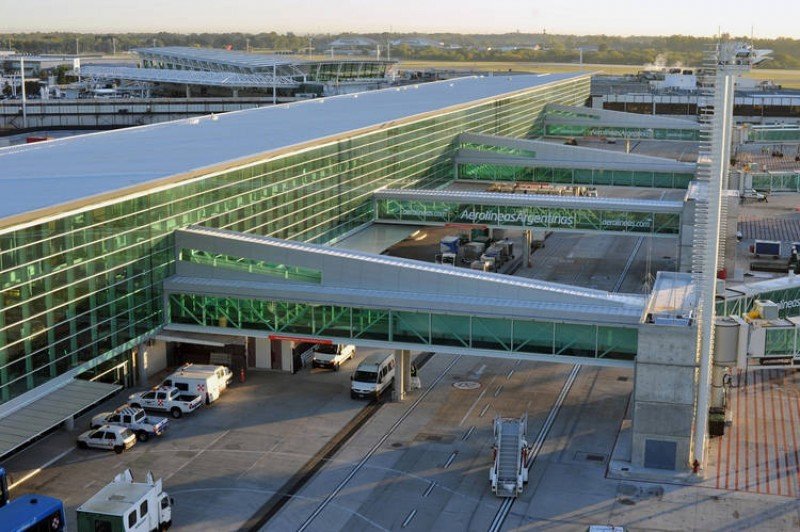
La Empresa Argentina de Navegación Aérea (EANA) dependiente del Ministerio de Transporte de Argentina, ha dejado inaugurado y en funcionamiento el nuevo Sistema de Conmutación de Voz (VCS) del Aeropuerto Internacional de Ezeiza/Ministro Pistarini. Este sistema, cuya instalación se ha anunciado en Junio 2020, es central para las comunicaciones tanto de la Torre de Control (TWR) como del Centro de Control de Área (ACC) Ezeiza y el Área Terminal Baires. Su integración a los servicios de radio y telefonía operativos se realizó sin interrumpir los servicios de Control de Tránsito Aéreo (ATC), mediante una estrategia de implementación con el VCS anterior funcionando en paralelo.
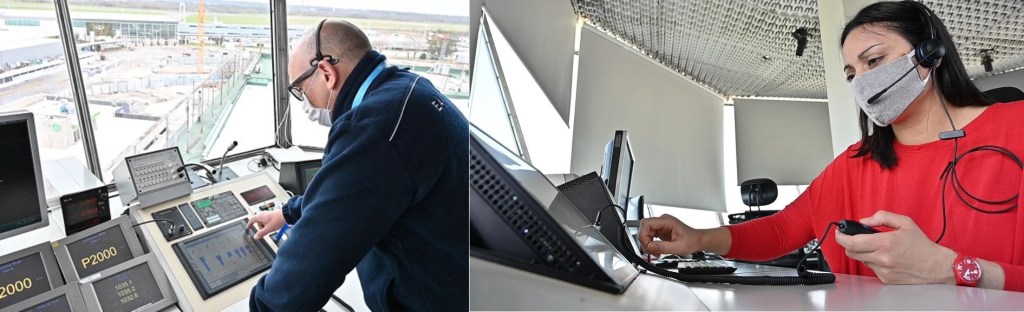
El nuevo VCS, o Voice Switching System, es de última generación. Fue adquirido a la empresa austríaca Frequentis AG y tiene capacidad para manejar hasta 224 equipos de radios. Permite a los controladores de tránsito aéreo operar los equipos de radio VHF locales y remotos y efectuar llamadas telefónicas en la red aeronáutica (ATN) y la red pública (PSTN).
El equipo reemplazado tiene más de 19 años de operación y había alcanzado el final de su vida útil, con mayores necesidades y costos de mantenimiento y la dificultad de adquisición de repuestos. Durante los próximos meses, servirá de respaldo del nuevo. Dada su criticidad, EANA dio la máxima prioridad a su reemplazo. Con la inauguración del nuevo VCS, EANA avanza hacia su objetivo de convertirse en referente regional en seguridad y calidad de servicios de navegación aérea.
Datos relevantes que permiten apreciar la magnitud de la tecnología incorporada:
· Se instalaron 46 puestos de operador en distintas dependencias. Cada puesto cuenta con una pantalla táctil, micrófono, microcasco, parlante y pedal de activación de micrófono. · Capacidad para integrar hasta 108 líneas telefónicas. · Capacidad para integrar hasta 224 radios analógicos/IP. · Capacidad para grabar hasta 360 canales de audio digital. · 60 días de capacidad de almacenamiento de grabaciones. · Total redundancia, que garantiza una mayor disponibilidad del sistema. · Sincronización de tiempo con la red de satélites GPS (Global Positioning System) · Integración a la red ATN de EANA, con acceso remoto para mantenimiento desde las instalaciones de los fabricantes del sistema y la posibilidad de combinar con futuros equipamientos con tecnología IP. · Se instaló un sistema de energía redundante para todo el equipamiento, con unidad UPS alimentada desde una línea de energía eléctrica dedicada. · Se realizó el tendido de 13.000 metros de cable de datos. · Se impartieron 90 horas de entrenamiento de operación y de mantenimiento técnico. · Se capacitó a 300 operadores (del Centro de Control de Área, la torre de control, Comunicaciones, Oficina AISCOM, Unidad de Gestión de Flujo, Área de Capacitación y Técnica). · Se entregaron a las operadoras y los operadores de control de tránsito aéreo 300 certificados de capacitación, como requisito de seguridad operacional para comenzar a usar el nuevo VCS.
AEROPUERTO EZEIZA
Ezeiza Airport inaugurates VCS System
Ezeiza Airport reaches full operation with VCS System
The Argentine Air Navigation Company (EANA), dependent on the Ministry of Transportation of Argentina, has opened and in operation the new Voice Switching System (VCS) of the Ezeiza/Ministro Pistarini International Airport. This system, whose installation was announced in June 2020, is central to the communications of both the Control Tower (TWR) and the Ezeiza Area Control Center (ACC) and the Baires Terminal Area. Its integration into the operational radio and telephone services was carried out without interrupting the Air Traffic Control (ATC) services, through an implementation strategy with the previous VCS operating in parallel.
The new VCS, or Voice Switching System, is of the latest generation. It was acquired from the Austrian company Frequentis AG and has the capacity to handle up to 224 radio sets. It allows air traffic controllers to operate local and remote VHF radio equipment and to make phone calls on the aeronautical network (ATN) and the public network (PSTN).
The replaced equipment has been in operation for more than 19 years and had reached the end of its useful life, with higher maintenance needs and costs and the difficulty of purchasing spare parts. Over the next few months, it will serve as a backup for the new one. Given its criticality, EANA gave the highest priority to its replacement. With the inauguration of the new VCS, EANA is moving towards its goal of becoming a regional benchmark in safety and quality of air navigation services.
Relevant data that allow us to appreciate the magnitude of the incorporated technology:
· 46 operator stations were installed in different units. Each station has a touch screen, microphone, headset, speaker and microphone activation pedal. · Ability to integrate up to 108 telephone lines. · Ability to integrate up to 224 analog/IP radios. · Ability to record up to 360 channels of digital audio. · 60 days of recording storage capacity. · Total redundancy, which guarantees greater availability of the system. · Time synchronization with the GPS (Global Positioning System) satellite network · Integration to the EANA ATN network, with remote access for maintenance from the system manufacturers’ facilities and the possibility of combining it with future equipment with IP technology. · A redundant power system was installed for all the equipment, with a UPS unit fed from a dedicated electrical power line. · 13,000 meters of data cable were laid. · 90 hours of technical maintenance and operation training were given. · 300 operators were trained (from the Area Control Center, the control tower, Communications, AISCOM Office, Flow Management Unit, Training and Technical Area). · 300 training certificates were delivered to air traffic control operators and operators, as an operational safety requirement to start using the new VCS.
AerSale próxima certificación sistema visualización portátil B737
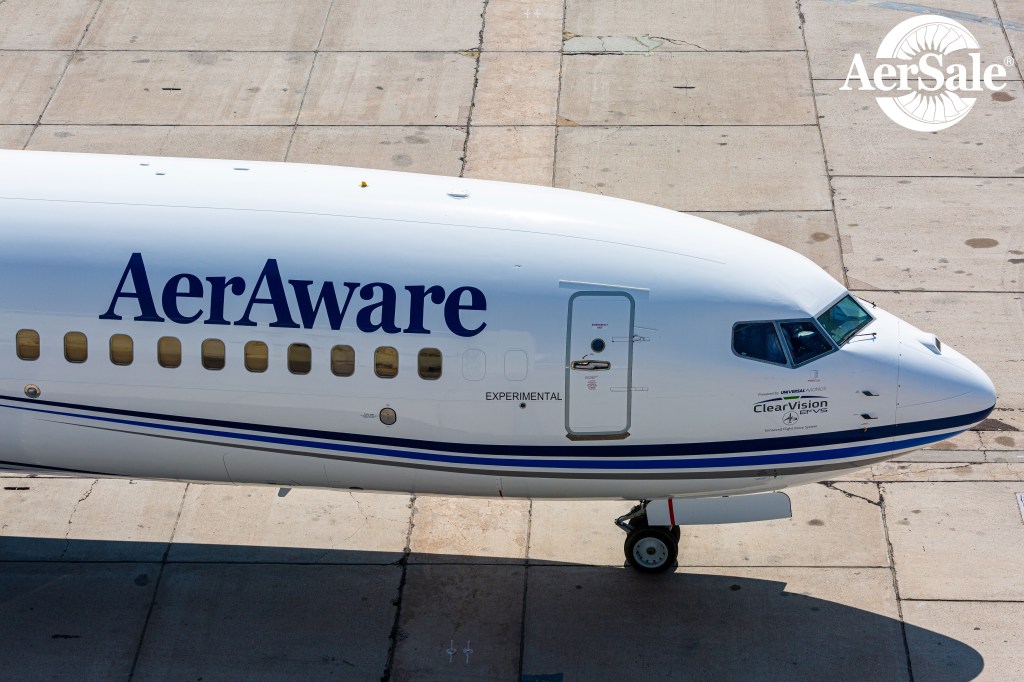
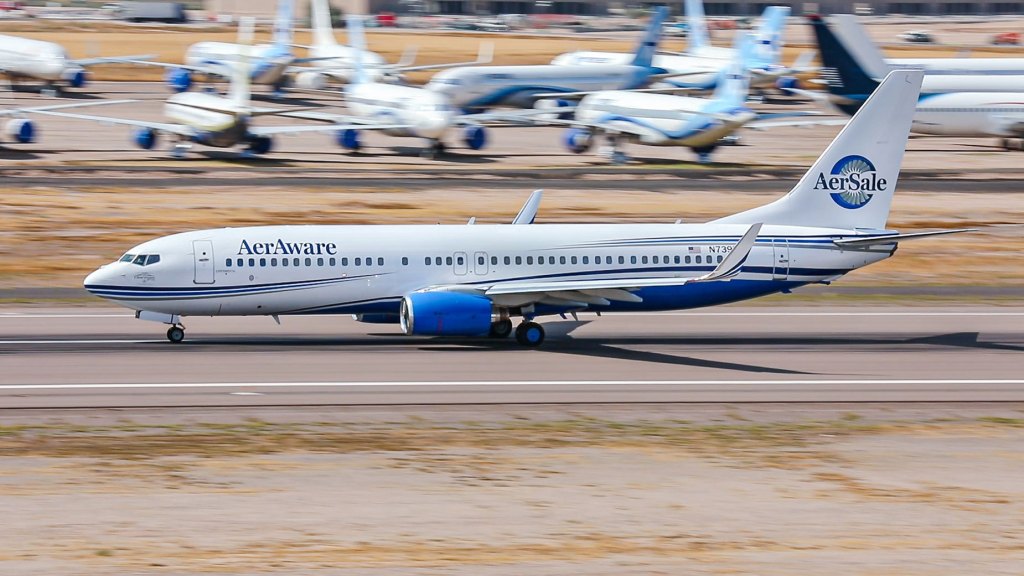
AerSale espera lograr la certificación de tipo hacia fin de año 2020 de la Administración Federal de Aviación (FAA) para un Sistema de Visión de Vuelo Mejorado (EFVS) AerWare, localizado con pantalla a la altura de la cabeza, para las aeronaves Boeing 737-800 Next Generation. El proveedor de arrendamientos, repuestos y modificaciones de aeronaves con sede en Florida se asoció por primera vez con Universal Avionics en Abril de 2019 para desarrollar un Certificado de Tipo Suplementario (STC) para la Pantalla Frontal Portátil (HUD) SkyLens de Universal en el Airbus A320. Ahora, AerSale está a punto de completar sus pruebas de vuelo de AerAware en un 737-800 NG modificado, anticipando la aprobación STC de la FAA para el cuarto trimestre y la aprobación posterior de la Agencia Europea de Seguridad Aérea (EASA) el próximo año.
AerAware es descrito por AerSale como una combinación de datos de sistemas de aeronaves en tiempo real, imágenes de cámara multiespectrales avanzadas y visión sintética en una pantalla portátil. Un aspecto clave de la pantalla portátil es su capacidad para proporcionar a los pilotos la aproximación visual requerida y las referencias de aterrizaje antes en el proceso de aproximación de aterrizaje del aeropuerto. «Esto permite a los pilotos descender por debajo de los mínimos de aproximación por instrumentos de visión natural publicados y permite el despacho de aeronaves ‘hacia y desde’ aeropuertos cuando la visibilidad está muy por debajo de los mínimos de aproximación por instrumentos de visión natural publicados», según un comunicado de prensa de AerSale del 29 de Septiembre de 2020.
La modificación del 737-800 NG para permitir la evaluación de prueba de vuelo inicial de AerAware incluyó una nueva cúpula para acomodar la instalación de la cámara, el cableado del sistema, los conectores y el hardware de montaje en las bahías de equipos y la cabina de vuelo. El Presidente de la División de Soluciones de Ingeniería de AerSale, Iso Nezaj, cree que el nuevo STC podría generar más interés en el uso de la tecnología HUD portátil por parte de los pilotos de aerolíneas comerciales. La adopción anterior de la tecnología se ha limitado principalmente a las operaciones de aviones militares. «La integración exitosa de ClearVision EFVS de Universal en el producto AerAware de AerSale trae un sistema avanzado superior disponible como una actualización para aviones comerciales existentes. La calidad y el contenido de las imágenes que ve el piloto que lleva nuestro HWD es insuperable. Nuestra tecnología integra hardware de grado militar en aviones comerciales existentes y será una solución EFVS preferida en el gran mercado de flotas comerciales direccionables existente», dijo Nezaj en un comunicado.
La compañía también espera que la regla EFVS de Diciembre de 2016 de la FAA, FAR 91.176, que permite a los operadores usar la tecnología para lograr mínimos de aterrizaje más bajos, también inspire más interés en las aerolíneas comerciales. «Estábamos encantados de asociarnos con Universal para proporcionar nuestra experiencia en ingeniería y modificación para instalar ClearVision EFVS en aviones comerciales. Inmediatamente nos dimos cuenta de que la tecnología Universal EFVS era superior a cualquier otra cosa que estuviera disponible y decidimos incluir prácticamente todas las plataformas de aviones comerciales en nuestro proceso de desarrollo de STC», dijo el CEO de AerSale, Nicolas Finazzo.
AerSale CERT-EFVS Boeing 737
AerSale approaches Boeing 737 portable display system certification
AerSale expects to achieve type certification by the end of 2020 from the Federal Aviation Administration (FAA) for an AerWare Enhanced Flight Vision System (EFVS), located with head-level display, for Boeing 737- aircraft. 800 Next Generation. The Florida-based provider of aircraft leases, spare parts and modifications first partnered with Universal Avionics in April 2019 to develop a Supplemental Type Certificate (STC) for Universal’s SkyLens Handheld Front Display (HUD) on Airbus A320. Now, AerSale is nearing completion of its AerAware flight tests on a modified 737-800 NG, anticipating STC approval from the FAA for the fourth quarter and subsequent approval from the European Aviation Safety Agency (EASA) next year.
AerAware is described by AerSale as a combination of real-time aircraft system data, advanced multispectral camera images, and synthetic vision on a portable display. A key aspect of the portable display is its ability to provide pilots with the required visual approach and landing references earlier in the airport landing approach process. «This allows pilots to descend below published natural vision instrument approach minima and enables dispatch of aircraft ‘to and from’ airports when visibility is well below published natural vision instrument approach minima», according to an AerSale press release dated September 29, 2020.
Modification of the 737-800 NG to allow AerAware’s initial flight test evaluation included a new dome to accommodate camera installation, system wiring, connectors, and mounting hardware in the equipment bays and cockpit. Of flight. AerSale Engineering Solutions Division President Iso Nezaj believes the new STC could generate more interest in the use of wearable HUD technology by commercial airline pilots. Previous adoption of the technology has been primarily limited to military aircraft operations. «The successful integration of Universal’s ClearVision EFVS into AerSale’s AerAware product brings a superior advanced system available as an upgrade to existing commercial aircraft. The quality and content of the images seen by the pilot wearing our HWD is second to none. Our technology integrates military-grade hardware into existing commercial aircraft and will be a preferred EFVS solution in the existing large commercial addressable fleet market», Nezaj said in a statement.
The company also hopes that the FAA’s December 2016 EFVS rule, FAR 91.176, which allows operators to use technology to achieve lower landing minima, will also inspire more interest from commercial airlines. «We were delighted to partner with Universal to provide our engineering and modification expertise to install ClearVision EFVS on commercial aircraft. We immediately realized that Universal EFVS technology was superior to anything else that was available and decided to include virtually all platforms from commercial aircraft in our STC development process», said AerSale CEO Nicolas Finazzo.
HARS Aviation Museum exhibirá al legendario Southern Cross
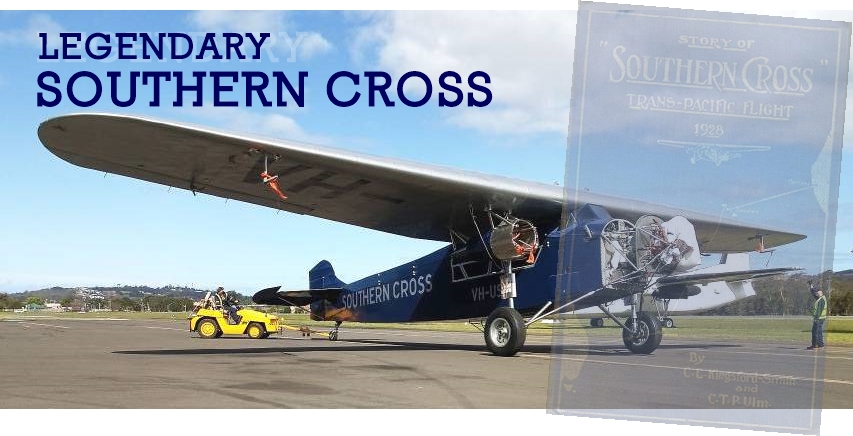
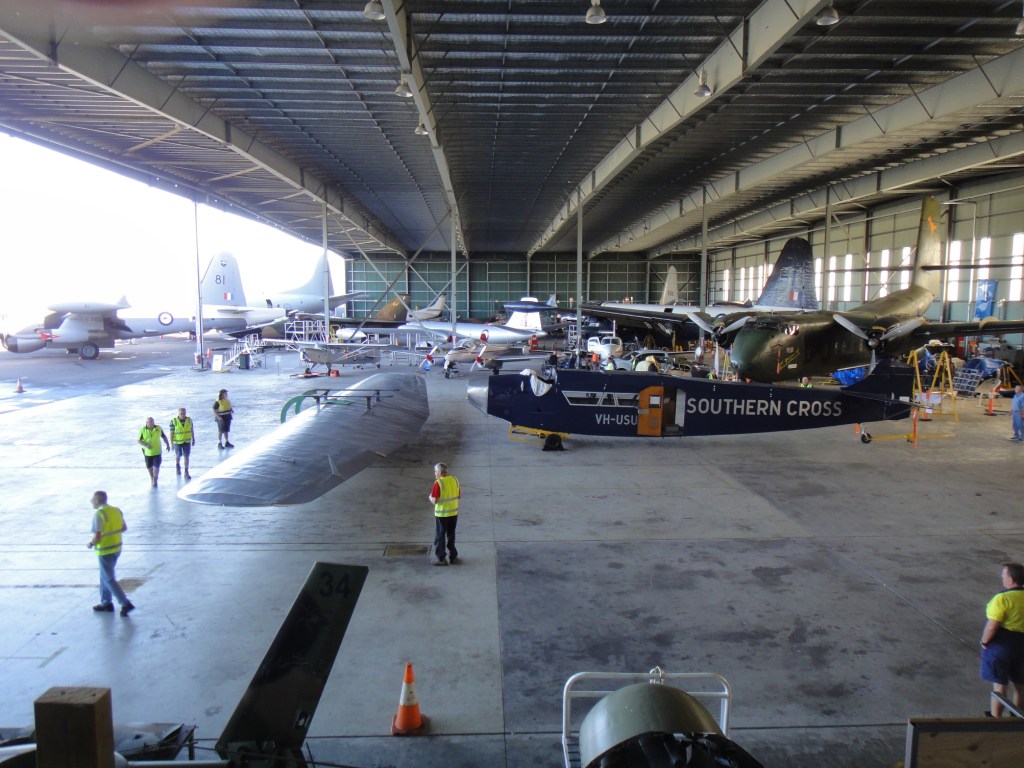
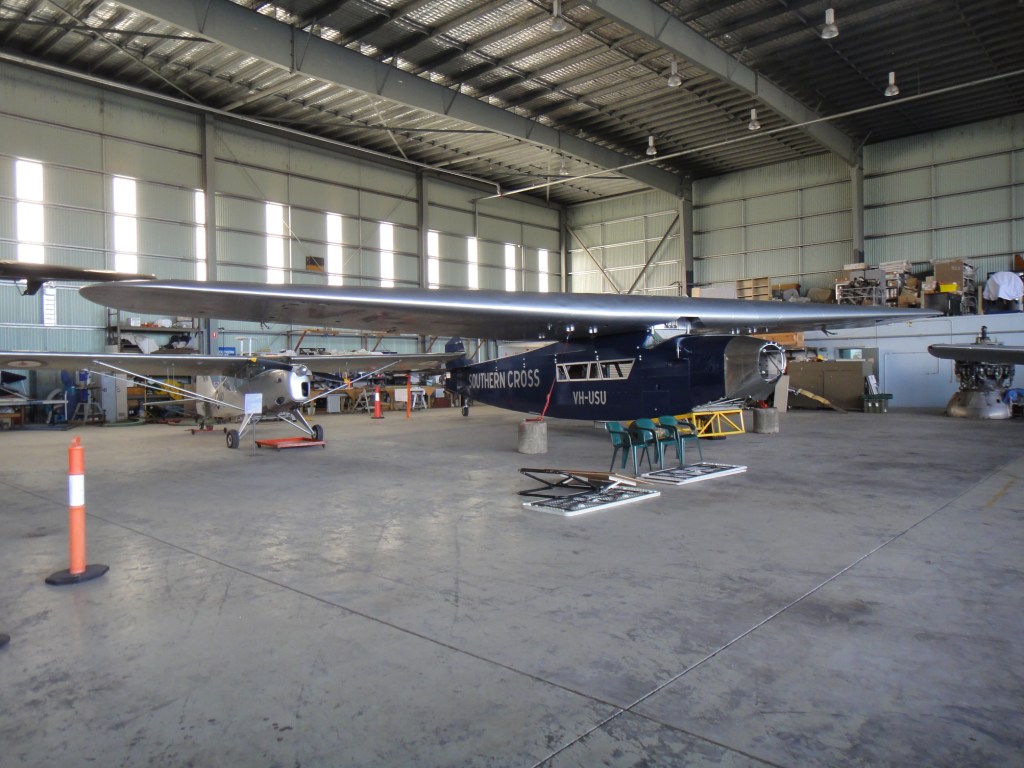
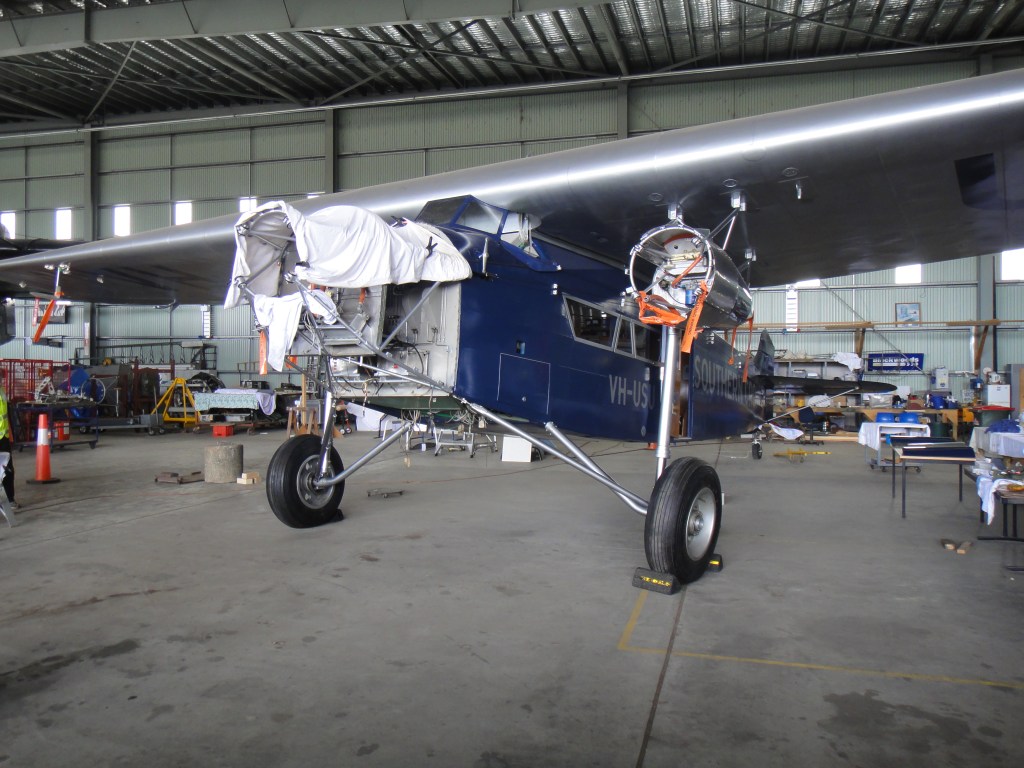
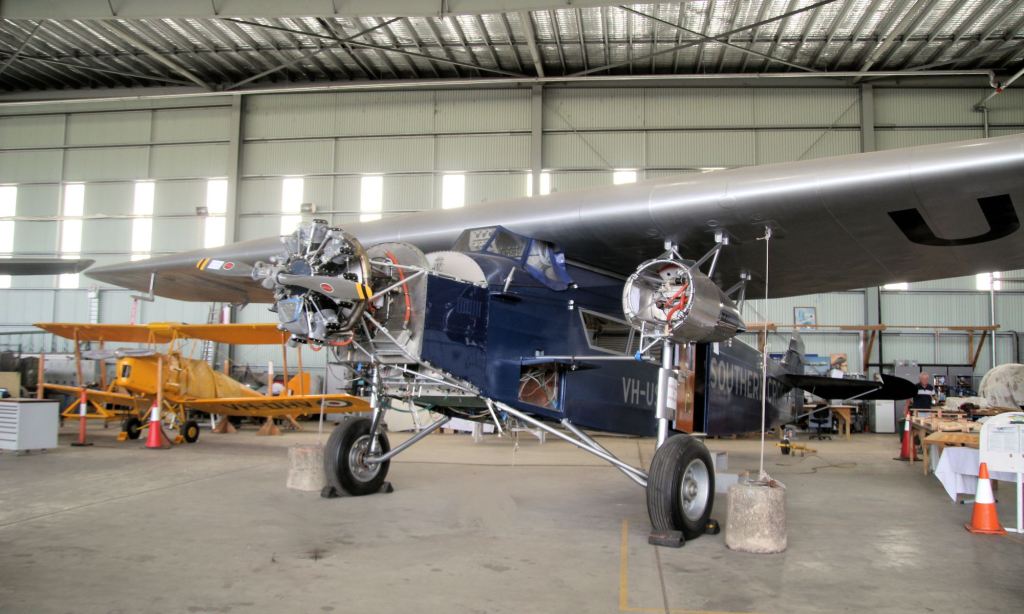
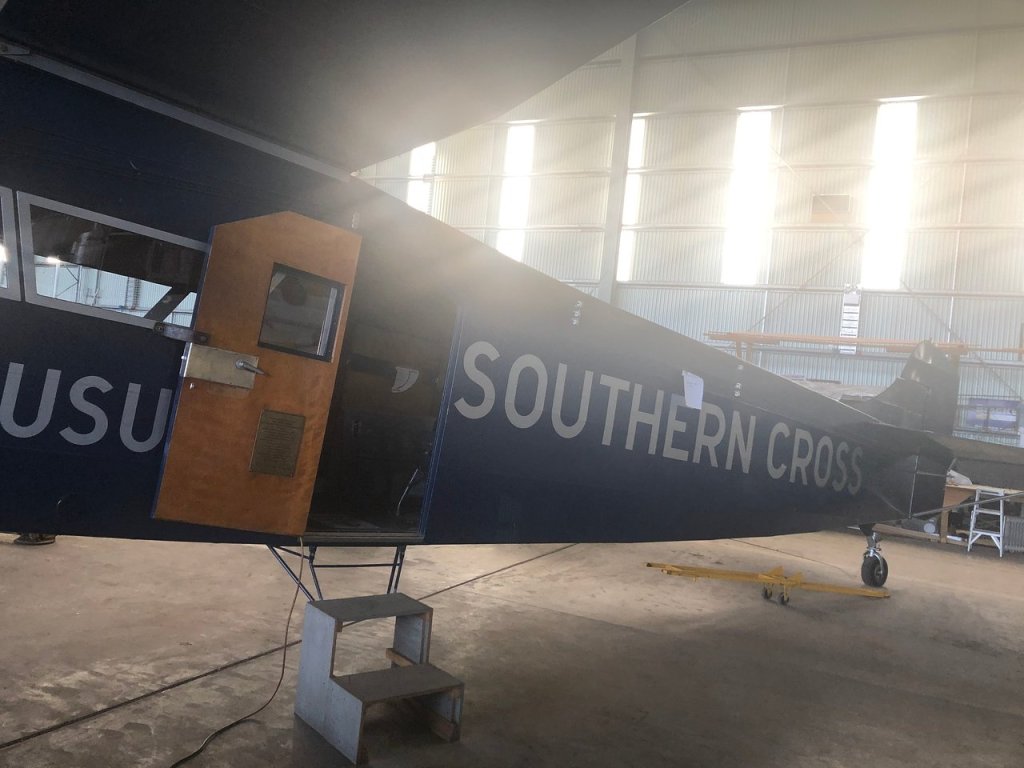
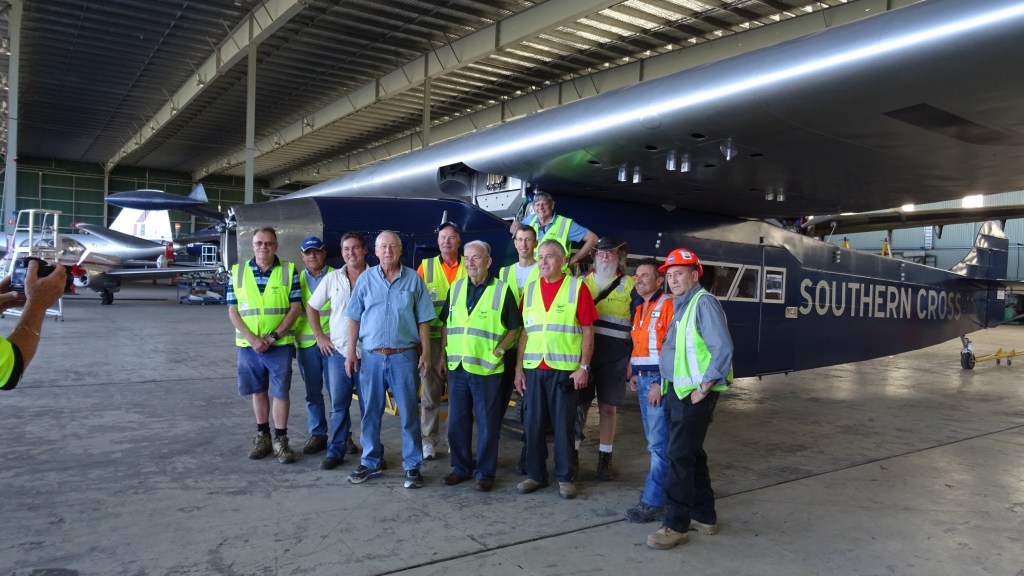
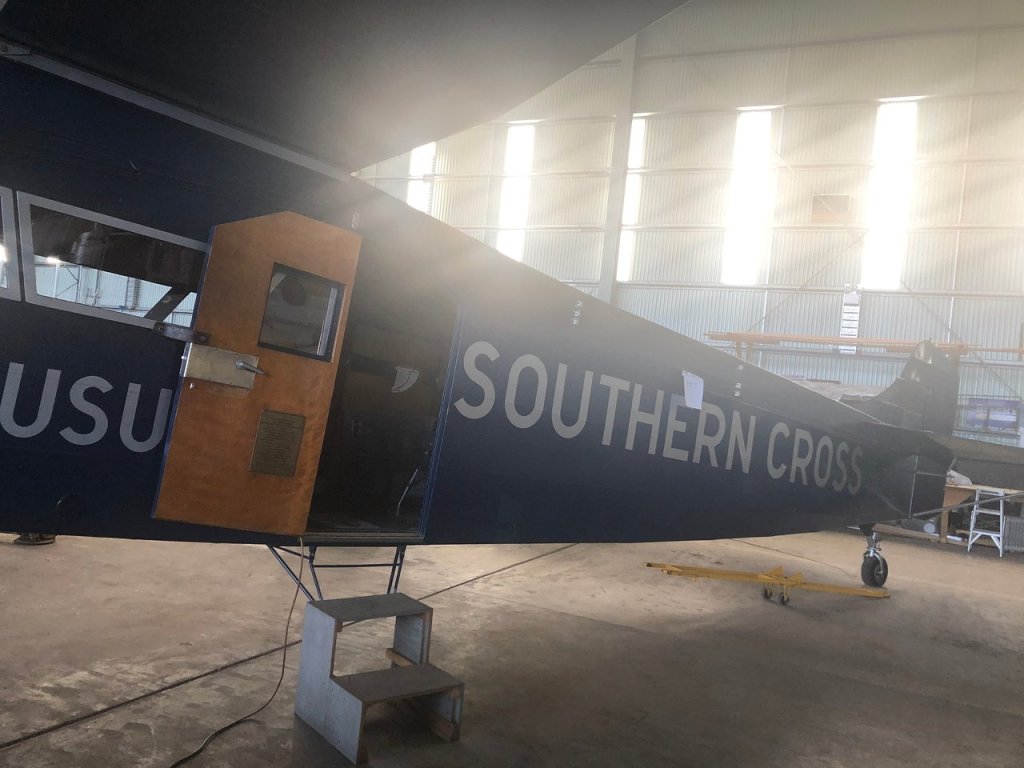
Los residentes de Illawarra en el Estado de Nueva Gales del Sur, Australia, podrán conocer de cerca y personalmente la réplica del Southern Cross de Kingsford Smith este fin de semana en el Museo de Aviación HARS. Luego de la llegada la semana pasada del tercer motor de pistón Jacobs restaurado, se ha podido completar la estructura de la aeronave Fokker F.VIIb/3m matrícula VH-USU. El proyecto de 10 años para que la aeronave vuelva a volar ha sido una labor de pasión para un pequeño equipo en el Museo de Aviación HARS dirigido por Jim Thurstan.
Historia del Fokker Trimotor
Los Fokker Trimotors sirvieron como aviones de pasajeros populares en Europa durante la década de 1920 y la restauración de la réplica voladora de la Southern Cross construida para el Bicentenario de Australia mostrará como era en esos primeros días de vuelo.
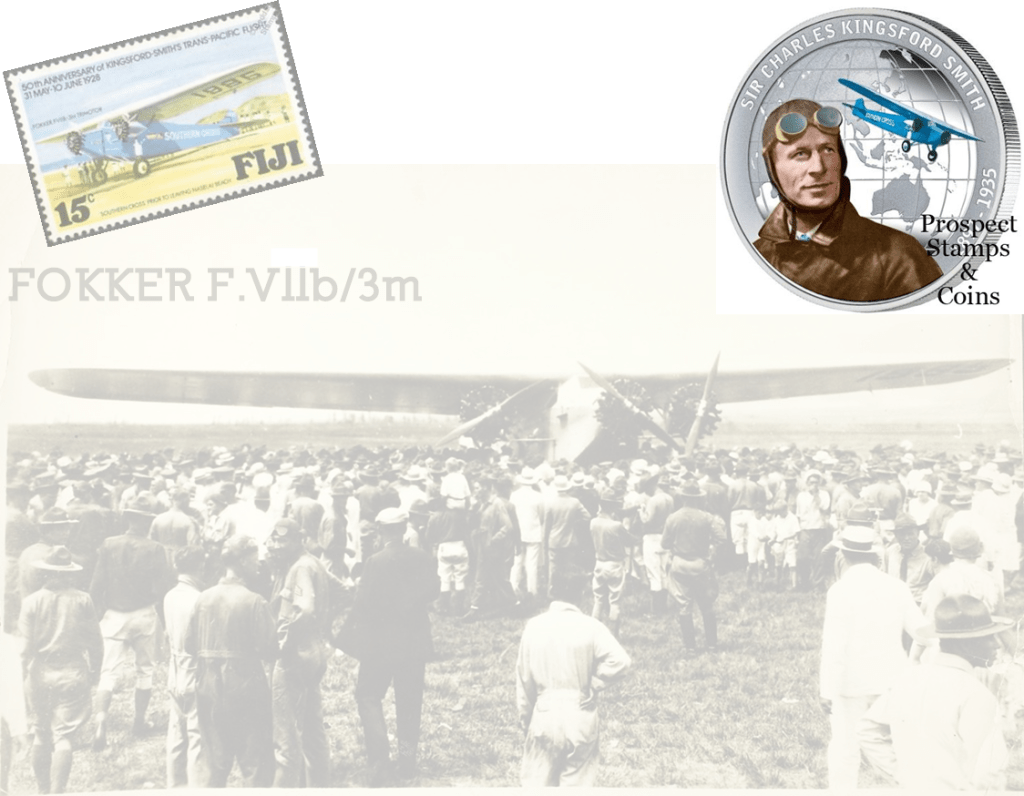
El Southern Cross es un monoplano trimotor Fokker F.VIIb/3m que fue volado por el aviador australiano Charles Kingsford Smith, Charles Ulm, Harry Lyon y James Warner en el primer vuelo transpacífico a Australia desde los Estados Unidos continentales, una distancia de unos 11.670 kilómetros (7.250 millas), en 1928.
El Southern Cross nació como el Detroiter, un avión de exploración polar de la expedición Detroit News- Wilkins Arctic. El avión se estrelló en Alaska en 1926 y fue recuperado y reparado por el líder de la expedición australiano, Hubert Wilkins. Wilkins, que había decidido que el Fokker era demasiado grande para sus exploraciones árticas, se reunió con Kingsford Smith y Charles Ulm en San Francisco y dispuso venderles el avión, sin motores ni instrumentos. Después de haber equipado la aeronave con motores y otras piezas necesarias, Kingsford Smith hizo dos intentos por lograr el récord mundial de resistencia en un intento de recaudar fondos e interés para su vuelo transpacífico. Sin embargo, después de que el gobierno de Nueva Gales del Sur retiró su patrocinio del vuelo, parecía que el dinero se acabaría y Kingsford Smith tendría que vender la Cruz del Sur . El avión fue comprado por el aviador y filántropo estadounidense Allan Hancock , quien luego se lo prestó a Kingsford Smith y Ulm. Los tres motores Wright Whirlwind fueron financiados por el empresario de Melbourne, Sidney Myer.
Vuelo Fokker F.VIIb/3m
El 31 de Mayo de 1928, la tripulación —Charles Kingsford Smith, Charles Ulm y los estadounidenses Harry Lyon (navegante) y James Warner (operador de radio)— despegó de Oakland, California, Estados Unidos. El Southern Cross se detuvo para descansar y repostar en Hawai antes de partir hacia Fiji. Este tramo del viaje tomó 34 1⁄2 horas de vuelo a través del mar abierto antes de pasar por el Grand Pacific Hotel en Suva , donde una multitud grande y entusiasta vio el primer avión que aterrizó en Fiji aterrizar en Albert Park. El Southern Cross aterrizó en el aeropuerto Eagle Farm en Brisbane, Queensland, Australia, el 9 de Junio, donde una multitud de 25.000 personas estaban esperando para recibir al Southern Cross a su llegada al aeropuerto. El Southern Cross voló a Sydney al día siguiente 10 de Junio.
La aeronave estuvo en constante comunicación por radio con los barcos y la costa durante el vuelo utilizando cuatro transmisores y tres receptores alimentados por una turbina de aire de pistón unida al fuselaje debajo de la cabina. Los transmisores incluían un equipo de onda corta de 50 vatios que funcionaba a 33,5 metros de longitud de onda y dos equipos de 60 vatios que funcionaban a 600 metros, con un equipo de emergencia impermeable de 600 metros capaz de funcionar ocho horas sumergido. Los receptores, que comparten un amplificador de audio común, incluían una baliza y una de onda corta, onda larga. Los primeros mensajes comerciales pagados se enviaron y recibieron durante el vuelo y se estableció un nuevo récord mundial de distancia para la radio con una recepción de onda corta en Bloemfontein., Sudáfrica, el camino más largo alrededor del mundo a 12.800 millas (20.600 km). Se mantuvieron comunicaciones directas entre el avión y la costa de onda corta con la costa del Pacífico hasta que el vuelo estuvo a cuatro horas de Honolulu, que había estado monitoreando el vuelo desde dos horas después de la salida con una superposición de recepción similar en el tramo de Honolulu a Suva. El éxito de este vuelo influyó en el almirante Byrd para equipar sus tres aviones de la Expedición Antártica con equipos similares.
Vuelos Trans-Tasman
Kingsford Smith, Ulm y Gordon Taylor también hicieron el primer vuelo sin escalas Trans-Tasman en Southern Cross sobre el Mar de Tasmania desde Australia a Nueva Zelanda comenzando con la primera travesía del 10 al 11 de Septiembre de 1928, una distancia de 2670 kilómetros (1,660 millas). Luego volaron de regreso a Australia. Guy Menzies completó el primer vuelo trans-Tasman en solitario en el Southern Cross Junior en 1931.
Preservación
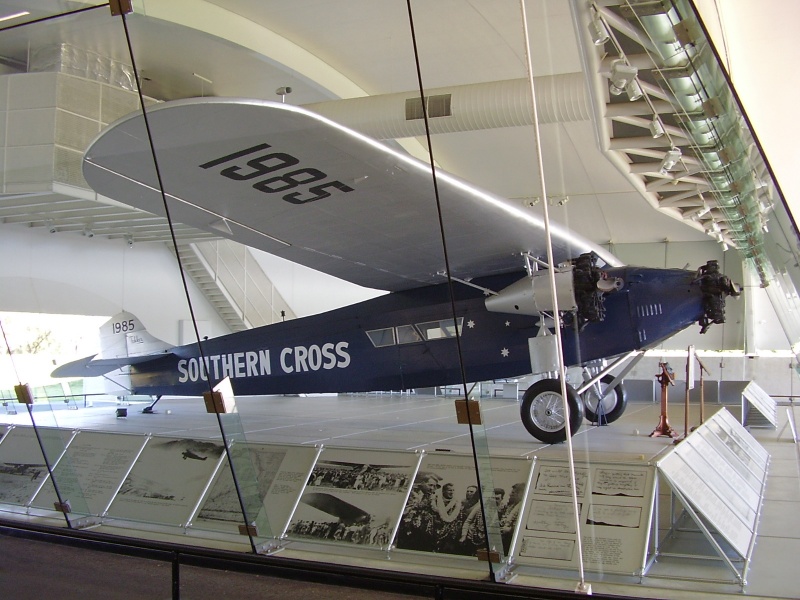
Poco antes de la muerte de Kingsford Smith en 1935, vendió el Southern Cross a la Commonwealth de Australia, para exhibirla en un museo. La aeronave se retiró brevemente en 1945 para el rodaje de la película Smithy. La máquina fue renovada en 1985 bajo la supervisión de Jim Schofield, un alto funcionario de aviación e investigador de accidentes aéreos. El Southern Cross ahora se conserva en un hangar de cristal especial en Airport Drive, cerca de la terminal internacional del aeropuerto de Brisbane.
Una reproducción voladora a tamaño real del Southern Cross se construyó en Australia del Sur entre 1980 y 1987, y es el avión de reproducción más grande conocido en el mundo. El Sargento Anthony Lohrey de la Real Fuerza Aérea Australiana, Unidad de Investigación y Desarrollo de Aeronaves (ARDU) supervisó su construcción. El 25 de Mayo de 2002 en Parafield South Australia perdió una rueda principal en el despegue. La réplica aterrizó en la única rueda buena y el patín de cola con el piloto manteniendo el tren de aterrizaje dañado fuera del suelo manteniendo el ala en el aire. Cuando el avión se detuvo, el ala bajó y se partió ~3 m de la punta del ala. Después de una negociación considerable, la Sociedad de Restauración de Aeronaves Históricas (HARS) adquirió la aeronave del Gobierno de Sudáfrica en 2010, y la aeronave fue transportada a las instalaciones de HARS en el Aeropuerto Regional Illawarra, Albion Park, Nueva Gales del Sur. Los voluntarios de HARS están restaurando la réplica de la aeronave a su estado de aeronavegabilidad completa. Esto incluirá la restauración del ala de madera contrachapada y pícea hecha a mano. La aeronave lleva el registro original de VH-USU.
Un tributo personal
El entusiasta de la aviación australiano Austin Byrne fue parte de la gran multitud en el Aeródromo Mascot de Sydney en junio de 1928 para dar la bienvenida al Southern Cross y su tripulación luego de su exitoso vuelo transpacífico. Ser testigo de este evento inspiró a Byrne a hacer un modelo a escala 1:24 del Southern Cross, hecho principalmente de latón con acabado en oro y plata. Kingsford Smith desapareció antes de que Byrne completara el modelo. Después de la desaparición de Kingsford Smith, Byrne continuó expandiendo y mejorando su tributo con pinturas, fotografías, documentos y obras de arte que creó, diseñó o encargó. Entre 1930 y su muerte en 1993, Byrne dedicó su vida a crear y recorrer su Southern Cross Memorial.
El registro original del Southern Cross era «1985»; este número se puede ver en las alas y la cola del avión en las fotos tomadas en el momento de su primer vuelo récord. Kingsford Smith volvió a registrarlo en Australia como «G-AUSU», 4 de Julio de 1928 al 3 de Julio de 1929, y luego «VH-USU» el 5 de Abril de 1931. Las marcas de «1985» y el esquema de color original se restauraron cuando el avión se exhibió al público.
El Southern Cross recibió su nombre de la constelación de la Cruz del Sur, un símbolo popular del hemisferio sur en general y de Australia en particular. Kingsford Smith continuó el tema con su último avión Southern Cross Minor y Southern Cross Junior (ambos Avro Avians ), Miss Southern Cross (Percival Gull) y Lady Southern Cross (Lockheed Altair). También produjo un automóvil con el nombre, y le dio al avión operado por su aerolínea, Australian National Airways, nombres similares que comienzan con la palabra Sur.
Exhibición HARS Aviation
Los aviones que se presentarán en los Tarmac Days del HARS Aviation Museum este fin de semana incluyen el Fokker VIIb/3m, un helicóptero Bell 47 MASH que vuela el sábado y el domingo junto con un Lockheed AP-3C Orion recientemente retirado y un ex C-47 Dakota. Habrá casi 50 aviones en exhibición de Viernes 09/10 al Domingo 11/10.
Replica Southern Cross in Australia
HARS Aviation Museum to exhibit legendary Southern Cross
Residents of Illawarra in the State of New South Wales, Australia, will get up close and personal with the replica of Kingsford Smith’s Southern Cross this weekend at the HARS Aviation Museum. Following the arrival last week of the third restored Jacobs piston engine, the structure of the Fokker F.VIIb/3m aircraft registration VH-USU has been completed. The 10-year project to get the aircraft to fly again has been a passionate endeavor for a small team at the HARS Museum of Aviation led by Jim Thurstan.
History of the Fokker Trimotor
The Fokker Trimotors served as popular airliners in Europe during the 1920s and the restoration of the Southern Cross flying replica built for Australia’s Bicentennial will show what it looked like in those early days of flight.
The Southern Cross is a Fokker F.VIIb/3m trimotor monoplane that was flown by Australian aviator Charles Kingsford Smith, Charles Ulm, Harry Lyon and James Warner on the first trans-Pacific flight to Australia from the continental United States, a distance of about 11,670 kilometers (7,250 miles), in 1928.
The Southern Cross was born as the Detroiter, a polar exploration aircraft of the Detroit News-Wilkins Arctic expedition. The plane crashed in Alaska in 1926 and was recovered and repaired by Australian expedition leader Hubert Wilkins. Wilkins, who had decided that the Fokker was too large for his Arctic explorations, met with Kingsford Smith and Charles Ulm in San Francisco and arranged to sell the plane to them, without engines or instruments. After having equipped the aircraft with engines and other necessary parts, Kingsford Smith made two attempts to achieve the world endurance record in an attempt to raise funds and interest for his trans-Pacific flight. However, after the New South Wales government withdrew its sponsorship of the flight, it seemed the money would run out and Kingsford Smith would have to sell the Southern Cross. The plane was purchased by American aviator and philanthropist Allan Hancock, who later loaned it to Kingsford Smith and Ulm. The three Wright Whirlwind engines were financed by Melbourne businessman Sidney Myer.
Flight Fokker F.VIIb/3m
On May 31, 1928, the crew Charles Kingsford Smith, Charles Ulm and Americans Harry Lyon (navigator) and James Warner (radio operator) took off from Oakland, California, United States. The Southern Cross stopped to rest and refuel in Hawaii before departing for Fiji. This leg of the trip took 34 1⁄2 hours of flying across the open sea before passing the Grand Pacific Hotel in Suva, where a large and enthusiastic crowd saw the first plane to land in Fiji land at Albert Park. The Southern Cross landed at Eagle Farm Airport in Brisbane, Queensland, Australia, on June 9, where a crowd of 25,000 people were waiting to greet the Southern Cross upon arrival at the airport. The Southern Cross flew to Sydney the following day June 10.
The aircraft was in constant radio communication with the ships and the shoreline during the flight using four transmitters and three receivers powered by a piston air turbine attached to the fuselage below the cockpit. The transmitters included a 50-watt shortwave set operating at 33.5 meters wavelength and two 60-watt sets operating at 600 meters, with a 600-meter waterproof emergency kit capable of operating eight hours submerged. The receivers, which share a common audio amplifier, included a beacon and a shortwave, longwave. The first commercial paid messages were sent and received during the flight and a new world distance record was set for radio with shortwave reception in Bloemfontein, South Africa, the longest way around the world at 12,800 miles (20,600 km). Direct communications were maintained between the aircraft and the shortwave coastline with the Pacific coast until the flight was four hours from Honolulu, which had been monitoring the flight for two hours after departure with a similar reception overlay on the Honolulu to Suva stretch. The success of this flight influenced Admiral Byrd to equip his three Antarctic Expedition aircraft with similar equipment.
Trans-Tasman flights
Kingsford Smith, Ulm and Gordon Taylor also made the first non-stop Trans-Tasman flight at Southern Cross over the Tasman Sea from Australia to New Zealand beginning with the first crossing from 10-11 September 1928, a distance of 2,670 kilometers ( 1,660 miles). They then flew back to Australia. Guy Menzies completed the first solo trans-Tasman flight on the Southern Cross Junior in 1931.
Preservation
Shortly before Kingsford Smith’s death in 1935, he sold the Southern Cross to the Commonwealth of Australia, for display in a museum. The aircraft was briefly retired in 1945 for the filming of the Smithy movie. The machine was renovated in 1985 under the supervision of Jim Schofield, a senior aviation official and air accident investigator. The Southern Cross is now kept in a special glass hangar on Airport Drive near the international terminal at Brisbane Airport.
A life-size flying replica of the Southern Cross was built in South Australia between 1980 and 1987, and is the largest known replica aircraft in the world. Sergeant Anthony Lohrey of the Royal Australian Air Force, Aircraft Research and Development Unit (ARDU) oversaw its construction. On May 25, 2002 at Parafield South Australia he lost a main wheel on take off. The replica landed on the only good wheel and the tail skid with the pilot keeping the damaged landing gear off the ground keeping the wing in the air. When the aircraft stopped, the wing lowered and split ~3 m from the wingtip. After considerable negotiation, the Historic Aircraft Restoration Society (HARS) acquired the aircraft from the Government of South Africa in 2010, and the aircraft was transported to the HARS facility at Illawarra Regional Airport, Albion Park, New South Wales. HARS volunteers are restoring the aircraft replica to full airworthiness. This will include restoration of the hand-made plywood and spruce wing. The aircraft carries the original VH-USU registration.
A personal tribute
Australian aviation enthusiast Austin Byrne was part of the large crowd at Sydney Mascot Airfield in June 1928 to welcome the Southern Cross and its crew following their successful trans-Pacific flight. Witnessing this event inspired Byrne to make a 1:24 scale model of the Southern Cross, made primarily of brass with a gold and silver finish. Kingsford Smith disappeared before Byrne completed the model. After Kingsford Smith’s demise, Byrne continued to expand and enhance his tribute with paintings, photographs, documents, and works of art that he created, designed, or commissioned. Between 1930 and his death in 1993, Byrne dedicated his life to creating and touring his Southern Cross Memorial.
The original Southern Cross registration was «1985»; This number can be seen on the wings and tail of the plane in photos taken at the time of its first record flight. Kingsford Smith re-registered it in Australia as «G-AUSU», July 4, 1928 to July 3, 1929, and then «VH-USU» on April 5, 1931. The «1985» marks and the original color were restored when the plane was displayed to the public.
The Southern Cross got its name from the constellation of the Southern Cross, a popular symbol of the southern hemisphere in general and Australia in particular. Kingsford Smith continued the theme with his latest aircraft Southern Cross Minor and Southern Cross Junior (both Avro Avians), Miss Southern Cross (Percival Gull) and Lady Southern Cross (Lockheed Altair). He also produced a car with the name, and gave the aircraft operated by his airline, Australian National Airways, similar names beginning with the word South.
In September 2010, the Old Gateway Highway, which runs through the site of the original Eagle Farm Airport, was renamed the Southern Cross Way.
HARS Aviation Exhibition
Planes to be featured at the HARS Aviation Museum Tarmac Days this weekend include the Fokker VIIb/3m, a Bell 47 MASH helicopter flying Saturday and Sunday alongside a recently retired Lockheed AP-3C Orion and a former C -47 Dakota. There will be almost 50 aircraft on display from Friday 10/09 to Sunday 10/11.
AW | 2020 10 07 16:16 | AIRPORTS / GOVERNMENT / AIRLINES
Aeropuerto Jorge Newbery reabrirá en Febrero 2021
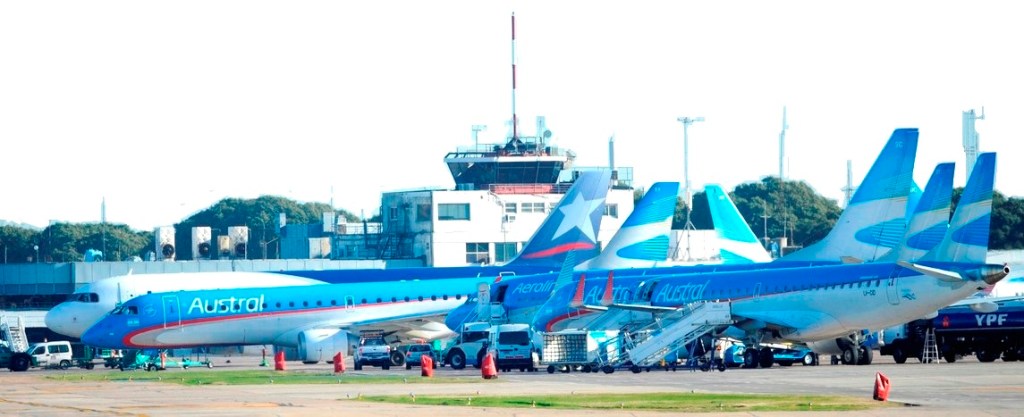
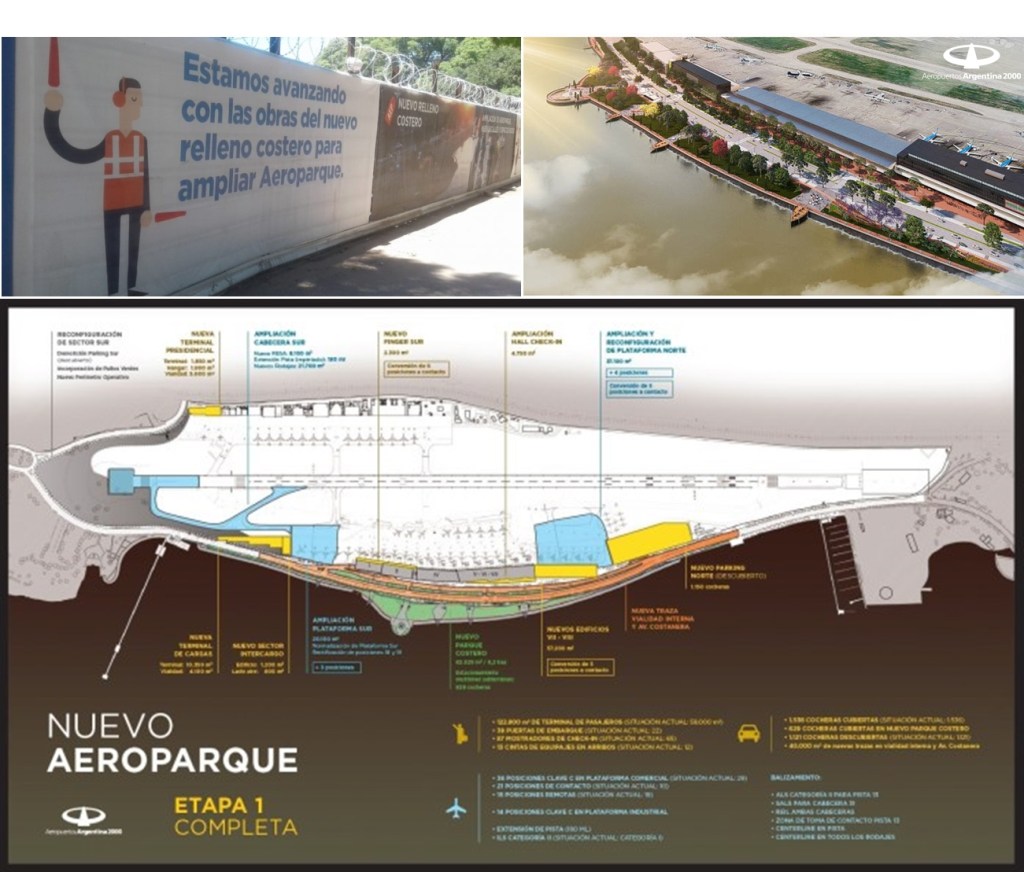
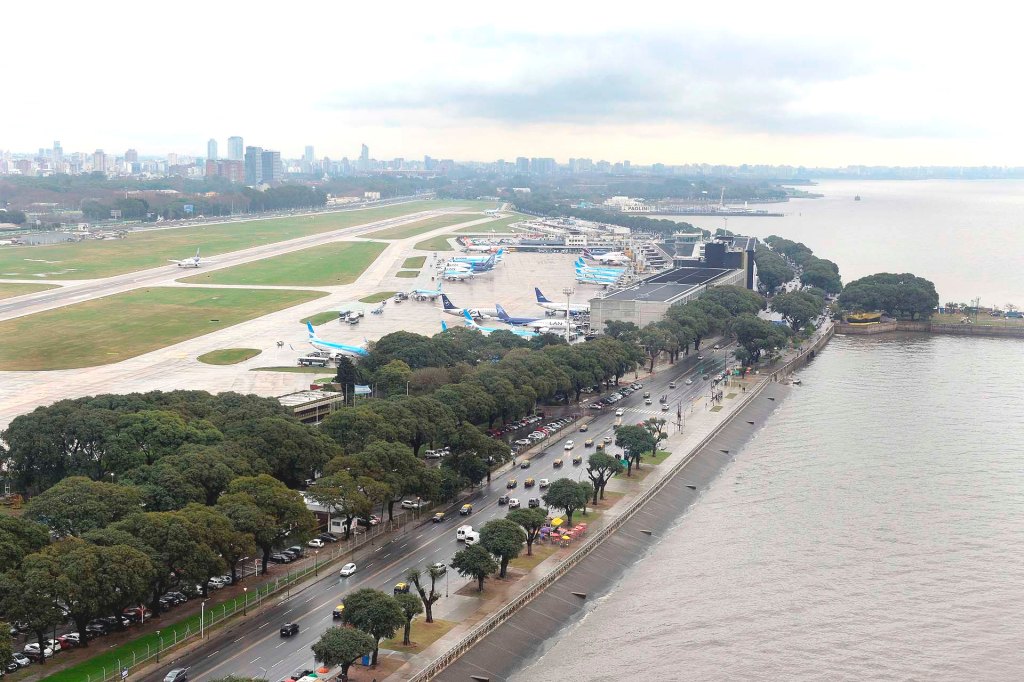
El Gobierno de Argentina ha comunicado que el Aeropuerto Jorge Newbery pospone la reapertura de la actividad aérea por reacondicionamiento de la aeroestación. El Aeroparque había cerrado en Agosto 2020 para realizar obras significativas de ampliación en la pista y en la terminal internacional, de cara a su reapertura como aeropuerto regional hacia Diciembre 2020. Con una inversión de AR$ 5.500 millones de Pesos, el concesionario invertirá en mejoras para ampliar el aeropuerto para albergar más slots y capacidades a la aeroestación que continuará concentrando el mayor tráfico de Argentina. Se prevé alargar, ensanchar y reparar la pista, instalar nuevo balizamiento y ampliar el sector de arribos y partidas internacionales, de cara a su reapertura como terminal regional, con vuelos que incluirán no sólo a los países limítrofes, sino también a Perú.
El Aeroparque Jorge Newbery no reabrirá en Diciembre próximo, como estaba previsto inicialmente, pero, en virtud de algunas demoras en las licitaciones, por el momento, la reinauguración tendría lugar a inicios de Febrero 2021. El Aeroparque, bajo concesión de Aeropuertos Argentina 2000 (AA2000), no estaría operando en el período de mayor demanda de la temporada alta de verano, y los vuelos de cabotaje e internacionales partirían desde Ezeiza, a excepción de los operados por la compañías low cost Flybondi Líneas Aéreas y JetSmart Airlines Argentina, que continuarán volando desde el Aeropuerto Internacional El Palomar.
Aeroparque hacia regionalización
Tras las terminaciones de las obras y la reapertura de Aeroparque como Aeropuerto Regional Jorge Newbery, retornarán los vuelos de cabotaje, más los vuelos regionales que incluyen Uruguay, Paraguay, Chile, Brasil y Perú. Las estimaciones de tráfico para el aeropuerto regional se prevé a dos años vista alcanzar los 12 millones de pasajeros anuales, la misma cifra alcanzada anterior a la pandemia, pero ser optimistas, en el mejor delos casos podría superar esa cifra teniendo en cuenta las mayores capacidades del Aeroparque.
Operadores en Aeroparque
El reinicio de las operaciones en el Aeropuerto Regional Jorge Newbery permitirá ampliar el número de slots, frecuencias de vuelos de las líneas aéreas. Con la salida de Latam Airlines Argentina, la segunda compañía por mayor número de vuelos y pasajeros en Aeroparque, esos slots estarán disponibles para el resto de las compañías que operen en la aeroestación. Por otro lado, continúa pendiente un conflicto Gobierno-JetSmart en el que está envuelta la operación de adquisición de Norwegian Air Argentina y las licencias para operaciones en Aeroparque por parte de JetSmart Argentina.
Mientras tanto, la mejor posicionada para los vuelos en Aeroparque es la compañía del Estado, Aerolíneas Argentinas, que tras el proceso de absorción que continúa pendiente, sumado a la salida de Latam Argentina, consuman un viejo anhelo político de dominar en más de un 80% el tráfico doméstico del país, aunque ese será un nuevo capítulo de conflictos entre operadores aéreos locales que continuará interesando a la opinión pública por los derechos a las libertades de volar.
Tras la reapertura del Aeroparque con estimaciones hacia Febrero 2020, el área metropolitana de Buenos Aires (AMBA) tendría tres grandes terminales: Aeropuerto Internacional Ezeiza, Aeropuerto Regional Jorge Newbery y el Aeropuerto Internacional El Palomar, consolidando y avanzando hacia un país más federal con mayores oportunidades para todos los argentinos y extranjeros.
Aeroparque will reopen in February 2021
Jorge Newbery Airport will reopen in February 2021
The Government of Argentina has communicated that the Jorge Newbery Airport postpones the reopening of air activity due to the refurbishment of the air station. The Airport had closed in August 2020 to carry out significant expansion works on the runway and the international terminal, with a view to its reopening as a regional airport by December 2020. With an investment of AR$ 5.5 billion pesos, the concessionaire will invest in improvements to expand the airport to house more slots and capacities for the air station that will continue to concentrate the largest traffic in Argentina. It is planned to lengthen, widen and repair the runway, install new beacons and expand the international arrivals and departures sector, with a view to its reopening as a regional terminal, with flights that will include not only neighboring countries, but also Peru.
The Jorge Newbery Airport will not reopen next December, as was initially planned, but, due to some delays in the tenders, for the moment, the reopening would take place at the beginning of February 2021. The Airport, under concession by Airports Argentina 2000 AA2000), it would not be operating during the peak summer season, and domestic and international flights would depart from Ezeiza, with the exception of those operated by the low cost companies Flybondi Líneas Aéreas and JetSmart Airlines Argentina, which will continue flying from El Palomar International Airport.
Aeroparque towards regionalization
After the completion of the works and the reopening of Aeroparque as the Jorge Newbery Regional Airport, domestic flights will return, plus regional flights that include Uruguay, Paraguay, Chile, Brazil and Peru. Traffic estimates for the regional airport are expected to reach 12 million annual passengers in two years, the same figure reached before the pandemic, but be optimistic, in the best of cases it could exceed that figure taking into account the greater capacities. from the Aeroparque.
Operators in Aeroparque
The restart of operations at the Jorge Newbery Regional Airport will allow to expand the number of slots and airline flight frequencies. With the departure of Latam Airlines Argentina, the second company in terms of the largest number of flights and passengers at Aeroparque, these slots will be available to the rest of the companies operating at the air station. On the other hand, a government-JetSmart conflict is still pending, involving the acquisition of Norwegian Air Argentina and the licenses for operations at Aeroparque by JetSmart Argentina.
Meanwhile, the best positioned for flights in Aeroparque is the State company, Aerolíneas Argentinas, which after the absorption process that is still pending, added to the departure of Latam Argentina, has consumed an old political desire to dominate in more than 80 % of the country’s domestic traffic, although this will be a new chapter of conflicts between local air operators that will continue to interest public opinion about the rights to freedom of flight.
After the reopening of the Aeroparque with estimates for February 2020, the metropolitan area of Buenos Aires (AMBA) would have three large terminals: Ezeiza International Airport, Jorge Newbery Regional Airport and El Palomar International Airport, consolidating and moving towards a more federal country with greater opportunities for all Argentines and foreigners.
Gol comunica a Transporte de Argentina retorno ops
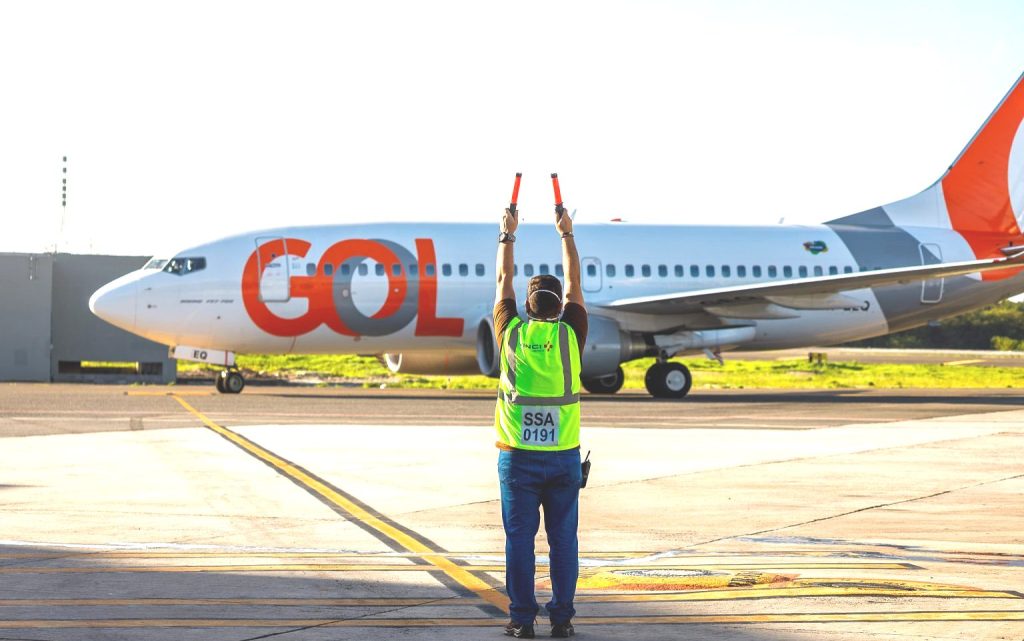
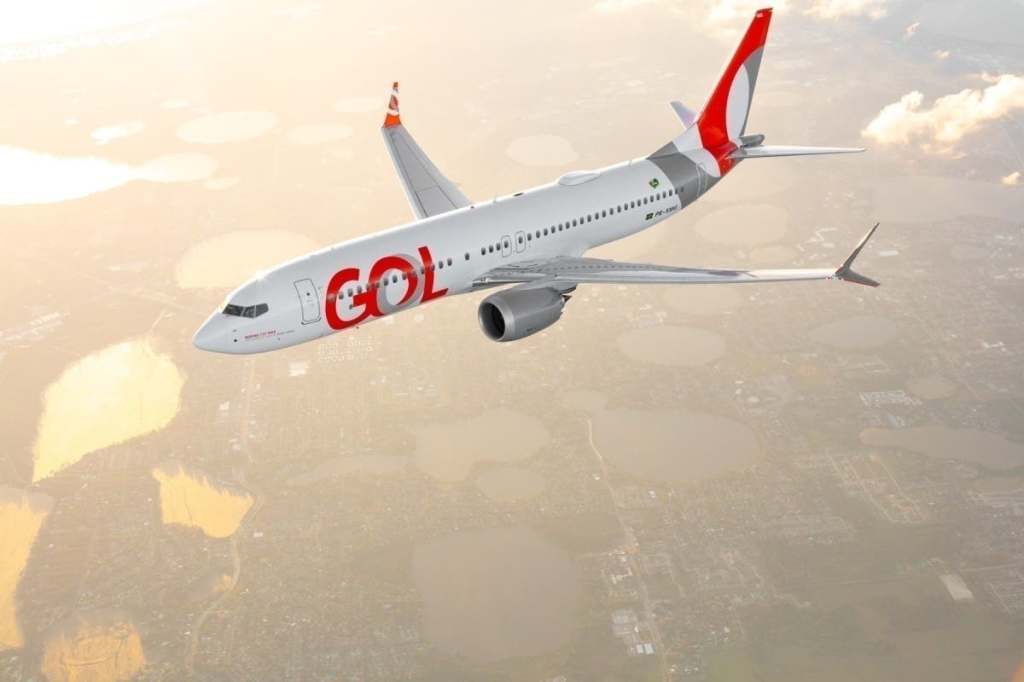
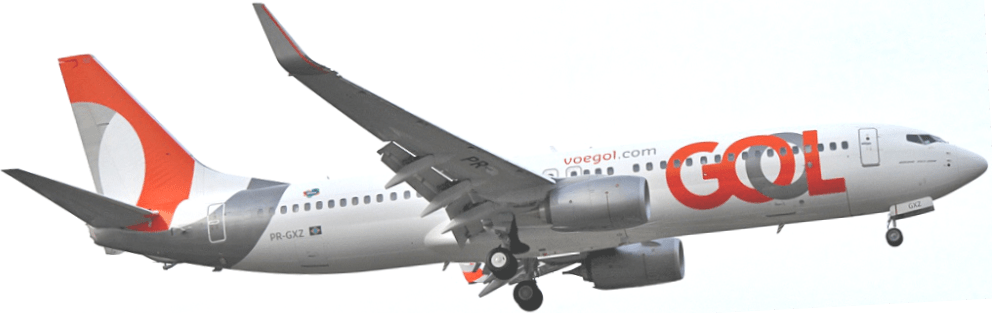
GOL Linhas Aéreas ha comunicado al Ministerio de Transporte de Argentina la intención de retornar las operaciones hacia y desde la Argentina tras los anuncios del Gobierno de la próxima reapertura del espacio aéreo en el país para los vuelos nacionales e internacionales. La decisión fue comunicada en una conferencia virtual mantenida este 07/10 entre representantes de la compañía aérea low cost; el embajador argentino en Brasil, Daniel Scioli, el Ministro de Transporte Mario Meoni, y la titular de la Administración Nacional de Aviación Civil (ANAC), Paola Tamburelli. La reunión se dio en el marco de diferentes encuentros que viene realizando el Ministerio de Transporte de Argentina con diferentes empresas del sector de transporte, donde muestran el interés de ampliar operaciones y generar inversión.
Durante el encuentro virtual se habló sobre el interés de GOL Linhas Aéreas de retomar la operación hacia la Argentina, como también ampliarla y sumar frecuencias a las que ya tenían, observando muy buenas perspectivas respecto del tráfico de pasajeros entre Brasil y Argentina. También analizaron el complemento de vuelos y trabajo conjunto con Aerolíneas Argentinas, a lo que se sumó el tema de las operaciones regionales que harán desde el Aeropuerto Jorge Newbery una vez concluidas las obras de remodelación hacia finales de Noviembre 2020.
GOL returns to Argentina
Gol informs to Transporte Argentina of return ops
GOL Linhas Aéreas has communicated to the Argentine Ministry of Transportation its intention to return operations to and from Argentina after the Government’s announcements of the upcoming reopening of airspace in the country for national and international flights. The decision was communicated in a virtual conference held this 07/10 between representatives of the low cost airline; the Argentine Ambassador to Brazil, Daniel Scioli, the Minister of Transport Mario Meoni, and the head of the National Civil Aviation Administration (ANAC), Paola Tamburelli. The meeting took place within the framework of different meetings that the Argentine Ministry of Transport has been holding with different companies in the transport sector, where they show their interest in expanding operations and generating investment.
During the virtual meeting, they spoke about the interest of GOL Linhas Aéreas in resuming the operation to Argentina, as well as expanding it and adding frequencies to those they already had, observing very good prospects regarding passenger traffic between Brazil and Argentina. They also analyzed the complement of flights and joint work with Aerolíneas Argentinas, to which was added the issue of regional operations that will be carried out from Jorge Newbery Airport once the remodeling works have been completed towards the end of November 2020.
GOL retorna à Argentina
Gol informa Transporte de Argentina sobre operações de retorno
A GOL Linhas Aéreas comunicou ao Ministério dos Transportes da Argentina sua intenção de retomar as operações de e para a Argentina após os anúncios do Governo da próxima reabertura do espaço aéreo do país para voos nacionais e internacionais. A decisão foi comunicada em conferência virtual realizada neste dia 10/07 entre representantes da companhia aérea de baixo custo; o Embaixador da Argentina no Brasil, Daniel Scioli, o Ministro dos Transportes, Mario Meoni, e a chefe da Administração Nacional de Aviação Civil (ANAC), Paola Tamburelli. A reunião se realizou no marco de diversos encontros que o Ministério dos Transportes argentino vem realizando com diversas empresas do setor de transportes, onde manifestam o interesse em ampliar a atuação e gerar investimentos.
Durante o encontro virtual, eles falaram do interesse da GOL Linhas Aéreas em retomar a operação para a Argentina, bem como ampliá-la e agregar frequências às que já possuíam, observando perspectivas muito boas quanto ao tráfego de passageiros entre Brasil e Argentina. Analisaram também o complemento de voos e trabalhos conjuntos com a Aerolíneas Argentinas, ao qual se juntou a questão das operações regionais que se realizarão a partir do Aeroporto Jorge Newbery assim que as obras de remodelação forem concluídas no final de Novembro de 2020.
Lion Air planea lanzar una nueva aerolínea en Indonesia
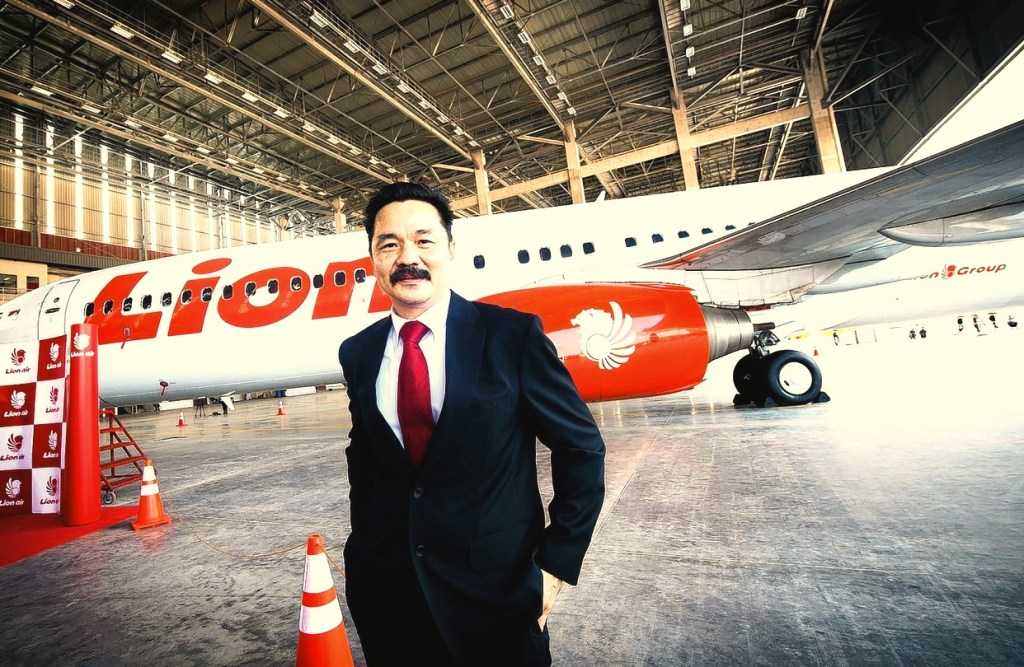
Los fundadores de PT Lion Mentari Airlines firma de la aerolínea Lion Air de Indonesia planean comenzar una nueva aerolínea, según personas familiarizadas con el plan, un desarrollo que podría ayudar a los esfuerzos de la aerolínea Lion Air para ir más allá de uno de los mayores desastres de la aviación tras el accidente aéreo del Boeing 737-8 MAX el 29 Octubre 2018. El Lion Air Group ha denominado a la nueva startup como Super Air Jet. La nueva aerolínea es un proyecto iniciado por los fundadores de Lion Air, incluido Rusdi Kirana, dijeron las personas, que pidieron no ser identificadas porque no están autorizadas a hablar públicamente sobre el plan.
Lion Air Group ha estado tratando de salir de la crisis provocada por el accidente aéreo de 10/2018, que se atribuyó a fallas de diseño en el avión Boeing 737 MAX, así como a una serie de errores en la aerolínea por parte de pilotos y mecánicos. Boeing ha expresado que resolvió el 90% de las demandas por muerte por negligencia hasta Julio 2020.
Proceso AOC
Budi Prayitno, portavoz del Ministerio de Transporte de Indonesia, confirmó que está procesando una solicitud para un certificado de operador aéreo, pero se negó a revelar más detalles. El portavoz de Lion Air, Danang Prihantoro, se negó a comentar sobre el asunto.
La nueva aerolínea podría darles a los fundadores un nuevo comienzo, dijo Shukor Yusof, fundador de la consultora de aviación Endau Analytics en Malasia. Lion Air de propiedad cerrada, tiene actualmente los mejores índices de apalancamiento que sus rivales del sudeste asiático y muchos pedidos de Boeing 737 MAX que pueden resultar valiosos una vez que la pandemia concluya. No está definido si la nueva entidad será parte del mismo grupo de Lion Air.
Mercado indonesio
Las aerolíneas en Indonesia, al igual que sus pares en todo el mundo, están sufriendo una caída en el número de pasajeros debido a las restricciones de viaje. Si bien los viajes aéreos en el vasto archipiélago del país se recuperaron a 1,46 millones de personas en Julio 2020, de solo 87.000 en Mayo 2020, todavía está muy por debajo de los 7,14 millones registrados en el mismo mes del año pasado, según la oficina de estadísticas.
La aerolínea de bandera PT Garuda Indonesia Airlines depende de préstamos puente del Gobierno para evitar caer en la bancarrota, mientras que la aerolínea regional AirAsia Group Bhd busca inyecciones de efectivo para fin de año mientras busca sobrevivir.
Si el nuevo plan de la aerolínea sigue adelante, podría permitir a los fundadores de Lion Air hacerse con una mayor participación de uno de los mercados de viajes aéreos de más rápido crecimiento en el mundo en perspectivas a futuro. «Esta podría ser una buena estrategia para la empresa, ya que sus rivales están sufriendo», dijo el Analista de Aviación, Gerry Soejatman.
New airline Super Air Jet
Lion Air founders plan to launch new airline in Indonesia
The founders of PT Lion Mentari Airlines, the signature of Indonesia’s Lion Air carrier, plan to start a new airline, according to people familiar with the plan, a development that could help Lion Air carrier’s efforts to move beyond one of the largest aviation disasters following the Boeing 737-8 MAX plane crash on October 29, 2018. The Lion Air Group has dubbed the new startup Super Air Jet. The new airline is a project started by the founders of Lion Air, including Rusdi Kirana, said the people, who asked not to be identified because they are not authorized to speak publicly about the plan.
Lion Air Group has been trying to emerge from the crisis triggered by the 10/2018 plane crash, which was attributed to design flaws in the Boeing 737 MAX aircraft, as well as a number of airline errors by pilots and mechanical. Boeing has stated that it resolved 90% of wrongful death claims through July 2020.
AOC process
Budi Prayitno, a spokesman for the Indonesian Ministry of Transport, confirmed that it is processing an application for an air operator certificate, but declined to reveal any further details. Lion Air spokesman Danang Prihantoro declined to comment on the matter.
The new airline could give the founders a fresh start, said Shukor Yusof, founder of aviation consultancy Endau Analytics in Malaysia. Closely owned Lion Air currently has the best leverage ratios of its Southeast Asian rivals and many Boeing 737 MAX orders that can prove valuable once the pandemic is over. It is not defined whether the new entity will be part of the same Lion Air group.
Indonesian market
Airlines in Indonesia, like their peers around the world, are experiencing a drop in passenger numbers due to travel restrictions. While air travel in the country’s vast archipelago recovered to 1.46 million people in July 2020, from just 87,000 in May 2020, it is still well below the 7.14 million recorded in the same month last year. , according to the Bureau of Statistics.
Flag carrier PT Garuda Indonesia Airlines relies on government bridge loans to avoid bankruptcy, while regional carrier AirAsia Group Bhd seeks year-end cash injections as it seeks to survive.
If the airline’s new plan goes ahead, it could allow the founders of Lion Air to gain a greater share of one of the world’s fastest-growing air travel markets in the future. «This could be a good strategy for the company, as its rivals are suffering», said Aviation Analyst Gerry Soejatman.
Maskapai baru Super Air Jet
Pendiri Lion Air berencana meluncurkan maskapai baru di Indonesia
Pendiri PT Lion Mentari Airlines, tanda tangan maskapai Lion Air Indonesia, berencana untuk memulai maskapai baru, menurut orang-orang yang mengetahui rencana tersebut, sebuah pengembangan yang dapat membantu upaya maskapai Lion Air untuk melampaui salah satu yang terbesar Bencana penerbangan menyusul kecelakaan pesawat Boeing 737-8 MAX pada 29 Oktober 2018. Lion Air Group telah menjuluki startup baru Super Air Jet. Maskapai baru ini merupakan proyek yang dimulai oleh pendiri Lion Air, termasuk Rusdi Kirana, kata warga yang meminta untuk tidak disebutkan namanya karena tidak berwenang. untuk berbicara secara terbuka tentang rencana tersebut.
Lion Air Group telah berusaha untuk keluar dari krisis yang dipicu oleh kecelakaan pesawat 10/2018, yang dikaitkan dengan cacat desain pada pesawat Boeing 737 MAX, serta sejumlah kesalahan maskapai oleh pilot dan mekanis. Boeing telah menyatakan bahwa pihaknya menyelesaikan 90% klaim kematian yang salah hingga Juli 2020.
Proses AOC
Budi Prayitno, juru bicara Kementerian Perhubungan Indonesia, membenarkan bahwa pihaknya sedang memproses permohonan sertifikat operator penerbangan, tetapi menolak untuk mengungkapkan rincian lebih lanjut. Juru bicara Lion Air Danang Prihantoro menolak mengomentari masalah tersebut.
Maskapai baru ini dapat memberi pendirinya awal yang baru, kata Shukor Yusof, pendiri konsultan penerbangan Endau Analytics di Malaysia. Lion Air yang dimiliki secara dekat saat ini memiliki rasio leverage terbaik dari para pesaingnya di Asia Tenggara dan banyak pesanan Boeing 737 MAX yang dapat terbukti berharga setelah pandemi selesai. Tidak ditentukan apakah entitas baru tersebut akan menjadi bagian dari grup Lion Air yang sama.
Pasar indonesia
Maskapai di Indonesia, seperti maskapai lain di seluruh dunia, mengalami penurunan jumlah penumpang karena pembatasan perjalanan. Sementara perjalanan udara di negara kepulauan yang luas itu pulih menjadi 1,46 juta orang pada Juli 2020, dari hanya 87.000 pada Mei 2020, masih jauh di bawah 7,14 juta yang tercatat pada bulan yang sama tahun lalu, menurut Biro Statistik.
Maskapai penerbangan utama PT Garuda Indonesia Airlines bergantung pada pinjaman jembatan pemerintah untuk menghindari kebangkrutan, sementara maskapai regional Grup AirAsia Bhd mencari suntikan dana akhir tahun untuk bertahan hidup.
Jika rencana baru maskapai ini terus berjalan, para pendiri Lion Air dapat memperoleh bagian yang lebih besar dari salah satu pasar perjalanan udara dengan pertumbuhan tercepat di dunia di masa depan. «Ini bisa menjadi strategi yang baik bagi perusahaan, karena para pesaingnya menderita», kata Analis Penerbangan Gerry Soejatman.
EEUU insta al Congreso proporcionar rescate a aerolíneas
El Presidente de Estados Unidos, Donald Trump, dijo el Martes 06/10 por la noche que el Congreso debería extender rápidamente US$ 25.000 millones de Dólares en nueva asistencia de nómina a las aerolíneas de pasajeros estadounidenses que despiden a miles de trabajadores, ya que los viajes aéreos siguen siendo drásticos en medio de la pandemia del coronavirus. La nueva demanda del Ejecutivo Nacional se produjo horas después de que anunció que su administración abandonaría las conversaciones con los demócratas del Congreso sobre propuestas para gastar al menos US$ 1,6 billones en fondos adicionales para el alivio del Coronavirus, una medida que pareció frustrar un nuevo rescate de US$ 25 mil millones para que las aerolíneas de pasajeros estadounidenses se quedaran con decenas de miles de trabajadores en el trabajo durante otros seis meses. Pero más tarde, Donald Trump emitió una llamada en Twitter, instando al Congreso a «Aprobar Inmediatamente US$ 25 mil millones de Dólares para el apoyo a la nómina de las aerolíneas… ¡Firmaré ahora!», escribió, diciendo que el Congreso podría aprovechar los fondos no utilizados del alivio anterior del Coronavirus para financiar aerolíneas y un programa separado para pequeñas empresas.
American Airlines y United Airlines comenzaron la semana pasada a despedir a 32.000 trabajadores, pero habían dicho que cambiarían el rumbo si los legisladores llegaran a un acuerdo sobre un nuevo programa gubernamental para financiar los costos de nómina. Un programa anterior de apoyo a la nómina de aerolíneas de US$ 25 mil millones, en su mayoría en efectivo, aprobado por el Congreso en Marzo expiró el 30 de Septiembre de 2020.
La Presidenta de la Cámara de Representantes, Nancy Pelosi, expresó el Viernes 02/10 su apoyo a un proyecto de ley independiente para mantener a los empleados de las aerolíneas en el trabajo si no se puede alcanzar un paquete más amplio. Se espera que el Congreso regrese a la sesión el 19 de Octubre de 2020 y los legisladores pueden hacer un nuevo intento de aprobar una medida independiente para proporcionar los US$ 25 mil millones que buscan las aerolíneas, pero las perspectivas son inciertas, a pesar de que el alivio de la aerolínea goza de un fuerte apoyo tanto en la Cámara como en Senado. Una cuestión pendiente es cómo pagaría el Congreso la nueva financiación, dijo un alto asesor del Congreso el Martes 06/10.
Airlines for America (A4A), el grupo comercial que representa a las principales aerolíneas estadounidenses, señaló que «miles de trabajadores de aerolíneas en todo el país ya han perdido sus trabajos, y se esperan más licencias en las próximas semanas. Hay un rayo de esperanza de que nuestros líderes en Washington actuarán y salvarán estos trabajos antes de que sea demasiado tarde».
La Asociación de Viajes de Estados Unidos dijo que «con millones de estadounidenses sufriendo, es lamentablemente miope poner fin a las negociaciones de ayuda. Sin ayuda inmediata, el 50% de todos los trabajos financiados por viajes se perderán en diciembre, una pérdida adicional de 1,3 millones de puestos de trabajo».
Las aerolíneas estadounidenses están quemando colectivamente alrededor de US$ 5 mil millones en efectivo al mes, ya que el tráfico de pasajeros se ha estancado en alrededor del 30% de los niveles de 2019. Después de recurrir a los mercados de capitales, dicen que tienen suficiente liquidez para durar al menos 12 meses a ese ritmo. Entre licencias voluntarias e involuntarias, la fuerza laboral de las principales aerolíneas estadounidenses se reducirá en al menos un 25% en Octubre 2020. Los directores ejecutivos reconocen que es poco probable que la demanda de viajes aéreos antes de la pandemia regrese durante años, y aún se desconoce cómo la pandemia, que ha forzado cambios drásticos en los hábitos, afectará el comportamiento de los viajes. American Airlines finalizará el servicio a 11 aeropuertos más pequeños el Miércoles 07/10 después de que el Congreso no aprobara ayuda adicional.
Los expertos de la industria esperan una ligera mejora en la demanda interna durante las vacaciones de invierno desde los niveles actuales, pero se mantendrá muy por debajo de los volúmenes del año pasado. Mientras tanto, los viajes de negocios y los viajes internacionales de mayor margen siguen estando muy deprimidos.
US urges Congress for new bailout
US urges Congress to raise for Airlines
US President Donald Trump said late Tuesday 10/6 that Congress should swiftly extend US$ 25 billion in new payroll assistance to US passenger airlines that lay off thousands of workers, as air travel remains drastic amid the coronavirus pandemic. The new demand from the National Executive came hours after he announced that his administration would abandon talks with Congressional Democrats on proposals to spend at least US$ 1.6 trillion in additional funds for Coronavirus relief, a move that appeared to frustrate a new US$ 25 billion bailout for US passenger airlines to keep tens of thousands of workers on the job for another six months. But later, Donald Trump issued a call on Twitter, urging Congress to «Immediately Approve US$ 25 Billion for Airline Payroll Support … I Will Sign Now!» He wrote, saying Congress It could leverage unspent funds from previous Coronavirus relief to fund airlines and a separate small business program.
American Airlines and United Airlines began laying off 32,000 workers last week, but had said they would change course if lawmakers agreed on a new government program to fund payroll costs. An earlier US$ 25 billion airline payroll support program, mostly in cash, approved by Congress in March expired on September 30, 2020.
House Speaker Nancy Pelosi on Friday 10/02 expressed her support for a separate bill to keep airline employees at work if a broader package cannot be achieved. Congress is expected to return to session on October 19, 2020, and lawmakers may make a fresh attempt to pass a separate measure to provide the US$ 25 billion that airlines seek, but the outlook is uncertain, despite that the airline’s relief enjoys strong support in both the House and Senate. One pending question is how Congress would pay for the new funding, said a senior congressional adviser on Tuesday 10/06.
Airlines for America (A4A), the trade group representing major US airlines, noted that «thousands of airline workers across the country have already lost their jobs, and more licenses are expected in the coming weeks. There is a ray of hope that our leaders in Washington will act and save these jobs before it’s too late».
The Travel Association of America said that «with millions of Americans suffering, it is woefully shortsighted to end aid negotiations. Without immediate help, 50% of all travel-funded jobs will be lost in December, an additional loss of 1.3 million jobs».
American airlines are collectively burning about US$ 5 billion in cash a month, as passenger traffic has stalled at about 30% of 2019 levels. After tapping into the capital markets, they say they have enough liquidity to last at least 12 months at that rate. Between voluntary and involuntary licenses, the workforce of major US airlines will shrink by at least 25% in October 2020. CEOs acknowledge that pre-pandemic demand for air travel is unlikely to return for years, and still It is unknown how the pandemic, which has forced drastic changes in habits, will affect travel behavior. American Airlines will end service to 11 smaller airports on Wednesday 10/07 after Congress did not approve additional aid.
Industry insiders expect a slight improvement in domestic demand during the winter break from current levels, but it will remain well below last year’s volumes. Meanwhile, business travel and higher margin international travel remain severely depressed.