Primera aerolínea incorporar remolque automático para aviones
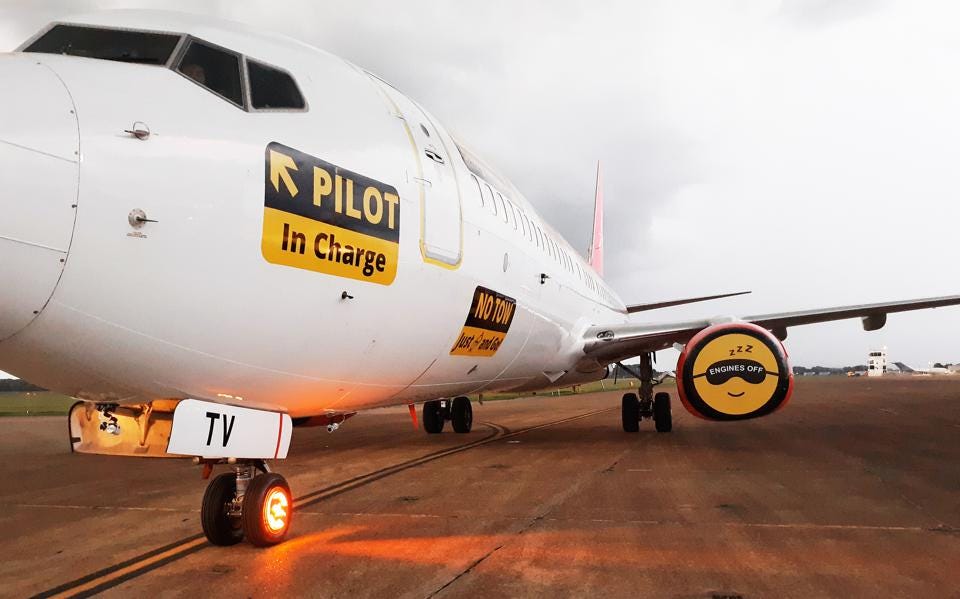
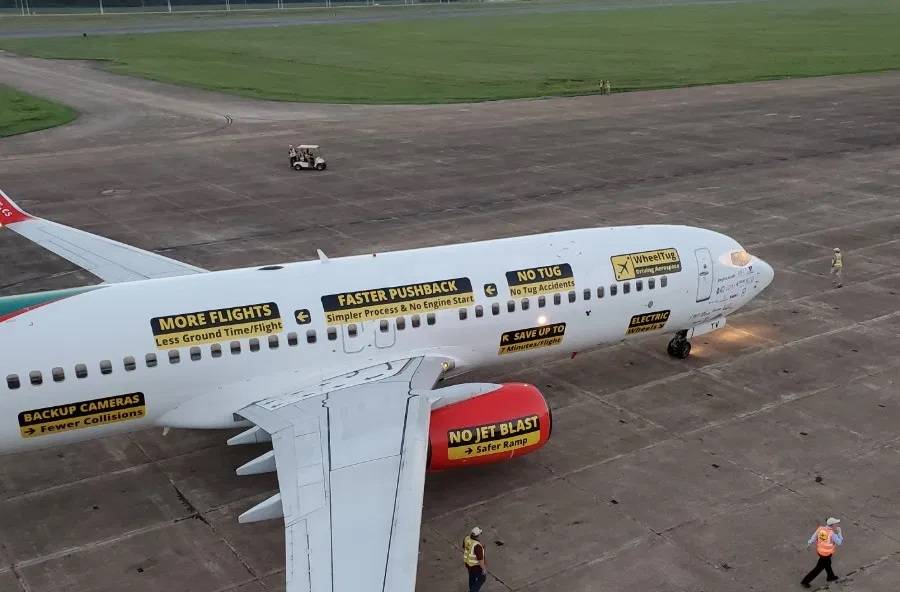
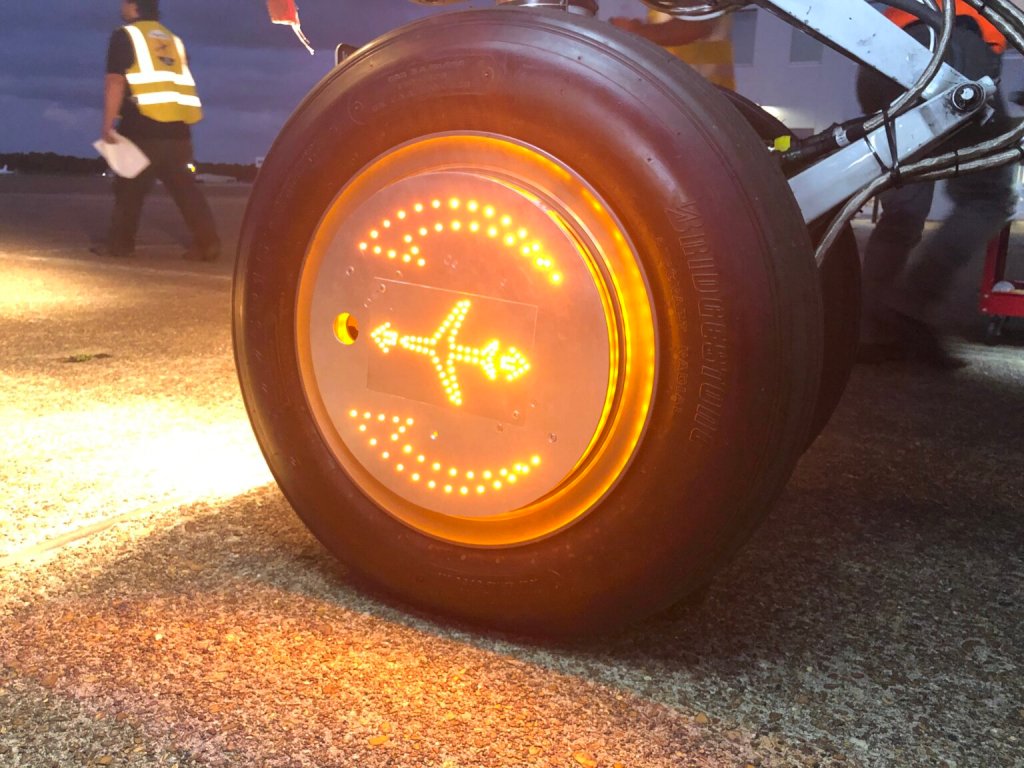
La aerolínea AlbaStar se ha convertido la primera aerolínea europea en incorporar equipos de remolque automático para aeronaves denominados WheelTug. La compañía aérea hispano-italiana visitó en la feria de la aviación de Farnborough Airshow 2022 un stand en el que una compañía mostraba un equipo que, con un pequeño motor eléctrico, puede mover un avión hasta la cabecera de pista, sin usar los motores para volar y sin los remolques del aeropuerto.
AlbaStar hizo la prueba de factibilidad en su compañía y ha aprobado la compra de este material de trabajo interesante. La aerolínea israelita El Al Airlines también ha mostrado su interés por este tipo de herramientas para las operaciones en plataforma de aeropuertos. AlbaStar implementará el sistema en su flota de aeronaves Boeing 737 Next Generation.
La compañía WheelTug PLC desarrolla sistemas de taxi eléctrico para aeronaves, ofreciendo un sistema de accionamiento eléctrico de aeronaves que permite que sean impulsadas eléctricamente desde la puerta de la terminal hasta la pista de despegue, y al aterrizar desde la salida de la pista hasta la puerta.
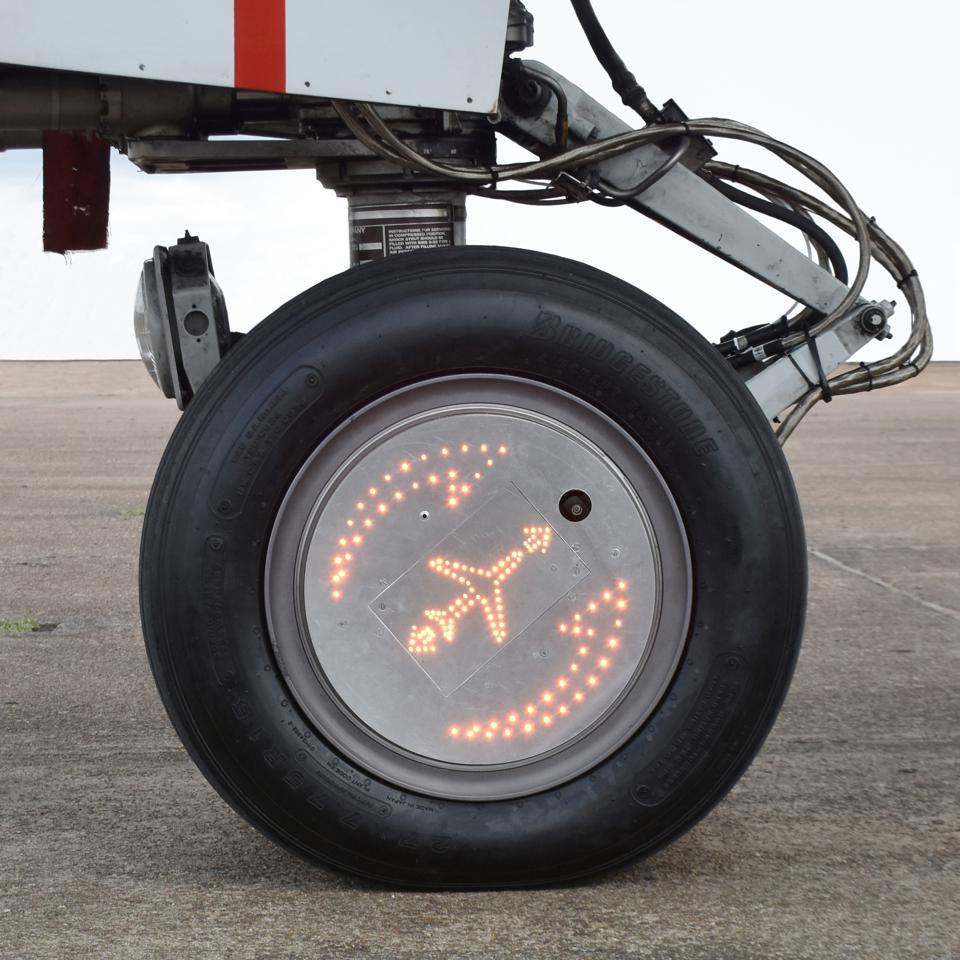
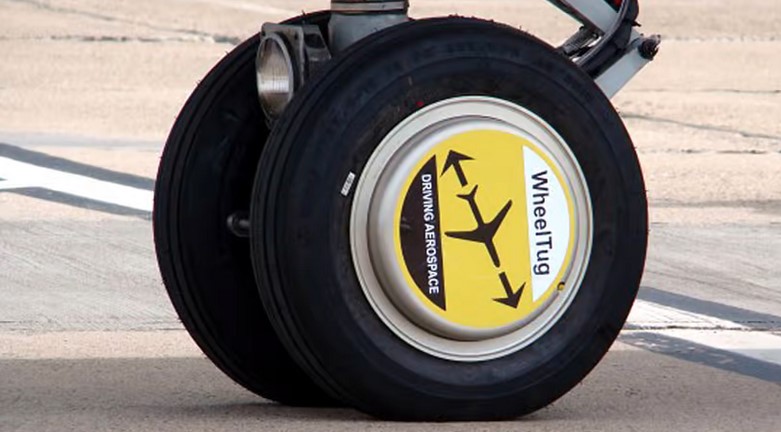
El sistema WheelTug permite a los pilotos rodar y maniobrar aeronaves con los motores apagados utilizando motores eléctricos dentro de las ruedas delanteras. Esto simplifica en gran medida los procedimientos de retroceso y llegada tanto en las puertas de embarque. AlbaStar también empleará WheelTug Vision, el sistema de cámara y sensor instalado en la aeronave que ofrece a los pilotos un mejor conocimiento de la situación a nivel de suelo. Los pilotos podrán inspeccionar mejor su entorno, no solo fuera de las alas, sino también detrás y debajo de la aeronave. El sistema WheelTug es extremadamente útil para ahorrar, además ofreciendo un caso ambiental convincente. El WheelTug, sólo para los cinco aviones de AlbaStar reducirá las emisiones combinadas de CO2 y NOx hasta en un millón de kilogramos cada año.
AlbaStar es la primera aerolínea europea de entre dos docenas en el mundo que han mostrado su interés en estos equipos. Los primeros sistemas WheelTug para los aviones Boeing 737NG entrarán en servicio a mediados de 2023.
AlbaStar acquires automatic trailer
First airline to incorporate automatic aircraft towing
The AlbaStar airline has become the first European airline to incorporate automatic towing equipment for aircraft called WheelTug. The Spanish-Italian airline company visited a stand at the Farnborough Airshow 2022 aviation fair in which a company was showing a piece of equipment that, with a small electric motor, can move an aircraft to the head of the runway, without using the motors to fly and without airport trailers.
AlbaStar did the feasibility test in your company and has approved the purchase of this interesting work material. The Israeli airline El Al Airlines has also shown interest in this type of tool for airport apron operations. AlbaStar will implement the system in its fleet of Boeing 737 Next Generation aircraft.
The WheelTug PLC company develops electric taxi systems for aircraft, offering an electrical drive system for aircraft that allows them to be electrically propelled from the terminal gate to the runway, and on landing from the runway exit to the gate.
The WheelTug system allows pilots to taxi and maneuver aircraft with the engines off using electric motors inside the front wheels. This greatly simplifies drop-off and arrival procedures at both the gates. AlbaStar will also employ WheelTug Vision, the aircraft-mounted camera and sensor system that provides pilots with better situational awareness at ground level. Pilots will be able to better inspect their environment, not only outside the wings, but also behind and below the aircraft. The WheelTug system is extremely useful for savings, as well as making a compelling environmental case. The WheelTug, for AlbaStar’s five aircraft alone, will reduce combined CO2 and NOx emissions by up to one million kilograms each year.
AlbaStar is the first European airline out of two dozen in the world that have shown their interest in these teams. The first WheelTug systems for Boeing 737NG aircraft will enter service in mid-2023.
PUBLISHER: Airgways.com DBk: Albastar.es / Wheeltug.com / Airgways.com AW-POST: 202211141135AR OWNERSHIP: Airgways Inc. A\W A I R G W A Y S ®
Low cost Flybondi amplía flota y destinos internacionales
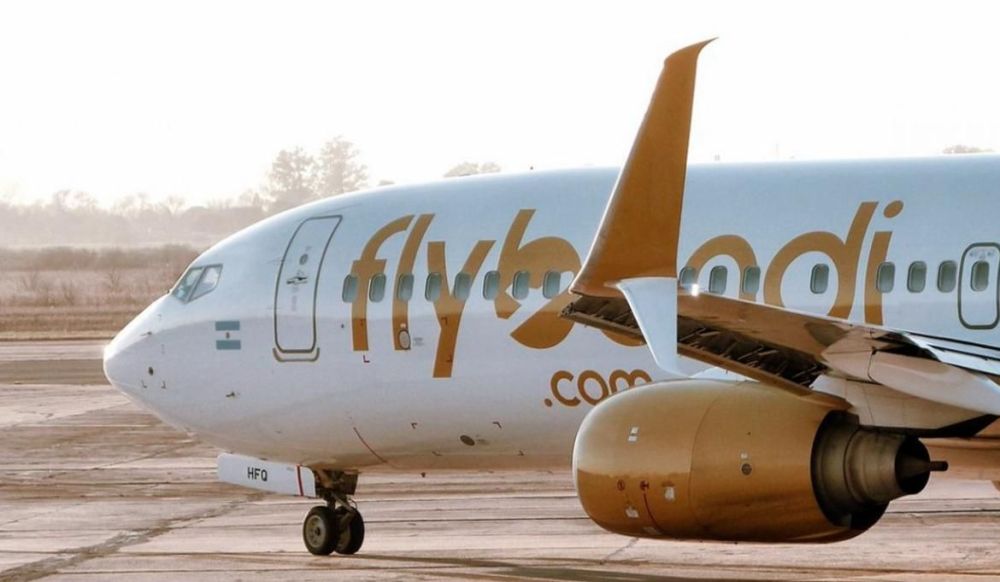
La aerolínea low cost Flybondi Líneas Aéreas continúa con la ampliación de nuevas rutas y la incorporación de un total de doce aeronaves para fin de año 2022. En Diciembre, retoma la ruta Buenos Aires/EZE—Florianópolis/FLN. El plan de expansión busca aumentar la oferta y duplicar los pasajeros.
En Octubre 2022, Flybondi incorporó un octava aeronave actualmente operativa, mientras que como ha anunciado oportunamente ingresarán dos nuevas aeronaves Boeing 737-800 Netx Generation. La nueva aeronave Boeing 737-800 MSN30150, LN3429 ingresó a la aerolínea con registro LV-KEH el 06/10/2022 en régimen de leasing de Umb Bank. El Gerente Comercial de Flybondi, Federico Pastori expresó: «Buscamos finalizar el año con la llegada de dos unidades más para alcanzar una flota de doce aviones. Esto permitirá aumentar y reforzar las frecuencias de las rutas tanto nacionales como internacionales, preparándonos también para una fuerte temporada de verano».
Actualmente, Flybondi vuela a diecisiete destinos nacionales y dos destinos internacionales. Como parte de la ampliación de los servicios se incorporaron nuevas rutas: Ushuaia, Puerto Madryn, El Calafate y Comodoro Rivadavia. «Estamos analizando continuamente el mercado y evaluando qué destinos se pueden sumar a nuestra red de conectividad», dijo Federico Pastori. Flybondi es la única compañía que ofrece servicios a Brasil desde Buenos Aires/EZE hacia Río de Janeiro/GIG y San Pablo/GRU. La novedad es que se retomará la ruta hacia Florianópolis/FLN a partir del 1 de Diciembre hasta Abril de 2023 como una ruta estacional. «Arrancamos con una frecuencia diaria y en Enero y Febrero aumentaremos a dos diarios», señaló el Gerente Comercial.
La Administración Nacional de Aviación Civil Argentina (ANAC) ha proporcionado datos referentes al factor de ocupación alcanzando Flybondi un promedio del 94%colocándose en el primer podio, y es el segundo operador aéreo del país en términos de capacidad y cuota de mercado doméstico. «Hoy ya volaron con nosotros más de 5.500.000 de personas desde que empezamos a volar en el 2018», aseguró Federico Pastori.
Adicionalmente, Flybondi ha transportado un 87% más de pasajeros respecto de Septiembre de 2019, acercándose de esa manera a los objetivos anunciados en el plan de crecimiento que consiste en duplicar la cantidad de pasajeros. «En nuestra proyección de continuar con el crecimiento de capacidad y oferta hacia nuevos destinos nacionales y regionales, lanzaremos al mercado de leasing una búsqueda de por lo menos 5 aviones para sumar durante 2023», finalizó el Gerente Comercial de la aerolínea low cost argentina.
Flybondi expands fleet
Low cost Flybondi expands fleet and international destinations
The low cost airline Flybondi Líneas Aéreas continues with the expansion of new routes and the incorporation of a total of twelve aircraft by the end of the year 2022. In December, it resumes the Buenos Aires/EZE—Florianópolis/FLN route. The expansion plan seeks to increase the offer and double the number of passengers.
In October 2022, Flybondi incorporated an eighth aircraft currently in operation, while as announced in due time, two new Boeing 737-800 Netx Generation aircraft will enter. The new aircraft Boeing 737-800 MSN30150, LN3429 entered the airline with registration LV-KEH on 10/06/2022 under lease from Umb Bank. Flybondi’s Commercial Manager, Federico Pastori stated: «We seek to end the year with the arrival of two more units to reach a fleet of twelve aircraft. This will allow us to increase and reinforce the frequencies of both national and international routes, also preparing us for a strong summer season».
Flybondi currently flies to seventeen domestic destinations and two international destinations. As part of the expansion of services, new routes were incorporated: Ushuaia, Puerto Madryn, El Calafate and Comodoro Rivadavia. «We are continuously analyzing the market and evaluating which destinations can be added to our connectivity network», said Federico Pastori. Flybondi is the only company that offers services to Brazil from Buenos Aires/EZE to Rio de Janeiro/GIG and São Paulo/GRU. The novelty is that the route to Florianópolis/FLN will be resumed from December 1 to April 2023 as a seasonal route. «We started with a daily frequency and in January and February we will increase to two daily», said the Commercial Manager.
The Argentine National Civil Aviation Administration (ANAC) has provided data regarding load factor, with Flybondi reaching an average of 94%, placing it on the first podium, and it is the second air operator in the country in terms of capacity and domestic market share. «Today more than 5,500,000 people have already flown with us since we started flying in 2018», assured Federico Pastori.
Additionally, Flybondi has transported 87% more passengers compared to September 2019, thus approaching the objectives announced in the growth plan, which consists of doubling the number of passengers. «In our projection to continue with the growth of capacity and supply towards new national and regional destinations, we will launch a search for at least 5 aircraft to add during 2023 to the leasing market», concluded the Commercial Manager of the Argentine low cost airline.
PUBLISHER: Airgways.com DBk: Flybondi.com / Anac.gov.ar / Airgways.com AW-POST: 202211141050AR OWNERSHIP: Airgways Inc. A\W A I R G W A Y S ®
Boeing espera conversaciones Biden-Xi conduzcan reapertura China Líderes planean reunirse Lunes 14/11 en medio agitación geopolítica
The Boeing Company está buscando un rayo de esperanza cuando el Presidente de Estados Unidos, Joe Biden, se reúna con su homólogo chino, Xi Jinping, el Lunes 14 de Noviembre de 2022 para restablecer los lazos políticos-comerciales devastados por la erosión de los acontecimientos geopolíticos. Boeing no ha entregado un Boeing 737 MAX a China en tres años y medio, producto de la crisis del sector de la aviación entre ambos países.
Aspectos militares
Los mandatarios buscarán establecer la confianza entre Estados Unidos y China en las conversaciones entre Joe Biden y Xi Jinping. Se espera que el Presidente de Estados Unidos inste a Beijing a hacer más para frenar a Corea del Norte y elevar los objetivos de reducción de carbono. Joe Biden, animado por el avance militar en Ucrania y la retención Demócrata del Senado de Estados Unidos, dijo que buscaría establecer líneas rojas en la relación de Estados Unidos con China cuando se reúna con el Presidente Xi Jinping el Lunes 14/11 antes de la cumbre de líderes mundiales del G20 en Bali, Indonesia.
China se opone a lo que considera como un arma para el comercio, mientras que el Ministerio de Relaciones Exteriores acusó a Estados Unidos de intentar crear una versión Asia-Pacífico de la OTAN con Australia, Japón y Corea del Sur para «interrumpir la seguridad y la estabilidad» en la región.
En una cumbre asiática el Domingo 13/11 antes de su primera reunión bilateral con Xi Jinping, Joe Biden estableció algunos parámetros firmes sobre la libertad de navegación en el Mar del Surde China y advirtió a China contra el intento de una invasión de Taiwán, a la que reclama. Pero también dijo que quería mantener abiertas las líneas de comunicación con Beijing.
Aspectos políticos
Los dos se conocen desde hace más de una década, desde la época de Biden como Vicepresidente, pero el Lunes 14/11 será su primera reunión cara a cara como líderes. «Tenemos muy pocos malentendidos. Solo tenemos que descubrir cuáles son las líneas rojas», dijo Joe Biden. Sus asesores dicen que están buscando una fórmula con China que permita la competencia y la convivencia. Al exponer su visión para la región guiada por el estado de derecho, Joe Biden dijo: «Construiremos un Indo-Pacífico que sea libre y abierto, estable y próspero, resistente y seguro».
El Presidente de Estados Unidos habló al cierre de la Cumbre de Asia Oriental en Camboya, la primera de cuatro a las que asiste en la región. Tras la reunión con Xi Jinping en Bali, asistirá a la Cumbre del G20 de dos días el Martes 15/11 y Miércoles 16/11, seguida de una reunión del Foro de Cooperación Económica Asia-Pacífico en Bangkok.
Muchos de los actores clave en el sudeste asiático son reacios a ser absorbidos por tomar partido en una confrontación entre Estados Unidos y China. El Presidente de Indonesia, Joko Widodo, por ejemplo, prometió el Domingo 13/11 no permitir que el sudeste asiático se convierta en la primera línea de una nueva guerra fría, diciendo queIndonesiano se convertiría en «un representante de ninguna potencia». Dijo que la región debe convertirse en pacífica y un ancla para la estabilidad global.
Es probable que Biden presione a China para que haga más para frenarlas ambiciones nucleares de Corea del Norte e impulse objetivos de reducción de carbono más ambiciosos. En Agosto 2022, China suspendió las conversaciones sobre el clima con Estados Unidos después de la visita a Taiwán de la Presidenta de la Cámara de Representantes, Nancy Pelosi.
Aspectos comerciales
También es probable que Xi se queje de una formidable ronda de nuevos controles de exportación de Estados Unidos implementados en Octubre 2022 que apuntan a frenar la capacidad de China para obtener chips avanzados, desarrollar y mantener supercomputadoras y fabricar semiconductores avanzados para aplicaciones militares.
El Presidente ruso, Vladimir Putin, ansioso por permanecer en el rebufo de China pero temiendo el aislamiento público en las cumbres, ha decidido no ir al G20, enviando a su veterano Ministro de Relaciones Exteriores, Sergei Lavrov, en su lugar. El temor de Rusia es que Xi Jinping esté cada vez más dispuesto a distanciarse del ataque de Rusia contra Ucrania, y al menos dispuesto a repetir que se opone a la amenaza o al uso de armas nucleares, palabras que usó junto al canciller alemán, Olaf Scholz, a principios de este mes.
En materia aerocomercial, Boeing buscará un rayo de esperanza para reactivar sus ventas en China, después de atravesar dificultades con la incursión en tierra de la línea 737 MAX por cuestiones de seguridad. Actualmente, China ha levantado las restricciones a las aeronaves, mientras que las líneas aéreas continúan sin restablecer los vuelos con este tipo de aeronaves.
La reunión de los mandatarios chino-estadounidense permitiría a Boeing mantener las esperanzas por incorporar nuevamente al país oriental como parte de un mercado muy importante para la salud de la economía del gigante aeroespacial.
US-China summit meeting
Boeing hopes Biden-Xi talks will lead to China reopening Leaders plan to meet Monday 11/14 amid geopolitical turmoil
The Boeing Company is looking for a glimmer of hope when US President Joe Biden meets with his Chinese counterpart Xi Jinping on Monday, November 14, 2022 to restore political-business ties devastated by eroding events. geopolitical. Boeing has not delivered a Boeing 737 MAX to China in three and a half years, as a result of the crisis in the aviation sector between the two countries.
Military aspects
The leaders will seek to establish trust between the United States and China in the talks between Joe Biden and Xi Jinping. The US president is expected to urge Beijing to do more to rein in North Korea and raise carbon reduction targets. Joe Biden, buoyed by the military advance in Ukraine and the Democratic retention of the US Senate, said he would seek to draw red lines in the US relationship with China when he meets with President Xi Jinping on Monday 11/14 before the G20 world leaders summit in Bali, Indonesia.
China opposes what it sees as a weapon for trade, while the Foreign Ministry has accused the United States of trying to create an Asia-Pacific version of NATO with Australia, Japan and South Korea to «disrupt the security and stability» in the region.
At an Asian summit on Sunday 11/13 ahead of his first bilateral meeting with Xi Jinping, Joe Biden laid down some firm parameters on freedom of navigation in the South China Sea and warned China against attempting an invasion of Taiwan, the one claiming. But he also said that he wanted to keep the lines of communication open with Beijing.
Politic aspects
The two have known each other for more than a decade, since Biden’s time as Vice President, but Monday 11/14 will be their first face-to-face meeting as leaders. «We have very few misunderstandings. We just have to figure out what the red lines are», Joe Biden said. His advisers say they are looking for a formula with China that allows competition and coexistence. Laying out his vision for the region guided by the rule of law, Biden said: «We will build an Indo-Pacific that is free and open, stable and prosperous, resilient and secure».
The US president was speaking at the close of the East Asia Summit in Cambodia, the first of four he is attending in the region. Following the meeting with Xi Jinping in Bali, he will attend the two-day G20 Summit on Tuesday 11/15 and Wednesday 11/16, followed by a meeting of the Asia-Pacific Economic Cooperation Forum in Bangkok.
Many of the key players in Southeast Asia are reluctant to be sucked into taking sides in a US-China confrontation. The President of Indonesia, Joko Widodo, for example, promised on Sunday 11/13 not to allow Southeast Asia to become the front line of a new cold war, saying that the Indonesian would become «a representative of no power». He said the region must become peaceful and an anchor for global stability.
Biden is likely to push China to do more to curb North Korea’s nuclear ambitions and push for more ambitious carbon reduction targets. In August 2022, China suspended climate talks with the United States after House Speaker Nancy Pelosi visited Taiwan.
Commercial aspects
Xi Jinping is also likely to complain about a formidable round of new US export controls put in place in October 2022 that are aimed at curbing China’s ability to source advanced chips, develop and maintain supercomputers, and make advanced semiconductors for military applications.
Russian President Vladimir Putin, eager to stay in China’s slipstream but fearing public isolation at summits, has decided not to go to the G20, sending his veteran Foreign Minister Sergei Lavrov in his place. Russia’s fear is that Xi Jinping is increasingly willing to distance himself from Russia’s attack on Ukraine, and at least willing to repeat that he opposes the threat or use of nuclear weapons, words he used alongside German Chancellor Olaf. Scholz, earlier this month.
In aviation matters, Boeing will seek a ray of hope to reactivate its sales in China, after experiencing difficulties with the incursion into the land of the 737 MAX line for security reasons. Currently, China has lifted the restrictions on the aircraft, while the airlines continue without reinstating the flights with this type of aircraft.
The meeting of the Chinese-American leaders would allow Boeing to maintain hopes of incorporating the eastern country again as part of a very important market for the health of the economy of the aerospace giant.
PUBLISHER: Airgways.com DBk: Usa.gov / Gov.cn / Boeing.com / Airgways.com AW-POST: 202211140057AR OWNERSHIP: Airgways Inc. A\W A I R G W A Y S ®
AW | 2022 11 14 00:04 | AIRLINES / AVIATION / INDUSTRY
Air Astana firma contrato arrendamiento 3 Boeing 787-9 Dreamliner
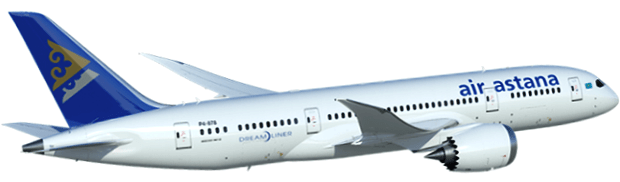
Air Astana ha firmado un acuerdo con Air Lease Corporation para el arrendamiento a largo plazo de tres nuevos Boeing 787-9 Dreamliner de fuselaje ancho. Los aviones arrendados están programados para comenzar a llegar a partir de la primera mitad de 2025.
Peter Foster, Presidente y Director ejecutivo de Air Astana, comentó: «El Boeing 787-9 es un avión importante para la modernización de la flota de Air Astana a medida que ampliamos nuestras rutas y nos centramos en la experiencia del pasajero. El Dreamliner ofrece eficiencia de combustible y flexibilidad de alcance que se sumará en gran medida a nuestras crecientes operaciones de flota».
Steven Udvar-Házy, Presidente Ejecutivo de Air Lease Corporation, agregó: «Nos complace anunciar hoy esta colocación de arrendamiento para tres nuevos aviones Boeing 787-9 con Air Astana. Estos aviones mejorarán en gran medida las capacidades de red de largo alcance de Air Astana y la comodidad de los pasajeros a medida que la aerolínea expande las rutas internacionales desde Kazajstán».
El Grupo Air Astana continúa con éxito la actualización de su flota. Actualmente, la flota del Grupo consta de cuarenta (40) aviones con una edad media de 5,2 años. Desde principios de año, Air Astana ha agregado dos nuevos Airbus A321LR (2) a su flota y se espera que uno más se entregue en los próximos meses. La filial LCC de Air Astana, FlyArystan, también ha agregado dos aviones Airbus a su flota y se espera que se agreguen dos más para fin de año.
Air Astana leases Boeing 787-9
Air Astana signs lease contract 3 Boeing 787-9 Dreamliner
Air Astana has signed an agreement with Air Lease Corporation for the long-term lease of three new wide-body Boeing 787-9 Dreamliners. Leased aircraft are scheduled to begin arriving in the first half of 2025.
Peter Foster, President and CEO of Air Astana, commented: «The Boeing 787-9 is an important aircraft for the modernization of the Air Astana fleet as we expand our routes and focus on the passenger experience. The Dreamliner offers fuel efficiency and range flexibility that will greatly add to our growing fleet operations».
Steven Udvar-Házy, Executive Chairman of Air Lease Corporation, added: «We are pleased to announce today this lease placement for three new Boeing 787-9 aircraft with Air Astana. These aircraft will greatly enhance Air’s long-range network capabilities. Astana and passenger comfort as the airline expands international routes from Kazakhstan».
The Air Astana Group continues to successfully update its fleet. Currently, the Group’s fleet consists of forty (40) aircraft with an average age of 5.2 years. Since the beginning of the year, Air Astana has added two new Airbus A321LR (2) to its fleet and one more is expected to be delivered in the coming months. Air Astana’s LCC subsidiary FlyArystan has also added two Airbus aircraft to its fleet with two more expected to be added by the end of the year.
PUBLISHER: Airgways.com DBk: Airastana.com / Airleasecorp.com / Airgways.com AW-POST: 202211140004AR OWNERSHIP: Airgways Inc. A\W A I R G W A Y S ®
AW | 2022 11 14 00:00 | INDUSTRY / AVIATION TECHNOLOGY
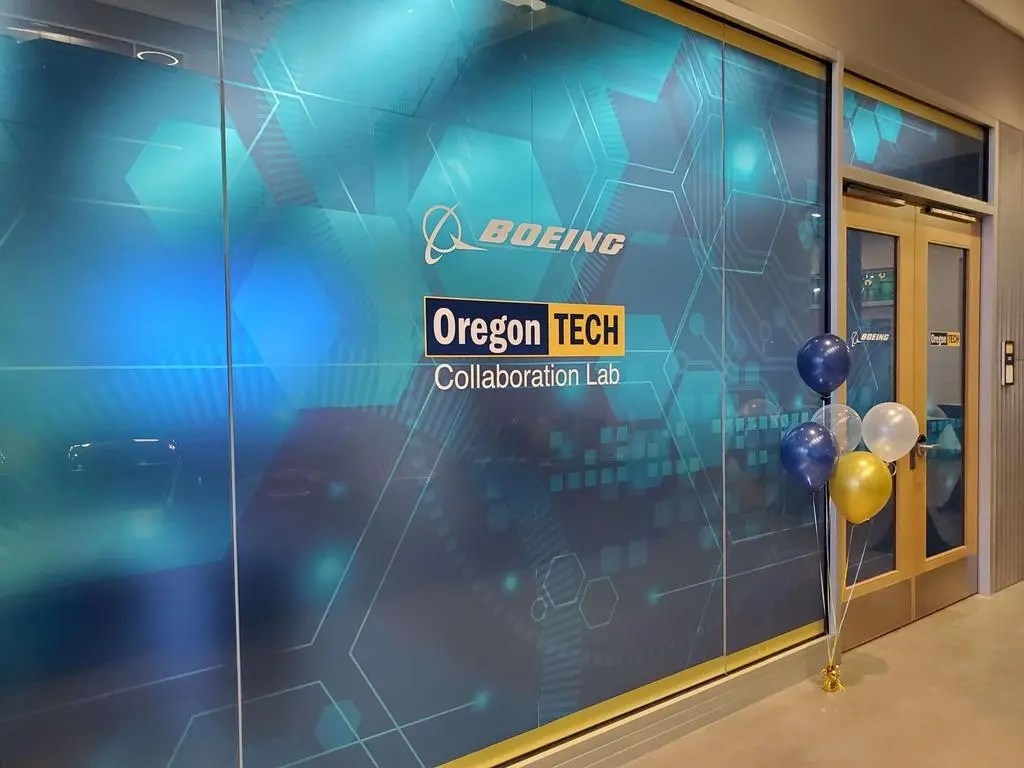
Boeing y Oregon Tech anuncian nueva colaboración en Klamath Falls
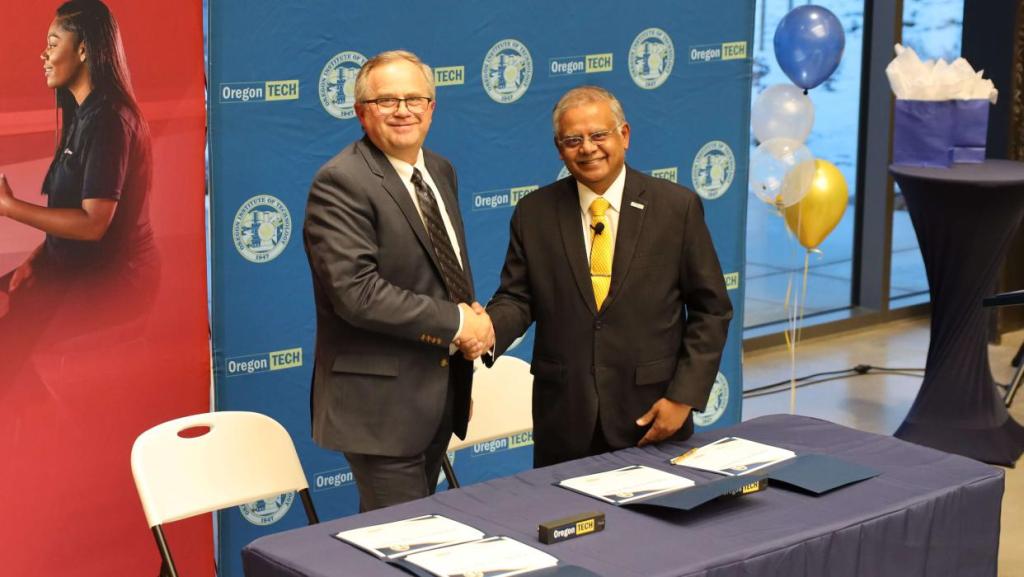
The Boeing Commercial Airplanes y el Instituto de Tecnología de Oregón (Oregon Tech) firmaron un acuerdo el Martes 08/11 para desarrollar un laboratorio de colaboración en el campus Klamath Falls de Oregon Tech, que proporcionaría un entorno seguro para los estudiantes de Oregon Tech que completan proyectos para Boeing.
El Gerente de Ingeniería de Producción de Boeing, Stan L. Carr, y el presidente de Oregon Tech, el Dr. Nagi Naganathan, firmaron una intención de colaboración entre Boeing y Oregon Tech que permitirá a los estudiantes obtener una valiosa experiencia industrial en un puesto remunerado mientras permanecen como estudiantes de tiempo completo en Klamath Falls.
«Oregon Tech, como universidad de la industria, se enorgullece de ser un laboratorio sustituto para la innovación de la industria. Esta asociación con Boeing es un gran ejemplo. Agradecemos sinceramente a The Boeing Company por crear esta tremenda experiencia inmersiva en la industria para nuestros estudiantes en el campus mientras cursan sus programas de grado. Estoy seguro de que esta increíble experiencia atraerá a más estudiantes e industrias a Oregon Tech y Klamath Falls y les dará a nuestros estudiantes una ventaja distintiva en la graduación», dijo el Presidente Nagi Naganathan.
Boeing y Oregon Tech se han asociado en pasantías y programas de grado durante décadas. Actualmente, Oregon Tech ofrece varios programas de certificación, programas de pregrado y posgrado para empleados de Boeing en sitios en el área de Puget Sound. Oregon Tech será la universidad piloto con Boeing Commercial Airplanes con la intención de colaborar con otras universidades en el futuro. Otras universidades han establecido asociaciones similares con Boeing Defense Systems.
La colaboración inicial será para estudiantes de mecánica, electricidad y otros estudiantes de ingeniería y puede expandirse a sistemas informáticos y programas de gestión dependiendo de las necesidades de Boeing. Boeing proporcionará declaraciones detalladas de trabajo para que la universidad las complete para las necesidades específicas del proyecto.
«El proceso debería ser relativamente fluido para los estudiantes, a quienes Oregon Tech ya entrena en parte del software utilizado en Boeing. Los estudiantes obtendrán experiencia industrial y tendrán entregables en un proyecto, tal como lo harían en Boeing. Serán supervisados por un miembro de la facultad y asesorados por un empleado de Boeing, tal como lo harían si fuera una oportunidad fuera del campus. Pero no tienen que abandonar el campus y no tienen que ralentizar sus estudios», dijo el Dr. Tom Keyser, quien es el Decano de la Facultad de Ingeniería, Tecnología y Administración de Oregon Tech y lidera la asociación.
La asociación se encuentra en las etapas iniciales, con espacio asignado en el Centro de Excelencia para Tecnología de Ingeniería (CEET) para albergar el Laboratorio de Colaboración. Oregon Tech y Boeing anticipan una fecha de lanzamiento de primavera.
Boeing-Oregon Tech Collaboration
Boeing/Oregon Tech announce new collaboration in Klamath Falls
The Boeing Commercial Airplanes and the Oregon Institute of Technology (Oregon Tech) signed an agreement on Tuesday 11/08 to develop a collaborative lab at Oregon Tech’s Klamath Falls campus that would provide a safe environment for Oregon Tech students who complete projects for Boeing.
Boeing Production Engineering Manager Stan L. Carr and Oregon Tech President Dr. Nagi Naganathan signed a collaborative intent between Boeing and Oregon Tech that will enable students to gain valuable industry experience in a paid while they remain as full-time students in Klamath Falls.
«Oregon Tech, as an industry university, prides itself on being a surrogate laboratory for industry innovation. This partnership with Boeing is a great example. We sincerely thank The Boeing Company for creating this tremendous immersive industry experience for our students on campus while pursuing their degree programs. I am confident this incredible experience will attract more students and industries to Oregon Tech and Klamath Falls and give our students a distinct head start on graduation», said President Nagi Naganathan.
Boeing and Oregon Tech have partnered on internship and degree programs for decades. Currently, Oregon Tech offers various certificate programs, undergraduate and graduate programs for Boeing employees at sites in the Puget Sound area. Oregon Tech will be the pilot university with Boeing Commercial Airplanes with the intention of collaborating with other universities in the future. Other universities have established similar partnerships with Boeing Defense Systems.
The initial collaboration will be for mechanical, electrical and other engineering students and may expand to computer systems and management programs depending on Boeing’s needs. Boeing will provide detailed statements of work for the university to complete for the specific needs of the project.
«The process should be relatively seamless for the students, who are already trained by Oregon Tech on some of the software used at Boeing. The students will gain industry experience and have deliverables on a project, just as they would at Boeing. They will be supervised by a member of faculty and mentored by a Boeing employee, just like they would if it was an off-campus opportunity. But they don’t have to leave campus and they don’t have to slow down», said Dr. Tom Keyser, who is the Dean of the Oregon Tech College of Engineering, Technology and Management and leads the association.
The partnership is in the early stages, with space allocated at the Center of Excellence for Engineering Technology (CEET) to house the Collaborative Laboratory. Oregon Tech and Boeing anticipate a spring release date.
PUBLISHER: Airgways.com DBk: Boeing.com / Oit.edu / Airgways.com AW-POST: 202211140000AR OWNERSHIP: Airgways Inc. A\W A I R G W A Y S ®
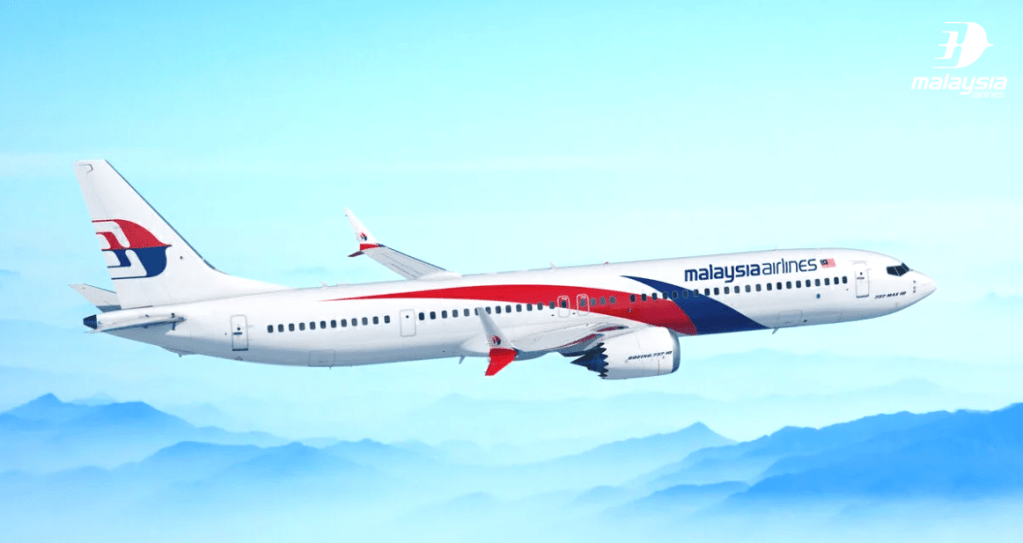
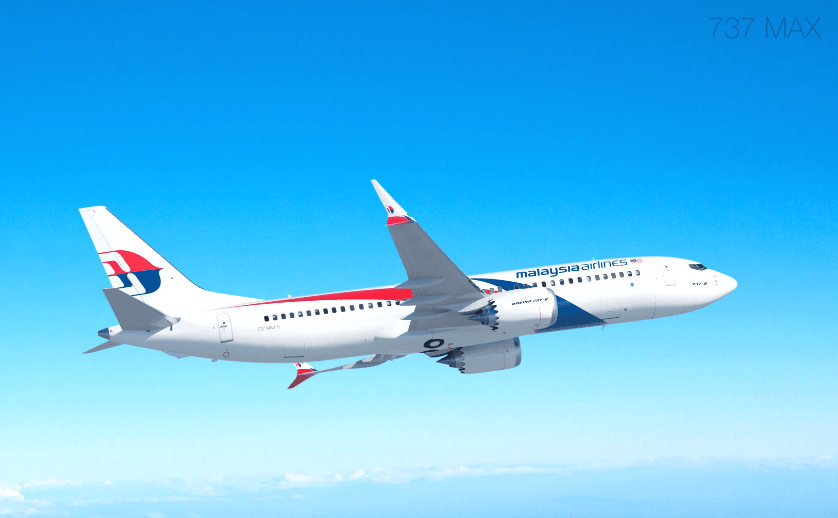
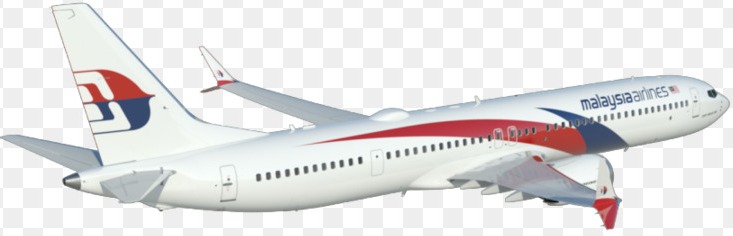
Malaysia Airlines considera duplicar pedido de Boeing 737 MAX
Malaysia Airlines está considerando ordenar veinticinco aviones adicionales de pasillo único Boeing 737 MAX además de un pedido en firme existente de veinticinco de esos aviones, según el Director Ejecutivo Izham Ismail. «Nuestra futura red requiere 50 aviones de fuselaje estrecho, por lo que todavía tenemos espacio para 25Tenemos que tomar alguna decisión para el próximo año», dijo Izham Ismail al margen de una Reunión Anual de la Asociación de Aerolíneas de Asia Pacífico en Bangkok.
Las entregas del pedido de 737 MAX existente comenzarán en 2024 con un valor de US$ 1.200 millones, según los precios compilados por el tasador de aviones Avitas Inc. «Continuamos trabajando con nuestros clientes para cumplir con los requisitos de su flota. No revelamos discusiones continuas con los clientes», dijo un portavoz de Boeing.
Malaysia Airlines ordenó veinte aviones de fuselaje ancho Airbus A330NEO (30) en Agosto 2022. La aerolínea no ha considerado tomar ningún avión 737 MAX de transportistas de China continental, dijo Izham Ismael, citando la incompatibilidad y la falta de consistencia con Malaysia Airlines. El transportista busca eliminar todos los Airbus A380 (6), el avión de pasajeros más grande del mundo, para fin de año y devolverlos al fabricante de aviones europeo.
El tráfico de pasajeros de Malaysia Airlines ha vuelto al 76% de los niveles anteriores a Covid, con una recuperación total a nivel nacional, y debería alcanzar el 82% para fin de 2022, dijo Izham Ismael. China representaba el 17% de la capacidad antes de la pandemia y el país podría reabrir para el segundo trimestre del próximo año.
La aerolínea continúa estudiando ampliar el parque de aeronaves por la alta demanda a cubrir ante la falta de aviones para cubrir las rutas planificadas. La aerolínea se está enfocando en cambiar la capacidad de pasajeros de los mercados nacionales a internacionales en medio de las preocupaciones de exceso de capacidad entre las aerolíneas en Malasia. Otros desafíos incluyen los altos precios del combustible, el aumento de las tasas de interés y un Dólar fuerte en 2023.
Malaysia orders 25 additional Boeing 737 MAXs
Malaysia Airlines considers doubling Boeing 737 MAX order
Malaysia Airlines is considering ordering an additional twenty-five Boeing 737 MAX single-aisle aircraft on top of an existing firm order for twenty-five such aircraft, according to CEO Izham Ismail. «Our future network requires 50 narrow-body aircraft, so we still have room for 25. We have to make some decision for next year», Izham Ismail said on the sidelines of an Asia Pacific Airlines Association Annual Meeting in Bangkok.
Deliveries of the existing 737 MAX order will begin in 2024 worth US$ 1.2 billion, according to prices compiled by aircraft appraiser Avitas Inc. «We continue to work with our customers to meet their fleet requirements. We do not disclose discussions. with customers», a Boeing spokesman said.
Malaysia Airlines ordered twenty Airbus A330NEO (30) wide-body jets in August 2022. The airline has not considered taking any 737 MAX aircraft from mainland Chinese carriers, Izham Ismael said, citing incompatibility and lack of consistency with Malaysia Airlines. The carrier seeks to phase out all Airbus A380s (6), the world’s largest passenger plane, by the end of the year and return them to the European planemaker.
Malaysia Airlines passenger traffic has returned to 76% of pre-Covid levels, with a full recovery nationwide, and should reach 82% by the end of 2022, Izham Ismael said. China represented 17% of capacity before the pandemic and the country could reopen by the second quarter of next year.
The airline continues to study expanding the fleet of aircraft due to the high demand to be covered due to the lack of aircraft to cover the planned routes. The airline is focusing on shifting passenger capacity from domestic to international markets amid overcapacity concerns among airlines in Malaysia. Other challenges include high fuel prices, rising interest rates and a strong dollar in 2023.
PUBLISHER: Airgways.com DBk: Malaysiaairlines.com / Boeing.com / Airgways.com AW-POST: 202211131600AR OWNERSHIP: Airgways Inc. A\W A I R G W A Y S ®
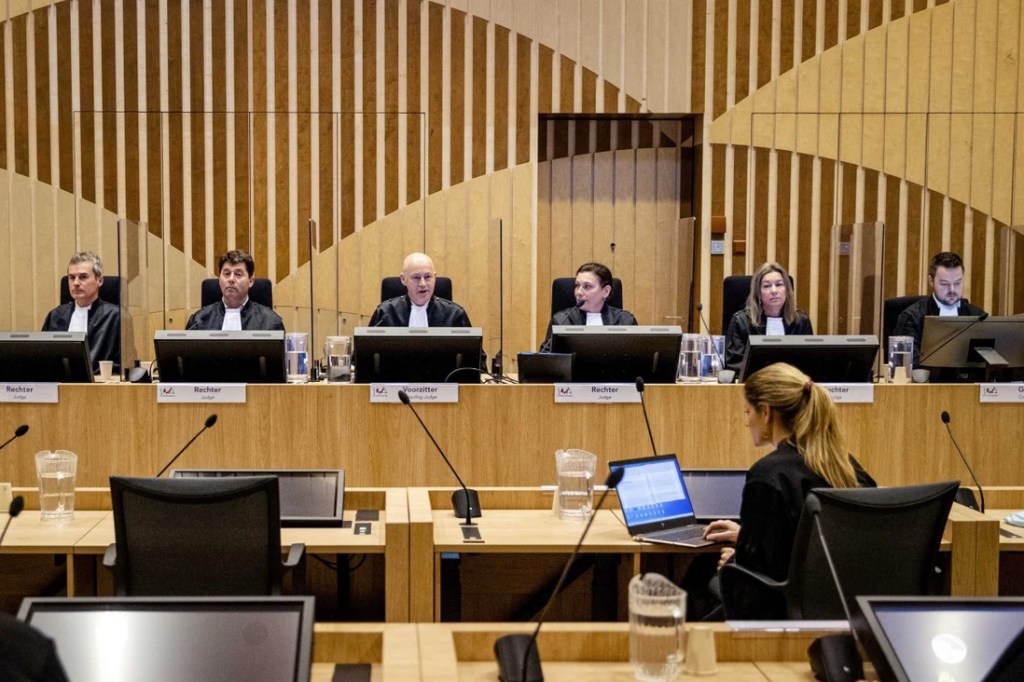
El Tribunal Supremo de los Países Bajos emitirá un veredicto por el atentado del vuelo de Malaysia AirlinesMH-017. Los jueces holandeses darán su veredicto el Jueves 17/11 en el juicio de cuatro hombres acusados de derribar el vuelo comercial MH-017 de Malaysia Airlines sobre territorio de Ucrania en 2014, donde la Federación Fusia continuaba con las acciones bélicas por el control del Donbass. Actualmente, existe un contexto de crecientes acciones bélicas y tensiones por la actual invasión de Rusia en Ucrania. El Tribunal de Distrito de La Haya ha programado la sentencia en el caso penal MH-017 en el Complejo Judicial de Schiphol (JCS) en Badhoevedorp, Países Bajos para el Jueves 17 de Noviembre de 2022 a las 13.30 p.m.
El vuelo MH-017 de Malaysia Airlines que despegó de Amsterdam con destino a Kuala Lumpur, Malasia con 298 pasajeros y tripulantes murieron cuando el Boeing 777-200ER sobre el este de Ucrania, controlado por los separatistas, por lo que los fiscales dicen fue alcanzado por un misil suministrado por Moscú. Los rusos Igor Girkin, Sergei Dubinsky, Oleg Pulatov y el ciudadano ucraniano Leonid Kharchenko se enfrentan a cadena perpetua si son declarados culpables de asesinato y de provocar el accidente del avión comercial. Pero los cuatro sospechosos siguen en libertad y se han negado a asistir al juicio de dos años y medio en los Países Bajos, que siguió a una investigación internacional.
El vuelo de Malaysia Airlines MH-017/MAS17 fue un vuelo regular de pasajeros de Amsterdam hacia Kuala Lumpur que fue derribado el 17 de Julio de 2014, mientras volaba sobre el este de Ucrania. Los 283 pasajeros y 15 tripulantes murieron. El contacto con el avión, un Boeing 777-200ER, se perdió cuando estaba a unos 50 km/31 millas de la frontera entre Ucrania y Rusia, y los restos del avión cayeron cerca de Hraboveen Donetsk Oblast, Ucrania, a 40 km/25 millas de la frontera. El derribo ocurrió durante la guerra en Donbass sobre el territorio controlado por las fuerzas separatistas rusas. Ocho años después del desastre, la región donde se estrelló el MH17 se ha convertido en uno de los campos de batalla clave en la guerra de casi nueve meses de de Federación Rusia en Ucrania.
Las familias en duelo viajarán de todo el mundo al tribunal de alta seguridad cerca del Aeropuerto Amsterdam/Schiphol, cerca de donde despegó el avión condenado, para escuchar el veredicto del panel de tres Jueces. «Si son culpables, la comunidad internacional debería perseguirlos. No puedo perdonarlos», dijo Evert van Zijtveld, que perdió a su hija Frederique, de 19 años, a su hijo Robert-Jan, de 18, y a sus suegros. El accidente del MH17 causó indignación mundial, con los famosos campos de girasoles de Ucrania llenos de cuerpos y restos. Algunas víctimas, incluidos niños, todavía estaban atadas a sus asientos.
Los Jueces holandeses emitirán su veredicto después de un juicio que dura más de dos años y medio. Los fiscales dijeron que los sospechosos formaban parte de las fuerzas separatistas respaldadas por el Kremlin y desempeñaron un papel clave en llevar el sistema de misiles BUK a Ucrania desde una base militar en Rusia, incluso si no apretaron el gatillo. Los abogados defensores de Oleg Pulatov, el único sospechoso que tiene representación legal, argumentan que el juicio ha sido injusto. Dicen que los fiscales no pudieron probar que un misil BUK derribó el avión, y también han planteado «escenarios alternativos», como que un avión ucraniano lo disparó. El Gobierno de Moscú ha negado toda participación.
Durante el juicio, los Fiscales se basaron en gran medida en llamadas telefónicas interceptadas y datos de teléfonos móviles que supuestamente localizaban a los sospechosos cerca del lugar de lanzamiento o en centros de toma de decisiones. También han utilizado declaraciones de testigos, incluido un ex separatista que se derrumbó emocionalmente mientras describía los juguetes de niños que yacían por ahí en la escena del accidente, además de evidencia de video y foto de los movimientos del misil. Se citó material forense, incluidos fragmentos encontrados en los cuerpos de las víctimas, para demostrar que se trataba de un misil BUK.
Los fiscales dicen que Igor Girkin, un ex espía ruso y fanático de la recreación histórica que se convirtió en el llamado Ministro de Defensa de la separatista República Popular de Donetsk, ayudó a suministrar el sistema de misiles. Igor Girkin ha criticado recientemente al ejército ruso por su manejo de la guerra y, según los informes, se ofreció como voluntario para luchar en Ucrania, lo que llevó a algunos familiares del MH17 a esperar que pueda ser capturado y enviado a los Países Bajos.
Sergei Dubinsky, quien también ha estado vinculado a la inteligencia rusa, supuestamente se desempeñó como jefe de inteligencia militar de los separatistas y fue responsable de dar órdenes sobre el misil. Oleg Pulatov, un ex soldado de las fuerzas especiales rusas, y Kharchenko, quien supuestamente dirigió una unidad separatista, fueron subordinados que desempeñaron un papel más directo en llevar el misil al sitio de lanzamiento, dijeron los fiscales.
El misil BUK había sido identificado a través de imágenes y evidencia de redes sociales como proveniente de la 53ª Brigada de Misiles Antiaéreos de Kursk en Rusia, escuchó el Tribunal.
Los acusados dispusieron que el misil fuera traído para contrarrestar el poder aéreo ucraniano, dijeron los fiscales, argumentando que bajo la ley holandesa no hace ninguna diferencia en cuanto a si atacaron por error un avión civil. El juicio se celebró en los Países Bajos, ya que 196 de las víctimas eran holandesas.
Dutch court to issue ruling MH17
Dutch court to issue 17/11 expected verdict MH17
The Supreme Court of the Netherlands will deliver a verdict for the bombing of Malaysia Airlines flight MH-017. Dutch judges will give their verdict on Thursday 11/17 in the trial of four men accused of shooting down Malaysia Airlines commercial flight MH-017 over Ukraine in 2014, where the Fusian Federation continued with military actions for control of Donbass. Currently, there is a context of growing military actions and tensions due to the current Russian invasion of Ukraine. The Hague District Court has scheduled sentencing in criminal case MH-017 at the Schiphol Judicial Complex (JCS) in Badhoevedorp, the Netherlands for Thursday, November 17, 2022 at 1:30 p.m.
Malaysia Airlines flight MH-017 that took off from Amsterdam bound for Kuala Lumpur, Malaysia with 298 passengers and crew were killed when the Boeing 777-200ER over separatist-controlled eastern Ukraine in what prosecutors say was hit. by a missile supplied by Moscow. Russians Igor Girkin, Sergei Dubinsky, Oleg Pulatov and Ukrainian national Leonid Kharchenko face life in prison if convicted of murder and causing the commercial plane crash. But the four suspects remain at large and have refused to attend the two-and-a-half-year trial in the Netherlands, which followed an international investigation.
Malaysia Airlines flight MH-017/MAS17 was a scheduled passenger flight from Amsterdam to Kuala Lumpur that was shot down on July 17, 2014, while flying over eastern Ukraine. All 283 passengers and 15 crew died. Contact with the plane, a Boeing 777-200ER, was lost when it was about 50 km/31 miles from the Ukraine-Russia border, and the wreckage fell near Hrabove in Donetsk Oblast, Ukraine, 40 km/25 miles from border. The shooting down occurred during the war in Donbass on the territory controlled by Russian separatist forces. Eight years after the disaster, the region where MH17 crashed has become one of the key battlefields in the Russian Federation’s nearly nine-month war in Ukraine.
Grieving families will travel from around the world to the high security court near Amsterdam/Schiphol Airport, close to where the doomed plane took off. «If they are guilty, the international community should persecute them. I cannot forgive them», said Evert van Zijtveld, who lost his daughter Frederique, 19, his son Robert-Jan, 18, and his in-laws. The MH17 crash caused global outrage, with Ukraine’s famous sunflower fields littered with bodies and wreckage. Some victims, including children, were still strapped to their seats.
The Dutch judges will deliver their verdict after a trial that lasts more than two and a half years. Prosecutors said the suspects were part of Kremlin-backed separatist forces and played a key role in bringing the BUK missile system to Ukraine from a military base in Russia, even if they did not pull the trigger. Defense lawyers for Oleg Pulatov, the only suspect who has legal representation, argue that the trial was unfair. They say prosecutors were unable to prove that a BUK missile shot down the plane, and have also raised «alternative scenarios» such as that a Ukrainian plane fired at it. The Moscow government has denied any involvement.
During the trial, Prosecutors relied heavily on intercepted phone calls and mobile phone data that allegedly located suspects near the launch site or at decision-making centers. They have also used witness statements, including a former separatist who broke down emotionally while describing children’s toys lying around at the crash scene, as well as video and photo evidence of the missile’s movements. Forensic material, including fragments found on the bodies of the victims, was subpoenaed to show that it was a BUK missile.
Prosecutors say Igor Girkin, a former Russian spy and historical re-enactment fanatic who became the so-called Defense Minister of the breakaway Donetsk People’s Republic, helped supply the missile system. Igor Girkin has recently criticized the Russian military for its handling of the war and has reportedly volunteered to fight in Ukraine, leading some relatives of MH17 to hope he may be captured and sent to the Netherlands.
Sergei Dubinsky, who has also been linked to Russian intelligence, allegedly served as the separatists’ chief of military intelligence and was responsible for giving orders on the missile. Oleg Pulatov, a former Russian special forces soldier, and Kharchenko, who allegedly led a separatist unit, were subordinates who played a more direct role in getting the missile to the launch site, prosecutors said.
The BUK missile had been identified through images and social media evidence as coming from the 53rd Kursk Anti-Aircraft Missile Brigade in Russia, the Court heard.
The defendants arranged for the missile to be brought in to counter Ukrainian air power, prosecutors said, arguing that under Dutch law it makes no difference whether they mistakenly attacked a civilian aircraft. The trial was held in the Netherlands, as 196 of the victims were Dutch.
PUBLISHER: Airgways.com DBk: Rechtspraak.nl / Courtmh17.com / Airgways.com AW-POST: 202211131518AR OWNERSHIP: Airgways Inc. A\W A I R G W A Y S ®
Acuerdo Kenia-Sudáfrica creación aerolínea panafricana
Los primeros mandatarios de los países de Sudáfrica y Kenia se encuentran gestionando el proyecto para la creación de una aerolínea panafricana. Las aéreas Kenya Airways y South African Airways están colaborando para formar una aerolínea panafricana, informó el diario Kenyan Wall Street Exchange.
El Presidente de Kenia, William Ruto, y su homólogo sudafricano, Cyril Ramaphosa, están discutiendo el plan a un alto nivel. «Hemos acordado que ese acuerdo debe avanzar, ya que presenta una oportunidad para que Sudáfrica y Kenia trabajen juntos para construir una aerolínea panafricana», dijo William Ruto. «Estamos comprometidos a garantizar que el acuerdo que se firmó entre nuestras dos aerolíneas siga adelante. Hay mucho trabajo en marcha a nivel técnico. Esperamos asegurarnos de que el acuerdo que se firmó finalmente genere una aerolínea panafricana», dijo Ramaphosa.
En Noviembre 2021, las aerolíneas South African Airways y Kenya Airways firmaron un marco de asociación estratégica para discutir la formación de una aerolínea panafricana para 2023.
Pan-african airline project
Kenya-South Africa agreement creating pan-African airline
The first presidents of the countries of South Africa and Kenya are managing the project for the creation of a pan-African airline. Kenya Airways and South African Airways are collaborating to form a pan-African airline, the Kenyan Wall Street Exchange reported.
Kenyan President William Ruto and his South African counterpart Cyril Ramaphosa are discussing the plan at a high level. «We have agreed that that agreement must move forward as it presents an opportunity for South Africa and Kenya to work together to build a pan-African airline», said William Ruto. «We are committed to ensuring that the deal that was signed between our two airlines goes ahead. There is a lot of work going on at a technical level. We look forward to making sure that the deal that was signed ultimately results in a pan-African airline», Ramaphosa said.
In November 2021, South African Airways and Kenya Airways signed a strategic partnership framework to discuss the formation of a pan-African airline by 2023.
PUBLISHER: Airgways.com DBk: Gov.za / Mygov.go.ke / Kenyawallstreet.com / Airgways.com AW-POST: 202211122040AR OWNERSHIP: Airgways Inc. A\W A I R G W A Y S ®
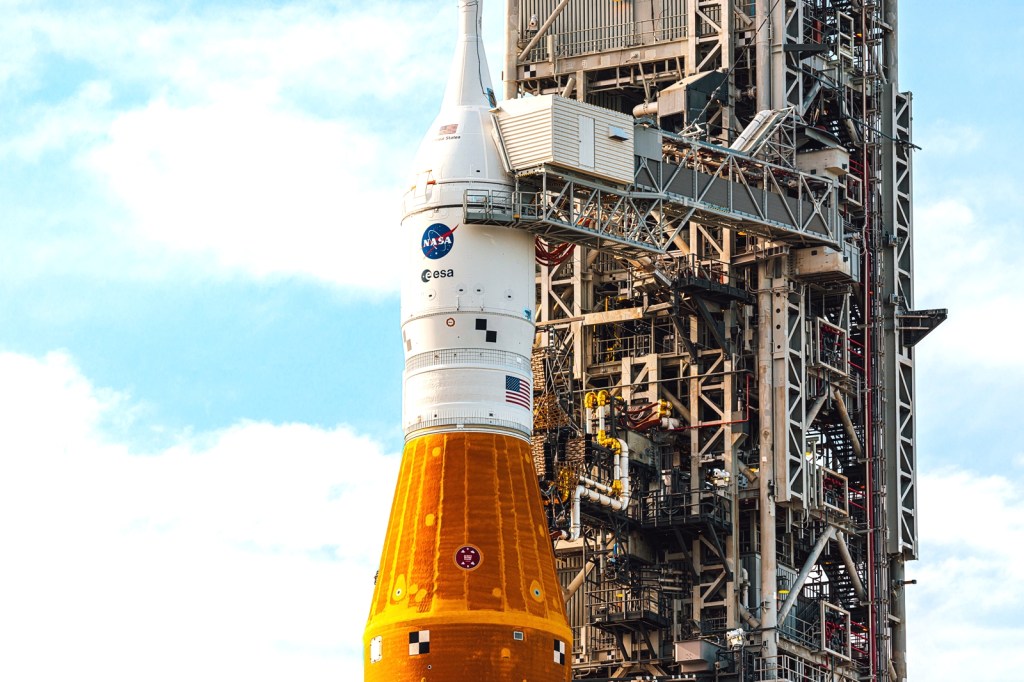
Chequeos y preparativos próximo lanzamiento Artemis I
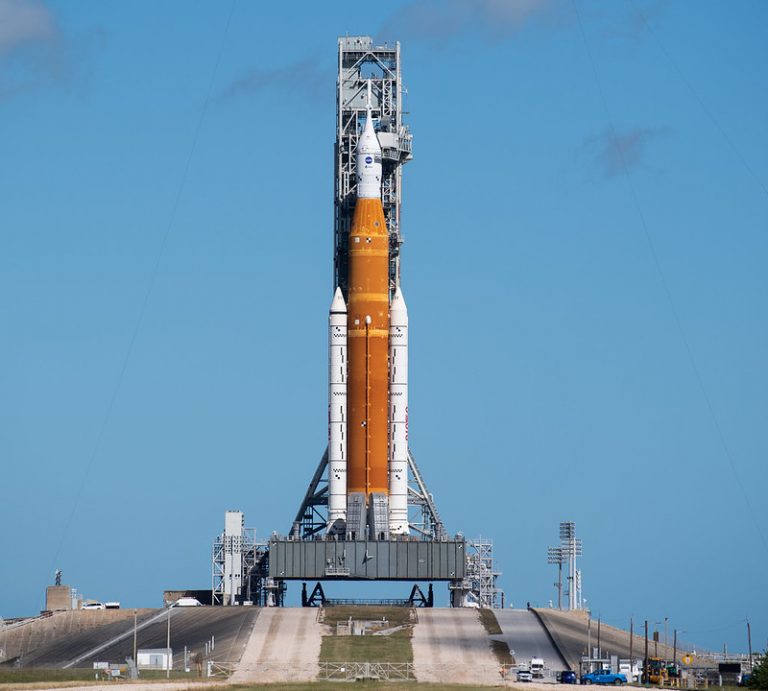
El lanzamiento del Cohete Space Launch System (SLS) de la NASA con la nave espacial Orion a bordo del lanzador móvil en la Plataforma de Lanzamiento 39B están programados para iniciar un nuevo intento para ellanzamiento programado el Miércoles 16 de Noviembre de 2022. Los equipos comenzaron caminatas e inspecciones en la plataforma para evaluar el estado del cohete y la nave espacial después del paso del Huracán Nicole por el Estado de Florida.
La NASA continúa apuntando al lanzamiento de su misión Artemis I desde el Centro Espacial Kennedy de la agencia en Florida a la 01:04 a.m. EST, el Miércoles 16 de Noviembre de 2022, con una ventana de lanzamiento de dos horas para la primera prueba de vuelo integrada de la agencia de su cohete Space Launch System (SLS) y la nave espacial Orion.
Los equipos realizaron evaluaciones exhaustivas en el Complejo de Lanzamiento 39B a partir del Jueves 10/11 por la noche, inspeccionando de cerca SLS, Orion, lanzador móvil y otros activos relacionados con la plataforma para confirmar que no hubo impactos significativos del huracán Nicole, que tocó tierra a más de 70 millas al sur de la plataforma de lanzamiento. Las inspecciones físicas aumentaron el monitoreo remoto a través de sensores y cámaras de alta resolución realizadas durante la tormenta por un equipo en un lugar seguro en Kennedy.
Los ingenieros del Sistema de Lanzamiento Espacial han realizado un análisis detallado para confirmar que los vientos sostenidos y máximos experimentados durante la tormenta no tienen efectos adversos en la resistencia estructural del cohete. Si bien los diferentes vientos máximos fueron medidos por sensores a diferentes alturas en la plataforma, todas las mediciones se mantuvieron por debajo del 75% de los límites de diseño de SLS, que también son intencionalmente conservadores. Los datos de las pruebas con hardware real durante la serie de pruebas estructurales y las pruebas modales, así como otras evaluaciones y modelos, proporcionan confianza de que hay margen más allá de las calificaciones de diseño.
Los técnicos también están trabajando para arreglar varios artículos menores de la tormenta. La mayoría de las reparaciones implican masilla suelta o cubiertas contra el clima. Un umbilical utilizado para proporcionar aire de purga, o condiciones ambientales adecuadas a la nave espacial Orión, estaba fuera de posición. El cordón umbilical mantuvo la purga durante toda la tormenta y se ha reposicionado para permitir una retracción adecuada en el despegue. Los ingenieros también han retirado la tapa dura sobre la ventana del sistema de aborto de lanzamiento instalada antes de la tormenta e inspeccionarán la ventana para confirmar que está en buenas condiciones para el lanzamiento.
Actualmente, como parte de la preparación normal del lanzamiento, los ingenieros están en el proceso de encender elementos de cohetes y naves espaciales para confirmar que todos los sistemas estén en buen estado. Los controles de salud motorizados continuarán hasta el Sábado 12/11. Los ingenieros planean realizar las pruebas finales estándar relacionadas con el software y el hardware requeridas antes del lanzamiento, el Domingo 13/11. El equipo de gestión de la misión Artemis I se reunirá el Domingo 13/11 por la tarde para revisar los preparativos para el lanzamiento.
Artemis I es el primer paso en la próxima era de la exploración humana. Junto con socios comerciales e internacionales, la NASA establecerá una presencia sostenible en la Luna para prepararse para las misiones a Marte.
NASA Prepares to Launch Artemis I
Checks and preparations for the next Artemis I launch
NASA‘s Space Launch System (SLS) Rocket launches with the Orion spacecraft aboard the mobile launcher at Launch Pad 39B are scheduled to begin a new attempt for a scheduled launch on Wednesday, November 16, 2022. Crews began walks and inspections on the platform to assess the state of the rocket and the spacecraft after the passage of Hurricane Nicole through the State of Florida.
NASA continues to target the launch of its Artemis I mission from the agency’s Kennedy Space Center in Florida at 01:04 a.m. EST, Wednesday, Nov. 16, 2022, with a two-hour launch window for the agency’s first integrated flight test of its Space Launch System (SLS) rocket and Orion spacecraft.
Crews conducted extensive assessments at Launch Complex 39B beginning Thursday 11/10 night, closely inspecting SLS, Orion, mobile launcher and other platform-related assets to confirm there were no significant impacts from Hurricane Nicole, which made landfall at more 70 miles south of the launch pad. Physical inspections augmented remote monitoring through high-resolution sensors and cameras conducted during the storm by a team at a secure location in Kennedy.
Space Launch System engineers have performed a detailed analysis to confirm that the sustained and peak winds experienced during the storm have no adverse effect on the rocket’s structural strength. While the different maximum winds were measured by sensors at different heights on the platform, all measurements remained below 75% of the SLS design limits, which are also intentionally conservative. Test data with actual hardware during the structural test series and modal tests, as well as other evaluations and models, provide confidence that there is scope beyond the design qualifications.
Technicians are also working to fix various minor items from the storm. Most repairs involve loose caulking or weather covers. An umbilical used to provide purge air, or suitable environmental conditions to the Orion spacecraft, was out of position. The umbilical cord maintained the purge throughout the storm and has been repositioned to allow proper retraction on takeoff. Engineers have also removed the hard cover over the launch abort system window installed prior to the storm and will inspect the window to confirm it is in good condition for launch.
Currently, as part of normal launch preparation, engineers are in the process of powering up rocket and spacecraft elements to confirm that all systems are in good working order. Motorized health checks will continue until Saturday 12/11. Engineers plan to perform the final standard software and hardware related tests required prior to launch on Sunday 11/13. The Artemis I mission management team will meet on Sunday afternoon 11/13 to review launch preparations.
Artemis I is the first step in the next era of human exploration. Along with commercial and international partners, NASA will establish a sustainable presence on the Moon to prepare for missions to Mars.
PUBLISHER: Airgways.com DBk: Nasa.gov / Airgways.com AW-POST: 202211121950AR OWNERSHIP: Airgways Inc. A\W A I R G W A Y S ®