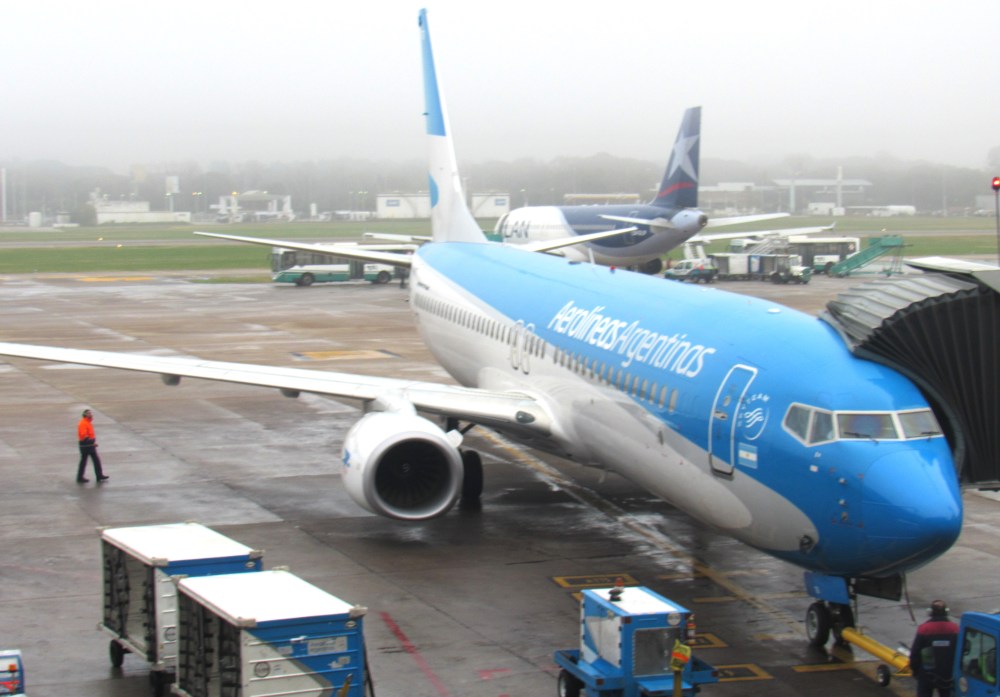
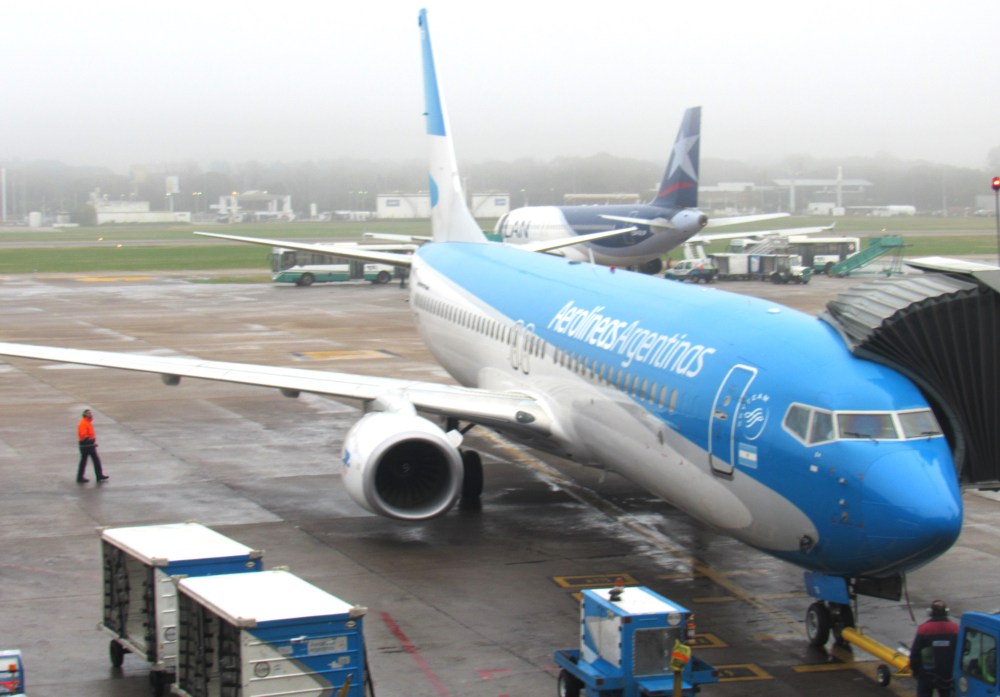
Mercado aéreo emergente en Argentina

AW-70001091.JPG

AW | 2018 08 10 14:58 | AIRLINES MARKET

La Revolución de los Aviones ha iniciado una nueva etapa de tarifas sin techo

La llegada de nuevos competidores al mercado aéreo de cabotaje de Argentina ha permitido flexibilizar las tarifas aéreas con la nueva modalidad de precios sin techo o valor mínimo. Las compañías más beneficiadas por esta nueva modalidad son las líneas aéreas de low cost/low fare, hacen que esté cambiando la forma de viajar de los argentinos.

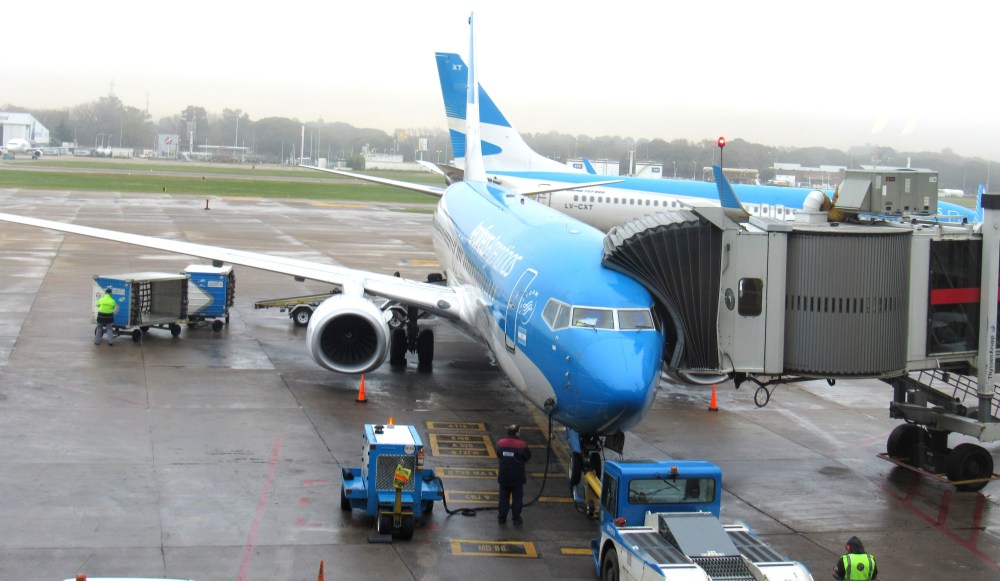
AU E190-100AR.jpgLa Empresa Argentina de Navegación Aérea (EANA), ha comunicado que en Julio 2018 el mercado de cabotaje en Argentina creció un 14% en comparación con Julio 2017. Las aerolíneas tradicionales como Aerolíneas Argentinas/Austral Líneas Aéreas y Latam Argentina, transportaron la misma cantidad de pasajeros interanual. Aunque se mantienen en cantidad de tráfico, han caído en porcentaje de participación de mercado.

Promoción tarifas bajas

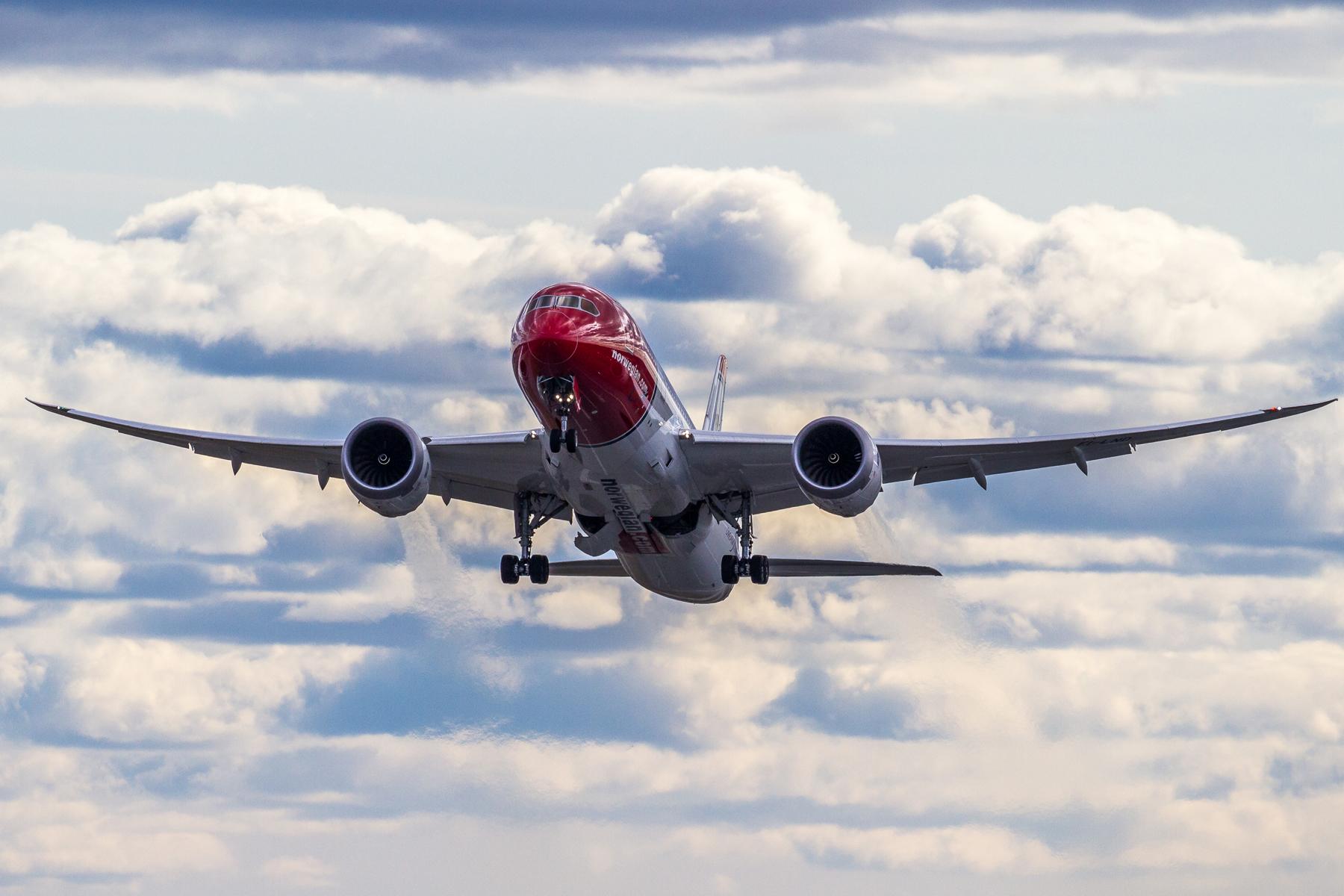
Resultado de imagen para norwegian argentina pngEl ingreso al mercado de compañías low cost como Flybondi Líneas Aéreas, Norwegian Air Argentina permitirán incrementar exponencialmente la cantidad de pasajeros transportados, aumentando los destinos domésticos. Aerolíneas Argentinas se mantuvo en 885.000 pasajeros transportados, y Latam Airlines Argentina en 233.000. Con esas cifras, la línea aérea de bandera perdió 9% de participación de mercado, del 74% que tenía en Julio 2017 al 65% de Julio 2018, en tanto Latam bajó casi 3%. Andes Líneas Aéreas, que sumó casi 3% de mercado en el último año, hasta captar el 8% actualmente ha sido la mejor posicionada. Flybondi llegó a captar el 8% del mercado y Avianca el 2% en Julio 2018.
Aumento vuelos Non-Ezeiza al exterior

La cantidad de tráfico al exterior desde aeropuertos del interior de Argentina se ha incrementado en un 32%. El mercado aéreo ha manifestado cambios en la manera de viajar eligiendo aerolíneas alternativas, observando una tendencia de profundización con el arribo de nuevos competidores al mercado local, como Norwegian Air Argentina y JetSmart Argentina, que pertenece a Indigo Group de Estados Unidos.

El factor ocupación

El índice de ocupación de los aviones en Julio 2018 corresponde para AerolíneasAndes-foto.png Argentinas un 77% (80% Julio 2017); Latam Argentina un 82% (78% Julio 2017); Andes Líneas Aéreas 79% (75% Julio 2017); Flybondi Líneas Aéreas 69% y Avianca Argentina 72%.
En cuanto al mercado aéreo internacional, Latam Argentina ostenta mayor tráfico al exterior con 28%, Aerolíneas Argentinas/Austral con 21%, Gol Linhas Aéreas y Copa Airlines un 7% respectivamentes. Detrás se ubicaron American Airlines (Estados Unidos) e Iberia (España) con 4% cada una de cuota de participación, y luego Sky Airline (Chile) y Avianca (Colombia) con 3% de participación cada una. El restante 26% se repartió entre el resto de las compañías que operan vuelos internacionales en Argentina.

El mercado aéreo irá expandiéndose cada vez más rápido persiguiendo promociones aéreas en un futuro para vuelos internacionales. Como ocurre en diferentes países donde la industria aerocomercial a abierto sus alas, permitirán a todos más oportunidades de volar. La industria irá madurando y Argentina no es la excepción. AIRWAYS® AW-Icon TXT

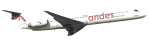
flybondi-lv-hkr.jpg

Argentine emerging air market

The Aircraft Revolution has started a new phase of homeless rates

The arrival of new competitors to the Argentine cabotage air market has made it possible to make air fares more flexible with the new price modality without a ceiling or minimum value. The companies most benefited by this new modality are low cost / low fare airlines, which is changing the way of traveling of Argentines.

38018483034_85662cbe18_b.jpgThe Argentine Air Navigation Company (EANA), has reported that in July 2018 the cabotage market in Argentina grew by 14% compared to July 2017. Traditional airlines such as Aerolíneas Argentinas / Austral Líneas Aéreas and Latam Argentina, transported the same amount of passengers interannual. Although they remain in amount of traffic, they have fallen in percentage of market share.

Promotion low rates

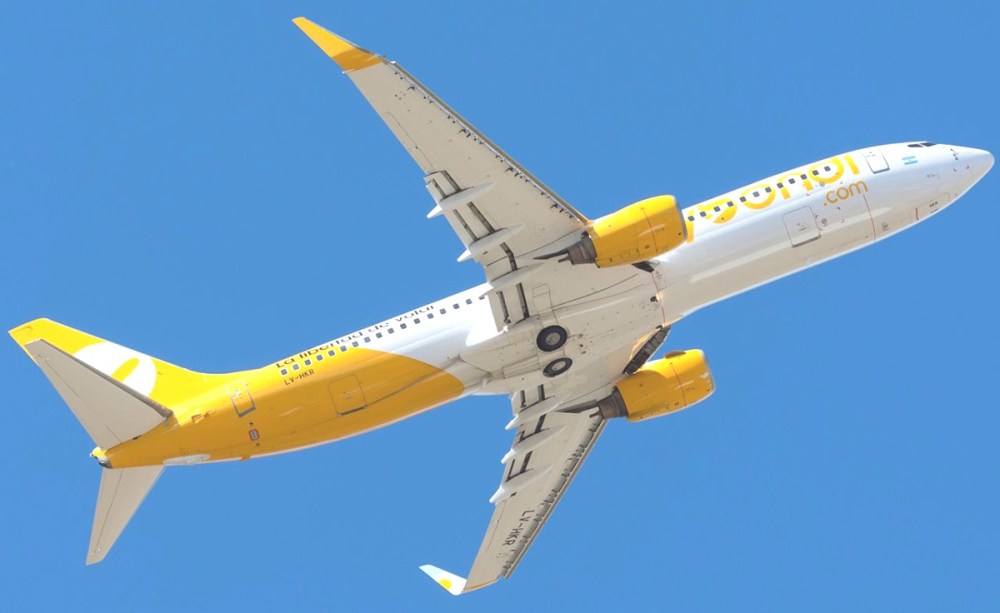
The entry into the market of low cost companies such as Flybondi Líneas Aéreas, Resultado de imagen para Flybondi pngNorwegian Air Argentina will exponentially increase the number of passengers transported, increasing domestic destinations. Aerolíneas Argentinas remained at 885,000 passengers transported, and Latam Airlines Argentina at 233,000. With these figures, the flag airline lost 9% market share, from 74% in July 2017 to 65% in July 2018, while Latam fell almost 3%. Andes Líneas Aéreas, which added almost 3% of the market in the last year, up to 8%, has currently been the best positioned. Flybondi managed to capture 8% of the market and Avianca 2% in July 2018.

Increase non-Ezeiza flights abroad

The amount of traffic abroad from airports in the interior of Argentina has increased by 32%. The airline market has shown changes in the way of traveling by choosing alternative airlines, observing a deepening trend with the arrival of new competitors to the local market, such as Norwegian Air Argentina and JetSmart Argentina, which belongs to the Indigo Group of the United States.

The occupation factor

The aircraft occupancy rate in July 2018 corresponds to Aerolíneas Argentinas 77% (80% July 2017); Latam Argentina 82% (78% July 2017); Andes Líneas Aéreas 79% (75% July 2017); Flybondi Airlines 69% and Avianca Argentina 72%.

As for the international air market, Latam Argentina has more traffic abroad with 28%, Aerolíneas Argentinas/Austral with 21%, Gol Linhas Aéreas and Copa Airlines 7% respectively. Behind were American Airlines (United States) and Iberia (Spain) with 4% each participation fee, and then Sky Airline (Chile) and Avianca (Colombia) with 3% participation each. The remaining 26% was distributed among the rest of the companies that operate international flights in Argentina.

The air market will be expanding more and more rapidly, pursuing air promotions in the future for international flights. As it happens in different countries where the commercial airline industry has opened its wings, they will allow everyone more opportunities to fly. The industry will be maturing and Argentina is not the exception. A\W


Ξ A I R G W A Y S Ξ
SOURCE:  Airgways.com
DBk: Eana.com.ar / Airgways.com / Simon Yalis
AW-POST: 201808101458AR

A\W   A I R G W A Y S ®

Fuerte impulso vuelos transatlánticos

AW-7000645366.jpg

AW | 2018 08 03 20:36 | AIRLINES MARKET

El fuerte crecimiento económico en los Estados Unidos impulsa vuelos transatlánticos

La economía de Estados Unidos está teniendo un fuerte crecimiento y las economías de rebote en Europa están ayudando a las aerolíneas a aumentar los vuelos transatlánticos en el hemisferio norte. Las aerolíneas han agregado rápidamente asientos para satisfacer este auge de la demanda.

A pesar que las aerolíneas están siendo impactadas por los mayores costos de combustible, las compañías aéreas están encontrando un lugar donde encontrar generar ganancias extras. Varias líneas aéreas están ganando protagonismo para aprovechar la bonanza de los viajes sobre el Atlántico Norte.

British Airways, del Grupo IAG, registró un aumento en las ganancias en el 2Q2018. Las ventas en sus rutas transatlánticas ayudaron a compensar los costos derivados de los mayores precios del combustible y las interrupciones en el control del tráfico aéreo que afectaron duramente a Europa en 2018. La demanda fue fuerte en todas las clases de cabina y las reservas se mantienen sólidas este trimestre. British Airways comenzó a volar directamente en mayo a Nashville desde Londres. El apetito por esos asientos sorprendió a la aerolínea. «El rendimiento transatlántico es muy bueno. La demanda fue fuerte en todas las clases de cabina y las reservas se mantienen sólidas este trimestre», dijo el viernes el presidente ejecutivo de IAG, Willie Walsh.

Iberia, Aer Lingus y Level, miembros del IAG Group, vuelan entre Europa y América, comunicaron que los asientos para la venta ganaron un 10% en el segundo trimestre. Aproximadamente la mitad de esa capacidad estaba en nuevas rutas. El desempeño financiero de todas las nuevas rutas superó las expectativas.

IAG continúa expandiéndose en las rutas entre Europa y América. El operador de larga distancia de bajo costo Level comenzó vuelos en julio desde París, su segunda base después de Barcelona, ​​a Montreal y la isla francesa de Guadalupe en el Caribe.

Deutsche Lufthansa AG y Air France-KLM tambiéninformaron que las ganancias se vieron reforzadas por la demanda de viajes a través del Atlántico, lo que ayudó a que sus precios recuperaran parte de las pérdidas sufridas en 2018.

En tanto Norwegian Air Shuttle ASA ha transcurrido un año desde el lanzamiento de sus vuelos transatlánticos desde Belfast hacia América del Norte. La aerolínea emplea aeronaves Boeing 787 para vuelos de mayor demanda, pero al mismo tiempo emplea aviones narrowbodies Boeing 737-8 MAX con 189 pax para efectuar vuelos costa a costa del Atlántico Norte. La fuerte competencia ha permitido observar que tiene una de las tarifas más bajas del mercado.

El rápido crecimiento ha tenido un costo, la rentabilidad de los vuelos a América del Norte en el 2Q2018 fue más débil de lo esperado. Los ingresos por unidad de asiento disminuyeron levemente en comparación con el año anterior, pero muchas aerolíneas están dispuesta a presentar batalla para ganar mercado.  AIRWAYS® AW-Icon TXTAW-70447774.png

Strong impulse transatlantic flights

The strong economic growth in the United States promotes transatlantic flights

The US economy is experiencing strong growth and bouncing economies in Europe are helping airlines increase transatlantic flights in the northern hemisphere. Airlines have quickly added seats to meet this demand boom.

Although airlines are being impacted by higher fuel costs, airlines are finding a place to find extra profits. Several airlines are gaining prominence to take advantage of the bonanza of travel over the North Atlantic.

British Airways, of the IAG Group, registered an increase in profits in 2Q2018. Sales on its transatlantic routes helped offset the costs of higher fuel prices and disruptions in air traffic control that hit Europe hard in 2018. Demand was strong in all cabin classes and reserves were maintained solid this quarter. British Airways started flying directly in May to Nashville from London. The appetite for those seats surprised the airline. «The transatlantic performance is very good, demand was strong in all cabin classes and reserves remain strong this quarter», IAG Chief Executive Willie Walsh said on Friday.

Iberia, Aer Lingus and Level, members of the IAG Group, fly between Europe and America, reported that the seats for sale gained 10% in the second quarter. Approximately half of that capacity was in new routes. The financial performance of all new routes exceeded expectations.

IAG continues to expand on the routes between Europe and America. Low-cost long distance operator Level started flights in July from Paris, its second base after Barcelona, ​​to Montreal and the French island of Guadeloupe in the Caribbean.

Deutsche Lufthansa AG and Air France-KLM also reported that earnings were reinforced by demand for travel across the Atlantic, which helped their prices recover part of the losses suffered in 2018.

Meanwhile Norwegian Air Shuttle ASA has been a year since the launch of its transatlantic flights from Belfast to North America. The airline uses Boeing 787 aircraft for high-demand flights, but at the same time it uses Boeing 737-8 MAX narrowbodies with 189 pax to make flights from coast to coast of the North Atlantic. The strong competition has allowed us to observe that it has one of the lowest rates in the market.

The rapid growth has had a cost, the profitability of flights to North America in 2Q2018 was weaker than expected. Revenue per seat unit decreased slightly compared to the previous year, but many airlines are willing to present battle to win market. A \ W


Ξ A I R G W A Y S Ξ
SOURCE:  Airgways.com
DBk: Wsj.com / Pressassociation.com (Ringo H.W. Chiu) / E24.no
AW-POST: 201808032035AR

A\W   A I R G W A Y S ®

Incremento mercado aéreo de la India

AW70000081.jpg

AW | 2018 08 03 16:07 | AIRLINES MARKET

Las aerolíneas de la India han incrementado el número de pasajeros

Las aerolíneas de la India están atravesando un período de auge en el incremento de pasajeros en vuelos domésticos pero al mismo tiempo están luchando para obtener ganancias debido a la mayor competitividad en el mercado aéreo.

Unos 68 millones de pasajeros volaron dentro de India en el período de los primeros seis meses de 2018, según datos oficiales, un aumento del 22% con respecto al mismo período del año 2017. Las últimas cifras disponibles de la Asociación Internacional de Transporte Aéreo (IATA) muestran que el tráfico nacional de pasajeros de la India creció casi un 17% en el mes Mayo 2018 en comparación con el mismo mes del año pasado. En comparación con otros países, la India ha logrado uno de los mayores incrementos de tráfico de pasajeros en el mundo. China creció casi 12% en el mismo período, mientras que Estados Unidos mostró un crecimiento de 5,5%.

Millones indúes vuelan más

El sector de la aviación de la India ahora ha tenido un crecimiento durante 45 meses consecutivos. Pero además, con varias aerolíneas compitiendo para ofrecer a los indúes formas más baratas de viajar, la presión constante sobre las tarifas ha dificultado la obtención de dinero. Un aumento en los precios del petróleo, combinado con una caída en la moneda de la India, la rupia, está exprimiendo las finanzas en toda la industria. La industria de la aviación está atravesando una fase difícil debido a la depreciación de la rupia y la falta de correspondencia entre los altos precios del combustible y las tarifas bajas.

La aerolínea Jet Airways ha ordenado incorporar más aeronaves por motivo del aumento de demanda. Planea agregar 225 Boeing 737 MAX durante la próxima década, de los cuales 75, con un valor de casi US$ 9 mil millones a precios de lista, fueron comprados hace menos de tres semanas.

IndiGo que es líder en el mercado indú, está atravesando una fuerte caída de las ganancias que rondan los 97% en el trimestre finalizado en Junio 2018, en comparación con el mismo período del año pasado. El CEO Rahul Bhatia culpó a la caída de la rupia y al aumento de los costos del combustible.

La aerolínea nacional Air India está siendo apuntalada por las fuertes pérdidas que está afrontando desde hace tiempo. Desde el fracaso en vender una participación del 76% de Air India a inversionistas privados a principios de 2018, el gobierno se ha visto obligado a invertir cientos de millones de dólares de los contribuyentes en la aerolínea para mantenerla en vuelo.

Así el mercado aéreo de la India mientras se está expandiendo, las aerolíneas ven limitados sus esfuerzos para compensar las pérdidas acarreadas por los efectos del aumento del petróleo y la depreciación de la caída de la moneda nacional. AIRWAYS® AW-Icon TXT

Imagen relacionada

Increase Indian air market

Indian airlines have increased the number of passengers

Indian airlines are going through a period of boom in the increase of passengers on domestic flights but at the same time they are struggling to make a profit due to the greater competitiveness in the air market.

Some 68 million passengers flew inside India in the first six months of 2018, according to official data, an increase of 22% over the same period of 2017. The latest figures available from the International Air Transport Association ( IATA) show that the national passenger traffic of India grew by almost 17% in the month May 2018 compared to the same month last year. Compared to other countries, India has achieved one of the largest increases in passenger traffic in the world. China grew almost 12% in the same period, while the United States showed a growth of 5.5%.

Millions of Indians fly more

The aviation sector in India has now grown for 45 consecutive months. But in addition, with several airlines competing to offer Indians cheaper ways to travel, the constant pressure on fares has made it harder to get money. An increase in oil prices, combined with a fall in India’s currency, the rupee, is squeezing finance throughout the industry. The aviation industry is going through a difficult phase due to the depreciation of the rupee and the lack of correspondence between high fuel prices and low fares.

The airline Jet Airways has ordered to incorporate more aircraft due to the increase in demand. It plans to add 225 Boeing 737 MAX over the next decade, of which 75, worth almost $ 9 billion at list prices, were purchased less than three weeks ago.

IndiGo, which is a leader in the Indian market, is experiencing a sharp drop in profits of around 97% in the quarter ended in June 2018, compared to the same period last year. CEO Rahul Bhatia blamed the rupee’s fall and rising fuel costs.

The national airline Air India is being propped up by the heavy losses it has been facing for some time. Since the failure to sell a 76% stake of Air India to private investors in early 2018, the government has been forced to invest hundreds of millions of taxpayer dollars on the airline to keep it in flight.

Thus the Indian air market while it is expanding, airlines are limited their efforts to compensate for the losses caused by the effects of the increase in oil and the depreciation of the fall of the national currency. A \ W


भारतीय वायु बाजार में वृद्धि

भारतीय एयरलाइंस ने यात्रियों की संख्या में वृद्धि की है

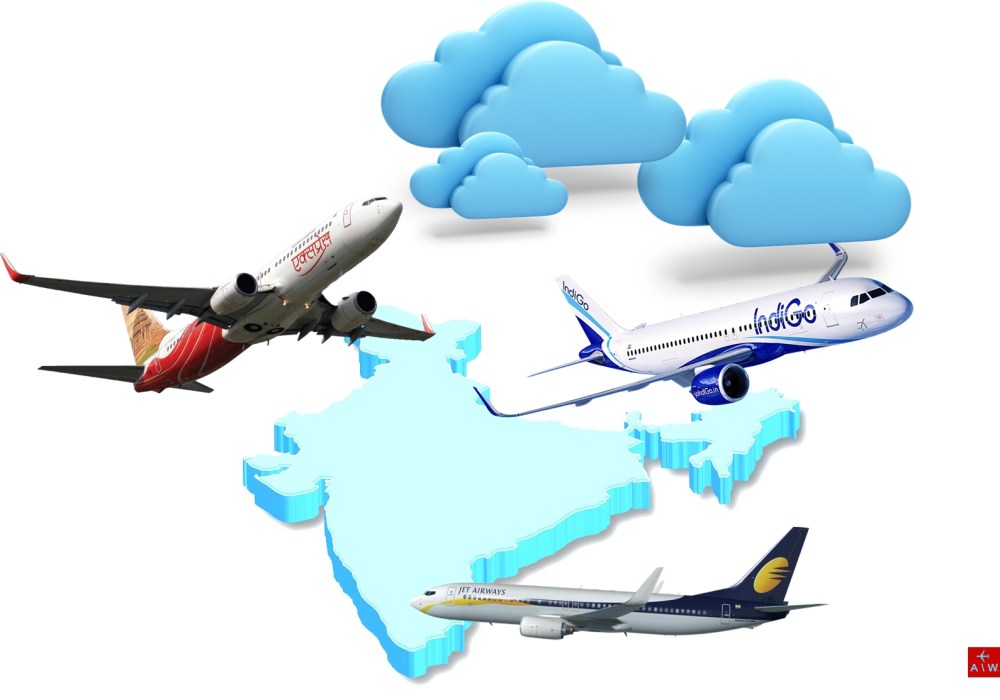
Resultado de imagen para India  map pngभारतीय एयरलाइंस घरेलू उड़ानों पर यात्रियों की वृद्धि में तेजी से बढ़ रही है, लेकिन साथ ही वे हवाई बाजार में अधिक प्रतिस्पर्धात्मकता के कारण लाभ अर्जित करने के लिए संघर्ष कर रहे हैं।
आधिकारिक आंकड़ों के मुताबिक 2018 के पहले छह महीनों में भारत के अंदर 68 मिलियन यात्रियों ने भारत के अंदर उड़ान भरने के लिए 2017 की इसी अवधि के मुकाबले 22% की वृद्धि दर्ज की। अंतरराष्ट्रीय वायु परिवहन संघ (आईएटीए) से उपलब्ध नवीनतम आंकड़े बताते हैं कि राष्ट्रीय यात्री पिछले साल की समान अवधि की तुलना में मई 2018 के महीने में भारत का यातायात लगभग 17% बढ़ गया। अन्य देशों की तुलना में, भारत ने दुनिया में यात्री यातायात में सबसे बड़ी वृद्धि हासिल की है। इसी अवधि में चीन में लगभग 12% की वृद्धि हुई, जबकि संयुक्त राज्य अमेरिका में 5.5% की वृद्धि हुई।

लाखों भारतीय उड़ते हैं

भारत में विमानन क्षेत्र अब लगातार 45 महीने तक बढ़ गया है। लेकिन इसके अलावा, कई एयरलाइंस यात्रा करने के लिए भारतीयों को सस्ता तरीके प्रदान करने के लिए प्रतिस्पर्धा कर रही हैं, किराए पर लगातार दबाव ने पैसे कमाने में कठिनाई की है। तेल की कीमतों में वृद्धि, भारत की मुद्रा में गिरावट के साथ, रुपये, पूरे उद्योग में वित्त निचोड़ रहा है। विमानन उद्योग रुपये के मूल्यह्रास और उच्च ईंधन की कीमतों और कम किराए के बीच पत्राचार की कमी के कारण एक कठिन दौर से गुजर रहा है।

एयरलाइन जेट एयरवेज ने मांग में वृद्धि के कारण अधिक विमान शामिल करने का आदेश दिया है। अगले दशक में 225 बोइंग 737 मैक्स जोड़ने की योजना है, जिनमें से 75, सूची मूल्यों पर लगभग $ 9 बिलियन के लायक हैं, तीन हफ्ते पहले कम खरीदे गए थे।

भारतीय बाजार में अग्रणी नेता इंडिगो जून 2018 में समाप्त तिमाही में 97% की मुनाफे में तेज गिरावट का सामना कर रहा है, जो पिछले साल की इसी अवधि की तुलना में था। सीईओ राहुल भाटिया ने रुपये के पतन और बढ़ती ईंधन लागत को दोषी ठहराया।

राष्ट्रीय एयरलाइन एयर इंडिया को भारी नुकसान से कुछ समय तक सामना करना पड़ रहा है। 2018 की शुरुआत में निजी निवेशकों को एयर इंडिया की 76% हिस्सेदारी बेचने में विफल होने के कारण, सरकार को इसे उड़ान में रखने के लिए एयरलाइन पर लाखों करदाता डॉलर निवेश करने के लिए मजबूर होना पड़ा है।

इस प्रकार भारतीय वायु बाजार में विस्तार होने के दौरान, एयरलाइंस तेल में वृद्धि के प्रभाव और राष्ट्रीय मुद्रा के पतन के मूल्यह्रास के कारण होने वाले नुकसान की भरपाई करने के अपने प्रयासों को सीमित कर रही हैं। A \ W


Ξ A I R G W A Y S Ξ
SOURCE:  Airgways.com
DBk: Civilaviation.gov.in / Airgways.com  / Businessworld.in
AW-POST: 201808031607AR

A\W   A I R G W A Y S ®

Revolución tarifas aéreas en Argentina

Resultado de imagen para Aeroparque Flybondi

AW | 2018 07 31 18:52 | AIRLINES MARKET

Comienza la revolución de las tarifas aéreas en Argentina

La nueva Resolución Nº 656 del Ministerio de Transporte de Argentina quedó formalizada hoy a través de su publicación en el Boletín Oficial la nueva regulación de tarifas aéreas eliminando el piso del valor de los tickets aéreos en Argentina.

A partir de mañana 1 Julio 2018 las aerolíneas low-cost no tendrán piso para las tarifas aéreas. Las aerolíneas low cost como así las tradicionales podrán vender pasajes de cabotaje a precios por debajo de la establecida. Las aerolíneas ya no tendrán un precio mínimo de referencia para los pasajes de cabotaje, una medida clave para el mercado de las low cost.

El Ministerio de Transporte de Argentina ha eliminado el piso tarifario que regía para las compañía aéreas, una medida que tenía como principal propósito resguardar al mercado de los micros de larga distancia. Sin embargo, esto restringía a las nuevas aerolíneas low cost que prevén vender pasajes por debajo de ese tope mínimo. «Autorízase a los explotadores de servicios regulares de transporte aéreo interno de pasajeros, a partir de las cero (0) hora del día siguiente a la publicación de la presente resolución en el Boletín Oficial de la República Argentina, a aplicar tarifas inferiores a las tarifas de referencia vigentes para las ventas de pasajes aéreos de ida y vuelta que se realicen con más de Treinta (30) días de anticipación», informa el único artículo de la resolución.

Pasajes «low-fare»

En el mundo del mercado de la liberalización del techo tarifario promovido o impulsado por las aerolíneas low-cost, permite acercarnos con una mirada más optimista en los cambios profundos del mercado aerocomercial que está atravesando la industria aerocomercial en Argentina.

A partir de Agosto 2018, las líneas aéreas podrán iniciar ofreciendo pasajes por debajo de la tarifa mínima de referencia, que en los hechos se traducirá en pasajes mucho más baratos, según el tramo y la demanda estacional. La nueva reglamentación del cuadro tarifario por debajo de los precios mínimos que operaban las compañías aéreas están sujetas a variables como: rutas, tramos, demanda y tiempo de las promociones, por lo que una misma tarifa de bajo precio (low-fare) se pudiera ofrecer en forma limitada y estableciendo un período reducido. Por ejemplo, una aerolínea pudiera ofrecer en determinada ruta un pasaje a un valor ilógico de AR$ 1,00 estableciendo las variables antes enunciadas. En muchos casos las ofertas de los pasajes deberán adquirirse con 30 días de anticipación.

Mercado más competitivo

El Ministerio de Transporte de Argentina argumentó que el Estado «debe procurar el fortalecimiento y desarrollo en el sector aeronáutico, permitiendo la incorporación de nuevas empresas en el mercado, la conservación y creación de fuentes de empleo directo e indirecto a consecuencia del desarrollo de la actividad en el marco de la política aerocomercial vigente. En virtud de la naturaleza de transporte público y a los fines del cumplimiento de los objetivos en materia aeronáutica es preciso fijar las pautas necesarias que alienten la accesibilidad de mayor cantidad de usuarios y nuevos transportistas. De esta manera se propicia fomentar la actividad aerocomercial a través de un modo más dinámico de fijación de las tarifas a percibir por el servicio de transporte aéreo que tienda a evitar dificultades en el desarrollo de la actividad aerocomercial. Esta medida produce reducción de precios para que más argentinos puedan volar en el país. Los pasajeros encontrarán más ofertas con mejores precios y aumentarán las promociones en momentos de temporada y en vuelos con baja ocupación», consideró el Ministro de Transporte, Guillermo Dietrich.

Más actividad aerocomercial

En Diciembre 2015, sólo 10 millones de personas podían acceder a viajar en avión dentro del país debido a que había pocas aerolíneas, tarifas que se encontraban entre las más caras de la región y del mundo, con poca flexibilidad para incentivar promociones y una infraestructura deficiente.

El Ministerio de Transporte informó que desde 2015 en adelante se sumaron 59 nuevas rutas aéreas domésticas, de las cuales 33 no pasan por Buenos Aires. Este crecimiento generó un incremento del 36% de pasajeros de cabotaje en comparación a 2015 y, para cubrir las nuevas rutas, se han incorporado más aviones, que significará un crecimiento del 55% de la flota en el mercado a 2019, estimó el Ministerio. Además, indicó que en el último año han aumentado los asientos ofrecidos en un 12 % y subrayó que ésto representa un desafío para aumentar los niveles de ocupación hoy cercanos al 77% y la flexibilización de la tarifa de referencia se presenta como una oportunidad para seguir creciendo.

Inversiones en aviación

El Ministerio de Transporte enfatizó que en el período 2016-2019 se invertirán US$ 1.400 millones de dólares en aeropuertos y 175 millones de dólares en tecnología para la navegación aérea. Según los datos estadísticos elaborados por la Empresa Argentina de Navegación Aérea (EANA) a partir del Sistema Integrado de Aviación (SIAC), en lo que va del año los vuelos de cabotaje acumulan un crecimiento del 37% al comparar contra el mismo período de 2015, pasando de 4,78 a 6,56 millones de pasajeros. En cuanto a los vuelos al exterior, en la comparación contra el mismo período del 2015, cuando habían volado un total de 5,76 millones de personas, esta suba es del 37%. En el plano internacional, en lo que va del año un total de 1,27 millón de personas conectaron desde el interior con aeropuertos internacionales, cifra 170% superior a los 472 mil que lo hicieron en el 2015, de acuerdo con las estadísticas oficiales.

AW-70001090.JPG

Aerolíneas se ajusta a la baja

Aerolíneas Argentinas ha comenzado a anunciar una agresiva campaña para atraer más usuarios a su red de vuelos reduciendo en un 50% sus tarifas más económicas para vuelos en toda Argentina. La aerolínea se adecuó a la decisión del Gobierno para la liberalización de las tarifas aéreas iniciando así un proceso de mayor competitividad en las rutas domésticas.

El Grupo Aerolíneas ha comenzado con el proceso de adecuación al nuevo régimen tarifario lanzando una promoción muy tentadora: por solo AR$499 de precio final por todo concepto se podrá volar a los principales puntos del país, aplicable a los vuelos que se compren con 30 días de anticipación, es decir que está vigente para vuelos en septiembre y octubre. Aerolíneas aplicará una promoción para adquirir pasajes que durará del 1-8 Agosto, lo que implica que podrán utilizarse desde el 1 Septiembre 2018. El precio promedio por tramo será de AR$ 499, aunque en varios casos será incluso inferior, como en el caso de Buenos Aires-Rosario, a AR$ 341 pesos. En todos los casos, la rebaja rondará el 50% del valor actual de los pasajes.Se trata de precios por tramo que, además, tendrán la ventaja de contar con financiación y a los que se podrá acceder a través del sitio web de Aerolíneas Argentinas y Austral Líneas Aéreas y por agencias de viajes. «Estamos dando inicio a un nuevo paradigma en el mercado aerocomercial de cabotaje, con una propuesta muy atractiva y completa, que abarca a todo el país», apuntó Alejandro Castignani, gerente de Distribución y Revenue Management de Aerolíneas.

El servicio Buenos Aires-Córdoba, que ahora cuesta AR$ 1.225, tendrá una reducción del 57 por ciento. En el caso de Buenos Aires-Bariloche, una frecuencia de alta demanda y, por lo tanto, costosa, tendrá una rebaja del 49%, de los actuales AR$ 1.811 a AR$ 929. Puntualmente, la tarifa de AR$ 499 o inferior estará disponible para los siguientes destinos (viceversa): Buenos Aires/Córdoba; Buenos Aires/Paraná; Mendoza/Córdoba; Bahía Blanca/Buenos Aires; Buenos Aires/Rosario; Buenos Aires/Santa Fe; Buenos Aires/Mar del Plata. De esta manera, Aerolíneas Argentinas se beneficia de las herramientas de las low cost, al permitir abordar con equipaje de mano de hasta 8 kilos, mientras que de haber equipaje extra se deberá despachar por bodega y tarifar aparte. En ese último caso, el costo de enviar equipaje por bodega será de AR$ 399 por tramo si la compra del pasaje es por el sitio web de Aerolíneas o de AR$ 650 en mostrador. Aerolíneas indicó que estos precios promocionales podrán ser abonados hasta en 12 cuotas a través de más de 30 bancos. A la vez, los socios de Aerolíneas Plus van a poder acceder a estas ofertas mediante el canje de millas o millas más pesos. Desde la compañía detallaron que estos valores incluyen selección de asiento, catering a bordo (en vuelos superiores a dos horas), y la posibilidad de llevar un bolso de mano de hasta ocho kilos en la cabina. El despacho de equipaje en bodega será facturado aparte, y con un descuento de 60% si se hace a través de la web.

“Estas ofertas van a marcar un antes y un después, ya que muchas personas que no viajaban van a poder elegir hacerlo con un servicio de calidad”, explicó Constanza Correa, gerente de Marketing y Producto de la compañía aérea. La promoción será aplicable a 60 destinos de cabotaje de todo el país, siempre al adquirir pasaje de ida y vuelta, tanto de Aerolíneas como Austral, con un cupo limitado de asientos por avión, aunque suficientemente amplio como para satisfacer la nueva demanda.

La compañía aérea confía en duplicar o triplicar la demanda para este segmento, frente a la competencia de las low cost, con el objetivo de incorporar nuevos usuarios, que hoy optan por otros medios de transporte, antes que quitarle participación a las competidoras, habida cuenta de que Aerolíneas concentra más del 70% del mercado aerocomercial doméstico.

Las aerolíneas se alínean

El resto de las líneas aéreas en Argentina como Flybondi Líneas Aéreas, Andes Líneas Aéreas o Norwegian Air Argentina, aún no han publicado ofertas de este tipo en sus redes.

Desde Agosto 2018 nace una nueva forma de viajar en Argentina, un mercado que estuvo muy relegado y alejado por proteccionismos que no permitían ofrecer más posibilidades de volar con tarifas más conveniente.

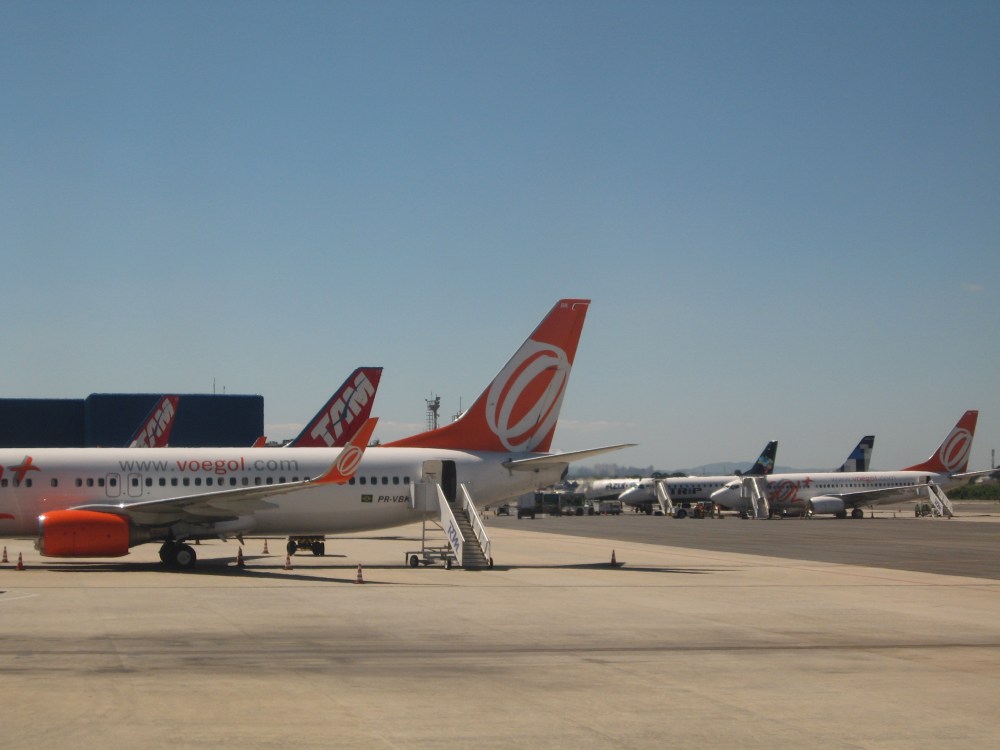
Brasil inició un proceso de liberalización de las tarifas aéreas en el año 2001. La aerolínea Gol Linhas Aéreas se estableció en 2000 y comenzó a operar el 15 Enero de 2001 iniciando un proceso de transformación del transporte aéreo en el país sudamericano.

Argentina se introduce en una nueva etapa que permitirá fortalecer el transporte aéreo pero que deberá cumplimentarlo con reglas claras para beneficios de todos los pasajeros que deseen disfrutar del placer de volar.  AIRWAYS® AW-Icon TXT

AW-70001128.JPG

Revolution air fares in Argentina

The revolution of air fares begins in Argentina

The new Resolution No. 656 of the Ministry of Transport of Argentina was formalized today through its publication in the Official Gazette the new regulation of air fares eliminating the floor of the value of air tickets in Argentina.

Starting tomorrow, July 1, 2018, low-cost airlines will not have a flat for air fares. Low cost airlines, as well as traditional ones, will be able to sell cabotage tickets at prices below the established one. Airlines will no longer have a minimum reference price for cabotage tickets, a key measure for the low cost market.

The Ministry of Transportation of Argentina has eliminated the tariff floor that governed the airlines, a measure that had as its main purpose to protect the market of long distance buses. However, this restricted the new low cost airlines that foresee selling tickets below that minimum cap. «Operators of regular services of internal air transport of passengers are authorized, starting at zero (0) hour of the day following the publication of this resolution in the Official Gazette of the Argentine Republic, to apply rates lower than the rates of valid reference for sales of round-trip air tickets that are made more than thirty (30) days in advance», reports the only article of the resolution.

Resultado de imagen para Andes Lineas Aéreas

Passages «low-fare»

In the market world of the liberalization of the tariff ceiling promoted or promoted by low-cost airlines, it allows us to approach with a more optimistic look at the deep changes of the commercial market that the commercial airline industry is going through in Argentina.

As of August 2018, airlines can start offering tickets below the minimum reference rate, which in fact will result in much cheaper tickets, depending on the section and seasonal demand. The new regulation of the rate chart below the minimum prices operated by the airlines are subject to variables such as: routes, stretches, demand and time of the promotions, so that the same low-fare rate could be offer in limited form and establishing a reduced period. For example, an airline could offer a certain route a passage to an illogical value of AR$ 1.00, establishing the variables mentioned above. In many cases offers of ticket offers must be purchased 30 days in advance.

Most competitive market

The Ministry of Transport of Argentina argued that the State «should seek strengthening and development in the aeronautical sector, allowing the incorporation of new companies in the market, conservation and creation of direct and indirect employment sources as a result of the development of the activity In the framework of current commercial air traffic policy, it is necessary to establish the necessary guidelines to encourage the accessibility of a greater number of users and new transporters, in view of the nature of public transport and the fulfillment of aeronautical objectives. It encourages the commercial activity through a more dynamic way of fixing the tariffs to be charged for the air transport service that aims to avoid difficulties in the development of the commercial activity, which reduces prices so that more Argentines can fly in the country, passengers will find more ertas with better prices and will increase the promotions in moments of season and in flights with low occupation», considered the Minister of Transport, Guillermo Dietrich.

More air-commercial activity

In December 2015, only 10 million people could access air travel within the country because there were few airlines, rates that were among the most expensive in the region and the world, with little flexibility to encourage promotions and poor infrastructure.

The Ministry of Transportation reported that from 2015 onwards 59 new domestic air routes were added, of which 33 do not pass through Buenos Aires. This growth generated a 36% increase in cabotage passengers compared to 2015 and, to cover the new routes, more aircraft have been added, which will mean a 55% growth of the fleet in the market by 2019, the Ministry estimated. In addition, he indicated that in the last year have increased the seats offered by 12% and stressed that this represents a challenge to increase occupancy levels today close to 77% and the flexibilization of the reference rate is presented as an opportunity to continue growing.

Investments in aviation

The Ministry of Transportation emphasized that in the 2016-2019 period, US$ 1,400 million will be invested in airports and $ 175 million in technology for air navigation. According to statistical data prepared by the Argentine Air Navigation Company (EANA) from the Integrated Aviation System (SIAC), so far this year cabotage flights accumulate a growth of 37% compared to the same period of 2015 , going from 4.78 to 6.56 million passengers. As for the flights abroad, in the comparison against the same period of 2015, when they had flown a total of 5.76 million people, this rise is 37%. At the international level, so far this year a total of 1.27 million people connected from the interior with international airports, 170% higher than the 472 thousand who did in 2015, according to official statistics.

Aerolíneas adjusts to the low

Aerolíneas Argentinas has begun to announce an aggressive campaign to attract more users to its flight network by reducing its cheapest fares by 50% for flights throughout Argentina. The airline was adapted to the Government’s decision to liberalize air fares, thus initiating a process of greater competitiveness in domestic routes.

The Aerolíneas Group has started with the process of adapting to the new tariff regime by launching a very attractive promotion: for only AR$ 499 of the final price for any concept it will be possible to fly to the main points of the country, applicable to flights that are bought with 30 days of anticipation, that is to say that it is valid for flights in September and October. Aerolíneas will apply a promotion to purchase tickets that will last from 1-8 August, which means that they can be used from September 1, 2018. The average price per section will be AR$ 499, although in several cases it will be even lower, as in the case from Buenos Aires-Rosario, to AR$ 341 pesos. In all cases, the discount will be around 50% of the current value of the tickets. These are prices per section that, in addition, will have the advantage of having financing and which can be accessed through the Aerolíneas Argentinas website and Austral Líneas Aéreas and by travel agencies.

«We are starting a new paradigm in the commercial aviation market, with a very attractive and comprehensive proposal, which covers the entire country», said Alejandro Castignani, manager of Distribution and Revenue Management of Airlines.

The Buenos Aires-Córdoba service, which now costs AR$ 1,225, will have a reduction of 57 percent. In the case of Buenos Aires-Bariloche, a frequency of high demand and, therefore, expensive, will have a reduction of 49%, from the current AR$ 1,811 to AR$ 929. Punctually, the rate of AR$ 499 or less will be available for the following destinations (vice versa): Buenos Aires/Córdoba; Buenos Aires/Paraná; Mendoza/Córdoba; Bahía Blanca/Buenos Aires; Buenos Aires/Rosario; Buenos Aires/Santa Fe; Buenos Aires/Mar del Plata In this way, Aerolíneas Argentinas benefits from the low cost tools, allowing boarding with hand luggage of up to 8 kilos, while having extra baggage must be dispatched by winery and separately priced. In the latter case, the cost of sending baggage per hold will be AR$ 399 per section if the purchase of the ticket is through the Airlines website or AR$ 650 at the counter. Airlines indicated that these promotional prices may be paid in up to 12 installments through more than 30 banks. At the same time, Aerolíneas Plus partners will be able to access these offers by exchanging miles or miles plus pesos. From the company detailed that these values ​​include seat selection, catering on board (on flights over two hours), and the possibility of carrying a hand bag of up to eight kilos in the cabin. The baggage hold in the warehouse will be invoiced separately, and with a discount of 60% if it is done through the web.

«These offers are going to mark a before and after, since many people who did not travel will be able to choose to do so with quality service», explained Constanza Correa, Marketing and Product Manager of the airline. The promotion will be applicable to 60 cabotage destinations throughout the country, always by acquiring round-trip tickets, both from Aerolíneas and Austral, with a limited number of seats per plane, although large enough to satisfy the new demand.

The airline expects to double or triple the demand for this segment, in the face of low-cost competition, with the aim of incorporating new users, who now opt for other means of transport, rather than taking away participation from competitors, taking into account that Airlines concentrates more than 70% of the domestic aviation market.

Airlines align

The rest of the airlines in Argentina such as Flybondi Líneas Aéreas, Andes Líneas Aéreas or Norwegian Air Argentina, have not yet published offers of this type in their networks.

Since August 2018 a new way of traveling has been born in Argentina, a market that was very relegated and removed by protectionism that did not allow to offer more possibilities to fly with more convenient rates.

Brazil initiated a process of liberalization of air fares in 2001. The airline Gol Linhas Aéreas was established in 2000 and began operations on January 15, 2001, initiating a process of transformation of air transport in the South American country.

Argentina is entering a new stage that will strengthen air transport but must comply with clear rules for the benefits of all passengers who wish to enjoy the pleasure of flying. A \ W


Ξ A I R G W A Y S Ξ
SOURCE:  Airgways.com
DBk: Argentina.gob.ar/transporte / Airgways.com / Elfueguino.com.ar
AW-POST: 201807311852AR

A\W   A I R G W A Y S ®

Aerolíneas se enfrentan dificultades por costo combustible

Resultado de imagen para airport US

AW | 2018 07 30 15:40 | AIRLINES MARKET / GOVERNMENT

Las aerolíneas del mundo podrían atravesar dificultades por el alza de precios del combustible

Las aerolíneas de Estados Unidos podrían atravesar dificultades por los precios más altos de los combustibles que se combinan con las propuestas de políticas gubernamentales que amenazan con socavar la rentabilidad de la industria después de años de lucha.

El aumento en los costos de combustible está obligando a los ejecutivos a considerar aumentar las tarifas para compensar el mayor costo por el combustible. Las divisiones dentro de la industria aerocomercial, el impacto sobre los usuarios y las polémicas políticas del presidente Trump, hacen minar el sector de la aviación para convertirlo en un polvorín.

«No tenemos ningún deseo de asociarnos con la separación de familias o, lo que es peor, de sacar provecho de ello», dijo en un comunicado Forth Worth, una empresa con sede en Texas. El Departamento de Seguridad Nacional calificó la decisión de desafortunada y arremetió contra las compañías por negarse a proteger al público viajero y ayudar al gobierno.

Según la Asociación Internacional de Transporte Aéreo el aumento del combustible fue del onrden del 51% en los precios del combustible para aviones, que llegó a US$ 95.50 por barril a principios de Julio 2018.

Mercado competitivo

El surgimiento de aerolíneas de bajo costo como Southwest Airlines obligó a las aerolíneas más grandes, como Delta y American, a comenzar a ofrecer asientos más baratos y a cobrar tarifas adicionales por actualizarlas o facturar equipaje. Algunos legisladores están buscando insertar en una medida de financiamiento de la Administración Federal de Aviación (FAA) una provisión para limitar los cargos, mientras que la industria dice que son necesarios para seguir volando a precios asequibles para una amplia gama de pasajeros. «Es uno de los mayores desafíos que enfrentamos en Washington en este momento, ya que amenaza con hacer retroceder 40 años de progreso, innovación y asequibilidad para los consumidores. Sería un obstáculo total y alteraría el trabajo que nos permitió finalmente ser rentables de manera sostenible», Sean Kennedy, vicepresidente senior de asuntos gubernamentales globales de Airlines for America, dijo en una entrevista reciente.

Gobierno y aviación

Las empresas temen que una mayor intromisión del gobierno federal pueda empujar a la industria más cerca de los días en que todos los precios estaban fuertemente regulados. La administración de Trump, que ha elogiado sus logros en la reducción de la regulación que considera innecesaria, parece estar de acuerdo. El Departamento de Transporte a principios de este año instó al Senado a abordar esa disposición a medida que elabora el proyecto de ley de contrapartida a la medida aprobada por la Cámara para reautorizar los fondos para la FAA. AIRWAYS® AW-Icon TXT

 Resultado de imagen para airport US

Airlines face difficulties due to fuel cost

The world’s airlines could face difficulties due to rising fuel prices

US airlines may face difficulties due to higher fuel prices combined with government policy proposals that threaten to undermine the profitability of the industry after years of struggle.

The increase in fuel costs is forcing executives to consider increasing rates to offset the higher cost of fuel. The divisions within the aviation industry, the impact on users and the political polemics of President Trump, undermine the aviation sector to turn it into a powder keg.

«We have no desire to associate with the separation of families or, what is worse, to take advantage of it», Texas-based Forth Worth said in a statement. The Department of Homeland Security called the decision unfortunate and lashed out at companies for refusing to protect the traveling public and help the government.

According to the International Air Transport Association, the increase in fuel was 51% in air fuel prices, which reached US$ 95.50 per barrel at the beginning of July 2018.

Competitive market

The emergence of low-cost airlines such as Southwest Airlines forced larger airlines, such as Delta and American, to start offering cheaper seats and charging additional fees for updating or billing luggage. Some lawmakers are seeking to insert a provision to limit charges, while the industry says they are needed to keep flying at affordable prices for a wide range of passengers. «This is one of the biggest challenges we face in Washington at this time, as it threatens to push back 40 years of progress, innovation and affordability for consumers, it would be a total obstacle and alter the work that finally allowed us to be profitable in a sustainable way», Sean Kennedy, senior vice president of global governmental affairs for Airlines for America, said in a recent interview.

Government and aviation

The companies fear that greater interference by the federal government could push the industry closer to the days when all prices were heavily regulated. The Trump administration, which has praised its achievements in reducing the regulation it considers unnecessary, seems to agree. The Department of Transportation earlier this year urged the Senate to address that provision as it draws up the counterpart bill to the bill passed by the House to reauthorize funds for the FAA. A \ W


Ξ A I R G W A Y S Ξ
SOURCE:  Airgways.com
DBk: Washingtonexaminer.com / News1130.com
AW-POST: 201807301540AR

A\W   A I R G W A Y S ®

Alas del Sur cambia a JetSmart Argentina

jetsmart-e1507284329504.jpg

AW | 2018 07 24 15:15 | AIRLINES / AIRLINES MARKET

Imagen relacionadaLa aerolínea de capitales americanos JetSmart Airlines cambia denominación social a Alas del Sur

Alas del Sur Líneas Aéreas ha pasado a denominarse JetSmart Argentina después de la adquisición por parte del grupo estadounidense Indigo Partners LLC. La toma de accionario de Alas del Sur permitirá desembarcar a JetSmart Airlines S.A. en el mercado aéreo de Argentina.

El Martes, 23 Julio 2018 fue publicado en el Boletín Oficial de Argentina que la empresa JetSmart Airlines fue autorizada para volar en Argentina y llevará el nombre de la línea aérea chilena. El cambio de razón social de Alas del Sur se aprobó en la Asamblea Extraordinaria de Accionistas de JetSmart celebrada el 18 Julio 2018 y consta en la publicación del boletín oficial.

Nuevo competidor en Argentina

JetSmart Airlines se ha introducido en el mercado aéreo argentino con la incorporación de la aerolínea Alas del Sur obteniendo los derechos de las 21 rutas y 36 destinos de cabotaje y 13 destinos en el exterior que le habían sido otorgadas en su momento a la empresa Alas del Sur por la Administración Nacional de Aviación Civil (ANAC). JetSmart solicitó “la facultad para alterar u omitir escalas” respecto de las citadas en los planes originales. El Gobierno de Argentina puso un límite a los derechos de rutas, especificando que en doce de esas rutas no se puede omitir o alterar el punto Córdoba.

Indigo Partners es un fondo que agrupa también a otras low cost, Volaris (México), Frontier Airlines (Estados Unidos) y Wizz Air (Hungría). JetSmart empezó a volar en Chile hace un año, y ha capturado más del 10% del mercado de Chile.

SmartJet Airlines se ha sumado a la «Revolución de los Aviones» en Argentina, permitiendo entrar un nuevo jugador en el mercado de las low cost, que competirá más directamente con las aerolíneas de bajo costo Flybondi Líneas Aéreas (en operaciones) y Norwegian Air Argentina. De esta manera, Argentina, continúa con su proceso de transformación del mercado aéreo, diversificando la oferta cada vez más competitiva. AIRWAYS® AW-Icon TXT

A320 JETSMART CC-AWA.jpg

Alas del Sur changes to JetSmart Argentina

The American capital airline JetSmart Airlines changes its name to Alas del Sur

Alas del Sur Líneas Aéreas has been renamed JetSmart Argentina after the acquisition by the American group Indigo Partners LLC. The shareholding of Alas del Sur will allow JetSmart Airlines S.A. to disembark. in the air market of Argentina.

On Tuesday, July 23, 2018, it was published in the Official Gazette of Argentina that the JetSmart Airlines company was authorized to fly in Argentina and will carry the name of the Chilean airline. The change of corporate name of Alas del Sur was approved at the Extraordinary Assembly of Shareholders of JetSmart held on July 18, 2018 and is included in the publication of the official bulletin.

New competitor in Argentina

JetSmart Airlines has entered the Argentine air market with the incorporation of the Alas del Sur airline, obtaining the rights to the 21 routes and 36 cabotage destinations and 13 destinations abroad that had been granted to the company Alas del Sur at the time. South by the National Civil Aviation Administration (ANAC). JetSmart requested «the ability to alter or omit scales» with respect to those cited in the original plans. The Government of Argentina put a limit to the rights of routes, specifying that in twelve of those routes the point Córdoba can not be omitted or altered.

Indigo Partners is a fund that also groups other low cost, Volaris (Mexico), Frontier Airlines (United States) and Wizz Air (Hungary). JetSmart started flying in Chile a year ago, and has captured more than 10% of the Chilean market.

SmartJet Airlines has joined the «Aircraft Revolution» in Argentina, allowing a new player to enter the low cost market, which will compete more directly with the low cost airlines Flybondi Líneas Aéreas (in operations) and Norwegian Air Argentina . In this way, Argentina continues with its process of transformation of the air market, diversifying the increasingly compatible offer. A \ W


Ξ A I R G W A Y S Ξ
SOURCE:  Airgways.com
DBk: Argentina/transporte.gov.ar / Jetsmart.com / Anac.gov.ar / Vicente Valdebenito
AW-POST: 201807241515AR

A\W   A I R G W A Y S ®

Pilotos Aerolíneas sin mensajes políticos

AW-700001089

AW | 2018 07 22 21:21 | AIRLINES / AIRLINES MARKET

Tras la polémica por los mensajes con tenor político, pilotos de Aerolíneas dejarán de emitirlos en sus vuelos

Tras la polémica por la difusión de mensajes contra el ingreso de aerolíneas low cost en Argentina, los sindicatos que reúnen a los pilotos se comprometieron a cesar con esa actividad en adelante.

El último fin de semana, un piloto que se había negado a leer el texto, sufrió una descompensación y se canceló un vuelo de Aerolíneas Argentinas de Ushuaia a Buenos Aires.

Un comunicado de la Unión de Aviadores de Líneas Aéreas (UALA) establece la finalización de la modalidad de difusión de mensajes a bordo. El sindicato que nuclea a los trabajadores aeronáuticos convocó a una manifestación para hoy a las 9 de la mañana en el sector C de Aeroparque «para continuar con el proceso de informar al público usuario sobre la situación aerocomercial y la defensa del trabajo argentino. Asimismo, y como parte de una nueva etapa de la campaña de concientización y comunicación a la opinión pública se da por finalizada la modalidad de difusión a través de mensajes (anuncio abordo) en vuelo», sostiene el texto.

Desde el gremio de personal aeronáutico entienden que la medida ya cumplió con los objetivos de tomar notoriedad pública. «Esta modalidad de difundir la problemática busca que el pasajero se entere y se discuta el tema. Por ahora seguirá en caminar, difundir documentos, dar panfletos», dijo Rodrigo Borras, vocero de la Asociación de Personal Aeronáutico (APA).

Esto ocurre en el marco de la conciliación obligatoria dictada por el Ministerio de Trabajo, con vigencia hasta el 8 Agosto 2018. De hecho, ayer el Presidente de Aerolíneas Argentinas y ahora titular de Integración Energética Argentina Sociedad Anónima (IEASA), la ex Enarsa, Mario Dell’Acqua pidió al sindicato que «terminen los mensajes políticos».

AW-700001073PASAJEROS AFECTADOS EL JUEVES POR CONDICIONES METEOROLÓGICAS EN MUCHOS DESTINOS DE ARGENTINA

En medio de estos inconvenientes, en el transcurso del día Jueves, 19 Julio, tras una serie de demoras y cancelaciones de vuelos debido a las condiciones climáticas, el personal que nuclea a los pilotos de Aerolíneas Argentinas manifestó en asamblea abierta contra las nuevas reglas de transporte aéreo por la «Revolución de los Aviones» implementadas por el Gobierno de Argentina.

Aerolíneas Argentinas presentó una denuncia ante el Ministerio de Trabajo contra la Asociación de Pilotos de Líneas Aéreas (APLA) para que se intervenga el gremio por «la difusión de un comunicado en algunos vuelos, cuyo contenido no ha sido consultado ni aprobado por la empresa».  AIRWAYS® AW-Icon TXT

AW-700001126

Pilots Aerolíneas without political messages on flights

After the controversy over the messages with political tenor, Aerolíneas pilots will stop issuing them on their flights

After the controversy over the dissemination of messages against the entry of low cost airlines in Argentina, the unions that gather the pilots committed to cease with that activity going forward.

The last weekend, a pilot who had refused to read the text, suffered a decompensation and canceled a flight of Aerolíneas Argentinas from Ushuaia to Buenos Aires.

A statement from the Union of Airline Aviators (UALA) establishes the completion of the mode of dissemination of messages on board. The union that brings together the aeronautical workers called for a demonstration for today at 9 a.m. in the sector C of Aeroparque «to continue with the process of informing the public about the aero-commercial situation and the defense of Argentine work. and as part of a new campaign of awareness and communication to public opinion is completed by the modality of dissemination through messages (announcement aboard) in flight», says the text.

From the aviation personnel union understand that the measure already met the objectives of taking public notoriety. «This method of disseminating the problem seeks to get the passenger to know and discuss the issue, for now he will continue to walk, spread documents, give pamphlets», said Rodrigo Borras, spokesman for the Association of Aeronautical Personnel (APA).

This occurs within the framework of the mandatory conciliation dictated by the Ministry of Labor, effective until August 8, 2018. In fact, yesterday the President of Aerolíneas Argentinas and now owner of Integración Energética Argentina SA (IEASA), the former Enarsa, Mario Dell’Acqua asked the union to «finish the political messages».

In the midst of these problems, during the course of Thursday, July 19, after a series of delays and cancellations of flights due to weather conditions, the personnel that brings together the pilots of Aerolineas Argentinas manifested in an open meeting against the new rules of air transport with the «Aircraft Revolution» implemented by the Government of Argentina.

Aerolíneas Argentinas filed a complaint with the Ministry of Labor against the Association of Airline Pilots (APLA) to intervene the union for «the dissemination of a statement on some flights, whose content has not been consulted or approved by the company». A \ W


Ξ A I R G W A Y S Ξ
SOURCE:  Airgways.com
DBk: Airgways.com / Lanacion.com.ar
AW-POST: 201807222121AR

A\W   A I R G W A Y S ®

Aerolíneas aumento costos combustibles

Resultado de imagen para cost airlines fuel

AW | 2018 07 06 11:55 | AIRLINES MARKET

Los crecientes costos del combustible afectarán las ganancias de las aerolíneas en el mundo

El combustible para aviones es aproximadamente un 60% más caro que el año pasado. Debido a este incremento se espera que las aerolíneas recorten sus horarios para 3Q2018.

Existe la creciente presión sobre los ejecutivos de las aerolíneas para que demuestren a los inversionistas que pueden aumentar las ganancias, con combustible más costoso que es el segundo gasto más grande de las compañías después de los salarios de los empleados. «No se trata de llenar el avión», dijo Joseph DeNardi, analista de aerolíneas en Stifel, y agregó que los ingresos por asiento, una métrica clave de la industria, están mejorando, pero «no lo suficiente como para compensar cuánto combustible ha aumentado».

Otros problemas están burbujeando también. El lunes, Deutsche Bank redujo su calificación de American Airlines, Delta Air Lines y United Airlines para mantener, citando no solo combustible sino riesgos geopolíticos como un aumento de las tensiones sobre el comercio entre los EEUU y otros países, que según dijo podrían reducir la demanda de viajes corporativos lucrativos.

Las aerolíneas estadounidenses han publicado ganancias durante los últimos ocho años, el tramo más largo en al menos cuatro décadas, según Airlines for America, un grupo industrial. Los transportistas estadounidenses comenzarán a reportar sus ganancias la próxima semana, comenzando con Delta Air Lines el jueves. La aerolínea, la mayor por capitalización bursátil, redujo el mes pasado su pronóstico de ganancias debido a los mayores precios del petróleo.

Los analistas están ansiosos por ver si las aerolíneas planean recortar el suministro de asientos que ofrecen al mercado en los próximos meses. Menos asientos en el cielo pueden darles mayor poder de fijación de precios y también ayudar a frenar los costos. Es una tarea casi imposible durante los meses pico de fines de primavera y principios de verano. DeNardi dijo que espera que las aerolíneas recorten los cronogramas o desaceleren el crecimiento en los próximos meses, ajustes que dijo que serán bien recibidos por los inversionistas.

Todavía se espera que las aerolíneas generen ganancias este año 2018, pero el aumento en los costos del combustible ha disminuido las esperanzas de crecimiento. La Asociación Internacional de Transporte Aéreo (IATA) redujo el mes pasado el pronóstico de ganancias para 2018 en un 12 por ciento para las aerolíneas del mundo y ahora espera que generen US$ 34 mil millones en ganancias este año.  AIRWAYS® AW-Icon TXT

Resultado de imagen para cost airlines fuel

Airlines increase fuel costs

The rising costs of fuel will affect the profits of airlines in the world

Aircraft fuel is about 60% more expensive than last year. Due to this increase, airlines are expected to cut their schedules for 3Q2018.

There is increasing pressure on airline executives to demonstrate to investors that they can increase profits, with more expensive fuel which is the companies second largest expense after employee salaries. «It’s not about filling the plane», said Joseph DeNardi, airline analyst at Stifel, adding that revenue per seat, a key metric for the industry, is improving, but «not enough to offset how much fuel has increased».

Other problems are bubbling too. On Monday, Deutsche Bank lowered its rating on American Airlines, Delta Air Lines and United Airlines to maintain, citing not only fuel but geopolitical risks as an increase in tensions over trade between the US and other countries, which he said could reduce demand for lucrative corporate travel.

US airlines have posted gains over the past eight years, the longest leg in at least four decades, according to Airlines for America, an industry group. US carriers will begin reporting their earnings next week, starting with Delta Air Lines on Thursday. The airline, the largest by market capitalization, reduced its earnings forecast last month due to higher oil prices.

Analysts are anxious to see if airlines plan to cut back on the supply of seats they offer to the market in the coming months. Fewer seats in the sky can give them greater pricing power and also help curb costs. It is an almost impossible task during the peak months of late spring and early summer. DeNardi said he expects airlines to cut schedules or slow growth in the coming months, adjustments he said will be well received by investors.

Airlines are still expected to generate profits this year 2018, but the increase in fuel costs has diminished growth expectations. The International Air Transport Association (IATA) reduced its earnings forecast for 2018 by 12 percent last month for the world’s airlines and now expects it to generate US$ 34 billion in profits this year. A \ W


Ξ A I R G W A Y S Ξ
SOURCE:  Airgways.com
DBk: Wsj.com / Latimes.com
AW-POST: 201807061155AR

A\W   A I R G W A Y S ®

Norwegian Air baila tango en Argentina

Resultado de imagen para Norwegian Air Argentina Boeing 737

AW | 2018 07 05 01:15 | AIRLINES MARKET

bui053h3 (1)Norwegian con vientos favorables en Argentina

La introducción de cambios en los topes mínimos de las tarifas atrae inversiones y cambios en las lowcost en Argentina que reduce el precio mínimo tope en las tarifas de vuelos, reflejando buenas noticias para Norwegian Air Argentina. La tercera economía más grande de América Latina cambia las reglas para las aerolíneas. «Esta es una buena noticia para Norwegian», dice el jefe de Norwegian Argentina, Ole Christian Melhus.

Los cambios que el Gobierno de Argentina ha establecido en el transporte aéreo permitirá reducir el cuadro tarifario vigente por una con mejores opciones. Las aerolíneas más beneficiadas son las compañías low cost, aquellas que permiten introducir precios ofertas realmente más bajos que el promedio de las aerolíneas convencionales. Flybondi Líneas Aéreas preparará una batería de ofertas, mientras tanto Norwegian Air Argentina prepara aceleradamente su desembarco incorporando un tarifario sin techo límite.

Introducción más cambios en mercado aéreo

«Para ayudar a impulsar el turismo, el gobierno permitirá a las aerolíneas bajar los precios de los tickets aéreos en las rutas domésticas para fomentar los vuelos nacionales a partir del 15 Agosto 2018», dijo el Ministro de Transporte de Argentina, Guillermo Dietrich. Las modificaciones en el transporte aéreo argentino también aplicará cambios de reglas para los tickets se deben reservarse con 30 días de anticipación. Las restricciones a boletos más económicos establecen que los tickets de avión deben solicitarse dentro de los 30 días previos a la partida y solo para los viajes de regreso, esta es una buena noticia. Esto significa tarifas aéreas más bajas y más competencia dentro de Argentina.

El cambio de las reglas es otro paso en el camino del Presidente Mauricio Macri para abrir la industria de las aerolíneas en Argentina para la competencia. Anteriormente, su administración eliminó un precio que protegió el estado de Aerolíneas Argentinas y Austral Líneas Aéreas. Los vuelos en Argentina se encuentran entre los más caros de la región. «El cambio de reglas hará posible que muchos más vuelen», dice Dietrich.

Más competidores

Norwegian Air es una de varias aerolíneas de bajo costo que ha superado las oportunidades que el gobierno de Macri tiene para ofrecer. «Esta medida será crucial para acelerar el desarrollo del tráfico aéreo comercial en Argentina», dijo Melhus.AW-7008800

Norwegian Air Argentina, una subsidiaria de propiedad absoluta de Norwegian Air AW-Flybondi_Aircraft-001.jpgShuttle ASA, se estableció en Argentina y los primeros vuelos se programarán para 4Q2018. Esto significa que habrá tarifas aéreas más bajas, introduciendo la eliminación del precio mínimo en los vuelos a nivel nacional en Argentina que es algo que las nuevas aerolíneas de bajo coste, como Norwegian Air Argentina y Flybondi Líneas Aéreas han trabajado intensamente con las autoridades argentinas para hacerla realidad.

JetSmart, una aerolínea chilena ultra-lowcost propiedad de Indigo Partners, lanzará rutas aéreas en Argentina bajo la firma Alas del Sur, con sede en Córdoba. De esta manera Argentina va introduciendo progresivamente más competidores en el mercado aéreo.

«Hay más que Norwegian que quieren bailar tango en Argentina, pero Norwegian Air Argentina planea comenzar a volar en Octubre/Noviembre de 2018», dice el analista aeroespacial Hans Jørgen Elnæs en WinAir.

Las elecciones 2019 en la Argentina con una victoria del Partido Peronista, no habría cambios en las medidas neoliberales que el gobierno actual del Presidente Mauricio Macri ha puesto en práctica. Pero nada puede asegurar la inestabilidad política en Argentina y el mayor desafío para las aerolíneas se encuentran en la arena de los políticos. AIRWAYS® AW-Icon TXT

norwegian.jpg

Norwegian Air dances tango in Argentina

Norwegian with favorable winds in Argentina

imagesThe introduction of changes in the minimum rates limits attracts investments and changes in lowcost in Argentina that reduces the minimum price cap on flight rates, reflecting good news for Norwegian Air Argentina. The third largest economy in Latin America changes the rules for airlines. «This is good news for Norwegian», says Norwegian Argentina Chief Ole Christian Melhus.

The changes that the Government of Argentina has established in air transport will allow to reduce the current rate schedule by one with better options. The most popular airlines are low cost airlines, those that allow prices to be introduced that are actually lower than the average for conventional airlines. Flybondi Líneas Aéreas will prepare a battery of offers, meanwhile Norwegian Air Argentina prepares its landing accelerated incorporating a tariff without ceiling limit.

Introduction plus changes in the air market

«To help boost tourism, the government will allow airlines to lower the prices of air tickets on domestic routes to encourage domestic flights as of August 15, 2018», said the Minister of Transportation of Argentina, Guillermo Dietrich. In the Argentine air transport, rules changes will also be applied for tickets that must be reserved 30 days in advance.The restrictions on cheaper tickets establish that plane tickets must be requested within 30 days prior to departure and only for travel. On the way back, this is good news, which means lower airfares and more competition within Argentina.

The change of the rules is another step in the way of President Mauricio Macri to open the airline industry in Argentina for the competition. Previously, its administration eliminated a price that protected the state of Aerolíneas Argentinas and Austral Líneas Aéreas. «Flights in Argentina are among the most expensive in the region. The change of rules will make it possible for many more to fly», says Dietrich.

More competitors

Norwegian Air is one of several low-cost airlines that has overcome the opportunities that the Macri government has to offer. «This measure will be crucial to accelerate the development of commercial air traffic in Argentina»,  said Melhus.AW-7008801.png

Norwegian Air Argentina, a wholly-owned subsidiary of Norwegian Air Shuttle ASA, was Isologotype FBestablished in Argentina and the first flights will be scheduled for 4Q2018. This means that there will be lower air fares, including the elimination of the minimum price on domestic flights in Argentina which is something that the new low cost airlines, such as Norwegian Air Argentina and Flybondi Líneas Aéreas have worked intensively with the Argentine authorities to make it happen

JetSmart, an ultra-lowcost Chilean airline owned by Indigo Partners, will launch air routes in Argentina under the firm Alas del Sur, based in Córdoba. In this way, Argentina is gradually introducing more competitors in the air market.

«There is more than Norwegian who want to dance tango in Argentina, but Norwegian Air Argentina plans to start flying in October/November 2018», says aerospace analyst Hans Jørgen Elnæs at WinAir.

The 2019 elections in Argentina with a victory by the Peronist Party, there would be no changes in the neoliberal measures that the current government of President Mauricio Macri has put into practice. But nothing can ensure political instability in Argentina and the biggest challenge for airlines is in the politicians’ arena. A \ W

Resultado de imagen para Norwegian Air Argentina

Norwegian Air danser tango i Argentina

Norwegian Air med gunstige vind i Argentina

Innføringen av endringer i minimumsrentegrensene tiltrekker seg investeringer og endringer i lavpris i Argentina som reduserer minimumsprisen på flyrater, noe som gjenspeiler gode nyheter for Norwegian Air Argentina. Den tredje største økonomien i Latin-Amerika endrer reglene for flyselskapene. «Dette er god nyhet for norsk», sier den Norwegian Argentina-sjefen Ole Christian Melhus.

Endringene som Argentinas regjering har etablert i lufttransport vil tillate å redusere dagens renteplan med en med bedre alternativer. De mest populære flyselskapene er lavprisflyselskaper, de som tillater priser å bli introdusert som faktisk er lavere enn gjennomsnittet for konvensjonelle flyselskaper. Flybondi Líneas Aéreas vil forberede et tilbudsbatteri, mens Norwegian Air Argentina forbereder sin landing akselerert innlemme en tariff uten takgrense.

Introduksjon pluss endringer i luftmarkedet

For å bidra til økt turisme, vil regjeringen gi flyselskapene mulighet til å senke prisene på flybilletter på innenlandske ruter for å oppmuntre innenlandsflyvninger per 15. august 2018, sier transportminister Argentina, Guillermo Dietrich. I den argentinske lufttrafikken vil regler for endringer også bli brukt for billetter som må reserveres 30 dager i forveien. Begrensningene på billigere billetter fastslår at flybillettene må bli forespurt innen 30 dager før avreise og kun for reise. På vei tilbake er dette gode nyheter, noe som betyr lavere flypriser og mer konkurranse i Argentina.

Regjeringens endring er et annet skritt i veien for president Mauricio Macri for å åpne flybransjen i Argentina for konkurransen. Tidligere har administrasjonen eliminert en pris som beskyttet staten Aerolineas Argentinas og Austral Líneas Aéreas. Fly i Argentina er blant de dyreste i regionen. Regelskiftet gjør det mulig for mange flere å fly, sier Dietrich.

Flere konkurrenter

Norwegian Air er et av flere lavprisflyselskaper som har overvunnet mulighetene Macri-regjeringen har å tilby. «Dette tiltaket vil være avgjørende for å akselerere utviklingen av kommersiell flytrafikk i Argentina», sa Melhus.AW-7008802.png

Norwegian Air Argentina, et heleid datterselskap av Norwegian Air Shuttle ASA, ble etablert i Argentina, og de første flyene vil bli planlagt til 4Q2018. Dette betyr at det vil være lavere flypriser, intruduciendo eliminering av minsteprisen på flyreiser lands i Argentina som er noe nytt lavprisselskaper som Norsk Air Argentina og FlyBondi flyselskap har jobbet intenst med den argentinske myndigheter til få det til å skje

JetSmart, et ekstremt lavt chilenskt flyselskap eid av Indigo Partners, vil starte flyruter i Argentina under firmaet Alas del Sur, med base i Córdoba. På denne måten er Argentina gradvis introdusert flere konkurrenter i luftmarkedet.

«Det er mer enn norsk som ønsker å danse tango i Argentina, men Norwegian Air Argentina planlegger å begynne å fly i Oktober/November 2018», sier flypanelanalytiker Hans Jørgen Elnæs på WinAir.

2019-valget i Argentina med en seier av Peronistpartiet, det ville ikke være noen endringer i de neoliberale tiltakene som president president Mauricio Macri har satt i gang. Men ingenting kan sikre politisk ustabilitet i Argentina, og den største utfordringen for flyselskapene er på politikernes arena. A \ W


Ξ A I R G W A Y S Ξ
SOURCE:  Airgways.com
DBk: Argentina.gob.ar/transporte / Norwegian.no / Airgways.com / A2d.news
AW-POST: 201807050115AR

A\W   A I R G W A Y S ®

Argentina elimina precio mínimo lowcost

Resultado de la imagen para Ministerio Transporte Argentina aviacion

AW | 2018 07 03 08:39 | AIRLINES MARKET / GOVERNMENT

Resultado de la imagen para Ministerio Transporte ArgentinaArgentina elimina el precio mínimo de los ticket para aerolíneas low cost

Argentina ha aprobado la eliminación del tope mínimo de los precios a las aerolíneas low cost. El Ministerio de Transporte de Argentina anunció la regulación que impedía que el mercado aéreo del país latinoamericano se desatase una guerra de ofertas entre las compañías aéreas similar a la de otros países. A partir del próximo 15 Agosto 2018, las aerolíneas podrán vender billetes domésticos al precio que quieran con un mes de antelación. Todo se mantiene igual para quienes deseen volar antes de 30 días o a un destino internacional.

El Gobierno de Macri ha permitido perforar la bando límite de las tarifas aéreas para las compañías de bajo coste. De esta manera comienza una verdadera batalla por los billetes aéreos, generando una verdadera revolución en el techo del valor de los boletos aéreos. «Quienes antes no podían acceder a volar porque no lo encontraban accesible podrán hacerlo. Pero además, fomentará la compra con anticipación y aumentará así la ocupación del avión», indicó la cartera de Transporte en un comunicado. El Gobierno de Mauricio Macri aspira a alcanzar los 20 millones de pasajeros de avión a fines de 2019, el doble que en 2015.

Flybondi alineada a la «Revolución de los Aviones»

AW-Flybondi_Aircraft-001Flybondi Líneas Aéreas comenzó a operar en Argentina en Enero 2018, que consideraron el anuncio del Gobierno de Argentina como una muy buena noticia para todos pero, más que nada, para el 93% de los argentinos que no vuelan en avión. La aerolínea consideró que la desregulación «será muy beneficiosa para los argentinos, para el turismo y las economías regionales».

Dab2fceW4AA54q9large_logo - copia

En tanto, Norwegian Air Argentina expresó: «La experiencia en Europa indica que incluso las aerolíneas tradicionales se ven favorecidas y aumentan la venta de boletos por el ingreso de aerolíneas de bajas tarifas, puesto que ayudan a dinamizar el mercado. Estamos convencidos de que las autoridades han tomado una decisión que favorecerá el crecimiento del sector», declaró Ole Christian Melhus, Consejero Delegado de la filial en Argentina.

Era kirchnerista

Durante los 12 años de kirchnerismo, Argentina quedó al margen del desembarco de las aerolíneas de bajo coste en otros países de la región, como Chile y Brasil. La escasa competencia y años de inflación elevada dispararon los precios de los billetes aéreos y la mayoría de la población optaba por recorrer enormes distancias en autobús o endeudarse pagando en 12, 18 o incluso 24 plazos. Las compañías de transporte, que en 2015 transportaban al triple de pasajeros que los aviones, son las grandes perjudicadas.

«Revolución de los Aviones»

La «Revolución de los Aviones» permitió atraer inversiones, las aerolíneas de bajo costo vieron un gran potencial en Argentina. Es el octavo país más extenso del mundo, con 5.000 kilómetros de norte a sur y 40 millones de habitantes acostumbrados a pagar precios mucho más altos que en los países vecinos por viajar. Otra de las ventajas son los grandes atractivos turísticos del país austral, con Buenos Aires, las cataratas de Iguazú y el Perito Moreno a la cabeza. El sector turístico local confía en que la enorme devaluación del peso, que ha perdido más de un 50% de su valor frente al dólar en lo que va de año, junto a la oferta de billetes aéreos a menor precio sea un imán para los extranjeros.

El despegue de las aerolíneas de bajo coste ha sido más lento de lo que se esperaba. El precio mínimo fijado para los billetes era uno de los factores que jugaba en contra. El otro es el rechazo de los gremios aeronáuticos. Se oponen a la política laboral y salarial de las low cost, más dura que la de las aerolíneas convencionales, y a la desregulación del mercado que emprendió el Gobierno de Argentina.  AIRWAYS® AW-Icon TXT

AW-700899992.jpg

Argentina eliminates minimum price at low cost

Argentina eliminates the minimum ticket price for low cost airlines

Argentina has approved the elimination of the minimum price cap for low cost airlines. The Ministry of Transportation of Argentina announced the regulation that prevented the airline market of the Latin American country from unleashing a bidding war between airlines similar to that of other countries. From next August 15, 2018, airlines can sell domestic tickets at the price they want one month in advance. Everything stays the same for those who wish to fly before 30 days or to an international destination.

The Government of Macri has allowed to perforate the limit band of the air fares for the companies of low cost. Thus begins a real battle for air tickets, generating a real revolution in the ceiling of the value of air tickets. «Those who could not afford to fly before because they could not find it accessible will be able to do so, but in addition, it will encourage the purchase in advance and thus increase the occupation of the plane» ,the transport ministry said in a statement. The government of Mauricio Macri aims to reach 20 million passengers by the end of 2019, twice as many as in 2015.

Flybondi aligned to the «Aircraft Revolution»

Flybondi Líneas Aéreas began operating in Argentina in January 2018, which considered the announcement by the Government of Argentina as very good news for all but, more than anything, for 93% of Argentines who do not fly by plane. The airline considered that deregulation «will be very beneficial for Argentines, for tourism and regional economies».bui053h3 (1)norwegianairshuttle-001

Meanwhile, Norwegian Air Argentina said: «The experience in Europe indicates that even traditional airlines are favored and increase ticket sales due to the entry of low fare airlines, since they help to stimulate the market. authorities have taken a decision that will favor the growth of the sector», said Ole Christian Melhus, CEO of the subsidiary in Argentina.

He was a Kirchner

During the 12 years of Kirchnerism, Argentina was left out of the disembarkation of low-cost airlines in other countries in the region, such as Chile and Brazil. The scarce competition and years of high inflation triggered the prices of airline tickets and the majority of the population opted to travel enormous distances by bus or get into debt by paying in 12, 18 or even 24 installments. Transport companies, which in 2015 transported three times as many passengers as planes, are the big losers.

«Aircraft Revolution»

The «Aircraft Revolution» allowed attracting investments, low-cost airlines saw great potential in Argentina. It is the eighth largest country in the world, with 5,000 kilometers from north to south and 40 million inhabitants accustomed to paying much higher prices than in neighboring countries to travel. Another advantage is the great tourist attractions of the southern country, with Buenos Aires, Iguazu Falls and Perito Moreno at the head. The local tourism sector is confident that the huge devaluation of the peso, which has lost more than 50% of its value against the dollar so far this year, along with the offer of air tickets at a lower price is a magnet for foreigners.

The take-off of low-cost airlines has been slower than expected. The minimum price set for the tickets was one of the factors that played against. The other is the rejection of the aeronautical guilds. They oppose the low-cost labor and salary policy, which is tougher than that of conventional airlines, and the deregulation of the market that the Government of Argentina undertook. A \ W


Ξ A I R G W A Y S Ξ
SOURCE:  Airgways.com
DBk: Argentina.gob.ar/transporte / Airgways.com
AW-POST: 201807030839AR

A\W   A I R G W A Y S ®