Reclamo generalizado por recortes de rutas en Aerolíneas

Resultado de imagen para Austral Aerolíneas Argentinas Aeropuerto Rosario

AW | 2017 01 18 16:55 | AIRLINES

El director comercial de Aerolíneas Argentinas, Diego García, aseguró que la compañía tiene previsto en 2017 incrementar los vuelos entre Fisherton y Buenos Aires.

«Para nosotros, Rosario es una ciudad estratégica para el crecimiento de Aerolíneas» — Diego García

El director comercial de Aerolíneas Argentinas, Diego García, aseguró que, más allá de los cambios estacionales en algunas frencuencias, el plan de la compañía para este año es potenciar los vuelos de cabotaje, en especial, los del aeropuerto de Fisherton, y enfatizó: «Para nosotros Rosario es una ciudad vital para el crecimiento de la compañía».

«Para lo que es 2017, nuestra oferta a nivel país se está incrementando en un 12 por ciento en vuelos domésticos«, señaló García, quien se encuentra en España participando de la Fitur 2017, y explicó:«En particular con Rosario, estamos incrementando en el vuelo troncal, es decir entre Rosario y Buenos Aires, un 63 por ciento y respecto a los intertramos, es decir los vuelos directos que no pasan por Buenos Aires, estamos incrementando en un 20 por ciento, lo que nos da un crecimiento interanual entre 2016 y 2017 del 42 por ciento». «La conectividad Rosario la va a seguir manteniendo, porque no solo es un destino receptivo sino emisivo importante»

«Nunca Rosario tuvo tanta conectividad a través de Aerolíneas con el resto del país y de la región», destacó el ejecutivo de la compañía de bandera, y añadió: «Actualmente conectamos el aeropuerto de Rosario con Córdoba, Aeroparque, Ezeiza, Punta del Este, Florianópolis, Río de Janeiro, Salta, Mendoza, Iguazú, El Calafate y Bariloche. Hoy tenemos conectado a Rosario con 11 aeropuertos a nivel regional y país».

García negó de plano que los vuelos de Rosario a Bariloche y a El Calafate se vayan a cancelar.«Al contrario, se están potenciando -indicó-. Esos dos destinos se vendían con conectividad vía Córdoba. Lo que harermos a partir de abril es abrirlo a Bariloche y dejarlo con vuelos puro con tres frecuencias en temporada baja y con vuelos diarios en temporada alta. Respecto a El Calafate, lo mismo, se abre y se queda un vuelo puro desde Rosario, uno desde Córdoba, a partir de septiembre que es cuando empieza de nuevo la temporada para El Calafate».

El funcionario afirmó que «la conectividad Rosario la va aseguir manteniendo, porque no solo es un destino receptivo sino emisivo importante», y señaló: «Para Aerolíneas Rosario es un ‘focus city’. Solamente la empresa tiene tres ‘focus cities’, Rosario, Córdoba y Mendoza. Por eso para nosotros, cuando pensamos en incrementar frecuencias, nuestro primer foco son esas provincias».

«‘Focus city’ son las ciudades estratégicas para el crecimiento de la compañía», abundó el directivo de la aerolínea nacional, quien ratificó que Rosario es considerada como una plaza turística. «Están siendo muy innovadores en la forma de promocionar la ciudad y para Aerolíneas esto es muy importante porque estamos poniendo mucha fuerza y mucha conectividad a Rosario para no sólo el turista nacional sino para el extranjero». «Otra novedad es que dentro del 63 por ciento en el troncal, estamos poniendo un vuelo adicional desde Aeroparque hacia Rosario a las 6.45 todos los días, para que la persona de Buenos Airfes pueda visitar y volver en el día».

Imagen relacionada

Los vuelos comerciales a Río Cuarto también sufrirán cambios, están en el paquete de recortes de la nueva dirección de Aerolíneas Argentinas.

A partir del mes de abril se provoca la anulación del vuelo Córdoba – Rio Cuarto de Austral. Este vuelo estaba transportando del 10% al 15% de la ocupación de un avión de más de 90 plazas. Además, el vuelo Río Cuarto – Buenos Aires, en este tramo, no existirá mas la posibilidad de viajar en el día. Pasara a ser nocturno. Es decir, el riocuartense que quiera ir y volver en el día a la Capital Federal, deberá hacerlo de un día a otro. airgways-icon-aw

Generalized claim by cuts of routes in Aerolíneas


The commercial director of Aerolineas Argentinas, Diego García, said that the company plans to increase flights between Fisherton and Buenos Aires in 2017.

«For us, Rosario is a strategic city for the growth of Aerolíneas»

— Diego García

Aerolíneas Argentinas commercial director Diego García said that, beyond seasonal changes in some frequencies, the company’s plan for this year is to boost cabotage flights, especially those at Fisherton Airport, and emphasized: «For us Rosario is a vital city for the growth of the company.»

«For what is 2017, our offer at the country level is increasing by 12 percent in domestic flights,» said García, who is in Spain participating in the Fitur 2017, and explained: «In particular with Rosario, we are increasing In the trunk flight, that is to say between Rosario and Buenos Aires, 63 percent and with respect to intertrams, that is direct flights that do not pass through Buenos Aires, we are increasing by 20 percent, which gives us a year-on-year growth Between 2016 and 2017 of 42 percent. «

«The Rosario connectivity will continue to maintain it, because it is not only a receptive destination but an important emissive»

«Rosario has never had so much connectivity through airlines with the rest of the country and the region,» said the executive of the flag company, adding: «We currently connect Rosario airport with Cordoba, Aeroparque, Ezeiza, Punta del Este , Florianopolis, Rio de Janeiro, Salta, Mendoza, Iguazú, El Calafate and Bariloche. Today we have connected to Rosario with 11 airports at regional and country level».

Garcia denied that the flights from Rosario to Bariloche and El Calafate are going to cancel. «On the contrary, they are being strengthened,» he said, «these two destinations were sold with connectivity via Córdoba. Bariloche and leave it with pure flights with three frequencies in low season and with daily flights in high season. As for El Calafate, the same, opens and stays a pure flight from Rosario, one from Cordoba, from September that is when The season for El Calafate begins again. «

The official stated that «Rosario connectivity is going to ensure it is maintained, because it is not only a receptive destination but an important emissive destination,» and noted: «Aerolíneas Rosario is a ‘focus city’, with only three focus cities, Rosario , Cordoba and Mendoza.That is why for us, when we think of increasing frequencies, our first focus is those provinces».

«‘Focus city’ are strategic cities for the growth of the company,» said the director of the national airline, who confirmed that Rosario is considered a tourist plaza. «They are being very innovative in the way of promoting the city and for Airlines this is very important because we are putting a lot of strength and a lot of connectivity to Rosario for not only the national tourist but for the foreigner.» «Another novelty is that within 63 percent in the trunk, we are putting an additional flight from Aeroparque to Rosario at 6.45 every day, so that the person from Buenos Airfes can visit and return in the day.»

https://i0.wp.com/www.lv16.com.ar/archivos/img/o/89895_1473153401_543.jpg

The commercial flights to Río Cuarto will also undergo changes, they are in the package of cuts of the new direction of Aerolíneas Argentinas.

Starting in April, the Córdoba – Río Cuarto de Austral flight is canceled. This flight was carrying from 10% to 15% of the occupation of an airplane of more than 90 places. In addition, the flight Río Cuarto – Buenos Aires, in this section, there will be no more possibility of traveling in the day. It will become nocturnal. That is to say, the riocuartense who wants to go and return in the day to the Federal Capital, must do it from one day to another. A\W


Ξ A I R G W A Y S Ξ
SOURCE: Lacapital.com.ar
DBk: Lv16.com.ar / Aeropuertosarg.com.ar
AW-POST: 201701181655AR

A\W   A I R G W A Y S ®

Widerøe ordena 15 Embraer E2

https://i0.wp.com/aviationnews.eu/avnews16/wp-content/uploads/2017/01/Wideroe-190-E2.jpg

AW | 2017 01 17 19:19 | AIRLINES

Widerøe firma un pedido por 15 aviones Embraer de la familia E2

A través de un comunicado, el fabricante brasileño anunció que la aerolínea regional más grande de los países nórdicos, Widerøe, realizó la firma de un acuerdo para un máximo de 15 aeronaves de la familia E2, en una operación valorada en $873 millones de dólares a precio de lista.

El contrato consiste en tres pedidos en firme del E190-E2 y los derechos de compra por 12 aviones de la familia del E2. Esta combinación podría incluir equipos cómo el E175-E2, E190-E2 y E195-E2, aviones que cumplen con las exigencias del mercado que Widerøe opera.

Resultado de imagen para Widerøe E195 E2

La aerolínea ha elegido una configuración única de 114 asientos. Las entregas están programadas para el año 2018. La aerolínea con sede en Noruega, cuenta con una flota de 40 aviones activos, entre los que destacan cuarenta Dash 8 versiones 100/200/300/400. Widerøe transporta anualmente cerca de 3 milhões de passageros en destinos domésticos e internacionales. La transportadora regional escandinava realiza mas de 450 vuelos diarios y opera en mas del doble de aeropuertos de Noruega; mas que qualquier otra compañía aérea.

Embraer cuenta con 100 clientes de todo el mundo que operan los ERJ y la familia de E-jets. Tan sólo el programa de E-jets a registrado más de 1.700 pedidos y más de 1.300 entregadas. Embraer cuenta con una cartera de pedidos para 275 pedidos firmes, cartas de intenciones e derechos de compra que cubren otras 415 aeronaves, sumando un total de 690 compromisos con compañías aéreas y compañías de leasing. airgways-icon-aw

Resultado de imagen para Widerøe E195 E2

Widerøe orders 15 Embraer E2

Widerøe signs an order for 15 Embraer E2 family aircraft

Through a statement, the Brazilian manufacturer announced that the largest regional airline of the Nordic countries, Widerøe, signed an agreement for a maximum of 15 aircraft of the E2 family, in an operation valued at $ 873 million dollars list price.

The contract consists of three firm orders for E190-E2 and purchase rights for 12 E2 family aircraft. This combination could include equipment such as the E175-E2, E190-E2 and E195-E2 aircraft that meet the market demands that Widerøe operates.

Resultado de imagen para Widerøe Dash 8

The airline has chosen a unique configuration of 114 seats. Deliveries are scheduled for 2018. The Norwegian-based airline has a fleet of 40 active aircraft, including forty Dash 8 versions 100/200/300/400. Widerøe transports around 3 million passengers annually in domestic and international destinations. The Scandinavian regional carrier makes more than 450 flights a day and operates at more than twice the number of airports in Norway; More than any other airline.

Embraer has 100 customers from around the world that operate the ERJs and the E-jets family. Only the E-jets program has registered more than 1,700 orders and more than 1,300 delivered. Embraer has a backlog of orders for 275 firm orders, letters of intent and purchase rights covering another 415 aircraft, totaling 690 commitments to airlines and leasing companies. A\W


Ξ A I R G W A Y S Ξ
SOURCE: A I R G W A Y S
DBk: Embraer.com / Nrk.no
AW-POST: 201701171919AR

A\W   A I R G W A Y S ®

Avianca Argentina con ATR 72-600

Avianca prepara su primer avión para volar en la Argentina..

AW | 2017 01 17 17:08 | AIRLINES

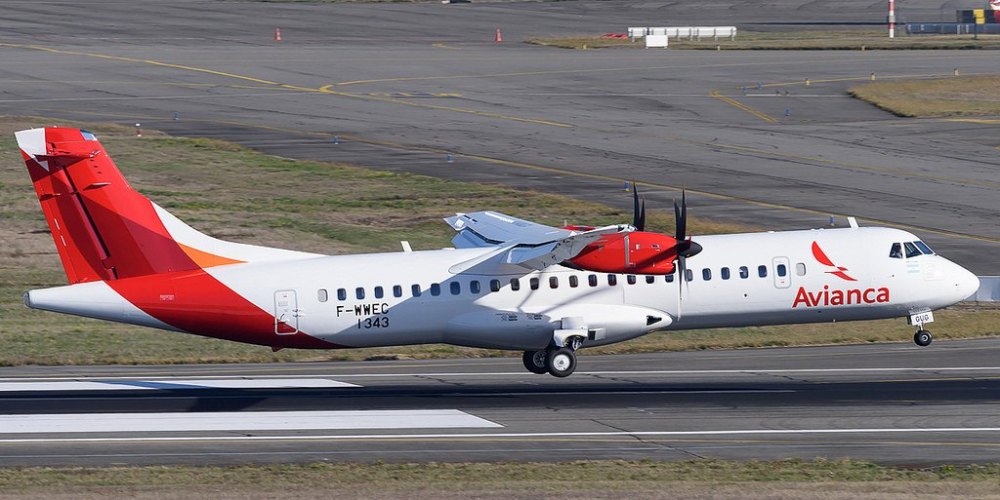
El jueves llega el primer avión ATR 72-600 de Avianca para volar en cabotaje

La aeronave está en Punta del Este y tiene matrícula argentina; la compañía negocia con los gremios y con el Gobierno para que le entregue las rutas.

Mientras negocia con el Gobierno y con los gremios, Avianca mostrará con aviones su intención de volar en el cabotaje argentino. La firma de origen colombiano, que llegó al país tras la compra de la aerolínea de la familia Macri, MacAir, ya tiene un hangar pintado de rojo en Aeroparque. Y el jueves ya contará con el primer avión con matrícula argentina.

El nuevo avión está en Punta del Este, a la espera de los últimos detalles para aterrizar por primera vez en una pista argentina en la mañana del jueves. Se trata del primero de los 12 ATR 72-600 turbohélice de última generación, con los que Avianca quiere iniciar su operación.

Tal como lo exige la legislación argentina, todos los aviones que cubran rutas de cabotaje deberán estar matriculados en el país y contratar tripulación argentina. El ATR, que se compró nuevo y se fabricó en Toulouse, tiene la matrícula LV-GUG. Además, el fabricante le pintó la bandera argentina.

31366738712_b468dfe829_b

Avianca Argentina ATR 72-600 el 8/12/2016 en Touluse, Francia MSN 1343, REG: F-WWEC / LV-GUG

La aeronave estuvo a prueba en Francia en diciembre y la semana pasada hizo el cruce del Océano Atlántico y aterrizó en Recife. El domingo partió a Belo Horizonte y de allí a Punta del Este, donde llegó en la tarde de ayer.

En la empresa quieren empezar a volar en marzo, tal como lo adelantó un representante en la audiencia pública que se celebró el 27 de diciembre. Pero en ese mismo lugar, los gremios se opusieron al ingreso de la empresa. Fue Edgardo Llanos, de la Asociación Personal Aeronáutico, hizo una advertencia: «Avianca dice que va a volar en marzo. No la vamos a dejar volar hasta que no se siente con nosotros a negociar los convenios colectivos».

Por estos días, las negociaciones en Avianca están divididas. Por un lado, hay reuniones constantes con varios de los gremios. Por el otro, encuentros con funcionarios ya que aún no se conoce la decisión oficial sobre qué rutas se entregarán a cada una de las empresas.

En la Audiencia se oyeron fuertes críticas de los sindicatos a la llegada de Avianca. Le endilgaban, entre otras cosas, haber fundado la compañía con una sociedad con capital social escaso. Sin embargo, en las oficinas de la compañía, los currículums de los postulantes llegaron de a miles, al igual que lo que sucedió en otros proyectos de líneas aéreas. Mientras los representantes sindicales se oponen, al menos en público, a la ampliación de oferta aérea, sus representados hacen fila para ser parte de los nuevos proyectos.

Aún no se ofrece en la página de la empresa ningún vuelo que despegue o aterrice en Aeroparque, pero ya está el hangar y el jueves llega el primer avión. Será marzo o más adelante. Pero de a poco se empieza a poblar el mercado aerocomercial doméstico. airgways-icon-aw

https://i0.wp.com/p4.storage.canalblog.com/48/22/572452/113868436_o.jpg

Avianca Argentina with ATR 72-600

On Thursday, the first Avianca ATR 72-600 aircraft arrives to fly in cabotage


The aircraft is in Punta del Este and has Argentine registration; The company negotiates with the guilds and with the Government to deliver the routes.

While negotiating with the Government and the guilds, Avianca will show with airplanes its intention to fly in the Argentine cabotage. The firm of Colombian origin, who arrived in the country after the purchase of Macri family airline MacAir, already has a hangar painted red in Aeroparque. And on Thursday will already have the first plane with Argentine registration.

The new plane is in Punta del Este, waiting for the last details to land for the first time on an Argentine runway on Thursday morning. This is the first of the 12 ATR 72-600 turboprop of the last generation, with which Avianca wants to start its operation.

As required by Argentine law, all airplanes that cover cabotage routes must be registered in the country and hire Argentine crew. The ATR, which was bought new and was manufactured in Toulouse, has the license plate LV-GUG. In addition, the manufacturer painted the Argentine flag to him.

The aircraft was tested in France in December and last week made the crossing of the Atlantic Ocean and landed in Recife. On Sunday he left for Belo Horizonte and from there to Punta del Este, where he arrived in the afternoon yesterday.

In the company they want to start flying in March, as was announced by a representative at the public hearing held on December 27. But in that same place, the guilds opposed the entry of the company. It was Edgardo Llanos, of the Aeronautical Personal Association, made a warning: «Avianca says that it is going to fly in March. We will not let it fly until it does not sit with us to negotiate collective agreements.»

These days, the negotiations in Avianca are divided. On the one hand, there are constant meetings with several of the guilds. On the other hand, meetings with officials since the official decision on the routes to each of the companies is still unknown.

In the Audiencia there was strong criticism from the unions on the arrival of Avianca. He was endowed with, among other things, having founded the company with a society with scarce social capital. However, in the company’s offices, applicants’ résumés came in from thousands, just like what happened in other airline projects. While trade union representatives oppose, at least in public, the expansion of air supply, their representatives line up to be part of the new projects.

There is still no flight on the company page that takes off or lands at Aeroparque, but the hangar is already there and the first plane arrives on Thursday. It will be March or later. But little by little it starts to populate the domestic air-trade market. A\W


Ξ A I R G W A Y S Ξ
SOURCE: Lanacion.com.ar
DBk: Spotteraviationpibracais.com / Flickr.com / Lanacion.com.ar
AW-POST: 201701171708AR

A\W   A I R G W A Y S ®

TAP Portugal incrementó tráfico en 2016

https://i.ytimg.com/vi/7f9vivjmtXI/maxresdefault.jpg

AW | 2017 01 17 16:13 | AIRLINES

La aerolínea portuguesa TAP transportó en 2016 a 11,7 millones de pasajeros, lo que representa un incremento del 6% con respecto a 2015; según ha informado la compañía, destacando la importancia de este resultado y, muy especialmente, el desempeño al final del año, en el que logró registrar «el mejor diciembre» de su historia reportando en el mes un ascenso del 26% en el tráfico aéreo. La tasa de ocupación de sus vuelos alcanzó un 78,6%.

Durante el año pasado, TAP registró su mayor crecimiento en las rutas a Estados Unidos, en las cuales la aerolínea transportó 472.000 pasajeros, un 65 % más que en 2015. La compalía ha explicado que el avance es «el resultado de la apuesta estratégica en este mercado», ya que durante 2016 lanzó dos nuevas rutas desde Lisboa, una al Aeropuerto de New York-JFK y otra al Aeropuerto de Boston, y fue aumentada la frecuencia de los vuelos que ya ofrecían a los aeropuertos de Newark de Nueva Jersey y de Miami.

Para 2017, TAP prevé «fuertes crecimientos» en esas rutas estadounidenses, ya que en diciembre obtuvo un incremento del 168 % frente al mismo mes del año anterior.

Con respecto a las rutas dentro del continente europeo, incluidos los vuelos nacionales, la aerolínea portuguesa tuvo en 2016 un total de 8,99 millones de pasajeros, un 4 % más.

A este ascenso contribuyó «fuertemente» el puente aéreo Lisboa-Oporto lanzado el pasado marzo, que desde su creación ha transportado a casi 300.000 pasajeros, un 80 % más de los que llevó el año anterior con rutas ordinarias.

Mientras, la tasa de ocupación de los vuelos del puente aéreo -en total 16 diarios-, se situó en 73,1 %. En lo referido a Europa, TAP llevó a 7,1 millones de pasajeros y «recuperó tráfico en el segundo trimestre». La compañía también destacó el crecimiento en sus rutas a África, a través de las cuales transportó en 2016 a 800.000 pasajeros, un 10 % más que en 2015. Gracias al incremento en América del Norte y África, las rutas intercontinentales de la aerolínea registraron un aumento del 3 % el año pasado, con 2,74 millones de pasajeros transportados en estos vuelos.

En la actualidad, el Estado portugués tiene el 50 % de TAP, después de que el Gobierno socialista revirtiera la privatización llevada a cabo por el anterior Ejecutivo que había puesto en manos privadas la mayoría del capital de la aerolínea.

El consorcio Gateway, integrado por el empresario portugués Humberto Pedrosa (una de las mayores fortunas del país) y el brasileño-estadounidense David Neeleman (dueño de la aerolínea Azul), tiene una participación del 45 %, mientras que el 5 % restante está reservado para los trabajadores del grupo.  airgways-icon-aw

https://offthelava.files.wordpress.com/2013/10/img_4698.jpg

TAP increased traffic in 2016

The Portuguese airline TAP transported 11.7 million passengers in 2016, an increase of 6% compared to 2015; As reported by the company, highlighting the importance of this result and, especially, the performance at the end of the year, which recorded «the best December» in its history reporting a 26% rise in air traffic . The occupancy rate of their flights reached 78.6%.

During the past year, TAP recorded its greatest growth in routes to the United States, in which the airline transported 472,000 passengers, 65% more than in 2015. The company has explained that the advance is «the result of the strategic commitment in This market, «as it launched two new routes from Lisbon, one to New York-JFK Airport and another to Boston Airport, in 2016, and increased the frequency of flights already offered to Newark’s Newark and New Jersey airports of Miami.

By 2017, TAP forecasts «strong growth» in these US routes, as in December saw a 168% increase compared to the same month of the previous year.

With regard to routes within the European continent, including domestic flights, in 2016 the Portuguese airline had a total of 8.99 million passengers, 4% more.

This climb contributed «strongly» to the Lisbon-Oporto air bridge launched last March, which since its inception has transported nearly 300,000 passengers, 80% more than the one it carried the previous year with ordinary routes.

Meanwhile, the occupation rate of the flights of the aerial bridge – in total 16 newspapers -, stood at 73.1%. Regarding Europe, TAP took 7.1 million passengers and «recovered traffic in the second quarter». The company also highlighted the growth in its routes to Africa, through which it transported 800,000 passengers in 2016, 10% more than in 2015. Thanks to the increase in North America and Africa, the airline’s intercontinental routes registered a Increase of 3% last year, with 2.74 million passengers transported on these flights.

At present, the Portuguese state has 50% of TAP, after the Socialist government reversed the privatization carried out by the previous Executive who had put in private hands the majority of the capital of the airline.

The Gateway consortium, made up of Portuguese entrepreneur Humberto Pedrosa (one of the country’s largest fortunes) and Brazilian-American David Neeleman (owner of Azul), holds a 45% stake, while the remaining 5% is reserved For the workers of the group. A\W


Ξ A I R G W A Y S Ξ
SOURCE: Hosteltur.com
DBk: Offthelava.wordpress.com / i.ytimg.com
AW-POST: 201701171613AR

A\W   A I R G W A Y S ®

Flynas ordena 60 A320NEO

https://i0.wp.com/aviationtribune.com/wp-content/uploads//2016/05/flynas-a320-flynas-2-1-900x600.jpg[*]

AW | 2017 01 17 16:03 | AIRLINES

Airbus vende 60 aviones A320neo a la aerolínea saudí de bajo coste Flynas

El fabricante aeronáutico europeo Airbus anunció la venta de 60 aviones de pasillo único A320neo a la aerolínea saudí de bajo coste Flynas, dentro de un contrato que incluye también la transformación de un pedido previo de otros 20 aparatos.

Un portavoz de Airbus explicó hoy que Flynas ha decidido transformar ese pedido anterior de 20 unidades del A320 en A320neo, es decir la versión modernizada de su avión estrella que ofrece un ahorro de carburante gracias a motores más eficientes y dispositivos en las alas que mejoran su aerodinamismo.

El portavoz no quiso revelar el monto global de este contrato. El precio de catálogo del aparato elegido por la aerolínea saudí es de 108,4 millones de euros cada uno, lo que significa que el valor global de los 80 aviones A320neo que recibirá sería de unos 8.670 millones de dólares.

El acuerdo entre el fabricante europeo y la compañía saudí se cerró el pasado año, y por eso los aviones se habían incluido en los encargos por Airbus en 2016, y hasta ahora aparecían atribuidos a un cliente desconocido.  airgways-icon-aw

Flynas orders 60 A320NEO

Airbus sells 60 A320neo aircraft to low cost Saudi airline Flynas


European aircraft manufacturer Airbus has announced the sale of 60 A320neo single-aisle aircraft to low-cost Saudi airline Flynas under a contract that also includes the conversion of a previous order of another 20 aircraft .

An Airbus spokesman explained today that Flynas has decided to transform that previous order of 20 units of the A320 into A320neo, that is to say the modernized version of its star airplane that offers a saving of fuel thanks to more efficient motors and devices in the wings that Improve their aerodynamics.

The spokesman declined to disclose the overall amount of this contract. The catalog price of the aircraft chosen by the Saudi airline is 108.4 million euros each, which means that the overall value of the 80 A320neo aircraft that it will receive would be about 8.67 billion dollars.

The agreement between the European manufacturer and the Saudi company was closed last year, which is why the aircraft were included in the orders for Airbus in 2016, and until now were attributed to an unknown customer.

According to Flynas (owned by Prince Walid Ben Talal), these aircraft will serve to meet a particularly high demand in their home market of Saudi Arabia.

Deliveries will be staged between 2018 and 2026. The airline’s current fleet, which has exceeded 6 million current passengers, is composed of about thirty aircraft, essentially Airbus A320 single-aisle family. A\W


[*] DATA: Impresión artística de un A320-200CEO de Flynas


Ξ A I R G W A Y S Ξ
SOURCE: Lavanguardia.com
DBk: Aviationtribune.com
AW-POST: 201701171603AR

A\W   A I R G W A Y S ®

Avianca Argentina inicia operaciones en Marzo

https://i0.wp.com/repo.diariojornada.com.ar/imagenes/2017/1/14/514151555744486D666E757531774147722B763471413D3D.jpgAW | 2017 01 15 13:07 | AIRLINES

A mediados de marzo Avianca comenzaría a operar una ruta aérea hacia Puerto Madryn

Después de algunas semanas de demora, el primer ATR72 que la empresa Avianca adquirió está volando desde Touluse hasta la Argentina, en una ruta que tendrá varias escalas por las características de la aeronave.

La misma tendrá bandera argentina y que será el primero de los doce aviones que la empresa incorporará para realizar las diferentes rutas que ha solicitado, entre las que se encuentra Puerto Madryn.

Con la llegada de la aeronave se da un paso clave para ratificar que a mediados de marzo la empresa comenzará a operar con los dos vuelos diarios a la ciudad del Golfo y que permitirá ampliar el movimiento turístico, empresarial y particular desde Buenos Aires con la localidad.

Esto significará que a los vuelos diarios de Andes Líneas Aéreas se anexará el desembarco de la empresa AVIANCA Argentina que comenzará a operar en forma diaria, con dos vuelos por día, desde el 15 de marzo.

La aerolínea es una compañía subsidiaria de la colombiana AVIANCA que realizará los vuelos desde Aeroparque a El Tehuelche con aviones nuevos de 70 plazas. La idea de la empresa es avanzar en una expansión de rutas que, en una segunda etapa, incluiría la conexión hasta Comodoro Rivadavia uniendo la ruta con Bahía Blanca.

El representante de la empresa en la ciudad del Golfo, Mario Peralta, explicó que “el primer avión está llegando y en forma secuencial llegará uno por mes. Son aeronaves 0 kilómetros que están viniendo desde la fábrica de Airbus [ATR, Avions Transport Règional] en Francia”.

Las aeronaves adquiridas son ATR72 que refiere a la línea más pequeña para vuelos regionales que construye la fábrica en Touluse y que es propulsado por dos motores turbohélice, con una capacidad para 70 pasajeros. “Al ser de última generación están insonorizados, con un rango de vuelo muy alto porque la demora, respecto al jet, sería de 25 minutos más que cubriría la ruta de Madryn con Buenos Aires”, dijo Peralta.

Con esto se siguen superando etapas para la concreción del proyecto del desembarco de Avianca en la Argentina y, en particular, con la ruta hacia Puerto Madryn que operaría en la segunda quincena de marzo.

La operatoria de la empresa será un vuelo a primera hora que salga de Aeroparque a El Tehuelche y su regreso, así como un segundo pero a última hora del día. El servicio a Puerto Madryn sería de lunes a lunes partiendo a las 6 desde Aeroparque, y regresando después de las 8 desde Puerto Madryn. El segundo vuelo diario partiría alrededor de las 19.30 desde Aeroparque hacia Madryn, embarque de 40 minutos y regreso a Buenos Aires.

“Los vuelos serán los siete días de la semana”, dijo el prestador turístico, quien realzó el arribo de la aerolíneas colombiana.

“Madryn estará muy conectada”, además de adelantar que la “ciudad se colocará en un segmento con mucha más posibilidades tanto para el turismo, el empresarial y familiar”.

Avianca Internacional, además de desarrollar un plan de expansión por el continente con el desembarco en Brasil, ahora en Argentina y seguramente con Perú y Chile. airgways-icon-aw

https://i0.wp.com/repo.diariojornada.com.ar/imagenes/2017/1/14/514151555744486D666E757531774147722B763471413D3D.jpg

Avianca Argentina starts operations in March

In the middle of March Avianca would begin to operate an air route towards Puerto Madryn


After a few weeks of delay, the first ATR72 that Avianca acquired is flying from Touluse to Argentina, in a route that will have several stopovers due to the characteristics of the aircraft.

The same will have the Argentine flag and will be the first of the twelve aircraft that the company will incorporate to carry out the different routes it has requested, among which is Puerto Madryn.

With the arrival of the aircraft, a key step is taken to confirm that in mid-March the company will start operating with two daily flights to the city of the Gulf and that will allow to extend the tourist, business and private movement from Buenos Aires with the locality .

This will mean that the daily flights of Andes Líneas Aéreas will be annexed the landing of the company AVIANCA Argentina that will begin to operate in daily form, with two flights per day, from the 15 of March.

The airline is a subsidiary company of the Colombian AVIANCA that will carry out the flights from Aeroparque to El Tehuelche with new airplanes of 70 seats. The idea of the company is to advance in an expansion of routes that, in a second stage, would include the connection to Comodoro Rivadavia joining the route with Bahía Blanca.

The representative of the company in the city of the Gulf, Mario Peralta, explained that «the first plane is arriving and sequentially one will arrive per month. They are 0km aircraft that are coming from the Airbus [ATR, Avions Transport Règional] factory in France. «

The aircraft acquired are ATR72 which refers to the smallest regional flight line built by the Touluse plant and powered by two turboprop engines with a capacity of 70 passengers. «Being of last generation they are soundproofed, with a very high flight range because the delay, with respect to the jet, would be of 25 minutes more that would cover the route of Madryn with Buenos Aires,» Peralta said.

This continues to overcome stages for the completion of the Avianca landing project in Argentina and, in particular, the route to Puerto Madryn that would operate in the second half of March.

The operation of the company will be an early flight leaving from Aeroparque to El Tehuelche and its return, as well as a second but late in the day. The service to Puerto Madryn would be from Monday to Monday departing at 6 pm from Aeroparque, and returning after 8 pm from Puerto Madryn. The second daily flight would depart around 19.30 from Aeroparque to Madryn, embark for 40 minutes and return to Buenos Aires.

«The flights will be seven days a week,» said the tourism provider, who highlighted the arrival of the Colombian airline.

«Madryn will be very connected», in addition to saying that «the city will be placed in a segment with much more possibilities for tourism, business and family.»

Avianca Internacional, in addition to developing an expansion plan for the continent with the landing in Brazil, now in Argentina and surely with Peru and Chile. A\W

Ξ A I R G W A Y S Ξ
SOURCE: Diariojornada.com.ar
DBk: Diariojornada.com.ar
AW-POST: 201701151307AR

A\W   A I R G W A Y S ®

Salvan bebé a bordo de un vuelo de Aerolíneas

AW | 2017 01 15 12:51 | AIRLINES

El avión iba de Salta a Buenos Aires, pero hizo un aterrizaje de emergencia en Córdoba. El testimonio de la tripulación y de un pasajero

Un avión de Aerolíneas Argentinas que iba de Salta a Buenos Aires se desvió de su ruta y aterrizó de emergencia en Córdoba para salvar a un bebé que se descompuso en pleno vuelo. La rápida respuesta de la tripulación y la colaboración del resto de los pasajeros permitieron que el niño recibiera atención médica y se salvara, como reveló el informe Los ángeles del aire, que se emitió en Telenoche.

«Recibí dos llamadas de pasajeros y casi inmediatamente escuché gritos», relató Florencia, tripulante del vuelo. Cuando llegó al asiento vio al bebé muy quieto, con los ojos abiertos y respirando con dificultad. Aparentemente se había atragando mientras su madre lo amamantaba. La azafata avisó a la cabina de comando que había un problema con un bebé y pidió un médico. Una mujer que viajaba en la fila 8 acudió en ayuda. Luego de revisarlo, sugirió que el avión descendiera para que pudiera recibir una mejor atención.

«Los pasajeros reaccionaron increíblemente bien, con un grado de solidaridad maravilloso», agregó Florencia. Mateo estaba entre ellos y experimentó la tensión del momento. «Ayuda, ayuda gritaban todos. Mi hermano, que viajaba conmigo, pensó que algo se había prendido fuego y yo que se trataba de un ataque terrorista», comentó.

El vuelo terminó aterrizando en Buenos Aires con 70 minutos de demora. Y el bebé se encuentra hoy en perfecto estado. airgways-icon-aw

Save baby on board flight from Aerolíneas

The plane went from Salta to Buenos Aires, but made an emergency landing in Cordoba. The testimony of the crew and a passenger

An airplane of Aerolíneas Argentinas that went of Salta to Buenos Aires deviated from its route and landed of emergency in Cordova to save to a baby that decomposed in the middle of flight. The rapid response of the crew and the collaboration of the rest of the passengers allowed the child to receive medical attention and be saved, as revealed in the report Los angeles del aire, which was broadcast in Telenoche.

«I received two calls from passengers and almost immediately I heard screams,» said Florence, a flight crew member. When he reached the seat he saw the baby very still, with his eyes open and breathing hard. Apparently he had been choking while his mother breastfeed him. The flight attendant advised the cockpit that there was a problem with a baby and asked for a doctor. A woman traveling in line 8 came to the rescue. After reviewing it, he suggested that the plane be lowered so that it could receive better attention.

«The passengers reacted incredibly well, with a wonderful degree of solidarity,» added Florence. Matthew was among them and experienced the tension of the moment. My brother, who was traveling with me, thought that something had been set on fire and that it was a terrorist attack,» he said.

The flight ended up landing in Buenos Aires with 70 minutes of delay. And the baby is in perfect condition today. A\W


Ξ A I R G W A Y S Ξ
SOURCE: Tn.com.ar
DBk: Tn.com.ar
AW-POST: 201701151251AR

A\W   A I R G W A Y S ®

Aerolíneas Argentinas ya tiene nueva conducción y hay polémica por el vicepresidente

Resultado de imagen para aerolineas argentinas

AW | 2017 01 12 05:27 | AIRLINES

Tras la salida de Isela Costantini, la asamblea designó presidente y CEO a Mario Dell ‘Acqua; el vice será el abogado Siro Astolfi

Después de la tempestad, llega la calma. A tres semanas de la abrupta salida de Isela Costantini de la conducción de Aerolíneas Argentinas, la empresa terminó de formar su nuevo cuerpo directivo. Se formalizó la asamblea de accionistas en la que se aceptó la renuncia de la ex CEO de General Motors y finalmente se nombró a Mario Dell ‘Acqua como gerente general y presidente del directorio de la empresa.

Desde el 21 de diciembre pasado, el ex número uno de Intercargo estaba a cargo en forma interina, mientras Costantini aún estaba de vacaciones. Pero fue en la asamblea en la que se le dio forma legal a la continuidad.

La otra novedad es la vicepresidencia del Directorio. El cargo quedó en manos de Siro Astolfi, un abogado que se recibió en la Universidad Católica Argentina y que hasta ahora se desempeñaba como socio de Bruchou, Fernández Madero & Lombardi (BFM&L), uno de los estudios jurídicos más importantes de la Argentina.

Astolfi no tendrá funciones ejecutivas ya que el cargo solamente le da tareas dentro del órgano directivo de la empresa. Será el sucesor de Manuel Álvarez Trongé, uno de los ejecutivos a los que el ministro de Transporte, Guillermo Dietrich, apartó tras la salida de Costantini.

La llegada del abogado despertó polémica ya que el socio principal de BFM&L, Enrique Bruchou, fue uno de los que salieron en aquellas recordadas fotos de 2008 cuando el Estado se hizo cargo de la gestión de Aerolíneas Argentinas, entonces en mano del Grupo Marsans. Todavía se hablaba de una recompra de acciones por un determinado precio y una administración en la que tuvieran participación todas las partes. En ese momento Bruchou representaba a un banco que tenía interés en la operación. De hecho, en la foto que se publicó del acto en el que se comunicó el acuerdo había tres personas sentadas en la mesa: el entonces secretario de Transporte, Ricardo Jaime; Eduardo Aranda, hombre de confianza de los dueños de Marsans, y el propio Bruchou. Sin embargo, a poco de andar aquella administración, la compañía se estatizó y el estudio de abogados, se retiró. Desde ayer, uno de sus socios es vicepresidente y la polémica revivió.

En la asamblea también se confirmó la continuidad de Gustavo Di Cio como director, un consultor del mercado aerocomercial dueño de la empresa Abiax Air. El ejecutivo fue nombrado hace dos meses y el su momento cuando Dietrich lo apadrinó al cargo, también fue un motivo de una pequeña discusión entre el ministro y Costantini.
mundoideas

En los pasillos de la empresa todos están en el período de «adaptación». La conducción de Dell ‘Acqua poco tiene que ver con la de su antecesora. Cuentan que tiene una toma de decisiones rápida y concreta. Costantini era cultora de la consulta antes de decidir.

Otro de los cambios tuvo que ver con la gerencia de Recursos Humanos. La salida del también ex Latam Daniel Maggi del cargo fue una de las medidas que tomó Dietrich cuando inició el proceso de cambios. No estaba de acuerdo con la gestión que había llevado adelante en las paritarias de 2016. En su reemplazo asumió Juan Uribe, un hombre que estaba a cargo de ese área en el Ministerio de Transporte. Llegó, claro está, con la venia ministerial.

La negociación paritaria ya cerró pero aún tiene un gremio pendiente. Se trata de uno de los que agrupa a los mecánicos de Austral. De ahí que en medio de la temporada fuerte de vuelos se puede apreciar en las pizarras el cartel de demorado en algún vuelo de Austral. Se trata de quites de colaboración en la jornada laboral que se dan en medio de la negociación abierta y que generan retrasos en la disponibilidad de los aviones.  airgways-icon-aw

Aerolíneas Argentinas already has new leadership and there is controversy by the vice president


After the departure of Isela Costantini, the assembly appointed president and CEO Mario Dell ‘Acqua; The deputy will be the lawyer Siro Astolfi


After the storm, calm comes. Three weeks after the abrupt departure of Isela Costantini from Aerolíneas Argentinas, the company finished forming its new management. The shareholders ‘meeting was formalized in which the resignation of the former CEO of General Motors was accepted and Mario Dell’ Acqua was finally named as general manager and chairman of the company’s board of directors.

Since last December 21, the former number one Intercargo was in charge interim, while Costantini was still on vacation. But it was in the assembly that legal form was given to continuity.

The other novelty is the vice-presidency of the Board. The position was in the hands of Siro Astolfi, a lawyer who was received at the Universidad Católica Argentina and who until now served as partner of Bruchou, Fernández Madero & Lombardi (BFM & L), one of the most important legal studies in Argentina.

Astolfi will not have executive functions since the position only gives him tasks within the governing body of the company. It will be the successor of Manuel Álvarez Trongé, one of the executives to whom the Minister of Transport, Guillermo Dietrich, left after the departure of Costantini.

The arrival of the lawyer aroused controversy as BFM & L’s main partner, Enrique Bruchou, was one of those who left in those remembered photos of 2008 when the State took over the management of Aerolineas Argentinas, then in the hands of the Marsans Group. There was still talk of a repurchase of shares for a certain price and an administration in which all parties were involved. At that moment Bruchou represented a bank that had interest in the operation. In fact, in the photo that was published of the act in which the agreement was communicated there were three people sitting at the table: the then Secretary of Transportation, Ricardo Jaime; Eduardo Aranda, man of confidence of the owners of Marsans, and Bruchou himself. However, shortly after that administration, the company was nationalized and the law firm, retired. Since yesterday, one of its partners is vice president and the controversy revived.

The assembly also confirmed the continuity of Gustavo Di Cio as director, a consultant of the aerial commercial market owner of the company Abiax Air. The executive was named two months ago and the time when Dietrich sponsored him was also a reason for a little discussion between the minister and Costantini.
World countries

In the hallways of the company all are in the period of «adaptation.» The driving of Dell ‘Acqua has little to do with that of its predecessor. They say that you have a quick and concrete decision-making. Costantini was a consultant before deciding.

Another change had to do with human resources management. The departure of the ex-former Latam Daniel Maggi from the position was one of the measures taken by Dietrich when he initiated the process of changes. He did not agree with the management that had carried out in the joint of 2016. In his replacement Juan Uribe, a man who was in charge of that area in the Ministry of Transportation assumed. It came, of course, with ministerial favor.

The peer negotiation has already closed but it still has a guild pending. It is one of those that groups Austral mechanics. Hence, in the middle of the strong season of flights can be seen on the blackboards the delayed sign on some Austral flight. It is a matter of collaboration in the workday that occur in the middle of the open negotiation and that generate delays in the availability of the airplanes.A\W


Ξ A I R G W A Y S Ξ
SOURCE: lanacion.com.ar
DBk: TripAdvisor.com
AW-POST: 201701120527AR

A\W   A I R G W A Y S ®


Aeropuerto Schiphol limita a KLM

AW | 2017 01 10 13:05 | AIRPORTS / AIRLINES

El jefe de KLM rechaza a Schiphol por obstaculizar el crecimiento de la aerolínea

El Aeropuerto Schiphol de Amsterdam ha hecho demasiado para atraer aerolíneas de bajo coste y esto está dañando tanto a KLM como a la economía holandesa, dijo el director ejecutivo de KLM, Pieter Elbers, en la AD. KLM ha aceptado hasta ahora el número máximo de movimientos de aeronaves acordado en 2008, pero ese total se ha alcanzado casi.

El acuerdo dice que hasta 500.000 movimientos de aeronaves al año son aceptables pero el año pasado el aeropuerto procesó 479.000 despegues y aterrizajes. «Si Schiphol no puede crecer más, tendremos un problema», dijo Elbers. «Estamos invirtiendo en nuevos vuelos y destinos, pero nos enfrentamos a ser exprimidos.» KLM transportó un 6% más pasajeros el año pasado, pero un crecimiento similar será imposible en 2017 sin romper el máximo acordado. «La accesibilidad es crucial. Los Países Bajos se benefician de empresas como KLM «, dijo Elbers.

Reglas Un portavoz de Schiphol dijo a la AD que el aeropuerto está sujeto a las normas de la UE cuando se trata de determinar qué líneas aéreas pueden utilizar sus instalaciones. «Hay un mercado libre dentro de la UE», dijo. Y los derechos de aterrizaje de compañías aéreas no comunitarias son negociados por el gobierno, no por Schiphol, dijo.

Elbers acusó a Schiphol de ser demasiado generoso con bonificaciones y descuentos para atraer nuevas aerolíneas como Easyjet, Ryanair y compañías estatales del Golfo. Ahora quiere nuevas discusiones con los lugareños y el gobierno sobre permitir más vuelos en Schiphol. La ministra de transporte de los ministros Sharon Dijksma ya dijo que el techo actual no es «sacrosanto», dijo la AD. airgways-icon-aw

Schiphol Airport limits to KLM

KLM boss slams Schiphol for hampering the airline’s growth

Amsterdam’s Schiphol Airport has done too much to attract budget airlines and this is damaging both KLM and the Dutch economy, KLM chief executive Pieter Elbers says in the AD. KLM has until now accepted the maximum number of aircraft movements agreed in 2008 but that total has been almost reached.

The deal says that up to 500,000 aircraft movements a year are acceptable but last year the airport processed 479,000 take-offs and landings. ‘If Schiphol cannot grow further, we will have a problem,’ Elbers said. ‘We are investing in new flights and destinations but we face being squeezed.’ KLM carried 6% more passengers last year but similar growth will be impossible in 2017 without breaking the agreed maximum. ‘Accessibility is crucial. The Netherlands benefits from companies like KLM,’ Elbers said.

Rules A spokesman for Schiphol told the AD that the airport is subject to EU rules when it comes to determining which airlines can use its facilities. ‘There is a free market within the EU,’ he said. And landing rights for non-EU airlines are traded by the government, not Schiphol, he said.

Elbers accused Schiphol of being too generous with bonuses and discounts to attract new airlines such as Easyjet, Ryanair and Gulf state companies. He now wants new discussions with locals and the government about allowing more flights at Schiphol. Junior transport minister Sharon Dijksma has already said the current ceiling is ‘not sacrosanct,’ the AD said. A\W

Ξ A I R G W A Y S Ξ
SOURCE: Dutchnews.nl
DBk: Aircrewlifestyle.es / Wikipedia.org
AW-POST: 201701101305AR

A\W A I R G W A Y S ®

Iberia, la aerolínea más puntual del mundo

AW | 2017 01 10 12:27 | AIRLINES / AWARDS

La aerolínea española triunfa en la octava edición de los premios de FlightStats a las aerolíneas más puntuales

FlightStats, Inc., la empresa de información de vuelos líder en el mundo, ha hecho públicos los premios en los que se reconoce el indudable mérito de la puntualidad (Annual Airline On-Time Performance Service Awards). Los premios -que llegan a su octava edición- reconocen a las «mejores de las mejores» (the Best of the Best) aerolíneas que demuestran un alto rendimiento y cumplen su promesa de llevar a los pasajeros a sus destinos en la hora anunciada.

Este año, FlightStats ha ampliado sus premios para reconocer la mejor aerolínea mundial y la mejor red de aerolíneas en cada una de las regiones (denominan así a los vuelos que son comercializados por una aerolínea principal pero operados por una marca separada). La mayoría de las grandes aerolíneas tienen este tipo de asociaciones regionales.

En 2016 Iberia no solo ha sido la aerolínea internacional más puntual del mundo (Major Global Airline), también la aerolínea más puntual de Europa (European Major Airline) y la más puntual de Europa también como aerolínea de red contabilizando sus datos junto a los de su franquiciada Iberia Regional Air Nostrum (European Major Airline Network).

En los últimos cuatro años, Iberia ha ido mejorando su situación en el ranking de puntualidad hasta situarse en lo más alto. Fue la cuarta más puntual del mundo en 2013, tercera en 2014, segunda en 2015 y la primera en 2016.

Además, Iberia Express ha sido la aerolínea de bajo coste más puntual del mundo, puesto que ocupa por tercera vez consecutiva.

Las aerolíneas más puntuales han sido estas:

-Aerolínea internacional: Iberia.

-Aerolínea internacional de red: KLM.

-Mejor alianza internacional: oneworld.

-Aerolínea de Norteamérica: Alaska Airlines.

-Aerolínea de red de Norteamérica: Alaska Airlines.

-Aerolínea europea: Iberia.

-Aerolínea de red en Europa: Iberia.

-Aerolínea de Asia-Pacífico: JAL (Japan Airlines).

-Aerolínea de red de Asia-Pacífico: JAL.

-Aerolínea de Oriente Medio y África: Qatar Airways.

-Aerolínea de red de Oriente Medio y África: Qatar Airways.

-Aerolínea Latinoamericana: Copa Airlines, la aerolínea internacional de Panamá.

-Aerolínea Latinoamericana: Copa Airlines.

-Low-Cost: Iberia Express. airgways-icon-aw

Iberia, the most punctual airline in the world

The Spanish airline triumphs in the eighth edition of FlightStats awards to the most specific airlines

FlightStats, Inc., the world’s leading flight information company, has announced awards recognizing the undeniable merit of punctuality (Annual Airline On-Time Performance Service Awards). The awards – which go to their eighth edition – recognize the «best of the best» airlines that demonstrate a high performance and fulfill their promise to take passengers to their destinations at the time announced.

This year, FlightStats has extended its awards to recognize the best airline in the world and the best airline in each of the regions (they refer to flights that are marketed by a major airline but operated by a separate brand). Most large airlines have such regional associations.

In 2016 Iberia has not only been the most punctual international airline in the world (Major Global Airline), also the most punctual airline in Europe (European Major Airline) and the most punctual in Europe also as a network airline accounting its data together with those of Its franchisee Iberia Regional Air Nostrum (European Major Airline Network).

In the last four years, Iberia has been improving its situation in the ranking of punctuality to be placed in the highest. It was the fourth most punctual in the world in 2013, third in 2014, second in 2015 and the first in 2016.

In addition, Iberia Express has been the most punctual low-cost airline in the world, since it occupies for the third consecutive time.

The most specific airlines have been:

-Air international line: Iberia.

-International network airline: KLM.

– Best international alliance: oneworld.

-Airline from North America: Alaska Airlines.

-Airline North America Network: Alaska Airlines.

-European airline: Iberia.

-Airline network in Europe: Iberia.

-Asia-Pacific Airline: JAL (Japan Airlines).

-Asia Network Pacific Network: JAL.

– Middle East and Africa Airline: Qatar Airways.

-Airport Network Middle East and Africa: Qatar Airways.

-Aerolínea Latinoamericana: Copa Airlines, the international airline of Panama.

-Aerolínea Latinoamericana: Copa Airlines.

-Low-Cost: Iberia Express.

A\W

Ξ A I R G W A Y S Ξ
SOURCE: Abc.es
DBk: Tripadvisor.com / Thedesignair.com
AW-POST: 201701101227AR

A\W A I R G W A Y S ®