AW | 2022 10 20 10:08 | AIR INVESTIGATION / AVIATION SAFETY
Doce pasajeros heridos debido a turbulencia severa
En el vuelo AR1133 de Aerolíneas Argentinas en la ruta Madrid/MAD—Buenos Aires/EZE ha sufrido turbulencia severa resultando doce pasajeros heridos de consideración. Después de cruzar el Océano Atlántico y llegar al espacio aéreo brasileño, el vuelo AR1133 se encontró con una turbulencia severa, lo que llevó a doce pasajeros a sufrir lesiones considerables. Algunos pasajeros fueron llevados al Hospital de Ezeiza para tratamiento y observación. El vuelo transportaba 271 pasajeros a bordo y 13 tripulantes en el Airbus A330-200 matrícula LV-FVH.
La turbulencia causada en la aeronave fue tan severa que algunos equipos de emergencia cayeron del techo y algunos paneles superiores se agrietaron. Debido a la situación, la tripulación solicitó servicio médico de asistencia en tierra de emergencia en el Aeropuerto Internacional Ezeiza, resultando que nueve pasajeros fueran atendidos en el lugar, mientras que otros tres pasajeros fueron llevados al hospital con heridas leves. «Según la información proporcionada por la tripulación, las señales de ‘abróchense el cinturón de seguridad’ estaban encendidas y se había hecho un anuncio. Los pasajeros que más sufrieron y fueron llevados al hospital no tenían abrochados los cinturones de seguridad cuando la aeronave se encontró con turbulencias», explicaba la compañía aérea. Pero según un pasajero en el vuelo AR1133 que fue entrevistado por el medio de comunicación argentino Clarín, el letrero de «abróchense el cinturón de seguridad» no se había encendido.
El vuelo AR1133 de Aerolíneas Argentinas despegó de Madrid el 18/10 a las 20:10 desde el Aeropuerto Madrid/Barajas/MAD y aterrizó en el Aeropuerto Ezeiza/EZE a las 04:30 de Buenos Aires, según muestran los servicios de rastreo de vuelos online. Según la empresa, el avión sufrió solo daños menores en equipamiento plástico interno de la cabina como resultado de los golpes de objetos sueltos y pasajeros contra el mobiliario, pero ninguna falla que afecte su capacidad de operación. El vuelo no sufrió ninguna clase de demora y aterrizó en Buenos Aires cerca de su horario previsto de arribo.
Incident AR1133 Aerolíneas
Twelve passengers injured due to severe turbulence
Aerolineas Argentinas flight AR1133 on the Madrid/MAD—Buenos Aires/EZE route suffered severe turbulence, resulting in twelve passengers seriously injured. After crossing the Atlantic Ocean and arriving in Brazilian airspace, flight AR1133 encountered severe turbulence, leading to twelve passengers sustaining significant injuries. Some passengers were taken to the Ezeiza Hospital for treatment and observation. The flight carried 271 passengers on board and 13 crew members in the Airbus A330-200 registration LV-FVH.
The turbulence caused to the aircraft was so severe that some emergency equipment fell from the roof and some top panels cracked. Due to the situation, the crew requested emergency medical assistance on the ground at the Ezeiza International Airport, resulting in nine passengers being treated at the scene, while another three passengers were taken to the hospital with minor injuries. «According to information provided by the crew, the ‘fasten seat belt’ signs were on and an announcement had been made. The passengers who suffered the most and were taken to hospital were not wearing their seat belts when the aircraft was found with turbulence», explained the airline. But according to a passenger on flight AR1133 who was interviewed by the Argentine news outlet Clarin, the «fasten your seat belt» sign had not been turned on.
Aerolíneas Argentinas flight AR1133 took off from Madrid on 10/18 at 20:10 from Madrid/Barajas/MAD Airport and landed at Ezeiza/EZE Airport at 04:30 from Buenos Aires, according to the tracking services of online flights. According to the company, the plane suffered only minor damage to internal plastic equipment in the cabin as a result of loose objects and passengers hitting the furniture, but no faults affecting its ability to operate. The flight did not suffer any kind of delay and landed in Buenos Aires close to its scheduled arrival time.
PUBLISHER: Airgways.com DBk: Aerolineas.com / Aa2000.com.ar / Clarin.com / Airgways.com AW-POST: 202210201008AR OWNERSHIP: Airgways Inc. A\W A I R G W A Y S ®
AW | 2022 10 19 14:44 | AIR INVESTIGATION / AVIATION SAFETY
Vuelo UA-2274 United Airlines sufre explosión neumáticos
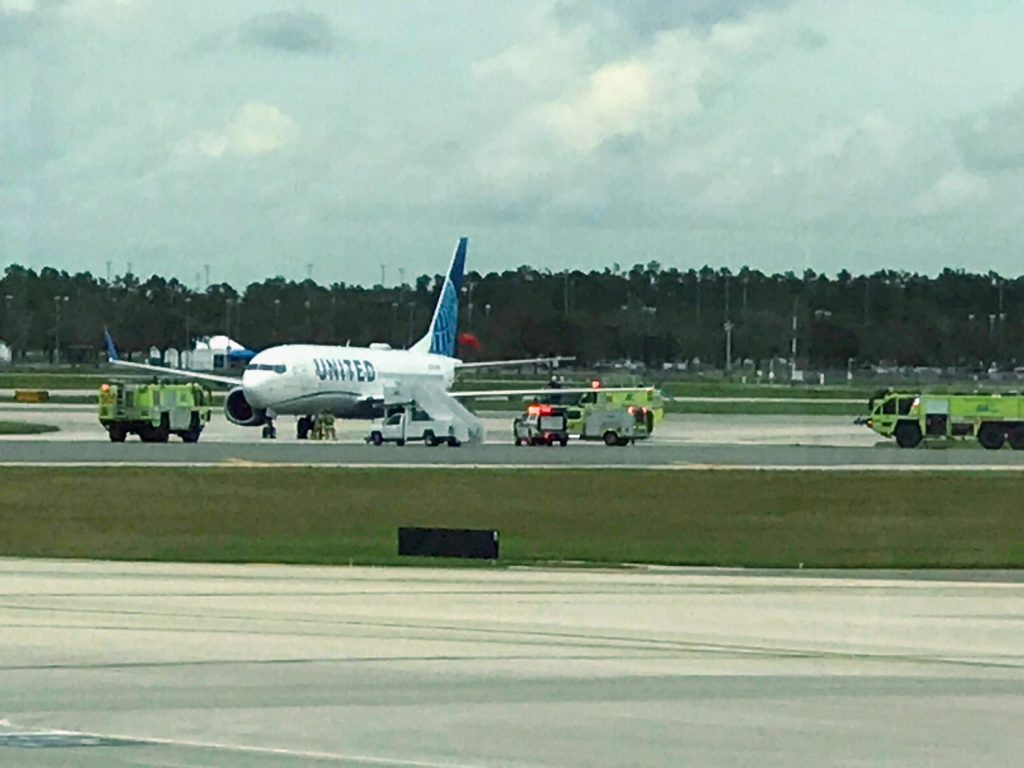
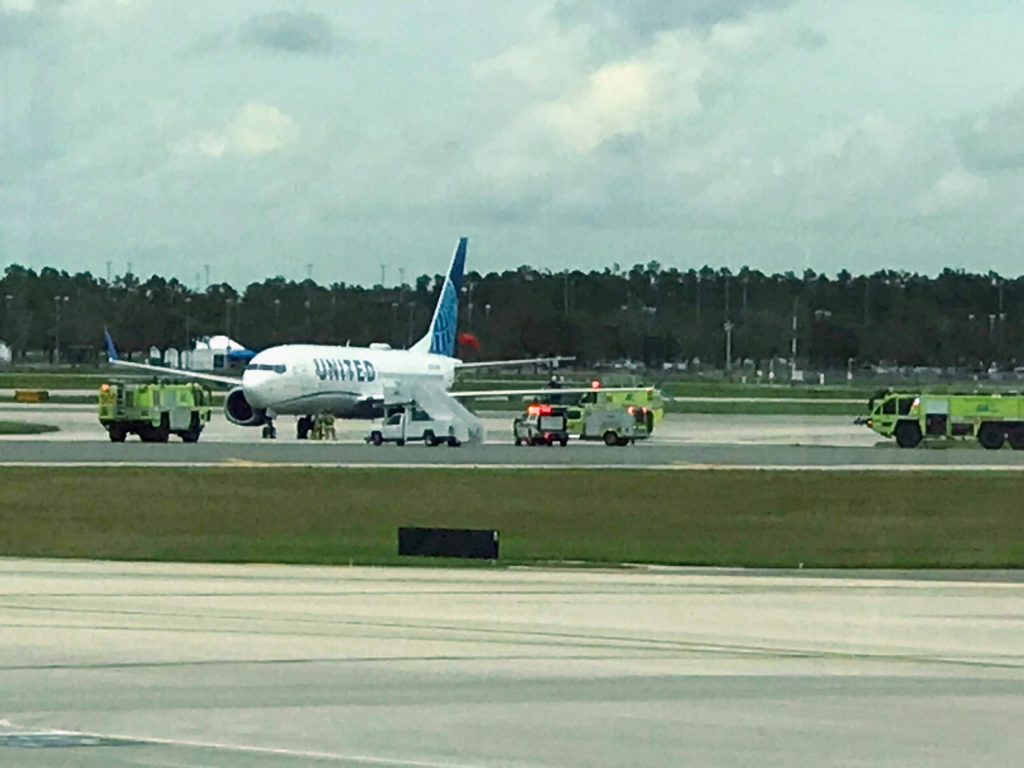
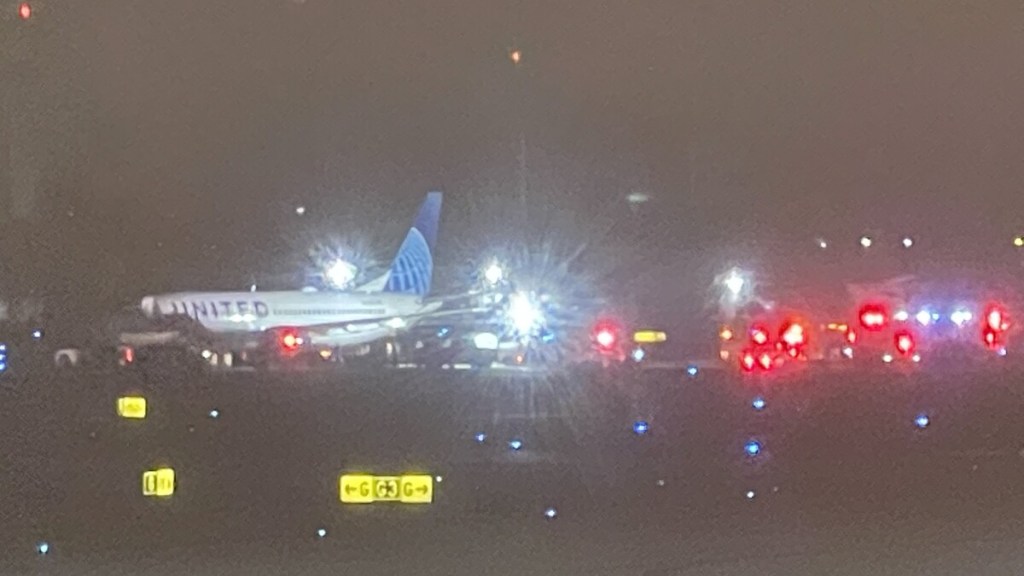
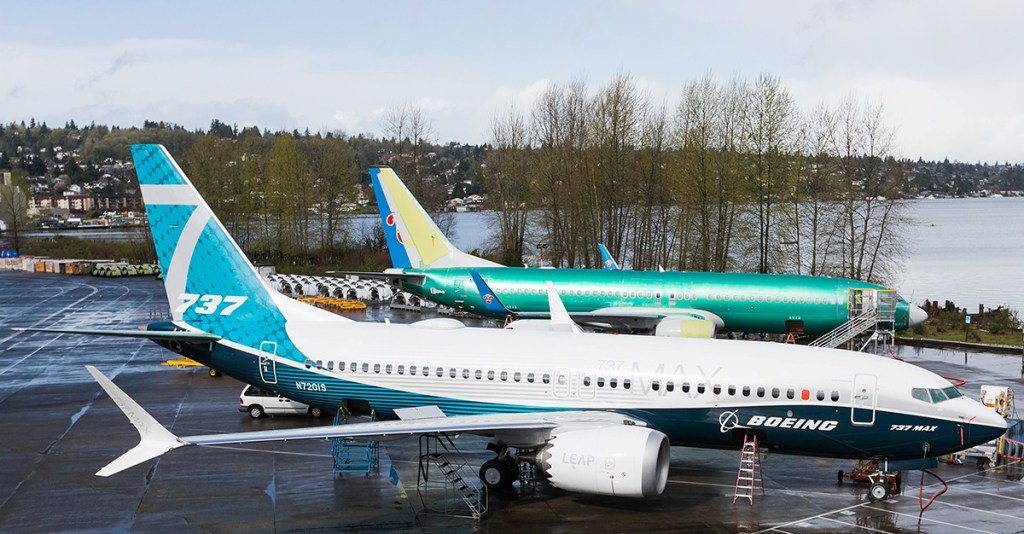
Un Boeing 737-8 MAX de United Airlines, registro N27253 que realizaba el vuelo UA-2274 desde Newark/EWR, New Jersey, a Fort Myers/RSW, Florida, Estados Unidos, a bordo con 154 pasajeros y 6 tripulantes, aterrizó en la Pista 24 de Fort Myers reventando dos neumáticos. El avión se detuvo en la pista y quedó inhabilitado. Los pasajeros desembarcaron en la pista por escaleras y fueron llevados a la terminal del aeropuerto.
El Aeropuerto Fort Myers/RSW tuvo que estar cerrado durante aproximadamente nueve horas hasta que el avión fue sacado de la pista. El avión continúa en tierra en Fort Myers para su peritaje. A raíz del incidente aéreo, miles de pasajeros quedaron varados en la terminal aérea durante todo el día, y muchos presumiblemente perdieron las conexiones. Otros pasajeros en ruta a Fort Myers se encontraron en Miami o Fort Lauderdale.
El Boeing 737-8 MAX se detuvo un poco más de la mitad de la pista de 12,000 pies, terminando en una Calle de Rodaje cerca de la Torre de Control de 168 pies de altura.
La Autoridad Portuaria del Condado de Lee no notificó al público sobre el problema del cierre de la pista ni en su página de Facebook ni en el sitio web de LCPA. No se hicieron anuncios en absoluto en el edificio de la terminal para notificar a los pasajeros que la pista estaba cerrada para que ningún vuelo pudiera despegar. Sin embargo, se hicieron muchos anuncios sobre asegurarse de que las mascotas estuvieran atadas o en un transportín en el edificio de la terminal.
Las llegadas estaban siendo desviadas a otros aeropuertos en el sur de Florida. La pista del Aeropuerto Internacional del Suroeste de Florida estuvo cerrada hasta las 07:00 p.m., según la Federal Aviation Administration (FAA).
Incident 737 MAX United Airlines
United Airlines Flight UA-2274 Suffers Tire Explosion
A United Airlines Boeing 737-8 MAX, registration N27253, on flight UA-2274 from Newark/EWR, New Jersey, to Fort Myers/RSW, Florida, United States, with 154 passengers and 6 crew members on board, landed at the Fort Myers runway 24 blowing out two tires. The aircraft stopped on the runway and was disabled. Passengers disembarked on the runway via stairs and were taken to the airport terminal.
Fort Myers/RSW Airport had to be closed for approximately nine hours before the plane was taken off the runway. The plane remains on the ground in Fort Myers for its expertise. In the aftermath of the plane crash, thousands of passengers were stranded at the air terminal throughout the day, with many presumably missing connections. Other passengers en route to Fort Myers were found in Miami or Fort Lauderdale.
The Boeing 737-8 MAX stopped just over halfway down the 12,000-foot runway, ending up on a Taxiway near the 168-foot-tall Control Tower.
The Lee County Port Authority did not notify the public of the runway closure issue on either its Facebook page or the LCPA website. No announcements were made at all in the terminal building to notify passengers that the runway was closed so no flights could take off. However, many announcements were made about making sure pets were on a leash or in a carrier in the terminal building.
Arrivals were being diverted to other airports in South Florida. The runway at Southwest Florida International Airport was closed until 07:00 p.m., according to the Federal Aviation Administration (FAA).
PUBLISHER: Airgways.com DBk: United.com / Faa.gov / Flylcpa.com / Fort-myers-airport.com / Airgways.com AW-POST: 202210191444AR OWNERSHIP: Airgways Inc. A\W A I R G W A Y S ®
AW | 2022 10 10 23:37 | AIR TRAFFIC / AVIATION SAFETY
Fallo afectó aeropuertos Ezeiza/Aeroparque/San Fernando
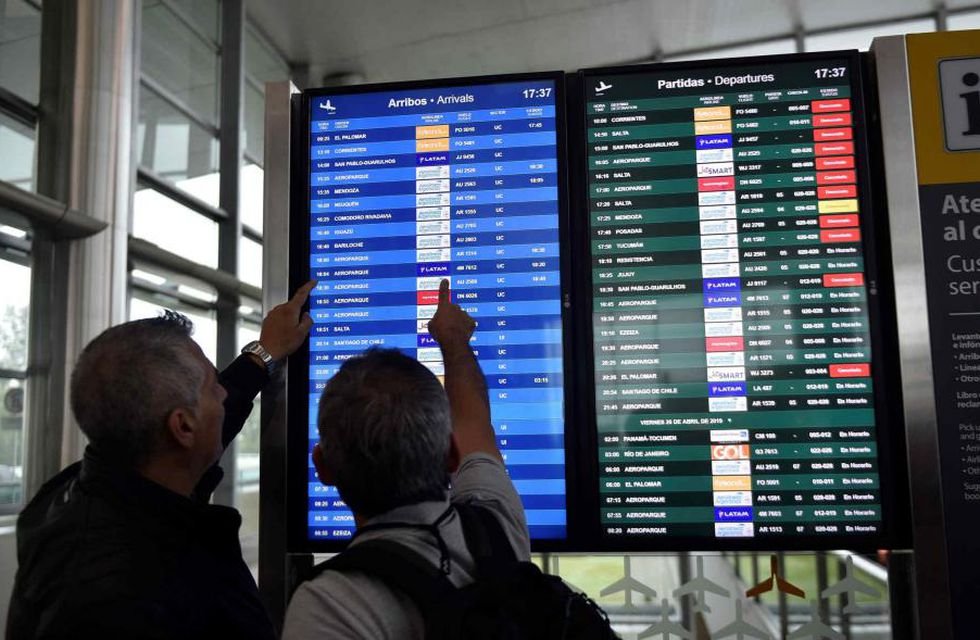
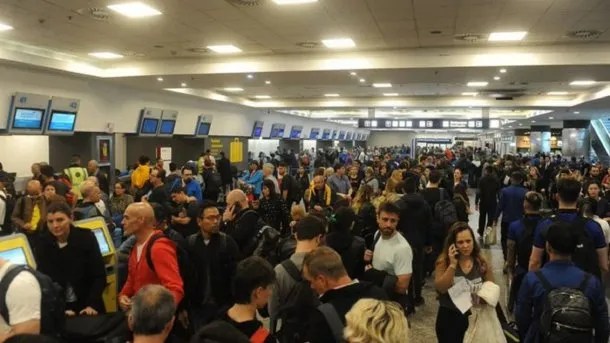
Un fallo en el Sistema de Radar Aeroportuario ha ocurrido el 10 de Octubre de 2022 afectando los aeropuertos Buenos Aires/Ezeiza/EZE, Buenos Aires/Jorge Newbery/AEP y San Fernando/SDO produciendo demoras en los vuelos comerciales. Por fallas en un radar del Aeropuerto Internacional de Ezeiza, la operación del Aeroparque Jorge Newbery y el Aeropuerto Internacional de San Fernando se vio afectada en la tarde del 10/10 “Vamos a tener demoras”, anticiparon fuentes de Aeropuertos Argentina 2000.
El problema, que comenzó pasadas las 16:00 hs se solucionó minutos antes de las 19:00 hs. “Por fallas en un radar de Ezeiza vamos a operar por procedimiento. Damos prioridad al Aeropuerto Internacional de Ezeiza y a Aeroparque”, informaron, al tiempo que precisaron que los vuelos más afectados serán los de San Fernando.
El radar en cuestión opera los tres aeropuertos del Área Metropolitana de Buenos Aires (AMBA), eso es lo que motivó que se vean afectados. En particular, según advirtieron desde la compañía que está a cargo de las sedes aeroportuarias, mientras un equipo de expertos de la Empresa Argentina de Navegación Aérea (EANA) trabaja en la solución de la falla, los aeropuertos operan por procedimiento manual. “Separan más los vuelos entre 8 a 10 minutos”, explicaron.
La falla se dio en el radar secundario que asiste al Centro Control de Ezeiza y que se usa como referencia también en la torre de Aeroparque de y del Aeropuerto Internacional de San Fernando. “Es el radar que sirve para los fines de control aéreo, control militar usa radares primarios y nosotros radares secundarios. Hubo un problema de transmisión de datos, que fue lo que complicó la operatoria que por el momento continúa”, indicaron fuentes cercanas a Administración Nacional de Aviación Civil (ANAC).
Minutos antes de las 19:00 hs, la EANA confirmó la normalización del radar. “Ya se encuentra totalmente normalizado el servicio luego de que a las 16.45 se presentara una disrupción en un módulo de software de procesamiento radar, por lo cual se pasó a operar por procedimientos aplicando medidas de control de tránsito aéreo. Gracias a que el equipamiento dispone de redundancia pudo restablecerse el servicio a los pocos minutos”.
El problema se dio en pleno cierre de fin de semana extralargo, cuando 3,2 millones de turistas recorrieron el país, de acuerdo a un informe de la Confederación Argentina de la Mediana Empresa (CAME). Respecto de los turistas, la fecha concluyó con un total 1.320.000 turistas, lo que representó un 20% menos que en el mismo feriado del año pasado. Sin embargo, este año tuvo un mayor volumen la presencia del turista internacional.
Radar system failures Argentina
Failure affected Ezeiza/Aeroparque/San Fernando airports
A failure in the Airport Radar System occurred on October 10, 2022, affecting the Buenos Aires/Ezeiza/EZE, Buenos Aires/Jorge Newbery/AEP and San Fernando/SDO airports, causing delays in commercial flights. Due to failures in a radar at the Ezeiza International Airport, the operation of the Jorge Newbery Airport and the San Fernando International Airport was affected on the afternoon of 10/10 “We are going to have delays”, sources from Aeropuertos Argentina 2000 anticipated.
The problem, which started after 04:00 p.m., was solved minutes before 07:00 p.m. “Due to failures in an Ezeiza radar, we are going to operate by procedure. We give priority to the Ezeiza International Airport and Aeroparque”, they reported, while specifying that the most affected flights will be those from San Fernando.
The radar in question operates the three airports of the Metropolitan Area of Buenos Aires (AMBA), that is what caused them to be affected. In particular, as warned by the company that is in charge of the airport headquarters, while a team of experts from the Argentine Air Navigation Company (EANA) works on the solution of the failure, the airports operate by manual procedure. «They separate the flights between 8 to 10 minutes», they explained.
The failure occurred in the secondary radar that assists the Ezeiza Control Center and is also used as a reference in the Aeroparque tower and the San Fernando International Airport. “It is the radar that serves the purposes of air control, military control uses primary radars and we use secondary radars. There was a data transmission problem, which was what complicated the operation that continues for the time being”, sources close to the National Civil Aviation Administration (ANAC) indicated.
Minutes before 07:00 p.m., the EANA confirmed the normalization of the radar. “The service is already fully normalized after a disruption occurred in a radar processing software module at 04:45 p.m., for which it began to operate by procedures applying air traffic control measures. Thanks to the fact that the equipment has redundancy, the service could be restored in a few minutes”.
The problem occurred in the middle of the extra-long weekend, when 3.2 million tourists toured the country, according to a report by the Argentine Confederation of Medium-sized Enterprises (CAME). Regarding tourists, the date concluded with a total of 1,320,000 tourists, which represented 20% less than the same holiday last year. However, this year the presence of international tourists had a greater volume.
PUBLISHER: Airgways.com DBk: Eana.com.ar / Anac.gov.ar / Aa2000.com.ar / Lanacion.com.ar / Airgways.com AW-POST: 202210102337AR OWNERSHIP: Airgways Inc. A\W A I R G W A Y S ®
AW | 2022 10 09 14:37 | AIR INVESTIGATION / AVIATION SAFETY
Corte francesa continúa juicio accidente AF447
La Justicia de Francia parece avanzar contra las compañías Air France y Airbus Group por el accidente del vuelo AF447 que se estrelló en el Océano Atlántico con un saldo de 228 personas muertas el 1 de Junio de 2009 cuando el vuelo de Air France despegaba de Río de Janeiro/GIG, Brasil rumbo a París/CDG, Francia.
Después de más de una década de batallas legales, los familiares de los pasajeros finalmente tienen una oportunidad de justicia. Airbus y Air France están acusados de homicidio involuntario en un juicio que comienza el Lunes 10/10 por el accidente del vuelo AF447. El peor accidente aéreo en la historia de Air France mató a personas de 33 nacionalidades y tuvo un impacto duradero, lo que llevó a cambios en las regulaciones de seguridad aérea, cómo se entrena a los pilotos y el uso de sensores de velocidad aérea.
Pero la demanda casi no llegó a juicio. Las compañías insisten en que no son penalmente responsables, y Air France ha compensado a las familias. Los investigadores argumentaron a favor de abandonar el caso, pero inusualmente, los jueces los anularon y enviaron el caso a la Corte Suprema. Se espera que el juicio se centre en dos factores clave: la formación de hielo de los sensores externos denominados Tubos Pitot y el error del piloto, el factor humano.
«Hicimos una promesa a nuestros seres queridos de tener la verdad para ellos y asegurarnos de que no murieran por nada», dijo a Ophelie Touillou, cuyo hermano Nicolas, de 27 años, murió en el accidente aéreo. Dijo que las compañías se presentan como intocables y que Airbus no hizo ningún esfuerzo para abordar las preocupaciones de las familias. «Para ellos, no somos nada. No perdieron 228 personas. Perdieron un avión». Pocas familias en Brasil, que perdieron a 59 ciudadanos en el accidente, pueden permitirse viajar a Francia para el juicio. Algunos sienten que el sistema de justicia francés ha sido demasiado blando con Airbus y Air France, dos gigantes industriales en los que el Gobierno francés tiene una participación en la propiedad.
La aeronave Airbus A300-200 desapareció de los radares sobre el Océano Atlántico entre Brasil y Senegal con 216 pasajeros y 12 miembros de la tripulación a bordo. Los primeros escombros solo fueron vistos en el mar cinco días después. No fue hasta 2011 que el avión, y sus grabadoras Voice Cockpit Recorder (VCR) y la Flight Data Recorder (FDR), fueron localizados en el fondo del océano, en un esfuerzo de búsqueda sin precedentes a profundidades de más de 13.000 pies.
La agencia de investigación de accidentes aéreos de Francia, la Bureau d’Enquêtes et Analyses (BEA), descubrió que el accidente involucró una serie de eventos en cascada o en cadena, sin una causa única. Cuando una tormenta azotó el avión, los cristales de hielo presentes a grandes altitudes desactivaron los tubos pitot, bloqueando la información de velocidad y altitud. El Piloto Automático desconectado. La tripulación reanudó el pilotaje manual, pero con datos de navegación erróneos. El avión entró en un estancamiento aerodinámico, su nariz se inclinó hacia arriba, posteriormente se hundió. Los pilotos «no entendían lo que les estaba pasando, manteniendo la dificultad de interpretación, en un avión totalmente digital como todos los aviones del mundo de hoy, bueno, es fácil equivocarse», dijo Gerard Feldzer, ex-Piloto y Entrenador de Pilotos de Air France. Tanto él y los Pilotos de todo el mundo se preguntaron después: «Si hubiera sido yo, ¿habría actuado de la misma manera? Ha sido una pregunta muy difícil de responder».
Nadie corre el riesgo de ser encarcelado en este caso; solo las empresas están siendo juzgadas. Cada uno se enfrenta a multas potenciales de hasta € 225.000 Euros, una fracción de sus ingresos anuales, pero podrían sufrir daños a la reputación si se los encuentra penalmente responsables.
Air France está acusada de no haber implementado entrenamiento en caso de formación de hielo de las sondas pitot a pesar de los riesgos. En un comunicado, la compañía dijo que demostraría en el tribunal «que no ha cometido una falta penal en el origen del accidente» y pediría la absolución. Airbus culpa al error del piloto y dijo a los investigadores que la formación de hielo es un problema inherente a todos estos sensores.
Desde entonces, Air France ha cambiado sus manuales de entrenamiento y simulaciones. También proporcionó una compensación a las familias, que tuvieron que aceptar no revelar las sumas. Airbus Group está acusado de haber sabido que el modelo de Tubos Pitot en el vuelo AF447/AFR447 era defectuoso, y no hacer lo suficiente para informar urgentemente a las aerolíneas y sus tripulaciones al respecto y garantizar la capacitación para mitigar el riesgo resultante.
Según una investigación en ese momento se encontró que Airbus había sabido desde al menos 2002 sobre problemas con los Tubos Pitots, pero no los reemplazó hasta después del accidente. El modelo en cuestión, un Pitot Thales AA, fue posteriormente prohibido y reemplazado.
Familiares del AF447
Nelson Marinho, cuyo hijo Nelson Jr. fue muerto, está enojado porque ningún ejecutivo de la compañía será juzgado. «Han cambiado varios directores, tanto en Airbus como en Air France, así que ¿a quién arrestarán? Nadie. No habrá justicia. Lamentablemente, esa es la verdad», dijo Nelson Marinho, un mecánico retirado que dirige un grupo de apoyo para las familias de las víctimas.
«Ellos sabían y no hicieron nada. Los pilotos nunca deberían haberse encontrado en tal situación, nunca entendieron la causa de la avería y el avión se había vuelto impilotable. El avión había enviado mensajes a tierra sobre el problema, pero no había advertido a los pilotos. Es como si estuvieras conduciendo un automóvil a 130 (kph, aproximadamente 80 mph), tus frenos ya no funcionaban, pero el automóvil envió la alerta al mecánico y no al conductor», dijo Danièle Lamy, Presidenta de una asociación de familias de víctimas que presionó para un juicio. Danièle Lamy perdió a su hijo Eric unos días antes de cumplir 38 años. Ella ha luchado desde entonces para descubrir la verdad. Ella está entre las 489 partes civiles en el juicio, que está programado para durar hasta Diciembre 2022.
El accidente obligó a Airbus y Air France a ser más transparentes y reactivos señalando que la prueba será importante para la industria de la aviación, así como para las familias. «La historia de la seguridad de la aviación está hecha de esto, de los accidentes«, dijo Gerard Feldzer.
Air France/Airbus trial
French court continues trial of accident AF447
The Justice of France seems to advance against the companies Air France and Airbus Group for the accident of flight AF447 that crashed into the Atlantic Ocean with a balance of 228 people dead on June 1, 2009 when the Air France flight was taking off from Rio de Janeiro /GIG, Brazil en route to Paris/CDG, France.
After more than a decade of legal battles, the families of the passengers finally have a chance at justice. Airbus and Air France are accused of involuntary manslaughter in a trial that begins on Monday 10/10 for the accident of flight AF447. The worst plane crash in Air France’s history killed people of 33 nationalities and had a lasting impact, leading to changes in aviation safety regulations, how pilots are trained and the use of airspeed sensors.
But the lawsuit almost never went to trial. The companies insist they are not criminally liable, and Air France has compensated the families. The investigators argued in favor of dropping the case, but unusually, the judges overruled them and sent the case to the Supreme Court. The trial is expected to focus on two key factors: icing from external sensors called Pitot Tubes and pilot error, the human factor.
«We made a promise to our loved ones to have the truth for them and make sure they didn’t die for nothing», he told Ophelie Touillou, whose 27-year-old brother Nicolas was killed in the plane crash. He said the companies present themselves as untouchable and that Airbus made no effort to address the families’ concerns. «To them, we are nothing. They didn’t lose 228 people. They lost a plane». Few families in Brazil, who lost 59 citizens in the accident, can afford to travel to France for the trial. Some feel the French justice system has been too soft on Airbus and Air France, two industrial giants in which the French government has an ownership stake.
The Airbus A300-200 aircraft disappeared from radar over the Atlantic Ocean between Brazil and Senegal with 216 passengers and 12 crew members on board. The first debris was only seen in the sea five days later. It wasn’t until 2011 that the plane, and its Voice Cockpit Recorder (VCR) and Flight Data Recorder (FDR), were located on the ocean floor in an unprecedented search effort at depths of more than 13,000 feet.
France’s air accident investigation agency, the Bureau d’Enquêtes et Analyzes (BEA), found that the crash involved a series of cascading or chain events, with no single cause. When a storm hit the plane, ice crystals present at high altitudes disabled the pitot tubes, blocking speed and altitude information. Autopilot off. The crew resumed manual piloting, but with erroneous navigation data. The plane entered an aerodynamic stall, its nose pitched up, then it sank. The pilots «didn’t understand what was happening to them, maintaining the difficulty of interpretation, in a fully digital aircraft like all aircraft in the world today, well, it’s easy to get it wrong», said Gerard Feldzer, former Pilot and Pilot Trainer of Air France. Both he and Drivers around the world wondered afterwards: «If it had been me, would I have acted in the same way? It was a very difficult question to answer».
No one is at risk of being jailed in this case; only the companies are being judged. They each face potential fines of up to €225,000, a fraction of their annual income, but could suffer reputational damage if found criminally liable.
Air France is accused of failing to implement pitot icing training despite the risks. In a statement, the company said it would prove in court «that it did not commit criminal misconduct at the origin of the accident» and seek acquittal. Airbus blames pilot error, telling investigators that icing is an inherent problem with all of these sensors.
Since then, Air France has changed its training manuals and simulations. It also provided compensation to the families, who had to agree not to disclose the amounts. Airbus Group is accused of knowing that the Pitot Tube model on flight AF447/AFR447 was defective, and not doing enough to urgently inform airlines and their crews about it and ensure training to mitigate the resulting risk.
An investigation at the time found that Airbus had known since at least 2002 about problems with the Pitots Tubes, but did not replace them until after the accident. The model in question, a Pitot Thales AA, was later banned and replaced.
Relatives of AF447
Nelson Marinho, whose son Nelson Jr. was killed, is angry that no company executives will stand trial. «Several directors have changed, both at Airbus and Air France, so who will they arrest? No one. There will be no justice. Unfortunately, that is the truth», said Nelson Marinho, a retired mechanic who runs a support group for airlines. families of the victims.
«They knew and they did nothing. The pilots should never have been in such a situation, they never understood the cause of the failure and the plane had become unpilotable. The plane had sent messages to the ground about the problem, but had not warned the pilots. It’s as if you were driving a car at 130 (kph, approximately 80 mph), your brakes no longer worked, but the car sent the alert to the mechanic and not the driver», said Danièle Lamy, President of an association of families of victims who pressed for a trial. Danièle Lamy lost her son Eric a few days before her 38th birthday. She has struggled ever since to discover the truth. She is among 489 civil parties in the trial, which is scheduled to last until December 2022.
The accident forced Airbus and Air France to be more transparent and reactive, pointing out that the test will be important for the aviation industry, as well as for families. «The history of aviation safety is made of this, of accidents», said Gerard Feldzer.
PUBLISHER: Airgways.com DBk: Bea.aero / Airbus.com / Airfrance.com / Airgways.com AW-POST: 202210091434AR OWNERSHIP: Airgways Inc. A\W A I R G W A Y S ®
Boeing gana respaldo pilotos extensión certificación 7/10 MAX
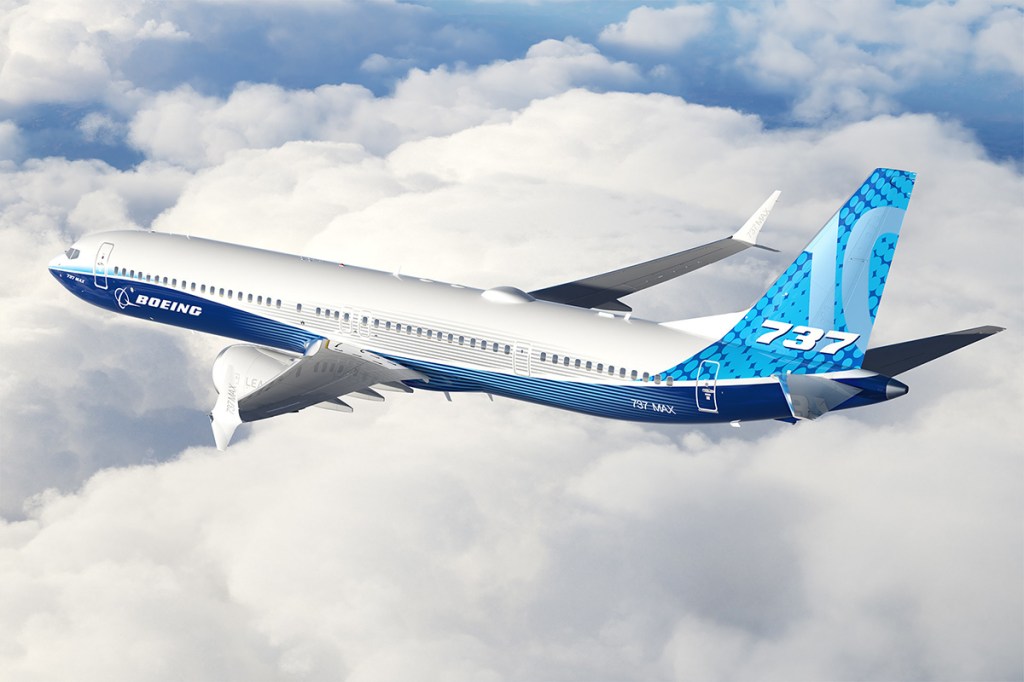
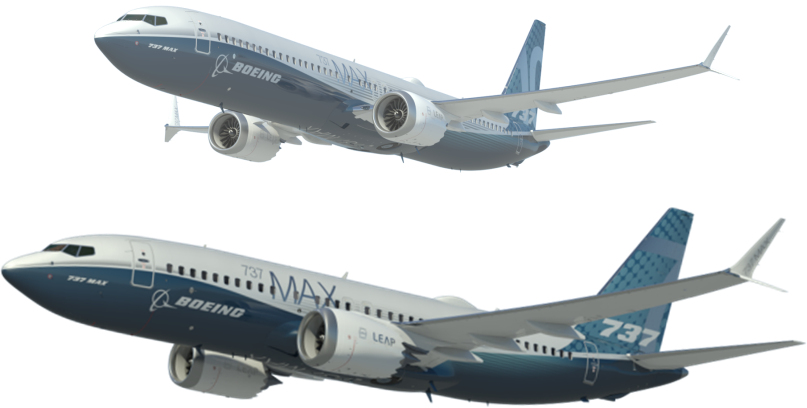
The Boeing Company ha ganado respaldo de los pilotos de la aerolínea low cost estadounidense Southwest Airlines, un aliado importante mientras presiona al Congreso de Estados Unidos para que extienda el plazo para certificar sus aviones Boeing 737-7 MAX y Boeing 737-10 MAX y evite un rediseño de cabina potencialmente costoso y las desventajas de las asimetrías en la capacitación de pilotos para toda la familia 737 MAX. La Asociación de Pilotos de Southwest Airlines (SWAPA) que representa a los pilotos de la línea aérea texana se ha mostrado partidaria de las extensiones de plazos para alcanzar las certificaciones de las versiones restantes de la familia 737 MAX.
El Presidente del Sindicato SWAPA, Casey Murray, dijo el Viernes 07/10 que los gremios apoyan una extensión de un par de años, argumentando que tenía sentido tener alertas comunes en toda la familia de aviones 737, y no en algunas variantes. «Volar dos aviones que son esencialmente iguales, pero con diferentes sistemas de alerta puede causar confusión en un momento crítico, particularmente para los pilotos que vuelan «seis piernas en un día y son intercambiados entre aviones», dijo Casey Murray. La posición de la aerolínea Southwest Airlines difiere de la compañía American Airlines que reclama que las variantes MAX 7 y MAX 10 se ajusten al cronograma de requisitos de la agencia FAA hacia finales de 2022. En el medio de las discusiones de las aerolíneas por las normativas de seguridad, no solo se discute la posición acerca de la seguridad, sino, además, padece que existiera una puja solapada por el mercado aéreo. Indistintamente, las posiciones perecen reflejar el compromiso serio por un mejor producto para las aerolíneas y los usuarios del transporte aéreo.
Boeing se enfrenta a la fecha límite de Diciembre 2022 para obtener la aprobación de la Administración Federal de Aviación (FAA) para las variantes 737-7 MAX 7 y 737-10 MAX, o debe cumplir con los nuevos requisitos modernos de alerta de cabina que podrían retrasar significativamente la entrada en servicio de ambas aeronaves.
Southwest supports Boeing 737-7/10 MAX
Boeing wins Pilots support 7/10 MAX certification extension
The Boeing Company has won support from the pilots of the American low-cost airline Southwest Airlines, an important ally as it presses the United States Congress to extend the deadline to certify its Boeing 737-7 MAX and Boeing 737-10 MAX planes and avoid a redesign potentially expensive cabin space and the downside of pilot training asymmetries for the entire 737 MAX family. The Southwest Airlines Pilots Association (SWAPA), which represents the pilots of the Texan airline, has been in favor of extending the deadlines to achieve the certifications of the remaining versions of the 737 MAX family.
SWAPA Union President Casey Murray said on Friday 07/10 that the unions support an extension of a couple of years, arguing that it made sense to have common alerts on the entire 737 family, and not on some variants. «Flying two planes that are essentially the same but with different warning systems can cause confusion at a critical time, particularly for pilots who fly ‘six legs in a day and are swapped between planes», Casey Murray said. The airline’s position Southwest Airlines differs from the American Airlines company that claims that the MAX 7 and MAX 10 variants comply with the FAA agency’s requirements schedule by the end of 2022. In the midst of airline discussions about safety regulations, not only the position on safety is not discussed, but also, it seems that there was an underhand bid for the air market. Indistinctly, the positions seem to reflect the serious commitment to a better product for airlines and air transport users.
Boeing faces a December 2022 deadline to get Federal Aviation Administration (FAA) approval for the 737-7 MAX 7 and 737-10 MAX variants or must meet new modern cockpit alert requirements that could significantly delay the entry into service of both aircraft.
PUBLISHER: Airgways.com DBk: Swapa.org / Southwest.com / Airgways.com AW-POST: 202210081131AR OWNERSHIP: Airgways Inc. A\W A I R G W A Y S ®
AW | 2022 10 07 10:37 | AVIATION SAFETY / AIRLINES / GOVERNMENT
Oposición pilotos a extensión fecha límite certificación 7/10 MAX
El sindicato Asociación de Pilotos Aliados (APA), que representa a los pilotos de American Airlines ha expresado su oposición a cualquier extensión de la fecha límite de finales de Diciembre 2022 que Boeing enfrenta para certificar los Boeing 737-7 MAX y Boeing 737-10 MAX sin la adición de un Sistema de Alerta de Motor y Tripulación (EICAS) a sus cubiertas de vuelo. Una ley aprobada en Diciembre de 2020 en los Estados Unidos conocida como la Ley de Certificación, Seguridad y Responsabilidad de Aeronaves (ACSAA) requerirá que Boeing instale el sistema en ambos modelos a menos que obtengan la certificación para fin de 2022 o el Congreso permita una extensión. El Senador de Mississippi Roger Wicker, el principal Republicano en el Comité de Comercio del Senado, propuso una enmienda al proyecto de ley de asignaciones de defensa de este año que le daría a Boeing hasta Septiembre de 2024 para completar su trabajo en los dos aviones antes de que entre en vigencia la disposición de ACSAA que exige EICAS.
«Boeing necesita proceder con la instalación de sistemas modernos de alerta de tripulación en estas aeronaves para mitigar el efecto de sobresalto del piloto y la confusión durante el mal funcionamiento complejo del sistema compuesto. Una vez que estos sistemas estén instalados y los pilotos hayan sido entrenados adecuadamente en ellos, nuestras tripulaciones podrán identificar mejor las fallas del sistema y priorizar las acciones correctivas que podrían salvar vidas», dijo el Presidente de la Asociación de Pilotos Aliados, Edward Sicher.
American Airlines vuela más de 300 Boeing 737, incluidos 42 MAX 8, y ocupa puestos de entrega por otros 88 MAX. La aerolínea no ha especificado si sus planes de entrega involucran o no a MAX 7 o MAX 10.
«Nos oponemos a cualquier extensión de la exención y no estamos de acuerdo con la afirmación de Boeing de que los pilotos podrían confundirse al pasar de un avión sin el sistema de alerta moderno a uno que esté equipado con él. Nada podría estar más lejos de nuestra realidad de la cubierta de vuelo. Considere el Boeing 757 y el Boeing 767; son aviones sustancialmente diferentes, pero operan bajo un solo certificado. Los pilotos han volado rutinariamente ambos en el mismo día sin ninguna confusión», agregó Edward Sicher.
Por su parte, Boeing continúa citando la seguridad como el «factor impulsor» en el esfuerzo de certificación y lamenta el compromiso de seguridad que la pérdida de similitud entre varios submodelos del 737 causaría por la necesidad de instalar un EICAS en el MAX 7 y MAX 10. «Las ganancias de seguridad en la aviación comercial durante varias décadas han demostrado que una experiencia operativa consistente en toda una familia de aviones es una mejor práctica de la industria que beneficia a las tripulaciones de vuelo y al público que vuela al mejorar la seguridad y reducir el riesgo», dijo Boeing en un comunicado.
American opposes extension CERT. 7/10 MAX
Opposition pilots to extension deadline certification MAX 7 / MAX 10
The Allied Pilots Association (APA) union, which represents American Airlines pilots, has expressed opposition to any extension of the late December 2022 deadline that Boeing faces to certify the Boeing 737-7 MAX and Boeing 737-10. MAX without the addition of an Engine and Crew Alert System (EICAS) to their flight decks. A law passed in December 2020 in the United States known as the Aircraft Certification, Safety and Accountability Act (ACSAA) will require Boeing to install the system on both models unless they achieve certification by the end of 2022 or Congress allows a extension. Mississippi Sen. Roger Wicker, the top Republican on the Senate Commerce Committee, has proposed an amendment to this year’s defense appropriations bill that would give Boeing until September 2024 to complete its work on the two planes before before the ACSAA provision required by EICAS enters into force.
«Boeing needs to proceed with installing modern crew alert systems on these aircraft to mitigate the effect of pilot startle and confusion during complex composite system malfunctions. Once these systems are in place and pilots have been trained properly in them, our crews will be better able to identify system failures and prioritize corrective actions that could save lives», said Allied Pilots Association President Edward Sicher.
American Airlines flies more than 300 Boeing 737s, including 42 MAX 8s, and holds delivery positions on another 88 MAXs. The airline has not specified whether or not its delivery plans involve MAX 7 or MAX 10.
«We oppose any extension of the waiver and disagree with Boeing’s assertion that pilots could be confused when going from an aircraft without the modern warning system to one that is equipped with it. Nothing could be further from our flight deck reality. Consider the Boeing 757 and the Boeing 767; they are substantially different aircraft, but they operate under a single certificate. Pilots have routinely flown both on the same day without any confusion», added Edward Sicher.
For its part, Boeing continues to cite safety as the «driving factor» in the certification effort and laments the safety compromise that the loss of similarity between various 737 submodels would cause by the need to install an EICAS on the MAX 7 and MAX 737. 10. «Safety gains in commercial aviation over several decades have shown that consistent operating experience across a family of aircraft is an industry best practice that benefits flight crews and the flying public by improving safety and reduce risk», Boeing said in a statement.
PUBLISHER: Airgways.com DBk: Alledpilots.org / Congress.gov / Boeing.com / Airgways.com AW-POST: 202210071037AR OWNERSHIP: Airgways Inc. A\W A I R G W A Y S ®
El impacto devastador del Huracán Ian en el Estado de Florida y la aviación han tenido consecuencias de magnitudes considerables. El área de Miami-Fort Lauderdale se ha librado de lo peor del fenómeno meteorológico, la extensa metrópoli subtropical ha sentido su fuerza en forma de intensas bandas de lluvia que se extienden por casi 200 millas desde el centro del huracán.
El sureste de Florida es un centro de aviación general para los Estados Unidos y el Caribe. Esta industria vital se vio fuertemente afectada el Martes 27/09 por la noche cuando fuertes células de tormenta eléctrica generaron tornados en el área de Miami-Dade y el Condado de Broward. Aparte de los impactos residenciales, el condado fue particularmente afectado con un tornado que tocó tierra en el Aeropuerto North Perry/HWO. El Aeropuerto North Perry es un aeropuerto público en la ciudad de Pembroke Pines, a 5 millas al oeste del distrito central de negocios de Hollywood, en el condado de Broward, Florida, Estados Unidos. También es conocido como Hollywood North Perry Airport, de ahí los códigos HWO. Es un aeródromo de alto tráfico que generalmente está lleno de actividad de entrenamiento de vuelo y operaciones de remolque de pancartas. El daño es irregular pero sustancial de las instalaciones y la aviación general.
El Aeropuerto de Sarasota/SRQ ha sido el más afectado por el Huracán Ian. Los tornados producidos por la banda de lluvia eran solo una pista de lo que otras partes del Estado de Florida estaban a punto de experimentar. El Miércoles a las 03:05 pm, el huracán Ian tocó tierra cerca de Cayo Costa, en la costa del Golfo del suroeste de Florida, produciendo vientos de 150 millas por hora y una marejada ciclónica de más de 7 pies de altura en las comunidades cercanas antes de llegar a tierra. Como resultado, las evaluaciones iniciales indicaron daños sustanciales a la infraestructura, y los aeropuertos se vieron nuevamente afectados. El Aeropuerto Internacional Sarasota-Bradenton, ha reportado daños en una sección de la membrana del techo y muchas de las tejas del techo de la terminal cayendo. Rick Piccolo, Presidente y CEO del aeropuerto, ha expresado que la sección de la membrana del techo desprendida mide aproximadamente 100 pies X 100 pies y el daño a la terminal se contuvo en un área específica cerca de los mostradores de facturación de Sun Country Airlines. Él y otros miembros del equipo operativo pasaron la noche en el aeropuerto cubriendo computadoras y otros equipos vitales con láminas de plástico antes de que llegara la pared del ojo. Los esfuerzos de limpieza ya están en marcha.
Huracán Ian
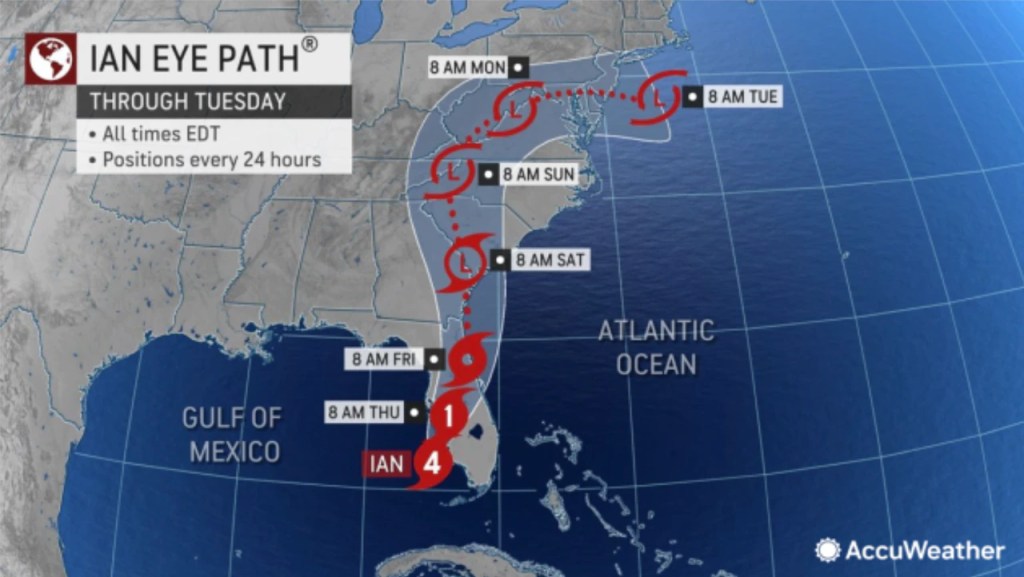
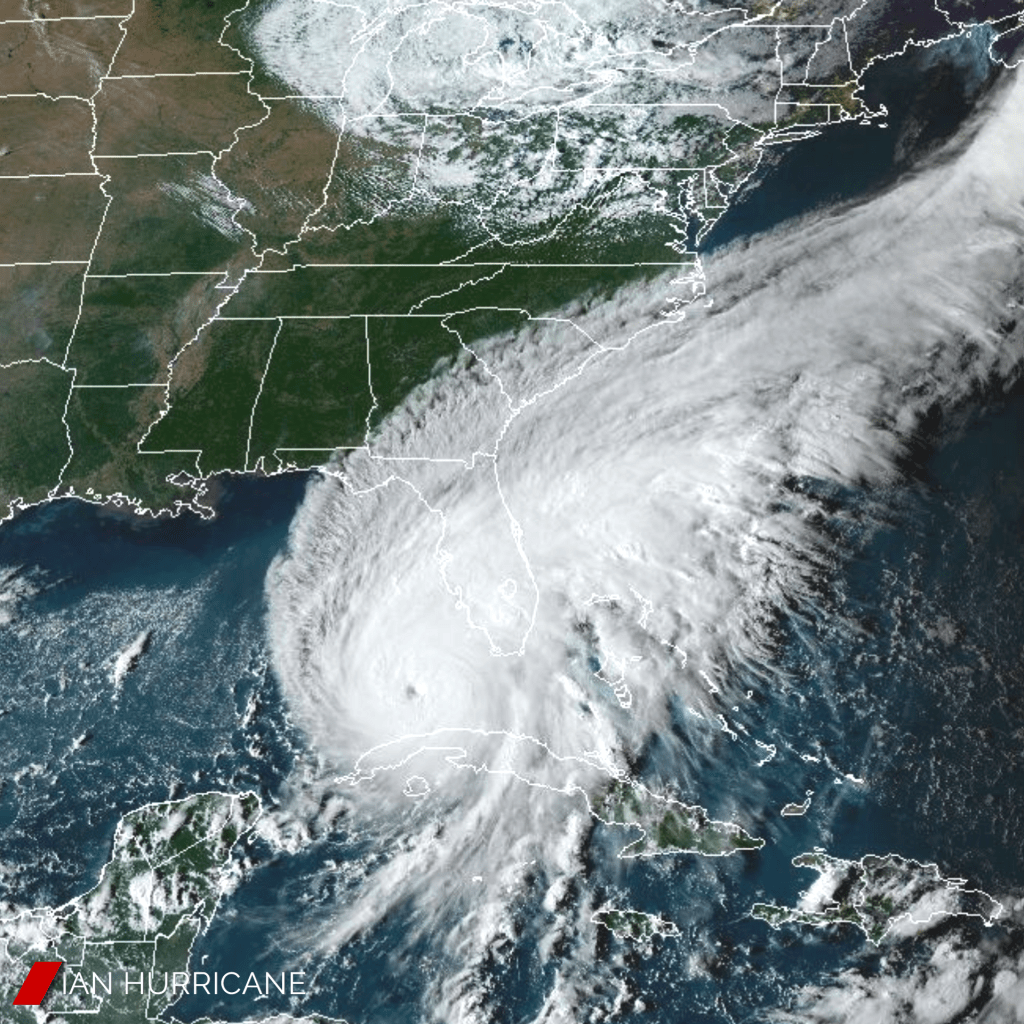
El huracán Ian golpeó a Cuba como un huracán fortalecido el 27/09 antes de convertirse en un huracán de Categoría 4 (CAT4) mientras cruzaba el Golfo de México, trayendo ráfagas de viento de más de 150 mph al suroeste de Florida. Ian luego rastreó el océano Atlántico occidental el Jueves 29/09 antes de desviarse hacia el noroeste de regreso a Carolina del Sur. Vientos racheados de más de 50 mph se registraron en partes del centro y sur de los Apalaches el Sábado 01/10 antes de que Ian se debilitara y disipara cerca de la frontera de Carolina del Norte y Virginia esa noche.
La cuarta tormenta más poderosa que azota el territorio continental de Estados Unidos ha matado al menos a 32 personas en Florida y los estados de Carolina en la última semana. El Huracán Ian dejaba el Estado de Florida para darse paso al Estado de Carolina del Sur disminuyendo su intensidad. Los observadores meteorológicos experimentados fueron tomados por sorpresa con la intensidad de del fenómeno meteorológico.
Post-Hurricane Ian aviation
Airports affected by the hurricane
The devastating impact of Hurricane Ian on the State of Florida and aviation have had consequences of considerable magnitude. The Miami-Fort Lauderdale area has been spared the worst of the weather phenomenon, the sprawling subtropical metropolis has felt its force in the form of intense rain bands stretching nearly 200 miles from the center of the hurricane.
Southeast Florida is a general aviation hub for the United States and the Caribbean. This vital industry was hit hard Tuesday night 9/27 when strong thunderstorm cells spawned tornadoes in the Miami-Dade and Broward County area. Aside from residential impacts, the county was particularly hard hit with a tornado that touched down at North Perry/HWO Airport. North Perry Airport is a public airport in the city of Pembroke Pines, 5 miles west of the central business district of Hollywood, in Broward County, Florida, United States. It is also known as Hollywood North Perry Airport, hence the HWO codes. It is a high-traffic airfield that is usually bustling with flight training activity and banner towing operations. Patchy but substantial damage to facilities and general aviation.
Sarasota/SRQ Airport has been the hardest hit by Hurricane Ian. The tornadoes produced by the rainband were just a hint of what other parts of the State of Florida were about to experience. On Wednesday at 03:05 pm, Hurricane Ian made landfall near Key Costa on the Gulf Coast of southwestern Florida, producing 150 mph winds and a storm surge of more than 7 feet in the communities nearby before reaching land. As a result, initial assessments indicated substantial damage to infrastructure, and airports were once again affected. Sarasota-Bradenton International Airport has reported damage to a section of the roof membrane and many of the terminal’s roof tiles falling off. Rick Piccolo, President and CEO of the airport, has stated that the detached roof membrane section is approximately 100ft X 100ft and the damage to the terminal was contained to a specific area near the Sun Country Airlines check-in counters. He and other members of the operational team spent the night at the airport covering computers and other vital equipment with plastic sheeting before the eyewall arrived. Cleanup efforts are already underway.
Hurricane Ian
Hurricane Ian struck Cuba as a strengthened hurricane on 09/27 before becoming a Category 4 (CAT4) hurricane as it crossed the Gulf of Mexico, bringing wind gusts of over 150 mph to Southwest Florida. Ian then tracked the western Atlantic Ocean on Thursday 09/29 before drifting northwest back to South Carolina. Gusty winds in excess of 50 mph were reported across portions of the central and southern Appalachians on Saturday 10/01 before Ian weakened and dissipated near the North Carolina/Virginia border that evening.
The fourth most powerful storm to hit the continental United States has killed at least 32 people in Florida and the Carolina states in the past week. Hurricane Ian left the State of Florida to make way for the State of South Carolina, decreasing its intensity. Experienced weather watchers were caught off guard by the intensity of the weather phenomenon.
PUBLISHER: Airgways.com DBk: Noaa.gov / Accuweather.com / Airgways.com AW-POST: 202210030927AR OWNERSHIP: Airgways Inc. A\W A I R G W A Y S ®
Huracán Ian se fortalece en una tormenta de Categoría 4 Estado de Florida se prepara para el impacto Pronóstico a Categoría 5
El Huracán Ian, ha sido elevado a Categoría 4 (CAT 4) más fuerte y extremadamente peligroso ha comenzado a azotar Florida con grandes inundaciones y vientos ruinosos a medida que avanza en una gran franja de la costa oeste del estado con el potencial en cuestión de horas de infligir inundaciones catastróficas y marejadas ciclónicas potencialmente mortales.
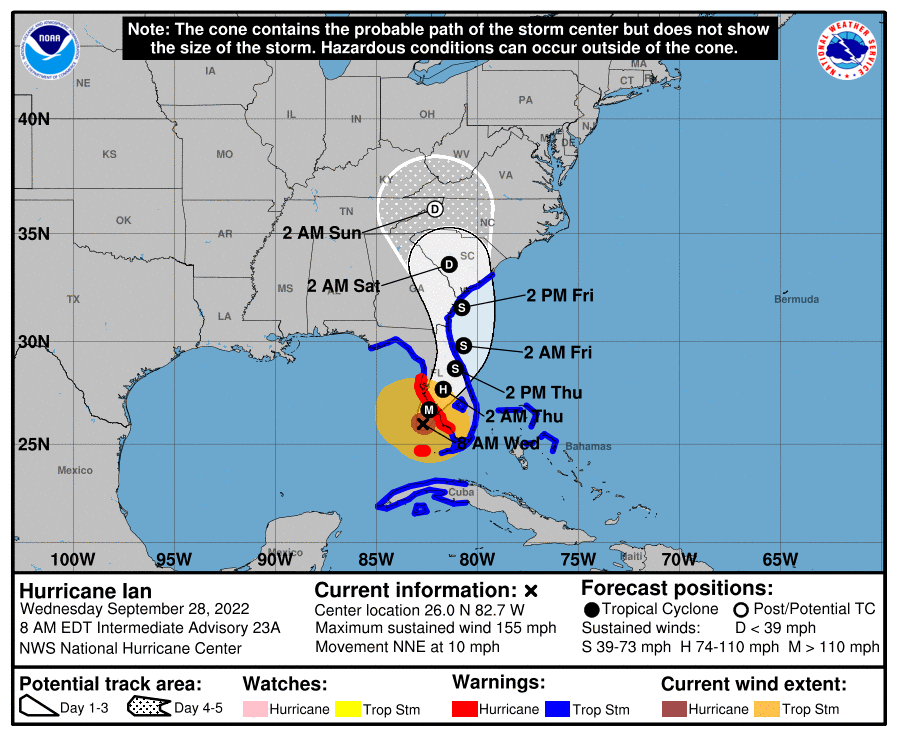
El huracán Ian dejó sin electricidad a toda Cuba y ahora se dirige hacia Florida, donde las autoridades instan a evacuaciones. «Las condiciones se deterioran rápidamente a lo largo de la costa suroeste de Florida», dijo el Centro Nacional de Huracanes el Miércoles 28/09 por la mañana, con el centro de Ian a solo 55 millas de la costa. Sus vientos máximos sostenidos fueron de 155 mph, a solo 2 mph de una Categoría 5, dijo el centro a las 07:00 a.m. ET. El área entre Naples y Sarasota enfrenta la mayor amenaza de marejada ciclónica peligrosa, dijo el centro de huracanes. Se ha aconsejado a más de 2,5 millones de personas que huyan, incluidos 1,75 millones bajo órdenes de evacuación obligatorias, lo que no es poca cosa en un estado con una gran población de ancianos, algunos de los cuales tienen que ser trasladados de centros de atención a largo plazo.
Aeropuertos y aerolíneas
Las aerolíneas, los aeropuertos y el gobierno federal se están preparando ante la posibilidad de que la infraestructura de aviación reciba un gran golpe del huracán Ian. Las cancelaciones y los cierres ya se están acumulando en toda la península de Florida.
Los aeropuertos de Florida lideran las cancelaciones en EE.UU. Los datos de FlightAware muestran más de 1.600 cancelaciones en todo el país el miércoles. Los aeropuertos de Orlando, Miami y Tampa completan los tres principales puntos problemáticos, aunque los efectos podrían extenderse por el sureste de Estados Unidos, con Atlanta y Charlotte ya experimentando cancelaciones. El Aeropuerto Internacional Tampa/TPA, donde los funcionarios se preparan para un gran impacto, tenía programado suspender sus operaciones a las 05:00 p.m. del Martes 27/09. El aeropuerto solo estará abierto para aeronaves de emergencia, según un aviso disponible públicamente para los pilotos. El aeropuerto maneja típicamente 450 vuelos diarios. La terminal del Aeropuerto Internacional de St. Pete-Clearwater/PIE cerró a la 01:00 p.m. del Martes 27/09 debido a órdenes de evacuación obligatorias del condado de Pinellas y permanecerá cerrada hasta que se levante la orden de evacuación. El Aeropuerto Internacional Sarasota-Bradenton/SRQ anunció que estará cerrado a partir de las 08:00 p m. del Martes 27/09 por la noche. Las operaciones comerciales en el Aeropuerto Internacional Orlando/MCO cesarán a las 10:30 a.m. del Miércoles 28/09, según una actualización del aeropuerto el Martes 27/09. La decisión se tomó después de consultar con el Servicio Meteorológico Nacional, aerolíneas y socios federales, dijeron funcionarios del aeropuerto.
La Administración Federal de Aviación (FAA) ha expresado: «La FAA está monitoreando de cerca al huracán Ian y su trayectoria. Antes de que llegue cualquier tormenta, preparamos y protegemos las instalaciones y el equipo de control de tráfico aéreo a lo largo de la ruta proyectada de la tormenta para que las operaciones puedan reanudarse rápidamente después del paso del huracán para apoyar los esfuerzos de socorro en caso de desastre», dijo la agencia en un comunicado, subrayando que no cancela vuelos comerciales.
American Airlines dice que había cancelado proactivamente 175 vuelos hasta el martes por la mañana, incluidos vuelos principales y regionales. Los pasajeros estadounidenses que viajen a través de veinte aeropuertos en la ruta del huracán pueden volver a reservar vuelos sin cargos por cambios. La aerolínea también agregó tarifas reducidas de último minuto para las ciudades que se verán afectadas con la esperanza de ayudar a las personas que intentan evacuar por aire. United Airlines y Southwest Airlines suspendieron operaciones en los aeropuertos de Fort Myers/RSW y Sarasota/SRQ. United también ha cancelado todos los vuelos de los días Martes 27/09 y Miércoles 28/09 hacia y desde Cayo Hueso y cancelará algunos vuelos desde Orlando para minimizar las escalas de la tripulación.
Varias aerolíneas están poniendo sus aeronaves fuera de peligro y explican que tomará tiempo restablecer el servicio después de la tormenta. Primero, los funcionarios y las aerolíneas deben determinar cuándo y dónde es seguro reanudar los vuelos, y luego deben tener tripulaciones en tierra disponibles.
Hurricane Ian Category 4
Hurricane Ian strengthens into a Category 4 storm State of Florida braces for impact Forecast to Category 5
Hurricane Ian, has been upgraded to a stronger and extremely dangerous Category 4 (CAT 4) has begun to hit Florida with major flooding and devastating winds as it moves across a large swath of the state’s west coast with the potential in a matter of hours. of inflicting life-threatening catastrophic flooding and storm surge.
Hurricane Ian left all of Cuba without electricity and is now heading towards Florida, where authorities are urging evacuations. «Conditions are rapidly deteriorating along the southwestern coast of Florida», the National Hurricane Center said Wednesday morning, 09/28, with the center of Ian just 55 miles offshore. Its maximum sustained winds were 155 mph, just 2 mph from a Category 5, the center said at 07:00 a.m. ET The area between Naples and Sarasota faces the greatest threat of dangerous storm surge, the hurricane center said. More than 2.5 million people have been advised to flee, including 1.75 million under mandatory evacuation orders, no small feat in a state with a large elderly population, some of whom have to be relocated. of long-term care facilities.
Airports and airlines
Airlines, airports and the federal government are bracing for the possibility that aviation infrastructure will take a major hit from Hurricane Ian. Cancellations and closures are already piling up across the Florida panhandle.
Florida airports lead US cancellations. FlightAware data shows more than 1,600 cancellations nationwide on Wednesday. Orlando, Miami and Tampa airports round out the top three trouble spots, though the effects could ripple across the southeastern United States, with Atlanta and Charlotte already experiencing cancellations. Tampa International Airport/TPA, where officials are bracing for a major impact, was scheduled to suspend operations at 05:00 p.m. on Tuesday 09/27. The airport will only be open for emergency aircraft, according to a publicly available notice to pilots. The airport typically handles 450 daily flights. The St. Pete-Clearwater International Airport/PIE terminal closed at 01:00 p.m. on Tuesday 09/27 due to Pinellas County mandatory evacuation orders and will remain closed until the evacuation order is lifted. Sarasota-Bradenton/SRQ International Airport announced that it will be closed beginning at 08:00 p.m. Tuesday 09/27 at night. Business operations at Orlando International Airport/MCO will cease at 10:30 a.m. on Wednesday 09/28, according to an airport update on Tuesday 09/27. The decision was made after consulting with the National Weather Service, airlines and federal partners, airport officials said.
The Federal Aviation Administration (FAA) has stated: «The FAA is closely monitoring Hurricane Ian and its path. Before any storm arrives, we prepare and protect air traffic control facilities and equipment along the projected path of the storm so that operations can resume quickly after the hurricane passes to support disaster relief efforts», the agency said in a statement, stressing that it is not canceling commercial flights.
American Airlines says it had proactively canceled 175 flights as of Tuesday morning, including mainline and regional flights. US passengers traveling through twenty airports in the hurricane’s path can rebook flights with no change fees. The airline has also added last-minute reduced fares for cities that will be affected in hopes of helping people trying to evacuate by air. United Airlines and Southwest Airlines suspended operations at the Fort Myers/RSW and Sarasota/SRQ airports. United has also canceled all Tuesday 09/27 and Wednesday 09/28 flights to and from Key West and will cancel some flights from Orlando to minimize crew layovers.
Several airlines are getting their aircraft out of harm’s way, explaining that it will take time to restore service after the storm. Officials and airlines must first determine when and where it is safe to resume flights, and then they must have crews on the ground available.
PUBLISHER: Airgways.com DBk: Nhc.noaa.gov / Faa.gov / Airgways.com AW-POST: 202209280927AR OWNERSHIP: Airgways Inc. A\W A I R G W A Y S ®
Boeing 737-800 sale de la pista al aterrizar en Panamá
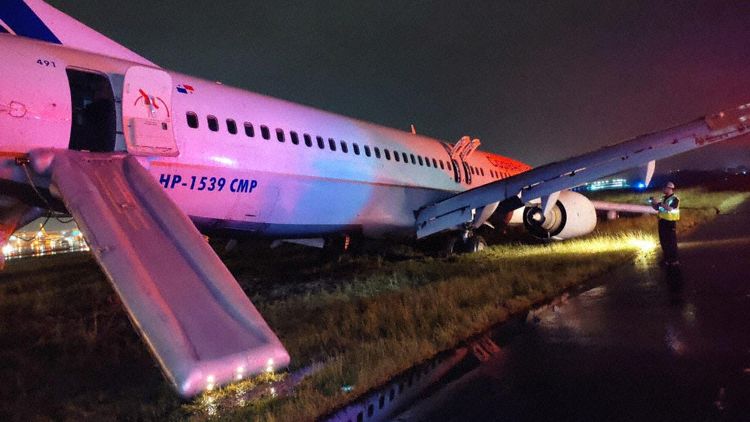
Copa Airlines ha reportado un incidente el Domingo 25/09 del vuelo CM135 entre México/MEX—Panamá/Tocumen/PTY involucrado la aeronave Boeing 737-800 matrícula HP-1539. El avión despagaba del Aeropuerto Internacional Benito Juárez en Ciudad de México a las 05:26 p.m. (hora local).al salirse de la pista al momento de aterrizar. La aeronave aterrizó en la Pista 03R de la Ciudad de Panamá a las 21:12L (02:12Z 26/09), se desvió hacia el borde derecho de la pista, aterrizó dentro de la zona de aterrizaje y la pista, luego se desvió hacia la izquierda y pasó el borde izquierdo de la pista cruzando el borde de la pista a unos 110 nudos sobre el suelo. El avión continuó paralelo a la pista, cruzó un desvío de alta velocidad que comenzaba a corregir hacia la pista, pero se detuvo a unos 2200 metros/7200 pies por la pista y a unos 21 metros/70 pies a la izquierda del borde izquierdo de la pista.
El avión fue evacuado a través de toboganes. El aeropuerto informó que la aeronave sufrió un percance durante el aterrizaje. No se reportaron heridos graves, se activaron de inmediato los protocolos de emergencia, se cerró el aeropuerto. La Autoridad de Aviación Civil de Panamá abrió una investigación.
La tormenta tropical Ian pasó por la ciudad de Panamá a unos 380 nm al norte del aeropuerto, según el Centro Nacional de Huracanes de Estados Unidos, no hubo influencia en la ciudad de Panamá. La aerolínea señaló a través de redes sociales que no se reportan heridos, al tiempo que se conocieron imágenes en las que se aprecia que los pasajeros fueron evacuados de la aeronave a través de los toboganes laterales de emergencia hacia la pista de aterrizaje.
“Se tiene confirmación de que no hay heridos producto de este incidente. Nuestra prioridad es el bienestar de los pasajeros y la tripulación a bordo del vuelo, por lo que les brindaremos la asistencia que sea necesaria. Asimismo, nos encontramos colaborando con las autoridades correspondientes a fin de recopilar toda la información necesaria para la investigación del incidente”, destacó la compañía en el texto.
El Aeropuerto Internacional de Tocumen/TPY anunció en un comunicado oficial que producto del «percance durante la operación de aterrizaje se activaron de inmediato los protocolos de emergencia y las operaciones de la terminal aérea fueron suspendidas temporalmente”. Además, que la Autoridad de Aeronáutica Civil se encuentra investigando el incidente. Durante el Domingo 25/09, el Sistema Nacional de Protección Civil de Panamá (Sinaproc) informó a través de sus cuentas oficiales que había activado un monitoreo por vientos fuertes en todo el país del 25 al 27 de Septiembre de 2022 a causa del desplazamiento del Ciclón Tropical Ian que continúa su trayectoria al intensificarse a Huracán en menos de 24 horas.
Flight cup CM135 drifts track
Boeing 737-800 leaves the runway upon landing in Panama
Copa Airlines has reported an incident on Sunday 09/25 of flight CM135 between Mexico/MEX—Panama/Tocumen/PTY involving the aircraft Boeing 737-800 registration HP-1539. The plane took off from the Benito Juárez International Airport in Mexico City at 05:26 p.m. (local time).by running off the runway upon landing. The aircraft landed on Runway 03R in Panama City at 21:12L (02:12Z 09/26), drifted to the right edge of the runway, landed within the landing zone and runway, then drifted to the left and passed the left edge of the runway crossing the edge of the runway at about 110 knots above the ground. The aircraft continued parallel to the runway, crossed a high-speed drift that was beginning to correct toward the runway, but came to rest about 7,200 feet/2,200 meters down the runway and about 70 feet/21 meters to the left of the left edge of the runway clue.
The aircraft was evacuated via slides. The airport reported that the aircraft suffered a mishap during landing. No serious injuries were reported, emergency protocols were immediately activated, the airport was closed. The Panamanian Civil Aviation Authority opened an investigation.
Tropical Storm Ian passed through Panama City about 380 nm north of the airport, according to the US National Hurricane Center, there was no influence on Panama City. The airline indicated through social networks that no injuries were reported, while images were released in which it can be seen that the passengers were evacuated from the aircraft through the emergency side slides to the runway.
“There is confirmation that there are no injuries as a result of this incident. Our priority is the well-being of the passengers and crew on board the flight, so we will provide them with the necessary assistance. Likewise, we are collaborating with the corresponding authorities in order to collect all the information necessary for the investigation of the incident”, said the company in the text.
The Tocumen/TPY International Airport announced in an official statement that as a result of the «mishap during the landing operation, the emergency protocols were immediately activated and the operations of the air terminal were temporarily suspended». In addition, that the Civil Aeronautics Authority is investigating the incident. During Sunday 09/25, the National Civil Protection System of Panama (Sinaproc) reported through its official accounts that it had activated monitoring for strong winds throughout the country from September 25 to 27, 2022 due to the displacement of the Tropical Cyclone Ian that continues its path by intensifying to a Hurricane in less than 24 hours.
PUBLISHER: Airgways.com DBk: Aeronautica.gob.pa / Sinaproc.gob.pa / Tocumenpanama.aero / Airgways.com AW-POST: 202209251005AR OWNERSHIP: Airgways Inc. A\W A I R G W A Y S ®
Tormenta tropical amenaza Florida como huracán próxima semana Pronostican tercer cancelación lanzamiento Artemis I
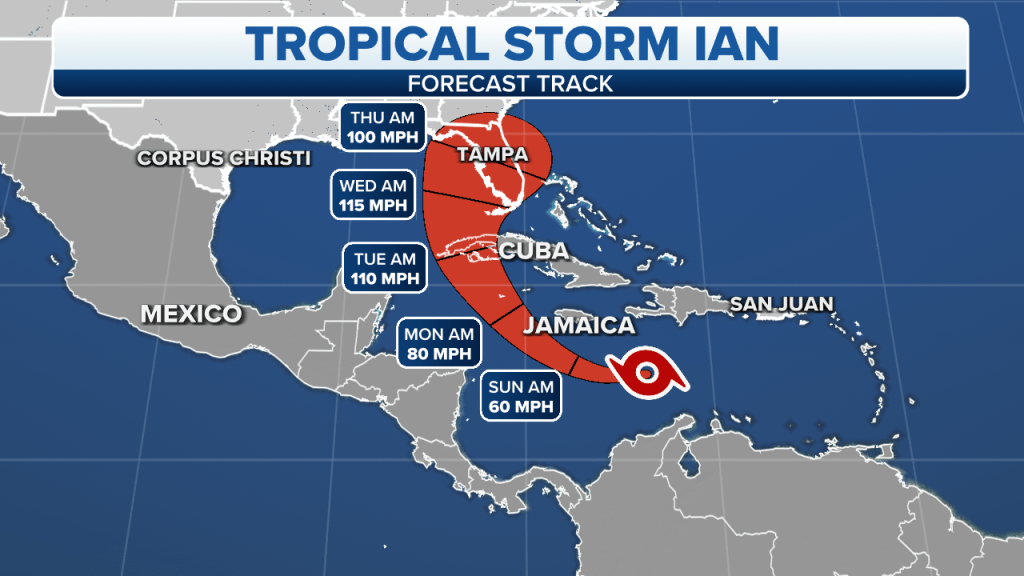
La Tormenta Tropical Ian es una amenaza definitiva para el Estado de Florida, Estados Unidos. Ian se formó el Viernes 23/09 en el Mar Caribe y gran parte de la península de Florida ya está incluida en el cono de incertidumbre. La tormenta tropical Ian se formó el Viernes 23/09 en el Mar Caribe, y gran parte de la península de Florida ya está incluida en el cono de incertidumbre por lo que podría convertirse en un gran huracán en los próximos días. Se ha emitido una Alerta de Huracán para las Islas Caimán, mientras que una Alerta de Tormenta Tropical está vigente para Jamaica. No hay alertas activas para la costa de los Estados Unidos
La tormenta tropical se une a otros tres sistemas que actualmente deambulan por la cuenca del Atlántico, incluido el ciclón pos-tropical Fiona, que está afectando a Canadá, la tormenta tropical Gastón cerca de las Azores y la tormenta tropical Hermine sobre el lejano atlántico oriental.
A partir del Sábado 24/09 por la mañana, la Tormenta Tropical Ian estaba en el centro del Mar Caribe y se centró a unas 315 millas al sureste de Kingston, Jamaica, y a unas 600 millas de las Islas Caimán. La tormenta tropical tenía vientos máximos sostenidos de aproximadamente 45 mph y se movía hacia el oeste a 14 mph. Los Cazadores de Huracanes tienen varias misiones programadas para la tormenta tropical Ian para recopilar datos que se utilizarán para ayudar a los meteorólogos a refinar sus pronósticos. Se ha emitido una Alerta de Huracán para las Islas Caimán y una Alerta de Tormenta Tropical estaba vigente para Jamaica.
Lanzamiento Artemis I
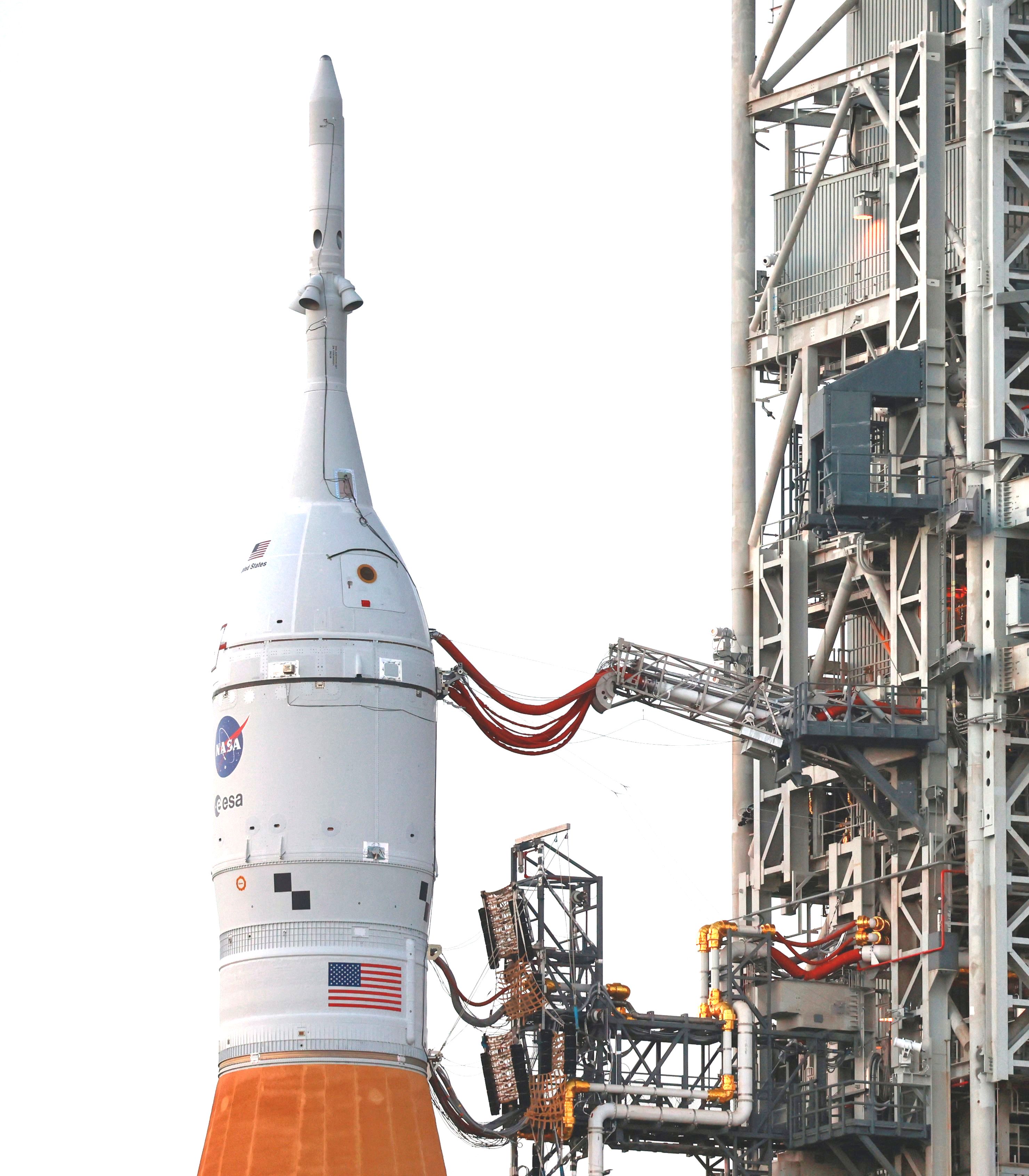
La NASA está avanzando hacia otro intento de lanzar el cohete lunar Artemis 1 en su vuelo inaugural retrasado por fugas el Martes 20/09, mientras monitorea de cerca la trayectoria de la Tormenta Tropical Ian esperado que amenaza en convertirse en huracán Categoría 3 trayendo fuertes vientos y fuertes lluvias a la costa de Florida, afectando el área espacial del Centro de lanzamiento Cabo Cañaveral J.F. Kennedy. Mientras tanto, el Rango Oriental de la Fuerza Espacial, que supervisa todos los lanzamientos militares y civiles desde Florida, concedió una solicitud de la NASA para renunciar a una inspección lenta de las baterías de autodestrucción del cohete que habría requerido un retroceso al Edificio de Ensamblaje de Vehículos de la agencia. Con la exención en la mano, y con los ingenieros diciendo que una prueba de abastecimiento de combustible el Miércoles 21/09 mostró que las fugas en el sistema de línea de alimentación de hidrógeno del cohete son manejables; ahora el clima es la principal limitación para que la misión Artemis 1, largamente retrasada, despegue. El objetivo del vuelo de prueba es enviar una cápsula de tripulación Orion no pilotada en un largo vuelo alrededor de la luna para ayudar a allanar el camino para el primer lanzamiento pilotado en 2024 y una misión de alunizaje en el marco de tiempo 2025-2026.
Pronóstico Ian
Solo se espera que el ciclón Ian se fortalezca lentamente en las próximas 24 horas y una intensificación más significativa podría comenzar el Lunes 26/09. El sistema se convertirá en un huracán en el noroeste del Mar Caribe el Lunes 26/09 a medida que se acerca a las Islas Caimán. Para el inicio de la semana laboral, se espera que el futuro huracán se ubique en algún lugar entre el este del Golfo de México y las cercanías generales de la Península de Florida, posiblemente con vientos superiores a 115 mph. Esto haría que el Huracán Ian fuera de Categoría 3 (CAT 3) o más fuerte en la escala de vientos huracanados Saffir-Simpson.
Hurricane Ian projection
Tropical Storm Ian threatens Florida as a hurricane next week Third Artemis I launch cancellation predicted
Tropical Storm Ian is a definite threat to the State of Florida, United States. Ian formed on Friday 09/23 in the Caribbean Sea and much of the Florida peninsula is already included in the cone of uncertainty. Tropical storm Ian formed on Friday 09/23 in the Caribbean Sea, and much of the Florida peninsula is already included in the cone of uncertainty, so it could become a major hurricane in the coming days. A Hurricane Watch has been issued for the Cayman Islands, while a Tropical Storm Watch is in effect for Jamaica. There are no active alerts for the United States coast
The tropical storm joins three other systems currently roaming the Atlantic basin, including Post-Tropical Cyclone Fiona, which is affecting Canada, Tropical Storm Gaston near the Azores, and Tropical Storm Hermine over the far eastern Atlantic.
As of Saturday morning 09/24, Tropical Storm Ian was in the central Caribbean Sea, centered about 315 miles southeast of Kingston, Jamaica, and about 600 miles from the Cayman Islands. The tropical storm had maximum sustained winds of approximately 45 mph and was moving west at 14 mph. The Hurricane Hunters have several missions scheduled for Tropical Storm Ian to collect data that will be used to help forecasters refine their forecasts. A Hurricane Watch has been issued for the Cayman Islands and a Tropical Storm Watch was in effect for Jamaica.
Launch Artemis I
NASA is moving toward another attempt to launch the Artemis 1 lunar rocket on its maiden flight delayed by leaks on Tuesday 09/20, while closely monitoring the path of the expected Tropical Storm Ian, which threatens to become a Category 3 hurricane bringing strong winds. and heavy rains to the Florida coast, affecting the Cape Canaveral J.F. Kennedy. Meanwhile, the Space Force’s Eastern Range, which oversees all military and civilian launches from Florida, granted a NASA request to waive a time-consuming inspection of the rocket’s self-destruct batteries that would have required a pushback to the Assembly Building. Agency Vehicles. With the waiver in hand, and with engineers saying that a fueling test on Wednesday 09/21 showed leaks in the rocket’s hydrogen feed line system to be manageable; now weather is the main constraint on getting the long-delayed Artemis 1 mission off the ground. The goal of the test flight is to send an unpiloted Orion crew capsule on a long flight around the moon to help pave the way for the first piloted launch in 2024 and a landing mission in the 2025-2026 time frame.
Prediction Ian
Cyclone Ian is only expected to slowly strengthen over the next 24 hours and more significant intensification could begin on Monday 9/26. The system will become a hurricane in the northwestern Caribbean Sea on Monday 09/26 as it approaches the Cayman Islands. For the start of the work week, the future hurricane is expected to be located somewhere between the eastern Gulf of Mexico and the general vicinity of the Florida Peninsula, possibly with winds in excess of 115 mph. This would make Hurricane Ian a Category 3 (CAT 3) or stronger on the Saffir-Simpson Hurricane Wind Scale.
ALERTA TORMENTA TROPICAL: Una alerta de tormenta tropical significa que las condiciones de tormenta tropical son posibles dentro del área de vigilancia, generalmente dentro de las 48 horas. ALERTA HURACÁN: Una alerta de huracán significa que las condiciones de huracán son posibles dentro del área alertada. Por lo general, un reloj se emite 48 horas antes de la primera aparición anticipada de vientos peligrosos.
TROPICAL STORM WATCH: A tropical storm watch means that tropical storm conditions are possible within the watch area, usually within 48 hours. HURRICANE WATCH: A hurricane watch means that hurricane conditions are possible within the watch area. A watch is generally issued 48 hours before the first anticipated occurrence of dangerous winds.
PUBLISHER: Airgways.com DBk: Noaa.gov / Airgways.com AW-POST: 202209240935AR OWNERSHIP: Airgways Inc. A\W A I R G W A Y S ®