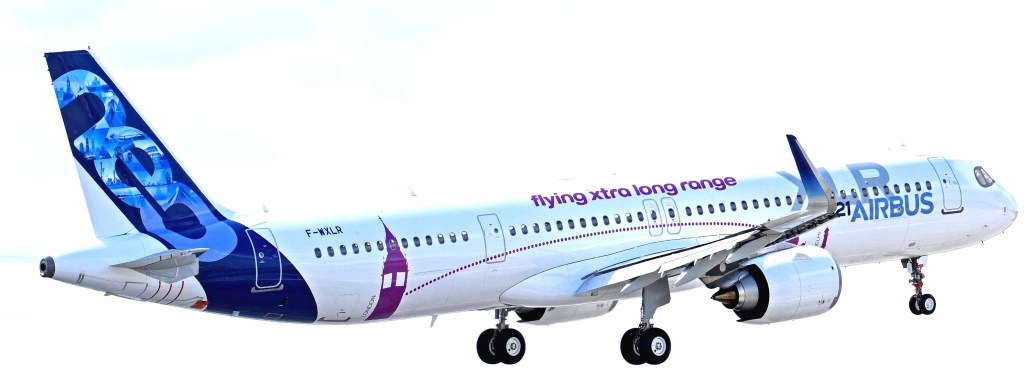
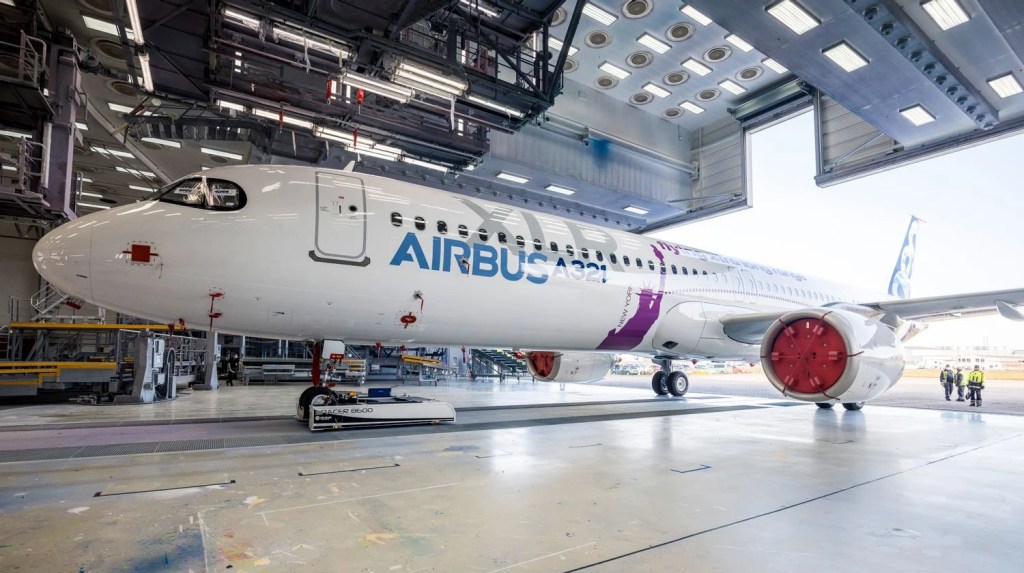
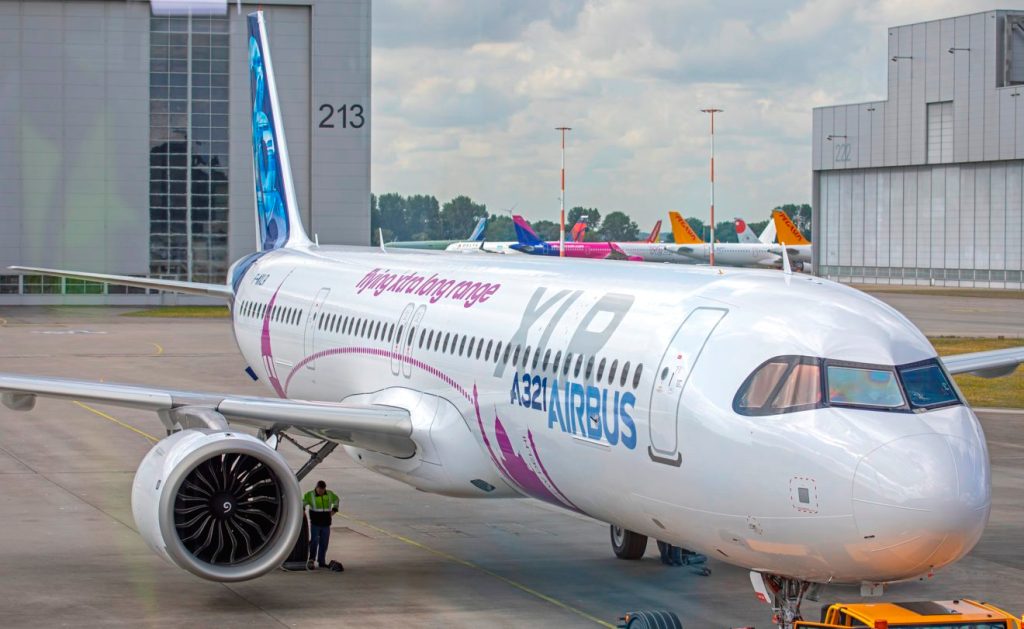
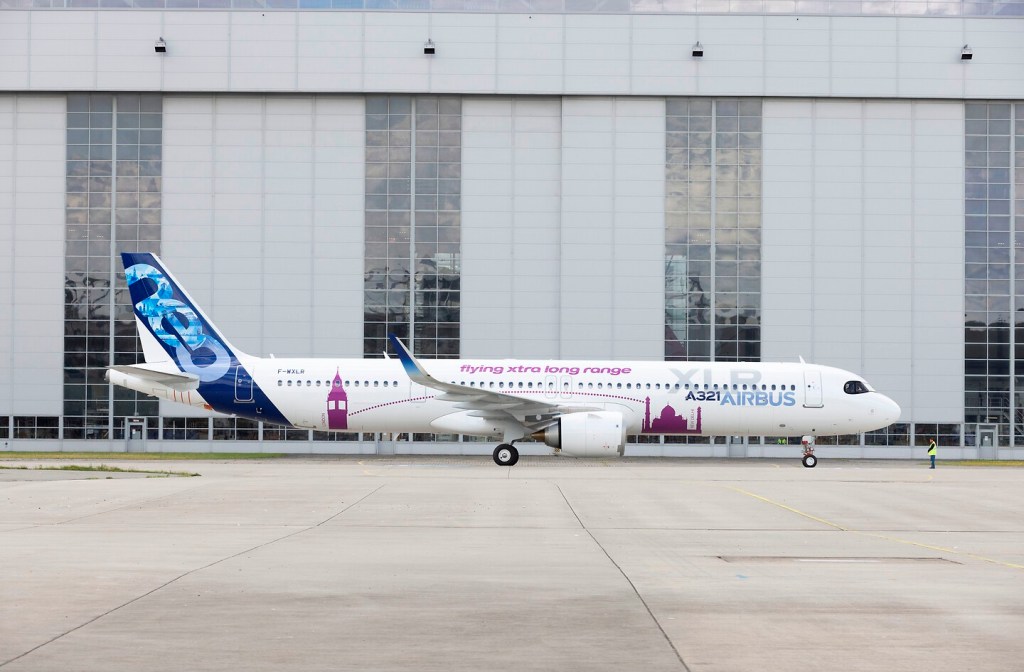
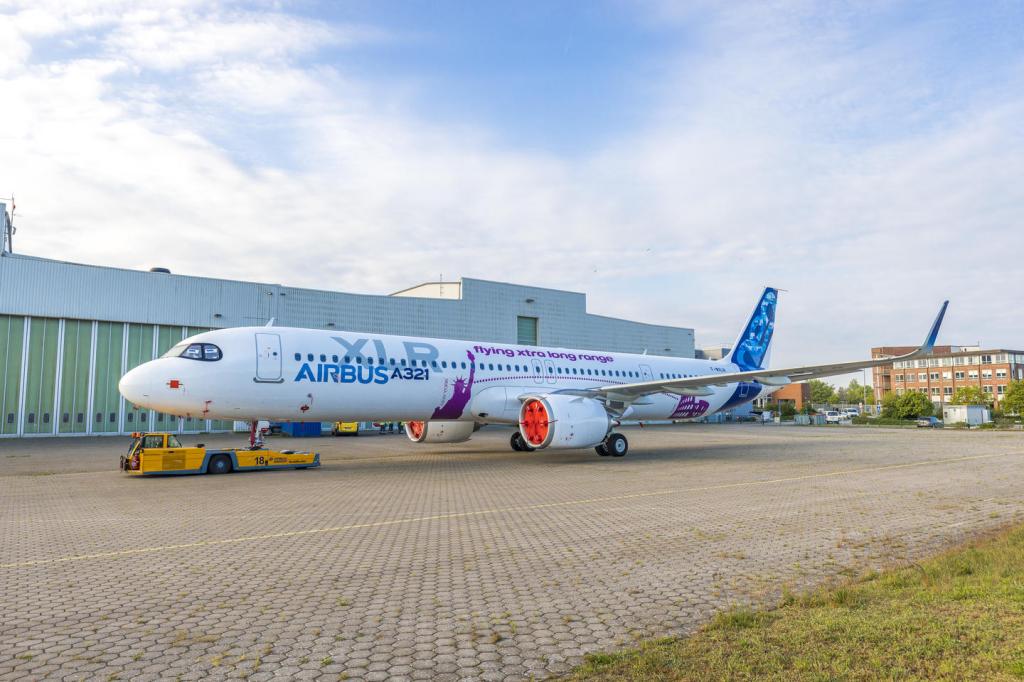
El primer Airbus A321XLR (Xtra Long Range) ha realizado el con éxito su primer vuelo el Miércoles 15 de Junio de 2022 introduciendo un hito en la línea del consorcio europeo. La aeronave, registro F-WXLR, MSN 11000, despegó del Aeropuerto de Hamburgo-Finkenwerder a las 11:05 h CEST para realizar un vuelo de prueba que duró aproximadamente cuatro horas y 35 minutos. La tripulación de la aeronave estaba formada por los Pilotos de pruebas experimentales Thierry Diez y Gabriel Diaz de Villegas Giron, así como por los Ingenieros de pruebas Frank Hohmeister, Philippe Pupin y Mehdi Zeddoun. Durante el vuelo, la tripulación probó los controles de vuelo, los motores y los sistemas principales de la aeronave, incluidas las protecciones de la envolvente de vuelo, tanto a alta como a baja velocidad.
Philippe Mhun, Vicepresidente Ejecutivo de Programas y Servicios de Airbus, declaró: «Este es un hito importante para la familia A320 y sus clientes en todo el mundo. Con la entrada en servicio del A321XLR, las aerolíneas podrán ofrecer comodidad de larga distancia en un avión de un solo pasillo, gracias a su exclusiva cabina Airspace. El A321XLR abrirá nuevas rutas con una economía y un rendimiento medioambiental imbatibles».
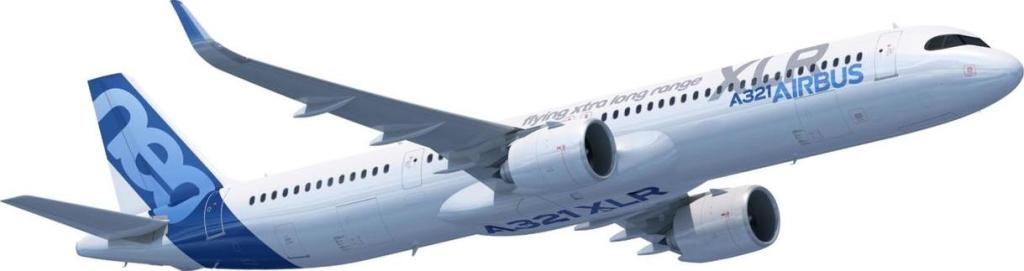
El A321XLR es el siguiente paso evolutivo en la Familia de aviones de pasillo único A320NEO, que cumple con los requisitos del mercado para aumentar el alcance y la carga útil, creando más valor para las aerolíneas al permitir servicios económicamente viables en rutas más largas que cualquier modelo de avión comparable. El A321XLR ofrecerá una autonomía sin precedentes de aviones de pasillo único de hasta 4.700 nm (8.700 km), con un consumo de combustible por asiento un 30% menor en comparación con los aviones de la generación anterior, así como una reducción de las emisiones de NOx y del ruido. A finales de Mayo de 2022, la Familia A320NEO ha acumulado más de 8.000 pedidos de más de 130 clientes en todo el mundo. Los pedidos del A321XLR ascendieron a más de quinientos de más de veinte clientes. La entrada en servicio está prevista para principios de 2024.
Próximas pruebas
Actualmente, existen cuatro aviones de campaña Airbus A321XLR, y los otros tres que esperan sus viajes son MSN11058, MSN11080 y MSN6839. Aún no se ha especificado una fecha para el segundo vuelo de prueba, pero MSN11058 es el único avión de campaña equipado con motores Pratt & Whitney GTF. La aeronave ha completado la fase final de montaje y ahora se encuentra dentro del Grupo de Trabajo, donde se instala y prueba toda la instrumentación de prueba de vuelo. En cuanto a MSN11080, el avión también ha completado la fase de ensamblaje final, se está completando su cabina y se está instalando instrumentación de prueba de vuelo limitada. El cuarto avión, MSN6839, fue el prototipo de avión dedicado a las primeras pruebas de vuelo, por lo que es poco probable que esta ave vuele en más viajes de prueba pronto.
Perspectivas A321XLR
Desde que el Airbus A321XLR se presentó por primera vez en el 53º Salón Aeronáutico de París en 2019, numerosas aerolíneas de todo el mundo se han focalizado en una aeronave narrowbodies de largo alcance, confortable y confiable de la popular familia de aviones Airbus A320NEO. La lista de clientes aún en crecimiento incluye aerolíneas internacionales como Qantas Airways, United Airlines y, más recientemente, Air Canada.
El gigante europeo de la fabricación de aviones calificó al Airbus A321XLR como un «cambio de juego» en la historia de los aviones de fuselaje estrecho. El tamaño de un avión pronto no importará realmente si es de fuselaje estrecho o ancho, pues los narrowbodies ahora pueden recorrer la distancia extra larga. Un cambio en la manera de volar se introducirá en el avión de fuselaje estrecho más nuevo y más grande, el Airbus A321XLR que completó con éxito su primer vuelo de prueba, estará listo para salir a conquistar los cielos del mundo.
Ξ A321XLR makes first flight Ξ
Airbus A321XLR takes off on its maiden flight
The first Airbus A321XLR (Xtra Long Range) has successfully made its first flight on Wednesday, June 15, 2022, entering a milestone in the line of the European consortium. The aircraft, registration F-WXLR, MSN 11000, took off from Hamburg-Finkenwerder Airport at 11:05 CEST for a test flight that lasted approximately four hours and 35 minutes. The aircraft’s crew consisted of Experimental Test Pilots Thierry Diez and Gabriel Diaz de Villegas Giron, as well as Test Engineers Frank Hohmeister, Philippe Pupin and Mehdi Zeddoun. During the flight, the crew tested the aircraft’s flight controls, engines, and major systems, including flight envelope protections, at both high and low speeds.
Philippe Mhun, Executive Vice President Programs and Services at Airbus, said: «This is an important milestone for the A320 Family and its customers around the world. With the entry into service of the A321XLR, airlines will be able to offer long-haul comfort in a single-aisle aircraft, thanks to its unique Airspace cabin, the A321XLR will open new routes with unbeatable economy and environmental performance».
The A321XLR is the next evolutionary step in the A320NEO Family of single-aisle aircraft, meeting market requirements for increased range and payload, creating more value for airlines by enabling economically viable services on longer routes than any comparable aircraft model. The A321XLR will offer an unprecedented single-aisle range of up to 4,700nm (8,700km), with 30% lower fuel consumption per seat compared to previous generation aircraft, as well as reduced CO2 emissions. NOx and noise. As of the end of May 2022, the A320NEO Family has accumulated more than 8,000 orders from more than 130 customers worldwide. Orders for the A321XLR totaled more than five hundred from more than twenty customers. Entry into service is planned for early 2024.
Upcoming tests
There are currently four Airbus A321XLR campaign aircraft, with the other three awaiting your travels are MSN11058, MSN11080 and MSN6839. A date for the second test flight has not yet been specified, but MSN11058 is the only campaign aircraft equipped with Pratt & Whitney GTF engines. The aircraft has completed the final phase of assembly and is now within the Task Force, where all flight test instrumentation is installed and tested. As for MSN11080, the aircraft has also completed the final assembly phase, its cockpit is being completed and limited flight test instrumentation is being installed. The fourth aircraft, MSN6839, was the prototype aircraft dedicated to the first flight tests, so it is unlikely that this bird will fly any more test flights any time soon.
Outlook A321XLR
Since the Airbus A321XLR was first presented at the 53rd Paris Air Show in 2019, numerous airlines around the world have focused on a long-range, comfortable and reliable narrowbodies from the popular Airbus A320NEO family of aircraft. The still-growing list of customers includes international airlines such as Qantas Airways, United Airlines and, more recently, Air Canada.
The European aircraft manufacturing giant called the Airbus A321XLR a «game changer» in narrow-body aircraft history. The size of a plane will soon not really matter whether it’s narrow- or wide-bodied, as narrowbodies can now fly the extra-long distance. A change in the way of flying will be introduced as the newest and largest narrow-body aircraft, the Airbus A321XLR which successfully completed its first test flight, will be ready to take to the skies of the world.
PUBLISHER: Airgways.com DBk: Airbus.com / Fabian Bimmer / Airgways.com AW-POST: 202206151555AR OWNERSHIP: Airgways Inc. A\W A I R G W A Y S ®
AW | 2022 06 15 14:41 | AVIATION ORGANISMS / INDUSTRY
Boeing prepara reiniciar entregas 787 próximas semanas
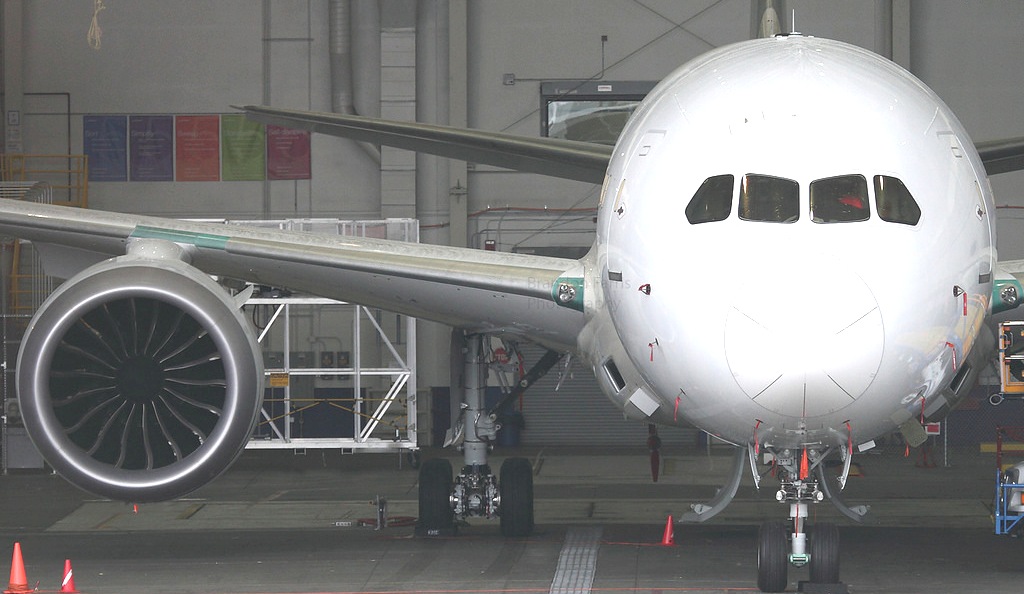
The Boeing Company podría estar lista para reiniciar las entregas de la línea Boeing 787 Dreamliner en las próximas semanas. La recertificación de la FAA de la aeronave es inminente, citando a un funcionario de la agencia familiarizado con el asunto. El documento indicó que el fabricante del avión solo debe presentar algunos elementos adicionales de prueba y análisis antes de la reincorporación final. «Una reanudación del 787 despejaría un exceso significativo en las acciones, al desbloquear un flujo de efectivo sustancial actualmente inmovilizado en el inventario de 787 unidades, proporcionando visibilidad de tasas de producción futuras más altas y disminuyendo las preocupaciones de los inversores en torno a la estructura de capital», dijo el analista de Goldman Sachs Noah Poponak.
Estimó que Boeing tiene 115 Boeing 787 en inventario en la actualidad por un valor de alrededor de US$ 6 billones de Dólares. Se proyecta que este inventario se entregue en 2024. Las acciones de la corporación con sede en Arlington subieron más del 3% poco menos de una hora antes del cierre del mercado del Martes 14/06.
Boeing prepares to restart 787 deliveries
Boeing prepares to restart 787 deliveries in the coming weeks
The Boeing Company could be ready to restart deliveries of the Boeing 787 Dreamliner line in the coming weeks. FAA re-certification of the aircraft is imminent, citing an agency official familiar with the matter. The document stated that the aircraft manufacturer is only required to submit a few additional items of evidence and analysis before final reinstatement. «A 787 resumption would clear a significant glut in the stock, unlocking substantial cash flow currently tied up in the 787-unit inventory, providing visibility into higher future production rates and lessening investor concerns around the structure of capital», said Goldman Sachs analyst Noah Poponak.
He estimated that Boeing has 115 Boeing 787s in inventory today worth around US$ 6 billion. This inventory is projected to be delivered in 2024. Shares of the Arlington-based corporation rose more than 3% just under an hour before market close on Tuesday 06/14.
PUBLISHER: Airgways.com DBk: Faa.gov / Boeing.com / Brandon Farris / Airgways.com AW-POST: 202206151441AR OWNERSHIP: Airgways Inc. A\W A I R G W A Y S ®
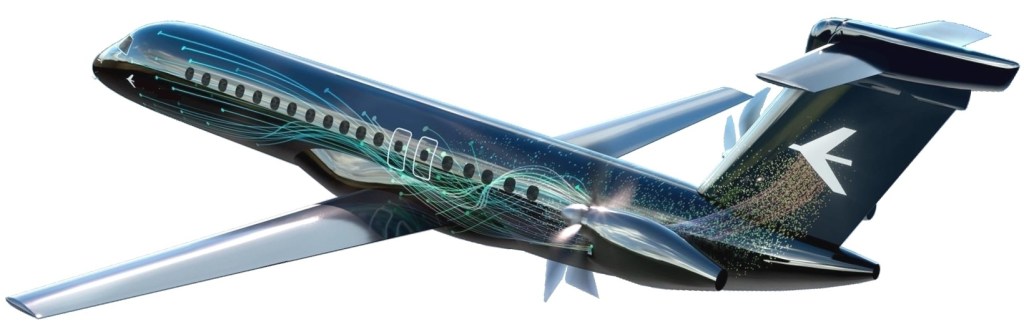
El fabricante brasileño de aviones Embraer está comprometido con el desarrollo de un nuevo avión turbohélice denominado inicialmente Programa E3. A principios de Junio 2022, en una presentación a la prensa, Embraer anunció que espera completar una prueba completa de su nuevo avión turbohélice este verano meridional.
El constructor brasileño celebró un evento para medios internacionales donde numerosos ejecutivos de Embraer han presentado la discusión acerca del nuevo turbohélice que está desarrollando. Arjan Meijer, CEO de Embraer Commercial Aviation, anunció que Embraer espera realizar una prueba completa de aeronaves hacia el 3Q2022. Si todo va según lo planeado, Embraer realizará una prueba completa de la aeronave entre Junio y Agosto 2022.
Las nuevas capacidades un nuevo avión turboprop son muy prometedores para la industria global de aerolíneas de tercer nivel. Los resultados que esperarán son competitivos para el mercado. Embraer compartió la economía del nuevo turboprop E3 en comparación con el ATR 72-600 que contempla un 15% menos de costo operativo por pax, 25% más asientos, 20% más rápido, 10% más de espacio personal, entre otros detalles competitivos del segmento regional. El nuevo turbohélice podría tener una autonomía de algo más de 800 millas náuticas, casi 1.500 kilómetros. Aunque este rango es menor que el ATR 72-600, Embraer cree que su avión será superior al ATR en muchos otros aspectos. El constructor planea desarrollar dos variantes del nuevo turbohélice denominados provisoriamente TP70 y el TP90.
En Julio de 2020, durante una presentación virtual de Farnborough Airshow Connect, Embraer reveló detalles adicionales de su avión turbohélice E3. En Octubre 2020, el fabricante brasileño de aviones compartió una imagen en las redes sociales de cómo podría verse el avión. En Junio 2021, Arjan Meijer dijo que la compañía esperaba lanzar el proyecto de turbohélice en 2022. Enfatizó el interés de Embraer en el segmento de mercado para aviones de menor capacidad, de corta distancia y más respetuosos con el medio ambiente. En Marzo 2022, Embraer completó una prueba de túnel de viento para determinar las características aerodinámicas de la hélice. En Abril 2022 realizó una llamada con inversionistas, el CEO de Embraer, Francisco Gomes Neto, dijo: «El proyecto de turbohélice se está moviendo muy bien. Ahora estamos en la fase de definir un proveedor para este avión. Ya estamos haciendo pruebas con los conceptos, por lo que se está moviendo muy bien. Además, esperamos estar listos para tomar una decisión final sobre el caso de negocio para finales de año, principios de 2023».
Con los planes para una prueba completa de aviones este 3Q2022, Embraer espera que su nuevo modelo de turbohélice entre en servicio hacia el 2027. Tras más de veinte años desde la última vez que Embraer produjo un avión turbohélice el EMB-120, el fabricante brasileño de aviones buscará alentar un mercado muy castigado y relegado de la industria de la aviación comercial, el segmento de los aviones turbohélices.
Embraer continues E3 development
Full testing turboprop by 3Q2022
Brazilian aircraft manufacturer Embraer is committed to the development of a new turboprop aircraft initially called the E3 Program. In early June 2022, at a press presentation, Embraer announced that it expects to complete a full test of its new turboprop aircraft this southern summer.
The Brazilian manufacturer held an event for international media where numerous Embraer executives have presented the discussion about the new turboprop that it is developing. Arjan Meijer, CEO of Embraer Commercial Aviation, announced that Embraer expects to conduct a full aircraft test by 3Q2022. If all goes according to plan, Embraer will carry out a full test of the aircraft between June and August 2022.
The new capabilities of a new turboprop aircraft hold great promise for the global third-tier airline industry. The results they will expect are competitive for the market. Embraer shared the economy of the new E3 turboprop compared to the ATR 72-600 that contemplates a 15% lower operating cost per pax, 25% more seats, 20% faster, 10% more personal space, among other competitive details of the regional segment. The new turboprop could have a range of just over 800 nautical miles, almost 1,500 kilometers. Although this range is less than the ATR 72-600, Embraer believes its aircraft will be superior to the ATR in many other ways. The manufacturer plans to develop two variants of the new turboprop provisionally named TP70 and TP90.
In July 2020, during a virtual Farnborough Airshow Connect presentation, Embraer revealed additional details of its E3 turboprop aircraft. In October 2020, the Brazilian aircraft manufacturer shared an image on social networks of what the plane could look like. In June 2021, Arjan Meijer said that the company expected to launch the turboprop project in 2022. He emphasized Embraer’s interest in the market segment for smaller-capacity, short-haul and more environmentally friendly aircraft. In March 2022, Embraer completed a wind tunnel test to determine the aerodynamic characteristics of the propeller. In April 2022 he held a call with investors, Embraer CEO Francisco Gomes Neto said: «The turboprop project is moving very well. We are now in the phase of defining a supplier for this aircraft. We are already testing with the concepts, so it’s moving along nicely. Also, we hope to be ready to make a final decision on the business case by the end of the year, early 2023».
With plans for a full aircraft test this 3Q2022, Embraer expects its new turboprop model to enter service by 2027. More than twenty years since Embraer last produced a turboprop aircraft, the EMB-120, the Brazilian manufacturer of aircraft will seek to encourage a highly punished and relegated market in the commercial aviation industry, the segment of turboprop aircraft.
Embraer continua o desenvolvimento da E3
Testes completos de turboélices até o 3T2022
A fabricante brasileira de aeronaves Embraer está comprometida com o desenvolvimento de uma nova aeronave turboélice inicialmente chamada de Programa E3. No início de Junho de 2022, em uma apresentação à imprensa, a Embraer anunciou que espera concluir um teste completo de sua nova aeronave turboélice neste verão do sul.
A fabricante brasileira realizou um evento para a mídia internacional onde diversos executivos da Embraer apresentaram a discussão sobre o novo turboélice que está desenvolvendo. Arjan Meijer, CEO da Embraer Aviação Comercial, anunciou que a Embraer espera realizar um teste completo da aeronave até o 3T2022. Se tudo correr conforme o planejado, a Embraer realizará um teste completo da aeronave entre Junho e Agosto de 2022.
As novas capacidades de uma nova aeronave turboélice são uma grande promessa para a indústria global de companhias aéreas de terceiro nível. Os resultados que eles esperam são competitivos para o mercado. A Embraer dividiu a economia do novo turboélice E3 em relação ao ATR 72-600 que contempla custo operacional por pessoa 15% menor, 25% mais assentos, 20% mais rápido, 10% mais espaço pessoal, entre outros detalhes competitivos do segmento regional . O novo turboélice poderia ter um alcance de pouco mais de 800 milhas náuticas, quase 1.500 quilômetros. Embora esse alcance seja inferior ao do ATR 72-600, a Embraer acredita que sua aeronave será superior ao ATR em muitos outros aspectos. O fabricante planeja desenvolver duas variantes do novo turboélice denominados provisoriamente TP70 e TP90.
Em Julho de 2020, durante uma apresentação virtual do Farnborough Airshow Connect, a Embraer revelou detalhes adicionais de sua aeronave turboélice E3. Em Outubro de 2020, a fabricante brasileira de aeronaves compartilhou nas redes sociais uma imagem de como poderia ser o avião. Em Junho de 2021, Arjan Meijer disse que a empresa espera lançar o projeto do turboélice em 2022. Ele enfatizou o interesse da Embraer no segmento de mercado para aeronaves de menor capacidade, curta distância e mais ecológicas. Em Março de 2022, a Embraer concluiu um teste de túnel de vento para determinar as características aerodinâmicas da hélice. Em Abril de 2022, ele realizou uma ligação com investidores, o CEO da Embraer, Francisco Gomes Neto, disse: «O projeto do turboélice está indo muito bem. Estamos agora na fase de definir um fornecedor para esta aeronave. Já estamos testando com os conceitos, então é Além disso, esperamos estar prontos para tomar uma decisão final sobre o caso de negócios até o final do ano, início de 2023».
Com planos para um teste completo de aeronaves neste 3T2022, a Embraer espera que seu novo modelo turboélice entre em serviço até 2027. Mais de vinte anos desde que a Embraer produziu pela última vez uma aeronave turboélice, o EMB-120, a fabricante brasileira de aeronaves buscará incentivar um mercado punido e relegado na indústria da aviação comercial, o segmento de aeronaves turboélice.
PUBLISHER: Airgways.com DBk: Embraer.com / Airgways.com AW-POST: 202206141840AR OWNERSHIP: Airgways Inc. A\W A I R G W A Y S ®
Federación Rusia incrementa capacidades aviación comercial
La industria aeronáutica civil de la Federación Rusia continúa incrementando sus capacidades como resultados del bloqueo occidental. Aunque la situación es difícil de predecir, Rusia buscará afianzarse con su propia aviación comercial. Los aeropuertos del sur cercanos a Ucrania continuarán cerrados debido a una operaciones especiales bélicas, mientras que los demás aeropuertos continuarán sus operaciones con normalidad. La aviación comercial es muy importante para la Federación Rusia debido a las extensiones territoriales, aún con un sistema de ferrocarriles en su estado actual no podrán reemplazar a las compañías aéreas.
La situación con los aviones estadounidenses y europeos comprados/arrendados en Rusia es cada vez más significativa debido a que estas unidades no podrán sobrevivir sin un mantenimiento periódico
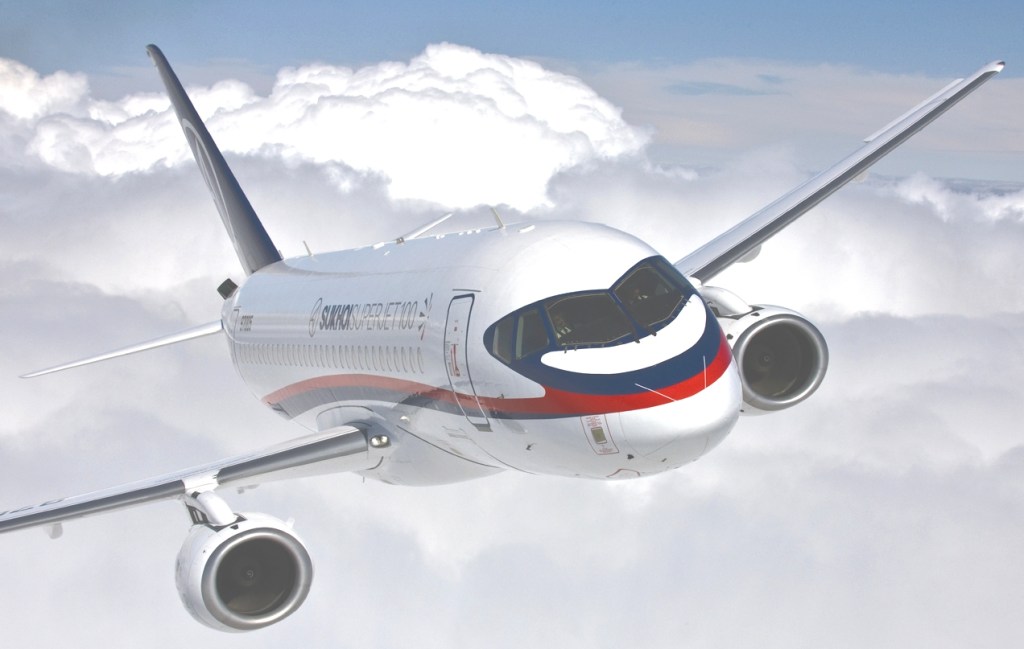
El Viceprimer Ministro Yuri Borisov, ha expresado en Irkutsk que «todo va según lo planeado». La certificación de los aviones Irkut MC-21 y Sukhoi Superjet New SSJ-100 está en pleno apogeo, y se espera que se complete a fines de 2023. Además, Yuri Borisov anunció la implementación de un programa para reemplazar los componentes occidentales importados en los aviones. Sin revelar, los detalles del reemplazo de las partes importadas. El Ministro ruso ha expresado optimismo para las aerolíneas rusas para hacer uso de su industria nacional sin tener una dependencia de componentes extranjeros.
The civil aviation industry of the Russian Federation continues to increase its capabilities as a result of the Western blockade. Although the situation is difficult to predict, Russia will seek to establish itself with its own commercial aviation. The southern airports near Ukraine will continue to be closed due to special war operations, while the other airports will continue their operations as normal. Commercial aviation is very important for the Russian Federation due to the territorial extensions, even with a railway system in its current state they will not be able to replace the airlines.
The situation with US and European aircraft purchased/leased in Russia is becoming more significant because these units will not be able to survive without regular maintenance.
Deputy Prime Minister Yuri Borisov, has expressed in Irkutsk that «everything is going according to plan». Certification of the Irkut MC-21 and Sukhoi Superjet New SSJ-100 aircraft is in full swing, expected to be completed by the end of 2023. In addition, Yuri Borisov announced the implementation of a program to replace imported Western components in the planes. Undisclosed, the details of the replacement of imported parts. The Russian Minister has expressed optimism for Russian airlines to make use of their domestic industry without having a dependency on foreign components.
Рост российской промышленности
Россия наращивает возможности коммерческой авиации
Гражданская авиационная промышленность Российской Федерации продолжает наращивать свои возможности в результате западной блокады. Хотя ситуацию трудно предсказать, Россия будет стремиться создать собственную коммерческую авиацию. Южные аэропорты вблизи Украины будут по-прежнему закрыты из-за проведения специальных военных операций, а остальные аэропорты продолжат работу в обычном режиме. Коммерческая авиация очень важна для Российской Федерации из-за территориальных расширений, даже с железнодорожной системой в ее нынешнем состоянии они не смогут заменить авиакомпании.
Ситуация с американскими и европейскими самолетами, купленными/арендованными в России, становится все более значимой, поскольку эти единицы не смогут выжить без регулярного обслуживания.
Вице-премьер Юрий Борисов заявил в Иркутске, что «все идет по плану». Полным ходом идет сертификация самолетов Иркут МС-21 и Sukhoi Superjet New SSJ-100, завершение которой ожидается к концу 2023 года. Кроме того, Юрий Борисов сообщил о реализации программы замены импортных западных комплектующих в самолетах. Не разглашаются подробности замены импортных деталей. Российский министр выразил оптимизм в отношении того, что российские авиакомпании смогут использовать отечественную промышленность, не завися от иностранных компонентов.
PUBLISHER: Airgways.com DBk: Government.ru / Irkut.com / Rostec.ru / Airgways.com AW-POST: 202206141838AR OWNERSHIP: Airgways Inc. A\W A I R G W A Y S ®
El primer avión de pasajeros de mayor tamaño del mundo Hydrogen Aircraft Powertrain and Storage System (HAPSS) con capacidad para ochenta (80) asientos propulsado por hidrógeno verde líquido comenzará a volar entre los Países Bajos y Londres en 2028. Las empresas y organizaciones holandesas están construyendo conjuntamente un sistema de hidrógeno para aeronaves que es completamente ecológico, desde el combustible hasta la propulsión. El sistema es escalable para acomodar aviones más grandes. Esto permitirá a los Países Bajos desempeñar un papel importante en la aviación impulsada por hidrógeno en todo el mundo. El objetivo es tener varios vuelos comerciales volando alrededor del mundo en 2028.
Hydrogen Aircraft Powertrain and Storage System (HAPSS) es una asociación público-privada totalmente holandesa, establecida por Unified International e InnovationQuarter que involucra a 17 compañías, incluidas Fokker, TU Delft, el Gobierno holandés y el Real Centro Aeroespacial de los Países Bajos. Un total de 383 millones de euros del Fondo Nacional de Crecimiento se asignaron al programa de Aviación en Transición, siendo el componente más grande el proyecto HAPSS. El sistema estará listo a escala de laboratorio ya en 2025.
Vuelos verdes
Una encuesta internacional encontró que más del 90 por ciento de los consumidores están dispuestos a pagar más por un vuelo, siempre que el vuelo sea completamente verde. El sistema se integrará inicialmente en un avión turbohélice existente de 40-80 plazas y luego se puede implementar en nuevos aviones de cero emisiones con aún más pasajeros. Al igual que todo lo demás, el sector de la aviación necesita hacer algo con respecto a sus emisiones. Las compañías de aviación y los países se han unido y han establecido objetivos ambiciosos.
Mercado global
«Este proyecto está contribuyendo directamente al PIB holandés», dice Michel van Ierland de Unified International. De hecho, a partir de 2028, HAPSS generará 1.200 empleos. «Estamos creando empleos estructurales en la economía verde con este programa. Además, estamos desbloqueando un mercado global de 16.000 millones de euros para los Países Bajos. Por ejemplo, este proyecto es muy interesante para Escandinavia y Nueva Zelanda, donde actualmente la atención se centra en la tecnología eléctrica de batería para distancias de corta distancia».
HAPSS 1st commercial hydrogen aircraft
World’s first hydrogen plane Made in Holland
The world’s first largest eighty (80) seat Hydrogen Aircraft Powertrain and Storage System (HAPSS) passenger aircraft powered by liquid green hydrogen will begin flying between the Netherlands and London in 2028. Dutch companies and organizations are jointly building a hydrogen system for aircraft that is completely green, from fuel to propulsion. The system is scalable to accommodate larger aircraft. This will allow the Netherlands to play an important role in hydrogen-powered aviation around the world. The goal is to have several commercial flights flying around the world by 2028.
Hydrogen Aircraft Powertrain and Storage System (HAPSS) is a wholly Dutch public-private partnership, established by Unified International and InnovationQuarter involving 17 companies, including Fokker, TU Delft, the Dutch government and the Royal Netherlands Aerospace Center. A total of €383 million from the National Growth Fund was allocated to the Aviation in Transition program, with the largest component being the HAPSS project. The system will be ready on a laboratory scale as early as 2025.
Green flights
An international survey found that more than 90 percent of consumers are willing to pay more for a flight, as long as the flight is completely green. The system will initially be integrated into an existing 40-80 seater turboprop aircraft and can later be implemented in new zero-emission aircraft with even more passengers. Just like everything else, the aviation sector needs to do something about its emissions. Aviation companies and countries have come together and set ambitious goals.
Overall market
«This project is contributing directly to the Dutch GDP», says Michel van Ierland of Unified International. In fact, as of 2028, HAPSS will generate 1,200 jobs. «We are creating structural jobs in the green economy with this program. In addition, we are unlocking a global market of 16 billion euros for the Netherlands. For example, this project is very interesting for Scandinavia and New Zealand, where the focus is currently in battery electric technology for short distances».
HAPSS 1e commerciële waterstofvliegtuig
‘s Werelds eerste waterstofvliegtuig Made in Holland
‘S Werelds eerste grootste Hydrogen Aircraft Powertrain and Storage System (HAPSS) tachtig (80) passagiersvliegtuigen aangedreven door vloeibare groene waterstof zullen in 2028 tussen Nederland en Londen gaan vliegen. Nederlandse bedrijven en organisaties bouwen samen aan een waterstofsysteem voor vliegtuigen dat helemaal groen is, van brandstof tot voortstuwing. Het systeem is schaalbaar voor grotere vliegtuigen. Hiermee kan Nederland een belangrijke rol spelen in de waterstofluchtvaart over de hele wereld. Het doel is om in 2028 meerdere commerciële vluchten over de hele wereld te laten vliegen.
Hydrogen Aircraft Powertrain and Storage System (HAPSS) is een volledig Nederlands publiek-private samenwerking, opgericht door Unified International en InnovationQuarter met 17 bedrijven, waaronder Fokker, de TU Delft, de Nederlandse overheid en het Koninklijk Nederlands Lucht- en Ruimtevaartcentrum. In totaal is € 383 miljoen uit het Nationaal Groeifonds toegewezen aan het programma Aviation in Transition, met als grootste onderdeel het HAPSS-project. Het systeem zal al in 2025 gereed zijn op laboratoriumschaal.
Groene vluchten
Uit een internationaal onderzoek blijkt dat meer dan 90 procent van de consumenten bereid is meer te betalen voor een vlucht, zolang de vlucht maar volledig groen is. Het systeem zal in eerste instantie worden geïntegreerd in een bestaand turbopropvliegtuig met 40-80 zitplaatsen en kan later worden geïmplementeerd in nieuwe emissievrije vliegtuigen met nog meer passagiers. Net als al het andere moet de luchtvaartsector iets doen aan zijn uitstoot. Luchtvaartbedrijven en landen hebben de handen ineen geslagen en ambitieuze doelen gesteld.
Algemene markt
«Dit project draagt direct bij aan het Nederlandse BBP», zegt Michel van Ierland van Unified International. Vanaf 2028 zal HAPSS zelfs 1.200 banen opleveren. “Met dit programma creëren we structurele banen in de groene economie. Daarnaast ontsluiten we een wereldmarkt van 16 miljard euro voor Nederland. Dit project is bijvoorbeeld heel interessant voor Scandinavië en Nieuw-Zeeland, waar de focus momenteel ligt in batterij-elektrische technologie voor korte afstanden».
PUBLISHER: Airgways.com DBk: Unifiedinternational.net / Innovationquarter.nl / Airgways.com AW-POST: 2022061417113AR OWNERSHIP: Airgways Inc. A\W A I R G W A Y S ®
Boeing entregó 29 aviones 737 MAX Anota pedidos de fuselaje ancho
The Boeing Company ha comunicado el Martes 14/06 que había entregado treinta y cinco unidades comerciales de los cuales 29 de sus aviones de pasillo único son Boeing 737 MAX que ganaron dinero en efectivo a los clientes en Mayo 2022, trayendo los fondos necesarios a medida que el fabricante de aviones estadounidense trabajaba a través de la cadena de suministro y los obstáculos regulatorios. Boeing también entregó entre otros a los clientes el cuarto al último de sus 747F (1), un carguero de Atlas Air, y tres cargueros 777F (3), lo que refleja una fuerte demanda de capacidad de carga.
«Tenemos que abrirnos camino a través de estas limitaciones de suministro, pero solo apretará el gatillo cuando la cadena de suministro esté lista», dijo el CEO de Boeing, David Calhoun, en una conferencia de inversores de Bernstein a principios de este mes. Dijo que la compañía planea aumentos en las tasas de producción.
Boeing ha enfrentado problemas en la cadena de suministro para la producción de sus aviones 737 MAX. Las entregas de sus 787 Dreamliners permanecen en pausa mientras la compañía y la Administración Federal de Aviación (FAA) revisan los defectos de producción antes de entregar los aviones a los clientes.
Perspectivas Boeing
La demanda de aviones es fuerte y continuará mejorando a medida que las aerolíneas busquen reemplazar flotas envejecidas, comprar modelos más eficientes y continuar viendo un crecimiento de pasajeros, dijo el lunes a Reuters el CEO de Boeing, David Calhoun. «La demanda de aviones es tan robusta como la he visto. Es más que una burbuja», dijo el CEO en la nueva sede de la compañía en Arlington, Virginia.
Sede Arlington
David Calhoun dijo que Boeing no consideró reubicar su sede en Seattle (WA), donde había estado basada hasta su traslado a Chicago en 2001; la compañía se dirige a Virginia porque «nuestro mayor cliente en el mundo está justo al otro lado del camino: el Pentágono». El CEO también señaló que la nueva ubicación principal de Boeing (BA) se encuentra en una oficina de Arlington que ha tenido desde 2014, donde tiene un espacio no utilizado significativo, y que se encuentra a solo unas cuadras del HQ2 de Amazon, que está en construcción.
Solo un puñado de altos ejecutivos, incluidos David Calhoun y el CFO, tendrán su sede en Virginia, dijo el CEO, explicando que el 70% de mi día, sin importar dónde esté, es virtual de todos modos porque dirijo una gran empresa distribuida. Cuando se le preguntó sobre cualquier movimiento en los intentos de reanudar más entregas de aviones en China, David Calhoun dijo a Reuters que «sigue siendo constructivo, algún día sucederán cosas buenas, pero no puedo decirte el día».
Boeing O&D May 2022
Boeing delivered 29 737 MAX aircraft Take widebody orders
The Boeing Company has communicated on Tuesday 06/14 that it had delivered thirty-five commercial units, of which 29 of its single-aisle aircraft are Boeing 737 MAX that earned cash to customers in May 2022, bringing the necessary funds as that the American planemaker worked through supply chain and regulatory hurdles. Boeing also delivered to customers among others the fourth to last of its 747Fs (1), an Atlas Air freighter, and three 777F freighters (3), reflecting strong demand for cargo capacity.
“We have to work our way through these supply constraints, but it will only pull the trigger when the supply chain is ready”, Boeing CEO David Calhoun said at a Bernstein investor conference earlier this month. He said the company plans increases in production rates.
Boeing has faced supply chain problems for the production of its 737 MAX planes. Deliveries of its 787 Dreamliners remain on hold while the company and the Federal Aviation Administration (FAA) review production defects before delivering the planes to customers.
Boeing Perspectives
Demand for planes is strong and will continue to improve as airlines look to replace aging fleets, buy more efficient models and continue to see passenger growth, Boeing CEO David Calhoun told Reuters on Monday. «Airplane demand is as robust as I’ve seen it. It’s more of a bubble», the CEO said at the company’s new headquarters in Arlington, Virginia.
Headquarters Arlington
David Calhoun said that Boeing did not consider relocating its headquarters to Seattle (WA), where it had been based until its move to Chicago in 2001; the company is targeting Virginia because «our biggest customer in the world is right across the way: the Pentagon». The CEO also noted that Boeing’s (BA) new primary location is in an Arlington office it has had since 2014, where it has significant unused space, and that it is just blocks from Amazon’s HQ2, which is in construction.
Only a handful of top executives, including David Calhoun and the CFO, will be based in Virginia, the CEO said, explaining that 70% of my day, no matter where I am, is virtual anyway because I run a large distributed company. Asked about any movement in attempts to resume more aircraft deliveries in China, David Calhoun told Reuters he «remains constructive, someday good things will happen, but I can’t tell you the day».
PUBLISHER: Airgways.com DBk: Boeing.com / Airgways.com AW-POST: 202206141710AR OWNERSHIP: Airgways Inc. A\W A I R G W A Y S ®
AW | 2022 06 13 23:53 | AVIATION SAFETY / GOVERNMENT / INDUSTRY
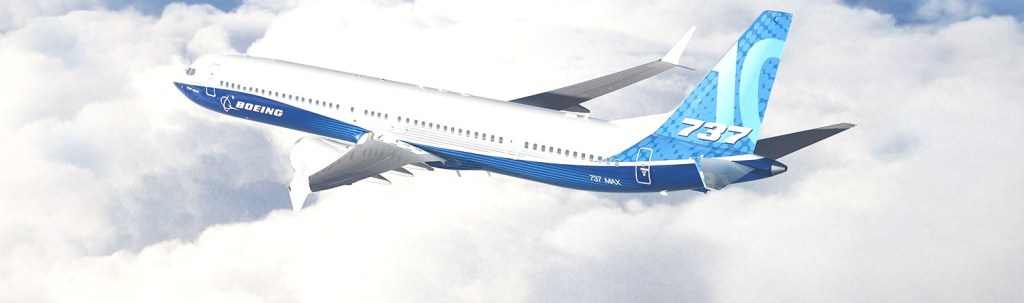
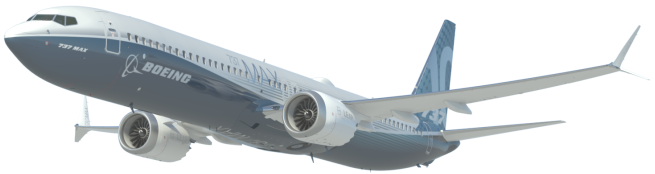
Planes certificación 737-10 MAX aumentaría los costos
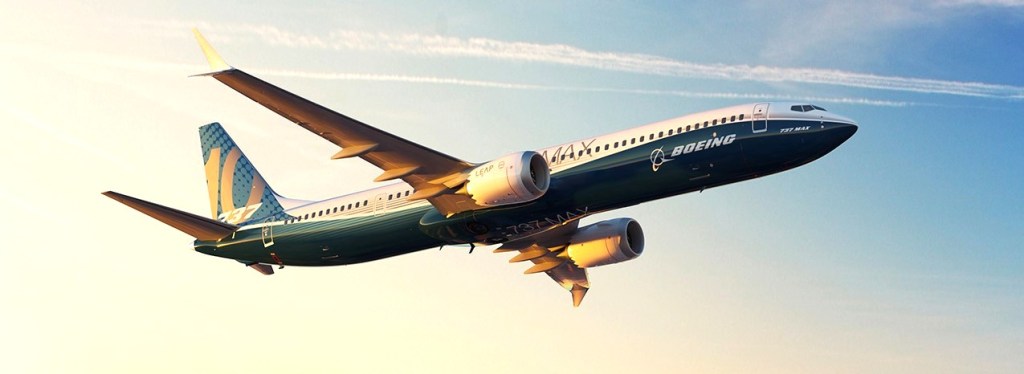
El Boeing 737-10 MAX de The Boeing Company se enfrenta a una fecha límite de fin de año para lograr o alcanzar la certificación de la última variante de la línea 737 MAX antes de que una ley de 2020 le exija rediseñar su sistema de alerta de cabina. El informe independiente de la MITRE Corp. arroja dudas considerables sobre las posibilidades y capacidades de Boeing de recibir una extensión crítica del Congreso para certificar su variante más nueva y más grande del modelo 737.
Un informe independiente encargado por la Administración Federal de Aviación (FAA) puede influir en una decisión crucial y inminente sobre el 737-10 MAX que aún no está certificado para volar. El informe de Marzo de 2022, previamente no revelado, es muy crítico con la forma en que, durante la certificación original del MAX, la agencia de seguridad eximió a los modelos MAX anteriores del último estándar para Sistemas de Advertencia de Pilotos. En un avión de pasajeros, el sistema de alerta de la tripulación proporciona a los pilotos una serie de advertencias visuales, de audio y/o táctiles de acerca de comportamientos de la aeronave.
El sistema de alerta de tripulación del MAX 10 se ha actualizado con respecto a los modelos MAX anteriores, pero aún no cumple con la regulación de seguridad actual. Es probable que Boeing necesite que se extienda esa exención para obtener la certificación MAX 10 para el servicio de pasajeros.
El informe independiente de MITRE Corp., una organización de investigación financiada con fondos federales, concluye que la exención del estándar de alerta de la tripulación contribuyó a los dos accidentes de las aeronave Boeing 737-8 MAX que mataron a 346 personas en conjunto, y también influyó en Boeing para suprimir la información sobre el nuevo software de Control de Vuelo denominado Sistema de Aumento de Características de Maniobra (MCAS) en la línea Boeing 737 MAX. «La excepción otorgada por la FAA para la alerta de pilotos en el 737 MAX fue un eslabón crítico no solo en la cadena de eventos que llevaron a los accidentes, sino también en la decisión de Boeing de limitar la divulgación de MCAS», señala el informe. La FAA le ha dicho a Boeing que es poco probable que la certificación del MAX 10 se complete este 2022. Por lo tanto, el Congreso se enfrenta a una decisión sobre si extender una fecha límite del 20 de Diciembre de 2022 en la legislación de reforma de la FAA de 2020 para que la misma exención cubra el MAX 10. Es una decisión crucial para la compañía americana.
Si el Congreso insiste en que se actualicen las alertas de la tripulación del MAX 10, entonces Boeing tendría dos opciones: abandonar el programa MAX 10, un paso drástico después de tanto trabajo de desarrollo y con varios cientos de aviones vendidos,; u la otra opción, modificar su sistema de cabina, haciéndolo diferente de los modelos MAX anteriores. Modificar la cabina requeriría la inversión de Boeing y ralentizaría la entrada en servicio del MAX 10. Significaría además, mayores costos de capacitación de pilotos para las aerolíneas, ya que los pilotos MAX 10 necesitarían capacitación por separado. Boeing podría perder algunas ventas que irían hacia el competidor europeo Airbus A321NEO/XLR.
La FAA dijo que está revisando el informe. Se negó a comentar sobre el sistema de alerta de la tripulación, que certificó como seguro en los modelos MAX anteriores. En cambio, la agencia indicó que la decisión sobre el sistema de alerta de tripulación MAX es responsabilidad del Congreso de Estados Unidos. La FAA señaló que solo el Congreso puede cambiar la fecha límite después de la cual el MAX 10 tendría que ser actualizado. «Nuestras manos están atadas por la redacción de la ley», dijo un portavoz de la FAA el viernes.
Voces desde el Senado
La Senadora Maria Cantwell, Demócrata por el Estado de Washington (WA), dijo el Viernes 10/06 que quiere que la FAA proporcione al Congreso alguna dirección sobre la decisión pendiente sobre la extensión de la exención para el MAX 10. «La FAA debe mostrar liderazgo y decirnos lo que creen que se necesita para los más altos estándares de seguridad a la luz de este informe. Espero su recomendación», dijo Maria Cantwell. El Representante Peter DeFazio, Demócrata por el Estado de Oregon (OR), presidente del Comité de Transporte e Infraestructura de la Cámara de Representantes, también pidió a la FAA que brinde su opinión sobre las implicaciones del informe. En un comunicado el Lunes 13/06, dijo que la seguridad del público exige «datos técnicos y análisis de la más alta calidad. Insto a la FAA a considerar cuidadosamente las recomendaciones del informe y emitir una respuesta detallada», dijo Peter DeFazio.
La Ley de Seguridad y Responsabilidad de Certificación de Aeronaves aprobada en 2020 requiere que la FAA encargue un estudio independiente para evaluar dos reformas propuestas en la forma en que certifica los aviones derivados, aviones como el MAX que son nuevas versiones de aviones más antiguos certificados por primera vez muchos años antes. Una propuesta aplicaría un límite de tiempo, de modo que después de un cierto número de años cualquier modelo nuevo tendría que someterse a un proceso de recertificación completamente nuevo. La segunda propuesta requeriría documentación formal y pública de cualquier excepción concedida a un sistema en un plano derivado que le permita ser certificado sin cumplir con el último estándar de seguridad. La FAA asignó la evaluación de estas propuestas a MITRE, una escisión del Instituto de Tecnología de Massachusetts que es una organización de ingeniería sin fines de lucro que realiza investigaciones para agencias gubernamentales. El informe técnico de MITRE es un documento interno que no se hizo público hasta este Lunes 13/06 publicado por el The Seattle Times en el formato online.
Aparte de lo que dice sobre la exención para el sistema de alerta de tripulación del 737 MAX, la recomendación general del informe al Congreso es por separado importante sobre cómo podría influir en el enfoque futuro de la certificación de aviones. MITRE encontró que ninguna de las reformas propuestas por el Congreso agrega lo suficiente a la seguridad para justificar el costo. No se ha encontrado evidencia de que los aviones certificados como derivados hayan demostrado ser menos seguros que aquellos con un certificado completamente nuevo. Calculó que exigir a Boeing que hiciera una certificación completamente nueva para un avión derivado agregaría alrededor de US$ 750 millones al costo. El informe de MITRE encontró que el trabajo adicional impuesto por la segunda propuesta requeriría la contratación de seis empleados adicionales de la FAA, pero «no pudo identificar ningún beneficio de seguridad». En cambio, al MITRE se le ocurrió una propuesta alternativa. Propone exigir a la FAA que identifique las características críticas de seguridad en el diseño de un avión y luego permita que Boeing negocie con la FAA cómo se trata cada una de esas características al certificar un nuevo avión. En lugar de una regla estricta, esto deja que el resultado se decida caso por caso.
Un ingeniero de seguridad de la FAA, que pidió el anonimato porque habló sin autorización, cuestionó la sabiduría de eso. Dijo que si bien las propuestas del Congreso «trazaron una línea en la arena», la confusión de la recomendación de MITRE podría dejar en última instancia las decisiones críticas de seguridad a la negociación entre los gerentes de la FAA y los gerentes de Boeing en lugar de los ingenieros de primera línea.
Boeing, sin embargo, puede dar la bienvenida a la propuesta de MITRE, ya que parece cambiar poco del enfoque actual de la certificación. Más problemático para Boeing es que el informe identifica el sistema de alerta de la tripulación como una de esas características críticas para la seguridad que deben negociarse con la FAA, y profundiza y mordazmente en la exención específica que la agencia otorgó a Boeing en el 737 MAX.
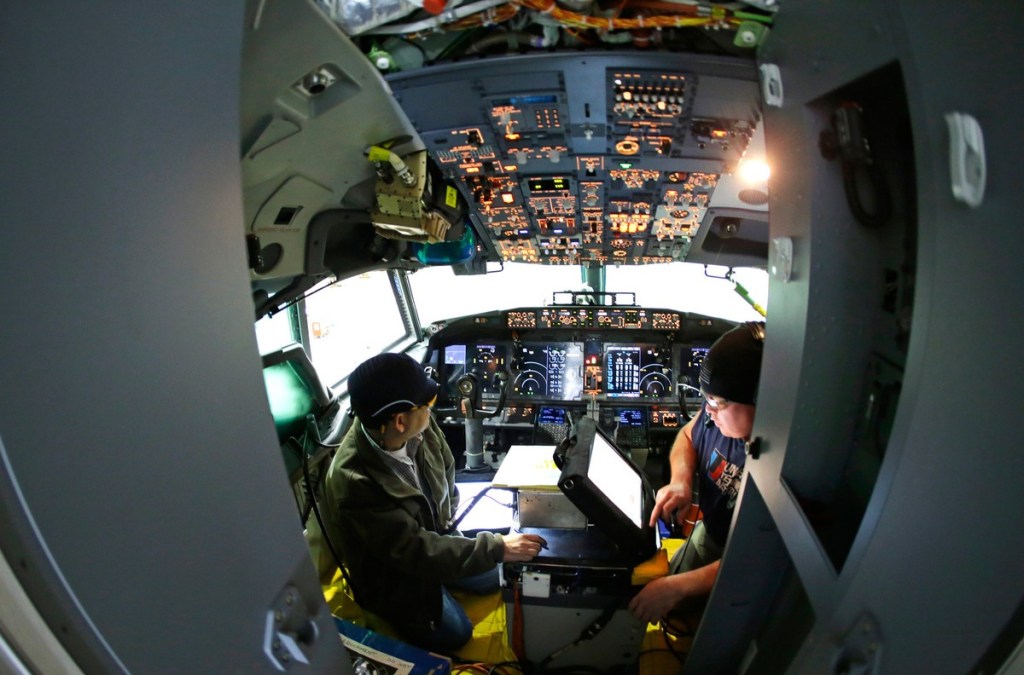
Los sistemas modernos en todos los aviones Boeing, además del 737, tienen una jerarquía codificada por colores de alertas por fallas, desde menores hasta potencialmente catastróficas, y los mensajes alfanuméricos en una pantalla central le dicen al piloto exactamente cuál es el problema. El diseño más antiguo del 737 tiene un sistema más complicado con advertencias iniciales que se iluminan en el escudo de deslumbramiento en la parte superior del panel de instrumentos y un diagnóstico adicional proporcionado por grupos de varios interruptores, diales y luces en un panel superior.
MITRE encontró que la decisión de la FAA de eximir al sistema de alerta de tripulación de vuelo MAX de la regulación de seguridad actual era inherentemente defectuosa. En un extraño argumento para la afirmación de que un nuevo sistema de alerta de la tripulación era innecesario, Boeing había identificado tres accidentes fatales del 737 en la década anterior donde los investigadores encontraron que el sistema de alerta de la tripulación era un factor, pero señaló que en cada caso había hecho un cambio específico para solucionar el problema. Los analistas del MITRE no quedaron impresionados. Concluyeron que las correcciones que Boeing proporcionó retroactivamente en cada uno de esos accidentes simplemente «parchearon las insuficiencias del sistema de advertencia de pilotos 737 en lugar de implementar proactivamente mejores diseños de factor humano y sistemas de alerta de pilotos que la compañía ya estaba instalando en otras aeronaves».
Posteriormente, los pilotos de los accidentes de los vuelos JT610 de Lion Air y ET302 de Ethiopian Airlines estaban confundidos y distraídos por una cacofonía de alertas de la tripulación que no les ayudaron a comprender qué estaba causando que los aviones cayeran en picado. El informe dijo que su análisis de los tres accidentes anteriores más los dos accidentes de los Boeing 737-8 MAX «fortalece nuestro enfoque en la necesidad de mantener la cubierta de vuelo, la alerta de la tripulación y otros sistemas críticos para la seguridad a un mayor nivel de escrutinio».
Además, Boeing había argumentado que el costo de cumplir con la regulación sería colosal, superior a los US$ 10.000 millones de Dólares. Los analistas de MITRE se mostraron escépticos, señalando que esta cantidad podría cubrir todo el desarrollo de un nuevo avión. Concluyeron que la estimación de costos de Boeing «no era algo que pudiera ser evaluado efectivamente por la FAA». Lo más revelador es que los analistas de MITRE concluyeron que si solo la FAA hubiera insistido en que el MAX cumpliera con el estándar de alerta de la tripulación, el papel fatal del software MCAS en los accidentes podría haberse evitado. Argumentaron que una actualización del sistema de alerta de la tripulación habría desencadenado un entrenamiento adicional de pilotos en simuladores y Boeing no habría tenido ninguna razón para minimizar y ocultar el MCAS como lo hizo para evitar el entrenamiento adicional de pilotos. Si MCAS hubiera estado sujeto a dicho escrutinio durante la certificación, el informe sugiere que los ingenieros de la FAA bien podrían haber señalado sus defectos de diseño. «La capacitación adicional probablemente habría eliminado el incentivo para que Boeing limitara la divulgación del sistema MCAS, haciendo así que su existencia sea parte del proceso de capacitación de pilotos y posiblemente identificando y eliminando la dependencia de MCAS de un solo indicador de ángulo de ataque», afirma el informe. El Congreso de Estados Unidos deberá decidir obligar a Boeing a actualizar el MAX 10 o extender la fecha límite para ganar tiempo pata la certificación del último modelo de la línea MAX.
Después de los dos accidentes del MAX, Boeing actualizó y fortaleció seriamente los sistemas del avión con un MCAS específicamente que ha sido corregido. Además, ante la insistencia de las autoridades aeronáuticas europeas y canadienses, en el modelo MAX 10, Boeing ha añadido más actualizaciones que mejoran específicamente el sistema de alerta de la tripulación.
Primero, Boeing agregó una tercera medida del Ángulo de Ataque (AOA) para el MAX 10, lo que hace que la entrada de datos aéreos a cada sistema en el avión sea más confiable. Eso hace menos probable una cascada de alertas erróneas, como las que tanto confundieron a los pilotos de Lion Air y Ethiopian Airlines. Además, Boeing está implementando en el MAX 10 una forma para que el piloto silencie la más distraída de las alertas erróneas: el Agitador de Palos, que hace que la columna del piloto vibre con fuerza y ruido si el avión se acerca a un punto muerto. Esos dos cambios hacen que el sistema de alerta de tripulación MAX 10 sea más seguro y mucho más cercano al último estándar regulatorio, aunque aún no cumple con el cumplimiento total. Boeing tiene la intención de eventualmente modernizarlos a los modelos MAX anteriores.
El CEO de Boeing, David Calhoun, hablando el Viernes 10/06 en una conferencia de inversores de Sanford Bernstein, dijo que el 737 MAX es «una de las familias de aviones más seguras de la historia», y con estos cambios el MAX 10 podría ser el más seguro». David Calhoun también reiteró el argumento de Boeing de que cuando se escribió la legislación de 2020, el Congreso pretendía que las reglas se aplicaran a los futuros aviones nuevos y no a la familia de aviones MAX. De hecho, el Congreso escribió un amortiguador de dos años en la ley con la expectativa de que todos los MAX estarían certificados para entonces, una proyección descarrilada por el prolongado escrutinio de la FAA del MAX 10.
En una conferencia de prensa el mes pasado, Al Madar, quien encabeza los esfuerzos de Boeing para cambiar su gestión de los problemas de seguridad, advirtió sobre las probables consecuencias no deseadas de cambiar el sistema MAX 10. Dijo que la falta de similitud con otros MAX introduciría riesgos a medida que los pilotos se movían entre aviones y encontraban diferentes sistemas de advertencia. En esa sesión informativa, el Director de Seguridad Aeroespacial de Boeing, Mike Delaney, declaró sin rodeos: «Personalmente, no creo que haya ningún valor en cambiar el 737». Algunos destacados expertos externos no están de acuerdo.
En Marzo 2022, el ex Ingeniero de Control de Vuelo de Boeing Curtis Ewbank y el ex Ingeniero de seguridad de la FAA, Joe Jacobsen, entregaron al Comité del Senado de los Estados Unidos a Maria Cantwell una propuesta técnica para actualizar la cabina del 737 MAX de Boeing a los estándares de diseño actuales. Anunciaron su propuesta como un compromiso que, si bien deja el sistema de alerta de la tripulación por debajo de lo que está instalado en las cabinas de los aviones más modernos de Boeing, hace lo suficiente para cumplir con la regulación actual. Aún así, Boeing tendría que desplegar una gran inversión y recursos para diseñar, probar y certificar la actualización. Un vuelo con muchas incertidumbres. Ese es el dilema que enfrenta el Congreso de Estados Unidos en el avión comercial más exitoso pero el más problemático de todos los tiempos.
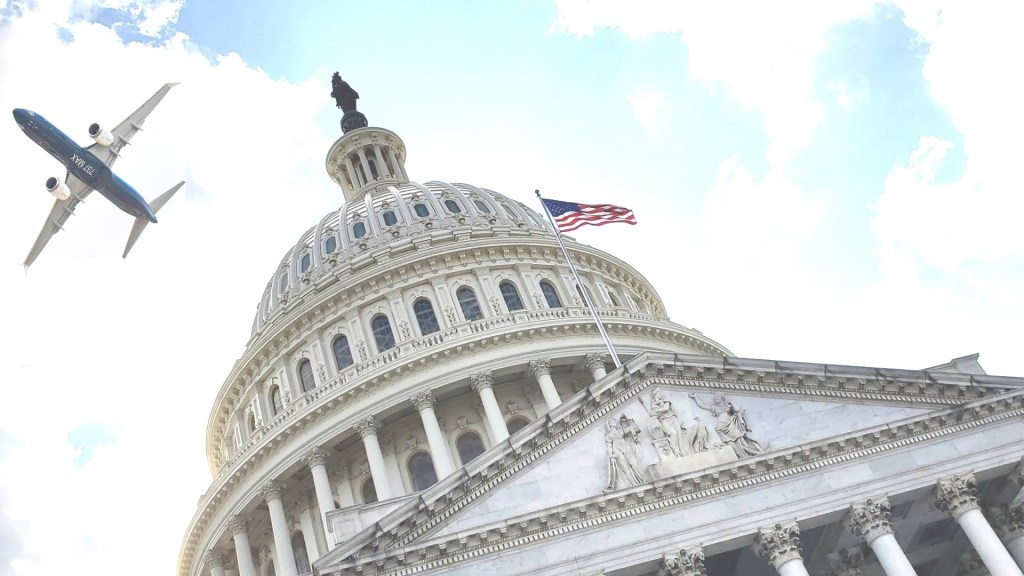
Congress vs Boeing 737-10 MAX
Plans certification 737-10 MAX would increase costs
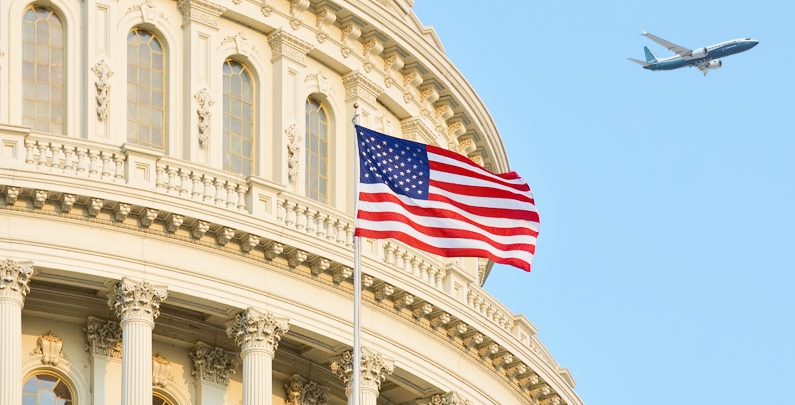
The Boeing Company‘s Boeing 737-10 MAX faces a year-end deadline to achieve or reach certification for the latest variant of the 737 MAX line before a 2020 law requires it to redesign its flight alert system. cabin. The independent report from the MITRE Corp. casts considerable doubt on Boeing’s chances and abilities to receive a critical extension from Congress to certify its newest and largest variant of the 737 model.
An independent report commissioned by the Federal Aviation Administration (FAA) may influence a crucial and imminent decision on the 737-10 MAX that is not yet certified to fly. The previously undisclosed March 2022 report is highly critical of how, during the original MAX certification, the safety agency exempted previous MAX models from the latest standard for Pilot Warning Systems. In a passenger aircraft, the crew alert system provides pilots with a series of visual, audio, and/or tactile warnings of aircraft behavior.
The MAX 10’s Crew Alert System has been upgraded from previous MAX models, but is still not compliant with current safety regulation. Boeing likely will need that waiver extended to obtain MAX 10 certification for passenger service.
The independent report by MITRE Corp., a federally funded research organization, concludes that the exemption from the crew alertness standard contributed to the two crashes involving Boeing 737-8 MAX aircraft that killed a combined 346 people, and also influenced Boeing to suppress information about new Flight Control software called the Maneuvering Characteristics Augmentation System (MCAS) on the Boeing 737 MAX line. «The exception granted by the FAA for pilot alerting on the 737 MAX was a critical link not only in the chain of events that led to the accidents, but also in Boeing’s decision to limit the disclosure of MCAS», the report said. report. The FAA has told Boeing that certification of the MAX 10 is unlikely to be completed by 2022. Therefore, Congress faces a decision on whether to extend a December 20, 2022 deadline in the reform legislation. of the FAA of 2020 so that the same exemption covers the MAX 10. It is a crucial decision for the American company.
If Congress insists that the MAX 10 crew alerts be updated, then Boeing would have two options: abandon the MAX 10 program, a drastic step after so much development work and with several hundred planes sold; or the other option, to modify its cabin system, making it different from previous MAX models. Modifying the cockpit would require investment from Boeing and would slow the MAX 10’s entry into service. It would also mean higher pilot training costs for airlines, since MAX 10 pilots would need separate training. Boeing could lose some sales that would go to the European competitor Airbus A321NEO/XLR.
The FAA said it is reviewing the report. He declined to comment on the crew alert system, which he certified as safe on previous MAX models. Instead, the agency said that the decision on the MAX crew alert system is the responsibility of the US Congress. The FAA noted that only Congress can change the deadline after which the MAX 10 would have to be updated. «Our hands are tied by the wording of the law», an FAA spokesman said Friday.
Voices from the Senate
Senator Maria Cantwell, a Democrat from Washington State (WA), said Friday 06/10 that she wants the FAA to provide Congress with some direction on the pending decision on the MAX 10 waiver extension. «You should show leadership and tell us what you think is needed for the highest safety standards in light of this report. I look forward to your advice», said Maria Cantwell. Representative Peter DeFazio, Democrat from the State of Oregon (OR), chairman of the House Transportation and Infrastructure Committee, also asked the FAA to provide his opinion on the implications of the report. In a statement Monday 06/13, he said public safety demands «technical data and analysis of the highest quality. I urge the FAA to carefully consider the report’s recommendations and issue a detailed response», said Peter DeFazio.
The Aircraft Certification Safety and Accountability Act passed in 2020 requires the FAA to commission an independent study to evaluate two proposed reforms in the way it certifies derivative aircraft, aircraft such as the MAX that are new versions of older aircraft certified by first time many years before. One proposal would apply a time limit, so that after a certain number of years any new model would have to undergo an entirely new certification process. The second proposal would require formal and public documentation of any exception granted to a system in a derivative plane that allows it to be certified without meeting the latest security standard. The FAA assigned evaluation of these proposals to MITRE, a spin-off of the Massachusetts Institute of Technology that is a nonprofit engineering organization that conducts research for government agencies. The MITRE technical report is an internal document that was not made public until this Monday 06/13 published by The Seattle Times in online format.
Aside from what it says about the exemption for the 737 MAX crew alert system, the report’s overall recommendation to Congress is separately important for how it might influence the future approach to aircraft certification. MITRE found that none of the reforms proposed by Congress add enough to security to justify the cost. No evidence has been found that aircraft certified as derivatives have proven to be less safe than those with a completely new certificate. He calculated that requiring Boeing to do an entirely new certification for a derived aircraft would add about US$ 750 million to the cost. The MITRE report found that the additional work imposed by the second proposal would require the hiring of six additional FAA employees, but «could not identify any safety benefits». Instead, MITER came up with an alternative proposal. He proposes to require the FAA to identify critical safety features in an aircraft’s design and then allow Boeing to negotiate with the FAA how each of those features is treated when certifying a new aircraft. Rather than a hard and fast rule, this leaves the outcome to be decided on a case-by-case basis.
An FAA security engineer, who requested anonymity because he spoke without authorization, questioned the wisdom of that. He said that while the congressional proposals «drew a line in the sand», the confusion of the MITRE recommendation could ultimately leave critical safety decisions to negotiation between FAA managers and Boeing managers instead. of front-line engineers.
Boeing, however, may welcome the MITRE proposal as it appears to change little from the current approach to certification. More troubling for Boeing, the report identifies the crew alert system as one of those safety-critical features that must be negotiated with the FAA, and digs into the specific exemption the agency gave Boeing on the 737 MAX.
Modern systems on all Boeing planes besides the 737 have a color-coded hierarchy of alerts for failures, from minor to potentially catastrophic, with alphanumeric messages on a central display telling the pilot exactly what the problem is. The older 737 design has a more complicated system with initial warnings illuminated on the glare shield at the top of the instrument panel and additional diagnostics provided by clusters of various switches, dials, and lights on an overhead panel.
MITRE found that the FAA’s decision to exempt the MAX flight crew alert system from current safety regulation was inherently flawed. In a bizarre argument for the claim that a new crew alert system was unnecessary, Boeing had identified three fatal 737 crashes in the previous decade where investigators found the crew alert system to be a factor, but noted that in each case he had made a specific change to fix the problem. MITRE analysts were not impressed. They concluded that the fixes Boeing retroactively provided in each of those accidents merely «patched the inadequacies of the 737 pilot warning system rather than proactively implementing better human factor designs and pilot warning systems that the company was already installing in other aircraft».
Subsequently, the pilots of the Lion Air JT610 and Ethiopian Airlines ET302 crashes were confused and distracted by a cacophony of crew alerts that failed to help them understand what was causing the planes to plummet. The report said its analysis of the three previous accidents plus the two Boeing 737-8 MAX accidents «strengthens our focus on the need to keep flight deck, crew alert, and other safety-critical systems at a higher level of scrutiny».
Furthermore, Boeing had argued that the cost of complying with the regulation would be colossal, in excess of US$ 10 billion. MITRE analysts were skeptical, noting that this amount could cover the entire development of a new aircraft. They concluded that Boeing’s cost estimate «was not something that could be effectively evaluated by the FAA». Most tellingly, MITRE analysts concluded that if only the FAA had insisted that the MAX meet the crew alert standard, the fatal role of MCAS software in accidents could have been avoided. They argued that an upgrade to the crew alert system would have triggered additional pilot training on simulators and Boeing would have had no reason to downplay and hide MCAS as it did to prevent additional pilot training. Had MCAS been subject to such scrutiny during certification, the report suggests FAA engineers may well have pointed out its design flaws. «Additional training would likely have removed the incentive for Boeing to limit disclosure of the MCAS system, thereby making its existence part of the pilot training process and possibly identifying and eliminating MCAS’s reliance on a single angle-of-attack indicator», states the report. The United States Congress must decide to force Boeing to update the MAX 10 or extend the deadline to buy time for the certification of the last model of the MAX line.
After the two MAX accidents, Boeing seriously upgraded and hardened the aircraft’s systems with a specifically MCAS that has been fixed. In addition, at the insistence of the European and Canadian aviation authorities, in the MAX 10 model, Boeing has added more updates that specifically improve the crew alert system.
First, Boeing added a third Angle of Attack (AOA) measurement for the MAX 10, making air data input to every system on the plane more reliable. That makes a cascade of erroneous alerts, like the ones that so baffled Lion Air and Ethiopian Airlines pilots, less likely. In addition, Boeing is implementing in the MAX 10 a way for the pilot to silence the most distracting of erroneous alerts: the Stick Shaker, which causes the pilot’s spine to vibrate loudly and loudly if the plane approaches a standstill. Those two changes make the MAX 10 crew alert system safer and much closer to the latest regulatory standard, although it does not yet meet full compliance. Boeing intends to eventually retrofit them to earlier MAX models.
Boeing CEO David Calhoun, speaking Friday 6/10 at a Sanford Bernstein investor conference, said the 737 MAX is «one of the safest families of aircraft in history, and with these changes the MAX 10 it might be the safest». David Calhoun also reiterated Boeing’s argument that when the 2020 legislation was written, Congress intended the rules to apply to future new aircraft and not to the MAX family of aircraft. In fact, Congress wrote a two-year buffer into law with the expectation that all MAXs would be certified by then, a projection derailed by the FAA’s lengthy scrutiny of the MAX 10.
At a news conference last month, Al Madar, who is leading Boeing’s efforts to change its handling of safety issues, warned of the likely unintended consequences of changing the MAX 10 system. He said the lack of similarity to other MAX would introduce risks as pilots moved between planes and encountered different warning systems. At that briefing, Boeing’s Director of Aerospace Safety Mike Delaney bluntly stated, «Personally, I don’t think there’s any value in changing the 737». Some leading outside experts disagree.
In March 2022, former Boeing Flight Control Engineer Curtis Ewbank and former FAA Safety Engineer Joe Jacobsen submitted to the United States Senate Committee Maria Cantwell a technical proposal to upgrade the 737 MAX cockpit. Boeing to current design standards. They advertised her proposal as a compromise that, while it leaves the crew alert system below what is installed in the cockpits of Boeing’s most modern planes, does enough to comply with current regulation. Still, Boeing would have to deploy a large investment and resources to design, test and certify the upgrade. A flight with many uncertainties. That’s the dilemma facing the US Congress on the most successful but most troubled commercial airliner of all time.
PUBLISHER: Airgways.com DBk: Congress.gov / Faa.gov / Mitre.org / Boeing.com / Seattletimes.com / Airgways.com AW-POST: 202206132353AR OWNERSHIP: Airgways Inc. A\W A I R G W A Y S ®
Aerolínea introduce primer Boeing 737 MAX Restablece operaciones Boeing 777
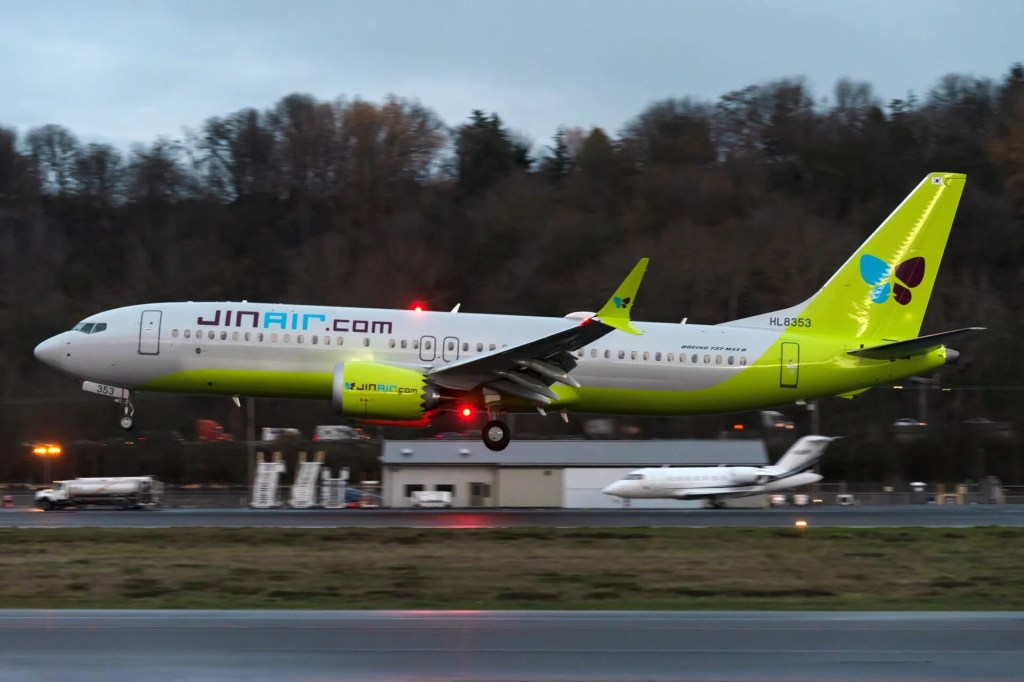
En una actualización de sus planes de flota, Jin Air ha anunciado que ha recibido su primer Boeing 737 MAX. La aeronave modelo MAX 8 entrará en servicio con la aerolínea surcoreana en Julio 2022. La aerolínea no tiene pedidos pendientes de aviones 737 MAX; aunque la aerolínea hermana Korean Air posee en su flota veintiseis unidades en órdenes.
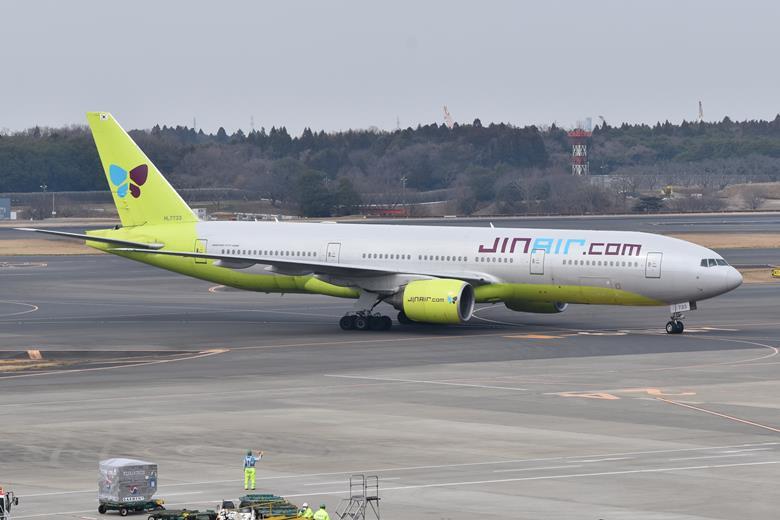
Jin Air, también ha reanudado la flota de Boeing 777-200ER con motor Pratt & Whitney PW4000, convirtiéndose en el primer operador de Asia-Pacífico en devolver el 777 con motor PW4000 al servicio después de un año de puesta a tierra. Korean Air devolvió su 777 con motor PW4000 al servicio en el servicio doméstico Seoul Gimpo-Jeju el 12/06, y tiene como objetivo operar para vuelos internacionales en 07/2022, para coincidir con la temporada alta de viajes de verano.
Jin Air fue una de las pocas aerolíneas asiáticas que tuvieron que dejar en tierra los Boeing 777 con motor PW4000 en Febrero de 2021, luego de una grave falla en el motor de un avión estadounidense. Otras aerolíneas en la región incluyen Korean Air, Asiana Airlines, así como los operadores japoneses Japan Airlines y All Nippon Airways. Jin Air tiene una flota de cuatro Boeing 777-200ER (4), que tienen entre 15 y 18 años. La aerolínea dice que completará el mantenimiento de sus tres aviones de fuselaje ancho restantes y los pondrá en funcionamiento en el futuro. Jin Air promociona el mayor número de asientos de su avión 777 entre las razones para devolverlo al servicio. El avión Boeing 777-200ER puede equiparse con un total de 393 asientos, por lo que la oferta puede aumentarse inmediatamente en la ruta Gimpo-Jeju, donde las franjas horarias están saturadas.
Jin Air incorporates Boeing 737 MAX
Airline introduces first Boeing 737 MAX Boeing 777 restores operations
In an update to its fleet plans, Jin Air has announced that it has taken delivery of its first Boeing 737 MAX. The MAX 8 model aircraft will enter service with the South Korean airline in July 2022. The airline has no pending orders for 737 MAX aircraft; although sister airline Korean Air has twenty-six units on order in its fleet.
Jin Air, has also resumed the Pratt & Whitney PW4000-powered Boeing 777-200ER fleet, becoming the first Asia-Pacific operator to return the PW4000-powered 777 to service after a year-long grounding. Korean Air returned its PW4000-powered 777 to service on the Seoul Gimpo-Jeju domestic service on 06/12, and aims to operate for international flights in 07/2022, to coincide with the peak summer travel season.
Jin Air was one of the few Asian airlines to ground PW4000-powered Boeing 777s in February 2021, following a serious engine failure on a US aircraft. Other airlines in the region include Korean Air, Asiana Airlines, as well as Japanese carriers Japan Airlines and All Nippon Airways. Jin Air has a fleet of four Boeing 777-200ERs (4), which are between 15 and 18 years old. The airline says it will complete maintenance on its three remaining wide-body jets and put them into service in the future. Jin Air touts the increased number of seats on its 777 plane as one of the reasons for returning it to service. The Boeing 777-200ER aircraft can be equipped with a total of 393 seats, so the offer can be increased immediately on the Gimpo-Jeju route, where the slots are saturated.
진에어, 보잉 737 MAX 도입
항공사, 최초의 Boeing 737 MAX 출시 보잉 777, 운항 재개
진에어(Jin Air)는 항공기 계획 업데이트에서 첫 보잉 737 MAX를 인도받았다고 발표했다. MAX 8 모델 항공기는 2022년 7월에 한국 항공사와 함께 서비스를 시작합니다. 항공사는 737 MAX 항공기에 대한 보류 주문이 없습니다. 자매 항공사인 대한항공은 26대의 항공기를 주문하고 있습니다.
진에어는 또한 Pratt & Whitney PW4000 탑재 보잉 777-200ER 항공기를 재개하여 PW4000 탑재 777 항공기를 1년 간의 운항 중단 후 서비스에 복귀시킨 최초의 아시아 태평양 항공사가 되었습니다. 대한항공은 06/12 서울 김포-제주 국내선에 PW4000 동력 777을 반환했으며, 여름 여행 성수기에 맞춰 국제선 운항을 2022/07/07에 목표로 하고 있습니다.
진에어는 미국 항공기에서 심각한 엔진 고장이 발생한 후 2021년 2월 PW4000 탑재 보잉 777 항공기를 이륙시킨 몇 안 되는 아시아 항공사 중 하나였습니다. 이 지역의 다른 항공사로는 대한항공, 아시아나항공, 일본 항공사인 일본항공, 전일본공수 등이 있습니다. 진에어는 15~18년 된 보잉 777-200ER 4대(4대)를 보유하고 있다. 이 항공사는 나머지 3대의 광동체 제트기에 대한 유지 보수를 완료하고 향후 서비스에 투입할 것이라고 밝혔습니다. 진에어는 자사 777 여객기의 좌석 확대를 재개 이유 중 하나로 꼽았다. 보잉 777-200ER 항공기는 총 393석을 탑재할 수 있어 슬롯이 만석인 김포~제주 노선에서 즉시 오퍼를 늘릴 수 있다.
PUBLISHER: Airgways.com DBk: Jinair.com / Airgways.com AW-POST: 202206131648AR OWNERSHIP: Airgways Inc. A\W A I R G W A Y S ®
Aerolínea busca reemplazo para aeronaves turbohélice
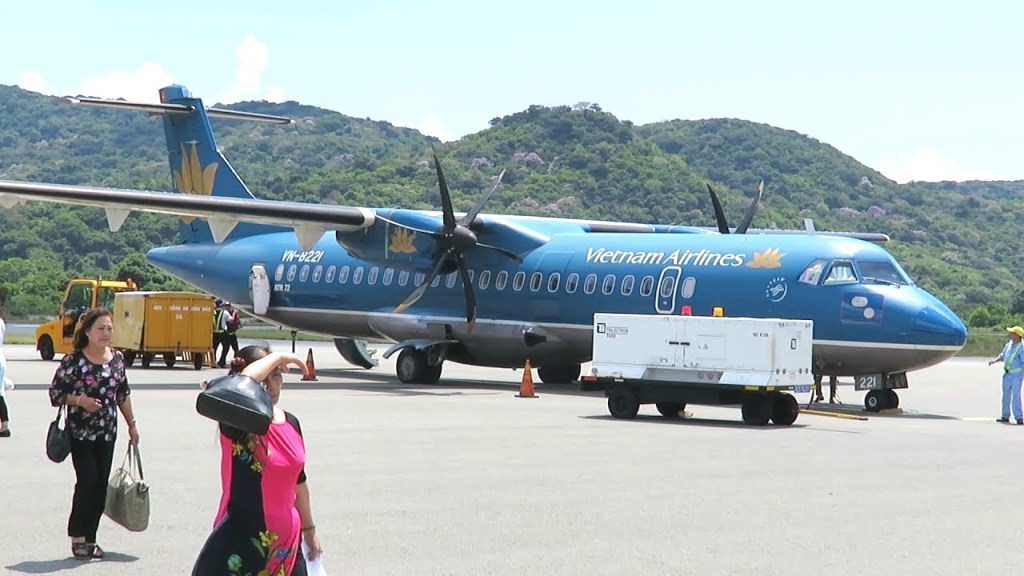
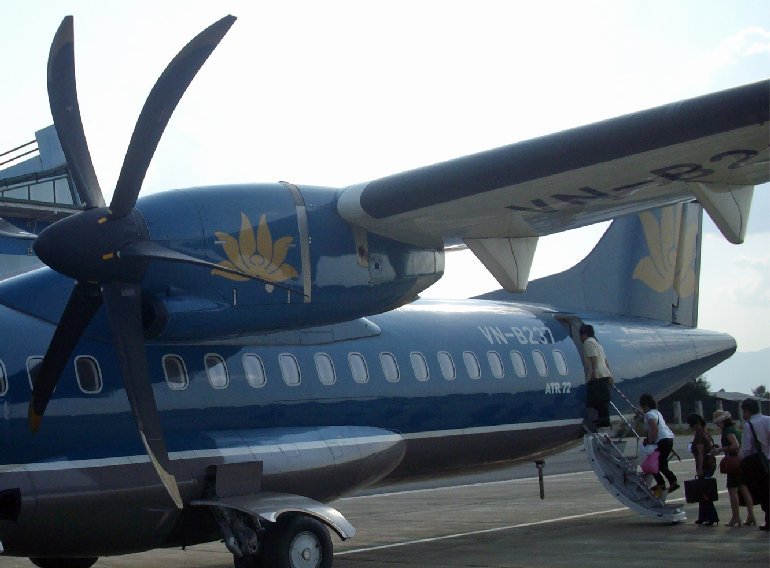
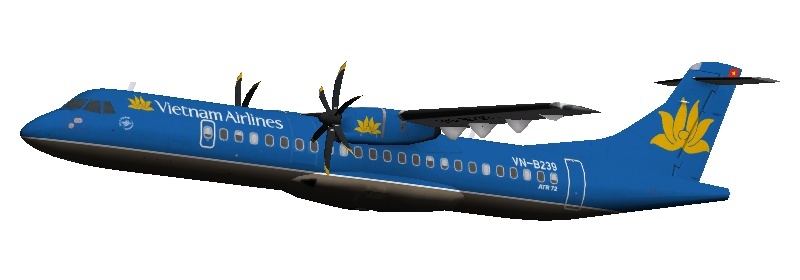
Vietnam Airlines ha expresado el interés por reemplazar la flota de aeronaves regionales turboprop ATR Aircraft ATR 72 como parte de la renovación y actualización de sus aviones de menor envergadura, mientras que espera introducir nuevas unidades hacia 2023.
Vietnam, la aerolínea de bandera del país anunció que está buscando agregar nuevos aviones regionales para reemplazar sus aviones ATR 72 para el 4Q2023, pero aún la compañía no ha decidido seleccionar un candidato específico, mientras continúa dialogando con las compañías fabricantes. Vietnam Airlines buscará reemplazar su flota de turbohélices por aeronaves regionales jet como podría ser según comentarios el Embraer E190/195-E2. Acorde con el reemplazo de flota, la República de Vietnam actualizará los aeropuertos de Con Dao (VCS) y Dien Bien (DIN), lo que permitirá mejoras sustanciales.
Vietnam Airlines would replace ATR fleet
Airline seeks replacement for turboprop aircraft
Vietnam Airlines has expressed interest in replacing the ATR Aircraft ATR 72 turboprop regional aircraft fleet as part of the renewal and upgrade of its smaller aircraft, while expecting to introduce new units by 2023.
Vietnam, the country’s flag carrier announced that it is looking to add new regional aircraft to replace its ATR 72 aircraft by 4Q2023, but the company has not yet decided to select a specific candidate, as it continues to dialogue with manufacturing companies. Vietnam Airline will seek to replace its fleet of turboprops with regional jet aircraft, such as the Embraer E190/195-E2, according to comments. In line with the fleet replacement, the Republic of Vietnam will upgrade Con Dao (VCS) and Dien Bien (DIN) airports, allowing for substantial improvements.
Vietnam Airlines sẽ thay thế đội bay ATR
Hãng hàng không tìm kiếm sự thay thế cho máy bay động cơ phản lực cánh quạt
Vietnam Airlines bày tỏ quan tâm đến việc thay thế đội máy bay khu vực động cơ phản lực cánh quạt ATR 72 của Hãng hàng không ATR như một phần của quá trình đổi mới và nâng cấp các loại máy bay nhỏ hơn của mình, đồng thời dự kiến sẽ giới thiệu các đơn vị mới vào năm 2023.
Việt Nam, hãng hàng không hàng đầu của đất nước thông báo rằng họ đang tìm cách bổ sung máy bay mới trong khu vực để thay thế máy bay ATR 72 vào Quý 4/2023, nhưng công ty vẫn chưa quyết định chọn một ứng viên cụ thể, vì họ vẫn tiếp tục đối thoại với các công ty sản xuất. Theo các bình luận, Vietnam Airline sẽ tìm cách thay thế đội máy bay phản lực cánh quạt của mình bằng các máy bay phản lực trong khu vực như Embraer E190 / 195-E2. Cùng với việc thay thế đội bay, Việt Nam Cộng hòa sẽ nâng cấp các sân bay Côn Đảo (VCS) và Điện Biên (DIN), cho phép cải thiện đáng kể.
PUBLISHER: Airgways.com DBk: Vietnamairlines.com / Freakyflier / Airgways.com AW-POST: 202206131024AR OWNERSHIP: Airgways Inc. A\W A I R G W A Y S ®
La compañía china Guanglian Aviación Industry Co., Ltd. ha anunciado que planea la adquisición del 30% del capital de Chengdu Hangxin por un valor de ¥ (RMB) 120 millones de Yuanes. Guanglian Aviation anunció que la compañía planea comprar el 30% del capital de Chengdu Hangxin a la valoración de ¥ 400 millones de Yuanes mediante el pago de una contraprestación en efectivo. El precio de la transacción es de ¥ 120 millones de Yuanes, y la fuente de los fondos de M & A son los fondos autoestacionales. Después de la finalización de esta transacción, la compañía tendrá el 100% del capital de Chengdu Hangxin, que se convertirá en una subsidiaria de propiedad total de la compañía.
Guanglian Aviation Industry Co Ltd se especializa en el diseño, I+D y fabricación de productos relacionados con la industria de la aviación. La compañía fabrica piezas de metal aeroespacial y material compuesto, el diseño y fabricación de equipos de proceso de aviación (herramientas), la fabricación de piezas de aeronaves y el negocio de diseño y fabricación de aeronaves. Hangxin Aviation es una compañía de aviación orientada a la tecnología que se ha especializado en servicios MRO durante más de veintiséis años.
Guanglian would acquire 30% Chengdu
Guanglian capital acquisition Chengdu Hangxin
The Chinese company Guanglian Aviation Industry Co., Ltd. has announced that it plans to acquire 30% of the capital of Chengdu Hangxin for a value of ¥ (RMB) 120 million Yuan. Guanglian Aviation announced that the company plans to purchase 30% of Chengdu Hangxin’s equity at a valuation of ¥ 400 million Yuan upon payment of cash consideration. The transaction price is ¥120 million Yuan, and the source of M&A funds is auto-seasonal funds. After the completion of this transaction, the company will own 100% of the capital of Chengdu Hangxin, which will become a wholly owned subsidiary of the company.
Guanglian Aviation Industry Co Ltd specializes in the design, R&D and manufacturing of products related to the aviation industry. The company manufactures aerospace metal and composite parts, the design and manufacture of aviation process equipment (tooling), the manufacture of aircraft parts, and the aircraft design and manufacturing business. Hangxin Aviation is a technology-oriented aviation company that has been specializing in MRO services for more than twenty-six years.





























 airgways.com