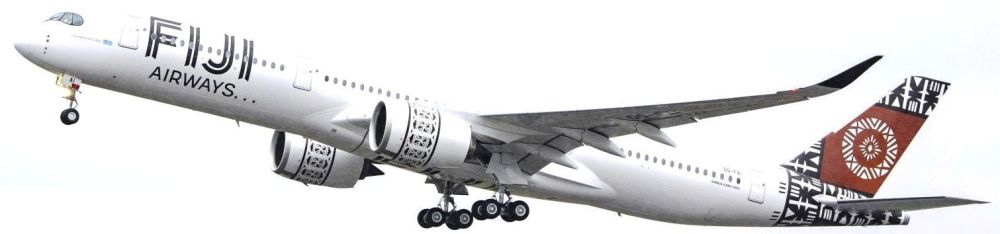
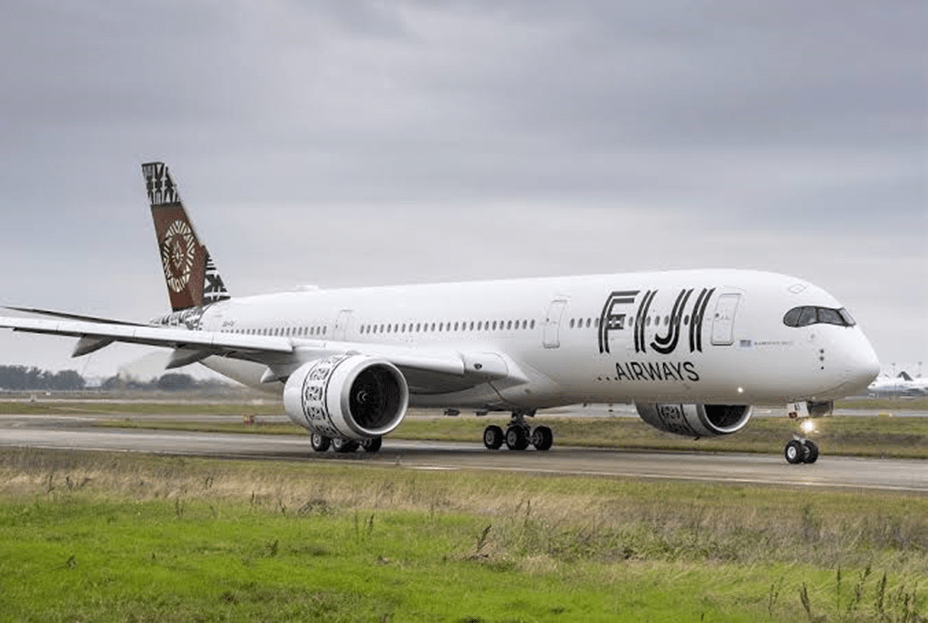
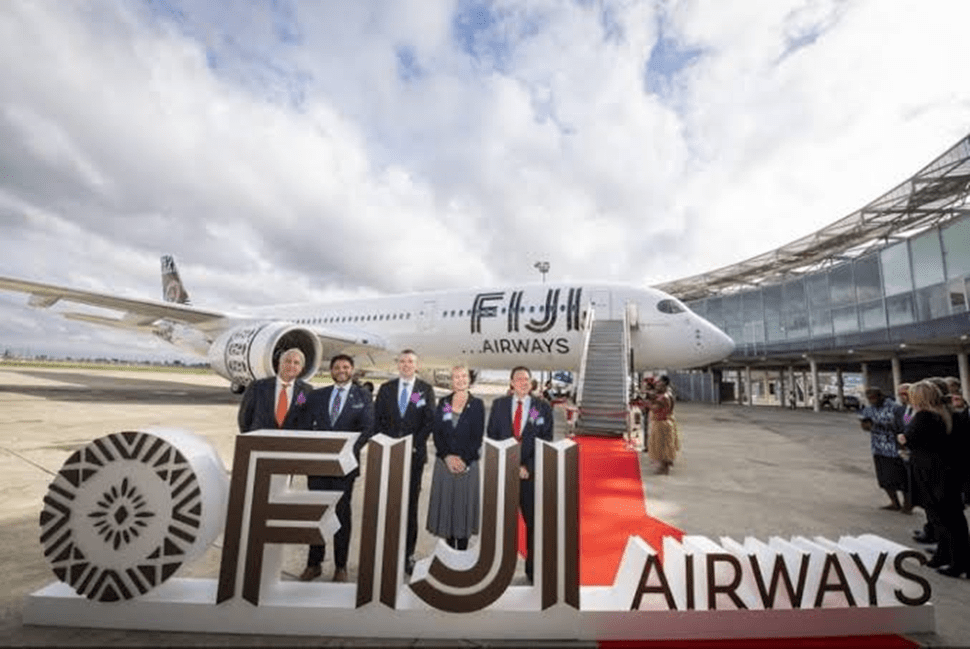
Air France recibe primer A350-900

AW-Airbus-008.jpgAW | 2019 09 28 15:05 | AIRLINES / INDUSTRY

logo_airbus (2)Air France toma entrega del primer Airbus A350-900

Air France ha recibido su primer Airbus A350-900, más eficiente de todas las aeronaves de fuselaje ancho de nuevo diseño del mundo. El primer avión de un orden total de 28 unidades. En un acto celebrado en 2000px-Air_France_Logo.svg.pngToulouse, Francia, fue entregado el primer avión A350 por parte de Anne Rigail, Air France Consejero Delegado y Benjamin Smith, Air France-KLM Consejero Delegado del Grupo, por Airbus Director Comercial Christian Scherer. El transportista tiene órdenes por 28 de los aviones que espera completar la entregas para fines de 2025.

Air France desplegará la flota A350-900 en sus rutas transatlánticas y Asia. El avión de fuselaje ancho Xtra ofrece una disposición cómoda de tres clases con 324 asientos, 34 de negocio en toda plana, 24 premium economy y 266 asientos en clase económica. Totalmente en línea con el compromiso de Air France con el medio ambiente, el nuevo A350-900 proporcionará una reducción del 25% en el consumo de combustible y las emisiones de CO 2. Además, vuelo de entrega de la aeronave de Toulouse a Paris será alimentado con una mezcla de biocombustible convencional y sintético.

Air France opera una flota de 143 aviones Airbus que incluye 114 de pasillo único y 29 aviones de fuselaje ancho. La aerolínea recientemente optó por comprar el miembro más nuevo de la familia de aviones de Airbus, el A220, que se unirá a la flota durante los próximos años.

El A350 ofrece una flexibilidad sin igual en el diseño y la eficiencia operativa para todos los segmentos del mercado hasta distancia ultra-larga (17.900 kilómetros). Su espacio aéreo por la cabina de Airbus es el más tranquilo de los aviones de doble pasillo y ofrece a los pasajeros y las tripulaciones de los más modernos experiencia de vuelo en vuelo. El avión cuenta con el último diseño aerodinámico, un fuselaje y las alas de fibra de carbono, además de nuevos motores Trent XWB de Rolls-Royce bajo consumo de combustible. En conjunto, estas últimas tecnologías resultan en un 25% por ciento más bajos costos de operación, así como el 25% de reducción en el consumo de combustible y las emisiones de CO2 en comparación con la generación anterior de las aeronaves que compitan que demuestra el compromiso de Airbus para minimizar su medio ambiente impacto sin dejar de ser en la vanguardia de los viajes aéreos.

Air-France-Logo-Design.jpgEl exterior del avión está pintado con la librea tradicional de Air France, aunque con algunos elementos adicionales. El transportista pintó el nombre del avión, «Toulouse», en el exterior, trayendo de vuelta un elemento clásico. Además, Air France optó por recuperar un elemento de librea a través del hipocampo, un caballito de mar pintado tanto en el costado del motor como en las icónicas puntas de las alas del A350.

Configuración el A350

La cabina de clase ejecutiva en el A350 de Air France presenta un total de 34 asientos Safran Optima en una configuración 1-2-1. Esta configuración es un cambio de muchos de los productos de clase empresarial del operador , que cuentan con una configuración 2-2-2. Con la configuración preferida en el A350, cada pasajero de clase ejecutiva tiene acceso directo al pasillo. Cada uno de los asientos presenta 79 pulgadas de inclinación. Cuando está en su posición plana, el asiento mide casi dos metros, o 78.8 pulgadas.

La cabina se siente ligera y fresca, con tapicería brillante y elementos de diseño. A principios de este año, Air France comenzó a modernizar algunos de sus aviones A330 con un producto completamente nuevo de clase empresarial . Si bien el asiento de clase empresarial A350 no es el mismo que los pasajeros pueden esperar encontrar en los A330 reacondicionados de Air France, este producto es mejor. El producto A330 modificado presenta una configuración 2-2-2, mientras que este nuevo producto es 1-2-1, lo que significa que cada pasajero tiene acceso al pasillo. Aunque la tapicería del asiento contraparte relatividad entre el A330 y el A350. Cada uno de los asientos cuenta con un sistema de entretenimiento a bordo de 18.5 pulgadas. Además, cada uno cuenta con alimentación en el asiento a través de una toma de corriente completa y puertos USB. Hay una pequeña área de almacenamiento al lado del hombro de cada uno de los pasajeros con suficiente espacio para almacenar una botella de agua, auriculares y algunos artículos más pequeños. En la cabina de clase ejecutiva, como el resto de la aeronave, no hay techos altos, lo que significa que hay compartimientos superiores en toda la cabina. Además, no hay salidas de aire individuales para los pasajeros. Las ventanas en la cabina de clase ejecutiva son una buena mejora. Las persianas son automáticas, lo que le permite personalizar la cantidad de luz que desea. Air France no ha seleccionado una opción de suite para la cabina de clase ejecutiva. El socio cercano de la aerolínea Delta Air Lines presenta una suite a través de Delta One Suite en sus A350 y selecciona otros aviones. Además, British Airways y Virgin Atlantic, que recibieron sus primeros A350 a principios de este año, cuentan con un producto de suite en sus cabañas actualizadas de clase ejecutiva.

La cabina Economy Premium, que es bastante pequeña, presenta solo 24 asientos Recaro, que se distribuyen en una configuración 2-4-2. Cada uno de los asientos tiene 38 pulgadas de inclinación y casi 19 pulgadas de ancho. El producto Economy Premium del A350 es completamente nuevo para Air France. Los asientos son más ligeros que cualquier predecesor, lo que significa menos peso y, por lo tanto, menos consumo de combustible. Con un producto completamente nuevo también viene una reclinación adicional. Cada uno de los 24 asientos en la cabina cuenta con un reposapiernas completo, que se complementa con un reposapiés. Además, el asiento en sí se reclina 124 grados, lo que, al probarlo, se sintió increíblemente generoso. Cada uno de los asientos también cuenta con una pantalla de entretenimiento a bordo de 13.3 pulgadas. La pantalla se puede operar tanto con pantalla táctil como con control remoto, que también tiene una funcionalidad de desplazamiento táctil. La pantalla se puede inclinar para acomodar cuando el pasajero sentado al frente está reclinado. Además, cada uno de los asientos en la Economy Premium tiene muchas oportunidades de suministro de energía. Cada asiento tiene su propio puerto de alimentación universal además de dos puertos USB. Un puerto USB se encuentra en la pantalla IFE, mientras que el otro está integrado.

A finales de Agosto 2019, la Familia A350 XWB había recibido 913 pedidos en firme de 51 clientes en todo el mundo, por lo que es uno de los aviones de fuselaje ancho de mayor éxito.AW-Icon AW001

Resultado de imagen para Air France A350Resultado de imagen para Air France A350Resultado de imagen para Air France A350Resultado de imagen para Air France A350Air France receives first A350-900

Air-France-AF-logo.pngAir France takes delivery of the first Airbus A350-900

Air France has received its first Airbus A350-900, the most efficient of all the newly designed wide-body aircraft in the world. The first aircraft of a total order of 28 units. At an event held in Toulouse, France, the first A350 aircraft was delivered by Anne Rigail, Air France Chief Executive Officer and Benjamin Smith, Air France-KLM Chief Executive Officer of the Group, by Airbus Commercial Director Christian Scherer. The carrier has orders for 28 of the planes that he expects to complete deliveries by the end of 2025.

 Air France will deploy the A350-900 fleet on its transatlantic routes and Asia. The Xtra wide-body aircraft offers a comfortable three-class layout with 324 seats, 34 full-flat business, 24 premium economy, and 266 economy class seats. Fully in line with Air France’s commitment to the environment, the new A350-900 will provide a 25% reduction in fuel consumption and CO 2 emissions. In addition, the delivery flight of the aircraft from Toulouse to Paris will be fed with a mixture of conventional and synthetic biofuel.

98511_1567451257.jpg

Air France operates a fleet of 143 Airbus aircraft that includes 114 single-aisle and 29 wide-body aircraft. The airline recently opted to buy the newest member of the Airbus family of aircraft, the A220, which will join the fleet over the next few years.

The A350 offers unmatched flexibility in design and operational efficiency for all market segments up to ultra-long distance (17,900 kilometers). Its airspace by the Airbus cabin is the quietest of the double-aisle aircraft and offers passengers and crews the most modern flight experience. The aircraft features the latest aerodynamic design, a fuselage and carbon fiber wings, in addition to new Rolls-Royce Trent XWB engines with low fuel consumption. Together, these latest technologies result in 25% lower operating costs, as well as a 25% reduction in fuel consumption and CO2 emissions compared to the previous generation of competing for aircraft demonstrating the Airbus commitment to minimize its impact environment while remaining at the forefront of air travel.

The exterior of the plane is painted with the traditional livery of Air France, although with some additional elements. The carrier painted the name of the plane, «Toulouse», on the outside, bringing back a classic element. In addition, Air France chose to recover an element of livery through the hippocampus, a seahorse painted both on the side of the engine and on the iconic wingtips of the A350.

A350 configuration

The executive class cabin in the Air France A350 features a total of 34 Safran Optima seats in a 1-2-1 configuration. This configuration is a change of many of the operator’s business class products, which have a 2-2-2 configuration. With the preferred configuration on the A350, each executive class passenger has direct access to the aisle. Each of the seats has 79 inches of inclination. When in its flat position, the seat measures almost two meters or 78.8 inches.

The cabin feels light and fresh, with bright upholstery and design elements. Earlier this year, Air France began modernizing some of its A330 aircraft with a completely new enterprise-class product. While the A350 business class seat is not the same as passengers can expect to find in the Air France A330 reconditioned, this product is better. The modified A330 product has a 2-2-2 configuration, while this new product is 1-2-1, which means that each passenger has access to the aisle. Although the upholstery of the seat counterpart relativity between the A330 and the A350. Each of the seats has an 18.5-inch onboard entertainment system. In addition, each has power in the seat through a full-power outlet and USB ports. There is a small storage area next to each passenger’s shoulder with enough space to store a water bottle, headphones and some smaller items. In the executive class cabin, like the rest of the aircraft, there are no high ceilings, which means that there are upper compartments throughout the cabin. In addition, there are no individual air vents for passengers. The windows in the executive class cabin are a good improvement. The blinds are automatic, allowing you to customize the amount of light you want. Air France has not selected a suite option for the executive class cabin. The close partner of the airline Delta Air Lines presents a suite through Delta One Suite in its A350s and selects other aircraft. In addition, British Airways and Virgin Atlantic, which received their first A350s earlier this year, have a suite product in their updated executive class cabins.

The Economy Premium cabin, which is quite small, features only 24 Recaro seats, which are distributed in a 2-4-2 configuration. Each of the seats is 38 inches in length and almost 19 inches wide. The Economy Premium product of the A350 is brand new for Air France. The seats are lighter than any predecessor, which means less weight and, therefore, less fuel consumption. With an entirely new product also comes an additional recline. Each of the 24 seats in the cabin has a full leg rest, which is complemented by a footrest. In addition, the seat itself reclines 124 degrees, which, when tested, felt incredibly generous. Each of the seats also has a 13.3-inch onboard entertainment screen. The screen can be operated with both touch screen and remote control, which also has touch scrolling functionality. The screen can be tilted to accommodate when the passenger sitting in front is reclined. In addition, each of the seats in the Premium Economy has many power supply opportunities. Each seat has its own universal power port plus two USB ports. One USB port is on the IFE screen, while the other is integrated.

By the end of August 2019, the A350 XWB Family had received 913 firm orders from 51 customers worldwide, making it one of the most successful wide-body aircraft.AW-Icon AW002

AW-Airbus-009.jpgAir France reçoit son premier A350-900

2000px-Air_France_Logo.svg.pngAir France prend livraison du premier Airbus A350-900

Air France a reçu son premier Airbus A350-900, le plus efficace de tous les avions gros-porteurs nouvellement conçus au monde. Le premier avion d’une commande totale de 28 unités. Lors d’un événement à Toulouse, en France, le premier avion A350 a été livré par Anne Rigail, directrice générale d’Air France, et Benjamin Smith, directeur général d’Air France-KLM du groupe, par Christian Scherer, directeur commercial d’Airbus. Le transporteur a des commandes pour 28 des avions dont il prévoit des livraisons d’ici à la fin de 2025.

Air France déploiera la flotte d’A350-900 sur ses liaisons transatlantiques et en Asie. L’avion gros-porteur Xtra offre une configuration confortable en trois classes avec 324 places assises, 34 places assises à plat, 24 places premium et 266 places en classe économique. Conformément aux engagements pris par Air France en faveur de l’environnement, le nouvel A350-900 permettra de réduire de 25% la consommation de carburant et les émissions de CO 2. De plus, le vol de livraison des avions reliant Toulouse à Paris sera alimenté avec un mélange de biocarburant classique et synthétique.

Air France exploite une flotte de 143 appareils Airbus, dont 114 avions à couloir unique et 29 appareils à fuselage large. La compagnie aérienne a récemment choisi d’acheter le dernier membre de la famille d’appareils Airbus, l’A220, qui rejoindra la flotte au cours des prochaines années.

L’A350 offre une flexibilité inégalée en matière de conception et d’efficacité opérationnelle pour tous les segments du marché, jusqu’à l’ultra-longue distance (17 900 kilomètres). Son espace aérien près de la cabine d’Airbus est le plus silencieux des avions à double couloir et offre aux passagers et aux équipages l’expérience de vol la plus moderne. L’avion est doté de la dernière conception aérodynamique, d’un fuselage et des ailes en fibre de carbone, en plus des nouveaux moteurs Rolls-Royce Trent XWB à faible consommation de carburant. Ensemble, ces dernières technologies se traduisent par une réduction des coûts d’exploitation de 25%, ainsi que par une réduction de 25% de la consommation de carburant et des émissions de CO2 par rapport à la génération précédente d’avions concurrents démontrant l’engagement d’Airbus à réduire au minimum son environnement d’impact tout en restant à la pointe de la technologie. voyage en avion.

L’extérieur de l’avion est peint avec la livrée traditionnelle d’Air France, bien qu’avec quelques éléments supplémentaires. Le transporteur a peint le nom de l’avion, «Toulouse», à l’extérieur, rapportant un élément classique. De plus, Air France a choisi de récupérer un élément de la livrée dans l’hippocampe, un hippocampe peint à la fois sur le côté du moteur et sur les emblématiques ailes d’aile de l’A350.

AW-700002344Configuration A350

La cabine de la classe affaires de l’A350 d’Air France dispose de 34 sièges Safran Optima au total en configuration 1-2-1. Cette configuration est un changement de nombreux produits de classe affaires de l’opérateur, qui ont une configuration 2-2-2. Avec la configuration préférée sur l’A350, chaque passager de la classe affaires a un accès direct à l’allée. Chacun des sièges a une inclinaison de 79 pouces. Lorsqu’il est à plat, le siège mesure près de deux mètres ou 78,8 pouces.

La cabine est légère et fraîche, avec des garnitures et des éléments de design clairs. En début d’année, Air France a commencé à moderniser certains de ses A330 avec un tout nouveau produit destiné aux entreprises. Si le siège en classe affaires A350 n’est pas le même que ce que les passagers peuvent espérer trouver dans l’Air France A330 reconditionné, ce produit est meilleur. L’A330 modifié a une configuration 2-2-2, tandis que ce nouveau produit est 1-2-1, ce qui signifie que chaque passager a accès à l’allée. Bien que la tapisserie d’ameublement de la relativité de siège relativise entre l’A330 et l’A350. Chacun des sièges est doté d’un système de divertissement intégré de 18,5 pouces. De plus, chacun est alimenté dans le siège via une prise secteur et des ports USB. Il y a une petite zone de stockage à côté de l’épaule de chaque passager avec suffisamment d’espace pour stocker une bouteille d’eau, des écouteurs et certains objets plus petits. Dans la cabine de la classe affaires, à l’instar du reste de l’avion, il n’y a pas de hauts plafonds, ce qui signifie qu’il y a des compartiments supérieurs dans toute la cabine. De plus, il n’existe pas de bouches d’air individuelles pour les passagers. Les fenêtres de la cabine de la classe affaires sont une bonne amélioration. Les stores sont automatiques, vous permettant de personnaliser la quantité de lumière que vous souhaitez. Air France n’a pas sélectionné d’option de suite pour la cabine de la classe affaires. Le partenaire proche de la compagnie aérienne Delta Air Lines présente une suite via Delta One Suite dans ses A350 et sélectionne d’autres avions. De plus, British Airways et Virgin Atlantic, qui ont reçu leurs premiers A350 plus tôt cette année, proposent une suite dans leurs nouvelles cabines de la classe affaires.

La cabine Economy Premium, qui est plutôt petite, ne comporte que 24 sièges Recaro, répartis en configuration 2-4-2. Chacun des sièges a une longueur de 38 pouces et une largeur de presque 19 pouces. Le produit Economy Premium de l’A350 est tout nouveau pour Air France. Les sièges sont plus légers que tous les modèles précédents, ce qui signifie moins de poids et, par conséquent, une consommation de carburant moindre. Avec un tout nouveau produit vient également une inclinaison supplémentaire. Chacun des 24 sièges de la cabine est doté d’un repose-jambes complet, complété par un repose-pieds. De plus, le siège lui-même s’incline à 124 degrés, ce qui, lorsqu’il a été testé, était incroyablement généreux. Chacun des sièges dispose également d’un écran de divertissement intégré de 13,3 pouces. L’écran peut être utilisé à la fois avec l’écran tactile et la télécommande, qui dispose également d’une fonctionnalité de défilement tactile. L’écran peut être incliné pour s’adapter lorsque le passager assis en avant est incliné. En outre, chacun des sièges de la Premium Economy offre de nombreuses possibilités d’alimentation électrique. Chaque siège a son propre port d’alimentation universel et deux ports USB. Un port USB est sur l’écran IFE, tandis que l’autre est intégré.

À la fin du mois d’août 2019, la famille A350 XWB avait reçu 913 commandes fermes émanant de 51 clients à travers le monde, ce qui en faisait l’un des avions gros-porteurs les plus titrés.AW-Icon AW002


Ξ A I R G W A Y S Ξ
SOURCE: Airgways.com
DBk: Airbus.com / Airgways.com / Airfrance.com  Air-cosmos.com
AW-POST: 201909281505AR

A\W   A I R G W A Y S ®


FAA ordena inspecciones Boeing 737 NG

AW-700440577.pngAW | 2019 09 28 14:07 | AVIATION SAFETY / INDUSTRY

20150215-logo-faa_1La FAA emite circular AD sobre grietas en fuselaje

La Federal Aviation Administration (FAA) de Estados Unidos ha emitido una Airworthiness Directive (AD) a todas las aerolíneas que n su flota posean la línea Boeing 737 Next Generation que inspeccionen los aviones Boeing 737 de tercera generación después de que se hayan encontrado grietas en la parte del fuselaje. Las aeronaves alcanzadas por esta nueva directiva de aeronavegabilidad corresponden a las variantes Boeing 737-600/700/800/900.

La Administración Federal de Aviación está ordenando a las aerolíneas que inspeccionen los aviones Boeing 737 NG después de unas recientes inspecciones que ha realizado Boeing informando a la agencia reguladora que había descubierto evidencia de grietas en una parte del fuselaje. «Boeing ha notificado a la FAA y ha estado en contacto con operadores de flota de Boeing 737 NG en el mundo, sobre un problema de craqueo descubierto en un pequeño número de aviones que están siendo modificados», dijo el fabricante en un comunicado el Viernes 27/09.

Falla en 737 NG

Los ingenieros de Boeing y los investigadores de seguridad están luchando para descubrir cuántos Boeing 737 NG han roto los Tenedores de Pepinillos después de encontrar varios en los aviones. Un tenedor de pepinillos es la parte que ayuda a unir el fuselaje de un avión a su estructura de ala. Ayuda a manejar el estrés, el torque y las fuerzas aerodinámicas que doblan la conexión entre las alas y el cuerpo del avión. Los ingenieros diseñan horquillas encurtidas para durar la vida útil del avión, más de 90.000 aterrizajes y despegues, un término conocido como ciclos de vuelo en la industria de la aviación, sin desarrollar grietas. Podría haber resultados terribles si el sistema de tenedor de pepinillos en el avión falla en vuelo.

Resultado de imagen para Boeing 737-800 png

Durante una inspección reciente, los trabajadores encontraron un tenedor de pepinillos muy agrietado en un Boeing 737 NG. El avión es relativamente joven, habiendo registrado aproximadamente 35.000 ciclos de vuelo cuando se encontró el daño. Un ingeniero retirado de Boeing que pidió permanecer en el anonimato nos dice: «Es inusual tener una grieta en el tenedor de pepinillos. No está diseñado para agrietarse de esa manera en absoluto».

Es particularmente preocupante porque se encontró muy temprano en el servicio del avión. Boeing informó rápidamente el problema con el avión individual a la FAA la semana pasada, y ahora se han encontrado más aviones con grietas similares. Se nos dice que esta es una investigación en curso, y que no está claro si se trata o no de un problema generalizado. La FAA dijo el Viernes que «instruirá a los operadores a realizar inspecciones específicas, realizar las reparaciones necesarias y reportar sus hallazgos a la agencia de inmediato». El problema de grietas no afecta a ningún avión P-8 Poseidon, una versión militar del Boeing 737 NG, dijo Boeing, o al modelo 737 MAX.

Boeing y la seguridad

«La seguridad y la calidad son nuestras principales prioridades. Boeing ha notificado a la FAA y se ha puesto en contacto con los operadores de 737NG sobre un problema de craqueo descubierto en un pequeño número de aviones que están siendo modificados», expresa Boeing. No se han reportado problemas en el servicio. En los próximos días, trabajará en estrecha colaboración con nuestros clientes para implementar un plan de inspección recomendado para ciertos aviones de la flota.

«Una grieta como esta es similar a cuando ves una grieta en el mango de una taza de café. Es probable que pueda seguir usando la taza varias veces más, pero siempre existe el riesgo de que el mango se rompa y el café caliente termine en su regazo», expresa un ingeniero retirado.

Los equipos en Seattle y Washington DC están trabajando en torno a la seguridad. Una fuente del gobierno federal dice que los inspectores de la FAA estaban entusiasmados y felices de recibir la llamada de Boeing. «Están eufóricos de que la línea de sangre de seguridad está viva en Boeing«. El organismo regulador de aviación observa el interés de Boeing que impactan favorablemente en la seguridad.

Esta semana, Boeing reorganizó su estructura de gestión en el área de seguridad con la creación de un Comité en la Junta de Directores ahora con supervisión directa de la seguridad.

Hasta que se descubra el alcance del problema, será difícil determinar qué deberán hacer los equipos de mantenimiento. Hasta ahora, no ha habido órdenes gubernamentales de inspecciones obligatorias. Boeing y la FAA querrán saber por qué las horquillas de pepinillos se agrietan y por qué sucede tan temprano. Se nos dice que podría ser algo tan simple como un defecto de fabricación con una pequeña cantidad de aviones y no algo generalizado.

Las recientes directivas pondrán en jaque la flota de aeronaves 737 NG cuando tengan que ir introduciendo las modificaciones correspondientes en el área de mantenimiento programado en los aviones. Una solución a un Tenedor de Pepinillos con muchas grietas requerirá que los mecánicos retiren y reemplacen el accesorio que se extiende alrededor del 25% de la circunferencia del fuselaje que comparte con la raíz alar. Un Boeing 737 posee cuatro tenedores de pepinillos. El ingeniero retirado expresa que las grietas fueron realmente sorprendentes: «Esto no es una buena noticia. Es realmente urgente investigar».AW-Icon AW001

Resultado de imagen para Boeing 737-800FAA orders Boeing 737 NG inspections

737_NG_headera878.pngThe FAA issues circular AD on fuselage cracks

The United States Federal Aviation Administration (FAA) has issued an Airworthiness Directive (AD) to all airlines in its fleet that owns the Boeing 737 Next Generation line that inspects third-generation Boeing 737 aircraft after cracks have been found in the part of the fuselage. The aircraft reached by this new airworthiness directive Boeing-Company-Logocorresponds to the Boeing 737-600 / 700/800/900 variants.

The Federal Aviation Administration is ordering airlines to inspect Boeing 737 NG aircraft after recent inspections by Boeing informing the regulatory agency that it had discovered evidence of cracks in a part of the fuselage. «Boeing has notified the FAA and has been in contact with Boeing 737 NG fleet operators worldwide, about a cracking problem discovered in a small number of aircraft that are being modified», the manufacturer said in a statement Friday. 09/27.

737 NG fails

Boeing engineers and security researchers are struggling to discover how many Boeing 737NG have broken Gherkin Forks after finding several on the planes. A pickle fork is a part that helps attach the fuselage of an airplane to its wing structure. It helps to handle the stress, torque and aerodynamic forces that bend the connection between the wings and the body of the plane. Engineers design pickled forks to last the life of the plane, more than 90,000 landings and take-offs, a term known as flight cycles in the aviation industry, without developing cracks. There could be terrible results if the pickle fork system on the plane fails in flight.

AW-700007876.jpgDuring a recent inspection, workers found a very cracked pickle fork in a Boeing 737NG. The plane is relatively young, having recorded approximately 35,000 flight cycles when the damage was found. A retired Boeing engineer who asked to remain anonymous tells us: «It is unusual to have a crack in the pickle fork. It is not designed to crack that way at all».

It is particularly worrying because he found himself very early in the plane’s service. Boeing quickly reported the problem with the individual plane to the FAA last week, and more planes with similar cracks have now been found. We are told that this is an ongoing investigation and that it is not clear whether or not it is a widespread problem. The FAA said Friday that «it will instruct operators to perform specific inspections, make necessary repairs and report their findings to the agency immediately». The crack problem does not affect any P-8 Poseidon aircraft, a military version of the Boeing 737 NG, Boeing said, or the 737 MAX model.

Boeing and security

«Safety and quality are our top priorities. Boeing has notified the FAA and has contacted 737NG operators about a cracking problem discovered in a small number of aircraft that are being modified», said Boeing. No problems have been reported. in the service In the next few days, you will work closely with our clients to implement a recommended inspection plan for certain aircraft in the fleet.

«A crack like this is similar to when you see a crack in the handle of a cup of coffee. You may be able to continue using the cup several more times, but there is always a risk that the handle will break and the hot coffee will end up in your lap», says a retired engineer.

The teams in Seattle and Washington DC are working around security. A federal government source says the FAA inspectors were excited and happy to receive the call from Boeing. «They are elated that the safety bloodline is alive in Boeing». The aviation regulatory body observes the interest of Boeing that has a positive impact on safety.

This week, Boeing reorganized its management structure in the security area with the creation of a Committee on the Board of Directors now with direct safety supervision.

Until the extent of the problem is discovered, it will be difficult to determine what maintenance teams should do. Until now, there have been no government orders for mandatory inspections. Boeing and the FAA will want to know why pickle forks are cracking and why it happens so early. We are told that it could be something as simple as a manufacturing defect with a small number of airplanes and not something widespread.

The recent directives will put the 737 NG aircraft fleet in check when they have to introduce the corresponding modifications in the area of scheduled maintenance on the aircraft. A solution to a Gherkin Fork with many cracks will require mechanics to remove and replace the accessory that extends about 25% of the circumference of the fuselage that it shares with the alar root. A Boeing 737 has four pickle holders. The retired engineer expresses that the cracks were really surprising: «This is not good news. It is really urgent to investigate»AW-Icon AW002


Ξ A I R G W A Y S Ξ
SOURCE: Airgways.com
DBk: Boeing.com / Faa.gov / Komonews.com / Airgways.com / Luxairtours.lu
AW-POST: 201909281407AR

A\W   A I R G W A Y S ®

Airbus A300 con aviónica mejorada

Resultado de imagen para A300 UPS honeywell primus epicAW | 2019 09 28 12:36 | INDUSTRY

logo_airbus (2)Airbus incorpora mejoras en aviónica en flota A300

El Airbus A300-600F ha iniciado pruebas de vuelo en Toulouse con las mejoras en la aviónica incorporada para aeronaves cargueras. Airbus ha comenzado las pruebas de vuelo de las aeronaves A300 que incorporan aviónica modernizada. Una actualización en las pruebas de vuelo señala que la actualización en curso de la flota incluye un nuevo sistema de gestión de vuelo, un nuevo sistema de navegación GPS, radar meteorológico, un nuevo sistema integrado de direccionamiento e informes de comunicaciones de aeronaves (ACARS) para comunicaciones digitales, como así también habrá una nueva pantalla de situación vertical agregada a la cabina del A300 mejorada. Airbus anunció por primera vez el programa de actualización con Honeywell y Airbus durante una conferencia de prensa de Mayo 2017. Los A300 son aeronaves de antigüedad en el mercado de aeronaves comerciales que actualmente se están modernizando con un nuevo procesamiento integrado, pantallas de cristal líquido y otros sistemas y componentes de aviónica Honeywell Primus Epic.

UPS, principal cliente

UPS Airlines es el principal cliente del programa de actualización para la flota del Airbus A300. UPS recibirá el primer avión de las 52 unidades carguras. La vida útil de la flota UPS de 52 entregados entre 2000 y 2006 se extenderá hasta 2035 mediante una actualización de la cubierta de vuelo basada en la aviónica Honeywell Primus Epic: nuevas pantallas y sistema de gestión de vuelo (FMS), radar meteorológico tridimensional mejorado, una central sistema de mantenimiento y una nueva versión del actual sistema mejorado de advertencia de proximidad al suelo. Con un uso ligero de solo dos o tres ciclos por día, no alcanzará el número máximo de ciclos para entonces. La primera modificación se realizará en Airbus Toulouse en 2019 y se certificará en 2020. A partir de Julio 2017, hay 211 A300 en servicio con 22 operadores, siendo el operador más grande FedEx Express con 68 aviones A300-600F.

PRIMER AIRBUS A300 MODIFICADO CON TECNOLOGÍA HONEYWELL PRIMUS EPIC

“Este es el primer avión en ser modificado. Las pruebas de vuelo continuarán hasta principios de 2020, con el primer avión completado y devuelto a UPS más adelante en 2020. Llevará varios años modificar toda la flota de 52 aviones», dijo un representante de UPS. Bajo la actualización, UPS podrá agregar una nueva funcionalidad a los sistemas de aviónica con el software cargado en las tarjetas de procesador debido a la arquitectura integrada de la cabina del Primus Epic. La actualización también incluye el último Sistema mejorado de advertencia de proximidad a tierra, nuevos instrumentos de reserva y un nuevo sistema de mantenimiento central que proporciona mayor información de mantenimiento. «Esta es una primicia en la industria», dijo Kevin O’Hara, Gerente de la División de Ingeniería de Sistemas/Avión de UPS, en una cita pegada a la página de Instagram de UPS Airlines. «Estamos tomando aviones diseñados en la década de 1970 y llevando los instrumentos y sistemas al siglo XXI».

UPS espera continuar con las pruebas de vuelo del primer A300 actualizado hasta febrero de 2020, y se espera que el primer avión logre la certificación y regrese al servicio más adelante el próximo año. Según UPS, la modificación de los 52 A300 llevará varios años. El transportista internacional de carga aérea opera principalmente los A300 en rutas de transporte pesado de corta distancia a destinos dentro de los Estados Unidos.

Prolongando vida útil A300

El primer modelo de producción del Airbus A300 (A300B2), entró en servicio en Mayo 1974 con la aerolínea Air France, seguido por el A300B4 un año después. El A300 proporcionó a Airbus la experiencia de fabricar y vender aviones de forma competitiva. El fuselaje básico del A300 se estiró más tarde (A330 y A340), se acortó (A310) o se modificó en derivados (A300-600ST Beluga Super Transporter ). En marzo de 2006, Airbus anunció el cierre inminente de la línea de ensamblaje final A300/A310, convirtiéndolos en el primer avión de Airbus en ser descontinuado. El A300 de producción final, un carguero A300F, realizó su vuelo inicial el 18 Abril 2007 y fue entregado a FedEx Express el 12 Julio 2007. Airbus ha anunciado un paquete de soporte para mantener los A300 volando comercialmente hasta al menos 2025, que permitirán prolongar la vida útil de los precursores de la industri de Airbus extendiendo sus alas allá por los años 2035.AW-Icon AW001

AW-703003001.jpegAirbus A300 with improved avionics

images (2).jpgAirbus incorporates improvements in avionics in A300 fleet

The Airbus A300-600F has started flight tests in Toulouse with improvements in the built-in avionics for cargo aircraft. Airbus has begun flight tests of A300 aircraft incorporating modernized avionics. An update on the flight tests indicates that the ongoing fleet update includes a new flight management system, a new GPS navigation system, weather radar, a new integrated addressing system, and aircraft communications reports (ACARS) for digital communications, as well as there will be a new vertical situation screen added to the improved A300 cabin. Airbus first announced the update program with Honeywell and Airbus during a press conference on May 2017. The A300s are old aircraft in the commercial aircraft market that is currently being modernized with new integrated processing, liquid crystal displays and other systems and components of avionics Honeywell Primus Epic.

UPS, the main customer

UPS Airlines is the main client of the update program for the Airbus A300 fleet. UPS will receive the first plane of the 52 cargo units. The life of the UPS fleet of 52 delivered between 2000 and 2006 will be extended until 2035 by an update of the flight deck based on the Honeywell Primus Epic avionics: new screens and flight management system (FMS), improved three-dimensional weather radar, a central maintenance system and a new version of the current improved ground proximity warning system. With a light use of only two or three cycles per day, you will not reach the maximum number of cycles by then. The first modification will be made at Airbus Toulouse in 2019 and will be certified in 2020. As of July 2017, there are 211 A300s in service with 22 operators, the largest FedEx Express operator with 68 A300-600F aircraft.

Imagen relacionada

“This is the first plane to be modified. Flight tests will continue until early 2020, with the first plane completed and returned to UPS later in 2020. It will take several years to modify the entire fleet of 52 aircraft», said a UPS representative. Under the update, UPS will be able to add new functionality to avionics systems with software loaded on processor cards due to the integrated architecture of the Primus Epic’s cab. The update also includes the latest Improved Ground Proximity Warning System, new backup instruments and a new central maintenance system that provides more maintenance information. «This is a first in the industry», said Kevin O’Hara, Manager of the Systems/Aircraft Engineering Division at UPS, on an appointment attached to the UPS Airlines Instagram page. «We are taking planes designed in the 1970s and bringing instruments and systems to the 21st century».

UPS expects to continue the flight tests of the first A300 updated until February 2020, and the first aircraft is expected to achieve certification and return to service later next year. According to UPS, the modification of the 52 A300 will take several years. The international air cargo carrier mainly operates the A300 on short-haul routes to destinations within the United States.

Extending A300 lifespan

The first production model of the Airbus A300 (A300B2), entered service on May 1974 with the airline Air France, followed by the A300B4 a year later. The A300 provided Airbus with the experience of manufacturing and selling aircraft competitively. The basic fuselage of the A300 was later stretched (A330 and A340), shortened (A310) or modified in derivatives (A300-600ST Beluga Super Transporter). In March 2006, Airbus announced the imminent closure of the final assembly line A300 / A310, making them the first Airbus aircraft to be discontinued. The final production A300, an A300F freighter, made its initial flight on April 18, 2007, and was delivered to FedEx Express on July 12, 2007. Airbus has announced a support package to keep the A300 flying commercially until at least 2025, which will allow it to extend the lifespan of the precursors of the Airbus industry spreading its wings back in the 2035s.AW-Icon AW002


Ξ A I R G W A Y S Ξ
SOURCE: Airgways.com
DBk: Airbus.com / Airgways.com / Intelligent-aerospace.com
AW-POST: 201909281236AR

A\W   A I R G W A Y S ®

Inicio producción componentes C919

Resultado de imagen para C919 assembly lineAW | 2019 09 27 22:40 | INDUSTRY

COMAC_logoCOMAC inicia producción de componentes para el primer lote de aviones C919

COMAC Aircraft ha iniciado la producción de los primeros componentes de la caja de ala del COMAC C919. Las subsidiarias AVIC, Chengdu Aircraft Industry y Xian Aircraft Industrial Corporation para esta etapa de producción están involucradas en la facilitación de otros componentes para la línea de producción del C919.

Ensamblajes de partes

La participación de COMAC está en el desarrollo del fuselaje principal y las alas, en la parte superior del ensamblaje final. Xian Aircraft es responsable del desarrollo de los segmentos principales de fuselaje y caja de ala del C919, que según Comac representa aproximadamente el 35% de la estructura de la aeronave. Chengdu Aircraft Industry, por su parte, es responsable del desarrollo del fuselaje frontal y la nariz.

COMAC Aircraft ha expresado que el comienzo de la producción de componentes fue un progreso sustancial en el programa de la aeronave narrowbodies. También se produce en medio de preocupaciones de que la línea de tiempo del C919 podría deslizarse, entrando en servicio con el cliente de lanzamiento China Eastern Airlines más tarde de lo programado.

El prototipo número seis del COMAC C919 efectuará el primer vuelo de prueba después de completar el ensamblaje final. Los primeros cuatro ya se han sometido a pruebas de vuelo en áreas como Shanghai y Xian, así como a Nanchang, con más de 1.000 vuelos de prueba realizados. En Agosto 2019 el cuarto prototipo C919 despegó en su primer vuelo de prueba en Shanghai. Las órdenes correspondientes para el COMAC C919 son de 305, con más de 700 compromisos de compra. Las aeronaves están propulsadas por los motores CFM International LEAP-1C.AW-Icon AW001

Resultado de imagen para C919 assembly lineC919 components batch production begins

COMAC starts production of components for the first batch of C919 aircraft

COMAC Aircraft has started the production of the first components of the COMAC C919 wing box. The subsidiaries AVIC, Chengdu Aircraft Industry and Xian Aircraft Industrial Corporation for this stage of production are involved in the provision of other components for the C919 production line.

Parts Assemblies

The participation of COMAC is in the development of the main fuselage and the wings, at the top of the final assembly. Xian Aircraft is responsible for the development of the main fuselage and wing box segments of the C919, which according to Comac represents approximately 35% of the aircraft structure. Chengdu Aircraft Industry, meanwhile, is responsible for the development of the front and nose fuselage.

COMAC Aircraft has said that the beginning of component production was substantial progress in the program of the narrowbodies aircraft. It also comes amid concerns that the C919 timeline could slip, coming into service with the China Eastern Airlines launch customer later than scheduled.

Prototype number six of the COMAC C919 will make the first test flight after completing the final assembly. The first four have already undergone flight tests in areas such as Shanghai and Xian, as well as Nanchang, with more than 1,000 test flights performed. In August 2019, the fourth C919 prototype took off on its first test flight in Shanghai. The corresponding orders for COMAC C919 are 305, with more than 700 purchase commitments. The aircraft is powered by CFM International LEAP-1C engines.AW-Icon AW002

Resultado de imagen para C919 assembly lineC919組件開始批量生產

中國商飛開始生產首批C919飛機的零部件

中國商飛飛機已經開始生產中國商飛C919機翼盒的第一批零件。該生產階段的子公司中航工業,成都飛機工業和西安飛機工業公司參與為C919生產線提供其他組件。

零件裝配

在最後組裝的頂部,COMAC參與了主要機身和機翼的開發。西安飛機負責C919的主要機身和機翼盒部分的開發,據Comac稱,C919約佔飛機結構的35%。同時,成都飛機工業負責前機身和前機身的開發。

中國商飛飛機公司表示,零部件生產的開始是窄體飛機計劃的實質性進展。也有人擔心C919時間軸可能會延誤,因為中國東方航空的啟動客戶要比原定計劃更晚開始使用。

完成最終組裝後,COMAC C919的第六號原型機將進行首次試飛。前四架飛機已經在上海,西安以及南昌等地區進行了飛行測試,進行了1000多次試飛。 2019年8月,第四架C919原型機在上海進行了首次試飛。 COMAC C919的相應訂單為305,有700多個購買承諾。該飛機由CFM International LEAP-1C發動機提供動力。AW-Icon AW002


Ξ A I R G W A Y S Ξ
SOURCE: Airgways.com
DBk: Comac.cc / Airgways.com / Wsj.com
AW-POST: 201909272240AR

A\W   A I R G W A Y S ®

Boeing sobreestimó capacidad pilotos

Resultado de imagen para Boeing 737 MAX pilotsAW | 2019 09 26 23:53 | INDUSTRY / AVIATION SAFETY

Image result for ntsbBoeing sobreestimó la capacidad de los pilotos para manejar fallas en 737 MAX

Investigadores federales de seguridad de la NTSB informaron hoy Jueves 26/09 que Boeing sobreestimó las capacidades de los pilotos acerca de la manera de manejar una serie de alertas en situaciones críticas en sus aeronaves Boeing 737 MAX, que han estado en tierra desde Marzo 2019 después de dos accidentes aéreos donde fallecieron el total de las 346 personas.

La Junta Nacional de Seguridad del Transporte (NTSB) emitió una serie de recomendaciones para las evaluaciones de seguridad de las aeronaves, incluida la incorporación de respuestas humanas cuando las imperfecciones pudieran provocar inseguridad. Un sistema de control de vuelo diseñado para evitar que los aviones se atasquen es la prioridad de la compañía Boeing.

“Vimos en estos dos accidentes que las tripulaciones no reaccionaron de la manera en que Boeing y la FAA asumieron que lo harían. Esos supuestos se utilizaron en el diseño del avión y hemos encontrado una brecha entre los supuestos utilizados para certificar el MAX y las experiencias del mundo real de estas tripulaciones, donde los pilotos se enfrentaron a múltiples alarmas y alertas al mismo tiempo”, dijo el presidente de NTSB, Robert Sumwalt. Esas alertas múltiples pueden aumentar las cargas de trabajo piloto, advirtió la NTSB. Boeing basó su evaluación de seguridad de los aviones, que la Administración Federal de Aviación (FAA) aprobó, en esos tiempos de respuesta rápidos, dice la NTSB.

La agencia FAA dijo que se debería exigir a Boeing que tenga en cuenta el efecto de todas las alertas de la cubierta de vuelo en su evaluación de seguridad del 737 MAX, e incluya cambios de diseño o capacitación y procedimientos para pilotos para minimizar los riesgos potenciales de seguridad si los pilotos toman medidas inconsistentes. Boeing y la FAA se enfrentan a varias investigaciones sobre el diseño y la certificación de los aviones Boeing 737 MAX. “La seguridad es un valor fundamental para todos en Boeing y la seguridad de nuestros aviones, los pasajeros y la tripulación de nuestros clientes es siempre nuestra principal prioridad. Valoramos el papel de la NTSB en la promoción de la seguridad aérea. Estamos comprometidos a trabajar con la FAA en la revisión de las recomendaciones de NTSB”, expresó Boeing.

La FAA dijo que agradeció las recomendaciones de la NTSB. “La agencia revisará cuidadosamente estas y todas las demás recomendaciones a medida que continuamos nuestra revisión de los cambios propuestos al Boeing 737 MAX. La FAA está comprometida con una filosofía de mejora continua. Las lecciones aprendidas de las investigaciones sobre los trágicos accidentes del vuelo JT-610 de Lion Air y el vuelo ET-302 de Ethiopian Airlines serán un trampolín hacia un nivel de seguridad aún mayor”, dijo en un comunicado.

Boeing ha dicho que espera enviar su corrección de software y nuevos materiales de capacitación de pilotos para el 737 MAX a la FAA en las próximas semanas, en un esfuerzo por hacer que los aviones vuelvan a volar, lo que espera hacer a principios del cuarto trimestre. El fabricante está hospedando a pilotos de aerolíneas como United y American para probar los cambios de software Max en su simulador. La FAA ha dicho varias veces que no tiene una línea de tiempo establecida para permitir que los aviones vuelvan a volar.

Boeing agregó el software de control de vuelo, conocido como MCAS, para dar a los aviones 737 MAX una sensación de diferenciación con respecto a su versión anterior. Los sistemas informáticos Myriad están ahora en el centro de un debate sobre el estado de las habilidades de los pilotos a medida que los aviones se vuelven más automatizados y complejos. La capacitación de los pilotos varía en todo el mundo, con algunos de los requisitos más estrictos en los Estados Unidos, donde los pilotos deben tener 1.500 horas de vuelo antes de poder trabajar para una aerolínea comercial, a menos que tengan capacitación militar u otra capacitación especializada. Los pilotos de aerolíneas a nivel mundial necesitan al menos 240 horas de tiempo de vuelo, lo que incluye volar en un simulador, bajo las directrices de la agencia de aviación de las Naciones Unidas, la Organización de Aviación Civil Internacional (OACI). En la reunión trienal de la OACI en Montreal esta semana, la delegación de los Estados Unidos insta a los reguladores internacionales a examinar la capacitación de pilotos en todo el mundo.AW-Icon AW001

Resultado de imagen para Boeing 737 MAX pilotsBoeing overestimated the pilot capacity

Boeing-Company-LogoBoeing overestimated the pilots’ ability to handle failures at 737 MAX

Federal NTSB security investigators reported on Thursday 26/09 that Boeing overestimated the capabilities of the pilots about how to handle a series of alerts in critical situations on their Boeing 737 MAX aircraft, which have been grounded since March 2019 after of two air accidents where the total of 346 people died.

The National Transportation Safety Board (NTSB) issued a series of recommendations for aircraft safety assessments, including the incorporation of human responses when imperfections could cause insecurity. A flight control system designed to prevent airplanes from clogging is the priority of the Boeing company.

“We saw in these two accidents that the crews did not react the way Boeing and the FAA assumed they would. Those assumptions were used in the design of the plane and we have found a gap between the assumptions used to certify the MAX and the real-world experiences of these crews, where the pilots faced multiple alarms and alerts at the same time”, said the president. from NTSB, Robert Sumwalt. Those multiple alerts can increase pilot workloads, the NTSB warned. Boeing based its aircraft safety assessment, which the Federal Aviation Administration (FAA) approved, in those quick response times, says the NTSB.

The FAA agency said Boeing should be required to take into account the effect of all flight deck alerts in its 737 MAX safety assessment, and include design changes or training and procedures for pilots to minimize potential risks. safety if the pilots take inconsistent measures. Boeing and the FAA face several investigations into the design and certification of the Boeing 737 MAX aircraft. “Safety is a fundamental value for everyone at Boeing and the safety of our planes, passengers and the crew of our customers is always our top priority. We value the role of the NTSB in promoting air safety. We are committed to working with the FAA in reviewing the NTSB recommendations”, said Boeing.

The FAA said it appreciated the recommendations of the NTSB. “The agency will carefully review these and all other recommendations as we continue our review of the proposed changes to the Boeing 737 MAX. The FAA is committed to a philosophy of continuous improvement. The lessons learned from investigations into the tragic accidents of Lion Air flight JT-610 and Ethiopian Airlines flight ET-302 will be a springboard to an even higher level of security”, he said in a statement.

Boeing has said it expects to send its software correction and new pilot training materials for the 737 MAX to the FAA in the coming weeks, in an effort to make the planes fly again, which it expects to do early in the fourth quarter. The manufacturer is hosting airline pilots like United and American to test the Max software changes in its simulator. The FAA has said several times that it does not have an established timeline to allow airplanes to fly again.

Boeing added the flight control software, known as MCAS, to give the 737 MAX aircraft a sense of differentiation from its previous version. Myriad computer systems are now at the center of a debate about the status of pilot skills as airplanes become more automated and complex. Pilot training varies around the world, with some of the strictest requirements in the United States, where pilots must have 1,500 flight hours before they can work for a commercial airline unless they have military training or other training specialized. Airline pilots worldwide need at least 240 hours of flight time, which includes flying in a simulator, under the guidelines of the United Nations aviation agency, the International Civil Aviation Organization (ICAO). At the ICAO triennial meeting in Montreal this week, the United States delegation urges international regulators to examine pilot training around the world.AW-Icon AW002


Ξ A I R G W A Y S Ξ
SOURCE: Airgways.com
DBk: Ntsb.gov / Boeing.com / Faa.gov / Airgways.com
AW-POST: 201909262353AR

A\W   A I R G W A Y S ®

Airbus sufre ciberataques

Resultado de imagen para Airbus headquarters FranceAW | 2019 09 26 23:22 | INDUSTRY / AVIATION SAFETY

logo_airbus (2)Airbus Group ha sido blanco de ciberataques

Airbus Group ha informado en los últimos meses de ataques cibernéticos contra sus contratistas, dijeron fuentes de fuerzas de seguridad, apuntando las sospechas de espionaje desde el lejano oriente. Las miradas están focalizadas en China como posible lugar de operaciones ilícitas. En los últimos 12 meses, se informaron cuatro ataques importantes contra contratistas de Airbus, informaron dos fuentes de servicios de seguridad.

Los terceros afectados fueron el grupo francés de consultoría tecnológica Expleo, el fabricante de motores británico Rolls Royce y dos compañías francesas que no han ofrecido su identidad. El ataque a Expleo se descubrió a fines de 2018, pero la contaminación ocurrió antes. Era muy sofisticado, estaba enfocado en VPN, que conectaba a la compañía con Airbus. Los ataques a la empresa europea, que la agencia de seguridad digital llama un Operador Vital (OIV), son frecuentes, con diversas motivaciones y métodos. Una VPN, o red privada virtual, es una red privada encriptada que permite comunicaciones seguras. Si alguien puede entrar, teóricamente puede acceder a todas las partes de la red. Los otros ataques siguieron el mismo patrón: atacar al tercero y luego acceder a Airbus fingiendo ser esa compañía.

En enero, Airbus anunció solo un robo de datos personales de sus empleados a través de una división de aviación comercial. La primera infección se detectó en la filial británica de Assystem y Rolls Royce, lo que permitió descubrir otros ataques contra Assystem France y Airbus Group. «Las compañías muy grandes (como Airbus) están muy bien protegidas, es difícil de hackear, mientras que las más pequeñas son objetivos más fáciles», explica Romain Bottan, Director de Seguridad de Boost Aerospace, la plataforma de aviación digital que ejecutó el programa Aircyber para reforzar La seguridad de las pequeñas y medianas empresas. Sin embargo, proteger a todos los terceros no es tarea fácil. “Si las puertas están cerradas, pasan por las ventanas. Si las ventanas están cerradas, pasarán por la chimenea”, dice Loic Guézo, Director de Ciberseguridad en Proofpoint, con sede en California.

Objetivo ciberataque

Según fuentes de Airbus, el objetivo de los ataques eran documentos técnicos que certificaban que diferentes partes de un avión cumplían con los requisitos de seguridad. Según tres fuentes, también se robó información sobre la potencia del motor del avión de transporte militar A400M, que tiene los motores turbohélice más potentes del mundo. Una fuente señaló que los piratas informáticos también estaban interesados ​​en el motor y la aviónica del A350, el conjunto de sistemas electrónicos que ayudan al piloto.AW-Icon AW001

Resultado de imagen para Airbus headquarters FranceAirbus suffers cyber attacks

images (2)Airbus Group has been targeted by cyberattacks

Airbus Group has reported cyberattacks against its contractors in recent months, security forces sources said, pointing to suspicion of espionage from the Far East. The eyes are focused on China as a possible place of illegal operations. In the last 12 months, four major attacks against Airbus contractors were reported, two sources of security services reported.

The third parties affected were the French technology consulting group Expleo, the British engine manufacturer Rolls Royce and two French companies that have not offered their identity. The attack on Expleo was discovered in late 2018, but the contamination occurred earlier. He was very sophisticated, focused on VPN, which connected the company with Airbus. Attacks on the European company, which the digital security agency calls a Vital Operator (OIV), are frequent, with various motivations and methods. A VPN, or virtual private network, is an encrypted private network that allows secure communications. If someone can enter, theoretically they can access all parts of the network. The other attacks followed the same pattern: attack the third party and then access Airbus pretending to be that company.

In January, Airbus announced only theft of personal data of its employees through a commercial aviation division. The first infection was detected in the British subsidiary of Assystem and Rolls Royce, which allowed discovering other attacks against Assystem France and Airbus Group. «Very large companies (such as Airbus) are very well protected, it is difficult to hack, while smaller ones are easier targets», explains Romain Bottan, Director of Security at Boost Aerospace, the digital aviation platform that ran the program Aircyber to strengthen the safety of small and medium enterprises. However, protecting all third parties is not an easy task. “If the doors are closed, they pass through the windows. If the windows are closed, they will pass through the chimney”, says Loic Guézo, Director of Cybersecurity at Proofpoint, based in California.

Cyberattack Objective

According to Airbus sources, the objective of the attacks were technical documents certifying that different parts of an airplane met the safety requirements. According to three sources, information about the engine power of the A400M military transport aircraft, which has the most powerful turboprop engines in the world, was also stolen. A source noted that hackers were also interested in the engine and avionics of the A350, the set of electronic systems that help the pilot.AW-Icon AW002

Resultado de imagen para Airbus A350 takeoffAirbus subit des cyberattaques

Airbus Group est la cible d’attaques informatiques

Resultado de imagen para Airbus A350 pngAirbus Group a signalé des cyberattaques contre ses sous-traitants ces derniers mois, ont indiqué des sources des forces de sécurité, évoquant des soupçons d’espionnage en Extrême-Orient. Les yeux sont concentrés sur la Chine en tant que lieu potentiel d’opérations illégales. Au cours des 12 derniers mois, quatre attaques majeures contre des entrepreneurs Airbus ont été rapportées, ainsi que deux sources de services de sécurité.

Les tiers concernés étaient le groupe français de conseil en technologie Expleo, le motoriste britannique Rolls Royce et deux sociétés françaises qui n’ont pas proposé leur identité. L’attaque sur Expleo a été découverte à la fin de 2018, mais la contamination s’est produite plus tôt. Il était très sophistiqué, concentré sur le VPN, qui connectait la société à Airbus. Les attaques contre la société européenne, que l’agence de sécurité numérique appelle un Opérateur Vital (OIV), sont fréquentes, avec des motivations et des méthodes variées. Un VPN, ou réseau privé virtuel, est un réseau privé crypté qui permet des communications sécurisées.Si quelqu’un peut entrer, il peut théoriquement accéder à toutes les parties du réseau. Les autres attaques ont suivi le même schéma: attaquer le tiers, puis accéder à Airbus. prétendant être cette entreprise.

En janvier, Airbus n’a annoncé le vol de données personnelles de ses employés que par le biais d’une division de l’aviation commerciale. La première infection a été détectée dans la filiale britannique Assystem et Rolls Royce, ce qui a permis de découvrir d’autres attaques contre Assystem France et Airbus Group. «Les très grandes entreprises (comme Airbus) sont très bien protégées, il est difficile de les pirater, alors que les plus petites sont des cibles plus faciles», explique Romain Bottan, directeur de la sécurité de Boost Aerospace, la plate-forme d’aviation numérique qui a dirigé le programme. Aircyber pour renforcer la sécurité des petites et moyennes entreprises. Cependant, protéger tous les tiers n’est pas une tâche facile. «Si les portes sont fermées, elles passent par les fenêtres. Si les fenêtres sont fermées, elles passeront par la cheminée», explique Loic Guézo, directeur de la cybersécurité chez Proofpoint, en Californie.

Objectif de la cyberattaque

Selon des sources d’Airbus, les attaques visaient essentiellement à établir des documents techniques attestant que différentes parties d’un avion satisfaisaient aux exigences de sécurité. Selon trois sources, des informations sur la puissance des moteurs de l’avion de transport militaire A400M, doté des turbopropulseurs les plus puissants au monde, auraient également été volées. Une source a indiqué que les pirates informatiques s’intéressaient également au moteur et à l’avionique de l’A350, l’ensemble des systèmes électroniques qui aident le pilote.AW-Icon AW002


Ξ A I R G W A Y S Ξ
SOURCE: Airgways.com
DBk: Airbus.com / Airgways.com / Wsau.com
AW-POST: 201909262322AR

A\W   A I R G W A Y S ®

Suspenden huelga Embraer

Image result for Greve da Embraer suspensaAW | 2019 09 25 18:52 | INDUSTRY

embraer logo (1)Trabajadores de Embraer suspenden huelga y presunta intimidación

Los trabajadores de Embraer en São José dos Campos, Estado de São Paulo, suspendieron temporalmente la huelga que comenzó ayer 24/09. Según el Sindicato de Trabajadores Metalúrgicos de São José dos Campos, la huelga fue suspendida porque esta mañana 25/09 los trabajadores administrativos fueron presuntamente intimidados por la Policía Militar e inducidos a ingresar a la fábrica. Según los informes, agentes de policía obligaron a los empleados a entrar en la fábrica. Según el sindicato, Embraer aún no ha ofrecido una nueva propuesta de reajuste de recomposición salarial.

Según el sindicato, anoche hubo una reunión entre el sindicato y la empresa, pero Embraer no presentó una nueva propuesta, pero exigió el fin de la huelga.Los trabajadores reclaman un reajuste salarial del 6,37%, mientras que la empresa propone solo inflación (3,28%) y retiro de los derechos de la Convención Colectiva de la categoría. El Sindicato defiende la continuación de las negociaciones, siempre que tengan avances en la propuesta del empleador. «La huelga ha sido suspendida, pero la lucha de los trabajadores continúa y la huelga puede regresar en cualquier momento”, dice el Director del Sindicato Herbert Claros.

Embraer produce aviones comerciales y se encuentra próxima a un acuerdo de Joint Venture con Boeing. El último escollo la compañía de aviación es lograr un acuerdo con la Unión Europea para la aprobación de la sinergia de operaciones en el área comercial Boeing-Embraer del Comité de la Comisión Europea.AW-Icon-AW-TXT

Image result for Greve da Embraer suspensaEmbraer strike suspended

1280px-Embraer_logo.svg.pngEmbraer workers suspend the strike and alleged intimidation

Embraer workers in São José dos Campos, State of São Paulo, temporarily suspended the strike that began yesterday 24/09. According to the Union of Metallurgical Workers of São José dos Campos, the strike was suspended because this morning 25/09 administrative workers were allegedly intimidated by the Military Police and induced to enter the factory. Police officers reportedly forced employees to enter the factory. According to the union, Embraer has not yet offered a new wage readjustment adjustment proposal.

According to the union, last night there was a meeting between the union and the company, but Embraer did not present a new proposal but demanded the end of the strike. The workers demand a salary adjustment of 6.37%, while the company proposes only inflation (3.28%) and withdrawal of the rights of the Collective Convention from the category. The Union defends the continuation of negotiations, provided they have progress in the employer’s proposal. «The strike has been suspended, but the struggle of the workers continues and the strike can return at any time», says Union Director Herbert Claros.

Embraer produces commercial aircraft and is close to a Joint Venture agreement with Boeing. The last obstacle the aviation company is to reach an agreement with the European Union for the approval of the synergy of operations in the Boeing-Embraer commercial area of ​​the Committee of the European Commission.AW-Icon AW002

Image result for Greve da Embraer suspensaGreve da Embraer suspensa

embraer logoda Embraer suspendem greve e suposta intimidação

Os trabalhadores da Embraer em São José dos Campos, no Estado de São Paulo, suspenderam temporariamente a greve iniciada ontem, 24/09. Segundo o Sindicato dos Metalúrgicos de São José dos Campos, a greve foi suspensa porque nesta manhã 25/09 os trabalhadores administrativos foram supostamente intimidados pela Polícia Militar e induzidos a entrar na fábrica. Policiais teriam forçado funcionários a entrar na fábrica. Segundo o sindicato, a Embraer ainda não ofereceu uma nova proposta de reajuste salarial.

Segundo o sindicato, ontem à noite houve uma reunião entre o sindicato e a empresa, mas a Embraer não apresentou uma nova proposta, mas exigiu o fim da greve. Os trabalhadores exigem reajuste salarial de 6,37%, enquanto a empresa propõe apenas inflação. (3,28%) e retirada dos direitos da Convenção Coletiva da categoria. A União defende a continuação das negociações, desde que haja progresso na proposta do empregador. «A greve foi suspensa, mas a luta dos trabalhadores continua e a greve pode retornar a qualquer momento», diz o diretor do sindicato Herbert Claros.

A Embraer produz aviões comerciais e está perto de um acordo de joint venture com a Boeing. O último obstáculo da empresa de aviação é chegar a um acordo com a União Européia para a aprovação da sinergia das operações na área comercial da Boeing-Embraer do Comitê da Comissão Europeia.AW-Icon AW002


Ξ A I R G W A Y S Ξ
SOURCE: Airgways.com
DBk: Sindmetalsjc.org.br / Embraer.com / Airgways.com / Regiaonoroeste.com / Jornaldebrasilia.com.br
AW-POST: 201909251852AR

A\W   A I R G W A Y S ®

Air New Zealand ordena 8 787-10

Resultado de imagen para Boeing 787-10 Air New ZealandAW | 2019 09 25 14:40 | AIRLINES / INDUSTRY

Resultado de imagen para Air New Zealand logoBoeing y Air New Zealand finalizan pedido de ocho aviones 787-10 Dreamliners

El transportista líder de largo alcance construye una flota futura con ocho Boeing 787-10 súper eficientes e incluye opciones para aumentar el número de aviones hasta 20 Dreamliners. El modelo más grande de Dreamliner ofrece más asientos y una eficiencia de combustible inigualable y un rendimiento medioambiental.

Boeing-Logo.svg

Boeing y Air New Zealand finalizaron hoy un pedido de ocho aviones 787-10 Dreamliner valorados en US$ 2.7 mil millones a precios de lista. La aerolínea, reconocida por sus vuelos de largo alcance y su red global, integrará el modelo Dreamliners más grande en su flota de clase mundial de Boeing 787-9 y Boeing 777 desde 2022 para hacer crecer estratégicamente su negocio. El nuevo acuerdo, anunciado en Mayo 2019 como un compromiso, incluye opciones para aumentar el número de aviones de ocho a 20 unidades, y derechos de sustitución que permiten un cambio del 787-10 más grande al 787-9 más pequeño, o una combinación de ambos modelos para la flota futura y una flexibilidad de red.

«Esta es una decisión emocionante para nuestro negocio y nuestros clientes, ya que cumplimos con nuestro compromiso de hacer crecer nuestro negocio de manera sostenible. Con el 787-10 ofreciendo alrededor del 15 por ciento más de espacio para clientes y carga que el 787-9, esta inversión crea plataforma para nuestra futura dirección estratégica y abre nuevas oportunidades para crecer», dijo el Director ejecutivo de Air New Zealand, Christopher Luxon.

Como el miembro más grande de la familia Dreamliners, agradable para los pasajeros y súper eficiente, el Boeing 787-10 tiene 224 pies de largo (68 metros) y puede acomodar hasta 330 pasajeros en una configuración estándar de dos clases, aproximadamente 40 más que el 787-9. Impulsado por un conjunto de nuevas tecnologías y un diseño revolucionario, el 787-10 estableció un nuevo punto de referencia para la eficiencia del combustible y la economía operativa cuando entró en servicio comercial en 2018. El avión permite a los operadores lograr un 25 por ciento mejor de eficiencia de combustible por asiento en comparación con los aviones anteriores de su clase.

«Air New Zealand ha realizado inversiones muy estratégicas en aviones avanzados de fuselaje ancho para construir sobre su estado como una aerolínea global líder que conecta el Pacífico Sur con Asia y América. Estamos muy honrados de que Air New Zealand haya seleccionado agregar el 787-10 y sus capacidades únicas para complementar su flota de largo alcance de aviones 777 y 787-9», dijo Ihssane Mounir, Vicepresidente Senior de Ventas Comerciales y Marketing de The Boeing Company.

Air New Zealand fue un cliente de lanzamiento global para el 787-9 y hoy opera 13 de la variante Dreamliner. Con otro 787-9 en camino y los aviones 787-10 en el futuro, la flota Dreamliner de la aerolínea está en camino de crecer a 22. El nuevo avión Dreamliner reemplazará a la flota de ocho 777-200ER de Air New Zealand. La flota de fuselaje ancho de Air New Zealand también incluye siete 777-300ER. Como parte de sus esfuerzos para mantener una flota eficiente y confiable, Air New Zealand utiliza una serie de soluciones de Servicios Globales de Boeing, incluida la Caja de herramientas de rendimiento de mantenimiento y gestión de la salud del avión. Estas soluciones digitales proporcionan datos de mantenimiento y herramientas de soporte de decisiones que permiten a los equipos de mantenimiento de aeronaves aumentar la eficiencia operativa.AW-Icon-AW-TXT

Resultado de imagen para Boeing 787-10 Air New ZealandAir New Zealand orders 8 787-10

Boeing and Air New Zealand finalize order for eight 787-10 Dreamliners aircraft

The leading long-range carrier builds a future fleet with eight super-efficient Boeing 787-10 and includes options to increase the number of aircraft up to 20 Dreamliners. Dreamliner’s largest model offers more seats and unmatched fuel efficiency and environmental performance.

Boeing and Air New Zealand today completed an order for eight 787-10 Dreamliner aircraft valued at US$ 2.7 billion at list prices. The airline, recognized for its long-range flights and its global network, will integrate the largest Dreamliners model into its world-class fleet of Boeing 787-9 and Boeing 777 since 2022 to strategically grow its business. The new agreement announced on May 2019 as a commitment, includes options to increase the number of aircraft from eight to 20 units, and replacement rights that allow a change from the larger 787-10 to the smaller 787-9, or a combination of both models for the future fleet and network flexibility.

«This is an exciting decision for our business and our customers, as we fulfill our commitment to grow our business in a sustainable way. With 787-10 offering around 15 percent more space for customers and cargo than 787-9, this investment creates a platform for our future strategic direction and opens up new opportunities to grow», said Air New Zealand Executive Director Christopher Luxon.

As the largest member of the Dreamliners family, pleasant for passengers and super-efficient, the Boeing 787-10 is 224 feet long (68 meters) and can accommodate up to 330 passengers in a standard two-class configuration, approximately 40 more than The 787-9. Driven by a set of new technologies and a revolutionary design, the 787-10 established a new benchmark for fuel efficiency and operational economy when it entered commercial service in 2018. The aircraft allows operators to achieve 25 percent better fuel efficiency per seat compared to the previous aircraft in its class.

«Air New Zealand has made very strategic investments in advanced wide-body aircraft to build on its status as a leading global airline that connects the South Pacific with Asia and America. We are very honored that Air New Zealand has chosen to add 787-10 and its unique capabilities to complement its long-range fleet of 777 and 787-9 aircraft», said Ihssane Mounir, Senior Vice President of Commercial Sales and Marketing for The Boeing Company.

Air New Zealand was a global launch client for 787-9 and today operates 13 of the Dreamliner variant. With another 787-9 on the way and 787-10 aircraft in the future, the airline’s Dreamliner fleet is on its way to growing to 22. The new Dreamliner aircraft will replace the eight 777-200ER fleet of Air New Zealand. The wide-body fleet of Air New Zealand also includes seven 777-300ER. As part of its efforts to maintain an efficient and reliable fleet, Air New Zealand uses a series of Boeing Global Services solutions, including the Aircraft Health Maintenance and Management Performance Toolbox. These digital solutions provide maintenance data and decision support tools that allow aircraft maintenance teams to increase operational efficiency. A \ W


Ξ A I R G W A Y S Ξ
SOURCE: Airgways.com
DBk: Boeing.com / Airnewzealand.com
AW-POST: 201909251440AR

A\W   A I R G W A Y S ®

Airbus Services

AW-700555575.jpgAW | 2019 09 25 13:49 | INDUSTRY

maxresdefault (1).jpgAirbus Services amplía su oferta formación compuesta

Airbus Services lanzó una nueva oferta de estructura de capacitación centrada en materiales compuestos que ahora está disponible para clientes de todo el mundo. Los aviones de nueva generación con materiales avanzados requieren nuevas habilidades para la evaluación de daños, los procedimientos de inspección y las actividades de reparación. Para responder a estos desafíos y cumplir con las recomendaciones de EASA, Airbus Services propone un enfoque modular y una ruta de aprendizaje por perfil de trabajo en el A350 XWB. Este enfoque personalizado se extenderá a otros tipos de aeronaves a partir de 2020.

 La nueva oferta de capacitación ha sido bien recibida por las aerolíneas, con acuerdos ya firmados en Asia y Europa. El A350 XWB es una familia completamente nueva de aviones de mediano y gran tamaño de largo recorrido que dan forma al futuro de los viajes aéreos. El A350 XWB presenta el último diseño aerodinámico, fuselaje y alas de fibra de carbono. A finales de agosto de 2019, Airbus registró un total de 913 pedidos en firme para el A350 XWB de 51 clientes y 300 aviones ya están en servicio en todo el mundo.

Airbus ha estado ofreciendo cursos de capacitación desde su creación hace 50 años y siempre ha adoptado un enfoque integral e innovador a través de su concepto único de similitud de cabina y la introducción regular de las últimas tecnologías o conceptos de aprendizaje.

Airbus Services triplicó sus centros de formación en todo el mundo en los últimos años. Con una red global extensa y creciente, Airbus ha creado un paquete de capacitación completo, que permite a sus clientes beneficiarse de su experiencia en capacitación más cerca de su base de origen, asegurando que una gama más amplia de candidatos competentes lleguen a la cabina.AW-Icon-AW-TXT

Resultado de imagen para airbus servicesAirbus services

logo_airbus (2)Airbus Services extends its composite training offer

Airbus Services launched a new training structure offering focused on composite materials that are now available to customers around the world. New generation aircraft with advanced materials require new skills for damage assessment, inspection procedures and repair activities. To respond to these challenges and comply with EASA’s recommendations, Airbus Services proposes a modular approach and a learning path by work profile in the A350 XWB. This customized approach will be extended to other types of aircraft from 2020.

The new training offer has been well received by the airlines, with agreements already signed in Asia and Europe. The A350 XWB is a completely new family of medium and large long-haul aircraft that shape the future of air travel. The A350 XWB features the latest aerodynamic design, fuselage and carbon fiber wings. At the end of August 2019, Airbus registered a total of 913 firm orders for the A350 XWB of 51 customers and 300 aircraft are already in service worldwide.

Airbus has been offering training courses since its creation 50 years ago and has always adopted a comprehensive and innovative approach through its unique cockpit similarity concept and the regular introduction of the latest learning technologies or concepts.

Airbus Services tripled its training centers worldwide in recent years. With an extensive and growing global network, Airbus has created a complete training package, which allows its clients to benefit from their training experience closer to their home base, ensuring that a wider range of competent candidates reaches the cabin. A \ W


Ξ A I R G W A Y S Ξ
SOURCE: Airgways.com
DBk: Airbus.com / Airgways.com
AW-POST: 201909251349AR

A\W   A I R G W A Y S ®


Detección problemas en SuperJet

AW-708808.jpgAW | 2019 09 24 22:35 | AVIATION SAFETY / INDUSTRY

logo_sukhoi.jpgLos Superjet SSJ-100 vuelven a tener problemas de sobrecargas

Yamal Airlines y el holding ruso Aeropuertos de las Regiones estudiarán conjuntamente los incidentes relacionados con el exceso de cargas verticales en el chasis (estructura) de la aeronave regional Sukhoi Superjet 100 (SSJ100). En una serie de despegues y aterrizajes en el Aeropuerto Novy Urengoy entre Agosto a Septiembre 2019 los sensores de sobrecarga instalados en el SSJ-100 se encendieron sin razón aparente. Las dificultades en la operación de comenzaron con la compañía Yamal Airlines el 18 Agosto 2019. Durante tres semanas sensores en la aeronave SSJ100 marcaron las alarmas siete veces por exceso montado en sobrecargas planas verticales fijas, en apariencia debido a colisiones de los soportes del chasis por irregularidades y las articulaciones en los tablones de pista (PMA). En todos los casos, el valor máximo de sobrecarga excedió 1.8 unidades, y el 8 de septiembre todas las 2.03 unidades. El diseño SSJ100 tiene un valor de sobrecarga máximo de 2 unidades, pero las restricciones de la aerolínea suelen ser más estrictas que las del fabricante.

Inicialmente, Yamal Airlines sugirió que la pista del Aeródromo Novy Urengoy está en malas condiciones. Al mismo tiempo, el Director Ejecutivo del aeropuerto, Roman Bochkov, dijo que esta sección de la franja cumple totalmente con los requisitos. Para comprender la situación, el transportista y la explotación del aeropuerto crearon un grupo de trabajo y comenzaron a verificar todos los factores que podrían afectar la sobrecarga del chasis. Dado que tales desviaciones se registraron solo durante los despegues y aterrizajes del SSJ, los expertos sugirieron que el caso estaba en el estado del chasis de los Superjets. Sukhoi Civil Aircraft expresó que esta afirmación es otra falsificación deliberada sobre el SSJ-100.

Las sobrecargas llevaron a un aumento en la frecuencia de las inspecciones de los aviones, lo que condujo a costos adicionales para el transportista Yamal Airlines. El Servicio Federal Antimonopolio descubrió que los boletos para vuelos con aeronaves SSJ-100 son un 20% más caros que los competidores debido al mantenimiento demasiado costoso de los aviones. El SSJ100 enfrenta problemas de reputación después de un accidente aéreo en el Aeropuerto Sheremetyevo en Mayo 2019.AW-Icon-AW-TXT

Resultado de imagen para Sukhoi SSJ-100 Yamal AirlinesSuperJet problem detection

The Superjet SSJ-100 again have overload problems

Yamal Airlines and the Russian holding company Airports of the Regions will jointly study the incidents related to the excess vertical loads on the chassis (structure) of the Sukhoi Superjet 100 (SSJ100) regional aircraft. In a series of take-offs and landings at Novy Urengoy Airport between August to September 2019, the overload sensors installed in the SSJ-100 were turned on for no apparent reason. The difficulties in the operation began with the Yamal Airlines company on August 18, 2019. For three weeks sensors on the SSJ100 aircraft marked the alarms seven times by excess mounted on fixed vertical flat overloads, apparently due to collisions of the chassis supports by irregularities and joints in track boards (PMA). In all cases, the maximum overload value exceeded 1.8 units, and on September 8 all 2.03 units. The SSJ100 design has a maximum overload value of 2 units, but the airline’s restrictions are usually stricter than those of the manufacturer.

Initially, Yamal Airlines suggested that the Novy Urengoy Airfield runway is in poor condition. At the same time, the Executive Director of the airport, Roman Bochkov, said that this section of the strip fully meets the requirements. To understand the situation, the carrier and the operation of the airport created a workgroup and began to verify all the factors that could affect the chassis overload. Since such deviations were recorded only during the take-offs and landings of the SSJ, experts suggested that the case was in the state of the Superjets chassis. Sukhoi Civil Aircraft said that this statement is another deliberate falsification of the SSJ-100.

The overloads led to an increase in the frequency of aircraft inspections, which led to additional costs for the Yamal Airlines carrier. The Federal Antitrust Service found that tickets for flights with SSJ-100 aircraft are 20% more expensive than competitors due to the expensive maintenance of the aircraft. The SSJ100 faces reputational problems after a plane crash at Sheremetyevo Airport on May 2019. A \ W

AW-7000875.jpgОбнаружение проблемы SuperJet

logo_suhoy.jpgУ Superjet SSJ-100 снова проблемы с перегрузкой

Авиакомпания Ямал и российская холдинговая компания Аэропорты регионов будут совместно изучать инциденты, связанные с избыточными вертикальными нагрузками на шасси (конструкцию) регионального самолета Sukhoi Superjet 100 (SSJ100). В ходе серии взлетов и посадок в аэропорту Новый Уренгой в период с Image result for Аэропорты регионовавгуста по сентябрь 2019 года датчики перегрузки, установленные в SSJ-100, были включены без видимой причины. Трудности в эксплуатации начались с авиакомпании «Ямал» 18 августа 2019 года. В течение трех недель датчики на самолете SSJ100 семь раз отмечали сигналы тревоги из-за превышения, установленного на фиксированных вертикальных плоских перегрузках, по-видимому, из-за столкновений опор шасси со стороны неровности и стыки на путевых щитах (ПМА). Во всех случаях максимальная величина перегрузки превышала 1,8 ед., А 8 сентября 2,03 ед. Конструкция SSJ100 имеет максимальное значение перегрузки 2 единицы, но ограничения авиакомпании, как правило, более строгие, чем ограничения производителя.

Первоначально авиакомпания «Ямал» предположила, что взлетно-посадочная полоса аэродрома Новый Уренгой находится в плохом состоянии. В то же время исполнительный директор аэропорта Роман Бочков заявил, что данный участок полосы полностью соответствует требованиям. Чтобы понять ситуацию, перевозчик и эксплуатация аэропорта создали рабочую группу и начали проверять все факторы, которые могут повлиять на перегрузку шасси. Поскольку такие отклонения были зафиксированы только во время взлетов и посадок SSJ, эксперты предположили, что дело было в состоянии шасси Superjets. Гражданские самолеты Сухого заявили, что это заявление является очередной преднамеренной фальсификацией SSJ-100.

Перегрузки привели к увеличению частоты проверок воздушных судов, что привело к дополнительным расходам на перевозчик авиакомпании «Ямал». Федеральная антимонопольная служба установила, что билеты на рейсы с самолетом SSJ-100 на 20% дороже, чем у конкурентов, из-за дорогостоящего обслуживания самолета. SSJ100 сталкивается с проблемами репутации после авиакатастрофы в аэропорту Шереметьево в мае 2019 года. A \ W


Ξ A I R G W A Y S Ξ
SOURCE: Airgways.com
DBk: Scac.ru / Yamal.aero / Ar-management.ru
AW-POST: 201909242235AR

A\W   A I R G W A Y S ®