Airbus demanda por segmentación

Resultado de imagen para Airbus fleetAW | 2019 09 18 16:00 | INDUSTRY

logo_airbus (2)Airbus pronostica demanda de 39.000 nuevos aviones en los próximos 20 años

Airbus ha anunciado un pronóstico de demanda de 39.000 aeronaves comerciales para los próximos vente años. La flota mundial de aviones de pasajeros y cargueros aumentará a más del doble de los casi 23.000 actuales a casi 48.000 para 2038 con un tráfico que aumentará a 4.3% anual, lo que también da como resultado la necesidad de 550.000 nuevos pilotos y 640.000 nuevos técnicos. Para 2038, del pronóstico de 47.680 flotas, 39.210 son nuevas y 8.470 permanecen a partir de hoy. Al actualizar las flotas con aviones de última generación eficientes en consumo de combustible, como el A220, la familia A320NEO, el A330NEO y el A350, Airbus cree que contribuirá en gran medida a la descarbonización progresiva de la industria del transporte aéreo y al objetivo de un crecimiento neutral en carbono a partir de 2020 mientras conecta más personas a nivel mundial.

Como reflejo de la tecnología aeronáutica en evolución actual, Airbus ha simplificado su segmentación para considerar la capacidad, el alcance y el tipo de misión. Por ejemplo, un A321 básico de corta distancia es considerado Pequeño (S) en prestaciones, mientras que el A321LR o XLR de larga distancia expande las operaciones de manera considerables. El A330 se clasifica como Medio (M), es probable que las aerolíneas continúen operando un número de una manera que se encuentre dentro de la segmentación del mercado Grande (L) junto con el A350 XWB. La nueva segmentación da lugar a la necesidad de 39.210 nuevos aviones de pasajeros y de carga, 29.720 Pequeños (S), 5.370 Medianos (M) y 4.120 Grandes (L), según el último Pronóstico del Mercado Global 2019-2038 de Airbus. De estos, 25.000 aviones son para el crecimiento y 14.210 son para reemplazar los modelos más antiguos con los más nuevos que ofrecen una eficiencia superior.

Los aviones Airbus son líderes del mercado en sus segmentos. El segmento Pequeño (S) incluye la Familia A220 y todas las variantes de la Familia A320. Los principales productos de Airbus en el segmento Medio (M) son la familia A330 y A330NEO, y también pueden incluir las versiones más pequeñas A321LR y XLR utilizadas en misiones de larga distancia. La mayor segmentación Grande (L), está representada por la familia A330NEO junto con la familia A350 XWB más grande, que también incluye la versión de ultra largo alcance (ULR). Esta segmentación continuará siendo atendida por el A380 en el extremo superior.

Mercado resistente

Resistente a las crisis económicas, el tráfico aéreo se ha más que duplicado desde 2000. Cada vez desempeña un papel clave en la conexión de grandes centros de población, particularmente en los mercados emergentes donde la propensión a viajar es una de las más altas del mundo, ya que el costo o la geografía hacen que las alternativas sean imposibles. Hoy, aproximadamente una cuarta parte de la población urbana mundial es responsable de más de una cuarta parte del PIB mundial, y dado que ambos son factores clave de crecimiento, las Megaciudades de Aviación (AMC) continuarán impulsando la red de aviación global. Los avances en la eficiencia de combustible superior están impulsando aún más la demanda para reemplazar las aeronaves existentes con menor consumo de combustible.

“El crecimiento anual del 4% refleja la naturaleza resistente de la aviación, resistiendo los choques económicos a corto plazo y las perturbaciones geopolíticas. Las economías prosperan en el transporte aéreo. Las personas y los bienes quieren conectarse. A nivel mundial, la aviación comercial estimula el crecimiento del PIB y respalda 65 millones de medios de vida, lo que demuestra los inmensos beneficios que nuestro negocio aporta a todas las sociedades y al comercio mundial», dijo Christian Scherer, Director Comercial de Airbus y Jefe de Airbus International.AW-Icon-AW-TXT

Imagen relacionadaAirbus forecasts higher demand for segmentation

Airbus forecasts demand 39,000 new aircraft in the next 20 years

images (2)Airbus has announced a demand forecast of 39,000 commercial aircraft for the next twenty years. The global fleet of passenger and freighter airplanes will increase to more than double the current 23,000 to almost 48,000 by 2038 with traffic that will increase to 4.3% annually, which also results in the need for 550,000 new pilots and 640,000 new technicians. By 2038, from the forecast of 47,680 fleets, 39,210 are new and 8,470 remain as of today. By updating the fleets with state-of-the-art fuel-efficient aircraft, such as the A220, the A320NEO family, the A330NEO and the A350, Airbus believes that it will contribute greatly to the progressive decarbonization of the air transport industry and the objective of Carbon neutral growth from 2020 while connecting more people worldwide.

Reflecting aeronautical technology in current evolution, Airbus has simplified its segmentation to consider capacity, scope, and type of mission. For example, a basic short-distance A321 is considered Small (S) in performance, while the long-distance A321LR or XLR expands operations considerably. The A330 is classified as Medium (M), it is likely that airlines will continue to operate a number in a way that is within the segmentation of the Big (L) market along with the A350 XWB. The new segmentation gives rise to the need for 39,210 new passengers and cargo aircraft, 29,720 Small (S), 5,370 Medium (M) and 4,120 Large (L), according to the latest Global Market Forecast 2019-2038 of Airbus. Of these, 25,000 aircraft are for growth and 14,210 are to replace older models with newer ones that offer superior efficiency.

Resultado de imagen para Airbus A350 pngAirbus aircraft are market leaders in their segments. The Small (S) segment includes the A220 Family and all variants of the A320 Family. The main Airbus products in the Medium (M) segment are the A330 and A330NEO family, and can also include the smaller versions A321LR and XLR used in long-distance missions. The largest Grande (L) segmentation is represented by the A330NEO family along with the larger A350 XWB family, which also includes the ultra-long-range (ULR) version. This segmentation will continue to be attended by the A380 at the top end.

Tough market

Resistant to economic crises, air traffic has more than doubled since 2000. It increasingly plays a key role in connecting large population centers, particularly in emerging markets where the propensity to travel is one of the highest in the world since cost or geography make alternatives impossible. Today, approximately a quarter of the world’s urban population is responsible for more than a quarter of the world’s GDP, and given that both are key growth factors, Aviation Megacities (AMC) will continue to drive the global aviation network. Advances in superior fuel efficiency are driving demand, even more, to replace existing aircraft with lower fuel consumption.

“The annual growth of 4% reflects the resilient nature of aviation, resisting short-term economic shocks and geopolitical disturbances. Economies thrive in air transport. People and goods want to connect. Globally, commercial aviation stimulates GDP growth and supports 65 million livelihoods, demonstrating the immense benefits that our business brings to all societies and world trade», said Christian Scherer, Commercial Director of Airbus and Head of Airbus International. A \ W


Ξ A I R G W A Y S Ξ
SOURCE: Airgways.com
DBk: Airbus.com / Airgways.com
AW-POST: 201909181600AR

A\W   A I R G W A Y S ®

Planta Airbus Mobile sufre incidente

Resultado de imagen para Airbus MobileAW | 2019 09 17 20:47 | AVIATION SAFETY / INDUSTRY

Resultado de imagen para Airbus Mobile assembly line A220Airbus Mobile sufre incidente en línea de ensamblaje A220

La Planta Airbus US ha sufrido un incidente en uno de los hangares en la fábrica localizada en Mobile, Estado Alabama. Según los informes, al menos un Airbus A220 resultó dañado cuando el sistema de extinción de incendios se activó repentinamente, cubriendo el avión con espuma ignífuga.

La planta de Airbus US ha sido inaugurada en 2015 y es el sitio donde el fabricante construye la línea de ensamblaje A320 y A220. La nueva planta de Airbus en Mobile se activó un sistema de extinción de incendios, lo que provocó que se rociara espuma ignífuga por todo el colgador y sobre el primer A220-300. Si bien no parece haber tenido lugar un incendio, Airbus está inspeccionando a fondo tanto el hangar como los dos aviones en busca de signos de daños: «El Viernes 13 Septiembre, durante el tiempo fuera de producción, el sistema de extinción de incendios se activó en uno de los hangares de apoyo en las instalaciones de fabricación de Airbus en Mobile, Alabama, Estados Unidos», expresa Airbus. Airbus confirmó que nadie resultó herido cuando se activó el sistema de extinción de incendios. Sin embargo, mientras el hangar está cerrado y los equipos de evaluación en el lugar trabajan para determinar la causa de la activación, Airbus también confirma que había dos aviones colocados en el hangar y que están siendo evaluados por el fabricante.

Planta Mobile

El primer A320 construido en Alabama salió de la planta el 25 Abril 2016, con su primer cliente JetBlue Airways. El sitio de fabricación comenzó a producir el A220 el 5 Agosto 2019. Airbus aún no ha entregado su primer A220 a un cliente, pero la sucursal de Alabama ha declarado que las primeras entregas están programadas para comenzar en el tercer trimestre de 2020, siendo Delta Air Lines el cliente de lanzamiento del Airbus A220-300 construido en Mobile.

Airbus está en contacto directo con los clientes para mantenerlos informados sobre la situación potencial, pero no ha revelado si los dos aviones sufrieron daños sustanciales o, en absoluto. Además, la portavoz tampoco confirmó si las entregas programadas se retrasarán. Aunque el sistema de supresión se activó, Airbus dice que no tiene indicios de que haya habido un incendio real. Agrega que no hubo daños en el personal en el incidente, que fue informado el 16 Septiembre 2019.

«Durante el tiempo fuera de producción, el sistema de extinción de incendios se activó en uno de los hangares de soporte en las instalaciones de fabricación de Airbus en Mobile, Alabama. Dos aviones que se encontraban en la percha en ese momento están siendo evaluados por su impacto potencial. Estamos en contacto directo con el cliente para mantenerlos informados. El hangar se ha cerrado debido a que los equipos de evaluación en el sitio trabajan para determinar la causa de la activación», expresa Airbus.AW-Icon-AW-TXT

Resultado de imagen para Airbus Mobile assembly line A220Airbus Mobile plant suffers incident

Airbus Mobile suffers incident in assembly line A220

The Airbus US Plant has suffered an incident in one of the hangars at the factory located in Mobile, Alabama State. According to reports, at least one Airbus A220 was damaged when the fire extinguishing system suddenly activated, covering the plane with flame-retardant foam.

The US Airbus plant was opened in 2015 and is the site where the manufacturer builds the assembly line A320 and A220. The new Airbus plant in Mobile activated a fire extinguishing system, which caused the fire-retardant foam to be sprayed throughout the hanger and over the first A220-300. While fire does not appear to have taken place, Airbus is thoroughly inspecting both the hangar and the two planes for signs of damage. «On Friday, September 13, during the time out of production, the fire extinguishing system was activated in one of the support hangars at the Airbus manufacturing facility in Mobile, Alabama, United States», says Airbus. Airbus confirmed that no one was injured when the fire extinguishing system was activated. However, while the hangar is closed and on-site evaluation teams work to determine the cause of the activation, Airbus also confirms that there were two planes placed in the hangar and that they are being evaluated by the manufacturer.

Resultado de imagen para Airbus Mobile assembly line A220Mobile Plant

The first A320 built-in Alabama left the plant on April 25, 2016, with its first client JetBlue Airways. The manufacturing site began producing the A220 on August 5, 2019. Airbus has not yet delivered its first A220 to a customer, but the Alabama branch has stated that the first deliveries are scheduled to begin in the third quarter of 2020, being Delta Air Lines the launching client of the Airbus A220-300 built-in Mobile.

Airbus is in direct contact with customers to keep them informed about the potential situation but has not disclosed whether the two planes suffered substantial damage or, at all. In addition, the spokeswoman also did not confirm whether scheduled deliveries will be delayed. Although the suppression system was activated, Airbus says it has no indication that there has been a real fire. He adds that there was no damage to personnel in the incident, which was reported on September 16, 2019.

«During the time out of production, the fire extinguishing system was activated in one of the support hangars at the Airbus manufacturing facility in Mobile, Alabama. Two planes that were on the hanger at that time are being evaluated by their potential impact. We are in direct contact with the client to keep them informed. The hangar has closed because the evaluation teams on the site work to determine the cause of the activation», says Airbus. A \ W


Ξ A I R G W A Y S Ξ
SOURCE: Airgways.com
DBk: Airbus.com / Alabamanewscenter.com / Airgways.com
AW-POST: 201909172047AR

A\W   A I R G W A Y S ®

Inversiones energía Boeing-SAFRAN

Resultado de imagen para Safran Group headquartersAW | 2019 09 17 14:55 | INDUSTRY

Boeing y Safran invierten en sistemas de energía eléctrica

Boeing-Company-LogoThe Boeing Company y Safran Group anunciaron hoy una inversión conjunta en Electric Power Systems (EPS), una compañía que ofrece un conjunto de energía segura, certificable y liviana Productos de almacenamiento que proporcionan energía de alta calidad para el sector aeroespacial y otros mercados.

Image result for safranLa inversión conjunta ayudará a EPS a desarrollar una base industrial altamente automatizada capaz de producir sistemas de almacenamiento de energía de grado aeronáutico a una escala sin precedentes. La inversión también apoyará el avance de las tecnologías para reducir aún más los costos de los sistemas de baterías para aviones eléctricos.

«La tecnología de batería de EPS cumple con los altos estándares de seguridad de Boeing y puede permitir un importante ahorro de costos para los clientes. Esta inversión estratégica acelera el desarrollo de soluciones de movilidad aérea urbana limpias, tranquilas y seguras», dijo Brian Schettler, Director Gerente de Boeing HorizonX Ventures.

«Safran colaborará con EPS para ofrecer a nuestros clientes sistemas de propulsión eléctricos o híbridos con un nivel de rendimiento que nos diferencie de la competencia. Esta cooperación tecnológica es emblemática de la estrategia de Safran en soluciones de propulsión más ecológicas. Safran ya está a la vanguardia de este campo y estamos orgullosos de acelerar con esta inversión», dijo Alain Sauret, presidente de Safran Electrical & Power.

Boeing HorizonX Ventures y Safran Corporate Ventures invirtieron conjuntamente en EPS durante esta ronda de financiación de la Serie A. EPS es la segunda compañía de soluciones avanzadas de baterías en unirse a la cartera de inversiones de Boeing HorizonX Ventures, luego de una inversión en Cuberg, una compañía avanzada de tecnología de baterías de metal de litio, en 2018. Safran Ventures también invirtió recientemente en OXIS Energy, un líder británico en litio tecnología de celdas de azufre para sistemas de baterías de alta densidad energética.

«La electrificación del vuelo tiene el potencial de cambiar fundamentalmente la forma en que los bienes, los servicios y los humanos se conectan. Estamos encantados de trabajar con empresas visionarias como Boeing y Safran para desarrollar y desarrollar soluciones energéticas avanzadas que puedan satisfacer las demandas de la misión del mundo real», dijo Nathan Millecam, Director General de EPS.

Boeing es la compañía aeroespacial más grande del mundo y el proveedor líder de aviones comerciales, defensa, sistemas espaciales y de seguridad, y servicios globales. Como el principal exportador de Estados Unidos, la empresa brinda asistencia a clientes comerciales y gubernamentales en más de 150 países. Boeing emplea a más de 150,000 personas en todo el mundo y aprovecha los talentos de una base global de proveedores. Sobre la base de un legado de liderazgo aeroespacial, Boeing continúa liderando en tecnología e innovación, entregando a sus clientes e invirtiendo en su gente y en el crecimiento futuro.

Safran es un grupo internacional de alta tecnología que opera en los mercados de propulsión y equipamiento de aeronaves, espacio y defensa. Safran tiene una presencia global, con más de 92,000 empleados y ventas de 21 mil millones de euros en 2018. Trabajando solo o en asociación, Safran ocupa posiciones de liderazgo mundial o europeo en sus principales mercados. Safran lleva a cabo programas de Investigación y Desarrollo para cumplir con los requisitos del mercado que cambian rápidamente, con un gasto total en I + D de alrededor de 1.500 millones de euros en 2018. Safran cotiza en la bolsa de valores Euronext Paris y forma parte de los índices CAC 40 y Euro Stoxx 50.

Safran Corporate Ventures es el brazo de capital de riesgo de Safran, encargado de financiar negocios y startups de tecnología innovadora. Desde su fundación en abril de 2015, ha contribuido con financiación a 11 empresas innovadoras activas en sectores relacionados con los negocios de Safran.

EPS es una compañía aeroespacial privada con sede en Logan, Utah, líder en sistemas avanzados de almacenamiento de energía compuesta por celdas, electrónica de potencia, controles, software y sistemas de gestión térmica. La compañía admite una gran cantidad de aviones eléctricos e híbridos, como el NASA X-57, Bye eFlyer y Bell Nexus. AW-Icon-AW-TXT


Boeing-SAFRAN energy investments

Boeing and Safran invest in electric power systems

Resultado de imagen para Electric Power Systems (EPS)The Boeing Company and Safran Group today announced a joint investment in Electric Power Systems (EPS), a company that offers a secure, certifiable and lightweight set of energy storage products that provide high-quality energy for the aerospace and other markets.

The joint investment will help EPS to develop a highly automated industrial base capable of producing aeronautical grade energy storage systems on an unprecedented scale. The investment will also support the advancement of technologies to further reduce the costs of battery systems for electric aircraft.

«The EPS battery technology meets Boeing’s high safety standards and can allow significant cost savings for customers. This strategic investment accelerates the development of clean, quiet and safe urban air mobility solutions», said Brian Schettler, Managing Director of Boeing HorizonX Ventures.

«Safran will collaborate with EPS to offer our customers electric or hybrid propulsion systems with a performance level that differentiates us from the competition. This technological cooperation is emblematic of Safran’s strategy in greener propulsion solutions. Safran is already at the forefront of this field and we are proud to accelerate with this investment», said Alain Sauret, President of Safran Electrical & Power.

Boeing HorizonX Ventures and Safran Corporate Ventures jointly invested in EPS during this round of Series A financing. EPS is the second advanced battery solutions company to join the investment portfolio of Boeing HorizonX Ventures, after an investment in Cuberg, an advanced lithium metal battery technology company in 2018. Safran Ventures also recently invested in OXIS Energy, a British leader in lithium-sulfur cell technology for high energy density battery systems.

«Flight electrification has the potential to fundamentally change the way goods, services and humans connect. We are delighted to work with visionary companies such as Boeing and Safran to develop and develop advanced energy solutions that can meet the demands of the real-world mission», said Nathan Millecam, General Director of EPS.

Boeing is the world’s largest aerospace company and the leading provider of commercial aircraft, defense, space and security systems, and global services. As the leading exporter in the United States, the company provides assistance to commercial and government clients in more than 150 countries. Boeing employs more than 150,000 people worldwide and leverages the talents of a global provider base. Based on a legacy of aerospace leadership, Boeing continues to lead in technology and innovation, delivering to its customers and investing in its people and future growth.

Safran is an international high-tech group that operates in the aircraft propulsion and equipment, space and defense markets. Safran has a global presence, with more than 92,000 employees and sales of 21 billion euros in 2018. Working alone or in partnership, Safran occupies positions of the world or European leadership in its main markets. Safran carries out Research and Development programs to meet the rapidly changing market requirements, with a total R&D expenditure of around 1.5 billion euros in 2018. Safran is listed on the Euronext Paris stock exchange and is part of the CAC 40 and Euro Stoxx 50 indices.

Safran Corporate Ventures is the risk capital arm of Safran, responsible for financing innovative technology businesses and startups. Since its founding in April 2015, it has contributed financing to 11 innovative companies active in sectors related to Safran’s business.

EPS is a private aerospace company based in Logan, Utah, a leader in advanced energy storage systems consisting of cells, power electronics, controls, software, and thermal management systems. The company supports a large number of electric and hybrid airplanes, such as NASA X-57, Bye eFlyer, and Bell Nexus. A \ W


Ξ A I R G W A Y S Ξ
SOURCE: Airgways.com
DBk: Boeing.com / Safran-group.com / Epsii.com
AW-POST: 201909171455AR

A\W   A I R G W A Y S ®

Embraer apunta objetivo E175 E2

Image result for Embraer E175 E2AW | 2019 09 16 22:04 | INDUSTRY

embraer logo.jpgEmbraer establece cronograma programación de E175-E2 para 2021

El constructor brasileño Embraer ha expresado que mantiene el objetivo para su entrada en servicio del Embraer E175-E2 para 2021. Embraer confía que la variante con menor capacidad tendrá mercado a pesar de la falta de pedidos dentro de la familia E-Jet de segunda generación. «El E175-E2 está absolutamente a tiempo. El primer avión está en ensamblaje final en este momento y estamos planeando colgar los dos motores GTF en el avión mañana», dijo el Presidente y CEO de Embraer, John Slattery.

E175-E2, primer vuelo

«El primer vuelo del tercer miembro de la familia E-Jet está en camino para finales de 2019 y esperamos tener el avión en servicio generador de ingresos para fines de 2021», dice Slattery. El impulso de ventas para el jet estuvo opacado por el motor Pratt & Whitney PW1700G que ha sido obstaculizado por la falla de la aeronave en cumplir con los límites de peso de la Cláusula de Alcance aplicadas a aeronaves regionales para el mercado en Estados Unidos.

Un acuerdo previo con SkyWest para 100 unidades fue eliminado de la cartera de pedidos en firme de la variante de menor tamaño en 2018 para cumplir con las regulaciones contables. Aunque Embraer hizo hincapié en que el operador regional seguía comprometido con el acuerdo, dijo que no había certeza acerca de cuándo podrían revisarse los acuerdos de la Cláusula de Alcance. John Slattery cree que el E175-E2 no depende de un mercado único para el éxito. «Estoy seguro de que aseguraremos un cliente o clientes de lanzamiento fuera de los Estados Unidos, más temprano que tarde. La versión E175-E1 funciona en todo el mundo, no es un avión dedicado al mercado de los Estados Unidos. Estamos encendiendo el avión E2 y nos mantenemos a tiempo», dice.

Aunque el E175 de segunda generación ha tenido problemas, Embraer puede consolarse con el éxito continuo de la versión E1 que ha acumulado al 30 Junio 2019 una la cartera de pedidos en firme de 194 aeronaves. «Hasta que cumplamos con la Cláusula de Alcance en los Estados Unidos, continuaremos vendiendo el E175-E1 en ese mercado y el E2 fuera de él. Tenemos la capacidad industrial en nuestra línea de ensamblaje final híbrida para producir ambos aviones en una serie de combinaciones», enfatiza Slattery.

Primer E195-E2

El primer E195-E2 ha sido entregado a Azul de Brasil el 12 Septiembre 2019. «Ahora que tenemos el certificado E195-E2, verá mucho más movimiento con las ventas reafirmadas y anunciadas en el mercado. La línea de ensamblaje de Embraer es casi exclusivamente para el E2», expresa el CEO de Embraer. Azul Linhas Aéreas es el principal cliente del E195-E2 que ha realizado pedidos directos por 51 aviones; también ha anunciado que tomará seis unidades adicionales en arrendamiento, divididas en partes iguales entre los arrendadores AerCap y Aircastle. John Slattery dice que Azul será un «operador principal para el programa y cree que eventualmente podría tener «números de tres dígitos de E2 en su flota en el tiempo completo». David Neeleman, fundador y Presidente de Azul, estuvo presente en Sao José dos Campos para la entrega del E195-E2. Slattery lo describe como un «gran defensor» del Programa E-Jet, que se remonta a la primera entrega E1 a JetBlue Airways, la aerolínea estadounidense de bajo costo fundada por Neeleman. Sin embargo, para su última empresa aérea estadounidense, llamada Moxy Airlines, Neeleman seleccionó al archirrival del E2, el Airbus A220, haciendo un pedido en firme de 60 aeronaves. John Slattery describe la pérdida del negocio de Neeleman en el A220 como «particularmente difícil y emocional para nosotros» y dice que Embraer fue destripada por la decisión. Pero señala que el E195-E2 todavía estaba en prueba de vuelo en ese momento «y no teníamos la capacidad de mostrar la gama completa de capacidades del avión».

En un giro final, sin embargo, los E-Jets aún podrían ser el primer avión volado por Moxy: David Neeleman ha sugerido que a medida que los E2 lleguen a la flota de Azul, se rotarán ejemplos más antiguos y se unirán a la nueva aerolínea estadounidense, lo que le permitirá obtener en funcionamiento antes de que lleguen los A220 en 2021.AW-Icon-AW-TXT

Image result for Embraer E175 E2Embraer aims E175 E2 target for 2021

embraer logo (1).jpgEmbraer sets the schedule of E175-E2 for 2021

 The Brazilian builder Embraer has said that it maintains the objective for its entry into service of the Embraer E175-E2 by 2021. Embraer is confident that the variant with lower capacity will have a market despite the lack of orders within the second generation E-Jet family. «The E175-E2 is absolutely on time. The first plane is in final assembly at the moment and we are planning to hang the two GTF engines on the plane tomorrow», said Embraer President and CEO John Slattery.

E175-E2, first flight

«The first flight of the third member of the E-Jet family is on its way by the end of 2019 and we expect to have the aircraft in revenue-generating service by the end of 2021», says Slattery. The sales impulse for the jet was overshadowed by the Pratt & Whitney PW1700G engine that has been hampered by the failure of the aircraft to comply with the weight limits of the Scope Clause applied to regional aircraft for the market in the United States.

A previous agreement with SkyWest for 100 units was removed from the firm order book of the smaller variant in 2018 to comply with accounting regulations. Although Embraer stressed that the regional operator was still committed to the agreement, he said there was no certainty about when the Scope Clause agreements could be reviewed. John Slattery believes that the E175-E2 does not depend on a single market for success. «I am sure that we will ensure a launch client or clients outside the United States, sooner rather than later. The E175-E1 version works worldwide, it is not a plane dedicated to the United States market. We are lighting the plane E2 and we stay on time», he says.

Although the second generation E175 has had problems, Embraer can console itself with the continued success of the E1 version that has accumulated a firm order book of 194 aircraft as of June 30, 2019. «Until we comply with the Scope Clause in the United States, we will continue to sell the E175-E1 in that market and the E2 outside it. We have the industrial capacity in our hybrid final assembly line to produce both planes in a series of combinations», emphasizes Slattery.

First E195-E2

The first E195-E2 has been delivered to Azul de Brasil on September 12, 2019. «Now that we have the E195-E2 certificate, you will see much more movement with the sales reaffirmed and announced in the market. The Embraer assembly line is almost exclusively for E2», says the CEO of Embraer. Azul Linhas Aéreas is the main customer of the E195-E2 that has placed direct orders for 51 aircraft; He has also announced that he will take six additional units for lease, divided equally between the AerCap and Aircastle landlords. John Slattery says that Azul will be a «main operator for the program and believes that he could eventually have E2 three-digit numbers in his fleet in full time». David Neeleman, founder and President of Azul, was present in Sao Jose two Fields for the delivery of E195-E2 Slattery describes him as a «great defender» of the E-Jet Program, which dates back to the first E1 delivery to JetBlue Airways, the low-cost US airline founded by Neeleman. his latest US airline, called Moxy Airlines, Neeleman selected the arch-rival of the E2, the Airbus A220, placing a firm order for 60 aircraft. John Slattery describes the loss of Neeleman’s business in the A220 as «particularly difficult and emotional for us «and says that Embraer was gutted by the decision. But he points out that the E195-E2 was still in flight test at that time» and we did not have the ability to show the full range of capacity from the plane».

In a final turn, however, the E-Jets could still be the first plane flown by Moxy: David Neeleman has suggested that as the E2 reach the Blue fleet, older examples will be rotated and join the new American airline, which will allow you to get up and running before the A220s arrive in 2021. A \ W

Image result for Embraer E175 E2Embraer visa meta E175 E2 para 2021

1280px-Embraer_logo.svg.pngEmbraer define cronograma do E175-E2 para 2021

A construtora brasileira Embraer afirmou que mantém o objetivo de entrar em serviço do Embraer E175-E2 até 2021. A Embraer está confiante de que a variante com menor capacidade terá mercado apesar da falta de pedidos na família de segunda geração E-Jet . «O E175-E2 está absolutamente no prazo. O primeiro avião está em montagem final no momento e estamos planejando pendurar os dois motores GTF no avião amanhã», disse o presidente e CEO da Embraer, John Slattery.

E175-E2, primeiro voo

«O primeiro voo do terceiro membro da família E-Jet está a caminho até o final de 2019 e esperamos ter a aeronave em serviço de geração de receita até o final de 2021», diz Slattery. O impulso de vendas do jato foi ofuscado pelo motor PW1700G da Pratt & Whitney, que foi dificultado pela falha da aeronave em cumprir os limites de peso da Cláusula de Escopo aplicada às aeronaves regionais para o mercado nos Estados Unidos.

Um contrato anterior com a SkyWest para 100 unidades foi removido da carteira de pedidos firme da variante menor em 2018 para cumprir os regulamentos contábeis. Embora a Embraer tenha enfatizado que o operador regional ainda estava comprometido com o acordo, ele disse que não havia certeza sobre quando os acordos da Cláusula de Escopo poderiam ser revistos. John Slattery acredita que o E175-E2 não depende de um mercado único para o sucesso. «Estou certo de que garantiremos um ou mais clientes de lançamento fora dos Estados Unidos, mais cedo ou mais tarde. A versão E175-E1 funciona em todo o mundo, não é um avião dedicado ao mercado dos Estados Unidos. Estamos iluminando o avião E2 e ficamos na hora», diz ele.

Embora a segunda geração do E175 tenha tido problemas, a Embraer pode se consolar com o sucesso contínuo da versão E1 que acumulou uma carteira de pedidos firme de 194 aeronaves em 30 Junho 2019. «Até cumprirmos a Cláusula de Escopo nos Estados Unidos, continuaremos vendendo o E175-E1 nesse mercado e o E2 fora dele. Temos capacidade industrial em nossa linha de montagem final híbrida para produzir os dois planos em uma série de combinações», enfatiza Slattery.

Primeiro E195-E2

O primeiro E195-E2 foi entregue à Azul de Brasil em 12 de setembro de 2019. «Agora que possuímos o certificado E195-E2, você verá muito mais movimento com as vendas reafirmadas e anunciadas no mercado. A linha de montagem da Embraer é quase exclusivamente para a E2», afirma o CEO da Embraer. A Azul Linhas Aéreas é o principal cliente do E195-E2 que fez pedidos diretos para 51 aeronaves; Ele também anunciou que levará seis unidades adicionais para locação, divididas igualmente entre os proprietários da AerCap e da Aircastle. John Slattery diz que a Azul será «a principal operadora do programa e acredita que ele poderá ter números de três dígitos E2 em sua frota em tempo integral». David Neeleman, fundador e presidente da Azul, esteve presente em São José dois Os campos para entrega do E195-E2 Slattery o descrevem como um «grande defensor» do Programa E-Jet, que remonta à primeira entrega do E1 à JetBlue Airways, a companhia aérea americana de baixo custo fundada por Neeleman. sua mais recente companhia aérea americana, chamada Moxy Airlines, Neeleman selecionou o arqui-rival do E2, o Airbus A220, fazendo um pedido firme para 60 aeronaves. John Slattery descreve a perda dos negócios de Neeleman no A220 como «particularmente difícil e emocional para nós e diz que a Embraer foi destruída pela decisão. Mas ele ressalta que o E195-E2 ainda estava em teste de vôo naquela época e não tivemos a capacidade de mostrar toda a capacidade do avião».

Em uma curva final, no entanto, os E-Jets ainda poderiam ser o primeiro avião pilotado por Moxy: David Neeleman sugeriu que, à medida que o E2 chegasse à frota azul, exemplos mais antigos seriam rotacionados e se uniriam ao novo Companhia aérea americana, que permitirá que você comece a operar antes que os A220 cheguem em 2021. A \ W


Ξ A I R G W A Y S Ξ
SOURCE: Airgways.com
DBk: Embraer.com / Airgways.com
AW-POST: 201909162204AR

A\W   A I R G W A Y S ®

Mitsubishi confiando mercado SpaceJet

Image result for Mitsubishi Aircraft Corporation MA100AW | 2019 09 16 21:26 | INDUSTRY

mitac_logotype.pngMitsubishi Aircraft se lanza al segmento de aeronaves regionales

Mitsubishi Aircraft Corporation compartió la atención en la última feria aeronáutica de Paris Air Show 2019 con su renombrado «SpaceJet» de última generación. El SpaceJet MA100 es el nuevo avión regional de pasajeros diseñado para competir cara a cara con el Embraer E-175 de Brasil para rutas entre aeropuertos más grandes y ciudades más pequeñas.

SpaceJet de Mitsubishi es el primer avión de pasajeros construido en Japón desde la década de 1960. Después de su debut en París Air Show 2019, comenzó vuelos de certificación en la antigua Base de la Fuerza Aérea Larson cerca de Moses Lake, Estados unidos. La cartera de pedidos del nuevo SpaceJet tiene más de 400 órdenes. Mitsubishi afirma que está «mejorando la experiencia para los pasajeros al reinventar el negocio de los viajes aéreos regionales» con SpaceJet, poniéndose a la altura de la demanda en la industria de la aviación regional competitiva.

De acuerdo con el grupo de la industria Japan Aircraft Development Corp., lo que está en juego, particularmente en el mercado de aviones con menos de 100 asientos, es la cuota de facturación de unos US$ 135 mil millones en ventas durante los próximos 20 años.

El negocio de Horizon está creciendo rápidamente. En Julio 2019, Alaska Air Group, matriz de Horizon, informó que su tráfico regional aumentó 14.6% con un aumento de capacidad de 12.9% en comparación con Julio 2018. La comodidad y la conveniencia son importantes para los viajeros regionales. Esa es una razón clave por la cual la aerolínea Horizon de Alaska está cambiando sus turbopropulsores Bombardier Q400 con E-175. Si bien ambos aviones están diseñados para transportar 76 pasajeros, el Embraer es más espacioso, más cómodo y tiene un almacenamiento adicional. Las aeronaves regionales o de conexión tradicionalmente tienen asientos estrechos y estrechos apretados entre sí. Tienen poco espacio para las piernas y espacio de almacenamiento limitado. La mayoría de los transportistas recogen el equipaje de mano en la pista y lo guardan en el compartimento de equipaje. Los pasajeros desembarcados esperan en la aeronave mientras los equipos de tierra recuperan su equipaje. El proceso aumenta el tiempo de viaje y las molestias.

El acuerdo de Airbus con Bombardier y el Joint Venture de Boeing con Embraer indican que los grandes fabricantes de aviones tienen la intención de negar un punto de apoyo en el lucrativo mercado de cuerpos estrechos a los recién llegados ambiciosos, como Commercial Aircraft Corp. de China (COMAC). Durante años, Boeing y Airbus se centraron en aviones de pasajeros más grandes y rentables y se alejaron de los aviones más pequeños, que tienen costos de desarrollo similares pero se venden a precios más bajos.

Un antiguo proveedor de componentes de aeronaves para Boeing, Mitsubishi Heavy, el padre de Mitsubishi Regional Jet (MRJ), planea salir de la sombra de su cliente Boeing. Desarrolló y fabricó componentes principales de fuselaje, incluidos paneles de fuselaje para el Boeing 777 y cajas de ala de material compuesto para el 787.

Mitsubishi gastó al menos US$ 2 mil millones durante más de una década desarrollando SpaceJet. El fabricante nipón espera que el mercado de la aviación en Asia crezca con demanda para este tipo de aviones jet regionales.AW-Icon-AW-TXT

Image result for Mitsubishi Aircraft CorporationMitsubishi trusting SpaceJet market

Mitsubishi Aircraft launches the regional aircraft segment

Mitsubishi Aircraft Corporation a shared the attention at the latest Paris Air Show 2019 air show with its renowned «next-generation SpaceJet». The SpaceJet MA100 is the new regional passenger plane designed to compete for face-to-face with the Embraer E-175 in Brazil for routes between larger airports and smaller cities.

Mitsubishi SpaceJet is the first passenger aircraft built in Japan since the 1960s. After its debut at Paris Air Show 2019, it began certification flights at the former Larson Air Force Base near Moses Lake, United States. The order book of the new SpaceJet has more than 400 orders. Mitsubishi says it is «improving the experience for passengers by reinventing the regional air travel business» with SpaceJet, catching up with demand in the competitive regional aviation industry.

According to the Japan Aircraft Development Corp. industry group, what is at stake, particularly in the aircraft market with less than 100 seats, is the turnover of some US $ 135 billion in sales over the next 20 years.

Horizon’s business is growing rapidly. In July 2019, Alaska Air Group, Horizon’s parent company, reported that its regional traffic increased 14.6% with a capacity increase of 12.9% compared to July 2018. Comfort and convenience are important for regional travelers. That is a key reason why the Alaska Horizon airline is changing its Bombardier Q400 turboprops with E-175. While both planes are designed to carry 76 passengers, the Embraer is more spacious, more comfortable and has additional storage. Regional or connecting aircraft traditionally have narrow and narrow seats tight to each other. They have little legroom and limited storage space. Most carriers pick up hand luggage on the track and store it in the luggage compartment. The disembarked passengers wait in the aircraft while the ground teams recover their luggage. The process increases travel time and inconvenience.

Airbus’s agreement with Bombardier and Boeing’s Joint Venture with Embraer indicate that large aircraft manufacturers intend to deny a foothold in the lucrative narrow-body market to ambitious newcomers, such as Commercial Aircraft Corp. of China (COMAC). “For years, Boeing and Airbus focused on bigger and more profitable passenger planes and moved away from smaller planes, which have similar development costs but are sold at lower prices.

A former supplier of aircraft components for Boeing, Mitsubishi Heavy, the father of Mitsubishi Regional Jet (MRJ), plans to step out of the shadow of its Boeing client. He developed and manufactured major fuselage components, including fuselage panels for the Boeing 777 and composite material wing boxes for the 787.

Mitsubishi spent at least US$ 2 billion for more than a decade developing SpaceJet. The Japanese manufacturer expects the aviation market in Asia to grow with demand for this type of regional jet aircraft. A \ W

Image result for Mitsubishi Aircraft Corporation三菱信託宇宙船市場

三菱航空機が地域航空機セグメントを発売

AW-700M100.jpg

三菱航空機株式会社、有名な「次世代SpaceJet」で最新のパリ航空ショー2019航空ショーで注目を集めました。 SpaceJet MA100は、ブラジルのEmbraer E-175と対面して大空港と小都市間のルートを競うように設計された新しい地域旅客機です。

三菱スペースジェットは、1960年代以来日本で最初に製造された旅客機であり、パリ航空ショー2019でのデビュー後、米国モーゼスレイク近くの旧ラーソン空軍基地で認証飛行を開始しました。新しいSpaceJetの注文書には、400以上の注文があります。 三菱は、SpaceJetで「地域の空の旅のビジネスを再発明することで乗客の体験を改善し」、競争の激しい地域の航空業界の需要に追いついていると言います。

Japan Aircraft Development Corp.業界グループによると、特に100席未満の航空機市場で問題となっているのは、今後20年間で約1,350億米ドルの売上高年

Horizo​​nのビジネスは急速に成長しています。 Horizo​​nの親会社であるアラスカ航空グループは、2019年7月に、地域の交通量が14.6%増加し、キャパシティが2018年7月に比べて12.9%増加したことを報告しました。快適さと利便性は地域の旅行者にとって重要です。これが、アラスカホライズン航空会社がE-175でボンバルディアQ400ターボプロップを変更している主な理由です。どちらの飛行機も76人の乗客を乗せるように設計されていますが、エンブラエルはより広く、より快適で、追加の収納スペースがあります。地域の航空機または接続する航空機は、従来、狭い座席を互いに密着させています。足元が狭く、保管スペースが限られています。ほとんどの運送業者は、トラックで手荷物を受け取り、荷物室に保管します。降車した乗客は機内で待機し、地上チームは荷物を回収します。このプロセスにより、移動時間が長くなり不便になります。

エアバスとボンバルディア、およびボーイングとエンブラエルとのジョイントベンチャーの合意は、大手航空機メーカーが、中国の民間航空機などの意欲的な新人への有利なナローボディ市場での足場を否定しようとしていることを示しています。 (COMAC)。 「ボーイングとエアバスは長年にわたり、より大きくて収益性の高い旅客機に焦点を当て、同様の開発コストを持っているが低価格で販売されている小型機から遠ざかりました。

ボーイングの航空機部品の元サプライヤーである三菱リージョナルジェット(MRJ)の父である三菱重機は、ボーイング社の顧客の影から抜け出すことを計画しています。彼は、ボーイング777用の胴体パネルや787用の複合材料の翼ボックスなど、主要な胴体コンポーネントを開発および製造しました。

三菱は、SpaceJetの開発に10年以上にわたり少なくとも20億米ドルを費やしました。日本のメーカーは、アジアの航空市場がこのタイプの地域ジェット機の需要に伴って成長すると予想しています。A \ W


Ξ A I R G W A Y S Ξ
SOURCE: Airgways.com
DBk: Mitsubishiaircraft.com / Thefllymrj.com / Airgways.com
AW-POST: 201909162126AR

A\W   A I R G W A Y S ®

Rostec cambio denominación SuperJet

0_88645_d67ee171_orig.jpgAW | 2019 09 15 20:48 | INDUSTRY

logo_sukhoi.jpgRostec podría efectuar cambio denominación del Sukhoi Super Jet

La corporación estatal rusa Rostec, Sergey Chemezov, podría cambiar la denominación del avión regional ruso Sukhoi Super Jet (SSJ) debido a una serie de problemas que la compañía ha tenido que asumir a series de incidentes y del accidente en el Aeropuerto Sheremetyevo de la aeronave Sukhoi Superjet 100 (SSJ-100) de la aerolínea Aeroflot Russian Airlines.

Resultado de imagen para RostecEsta opinión fue expresada por el Jefe de la corporación estatal Rostec, Sergey Chemezov, publicada hoy Lunes 16 Septiembre 2019. «En cuanto al cambio de marca, tal vez realmente sea necesario hacerlo. Además, nuestro nombre ruso se puede hacer», expresaron desde la compañía. El jefe de Rostec cree que es necesario evitar una fuerte dependencia de componentes extraños en el SSJ-100. Cada avión civil ruso no es rentable hoy en día, y el UAC cubre estos costos a través de una unidad militar. Rostec también se centró sobre los reclamos de Aeroflot por el servicio SSJ-100.

«Esto es una cuestión de responsabilidad conjunta, el gran papel aquí pertenece a la propia aerolínea. Boeing o Airbus no vienen a reparar sus aviones, hay compañías separadas que brindan servicios de mantenimiento de flota, este es un nicho de mercado separado. Aeroflot cree que todo debe hacerse para responder a la UAC. Decimos: juntos, estamos listos para ayudarlo, crearemos una compañía de servicio que servirá a estos aviones», dijo Sergey Chemezov. En respuesta a las quejas de las aerolíneas sobre los aviones, enfatizó que el SSJ-100 todavía tiene «enfermedades infantiles, se están resolviendo y pasarán con el tiempo. Para un trabajo confiable, se necesita demanda», explicó.

Sukhoi Superjet 100 es un avión ruso de pasajeros de cuerpo estrecho y corto alcance, diseñado por Sukhoi Civil Aircraft. La operación comercial comenzó en 2011. El 5 Mayo 2019, el avión Aeroflot SSJ-100, que volaba de Moscú/Sheremetyevo a Murmansk, regresó al Aeropuerto de Moscú después de unos 30 minutos, donde realizó un aterrizaje de emergencia y se incendió. A bordo había 73 pasajeros y cinco miembros de la tripulación. Cuarenta y un personas fallecieron, nueve más fueron hospitalizadas. Entre las quejas sobre el avión, Aeroflot, el propietario de la flota más grande de Superjet, tiene problemas con el servicio. A fines de Mayo 2019, Aeroflot canceló el concurso de mantenimiento del Sukhoi Superjet 100 porque divergía en la estimación del costo del servicio con el fabricante del revestimiento Sukhoi Civil Aircraft que forma parte de la United Aircraft Corporation (UAC).AW-Icon-AW-TXT

SVNL3581.jpgRostec change denomination of the SupetJet

Rostec could effect change name of Sukhoi Super Jet

The Russian state corporation Rostec, Sergey Chemezov, could change the name of the Russian regional plane Sukhoi Super Jet (SSJ) due to a series of problems that the company has had to deal with series of incidents and the accident at the Sheremetyevo Airport of the Sukhoi Superjet Aircraft 100 (SSJ-100) of the airline Aeroflot Russian Airlines.

This opinion was expressed by the Head of the state corporation Rostec, Sergey Chemezov, published today Monday, September 16, 2019. «As for the brand change, it may really be necessary to do so. In addition, our Russian name can be done», they said from the company. The head of Rostec believes that it is necessary to avoid a strong dependence on foreign components in the SSJ-100. Every Russian civil aircraft is not profitable today, and the UAC covers these costs through a military unit. Rostec also focused on Aeroflot’s claims for the SSJ-100 service.

«This is a matter of joint responsibility, the great role here belongs to the airline itself. Boeing or Airbus do not come to repair their aircraft, there are separate companies that provide fleet maintenance services, this is a separate market niche. Aeroflot believes that everything must be done to respond to the UAC. We say: together, we are ready to help you, we will create a service company that will serve these planes», said Sergey Chemezov. In response to the airline’s complaints about the planes, he stressed that the SSJ-100 still has «childhood diseases, they are being resolved and will pass over time. For reliable work, demand is needed», he explained.

Sukhoi Superjet 100 is a Russian narrow-body and short-range passenger aircraft, designed by Sukhoi Civil Aircraft. The commercial operation began in 2011. On May 5, 2019, the Aeroflot SSJ-100, which flew from Moscow/Sheremetyevo to Murmansk, returned to Moscow Airport after about 30 minutes, where it made an emergency landing and caught fire. Onboard there were 73 passengers and five crew members. Forty-one people died, nine more were hospitalized. Among the complaints about the plane, Aeroflot, the owner of the largest Superjet fleet, has problems with the service. At the end of May 2019, Aeroflot canceled the Sukhoi Superjet 100 maintenance contest because it diverged in the estimation of the cost of service with the manufacturer of the Sukhoi Civil Aircraft lining that is part of the United Aircraft Corporation (UAC). A \ W

saf10116-1_superjet_100 (2).jpgРостех меняет наименование SuperJet

logo_suhoy.jpgРостех может изменить название Sukhoi Super Jet

Российская госкорпорация Ростех Сергей Чемезов мог сменить название российского регионального самолета Sukhoi Super Jet (SSJ) из-за ряда проблем, с которыми компании пришлось столкнуться при серии инцидентов и аварии в аэропорту Шереметьево самолета Sukhoi Superjet 100 (SSJ-100) авиакомпании Аэрофлот Российские авиалинии.

Такое мнение высказал глава государственной корпорации «Ростех» Сергей Чемезов, опубликованный сегодня в понедельник, 16 сентября 2019 года. «Что касается смены бренда, то это действительно может быть необходимо. Кроме того, наше русское имя может быть сделано», сказали они из компания Глава Ростеха считает, что необходимо избегать сильной зависимости от иностранных компонентов в SSJ-100. Каждый российский гражданский самолет сегодня невыгоден, и ОАК покрывает эти расходы через военную часть. Ростех также сосредоточился на претензиях Аэрофлота на услугу SSJ-100.

«Это вопрос солидарной ответственности, большая роль здесь принадлежит самой авиакомпании. Boeing или Airbus не приходят на ремонт своего самолета, есть отдельные компании, которые предоставляют услуги по обслуживанию парка, это отдельная рыночная ниша. Аэрофлот считает, что все должно быть сделано, чтобы отреагировать на UAC. Мы говорим: вместе мы готовы вам помочь, мы создадим сервисную компанию, которая будет обслуживать эти самолеты», сказал Сергей Чемезов. В ответ на жалобы авиакомпании на самолеты он подчеркнул, что SSJ-100 все еще имеет «детские болезни, они проходят и со временем пройдут». Для надежной работы нужен спрос, пояснил он.

Sukhoi Superjet 100 российский узкофюзеляжный пассажирский самолет малой дальности, разработанный Sukhoi Civil Aircraft. Коммерческая эксплуатация началась в 2011 году. 5 мая 2019 года Аэрофлот SSJ-100, который летел из Москвы/Шереметьево в Мурманск, через 30 минут вернулся в московский аэропорт, где совершил аварийную посадку и загорелся. На борту находились 73 пассажира и пять членов экипажа. Сорок один человек умер, еще девять были госпитализированы. Среди жалоб на самолет Аэрофлот, владелец крупнейшего парка Superjet, испытывает проблемы с обслуживанием. В конце мая 2019 года Аэрофлот отменил конкурс на техническое обслуживание Sukhoi Superjet 100, так как он расходился в оценке стоимости обслуживания с производителем облицовки Sukhoi Civil Aircraft, входящей в Объединенную авиастроительную корпорацию (UAC). A \ W


Ξ A I R G W A Y S Ξ
SOURCE: Airgways.com
DBk: Scac.ru / Rostec.ru / Airgways.com
AW-POST: 201909162048AR

A\W   A I R G W A Y S ®

China presiona aéreas compre nacional

Resultado de imagen para comac.ccAW | 2019 09 16 11:02 | INDUSTRY / GOVERNMENT

El Gobierno de China aumenta la presión sobre las aerolíneas nacionales para comprar aviones de fabricación nacional

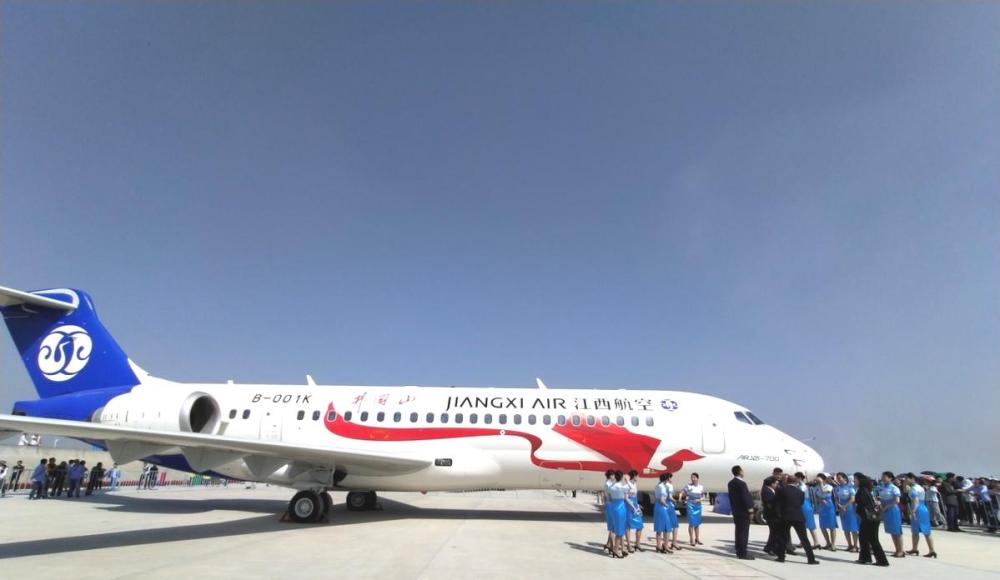
El Gobierno de China está aumentando la presión sobre las aerolíneas nacionales para que usen más aviones desarrollados y fabricados en el país, un impulso que podría presentar un gran desafío para Boeing de Estados Unidos y Airbus de Europa. La compañía aeroespacial COMAC (Corporación de Aviones Comerciales de China) se encuentra en el centro de la batalla de la industria aeronáutica. China prevé un futuro en el que las aerolíneas chinas dependan menos de Boeing y Airbus, y en el que los aviones fabricados en el país encuentren clientes en el extranjero.

Las tres aerolíneas líderes de China recientemente hicieron pedidos considerables de aviones regionales de fabricación nacional. Una aerolínea también está creando una compañía para operar una flota de aviones nacionales. China Southern Airlines, China Eastern Airlines y Air China, la aerolínea de bandera de la nación, anunciaron el 30 Agosto 2019 que cada una comprará 35 aviones regionales ARJ 21-700 fabricados por la COMAC. Las entregas de los aviones, que cuestan US$38 millones, comenzarán el próximo año y se extenderán hasta 2024.

El ARJ21, desarrollado bajo un proyecto nacional que comenzó en 2002, realizó su primer vuelo en 2008 y entró en servicio comercial en 2016, convirtiéndose en el primer avión de pasajeros chino en ser utilizado comercialmente. Con 78 a 90 asientos, el avión es aproximadamente del mismo tamaño que el Mitsubishi SpaceJet, que anteriormente conocido como Mitsubishi Regional Jet (MRJ). Mitsubishi Aircraft ofrece dos versiones del avión bimotor japonés en configuraciones que pueden acomodar de 70 a 92 pasajeros.

Embraer de Brasil tiene una sólida presencia en el mercado global de aviones regionales, y las aerolíneas chinas han sido grandes clientes. Para fin de año esperan las aprobaciones de los organismos de los respectivos países y a nivel mundial para la sinergia entre Embraer y Boeing en el área comercial. Embraer se nutrirá de la experiencia de Boeing consolidando la cartera de pedidos en sintonía con la compañía estadounidense.

Si bien COMAC ha recibido hasta ahora pedidos de unos 600 ARJ 21, solo se han entregado aproximadamente 10, principalmente a Chengdu Airlines, una aerolínea regional que pertenece en parte a COMAC. Pero Beijing quiere ver más aviones chinos en los cielos de China. En febrero, un alto funcionario de aviación civil declaró el lanzamiento de un plan respaldado por el gobierno para promover el uso de aviones de pasajeros fabricados en el país, y las recientes órdenes ARJ 21 de los tres grandes transportistas son signos tempranos de su efectividad.

Además de comprar ARJ 21, China Eastern Airlines también ha expandido su unidad de aviones comerciales, que opera una flota de aviones. La aerolínea, rebautizada como One Two Three Airline en agosto, servirá como plataforma para comprar más ARJ 21 que volarán rutas de corta distancia. Además, China Southern Airlines y Air China parecen estar considerando el establecimiento de nuevas aerolíneas que dependerán de los ARJ 21.

El gobierno chino, que tiende a ser lento y cauteloso al aprobar nuevas aerolíneas, parece haber dado luz verde a estos planes para ayudar al ARJ 21 a hacer incursiones nacionales. COMAC tiene la intención de aumentar la producción de ARJ21 ahora que cuenta con el apoyo de las políticas gubernamentales. La compañía, que tenía la capacidad de producir 15 ARJ 21 en 2018, tiene la intención de aumentar eso a 25 este año y a 30 en 2020. La compañía planea entregar más de 100 de los aviones en los próximos cinco años.

La agenda de crecimiento del fabricante de aviones también requiere el desarrollo de un avión de 160 asientos, el C919. La compañía apunta a obtener la certificación china para el C919 en 2021 y ha solicitado la certificación con la Agencia de Seguridad Aérea de la Unión Europea. Esto permitiría a Comac exportar sus aviones y desafiar directamente el Airbus A320 y el Boeing 737.

Otro avión de pasajeros desarrollado y fabricado en China es el Xian MA60, un turbopropulsor producido por Xi’an Aircraft Industrial, una unidad de la Aviation Industry Corporation de China (AVIC). El Xian MA60, que realizó su primer vuelo en 2000, se ha exportado a Zimbabwe y Laos.

Crecimiento aviación china

En 2018, el número de viajeros aéreos en China creció un 15,2% para llegar a 670 millones, convirtiendo al país en el segundo mercado de aviación más grande después de los Estados Unidos, según la Asociación Internacional de Transporte Aéreo (IATA). Entre los cinco principales mercados, China fue el único que registró un crecimiento de dos dígitos el año pasado. Los otros tres mercados son Gran Bretaña, España y Japón. El enorme crecimiento de la aviación china podría proporcionar un impulso poderoso para la incursión del país en el mercado internacional de aviones, que tiene el potencial de remodelar la industria aeronáutica mundial.AW-Icon-AW-TXT

29d82ff3-7d5f-4e85-8340-d216b30b217c_0 (1).jpgChina presses airlines to buy national

The Government of China increases pressure on domestic airlines to buy nationally manufactured aircraft

The Government of China is increasing pressure on domestic airlines to use more aircraft developed and manufactured in the country, a boost that could present a great challenge for Boeing in the United States and Airbus in Europe. The aerospace company COMAC (Commercial Aircraft Corporation of China) is at the center of the battle of the aviation industry. China foresees a future in which Chinese airlines rely less on Boeing and Airbus, and in which airplanes manufactured in the country find customers abroad.

The three leading airlines in China recently placed considerable orders for regional aircraft of national manufacture. An airline is also creating a company to operate a fleet of national aircraft. China Southern Airlines, China Eastern Airlines, and Air China, the nation’s flag carrier, announced on August 30, 2019, that each will buy 35 regional ARJ 21-700 aircraft manufactured by COMAC. Aircraft deliveries, which cost US$ 38 million, will begin next year and will run until 2024.

The ARJ21, developed under a national project that began in 2002, made its first flight in 2008 and entered commercial service in 2016, becoming the first Chinese passenger aircraft to be used commercially. With 78 to 90 seats, the plane is about the same size as the Mitsubishi SpaceJet, formerly known as Mitsubishi Regional Jet (MRJ). Mitsubishi Aircraft offers two versions of the Japanese twin-engine aircraft in configurations that can accommodate 70 to 92 passengers.

Embraer from Brazil has a strong presence in the global regional aircraft market, and Chinese airlines have been large customers. By the end of the year, they await the approvals of the agencies of the respective countries and worldwide for the synergy between Embraer and Boeing in the commercial area. Embraer will draw on Boeing’s experience by consolidating the order book in line with the US company.

While COMAC has so far received orders for about 600 ARJ 21, only about 10 have been delivered, mainly to Chengdu Airlines, a regional airline that belongs in part to COMAC, but Beijing wants to see more Chinese planes in the skies of China. In February, a senior civil aviation official declared the launch of a government-backed plan to promote the use of passenger aircraft manufactured in the country, and the recent ARJ 21 orders of the three major carriers are early signs of their effectiveness.

In addition to buying ARJ 21, China Eastern Airlines has also expanded its commercial aircraft unit, which operates a fleet of aircraft. The airline renamed One Two Three Airline in August, will serve as a platform to buy more ARJ 21 that will fly short-distance routes. In addition, China Southern Airlines and Air China seem to be considering the establishment of new airlines that will depend on the ARJ 21.

The Chinese government, which tends to be slow and cautious in approving new airlines, seems to have given the green light to these plans to help the ARJ 21 make national incursions. COMAC intends to increase the production of ARJ21 now that it has the support of government policies. The company, which had the capacity to produce 15 ARJ 21 in 2018, intends to increase that to 25 this year and 30 in 2020. The company plans to deliver more than 100 of the planes in the next five years.

The growth schedule of the aircraft manufacturer also requires the development of a 160-seat aircraft, the C919. The company aims to obtain Chinese certification for C919 in 2021 and has applied for certification with the European Union Air Safety Agency. This would allow Comac to export its aircraft and directly challenge the Airbus A320 and the Boeing 737.

Another passenger aircraft developed and manufactured in China is the Xian MA60, a turboprop produced by Xi’an Aircraft Industrial, a unit of the Aviation Industry Corporation of China (AVIC). The Xian MA60, which made its first flight in 2000, has been exported to Zimbabwe and Laos.

Chinese aviation growth

In 2018, the number of air travelers in China grew by 15.2% to reach 670 million, making the country the second-largest aviation market after the United States, according to the International Air Transport Association (IATA). Among the top five markets, China was the only one that registered double-digit growth last year. The other three markets are Britain, Spain, and Japan. The enormous growth of Chinese aviation could provide a powerful impetus for the country’s incursion into the international aircraft market, which has the potential to reshape the global aviation industry. A \ W

Resultado de imagen para government china aeronautics中國新聞航空公司購買全國

中國政府增加國內航空公司購買國產飛機的壓力

中國政府正在增加國內航空公司使用更多在該國開發和製造的飛機的壓力,這可能對美國的波音公司和歐洲的空中客車公司構成巨大挑戰。航空航天公司中國商用飛機公司(COMAC)是航空業爭奪戰的中心。中國預計中國航空公司對波音和空中客車的依賴程度較低,而且該國製造的飛機在海外尋找客戶。

中國三大航空公司最近為國家製造的支線飛機訂購了大量訂單。一家航空公司也正在建立一家運營國家飛機的公司。中國南方航空公司,中國東方航空公司和中國國航是該國的旗艦航空公司,於2019年8月30日宣佈各自將購買由中國商飛製造的35架ARJ 21-700型地區飛機。耗資3800萬美元的飛機交付將於明年開始,並將持續到2024年。

ARJ21是在2002年開始的國家項目下開發的,於2008年首飛,並於2016年投入商業服務,成為首個商用的中國客機。該飛機擁有78至90個座位,與三菱SpaceJet(以前稱為Mitsubishi Regional Jet(MRJ))的尺寸大致相同。三菱飛機提供兩種版本的日本雙引擎飛機,配置可容納70至92名乘客。

來自巴西的巴西航空工業公司在全球支線飛機市場佔有重要地位,中國航空公司也是大客戶。到今年年底,他們等待各國和全球各機構的批准,以實現巴西航空工業公司與波音公司在商業領域的協同作用。巴西航空工業公司將通過整合與美國公司一致的訂單來吸取波音公司的經驗。

雖然到目前為止COMAC已收到大約600架ARJ 21的訂單,但只有大約10架已經交付,主要是成都航空公司,這是一個屬於中國商飛的區域航空公司,但北京希望看到更多的中國飛機在中國的天空。 2月,一名民航高級官員宣布啟動政府支持的計劃,以促進在該國生產的客機的使用,最近三家主要航空公司的ARJ 21訂單是其有效性的早期跡象。

除購買ARJ 21外,中國東方航空公司還擴大了其商用飛機部隊,該部隊運營著一支飛機。該航空公司在8月更名為One Two Three Airline,將作為購買更多ARJ 21的平台,該航線將搭乘短途航線。此外,中國南方航空公司和國航似乎正在考慮建立依賴ARJ 21的新航空公司。

中國政府在批准新航空公司方面往往緩慢而謹慎,似乎已經為這些計劃開了綠燈,以幫助ARJ 21進行全國性的入侵。 COMAC打算在政府政策的支持下增加ARJ21的產量。該公司有能力在2018年生產15輛ARJ 21,計劃今年將其增加到25輛,並在2020年增加到30輛。該公司計劃在未來五年內交付100多架飛機。

飛機製造商的增長計劃還需要開發160座飛機,C919。該公司的目標是在2021年獲得C919的中國認證,並已向歐盟航空安全局申請認證。這將使Comac能夠出口其飛機並直接挑戰空中客車A320和波音737。

在中國開發和製造的另一架客機是西安航空工業公司(AVIC)旗下的西安飛機工業公司生產的渦輪螺旋槳飛機西安MA60。西安MA60於2000年首飛,目前已出口到津巴布韋和老撾。

中國航空業增長

根據國際航空運輸協會(IATA)的數據,2018年,中國的航空旅客人數增長了15.2%,達到6.7億人,使其成為僅次於美國的第二大航空市場。 在前五大市場中,中國是去年唯一一個實現兩位數增長的市場。 其他三個市場是英國,西班牙和日本。 中國航空業的巨大增長可以為該國入侵國際飛機市場提供強大動力,這有可能重塑全球航空業。A \ W


Ξ A I R G W A Y S Ξ
SOURCE: Airgways.com
DBk: Nikkei.com / Comac.cc / Airgways.com
AW-POST: 201909161102AR

A\W   A I R G W A Y S ®

Reguladores buscarán retorno 737 MAX

AW-7009989.jpg

AW | 2019 09 14 20:49 | INDUSTRY / AVIATION SAFETY

Boeing-Company-LogoThe Boeing Company aplica máximo esfuerzo por devolver al 737 MAX a los cielos

AW-Icon_Boeing 737 MAX

Boeing prepara un gran esfuerzo para devolver Boeing 737 MAX a los cielos del mundo. Mientras el constructor americano apunta a obtener la aprobación para volar su 737 MAX en cuestión de semanas, luego de una prohibición de seguridad de seis meses, los ingenieros de todo el mundo están implementando planes para una de las mayores operaciones logísticas en historia de la aviación civil, la evaluación de los reguladores mundiales para fiscalizar las aprobaciones de los últimos cambios en la seguridad de la aeronave en cuestión.

Dentro de la fábrica de Boeing en Renton, Washington, al sur de Seattle, los trabajadores han premontado kits de herramientas dedicadas para técnicos encargados de instalar actualizaciones de software y preparar más de 500 aviones Boeing 737 MAX que han estado inactivos durante meses, dijeron fuentes internas. Boeing tendrá que articular bien las entregas de las 250 unidades de las diferentes variantes producidas desde la prohibición de vuelo del 737 MAX, estacionadas en varias instalaciones y aquellos que saldrán de la línea de producción después de la aprobación.

La reubicación de cientos de aviones inactivos 737 MAX, que aportan aproximadamente el 40% de las ganancias antes de impuestos de Boeing, es crucial para la salud del principal exportador corporativo de Estados Unidos y el sector manufacturero más amplio del país, cuya reciente pérdida de impulso ha llevado aún más lejos golpe de la crisis. Boeing recibe gran parte de su efectivo en el momento de la entrega y Fitch Ratings & Moody’s han advertido que su perspectiva estable puede estar en riesgo, ya que sus entregas de aviones caen un 72% este año.

Los preparativos para un retorno al servicio se ajustan a la suposición actual de la compañía de que el 737 MAX reanudará los vuelos comerciales en el plazo de Octubre-Diciembre 2019, expresó el Presidente Ejecutivo Dennis Muilenburg.

AW-7003007.pngReguladores mundiales

El Wall Street Journal informó el 1 Septiembre 2019 que una reunión informativa de Boeing en Agosto 2019 fue interrumpida por los reguladores estadounidenses, europeos y otros que se quejaron de que la compañía no respondió preguntas específicas sobre modificaciones en la operación de las computadoras de control de vuelo del 737 MAX.

En todo el mundo, los equipos de Boeing están preparando horarios de entrega, y términos financieros, con clientes de líneas aéreas que se han visto obligados a cancelar vuelos, cortar rutas y volar viejos aviones mientras esperan el regreso de 737 MAX. Aunque los reguladores aún deben aprobar los aviones para el vuelo, Boeing y el personal y los ejecutivos de la aerolínea dicen que el fabricante de aviones más grande del mundo tiene semanas en un plan detallado para la producción, el mantenimiento y la entrega que, según una fuente, involucra a 1.500 ingenieros.

Boeing está esperanzada de devolver al 737 MAX en el 4Q2019. Pero la línea de tiempo está en manos de reguladores divididos en todo el mundo que deben aprobar la solución de software propuesta por Boeing para los controles de vuelo del Boeing 737 MAX y nuevos materiales de capacitación. Los reguladores europeos planean sus propios vuelos de prueba sobre los cambios. «No controlamos esa línea de tiempo. Vamos a trabajar con los reguladores y estamos avanzando hacia esa línea de tiempo. Pero si esa fecha de regreso al servicio cambia, afectará todo lo demás», dijo Dennis Muilenburg.

Boeing atenderá una flota de 387 aviones Boeing 737 MAX que entraron en servicio antes de la puesta a tierra, aunque Boeing ya ha desplegado equipos en todo el mundo para ayudar a las aerolíneas a prepararse para ese proceso.

La Federal Aviation Administration (FAA) ha dicho repetidamente que no certificará que el avión Boeing 737 MAX vuelva a volar hasta que sea seguro hacerlo. En tanto la Agencia de Seguridad Aérea de la Unión Europea (EASA) dijo el Martes 10/09 que «tiene la intención de realizar sus propios vuelos de prueba por separado, pero en plena coordinación con la FAA. Los vuelos de prueba aún no están programados, la fecha dependerá del programa de desarrollo de Boeing».

Muilenburg dijo que es posible que no todos los reguladores de todo el mundo aprueben simultáneamente el 737 MAX para volar nuevamente. Boeing ha dicho que planea realizar un vuelo de prueba de certificación para este mes. Algunos funcionarios no esperan que el 737 MAX reanude los vuelos hasta principios de 2020.

En cuanto a la República de la India, realizará su propia revisión del Boeing 737 MAX después de que la FAA complete sus pruebas, antes de que pueda volar en el espacio aéreo indio. Boeing espera tener el 737 MAX volando a principios del cuarto trimestre 2019, pero la Dirección General de Aviación Civil (DGAC) de la India no espera que el avión vuele en India antes del próximo año.

India ha sido el mercado de viajes aéreos nacionales de más rápido crecimiento durante cuatro años consecutivos, según la Asociación Internacional de Transporte Aéreo (IATA).

Resultado de imagen para Boeing 737 MAXBoeing testea al 737 MAX

Boeing ha dicho a los proveedores que espera que el avión vuele a principios de Noviembre 2019. Una vez que los reguladores certifiquen el 737 MAX para el vuelo, Boeing tendrá que movilizar a cientos de mecánicos y pilotos para sacar de la hibernación a los aproximadamente 250 aviones almacenados.

Las aerolíneas estiman que el proceso, que incluye la instalación de un nuevo software, el cambio de líquidos y el ciclo de los motores, tomará de 100 a 150 horas por avión y meses en total para Boeing. En un ejemplo que destaca los riesgos minúsculos que podrían invertir meses de planificación, un equipo de empleados está analizando años de datos sobre las nevadas de Diciembre en un aeropuerto en la zona rural de Moses Lake, Washington, donde Boeing ha estacionado cerca de 100 aviones, para predecir la demanda de aviones anticongelamiento y rendimiento en la pista. El proceso de mantenimiento será seguido por varios días de vuelos de prueba como parte de un período estándar de aceptación del cliente, pero otro desafío es encontrar suficientes pilotos para superar la acumulación. Como resultado, Boeing está explorando un acuerdo para pilotos temporales con la tripulación aérea y proveedor de capacitación CCL Aviation con sede en la Isla de Man para complementar a los pilotos de su personal, dijo una persona con conocimiento del asunto.

Resultado de imagen para Boeing 737 MAX grounded airlinesTurno de las aerolíneas

No está claro qué clientes recibirán primero las entregas. Mucho dependerá de qué tan rápido otros reguladores globales que han prometido su propio escrutinio sigan el ejemplo de los Estados Unidos. «Dada la acumulación de aviones almacenados, ese proceso de aceptación del cliente podría retrasarse», dijo Andrew Watterson, Director de Ingresos de Southwest Airlines.

Algunos, como United Airlines, han dicho que quieren los aviones tan pronto como sea posible, pero otros pueden aprovechar la oportunidad para ajustar las entregas. Si bien las aerolíneas habían estado ansiosas por agregar los modelos de ahorro de combustible antes del verano pico del hemisferio norte, menos tienden a agregar capacidad en el mes más tranquilo de noviembre.

El eventual retorno del Boeing 737 MAX también pondrá a prueba un mercado de aviación cada vez más frágil. El crecimiento del tráfico se ha reducido desde la base, en parte como resultado de las tensiones comerciales mundiales, según la Asociación Internacional de Transporte Aéreo (IATA). Dennis Muilenburg ha minimizado las preocupaciones sobre la demanda de las aerolíneas, diciendo en una conferencia esta semana que el mercado sigue siendo sólido.

Unos 250 aviones están almacenados, pero alrededor de una docena están destinados a arrendadores que aún no los han colocado en las aerolíneas, o fueron construidos para transportistas ahora en quiebra como Jet Airways, dijeron fuentes de la industria. Los analistas dicen que algunas aerolíneas pueden tratar de usar la conexión a tierra como una cortina de humo para tratar de cancelar los pedidos, algo que Boeing resistiría.

Las principales aerolíneas estadounidenses han cancelado vuelos hasta Diciembre 2019 como resultado de la conexión a tierra 737 MAX, incluidas American Airlines y United Airlines, mientras que Southwest Airlines ha cancelado vuelos a principios de Enero 2020.

Estado solicita investigaciones

El Jueves 12 Septiembre 2019, el Congreso de los Estados Unidos solicitó al Director Ejecutivo Dennis Muilenburg de la compañía americana The Boeing Company, que pusiera a disposición a varios empleados para entrevistas como parte de una investigación del Congreso sobre el diseño, desarrollo y certificación de aviones 737 MAX involucrados en dos accidentes aéreos.

El Presidente del Comité de Transporte de la Cámara de Representantes, Peter DeFazio, y el Representante Rick Larsen, que preside el Subcomité de Aviación, dijeron en un comunicado que, si bien Boeing ha proporcionado documentos sustanciales y ha compartido la perspectiva de la alta gerencia, «es importante para la investigación del comité escuchar a los empleados relevantes de Boeing». El Comité planea otra audiencia de Boeing en las próximas semanas y previamente solicitó a los denunciantes que presentaran cualquier información sobre el desarrollo del avión. Boeing ha proporcionado más de 300.000 páginas de documentos, dijo una persona informada sobre el asunto, que habló bajo condición de anonimato. Boeing dijo en un comunicado que estaba «profundamente decepcionado de que el Comité eligiera publicar correspondencia privada dada nuestra amplia cooperación hasta la fecha. Seguiremos siendo transparentes y receptivos al Comité».

El 737 MAX, el avión más vendido de Boeing, aterrizó globalmente en Marzo 2019, días después del accidente del vuelo ET-302 de Ethiopian Airlines que siguió a un desastre similar del primer accidente del vuelo JT-610 de Lion Air en Indonesia en Octubre 2018. Un total de 346 personas murieron en los dos accidentes aéreos.

Los fiscales federales con la ayuda del FBI, el Inspector General del Departamento de Transporte (DOT) y varios paneles están investigando el 737 MAX y cómo la Administración Federal de Aviación (FAA) certifica nuevos aviones.

El Presidente Ejecutivo de Boeing dijo en una conferencia de inversionistas el Miércoles 11 Septiembre 2019 que la compañía todavía está apuntando «a principios del cuarto trimestre para que el avión vuelva a estar en el aire, el regulador determinará en última instancia el tiempo de retorno al servicio».AW-Icon-AW-TXT

Resultado de imagen para Boeing 737 MAXRegulators will seek 737 MAX return

Boeing-Logo.svg.pngThe Boeing Company applies maximum effort to return 737 MAX to the skies

Boeing prepares a great effort to return Boeing 737 MAX to the skies of the world. While the American builder aims to obtain approval to fly its 737 MAX in a matter of weeks, after a six-month security ban, engineers around the world are implementing plans for one of the largest logistics operations in aviation history civil, the evaluation of global regulators to monitor the approvals of the latest changes in the safety of the aircraft in question.

Inside the Boeing factory in Renton, Washington, south of Seattle, workers have pre-assembled dedicated tool kits for technicians responsible for installing software updates and preparing more than 500 Boeing 737 MAX aircraft that have been idle for months, sources said. internal Boeing will have to articulate well the deliveries of the 250 units of the different variants produced since the 737 MAX flight ban, parked in several facilities and those that will leave the production line after approval.

The relocation of hundreds of inactive 737 MAX aircraft, which contribute approximately 40% of Boeing’s pre-tax profits, is crucial to the health of the main corporate exporter in the United States and the largest manufacturing sector in the country, whose recent loss of momentum has taken even further blow of the crisis. Boeing receives much of its cash at the time of delivery and Fitch Ratings & Moody’s have warned that their stable outlook may be at risk, as their aircraft deliveries fall 72% this year.

Preparations for a return to service are consistent with the company’s current assumption that 737 MAX will resume commercial flights within the October-December 2019 period, Executive President Dennis Muilenburg said.

Global regulators

imagesThe Wall Street Journal reported on September 1, 2019, that a Boeing briefing on August 2019 was interrupted by U.S., European and other regulators who complained that the company did not answer specific questions about changes in the operation of control computers for 737 MAX flight.

Around the world, Boeing teams are preparing delivery schedules, and financial terms, with airline customers who have been forced to cancel flights, cut routes and fly old planes while waiting for the return of 737 MAX. Although regulators have yet to approve airplanes for the flight, Boeing and airline staff and executives say the world’s largest aircraft manufacturer has weeks in a detailed plan for production, maintenance and delivery that, according to One source, involves 1,500 engineers.

Boeing is hoping to return to 737 MAX in 4Q2019. But the timeline is in the hands of regulators divided around the world who must approve the software solution proposed by Boeing for the flight controls of the Boeing 737 MAX and new training materials. European regulators plan their own test flights on the changes. «We don’t control that timeline. We’re going to work with regulators and we’re moving towards that timeline. But if that date of return to service changes, it will affect everything else», said Dennis Muilenburg.

Boeing will serve a fleet of 387 Boeing 737 MAX aircraft that went into service before grounding, although Boeing has already deployed equipment worldwide to help airlines prepare for that process.

The Federal Aviation Administration (FAA) has repeatedly said it will not certify that the Boeing 737 MAX will fly again until it is safe to do so. Meanwhile, the European Union Air Safety Agency (EASA) said on Tuesday 10/09 that «it intends to conduct its own test flights separately, but in full coordination with the FAA. Test flights are not yet scheduled, the date will depend on the Boeing development program».

Muilenburg said it is possible that not all regulators around the world simultaneously approve the 737 MAX to fly again. Boeing has said it plans to perform a certification test flight for this month. Some officials do not expect the 737 MAX to resume flights until early 2020.

As for the Republic of India, it will conduct its own review of the Boeing 737 MAX after the FAA completes its tests before it can fly into Indian airspace. Boeing expects to have the 737 MAX flying at the beginning of the fourth quarter of 2019, but the General Directorate of Civil Aviation (DGAC) of India does not expect the plane to fly in India before next year.

India has been the fastest growing national air travel market for four consecutive years, according to the International Air Transport Association (IATA).

Boeing tests 737 MAX

Boeing has told suppliers that it expects the plane to fly at the beginning of November 2019. Once regulators certify 737 MAX for the flight, Boeing will have to mobilize hundreds of mechanics and pilots to hibernate the approximately 250 Stored airplanes.

The airlines estimate that the process, which includes installing new software, changing fluids and the engine cycle, will take 100 to 150 hours per plane and months in total for Boeing. In an example that highlights the tiny risks that months of planning could invest, a team of employees is analyzing years of data on December snowfall at an airport in rural Moses Lake, Washington, where Boeing has parked about 100 aircraft, to predict the demand for antifreeze and performance aircraft on the runway. The maintenance process will be followed by several days of test flights as part of a standard period of customer acceptance, but another challenge is to find enough pilots to overcome the accumulation. As a result, Boeing is exploring an agreement for temporary pilots with the aircrew and CCL Aviation training provider based in the Isle of Man to complement the pilots of its staff, said a person with knowledge of the matter.

Airlines turn

It is not clear which customers will receive deliveries first. Much will depend on how quickly other global regulators who have promised their own scrutiny follow the example of the United States. «Given the accumulation of stored airplanes, that customer acceptance process could be delayed», said Andrew Watterson, Director of Revenue for Southwest Airlines.

Some, like United Airlines, have said they want the planes as soon as possible, but others can take the opportunity to adjust deliveries. While airlines had been eager to add fuel-saving models before the peak summer of the northern hemisphere, fewer tend to add capacity in the quieter month of November.

The eventual return of the Boeing 737 MAX will also test an increasingly fragile aviation market. Traffic growth has been reduced from the base, partly as a result of global trade tensions, according to the International Air Transport Association (IATA). Dennis Muilenburg has minimized concerns about airline demand, saying at a conference this week that the market is still strong.

About 250 airplanes are stored, but about a dozen are intended for landlords that have not yet placed them on the airlines or were built for carriers now-bankrupt like Jet Airways, industry sources said. Analysts say some airlines may try to use the ground connection as a smokescreen to try to cancel orders, something Boeing would resist.

Major US airlines have canceled flights through December 2019 as a result of the 737 MAX grounding, including American Airlines and United Airlines, while Southwest Airlines has canceled flights in early January 2020.

State requests investigations

On Thursday, September 12, 2019, the United States Congress requested the Executive Director Dennis Muilenburg of the American company The Boeing Company to make several employees available for interviews as part of a congressional investigation into the design, development, and certification of 737 MAX aircraft involved in two air accidents.

The Chairman of the House Committee of Representatives, Peter DeFazio, and Representative Rick Larsen, who chairs the Aviation Subcommittee, said in a statement that, although Boeing has provided substantial documents and shared the perspective of senior management, «It is important for the committee’s investigation to listen to relevant Boeing employees». The Committee plans another Boeing hearing in the coming weeks and previously requested the complainants to submit any information on the development of the aircraft. Boeing has provided more than 300,000 pages of documents, said an informed person on the matter, who spoke on condition of anonymity. Boeing said in a statement that he was «deeply disappointed that the Committee chose to publish private correspondence given our extensive cooperation to date. We will remain transparent and responsive to the Committee».

The 737 MAX, the best-selling Boeing aircraft, landed globally on March 2019, days after the Ethiopian Airlines flight ET-302 crash that followed a similar disaster from the first Lion Air JT-610 crash in Indonesia in October 2018. A total of 346 people died in two air accidents.

Federal prosecutors with the help of the FBI, the Inspector General of the Department of Transportation (DOT) and several panels are investigating the 737 MAX and how the Federal Aviation Administration (FAA) certifies new aircraft.

The Boeing Executive President said at an investor conference on Wednesday 11 September 2019 that the company is still aiming «at the beginning of the fourth quarter so that the plane is back in the air, the regulator will ultimately determine the return time to the service». A \ W


Ξ A I R G W A Y S Ξ
SOURCE: Airgways.com
DBk: Boeing.com / Straitstimes.com / Reuters.com / Seattletimes.com / Airgways.com
AW-POST: 201909142049AR

A\W   A I R G W A Y S ®


Airbus implementará tecnología rastreo en cabina pasajeros

Resultado de imagen para Airbus cabin  flight labAW | 2019 09 14 15:02 | INDUSTRY

logo_airbus (2)Los nuevos aviones de Airbus rastrearán cada uno de los movimientos a través de la cabina

Cuando los nuevos aviones Airbus salgan de la línea de ensamblaje en los próximos dos años, estarán equipados para seguir cada uno de los movimientos a través de la cabina del avión que estará destinado a mejorar su experiencia en un vuelo futuro.

La nueva cabina de experiencia conectada de Airbus rastreará casi todo lo que los pasajeros hacen a bordo, incluidas las películas que miran, las comidas o bebidas que ordenan, dónde colocan sus maletas de mano, incluso cuándo y con qué frecuencia van al baño. «Estos componentes ya están volando en nuestro llamado laboratorio de vuelo para realmente probarlo en condiciones de vuelo», dice Ingo Wuggetzer, Vicepresidente de Marketing de Cabina en Airbus. Ese «laboratorio de vuelo» es una cabina de prueba a bordo de un avión Airbus A350, y Airbus está trabajando con las aerolíneas para implementarlo en sus aviones tan pronto como 2021.

La cabina conectada es esencialmente una serie de sensores en la mayoría de los lugares del avión, en los asientos de los pasajeros, en los pasillos, dentro de la cocina e incluso en el pestillo de la puerta del lavabo, todos enrutados al Wi-Fi de la aeronave, dependiendo de qué datos la aerolínea está interesada. «Conectamos todas las cosas relevantes en la cabina de la aeronave para brindar un servicio más personalizado al pasajero», dice Wuggetzer. Los datos se envían a una pantalla LED grande y liviana en la parte posterior del avión, así como a iPads manejados por la tripulación de cabina. Algunos de los elementos que actualmente se someten a pruebas en la cabina del A350 incluyen contenedores superiores con indicadores que muestran si hay espacio vacío. También aparecerá en las tabletas de los auxiliares de vuelo donde queda espacio en el avión para agilizar el proceso de embarque.

Airbus está desarrollando una aplicación para esta cabina de prueba, que los pasajeros podrán descargar en sus teléfonos móviles para controlar aún más su experiencia en el vuelo. Los asientos tendrán sensores conectados a la aplicación, por lo que los pasajeros pueden usarla para reclinarse en lugar de presionar un botón en el reposabrazos. Los pasajeros podrán solicitar bebidas y bocadillos a través de una aplicación que hará ping a las tabletas de la tripulación en la cocina.

Los sensores en el asiento tienen un doble propósito. La tripulación también podrá detectar información sobre los reposabrazos y los cinturones de seguridad, por lo que no tendrán que atravesar la cabina para revisar cada uno. En cambio, si el asiento de un pasajero no está en posición totalmente vertical o no está abrochado, las azafatas recibirán una notificación en sus tabletas que indica qué asiento debe guardarse o si debe abrocharse el cinturón de seguridad.

La cabina también cuenta con cámaras fuera de los baños del avión. Al usar la aplicación, los pasajeros podrán ver cuántas personas esperan usar el baño (las caras están borrosas por privacidad), y la aplicación estimará cuánto tiempo dura la espera para usar las instalaciones. Dentro del baño, habrá sensores que le indicarán a la tripulación cuándo es necesario reponer el papel higiénico, pañuelos, jabón u otros suministros, así como un «espejo inteligente» que mostrará información sobre el vuelo y otros detalles.

Todos los datos beneficiarán a las aerolíneas y las ayudarán a optimizar el diseño de su cabina y lo que están vendiendo a los pasajeros. La comida y bebida, el entretenimiento a bordo y los artículos libres de impuestos, por ejemplo, se rastrearán y personalizarán según lo que los pasajeros hayan comprado en el pasado. Las aerolíneas podrán agregar nuevas características y elementos a la plataforma de experiencia conectada de Airbus. La plataforma tecnológica también se puede agregar a las cabinas en aviones nuevos o modernizarse a los más antiguos.

Después del período de prueba, Airbus tiene como objetivo implementar la experiencia de cabina conectada para los clientes en sus nuevos aviones de pasillo único en 2021, seguido de sus aviones A350 en 2023.AW-Icon-AW-TXT

Resultado de imagen para Airbus A320 cabin paxAirbus implements cabin tracking technology

The new Airbus aircraft will track each of the movements through the cabin

When the new Airbus planes leave the assembly line in the next two years, they will be equipped to follow each of the movements through the cabin of the plane that will be destined to improve their experience on a future flight.

The new Airbus connected experience cabin will track almost everything passengers do onboard, including the movies they watch, the food or drinks they order, where they put their handbags, even when and how often they go to the bathroom. «These components are already flying in our so-called flight lab to really test it in flight conditions», says Ingo Wuggetzer, Vice President of Cabin Marketing at Airbus. That «flight lab» is a test booth on board an Airbus A350 aircraft, and Airbus is working with airlines to implement it on their planes as early as 2021.

The connected cabin is essentially a series of sensors in most places on the plane, in passenger seats, in the hallways, inside the kitchen and even in the sink door latch, all routed to Wi-Fi of the aircraft, depending on what data the airline is interested. «We connect all the relevant things in the cabin of the aircraft to provide a more personalized service to the passenger», says Wuggetzer. The data is sent to a large and light LED display on the back of the plane, as well as to iPads managed by the cabin crew. Some of the elements that are currently being tested in the A350 cabin include top containers with indicators that show if there is empty space. It will also appear on the flight attendants tablets where there is space on the plane to speed up the boarding process.

Airbus is developing an application for this test booth, which passengers can download to their mobile phones to further control their flight experience. The seats will have sensors connected to the application, so passengers can use it to recline instead of pressing a button on the armrest. Passengers may request drinks and snacks through an application that will ping the crew’s tablets in the kitchen.

The sensors in the seat have a dual purpose. The crew will also be able to detect information about the armrests and safety belts, so they will not have to go through the cabin to check each one. On the other hand, if a passenger’s seat is not fully upright or not buckled, the hostesses will receive a notification on their tablets indicating which seat should be stored or if the seat belt should be fastened.

The cabin also has cameras outside the plane’s bathrooms. When using the application, passengers will be able to see how many people expect to use the bathroom (faces are blurred by privacy), and the application will estimate how long the wait lasts to use the facilities. Inside the bathroom, there will be sensors that will tell the crew when it is necessary to replace the toilet paper, tissues, soap or other supplies, as well as a «smart mirror» that will show information about the flight and other details.

All the data will benefit the airlines and help them optimize the design of their cabin and what they are selling to passengers. Food and drink, on-board entertainment and duty-free items, for example, will be tracked and customized according to what passengers have bought in the past. Airlines may add new features and elements to the Airbus connected experience platform. The technology platform can also be added to the cabins in new aircraft or modernized to the older ones.

After the test period, Airbus aims to implement the connected cabin experience for customers in its new single-aisle aircraft in 2021, followed by its A350 aircraft in 2023. A \ W


Ξ A I R G W A Y S Ξ
SOURCE: Airgways.com
DBk: Airbus.com / Cnbc.com / Lonelyplanet.com
AW-POST: 201909141502AR

A\W   A I R G W A Y S ®

EasyJet recibe el A320 Nº 9.000

AW-70110076.pngAW | 2019 09 14 13:58 | AIRLINES / INDUSTRY

Resultado de imagen para easyjet logoEasyjet toma entrega del Airbus A320 número 9.000

Airbus Group ha entregado a la aerolínea Easyjet de Gran Bretañaaw-70099433-1.jpg la aeronave de la familia A320 número 9.000 este Viernes 13 Septiembre 2019 marcando todo un hito en la aviación comercial. La aerolínea británica de bajo costo EasyJet celebró este gran acontecimiento; en la cuenta de Twitter, el fabricante de aviones europeo expresó: “8,997-8,998-8,999-9,000! ¡Orgulloso de entregar el avión número 9.000 de la familia # A320 a nuestros amigos en @easyJet! Estamos seguros de que el nuevo # A320NEO se sentirá como en casa en la flota de toda la aerolínea de Airbus».

La última incorporación de easyJet a su flota, un número de registro Airbus A320NEO G-UZLG, dejó el campo de operaciones de Airbus en el Aeropuerto Hamburg Finkenwerder (XFW) el Martes 10 Septiembre 2019 hacia el Aeropuerto London Luton (LTN). Esta última llegada a la flota easyJet all-Airbus es parte de un pedido de 17 A320NEO adicionales. Junto con 30 A321NEOs en orden lleva easyJet a un total de 468 aviones de la familia A320. Cuando se habla de la orden durante 17 A320NEOs adicionales en noviembre pasado Airbus Director Comercial Christian Scherer dijo: “Este pedido repetido consolida la posición de easyJet como el mayor operador europeo de nuestra familia líder A320. Estamos encantados de que nuestros aviones sigan contribuyendo al éxito continuo de easyJet».

El nuevo A320NEO de pasillo único easyJet tiene 186 asientos en una configuración de clase única y funciona con dos motores LEAP internacionales General Electric-Safran CFM. EasyJet es el operador Airbus de pasillo único más grande del mundo. El A320NEO incorpora todas las últimas tecnologías que incluyen una nueva generación de motores más silenciosos y más eficientes en combustible y dispositivos Sharklet de punta de ala que también agregan los ahorros de combustible de la aeronave.

Easyjet all-Airbus

La aerolínea económica con sede en Luton actualmente opera 331 aviones Airbus y tiene otros 110 pedidos, lo que hace que easyJet sea el mayor operador mundial de aviones Airbus de pasillo único. easyJet vuela más de 1,000 rutas a 130 destinos en 31 países de Europa desde 29 bases, la más grande de las cuales es Londres Gatwick (LGW).

Nuevas rutas

EasyJet ha anunciado seis nuevas rutas de invierno boreal para la temporada 2019/2020: Manchester-Hurghada (Egipto), Manchester-Rovaniemi (Laponia) y Manchester-Verona (Italia), Belfast-Marrakech, Bristol-Hurghada, Liverpool a Tenerife

Easyjet, sus comienzos

La low cost británica Easyjet inició sus operaciones en 1995, llegando a transportar 88,5 millones de pasajeros en 2018, convirtiéndose en la segunda aerolínea de bajo costo más grande de Europa después de la irlandesa Ryanair.

Familia A320

La familia de aviones A320NEO es la aeronave de pasillo único más vendida en el mundo. El Airbus A320NEO es la aeronave de pasillo único más vendida en el mercado con más de 6.200 pedidos de más de 100 clientes desde su llegada al mercado en 2010.

El 22 Febrero 1987, el primer Airbus de la familia A320 volaba por primera vez para comenzar un capítulo que ha durado más de tres décadas en la historia de la aviación mundial. Con Air France como primer operador, la familia A320 está compuesta por los modelos A318, A319, A320 y A321. El A320 fue el buque insignia de la familia, debutando con Air France en 1988 en la variante A320-100. Años más tarde, Airbus anunció que lanzaría una versión de 185 asientos, que se convertiría en el A321, siendo la primera unidad entregada a Lufthansa en 1994. Dos años más tarde, el Airbus A319 debutó por Swissair, a 4 metros del A320. Finalmente, en 2003 Frontier Airlines recibió el A318, denominado «BabyBus», como el avión más pequeño de la familia A320.

El principal cambio de los aviones de su época, y también el más controvertido de todos, fue la introducción de Fly-By-Wire (FBW). En lugar de controlar las superficies de control de vuelo mediante poleas y cables conectados directamente al joystick y los pedales, el A320 utiliza un sistema de cable y actuador para controlar el avión a través de una computadora de vuelo. El sidestick de estilo avión de combate se introdujo junto a él, que era un stick simple en lugar del joystick para controlar el avión. Básicamente, el FBW funciona con el piloto dando comandos por barra lateral, que son interpretados por una computadora y transmitidos electrónicamente a los actuadores en las superficies de control.AW-Icon-AW-TXT

Resultado de imagen para easyjet A320neo pngEasyJet receives the A320 Nº 9,000

Easyjet takes delivery of Airbus A320 number 9,000

logo_airbus (2)Airbus Group has delivered to the Easyjet airline of Great Britain the A320 family aircraft number 9,000 this Friday, September 13, 2019, marking a milestone in commercial aviation. The British low-cost airline EasyJet celebrated this great event; On the Twitter account, the European aircraft manufacturer said: “8,997-8,998-8,999-9,000! Proud to deliver plane number 9,000 of family # A320 to our friends at @easyJet! We are sure that the new # A320NEO will feel at home in the entire Airbus airline fleet».

EasyJet’s latest addition to its fleet, an Airbus A320NEO G-UZLG registration number, left the Airbus field of operations at Hamburg Finkenwerder Airport (XFW) on Tuesday, September 10, 2019, to London Luton Airport (LTN). This latest arrival in the EasyJet all-Airbus fleet is part of an order for an additional 17 A320NEO. Together with 30 A321NEOs in order, it takes easyJet to a total of 468 A320 family aircraft. When discussing the order for an additional 17 A320NEOs last November, Airbus Commercial Director Christian Scherer said: “This repeated request consolidates the position of easyJet as the largest European operator in our leading A320 family. We are delighted that our aircraft continue to contribute to the continued success of easyJet».

The new EasyJet single-aisle A320NEO has 186 seats in a single class configuration and works with two General Electric-Safran CFM International LEAP engines. EasyJet is the largest single-aisle Airbus operator in the world. The A320NEO incorporates all the latest technologies that include a new generation of quieter and more fuel-efficient engines and wingtip Sharklet devices that also add fuel savings to the aircraft.

Easyjet all-Airbus

The Luton-based economic airline currently operates 331 Airbus aircraft and has another 110 orders, making easyJet the world’s largest single-aisle Airbus aircraft operator. Easyjet flies over 1,000 routes to 130 destinations in 31 European countries from 29 bases, the largest of which is London Gatwick (LGW).

New routes

EasyJet has announced six new boreal winter routes for the 2019/2020 season: Manchester-Hurghada (Egypt), Manchester-Rovaniemi (Lapland) and Manchester-Verona (Italy), Belfast-Marrakech, Bristol-Hurghada, Liverpool to Tenerife

Easyjet, its beginnings

The British low-cost Easyjet began operations in 1995, reaching 88.5 million passengers in 2018, becoming the second-largest low-cost airline in Europe after the Irish Ryanair.

A320 family

The A320NEO family of aircraft is the most sold single-aisle aircraft in the world. The Airbus A320NEO is the most sold single-aisle aircraft in the market with more than 6,200 orders from more than 100 customers since its arrival in the market in 2010.

On February 22, 1987, the first Airbus of the A320 family was flying for the first time to begin a chapter that has lasted more than three decades in the history of world aviation. With Air France as the first operator, the A320 family consists of the A318, A319, A320, and A321 models. The A320 was the family’s flagship, debuting with Air France in 1988 on the A320-100 variant. Years later, Airbus announced that it would launch a version of 185 seats, which would become the A321, being the first unit delivered to Lufthansa in 1994. Two years later, the Airbus A319 debuted by Swissair, 4 meters from the A320. Finally, in 2003 Frontier Airlines received the A318, called «BabyBus», as the smallest aircraft in the A320 family.

The main change of the aircraft of its time, and also the most controversial of all, was the introduction of Fly-By-Wire (FBW). Instead of controlling the flight control surfaces using pulleys and cables connected directly to the joystick and the pedals, the A320 uses a cable and actuator system to control the plane through a flight computer. The fighter-style sidestick was introduced next to him, which was a simple stick instead of the joystick to control the plane. Basically, the FBW works with the pilot by giving commands by the sidebar, which are interpreted by a computer and transmitted electronically to the actuators on the control surfaces. A \ W


Ξ A I R G W A Y S Ξ
SOURCE: Airgways.com
DBk: Airbus.com / Airgways.com / Easyjet.com
AW-POST: 201909141358AR

A\W   A I R G W A Y S ®