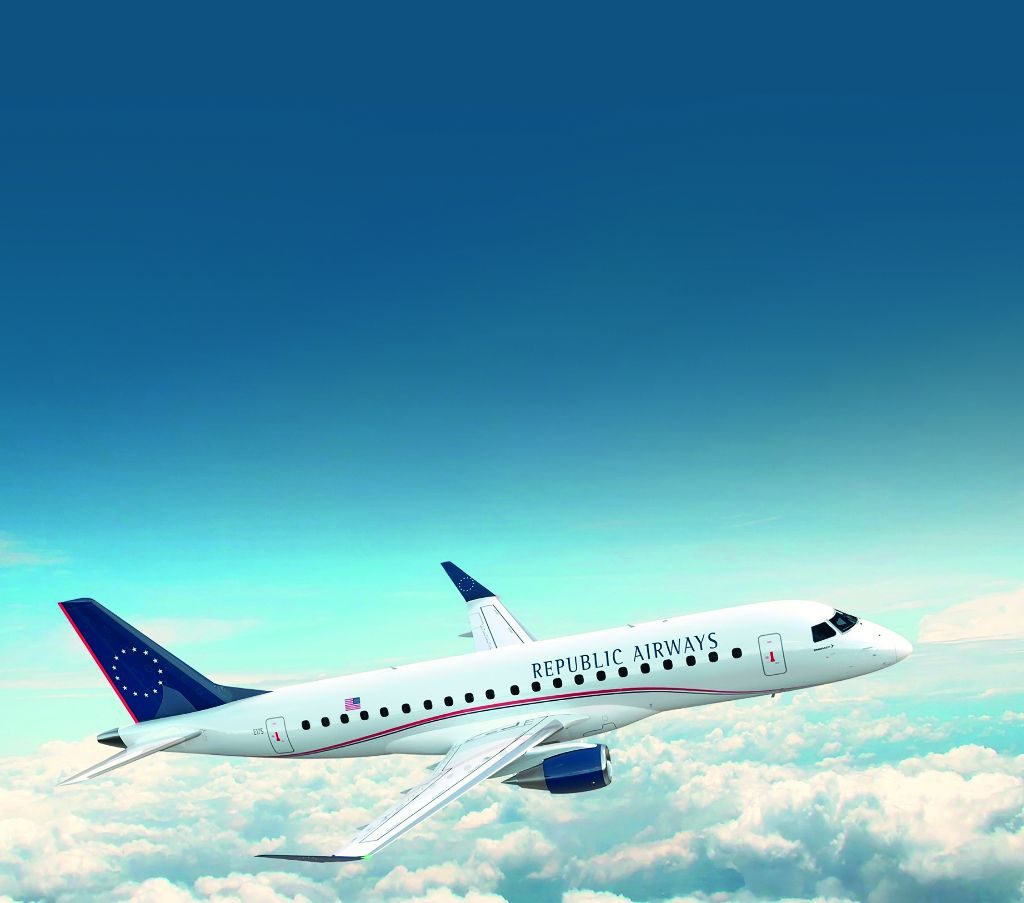
China encuentra FDR MU5735

AW | 2022 03 27 09:19 | AIR INVESTIGATION / AVIATION SAFETY

China encuentra segunda caja negra vuelo China Eastern

AW-China Eastern__MU5735_TTL

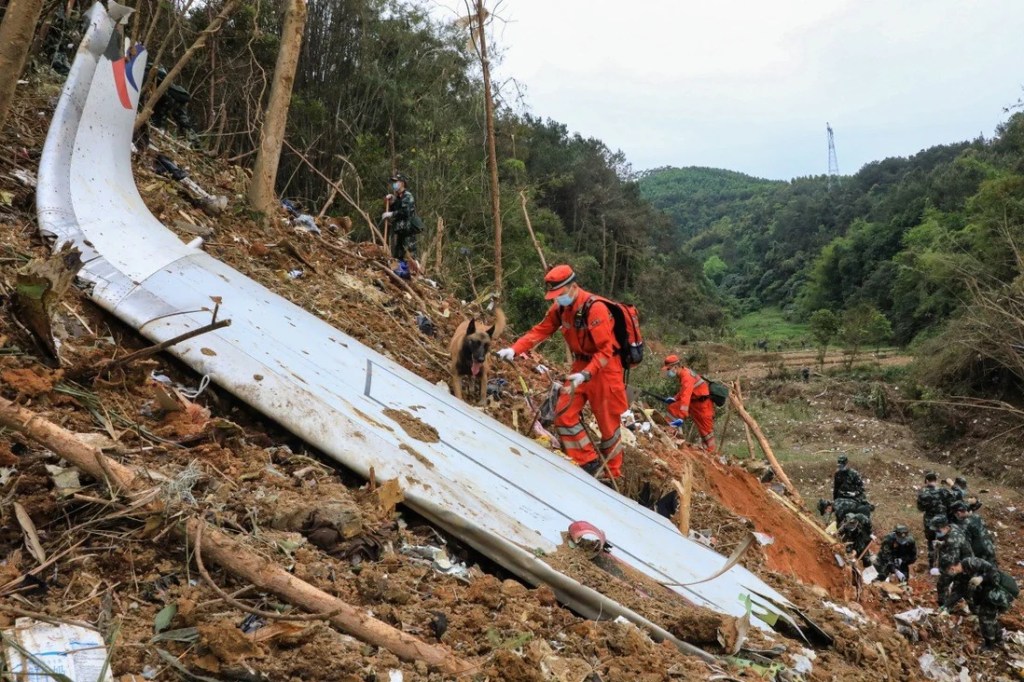
Los equipos de recuperación encontraron el Domingo 27/03 la segunda caja negra de la aeronave accidentada del vuelo MU5735 de China Eastern Airlines. El segundo dispositivo es el Registrador de Datos de Vuelo (FDR), localizado entre los restos de un avión Boeing 737-800 que se estrelló en la ladera de una montaña en el sur de China. Los trabajadores de recuperación han encontrado la segunda caja negra del vuelo MU5735 de China Eastern Airlines, lo que podría ofrecer pistas vitales sobre el accidente en el que murieron 132 personas. «Era cilíndrico y estaba cubierto de tierra», dijo Chen Xiaohui, Subcomandante de la Brigada de Bomberos en la capital regional, Nanning, a la cadena noticiosa CCTV.

El vuelo MU5735, con 132 personas a bordo, se dirigía desde la ciudad suroccidental de Kunming a Guangzhou el Lunes 21/03 cuando se desplomó desde la altitud de crucero en aproximadamente el momento en que debería haber comenzado su descenso de aterrizaje. En una conferencia de prensa nocturna el Sábado 26/03, las autoridades anunciaron que todas las personas a bordo, incluidos nueve miembros de la tripulación, han sido confirmadas muertas. Había pocas esperanzas de encontrar sobrevivientes. El accidente fue el desastre aéreo más mortífero en China continental desde 1994, cuando un vuelo de China Northwest Airlines de Xian a Guangzhou se estrelló, matando a las 160 personas a bordo.

La causa del accidente de China Eastern sigue siendo desconocida. La otra caja negra, la Grabadora de Voz de la Cabina (VDR), fue encontrada el Miércoles 23/03 y ha sido enviada a Beijing para su examen por expertos. La segunda caja negra fue excavada en una pendiente en el lugar del accidente alrededor de las 09:20 a.m. hora local (0120 GMT) en condiciones fangosas después de la lluvia en los últimos días, informaron los medios estatales. El dispositivo, que se encuentra a 1,5 metros (5 pies) debajo de la superficie de la pendiente, será enviado a Beijing para su control el Domingo 27/03.

China está liderando la investigación del accidente. Los Estados Unidos también han sido invitados a participar, ya que el Boeing 737-800 fue diseñado y fabricado allí. La Junta Nacional de Seguridad en el Transporte de Estados Unidos (NTSB) dijo que estaba trabajando con las autoridades estadounidenses y chinas para resolver los problemas de visa y cuarentena por Covid antes de participar.

China finds FDR MU5735

China finds second black box on China Eastern flight

AW-China Eastern__MU5735_TTL

The recovery teams found on Sunday 03/27 the second black box of the crashed aircraft of China Eastern Airlines flight MU5735. The second device is the Flight Data Recorder (FDR), located in the wreckage of a Boeing 737-800 aircraft that crashed into a mountainside in southern China. Recovery workers have found the second black box from China Eastern Airlines flight MU5735, which could offer vital clues about the crash that killed 132 people. «It was cylindrical and covered with dirt», Chen Xiaohui, deputy commander of the fire brigade in the regional capital Nanning, told the CCTV news network.

Flight MU5735, with 132 people on board, was en route from the southwestern city of Kunming to Guangzhou on Monday 03/21 when it plummeted from cruising altitude at about the time it should have started its landing descent. At a late-night press conference on Saturday 03/26, authorities announced that all persons on board, including nine crew members, have been confirmed dead. There was little hope of finding survivors. The accident was the deadliest air disaster in mainland China since 1994, when a China Northwest Airlines flight from Xian to Guangzhou crashed, killing all 160 people on board.

The cause of the China Eastern crash remains unknown. The other black box, the Cockpit Voice Recorder (VDR), was found on Wednesday 03/23 and has been sent to Beijing for expert examination. The second black box was excavated on a slope at the crash site around 09:20 a.m. local time (0120 GMT) in muddy conditions after rain in recent days, state media reported. The device, which is 1.5 meters (5 feet) below the surface of the slope, will be sent to Beijing for inspection on Sunday 03/27.

China is leading the investigation of the accident. The United States has also been invited to participate, as the Boeing 737-800 was designed and manufactured there. The US National Transportation Safety Board (NTSB) said it was working with US and Chinese authorities to resolve Covid quarantine and visa issues before participating.

PUBLISHER: Airgways.com
DBk: Caac.gov.cn / Cnbc.com / Cctv.com / Scmp.com / Afp.com/Noel Celis / Airgways.com
AW-POST: 202203270919AR
OWNERSHIP: Airgways Inc.
A\W A I R G W A Y S ®
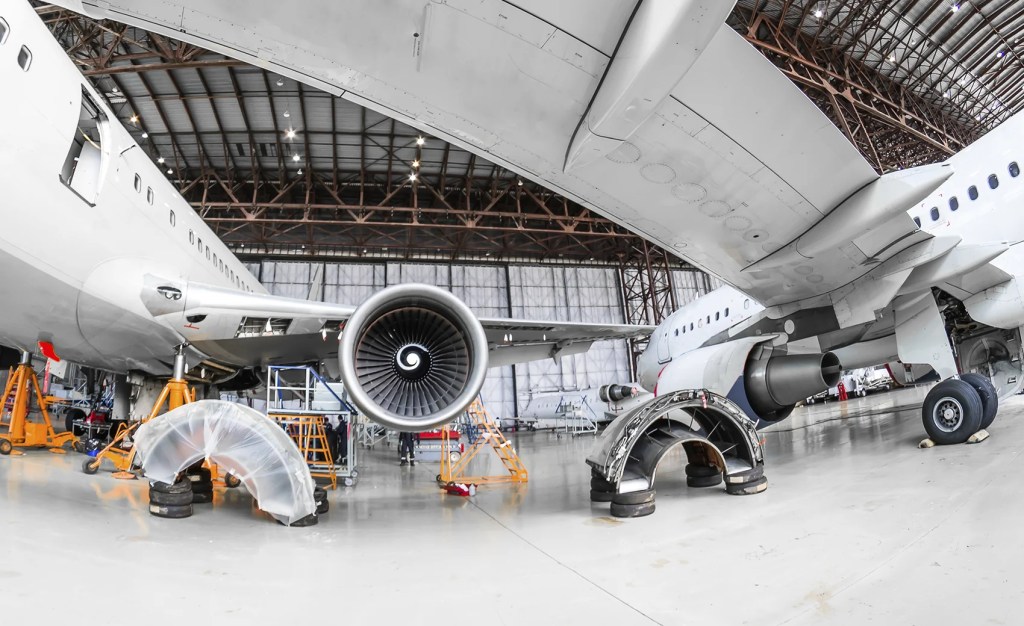
Registrador VDR MU5735 dirige a Beijing

AW | 2022 03 27 09:01 | AIR INVESTIGATION / AVIATION SAFETY

VDR avión estrellado se dirige a Beijing para su análisis

AW-China Eastern__MU5735_TTL

El vuelo MU5735 de China Eastern Airlines de un Boeing 737-800 que transportaba a 132 personas que impactó en tierra el Lunes 21/03 por la tarde en una parte rural y montañosa de la región sureña de Guangxi, han permitido que los equipos de búsqueda y rescate encontraran una de las dos cajas negras, la Voice Data Recorder (VDR) encontrada el Miércoles 23/03 es la grabadora de voz de la cabina, dijo Zhu Tao, Director de la Oficina de Seguridad de la aviación de la Administración de Aviación Civil de China (CAAC), en una conferencia de prensa el Miércoles por la noche.

Las cajas negras de un avión son dos conjuntos de equipos técnicos: uno que captura datos de vuelo (FDR) y otro que registra las comunicaciones de la cabina con los controladores de tráfico aéreo (VDR). El análisis de esos datos podría revelar las razones del accidente.

La caja con los registros del VDR ha sido enviada a una agencia profesional de aviación civil en Beijing para el análisis de datos, dijo Zhu Tao, señalando que el proceso llevaría tiempo. La unidad de almacenamiento de la caja parece relativamente completa, aunque el exterior estaba severamente dañado. Honeywell es el fabricante de las dos cajas negras en el avión Boeing 737-800 estrellado.

Los equipos de rescate han enviado los restos humanos encontrados en el lugar del accidente a los investigadores, agregaron los medios estatales, citando el mismo evento de prensa. El último accidente grave de vuelo de pasajeros en China ocurrió en 2010.

Dado que el accidente de esta semana involucró a un avión Boeing de fabricación estadounidense, las agencias y compañías estadounidenses también participarán en la investigación. Si bien las autoridades chinas lideran la investigación, la Junta Nacional de Seguridad del Transporte de Estados Unidos (NTSB) dijo que ha nombrado a un investigador senior de seguridad aérea y que representantes de la Administración Federal de Aviación (FAA), The Boeing Company y CFM International servirán como asesores técnicos. CFM es una empresa conjunta entre General Electric con sede en Estados Unidos, y Safran con sede en Francia, que es el fabricante de los motores del avión estrellado, dijo la junta de seguridad.

MU5735 VDR recorder heads to Beijing

VDR crashed plane heads to Beijing for analysis

Flight MU5735 of China Eastern Airlines of a Boeing 737-800 carrying 132 people that landed on Monday 03/21 in the afternoon in a rural and mountainous part of the southern region of Guangxi, have allowed search teams and rescue found one of the two black boxes, the Voice Data Recorder (VDR) found on Wednesday 03/23 is the cockpit voice recorder, said Zhu Tao, Director of the Aviation Administration Aviation Safety Office China Civil (CAAC), at a press conference on Wednesday night.

An aircraft’s black boxes are two sets of technical equipment: one that captures flight data (FDR) and one that records cockpit communications with air traffic controllers (VDR). Analysis of that data could reveal the reasons for the accident.

The box with the VDR records has been sent to a professional civil aviation agency in Beijing for data analysis, Zhu Tao said, noting that the process would take time. The box storage unit appears relatively complete, although the exterior was severely damaged. Honeywell is the manufacturer of the two black boxes on the crashed Boeing 737-800 plane.

Rescue teams have sent human remains found at the crash site to investigators, state media added, citing the same press event. The last serious passenger flight accident in China occurred in 2010.

Since this week’s accident involved a US-made Boeing aircraft, US agencies and companies will also be involved in the investigation. While Chinese authorities are leading the investigation, the US National Transportation Safety Board (NTSB) said it has appointed a senior aviation safety investigator and representatives from the Federal Aviation Administration (FAA), The Boeing Company and CFM International will serve as technical advisors. CFM is a joint venture between US-based General Electric and France-based Safran, which is the manufacturer of the crashed plane’s engines, the safety board said.

PUBLISHER: Airgways.com
DBk: Caac.org.cn / Ntsb.gov / Faa.gov / Cfmaeroengines.com / Airgways.com
AW-POST: 202203270901AR
OWNERSHIP: Airgways Inc.
A\W A I R G W A Y S ®
Dificultades búsquedas restos MU5735

AW | 2022 03 26 09:22 | AIR INVESTIGATION / AVIATION SAFETY

Condiciones fangosas dificultan recolección restos Boeing 737-800

AW-China Eastern__MU5735_TTL

Las condiciones fangosas en la zona del accidente dificultan la búsqueda de restos del accidente aéreo del vuelo MU5735 de China Eastern Airlines. Excavadoras de construcción continúan trabajando en el lugar de accidente el Sábado 26 de Marzo de 2022 en la recolección de restos de la aeronave Boeing 737-800, de pasajeros, y en la búsqueda de la segunda caja negra la Flight Data Record (FDR), que mide los parámetros de comportamiento de las aeronaves.

Trayectoria vuelo MU5735

El vuelo MU5735 de China Eastern Airlines fue un vuelo nacional de pasajeros de Kunming a Guangzhou. El 21 de Marzo de 2022, el avión Boeing 737-89P que operaba el servicio descendió abruptamente en pleno vuelo y golpeó el suelo a alta velocidad en el condado de Teng, Wuzhou, Región Autónoma Zhuang de Guangxi, matando a los 123 pasajeros y 9 tripulantes. El avión partió del Aeropuerto Internacional Kunming Changshui hacia el Aeropuerto Internacional de Guangzhou Baiyun a las 13:15 hora local 05:15 UTC) y estaba programado para aterrizar a las 15:05/07:05 UTC. El avión tenía programado viajar antes de Baoshan a Kunming, pero este segmento del viaje se suspendió temporalmente debido al bajo número de pasajeros como resultado de COVID-19.

Según la Administración de Aviación Civil de China (CAAC), el contacto con el avión se perdió sobre la ciudad de Wuzhou. A las 14:22/06:22 UTC, mientras se acercaba a su cima de descenso en Guangzhou, el avión entró en un repentino descenso empinado desde 29.100 pies/8.900 m. Se niveló brevemente y subió de 7,400 pies/2.300 m a 8,600 pies/2.600 m, pero se hundió nuevamente hacia abajo, alcanzando una altitud final registrada de 3,225 pies/983 m menos de dos minutos después del comienzo del descenso, con una tasa máxima de descenso de casi 31,000 pies/9.400 m por minuto. El avión se estrelló en las regiones montañosas del condado de Teng, donde posteriormente se descubrió un campo de escombros. Los medios chinos informaron que el avión se había desintegrado y causado un incendio que destruyó el bambú en el área.

El accidente fue filmado por la cámara de seguridad de una empresa minera local. Los residentes de las aldeas que rodean el lugar del accidente escucharon una fuerte explosión. Las imágenes del lugar del accidente tomadas después del incidente mostraron restos y un incendio. Muchos pedazos más pequeños de restos fueron esparcidos en el área circundante. Todos los ocupantes del avión murieron en el accidente.

El avión involucrado fue un Boeing 737-89P Next Generation con el registro B-1791 y número de serie S/N41474. El avión estaba propulsado por dos turboventiladores CFM56-7B26E. Voló por primera vez el 5 de Junio de 2015 y se entregó nuevo a China Eastern Airlines el 25 de Junio de 2015. Fue pintado con la librea Yunnan Peacock de la aerolínea. El 737-800 tiene un sólido historial de seguridad, con solo 11 accidentes fatales anteriores de más de 7,000 aviones entregados desde 1997. No está equipado con el Sistema de Aumento de Características de Maniobra (MCAS) utilizado en el 737 MAX más nuevo que provocó dos accidentes fatales en 2018 y 2019 y la puesta a tierra de la flota.

Respuesta de emergencia y recuperación

Las autoridades locales enviaron 450 bomberos a la escena del accidente. Los bomberos fueron enviados por el Departamento de Bomberos y Rescate de Wuzhou elLunes 21/03 a las 15:05 CST. A las 15:56, los bomberos de la cercana Tangbu llegaron y realizaron reconocimientos, y a las 16:40, los bomberos de fuera de Wuzhou fueron enviados desde Guilin, Beihai, Hezhou, Laibin y Hechi.

Búsqueda e investigaciones

Funcionarios chinos informan a la prensa sobre el progreso del trabajo de búsqueda y rescate MU5735. Las operaciones de búsqueda continúan cuatro días después de que el vuelo MU5735 de China Eastern se estrellara en la Región Autónoma Zhuang de Guangxi, en el sur de China. Los funcionarios comparten los últimos hallazgos.

El CAAC habilitó un grupo de trabajo de emergencia y envió un equipo al lugar del accidente. La Administración Federal de Aviación (FAA) de los Estados Unidos dijo que estaba al tanto del incidente y que estaba «lista para ayudar en los esfuerzos de investigación» si se le solicitaba. Boeing dijo que fue informado por los informes iniciales y que estaba reuniendo detalles. La Junta Nacional de Seguridad en el Transporte (NTSB) de los Estados Unidos dijo que un alto funcionario había sido nombrado como representante en la investigación del accidente. Representantes de CFM International, Boeing y la FAA también actuarán como asesores técnicos en la investigación. El Secretario de Transporte, Pete Buttigieg, dijo el 23 de Marzo de 2022 que las autoridades chinas habían invitado a la NTSB a participar en la investigación. Las regulaciones de cuarentena por COVID-19 pueden obstaculizar el acceso de los investigadores estadounidenses a China continental.

Los equipos de rescate tuvieron dificultades para acceder al sitio porque el accidente causó un incendio forestal, que se extinguió a las 17:25 del día Lunes 21/03. Por la noche, 117 rescatistas de los 650 enviados habían llegado y se dirigieron al sitio desde tres direcciones. Se encontraron restos de aviones y pertenencias de los ocupantes, pero no había signos de cuerpos o restos humanos. Los trabajadores utilizaron equipos manuales, perros de detección y vehículos aéreos no tripulados para tratar de localizar los registradores de vuelo (VDR/FDR) y los restos humanos, que encontraron el 23 de Marzo de 2022. El lugar del accidente generalmente se concentró dentro de un radio de 30 metros/98 pies donde se encontró la mayor parte del naufragio. Los trabajadores de rescate también encontraron un fragmento de restos de 1,3 metros de largo (4 pies y 3 pulgadas), supuestamente parte de la aeronave, a 10 kilómetros (6,2 millas) del sitio principal.

El clima húmedo y la difícil accesibilidad del lugar del accidente obstaculizaron el proceso de recuperación. Las fuertes lluvias llenaron parcialmente el cráter de impacto con agua que tuvo que ser bombeada. Las actividades de recuperación se suspendieron en la mañana del 23 de Marzo de 2022 debido a la amenaza de deslizamientos de tierra.

Han encontrado un transmisor de ubicación de emergencia del avión que había estado cerca de donde se había instalado la segunda caja negra, el registrador de datos de vuelo, dijo Zhu Tao, Director de la Oficina de Seguridad de la Aviación de la Administración de Aviación Civil de China (CAAC), a los periodistas el Sábado 26/03.

El equipo también está buscando el módulo de datos del propio Flight Data Record (FDR). Pero las condiciones fangosas en la región lluviosa están obstaculizando la búsqueda. Se usaron bombas para drenar el agua y una excavadora dejó de funcionar después de atascarse parcialmente, dijo la emisora estatal CCTV. Los trabajadores que llevaban botas de goma hasta la rodilla usaron palas y otras herramientas manuales para tamizar las laderas de tierra en un pozo de 20 metros de profundidad dejado por el avión. Los escombros y otros artículos fueron recolectados en docenas de contenedores de plástico rectangulares y manchados de barro.

No se han encontrado sobrevivientes, y la causa del accidente sigue siendo un misterio. Un controlador de tráfico aéreo intentó contactar a los pilotos varias veces después de ver que la altitud del avión caía bruscamente, pero no obtuvo respuesta, dijeron las autoridades. Los investigadores encontraron la grabadora de voz de la cabina conocida como Voice Data Record (VDR) el Miércoles 23/03, pero aún no han encontrado la grabadora de datos de vuelo Flight Data Record (FDR). Las autoridades dijeron el Sábado 26/03 que expertos en investigación forense y criminal habían confirmado las identidades de 114 pasajeros y seis miembros de la tripulación, o 120 de las 132 personas en el vuelo.

China Eastern Airlines, una de las cuatro principales aerolíneas de China, y sus subsidiarias han dejado en tierra todos sus aviones 737-800, un total de 223 aviones. El transportista dijo que la puesta a tierra era una precaución, no una señal de que había algo malo.

Difficulties searching remains MU5735

Muddy conditions hamper Boeing 737-800 wreckage collection

Muddy conditions in the crash zone make it difficult to search for wreckage from the plane crash of China Eastern Airlines Flight MU5735. Construction excavators continue to work at the accident site on Saturday, March 26, 2022, collecting debris from the Boeing 737-800 passenger aircraft and searching for the second Flight Data Record (FDR) black box. which measures the performance parameters of aircraft.

Flight path MU5735

China Eastern Airlines Flight MU5735 was a domestic passenger flight from Kunming to Guangzhou. On March 21, 2022, the Boeing 737-89P aircraft operating the service abruptly descended mid-flight and hit the ground at high speed in Teng County, Wuzhou, Guangxi Zhuang Autonomous Region, killing all 123 passengers and 9 crew. The plane departed Kunming Changshui International Airport for Guangzhou Baiyun International Airport at 13:15 local time (05:15 UTC) and was scheduled to land at 15:05/07:05 UTC. The plane was scheduled to travel earlier from Baoshan to Kunming, but this segment of the trip was temporarily suspended due to low passenger numbers as a result of COVID-19.

According to the Civil Aviation Administration of China (CAAC), contact with the plane was lost over the city of Wuzhou. At 14:22/06:22 UTC, while approaching its descent peak in Guangzhou, the aircraft entered a sudden steep descent from 29,100ft/8,900m. It briefly leveled off and climbed from 7,400ft/2,300m to 8,600ft/2,600m, but plunged back down, reaching a final recorded altitude of 3,225ft/983m less than two minutes after descent began, with a maximum rate of descent of almost 31,000 feet/9,400 m per minute. The plane crashed in the mountainous regions of Teng County, where a debris field was later discovered. Chinese media reported that the plane had disintegrated and caused a fire that destroyed bamboo in the area.

The accident was filmed by the security camera of a local mining company. Residents of the villages surrounding the crash site heard a loud explosion. Pictures of the crash site taken after the incident showed wreckage and a fire. Many smaller pieces of wreckage were scattered in the surrounding area. All occupants of the plane died in the crash.

The aircraft involved was a Boeing 737-89P Next Generation with registration B-1791 and serial number S/N41474. The aircraft was powered by two CFM56-7B26E turbofans. It first flew on June 5, 2015 and was delivered new to China Eastern Airlines on June 25, 2015. It was painted in the airline’s Yunnan Peacock livery. The 737-800 has a strong safety record, with only 11 previous fatal accidents out of more than 7,000 aircraft delivered since 1997. It is not equipped with the Maneuvering Characteristics Augmentation System (MCAS) used on the newer 737 MAX that caused two fatal accidents in 2018 and 2019 and the grounding of the fleet.

Emergency response and recovery

Local authorities dispatched 450 firefighters to the scene of the accident. Firefighters were dispatched by the Wuzhou Fire and Rescue Department on Monday 03/21 at 15:05 CST. At 15:56, firefighters from nearby Tangbu arrived and conducted reconnaissance, and at 16:40, firefighters from outside Wuzhou were dispatched from Guilin, Beihai, Hezhou, Laibin and Hechi.

Search and investigations

Chinese officials brief the press on the progress of MU5735 search and rescue work. Search operations continue four days after China Eastern flight MU5735 crashed in south China’s Guangxi Zhuang Autonomous Region. Officials share the latest findings.

The CAAC set up an emergency task force and sent a team to the accident site. The US Federal Aviation Administration (FAA) said it was aware of the incident and was «ready to assist investigative efforts» if requested. Boeing said it was briefed by initial reports and was gathering details. The US National Transportation Safety Board (NTSB) said a senior official had been appointed as a representative in the accident investigation. Representatives from CFM International, Boeing and the FAA will also act as technical advisors in the investigation. Transportation Secretary Pete Buttigieg said on March 23, 2022 that Chinese authorities had invited the NTSB to participate in the investigation. COVID-19 quarantine regulations may hamper US researchers’ access to mainland China.

The rescue teams had difficulty accessing the site because the accident caused a forest fire, which was extinguished at 05:25 p.m. on Monday 03/21. By night, 117 rescuers out of 650 dispatched had arrived and headed to the site from three directions. Aircraft wreckage and belongings of the occupants were found, but there were no signs of bodies or human remains. Workers used manual equipment, detection dogs, and unmanned aerial vehicles to try to locate the flight recorders (VDR/FDR) and human remains, which they found on March 23, 2022. The crash site was generally concentrated within a 30 meter/98 foot radius where most of the wreck was found. Rescue workers also found a 4-foot-3-inch (1.3-meter-long) fragment of wreckage, believed to be part of the aircraft, 10 kilometers (6.2 miles) from the main site.

Wet weather and difficult accessibility to the crash site hampered the recovery process. Heavy rains partially filled the impact crater with water that had to be pumped out. Recovery activities were suspended on the morning of March 23, 2022 due to the threat of landslides.

They have found an emergency location transmitter from the plane that had been near where the second black box, the flight data recorder, had been installed, said Zhu Tao, Director of the Aviation Safety Bureau of the Civil Aviation Administration. of China (CAAC), to journalists on Saturday 03/26.

The team is also looking for the data module of the Flight Data Record (FDR) itself. But muddy conditions in the rainy region are hampering the search. Pumps were used to drain the water and a bulldozer stopped working after becoming partially stuck, state broadcaster CCTV said. Workers wearing knee-high rubber boots used shovels and other hand tools to sift through the slopes of earth in a 20-meter-deep pit left by the plane. Debris and other items were collected in dozens of rectangular, mud-stained plastic bins.

No survivors have been found, and the cause of the crash remains a mystery. An air traffic controller tried to contact the pilots several times after seeing the plane’s altitude drop sharply, but got no response, authorities said. Investigators found the cockpit voice recorder known as the Voice Data Record (VDR) on Wednesday 03/23, but have not yet found the Flight Data Record (FDR). Authorities said on Saturday 03/26 that forensic and criminal investigation experts had confirmed the identities of 114 passengers and six crew members, or 120 of the 132 people on the flight.

China Eastern Airlines, one of China’s four major carriers, and its subsidiaries have grounded all of their 737-800 planes, a total of 223 planes. The carrier said the grounding was a precaution, not a sign that something was wrong.

PUBLISHER: Airgways.com
DBk: Caac.gov.cn / Faa.gov / Ntsb.gov / Afp.com / Flightradar24.com / Airgways.com
AW-POST: 202203260922AR
OWNERSHIP: Airgways Inc.
A\W A I R G W A Y S ®

Investigaciones accidente MU5735

AW | 2022 03 25 22:50 | AIR INVESTIGATION / AVIATION SAFETY

Boeing 737 China Eastern perdió altitud e impactó contra terreno
Rescatan caja CVR del vuelo MU5735

AW-China Eastern__MU5735_TTL

El Boeing 737-800 de China Eastern Airlines, matrícula B-1791 realizaba el vuelo MU-5735 de Kunming a Guangzhou en la República Popuñar China con 123 pasajeros y 9 tripulantes a bordo, se dirigía a 8900 metros/FL291 a unos 130 nm al oeste de Guangzhou, cerca de la cima del descenso a las 14:20L/06:20Z cuando el avión perdió repentinamente altitud e impactó en tierra a unos 119 nm al oeste de Guangzhou en un terreno montañoso. Una operación de búsqueda y rescate llegó al lugar del accidente, pero no encontró sobrevivientes. Los servicios de emergencia de la región de Guangxi (incluida la región de Wuzhou) informaron que el contacto con la aeronave se perdió a las 14:15L/06:15Z.

La Autoridad de Aviación Civil de China (CAAC) confirmó que el avión se ha estrellado. El contacto con el avión se perdió en la región de Wuzhou (a unos 120 nm al oeste de Guangzhou). La aerolínea confirmó el accidente y las muertes en una nota a las bolsas de valores, aunque no se ha indicado cuántas personas habían muerto en el accidente. La Autoridad de Aviación Civil de China ha abierto una investigación sobre el accidente. La NTSB ha nombrado a un representante acreditado y se ha unido a la investigación junto con representantes de Boeing y el fabricante de motores CFM.

El 22 de Marzo de 2022, el CAAC celebró una conferencia de prensa en la que afirmó que la búsqueda de las cajas negras aún está en curso. No se han encontrado sobrevivientes en el lugar del accidente, que tiene dos partes, parte de la aeronave cayó a un lado de una colina y la otra parte al otro lado. En las próximas semanas se llevará a cabo una inspección de seguridad de todos los Boeing 737 que operan en China. En detalle, la CAAC declaró: «El vuelo MU5735 de China Eastern Airlines despegó de Kunming a las 13:16 del 21 de marzo y entró en el área de control de Guangzhou a una altitud de crucero de 8900 metros a las 14:17. A las 14:20, el controlador notó que la aeronave estaba descendiendo bruscamente y llamó a la tripulación varias veces, pero sin respuesta. A las 14:23 desapareció la señal de radar de la aeronave. El avión fue encontrado estrellado en el condado de Teng, ciudad de Wuzhou, región autónoma Zhuang de Guangxi. Había 123 pasajeros (todos chinos, ningún extranjero) a bordo, 3 pilotos, 5 asistentes de vuelo y 1 oficial de seguridad. El avión había volado por primera vez el 22 de Junio de 2015 y desde entonces había acumulado 18.239 horas de vuelo en 8.986 ciclos de vuelo».

En una segunda conferencia de prensa el 23 de Marzo de 2022, el CAAC informó que se encontró una de las cajas negras, y posteriormente agregó que la caja negra estaba sustancialmente dañada y no está claro en este momento, si es el FDR o CVR. La comunicación ATC fue normal hasta la pérdida de comunicación (sin llamada de emergencia o informes de dificultades), el clima estaba bien. El capitán había acumulado 6.709 horas de vuelo en total, el primer oficial 31.769 horas de vuelo, el segundo oficial 556 horas, todos ellos en buenas relaciones familiares. La aeronave estaba en condiciones de aeronavegabilidad, todo el mantenimiento se había realizado en estricto cumplimiento de las regulaciones y requisitos.

En una tercera conferencia de prensa, el CAAC informó que aunque la caja negra está muy dañada, la unidad de almacenamiento se ve intacta y se ha determinado como la grabadora de voz de cabina CVR. Se ha enviado a Beijing para su descarga y decodificación. El segundo oficial fue un observador para aumentar la experiencia.

El 24 de Marzo de 2022, los servicios de búsqueda y rescate informaron que hasta ahora han buscado 46,000 metros cuadrados (460,000 pies cuadrados) y ampliarán el área en 5 veces en la búsqueda de encontrar la segunda caja negra. Los equipos de búsqueda también han localizado y recuperado piezas de motores.

El 24 de Marzo de 2022, el CAAC informó en su 4ª conferencia de prensa, que se encontró un gran pedazo de escombros (1,3 metros por 0,1 metros) de la aeronave en tierras de cultivo en Yatang Squad (coordenadas N23.3111 E111.0002) en Siwang Village (coordenadas N23.3054 E110.9711), a unos 14 km al oeste del lugar del accidente y a unos 2,7 km al sur de la última posición ADS-B en vuelo de crucero a 29100 pies MSL (debe señalarse, no sabemos si esto se separó antes o después de la inmersión en este momento). Los escombros principales en el lugar del accidente de lo contrario están confinados dentro de un radio de 30 metros, 20 metros de profundidad. En este momento aún no está claro si los datos de la caja negra ya recuperada se pueden leer, hay daños en la unidad de almacenamiento.

El 24 de Marzo de 2022, China Eastern Airlines y todas sus subsidiarias dejaron temporalmente en tierra sus 223 aviones Boeing 737-800 para «revisiones de seguridad radicales». Todas las demás aeronaves de su flota permanecen en funcionamiento. La aerolínea declaró que no había habido antecedentes de reparaciones en las horquillas de pepinillo en el avión accidentado.

Con el video del dron de la Agencia de Noticias de China es posible localizar los sitios del accidente en las posiciones N23.3239 E111.1121 y N23.3252 E111.1140, a unos 245 metros de distancia. En Abril de 2019 esta área era solo bosque sin desarrollo ni caminos en absoluto, desde entonces ha sido desarrollada por la compañía minera, los primeros signos de las carreteras aparecen en Noviembre de 2019. La carretera que se ve en el video es la Autopista Cangshuo (S40), el pueblo es el pueblo Molang (Mo Lang Cun).

El 25 de Marzo de 2022, el CAAC informó en la 5ª conferencia de prensa, que la caja de engranajes de un motor, así como el tren de aterrizaje principal, han sido encontrados y recuperados. Algunas de las partes de la aeronave mostraron rastros de fuego. El chip de memoria del CVR está dañado y debe enviarse al fabricante del chip para su reparación de acuerdo con la recomendación del fabricante. En este momento no hay estimaciones de tiempo de cuándo se pueden descargar los datos. Los datos de Modo S transmitidos por la aeronave sugieren que la aeronave estaba en ruta a 8900 metros/FL291 a unos 130 nm al oeste de Guangzhou a las 14:20L (06:20Z) cuando la aeronave comenzó un rápido descenso, la última posición del transpondedor se recibió desde la posición N23.34 E111.15 a 3200 pies MSL a las 14:23L/06:23Z.

MU5735 accident investigations

Boeing 737 China Eastern lost altitude and hit terrain
They rescue CVR box from flight MU5735

The China Eastern Airlines Boeing 737-800, registration B-1791, was on flight MU-5735 from Kunming to Guangzhou in the People’s Republic of China with 123 passengers and 9 crew members on board, heading to 8900 meters/FL291 at about 130 nm at west of Guangzhou, near the top of the descent at 14:20L/06:20Z when the aircraft suddenly lost altitude and impacted the ground about 119nm west of Guangzhou in mountainous terrain. A search and rescue operation reached the crash site but found no survivors. Emergency services in the Guangxi region (including the Wuzhou region) reported that contact with the aircraft was lost at 14:15L/06:15Z.

The Civil Aviation Authority of China (CAAC) confirmed that the plane has crashed. Contact with the aircraft was lost in the Wuzhou region (about 120nm west of Guangzhou). The airline confirmed the accident and the deaths in a note to stock exchanges, although it has not indicated how many people had died in the accident. The Civil Aviation Authority of China has opened an investigation into the accident. The NTSB has appointed an accredited representative and has joined the investigation along with representatives from Boeing and engine manufacturer CFM.

On March 22, 2022, the CAAC held a press conference stating that the search for the black boxes is still ongoing. No survivors have been found at the crash site, which has two parts, part of the aircraft fell on one side of a hill and the other part on the other side. A safety inspection of all Boeing 737s operating in China will take place in the coming weeks. In detail, the CAAC stated: «China Eastern Airlines flight MU5735 took off from Kunming at 13:16 on March 21, and entered the Guangzhou control area at a cruising altitude of 8,900 meters at 14:17. At 2:20 p.m., the controller noticed that the aircraft was descending sharply and called the crew several times, but without response. At 2:23 p.m., the aircraft’s radar signal disappeared. The plane was found crashed in the county of Teng, Wuzhou City, Guangxi Zhuang Autonomous Region. There were 123 passengers (all Chinese, no foreigners) on board, 3 pilots, 5 flight attendants and 1 security officer. The plane had first flown on June 22, 2015 and since then had accumulated 18,239 flight hours in 8,986 flight cycles».

In a second press conference on March 23, 2022, the CAAC reported that one of the black boxes was found, later adding that the black box was substantially damaged and it is unclear at this time, whether it is the FDR or CVR. ATC communication was normal until loss of communication (no emergency call or trouble reports), weather was fine. The captain had accumulated 6,709 flight hours in total, the first officer 31,769 flight hours, the second officer 556 hours, all of them in good family relationships. The aircraft was airworthy, all maintenance had been performed in strict compliance with regulations and requirements.

In a third press conference, the CAAC reported that although the black box is badly damaged, the storage unit appears intact and has been determined to be the CVR cockpit voice recorder. It has been sent to Beijing for download and decryption. The second officer was an observer to increase the experience.

On March 24, 2022, search and rescue services reported that they have searched 46,000 square meters (460,000 square feet) so far and will expand the area by 5 times in the quest to find the second black box. Search teams have also located and recovered engine parts.

On March 24, 2022, the CAAC reported at its 4th press conference, that a large piece of debris (1.3 meters by 0.1 meters) from the aircraft was found on farmland at Yatang Squad (coordinates N23. 3111 E111.0002) at Siwang Village (coordinates N23.3054 E110.9711), about 14 km west of the crash site and about 2.7 km south of the last ADS-B position in cruise flight at 29,100 feet MSL (it should be noted, we don’t know if this separated pre- or post-dive at this time). The main debris at the crash site is otherwise confined within a 30-meter radius, 20 meters deep. At this time it is still not clear if the data on the already recovered black box can be read, there is damage to the storage drive.

On March 24, 2022, China Eastern Airlines and all its subsidiaries temporarily grounded its 223 Boeing 737-800 aircraft for «radical safety checks». All other aircraft in your fleet remain operational. The airline stated that there had been no history of repairs to the pickle forks on the accident aircraft.

With the China News Agency drone video, it is possible to locate the crash sites at positions N23.3239 E111.1121 and N23.3252 E111.1140, about 245 meters away. In BarIl 2019 this area was just forest with no development or roads at all, since then it has been developed by the mining company, the first road signs appear in November 2019. The road seen in the video is the Cangshuo Expressway (S40), the village is the Molang village (Mo Lang Cun).

On March 25, 2022, the CAAC reported at the 5th press conference that an engine gearbox, as well as the main landing gear, have been found and recovered. Some of the parts of the aircraft showed traces of fire. The memory chip in the CVR is damaged and should be returned to the chip manufacturer for repair according to the manufacturer’s recommendation. At this time there are no time estimates for when the data can be downloaded. Mode S data transmitted by the aircraft suggests that the aircraft was en route at 8900 meters/FL291 about 130nm west of Guangzhou at 14:20L (06:20Z) when the aircraft began a rapid descent, the last position of the transponder was received from position N23.34 E111.15 at 3200 feet MSL at 14:23L/06:23Z.

PUBLISHER: Airgways.com
DBk: Caac.gov.cn / Boeing.com / Avherald.com / Flightradar.com / Afp.com / Airgways.com
AW-POST: 202203252250AR
OWNERSHIP: Airgways Inc.
A\W A I R G W A Y S ®
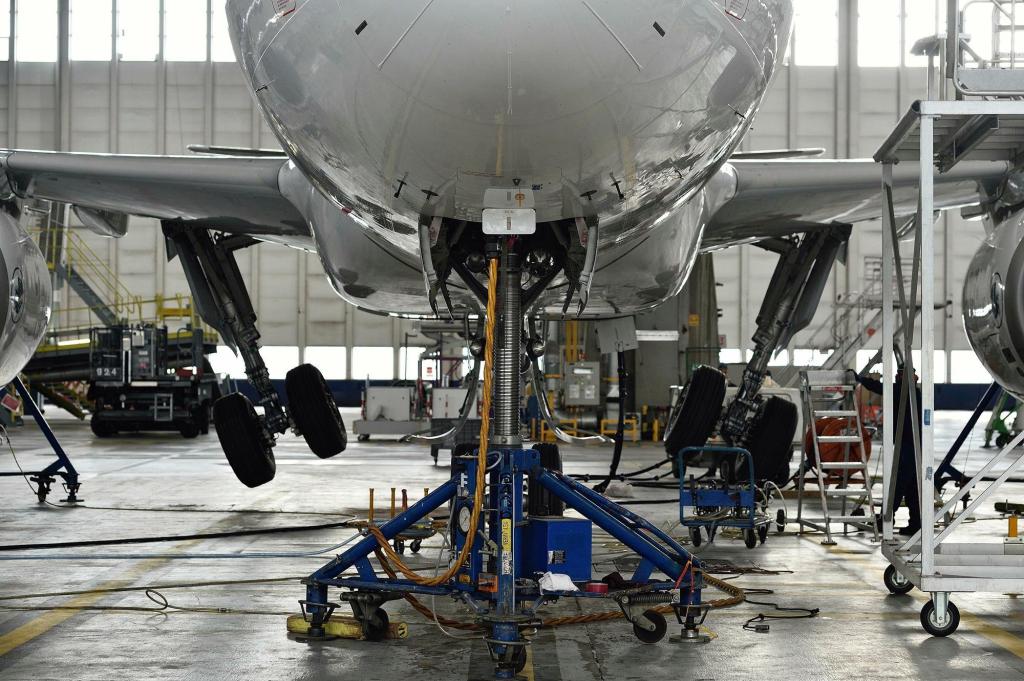
China Eastern incursiona 223 737NG

AW | 2022 03 25 07:55 | AIRLINES / AVIATION SAFETY

Aerolínea deja en tierra 223 Boeing 737-800 tras accidente aéreo

China Eastern Airlines-Isologotype

China Eastern Airlines está dejando en tierra docenas de aviones después del accidente aéreo del vuelo MU5735 a principios de esta semana. La aerolínea y sus subsidiarias han dejado en tierra temporalmente 223 aviones Boeing 737-800, dijo el Portavoz de la aerolínea, Liu Xiaodong, en una conferencia de prensa el Jueves 24/03.

Los aviones en tierra se están sometiendo a inspección de seguridad y mantenimiento para garantizar que sean seguros para volar, dijo Liu. La aerolínea lanzó una amplia revisión de seguridad después del accidente. La medida se produce días después de que el vuelo MU5735 de China Eastern Airlines se estrellara en una región remota y montañosa en el sur del país mientras volaba de Kunming a Guangzhou, convirtiéndose en el peor desastre aéreo de China en más de una década. El Boeing 737-800 accidentado contaba con 132 personas a bordo. No hubo sobrevivientes después de un tercer día de esfuerzos de búsqueda, dijeron el Miércoles 23/03 investigadores chinos.

La causa del accidente del Lunes 21/03 aún no se ha determinado. Pero el descubrimiento de la Grabadora de Voz (VDR) de la Cabina el Miércoles 23/03 podría proporcionar pistas cruciales sobre cómo se desarrolló el desastre. Es una de las denominadas cajas negras, mientras los investigadores aún buscan el Registrador de Datos de Vuelo (FDR).

El 737-800 es la versión más común de los aviones de Boeing actualmente en servicio, y es el caballo de batalla de las flotas de muchas aerolíneas. Existen en la actualidad 4.502 de los Boeing 737-800 Next Generation en servicio en todo el mundo, según la firma de análisis de aviación Cirium, lo que lo convierte, con mucho, en el avión Boeing más común en uso en la actualidad. Es el modelo de avión más común en Estados Unidos, donde hay 795 en servicio, así como en China, que cuenta con 1.177 en servicio. Es el segundo avión más común en uso en todo el mundo, solo superado por el Airbus A320.

China Eastern grounded 223 737NG

Airline grounds 223 Boeing 737-800 planes after plane crash

China Eastern Airlines is grounding dozens of planes after the plane crash of flight MU5735 earlier this week. The airline and its subsidiaries have temporarily grounded 223 Boeing 737-800 aircraft, said the airline’s spokesman, Liu Xiaodong, at a press conference on Thursday 03/24.

Planes on the ground are undergoing safety inspection and maintenance to ensure they are safe to fly, Liu said. The airline launched an extensive safety review after the accident. The move comes days after China Eastern Airlines flight MU5735 crashed in a remote, mountainous region in the south of the country while flying from Kunming to Guangzhou, becoming China’s worst air disaster in more than a decade. The injured Boeing 737-800 had 132 people on board. There were no survivors after a third day of search efforts, Chinese investigators said on Wednesday 03/23.

The cause of the accident on Monday 03/21 has not yet been determined. But the discovery of the Cockpit Voice Recorder (VDR) on Wednesday 03/23 could provide crucial clues as to how the disaster unfolded. It is one of the so-called black boxes, while investigators are still searching for the Flight Data Recorder (FDR).

The 737-800 is the most common version of Boeing aircraft currently in service, and is the workhorse of many airline fleets. There are currently 4,502 of the Boeing 737-800 Next Generation in service worldwide, according to aviation analytics firm Cirium, making it by far the most common Boeing aircraft in use today. It is the most common aircraft model in the United States, where there are 795 in service, as well as in China, which has 1,177 in service. It is the second most common aircraft in use worldwide, second only to the Airbus A320.

PUBLISHER: Airgways.com
DBk: Ceair.com / Caac.gov.cn / Airgways.com
AW-POST: 202203250755AR
OWNERSHIP: Airgways Inc.
A\W A I R G W A Y S ®
Accidente Boeing 737 China Eastern

AW | 2022 03 21 11:00 | AIR INVESTIGATION / AVIATION SAFETY

Boeing 737-800 se estrella en Guanzhou, China

Un Boeing 737-800 de China Eastern Airlines, matrícula B-1791 realizando el vuelo MU-5735 realizaba la ruta Kunming—Guangzhou (China) con 123 pasajeros y 9 tripulantes a bordo, se dirigía a 8900 metros/FL291 a unos 130 nm al oeste de Guangzhou cerca de la cima del descenso cuando el avión perdió repentinamente altitud e impactó tierra a unos 119 nm al oeste de Guangzhou en terreno montañoso el Lunes 21 de Marzo de 2022. Se está llevando a cabo una operación de búsqueda y rescate. La Autoridad de Aviación Civil de China (CAAC) confirmó que el avión se ha estrellado. El contacto con el avión se perdió en la región de Wuzhou (a unos 120 nm al oeste de Guangzhou).

El avión “perdió el contacto cuando se encontraba sobrevolando la ciudad de Wuzhou”, en la región montañosa de Guangxi, según la CAAC, que indicó que el aparato transportaba 123 pasajeros y 9 miembros de la tripulación, corrigiendo reportes previos que hablaban de 133 personas a bordo. El Boeing 737-800 se habría estrellado en una zona rural cerca de esa ciudad, y “provocó un incendio” en la montaña, dijo televisión china CCTV. Un video filmado por la cámara de seguridad de una empresa minera y otro filmado por un automovilista captaron el impactante momento en que el avión cayó en picada a alta velocidad. Otra filmación compartida por la televisión estatal china mostró la devastación en el lugar del siniestro. El diario oficial People’s Daily informó que 117 rescatistas ya han llegado al lugar del accidente. El Departamento de Bomberos de Guangxi está organizando a 650 rescatistas que se dirigen al sitio desde tres direcciones. Imágenes de satélite de la NASA mostraban un enorme incendio justo en la zona donde se había estrellado el avión. CCTV informa que China Eastern Airlines estableció nueve equipos con enfoques como recuperación de aeronaves, investigación de accidentes y asistencia familiar, y se dirigen al sitio. La CAAC dijo que había enviado un equipo de funcionarios, y el servicio de bomberos de Guangxi dijo que se estaba trabajando para controlar el incendio en la ladera de la montaña. Los medios de comunicación locales informaron que, según el personal del aeropuerto, el vuelo MU5735 de China Eastern Airlines no llegó a su destino previsto en Guangzhou tras haber despegado de la ciudad de Kunming (suroeste) poco después de las 13:00 horas (05H00 GMT) del Lunes 21/03.

El vuelo tenía una duración prevista de una hora y cuarenta minutos, en la que el aparato debía recorrer los 1.357 kilómetros que separan Kunming de Cantón. Según la web de rastreo de vuelos FlightRadar24, el Boeing 737-89P perdió velocidad con rapidez tras las 06:20 GMT antes de iniciar un brusco descenso. El último punto de contacto del vuelo, según el portal, fue a unos 25 kilómetros al suroeste de Wuzhou, a una altitud de 3.225 pies (989 metros), a las 14.22 hora local (06.22 GMT), lo que supondría que en apenas tres minutos el aparato descendió casi 8.000 metros.

El Presidente chino, Xi Jinping, dijo que estaba conmocionado por el accidente, informaron medios estatales. “Estamos conmocionados al enterarnos del accidente del China Eastern MU5735. Ponemos todos los esfuerzos para el rescate y para descubrir la causa del accidente lo antes posible”, dijo Xi Jinping a la emisora CCTV.

Las llamadas a las oficinas de China Eastern Airlines no fueron respondidas de inmediato. El sitio web de la empresa estaba en blanco y negro, algo que las aerolíneas hacen después del accidente como forma de respeto para las víctimas.

The Boeing Company, con sede en Chicago, dijo que estaba al tanto de los informes iniciales del accidente y que estaba “trabajando para recopilar más información”. Las acciones de Boeing cayeron más del 8% en las operaciones previas al mercado el Lunes 21/03 temprano.

China Eastern Airlines, con sede en Shanghái, es una de las tres grandes aerolíneas de China y vuela a 248 destinos con rutas nacionales e internacionales. La aerolínea, consultada no emitió por ahora ningún comentario al respecto.

Boeing entregó esa aeronave a China Eastern Airlines en Junio de 2015. Llevaba seis años en servicio. El Boeing 737 bimotor de un pasillo es uno de los aviones más populares del mundo para trayectos de corta y media distancia. China Eastern opera varias versiones de la popular aeronave, incluidas las 737-800 y el 737 MAX. El accidente más mortífero que involucró a un Boeing 737-800 se produjo en Enero de 2020, cuando la Guardia Revolucionaria de Irán derribó accidentalmente un vuelo de Ukraine International Airlines, matando a las 176 personas a bordo. El último gran accidente aéreo en China fue en Agosto de 2010, con saldo de 42 víctimas.

AW-Breaking News__Gif

Avances noticias MU5735

El vuelo MU5735 de China Eastern Airlines, un Boeing 737-800, se estrelló en una cordillera en Tengxian, Guangxi, China. El avión partió del Aeropuerto Internacional Kunming Changshui a las 05:15 UTC en un servicio nacional de pasajeros al Aeropuerto Internacional de Guangzhou Baiyun. Los datos de seguimiento de vuelo ADS-B de Flightradar24 muestran el avión a 29,100 pies, volando a lo largo de Airway 599 hacia Guangzhou. Los datos de ADS-B publicados por Flightradar24 sugieren que el descenso comenzó entre las 06:20:43 y las 06:20:59. El punto de datos de altitud muestra que el descenso se detuvo alrededor de las 06:22:00 alrededor de 7400 pies y el avión subió a unos 8600 pies antes de que el avión volviera a entrar en un descenso empinado. El último punto de datos registrado fue a las 06:22:35 a 3225 pies. Las imágenes de CCTV y la cámara del tablero parecen mostrar el avión en un descenso extremadamente empinado antes de estrellarse en una zona montañosa boscosa.

Estados Unidos nombra a un investigador como representante de la investigación del accidente del Boeing 737-800 de China. La Junta Nacional de Seguridad en el Transporte (NTSB) dijo el Lunes 21/03 que había nombrado a un investigador senior de seguridad aérea como representante acreditado por Estados Unidos para la investigación del accidente de un Boeing 737-800 de China Eastern Airlines cerca de Wuzhou, China.

Representantes de Boeing, General Electric y la Administración Federal de Aviación (FAA) servirán como asesores técnicos, agregó la NTSB. Bajo un acuerdo internacional, Estados Unidos puede servir como representante de la sonda para el análisis del accidente ya que el avión fue fabricado en los Estados Unidos. mientras tanto, familiares de los pasajeros del avión Boeing 737-800 de China Eastern Airlines que se estrelló en Wuzhou esperan noticias.

China Eastern Boeing 737 crash

Boeing 737-800 crashes in Guangzhou, China

China Eastern Airlines-Isologotype

A China Eastern Airlines Boeing 737-800, registration B-1791, on flight MU-5735, was on the Kunming—Guangzhou (China) route with 123 passengers and 9 crew members on board, heading at 8,900 meters/FL291, about 130 nm to the west Guangzhou near the top of the descent when the aircraft suddenly lost altitude and impacted land about 119nm west of Guangzhou in mountainous terrain on Monday, March 21, 2022. A search and rescue operation is underway. The Civil Aviation Authority of China (CAAC) confirmed that the plane has crashed. Contact with the aircraft was lost in the Wuzhou region (about 120nm west of Guangzhou).

The plane «lost contact when it was flying over the city of Wuzhou», in the mountainous region of Guangxi, according to the CAAC, which indicated that the device was carrying 123 passengers and 9 crew members, correcting previous reports that spoke of 133 people. on board. The Boeing 737-800 would have crashed in a rural area near that city, and «caused a fire» in the mountain, Chinese television CCTV said. A video filmed by the security camera of a mining company and another filmed by a motorist captured the shocking moment when the plane plummeted at high speed. Other footage shared by Chinese state television showed the devastation at the scene. The official newspaper People’s Daily reported that 117 rescuers have already arrived at the accident site. The Guangxi Fire Department is organizing 650 rescuers heading to the site from three directions. NASA satellite images showed a huge fire right in the area where the plane had crashed. CCTV reports that China Eastern Airlines has set up nine teams with focuses such as aircraft recovery, accident investigation and family assistance, and are heading to the site. The CAAC said it had dispatched a team of officials, and the Guangxi fire service said work was underway to control the fire on the mountainside. Local media reported that, according to airport staff, China Eastern Airlines flight MU5735 did not reach its scheduled destination in Guangzhou after taking off from the southwestern city of Kunming shortly after 01:00 p.m. (05:00 GMT) of Monday.

The flight had an expected duration of one hour and forty minutes, in which the device had to travel the 1,357 kilometers that separate Kunming from Canton. According to flight tracking website FlightRadar24, the Boeing 737-89P rapidly lost speed after 06:20 GMT before beginning a sharp descent. The last point of contact of the flight, according to the portal, was about 25 kilometers southwest of Wuzhou, at an altitude of 3,225 feet (989 meters), at 02:22 p.m. local time (06:22 GMT), which would mean that in just three minutes the apparatus descended almost 8,000 meters.

Chinese President Xi Jinping said he was shocked by the accident, state media reported. “We are shocked to learn of the China Eastern MU5735 accident. We make every effort to rescue and find out the cause of the accident as soon as possible», Xi Jinping told broadcaster CCTV.

Calls to the offices of China Eastern Airlines were not immediately returned. The company’s website was in black and white, something that airlines do after the accident as a form of respect for the victims.

The Chicago-based The Boeing Company said it was aware of initial reports of the crash and was «working to gather more information». Boeing shares fell more than 8% in premarket trading early Monday 3/21.

Shanghai-based China Eastern Airlines is one of China’s Big Three airlines, flying to 248 destinations with domestic and international routes. The airline, consulted, did not issue any comment on the matter for now.

Boeing delivered that aircraft to China Eastern Airlines in June 2015. It had been in service for six years. The twin-engine, single-aisle Boeing 737 is one of the world’s most popular short and medium-haul aircraft. China Eastern operates several versions of the popular aircraft, including the 737-800 and the 737 MAX. The deadliest accident involving a Boeing 737-800 occurred in January 2020, when Iran’s Revolutionary Guards accidentally shot down a Ukraine International Airlines flight, killing all 176 people on board. The last major plane crash in China was in August 2010, with a balance of 42 victims.

News advances MU5735

China Eastern Airlines Flight MU5735, a Boeing 737-800, crashed into a mountain range in Tengxian, Guangxi, China.The aircraft departed from Kunming Changshui International Airport at 05:15 UTC on a domestic passenger service to Guangzhou Baiyun International Airport. ADS-B flight tracking data from Flightradar24 shows the plane at 29,100 feet, flying along Airway 599 toward Guangzhou. ADS-B data released by Flightradar24 suggests that the descent began between 06:20:43 and 06:20:59. The altitude data point shows that the descent stopped around 06:22:00 around 7400ft and the plane climbed to around 8600ft before the plane re-entered a steep descent. The last recorded data point was at 06:22:35 at 3225 feet. CCTV and dash cam footage appears to show the plane in an extremely steep descent before crashing in a forested mountainous area.

The United States appoints an investigator as representative of the investigation of the accident of the Boeing 737-800 of China. The National Transportation Safety Board (NTSB) said on Monday 03/21 that it had appointed a senior air safety investigator as the United States-accredited representative for the investigation of the crash of a China Eastern Airlines Boeing 737-800 near Wuzhou, China.

Representatives from Boeing, General Electric and the Federal Aviation Administration (FAA) will serve as technical advisers, the NTSB added. Under an international agreement, the United States can serve as the probe’s representative for the accident analysis since the aircraft was manufactured in the United States. Meanwhile, relatives of passengers on the China Eastern Airlines Boeing 737-800 plane that crashed in Wuzhou await news.

https://content.jwplatform.com/players/JoZR9LfA-gTHcH4FX.html

DATA: Esta información se encuentra en desarrollo por lo que el post puede recibir actualizaciones periódicas.
DATA: This information is under development so the post may receive periodic updates.

PUBLISHER: Airgways.com
DBk: Caac.gov.cn / Flightradar24.com / Boeing.com / Bbc.com / Thetimes.co.uk / Airgways.com
AW-POST: 202203211100AR
OWNERSHIP: Airgways Inc.
A\W A I R G W A Y S ®

FAA ultima AD Boeing 777

AW | 2022 03 11 08:00 | AVIATION ORGANISMS / AVIATION SAFETY

Aprueban Boeing 777 después de fallas asa ventiladores

FAA-Isologotype

La Administración Federal de Aviación (FAA) dijo el Miércoles 09/03 que está finalizando las Directivas de Aeronavegabilidad (AD) para exigir el fortalecimiento de una parte clave de la planta motriz en los aviones Boeing 777 con motores Pratt & Whitney PW4000 como el involucrado en un aterrizaje de emergencia en Febrero de 2021 del vuelo UA328 de United Airlines. La FAA propuso las directivas en Diciembre 2021 después de tres fallas reportadas en las aspas del ventilador en vuelo.

Una directiva de aeronavegabilidad requiere la instalación de escudos de escombros en la pared interior del inversor de empuje, la inspección de las puertas del capó del ventilador para detectar la entrada de humedad y las comprobaciones repetitivas de las válvulas de cierre de la bomba hidráulica.

Un motor PW4000 de United Airlines falló poco después de despegar de Denver el vuelos UA328 en Febrero de 2021 arrojando escombros sobre las ciudades cercanas, pero nadie resultó herido y el avión regresó al aeropuerto de manera segura. La Administración Federal de Aviación dijo que está finalizando las directivas de seguridad destinadas a reparar los motores Pratt & Whitney 4000 en algunos aviones Boeing 777 en tierra que les permitirán regresar al servicio después de haber estado en tierra durante más de un año.

FAA finalizes AD Boeing 777

Boeing 777 approved after fan handle failure

The Federal Aviation Administration (FAA) said on Wednesday 03/09 that it is finalizing the Airworthiness Directives (AD) to require the strengthening of a key part of the power plant in Boeing 777 aircraft with Pratt & Whitney PW4000 engines such as the one involved in an emergency landing in February 2021 of United Airlines flight UA328. The FAA proposed the directives in December 2021 after three reported in-flight fan blade failures.

An airworthiness directive requires the installation of debris shields on the inside wall of the thrust reverser, inspection of the fan hood doors for moisture ingress, and repetitive checks of the hydraulic pump shutoff valves.

A United Airlines PW4000 engine failed shortly after flight UA328 took off from Denver in February 2021, sending debris flying over nearby cities, but no one was injured and the plane returned to the airport safely. The Federal Aviation Administration said it is finalizing safety directives aimed at repairing Pratt & Whitney 4000 engines on some grounded Boeing 777 planes that will allow them to return to service after being grounded for more than a year.

PUBLISHER: Airgways.com
DBk: Faa.gov / Boeing.com / Airgways.com
AW-POST: 202203110800AR
OWNERSHIP: Airgways Inc.
A\W A I R G W A Y S ®

3º aniversario vuelo ET302 Ethiopian

AW | 2022 03 09 20:29 | AVIATION SAFETY / AVIATION HISTORY

Tercer aniversario tragedia vuelo Boeing 737-8 MAX

AW-700Boeing8MAX_ET-302_001

Este 10 de Marzo de 2022 se cumplen tres años de la tragedia aérea del vuelo ET302 de Ethiopian Airlines, un vuelo internacional regular de pasajeros que despegó desde el Aeropuerto Internacional Addis Abeba/Bole/ADD en Etiopía al Aeropuerto Internacional Nairobi/Jomo Kenyatta/NBO en Nairobi, Kenia. El 10 de Marzo de 2019, el avión Boeing 737-8 MAX que operaba el vuelo se estrelló cerca de la Ciudad de Bishoftu seis minutos después del despegue, matando a las 157 personas a bordo.

El vuelo ET-302 es el accidente más mortífero de Ethiopian Airlines hasta la fecha, superando el secuestro fatal del vuelo 961 que resultó en un accidente cerca de las Comoras en 1996. También es el accidente aéreo más mortífero que ha ocurrido en Etiopía, superando el accidente de un Antonov An-26 de la Fuerza Aérea etíope en 1982, que mató a 73 personas. Este fue el segundo accidente del MAX 8 en menos de cinco meses después del accidente del vuelo 610 de Lion Air en octubre de 2018 en Indonesia. Provocó una puesta a tierra a largo plazo mundial del avión y la investigación de cómo se aprobó el servicio de la aeronave.

Aeronaves y tripulación

El avión era un Boeing 737-8 MAX , registrado ET-AVJ número de serie del fabricante SN62450, (número de construcción 7243), propulsado por dos motores CFM International LEAP-1B. El avión fue fabricado en octubre de 2018 y entregado el 15 de Noviembre de 2018, por lo que tenía alrededor de cuatro meses de antigüedad en el momento del accidente. Había volado desde Johannesburgo, Sudáfrica como ET858 la noche anterior.

El capitán del avión era Yared Getachew, de 29 años, que había estado volando con la aerolínea durante casi nueve años y había registrado un total de 8.122 horas de vuelo, incluidas 4.120 horas en el Boeing 737. Había sido capitán de Boeing 737-800 desde noviembre de 2017, y Boeing 737 MAX desde Julio de 2018. En el momento del accidente, era el capitán más joven de la aerolínea. El primer oficial, Ahmed Nur Mohammod Nur, de 25 años, era un recién graduado de la academia de la aerolínea con 361 horas de vuelo registradas, incluidas 207 horas en el Boeing 737.

Cronología accidente

El vuelo ET302 fue un vuelo internacional regular de pasajeros de Addis Abeba a Nairobi. El avión despegó de Addis Abeba a las 08:38 hora local (05:38 UTC) del día 10 de Marzo de 2019 con 149 pasajeros y 8 tripulantes a bordo. Un minuto después del vuelo, el primer oficial, siguiendo las instrucciones del capitán, informó un problema de «control de vuelo» a la torre de control. Dos minutos después del vuelo, el sistema MCAS del avión se activó, lanzando el avión en una inmersión hacia el suelo. Los pilotos lucharon por controlarlo y lograron evitar que la nariz se hundiera más, pero el avión continuó perdiendo altitud. El MCAS luego se activó nuevamente, dejando caer la nariz aún más abajo. Luego, los pilotos accionaron un par de interruptores para desactivar el sistema de pestañas de ajuste eléctrico, que también desactivó el software MCAS. Sin embargo, al apagar el sistema de ajuste eléctrico, también apagan su capacidad de recortar el estabilizador en una posición neutral con el interruptor eléctrico ubicado en sus yugos. La única otra forma posible de mover el estabilizador sería accionando la rueda a mano, pero debido a que el estabilizador estaba ubicado frente al ascensor, fuertes fuerzas aerodinámicas lo empujaban. Como los pilotos habían dejado inadvertidamente los motores a plena potencia de despegue, lo que hizo que el avión acelerara a alta velocidad, hubo más presión sobre el estabilizador. Los intentos de los pilotos de volver a colocar manualmente el estabilizador en su posición fracasaron. Tres minutos después del vuelo, con la aeronave perdiendo altitud y acelerando más allá de sus límites de seguridad, el capitán instruyó al primer oficial para que solicitara permiso al control de tráfico aéreo para regresar al aeropuerto. Se concedió el permiso y los controladores aéreos desviaron otros vuelos que se acercaban. Siguiendo las instrucciones del control de tráfico aéreo, giraron el avión hacia el este y rodó hacia la derecha. La banda derecha llegó a apuntar hacia abajo a medida que el giro se empinaba. A las 08:43, después de haber luchado para evitar que la nariz del avión se hundiera más tirando manualmente del yugo, el capitán le pidió al primer oficial que lo ayudara, y volvió a encender el sistema de pestañas de ajuste eléctrico con la esperanza de que le permitiera volver a poner el estabilizador en un ajuste neutro. Sin embargo, al volver a encender el sistema de ajuste, también reactivó el sistema MCAS, que empujó la nariz más hacia abajo. El capitán y el primer oficial intentaron levantar la nariz tirando manualmente de sus yugos, pero el avión continuó hundiéndose hacia el suelo.

El avión desapareció de las pantallas de radar y se estrelló casi a las 08:44, seis minutos después del despegue. Los datos de seguimiento de vuelos mostraron que la altitud y la velocidad de ascenso y descenso de la aeronave fluctuaban. Varios testigos declararon que el avión arrastraba «humo blanco» e hizo ruidos extraños antes de estrellarse. El avión impactó el suelo a casi 700 millas por hora (1.100 km/h). No hubo sobrevivientes.

Se estrelló en la woreda Distrito de Gimbichu, región de Oromia, en un campo agrícola cerca de la ciudad de Bishoftu, a 62 kilómetros (39 millas/33 nmi) al sureste del Aeropuerto Internacional de Bole. El impacto creó un cráter de unos 90 pies (27 m) de ancho, 120 pies (37 m) de largo, y los restos fueron conducidos hasta 30 pies (9,1 m) de profundidad en el suelo. Los restos estaban esparcidos por el campo junto con efectos personales y partes del cuerpo.

Respuesta de emergencia

Poco después del accidente, la policía y un equipo de bomberos de una base cercana de la Fuerza Aérea etíope llegaron y extinguieron los incendios causados por el accidente. La policía acordonó el sitio, y el personal de la Cruz Roja Etíope y los investigadores de accidentes aéreos se trasladaron. Junto con los aldeanos locales, examinaron los restos, recuperando piezas de la aeronave, efectos personales y restos humanos. Se trajeron camiones y excavadoras para ayudar a despejar el lugar del accidente. Los restos humanos encontrados fueron embolsados y llevados al Aeropuerto Internacional de Bole para su almacenamiento en unidades de refrigeración que normalmente se utilizan para almacenar rosas destinadas a la exportación, antes de ser llevados al Hospital St. Paul en Addis Abeba para su almacenamiento en espera de identificación. Personal de Interpol y Blake Emergency Services, una empresa privada británica de respuesta a desastres contratada por el gobierno etíope, llegó para recolectar tejido humano para pruebas de ADN, y un equipo forense de la Policía de Israel también llegó para ayudar a identificar los restos de las dos víctimas israelíes del accidente. La empresa china de construcción ferroviaria CRSG, a la que más tarde se unió otra empresa de construcción, CCCC, trajo equipos a gran escala, incluidas excavadoras y camiones. Recuperaron ambos registradores de vuelo el 11 de Marzo de 2019, encontrándose el primero a las 09:00 hs de la mañana y el segundo registrador de vuelo a la 14:00 hs, respectivamente. Las cajas negras fueron entregadas a Ethiopian Airlines y enviadas a París para su inspección por la BEA, la agencia francesa de investigación de accidentes de aviación.

Respuestas

El Primer Ministro etíope, Abiy Ahmed, ofreció sus condolencias a las familias de las víctimas. El CEO de Ethiopian Airlines, Tewolde Gebremariam, visitó el lugar del accidente, confirmó que no hubo sobrevivientes y expresó sus condolencias. Boeing emitió una declaración de condolencia.

El Parlamento etíope declaró el 11 de Marzo de 2019 como un día de luto nacional. Durante la apertura de la cuarta Asamblea de las Naciones Unidas para el Medio Ambiente en Nairobi, se guardó un minuto de silencio en solidaridad con las víctimas. El Presidente Muhammadu Buhari de Nigeria, en su mensaje de condolencia en nombre del gobierno y el pueblo de Nigeria, extendió sus sinceras condolencias al primer ministro Abiy Ahmed de Etiopía, al pueblo de Etiopía, Kenia, Canadá, China y a todas las demás naciones que perdieron ciudadanos en el accidente.

El 11 de Marzo, la FAA comentó que el modelo Boeing 737-8 MAX estaba en condiciones de volar. Sin embargo, debido a las preocupaciones sobre la operación de la aeronave, la FAA ordenó a Boeing que implementara cambios de diseño, efectivos para abril. Declaró que Boeing «planea actualizar los requisitos de entrenamiento y los manuales de la tripulación de vuelo en respuesta al cambio de diseño» al Sistema de Aumento de Características de Maniobra (MCAS) de la aeronave. Los cambios también incluirán mejoras en la activación del MCAS y la señal de ángulo de ataque. Boeing declaró que la actualización se desarrolló en respuesta al accidente de Lion Air, pero no la vinculó con el accidente de Ethiopian Airlines.

El 19 de Marzo, la Secretaria de Transporte de los Estados Unidos, Elaine L. Chao, envió un memorando al Inspector General de los Estados Unidos pidiéndole que «proceda con una auditoría para compilar una historia objetiva y detallada de las actividades que resultaron en la certificación del avión Boeing 737-MAX 8».

Flight International comentó que el accidente probablemente aumentaría la inquietud sobre el Boeing 737 MAX que se sintió después del accidente del vuelo JT610 de Lion Air en Octubre de 2018, que ocurrió de manera similar poco después del despegue y mató a todos a bordo. Las acciones de Boeing cayeron un 11% durante el fin de semana. Para el 23 de Marzo, Boeing había perdido más de US$ 40 mil millones en valor de mercado, cayendo alrededor del 14% desde el accidente.

Conexiones a tierra

Después del accidente de Ethiopian Airlines, China y la mayoría de las otras autoridades de aviación civil dejaron en tierra el avión de pasajeros por los riesgos de seguridad percibidos. El CEO de Boeing, Dennis Muilenburg, aseguró al Presidente Donald Trump que el avión era seguro, en respuesta a los comentarios de Trump en las redes sociales. Al tener nueva evidencia de similitudes de accidentes, la Administración Federal de Aviación de los Estados Unidos (FAA) dejó en tierra la aeronave el 13 de Marzo de 2019, revirtiendo un Aviso de aeronavegabilidad continua emitido dos días antes. Alrededor de 30 aviones 737 MAX volaban en el espacio aéreo de los Estados Unidos en ese momento y se les permitió llegar a sus destinos. Para el 18 de Marzo, los reguladores dejaron en tierra los 387 aviones MAX en servicio con 59 aerolíneas en todo el mundo y realizaron 8.600 vuelos cada semana. Se operaron varios vuelos de ferry con solapas extendidas para eludir la activación del MCAS.

Posteriormente, la puesta a tierra se convirtió en la más larga de un avión de pasajeros estadounidense. A partir de Enero de 2020, otros 400 aviones de nueva fabricación esperan su entrega a las aerolíneas en espera del regreso de la aeronave al servicio.

Investigación

La Autoridad de Aviación Civil de Etiopía (ECAA), la agencia responsable de investigar los accidentes de aviación civil en Etiopía, investigó el accidente. El fabricante de aviones, Boeing, declaró que estaba preparado para trabajar con la Junta Nacional de Seguridad del Transporte de los Estados Unidos (NTSB) y ayudar a Ethiopian Airlines. La Administración Federal de Aviación de los Estados Unidos también ayudó en la investigación.

Tanto la grabadora de voz de la cabina como la grabadora de datos de vuelo se recuperaron del lugar del accidente el 11 de Marzo de 2019. La agencia francesa de investigación de accidentes de aviación BEA anunció que analizaría los registradores de vuelo del vuelo. BEA recibió los registradores de vuelo el 14 de Marzo. El 17 de Marzo, el Ministro de Transporte de Etiopía, Dagmawit Moges, anunció que «la caja negra se ha encontrado en buenas condiciones que nos permitió extraer casi todos los datos que contiene» y que los datos preliminares recuperados del registrador de datos de vuelo muestran una clara similitud con los del vuelo JT610 de Lion Air que se estrelló frente a Indonesia.

El 13 de Marzo de 2019, la FAA anunció que las nuevas pruebas encontradas en el lugar del accidente y los datos satelitales en el vuelo ET302 sugerían que la aeronave podría haber sufrido el mismo problema que había sufrido la aeronave que operaba el vuelo JT610 de Lion Air. Los investigadores descubrieron que el tornillo neumático que controlaba el ángulo de cabeceo del estabilizador horizontal del vuelo ET302, estaba en la posición completa de «nariz hacia abajo». El hallazgo sugirió que, en el momento del accidente, el vuelo 302 estaba configurado para bucear, similar al vuelo JT610 de Lion Air. Debido a este hallazgo, algunos expertos en Indonesia sugirieron que el Comité Nacional de Seguridad del Transporte de Indonesia (NTSC) debería cooperar con el equipo de investigación del vuelo ET302. Más tarde en la noche, el NTSC ofreció asistencia al equipo de investigación del vuelo ET302, afirmando que el comité y el Ministerio de Transporte de Indonesia enviarían investigadores y representantes del gobierno para ayudar con la investigación del accidente.

Informe preliminar

El 4 de Abril de 2019, la ECAA publicó el informe preliminar sobre el accidente. El informe preliminar no menciona específicamente el MCAS, sino que afirma que «aproximadamente cinco segundos después del final del movimiento del estabilizador ANU (nariz de la aeronave hacia arriba), se produjo una tercera instancia de comando de ajuste automático AND (nariz de la aeronave hacia abajo) sin ningún movimiento correspondiente del estabilizador, lo que es consistente con los interruptores de corte del ajuste del estabilizador en la posición de «recorte».

Aproximadamente un minuto después del vuelo, se seleccionó una velocidad aérea de 238 nudos (441 km/h/274 mph). Unos 12 segundos después, el piloto automático se desconectó. El informe preliminar afirma que el empuje se mantuvo en la configuración de despegue (94% N1) y los aceleradores no se movieron durante todo el vuelo. En los siguientes 30 segundos, el ajuste del estabilizador se movió 4,2 grados hacia abajo, de 4,6 a 0,4 unidades. En los siguientes diez (10) segundos, el ajuste volvió a subir a 2,3 unidades como resultado de la entrada del piloto y los pilotos acordaron y ejecutaron el procedimiento de corte del ajuste del estabilizador, cortando la potencia al motor de ajuste operado por MCAS.

Informe provisional

El 9 de Marzo de 2020, la ECAA publicó un informe provisional sobre el accidente. Este informe indicó que los valores del ángulo de ataque izquierdo y derecho (AOA) se desviaron en 59°. El mensaje de desacuerdo de AOA no apareció. La velocidad mínima de funcionamiento izquierda y la velocidad del agitador de palanca izquierdo se calcularon como mayores que la velocidad máxima de funcionamiento sin ninguna detección de invalidez. Las barras de Flight Director desaparecieron y luego reaparecieron con la izquierda y la derecha mostrando una guía diferente. El agitador de palo izquierdo activado. El recorte de nariz hacia abajo (MCAS) se activó cuatro veces. Se activa el clacker derecho de exceso de velocidad. En el tercer disparador MCAS no hubo un movimiento correspondiente del estabilizador, lo que es consistente con los interruptores de corte de ajuste del estabilizador que están en la posición de «recorte» en ese momento. El diseño del MCAS se basó en entradas de sensor AOA individuales, lo que lo hizo vulnerable a la activación no deseada. La diferencia de entrenamiento de B737NG a B737 MAX fue inadecuada.

Informe final

El 10 de Marzo de 2021, el segundo aniversario del accidente, la ECAA anunció que el informe final sobre el accidente se publicaría pronto, aunque no proporcionó una fecha específica. Sin embargo, otras partes han expresado su desacuerdo con las conclusiones.

Declaraciones de las partes

Ethiopian Airlines dijo que MCAS estaba «hasta donde sabemos» activo cuando el avión se estrelló. Según el ministro de transporte etíope Dagmawit Moges, la tripulación «realizó todos los procedimientos proporcionados repetidamente por el fabricante, pero no pudo controlar la aeronave». Bjorn Fehrm de Leeham News declaró que el informe preliminar confirma que «la tripulación de vuelo siguió los procedimientos prescritos por la FAA y Boeing en la Directiva de Aeronavegabilidad 2018-23-51», publicado poco después del accidente de Lion Air.

El CEO de Boeing, Dennis Muilenburg, dijo el 29 de Abril que si «revisas la lista de verificación llama a las acciones que se tomarían en torno a la gestión de la energía y la gestión del lanzamiento del avión. También se refiere a los interruptores de corte, que después de una activación que no fue inducida por el piloto, que golpearía los interruptores de corte. Y, en algunos casos, esos procedimientos no se siguieron por completo».

Un aumento de datos en los datos de vuelo llevó a especulaciones sobre un pájaro u otros escombros que golpeaban el avión mientras despegaba, cortando el sensor de flujo de aire. Estas especulaciones fueron desestimadas por Ethiopian Airlines, y el investigador jefe Amdye Ayalew Fanta declaró que no había indicios de tales daños.

El 25 de Abril, The Aviation Herald presentó 25 preguntas que han surgido después del accidente a la Junta de Estandarización de Vuelo (FSB) de la FAA con respecto a su borrador para la certificación del avión Boeing 737 MAX. Anteriormente, declaró que una copia de la versión de la sección 2.6 del Manual de Operaciones de Vuelo, «Irregularidades operativas», en uso por Ethiopian Airlines en el momento del accidente estaba fechada el 1 de Noviembre de 2017 y no incluía material del Boletín del Operador emitido por Boeing el 6 de Noviembre de 2018.

Análisis de expertos

Basado en el informe preliminar, The Aviation Herald llega a la conclusión: «Ninguna de las tres tripulaciones» (JT-43, JT-610, ET-302) «se habría visto obligada a reaccionar bajo presión de tiempo para evitar un accidente, […] sin los fallos técnicos [de los sensores de ángulo de ataque] y las entradas de ajuste de la nariz hacia abajo».

Según la revista de aviación The Air Current y The Seattle Times, el informe preliminar muestra que los pilotos inicialmente siguieron el procedimiento para desactivar el ajuste desbocado, pero el esfuerzo de recuperación no tuvo éxito. Los pilotos han demostrado en un simulador que las ruedas de ajuste no se pueden mover en condiciones severas de mal ajuste combinadas con una alta velocidad del aire. A medida que los pilotos del vuelo ET302 tiraban del yugo para levantar la nariz, las fuerzas aerodinámicas en el elevador de la cola crearían una fuerza opuesta en el tornillo de ajuste del estabilizador que evitaría que los pilotos movieran la rueda de ajuste a mano.

La resolución de este problema de recorte atascado no es parte del manual actual del 737 de Boeing de acuerdo con The Air Current. El Seattle Times informa que los pilotos del 737-200 fueron entrenados para esta falla, pero los modelos posteriores se volvieron tan confiables que este procedimiento ya no era necesario.

Los expertos teorizan que la dificultad para recortar hizo necesario que la tripulación de vuelo soltara el recorte y tratara de usar el recorte electrónico en un esfuerzo por corregir la configuración fuera de ajuste. Según Bjorn Fehrm (Leeham News) y Peter Lemme en este momento, el avión volaba «a 375kts y MCAS nunca fue diseñado para recortar en estas combinaciones de velocidad/altitud».

Análisis piloto

John Cox, un ex piloto del 737 y representante de seguridad del sindicato de pilotos, y Chesley Sullenberger, quien abandonó con éxito el vuelo 1549 de US Airways en el río Hudson, ambos hicieron réplicas en simulador de vuelo del vuelo 302. Cox describió la rápida aparición de eventos imprevistos como un «… caldo de cultivo para la confusión y la saturación de tareas». Chesley Sullenberger comentó que «incluso sabiendo lo que iba a suceder, pude ver cómo las tripulaciones se habrían quedado sin tiempo y altitud antes de que pudieran haber resuelto los problemas». Mientras defendía las acciones de los pilotos, Sullenberger también fue muy crítico al permitir que alguien con solo 200 horas de experiencia de vuelo fuera el primer oficial.

3rd anniversary flight ET302 Ethiopian

Third anniversary tragedy flight Boeing 737-8 MAX

Ethiopian_Airlines_Logo.svg

This March 10, 2022 marks third years since the air tragedy of Ethiopian Airlines flight ET302, a regular international passenger flight that took off from Addis Ababa/Bole/ADD International Airport in Ethiopia to Nairobi/Jomo Kenyatta/NBO International Airport. in Nairobi, Kenya. On March 10, 2019, the Boeing 737-8 MAX aircraft operating the flight crashed near Bishoftu City six minutes after takeoff, killing all 157 people on board.

Flight ET-302 is Ethiopian Airlines’ deadliest crash to date, surpassing the fatal hijacking of Flight 961 that resulted in an accident near the Comoros in 1996. It is also the deadliest plane crash to have occurred in Ethiopia, surpassing the crash of an Antonov An-26 of the Ethiopian Air Force in 1982, which killed 73 people. This was the second MAX 8 crash in less than five months after the crash of Lion Air Flight 610 in October 2018 in Indonesia. It prompted a worldwide long-term grounding of the aircraft and investigation of how the aircraft was approved for service.

Aircraft and crew

The aircraft was a Boeing 737-8 MAX, registered ET-AVJ manufacturer’s serial number SN62450, (build number 7243), powered by two CFM International LEAP-1B engines. The plane was manufactured in October 2018 and delivered on November 15, 2018, so it was around four months old at the time of the accident. He had flown in from Johannesburg, South Africa as ET858 the night before.

The plane’s captain was 29-year-old Yared Getachew, who had been flying with the airline for nearly nine years and had logged a total of 8,122 flight hours, including 4,120 hours on the Boeing 737. He had been a Boeing captain 737-800 since November 2017, and Boeing 737 MAX since July 2018. At the time of the accident, he was the youngest captain of the airline. The first officer, Ahmed Nur Mohammod Nur, 25, was a recent airline academy graduate with 361 logged flight hours, including 207 hours on the Boeing 737.

Accident timeline

Flight ET302 was a scheduled international passenger flight from Addis Ababa to Nairobi. The plane took off from Addis Ababa at 08:38 local time (05:38 UTC) on March 10, 2019 with 149 passengers and 8 crew members on board. One minute into the flight, the first officer, following instructions from the captain, reported a «flight control» problem to the control tower. Two minutes into the flight, the plane’s MCAS system activated, launching the plane into a dive toward the ground. The pilots struggled to control it and managed to keep the nose from sinking any further, but the plane continued to lose altitude. MCAS then activated again, dropping the nose even lower. The pilots then flipped a pair of switches to disable the electrical trim tab system, which also disabled the MCAS software. However, by turning off the power trim system, they also turn off your ability to trim the stabilizer to a neutral position with the power switch located on your yokes. The only other possible way to move the stabilizer would be by turning the wheel by hand, but because the stabilizer was located in front of the elevator, strong aerodynamic forces pushed on it. Since the pilots had inadvertently left the engines at full takeoff power, causing the plane to accelerate to high speed, there was more pressure on the stabilizer. The pilots’ attempts to manually return the stabilizer to its position failed. Three minutes into the flight, with the aircraft losing altitude and accelerating beyond its safe limits, the captain instructed the first officer to request permission from air traffic control to return to the airport. Permission was granted and air traffic controllers diverted other oncoming flights. Following instructions from air traffic control, they turned the plane to the east and it rolled to the right. The right wing came to point down as the turn steepened. At 08:43, having struggled to keep the plane’s nose from sinking any further by manually pulling on the yoke, the captain asked the first officer to assist him, and he turned the power-adjustable tab system back on in hopes. to allow him to return the gimbal to a neutral setting. However, by turning the trim system back on, he also reactivated the MCAS system, which pushed the nose further down. The captain and first officer attempted to raise the nose by manually pulling on its yokes, but the aircraft continued to sink toward the ground.

The plane disappeared from radar screens and crashed at almost 08:44, six minutes after takeoff. Flight tracking data showed that the aircraft’s altitude and rate of climb and descent fluctuated. Several witnesses stated that the plane was trailing «white smoke» and made strange noises before crashing. The plane hit the ground at almost 700 miles per hour (1,100 km/h). There were no survivors.

It crashed in the Gimbichu District woreda, Oromia region, in an agricultural field near the town of Bishoftu, 62 kilometers (39 miles/33 nmi) southeast of Bole International Airport. The impact created a crater about 90 feet (27 m) wide, 120 feet (37 m) long, and debris was driven up to 30 feet (9.1 m) deep into the ground. The remains were scattered across the field along with personal effects and body parts.

Emergency response

Shortly after the accident, police and a fire team from a nearby Ethiopian Air Force base arrived and extinguished the fires caused by the accident. Police cordoned off the site, and Ethiopian Red Cross personnel and plane crash investigators moved in. Along with local villagers, they sifted through the wreckage, recovering aircraft parts, personal effects and human remains. Trucks and bulldozers were brought in to help clear the crash site. The human remains found were bagged and taken to Bole International Airport for storage in refrigeration units normally used to store roses destined for export, before being taken to St. Paul’s Hospital in Addis Ababa for storage pending ID. Staff from Interpol and Blake Emergency Services, a British private disaster response company contracted by the Ethiopian government, arrived to collect human tissue for DNA testing, and an Israel Police forensic team also arrived to help identify the remains of the two Israeli victims of the accident. The Chinese railway construction company CRSG, later joined by another construction company, CCCC, brought in large-scale equipment, including excavators and trucks. They recovered both flight recorders on March 11, 2019, finding the first one at 09:00 in the morning and the second flight recorder at 14:00, respectively. The black boxes were handed over to Ethiopian Airlines and sent to Paris for inspection by the BEA, the French aviation accident investigation agency.

Answers

Ethiopian Prime Minister Abiy Ahmed offered his condolences to the families of the victims. Ethiopian Airlines CEO Tewolde Gebremariam visited the crash site, confirmed there were no survivors and expressed his condolences. Boeing issued a statement of condolence.

The Ethiopian parliament declared March 11, 2019 as a day of national mourning. During the opening of the fourth United Nations Environment Assembly in Nairobi, a minute of silence was observed in solidarity with the victims. President Muhammadu Buhari of Nigeria, in his message of condolence on behalf of the government and people of Nigeria, extended his sincere condolences to Prime Minister Abiy Ahmed of Ethiopia, the people of Ethiopia, Kenya, Canada, China and all other nations that they lost citizens in the accident.

On March 11, the FAA commented that the Boeing 737-8 MAX model was airworthy. However, due to concerns about the aircraft’s operation, the FAA directed Boeing to implement design changes, effective by April. It stated that Boeing «plans to update the training requirements and flight crew manuals in response to the design change» to the aircraft’s Maneuvering Characteristics Augmentation System (MCAS). Changes will also include improvements to MCAS activation and the angle of attack signal. Boeing stated that the update was developed in response to the Lion Air crash, but did not link it to the Ethiopian Airlines crash.

On March 19, United States Secretary of Transportation Elaine L. Chao sent a memorandum to the United States Inspector General asking him to «proceed with an audit to compile an objective and detailed history of the activities that resulted in the certification of the Boeing 737-MAX 8 aircraft».

Flight International commented that the accident would likely add to concerns about the Boeing 737 MAX that were felt after the crash of Lion Air flight JT610 in October 2018, which similarly occurred shortly after takeoff and killed everyone on board. Boeing shares fell 11% over the weekend. By March 23, Boeing had lost more than US$ 40 billion in market value, down about 14% since the accident.

Ground connections

After the Ethiopian Airlines crash, China and most other civil aviation authorities grounded the passenger plane over perceived safety risks. Boeing CEO Dennis Muilenburg assured President Donald Trump that the plane was safe, in response to Trump’s comments on social media. Having new evidence of accident similarities, the United States Federal Aviation Administration (FAA) grounded the aircraft on March 13, 2019, reversing a Continued Airworthiness Notice issued two days earlier. Around 30 737 MAX aircraft were flying in United States airspace at the time and were allowed to reach their destinations. By March 18, regulators grounded all 387 MAX planes in service with 59 airlines around the world, flying 8,600 flights each week. Several ferry flights were operated with flaps extended to circumvent MCAS activation.

The grounding subsequently became the longest for an American airliner. As of January 2020, a further 400 newly manufactured aircraft await delivery to airlines pending the return of the aircraft to service.

Research

The Ethiopian Civil Aviation Authority (ECAA), the agency responsible for investigating civil aviation accidents in Ethiopia, investigated the crash. The aircraft manufacturer, Boeing, stated that it was prepared to work with the US National Transportation Safety Board (NTSB) and help Ethiopian Airlines. The United States Federal Aviation Administration also assisted in the investigation.

Both the cockpit voice recorder and the flight data recorder were recovered from the crash site on March 11, 2019. The French aviation accident investigation agency BEA announced that it would analyze the flight recorders of the flight. BEA received the flight recorders on March 14. On March 17, the Ethiopian Minister of Transport, Dagmawit Moges, announced that «the black box has been found to be in good condition which allowed us to extract almost all the data it contains» and that the preliminary data retrieved from the flight data recorder They show a clear similarity to those of Lion Air flight JT610 that crashed off Indonesia.

On March 13, 2019, the FAA announced that new evidence found at the crash site and satellite data on Flight 302 suggested that the aircraft may have suffered the same problem as the aircraft operating Lion Flight JT610. Air Investigators discovered that the pneumatic screw that controlled the pitch angle of Flight ET302’s horizontal stabilizer was in the full «nose down» position. The finding suggested that, at the time of the accident, Flight 302 was configured to dive, similar to Lion Air Flight JT610. Due to this finding, some experts in Indonesia suggested that the Indonesian National Transportation Safety Committee (NTSC) should cooperate with the flight ET302 investigation team. Later in the evening, the NTSC offered assistance to the ET302 flight investigation team, stating that the committee and the Indonesian Ministry of Transport would send investigators and government representatives to assist with the accident investigation.

Preliminary report

On April 4, 2019, the ECAA published the preliminary report on the accident. The preliminary report does not specifically mention MCAS, but rather states that «approximately five seconds after the end of the ANU (aircraft nose up) stabilizer movement, a third AND (aircraft nose up) auto-adjust command instance occurred (aircraft nose up). down) without any corresponding outrigger movement, which is consistent with the outrigger trim trim switches in the «trim» position.

Approximately one minute into the flight, an airspeed of 238 knots (441 km/h/274 mph) was selected. About 12 seconds later, the autopilot disengaged. The preliminary report states that the thrust was maintained in the takeoff configuration (94% N1) and the throttles did not move throughout the flight. In the next 30 seconds, the gimbal setting moved down 4.2 degrees, from 4.6 to 0.4 units. Within the next ten (10) seconds, the trim went back up to 2.3 units as a result of pilot input and the pilots agreed and executed the stabilizer trim cut-off procedure, cutting power to the trim motor operated by MCAS.

Interim report

On March 9, 2020, the ECAA published an interim report on the accident. This report indicated that the left and right angle of attack (AOA) values ​​deviated by 59°. AOA’s disagree message did not appear. The left minimum running speed and the left lever agitator speed were calculated to be greater than the maximum running speed without any invalidity detection. The Flight Director bars disappeared and then reappeared with the left and right showing different guidance. The left stick shaker activated. The nose down trim (MCAS) was activated four times. The right overspeed clacker is activated. On the third MCAS trigger there was no corresponding gimbal movement, which is consistent with the gimbal trim cutoff switches being in the «trim» position at that time. The MCAS design relied on individual AOA sensor inputs, making it vulnerable to unwanted activation. The training difference from B737NG to B737 MAX was inadequate.

Final report

On March 10, 2021, the second anniversary of the accident, the ECAA announced that the final report on the accident would be published soon, although it did not provide a specific date. However, other parties have expressed disagreement with the conclusions.

Declarations of the parties

Ethiopian Airlines said MCAS was «as far as we know» active when the plane crashed. According to Ethiopian Transport Minister Dagmawit Moges, the crew «performed all the procedures repeatedly provided by the manufacturer, but were unable to control the aircraft.» Bjorn Fehrm of Leeham News stated that the preliminary report confirms that «the flight crew followed the procedures prescribed by the FAA and Boeing in Airworthiness Directive 2018-23-51», released shortly after the Lion Air accident.

Boeing CEO Dennis Muilenburg said on April 29 that if «you go through the checklist it calls out the actions that would be taken around power management and aircraft launch management. It also refers to switches that after an activation that was not pilot-induced, that would hit the kill switches. And, in some cases, those procedures were not fully followed».

A spike in flight data led to speculation about a bird or other debris hitting the plane as it took off, cutting out the airflow sensor. These speculations were dismissed by Ethiopian Airlines, with chief investigator Amdye Ayalew Fanta stating that there was no indication of such damage.

On April 25, The Aviation Herald submitted 25 questions that have arisen after the accident to the FAA’s Flight Standardization Board (FSB) regarding its draft certification of the Boeing 737 MAX aircraft. Previously, it stated that a copy of the version of section 2.6 of the Flight Operations Manual, «Operational Irregularities», in use by Ethiopian Airlines at the time of the accident was dated November 1, 2017 and did not include material from the Bulletin of the Operator issued by Boeing on November 6, 2018.

Expert analysis

Based on the preliminary report, The Aviation Herald concludes: «None of the three crews» (JT-43, JT-610, ET-302) «would have been forced to react under time pressure to avoid an accident, […] without the glitches [of angle of attack sensors] and nose-down trim inputs».

According to aviation magazine The Air Current and The Seattle Times, the preliminary report shows that the pilots initially followed the procedure to disable the runaway trim, but the recovery effort was unsuccessful. Pilots have shown in a simulator that trim wheels cannot move under severe mis-trim conditions combined with high airspeed. As the pilots of Flight 302 pulled on the yoke to lift the nose, aerodynamic forces on the tail lift would create an opposing force on the stabilizer adjusting screw that would prevent the pilots from moving the adjusting wheel by hand.

Resolution of this stuck clipping issue is not part of Boeing’s current 737 manual according to The Air Current. The Seattle Times reports that 737-200 pilots were trained for this fault, but later models became so reliable that this procedure was no longer necessary.

Experts theorize that the difficulty in trimming made it necessary for the flight crew to drop the trim and try to use electronic trim in an effort to correct the out-of-fit setting. According to Bjorn Fehrm (Leeham News) and Peter Lemme at this time, the aircraft was flying «at 375kts and MCAS was never designed to cut back on these speed/altitude combinations».

Pilot analysis

John Cox, a former 737 pilot and pilots union safety representative, and Chesley Sullenberger, who successfully ditched US Airways Flight 1549 into the Hudson River, both made flight simulator replicas of Flight 302. Cox described the rapid onset of unforeseen events as a «…breeding ground for confusion and task overload.» Sullenberger commented that «even knowing what was going to happen, I could see how the crews would have run out of time and altitude before they could have worked out the problems». While defending the pilots’ actions, Sullenberger was also highly critical of allowing someone with only 200 hours of flight experience to be the first officer.

PUBLISHER: Airgways.com
DBk: Airgways.com
AW-POST: 202203092029AR
OWNERSHIP: Airgways Inc.
A\W A I R G W A Y S ®
Aerolíneas AR1516 despresurización

AW | 2022 03 04 17:30 | AIR INVESTIGATION / AVIATION SAFETY

Boeing 737-800 debió aterrizar de emergencia

Aerolíneas Argentinas_Isotype_Skyblue_002

El Vuelo AR1516 de Aerolíneas Argentinas ha sufrido una despresurización en la ruta Córdoba—Salta, cuando la aeronave Boeing 737-800 tuvo que retornar el aeropuerto de origen. El incidente había generado daños leves a 54 pasajeros, pero ninguno de gravedad. Se abrirá una investigación por este incidente en vuelo. En el avión viajaban ciento cuarenta (140) personas y seis (6) tripulantes.

El Boeing 737-800 de Aerolíneas Argentinas había despegado desde el Aeropuerto Internacional Córdoba/COR con destino al Aeropuerto Internacional Salta/SLA cuando a diez minutos del decolaje una despresurización obligaba a la aeronave a aterrizar de emergencia en el Aeropuerto Internacional Córdoba/Ambrosio Taravella, resultando algunos de los pasajeros con heridas leves, aunque con crisis nerviosa. Las primeras informaciones indican que el avión había partido este Viernes 04/03 con destino a la ciudad de Salta y a unos diez minutos del despegue, pasadas las 10:00 hs se habría producido la despresurización. A raíz del incidente la tripulación solicitó a los pasajeros que utilicen las mascarillas hasta que finalmente se pudo estabilizar la situación y el avión terminó aterrizando en el Aeropuerto de Córdoba.

Defensa Civil, el servicio de emergencias 107 y las autoridades sanitarias de Córdoba dispusieron un corredor sanitario para asistir a los afectados. Desde la Municipalidad de Córdoba precisaron que siete ambulancias llegaron al lugar para atender a heridos leves y que también había ambulancias de servicios privados. A raíz de incidente, se registraron demoras en otros vuelos programados en Córdoba.

Aerolíneas Argentinas ha comunicado sobre seis heridos que fueron asistidos y no debieron ser trasladados. Informaron que el incidente ocurrió en el vuelo AR1516 que despegó desde Córdoba/COR hacia Salta/SLA a las 14:15 hs, con 140 pasajeros a bordo y 6 tripulantes. “El avión realizó el aterrizaje de manera normal a las 14:39 hs, que en una presunta desprezurizacion implican la caída de máscaras y el procedimiento en tierra que incluye bomberos, ambulancias, etc. La aeronave pudo efectuar el aterrizaje sin ninguna maniobra ni procedimiento fuera de lo usual. Se atendieronseis personas con distintas sintomatologías que incluyen pánico, presión o dolor de oídos. Ninguna tuvo que ser trasladada”, expresaron en el comunicado.

Según indicaron, el avión quedó desafectado por este Viernes 04/03 y se aguardaba el informe de la tripulación y el informe técnico resultante de la recorrida de mantenimiento. Por último, informaron que el vuelo nuevo con destino a Salta partirá a las 20:00 hs de este Viernes 04/03 con otra aeronave.

Aerolíneas AR1516 undergoes depressurization

Boeing 737-800 had to make an emergency landing

Aerolíneas Argentinas Flight AR1516 suffered a depressurization on the Córdoba-Salta route, when the Boeing 737-800 aircraft had to return to the airport of origin. The incident had caused slight damage to 54 passengers, but none seriously. An investigation will be opened for this in-flight incident. One hundred and forty (140) people and six (6) crew members were traveling on the plane.

The Aerolineas Argentinas Boeing 737-800 had taken off from Córdoba/COR International Airport bound for Salta/SLA International Airport when, ten minutes after takeoff, a depressurization forced the aircraft to make an emergency landing at Córdoba/Ambrosio Taravella International Airport. resulting in some of the passengers with minor injuries, although with a nervous breakdown. The first information indicates that the plane had left this Friday 03/04 bound for the city of Salta and about ten minutes after takeoff, after 10:00 a.m., the depressurization would have occurred. As a result of the incident, the crew asked passengers to wear masks until the situation was finally stabilized and the plane ended up landing at Córdoba Airport.

Civil Defense, the emergency service 107 and the health authorities of Córdoba set up a health corridor to assist those affected. From the Municipality of Córdoba they specified that seven ambulances arrived at the scene to attend to minor injuries and that there were also ambulances from private services. As a result of the incident, delays were recorded in other scheduled flights in Córdoba.

Aerolíneas Argentinas has reported six injured people who were treated and should not have been transferred. They reported that the incident occurred on flight AR1516 that took off from Córdoba/COR to Salta/SLA at 2:15 p.m., with 140 passengers on board and 6 crew members. “The plane landed normally at 2:39 p.m., which in an alleged depressurization involves the fall of masks and the procedure on the ground that includes firefighters, ambulances, etc. The aircraft was able to land without any unusual maneuver or procedure. Six people with different symptoms were treated, including panic, pressure or ear pain. None had to be moved», they said in the statement.

As they indicated, the plane was disaffected by this Friday 03/04 and the report of the crew and the technical report resulting from the maintenance tour were awaited. Finally, they reported that the new flight to Salta will depart at 8:00 p.m. this Friday 03/04 with another aircraft.

PUBLISHER: Airgways.com
DBk: Lavoz.com.ar / Aerolineas.com / Airgways.com
AW-POST: 202203041730AR
OWNERSHIP: Airgways Inc.
A\W A I R G W A Y S ®
EEUU prohibe vuelos rusos

AW | 2022 03 02 10:00 | GOVERNMENT / AIR TRAFFIC / AVIATION SAFETY

Estados Unidos prohíbe vuelos rusos desde su espacio aéreo

El Presidente de Estados Unidos Joe Biden confirmó durante su discurso sobre el Estado de la Unión el Martes 01/03 que Estados Unidos prohibirá que los vuelos de propiedad y operación rusa ingresen al espacio aéreo estadounidese. Ademas, la principal compañia aeroespacial The Boeing Company anunció el Martes 02/03 por la noche que suspendió las principales operaciones en Moscú y cerró temporalmente su oficina en Kiev. «También estamos suspendiendo los servicios de piezas, mantenimiento y soporte técnico para las aerolíneas rusas. A medida que el conflicto continúa, nuestros equipos se centran en garantizar la seguridad de nuestros compañeros de equipo en la región», expresó el Portavoz de la compañia.

La acción en respuesta a la invasión rusa de Ucrania sigue a restricciones similares por parte de Canadá, el Reino Unido y la Unión Europea. United Airlines también se ha unido a otras importantes aerolíneas de pasajeros de Estados Unidos para suspender las rutas que cruzan el espacio aéreo ruso. Rusia tomó represalias prohibiendo los aviones de Canadá, la UE y otros países. Rusia tomó represalias prohibiendo los aviones de Canadá, la UE y otros países.

El Presidente Joe Biden dijo que la prohibición de vuelos aislará a Rusia y agregará «una presión adicional sobre su economía. No tiene idea de lo que viene», dijo Joe Biden refiriéndose al Presidente ruso, Vladimir Putin.

US bans Russian flights

US bans Russian flights from US airspace

President Joe Biden confirmed during his State of the Union address on Tuesday 03/01 that the United States will ban Russian owned and operated flights from entering US airspace. In addition, the main aerospace company The Boeing Company announced on Tuesday night 03/02 that it suspended the main operations in Moscow and temporarily closed its office in Kiev. «We are also suspending parts, maintenance and technical support services for Russian airlines. As the conflict continues, our teams are focused on ensuring the safety of our teammates in the region», said the company’s Spokesman.

The action in response to Russia’s invasion of Ukraine follows similar restrictions by Canada, the United Kingdom and the European Union. United Airlines has also joined other major US passenger carriers in suspending routes that cross Russian airspace. Russia retaliated by banning planes from Canada, the EU and other countries. Russia retaliated by banning planes from Canada, the EU and other countries.

President Joe Biden said the flight ban will isolate Russia and «additional pressure on its economy. He has no idea what’s coming,» Joe Biden said of Russian President Vladimir Putin.

PUBLISHER: Airgways.com
DBk: Whitehouse.gov / Boeing.com / Airgways.com
AW-POST: 202203021000AR
OWNERSHIP: Airgways Inc.
A\W A I R G W A Y S ®