United Airlines lanza autoevaluación para pasajeros en el check-in
Las aerolíneas a través del mundo están realizando cambios significativos en la experiencia de viaje de los pasajeros. Entre las medidas recientes implementadas esta semana, los transportistas están comenzando a pedirles a los pasajeros que se autoevalúen durante el proceso de check-in.
El Jueves 11/06, United Airlines, con sede en Chicago, anunció que pedirá a los pasajeros que evalúen su salud y su exposición ambiental durante el proceso de registro en cada vuelo. En el momento del check-in, los pasajeros pasarán ahora por una lista de verificación «Ready to Fly» («Listo para volar») y responderán si han experimentado síntomas recientes de coronavirus, si han estado en contacto cercano con alguien que experimente los síntomas o si alguien les ha negado el abordaje. portador. Además, a los pasajeros se les pedirá que reconozcan que se debe usar una máscara facial durante toda la experiencia de viaje. «La salud y seguridad de nuestros clientes y empleados es nuestra máxima prioridad, y hemos estado trabajando estrechamente con expertos médicos y socios de confianza para instituir nuevas prácticas y procedimientos para proteger aún más a quienes trabajan y viajan con nosotros. La lista de verificación de bienestar ‘Listo para volar’ de United establece pautas claras sobre los requisitos de salud para nuestros clientes y ayuda a minimizar el riesgo de exposición durante la experiencia de viaje», dijo en el lanzamiento Pat Baylis, de United Director Médico Corporativo.
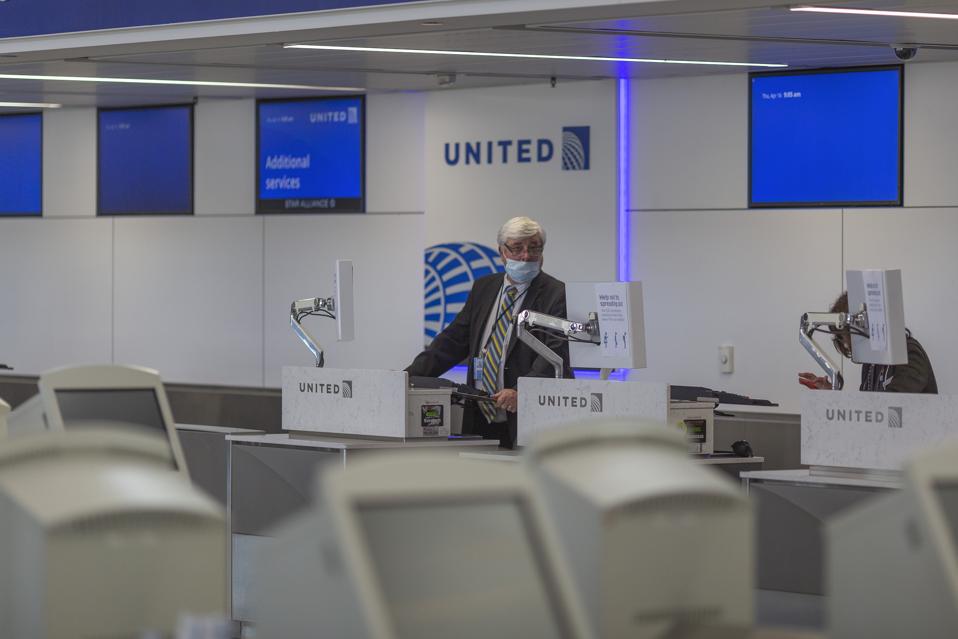
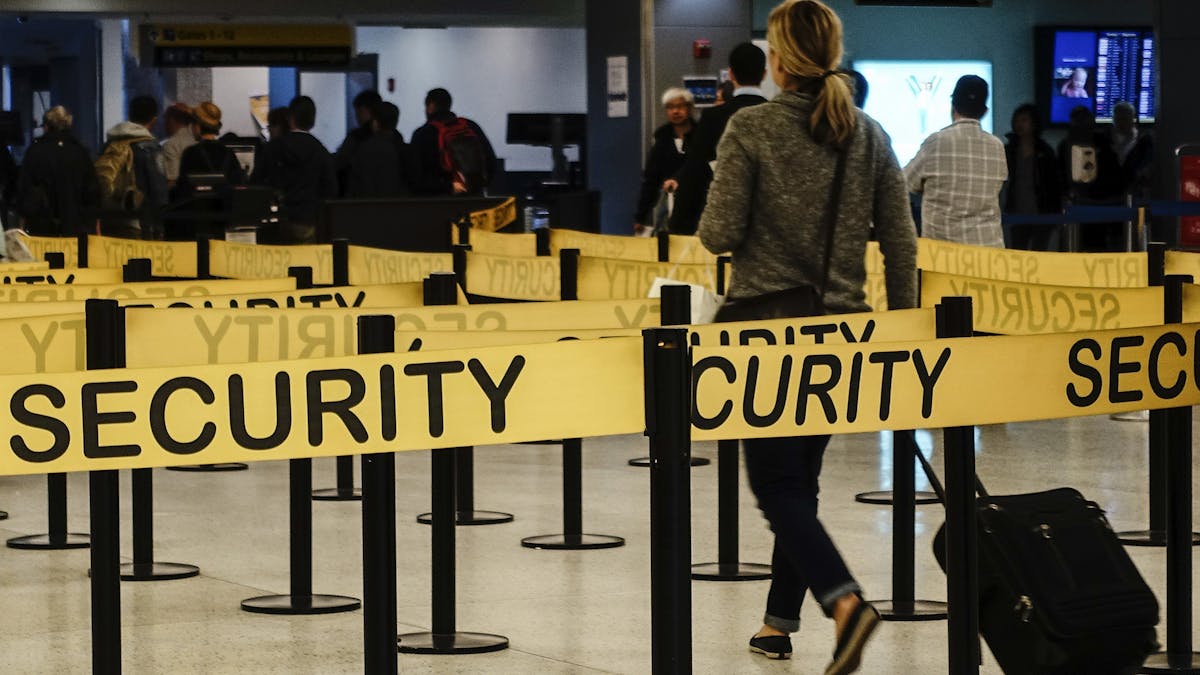
UN EMPLEADO DE UNITED AIRLINES ESTÁ PARADO EN UN MOSTRADOR SIN CLIENTES EN LÍNEA EN LAX. FOTO: GETTY IMAGES
No está claro qué tan efectivo será el proceso de autoevaluación cuando algunos pasajeros pueden no conocer sus niveles de exposición reciente o cuando otros, quizás pasajeros menos escrupulosos, simplemente podrían mentir sobre sus condiciones. Pero la lista de verificación proporciona un marco para documentar que los pasajeros han reconocido sus respectivas condiciones, y tal vez le da a la aerolínea un respiro en caso de que se tome algún tipo de acción legal. De hecho, además del anuncio del 11/06, Jon Ostrower de The Air Current señaló que United también cambió su contrato de transporte en algún momento recientemente para decir que ahora está permitido que la aerolínea retire a los pasajeros de un vuelo si hay «razones para creer que hubo exposición a una enfermedad contagiosa».
El movimiento más reciente de United para promover la salud durante el vuelo se produce tras una serie de esfuerzos en toda la industria para mejorar la limpieza y la seguridad de toda la experiencia de viaje. Inicialmente, el proceso giraba en torno a medidas de limpieza integrales que las compañías aéreas implementaron para asegurarse de que las cabinas de los aviones estuvieran completamente esterilizadas entre cada vuelo. Paralelamente, se han desplegado nuevas medidas para el equipo de protección personal, tanto para los pasajeros como para la tripulación.
Con la lista de verificación «Listo para volar» ahora en juego, el espectro de medidas de seguridad adoptadas por la industria de las aerolíneas se ha ampliado aún más. Y dicho todo, las medidas completas deberían ayudar a crear más confianza en el proceso de viaje aéreo para muchos pasajeros aún inciertos. Aún así, hay un largo camino por recorrer hasta que la demanda vuelva a los niveles previos al Coronavirus.
United launches self-assessment checkup
United Airlines Launches Self-Assessment for Passengers at Check-In
Airlines across the world are making significant changes to the passenger travel experience. Among recent measures implemented this week, carriers are beginning to ask passengers to self-evaluate during the check-in process.
On Thursday 11/06, Chicago-based United Airlines announced that it will ask passengers to assess their health and environmental exposure during the registration process on each flight. At check-in, passengers will now go through a «Ready to Fly» checklist and will respond if they have experienced recent coronavirus symptoms, if they have been in close contact with someone experiencing the symptoms or if someone has denied boarding. carrier. In addition, passengers will be asked to acknowledge that a face mask must be worn throughout the travel experience. «The health and safety of our customers and employees is our highest priority, and we have been working closely with trusted medical experts and partners to institute new practices and procedures to further protect those who work and travel with us. The United’s ‘Ready to Fly’ wellness sets clear guidelines on the health requirements for our customers and helps minimize the risk of exposure during the travel experience», said Pat Baylis, United Corporate Medical Director.
It is unclear how effective the self-assessment process will be when some passengers may not know their recent exposure levels or when others, perhaps less scrupulous passengers, may simply lie about their conditions. But the checklist provides a framework to document that passengers have recognized their respective conditions, and perhaps gives the airline a break in the event of some sort of legal action. In fact, in addition to the 6/11 announcement, Jon Ostrower of The Air Current noted that United also changed its transportation contract at some point recently to say that the airline is now allowed to remove passengers from a flight if there are «reasons to believe that there was exposure to a contagious disease».
United’s latest move to promote in-flight health comes after a series of industry-wide efforts to improve the cleanliness and safety of the entire travel experience. Initially, the process revolved around comprehensive cleaning measures that airlines implemented to ensure that aircraft cabins were completely sterilized between each flight. In parallel, new measures have been deployed for personal protective equipment, both for passengers and for the crew.
With the «Ready to Fly» checklist now at stake, the spectrum of security measures taken by the airline industry has been further expanded. All told, comprehensive measures should help create more confidence in the air travel process for many still uncertain passengers. Still, there is a long way to go until demand returns to pre-Coronavirus levels.
Ξ A I R G W A Y S Ξ PUBLISHER: Airgways.com DBk: United.com / Forbes.com / Npr.org / Gettyimages.com / Airgways.com AW-POST: 202006151005AR
AW | 2020 06 13 23:27 | AVIATION SAFETY / GOVERNMENT
Senadores EEUU más supervisión proceso de certificación de la FAA
El proyecto de ley propuesto de los Senadores de Estados Unidos apunta a reforzar los controles sobre cómo los reguladores federales de seguridad de la aviación supervisan y aprueban el diseño de nuevos aviones o nuevas tecnologías en la industria de la aviación.
Un par de senadores de los Estados Unidos están buscando un proyecto de ley que requiera reformas sobre cómo la Administración Federal de Aviación (FAA) certifica nuevos aviones. Un borrador del proyecto de ley bipartidista, escrito por el presidente del Comité de Comercio del Senado, Roger Wicker, Republicano y la Senadora Demócrata María Cantwell, ha comenzado a circular en Capitol Hill. El proyecto de ley se redactó como resultado de los dos accidentes aéreos de dos Boeing 737-8 MAX que mataron en su conjunto 346 personas en 2018 y 2019. El Boeing 737 MAX ha estado conectado a tierra durante 15 meses desde los dos accidentes. Lo que Boeing esperaba sería un vuelo suave para volver a poner el avión en el aire después de identificar la causa de los accidentes, ya que un problema de software solo ha generado más problemas y problemas a medida que continúa el proceso de recertificación.
Perspectivas Ley Certificaciones
La nueva ley buscará eliminar la capacidad de los fabricantes de aviones para influir indebidamente en los procesos de certificación de aeronaves. El proyecto de ley en realidad le daría a la FAA un nuevo poder sobre la práctica de larga data de delegar algunas tareas de certificación al propio fabricante de aeronaves. Buscaría reformas dirigidas a prevenir la presión indebida o instancias de comodidad regulatoria percibida u otras fallas para mantener la independencia entre la FAA y los empleados de la industria de aviación que realizan tareas de certificación.También requeriría auditorías periódicas y autorizaría US$ 150 millones durante 10 años para nueva capacitación de la FAA y para contratar personal especializado para desarrollar estándares técnicos para nuevas tecnologías y operaciones. «El Congreso debe asegurarse de que la seguridad de la aviación en los Estados Unidos sea la más fuerte del mundo. La sólida experiencia en aviación técnica sobre el terreno no puede ser simplemente ignorada por la alta gerencia de la FAA», dijo María Cantwell en un comunicado.
Factores humanos
El proyecto de ley también aborda las preocupaciones sobre factores humanos, diciendo que la FAA debe revisar y potencialmente modificar las suposiciones existentes sobre cómo los pilotos se identifican y responden a las situaciones de la cabina. Una revisión federal concluyó que Boeing subestimó el efecto que un mal funcionamiento del nuevo software automatizado en la aeronave podría tener en los pilotos, que estaban lidiando con una cacofonía de alertas en ambos accidentes 737 MAX.
Al certificar un nuevo tipo de aeronave, la FAA debe abordar el impacto acumulativo que las nuevas tecnologías pueden tener en la respuesta del piloto, consultar a expertos externos y notificar a otros reguladores internacionales y alentarlos a realizar evaluaciones. El proyecto de ley fue compartido con asociaciones de aviación, sindicatos y familiares de los fallecidos en los accidentes fatales de Boeing, en busca de su opinión.
Perspectiva de Boeing
El software del Sistema de Control de Vuelo (MCAS) del Boeing 737 MAX estará próximo a aprobarse pero los reguladores buscarán más cambios. El 737 MAX de Boeing está en un camino claro hacia la recertificación, pero las posibles dificultades aún podrían extender el proceso de revisión multinacional.
Según el informe, un factor importante que aún marca el ritmo de las aprobaciones finales es obtener las aprobaciones de la Agencia de Seguridad Aérea de la Unión Europea (EASA) para los cambios de Boeing al 737 MAX y al nuevo software. La EASA está llevando a cabo su propio Análisis de Seguridad del Sistema Integrado, aplicando efectivamente una plantilla reglamentaria destinada a los aviones Airbus encima de Boeing, y el regulador requiere completar la AISS (Aircraft Information System Security) antes de probar el software rediseñado de Boeing para la certificación en vuelo. Se espera que Boeing se comprometa a desarrollar un sistema sintético de velocidad del aire o a agregar un tercer sensor para medir la velocidad del aire en un compromiso con EASA, según el informe.
Inspection reforms for certifications
US Senators Plus Oversight FAA Certification Process
The proposed US Senators bill aims to tighten controls on how federal aviation security regulators oversee and approve the design of new aircraft or new technologies in the aviation industry.
A couple of United States senators are looking for a bill that requires reforms on how the Federal Aviation Administration (FAA) certifies new planes. A draft bipartisan bill, written by Senate Commerce Committee Chairman Roger Wicker, Republican, and Democratic Senator Maria Cantwell, has begun circulating on Capitol Hill. The bill was drafted as a result of the two plane crashes of two Boeing 737-8 MAXs that together killed 346 people in 2018 and 2019. The Boeing 737 MAX has been grounded for 15 months since the two crashes. What Boeing was expecting would be a smooth flight to put the plane back in the air after identifying the cause of the crashes, as a software glitch has only generated more problems and issues as the recertification process continues.
Certification Law Perspectives
The new law will seek to eliminate the ability of aircraft manufacturers to unduly influence aircraft certification processes. The bill would actually give the FAA new power over the long-standing practice of delegating some certification tasks to the aircraft manufacturer itself. It would seek reforms aimed at preventing undue pressure or instances of perceived regulatory comfort or other failures to maintain independence between the FAA and aviation industry employees performing certification tasks. It would also require periodic audits and authorize US$ 150 million over 10 years for new FAA training and hiring specialized personnel to develop technical standards for new technologies and operations. «Congress must ensure that aviation security in the United States is the strongest in the world. Solid experience in technical aviation on the ground cannot simply be ignored by FAA senior management», said Maria Cantwell in a statement.
Human factors
The bill also addresses human factors concerns, saying the FAA must review and potentially modify existing assumptions about how pilots identify and respond to cockpit situations. A federal review concluded that Boeing underestimated the effect a malfunction of the new automated software on the aircraft could have on pilots, who were dealing with a cacophony of alerts in both 737 MAX crashes.
When certifying a new type of aircraft, the FAA must address the cumulative impact that new technologies may have on the pilot’s response, consult external experts, and notify other international regulators and encourage them to conduct evaluations. The bill was shared with aviation associations, unions and family members of those killed in the fatal Boeing accidents, seeking their opinion.
AISS: Aircraft Information System Security
Es el documento de referencia al contexto general de la responsabilidad compartida de la Seguridad de los Sistemas de Información Aeronáutica (AISS) a través de la identificación y descripción de los temas que deben abordarse. Esta responsabilidad es compartida por todas las partes interesadas relevantes que forman parte de la aviación civil. El propósito de seguridad en este contexto debe entenderse como garantizar la seguridad del vuelo y mantener la operación de la infraestructura de aviación civil sin interrupciones significativas. Cubre todas las áreas de la aviación civil relevantes para este propósito, incluido el diseño, producción y operación de aeronaves (pasajeros y carga), gestión del tráfico aéreo, aeropuertos, operaciones de reparación y revisión de mantenimiento (MRO), proveedores de servicios de aviación, componentes (como hardware de aviónica). y software, bases de datos, datos de configuración, etc.) e información (como NOTAMS, clima, obstáculos, rutas y restricciones, manuales y cartas, etc.) y las cadenas de suministro que utilizan y comprenden.
AISS: Aircraft Information System Security
It is the document of reference to the general context of the shared responsibility of the Security of the Aeronautical Information Systems (ISSA) through the identification and description of the topics to be addressed. This responsibility is shared by all relevant stakeholders that are part of civil aviation. The purpose of security in this context should be understood as ensuring flight safety and maintaining the operation of civil aviation infrastructure without significant interruptions. It covers all areas of civil aviation relevant to this purpose, including the design, production and operation of aircraft (passengers and cargo), air traffic management, airports, repair and maintenance overhaul operations (MRO), service providers of aviation, components (such as avionics hardware). and software, databases, configuration data, etc.) and information (such as NOTAMS, weather, obstacles, routes and restrictions, manuals and charts, etc.) and the supply chains they use and understand.
Ξ A I R G W A Y S Ξ PUBLISHER: Airgways.com DBk: Senate.gov / Faa.gov / Boeing.com / Airgways.com AW-POST: 202006132327AR
FAA advierte cortocircuito provocaría máxima potencia Boeing 777
La Federal Aviation Administration (FAA) ha lanzado advertencia a las aerolíneas del mundo que operan flota de aeronaves Boeing 777 sobre un posible cortocircuito que podría conducir a una mayor potencia del motor sin energía o comandos. Según la Agencia de Aviación Civil de Estados Unidos, se han registrado varios incidentes en todo el mundo con la misma causa, es decir, un cortocircuito que provocó un aumento en la potencia de los motores de las aeronaves Boeing 777 a través del autoacelerador. El Acelerador Automático es un mecanismo que ajusta automáticamente la potencia de los motores de la aeronave, de acuerdo con el régimen de vuelo seleccionado o la velocidad ingresada en la computadora de vuelo.
La mayoría de los sucesos ocurrieron después del aterrizaje, cuando el avión ya no está activado con la marcha atrás, sin embargo, todavía con los spoilers activados (frenos aerodinámicos, ubicados en la parte superior del ala). Sin embargo, un solo caso ocurrió durante el taxi, antes del despegue. En este caso, el motor proporciona la máxima potencia sin que el piloto lo haya ordenado, lo que puede causar un posible despiste y una colisión grave, según lo informado por la FAA.
Después de un análisis de los casos, se detectó la existencia de un posible cortocircuito en los cables que conectan los botones TO/GA (Take-Off/Go-Around). Al presionar estos botones, que, como su nombre lo indica, se crearon para ayudar en los procedimientos de despegue y lanzamiento, el sistema informático de la aeronave activa el acelerador automático y se aplica la potencia máxima a la aeronave, con las palancas de potencia del motor (en el caso de Boeing) siendo llevado adelante.
La FAA no clasificó la ocurrencia como muy grave debido a su baja tasa de ocurrencia, en comparación con la cantidad de aviones que volaban y las horas de vuelo realizadas, pero emitió un boletín de alerta a los operadores mundiales de Boeing 777.
The Boeing Company ya había detectado esta falla antes, cuando emitió un boletín similar, dirigiendo el intercambio de cables y un monitoreo adicional de los pilotos durante el taxi. No se reveló al público qué causaría el cortocircuito que origina las fallas o qué modelos de 777 y motores pueden verse afectados, pero las fuentes dicen que es un error de diseño que afecta a todos los aviones del modelo.
Boeing 777 engine incidents
FAA warns short circuit would cause full power Boeing 777
The Federal Aviation Administration (FAA) has issued a warning to world airlines operating the Boeing 777 aircraft fleet about a possible short circuit that could lead to increased engine power without power or command. According to the United States Civil Aviation Agency, there have been several incidents around the world with the same cause, that is, a short circuit that caused an increase in the power of Boeing 777 aircraft engines through the self-throttle. The Automatic Accelerator is a mechanism that automatically adjusts the power of the aircraft’s engines, according to the selected flight regime or the speed entered in the flight computer.
Most of the events occurred after landing, when the aircraft is no longer activated in reverse, however, with the spoilers still activated (aerodynamic brakes, located at the top of the wing). However, only one case occurred during the taxi, before takeoff. In this case, the engine provides maximum power without being ordered by the pilot, which can cause possible oversight and a serious collision, as reported by the FAA.
After an analysis of the cases, the existence of a possible short circuit in the cables connecting the TO/GA (Take-Off/Go-Around) buttons was detected. By pressing these buttons, which, as the name implies, were created to assist in take-off and launch procedures, the aircraft’s computer system activates the automatic throttle and applies maximum power to the aircraft, using the power levers. of the engine (in the case of Boeing) being carried forward.
The FAA did not classify the occurrence as very serious due to its low occurrence rate, compared to the number of aircraft flying and the flight hours performed, but did issue an alert bulletin to global Boeing 777 operators.
The Boeing Company had already detected this flaw before, when it issued a similar bulletin, directing the cable exchange and additional monitoring of pilots during the taxi. It was not disclosed to the public what the short circuit causing the failures would cause or what 777 models and engines may be affected, but sources say it is a design error that affects all aircraft in the model.
Ξ A I R G W A Y S Ξ PUBLISHER: Airgways.com DBk: Faa.gov / Boeing.com / Airgways.com AW-POST: 202006131948AR
AW | 2020 06 13 14:03 | AIRPORTS / AVIATION SAFETY / GOVERNMENT
EASA emite lista aeropuerto con medidas sanitarias aprobadas
La Agencia de Seguridad Aérea de la Unión Europea (EASA) ha desarrollado una lista de aeropuertos mundiales que han tomado las medidas necesarias, incluida la desinfección mejorada de aeronaves para mitigar los riesgos de transmisión de la infección por la pandemia de Coronavirus (COVID-19). La lista ha sido desarrollada con el único propósito de garantizar una capa adicional de protección para los pasajeros y la tripulación y no pretende sugerir restricciones de viaje u otras medidas de salud pública (como la cuarentena) a nivel estatal.
La lista de aeropuertos europeos aprobados que se ha desarrollado en coordinación con los Estados miembros de EASA, se basa principalmente en la información de la OMS, el ECDC y otros institutos de salud pública acreditados, y se actualizará continuamente en consulta con estas organizaciones. Los datos de estas organizaciones se han recopilado y organizado de manera coherente. En general, la lista se ha establecido en base a los siguientes factores: cantidad de casos activos; cantidad de casos recuperados; la tendencia de casos activos por día y la tendencia de casos nuevos por día; número de pruebas por habitantes; muertes por habitantes y tendencia de muertes por día; casos en áreas urbanas versus rurales; número y tamaño de los aeropuertos que sirven a un área/población específica; índice de reproducción: más alto que uno debe considerarse en correlación con otros factores y debe verse como una indicación de exponencial.
Se detallan la nómina de los aeropuertos europeos fiscalizados por la EASA:
Estado / Regiones / Territorios Ultramar / Aeropuertos Unión Europea Bélgica Todos los aeropuertos Francia Todos los aeropuertos en las siguientes regiones: · Ile-de-France Italia Todos los aeropuertos en las siguientes regiones: · Emilia Romagna · Lombardia · Piemonte Países Bajos Los siguientes aeropuertos: · Aeropuerto de Amsterdam Schiphol · Aeropuerto de Eindhoven · Aeropuerto de Maastricht Aachen · Aeropuerto de Rotterdam La Haya Polonia · Aeropuerto de Katowice (EPKT) Portugal Los siguientes aeropuertos: · Aeropuerto Francisco Sá Carneiro · Aeropuerto Lisboa Portela España Todos los aeropuertos en las siguientes regiones: · Castilla y León · Castilla-La Mancha · Cataluña · Madrid/Barajas Suecia Todos los aeropuertos en Región de Estocolmo Reino Unido Los siguientes aeropuertos: · Birmingham · Doncaster Sheffield · East Midlands · Gatwick · Glasgow · Heathrow · Leeds Bradford · Liverpool John Lennon · Londres City · Luton · Manchester · Newcastle International · Stansted
Estados miembros de la UE incluyen en la nómina Suiza, Noruega, Islandia, Reino Unido y territorios
Estados del resto del mundo Afganistán Todos los aeropuertos Argentina Todos los aeropuertos de Provincia de Buenos Aires Bahrein Todos los aeropuertos Bangladesh Todos los aeropuertos Bielorrusia Todos los aeropuertos Bolivia Todos los aeropuertos Brasil Todos los aeropuertos en las siguientes regiones: · Amazonas · Bahía · Ceará · Espírito Santo · Maranhão · Paraíba · Pernambuco · Piauí · Río de Janeiro · Santa Catarina · Sao Paulo Canadá Todos los aeropuertos en las siguientes regiones: · Ontario · Quebec Chile Todos los aeropuertos Colombia Todos los aeropuertos de la región de Bogotá República Dominicana Todos los aeropuertos Ecuador Todos los aeropuertos Egipto Todos los aeropuertos India Todos los aeropuertos en las siguientes provincias: · Gujarat · Madhya Pradesh · Maharashtra · Rajastán · Tamil Nadu · Uttar Pradesh Indonesia Todos los aeropuertos Iran Todos los aeropuertos Kuwait Todos los aeropuertos Mexico Todos los aeropuertos en la región de la Ciudad de México Pakistán Todos los aeropuertos Perú Todos los aeropuertos Katar Todos los aeropuertos Rusia Todos los aeropuertos en las siguientes regiones: · Krai de Krasnoyarsk · Moscú · Murmansk · Nizhny Novgorod · Óblast de Rostov · Sankt Petersburgo · Óblast de Sverdlovsk · Óblast de Yaroslavl Arabia Saudita Todos los aeropuertos Singapur Todos los aeropuertos Sudáfrica Todos los aeropuertos de la región del Cabo Occidental Turquía Todos los aeropuertos Ucrania Todos los aeropuertos en las siguientes regiones: · Chernivtsi · Kyiv
Emiratos Árabes Unidos Todos los aeropuertos Estados Unidos de América Todos los aeropuertos en los siguientes estados: · Alabama · Arizona · California · Colorado · Connecticut · Florida · Georgia · Illinois · Indiana · Luisiana · Maryland · Massachusetts · Michigan · Nebraska · Nueva Jersey · Nueva York · Carolina del Norte · Ohio · Pensilvania · Rhode Isla · Texas · Virginia · Washington
EASA lists health airports
EASA issues airport list with sanitary measures approved
The European Union Aviation Safety Agency (EASA) has developed a list of world airports that have taken the necessary measures, including improved aircraft disinfection to mitigate the risks of transmission of the Coronavirus pandemic infection (COVID-19). The list has been developed for the sole purpose of ensuring an additional layer of protection for passengers and crew and is not intended to suggest travel restrictions or other public health measures (such as quarantine) at the state level.
The list of approved European airports, which has been developed in coordination with EASA Member States, is based primarily on information from WHO, ECDC and other accredited public health institutes, and will be continually updated in consultation with these organizations. Data from these organizations has been consistently collected and organized. In general, the list has been established based on the following factors: number of active cases; number of cases recovered; the trend of active cases per day and the trend of new cases per day; number of tests per inhabitants; deaths by inhabitants and trend of deaths per day; cases in urban versus rural areas; number and size of airports serving a specific area/population; Reproduction index: higher than one should be considered in correlation with other factors and should be seen as an indication of exponential.
The payroll of the European airports audited by EASA are detailed:
State / Regions / Overseas Territories / Airports European Union Belgium All airports France All airports in the following regions: · Ile-de-France Italy All airports in the following regions: · Emilia Romagna · Lombardy · Piemonte Netherlands The following airports: · Amsterdam Schiphol Airport · Eindhoven Airport · Maastricht Aachen Airport · Rotterdam The Hague Airport Poland · Katowice Airport (EPKT) Portugal The following airports: · Francisco Sá Carneiro Airport · Lisbon Portela Airport Spain All airports in the following regions: · Castilla y León · Castilla la Mancha · Catalonia · Madrid/Barajas Sweden List of all airports in Stockholm Region United Kingdom The following airports: · Birmingham · Doncaster Sheffield · East Midlands · Gatwick · Glasgow · Heathrow · Leeds Bradford · Liverpool John Lennon · London City · Luton · Manchester · Newcastle International · Stansted
EU member states include Switzerland, Norway, Iceland, United Kingdom and territories on the payroll
States of the rest of the world Afghanistan All airports Argentina All Buenos Aires Province airports Bahrain All airports Bangladesh All airports Belarus All airports Bolivia All airports Brazil All airports in the following regions: · Amazonas · Bahía · Ceará · Espirito Santo · Maranhão · Paraíba · Pernambuco · Piauí · Rio de Janeiro · St. Catarina · Sao Paulo Canada All airports in the following regions: · Ontario · Quebec Chile All airports Colombia All airports in the Bogotá region Dominican Republic All airports Ecuador All airports Egypt All airports India All airports in the following provinces: · Gujarat · Madhya Pradesh · Maharashtra · Rajasthan · Tamil Nadu · Uttar Pradesh Indonesia All airports Iran All airports Kuwait All airports Mexico All airports in the Mexico City region Pakistan All airports Peru All airports Qatar All airports Russia All airports in the following regions: · Krasnoyarsk Krai · Moscow · Murmansk · Nizhny Novgorod · Rostov Oblast · Sankt Petersburg · Sverdlovsk Oblast · Yaroslavl Oblast Saudi Arabia All airports Singapore All airports South Africa All airports in the Western Cape region Turkey All airports Ukraine All airports in the following regions: · Chernivtsi · Kyiv
United Arab Emirates All airports United States of America All airports in the following states: · Alabama · Arizona · California · Colorado · Connecticut · Florida · Georgia · Illinois · Indiana · Louisiana · Maryland · Massachusetts · Michigan · Nebraska · New Jersey · New York · North Carolina · Ohio · Pennsylvania · Rhode Island · Texas · Virginia · Washington
Ξ A I R G W A Y S Ξ PUBLISHER: Airgways.com DBk: Schengenvisainfo.com / Airgways.com / Airport-world.com / Reuters.com AW-POST: 202006131403AR
AW | 2020 06 10 16:05 | AVIATION SAFETY / INDUSTRY
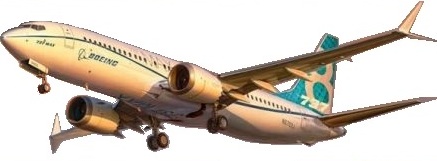
Boeing 737 MAX aproxima recertificación fines Junio 2020
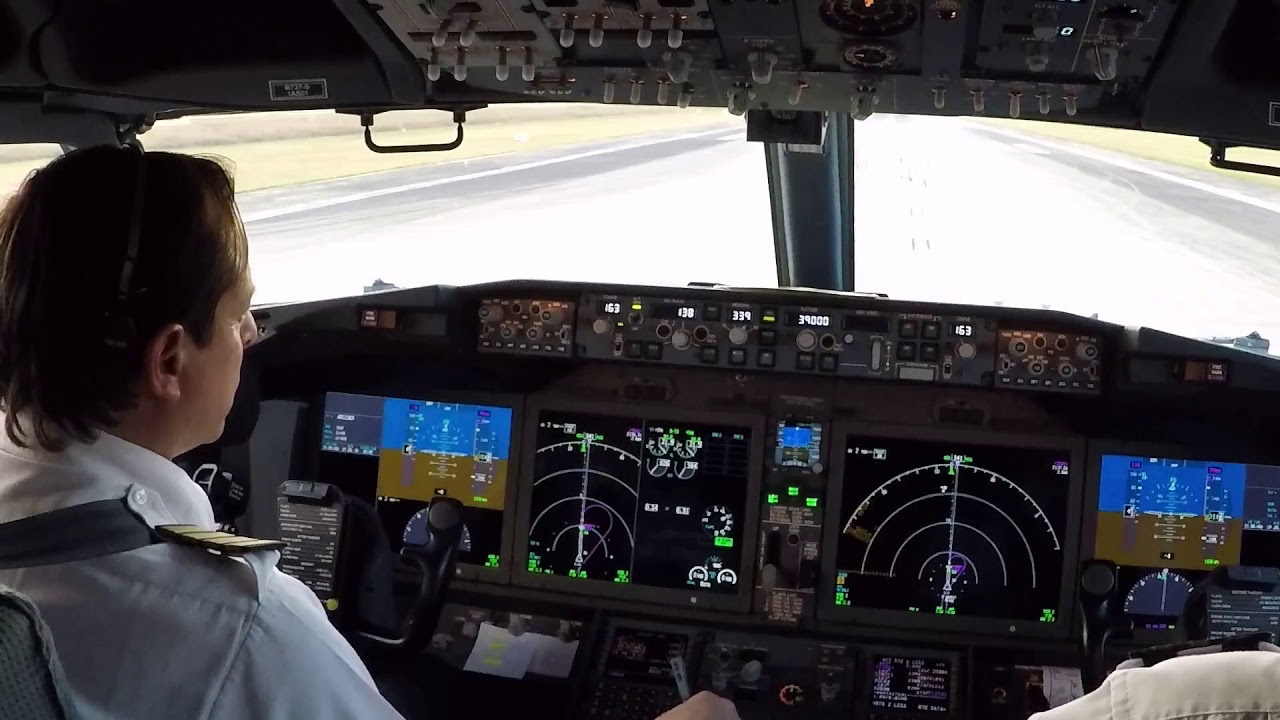
The Boeing Company está apuntando a fines de Junio 2020 para el vuelo de recertificación del Boeing 737 MAX con conexión a tierra y está notificando a las aerolíneas de una solución clave al cableado del avión en señales de que el avión problemático está a punto de regresar al servicio. Un borrador de entrenamiento piloto revisado para el avión que ha estado estacionado en todo el mundo desde Marzo 2019.
Los movimientos en la industria de la Boeing fueron fuertes indicios de que después de más de un año de aterrizaje del modelo de aeronave más vendido de la compañía y la controversia en torno a sus dos accidentes fatales, se está acercando a las etapas finales necesarias para la recertificación y reanudación próxima del servicio comercial.
Preparativos recertificación
La fecha para un vuelo de los pilotos de la Administración Federal de Aviación (FAA) para certificar que el avión cumpla con las normas de seguridad no se ha finalizado y una persona advirtió que la compañía todavía tiene elementos para completar antes de que pueda ocurrir.
El objetivo de Boeing ha sido devolver el 737 MAX, la aeronave insignia y unidad más importantes en ventas. Estiman que el modelo pueda entrar al servicio comercial en el tercer trimestre (3Q2020). La compañía con sede en Chicago reinició la producción del avión de pasillo único a fines del mes pasado, despues de detenerse por un período de cinco meses en la línea de ensamblaje en Renton, Estado de Washington.
La compañía está revisando el Sistema de Control de Vuelo conocido como Maneuvering Characteristics Augmentation System (MCAS) implicado en los dos accidentes aéreos que repetidamente derribaron las narices de los aviones debido a un mal funcionamiento de control de vuelo de la aeronave. Las revisiones de la seguridad del avión después de su puesta a tierra del 13 Marzo 2019 también descubrieron fallas adicionales que debían actualizarse, incluida su computadora de Control de Vuelo; la agrupación del cableado eléctrico hacialos motores y problemas de software.
La FAA también está revisando ampliamente cómo evalúa el desempeño del piloto durante el mal funcionamiento como resultado de los accidentes. Si todo sale según lo planeado, el avión retornará a un mercado muy diferente al de Marzo 2019, cuando los reguladores detuvieron el vuelo de 737 MAX. Una pandemia global ha hundido a la industria de viajes en su peor caída registrada, y muchas aerolíneas que son clientes que clamaban por Boeing 737 MAX hace solo unos meses ahora luchan por sobrevivir.
Boeing predicts 737 MAX recertification
Boeing 737 MAX approaching recertification end of June 2020
The Boeing Company is targeting in late June 2020 for the grounded Boeing 737 MAX recertification flight and is notifying airlines of a key solution to the aircraft’s wiring in signs that the troubled aircraft is about to return to service. A revised draft of pilot training for the plane that has been parked worldwide since March 2019.
Movements in the Boeing industry were strong indications that after more than a year of landing the company’s best-selling aircraft model and the controversy surrounding its two fatal crashes, it is approaching the final stages necessary to recertification and upcoming resumption of business service.
Recertification preparations
The date for a flight by pilots of the Federal Aviation Administration (FAA) to certify that the plane meets safety standards has not been finalized and a person warned that the company still has elements to complete before it can occur.
Boeing’s goal has been to return the 737 MAX, the top selling flagship and unit. They estimate that the model can enter commercial service in the third quarter (3Q2020). The Chicago-based company restarted production of the single-aisle aircraft late last month, after stopping for a period of five months on the assembly line in Renton, Washington State.
The company is reviewing the Flight Control System known as the Maneuvering Characteristics Augmentation System (MCAS) involved in the two plane crashes that repeatedly brought down the noses of the planes due to an aircraft flight control malfunction. The aircraft’s safety reviews after its grounding on March 13, 2019 also discovered additional flaws that needed to be updated, including its Flight Control computer; bundling electrical wiring to motors and software problems.
The FAA is also extensively reviewing how it assesses pilot performance during malfunction as a result of accidents. If everything goes according to plan, the plane will return to a very different market than in March 2019, when regulators stopped the 737 MAX flight. A global pandemic has plunged the travel industry into its worst recorded decline, and many customer airlines claiming for the Boeing 737 MAX just a few months ago are now struggling to survive.
Ξ A I R G W A Y S Ξ PUBLISHER: Airgways.com DBk: Boeing.com / Faa.gov / Airgways.com AW-POST: 202006101605AR
AW | 2020 06 08 16:06 | AIR INVESTIGATION / AVIATION SAFETY
Investigadores retornan con decodificación del CVR
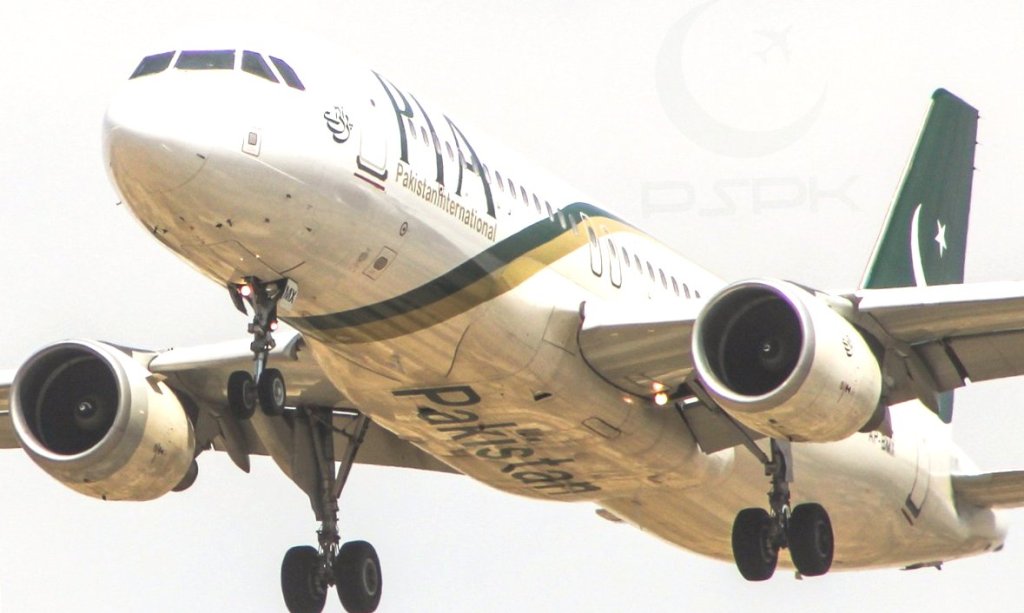
La tragedia aérea del vuelo PK-8303 de Pakistan International Airlines (PIA) de un Airbus A320-200, con registro AP-BLD que realizaba el vuelo entre Lahore a Karachi (Pakistán) con 91 pasajeros y 8 tripulantes, había abortado la aproximación a Karachi debido a problemas con la extensión del tren de aterrizaje delantero (nariz). La tripulación había informando que habían perdido ambos motores (CFM56) y declarando repetidamente Mayday.
Actualizaciones PK8303
El 1 Junio 2020, el avión que transportaba a los equipos de investigación y las cajas negras completó con seguridad el viaje de Pakistán a París.
El 2 Junio 2020, la BEA informó que tanto FDR como CVR se descargaron con éxito. El análisis de los datos está en progreso.
El 5 Junio 2020, la BEA informó que se completó la descarga y decodificación de ambas grabadoras, el análisis de los datos está en curso.
Airbus Group, el fabricante de aviones A320, ha dicho que el Transmisor de Información de Accidentes (AIT) en el vuelo PK-8303 de Pakistan International Airlines, que se estrelló en Karachi el 22 Mayo 2020, ha sido aprobado para su lanzamiento por la Junta de Investigación de Accidentes de Aeronaves de Pakistán (AAIB) y la Oficina Francesa de Investigación y Análisis (BEA) para la Seguridad de la Aviación Civil.
Airbus ha comunicado: «El Registrador de Datos de Vuelo (FDR) y el Registrador de Voz de Cabina (CVR) fueron leídos y analizados en las instalaciones de BEA en París, Francia, bajo el liderazgo del AAIB de Pakistán con la participación de EASA, Safran Aircraft Engines, en representación de CFM International, y Airbus. Ambas grabadoras FDR y CVR proporcionaron información valiosa para la investigación».
Además, dijo que, basándose en el análisis preliminar de los datos disponibles: información del lugar del accidente, registro ATC, FDR y CVR, Airbus no tiene ninguna recomendación de seguridad específica que plantear en esta etapa de la investigación. El Director de Seguridad de Productos, Yannick Malinge, dijo en su carta a todas las aerolíneas que operan aviones A320 que Airbus continuará proporcionando actualizaciones de las autoridades de investigación oficiales según corresponda.
Poco después de que el avión del vuelo PK-8303 se estrellara en Karachi, el Gobierno de Pakistán notificó a un equipo encabezado por el Comodoro de Aviación Mohammad Usman Ghani para investigar el incidente. Airbus había enviado un equipo de 11 miembros a Pakistán para proporcionar asistencia técnica a los investigadores paquistaníes. El equipo francés y Air Commodore Ghani, junto con FDR y CVR, se habían ido a Francia para analizar el equipo que, según dijeron, proporcionaría información valiosa a los investigadores.
Las fuentes dijeron que Mohammad Usman Ghani tenía programado regresar a Islamabad el Domingo 07/06, junto con detalles del FDR y CVR. La AAIB presentará su informe preliminar al primer ministro y al ministro federal de aviación antes de hacerlo público. El Ministro de Aviación, Ghulam Sarwar Khan, ya había dicho que el Gobierno presentaría el Informe Preliminar sobre el accidente aéreo de Pakistan Airlines en el parlamento el 22 Junio 2020.
Pakistan PK8303 decoded CVR
Researchers return with CVR decoding
The aerial tragedy of Pakistan International Airlines (PIA) flight PK-8303 of an Airbus A320-200, with AP-BLD registration that carried out the flight between Lahore to Karachi (Pakistan) with 91 passengers and 8 crew, had aborted the approach to Karachi due to problems with front landing gear extension (nose). The crew had reported that they had lost both engines (CFM56) and repeatedly declared Mayday.
PK8303 updates
On June 1, 2020, the plane carrying research teams and black boxes safely completed the journey from Pakistan to Paris.
On June 2, 2020, the BEA reported that both FDR and CVR were downloaded successfully. Data analysis is in progress.
On June 5, 2020, the BEA reported that the download and decoding of both recorders was completed, data analysis is ongoing.
Airbus Group, the maker of A320 aircraft, has said that the Accident Information Transmitter (AIT) on Pakistan International Airlines flight PK-8303, which crashed in Karachi on May 22, 2020, has been approved for launch by the Pakistan Aircraft Accident Investigation Board (AAIB) and the French Bureau of Investigation and Analysis (BEA) for Civil Aviation Security.
Airbus has reported: «The Flight Data Recorder (FDR) and the Cabin Voice Recorder (CVR) were read and analyzed at the BEA facility in Paris, France, under the leadership of the Pakistan AAIB with the participation of EASA, Safran Aircraft Engines, representing CFM International, and Airbus. Both FDR and CVR recorders provided valuable information for the investigation».
Furthermore, he said that, based on the preliminary analysis of the available data: accident site information, ATC registration, FDR and CVR, Airbus does not have any specific safety recommendation to raise at this stage of the investigation. Director of Product Safety Yannick Malinge said in his letter to all airlines operating A320 aircraft that Airbus will continue to provide updates from official investigative authorities as appropriate.
Shortly after the plane on flight PK-8303 crashed in Karachi, the Government of Pakistan notified a team led by Aviation Commodore Mohammad Usman Ghani to investigate the incident. Airbus had dispatched a team of 11 members to Pakistan to provide technical assistance to Pakistani investigators. The French team and Air Commodore Ghani, along with FDR and CVR, had gone to France to analyze the team, which they said would provide valuable information to investigators.
Sources said Mohammad Usman Ghani was scheduled to return to Islamabad on Sunday 07/06, along with details from the FDR and CVR. The AAIB will present its preliminary report to the Prime Minister and the Federal Minister of Aviation before making it public. Aviation Minister Ghulam Sarwar Khan had previously said that the Government would present the Preliminary Report on the Pakistan Airlines plane crash in parliament on June 22, 2020.
Ξ A I R G W A Y S Ξ PUBLISHER: Airgways.com DBk: Caapakistan.com.pk / Easa.europa.eu / Bea.aero / Safran-group.com / Avherald.com / Airgways.com AW-POST: 202006081606AR
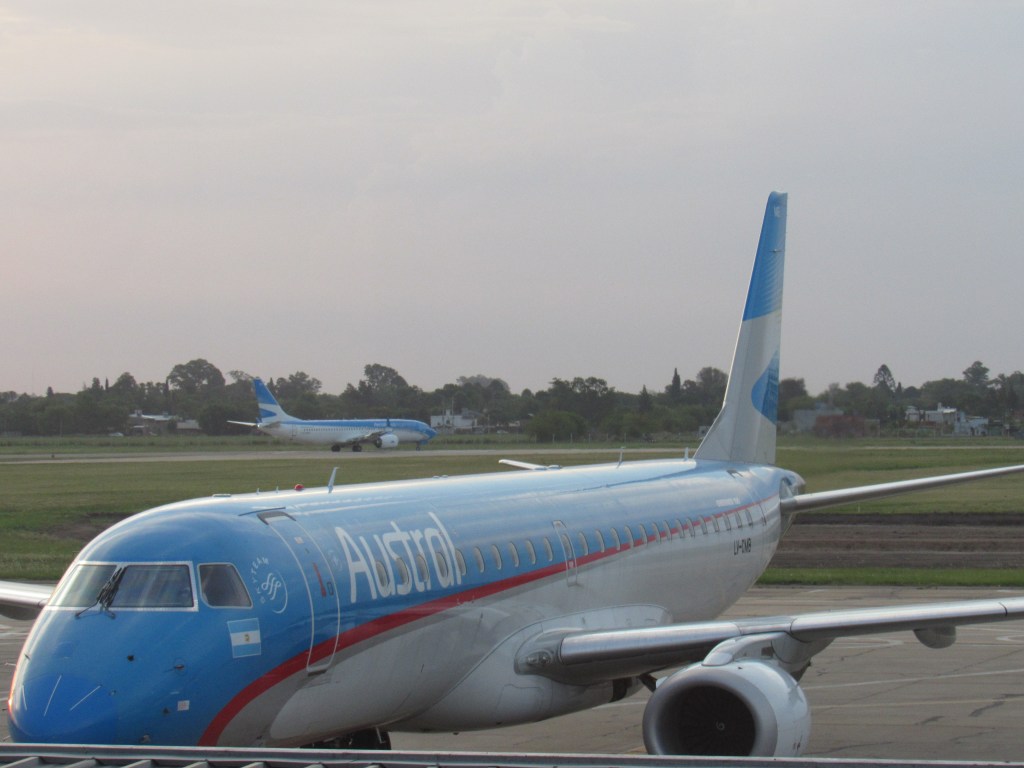
E190 Austral incidente tren de naríz en Aeropuerto Rosario
La NTSB de Estados Unidos continúa con las investigaciones relacionadas con el vuelo AR-2762 ocurrido el 16 Febrero 2020 tras la pérdida de una rueda del tren de nariz al aterrizar en el Aeropuerto Rosario.
Un Embraer E190-100AR Austral Líneas Aéreas, registro LV-CHQ que realizaba el vuelo AR-2762 en la ruta el Aeropuerto Internacional Ezeiza-Aeropuerto Internacional Rosario el 16/02/2020 con 102 personas a bordo, aterrizó en Rosario sin ningún aparente inconveniente. El personal de tierra alertó a la tripulación de que faltaba la rueda de morro izquierda del engranaje del tren de nariz. La Torre Control fue informada sobre el incidente. Se realizó una inspección en la pista donde se encontró la rueda que faltaba en el césped adjunta de la pista de aterrizaje.
La JIACC de Argentina abrió una investigación sobre el hecho. Las actualizaciones con respecto al incidente del vuelo AR-2762 han sido informadas el 4 Junio 2020, la NTSB de Estados Unidos ha informado: «La NTSB designó un Representante acreditado de los Estados Unidos para ayudar a la investigación del Gobierno de Argentina en virtud de las disposiciones del Anexo 13 de la OACI».
NTSB incident AR-2762 E190 from Austral
E190 Austral nose train incident at Rosario Airport
The NTSB of the United States continues with investigations related to flight AR-2762 that occurred on February 16, 2020 after the loss of a nose train wheel when landing at Rosario Airport.
An Embraer E190-100AR Austral Líneas Aéreas, registered LV-CHQ that performed flight AR-2762 on the route Ezeiza International Airport-Rosario International Airport on 02/16/2020 with 102 people on board, landed in Rosario without any apparent inconvenience . Ground personnel alerted the crew that the left nose wheel of the nose gear was missing. The Control Tower was informed of the incident. An inspection was made on the runway where the missing wheel was found on the attached grass of the runway.
The JIACC of Argentina opened an investigation into the fact. Updates regarding the incident of flight AR-2762 have been reported on June 4, 2020, the United States NTSB has reported: «The NTSB has appointed an Accredited Representative of the United States to assist the investigation by the Government of Argentina under the provisions of ICAO Annex 13».
Ξ A I R G W A Y S Ξ PUBLISHER: Airgways.com DBk: Avherald.com / Airgways.com AW-POST: 202006061107AR
Jefe FAA testificará en dos semanas Audiencia Senado sobre 737 MAX
El Jefe de la Administración Federal de Aviación (FAA), Steve Dickson, testificará el 17 Junio 2020 ante un panel del Senado de Estados Unidos, en una audiencia sobre la Certificación del Boeing 737 MAX. El actual Jefe de la FAA Steve Dickson testificará sobre los problemas asociados con el diseño, desarrollo, certificación y operación de la línea 737 MAX, ha comunicado el Comité de Comercio del Senado. El Presidente del Senado de Comercio, Roger Wicker, ha presentado la legislación el 03/06 para exigir que la FAA revise los supuestos sobre el tiempo de reacción del piloto y reformar sus procesos de certificación para eliminar casos de presión indebida o comodidad regulatoria que podrían conducir a lapsos en los protocolos de seguridad.
El Comité de Comercio del Senado dijo que la FAA testificará sobre los problemas asociados con el diseño, desarrollo, certificación y operación del Boeing 737 MAX que permanece desde Marzo 2019. La práctica de larga data de la FAA de delegar tareas de certificación a los empleados de Boeing ha sido criticada. No se espera que la FAA otorgue la aprobación para permitir que el 737 MAX reanude los vuelos hasta Agosto 2020 como muy pronto.
Un Comité de Transporte de la Cámara de Representantes en Marzo 2020 calificó la revisión de certificación de la FAA del 737 MAX como extremadamente insuficiente y dijo que la agencia había fallado en su deber de identificar problemas clave de seguridad. Se espera que el Inspector General del Departamento de Transporte de Estados Unidos publique pronto un informe de investigación sobre la certificación del avión, pero no hace recomendaciones. Boeing, que reanudó la producción del 737 MAX la semana pasada a un ritmo muy bajo, no ha formalizado comentarios.
El Presidente del Senado de Comercio, Roger Wicker, presentó una ley el Martes 02/06 para exigir a la FAA que revise los supuestos sobre el tiempo de reacción del piloto y reformar sus procesos de certificación para «eliminar los casos de presión indebida o comodidad regulatoria que podrían conducir a lapsos en los protocolos de seguridad».
En Enero 2020, Boeing lanzó cientos de mensajes internos que contenían comentarios muy críticos sobre el desarrollo de MAX. Uno dijo que el avión fue «diseñado por payasos que a su vez son supervisados por monos». Los mensajes mostraron intentos de eludir el escrutinio regulatorio con empleados que menospreciaban el avión, la compañía y la FAA.
El Departamento de Justicia de Estados Unidos ha llevado a cabo una investigación penal sobre el escándalo que rodea al 737 MAX.
La FAA dijo en Mayo 2020 que requeriría que Boeing y otros fabricantes de aviones adopten nuevas herramientas de gestión de seguridad.
FAA chief testifies before US Senate
FAA chief to testify in 7 weeks at Senate Hearing on 737 MAX
The Chief of the Federal Aviation Administration (FAA), Steve Dickson, will testify on June 17, 2020 before a panel of the United States Senate, in a hearing on the Certification of the Boeing 737 MAX. Current FAA Chief Steve Dickson will testify about problems associated with the design, development, certification, and operation of the 737 MAX line, the Senate Commerce Committee has reported. Senate Commerce President Roger Wicker introduced the legislation on 06/03 to require the FAA to review assumptions about pilot reaction time and reform its certification processes to eliminate cases of undue pressure or regulatory comfort that could lead to lapses in security protocols.
The Senate Commerce Committee said the FAA will testify about issues associated with the design, development, certification and operation of the Boeing 737 MAX that has been in place since March 2019. The FAA’s long-standing practice of delegating certification tasks to employees Boeing has been criticized. The FAA is not expected to grant approval to allow the 737 MAX to resume flights until August 2020 at the earliest.
A March 2020 House Transportation Committee rated the FAA certification review of the 737 MAX as extremely insufficient and said the agency had failed in its duty to identify key security issues. The Inspector General of the U.S. Department of Transportation is expected to publish an investigation report on the plane’s certification soon, but makes no recommendations. Boeing, which resumed production of the 737 MAX last week at a very low rate, had no comment.
Senate Commerce President Roger Wicker introduced a law Tuesday 06/02 to require the FAA to review assumptions about pilot reaction time and reform its certification processes to «eliminate cases of undue pressure or comfort that could lead to lapses in security protocols».
In January 2020, Boeing released hundreds of internal messages containing highly critical comments about MAX’s development. One said the plane was «designed by clowns who in turn are supervised by monkeys». The messages showed attempts to evade regulatory scrutiny with employees who looked down on the plane, the company, and the FAA.
The United States Department of Justice has conducted a criminal investigation into the scandal surrounding the 737 MAX.
The FAA said in May 2020 that it would require Boeing and other aircraft manufacturers to adopt new safety management tools.
Ξ A I R G W A Y S Ξ PUBLISHER: Airgways.com DBk: Commerce.senate.gov / Boeing.com / Faa.gov / Nytimes.com / Airgways.com AW-POST: 202006031658AR
AW | 2020 06 02 16:05 | GOVERNMENT / AIRLINES MARKET / AVIATION SAFETY
Países del mundo comienzan apertura de vuelos y fronteras
América
El Aeropuerto Internacional VC Bird, de Antigua y Barbuda, se convirtió en el primero de la Comunicad del Caribe (Caricom) en quedar reabierto este Lunes 1 Junio 2020 en el marco de la pandemia de Coronavirus, aunque lo hará con una operación muy limitada y con estrictos protocolos sanitarios. El Jueves 4 junio 2020 aterrizará el primer vuelo de American Airlines proveniente de Miami.
El Gerente del Aeropuerto de Kamloops, Columbia Británica (BC), Canadá, Ed Ratuski, dijo que los pasajeros actualmente pueden reservar vuelos y Air Canada está evaluando la demanda de esos viajes, con el restablecimiento de las conexiones diarias entre el interior de BC y la costa «provisional» en este momento.
La Isla Santa Lucía es una de varias islas del Caribe que intentan un regreso turístico. El destino tropical, que cerró sus órdenes a los viajeros extranjeros el 23 Marzo 2020, comenzará su reapertura gradual el 4 Junio 2020, cuando levantará sus fronteras para los visitantes de los Estados Unidos.
La isla caribeña de Aruba está planeando abrir sus puertas a los viajeros una vez más en algún momento entre el 15 Junio y el 1 Julio. Sin embargo, la oficina de visitantes de la isla caribeña, que ha informado de más de 100 casos confirmados de coronavirus, dice que esta fecha provisional puede cambiar si Aruba opta por considerar medidas de precaución adicionales según sea necesario.
La República de Jamaica reabre oficialmente sus fronteras a todos los turistas internacionales el día 15 Junio 2020. Edmund Bartlett, Jefe del Ministerio de Turismo, anunció en su página de Facebook: «El Gobierno de Jamaica abrirá sus fronteras para la repatriación de los ciudadanos a partir del 1 Junio 2020. El 15/06 se abrirán las fronteras para todo el mundo viajeros».
Los países sudamericanos comenzaron el lunes a aliviar las restricciones de COVID-19 incluso cuando la región avanza hacia su pico viral, sin tener en cuenta el ejemplo establecido por las naciones europeas que fueron golpeadas anteriormente por el virus. Algunas de las ciudades más afectadas de Brasil, incluida la metrópoli de Manaus y la costa de Río de Janeiro, están comenzando a permitir más actividad. El Gobierno de Bolivia autorizó la reapertura de la mayor parte del país y el Gobierno de Venezuela eliminó las restricciones. Los aeropuertos de Ecuador reanudaron los vuelos y los compradores regresaron a algunos de los centros comerciales de Colombia. Revertir las medidas va en contra del enfoque de Europa de esperar a que pase lo peor antes de reanudar la actividad, y América del Sur va mucho más atrás en su curva viral.
El Aeropuerto Quito/Mariscal Sucre, reabrió este lunes sus operaciones comerciales, que estuvieron suspendidas durante 75 días, en el marco de la emergencia sanitaria declarada por la pandemia del coronavirus.
México tiene como objetivo dar la bienvenida a los visitantes en cuestión de semanas. Si bien la nación permanece cerrada, con hoteles y restaurantes aún por reanudar, los funcionarios planean reabrir el país poco a poco para volver a encaminar las cosas.
Europa
El 15 Junio 2020 es el inicio de la reapertura de muchos aeropuertos en Europa. Dentro del viejo continente, países como Alemania, Austria, Islandia, Portugal y Grecia planean abrir sus fronteras a los ciudadanos de la Unión Europea para esta fecha. Italia abrirá sus fronteras el 03/06, mientras que España y Grecia lo harán a partir del 1 Julio 2020.
Las primeras autorizaciones corresponderán a los vuelos entrantes desde Grecia, Malta, Bulgaria, Noruega, Austria, Finlandia, Eslovenia, Hungría, Israel, Dinamarca, Alemania, Eslovaquia y Lituania. A partir del 20 de junio, Chipre también permitirá vuelos entrantes desde Suiza, Polonia, Rumania, Croacia, Estonia y la República Checa. El Reino Unido y los Estados Unidos, ambos incluidos entre las naciones con el mayor número de muertes confirmadas de Covid-19, están notablemente ausentes. Sin embargo, la lista se ampliará para incluir a otros 23 países en los próximos meses.
Francia fue el país más visitado del mundo antes de la pandemia de Coronavirus. Ahora, como el resto de la Unión Europea, actualmente existen restricciones para todos los viajes no esenciales desde fuera de la Zona Schengen (una agrupación de 26 países que normalmente tienen fronteras abiertas). Los viajeros que ingresen al país, con la excepción de ciudadanos de la UE o llegadas del Reino Unido, estarán sujetos a una cuarentena obligatoria de coronavirus de 14 días hasta al menos el 24 Julio 2020. Aunque el Gobierno está levantando lentamente las medidas de cierre, con los viajes en automóvil de hasta 100 kilómetros ahora permitidos y las playas comenzando a reabrir, las autoridades han dejado en claro que el país no tiene prisa por aliviar las restricciones fronterizas para los viajeros internacionales.
En Alemania aunque los viajes no esenciales están prohibidos en la actualidad, la tierra de poetas y pensadores tiene la intención de levantar las restricciones para los países de la UE a partir del 15 Junio 2020, según el Canciller alemán, Heiko Maas. Los funcionarios también están considerando permitir la entrada a visitantes de Turquía, el Reino Unido, Islandia, Liechtenstein, Noruega y Suiza, aunque aún no se ha tomado una decisión final.
La República de Montenegro reabre parcialmente aeropuertos internacionales para vuelos comerciales. Montenegro planea reabrir parcialmente los aeropuertos internacionales de Podgorica y Tivat para el tráfico comercial el 2 Junio 2020, dijo el operador aeroportuario estatal Aerodromi Crne Gore. Los aeropuertos están abiertos para ciudadanos de países con un máximo de 25 casos de coronavirus activos por cada 100.000 habitantes a partir del 02/06, dijo Aerodromi Crne Gore en un comunicado el Lunes. a lista de países que cumplen estos requisitos incluye Eslovenia, Croacia, Eslovaquia, Georgia, Suiza, Albania, Austria, Noruega, Mónaco, Kosovo, Alemania, Grecia, Hungría, Dinamarca, Lituania, Letonia, Azerbaiyán, Luxemburgo, Bosnia y Herzegovina, Bulgaria, Israel, la República Checa, Finlandia y Estonia, dijo Aerodromi Crne Gore.
En Lituania, el Aeropuerto Vilna actualmente ofrece vuelos directos a Oslo, Riga, Tallin, Frankfurt y Dortmund, y los vuelos a la ciudad holandesa de Eindhoven se reanudarán el Martes 02/06. La reanudación de los vuelos en el Aeropuerto Palanga de Lituania se inician este Martes 02/06.
El Aeropuerto Internacional de Malta reiniciala apertura parcial de vuelos en Europa. La Autoridad de Turismo de Malta acoge con beneplácito la reapertura parcial del aeropuerto.
La República de Italia ha sido uno de los destinos más afectados por la pandemia, pero el popular país europeo está ansioso por poner en marcha su industria turística ahora que las tasas de infección han disminuido. Los viajeros de la UE, junto con el Reino Unido y los microestados y principados de Andorra, Mónaco, San Marino y el Vaticano, podrán ingresar sin tener que entrar en cuarentena a partir del 3 Junio 2020, en una medida que el gobierno describió como riesgo calculado.
El bloqueo de España fue uno de los más duros en Europa, pero las restricciones se están levantando suavemente. Las playas se reabrirán en junio, mientras que a los hoteles en algunas partes del país ya se les ha permitido reanudar sus negocios. Desde el 1 Julio, el destino europeo, que recibió un récord de 84 millones de visitantes en 2019, otorgará a los viajeros de la UE permiso para ingresar sin tener que ponerse en cuarentena durante dos semanas.
Portugal todavía está en el proceso de relajar las restricciones de cierre, permitiendo que restaurantes, museos y cafeterías se reabran a una capacidad reducida desde mediados de Mayo 2020. Pero el país europeo está ansioso por revivir su industria turística en dificultades, y el canciller Augusto Santos Silva declaró recientemente que los turistas son bienvenidos. Si bien los visitantes de fuera de la UE están prohibidos hasta al menos el 15 Junio, algunas rutas dentro y fuera de países de habla portuguesa como Brasil todavía están operando.
Mientras que otros destinos están relajando las restricciones de viaje y adoptando medidas para atraer a los viajeros de regreso, el Reino Unido está eligiendo promulgar regulaciones más estrictas. A pesar de haber optado previamente por una cuarentena obligatoria para los viajeros, el gobierno anunció recientemente que, a partir del 8 Junio 2020, todos los viajeros que lleguen deberán aislarse por un período de 14 días. Según las nuevas reglas, todos los que lleguen deberán proporcionar una dirección, en la que deberán permanecer durante dos semanas.
Asia
Los funcionarios del Gobierno de Thailandia se están preparando para que el Aeropuerto Internacional de Phuket vuelva a abrir a mediados de junio, luego de una orden provincial emitida el domingo por la noche que abrió los viajes interprovinciales dentro y fuera de Phuket, y para que los hoteles y todos los negocios relacionados con el turismo reanuden sus operaciones.
Chipre está tan interesado en volver a encauzar su industria turística que los funcionarios ofrecen cubrir los costos de los viajeros que den positivo por Covid-19 mientras están de vacaciones en la isla del Mediterráneo.
Algunos países asiáticos están priorizando a los viajeros de negocios en sus negociaciones. China y Singapur han enfatizado la importancia de hacer que los viajes estén disponibles para ejecutivos de alto nivel y técnicos esenciales. La Cooperación Económica Asia-Pacífico (APEC) también está explorando cómo su tarjeta de viaje de negocios, que facilita la entrada a las economías participantes, podría incorporar protocolos de salud.
Japón también está sopesando sus opciones para reabrir, probablemente comenzando con viajeros de negocios e investigadores. Esta semana se corrió la voz de que Tokio está entrando en conversaciones con Vietnam, Tailandia, Australia y Nueva Zelanda.
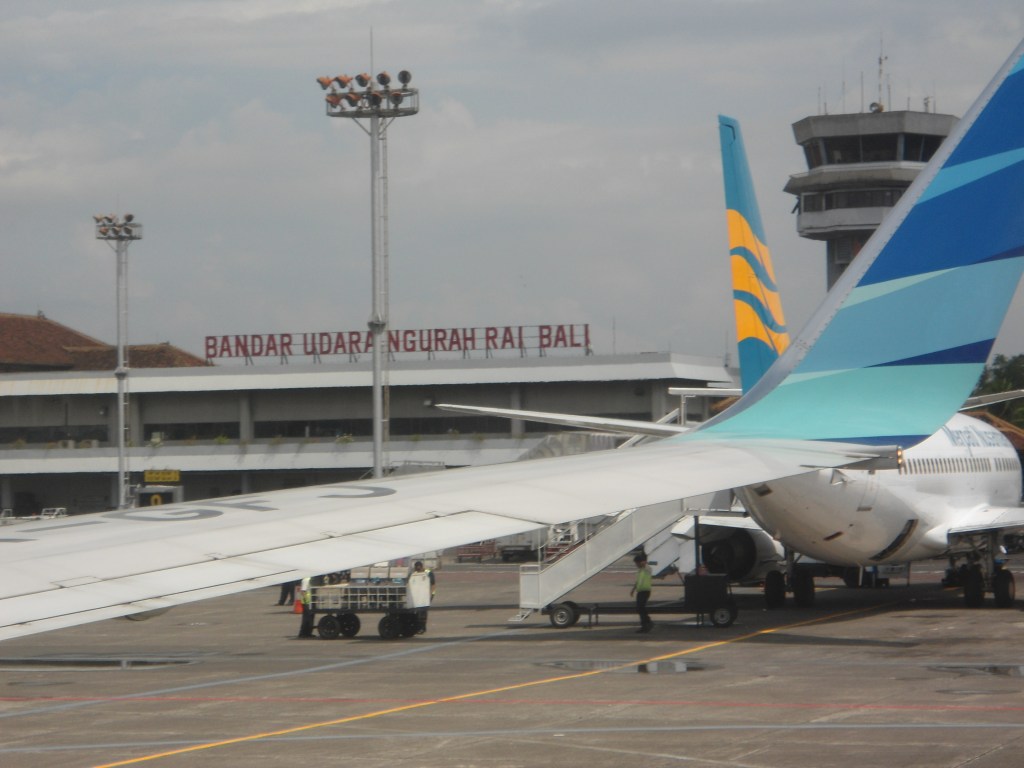
En la República de Indonesia, Bali también ha tenido éxito en contener su brote de Coronavirus, con menos de 350 casos confirmados y, al momento de escribir esto, un total de cuatro muertes. La isla indonesia ahora espera recibir a los turistas en octubre, siempre que sus tasas de infección se mantengan bajas. Según una declaración de Ni Wayan Giri Adnyani, Secretaria del ministerio, Yogyakarta, situada en la Isla de Java, es probable que reabra primero, junto con la provincia de las islas Riau. La economía de Bali depende en gran medida del turismo y el número de visitantes ha aumentado en los últimos años, con alrededor de 6,3 millones de personas visitando en 2019.
La República de Turquía ha comunicado la salida gradual a la pandemia de Coronavirus. El país ha ganado más de US$ 34.5 mil millones del turismo en 2019, y el país transcontinental está ansioso por volver a los negocios. Según el Ministro de Turismo, Mehmet Nuri Ersoy, el destino planea reiniciar el turismo nacional para fines de Mayo 2020 y espera recibir visitantes internacionales desde mediados de junio. Desde el Ministerio de Turismo de ha indicado que Turquía podría reabrir a países asiáticos como China y Corea del Sur primero. El país ha establecido nuevas pautas para sus hoteles y centros turísticos, como controles de temperatura en las entradas y al menos 12 horas de ventilación de la habitación después de la salida. Los invitados deberán usar máscaras faciales y mantener el distanciamiento social.
La nación isleña de Maldivas, compuesta por más de 1.000 islas, cerró sus fronteras nacionales y canceló todos los vuelos poco después de registrar sus dos primeros casos de coronavirus en Marzo 2020. Sin embargo, alrededor de 30 resorts aquí han permanecido abiertos, y los turistas optan por autoaislarse en el famoso destino de luna de miel en lugar de regresar a casa. Maldivas ha registrado alrededor de 1.457 casos confirmados y cinco muertes por Coronavirus hasta el momento. Si bien anteriormente se pensaba que el destino volvería a abrir a fin de año, las autoridades lo adelantaron hasta Julio 2020. Se ha propuesto una reapertura por etapas que permitiría la entrada a jets privados y superyates a partir del 1 Junio 2020.
Oceanía
El éxito de Australia y Nueva Zelanda en la gestión del tratamiento de la transmisión comunitaria, incluso cuando se han aliviado sus medidas de bloqueo, ha aumentado las esperanzas de que se pueda implementar medidas eficientes en el vasto continente de Oceanía en los próximos dos meses.
Airport openings in the world
Countries of the world begin to open flights and borders
America
VC Bird International Airport, Antigua and Barbuda, became the first of the Caribbean Community (Caricom) to be reopened this Monday, June 1, 2020 in the context of the Coronavirus pandemic, although it will do so with a very limited operation and with strict sanitary protocols. On Thursday June 4, 2020, the first American Airlines flight from Miami will land.
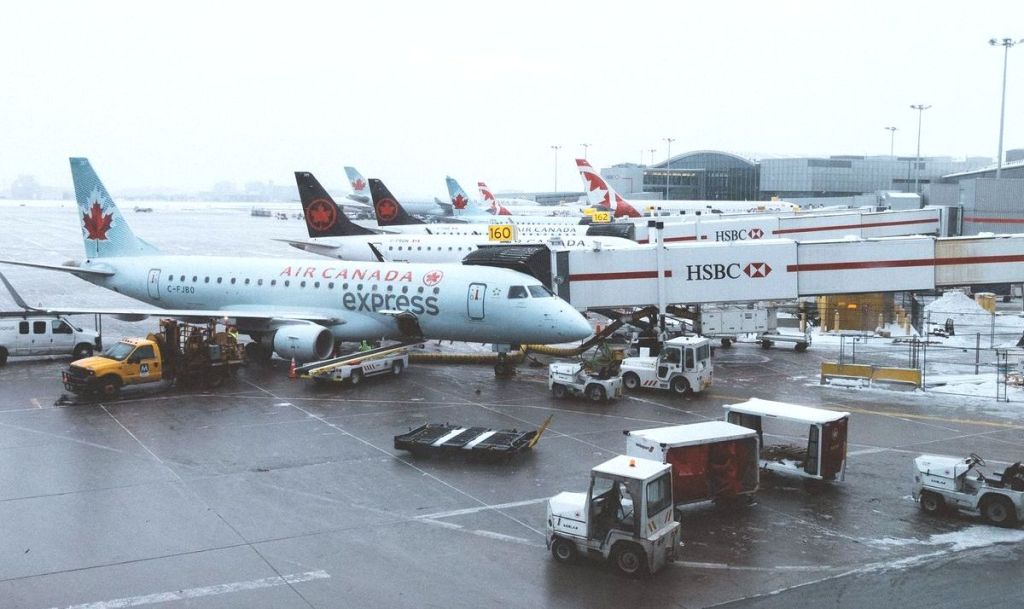
The Manager of Kamloops Airport, British Columbia (BC), Canada, Ed Ratuski, said that passengers are currently able to book flights and Air Canada is evaluating the demand for these trips, with the restoration of daily connections between the interior of BC and the «provisional» shoreline at this time.
Santa Lucia Island is one of several Caribbean islands that attempt a tourist return. The tropical destination, which closed its orders to foreign travelers on March 23, 2020, will begin its gradual reopening on June 4, 2020, when it will lift its borders for visitors to the United States.
The Caribbean island of Aruba is planning to open its doors to travelers once again sometime between June 15 and July 1. However, the Caribbean island’s visitor’s office, which has reported more than 100 confirmed cases of coronavirus, says this tentative date may change if Aruba chooses to consider additional precautionary measures as needed.
The Republic of Jamaica officially reopens its borders to all international tourists on June 15, 2020. Edmund Bartlett, Head of the Ministry of Tourism, announced on his Facebook page: «The Government of Jamaica will open its borders for the repatriation of citizens as of June 1, 2020. On 06/15, the borders will be opened for all travelers».
South American countries began easing COVID-19 restrictions on Monday even as the region moves toward its viral peak, disregarding the example set by European nations that were previously hit by the virus. Some of the most affected cities in Brazil, including the metropolis of Manaus and the coast of Rio de Janeiro, are beginning to allow more activity. The Bolivian government authorized the reopening of most of the country, and the Venezuelan government removed the restrictions. Ecuador’s airports resumed flights and buyers returned to some of Colombia’s shopping malls. Reversing the measures runs counter to Europe’s approach of waiting for the worst to pass before resuming activity, and South America lags far behind on its viral curve.
Quito/Mariscal Sucre Airport reopened its commercial operations on Monday, which were suspended for 75 days, in the context of the health emergency declared by the coronavirus pandemic.
Mexico aims to welcome visitors in a matter of weeks. While the nation remains closed, with hotels and restaurants yet to resume, officials plan to reopen the country bit by bit to get things back on track.
Europe
June 15, 2020 is the start of the reopening of many airports in Europe. Within the old continent, countries like Germany, Austria, Iceland, Portugal and Greece plan to open their borders to citizens of the European Union by this date. Italy will open its borders on 06/03, while Spain and Greece will do so from July 1, 2020.
The first authorizations will correspond to incoming flights from Greece, Malta, Bulgaria, Norway, Austria, Finland, Slovenia, Hungary, Israel, Denmark, Germany, Slovakia and Lithuania. Starting June 20, Cyprus will also allow inbound flights from Switzerland, Poland, Romania, Croatia, Estonia and the Czech Republic. The United Kingdom and the United States, both included among the nations with the highest number of confirmed Covid-19 deaths, are notably absent. However, the list will be expanded to include 23 other countries in the coming months.
France was the most visited country in the world before the Coronavirus pandemic. Now, like the rest of the European Union, there are currently restrictions on all non-essential travel from outside the Schengen Zone (a grouping of 26 countries that normally have open borders). Travelers entering the country, with the exception of EU citizens or UK arrivals, will be subject to a mandatory 14-day coronavirus quarantine until at least July 24, 2020. Although the government is slowly lifting the closure measures, with car travel of up to 100 kilometers now allowed and beaches beginning to reopen, authorities have made it clear that the country is in no rush to ease border restrictions for international travelers.
Although non-essential travel is currently prohibited in Germany, the land of poets and thinkers intends to lift restrictions for EU countries from June 15, 2020, according to German Chancellor Heiko Maas. Officials are also considering allowing visitors from Turkey, the United Kingdom, Iceland, Liechtenstein, Norway and Switzerland to enter, although a final decision has yet to be made.
The Republic of Montenegro partially reopens international airports for commercial flights. Montenegro plans to partially reopen the Podgorica and Tivat international airports for commercial traffic on June 2, 2020, said state airport operator Aerodromi Crne Gore. The airports are open to citizens of countries with a maximum of 25 active coronavirus cases per 100,000 inhabitants as of 02/06, Aerodromi Crne Gore said in a statement Monday. A list of countries that meet these requirements includes Slovenia, Croatia, Slovakia, Georgia, Switzerland, Albania, Austria, Norway, Monaco, Kosovo, Germany, Greece, Hungary, Denmark, Lithuania, Latvia, Azerbaijan, Luxembourg, Bosnia and Herzegovina, Bulgaria, Israel, the Czech Republic, Finland and Estonia, said Aerodromi Crne Gore.
In Lithuania, Vilnius Airport currently offers direct flights to Oslo, Riga, Tallinn, Frankfurt and Dortmund, and flights to the Dutch city of Eindhoven will resume on Tuesday 02/06. The resumption of flights at the Palanga Airport in Lithuania begins this Tuesday 02/06.
Malta International Airport restarts the partial opening of flights in Europe. The Malta Tourism Authority welcomes the partial reopening of the airport.
The Republic of Italy has been one of the destinations most affected by the pandemic, but the popular European country is eager to launch its tourism industry now that infection rates have declined. Travelers from the EU, along with the United Kingdom and the microstates and principalities of Andorra, Monaco, San Marino and the Vatican, will be able to enter without having to quarantine from June 3, 2020, in a measure that the government described as calculated risk.
Spain’s blockade was one of the toughest in Europe, but the restrictions are gently being lifted. The beaches will reopen in June, while hotels in some parts of the country have already been allowed to resume business. Starting on July 1, the European destination, which received a record 84 million visitors in 2019, will grant EU travelers permission to enter without having to be quarantined for two weeks.
Portugal is still in the process of loosening closure restrictions, allowing restaurants, museums and cafes to reopen to reduced capacity since mid-May 2020. But the European country is eager to revive its struggling tourism industry, and Chancellor Augusto Santos Silva recently stated that tourists are welcome. While visitors from outside the EU are banned until at least June 15, some routes in and out of Portuguese-speaking countries like Brazil are still operating.
While other destinations are loosening travel restrictions and taking steps to attract return travelers, the UK is choosing to enact stricter regulations. Despite previously opting for a mandatory quarantine for travelers, the government recently announced that, beginning June 8, 2020, all arriving travelers must be isolated for a period of 14 days. Under the new rules, everyone who arrives must provide an address, where they must stay for two weeks.
Asia
Thai Government officials are preparing to reopen Phuket International Airport in mid-June, following a provincial order issued on Sunday night that opened inter-provincial travel in and out of Phuket, and for Hotels and all businesses related to tourism resume operations.
Cyprus is so keen to get its tourism industry back on track that officials offer to cover the costs of travelers testing positive for Covid-19 while on vacation on the Mediterranean island.
Some Asian countries are prioritizing business travelers in their negotiations. China and Singapore have emphasized the importance of making travel available to high-level executives and essential technicians. The Asia-Pacific Economic Cooperation (APEC) is also exploring how its business travel card, which facilitates entry to participating economies, could incorporate health protocols.
Japan is also weighing its options to reopen, likely starting with business travelers and researchers. Word spread this week that Tokyo is entering into talks with Vietnam, Thailand, Australia and New Zealand.
In the Republic of Indonesia, Bali has also been successful in containing its outbreak of Coronavirus, with fewer than 350 confirmed cases and, as of this writing, a total of four deaths. The Indonesian island now expects to receive tourists in October, as long as its infection rates remain low. According to a statement by Ni Wayan Giri Adnyani, Secretary of the Ministry, Yogyakarta, located on the Island of Java, it is likely to reopen first, along with the Riau Islands province. Bali’s economy is highly dependent on tourism and the number of visitors has increased in recent years, with around 6.3 million people visiting in 2019.
The Republic of Turkey has communicated the gradual exit to the Coronavirus pandemic. The country has earned more than US$ 34.5 billion from tourism in 2019, and the transcontinental country is eager to return to business. According to Tourism Minister Mehmet Nuri Ersoy, the destination plans to restart national tourism by the end of May 2020 and expects to receive international visitors from mid-June. From the Ministry of Tourism has indicated that Turkey could reopen to Asian countries like China and South Korea first. The country has established new guidelines for its hotels and resorts, such as temperature controls at the entrances and at least 12 hours of room ventilation after departure. Guests should wear face masks and maintain social distance.
The island nation of Maldives, made up of more than 1,000 islands, closed its national borders and canceled all flights soon after registering its first two coronavirus cases in March 2020. However, around 30 resorts here have remained open, and the Tourists choose to self-isolate at the famous honeymoon destination instead of returning home. The Maldives has recorded around 1,457 confirmed cases and five Coronavirus deaths so far. Although previously it was thought that the destination would reopen at the end of the year, the authorities advanced it until July 2020. A phased reopening has been proposed that would allow the entry of private jets and superyachts from June 1, 2020.
Oceania
The success of Australia and New Zealand in managing community transmission treatment, even when their blocking measures have been eased, has raised hopes that efficient measures can be implemented in the vast continent of Oceania in the next two months.
Ξ A I R G W A Y S Ξ PUBLISHER: Airgways.com DBk: Cnn.com / Airgways.com / Washingtonpost.com / Kamloopsairport.com AW-POST: 202006021605AR
ONU/IATA lanzan recomendaciones sanitarias para la aviación
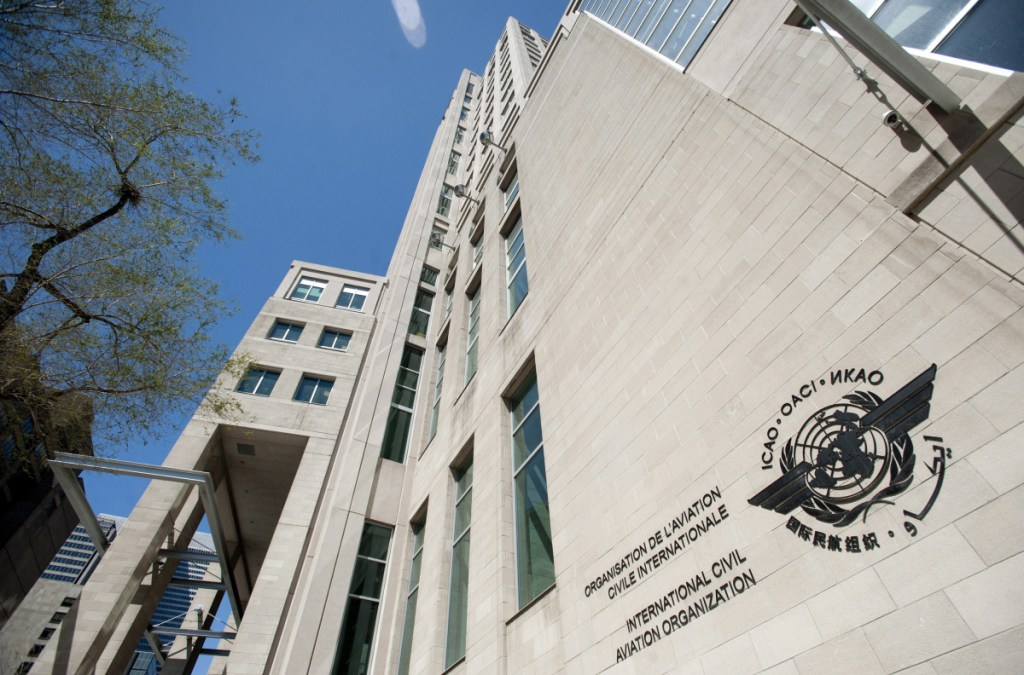
La Organización de Aviación Civil Internacional (OACI) publicó el Lunes 1 Junio 2020 una serie de recomendaciones para la salud de la industria de las aerolíneas afectadas por una pandemia cuando relanza los viajes aéreos. La Asociación Internacional de Transporte Aéreo (IATA) ha comunicado a los gobiernos a implementar las pautas globales de la Organización de Aviación Civil Internacional (OACI), bajo el órgano principal de la Organización de las Naciones Unidas (ONU) para garantizar un viaje seguro para los viajeros y sin problemas Restauración de la conectividad aérea durante la actual pandemia de Coronavirus. El organismo internacional de aviación IATA insta a los gobiernos a implementar medidas de la OACI. «Las pautas de vuelo están en línea con las recomendaciones y la orientación de las autoridades de salud pública», dijo la IATA en un comunicado que agrega que mitigarán el riesgo de transmisión del Coronavirus altamente contagioso durante el viaje.
Las directrices establecieron un enfoque gradual para reanudar el sector de la aviación. Las nuevas medidas consisten en un conjunto de pautas que están en línea con las recomendaciones y la orientación de las autoridades de salud pública que mitigarán el riesgo de transmisión de la actual pandemia.
Pautas aerolíneas
DISTANCIAMIENTO FÍSICO: La medida clave del distanciamiento físico debe implementarse en la medida de lo posible. Las directrices aprobadas por la OACI también sugieren la implementación de «medidas adecuadas basadas en el riesgo donde el distanciamiento no es factible, por ejemplo, en las cabinas de los aviones».
DISPOSITIVOS DE MÁSCARAS: La tripulación de vuelo y los trabajadores de aviación en tierra deben usar máscaras faciales, según las recomendaciones proporcionadas por la OACI.
SANEAMIENTO/DESINFECCIÓN: El saneamiento y desinfección de rutina y minucioso de todas las áreas, lo que incluye aeronaves y todo elemento de trabajo, con potencial para el contacto humano y la transmisión del coronavirus.
EXÁMENES DE SALUD: Las directrices de la OACI prescriben exámenes de salud en los aeropuertos. Las pautas también incluyen autodeclaraciones previas y posteriores al vuelo por parte de los voladores. Debería realizarse un examen de temperatura y observación visual, realizado por profesionales de la salud. Rastreo de contactos para Tripulación de Vuelo, personal de aerolíneas en tierra se debe solicitar información de contacto actualizada como parte de la autodeclaración de salud. La interacción entre los aviadores y los gobiernos debe hacerse directamente a través de portales gubernamentales, según la declaración de la IATA. La IATA dijo que las directrices establecen que los formularios de declaración de salud de los pasajeros, incluidas las autodeclaraciones, pueden ser electrónicos para evitar el uso de papel.
PRUEBAS: Las pautas establecieron que, si las pruebas en tiempo real, rápidas y confiables están disponibles, y deben realizarse para proteger a las tripulaciones de vuelo durante la pandemia de Coronavirus.
Pautas pasajeros
Las recomendaciones están destinadas a servir como un marco para garantizar la seguridad de los pasajeros y trabajadores en aviones y aeropuertos. A su llegada a los aeropuertos, los viajeros deben presentar un certificado de salud y someterse a un control de temperatura inicial, según las pautas. Se debe dar prioridad al check-in en línea antes de llegar al aeropuerto, y se debe repensar los pasos a través de la seguridad para limitar el contacto físico y la espera en las filas. Se recomiendan boletos móviles, así como otras formas de tecnología sin contacto, como escáneres faciales u oculares. «Esto eliminará o reducirá en gran medida la necesidad de contacto con documentos de viaje entre el personal y los pasajeros», dijo el protocolo. Se recomienda a los pasajeros que viajen lo más livianos posible, con solo una pequeña pieza de equipaje de mano. Periódicos y revistas ya no se permitirán a bordo, y las ventas libres de impuestos serán limitadas. El uso de una máscara o cubierta facial debe ser obligatorio dentro de las aeronaves y terminales, donde se debe respetar el distanciamiento físico de al menos tres pies (un metro). El acceso a la Terminal Aérea estará limitado a los pasajeros y sus acompañantes, como los que acompañan a los viajeros discapacitados y al personal del aeropuerto. A bordo de los aviones, los pasajeros deben usar máscaras, moverse lo menos posible dentro de la cabina y no alinearse fuera de los inodoros para disminuir el riesgo de infectar a otros pasajeros. A las personas se les asignarán inodoros específicos en el avión en relación con el lugar donde se sientan.
El protocolo fue elaborado por un grupo de trabajo internacional formado por la OACI con sede en Montreal, Canadá, con la ayuda de otras agencias de la ONU como la Organización Mundial de la Salud y la poderosa Asociación Internacional de Transporte Aéreo (IATA). Los cambios sugeridos son los más importantes para los viajes aéreos desde que se implementaron medidas de seguridad después de los ataques del 11 Septiembre 2001 contra los Estados Unidos y la aviación mundial.
El Director Deneral de IATA, Alexandre de Juniac, ha enunciado las principales medidas propuestas en la guía de Mejores Prácticas en la web del organismo internacional. Las recomendaciones están destinadas a servir como un marco para garantizar la seguridad de los pasajeros y trabajadores en aviones y aeropuertos. La OACI estima que la pandemia reducirá el número de pasajeros aéreos en 1.500 millones para fin de año.
ICAO recommends aviation health guidelines
UN/IATA launch health recommendations for aviation
The International Civil Aviation Organization (ICAO) published on Monday 1 June 2020 a series of recommendations for the health of the airline industry affected by a pandemic when it relaunches air travel.
The International Air Transport Association (IATA) has communicated to governments to implement the global guidelines of the International Civil Aviation Organization (ICAO), under the principal organ of the United Nations Organization (UN) to guarantee a safe travel for Travelers and hassle-free Restoration of air connectivity during the current Coronavirus pandemic. The international aviation organization IATA urges governments to implement ICAO measures. «The flight guidelines are in line with the recommendations and guidance of public health authorities», IATA said in a statement adding that they will mitigate the risk of transmission of the highly contagious Coronavirus during the trip.
The guidelines established a gradual approach to resume the aviation sector. The new measures consist of a set of guidelines that are in line with the recommendations and guidance of public health authorities that will mitigate the risk of transmission of the current pandemic.
Airlines Guidelines
PHYSICAL DISTANCE: The key measure of physical distance should be implemented as much as possible. ICAO-approved guidelines also suggest the implementation of «appropriate risk-based measures where distancing is not feasible, for example, in aircraft cabins».
MASKS DEVICES: Flight crews and ground aviation workers must wear face masks, as recommended by ICAO.
SANITATION/DISINFECTION: Routine and thorough sanitation and disinfection of all areas, including aircraft and all work items, with potential for human contact and transmission of the coronavirus.
HEALTH SCREENINGS: ICAO guidelines prescribe health screenings at airports. The guidelines also include pre-flight and post-flight self-declarations by flyers. A temperature examination and visual observation should be performed by health professionals. Tracking contacts for Flight Crew, ground airline personnel should request updated contact information as part of the health self-declaration. Interaction between airmen and governments must be done directly through government portals, according to the IATA statement. IATA said the guidelines state that passenger health declaration forms, including self-declarations, can be electronic to avoid the use of paper.
TESTING: The guidelines stated that, if real-time, rapid and reliable tests are available, they should be performed to protect flight crews during the Coronavirus pandemic.
Passenger guidelines
The recommendations are intended to serve as a framework to ensure the safety of passengers and workers on airplanes and airports. Upon arrival at airports, travelers must present a health certificate and undergo an initial temperature control, according to the guidelines. Online check-in should be prioritized before arriving at the airport, and steps through security should be rethought to limit physical contact and waiting in lines. Mobile tickets are recommended, as are other forms of contactless technology, such as face or eye scanners. «This will eliminate or greatly reduce the need for contact with travel documents between staff and passengers», the protocol said. Passengers are encouraged to travel as light as possible, with only a small piece of hand luggage. Newspapers and magazines will no longer be allowed on board, and duty-free sales will be limited. The use of a face mask or cover must be mandatory inside the aircraft and terminals, where the physical distance of at least three feet (one meter) must be respected. Access to the terminal will be limited to passengers and their companions, such as those accompanying disabled travelers and airport staff. On board aircraft, passengers should wear masks, move as little as possible inside the cabin, and not line up outside the toilets to decrease the risk of infecting other passengers. People will be assigned specific toilets on the plane in relation to where they sit.
The protocol was developed by an international working group formed by ICAO based in Montreal, Canada, with the help of other UN agencies such as the World Health Organization and the powerful International Air Transport Association (IATA). The suggested changes are the most important for air travel since security measures were implemented after the September 11, 2001 attacks on the United States and global aviation.
IATA’s Director of Deneral, Alexandre de Juniac, has stated the main measures proposed in the Best Practices guide on the website of the international organization. The recommendations are intended to serve as a framework to ensure the safety of passengers and workers on airplanes and airports. ICAO estimates that the pandemic will reduce the number of air passengers by 1.5 billion by the end of the year.
Ξ A I R G W A Y S Ξ PUBLISHER: Airgways.com DBk: Un.org / Icao.int / Iata.org / Airgways.com / Thecanadianpress.com/Graham Hughes / Pinterest.com AW-POST: 202006021202AR