Embraer continúa Proyecto E3

Image result for Embreaer E3"AW | 2019 11 14 22:27 | INDUSTRY

embraer logoEmbraer sigue observando el desarrollo de la familia de turbopropulsores

Embraer está estudiando iniciar el proceso de planificación del Programa E3 de turbopropulsores. La compañía brasileña continúa considerando el desarrollo de una nueva familia de aviones turbopropulsores que complementaría a los jet E2.

«Tengo la sensación de que el próximo avión probablemente será un turbopropulsor más pequeño. Probablemente vería una familia de dos aviones que complementan las operaciones E2», dijo John Slattery, Director Ejecutivo de la división de aviones comerciales de Embraer.

Embraer ha estado estudiando el programa de aviones a hélices para un nuevo turbopropulsor. El fuselaje para el nuevo turbopropulsor brasileño no ha decidido los aspectos estructurales que continúan siendo inciertos. «No es algo en lo que estemos listos para apretar el gatillo.Estamos avanzando en el análisis», dice Slattery.

Programa E2

En los últimos años, Embraer ha desarrollado su programa E-Jets de 70 a 140 asientos, que incluye cuatro variantes de primera generación y tres sucesores, el E175-E2, E190-E2 y E195-E2. Ese programa está finalizando sus diseños, con el desarrollo de la línea de producción de los E190-E2 y el E195-E2 que están ahora en servicio en las líneas aéreas y Embraer espera el primer vuelo del E175-E2 en Diciembre 2019 seguido de la entrada en servicio en 2021.

Una vez que concluya el desarrollo del Programa E2, los ingenieros y expertos técnicos de Embraer tendrán la libertad de concentrarse en otros proyectos, cuya naturaleza aún no se ha aclarado. Es probable que Boeing tenga algo que decir, ya que el constructor estadounidense espera comprar el 80% de la división de aviones comerciales de Embraer en 2020. John Slattery dice que existe demanda en varias regiones del mundo para un nuevo turbopropulsor. Habla en términos generales sobre el tamaño potencial de un nuevo avión o el número de asientos, y dice que probablemente sería más pequeño que el miembro más grande de la familia E2.

Programa E3

El futuro Programa E3 de Embraer será un turbohélice equipado con aproximadamente entre 50-70 asientos en flotas de aerolíneas mundiales y un ajuste para las compañías estadounidenses. «Lo que podría ser un asiento de 70 plazas en un mercado en el sudeste asiático podría ser un asiento de 50 plazas en el mercado estadounidense», dice Slattery. Al estudiar dicho producto, el equipo de Slattery está revisando la demanda de la aerolínea y una serie de otros factores, como la escasez de pilotos y la congestión del tráfico aéreo. «Necesitamos incluir todo eso en nuestros cálculos», dice, y describe las deliberaciones estratégicas de Embraer como una teoría del juego que sopesa la asignación de recursos de la empresa frente a la dinámica competitiva del mercado.

Competencia regional

ATR Aircraft y Viking Air Ltd. (De Havilland Aircraft de Canadá) todavía fabrican turbopropulsores de nueva construcción, aunque esos aviones se basan en diseños de décadas de antigüedad. Los turbopropulsores han pasado de moda a Estados Unidos en un tiempo y en el mercado de viajes aéreos más grande del mundo las aerolíneas regionales han cambiado a aviones regionales más grandes. En el proceso, muchas pequeñas aerolíneasa estadounidenses han perdido el servicio aéreo. Pero el mercado está mostrando signos de cambios en la manera de volar, y Embraer avizora un futuro para el mercado de aviones regionales turboprop. AW-Icon AW001

Image result for Embreaer E3"Embraer continues Project E3

Embraer continues to observe the development of the turboprop family

embraer logo (1)Embraer is considering starting the planning process of the E3 Program turboprop. The Brazilian company continues to consider the development of a new family of turboprop airplanes that would complement the E2 jet.

«I have the feeling that the next plane will probably be a smaller turboprop. I would probably see a family of two planes that complement E2 operations», said John Slattery, Executive Director of the commercial aircraft division of Embraer.

Embraer has been studying the propeller aircraft program for a new turboprop. The fuselage for the new Brazilian turboprop has not decided on the structural aspects that remain uncertain. «It’s not something we’re ready to pull the trigger on. We’re moving forward in the analysis», says Slattery.

E2 program

In recent years, Embraer has developed its E-Jets program of 70 to 140 seats, which includes four first-generation variants and three successors, the E175-E2, E190-E2, and E195-E2. That program is finalizing its designs, with the development of the production line of the E190-E2 and E195-E2 that are now in service in the airlines and Embraer expects the first flight of the E175-E2 in December 2019 followed by the entered into service in 2021.

Once the development of the E2 Program is completed, Embraer’s engineers and technical experts will be free to concentrate on other projects, the nature of which has not yet been clarified. Boeing is likely to have something to say, as the American builder expects to buy 80% of the Embraer commercial aircraft division in 2020. John Slattery says there is demand in several regions of the world for a new turboprop. He speaks in general terms about the potential size of a new plane or the number of seats and says that it would probably be smaller than the largest member of the E2 family.

E3 Program

The future Embraer E3 Program will be a turboprop equipped with approximately 50-70 seats in global airline fleets and an adjustment for US companies. «What could be a 70-seat seat in a market in Southeast Asia could be a 50-seat seat in the US market«, says Slattery. By studying this product, Slattery’s team is reviewing the airline’s demand and a number of other factors, such as pilot shortages and air traffic congestion. «We need to include all that in our calculations», he says, and describes Embraer’s strategic deliberations as a game theory that weighs the company’s allocation of resources against the competitive dynamics of the market.

Regional competition

ATR Aircraft and Viking Air Ltd. (De Havilland Aircraft of Canada) still manufacture newly built turboprops, although those planes are based on decades-old designs. The turboprops have become fashionable in the United States in a while and in the world’s largest air travel market regional airlines have switched to larger regional airplanes. In the process, many small American airlines have lost air service. But the market is showing signs of changes in the way of flying, and Embraer sees a future for the turboprop regional aircraft market. AW-Icon AW002

Image result for Embreaer E3"Embraer continua Projeto E3

Embraer continua observando o desenvolvimento da família turboélice

1280px-Embraer_logo.svg
A Embraer está considerando iniciar o processo de planejamento do Programa E3 turboélice . A empresa brasileira continua considerando o desenvolvimento de uma nova família de aviões turboélice que complementaria o jato E2.

«Tenho a sensação de que o próximo avião provavelmente será um turboélice menor. Provavelmente veria uma família de dois aviões que complementam as operações de E2», disse John Slattery, diretor executivo da divisão de aeronaves comerciais da Embraer.

A Embraer estuda o programa de aeronaves a hélice para um novo turboélice. A fuselagem do novo turboélice brasileiro ainda não decidiu os aspectos estruturais que permanecem incertos. «Não é algo que estamos prontos para acionar. Estamos avançando na análise», diz Slattery.

Programa E2

Nos últimos anos, a Embraer desenvolveu seu programa de E-Jets de 70 a 140 assentos, que inclui quatro variantes de primeira geração e três sucessores, o E175-E2, E190-E2 e E195-E2. Esse programa está finalizando seus projetos, com o desenvolvimento da linha de produção dos E190-E2 e E195-E2 que agora estão em serviço nas companhias aéreas e a Embraer espera o primeiro voo do E175-E2 em dezembro de 2019, seguido pelo entrou em serviço em 2021.

Uma vez concluído o desenvolvimento do Programa E2, os engenheiros e especialistas técnicos da Embraer estarão livres para se concentrar em outros projetos, cuja natureza ainda não foi esclarecida. É provável que a Boeing tenha algo a dizer, já que a construtora americana espera comprar 80% da divisão de aeronaves comerciais da Embraer em 2020. John Slattery diz que há demanda em várias regiões do mundo por um novo turboélice. Ele fala em termos gerais sobre o tamanho potencial de um novo avião ou o número de assentos, e diz que provavelmente seria menor que o maior membro da família E2.

Programa E3

O futuro Programa Embraer E3 será um turboélice equipado com aproximadamente 50 a 70 assentos em frotas aéreas globais e um ajuste para empresas americanas. «O que poderia ser um assento de 70 lugares em um mercado no sudeste da Ásia poderia ser um assento de 50 lugares no mercado dos EUA», diz Slattery. Ao estudar esse produto, a equipe da Slattery está analisando a demanda da companhia aérea e vários outros fatores, como falta de pilotos e congestionamento do tráfego aéreo. «Precisamos incluir tudo isso em nossos cálculos», diz ele, e descreve as deliberações estratégicas da Embraer como uma teoria dos jogos que pesa a alocação de recursos da empresa em relação à dinâmica competitiva do mercado.

Competição regional

A ATR Aircraft e a Viking Air Ltd. (De Havilland Aircraft do Canadá) ainda fabricam turboélices recém-construídos, embora esses aviões sejam baseados em projetos de décadas. Os turboélices estão fora de moda para os Estados Unidos há algum tempo e no maior mercado de viagens aéreas do mundo, as companhias aéreas regionais mudaram para aviões regionais maiores. No processo, muitas pequenas companhias aéreas americanas perderam o serviço aéreo. Mas o mercado está mostrando sinais de mudanças na maneira de voar, e a Embraer vê um futuro para o mercado regional de aeronaves turboélice. AW-Icon AW002


Ξ A I R G W A Y S Ξ
SOURCE: Airgways.com
DBk: Embraer.com / Airgways.com
AW-POST: 201911142227AR

A\W   A I R G W A Y S ®

Ilyushin inicia producción Il-114-300

AW-Ilyushin Il-114-300_007.pngAW | 2019 11 14 21:46 | INDUSTRY

Ilyushin_logo.pngRusia comenzará la producción en masa del avión de pasajeros IL-114-300 en 2022

El fabricante ruso Ilyushin Aviation Complex comenzará la producción en masa del avión regional Il-114-300 en 2022, cuando la capacidad de producción permita producir entre 12 a16 aviones al año, dijo el Viernes 15 Noviembre 2019 [hora local Rusia], Dmitry Lysogorsky, Director del Departamento de Industria de Aviación del Ministerio de Industria y Comercio de Rusia.

La línea de producción comenzará en serie del nuevo avión regional Il-114-300 para 2022, cuando el fabricante ruso alcance las capacidades de producción d las aeronaves regionales turboprop. En agosto de 2018, Ilya Tarasenko, Director General de la Corporación rusa de fabricación de aviones MiG, dijo que la producción en masa de dichos aviones estaba planeada para comenzar en 2021.

«En 2022, aseguraremos la producción en cantidades que se ordenarán. Crearemos capacidades de producción a nivel de 12-16 aviones para este momento», dijo Lysogorsky en una reunión de un comité parlamentario. En Junio 2019, Tarasenko había informado que ya había algunos clientes listos para comprar el avión.

Il-114-300 es una modificación del avión regional Ilyushin Il-114, que el Ilyushin Design Bureau desarrolló a fines de la década de 1980 para vuelos de corta distancia dentro de la Unión Soviética. Il-114-300 está equipado con motores TV7-117SM y una suite digital de navegación de vuelo. AW-Icon AW001

AW-Ilyushin Il-114-300.jpg

Ilyushin starts production line Il-114-300

Ilyushin_logoRussia will begin mass production of the IL-114-300 passenger plane in 2022

Russian manufacturer Ilyushin Aviation Complex will begin mass production of the regional aircraft Il-114-300 in 2022, when the production capacity allows to produce between 12 to 16 aircraft a year, said Friday 15 November 2019 [local time Russia], Dmitry Lysogorsky, Director of the Department of Aviation Industry of the Ministry of Industry and Commerce of Russia.

The production line will begin in series of the new regional aircraft Il-114-300 by 2022 when the Russian manufacturer reaches the production capacities of the regional turboprop aircraft. In August 2018, Ilya Tarasenko, General Director of the Russian Corporation for the manufacture of MiG aircraft, said that mass production of such aircraft was planned to begin in 2021.

«In 2022, we will ensure production in quantities that will be ordered. We will create production capacities at the level of 12-16 aircraft by this time», Lysogorsky said at a parliamentary committee meeting. In June 2019, Tarasenko had informed that there were already some customers ready to buy the plane.

Il-114-300 is a modification of the Ilyushin Il-114 regional aircraft, which the Ilyushin Design Bureau developed in the late 1980s for short-haul flights within the Soviet Union. Il-114-300 is equipped with TV7-117SM engines and a digital flight navigation suite. AW-Icon AW002

AW-Ilyushin Il-114-300_008.pngИльюшин запускает производственную линию Ил-114-300

Россия начнет серийное производство пассажирского самолета Ил-114-300 в 2022 году

Российский производитель Ильюшин Авиационный Комплекс начнет серийное производство регионального самолета Ил-114-300 в 2022 году, когда производственные мощности позволят выпускать от 12 до 16 самолетов в год, сообщил в пятницу 15 ноября 2019 года [по местному времени Россия] Дмитрий Лысогорский Директор департамента авиационной промышленности Министерства промышленности и торговли России.

Производственная линия начнется в серии нового регионального самолета Ил-114-300 к 2022 году, когда российский производитель выйдет на производственные мощности регионального турбовинтового самолета. В августе 2018 года генеральный директор российской корпорации по производству самолетов МиГ Илья Тарасенко заявил, что массовое производство таких самолетов планируется начать в 2021 году.

«В 2022 году мы обеспечим производство в тех объемах, которые будут заказаны. К этому времени мы создадим производственные мощности на уровне 12-16 самолетов», сказал Лысогорский на заседании парламентского комитета. В июне 2019 года Тарасенко сообщил, что уже есть клиенты, готовые купить самолет.

Ил-114-300 является модификацией регионального самолета Ил-Ил-114, который конструкторское бюро Ильюшина разработало в конце 1980-х годов для полетов на короткие расстояния в пределах Советского Союза. Ил-114-300 оснащен двигателями ТВ7-117СМ и цифровым комплектом навигационной аппаратуры. AW-Icon AW002


Ξ A I R G W A Y S Ξ
SOURCE: Airgways.com
DBk: Ilyushin.org / Airgways.com
AW-POST: 201911142146AR

A\W   A I R G W A Y S ®

Boeing designa Vice Comunicaciones

AW-7000455.jpgAW | 2019 11 13 23:13 | INDUSTRY

Boeing-Company-Logo.jpgBoeing nombra nuevo líder de comunicaciones para el negocio de aviones comerciales

Conrad Chun es nombrado por The Boeing Company como el nuevo Vicepresidente de Comunicaciones de Boeing Commercial Airplanes. Conrad Chun se desempeñó recientemente como Vicepresidente de Comunicaciones de Boeing Global Services, donde fue responsable de las relaciones con los medios, las comunicaciones de empleados y ejecutivos, las comunicaciones digitales, las relaciones con el gobierno y los clientes, y las comunicaciones de marketing de productos y servicios en apoyo de la unidad comercial de más rápido crecimiento de Boeing.

En su nuevo cargo, Conrad Chun continuará reportando a Anne Toulouse, Vicepresidenta Senior de Comunicaciones, y Stan Deal, Presidente y CEO de Boeing Commercial Airplanes. «Stan y yo confiamos en las habilidades de Conrad para ayudarnos a prepararnos para devolver el 737 MAX de manera segura al servicio y continuar impulsando el progreso en nuestro negocio de aviones comerciales», dijo Toulouse.

Chun se unió a Boeing en 2010 después de retirarse de la Marina de los Estados Unidos como Capitán con 24 años de servicio. Chun se graduó de la Academia Naval de los Estados Unidos. Tiene una licenciatura en economía y una maestría en sistemas de información de la Escuela Naval de Posgrado. Actualmente, Chun se desempeña como Presidente de la Junta Directiva de Military Spouse Corporate Career Network (MSCCN), una organización sin fines de lucro que se enfoca en soluciones de colocación laboral para cónyuges y cuidadores afiliados a militares a veteranos heridos de guerra. Chun sucede a Linda Mills, quien anunció que dejará la compañía. «Agradecemos a Linda por sus muchas contribuciones y le deseamos todo lo mejor en el futuro», dijo Toulouse. Alexa Marrero, actual Directora de Operaciones de Comunicaciones para Boeing Global Services, servirá como Jefe interino de Comunicaciones para Boeing Global Services hasta que se seleccione un reemplazo permanente.

Boeing es la compañía aeroespacial más grande del mundo y el proveedor líder de aviones comerciales, defensa, sistemas espaciales y de seguridad, y servicios globales. Como el principal exportador de Estados Unidos la empresa brinda asistencia a clientes comerciales y gubernamentales en más de 150 países. Boeing emplea a más de 150.000 personas en todo el mundo y aprovecha los talentos de una base global de proveedores. Sobre la base de un legado de liderazgo aeroespacial, Boeing continúa liderando en tecnología e innovación, entregando a sus clientes e invirtiendo en su gente y en el crecimiento futuro. AW-Icon AW001

Boeing.jpgBoeing appoints new Vice Communications

Boeing-Logo.svg.pngBoeing appoints new communications leader for commercial aircraft business

Conrad Chun is named by The Boeing Company as the new Vice President of Communications for Boeing Commercial Airplanes. Conrad Chun recently served as Vice President of Communications for Boeing Global Services, where he was responsible for media relations, employee and executive communications, digital communications, government and customer relations, and marketing communications for products and services in support of the fastest-growing commercial unit of Boeing.

In his new position, Conrad Chun will continue to report to Anne Toulouse, Senior Vice President of Communications, and Stan Deal, President, and CEO of Boeing Commercial Airplanes. «Stan and I rely on Conrad’s skills to help us prepare to safely return 737 MAX to service and continue to drive progress in our commercial aircraft business», said Toulouse.

Chun joined Boeing in 2010 after retiring from the United States Navy as a Captain with 24 years of service. Chun graduated from the United States Naval Academy. He has a degree in economics and a master’s degree in information systems from the Naval Postgraduate School. Currently, Chun serves as Chairman of the Board of Directors of the Military Spouse Corporate Career Network (MSCCN), a nonprofit organization that focuses on job placement solutions for military spouses and caregivers affiliated with war-wounded veterans. Chun succeeds Linda Mills, who announced that she will leave the company. «We thank Linda for her many contributions and wish her all the best in the future», said Toulouse. Alexa Marrero, current Director of Communications Operations for Boeing Global Services, will serve as Acting Chief of Communications for Boeing Global Services until a permanent replacement is selected.

Boeing is the world’s largest aerospace company and the leading provider of commercial aircraft, defense, space and security systems, and global services. As the leading exporter in the United States, the company provides assistance to commercial and government clients in more than 150 countries. Boeing employs more than 150,000 people worldwide and leverages the talents of a global provider base. Based on a legacy of aerospace leadership, Boeing continues to lead in technology and innovation, delivering to its customers and investing in its people and future growth. AW-Icon AW002


Ξ A I R G W A Y S Ξ
SOURCE: Airgways.com
DBk: Boeing.com / Airgways.com
AW-POST: 201911132313AR

A\W   A I R G W A Y S ®


Embraer asume pérdidas de R$ 314 Mill.

AW-Embraer_7007.jpgAW | 2019 11 13 22:17 | INDUSTRY / AVIATION ORGANISMS

embraer logo (1).jpgEmbraer SA tiene una pérdida de R$ 314 millones durante 3Q2019

Embraer registró una pérdida neta de R$ 314,4 millones en el tercer trimestre (3Q2019), según informó la compañía el Martes 12/11, revirtiendo las ganancias de R$ 26,1 millones en el segundo trimestre.

Embraer ha presentado una caída de las ganancias en el tercer trimestre y estuvo marcada por los gastos con la separación de la aviación comercial del resto de la compañía. Mientras tanto, el acuerdo con The Boeing Company es investigado por la Comisión Europea que solicitó más documentos para la supervisión antimonopolio.

En los primeros tres meses del año, la pérdida fue de R$ 160,8 millones. Durante el tercer trimestre de 2018, la caída financiera fue de R$ 52,3 millones. Con esto, el fabricante acumula una pérdida de R$ 449,1 millones durante los nueve meses de 2019. «El resultado del trimestre se vio afectado por los costos de separación comercial de la Compañía de Aviación Comercial de R$ 138,1 millones», dijo Embraer.

La compañía espera la investigación en la Comunidad Europea para la aprobación de la fusión comercial con Boeing, que controlará la aviación comercial de Embraer comprando el 80% del negocio. El pronóstico inicial era que la transacción se completaría a fines de 2019, pero se trasladó a principios de 2020 debido a la investigación antimonopolio de la Comisión Europea, que suspendió la investigación sobre la empresa conjunta entre Embraer y Boeing para recibir más información de los fabricantes. Existe la preocupación de que el acuerdo eliminará a Embraer como el tercer mayor competidor mundial de Boeing y Airbus, lo que podría, según la Comisión Europea, dar como resultado precios más altos y menos opciones.

«El problema es técnico y se esperaba. Estamos entregando toda la documentación solicitada tan pronto como sea posible», dijo Nelson Salgado, Vicepresidente Ejecutivo de Finanzas y Relaciones con los Inversores de Embraer.

«La Comisión Europea está esperando la llegada de información adicional y ha hecho una ‘parada de reloj’. Estamos trabajando arduamente para proporcionar la información. Cuando eso suceda, los negocios volverán a suceder», concluye la comisión.

AW-Embraer_70098.pngEmbraer assumes losses of R$ 314 million

embraer logo.jpgEmbraer SA has a loss of R$ 314 million during 3Q2019

Embraer recorded a net loss of R$ 314.4 million in the third quarter (3Q2019), the company reported on Tuesday 12/11, reversing earnings of R$ 26.1 million in the second quarter.

Embraer has presented a fall in profits in the third quarter and was marked by expenses with the separation of commercial aviation from the rest of the company. Meanwhile, the agreement with The Boeing Company is investigated by the European Commission that requested more documents for antitrust supervision.

In the first three months of the year, the loss was R$ 160.8 million. During the third quarter of 2018, the financial fall was R$ 52.3 million. With this, the manufacturer accumulates a loss of R$ 449.1 million during the nine months of 2019. «The result of the quarter was affected by the commercial separation costs of the Commercial Aviation Company of R$ 138.1 million», said Embraer.

The company expects research in the European Community for the approval of the commercial merger with Boeing, which will control Embraer’s commercial aviation by buying 80% of the business. The initial forecast was that the transaction would be completed at the end of 2019, but it was moved in early 2020 due to the European Commission’s antitrust investigation, which suspended the investigation into the joint venture between Embraer and Boeing to receive more information from the manufacturers. There is a concern that the agreement will eliminate Embraer as the third-largest global competitor of Boeing and Airbus, which could, according to the European Commission, result in higher prices and fewer options.

«The problem is technical and expected. We are delivering all requested documentation as soon as possible», said Nelson Salgado, Executive Vice-president of Finance and Investor relations at Embraer.

«The European Commission is waiting for the arrival of additional information and has made a ‘clock stop’. We are working hard to provide the information. When that happens, business will happen again», the commission concludes. AW-Icon AW002

800px-Farnborough_Airshow_2018_(43420664341)_(cropped).jpgEmbraer assume perdas de R$ 314 milhões

1280px-Embraer_logo.svg.pngEmbraer SA tem prejuízo de R $ 314 milhões no 3T2019

A Embraer registrou um prejuízo líquido de R$ 314,4 milhões no terceiro trimestre (3T2019), informou a empresa na terça-feira 12/11, revertendo ganhos de R$ 26,1 milhões no segundo trimestre.

A Embraer apresentou uma queda nos lucros no terceiro trimestre e foi marcada por despesas com a separação da aviação comercial do restante da empresa. Enquanto isso, o acordo com a The Boeing Company é investigado pela Comissão Europeia, que solicitou mais documentos para supervisão antitruste.

AW-Emb_195E2.jpgNos três primeiros meses do ano, o prejuízo foi de R$ 160,8 milhões. Durante o terceiro trimestre de 2018, a queda financeira foi de R$ 52,3 milhões. Com isso, o fabricante acumula uma perda de R$ 449,1 milhões nos nove meses de 2019. «O resultado do trimestre foi afetado pelos custos de separação comercial da Companhia de Aviação Comercial de R$ 138,1 milhões», disse a Embraer.

A empresa espera pesquisas na Comunidade Européia para a aprovação da fusão comercial com a Boeing, que controlará a aviação comercial da Embraer comprando 80% dos negócios. A previsão inicial era de que a transação fosse concluída no final de 2019, mas foi movida no início de 2020 devido à investigação antitruste da Comissão Europeia, que suspendeu a investigação da joint venture entre Embraer e Boeing para receber mais informações dos fabricantes. Há uma preocupação de que o acordo elimine a Embraer como o terceiro maior concorrente global da Boeing e Airbus, o que poderia, segundo a Comissão Européia, resultar em preços mais altos e menos opções.

«O problema é técnico e esperado. Estamos entregando toda a documentação solicitada o mais rápido possível», disse Nelson Salgado, Vice-presidente Executivo de Finanças e Relações com investidores da Embraer.

«A Comissão Europeia está aguardando a chegada de informações adicionais e interrompeu o relógio. Estamos trabalhando duro para fornecer as informações. Quando isso acontecer, os negócios voltarão a acontecer», conclui a comissão. AW-Icon AW002


Ξ A I R G W A Y S Ξ
SOURCE: Airgways.com
DBk: Embraer.com / Airgways.com
AW-POST: 201911132217AR

A\W   A I R G W A Y S ®

Mitsubishi 1er ensamblaje PW1200G

AW-700M100.jpgAW | 2019 11 13 21:38 | INDUSTRY

Resultado de imagen para Mitsubishi Heavy Industries Aero Engines, Ltd. logo"MHI Aero Engines realiza el primer ensamblaje y envío del motor Pratt & Whitney GTF PW1200G a nivel nacional

Mitsubishi Heavy Industries Aero Engines, Ltd. (MHIAEL), una compañía del Grupo de Mitsubishi Heavy Industries, Ltd. (MHI), ha completado su montaje y el primer envío de un Pratt & Whitney GTF PW1200G en las instalaciones de MHIAEL en Komaki, Japón. El motor fue enviado el 13 Noviembre 2019 al Moses Lake Flight Test Center (MLFC) de Mitsubishi Aircraft en Moses Lake, Washington, Estados Unidos. Luego se instalará para soportar las pruebas de aviones en curso del avión de pasajeros regional SpaceJet que está desarrollando Mitsubishi Aircraft Corporation. La futura aprobación de las instalaciones de MHIAEL marcaría la primera línea de ensamblaje final en Japón para la producción de motores de aviones comerciales.

En una ceremonia que conmemora el primer envío, que se llevó a cabo el 11 Noviembre 2019 en las instalaciones de MHIAEL, asistieron muchos invitados, incluidos el Ministerio de Tierra, Infraestructura, Transporte y Turismo, Ministerio de Economía, Comercio e Industria, Pratt & Whitney JAPAN KK, All Nippon Airways Co., Ltd., Japan Airlines Co., Ltd., JAL Engineering Co., Ltd., Hisakazu Mizutani, Presidente de Mitsubishi Aircraft Corporation, representaron al Grupo MHI. El programa para el ensamblaje final y las pruebas de aceptación del motor PW1200G en Japón se basa en un acuerdo concluido con Pratt & Whitney en 2008. El envío del primer motor marca un hito significativo en la historia del negocio de motores de aviones comerciales del Grupo MHI.

El PW1200G es parte de la familia de motores de última generación Geared TurbofanTM (GTF) de Pratt & Whitney que permite reducciones de dos dígitos en el consumo de combustible, la huella de ruido y las emisiones reguladas. El ensamblaje del primer motor PW1200G en Japón comenzó en 2017. Luego de la aprobación de la celda de prueba, la finalización del primer ensamblaje completo del motor y las pruebas, análisis y verificación posteriores, el segundo ensamblaje y prueba del motor se completó recientemente y se envió el motor.

La línea de producción PW1200G en las instalaciones de Komaki de MHIAEL comenzará la producción al obtener un certificado de producción de la Administración Federal de Aviación (FAA) de Estados Unidos. MHIAEL, en estrecha cooperación con Pratt & Whitney, contribuirá a la innovación en el mercado mundial de la aviación comercial con esta tecnología de motor a reacción de próxima generación. AW-Icon AW001

AW-MHI-PW1200G.pngMitsubishi 1st assembly PW1200G

Mitsubishi_logo.svg.pngMHI Aero Engines performs the first assembly and shipment of the Pratt & Whitney GTF PW1200G engine nationwide

Mitsubishi Heavy Industries Aero Engines, Ltd. (MHIAEL), a company of the Mitsubishi Heavy Industries Group, Ltd. (MHI), has completed its assembly and the first shipment of a Pratt & Whitney GTF PW1200G at the MHIAEL facilities in Komaki, Japan. The engine was shipped on November 13, 2019, to the Moses Lake Flight Test Center (MLFC) of Mitsubishi Aircraft in Moses Lake, Washington, United States. It will then be installed to support the ongoing aircraft tests of the SpaceJet regional passenger aircraft that Mitsubishi Aircraft Corporation is developing. The future approval of the MHIAEL facilities would mark the first final assembly line in Japan for the production of commercial aircraft engines.

In a ceremony commemorating the first shipment, which took place on November 11, 2019 at the MHIAEL facilities, many guests attended, including the Ministry of Land, Infrastructure, Transport and Tourism, Ministry of Economy, Trade and Industry, Pratt & Whitney JAPAN KK, All Nippon Airways Co., Ltd., Japan Airlines Co., Ltd., JAL Engineering Co., Ltd., Hisakazu Mizutani, President of Mitsubishi Aircraft Corporation, represented the MHI Group. The program for the final assembly and acceptance tests of the PW1200G engine in Japan is based on an agreement concluded with Pratt & Whitney in 2008. The shipment of the first engine marks a significant milestone in the history of the Group’s commercial aircraft engine business. MHI

The PW1200G is part of the Pratt & Whitney Geared TurbofanTM (GTF) state-of-the-art engine family that allows double-digit reductions in fuel consumption, noise footprint and regulated emissions. The assembly of the first PW1200G engine in Japan began in 2017. After the approval of the test cell, the completion of the first complete assembly of the engine and subsequent testing, analysis and verification, the second assembly and testing of the engine was recently completed and the engine was sent.

The PW1200G production line at the MHIAEL Komaki facility will begin production by obtaining a production certificate from the United States Federal Aviation Administration (FAA). MHIAEL, in close cooperation with Pratt & Whitney, will contribute to innovation in the global commercial aviation market with this next-generation jet engine technology. AW-Icon AW002

Resultado de imagen para Mitsubishi Heavy Industries Aero Engines, Ltd. PW1200G"三菱第1組立PW1200G

unnamed.jpgMHI Aero Enginesは、プラット&ホイットニーGTF PW1200Gエンジンの全国初の組み立てと出荷を行います

三菱重工グループ(MHI)の会社であるMitsubishi Heavy Industries Aero Engines、Ltd.(MHIAEL)は、小牧のMHIAEL施設でのプラット&ホイットニーGTF PW1200Gの組み立てと最初の出荷を完了しました。日本エンジンは、2019年11月13日に、米国ワシントン州モーゼスレイクにある三菱航空機のモーゼスレイクフライトテストセンター(MLFC)に出荷されました。その後、三菱航空機株式会社が開発しているSpaceJet地域旅客機の進行中の航空機試験をサポートするためにインストールされます。 MHIAEL施設の将来の承認は、民間航空機エンジンの生産のための日本で最初の最終組立ラインをマークします。

2019年11月11日にMHIAEL施設で行われた最初の出荷を記念するセレモニーでは、国土交通省、経済産業省、プラット&ホイットニージャパン株式会社、全日本空輸株式会社、日本航空株式会社、JALエンジニアリング株式会社、三菱航空機株式会社社長の水谷久和がMHIグループを代表しました。日本でのPW1200Gエンジンの最終組み立ておよび受け入れテストのプログラムは、2008年にPratt&Whitneyと締結した契約に基づいています。最初のエンジンの出荷は、グループの民間航空機エンジンビジネスの歴史における重要なマイルストーンを示します。 MHI

PW1200Gは、Pratt&Whitney Geared TurbofanTM(GTF)の最先端エンジンファミリーの一部であり、燃料消費量、騒音のフットプリント、および規制排出量を2桁削減できます。日本での最初のPW1200Gエンジンの組み立ては2017年に始まりました。テストセルの承認、エンジンの最初の完全な組み立ての完了、それに続くテスト、分析と検証、エンジンの2番目の組み立てとテストが最近完了しました。エンジンが送信されました。

MHIAEL小牧工場のPW1200G生産ラインは、米国連邦航空局(FAA)から生産証明書を取得して生産を開始します。 MHIAELは、Pratt&Whitneyとの緊密な協力により、この次世代ジェットエンジン技術により、世界の民間航空市場の革新に貢献します。AW-Icon AW002


Ξ A I R G W A Y S Ξ
SOURCE: Airgways.com
DBk: Mhi-aeroeng.co.jp / Sys-con.com / Americanmachinist.com / Airgways.com
AW-POST: 201911132138AR

A\W   A I R G W A Y S ®


KLM Cityhopper ordena E195-E2

AW-KLM_Cityhopper_E195E2.pngAW | 2019 11 13 15:10 | AIRLINES / INDUSTRY

WA.pngLa filial de KLM ordena 21 Embraer E195-E2

KLM Cityhopper rubrica una orden en firme para la compra de 21 aviones Embraer E195-E2. La firma del pedido convierte a KLM Cityhopper como el mayor operador de aeronaves Embraer de Europa. El pedido en firme de KLM Cityhopper sigue una carta de intención del Salón Aeronáutico de París en Junio 2019. El pedido original de la aerolínea era de 15 aviones con 20 opciones, pero el pedido en firme ha aumentado a 21 unidades, lo que deja catorce opciones. El E195-E2 de KLM Cityhopper reemplazará al Embraer E190-E1.

Resultado de imagen para KLM Cityhopper Embraer E195-E2"

KLM Cityhopper recibirá su primer E195-E2 a principios de 2021. El nuevo avión reemplazará primero al antiguo E190-E1, que ha sido parte de la flota de la aerolínea durante 11 años. Cada avión nuevo se configurará con 132 asientos. Actualmente, la flota de KLM Cityhopper consta de Embraer 175 (17) y Embraer 190 (32).

John Slattery, Presidente y Director Ejecutivo de Embraer Commercial Aviation declaró sobre el pedido: “La decisión de KLM de agregar otros seis aviones a este pedido es un voto de confianza significativo en nuestro Programa E2. Al ofrecer un 30% menos de emisiones en comparación con los actuales E190 de KLM, y al mismo tiempo proporcionar 32 asientos adicionales, el E195-E2 aumentará simultáneamente la capacidad de KLM en el aeropuerto de Schiphol con limitaciones de espacio, al tiempo que ofrece enormes reducciones en las emisiones».

Peter Elbers, CEO de KLM, agregó: “Para KLM, este avión es una parte importante de nuestro compromiso para mejorar nuestro impacto ambiental. No solo es el E195-E2 el máscombustible eficiente avión de emisión más baja en su clase, también es el más silencioso por un margen considerable, un gran beneficio tanto para nuestras comunidades como para nuestros pasajeros». AW-Icon AW001

AW-KLM_Cityhopper_001.pngKLM Cityhopper orders Embraer E195-E2

images (1)KLM subsidiary orders 21 Embraer E195-E2

KLM-Cityhopper-E195-E2.jpgKLM Cityhopper signs a firm order for the purchase of 21 Embraer E195-E2 aircraft. The signing of the order makes KLM Cityhopper the largest Embraer aircraft operator in Europe. The firm order of KLM Cityhopper follows a letter of intent from the Paris Air Show in June 2019. The original order of the airline was 15 aircraft with 20 options, but the firm order has increased to 21 units, which leaves fourteen options. The E195-E2 from KLM Cityhopper will replace the Embraer E190-E1.

KLM Cityhopper will receive its first E195-E2 in early 2021. The new aircraft will first replace the old E190-E1, which has been part of the airline’s fleet for 11 years. Each new aircraft will be configured with 132 seats. Currently, the KLM Cityhopper fleet consists of Embraer 175 (17) and Embraer 190 (32).

John Slattery, President, and CEO of Embraer Commercial Aviation stated on the request: “KLM’s decision to add another six aircraft to this request is a significant vote of confidence in our E2 Program. By offering 30% less emissions compared to the current KLM E190, and at the same time providing 32 additional seats, the E195-E2 will simultaneously increase KLM’s capacity at Schiphol airport with space limitations, while offering huge reductions in emissions».

Peter Elbers, CEO of KLM, added: “For KLM, this aircraft is an important part of our commitment to improving our environmental impact. Not only is the E195-E2 the most efficient fuel efficient lowest emission aircraft in its class, but it is also the quietest by a considerable margin, a great benefit for both our communities and our passengers». AW-Icon AW002

AW-KLM_Cityhopper_002.pngKLM Cityhopper bestelt Embraer E195-E2

WAKLM-dochter bestelt 21 Embraer E195-E2

KLM Cityhopper tekent een vaste order voor de aankoop van 21 Embraer E195-E2 vliegtuigen. Door de ondertekening van de bestelling is KLM Cityhopper de grootste Embraer-vliegtuigexploitant in Europa. De vaste bestelling van KLM Cityhopper volgt op een intentieverklaring van de Paris Air Show in juni 2019. De oorspronkelijke bestelling van de luchtvaartmaatschappij was 15 vliegtuigen met 20 opties, maar de vaste bestelling is toegenomen tot 21 eenheden, waardoor er veertien over zijn opties. De E195-E2 van KLM Cityhopper zal de Embraer E190-E1 vervangen.

KLM Cityhopper ontvangt zijn eerste E195-E2 begin 2021. Het nieuwe vliegtuig zal eerst de oude E190-E1 vervangen, die al 11 jaar deel uitmaakt van de vloot van de luchtvaartmaatschappij. Elk nieuw vliegtuig zal worden geconfigureerd met 132 zitplaatsen. Momenteel bestaat de KLM Cityhopper-vloot uit Embraer 175 (17) en Embraer 190 (32).AW-KLM_Cityhopper.png

John Slattery, president en CEO van Embraer Commercial Aviation verklaarde op het verzoek: ,,De beslissing van KLM om nog eens zes vliegtuigen aan dit verzoek toe te voegen, is een belangrijke blijk van vertrouwen in ons E2-programma. Door 30% minder uitstoot te bieden in vergelijking met de huidige KLM E190 en tegelijkertijd 32 extra zitplaatsen te bieden, zal de E195-E2 tegelijkertijd de capaciteit van KLM op Schiphol vergroten met ruimtebeperkingen, terwijl enorme reducties in uitstoot».

Peter Elbers, CEO van KLM, voegde eraan toe: ,,Voor KLM is dit vliegtuig een belangrijk onderdeel van ons engagement om onze impact op het milieu te verbeteren. Niet alleen is de E195-E2 het meest efficiënte brandstofefficiënte vliegtuig met de laagste uitstoot in zijn klasse, het is ook het stilst met een aanzienlijke marge, een groot voordeel voor zowel onze gemeenschappen als onze passagiers». AW-Icon AW002


Ξ A I R G W A Y S Ξ
SOURCE: Airgways.com
DBk: Emberaer.com / Klm.com / Airgways.com / Twitter.com/jonostrower / Uk.reuters.com
AW-POST: 201911131510AR

A\W   A I R G W A Y S ®

BelugaXL recibe certificación EASA

Resultado de imagen para Beluga XL EASA"AW | 2019 11 13 14:31 | INDUSTRY

airbus-logo-3d-1024x905El transporte muiltimodal BelugaXL obtiene certificación EASA

El BelugaXL recibió su Certificación de tipo de la Agencia Europea de Seguridad Aérea (AESA) allanando el camino para la entrada en servicio a principios de 2020. El avión es una parte integral del sistema industrial de Airbus y un habilitador clave para los requisitos de aumento de producción más allá EASA_Logo.pngde 2019. El BelugaXL permite una capacidad de transporte adicional del 30%, 7 metros más largo y 1 metro más ancho que su predecesor BelugaST. Con la sección transversal más grande de la bahía de carga de todos los aviones de carga existentes en todo el mundo, el BelugaXL puede transportar dos alas A350 XWB en comparación con el BelugaST, que solo puede transportar uno. Con una carga útil máxima de 51 toneladas, el BelugaXL tiene un alcance de 4.000 km (2200 nm).

El avión obtiene su sello de aprobación luego de una intensa campaña de pruebas de vuelo que vio al BelugaXL completar más de 200 pruebas de vuelo, registrando más de 700 horas de vuelo. En total, se construirán seis aviones entre 2019 y 2023, reemplazando gradualmente la flota actual de transportadores BelugaST. Lanzado en noviembre de 2014, el BelugaXL se basa en un A330-200 Carguero, con una gran reutilización de componentes y equipos existentes, el BelugaXL funciona con motores Rolls Royce Trent 700. La cabina baja, la estructura del compartimento de carga y la parte trasera y la cola se desarrollaron recientemente conjuntamente con los socios, lo que le da al avión su aspecto distintivo.

El BelugaXL es la última incorporación a la cartera de transporte de Airbus. Si bien el transporte aéreo sigue siendo el método principal para transportar componentes de aeronaves grandes, Airbus también utiliza el transporte por carretera, ferrocarril y mar para mover partes entre sus sitios de producción. Al igual que el BelugaST, el avión operará desde 11 destinos en Europa, continuará fortaleciendo las capacidades industriales y permitiendo que Airbus cumpla con sus compromisos. AW-Icon AW001

AW-Airbus_BelugaXL_EASA_7008.jpgBelugaXL receives EASA certification

images (2).jpgBelugaXL multi-modal transport obtains EASA certification

The BelugaXL received its Type Certification from the European Aviation Safety Agency (AESA) paving the way for entry into service in early 2020. The aircraft is an integral part of the Airbus industrial system and a key enabler for the augmentation requirements of production beyond 2019. The BelugaXL allows an additional transport capacity of 30%, 7 meters longer and 1 meter wider than its predecessor BelugaST. With the largest cross-section of the cargo bay of all existing cargo aircraft worldwide, the BelugaXL can carry two A350 XWB wings compared to the BelugaST, which can only carry one. With a maximum payload of 51 tons, the BelugaXL has a range of 4,000 km (2200 nm).

Resultado de imagen para Beluga XL png"The plane gets its seal of approval after an intense flight test campaign that saw BelugaXL complete more than 200 flight tests, recording more than 700 flight hours. In total, six aircraft will be built between 2019 and 2023, gradually replacing the current BelugaST conveyor fleet. Launched in November 2014, the BelugaXL is based on an A330-200 Freighter, with large reuse of existing components and equipment, the BelugaXL works with Rolls Royce Trent 700 engines. The lower cab, the cargo compartment structure and the part Rear and tail were recently developed jointly with the partners, which gives the plane its distinctive appearance.

The BelugaXL is the latest addition to the Airbus transport portfolio. While air transport remains the main method for transporting large aircraft components, Airbus also uses the road, rail and sea transport to move parts between its production sites. Like the BelugaST, the aircraft will operate from 11 destinations in Europe, continue to strengthen industrial capabilities and allow Airbus to fulfill its commitments. AW-Icon AW002


Ξ A I R G W A Y S Ξ
SOURCE: Airgways.com
DBk: Airbus.com / Airgways.com
AW-POST: 201911131431AR

A\W   A I R G W A Y S ®


CE suspende revisión Boeing-Embraer

Resultado de imagen para Boeing Embraer airgways.com"AW | 2019 11 12 15:43 | INDUSTRY

Image result for commission european"La Unión Europea suspende la revisión de la fusión Boeing-Embraer

La European Commission han suspendido el análisis antimonopolio del plan de Boeing para invertir en Embraer, diciendo que no habían recibido suficiente información de los fabricantes de aviones. La Comisión Europea, en su investigación de negocios, ha adelantado en una clara advertencia que el acuerdo podría eliminar a Embraer como el tercer competidor global más grande de Boeing y Airbus, lo que podría resultar en precios más altos y menos opciones. La comisión de la Unión Europea, uno de los reguladores de fusiones más exigentes, ha informado el Lunes 11 Noviembre 2019 que había detenido el análisis y que una revisión solo podía reiniciarse después de obtener las respuestas. Un escrutinio más detallado ejerce una nueva presión sobre el plan de Boeing para tomar una participación del 80% en una nueva compañía con control de la división comercial y de servicios de Embraer.

La inversión, que ampliaría el alcance de Boeing en el mercado regional de aviones, permitiría el acceso a las aeronaves regionales de la familia E-Jet de Embraer, teniendo como objetivo dar a las dos compañías más potencia de fuego para competir con Airbus, que ha tomado el control en 2018 de las aeronaves Bombardier CSeries, ahora denominado Airbus A220. «Las partes deben proporcionar la información necesaria para la investigación de manera oportuna. De lo contrario, la comisión tendrá que detener el reloj», dijo una portavoz del regulador.

El mes pasado, los reguladores dijeron que no vieron rivales potenciales de China, Japón o Rusia que pudieran replicar el peso de Embraer en competencia con Airbus y Boeing en los próximos cinco a diez años. También expresaron preocupación porque el fabricante estadounidense de aviones y Embraer son competidores directos en el segmento de aviones de 100 a 150 asientos, considerando a la compañía brasileña como una fuerza competitiva pequeña pero importante en aviones de 100 a 255 asientos. La comisión había fijado inicialmente una fecha límite del 20 Febrero 2020 para una decisión sobre el acuerdo. Luego extendió el plazo por otros 10 días, hasta el 5 Marzo 2020, antes de que se suspendiera la revisión. Boeing y Embraer, que ya habían pospuesto el objetivo de completar la transacción a principios de 2020, dijeron que esperaban más preguntas cuando la revisión inicial de la Unión Europea finalizara el 4 Octubre 2019. AW-Icon AW001

Resultado de imagen para Boeing Embraer airgways.com"EC suspends Boeing-Embraer review

The European Union suspends the review of the Boeing-Embraer merger

The European Commission has suspended the antitrust analysis of Boeing‘s plan to invest in Embraer, saying they had not received enough information from the aircraft manufacturers. The European Commission, in its business investigation, has advanced in a clear warning that the agreement could eliminate Embraer as the third-largest global competitor of Boeing and Airbus, which could result in higher prices and fewer options. The European Union commission, one of the most demanding mergers regulators, informed on Monday 11 November 2019 that it had stopped the analysis and that a review could only be restarted after obtaining the answers. More detailed scrutiny puts new pressure on Boeing’s plan to take an 80% stake in a new company with control of the commercial and services division of Embraer.

The investment, which would expand Boeing’s reach in the regional aircraft market, would allow access to the regional aircraft of the Embraer E-Jet family, aiming to give the two companies more firepower to compete with Airbus, which has taken control in 2018 of the Bombardier CSeries aircraft, now called Airbus A220. «The parties must provide the necessary information for the investigation in a timely manner. Otherwise, the commission will have to stop the clock», said a spokeswoman for the regulator.

Last month, regulators said they did not see potential rivals from China, Japan or Russia that could replicate Embraer’s weight in competition with Airbus and Boeing over the next five to ten years. They also expressed concern that the US aircraft manufacturer and Embraer are direct competitors in the 100 to 150 seat aircraft segment, considering the Brazilian company as a small but important competitive force in 100 to 255 seat aircraft. The commission had initially set a deadline of February 20, 2020, for a decision on the agreement. He then extended the term for another 10 days, until March 5, 2020, before the review was suspended. Boeing and Embraer, who had already postponed the objective of completing the transaction in early 2020, said they expected more questions when the initial review of the European Union ended on October 4, 2019. AW-Icon AW002


Ξ A I R G W A Y S Ξ
SOURCE: Airgways.com
DBk: Ec.europa.eu / Airgways.com
AW-POST: 201911121543AR

A\W   A I R G W A Y S ®

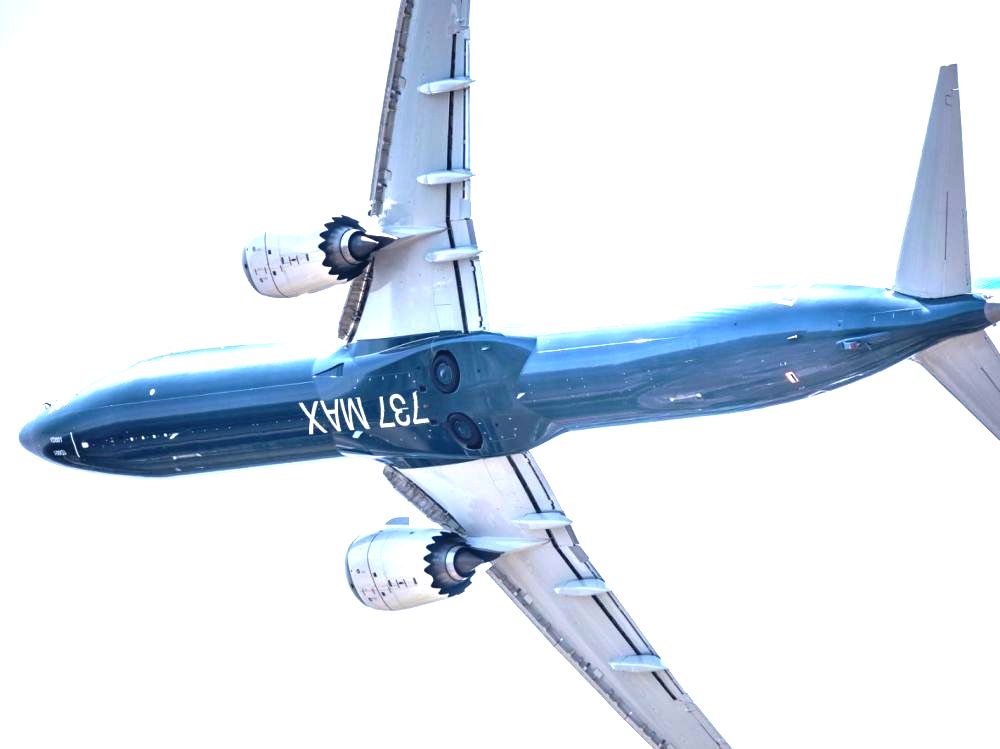
Boeing reanudaría 737 MAX en 01/2020

Resultado de imagen para Boeing 737 MAX"AW | 2019 11 11 23:47 | INDUSTRY

Boeing-Company-Logo.jpgBoeing espera reanudar servicio comercial del 737 MAX en Enero 2020

The Boeing Company ha comunicado el Lunes 11 Noviembre 2019 que espera reanudar las entregas de sus aviones Boeing 737 MAX puestos en tierra para el próximo mes de 12/2019, alentando a las aerolíneas poder reiniciar el servicio comercial en Enero 2020.

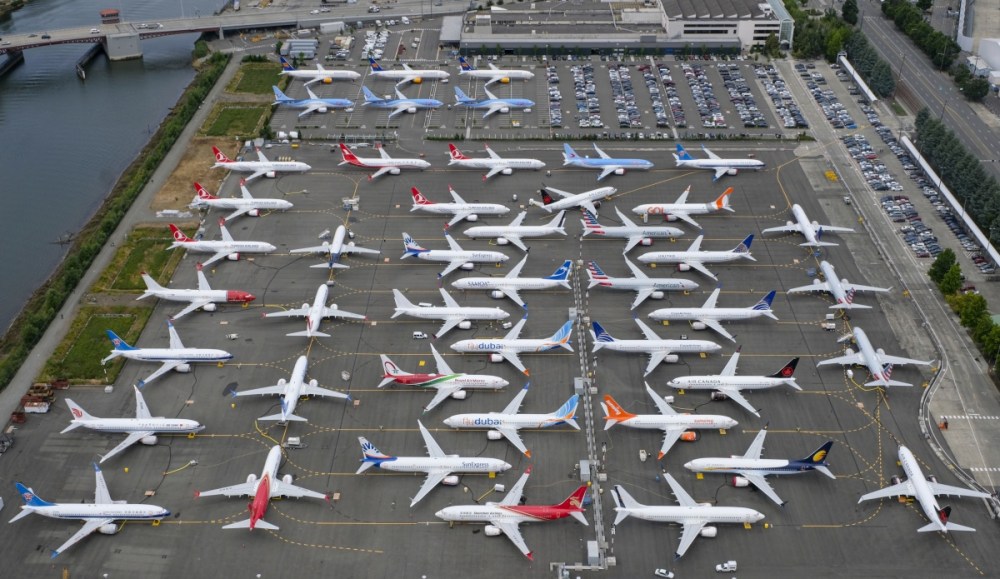
Los aviones Boeing 737 MAX han permanecido en tierra desde el 10 Marzo 2019 después de dos accidentes aéreos donde se ha involocrado las vidas de 346 personas de los dos vuelos.

Los inversores de la industria americana han aplaudido la nueva línea de tiempo más cercana hacia la recertificación de la línea 737 MAX, indicando una mejora después de las aprobaciones de la Technical Advisory Board (TAB), organismo independiente establecido para auditar los test y certificaciones pertinentes.

Boeing está cerca del final del proceso de obtener la aprobación de los reguladores para los aviones más vendidos de la compañía americana, a pesar las estimaciones anteriores de la compañía y los retrasos repetidos que han llevado a las aerolíneas a retirar los aviones de sus horarios varias veces.

Estimaciones en Boeing

Desde la compañía aeroespacial, las estimaciones del levantamiento de la conexión a tierra para Diciembre 2019 y la aprobación de las capacitaciones para pilotos en Enero 2020, «las aerolíneas podrían reanudar el servicio comercial. Sabemos que necesitan más tiempo para preparar sus flotas y entrenar a los pilotos, pero el avión y las [aprobaciones] de entrenamiento se realizarán en enero, lo que permitirá el servicio comercial”, dijo un portavoz de Boeing.

La conexión a tierra ha reducido el crecimiento de los clientes de la aerolínea 737 MAX y les ha costado cientos de millones de dólares en ingresos después de que se vieron obligados a cancelar vuelos. Incluso después de que los aviones estén completamente autorizados para volar, las aerolíneas tendrán que entrenar a miles de sus 737 pilotos antes de que puedan operar comercialmente. Ese proceso puede llevar más de un mes. Los ejecutivos de las aerolíneas han dicho que esperan que Boeing les pague por el impacto de la conexión a tierra. En Julio 2019, Boeing dijo que tomó un cargo de US$ 4.9 mil millones para compensar a las aerolíneas, pero las sumas finales aún no se han determinado.

FAA & NTSB

Boeing ha cambiado el sistema de Control de Vuelo MCAS. La Administración Federal de Aviación (FAA) reiteró el Lunes 11/11/2019 que sus funcionarios “no han establecido un calendario para cuándo se completará el trabajo. La FAA está siguiendo un proceso exhaustivo para devolver el Boeing 737 MAX al servicio de pasajeros. Continuamos trabajando con otros reguladores de seguridad de la aviación internacional para revisar los cambios propuestos a la aeronave”, dijo la agencia en un comunicado. La compañía ha completado una prueba del software con la FAA en un simulador, una de las cinco tareas necesarias para devolver el avión al servicio, dijo la compañía en una actualización el Lunes.

Boeing también tiene que llevar a los pilotos de las aerolíneas a los simuladores 737 Max para evaluar cómo las alertas de la cabina y otros factores afectan la carga de trabajo del piloto. La Junta Nacional de Seguridad del Transporte (NTSB) criticó a Boeing en un informe en Septiembre 2019 por subestimar el impacto de tales alertas en el rendimiento del piloto. Boeing necesita llevar a cabo un vuelo de certificación con funcionarios y reguladores que aún deben firmar la nueva capacitación de pilotos, que la compañía espera tener en Enero 2020.

Piloteando el futuro

Boeing está atravesando uno de los años más turbulentos de su historia de la compañía. La puesta a tierra del 737 MAX ahora le costó a Boeing casi US$ 10 mil millones, según las cifras de ganancias publicadas el 23 Octubre 2019. El fabricante de aeronaves ha sido presionado por muchas aerolíneas que han sentido los efectos de la puesta a tierra del 737 MAX, y la aerolínea ha prometido una compensación adicional de US$ 5 mil millones.

AW-78022112.pngBoeing ha apostado el futuro de su división comercial en el 737 MAX, el 787 Dreamliner y el 777X de próxima generación. Sin embargo, los problemas de Boeing han empeorado mucho más silenciosamente. El Dreamliner ha sido un gran éxito para las aerolíneas, pero el fabricante acaba de confirmar en sus resultados trimestrales que reducirán la producción del 787 de 14 a 12 células por mes. Aunque esto puede no parecer sustancial, el entorno comercial global actual ha sido citado como la razón de la tasa de reducción del avión más exitoso de Boeing que se encuentra actualmente en producción.

Sin embargo, quizás la parte más preocupante de la última versión de Boeing se relaciona con el 777X. El tipo de avión estaba destinado no solo a rivalizar con el A350 de Airbus, sino también a terminar la producción de aviones de cuatro motores como el A380 e incluso el Boeing 747. Con motores más grandes, el 777-9 sería el avión comercial bimotor más grande con más de 400 pasajeros, pero ahora el programa aparentemente ha alcanzado los topes.

En los resultados del tercer trimestre de Boeing (3Q2019), la aerolínea no solo anunció el corte de producción del 787 Dreamliner, sino que ahora pospuso las entregas del 777X desde el 4Q2020 hasta el 1Q2021. Una característica muy singular del avión es la envergadura increíblemente amplia, que condujo a un diseño de plegado de puntas de las alas para permitir a las aeronaves maniobrar alrededor de los aeropuertos sin ampliar las pistas y calles de rodaje. Ahora, a algunos de los primeros aviones construidos se les han quitado las puntas de las alas y el avión se ha trasladado silenciosamente al almacenamiento. Los problemas con el motor comercial más grande del mundo, el GE9X, y recientemente con la puerta de carga en el 777X han significado que el avión aún no ha tomado su primer vuelo, más de cuatro meses después del lanzamiento previsto en el Salón Aeronáutico de París 2019.

La cartera de clientes ha retrazado su puesta a pundo para sus flotas. En el caso de Emirates Airline, aún no está claro cómo las demoras afectarán al cliente más grande del 777X y sus planes de renovación de flota, con una orden por 150 unidades. Singapore Airlines ya anunció esta semana que sus entregas del 777X también se retrasarían un año, y ahora entrarán en servicio en 2022. Aún más preocupante para Boeing es que otro cliente, Lufthansa, ha movido sus pedidos firmes de la aeronave a opciones. Esto le da a la aerolínea flexibilidad para no recibir la entrega de la aeronave.

Con los problemas actuales del 737 MAX, la reducción de la producción del 787 y los retrasos en el programa 777X, no hay mucho de qué ser positivo en la división comercial de Boeing. Sin embargo, incluso con el fabricante aparentemente en una crisis sin precedentes, y con ganancias cayendo un 95% interanual, la industria logró obtener ganancias para los primeros nueve meses del año de un valor por US$ 229 millones frente a US$ 7 mil millones para el mismo período en 2018.

Las turbulencias en la industria de Boeing continúan impulsando los desafíos hacia adelante junto con una feliz promesa de volver a conquistar los cielos del mundo entero. AW-Icon AW001

100_737MAX8.pngBoeing would resume service 737 MAX 01/2020

20150215-logo-faa_1.jpgBoeing expects to resume 737 MAX commercial service in January 2020

The Boeing Company has announced on Monday 11 November 2019 that it expects to resume deliveries of its Boeing 737 MAX aircraft grounded for the next month of 12/2019, encouraging airlines to restart commercial service in January 2020.

Boeing 737 MAX planes have remained on the ground since March 10, 2019, after two plane crashes where the lives of 346 people on the two flights have been involved.

American industry investors have applauded the new nearest timeline towards recertification of the 737 MAX line, indicating an improvement after the approval of the Technical Advisory Board (TAB), an independent body established to audit the relevant tests and certifications.

Boeing is near the end of the process of obtaining regulatory approval for the best-selling aircraft of the American company, despite previous estimates of the company and repeated delays that have led the airlines to withdraw the planes from their various scheduled times.

Estimates in Boeing

From the aerospace company, estimates of the grounding survey for December 2019 and the approval of pilot training in January 2020, «the airlines could resume commercial service. We know they need more time to prepare their fleets and train the pilots, but the plane and training [approvals] will take place in January, which will allow commercial service”, said a Boeing spokesman.

The grounding has reduced the growth of the clients of the 737 MAX airline and cost them hundreds of millions of dollars in revenue after they were forced to cancel flights. Even after the planes are fully authorized to fly, the airlines will have to train thousands of their 737 pilots before they can operate commercially. That process can take more than a month. Airline executives have said they expect Boeing to pay them for the impact of the ground connection. In July 2019, Boeing said it took a charge of US$ 4.9 billion to compensate the airlines, but the final sums have not yet been determined.

FAA & NTSB

Boeing has changed the MCAS Flight Control system. The Federal Aviation Administration (FAA) reiterated on Monday 11/11/2019 that its officials “have not established a timetable for when the work will be completed. The FAA is following an exhaustive process to return the Boeing 737 MAX to passenger service. We continue to work with other international aviation security regulators to review the proposed changes to the aircraft”, the agency said in a statement. The company has completed a software test with the FAA in a simulator, one of the five tasks necessary to return the aircraft to service, the company said in an update on Monday.

Boeing also has to take airline pilots to 737 Max simulators to assess how cockpit alerts and other factors affect the pilot’s workload. The National Transportation Safety Board (NTSB) criticized Boeing in a report in September 2019 for underestimating the impact of such alerts on the pilot’s performance. Boeing needs to carry out a certification flight with officials and regulators who still have to sign the new pilot training, which the company expects to have in January 2020.

Piloting the future

737MAX8-960x298.pngBoeing is going through one of the most turbulent years in its company history. The 737 MAX grounding now cost Boeing almost US$ 10 billion, according to earnings figures published on October 23, 2019. The aircraft manufacturer has been pressured by many airlines that have felt the effects of grounding of 737 MAX, and the airline has promised an additional compensation of US$ 5 billion.

Boeing has bet on the future of its commercial division in the 737 MAX, the 787 Dreamliner and the next-generation 777X. However, Boeing’s problems have worsened much more silently. The Dreamliner has been a great success for the airlines, but the manufacturer has just confirmed in its quarterly results that it will reduce the production of 787 from 14 to 12 cells per month. Although this may not seem substantial, the current global commercial environment has been cited as the reason for the reduction rate of the most successful Boeing aircraft currently in production.

However, perhaps the most worrisome part of the latest version of Boeing is related to the 777X. The type of aircraft was intended not only to rival the Airbus A350 but also to finish the production of four-engine aircraft such as the A380 and even the Boeing 747. With larger engines, the 777-9 would be the twin-engine commercial aircraft larger with more than 400 passengers, but now the program has apparently reached its limits.

In the results of the third quarter of Boeing (3Q2019), the airline not only announced the production cut of 787 Dreamliner but now postponed deliveries of 777X from 4Q2020 to 1Q2021. A very unique feature of the plane is the incredibly wide wingspan, which led to a wing-tip folding design to allow aircraft to maneuver around airports without expanding runways and taxiways. Now, some of the first planes built have the tips of their wings removed and the plane has been quietly moved to storage. Problems with the world’s largest commercial engine, the GE9X, and recently with the cargo door on the 777X have meant that the plane has not yet taken its first flight, more than four months after the planned launch at the Air Show of Paris 2019.

The client portfolio has delayed its launch for its fleets. In the case of Emirates Airline, it is still unclear how the delays will affect the largest 777X customer and its fleet renewal plans, with an order for 150 units. Singapore Airlines has already announced this week that its 777X deliveries would also be delayed one year, and will now enter service in 2022. Even more worrying for Boeing is that another customer, Lufthansa, has moved its firm orders from the aircraft to options. This gives the airline flexibility to not receive the delivery of the aircraft.

With the current problems of the 737 MAX, the reduction of the production of the 787 and the delays in the 777X program, there is not much to be positive in the commercial division of Boeing. However, even with the manufacturer apparently in an unprecedented crisis, and with profits falling 95% year-on-year, the industry managed to make profits for the first nine months of the year of the value of US$ 229 million compared to US$ 7 billion for the same period in 2018.

The turbulence in the Boeing industry continues to drive the challenges forward along with a happy promise to conquer the skies of the entire world. AW-Icon AW002


Ξ A I R G W A Y S Ξ
SOURCE: Airgways.com
DBk: Boeing.com / Cnbc.com / Forbes.com / Airgways.com / Faa.gov
AW-POST: 201911112347AR

A\W   A I R G W A Y S ®


Azul recibe su primer Airbus A321NEO

AW-Azul-19102801.jpgAW | 2019 11 11 22:24 | AIRLINES / INDUSTRY

azul_brazilian_airlines_logo-svg.pngAzul Linhas Aéreas Brasileiras toma entrega de su primer Airbus A321NEO

Azul Linhas Aéreas Brasileiras ha recibido su primer avión Airbus A321NEO con registro PR-YJA y fue entregado a la compañía el Lunes 11 Noviembre 2019 en el Aeropuerto Hamburgo/Finkenwerder. Los aviones A321NEO de Azul se basan en el sistema Airbus Cabin Flex (ACF), que permite una configuración de cabina más densa para hasta 240 pasajeros, en lugar de 220, la aerolínea configura su A321NEO con solo 214 asientos en total.

Azul Linhas Aéreas anunció inicialmente un pedido de 35 aviones A320NEO en 2014. Otros 28 aviones alquilados de este tipo fueron pedidos con los arrendadores AerCap y GECAS. Diez A320NEO se convirtieron más tarde en el A321NEO de mayor longitud.

AW-Azul_7000435.jpg

AZUL LINHAS AÉREAS RECIBE PRIMER MATRÍCULA «PS» EN SEGUNDO E195-E2

Flota actual

Azul posee una flota de corto y mediano alcance compuesta por aviones de la familia Airbus A320NEO, Embraer E195 (E1) y ATR 72-600. La aerolínea recibió recientemente su primer avión Embraer E195-E2 como cliente de lanzamiento mundial de la versión más grande de los E-Jetys. Además, los aviones Airbus A330-200 y A330-900NEO se despliegan en rutas de larga distancia. Azul Express Cargo opera algunos aviones de carga, incluidos los aviones Boeing 737-400F arrendados. Junto con un total de diez pedidos de A321NEO, la compañía aérea fundada en 2008 también tiene pedidos de aviones A320NEO, A330NEO y Embraer E195-E2. Se espera que las entregas de los aviones de la familia A320NEO de Azul se ejecuten hasta 2023. AW-Icon AW001

AW-Azul_700010012.jpgAzul receives its first Airbus A321NEO

Azul Linhas Aéreas Brasileiras takes delivery of its first Airbus A321NEO

Azul Linhas Aéreas Brasileiras has received its first Airbus A321NEO aircraft with PR-YJA registration and was delivered to the company on Monday, November 11, 2019, at Hamburg/Finkenwerder Airport. Azul A321NEO aircraft is based on the Airbus Cabin Flex (ACF) system, which allows a denser cabin configuration for up to 240 passengers, instead of 220, the airline configures its A321NEO with only 214 seats in total.

Azul LiAW-Icon AW002nhas Aéreas initially announced an order for 35 A320NEO aircraft in 2014. Another 28 rented aircraft of this type were ordered with the AerCap and GECAS landlords. Ten A320NEO later became the longest A321NEO.

Current fleet

Azul has a short and medium-range fleet consisting of Airbus A320NEO, Embraer E195 (E1) and ATR 72-600 aircraft. The airline recently received its first Embraer E195-E2 aircraft as a worldwide launch customer of the largest version of the E-Jets. In addition, the Airbus A330-200 and A330-900NEO aircraft are deployed on long-distance routes. Azul Express Cargo operates some cargo aircraft, including leased Boeing 737-400F aircraft. Along with a total of ten orders from A321NEO, the airline founded in 2008 also has orders for A320NEO, A330NEO, and Embraer E195-E2 aircraft. Deliveries of Blue A320NEO family aircraft are expected to run until 2023. AW-Icon AW002

AW-Airbus_70001244.jpgAzul recebe seu primeiro Airbus A321NEO

Azul Linhas Aéreas Brasileiras recebe seu primeiro Airbus A321NEO

A Azul Linhas Aéreas Brasileiras recebeu sua primeira aeronave Airbus A321NEO com registro PR-YJA e foi entregue à empresa na segunda-feira, 11 de novembro de 2019 no aeroporto de Hamburgo/Finkenwerder. As aeronaves A321NEO de Azul são baseadas no sistema Airbus Cabin Flex (ACF), que permite uma configuração de cabine mais densa para até 240 passageiros, em vez de 220, a companhia aérea configura seu A321NEO com apenas 214 assentos no total.

A Azul Linhas Aéreas anunciou inicialmente um pedido de 35 aeronaves A320NEO em 2014. Outras 28 aeronaves desse tipo foram encomendadas com os proprietários da AerCap e da GECAS. Mais tarde, dez A320NEO se tornaram o A321NEO mais longo.

Frota atual

A Azul possui uma frota de curto e médio alcance composta por aeronaves Airbus A320NEO, Embraer E195 (E1) e ATR 72-600. A companhia aérea recebeu recentemente sua primeira aeronave Embraer E195-E2 como cliente de lançamento mundial da maior versão do E-Jetys. Além disso, as aeronaves Airbus A330-200 e A330-900NEO são implantadas em rotas de longa distância. A Azul Express Cargo opera algumas aeronaves de carga, incluindo aeronaves Boeing 737-400F alugadas. Juntamente com um total de dez pedidos da A321NEO, a companhia aérea fundada em 2008 também possui pedidos para aeronaves A320NEO, A330NEO e Embraer E195-E2. A entrega das aeronaves da família A320NEO Blue deverá ocorrer até 2023. AW-Icon AW002


Ξ A I R G W A Y S Ξ
SOURCE: Airgways.com
DBk: Airbus.com / Voeazul.com.br / Airgways.com
AW-POST: 201911112224AR

A\W   A I R G W A Y S ®