CAS Holding Company compra 290 A320

5c99f1d3dda4c8ec258b4568.jpg

AW | 2019 03 26 21:43 | INDUSTRY / AIRLINES

logo_airbus (2)CAS Holding Company de China compra 290 aeronaves Airbus A320AW-70099433

El fabricante europeo Airbus SE y China Aviation Supplies Holding Company (CAS) han anunciado la firma de un acuerdo que comprende la compra por parte de las aerolíneas chinas de un total de 290 aviones Airbus A320. El país asiático anuncia el contrato más grande en 2019 que supera, en precio de catálogo, los € 30.000 millones de euros.

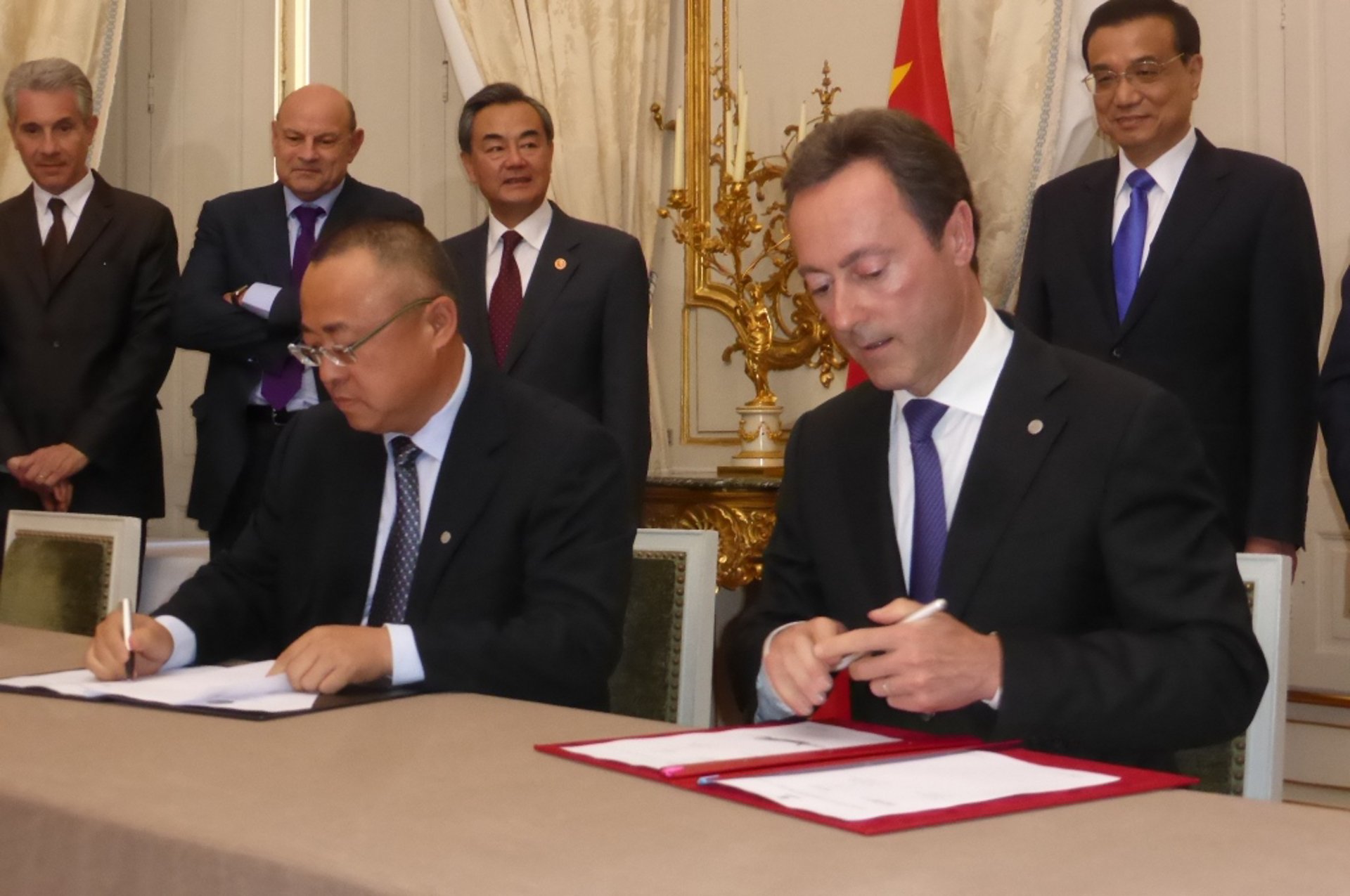
El pedido está compuesto por 290 aviones de la Familia A320. La casualidad ha querido que este pedido se anuncie en el momento en el que el modelo rival estadounidense de este segmento, el 737 MAX, pasa su mayor crisis. Además de los A320, China ha encargado 10 aviones de la Familia A350 XWB, lo que elevaría la cuantía del pedido por encima de los 30.000 millones de euros, a precio de catálogo. El acuerdo fue firmado en París por Guillaume Faury, Presidente de Airbus Commercial Aircraft y futuro CEO de Airbus, y Jia Baojun, Presidente de CAS, en presencia del Presidente chino Xi Jinping y el Presidente francés Emmanuel Macron. «Nos sentimos honrados de apoyar el crecimiento de la aviación civil de China con nuestras principales familias de aeronaves. Nuestra huella en expansión en China demuestra nuestra confianza duradera en el mercado de la región y nuestro compromiso a largo plazo con nuestros socios», dijo Guillaume Faury.

AW-70011044.png

Demanda aviones en China

Según la última proyección del mercado realizada por Airbus, entre el período 2018-2037, China necesitará unos 7.400 nuevos aviones de pasajeros, entre pasajeros y carga. Esta cifra representa más del 19% de la demanda total mundial para este periodo que alcanzaría 37.400 aviones nuevos, según las mismas estimaciones. A fines de enero de 2019, la flota de Airbus en servicio con aerolíneas chinas totalizaba unos 1.730 aviones, de los cuales 1.455 son de la Familia A320, y 17 son aviones de la Familia A350 XWB. Con más de 14.600 aviones de la Familia A320 pedidos y más de 8.600 entregados, el A320 es la familia de aviones de pasillo único con más éxito de Airbus.

La familia A320NEO es, actualmente, el avión de pasillo único más vendido de su segmento con más de 6.500 pedidos de más de 100 clientes desde su lanzamiento en 2010. Su rival, el Boeing 737 MAX acumula 5.100 pedidos. Airbus y Boeing protagonizan una batalla aerocomercial en el sector de los narrowbodies. La amenaza al Boeing 737 MAX está dañando su reputación, mientras que el A320NEO gozo de alto vuelo.AW-Icon-TXT-01

Resultado de imagen para CAS Holding Company buys 290 A320CAS Holding Company buys 290 A320

CAS Holding Company of China buys 290 Airbus A320 aircraft

Resultado de imagen para CAS Holding CompanyThe European manufacturer Airbus SE and China Aviation Supplies Holding Company (CAS) have announced the signing of an agreement comprising the purchase by Chinese airlines of a total of 290 Airbus A320 aircraft. The Asian country announces the largest contract in 2019 that exceeds € 30,000 million in catalog price.

The order is composed of 290 aircraft of the A320 Family. The chance has wanted that this order is announced at the moment in which the American rival model of this segment, the 737 MAX, passes its biggest crisis. In addition to the A320, China has commissioned 10 A350 XWB Family aircraft, which would raise the order amount above 30,000 million euros, at the catalog price. The agreement was signed in Paris by Guillaume Faury, President of Airbus Commercial Aircraft and future CEO of Airbus, and Jia Baojun, President of CAS, in the presence of Chinese President Xi Jinping and French President Emmanuel Macron. «We are honored to support the growth of China’s civil aviation with our major aircraft families, and our expanding footprint in China demonstrates our long-term confidence in the region’s market and our long-term commitment to our partners», said Guillaume. Faury.

Resultado de imagen para CAS Holding CompanySIGNATURE OF THE AGREEMENT BETWEEN AIRBUS AND CAS HOLDING COMPANY

AW-70011045.png

Demand aircraft in China

According to the latest market forecast by Airbus, between 2018-2037, China will need some 7,400 new passenger aircraft, between passengers and cargo. This figure represents more than 19% of the total world demand for this period that would reach 37,400 new aircraft, according to the same estimates. At the end of January 2019, the Airbus fleet in service with Chinese airlines totaled some 1,730 aircraft, of which 1,455 are from the A320 Family, and 17 are A350 XWB Family aircraft. With more than 14,600 A320 Family aircraft ordered and more than 8,600 delivered, the A320 is Airbus’ most successful family of single-aisle aircraft.

The A320NEO family is currently the best-selling single aisle aircraft in its segment with more than 6,500 orders from more than 100 customers since its launch in 2010. Its rival, the Boeing 737 MAX, has 5,100 orders. Airbus and Boeing star in an aerocomercial battle in the narrowbodies sector. The threat to the Boeing 737 MAX is damaging its reputation, while the A320NEO enjoyed high flying. A \ W


Ξ A I R G W A Y S Ξ
SOURCE: Airgways.com
DBk: Airbus.com / Airgways.com
AW-POST: 201903262143AR

A\W   A I R G W A Y S ®

Airbus reconsidera ensamblaje en China

Resultado de imagen para Airbus Tianjin

AW | 2019 03 25 16:37 | INDUSTRY

logo_airbus (2)Airbus reconsidera los procesos de ensamblaje en China

Airbus está considerando si modifica los procesos de ensamblaje de su última generación de aviones A330 en la República de China como parte de una oferta para aumentar su participación de mercado en el mercado de aviación civil de más rápido crecimiento en el mundo.

La multinacional europea está siguiendo una tendencia iniciada por Boeing, que recientemente abrió una nueva planta de terminación en China. A primera vista, la decisión de las dos compañías que dominan el mercado de la aviación civil tiene sentido construir donde viva su mayor cliente. Es especialmente porque China aún no tiene una industria de aviación civil totalmente desarrollada y lista para competir globalmente. Los beneficios son muchos, incluida la buena voluntad y la estima del país que compraría estos aviones. A largo plazo, sin embargo, eso podría resultar ser un error de cálculo costoso. Basándose en su historia reciente, China no tardará mucho en ponerse al día y desplazar en gran medida a ambas empresas en el mercado doméstico de la aviación, además de aprovechar una gran parte de la cuota de mercado global del duopolio corporativo. Por lo tanto, Airbus y Boeing podrían tomar decisiones a corto plazo con consecuencias negativas a largo plazo para su rentabilidad futura.

Dado el formidable avance económico de China, nada de esto debería ser una sorpresa ni para Airbus ni para Boeing. Tampoco debería impactar a los gobiernos occidentales. El problema es que todos han sido guiados históricamente por la ingenua suposición de que el simple hecho de admitir a China en organizaciones como la Organización Mundial del Comercio (OMC) induciría a Beijing, según las palabras de Philip Pan, «finalmente se inclinó a lo que se consideraba las reglas establecidas de la modernización: la prosperidad alimentaría las demandas populares de libertad política y llevaría a China al redil de las naciones democráticas. O la economía china flaquearía bajo el peso del gobierno autoritario y la podredumbre burocrática». China tiene muchos objetivos y metas que son antitéticos a la prosperidad a largo plazo de las empresas y economías occidentales.

Boeing y Airbus podrían convertirse simplemente en los últimos corderos de sacrificio occidentales. Beijing ha apuntado explícitamente a los aviones de fuselaje ancho como uno de sus 10 nuevos sectores prioritarios para la sustitución de importaciones en su documento «Hecho en China 2025», por lo que cualquier ganancia a corto plazo que Airbus y Boeing reciban en términos de obtener pedidos adicionales de China podría ser socavado a largo plazo.

Las transferencias de tecnología resultantes y los menores costos laborales le darán a Pekín un gran salto hacia la competencia directa y, finalmente, el desplazamiento de ambas compañías. Dada la fusión con McDonnell Douglas, Boeing continuará su marcha hacia el hecho de convertirse en una sucursal del Departamento de Defensa de los Estados Unidos a medida que se desploma su participación en el mercado civil, pero Airbus no tiene realmente el lujo de una alternativa militar, dada la relativa escasez de los gastos de defensa europeos.

Boeing está afrontando contratiempos con la línea Boeing 737. La puesta a tierra de los Boeing 737 MAX a nivel mundial se produjo poco después de los problemas iniciales de lanzamiento del Boeing 787 Dreamliner hace unos seis años donde la demoduralización de la producción significaba que Boeing no podía explicar por completo la transmisión y carga de estrés a nivel del sistema. Ilustra los peligros de expandir la manufactura en todo el mundo.

Las compañías estadounidenses como Boeing subestiman constantemente el valor de integrar estrechamente la investigación y el desarrollo y la manufactura, al tiempo que minimizan los riesgos de separarlos.

Al decidir ampliar su producción de A330 en China, Airbus parece estar dispuesto a repetir el error de Boeing, un posible error de cálculo que la mayoría de las empresas de la Unión Europea han evitado en gran medida, porque la UE ha priorizado la manufactura doméstica / desalentado la deslocalización más que sus contrapartes de Estados Unidos.

El mismo Beijing históricamente ha equilibrado sus compras de los principales fabricantes de aviación civil para garantizar que no dependa demasiado de un solo proveedor de aeronaves, lo que significa que Airbus probablemente se beneficiará del vacío creado por el retiro del Boeing 737. El retiro del 737 también complica la resolución del conflicto comercial entre Estados Unidos y China, que parecía estar más cerca de la resolución a la luz de la propuesta de Beijing de comprar US$ 1.2 billones adicionales en exportaciones estadounidenses durante seis años. Las compras de aviones de Boeing figuraron en gran medida en la lista de compras de Beijing.

Los desafíos a más largo plazo se relacionan con la trayectoria de desarrollo económico de China y su correspondiente ascenso en la curva de alta tecnología, que se ha caracterizado en gran medida por políticas mercantilistas de protección y un fuerte subsidio gubernamental. Pero los desafíos a más largo plazo se relacionan con la trayectoria de desarrollo económico de China y su correspondiente ascenso en la curva de alta tecnología, que se ha caracterizado en gran medida por las políticas mercantilistas de protección y el fuerte subsidio gubernamental. En este sentido, el estado chino ha seguido una estrategia de desarrollo nacional descrita por primera vez a mediados del siglo XIX por el economista alemán Friedrich List, quien argumentó que el gobierno nacional debería desempeñar un papel crucial en la promoción, guía y regulación del proceso de desarrollo económico nacional.

China sigue siendo principalmente una economía dominada por el estado, que evita las disciplinas de una economía de libre mercado. Esto significa que tiene la capacidad y la predisposición ideológica para usar la política fiscal nacional como líder de pérdidas, absorbiendo pérdidas mucho más allá de lo que se toleraría en una economía dominada por empresas privadas.

China puede reducir las futuras exportaciones de los Estados Unidos mediante la construcción de su propio competidor para el Boeing 737 y Airbus A320 y también las futuras exportaciones de Europa si Airbus decide construir el A330 en China y China por su parte compra los motores Rolls-Royce ‘Made in China’ para el C929 y el A330.

Tanto los gobiernos occidentales como las corporaciones occidentales han subestimado de manera persistente el poder del modelo de desarrollo económico de China y la correspondiente amenaza económica que representa para la propia afluencia de Occidente. La crítica habitual dirigida contra el modelo de crecimiento chino es que un país que subsidia a sus industrias termina con industrias ineficientes, porque las empresas locales altamente protegidas están protegidas de la competencia global, y finalmente dejan al país que recurre al proteccionismo con productos inferiores. En la práctica, por lo tanto, no hay ninguna razón para que el mismo modelo no funcione con respecto a la aviación civil.AW-Icon-TXT-01

Resultado de imagen para Airbus TianjinAirbus reconsiders assembly in China

Airbus reconsiders assembly processes in China

Airbus LogotypeAirbus is considering whether to modify the assembly processes of its latest generation of A330 aircraft in the Republic of China as part of an offer to increase its market share in the fastest growing civil aviation market in the world.

The European multinational is following a trend initiated by Boeing, which recently opened a new completion plant in China. At first glance, the decision of the two companies that dominate the civil aviation market makes sense to build where their biggest customer lives. It is especially because China still does not have a fully developed civil aviation industry ready to compete globally. The benefits are many, including the goodwill and esteem of the country that would buy these aircraft. In the long term, however, that could turn out to be a costly miscalculation. Based on its recent history, China will not take long to catch up and largely displace both companies in the domestic aviation market, as well as take advantage of a large part of the global market share of the corporate duopoly. Therefore, Airbus and Boeing could make short-term decisions with long-term negative consequences for future profitability.

Given China’s formidable economic progress, none of this should come as a surprise to either Airbus or Boeing. Nor should it impact Western governments. The problem is that all have historically been guided by the naive assumption that simply admitting China into organizations such as the World Trade Organization (WTO) would induce Beijing, in the words of Philip Pan, «finally bowed to what that it was considered the established rules of modernization: prosperity would feed the popular demands of political freedom and would take China to the fold of democratic nations. Or the Chinese economy would falter under the weight of authoritarian government and bureaucratic rot». China has many goals and objectives that are antithetical to the long-term prosperity of Western companies and economies.

Boeing and Airbus could simply become the last Western sacrificial lambs. Beijing has explicitly targeted wide-body aircraft as one of its 10 new priority sectors for import substitution in its «Made in China 2025» document, so any short-term gains that Airbus and Boeing receive in terms of obtaining Additional orders from China could be undermined in the long term.

The resulting technology transfers and lower labor costs will give Beijing a big leap to direct competition and, ultimately, the displacement of both companies. Given the merger with McDonnell Douglas, Boeing will continue its march toward becoming a branch of the United States Department of Defense as its market share plummets, but Airbus does not really have the luxury of a military alternative, given the relative scarcity of European defense spending.

Boeing is facing setbacks with the Boeing 737 line. The grounding of the Boeing 737 MAX worldwide occurred shortly after the initial launch problems of the Boeing 787 Dreamliner about six years ago where the demodulation of the production meant that Boeing did not It could completely explain the transmission and stress load at the system level. It illustrates the dangers of expanding manufacturing throughout the world.

US companies like Boeing constantly underestimate the value of tightly integrating research and development and manufacturing, while minimizing the risks of separating them.

In deciding to expand its A330 production in China, Airbus seems willing to repeat the Boeing error, a possible miscalculation that most European Union companies have largely avoided, because the EU has prioritized domestic manufacturing/discouraged relocation more than its counterparts in the United States.

Beijing itself has historically balanced its purchases from major civil aviation manufacturers to ensure that it does not rely too much on a single aircraft supplier, which means that Airbus will likely benefit from the vacuum created by the withdrawal of the Boeing 737. The withdrawal of the 737 It also complicates the resolution of the trade dispute between the United States and China, which seemed closer to the resolution in light of Beijing’s proposal to buy an additional US $ 1.2 billion in US exports for six years. Boeing aircraft purchases figured heavily on the Beijing shopping list.

The longer-term challenges are related to China’s economic development trajectory and its corresponding rise in the high-tech curve, which has been characterized to a large extent by mercantilist protection policies and a strong government subsidy. But the longer-term challenges are related to China’s economic development trajectory and its corresponding rise in the high-tech curve, which has been characterized to a large extent by mercantilist policies of protection and strong government subsidy. In this regard, the Chinese state has followed a national development strategy first described in the mid-nineteenth century by the German economist Friedrich List, who argued that the national government should play a crucial role in the promotion, guidance and regulation of the process of national economic development.

China is still mainly an economy dominated by the state, which avoids the disciplines of a free market economy. This means that it has the capacity and the ideological predisposition to use national fiscal policy as a loss leader, absorbing losses far beyond what would be tolerated in an economy dominated by private companies.

China can reduce the future exports of the United States by building its own competitor for the Boeing 737 and Airbus A320 and also future European exports if Airbus decides to build the A330 in China and China for its part purchases the Rolls-Royce engines ‘Made in China’ for the C929 and the A330.

Both Western governments and Western corporations have persistently underestimated the power of China’s economic development model and the corresponding economic threat it poses to the very influx of the West. The usual criticism directed against the Chinese growth model is that a country that subsidizes its industries ends up with inefficient industries, because highly protected local companies are protected from global competition, and finally leave the country resorting to protectionism with inferior products. In practice, therefore, there is no reason why the same model does not work with respect to civil aviation. A \ W


Ξ A I R G W A Y S Ξ
SOURCE: Airgways.com
DBk: Asiatimes.com / Welt.de / Stefenchow.com
AW-POST: 201903251637AR

A\W   A I R G W A Y S ®

Airbus 1ra formación empleados Mobile

AW-700837-AL.pngAW | 2019 03 25 13:56 | INDUSTRY / TRAINING

airbus_assembly_logo-001.jpgAirbus Mobile incorpora primera formación empleados

Airbus ha incorporado el primer grupo de empleados reclutados para su línea de ensamblaje Airbus A220. Airbus dijo que los nuevos miembros del equipo A220 se unieron a la nueva orientación de contratación por parte de los actuales empleados de A320 que se transfirieron a la producción de A220 y los colegas recién contratados destinados a la organización de producción de la Familia A320, que está aumentando la cantidad de aviones que produce durante el próximo año.

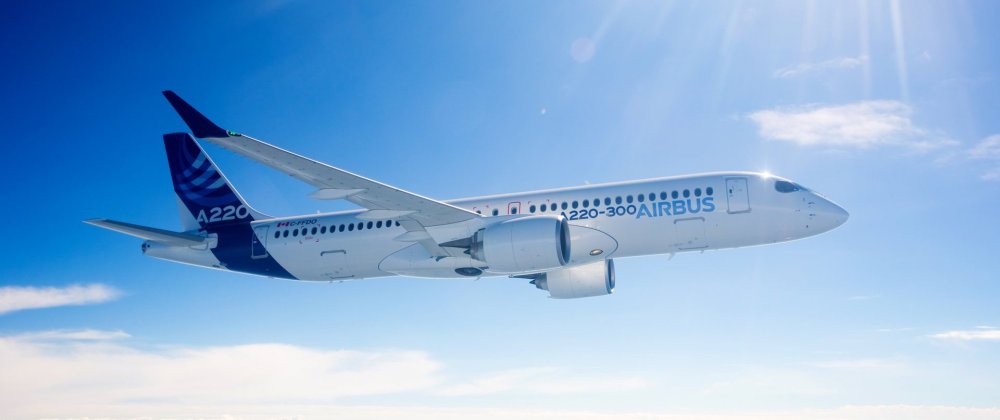
Los primeros empleados de la nueva línea de ensamblaje de Airbus en Mobile se presentaron a trabajar este Lunes, según ha informado la compañía. La propia línea de montaje se encuentra en las primeras fases de construcción. Cuando esté completo, será uno de los dos sitios en el mundo donde Airbus produce la familia de aviones A220, una línea de jets de un solo pasillo y bimotores que es algo más pequeña que los aviones de la familia A320 que Airbus ya ensambla en Mobile.

La compañía anunció en una publicación en Facebook que un grupo de empleados comenzó la capacitación de orientación para nuevos empleados el lunes en las instalaciones de AIDT en Mobile Aeroplex en Brookley. Después de un mes de capacitación local, el equipo realizará la transición a Mirabel, Quebec (Canadá) para entrenar durante tres meses junto con sus colegas en la organización de la línea de ensamblaje A220 allí.

Los nuevos miembros del equipo A220 se unieron a la nueva orientación de contratación por parte de los actuales empleados de A320 que se transfirieron a la producción de A220 y los colegas recién contratados destinados a la organización de producción de la Familia A320, que está aumentando la cantidad de aviones que produce durante el próximo año. Airbus dice que entre la contratación de la línea A220 y la contratación relacionada con el aumento de la producción en su línea A320, planea agregar unos 600 puestos de trabajo en Mobile a mediados de 2020.

En un desarrollo relacionado, la asociación Airbus-Bombardier para producir el A220 obtuvo un nuevo nombre este mes. La A220 fue desarrollada inicialmente por Bombardier como la CSeries, y cuando Airbus obtuvo una participación mayoritaria en el programa, la asociación se denominó Sociedad Limitada de Aeronaves de la CSeries (CSALP).

Ese nombre se volvió un tanto anticuado cuando Airbus cambió el nombre de la CSeries como la familia A220 para adaptarse a su propia nomenclatura. El 14 Marzo 2019, Airbus anunció que CSALP pronto cambiaría su nombre a Airbus Canada Limited Partnership. El programa utilizará el logotipo de Airbus como su única identidad visual.AW-Icon-TXT-01

A220-300-in-flight-014.jpg

Airbus first training employees in Mobile

Airbus Logotype.pngAirbus Mobile incorporates first training employees

Airbus has incorporated the first group of employees recruited for its Airbus A220 assembly line. Airbus said that the new A220 team members joined the new hiring orientation by the current A320 employees who were transferred to the production of A220 and the newly hired colleagues assigned to the production organization of the A320 Family, that the number of planes that it produces during the next year is increasing.

The first employees of the new Airbus assembly line in Mobile showed up to work this Monday, according to the company. The assembly line itself is in the early stages of construction. When complete, it will be one of the two sites in the world where Airbus produces the A220 family of aircraft, a line of single-aisle and twin-engine jets that is somewhat smaller than the A320 family aircraft that Airbus already assembles in Mobile.

The company announced in a Facebook post that a group of employees began orientation training for new employees on Monday at the AIDT facility at Mobile Aeroplex in Brookley. After a month of local training, the team will transition to Mirabel, Quebec (Canada) to train for three months together with their colleagues in the organization of the A220 assembly line there.

The new A220 team members joined the new hiring orientation from current A320 employees who were transferred to the production of A220 and newly hired colleagues assigned to the production organization of the A320 Family, which is increasing the number of aircraft produced during the next year. Airbus says that between contracting the A220 line and contracting related to the increase in production on its A320 line, it plans to add some 600 jobs at Mobile in mid-2020.

In a related development, the Airbus-Bombardier partnership to produce the A220 gained a new name this month. The A220 was initially developed by Bombardier as the CSeries, and when Airbus obtained a majority stake in the program, the association was named the CSeries Aircraft Limited Company (CSALP).

That name became somewhat dated when Airbus changed the name of the CSeries as the A220 family to adapt to its own nomenclature. On March 14, 2019, Airbus announced that CSALP would soon change its name to Airbus Canada Limited Partnership. The program will use the Airbus logo as its unique visual identity. A \ W


Ξ A I R G W A Y S Ξ
SOURCE: Airgways.com
DBk: Al.com / Airbus.com
AW-POST: 201903251356AR

A\W   A I R G W A Y S ®

Comlux recibe 1er ACJ320NEO

Comlux-ACJ320neo-take-off-.jpg

AW | 2019 03 25 07:33 | AIRLINES / INDUSTRY

Logo_Airbus_2014.svgComlux recibe su primer Airbus ACJ320NEOAW-70099433.jpg

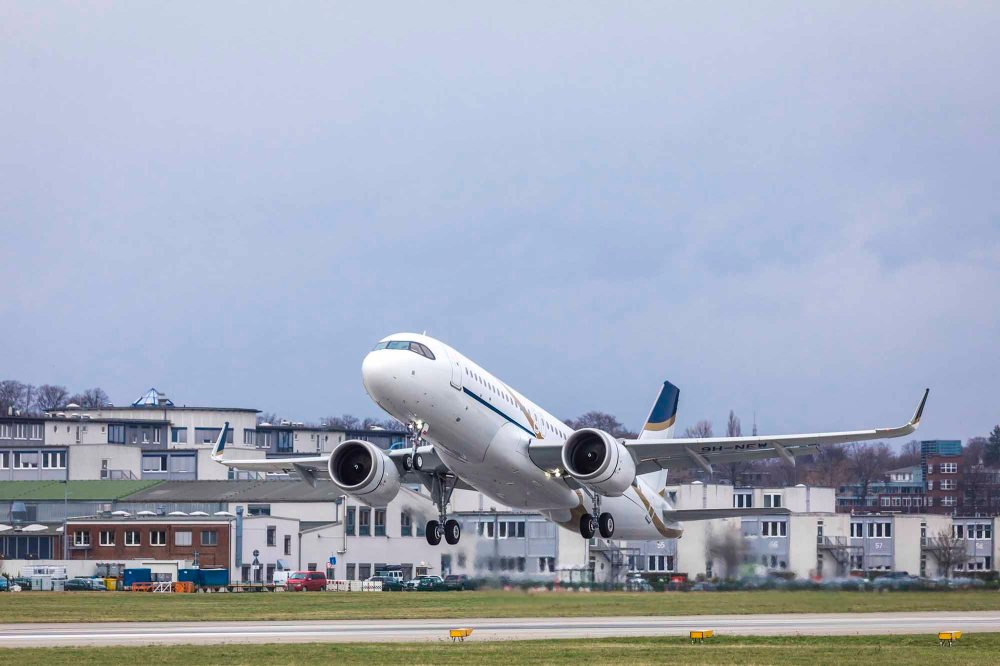
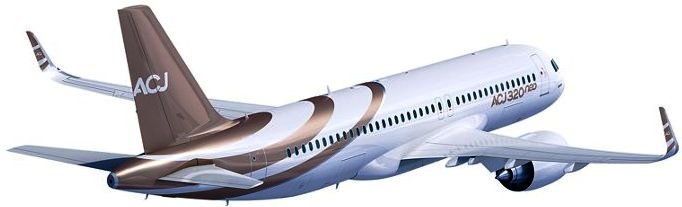
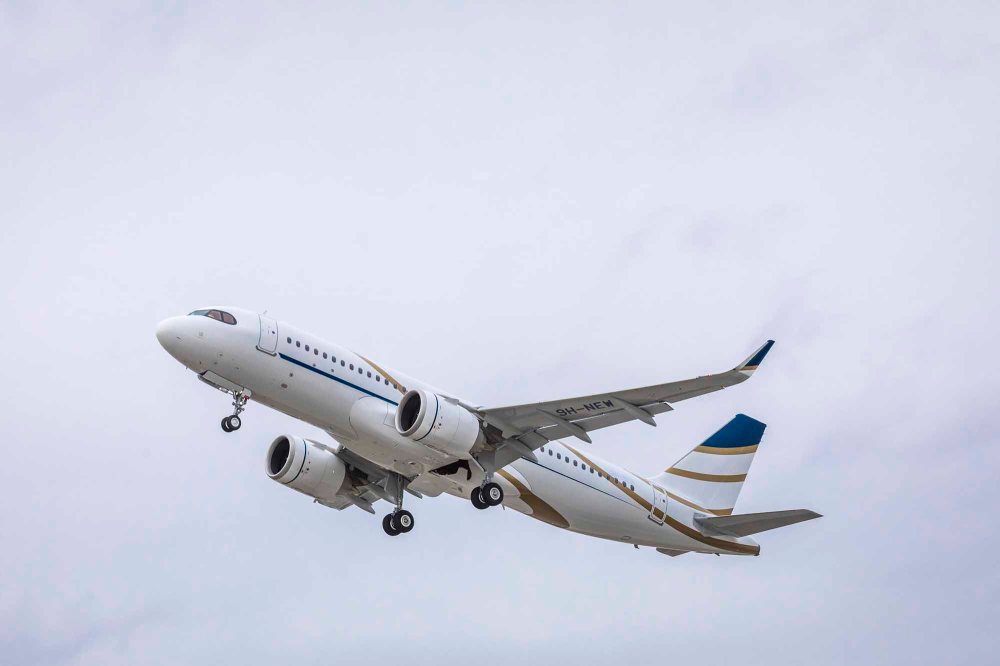
Comlux ha recibido la primera de tres aeronaves Airbus ACJ320NEO equipada para transporte VIP. Es el mayor cliente de la Familia ACJ320NEO, que ya ha ganado un total de 11 órdenes.

“El nuevo ACJ320NEO nos da los medios para ofrecer vuelos sin escalas a aún más del mundo. CFM International ha apoyado Comlux lo largo de los años, y hemos elegido sus nuevos motores, LEAP-1A de bajo consumo y altamente confiable para alimentar la aeronave. Comlux Finalización instalará un interior de la cabina VIP única, utilizando las tecnologías más avanzadas para ofrecer el mejor confort y lujo a nuestros clientes», dice Comlux Presidente Ejecutivo y CEO Richard Gaona.

ACJ320neo_PW_AIB_V16.jpg

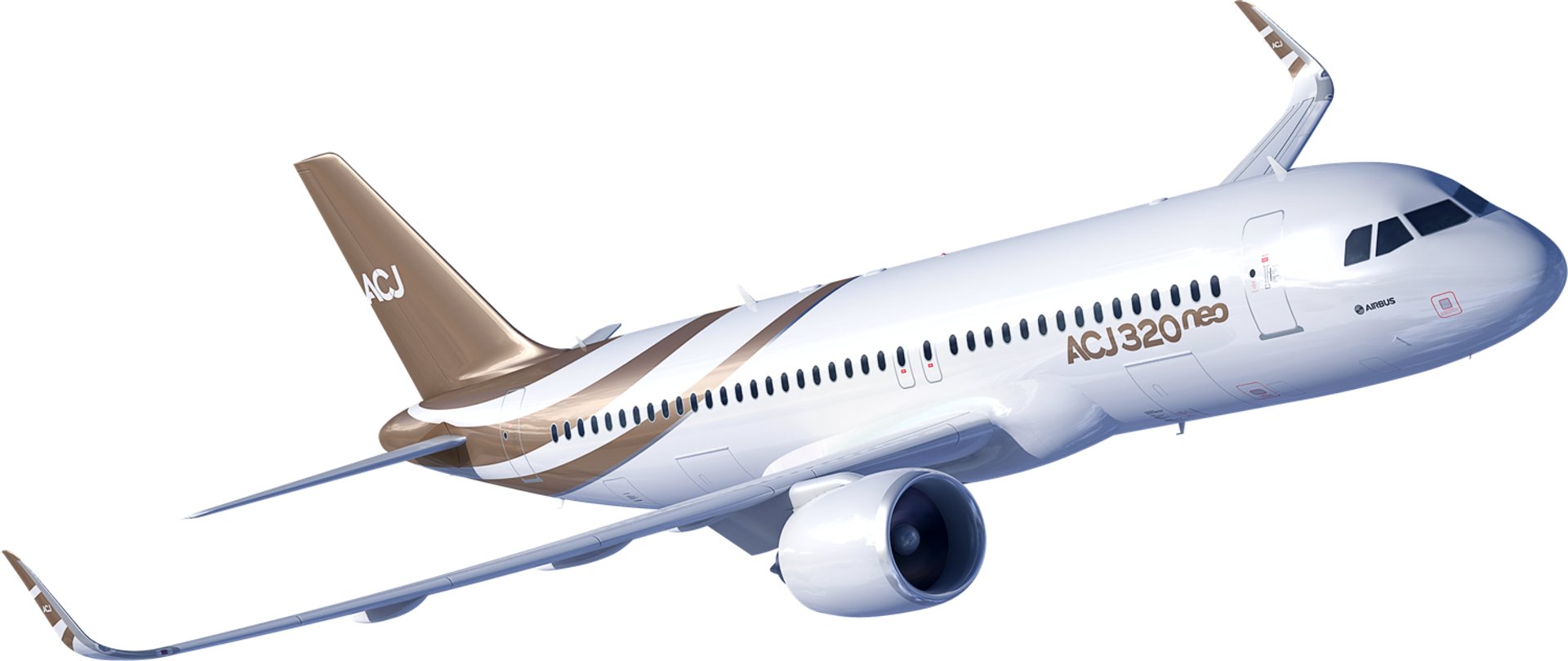
La familia ACJ320NEO utiliza nuevos motores y la punta del ala montados Sharklets para ofrecer un ahorro de combustible del 15%, lo que también se traduce en un salto adelante en la gama de operadores de aviones de negocios. La configuración del ACJ320NEO es de 25 pasajeros, cubriendo una autonomía de 13 horas o 6.000 nm/11.100 kilómetros. La versión más pequeña ACJ319NEO puede transportar ocho pasajeros cubriendo 15 horas o 6.750 nm/12.500 kilómetros.

“Los Airbus corporativos ya tienen una reputación para la comodidad, confiabilidad y valor, ya disfrutar de los costos de operación similares los aviones de negocios tradicionales a través de su patrimonio avión, y ahora son aún más económico en sus versiones NEO», dice el Presidente de ACJ Benoit Defforge.

Más de 700 aviones de la Familia A320NEO ya están en servicio con las compañías aéreas y con más de 15.000 pedidos en firme para toda la familia A320, es el claro líder en su clase.

Airbus A320 fue pionera en características que son ahora estándar en la mayoría de los aviones de negocios de nueva generación como fly-by-wire-protección mejorada, mantenimiento centralizado de ahorro de costes y de fibra de carbono para ahorrar peso la garantía de que tiene un futuro largo y exitoso por delante de él. Más de 190 aviones corporativos de Airbus están en servicio en todo el mundo, volando en todos los continentes, incluida la Antártida.AW-Icon-TXT-01

Comlux-ACJ320neo-in-flight-.jpgComlux receives 1st ACJ320NEO

Comlux receives its first Airbus ACJ320NEO

Comlux has received the first of three Airbus ACJ320NEO aircraft equipped for VIP traffic. He is the largest client of the ACJ320NEO Family, which has already won a total of 11 orders.Resultado de imagen para ACJ320neo logo

«The new ACJ320NEO gives us the means to offer nonstop flights to even more of the world. CFM International has supported Comlux over the years, and we have chosen its new low-consumption, highly reliable LEAP-1A engines to power the aircraft. Comlux Completion will install a unique VIP cabin interior, using the most advanced technologies to offer the best comfort and luxury to our customers», says Comlux CEO and CEO Richard Gaona.

The ACJ320NEO family uses new engines and wingtips mounted Sharklets to offer 15% fuel savings, which also translates into a leap forward in the range of business aircraft operators. The configuration of the ACJ320NEO is 25 passengers, covering an autonomy of 13 hours or 6,000 nm / 11,100 kilometers. The smaller version ACJ319NEO can carry eight passengers covering 15 hours or 6,750 nm/12,500 kilometers.

«The corporate Airbus already have a reputation for comfort, reliability and value, and enjoy operating costs similar to traditional business aircraft through their aircraft heritage, and now they are even more economical in their NEO versions», says the President of ACJ Benoit Defforge.

More than 700 aircraft of the A320NEO Family are already in service with airlines and with more than 15,000 firm orders for the entire A320 family, it is the clear leader in its class.

Airbus A320 pioneered features that are now standard in most next-generation business aircraft such as improved fly-by-wire-protection, centralized maintenance of cost savings and carbon fiber to save weight the guarantee that it has a long and successful future ahead of him. More than 190 Airbus corporate aircraft are in service worldwide, flying on all continents, including Antarctica. A \ W


Ξ A I R G W A Y S Ξ
SOURCE: Airgways.com
DBk: Airbus.com / Airgways.com
AW-POST: 201903250733AR

A\W   A I R G W A Y S ®

FAA aprueba software Boeing 737 MAX

Cassidy-Boeing.jpgAW | 2019 03 24 11:07 | AVIATION SAFETY / INDUSTRY

Boeing-Logo.svgFK,4923,36,737-max-round-pinLa FAA aprueba provisionalmente actualización del software para Boeing 737 MAX

La Administración Federal de Aviación de Estados Unidos (FAA) aprobó provisionalmente una actualización del software para los aviones Boeing 737 MAX con el fin de corregir los errores en el sistema de control de vuelo MCAS.

Después del accidente aéreo del vuelo ET-302 de Ethiopian Airlines que involucró a un segundo Boeing 737-8 MAX que mató a 157 personas el 10 Marzo 2019, y que los investigadores dicen que tiene similitudes claras con el accidente del vuelo JT-610 de Lion Air el 29 Octubre 2018, la compañía anunció que dejaría en tierra a todos sus 737-8/9 MAX. Boeing dijo que la suspensión se aplicó a su flota global de 737 MAX por un total de 371 aeronaves. El Departamento de Transporte de Estados Unidos (DOT) ordenó realizar una auditoría sobre la certificación de FAA del modelo Boeing 737 MAX, que últimamente se ve envuelto en un escándalo tras dos accidentes aéreos aparentemente similares en cinco meses.

El fabricante de la aeronave está trabajando en una actualización del sistema después de dos accidentes recientes en un plazo de cinco meses con un Boeing 737-8 MAX, en el que murieron en total 346 personas. Las fuentes en Boeing informan que la actualización de software para el Boeing 737 MAX está lista. Según las fuentes, las delegaciones de tres de las principales líneas aéreas estadounidenses con algunos de los aviones Boeing 737 MAX en su flota fueron invitadas el sábado a la fábrica donde se producen los aviones. Los pilotos de las compañías probarían el nuevo software allí en simuladores. La FAA todavía tiene que aprobar los cambios de software y las instrucciones relacionadas.

Software para MCAS

Una actualización esperada del software para el Sistema de Aumento de Características de Maniobra (MCAS) de Boeing en la aeronave 737 MAX hará que el sistema anti-bloqueo sea menos agresivo y más controlable por los pilotos. Las modificaciones crean una función de prevención de bloqueo más suave, rediseñada para que no supere a otros comandos de la cabina o se produzca un fallo de encendido en función de lecturas defectuosas de un solo sensor. Está diseñado para empujar automáticamente la nariz hacia abajo solo una vez, durante no más de 10 segundos, si la aeronave está en peligro de estancamiento y pérdida de sustentación.

También parte de los próximos cambios anticipados es una mejor capacitación para la tripulación que opera los aviones, que según el Diario incluirá cursos de computación interactivos, así como más información sobre cómo funciona la función MCAS y cómo desactivarla. Los cambios pueden llegar en las próximas semanas. Un portavoz de la FAA le dijo en una declaración que “espera la solución del software a principios de la próxima semana; y lo evaluaremos en su momento”. El nuevo programa comprende que los pilotos recibirán información detallada sobre el sistema automatizado de control de vuelo MCAS, lo que faltaba en los manuales anteriores, según las fuentes.

Directivas de Boeing

El Director General, Presidente de Boeing, Dennis Muilenburg, dijo en un comunicado en el momento que, si bien mantenía «plena confianza en la seguridad del modelo, la suspensión fue emitida por una gran cantidad de precaución. La seguridad es un valor fundamental en Boeing durante el tiempo que hemos estado construyendo aviones; Y siempre lo será. No hay mayor prioridad para nuestra empresa y nuestra industria. Estamos haciendo todo lo posible para comprender la causa de los accidentes en asociación con los investigadores, implementar mejoras de seguridad y ayudar a garantizar que esto no vuelva a suceder».AW-Icon-TXT-01

EEUU indaga certificación 737 MAX

rotate13.png

La investigación sobre cómo dos aviones del mismo modelo Boeing 737-8 MAX pudieron, en cinco meses, accidentarse causando en total 346 víctimas mortales sigue abierta. Responsables de la FAA, la Administración Federal de Aviación, tratan de averiguar si la compañía proporcionó información incompleta o engañosa sobre ese modelo a los reguladores de seguridad aérea y a sus clientes en Estados Unidos. La investigación criminal, que incluye al FBI, se abrió tras el primer siniestro ocurrido en octubre en Indonesia, donde murieron 189 personas que viajaban con Lion Air. Los interrogatorios se centran en el sistema antibloqueo MCAS de estas naves y en cómo fue el proceso de certificación de seguridad. Frente a los recortes presupuestarios y la falta de personal cualificado para analizar las nuevas tecnologías incorporadas a la aeronave, la FAA subcontrató gran parte del proceso de certificación con empleados del propio fabricante estadounidense. La FAA asegura que ese proceso se realizó según las normas. A \ W


boeing-737-max.jpgFAA provisionally approves 737 MAX software

Boeing Logomark WaterThe FAA provisionally approves software update for Boeing 737 MAXFK,4923,36,737-max-round-pin

The Federal Aviation Administration of the United States (FAA) provisionally approved a software update for the Boeing 737 MAX aircraft in order to correct errors in the MCAS flight control system.

After the plane crash of Ethiopian Airlines flight ET-302 that involved a second Boeing 737-8 MAX that killed 157 people on March 10, 2019, and that researchers say has clear similarities with the crash of JT-610 flight Lion Air on October 29, 2018, the company announced that it would leave all its 737-8/9 MAX’s on the ground. Boeing said the suspension was applied to its global fleet of 737 MAX for a total of 371 aircraft. The US Department of Transportation (DOT) has ordered an audit of the FAA certification of the Boeing 737 MAX model, which has recently become embroiled in a scandal following two seemingly similar plane crashes in five months.

The aircraft manufacturer is working on a system update after two recent accidents within five months with a Boeing 737-8 MAX, which killed a total of 346 people. Sources in Boeing report that the software update for the Boeing 737 MAX is ready. According to the sources, the delegations of three of the main US airlines with some of the Boeing 737 MAX aircraft in their fleet were invited on Saturday to the factory where the planes are produced. The pilots of the companies would try the new software there in simulators. The FAA still has to approve the software changes and related instructions.

Software for MCAS

An expected software update for the Boeing Maneuvering Feature Enhancement System (MCAS) on the 737 MAX aircraft will make the anti-lock system less aggressive and more controllable by pilots. Modifications create a smoother lock prevention function, redesigned so that it does not outperform other cab commands, or a misfire occurs based on faulty readings from a single sensor. It is designed to automatically push the nose down only once, for no more than 10 seconds, if the aircraft is in danger of stalling and loss of lift.

Also part of the upcoming anticipated changes is better training for the crew that operates the aircraft, which according to the Journal will include interactive computer courses, as well as more information on how the MCAS function works and how to deactivate it. Changes may arrive in the coming weeks. An FAA spokesman told him in a statement that he «expects the software solution early next week; and we will evaluate it at the time». The new program understands that pilots will receive detailed information about the automated MCAS flight control system, which was lacking in previous manuals, according to the sources.

Boeing directives

The CEO, President of Boeing, Dennis Muilenburg, said in a statement at the time that, while maintaining «full confidence in the safety of the model, the suspension was issued by a large amount of caution. Security is a fundamental value in Boeing during the time that we have been building aircraft, and always will be.There is no higher priority for our company and our industry. We are doing everything we can to understand the cause of accidents in partnership with researchers, implement safety improvements and help to ensure that this does not happen again». A \ W

US investigates 737 MAX certification

The investigation into how two planes of the same model (737 Max, of Boeing) could, in five months, be injured causing a total of 346 fatalities is still open. Responsible for the FAA, the Federal Aviation Administration, they try to find out if the company provided incomplete or misleading information about that model to air safety regulators and their clients in the United States. The criminal investigation, which includes the FBI, was opened after the first incident in October in Indonesia, where 189 people were killed traveling with Lion Air. The interrogations focus on the MCAS anti-lock system of these ships and on how the security certification process went. Faced with budget cuts and the lack of qualified personnel to analyze the new technologies incorporated into the aircraft, the FAA subcontracted a large part of the certification process with employees of the US manufacturer itself. The FAA assures that this process was carried out according to the standards. A \ W


Ξ A I R G W A Y S Ξ
SOURCE: Airgways.com
DBk: Transportation.gov / Faa.gov / Boeing.com / Airgways.com
AW-POST: 201903241107AR

A\W   A I R G W A Y S ®

El largo despegue de la aviación china

AW-70883222.jpgAW | 2019 03 24 10:19 | INDUSTRY

Resultado de imagen para COMAC logoLa industria de la aviación de China ha logrado muchos avances en estos últimos tiempos, peo la menor eficiencia las hace poco competitivas para triunfar fuera de sus fronteras

La industria de la aviación de China ha gastado sumas millonarias en desarrollar su propia industria de aviación, un ambicioso proyecto que se remonta décadas atrás y que ha tomado impulso en los últimos años con la presentación de varias aeronaves de pasajeros entre ellas el COMAC ARJ-21 y el COMAC C-919. Estos modelos tienen cierto recorrido en el potente mercado aeroespacial chino, cuyos principales actores están controlados por el Estado, pero la falta de tecnologías clave para la producción de semejante obra de ingeniería en el país asiático sitúa a la industria autóctona en desventaja frente a los gigantes Boeing y Airbus.

Competencia narrowbodies

Aunque la industria de Boeing esté atravesando dificultades en su línea 737 MAX junto a las dudas del mercado aéreo, muchos han vuelto a poner sobre la mesa en el país asiático las posibilidades comerciales del C-919, en franca competencia con los A320NEO y Boeing 737 MAX. El avión C-919 pretende competir en el segmento narrowbodies donde se encuentera la línea más dura en términos de mercado.

COMAC C-919

El COMAC C-919 continúa en fase de pruebas y se prevé que no trasladará entrará en servicio comercial hasta 2021, una vez consiga la certificación de los reguladores chinos. La empresa dice que ha recibido más de 800 pedidos de esta aeronave, el 95% de los cuales procedentes de aerolíneas chinas, muchas de ellas dominadas por el estado. “Nosotros no determinamos qué marca comprar o cuántos aviones se adquieren; esto depende de la voluntad de las autoridades. No creo que el C-919 pueda desplegarse tan rápidamente. Además de todos los permisos, se necesitan pilotos y tripulaciones que estén entrenados para esta nueva aeronave. Y construir un avión no es lo mismo que construir cientos de ellos por todo lo que implica en términos de servicios de mantenimiento, que ahora no están desarrollados”, admite Chang Waisan, Subdirector del Departamento de Estándares y Operaciones de China Southern Airlines, una de las tres grandes aerolíneas chinas. Solamente por la autoridad del Gobierno de China, el C-919 tendría una enorme proyección en un mercado inmenso y en pleno crecimiento.

El C919 se promociona como un “Made in China”, aunque en realidad solamente la mitad de sus componentes son fabricados en el país asiático. Otros proceden de Estados Unidos y Europa. En cualquier caso, la aeronave es considerada el pináculo de los esfuerzos de este país para construir un gigante de la aviación comercial que haga sombra, algún día, al duopolio que forman Airbus y Boeing.

Futuro aviación china

Algunos expertos consideran que, además de motivos puramente tecnológicos el C-919 es visto como menos eficiente en términos de consumo de combustible que sus modelos homólogos de Airbus y Boeing, el lento avance del sector en China responde a razones organizativas. “La tecnología de la aviación comercial es ridículamente complicada. Los motores, los materiales, pero lo más difícil es juntar todos estos componentes e integrar los sistemas. La organización que se encarga de esto en China es totalmente inadecuada para la tarea: COMAC es hija de AVEC (Corporación de la Industria de Aviación de China), que a su vez es hija del Ejército de Liberación Popular, una institución basada en la jerarquía y el control, características que no favorecen en nada cuando hay que coordinar el trabajo de más de mil empresas distintas”, explica Scott Kennedy, director de Política y Empresa China en el Centro de Estudios Estratégicos Internacionales (CSIS).

Un ejemplo del posible recorrido del C919 lo ilustra el ARJ21, un jet regional desarrollado también por COMAC. Tras obtener la certificación del regulador chino en 2014, solamente 11 de estos modelos surcan actualmente los cielos chinos. Diez de ellos los opera Chengdu Airlines, aerolínea cuyo principal accionista es la propia COMAC. La aeronave no ha obtenido ninguna certificación internacional para ser comercializada en otros mercados. “Los principales reguladores del sector en el mundo son el europeo y el estadounidense y se centran casi exclusivamente en cuestiones de seguridad. China no obtendrá puntos extra por ser China, por ser un país grande o por ser un país en desarrollo. Hay unos estándares, son universales, y hay que cumplir con ellos”, dice Kennedy.

Las dificultades a que se enfrenta la industria de aviación comercial como en el caso de Sukhoi Aircraft, que ante la gran expectativas que ha generado introducir una aeronave regional SSJ-100 en los mercados fuera de la Federación Rusia como fueron los casos de Europa, México e Indonesia, tan pronto transcurrió el tiempo, el soporte logístico ha ocasionado serias dificultades para las aerolíneas que han solicitado la devolución de las aeronaves por problemas técnicos y de soporte.

La industria de la aviación en China ha logrado grandes avances, pero todavía le queda un largo vuelo para conquistar realmente los cielos del mundo. Pocos dudan de que China logrará a medio plazo mejorar sus capacidades tecnológicas y creará aeronaves competitivas. Competir con Airbus y Boeing es una tarea muy difícil. “Es muy probable que en una generación estos aviones mejoren significativamente, pero la industria de la aviación cambia constantemente. Mientras China trata de ponerse al día, en Europa y Estados Unidos ya desarrollan el futuro”, afirma Kennedy.AW-Icon-TXT-01

COMAC_B-001A_May_2017.jpgThe long takeoff of Chinese aviation

China’s aviation industry has made many advances in recent times, but the lower efficiency makes them uncompetitive to succeed outside their borders

China’s aviation industry has spent millions in developing its own aviation industry, an ambitious project that dates back decades and has gained momentum in recent years with the presentation of several passenger aircraft including the COMAC ARJ- 21 and COMAC C-919. These models have some route in the powerful Chinese aerospace market, whose main actors are controlled by the State, but the lack of key technologies for the production of such engineering work in the Asian country puts the indigenous industry at a disadvantage compared to the giants Boeing and Airbus.

Competition narrowbodies

Although the industry of Boeing is going through difficulties in its line 737 MAX along with the doubts of the air market, many have returned to put on the table in the Asian country the commercial possibilities of the C-919, in clear competition with the A320NEO and Boeing 737 MAX. The C-919 aircraft intends to compete in the narrowbodies segment where the hardest line is found in terms of the market.

COMAC C-919

The COMAC C-919 is still in the testing phase and it is expected that it will not be moved into commercial service until 2021, once it has obtained the certification from the Chinese regulators. The company says it has received more than 800 orders for this aircraft, 95% of which came from Chinese airlines, many of them dominated by the state. «We do not determine which brand to buy or how many planes are purchased; This depends on the will of the authorities. I do not think the C-919 can be deployed so quickly. In addition to all permits, pilots and crews are needed who are trained for this new aircraft. And building an airplane is not the same as building hundreds of them for everything it implies in terms of maintenance services, which are now undeveloped», admits Chang Waisan, Deputy Director of the Department of Standards and Operations of China Southern Airlines, one of the three big Chinese airlines. Only by the authority of the Government of China, the C-919 would have a huge projection in a huge and growing market.

The C919 is touted as a «Made in China», although in reality only half of its components are manufactured in the Asian country. Others come from the United States and Europe. In any case, the aircraft is considered the pinnacle of the efforts of this country to build a commercial aviation giant that will overshadow, one day, the duopoly formed by Airbus and Boeing.

Future Chinese aviation

Some experts consider that, in addition to purely technological reasons, the C-919 is seen as less efficient in terms of fuel consumption than its homologous models of Airbus and Boeing, the slow progress of the sector in China responds to organizational reasons. «Commercial aviation technology is ridiculously complicated. The engines, the materials, but the most difficult thing is to gather all these components and integrate the systems. The organization that is responsible for this in China is totally inadequate for the task: COMAC is the daughter of AVEC (China Aviation Industry Corporation), which in turn is the daughter of the People’s Liberation Army, an institution based on the hierarchy and control, characteristics that do not favor anything when you have to coordinate the work of more than a thousand different companies», explains Scott Kennedy, director of China Policy and Enterprise at the Center for International Strategic Studies (CSIS).

An example of the possible route of the C919 is illustrated by the ARJ21, a regional jet also developed by COMAC. After obtaining the certification of the Chinese regulator in 2014, only 11 of these models are currently sailing the Chinese skies. Ten of them are operated by Chengdu Airlines, an airline whose main shareholder is COMAC itself. The aircraft has not obtained any international certification to be marketed in other markets. «The main regulators of the sector in the world are European and American and focus almost exclusively on security issues. China will not get extra points for being China, for being a large country or for being a developing country. There are some standards, they are universal, and you have to comply with them», says Kennedy.

The difficulties facing the commercial aviation industry as in the case of Sukhoi Aircraft, which in view of the great expectations generated by the introduction of a regional aircraft SSJ-100 in markets outside the Russian Federation, such as Europe, Mexico and Indonesia, As soon as the time passed, the logistical support has caused serious difficulties for the airlines that have requested the return of the aircraft due to technical and support problems.

The aviation industry in China has made great progress, but it still has a long flight to really conquer the skies of the world. Few doubt that China will achieve in the medium term to improve its technological capabilities and will create competitive aircraft. Competing with Airbus and Boeing is a very difficult task. «It is very likely that in a generation these aircraft will improve significantly, but the aviation industry is constantly changing. While China tries to catch up, in Europe and the United States they are already developing the future», says Kennedy. A \ W

Resultado de imagen para COMAC ARJ-21 C919中国航空的长期起飞

近年来,中国航空业取得了许多进展,但效率低下使得它们在国外取得成功并不具有竞争力

中国的航空业已经花费了数百万美元来发展自己的航空工业,一个雄心勃勃的项目,可追溯到几十年,并已获得了动力,近年来随着引进数架客机,包括中国商飞ARJ- 21和COMAC C-919。这些机型在强大的中国航空市场,其主要球员由国家控制一些旅游,但缺乏关键制造这样的在中国的技术工程工作场所的本土企业处于不利的地位与巨人波音和空客。

竞争狭隘

尽管行业波音在737线MAX疑惑的露天市场atravezando困难,许多人再一次摆上台面在中国的C-919的商业机会,与A320neo和波音737公开竞争MAX。 C-919飞机打算在狭窄车身领域展开竞争,这是市场上最难找到的航线。

COMAC C-919

申诉专员C-919继续测试阶段,预计移动不会进入商业运营,直到2021年曾获得中国监管机构的认证。该公司表示,它已经收到超过800个订单这架飞机,其中95%来自中国的航空公司,其中许多是由政府所主导。 “我们不确定要购买哪个品牌或购买多少架飞机;这取决于当局的意愿。我认为C-919不能如此迅速地部署。除了所有许可证外,还需要为这架新飞机接受过培训的飞行员和机组人员。并建立飞机并不像建造数百他们都在维修服务,这是现在不发达条款意味着同样的» 承认昌Waisan,标准部中国南方航空公司,之一的运营和副主任三大中国航空公司。只有中国政府的权威,C-919才能在庞大且不断增长的市场中有一个巨大的预测。

该C919被吹捧为“中国制造”,但在现实中只有其组件的一半在中国制造的。其他人来自美国和欧洲。在任何情况下,飞机被认为是这个国家的努力,建立一个巨大的商业航空是色调哪天形成双寡头空客和波音的巅峰之作。

未来的中国航空

一些专家认为,除了纯粹的技术原因的C-919被认为是效率较低的燃油消耗比他们的同行空客和波音的机型而言,在中国该行业的进展缓慢响应组织方面的原因。 “商业航空技术非常复杂。引擎,材料,但最困难的是收集所有这些组件并集成系统。负责这个在中国的组织是任务完全不够的:COMAC是AVEC(工业集团公司中国航空),这又是解放军的女儿,一个机构的女儿基于层次和控制功能,不利于任何东西,当涉及到协调一千多不同的公司工作,“斯科特·肯尼迪,在战略和国际问题研究中心(CSIS)中国策略总监和管理说。

ARJ21也是一个可能的C919航线的例子,这是一架由中国商飞开发的区域喷气式飞机。在2014年获得中国监管机构的认证后,目前只有11个型号在中国的天空中航行。其中10家由成都航空公司运营,成都航空公司的主要股东是中国商飞。该飞机尚未获得任何在其他市场上销售的国际认证。 “该行业的主要监管机构是欧洲和美国,并且几乎专注于安全问题。作为一个大国或一个发展中国家,中国不会获得额外积分。有一些标准,它们是普遍的,你必须遵守它们,“肯尼迪说。

考虑到在俄罗斯联邦以外的市场引入区域航空器SSJ-100所带来的巨大期望,苏霍伊航空公司面临商业航空业面临的困难,如欧洲,墨西哥的情况 而印度尼西亚,一旦时间过去,后勤支援就因技术和支援问题要求归还飞机的航空公司造成严重困难。

中国的航空业已经取得了很大的进步,但它仍然有很长的路要走,才能真正征服世界的天空。很少有人怀疑中国将在中期内实现提高技术能力并创造具有竞争力的飞机。与空中客车公司和波音公司竞争是一项非常艰巨的任务。“很可能在一代人中,这些飞机将大幅改进,但航空业正在不断变化。 虽然中国试图赶上,但在欧洲和美国,他们已经在开发未来»,肯尼迪说。A \ W


Ξ A I R G W A Y S Ξ
SOURCE: Airgways.com
DBk: Comac.cc / Shine.cn / Wikimedia.org
AW-POST: 201903241019AR

A\W   A I R G W A Y S ®

IndiGo incorporará 25 A321NEO

AW-70086333.jpg

AW | 2019 03 23 12:12 | AIRLINES / INDUSTRY

IndiGo de la India incorporará 25 Airbus A321NEO a su flota

IndiGo se está preparando para recibir 25 Airbus A321NEO adicionales como parte de los planes para volar a más destinos en el extranjero, incluida China. IndiGo, la aerolínea más grande de la India, recibirá la entrega de las aeronaves A321NEO durante los próximos 12 meses y reconfigurará 15 de ellos con 220 asientos. Estos 15 aviones se utilizarán para volar en rutas de larga distancia a destinos en Europa con una escala en uno de los aeropuertos del Medio Oriente para reabastecerse de combustible y rutas domésticas, incluidas las ciudades de Delhi y Mumbai, dijo el responsable comercial de la aerolínea, William Boulter.
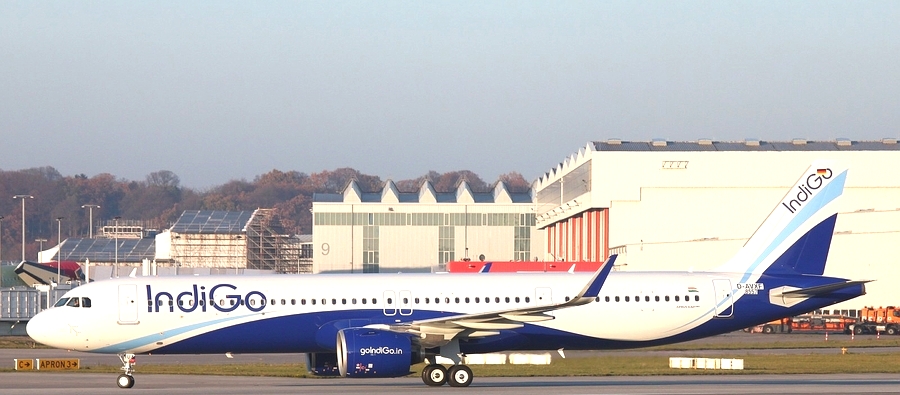
IndiGo tiene un libro de pedidos por 430 aviones de la familia A320NEO, ha actualizado 125 de sus aviones existentes en pedidos a A321NEO’s, que son más eficientes en cuanto a combustible por asiento/kilómetros, pueden volar una distancia más larga y acomodar a más personas. En la actualidad, IndiGo tiene más de 262 aviones en su flota, que incluyen A320, A320NEO, A321NEO y ATR’s.AW-Icon-TXT-01

AW-7000087.jpgIndiGo will incorporate 25 A321NEO

IndiGo of India will incorporate 25 Airbus A321NEO into its fleet

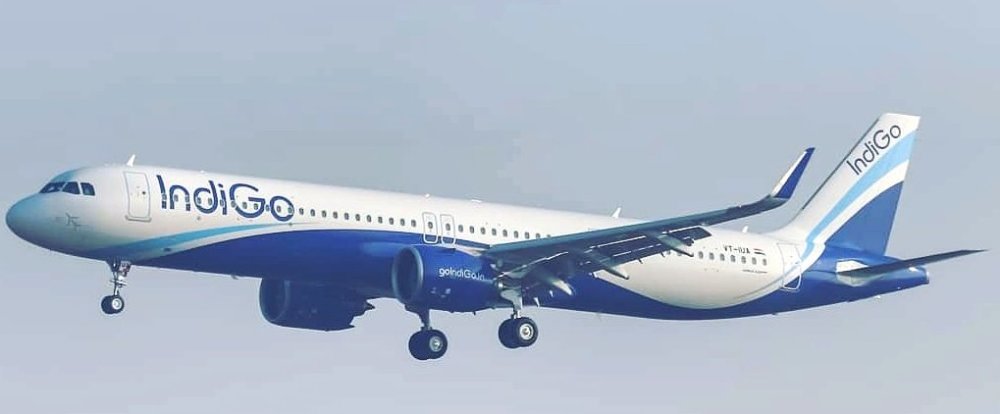
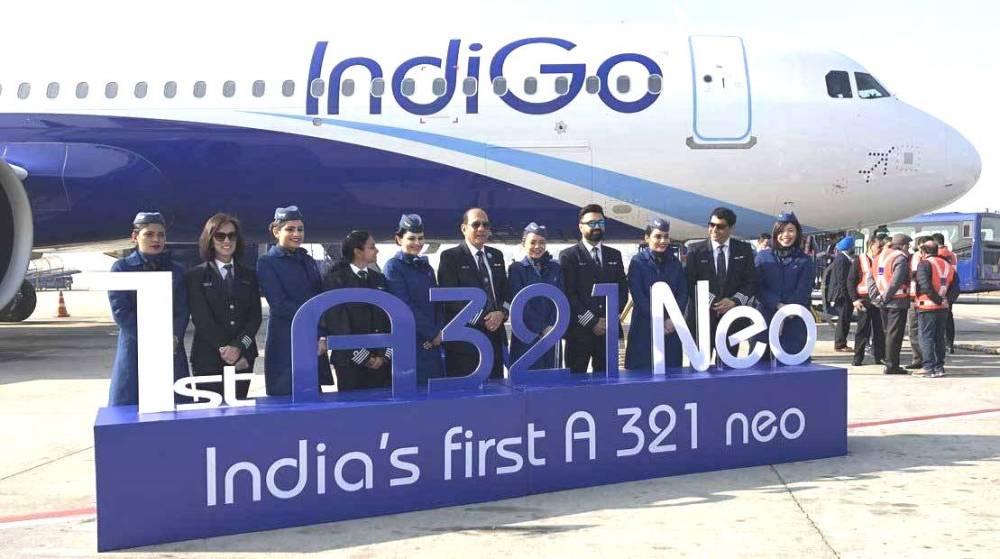
IndiGo is preparing to receive 25 Airbus A321NEO additional as part of plans to fly to more destinations abroad, including China. IndiGo, the largest airline in India, will receive the delivery of the A321NEO aircraft during the next 12 months and will reconfigure 15 of them with 220 seats. These 15 aircraft will be used to fly long-haul routes to destinations in Europe with a stopover at one of the airports in the Middle East for refueling and domestic routes, including the cities of Delhi and Mumbai, the airline’s commercial manager, said William Boulter.

Indigo-A321neo-TW-1546163523.jpgINDIGO WAS THE FIRST AIRLINE OF INDIA TO INCORPORATE THE AIRBUS A321NEO IN DECEMBER 2018
IndiGo has an order book for 430 aircraft of the A320NEO family, has updated 125 of its existing aircraft in orders to A321NEO’s, which are more efficient in terms of fuel per seat / kilometers, can fly a longer distance and accommodate more people . Currently, IndiGo has more than 262 aircraft in its fleet, which include A320, A320NEO, A321NEO and ATR’s. A \ W


Ξ A I R G W A Y S Ξ
SOURCE: Airgways.com
DBk: Goindigo.in / Airbus.com
AW-POST: 201903231212AR

A\W   A I R G W A Y S ®

Boeing realiza rollout Boeing 777-9

AW-70087777X.jpgAW | 2019 03 22 07:59 | INDUSTRY

Boeing-Logo.svgBoeing efectúa el rollout del modelo 777-9 en medio de la crisis por el modelo 737 MAXAW-78022112.png
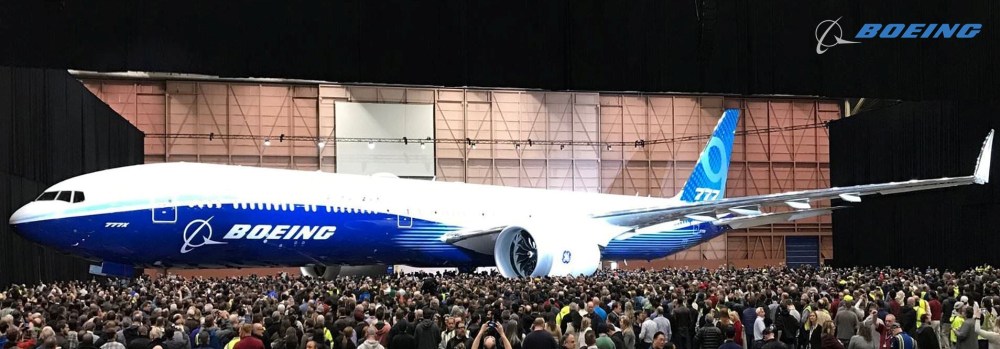
Boeing realiza el rollout del Boeing 777-9 en medio de la crisis por los problemas de la línea 737 MAX. Boeing Commercial Airplanes había establecido un cronograma para su presentación oficial a principios de Marzo 2019, pero la dirección del fabricante americano ha demorado la presentación pública efectuándola a puerta cerrada en Renton, Washington. La presentación llega en un momento en el que la empresa está en el centro de una crisis, debido a dos accidentes aéreos registrados en las últimas semanas del modelo insignia Boeing 737 MAX.

Estrenos demorados

53014213_364689527471934_4319989217283477940_n.jpgEn 2019 boeing tenía proyectado tres grandes debuts: el rollout de su serie 777-9, el lanzamiento del Programa NMA (Boeing 797) y la primera entrega del miembro más nuevo de su familia 737-7 MAX. las proyecciones del fabricante americano no han sido las esperadas debido a una crisis de reputación, luego de que las preocupaciones de seguridad desencadenaron la puesta a tierra de los aviones Boeing 737 MAX, algo inédito en la línea 737.
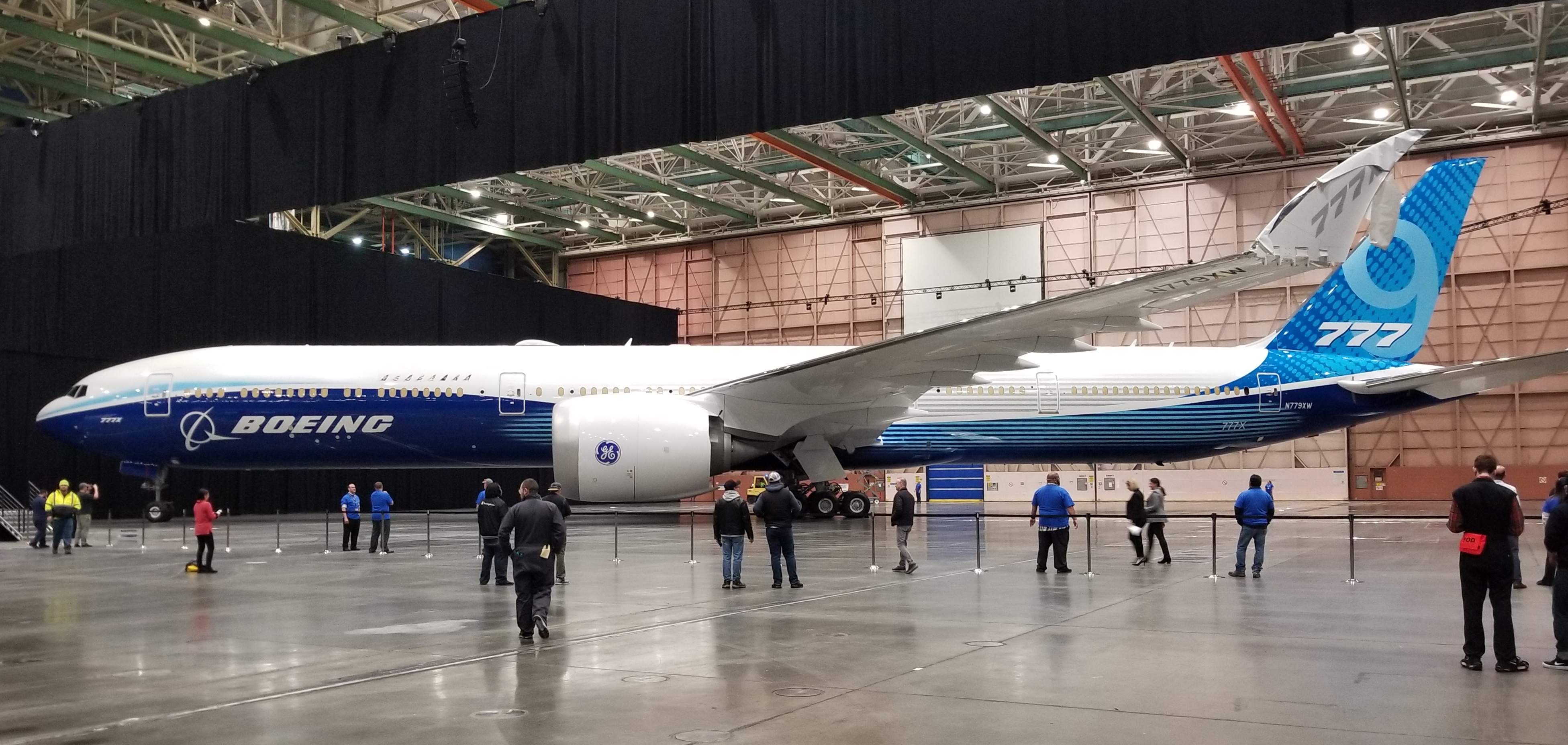
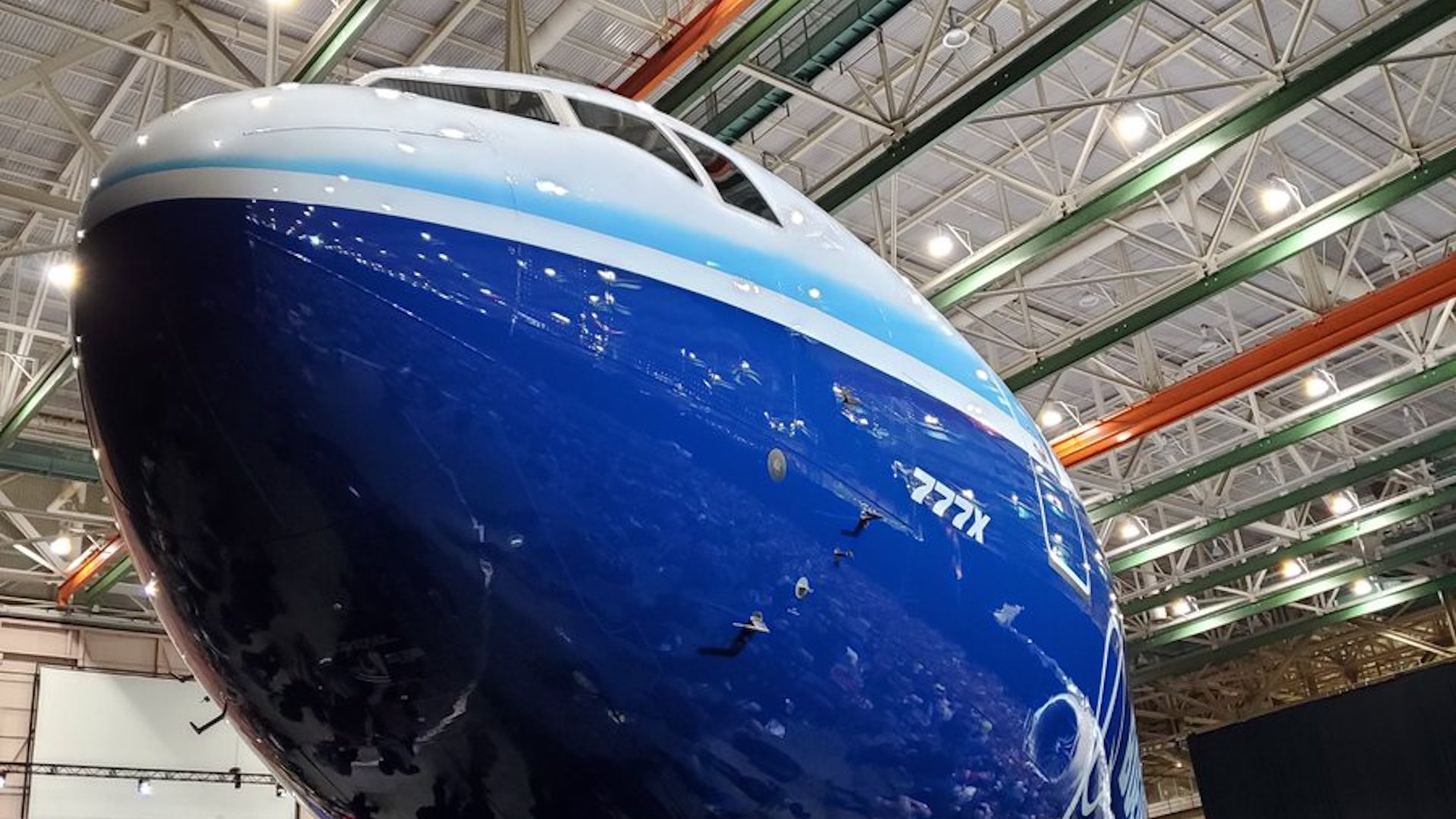
El 13 Marzo 2019, se suponía que Boeing lanzaría públicamente el primer 777-9X en sus instalaciones de Everett en Seattle, Washington. Después de que el vuelo ET-302 de Ethiopian Airlines se estrellara tres días antes del evento, la compañía pospuso indefinidamente la ceremonia pública, en lugar de eso, la reveló silenciosamente a los empleados. El Boeing 777-9 es el sucesor de los antiguos modelos Boeing 777-200LR y 777-300ER, el 777X se considera un competidor de la familia Airbus A350XWB y, a veces, incluso del A380. El avión vendrá en dos versiones: el primer modelo introducido será el 777-9, seguido del 777-8. El 777-9 tiene capacidad para 400 a 425 pasajeros en una configuración estándar y ofrece un alcance de 7,600 millas náuticas (14,075 km). En noviembre de 2018, Boeing anunció que completó la unión final del cuerpo del nuevo avión, conectando las secciones de la nariz, la mitad y la popa a un avión de pasajeros gigante de 77 metros de largo, siendo el avión de pasajeros más largo que ha fabricado la Boeing Commercial Airplanes. Boeing reveló que había completado el primer avión de prueba de tierra 777X en Octubre 2018. En ese momento, el primer avión de prueba de vuelo también recibió su nueva ala CFRP (Polímero reforzado con fibra de carbono). Los enormes motores General Electric GE9X se instalaron en el primer avión en Enero 2019. Se espera que la primera prueba de vuelo del Boeing 777-9 tenga lugar a finales de este año, mientras que la primera entrega, en 2020.

El nuevo Boeing 777-9, presentado a puerta cerrada, es considerado la aeronave comercial más larga del mundo. Con una longitud de 76,8 metros, una envergadura de ala de 72 metros y capacidad para hasta 425 pasajeros en su variante 777-9. El primer vuelo de prueba está programada para la primavera y entrarían en operaciones en líneas aéreas comerciales a partir del próximo año 2020, volando rutas de más de 14.000 kilómetros.

La variante 777-8 ofrecerá cubrir más de 16.000 kilómetros, ostentando el mayor record en una aeronave comercial. Esta variante tiene una longitud un poco menor que su similar y con una capacidad para hasta 375 pasajeros. En total han realizado 358 pedidos entre ocho aerolíneas, siendo la aerolínea Emirates la que obtendrá el primer 777-9 el próximo año y el primer 777-8 hasta dos años más tarde.AW-Icon-TXT-01

Resultado de imagen para Boeing 777-9Resultado de imagen para Boeing 777-9Resultado de imagen para Boeing 777-9Resultado de imagen para Boeing 777-9Resultado de imagen para Boeing 777-9Imagen relacionada

Boeing performs Boeing rollout 777-9

Boeing-Logo.svgBoeing rollout of the 777X model in the midst of the crisis by the model 737 MAX
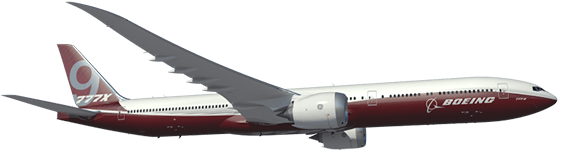
Boeing performs the rollout of the Boeing 777-9 in the middle of the crisis due to the problems of the 737 MAX line. Boeing Commercial Airplanes had established a schedule for its official presentation at the beginning of March 2019, but the address of the American manufacturer has delayed the public presentation behind closed doors in Renton, Washington. The presentation comes at a time when the company is at the center of a crisis, due to two air accidents registered in the last weeks of the Boeing 737 MAX flagship model.

AW-78022113.pngDelayed releases

In 2019, Boeing had three big debuts: the rollout of its 777-9 series, the launch of the NMA Program (Boeing 797) and the first installment of the newest member of its 737-7 MAX family. the projections of the American manufacturer have not been expected due to a reputation crisis, after safety concerns triggered the grounding of the Boeing 737 MAX aircraft, something unprecedented in line 737.

On March 13, 2019, it was assumed that Boeing would publicly launch the first 777-9X at its Everett facility in Seattle, Washington. After the ET-302 flight of Ethiopian Airlines crashed three days before the event, the company postponed the public ceremony indefinitely, instead quietly revealing it to the employees. The Boeing 777-9 is the successor of the old models Boeing 777-200LR and 777-300ER, the 777X is considered a competitor of the family Airbus A350XWB and, sometimes, even of the A380. The aircraft will come in two versions: the first introduced model will be 777-9, followed by 777-8. The 777-9 can accommodate 400 to 425 passengers in a standard configuration and offers a range of 7,600 nautical miles (14,075 km). In November 2018, Boeing announced that it completed the final union of the body of the new aircraft, connecting the sections of the nose, the half and the stern to a 77-meter-long giant passenger plane, the longest passenger plane being has manufactured the Boeing Commercial Airplanes. Boeing revealed that it had completed the first 777X ground test aircraft in October 2018. At that time, the first flight test aircraft also received its new wing CFRP (carbon fiber reinforced polymer). The huge General Electric GE9X engines were installed on the first plane in January 2019. The first flight test of the Boeing 777-9 is expected to take place later this year, while the first delivery, in 2020.

The new Boeing 777-9, presented behind closed doors, is considered the longest commercial aircraft in the world. With a length of 76.8 meters, a wing span of 72 meters and capacity for up to 425 passengers in its 777-9 variant. The first test flight is scheduled for spring and would start operations on commercial airlines starting next year 2020, flying routes of more than 14,000 kilometers.

The 777-8 variant will offer covering more than 16,000 kilometers, boasting the highest record in a commercial aircraft. This variant has a length a little less than its similar and with a capacity for up to 375 passengers. In total they have made 358 orders among eight airlines, with the Emirates airline receiving the first 777-9 next year and the first 777-8 up to two years later. A \ W


Ξ A I R G W A Y S Ξ
SOURCE: Airgways.com
DBk: Boeing.com
AW-POST: 201903220759AR

A\W   A I R G W A Y S ®

Boeing fortalecerá liderazgo mundial

Resultado de imagen para Boeing headquarters

AW | 2019 03 21 16:27 | INDUSTRY

Boeing-Logo.svgThe Boeing Company ha anunciado movimientos para fortalecer liderazgo global

El 20 Marzo 2019, Boeing anunció tres movimientos de liderazgo dirigidos a fortalecer aún más la presencia global y las alianzas de la compañía. Marc Allen fue nombrado Vicepresidente Senior de Boeing y Presidente de Embraer Partnership and Group Operations; Michael Arthur fue nombrado Presidente de Boeing International; y, John Slattery anunció como Presidente y Director Ejecutivo del Joint Venture entre Boeing y Embraer.

Marc Allen es el actual Presidente de Boeing International, ahora formará parte como Vicepresidente Senior de Boeing y Presidente de Embraer Partnership and Group Operations. Al informar al Presidente, Director General y Consejero delegado de Boeing, Dennis Muilenburg, Marc Allen se convierte en el principal ejecutivo de Boeing responsable de preparar la integración de las múltiples operaciones de Boeing con la brasileña Embraer, y en el momento del cierre del acuerdo, de cumplir con la ejecución, el desempeño financiero y el crecimiento de los activos de la sociedad Embraer. Continuará sirviendo como miembro del Consejo Ejecutivo de Boeing. El cambio entra en vigencia el 22 Abril 2019.

Boeing y Embraer anunciaron en Diciembre 2018 que habían aprobado los términos para dos empresas conjuntas (una sociedad comercial de aviación y servicios y el gobierno brasileño dio su aprobación para ambas en Enero 2019. Poco después, la Junta Directiva de Embraer ratificó su apoyo al acuerdo y los accionistas de Embraer lo aprobaron en Febrero 2019. Boeing tendrá una participación del 80% en la nueva empresa de servicios y aeronaves comerciales, y Embraer tendrá el 20% restante. Al cierre, Allen presidirá el consejo de la nueva compañía. Embraer tendrá una participación del 51% de la empresa conjunta para el Programa KC-390, y Boeing tendrá el 49%. Marc Allen será el representante principal de Boeing en la junta directiva de la empresa conjunta para el Programa KC-390. «La experiencia y las relaciones globales de Marc Allen, el profundo conocimiento de nuestra industria y la pasión por las personas lo califican de manera única para liderar la integración de estas dos compañías icónicas», dijo Muilenburg. Marc Allen, quien se unió a Boeing en 2007, se desempeñó durante los últimos cuatro años como Presidente de Boeing International, liderando la estrategia de crecimiento global y las operaciones corporativas de la compañía. Anteriormente, Allen ocupó numerosos puestos de liderazgo, entre ellos el Presidente de Boeing Capital Corporation, el Presidente de Boeing China, el Vicepresidente de Global Law Affairs y el Asesor General de Boeing International. Antes de Boeing, Allen ejerció la abogacía en Washington, DC y se desempeñó como Secretario del ex juez de la Corte Suprema de los Estados Unidos, Anthony Kennedy.

Michael Arthur es el actual Presidente de Boeing Europe y Director Gerente de Boeing UK e Irlanda, sucederá a Allen como Presidente de Boeing International. El cambio entra en vigencia el 22 Abril 2019. Como presidente de Boeing International, Michael Arthur se unirá al Consejo Ejecutivo, el primer ciudadano no estadounidense en unirse al grupo, e informará a Dennis Muilenburg. Arthur dirigirá la estrategia global y las operaciones corporativas de la compañía fuera de los Estados Unidos y supervisará 18 oficinas regionales en mercados globales clave. Arthur mantendrá oficinas en Londres y Arlington, Virginia. «Michael Arthur es una voz líder en asuntos internacionales y ha sido clave para ayudar a Boeing a convertirse en una compañía más global en los últimos años. Aprovechando los conocimientos y las relaciones que ha desarrollado durante décadas, la elevación de Sir Michael a nuestros rangos de mayor rango acelerará aún más nuestro progreso para convertirnos no solo en el líder aeroespacial sino en un campeón industrial mundial», dijo Muilenburg. Antes de unirse a Boeing en 2014, Arthur, que es un ciudadano británico, pasó tres décadas de servicio al gobierno internacional con el Servicio Diplomático Británico de la Oficina de la Comunidad Extranjera, incluso como embajador británico en Alemania y alto comisionado británico en India.

John Slattery es el actual Presidente y Director Ejecutivo de Embraer Commercial Aviation y Vicepresidente Ejecutivo de Embraer SA, fue anunciado como Presidente y Director Ejecutivo de la empresa conjunta de servicios y aviación comercial entre Boeing y Embraer. La posición está sujeta a un nombramiento formal por parte de la Junta Directiva de la empresa conjunta después del cierre. Una vez aprobado, Slattery informará a Marc Allen como Presidente de la Junta Directiva de la nueva compañía. Slattery tendrá su sede en Sao José dos Campos, Brasil. «Esta empresa conjunta será una de las asociaciones más importantes en la industria de la aviación comercial y John es la persona adecuada para liderarla. Aporta un gran enfoque al cliente, un profundo conocimiento y respeto por la industria del papel, combinado con una pasión por la innovación y la visión para el futuro de la industria de la aviación comercial de Brasil», dijo Greg Smith, Director Financiero de Boeing y Vicepresidente Ejecutivo de Enterprise Performance & Strategy. John Slattery se unió a Embraer en 2011 como vicepresidente senior responsable de finanzas de clientes, activos y gestión de riesgos. Fue nombrado presidente y director ejecutivo de Embraer Commercial Aviation y vicepresidente ejecutivo de Embraer SA en 2016. Antes de Embraer, pasó 15 años en puestos ejecutivos en asesoría de aviación comercial, arrendamiento y organizaciones bancarias.AW-Icon-TXT-01

Resultado de imagen para Boeing takeoffBoeing seeks to strengthen global leadership

Boeing-Logo.svgThe Boeing Company has announced moves to strengthen global leadership

On March 20, 2019, Boeing announced three leadership movements aimed at further strengthening the company’s global presence and alliances. Marc Allen was appointed Senior Vice President of Boeing and President of Embraer Partnership and Group Operations; Michael Arthur was appointed President of Boeing International; and, John Slattery announced as President and CEO of the Joint Venture between Boeing and Embraer.

Marc Allen is the current President of Boeing International, he will now be part of Boeing Senior Vice President and President of Embraer Partnership and Group Operations. By informing the President, Managing Director and CEO of Boeing, Dennis Muilenburg, Marc Allen becomes the chief executive of Boeing responsible for preparing the integration of the multiple operations of Boeing with the Brazilian Embraer, and at the time of closing the agreement , to comply with the execution, financial performance and growth of the assets of Embraer. He will continue to serve as a member of the Boeing Executive Board. The change becomes effective on April 22, 2019.

Boeing and Embraer announced in December 2018 that they had approved the terms for two joint ventures (a commercial aviation and services company and the Brazilian government gave its approval for both in January 2019. Shortly thereafter, the Embraer Board of Directors confirmed its support for the agreement and Embraer’s shareholders approved it in February 2019. Boeing will have an 80% stake in the new service and commercial aircraft company, and Embraer will have the remaining 20%, and in closing, Allen will preside over the board of the new company a 51% stake in the joint venture for the KC-390 Program, and Boeing will have 49%. «Marc Allen will be Boeing’s principal representative on the joint venture’s board of directors for the KC-390 Program. Marc Allen’s global relationships, deep knowledge of our industry and passion for people uniquely qualify him to lead the integration of these two iconic companies», said Muilenburg. Marc Allen, who joined Boeing in 2007, served for the past four years as President of Boeing International, leading the company’s global growth strategy and corporate operations. Previously, Allen held numerous leadership positions, including the President of Boeing Capital Corporation, the President of Boeing China, the Vice President of Global Law Affairs and the General Counsel of Boeing International. Prior to Boeing, Allen practiced law in Washington, DC and served as Secretary to the former judge of the Supreme Court of the United States, Anthony Kennedy.

Michael Arthur is the current President of Boeing Europe and Managing Director of Boeing UK and Ireland, succeeding Allen as President of Boeing International. The change takes effect on April 22, 2019. As president of Boeing International, Michael Arthur will join the Executive Council, the first non-US citizen to join the group, and inform Dennis Muilenburg. Arthur will direct the company’s global strategy and corporate operations outside the United States and will oversee 18 regional offices in key global markets. Arthur will maintain offices in London and Arlington, Virginia. «Michael Arthur is a leading voice in international affairs and has been instrumental in helping Boeing become a more global company in recent years, taking advantage of the knowledge and relationships it has developed over the decades, raising Sir Michael to our ranks. Higher rank will further accelerate our progress to become not only the aerospace leader but also a world industrial champion», said Muilenburg. Prior to joining Boeing in 2014, Arthur, who is a British citizen, spent three decades of service to international government with the British Diplomatic Service of the Office of the Foreign Community, including as British Ambassador to Germany and British High Commissioner in India.

John Slattery is the current President and CEO of Embraer Commercial Aviation and Executive Vice President of Embraer SA, he was announced as President and CEO of the joint commercial services and aviation company between Boeing and Embraer. The position is subject to a formal appointment by the Board of Directors of the joint venture after closing. Once approved, Slattery will inform Marc Allen as Chairman of the Board of the new company. Slattery will be based in Sao Jose dos Campos, Brazil. «This joint venture will be one of the most important associations in the commercial aviation industry and John is the right person to lead it, bringing a great customer focus, deep knowledge and respect for the paper industry, combined with a passion for innovation and vision for the future of Brazil’s commercial aviation industry», said Greg Smith, Chief Financial Officer of Boeing and Executive Vice President of Enterprise Performance & Strategy. John Slattery joined Embraer in 2011 as Senior Vice President responsible for customer finance, assets and risk management. He was appointed president and CEO of Embraer Commercial Aviation and executive vice president of Embraer SA in 2016. Prior to Embraer, he spent 15 years in executive positions in commercial aviation advisory, leasing and banking organizations. A \ W


Ξ A I R G W A Y S Ξ
SOURCE: Airgways.com
DBk: Boeing.com
AW-POST: 201903211627AR

A\W   A I R G W A Y S ®

All Nippon Airways recibe primer A380

Imagen relacionadaAW | 2019 03 21 15:50 | INDUSTRY

Resultado de imagen para All Nippon Airways logoAll Nippon Airways incorpora primer Airbus A380

La japonesa All Nippon Airways (ANA) ha recibido su primer Airbus A380 en una ceremonia especial en Toulouse, convirtiéndose en el operador 15º del avión de pasajeros más grande del mundo. La ceremonia de entrega contó con la presencia de ANA Holdings Presidente y CEO Shinya Katanozaka y Logo_Airbus_2014.svgorganizado por el CEO de Airbus, Tom Enders.

ANA ha ordenado A380 (3) y operará la aeronave en la ruta popular entre Tokio-Narita-Honolulu a partir del 24 Mayo 2019. Cada A380 ANA contará con una librea especial representa la tortuga de mar verde de Hawaii, también conocido como el Honu. La librea en el primer avión está pintado en azul, mientras que la segunda será de color verde y la tercera naranja.

El A380 de ANA se configura en un diseño premium asientos 5 20 pasajeros. La cubierta superior cuenta con ocho suites de primera clase, 56 asientos de clase ejecutiva que se convierten en camas completamente planas y 73 asientos Premium Economy. Clase Turista se encuentra en la cubierta principal, donde ANA ofrece una amplia distribución de asientos 383 pasajeros, incluyendo 60 asientos sofá. El avión cuenta con modernos sistemas de entretenimiento en vuelo de ANA, así como la conectividad total en todas las clases. “Vamos a cometer los tres de nuestro Airbus A380 a la ruta Tokio Honolulu con el objetivo de introducir un nuevo nivel de servicio de lujo a nuestros pasajeros que vuelan ANA en el número de una ruta turístico para los viajeros japoneses. Creemos que el A380 se convertirá en un elemento de cambio para ANA y nos permitirá aumentar nuestra cuota de mercado duplicando el número de asientos de conexión Honolulu y Tokio en 2020. El vuelo «Honu» se ha diseñado para ofrecer una comodidad sin precedentes y la comodidad y un mundo de nuevas posibilidades a los pasajeros de ANA, algo que no habría sido posible sin el esfuerzo conjunto de los equipos de Airbus y Rolls-Royce que trabajan en estrecha colaboración con los profesionales dedicados a ANA”, dijo Shinya Katanozaka, Presidente y CEO de ANA Holdings Inc.

“Airbus está orgulloso de ofrecer esta hermosa aviones a ANA . Ofrecer niveles incomparables de comodidad de los pasajeros, el A380 permitirá a ANA para aumentar su capacidad en la concurrida ruta a Hawaii con la máxima eficiencia. Estamos seguros de que la aeronave será un gran éxito en servicio con ANA y se comprometen a proporcionar pleno apoyo a la compañía aérea lo largo del camino”, dijo el CEO de Airbus, Tom Enders.

El A380 ofrece a las aerolíneas la opción más eficiente para satisfacer la demanda en las rutas más transitadas del mundo. También se ha establecido firmemente como el avión elegido por los pasajeros en todo el mundo, ofreciendo más espacio personal en todas las clases, una cabina súper silencioso y una marcha suave. Alrededor de 250 millones de pasajeros ya han volado en el avión. Tras la entrega del primer A380 a ANA Airways, en la actualidad hay 232 A380 en servicio con 15 líneas aéreas en todo el mundo, volando en 120 rutas en todo el mundo.AW-Icon-TXT-01

Resultado de imagen para 1st A380 All Nippon AirwaysAll Nippon Airways receives first A380

All Nippon Airways incorporates the first Airbus A380

The Japanese All Nippon Airways (ANA) has received its first A380 at a special ceremony in Toulouse, becoming the 15th operator of the largest passenger plane in the world. The award ceremony was attended by ANA Holdings President and CEO Shinya Katanozaka and organized by Airbus CEO Tom Enders.

ANA has ordered A380 (3) and will operate the aircraft on the popular route between Tokyo-Narita-Honolulu as of May 24, 2019. Each A380 ANA will feature a special livery representing Hawaii’s green sea turtle, also known as the Honu. The livery on the first plane is painted blue, while the second will be green and the third orange.

The A380 of ANA is configured in a premium design seats 5 20 passengers. The upper deck has eight first-class suites, 56 executive-class seats that become fully flat beds and 73 Premium Economy seats. Tourist Class is located on the main deck, where ANA offers a wide distribution of seats 383 passengers, and including 60 seats sofa. The aircraft has modern flight entertainment systems from ANA, as well as total connectivity in all classes. «We will commit all three of our Airbus A380 to the Tokyo Honolulu route with the goal of introducing a new level of luxury service to our passengers who fly ANA into the number of a tourist route for Japanese travelers. We believe that the A380 will become an element of change for ANA and will allow us to increase our market share by doubling the number of Honolulu and Tokyo connection seats in 2020. The «Honu» flight has been designed to offer unprecedented comfort and comfort and a world of new possibilities for ANA passengers, something that would not have been possible without the joint effort of the Airbus and Rolls-Royce teams that work closely with professionals dedicated to ANA», said Shinya Katanozaka, President and CEO of ANA Holdings Inc.

«Airbus is proud to offer this beautiful aircraft to ANA. Offering unrivaled levels of passenger comfort, the A380 will allow ANA to increase its capacity on the busy route to Hawaii with maximum efficiency. We are confident that the aircraft will be a great success in service with ANA and are committed to providing full support to the airline along the way», said Airbus CEO Tom Enders.

The A380 offers airlines the most efficient option to meet demand on the busiest routes in the world. It has also been firmly established as the aircraft chosen by passengers around the world, offering more personal space in all classes, a super-quiet cabin and a smooth ride. Around 250 million passengers have already flown on the plane. Following the delivery of the first A380 to ANA Airways, there are currently 232 A380 in service with 15 airlines worldwide, flying on 120 routes around the world. A \ W


Ξ A I R G W A Y S Ξ
SOURCE: Airgways.com
DBk: Airbus.com / Airgways.com
AW-POST: 201903211550AR

A\W   A I R G W A Y S ®