IAG Group estudia comprar Norwegian

Imagen relacionada

AW | 2018 04 12 12:50 | AIRLINES

Image resultEl IAG Group está negociando la incorporación accionaria en Norwegian ASA

IAG Group analiza la compra del 4,6% de Norwegian y estudia lanzar una OPA sobre el bui053h3 (1)100%. IAG, el holding que agrupa a Iberia, British Airways, Aer Lingus, Vueling y Level, ha comunicado este jueves que estudia lanzar una OPA (Operational Performance Assessment) sobre Norwegian Air Shuttle ASA, de la que ya ha adquirido una participación del 4,61%, según ha comunicado hoy el grupo a la Comisión Nacional del Mercado de Valores (CNMV).

IAG señala que considera que Norwegian es una inversión atractiva y anuncia que ha adquirido una inversión minoritaria del 4,61% en dicha compañía, destinada a establecer una posición desde la cual iniciar conversaciones con Norwegian, incluyendo la posibilidad de formular una oferta de adquisición sobre la totalidad de la aerolínea. IAG compra el 4,6% de Norwegian y estudia lanzar una opa sobre el 100%. No obstante, IAG aclara que hasta la fecha no ha tenido conversaciones para esa posible operación, no ha tomado ninguna decisión sobre la formulación de una oferta de adquisición en este momento y que no existe certeza sobre si se llegará a tomar tal decisión.

El movimiento de IAG ha supuesto una sorpresa para el mercado teniendo en cuenta que Norwegian compite directamente tanto con Level como con Vueling, ambas marcas del grupo británico. De hecho, IAG lanzó Level en junio del año pasado para hacer frente a la aerolínea noruega en el mercado de los vuelos de bajo coste de largo radio.

La aerolínea noruega Norwegian ha experimentado una fuerte expansión en los últimos años lo que le ha supuesto un esfuerzo financiero adicional. En 2017, registró unas pérdidas netas de 299 millones de coronas noruegas (€ 30,8 millones de euros), frente al beneficio de 1.135 millones de coronas (€ 116,8 millones de euros) que obtuvo en el ejercicio anterior. La aerolínea de bajo coste escandinava atribuyó este resultado negativo precisamente al esfuerzo por la expansión con la compra de 32 aviones, la contratación de 2.000 empleados y la apertura de nuevas rutas internacionales.  AIRWAYS® AW-Icon TXT

Resultado de imagen para Norwegian

IAG Group studies purchase of Norwegian ASA

Awesome-Norwegian-Air-Logo-22-On-Free-Logo-Design-Templates-with-Norwegian-Air-Logo.jpgThe IAG Group is negotiating the incorporation of shares in Norwegian ASA

Resultado de imagen para Norwegian Air Boeing 737 pngIAG Group analyzes the 4.6% purchase of Norwegian and is studying launching a takeover bid of 100%. IAG, the holding company of Iberia, British Airways, Aer Lingus, Vueling and Level, announced on Thursday that it is studying the launching of an Operational Performance Assessment (OPA) on Norwegian Air Shuttle ASA, of which it has already acquired a stake of 4, 61%, as reported today by the group to the National Securities Market Commission (CNMV).

IAG states that it considers Norwegian an attractive investment and announces that it has acquired a minority investment of 4.61% in that company, aimed at establishing a position from which to initiate talks with Norwegian, including the possibility of formulating an acquisition offer on the entire airline. IAG buys 4.6% of Norwegian and is looking to launch a 100% takeover bid. However, IAG clarifies that to date it has not had any conversations for this possible operation, has not taken any decision on the formulation of an acquisition offer at this time and that there is no certainty as to whether such a decision will be made.


AW-70083733.png

THE IAG GROUP WOULD TAKE POSITION OF NORWEGIAN AIR ASA

The movement of IAG has been a surprise for the market taking into account that Norwegian competes directly with both Level and with Vueling, both brands of the British group. In fact, IAG launched Level in June of last year to deal with the Norwegian airline in the market for low-cost long-haul flights.

Norwegian has experienced a strong expansion in recent years which has involved an additional financial effort. In 2017, it recorded a net loss of NOK 299 million (€ 30.8 million), compared to the profit of SEK 1,135 million (€ 116.8 million) obtained in the previous year. The Scandinavian low cost airline attributed this negative result precisely to the expansion effort with the purchase of 32 aircraft, the hiring of 2,000 employees and the opening of new international routes. A \ W


Ξ A I R G W A Y S Ξ
SOURCE:  Airgways.com
DBk: Iairgroup.com / Norwegian.com / Flight-report.com
AW-POST: 201804121250AR

A\W   A I R G W A Y S ®

Boeing informa entregas en 1Q2018

boeing-building (1).jpg

AW | 2018 04 12 12:10 | INDUSTRY

Boeing-Logo.svgBoeing anunció las entregas en todas sus operaciones comerciales para el primer trimestre de 2018

The Boeing Company ha anunciado el proceso de ventas para el 1Q2018 superando a Airbus en los datos del primer trimestre. Boeing Co. vendió más que su rival europeo Airbus en una proporción casi cuatro por uno en el primer trimestre y aumentó las entregas en un 9% más fuerte de lo esperado comparado con el mismo período del año pasado, datos de la compañía mostró el martes.

Ambos conjuntos de números reflejan una mayor demanda de los 737 aviones de pasajeros más vendidos de Boeing, con 184 aviones comerciales entregados en los tres meses hasta fines de marzo, incluidos 132 aviones de combate de pasillo único. Aunque también ha visto una fuerte demanda de su A320NEO de pasillo único, Airbus está luchando para mantener las entregas debido principalmente a problemas con los motores, con entregas de hasta 115 en el primer trimestre, lo que provocó que hiciera malabarismos con las prioridades.

Al mismo tiempo, Boeing ha visto un rebote en los nuevos pedidos después de perder la carrera del año pasado. Se registraron 221 pedidos netos de aeronaves después de cancelaciones en el primer trimestre, muy por delante de los 45 en bolsa de Airbus durante el mismo período.

Las principales entregas de programas durante el primer trimestre fueron las siguientes:

AW-70113771.png

Cowen & Co dijo que estaba aumentando su estimación de ganancias del primer trimestre después de los datos de entrega. Las acciones de Boeing subieron un 2,9 por ciento, impulsadas por una disminución de las tensiones comerciales.

Cambios publicaciones de órdenes

Boeing también anunció cambios en la forma en que publica el número total de aeronaves ya vendidas y en espera de ser construidas y entregadas, conocida como la cartera de pedidos, debido a los nuevos estándares de contabilidad.

Boeing dijo que había recortado 66 aviones o un uno 1% del total de la cartera de pedidos publicados, llevándolo a 5.835 jets en lugar de 5.901 según el método anterior. Eso se compara con 7.189 registrados por su rival Airbus. Boeing no dijo qué aeronave o líneas aéreas habían sido excluidas de su total.

Anteriormente, Boeing incluía en la lista a las aeronaves individuales para las que tenía contratos firmes, junto con el total resultante. Ahora, el número total se ajusta para coincidir con las nuevas reglas de reconocimiento de ingresos, pero los pedidos individuales se enumeran como antes, ya que Boeing todavía tiene contratos vinculantes con los compradores.

Tanto Boeing como Airbus regularmente venden más jets de los que planean construir, especulando debido a la volatilidad del mercado y los largos plazos de entrega, algunos compradores no podrán recibir la entrega. Además, cualquiera de las empresas puede tener dudas sobre la solvencia o el estado de los operadores individuales.

Boeing y Airbus a menudo han discutido sobre la forma en que hacen el recuento de pedidos, y los ejecutivos de los EEUU a menudo señalan con el dedo a Airbus por exagerar la cantidad de aviones en orden. Su lista actual incluye varios A380 cancelados, aunque Airbus dice que se aferra a las ofertas para ayudar a hacer cumplir los derechos contractuales.

Los cambios del martes parecieron representar la primera vez que Boeing reconoció que algunos de sus propios pedidos están en riesgo. Airbus no hizo ningún comentario inmediato sobre si también cambiaría la forma en que informa la cantidad de aviones en orden.

Boeing planea con sus resultados del primer trimestre de este mes comenzar a publicar el valor de su cartera total basada en los precios reales después de los descuentos, en lugar de los «precios de lista» publicados, que se dice son el doble de lo que pagan las aerolíneas. Sin embargo, continuará utilizando los precios oficiales del catálogo para ofertas individuales, ya que los términos son confidenciales.  AIRWAYS® AW-Icon TXT

renton_hero_new.JPG

Boeing reports delivery of 1Q2018

Boeing Isotype.pngBoeing announced deliveries in all its commercial operations for the first quarter of 2018

The Boeing Company has announced the sales process for 1Q2018 beating Airbus in the first quarter data. Boeing Co. sold more than its European rival Airbus in an almost four-to-one ratio in the first quarter and increased deliveries by 9% stronger than expected compared to the same period last year, company data showed on Tuesday. .

Both sets of numbers reflect an increased demand for Boeing’s 737 best-selling passenger aircraft, with 184 commercial aircraft delivered in the three months through the end of March, including 132 single-aisle fighter jets. Although it has also seen strong demand for its single-aisle A320NEO, Airbus is struggling to keep deliveries due mainly to engine problems, with deliveries of up to 115 in the first quarter, which caused it to juggle priorities.

At the same time, Boeing has seen a rebound in new orders after losing last year’s race. A total of 221 net aircraft orders were registered after cancellations in the first quarter, well ahead of 45 Airbus exchanges during the same period.

The main deliveries of programs during the first quarter were as follows:

AW-70113771

Cowen & Co said it was increasing its first-quarter earnings estimate after the delivery data. Boeing shares rose 2.9 percent, driven by a decrease in commercial tensions.

Changes order publications

Boeing also announced changes in the way it publishes the total number of aircraft already sold and waiting to be built and delivered, known as the order book, due to the new accounting standards.

Boeing said it had cut 66 aircraft or 1% of the total published order book, bringing it to 5,835 jets instead of 5,901 according to the previous method. That compares with 7,189 recorded by rival Airbus. Boeing did not say which aircraft or airlines had been excluded from its total.

Previously, Boeing included in the list the individual aircraft for which it had firm contracts, along with the resulting total. Now, the total number is adjusted to match the new revenue recognition rules, but individual orders are listed as before, since Boeing still has binding contracts with buyers.

Both Boeing and Airbus regularly sell more jets than they plan to build, speculating due to market volatility and long delivery times, some buyers will not be able to receive the delivery. In addition, any of the companies may have doubts about the solvency or status of individual operators.

Boeing and Airbus have often argued over the way they do order counting, and US executives often point the finger at Airbus for exaggerating the number of airplanes in order. His current list includes several canceled A380s, although Airbus says it clings to offers to help enforce contractual rights.

The changes on Tuesday appeared to represent the first time that Boeing acknowledged that some of its own orders are at risk. Airbus did not comment immediately on whether it would also change the way it reports the number of aircraft in order.

Boeing plans to start publishing the value of its total portfolio based on real prices after the discounts, instead of the published «list prices», which are said to be twice as much as the first quarter of this month. the airlines pay. However, you will continue to use the official catalog prices for individual offers, as the terms are confidential. A \ W


Ξ A I R G W A Y S Ξ
SOURCE:  Airgways.com
DBk: Boeing.com / Airgways.com
AW-POST: 201804121210AR

A\W   A I R G W A Y S ®

Airbus implementaría zona descanso en área de bodegas

Resultado de imagen para hold Airbus

AW | 2018 04 12 00:11 | INDUSTRY

Logo_Airbus_2014.svgEl fabricante de aeronaves Airbus a anunciado la intención de crear áreas de descansos para pasajeros en zona de bodegas

El consorcio europeo Airbus ha anunciado planes para convertir las bodegas de aviones en compartimentos de descanso para pasajeros. El fabricante se asoció con Zodiac Aerospace, un proveedor de equipos de aviación, para crear el concepto que podría ofrecer a los viajeros de clase económica la posibilidad de cambiar asientos estrechos para camas y sofás estilo cápsula, o pasar el tiempo en escritorios o áreas de juegos infantiles.

Los pasajeros no podrían acceder al área durante el despegue o el aterrizaje, mientras que las camas estarían alojadas en módulos extraíbles que podrían intercambiarse con contenedores de carga ordinarios. Los diseños se dieron a conocer ayer en la exposición anual Aircraft Interiors Expo, celebrada en Hamburgo, junto con una serie de otras innovaciones.

Un boceto de las áreas de salón y sala de reuniones

Un boceto del área para niños y el centro médico en la cubierta inferior

Una maqueta de la cabina de nivel inferior mostró una decoración minimalista y varios tipos de módulos, incluyendo literas, un área de juegos con juguetes para niños y espacios de trabajo con salas de reuniones y escritorios. Los bocetos también mostraron un área de barra de pie y un centro de atención médica. La cubierta inferior también podría convertirse en un gimnasio o un restaurante de alta cocina, sugirió Geoff Pinner, jefe de cabina y carga en Airbus. La nueva cubierta inferior se ajustaría a las dimensiones exactas del espacio de carga existente de la aeronave, dejando intacta la estructura del avión, su piso de carga y sistema de carga, eliminando la posibilidad de cualquier costo de reconstrucción. Los módulos están diseñados para ser fácilmente removibles. El diseño innovador aún se encuentra en sus primeras etapas conceptuales y será necesario adaptar su viabilidad una vez que se haya asegurado una línea aérea para probar el proyecto.

«Las aerolíneas vinieron a nosotros para ver cómo pueden utilizar mejor el espacio en sus aviones. Con un uso de cubierta inferior, también pueden generar más ingresos sin tener que gastar dinero para cambiar el avión o agregar asientos de clase ejecutiva. En un vuelo de larga distancia, la aerolínea podría potencialmente alquilar cada uno de estos espacios a una cantidad de pasajeros en diferentes franjas horarias durante todo el vuelo. Entonces una oferta de clase económica podría venir con un complemento de cama para dormir», dijo el Sr. Pinner.

En términos de requisitos de seguridad, claramente el diseño se construirá para cumplir con todas las normas establecidas por la EASA [Agencia Europea de Seguridad Aérea] y la FAA [Administración Federal de Aviación en los EE. UU.] De la manera habitual. Ya se han utilizado espacio de cubierta inferior en algunos otros aviones. Así que esto sería una extensión de los requisitos de seguridad cumplidos para aquellos. Se ha presentado un modelo a pequeña escala en Hamburgo, pero se puede ver una maqueta de tamaño completo en la sede central de Airbus en Toulouse. Se espera que el concepto ingrese a su fase de desarrollo para el año 2020. El nuevo diseño, si se aprueba, se implementará en el avión A330 del fabricante para vuelos de larga distancia, con más de 150 ya construidos con una disposición estructural básica para instalaciones de cubierta, y potencialmente para el avión A350 en el futuro.

Sin embargo, no todos los diseños de Zodiac Aerospace llegan a buen término. En 2015, la empresa presentó una patente que proponía una cabina inferior con pantallas que mostraban imágenes en vivo del exterior del avión.

Interés de Airbus

Airbus dice que ha estado hablando con muchas aerolíneas, pero aún no ha confirmado cuáles o cuántas están interesadas. Los espacios inferiores de la cubierta se han utilizado para instalaciones que incluyen inodoros en el A340 y es también donde se encuentran las áreas de descanso de la tripulación en el A330.

El mes pasado, el CEO de Qantas Alan Joyce también planteó la posibilidad de presentar una cabina de cubierta inferior, como parte de su plan Project Sunrise para crear un vuelo directo desde Sydney hacia el Reino Unido y la ciudad de Nueva York

Seguridad del nuevo proyecto

Las bodegas de los aviones comerciales suelen estar presurizados en la mayoría de los modelos, por lo que las condiciones son muy parecidas a las de la cabina de pasajeros.

El aire acondicionado de la cabina está ambientada a temperatura acorde a la normal para los pasajeros, pero tiende a ser un poco más frío cuando llega a las áreas de carga, que también están menos aisladas que la cabina. Las temperaturas de carga varían en cada aeronave. Por ejemplo, el Boeing 767 mantiene su capacidad de equipaje por encima de 7°C, pero el área de carga puede calentarse a más de 18°C. Contenedores de carga con temperatura controlada también están disponibles cuando se envían productos sensibles a la temperatura, inclusive el transporte de animales vivos.  AIRWAYS® AW-Icon TXT

Resultado de imagen para hold Airbus a330

Airbus would implement rest area in warehouse area

The aircraft manufacturer Airbus has announced the intention to create passenger rest areas in warehouse areas

The European Airbus consortium has announced plans to convert airplane holds into passenger rest compartments. The manufacturer partnered with Zodiac Aerospace, a supplier of aviation equipment, to create the concept that could offer economy-class travelers the ability to change narrow seats for beds and capsule-style sofas, or spend time at desks or storage areas. childish games.

Passengers could not access the area during takeoff or landing, while the beds would be housed in removable modules that could be interchanged with ordinary cargo containers. The designs were unveiled yesterday at the annual Aircraft Interiors Expo, held in Hamburg, along with a series of other innovations.

A model of the lower level cabin showed a minimalist decoration and several types of modules, including bunk beds, a play area with toys for children and work spaces with meeting rooms and desks. The sketches also showed a standing bar area and a health care center. The lower deck could also be converted into a gym or a haute cuisine restaurant, said Geoff Pinner, head of cabin and cargo at Airbus. The new lower deck would fit the exact dimensions of the existing cargo space of the aircraft, leaving intact the structure of the aircraft, its cargo floor and cargo system, eliminating the possibility of any reconstruction cost. The modules are designed to be easily removable. The innovative design is still in its early conceptual stages and it will be necessary to adapt its viability once an airline has been secured to test the project.

«The airlines came to us to see how they can best use the space on their planes, and with a lower deck use, they can also generate more revenue without having to spend money to change the plane or add executive class seats. long distance, the airline could potentially rent each of these spaces to a number of passengers in different time slots during the entire flight, then an economy class offer could come with a bed complement to sleep», said Mr. Pinner.

In terms of safety requirements, the design will clearly be built to meet all the standards set by the EASA [European Aviation Safety Agency] and the FAA [Federal Aviation Administration in the USA]. UU.] In the usual way. Lower deck space has already been used on some other aircraft. So this would be an extension of the security requirements fulfilled for those. A small-scale model has been presented in Hamburg, but a full-size model can be seen at the Airbus headquarters in Toulouse. The concept is expected to enter its development phase by 2020. The new design, if approved, will be implemented on the manufacturer’s A330 aircraft for long-haul flights, with more than 150 already built with a basic structural layout for deck facilities, and potentially for the A350 aircraft in the future.

However, not all Zodiac Aerospace designs come to fruition. In 2015, the company filed a patent proposing a lower cabin with screens that showed live images of the plane’s exterior.

Interest of Airbus

Airbus says it has been talking to many airlines, but has not yet confirmed which or how many are interested. The lower spaces of the deck have been used for installations that include toilets on the A340 and is also where the crew rest areas on the A330 are located.

Last month, Qantas CEO Alan Joyce also raised the possibility of presenting a lower deck cabin, as part of his Project Sunrise plan to create a direct flight from Sydney to the United Kingdom and New York City

Security of the new project

The warehouses of commercial airplanes are usually pressurized in most models, so the conditions are very similar to those of the passenger cabin.

The cabin air conditioner is set at a normal temperature for passengers, but it tends to be a bit colder when it reaches cargo areas, which are also less insulated than the cabin. The loading temperatures vary in each aircraft. For example, the Boeing 767 maintains its luggage capacity above 7 ° C, but the cargo area can be heated to more than 18 ° C. Temperature controlled cargo containers are also available when temperature sensitive products are shipped, including the transport of live animals. A \ W


Ξ A I R G W A Y S Ξ
SOURCE:  Airgways.com
DBk: Airbus.com / Zodiacaerospace.com
AW-POST: 201804120011AR

A\W   A I R G W A Y S ®

Polar detalla desarrollo en Argentina

Image result for polar lineas aereas

AW | 2018 04 11 13:38 | AIRLINES

Image result for polar air cargo pngPolar Líneas Aéreas ha comunicado que la nueva línea aérea es una low cost mixta, para pasajeros y carga

Ricardo Daniel Barbosa es el CEO y fundador de Polar Líneas Aéreas que se sumó al esquema de la «Revolución de los Aviones». Barbosa, que fue CEO de CATA, la aérea que quebró en 2008, está a punto de embarcar en un vuelo hacia Chile y luego a EEUU, a reunirse con los inversores de la flamante low cost, pero no vuela en su empresa. Han informado que prometen inversiones por U$S 600 millones de dólares, en un lapso de 10 años, y enfocarse también en transportar carga al exterior, sobre todo desde la Patagonia.

Planificación de Polar

Dentro de los objetivos de la nueva aerolínea están: la integración de las economías regionales mediante aeronaves de gran porte adecuadas a las distancias y extensión del territorio. Explotación de rutas con altos factores de ocupación balanceadas con rutas a desarrollar con bajo tráfico aéreo, y con el transporte de carga. Incorporación de la fuerza laboral de 40 pilotos, 80 auxiliares de abordo, 60 auxiliares de tráfico, 40 personal certificado para el mantenimiento aeronáutico. En cuanto a las aeronaves: 4 aeronaves Boeing 737 Next Generation hasta Marzo de 2019, proyectando el organigrama de incorporación de aviones en 2009 un total de 9 unidades hasta llegar a 15 en 2020. En el segundo semestre de 2018 comenzará operaciones con dos aeronaves Boeing 737-800, de mucha confiabilidad.

Rutas iniciales

Polar Líneas Aéreas incorporará los siguientes destinos: San Luis, Mendoza, Córdoba, Buenos Aires, Catamarca. La empresa se enfocará en el transporte de pasajeros y carga, dando a esta última una fuerte importancia. «No hay medios aéreos que recolecten la carga en los lugares de producción directamente. No lo hace nadie», enfatiza la compañía.

Los inversionistas

El CEO, Ricardo D. Barbosa es el fundador de Polar Líneas Aéreas e intervendrán el grupo inversores estadounidenses. Aunque desde la nueva línea aérea no detallaron las particularidades, son socios relacionados en el ámbito de la aviación comercial. A través de ellos se ingresará la carga a Estados Unidos, por eso es un socio y también aliado estratégico.

Énfasis en la carga

Polar Líneas Aéreas explotará los flujos de carga con destino a Miami. No hay medios aéreos que recolecten la carga en los lugares de producción directamente. No lo hace nadie. No hay un avión que salga con productos de Trelew a EEUU, por ejemplo. Irán donde están los productores, principalmente de la Patagonia. La partición del tráfico será 60% pasajeros y 40% carga, aproximadamente. Incorporarán tres aviones exclusivos para carga. Existen muchos productos de exportación que no se venden tanto afuera porque no hay cómo sacarlos. Por ejemplo, pescado fresco, cerezas, langostinos, camarones. No viajan por avión y cuando lo hagan se van a abrir muchos caminos. El valor de los productos frescos es un 50% mayor que el de los congelados.

HUB San Luis

Polar Líneas Aéreas tendrá como cabecera de la operación el aeropuerto Valle del Conlara, en Merlo, San Luis, y planea hacer vuelos internacionales desde el Aeropuerto de La Plata. Ambas terminales no estarían aún en las mejores condiciones para operar.

Polar Líneas Aéreas estuvo en el anonimato después de las Audiencia Públicas de Argentina, pero todo el proceso ha transcurrido por la audiencia pública y en Octubre 2017 la compañía obtuvo un dictamen favorable. Ahora, se han asignado las rutas y resta iniciar las operaciones. En el segundo semestre de 2018 está proyectado iniciar operaciones con dos aeronaves Boeing 737-800, informó el CEO de la aerolínea.

San Luis es una provincia desabastecida en vuelos. El objetivo inicial de la carga será la Región Cuyo y luego vamos a la Región Patagonia. San Luis es un destino interesante, aunque no tiene la misma cantidad de pasajeros que Mendoza o San Juan y hay un aeropuerto con excelente infraestructura como lo es el Aeropuerto Internacional del Valle del Conlara, en Merlo.

Polar Líneas Aéreas acelera su puesta a punto. Desde el ministerio de Trabajo aseguran que ahora los tiempos son otros. Las empresas a las que se le otorgan rutas tienen que obtener el CESA (certificado para realizar operaciones comerciales, que otorga la ANAC) en un año y una vez que se lo dan, tiene 180 días para comenzar a volar.

La nueva start-up Polar Líneas Aéreas pronto iniciará operaciones y con ella podrá despegar una nueva aerolínea que surque los cielos de Argentina y el mundo. AIRWAYS® AW-Icon TXT

208511.jpg

Polar details development in Argentina

Polar Líneas Aéreas has announced that the new airline is a mixed low cost, for passengers and cargo

Ricardo Daniel Barbosa is the CEO and founder of Polar Líneas Aéreas that joined the scheme of the «Aircraft Revolution». Barbosa, who was CEO of CATA, the airline that went bankrupt in 2008, is about to embark on a flight to Chile and then to the US, to meet with the investors of the brand new low cost, but does not fly in his company. They have reported that they promise investments for US $ 600 million, in a span of 10 years, and also focus on transporting cargo abroad, especially from Patagonia.

Planning Polar

Among the objectives of the new airline are: the integration of regional economies by means of large aircraft suitable for the distances and extension of the territory. Operation of routes with high occupancy factors balanced with routes to be developed with low air traffic, and with cargo transportation. Incorporation of the workforce of 40 pilots, 80 auxiliary on board, 60 auxiliary traffic, 40 certified personnel for the maintenance of aeronautics. In terms of aircraft: 4 Boeing 737 Next Generation aircraft until March 2019, projecting the aircraft incorporation chart in 2009 a total of 9 units until reaching 15 in 2020. In the second half of 2018, operations will commence with two Boeing aircraft 737-800, very reliable.

Initial routes

Polar Líneas Aéreas will incorporate the following destinations: San Luis, Mendoza, Córdoba, Buenos Aires, Catamarca. The company will focus on the transport of passengers and cargo, giving the latter a strong importance. «There are no aerial means that collect the load directly at the production sites, nobody does it», emphasizes the company.

The investors

The CEO, Ricardo D. Barbosa, is the founder of Polar Líneas Aéreas and the group of US investors will intervene. Although from the new airline did not detail the particularities, are related partners in the field of commercial aviation. Through them, the cargo will be brought into the United States, which is why it is a partner and also a strategic ally.

Emphasis on the load

Polar Líneas Aéreas will exploit cargo flows bound for Miami. There are no aerial means that collect the load in the places of production directly. Nobody does it. There is not an airplane that comes with Trelew products to the US, for example. We’ll go where the producers are, mainly from Patagonia. The traffic partition will be 60% passengers and 40% load, approximately. They will incorporate three exclusive airplanes for cargo. There are many export products that do not sell so much outside because there is no way to get them out. For example, fresh fish, cherries, prawns, shrimp. They do not travel by plane and when they do they will open many roads. The value of fresh products is 50% higher than that of frozen products.

HUB San Luis

Polar Líneas Aéreas will have the Valle del Conlara airport in Merlo, San Luis as the head of the operation, and plans to make international flights from La Plata Airport. Both terminals would not be in the best conditions to operate yet.

Polar Líneas Aéreas was anonymous after the Public Hearing of Argentina, but the entire process has gone through the public hearing and in October 2017 the company obtained a favorable opinion. Now, the routes have been assigned and subtraction of the operations. In the second half of 2018, it is planned to start operations with two Boeing 737-800 aircraft, the airline CEO said.

San Luis is a province that is short of flights. The initial objective of the cargo will be the Cuyo Region and then we will go to the Patagonia Region. San Luis is an interesting destination, although it does not have the same number of passengers as Mendoza or San Juan and there is an airport with excellent infrastructure, such as the Valle del Conlara International Airport in Merlo.

Polar Líneas Aéreas accelerates its fine tuning. From the Ministry of Labor they assure that now times are different. The companies that are granted routes have to obtain the CESA (certificate to carry out commercial operations, granted by the ANAC) in one year and once it is given, it has 180 days to start flying.

The new Polar Líneas Aéreas start-up will soon begin operations and with it a new airline that will sail the skies of Argentina and the world will take off. A \ W


Ξ A I R G W A Y S Ξ
SOURCE:  Airgways.com
DBk: Argentina.gob.ar/transporte
AW-POST: 201804111338AR

A\W   A I R G W A Y S ®

Aeropuerto El Palomar autorizado para operaciones sin restricciones

El último fin de semana volvieron a cancelarse operaciones de Flybondi por problemas en la pista.

AW | 2018 04 11 13:00 | AIRLINES / AIRPORTS / GOVERNMENT

El Aeropuerto Internacional El Palomar ha obtenido la aprobación judicial para operaciones sin restricciones

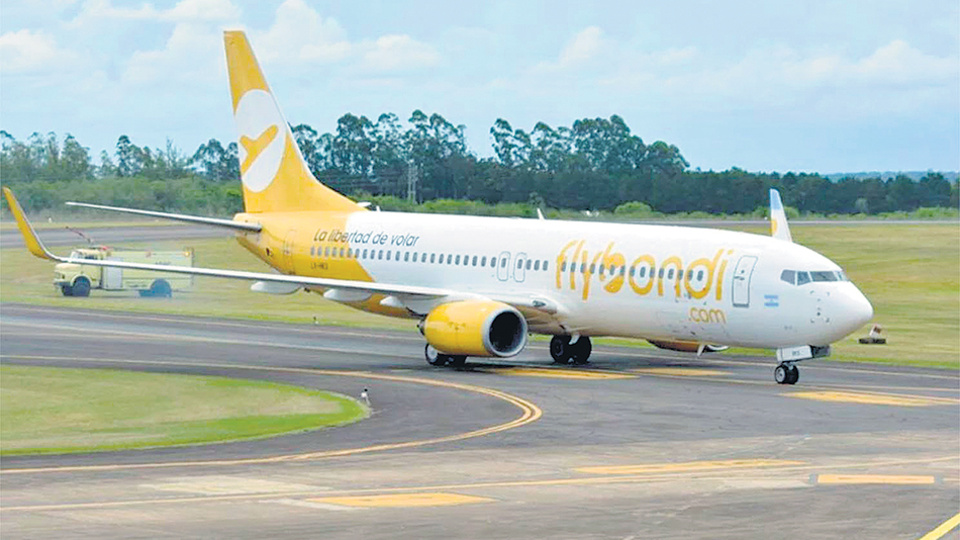
Flybondi-logoLevantan cautelar sobre el Aeropuerto El Palomar y Flybondi Líneas Aéreas tiene pista libre para sus operaciones. El Aeropuerto de El Palomar fue autorizado a operar sin restricciones para las compañías aéreas low cost. La Justicia de Argentina resolvió ayer el levantamiento Avion+Boeing+737+Flybondi.pngcompleto de la medida cautelar presentada por un grupo de vecinos y autorizó a cualquier aerolínea a operar vuelos comerciales en forma ilimitada durante las 24 horas desde la Base Aérea, como así también para la continuación de las obras en el sector de los hangares.

Luego de varias instancias judiciales y rechazos por parte de los jueces que entendieron en la causa, y tras cumplirse el trámite formal de realizar una audiencia pública se levantó la cautelar. En la primera Audiencia Pública de Rutas Aéreas, con la que se dio inicio a la denominada «Revolución de los Aviones», el Gobierno de Argentina otorgó 135 nuevas rutas a cinco empresas: Andes Líneas, American Jet Líneas Aéreas, Alas del Sur, Avian Líneas Aéreas, Norwegian Air Argentina y Flybondi Líneas Aéreas.

Flybondi fue la aerolínea que ha iniciado sus operaciones en el Aeropuerto El Palomar con una restricción de tres vuelos diarios, entre arribo y partidas, que además tuvo inconvenientes técnicos tanto por parte de la empresa como de las instalaciones del aeropuerto, ocasionando problemas operativos para la línea aérea low cost.

En la última audiencia, la Administración Nacional de Aviación Civil (ANAC) reconoció que la terminal tiene falencias. Entre ellas se destaca que no cuenta con el ILS (Instrument Landing System), algo que venían denunciando los gremios aeronáuticos y que consiste en un instrumento que permite llevar de manera segura a tierra una aeronave cuando hay malas condiciones meteorológicas. Fue por eso que este fin de semana debieron volver a cancelarse operaciones por riesgos en la pista. También le falta extensión para operar con mejores márgenes de seguridad un Boeing 737 y un ranurado que posibilite el drenaje para evitar la inundación bajo condiciones de lluvia.

Desde la Justicia sostiene que la sentencia que comunica que «las emisiones gaseosas y de particulado registrado evaluado supera los valores límites normados”. En tanto, los vecinos encargaron al CONICET una evaluación, como resultado: “desaconseja categóricamente la utilización de la Base Militar de El Palomar como aeropuerto comercial y que señala todos los errores, omisiones, falencias, inconsistencias y ocultamiento de información de los estudios ambientales hechos por Aeropuertos Argentina 2000”. Por último, advierten que tampoco se cumplió con el dictado de la resolución de autorización de la Secretaría de Derechos Humanos.

Será la ANAC el organismo que, una vez habilitados los nuevos vuelos, evalúe el impacto sonoro y ambiental de cada uno. «La evaluación será continua y especialmente en el aspecto sonoro, que requerirá estudios y mediciones constantes de Aeropuertos Argentina 2000, que es quien tiene la concesión y el Organismo Regulador del Sistema Nacional de Aeropuertos (ORSNA)», informó el Ministerio de Transporte de Argentina.

Flybondi, El Palomar

Por el lado de Flybondi, que empezó a funcionar en El Palomar en febrero y desde entonces estuvo inmersa en un sinfín de polémicas, celebraron la resolución judicial. «Es realmente positiva para la compañía y para todo el sector aerocomercial, pero sobre todo para nuestros pasajeros, que se vieron afectados por las múltiples complejidades operativas que generó la restricción de vuelos».

Flybondi cree que, a partir de esta definición, iniciará un proceso de estabilización de sus operaciones que les permitirá mejorar la oferta y la calidad del servicio, con el objetivo de que cada día más personas puedan tener acceso a viajar con los precios más bajos del mercado. La compañía aerocomercial, que hoy tiene tres aviones operativos.

Flybondi, Córdoba

La compañía aérea Flybondi y la Gobernación de la Provincia de Córdoba continuaron con las negociaciones en virtud de estrechar más los vínculos para la profundización de más vuelos desde este nodo aéreo.

Desde el inicio de las operaciones comerciales de Flybondi en Córdoba, el 26 Enero 2018, la low cost obtuvo una participación de 307 vuelos y un tráfico de 40.900 pasajeros transportados.

Flybondi tiene tres aviones operativos y proyecta incorporar antes de fin de mes la cuarta aeronave y una quinta para Mayo 2018, completando una flota de diez aeronaves Boeing 737-800 de 189 pax para fin de año. La low cost planea sumar los próximos destinos domésticos: Bahía Blanca, Posadas, Salta y Santiago del Estero. AIRWAYS® AW-Icon TXT

Flybondi. La compañía rediseñará su frecuencia de vuelos, que aumentaría desde este viernes. (Foto: Martín Bonetto)

El Palomar Airport authorized ops without restrictions

AW-Flybondi_Aircraft-001El Palomar International Airport has obtained judicial approval for operations without restrictions

They raise precautionary on El Palomar Airport and Flybondi Líneas Aéreas has free runway for its operations. El Palomar Airport was authorized to operate without restrictions for low cost airlines. The Justice of Argentina resolved yesterday the complete lifting of the precautionary measure presented by a group of neighbors and authorized any airline to operate commercial flights in an unlimited manner during the 24 hours from the Air Base, as well as for the continuation of the works in the sector of the hangars.

After several judicial instances and rejections by the judges that understood the case, and after completing the formal process of holding a public hearing, the precautionary measure was lifted. At the first Public Meeting of Air Routes, with which the so-called «Aircraft Revolution» began, the Government of Argentina granted 135 new routes to five companies: Andes Lines, American Jet Airlines, Alas del Sur, Avian Airlines, Norwegian Air Argentina and Flybondi Líneas Aéreas.

Flybondi was the airline that started its operations at El Palomar Airport with a restriction of three daily flights, between arrival and departure, which also had technical problems both on the part of the company and the airport facilities, causing operational problems for the airport. low cost airline

In the last hearing, the National Civil Aviation Administration (ANAC) acknowledged that the terminal has flaws. Among them it stands out that it does not count with the ILS (Instrument Landing System), something that had been denouncing the aeronautical guilds and that consists of an instrument that allows to safely take an aircraft to land when there are bad weather conditions. That’s why this weekend they had to cancel operations again due to risks on the track. It also lacks extension to operate with better safety margins a Boeing 737 and grooving that allows drainage to avoid flooding under rainy conditions.

Since the Justice argued that the ruling states that «the gaseous emissions and particulate registered evaluated exceeds the normed limit values». Meanwhile, the neighbors commissioned the CONICET an evaluation, as a result: «categorically discourages the use of the military base of El Palomar as a commercial airport and which points out all the errors, omissions, shortcomings, inconsistencies and concealment of information from the environmental studies made by Aeropuertos Argentina 2000». Finally, they warn that the dictation of the authorization resolution of the Secretariat was not met either. of Human Rights.

The ANAC will be the organism that, once the new flights have been enabled, evaluates the sound and environmental impact of each one. «The evaluation will be continuous and especially in the sound aspect, which will require constant studies and measurements of Aeropuertos Argentina 2000, which is the one with the concession and the Regulatory Organism of the National Airport System (ORSNA)», informed the Ministry of Transport of Argentina.

Flybondi, El Palomar

On the side of Flybondi, which began operating in El Palomar in February and since then was immersed in a myriad of controversies, they celebrated the judicial resolution. «It is really positive for the company and for the entire aviation sector, but above all for our passengers, who were affected by the multiple operational complexities generated by the restriction of flights».

Flybondi believes that, from this definition, it will begin a process of stabilization of its operations that will allow them to improve the offer and the quality of the service, with the objective that each day more people can have access to travel with the lowest prices of the market. The airline company, which today has three operational aircraft.

Flybondi, Córdoba

The Flybondi airline and the Governorship of the Province of Córdoba continued with the negotiations in order to tighten further the links for the deepening of more flights from this air node.

From the beginning of the commercial operations of Flybondi in Córdoba, on January 26, 2018, the low cost obtained a participation of 307 flights and a traffic of 40,900 passengers transported.

Flybondi has three operational aircraft and plans to incorporate the fourth aircraft and a fifth by May 2018 by the end of the month, completing a fleet of ten Boeing 737-800 aircraft of 189 pax by the end of the year. The low cost plans to add the next domestic destinations: Bahía Blanca, Posadas, Salta and Santiago del Estero. A \ W


Ξ A I R G W A Y S Ξ
SOURCE:  Airgways.com
DBk: Telam.com.ar / Martín Bonetto / Airgways.com
AW-POST: 201804111300AR

A\W   A I R G W A Y S ®

Panamá suspende aéreas venezolanas

Foto: Jewbask / Wikimedia Commons

AW | 2018 04 11 12:21 | AIRLINES / GOVERNMENT

Panamá responde a Caracas que la semana pasada hizo lo mismo con la empresa Copa Airlines

Panamá suspende operaciones de nueve aerolíneas venezolanas. La medida entrará en vigencia a partir del 25 de Abril 2018 y se prolongará durante 90 días. Se toma en respuesta a las acciones adoptada por el Gobierno de Venezuela.

Panamá anunció este Martes, 10 de Abril, la suspensión a partir del próximo 25 de Abril y por 90 días prorrogables de las operaciones en el país de las aerolíneas venezolanas, en el marco de una crisis diplomática bilateral que incluye ya el retiro de los respectivos embajadores.

Las aerolíneas suspendidas son: Aeropostal, Alas de Venezuela S.A., Avior Airlines, Consorcio Venezolano De Industrias Aeronáuticas y Servicios Aéreos, S.A. (Conviasa), Línea Aérea de Servicio Ejecutivo, Regional, Laser Airlines, Rutas Aéreas de Venezuela, S.A. (Ravsa), Santa Bárbara Airlines, Turpial Airlines, C.A.

El Ejecutivo de Panamá ha divulgado el informe con base en la Ley Nº48 del 26 Octubre 2016, que faculta al Consejo de Gabinete a proponer y optar por medidas recíprocas para salvaguardar los intereses económicos y comerciales de la República de Panamá, dijo el Gobierno. «El Consejo de Gabinete ordena la suspensión, por un período de noventa (90) días prorrogables, de todas las actividades de transporte aéreo, de pasajeros y carga de las líneas aéreas venezolanas que operan en Panamá», dice un comunicado del Ejecutivo panameño.  AIRWAYS® AW-Icon TXT

Image result for ministerio transporte  aéreo panama

Panama suspends Venezuelan airlines ops

Panama responds to Caracas that last week did the same with the company Copa Airlines

Panama suspends operations of nine Venezuelan airlines. The measure will become effective as of April 25, 2018 and will last for 90 days. It is taken in response to the actions adopted by the Government of Venezuela.

Panama announced this Tuesday, April 10, the suspension from next April 25 and for 90 days extendable from the Venezuelan airline operations, in the framework of a bilateral diplomatic crisis that already includes the withdrawal of the respective ambassadors

The suspended airlines are: Aeropostal, Alas de Venezuela S.A., Avior Airlines, Venezuelan Consortium of Aeronautical Industries and Air Services, S.A. (Conviasa), Airline of Executive, Regional Service, Laser Airlines, Routes Aéreas de Venezuela, S.A. (Ravsa), Santa Barbara Airlines, Turpial Airlines, C.A.

The Executive of Panama has disclosed the report based on Law No. 48 of October 26, 2016, which empowers the Cabinet Council to propose and opt for reciprocal measures to safeguard the economic and commercial interests of the Republic of Panama, the Government said. «The Cabinet Council orders the suspension, for a period of ninety (90) days extendable, of all activities of air transport, passengers and cargo of Venezuelan airlines operating in Panama», says a statement from the Panamanian Executive. A \ W


Ξ A I R G W A Y S Ξ
SOURCE:  Airgways.com
DBk: Presidencia.gob.pa / Aeronautica.gob.pa / Correodelorinoco.gob.ve
AW-POST: 201804111221AR

A\W   A I R G W A Y S ®

Qatar Airways desembarca en JetSuiteX

Image result for JetSuite

AW | 2018 04 11 11:55 | AIRLINES

Qatar Airways compra la pequeña aerolínea ejecutiva JetSuiteX de California

Qatar Airways ha desembarcado en Estados Unidos con la compra de la aerolínea ejecutiva JetSuiteX del Estado de California. La aerolínea quatarí ha ingresado al mercado estadounidense logrando que menos de un año después se rechazara un intento de comprar una participación minoritaria de American Airlines, la empresa del Golfo Pérsico logró insertarse en una compañía con sede en California llamada JetSuite respaldada por JetBlue Airways.

JetSuite comenzó hace más de una década como una compañía de aviones privados, principalmente transportando pasajeros de clase ejecutiva en jets corporativos en el oeste de los Estados Unidos. JetSuite ha estado invirtiendo en lo que es esencialmente su propia aerolínea, aunque con un modelo inusual.

Image result for JetSuite

EMBRAER E-135 DE LA COMPAÑÍA JETSUITE

JetSuiteX opera cinco Embraer E-135 de 30 asientos en la costa oeste, principalmente en California y Nevada, con planes de agregar dos aviones más en verano. JetSuiteX utiliza aeropuertos más pequeños, como Burbank, cerca de Los Ángeles, y Concord en el norte de California, y opera desde terminales aéreas privadas, en lugar de terminales de pasajeros.

JetSuite dijo el martes que Qatar Airways tomaría una participación minoritaria en JetSuiteX, y que su inversión se extendería a JetSuiteX. JetBlue también ha sido un inversionista en JetSuite y el martes, JetBlue dijo que aumentaría su participación. No se dieron a conocer los términos ni la participación, pero Alex Wilcox, CEO de JetSuite, dijo en una entrevista que la inversión de Qatar cumple con las leyes de inversión extranjera para las aerolíneas estadounidenses. Los inversores como Qatar Airways no pueden tener más del 25 por ciento de las acciones con derecho a voto y no más del 49 por ciento de la participación económica total. «Es un cambio de juego para nosotros. Estamos encantados con el capital adicional y podemos ampliar y tener un socio que aprecie la experiencia del pasajero», dijo Wilcox.

Qatar Airways es un importante inversor en otras aerolíneas, pero sus objetivos son a menudo mucho más grandes que JetSuite. En particular, posee el 20 por ciento de International Airlines Group, que controla British Airways, Iberia, Aer Lingus y Vuelin, y el 10 por ciento de LATAM, la aerolínea sudamericana. El año pasado, la aerolínea en un principio quería comprar el 10 por ciento de American y luego redujo a la mitad su propuesta, pero se fue después de que el CEO estadounidense Doug Parker calificó la propuesta de «desconcertante».

Rachel Porges, vicepresidenta de mercadotecnia de JetSuite, dijo que JetSuiteX podría expandirse a la costa este, quizás en aeropuertos secundarios cerca de Boston, Nueva York y Washington, DC Incluso podría volar a Florida, dijo. «En cualquier lugar donde haya viajeros desatendidos, superpoblados y frustrados en los aeropuertos, creemos que este modelo funciona», dijo.

JetSuite no tenía tales escrúpulos. La compañía dijo que el dinero no solo lo ayudará a expandir su negocio de aviones privados, sino que también ayudará a la aerolínea charter a expandirse en el oeste de los Estados Unidos y más allá. Por ahora, todas las rutas de JetSuiteX parten o llegan de los aeropuertos de California, con la mayoría de las rutas a 500 millas o menos. La compañía planea agregar de 6 a 12 aviones por año en el futuro previsible para la flota de JetsuiteX y con las nuevas inversiones. AIRWAYS® AW-Icon TXT

 Image result for JetSuite

Qatar disembarks on JetSuiteX

Qatar Airways buys the small airline JetSuiteX of California

Qatar Airways has landed in the United States with the purchase of the JetSuiteX executive airline of the State of California. The Quatarí airline has entered the US market and, less than a year later, it rejected an attempt to buy a minority stake in American Airlines. The Persian Gulf company managed to join a California-based company called JetSuite, backed by JetBlue Airways.

JetSuite began more than a decade ago as a private aircraft company, primarily transporting business class passengers on corporate jets in the western United States. JetSuiteX has been investing in what is essentially its own airline, albeit with an unusual model.

JetSuiteX operates five Embraer E135 with 30 seats on the west coast, mainly in California and Nevada, with plans to add two more aircraft in the summer. JetSuiteX uses smaller airports, such as Burbank, near Los Angeles, and Concord in northern California, and operates from private air terminals, rather than passenger terminals.

JetSuite said on Tuesday that Qatar Airways would take a minority stake in JetSuiteX, and that its investment would be extended to JetSuiteX. JetBlue has also been an investor in JetSuite and on Tuesday, JetBlue said it would increase its stake. The terms and participation were not disclosed, but Alex Wilcox, CEO of JetSuite, said in an interview that Qatar’s investment complies with foreign investment laws for US airlines. Investors like Qatar Airways can not have more than 25 percent of the shares with voting rights and no more than 49 percent of the total economic participation. «It’s a game changer for us, we’re thrilled with the additional capital and we can expand and have a partner who appreciates the passenger experience», said Wilcox.

Qatar Airways is a major investor in other airlines, but its goals are often much larger than JetSuite. In particular, it owns 20 percent of International Airlines Group, which controls British Airways, Iberia, Aer Lingus and Vuelin, and 10 percent of LATAM, the South American airline. Last year, the airline initially wanted to buy 10 percent of American and then cut its proposal in half, but it left after US CEO Doug Parker called the proposal «puzzling.»

Rachel Porges, vice president of marketing for JetSuite, said JetSuiteX could expand to the east coast, perhaps in secondary airports near Boston, New York and Washington, DC She could even fly to Florida, he said. «Anywhere where there are unattended, overpopulated and frustrated travelers at airports, we believe that this model works», he said.

JetSuite did not have such scruples. The company said the money will not only help it expand its private aircraft business, but also help the charter airline expand into the western United States and beyond. For now, all JetSuiteX routes depart or arrive from California airports, with most routes 500 miles or less. The company plans to add 6 to 12 aircraft per year in the foreseeable future for the JetsuiteX fleet and with the new investments. A \ W


Ξ A I R G W A Y S Ξ
SOURCE:  Airgways.com
DBk: Jetsuitex.com
AW-POST: 201804111155AR

A\W   A I R G W A Y S ®

Eurocontrol advertencia aérea en Siria

Image result for eurocontrol war Syria map

AW | 2018 04 11 11:36 | AIR TRAFFIC

El control del tráfico aéreo europeo advierte a las aerolíneas sobre los ataques con misiles sobre el la zona de guerra en Siria

Image resultEurocontrol ha lanzado una advertencia sobre la amenaza real en la zona de guerra en Siria para las aerolíneas que sobrevuelen el espacio aéreo sirio y zona circunvecina. Las advertencias sonaron las alarmas para las aerolíneas para que tengan precaución en el este del Mediterráneo durante las próximas 72 horas.

La agencia de control de tráfico aéreo que supervisa Europa ha advertido a las aerolíneas que consideren el peligro de los ataques aire-tierra o los misiles de crucero cuando sobrevuelan el Mar Mediterráneo oriental. Eurocontrol dijo que los ataques aéreos en Siria podrían tener lugar en las próximas 72 horas. La agencia paneuropea emitió la «notificación de alerta rápida» en su sitio la madrugada del miércoles.

«Debido al posible lanzamiento de ataques aéreos a Siria con misiles aire-tierra y / o de crucero en las próximas 72 horas, y la posibilidad de interrupción intermitente de los equipos de radionavegación, se debe tener en cuenta al planificar las operaciones de vuelo en el área de la FIR del este del Mediterráneo / Nicosia, centro de control en Chipre», dice la advertencia, refiriéndose al espacio aéreo designado.

La alerta a las aerolíneas no hace referencia a ninguna fuente de la amenaza, pero EEUU y sus aliados, el Reino Unido y Francia, han dicho que los responsables de un presunto ataque químico en Siria deberían rendir cuentas.

Rusia, que brinda apoyo militar al líder sirio Bashar Assad, ha dicho que no hay evidencia de un ataque químico y ha vetado una solicitud de Estados Unidos en las Naciones Unidas para investigar la causa.

Los reguladores de la aviación han estado intensificando el monitoreo de las zonas de conflicto desde que el vuelo MH17 de Malaysia Airlines fue derribado por un misil tierra-aire sobre Ucrania en 2014, matando a las 298 personas a bordo.

Las advertencias recientes han tendido a ser después de que haya comenzado la acción militar, por lo que el aviso preventivo de Eurocontrol sugiere un aumento del escrutinio reglamentario.

Los reguladores de la aviación en países como Estados Unidos, Gran Bretaña, Francia y Alemania emitieron advertencias contra las aerolíneas que ingresan al espacio aéreo sirio, lo que hace que la mayoría de los operadores eviten el área.

Los únicos vuelos comerciales por encima de Siria a partir de las 0115 GMT del miércoles fueron operados por Syrian Air y Lebanon Middle East Airlines, según el sitio web de seguimiento de vuelos FlightRadar24. En otros períodos posteriores del día, no hubo vuelos que utilizaran el espacio aéreo.  AIRWAYS® AW-Icon TXT


syria airspace cleared.png

Eurocontrol warning air threat Syria

European air traffic control warns airlines about missile attacks on the war zone in Syria

Eurocontrol has issued a warning about the real threat in the war zone in Syria for airlines overflying Syrian airspace and surrounding area. The warnings sounded the alarms for the airlines to be cautious in the eastern Mediterranean during the next 72 hours.

The air traffic control agency that oversees Europe has warned airlines to consider the danger of air-to-ground attacks or cruise missiles when they fly over the eastern Mediterranean Sea. Eurocontrol said air strikes in Syria could take place in the next 72 hours. The pan-European agency issued the «rapid alert notification» on its site early Wednesday.

«Due to the possible launching of air strikes on Syria with air-to-ground and / or cruise missiles in the next 72 hours, and the possibility of intermittent interruption of radionavigation equipment, it must be taken into account when planning flight operations in the FIR area of ​​the eastern Mediterranean / Nicosia, control center in Cyprus», says the warning, referring to the designated airspace.

The airline alert does not refer to any source of the threat, but the United States and its allies, the United Kingdom and France, have said that those responsible for an alleged chemical attack in Syria should be held accountable.

Russia, which provides military support to Syrian leader Bashar Assad, has said there is no evidence of a chemical attack and has vetoed a United States request at the United Nations to investigate the cause.

Aviation regulators have been intensifying monitoring of conflict zones since Malaysia Airlines flight MH17 was shot down by an air-to-air missile over Ukraine in 2014, killing the 298 people on board.

Recent warnings have tended to be after military action has begun, so the Eurocontrol warning suggests an increase in regulatory scrutiny.

Aviation regulators in countries such as the United States, Britain, France and Germany issued warnings against airlines entering Syrian airspace, which means that most operators avoid the area.

The only commercial flights above Syria starting at 0115 GMT on Wednesday were operated by Syrian Air and Lebanon Middle East Airlines, according to the flight tracking website FlightRadar24. In other later periods of the day, there were no flights that used airspace. A \ W


Ξ A I R G W A Y S Ξ
SOURCE:  Airgways.com
DBk: Eurocontrol.int / Endtimeheadlines.org
AW-POST: 201804111136AR

A\W   A I R G W A Y S ®

Aerolíneas 1° año Hub Córdoba

AW-0 (149)

AW | 2018 04 10 22:23 | AIRLINES

Aerolíneas Argentinas y Austral han aumentado las capacidades de vuelo desde el interior de Argentina

El 30% de los pasajeros de Aerolíneas Argentinas utiliza el Hub Córdoba para efectuar vuelos al interior y exterior del país. El presidente de Aerolíneas Argentinas, Mario Dell’Acqua, celebró el primer año del Hub Córdoba, un conector con base en el aeropuerto Ambrosio Taravella, adonde llegan y salen vuelos hacia todos los puntos del país.

Hub Córdoba

El servicio comenzó con cuatro ciudades y que en la actualidad ya suma seis. «Llegan los pasajeros desde el norte del país, desembarcan en el Aeropuerto de Córdoba y después salen en los mismos aviones a seis destinos diferentes del sur. Un 30% de los pasajeros baja y sube en Córdoba hacia otros destinos. Esto permite que sea la ciudad mejor conectada del país, muy cerca de Buenos Aires. La posibilidad de una base fuerte en Córdoba para conectar al país, hizo que los argentinos viajen mejor. No es fácil hacer un hub porque supone una coordinación y eficiencia alta. Tiene que tener un 93% de puntualidad para poder hacerlo, sino es imposible. Estamos con porcentajes de puntualidad que son los mejores de América Latina», comunicó el CEO de Aerolíneas Argentinas.

Desde que se inició el programa de hubs en Argentina ha permitido federalizar el tráfico de pasajeros: «Estamos brindando un servicio mejor para que la gente nos elija. Hoy el argentino nos elije. El orgullo es que la gente pueda comprar nuestros pasajes por sobre otros, y lo hace».

El hub ya representa el 45% del total de pasajeros que utilizan intertramos, y a su vez el porcentaje de pasajeros que viaja por intertramos representa el 13% del total de volumen de usuarios de la compañía.

Flota aviones

En cuanto a la flota de aeronaves, la compañía ha incorporado aviones de última generación como los Boeing 737-8 MAX, convirtiéndose en la primera aerolínea de latinoamérica en recibir este modelo de avión, entre otras incorporaciones que le permitieron a la aerolínea ofrecer más asientos con menos aviones, bajando así el precio de los pasajes.

Reducción del déficit

La aerolínea destacó el compromiso de una fuerte reducción en el déficit de la compañía. Al referirse al déficit de la empresa se ha reducido desde el primer año de gestión de la gestió Macri y del Ministro de Transporte Guillermo Dietrich y que el año próximo esperan no necesitar fondos de los argentinos para mantenerla. «Aerolíneas tuvo en el gobierno anterior un déficit de 670 millones de dólares y en un año hubo 7 millones de pasajeros y U$S 700 millones de dólares de aporte de todos los argentinos. Eso fue bajando, el primer año U$S 340 millones, el año pasado a U$S 270 millones y este año venimos con U$S 90 millones de déficit. El año que viene vamos a estar ‘cero a cero’ y no vamos a necesitar dinero de argentinos», aclaró.

La era low-cost

El CEO de Aerolíneas Argentinas ha expresado que el impacto que puedan tener «las aerolíneas low cost, que nada que sea bueno para los argentinos puede ser malo para Aerolíneas. La competencia es bienvenida, los aviones que entran son buenos, vienen con aviones argentinos e incorporan empleos argentinos. Si fuéramos la única compañía de aviación nadie apreciaría nuestros servicios. La competencia es bienvenida, nos obliga a hacer un esfuerzo mayor. Preferimos que nos compren y no que nos regalen, y la elección es esto, tener varias opciones y que de esas nos elijan a nosotros. Somos 13 mil personas las que trabajamos para que la empresa sea cada día más eficiente y sobre todo para que tengamos el orgullo de que nos elijan por sobre otros», expresó. AIRWAYS® AW-Icon TXT


Aerolíneas 1st year Hub Córdoba

Aerolíneas Argentinas and Austral have increased flight capabilities from the interior of Argentina

The 30% of Aerolíneas Argentinas passengers use the Cordoba Hub to make flights to the interior and exterior of the country. The president of Aerolíneas Argentinas, Mario Dell’Acqua, celebrated the first year of the Hub Córdoba, a connector based at the Ambrosio Taravella airport, where flights arrive and depart to all parts of the country.

Hub Córdoba

The service started with four cities and now it has six. «The passengers arrive from the north of the country, disembark at Córdoba Airport and then depart on the same planes to six different destinations in the south, with 30% of passengers going down and up in Cordoba to other destinations. The best connected city in the country, very close to Buenos Aires The possibility of a strong base in Córdoba to connect the country, made the Argentines travel better It is not easy to make a hub because it supposes a high coordination and efficiency. 93% of punctuality to be able to do it, but it is impossible.We are with percentages of punctuality that are the best in Latin America», informed the CEO of Aerolineas Argentinas.

Since the start of the hubs program in Argentina, it has allowed the federalization of passenger traffic: «We are providing a better service so that people can choose us, today the Argentinean chooses us, the pride is that people can buy our tickets over others. and he does it».

The hub already represents 45% of the total number of passengers using intertracks, and in turn the percentage of passengers traveling by intertracks represents 13% of the total volume of users of the company.

Fleet aircraft

As for the aircraft fleet, the company has incorporated next-generation aircraft such as the Boeing 737-8 MAX, becoming the first airline in Latin America to receive this model of aircraft, among other additions that allowed the airline to offer more seats with fewer planes, thus lowering the price of the tickets.


Deficit reduction

The airline highlighted the commitment of a strong reduction in the company’s deficit.When referring to the deficit of the company has been reduced since the first year of management of the management Macri and the Minister of Transport Guillermo Dietrich and that next year they hope not to need funds from the Argentines to maintain it. «Aerolíneas had a deficit of 670 million dollars in the previous government and in a year there were 7 million passengers and $ 700 million of contributions from all Argentines, which was down, the first year US $ 340 million , last year to US $ 270 million and this year we have US $ 90 million in deficit, next year we will be ‘zero to zero’ and we will not need money from Argentines», he said.


The low-cost era

The CEO of Aerolíneas Argentinas has expressed that the impact that «low cost airlines may have, that nothing that is good for Argentines can be bad for Aerolíneas, competition is welcome, the planes that enter are good, they come with Argentine planes and If we were the only aviation company, nobody would appreciate our services, the competition is welcome, it forces us to make a greater effort, we prefer that they buy us and not give us, and the choice is this, to have several options and They choose us, we are 13 thousand people who work so that the company is more efficient every day and above all so that we have the pride of being chosen over others», he said. A \ W


Ξ A I R G W A Y S Ξ
SOURCE:  Airgways.com
DBk: Aerolineas.com
AW-POST: 201804102223AR

A\W   A I R G W A Y S ®

Aerolíneas de EEUU mejoran áreas clave

Resultado de imagen para us airport

AW | 2018 04 10 13:19 | AIRLINES MARKET

Las aerolíneas de EEUU están mejorando en áereas claves, excepto en la puntualidad según informe de la Embry-Riddle y Wichita State University

Ese es el resultado de un informe emitido por académicos que analizan números compilados por el Departamento de Transporte de Estados Unidos (DOT).

Los autores estaban programados para lanzar las calificaciones de varias aerolíneas de Estados Unidos. El rendimiento puntual de la industria, nunca excelente, disminuyó un poco el año pasado, cuando el 80.2% de los vuelos llegaron dentro de los 14 minutos del cronograma, que es la definición del gobierno de puntualidad. Eso fue un descenso del 81.4% en 2016.

El servicio al cliente tocó fondo cuando los oficiales del Aeropuerto de Chicago arrastraron y maltrataron a un hombre de 69 años de un avión de United Express. Un empleado de la aerolínea llamó a la seguridad para subir a bordo y dejar espacio para que un miembro de la tripulación viaje al trabajo. El video del incidente fue reproducido innumerables veces en línea y en televisión. El pasajero, David Dao, llegó a un acuerdo no revelado. United y otras aerolíneas tomaron medidas para reducir el exceso de reservas, y funcionaron: los pasajeros que chocaban con los vuelos sobrevendidos cayeron a un mínimo histórico, solo uno de cada 30,000 viajeros.

Las quejas presentadas en el Departamento de Transporte también disminuyeron, aunque la mayoría de los viajeros perjudicados se quejan directamente a la aerolínea: los transportistas no informan esos números.

«La industria está mejorando, pero todavía hay muchos viajeros frustrados», dijo uno de los investigadores, Brent Bowen, decano de aviación de la Embry-Riddle Aeronautical University. Culpó a la falta de transparencia en el proceso de emisión de boletos y al aumento en los vuelos retrasados. Bowen conjeturó que la mayoría de los viajeros no saben cómo presentar una queja ante el gobierno. Incluso si lo hacen, dijo, sus expectativas para el servicio de aerolíneas «son tan bajas ahora que solo quieren terminar con la experiencia y no tener que reflexionar y escribir una queja».

El informe compilado por Embry-Riddle y Wichita State University está ahora en su 28° año. Alguna vez estuvo solo, pero ahora hay muchas clasificaciones de aerolíneas, incluidas las de JD Power y Skytrax.

Henry Harteveldt, un analista de la industria de viajes en San Francisco, dijo que las aerolíneas «no se preocupan por estos informes porque no tienen que preocuparse».

Las fusiones han dejado a los consumidores con menos opciones. Muchos pasajeros se quedan con una aerolínea porque pertenecen a su programa de viajero frecuente. Y el precio, no la calidad, se cita a menudo como el factor principal cuando los consumidores compran vuelos.  AIRWAYS® AW-Icon TXT

Resultado de imagen para us airlines

US airlines improve in key areas

US airlines are improving in key areas, except for punctuality according to the report of Embry-Riddle and Wichita State University

That is the result of a report issued by academics analyzing numbers compiled by the United States Department of Transportation (DOT).

The authors were scheduled to release the ratings of several US airlines. The punctual performance of the industry, never excellent, decreased a bit last year, when 80.2% of flights arrived within 14 minutes of the schedule, which is the government’s definition of punctuality. That was a decrease of 81.4% in 2016.

Customer service hit rock bottom when Chicago Airport officials dragged and mistreated a 69-year-old man from a United Express plane. An airline employee called security to get on board and leave space for a crew member to travel to work. The video of the incident was played countless times online and on television. The passenger, David Dao, reached an undisclosed agreement. United and other airlines took steps to reduce overbooking, and it worked: passengers who collided with oversold flights fell to a record low, only one in 30,000 travelers.

Complaints filed with the Transportation Department also decreased, although most injured travelers complain directly to the airline: carriers do not report those numbers.

«The industry is improving, but there are still many frustrated travelers», said one of the researchers, Brent Bowen, dean of aviation at Embry-Riddle Aeronautical University. He blamed the lack of transparency in the ticketing process and the increase in delayed flights. Bowen surmised that most travelers do not know how to file a complaint with the government. Even if they do, he said, their expectations for airline service «are so low now that they just want to end the experience and not have to reflect and write a complaint».

The report compiled by Embry-Riddle and Wichita State University is now in its 28th year. He was once alone, but now there are many airline ratings, including JD Power and Skytrax.

Henry Harteveldt, a travel industry analyst in San Francisco, said airlines «do not care about these reports because they do not have to worry».

Mergers have left consumers with fewer options. Many passengers stay with an airline because they belong to their frequent flyer program. And price, not quality, is often cited as the main factor when consumers buy flights. A \ W


Ξ A I R G W A Y S Ξ
SOURCE:  Airgways.com
DBk: Theglobeandmail.com / Latimes.com / Nassaulpia.com
AW-POST: 201804101319AR

A\W   A I R G W A Y S ®