Latam Airlines Argentina traslada parte de su área comercial de Argentina a Chile
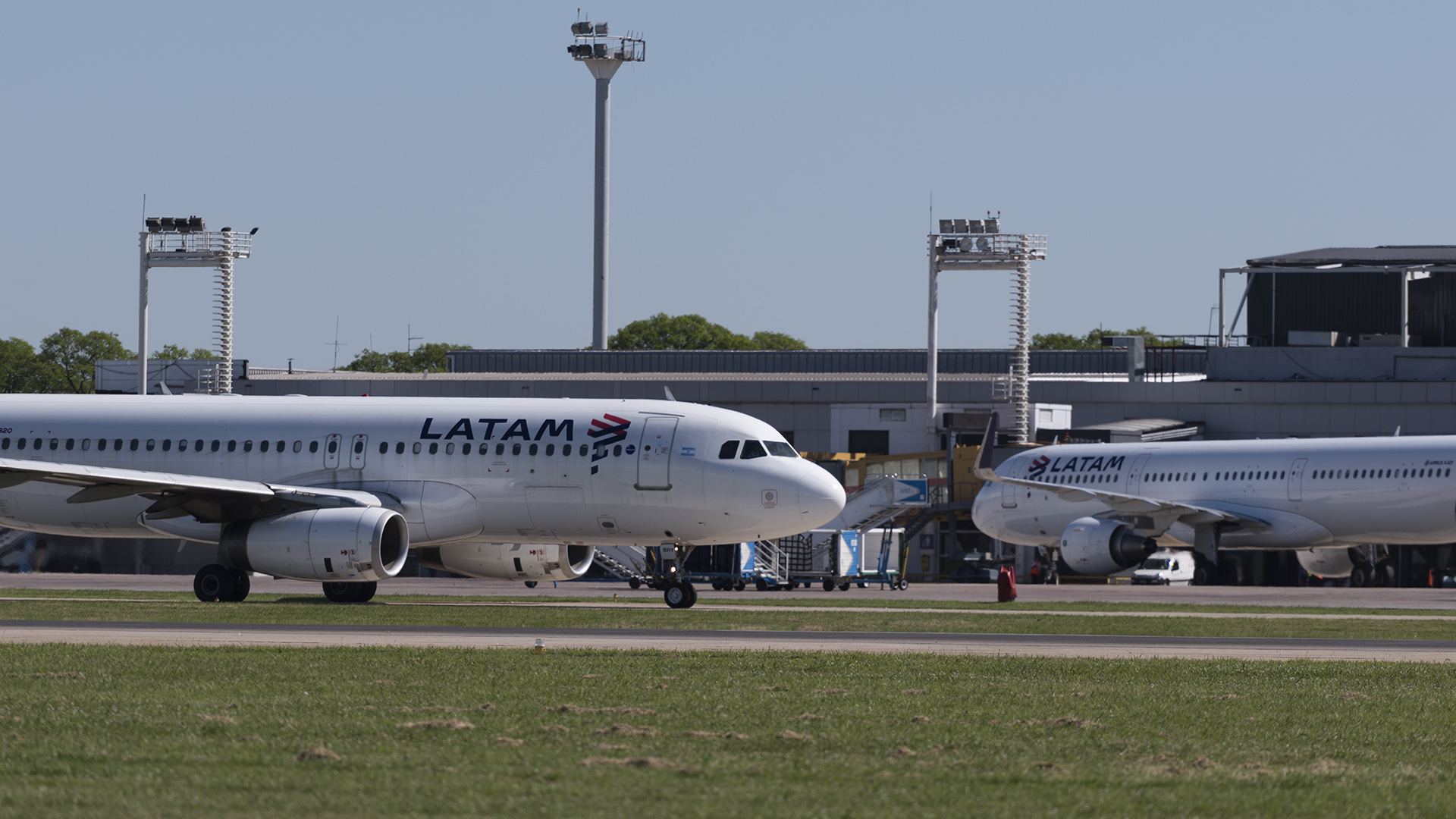
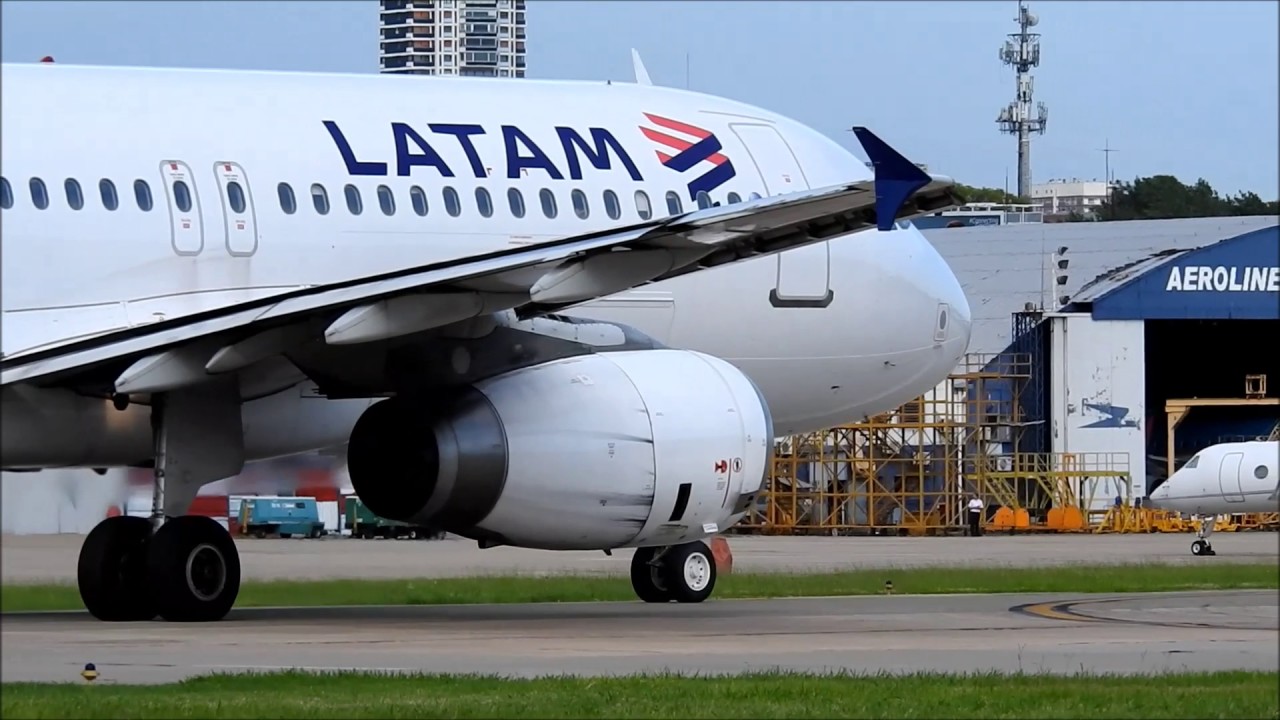
Latam Airlines Argentina trasladará parte de su operación comercial de Argentina a Chile. La empresa de capitales chileno-brasilera decidió transferir parte de su operación comercial argentina a Santiago de Chile, como así la solicitud de 26 empleados del traslado a Santiago o el retiro voluntario. En un difícil contexto para el mercado aéreo local, la empresa aclaró que se trata de una decisión post fusión entre LAN y TAM.
En los últimos días, la aerolínea ofreció a 26 de los empleados que trabajaban en el área comercial, especialmente a los que cumplían tareas en marketing, su traslado a la capital chilena o, en caso de no aceptar esa opción, el retiro voluntario. Desde Latam argumentaron que se trata de una decisión vinculada a la reestructuración del la compañía posterior a la fusión entre la chilena LAN y la brasileña TAM, ocurrida en 2012 y no al alza del dólar y pérdida de competitividad por los costos en divisa extranjera.
“Latam Airlines informa que, como parte del proceso de reordenamiento de su área de gestión comercial, algunas tareas que hasta el momento eran desarrolladas de manera local serán centralizadas por casa matriz a partir del 30 de junio próximo, con el objetivo de unificar la forma de gestionar los puntos de venta en el grupo y buscando una mirada transversal, alineada a la estrategia global de la compañía”, explicaron desde la empresa. En consonancia con esta decisión, Latam cerró en los últimos meses algunas rutas de menor rentabilidad. Entre las internacionales, ante la caída de la demanda de argentinos, dejó de volar en marzo de Tucumán a Santiago de Chile y San Pablo; desde Julio 2019 no operará entre Rosario y San Pablo.
Latam Airlines Argentina ha sufrido los embates de la crisis económica en un mercado aéreo que ha comenzado con la apertura de más rutas y más aerolíneas, pero que ha caído la demanda de viajes al exterior.
Latam Argentina shrinks
Latam Airlines Argentina moves part of its commercial area from Argentina to Chile
Latam Airlines Argentina will transfer part of its commercial operation from Argentina to Chile. The Chilean-Brazilian capital company decided to transfer part of its Argentine commercial operation to Santiago de Chile, as well as the request of 26 employees for the transfer to Santiago or voluntary retirement. In a difficult context for the local aviation market, the company clarified that it is a post merger decision between LAN and TAM.
In recent days, the airline offered to 26 of the employees who worked in the commercial area, especially those who completed tasks in marketing, their transfer to the Chilean capital or, in case of not accepting that option, the voluntary withdrawal. From Latam argued that this is a decision linked to the restructuring of the company after the merger between the Chilean LAN and the Brazilian TAM, occurred in 2012 and not the rise of the dollar and loss of competitiveness due to costs in foreign currency.
«Latam Airlines reports that, as part of the reordering process of its commercial management area, some tasks that up to now were developed locally will be centralized by the parent company as of June 30, with the objective of unifying the form to manage the points of sale in the group and looking for a cross-sectional view, aligned with the company’s global strategy», they explained from the company. In line with this decision, Latam closed some routes of lower profitability in recent months. Between the international ones, before the fall of the demand of Argentineans, it stopped flying in March of Tucumán to Santiago de Chile and San Pablo; since July 2019, it will not operate between Rosario and San Pablo.
Latam Airlines Argentina has suffered the onslaught of the economic crisis in an air market that has started with the opening of more routes and more airlines, but the demand for trips abroad has fallen. A \ W
Ξ A I R G W A Y S Ξ
SOURCE: Airgways.com
DBk: Latam.com / Airgways.com
AW-POST: 201904251751AR
Cuatro aerolíneas continúan volando en la República de Venezuela
En el mercado aéreo de Venezuela continúa decreciendo en la red de servicios doméstico debido a la profunda crisis política. Las cuatro aerolíneas que soportan los graves procesos económicos con Aerolíneas Estelar, Conviasa, Avior Airlines y Laser Airlines.
La grave crisis venezolana afecta a la totalidad de los sectores incluyendo a la aviación comercial. La red de servicios aéreos se concentra en solamente 15 rutas nacionales con frecuencias mínimas de las compañías para ahorrar gastos, entre las cuatro aerolíneas.
Las rutas más explotadas con bajos índices de ocupación son: Porlamar, Maracaibo, Barcelona, Maturin, Barquisimeto, El Vigía, Santo Domingo, Valencia y Barcelona. Conviasa ha optado por alquilar los vuelos a otras líneas aéreas. La aerolínea Turpial que cubre la ruta a Punta Cana, Santo Domingo, los alquila por no disponer de los aviones para ese destino.
Air market decreases in Venezuela
Four airlines continue to fly in the Republic of Venezuela
In the Venezuelan air market continues to decrease in the domestic service network due to the deep political crisis. The four airlines that support the serious economic processes with Estelar Airlines, Conviasa, Avior Airlines and Laser Airlines.
The serious Venezuelan crisis affects all sectors including commercial aviation. The air services network concentrates on only 15 national routes with minimum frequencies of companies to save costs, among the four airlines.
The most exploited routes with low occupancy rates are: Porlamar, Maracaibo, Barcelona, Maturin, Barquisimeto, El Vigia, Santo Domingo, Valencia and Barcelona. Conviasa has chosen to rent flights to other airlines. The Turpial airline that covers the route to Punta Cana, Santo Domingo, rents them because they do not have the planes for that destination. A \ W
Ξ A I R G W A Y S Ξ
SOURCE: Airgways.com
DBk: Cnn.com / Airgways.com
AW-POST: 201904251737AR
United Continental Holdings empieza a mover fichas en Avianca Holdings tras la renuncia de Rincón
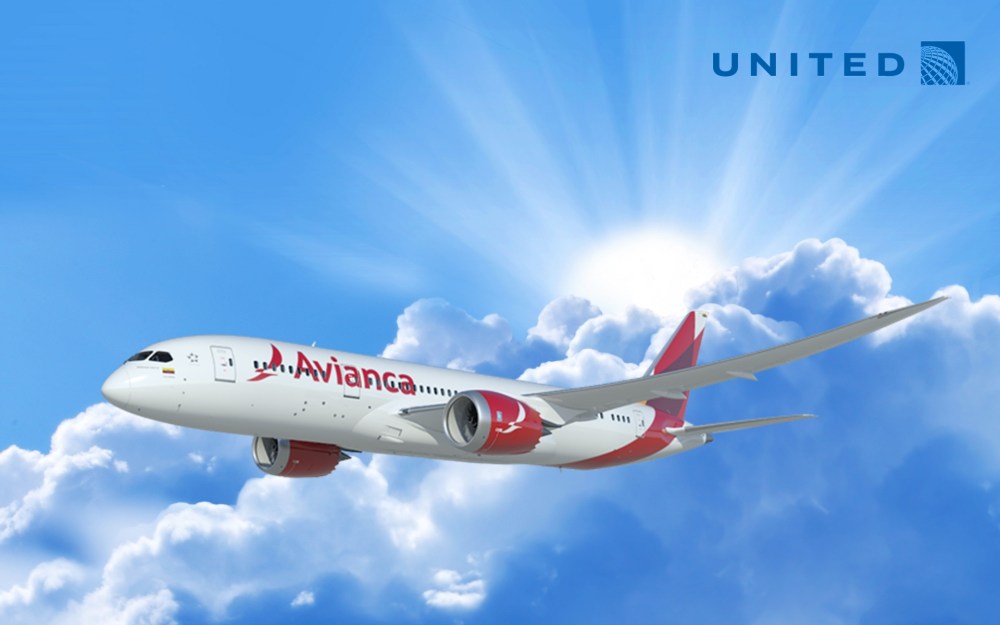
La renuncia de Hernán Rincón después de tres años en la Presidencia de AviancaHoldings, marca el fin de una estrategia, pero el comienzo de nuevos retos para la compañía. Ahora no solo busca consolidar la alianza estratégica y comercial con United Airlines y Copa Airlines, sino, además, mejorar los indicadores operacionales, salir de algunos negocios y ajustar su flota de aviones.
Tras liderar el proceso de transformación de la holding, enfrentar el paro de pilotos de la Asociación Colombiana de Pilotos (ACDAC) en 2017 y concretar la alianza con United, Rincón anunció ayer que dará un paso al costado. Mediante una carta, expuso los resultados en su gestión y aseguró estar “satisfecho de haber contribuido a la evolución estratégica de Avianca Holdings”.
Germán Efromovich, Presidente de la Junta Directiva de Avianca Holdings, resaltó, por su parte, la transformación de la compañía en los años de la presidencia de Rincón. “Está interesado en buscar otras oportunidades estratégicas habiendo dejado a Avianca preparada para asumir los próximos 100 años de su operación. Sin duda extrañaremos a Hernán pero apoyamos sus decisiones como parte de nuestro plan de transformación”, dijo Efromovich.
Entre los resultados más destacados del ejecutivo se destaca, igualmente, el plan que adoptó para simplificar la flota de aviones mediante la venta de las naves Embraer y la transferencia de los turboprop a la empresa Regional Express Américas. A esto se suman los resultados financieros que logró en el primer trimestre de este año cuando la aerolínea alcanzó unos ingresos operacionales por US$ 1.168 millones, además de la movilización de un poco más de 2,5 millones de pasajeros.
United & Avianca
United Continental Holdings Inc. entró simplemente como una alianza para compartir frecuencias, compartir bases de datos, ser más eficientes y llegar a más destinos. Inyectó capital por valor de US$ 450 millones de dólares, y lo hizo con respaldo de las acciones de Germán Efromovich.
Los rumores de adquisición de Avianca Holdings por parte de United Continental Holdings son cada vez más fuertes. En la lógica empresarial nadie va a entregar US$ 450 millones de dólares sin tener una garantía sobre cómo se cancelará la deuda. La solución más viable será que la aerolínea estadounidense le pida a Efromovich que le endose sus acciones en Avianca.
United Airlines would acquire Avianca
United Airlines begins to move chips in Avianca Holdings after the resignation of Rincon
The resignation of Hernán Rincón after three years in the Presidency of AviancaHoldings, marks the end of a strategy, but the beginning of new challenges for the company. Now not only seeks to consolidate the strategic and commercial alliance with United Airlines and Copa Airlines, but also improve operational indicators, exit some businesses and adjust their aircraft fleet.
After leading the process of transformation of the holding company, facing the pilot stoppage of the Colombian Association of Pilots (ACDAC) in 2017 and finalizing the partnership with United, Rincon announced yesterday that it will step aside. Through a letter, he presented the results in his management and said he was «pleased to have contributed to the strategic evolution of Avianca Holdings».
Germán Efromovich, Chairman of the Board of Directors of Avianca Holdings, highlighted, for his part, the transformation of the company in the years of the Presidency of Rincón. «He is interested in looking for other strategic opportunities having left Avianca ready to take on the next 100 years of his operation. We will undoubtedly miss Hernán but we support his decisions as part of our transformation plan», said Efromovich.
Among the most outstanding results of the executive is also the plan he adopted to simplify the aircraft fleet through the sale of the Embraer ships and the transfer of the turboprop to the Regional Express Américas company. Added to this are the financial results achieved in the first quarter of this year when the airline achieved operating revenues of US$ 1,168 million, in addition to the mobilization of just over 2.5 million passengers.
United & Avianca
United Continental Holdings Inc. entered simply as an alliance to share frequencies, share databases, be more efficient and reach more destinations. He injected capital worth US$ 450 million dollars, and did so with support from Germán Efromovich’s actions.
The rumors of acquisition of Avianca Holdings by United Continental Holdings are increasingly strong. In the business logic nobody is going to deliver US$ 450 million dollars without having a guarantee on how the debt will be canceled. The most viable solution will be for the US airline to ask Efromovich to endorse its shares in Avianca. A \ W
Ξ A I R G W A Y S Ξ
SOURCE: Airgways.com
DBk: United.com / Avianca.com / Airgways.com
AW-POST: 201904251721AR
NRI ofrecen fondos para que Jet Airways vuelva a volar
Un grupo de NRI Invest con sede en el Golfo están listos para recaudar fondos de emergencia para permitir que la aerolínea Jet Airways, cargada de deudas y con poco efectivo, vuelva a volar. En NRI Invest India es una compañía extranjera de inversión que ofrece diversas oportunidades de inversión en la India a nuestros clientes en todo el mundo.
Los expatriados indios con sede en el Golfo desean recaudar fondos e invertir en la aerolínea que se suman al Presidente de la Organización de Comercio Económico de la India, con sede en Dubai, Asif Iqbal, el Director saudí de Icon World y Sandalwood, Aftab Khan, y Aryan Hospitality, y el Director Ejecutivo de Aleef Aviation, Mazhar Nawaz.
Los fondos de emergencia permitirán que Jet Airways, cargada de deudas y con poco efectivo, vuelva a volar. «Estamos listos para asegurar fondos de emergencia de los NRI con sede en Dubai, Arabia Saudita y Qatar y los inversores del Golfo para satisfacer las necesidades operativas de Jet y volar de nuevo en 10 días», dijo el Director Ejecutivo de la empresa saudí Gold Tower Group, Mohammed Nagaman Lateef. El grupo Gold Tower, con sede en Dammam, es una importante empresa de construcción en el reino árabe.
Jet Airways con una trayectoria de 25 años y con una fuerza laboral de 16.500 empleados tuvo que suspender sus operaciones desde el 17 Abril 2019 después de que un consorcio de prestamistas liderado por el Banco Estatal de India (SBI) rechazó su petición de fondos de emergencia.
Especulaciones de mercado
En torno a la situación de jet Airways acerca de una conspiración nacional o internacional deliberada para aterrizar y cerrar la low cost para que sus competidores o rivales, incluidos los operadores de presupuesto, pudieran florecer, algunos intereses creados han estado trabajando contra la aerolínea. El plan de juego era lograr que el CEO Naresh Goyal se retirara del puesto ejecutivo más importante, pero el ejecutivo no se resignó a la conexión a tierra de forma temporal o permanente de su aerolínea.
Los NRI también están interesados en saber por qué el SBI se retractó de dar fondos de contingencia a la aerolínea después de asegurarlos, siempre que Goyal renuncie. «Estamos listos para lograr que los inversionistas de Qatar y Dubai rescaten a Jet de su crisis financiera para que pueda volar alto nuevamente en las próximas 24 horas», agregó Lateef.
Boeing cancela órdenes de Jet
Boeing Commercial Airplanes ha eliminado 210 aeronaves de su catálogo de órdenes luego de que Jet Airways, aerolínea india, anunciara su puesta en tierra, debido a su incapacidad financiera para seguir operando. El valor estimado de los pedidos de la segunda aerolínea india alcanzó los US$ 26 mil millones de dólares. La orden original de la empresa era de 141 unidades Boeing 737-8 MAX y 75 Boeing 737-9 MAX. Como resultado de esto, las órdenes netas que Boeing presentó para el 1Q2019 de alrededor de 119 pedidos netos.
NRI offer rescuing Jet Airways
NRI offers funds for Jet Airways to fly again
A group of NRI Invest based in the Gulf are ready to raise emergency funds to allow the airline Jet Airways, charged with debts and with little cash, to fly again. At NRI Invest India is a foreign investment company that offers various investment opportunities in India to our clients around the world.
Indian expatriates based in the Gulf want to raise funds and invest in the airline to join the President of the Indian Economic Trade Organization, based in Dubai, Asif Iqbal, the Saudi Director of Icon World and Sandalwood, Aftab Khan, and Aryan Hospitality, and the Executive Director of Aleef Aviation, Mazhar Nawaz.
The emergency funds will allow Jet Airways, loaded with debts and with little cash, to fly again. «We are ready to secure emergency funds from NRIs based in Dubai, Saudi Arabia and Qatar and Gulf investors to meet Jet’s operating needs and fly again in 10 days», said the Executive Director of the Saudi Gold Company. Tower Group, Mohammed Nagaman Lateef. The Gold Tower group, based in Dammam, is an important construction company in the Arab kingdom.
Jet Airways with a track record of 25 years and a workforce of 16,500 employees had to suspend operations from 17 April 2019 after a consortium of lenders led by the State Bank of India (SBI) rejected their request for emergency funds .
Market speculations
Regarding the situation of Jet Airways about a deliberate national or international conspiracy to land and close the low cost so that its competitors or rivals, including budget operators, could flourish, some vested interests have been working against the airline. The game plan was to get CEO Naresh Goyal to retire from the most important executive position, but the executive did not resign himself to the grounding temporarily or permanently of his airline.
The NRIs are also interested to know why the SBI retracted to give contingency funds to the airline after securing them, provided that Goyal resigns. «We are ready to get investors from Qatar and Dubai to rescue Jet from his financial crisis so he can fly high again in the next 24 hours», Lateef added.
Boeing cancels orders from Jet
Boeing Commercial Airplanes has eliminated 210 aircraft from its catalog of orders after Jet Airways, Indian airline, announced its grounding, due to its financial inability to continue operating. The estimated value of the orders of the second Indian airline reached US $ 26 billion. The original order of the company was 141 units Boeing 737-8 MAX and 75 Boeing 737-9 MAX. As a result of this, the net orders that Boeing presented for 1Q2019 of around 119 net orders. A \ W
जेट एयरवेज द्वारा बचाए गए एनआरआई प्रस्ताव
एनआरआई जेट एयरवेज को फिर से उड़ान भरने के लिए धनराशि प्रदान करता है
खाड़ी में स्थित एनआरआई निवेश का एक समूह फिर से उड़ान भरने के लिए, ऋण के साथ और कम नकदी के साथ चार्ज किए गए एयरलाइन जेट एयरवेज को अनुमति देने के लिए आपातकालीन धन जुटाने के लिए तैयार हैं। एनआरआई इन्वेस्ट इंडिया में एक विदेशी निवेश कंपनी है जो भारत में दुनिया भर में अपने ग्राहकों को निवेश के विभिन्न अवसर प्रदान करती है।
खाड़ी में स्थित भारतीय प्रवासियों के लिए दुबई में स्थित भारतीय आर्थिक व्यापार संगठन के अध्यक्ष आसिफ इकबाल, आईकॉन वर्ल्ड के सैंड डायरेक्टर और चंदन, आफताब खान, के साथ धन जुटाना और एयरलाइन में निवेश करना चाहते हैं।, और आर्यन हॉस्पिटैलिटी, और एलेफ एविएशन के कार्यकारी निदेशक, मज़हर नवाज़।
आपातकालीन धनराशि जेट एयरवेज को ऋण से भरी और थोड़ी नकदी के साथ फिर से उड़ान भरने की अनुमति देगा। सऊदी गोल्ड कंपनी के कार्यकारी निदेशक ने कहा, «हम दुबई, सऊदी अरब और कतर और खाड़ी के निवेशकों से एनआरआई से आपातकालीन धन सुरक्षित करने के लिए तैयार हैं, जो जेट की परिचालन जरूरतों को पूरा करने और फिर से उड़ान भरने के लिए तैयार हैं»। टॉवर ग्रुप, मोहम्मद नगमान लतीफ। दम्मम में स्थित गोल्ड टॉवर समूह, अरब राज्य की एक महत्वपूर्ण निर्माण कंपनी है।
25 साल के ट्रैक रिकॉर्ड के साथ जेट एयरवेज और 16,500 कर्मचारियों के एक कार्यबल को 17 अप्रैल 2019 से भारतीय स्टेट बैंक (एसबीआई) की अगुवाई में ऋणदाताओं के एक कंसोर्टियम द्वारा आपातकालीन फंड के लिए उनके अनुरोध को अस्वीकार कर दिया गया था।
बाजार की अटकलें
जेट एयरवेज की स्थिति के बारे में एक जानबूझकर राष्ट्रीय या अंतरराष्ट्रीय साजिश के बारे में जमीन पर उतरने और कम लागत को बंद करने के लिए ताकि बजट ऑपरेटरों सहित उसके प्रतिद्वंद्वी या प्रतिद्वंद्वी पनप सकें, कुछ निहित स्वार्थ एयरलाइन के खिलाफ काम कर रहे हैं। खेल की योजना सीईओ नरेश गोयल को सबसे महत्वपूर्ण कार्यकारी पद से सेवानिवृत्त होने के लिए मिली थी, लेकिन कार्यकारी ने अस्थायी रूप से या स्थायी रूप से अपनी एयरलाइन के लिए ग्राउंडिंग से इस्तीफा नहीं दिया।
अनिवासी भारतीय यह जानने में भी रुचि रखते हैं कि एसबीआई ने उन्हें सुरक्षित करने के बाद एयरलाइन को आकस्मिक निधि देने के लिए क्यों पीछे हट गया, बशर्ते कि गोयल इस्तीफा दें। «हम अपने वित्तीय संकट से जेट को बचाने के लिए कतर और दुबई से निवेशकों को लाने के लिए तैयार हैं ताकि अगले 24 घंटों में वह फिर से ऊंची उड़ान भर सके»।
जेट से बोइंग कैंसिल के आदेश
बोइंग कमर्शियल एयरप्लेन ने जेट एयरवेज के बाद अपने ऑर्डर की कैटलॉग से 210 विमानों को खत्म कर दिया है, भारतीय एयरलाइन ने इसकी ग्राउंडिंग की घोषणा की, जिसके कारण परिचालन जारी रखने में वित्तीय असमर्थता थी। दूसरी भारतीय एयरलाइन के आदेशों का अनुमानित मूल्य 26 बिलियन अमेरिकी डॉलर तक पहुंच गया। कंपनी का मूल क्रम 141 यूनिट्स बोइंग 737-8 मैक्स और 75 बोइंग 737-9 मैक्स था। इस के परिणामस्वरूप, शुद्ध आदेश जो बोइंग ने लगभग 119 शुद्ध आदेशों में से 1Q2019 के लिए प्रस्तुत किए। A \ W
Ξ A I R G W A Y S Ξ
SOURCE: Airgways.com
DBk: Cnbctv18.com / Nriinvestindia.com / Theindu.com / Asia.nikkei.com / Newindianexpress.com [EPS]
AW-POST: 201904251653AR
AW | 2019 04 24 17:52 | INDUSTRY / AVIATION SAFETY
El Boeing 737 MAX ha efectuado 135 vuelos de prueba desde la suspensión
El fabricante de aviones Boeing dice estar viendo un progreso constante en una actualización de software para solucionar los problemas que llevaron a dos accidentes mortales. El miércoles, Boeing ofreció un vistazo de cómo avanza el trabajo con su avión Boeing 737 MAX y los costos que los problemas del avión han impuesto a la compañía. Boeing reservó cargos no especificados relacionados con el desarrollo de una solución para el MCAS y la capacitación de pilotos, y estaba progresando constantemente hacia la certificación del software después de completar más de 135 vuelos de prueba y producción.
Boeing dijo que está haciendo un progreso constante hacia la obtención de la re-certificación para una actualización de software del MCAS diseñada para rectificar los problemas que contribuyeron a dos accidentes mortales en los últimos meses. Hasta la fecha, la compañía ha completado más de 135 vuelos de prueba del 737 MAX con la actualización de software implementada. El Presidente Ejecutivo de The Boeing Company, Dennis Muilenburg, en un comunicado expresó: «En toda la compañía, estamos enfocados en la seguridad, en volver a poner el 737 MAX en servicio y en ganar la confianza de los clientes, los reguladores y el público en general».
El régimen de pruebas incluye trabajar estrechamente con reguladores globales así como con las aerolíneas asociadas. La línea 737 MAX ha estado en tierra para vuelos comerciales alrededor del mundo desde Marzo 2019, y Boeing ha reducido la producción de nuevos aviones en esa línea. Los aviones 737 MAX se están acumulando cada vez más en el campo que el fabricante estadounidense tiene en Seattle para almacenar los aviones. El aumento de estas aeronaves ha sido tan elevada en solo una semana que apenas queda algo más de espacio.
Impacto «MAX»
El reciente informe financiero entregado de la constructora aeronáutica ha impacto en las arcas de Boeing. La compañía dijo el miércoles que los ingresos del primer trimestre de US$ 11.800 millones, así como su flujo de caja, reflejaron menores entregas del 737 MAX.
La conexión a tierra global de la flota mundial de los Boeing 737 MAX costará a la compañía más de US$ 1.000 millones de dólares. Boeing dice que abandonó su perspectiva financiera para 2019 y detuvo las recompras de acciones a mediados de Marzo mientras se enfrenta a la crisis. El anuncio fue una fuerte inversión del último informe de ganancias de Boeing en enero, cuando los ejecutivos revelaron planes para entregar más de 900 aviones de línea este año junto con mayores ventas y ganancias.
Los jets Boeing 737 MAX se conectaron a tierra después de dos accidentes fatales que mataron a 346 personas y provocaron investigaciones sobre los accidentes en todo el mundo y dejaron a Boeing con una de las crisis más grandes de su historia. Las consecuencias reglamentarias han estado dominadas hasta ahora por preguntas sobre el software anti-stall conocido como MCAS, que Boeing ha reconocido que era un enlace común en las distintas cadenas de eventos que llevan a ambos accidentes. Los dos accidentes aéreos hicieron que los reguladores de todo el mundo aterrizaran el 737 MAX y desencadenaron investigaciones sobre el desarrollo del avión por parte de las autoridades federales de transporte y el Departamento de Justicia de los Estados Unidos.
Reducción línea producción
Boeing redujo la producción de los aviones después de los choques a 42 aviones por mes, menos que los 52, y su flujo de efectivo operativo en el primer trimestre fue de unos US$ 350 millones menos que el año anterior.
Proyecciones 2019
Michael Hewson, Analista Jefe de Mercado de CMC Markets UK expresó que aunque se esperaba que el negocio de aviones comerciales de Boeing superara su récord de 806 entregas de aeronaves el año pasado y alcanzara las 900 en 2019, ese objetivo ahora parece cada vez más improbable. El Boeing 737 MAX, que actualmente representa alrededor del 30% de las ganancias de Boeing, probablemente verá su contribución a los ingresos de la empresa significativamente reducida como resultado del incidente. «La probabilidad de que el avión vuelva a volar en el aire pronto ha disminuido en las últimas semanas, debido al enorme daño de la marca que han hecho los eventos recientes».
Aprobaciones y takeoff
Boeing está apuntando a la aprobación por parte de la Administración Federal de Aviación (FAA) de su solución de software para el avión 737 MAX a partir de la tercera semana de Mayo 2019 y para elevar la puesta a tierra del MAX alrededor de mediados de Julio 2019.
Las fechas son parte de un cronograma provisional que Boeing ha compartido en reuniones con clientes de líneas aéreas, ya que explica una actualización del software del MCAS que tuvo un papel en dos accidentes fatales y llevó a la puesta a tierra en todo el mundo del MAX 737 en el mes de Marzo 2019.
Boeing detuvo las entregas de los 737 MAX a los clientes y ha comunicado que reduciría la producción de 737 a 42 aviones por mes en lugar de 52. La compañía dijo que emitirá un nuevo pronóstico en el futuro cuando tenga más claridad sobre los problemas que rodean al 737 MAX.
Impacto MAX en las aerolíneas
El Boeing 737 ha sido un caballo de batalla popular para las aerolíneas de todo el mundo. Pero después de la segunda caída del las aeronaves 737 MAX, una encuesta realizada por Business Insider sugirió que el 53% de los adultos estadounidenses nunca quieren volar en un 737 MAX, incluso una vez que se considere seguro hacerlo.
Los pasajeros son solo parte de la ecuación, también están los transportistas. En su perpetua batalla por la supremacía del mercado con su rival Airbus, Boeing se apresuró a desarrollar el 737 MAX para ofrecer a las aerolíneas una versión más eficiente de su popular línea 737. El MAX se convirtió en el avión más vendido de la Boeing que fueron homologados para volar más de 300 en servicio y alrededor de 5.000 más en órdenes. Pero desde el accidente de Ethiopian Airlines, las ventas del Boeing 737 MAX fracasaron. La lista de pedidos se puede acortar a medida que las aerolíneas asustadas retroceda o cancelen sus compras.
Garuda Indonesia Airlines reemplazará Boeing 737-8 MAX con otros aviones de la Boeing. Intercambiará sus pedidos de los 737-8s con otros aviones fabricados por la compañía estadounidense. La aerolínea indonesia es la primera en dar este paso formalmente luego de dos accidentes fatales que involucran al 737-8 MAX.
Garuda informó a Boeing de su decisión de cancelar sus pedidos de 49 de los aviones en Marzo 2019. Ambas compañías habían estado en negociaciones sobre la cancelación total o el reemplazo del pedido por otros aviones Boeing. Garuda ordenó 50 de los Boeing 737-8 MAX en 2014 en un acuerdo por valor de US$ 4.9 mil millones en ese momento. La aerolínea tiene en tierra una aeronave 737 MAX.
Lion Air, la aerolínea low cost de Indonesia posee 10 Boeing 737-8 MAX, lo que ha obligado a poner en tierra toda su flota. La compañía ha ordenado posponer la llegada de cuatro aviones más, inicialmente programados para Mayo 2019.
Los problemas también están causando un dolor de cabeza para las aerolíneas como TUI AG, que se ha visto obligada a aterrizar los 15 737-8 MAX de su flota, mientras que la compañía de presupuesto Ryanair Holdings PLC podría enfrentar problemas con el pedido realizado de 110 Boeing 737-8 MAX para expandir y actualizar su flota aérea.
Southwest Airlines es la aerolínea más importante por número de unidades Boeing 737 MAX en orden que cualquier otra aerolínea y ha pedido 737 MAX. Un compromiso con el 737 MAX es al menos la forma en que se informaron ampliamente los comentarios de en la aerolínea low cost americana. Southwest Airlines ha sido un cliente fiel a Boeing desde el lanzamiento de la aerolínea, por lo que es probable que continúen siendo clientes de Boeing, aunque no han expresado que sea de manera exclusiva. Los miembros del equipo han estado fuera en Europa evaluando la aeronave regional Airbus A220.
El mundo de la venta de aviones puede ser complicado, pero algunos esperan que el gigante estadounidense utilice el mismo enfoque simple que cualquier minorista con un producto de venta deficiente: reducir el precio. La compañía no va a depreciar el modelo pero ofrecerá métodos de ventas atractivos para continuar con la saga de la línea 737.
Alaska Airlines, la sexta aerolínea más grande de Estados Unidos, ha salido de compras solicitando ocho unidades de los 737 MAX, aunque podrían agregar una docena al pedido inicial. Una orden de anclaje de un nombre tan reconocible podría ayudar a restaurar la confianza en la marca.
En Westjet y Air Canada, están capacitando a los pilotos en simulaciones de los cambios al 737 MAX en la sede de Boeing en el área de Seattle, y también se están incluyendo en los planes de diseño para un nuevo régimen de entrenamiento piloto.
Mientras tanto, con las ventas estancadas, Boeing está tratando de restablecer la confianza en la preparación para la reanudación de 737 vuelos Max, que se espera para este año 2019. La culpa que tiene Boeing en última instancia está relacionada con las acciones en su responsabilidad por incidentes, accidentes y la operatividad del Boeing 737 MAX por la conexión a tierra, pero la necesidad de dejar las cosas en buenos términos y no arruinar sus relaciones con las líneas aéreas será para asegurar futuros pedidos que representan un gran desafía hacia el horizonte.
Recovering the confidence of the 737 MAX
The Boeing 737 MAX has made 135 test flights since the suspension
The Boeing aircraft manufacturer says it is seeing steady progress in a software update to solve the problems that led to two fatal accidents. On Wednesday, Boeing offered a glimpse of how the work is progressing with his Boeing 737 MAX aircraft and the costs that the plane’s problems have imposed on the company. Boeing reserved unspecified charges related to the development of a solution for MCAS and pilot training, and was progressing steadily towards software certification after completing more than 135 test and production flights.
Boeing said it is making steady progress toward obtaining re-certification for an MCAS software update designed to rectify the problems that contributed to two fatal accidents in recent months. To date, the company has completed more than 135 test flights of the 737 MAX with the software update implemented. The Executive President of The Boeing Company, Dennis Muilenburg, in a statement said: «Throughout the company, we are focused on security, putting the 737 MAX back on service and gaining the trust of customers, regulators and the public. in general».
The testing regime includes working closely with global regulators as well as with partner airlines. The 737 MAX line has been on the ground for commercial flights around the world since March 2019, and Boeing has reduced the production of new aircraft on that line. The 737 MAX airplanes are accumulating more and more in the field that the American manufacturer has in Seattle to store the airplanes. The increase in these aircraft has been so high in just one week that there is barely more room left.
Impact «MAX»
The recent financial report delivered by the aeronautical construction company has had an impact on Boeing’s coffers. The company said on Wednesday that first-quarter revenue of US$ 11.8 billion, as well as cash flow, reflected lower deliveries of the 737 MAX.
The global ground connection of the Boeing 737 MAX world fleet will cost the company more than US$ 1 billion. Boeing says it abandoned its financial outlook for 2019 and halted stock buybacks in mid-March as it faces the crisis. The announcement was a strong investment in Boeing’s latest earnings report in January, when executives revealed plans to deliver more than 900 line aircraft this year along with higher sales and profits.
The Boeing 737 MAX jets were grounded after two fatal crashes that killed 346 people and led to investigations into accidents around the world and left Boeing with one of the biggest crises in its history. The regulatory consequences have been dominated so far by questions about the anti-stall software known as MCAS, which Boeing has recognized as a common link in the various chains of events that lead to both accidents. The two plane crashes caused regulators around the world to land the 737 MAX and trigger investigations into the development of the aircraft by federal transportation authorities and the US Department of Justice.
Production line reduction
Boeing reduced aircraft production after the crashes to 42 aircraft per month, less than the 52, and its operating cash flow in the first quarter was about US$ 350 million less than the previous year.
Projections 2019
Michael Hewson, Chief Market Analyst at CMC Markets UK said that although Boeing’s commercial aircraft business was expected to surpass its record of 806 aircraft deliveries last year and reach 900 in 2019, that goal now seems increasingly unlikely. The Boeing 737 MAX, which currently accounts for around 30% of Boeing’s earnings, will likely see its contribution to the company’s revenue significantly reduced as a result of the incident. «The likelihood of the plane flying again in the air soon has decreased in recent weeks, due to the enormous damage to the brand that recent events have caused».
Approvals and takeoff
Boeing is aiming for approval by the Federal Aviation Administration (FAA) of its software solution for the 737 MAX aircraft from the third week of May 2019 and to raise the grounding of the MAX around mid-July 2019.
The dates are part of a tentative schedule that Boeing has shared in meetings with airline customers, as it explains an update to the MCAS software that played a role in two fatal crashes and led to the worldwide grounding of the MAX 737 in the month of March 2019.
Boeing stopped delivery of the 737 MAX to customers and said it would reduce production from 737 to 42 aircraft per month instead of 52. The company said it will issue a new forecast in the future when it has more clarity about the problems surrounding it. at 737 MAX.
MAX impact on airlines
The Boeing 737 has been a popular workhorse for airlines around the world. But after the second crash of the 737 MAX aircraft, a survey by Business Insider suggested that 53% of American adults never want to fly a 737 MAX, even once it is considered safe to do so.
The passengers are just part of the equation, there are also the carriers. In its perpetual battle for market supremacy with rival Airbus, Boeing hastened to develop the 737 MAX to offer airlines a more efficient version of its popular 737 line. The MAX became the Boeing’s best-selling aircraft. They were approved to fly more than 300 in service and around 5,000 more in orders. But since the Ethiopian Airlines crash, sales of the Boeing 737 MAX failed. The list of orders can be shortened as scared airlines back off or cancel their purchases.
Garuda Indonesia Airlines will replace the Boeing 737-8 MAX with other Boeing aircraft. It will exchange its orders for the 737-8s with other aircraft manufactured by the US company. The Indonesian airline is the first to take this step formally after two fatal crashes involving the 737-8 MAX.
Garuda informed Boeing of its decision to cancel its orders for 49 of the aircraft in March 2019. Both companies had been in negotiations about the total cancellation or replacement of the order by other Boeing aircraft. Garuda ordered 50 of the Boeing 737-8 MAX in 2014 in a deal worth US$ 4.9 billion at that time. The airline has a 737 MAX aircraft on the ground.
Lion Air, Indonesia’s low cost airline has 10 Boeing 737-8 MAX, which has forced its entire fleet to land. The company has ordered postponing the arrival of four more planes, initially scheduled for May 2019.
The problems are also causing a headache for airlines such as TUI AG, which has been forced to land the 15 737-8 MAX of its fleet, while the budget company Ryanair Holdings PLC could face problems with the order placed 110 Boeing 737-8 MAX to expand and update your air fleet.
Southwest Airlines is the most important airline by number of Boeing 737 MAX units in order of any other airline and has ordered 737 MAX. A commitment to the 737 MAX is at least the way in which the comments of the American low cost airline were widely reported. Southwest Airlines has been a loyal customer to Boeing since the launch of the airline, so it is likely that they will continue to be Boeing customers, although they have not expressed it exclusively. Team members have been out in Europe evaluating the regional aircraft Airbus A220.
The world of the sale of airplanes can be complicated, but some hope that the American giant uses the same simple approach that any retailer with a product of bad sale: to reduce the price. The company will not depreciate the model but will offer attractive sales methods to continue the saga of the 737 line.
Alaska Airlines, the sixth largest airline in the United States, has gone shopping for eight units of the 737 MAX, although they could add a dozen to the initial order. An anchor order for such a recognizable name could help restore trust in the brand.
At Westjet and Air Canada, they are training pilots in simulations of changes to the 737 MAX at the Boeing headquarters in the Seattle area, and they are also being included in the design plans for a new pilot training regime.
Meanwhile, with sales stagnating, Boeing is trying to restore confidence in preparing for the resumption of 737 Max flights, which is expected for this year 2019. The fault that Boeing has ultimately is related to the actions in its responsibility due to incidents, accidents and the operation of the Boeing 737 MAX due to the connection to the ground, but the need to leave things in good terms and not to ruin their relations with the airlines will be to ensure future orders that represent a great challenge to the horizon. A \ W
Ξ A I R G W A Y S Ξ
SOURCE: Airgways.com
DBk: Boeing.com / Airgways.com / Faa.gov / King5.com / Asia.nikkei.com / Reuters.com / Kmox.radio.com
AW-POST: 201904241752AR
Flybondi comenzó a operar 2 nuevas rutas desde Córdoba hacia Salta y Neuquén
La aerolínea low cost inauguró dos nuevos destinos desde la ciudad de Córdoba, inaugurando las rutas Córdoba-Salta y Córdoba-Neuquén. Estas 2 nuevas rutas completan el objetivo de Flybondi Líneas Aéreas de poner en operación 5 nuevas conexiones aéreas en esta semana.
Semana de vuelos inaugurales
Flybondi continúa creciendo comenzando a volar cuatro nuevas rutas y hoy cerrará las aperturas de rutas con el lanzamiento de Tucumán-Rosario. Las nuevas rutas comenzaron a estrenarse el 22 Abril con Neuquén-Mendoza y Córdoba-Neuquén; y le siguieron Córdoba-Salta y Tucumán-Rosario, hoy Miércoles 24 Abril 2019. Ninguno de los cinco nuevos vuelos pasa por Buenos Aires, sino que generan conexiones para las provincias de Córdoba, Salta, Mendoza, Neuquén, Tucumán y Santa Fe.
Córdoba hacia Salta y Neuquén
Córdoba tiene dos nuevas rutas aéreas de cabotaje enlazando Córdoba-Salta y Córdoba-Neuquén que fueron inauguradas con 3 frecuencias semanales. La conexión Córdoba-Neuquén contará con 3 frecuencias semanales, los días lunes, miércoles y viernes. Mientras que la ruta Córdoba-Salta operará con 3 frecuencias semanales, los martes, jueves y sábados.
Sebastián Pereira, CEO de Flybondi, expresó: “Estamos muy contentos de sumar dos nuevas conexiones para los cordobeses, que por primera vez en la historia podrán tener una alternativa para volar a Neuquén y a Salta, y con los precios más bajos del mercado. De esta manera, Flybondi ya suma 8 destinos que operan desde Córdoba, la oferta más amplia luego de Buenos Aires. Queremos contribuir a un país más federal y a hacer del avión un medio de transporte más accesible, y considero que nuestros resultados nos muestran que lo estamos logrando”.
Tucumán-Rosario
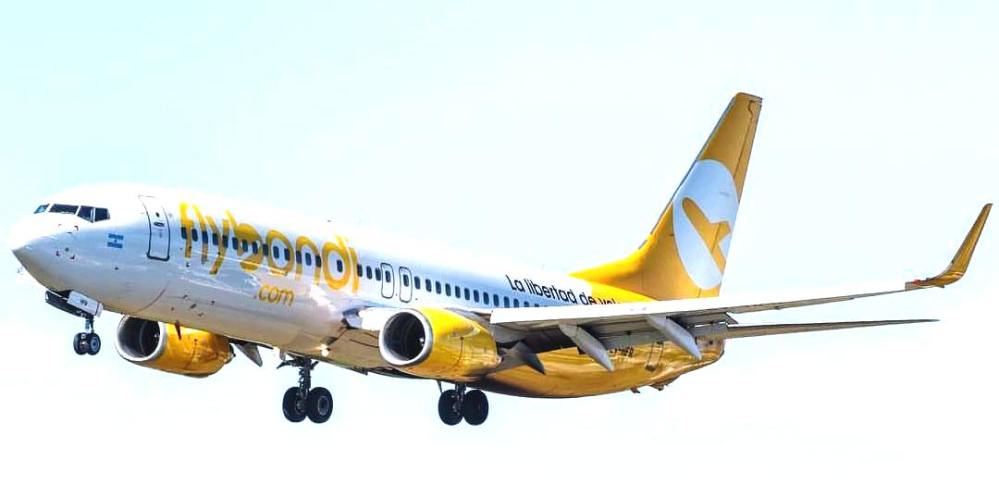
La ruta Rosario-Tucumán, es la primera vez en la historia que una aerolínea opera vuelos regulares. Hoy Miércoles 24 Abril 2019 quedó inaugurada la nueva ruta aérea con un Boeing 737-800, matrícula LV-HKS, proveniente de la ciudad de Tucumán que aterrizó a las 10:07 hs en el Aeropuerto Internacional Rosario Islas Malvinas. Con la presencia de autoridades del Gobierno de Rosario, autoridades de ANAC, staff de la compañía, y medios de comunicación se realizó el acto inaugural de la nueva ruta aérea.
En este marco, el CEO de Flybondi, Sebastián Pereira, expresó: “Hoy hacemos historia junto a los rosarinos y a los tucumanos: comenzamos a volar la ruta Tucumán-Rosario que nunca había tenido una oferta aérea con vuelos regulares. Ese es nuestro verdadero desafío y compromiso, conectar ciudades y provincias con una mirada netamente federal. Y apostando a que cada día vuelen más personas con las tarifas más bajas del mercado y en un servicio de calidad, confiable y seguro. Hoy dejamos a Rosario conectada con tres importantes destinos como Iguazú, Salta y Tucumán. Y confiamos en que esto generará desarrollo para la provincia a través de la generación de puestos de trabajo, más turismo, más emprendimientos y un impacto positivo en la economía regional”.
Crecimiento mercado de Flybondi
La cuota de mercado de Flybondi es del 8% del tráfico aéreo argentino,registrando un factor de ocupación en Semana Santa promedio de 87% y una puntualidad de un 95%, números que están alentando al sector aerocomercial de Argentina a pesar de la crisis económica dominante. El incremento de la demanda es de un 60% mayor que en 2018, ampliando la disponibilidad de asientos para la oferta de tickets aéreos. El Domingo 21 Abril 2019, la aerolínea low cost ha batido un nuevo récord de pasajeros transportados en la historia de Flybondi con un total de 5.900 personas.
Flybondi ha totalizado con los últimos destinos 28 rutas aéreas en 17 destinos en Argentina y 13 vuelos entre provincias no pasan por Buenos Aires, potenciando el federalismo en el país austral.
Flybondi to Salta and Neuquén
Flybondi started operating 2 new routes from Córdoba to Salta and Neuquén
The low cost airline inaugurated two new destinations from the city of Córdoba, inaugurating the Córdoba-Salta and Córdoba-Neuquén routes. These 2 new routes complete the objective of Flybondi Líneas Aéreas to put into operation 5 new air connections this week.
Week of inaugural flights
Flybondi continues to grow, starting to fly four new routes and today will close the route openings with the launch of Tucumán-Rosario. The new routes began to be premiered on April 22 with Neuquén-Mendoza and Córdoba-Neuquén; and they followed him Córdoba-Salta and Tucumán-Rosario, today Wednesday 24 April 2019. None of the five new flights passes through Buenos Aires, but generate connections for the provinces of Córdoba, Salta, Mendoza, Neuquén, Tucumán and Santa Fe.
Córdoba to Salta and Neuquén
Córdoba has two new cabotage air routes linking Córdoba-Salta and Córdoba-Neuquén, which were inaugurated with 3 weekly frequencies. The Córdoba-Neuquén connection will have 3 weekly frequencies, on Mondays, Wednesdays and Fridays. While the Córdoba-Salta route will operate with 3 weekly frequencies, on Tuesdays, Thursdays and Saturdays.
Sebastián Pereira, CEO of Flybondi, said: «We are very happy to add two new connections for Cordobans, who for the first time in history will have an alternative to fly to Neuquén and Salta, and with the lowest prices in the market. In this way, Flybondi already has 8 destinations that operate from Córdoba, the broadest offer after Buenos Aires. We want to contribute to a more federal country and to make the airplane a more accessible means of transport, and I believe that our results show us that we are achieving it».
Tucumán-Rosario
The Rosario-Tucumán route is the first time in history that an airline operates scheduled flights. Today, Wednesday, April 24, 2019, the new air route was inaugurated with an Boeing 737-800, registration LV-HKS, from the city of Tucumán that landed at 10:07 am at Rosario Islas Malvinas International Airport. With the presence of authorities of the Government of Rosario, authorities of ANAC, staff of the company, and media, the inaugural act of the new air route was carried out.
In this context, the CEO of Flybondi, Sebastián Pereira, said: «Today we make history with the people of Rosario and Tucumán: we began to fly the Tucumán-Rosario route that had never had an air offer with regular flights. That is our true challenge and commitment, to connect cities and provinces with a purely federal perspective. And betting that every day fly more people with the lowest rates in the market and a quality service, reliable and safe. Today we leave Rosario connected with three important destinations such as Iguazú, Salta and Tucumán. And we are confident that this will generate development for the province through the generation of jobs, more tourism, more business and a positive impact on the regional economy».
Flybondi market growth
The market share of Flybondi is 8% of Argentine air traffic, registering an average Easter load factor of 87% and a punctuality of 95%, numbers that are encouraging the Argentinean aviation sector despite the economic crisis dominant. The increase in demand is 60% higher than in 2018, expanding the availability of seats for the offer of air tickets. On Sunday 21 April 2019, the low cost airline has broken a new record of passengers transported in the history of Flybondi with a total of 5,900 people.
Flybondi has totaled with the last destinations 28 air routes in 17 destinations in Argentina and 13 flights between provinces do not pass through Buenos Aires, boosting federalism in the southern country. A \ W
Ξ A I R G W A Y S Ξ
SOURCE: Airgways.com
DBk: Flybondi.com / Infonegocios.info / Airgways.com
AW-POST: 201904241610AR
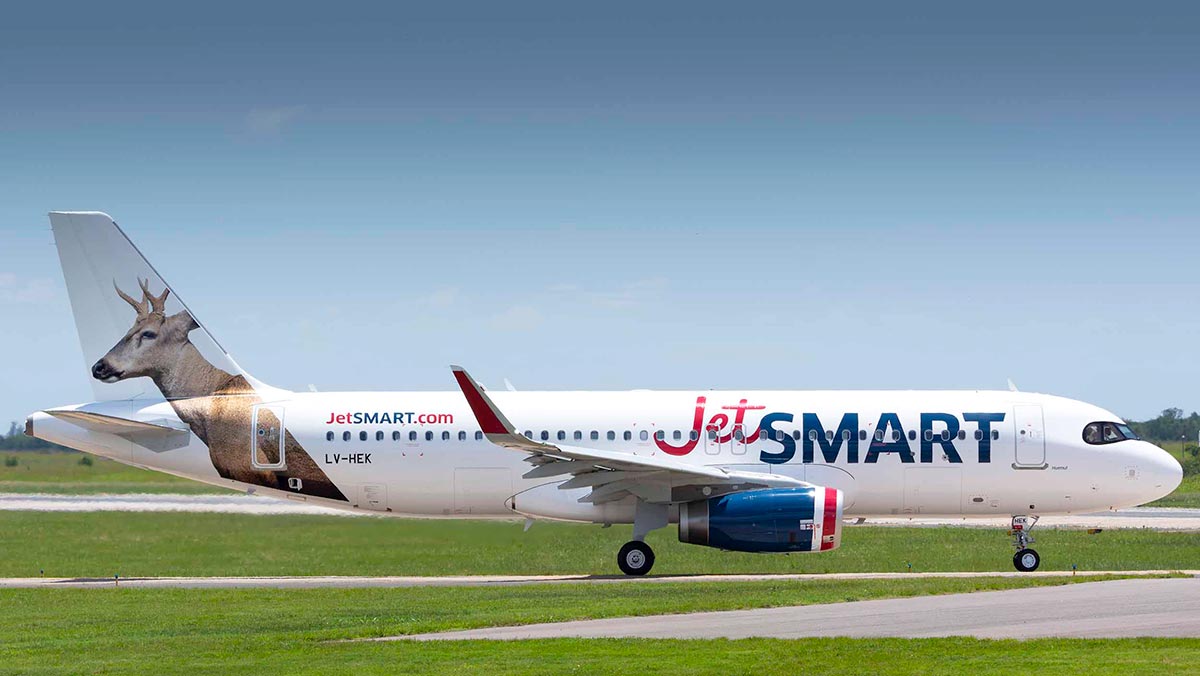
JetSmart Airlines Argentina inició una nueva ruta aérea uniendo Buenos Aires (El Palomar)-Salta. La ruta Córdoba-Salta como Salta-Rosario contarán con 3 frecuencias semanales, los días martes, jueves y sábados. Mientras que la ruta El Palomar–Salta tendrá 3 frecuencias semanales y la ruta Mendoza–Salta, 2 frecuencias semanales. La aerolínea low cost JetSmart inició hoy operaciones desde la ciudad de Salta a Buenos Aires, Mendoza y Córdoba, y sumó así 16 vuelos semanales.
«La propuesta de pecios ultra bajos ayudará a que más personas puedan viajar desde y hacia Salta, recorriendo grandes distancias, en pocas horas y por pocos pesos», señaló Gonzalo Pérez Corral, Gerente General de JetSmart.
Crecimiento en Salta
El Gerente de JetSmart en Argentina, Gonzalo Pérez expresó su agradcimiento: “Desde Jetsmart estamos muy contentos por iniciar operaciones en Salta trayendo aviones de última generación y dando más conexión a los salteños con precios de pasajes muy bajos, con pasajes que parten desde los AR$ 299 pesos finales por tramo que ayudarán a que más personas puedan viajar desde y hacia Salta. Esto ampliará el mercado aerocomercial de la provincia y ayudará también al crecimiento de las economías regionales”, indicó el directivo. Aclaró que las compras de pasajes se realizan únicamente a través de la página web de la compañía.
El ejecutivo anticipó que ya se vendieron «más de 37.000 boletos en los dos primeros meses, sólo en la provincia de Salta. Hemos visto que la gente valora la posibilidad de viajar en aviones nuevos y seguros, saliendo y llegando a tiempo, con un modelo de precios claro y transparente para el pasajero», agregó.
En este sentido, y durante el primer fin de semana largo con operaciones de cabotaje que coincidió con la Semana Santa, JetSmart tuvo un nivel de ocupación de 83% en sus vuelos, según datos suministrados por la ANAC.
JetSmart a Arequipa
JetSmart Airlines (Chile) inauguró vuelos directos Santiago de Chile-Arequipa. La nueva ruta aérea que conecta la ciudad de Santiago de Chile-Arequipa(Perú) dispondrá de dos frecuencias semanales. La aerolínea ya había anunciado en Enero 2019 que empezaría a operar esta ruta en Abril 2019.
«Se busca potenciar el turismo entre Chile y Perú, con un vuelo directo de tan sólo tres horas de duración, convirtiéndose en la única aerolínea que opera esta ruta, y que espera en su primer año de operaciones transportar a más de 30 mil pasajeros”, señaló el Director de Ventas de JetSmart, Pedro Asenjo.
“Con esta nueva ruta, queremos invitar a todos aquellos que sueñen con visitar Arequipa. De esta forma, podrán conocer maravillas como el Cañón del Colca, uno de los más profundos del mundo, o disfrutar de la exquisita gastronomía arequipeña” agregó Asenjo, quien señaló que su compromiso se mantiene en lograr que todos tengan la posibilidad de viajar en avión. La aerolínea cuenta con una flota de 11 aviones nuevos Airbus A320, y según afirma busca alcanzar los 100 para el 2026.
JetSmart inaugurates new routes
JetSmart Argentina inaugurated the Buenos Aires-Salta routes
JetSmart Airlines Argentina started a new air route linking Buenos Aires (El Palomar) Salta. The Córdoba-Salta route as Salta-Rosario will have 3 weekly frequencies, on Tuesdays, Thursdays and Saturdays. While the El Palomar-Salta route will have 3 weekly frequencies and the Mendoza-Salta route, 2 weekly frequencies. The low cost airline JetSmart today started operations from the city of Salta to Buenos Aires, Mendoza and Córdoba, and added 16 weekly flights.
«The proposal of ultra low wrecks will help more people to travel to and from Salta, traveling long distances, in a few hours and for a few pesos», said Gonzalo Pérez Corral, General Manager of JetSmart.
Growth in Salta
The Manager of JetSmart in Argentina, Gonzalo Pérez expressed his gratitude: «From Jetsmart we are very happy to start operations in Salta bringing the latest generation airplanes and giving more connection to people from Salta with very low ticket prices, with passages that depart from the AR$ 299 final pesos per stretch that will help more people to travel to and from Salta. This will expand the province’s commercial aviation market and also help the growth of regional economies», said the executive. He clarified that the purchases of tickets are made only through the website of the company.
The executive anticipated that «more than 37,000 tickets were sold in the first two months, only in the province of Salta. We have seen that people value the possibility of traveling in new and safe planes, departing and arriving on time, with a model of clear and transparent prices for the passenger», he added.
In this sense, and during the first long weekend with cabotage operations that coincided with Holy Week, JetSmart had an occupancy level of 83% in its flights, according to data provided by the ANAC.
JetSmart to Arequipa
JetSmart Airlines (Chile) opened direct flights Santiago de Chile-Arequipa. The new air route that connects the city of Santiago de Chile-Arequipa (Peru) will have two weekly frequencies. The airline had already announced in January 2019 that it would start operating this route in April 2019.
«It seeks to boost tourism between Chile and Peru, with a direct flight of only three hours, becoming the only airline that operates this route, and which expects in its first year of operations to transport more than 30 thousand passengers», noted the Sales Director of JetSmart, Pedro Asenjo.
«With this new route, we want to invite all those who dream of visiting Arequipa. In this way, you can see wonders such as the Colca Canyon – one of the deepest in the world – or enjoy the exquisite cuisine of Arequipa», said Asenjo, who said that his commitment is to ensure that everyone has the possibility of traveling by plane. The airline has a fleet of 11 new Airbus A320 aircraft, and says it aims to reach 100 by 2026. A \ W
Ξ A I R G W A Y S Ξ
SOURCE: Airgways.com
DBk: Jetsmart.com / Airgways.com
AW-POST: 201904241447AR
Caen ganancias de Boeing por crisis de avión 737 MAX
En un comunicado, la compañía The Boeing Company aseguró que estos resultados reflejan las menores entregas de modelos 737. Boeing anunció hoy unos beneficios de US$ 2.149 millones de dólares en el primer trimestre del año, un 18% menos que en el mismo periodo de 2018, en el primer resultado que se da a conocer tras las prohibiciones de los vuelos del modelo Boeing 737 MAX tras los accidentes de Indonesia y Etiopía.
Los ingresos trimestrales de The Boeing Company fueron de US$ 22.917 millones de dólares, un 2% por debajo de los 23.382 millones que registró en el mismo período de 2018. Boeing informó que su beneficio neto por acción Enero-Marzo pasados fue de 3,75 dólares, un 10% menos que los US$ 4,15 dólares que obtuvo en los tres primeros meses el año anterior. En un comunicado, la compañía aseguró que estos resultados reflejan las menores entregas de modelos 737, aunque precisa que se vio parcialmente compensado por un mayor volumen en los productos de defensa y servicios.
Re-certificación 737 MAX
Asimismo, insistió en que Boeing está haciendo un progreso constante en el camino hacia una certificación final para una actualización de software para el 737 MAX, con más de 135 vuelos de prueba y producción de la actualización de software completa.
Boeing ha suspendido sus objetivos financieros anuales tras una baja en los ingresos en el primer trimestre, debido a la incertidumbre en torno a su modelo 737 MAX, que protagonizó dos tragedias aéreas que dejaron en total 346 muertos. Boeing dijo que las previsiones financieras para 2019 no reflejaban el impacto de los accidentes sufridos por los modelos 737 MAX, que fueron dejados en tierra.
Profit reduction in Boeing
Boeing profits fall due to 737 MAX airplane crisis
In a statement, the company The Boeing Company said that these results reflect the lower deliveries of 737 models. Boeing today announced profits of US$ 2.149 billion in the first quarter of the year, 18% less than in the same period of 2018, in the first result that is announced after the bans of the Boeing 737 MAX model after the accidents in Indonesia and Ethiopia.
The Boeing Company’s quarterly revenues were US$ 22,917 million, 2% lower than the 23,382 million recorded in the same period of 2018. Boeing reported that its net profit per share from January to March was 3, 75 dollars, 10% less than the US $ 4.15 obtained in the first three months of the previous year. In a statement, the company said that these results reflect the lower deliveries of 737 models, although it needs to be partially compensated by a greater volume in defense products and services.
Re-certification 737 MAX
He also insisted that Boeing is making steady progress on the road to a final certification for a software update for the 737 MAX, with more than 135 test flights and production of the complete software update.
Boeing has suspended its annual financial targets after a drop in revenues in the first quarter, due to the uncertainty surrounding its model 737 MAX, which starred two air tragedies that left a total of 346 dead. Boeing said that the financial forecasts for 2019 did not reflect the impact of accidents suffered by the 737 MAX models, which were left on the ground. A \ W
Ξ A I R G W A Y S Ξ
SOURCE: Airgways.com
DBk: Boeing.com / Airgways.com
AW-POST: 201904241400AR
United Airlines ha incorporado una nieva librea que afectará a la flota de aeronaves de la compañía. El cambio de look ha ido amalgamándose en la mirada de los viajeros frecuentes con cambios progresivos en la señalización del aeropuerto para que coincida con el aspecto que ahora tendrán las aeronaves.
New look
United lanzó un video del esquema el martes donde se inspira en la antigua imagen de Continental Airlines, presentada por primera vez en 1991. United echó un vistazo a su fusión en 2010 con Continental en una especie de compromiso. United mantuvo el nombre y la sede de Chicago, y Continental obtuvo el logotipo (un globo estilizado) y la pintura. Al decir que vendría un nuevo esquema de pintura en United Airlines, el CEO Oscar Muñoz recientemente lo llamó más una evolución que una revolución.
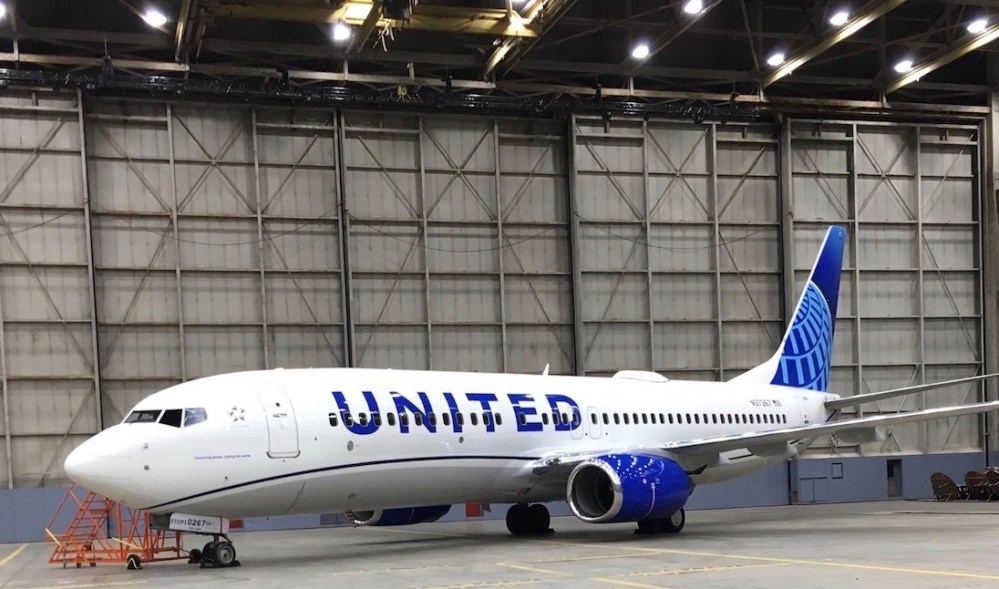
La aerolínea está planeando una gran inauguración hoy Miércoles 24 Abril 2019 en un hangar en el Aeropuerto Internacional de Chicago O’Hare. Pero después de que una fotografía de un Boeing 737 recién pintado apareciera el martes por la noche en los tableros de mensajes y en Twitter, United lo hizo oficial, lanzando un video.
United Airlines introduce retoques en el globo que permanecerá pintado de manera prominente en la deriva de los aviones, aunque su color cambiará sensiblemente. Hace varios años, la aerolínea dejó de usar oro, un viejo color de Continental Airlines en gran parte de su marca. Para esta actualización de librea, United está eliminando el oro de la cola, reemplazándolo con un logotipo azul estilizado, con tonos claros y oscuros. Otro cambio visible es el nombre en letras azules aumentadas en tamaño desplegadas sobre el fuselaje. Los motores cambian su pintura de gris a azul. United también está agregando una línea oscura y ondulada, debajo de las ventanas, desde la nariz de la aeronave hasta su cola. United introdujo una línea similar en 2012, en oro, en sus Boeing 787 y Boeing 737-9 MAX, pero nunca la ha agregado a otras aeronaves.
Los observadores de larga data de United Airlines notaron en las redes sociales y en los tableros de mensajes que la nueva imagen comparte algunas similitudes con el trabajo de pintura que usaba antes de su fusión. United ha empleado mucho color azul en esa apariencia, incluyendo motores azules. En general, a las aerolíneas les lleva cinco años o más pintar sus flotas, por lo que pasará mucho tiempo antes de que desaparezca el viejo diseño de Continental.
Evolución
Algunos clientes querían que United Airlines tuviera un cambio de marca de hoja limpia, argumentando que la aerolínea necesitaba superar un logotipo diseñado hace un cuarto de siglo por otra compañía. Pero United eligió una actualización menor, similar a la que hizo Alaska Airlines en 2016, después de que adquirió Virgin America. En un comunicado de prensa, el vicepresidente de marketing de Alaska incluso utilizó la misma frase «evolución, no revolución».
No es fácil empezar desde cero. United vuela a cientos de aeropuertos en todo el mundo, y si la aerolínea comenzara de nuevo, todos habrían tenido que cambiar de señalización. Además, las marcas en el avión tendrían que cambiar, al igual que casi todo lo que utiliza el Departamento de Catering de la aerolínea, desde tazas hasta servilletas, como así la indumentaria y demás áreas que afectan a la imagen visual de la aerolínea.
Las aerolíneas generalmente guardan el cambio de marca completo para cuando quieren que los clientes piensen en ellos de manera diferente. American Airlines hizo un cambio de marca completo en 2013, ya que estaba saliendo de la bancarrota. Frontier Airlines cambió su apariencia en 2014, después de que la nueva propiedad cambió su modelo y se convirtió en una aerolínea de costo ultra bajo. A veces, sin embargo, una aerolínea comienza de nuevo cuando probablemente no es necesario. En 2014, Southwest presentó una nueva marca y pintura, la aerolínea ha llamado a su nuevo look «Corazón».
United Airlines presents new look
United Airlines public presentation new livery
United Airlines has incorporated a new livery that will affect the company’s aircraft fleet. The change of look has been amalgamating in the eyes of frequent travelers with progressive changes in the signage of the airport to match the look that the aircraft will now have.
New look
United released a video of the scheme on Tuesday where it is inspired by the old image of Continental Airlines, first introduced in 1991. United took a look at its 2010 merger with Continental in a kind of compromise. United retained the name and headquarters of Chicago, and Continental obtained the logo (a stylized balloon) and the painting. By saying that a new painting scheme would come on United Airlines, CEO Oscar Muñoz recently called it an evolution rather than a revolution.
The airline is planning a grand opening today on Wednesday 24 April 2019 in a hangar at the Chicago O’Hare International Airport. But after a photograph of a freshly painted Boeing 737 appeared on Tuesday night on message boards and on Twitter, United made it official, releasing a video.
United Airlines introduces touch-ups on the globe that will remain prominently painted on the planes’ deiva, although its color will change quite sensibly. Several years ago, the airline stopped using gold, an old Continental Airlines color for much of its brand. For this livery update, United is removing gold from the tail, replacing it with a stylized blue logo, with light and dark shades. Another visible change is the name in blue letters enlarged in size deployed on the fuselage. The engines change their paint from gray to blue. United is also adding a dark, wavy line, under the windows, from the nose of the aircraft to its tail. United introduced a similar line in 2012, in gold, in its Boeing 787 and Boeing 737-9 MAX, but has never added it to other aircraft.
Long-time observers of United Airlines noticed on social networks and message boards that the new image shares some similarities with the paint job it used before its merger. United has used a lot of blue in that look, including blue engines. In general, airlines take five years or more to paint their fleets, so it will be a long time before the old Continental design disappears.
Evolution
Some customers wanted United Airlines to have a clean sheet brand change, arguing that the airline needed to pass a logo designed a quarter of a century ago by another company. But United chose a minor upgrade, similar to the one Alaska Airlines did in 2016, after it acquired Virgin America. In a press release, the vice president of marketing for Alaska even used the same phrase «evolution, not revolution».
It is not easy to start from scratch. United flies to hundreds of airports around the world, and if the airline started again, everyone would have had to change signage. In addition, the brands on the plane would have to change, like almost everything used by the airline’s Catering Department, from cups to napkins, as well as clothing and other areas that affect the airline’s visual image.
Airlines generally keep the entire brand change for when they want customers to think about them differently. American Airlines made a full brand change in 2013, as it was coming out of bankruptcy. Frontier Airlines changed its appearance in 2014, after the new property changed its model and became an ultra low cost airline. Sometimes, however, an airline starts again when it is probably not necessary. In 2014, Southwest introduced a new brand and paint, the airline has called its new look «Heart». A \ W
Ξ A I R G W A Y S Ξ
SOURCE: Airgways.com
DBk: United.com / Usatoday.com
AW-POST: 201904241241AR
Atlantic Airways iniciará servicio transatlántico non-stop Vagar-New York
Atlantic Airways, con sede en las Islas Faroe, ha presentado una solicitud de servicios comerciales a los Estados Unidos en virtud del acuerdo de transporte aéreo de Cielos Abiertos entre los Estados Unidos y Dinamarca.
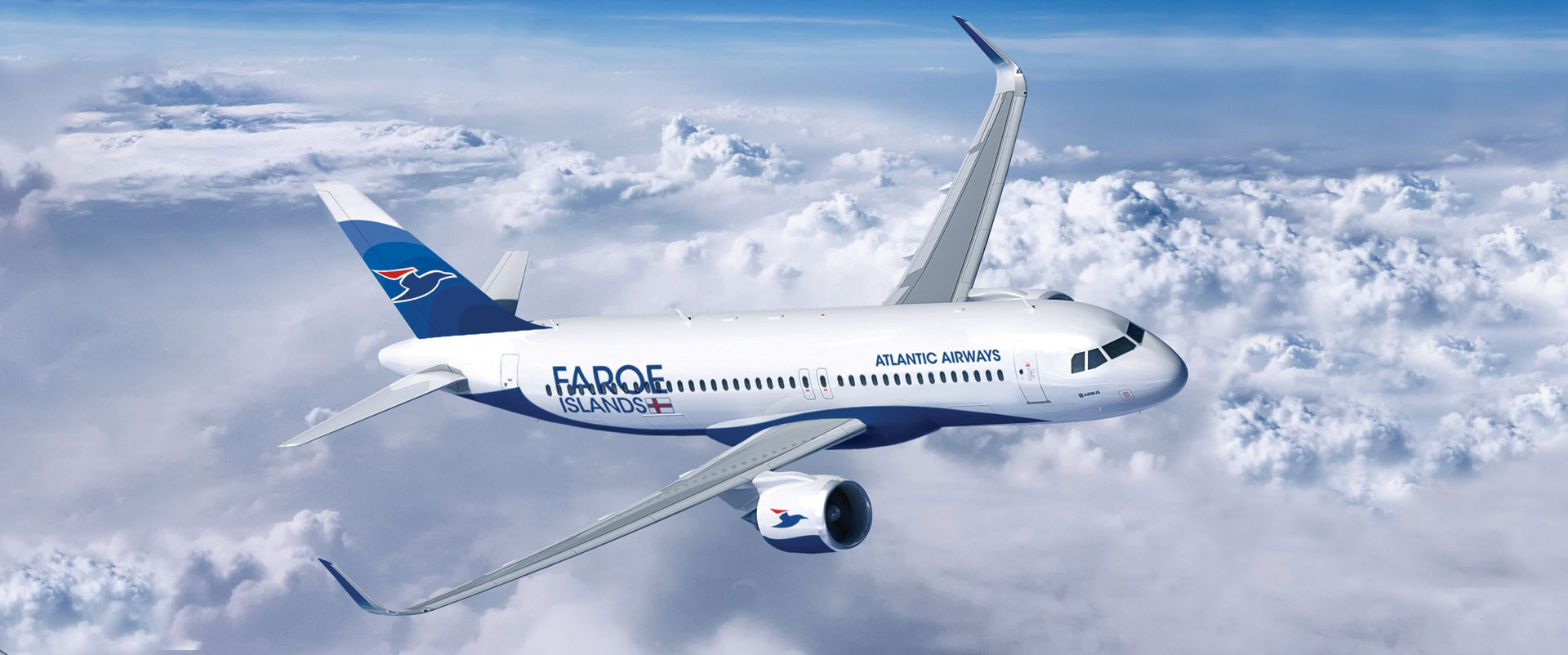
Atlantic Airways la aerolínea de las Islas Faroe pretende comenzar un servicio transatlántico estacional a Nueva York en 3Q2019. La aerolínea dinamarquesa ha dado detalles sobre sus planes en su informe anual recién publicado, pero dice que el vuelo directo de Vagar complementará una red de 10 destinos europeos. Estos incluyen la nueva ruta de la aerolínea en París, que comenzará con los servicios de tres veces por semana el 1 Julio 2019. Atlantic Airways también operará en Copenhague, Billund, Aalborg, Bergen, Reykjavik, Edimburgo, Barcelona, Mallorca y Gran Canaria.
La aerolínea planea comenzar un servicio de temporada programado entre Vagar, las Islas Feroe (FAE) y la Ciudad de Nueva York, a partir del 3Q2019. Ninguna aerolínea opera actualmente vuelos entre los Estados Unidos de América y las Islas Feroe, un pequeño país autónomo. parte del Reino de Dinamarca, pero no es miembro de la Unión Europea.
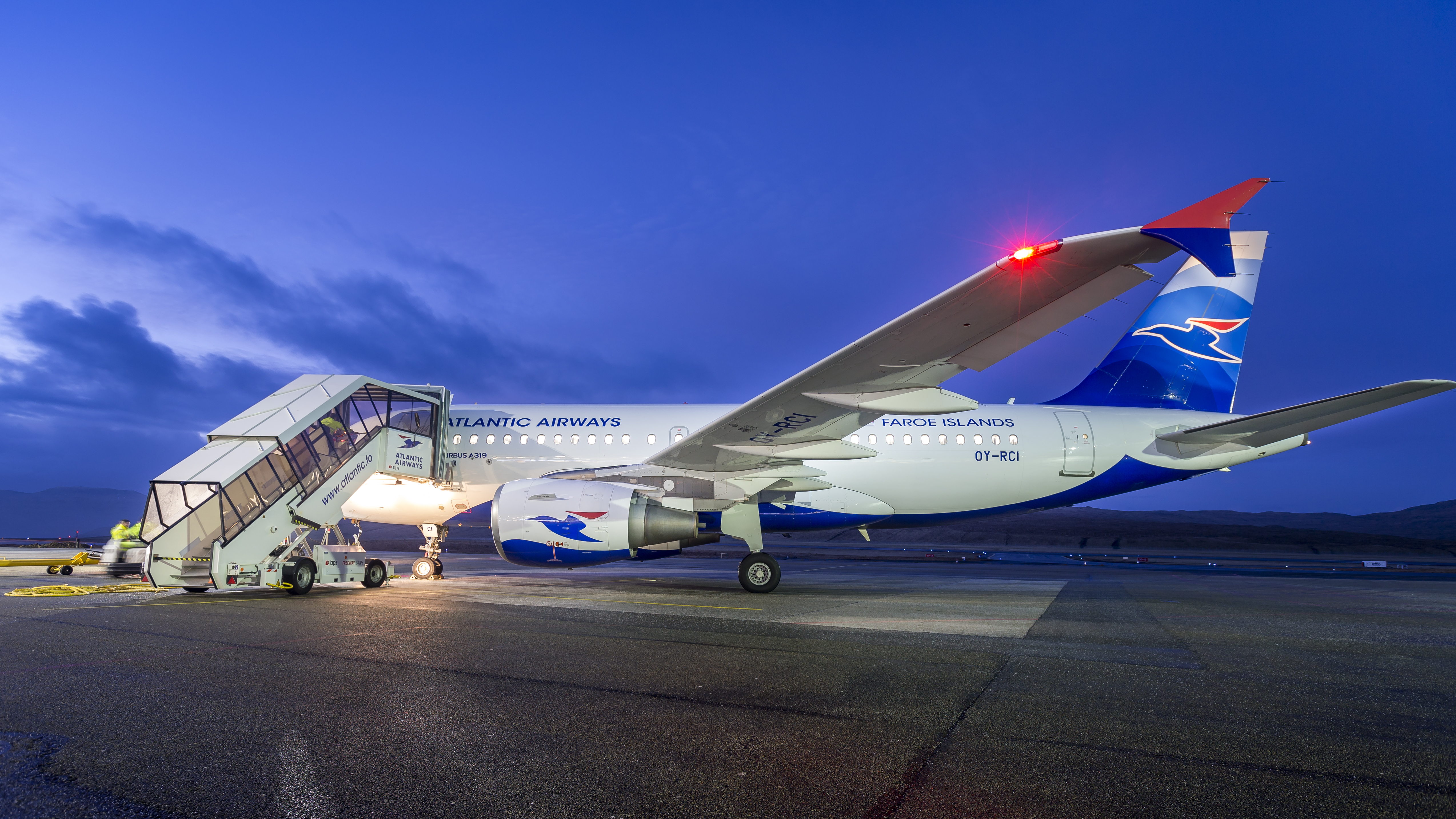
Atlantic Airways tiene la intención de desplegar un avión Airbus A320NEO en este servicio. Se espera que el primer A320NEO para la aerolínea llegue en Marzo 2019 con una configuración de 174 asientos, en reemplazo de un A319 y otro A320NEO en la 2Q2020. La flota actual de Atlantic Airways es de Airbus A319 (2) con 144 asientos y A320CEO (1) con 168 pasajeros.
La aerolínea nacional de las Islas Feroe se estableció en 1987 y actualmente opera vuelos a varios destinos en Europa, incluyendo Copenhague y Edimburgo desde su base en el aeropuerto de Vagar. El servicio propuesto a Nueva York abrirá un nuevo mercado para los viajeros tanto en los Estados Unidos como en las Islas Feroe.
El año pasado generó una ganancia neta para todo el año de DKr16.2 millones (US$ 2.4 millones), una mejora sustancial en la cifra del año anterior. La aerolínea dice que espera un resultado financiero en el mismo nivel este año.
Atlantic Airways will start transatlantic service
Atlantic Airways will start non-stop transatlantic service Vagar-New York
Atlantic Airways, based in the Faroe Islands, has submitted an application for commercial services to the United States under the Open Skies air transport agreement between the United States and Denmark.
Atlantic Airways the airline of the Faroe Islands intends to start a seasonal transatlantic service to New York in 3Q2019. The Danish airline has given details about its plans in its recently published annual report, but says that Vagar’s direct flight will complement a network of 10 European destinations. These include the airline’s new route in Paris, which will begin services three times a week on July 1, 2019. Atlantic Airways will also operate in Copenhagen, Billund, Aalborg, Bergen, Reykjavik, Edinburgh, Barcelona, Mallorca and Gran Canaria.
The airline plans to begin a scheduled seasonal service between Vagar, the Faroe Islands (FAE) and the City of New York, beginning 3Q2019. No airline currently operates flights between the United States of America and the Faroe Islands, a small autonomous country. part of the Kingdom of Denmark, but is not a member of the European Union.
Atlantic Airways intends to deploy an Airbus A320NEO aircraft in this service. It is expected that the first A320NEO for the airline will arrive in March 2019 with a configuration of 174 seats, replacing an A319 and another A320NEO in 2Q2020. The current fleet of Atlantic Airways is Airbus A319 (2) with 144 seats and A320CEO (1) with 168 passengers.
The national airline of the Faroe Islands was established in 1987 and currently operates flights to several destinations in Europe, including Copenhagen and Edinburgh from its base at the Vagar airport. The proposed service to New York will open a new market for travelers in both the United States and the Faroe Islands.
Last year it generated a net profit for the entire year of DKr16.2 million (US $ 2.4 million), a substantial improvement on the previous year’s figure. The airline says it expects a financial result at the same level this year. A \ W
Atlantic Airways vil starte transatlantisk service
Atlantic Airways vil starte non-stop transatlantisk service Vagar-New York
Atlantic Airways, der ligger på Færøerne, har indgivet en ansøgning om kommercielle tjenester til USA i henhold til Open Skies lufttransportaftale mellem USA og Danmark.
Atlantic Airways Færøernes flyselskab har til hensigt at starte en sæsonmæssig transatlantisk tjeneste til New York i 3Q2019. Det danske flyselskab har givet detaljer om sine planer i sin nyligt offentliggjorte årsrapport, men siger, at Vagers direkte fly vil supplere et netværk af 10 europæiske destinationer. Disse omfatter flyselskabets nye rute i Paris, som starter 3 gange om ugen den 1. juli 2019. Atlantic Airways vil også operere i København, Billund, Aalborg, Bergen, Reykjavik, Edinburgh, Barcelona, Mallorca og Gran Canaria.
Flyselskabet planlægger at starte en planlagt sæsonbetjening mellem Vagar, Færøerne (FAE) og byen New York, der begynder 3Q2019. Intet flyselskab driver i øjeblikket flyvninger mellem Amerikas Forenede Stater og Færøerne, et lille selvstyrende land. en del af Kongeriget Danmark, men er ikke medlem af Den Europæiske Union.
Atlantic Airways agter at deployere et Airbus A320NEO-fly i denne service. Det forventes, at den første A320NEO til flyselskabet ankommer i marts 2019 med en konfiguration på 174 pladser, der erstatter en A319 og en anden A320NEO i 2Q2020. Den nuværende flåde af Atlantic Airways er Airbus A319 (2) med 144 pladser og A320CEO (1) med 168 passagerer.
Færøernes nationale flyselskab blev etableret i 1987 og driver i dag fly til flere destinationer i Europa, herunder København og Edinburgh fra dets base på Vagar lufthavn. Den foreslåede service til New York åbner et nyt marked for rejsende i både USA og Færøerne.
Sidste år skabte det et årligt nettoresultat på 16,2 mio. Kr. (2,4 mio. USD), en væsentlig forbedring i forhold til året før. Flyselskabet siger, at det forventer et finansielt resultat på samme niveau i år. A \ W
Ξ A I R G W A Y S Ξ
SOURCE: Airgways.com
DBk: Atalnticairways.com / Guidetofaroeislands.fo / Atlantic.fo
AW-POST: 201904241157AR
 AW | 2019 04 25 17:51 | AIRLINES
 Latam Airlines Argentina traslada parte de su área comercial de Argentina a Chile
 Latam Argentina shrinks
 Air market decreases in Venezuela
 AW | 2019 04 25 17:21 | AIRLINES ALLIANCE
 United Continental Holdings empieza a mover fichas en Avianca Holdings tras la renuncia de Rincón
 United Airlines would acquire Avianca
 AW | 2019 04 25 16:53 | AIRLINES
 NRI ofrecen fondos para que Jet Airways vuelva a volar
 NRI offer rescuing Jet Airways
 एनआरआई जेट एयरवेज को फिर से उड़ान भरने के लिए धनराशि प्रदान करता है
/cdn.vox-cdn.com/uploads/chorus_asset/file/15990715/1132016186.jpg.jpg)
 El Boeing 737 MAX ha efectuado 135 vuelos de prueba desde la suspensión
 avión Boeing 737 MAX y los costos que los problemas del avión han impuesto a la compañía. Boeing reservó cargos no especificados relacionados con el desarrollo de una solución para el MCAS y la capacitación de pilotos, y estaba progresando constantemente hacia la certificación del software después de completar más de 135 vuelos de prueba y producción.
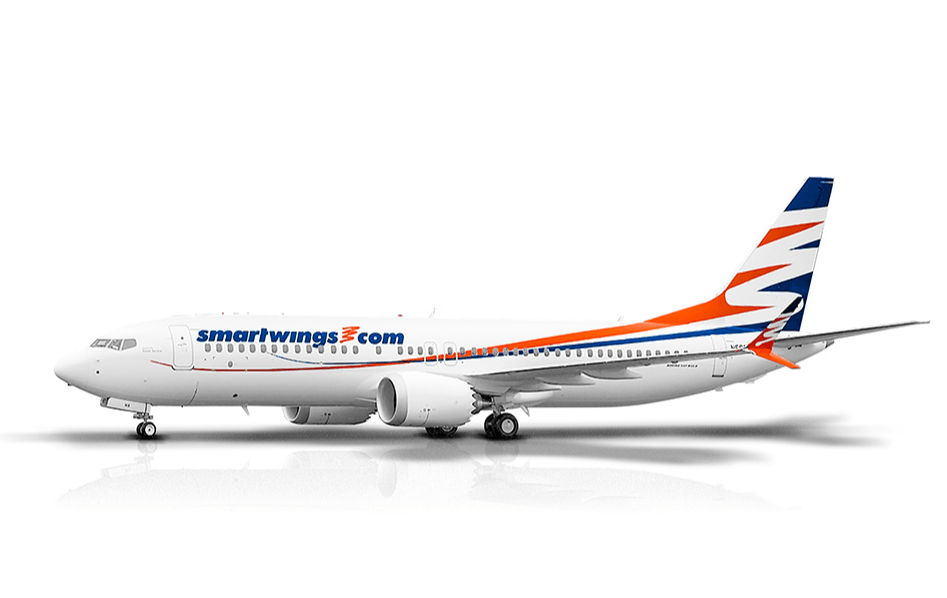 El reciente informe financiero entregado de la constructora aeronáutica ha impacto en las arcas de Boeing. La compañía dijo el miércoles que los ingresos del primer trimestre de US$ 11.800 millones, así como su flujo de caja, reflejaron menores entregas del 737 MAX.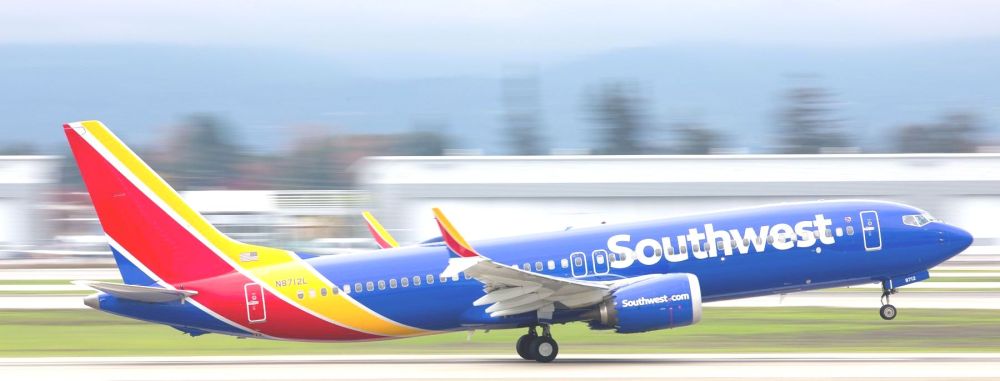
 Recovering the confidence of the 737 MAX
 The Boeing aircraft manufacturer says it is seeing steady progress in a software update to solve the problems that led to two fatal accidents. On Wednesday, Boeing offered a glimpse of how the work is progressing with his Boeing 737 MAX aircraft and the costs that the plane’s problems have imposed on the company. Boeing reserved unspecified charges related to the development of a solution for MCAS and pilot training, and was progressing steadily towards software certification after completing more than 135 test and production flights.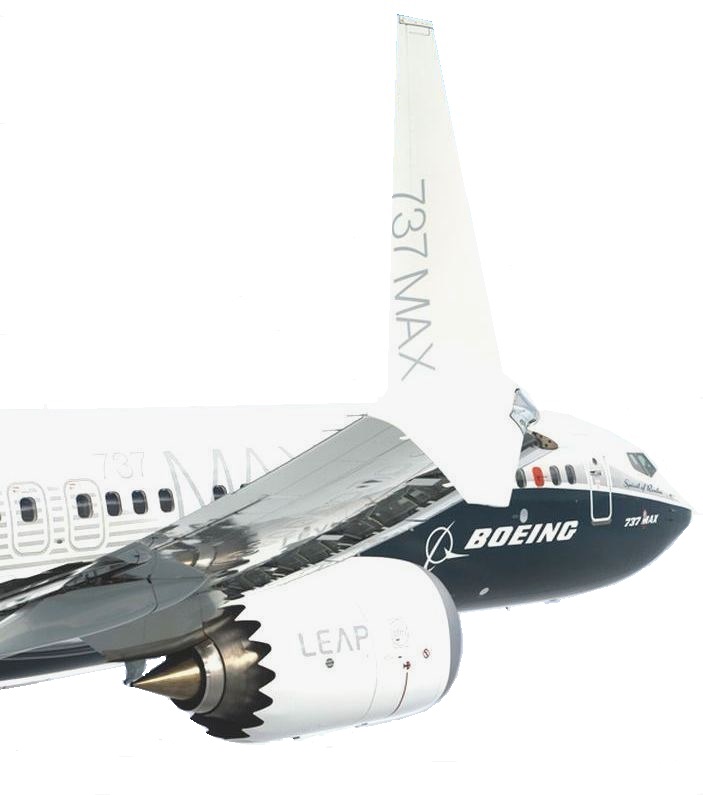


 AW | 2019 04 24 16:10 | AIRLINES ROUTES
 Flybondi comenzó a operar 2 nuevas rutas desde Córdoba hacia Salta y Neuquén

 Tucumán-Rosario
 Flybondi to Salta and Neuquén
 Flybondi started operating 2 new routes from Córdoba to Salta and Neuquén
 AW | 2019 04 24 14:47 | AIRLINES ROUTES
 JetSmart inauguró las rutas Buenos Aires-Salta
 JetSmart inaugurates new routes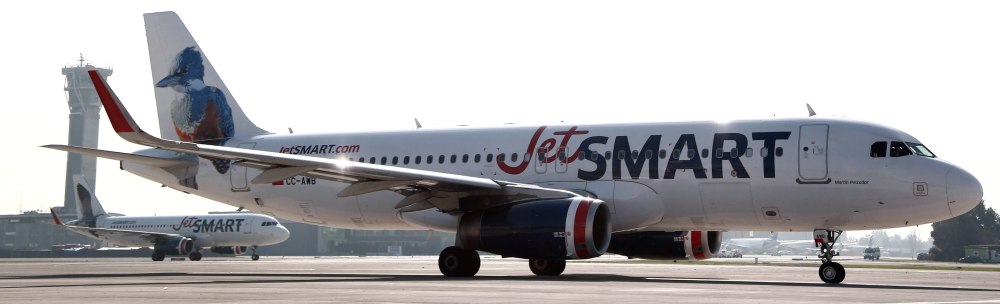

 Caen ganancias de Boeing por crisis de avión 737 MAX
 Profit reduction in Boeing
 Boeing profits fall due to 737 MAX airplane crisis
 United Airlines presentación pública nueva librea
 United Airlines presents new look
 United Airlines public presentation new livery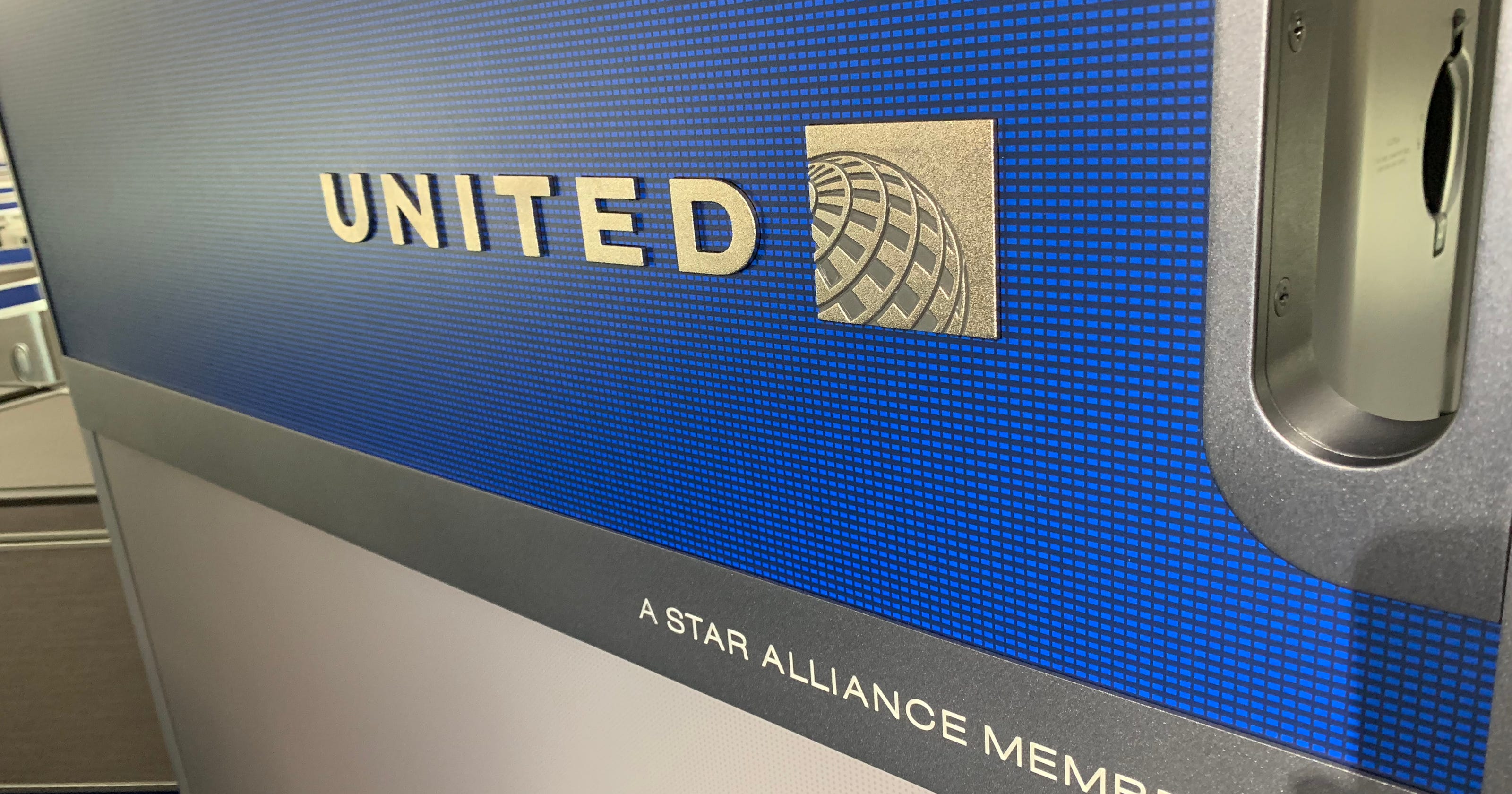
 Atlantic Airways iniciará servicio transatlántico non-stop Vagar-New York
 Atlantic Airways will start transatlantic service
 Atlantic Airways will start non-stop transatlantic service Vagar-New York
 Atlantic Airways intends to deploy an Airbus A320NEO aircraft in this service. It is expected that the first A320NEO for the airline will arrive in March 2019 with a configuration of 174 seats, replacing an A319 and another A320NEO in 2Q2020. The current fleet of Atlantic Airways is Airbus A319 (2) with 144 seats and A320CEO (1) with 168 passengers.
 Atlantic Airways vil starte transatlantisk service
 Atlantic Airways vil starte non-stop transatlantisk service Vagar-New York