Promisorios cielos argentinos

AW | 2016 05 27 18:46 | CONGRESS

IATA congregó a la elite aerocomercial argentina al «Aviation Day»

Este viernes, 27 de mayo de 2016, los actores protagónicos de la aviación comercial se dieron cita por primera vez en el evento del Aviation Day, que organizó la Asociación Internacional de Transporte Aéreo (IATA), a celebrarse en Buenos Aires.
El cambio de Gobierno y la salida de la cúpula de La Cámpora de la gran mayoría de las empresas y los organismos estatales les dio aire a los actores del sector aerocomercial.

AVIATION DAY, organizado por la IATA

Lo expresó la CEO de LAN Argentina, Rosario Algelt. «Hace 10 años que no tenemos la posibilidad de dialogar, que no podemos hablar con el Gobierno. Sentimos que ahora tenemos una oportunidad y podemos ser protagonistas», dijo en un panel. Hasta se dio lugar para confesar que llamaron «trinchera» al tiempo que pasó aquí y que la empresa sólo se dedicó a sobrevivir. «Vivimos tiempos muy difíciles», subrayó. LAN tiene hoy el 25% del cabotaje y una porción similar del mercado internacional.
El optimismo aéreo se vivió desde temprano. «Esto sirve para generar atención en los temas prioritarios y trabajar en un diálogo público-privado para acompañar el proceso de crecimiento para duplicar las operaciones en cinco años, con buena coordinación y ejecución», dijo Christoff Poppe, presidente de JURCA, la cámara de las líneas aéreas. El Gobierno mostró que el sector está resaltado en la agenda. Por el Hotel Hilton pasaron todos los funcionarios que intervienen en el área.
Esta vez no hubo palabras medidas. Las aerolíneas repitieron que los servicios de Ezeiza, especialmente, eran caros y que la infraestructura estaba lejos de ser óptima. Los funcionarios escucharon. Patricio Di Stéfano del ORSNA, organismo de seguridad de la navegación aérea, coincidió. Dijo que saben que los precios en los vuelos internacionales son caros y en los de cabotaje, baratos. Poco antes, Matías Patanian, CEO de Aeropuertos Argentina 2000, coincidió. «Es que es una lectura injusta. Operamos un sistema de aeropuertos, la mayoría son deficitarios. Entonces, los superavitarios subsidian a los otros». Contestó, y nadie se ofendió.
Parece ser que los cielos argentinos pronto se irán despejando, trayendo consigo esa tan añorada y promisoria industria aérea que un día tuvo la Argentina, y que un día que soñamos volver a tener. AIRGWAYS ® Icon-AW


Argentine promising heaven

IATA brought to Argentina aerocomercial elite to «Aviation Day»

This Friday, May 27, 2016, the leading actors of commercial aviation appointment for the first time in the event of Aviation Day, organized by the International Air Transport Association (IATA) to be held in Buenos Aires were given.

The change of government and the output of the dome of La Campora of the vast majority of businesses and government agencies gave air to the commercial aviation industry stakeholders.
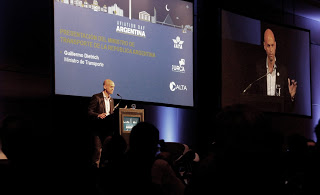
He expressed the CEO of LAN Argentina, Rosario Algelt. «10 years ago we do not have the possibility of dialogue, we can not talk with the government. We feel that we now have an opportunity and we can be protagonists,» he said in a panel. Until he to confess place they called «trench» the time spent here and that the company only devoted himself to survive. «We live very difficult times,» he said. LAN today has 25% of cabotage and a similar share of the international market.

Air optimism lived early. «This serves to generate attention on priority issues and work in a public-private dialogue to accompany the growth process to duplicate operations in five years, with good coordination and execution,» said Christoff Poppe, president of JURCA, camera airlines. The Government showed that the sector is highlighted in the agenda. The Hotel Hilton spent all officials involved in the area.

This time there was no measured words. Airlines repeated that the services of Ezeiza, especially, were expensive and that the infrastructure was far from optimal. The officials listened. Patrick Di Stefano of ORSNA, body safety of air navigation, agreed. He said they know that prices on international flights are expensive and in coastal, cheap. Earlier, Matthias Patanian, CEO of Aeropuertos Argentina 2000, agreed. «It is an unjust reading. We operate an airport system, most are deficient. So surplus subsidize others.» He answered, and no one was offended.

It seems that the Argentines will soon clearing skies, bringing the so longed airline industry and promising that one day had the Argentina, and that one day we dream again have. A\W

Ξ A I R G W A Y S Ξ
SOURCE:  AIRGWAYS
DBk: Photographic © Aviation Day (IATA)
AW-POST: 201605271846AR

Incendio motor Korean Air KE2708

AW | 2016 05 27 17:46 | AIR CRASH INVESTIGATION

KOREAN AIR KE2708

Un avión de Korean Air Lines fue evacuado en el aeropuerto Haneda de Tokio después de un motor se incendió el viernes. Todos los 302 pasajeros y 17 miembros de la tripulación desembarcaron y había 19 personas con lesiones, dijo un portavoz de Ministerio de Transporte de Japón el viernes. El alcance de las lesiones no se conoce todavía, dijo.
El avión Boeing 777 estaba a punto de salir a Seúl de Haneda, cuando se observó el fuego. La pista de aterrizaje se mantuvo cerrada mientras que otras tres pistas de aterrizaje habían vuelto a abrir. ANA Holdings Inc. y Japan Airlines Co., portadores más grandes del país, cancelaron 277 vuelos, afectando a cerca de 55.690 pasajeros.

«Llegamos hasta aproximadamente el 70 o el 80 por ciento de la velocidad necesaria para el despegue y luego se frenó de golpe,» Jack Harrison, un estudiante de 37 años de edad, en la Universidad Internacional Cristiana al oeste de Tokio, que se encontraba en vuelo KE2708. «Durante los siguientes 20 segundos hubo un poco de deslizar a izquierda y derecha. Hubo un poco de gritando y gritando, pero nada excesivo.»
El fuego fue apagado, Kyosuke Okada, un portavoz del Ministerio de Transporte de Japón dijo, y los restantes pasajeros regresó a la terminal. Korean Air dijo que está investigando la causa del incendio, según un comunicado de la empresa con sede en Seúl.
El accidente más reciente de Korean Air fue en 2000, cuando una aleta de un avión de carga Boeing 747 se interrumpió y se punza el fuselaje dejando un agujero de un metro, según el sitio web de la Red de Seguridad Aérea. No hubo muertes de ese incidente, dijo de Seguridad Aérea.
«El único momento en que mi ritmo cardíaco subió fue cuando los asistentes de vuelo comenzaron a gritar para que vayamos por los toboganes,» dijo Harrison, que estaba esperando para embarcar en un vuelo especial montado por Korean Air a tomar los pasajeros a Seúl. «Aparte de eso, fue relativamente tranquila.» A \ W


Korean Air plane evacuated after engine fire at Tokyo’s Haneda airport

A Korean Air Lines plane was evacuated at Tokyo’s Haneda airport after an engine caught fire on Friday.

All 302 passengers and 17 crew members disembarked and there were 19 people with injuries a spokesman for Japan’s transport ministry said on Friday. The extent of the injuries isn’t known yet, he said.

The Boeing 777 plane was about to depart to Seoul from Haneda when the fire was noticed.

The runway remained closed while three other runways had reopened. ANA Holdings Inc. and Japan Airlines Co., the nation’s largest carriers, cancelled 277 flights, affecting about 55,690 passengers.

«We got up to about 70 or 80 per cent of the speed required to take off and then they slammed on the brakes,» Jack Harrison, a 37-year-old student at the International Christian University west of Tokyo, who was on flight KE2708.

«For the next 20 seconds there was a little sliding left and right. There was a little bit of screaming and shouting, but nothing excessive.»

The fire was put out, Kyosuke Okada, a spokesman for Japan’s transport ministry said, and the remaining passengers returned to the terminal building.

Korean Air said it is investigating the cause of the fire, according to a statement from the Seoul-based company.

Korean Air’s most recent accident was in 2000 when a flap from a Boeing 747 freighter aircraft broke off and punctured the fuselage leaving a one-meter hole, according to the Aviation Safety Network website. There were no fatalities from that incident, Aviation Safety said.

«The only moment my heart rate went up was when the flight attendants started shouting for us to go down the chutes,» said Harrison, who was waiting to board a special flight put on by Korean Air to take the passengers to Seoul. «Apart from that it was relatively calm.» A\W

Ξ A I R G W A Y S Ξ
SOURCE: stuff.co.nz
DBk: Photographic © Reuters / ABC News / AP
AW-POST: 201605271746AR

El extraño caso del héroe falso del KL569

AW | 2016 05 27 16:41 | AIRLINES
SEAN Davies estaba sintiendo abajo sobre sí mismo, y decidió el perfecto «pick-me-up» sería que cada uno pensara que era un héroe. Así que a los 23 años de edad, de Oregon, Estados Unidos, se le ocurrió un plan extraño para que esto suceda – en un avión. Él eligió KLM Royal Dutch Airlines Vuelo 569 de Amsterdam a Kilimanjaro, Tanzania como la escena de la «heroicidad».
Davies colocó una bomba falsa en el lavabo y cerca de tres horas en el viaje, que alertó a la tripulación a un alambre extraño que sobresalía de un armario en el cuarto de baño. – Y otros cables – se une a una botella de vino en miniatura. El capitán estaba bastante seguro de que todo era una broma, pero él desvió el avión con 271 pasajeros a bordo a El Cairo después de discutir la situación con la seguridad KLM.
Sin embargo, la tripulación de vuelo cluey no se deje engañar por el intento de Davies en el heroísmo, de inmediato sospechar que él había sido el que plantó el dispositivo. Cuando el avión aterrizó, fue entrevistado por las autoridades egipcias, pero negó las acusaciones y continuó su viaje. Dos meses más tarde fue entrevistado de nuevo por la policía en Amsterdam, mientras que cambiar de avión en su viaje de regreso desde África a los EE.UU..
Una vez más, él lo negó, poniendo sus frecuentes viajes al baño a ser un alcohólico con cálculos renales, y diciendo que su cargador de iPhone atrapado encendida mientras que en África. Una vez en Estados Unidos, fue recibido por el FBI y acepta responder a una prueba de polígrafo. Luego, más tarde, se negó pero el polígrafo le dijo que la prueba no era necesario, porque era obvio que estaba mintiendo.
Davies luego confesó, diciendo que quería aparecer un héroe por lo que construyó la bomba falsa con una botella de vino, una batería e-cigarrillo, agua, jabón, un cable de carga iPhone y los auriculares distribuidos en el vuelo.

En febrero, Davies se declaró culpable de transmitir información falsa sobre un dispositivo que podría destruir o dañar una aeronave sobre el incidente ocurrido en octubre de 2014. Y ahora, que ha evitado una pena de prisión, con el juez de distrito Michael Mosman lo condenó a cinco años de libertad condicional en la toma transmitido durante el fin de semana. También debe pagar una restitución de KLM.

«Yo quiero que entiendan que esta detención y esta convicción son en realidad una flecha en la vida que lo llevan a un lugar terrible», advirtió el Sr. Mosman. «Y sólo por sus propias acciones se puede bajar ese camino.» Davies ha recibido tratamiento para el alcoholismo y ahora tiene un trabajo estable como vendedor de joyas. Ha pedido perdón a la línea aérea, compañeros de viaje, su familia y el Gobierno de Estados Unidos, diciendo que ya no es el «niño» irresponsable que cometió ese acto.
«Dicen que nunca se aprende si no comete errores. Mientras mis errores han sido un poco más grande que lo que me gustaría, necesitaba tener esta patada para que pudiera darme cuenta del camino que dirigía». KLM calculó sus pérdidas desde el incidente para ser $ 117.220, y Davies ya ha pagado la mitad del dinero. AIRGWAYS ® Icon-AW

The strange case of the false hero KL569

SEAN Davies was feeling down about himself, and decided the perfect pick-me-up would be for everyone to think he was a hero.
So the 23-year-old from Oregon, US, came up with a bizarre plan to make this happen — on a plane.
He chose KLM Royal Dutch Airlines Flight 569 from Amsterdam to Kilimanjaro, Tanzania as the scene of the “heroism”.
Davies planted a fake bomb in the lavatory and about three hours into the trip, he alerted the crew to a strange wire that was sticking out of a cabinet in the bathroom. It — and other cables — were attached to a miniature wine bottle.
The captain was pretty sure that it was all just a prank, but he diverted the plane with 271 passenger on-board to Cairo after discussing the situation with KLM security.
However, the cluey flight crew weren’t fooled by Davies’ attempt at heroism, straight away suspecting that he had been the one who planted the device.
When the plane landed he was interviewed by Egyptian authorities but denied the claims and continued his trip. Two months later he was interviewed again by police in Amsterdam while changing planes on his return trip from Africa to the US.
Again, he denied it, putting his frequent trips to the bathroom down to being an alcoholic with kidney stones, and saying his iPhone charger caught alight while in Africa.
Once in America, he was met by the FBI and agreed to take a polygraph test. Then later on, he declined but the polygrapher told him the test wasn’t necessary, because it was obvious he was lying.

Davies then confessed, saying he wanted to appear a hero so built the fake bomb with a wine bottle, an e-cigarette battery, water, soap, an iPhone charging cord and the earphones distributed on the flight.
His story didn’t’ convince the crew. Picture: Lord of the Wings
His story didn’t’ convince the crew. Picture: Lord of the WingsSource:Flickr
In February, Davies pleaded guilty to conveying false information concerning a device which could destroy or damage an aircraft over the October 2014 incident.
And now, he has avoided a prison sentence, with US District Court Judge Michael Mosman sentencing him to five years probation in decision handed down over the weekend.
He must also pay restitution to KLM.
“I do want you to understand that this arrest and this conviction really are an arrow in life pointing you to a terrible place,” Mr Mosman warned. “And only by your own actions can you get off that path.”
Davies has received treatment for alcoholism and now has a steady job as a jewellery salesman.
He has apologised to the airline, fellow passengers, his family and the US Government, saying he’s no longer the irresponsible “boy” who committed that act.
“They say you never learn if you don’t make mistakes. While my mistakes have been a little larger than what I would like, I needed to have this kick so I could realise the path I was headed on.”
KLM calculated its losses from the incident to be $117,220, and Davies has already paid half the money. A\W

Ξ A I R G W A Y S Ξ
SOURCE: news.com.au
DBk: Photographic © hollandhouse-colombia.com
AW-POST: 201605271641AR

Rusia gastaría $ 1.5 mil millones en nuevos aviones para uso doméstico de aerolíneas

AW | 2016 05 27 16:14 | AIRLINES MARKET
Rusia es la asignación de 100 millones de rublos ($ 1.5 millones de dólares) del presupuesto del Estado para la construcción de Il-114 e IL-96-400 aviones, informó la agencia de noticias Meduza el viernes citando Comercio de Rusia y el ministro de Industria Denis Manturov.
Los primeros aviones Il-114, destinados a líneas aéreas locales, se espera que estén listos para el 2019, dijo Manturov. El ministerio invertirá 50 mil millones de rublos en los aviones Il-114 antes del año 2025.
El restante 50 millones se utilizarán para construir Il-96-400 aviones de largo recorrido, dijo Manturov, añadiendo que seis aviones de este tipo serán suministrados al Estado de Transporte Arrendadora antes de 2021.
De acuerdo con Manturov, el presidente Vladimir Putin personalmente eligió Il-114 sobre cuatro modelos de aviones regionales que ofrece el Ministerio, informó la agencia de noticias Interfax.
El Ilyushin Il-114 avión bimotor fue diseñado en la década de 1980 para las rutas locales e hizo su primer vuelo en 1990. Después de eso, los planes para la producción en serie de aviones Il-114 – supone que se puso en marcha en Uzbekistán – cayó a través de la colapso de la Unión Soviética.
Il-96-400 es una modificación de la IL-96 – el primer avión de fuselaje ancho de largo recorrido Soviética diseñado por la oficina de diseño Ilyushin en la década de 1980. AIRGWAYS ® Icon-AW


Russia to spend $1.5 billion on new planes for domestic airlines

Russia is allocating 100 billion rubles ($1.5 billion) from the state budget for the construction of Il-114 and Il-96-400 planes, the Meduza news agency reported Friday, citing Russian Trade and Industry Minister Denis Manturov.

The first Il-114 planes, intended for local airlines, are expected to be ready by 2019, Manturov said. The ministry will spend 50 billion rubles on Il-114 planes before 2025.

The remaining 50 billion will be used to build Il-96-400 long-haul planes, Manturov said, adding that six planes of this type will be supplied to the State Transport Leasing Company before 2021.

According to Manturov, President Vladimir Putin personally chose Il-114 over four models of regional aircraft offered by the Ministry, the Interfax news agency reported.

The Ilyushin Il-114 twin-engine airliner was designed in the 1980s for local routes and made its first flight in 1990. After that, plans for the serial production of Il-114 planes — supposed to be launched in Uzbekistan — fell through with the collapse of the Soviet Union.

Il-96-400 is a modification of the Il-96 — the first Soviet long-haul wide-body aircraft designed by the Ilyushin design bureau in 1980s. A\W

Ξ A I R G W A Y S Ξ
SOURCE: themoscowtimes.com
DBk: Photographic © Denis Grishkin / Vedomosti
AW-POST: 201605271614AR

No a los cielos abiertos en Argentina, no a privatización de Aerolíneas Argentinas

2819436 - copia

AW | 2016 05 28 15:55 | AIRLINES
Como se adelantó en Airgways, el gobierno argentino enfatizó que Aerolíneas no sería privatizada.
El ministro de Transporte y la CEO de la compañía, Isela Costantini, dijeron que trabajan en hacer viable la empresa bajando su déficit; anuncian una baja en los costos aeroportuarios del país.
El Gobierno les adelantó ayer a las aerolíneas que algunos costos para operar en la Argentina empezarán a reducirse. En medio de fuertes reclamos por el precio del sistema aeroportuario argentino, el ministro de Transporte, Guillermo Dietrich , anunció una baja de los costos de Intercargo, la firma estatal que brinda servicios de tierra a los aviones.
No fue todo. Dietrich negó una y 10 veces que existan planes para privatizar Aerolíneas Argentinas y dijo que sí se trabaja fuerte para que baje la dependencia de los subsidios que tiene la compañía estatal. «Es absolutamente falso que haya planes de privatizar la empresa y también de que se piense en una política de cielos abiertos para el país», dijo el ministro al ser consultado en el Aviation Day, que se lleva a cabo ayer en el hotel Hilton, organizado por la Asociación Internacional de Transporte Aéreo (IATA).
El anuncio fue puntual. Intercargo tiene tarifas que llegan a ser 150% más caras que la región e incluso están por encima de las que se cobran en Londres o Nueva York. «La Argentina aplica una de las tasas más caras de la región. Así no se puede caminar al desarrollo», dijo el presidente Regional de IATA, Peter Cerda.
En el Gobierno conocen esto. Por eso, el gesto de Dietrich de anunciarles a los aviadores un costo menor se interpretó como un guiño hacia un sector vapuleado por la anterior administración, especialmente, por los caprichos de los jóvenes camporistas. Fue casi una señal oficial de que los reclamos están en la agenda de los despachos del ministerio. «Igual sirve, aunque no alcanza, pero es un pequeño paso que ayuda», dijo el presidente de una línea aérea internacional.
«Ya se bajó el precio en dólares de Intercargo en un cinco por ciento. A esa baja se sumará otro cinco por ciento adicional. Es una manera de hacer algo más competitiva la Argentina», dijo el ministro.
Poco después, el presidente de Intercargo, Mario Dell ‘Acqua dio más detalles a LA NACION. Dijo que se implementará entre septiembre y octubre próximo y que se estudiará en qué tipo de servicio merece que se apliquen las rebajas. «Va a ser un descuento lineal de un cinco por ciento, aunque después miremos si en algunos rubros se hace más y en otros menos. Pero el promedio será ese, de cinco por ciento», dijo.
Dietrich seguía por ahí. Dijo que tanto el Gobierno como la Aerolíneas trabajan en hacer la empresa viable y que miran con detalle cada uno de los gastos de la línea aérea. «La plata es de todos. Y todos sabemos la situación fiscal del país. La mejor forma de sostener la empresa es hacerla sustentable. Para eso trabajamos, y de hecho, los números del primer cuatrimestre son los mejores en mucho tiempo», agregó. Luego agregó que trabaja para que la Argentina duplique los pasajeros de cabotaje.
Allí estaba toda la industria local. El ministro fue uno de los primeros en hablar y se quedó hasta el mediodía cuando, sentado entre las mesas, escuchó a la CEO de Aerolíneas Argentinas, Isela Costantini . «Tomamos una empresa que no tenía gestión. Por eso hay muchas oportunidades de mejorar los procesos y bajar el déficit», dijo. Luego contó que Optar no tiene balances desde 2008 y que están en proceso de terminar los de Aerolíneas de 2014 y 2015. «Estamos trabajando para hacer más eficiente una flota que heredamos y que se compró sin un plan de negocios atrás», agregó Costantini.
No hubo muchas precisiones sobre los pasos futuros: no era para menos, la escuchaba toda la competencia. Luego sí, algunos guiños a los empleados de la empresa. «Encontré un grupo muy comprometido, es una compañía a la que los propios empleados quieren mucho. El desafío es cómo transformar ese compromiso en algo sustentable», finalizó. AIRGWAYS ® Icon-AW


Not the open skies in Argentina, not privatization Aerolíneas Argentinas

As he advanced in Airgways, the Argentine government emphasized that airlines would not be privatized.

Minister of Transport and the CEO of the company, Isela Costantini, said working in make viable the company lowering its deficit; They announce low cost airport of the country.

The Government yesterday ahead of them some cost airlines to operate in Argentina will begin to decline. Amid strong claims for the price of Argentinian airport system, Transport Minister Guillermo Dietrich, she announced a low cost of Intercargo, the state company that provides ground services to aircraft.

It was not all. Dietrich denied 10 times over and there are plans to privatize Aerolíneas Argentinas and said yes it works hard to lower the dependence on subsidies that has the state company. «It is absolutely false that there are plans to privatize the company and they think a policy of open for the country heavens,» said the minister when asked at the Aviation Day, which was held yesterday at the Hilton hotel, organized by the International Air Transport Association (IATA).

The announcement was timely. Intercargo rates has become 150% more expensive than the region and are even above those charged in London or New York. «Argentina applies one of the most expensive rates in the region. So you can not walk to development,» said Regional President of IATA, Peter Cerda.

In the government they know this. So Dietrich gesture to announce aviators lower cost interpreted as a nod to a sector battered by the previous administration, especially by the whims of young camporistas. It was almost an official sign that the claims are on the agenda of the offices of the ministry. «Just serves, but not enough, but it is a small step that helps,» said the president of an international airline.

«Now the price is lowered dollar Intercargo by five percent. At this low will add another additional five percent. It’s a way to do something more competitive Argentina,» said the minister.

Shortly thereafter, President of Intercargo, Mario Dell ‘Acqua gave details to the La Nación (lanacion.com.ar). He said that will be implemented between September and October to be studied next and what kind of service deserves rebates apply. «It will be a straight discount of five percent, but then look if in some areas becomes more and some less. But the average is that, five percent,» he said.

Dietrich was still out there. He said both the government and the airlines work to make the company viable and looking in detail each of the expenses of the airline. «Silver is all. And we all know the fiscal situation of the country. The best way to sustain the company is to make it sustainable. For this work, and in fact, the numbers of the first quarter are the best in a long time,» he added. He added that Argentina is working to double the cabotage passengers.

Here was the entire local industry. The minister was one of the first to speak and stayed until noon when, sitting among the tables, he heard the CEO of Aerolíneas Argentinas, Isela Costantini. «We took a company that had no management. So there are many opportunities to improve processes and lower the deficit,» he said. Opting then said he has no balances since 2008 and are in the process of completing Aerolíneas 2014 and 2015. «We are working to streamline fleet we inherited and bought without a business plan behind,» said Costantini.

There were many details about future steps: it was no wonder, listening all the competition. Then yes, some winks to employees of the company. «I found a very committed group, is a company that employees themselves want much. The challenge is how to transform this commitment into something sustainable,» he concluded. A\W

Ξ A I R G W A Y S Ξ
SOURCE: lanacion.com.ar
DBk: Photographic ©
AW-POST: 201605281555AR

A I R G W A Y S

Annelies Huijzer - 2 (1)

AW | 2016 05 27 21:21 | ADVERTISING
«Los pájaros nacidos en jaula creen que volar es una enfermedad»
Alejandro Jodorowsky
Nada más lejos que la realidad.
¡Bienvenidos a bordo a A I R G W A Y S!
Relájese y disfrute de su viaje.

«The birds born in cage believe that flying is a disease»
Alejandro Jodorowsky
Nothing further than reality.

Welcome aboard to A I R W A Y S!
Relax and enjoy your trip.

PHOTO CREDIT: Annelies Huijzer
PLACE: Un Fokker 70 de KLM Cityhopper en aproximación final al Aeropuerto de Schiphol, Amsterdam, Países Bajos
LUGAR: A KLM Cityhopper Fokker 70 on final approach to Schiphol Airport, Amsterdam, Netherlands
LOCATIE: Een KLM Cityhopper Fokker 70 over de eindnadering van de Luchthaven Schiphol, Amsterdam, Nederland


Ξ A I R G W A Y S Ξ
SOURCE: AIRGWAYS
DBk: Photographic © AIRGWAYS
AW-ADV Tittle: «Birds without a cage are free»
AW-ADV20160527-003
AW-POST: 201605272121AR


Schiphol quiere aeropuerto adicional en Haarlemmermeer

AW | 2016 05 27 19:42 | AIRPORTS
El aeropuerto de Schiphol se expandirá en un aeropuerto adicional en el Haarlemmermeer. Schiphol-Oeste tiene que defecar después de 2030 Schiphol Centre.
Se necesita la nueva rama entre el A4 y A5. Los planes de expansión actuales no son suficientes para absorber el crecimiento en el largo plazo. «Ofrecemos la expansión región de Amsterdam con un segundo edificio de llegada y de salida y una séptima pista», dice Schiphol a De Telegraaf.

Según el diario, la coalición se divide sobre la posible ampliación. El VVD sería que el plan, mientras que el trabajo tendría reservas. Una decisión real probablemente no es tomada por este gobierno.
Un detalle interesante es que el desarrollador zona Chipshol en el área de orientación quería construir un aeropuerto de la ciudad. Después de la lucha eenjarenlange con Schiphol y las autoridades de la pata de la familia dio a estos planes.  AIRGWAYS ® Icon-AW


Schiphol wil extra vliegveld in Haarlemmermeer

Luchthaven Schiphol wil verder uitbreiden met een extra vliegveld in de Haarlemmermeer. Schiphol-West moet na 2030 Schiphol-Centrum gaan ontlasten.

De nieuwe dependance moet komen tussen de A4 en A5. De huidige uitbreidingsplannen zijn niet genoeg om de groei op te kunnen vangen op de lange termijn. ‘We voorzien in de regio Amsterdam uitbreiding met een tweede aankomst- en vertrekgebouw en een zevende baan’, aldus Schiphol tegen De Telegraaf.

Volgens de krant is de coalitie verdeeld over de eventuele uitbreiding. De VVD zou voor de plannen zijn, terwijl PvdA haar bedenkingen zou hebben. Een daadwerkelijk besluit wordt waarschijnlijk niet meer door dit kabinet genomen.

Interessant detail is dat gebiedsontwikkelaar Chipshol in het beoogde gebied een ‘Airport City’ wilde bouwen. Na een jarenlange strijd met Schiphol en de autoriteiten gaf de familie Poot die plannen op. A\W

Ξ A I R G W A Y S Ξ
SOURCE: at5.nl / De Telegraaf.nl
DBk: Photographic ©
AW-POST: 201605271942AR

Aerolíneas Argentinas no se privatiza

AW | 2016 05 27 19:27 | AIRLINES
El ministro descartó esas posibilidades y dijo que trabajan para duplicar el mercado de cabotaje; anunció una rebaja en los costos de Intercargo.
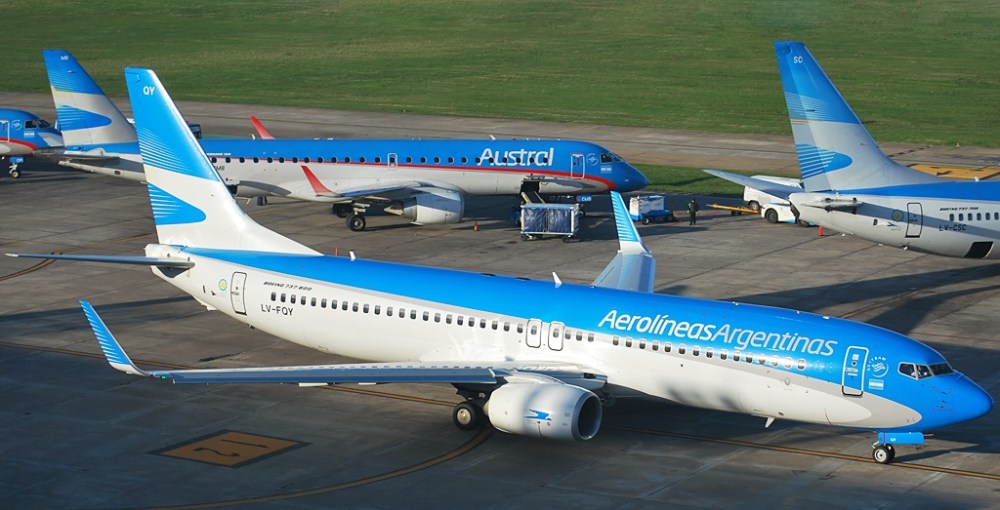
No hubo grandes anuncios, pero al menos el Gobierno les adelantó a las aerolíneas que algunos costos para operar en la Argentina empezarán a reducirse. En medio de fuertes reclamos por el precio del sistema aeroportuario argentino, el ministro de Transporte, Guillermo Dietrich , anunció una baja de los costos de Intercargo, la firma estatal que brinda servicios de tierra a los aviones.
No fue todo. Dietrich negó una y diez veces que haya planes para privatizar Aerolíneas Argentinas y dijo que sí se trabaja fuerte para que baje la dependencia de los subsidios que tiene la compañía estatal. «Es absolutamente falso que haya planes de privatizar la empresa y también de que se piense en una política de cielos abiertos para el país», dijo el ministro al ser consultado en el Aviation Day, un que se lleva a cabo hoy en el hotel Hilton, organizado por la Asociación Internacional de Transporte Aéreo (IATA).

2819436

El anuncio fue puntual. Intercargo tiene tarifas que llegan a ser 150% más caras que la región e incluso están por encima de las que se cobran en Londres o Nueva York. «La Argentina aplica una de las tasas más caras de la región. Así no se puede caminar al desarrollo», dijo el presidente Regional de IATA, Peter Cerda.
En el Gobierno conocen esto. Por eso, el gesto de Dietrich de anunciarles a los aviadores un costo menor, se interpretó como un gesto hacia un sector vapuleado por la anterior administración, especialmente, por los caprichos de los jóvenes camporistas. Fue casi una señal oficial de que los reclamos por el costo argentino están en la agenda de los despachos del ministerio. «Igual sirve, aunque no alcanza es un pequeño paso que ayuda», dijo el presidente de una línea aérea internacional.
«Ya se bajó el precio en dólares de Intercargo en un cinco por ciento. A esa baja se sumará otro cinco por ciento adicional. Es una manera de hacer algo más competitiva la Argentina», dijo el ministro. Poco después, el presidente de Intercargo, Mario Dell´ Acqua dio más detalles a LA NACION. Dijo que se implementará entre septiembre y octubre y que se estudiará en qué tipo de servicio merece que se apliquen las rebajas. «Va a ser un descuento lineal de un cinco por ciento, aunque después miremos si en algunos rubros se hace más y en otros menos. Pero el promedio será ese, de cinco por ciento», dijo.
Dietrich seguía por ahí. Dijo que tanto el Gobierno como la Aerolíneas trabajan en hacer la empresa sustentable y que miran con detalle cada uno de los gastos de la línea aérea. «La plata es de todos. Y todos sabemos la situación fiscal del país. La mejor forma de sostener la empresa es hacerla sustentable. Para eso trabajamos, y de hecho, los números del primer cuatrimestre son los mejores en mucho tiempo», agregó. Luego agregó que trabaja para que la Argentina duplique los pasajeros de cabotaje.
Allí estaba toda la industria local. El ministro fue uno de los primeros en hablar y se quedó hasta el mediodía cuando, sentado entre las mesas, escuchó a la CEO de Aerolíneas Argentinas, Isela Costantini . Antes hubo un panel de infraestructura. Fue casi una terapia de grupo. Lamentos y más lamentos de todos los actores de los llamados fierros de la industria. Por ahora, la distancia con la infraestructura necesaria es enorme. Y sólo se llega después de años de inversión, obra y planificación. AIRGWAYS ® Icon-AW

Aerolineas Argentinas is not privatized

 There were big announcements, but at least the government ahead of them some cost airlines to operate in Argentina will begin to decline. Amid strong claims for the price of Argentinian airport system, Transport Minister Guillermo Dietrich, she announced a low cost of Intercargo, the state company that provides ground services to aircraft.

It was not all. Dietrich denied one ten times you have plans to privatize Aerolíneas Argentinas and said yes it works hard to lower the dependence on subsidies that has the state company. «It is absolutely false that there are plans to privatize the company and they think a policy of open for the country heavens,» said the minister when asked at the Aviation Day, a which takes place today at the Hilton hotel , organized by the International Air Transport Association (IATA).

The announcement was timely. Intercargo rates has become 150% more expensive than the region and are even above those charged in London or New York. «Argentina applies one of the most expensive rates in the region. So you can not walk to development,» said Regional President of IATA, Peter Cerda.

In the government they know this. So Dietrich gesture to announce aviators lower cost, was interpreted as a gesture to a sector battered by the previous administration, especially by the whims of young camporistas. It was almost an official sign that the Argentine cost claims are on the agenda of the offices of the ministry. «Just serves, but does not reach is a small step that helps,» said the president of an international airline.

«Now the price is lowered dollar Intercargo by five percent. At this low will add another additional five percent. It’s a way to do something more competitive Argentina,» said the minister. Shortly thereafter, President of Intercargo, Mario dell’ Acqua gave details to the LA NACION. He said that will be implemented between September and October and will study what kind of service deserves rebates apply. «It will be a straight discount of five percent, but then look if in some areas becomes more and some less. But the average is that, five percent,» he said.

Dietrich was still out there. He said both the government and the airlines working to make sustainable business and looking in detail each of the expenses of the airline. «Silver is all. And we all know the fiscal situation of the country. The best way to sustain the company is to make it sustainable. For this work, and in fact, the numbers of the first quarter are the best in a long time,» he added. He added that Argentina is working to double the cabotage passengers.

Here was the entire local industry. The minister was one of the first to speak and stayed until noon when, sitting among the tables, he heard the CEO of Aerolíneas Argentinas, Isela Costantini. Before there was a panel of infrastructure. It was almost a therapy group. Moans and groans of all players in the industry called iron bars. For now, the distance with the necessary infrastructure is huge. And it only comes after years of investment, work and planning. A\W

Ξ A I R G W A Y S Ξ
SOURCE: lanacion.com.ar
DBk: Photographic © tn.com.ar / Baires Photographic
AW-POST: 201605271927AR

Aerolíneas incorpora nuevo B737-800

10648276_890255464326378_6223032056191668541_o

AW | 2016 05 27 18:58 | AIRLINES
CON ESTA INCORPORACIÓN LA EMPRESA DE BANDERA PASA A CONTAR CON 76 AVIONES OPERABLES PARA VUELOS DE CABOTAJE Y REGIONALES. LA FLAMANTE AERONAVE ARRIBÓ A EZEIZA LA SEMANA PASADA PROCEDENTE DE LA FÁBRICA DE SEATLE.

La flamante aeronave arribó a Ezeiza la semana pasada procedente de la fábrica de Seatle y forma parte del plan de adquisiciones elaborado por la empresa para la renovación de su flota, ya que con esta incorporación se dio de baja a un Boeing 737-700, según se informó.

El avión posee la matrícula LV-GGQ, tiene una capacidad de 160 pasajeros y cuenta con todos los adelantos tecnológicos de última generación.

El interior de la cabina del nuevo 737/800 posee iluminación LED que es modificada en su tonalidad según las distintas etapas del vuelo, para la comodidad permanente del pasajero.

El nuevo equipo ya se encuentra operando las rutas de Aerolíneas Argentinas, tanto en lo que hace a los servicios de cabotaje como a los regionales. AIRGWAYS ® Icon-AW


Aerolineas Argentinas incorporated a new Boeing 737-800

JOINING THIS COMPANY HAVE BANNER GOES OPERABLE 76 PLANES FOR DOMESTIC FLIGHTS AND REGIONAL. THE BRAND plane arrived at EZEIZA LAST WEEK FROM SEATTLE FACTORY.

The brand new aircraft arrived at Ezeiza last week from Seatle factory and is part of the procurement plan prepared by the company for the renewal of its fleet, because with this addition was retired to a Boeing 737-700, according it was informed.

The aircraft has the LV-GGQ enrollment, has a capacity of 160 passengers and has all the latest technological advances.

The interior of the cabin of the new 737/800 has LED lighting which is modified in its tone according to the different phases of flight, for permanent passenger comfort.

The new equipment is already operating the routes of Aerolineas Argentinas, both in regard to cabotage services as regional. A\W

Ξ A I R G W A Y S Ξ
SOURCE: Telam.com.ar
DBk: Photographic © airinfo.org
AW-POST: 201605271858AR