
AW | 2017 02 19 15:03 | INDUSTRY
 Boeing reservó 26 pedidos y entregó 44 aviones en enero.Boeing espera que los pedidos rastreen la cifra del año pasado de 660 pedidos. El 2017 va a ser otro año difícil para acumular pedidos
En 2016, cubrieron los pedidos y las entregas de Boeing y Airbus con informes mensuales. En 2017, continuaré esta cobertura, ya que da una idea de rendimiento actual, así como la capacidad de los respectivos fabricantes para crecer libros de pedidos y, posiblemente, las ganancias en el futuro en los libros de pedidos saludables. Junto a eso la entrada de pedidos en un reflejo casi directo del entorno de mercado en el mercado de aviones comerciales.
Pedidos

Figura 1: Pedidos enero 2017 (Fuente: AeroAnalysis)
El mes de enero de Boeing fue un mes naturalmente lento con sólo 26 pedidos. El lento comienzo vuelve casi cada año, ya que los fabricantes de aviones intentan finalizar los pedidos antes de fin de año, dejando sólo un puñado de pedidos para ser finalizados en el primer mes del año siguiente.
En enero, Boeing reservó 26 órdenes divididas entre 18 aviones de cuerpo ancho y 8 aviones de cuerpo estrecho:
La aerolínea nigeriana Arik Air ordenó 2 aviones Boeing 787-9, agregando a la orden existente para 7 órdenes para el mismo avión. Las órdenes vienen en lugar del Boeing 747-8I, que nunca pareció ser apto para la flota. Si cualquiera de estas órdenes dará lugar a una entrega sigue por verse ya que el transportista se enfrenta a dificultades financieras y se ha sometido a control estatal.
Un cliente no identificado ordenó 1 Boeing 777F. Creo que este cliente no identificado podría ser FedEx.
15 aviones Boeing 767-2C fueron ordenados para el Programa de Petroleros de la Fuerza Aérea de los Estados Unidos.
Un cliente de aviones de negocios pidió un Boeing 737 MAX.
Un cliente no identificado ordenó 5 aviones Boeing 737 MAX.
Un segundo cliente no identificado ordenó 2 aviones Boeing 737-800
A pesar de que la entrada de pedidos de enero es naturalmente débil, hay que señalar que la orden comercial en el primer mes de 2017 mostró sólo 11 órdenes, ya que los 15 aviones Boeing 767-2C se convertirán en aviones cisterna. En comparación con la entrada de pedidos en enero de 2016, la entrada total de pedidos se redujo en 3 unidades, lo que no es demasiado malo, pero sigue muy por debajo del promedio de 5 años de 42,6 pedidos para el mes de enero.
Entregas
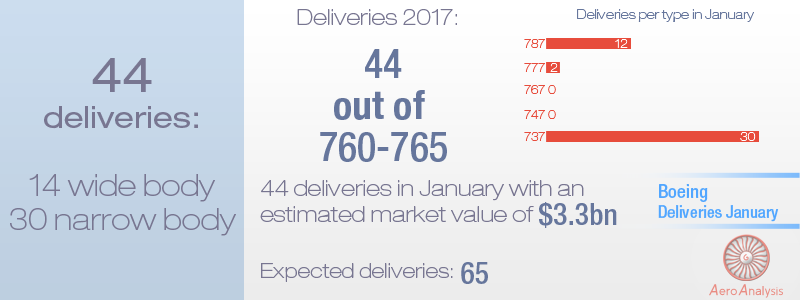
Figura 2: Entregas enero (Fuente: AeroAnalysis)
En 2016, Boeing entregó 748 aviones, algo menos que su récord en 2015. Para 2017, Boeing pretende entregar entre 760 y 765 aviones, lo que está más o menos en línea con las entregas en 2015.
En enero, Boeing entregó 44 aviones divididos entre 14 cuerpos anchos y 30 cuerpos estrechos:
No hubo entregas de cuerpo ancho para el Boeing 767 y el Boeing 747.
Boeing entregó sólo 2 aviones Boeing 777, mucho más bajos que la tasa de producción de 7 aviones por mes.
Boeing 787 entregas estaban en línea con la tasa de producción.
Las entregas para el Boeing 737 fueron muy bajas en comparación con la tasa de producción de 42 aviones al mes.
Las entregas de un año a otro cayeron 5 unidades, lo que se puede atribuir al bajo número de entregas para el Boeing 777. A pesar de la menor tasa de producción del Boeing 777 y un nuevo corte a finales de este año, creo que la baja entrega El volumen refleja las necesidades y los horarios de los clientes.
Relación libro a factura
Para el año completo, Boeing espera que las órdenes rutinariamente rastreen la entrada de pedidos del año pasado, lo que indicaría 660 pedidos netos o una relación libro a cuenta de .86. En enero, esta proporción era de .59, pero no tiene sentido vincular ninguna conclusión creíble a eso.
Atención al cliente
En la atención al cliente de este mes, tenemos Arik Air. La aerolínea comenzó operaciones en 2008, años después de su fundación. La aerolínea tiene un total de 26 destinos.
Arik Air opera actualmente una flota de 23 aviones con 26 entregas, repartidas igualmente entre destinos nacionales e internacionales. El núcleo de la flota de corto recorrido de Arik Air es la flota Boeing 737 y Bombardier, mientras que la aerolínea tiene 3 aviones Airbus, de los cuales 1 está actualmente en almacenamiento. La aerolínea ha elegido a Boeing como el fabricante de aviones para apoyar su futura flota, pero dada la posición financiera de la aerolínea y su historia con cancelaciones de pedidos, no está claro si Arik Air recibirá la entrega de aviones que tiene bajo pedido.
Conclusión
No es posible sacar conclusiones basadas en las órdenes y entregas de enero. Una cosa que se mantendrá para 2017 tanto como lo hizo para 2016 es que será otro año difícil en el mercado de aviones, donde órdenes de aviones de cuerpo ancho estarán bajo presión. 

The Boeing Co. 01/2017 O&D
Boeing booked 26 orders and delivered 44 aircraft in January. Boeing expects orders to trace last year’s figure of 660 orders.2017 is going to be another tough year to accumulate orders
In 2016, I covered orders and deliveries for Boeing and Airbus with monthly reports. In 2017, I will continue this coverage as it gives somewhat of an idea of current performance as well as ability for the respective manufacturers to grow order books and possibly earnings in the future on healthy order books. Next to that the order inflow in an almost direct reflection of the market environment on the commercial aircraft market.
Orders
Figure 1: Orders January 2017 (Source: AeroAnalysis)
Boeing’s January was a naturally slow month with just 26 orders. The slow start returns almost every year as jet makers try to finalize orders before the end of the year leaving only a handful of orders to be finalized in first month of the subsequent year.
In January, Boeing booked 26 orders split between 18 wide body aircraft and 8 narrow body aircraft:
Nigerian airline Arik Air ordered 2 Boeing 787-9 aircraft, adding to the existing order for 7 orders for the same aircraft. The orders come in place of the Boeing 747-8I, which never seemed to be fit for the fleet. Whether any of these orders will result in a delivery remains to be seen since the carrier is facing financial difficulties and has been brought under state control.
An unidentified customer ordered 1 Boeing 777F. I think that this unidentified customer might be FedEx.
15 Boeing 767-2C aircraft were ordered for the US Air Force Tanker Program.
A business jet customer ordered a Boeing 737 MAX.
An unidentified customer ordered 5 Boeing 737 MAX aircraft.
A second unidentified customer ordered 2 Boeing 737-800 aircraft
Despite January order inflow being naturally weak, it needs to be pointed out that the commercial order in the first month of 2017 showed only 11 orders, since the 15 Boeing 767-2C aircraft will be turned into tanker aircraft. Comparing to the order inflow in January 2016, the total order inflow reduced by 3 units which is not too bad, but still well below the 5-year average of 42.6 orders for the January month.
Deliveries
Figure 2: Deliveries January (Source: AeroAnalysis)
In 2016 Boeing delivered 748 aircraft, slightly less compared to its record breaking year in 2015. For 2017, Boeing aims to deliver between 760 and 765 aircraft which is more or less in line with the deliveries in 2015.
In January, Boeing delivered 44 aircraft divided between 14 wide bodies and 30 narrow bodies:
There were no wide body deliveries for the Boeing 767 and Boeing 747.
Boeing delivered just 2 Boeing 777 aircraft, much lower than the production rate of 7 aircraft per month.
Boeing 787 deliveries were in line with the production rate.
Deliveries for the Boeing 737 were sharply lower compared to the production rate of 42 aircraft per month.
Year-over-year deliveries fell by 5 units, which can be attributed to the low number of deliveries for the Boeing 777. Despite the lower production rate for the Boeing 777 and a further cut later this year, I do think that the low delivery volume reflects customer needs and schedules.
Book-to-bill ratio
For the full year, Boeing expects orders to roughly trace last year’s order inflow, which would indicate 660 net orders or a book-to-bill ratio of .86. In January, this ratio was .59, but it is meaningless to connect any credible conclusion to that.
Customer spotlight
In this month’s customer spotlight, we have Arik Air. The airline commenced operations in 2008, years after it was founded. The airline has a total of 26 destinations.
Arik Air currently operates a fleet of 23 aircraft with 26 deliveries, equally divided between domestic and international destinations. Core of Arik Air’s short haul fleet is the Boeing 737 and Bombardier fleet, while the airline has 3 Airbus aircraft of which 1 is currently in storage. The airline has chosen Boeing as the jet maker to support its future fleet, but given the financial position of the airline and its history with order cancellations it remains unclear whether Arik Air will be taking delivery of aircraft it has on order.
Conclusion
Drawing any conclusions based on January’s orders and deliveries is not possible. One thing that will hold for 2017 as much as it did for 2016 is that it will be another tough year on the aircraft market, where wide body aircraft orders will be under pressure. A\W
Ξ A I R G W A Y S Ξ
SOURCE: Seekingalpha.com
DBk: Boeing.com / Foxbusiness.com / Aeroanalysis.com
AW-POST: 201702191503AR
A\W A I R G W A Y S ®
 airgways.com