Avianca/AR incumplimientos laborales
AW | 2020 11 07 17:00 | AIRLINES / GOVERNMENT

Avianca Argentina despide empleados fuera de ley

Avian _Líneas Aéreas

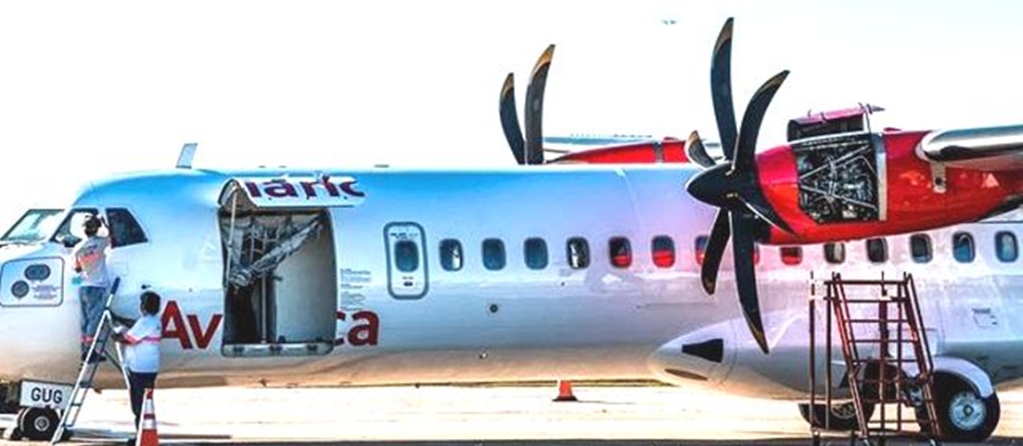
Avian Líneas Aéreas, bajo la marca Avianca Argentina continúa atravesando la inactividad desde Junio 2019 tras la presentación del proceso de adecuación de quiebra adeudando sueldos hace casi un año y medio. Recientemente, la línea aérea regional ha despedido a siete trabajadoras según la empresa con la supuesta causa justa por tener otros trabajos. La Asociación de Aeronavegantes de Argentina (AAA) ha emitido un comunicado que la empresa Avian Líneas Aéreas decidió despedir a trabajadoras con el argumento de que trabajan para otra empresa. «Las compañeras, lógicamente, han comenzado otros trabajos para ganarse la vida. De ningún modo eso exime de responsabilidades a Avianca», explicaron en un comunicado.

La rápida acción del Sindicato AAA ha emitido el comunicado repudiando el accionar de Avian Líneas Aéreas, y advirtió que iniciarán presentaciones legales ante la Justicia de Argentina, después que siete empleadas han recibido un telegrama de despido con justa causa, en los términos del Artículo 88 de la Ley de Contrato de Trabajo. El Gremio de Aeronavegantes artilló: “el cínico argumento esgrimido resulta ser el de trabajar para otra empresa, en casos en que las compañeras, lógicamente, han comenzado con otros trabajos para ganarse la vida”.

Cronología Avianca/AR

En Abril 2019 la compañía arrastraba una deuda de US$ 30 millones de Dólares, con la suspensión de la cuenta corriente de combustible y el retiro de aeronaves por falta de pago. Finalmente, en el mes de Junio 2019 anunciaron que dejarían de volar por seis meses, en base a una reestructuración pero la aerolínea regional no ha vuelto a volar con el consiguiente incumplimiento de los contratos laborales de los empleados sin cobro de sueldo por 19 meses. La AAA expresó que “de ningún modo eso extingue los derechos de nuestros afiliadas ni exime de sus responsabilidades y obligaciones a Avianca. Esto no hace más que confirmar el carácter miserable de la conducción de esta fallida aerolínea, que adeuda salarios desde hace casi dos años y nunca puso en regla su precaria e insolvente situación económica y jurídica”.

El comunicado del Sindicato de Aeronavegantes asegura que se “está evaluando no sólo la respuesta a este burdo ataque en plena vigencia de la prohibición de despidos, sino también otras posibles acciones de carácter jurídico que puedan caberle a los responsables de este vergonzoso y despreciable accionar”.

Avianca / AR labor breaches

Avianca Argentina dismisses illegal employees

Avian Líneas Aéreas, under the Avianca Argentina brand, continues to go through inactivity since June 2019 after the presentation of the bankruptcy adjustment process, owing salaries almost a year and a half ago. Recently, the regional airline has fired seven workers according to the company with the supposed just cause for having other jobs. The Argentine Air Sailors Association (AAA) has issued a statement that the company Avian Líneas Aéreas decided to fire workers on the grounds that they work for another company. «The companions, of course, have started other jobs to earn a living. In no way does that exempt Avianca from responsibilities», they explained in a statement.

The rapid action of the AAA Union has issued the statement repudiating the actions of Avián Lineas Aereas, and warned that they will initiate legal presentations before the Argentine Justice, after seven employees have received a telegram of dismissal with just cause, in the terms of Article 88 of the Labor Contract Law. The Guild of Aeeronavegantes artillery: «the cynical argument used turns out to be to work for another company, in cases in which the companions, logically, have started with other jobs to earn a living».

Avianca/AR Chronology

In April 2019, the company had a debt of US$ 30 million, with the suspension of the fuel current account and the withdrawal of aircraft for non-payment. Finally, in June 2019 they announced that they would stop flying for six months, based on a restructuring, but the regional airline has not flown again with the consequent breach of the employees’ labor contracts without pay for 19 months. The AAA stated that “in no way does this extinguish the rights of our affiliates or exempt Avianca from its responsibilities and obligations. This only confirms the miserable nature of the management of this failed airline, which has owed salaries for almost two years and never put its precarious and insolvent economic and legal situation in order”.

The statement from the Aircraft Union ensures that «not only the response to this crude attack is being evaluated in full force of the ban on dismissals, but also other possible legal actions that may be the responsibility of those responsible for this shameful and despicable action».


PUBLISHER: Airgways.com
DBk: Aeronavegantes.org.ar / Avianca.com.ar *[Þ] / Airgways.com / PV Aviation Photographic
AW-POST: 202011071700AR

Þ : BLOCKED

A\W   A I R G W A Y S ®
Boeing nuevo Vice-Ingeniería Software

AW | 2020 11 07 16:25 | INDUSTRY

Boeing designa a Jinnah Hosein líder de Ingeniería de Software

Boeing_Isologo.svg

The Boeing Company ha designado este 06/11 el nombramiento a Jinnah Hosein como Vicepresidenta de Ingeniería de Software de la compañía, con efecto inmediato. En este nuevo rol, Hosein informará a Greg Hyslop, Ingeniero Jefe de Boeing y Vicepresidente Senior de Ingeniería, Pruebas y Tecnología, y se centrará en seguir fortaleciendo el enfoque de Boeing en la ingeniería de software en toda la empresa. Los continuos avances en software hacen que la excelencia en ingeniería de software sea un imperativo para nuestro negocio. Jinnah se encargó de definir y liderar la estrategia de Boeing para la ingeniería de software, que incluye proporcionar capacidades, tecnologías, procesos y sistemas seguros y precisos para satisfacer las necesidades de todos nuestros clientes a lo largo de todo el ciclo de vida del producto.

Hosein liderará una nueva organización centralizada de ingenieros que actualmente apoyan el desarrollo y la entrega de software integrado en los productos y servicios de Boeing. El equipo también integrará otros equipos funcionales para garantizar la excelencia de la ingeniería durante todo el ciclo de vida del producto. «La seguridad, la calidad y la integridad sustentan la misión de nuestro equipo de ingeniería de software, y construyendo sobre esta sólida base, Jinnah será un líder transformador para Boeing. La amplia experiencia y la nueva perspectiva de Jinnah elevarán nuestro desempeño y acelerarán el importante trabajo que ya hemos comenzado en esta área», dijo Dave Calhoun, Presidente y CEO de Boeing.

Hosein aporta una amplia experiencia como líder en ingeniería de software en varias empresas innovadoras de alta tecnología. Se une a Boeing después de servir como vicepresidente de Ingeniería de Software para Aurora, una compañía de vehículos autónomos, en Palo Alto, California. Lideró la organización de software de la compañía para el desarrollo de esos vehículos y desarrolló el ciclo de vida del software de alta integridad de Aurora para implementar la arquitectura autónoma en los vehículos en carretera. Anteriormente, Hosein ocupó puestos de liderazgo en SpaceX, donde dirigió el desarrollo de software para Falcon, Falcon Heavy, Dragon, Crew Dragon y otros vehículos de vuelo, y en Tesla, donde ayudó a desarrollar software de piloto automático. Además, se desempeñó como director de ingeniería de software de Google para redes en la nube y fue uno de los miembros originales del equipo de Ingeniería de Confiabilidad del Sitio de Google.

Boeing es la compañía aeroespacial más grande del mundo y proveedor líder de aviones comerciales, sistemas de defensa, espacio y seguridad, y servicios globales. Como principal exportador estadounidense, la compañía apoya a clientes comerciales y gubernamentales en más de 150 países y aprovecha los talentos de una base de proveedores global. Basándose en un legado de liderazgo aeroespacial, Boeing continúa liderando la tecnología y la innovación, entregando para sus clientes e invirtiendo en su gente y crecimiento futuro.

Boeing new Vice-Engineering Software

Boeing appoints Jinnah Hosein as Software Engineering leader

The Boeing Company has appointed this 11/06 the appointment of Jinnah Hosein as Vice President of Software Engineering of the company, effective immediately. In this new role, Hosein will report to Greg Hyslop, Boeing Chief Engineer and Senior Vice President of Engineering, Test and Technology, and will focus on continuing to strengthen Boeing’s focus on software engineering across the enterprise. Continual advancements in software make excellence in software engineering an imperative for our business. Jinnah was tasked with defining and leading Boeing’s strategy for software engineering, which includes providing safe and accurate capabilities, technologies, processes and systems to meet the needs of all of our customers throughout the entire product lifecycle.

Hosein will lead a new centralized organization of engineers who currently support the development and delivery of software embedded in Boeing products and services. The team will also integrate other functional teams to ensure engineering excellence throughout the product life cycle. «Safety, quality, and integrity underpin the mission of our software engineering team, and building on this strong foundation, Jinnah will be a transformative leader for Boeing. Jinnah’s broad experience and new perspective will elevate our performance and accelerate development. important work we have already begun in this area», said Dave Calhoun, President and CEO of Boeing.

Hosein brings extensive experience as a software engineering leader in several innovative high-tech companies. He joins Boeing after serving as Vice President of Software Engineering for Aurora, an autonomous vehicle company, in Palo Alto, California. He led the company’s software organization for the development of those vehicles and developed the Aurora High Integrity Software Lifecycle to implement autonomous architecture in on-road vehicles. Previously, Hosein held leadership positions at SpaceX, where he led software development for Falcon, Falcon Heavy, Dragon, Crew Dragon, and other flying vehicles, and at Tesla, where he helped develop autopilot software. In addition, he served as Google’s director of software engineering for cloud networks and was one of the original members of Google’s Site Reliability Engineering team.

Boeing is the world’s largest aerospace company and a leading provider of commercial aircraft, defense, space and security systems, and global services. As a leading US exporter, the company supports commercial and government clients in more than 150 countries and leverages the talents of a global supplier base. Building on a legacy of aerospace leadership, Boeing continues to lead in technology and innovation, delivering for its customers and investing in its people and future growth.


PUBLISHER: Airgways.com
DBk: Boeing.com / Airgways.com
AW-POST: 202011071625AR

A\W   A I R G W A Y S ®
Sky Perú aumenta frecuencias

AW | 2020 11 07 16:16 | AIRLINES ROUTES

Sky Airline incrementa destinos en Perú

Sky_Airline_2017

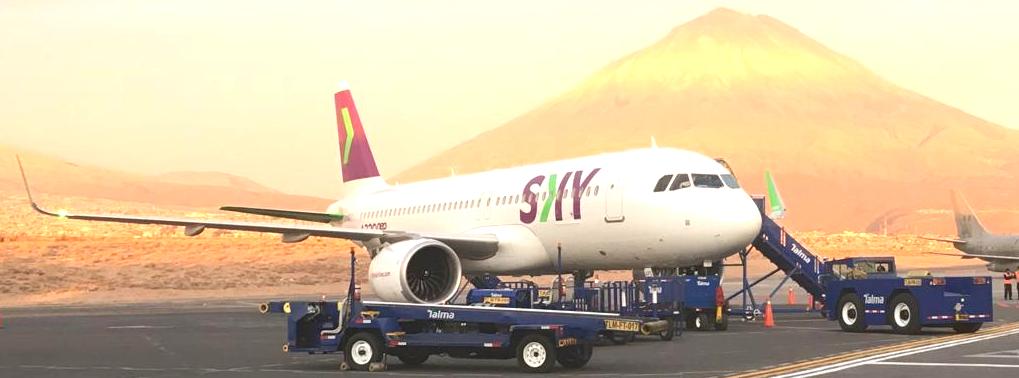
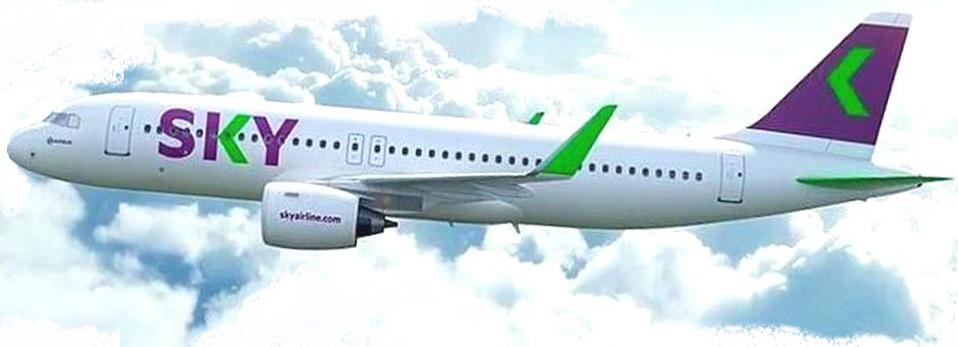
La aerolíneas Sky Airline Perú ha anunciado el incremento de destinos regionales alcanzando a once servicios en la República de Perú hacia Noviembre 2020 a Cusco, Arequipa y Piura. «Estamos muy contentos de aumentar los vuelos a Cusco, Arequipa y Piura, ya que esto no solo contribuirá a reforzar la conectividad en nuestro país, sino también ayudará a la reactivación del turismo interno, que ha sufrido un duro golpe los últimos meses», ha expresado Franco Chaparro, Gerente Comercial de la filial aérea en Perú.

El destino Cusco, tras la reapertura de Machu Picchu, la aerolínea realizará salidas diarias con 14 vuelos semanales (14Frq/S) para la segunda quincena de 11/2020. En cuanto a los precios, estos oscilan entre US$ 28 Dólares (S/.$ 98 Soles) si los vuelos parten desde Cusco y US$ 38 Dólares (S/.$ 126 Soles) si el vuelo es desde Lima. La ruta hacia Arequipa ha sido asignada 10 frecuencias semanales (10Frq/S) y asimismo también hay un incremento de la demanda de vuelos a Piura con vuelos diarios (7Frq/S) y llegarán con once servicios semanales (11Frq/S). Los precios de partida desde Arequipa o Piura hacia Lima son de US$ 30 Dólares y US$ 38 dólares para sentido inverso. El destino Lima-Tumbes contará con tres vuelos por semanas a un precio de US$ 42 Dólares (S/.$ 147 Soles) y US$ 35 Dólares para el viaje de retorno. Sky Airline Perú también aumentará las frecuencias de vuelos internos a regiones como Ayacucho, Juliaca, Trujillo y Tumbes en Noviembre 2020.

Sky Peru increases frequencies

Sky Airline increases destinations in Peru

Sky Airline Peru airlines has announced the increase of regional destinations reaching eleven services in the Republic of Peru by November 2020 to Cusco, Arequipa and Piura. «We are very happy to increase flights to Cusco, Arequipa and Piura, as this will not only help to strengthen connectivity in our country, but will also help to revive domestic tourism, which has suffered a severe blow in recent months», Franco Chaparro, Commercial Manager of the airline subsidiary in Peru, has expressed.

The destination Cusco, after the reopening of Machu Picchu, the airline will make daily departures with 14 weekly flights (14Frq/S) for the second half of 11/2020. As for prices, these range between US$ 28 Dollars (S/.$ 98 Soles) if the flights depart from Cusco and US $ 38 Dollars (S/.$ 126 Soles) if the flight is from Lima. The route to Arequipa has been assigned 10 weekly frequencies (10Frq/S) and there is also an increase in the demand for flights to Piura with daily flights (7Frq/S) and they will arrive with eleven weekly services (11Frq/S). The departure prices from Arequipa or Piura to Lima are US$ 30 dollars and US$ 38 dollars for the opposite direction. The Lima-Tumbes destination will have three flights per week at a price of US$ 42 Dollars (S/.$ 147 Soles) and US$ 35 Dollars for the return trip. Sky Airline Peru will also increase the frequencies of internal flights to regions such as Ayacucho, Juliaca, Trujillo and Tumbes in November 2020.


PUBLISHER: Airgways.com
DBk: Skyairline.com / Airgways.com
AW-POST: 202011071616AR

A\W   A I R G W A Y S ®
Hawaiian continuidad Boeing 717

AW | 2020 11 07 15:57 | AIRLINES

Hawaiian larga vida al Boeing 717 inter-islands

Hawaiian Airlines Isologotype_new

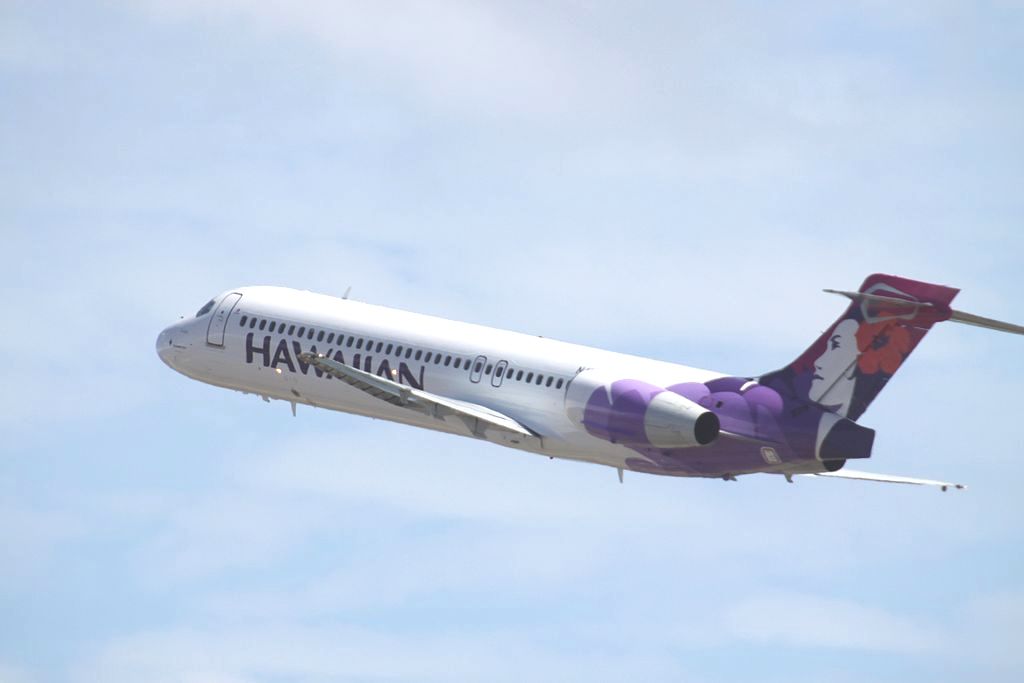
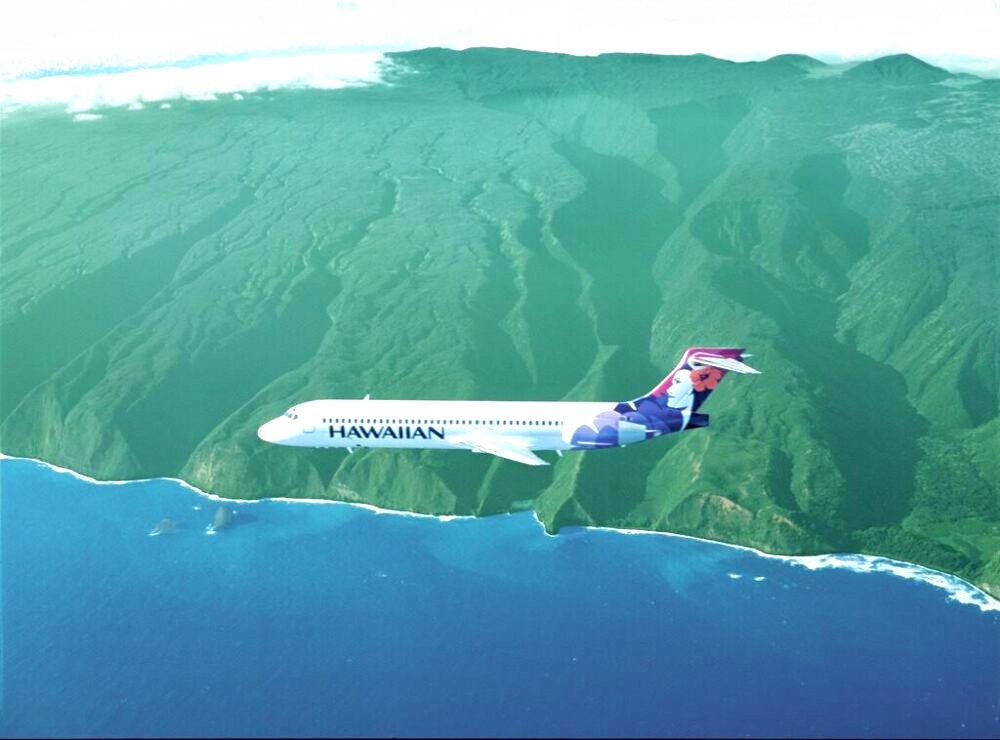
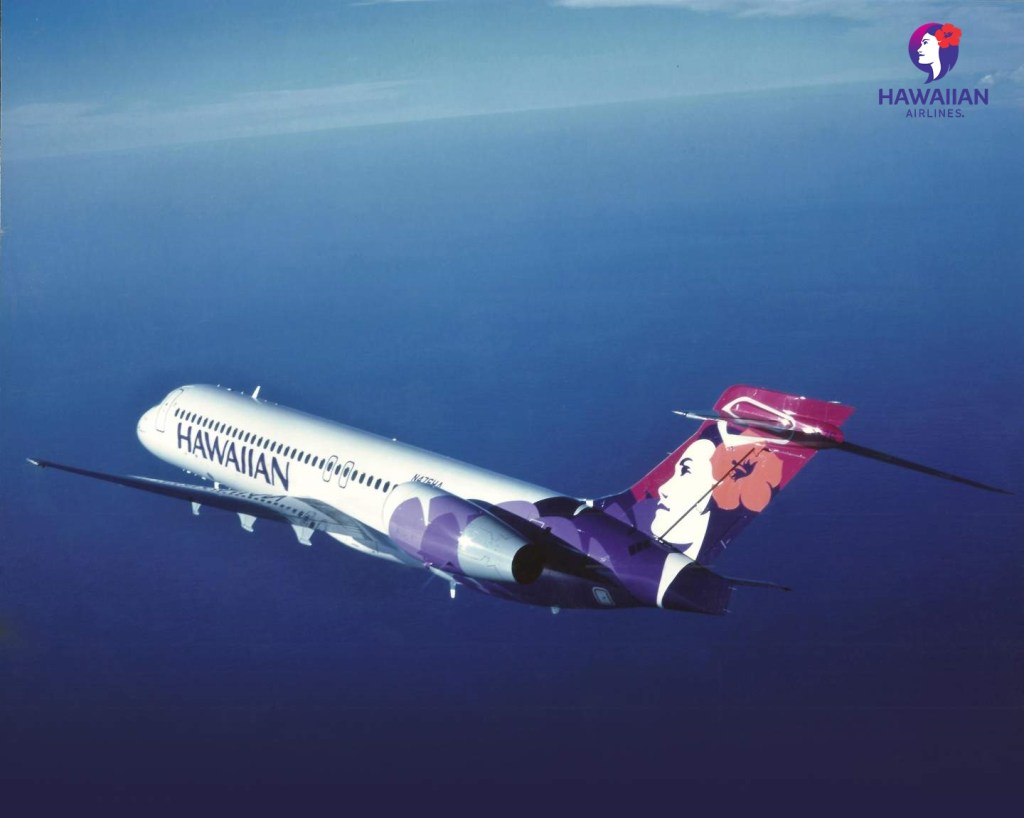
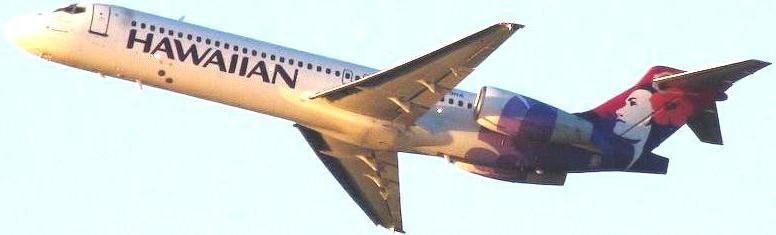
La compañía Hawaiian Airlines ha anunciado el programa de reemplazo a mediano plazo del confiable Boeing 717 hacia mitad de la década. Aún así, el Boeing 717 continuará siendo un miembro integral de la flota de la aerolínea durante al menos media década. El Jefe de Marketing, Avi Mannis, ha comunicado las intenciones de avanzar hacia la renovación de flota inter-islands. «Los 717, nuestros aviones inter-islands, son aviones absolutamente fantásticos. Simplemente, ningún avión es más adecuado para operar en este entorno muy alta frecuencia, longitud de etapa corta, pero con una gran cantidad de pasajeros. El 717 es absolutamente el avión perfecto para eso», dijo Avi Mannis.

Las dificultades en la etapa de la pandemia ha establecido a la compañía hacia una aerolínea de cambios en la planificación y renovación de flota. Aunque la flota de corto recorrido podría discontinuar hacia mitad de la década del 20, los Boeing 717 son el núcleo de la flota entre islas de Hawaii, por lo que continuarán volando en estos viajes a medida que los servicios entre islas se reanuden post-pandemia. La aerolínea es consciente que no hay ninguna aeronave capaz de reemplazar los servicios inter-islas como lo hace el baby-717, con prestaciones inmejorables en distancias cortas-medias en un entorno de altas frecuencias exigentes durante el día. Ninguna aeronaves ha podido conquistar en el segmento de rango de corta distancia como la ha representado el Boeing 717.

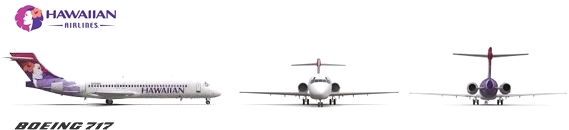
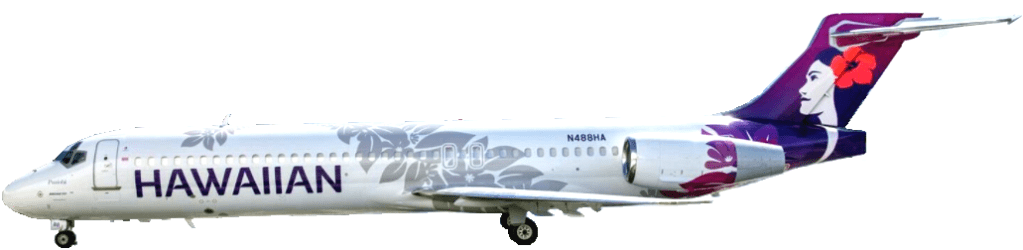
Actualmente, Hawaiian Airlines tiene posee en su flota 19 Boeing 717-200 y cinco de ellos están alquilados. La primer aeronave en unirse a la aerolínea de Hawaii arribó en Febrero 2001 con matrícula N475HA. La antigüedad promedio de la flota del 717 es de 18,8 años, siendo el promedio general de 9,4 años.

Perspectivas Hawaiian

Avi Mannis ha expresado que Hawaiian Airlines entró en la crisis del Coronavirus con una posición de defensa financiera favorable, con muy buena posición y todavía no es necesario pasar por una reestructuración sustancial de la flota inmediata. La aerolínea continuará desplegando el Boeing 717 para operaciones inter-islands de corta distancia hacia una proyección hacia más allá del 2025, el Airbus A321NEO para el mercado de la costa Oeste de Estados Unidos y el A330 para el mercado más grande de la costa oeste y los servicios internacionales, lo que le permite conservar un equilibrio saludable para los próximos años.

La continuidad de la flota del Boeing 717 de Long Beach (CA), sin lugar a dudas, continuará unido a la flota de Hawaiian Airlines gracias a sus invalorables prestaciones de servicios y confiabilidad de despacho operativo que alcanzan cifras del 90-100% de eficiencia y eficacia, con una larga vida para el baby-Boeing 717.

Hawaiian Boeing 717 continuity

Hawaiian will survive in the inter-islands of Boeing 717

The Hawaiian Airlines company has announced the medium-term replacement program for the reliable Boeing 717 towards the middle of the decade. Still, the Boeing 717 will continue to be an integral member of the airline’s fleet for at least half a decade. The Head of Marketing, Avi Mannis, has communicated the intentions to move towards the renewal of the inter-island fleet. «The 717, our interisland aircraft, are absolutely fantastic aircraft. Simply, no aircraft is more suitable to operate in this very high frequency, short leg length environment, but with a large number of passengers. The 717 is absolutely the perfect aircraft for that», said Avi Mannis.

The difficulties in the pandemic stage have established the company towards an airline of changes in planning and fleet renewal. Although the short-haul fleet could be discontinued by the mid-1920s, Boeing 717s are the core of Hawaii’s inter-island fleet, so they will continue to fly on these trips as inter-island services resume post-pandemic. The airline is aware that there is no aircraft capable of replacing inter-island services like the baby-717 does, with unbeatable performance in short-medium distances in a demanding high-frequency environment during the day. No aircraft has been able to conquer in the distance range segment as represented by the Boeing 717.

AW-Hawaiian_002

Currently, Hawaiian Airlines has 19 Boeing 717-200s in its fleet and five of them are leased. The first aircraft to join the Hawaii airline arrived in February 2001 with registration N475HA. The average age of the 717 fleet is 18.8 years, the general average being 9.4 years.

Hawaiian perspectives

Avi Mannis has expressed that Hawaiian Airlines entered the Coronavirus crisis with a favorable financial defense position, with a very good position and it is not yet necessary to go through a substantial restructuring of the immediate fleet. The airline will continue to deploy the Boeing 717 for short haul inter-island operations towards a projection beyond 2025, the Airbus A321NEO for the United States West Coast market and the A330 for the larger West Coast market and international services, allowing you to maintain a healthy balance for years to come.

The continuity of the Boeing 717 fleet from Long Beach (CA) will undoubtedly continue to be linked to the Hawaiian Airlines fleet thanks to its invaluable services and operational dispatch reliability that reach figures of 90-100% efficiency and efficiency, with a long life for the baby-Boeing 717.

Hawaiian Boeing 717 hoʻomau

E ola ke kanaka Hawaiʻi i nā mokupuni waena ʻo Boeing 717

Hawaiian Airlines Isologotype_new

Ua hoʻolaha aku ka hui ʻo Hawaiian Airlines i ka papahana pani manawa waena no ka hilinaʻi ʻo Boeing 717 i ka waena o ke anahulu. Eia nō naʻe, e hoʻomau ka Boeing 717 i lālā o nāʻauwaʻa o ka mokulele no ka hapalua makahiki he ʻumi. Ua hōʻike ke poʻo o ke kūʻai aku ʻana, ʻo Avi Mannis, i nā manaʻo e neʻe i ka hoʻomaikaʻi hou ʻana o nā ʻauwaʻa mokupuni. «ʻO 717, ko mākou mokulele interisland, he mokulele maikaʻi loa ia. Ma ka maʻalahi, ʻaʻohe mokulele i kūpono e hana i kēia alapine kiʻekiʻe loa, ka lōʻihi o ka wāwae wāwae, akā me ka nui o nā mea holo», wahi a Avi Mannis.

Ua hoʻokumu nā pilikia i ka pae maʻi ahulau i ka ʻoihana i kahi mokulele o nā loli i ka hoʻolālā a me ka hoʻomaikaʻi hou ʻana o nā ʻauwa. ʻOiai hiki ke hoʻopau ʻia nā ʻauwaʻa pōkole e ka waena waena o 1920s, ʻo Boeing 717s ke kumu o ko Hawaiʻi pae mokupuni, no laila e hoʻomau lākou e lele i kēia mau huakaʻi ke hoʻomaka hou nā lawelawe waena mokupuni ma hope o ke ahulau. . Hoʻomaopopo ka mokulele ʻaʻohe mokulele i hiki ke hoʻololi i nā lawelawe waena mokupuni e like me ka pēpē-717 e hana nei, me ka hana hiki ʻole ke hoʻokau ʻia ma nā wahi pōkole ma kahi e koi pinepine nei i ka lā. ʻAʻohe mokulele i hiki ke lanakila i ka mahele o ka pae wā pōkole e like me ka Boeing 717 i hōʻike ai.

La imagen tiene un atributo ALT vacío; su nombre de archivo es aw-70001177.jpg

I kēia manawa, aia he 19 Boeing 717-200s o ka Hawaiian Airlines i kona mau ʻauwaʻa a hoʻolimalima ʻia he ʻelima o lākou. Ua hōʻea ka mokulele mua e hui pū me ka mokulele ʻo Hawaii i Pepeluali 2001 me ka inoa N475HA. ʻO ka makahiki maʻamau o nā ʻauwa 717 he 18.8 mau makahiki, ʻo ka averika maʻamau he 9.4 mau makahiki.

Nānā Hawaiʻi

Ua hōʻike ʻo Avi Mannis ua komo ʻo Hawaiian Airlines i ka pilikia o Coronavirus me kahi kūlana pale kālā maikaʻi, me kahi kūlana maikaʻi loa a ʻaʻole pono e hele i waena o kahi hoʻonohonoho hou ʻana o nā ʻauwaʻa koke. E hoʻomau ka mokulele i ka Boeing 717 no ka hana pōkole ma waena o ka mokupuni e pili ana i kahi hoʻolālā ma ʻō aku o 2025, ka Airbus A321NEO no ka mākeke ʻo ʻAmelika Hui Pū ʻIa ʻo ʻAmelika Hui Pū ʻIa a me A330 no ka mākeke ʻo West Coast nui a me nā lawelawe kūwaho, e ʻae iā ʻoe e mālama i kahi koena olakino no nā makahiki e hiki mai ana.

ʻO ka hoʻomau ʻana o nā ʻauwaʻa Boeing 717 mai Long Beach (CA) e kanalua mau e hoʻopili ʻia i nā ʻauwaʻa Hawaiian Airlines mahalo i kāna mau lawelawe kūpono a me ka hilinaʻi o ka hoʻouna ʻana i hiki i nā kiʻi o 90-100% maikaʻi a me ka pono, me kahi ola lōʻihi no ʻO ka pēpē-Boeing 717.


PUBLISHER: Airgways.com
DBk: Hawaiian.com / Airgways.com
AW-POST: 202011071557AR

A\W   A I R G W A Y S ®

FedEx contratará a 850 pilotos

AW | 2020 11 07 09:31 | AIRLINES

Compañía carguera abre dos nuevas bases

Fedex_Express_Isologotype

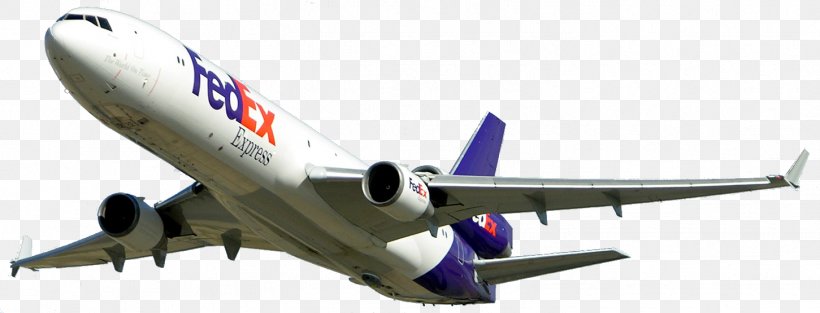
La crisis de la actual pandemia ha abierto nuevas oportunidades para las compañías aéreas cargueras que han sido una de las pocas empresas que han permitido incrementar sus perspectivas económicas. FedEx Airlines, la aerolínea de carga más grande del mundo, ha anunciado la incorporación de 850 nuevos pilotos.

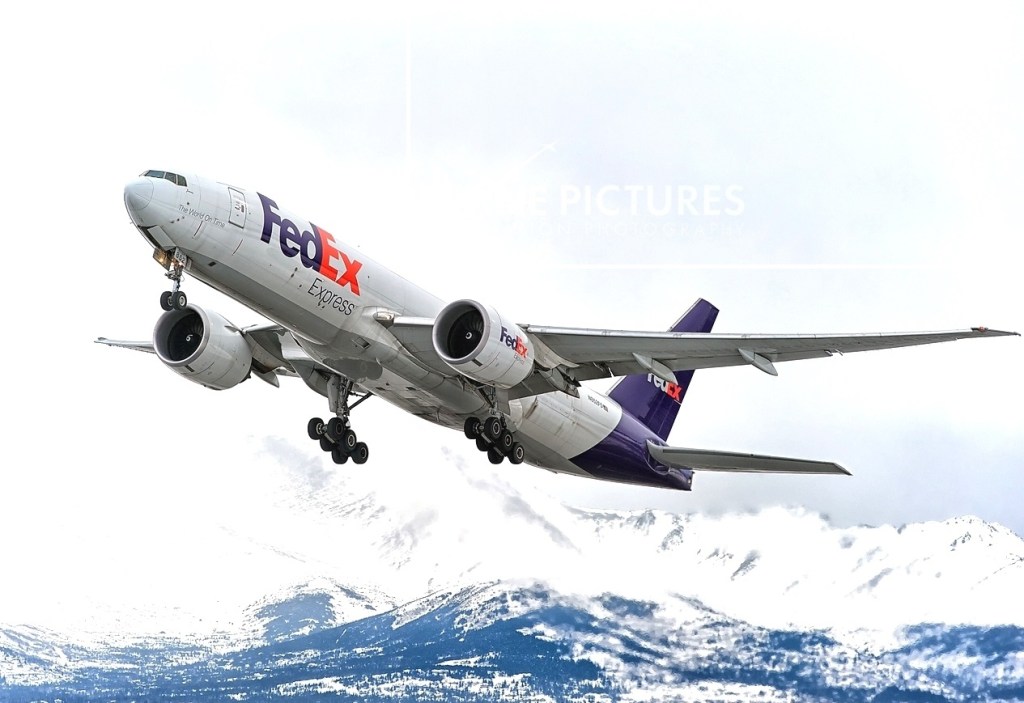
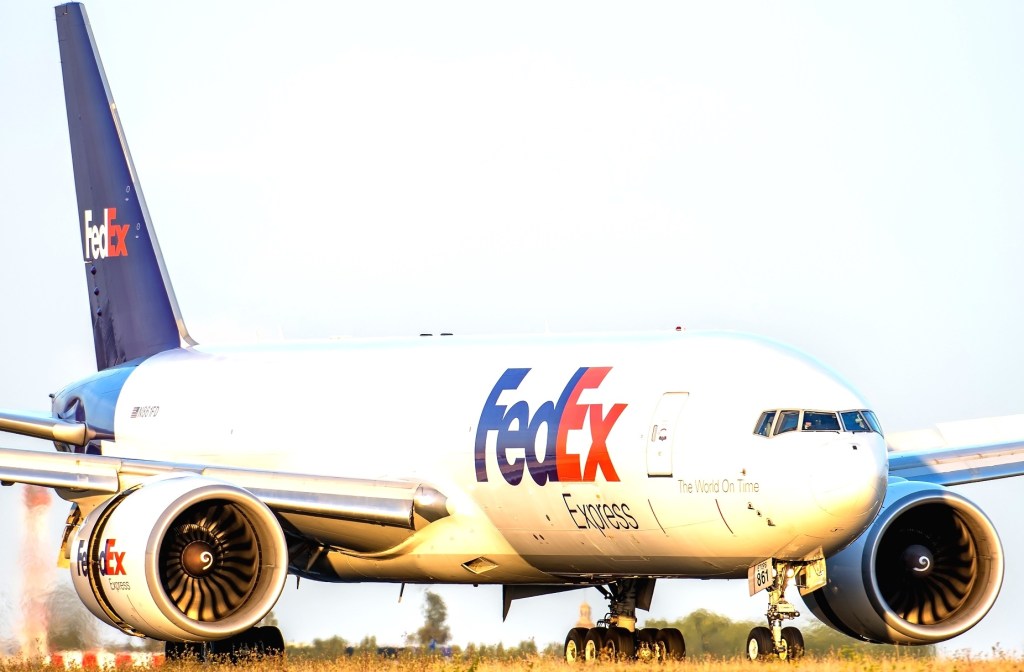
FedEx ha informado a sus empleados que expandirá sus operaciones debido al incremento de la demanda en tiempos de aumento de la demanda del transporte de carga, encomiendas entre otros servicios logísticos. Los nuevos puestos requeridos de pilotos serán contratados para aeronaves Boeing 767-300F y 777F de la compañía en dos nuevas bases: Anchorage, Estado de Alaska y Oakland, Estados de California, Estados Unidos.

AW-770011F

La nueva base Anchorage permitirá dada su posición estratégica en las rutas entre Asia y los Estados Unidos, incrementar sus frecuencias basados en los Boeing 777F, para las rutas hacia el continente asiático. Oakland, localizado en la bahía de San Francisco, California, con un movimiento más bajo basará los aviones Boeing 767-300F. La compañía estadounidense reprogramará la reactivación de parte de la flota de McDonnell Douglas MD-11F como parte de las ampliaciones de flota por la demanda carguera, algo casi impensado en otro escenario económico. La expansión de nuevas rutas y aeronaves permitirá fortalecer a FedEx Airlines, que ha visto aumentar su demanda debido a la drástica reducción de los vuelos de pasajeros y al aumento exponencial de los servicios de carga y encomiendas.

FedEx will hire 850 pilots

FedEx opens two new bases

The current pandemic crisis has opened up new opportunities for cargo airlines, which have been one of the few companies that have allowed them to increase their economic prospects. FedEx Airlines, the world’s largest cargo airline, has announced the addition of 850 new pilots.

FedEx has informed its employees that it will expand its operations due to increased demand in times of increased demand for cargo transportation, parcels and other logistics services. The new required pilot positions will be hired for the company’s Boeing 767-300F and 777F aircraft at two new bases: Anchorage, State of Alaska and Oakland, States of California, United States.

The new Anchorage base will allow, given its strategic position on the routes between Asia and the United States, to increase its frequencies based on Boeing 777Fs, for routes to the Asian continent. Oakland, located in the San Francisco Bay, California, with a lower movement will base the Boeing 767-300F aircraft. The US company will reschedule the reactivation of part of the McDonnell Douglas MD-11F fleet as part of the fleet expansions due to cargo demand, something almost unthinkable in another economic scenario. The expansion of new routes and aircraft will strengthen FedEx Airlines, which has seen an increase in demand due to the drastic reduction in passenger flights and the exponential increase in cargo and parcel services.


PUBLISHER: Airgways.com
DBk: Fedex.com / Airgways.com
AW-POST: 202011070931AR

A\W   A I R G W A Y S ®
Próximo mercado long-haul

AW | 2020 11 06 16:22 | AIRLINES MARKET / INDUSTRY

A321XLR liderará nuevo escenario post-pandemia

AW-70099433

La introducción de un nuevo escenario de depresión económica post-pandemia permite vislumbrar un nuevo mercado aéreo para las líneas aéreas de diferentes modelos, clásicas, de presupuesto, de vacaciones, etcétera. Los vuelos de long-haul narrowbody están comenzando a florecer como una opción única dentro de las rutas de amplio recorrido. La capacidad de volar rutas largas con aeronaves estrechas comenzará a marcar la gran diferencia entre las aerolíneas para sobrevivir en tiempos de vacas flacas como así también, van a ser clave para el regreso de la aviación después de la crisis sanitaria mundial.

Desafío volar

El nuevo escenario para volar ha cambiado completamente, con un mercado donde existe una baja demanda en las rutas de larga distancia, donde las compañías tendrán que afinar el lápiz para controlar la estabilidad de la ecuación económica y al mismo tiempo perseguir la rentabilidad. Por eso, las aerolíneas tendrán que escoger la aeronave más idónea para este nuevo horizonte de cambios.

Numerosas aeronaves continúan siendo desprogramadas de las aerolíneas mundiales por el efecto post-pandemia, entre ellas principalmente los aviones de mayor porte como el Airbus A380, Boeing 747, 777, como así también los aviones con más antigüedad.

Introduciendo un nuevo escenario de cambios en la manera de volar, las aerolíneas comienzan a buscar aeronaves que se adapten mejor al mercado actual donde existe una consolidación de los viajes de baja demanda de largo recorrido con muchos cambios que ha obligado a la industria y las líneas aéreas a introducir.

Persiguiendo rentabilidad

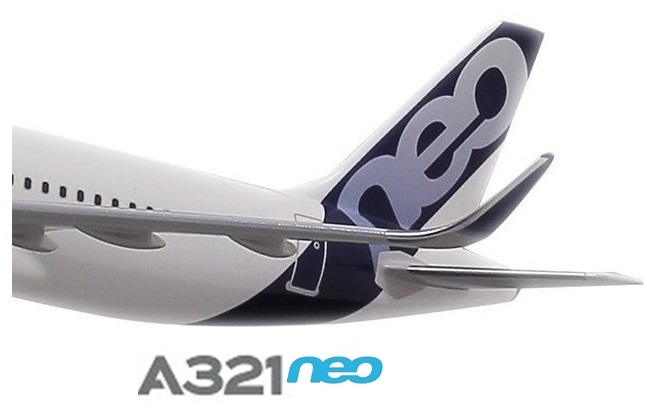
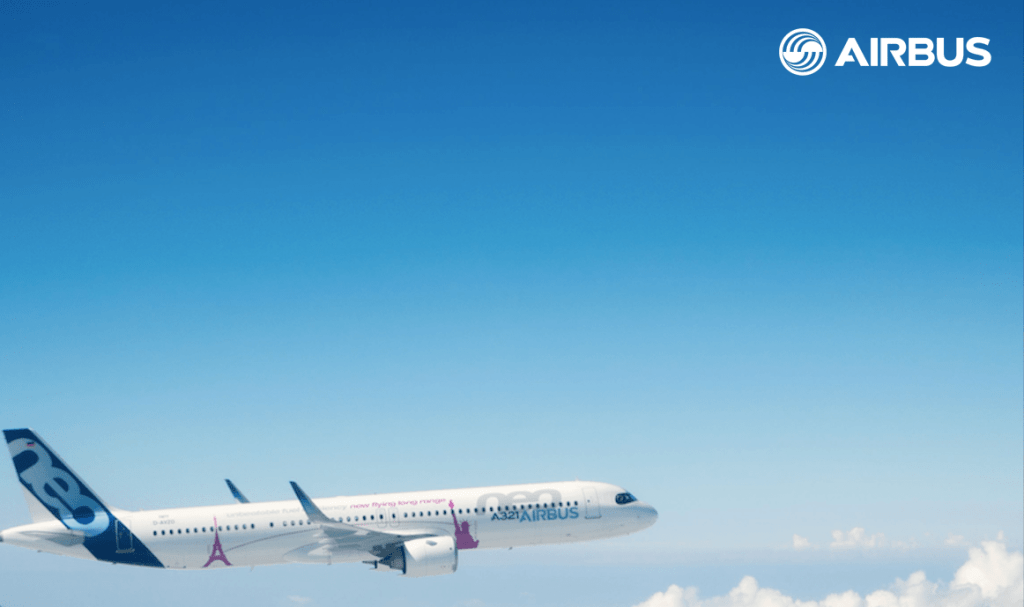
El mercado de aeronaves comerciales se ha movido hacia un escenario donde se perseguirá la rentabilidad, después de los impactos económicos de las aerolíneas alrededor del mundo, especialmente en el mercado de medio y largo recorrido están comenzando a existir cambios vertiginosos. La elección de la aeronave idónea permitirá alcanzar un equilibrio financiero frente a la prolongada crisis que se extenderá considerablemente. Muchos están observando al candidato inmejorable y por lejos el que mejor se adapta al próximo mercado emergente de amplio radio de acción y baja demanda: el Airbus A321LR y A321XLR, continuarán en la línea de su apogeo.

La nueva modalidad de viajar en transportes más estrechos a larga distancias requerirá adaptar la célula a un nuevo mercado. La aviación ha ensayado los viajes bajo este tipo de aeronaves con el Boeing 757-200ER y Boeing 757-300, alcanzando resultados excelentes.

Los nuevos desafíos y obstáculos se presentan en la manera de brindar espacio y confor frente a la bioseguridad, por lo que continuarán diseñando todo el interior con el fin de responder a la nueva demanda sin poner en riesgo la seguridad sanitaria.

Actualmente en clase Economy, existe una gran noticia, muchos asientos de larga duración con todas las funciones están disponibles para las familias 737 y A320. Las aerolíneas pueden ofrecer este estándar de larga distancia, como tiene en su configuración flydubai en sus aviones 737 MAX actualmente en tierra. El truco será mostrar a los pasajeros lo que hay a bordo y persuadirlos de que no van a estar sentados con las rodillas alrededor de las orejas durante diez horas.

La Economy Premium no ha hecho mucha incursión en el mundo del cuerpo estrecho desde que los Boeing 757-200 OpenSkies de British Airways desaparecieron, y hay mucho espacio con el que trabajar aquí, ya que una amplia variedad de asientos se encuentran certificados para la clase Excecutive.

La parte delantera y trasera de la cabina, hay una fuerte necesidad de diseñar formas innovadoras para garantizar que el lado más suave de la experiencia del pasajero como alimentos, bebidas y servicios también se pueden proporcionar. Eso podría tratarse de garantizar un almacenamiento adecuado para la primera fila mediante el uso de almacenamiento en el techo para las maletas de la tripulación y el kit de emergencia, o el desarrollo de nuevos procesos y protocolos para almacenar el equipaje que los pasajeros no quieren comprobar pero a los que no necesitan acceso durante el vuelo. Podría tratarse de diseñar o rediseñar monumentos de primera fila para agregar espacio adicional de la cocina para el servicio de clase ejecutiva y, de hecho, mejorar el aspecto y la sensación de la puerta de entrada 1L, o de realizar pedidos previos y diseñar servicios de comidas optimizadas para reducir la necesidad de espacio de almacenamiento.

Perspectivas aviación

Solucionar el problema de la percepción es, tal vez, el mayor obstáculo por cumplir, es un problema que necesita coordinación, comunicación e inversión en un momento en que este último al menos es difícil de lograr en la aviación. Aquí, como en tantos lugares, se requerirá un pensamiento innovador y las chispas del genio del diseño que cultiva la aviación. El próximo mercado post-pandemia encontrarán a las aerolíneas en la necesidad de adaptar sus aeronaves y diseños al nuevo escenario de los vuelos de mido y largo recorrido, ese es el nuevo horizonte por delante, bienvenidos a bordo.

Next post-pandemic long-haul market

A321XLR will lead new post-pandemic scenario

The introduction of a new post-pandemic economic depression scenario allows us to envision a new air market for airlines of different models, classic, budget, vacation, and so on. Long-haul narrowbody flights are beginning to flourish as a unique option on long-haul routes. The ability to fly long routes with narrow aircraft will begin to make a big difference for airlines to survive in lean times as well as being key to the return of aviation after the global health crisis.

Fly challenge

AW-7000321XLR

The new scenario for flying has completely changed, with a market where there is low demand on long-haul routes, where companies will have to sharpen the pencil to control the stability of the economic equation while at the same time pursuing profitability. Therefore, airlines will have to choose the most suitable aircraft for this new horizon of changes.

Numerous aircraft continue to be deprogrammed from world airlines due to the post-pandemic effect, among them mainly larger aircraft such as the Airbus A380, Boeing 747, 777, as well as older aircraft.

Introducing a new scenario of changes in the way of flying, airlines begin to look for aircraft that are better adapted to the current market where there is a consolidation of long-haul low-demand trips with many changes that have forced the industry and the lines areas to introduce.

Chasing profitability

The commercial aircraft market has moved towards a scenario where profitability will be pursued, after the economic impacts of airlines around the world, especially in the medium and long-haul market, rapid changes are beginning to exist. The choice of the ideal aircraft will make it possible to achieve a financial balance in the face of the prolonged crisis that will extend considerably. Many are staring at the unbeatable candidate and by far the one best suited to the next wide-range, low-demand emerging market: the Airbus A321LR and A321XLR, they will continue on the line of their heyday.

The new way of traveling in narrower transport over long distances will require adapting the cell to a new market. Aviation has tested trips under this type of aircraft with the Boeing 757-200ER and Boeing 757-300, achieving excellent results.

New challenges and obstacles arise in the way of providing space and compliance with biosafety, so they will continue to design the entire interior in order to respond to the new demand without putting health security at risk.

Currently in Economy class, there is great news, many full-function long-duration seats are available for the 737 and A320 families. Airlines can offer this long-haul standard, as it has in its flydubai configuration on its currently grounded 737 MAX aircraft. The trick will be to show the passengers what’s on board and persuade them that they won’t be sitting with their knees around their ears for ten hours.

Economy Premium hasn’t made much of a foray into the narrow-body world since British Airways’ Boeing 757-200 OpenSkies disappeared, and there’s plenty of room to work with here, as a wide variety of seats are class-certified. Excecutive.

The front and rear of the cabin, there is a strong need to design innovative ways to ensure that the softer side of the passenger experience such as food, beverage and services can also be provided. That could be about ensuring proper front row storage by using overhead storage for crew bags and emergency kit, or developing new processes and protocols for storing baggage that passengers don’t want to check. but to those who do not need access during the flight. It could be about designing or redesigning front row monuments to add additional kitchen space for business class service and actually enhancing the look and feel of the 1L front door, or pre-ordering and designing services of optimized meals to reduce the need for storage space.

Aviation perspectives

Solving the problem of perception is, perhaps, the greatest obstacle to be met, it is a problem that needs coordination, communication and investment at a time when the latter is at least difficult to achieve in aviation. Here, as in so many places, it will take innovative thinking and the sparks of the design genius that aviation cultivates. The next post-pandemic market will find airlines in the need to adapt their aircraft and designs to the new scenario of mid-range and long-haul flights, that is the new horizon ahead, welcome aboard.


PUBLISHER: Airgways.com
DBk: Airgways.com / Airbus.com
AW-POST: 202011061622AR

A\W   A I R G W A Y S ®
Chengdu recibe 23º aeronave ARJ21

AW | 2020 11 06 14:05 | AIRLINES

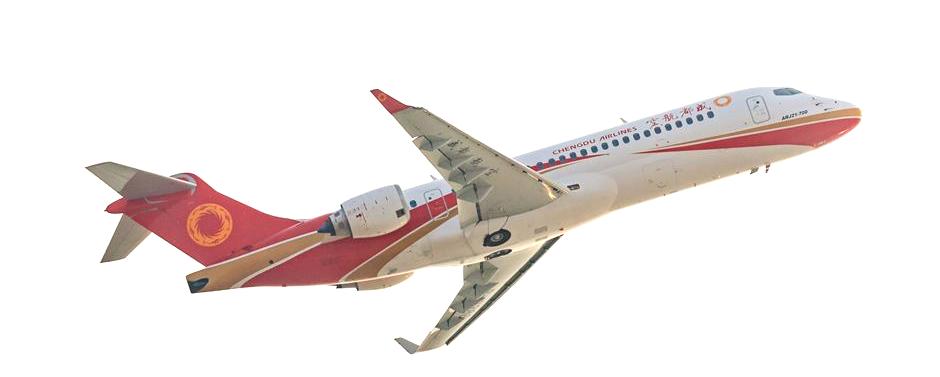
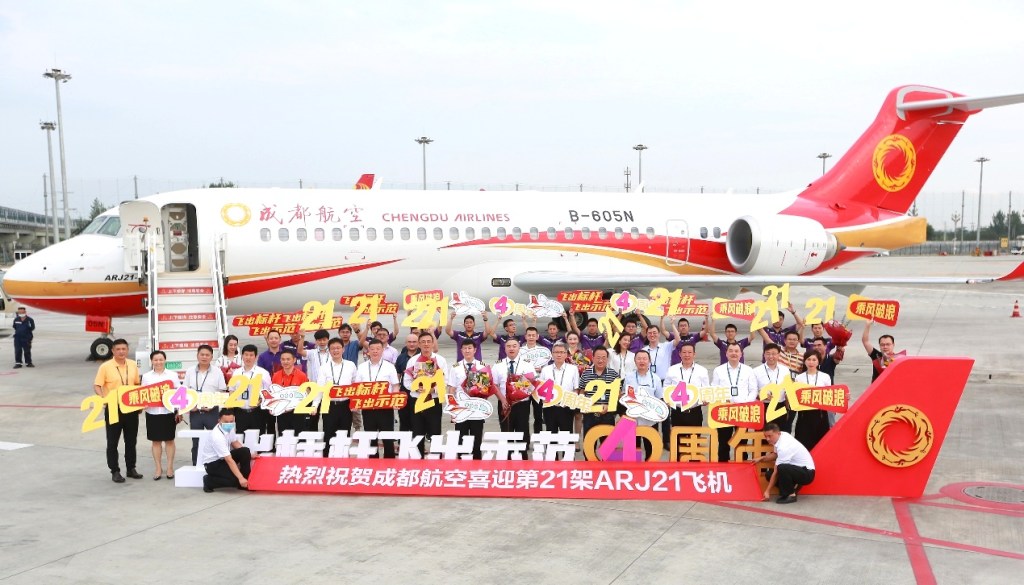
Chengdu Airlines toma entrega de su 23º ARJ21-700

Chengdu Airlines_Isologotype

Chengdu Airlines recibió la aeronave 23º COMAC ARJ 21-700 en Shanghai el 29 de Octubre de 2020. La compañía COMAC Aircraft Corporation of China, Ltd. ha entregado un total de 37 ARJ21 a clientes del fabricante chino. El nuevo avión fue introducido por medio de arrendamiento financiero de AVIC International Leasing Co., Ltd. (AVIC Leasing). El Sr. Zhou Xinmin, miembro del Comité Permanente del Comité del Partido y Vicepresidente de la COMAC Corp., expresó su agradecimiento a AVIC Leasing y Chengdu Airlines por su atención y apoyo a las aeronaves civiles fabricadas en China, y espera que las compañías aéreas, las instituciones de arrendamiento financiero y la COMAC cooperen estrechamente para promover conjuntamente el desarrollo continuo de las aeronaves civiles fabricadas en China.

Como primer operador de aeronaves ARJ21, Chengdu Airlines ha explorado activamente el modo de operación comercial de la aeronave civil fabricada en China en los últimos 4 años para establecer y mejorar el sistema de gestión de operaciones, el sistema de apoyo al mantenimiento y el sistema de capacitación conforme a las características de la aeronave, y hacer contribuciones positivas al desarrollo de la aeronave civil hecha en China.

Chengdu Airlines receives 23rd ARJ21 aircraft

Chengdu Airlines takes delivery of its 23rd ARJ21-700

ARJ21.SVG

Chengdu Airlines received the 23rd COMAC ARJ 21-700 aircraft in Shanghai on October 29, 2020. The COMAC Aircraft Corporation of China, Ltd. has delivered a total of 37 ARJ21s to customers of the Chinese manufacturer. The new aircraft was introduced through a financial lease from AVIC International Leasing Co., Ltd. (AVIC Leasing). Mr. Zhou Xinmin, a member of the Standing Committee of the Party Committee and Vice Chairman of COMAC Corp., expressed his appreciation to AVIC Leasing and Chengdu Airlines for their care and support for civil aircraft manufactured in China, and hopes that the airlines, leasing institutions and COMAC cooperate closely to jointly promote the continued development of Chinese-made civil aircraft.

As the first ARJ21 aircraft operator, Chengdu Airlines has actively explored the commercial mode of operation of Chinese-made civil aircraft in the past 4 years to establish and improve the operations management system, maintenance support system, and maintenance system. training according to the characteristics of the aircraft, and make positive contributions to the development of the civil aircraft made in China.

成都航空接收23架ARJ21飛機

成都航空接收其第23架ARJ21-700

COMAC_logo

成都航空於2020年10月29日在上海收到了第23架中國商飛ARJ 21-700飛機。中國商飛飛機有限公司已向中國製造商的客戶交付了37架ARJ21。新飛機是通過中航國際租賃有限公司(中航租賃)的融資租賃引進的。黨委常委,中國商飛公司副董事長周新民先生對中航租賃和成都航空對中國製造的民用飛機的關心和支持表示感謝,並希望各航空公司,租賃機構與中國商飛緊密合作,共同推動中國民用飛機的持續發展。

作為第一家ARJ21飛機運營商,成都航空在過去的四年中積極探索中國製造民用飛機的商業運營模式,以建立和完善運營管理系統,維護支持系統和維護系統。根據飛機的特性進行培訓,為中國製造的民用飛機的發展做出積極的貢獻。


PUBLISHER: Airgways.com
DBk: Comac.cc / Cdal.com.cn / Airgways.com
AW-POST: 202011061405AR

A\W   A I R G W A Y S ®

Acuerdo Collins Aerospace/GKN Fokker

AW | 2020 11 06 12:33 | INDUSTRY / MRO

Collins Aerospace, GKN Fokker Services amplían el acuerdo MRO

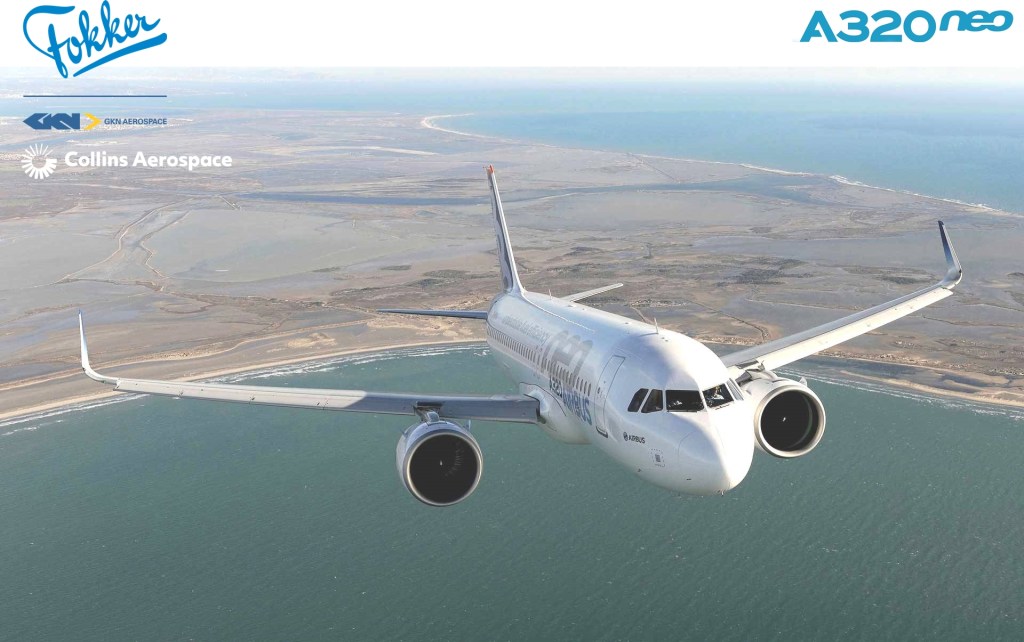
El acuerdo de soporte ampliado de FlightSense para el generador de unidades integrado (IDG) de Collins Aerospace incluye nuevos números de pieza para los operadores de Airbus A320NEO. Collins Aerospace Systems, una unidad de Raytheon Technologies Corp., y Fokker Services, una compañía aeroespacial de GKN, están ampliando un acuerdo de soporte in situ FlightSense de 10 años existente para los generadores de unidades integrados (IDG) de Collins Aerospace. El contrato ampliado añadirá nuevos números de pieza de IDG para el Airbus A320NEO, mientras que Collins Aerospace continuará gestionando el inventario in situ de componentes IDG de Fokker Services, proporcionando tarifas competitivas para piezas de calidad OEM y una mayor eficiencia de la tienda. Fokker Services, a su vez, ahora podrá reparar los IDG aeroespaciales de Collins para el A320neo en sus instalaciones en el Aeropuerto Amsterdam/Schiphol.

El IDG proporciona energía eléctrica primaria para el sistema eléctrico de la aeronave mediante la conversión de la velocidad de entrada variable del motor a una velocidad de salida constante, lo que permite que la parte del generador del IDG produzca corriente alterna a una frecuencia constante.

«Collins Aerospace se complace en seguir construyendo sobre su larga relación con Fokker Services. Este acuerdo ayudará a Fokker Services a agilizar las operaciones de la cadena de suministro, aumentar la confiabilidad de la reparación y reducir los costos operativos para servir mejor a sus clientes con reparaciones de calidad de los componentes de Collins Aerospace», dijo Ryan Hudson, Vicepresidente de Aftermarket, Power & Controls para Collins Aerospace.

«Como proveedor líder de servicios aeroespaciales, estamos orgullosos de trabajar con Collins Aerospace para proporcionar soporte MRO para estos componentes a los operadores. Aportamos valor agregado basado en muchos años de experiencia en el soporte del componente MRO, nuestros altos estándares de calidad, incluidas las aprobaciones de FAA, EASA y CAAC, y nuestra experiencia en servicio. Esperamos apoyar a nuestros clientes y ampliar aún más nuestra relación como socio de canal de Collins Aerospace», dijo Ben Scharrenberg, director de Adquisición de Servicios Fokker.

Como parte del contrato, Fokker Services apoyará a aerolíneas, MROs e Integradores con soluciones OEM flexibles, confiables y competitivas para los IDG aeroespaciales de Collins. El soporte incluye: Piezas y garantía OEM, Representante de servicio al cliente dedicado las 24 horas del día, los 7 días de la semana, Rápido tiempo de respuesta y garantía de rendimiento, Servicios de monitoreo de confiabilidad para garantizar la máxima calidad, Inventario de intercambio disponible para apoyar la próxima eliminación.

Collins Aerospace/GKN Fokker agreement

Collins Aerospace, GKN Fokker Services extend MRO agreement

FlightSense’s expanded support agreement for Collins Aerospace’s Integrated Unit Generator (IDG) includes new part numbers for Airbus A320NEO operators. Collins Aerospace Systems, a unit of Raytheon Technologies Corp., and Fokker Services, a GKN aerospace company, are expanding an existing 10-year FlightSense on-site support agreement for Collins Aerospace Integrated Unit Generators (IDGs). The expanded contract will add new IDG part numbers for the Airbus A320NEO, while Collins Aerospace will continue to manage the on-site inventory of IDG components from Fokker Services, providing competitive rates for OEM quality parts and increased store efficiency. Fokker Services, in turn, will now be able to repair Collins’ aerospace IDGs for the A320neo at its facilities at Amsterdam/Schiphol Airport.

The IDG provides primary electrical power for the aircraft electrical system by converting the engine’s variable input speed to a constant output speed, allowing the generator part of the IDG to produce alternating current at a constant frequency.

«Collins Aerospace is pleased to continue to build on its longstanding relationship with Fokker Services. This agreement will help Fokker Services streamline supply chain operations, increase repair reliability, and reduce operating costs to better serve its customers with quality repairs to Collins Aerospace components», said Ryan Hudson, Vice President of Aftermarket, Power & Controls for Collins Aerospace.

«As a leading provider of aerospace services, we are proud to work with Collins Aerospace to provide MRO support for these components to operators. We provide added value based on many years of experience in MRO component support, our high quality standards, including FAA, EASA and CAAC approvals, and our service expertise. We look forward to supporting our customers and further expanding our relationship as a Collins Aerospace channel partner», said Ben Scharrenberg, Director of Fokker Services Procurement.

As part of the contract, Fokker Services will support airlines, MROs and Integrators with flexible, reliable and competitive OEM solutions for Collins aerospace IDGs. Support includes: OEM Parts and Warranty, Dedicated 24/7 Customer Service Representative, Fast Response Time and Performance Guarantee, Reliability Monitoring Services to Ensure Top Quality, Inventory of exchange available to support upcoming removal.


PUBLISHER: Airgways.com
DBk: Fokkerservices.com / Collinsaerospace.com / Airgways.com
AW-POST: 202011061233AR

A\W   A I R G W A Y S ®

Plan reactivación de Jet Airways

AW | 2020 11 06 09:16 | AIRLINES / GOVERNMENT

Murari Lal Jalan y Kalrock Capital presentan plan reactivación

Jet_Airways_Isologotype

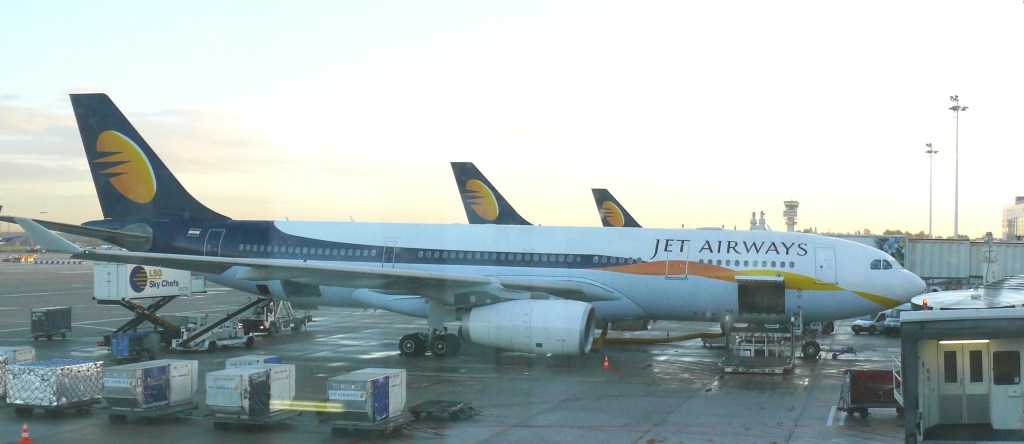
El Consorcio Murari Lal Jalan y Kalrock Capital que manejará los destinos de Jet Airways había presentado un plan para resucitar la aerolínea de presupuesto de la India. El Profesional de Resolución (RP) encargado de todos los procesos de auditoría, ha trasladado una solicitud con el National Company Law Tribunal (NCLT) solicitando la aprobación para el consorcio para activar el plan presentado.

Ashish Chhawcharria, el RP nombrado por el NCLT en Junio 2019 ha informado el Viernes 06/11 que los acreedores habían aprobado el plan. Además, «presentó el plan de resolución aprobado por el CdC ante el Tribunal Nacional de Derecho de Sociedades de Mumbai el 5 de Noviembre de 2020 de conformidad con el Artículo Nº 30(6) del Código de Insolvencia y Quiebra, 2016». A principios de esta semana, el consorcio Kalrock-Jalan había depositado el capital necesario para activar a la compañía aérea. Si la oferta es aprobada por la NCLT, los prestamistas obtendrán un 9.5 por ciento de capital en Jet Airways junto con 7.5 por ciento de capital en la firma de recompensas de puntos de viajes de fidelización de InterMiles.

Jet Airways reactivation plan

Murari Lal Jalan and Kalrock Capital present reactivation plan

The Murari Lal Jalan and Kalrock Capital Consortium that will handle Jet Airways‘ destinations had come up with a plan to resurrect India’s budget airline. The Resolution Professional (RP) in charge of all audit processes, has transferred a request with the National Company Law Tribunal (NCLT) requesting approval for the consortium to activate the plan presented.

Ashish Chhawcharria, the PR appointed by the NCLT in June 2019 has informed on Friday 06/11 that the creditors had approved the plan. Furthermore, he «submitted the resolution plan approved by the CoC to the National Court of Company Law of Mumbai on November 5, 2020 in accordance with Article No. 30 (6) of the Insolvency and Bankruptcy Code, 2016». Earlier this week, the Kalrock-Jalan consortium had deposited the capital necessary to activate the airline. If the offer is approved by NCLT, lenders will earn 9.5 percent equity in Jet Airways along with 7.5 percent equity in InterMiles’ loyalty travel point rewards signing.

जेट एयरवेज पुनर्सक्रियन योजना

कंसोर्टियम मुरारी लाल जालान और कलॉक कैपिटल रीएक्टिवेशन प्लान पेश करते हैं

Jet_Airways_logo_logotype_symbol

मुरारी लाल जालान और कलॉक कैपिटल कंसोर्टियम जो जेट एयरवेज के गंतव्यों को संभालेंगे, वे अपने बजट एयरलाइन को फिर से जीवित करने की योजना के साथ आए थे। सभी ऑडिट प्रक्रियाओं के प्रभारी रिजॉल्यूशन प्रोफेशनल (आरपी) ने नेशनल कंपनी लॉ ट्रिब्यूनल (एनसीएलटी) के साथ एक अनुरोध हस्तांतरित किया है, जो कंसोर्टियम के लिए प्रस्तुत योजना को सक्रिय करने के लिए मंजूरी का अनुरोध करता है।

एनसीएलटी द्वारा जून 2019 में नियुक्त पीआरओ आशीष छावछरिया ने शुक्रवार 06/11 को सूचित किया है कि लेनदारों ने इस योजना को मंजूरी दे दी है। इसके अलावा, उन्होंने «दिवालिया और दिवालियापन संहिता, 2016 के अनुच्छेद संख्या 30 (6) के अनुसार 5 नवंबर, 2020 को मुंबई के नेशनल कोर्ट ऑफ कंपनी लॉ को सीओसी द्वारा अनुमोदित संकल्प योजना प्रस्तुत की»। इस हफ्ते की शुरुआत में, Kalrock-Jalan कंसोर्टियम ने एयरलाइन को सक्रिय करने के लिए आवश्यक पूंजी जमा की थी। यदि प्रस्ताव को एनसीएलटी द्वारा अनुमोदित किया जाता है, तो उधारदाताओं जेट एयरवेज में 9.5 प्रतिशत इक्विटी के साथ-साथ इंटरमाइल्स की वफादारी यात्रा बिंदु पुरस्कार हस्ताक्षर में 7.5 प्रतिशत इक्विटी अर्जित करेंगे।


PUBLISHER: Airgways.com
DBk: Jetairways.com / Nclt.gov.in / Airgways.com
AW-POST: 202011060916AR

A\W   A I R G W A Y S ®

Impactos por parálisis El Palomar

AW | 2020 11 06 08:45 | AIRPORTS / GOVERNMENT

Disminuye empleo por continuar parálisis de El Palomar

AW-Flybondi_002

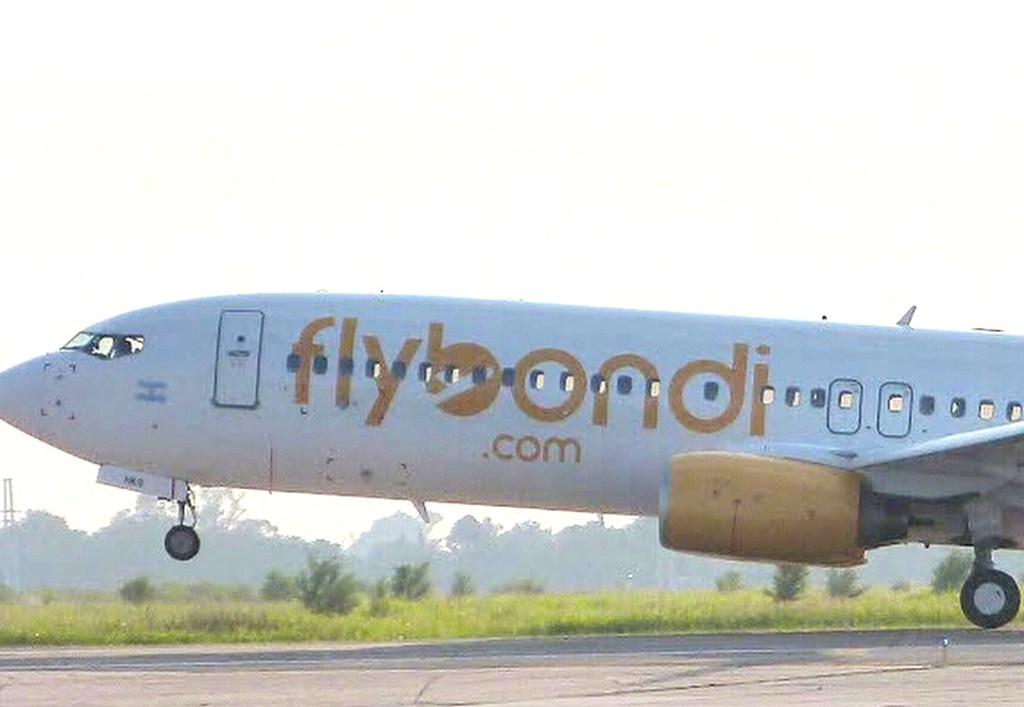
El impacto de la pandemia ha afectado las economías de las líneas aéreas, el turismo y diferentes sectores que motorizan las economías. Tras permanecer cerrado el Aeropuerto Internacional El Palomar, se han visto perjudicadas las compañías Flybondi Líneas Aéreas, JetSmart Airlines Argentina, la concesionaria de servicios logísticos en tierra Acciona, entre muchas empresas que de manera directa e indirecta complementan a la activación del país. La desaceleración económica y las inacciones del Gobierno de Argentina frente a la necesidad de conservar empleos, continúan representando serios problemas para los empleados de las aerolíneas, aeropuertos y demás sectores que complementan las actividades del Aeropuerto El Palomar.

La anulación de los vuelos hacia los diferentes aeropuertos del país son consecuentes con la disminución de trabajo que continúa impactando en muchos aeropuertos, como por ejemplo Bariloche, desde donde acompañan la preocupación de los trabajadores de Flybondi que piden la reapertura del Aeropuerto El Palomar, porque han sido autorizados parcialmente a operar desde Ezeiza, pero no les resulta viable. «Los barilochenses tenemos algo que decir a las autoridades nacionales para que habiliten definitivamente los vuelos y se mejore la oferta en materia de conexión aérea», expresó el concejal Pablo Chamatrópulos de la Ciudad de Bariloche.

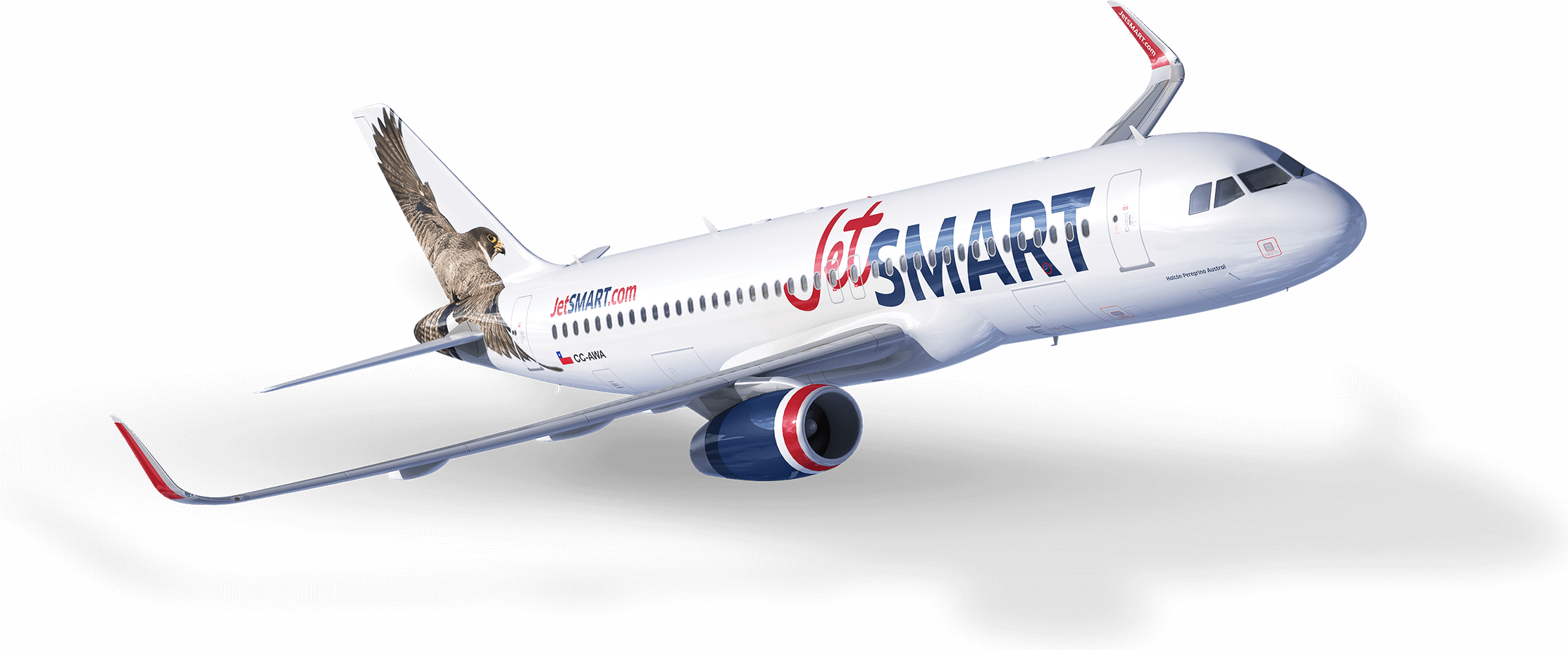
La empresa española de servicios aeronáuticos Acciona, que prestaba servicios a la aerolínea low cost JetSmart Airlines Argentina en los aeropuertos de El Palomar, Salta y Neuquén, anunció este 05/11 a sus cincuenta empleados que quedarán cesantes, producto de que abandonará su unidad en Argentina por la parálisis del sector. Hasta ahora, la única empresa habilitada para volar es Aerolíneas Argentinas, mientras que Gobierno concentró todos los vuelos en Ezeiza. Según la empresa el cierre obedece al impacto que hemos enfrentado producto de la pandemia COVID-19. El comunicado de Acciona dice lo siguiente: «Este año la industria aeroportuaria, a escala global, ha sufrido uno de los más profundos impactos en su historia, producto de la pandemia mundial. Las restricciones producto de la pandemia han generado un nuevo contexto que ha obligado a Acciona a tomar la dura decisión de cerrar sus operaciones de handling de pasajeros en la Argentina, finalizando el contrato que la compañía mantenía con su único cliente, JetSmart», agrega la firma que presta servicios aeronáuticos en España, Alemania y Chile. Acciona mantuvo su operación en la Argentina completamente a pérdida durante los siete meses en que los vuelos de cabotaje estuvieron suspendidos. Apenas una semana después de que se reiniciaran los vuelos de cabotaje, con la lógica expectativa de que todas las empresas del sector vuelvan a tener ingresos, la empresa decidió levantar su unidad de negocio del país.

Incongruencias del Gobierno

El Viernes 23/10, unos días después de que se habilitaran los vuelos y se aprobara la fusión entre Aerolíneas Argentinas y Austral Líneas Aéreas, en asamblea de accionistas, el Organismo Regulador del Sistema Nacional de Aeropuertos (SNA) comunicó a la Administración Nacional de Aviación Civil (ANAC) que el único corredor sanitario seguro de la zona del AMBA es el Aeropuerto de Ezeiza. La firma del Vicepresidente del ORSNA, Fernando Muriel, dejó afuera al Aeropuerto El Palomar, donde operan dos aerolíneas de presupuesto Flybondi y JetSmart, marcando una seria discriminación a los derechos de volar en Argentina. Consecuentemente, Flybondi presentó una denuncia judicial contra la decisión. Pero en el caso de JetSmart comunicó el Lunes 26/10 que acataba la decisión oficial y que mudará su operación de cabotaje al Aeropuerto Ezeiza. Ese mismo día otra decisión del ORSNA, nuevamente firmada por el Vicepresidente del ORSNA, bonificó a JetSmart las tasas aeroportuarias que deberá abonar en concepto de servicios aeroportuarios.

La aerolínea low cost JetSmart Argentina no ha reiniciado sus operaciones regulares de cabotaje. Aún así, su sindicato de empleados aeronáuticos ASTJ sigue acompañando a sus colegas de Flybondi, por los impactos que atraviesa la aviación, síntomas donde ambas aerolíneas sufren por el cierre del Aeropuerto El Palomar, aunque las empresas hayan tomado diferentes posturas.

Impacts from paralysis El Palomar

Employment decreases due to continuing paralysis of El Palomar

The impact of the pandemic has affected the economies of airlines, tourism and different sectors that drive economies. After the El Palomar International Airport remained closed, the companies Flybondi Líneas Aéreas, JetSmart Airlines Argentina, the Acciona ground logistics services concessionaire, among many companies that directly and indirectly complement the activation of the country have been affected. The economic slowdown and the inactions of the Government of Argentina in the face of the need to preserve jobs continue to represent serious problems for the employees of the airlines, airports and other sectors that complement the activities of the El Palomar Airport.

The cancellation of flights to the different airports in the country are consistent with the decrease in work that continues to impact many airports, such as Bariloche, from where they accompany the concern of Flybondi workers who ask for the reopening of El Palomar Airport, because They have been partially authorized to operate from Ezeiza, but it is not feasible for them. «The people of Bariloche have something to say to the national authorities so that they definitively enable flights and improve the offer in terms of air connection», said Councilor Pablo Chamatrópulos of the City of Bariloche.

The Spanish aeronautical services company Acciona, which provided services to the low cost airline JetSmart Airlines Argentina at the airports of El Palomar, Salta and Neuquén, announced this 05/11 to its fifty employees that they will be laid off, as a result of leaving their unit Argentina due to the paralysis of the sector. Until now, the only company authorized to fly is Aerolíneas Argentinas, while the Government concentrated all flights in Ezeiza. According to the company, the closure is due to the impact we have faced as a result of the COVID-19 pandemic. The Acciona statement reads as follows: «This year the airport industry, on a global scale, has suffered one of the most profound impacts in its history, as a result of the global pandemic. The restrictions resulting from the pandemic have generated a new context that has Forced Acciona to make the tough decision to close its passenger handling operations in Argentina, ending the contract that the company had with its only client, JetSmart», adds the firm that provides aeronautical services in Spain, Germany and Chile. Acciona maintained its operation in Argentina completely at a loss during the seven months in which domestic flights were suspended. Just a week after domestic flights were restarted, with the logical expectation that all companies in the sector will have income again, the company decided to build its business unit in the country.

Government inconsistencies

AW-Jetsmart_AR

On Friday 10/23, a few days after the flights were enabled and the merger between Aerolíneas Argentinas and Austral Líneas Aéreas was approved, in a shareholders’ meeting, the Organism Regulator of the National Airport System (SNA) informed the National Administration of Civil Aviation (ANAC) that the only safe sanitary corridor in the AMBA area is the Ezeiza Airport. The signing of the Vice President of ORSNA, Fernando Muriel, left out the El Palomar Airport, where two budget airlines Flybondi and JetSmart operate, marking a serious discrimination against the rights to fly in Argentina. Consequently, Flybondi filed a legal complaint against the decision. But in the case of JetSmart, it announced on Monday 10/26 that it was abiding by the official decision and that it will move its cabotage operation to Ezeiza Airport. That same day another decision of the ORSNA, again signed by the Vice President of the ORSNA, reduced to JetSmart the airport taxes that it must pay for airport services.

The low cost airline JetSmart Argentina has not restarted its regular cabotage operations. Even so, its aeronautical employees union ASTJ continues to accompany its Flybondi colleagues, due to the impacts that aviation goes through, symptoms where both airlines suffer from the closure of El Palomar Airport, although the companies have taken different positions.


PUBLISHER: Airgways.com
DBk: Flybondi.com / Jetsmart.com / Unmedioenmoron.com.ar / Bariloche2000.com / Airgways.com
AW-POST: 202011060845AR

A\W   A I R G W A Y S ®