SAS creará base Aeropuerto de Málaga

AW | 2018 01 31 14:10 | AIRPORTS

Resultado de imagen para Scandinavian Air System SAS logoLa aerolínea escandinava SAS creará nuevas bases en Málaga y Londres

El fuerte crecimiento del mercado nórdico en la Costa del Sol, España ha llevado a la aerolínea Scandinavian Airlines System (SAS) a reforzar su apuesta por el Aeropuerto de Málaga.

SAS Airlines presentó su balance fiscal y avanzó entre los nuevos planes para este ejercicio la creación de nuevas bases en los aeropuertos de Málaga y de Londres. Esta decisión supone que la aerolínea tendrá aviones basados, en Málaga, y que dispondrá en estas instalaciones de una mayor estructura. Será la segunda compañía nórdica que tendrá base en la capital de la Costa del Sol, en la que ya opera Norwegian Air Shutle, con seis aviones en Málaga en temporada alta.

Los datos de AENA confirman el fuerte crecimiento que ha experimentado SAS durante el pasado año, en el que movió un 31,5% más de pasajeros que en 2016. La estadística señala que ha ganado más de 105.000 viajeros en el último ejercicio, en el que cerró superando los 438.000 usuarios movidos en el Aeropuerto de Málaga.

Los últimos datos de Turismo, Costa del Sol apuntaron al mercado sueco como el país con un incremento más espectacular, con un aumento de llegadas por aeropuerto del 41,4% el pasado año. AIRWAYS® AW-Icon TXTResultado de imagen para Scandinavian Air System SAS Malaga Airport

SAS will create base Malaga Airport

The Scandinavian airline SAS will create new bases in Malaga and London

The strong growth of the Nordic market in the Costa del Sol, Spain has led the airline Scandinavian Airlines System (SAS) to strengthen its commitment to the Malaga Airport.

SAS Airlines presented its fiscal balance and advanced among the new plans for this year the creation of new bases at Malaga and London airports. This decision means that the airline will have aircraft based in Malaga, and that it will have a larger structure in these facilities. It will be the second Nordic company to be based in the capital of the Costa del Sol, where Norwegian Air Shutle already operates, with six aircraft in Malaga during the high season.

The data from AENA confirm the strong growth that SAS has experienced during the past year, in which it moved 31.5% more passengers than in 2016. The statistics show that it has gained more than 105,000 passengers in the last year, in the which closed exceeding the 438,000 users moved at the Malaga Airport.

The latest data from Tourism, Costa del Sol pointed to the Swedish market as the country with the most spectacular increase, with an increase in arrivals per airport of 41.4% last year. A \ W


Ξ A I R G W A Y S Ξ
SOURCE:  Airgways.com
DBk: Flysas.com
AW-POST: 201801311410AR

A\W   A I R G W A Y S ®

Logística Gollog 17 años en el aire

AW | 2018 01 31 13:58 | AIRLINES

Resultado de imagen para gollog logoGollog con nueva identidad visual conmemora 17 años de servicio

Gollog, la unidad de carga de Gol Líneas Aéreas, ha cumplido 17 años de existencia cuando sus primeras operaciones se llevaron a cabo el 30 de Enero de 2001, dos semanas después de la fundación de Gol, el 15 de Enero 2001.

Una nueva identidad visual fue creada para la marca. Gollog es la única empresa brasileña de carga aérea que posee una aplicación propia, que permite recursos como rastrear pedidos, hacer cotizaciones e identificar las unidades más cercanas. La implementación del sistema Seen Technology pemite definir la mejor ruta a ser trazada en el recorrido de una carga, además de ser posible controlar las entregas en tiempo real por medio de tabletas.

«Como resultado de ello y de otras iniciativas, hemos recibido el reconocimiento de nuestros clientes. Una encuesta realizada por Ibope, que mide el grado de satisfacción y fidelidad de los consumidores, muestra que el índice de Gollog viene creciendo en los últimos años, lo que nos da la certeza de que estamos siguiendo en el camino correcto y nos impulsa a trabajar cada vez más acciones orientadas a la excelencia de servicio al cliente», dijo el agente de carga de Gol Eduardo Caldero. En 2017 se registró un aumento del 9% en el número de mercancías transportadas por la empresa. AIRWAYS® AW-Icon TXT

Gollog Logistics 17 years in the air

Gollog with a new visual identity commemorates 17 years of service

Gollog, the cargo unit of Gol Líneas Aéreas, has been 17 years old when its first operations were carried out on January 30, 2001, two weeks after Gol was founded on January 15, 2001.

A new visual identity was created for the brand. Gollog is the only Brazilian air freight company with its own application, which allows resources such as tracking orders, making quotes and identifying the nearest units. The implementation of the Seen Technology system allows defining the best route to be traced in the path of a load, in addition to being able to control deliveries in real time by means of tablets.

«As a result of this and other initiatives, we have received the recognition of our clients. A survey conducted by Ibope, which measures the degree of satisfaction and loyalty of consumers, shows that the Gollog index has been growing in recent years, that gives us the certainty that we are following the correct path and encourages us to work more and more actions oriented to excellence in customer service», said Gol’s cargo agent Eduardo Caldero. In 2017 there was an increase of 9% in the number of goods transported by the company. A\W

Resultado de imagen para gollog

Gollog Logistics 17 anos no ar

Gollog com uma nova identidade visual comemora 17 anos de serviço

A Gollog, a unidade de carga da Gol Líneas Aéreas, tem 17 anos quando suas primeiras operações foram realizadas em 30 de janeiro de 2001, duas semanas após a Gol ter sido fundada em 15 de janeiro de 2001.Resultado de imagen para gollogUma nova identidade visual foi criada para a marca. A Gollog é a única empresa brasileira de frete aéreo com sua própria aplicação, que permite recursos como rastrear ordens, fazer cotações e identificar as unidades mais próximas. A implementação do sistema Seen Technology permite definir o melhor caminho a seguir no caminho de uma carga, além de poder controlar entregas em tempo real por meio de tablets.

«Como resultado desta e de outras iniciativas, recebemos o reconhecimento de nossos clientes. Uma pesquisa realizada pelo Ibope, que mede o grau de satisfação e lealdade dos consumidores, mostra que o índice Gollog vem crescendo nos últimos anos, o que dá nós a certeza de que estamos seguindo o caminho correto e nos encoraja a trabalhar cada vez mais ações voltadas para a excelência no atendimento ao cliente», afirmou o agente de carga da Gol, Eduardo Caldero. Em 2017, houve um aumento de 9% no número de mercadorias transportadas pela empresa. A \ W


Ξ A I R G W A Y S Ξ
SOURCE:  Airgways.com
DBk: Voegol.com.br
AW-POST: 201801311358AR

A\W   A I R G W A Y S ®

Auditoría OACI en Kazajstán

AW | 2018 01 31 13:39 | AVIATION

Kazajstán supera con éxito la auditoría de seguridad de la OACI

Kazajstán aprobó con éxito una auditoría de seguridad de la Organización de Aviación Civil Internacional (OACI) y confirmó un alto nivel de cumplimiento de las normas internacionales.

La auditoría llevada a cabo por la OACI es una de las herramientas objetivas más importantes para evaluar el sistema de seguridad de la aviación civil del estado. «El nivel de cumplimiento del Comité de Aviación Civil dependiente del Ministerio de Inversión y Desarrollo de Kazajstán con los requisitos de la OACI ascendió oficialmente al 83%, que es un 21% mejor que el indicador de auditoría de 2009, que fue del 62%. El indicador mejorado de Kazajstán excede en un 11 por ciento el nivel promedio mundial del 72 por ciento», según el mensaje del comité.

La auditoría anterior de 2009 consistió en 299 preguntas, lo que demuestra claramente el endurecimiento de los requisitos de la OACI. «Se ha vuelto mucho más difícil para los países someterse a auditorías de la OACI, y en este sentido, el alto nivel de evaluación de Kazajstán por parte de los expertos de la OACI se está volviendo aún más significativo», dijo el mensaje.

Como resultado de la auditoría de 2017, Kazajstán se unió al grupo de países que ocupan una posición de liderazgo en el mundo en términos de seguridad de la aviación.

Anteriormente, el Comité de Aviación Civil anunció el lanzamiento de una serie de vuelos internacionales en Kazajistán en 2018. Además, el comité llevará a cabo 59 certificaciones y 434 inspecciones de empresas de transporte aéreo en 2018 con el fin de controlar la seguridad de los vuelos.

Las Auditorías de la OACI

La baja evaluación de los resultados de la auditoría de la OACI puede generar graves consecuencias negativas, como restricciones en los vuelos de otros países.

La auditoría de seguridad de la aviación es un control exhaustivo del sistema de seguridad del aeropuerto. La evaluación de expertos se llevó a cabo en 480 asuntos clave en noviembre de 2017. El año anterior se abrieron diez nuevas rutas internacionales, incluidas compañías extranjeras (Finn Air, LOT Polish Airlines, Wizz Air, Air China) en dirección a Varsovia, Budapest, Helsinki, Beijing y Batumi, así como aerolíneas de Kazajstán a destinos de Xi’an, Kiev, Minvody, Ereván y Delhi. Al mismo tiempo, se añadieron 20 vuelos por semana al vuelo actual en once destinos, es decir, a Bishkek, Estambul, Pekín, Londres, Seúl, Novosibirsk, Ekaterinburg, Omsk, San Petersburgo y Tashkent.

La aviación en Kazajstán

Kazajstán tiene aeropuertos en Shimkent, Atbasar, Karaganda, Kyzyl-Orda, Balkhash, Burundai, Zaisan, Petropavlovsk, Semipalatinsk, Ust-kamenogorsk, Uralsk, Taldy-Kurgan, Kokshetau, Pavlodar, Zhezkazgan, Atyrau, Zhambyl, Zhairem, Ekibastuz, Almaty, Ciudades de Aktau, Kostanay, Aktyubinsk, Arkalyk y Astana.

Las aerolíneas existentes de Kazajstán son Air Astana, Air Company MEGA, Avia Jaynar, Bek Air, Berkut Air, Euro-Asia Air, Excellent Glide, Irtysh-Air, SCAT, Semeyavia, Zhetysu y Zhezkazgan Air. AIRWAYS® AW-Icon TXT

ICAO audit in Kazakhstan

Kazakhstan successfully passes ICAO security audit

Kazakhstan successfully passed a safety audit by the International Civil Aviation Organization (ICAO) and confirmed a high level of compliance with international standards.

The audit conducted by ICAO is one of the most important objective tools for evaluating the state’s civil aviation security system. «The level of compliance of the Civil Aviation Committee under the Ministry of Investment and Development of Kazakhstan with the requirements of ICAO officially amounted to 83%, which is 21% better than the 2009 audit indicator, which was 62% The improved indicator of Kazakhstan exceeds by 11 percent the world average level of 72 percent», according to the committee’s message.

The previous 2009 audit consisted of 299 questions, clearly demonstrating the tightening of ICAO requirements. «It has become much more difficult for countries to undergo ICAO audits, and in this regard, Kazakhstan’s high level of evaluation by ICAO experts is becoming even more significant», the message said.

As a result of the 2017 audit, Kazakhstan joined the group of countries that occupy a leading position in the world in terms of aviation security.

Previously, the Civil Aviation Committee announced the launch of a series of international flights in Kazakhstan in 2018. In addition, the committee will carry out 59 certifications and 434 inspections of air transport companies in 2018 in order to control the safety of flights.

The ICAO Audits

The low evaluation of the results of the ICAO audit can generate serious negative consequences, such as restrictions on flights from other countries.

The aviation security audit is a comprehensive control of the airport’s security system. The expert evaluation was carried out on 480 key issues in November 2017. The previous year, ten new international routes were opened, including foreign companies (Finn Air, LOT Polish Airlines, Wizz Air, Air China) in the direction of Warsaw, Budapest, Helsinki, Beijing and Batumi, as well as Kazakhstan airlines to destinations of Xi’an, Kiev, Minvody, Yerevan and Delhi. At the same time, 20 flights per week were added to the current flight in eleven destinations, namely Bishkek, Istanbul, Beijing, London, Seoul, Novosibirsk, Ekaterinburg, Omsk, St. Petersburg and Tashkent.

Aviation in Kazakhstan

Kazakhstan has airports in Shimkent, Atbasar, Karaganda, Kyzyl-Orda, Balkhash, Burundai, Zaisan, Petropavlovsk, Semipalatinsk, Ust-kamenogorsk, Uralsk, Taldy-Kurgan, Kokshetau, Pavlodar, Zhezkazgan, Atyrau, Zhambyl, Zhairem, Ekibastuz, Almaty, Cities of Aktau, Kostanay, Aktyubinsk, Arkalyk and Astana.

The existing airlines of Kazakhstan are Air Astana, MEGA Air Company, Avia Jaynar, Bek Air, Berkut Air, Euro-Asia Air, Excellent Glide, Irtysh-Air, SCAT, Semeyavia, Zhetysu and Zhezkazgan Air. A \ W


Ξ A I R G W A Y S Ξ
SOURCE:  Airgways.com
DBk: Icao.int / Azernews.az / Skymag.kz
AW-POST: 201801311339AR

A\W   A I R G W A Y S ®

Aeropuerto Schiphol escasez slots carga

221109-ABC

AW | 2018 01 31 13:23 | AIRPORT

Los transportista cargueros solicitan reglas claras por escasez

Los transportistas holandeses han pedido al Ministerio de Transporte de los Países Bajos que acelere la implementación de una regla local diseñada para mitigar la escasez de franjas horarias para las aerolíneas cargueras en el Aeropuerto Schiphol.

Tras una reunión en el parlamento la semana pasada, los grupos industriales evofenedex, TLN y Air Cargo Netherlands (ACN) dijeron que durante la reciente reunión con la Comisión de Aviación del Parlamento, la Ministra de Transporte, Cora van Nieuwenhuizen, reconoció la necesidad de una norma local para todos los transportistas de carga en el AeropuertoAmsterdam-Schiphol.

Los transportistas observan una reducción en las capacidades de vuelos de carga en el Aeropuerto Schiphol hacia el futuro. Esto tendrá un impacto en el empleo de la industria de la carga aérea y puede dañar la posición de los exportadores e importadores holandeses. Según informes de la IATA, desde Octubre 2017, ha habido una disminución de alrededor del 12% del número de aviones de carga completa al principal aeropuerto holandés.

Reglas operativas en Amsterdam-Schiphol

Las discusiones se producen cuando el año pasado el aeropuerto casi incumplió su límite de 500,000 aviones anuales de movimiento de aeronaves.

La propuesta de la regla local verá que los operadores cargueros recibirán prioridad hasta en un 25% de los slots preasignados no utilizados que se devuelvan para su reasignación. La aprobación e implementación de la regla local se ha retrasado debido a un debate técnico en el Comité de Coordinación de los Países Bajos (CCN) en Diciembre 2017.

Pero el tema fue discutido durante una reunión del grupo de trabajo de ‘regla local’ a mediados de Enero. Se planea una segunda reunión sobre este tema para redactar un texto final y, posteriormente, se presentará al CCN para su votación en una reunión extraordinaria alrededor del 14 de febrero. El asesoramiento de CCN se enviará al Ministerio de Transporte para que verifiquen, confirmen y comuniquen a la Comisión Europea.

La regla propuesta no debería afectar el estado independiente del coordinador, debe cumplir con la legislación comunitaria y debe mejorar el uso eficiente de la capacidad del aeropuerto. El coordinador de slots del Aeropuerto de los Países Bajos, Airport Coordination Netherlands, tiene que prepararse para una implementación rápida.

Transporte de carga

Los transportistas de carga han sufrido de manera desproporcionada debido a la falta de slots porque, según las normas de la IATA, cualquier línea aérea que use más del 80% de sus slots asignados adquiere un derecho histórico para las compañías y automáticamente se le permitirá operar sus vuelos la próxima temporada. Pero aquellos que usan menos del 80% de sus espacios asignados los pierden automáticamente.

Todos los transportistas de carga, con sus horarios menos regulares, a menudo les resulta difícil cumplir con la regla del 80%. Sin embargo, una regla local anularía esto y permitiría que los slots se vuelvan a asignar a las aerolíneas de carga.

Conflicto ABC

La escasez de slots en el Aeropuerto Amsterdam-Schiphol (AMS) tomó un giro dramático en Octubre 2017, luego de la amenaza de Moscú de cerrar el espacio aéreo ruso a los aviones holandeses si AMS se negaba a acomodar más slots para la aerolínea rusa AirBridgeCargo (ABC). Air France-KLM firmó un acuerdo el 3 de Noviembre 2017 para prestar slots a ABC para esta temporada de invierno 2017-2018, evitando una crisis más urgente.

Para retener los slots en el aeropuerto, se requiere que los operadores operen un mínimo del 80% de los vuelos a tiempo a destinos específicos, una lucha para muchas operaciones de cargueros que a menudo cambian sus horarios para acomodar las necesidades de los clientes de último minuto. ABC movió hasta 12 vuelos de carga semanales al aeropuerto de Lieja en Bélgica después de que Schiphol redujera las máquinas tragamonedas del proveedor de 23 a 13.

La escasez de slots en el Aeropuerto de Schiphol se convirtió en un tema candente en Octubre 2017 cuando varias aerolíneas comenzaron a trasladar el tráfico de cargueros a otros aeropuertos, incluidos el Aeropuerto de Bruselas y Lieja. Las asociaciones industriales holandesas dijeron que esperan que el 20% de los vuelos de carga hacia y desde AMS sean cancelados esta temporada invernal, ya que las operaciones de cargueros allí lucharon para asegurar los slots después de que el aeropuerto alcanzara su máximo anual de 500,000 movimientos de tráfico aéreo.

El Aeropuerto de Schiphol ha confirmado que experimentó un aumento del 5,4% en el tonelaje anual en 2017, con una fuerte demanda en el Lejano Oriente de productos europeos que aumentaron las cifras totales a 1.752.498 toneladas. AIRWAYS® AW-Icon TXT

Schiphol_Cargo_Airport_(6818397380)

Airport Schiphol shortage cargo slots

Cargo carriers request clear rules for shortage

Dutch hauliers have asked the Netherlands Ministry of Transportation to accelerate the implementation of a local rule designed to mitigate the shortage of slots for freight airlines at Schiphol Airport.

After a meeting in parliament last week, industry groups evofenedex, TLN and Air Cargo Netherlands (ACN) said that during the recent meeting with the Parliament’s Aviation Commission, the Minister of Transport, Cora van Nieuwenhuizen, recognized the need to a local standard for all cargo carriers at the Amsterdam-Schiphol Airport.

Carriers see a reduction in cargo flight capabilities at Schiphol Airport into the future. This will have an impact on the employment of the air cargo industry and may damage the position of Dutch exporters and importers. According to IATA reports, since October 2017, there has been a decrease of around 12% in the number of full-load aircraft to the main Dutch airport.

Operational rules in Amsterdam-Schiphol

The discussions take place when last year the airport almost breached its limit of 500,000 aircraft per year of aircraft movement.

The local rule proposal will see that freight operators will receive priority up to 25% of unused pre-assigned slots that are returned for reassignment. The approval and implementation of the local rule has been delayed due to a technical debate in the Coordination Committee of the Netherlands (CCN) in December 2017.

But the issue was discussed during a meeting of the ‘local rule’ working group in mid-January. A second meeting on this topic is planned to draft a final text and, subsequently, it will be presented to the CCN for voting at an extraordinary meeting around February 14. The advice of CCN will be sent to the Ministry of Transport to verify, confirm and communicate to the European Commission.

The proposed rule should not affect the independent status of the coordinator, must comply with community legislation and should improve the efficient use of airport capacity. The coordinator of slots of the Airport of the Netherlands, Airport Coordination Netherlands, has to prepare for a fast implementation.

Freight transport

Freight carriers have suffered disproportionately due to the lack of slots because, according to IATA rules, any airline that uses more than 80% of its allocated slots acquires a historical right for companies and will automatically be allowed to operate your flights next season. But those who use less than 80% of their assigned spaces lose them automatically.

All freight carriers, with their less regular schedules, often find it difficult to comply with the 80% rule. However, a local rule would override this and allow the slots to be reassigned to cargo carriers.

Conflict ABC

The shortage of slots at the Amsterdam-Schiphol Airport (AMS) took a dramatic turn in October 2017, after the threat of Moscow to close the Russian airspace to Dutch planes if AMS refused to accommodate more slots for the Russian airline AirBridgeCargo (ABC) Air France-KLM signed an agreement on November 3, 2017 to provide ABC slots for this winter season 2017-2018, avoiding a more urgent crisis.

To retain the slots at the airport, operators are required to operate a minimum of 80% of scheduled flights on time to specific destinations, a struggle for many freighter operations that often change their schedules to accommodate the needs of ultimate customers. minute. ABC moved up to 12 weekly freight flights to Liege airport in Belgium after Schiphol reduced the provider’s slot machines from 23 to 13.

The shortage of slots at Schiphol Airport became a hot topic last month when several airlines began moving freighter traffic to other airports, including the Brussels and Liège airports. Dutch industrial associations said they expect 20 percent of cargo flights to and from AMS to be canceled this winter season, as freighter operations there struggled to secure the slot machines after the airport reached its annual maximum of 500,000 movements of air traffic.

Schiphol Airport has confirmed that it experienced an increase of 5.4% in annual tonnage in 2017, with strong demand in the Far East for European products that increased the total figures to 1,752,498 tonnes. A \ W

Sleuf vrachtvakken op de luchthaven Schiphol

Vrachtvervoerders vragen om duidelijke regels voor schaarste

Nederlandse transporteurs hebben het Nederlandse Ministerie van Transport gevraagd om de implementatie van een lokale regel om het tekort aan slots voor vrachtluchtvaartmaatschappijen op Schiphol Luchthaven te verminderen.

Na een bijeenkomst in het parlement vorige week, vertelden branchegroepen evofenedex, TLN en Air Cargo Netherlands (ACN) dat de minister van Transport, Cora van Nieuwenhuizen, tijdens de recente ontmoeting met de luchtvaartcommissie van het Parlement de behoefte aan een lokale standaard voor iedereen heeft erkend. vrachtvervoerders op de luchthaven Amsterdam-Schiphol.

Vervoerders zien een vermindering van de vrachtvluchtcapaciteit op Schiphol naar de toekomst. Dit heeft gevolgen voor de werkgelegenheid in de luchtvrachtindustrie en kan de positie van Nederlandse exporteurs en importeurs schaden. Volgens de IATA-rapporten is er sinds oktober 2017 een daling van het aantal vliegtuigen met vollast naar de belangrijkste Nederlandse luchthaven met ongeveer 12%.

Operationele regels in Amsterdam-Schiphol

De discussies vinden plaats toen vorig jaar het vliegveld bijna zijn limiet van 500.000 vliegtuigen per jaar van vliegtuigbeweging heeft overschreden.

Het voorstel voor de lokale regel zal ervoor zorgen dat vrachtexploitanten prioriteit krijgen tot 25% van ongebruikte vooraf toegewezen slots die worden geretourneerd voor nieuwe toewijzing. De goedkeuring en implementatie van de lokale regel is vertraagd als gevolg van een technisch debat in het coördinatiecomité van Nederland (CCN) in december 2017.

Maar de kwestie werd medio januari besproken tijdens een vergadering van de werkgroep ‘lokale regel’. Een tweede vergadering over dit onderwerp is gepland om een ​​definitieve tekst op te stellen en vervolgens zal deze worden voorgelegd aan het CCN voor het stemmen op een buitengewone vergadering rond 14 februari. Het advies van CCN zal naar het ministerie van Transport worden gestuurd om te verifiëren, bevestigen en communiceren met de Europese Commissie.

De voorgestelde regel mag niet van invloed zijn op de onafhankelijke status van de coördinator, moet in overeenstemming zijn met de communautaire wetgeving en moet het efficiënte gebruik van luchthavencapaciteit verbeteren. De coördinator van slots van Airport of the Netherlands, Airport Coordination Netherlands, moet zich voorbereiden op een snelle implementatie.

Vrachttransport

Vrachtschepen hebben onevenredig geleden onder het gebrek aan slots omdat, volgens de regels van de IATA, elke luchtvaartmaatschappij die meer dan 80% van haar toegewezen slots gebruikt een historisch recht heeft voor bedrijven en automatisch toestemming zal krijgen om uw vluchten volgend seizoen te exploiteren. Maar degenen die minder dan 80% van hun toegewezen ruimtes gebruiken, verliezen ze automatisch.

Alle vrachtvervoerders, met hun minder regelmatige schema’s, vinden het vaak moeilijk om te voldoen aan de 80% -regel. Een lokale regel zou dit echter overschrijven en toestaan ​​dat de slots opnieuw worden toegewezen aan vrachtvervoerders.

Conflict ABC

Het tekort aan slots op de luchthaven Amsterdam-Schiphol (AMS) nam een ​​dramatische wending in oktober 2017, na de dreiging van Moskou om het Russische luchtruim te sluiten voor Nederlandse vliegtuigen als AMS weigerde om meer slots te accommoderen voor de Russische luchtvaartmaatschappij AirBridgeCargo (ABC) Air Frankrijk-KLM heeft op 3 november 2017 een overeenkomst getekend om ABC-slots te verstrekken voor dit winterseizoen 2017-2018, waardoor een urgentere crisis wordt voorkomen.

Om de slots op de luchthaven te behouden, moeten exploitanten minimaal 80% van de geplande vluchten op tijd uitvoeren naar specifieke bestemmingen, een strijd voor veel vrachtschepen die vaak hun schema’s aanpassen aan de behoeften van de uiteindelijke klanten. minuut. ABC verhuisde naar 12 wekelijkse vrachtvluchten naar de luchthaven van Luik in België nadat Schiphol de gokautomaten van de aanbieder van 23 naar 13 had verlaagd.

Het tekort aan slots op Schiphol werd vorige maand een hot topic toen verschillende luchtvaartmaatschappijen vrachtvervoer begonnen naar andere luchthavens, waaronder de luchthavens van Brussel en Luik. Nederlandse bedrijfsverenigingen zeiden dat ze verwachten dat 20 procent van de vrachtvluchten van en naar AMS dit winterseizoen zal worden geannuleerd, omdat vrachtoperaties er moeite hebben om de fruitmachines te beveiligen nadat de luchthaven zijn jaarlijkse maximum van 500.000 vliegbewegingen heeft bereikt.

Schiphol bevestigt dat het in 2017 een jaarlijkse tonnage van 5,4% heeft gekend, met een sterke vraag in het Verre Oosten naar Europese producten die de totale cijfers op 1.752.498 ton hebben gebracht. A \ W


Ξ A I R G W A Y S Ξ
SOURCE:  Airgways.com
DBk: Airliners.nl / Aircargonews.net / Airfreight-logistics.com
AW-POST: 201801311323AR

A\W   A I R G W A Y S ®

Polémico desalojo Aeropuerto Rosario

AW-0 (123)

AW | 2018 01 31 12:22 | AIRPORTS

Polémico desalojo de un local en el Aeropuerto Rosario para ubicar una aerolínea

La titular del comercio solicita ayuda para continuar trabajando en algún otro puesto en el Aeropuerto de Rosario. Katia Hernández que durante 14 años trabajó en un local del Aeropuerto Internacional «Islas Malvinas» reveló que le enviaron una carta intimando a dejar el local que ocupa en el hall de ingreso. En ese lugar instalarán la oficina de atención de una aerolínea. El titular del directorio del aeropuerto, Matías Galíndez, dijo que trabajan para «encontrar una solución» pero que tiene que adecuarse a un marco formal al igual que los otros comercios.

La titular del comercio Katia Hernández dio detalles del polémico desenlace. «Sucede que el contrato estaba vencido, no aceptan renovarlo porque quieren marcas nuevas, pero la verdad es que yo necesito trabajar y les pido que me ayuden. Cuando empieza a crecer el aeropuerto, que hay más movimiento deciden esto. Siempre estuve al día con el pago del canon, aún en los momentos más difíciles y ahora me hacen esto», lamentó para contar que atiene un local de productos regionales donde trabaja sola, «durante la mayor cantidad de horas posibles». Katia recordó que hace 14 años cumple tareas en el aeropuerto. «Cuando cerró el local en el que trabajaba, pedí que me dieran un local a mi para productos regionales, muy requerido por los pasajeros. Ahora, hace unos seis meses me llaman y me dicen que no me asuste pero que me iba a llegar una carta intimidatoria para que desalojen el local, hasta pensé que era una broma», dijo y contó que se quejó y accedió a una reunión el 2 de Noviembre con las autoridades. «Les dije que no tenía problema que me cambien de lugar, pero que por favor no me dejen sin trabajo», suplicó y agregó: «He pasado los momentos difíciles cuando el aeropuerto cerraba o tenía dos vuelos e igual estábamos acá, justo ahora cuando empieza a crecer el aeropuerto, hay más movimiento, deciden esto, que nos tenemos que ir», lamentó.

Katia admitió que «los contratos estaban vencidos, porque quieren empezar de cero, que haya marcas importantes. Lo que les pedí es que no me dejen en la calle, que aunque sea atiendo el teléfono», insistió para aclarar que les dio su palabra que no iba a acudir a un abogado. «La respuesta de la reunión llegó este viernes con una carta intimidatoria que trajo una escribana que me dijo que el viernes me iban a desalojar con la fuerza pública», describió.

Ante la consulta de cómo acceder a un nuevo local, «te dicen que después te presentes a licitación, pero no te dan indicaciones claras». Por último aseguró que «han mejorado las ventas, se ve más movimiento» desde que hay diez vuelos diarios. «El único local que queda es el kiosco de golosinas, quedábamos una agencia turística y yo, otros dos locales ya se fueron», cerró.

La respuesta del Aeropuerto

El titular del directorio del aeropuerto, Matías Galíndez, dijo que «se van a realizar todos los procesos formales para que ella pueda trasladarse a otro lugar, la estamos acompañando». Además negó que personal del aeropuerto le haya recomendado que «se vuelva a su país», como Katia -de origen cubano- manifestó.

«Niego enfáticamente que haya trato discriminatorio», afirmó Galíndez para agregar: «Estamos dialogando con ella para encontrar una solución, que tiene que estar en el marco formal de la convocatoria que estamos haciendo a otros comercios para que se ajusten a la realidad del aeropuerto actual». AIRWAYS® AW-Icon TXT

AW-0 (154)

Controversial eviction Rosario Airport

Controversial eviction from a location at Rosario Airport to locate an airline

The owner of the trade requests assistance to continue working in another position at the Rosario Airport. Katia Hernández, who worked for 14 years at a local in the «Islas Malvinas» International Airport, revealed that she was sent a letter telling her to leave the premises she occupies in the entrance hall. In that place they will install the attention office of an airline. The head of the airport’s board, Matías Galíndez, said that they are working to «find a solution» but that they have to adapt to a formal framework just like the other businesses.

The trade head Katia Hernandez gave details of the controversial outcome. «It happens that the contract was expired, they do not accept renewing it because they want new brands, but the truth is that I need to work and I ask them to help me». When the airport starts to grow, there is more movement. the payment of the canon, even in the most difficult moments and now they do this to me, «he lamented to say that he has a local regional store where he works alone, for as many hours as possible». Katia recalled that she has been working at the airport for 14 years. «When I closed the premises where I worked, I asked them to give me a place for regional products, very much required by the passengers, now about six months ago they call me and tell me not to be scared but that I was going to get an intimidating letter to evict the premises, I even thought it was a joke», she said and complained and agreed to a meeting on November 2 with the authorities. «I told them I had no problem changing my place, but please do not leave me without a job», she begged, adding: «I have gone through difficult times when the airport closed or had two flights and we were still here, just now when the airport begins to grow, there is more movement, they decide this, we have to go», she lamented.

Katia admitted that «the contracts were expired, because they want to start from scratch, there are important brands, what I asked them is not to leave me in the street, even though I’m answering the phone», he insisted to clarify that he gave his word that I was not going to see a lawyer. «The response of the meeting came Friday with an intimidating letter that brought a clerk who told me that on Friday they were going to evict me with the public force», she described.

When asked how to access a new store, «they tell you that after you bid, but they do not give you clear instructions». Finally said that «sales have improved, you see more movement» since there are ten daily flights. «The only place that remains is the candy kiosk, we were a tourist agency and I, two other stores have already left», she said.

The response of the Airport

The head of the airport’s board, Matías Galíndez, said that «all the formal processes will be carried out so that she can move to another place, we are accompanying her». He also denied that airport staff had recommended that he «return to his country,» as Katia – of Cuban origin, said.

«I emphatically deny that there is discriminatory treatment», said Galíndez, adding: «We are talking with her to find a solution, which has to be in the formal framework of the call we are making to other businesses to adjust to the reality of the airport. current». A\W


Ξ A I R G W A Y S Ξ
SOURCE:  Airgways.com
DBk: Lacapital.com.ar / Airgways.com
AW-POST: 201801311222AR

A\W   A I R G W A Y S ®

P&W entrega motores para E190-E2

AW | 2018 01 30 21:12 | INDUSTRY

embraer logoP&W entrega motores GTF PW1900G para aviones Embraer E190-E2

Pratt & Whitney (P&W) entregó el primer conjunto de dos motores de producción de turbofán con engranaje PW1900G (GTF) para alimentar el avión Embraer E190-E2 del fabricante brasileño Embraer. La entrega se realizó a la línea de ensamblaje final del Resultado de imagen para Pratt & Whitney logoEmbraer E2 en São José dos Campos, São Paulo.

La instalación del motor está programada para el mes próximo, mientras que se espera que la aeronave entre en servicio con Widerøe Airlines en Abril 2018.

La autoridad aeronáutica brasileña Agência Nacional de Aviação Civil (ANAC) concedió recientemente su certificado de validación de tipo a los motores PW1900G, reconociendo así la certificación de la Parte 33 previamente otorgada por la Administración Federal de Aviación de los EEUU (FAA) para el motor. Los aviones E190-E2 de Embraer estarán propulsados ​​exclusivamente por el motor GTF de P&W. La certificación ANAC también permite la operación del motor en el servicio de ingresos en Brasil.

El Vicepresidente del Programa de motores comerciales de P&W, Graham Webb, dijo: «El GTF es el motor ideal para impulsar el nuevo E2 de Embraer. La entrega de estos dos primeros motores de producción es un hito emocionante para nosotros ya que continuamos trabajando junto con Embraer y Widerøe en preparación para una introducción exitosa al servicio de ingresos».

Al ingresar al servicio a principios de 2016, la línea de motores GTF es capaz de reducir el consumo de combustible en un 16% y las emisiones de óxido de nitrógeno en un 50% según el estándar regulatorio. También está diseñado para reducir la huella de ruido en un 75%. AIRWAYS® AW-Icon TXT

P&W delivers first engines for E190-E2

1280px-Embraer_logo.svgP & W delivers GTF PW1900G engines for Embraer E190-E2 aircraft

Pratt & Whitney (P&W) delivered the first set of two turbofan production engines with gear PW1900G (GTF) to power the Embraer E190-E2 aircraft of the Brazilian manufacturer Embraer. The delivery was made to the final assembly line of the Embraer Resultado de imagen para Pratt & Whitney logoE2 in São José dos Campos, São Paulo.

The engine installation is scheduled for next month, while the aircraft is expected to enter service with Widerøe Airlines in April 2018.

The Brazilian aeronautical authority Agência Nacional de Aviação Civil (ANAC) recently granted its type validation certificate to the PW1900G engines, thus recognizing the certification of Part 33 previously granted by the Federal Aviation Administration of the USA (FAA) for the engine . The Embraer E190-E2 aircraft will be powered exclusively by the P & W GTF engine. The ANAC certification also allows the operation of the engine in the revenue service in Brazil.

The Vice President of the P & W Commercial Engine Program, Graham Webb, said: «The GTF is the ideal engine to drive Embraer’s new E2.The delivery of these first two production engines is an exciting milestone for us as we continue to work together with Embraer and Widerøe in preparation for a successful introduction to the revenue service».

Upon entering the service at the beginning of 2016, the GTF engine line is able to reduce fuel consumption by 16% and nitrogen oxide emissions by 50% according to the regulatory standard. It is also designed to reduce the noise footprint by 75%. A \ W


Ξ A I R G W A Y S Ξ
SOURCE:  Airgways.com
DBk: Embraer.com / Aviationweek.com
AW-POST: 201801302112AR

A\W   A I R G W A Y S ®

TUIfly Belgium primer Boeing 737-8 MAX

DUwvlBpVwAAnUmA.jpg

AW | 2018 01 30 20:53 | AIRLINES

Related imageTUIfly Belgium recibe su primer Boeing 737-8 MAX

El primer Boeing 737-8 MAX fue incorporado a la flota de TUIfly Belgium el 29 de Enero 2018. La aerolínea adquirirá nueve aviones adicionales en el transcurso del año.

TUI ordenó 70 Boeing 737 MAX , entre ellos 52 Boeing 737-8 MAX y 18 Boeing 737-10 MAX. Los primeros nueve aviones serán tomados por las aerolíneas afiliadas del grupo en Bélgica, Suecia, Reino Unido y Países Bajos. TUIfly Alemania recibirá su primer 737-8 MAX a principios de 2019. TUI Group posee seis líneas aéreas con una flota de alrededor de 150 aviones.

Boeing informó este martes que está celebrando con TUI Group, el mayor operador de turismo del mundo, la entrega del primer modelo 737-8 MAX como nuevo operador de esta nueva aeronave comecial.

Las mejoras tecnológicas han hecho que el modelo Boeing 737 MAX sea el avión más vendido en la historia de Boeing, con más de 4,300 pedidos hasta la fecha de 92 clientes en todo el mundo, dijo el líder aeroespacial estadounidense.

«El 737 MAX encaja perfectamente con TUI Group, con un 14 por ciento menos de emisiones de carbono y un 40 por ciento menor de ruido que respalda el compromiso de las aerolíneas con la sostenibilidad», dijo Monty Oliver, vicepresidente de Ventas Europeas de Boeing Commercial Airplanes.

TUI Group, con sede en Hannover y Berlín, Alemania, tiene 51 pedidos adicionales de los 737 MAX 8 y cuatro 787 Dreamliners. El grupo, que también tiene 18 pedidos sin completar para el 737 MAX 10, es el primer operador europeo en seleccionar al último y más grande miembro de la familia de aviones 737 MAX. El gigante del turismo alemán con 67,000 empleados opera seis líneas aéreas en Europa y aproximadamente 150 aviones de mediano y largo recorrido, que atienden a más de 20 millones de clientes en 180 destinos en todo el mundo. AIRWAYS® AW-Icon TXT.png

TUIfly Belgium receives the first Boeing 737-8 MAX

Image result for tui groupTUIfly Belgium receives its first Boeing 737-8 MAX

The first Boeing 737-8 MAX was added to the fleet of TUIfly Belgium on January 29, 2018. The airline will acquire nine additional aircraft during the course of the year.

TUI ordered 70 Boeing 737 MAX, including 52 Boeing 737-8 MAX and 18 Boeing 737-10 MAX. The first nine aircraft will be taken by the group’s affiliated airlines in Belgium, Sweden, the United Kingdom and the Netherlands. TUIfly Germany will receive its first 737-8 MAX at the beginning of 2019. TUI Group has six airlines with a fleet of around 150 aircraft.

TUI_737_MAX_1000x666

Boeing reported Tuesday that it is celebrating with the TUI Group, the world’s largest tour operator, the delivery of the first 737-8 MAX model as the new operator of this new commercial aircraft.

Technological improvements have made the Boeing 737 MAX the best-selling aircraft in Boeing’s history, with more than 4,300 orders to date from 92 customers worldwide, the US aerospace leader said.

«The 737 MAX fits in perfectly with the TUI Group, with 14 percent less carbon emissions and 40 percent less noise that supports the airlines’ commitment to sustainability», said Monty Oliver, vice president of European Sales for Boeing. Commercial Airplanes.

TUI Group, based in Hannover and Berlin, Germany, has 51 additional orders of the 737 MAX 8 and four 787 Dreamliners. The group, which also has 18 unfilled orders for the 737 MAX 10, is the first European operator to select the last and largest member of the 737 MAX family of aircraft. The German tourism giant with 67,000 employees operates six airlines in Europe and approximately 150 medium and long-haul aircraft, serving more than 20 million customers in 180 destinations around the world. A \ W


Ξ A I R G W A Y S Ξ
SOURCE:  Airgways.com
DBk: Boeing.com / Tuigroup.com / Pilootenvliegtuig.nl
AW-POST: 201801302053AR

A\W   A I R G W A Y S ®

E-190 Austral pierde rueda tren aterrizaje

AW | 2018 01 30 20:15 | AVIATION SAFETY

Incidente pérdida rueda Embraer E-190-100AR de Austral en Mar del Plata

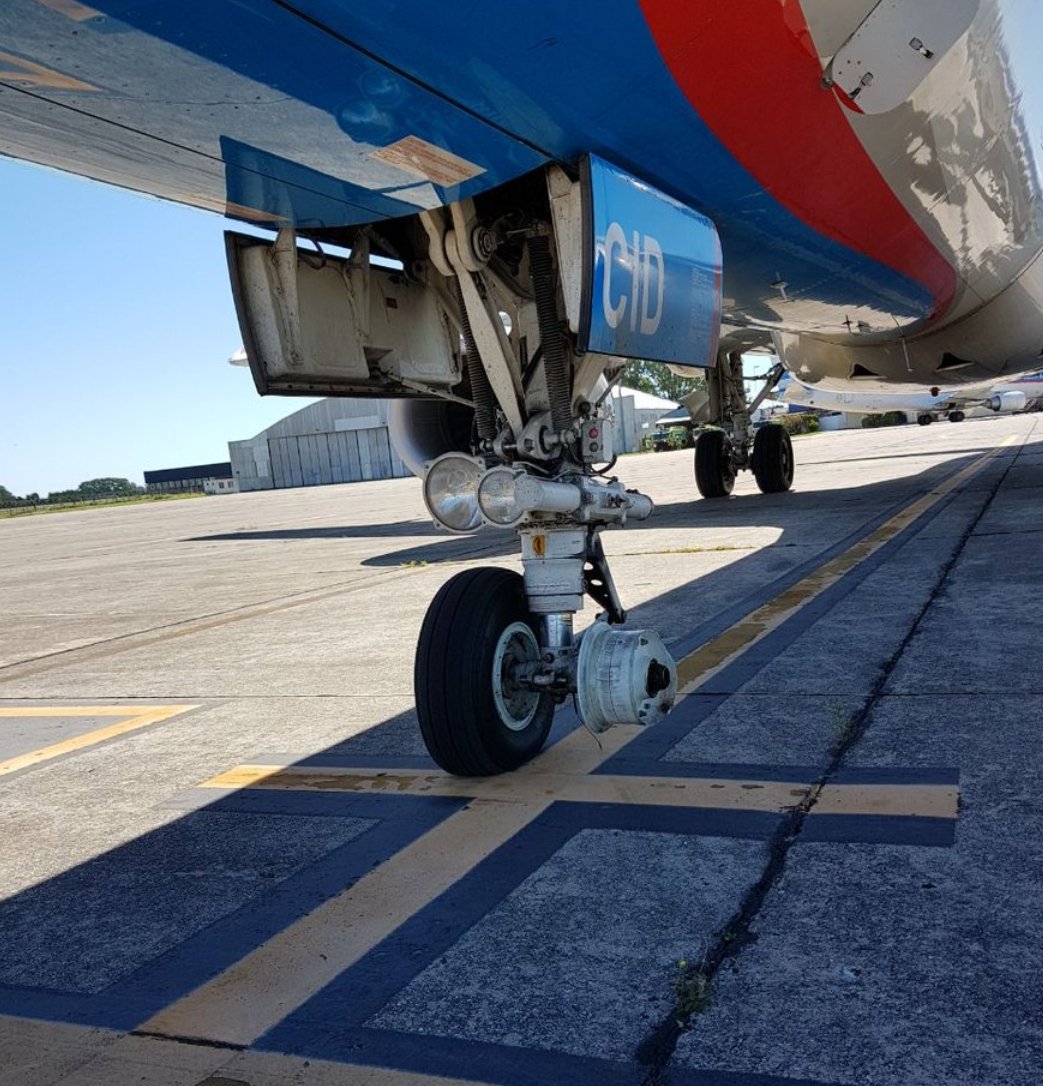
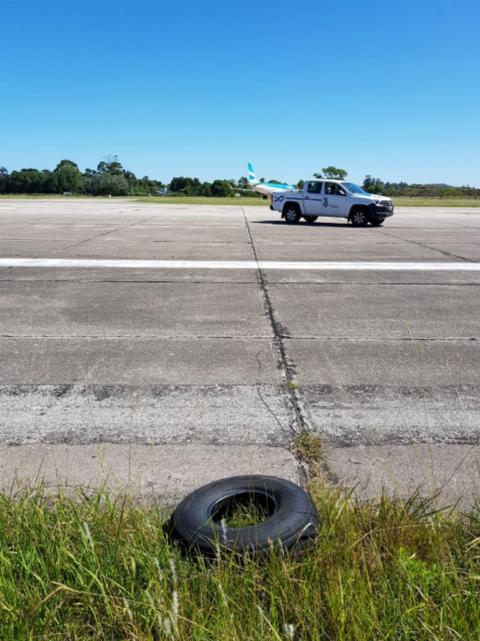
Un avión Embraer E-190-100AR de Austral Líneas Aéreas perdió una rueda del tren de naríz en el momento en que se disponía a despegar en el Aeropuerto de Mar del Plata. El incidente ocurrió este lunes, en el vuelo AU2605 que debía despegar a las 15:05 hs (12:05 UTC) de la ciudad de Mar del Plata.

El incidente impidió el despegue y obligó a la empresa Austral Líneas Aéreas a reprogramar el vuelo que se debía dirigir al Aeroparque Jorge Newbery de la Ciudad de Buenos Aires.

El vuelo había salido previamente de Tucumán hacia Mar del Plata. El vuelo AU2605 de Austral sufrió la rotura en una de las cubiertas, avería que afectó el desarrollo normal de las operaciones de despegue. El avión regresó por sus propios medios a plataforma y el vuelo fue cancelado.

El incidente del vuelo AU2605 del E190-100AR tuvo consecuencias afortunadas teniendo presente que el desprendimiento de la rueda había ocurrido en el momento del rodaje sobre pista pudiendo detener la aeronave sin consecuencias y sin que se produjesen heridos. Los pasajeros fueron reubicados casi en su totalidad en el vuelo AR1611, que partió hacia Aeropaque en el mismo día.

La Junta de Investigación de Accidentes de Aviación Civil (JIAAC) inició un expediente sobre el incidente para conocer cuál fue el motivo de la pérdida del neumático del E190-100AR de Austral. AIRWAYS® AW-Icon TXT


Incidente MD-81 Austral

AW-7000067.jpg

El 20 de Febrero de 2004, el MD-81 LV-WPY de Austral Línea Aéreas despegó desde el Aeropuerto Jorge Newbery rumbo a Iguazú con 151 pasajeros a bordo, en ese momento se deprendió una de las ruedas del tren de aterrizaje principal, la que atravesó la reja perimetral del Aeropuerto Jorge Newbery, cruzó la Avenida Costanera y terminó en un campo de golf cercano. Ante este inconveniente, el comandante declaró en emergencia a la aeronave, voló durante una 1:20 hs para quemar combustible y de esta manera alivianar el peso para aterrizar. La aeronave MD-81 aterrizó en el Aeropuerto Internacional de Ezeiza, cuando tocó pista se desprendió la segunda rueda del conjunto del tren de aterrizaje donde se había perdido la primera rueda al despegar, luego de este incidente el LV-WPY permaneció varios meses fuera de servicio. A \ W


AU E190-100AR

E-190 Austral loses wheel train landing

Incident loss Embraer E-190-100AR of Austral in Mar del Plata

An Embraer E-190-100AR plane from Austral Líneas Aéreas lost a nose train at the time it was ready to take off at Mar del Plata Airport. The incident occurred on Monday, on flight AU2605 that was due to take off at 3:05 p.m. (12:05 UTC) from the city of Mar del Plata.

The incident prevented the takeoff and forced the company Austral Líneas Aéreas to reprogram the flight that was to be directed to Aeroparque Jorge Newbery of the City of Buenos Aires.

The flight had previously left Tucumán towards Mar del Plata. Austral flight AU2605 suffered a break in one of the decks, damage that affected the normal development of the takeoff operations. The plane returned by its own means to platform and the flight was canceled.

The incident of the flight AU2605 of the E190-100AR had fortunate consequences bearing in mind that the detachment of the wheel had occurred at the time of taxiing on track and could stop the aircraft without consequences and without causing injuries. The passengers were relocated almost entirely on flight AR1611, which departed for Aeropaque on the same day.

The Civil Aviation Accident Investigation Board (JIAAC) initiated a file on the incident to find out the reason for the loss of the Austral E190-100AR tire. A \ W


Incident MD-81 Austral

570808e98f46b_Plane-Maker2015-12-1303-16-53-18.png.9133039fc6825553a7991abb31f891a9.png

On February 20, 2004, the MD-81 LV-WPY of Austral Línea Aéreas took off from Jorge Newbery Airport to Iguazú with 151 passengers on board, at which point one of the wheels of the main landing gear was detonated. He crossed the perimeter fence of the Jorge Newbery Airport, crossed Costanera Avenue and ended up at a nearby golf course. Faced with this inconvenience, the commander declared the aircraft in emergency, flew for a 1:20 hs to burn fuel and thus lighten the weight to land. The MD-81 aircraft landed at the Ezeiza International Airport, when it touched the runway the second wheel of the landing gear assembly where the first wheel had been taken off took off, after this incident the LV-WPY remained for several months outside service. A \ W


Ξ A I R G W A Y S Ξ
SOURCE:  Airgways.com
DBk: Twitter.com/aeropuertotuc / Harro Ranter
AW-POST: 201801302015AR

A\W   A I R G W A Y S ®

Flybondi inicia ops en Mendoza

AW-7089772

AW | 2018 01 30 19:42 | AIRLINES ROUTES

Flybondi-logoFlybondi inició su segunda ruta operativa Córdoba-Mendoza en Argentina

El vuelo FO-5402 despegó puntualmente desde el Aeropuerto de Córdoba con destino a Mendoza a las 09:54 hs y aterrizó exactamente una hora después 10:54 hs.

El CEO de Flybondi, Julian Cook estuvo a bordo de la aeronave Boeing 737-800 unió el día lunes 29 de Enero la segunda ruta opertivo Córdoba-Mendoza con 150 pasajeros.

Durante el viaje el personal de a bordo conversó con los pasajeros e invitó a todos a jugar al “tuti frutti”. Las comisarios de a bordo dialogan con los pasajeros y preguntan quiénes son los que viajan por primera vez, ante el interrogante 25 pasajeros levantaron la mano.

La compañía Flybondi establece una política de bojo precio en sus pasajes en Argentina, logrando abonar el trayecto Córdoba-Mendoza-Córdoba por ejemplo con ida el 19 de Febrero y regreso el 20 a un valor de AR$ 1.060,80 precio final. El mismo itinerario por Aerolíneas Argentinas vale más del doble: $ 2.272,98. Otros precios aplicados en transporte trerrestre desde Córdoba a San Juan, Mar del Plata, las empresas Cata y Chevallier ofrecen AR$ 1.140,00 solo el trayecto de ida.

Avion+Boeing+737+Flybondi

Logros y objetivos de Flybondi

El CEO Julian Cook informó al público general que el primer vuelo (Córdoba-Iguazú) salió con pacacidad completa. La aerolínea ha logrado vender 10.000 pasajer en el primer día de la apertura de ventas. Tienen una proyección de ventas para los primeros seis meses de transportar 350.000 pasajeros. El promedio de valor de tarifa por asiento es de AR$ 600,00 aproximadamente.

Jullian Cook dijo con respecto al futuro inmediato de la nueva aerolínea: “La próxima etapa importante es el primer vuelo a El Palomar, el 9 de Febrero. Estamos ansiosos que todo salga bien con la parte legal. El avión número dos va a llegar dentro de 10 a 15 días, el número tres a la semana siguiente, el número cuatro a fin de Marzo y el quinto fin de Mayo. Estamos negociando los cinco próximos para la segunda parte de este año”.

La expansión de la aerolínea Flybondi está tomando vuelo, imprimiendo una política low-cost en la Argentina, logrando el objetivo donde todo el mundo pueda volar. AIRWAYS® AW-Icon TXT

AW-7089771

Flybondi starts ops in Mendoza

AW-Flybondi_Aircraft-001Flybondi started its second Córdoba-Mendoza operational route in Argentina

The flight FO-5402 took off promptly from Córdoba Airport to Mendoza at 09:54 and landed exactly one hour after 10:54 am.

The CEO of Flybondi, Julian Cook, was on board the aircraft Boeing 737-800 and joined on Monday, January 29, the second Córdoba-Mendoza operating route with 150 passengers.

During the trip, the crew talked with the passengers and invited everyone to play «tuti frutti». The commissaries on board dialogue with the passengers and ask who are the ones traveling for the first time, before the question 25 passengers raised their hands.

The Flybondi company establishes a ticket price policy in its tickets in Argentina, being able to pay for the Córdoba-Mendoza-Córdoba route, for example, on the way to February 19 and return on the 20th to a price of AR$ 1,060.80 final price. The same itinerary for Aerolíneas Argentinas is worth more than double: AR$ 2,272.98. Other prices applied in three-way transport from Cordoba to San Juan, Mar del Plata, the Cata and Chevallier companies offer AR$ 1,140.00 for one way only.

Achievements and objectives of Flybondi

CEO Julian Cook informed the general public that the first flight (Córdoba-Iguazú) left with full pacacidad. The airline has managed to sell 10,000 passengers on the first day of the opening of sales. They have a sales forecast for the first six months of transporting 350,000 passengers. The average value of the fee per seat is AR$ 600.00 approximately.

0002895677.jpgJullian Cook said about the immediate future of the new airline: «The next important stage is the first flight to El Palomar, on February 9th. We are anxious that everything goes well with the legal part. Plane number two will arrive within 10 to 15 days, number three the following week, number four by the end of March and the fifth end of May. We are negotiating the next five for the second part of this year».

The expansion of the airline Flybondi is taking flight, printing a low-cost policy in Argentina, achieving the goal where everyone can fly. A\W


Ξ A I R G W A Y S Ξ
SOURCE:  Airgways.com
DBk: Flybondi.com / Diariouno.com.ar / Airgways.com
AW-POST: 201801301942AR

A\W   A I R G W A Y S ®

Suspenden licencia a Santa Bárbara

YL-LCZ_Boeing_B.767_SBA_Santa_Barbara_Airlines_(7448326590)

AW | 2018 01 30 19:01 | AIRLINES

Image result for inac venezuelaLa INAC de Venezuela suspende licencia a la aerolínea Santa Bárbara Airlines por 90 días

El Instituto Nacional de Aeronáutica Civil (INAC) ha suspendido por 90 días el Certificado Explotador del Servicio de Transporte Aéreo (AOC) adjudicado a Santa Bárbara Airlines C.A.

La INAC precisó que la suspensión desde el día 26 de Enero 2018 se hizo pública su aplicación mediante el comunicado oficial público de la suspención por 90 días consecutivos del Certificado Explotador del Servicio de Transporte Aéreo (AOC) Nº BBR-022 de la compañía aérea Santa Bárbara Airlines. Las razones de la suspensión radica en que el explotador aéreo no posee la capacidad para continuar con la prestación del servicio aéreo programado, afectando el servicio público de transporte aéreo. La INAC ha establecido unos noventa días para que la aerolínea pueda revertir las deficiencias operativas de SBA Airlines y brindar asistencia al pasajero. “Deberá demostrar, en el marco del procedimiento legalmente establecido, el adecuado cumplimiento de la normativa técnica y legal vigente que rige la materia, lo cual determinará o no el reinicio de sus operaciones”, expresa el informe ofical de la INAC.

El INAC expresa el compromiso por proteger los derechos de los usuarios, los empleados y los deberes de la compañía por brindar un mejor servicio a los pasajeros.

Santa Bárbara Airlines (SBA) deberá demostrar su capacidad técnica para ajustarse a la normativa aeronáutica vigente en Venezuela dentro del plazo de 90 días, en medio de un panorama económico difícil de sostener, no deseando que sea una víctima más de la convulsionada Venezuela. AIRWAYS® AW-Icon TXT

Related image

Suspend license to Santa Bárbara Airlines

Image result for santa barbara airlines logoThe INAC of Venezuela suspends license to the airline Santa Bárbara for 90 days

The National Institute of Civil Aeronautics (INAC) has suspended for 90 days the Operator Certificate of the Air Transport Service (AOC) awarded to Santa Bárbara Airlines C.A.

The INAC specified that the suspension from January 26, 2018 was made public through the official public statement of the suspension for 90 consecutive days of the Operating Certificate of the Air Transport Service (AOC) No. BBR-022 of the airline Santa Barbara Airlines. The reasons for the suspension is that the air operator does not have the capacity to continue with the scheduled air service, affecting the public air transport service. The INAC has established about ninety days so that the airline can revert the operational deficiencies of SBA Airlines and provide assistance to the passenger. «You must demonstrate, within the framework of the legally established procedure, the adequate compliance with current technical and legal regulations governing the matter, which will determine whether or not to restart your operations», says the official report of the INAC.

The INAC expresses the commitment to protect the rights of users, employees and the duties of the company to provide a better service to passengers.

Santa Bárbara Airlines (SBA) must demonstrate its technical capacity to comply with the aeronautical regulations in force in Venezuela within 90 days, in the midst of an economic scenario difficult to sustain, not wishing it to be another victim of the convulsed Venezuela. A\W


Ξ A I R G W A Y S Ξ
SOURCE:  Airgways.com
DBk: Inac.gob.ve / Wikimedia.org
AW-POST: 201801301901AR

A\W   A I R G W A Y S ®