Agencia Federal Rusia suspende vuelos internacionales de Yakutia Airlines

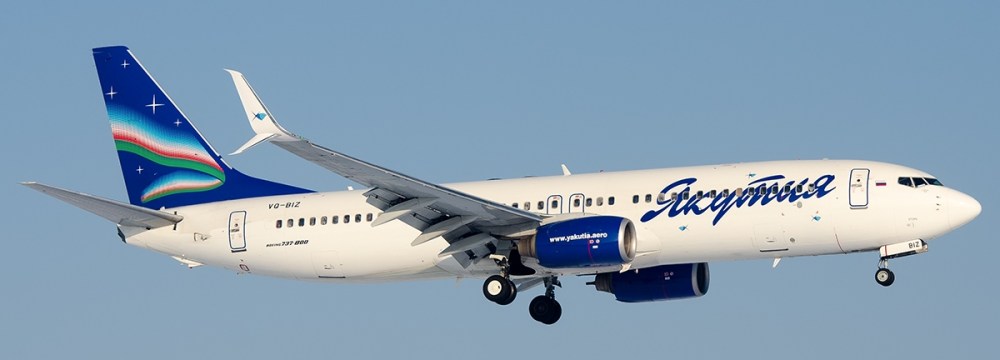
Resultado de imagen para Yakutia Airlines Boeing 737-800

AW | 2018 11 03 14:54 | AVIATION SAFETY

La Agencia Federal de Transporte Aéreo de Rusia suspende el vuelo internacional de Yakutia Airlines tras inspecciones

La Agencia Federal de Transporte Aéreo de Rusia dijo que suspendió los vuelos internacionales de Yakutia Airlines a partir del 5 de noviembre, hasta que la aerolínea con sede en Yakutsk corrija las fallas que se descubrieron durante las inspecciones.

La agencia encontró que la aerolínea proporcionó «información inexacta sobre la implementación de las directivas de aeronavegabilidad en el Boeing 737-800». La agencia dijo además: «Los problemas de aeronavegabilidad provocaron retrasos frecuentes y prolongados en los vuelos nacionales e internacionales. En septiembre, los retrasos alcanzaron el 20% [de los vuelos que salen]”.

El 10 Octubre 20108, un Sukhoi Superjet SSJ-100 sobrepasó una pista en el Aeropuerto de Yakutsk en Federación Rusia. Los investigadores descubrieron que el hielo en la pista contribuyó a la invasión. Además, el inversor de empuje en el motor Nº 2 había sido desactivado.Resultado de imagen para Yakutia Airlines SSJ-100

La agencia también dijo que tenía que corregir los programas charter de la aerolínea durante el año, disminuyendo el número de vuelos. La autoridad señaló que ni siquiera discutió el programa chárter de la aerolínea para Noviembre 2018.

Yakutia comunicó el 30 Octubre 2018 que había pedido a la autoridad que proporcionara información adicional sobre las restricciones. Dos días antes, el transportista anunció que volará a Tashkent, Uzbekistán; Harbin, China; Tokio y Praga este invierno. La agencia dijo que Yakutia había vendido aproximadamente 450 boletos para Noviembre y Diciembre 2018 para vuelos internacionales programados y ahora tendrá que proporcionar reembolsos.

A mediados de Octubre 2018, la aerolínea nombró a Vladimir Gorbunov como su nuevo Director General. La flota de Yakutia incluye cinco Boeing 737-800, seis Antonov An-24, tres Bombardier Q300 y cuatro Sukhoi SSJ-100. Este año transportó a 679.905 pasajeros hasta el 30 Septiembre 2018, un 2% menos con respecto al año anterior.  AIRWAYS® AW-Icon TXT

4997569.jpg

Russia suspends Yakutia Airlines international flights

The Federal Air Transport Agency of Russia suspends the international flight of Yakutia Airlines after inspections

Russia’s Federal Air Transport Agency said it suspended Yakutia Airlines‘ international flights from November 5, until the Yakutsk-based airline corrects faults that were discovered during inspections.

The agency found that the airline provided «inaccurate information about the implementation of the airworthiness directives on the Boeing 737-800». The agency also said: «The problems of airworthiness caused frequent and prolonged delays in domestic and international flights, and in September, delays reached 20% [of flights departing]».

AW-70443771.pngON THE INTRODUCTION OF RESTRICTIONS IN EFFECT OF THE OPERATOR CERTIFICATE NO. 474 OF THE YAKUTIA AIRLINES CORPORATION, ORDER OF THE FEDERAL AIR TRANSPORT AGENCY WITH DATE OCTOBER 29, 2018 NO. 889-P

On October 10, 2010, a Sukhoi Superjet SSJ-100 passed a runway at the Yakutsk Airport in the Russian Federation. The researchers discovered that ice on the track contributed to the invasion. In addition, the thrust reverser on the No. 2 engine had been deactivated.

The agency also said it had to correct the airline’s charter programs during the year, decreasing the number of flights. The authority said it did not even discuss the airline’s charter program for November 2018.

Yakutia reported on October 30, 2018 that it had asked the authority to provide additional information on the restrictions. Two days before, the carrier announced that it will fly to Tashkent, Uzbekistan; Harbin, China; Tokyo and Prague this winter. The agency said that Yakutia had sold approximately 450 tickets for November and December 2018 for scheduled international flights and will now have to provide refunds.

In mid-October 2018, the airline named Vladimir Gorbunov as its new CEO. The Yakutia fleet includes five Boeing 737-800, six Antonov An-24, three Bombardier Q300 and four Sukhoi SSJ-100. This year it transported 679,905 passengers until September 30, 2018, 2% less than the previous year. A \ W


Ξ A I R G W A Y S Ξ
SOURCE: Airgways.com
DBk: Favt.ru / Mro-network.com / Airliners.net [Osipov Dmitri] / Wikimedia.org
AW-POST: 201811031454AR

A\W   A I R G W A Y S ®

Accidente JT-610 Lion Air

Resultado de imagen para JT-610 Lion Air air crash

AW | 2018 11 02 23:20 | AIR INVESTIGATION / AVIATION SAFETY

Resultado de imagen para Lion Air logoNuevos detalles sobre los problemas en el avión de Lion Air

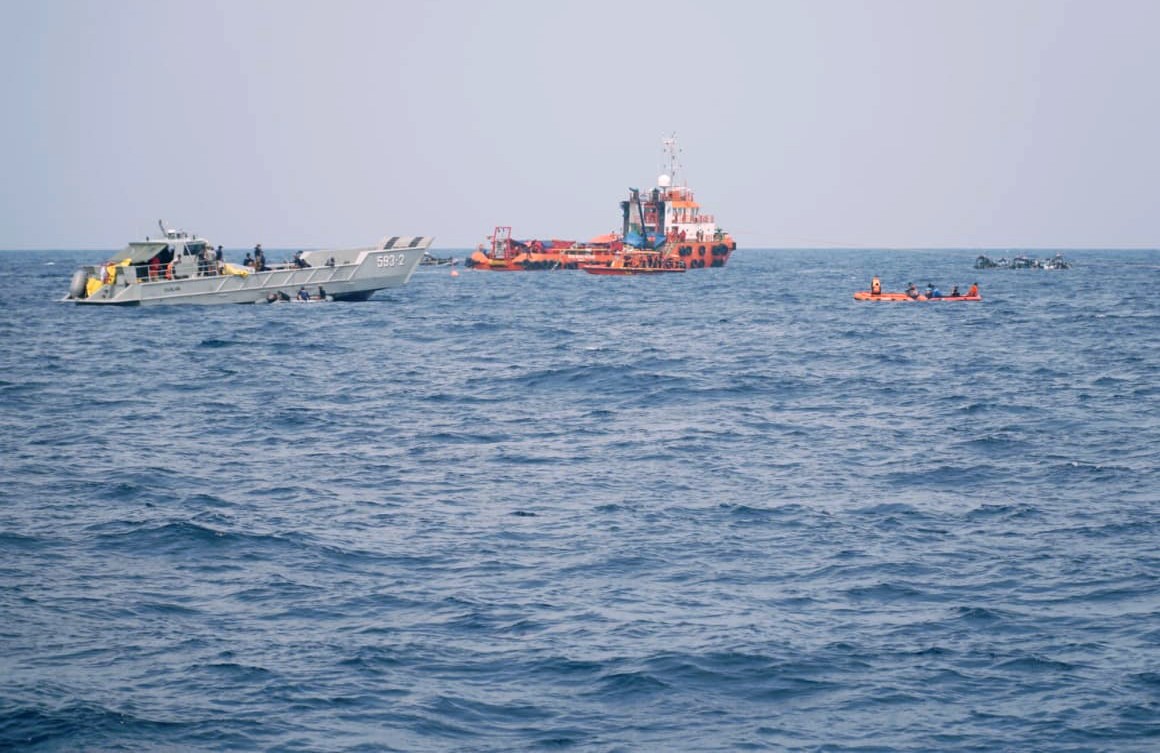
El fuselaje del Boeing 737-8 MAX no aparece tras el quinto día de búsqueda en el Mar de Java. En medio de la consternación por el accidente del Boeing 737-8 MAX de Lion Air, nuevos detalles sobre el penúltimo vuelo realizado por el moderno avión accidentado plantearon más dudas sobre la afirmación de la aerolínea indonesia de haber solucionado los problemas técnicos. Cientos de personas seguían rastreando el Mar de Java por quinto día el Viernes, 2 Noviembre 2018 en busca de víctimas y del fuselaje de la aeronave.

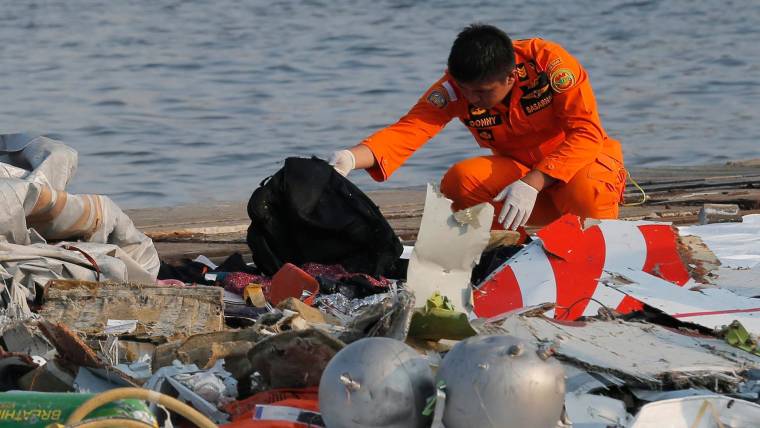
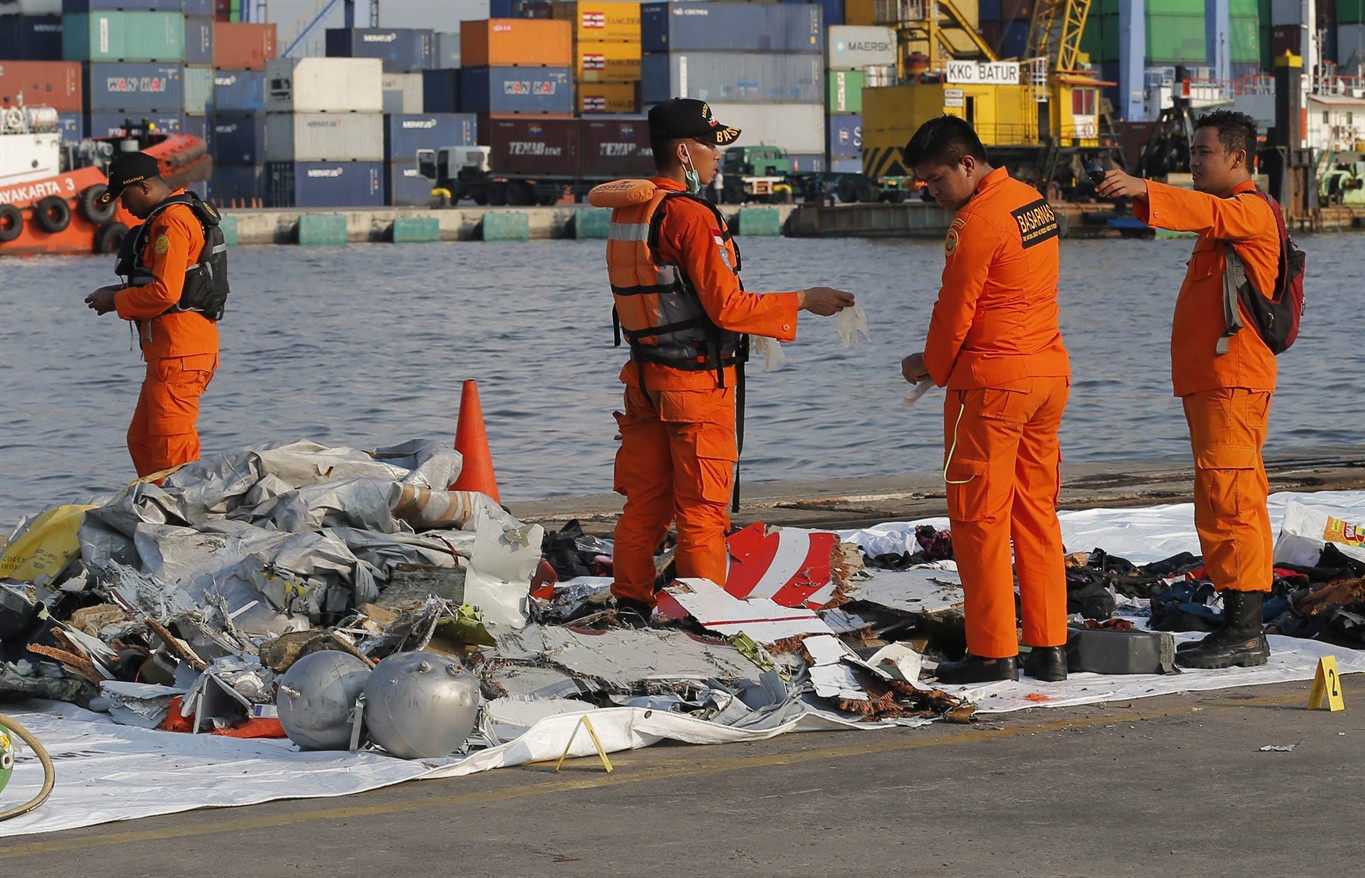
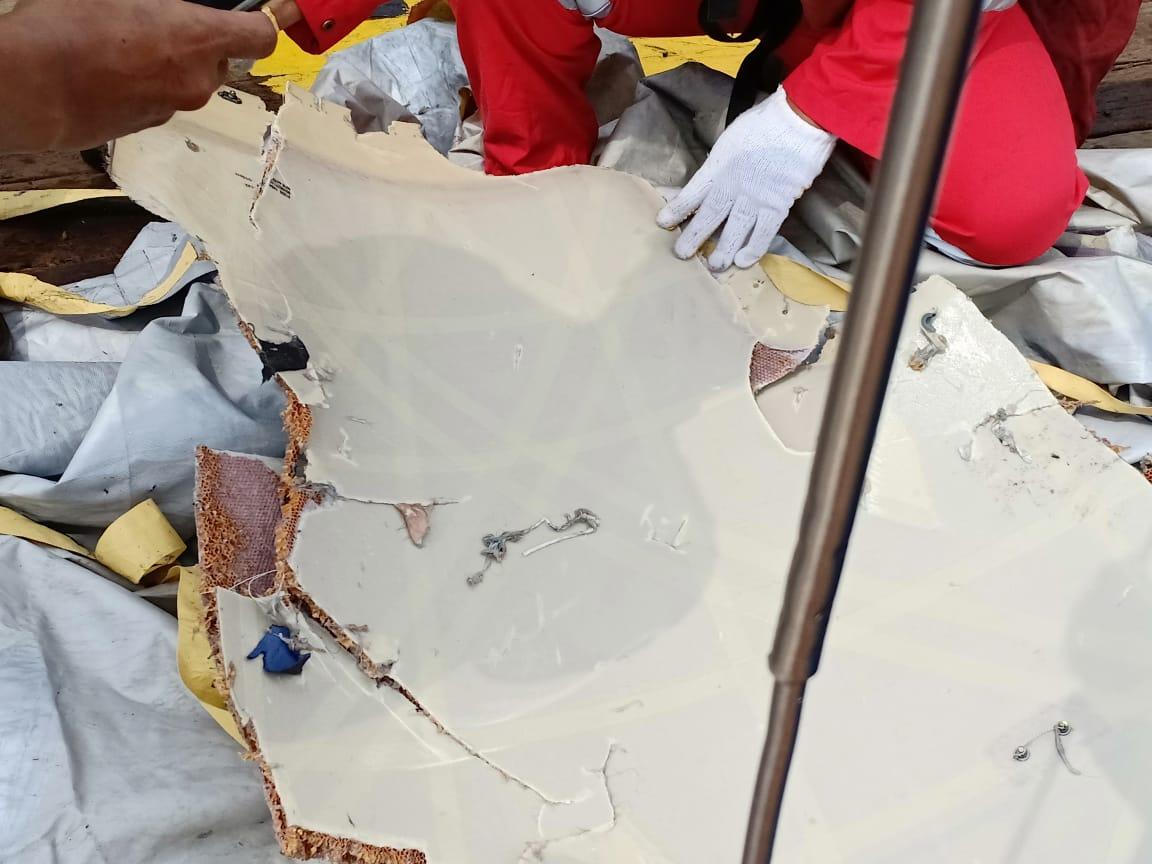
Funcionarios de la Dirección Nacional de Seguridad del Transporte (NTSB) de Estados Unidos y el Comité Nacional de Seguridad del Transporte (KNKT) de Indonesia revisan los restos del vuelo JT-610 de Lion Air, durante su investigación del accidente aéreo, en el puerto Tanjung Priok, Jakarta, Indonesia, el 1 Noviembre 2018. El KNKT de Indonesia ha mantenido una reunión a puerta cerrada con los representantes del fabricante de aviones, Boeing, y funcionarios de la NTSB de Estados Unidos en relación con el accidente del Boeing 737-8 MAX de Lion Air que se estrelló el Lunes, 29 Octubre 2018 en la República de Indonesia.

El Boeing 737-8 MAX de Lion Air, que tenía apenas dos meses de antigüedad, cayó al Mar de Java el Lunes por la mañana minutos después de partir de la capital indonesia, Jakarta, donde se reportan que las 189 personas que iban a bordo fallecieron.

El piloto de un vuelo realizado por el aparato el Domingo, el último antes del siniestro, pidió permiso para regresar al Aeropuerto de Bali poco después de despegar desde allí, pero luego reportó que el problema había sido solucionado, dijo Herson, Jefe de la Autoridad Aeroportuaria de Bali-Nusa Tenggara. Varios pasajeros se refirieron al fallo como una aterradora pérdida de altitud.

Lion Air explicó que el problema no especificado se solventó luego del vuelo del domingo, pero en el del lunes los pilotos también emitieron una petición de “regreso a base” (RTB) poco tiempo de despegar. «Poco después de solicitar RTB, el piloto contactó con la torre de control de nuevo para informar que el avión funcionaba con normalidad y que no regresaría” al aeropuerto Ngurah Rai de Bali, explicó Herson, que utiliza solo un nombre. «El capitán dijo que el problema se solucionó y decidió continuar el viaje a Yakarta”.

Encuentran caja negra

Datos de cibersitios de seguimiento de vuelos mostraron que ambos vuelos tuvieron velocidades y altitudes erráticas tras el despegue, aunque estos datos deben contrastarse con las llamadas cajas negras del avión que registran los parámetros técnicos del viaje y las voces en cabina. Los investigadores mostraron uno de los dispositivos en una conferencia de prensa el jueves en la noche, que más tarde se confirmó que era el que registró los datos del vuelo, y dijeron que intentarían acceder a la información de inmediato para comenzar el análisis. Pero los avances se han visto obstaculizados porque la caja negra no está intacta y necesita un manejo especial para garantizar que puedan recuperarse los datos, un proceso que continúa, según el Comité Nacional de Seguridad en el Transporte. La unidad de memoria de supervivencia se abrió y se lavó y algunos de sus cables deberán reemplazarse, explicó el organismo.

«En principio, (según) todos los datos que hemos obtenido, incluyendo los datos de vuelo y de navegación aérea y también de otras fuentes, encontramos que efectivamente ha habido problemas. Probaremos más problemas técnicos con los datos registrados en la caja negra”, señaló Haryo Satmiko, Vicepresidente del Comité.

Más búsquedas

Los investigadores ya contactaron con el piloto que manejó el avión en el vuelo del domingo, dijo Satmiko. Los problemas de entonces fueron “tal y como se contó en los medios de comunicación y en redes sociales”, añadió refiriéndose a los relatos de los pasajeros. Una de ellos, Diah Mardani, contó en un programa de televisión de actualidad a principios de semana que tras despegar “el avión cayó repentinamente, después ascendió y volvió a caer más fuerte y se sacudió”.

Un equipo de la Junta Nacional de Seguridad en el Transporte de Estados Unidos (NTSB), en la que hay expertos de Boeing, se unió a la búsqueda en Indonesia. Los investigadores indonesios también viajarán a Estados Unidos para reunirse con los diseñadores del avión de nueva generación de Boeing. Cientos de operarios y docenas de embarcaciones, incluyendo barcos especializados con sonar y otros equipos de detección, participaban el viernes en la enorme operación de búsqueda en aguas al noreste de Jakarta. Expertos médicos de la policía han recibido más de 60 bolsas con restos humanos para su identificación desde el accidente, pero hasta el jueves solo se había identificado y enterrado a una. Familiares del pasaje entregaron muestras de ADN para agilizar el proceso.

Hallan tren de aterrizaje

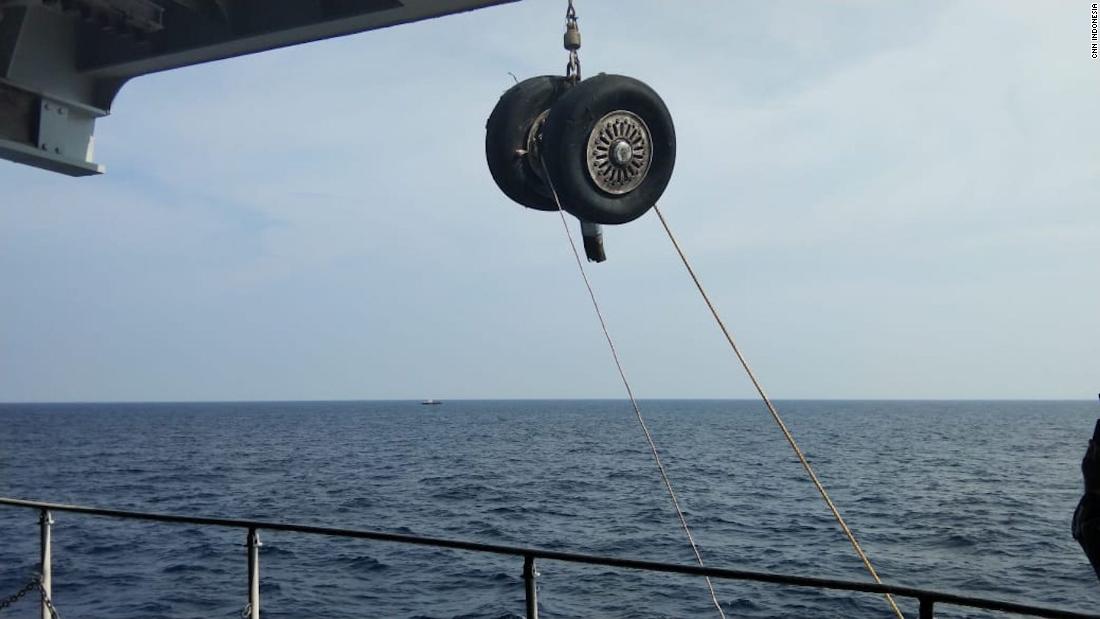
Los equipos de búsqueda encontraron hoy Viernes, 2 Noviembre 2018 el tren de aterrizaje del avión indonesio de Lion Air que se estrelló el lunes en el mar frente a la costa occidental de Indonesia. El jefe de la Agencia Nacional de Búsqueda y Rescate de Indonesia (Basarnas), Muhammad Syaugi, dijo esta noche que el tren de aterrizaje, varias «víctimas» y otras grandes piezas del avión siniestrado, incluyendo algunas partes del fuselaje, fueron encontrados por el vehículo submarino operado a control remoto en el fondo del mar. «Se han visto varias víctimas. Había también un tren de aterrizaje. Se observaron dos neumáticos y un eje, así como una pieza del borde del fuselaje del avión», dijo en conferencia de prensa.

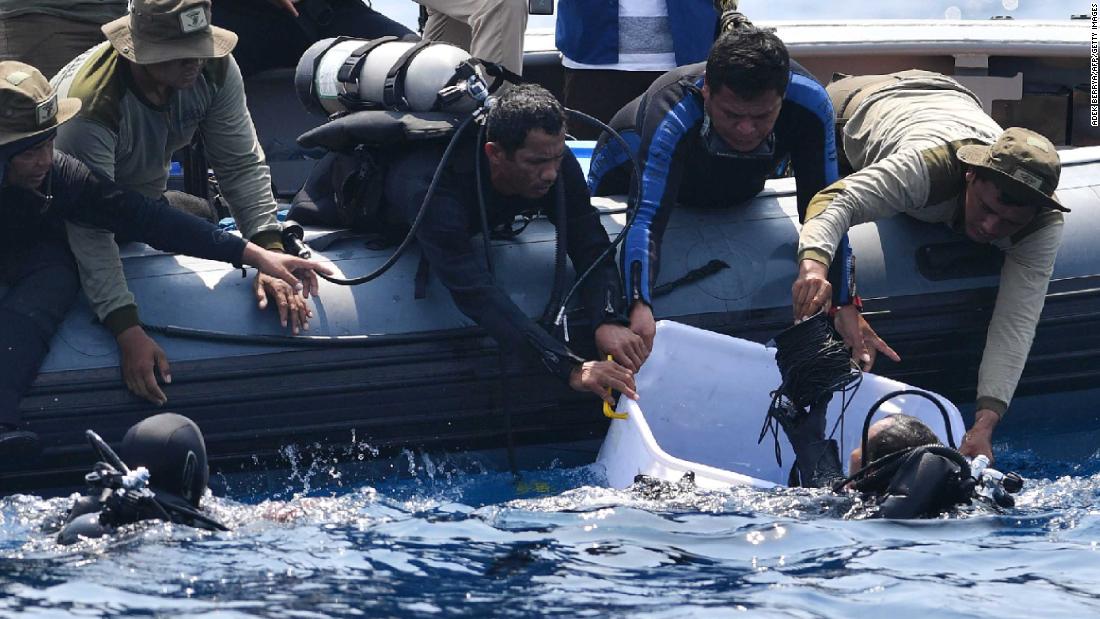
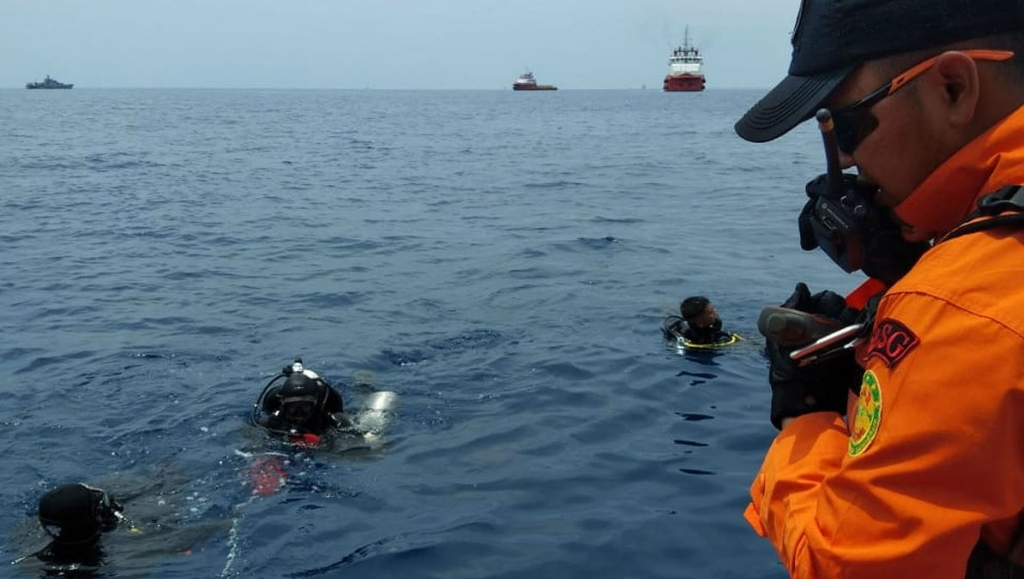
Unos 50 buzos participan en la misión de búsqueda en el fondo del mar, a unos 500 metros al noroeste del lugar donde el piloto del vuelo JT-610 se comunicó por última vez con el control de tráfico aéreo. AIRWAYS® AW-Icon TXT


Vuelo JT-610 de Lion Air

El vuelo JT610 de Lion Air, un Boeing 737-8 MAX, se estrelló en el Mar de Java poco después del despegue del Aeropuerto Internacional de Jakarta-Soekarno-Hatta, Indonesia. El vuelo despegó de la pista 25L en el Aeropuerto de Soekarno-Hatta a las 06:21 horas, hora local. El tiempo estuvo bien con vientos ligeros, nubes dispersas a 2000 pies y una visibilidad de 8000 m.

Los datos ADS-B del vuelo, capturados por Flightradar24 y Flightaware, muestran valores erráticos. El avión hizo un giro de la mano izquierda que subía después del despegue. Poco después, la tripulación de vuelo se comunicó por radio con el controlador, solicitando un regreso al aeropuerto.

Después de que el vuelo pasó la ADS-B informó una altitud de 2100 pies, los puntos de datos muestran brevemente una altitud más baja de alrededor de 1475 pies. Los datos de altitud enviados a través de ADS-B continúan mostrando un patrón errático, variando aproximadamente entre 4500 y 5350 pies. Los valores luego disminuyen rápidamente hasta que se pierde el contacto a las 06:32 horas. El avión impactó el mar a unos 15 km al norte de Jakarta.

Según los informes de los medios indonesios, se teme que todas las 189 personas a bordo mueran. El personal de búsqueda y rescate encontró escombros y espera encontrar los restos a 30-35 m por debajo de la superficie del agua.

El vuelo anterior del avión del accidente, JT043 de Denpasar, mostró valores erráticos similares en altitud y velocidad inmediatamente después del despegue. Después de 8 minutos el ADS-B reportó valores estabilizados. Un ítem de registro técnico no verificado para ese vuelo, enviado a ASN y la BBC, comentó «IAS y ALT no están de acuerdo después de despegar». Si bien esta supuesta nota de registro técnico no se ha confirmado, Lion Air confirmó que la aeronave tenía un «problema técnico» en el vuelo anterior, «que se resolvió según el procedimiento», según la aerolínea. A\W

Resultado de imagen para JT-610 Lion Air air crashResultado de imagen para JT-610 Lion Air air crashResultado de imagen para JT-610 Lion Air air crash

Accident JT-610 Lion Air

New details about the problems in the Lion Air plane

The fuselage of the Boeing 737-8 MAX does not appear after the fifth day of search in the Java Sea. Amid consternation over the accident of the Boeing 737-8 MAX of Lion Air, new details about the penultimate flight made by the modern plane crashed raised further doubts about the claim of the Indonesian airline to have solved the technical problems. Hundreds of people continued to track the Java Sea for the fifth day on Friday, November 2, 2018 in search of victims and the fuselage of the aircraft.

Officials from the National Transportation Safety Administration (NTSB) of the United States and the National Transport Security Committee (KNKT) of Indonesia review the remains of Lion Air’s JT-610 flight, during its investigation of the plane crash, at the port Tanjung Priok, Jakarta, Indonesia, November 1, 2018. The KNKT of Indonesia has held a closed-door meeting with the representatives of the aircraft manufacturer, Boeing, and officials of the NTSB of the United States in relation to the accident of the Boeing 737- 8 MAX of Lion Air that crashed on Monday, 29 October 2018 in the Republic of Indonesia.

The Lion Air Boeing 737-8 MAX, which was just two months old, fell into the Java Sea on Monday morning minutes after leaving the Indonesian capital, Jakarta, where it is reported that the 189 people on board they died

The pilot of a flight made by the device on Sunday, the last before the incident, asked permission to return to Bali Airport shortly after taking off from there, but then reported that the problem had been solved, said Herson, Head of the Authority Airport of Bali-Nusa Tenggara. Several passengers referred to the failure as a terrifying loss of altitude.

Lion Air explained that the unspecified problem was solved after the flight on Sunday, but on Monday the pilots also issued a «return to base» (RTB) request shortly after takeoff. «Shortly after requesting RTB, the pilot contacted the control tower again to report that the plane was operating normally and would not return» to the Ngurah Rai airport in Bali, explained Herson, who uses only one name. «The captain said that the problem was solved and decided to continue the trip to Jakarta».

They find black box

Data from flight monitoring sites showed that both flights had erratic speeds and altitudes after takeoff, although these data should be contrasted with the so-called black boxes of the aircraft that record the technical parameters of the trip and the voices in the cabin. The researchers showed one of the devices at a press conference on Thursday night, which was later confirmed to be the one that recorded the flight data, and said they would try to access the information immediately to begin the analysis. But advances have been hampered because the black box is not intact and needs special handling to ensure that data can be recovered, a process that continues, according to the National Committee on Transportation Safety. The survival memory unit was opened and washed and some of its cables must be replaced, the agency explained. «In principle, (according to) all the data we have obtained, including the flight and air navigation data and also from other sources, we found that there have been problems, we will prove more technical problems with the data recorded in the black box», noted Haryo Satmiko, Vice Chair of the Committee.

More searches

Investigators have already contacted the pilot who drove the plane on Sunday’s flight, Satmiko said. The problems then were «as told in the media and social networks», he added referring to the stories of the passengers. One of them, Diah Mardani, told a news program earlier this week that after taking off «the plane suddenly fell, then rose and fell again stronger and shook».

A team from the National Transportation Safety Board of the United States (NTSB), in which there are experts from Boeing, joined the search in Indonesia. Indonesian researchers will also travel to the United States to meet with the designers of Boeing’s new generation aircraft. Hundreds of operatives and dozens of vessels, including specialized ships with sonar and other detection equipment, participated in Friday’s huge water search operation northeast of Jakarta. Medical experts of the police have received more than 60 bags with human remains for their identification since the accident, but until Thursday only one had been identified and buried. Family members of the passage delivered DNA samples to streamline the process.

They find landing gear

The search teams found Friday, November 2, 2018 the landing gear of the Indonesian Lion Air plane that crashed on Monday off the western coast of Indonesia. The head of the Indonesian National Search and Rescue Agency (Basarnas), Muhammad Syaugi, said tonight that the landing gear, several «victims» and other large parts of the plane crashed, including some parts of the fuselage, were found by the underwater vehicle operated remotely on the seabed. «Several victims have been seen, there was also a landing gear, two tires and an axle were observed, as well as a part of the edge of the fuselage of the plane», he said at a press conference.

About 50 divers participate in the search mission at the bottom of the sea, about 500 meters northwest of the place where the flight pilot JT-610 communicated for the last time with air traffic control. A \ W

JT-610 flight by Lion Air

Lion Air‘s JT610 flight, a Boeing 737-8 MAX, crashed into the Java Sea shortly after takeoff from the Jakarta-Soekarno-Hatta International Airport, Indonesia. The flight took off from runway 25L at Soekarno-Hatta Airport at 06:21 local time. The weather was fine with light winds, scattered clouds at 2000 feet and a visibility of 8000 m.

The flight’s ADS-B data, captured by Flightradar24 and Flightaware, show erratic values. The plane made a left hand turn that went up after takeoff. Shortly after, the flight crew communicated by radio with the controller, requesting a return to the airport.

After the flight passed the ADS-B reported an altitude of 2100 feet, the data points briefly show a lower altitude of around 1475 feet. Altitude data sent through ADS-B continue to show an erratic pattern, varying approximately between 4500 and 5350 feet. The values ​​then decrease rapidly until contact is lost at 06:32 hours. The plane hit the sea about 15 km north of Jakarta.

According to Indonesian media reports, it is feared that all 189 people on board will die. The search and rescue staff found debris and expects to find the remains 30-35 m below the surface of the water.

The previous flight of the accident plane, JT043 of Denpasar, showed similar erratic values ​​in altitude and speed immediately after takeoff. After 8 minutes the ADS-B reported stabilized values. An item of technical record not verified for that flight, sent to ASN and the BBC, commented «IAS and ALT do not agree after take off». Although this alleged technical registration note has not been confirmed, Lion Air confirmed that the aircraft had a «technical problem» on the previous flight, «which was resolved according to the procedure,» according to the airline. A \ W


video-camera_318-50337.jpg

Ξ A I R G W A Y S Ξ
SOURCE: Airgways.com
DBk: Aviation-safety.net / Texarkanagazette.com / Cnn.com / Gettyimages.com / Thejakartapost.com
AW-POST: 201811022320AR

A\W   A I R G W A Y S ®

Boeing 737 MAX en el ojo de la tormenta

43276186904_aee9cf314d_b.jpg

AW | 2018 10 30 20:04 | AVIATION SAFETY / INDUSTRY

Boeing-Logo.svgEl accidente del Boeing 737 MAX se encuentra en un foco sensible de la seguridad de la aviación comercial

FK,4923,36,737-max-round-pinLa línea Boeing 737 MAX se encuentra en el punto de mayor complejidad e intensidad en su corta historia. La investigación sobre el accidente del vuelo JT-610 de Lion Air conlleva grandes riesgos, no solo para la compañía de presupuestos de rápido crecimiento sino también para The Boeing Co., que considera a la aerolínea como uno de los mayores compradores del tipo de avión 737 MAX involucrados en el accidente.

El avión se estrelló en el Mar de Java el Lunes, 20 Octubre 2018 poco después del despegue del Aeropuerto internacional de Jakarta. Los funcionarios indonesios creen que las 189 personas a bordo murieron. Lion Air es un cliente importante para Boeing 737-8 MAX y otras variantes anteriores de la afamada línea Boeing 737.

Impacto bursátil

Las acciones de Boeing cayeron un 6,6% después del accidente del lunes, su mayor caída de un día desde Febrero 2016, debido al impacto y repercusiones de la línea del avión más vendido del mundo. Otras compañías con grandes empresas de defensa disminuyeron en una cantidad similar debido a las preocupaciones sobre la reducción del presupuesto del Pentágono.

Asistencia técnica

Boeing dijo que está proporcionando «asistencia técnica a solicitud y bajo la dirección de las autoridades gubernamentales que investigan el accidente». La investigación se encuentra en una etapa temprana y las autoridades no han dado ninguna indicación de que una falla en el equipo haya provocado el accidente.

CFM dijo que está listo para ofrecer cualquier asistencia requerida por Lion Air, el Comité de Seguridad Nacional del Transporte y el Ministerio de Transporte de Indonesia, y la Junta Nacional de Seguridad del Transporte de EEUU.

Los reguladores de aviación de los Estados Unidos también supervisarán de cerca la sonda, lo que se producirá en medio de los esfuerzos de la Administración Federal de Aviación (FAA) para agilizar los procedimientos para certificar nuevas aeronaves. Un portavoz de la NTSB dijo que el organismo enviará expertos a Indonesia para participar en la investigación. El alcance de la cooperación de la NTSB dependerá de las autoridades indonesias, dijo el portavoz.

Resultado de imagen para Lion Air Boeing 737 MAX 8 assembly lineLÍNEA BOEING 737 MAX DEBERÁ RECUPERAR RÁPIDAMENTE LA CONFIANZA EN EL MERCADO MUNDIAL

Las aerolíneas de EEUU son compradores importantes del Boeing 737 MAX. American Airlines Group Inc. ha tomado entregas de 15 aeronaves y 85 órdenes en curso. Un portavoz dijo que American monitoreará los desarrollos de Lion Air. Southwest Airlines Co., tenía 28 de los 737-8 MAX a partir del 30 Septiembre 2018 y pedidos por 227 unidades adicionales. Un portavoz dijo que la flota permanecía en operación y que el transportista monitorearía las investigaciones.

El Boeing 737 MAX

Boeing tiene pedidos pendientes de más de 4,500 de los 737 jets máximos en cuatro modelos diferentes y ha entregado más de 200. Los analistas estiman que 737 representan hasta el 40% de las ganancias de Boeing.

Boeing anunció el 737 MAX en 2011 después de abandonar los planes de un nuevo avión, para centrarse en contrarrestar las actualizaciones que Airbus estaba realizando a su familia de aviones A320. Ambos fabricantes de aviones dieron a sus aviones más populares motores y diseños de fuselaje más eficientes que los aviones existentes. El 737 renovado hizo su vuelo inaugural en Enero 2016. Boeing entregó el primer MAX antes de lo previsto a Lion Air en Malasia en Mayo 2017, bajo la aerolínea feeder Batik Airlines.

Boeing dijo que los motores del nuevo avión y la aerodinámica mejorada podrían reducir el consumo de combustible en al menos un 14% en comparación con los modelos anteriores, lo que lo hace particularmente atractivo para los operadores de bajo costo de rápido crecimiento. La variante MAX 8 del 737 también tiene mayor capacidad de asiento que los modelos anteriores. Puede albergar hasta 210 pasajeros, en comparación con 189 en el 737-800.

Lion Air es uno de los mayores clientes del nuevo avión. El operador indonesio solicitó 201 de los nuevos 737 MAX en 2011, junto con 29 de la versión existente Next Generation en un acuerdo valorado en US$ 22 mil millones antes de los descuentos habituales en ventas tan grandes. Eso hace que el séptimo mayor cliente comercial de Lion Air Boeing por valor, según Wolfe Research. Lion Air también tiene casi US$ 21 mil millones en pedidos pendientes con Airbus antes de los descuentos.

CFM comenzó a desarrollar los motores LEAP-1B utilizados en el 737 MAX hace una década para reemplazar su ampliamente utilizado CFM56. Otra versión del motor LEAP-1A es utilizada por Airbus en los modernos A320NEO. El COMAC C919 de China, aún en desarrollo, también usa una versión del motor LEAP-1C.

El motor LEAP es responsable de la mayor parte de la eficiencia de combustible mejorada del 737 MAX. El motor utiliza aspas de ventilador compuestas que son más ligeras y más eficientes que los diseños anteriores.

Boeing y los organismos de investigación deberán aunar esfuerzos para determinar de manera urgente las causales del accidente del Boeing 737 MAX que consterna al mundo de la aviación. Los resultados deberán determinar un rápido ajuste de las normas de seguridad, pues en el fabricante americano Boeing se juegan muchos intereses, no solo del principal, la seguridad, sino además del prestigio del afamado Boeing 737.  AIRWAYS® AW-Icon TXT

AW-70083773.png

Boeing 737 MAX in the eye of the storm

Boeing-Company-LogoThe accident of the Boeing 737 MAX is in a focus of the safety of commercial aviation

The Boeing 737 MAX line is at the point of greatest complexity and intensity in its short history. The investigation into the crash of Lion Air flight JT-610 carries great risks, not only to the fast-growing budget company but also to The Boeing Co., which considers the airline one of the largest buyers of the 737 MAX aircraft type involved. in the accident.

The plane crashed in the Java Sea on Monday, 20 October 2018 shortly after takeoff from the Jakarta International Airport. Indonesian officials believe that the 189 people on board died. Lion Air is an important client for Boeing 737-8 MAX and other previous variants of the famous Boeing 737 line.

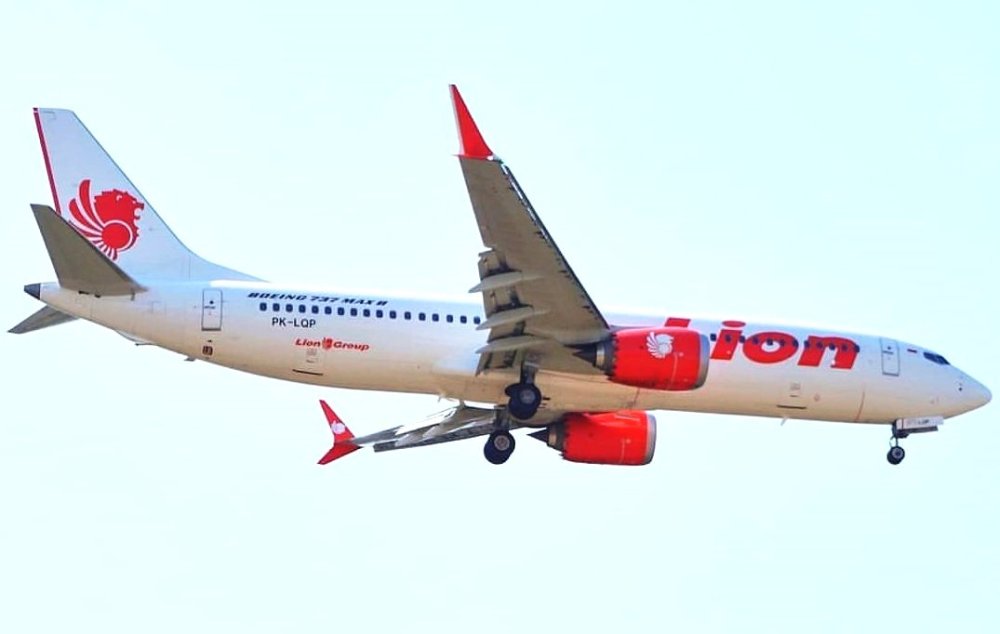
7058 737-8 Lion Air.jpgBOEING 737-8 MAX REGISTRATION PK-LQP THAT WAS AWARDED TO BE DELIVERED TO LION AIR IN RENTON

Stock market impact

Boeing shares fell 6.6% after Monday’s accident, its biggest one-day drop since February 2016, due to the impact and repercussions of the world’s best-selling aircraft line. Other companies with large defense companies decreased by a similar amount due to concerns over the reduction of the Pentagon budget.

Technical assistance

Boeing said it is providing «technical assistance upon request and under the direction of government authorities investigating the accident». The investigation is at an early stage and the authorities have not given any indication that a failure in the equipment has caused the accident.

CFM said it is ready to offer any assistance required by Lion Air, the National Transportation Safety Committee and the Indonesian Ministry of Transportation, and the US National Transportation Safety Board. UU

Aviation regulators in the United States will also closely monitor the probe, which will occur amid the efforts of the Federal Aviation Administration (FAA) to streamline procedures to certify new aircraft. A spokesman for the NTSB said the agency will send experts to Indonesia to participate in the investigation. The scope of cooperation of the NTSB will depend on the Indonesian authorities, said the spokesman.

US airlines are important buyers of the Boeing 737 MAX. American Airlines Group Inc. has taken deliveries of 15 aircraft and 85 orders in progress. A spokesman said that American will monitor Lion Air’s developments. Southwest Airlines Co., had 28 of the 737-8 MAX as of September 30, 2018 and orders for 227 additional units. A spokesman said the fleet remained in operation and that the carrier would monitor the investigations.

The Boeing 737 MAX

Boeing has outstanding orders for more than 4,500 of the top 737 jets in four different models and has delivered more than 200. Analysts estimate that 737 represent up to 40% of Boeing’s profits.

Boeing announced the 737 MAX in 2011 after abandoning plans for a new plane, to focus on counteracting the updates that Airbus was making to its family of A320 aircraft. Both aircraft manufacturers gave their most popular aircraft engines and fuselage designs more efficient than existing aircraft. The renovated 737 made its maiden flight in January 2016. Boeing delivered the first MAX earlier than planned to Lion Air in Malaysia in May 2017, under the feeder airline Batik Airlines.

Boeing said the new airplane’s engines and improved aerodynamics could reduce fuel consumption by at least 14% compared to previous models, making it particularly attractive to fast-growing low-cost operators. The variant MAX 8 of the 737 also has greater seating capacity than previous models. It can hold up to 210 passengers, compared to 189 on the 737-800.

Lion Air is one of the biggest customers of the new airplane. The Indonesian operator requested 201 of the new 737 MAXs in 2011, along with 29 of the existing Next Generation version in a deal valued at US$ 22 billion before the usual discounts on such large sales. That makes the seventh largest commercial customer of Lion Air Boeing by value, according to Wolfe Research. Lion Air also has almost US$ 21 billion in outstanding orders with Airbus before the discounts.

CFM began developing the LEAP-1B engines used in the 737 MAX a decade ago to replace its widely used CFM56. Another version of the LEAP-1A engine is used by Airbus in the modern A320NEO. The COMAC C919 from China, still in development, also uses a LEAP-1C engine version.

The LEAP engine is responsible for most of the enhanced fuel efficiency of the 737 MAX. The motor uses composite fan blades that are lighter and more efficient than previous designs.

Boeing and the research organizations must join forces to urgently determine the causes of the accident of the Boeing 737 MAX that dismays the world of aviation. The results should determine a rapid adjustment of the safety standards, since in the American boeing of many Americans, many interests are played, not only of the principal, the safety, but also of the prestige of the famous Boeing 737. A\W


Ξ A I R G W A Y S Ξ
SOURCE: Airgways.com
DBk: Boeing.com / 737-max.blogspot.com / WSJ.com / Airgways.com / Woody’s Aeroimages
AW-POST: 201810302004AR

A\W   A I R G W A Y S ®

Indonesia inspeccionará Boeing 737 MAX

AW-700887865.jpg

AW | 2018 10 30 19:40 | AVIATION SAFETY

Se ordena urgente inspección del Boeing 737 MAX

El Gobierno de Indonesia ordenó a las aerolíneas nacionales Lion Air y Garuda Airlines realizar inspecciones de sus aviones Boeing 737 MAX, informó el Ministerio de Transporte del país.

La aeronave de fabricación americana es un Boeing 737-8 MAX, fabricado en 2018, con Serie Número S/N 43000/7043 y empezó operar para Lion Air el 15 Agosto 2018. Las aeronaves 737 MAX son las versiones más modernas de una cuarta generación de la afamada línea del Boeing 737, el avión más vendido del mundo.

De acuerdo con los datos ADS-B transmitidos por el transpondedor de la aeronave, la aeronave salió de la pista 25L de Jakarta a las 06:21L (23:21Z el 28 Octubre 2018), nunca subió a los 5400 pies restantes entre 5200 y 5400 pies durante aproximadamente 6 minutos antes de perder altitud y desaparecer radar unos 12 minutos después de la salida, aproximadamente a las 06:33L (23:33Z), a unos 35 nm al noreste del Aeropuerto Internacional de Yakarta.

Tras el accidente del vuelo JT-610 de Lion Air, Budi Karya Sumadi, el Ministro de Transporte, se pronunció: «Ayer [29 de octubre] enviamos una carta a [las aerolíneas] Lion Air y Garuda Airlines sobre la realización de inspecciones, cuyos resultados se presentarán al Comité Nacional de Seguridad del Transporte, para ayudar en la investigación». La aerolínea Lion Air tiene ocho Boeing 737-8 MAX y la aerolínea Garuda tiene un Boeing 737-8 MAX.

El 30 Octubre 2018, el Ministerio informó que se realizó una inspección no programada de las aeronaves Lionair e indicó que habrá sanciones. La naturaleza de las sanciones se está coordinando con el KNKT. Una primera instrucción para inspeccionar todos los aviones ya ha sido emitida a Lion Air.

Antecedentes del 737-8 MAX

El avión siniestrado, un Boeing 737-8 MAX con S/N 43000/7043 y matrícula indonesa PK-LQP, tuvo problemas técnicos tras su penúltimo vuelo. «Hay cosas que necesitamos aclarar, antes de analizar las acciones de la tripulación y la posibilidad de errores causados por factores humanos, debemos realizar una inspección de aeronaves», agregó el ministro indonesio, al prometer una investigación exhaustiva y objetiva. La compañía Boeing prestará asistencia técnica para investigar el siniestro a petición y bajo la supervisión de las autoridades del país.

Lion Air, declaró ante la prensa que se había recibido el aviso de que la nave presentó fallas mecánicas en el vuelo anterior, durante el trayecto que efectuó la noche anterior entre Denpasar, Bali, y Jakarta. De todos modos, los ingenieros le habían dado luz verde para que despegara en el vuelo accidentado, porque el problema fue resuelto siguiendo los protocolos establecidos, al decir de Edward Sirait, director ejecutivo de Lion Air.

El avión Boeing 737-8 MAX de la aerolínea de bajo coste Lion Air con 181 pasajeros y ocho tripulantes se estrelló el 29 Octubre 2018 en el Mar de Java a pocos minutos de despegar de Yakarta. El portavoz de Basarnas dijo que se cree que nadie sobrevivió a la catástrofe aérea.

Tripulación JT-610 pide retorno

Tan solo dos minutos después del despegue del Boeing 737-8 MAX que transportaba 189 pasajeros, el piloto solicitó a la torre de control se le concediese pista para retornar al Aeropuerto Internacional Soekarno Hatta.

“Recibimos la petición del piloto de regresar a la base. El controlador de tráfico aéreo dio permiso para regresar, y hay una grabación de ello”, dijo Novie Riyanto, la directora de AirNav. La aeronave de la empresa Lion Air se estrelló contra el Mar de Java poco después de despegar, el mismo 29 de octubre, de Tangerang, Banten, Indonesia.

Las personas que viajaban

Ciento ochenta y nueve personas ocupaban el avión, 178 adultos, 3 menores, 2 pilotos y 6 tripulantes. Bhavye Suneja, residente de Nueva Delhi, era uno de los pilotos, con 6.000 horas de vuelo, en tanto que el copiloto Harvino ya había volado 5.000 horas por su cuenta. La tripulación estaba compuesta por Shintia Melina, Citra Noivita Anggelia, Alviani Hidayatul Solikha, Damayanti Simarmata, Mery Yulianda y Deny Maula.

Las autoridades indonesias confirmaron que el avión de la compañía Lion Air se estrelló al norte de la zona de Karawang, en las aguas del Mar de Java. Los primeros barcos llegaron al lugar del accidente, comprobando que la profundidad del agua en el sitio es de unos 30-35 metros. En la superficie había manchas de petróleo y escombros de la aeronave. Las autoridades afirman que no hay esperanza de encontrar sobrevivientes. AIRWAYS® AW-Icon TXT

AW-700087378

Indonesia will inspect all Boeing 737 MAX

Urgent inspection of the Boeing 737 MAX ordered

The Indonesian government has ordered national airlines Lion Air and Garuda Airlines to carry out inspections of their Boeing 737 MAX aircraft, the country’s transport ministry said.

The American-made aircraft is a Boeing 737-8 MAX, manufactured in 2018, with Series Number S/N 43000/7043 and started operating for Lion Air on August 15, 20108. The 737 MAX aircraft are the most modern versions of a fourth generation from the famous line of the Boeing 737, the world’s best-selling aircraft.

According to the ADS-B data transmitted by the transponder of the aircraft, the aircraft left runway 25L Jakarta at 06: 21L (23: 21Z on October 28, 2018), never climbed to the remaining 5,400 between 5200 and 5400 feet for about 6 minutes before losing altitude and disappearing radar about 12 minutes after departure, at approximately 06: 33L (23: 33Z), about 35 nm northeast of the Jakarta International Airport.

After the accident of JT-610 flight of Lion Air, Budi Karya Sumadi, the Minister of Transport, pronounced: «Yesterday [October 29] we sent a letter to [the airlines] Lion Air and Garuda Airlines about carrying out inspections, whose results will be presented to the National Transportation Security Committee, to assist in the investigation». The airline Lion Air has eight Boeing 737-8 MAX and the airline Garuda has a Boeing 737-8 MAX.

On October 30, 2018, the Ministry reported that an unscheduled inspection of Lionair aircraft was conducted and indicated that there will be sanctions. The nature of the sanctions is being coordinated with the KNKT. A first instruction to inspect all aircraft has already been issued to Lion Air.

Background of the 737-8 MAX

The plane crashed, a Boeing 737-8 MAX with S / N 43000/7043 and Indonesian license plate PK-LQP, had technical problems after its penultimate flight. «There are things that we need to clarify, before analyzing the actions of the crew and the possibility of errors caused by human factors, we must carry out an inspection of aircraft», the Indonesian minister added, promising a thorough and objective investigation. The Boeing company will provide technical assistance to investigate the incident at the request and under the supervision of the authorities of the country.

Lion Air, told the press that he had received the notice that the ship had mechanical failures in the previous flight, during the trip that made the previous night between Denpasar, Bali, and Jakarta. Anyway, the engineers had given him the green light to take off on the injured flight, because the problem was solved following the established protocols, according to Edward Sirait, executive director of Lion Air.

The Boeing 737-8 MAX aircraft of the low-cost airline Lion Air with 181 passengers and eight crew crashed on 29 October 2018 in the Java Sea a few minutes before taking off from Jakarta. The Basarnas spokesman said that it is believed that no one survived the air disaster.

Crew JT-610 asks for a return

Just two minutes after the takeoff of the Boeing 737-8 MAX carrying 189 passengers, the pilot asked the control tower to be given a runway to return to the Soekarno Hatta International Airport.

«We received the pilot’s request to return to the base. The air traffic controller gave permission to return, and there is a recording of it», said Novie Riyanto, the director of AirNav. The aircraft of the company Lion Air crashed into the Java Sea shortly after taking off, the same October 29, from Tangerang, Banten, Indonesia.

The people who traveled

One hundred and eighty-nine people were on the plane, 178 adults, 3 minors, 2 pilots and 6 crew members. Bhavye Suneja, a resident of New Delhi, was one of the pilots, with 6,000 hours of flight, while co-pilot Harvino had already flown 5,000 hours on his own. The crew consisted of Shintia Melina, Citra Noivita Anggelia, Alviani Hidayatul Solikha, Damayanti Simarmata, Mery Yulianda and Deny Maula.

The Indonesian authorities confirmed that the Lion Air aircraft crashed north of the Karawang area, in the waters of the Java Sea. The first boats arrived at the crash site, verifying that the water depth at the site is about 30-35 meters. On the surface there were oil slicks and debris from the aircraft. Authorities say there is no hope of finding survivors. A \ W


Ξ A I R G W A Y S Ξ
SOURCE: Airgways.com
DBk: Loin-air.co.id / Airgways.com / Dephub.go.id
AW-POST: 201810301940AR

A\W   A I R G W A Y S ®

Accidente aéreo Lion Air JT-610

AW-7000087777.jpgAW | 2018 10 29 22:43 | AVIATION SAFETY

Resultado de imagen para Lion Air logoPrimer accidente aéreo de un Boeing 737-8 MAX

Boeing había entregado este avión Boeing 737-8 MAX S/N 43000/7043 a Lion Air el 13 Agosto 2018. Su primer vuelo había sido el 30 Julio 2018. Tras su entrega hizo su primer vuelo comercial el día 15/10/2018 acumulando unas 800 horas de vuelo.

El Boeing 737-8 MAX, registro PK-LPQ de Lion Air que cubría la ruta entre Yakarta-Pangtal Pinang con el número de vuelo JT-610, se precipitó al Mar de Java a unos 65 km al noreste del Aeropuerto de Jakarta al despegar a las 06:21hs [hora local] el 29 Octubre 2018, [23:21 GMT del 28/109/2018]. A bordo viajaban 181 pasajeros (incluidos dos niños y un bebe) y 7 tripulantes. La pérdida de contacto con la aeronave ocurre 12 minutos después del despegue.

Datos Preliminares

Según las primeras informaciones, el avión alcanzó los 5.400 pies tras el despegue, parando ahí su ascenso, manteniendo esa altitud hasta que comenzó a hasta impactar con el mar. Los buques enviados a la zona encontraron rápidamente restos y manchas de combustible en la superficie del mar. La profundidad del mismo en esa zona no supera los 35 metros.

Después de recuperar seis cuerpos del Mar de Java donde el avión de la aerolínea de bajo costo de Indonesia, Lion Air, se estrelló el lunes cerca de Yakarta, funcionarios de búsqueda y rescate locales dicen que temen que no haya sobrevivientes.

Cronología accidente JT-610

6.20 a.m.: JT 610 despega del aeropuerto internacional Soekarno-Hatta de Yakarta. Su llegada al aeropuerto de Pangkal Pingang está programada para las 7.20am.

06:23 a.m.: El piloto Bhavye Suneja pide permiso al control de tráfico aéreo para dar la vuelta y regresar al Aeropuerto de Yakarta. Su solicitud es aprobada.

06:33 a.m.: la aeronave pierde contacto con el control de tráfico aéreo a una altitud de solo 1.580 metros y se sumerge en aguas costeras a menos de 35 m de profundidad en el mar de Java.

06:45 a.m.: la tripulación de un remolcador informa a las autoridades marítimas que han visto un avión derribado, sospechoso de ser un avión de Lion Air, en el agua. Los buques son enviados a la zona.

09:18 a.m.: Lion Air confirma que ha perdido contacto con el vuelo JT 610, informa The Associated Press. «Podemos confirmar que uno de nuestros vuelos ha perdido contacto», dice el portavoz de Lion Air, Danang Mandala Prihantoro. «Su posición no se puede determinar todavía».

10:11 a.m.: el portavoz de la agencia de desastres de Indonesia, Sutopo Purwo Nugroho, publica en Twitter un video de los restos de aviones flotando en el agua.

10:40 a.m.: Ya se ha confirmado que había 181 pasajeros a bordo, incluyendo un niño y dos bebés, y ocho tripulantes.

12:00: Las familias de los que están a bordo comienzan a llegar a la sede de la Agencia Nacional de Rescate y Búsqueda de Indonesia en Yakarta para informar sobre el destino de sus seres queridos.

12:22 p.m.: Boeing, el fabricante del 737-8 MAX estrellado, lanza una declaración. «Expresamos nuestra preocupación por los que están a bordo, y expresamos sinceras simpatías a sus familias y seres queridos», dice.

12:38 p.m.: el Embajador de Australia en Indonesia, Gary Quinlan, tuitea que el gobierno australiano está trabajando para determinar si algún australiano está a bordo del vuelo estrellado. Desde entonces se ha confirmado que no hay australianos a bordo.

12:46 p.m.: El gobernador de Jakarta, Anies Baswedan, ofrece sus condolencias en Twitter. «Nuestras oraciones por las víctimas y sus familias», dice.

02:00 p.m.: En este momento, un equipo de 300 personas, incluidos soldados, policías y pescadores locales, están buscando el avión. Las tarjetas de identificación, las pertenencias personales y los restos de los aviones se recuperan, pero no hay restos humanos.

16:30 p.m.: Se recuperan algunos restos humanos.

05:10 p.m.: El jefe de la agencia de búsqueda y rescate de Indonesia, Bambang Suryo Aji, dice que no espera ningún sobreviviente.

Hipótesis de la tragedia del 737 MAX

Posible factores del accidente del Boeing 737-8 MAX

Error de diseño del Boeing 737 MAX
Falla de sistemas de la aeronave
Capacitación inadecuada o incompleta de la tripulación

El Boeing 737-8 MAX se estrenó a mediados de Agosto 2018. La tripulación de los pilotos contaban con más de 11.000 horas de vuelo. El 15 Agosto 2018 el Boeing 737-8 MAX efectuaba el vuelo inaugural en la compañía Lion Air. Dos meses y dos semanas después de su estreno, la aeronave desaparecía este lunes de los radares cuando sobrevolaba el Mar de Java. En ella viajaban 188 ocupantes y las autoridades indonesias ya han anunciado que no esperan encontrar supervivientes.

Hacía tan solo 13 minutos que el avión había despegado del aeropuerto de Yakarta, Indonesia. Eran las 06:20 hora local (23.20 GMT del domingo) y se dirigía a Pangkal Pinang, en la isla de Bangka, cuando el piloto solicitó el regreso al aeródromo de la capital. Se le concedió, pero la aeronave desapareció del radar sin enviar ninguna señal de emergencia.

Las causas del siniestro no se revelarán hasta que se lleve a cabo una investigación exhaustiva, pero la corta edad del aparato y la dilatada experiencia de los pilotos, que contaban con más de 11.000 horas de vuelo, han disparado todas las dudas sobre los porqués del accidente.

AW-70083772

Según el experto en aviación Gerry Soejatman, “las aeronaves muy antiguas suelen tener el mayor riesgo [de accidentes], pero las aeronaves muy jóvenes también tienen un alto riesgo. Si es muy nuevo, a veces hay inconvenientes que solo se revelan después de que sean usados de forma rutinaria que por lo general, la aeronave puede revelar algún fallo durante los tres primeros meses de su uso». Soejatman apuntó en una publicación en las redes sociales que los restos del avión de Lion Air indican que “habría impactado en el agua a gran velocidad” desde una altura de 2.500 metros aproximadamente.

A la corta edad del avión siniestrado se suma una incidencia que la aeronave registró justo un día antes de desaparecer del radar. En una rueda de prensa, el Director Ejecutivo de Lion Air, Edward Sirait, reveló que el avión registró problemas técnicos durante un vuelo el domingo, aunque aseguró que habían sido resueltos antes de que despegara este lunes.

Por su parte, ante las principales hipótesis que apuntan a las causas del siniestro, el presidente del Comité Nacional de Seguridad del Transporte de Indonesia, Soerjanto Tjahjono, ha pedido prudencia. “No podemos presuponer nada antes de encontrar las cajas negras y analizar la grabación de la torre (de control aéreo)”, apuntó.AW-70083772 - copia

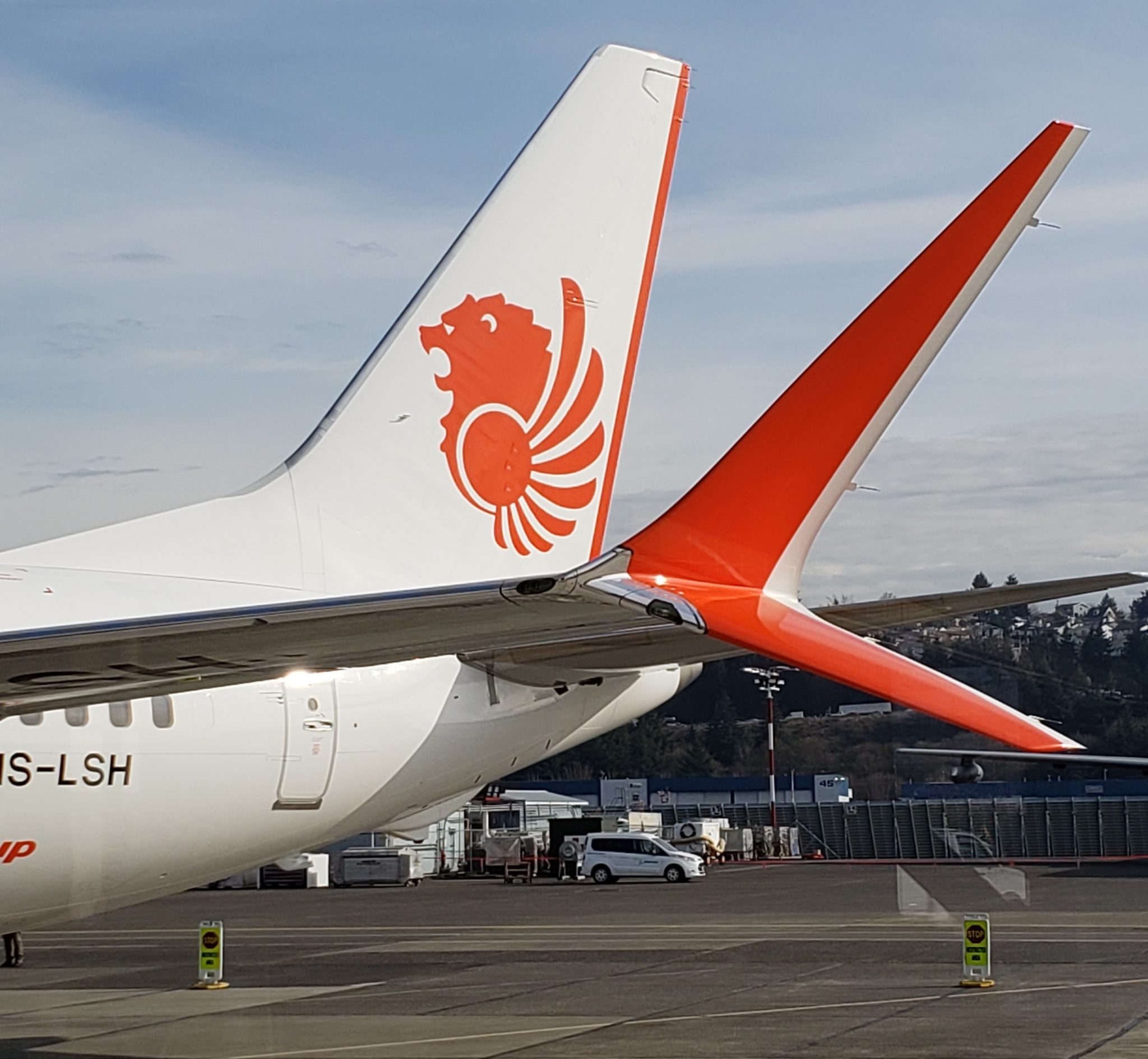
El Boeing 737-8 MAX, es el modelo más nuevo de la generación 737 lleva menos de un año empleándose para vuelos comerciales, por lo que el de Indonesia ha sido el primer incidente importante de uno de ellos. Lion Air recibió la aeronave en Agosto 2018, convirtiéndose así en la primera aerolínea indonesia en sumar uno de estos modelos a su flota, y según el Comité Nacional de Seguridad del Transporte de Indonesia había completado 800 horas de vuelo antes del accidente del lunes. Actualmente la aerolínea contaba con 11 aviones del mismo modelo, y en julio anunció que había ordenado hasta 218 unidades más de este Boeing.
Resultado de imagen para Lion Air fleet 737

El Boeing 737 MAX

Hasta ahora, The Boeing Company acumula mas de 4.000 pedidos del modelo 737 MAX, una cifra que revela la popularidad de la última versión de la aeronave de pasillo único entre las aerolíneas del mundo. El modelo ofrece mejoras en ahorro de combustible, autonomía y confiabilidad respecto de versiones anteriores, ha ganado clientes en Asia, donde han surgido varias aerolíneas de bajo coste en la última década. Actualmente, se ofrecen cuatro versiones de la familia Max.

La familia MAX puede acomodar 230 pasajeros y volar 6.110 kilómetros, según el sitio web de Boeing. Los aviones emplean motores CFM LEAP-1B de CFM International, empresa conjunta de General Electric Co. y Safran SA. Entre los principales clientes del modelo en la región se encuentran Lion Air, SpiceJet Ltd. de India y China Southern Airlines Co.

Si bien la causa del accidente no está clara, Boeing dijo en un comunicado dado a conocer el Lunes que está dispuesto a brindar asistencia técnica a los investigadores del accidente.

El pasado oscura de Lion Air

Lion Air, fundada en 1999, es la mayor aerolínea de bajo coste de Indonesia. Su pasado oscuro ha traído media docena de accidentes menores y uno fatal, sucedido en 2004 donde perecieron 25 personas. Uno de los incidentes sin víctimas mortales ocurrió en 2013 al estrellarse durante la aproximación final al aeropuerto internacional de Ngurah Rai, en la Isla de Bali, en el que 108 personas sobrevivieron. Lion Air estuvo entre las aerolíneas indonesias que figuraban en la lista negra de seguridad aérea de la Unión Europea en el período entre 2007 a 2016.

Imagen relacionadaLION AIR FIGURÓ DE 2007 A 2016 EN LA LISTA NEGRA DE SEGURIDAD AÉREA DE LA UE

El accidente del vuelo JT-610 de Lion Air, a pesar del clima despejado, la tripulación de vuelo experimentada y un Boeing 737 de última generación, con tan solo dos meses de antigüedad, ha puesto de relieve la historia de la aviación de Indonesia y la de Lion Air, una de las aerolíneas más grandes y jóvenes del país, aunque muy cuestionada por su seguridad aérea.

La aerolínea de bajo costo ha sido testigo de varios incidentes y accidentes aéreos. Estos son algunos de los momentos más dramáticos en la corta historia de la aerolínea.

Incidentes y accidentes

El 14/012002, el vuelo JT386 de Lion Air, un Boeing 737-200 se estrelló después de intentar despegar con una configuración incorrecta de la solapa en el Aeropuerto Internacional Sultan Syarif Kasim II. Todos a bordo sobrevivieron, pero el avión fue cancelado.

El 30/11/2004, el vuelo JT538 de Lion Air, un McDonnell Douglas MD-82, se estrelló en Surakarta con el registro PK-LMN (c/n 49189); 25 personas murieron.

El 04/03/2006, Lion Air Flight JT8987, un McDonnell Douglas MD-82, se estrelló después de aterrizar en el Aeropuerto Internacional Juanda. El empuje inverso se usó durante el aterrizaje, aunque se dijo que el inversor de empuje izquierdo estaba fuera de servicio. Esto causó que la aeronave se desviara hacia la derecha y saliera de la pista, quedando en reposo a unos 7.000 pies (2,100 m) del final de aproximación de la pista. [30] No hubo víctimas fatales, pero la aeronave resultó gravemente dañada [30] y luego fue cancelada.

El 24/12/2006, el vuelo JT792 de Lion Air, un Boeing 737-400, aterrizó con una configuración de aleta incorrecta y no estaba alineado con la pista. El avión aterrizó con fuerza y ​​resbaló a lo largo de la pista, lo que provocó que el tren de aterrizaje principal derecho se desprendiera, que el tren izquierdo sobresaliera por el ala y que parte del fuselaje de la aeronave estuviera arrugado. No hubo muertes, pero el avión fue cancelado.

El 23/02/2009, el vuelo 972 de Lion Air, un McDonnell Douglas MD-82, aterrizó sin la nariz en el Aeropuerto Internacional Hang Nadim, Batam.

El 09/03/2009, el vuelo JT793 de Lion Air, un McDonnell Douglas MD-90-30 (registro PK-LIL) salió de la pista en el aeropuerto internacional Soekarno-Hatta . Nadie salió herido.

El 02/11/2010, el vuelo JT712 de Lion Air, un Boeing 737-400 (con registro PK-LIQ) sobrepasó la pista al aterrizar en el aeropuerto de Supadio, Pontianak, descansando sobre su barriga y sufriendo daños en su nariz. Los 174 pasajeros y la tripulación fueron evacuados por los toboganes de emergencia, con pocas lesiones.

El 13/04/2013, el vuelo JT904 de Lion Air, un Boeing 737-800 (registro PK-LKS; c/n 38728) desde Bandung a Denpasar con 108 personas a bordo, se estrelló contra el agua cerca de Denpasar/Bali mientras intentaba aterrizar. El fuselaje del avión se rompió en dos partes. Mientras que los funcionarios indonesios informaron que la aeronave se estrelló antes de la pista, los reporteros y fotógrafos de Reuters y Associated Press indicaron que el avión sobrepasó la pista. Todos los pasajeros y la tripulación fueron evacuados de la aeronave y no hubo víctimas fatales.

El 06/08/2013, el vuelo JT892 de Lion Air, un Boeing 737-800 (registro PK-LKH; c/n 37297) de Makassar a Gorontalo con 117 pasajeros y tripulación a bordo, golpeó una vaca mientras aterrizaba en el aeropuerto de Jalaluddin y se desvió de la pista. No hubo heridos.

El 01/02/2014, Lion Air el vuelo JT361, un Boeing 737-900ER (registro PK-LFH; c/n 35710), desde el aeropuerto Balikpapan Sultan Aji Muhammad Sulaiman hasta el Aeropuerto Internacional Ngurah Rai en Denpasar/Bali a través del Aeropuerto Internacional Juanda en Surabaya, con 222 pasajeros y tripulación a bordo, aterrizó con fuerza y ​​rebotó cuatro veces en la pista, causando un golpe de cola y daños sustanciales al avión. No hubo víctimas fatales, pero dos pasajeros resultaron gravemente heridos y otros tres sufrieron heridas leves.

El 20/02/2016, el vuelo JT263 de Lion Air desde el aeropuerto de Balikpapan Sultan Aji Muhammad Sulaiman al aeropuerto internacional de Juanda en Surabaya pasó por la pista al aterrizar, sin lesiones. La investigación del Comité Nacional de Seguridad del Transporte sobre el incidente encontró que las fallas en la gestión de los recursos de la tripulación llevaron a procedimientos de aterrizaje incorrectos y recomendó que las aerolíneas indonesias mejoren la capacitación de pilotos.

El 02/04/2017, unos 300 litros de combustible se derramaron en la pista del Aeropuerto Internacional Juanda en Surabaya. Las fotos tomadas por los pasajeros a bordo mostraban combustible saliendo de una de las alas de la aeronave. Poco después, todos los pasajeros fueron evacuados y el avión fue puesto a tierra para una mayor investigación. No se reportaron víctimas. Ese mismo día, un representante de Lion Air fue convocado por el Ministerio de Transporte de Indonesia para aclarar el incidente. Una declaración temprana de un representante de Lion Air dijo que la fuga fue causada por una válvula de seguridad que no funciona y un detector de desbordamiento.

El 29/04/2018, el vuelo JT892 de Lion Air, un Boeing 737-800 (registro PK-LOO), realizó una excursión en el aeropuerto de Jalaluddin después de aterrizar en condiciones de fuertes lluvias, lo que provocó el colapso del tren principal. No hubo fatalidades.

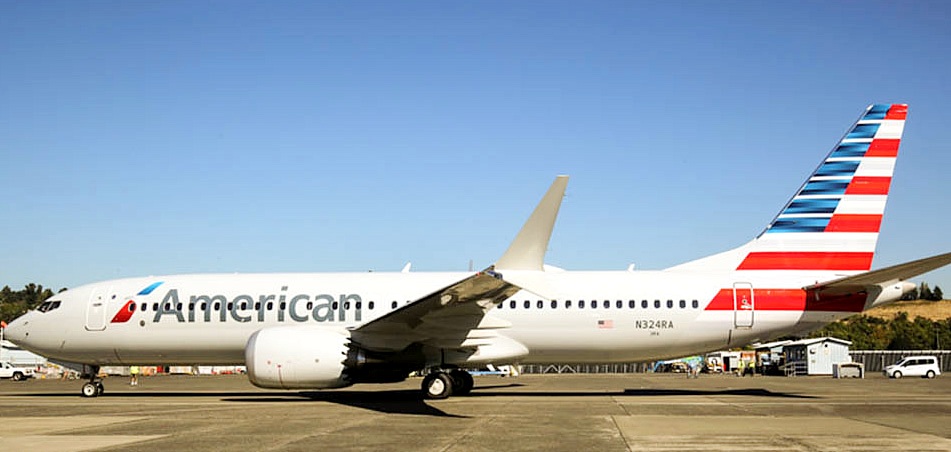
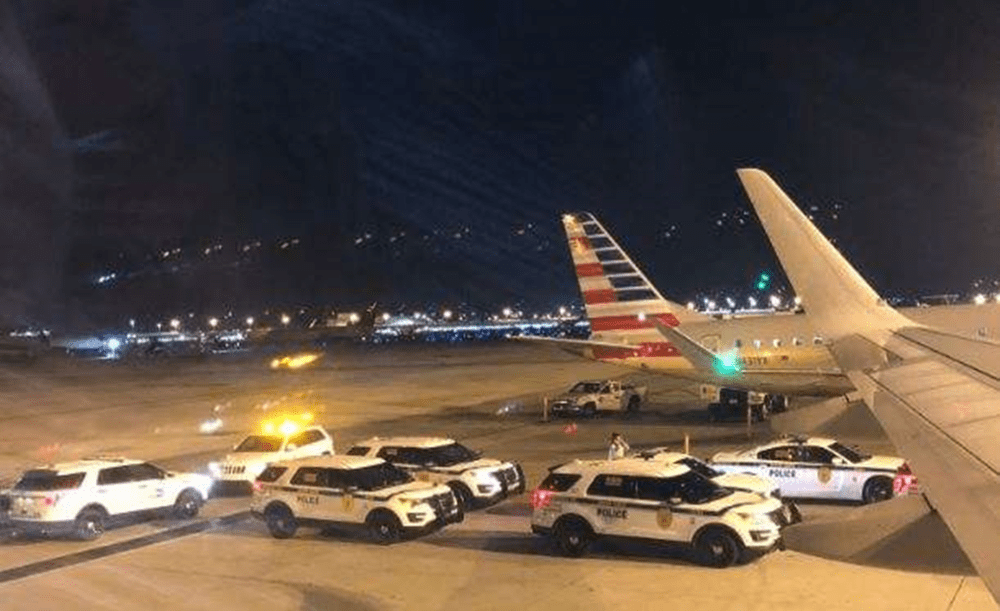
El 29/10/2018, el vuelo JT610 de Lion Air, un Boeing 737-8 MAX, se estrelló en el mar de Java 13 minutos después del despegue de Yakarta, con los 189 pasajeros y la tripulación a bordo desaparecidos, presuntamente muertos. Harro Ranter, quien dirige la red de seguridad operacional de la aviación, expresó que las aerolíneas indonesias se enfrentan con dificultades en el terreno, el mal tiempo frecuente que conduce a una mala visibilidad y deficiencias en los controladores de tránsito aéreo. «Indonesia se destaca por tener algunos accidentes muy graves en el pasado. Es difícil juzgar si han hecho suficiente progreso con respecto a la seguridad». El accidente de Lion Air es el primero que involucra al Boeing 737-8 MAX, después de un incidente en el destrozo de un winglet AT de un Boeing 737-8 MAX de American Airlines esta semana por parte de un camión abastecedor de combustible. Es 737 MAX es una actualización más eficiente de la línea 737, que es el avión más vendido de todos los tiempos. AIRWAYS® AW-Icon TXT

Resultado de imagen para Lion Air JT 610 PK-LQP

Air crash Lion Air JT-610

First plane crash of a Boeing 737-8 MAX

Boeing had delivered this aircraft Boeing 737-8 MAX S/N 43000/7043 to Lion Air on August 13, 2018. Its first flight had been on July 30, 2018. After its delivery it made its first commercial flight on 10/15/2018 accumulating about 800 flight hours.

The Boeing 737-8 MAX, Lion Air PK-LPQ registration covering the Jakarta-Pangtal Pinang route with flight number JT-610, plunged into the Java Sea about 65 km northeast of Jakarta Airport on takeoff at 06: 21hs [local time] on October 29, 2018, [23:21 GMT on 10/28/20/20]. On board were 181 passengers (including two children and a baby) and 7 crew members. The loss of contact with the aircraft occurs 12 minutes after takeoff.

Preliminary data

According to the first information, the plane reached 5,400 feet after takeoff, stopping there its ascent, maintaining that altitude until it began to impact with the sea. Ships sent to the area quickly found debris and fuel stains on the surface of the sea. The depth of the same in that area does not exceed 35 meters.

After recovering six bodies of the Java Sea where the plane of Indonesia’s low-cost airline, Lion Air, crashed on Monday near Jakarta, local search and rescue officials say they fear there are no survivors.

Accident timeline JT-610

6.20 a.m.: JT 610 takes off from Soekarno-Hatta International Airport in Jakarta. Your arrival at Pangkal Pingang airport is scheduled for 7.20am.

06:23 a.m.: Pilot Bhavye Suneja asks permission to air traffic control to turn around and return to Jakarta airport. Your request is approved.

06:33 a.m .: The aircraft loses contact with air traffic control at an altitude of only 1580 meters and submerges in coastal waters less than 35 m deep in the Java Sea.

06:45 a.m.: the crew of a tugboat informs the maritime authorities that they have seen a plane downed, suspected of being a Lion Air plane, in the water. Ships are sent to the area.

09:18 a.m.: Lion Air confirms that it has lost contact with flight JT 610, reports The Associated Press. «We can confirm that one of our flights has lost contact», says Lion Air spokesman Danang Mandala Prihantoro. «Your position can not be determined yet».

10:11 a.m.: The spokesman of the agency of disasters of Indonesia, Sutopo Purwo Nugroho, publishes in Twitter a video of the rest of airplanes floating in the water.

10:40 a.m.: It has already been confirmed that there were 181 passengers on board, including one child and two babies, and eight crew members.

12:00: The families of those on board begin to arrive at the headquarters of the National Agency of Rescue and Search of Indonesia in Jakarta to report on the fate of their loved ones.

12:22 p.m.: Boeing, the manufacturer of the 737-8 MAX crashed, launches a statement. «We express our concern for those on board, and express sincere sympathy to their families and loved ones», he says.

12:38 p.m.: Australian Ambassador to Indonesia, Gary Quinlan, tweets that the Australian government is working to determine if any Australian is aboard the crashed flight. Since then it has been confirmed that there are no Australians on board.

12:46 p.m.: The governor of Jakarta, Anies Baswedan, offers his condolences on Twitter. «Our prayers for the victims and their families», he says.

02:00 p.m.: At this moment, a team of 300 people, including soldiers, police and local fishermen, are looking for the plane. Identification cards, personal belongings and aircraft wrecks are recovered, but there are no human remains.

16:30 p.m.: Some human remains are recovered.

05:10 p.m.: The head of the Indonesian search and rescue agency, Bambang Suryo Aji, says no survivors are waiting.


Hypothesis of the tragedy of the 737 MAX

Possible accident factors of the Boeing 737-8 MAX

Design error of the Boeing 737 MAX
Failure of aircraft systems
Inadequate or incomplete crew training

The Boeing 737-8 MAX was released in mid-August 2018. The crew of the pilots had more than 11,000 flight hours. On August 15, 2018 the Boeing 737-8 MAX performed the inaugural flight at the Lion Air company. Two months and two weeks after its premiere, the aircraft disappeared on Monday from the radars when it was flying over the Java Sea. In it, 188 occupants were traveling and the Indonesian authorities have already announced that they do not expect to find survivors.

It was only 13 minutes before the plane had taken off from the airport in Jakarta, Indonesia. It was 06:20 local time (23.20 GMT Sunday) and was heading to Pangkal Pinang, on Bangka Island, when the pilot requested the return to the capital’s airfield. It was granted, but the aircraft disappeared from the radar without sending any emergency signal.

The causes of the accident will not be revealed until a thorough investigation is carried out, but the short age of the aircraft and the extensive experience of the pilots, who had more than 11,000 flight hours, have triggered all doubts about the whys of the accident.

AW-70083772 - copia (2)

According to aviation expert Gerry Soejatman, «very old aircraft often have the highest risk [of accidents], but very young aircraft are also at high risk. If it is very new, sometimes there are drawbacks that only reveal themselves after they are used routinely, which in general, the aircraft can reveal a fault during the first three months of its use». Soejatman noted in a publication on the networks social that the remains of the Lion Air plane indicate that «it would have hit the water at high speed» from a height of approximately 2,500 meters.

At the young age of the accident plane, there is an incident that the aircraft registered just one day before disappearing from the radar. At a press conference, Lion Air’s Executive Director, Edward Sirait, revealed that the plane registered «technical problems» during a flight on Sunday, but said it had been resolved before it took off on Monday.

On the other hand, before the main hypotheses that point to the causes of the accident, the president of the National Committee of Transport Security of Indonesia, Soerjanto Tjahjono, has asked for prudence. «We can not assume anything before finding the black boxes and analyzing the recording of the tower (air control)», he said.

AW-70083772 - copia (3)

The Boeing 737-8 MAX, the newest model of the 737 generation has been used for commercial flights for less than a year, so the Indonesian has been the first major incident of one of them. Lion Air received the aircraft in August 2018, thus becoming the first Indonesian airline to add one of these models to its fleet, and according to the National Transportation Safety Committee of Indonesia had completed 800 flight hours before the accident on Monday. Currently the airline had 11 aircraft of the same model, and in July announced that it had ordered up to 218 more units of this Boeing.
Resultado de imagen para Lion Air JakartaResultado de imagen para Lion Air JakartaResultado de imagen para Lion Air JT 610 Java sea

The Boeing 737 MAX

So far, The Boeing Company has accumulated more than 4,000 orders of the 737 MAX model, a figure that reveals the popularity of the latest version of the single-aisle aircraft among the world’s airlines. The model offers improvements in fuel economy, autonomy and reliability compared to previous versions, has won customers in Asia, where several low cost airlines have emerged in the last decade. Currently, four versions of the Max family are offered.

The MAX family can accommodate 230 passengers and fly 6,110 kilometers, according to the Boeing website. The aircraft use CFM LEAP-1B engines from CFM International, a joint venture between General Electric Co. and Safran SA. Lion Air, SpiceJet Ltd. of India and China Southern Airlines Co. are among the main customers of the model in the region.

While the cause of the accident is not clear, Boeing said in a statement released on Monday that it is willing to provide technical assistance to accident investigators.

The dark past of Lion Air

Lion Air, founded in 1999, is Indonesia’s largest low-cost airline. His dark past has brought half a dozen minor accidents and one fatal, happened in 2004 where 25 people perished. One of the incidents without fatalities occurred in 2013 when it crashed during the final approach to Ngurah Rai International Airport, on the island of Bali, in which 108 people survived. Lion Air was among the Indonesian airlines that were on the European Union’s blacklist of aviation security in the period from 2007 to 2016.

Imagen relacionadaLION AIR FIGURED FROM 2007 TO 2016 ON THE EU’S AVIATION BLACKLIST

The accident of Lion Air’s JT-610 flight, despite the clear weather, the experienced flight crew and a state-of-the-art Boeing 737, just two months old, has highlighted the history of Indonesian aviation and that of Lion Air, one of the largest and youngest airlines in the country, although very questioned for its air safety.

The low cost airline has witnessed several incidents and plane crashes. These are some of the most dramatic moments in the short history of the airline.

Incidents and accidents

On 14/012002, Lion Air’s JT386 flight, a Boeing 737-200 crashed after attempting to take off with an incorrect lapel configuration at the Sultan Syarif Kasim II International Airport. All aboard survived, but the plane was canceled.

On 11/30/2004, JT538 flight of Lion Air, a McDonnell Douglas MD-82, crashed in Surakarta with the registration PK-LMN (c/n 49189); 25 people died.

On 04/03/2006, Lion Air Flight JT8987, a McDonnell Douglas MD-82, crashed after landing at the Juanda International Airport. The reverse thrust was used during the landing, although it was said that the left thrust reverser was out of service. This caused the aircraft to deviate to the right and exit the runway, remaining at rest at about 7,000 feet (2,100 m) from the approach end of the runway.  There were no fatalities, but the aircraft was badly damaged [30] and then it was canceled.

On 12/24/2006, Lion Air’s JT792 flight, a Boeing 737-400, landed with an incorrect fin configuration and was not aligned with the runway. The plane landed hard and slid along the runway, causing the right main landing gear to fall off, the left train to protrude from the wing and part of the fuselage of the aircraft to be wrinkled. There were no deaths, but the plane was canceled.

On 02/23/2009, JT972 flight of Lion Air, a McDonnell Douglas MD-82, landed without a nose at the Hang Nadim International Airport, Batam.

On 03/09/2009, JT793 flight from Lion Air, a McDonnell Douglas MD-90-30 (registration PK-LIL) left the runway at Soekarno-Hatta International Airport. Nobody was hurt.

On 02/11/2010, the JT712 flight of Lion Air, a Boeing 737-400 (with registration PK-LIQ) surpassed the runway when landing at the Supadio airport, Pontianak, resting on its belly and suffering damage to its nose. The 174 passengers and crew were evacuated through the emergency slides, with few injuries.

On 04/13/2013, the JT904 flight of Lion Air, a Boeing 737-800 (registration PK-LKS; c/n 38728) from Bandung to Denpasar with 108 people on board, crashed into the water near Denpasar/Bali while trying to land. The fuselage of the plane broke into two parts. While Indonesian officials reported that the aircraft crashed before the runway, reporters and photographers from Reuters and Associated Press indicated that the plane passed the runway. All passengers and crew were evacuated from the aircraft and there were no fatalities.

On 08/06/2013, Lion Air flight JT892, a Boeing 737-800 (registration PK-LKH; c/n 37297) from Makassar to Gorontalo with 117 passengers and crew on board, hit a cow while landing at the airport of Jalaluddin and deviated from the track. There were no injuries.

On 02/01/2014, Lion Air flight JT361, a Boeing 737-900ER (registration PK-LFH; c/n 35710), from Balikpapan Sultan Aji Muhammad Sulaiman Airport to Ngurah Rai International Airport in Denpasa/Bali via Juanda International Airport in Surabaya, with 222 passengers and crew on board, landed hard and bounced four times on the runway, causing a tail blow and substantial damage to the plane. There were no fatalities, but two passengers were seriously injured and three others suffered minor injuries.

On 02/20/2016, Lion Air flight JT263 from Balikpapan Sultan Aji Muhammad Sulaiman Airport to Juanda International Airport in Surabaya passed the runway when landing, without injury. The National Transportation Security Committee’s investigation into the incident found that flaws in the management of crew resources led to incorrect landing procedures and recommended that Indonesian airlines improve pilot training.

On 02/04/2017, about 300 liters of fuel spilled on the runway of the Juanda International Airport in Surabaya. The photos taken by the passengers on board showed fuel coming from one of the wings of the aircraft. Soon after, all passengers were evacuated and the plane was grounded for further investigation. No victims were reported. That same day, a Lion Air representative was summoned by the Ministry of Transport of Indonesia to clarify the incident. An early statement from a representative of Lion Air said the leak was caused by a safety valve that does not work and an overflow detector.

On 04/29/2018, the JT892 flight of Lion Air, a Boeing 737-800 (registration PK-LOO), made an excursion at Jalaluddin airport after landing in conditions of heavy rain, which caused the collapse of the train principal. There were no fatalities.

On 10/29/2018, Lion Air’s JT610 flight, a Boeing 737-8 MAX, crashed into the Java Sea 13 minutes after Jakarta’s takeoff, with the 189 passengers and crew on board missing, presumably dead. Harro Ranter, who directs the aviation safety network, said Indonesian airlines face difficulties in the field, frequent bad weather that leads to poor visibility and deficiencies in air traffic controllers. «Indonesia stands out for having some very serious accidents in the past, it is difficult to judge whether they have made sufficient progress with respect to safety.» The Lion Air crash is the first involving the Boeing 737-8 MAX, after an incident in the wrecking of an American Airlines Boeing 737-8 MAX AT winglet this week by a fuel truck. It’s 737 MAX is a more efficient update of the 737 line, which is the best-selling airplane of all time. A \ W

DATA: La información procesada puede actualizarse debido al tipo de datos cambiantes, por lo que le sugerimos consultar periódicamente esta información.

DATA: The processed information can be updated due to the type of changing data, so we suggest you consult this information periodically.


Ξ A I R G W A Y S Ξ
SOURCE: Airgways.com
DBk: Lionair.co.id / Journalbuzz.co / News957.com / Unian.info / Usatoday.com / Airgways.com
AW-POST: 201810292243AR

A\W   A I R G W A Y S ®

Accidente aéreo primer Boeing 737 MAX


AW-7007378MAX.jpg

AW | 2018 10 29 16:46 | AVIATION SAFETY

Primer accidente aéreo de Boeing 737 MAX en Indonesia

Un Boeing 737-8 MAX de Lion Air se estrella cerca de Yakarta, capital de Indonesia este Lunes 29 Octubre 2018, la aeronave perdió altura e impactó contra el Mar de Java.

Un Boeing 737-8 MAX de Lion Air, registro PK-LQP que realiza el vuelo JT-610 desde Yakarta a Pangkal Pinang (Indonesia) con 181 pasajeros y 7 tripulantes, estaba saliendo de Yakarta cuando la aeronave alcanzó una altitud máxima de aproximadamente 5400 pies, luego perdió altura, el contacto por radar se perdió a unos 35nm al noreste de Yakarta sobre el mar de Java. Los servicios de rescate se dirigen hacia el lugar del que se sospecha que se estrelló, los primeros barcos llegaron al lugar del accidente y localizaron manchas de petróleo, así como también restos de la aeronave, incluidos teléfonos móviles y primeras partes del cuerpo. Posteriormente se recuperaron los 6 cuerpos del día. Las autoridades afirman que no hay esperanza para los sobrevivientes.

Lion Air incorporó el Boeing 737-8 MAX con S/N 43000, LN:7058 con registro o matrícula indonesia PK-LQP. Empleaba dos motores CFMI LEAP-1B, iniciando su primer vuelo comercial con fecha 30/07/2018. La aeronave colisiona contra el mar con fecha 29/10/2018.

Autoridades de Indonesia

Las autoridades indonesias informaron que es cierto que el avión se estrelló al norte de la zona de Karawang en las aguas del mar de Java. Los primeros barcos llegaron al lugar del accidente, la profundidad del agua en el sitio es de unos 30-35 metros. En la superficie había manchas de petróleo y escombros de la aeronave. No se han encontrado sobrevivientes ni cuerpos hasta el momento.

El Ministerio de Transporte de Indonesia informó que un remolcador vio un avión que se estrellaba en el mar de Java. El contacto por radar con la aeronave que transportaba 178 pasajeros, 2 bebés y un bebé, así como dos pilotos y cinco auxiliares de vuelo se perdió en la posición S5.8156 E107.1231. El avión accidentado se registró el 15 Agosto 2018 y recibió su certificado de aeronavegabilidad también el 15 Agosto 2018.


AW-700087378.jpgAERONAVE BOEING 737-8 MAX, REG > PK-LQP DE LION AIR ACCIDENTADO EN EL MAR DE JAVA

Acción de búsqueda

Los BASARNAS de Indonesia están a cargo de la operación de rescate y recuperación y están enviando sus unidades al sitio del presunto accidente. La Autoridad de Aviación Civil de Indonesia informó que la aeronave solicitó regresar a Yakarta. Basarnas informa que actualmente hay intentos de bucear a la aeronave en las aguas a unos 30-35 metros de profundidad. Los primeros residuos se recogieron de la superficie del agua, incluidos los teléfonos móviles y las primeras partes del cuerpo. El sitio del accidente se encuentra a menos de 2 nm de la última posición del radar conocida. No se recibió señal ELT. El equipo subacuático ha sido trasladado al sitio del accidente, los buzos están intentando localizar a las víctimas y las cajas negras. Más tarde el día se recuperaron seis cuerpos. Se detectó la posición de las cajas negras (nota editorial: obviamente a través de pingers), las cajas negras aún no se han recuperado.

Informes de Lion Air

La aerolínea informó que la aeronave encontró un problema técnico, la tripulación estaba a punto de regresar a Yakarta. También hubo un problema técnico en el vuelo anterior, sin embargo, este problema se solucionó. La aeronave permaneció en tierra en Yakarta durante la noche durante 8 horas antes del vuelo del accidente, solo hay un informe que circula en Internet, afirmando que la aeronave había experimentado una velocidad aérea y una altitud poco fiables en el vuelo anterior, los instrumentos del capitán se identificaron como defectuosos, el control se entregó al primer oficial y el vuelo continuó a su destino por debajo del espacio aéreo RVSM. El capitán había acumulado 6.000 horas de experiencia de vuelo total.

El KNKT de Indonesia (también conocido como NTSC) informó que la tripulación solicitó regresar a Yakarta poco después del despegue, cuando la aeronave subió a 2000-3000 pies MSL aproximadamente 3 minutos después del despegue, la solicitud fue otorgada por ATC. El KNKT todavía está investigando las causas de la solicitud de devolución. Unos 8 minutos después se perdió el contacto del radar. Las cajas negras están a una profundidad estimada de 30 metros, los intentos de alcanzar y recuperar las cajas posteriores están en curso.

Corrección de información

Un video y fotos están circulando por Internet y dicen mostrar el vuelo del accidente desde la perspectiva de un pasajero. El gobierno de Indonesia informa que el video muestra un vuelo anterior JT-353 desde Yakarta a Padang que encontró turbulencia hace algún tiempo, todo a bordo se mantuvo bien. Las fotos que muestran a los pasajeros con máscaras de oxígeno tampoco se han tomado del vuelo JT-610.

Reporte de Boeing

Boeing informó que el Ministerio de Transporte de Indonesia ha confirmado que los restos del 737-8 MAX  se han ubicado en la conducción del vuelo JT-610. Boeing está triste por la pérdida del vuelo JT-610 y expresa sus condolencias a las familias. Boeing está dispuesto a proporcionar asistencia técnica para la investigación del accidente. De acuerdo con los datos ADS-B transmitidos por el transpondedor de la aeronave, la aeronave salió de la pista 25L de Jakarta a las 06:21L (23:21Z el 28 Octubre 2018), nunca subió a los 5400 pies restantes entre 5200 y 5400 pies durante aproximadamente 6 minutos antes de perder altitud y desaparecer radar unos 12 minutos después de la salida, aproximadamente a las 06:33L (23:33Z), a unos 35 nm al noreste del Aeropuerto Internacional de Yakarta.  AIRWAYS® AW-Icon TXT

Resultado de imagen para Boeing 737 8 max PK-LQP Lion Air

First plane crash Boeing 737 MAX

First plane crash of Boeing 737 MAX in Indonesia

A Boeing 737-8 MAX from Lion Air dashed near Jakarta, capital of Indonesia this Monday 29 October 2018, the aircraft lost altitude and hit the Java Sea.

A Boeing 737-8 MAX of Lion Air, PK-LQP registration that performs flight JT-610 from Jakarta to Pangkal Pinang (Indonesia) with 181 passengers and 7 crew, was leaving Jakarta when the aircraft reached a maximum altitude of approximately 5400 feet, then lost height, radar contact was lost about 35nm northeast of Jakarta over the Java Sea. The rescue services are headed to the place where it is suspected that it crashed, the first ships arrived at the accident site and located oil slicks, as well as remnants of the aircraft, including mobile phones and first parts of the body. Afterwards, the 6 bodies of the day were recovered. The authorities say there is no hope for the survivors.

Lion Air incorporated the Boeing 737-8 MAX with S/N43000, LN:7058 with registration or Indonesian registration PK-LQP. It used two LEAP-1B CFMI engines, starting its first commercial flight dated 30/07/2018. The aircraft collides against the sea on 29/10/2018.

Indonesian authorities

The Indonesian authorities reported that it is true that the plane crashed north of the Karawang area in the waters of the Java Sea. The first boats arrived at the crash site, the water depth at the site is about 30-35 meters. On the surface there were oil slicks and debris from the aircraft. No survivors or bodies have been found so far.

The Ministry of Transport of Indonesia reported that a tug saw a plane crashing in the Java Sea. The radar contact with the aircraft carrying 178 passengers, 2 babies and one baby, as well as two pilots and five flight attendants was lost at position S5.8156 E107.1231. The crashed plane was registered on August 15, 2018 and received its certificate of airworthiness also on August 15, 2018.

Search action

The BASARNAS in Indonesia are in charge of the rescue and recovery operation and are sending their units to the site of the alleged accident. The Indonesian Civil Aviation Authority reported that the aircraft requested to return to Jakarta. Basarnas reports that there are currently attempts to dive the aircraft in the waters at about 30-35 meters deep. The first residues were collected from the surface of the water, including mobile phones and the first parts of the body. The accident site is less than 2 nm from the last known radar position. No ELT signal was received. The underwater equipment has been moved to the accident site, the divers are trying to locate the victims and the black boxes. Later in the day six bodies were recovered. The position of the black boxes was detected (editorial note: obviously through pingers), the black boxes have not yet recovered.

Resultado de imagen para Boeing 737 8 max Lion Air air crash

Lion Air reports

The airline reported that the aircraft encountered a technical problem, the crew was about to return to Jakarta. There was also a technical problem in the previous flight, however, this problem was solved. The aircraft remained on the ground in Jakarta during the night for 8 hours before the flight of the accident, there is only one report circulating on the Internet, stating that the aircraft had experienced an unreliable airspeed and altitude on the previous flight; Captain was identified as defective, the control was handed over to the first officer and the flight continued to its destination below the RVSM airspace. The captain had accumulated 6,000 hours of total flight experience.

The KNKT of Indonesia (also known as NTSC) reported that the crew requested to return to Jakarta shortly after takeoff, when the aircraft rose to 2000-3000 feet MSL approximately 3 minutes after takeoff, the request was granted by ATC. The KNKT is still investigating the causes of the return request. About 8 minutes later the radar contact was lost. The black boxes are at an estimated depth of 30 meters, attempts to reach and retrieve the subsequent boxes are in progress.

Correction of information

A video and photos are circulating on the Internet and claim to show the flight of the accident from the perspective of a passenger. The Indonesian government reports that the video shows a previous flight JT-353 from Jakarta to Padang that encountered turbulence some time ago, everything on board stayed well. The photos showing passengers with oxygen masks have not been taken from flight JT-610 either.

Boeing report

Boeing reported that the Ministry of Transport of Indonesia has confirmed that the remains of the 737-8 MAX  have been located in the JT-610 flight. Boeing is saddened by the loss of flight JT-610 and expresses his condolences to the families. Boeing is willing to provide technical assistance for the accident investigation. According to the ADS-B data transmitted by the transponder of the aircraft, the aircraft left runway 25L of Jakarta at 06: 21L (23: 21Z on October 28, 2018), never climbed to the remaining 5,400 between 5200 and 5400 feet for about 6 minutes before losing altitude and disappearing radar about 12 minutes after departure, at approximately 06:33L (23:33Z), about 35 nm northeast of the Jakarta International Airport. A \ W

Imagen relacionadaResultado de imagen para Boeing 737 max JT-610 air crashResultado de imagen para Boeing 737 max JT-610 air crash


DATA: La información procesada puede actualizarse debido al tipo de datos cambiantes, por lo que le sugerimos consultar periódicamente esta información.

DATA: The processed information can be updated due to the type of changing data, so we suggest you consult this information periodically.


Ξ A I R G W A Y S Ξ
SOURCE: Airgways.com
DBk: Avherald.net / Boeing.com / Lionair.co.id / Airgways.com / Bncnews.com / Straitstimes.com / Flightradar24.com
AW-POST: 201810291646AR

A\W   A I R G W A Y S ®

Incidentes en vuelos de Aerolíneas

Airbus_A340-300_(LV-CSE)_de_Aerolíneas_Argentinas

AW | 2018 10 27 21:58 | AVIATION SAFETY

Aerolineas-Argentinas-logoDos vuelos de Aerolíneas Argentinas tuvieron que volver a Ezeiza por problemas técnicos
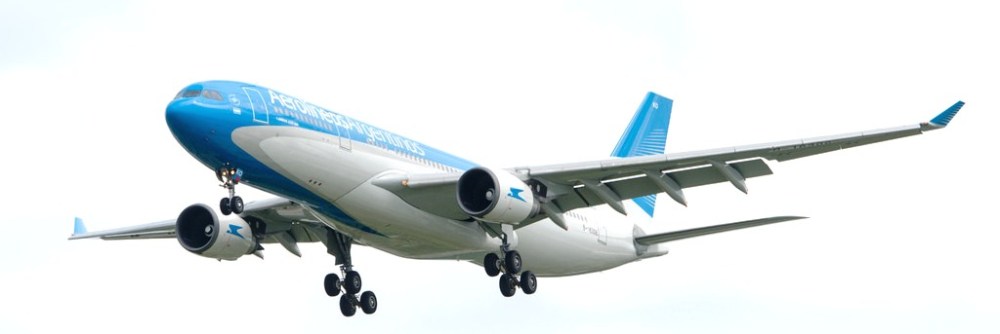
Dos incidentes en aeronaves de Aerolíneas Argentinas tuvieron que retornar a Ezeiza el Viernes, 26 Octubre 2018 a la noche poco tiempo después de haber despegado. En ambos casos fue por problemas técnicos en aeronaves Airbus A330-200 y A340-200.

El vuelo AR1300 Airbus 330-203 matrícula LV-GKO despegó desde el Aeropuerto Internacional de Ezeiza con destino al Aeropuerto John F. Kennedy de Nueva York sufrió una despresurización de la cabina. Partió a las 23:56 hs, pero cuando volaba sobre la Provincia de Entre Ríos tuvo que retornar a Ezeiza. Al despresurizarse la cabina, bajaron automáticamente las mascarillas de emergencia. En Aerolíneas Argentinas, informaron que de todos modos ningún pasajero ni tripulante resultó herido y que se preservó en todo momento la seguridad de las personas a bordo. El avión aterrizó de vuelta en Ezeiza a la 01:10 hs de la madrugada del sábado. Quedó en revisión y los pasajeros volvieron a despegar unas horas después, a las 06:45 hs, en una nave de reserva, otro A330-200 matrícula LV-FVI.

El vuelo AR1132 que uniría Ezeiza-Madrid en un Airbus A340-200 despegó a las 00:14 hs del sábado. Diez minutos se detectó la rotura de una bisagra del tren de aterrizaje, según informaron en Aerolíneas Argentinas. Por protocolo de emergencia, no se puede cruzar el Atlántico con ese tipo de inconveniente. El avión se dirigió a una zona del Río de la Plata donde está permitido que los aviones descarguen combustible en caso de emergencia, para así poder reducir el peso antes de aterrizar.

En Aerolíneas afirmaron que ese vuelo fue reprogramado y despegó durante la mañana del sábado. En cambio, el AR1134 programado para el mediodía con destino a la capital española fue cancelado. En la compañía explicaron que el avión que debía hacer ese viaje fue utilizado para llevar a los pasajeros que habían quedado varados la noche anterior. Los que iban a viajar al mediodía fueron acomodados en el AR1132 del sábado, con horario de salida previsto para la noche.

El inconveniente con los dos vuelos internacionales se produjo pocos días después de que un avión de la aerolínea de bandera que volvía de Miami a Ezeiza sufriera una severa turbulencia en la que 15 pasajeros resultaron con heridos. AIRWAYS® AW-Icon TXT

AW-700855567

Incidents on Aerolíneas flights

Two flights of Aerolíneas Argentinas had to return to Ezeiza due to technical problems

Two incidents on Aerolíneas Argentinas aircraft had to return to Ezeiza on Friday, October 26, 2018 at night shortly after taking off. In both cases it was due to technical problems in Airbus A330-200 and A340-200 aircraft.

The flight AR1300 Airbus 330-203 LV-GKO license plate took off from the Ezeiza International Airport to the John F. Kennedy Airport in New York suffered a depressurization of the cabin. He left at 23:56 hs, but when he was flying over the Province of Entre Ríos he had to return to Ezeiza. When the cabin was depressurized, emergency masks were automatically lowered. In Aerolíneas Argentinas, they reported that no passenger or crew member was injured and that the safety of the people on board was preserved at all times. The plane landed back in Ezeiza at 01:10 hs am on Saturday. It was under review and the passengers took off a few hours later, at 06:45 hs, in a reserve ship, another A330-200 with registration LV-FVI.

The AR1132 flight that would join Ezeiza-Madrid in an Airbus A340-200 took off at 00:14 hs on Saturday. Ten minutes it was detected the breakage of a hinge of the landing gear, as reported by Aerolíneas Argentinas. By emergency protocol, you can not cross the Atlantic with that kind of inconvenience. The plane went to an area of ​​the Río de la Plata where aircraft are allowed to discharge fuel in case of emergency, in order to reduce the weight before landing.

In Airlines they said that flight was rescheduled and took off during Saturday morning. In contrast, the AR1134 scheduled for noon to the Spanish capital was canceled. In the company they explained that the plane that had to make that trip was used to take the passengers that had been stranded the previous night. Those who were going to travel at noon were accommodated in the AR1132 on Saturday, with scheduled departure for the night.

The inconvenience with the two international flights came a few days after a plane of the flag carrier that was returning from Miami to Ezeiza suffered severe turbulence in which 15 passengers were injured. A \ W


Ξ A I R G W A Y S Ξ
SOURCE: Airgways.com
DBk: Aerolineas.com / Clarin.com / Wikimedia.org / Flickr.com
AW-POST: 201810272158AR

A\W   A I R G W A Y S ®

Investigaciones sobre el ciberataque a British Airways

Imagen relacionada

AW | 2018 10 27 10:24 | AVIATION SAFETY

Resultados investigaciones del ciberataque a British Airways

British Airways ha investigado el crimen del ciberataque a mediados de año, han permitido llegar a resultados en la investigación encargada a la Agencia Nacional del Crimen sobre el hackeo masivo comunicado en Septiembre 2018. Los hackers robaron todos los datos de las tarjetas de 77.000 clientes (nombres, direcciones postales, correos electrónicos e información de pago), a los que se suman otros 108.000 titulares a los que han sustraído todos sus datos menos el código CVV.

Sin embargo, y en el cómputo global, los afectados por el robo masivo de datos son menos de los que IAG había comunicado inicialmente. Fueron 244.000 clientes frente a los 380.000 inicialmente calculados. Los clientes afectados por este robo de datos, según ha detallado la compañía, realizaron reservas de billetes premio entre el 21 Abril y el 28 Julio 2018. British Airways también afirma que desde el 6 de setiembre no ha sufrido más robos de datos. Los reporte de las investigaciones explicó que entre la información robada no se incluyen los detalles del viaje ni de los pasaportes. La británica añadió en su comunicado que la situación está resuelta y que la página web opera con normalidad.

“Lamentamos profundamente la disrupción que esta actividad criminal ha provocado. La protección de la información personal de nuestros clientes es un asunto extremadamente serio para nosotros”, se disculpó el presidente de British Airways, Alex Cruz.  AIRWAYS® AW-Icon TXT

Resultado de imagen para british airways cyber attack

Investigations cyber attack against British Airways

Research results of the cyber attack against British Airways

British Airways has investigated the crime of cyberattack in the middle of the year, have allowed to get results in the investigation commissioned to the National Crime Agency on mass hacking reported in September 2018. Hackers stole all data from the cards of 77,000 customers (names, postal addresses, emails and payment information), to which are added another 108,000 owners to whom they have subtracted all their data except the CVV code.

However, in the global calculation, those affected by the massive theft of data are less than those initially reported by IAG. There were 244,000 customers compared to 380,000 initially calculated. Customers affected by this theft of data, as detailed by the company, made reservations of prize tickets between April 21 and July 28, 2018. British Airways also states that since September 6 has not suffered more data thefts. The investigation reports explained that the stolen information does not include travel details or passports. The British added in its statement that the situation is resolved and that the website operates normally.

«We deeply regret the disruption that this criminal activity has caused. The protection of our customers’ personal information is an extremely serious matter for us», said British Airways President Alex Cruz. A \ W


Ξ A I R G W A Y S Ξ
SOURCE: Airgways.com
DBk: Ba.com / Newsneednews.com
AW-POST: 201810271024AR

A\W   A I R G W A Y S ®

Abastecedor combustible daña winglet Boeing 737 MAX de American Airlines

boeing-737-max8-american-airlines.jpg

AW | 2018 10 27 10:10 | AVIATION SAFETY

Camión de combustible daña punta alar avión Boeing 737-8 MAX de American Airlines

Un camión de combustible golpeó el winglet derecho de un Boeing 737-8 MAX de American Airlines cuando los pasajeros se encontraban a bordo de la aeronave este viernes. El vuelo AA1249 llevaba 172 pasajeros y se preparaba para partir desde el Aeropuerto LaGuardia de Nueva York en Nueva York hacia Miami.

La aerolínea dijo que los pasajeros fueron trasladados a una aeronave diferente mientras un equipo de mantenimiento evaluaba los daños. «Un camión de combustible hizo contacto con el ala de un avión que todavía estaba en la puerta. Trasladamos a los pasajeros a una aeronave diferente mientras nuestro equipo de mantenimiento evalúa la reparación de los daños», se lee en el comunicado.

Los alerones winglet AT incorporados en las aeronaves de cuarta generación de los Boeing 737 permiten reducir los vórtices o las turbulencias generadas por las diferencias de presión en el ala superior e inferior de un avión. Aunque una parte de del winglet sobresale hacia abajo, es pertinente que exista la coordinación entre la compañía aérea y las empresas prestadoras de servicios al avión para cumplir con la necesidad de atender los cuidados necesarios al momento de circulación de los diferentes móviles en la plataforma de servicios a las aeronaves de este tipo.

De acuerdo con American Airlines, el combustible de combustible fue operado por contractor Allied Aviation. El incidente ocurrió poco después de las 07:00 am del Viernes 26 Octubre 2018, reportando el primer incidente de este tipo en un Boeing 737 MAX en el mundo.  AIRWAYS® AW-Icon TXT

Resultado de imagen para Boeing 737 MAX 8 American Airlines

Fuel supplier damaged winglet Boeing 737 MAX

Fuel truck damaged tip alarming aircraft Boeing 737-8 MAX of American Airlines

A fuel truck hit the right winglet of a Boeing 737-8 MAX from American Airlines when passengers were aboard the aircraft this Friday. The AA1249 flight carried 172 passengers and was preparing to depart from LaGuardia Airport in New York in New York to Miami.

The airline said passengers were taken to a different aircraft while a maintenance team evaluated the damage. «A fuel truck made contact with the wing of an airplane that was still in the door. We move the passengers to a different aircraft while our maintenance team evaluates the repair of the damages», the statement said.

The winglet AT spoilers incorporated in the fourth generation aircraft of the Boeing 737 allow to reduce the vortices or turbulence generated by pressure differences in the upper and lower wing of an aircraft. Although a part of the winglet protrudes downwards, it is pertinent that there is coordination between the airline and the airline service providers to meet the need to take care of the necessary care at the moment of circling the different mobiles in the service platform. to aircraft of this type.

According to American Airlines, the fuel fuel was operated by contractor Allied Aviation. The incident occurred shortly after 07:00 a.m. on Friday 26 October 2018, reporting the first incident of its kind on a Boeing 737 MAX in the world. A \ W

Ξ A I R G W A Y S Ξ
SOURCE: Airgways.com
DBk: Aa.com / Deskgram.net / Boeing.com
AW-POST: 201810271010AR

A\W   A I R G W A Y S ®

Amenaza bomba AA257

AW-70083788.png

AW | 2018 10 25 10:06 | AVIATION SAFETY

El vuelo AA257 de American Airlines había recibido amenaza de bomba

Las autoridades evacuan a los pasajeros del vuelo AA257 de American Airlines en el Aeropuerto Internacional Miami (MIA) después de recibir amenazas de explosivos. El vuelo AA257 de un Airbus A320-200 iba a efectuar el trayecto Miami-Ciudad de México a las 06:50 pm, según los funcionarios del Aeropuerto Internacional de Miami.

Las autoridades rodearon un avión en el Aeropuerto Internacional de Miami y evacuaron a los pasajeros la noche del miércoles. Todos fueron trasladados a una sección en cuarentena en el aeropuerto. Los perros detectores de bombas se podían ver trabajando en el avión. Los perros detectores de bombas fueron llevados a ver a los pasajeros, que permanecen en una sección cerrada del aeropuerto durante varias horas. Minutos después, publicó un video de los pasajeros cancelando sus boletos.

La policía ha despejado toda dudas en el Aeropuerto Internacional de Miami luego de que un vuelo AA257 de American Airlines programado para partir a la Ciudad de México se retrasó debido a una amenaza de seguridad reportada que se consideró no creíble. La policía de Miami-Dade y las unidades de rescate de incendios respondieron a la escena con respecto a lo que los investigadores llamaron una «posible amenaza de seguridad», alrededor de las 07:30 pm del miércoles. American Airlines reprogramó el vuelo AA257 para su salida a las 02:00 am del Jueves, más de siete horas después de su hora de salida original.  AIRWAYS® AW-Icon TXT


Bomb threat AA257

American Airlines flight AA257 had received a bomb threat

The authorities evacuate passengers on American Airlines flight AA257 at the Miami International Airport (MIA) after receiving threats of explosives. Flight AA257 of an Airbus A320-200 was going to make the Miami-Mexico City trip at 06:50 pm, according to Miami International Airport officials.

Authorities surrounded a plane at the Miami International Airport and evacuated passengers Wednesday night. All were transferred to a quarantined section at the airport. The bomb detection dogs could be seen working on the plane. The bomb detection dogs were taken to see the passengers, who remain in a closed section of the airport for several hours. Minutes later, he posted a video of the passengers canceling their tickets.

Police have cleared all doubts at the Miami International Airport after an American Airlines AA257 flight scheduled to depart for Mexico City was delayed due to a reported security threat that was deemed not credible. Miami-Dade police and fire rescue units responded to the scene regarding what investigators called a «possible security threat,» around 7:30 pm Wednesday. American Airlines reprogrammed flight AA257 for departure at 02:00 am on Thursday, more than seven hours after its original departure time. A \ W


Ξ A I R G W A Y S Ξ
SOURCE: Airgways.com
DBk: Aa.com / Cbs12.com
AW-POST: 201810251006AR

A\W   A I R G W A Y S ®