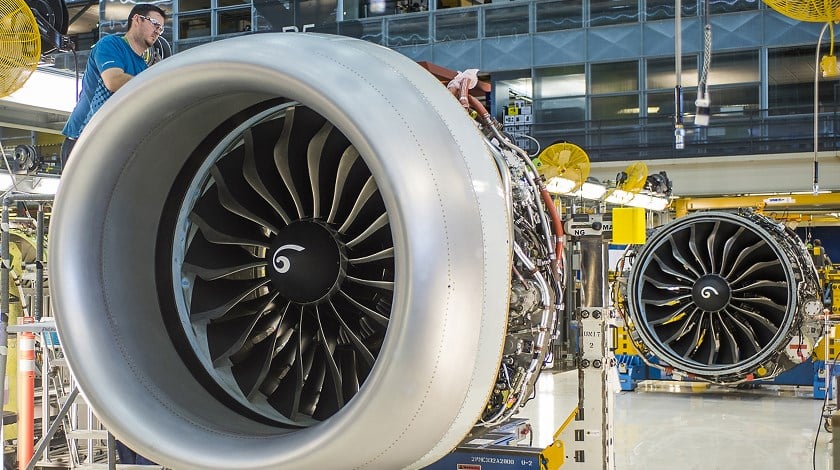
Línea de producción de motores aviación

AW | 2018 08 30 14:18 | INDUSTRY
Los fabricantes de turbofans podrían cumplir sus promesas de producción para 2019
La escasez de la entrega de turbofans debido a problemas en las líneas de producción pueden empujar a la salida del atasco y retomar las entrega en 2019.
Los narrowbodies en escena
El Boeing 737 y Airbus A320 son los programas de pasillo único de Boeing y Airbus. Con estas plataformas de pasillo único, los fabricantes de aviones están tratando de satisfacer la demanda de 31.360 entregas previstas en los próximos 20 años. El Boeing 737 nació en 1967 y ha desarrollado un éxito rotundo hasta llegar a la cuarta generación el 737 MAX.
Airbus llevó su familia Airbus A320 al mercado en 1988. Con el desarrollo del nuevo avión, Boeing se vio obligado a desarrollar el Boeing 737 Next Generation, que era la tercera generación de la familia Boeing 737. Airbus también apostó con éxito en la demanda de una variante estirada y lanzó con éxito el Airbus A321 al mercado.
En los últimos años, Boeing y Airbus han aumentado las tasas de producción para apoyar una mayor demanda de aviones de un solo pasillo. En junio de 2017, Boeing aumentó su índice de producción de 42 aviones por mes a 47 aviones por mes y un año después se aumentó a 52 aviones por mes. De acuerdo con el desempeño pasado, se encuentra en la línea de expectativas de que Boeing aumentará su producción a mediados de 2019.
Los ajustes de tasas ocurren a mediados de año o alrededor del tercer trimestre del año. Una subida de tasas que entrará en vigencia en junio equivale a 7 meses de entregas en la tarifa baja y 5 meses de entregas en la tarifa más alta. Intuitivamente, hubiera tenido más sentido que fuera al revés, pero eso no tomaría en cuenta el menor número inicial de entregas durante los primeros meses del año y el tiempo requerido para que la tasa de producción aumentada sea visible en las cifras de entrega. Lo que es increíblemente importante de tener en cuenta es el hecho de que los fabricantes de aviones y la cadena de suministro saben con años de anticipación que se planea un aumento en la tasa de producción. La tasa de producción que ocurrió en junio de 2018 ya se anunció en octubre de 2014.
Generaciones de motorización
La generación actual de aviones está propulsada por los turbofans de la serie CFM56 y la serie IAE V2500, mientras que las familias de aviones de la generación más actual funcionan con la serie CFM LEAP y la serie PW1000G.
Airbus y Boeing aún tienen pedidos sin completar para la familia Boeing 737NG (Next Generation) y Airbus A320CEO (Current Engine Option). Actualmente, los pedidos de aeronaves de este tipo están disminuyendo sus pedidos. Boeing no reservó pedidos para la parte comercial de su línea Next Generation.
Alta demanda de órdenes
La acumulación de Boeing 737 es de 4.704 jets. La mayoría de estos pedidos no cumplidos son para Boeing 737 MAX. Así que no hay duda de que hay demanda para el jet. Sin embargo, es más importante tener en cuenta que todavía hay 214 pedidos sin completar para la variante actual del motor. Estas entregas deben incorporarse al sistema, donde tenemos en cuenta que parte de las entregas se realizarán este año.
Boeing tiene 214 aviones Boeing 737 MAX de generación actual atrasados, Airbus tiene 258 aviones atrasados de la serie A320NEO. Esta es una diferencia menor, pero puede explicarse por el hecho de que algunas aerolíneas han asegurado la expansión de la capacidad mediante la realización de pedidos para la variante del CEO en lugar de la variante NEO y el éxito continuo de ventas del Airbus A321CEO. Esperamos que algunas de estas órdenes se extiendan aún más en el futuro y puedan estar sujetas a conversión, ya que Airbus espera una transición total a la producción de la variante NEO. Lo que se refleja en esta proyección es el hecho de que Airbus debería depender menos de su backlog de CEO’s dado que debería estar un poco adelantado en el arranque y los pedidos que registra se extienden más en el futuro que para Boeing. Esperamos que en 2019, las entregas de generación actual representen del 10-15% de todas las entregas de pasillo único para Boeing, mientras que este porcentaje es de 5-10% para Airbus.
Boeing y Airbus producirán un número combinado de 130 variantes de generación actual frente a 1.192 variantes de próxima generación. Esto apunta a una fuerte demanda de la serie CFM LEAP y turbofans serie PW1000G. Esta proyección no tiene en cuenta los informes de que Airbus se perderá su objetivo de entregas de Airbus A32NEO en 2018 ya que el fabricante de aviones ha mantenido su objetivo general de entrega.
Motorización de aeronaves
El turbofan de la serie CFM56 es el turbofan más usado en la historia de la aviación. A partir de junio de 2018, se han entregado 32,645 turbofans. Con los años, el turbofan se ha convertido en uno de los turboventiladores más confiables y duraderos disponibles. Los turboventiladores CFM56 se han utilizado para Airbus A320, Airbus A340, Boeing 737 Classic, Boeing 737 Next Generation, DC-8-70 y KC135R. El CFM-56-7B se utiliza exclusivamente en el Boeing 737 Next Generation, mientras que la serie -5B se utiliza en la familia Airbus A320CEO. En 2017, CFM (una empresa conjunta entre General Electric y Safran produjo casi 1.700 turboventiladores, ya que simultáneamente comenzó a aumentar su producción de los turboventiladores CFM LEAP.
Para el Airbus A318, los clientes tienen la posibilidad de seleccionar ya sea el turboventilador PW6000A o la serie CFM-56 5B. Dado que no hay pedidos para el A318 en cartera, la economía desfavorable de las variantes de contracción de una aeronave y el perfil de demanda futura, no hay ninguna función para la PW6000A en llenar cualquier demanda actual o próxima en nuestra opinión.
Para los clientes de Airbus A319, A320 y A320 también tienen la posibilidad de seleccionar la serie CFM-56-5B, pero también pueden seleccionar la serie IAE V2500. Se dice que el IAE V2500 consume menos aceite en comparación con el CFM56-5B y también es un poco más eficiente. El IAE V2500 también se utiliza en McDonnell Douglas MD-90 y Embraer KC-930. Hasta la fecha, IAE produjo más de 7.600 turbofans.
El CFM56 se ha desarrollado en el CFM LEAP, que promete una reducción de la quema de combustible del 15% en comparación con la serie CFM56-7B. A fines de 2017, CFM registró 2.870 pedidos de motores CFM LEAP. Hay 3 variantes, la variante A se usa en la familia Airbus A320neo, mientras que la variante B alimenta al Boeing 737 MAX y la variante C alimentará el Comac C919.
La introducción del CFM LEAP pareció ser bastante suave para Boeing, pero poco antes de que comenzaran las primeras entregas, se detectó un escape de calidad en la cadena de suministro de CFM.
Después de recibir una notificación por parte de CFM y su proveedor de que había habido un «escape de calidad» con respecto a la turbina de baja presión del turboventilador, Boeing puso a tierra su flota MAX 8 y MAX 9. El problema se centró en posibles grietas en la turbina de baja presión del LEAP-1B. El problema causó una pequeña demora en las entregas a los primeros clientes.
 UNIDADES DE TURBOFANS LEAP-1B
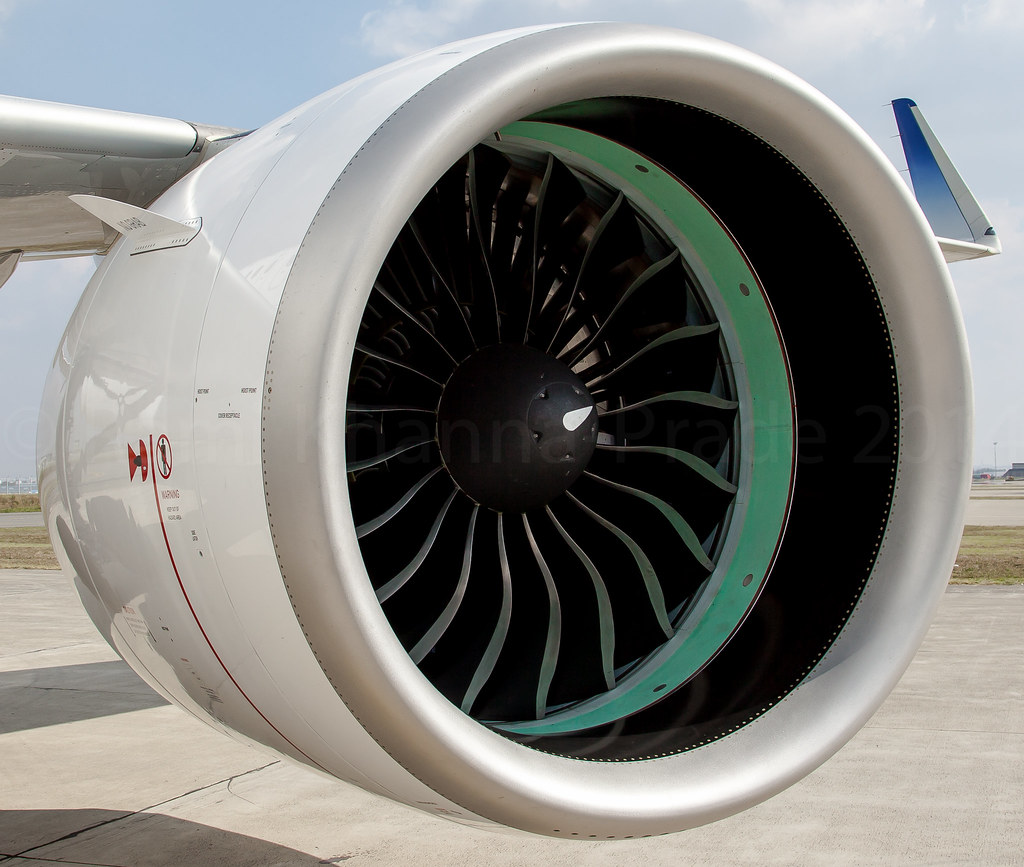
En el avión Airbus A320NEO, los clientes también pueden seleccionar el PW1100G que es parte de Pratt & Whitney’s (parte de United Technologies) alineación turbofan engranaje. El turboventilador engranado hace uso de una caja de engranajes entre el ventilador y el carrete de baja presión, que permite que todas las partes del turboventilador giren más cerca de sus velocidades óptimas. Mientras que la caja de cambios pesa más, permite un mejor rendimiento del motor y disminuye el número de etapas en el motor. En general, se espera que la mejora en la quema de combustible sea 16-17% mejor que la serie CFM56.
Similar al IAE V2500, el PW1100G sufría de arco de rotor. El arco del rotor se produce debido a un enfriamiento diferencial o enfriamiento asimétrico, que simplemente dice que da como resultado una flexión del eje del rotor que posiblemente haga que las cuchillas golpeen las paredes exteriores. El arco del rotor no es problemático siempre que haya espacio suficiente entre las cuchillas y las paredes exteriores. En el PW1100G, este no era el caso, lo que significaba que se requería un procedimiento de arranque más lento. Es importante notar que el arco del rotor no es un fenómeno excepcional y que es más probable que exista un diferencial de enfriamiento que el que no exista. El problema fue abordado con una combinación de modificaciones de software y hardware. Se detectaron problemas de durabilidad para los operadores en ambientes cálidos, húmedos y salados y forzaron a Pratt & Whitney a rediseñar la cámara de combustión. El último problema que golpeó al PW1000G fue un problema que ocurrió después de que el compresor de alta presión había sido modificado, causando problemas en el sello del borde de la cuchilla. En ese momento, Airbus dejó de aceptar turboventiladores PW1100G. Las entregas se reanudaron en abril de 2018. El problema fue abordado con una combinación de modificaciones de software y hardware. Se detectaron problemas de durabilidad para los operadores en ambientes cálidos, húmedos y salados y forzaron a Pratt & Whitney a rediseñar la cámara de combustión. El último problema que golpeó al PW1000G fue un problema que ocurrió después de que el compresor de alta presión había sido modificado, causando problemas en el sello del borde de la cuchilla. En ese momento, Airbus dejó de aceptar turboventiladores PW1100G.
Las entregas se reanudaron en abril de 2018. El problema fue abordado con una combinación de modificaciones de software y hardware. Se detectaron problemas de durabilidad para los operadores en ambientes cálidos, húmedos y salados y forzaron a Pratt & Whitney a rediseñar la cámara de combustión. El último problema que golpeó al PW1000G fue un problema que ocurrió después de que el compresor de alta presión había sido modificado, causando problemas en el sello del borde de la cuchilla. En ese momento, Airbus dejó de aceptar turboventiladores PW1100G. Las entregas se reanudaron en abril de 2018. Airbus dejó de aceptar turboventiladores PW1100G.
Los turbofans de la serie PW1000G se utilizan en la familia Airbus A320NEO, Airbus A220, Embraer E-jets E2, Irkut Mc-21 y Mitsubishi MRJ70/90.
Turbinas de capacidad de producción
Las capacidades de producción de los programas turbofan y el déficit impulsado por una planificación incorrecta o limitaciones de capacidad.
Comenzamos con el programa PW1000G. El programa PW1000G suministra turboventiladores para 5 programas de aviones. En 2019, sin embargo, solo habrá 3 programas de aeronaves que requerirán entregas, ya que los otros programas no entrarán en producción en serie hasta 2020.
En el programa Airbus A220, 17 entregas en 2017, 31 están programadas para 2018 y Airbus espera que la demanda pueda soportar niveles de producción de hasta 100 aviones por año. Anteriormente ya había habido indicios de que la producción podría aumentar de 90 a 120 aviones en 2020. Ajustándose a esa trayectoria, en 2019 podríamos ver alrededor de 55 entregas de Airbus A220 en 2019.
El otro programa que depende de turbofans de la serie PW1000G es el programa E2 Embraer. En 2018, el fabricante de aviones espera entregar entre 5 y 10 jets con motor PW1000G. En el lado superior, eso indicaría que durante un patrón de incremento normal, el número de entregas estaría entre 15 y 30 entregas en 2019. En este análisis, suponemos que Embraer entregará 30 E-jets E2 en 2019 para simular el impacto más duro en la disponibilidad de turbofans para Airbus. De hecho, creemos que habrá entre 20 y 25 entregas de E-jet E2 en 2019.
Las entregas E2 de Embraer E2 y Airbus A220 en la imagen más amplia de la disponibilidad de turboventiladores, reconociendo que el Airbus A320NEO comparte la capacidad de producción de turboventiladores con otros dos jugadores. En 2017, Pratt & Whitney entregó 374 turbofans y cree que puede duplicar la producción en 2018 y acumular 2.500 entregas hasta 2020. Tener en cuenta una aceleración que se reduciría a al menos 820 entregas de motores en 2019. ¿Qué debería hacer entonces también? Se debe tener en cuenta que habrá producción de motor de repuesto, que aumentará con respecto a los 40 aviones el año pasado. Creemos que habrá 576 turboventiladores PW1100G disponibles para Airbus en 2019 .
Inicialmente, las cuotas de mercado prevalecientes por plataforma para determinar cuántas entregas de Airbus A320CEO incluirán turbofans IAE V2500. Sin embargo, encontramos que las entregas para el IAE V2500 actualmente están más o menos impulsadas por los horarios de los clientes y su selección de turboventiladores en lugar de las cuotas de mercado prevalecientes a largo plazo. De acuerdo con los plazos de entrega, esperamos una contribución menor de IAE V2500 de 16 turbofans en 2019 .
Sobre la base de los planes de capacidad comunicadas por Safran en Noviembre 2017 y se actualizan durante sus resultados de ganancias 1Q2018, esperamos 246- 256 entregas CFM56 y entregas de 1.850 CFM LEAP en 2019.
Lo que se puede observar es una capacidad total de 262 turbofans de generación actual y un poco más de 2.400 turbofans de próxima generación, en total 2.700 turboventiladores para respaldar los programas Boeing 737 y Airbus A320.
Demanda hacia futuro
No hay indicios de que, de acuerdo con las tasas de producción comunicadas para varios programas turbofán y las tasas de producción anunciadas para jets de pasillo único, exista la necesidad de que cualquiera de los fabricantes de jet asuma un cierto déficit. 
The production line of aviation engines
Turbofan manufacturers could fulfill their production pledges by 2019
The shortage of delivery of turbofans due to problems in the production lines can push the exit of the jam and resume delivery in 2019.
The narrowbodies on stage
The Boeing 737 and Airbus A320 are the single-aisle programs of Boeing and Airbus. With these single aisle platforms, aircraft manufacturers are trying to meet the demand of 31,360 deliveries planned in the next 20 years. The Boeing 737 was born in 1967 and has developed a resounding success until reaching the fourth generation the 737 MAX.
Airbus brought its Airbus A320 family to market in 1988. With the development of the new aircraft, Boeing was forced to develop the Boeing 737 Next Generation, which was the third generation of the Boeing 737 family. Airbus also successfully bet on the demand for a stretched variant and successfully launched the Airbus A321 to the market.
In recent years, Boeing and Airbus have increased production rates to support increased demand for single-aisle aircraft. In June 2017, Boeing increased its production rate from 42 aircraft per month to 47 aircraft per month and a year later it was increased to 52 aircraft per month. Based on past performance, it is in the line of expectations that Boeing will increase its production by mid-2019.
Rate adjustments occur mid-year or around the third quarter of the year. A rate hike that will take effect in June equals 7 months of deliveries at the low rate and 5 months of deliveries at the highest rate. Intuitively, it would have made more sense to go the other way, but that would not take into account the lower initial number of deliveries during the first months of the year and the time required for the increased production rate to be visible in the delivery figures. What is incredibly important to keep in mind is the fact that aircraft manufacturers and the supply chain know years in advance that an increase in the rate of production is planned. The production rate that occurred in June 2018 was already announced in October 2014.
Motorization generations
The current generation of aircraft is powered by the turbofans of the CFM56 series and the IAE V2500 series, while the most current generation aircraft families operate with the CFM LEAP series and the PW1000G series.
Airbus and Boeing still have unfinished orders for the Boeing 737NG family (Next Generation) and Airbus A320CEO (Current Engine Option). Currently, orders for aircraft of this type are decreasing their orders. Boeing did not reserve orders for the commercial part of its Next Generation line.
High order demand
The accumulation of Boeing 737 is 4,704 jets. Most of these unfulfilled orders are for Boeing 737 MAX. So there is no doubt that there is demand for the jet. However, it is more important to note that there are still 214 unfilled orders for the current engine variant. These deliveries must be incorporated into the system, where we take into account that part of the deliveries will be made this year.
Boeing has 214 current generation backward Boeing 737 MAX aircraft, Airbus has 258 overdue aircraft of the A320NEO series. This is a minor difference, but it can be explained by the fact that some airlines have assured capacity expansion by placing orders for the CEO variant instead of the NEO variant and the continued sales success of the Airbus A321CEO. We hope that some of these orders will be extended further in the future and may be subject to conversion, since Airbus expects a total transition to the production of the NEO variant. What is reflected in this projection is the fact that Airbus should be less dependent on its CEO’s backlog since it should be a bit ahead of schedule and the orders it registers are more extended in the future than Boeing. We expect that in 2019, current generation deliveries represent 10-15% of all single-aisle deliveries for Boeing, while this percentage is 5-10% for Airbus.
Boeing and Airbus will produce a combined number of 130 current-generation variants versus 1,192 next-generation variants. This points to strong demand for the CFM LEAP series and turbofans PW1000G series. This projection does not take into account reports that Airbus will miss its delivery target of Airbus A32NEO in 2018 as the aircraft manufacturer has maintained its overall delivery goal.
Aircraft motorization
The turbofan of the CFM56 series is the most used turbofan in the history of aviation. As of June 2018, 32,645 turbofans have been delivered. Over the years, the turbofan has become one of the most reliable and durable turbofans available. The CFM56 turbofans have been used for Airbus A320, Airbus A340, Boeing 737 Classic, Boeing 737 Next Generation, DC-8-70 and KC135R. The CFM-56-7B is used exclusively in the Boeing 737 Next Generation, while the -5B series is used in the Airbus A320CEO family. In 2017, CFM (a joint venture between General Electric and Safran produced almost 1,700 turbofans, as it simultaneously began to increase its production of the CFM LEAP turbofans.
 TURBOFAN LEAP-1B
For the Airbus A318, customers have the possibility to select either the PW6000A turbofan or the CFM-56 5B series. Since there are no orders for the A318 in portfolio, the unfavorable economy of the contraction variants of an aircraft and the future demand profile, there is no function for the PW6000A in filling any current or upcoming demand in our opinion.
For Airbus A319, A320 and A320 customers also have the possibility to select the CFM-56-5B series, but they can also select the IAE V2500 series. It is said that the IAE V2500 consumes less oil compared to the CFM56-5B and is also a bit more efficient. The IAE V2500 is also used in McDonnell Douglas MD-90 and Embraer KC-930. To date, IAE has produced more than 7,600 turbofans.
The CFM56 has been developed in CFM LEAP, which promises a 15% reduction in fuel burn compared to the CFM56-7B series. At the end of 2017, CFM registered 2,870 orders of LEAP CFM engines. There are 3 variants, variant A is used in the Airbus A320neo family, while variant B feeds the Boeing 737 MAX and variant C will power the Comac C919.
The introduction of the LEAP CFM appeared to be rather mild for Boeing, but shortly before the first deliveries began, a quality leak was detected in the CFM supply chain.
After receiving notification from CFM and its supplier that there had been a «quality leak» with respect to the turbofan’s low pressure turbine, Boeing grounded its MAX 8 and MAX 9 fleet. The problem centered on possible cracks in the LEAP-1B low pressure turbine. The problem caused a small delay in deliveries to the first customers.
On the Airbus A320NEO aircraft, customers can also select the PW1100G that is part of Pratt & Whitney’s (part of United Technologies) turbofan gear alignment. The geared turbofan makes use of a gearbox between the fan and the low pressure spool, which allows all parts of the turbofan to rotate closer to its optimum speeds. While the gearbox weighs more, it allows for better engine performance and decreases the number of stages in the engine. In general, the improvement in fuel combustion is expected to be 16-17% better than the CFM56 series.
 TURBOFAN LEAP-1A FOR THE AIRBUS A320NEO
Similar to the IAE V2500, the PW1100G suffered from a rotor arc. The rotor arc occurs due to differential cooling or asymmetric cooling, which simply says that it results in a flexing of the rotor shaft that possibly causes the blades to strike the outer walls. The arc of the rotor is not problematic as long as there is sufficient space between the blades and the outer walls. On the PW1100G, this was not the case, which meant that a slower starting procedure was required. It is important to note that the rotor arc is not an exceptional phenomenon and that it is more likely that there is a cooling differential than that which does not exist. The problem was addressed with a combination of software and hardware modifications. Durability problems were detected for operators in hot, humid and salty environments and forced Pratt & Whitney to redesign the combustion chamber. The last problem that hit the PW1000G was a problem that occurred after the high pressure compressor had been modified, causing problems in the edge seal of the blade. At that time, Airbus stopped accepting PW1100G turbofans. Deliveries resumed in April 2018. The problem was addressed with a combination of software and hardware modifications. Durability problems were detected for operators in hot, humid and salty environments and forced Pratt & Whitney to redesign the combustion chamber. The last problem that hit the PW1000G was a problem that occurred after the high pressure compressor had been modified, causing problems in the edge seal of the blade. At that time, Airbus stopped accepting PW1100G turbofans.
Deliveries resumed in April 2018. The problem was addressed with a combination of software and hardware modifications. Durability problems were detected for operators in hot, humid and salty environments and forced Pratt & Whitney to redesign the combustion chamber. The last problem that hit the PW1000G was a problem that occurred after the high pressure compressor had been modified, causing problems in the edge seal of the blade. At that time, Airbus stopped accepting PW1100G turbofans. Deliveries resumed in April 2018. Airbus stopped accepting PW1100G turbofans.
The turbofans of the PW1000G series are used in the Airbus A320NEO family, Airbus A220, Embraer E-jets E2, Irkut Mc-21 and Mitsubishi MRJ70 /90.
Production capacity turbines
The production capacities of the turbofan programs and the deficit driven by incorrect planning or capacity limitations.
We started with the PW1000G program. The PW1000G program supplies turbofans for 5 aircraft programs. By 2019, however, there will only be 3 aircraft programs that will require deliveries, since the other programs will not enter series production until 2020.
In the Airbus A220 program, 17 deliveries in 2017, 31 are scheduled for 2018 and Airbus expects demand to support production levels of up to 100 aircraft per year. Previously there had already been indications that production could increase from 90 to 120 aircraft by 2020. Fitting to that trajectory, by 2019 we could see about 55 deliveries of Airbus A220 in 2019.

The other program that depends on turbofans of the PW1000G series is the E2 Embraer program. In 2018, the aircraft manufacturer expects to deliver between 5 and 10 jets with PW1000G engine. On the upper side, that would indicate that during a normal increase pattern, the number of deliveries would be between 15 and 30 deliveries in 2019. In this analysis, we assume that Embraer will deliver 30 E2 jets in 2019 to simulate the hardest impact on the availability of turbofans for Airbus. In fact, we believe that there will be between 20 and 25 deliveries of E-jet E2 in 2019.
The E2 deliveries of Embraer E2 and Airbus A220 in the broader picture of the availability of turbofans, recognizing that the Airbus A320NEO shares the production capacity of turbofans with two other players. In 2017, Pratt & Whitney delivered 374 turbofans and believes it can double production by 2018 and accumulate 2,500 deliveries by 2020. Consider an acceleration that would be reduced to at least 820 engine deliveries by 2019. What should I do then as well? It should be borne in mind that there will be spare engine production, which will increase with respect to the 40 aircraft last year. We believe there will be 576 PW1100G turbofans available for Airbus in 2019.
Initially, the prevailing market shares per platform to determine how many Airbus A320CEO deliveries will include IAE V2500 turbofans. However, we find that deliveries for the IAE V2500 are now more or less driven by customer schedules and their selection of turbofans instead of the prevailing long-term market shares. In accordance with the delivery times, we expect a lower contribution of IAE V2500 of 16 turbofans in 2019.
Based on the capacity plans communicated by Safran in November 2017 and updated during their earnings results 1Q2018, we expect 246- 256 deliveries CFM56 and deliveries of 1,850 CFM LEAP in 2019.
What can be seen is a total capacity of 262 current-generation turbofans and a little over 2,400 next-generation turbofans, a total of 2,700 turbofans to support the Boeing 737 and Airbus A320 programs.
Demand towards the future
There are no indications that, according to the production rates reported for several turbofan programs and the announced production rates for single-aisle jets, there is a need for any of the jet manufacturers to assume a certain deficit. A \ W
Ξ A I R G W A Y S Ξ
SOURCE: Airgways.com
DBk: Seekingalpha.com / Aviationvoice.com / Aero-mag.com / Safran-usa.com / Boursedirect.fr / Airgways.com
AW-POST: 201808301418AR
A\W A I R G W A Y S ®


 Asiana Airlines inicia conección Seúl Incheon-Barcelona El Prat

 La constructora de motores Pratt & Whitney investiga nuevos incidentes en los P&W1000GTF para los A320NEO

 Engine builder Pratt & Whitney investigates new incidents in the P & W1000GTF for the A320NEO
 Primer A380 de ANA Airways sale de la línea de montaje final en Toulouse, Francia
 montaje final (FAL) en Toulouse, Francia. La aeronave ahora se ha movido a una estación exterior donde se realizarán varias pruebas en tierra como preparación para el primer vuelo en las próximas semanas. El avión A380 MNS262 se transferirá a las instalaciones de Airbus en Hamburgo para la instalación de la cabina y la pintura.

 The first Airbus A380 for All Nippon Airways (ANA) made the roll-out of the final assembly line (FAL) in Toulouse, France. The aircraft has now been moved to an outside station where several ground tests will be conducted in preparation for the first flight in the coming weeks. The A380 MNS262 aircraft will be transferred to the Airbus facilities in Hamburg for the installation of the cabin and paint.
 ANA Holdings Inc. placed a firm order for three A380s in 2016, becoming the first superjumbo customer in Japan. The first delivery is scheduled for early 2019, and the A380 will initially be operated on the popular Tokyo-Honolulu route. Offering more personal space than any other aircraft, the A380 is the most efficient solution to meet growth on the busiest routes in the world, transporting more passengers with fewer flights at lower cost and fewer emissions.
 Ryanair completa la adquisición del 75% de la aerolínea Laudamotion de Austria

 Ryanair, the Irish low cost airline has completed the purchase of 75% of Laudamotion, an airline founded by the Austrian ex-Formula 1 driver Niki Lauda. The airline is born from the Niki creek (FlyNiki).
![FADEA-isologotipo[1].jpg](https://airgways.com/wp-content/uploads/2018/08/fadea-isologotipo1.jpg?w=132&h=45) El constructor aeronáutico FAdeA de Argentina ha firmado acuerdos con Paramount y Boeing
El constructor aeronáutico FAdeA de Argentina ha firmado acuerdos con Paramount y Boeing producción del avión Pampa III establece acuerdos con diferentes pares permitiendo incorporar experiencia en esta área como en otras. Este avión para entrenamiento avanzado y de combate liviano recibió a mediados del mes pasado la certificación por parte la Dirección General de Aeronavegabilidad Militar Conjunta (Digamac). Diferentes empresas exportan componentes desde Francia, Israel, Italia y Alemania. La certificación incluyó la aprobación de un componente, un actuador de cúpula, que antes se importaba desde Francia y que a partir de ahora lo hará la cordobesa AOG. En el mismo proceso están otras firmas como DTA, Hokum e Inmeba, todas de la Provincia de Córdoba, Argentina.
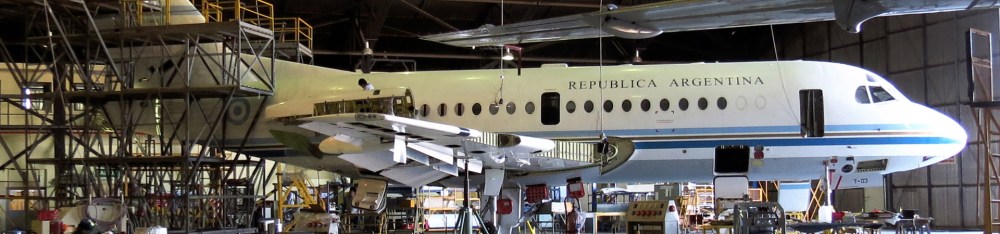 FOKKER 28 MK-1000 DE LA PRESIDENCIA ARGENTINA EN REPARACIONES EN FAdeA
![FADEA-isologotipo[1] - copia.decryptedKLR](https://airgways.com/wp-content/uploads/2018/08/fadea-isologotipo1-copia-decryptedklr.jpg?w=99&h=128) The aeronautical constructor FAdeA of Argentina has signed agreements with Paramount and Boeing
The aeronautical constructor FAdeA of Argentina has signed agreements with Paramount and Boeing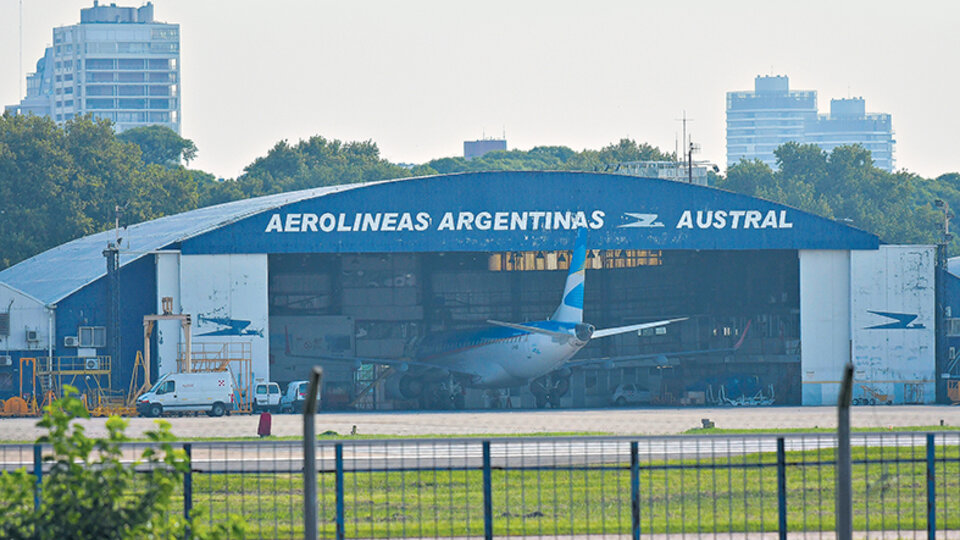
 Aerolíneas Aerolíneas invierte US$30 millones para renovar sus hangares en Aeroparque y Ezeiza
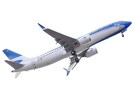
 Aerolíneas Argentinas invests US $ 30 million to renovate its hangars in Aeroparque and Ezeiza
 El Embraer E190E2 ha batido el récord de certificaciones simultáneas ANAC-FAA-EASA


 Airbus Group está mejorando las entregas de la familia A320NEO en 2018
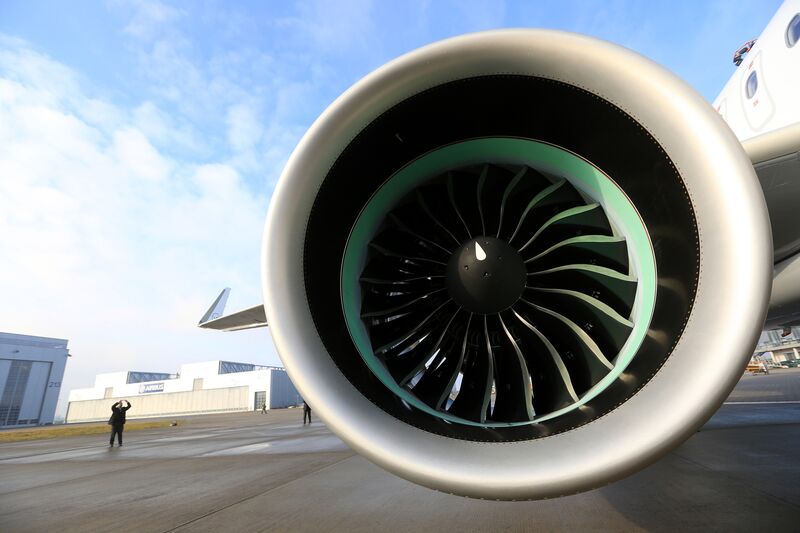
 The production of the assembly line started in 2018 with inconveniences in the deliveries of the A320NEO’s due to the lack of availability of P & W 1000 GTF engines in the period February-March 2018. Pratt & Whitney stopped the engine line in February to work in the stamp theme of the edge of the blades. But the engine manufacturer recovered quickly. While 374 P & W1000GTF were delivered last year, it looks like they are on track to do much better this year. In May 2018, Pratt & Whitney delivered 75 engines. We expect deliveries of 650-700 engines for this year. That is at least 74% higher in a year, even with setbacks in 1Q2018, which despite the problems has worked intensely to overcome the pitfalls. CFM has admitted that it is running a little late as well. CFM is under much more pressure and also has to get engines for the Boeing 737 MAX program.
