OMC falla contra Airbus

Resultado de imagen para WTO Airbus vs Boeing

AW | 2018 05 22 21:36 | INDUSTRY

Resultado de imagen para WTOEl fabricante europeo Airbus enfrentó un fallo adverso de la OMC

Tras una decisión adversa de la Organización Mundial del Comercio (OMC) la semana pasada, Airbus ha realizado pequeños ajustes a los préstamos del gobierno para sus programas de aviones A350 y A380 y afirma que ahora ha logrado el pleno cumplimiento de las normas de la OMC. Sus abogados argumentan que las sanciones de Estados Unidos contra la UE deberían ser mínimas.

En respuesta a la decisión de la OMC de que Airbus no solucionó el daño causado a Boeing por los subsidios ilegales en sus programas de aviones A350 y A380, el fabricante de aviones europeo dijo el martes que acordó algunas enmiendas confidenciales al gobierno. préstamos para esos programas.

El consejero general de Airbus, John Harrison, «afirmó el martes que con esas movidas, el fabricante de aviones ahora ha logrado el pleno cumplimiento» de las exigencias de la OMC. Es improbable que el gobierno de los Estados Unidos acepte esa perspectiva.

Se espera que en las próximas semanas comiencen procedimientos formales en la OMC para establecer la siguiente etapa de argumentos en el caso: determinar cuánto daño financiero le han causado a Boeing los aviones con subsidio de Airbus y exactamente cuánto Estados Unidos estará autorizado a imponer como tarifas diseñadas para obligar a la Unión Europea (UE) a cumplir.

Karl Hennessee, jefe de litigación de Airbus, dijo en una entrevista que Airbus argumentará en esos procedimientos que el daño a Boeing por los programas de aviones A350 y A380 es tan marginal que cualquier sanción encabezada por Estados Unidos contra la Unión Europea debería ser mínima.

Dijo que las lentas ventas del avión superjumbo A380 de dos pisos, el programa más ambicioso de Airbus, significan que ha tenido poco impacto en la capacidad de Boeing de vender su gran avión jumbo 747.

«La compañía europea también alegará que el apoyo estatal para el modelo A350 más popular fue solo un beneficio más que el que podría obtenerse del financiamiento de bancos comerciales, dado el financiamiento alternativo barato disponible en ese momento en medio de tasas de interés históricamente bajas», dijo Hennessee.

Determinando el tamaño de las sanciones

Airbus está en desventaja después de que Boeing ganara la última semana la última de una serie de disputas sobre subsidios ilegales para el A380 y el A350 que abarca más de una década.

La OMC dictaminó que el fabricante de aviones con sede en Toulouse, Francia, no pudo abordar adecuadamente lo que equivale a miles de millones de dólares en fondos de los patrocinadores estatales, abriendo una ruta para que la administración del presidente Donald Trump imponga aranceles contra los bienes de la UE.

Hennessee dijo que el proceso que los Estados Unidos deben atravesar para imponer sanciones podría llevar años. «Lo único que permitiría que se impongan sanciones es si Boeing puede demostrar que el A380 representa un costo competitivo directo, inminente y masivo para su negocio», dijo Hennessee en una entrevista. El subsidio del A350 era «tan pequeño que no era capaz de afectar el lanzamiento del avión» y tuvo un «minúsculo y pequeño impacto en los precios», dijo.

En contraste, Boeing sostiene que Airbus enfrenta sanciones masivas, y mucho más rápido de lo que sugiere Hennessee. Boeing dijo a Bloomberg que el fallo final de la OMC deja en claro que $ 9 mil millones de ayuda de lanzamiento ilegal al A380 y al A350 causaron daños reales y continuos que «se traducirán en miles de millones de dólares en aranceles sobre las exportaciones europeas a Estados Unidos anualmente». Bob Novick, abogado externo de Boeing en el caso, dijo la semana pasada que las sanciones podrían imponerse dentro de seis o siete meses a partir de ahora.

Keith Rockwell, vocero de la OMC con sede en Ginebra, no quiso hacer ningún comentario. La afirmación de que el A380 presenta poca competencia para Boeing reconoce que el jet superjumbo es una decepción financiera. El avión comercial más grande del mundo ha asegurado apenas 330 pedidos en todo el mundo desde su lanzamiento en 2000 y hace mucho tiempo que el fabricante reconoció que nunca generará ganancias en un programa que costó $ 18 mil millones para llevar al mercado.

Acuerdo negociado

Airbus también está esperando una decisión del regulador comercial sobre una contrademanda de que Boeing se ha beneficiado de manera similar del financiamiento ilegal para sus 777 y 787 multitudes que expondría a Estados Unidos a los aranceles de la UE. Sin embargo, Boeing cree que su exposición podría ser tan pequeña como US$ 377 millones, en base a resoluciones anteriores. En última instancia, Airbus espera negociar un acuerdo con Boeing. «Si terminamos con sanciones en ambos lados, si se imponen, ¿qué vamos a lograr?», dijo Hennessee.  AIRWAYS® AW-Icon TXT

Resultado de imagen para WTO

OMC fails against Airbus

Resultado de imagen para WTOThe European manufacturer Airbus faced an adverse ruling of the WTO

Following an adverse World Trade Organization (WTO) decision last week, Airbus has made minor adjustments to government loans for its A350 and A380 aircraft programs and claims that it has now achieved full compliance with WTO rules. His lawyers argue that US sanctions against the EU should be minimal.

In response to the decision of the WTO that Airbus did not fix the damage done to Boeing by illegal subsidies to its aircraft programs A350 and A380, the European planemaker said on Tuesday it agreed to certain confidential amendments to the government. loans for those programs.

The general counsel of Airbus, John Harrison, said on Tuesday that with these moves, the aircraft manufacturer «has now achieved full compliance» with the demands of the WTO. It is unlikely that the government of the United States will accept that perspective.

Is expected in the coming weeks to begin formal proceedings in the WTO to set the next stage of arguments in the case: determine how much financial damage you have caused Boeing aircraft subsidized Airbus and exactly how much the United States will be authorized to impose such rates designed to force the European Union (EU) to comply.

Karl Hennessee, head of litigation for Airbus, said in an interview that Airbus will argue in those proceedings that the damage to Boeing from the A350 and A380 aircraft programs is so marginal that any US-led sanctions against the European Union should be minimal.

He said the slow sales of the two-story A380 superjumbo aircraft, Airbus’ most ambitious program, mean it has had little impact on Boeing’s ability to sell its large 747 jumbo jet.

«The European company will also argue that state support for the most popular A350 model was only one more benefit than could be obtained from commercial bank financing, given the cheap alternative financing available at that time amidst historically low interest rates», he said. Hennessee

Determining the size of sanctions

Airbus is at a disadvantage after Boeing won last week the latest in a series of disputes over illegal subsidies for the A380 and the A350 spanning more than a decade.

The WTO ruled that the aircraft manufacturer based in Toulouse, France, could not adequately address what amounts to billions of dollars in funds from state sponsors, opening a route for the administration of President Donald Trump to impose tariffs against the EU goods.

Henderson said the process that the United States must go through to impose sanctions could take years. «The only thing that would allow sanctions to be imposed is whether Boeing can demonstrate that the A380 represents a direct, imminent and massive competitive cost to its business, Hennessee said in an interview. The subsidy of the A350 was «so small that it was not able to affect the launch of the plane and had a tiny and small impact on prices», he said.

In contrast, Boeing argues that Airbus faces massive sanctions, and much faster than Hennessee suggests. Boeing told Bloomberg that the final WTO ruling makes it clear that $ 9 billion of illegal launch aid to the A380 and the A350 caused real and continuing damage that «will translate into billions of dollars in tariffs on European exports. to the United States annually». Bob Novick, Boeing’s outside counsel in the case, said last week that sanctions could be imposed within six or seven months from now.

Keith Rockwell, a spokesman for the Geneva-based WTO, declined to comment. The claim that the A380 presents little competition for Boeing recognizes that the superjumbo jet is a financial disappointment. The largest commercial plane in the world has secured just 330 orders worldwide since its launch in 2000 and it has been a long time since the manufacturer recognized that it will never generate profits in a program that cost $ 18 billion to bring to the market.

Negotiated agreement

Airbus is also awaiting a decision by the commercial regulator on a counterclaim that Boeing has similarly benefited from illegal financing for its 777 and 787 crowds that would expose the United States to EU tariffs. However, Boeing believes that its exposure could be as small as US $ 377 million, based on previous resolutions. Ultimately, Airbus expects to negotiate an agreement with Boeing. «If we end up with sanctions on both sides, if they prevail, what are we going to achieve?», Hennessee said. A \ W


Ξ A I R G W A Y S Ξ
SOURCE:  Airgways.com
DBk: Wto.org / Npr.org / Wikimedia.org
AW-POST: 201805222136AR

A\W   A I R G W A Y S ®

Aterrizaje emergencia SV3818 Saudia

Resultado de imagen para SV3818 Saudi Arabia Airlines A330

AW | 2018 05 22 19:40 | AVIATION SAFETY

Un Airbus A330-200 de Saudi Arabia Airlines aterriza en emergencia en Aeropuerto Internacional de Yeddah

El vuelo SV3818 de la compañía Saudi Arabia Airlines con 52 pasajeros han sufrido lesiones luego de que un avión Airbus A330-200 realizara un aterrizaje de emergencia en el Aeropuerto Internacional de Yeddah este Martes, 22 Mayo 2018, informa Arabian Business citando al órgano de investigación del país.

El vuelo SV3818 de Saudi Arabia Airlines cubría la ruta de Medina a Daca (Dhaka), la capital de Bangladesh. A bordo del avión viajaban 141 pasajeros y 10 miembros de la tripulación. De acuerdo con los medios locales, Airbus A330-200 fue redirigido a Jeddah debido a un fallo en el funcionamiento del tren de aterrizaje.

En los videos publicados en las redes sociales se ve cómo el avión se arrastra con su morro por la pista de aterrizaje en medio de llamas que surgen de debajo de la aeronave. AIRWAYS® AW-Icon TXT

5b03db7f08f3d9414e8b4567.jpg

Landing emergency SV3818 Saudia Airlines

An Airbus A330-200 of Saudi Arabia Airlines lands in emergency at Yeddah International Airport

The flight SV3818 of the Saudi Arabia Airlines company with 52 passengers suffered injuries after an Airbus A330-200 aircraft made an emergency landing at the Yeddah International Airport this Tuesday, May 22, 2018, reports Arabian Business quoting the investigation body from the country.

The Saudi Arabia Airlines flight SV3818 covered the route from Medina to Dhaka, the capital of Bangladesh. 141 passengers and 10 crew members were on board the plane. According to local media, Airbus A330-200 was redirected to Jeddah due to a failure in the operation of the landing gear.

In the videos published on social networks you can see how the plane crawls with its nose through the runway in the middle of flames that emerge from under the aircraft. A\W


Resultado de imagen para SV3818 Saudi Arabia Airlines

الهبوط في حالات الطوارئ SV3818 الخطوط الجوية السعودية

طائرة إيرباص A330-200 تابعة لشركة الخطوط الجوية العربية السعودية في حالة الطوارئ في مطار جدة الدولي

تحطمت الرحلة رقم SV3818 التابعة لشركة الخطوط الجوية العربية السعودية مع 52 راكبًا بعد أن تسببت طائرة إيرباص A330-200 في هبوط اضطراري في مطار جدة الدولي يوم الثلاثاء الموافق 22 مايو 2018 ، نقلاً عن أريبيان بزنس نقلاً عن هيئة التحقيق البلد

غطت الرحلة الجوية السعودية SV3818 الطريق من المدينة المنورة إلى دكا عاصمة بنجلاديش. وكان 141 راكبا و 10 من افراد الطاقم على متن الطائرة. وفقاً لوسائل الإعلام المحلية ، تم إعادة توجيه طائرة إيرباص A330-200 إلى جدة بسبب فشل في تشغيل معدات الهبوط.

في مقاطع الفيديو المنشورة على شبكات التواصل الاجتماعي ، يمكنك أن ترى كيف تسير الطائرة مع أنفها عبر المدرج في منتصف A\W اللهب الذي يظهر من تحت الطائر


video-camera_318-50337


Ξ A I R G W A Y S Ξ
SOURCE:  Airgways.com
DBk: Rt.com / Airlive.net
AW-POST: 201805221940AR

A\W   A I R G W A Y S ®

Prueba motores CJ-1000AX para C919

AW | 2018 05 21 21:55 | INDUSTRY

COMAC_logoChina comienza a probar motor turbofan CJ-1000AX comercial

China ha comenzado a probar su motor de turbohélice de alto bypass CJ-1000AX, diseñado para alimentar el avión de pasajeros de pasillo único COMAC C919 en desarrollo.

El motor es el primer turbofan comercial indígena de China que se está desarrollando en el país. El ensamblaje del primer motor de demostración se completó en diciembre de 2017 después de un proceso de 18 meses. El motor se someterá a una prueba exhaustiva de tierra y vuelo con 24 unidades para validar la tecnología y lograr la certificación para impulsar vuelos comerciales desde un ambicioso calendario 2021.

Durante el primer encendido de la fábrica de pruebas Shanghai Lingang del fabricante chino AECC Commercial Aircraft Engine, el motor CJ-1000AX alcanzó una velocidad central de 6600 rpm. Con un empuje de 98-196 kN (22,000-44,000 lbf), el CJ-1000AX es similar al motor CFM LEAP-1C de nueva generación que actualmente alimenta al COMAC C919. El motor tiene un diámetro de 1.95 metros y una longitud de 3.29 metros y cuenta con tecnologías avanzadas como aspas de ventilador de cuerda ancha fabricadas en titanio hueco y boquillas de combustible de combustor impresas en 3D. El motor tiene una configuración de dos carretes, con un ventilador de una etapa, un amplificador de tres etapas, un compresor de alta presión de 10 etapas, una turbina de dos etapas de alta presión y una turbina de baja presión de seis etapas. Los motores Turbofan son una de las tecnologías estratégicas más vigiladas en el mundo, y la única China se está quedando atrás.  AIRWAYS® AW-Icon TXT

Resultado de imagen para engines CJ-1000AX Comac C919

Test engines CJ-1000AX for C919

China begins to test commercial turbofan CJ-1000AX engine

China has begun testing its CJ-1000AX high bypass turboprop engine, designed to power the COMAC C919 single aisle passenger plane under development.

The engine is the first indigenous commercial turbofan in China that is being developed in the country. The assembly of the first demonstration engine was completed in December 2017 after an 18-month process. The engine will undergo an exhaustive ground and flight test with 24 units to validate the technology and achieve certification to drive commercial flights from an ambitious 2021 calendar.

During the first lighting of the Shanghai Lingang test factory of the Chinese manufacturer AECC Commercial Aircraft Engine, the CJ-1000AX engine reached a central speed of 6600 rpm. With a thrust of 98-196 kN (22,000-44,000 lbf), the CJ-1000AX is similar to the new generation CFM LEAP-1C engine that currently powers the COMAC C919. The engine has a diameter of 1.95 meters and a length of 3.29 meters and has advanced technologies such as wide-bladed fan blades made of hollow titanium and combustor fuel nozzles printed in 3D. The engine has a two-reel configuration, with a single-stage fan, a three-stage amplifier, a 10-stage high-pressure compressor, a high-pressure two-stage turbine and a six-stage low pressure turbine. Turbofan engines are one of the most. A \ W


Ξ A I R G W A Y S Ξ
SOURCE:  Airgways.com
DBk: Aviationanalysis.net / Airgways.com
AW-POST: 201805212155AR

A\W   A I R G W A Y S ®

Suspenden licencia a Global Air

Resultado de imagen para Global Air logo Damojh

AW | 2018 05 21 21:47 | AIR INVESTIGATION / AVIATION SAFETY

Imagen relacionadaAutoridades mexicanas suspenden la licencia para operar a Global Air, propietaria del avión que se estrelló en La Habana

Las autoridades mexicanas suspendieron este Lunes de forma temporal las operaciones de Global Air, la aerolínea mexicana propietaria del Boeing 737-200 accidentado el pasado viernes en Cuba, provocando la muerte de 110 de sus 113 ocupantes, mientras se realiza una investigación de lo sucedido. «Se está notificando a la empresa la suspensión temporal de actividades en tanto se lleva a cabo la verificación», explicó la Dirección General de Aeronáutica Civil en un comunicado.

Global Air, registrada bajo el nombre de Aerolíneas Damojh, ya había sido suspendida temporalmente de sus actividades en 2010 tras un aterrizaje de emergencia, y en 2013, a raíz de la denuncia de un trabajador. AIRWAYS® AW-Icon TXT

Resultado de imagen para Global Air logo Damojh

Suspend license to Global Air

Mexican authorities suspend the license to operate Global Air, owner of the plane that crashed in Havana

Mexican authorities suspended this Monday temporarily the operations of Global Air, the Mexican airline that owns the Boeing 737-200 accident last Friday in Cuba, causing the death of 110 of its 113 occupants, while conducting an investigation of what happened. «The company is being notified of the temporary suspension of activities while the verification is being carried out», the General Directorate of Civil Aviation explained in a statement.

Global Air, registered under the Damojh Airlines name, had already been temporarily suspended from its activities in 2010 after an emergency landing, and in 2013, following a worker’s complaint. A \ W


Ξ A I R G W A Y S Ξ
SOURCE:  Airgways.com
DBk: Sct.gob.mx/transporte / Matinoticias.com
AW-POST: 201805212147AR

A\W   A I R G W A Y S ®

Accidente aéreo vuelo DMJ-972

Resultado de imagen para Boeing 737-200 air crash global air

AW | 2018 05 21 21:37 | AIR INVESTIGATION / AVIATION SAFETY

Resultado de imagen para Global Air logoInformes del accidente aéreo del vuelo DMJ-972 Cubana de Aviación

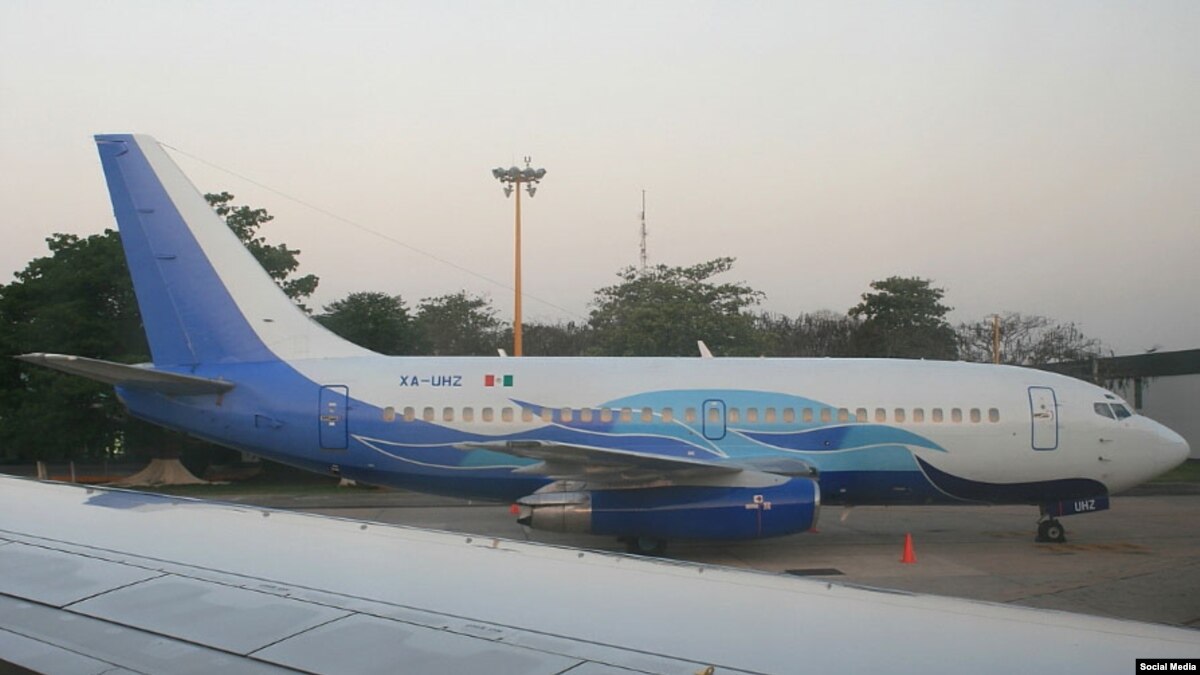
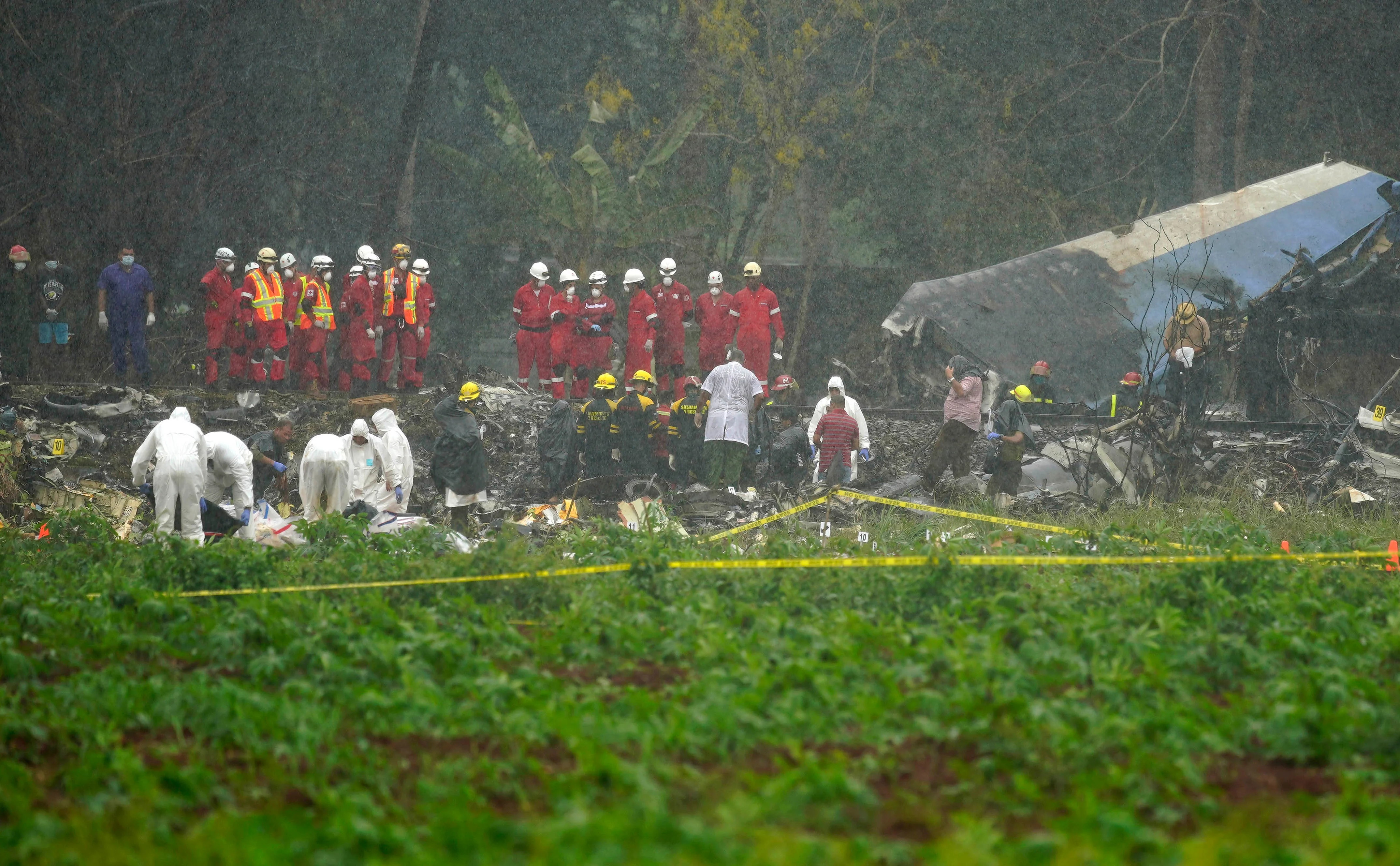
La aerolínea Damojh S.A. de C.V. (Global Air) prestaba servicios para la línea aérea Cubana de aviación con un Boeing 737-200 con registro XA-UHZ realizando vuelo DMJ-972 desde La Habana a Holguín (Cuba) con 107 pasajeros y 6 tripulantes, perdieron altura poco después del despegue a las 12:08L (16: 08Z), se puso en contacto con una casa, árboles y una vía férrea cerca de la posición N22.9914 W82.3912 y estalló en llamas.

Las autoridades cubanas confirmaron el accidente cerca del Aeropuerto de La Habana. Se envió una respuesta masiva de los servicios de emergencia. El Ministerio de Transportes de Cuba informó que la aeronave pertenecía a Global Aerolineas Damojh con sede en México. Por la noche, el Ministerio confirmó que XA-UHZ estuvo involucrado en el accidente. El Ministerio de Transportes de México informó que un equipo de especialistas de la DGAC de México participará en la investigación del accidente de XA-UHZ perteneciente a Aerolíneas Damojh y partirá para La Habana el 19 de mayo.

Cubana de Aviación publicó los números de teléfono de los familiares del vuelo DMJ-972 (indicativo que confirma a Global Aerolineas Damojh). Última hora de la tarde (hora Cuba), las autoridades informaron que el avión transportaba 104 pasajeros, un bebé y seis tripulantes. Tres pasajeros fueron rescatados vivos y están siendo tratados por lesiones muy graves.

Los servicios de emergencia han socorrido a tres mujeres pasajeros que fueron llevadas a hospitales en condición crítica, siendo los únicos sobrevivientes de 110 ocupantes fallecidos en el accidente, de 104 pasajeros y 9 miembros de la tripulación. El hospital que atiende a los sobrevivientes informó que los sobrevivientes se han estabilizado, sus fracturas se han fijado y estabilizado, lo que permite un mejor control hemodinámico. Aunque la condición de los sobrevivientes se ha estabilizado, todavía hay peligro para sus vidas.

El 19 Mayo 2018, las autoridades cubanas informaron que la identificación de las víctimas, la mayoría de ellas ciudadanos cubanos, ha comenzado. Dos días de duelo nacional han sido decretados.

Tripulación vuelo DMJ-762

Los dos pilotos del avión, tres auxiliares de vuelo y un técnico de mantenimiento a bordo eran todos mexicanos.

Testimonios

Testigos en el terreno informaron que vieron el avión salir de La Habana, girar bruscamente hacia la derecha y descender. Una gran explosión ocurrió cuando el avión impactó en el suelo, el suelo se sacudió.

El 19 de mayo de 2018 el Ministerio de Transporte de Cuba informó que 110 ocupantes, entre ellos 102 cubanos, seis tripulantes mexicanos, 2 turistas argentinos, un mexicano y dos residentes saharauis de la isla cubana, fueron asesinados. La grabadora de voz de la cabina se recuperó en buenas condiciones, la búsqueda de la grabadora de datos de vuelo continúa.

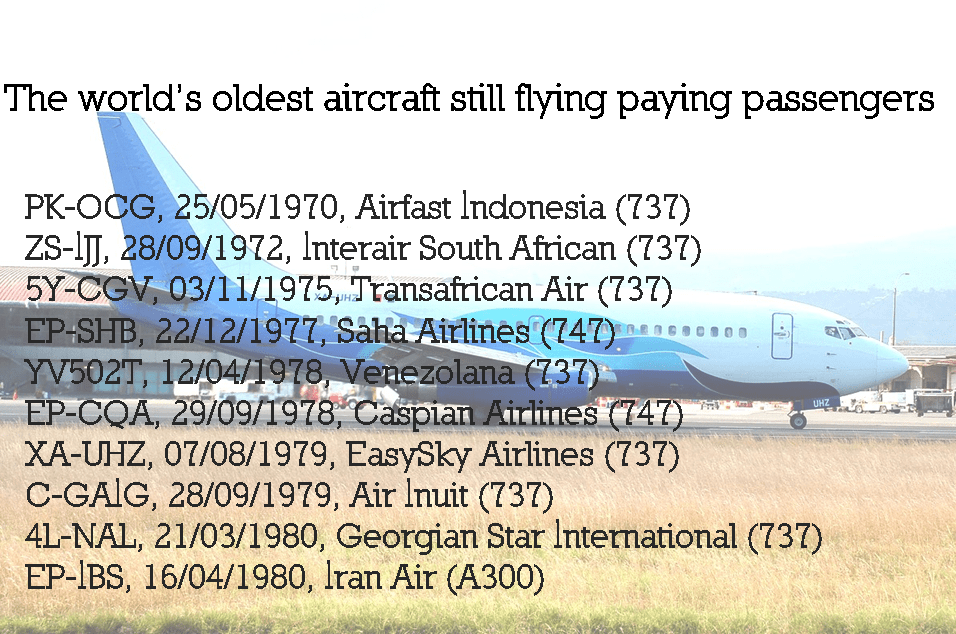
Boeing 737-200 XA-UHZ

El Boeing 737-200 que se estrelló fue construido en 1979 y había pasado una verificación de seguridad entre noviembre del año pasado.

El 737, registrado XA-UHZ, dejó la fábrica de Boeing hace casi 40 años. Fue entregado a Piedmont Airlines, un operador de Maryland que actualmente vuela bajo la marca American Eagle, en 1979, antes de pasar tiempo en las flotas de US Airways, Royal Airlines (ahora desaparecida), Canadá 3000 (extinta), la Marina de los EE. UU., Magnicharters y Avolar Aerolíneas (ambas con sede en México) y la compañía hondureña EasySky Airlines. Había estado en la flota de Global Air desde 2014 .

Fue alquilado a la aerolínea estatal cubana Cubana de Aviación por Global Air bajo un contrato de arrendamiento wetlease, lo que significa que la empresa mexicana proporcionó el avión, la tripulación, el mantenimiento y el seguro.

Últimos controles del XA-UHZ

El 21 de mayo de 2018, la DGAC de México informó que la línea aérea se había sometido a un control anual en noviembre de 2017 para verificar que la aerolínea mantenía condiciones máximas de seguridad y operación en la prestación de servicios. Se examinaron sus aeronaves y se renovaron sus certificados de aeronavegabilidad en agosto y octubre de 2017. El certificado de aeronavegabilidad se emite únicamente si la aeronave se encuentra en condiciones técnicas satisfactorias para llevar a cabo las operaciones de vuelo. La aerolínea había sido suspendida temporalmente entre el 11 de noviembre y el 18 de diciembre de 2010 después de un colapso en la marcha de la nariz en Puerto Vallarta el 4 de noviembre de 2010, la aerolínea había resuelto los problemas observados. Una queja de un piloto en octubre de 2013 fue seguida por una verificación extraordinaria extraordinaria entre el 4 de noviembre y el 8 de noviembre de 2013, uno de los aviones se suspendió durante ese período de tiempo hasta que se haya proporcionado toda la documentación. La DGAC está realizando otra verificación mayor de la línea aérea luego del accidente en La Habana, la compañía se suspende temporalmente mientras se realiza la verificación.

Pasajeros del vuelo DMJ-972

Listado de pasajeros y tripulantes a bordo del vuelo DMJ-972. La tripulación y 5 pasajeros eran de nacionalidad extranjera, los otros pasajeros eran cubanos. Autoridades cubanas dieron a conocer en la tarde de este sábado la lista oficial de 113 personas registradas (107 pasajeros y seis tripulantes) en el vuelo DMJ 0972, que cubría el avión Boeing 737-200 arrendado por Cubana de Aviación a la empresa mexicana Global Air que se estrelló el viernes tras despegar del Aeropuerto José Martí, en La Habana.

La cifra de fallecidos es de 110, de ellos 104 pasajeros (99 cubanos, dos argentinos, dos saharauis y una mexicana) y seis tripulantes, todos mexicanos.

Tres sobrevivientes se mantienen reportados en estado grave en el Hospital General Calixto García, de la capital cubana. Las mujeres fueron identificadas como: Mailén Díaz Almaguer, holguinera de 19 años de edad, Gretell Landrovell Font, habanera de 23 años de edad, Emiley Sánchez de la O, holguinera de 39 años de edad.

Investigaciones preliminales

De acuerdo con ATDB Global Air (Damojh S.A.) opera tres aviones Boeing 737-200 con registros XA-UHZ, XA-UMQ y un Boeing 737-500 XA-UZK. Ninguno de los aviones apareció en los transpondedores en modo S a lo largo del 18 Mayo 2018 hasta el accidente. Más tarde, el 18 Mayo 2018, los datos del transpondedor que identificaban XA-UMQ mostraron que el avión operaba cerca de la Ciudad de México.

La firma Damojh S.A. de C.V.

Aerolíneas Damojh, empresa irregular para la SCT y el SAT. Cuenta con seis concesiones vigentes; fue denunciada por anomalías de seguridad; tiene dos direcciones, una de ellas en la CDMX.

La aerolínea aparece desde el año 2010 enlistada como operación “no regular” autorizada para volar por parte de los Servicios a la Navegación en el Espacio Aéreo Mexicano (Seneam).

En el expediente 51/10, emitido el 21 de octubre de ese año, un particular solicitó información sobre las empresas que sirven de taxis aéreos y a través de un trámite de transparencia se le respondió que no podían dar una respuesta sobre cuáles prestan ese servicio; a cambio le dieron una lista de 7 mil 466 empresas aeronáuticas irregulares, como Damojh.

La empresa tiene permiso de taxi aéreo, de fletamento de pasajeros nacionales e internacionales (vuelos privados), de taller de ingeniería aeronáutica y hasta de fumigación aérea, pero como ésta, hay muchas otras compañías operando en circunstancias de ambigüedad legal y que sobrevuelan con la concesión del riesgo a la fatalidad.

El presunto dueño inicial es Francisco Pérez Alvarado, después aparece a nombre de Gilberto Sánchez Miranda, esto en una lista de la Dirección General de Aeronáutica Civil, que corresponde a la Subdirección de Ingeniería, y específicamente al Departamento de Talleres Aeronáuticos, con actualizaciones hasta el año 2016.

La empresa involucrada en el accidente tiene sus oficinas en Dr. Atl número 213, colonia Santa María la Rivera, delegación Cuauhtémoc, en la Ciudad de México.

Historial de incidentes

Los problemas técnicos de los aviones de la aerolínea mexicana Global Air no comenzaron con el accidente en La Habana, Cuba, sino desde antes y un ejemplo de ello fue un traslado del 2012, cuando falló una de sus unidades transportando al Cruz Azul.

Marco Aurelio Hernández, ex piloto de la aerolínea reconoció varios capítulos con fallas en las aeronaves, teniendo en mente la sucedida en un viaje de La Máquina cuando regresaba de Paraguay y que tuvo que hacer una parada de emergencia.

“Una vez volamos con el equipo Cruz Azul a bordo, de Paraguay a México, tuve falla del motor izquierdo, los motores ya no tenían aceite, tuvimos que aterrizar en Perú, ahí nos hicieron espacio para el avión. El avión se quedó dos meses ahí para que le cambiaran la turbina y los jugadores de Cruz Azul pagaron de su propio dinero el pasaje para volar de regreso a México», dijo Hernández a El Universal.

El piloto trabajó en la empresa desde el 2005 hasta el 2013 y aseguró que en varias ocasiones comunicó al dueño sobre los problemas técnicos en las unidades.

Apenas el viernes, un avión de la aerolínea Global Air que fue rentado a Cubana de Aviación se cayó al momento de despegar del Aeropuerto Internacional José Martí en La Habana en un accidente que dejó 100 muertos.

Boeing 737, cuarenta años volando

El Boeing 737-200 estrellado en Cuba llevaba 40 años volando, una antigüedad que no le permitiría volar ni en Europa ni en Estados Unidos, según los expertos, que destacan la peligrosidad que acarrean este tipo de aeronaves (Critican que el avión accidentado en Cuba lleve 40 años volando).

Sobre la existencia de una legislación internacional que limite la longevidad de estos aparatos, los expertos explican que aviones como el accidentado en Cuba, “que es una pieza de museo”, no podría volar en Europa “por un problema de ruido”, según una legislación, publica ABC (Tragedia aérea: un expiloto alertó de fallos mecánicos).

Para determinar las causas del accidente se ha abierto una investigación, según anunció el viernes el propio presidente de Cuba, Miguel Díaz-Canel, que se personó inmediatamente al lugar de los hechos. La última compañía ha sido Global Air, operada por la empresa mexicana Aerolineas Damojh, S.A., que adquirió el aparato al parecer en 2010, cuando ya tenía más de 30 años.

En cuanto a cuál pudo ser la causa del accidente, apunta dos como posibles: En un despegue lo que puede fallar son los motores o las estructuras de los flaps, como lo que sucedió con el avión de Spanair en Barajas. Problemas que, en su opinión, pueden ser causados por falta de mantenimiento, algo desmentido por la Dirección General de Aeronáutica Civil de México.

Boeing se une en investigación vuelo DMJ-792

Expertos en aviación de Estados Unidos y México se unen a una investigación sobre el accidente de un vuelo chárter Boeing 737 fuera de La Habana que mató a más de 100 personas, dijeron las autoridades cubanas, ya que surgieron acusaciones de que la aerolínea había sido advertida sobre violaciones de seguridad.

Las autoridades cubanas identificaron los restos de 20 de las 110 víctimas del accidente del viernes, mientras que un equipo de investigadores locales y extranjeros se concentraron en las posibles causas del desastre y las operaciones de la compañía mexicana propietaria del avión, que se estrelló poco después del despegue. vuelo a la ciudad oriental cubana de Holguín.

Los únicos sobrevivientes del accidente del viernes, tres mujeres pasajeros, están en estado crítico en el Hospital Calixto García en el centro de La Habana, mientras que los restos de las primeras víctimas identificadas fueron entregados a familiares en Holguín, dijeron las autoridades.

El Boeing 737-200 se estrelló en un campo y estalló en llamas poco después de despegar del aeropuerto de La Habana el viernes. El ministro cubano de Transporte, Adel Yzquierdo, dijo que 110 de los 113 pasajeros y la tripulación fueron asesinados. Las autoridades dijeron que cinco niños se encontraban entre las víctimas identificadas durante el fin de semana, y que la identificación de los muertos podría tomar días.

Experiencia vuelo Boeing 737 Global Air

Un piloto mexicano que una vez voló el mismo avión Boeing 737-200, dijo el sábado que previamente se había quejado de presuntas prácticas por debajo del estándar por parte del propietario del avión.

Marco Aurelio Hernández le dijo al periódico mexicano Milenio que la firma mexicana de arrendamiento de aviones Global Air realizó un mantenimiento deficiente del avión, le prohibieron volar en Chile y que los vuelos volaron por la noche en Venezuela sin radar. Dijo que durante 2005 y 2013 había volado los tres aviones Boeing propiedad de Global Air (también conocido como Damojh), incluido el de 39 años que cayó el viernes después de despegar del aeropuerto de La Habana.

Durante su tiempo en Global Air, dijo, había presentado una queja por «falta de mantenimiento de los aviones» a pesar de que la compañía tenía mecánicos de aviones «muy hábiles». Una portavoz de Global Air confirmó que Hernández había trabajado en la empresa, pero se negó a comentar sus acusaciones.

Otra ex empleada de Global Air, Ana Marlene Covarrubias, que fue asistente de vuelo de la compañía durante siete años, dijo a los medios mexicanos que nunca había observado anomalías en los aviones de la compañía.

Cuba identifica 20 víctimas

En cuanto a los cinco pasajeros extranjeros, dos argentinos, un mexicano y dos residentes extranjeros en Cuba, Rabel dijo que los funcionarios han estado en contacto con las respectivas embajadas y consulados.

Veinte de las 110 víctimas del accidente aéreo fatal ocurrido el viernes pasado en Cuba han sido identificadas y los cuerpos fueron enviados a sus familias para su entierro, dijo un funcionario. Sergio Rabel, director del Instituto de Medicina Legal de La Habana, dijo a reporteros en una conferencia de prensa el domingo que un gran grupo de expertos trabajaban día y noche para concluir el complejo proceso de identificación de los restos, informó la agencia de noticias Xinhua. «Hasta ahora, hemos podido identificar 20 cadáveres y notificar a sus familiares», dijo Rabel, y agregó que se identificaron cinco nuevas víctimas entre la noche del sábado y la mañana del domingo.

Los equipos de rescate recuperaron 109 cuerpos del lugar del desastre, donde el avión Boeing 737 se estrelló y estalló en llamas poco después del despegue del aeropuerto internacional José Martí de La Habana el viernes. «Anoche terminamos la revisión de los 109 cuerpos junto con las pertenencias que tenían sobre ellos, lo que nos ayudará a identificar a las víctimas más rápido», dijo Rabel. El avión transportaba a un total de 113 personas, incluidos seis tripulantes mexicanos, en un vuelo doméstico de Cubana Airlines entre la capital y la ciudad oriental de Holguín. Casi todos los pasajeros eran ciudadanos cubanos, tres de los cuales sobrevivieron, pero se encuentran en estado grave.

En cuanto a los cinco pasajeros extranjeros, dos argentinos, un mexicano y dos residentes extranjeros en Cuba, Rabel dijo que los funcionarios han estado en contacto con las respectivas embajadas y consulados. El proceso de identificación de las víctimas podría tomar hasta 30 días para concluir debido al estado de los cuerpos, la mayoría con quemaduras y lesiones graves, dijo Rabel. Las autoridades todavía no saben qué causó la desaparición del avión, que se alquiló a la aerolínea mexicana de fletamento Damojh.

Funcionarios cubanos dijeron que encontraron una de las dos cajas negras del avión. La caja negra contiene información clave de vuelo e información sobre lo que le sucedió al avión. El incidente es el peor desastre aéreo de Cuba en décadas, y dos días de duelo nacional comenzaron el sábado.  AIRWAYS® AW-Icon TXT

Resultado de imagen para Boeing 737-200 accidenteEscena en el sitio del accidente (Foto: AFP)Escena en el sitio del accidente (Foto: AFP)Resultado de imagen para Boeing 737-200 air crash global airResultado de imagen para Boeing 737-200 air crash global air

Air crash flight DMJ-972

Reports of the plane crash of the DMJ-972 Cubana de Aviación flight

The airline Damojh S.A. of C.V. (Global Air) provided services for the airline Cubana de Aviación with a Boeing 737-200 with XA-UHZ registration making flight DMJ-972 from Havana to Holguín (Cuba) with 107 passengers and 6 crew, lost height shortly after takeoff at 12: 08L (16: 08Z), he came into contact with a house, trees and a railway near position N22.9914 W82.3912 and burst into flames.

Cuban authorities confirmed the accident near the Havana Airport. A massive response was sent from the emergency services. The Ministry of Transportation of Cuba reported that the aircraft belonged to Global Aerolineas Damojh based in Mexico. At night, the Ministry confirmed that XA-UHZ was involved in the accident. The Ministry of Transportation of Mexico reported that a team of specialists from Mexico’s DGAC will participate in the investigation of the XA-UHZ accident belonging to Aerolineas Damojh and will leave for Havana on May 19.

Cubana de Aviacion published the telephone numbers of the relatives of flight DMJ-972 (indicative that confirms Global Aerolineas Damojh). Late in the afternoon (Cuba time), authorities reported that the plane was carrying 104 passengers, one baby and six crew members. Three passengers were rescued alive and are being treated for very serious injuries.

The emergency services have helped three female passengers who were taken to hospitals in critical condition, being the only survivors of 110 occupants killed in the accident, of 104 passengers and 9 crew members. The hospital that treats the survivors reported that the survivors have stabilized, their fractures have been fixed and stabilized, which allows a better hemodynamic control. Although the condition of the survivors has stabilized, there is still danger to their lives.

On May 19, 2018, Cuban authorities reported that the identification of the victims, most of them Cuban citizens, has begun. Two days of national mourning have been decreed.

Crew flight DMJ-762

The two pilots of the plane, three flight attendants and a maintenance technician on board were all Mexicans.

Testimony

Witnesses on the ground reported that they saw the plane leave Havana, turn sharply to the right and descend. A big explosion happened when the plane hit the ground, the ground shook.

On May 19, 2018, the Ministry of Transportation of Cuba reported that 110 occupants, including 102 Cubans, six Mexican crew members, two Argentine tourists, one Mexican and two Sahrawi residents of the Cuban island, were killed. The cockpit voice recorder recovered in good condition, the search for the flight data recorder continues.

Boeing 737-200 XA-UHZ

The crashed Boeing 737-200 was built in 1979 and had passed a security check between November last year.

The 737, registered XA-UHZ, left the Boeing factory almost 40 years ago. It was delivered to Piedmont Airlines, a Maryland operator that currently flies under the American Eagle brand, in 1979, before spending time on the fleets of US Airways, Royal Airlines (now defunct), Canada 3000 (extinct), the Navy of USA UU., Magnicharters and Avolar Aerolineas (both based in Mexico) and the Honduran company EasySky Airlines. I had been in the Global Air fleet since 2014.

It was rented to the Cuban state airline Cubana de Aviación by Global Air under a wet lease contract, which means that the Mexican company provided the plane, crew, maintenance and insurance.

Last controls of the XA-UHZ

On May 21, 2018, the Mexican DGAC reported that the airline had undergone an annual check in November 2017 to verify that the airline maintained maximum safety and operating conditions in the provision of services. Their aircraft were examined and their airworthiness certificates were renewed in August and October 2017. The certificate of airworthiness is issued only if the aircraft is in satisfactory technical conditions to carry out the flight operations. The airline had been temporarily suspended between November 11 and December 18, 2010 after a collapse in nose gear in Puerto Vallarta on November 4, 2010, the airline had resolved the problems observed. A complaint from a pilot in October 2013 was followed by an extraordinary extraordinary verification between November 4 and November 8, 2013, one of the planes was suspended during that period of time until all the documentation was provided. The DGAC is conducting another major verification of the airline after the accident in Havana, the company is temporarily suspended while the verification is carried out.

Passengers of flight DMJ-972

List of passengers and crew aboard flight DMJ-972. The crew and 5 passengers were of foreign nationality, the other passengers were Cuban. Cuban authorities announced on Saturday afternoon the official list of 113 people registered (107 passengers and six crew members) on flight DMJ 0972, which covered the Boeing 737-200 plane leased by Cubana de Aviación to the Mexican company Global Air that crashed on Friday after taking off from José Martí Airport, in Havana.

The death toll is 110, of them 104 passengers (99 Cubans, two Argentines, two Saharans and one Mexican) and six crew members, all Mexicans.

Three survivors remain in serious condition at the Calixto García General Hospital in the Cuban capital. The women were identified as: Mailén Díaz Almaguer, 19-year-old Holguinera, Gretell Landrovell Font, 23-year-old Havana, Emiley Sánchez de la O, Holguinera, 39 years old.

Preliminary investigations

According to ATDB Global Air (Damojh S.A.) operates three Boeing 737-200 aircraft with XA-UHZ, XA-UMQ and a Boeing 737-500 XA-UZK. None of the planes appeared on the transponders in mode S throughout the 18 May 2018 until the accident. Later, on May 18, 2018, the transponder data that identified XA-UMQ showed that the plane operated near Mexico City.

Damojh S.A. of C.V.

Damojh Airlines, an irregular company for the SCT and the SAT. It has six current concessions; was reported by security anomalies; It has two addresses, one of them in the CDMX.

The airline appears since 2010 listed as a «non-regular» operation authorized to fly by the Navigation Services in the Mexican Air Space (Seneam).

In file 51/10, issued on October 21 of that year, a private individual requested information about the companies that serve as air taxis and through a transparency procedure he was told that they could not give an answer as to which ones provide that service; In exchange, they gave him a list of 7,466 irregular aeronautical companies, such as Damojh.

The company has permission for air taxi, chartering national and international passengers (private flights), aeronautical engineering workshop and even aerial fumigation, but like this, there are many other companies operating in circumstances of legal ambiguity and flying over the granting the risk to fatality.

The presumed initial owner is Francisco Pérez Alvarado, then appears on behalf of Gilberto Sánchez Miranda, this on a list of the Directorate General of Civil Aviation, which corresponds to the Engineering Subdirectorate, and specifically to the Department of Aeronautical Workshops, with updates to the year 2016.

The company involved in the accident has its offices in Dr. Atl number 213, Santa María la Rivera colony, Cuauhtémoc delegation, in Mexico City.

Incident history

The technical problems of the planes of the Mexican airline Global Air did not start with the accident in Havana, Cuba, but from before and an example of this was a transfer of 2012, when one of its units failed to transport the Cruz Azul.

Marco Aurelio Hernández, former pilot of the airline, acknowledged several chapters with flaws in the aircraft, keeping in mind what happened on a trip from La Máquina when he was returning from Paraguay and had to make an emergency stop.

«Once we flew with the Cruz Azul team on board, from Paraguay to Mexico, I had left engine failure, the engines no longer had oil, we had to land in Peru, there they made space for the plane. The plane stayed there for two months so they could change the turbine and the Cruz Azul players paid their own money to fly back to Mexico, «Hernández told El Universal.

The pilot worked in the company from 2005 to 2013 and said that he repeatedly informed the owner about the technical problems in the units.

Just Friday, a plane of the airline Global Air that was rented to Cubana de Aviación fell at the moment of takeoff from the International Airport José Martí in Havana in an accident that left 100 dead.

Boeing 737, forty years flying

The Boeing 737-200 crashed in Cuba had been flying for 40 years, an age that would not allow it to fly either in Europe or in the United States, according to experts, who highlight the dangerous nature of this type of aircraft. (They criticize the plane crashed in Cuba take 40 years flying).
AW-722111100.png

On the existence of an international legislation that limits the longevity of these devices, the experts explain that aircraft such as the accident in Cuba, «which is a museum piece», could not fly in Europe «because of a noise problem», according to a legislation, publishes ABC (Aerial Tragedy: an expilot alerted of mechanical failures).

To determine the causes of the accident, an investigation has been opened, according to what was announced on Friday by the president of Cuba, Miguel Díaz-Canel, who immediately went to the scene. The last company was Global Air, operated by the Mexican company Aerolineas Damojh, S.A., which acquired the device apparently in 2010, when it was more than 30 years old.

As for what could be the cause of the accident, two points as possible: «In a takeoff what can fail are the engines or structures of the flaps, as what happened with the Spanair aircraft in Barajas». Problems that, in his opinion, can be caused by lack of maintenance, something denied by the General Directorate of Civil Aeronautics of Mexico.

Boeing joins in research flight DMJ-792

Aviation experts from the United States and Mexico join an investigation into the crash of a Boeing 737 charter flight outside Havana that killed more than 100 people, Cuban authorities said, as allegations surfaced that the airline had been warned about security breaches.

Cuban authorities identified the remains of 20 of the 110 victims of the accident on Friday, while a team of local and foreign investigators focused on the possible causes of the disaster and the operations of the Mexican company that owns the plane, which crashed shortly after of the takeoff. flight to the Cuban oriental city of Holguín.

The only survivors of Friday’s accident, three women passengers, are in critical condition at the Calixto García Hospital in downtown Havana, while the remains of the first victims identified were handed over to relatives in Holguin, authorities said.

The Boeing 737-200 crashed into a field and burst into flames shortly after taking off from Havana airport on Friday. Cuban Transport Minister Adel Yzquierdo said that 110 of the 113 passengers and crew were killed. Authorities said five children were among the victims identified during the weekend, and that the identification of the dead could take days.

Flight experience Boeing 737 Global Air

A Mexican pilot who once flew the same Boeing 737-200 aircraft said Saturday that he had previously complained about alleged practices below the standard by the owner of the plane.

Marco Aurelio Hernandez told the Mexican newspaper Milenio that the Mexican aircraft leasing company Global Air performed a poor maintenance of the plane, banned him from flying in Chile and that the flights flew at night in Venezuela without radar. He said that during 2005 and 2013 he had flown the three Boeing aircraft owned by Global Air (also known as Damojh), including the 39-year-old plane that fell on Friday after taking off from Havana airport.

During his time at Global Air, he said, he had filed a complaint about lack of aircraft maintenance even though the company had «very skilled» aircraft mechanics. A spokeswoman for Global Air confirmed that Hernandez had worked at the company, but declined to comment on her allegations.

Another former Global Air employee, Ana Marlene Covarrubias, who was the company’s flight attendant for seven years, told Mexican media that she had never noticed anomalies in the company’s planes.

Cuba identifies 20 victims

As for the five foreign passengers, two Argentines, one Mexican and two foreign residents in Cuba, Rabel said the officials have been in contact with the respective embassies and consulates.

Twenty of the 110 victims of the fatal plane crash last Friday in Cuba have been identified and the bodies were sent to their families for burial, an official said. Sergio Rabel, director of the Institute of Legal Medicine in Havana, told reporters at a press conference on Sunday that a large group of experts worked day and night to complete the complex process of identifying the remains, Xinhua news agency reported. «Until now, we have been able to identify 20 bodies and notify their relatives», Rabel said, adding that five new victims were identified between Saturday night and Sunday morning.

Rescuers recovered 109 bodies from the disaster site, where the Boeing 737 plane crashed and burst into flames shortly after takeoff from José Martí International Airport in Havana on Friday. «Last night we finished reviewing the 109 bodies along with the belongings they had over them, which will help us identify the victims faster», said Rabel. The plane was carrying a total of 113 people, including six Mexican crew members, on a Cubana Airlines domestic flight between the capital and the eastern city of Holguín. Almost all the passengers were Cuban citizens, three of whom survived, but are in serious condition.

As for the five foreign passengers, two Argentines, one Mexican and two foreign residents in Cuba, Rabel said the officials have been in contact with the respective embassies and consulates. The process of identifying the victims could take up to 30 days to conclude due to the state of the bodies, most of them with burns and serious injuries, said Rabel. The authorities still do not know what caused the disappearance of the plane, which was rented to the Mexican charter carrier Damojh.

Cuban officials said they found one of the plane’s two black boxes. The black box contains key flight information and information about what happened to the plane. The incident is Cuba’s worst air disaster in decades, and two days of national mourning began on Saturday. A \ W


Ξ A I R G W A Y S Ξ
SOURCE:  Airgways.com
DBk: Ntsb.gov / Faa.gov / Sct.gob.mx/transporte / Avherald.net / Aerotransport.org / Razon.com.mx / Preferente.com / Financialexpress.com / Thequint.com / Wsj.com / Martinoticias.com
AW-POST: 201805212137AR

A\W   A I R G W A Y S ®
Flybe estandariza flota aérea

Resultado de imagen para Flybe Bombardier 8-Q400

AW | 2018 05 21 16:07 | AIRLINES

Resultado de imagen para Flybe new logoLa aerolínea británica Flybe daría de baja a la flota de aeronaves Embraer

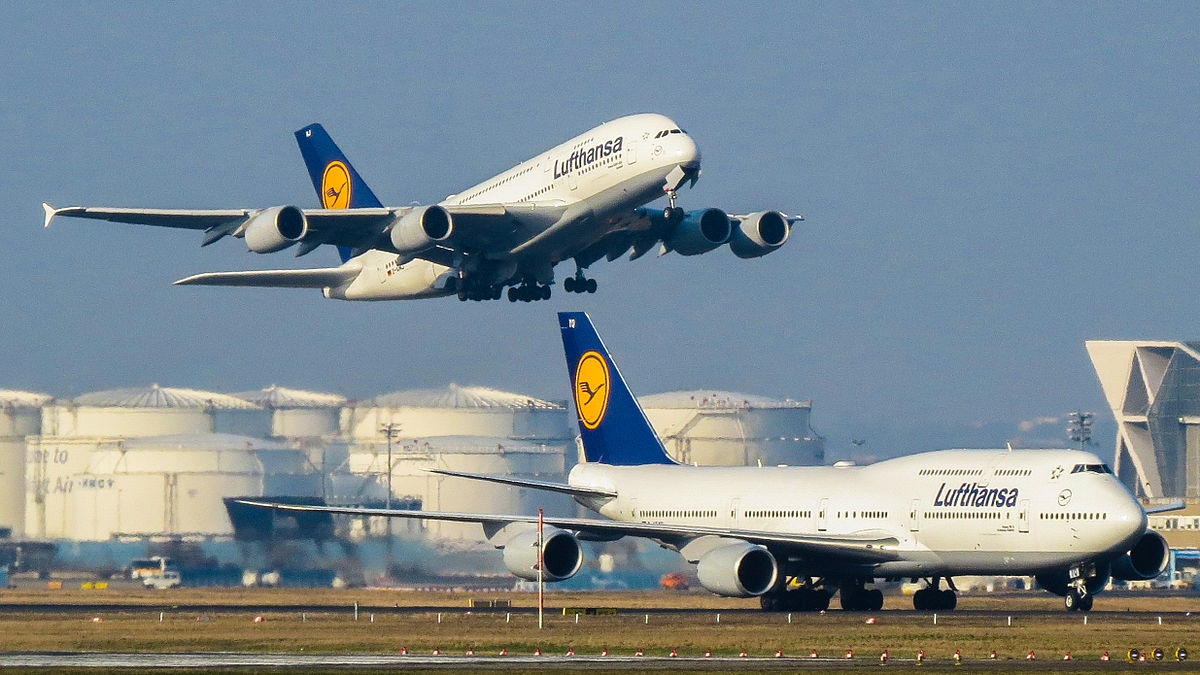
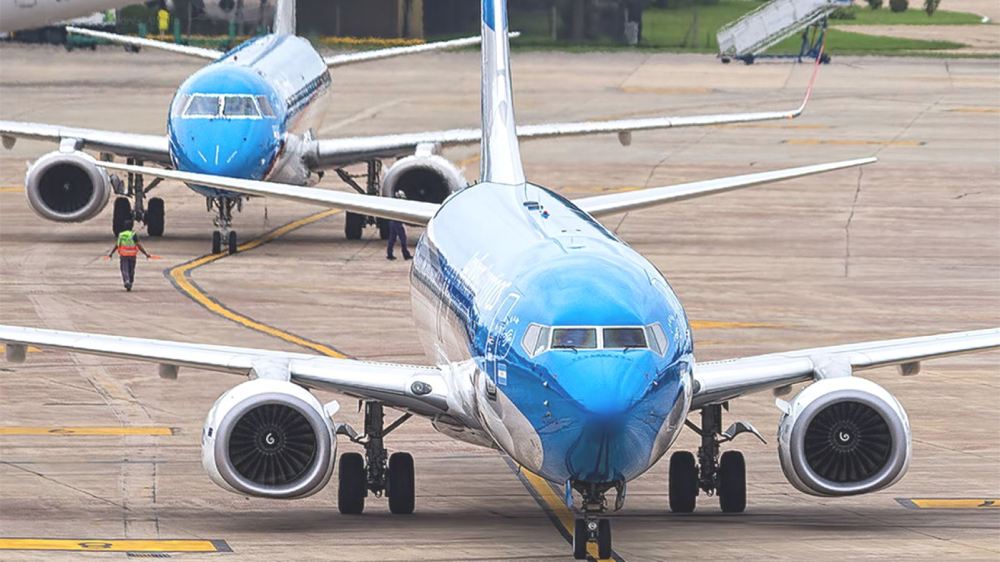
La aerolínea regional con sede en Exeter, Flybe, reducirá su flota de aviones a 70 en los próximos 2 años en un intento por hacer que la aerolínea sea más eficiente. La medida permitirá a la aerolínea continuar con su estrategia de reducir su flota total y concentrarse únicamente en rutas rentables.

Resultado de imagen para Flybe Q400 pngFlybe ha concluido que el Bombardier 8-Q400 es el mejor avión base para sus necesidades actuales y futuras buscando como resultado una mejor optimización de los recursos, convirtiendo al 8-Q400 en columna vertebral de la flota en el futuro previsible. El turbopropulsor es más económico de operar que los Embraer Jets y, más importante aún, para los aeropuertos regionales tiene una huella de ruido más pequeña.

Retiro de flota Embraer

La aerolínea Flybe planea comenzar con el retiro de los Embraer E195 (9) a los arrendadores Falko y Propius. La aerolínea regional mantendrá algunos Embraer E175, que actualmente posee 11 unidades.

Flybe aún tiene un pedido de cuatro Embraer E175 que vencen en 2019. Estos aviones serán entregados con nueva tecnología de alas para ayudar a reducir el consumo de combustible y la aerolínea aún tiene la intención de aceptar esos aviones, pero más allá de eso, Flybe no planea ningún avión nuevo adicional. pedidos para el futuro previsible.

La CEO de Flybe, Christine Ourmières-Widener, dijo: «La estrategia de Flybe es reducir el tamaño de la flota a un nivel óptimo y hacer que el negocio sea impulsado por la demanda y no por la capacidad. La configuración de nuestra flota es una parte importante de esa estrategia. Examinamos exhaustivamente todas las opciones y concluimos que el Bombardier Q400 es el mejor avión base para nosotros. Su superior economía, velocidad y tranquilidad es ideal para una aerolínea regional como nosotros. Junto con varios Embraer E175, nuestra flota futura será la óptima requerida para nuestra red de rutas regional específica».

La aerolínea británica Flybe retirará progresivamente la actual flota de aeronaves jet Embraer 195 y cancelará los pedidos pendientes de la fábrica industrial brasileña Embraer. Con este paso pone énfasis en la homogeneización de la compañía y elevando la eficiencia en su red de rutas europeas. AIRWAYS® AW-Icon TXT

Resultado de imagen para Flybe Q400 png

Flybe standardizes air fleet

The British airline Flybe would drop the fleet of Embraer aircraft

Exeter-based regional airline Flybe will reduce its aircraft fleet to 70 in the next 2 years in an attempt to make the airline more efficient. The measure will allow the airline to continue with its strategy of reducing its total fleet and concentrating solely on profitable routes.

Flybe has concluded that the Bombardier 8-Q400 is the best base aircraft for its current and future needs, seeking as a result a better optimization of resources, making the 8-Q400 the backbone of the fleet in the foreseeable future. The turboprop is cheaper to operate than Embraer Jets and, more importantly, for regional airports it has a smaller noise footprint.

Removal of Embraer fleet

The airline Flybe plans to start with the withdrawal of the Embraer E195 (9) from the lessors Falko and Propius. The regional airline will maintain some Embraer E175, which currently has 11 units.

Flybe still has an order for four Embraer E175 that expire in 2019. These aircraft will be delivered with new wing technology to help reduce fuel consumption and the airline still intends to accept those aircraft, but beyond that, Flybe do not plan any additional new aircraft. orders for the foreseeable future.

Flybe’s CEO, Christine Ourmières-Widener, said: «Flybe’s strategy is to reduce the size of the fleet to an optimum level and to make the business driven by demand rather than capacity. An important part of that strategy, we thoroughly examined all the options and concluded that the Bombardier Q400 is the best base plane for us, its superior economy, speed and tranquility is ideal for a regional airline like us, along with several Embraer E175, our fleet. future will be the optimum required for our specific regional route network».

The British airline Flybe will progressively withdraw the current fleet of aircraft Embraer 195 jet and will cancel the pending orders of the Brazilian industrial factory Embraer. With this step he emphasizes the homogenization of the company and increasing the efficiency of its network of European routes. A \ W


Ξ A I R G W A Y S Ξ
SOURCE:  Airgways.com
DBk: Flybe.com / Londonairtravel.com / Aviationwales.com
AW-POST: 201805211607AR

A\W   A I R G W A Y S ®

Aerolíneas tendría déficit cero en 2019

177-aerolineas-sumara-un-vuelo-directo-entre-ushuaia-y-cordoba.jpg

AW | 2018 05 21 15:44 | AIRLINES

5a58bc7e982b98df55d194908ae21032Aerolíneas Argentinas ha manifestado que para el año 2019 podría ingresa a déficit cero
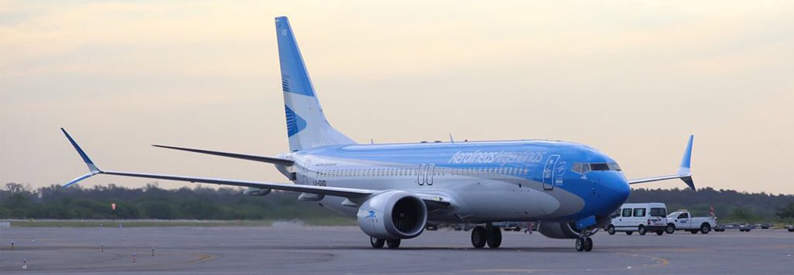
El CEO de Aerolíneas Argentinas, Mario Dell´Acqua, se refirió sobre los trabajos que realizan en la compañía para bajar los números en rojo que dejó la gestión anterior. El Gobierno de Argentina ha asumido un fuerte compromiso como objetivo para disminuir las cuentas en rojo que presenta Aerolíneas Argentinas. La compañía del Grupo Aerolíneas busca perseguir el déficit cero para el año 2019. El CEO de Aerolíneas Argentinas señaló que la gestión anterior, refiriéndose a lo heredado en la era del kirchnerismo, la empresa tenía un déficit de US$ 670 millones de dólares, el cual durante el primer año de Macri bajó a US$ 340 millones de dólares, en el segundo año a US$ 170 millones de dólares, este año está en US$ 85 millones y el año que viene podría llegar a tener un balance positivo.

La compañía de bandera de Argentina ha logrado disminuir los números rojos logrando los resultados con la misma cantidad de personal y aviones, volar un 30% más y que los pasajeros paguen sus pasajes.

Tanto Aerolíneas Argentinas y Austral Líneas Aéreas enfatizan en que los argentinos compren más pasajes, para que el que viaja no tenga que poner dinero de más para cubrir el déficit de cada aeronaves sin completar.

Aerolíneas comunicó que antes del 31 Mayo 2018 se presentará los balances de la compañía de los últimos 4 años, es decir, los correspondientes al año 2014, 2015, 2016 y 2017. AIRWAYS® AW-Icon TXT

6349.jpg

Aerolíneas would have zero deficit in 2019

Aerolíneas Argentinas has stated that by 2019 it could enter zero deficit

AA-AU Isologotype

The CEO of Aerolíneas Argentinas, Mario Dell’Acqua, spoke about the work they do in the company to lower the numbers in red left by the previous administration. The Government of Argentina has assumed a strong commitment as an objective to reduce the red accounts presented by Aerolíneas Argentinas. Aerolíneas Group Company seeks to pursue a zero deficit by 2019. The CEO of Aerolíneas Argentinas said the previous administration, referring to what was inherited in kirchnerismo, the company had a deficit of US $ 670 million, the which during the first year of Macri fell to US $ 340 million dollars, in the second year to US $ 170 million, this year it is US $ 85 million and next year it could have a positive balance.

The flag company of Argentina has managed to reduce the red numbers, achieving the results with the same number of personnel and planes, flying 30% more and passengers paying their tickets.

Both Aerolíneas Argentinas and Austral Líneas Aéreas emphasize that Argentines buy more tickets, so that those who travel do not have to put extra money to cover the deficit of each aircraft without completing it.

Airlines reported that before 31 May 2018 the balance sheets of the company for the last 4 years will be presented, that is, those corresponding to 2014, 2015, 2016 and 2017. A \ W


Ξ A I R G W A Y S Ξ
SOURCE:  Airgways.com
DBk: Aerolineas.com
AW-POST: 201805211544AR

A\W   A I R G W A Y S ®

Aumento petróleo podría matar a aerolíneas más pequeñas o vulnerables

Resultado de imagen para Berlin airport

AW | 2018 05 21 15:15 | AIRLINES MARKET

La industria aeronáutica se encamina a un aumento en los costos del combustible

A medida que aumentan los precios del petróleo crudo podría afectar a las líneas aéreas más pequeñas o más vulnerables. Ante una situación económica comprometida, las más débiles o indefensas aerolíneas europeas podrían no pasar el invierno, dijo el lunes Michael O’Leary, Presidente Ejecutivo de la mayor aerolínea de bajo coste de Europa, Ryanair. «Los precios al contado cercanos a los 80 dólares por barril llevarán a una importante reestructuración en la industria este invierno. Algunas de esas aerolíneas con pérdidas que no podían ganar dinero cuando el petróleo estaba a 40 dólares por barril ciertamente no pueden sobrevivir», dijo Michael O’Leary, luego de que Ryanair informara un aumento de 10% en sus ganancias del año fiscal 2017/2018.

Las aerolíneas europeas se encuentran ante un panorama un tanto sombrío. Alrededor de US$ 58 es el precio por barril en comparación con el precio spot de casi US$ 80 por barril. Si bien la producción de shale de Estados Unidos sigue siendo fuerte, la demanda mundial de petróleo está creciendo, y una serie de factores políticos a corto plazo en Venezuela, Libia e Irán, sugiere que los precios seguirán siendo elevados para el próximo año. Las tarifas aéreas tienden a seguir los precios del petróleo, pero con un retraso de hasta 12 meses antes de que los precios del petróleo se incrementen a tarifas aéreas más altas.

El mercado del petróleointroducirá cambios en el panorama de la competencia en Europa. Algunas de esas aerolíneas que no pudieron ganar dinero cuando el petróleo estaba a US$40 dólares por barril el año pasado,tendrían un escaso margen para atravezar el invierno boreal. Según datos de Platts y la Asociación Internacional de Transporte Aéreo (IATA), a partir del 11 Mayo 2018, los precios de los viajes a nivel mundial fueron un 54,2% más altos que en el mismo momento del año pasado, un 5,4% más que hace un mes y un 3,7% que la semana anterior.  AIRWAYS® AW-Icon TXT.png

Resultado de imagen para london airport

Oil increase could kill small airlines

The aeronautical industry is heading for an increase in fuel costs

As oil prices rise, it could affect smaller or more vulnerable airlines. In the face of a compromised economic situation, the weakest or most defenseless European airlines may not winter, Michael O’Leary, Executive Chairman of Europe’s largest low-cost airline, Ryanair, said on Monday. «Spot prices close to $ 80 per barrel will lead to major restructuring in the industry this winter,» O’Leary said. Some of those airlines with losses that could not make money when the oil was at $ 40 per barrel certainly can not survive, «said Michael O’Leary, after Ryanair reported a 10% increase in its profits for fiscal year 2017 / 2018

European airlines are facing a somewhat bleak picture. Around US $ 58 is the price per barrel compared to the spot price of almost US $ 80 per barrel. While US shale production remains strong, global oil demand is growing, and a series of short-term political factors in Venezuela, Libya and Iran suggest that prices will remain high for next year. Air fares tend to follow oil prices, but with a delay of up to 12 months before oil prices increase to higher air fares.

The oil market will introduce changes in the competitive landscape in Europe. Some of those airlines that could not make money when oil was at $ 40 per barrel last year, would have little room to go through the winter. According to data from Platts and the International Air Transport Association (IATA), as of 11 May 2018, the prices of travel worldwide were 54.2% higher than at the same time last year, a 5, 4% more than a month ago and 3.7% the previous week. A \ W


Ξ A I R G W A Y S Ξ
SOURCE:  Airgways.com
DBk: Iata.org / Londontopia.net /  Airportwroclawtransfer.com
AW-POST: 201805211515AR

A\W   A I R G W A Y S ®

SilkAir fusiona matriz Singapore Airlines

Resultado de imagen para singapore silkair

AW | 2018 05 20 23:17 | AIRLINES

Resultado de imagen para singapore silkair logoLa aerolínea Singapore Airlines absorberá la línea aérea regional SilkAir
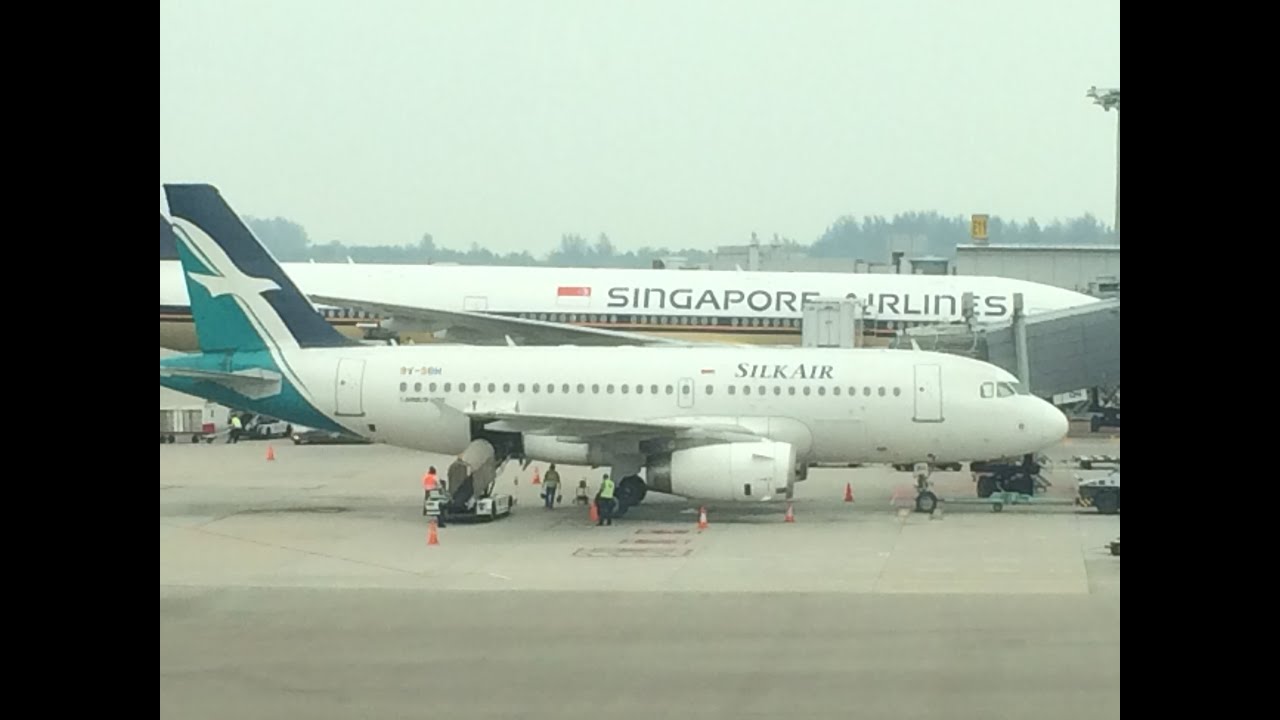
Singapore Airlines Group ha anunciado que integrará su unidad regional SilkAir a su matriz, aunque no se espera que la fusión se finalice hasta bien entrada la década de 2020. Hasta la fusión, SilkAir continuará operando como una marca independiente, aunque ambas unidades ya cooperan en términos de planificación de red y administración de ingresos. Luego de la fusión, la marca del transportista desaparecerá y Singapore Airlines operará tanto aviones de fuselaje ancho como de fuselaje ancho.

Inversiones en la fusión

Singapure Airlines Group ha informado en un comunicado que invertirá más de SGD100 millones de dólares singapurenses (USD74.5 millones) en mejoras de la cabina de toda la flota de Silkair, incluyendo la instalación de asientos de clase ejecutiva, así como entretenimiento de vuelo individual (IFE) sistemas en clases comerciales y económicas para alinear mejor las cabinas con el producto actual de Singapore Airlines. «Esto lleva tiempo, particularmente debido a la disponibilidad limitada de asientos lisos de asientos estrechos. En este punto, tenemos información de que solo estarán disponibles en algún momento en 2020. Queremos asegurarnos de tener una cantidad suficiente de aviones reconfigurados antes la fusión realmente tiene lugar», dijo el CEO de Singapore Airlines, Goh Choon Phong, durante la reunión anual de inversores el 18 Mayo 2018. Sin embargo, no especificó el cronograma esperado ni lo que constituye un número suficiente de aeronaves reconfiguradas, aunque subrayó que la reconfiguración no comenzará antes de 2020.

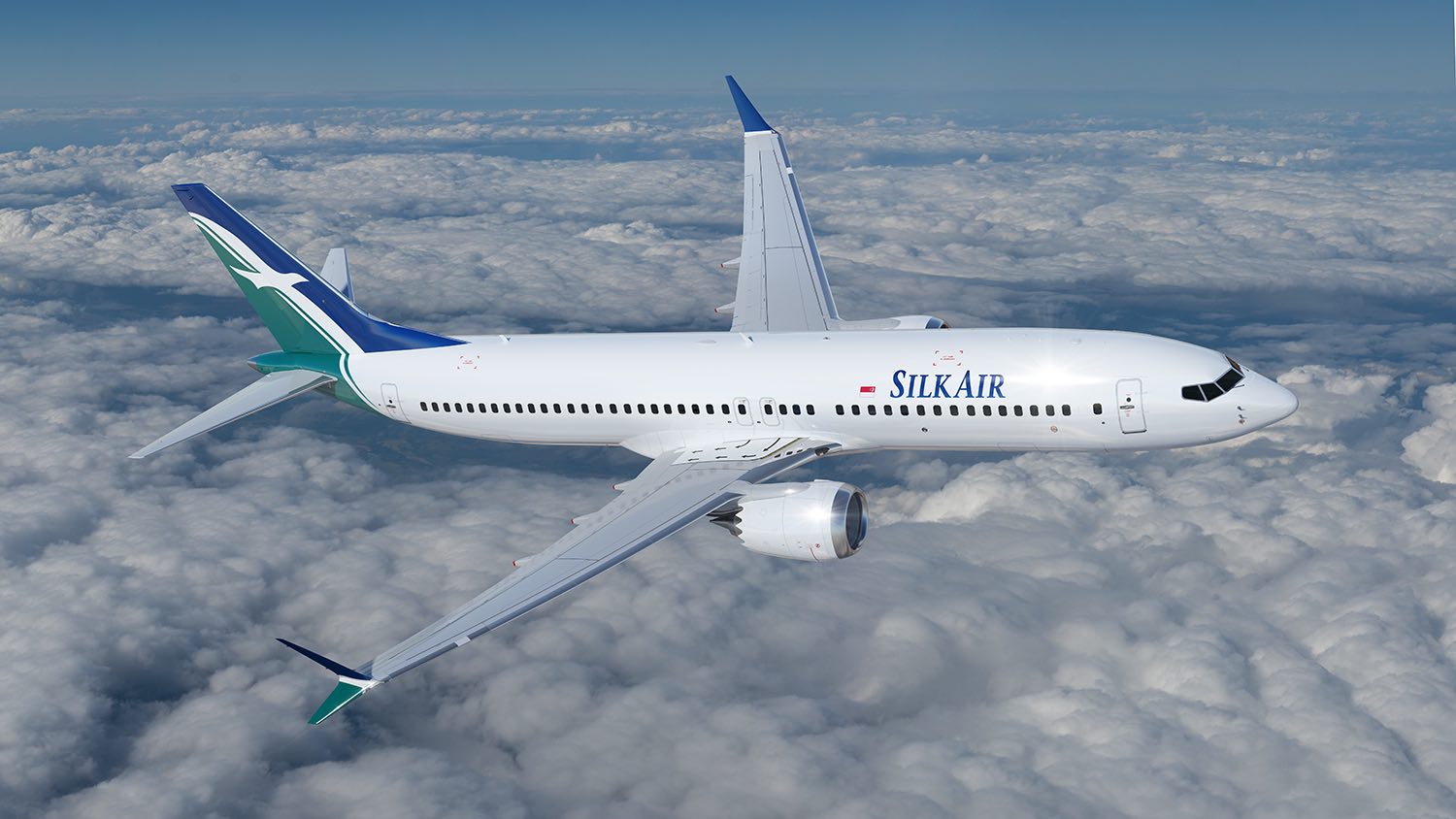
SilkAir actualmente opera A319-100 (3), A320CEO (9), Boeing 737-8 MAX (5), y Boeing 737-800 (17). Hasta Marzo 2019, el operador incorporará tres Boeing 737-8 MAX 8 más en la configuración de cabina actual y retirará un A319 y un A320.

Singapore Airlines opera aviones de fuselaje ancho exclusivamente, incluidos A330-300 (21), A350-900 (21), A380-800 (18), Boeing 777-200ER (17), Boeing 777-300 (5), Boeing 777-300ER (27), y Boeing 787-10 (4). También opera siete Boeing 747-400F. Se planea entregar A350-900ULR (7) hasta Marzo de 2019.

La unidad de bajo costo del grupo Scoot espera recibir este año un total de la familia A320 (10) incluidos A320 (8) que están actualmente disponibles, subarrendadas a IndiGo Airlines y dos A320NEO de Airbus. Cuatro A320CEO serán devueltos a arrendadores.

En este momento, aún no está claro si el grupo consolidará la flota de SilkAir en torno a un único fabricante antes de la fusión o si incluirá tanto a Airbus como a las subfiestas de cuerpo estrecho de Boeing . Goh dijo a ch-aviation durante el informe que algunos de los A320-200 de SilkAir pueden trasladarse a Scoot a medida que el grupo realiza análisis y realineamientos de su flota de forma continua.  AIRWAYS® AW-Icon TXT

Resultado de imagen para singapore silkair

Fusion matrix Singapore Airlines with SilkAir

The airline Singapore Airlines will absorb the regional airline SilkAir

Resultado de imagen para singapore silkair logoSingapore Airlines Group has announced that it will integrate its SilkAir regional unit into its parent company, although the merger is not expected to be completed until well into the 2020s. Until the merger, SilkAir will continue to operate as an independent brand, although both units already cooperate in terms of network planning and revenue management. After the merger, the carrier’s brand will disappear and Singapore Airlines will operate both wide-body and wide-body aircraft.

Investments in the merger

Singapure Airlines Group has reported in a statement that it will invest more than SGD100 million Singaporean dollars (USD74.5 million) in improvements to the cabin of the entire Silkair fleet, including the installation of executive class seats as well as individual flight entertainment. (IFE) systems in commercial and economic classes to better align the cabins with the current product of Singapore Airlines. «This takes time, particularly due to the limited availability of narrow seating seats, at this point, we have information that will only be available sometime in 2020. We want to make sure we have enough reconfigured aircraft before the merger really has place», said Singapore Airlines CEO Goh Choon Phong during the annual investor meeting on May 18, 2018. However, he did not specify the expected schedule nor what constitutes a sufficient number of reconfigured aircraft, although he stressed that the reconfiguration did not will start before 2020.

SilkAir currently operates A319-100 (3), A320CEO (9), Boeing 737-8 MAX (5), and Boeing 737-800 (17). Until March 2019, the operator will incorporate three more Boeing 737-8 MAX 8 in the current cabin configuration and will withdraw an A319 and an A320.

Singapore Airlines operates exclusively widebody fuselage, including A330-300 (21), A350-900 (21), A380-800 (18), Boeing 777-200ER (17), Boeing 777-300 (5), 777- Boeing 300ER (27), and Boeing 787-10 (4). It also operates seven Boeing 747-400F. It is planned to deliver A350-900ULR (7) until March 2019.

The low cost unit of the Scoot group expects to receive this year a total of the A320 family (10) including A320 (8) that are currently available, subleased to IndiGo Airlines and two Airbus A320NEOs. Four A320CEO will be returned to lessors.

At this time, it is still not clear if the group will consolidate SilkAir’s fleet around a single manufacturer before the merger or whether it will include both Airbus and Boeing’s narrow-body sub-parties. Goh told ch-aviation during the report that some of SilkAir’s A320-200s can move to Scoot as the group continuously analyzes and realigns its fleet. A\W


Ξ A I R G W A Y S Ξ
SOURCE:  Airgways.com
DBk:  Singaporeair.com / Silkair.com
AW-POST: 201805202317AR

A\W   A I R G W A Y S ®

American incorpora baños más pequeños

Resultado de imagen para american airlines Project Oasis

AW | 2018 05 20 13:30 | AIRLINES

AmericanAirlines.pngAmerican Airlines ha introducido en sus narrowbodies baños más reducidos

Los pasajeros de American Airlines deben ceñir sus cuerpos para que sean aún más estrechos a medida que la aerolínea muestra los frutos de su llamado programa Project Oasis.

Se trata de «oportunidades de densidad de los narrowbodies», como lo expresó una vez el CEO de American, Doug Parker. En en concreto, la nueva configuración de los aviones Boeing 737-800 existentes comprime al avión con 12 asientos adicionales en Economy Class. De esta manera los asientos en Economy cortan la inclinación, la distancia entre la parte posterior de un asiento y el que está delante por una pulgada e incluso reduce la inclinación del asiento en primera clase hasta 3 pulgadas.

Estos aviones más antiguos ahora tendrán baños nuevos que son un 75% del tamaño de los antiguos. Estos baños son, según un piloto estadounidense, «la experiencia más miserable del mundo». De esta manera se ha reducido un 25% del tamaño original, permitiendo al primero de estos aviones Boeing 737-800 entrar en servicio con estas modificaciones para ganar más espacios para las butacas. El Boeing 737-800 comenzó su vuelo en esta semana entre Dallas-Fort Worth a La Guardia y seguirá su camino por nuestro continente americano en las próximas semanas.

American Airlines ha informado que más de 200 de los Boeing 737-800 de la aerolínea recibirán este cambio de imagen. El programa tardará hasta 2020 en completarse, pero a finales de este año aumentará la velocidad. Lo que aumentará tus posibilidades de disfrutar de una experiencia de vuelo realmente memorable.

El Director de finanzas de la aerolínea, Derek Kerr, declaró recientemente que incluso muchos de los Boeing 737-800 más antiguos ahora disfrutarán de estos pequeños baños, ya que la aerolínea está posponiendo las órdenes de algunos de sus aviones más nuevos.

Aunque la compañía intenta ganar dinero con los asientos adicionales, deberán mantener un equilibrio sano entre calidad y precio, esperando que los cambios introducidos no afecten los reclamos justos de los usuarios.  AIRWAYS® AW-Icon TXT

Resultado de imagen para american airlines seat

American incorporates smaller bathrooms

American Airlines has introduced smaller bathrooms in its narrowbodies

American Airlines passengers must tighten their bodies to be even narrower as the airline shows the fruits of its so-called Project Oasis program.

It is «narrowbodies density opportunitie», as American CEO Doug Parker once put it. In specific, the new configuration of the existing Boeing 737-800 aircraft compresses the aircraft with 12 additional seats in Economy Class. In this way the seats in Economy cut the inclination, the distance between the back of a seat and the one in front by an inch and even reduces the inclination of the seat in first class up to 3 inches.

These older planes will now have new bathrooms that are 75% the size of the old ones. These toilets are, according to one American pilot, «the most miserable experience in the world». In this way it has been reduced by 25% of the original size, allowing the first of these Boeing 737-800 aircraft to enter service with these modifications to gain more spaces for the seats. The Boeing 737-800 began its flight this week between Dallas-Fort Worth to LaGuardia and will continue its way through our Americas in the coming weeks.

American Airlines has reported that more than 200 of the airline’s Boeing 737-800 will receive this makeover. The program will take until 2020 to complete, but by the end of this year the speed will increase. Which will increase your chances of enjoying a truly memorable flight experience.

The airline’s Finance Director, Derek Kerr, recently stated that even many of the older Boeing 737-800s will now enjoy these small baths, as the airline is postponing the orders of some of its newer aircraft.

Although the company tries to earn money with the additional seats, they must maintain a healthy balance between quality and price, hoping that the changes introduced do not affect the fair claims of the users. A \ W


Ξ A I R G W A Y S Ξ
SOURCE:  Airgways.com
DBk: Aa.com
AW-POST: 2018052013300AR

A\W   A I R G W A Y S ®