Boeing próximo vuelo Starliner

Boeing-1-900x540AW | 2020 04 07 11:58 | AEROESPACE

Boeing_IsologotypeDeclaración de Boeing sobre el próximo vuelo del Starliner

Es un honor para The Boeing Company ser un proveedor de la misión Commercial Crew. Estamos comprometidos con la seguridad de los hombres y mujeres que diseñan, construyen y finalmente volarán en el Starliner tal como lo hemos hecho en cada misión tripulada al espacio. Hemos elegido volver a probar nuestra prueba de vuelo orbital para demostrar la calidad del sistema Starliner. Volar en otro vuelo sin tripulación nos permitirá completar todos los objetivos de prueba de vuelo y evaluar el rendimiento del segundo vehículo Starliner sin costo alguno para el contribuyente. Luego procederemos a la tremenda responsabilidad y privilegio de volar astronautas a la Estación Espacial Internacional. AW-Icon AW001

aw-290150-02_cst-100_starliner

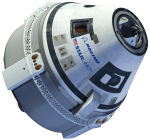
Boeing next Starliner flight

Boeing statement on the upcoming Starliner flight

1793902It is an honor for The Boeing Company to be a provider for the Commercial Crew mission. We are committed to the safety of the men and women who design, build, and ultimately fly in the Starliner just as we have on every manned mission to space. We have chosen to retest our orbital flight test to demonstrate the quality of the Starliner system. Flying on another unmanned flight will allow us to complete all flight test objectives and evaluate the performance of the second Starliner vehicle at no cost to the taxpayer. Then we will proceed to the tremendous responsibility and privilege of flying astronauts to the International Space Station. AW-Icon AW002


Ξ A I R G W A Y S Ξ
SOURCE: Airgways.com
DBk: Boeing.com / Airgways.com
AW-POST: 202004071158AR

A\W   A I R G W A Y S ®

Cápsula Starliner retorna a la Tierra

Resultado de imagen para Starliner cst-100AW | 2019 12 22 21:51 | AEROSPACE

4_1-4La Starliner CST-100 de Boeing aterriza en Nuevo México, Estados Unidos

La primera nave espacial Starliner CST-100 de The Boeing Company construida para volar astronautas regresó a la Tierra en un aterrizaje antes del amanecer del Domingo, 22 Diciembre 2019, aterrizando en el Estado de Nuevo México, Estados Unidos después de un vuelo de prueba acortado, pero aún histórico, debido a un error de sincronización.

aw-290150-02_cst-100_starliner.pngAterrizaje CST-100

El Starliner CST-100 sin tripulación aterrizó en el frío desierto del Puerto Espacial White Sands en Nuevo México a las 07:58 am EST (1258 GMT), haciendo historia como la primera cápsula espacial capaz de tripulación en hacer un aterrizaje terrestre en suelo estadounidense. El aterrizaje culminó con una misión de vuelo de prueba orbital de tres días que comenzó Resultado de imagen para Starliner logocon un lanzamiento el Viernes, 20 Diciembre 2019.

La primera nave espacial Starliner de Boeing se sumerge a través de la atmósfera de la Tierra en esta vista infrarroja desde un avión de persecución WB-57 de la NASA sobre el Puerto Espacial White Sands en Nuevo México el 22 Diciembre 2019. Starliner lanza su escudo térmico después de desplegar sus tres paracaídas principales. La nave espacial luego infló seis bolsas de aire de aterrizaje. Starliner llega a la Tierra, aterrizando a 19:00 mph para completar su vuelo de prueba de tres días.

La nave espacial Boeing CST-100 Starliner aterriza en White Sands, Nuevo México, el domingo 22 de diciembre de 2019. El aterrizaje completa una prueba de vuelo orbital abreviada para la compañía que aún cumple varios objetivos de misión para el programa de tripulación comercial de la NASA.

Un aterrizaje fantasmal

Eran las 05:58 am hora local Estyados Unidos en el lugar de aterrizaje cuando Starliner regresó a la Tierra en la oscuridad, sus tres paracaídas principales ondeaban en vistas infrarrojas. «Parecía casi fantasmal cuando aterrizó», dijo el portavoz de Boeing Josh Barrett desde el lugar de aterrizaje en un comentario de la NASA. Los equipos de recuperación de la NASA y Boeing (y los astronautas que volarán en Starliner) estaban esperando el regreso de Starliner para recuperar el vehículo.

Starliner CST-100 experimentó temperaturas abrasadoras de hasta 3.000 grados Fahrenheit (1.650 grados Celsius) cuando se hundió en la atmósfera de la Tierra a Mach 25, o 25 veces la velocidad del sonido. Echó por la borda ese escudo térmico después de desplegar sus paracaídas. La nave espacial amortiguó su aterrizaje con seis bolsas de aire, aterrizando a aproximadamente 19 mph (30 km/h). La NASA y Boeing observaron la nave espacial desde tierra y aire usando cámaras infrarrojas.

«Ha sido una mañana absolutamente increíble. Realmente estoy tratando de mantener la calma y no llorar. Aterrizamos una cápsula estadounidense en tierra con un sistema de airbag. Esta es la primera vez que alguien hace esto», dijo la Ingeniera de Boeing, Tori Wills Pedrotty, que trabajó en el escudo térmico, durante el comentario.

Crucero Shakedown de Starliner

Originalmente, Starliner estaba programado para pasar ocho días en órbita, volando una misión automatizada a la Estación Espacial Internacional (ISS) y regresando a la Tierra para demostrar la disposición del vehículo para transportar astronautas para la NASA. Pero un error en el reloj de la misión durante el lanzamiento impidió que Starliner alcanzara su órbita prevista y continuara hacia la estación espacial. Según Boeing, el reloj de la misión de Starliner pensaba que la nave espacial estaba en una fase diferente del vuelo posterior por una razón aún desconocida. Boeing pudo reiniciar el reloj, pero no antes de que usara demasiado propelente para volar a la estación. En cambio, Starliner entró en una órbita estable de 155 millas (250 km), rodeó la Tierra 33 veces y realizó tantas pruebas como sea posible para sacudir sus sistemas para futuros vuelos tripulados.

Si bien Boeing superó muchas de sus demostraciones para la NASA en este vuelo, no pudo mostrar la capacidad de Starliner de atracarse en la Estación Espacial Internacional, una capacidad crítica requerida para el vuelo tripulado. Bridenstine ha dicho que la NASA mantiene abiertas sus opciones para decidir si lanzará el primer vuelo de prueba tripulado (llamado Crew Flight Test) en el próximo Starliner o requerirá que Boeing realice un segundo vuelo de prueba sin tripulación.

La tripulación para el primer Starliner astronautas estuvo disponible para su aterrizaje sin problemas el Domingo. Los futuros miembros de la misión incluirían a los astronautas Mike Fincke, Nicole Mann y al astronauta de Boeing Chris Ferguson, un ex comandante del transbordador espacial. Fincke y sus compañeros de tripulación dijeron que confiaban en que Boeing y la NASA corregirían el error de sincronización (que de hecho se solucionó después del lanzamiento, pero no a tiempo para llegar a la estación espacial) para despejar el camino para los vuelos tripulados el próximo año.

La principal de esas pruebas fue el vuelo de «Rosie the Rocketeer», un muñeco de prueba antropomórfico con un traje espacial Boeing cubierto de sensores para medir lo que los astronautas sentirían realmente durante el lanzamiento y el aterrizaje. Rosie voló a bordo de Starliner en el asiento de un astronauta y fue parte de 595 libras. (270 kilogramos) de carga embalada dentro de la nave espacial.

Starliner es una de las dos naves espaciales comerciales (Crew Dragon de SpaceX es la otra) seleccionadas por la NASA para volar astronautas hacia y desde la Estación Espacial Internacional. Está diseñado para lanzar cuatro astronautas y suministros al espacio, devolverlos a la Tierra y luego volar de nuevo. Se espera que la nave espacial reutilizable vuele hasta 10 veces, dijo Boeing.

La NASA eligió a Boeing y SpaceX como sus socios del Programa de tripulación comercial en 2014, con Boeing recibiendo US$ 4.2 mil millones bajo ese contrato y SpaceX recibiendo US$ 2.6 mil millones por su acuerdo. Ambas compañías ahora han volado vuelos de prueba sin tripulación de sus vehículos (Crew Dragon de SpaceX voló a la estación espacial en marzo de este año ) y se espera que comiencen a volar astronautas a principios de 2020.

Este Starliner en particular volará en el segundo vuelo tripulado de Boeing, que será el primer vuelo operativo de la NASA a la estación. Sunita Williams, una de las astronautas que comandará esa misión, estaba en el Puerto Espacial White Sands para ver su nave espacial regresar a la Tierra. «Fue realmente increíble. Era una imagen perfecta. Ella ha vuelto. Ella está en casa», dijo Sunita Williams sobre el aterrizaje del módulo espacial Starliner CST-100. AW-Icon AW001

Resultado de imagen para Starliner cst-100Starliner capsule returns to Earth

Boeing-Company-Logo.jpgBoeing Starliner CST-100 lands in New Mexico, United States

The first The Boeing Company Starliner CST-100 spacecraft built to fly astronauts returned to Earth on a landing before dawn on Sunday, December 22, 2019, landing in the State of New Mexico, the United States after a shortened, but still historic, test flight, due to a synchronization error.

CST-100 landing

The unmanned Starliner CST-100 landed in the cold desert of the White Sands Spaceport in New Mexico at 07:58 a.m. EST (1258 GMT), making history as the first crew-capable space capsule to land on US soil. The landing culminated with a three-day orbital test flight mission that began with a launch on Friday, December 20, 2019.

Boeing’s first Starliner spacecraft plunges through Earth’s atmosphere into this infrared view from a NASA WB-57 chase plane over the White Sands Spaceport in New Mexico on December 22, 2019. Starliner launches his shield thermal after deploying its three main parachutes. The spacecraft then inflated six airbags landing. Starliner arrives on Earth, landing at 19:00 mph to complete its three-day test flight.

The Boeing CST-100 Starliner spacecraft lands in White Sands, New Mexico, Sunday, December 22, 2019. The landing completes an abbreviated orbital flight test for the company that still meets several mission objectives for the commercial crew program of NASA.

El pase de diapositivas requiere JavaScript.

A ghostly landing

It was 05:58 am local time the United States at the landing site when Starliner returned to Earth in the dark, his three main parachutes fluttered in infrared views. «It looked almost ghostly when it landed», Boeing spokesman Josh Barrett said from the landing site in a NASA comment. The recovery teams at NASA and Boeing (and the astronauts that will fly on Starliner) were waiting for Starliner’s return to recover the vehicle.

Starliner CST-100 experienced scorching temperatures of up to 3,000 degrees Fahrenheit (1,650 degrees Celsius) when it sank into Earth’s atmosphere at Mach 25, or 25 times the speed of sound. He threw that heat shield overboard after deploying his parachutes. The spacecraft cushioned its landing with six airbags, landing at approximately 19 mph (30 km/h). NASA and Boeing observed the spacecraft from land and air using infrared cameras.

«It has been an absolutely incredible morning. I’m really trying to keep calm and not cry. We landed an American capsule on the ground with an airbag system. This is the first time anyone does this», said Boeing Engineer Tori Wills Pedrotty, who worked on the heat shield, during the comment.

Starliner Shakedown Cruise

Originally, Starliner was scheduled to spend eight days in orbit, flying an automated mission to the International Space Station (ISS) and returning to Earth to demonstrate the vehicle’s willingness to transport astronauts to NASA. But an error in the mission’s clock during the launch prevented Starliner from reaching its intended orbit and continuing towards the space station. According to Boeing, the Starliner mission clock thought the spacecraft was in a different phase of the subsequent flight for a reason still unknown. Boeing was able to reset the clock, but not before he used too much propellant to fly to the station. Instead, Starliner entered a stable orbit of 155 miles (250 km), circled Earth 33 times and performed as many tests as possible to shake its systems for future manned flights.

While Boeing surpassed many of its demonstrations for NASA on this flight, it failed to show Starliner’s ability to dock at the International Space Station, a critical capability required for manned flight. Bridenstine has said that NASA keeps its options open to decide whether to launch the first manned test flight (called Crew Flight Test) at the next Starliner or require Boeing to perform a second unmanned test flight.

The crew for the first Starliner astronauts was available for landing without problems on Sunday. Future mission members would include astronauts Mike Fincke, Nicole Mann and Boeing astronaut Chris Ferguson, a former space shuttle commander. Fincke and his crewmates said they were confident that Boeing and NASA would correct the synchronization error (which was actually fixed after launch, but not in time to reach the space station) to clear the way for manned flights on the next year.

The main of these tests was the flight of «Rosie the Rocketeer,» an anthropomorphic test dummy with a Boeing spacesuit covered with sensors to measure what astronauts would really feel during launch and landing. Rosie flew aboard Starliner in the seat of an astronaut and was part of 595 pounds. (270 kilograms) of cargo packed inside the spacecraft.

Starliner is one of two commercial spacecraft (SpaceX’s Crew Dragon is the other) selected by NASA to fly astronauts to and from the International Space Station. It is designed to launch four astronauts and supplies into space, return them to Earth and then fly again. The reusable spacecraft is expected to fly up to 10 times, Boeing said.

NASA chose Boeing and SpaceX as its partners in the Commercial Crew Program in 2014, with Boeing receiving US$ 4.2 billion under that contract and SpaceX receiving US$ 2.6 billion for its agreement. Both companies have now flown unmanned test flights of their vehicles (SpaceX Crew Dragon flew to the space station in March this year) and astronauts are expected to start flying in early 2020.

This particular Starliner will fly on Boeing’s second manned flight, which will be NASA’s first operational flight to the station. Sunita Williams, one of the astronauts who will command that mission, was at the White Sands Spaceport to see her spacecraft return to Earth. «It was really amazing. It was a perfect image. She is back. She is at home», Sunita Williams said of the landing of the Starliner CST-100 space module. AW-Icon AW002.png


Ξ A I R G W A Y S Ξ
SOURCE: Airgways.com
DBk: Nasa.gov / Space.com / Boeing.com / Airgways.com
AW-POST: 201912222151AR

A\W   A I R G W A Y S ®

Cancelan misión Starliner CST-100

Imagen relacionadaAW | 2019 12 20 23:20 | AEROSPACE

AW-Starliner -024_1-4.pngLa cápsula Starliner CST-100 no pudo alinearse a la Estación ISS

El despegue del Cohete Atlas V transcurrió con normalidad y puntualidad en el horario establecido. En el transcurso de un cuarto de hora después del lanzamiento, la cápsula Starliner CST-100 se separó sin problemas del Cohete Atlas V en el que iba transportada. Pero los motores de la cápsula no se encendieron según lo previsto y ésta no pudo situarse en la trayectoria para dirigirse hacia la ISS, que vuela en órbita terrestre a unos 400 km de altitud. El fallo provocó que el Starliner CST-100 consumiera demasiado carburante para intentar corregir su posición automáticamente, por lo que ya no puede cumplir su misión.

La NASA decidió por tanto traer de vuelta la nave a la Tierra. Starliner aterrizará en Nuevo México, en el oeste de Estados Unidos, en las próximas 48 horas, indicó un dirigente de Boeing durante una rueda de prensa en el Centro Espacial Kennedy.

Boeing no ha podido cumplir con éxito este Viernes 20 Diciembre 2019 con la misión en el intento de enviar su cápsula Starliner hasta la Estación Espacial Internacional (ISS) sin astronauta a bordo. La misión se consideraba como una prueba crucial antes de enviar tripulaciones de la NASA a partir de 2020.

Desde que retiró el Space Shuttle, tras 30 años de servicio, el transporte de astronautas de Estados Unidos a la ISS lo realizan los cohetes rusos Soyuz, una dependencia de la que Washington quiere librarse, aunque la cooperación espacial entre los dos países se mantiene en excelentes términos a lo largo de los años. El jefe de la NASA, Jim Bridenstine, ha tranquilizado a la opinión destacando que, a pesar de los desafíos evidentes, todo había sido muy positivo en general. El aparato está en buen estado y bajo control, la experiencia ha sido útil y ningún astronauta habría estado en peligro, añadió. Bridenstine ni siquiera descartó que la primera misión tripulada de Starliner, prevista para inicios de 2020, pudiera tener lugar.

Causas cancelación CST-100

El fracaso llegó por una anomalía en el Contador de Tiempo transcurrido de la misión. Al tener una hora errónea, la cápsula no se impulsó con sus motores en el momento en que debía hacerlo, poco después de separarse del cohete. Cuando las salas de control de Boeing y de la NASA intentaron corregir ese problema manualmente, Starliner no podía recibir la señal porque se encontraba entre dos satélites de comunicación, y tras retomar el control de la nave, los equipos de la compañía y de la agencia espacial estadounidense consideraron que no quedaba bastante combustible para seguir adelante e intentar acoplar la cápsula a la ISS.

El SpaceX

Nicole Mann, una de las tres personas que deben participar en la primera misión tripulada de la NASA, dio a entender que la misión se habría llevado a cabo si hubiera tenido astronautas a bordo. “Habríamos podido provocar ese empuje manualmente”, dijo. Bajo la Presidencia de Barack Obama, la agencia espacial estadounidense otorgó contratos de miles de millones de dólares a Boeing y SpaceX para que desarrollaran cápsulas espaciales fabricadas en Estados Unidos. La cápsula de SpaceX ya superó la etapa que Boeing intentaba alcanzar con esta misión. La nave de la compañía de Elon Musk, bautizada Crew Dragon, despegó con un maniquí a bordo, se adosó a la ISS y volvió a la Tierra sin inconvenientes. Es la ventaja de haber elegido dos socios distintos, dijo Bridenstine. Si un vehículo tiene un problema, el otro puede continuar dando servicio a la NASA.

Estas cápsulas no son las mismas que se utilizarán en el Programa Artemisa, que tiene previsto posar hombres y mujeres en la superficie lunar en 2024. Esos viajes se realizarán con otra cápsula, Orion, diseñada para viajes espaciales más profundos y cuya fabricación está a cargo de la empresa Lockheed Martin.

A diferencia de lo que ocurría antes, la NASA ya no será propietaria de sus vehículos sino que pagará a compañías por el servicio de transporte, un cambio decidido durante el gobierno de Obama para reducir los costos de la agencia. Las compañías deberán garantizar seis viajes de cuatro astronautas cada una, hasta 2024. A cambio, la NASA pagará en total más de US$ 8.000 millones. Durante una rueda de prensa el Jueves 19/12, Bridenstine aunque aludió a la crisis de confianza que atraviesa Boeing, “Las personas que desarrollan naves espaciales no son las mismas que desarrollan aviones”, expresó. AW-Icon AW001

Resultado de imagen para starliner CST-100Starliner CST-100 mission canceled

The Starliner CST-100 capsule could not line up to the ISS Station

Resultado de imagen para starliner CST-100The Atlas V rocket took off normally and on time at the established time. Within a quarter of an hour after launch, the capsule Starliner CST-100 separated without problems from the Atlas V rocket in which it was transported. But the capsule engines did not start as planned and it could not be placed on the path to go to the ISS, which flies in Earth orbit at about 400 km altitude. The ruling caused Starliner CST-100 to consume too much fuel to try to correct its position automatically, so it can no longer fulfill its mission.

NASA, therefore, decided to bring the ship back to Earth. Starliner will land in New Mexico, in the western United States, in the next 48 hours, a Boeing leader said during a press conference at the Kennedy Space Center.

Boeing has not been able to successfully fulfill this Friday, December 20, 2019, with the mission in the attempt to send its Starliner capsule to the International Space Station (ISS) without an astronaut onboard. The mission was considered a crucial test before sending NASA crews from 2020.

Since the Space Shuttle withdrew, after 30 years of service, the transport of US astronauts to the ISS is carried out by Russian Soyuz Rockets, a unit from which Washington wants to get rid, although space cooperation between the two countries remains in excellent terms over the years. The head of NASA, Jim Bridenstine, has reassured the opinion by highlighting that, despite the obvious challenges, everything had been very positive overall. The device is in good condition and under control, the experience has been useful and no astronaut would have been in danger, he added. Bridenstine did not even rule out that Starliner’s first manned mission, scheduled for early 2020, could take place.

CST-100 cancellation causes

The failure came due to an anomaly in the elapsed Timer of the mission. Having a wrong time, the capsule was not boosted with its engines at the time it should, shortly after separating from the rocket. When the Boeing and NASA control rooms tried to correct that problem manually, Starliner could not receive the signal because it was between two communication satellites, and after retaking control of the ship, the company’s and agency teams American spacecraft considered that there was not enough fuel left to go ahead and try to attach the capsule to the ISS.

The SpaceX

Nicole Mann, one of the three people who must participate in NASA’s first manned mission, implied that the mission would have been carried out if she had astronauts on board. «We could have caused that thrust manually», he said. Under the presidency of Barack Obama, the US space agency awarded contracts of billions of dollars to Boeing and SpaceX to develop space capsules manufactured in the United States. The SpaceX capsule has already passed the stage that Boeing was trying to reach with this mission. The ship of the company of Elon Musk, baptized Crew Dragon, took off with a dummy on board, got attached to the ISS and returned to Earth without inconvenience. It is the advantage of having chosen two different partners, Bridenstine said. If one vehicle has a problem, the other can continue to serve NASA.

These capsules are not the same as those used in the Artemisa Program, which plans to pose men and women on the lunar surface in 2024. These trips will be made with another capsule, Orion, designed for deeper space travel and whose manufacture is in charge from Lockheed Martin.

Unlike what happened before, NASA will no longer own its vehicles but will pay companies for the transportation service, a change decided during the Obama administration to reduce the agency’s costs. Companies must guarantee six trips of four astronauts each, until 2024. In return, NASA will pay in total more than US$ 8,000 million. During a press conference on Thursday, 12/19, Bridenstine alluded to Boeing’s confidence crisis, «People who develop spacecraft are not the same as those who develop airplanes», he said. AW-Icon AW002


Ξ A I R G W A Y S Ξ
SOURCE: Airgways.com
DBk: Nasa.gov / Space.com / Airgways.com
AW-POST: 201912202320AR

A\W   A I R G W A Y S ®


Programación lanzamiento Starliner

Image result for Starliner logoAW | 2019 12 19 23:18 | AEROSPACE

4_1-4Boeing-Company-LogoLa primera nave espacial Starliner CST-100 de Boeing lanzará un vuelo al espacio este Viernes 20/12

Desde el Cabo Cañaveral, Florida, la cápsula Starliner está programada para el lanzamiento al espacio a las 06:36 am EDT (1136 GMT). El módulo Starliner CST-100 de The Boeing Company está en la plataforma de lanzamiento lista para transportar carga importante en un vuelo sin AW-Starliner -02.jpgtripulación en la Estación Espacial Internacional Cabo Cañaveral.

El primer Starliner CST-100 de Boeing, una cápsula sin rosca que transporta alrededor de 595 libras (270 kilogramos) de carga, se lanzará desde el complejo de lanzamiento espacial Nº41 en la Estación de la Fuerza Aérea de Cabo Cañaveral. El lanzamiento programado a las 06:36 am EST (1136 GMT) se lanzará sobre una versión N22 de un cohete Atlas V construido por la United Launch Alliance.

Televisación en directo

Svk.gifEl cohete United Launch Alliance Atlas V que transporta la cápsula Starliner de Boeing se encuentra en la plataforma de lanzamiento del Complejo de Lanzamiento Espacial 41 de la Estación de la Fuerza Aérea de Cabo Cañaveral el 18 Diciembre 2019.

La NASA también ha organizado una sesión informativa previa al lanzamiento con los primeros astronautas en volar en Starliner hoy 19 Diciembre 2019 a partir de las 09:30 a.m. EST (1430 GMT).

El lanzamiento del Spaceliner CST-100 podrá transmitirse en Space.com, por cortesía de NASA TV, que comienza aproximadamente a las 05:30 a.m. EST (1030 GMT) mañana Viernes, 20 Diciembre 2019.

Preparaciones lanzamiento

Las misiones tripuladas se lanzarán con solo unas 220 libras. (aproximadamente 100 kg) de carga, para acomodar el peso de la tripulación, la carga útil de Starliner para el muy esperado vuelo de prueba sin tripulación, llamada Prueba de vuelo orbital (OFT), llevará un poco más de peso. La carga a bordo de la OFT incluirá ropa de la tripulación, alimentos, equipo de monitoreo de radiación y un simulador de prueba antropométrica llamado Rosie the Astronaut.

OFT precederá a las misiones tripuladas de Starliner como parte de una iniciativa más grande para avanzar en los vuelos espaciales comerciales. «Consideramos que este es un ensayo general para CFT [Prueba de vuelo comercial]», dijo Pat Forrester, jefe de la oficina de astronautas en el Centro Espacial Johnson de la NASA, en la conferencia de prensa. Boeing y SpaceX han obtenido contratos multimillonarios para volar astronautas hacia y desde la Estación Espacial Internacional a bordo de naves espaciales comerciales. Mientras Boeing está trabajando para volar misiones tripuladas de Starliner, SpaceX está avanzando con su vehículo Crew Dragon.

La NASA eligió trabajar con Boeing y SpaceX en 2014 como parte de un esfuerzo por disminuir la dependencia de la agencia de la nave espacial Soyuz de Rusia y comenzar a lanzar astronautas desde tierra estadounidense nuevamente. La NASA no ha lanzado humanos al espacio desde los Estados Unidos desde que se cerró el programa de transbordadores en 2011.

Funcionarios anunciaron en una conferencia de prensa previa al lanzamiento a principios de esta semana 17 Diciembre 2019 hay un 80% de posibilidades de que las condiciones climáticas sean aceptables para el lanzamiento. Los funcionarios continuarán monitoreando el clima, el viento y la temperatura, dijo en la conferencia de prensa Will Ulrich, Oficial Meteorológico del Lanzamiento con el 45º Escuadrón Meteorológico en la Estación de la Fuerza Aérea de Cabo Cañaveral. «A fin de cuentas, las cosas se ven bastante bien», dijo Ulrich.

El evento también promete ser hermoso debido a la hora del día del lanzamiento. «Con un lanzamiento a las 06:36 hs en este momento para el viernes por la mañana, eso es aproximadamente 30 minutos antes del amanecer, lo que debería ser un lanzamiento muy pintoresco», dijo Ulrich en la conferencia de prensa.

El avance de las capacidades de la tripulación comercial también aumentará la cantidad de carga que se puede enviar hacia y desde la estación espacial, dijeron funcionarios de la NASA . Esto aumentará no solo el equipo científico y los experimentos que pueden llevarse a la estación, sino también la capacidad de devolver muestras a la Tierra.

Si bien todos los experimentos enviados al espacio tienen que pasar un riguroso proceso de selección antes de obtener el visto bueno para volar, esta mayor capacidad podría conducir a una mayor variedad de experimentos para volar.

«Nuestra expectativa es, sí, esto abrirá la apertura a cosas que podríamos entretener en la estación que no habíamos hecho antes», dijo a Space.com Ken Shields, Director de Operaciones del Laboratorio Nacional de la Estación Espacial Internacional. AW-Icon AW001

Image result for Starliner CST-100 pngStarliner launch schedule

Boeing-Logo.svgBoeing’s first Starliner CST-100 spacecraft will launch a space flight this Friday 12/20
Image result for Starliner CST-100 png

From Cape Canaveral, Florida, the Starliner capsule is scheduled for launch into space at 06:36 am EDT (1136 GMT). The Starliner CST-100 module of The Boeing Company is on the launch pad ready to transport significant cargo on an unmanned flight at the Cape Canaveral International Space Station.

Boeing’s first Starliner CST-100, a threadless capsule that carries about 595 pounds (270 kilograms) of cargo, will be launched from the No. 41 space launch complex at Cape Canaveral Air Force Station. The scheduled launch at 06:36 am EST (1136 GMT) will be launched on an N22 version of an Atlas V rocket built by the United Launch Alliance.

On direct

The United Launch Alliance Atlas V rocket carrying the Boeing Starliner capsule is located on the launch pad of the Space Launch Complex 41 of the Cape Canaveral Air Force Station on December 18, 2019.

NASA has also organized a pre-launch briefing with the first astronauts to fly on Starliner today December 19, 2019, from 09:30 a.m. EST (1430 GMT).

The launch of the Spaceliner CST-100 can be aired on Space.com, courtesy of NASA TV, which begins at approximately 05:30 a.m. EST (1030 GMT) tomorrow Friday, December 20, 2019.

Launch preparations

Manned missions will launch with only about 220 pounds. (Approximately 100 kg) of cargo, to accommodate the crew’s weight, Starliner’s payload for the highly anticipated unmanned test flight, called the Orbital Flight Test (OFT), will carry a bit more weight. The cargo on board the OFT will include crew clothing, food, radiation monitoring equipment and an anthropometric test simulator called Rosie the Astronaut.

OFT will precede Starliner’s manned missions as part of a larger initiative to advance commercial spaceflight. «We consider this a general test for CFT [Commercial Flight Test]», Pat Forrester, head of the astronaut office at NASA’s Johnson Space Center, said at the press conference. Boeing and SpaceX have obtained multi-million dollar contracts to fly astronauts to and from the International Space Station aboard commercial spacecraft. While Boeing is working to fly Starliner manned missions, SpaceX is moving forward with its Crew Dragon vehicle.

NASA chose to work with Boeing and SpaceX in 2014 as part of an effort to reduce dependence on Russia’s Soyuz spacecraft agency and start launching astronauts from US land again. NASA has not launched humans into space from the United States since the ferry program was closed in 2011.

Officials announced at a press conference prior to launch earlier this week December 17, 2019, there is an 80% chance that weather conditions are acceptable for the launch. Officials will continue to monitor the weather, wind and temperature, Will Ulrich, Meteorological Release Officer with the 45th Meteorological Squadron at the Cape Canaveral Air Force Station said at the press conference. «After all, things look pretty good», Ulrich said.

The event also promises to be beautiful due to the time of launch day. «With a launch at 06:36 at this time for Friday morning, that is approximately 30 minutes before dawn, which should be a very picturesque launch», Ulrich said at the press conference.

The advancement of commercial crew capabilities will also increase the amount of cargo that can be sent to and from the space station, NASA officials said. This will increase not only the scientific equipment and the experiments that can be taken to the station but also the ability to return samples to Earth.

While all experiments sent to space have to go through a rigorous selection process before obtaining the approval to fly, this greater capacity could lead to a greater variety of experiments to fly.

«Our expectation is, yes, this will open the opening to things we could entertain at the station we had not done before», Ken Shields, Director of Operations of the National Laboratory of the International Space Station, told Space.com. AW-Icon AW002


tenor.gifImage result for Starliner CST-100 png

LANZAMIENTO STARLINER CST-100 EN VIVO

La cápsula de la tripulación Starliner de Boeing se lanzará hacia la Estación Espacial Internacional el Viernes 20 Diciembre 2019 a las 06:36 am EST (1136 GMT) transportado por un cohete United Launch Alliance Atlas V. Puede seguir la transmisión en vivo en los enlaces de abajo a partir de las 05:30 am EST (1030 GMT), cortesía de la NASA.

LAUNCH STARLINER CST-100 LIVE

Boeing’s Starliner crew capsule will launch towards the International Space Station on Friday, December 20, 2019 at 06:36 am EST (1136 GMT) transported by a United Launch Alliance Atlas V rocket. You can follow the live broadcast on the links below to from 05:30 am EST (1030 GMT), courtesy of NASA.


https://www.nasa.gov/nasalive


https://www.space.com/17933-nasa-television-webcasts-live-space-tv.html


https://www.boeing.com/space/starliner/launch/index.html


Ξ A I R G W A Y S Ξ
SOURCE: Airgways.com
DBk: Space.com / Boeing.com / Nasa.gov / Wpde.com / Airgways.com
AW-POST: 201912192318AR

A\W   A I R G W A Y S ®

Satélite Boeing para el Pacífico

Resultado de imagen para JCSAT-18/Kacific 1AW | 2019 12 17 15:27 | INDUSTRY / AEROSPACE

Boeing-Company-LogoEl satélite construido por Boeing ofrecerá una mayor cobertura de Asia y el Pacífico

Un satélite construido en Boeing llamado JCSAT-18/Kacific1 proporcionará acceso a internet asequible y otros servicios de comunicaciones a partes desatendidas de las islas de Asia y el Pacífico. El satélite se lanzó el 16 Diciembre 2019 desde Cabo Cañaveral, Florida, aproximadamente a las 07:10 pm. Entrará en servicio varias semanas después de las pruebas en órbita y pasará a su posición final de órbita geoestacionaria sobre la región Asia-Pacífico. JCSAT-18/Kacific1 es el 13º satélite que Boeing ha construido para SKY Perfect JSAT y el primer satélite construido para Kacific.

Construido sobre la plataforma satelital 702 de Boeing, JCSAT-18/Kacific1 tiene dos cargas útiles separadas para dos clientes, SKY Perfect JSAT de Tokio y Kacific Broadband Satellites Group de Singapur. El satélite entregará servicios de Internet a un mercado potencial que comprende cientos de millones de personas en más de 25 países, incluidas islas remotas en el Pacífico y el extremo oriental de Rusia.

«JCSAT-18/Kacific1 va a marcar la diferencia en la vida de millones de personas en toda la región de Asia Pacífico. Estamos orgullosos de apoyar a SKY Perfect JSAT y Kacific, ya que buscan traer un cambio positivo a través de la conectividad en regiones que tradicionalmente han sido desatendidas», dijo Chris Johnson, Presidente de Boeing Satellite Systems International. AW-Icon AW001

Resultado de imagen para JCSAT-18/Kacific 1Boeing Satellite for the Pacific

4_1-4.pngThe satellite built by Boeing will offer greater coverage of Asia and the Pacific

A satellite built in Boeing called JCSAT-18/Kacific1 will provide affordable internet access and other communications services to underserved parts of the islands of Asia and the Pacific. The satellite was launched on December 16, 2019, from Cape Canaveral, Florida, at approximately 07:10 p.m. It will enter service several weeks after the tests in the orbit and will move to its final position of geostationary orbit over the Asia-Pacific region. JCSAT-18/Kacific1 is the 13th satellite that Boeing has built for SKY Perfect JSAT and the first satellite built for Kacific.

Built on the Boeing 702 satellite platform, JCSAT-18/Kacific1 has two separate payloads for two customers, SKY Perfect JSAT of Tokyo and Kacific Broadband Satellites Group of Singapore. The satellite will deliver Internet services to a potential market comprising hundreds of millions of people in more than 25 countries, including remote islands in the Pacific and the eastern tip of Russia.

«JCSAT-18/Kacific1 will make a difference in the lives of millions of people throughout the Asia-Pacific region. We are proud to support SKY Perfect JSAT and Kacific, as they seek to bring positive change through connectivity in regions that have traditionally been neglected», said Chris Johnson, President of Boeing Satellite Systems International. AW-Icon AW002


Ξ A I R G W A Y S Ξ
SOURCE: Airgways.com
DBk: Boeing.com / Nasa.gov / Tesmanian.com
AW-POST: 201912171527AR

A\W   A I R G W A Y S ®

Próximo lanzamiento Starliner CST-100

Resultado de imagen para launcher Starliner CST-100AW | 2019 12 14 08:01 | AEROSPACE

Boeing-Company-LogoEl Starliner CST-100 de Boeing se lanzará el 20 Diciembre 2019

La NASA y Boeing llevaron a cabo una Revisión del Starliner CST-100 el Jueves 12 Diciembre 2019, de preparación para el vuelo NASA_logo.svg.png(FRR), una evaluación en profundidad sobre la preparación de una misión, en previsión de la primera misión de prueba de vuelo orbital (OFT) no atornillada de Starliner, que es programado para lanzarse el 20 de diciembre a las 06:36 am EST (11:36 GMT) desde la Estación de la Fuerza Aérea de Cabo Cañaveral en Florida.

Al final de una Revisión de preparación de vuelo en el Centro Espacial Kennedy, los funcionarios de la NASA aprobaron planes para lanzar el Starliner en su misión de Prueba de vuelo orbital (OFT) en un United Launch Alliance Atlas 5 a las 06:36 am del 20 Diciembre 2019. Un lanzamiento ese día resultaría en el atraque de la nave espacial con la ISS un poco más de un día después, permaneciendo allí durante casi una semana antes de aterrizar en White Sands Missile Range en Nuevo México en las horas previas al amanecer del 28 Diciembre 2019.

«Estoy feliz de anunciar que vamos a lanzar», dijo el Administrador adjunto de la NASA Jim Morhard en una teleconferencia de medios poco después de que concluyera la revisión.

Phil McAlister, Director de Desarrollo Comercial de vuelos espaciales en la NASA, dijo que todavía había algo de «trabajo abierto estándar» para completar antes de ese lanzamiento, así como resolver dos problemas abiertos. «Podríamos salir del 20, pero en este momento el 20 se ve bien», dijo. Esas cuestiones abiertas, dijo John Mulholland, Vicepresidente y Gerente de Programa del Programa de Tripulación Comercial de Boeing, incluyen finalizar una revisión por parte del programa de la ISS para confirmar que el vuelo de Starliner en la misión coincida con el diseño aprobado previamente, así como las cargas de datos finales La nave espacial. Ambos, dijo, deberían completarse antes del lanzamiento programado para el 20/12/2019. Mientras tanto, los preparativos de lanzamiento continuarán, incluida una carga de carga final en la nave espacial el 14 de diciembre y el lanzamiento del Atlas 5 con Starliner a la plataforma en el Complejo 41 de Lanzamiento de Cabo Cañaveral el 17 Diciembre 2019. Starliner llevará un muñeco de prueba antropomórfico, apodada Rosie, que será instrumentada para medir las condiciones que los astronautas experimentarán en el vehículo. «Y, absolutamente, a medida que nos acercamos a las vacaciones, traeremos regalos para la tripulación», agregó Mulholland.

El lanzamiento se llevará a cabo el 20/12, la nave espacial atracaría con la estación a las 08:08 am del este del 21/12, y se desacoplará a las 02:16 am del 28 Diciembre 2019. impulsado principalmente por el requisito de que haya dos sitios de aterrizaje en el oeste de los Estados Unidos disponibles en días consecutivos para el aterrizaje, y agregó que el hecho de que el aterrizaje se llevará a cabo en la noche, 05:48 a.m., [hora del Este], no es un problema. Si el lanzamiento no se lleva a cabo durante la ventana de lanzamiento instantánea el 20 de diciembre, hay fechas de respaldo reservadas para el 21 y 23 Diciembre 2019. Si el lanzamiento no se lleva a cabo antes del 23/12, Mulholland dijo que hay otras fechas disponibles, incluyendo Del 25 al 28 Diciembre 2019. «Tenemos muchas oportunidades de lanzamiento disponibles a medida que esperamos Diciembre», dijo.

Una misión OFT exitosa permitiría a Boeing y a la NASA realizar una prueba de vuelo con tripulación con los astronautas de la agencia Mike Fincke y Nicole Mann, y el piloto de pruebas de Boeing Chris Ferguson, a bordo. Esa misión estaría lista para lanzarse en la «primera parte de 2020», dijo Mulholland, pero declinó ser más específica sobre una posible fecha de lanzamiento. «En este momento dudamos en establecer la fecha de lanzamiento hasta que pasemos por una prueba de vuelo orbital sólida y nos aseguremos de revisar a fondo los datos y comprender todo lo que podamos necesitar para respaldar la prueba de vuelo de la tripulación», dijo.

Kathy Lueders, Gerente del Programa de Tripulación Comercial de la NASA, dijo que SpaceX también estaría listo para volar una prueba de vuelo con tripulación a principios de 2020, algún tiempo después de una prueba de aborto en vuelo de la nave espacial Crew Dragon actualmente programada para el 4 Enero 2020. «Están preparando su nave espacial y preparando el vehículo para el primer trimestre de 2020».

Si bien es optimista de que Boeing y/o SpaceX tendrán vehículos de la tripulación comercial listos para transportar astronautas en 2020, la agencia sigue en negociaciones con la corporación espacial estatal rusa Roscosmos para obtener asientos adicionales de Soyuz para garantizar que los astronautas de la NASA puedan permanecer en la estación después de los acuerdos actuales sobre los asientos Soyuz que expiran en 3Q2020. AW-Icon AW001

Resultado de imagen para launcher Starliner CST-100Next release Starliner CST-100

The Boeing Starliner will launch on December 20, 2019

NASA and The Boeing Company carried out a Review of Starliner CST-100 on Thursday 12 December 2019, for flight preparation (FRR), an in-depth evaluation on the preparation of a mission, in anticipation of the first orbital flight test mission (OFT) no Bolted Starliner, which is scheduled to launch on December 20 at 06:36 am EST (11:36 GMT) from the Cape Canaveral Air Force Station in Florida.

At the end of a Flight Preparation Review at the Kennedy Space Center, NASA officials approved plans to launch the Starliner on its Orbital Flight Test (OFT) mission in a United Launch Alliance Atlas 5 at 06:36 am from December 20, 2019. A launch that day would result in the docking of the spacecraft with the ISS a little more than a day later, staying there for almost a week before landing at White Sands Missile Range in New Mexico in the hours before the Dawn of December 28, 2019.

«I am happy to announce that we are going to launch», NASA Deputy Administrator Jim Morhard said in a media teleconference shortly after the review was completed.

Phil McAlister, Director of Commercial Development of Spaceflight at NASA, said there Resultado de imagen para Starliner CST-100 logowas still some «standard open work» to complete before that launch, as well as solving two open problems. «We could leave 20, but right now 20 looks good», he said. Those open questions, said John Mulholland, Vice President and Program Manager of the Boeing Commercial Crew Program, including finalizing a review by the ISS program to confirm that Starliner’s flight on the mission matches the previously approved design as well. as the final data loads The spacecraft. Both, he said, should be completed before the launch scheduled for 12/20/2019. Meanwhile, launch preparations will continue, including a final cargo load on the spacecraft on December 14 and the launch of the Atlas 5 with Starliner to the platform at Cape Canaveral Launch Complex 41 on December 17, 2019. Starliner will carry an anthropomorphic test dummy, nicknamed Rosie, that will be instrumented to measure the conditions that astronauts will experience in the vehicle. «And, absolutely, as we approach to vacation, we will bring gifts for the crew», Mulholland added. The launch will take place on 12/20, the spacecraft would dock with the station at 08:08 am east of 12/21, and will be decoupled at 02:16 am on December 28, 2019. driven primarily by the requirement that there are two landing sites in the western United States available on consecutive days for landing, and added that the fact that the landing will take place at night, 05:48 am, [Eastern time], It is not a problem. If the launch is not carried out during the instant launch window on December 20, there are backup dates reserved for December 21 and 23, 2019. If the launch is not carried out before 12/23, Mulholland said there are other dates available, including December 25-28, 2019. «We have many launch opportunities available as we look forward to December», he said.

A successful OFT mission would allow Boeing and NASA to conduct a crewed flight test with agency astronauts Mike Fincke and Nicole Mann, and Boeing test pilot Chris Ferguson on board. That mission would be ready to launch in the «first part of 2020», Mulholland said but declined to be more specific about a possible launch date. «At this time we hesitate to set the launch date until we go through a solid orbital flight test and make sure to thoroughly review the data and understand everything we may need to support the flight test of the crew», he said.

Kathy Lueders, NASA Commercial Crew Program Manager, said SpaceX would also be ready to fly a crewed flight test in early 2020, sometime after a flight abortion test of the currently scheduled Crew Dragon spacecraft by January 4, 2020. «They are preparing their spaceship and preparing the vehicle for the first quarter of 2020».

While optimistic that Boeing and/or SpaceX will have commercial crew vehicles ready to transport astronauts in 2020, the agency is still in negotiations with Russian state space corporation Roscosmos to obtain additional seats from Soyuz to ensure that NASA astronauts may remain at the station after current agreements on Soyuz seats that expire in 3Q2020. AW-Icon AW002


Transmisión en vivo

El viernes, 20 de diciembre, a las 6:36 am EST, el CST-100 Starliner hará su primer viaje al espacio, el lanzamiento de un cohete United Launch Alliance Atlas V en la órbita terrestre baja.

Puede ver la transmisión en vivo del lanzamiento de la página web misión Starliner. Después del lanzamiento, el retorno al lugar de la misión para ver las transmisiones en vivo de acoplamiento y desacoplamiento de Starliner con la Estación Espacial Internacional, así como el aterrizaje en Nuevo México.

Asegúrese de seguir @BoeingSpace en Twitter y Boeing en Facebook, Instagram y YouTube para las actualizaciones de misión y detrás de las escenas de contenido. Esperamos que se una a lo largo de cada uno de los momentos históricos de Starliner y este nuevo capítulo de la exploración del espacio! AW-Icon AW001

Live broadcast

On Friday, December 20, at 6:36 a.m. EST, the CST-100 Starliner will make its first trip into space, launching a United Launch Alliance Atlas V rocket into the low Earth orbit.

You can watch the live broadcast of the Starliner mission website launch. After the launch, the return to the mission site to see the live transmissions of coupling and decoupling of Starliner with the International Space Station, as well as the landing in New Mexico.

Be sure to follow @BoeingSpace on Twitter and Boeing on Facebook, Instagram and YouTube for mission updates and behind the scenes of content. We hope you will join throughout each of Starliner’s historical moments and this new chapter of space exploration! AW-Icon AW002


Ξ A I R G W A Y S Ξ
SOURCE: Airgways.com
DBk: Nasa.gov / Boeing.com / Space.com / Spaceflightnow.com / Spacenews.com / Airgways.com
AW-POST: 201912140801AR

A\W   A I R G W A Y S ®


Indonesia y su carrera espacial

Hokkaido-Japan-ISS-Space.pngAW | 2019 12 07 23:31 | AEROSPACE

Image result for Lapan indonesiaIndonesia está desarrollando la brillante carrera aeroespacial

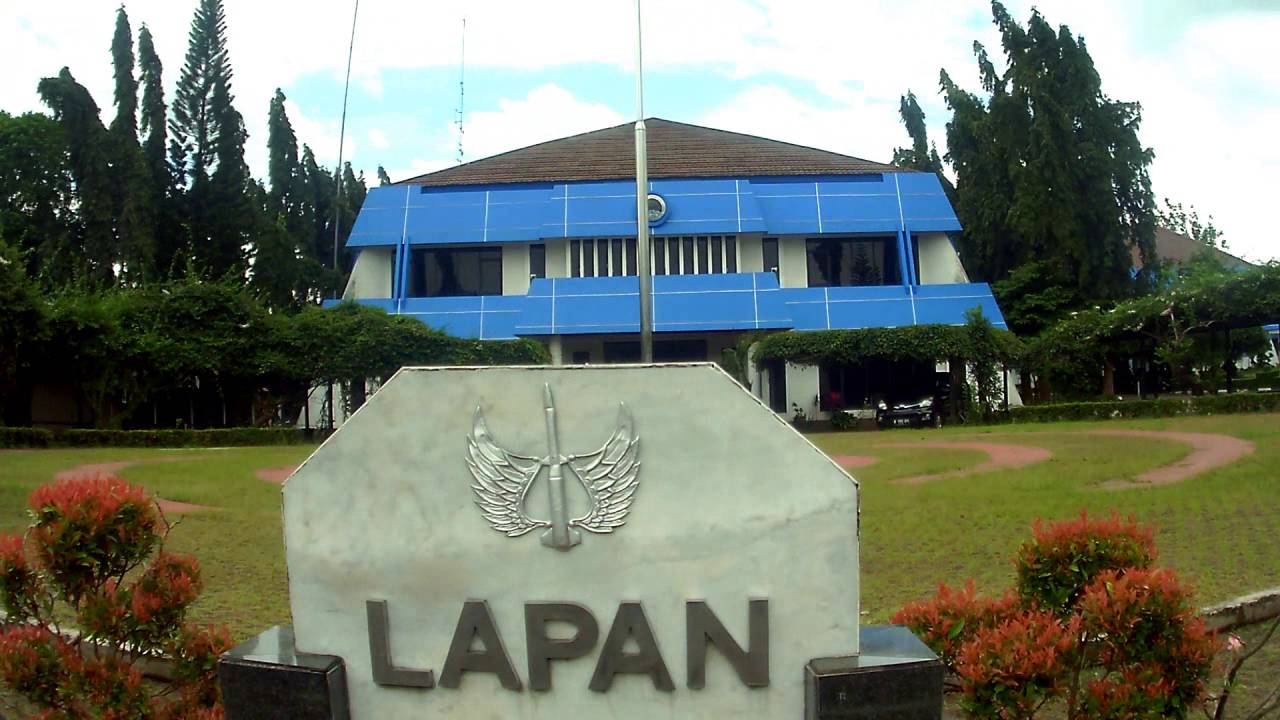
Indonesia se está sumando como nación que desea dar un gran salto, no solamente desde el ámbito de la industria aeronáutica con el ambisioso proyecto de la Regio Aviasi Industri con su aeronave turboprop R80, sino además se proyecta al espacio de la mano del Instituto Nacional de Aeronáutica y Espacio de Indonesia, LAPAN que tiene un futuro brillante por delante.

La República de indonesia se lanza por encima de la línea Kármán, la frontera imaginaria a 100 km sobre la tierra, donde la aviación se transforma en viajes espaciales. Indonesia ha tenido sus propios satélites durante mucho tiempo: el Lapan para la investigación científica y los satélites Palapa para la comunicación desde 1976, pero todo eso ahora se está recabando de los Estados Unidos, Guayana Francesa o la India. La elección del nuevo centro espacial LAPAN se encuentra en la isla de Biak. El puerto espacial de Biak se encuentra en una isla al norte de la Nueva Guinea de Indonesia.

En 1965, el South Tasch en Java Occidental abrió el Stasiun Peluncuran Roket, la estación de lanzamiento de cohetes LAPAN, que se utiliza para lanzar pequeños cohetes que investigan la atmósfera y para probar material. En la actualidad, el desarrollo de la industria espacial impulsa a Indonesia a la órbita externa, perfilándose como un país que está alcanzando la carrera hacia la atmósfera exterior, mása allá de la Línea Kármán. Idealmente ubicado casi en el ecuador, la Estación Espacial Biakfacilita el lanzamiento de naves hacia el espacio. La isla también ofrece acceso gratuito al Pacífico para vuelos de prueba. Se ha reservado un área enorme desde la década de 1980, y el puerto espacial se está desarrollando allí.

Además de diseñar satélites, LAPAN quiere hacerse cargo del lanzamiento espacial en 2024 y tener el espacio y los conocimientos listos para eso. El puerto espacial de Biak se utiliza exclusivamente para satélites de comunicación y meteorológicos y para otros fines pacíficos. Se busca la colaboración con otros países para conocimiento técnico, construcción y lanzamiento. La ubicación en una isla ofrece la posibilidad de arrojar desechos de cohetes (de varias etapas) al mar. Se espera que el puerto espacial de Biak también orbite satélites de otros países.

Protestas étnicas

La isla de Biak ha estado en posesión de los papúes durante siglos, pero desde 1980 han sido expulsados ​​para hacer posible la construcción del puerto espacial de Biak. En este proceso, el gobierno ha prometido comprar solo 15 hectáreas, pero ha alcanzado las 100 ha. ¿Pero son 100 ha suficientes? Los expertos afirman que pronto se necesitarán 700 hectáreas y que la población, que considera la isla como la tierra de los antepasados, quiere recuperar la tierra. Esa lucha ya se perdió de antemano porque Indonesia no está interesada en la población de lo que una vez fue la Nueva Guinea holandesa. AW-Icon AW001

Image result for LAPAN buildingIndonesia and its space race

Indonesia is developing the brilliant aerospace career

Indonesia is joining as a nation that wishes to make a great leap, not only from the field of the aeronautical industry with the ambitious project of the Aviasi Industri Regio with its R80 turboprop aircraft, but also projected into the space of the National Institute of Aeronautics and Space of Indonesia, LAPAN that has a bright future towards the future.

The Republic of Indonesia launches above the Karman line, the imaginary border 100 km above the earth, where aviation is transformed into space travel. Indonesia has had its own satellites for a long time: the Lapan for scientific research and the Palapa satellites for communication since 1976, but all that is now being sought from the United States, French Guiana or India. The choice of the new LAPAN space center is located on the island of Biak. The Biak spaceport is located on an island north of the New Guinea of ​​Indonesia.

In 1965, the South Tasch in West Java opened the Stasiun Peluncuran Rocket, the LAPAN rocket launch station, which is used to launch small rockets that investigate the atmosphere and to test material. At present, the development of the space industry drives Indonesia into the external orbit, becoming a country that is reaching the race to the outer atmosphere, beyond the Karman Line. Ideally located almost on the equator, the Biakfacilita Space Station launching ships into space. The island also offers free access to the Pacific for test flights. A huge area has been reserved since the 1980s, and the spaceport is developing there.

In addition to designing satellites, LAPAN wants to take over the space launch in 2024 and have space and knowledge ready for that. The Biak spaceport is used exclusively for communication and meteorological satellites and for other peaceful purposes. Collaboration with other countries is sought for technical knowledge, construction and launch. The location on an island offers the possibility of dumping rocket debris (multi-stage) into the sea. The Biak spaceport is also expected to orbit satellites from other countries.

Ethnic protests

The island of Biak has been in the possession of the Papuans for centuries, but since 1980 they have been expelled to make possible the construction of the Biak spaceport. In this process, the government has promised to buy only 15 hectares but has reached 100 ha. But are 100 has enough? Experts say that 700 hectares will soon be needed and that the population, which considers the island as the land of the ancestors, wants to recover the land. That fight was already lost beforehand because Indonesia is not interested in the population of what was once Dutch New Guinea. AW-Icon AW002

Image result for Lapan indonesiaIndonesia dan perlombaan antariksa

Indonesia sedang mengembangkan karir dirgantara yang cemerlang

Indonesia bergabung sebagai negara yang ingin melakukan lompatan besar, tidak hanya dari bidang industri penerbangan dengan proyek ambisius Aviasi Industri Regio dengan pesawat turboprop R80-nya, tetapi juga diproyeksikan ke ruang National Institute of Penerbangan dan Antariksa Indonesia, LAPAN yang memiliki masa depan cerah menuju masa depan.

Republik Indonesia meluncurkan di atas garis Karman, perbatasan imajiner 100 km di atas bumi, di mana penerbangan diubah menjadi perjalanan ruang angkasa. Indonesia telah memiliki satelit sendiri sejak lama: Lapan untuk penelitian ilmiah dan satelit Palapa untuk komunikasi sejak tahun 1976, tetapi semua itu sekarang sedang dicari dari Amerika Serikat, Guyana Prancis atau India. Pilihan pusat ruang angkasa LAPAN baru terletak di pulau Biak. Pelabuhan antariksa Biak terletak di sebuah pulau di utara Pulau Papua.

LAPAN_Indonesia.png

Pada tahun 1965, Tasch Selatan di Jawa Barat membuka Stasiun Peluncuran Roket, stasiun peluncuran roket LAPAN, yang digunakan untuk meluncurkan roket kecil yang menyelidiki atmosfer dan untuk menguji bahan. Saat ini, pengembangan industri luar angkasa mendorong Indonesia ke orbit eksternal, menjadi negara yang mencapai perlombaan ke atmosfer luar, di luar Garis Karman. Berada hampir di khatulistiwa, Stasiun Luar Angkasa Biakfacilita meluncurkan kapal ke luar angkasa. Pulau ini juga menawarkan akses gratis ke Pasifik untuk penerbangan uji. Daerah yang sangat luas telah dicadangkan sejak 1980-an, dan pelabuhan antariksa berkembang di sana.

Selain merancang satelit, LAPAN ingin mengambil alih peluncuran ruang pada tahun 2024 dan memiliki ruang dan pengetahuan yang siap untuk itu. Pelabuhan antariksa Biak digunakan secara eksklusif untuk komunikasi dan satelit meteorologi dan untuk tujuan damai lainnya. Kolaborasi dengan negara lain dicari untuk pengetahuan teknis, konstruksi dan peluncuran. Lokasi di sebuah pulau menawarkan kemungkinan membuang puing roket (multi-stage) ke laut. Pelabuhan antariksa Biak juga diperkirakan mengorbit satelit dari negara lain.

Protes etnis

Dan bukan hanya karena alasan lingkungan. Pulau Biak telah menjadi milik orang Papua selama berabad-abad, tetapi sejak 1980 mereka telah diusir untuk memungkinkan pembangunan pelabuhan antariksa Biak. Dalam proses ini, pemerintah telah berjanji untuk membeli hanya 15 hektar, tetapi telah mencapai 100 ha. Tetapi apakah 100 sudah cukup? Para ahli mengatakan bahwa 700 hektar akan segera dibutuhkan dan bahwa penduduk, yang menganggap pulau itu sebagai tanah leluhur, ingin memulihkan tanah tersebut. Pertarungan itu sudah hilang sebelumnya karena Indonesia tidak tertarik pada populasi yang dulunya adalah Papua Nugini. AW-Icon AW002

Image result for Lapan Space indonesiaIndonesië en zijn ruimterace

Indonesië ontwikkelt de briljante ruimtevaartcarrière

Indonesië treedt toe als een natie die een grote sprong wil maken, niet alleen vanuit de luchtvaartindustrie met het ambitieuze project van de Aviasi Industri Regio met zijn R80-turbopropvliegtuigen, maar ook geprojecteerd in de ruimte van het National Institute of Luchtvaart en ruimtevaart van Indonesië, LAPAN met een mooie toekomst voor de toekomst.

De Republiek Indonesië lanceert boven de Karman-lijn, de denkbeeldige grens 100 km boven de aarde, waar de luchtvaart wordt omgezet in ruimtevaart. Indonesië heeft sinds lange tijd zijn eigen satellieten: de Lapan voor wetenschappelijk onderzoek en de Palapa-satellieten voor communicatie sinds 1976, maar dat alles wordt nu gezocht in de Verenigde Staten, Frans Guyana of India. De keuze voor het nieuwe LAPAN-ruimtecentrum bevindt zich op het eiland Biak. De Biak-ruimtehaven ligt op een eiland ten noorden van Nieuw-Guinea in Indonesië.

In 1965 opende de South Tasch in West-Java het Stasiun Peluncuran Roket, het LAPAN raketlanceringsstation, dat wordt gebruikt om kleine raketten te lanceren die de atmosfeer onderzoeken en materiaal te testen. Op dit moment drijft de ontwikkeling van de ruimtevaartindustrie Indonesië de externe baan in en wordt een land dat de race naar de buitenatmosfeer bereikt, voorbij de Karmanlinie. Ideaal gelegen bijna op de evenaar, het Biakfacilita Space Station lanceert schepen in de ruimte. Het eiland biedt ook gratis toegang tot de Stille Oceaan voor testvluchten. Sinds de jaren tachtig is een enorm gebied gereserveerd en de ruimtehaven ontwikkelt zich daar.

Naast het ontwerpen van satellieten, wil LAPAN de lancering van de ruimte in 2024 overnemen en de ruimte en kennis daarvoor gereed hebben. De Biak-ruimtehaven wordt uitsluitend gebruikt voor communicatie- en meteorologische satellieten en voor andere vreedzame doeleinden. Samenwerking met andere landen wordt gezocht voor technische kennis, constructie en lancering. De locatie op een eiland biedt de mogelijkheid om raketafval (multi-stage) in zee te dumpen. De Biak-ruimtehaven zal naar verwachting ook in een baan rond satellieten uit andere landen draaien.

Etnische protesten

En niet alleen om milieuredenen. Het eiland Biak is al eeuwen in het bezit van de Papua’s, maar sinds 1980 zijn ze verdreven om de bouw van de Biak-ruimtehaven mogelijk te maken. In dit proces heeft de regering beloofd slechts 15 hectare te kopen, maar heeft het 100 ha bereikt. Maar zijn 100 genoeg? Experts zeggen dat er binnenkort 700 hectare nodig zal zijn en dat de bevolking, die het eiland als het land van voorouders beschouwt, het land wil herstellen. Dat gevecht was al van tevoren verloren omdat Indonesië niet geïnteresseerd is in de bevolking van wat ooit Nederlands Nieuw-Guinea was. AW-Icon AW002

Image result for Kármán line

KÁRMÁN LINE

The Kármán line is an attempt to define a boundary between Earth’s atmosphere and outer space. This is important for legal and regulatory measures; aircraft and spacecraft fall under different jurisdictions and are subject to different treaties.


Ξ A I R G W A Y S Ξ
SOURCE: Airgways.com
DBk: Trefpuntazie.com / Airgways.com / Teknoreview.net
AW-POST: 201912072331AR

A\W   A I R G W A Y S ®

Starliner completa test en CST-100

Resultado de imagen para Starliner completes test on CST-100AW | 2019 11 05 08:48 | AEROSPACE

Boeing-Company-Logo.jpgBoeing Starliner completa prueba exitosa de aborto de plataforma

The Boeing Company realizó hoy una prueba crucial en el camino para devolver a los Estados Unidos a las capacidades de lanzamiento de vuelos espaciales humanos al completar una prueba exitosa de aborto de plataforma del CST-100 Starliner. La prueba del sistema de escape de la tripulación es un hito crítico antes del primer lanzamiento de la tripulación.

Resultado de imagen para nasa logoDurante la prueba de dos minutos diseñada para simular una emergencia de la plataforma de lanzamiento, una nave espacial Starliner sin tripulación despegó por su propio poder desde un banco de pruebas en el Campo de Misiles White Sands del Ejército de EE.UU. en Nuevo México. El vehículo pudo demostrar el rendimiento adecuado de numerosos sistemas integrados que serían necesarios para impulsar con éxito la cápsula lejos de su vehículo de lanzamiento Atlas V en cualquier momento durante el ascenso.

«El equipo de prueba y la nave espacial funcionaron sin problemas. Las pruebas de escenarios de emergencia son muy complejas, y hoy nuestro equipo validó que la nave espacial mantendrá segura a nuestra tripulación en el improbable caso de un aborto», dijo John Mulholland, Gerente del Programa Starliner.

En T-0 en la cuenta regresiva, Starliner disparó sus cuatro motores de aborto de lanzamiento (LAE) y varios propulsores de maniobra orbital y control de actitud (OMAC). Con 190.000 libras de empuje, la nave espacial se empujó rápidamente hacia arriba y lejos del banco de pruebas, mostrando cuán rápido el sistema puede alejar a las tripulaciones del peligro si es necesario. El vehículo voló casi una milla en menos de 20 segundos antes de desplegar su escudo térmico delantero y paracaídas.

Casi 34 segundos después de la prueba, el servicio y los módulos de la tripulación se separaron. A medida que el módulo de la tripulación descendía lentamente a un aterrizaje seguro debajo de los paracaídas, el módulo de servicio continuó cayendo libremente como estaba planeado.

Poco más de un minuto después de la prueba, el escudo térmico de la base del vehículo se separó, lo que permitió que las bolsas de aire de la nave espacial Starliner se desplegaran e inflaran en preparación para el aterrizaje. El módulo de la tripulación aterrizó 95 segundos después de que se encendieron los motores abortados.

«Hemos probado todos estos sistemas individualmente, por lo que sabemos que el sistema de propulsión se dispara en los niveles previstos, y sabemos que los paracaídas pueden soportar el vehículo y reducir la velocidad de forma segura, pero la prueba real es asegurarse de que esos sistemas puedan funcionar juntos. Ahí es cuando sabes que estos sistemas están listos para volar personas», dijo la Directora de Vuelos de Prueba de aborto de la plataforma de Boeing, Alicia Evans.

Durante las próximas 24 horas, el módulo de tripulación de Starliner se recuperará para su evaluación y análisis. La realización de esta prueba en tierra ayuda a preservar el módulo de la tripulación para su reutilización, y Boeing utilizará los datos de esta prueba para validar aún más el rendimiento del sistema durante las operaciones de aterrizaje nominal. Starliner está diseñado para ser la primera cápsula de la tripulación orbital de fabricación estadounidense en aterrizar en tierra, lo que ayudará a que los módulos de la tripulación sean reutilizables hasta 10 veces.

Boeing se compromete a proporcionar servicios de transporte seguros y confiables a destinos de órbita terrestre baja, incluida la Estación Espacial Internacional, donde la investigación en curso mejora la vida en la Tierra, apoya una industria comercial en crecimiento y permite misiones de larga duración de regreso a la luna y a Marte.

La prueba de aborto en la plataforma de Starliner es un hito crítico antes de volar a Boeing y los astronautas de la NASA al laboratorio en órbita en la Prueba de vuelo de tripulación de Starliner, y para volar misiones operativas a la estación de la NASA en el futuro cercano. AW-Icon AW001

Resultado de imagen para Starliner completes test on CST-100Starliner completes test on CST-100

Boeing Starliner completes successful platform abortion test

The Boeing Company conducted a crucial test on the way today to return the United States to human spaceflight launch capabilities by completing a successful CST-100 Starliner platform abortion test. The crew’s exhaust system test is a critical milestone before the crew’s first launch.

During the two-minute test designed to simulate an emergency launch platform, an unmanned Starliner spacecraft took off by its own power from a test bench at the US Army White Sands Missile Field, US, in New Mexico. The vehicle was able to demonstrate the proper performance of numerous integrated systems that would be necessary to successfully propel the capsule away from its Atlas V launch vehicle at any time during the ascent.

«The test equipment and the spacecraft ran smoothly. The emergency scenario tests are very complex, and today our team validated that the spacecraft will keep our crew safe in the unlikely event of an abortion», said John Mulholland, Starliner program manager.

In T-0 in the countdown, Starliner fired its four launch abortion engines (LAE) and several orbital maneuvers and attitude control (OMAC) thrusters. With 190,000 pounds of thrust, the spacecraft quickly pushed up and away from the test bench, showing how fast the system can take crews away from danger if necessary. The vehicle flew almost a mile in less than 20 seconds before deploying its front heat shield and parachute.

Almost 34 seconds after the test, the service, and the crew modules separated. As the crew module slowly descended to a safe landing under the parachutes, the service module continued to fall freely as planned.

Just over a minute after the test, the heat shield of the base of the vehicle was separated, which allowed the airbags of the Starliner spacecraft to deploy and inflate in preparation for landing. The crew module landed 95 seconds after the aborted engines were started.

«We have tested all these systems individually, so we know that the propulsion system trips at the expected levels, and we know that parachutes can support the vehicle and reduce speed safely, but the real test is to make sure that those systems can work together. » That’s when you know that these systems are ready to fly people», said Boeing platform’s abortion test Flight Director, Alicia Evans.

Over the next 24 hours, the Starliner crew module will be retrieved for evaluation and analysis. Performing this ground test helps preserve the crew module for reuse, and Boeing will use the data from this test to further validate the system performance during nominal landing operations. Starliner is designed to be the first US-made orbital crew capsule to land on land, which will help the crew modules be reusable up to 10 times.

Boeing is committed to providing safe and reliable transportation services to low-Earth orbit destinations, including the International Space Station, where ongoing research improves life on Earth, supports a growing commercial industry and allows long-term return missions To the moon and Mars.

The abortion test on the Starliner platform is a critical milestone before flying Boeing and NASA astronauts to the lab in orbit on the Starliner Crew Flight Test, and for flying operational missions to the NASA station at The near future. AW-Icon AW002


Ξ A I R G W A Y S Ξ
SOURCE: Airgways.com
DBk: Boeing.com / Nasa.gov
AW-POST: 201911050848AR

A\W   A I R G W A Y S ®

Pruebas cápsula aeroespacial Starliner

CST-100 Starliner in orbitAW | 2019 10 14 14:20 | AEROSPACE

NASA_logo.svg.pngNasa y Boeing acuerdan lanzamientos pruebas cápsula tripulada Starliner para Noviembre 2019

La NASA se está acercando a dejar de depender de sus astronautas que viajan en avión al espacio desde Rusia, ya que el Boeing Starliner tiene una nueva fecha objetivo para su primera misión no tripulada a la Estación Espacial Internacional. Boeing CST-100 Starliner junto con SpaceX Crew Dragon son los dos vehículos con los que la NASA está trabajando para transportar a los Boeing-Logo.svgastronautas a la EEI desde los EE. UU. Por primera vez desde que finalizó el programa del transbordador espacial en 2011. Desde entonces, los astronautas han tenido que volar a bordo de Soyuz lanzamiento de cápsulas desde Kazajstán.

La Nasa y Boeing han acordado las fechas tentativas del primer vuelo para los lanzamientos de prueba de la cápsula tripulada Starliner previos a su primera misión, con el objetivo de que sean fechas realistas. El programa aeroespacial Boeing CST-100 Starliner comienza con las pruebas definitivas para su puesta en órbita espacial. La primera prueba que se va a llevar a cabo será la del sistema de escape en la plataforma y tendrá lugar el 4 Noviembre 2019 en White Sands Missile Range en Nuevo México. El 17 Diciembre 2019 se va a realizar la prueba de vuelo orbital en Space Launch Complex 41 en la estación de la Fuerza Aérea de Cabo Cañaveral en Florida a bordo de un cohete Atlas V del Complejo de Lanzamiento Espacial 41.

La Nasa y sus socios comerciales siguen comprometidos con los astronautas que participarán en esta misión lo más rápido posible sin comprometer la seguridad de la tripulación y “siempre daremos prioridad a la seguridad sobre el cronograma. A medida que se revisen más fechas, la Nasa actualizará su calendario”, ha explicado la agencia en un comunicado.AW-Icon AW001

Resultado de imagen para Boeing CST-100 StarlinerStarliner aerospatial capsule tests

Nasa and Boeing agree to launch Starliner manned capsule tests for November 2019

Resultado de imagen para Boeing CST-100 StarlinerNASA is about to stop relying on its astronauts who travel by plane to space from Russia, as the Boeing Starliner has a new target date for its first unmanned mission to the International Space Station. Boeing CST-100 Starliner together with SpaceX Crew Dragon are the two vehicles with which NASA is working to transport astronauts to the ISS from the US. UU. For the first time since the space shuttle program ended in 2011. Since then, astronauts have had to fly aboard Soyuz capsule launches from Kazakhstan.

Nasa and Boeing have agreed on the tentative dates of the first flight for the test launches of the Starliner manned capsule prior to their first mission, with the aim of making them realistic dates. The Boeing CST-100 Starliner aerospace program begins with the definitive tests for its placement in space orbit. The first test to be carried out will be that of the exhaust system on the platform and will take place on November 4, 2019, at White Sands Missile Range in New Mexico. On December 17, 2019, the orbital flight test will be conducted at Space Launch Complex 41 at the Cape Canaveral Air Force Station in Florida aboard an Atlas V rocket of Space Launch Complex 41.

NASA and it’s business partners remain committed to the astronauts who will participate in this mission as quickly as possible without compromising the safety of the crew and “we will always give priority to safety over the schedule. As more dates are reviewed, NASA will update its calendar”, the agency explained in a statement.AW-Icon AW002


Ξ A I R G W A Y S Ξ
SOURCE: Airgways.com
DBk: Nasa.gov / Boeing.com / Airgways.com
AW-POST: 201910141420AR

A\W   A I R G W A Y S ®


Tifón Hagibis amenaza Japón

AW-Nasa_Typhoon_Hagibis.pngAW | 2019 10 11 14:18 | AVIATION SAFETY / AEROSPACE

AW-Typhoon Hagibis.pngTifón Hagibis amenaza Japón transformándose en el más letal del siglo

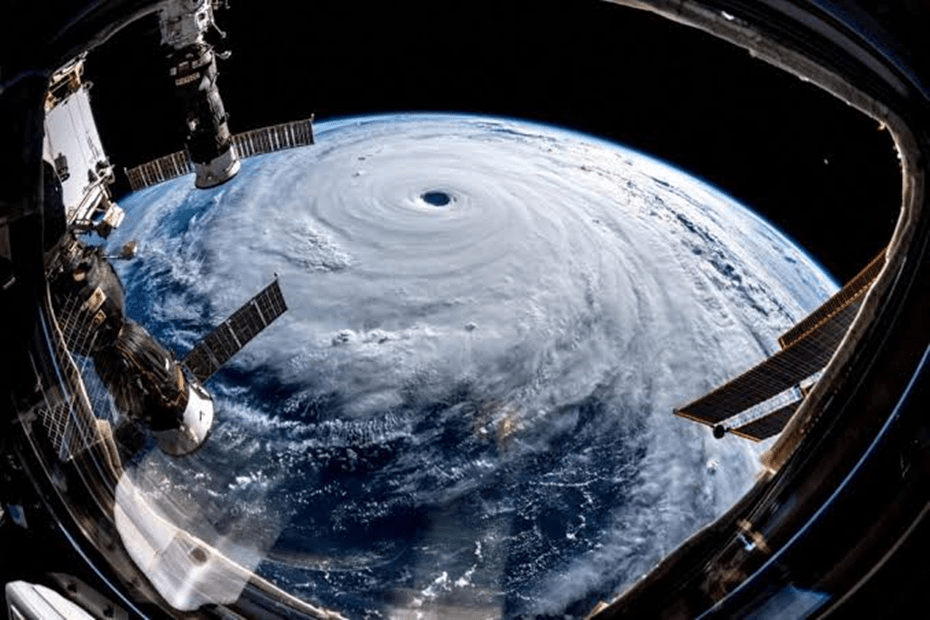
El Tifón Hagibis está siendo considerado el súper tifón del siglo amenazando a Japón. Las aerolíneas están cancelando 1.600 vuelos. Están pronosticando un tifón de Categoría 5 (CAT5) considerando el más fuerte del siglo.

El satélite Suomi NPP de la NASA-NOAA pasó sobre Supertyphoon Hagibis y el instrumento VIIRS a bordo capturó esta imagen de la tormenta el 7 Octubre 2019 a las 12:15 p.m. EDT (1615 UTC). La central nuclear de Suomi encontró que las tormentas eléctricas más fuertes alrededor del centro tenían nubes.

El mayor impacto probablemente será en los vuelos. El ojo de la tormenta tiene solo 55 millas de ancho, y las imágenes satelitales muestran que toda la tormenta es actualmente más grande que toda la nación de Japón. Hagibis será uno de los tifones más fuertes en golpear directamente a la nación isleña en décadas. Con una tormenta de este tamaño, o cualquier tormenta mayor, la seguridad es primordial, sin embargo, las autoridades japonesas parecen confiadas en sus preparativos de planificación.

Impacto en aerolíneas y aeropuertos

Todos los vuelos de Nippon Airways han cancelado todos los vuelos nacionales que salen de Tokio el sábado. Parece que la capital recibirá un golpe directo de la tormenta, pero nadie en la capital parece estar demasiado preocupado en este momento. Aunque la Agencia Meteorológica ha clasificado la tormenta como violenta, la categorización de mayor intensidad, los operadores ferroviarios hasta ahora solo han advertido que puede haber cancelaciones.

AW-70077600.jpg

Japan Airlines ha seguido el ejemplo de ANA y canceló el 90% de los vuelos nacionales, sin embargo, ambas compañías son optimistas sobre las salidas de la mañana del sábado que permanecen programadas hasta las 8 am. Además, ambas aerolíneas esperan que algunos vuelos internacionales se reanuden a más tardar el sábado por la noche.

Los aeropuertos de Tokio han sido los más afectados por la interrupción, con las dos principales compañías japonesas, ANA y JAL, cancelando 558 y 540 vuelos respectivamente. Se están viendo cancelaciones de vuelos en todo el mundo hacia y desde Tokio, con British Airways raspando vuelos desde Londres, y los vuelos a América del Norte también se han visto afectados. Casi todas las principales aerolíneas del mundo se han visto afectadas por una de las tormentas más grandes que han golpeado a Japón directamente, pero la sensación en el terreno aquí es que la interrupción no debería durar más allá de una ventana de 24 horas.

Tifón Hagibis

La tormenta Hagibis tiene un diámetro que cubre unos inmensos 1.400 km. Hasta el último momento, nadie ni en ninguna parte en vastas áreas de Japón está a salvo de esta tormenta expansiva. Este fin de semana es luna llena, lo que significa que los niveles del mar son más altos que el promedio. Dado que se prevé que la marejada ciclónica y las olas alcancen hasta 13 metros en algunas áreas, las inundaciones costeras podrían ser devastadoras. La fuerza del supertifón tendrá ráfagas de viento previstas de más de 240 km/h, y un impacto directo en Tokio cada vez más probable en las próximas horas, podría ser una de las tormentas más fuertes en Japón. En términos de presión, Hagibis también podría ser el más fuerte de la historia. Con una presión actual de 900 hPa, esto ya es más bajo que el huracán Dorian que devastó las Bahamas a principios de este año, registrando una presión de 910 hPa. El ciclón tropical más fuerte registrado fue el Typhoon Tip, que alcanzó 870 hPa y tocó tierra en Filipinas en 1979. Todas las aerolíneas japonesas sugieren revisar sus sitios web antes de viajar mañana.

Informes de la NASA

El Satélite Suomi NPP de la NASA-NOAA proporcionó a los pronosticadores una imagen visible compuesta de la muy grande Super Typhoon Hagibis en el Océano Pacífico noroccidental el 10 Octubre 2019. El Satélite Suomi NPP ha capturado tres imágenes para mostrar toda la tormenta que reveló que mantenía su impresionante estructura. Las imágenes visibles de los satélites de la NASA ayudan a los pronosticadores a comprender si una tormenta se está organizando o debilitando, en función de los cambios en su estructura. El instrumento de la Suite de Radiómetro de Imagen Infrarroja Visible (VIIRS) a bordo de Suomi NPP proporcionó tres imágenes visibles de Hagibis el 10 de octubre. Esas imágenes tuvieron que unirse para mostrar toda la tormenta en NASA Worldview, el Sistema de Datos e Información del Sistema de Observación de la Tierra (EOSDIS) ) producto de datos en el Centro de Vuelo Espacial Goddard de la NASA en Greenbelt, Maryland. La imagen mostró un ojo rodeado de poderosas tormentas eléctricas y una gran «cola» de nubes que fluyen hacia el noreste del centro.

Imagen satelital de Hagibis

El satélite Suomi NPP de la NASA-NOAA pasó sobre el súper tifón Hagibis y reveló que la tormenta mantiene un ojo rodeado de poderosas tormentas eléctricas y una gran «cola» de nubes que fluye hacia el noreste del centro. Crédito: NASA Worldview, Sistema de Datos e Información del Sistema de Observación de la Tierra (EOSDIS). A las 5 a.m.EDT (0900 UTC), NHC informó que el centro de Super Typhoon Hagibis estaba ubicado cerca de la latitud 24.4 grados norte y longitud 139.4 grados este. Hagibis está a unos 654 millas (560 km) al sur de Yokosuka, Japón. Hagibis se está moviendo hacia el norte-noroeste. Los vientos máximos sostenidos son cerca de 161 mph (259 kph / 140 nudos) con ráfagas más altas.

El Tifón Hagibis se mantiene en intensidad máxima como un huracán de Categoría 5 (CAT 5) en la escala de viento de huracanes Saffir-Simpson. El sistema continuará de norte a noroeste a medida que avanza una tendencia de debilitamiento en el enfoque hacia Japón. El Centro Conjunto de Advertencia de Tifones señaló: «Hagibis tocará tierra rápidamente cerca de Yokosuka a través de Sagami wan poco después de 48 horas (después de las 5 a.m. EDT (0900 UTC) del 10 de octubre) antes de regresar al Océano Pacífico».

Los huracanes son el evento climático más poderoso en la Tierra. La experiencia de la NASA en la exploración espacial y científica contribuye a los servicios esenciales prestados al pueblo estadounidense por otras agencias federales, como el pronóstico del tiempo de huracanes.AW-Icon AW001

Resultado de imagen para typhoon Hagibis mapTyphoon Hagibis threatens Japan

Typhoon Hagibis threatens Japan becoming the deadliest of the century

Typhoon Hagibis is being considered the super typhoon of the century threatening Japan. The airlines are canceling 1,600 flights. They are forecasting a Typhoon Category 5 (CAT 5) considering the strongest of the century.

NASA-NOAA’s Suomi NPP satellite passed over Supertyphoon Hagibis and the VIIRS instrument onboard captured this image of the storm on October 7, 2019, at 12:15 p.m. EDT (1615 UTC). The Suomi nuclear power plant found that the strongest thunderstorms around the center had clouds.

The biggest impact will probably be on flights. The eye of the storm is only 55 miles wide, and satellite images show that the entire storm is currently larger than the entire nation of Japan. Hagibis will be one of the strongest typhoons to hit the island nation directly in decades. With a storm of this size, or any major storm, security is paramount, however, the Japanese authorities seem confident in their planning preparations.

Impact on airlines and airports

All Nippon Airways flights have canceled all domestic flights departing from Tokyo on Saturday. It seems that the capital will receive a direct blow from the storm, but no one in the capital seems to be too worried right now. Although the Meteorological Agency has classified the storm as violent, the categorization of greater intensity, railway operators have so far only warned that there may be cancellations.

Japan Airlines has followed the example of ANA and canceled 90% of domestic flights, however, both companies are optimistic about departures on Saturday morning that remain scheduled until 8 am. In addition, both airlines expect some international flights to resume no later than Saturday night.

Tokyo airports have been the most affected by the interruption, with the two main Japanese companies, ANA and JAL, canceling 558 and 540 flights respectively. Cancellations of flights are being seen worldwide to and from Tokyo, with British Airways scraping flights from London, and flights to North America have also been affected. Almost all the major airlines in the world have been affected by one of the biggest storms that have hit Japan directly, but the feeling on the ground here is that the interruption should not last beyond a 24-hour window.

Typhoon Hagibis

The Hagibis storm has a diameter that covers an immense 1,400 km. Until the last moment, nobody and nowhere in vast areas of Japan are safe from this expansive storm. This weekend is a full moon, which means that sea levels are higher than average. Since the storm surge and waves are expected to reach up to 13 meters in some areas, coastal flooding could be devastating. The strength of the supertyphoon will have expected wind gusts of more than 240 km/h, and a direct impact on Tokyo increasingly likely in the next few hours could be one of the strongest storms in Japan. In terms of pressure, Hagibis could also be the strongest in history. With a current pressure of 900 hPa, this is already lower than Hurricane Dorian that devastated the Bahamas earlier this year, registering a pressure of 910 hPa. The strongest tropical cyclone recorded was the Typhoon Tip, which reached 870 hPa and made landfall in the Philippines in 1979. All Japanese airlines suggest checking their websites before traveling tomorrow.

NASA reports

NASA-NOAA Suomi NPP Satellite provided the forecasters with a visible image composed of the very large Super Typhoon Hagibis in the northwestern Pacific Ocean on October 10, 2019. The Suomi NPP Satellite has captured three images to show the entire storm that revealed that It maintained its impressive structure. Visible images from NASA satellites help forecasters understand if a storm is organizing or weakening, depending on changes in its structure. The instrument of the Visible Infrared Image Radiometer Suite (VIIRS) aboard Suomi NPP provided three visible images of Hagibis on October 10. These images had to join to show the entire storm at NASA Worldview, the Earth Observation System Data and Information System (EOSDIS) data product at NASA’s Goddard Space Flight Center in Greenbelt, Maryland. The image showed an eye surrounded by powerful thunderstorms and a large «tail» of clouds flowing northeast of the center.
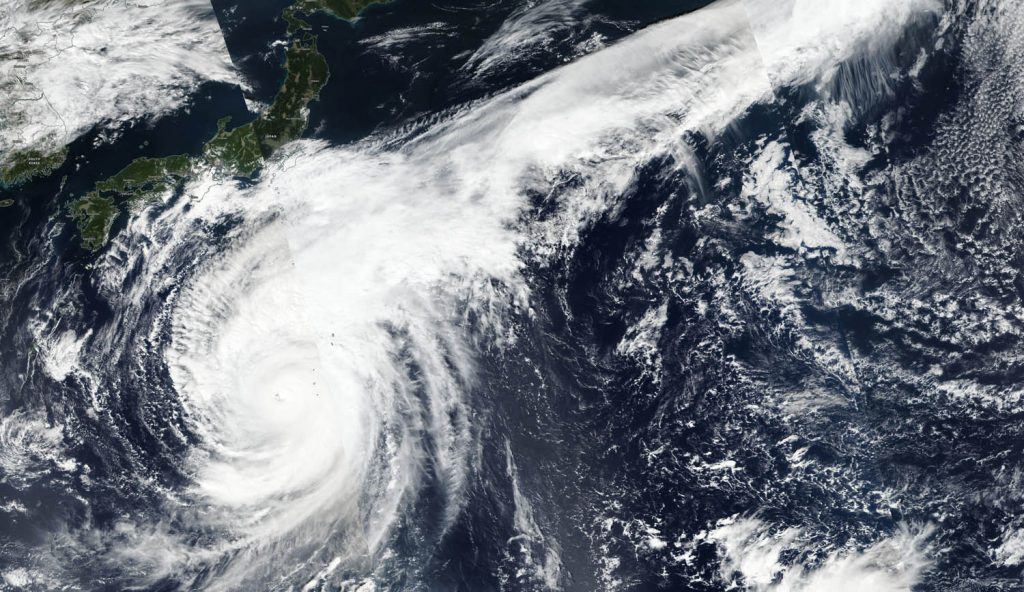
satellite image of HagibisNASA-NOAA’S SUOMI NPP SATELLITE PASSED OVER SUPER TYPHOON HAGIBIS AND REVEALED THE STORM MAINTAINING AN EYE SURROUNDED BY POWERFUL THUNDERSTORMS AND A LARGE “TAIL” OF CLOUDS STREAMING TO THE NORTHEAST OF THE CENTER. CREDIT: NASA WORLDVIEW, EARTH OBSERVING SYSTEM DATA AND INFORMATION SYSTEM (EOSDIS)

Hagibis satellite image

The NASA-NOAA Suomi NPP satellite passed over the super typhoon Hagibis and revealed that the storm keeps an eye surrounded by powerful thunderstorms and a large «tail» of clouds flowing northeast of downtown. Credit: NASA Worldview, Data and Information System of the Earth Observation System (EOSDIS). At 5 a.m. EDT (0900 UTC), NHC reported that the Super Typhoon Hagibis center was located near latitude 24.4 degrees north and longitude 139.4 degrees east. Hagibis is about 654 miles (560 km) south of Yokosuka, Japan. Hagibis is moving north-northwest. Maximum sustained winds are about 161 mph (259 kph / 140 knots) with higher gusts.

Typhoon Hagibis remains at a maximum intensity as a Category 5 hurricane (CAT 5) on the Saffir-Simpson hurricane wind scale. The system will continue from north to northwest as a trend of weakening in the approach to Japan progresses. The Joint Typhoon Warning Center noted: «Hagibis will quickly land near Yokosuka through Sagami wan shortly after 48 hours (after 5 am EDT (0900 UTC) on October 10) before returning to the Pacific Ocean».

Hurricanes are the most powerful weather event on Earth. NASA’s experience in space and scientific exploration contributes to the essential services provided to the American people by other federal agencies, such as hurricane weather forecasts.AW-Icon AW002


台風ハギビスが日本を脅かす

台風ハギビスは日本を世紀の最も致命的なものにすると脅している

台風ハギビスは、日本を脅かす世紀のスーパー台風と考えられています。航空会社は1,600便をキャンセルしています。彼らは、世紀最強を考慮した台風カテゴリー5(CAT 5)を予測しています。

NASA-NOAAのスオミNPP衛星はスーパータイフーンハギビスを通過し、搭載されたVIIRS機器は2019年10月7日午後12時15分にこの嵐の画像をキャプチャしました。 EDT(1615 UTC)。スオミ原子力発電所は、中心部周辺で最も強い雷雨に雲があったことを発見しました。

最大の影響はおそらくフライトにあります。嵐の目はたった55マイルの幅であり、衛星画像は嵐全体が現在日本全体よりも大きいことを示しています。ハギビスは、今後数十年で島国を直撃する最強の台風の一つになるでしょう。この規模の嵐、または大きな嵐の場合、安全は最重要ですが、日本の当局は計画の準備に自信を持っているようです。
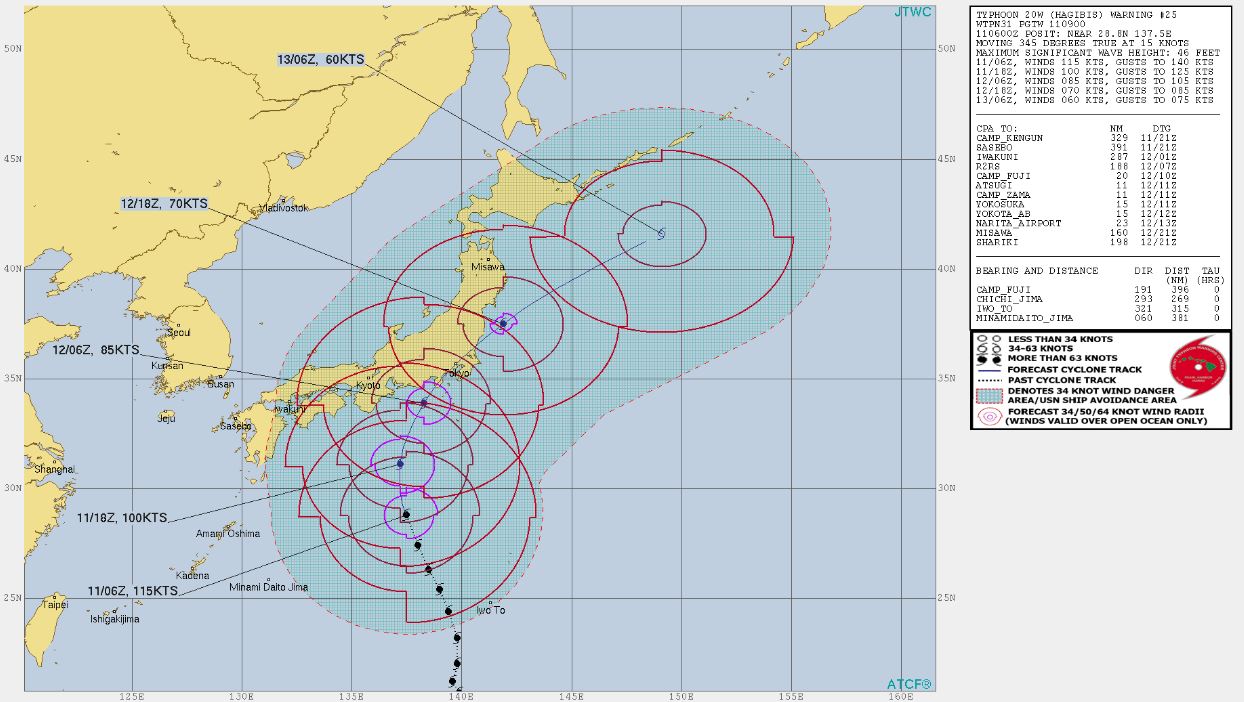
Resultado de imagen para 日本気象庁マップ台風ハギビス

航空会社と空港への影響

日本航空のすべての便は、土曜日に東京を出発するすべての国内便をキャンセルしました。首都は嵐から直接打撃を受けると思われるが、首都の誰も今あまり心配していないようだ。気象庁は暴風雨を暴力、より激しい分類に分類しましたが、鉄道事業者はこれまでにキャンセルがあるかもしれないと警告してきました。

日本航空はANAの例に従い、国内便の90%をキャンセルしましたが、両社は土曜日の午前8時まで予定されている出発について楽観的です。さらに、両方の航空会社は、土曜日の夜までにいくつかの国際便が再開することを期待しています。

東京空港は中断の影響を最も大きく受けており、日系2社のANAとJALがそれぞれ558便と540便をキャンセルしました。ブリティッシュ・エアウェイズはロンドンからのフライトをスクレイピングし、北米へのフライトも影響を受けており、東京との間で世界中でフライトのキャンセルが見られています。世界のほぼすべての主要航空会社は、日本を直撃した最大の嵐の1つに影響を受けていますが、ここでの地上での感覚は、中断が24時間を超えて続くべきではないということです。
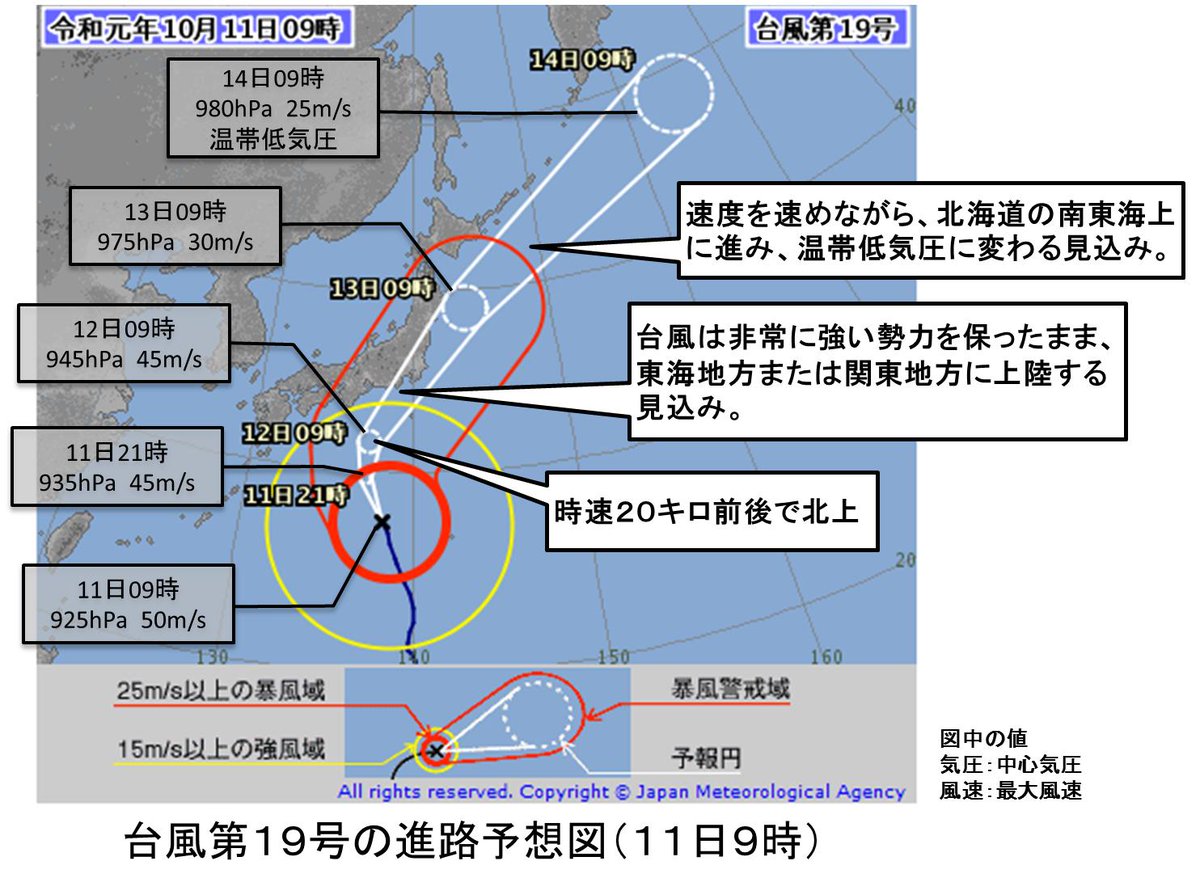
Resultado de imagen para 日本気象庁マップ台風ハギビス

台風ハギビス

ハギビスの嵐の直径は1,400 kmに及びます。最後の瞬間まで、日本の広大な地域の誰も、どこもこの広大な嵐から安全ではありません。この週末は満月です。つまり、海面は平均よりも高くなっています。高潮と波は一部の地域で最大13メートルに達すると予想されるため、沿岸の洪水は壊滅的な被害をもたらす可能性があります。超台風の強さは時速240 km以上の突風を予想しており、今後数時間で東京への直接的な影響が日本で最も強い嵐の1つになる可能性があります。プレッシャーの観点から、ハギビスは歴史上最強である可能性もあります。現在の圧力は900 hPaで、これはすでにバハマを壊滅させたハリケーンドリアンよりも低く、910 hPaの圧力を記録しています。記録された最も強い熱帯低気圧は台風先端で、それは870 hPaに達し、1979年にフィリピンに上陸しました。すべての日本の航空会社は明日旅行する前に彼らのウェブサイトをチェックすることを提案します。

NASAレポート

NASA-NOAAスオミNPPサテライトは、2019年10月10日に北西太平洋の非常に大きなスーパー台風ハギビスで構成される可視画像を予報者に提供しました。スオミNPPサテライトは、その印象的な構造。 NASA衛星からの可視画像は、その構造の変化に応じて、予報が嵐が組織化しているのか弱体化しているのかを予測するのに役立ちます。スオミNPPに搭載された可視赤外線画像放射計スイート(VIIRS)の機器は、10月10日にハギビスの3つの可視画像を提供しました。これらの画像は、NASAワールドビュー、メリーランド州グリーンベルトにあるNASAのゴダード宇宙飛行センターのデータ製品。画像は、強力な雷雨に囲まれた目と、中央の北東を流れる大きな「尾」を示していました。

はぎビス衛星画像

NASA-NOAAスオミNPP衛星は、スーパー台風ハギビスを通過し、嵐が強力な雷雨とダウンタウンの北東に流れる大きな雲の「尾」に囲まれていることを明らかにしました。クレジット:NASA Worldview、地球観測システム(EOSDIS)のデータおよび情報システム。 NHCは、午前5時(UTC)に、スーパー台風ハギビスセンターが北緯24.4度、東経139.4度近くにあると報告しました。ハギビスは日本の横須賀の南約654マイル(560 km)です。ハギビスは北北西に移動しています。最大持続風速は約161 mph(259 kph / 140ノット)で、突風が強くなります。

台風ハギビスは、Saffir-Simpsonハリケーン風スケールでカテゴリ5ハリケーン(CAT 5)として最大強度のままです。日本へのアプローチが弱体化する傾向が進むにつれて、このシステムは北から北西へと続きます。台風合同警報センターは、「ハギビスは太平洋に戻る前の48時間後(10月10日午前5時(0900 UTC)EDT後)に相模湾を通り横須賀近くにすぐに着陸する」と述べた。

ハリケーンは地球上で最も強力な天気イベントです。 NASAの宇宙探査と科学探査の経験は、ハリケーン天気予報など、他の連邦政府機関がアメリカ国民に提供する重要なサービスに貢献しています。AW-Icon AW002


62d987_25414a5d0d0d43a3bc6fc33f9b7e2e4b_mv2.gifDATA: La información procesada puede actualizarse debido al tipo de datos cambiantes, por lo que le sugerimos consultar periódicamente esta información.

DATA: The processed information can be updated due to the type of changing data, so we suggest you consult this information periodically.

データ:処理された情報は、変化するデータの種類により更新される可能性があるため、この情報を定期的に参照することをお勧めします。


Ξ A I R G W A Y S Ξ
SOURCE: Airgways.com
DBk: Jma.go.jp / Noaa.gov / Nhc.nasa.gov / Weather.com / Japan-forward.com / Forbes.com / Airgways.com  Nhk.or.jp / Travelweekly.co.uk
AW-POST: 201910111418AR

A\W   A I R G W A Y S ®