Corte eléctrico afectó a Argentina

AW-7000056.JPGAW | 2019 06 16 18:30 | AIR TRAFFIC

Falla eléctrica no ha afectado navegación aérea en Argentina

Una falla generalizada en el sistema de electricidad dejó a toda la Argentina continental y Uruguay sin electricidad, un apagón que un funcionario de la compañía de energía calificó de sin precedentes.

La causa del apagón todavía no se han establecido, pero gran parte de la Argentina se vio afectada por fuertes lluvias este fin de semana, y la empresa estatal de servicios públicos de Uruguay, UTE, dijo que la lluvia reciente dañó algunos sistemas y que aún era necesario repararlos.

La falla eléctrica se remonta a dos líneas de 500.000 voltios en un corredor que lleva la energía a Buenos Aires desde la Represa Yacyretá localizada en la Provincia de Corrientes y la República del Paraguay, que sirve de suministro a Argentina y Paraguay.

Argentina tiene más de 44 millones de personas, mientras que la población de Uruguay es de aproximadamente 3.5 millones. Una red eléctrica que sirve a ambas naciones se colapsó a las 07:07 am, cortando la electricidad en toda Argentina y afectando también a Uruguay, dijo la Secretaría de Energía de Argentina.

Operaciones vuelos

Los vuelos operaban normalmente, dijo Carlos Armentano, portavoz de Aeropuertos Argentina 2000, la compañía que opera la mayoría de los aeropuertos del país. En cambio los puertos argentinos se paralizaron por unas horas, dijo Guillermo Wade, Gerente de la Cámara de Actividades Portuarias y Marítimas.AW-Icon-TXT-01

Resultado de imagen para yacyretáElectrical cut affected Argentina

Electrical failure has not affected air navigation in Argentina

A generalized failure in the electricity system left the entire continental Argentina and Uruguay without electricity, a blackout that an official of the energy company described as unprecedented.

The cause of the blackout has not yet been established, but much of Argentina was affected by heavy rains this weekend, and Uruguay’s state utility UTE said the recent rain damaged some systems and that it was necessary to repair them.

The electrical fault goes back to two lines of 500,000 volts in a corridor that carries the energy to Buenos Aires from the Yacyretá Dam located in the Province of Corrientes and the Republic of Paraguay, which serves as a supply to Argentina and Paraguay.

Argentina has more than 44 million people, while the population of Uruguay is approximately 3.5 million. An electrical grid serving both nations collapsed at 07:07 am, cutting electricity throughout Argentina and also affecting Uruguay, the Argentine Energy Secretariat said.

Flight operations

The flights operated normally, said Carlos Armentano, spokesman for Aeropuertos Argentina 2000, the company that operates most of the country’s airports. On the other hand, the Argentine ports were paralyzed for a few hours, said Guillermo Wade, Manager of the Chamber of Port and Maritime Activities. A \ W


Ξ A I R G W A Y S Ξ
SOURCE: Airgways.com
DBk: Aa2000.com.ar / Nytimes.com / Airgways.com
AW-POST: 201906161830AR

A\W   A I R G W A Y S ®

Nace EC Plus Airline en Ecuador

AW-700043567.jpg

AW | 2019 06 16 18:09 | AIRLINES

EC Plus Airline es una nueva aerolínea en Ecuador

Ecuador inaugurará una nueva aerolínea denominada EC Plus Airline que ha solicitado el permiso para operar de vuelos domésticos regulares en el país. El nuevo proyecto de aerolínea ecuatoriana para vuelos domésticos pretende iniciar operaciones pronto.

Ecquator Airline S.A. es la firma de la aerolínea EC Plus Airline que ha solicitando ante el Consejo Nacional de Aviación Civil (CNAC) de Ecuador el permiso de operador aéreo (AOC), para la prestación del servicio de transporte aéreo, público, doméstico, regular, de pasajeros, carga y correo en forma combinada en todo el territorio continental ecuatoriano, a excepción de la Región Insular de Galápagos.

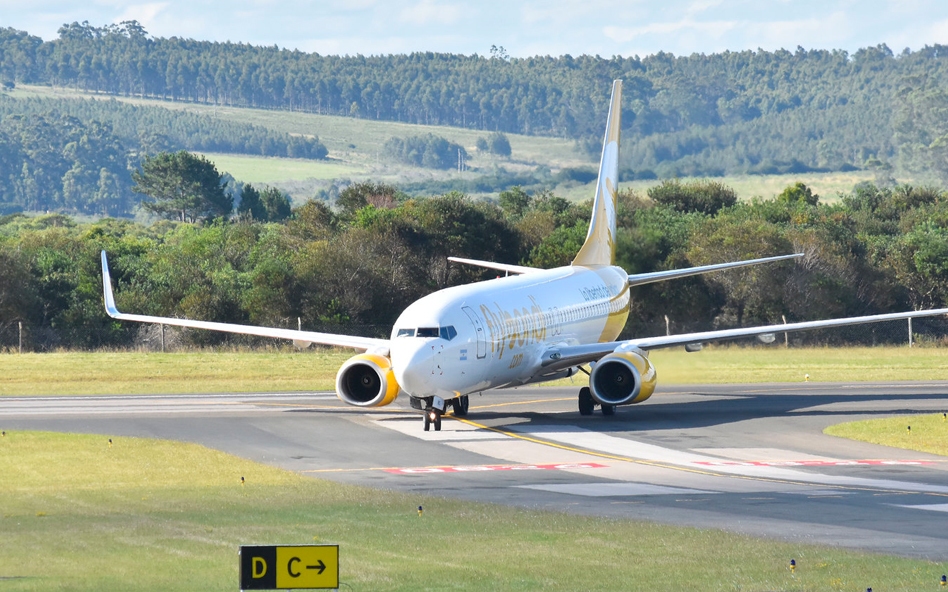
EC Plus Airline será la primera aerolínea en operar vuelos domésticos en Ecuador con aeronaves Boeing 737-700NG, con una capacidad de entre 140 a 149 pasajeros según la configuración, una autonomía básica de 3.900 millas naúticas y propulsados por dos motores CFM 56-7B26. Las unidades serían adquiridas en la modalidad de compra.

El centro de operaciones y mantenimiento de EC Plus Airline estará ubicado en el Aeropuerto Internacional Eloy Alfaro de la ciudad de Manta. EC Plus Airline ha solicitado las siguientes rutas y frecuencias para los vuelos de cabotaje en la República de Ecuador: Manta–Quito–Manta con doce frecuencias semanales. Quito–Guayaquil –Quito con catorce frecuencias semanales. Quito–Cuenca–Quito con doce frecuencias semanales.AW-Icon-TXT-01


EC Plus Airline is born in Ecuador

EC Plus Airline is a new airline in Ecuador

Ecuador will open a new airline called EC Plus Airline that has requested permission to operate regular domestic flights in the country. The new Ecuadorian airline project for domestic flights aims to start operations soon.

Ecquator Airline S.A. It is the signature of the airline EC Plus Airline that has requested before the National Council of Civil Aviation (CNAC) of Ecuador the permission of air operator (AOC), for the provision of air transport service, public, domestic, regular, passenger , cargo and mail in a combined form throughout the Ecuadorian mainland, with the exception of the Insular Region of Galapagos.

EC Plus Airline will be the first airline to operate domestic flights in Ecuador with Boeing 737-700NG aircraft, with a capacity of 140 to 149 passengers depending on the configuration, a basic range of 3,900 nautical miles and powered by two CFM engines 56-7B26. The units would be acquired in the purchase modality.

The operations and maintenance center of EC Plus Airline will be located at the Eloy Alfaro International Airport in the city of Manta. EC Plus Airline has requested the following routes and frequencies for cabotage flights in the Republic of Ecuador: Manta-Quito-Manta with twelve weekly frequencies. Quito-Guayaquil-I remove with fourteen weekly frequencies. Quito-Cuenca-Quito with twelve weekly frequencies. A \ W


Ξ A I R G W A Y S Ξ
SOURCE: Airgways.com
DBk: Aviacioncivil.gob.ec / Airgways.com
AW-POST: 201906161809AR

A\W   A I R G W A Y S ®

United UA-627 efectúa aterrizaje forzoso

Resultado de imagen para UA627 United Boeing 757AW | 2019 06 16 17:17 | AVIATION SAFETY

Aeropuerto Newark cierra temporalmente por despiste de Boeing 757

Un Boeing 757-200 de United Airlines cubría el vuelo UA-627 se deslizó en la pista este Sábado 15 Junio 2019 después de que sus neumáticos explotaron al aterrizar en el Aeropuerto de Newark, en Nueva Jersey.

Un Boeing 757-200, con registro N26123 realizaba el vuelo UA-627 desde Denver, Estado de Colorado a Newark, Estado de New Jersey a bordo con 166 personas aterrizó en la pista 22L de Newark a las 12:56L (16:56Z) efectuó un rebotó y aterrizando bruscamente causando daño al engranaje de la nariz y al fuselaje delantero. El avión se detuvo con el engranaje de morro fuera del borde izquierdo de la pista, todavía en la superficie pavimentada de la pista. Los pasajeros desembarcaron en la pista a través de escaleras.

Un pasajero informó que el daño es visible incluso dentro de la cabina donde el engranaje de la nariz subió a la cabina. Otro pasajero informó el 16 Junio 2019 que la aeronave aterrizó primero con el tren principal izquierdo y rebotó, luego la aeronave aterrizó muy fuerte en el engranaje de morro. El avión se detuvo con al menos dos de los cuatro neumáticos desinflados en cada tren principal izquierdo y derecho. El pasajero cree que los neumáticos principales de la mano izquierda se desinflaron al primer toque y causaron el rebote.

La aerolínea informó que la aeronave experimentó múltiples explosiones de llantas al aterrizar en Newark, quedando la aeronave con daños severos e inhabilitada para volar. La FAA informó inicialmente que el avión aterrizó en la pista 22L y se deslizó por el lado izquierdo del pavimento, la marcha principal izquierda está atascada en un área cubierta de hierba, luego corrigió su declaración al estado. La información preliminar sugiere que los neumáticos principales izquierdos explotaron y el avión Viró hacia el lado izquierdo del pavimento.AW-Icon-TXT-01

El engranaje de la nariz (Foto: Jason Rabinowitz)United UA-627 makes a forced landing

Newark Airport temporarily closes due to Boeing 757

A United Airlines Boeing 757-200 covered flight UA-627 slid on the runway this Saturday 15 June 2019 after its tires exploded upon landing at the Newark Airport in New Jersey.

A Boeing 757-200, with registration N26123 was flying UA-627 from Denver, Colorado to Newark, New Jersey State on board with 166 people landed on runway 22L Newark at 12:56 (16:56Z) it bounced and landed abruptly causing damage to the nose gear and the front fuselage. The plane stopped with the nose gear off the left edge of the runway, still on the paved surface of the runway. The passengers disembarked on the runway via stairs.

One passenger reported that the damage is visible even inside the cabin where the nose gear climbed into the cab. Another passenger reported on June 16, 2019 that the aircraft landed first with the left main train and bounced, then the aircraft landed very strong on the nose gear. The aircraft stopped with at least two of the four deflated tires on each left and right main train. The passenger believes that the main tires of the left hand were deflated at the first touch and caused the rebound.

The airline reported that the aircraft experienced multiple tire explosions upon landing in Newark, leaving the aircraft severely damaged and unable to fly. The FAA initially reported that the plane landed on runway 22L and slid down the left side of the pavement, the left main gear is stuck in a grassy area, then corrected its statement to the state. Preliminary information suggests that the left main tires exploded and the plane veered to the left side of the pavement. A \ W


Ξ A I R G W A Y S Ξ
SOURCE: Airgways.com
DBk: Avherald.com / Faa.gov
AW-POST: 201906161717AR

A\W   A I R G W A Y S ®

Boeing actualiza simuladores 737NG

Resultado de imagen para Boeing 737 NG simulatorAW | 2019 06 16 05:33 | AIR INVESTIGATION / AVIATION SAFETY

Boeing-Logo.svgBoeing está actualizando simuladores 737 más antiguos como consecuencia de los accidentes aéreos de la línea 737 MAX

Boeing ha ordenado una AD a las aerolíneas que vuelan la flota de Boeing 737 NG Next Generation para reemplazar una parte en las alas de los aviones, un movimiento que podría afectar a más de 100 aviones. Boeing dice que está trabajando con la Administración Federal de Aviación (FAA) y ha contactado a operadores de flota 737.

Boeing está actualizando los simuladores para los 737 NG después de que la investigación llevada a cabo en dos accidentes fatales de 737 MAX reveló que no replican con precisión la fuerza requerida durante un procedimiento crítico para los pilotos que respondieron a ambos accidentes.

La capacitación de los pilotos sobre cómo mover manualmente la nariz hacia arriba o hacia abajo en los Boeing 737 NG, los modelos que precedieron a la introducción del MAX, no habría sentido fuerzas precisas, dijo la compañía en un comunicado.

El procedimiento requiere que las tripulaciones de la cabina de mando giren dos ruedas en la cabina. La compañía anunció que también estaba arreglando sus simuladores en 737 MAX en Mayo 2019. Mover las llamadas ruedas de ajuste manual es una parte crítica del procedimiento de emergencia necesario para responder al mal funcionamiento que los pilotos en Indonesia y Etiopía enfrentaron antes de estrellarse. Se suponía que debían apagar un motor eléctrico y hacer ajustes con una manivela. «Estamos dando este paso como parte de nuestro esfuerzo en los últimos meses para volver a examinar y mejorar nuestra capacidad de simulador. Boeing está trabajando estrechamente con los fabricantes, operadores y reguladores del simulador para ayudar a garantizar que las necesidades de capacitación de los clientes se cumplan y se fortalezcan aún más en el futuro», dijo la compañía.

Los pilotos del 737 MAX de Ethiopian Airlines que se estrelló el 10 Marzo 2019 dijeron que el sistema manual «no funcionaba», según un informe preliminar que parafraseaba sus conversaciones capturadas en la grabadora de voz de la cabina. El informe no concluyó por qué ese fue el caso ni proporcionó detalles. Las altas fuerzas en la cola, mientras los pilotos luchaban por controlar el avión, habrían dificultado el giro de las ruedas de ajuste. De acuerdo a la investigación después de los choques, parecería más fácil poner las ruedas en los simuladores de lo que era cierto en un avión real en algunas circunstancias y más difícil en otras. Las diferencias entre el simulador y un avión real no deberían haber hecho una diferencia en el entrenamiento que recibieron los pilotos, dijo Boeing en su declaración.

La Administración Federal de Aviación dijo que está al tanto del trabajo de Boeing para actualizar los simuladores. «La FAA se asegurará de que todos los simuladores calificados por la FAA estén bien modelados y puedan reproducir fuerzas representativas en la rueda de ajuste durante todas las fases del vuelo», dijo la agencia en su comunicado.AW-Icon-TXT-01

Resultado de imagen para Boeing 737 NG simulatorBoeing updates simulators 737NG

Boeing is upgrading older 737 simulators as a result of air accidents on the 737 MAX line

Boeing has ordered an AD to the airlines that fly the Boeing 737 NG Next Generation fleet to replace a part in the wings of the aircraft, a move that could affect more than 100 aircraft. Boeing says it is working with the Federal Aviation Administration (FAA) and has contacted fleet operators 737.

Boeing is updating the simulators for the 737 NG  after the investigation into two fatal 737 MAX crashes revealed that they do not accurately replicate the force required during a critical procedure for the pilots who responded to both accidents.

The training of pilots on how to manually move the nose up or down on the Boeing 737 NG, the models that preceded the introduction of the MAX, would not have felt precise forces, the company said in a statement.

The procedure requires that the crews of the cockpit turn two wheels in the cabin. The company announced that it was also fixing its simulators at 737 MAX in May 2019. Moving the so-called manual adjustment wheels is a critical part of the emergency procedure necessary to respond to the malfunction that pilots in Indonesia and Ethiopia faced before crashing. They were supposed to turn off an electric motor and make adjustments with a crank. «We are taking this step as part of our effort over the past few months to re-examine and improve our simulator capability.» Boeing is working closely with the manufacturers, operators and regulators of the simulator to help ensure that the training needs of customers. are fulfilled and strengthened even more in the future», the company said.

Pilots of the 737 MAX of Ethiopian Airlines that crashed on March 10, 2019 said that the manual system «did not work», according to a preliminary report that paraphrased their conversations captured on the cockpit voice recorder. The report did not conclude why that was the case or provide details. The high forces in the tail, while the pilots struggled to control the plane, would have made it difficult to turn the adjustment wheels. According to the investigation after the crashes, it would seem easier to put the wheels in the simulators than was true in a real plane in some circumstances and more difficult in others. The differences between the simulator and a real plane should not have made a difference in the training the pilots received, Boeing said in his statement.

The Federal Aviation Administration said it is aware of Boeing’s work to update the simulators. «The FAA will ensure that all simulators qualified by the FAA are well modeled and can reproduce representative forces on the adjustment wheel during all phases of the flight», the agency said in its statement. A \ W


Ξ A I R G W A Y S Ξ
SOURCE: Airgways.com
DBk: Boeing.com / Faa.gov / Youtube.com
AW-POST: 201906160533AR

A\W   A I R G W A Y S ®

MA700 se prepara para pruebas estáticas

Resultado de imagen para AVIC Xian MA 700AW | 2019 06 15 21:01 | INDUSTRY

20160815070527!Logo_Avic.jpgEntrega de piezas grandes del avión turbopropulsado MA700 de China

AVIC Xi’an Aircraft Industry Corporation Commercial (AVIC XACC) ha informado este Jueves 14 Junio 2019 que se han entregado las primeras piezas grandes para el avión regional turbohélice Modern Ark MA700 desarrollado en la República de China. La sección central del fuselaje de la aeronave salió de la línea de producción el miércoles y está lista para ser revisada, según el AVIC XAC Commercial Aircraft en Xi’an, capital de la Provincia de Shaanxi, noroeste de China.

El turbopropulsor MA700 es el tercer miembro de la familia de aviones regionales Modern Ark de China después de los MA60 y MA600, todos desarrollados por AVIC XACC. El MA700, una versión mejorada con alta velocidad y alta adaptabilidad, está diseñado con una velocidad máxima de 637 km por hora y un techo operativo con un solo motor de 5.400 metros. Está diseñado para aeropuertos con altas temperaturas, grandes altitudes y condiciones de pista corta y puede operar en condiciones de rutas aéreas complejas. La aeronave, que será propulsada por los turbohélices Pratt y Whitney, es adecuada para el transporte de corta distancia de aproximadamente 800 km, agrega AVIC. El avión tiene un alcance de hasta 2.700 km.

AW-760600700.png

TRES VARIANTES DEL AVIC XIAN MA60/MA600/MA700

Pruebas estáticas

AVIC ha terminado la construcción de grandes piezas de fuselaje para su programa de turbohélice MA700, allanando el camino para las pruebas estáticas. El fabricante de aviones chino dice que el programa pasa a su siguiente etapa de desarrollo, la etapa de entrega de componentes principales, antes de que el avión se monte antes de fin de año 2019.

AVIC dice que las partes del componente alar de la aeronave designado Nº10001 se han combinado el ensamblaje del fuselaje para las pruebas estáticas. El diseño del programa de prueba estática para el MA700 se ha completado y ha obtenido la aprobación regulatoria.

AVIC ha dicho anteriormente que espera obtener la certificación china para el 86 plazas para 2021, con entrada en servicio para 2022. También agregó que no descartó la certificación occidental para el programa.

Órdenes para MA700

El avión se anunció por primera vez en 2007, se presentó como un avión de 70 asientos. Sin embargo, cuando se mostró un modelo de la aeronave en el Salón Aeronáutico Zhuhai 2008, se promocionó como capaz de ofrecer aproximadamente 80 asientos. El diseño preliminar se revisó en Enero 2017, antes del diseño detallado. Hasta la fecha, Junio 2019, AVIC dice que tiene 285 pedidos de 11 operadores de China y del exterior para el MA700.AW-Icon-TXT-01

ma700-1.pngMA700 prepares for static tests

Delivery of large parts of the MA700 turboprop aircraft from China

AVIC Xi’an Aircraft Industry Corporation Commercial (AVIC XACC) announced this Thursday 14 June 2019 that the first large parts have been delivered for the Modern Ark MA700 turboprop regional aircraft developed in the Republic of China. The central section of the aircraft’s fuselage left the production line on Wednesday and is ready to be revised, according to the XIC Commercial Aircraft AVIC in Xi’an, capital of Shaanxi Province, northwest China.

The MA700 turboprop is the third member of the Modern Ark family of regional aircraft in China after the MA60 and MA600, all developed by AVIC XACC. The MA700, an improved version with high speed and high adaptability, is designed with a maximum speed of 637 km per hour and an operational roof with a single motor of 5,400 meters. It is designed for airports with high temperatures, high altitudes and short runway conditions and can operate in conditions of complex air routes. The aircraft, which will be powered by the Pratt and Whitney turboprop engines, is suitable for short-haul transport of approximately 800 km, adds AVIC. The aircraft has a range of up to 2,700 km.

Static tests

AVIC has completed the construction of large fuselage parts for its MA700 turboprop program, paving the way for static testing. The Chinese aircraft manufacturer says that the program goes to its next stage of development, the stage of delivery of major components, before the plane is assembled before the end of the year 2019.

AVIC says that the parts of the wing component of the aircraft designated No.10001 have been combined fuselage assembly for static tests. The design of the static test program for the MA700 has been completed and has obtained regulatory approval.

AVIC has said earlier that it expects to obtain the Chinese certification for the 86 seats by 2021, with entry into service by 2022. He also added that it did not rule out Western certification for the program.

Orders for MA700

The aircraft was first announced in 2007, it was presented as a 70-seat aircraft. However, when a model of the aircraft was shown at the 2008 Zhuhai Airshow, it was promoted as capable of offering approximately 80 seats. The preliminary design was revised in January 2017, before the detailed design. To date, June 2019, AVIC says it has 285 orders from 11 operators in China and abroad for the MA700. A \ W

Imagen relacionadaMA700準備靜態測試

Resultado de imagen para Xi'an Aircraft Industry Corporation logo從中國交付大部分MA700渦輪螺旋槳飛機

中航XAC商用飛機(AVIC XACC)於2019年6月14日星期四宣布,已經為中華民國開發的現代現代方舟MA700渦輪螺旋槳飛機區域飛機交付了第一批大型部件。據中國西北地區陝西省西安市西安商用飛機AVIC稱,飛機機身中央部分於週三離開了生產線並準備進行修改。

MA700渦輪螺旋槳飛機是MA60和MA600之後的中國現代方舟系列飛機的第三個成員,全部由中航工業XACC開發。 MA700是一款具有高速度和高適應性的改進版本,其最高時速為637公里,操作車頂為5400米。它專為高溫,高海拔和短跑道條件的機場而設計,可在復雜的航線條件下運行。 AVIC補充說,該飛機將由普拉特和惠特尼渦輪螺旋槳發動機提供動力,適用於大約800公里的短途運輸。該飛機的射程可達2,700公里。

靜態測試

中航工業已完成MA700渦輪螺旋槳飛機項目大型機身零件的建設,為靜態測試鋪平了道路。中國飛機製造商表示,該計劃將在2019年年底之前組裝飛機之前進入下一個發展階段,即主要部件的交付階段。

中航工業表示,飛機機翼部件No.10001的機翼部件已經組合在一起,用於靜態測試。 MA700靜態測試程序的設計已經完成,並已獲得監管部門的批准。

中航工業早些時候曾表示,預計到2021年將獲得86個席位的中國認證,並於2022年投入使用。他還補充說,它不排除該項目的西方認證。

MA700的訂單

這架飛機於2007年首次發布,它被展示為70座飛機。然而,當在2008年珠海航展上展示飛機模型時,它被宣傳為能夠提供大約80個座位。在詳細設計之前,初步設計於2017年1月進行了修訂。迄今為止,2019年6月,中航工業表示,MA700共有來自中國和海外11家運營商的285份訂單。A \ W


Ξ A I R G W A Y S Ξ
SOURCE: Airgways.com
DBk: Avic.com / China.org.cn / Airgways.com
AW-POST: 201906152101AR

A\W   A I R G W A Y S ®


Fusión United Technologies-Raytheon

Resultado de imagen para United Technology Raytheon mergerAW | 2019 06 15 18:18 | INDUSTRY

Resultado de imagen para United Technology pngLa fusión United Technology-Raytheon despierta preocupación a The Boeing Company

La fusión entre United Technologies y Raytheon crearía una potencia aeroespacial y de defensa con ingresos combinados de US$ 74 mil millones. La empresa Raytheon es una corporación industrial y uno de los contratistas de defensa Resultado de imagen para Raytheon pngmilitares más grandes de los Estados Unidos. Creada en 1922, la compañía adoptó su nombre actual en 1959. Tiene alrededor de 75.000 empleados en el mundo y ganancias anuales aproximadas de 25 mil millones de dólares. Sus principales propietarios son Vanguard Group (también es principal propietario de The Boeing Company), y Delaware Management Business Trust. Actualmente posee más de 68.000 empleados.

562Boeing-Logo.svgThe Boeing Company, la compañía aeroespacial más grande del mundo que factura alrededor de US$ 101 mil millones en ventas anuales, ¿debería preocuparse por la próxima fusión? Después de todo, ambas compañías suministran componentes para los aviones comerciales y de defensa que Boeing fabrica. La consolidación de la fusión United Technologies-Raytheon le da a Boeing una menor capacidad para fuerza de negociación con sus proveedores. Durante los últimos años, Boeing ha estado buscando agresivamente grandes descuentos y programas de pago más prolongados de su cadena de suministro a través de un programa oneroso llamado Partnering for Success, introducido por primera vez en 2012. Los proveedores que no redujeron drásticamente los costos fueron colocados en una lista de exclusión. «Boeing, siendo el perro grande en la sala, tiene la fuerza para forzar esencialmente a los proveedores a reducir costos o llevar el trabajo a un competidor. Los proveedores generalmente lo llaman ‘Preparándose para el sacrificio’ «, dice Scott Hamilton, analista de la firma Leeham en el área de Seattle.

En 2013, cuando United Technologies, el proveedor principal del tren de aterrizaje del Boeing 777, se negó a conceder los recortes de precios que Boeing exigió, Boeing otorgó el contrato a una empresa en Quebec, Canadá.

Los ataduras de proveedores han preocupado a Boeing en el pasado. Cuando United Technologies anunció en 2017 la adquisición por US$ 23 mil millones de Rockwell Collins, un proveedor de productos de aviónica y piezas, Boeing no estuvo de acuerdo con una fusión que consolidaría a dos de sus proveedores y dijo que ejercería sus «derechos contractuales y buscaría las opciones regulatorias adecuadas para protegerlos». La compañía retiró su objeción a la fusión luego de ganar concesiones de costos de ambas compañías. A pesar del beneficio que Boeing obtuvo por adelantado de la adquisición de Rockwell Collins, el peso adicional debería ayudar a United Technologies a avanzar. «Cuanto más grande se vuelve una empresa, más puede hacer retroceder», dice el analista de la industria aeroespacial Richard Aboulafia de Teal Group.

Al adquirir Raytheon, también «se extiende la línea de costa de cobertura como proveedor desde el lado comercial de Boeing hasta su lado de defensa», dice Aboulafia. Raytheon, por ejemplo, proporciona el radar a bordo para los aviones de patrulla marítima P-8 de Boeing. También proporciona el sistema de radar para los modelos F/A 18E y F de Boeing del Super Hornet.

Resultado de imagen para Boeing 737 max ASSEMBLY LINEENSAMBLAJE DE LA LÍNEA BOEING 737 MAX EN RENTON, WA

¿Podrían la unión de United Technologies y Raytheon estimular a Boeing a hacer algunos movimientos propios? Durante los últimos años, Boeing ha estado tratando de obtener más control sobre su cadena de suministro al hacer más de su propio equipo. En 2014, la compañía inició una fábrica en Everett, Washington, para construir alas para su 777X en lugar de subcontratar al proveedor de 787 Mitsubishi en Japón. Hace un año, Boeing se unió a Safran, un fabricante de motores francés, para fabricar unidades de energía auxiliares, una empresa conjunta que iría de la mano con Honeywell y Pratt & Whitney. Poco después, Boeing formó un nuevo negocio con el fabricante de asientos Adient para obtener un control más estricto sobre la calidad de los asientos. Boeing puede buscar aún más comando sobre su cadena de suministro con una mayor integración vertical.

En cuanto a las realineaciones horizontales, Boeing recibió la aprobación de los accionistas a principios de este año para una empresa conjunta de US$ 4.2 mil millones de aviones comerciales con Embraer de Brasil, junto con una asociación separada para productos de defensa.

La compra de Raytheon siempre estaba en el radar de Boeing. «Siempre he visto a Boeing como un posible adquirente de Raytheon porque pueden haber estado interesados ​​en restaurar el equilibrio comercial a la defensa. No creo que se hubieran enfrentado a ningún rechazo del DOD o del DOJ, mientras que lo harían si intentaran adquirir Northrop», dice el analista de Stifel Joseph DeNardi, quien señala que el crecimiento de la aviación comercial de Boeing ha sesgado el negocio. Desafortunadamente para los accionistas de Raytheon, quienes no se están beneficiando de una prima en la fusión de iguales, Boeing no estaba en posición de asumir una transacción tan grande.

Alinear el hogar

El Programa 777X está demorado un tanto, pero pronto saldrá a volar. Los problemas a los que se enfrenta Boeing son propios de casa, donde la atención está centrada en la administración de soluciones en la línea Boeing 737 MAX y sus efectos posteriores. El Boeing 737 estaría al final de su vida de diseño. En un lustro Boeing tendría que reemplazar la línea 737 en una hoja limpia con un proyecto innovador. Por lo tanto el consejo de administración de The Boeing Company no tendría que asumir compromisos multimillonarios de compras ni alianzas en esta etapa hasta que resuelva sus problemas en casa.AW-Icon-TXT-01

Resultado de imagen para United Technology headquartersFusion United Technologies-Raytheon

United Technology-Raytheon merger raises concern at The Boeing Company

The merger between United Technologies and Raytheon would create an aerospace and defense power with combined revenues of US$ 74 billion. The Raytheon company is an industrial corporation and one of the largest military defense contractors in the United States. Created in 1922, the company adopted its current name in 1959. It has around 75,000 employees in the world and annual profits of approximately 25 billion dollars. Its main owners are Vanguard Group (also the main owner of The Boeing Company), and Delaware Management Business Trust. It currently has more than 68,000 employees.

The Boeing Company, the largest aerospace company in the world that bills around US$ 101 billion in annual sales, should you worry about the next merger? After all, both companies supply components for commercial and defense aircraft that Boeing manufactures. The consolidation of the United Technologies-Raytheon merger gives Boeing less capacity for bargaining power with its suppliers. Over the past few years, Boeing has been aggressively seeking large discounts and longer payment programs from its supply chain through a costly program called Partnering for Success, first introduced in 2012. Suppliers that did not drastically reduce costs were placed on an exclusion list. «Boeing, being the big dog in the room, has the strength to essentially force suppliers to cut costs or take the job to a competitor, vendors usually call it «Preparing for Sacrifice», says Scott Hamilton, an analyst at the Leeham firm in the Seattle area.

In 2013, when United Technologies, the main supplier of the Boeing 777 landing gear, refused to grant the price cuts that Boeing demanded, Boeing awarded the contract to a company in Quebec, Canada.

Vendor ties have bothered Boeing in the past. When United Technologies announced in 2017 the US$ 23 billion acquisition of Rockwell Collins, a supplier of avionics and parts products, Boeing did not agree to a merger that would consolidate two of its suppliers and said it would exercise its «contractual rights» and look for the appropriate regulatory options to protect them. «The company withdrew its objection to the merger after winning cost concessions from both companies. Despite the benefit that Boeing obtained in advance of the acquisition of Rockwell Collins, the additional weight should help United Technologies move forward. The bigger a company becomes, the more it can push back», says aerospace industry analyst Richard Aboulafia of Teal Group.

Resultado de imagen para Boeing RaytheonBOEING P-8

By acquiring Raytheon, it also «extends the coverage shoreline as a supplier from the commercial side of Boeing to its defense side», says Aboulafia. Raytheon, for example, provides on-board radar for Boeing’s P-8 maritime patrol aircraft. It also provides the radar system for the F/A 18E and F models of the Super Hornet’s Boeing.

Could the union of United Technologies and Raytheon encourage Boeing to make some moves of their own? Over the past few years, Boeing has been trying to gain more control over its supply chain by making more of its own equipment. In 2014, the company started a factory in Everett, Washington, to build wings for its 777X instead of subcontracting to the 787 Mitsubishi supplier in Japan. A year ago, Boeing joined Safran, a French engine manufacturer, to manufacture auxiliary power units, a joint venture that would go hand in hand with Honeywell and Pratt & Whitney. Shortly thereafter, Boeing formed a new business with seat manufacturer Adient for stricter control over seat quality. Boeing can look for even more command over its supply chain with greater vertical integration.

Regarding horizontal realignments, Boeing received shareholder approval earlier this year for a joint venture of US 4.2 billion commercial aircraft with Embraer of Brazil, along with a separate defense products association.

The purchase of Raytheon was always on Boeing’s radar. «I have always seen Boeing as a possible purchaser of Raytheon because they may have been interested in restoring the trade balance to the defense, I do not think they would have faced any rejection of the DOD or the DOJ, whereas they would if they tried to acquire Northrop», says Stifel analyst Joseph DeNardi, who points out that the growth of Boeing’s commercial aviation has skewed the business. Unfortunately for the Raytheon shareholders, who are not benefiting from a bonus in the merger of equals, Boeing was not in a position to take on such a large transaction.

Align the home

The 777X Program is somewhat delayed, but will soon be flying. The problems that Boeing faces are typical of home, where the focus is on managing solutions in the Boeing 737 MAX line and its after effects. The Boeing 737 would be at the end of its design life. In a five-year period, Boeing would have to replace the 737 line on a clean sheet with an innovative project. Therefore, The Boeing Company’s board of directors would not have to make multimillion-dollar purchase commitments or partnerships at this stage until it solves its problems at home. A \ W


Ξ A I R G W A Y S Ξ
SOURCE: Airgways.com
DBk: Utc.com / Raytheon.com / Fortune.com / Chicagotribune.com / Airgways.com
AW-POST: 201906151818AR

A\W   A I R G W A Y S ®

Mitsubishi renombra sus jet comerciales

AW-Mitsubishi-SpaceJet.jpgAW | 2019 06 15 16:22 | INDUSTRY

mitac_logotype.pngMitsubishi Aircraft Corporation anuncia cambio nomenclatura aeronaves comerciales

Mitsubishi Aircraft Corporation ha anunciado el cambio de nomenclatura a la familia de aviones Mitsubishi Regional Jet a SpaceJet M90 y SpaceJet M70. Anteriormente la familia de aviones se denominaba MRJ70/MRJ90. La familia SpaceJet será el nombre comercialmente reconocido para el fabricante de aviones japonés, que incluye el M70 y M90 y un nuevo miembro, la SpaceJet M100.

La familia de aeronaves Mitsubishi SpaceJet está diseñada para atender la demanda de un mercado regional desatendido brindando la máxima comodidad para los pasajeros y un desempeño de aeronaves inigualable con mayor potencial de ganancias para las aerolíneas.

Mitsubishi Aircraft Corporation inició las actividades de prueba de certificación de vuelo del MRJ-90 en los Estados Unidos en Marzo 2019 y la compañía abrió una nueva sede en Renton, Washington, en Mayo 2019. Mitsubishi planea comenzar las entregas del jet regional M90, que puede transportar hasta 92 pasajeros, en 2020.

Spacejet M100

Según Mitsubishi, la SpaceJet M100 «evolucionó a partir de un estudio de concepto para la designación MRJ70 ahora retirada». Se espera que tenga capacidad para entre 65 y 76 pasajeros en una configuración de cabina de tres clases y hasta 88 cuando se configura para una sola clase. El Mitsubishi M100 es impulsado por dos motores Pratt y Whitney PW1200G Turbofan con engranaje, el avión cuenta con un alcance de 1.910 millas náuticas, que es mucho menor que su hermano de largo alcance, la SpaceJet M90.

Mitsubishi-SpaceJetM100-01.png

Mitsubishi se centró en la eficiencia del espacio al transformar el MRJ70 en el M100. El importante mercado de la Cláusula de Alcance de los Estados Unidos requiere un espacio de asiento de primera calidad para los pasajeros, pero no permite el peso bruto suficiente para lograrlo con la nueva generación, el motor más pesado. El MRJ90 y el Embraer E175-E2 se diseñaron en previsión de que la Cláusula de Alcance se relajaría. Los dos aviones son demasiado pesados ​​bajo las cláusulas de alcance.

«La familia Mitsubishi SpaceJet representa nuestro plan para redefinir el negocio de los viajes aéreos regionales. Mientras nos preparamos para la entrada en servicio de la SpaceJet M90, también estamos anunciando la SpaceJet M100, el resultado de nuestra investigación y desarrollo durante los últimos años y la respuesta a las necesidades actuales y futuras del mercado regional», dijo el presidente de Mitsubishi Aircraft Corporation, Hisakazu Mizutani.

D83uyZaUEAAWWsA.jpgNUEVA IMAGEN DEL MRJ-90 DENOMINADO SPACEJET M90

El Mitsubishi M100 ofrecerá las últimas comodidades de cabina. Los operadores pueden especificar la carga USB C del asiento, el IFE en el asiento y la conexión Wi-Fi basada en banda Ku/Ka. El M100 ha reposicionado la cocina/lavabo trasero hacia atrás, aumentando el espacio para la cabina y disminuyendo el compartimiento de equipaje que fue dimensionado por un tiempo cuando los pasajeros revisaron su equipaje. Con los nuevos contenedores, el compartimiento de equipaje de 480 pies cuadrados, por debajo de los 640 pies cuadrados, estará casi vacío. Esto brinda una oportunidad para la carga, ya que la puerta de carga es grande y el compartimiento tiene una altura útil. El lavabo trasero ahora se coloca más centralmente, lo que lo hace menos estrecho y facilita el ingreso y la salida de los pasajeros en silla de ruedas.

Cláusula de Alcance

El MRJ70 llevó a menos pasajeros en su diseño de lo necesario: 69 contra 76 en la configuración típica de los Estados Unidos, una desventaja económica importante. Con el MRJ90 no compatible con el alcance (funciona fuera de los EEUU), MITAC (Mitsubishi Aircraft Corporation) optó por mejorar el MRJ70. Esto se transformó en el M100 SpaceJet.

Existen varias restricciones para este mercado, según el proveedor de servicios de línea principal para el que se realiza el servicio de alimentación. Los más prevalecientes son:

Un máximo de 76 asientos para operaciones subcontratadas. Existen varios cubos de asientos con un número de aeronaves permitidas por asiento y acuerdo, pero el cubo de 76 asientos es común a los tres transportistas principales de EE.UU. y al cubo más grande.

Un peso máximo de despegue (MTOW, por sus siglas en inglés) de 86,000 lb/39t, también común entre los tres principales acuerdos de alcance de transportistas de EE.UU. con sus sindicatos piloto.

Estas dos restricciones crean un dilema de peso para los OEM de los aviones. Los servicios de alimentación externos para la línea principal deben tener idealmente las mismas clases de cabina y comodidad que las operaciones domésticas de pasillo único de las líneas principales.

A medida que estas cabinas se han desarrollado en tres clases con First Class, Premium Economy y Economy, el tamaño requerido de cabina para el avión Scope ha aumentado.

Para el Bombardier CRJ900, la longitud de la cabina no es un problema, pero el ancho es. Su sección transversal hace que para una experiencia de embarque en cuclillas y asientos estrechos. El último diseño de cabina de Atmosphere ayuda, pero no puede cambiar la física.

El E-Jet de Embraer tiene una sección transversal lo suficientemente amplia como para ofrecer una buena experiencia de embarque y asiento, y la longitud de la cabina para el E175 compatible con Scope es adecuada pero no más. Por lo tanto, Embraer aumentó la longitud del E175-E2 para dar a las aerolíneas más libertad con el diseño de la cabina.

Esto llevó al E175-E2 a un problema de peso. El avión más largo con los nuevos motores pesados ​​Pratt & Whitney de 56 pulgadas GTF es demasiado pesado para el límite de 86.000 lb. Con los pasajeros cargados, solo permite combustible para sectores de 950 nm, demasiado cortos para los operadores. Por lo tanto, no hay pedidos en firme para el tipo de los transportistas estadounidenses.

El MRJ70 era lo suficientemente ligero como para tener un rango adecuado cuando operaba bajo el límite de alcance de 86,000 lb, incluso con los nuevos motores Pratt & Whitney GTF de 56 pulgadas. Y tenía la misma sección transversal que la E175, por lo que el alojamiento y la comodidad de los asientos estaban bien. Pero su cabaña era demasiado corta. En un diseño de tres clases, los asientos fueron al sur de 70 asientos.

Diseño de interiores

Mitsubishi debió resolver el problema de espacio y peso. La longitud de la aeronave se incrementó con 1.1 m, a 34.5 m. Al mismo tiempo, la longitud de la cabina se incrementó con 1.6 m o dos filas de asientos con ventanas.

Esto le da a la misma cabina la longitud que la Embraer E175 pero con un extremo frontal más flexible. El E175 tiene una puerta de servicio delantera de la galera que se coloca delante de la galera. Esto pone la cocina con su pared dura entre el área de entrada y la cabina. Preocupaciones de lesiones en la cabeza, luego coloque la primera fila de asientos lejos de esta pared.

La cabina M100 tiene la puerta de servicio detrás de la cocina y permite a las aerolíneas la flexibilidad de planificar el frente de la cabina como prefieran. Uno puede colocar asientos cerca de las puertas de entrada y de servicio para la máxima capacidad o colocar armarios allí para abrigos de pasajeros, todo dependiendo de la preferencia de diseño de la cabina. La otra área optimizada es el uso de la sección transversal del avión.

AW-7000CabinM100vs175-E2

LA SECCIÓN TRANSVERSAL DEL E175 EN COMPARACIÓN CON LA SECCIÓN TRANSVERSAL DEL M100

El E175 y el M100 comparten secciones transversales de cabina casi idénticas, mientras que el M100 es 2 cm (0,8 pulgadas) más ancho y más alto. El E175 en el mercado tiene bandejas de de bin que son menos profundas, como lo fue el MRJ70. Esto restringe el equipaje de mano para el E175. Los nuevos contenedores para el M100 ofrecen a cada pasajero espacio para el equipaje de mano.

Embraer podría actualizar la cabina E175 al estándar E175-E2 mientras espera la liberación de las Cláusulas de Alcance. Así que decidimos comparar el M100 con tal configuración para encontrar cualquier diferencia. La cabina de 2 cm (0,8 pulgadas) más ancha y más alta, junto con un pasillo de 18 pulgadas, permite asientos de 18,5 pulgadas para el M100. El E175 más estrecho tiene asientos de 18.2 pulgadas con un pasillo de 19 pulgadas. La clave del espacio son las mediciones y el espacio percibido alrededor del área del hombro/cabeza para el pasajero de 6 pies y 2 pulgadas representado.

La diferencia importante es la forma de los contenedores. Los contenedores E2 son fijos. Deben, por lo tanto, inclinarse un poco para permitir el ingreso y egreso de las bolsas. El equipo de SpaceJet fue a por los contenedores de pivote. Permite que las bolsas se apoyen contra la pared de la cabina cuando están cerradas. Esto da un perfil de contenedor al estilo del Sky Interior de los aviones Boeing 737.

Habrá una maqueta de cabina del M100 en el Salón Aeronáutico de París 2019 para permitir observar la sensación que crean los nuevos contenedores. Si crean la sensación de espacio que da el interior de Boeing Sky, el equipo de SpaceJet podrá lograr el éxito pretendido.

Mitsubishi vs Cláusulas de Alcance

Mitsubishi está tratando de conseguir una cabina de tres clases con motores Pratt & Whitney GTF en un avión compatible con las Cláusulas de Alcance. En cuando Embraer parece no correr con las mismas ventajas.

El M100 es un ajuste más cómodo alrededor de la cabina de 76 asientos que el E175-E2. Suponiendo que el límite de peso hubiera desaparecido, Embraer aumentó la longitud del E175-E2 en una fila de ventanas en la parte superior del E175. También puso un ala más ancha en el avión, para volar más lejos. El ala es 2,3 m más ancha que la E175 y 3,2 m más ancha que la M100.

El ancho ofrece rango si no está limitado el peso de despegue (TOW). El peso vacío bajo es entonces más importante que la envergadura, ya que el intervalo impulsa el momento de flexión del ala que impulsa el peso. Si no tiene un peso vacío lo suficientemente grande como para METW, no puede llenar los tanques cuando los pasajeros están a bordo. El E175-E2 solo puede llenar 4t de combustible cuando su cabina está llena. Esto da un rango operativo de 950nm, demasiado corto para los operadores.

Para obtener un peso vacío bajo, Mitsubishi utiliza aleaciones de aluminio-litio y polímeros reforzados con fibra de carbono (CFRP) para obtener más piezas que en el MRJ90. Esto se combina con aletas más pequeñas para reducir el momento de flexión de las alas para ahorrar más peso. El resultado es que el M100 puede transportar un 50% más de combustible que el E175-E2 cuando vuela con 76 pasajeros, lo que permite un rango de ~1.500nm.

Para un mercado internacional, el MTOW está liberado. El M100 con 42t MTOW ofrece un alcance de 1.910 nm con una cabina de 84 asientos de clase única llena de pasajeros. El MRJ90 era demasiado grande y el 70 demasiado pequeño para la mayor parte del mercado, los operadores en los Estados Unidos volaban bajo las restricciones de las Cláusulas de Alcance. El M100 SpaceJet es un cambio de imagen importante del MRJ70. El objetivo ha sido un avión que puede transportar a 76 pasajeros en la línea principal de confort de tres clases en las rutas de conexión de los Estados Unidos utilizando la última tecnología de motores.

La cabina E-Jet es la cabina más cómoda del mercado para un pasajero económico, encontrándose el pasajero sentado en un pasillo o en una ventana y tienes mucho espacio. El A220 tiene asientos de 18.5 pulgadas con el asiento del medio en el lado de tres asientos a 19 pulgadas. Pero el 60% de los asientos están localizados en el medio y los contenedores son menos «Sky Interior» que los de la SpaceJet. El M100 lleva la experiencia de la cabina un paso más allá que ambos. La nueva línea SpaceJet podría lograr penetrar en el ambicioso segmento regional en los Estados Unidos como así conquistar los cielos del mundo.

Mitsubishi-SpaceJet-Branding-800x600.jpgMitsubishi en Paris Air Show 2019

Mitsubishi planea debutar el interior de la cabina del SpaceJet M100 en el Salón Aeronáutico de París 2019, que tendrá lugar del 17 al 23 Junio 2019 en el Paris Air Show 2019 en Le Bourget, Francia. La compañía dice que espera lanzar formalmente el programa M100 a finales de este año.

Bombardier y Mitsubishi

Una demanda presentada por Bombardier alegando que Mitsubishi reclutó empleados de Bombardier y robó secretos comerciales para ayudar con la certificación y el proceso de prueba del MRJ y la contrademanda de Mitsubishi afirmando que Bombardier participó en un comportamiento anticompetitivo ilegal con la intención de impedir el desarrollo y la certificación de los aviones japoneses.

Contrario al cruce de demandas, Mitsubishi Corp. planea incorporar el Programa Canadair Regional Jet (CRJ) de Bombardier Inc. en avanzadas conversaciones para adquirir la gama de la familia de jet regionales de entre 50 a 104 pasajeros. Mitsubishi Aircraft Corporation necesitará demostrar cómo amalgamará las líneas de aeronaves regionales Mitsubishi Spacejet y CRJ Regional Jet, una tarea nada fácil.AW-Icon-TXT-01

AW-SpaceJet.jpgMitsubishi renames its commercial jet

Mitsubishi_Logo.pngMitsubishi Aircraft Corporation announces commercial aircraft nomenclature change

Mitsubishi Aircraft Corporation has announced the change of nomenclature to the Mitsubishi Regional Jet aircraft family to SpaceJet M90 and SpaceJet M70. Previously, the aircraft family was called MRJ70/MRJ90. The SpaceJet family will be the commercially recognized name for the Japanese aircraft manufacturer, which includes the M70 and M90 and a new member, the SpaceJet M100.

The Mitsubishi SpaceJet family of aircraft is designed to meet the demand of an unattended regional market by providing maximum comfort for passengers and unparalleled aircraft performance with the greatest potential for profits for airlines.

Mitsubishi Aircraft Corporation started the MRJ-90 flight certification test activities in the United States in March 2019 and the company opened a new headquarters in Renton, Washington, in May 2019. Mitsubishi plans to begin deliveries of the M90 ​​regional jet, which It can transport up to 92 passengers, in 2020.

Spacejet M100

According to Mitsubishi, the SpaceJet M100 «evolved from a concept study for the now retired MRJ70 designation». It is expected to have capacity for between 65 and 76 passengers in a cabin configuration of three classes and up to 88 when it is configured for a single class. The Mitsubishi M100 is powered by two Pratt and Whitney PW1200G Turbofan engines with gear, the aircraft has a range of 1,910 nautical miles, which is much smaller than its long-range brother, the SpaceJet M90.

MRJ_spacejet_1_1170.jpg

Mitsubishi focused on space efficiency by transforming the MRJ70 into the M100. The important market of the United States Scope Clause requires a premium seating space for passengers, but does not allow enough gross weight to achieve it with the new generation, the heavier engine. The MRJ90 and the Embraer E175-E2 were designed in anticipation that the Scope Clause would relax. The two planes are too heavy under the scope clauses.

«The Mitsubishi SpaceJet family represents our plan to redefine the regional air travel business.As we prepare for the entry into service of the SpaceJet M90, we are also announcing the SpaceJet M100, the result of our research and development over the past few years and the answer to the current and future needs of the regional market», said Mitsubishi Aircraft Corporation president Hisakazu Mizutani.

The Mitsubishi M100 will offer the latest cabin amenities. Operators can specify the USB C load of the seat, the IFE in the seat and the Wi-Fi connection based on Ku/Ka band. The M100 has repositioned the kitchen/rear washbasin backwards, increasing the space for the cabin and decreasing the luggage compartment that was sized for a time when passengers checked their luggage. With the new containers, the 480-square-foot luggage compartment, below 640 square feet, will be almost empty. This provides an opportunity for loading, since the loading door is large and the compartment has a useful height. The rear washbasin is now placed more centrally, which makes it less narrow and facilitates the entry and exit of passengers in wheelchairs.

Scope Clause

The MRJ70 carried fewer passengers in its design than necessary: ​​69 against 76 in the typical configuration of the United States, a major economic disadvantage. With the MRJ90 not compatible with the scope (it works outside the US), MITAC (Mitsubishi Aircraft Corporation) opted to improve the MRJ70. This was transformed into the M100 SpaceJet.

There are several restrictions for this market, according to the main line service provider for whom the food service is performed. The most prevalent are:

A maximum of 76 seats for subcontracted operations. There are several seat cubes with a number of aircraft allowed per seat and agreement, but the 76-seat cube is common to the three main US carriers. UU And the biggest cube.

A maximum takeoff weight (MTOW) of 86,000 lb/39t, also common among the three major reach agreements of US carriers. UU With your pilot unions.

These two restrictions create a weight dilemma for aircraft OEMs. The external power services for the main line should ideally have the same cabin and comfort classes as the single-aisle domestic operations of the main lines.

As these cabins have been developed in three classes with First Class, Premium Economy and Economy, the required cabin size for the Scope aircraft has increased.

For the Bombardier CRJ900, the length of the cabin is not a problem, but the width is. Its cross section makes for a crouching boarding experience and narrow seats. The latest cabin design of ATMOSPHERE helps, but can not change physics.

The Embraer E-Jet has a cross section wide enough to offer a good boarding and seating experience, and the length of the cab for the E175 Scope compatible is adequate but not more. Therefore, Embraer increased the length of the E175-E2 to give airlines more freedom with the cabin design.

This led to the E175-E2 to a weight problem. The longest aircraft with the new Pratt & Whitney 56-inch GTF heavy engines is too heavy for the 86,000 lb. limit. With loaded passengers, it only allows fuel for 950 nm sectors, too short for operators. Therefore, there are no firm orders for the type of American carriers.

The MRJ70 was light enough to have an adequate range when operating under the 86,000 lb range limit, even with the new 56-inch Pratt & Whitney GTF engines. And it had the same cross section as the E175, so the accommodation and the comfort of the seats were fine. But his cabin was too short. In a three class design, the seats were south of 70 seats.

Interior design

Mitsubishi had to solve the problem of space and weight. The length of the aircraft was increased by 1.1 m, to 34.5 m. At the same time, the length of the cabin was increased by 1.6 m or two rows of seats with windows.

This gives the same cabin the same length as the Embraer E175 but with a more flexible front end. The E175 has a front service galley door that is placed in front of the galley. This puts the kitchen with its hard wall between the entrance area and the cabin. Worry about head injuries, then place the first row of seats away from this wall.

The M100 cab has the service door behind the kitchen and allows airlines the flexibility to plan the front of the cab as they prefer. One can place seats near the entrance and service doors for maximum capacity or place cabinets there for passenger shelters, all depending on the design preference of the cabin. The other optimized area is the use of the cross section of the aircraft.

AW-7000CabinM100vs175-E2.pngTHE CROSS SECTION OF THE E175 COMPARED TO THE M100 CROSS SECTION

The E175 and the M100 share nearly identical cab cross sections, while the M100 is 2 cm (0.8 inches) wider and taller. The E175 in the market has de bin trays that are shallower, as was the MRJ70. This restricts hand luggage for the E175. The new containers for the M100 offer each passenger space for carry-on luggage.

Embraer could upgrade the E175 cabin to the E175-E2 standard while awaiting the release of the Scope Clauses. So we decided to compare the M100 with such a configuration to find any difference. The widest and highest 2-cm (0.8-inch) cab, along with an 18-inch aisle, allows 18.5-inch seats for the M100. The narrower E175 has 18.2-inch seats with a 19-inch aisle. The key to space is the measurements and the perceived space around the shoulder/head area for the 6-foot-2-inch passenger depicted.

M100-cabins.png

Overhead-bins_.jpg

The important difference is the shape of the containers. The E2 containers are fixed. They must, therefore, lean a little to allow the entry and exit of the bags. The SpaceJet team went for the pivot containers. Allows bags to rest against the cabin wall when closed. This gives a container profile in the style of the Sky Interior of the Boeing 737 aircraft.

There will be a cabin model of the M100 at the Paris Air Show 2019 to allow observing the feeling created by the new containers. If they create the sense of space that gives the interior of Boeing Sky, the team of SpaceJet can achieve the intended success.

Mitsubishi vs. Scope Clauses

Mitsubishi is trying to get a cabin of three classes with Pratt & Whitney GTF engines in an aircraft compatible with the Scope Clauses. In when Embraer seems not to run with the same advantages.

The M100 is a more comfortable fit around the 76-seat cab than the E175-E2. Assuming the weight limit had disappeared, Embraer increased the length of the E175-E2 in a row of windows at the top of the E175. He also put a wider wing on the plane, to fly farther. The wing is 2.3 m wider than the E175 and 3.2 m wider than the M100.

The width offers range if the take-off weight (TOW) is not limited. The low empty weight is then more important than the span, since the interval drives the bending moment of the wing that drives the weight. If you do not have an empty weight large enough for METW, you can not fill tanks when passengers are on board. The E175-E2 can only fill 4t of fuel when its cabin is full. This gives an operating range of 950nm, too short for the operators.

To obtain a low vacuum weight, Mitsubishi uses aluminum-lithium alloys and carbon fiber reinforced polymers (CFRP) to obtain more parts than in the MRJ90. This is combined with smaller fins to reduce the bending moment of the wings to save more weight. The result is that the M100 can carry 50% more fuel than the E175-E2 when it flies with 76 passengers, allowing a range of ~ 1,500nm.

For an international market, the MTOW is released. The M100 with 42t MTOW offers a range of 1,910 nm with a single-class 84-seat cabin full of passengers. The MRJ90 was too large and 70 too small for most of the market, operators in the United States flew under the restrictions of the Scope Clauses. The M100 SpaceJet is an important makeover of the MRJ70. The objective has been an aircraft that can transport 76 passengers on the main comfort line of three classes on the connecting routes of the United States using the latest engine technology.

The E-Jet cabin is the most comfortable cabin on the market for a budget passenger, with the passenger sitting in a corridor or window and having plenty of space. The A220 has 18.5-inch seats with the middle seat on the side of three seats at 19 inches. But 60% of the seats are located in the middle and the containers are less «Sky Interior» than those of the SpaceJet. The M100 takes the cabin experience one step further than both. The new SpaceJet line could manage to penetrate the ambitious regional segment in the United States as well as conquer the skies of the world.

Latest-Hero-Desktop@2x.jpgMitsubishi at Paris Air Show 2019

Mitsubishi plans to debut the interior of the SpaceJet M100 cabin at the Paris Air Show 2019, which will take place from June 17 to 23, 2019 at the Paris Air Show 2019 in Le Bourget, France. The company says it expects to formally launch the M100 program later this year.

Bombardier and Mitsubishi

A lawsuit filed by Bombardier alleging that Mitsubishi recruited Bombardier employees and stole trade secrets to assist with the certification and trial process of the MRJ and the Mitsubishi counterclaim stating that Bombardier engaged in illegal anti-competitive behavior with the intent to impede the development and the certification of Japanese aircraft.

Contrary to cross-claims, Mitsubishi Corp. plans to incorporate the Canadair Regional Jet Program (CRJ) of Bombardier Inc. into advanced talks to acquire the regional jet family range of 50 to 104 passengers. Mitsubishi Aircraft Corporation will need to demonstrate how it will amalgamate the regional aircraft lines Mitsubishi Spacejet and CRJ Regional Jet, an easy task. A \ W


Ξ A I R G W A Y S Ξ
SOURCE: Airgways.com
DBk: Flythemrj.com / Embraer.com / Leehamnews.com / Airgways.com
AW-POST: 201906151622AR

A\W   A I R G W A Y S ®

Dificultades Aeropuerto Lelystad

AW | 2019 06 15 12:48 | AIRPORTS /  GOVERNMENT

El difícil camino hacia la apertura del Aeropuerto Lelystad, Países Bajos

Un nuevo obstáculo enfrenta el Aeropuerto Lelystad en el reino de los Países Bajos. Apertura en Abril 2020 parece poco probable porque enfrenta seis principales obstáculos en su camino. El Ministerio de Infraestructura y Gestión de Agua (VVD) a cargo de la ministra Cora van Nieuwenhuizen confirmó el Miércoles 12 Junio 2019 que la reciente decisión del Consejo de Estado sobre la política holandesa de nitrógeno tiene consecuencias para el Aeropuerto de Lelystad. Expresó que no será fácil lograr la apertura prevista para Abril 2020.

Política de nitrógeno

A fines de Mayo 2019, una decisión del Consejo de Estado puso fin al Programa de Aproximación al Nitrógeno (PAS). Ese programa les dio permiso a los constructores de caminos y agricultores para nuevas actividades antes de que se conocieran los efectos negativos de las emisiones de nitrógeno en las reservas naturales cercanas. Las medidas compensatorias seguirían más tarde. La política holandesa es contraria a la legislación de carácter europeo, los jueces del Consejo de Estado.

Para el Aeropuerto Lelystad, cerca de Oostvaardersplassen y Veluwe, el fallo significa que se debe emitir un nuevo permiso, o que al menos se debe demostrar que las emisiones de nitrógeno de la aviación seguirán siendo limitadas. «Todos los abogados que lo saben» ahora están trabajando en ello, dice Van Nieuwenhuizen. Habrá un personal de crisis con personas de ministerios y provincias. Incluso si logran encontrar una salida, el retraso es obvio.

Regla de distribución

Crucial para el aeropuerto de Lelystad es la aprobación de la llamada regla de distribución de tráfico (VVR) por la Comisión Europea. Esto debe garantizar que Lelystad funcionará como el aeropuerto de Schiphol. Desde la primera decisión en 2008 y el Decreto del aeropuerto en 2015, Lelystad está destinado exclusivamente a tomar vuelos de Schiphol (vacaciones), no a permitir el nuevo tráfico. La Cámara de Representantes no quiere «crecimiento orgánico» en Flevoland.

El ministerio solo presentó el VVR a la Comisión Europea en una etapa tardía. La regla de distribución es sensible porque excluir a las aerolíneas es contrario a la política de competencia europea. Dos propuestas ya han muerto , una tercera propuesta está ahora en Bruselas. Van Nieuwenhuizen contaba con una decisión rápida, pero recientemente tuvo que informar a la Cámara que eso no funcionaría. Espera una decisión antes del verano, pero la Comisión tiene formalmente hasta septiembre. Las líneas aéreas ya han planteado objeciones, se debe consultar a otros Estados miembros.

Directiva Ambiental

El tercer golpe también tiene que ver con Europa y consiste en una abreviatura de tres letras. Y resolver este problema también requiere mucha creatividad legal. En Marzo 2019, la Comisión Europea declaró que los Países Bajos están en incumplimiento por la forma en que Holanda está implementando la Directiva Europea de Evaluación de Impacto Ambiental (EIA). Según el AD, la Comisión acusa a los Países Bajos de que el impacto ambiental de los grandes proyectos se identifica demasiado pronto. Las rutas de vuelo definitivas en el aeropuerto de Lelystad aún no se conocían cuando se tomó la decisión del aeropuerto.

El debate entre los Países Bajos y la Comisión sobre la aplicación de la Directiva EIA es confidencial. Los parlamentarios no quieren decir nada al respecto, pero el Decreto del aeropuerto debe ser tomado nuevamente. La evaluación final de la Comisión se espera para Octubre 2019.

Objeciones de los residentes

A principios de este año, se invitó a los ciudadanos y organizaciones a presentar sus opiniones sobre el Decreto de Aeropuerto enmendado y la evaluación de impacto ambiental para el Aeropuerto de Lelystad. Se recibieron casi 10.000 respuestas. El ministerio todavía está en proceso.

Grupos residenciales como HoogOverwijssel y Red de Veluwe utilizan todas las opciones para retrasar la apertura. Por ejemplo, hay otra queja con la Comisión Europea sobre la falta de protección legal. Los procedimientos contra el Decreto del aeropuerto no son posibles ante el tribunal administrativo, solo es posible como un procedimiento civil costoso.AW-Icon-TXT-01

Resultado de imagen para Lelystad LuchthavenDifficulties Airport Lelystad

The difficult road towards the opening of the Lelystad Airport, The Netherlands

Imagen relacionadaA new obstacle confronts the Lelystad Airport in the kingdom of the Netherlands. Opening in April 2020 seems unlikely because it faces six major obstacles in its path. The Ministry of Infrastructure and Water Management (VVD) in charge of Minister Cora van Nieuwenhuizen confirmed on Wednesday 12 June 2019 that the recent decision of the State Council on the Dutch nitrogen policy has consequences for the Lelystad Airport. He expressed that it will not be easy to achieve the opening planned for April 2020.

Nitrogen policy

At the end of May 2019, a decision of the State Council put an end to the Nitrogen Approach Program (PAS). That program allowed road builders and farmers permission for new activities before the negative effects of nitrogen emissions on nearby natural reserves became known. The compensatory measures would follow later. The Dutch policy is contrary to the legislation of European character, the judges of the Council of State.

For Lelystad Airport, near Oostvaardersplassen and Veluwe, the ruling means that a new permit must be issued, or at least it must be demonstrated that aviation nitrogen emissions will continue to be limited. «All the lawyers who know it» are now working on it, says Van Nieuwenhuizen. There will be a crisis staff with people from ministries and provinces. Even if they manage to find a way out, the delay is obvious.

Distribution rule

Crucial to the Lelystad airport is the approval of the so-called traffic distribution rule (VVR) by the European Commission. This should ensure that Lelystad will function as the Schiphol airport. Since the first decision in 2008 and the Airport Decree in 2015, Lelystad is exclusively intended to take Schiphol flights (holidays), not to allow new traffic. The House of Representatives does not want «organic growth» in Flevoland.

The ministry only submitted the VVR to the European Commission at a late stage. The distribution rule is sensitive because excluding airlines is contrary to European competition policy. Two proposals have already died, a third proposal is now in Brussels. Van Nieuwenhuizen had a quick decision, but recently had to inform the House that that would not work. Wait for a decision before the summer, but the Commission formally has until September. The airlines have already raised objections, you should consult other Member States.

Environmental Directive

The third blow also has to do with Europe and consists of a three-letter abbreviation. And solving this problem also requires a lot of legal creativity. In March 2019, the European Commission declared that the Netherlands is in breach of the way in which the Netherlands is implementing the European Directive on Environmental Impact Assessment (EIA). According to the AD, the Commission accuses the Netherlands that the environmental impact of large projects is identified too early. The final flight routes at Lelystad airport were not yet known when the airport decision was made.

The debate between the Netherlands and the Commission on the application of the EIA Directive is confidential. Parliamentarians do not want to say anything about it, but the airport decree must be taken again. The final evaluation of the Commission is expected for October 2019.

Objections from residents

Earlier this year, citizens and organizations were invited to present their opinions on the amended Airport Decree and the environmental impact assessment for the Lelystad Airport. Nearly 10,000 responses were received. The ministry is still in process.

Residential groups such as HoogOverwijssel and Red de Veluwe use all options to delay opening. For example, there is another complaint with the European Commission about the lack of legal protection. Proceedings against the airport decree are not possible before the administrative court, it is only possible as a costly civil procedure. A \ W

Resultado de imagen para Lelystad LuchthavenMoeilijkheidsgraad vliegveld Lelystad

Imagen relacionadaDe moeilijke weg naar de opening van de luchthaven van Lelystad, Nederland

Een nieuw obstakel confronteert de Lelystad Luchthaven in het koninkrijk van Nederland. De opening in april 2020 lijkt onwaarschijnlijk, omdat er zes grote obstakels op het pad staan.Resultado de imagen para Flevoland png

Het ministerie van Infrastructuur en Waterstaat (VVD), belast met minister Cora van Nieuwenhuizen, heeft woensdag 12 juni 2019 bevestigd dat het recente besluit van de Staatsraad over het Nederlandse stikstofbeleid gevolgen heeft voor de luchthaven van Lelystad. Hij zei dat het niet eenvoudig zal zijn om de geplande opening voor april 2020 te realiseren.

Stikstofbeleid

Eind mei 2019 maakte een besluit van de Raad van State een einde aan het Nitrogen Approach Program (PAS). Dat programma gaf wegenbouwers en boeren toestemming voor nieuwe activiteiten voordat de negatieve effecten van stikstofemissies op nabijgelegen natuurlijke reserves bekend werden. De compenserende maatregelen zouden later volgen. Het Nederlandse beleid is in strijd met de wetgeving van Europees karakter, de rechters van de Raad van State.

Voor Lelystad Airport, nabij Oostvaardersplassen en Veluwe, betekent de uitspraak dat een nieuwe vergunning moet worden afgegeven, of dat in elk geval moet worden aangetoond dat de uitstoot van stikstof in de luchtvaart beperkt zal blijven. ,,Alle advocaten die het kennen» werken er nu aan, zegt Van Nieuwenhuizen. Er zal een crisisstaf zijn met mensen van ministeries en provincies. Zelfs als ze erin slagen om een ​​uitweg te vinden, is de vertraging duidelijk.

Verdelingsregel

Cruciaal voor de luchthaven van Lelystad is de goedkeuring van de zogenaamde verkeersverdelingsregel (VVR) door de Europese Commissie. Dit moet ervoor zorgen dat Lelystad zal functioneren als de luchthaven van Schiphol. Sinds de eerste beslissing in 2008 en het Luchthavenbesluit in 2015 is Lelystad uitsluitend bedoeld om vluchten van Schiphol (vakanties) te ondernemen, niet om nieuw verkeer toe te staan. De Tweede Kamer wil geen ,,organische groei» in Flevoland.

Het ministerie heeft de VVR pas in een laat stadium bij de Europese Commissie ingediend. De verdelingsregel is gevoelig omdat het uitsluiten van luchtvaartmaatschappijen in strijd is met het Europese mededingingsbeleid. Twee voorstellen zijn al gestorven, een derde voorstel is nu in Brussel. Van Nieuwenhuizen had een snel besluit, maar moest onlangs aan het Huis meedelen dat dat niet zou werken. Wacht vóór de zomer op een besluit, maar de Commissie heeft formeel tot september. De luchtvaartmaatschappijen hebben al bezwaren gemaakt, u moet andere lidstaten raadplegen.

Milieurichtlijn

De derde slag heeft ook te maken met Europa en bestaat uit een drieletterige afkorting. En het oplossen van dit probleem vereist ook veel juridische creativiteit. In maart 2019 verklaarde de Europese Commissie dat Nederland de manier waarop Nederland de Europese richtlijn inzake milieueffectrapportage (MER) implementeert, schendt. Volgens de AD beschuldigt de Commissie Nederland ervan dat de milieueffecten van grote projecten te vroeg worden vastgesteld. De laatste vluchtroutes op de luchthaven van Lelystad waren nog niet bekend toen de luchthavenbeslissing werd genomen.

Het debat tussen Nederland en de Commissie over de toepassing van de MEB-richtlijn is vertrouwelijk. Parlementsleden willen er niets over zeggen, maar het decreet op de luchthaven moet opnieuw worden genomen. De eindevaluatie van de Commissie wordt verwacht voor oktober 2019.

Bezwaren van bewoners

Eerder dit jaar werden burgers en organisaties uitgenodigd om hun mening te geven over het gewijzigde Luchthavenbesluit en de milieueffectrapportage voor de luchthaven van Lelystad. Bijna 10.000 reacties werden ontvangen. Het ministerie is nog steeds bezig.

Residentiële groepen zoals HoogOverwijssel en Rode de Veluwe gebruiken alle opties om de opening uit te stellen. Er is bijvoorbeeld nog een klacht bij de Europese Commissie over het gebrek aan juridische bescherming. Procedures tegen het luchthavenbesluit zijn niet mogelijk voor de administratieve rechtbank, het is alleen mogelijk als een dure civiele procedure. A \ W


Ξ A I R G W A Y S Ξ
SOURCE: Airgways.com
DBk: Nrc.nl / Gettyimages.com / Deondermemer.nl / Nhniews.nl
AW-POST: 201906151248AR

A\W   A I R G W A Y S ®

Passaredo entra disputa slots Avianca

AW-700-GazetaRioPreto.jpgAW | 2019 06 15 12:22 | AIRLINES / AIRPORTS

Resultado de imagen para Passaredo Linhas aéreas logoLa compañía de aviación regional Passaredo Linhas Aéreas solicitó a ANAC Brasil franjas de slots de Avianca

Passaredo Linhas Aéreas ha entrado en concurso para adquirir derechos de slots de Avianca Brasil para asumir al menos diez de las 21 operaciones de aterrizaje y despegue en el aeropuerto paulistano de Congonhas.

AW-700-Avianca BR.jpgEn el Aeropuerto de Congonhas (SP), Passaredo Linhas Aéreas entró en la disputa por los pares de slots a ser ofrecidos por Avianca Brasil en recuperación judicial. La compañía de aviación regional ya solicitó a la Agencia Nacional de Aviación Civil (ANAC) asumir al menos diez de las 21 operaciones de aterrizaje y despegue en el aeropuerto paulistano. La demanda será reforzada en un oficio protocolado en la mañana de este viernes, en el Consejo Administrativo de Defensa Económica (CADE), en Brasilia (DF).

El CEO de Passaredo Linhas Aéreas, José Luiz Felício Filho, justificó que, por las reglas actuales, la empresa como entrante, es decir, por no operar en Congonhas, tiene derecho al 50% de los pares de slots de Avianca en el aeropuerto cuando se efectúa la redistribución por ANAC. Además de Passaredo, la única empresa nacional del sector clasificada como entrante sería MAP Linhas Aéreas, compañía con operaciones sólo en los estados de Amazonas y Pará. Por regla general, los slots restantes serían distribuidos entre las compañías en operación en Brasil: Latam Airlines, Gol Linhas Aéreas y Azul Linhas Aéreas.

Durante el proceso de recuperación de Avianca Brasil Airlines, Azul Linhas Aéreas intentó comprar las operaciones de la competencia para tener los slots en Congonhas, pero Latam Airlines y Gol Linhas Aéreas entraron en la pelea y el proceso, además de judicial, fue a parar en instancias del Gobierno Federal del Brasil, entre ellos el CADE, órgano que vela por la competencia y ahora es cuestionado por Passaredo Linhas Aéreas.

Según el CEO de Passaredo Linhas Aéreas, en la reunión con representantes de la ANAC Brasil, el 27 Mayo 2019, se reiteró el interés de la compañía de ser un nuevo operador en el aeropuerto paulistano de Congonhas. «Escuchamos que las reglas se mantendrán, pero el CADE, que participa en el proceso, está bajo presión, incluso por la propia Azul, que pide los slots, pero no es entrante, pues ya opera en el aeropuerto. Vamos a reforzar en el CADE que somos una aérea brasileña entrante y, dentro de ese contexto, tener la seguridad jurídica y competitiva», agregó el empresario, que asegura tener el apoyo de la Asociación Brasileña de las Empresas Aéreas (ABEAR) para el pedido.

Passaredo, hub Congonhas

A pesar de la dificultad financiera tras el final de la recuperación judicial en 2017, Passaredo Linhas Aéreas estima una inversión de US$ 4,5 millones de dólares, para ampliar en 50% sus operaciones si tiene éxito y pasa a operar en Congonhas.

Passaredo Linhas Aéreas estima incorporar tres nuevos turbohélices ATR 72-500 a la flota actual de seis aeronaves y elevar a 60 el número de 40 vuelos diarios, incluyendo el retorno de la ruta aérea Ribeirão Preto-Curitiba, previsto para el 30 Junio 2019.

En caso de que Passaredo Linhas Aéreas tenga el aval para operar en el Aeropuerto Congonhas, lo que debe ocurrir después del final del proceso de recuperación judicial de Avianca, las operaciones deben iniciarse en 90 días, estima Eduardo Busch, Director Ejecutivo de la compañía. A diferencia de Azul Linhas Aéreas, que quiere slots para operar en el puente aéreo Río-São Paulo, Passaredo mantendrá el perfil de compañía regional. «No tenemos destinos todavía, pero dentro de esa característica vamos a priorizar, entre otros, el interior de São Paulo, como Araçatuba y Bauru, por ejemplo», agregó el presidente de la empresa.

Esta semana la empresa fue amenazada por Socicam Aeropuertos, concesionaria del Aeropuerto Vitória da Conquista (BA), de estar prohibida de operar en la ciudad por retener tasas de embarque. Anteay, la concesionaria informó que la negociación fue concluida y los vuelos de la aerolínea regularizados. «Extrañamos la forma en que Socicam trató esa negociación. Actuaron para presionar una situación que es nuestra responsabilidad y se ha resuelto», criticó Felicio.

Según el empresario, Passaredo pretende expandir operaciones de Bahía, Estado que implanta una política de reducir del 18% al 4% el Impuesto de Circulación de Mercancías y Servicios (ICMS) sobre queroseno de aviación. El viernes, Passaredo Linhas Aéreas comienza a operar vuelos entre Salvador (BA) y Petrolina (PE), una de las rutas dejadas justamente por Avianca Brasil.

Sin embargo, en el marco de las operaciones en Congonhas, Passaredo Linhas Aéreas, que tiene su sede en Ribeirão Preto (SP), prevé transportar 730.000 pasajeros en 2019, al alza de más del 30% sobre los 560 mil pasajeros del año pasado.AW-Icon-TXT-01

AW-700641222.pngPassaredo enters dispute for Avianca slots

Resultado de imagen para Passaredo Linhas aéreas logoThe regional aviation company Passaredo Linhas Aéreas requested ANAC Brasil slots of Avianca slots

Passaredo Linhas Aéreas has entered into a tender to acquire slots rights from Avianca Brasil to take on at least ten of the 21 landing and takeoff operations at the São Paulo airport of Congonhas.

At the Congonhas Airport (SP), Passaredo Linhas Aéreas entered into the dispute for the pairs of slots to be offered by Avianca Brasil in judicial recovery. The regional aviation company has already requested the National Civil Aviation Agency (ANAC) to assume at least ten of the 21 landing and takeoff operations at the São Paulo airport. The demand will be reinforced in an official paper on Friday morning, in the Administrative Council of Economic Defense (CADE), in Brasilia (DF).

The CEO of Passaredo Linhas Aéreas, José Luiz Felício Filho, justified that, by the current rules, the company as an entrant, that is, by not operating in Congonhas, is entitled to 50% of Avianca’s slot pairs at the airport when the redistribution is carried out by ANAC. In addition to Passaredo, the only national company in the sector classified as an entrant would be MAP Linhas Aéreas, a company with operations only in the states of Amazonas and Pará. As a general rule, the remaining slots would be distributed among the companies operating in Brazil: Latam Airlines, Gol Linhas Aéreas and Azul Linhas Aéreas.

During the recovery process of Avianca Brasil Airlines, Azul Linhas Aéreas tried to buy the operations of the competition to have the slots in Congonhas, but Latam Airlines and Gol Linhas Aéreas entered into the fight and the process, as well as judicial, ended up in instances of the Federal Government of Brazil, among them the CADE, body that looks after the competition and is now questioned by Passaredo Linhas Aéreas.

According to the CEO of Passaredo Linhas Aéreas, at the meeting with representatives of ANAC Brazil, on May 27, 2019, the company’s interest in being a new operator at the São Paulo airport in Congonhas was reiterated. «We hear that the rules will be maintained, but the CADE, which participates in the process, is under pressure, including by Azul itself, who asks for the slots, but it is not incoming, since it already operates at the airport. CADE that we are an incoming Brazilian air and, within that context, have legal and competitive security», added the businessman, who claims to have the support of the Brazilian Association of Air Companies (ABEAR) for the order.

Passaredo, Congonhas hub

Despite the financial difficulty after the end of the judicial recovery in 2017, Passaredo Linhas Aéreas estimates an investment of US$ 4.5 million, to expand its operations by 50% if it is successful and starts operating in Congonhas.

Passaredo Linhas Aéreas estimates incorporating three new ATR 72-500 turboprops to the current fleet of six aircraft and raising the number of 40 daily flights to 60, including the return of the Ribeirão Preto-Curitiba air route, scheduled for June 30, 2019.

In the event that Passaredo Linhas Aéreas has the guarantee to operate at Congonhas Airport, which should occur after the end of Avianca’s judicial recovery process, operations should begin in 90 days, estimates Eduardo Busch, Executive Director of the company. Unlike Azul Linhas Aéreas, which wants slots to operate on the Rio-São Paulo airlift, Passaredo will maintain the regional company profile. «We do not have destinations yet, but within this feature we will prioritize, among others, the interior of São Paulo, such as Araçatuba and Bauru, for example», added the company’s president.

This week the company was threatened by Socicam Aeropuertos, concessionaire of the Vitória da Conquista Airport (BA), of being prohibited from operating in the city for withholding boarding fees. Anteay, the concessionaire informed that the negotiation was concluded and the flights of the airline regularized. «We miss the way Socicam treated that negotiation, they acted to put pressure on a situation that is our responsibility and has been resolved», Felicio criticized.

According to the businessman, Passaredo intends to expand operations in Bahia, a state that implements a policy of reducing the Goods and Services Circulation Tax (ICMS) on aviation kerosene from 18% to 4%. On Friday, Passaredo Linhas Aéreas begins operating flights between Salvador (BA) and Petrolina (PE), one of the routes left by Avianca Brasil.

However, within the framework of operations in Congonhas, Passaredo Linhas Aéreas, which is based in Ribeirão Preto (SP), expects to transport 730,000 passengers in 2019, up more than 30% over last year’s 560,000 passengers. A \ W


Resultado de imagen para Passaredo Linhas aéreasPassaredo entra em disputa por vagas da Avianca

Resultado de imagen para Passaredo Linhas aéreas logoA empresa de aviação regional Passaredo Linhas Aéreas solicitou slots da ANAC Brasil de slots Avianca

Passaredo Linhas Aéreas entrou competição para adquirir os direitos de ranhuras  (slots) da Avianca Brasil para levar pelo menos dez dos 21 pousos e decolagens em Congonhas paulistano aeroporto.

No Aeroporto de Congonhas (SP), Passaredo Linhas Aéreas entrou na disputa sobre os pares de slots a serem oferecidos pela recuperação judicial Avianca Brasil. A companhia de aviação regional já solicitou à Agência Nacional de Aviação Civil (ANAC) que assuma pelo menos dez das 21 operações de pouso e decolagem no aeroporto de São Paulo. A demanda será reforçada em documento oficial na manhã desta sexta-feira, no Conselho Administrativo de Defesa Econômica (CADE), em Brasília (DF).

Imagen relacionadaCEO Passaredo Linhas Aéreas, José Luiz Felício Filho, justificou que pelas regras atuais, a empresa como titular, ou seja, não para operar em Congonhas, tem direito a 50% dos pares de slots de Avianca no aeroporto quando a redistribuição é realizada pela ANAC. Além da Imagen relacionadaPassaredo, a única empresa nacional do setor classificada como entrante seria a MAP Linhas Aéreas, empresa com atuação apenas nos estados do Amazonas e do Pará. Como regra geral, os slots restantes seriam distribuídos entre as empresas que operam no Brasil: Latam Airlines, Gol Linhas Aéreas y Azul Linhas Aéreas.Resultado de imagen para latam A320 png

Durante o processo de recuperação da Avianca Brasil Airlines, Jetstar tentou comprar as operações de concorrência para ter os slots em Congonhas, mas Latam Airlines e Gol Linhas Aéreas entrou na luta e o processo e judicial, foi parar em casos Governo Federal do Brasil, incluindo o CADE, órgão que supervisiona a competição e agora é questionada por Passaredo Linhas Aéreas.

De acordo com o CEO da Passaredo Linhas Aéreas, na reunião com representantes da ANAC Brasil, em 27 de Maio, 2019, o interesse da empresa para ser um novo operador no paulistano reiterou aeroporto de Congonhas. «Nós ouvimos que as regras permanecerá, mas o CADE, que está envolvida no processo, está sob pressão, mesmo pelo próprio Azul, pedindo os slots, mas não está vindo, já opera no aeroporto. Vamos fortalecer a CADE que somos um ar de entrada do Brasil e, dentro desse contexto, ter a segurança jurídica e competitivo», disse o empresário, que afirma ter o apoio da Associação brasileira de Empresas de ar (ABEAR) para o fim.

Passaredo, hub de Congonhas

Apesar das dificuldades financeiras após o fim da recuperação judicial em 2017, Passaredo Linhas Aéreas cestima um investimento de US$ 4,5 milhões para expandir suas operações em 50%, se bem sucedida e agora opera em Congonhas.

Passaredo Linhas Aéreas estima incorporar três novos ATR 72-500 turboélices à atual frota de seis aeronaves e elevando a 60 o número de 40 vôos diários, incluindo o regresso rotas Ribeirão Preto Curitiba, marcada para 30 de junho de 2019.

Deve Passaredo Linhas Aéreas tem o aval para operar no Aeroporto de Congonhas, o que deve acontecer após o fim do processo de recuperação judicial da Avianca, as operações devem começar em 90 dias, estima Eduardo Busch, CEO da empresa. Ao contrário Jetstar, que quer ranhuras para operar a ponte aérea Rio-São Paulo, Passaredo manter o perfil regional da empresa. «Ainda não temos destinos, mas dentro dessa característica vamos priorizar, entre outros, o interior de São Paulo, como Araçatuba e Bauru, por exemplo», acrescentou o presidente da empresa.

Esta semana, a empresa foi ameaçado por Socicam Aeroportos, Aeroporto concessionária Vitória da Conquista (BA), a ser proibida de operar na cidade para manter taxas de embarque. Anteay, a concessionária informou que a negociação estava concluída e os vôos da companhia regularizaram. «Nós perca o caminho Socicam tentou estas negociações. Eles agiram para pressionar uma situação que é nossa responsabilidade e foi resolvido», criticou Felicio.

Segundo o empresário, a Passaredo pretende ampliar as operações na Bahia, estado que implementa uma política de redução do Imposto sobre Circulação de Mercadorias e Serviços (ICMS) sobre o querosene de aviação de 18% para 4%. Na sexta-feira, Passaredo Linhas Aéreas começa a operar vôos entre Salvador (BA) e Petrolina (PE), uma das rotas deixou apenas pela Avianca Brasil.

No entanto, como parte das operações em Congonhas, Passaredo Linhas Aéreas, que tem sede em Ribeirão Preto (SP) que fornece o transporte de 730.000 passageiros em 2019, subindo mais de 30% em relação a 560 mil passageiros no ano passado. A \ W


Ξ A I R G W A Y S Ξ
SOURCE: Airgways.com
DBk: Anac.gov.br / Cade.gov.br / Abear.com.br / Voepassaredo.com.br / Airgways.com / Gazetaderiopreto.com.br
AW-POST: 201906151222AR

A\W   A I R G W A Y S ®

Rivalizando el mercado medio


american-airlines-boeing-797-fsx1.jpg

AW | 2019 06 14 15:33 | INDUSTRY

Logo_Airbus_2014.svg - copiaAirbus responde fuerte al mercado con el A321XLR de rango medio

Para el constructor americano The Boeing Company será crítica la rivalidad con Airbus frente a los nuevos desafíos montados en la problemática de la Boeing-Logo.svglínea Boeing 737 MAX y el futuro desarrollo del Proyecto Boeing 797 (NMA New Mid-Market Airplanes) para ganar parte del mercado o quedar desplazado ante el avance del consorcio europeo.

El duopolio global entre Airbus y Boeing puede cambiar la dinámica de los acontecimientos. Boeing asistirá a la exhibición de Paris Air Show 2019 con algunas decisiones difíciles que irán muy lejos para determinar quien sale más beneficiado en el mercado de aeronaves comerciales.

Boeing debe reconsiderar todo su aspecto de seguridad como prioridad absoluta, además de su cronograma y su estrategia para los nuevos modelos. El hecho de que Airbus ejerza presión es la posible revelación de una variante de largo alcance de su modelo A321 conocida como A321NEO XLR (eXtra Long Range), podría presentar un claro desafío para Boeing en el mercado de rango medio, un segmento que por décadas el fabricante estadounidense había dominado con el avión Boeing 757.

El mercado medio es uno de los principales problemas para el Director Ejecutivo de Boeing, Dennis Muilenburg, ya que se encuentra con los clientes y se enfrenta al público en la reunión más grande de la industria, que comienza el 17 Junio 2019 con cita en Paris Air Show 2019.

Disyuntiva de Boeing

El constructor con sede en Chicago se ha dormido en los laureles después de la baja comercial de la línea Boeing 757 del mercado de aviación comercial. Verdaderamente, Boeing confió en potenciar las ventas de la última variante del Boeing 737-10 MAX y así alcanzar el segmento de mercado medio intercontinental o en el mejor de los casos transatlántico, costa a costa.

Mientras más tiempo demore tomar una decisión, más tiempo se perderá en recuperar mercado que está siendo arrebatado por Airbus. La disyuntiva de Boeing está inmersa en gastar mucho dinero en un avión llamado mercado medio (NMA), para detener las deserciones de los clientes al A321 o invertir alrededor de US$ 15 mil millones en el sucesor del 737, un escenario que ha adquirido una urgencia considerable ahora que la conexión a tierra de la flota de los 737 MAX se encuentra en su cuarto mes y algunos clientes están considerando abandonar sus pedidos directamente. Si Boeing no logra el equilibrio correcto, «Airbus tiene un camino claro al 60% de participación de mercado durante los próximos 10 a 15 años», dijo Henri Courpron, Presidente y fundador de Plane View Partners.

Rivalizando los cielos

La dinámica recuerda a un enfrentamiento en 2011, cuando Airbus alteró el equilibrio de potencia al realizar un pedido masivo de American Airlines, un cliente de Boeing desde hace mucho tiempo, gracias a la opción de nuevo motor en sus aviones de un solo pasillo. Eso sorprendió a Boeing a responder con el 737 MAX, el modelo que ahora se encuentra en el centro de la profunda crisis que azota a la empresa.

El fabricante de planos europeo en 2018 obtuvo el control de la familia de aeronaves A220, la aeronave más avanzada tecnológicamente en el segmento regional. Boeing respondió recientemente formando una empresa conjunta de aviación comercial con Embraer SA. denominada Boeing Brasil Commercial.

Boeing no discutiría sus planes para la NMA o un eventual reemplazo de 737. «Me siento muy confiado en la familia de aeronaves MAX.Por lo tanto, no hemos cambiado nuestras expectativas sobre la longevidad de esa línea. Pero también continuaremos vigilando esas oportunidades futuras de productos a distancia», dijo Muilenburg el 29 Mayo 2019, cuando se le preguntó sobre un futuro avión de un solo pasillo. Airbus se negó a comentar sobre sus planes para cualquier anuncio de productos en la feria aeronáutica de Francia, la primera vez que el nuevo CEO Guillaume Faury supervisará la acción.

Potencial A321XLR

American Airlines, IndiGo, JetBlue Airways entre otras aerolíneas han expresado su interés en el Programa A321XLR propuesto, el nuevo modelo que Airbus está estudiando para competir con las aeronaves Boeing 737-10 MAX. El último A321 estaría disponible para 2023 o 2024, un año antes de la propuesta de Boeing denominada NMA, con el rango de crucero entre Europa central y el centro de los Estados Unidos.

Airbus, liderando narrowbodies

Airbus ya lidera las lucrativas ventas de aviones de cuerpo estrecho que forman la columna vertebral de la mayoría de las flotas y son favorecidos por los transportistas de presupuesto. Quedarse más atrás podría amenazar la capacidad de Boeing para ordenar descuentos de precios a los proveedores en una industria impulsada por el volumen. Su dominio sobre los pedidos de aviones de cuerpo ancho se erosionaría si el equipo de ventas de Airbus aprovechara al máximo su creciente base de clientes, dijo el consultor aeroespacial Richard Aboulafia, Vicepresidente de Teal Group en Fairfax, Virginia. Incluso ve un escenario en el que la relación histórica entre los dos duopolistas se invierte, «donde el transporte aéreo se identifica con Airbus, y Boeing se ve como este segundo jugador», dijo Aboulafia.

Demora fatal

Ninguna de las opciones de Boeing es fácil. El fabricante de planos ha pasado años buscando avances en la producción digital que podrían acercar su diseño de doble pasillo planeado a los costos de un avión de un solo pasillo. Si bien abandonar ese esfuerzo por un reemplazo del 737 puede parecer lo correcto debido a la reacción de la línea 737 MAX, actuar demasiado pronto podría ser financieramente ruinoso, convirtiendo una serie de órdenes MAX canceladas. «Creo que sería un gran error. No estoy diciendo que no lo necesite, la respuesta es primero haz el NMA, aprende de ello», dijo Adam Pilarski, Vicepresidente Senior de Avitas, y ex-economista Jefe y Director de Planificación Estratégica de Douglas Aircraft Company.

El Boeing NMA se deslizaría en el espacio dejado abierto por sus aviones 757 y 767. Apodado el 797 por los analistas, el avión también sería el único avión completamente nuevo en una industria que se ha basado en los últimos años en actualizar los bastidores de aire existentes, como la familia A320 o el 777X, una versión más grande y poderosa del popular largo de Boeing. chorro de naranja

Futuro del MAX

¿Podría Boeing permitirse dos jets completamente nuevos? Tales decisiones están en suspenso por ahora, ya que la compañía se enfoca en convencer a los reguladores y al público en general de que MAX es seguro. Los crecientes desafíos relacionados con el 737 MAX son asombrosos: desde almacenar más de 500 aviones hasta los 73 juicios contando presentados contra Boeing hasta el momento por el accidente de Lion Air en Octubre 2018 y el fatal accidente de Ethiopian Airlines en Marzo 2019 presentan un importante desafío para el Programa 737 MAX. Casi todos los aspectos de la crisis del MAX se complican por la importancia del avión para Boeing. Antes de los choques, el 737 estaba en camino de generar aproximadamente un tercio de la ganancia operativa de Boeing en 2019, según George Ferguson, Analista de Bloomberg Intelligence. Los 4.550 pedidos sin completar de la compañía mantendrían su fábrica ocupada por años en el futuro.

Boeing sigue apoyando tanto a 737 MAX como a su objetivo anterior de desplegar la familia NMA en 2025 para cubrir la brecha entre las aeronaves de un solo pasillo y de doble pasillo. Se piensa que el fabricante de planos con sede en Chicago tiene alrededor de 1.000 ingenieros que ya trabajan en la NMA, con otro cuerpo experimentado listo para su acuerdo con Embraer. Boeing aún tiene que finalizar una decisión sobre si construir el NMA, y no se espera ningún anuncio hasta después de que el Boeing 737 MAX vuelva a surcar los cielos del mundo.

Los potenciales compradores de la NMA, desde Qatar Airways hasta Delta Air Lines Inc., siguen interesados ​​en un diseño completamente nuevo específicamente diseñado para volar a 5.000 millas náuticas. Dado que los dos fabricantes de aviones están unidos en un duopolio global, Boeing puede ser capaz de cambiar la dinámica en su beneficio. En caso de que decida ir con el NMA, pero diseñarlo de una manera que también pueda complementar al MAX, puede girar las mesas y presionar a Airbus para que responda.AW-Icon-TXT-01

AW-7000321XLR.pngRivalizing the average market

Airbus responds strongly to the market with the mid-range A321XLR

For the American constructor The Boeing Company will be critical the rivalry with Airbus in front of the new challenges mounted on the problematic of the Boeing 737 MAX line and the future development of the Boeing 797 (NMA New Mid-Market Airplanes Project) to gain part of the market or be displaced before the advance of the European consortium.

The global duopoly between Airbus and Boeing can change the dynamics of events. Boeing will attend the Paris Air Show 2019 with some difficult decisions that will go far to determine who benefits the most in the commercial aircraft market.

Boeing must reconsider its security aspect as an absolute priority, in addition to its schedule and its strategy for new models. The fact that Airbus exerts pressure is the possible revelation of a long-range variant of its model A321 known as A321NEO XLR (eXtra Long Range), could present a clear challenge for Boeing in the mid-range market, a segment that for decades the American manufacturer had dominated with the Boeing 757 aircraft.

The mid-market is one of the main problems for the Executive Director of Boeing, Dennis Muilenburg, as he meets customers and faces the public at the industry’s largest meeting, which starts on June 17, 2019 by appointment in Paris Air Show 2019.

Dilemma of Boeing

The Chicago-based contractor has been resting on the laurels after the commercial deregistration of the Boeing 757 line of the commercial aviation market. Indeed, Boeing hoped to boost sales of the latest variant of the Boeing 737-10 MAX and thus reach the mid-market intercontinental segment or at best transatlantic, coast to coast.

The longer it takes to make a decision, the more time it will take to recover the market that is being rolled over by Airbus. The dilemma of Boeing is immersed in spending a lot of money on a plane called the middle market (NMA), to stop the defections of customers to the A321 or invest around US$ 15 billion in the successor of the 737, a scenario that has acquired a considerable urgency now that the ground connection of the 737 MAX fleet is in its fourth month and some customers are considering abandoning their orders directly. If Boeing does not strike the right balance, «Airbus has a clear path to 60% market share over the next 10 to 15 years», said Henri Courpron, President and founder of Plane View Partners.

AW-7000321XLR.pngRivalizing the skies

The dynamic is reminiscent of a confrontation in 2011, when Airbus altered the power balance by placing a massive order for American Airlines, a Boeing customer for a long time, thanks to the option of a new engine in its single-aisle aircraft. That surprised Boeing to respond with the 737 MAX, the model that is now at the center of the deep crisis that plagues the company.

The European plane manufacturer in 2018 gained control of the A220 aircraft family, the most technologically advanced aircraft in the regional segment. Boeing recently responded by forming a joint commercial aviation company with Embraer SA. called Boeing Brasil Commercial.

Boeing would not discuss his plans for the NMA or an eventual replacement of 737. «I am very confident in the MAX aircraft family. Therefore, we have not changed our expectations about the longevity of that line, but we will also continue to monitor those future opportunities. of products at a distance», said Muilenburg on May 29, 2019, when asked about a future single aisle aircraft. Airbus declined to comment on its plans for any product announcement at the French aeronautics fair, the first time that new CEO Guillaume Faury will oversee the action.

Potential A321XLR

American Airlines, IndiGo, JetBlue Airways and other airlines have expressed interest in the proposed A321XLR Program, the new model that Airbus is studying to compete with Boeing 737-10 MAX aircraft. The last A321 would be available for 2023 or 2024, a year before Boeing’s proposal called NMA, with the cruise rank between central Europe and the center of the United States.

Airbus, leading narrowbodies

Airbus already leads the lucrative sales of narrow body aircraft that form the backbone of most fleets and are favored by budget carriers. Staying further behind could threaten Boeing’s ability to order price discounts from suppliers in a volume-driven industry. His dominance over orders for wide-body aircraft would erode if the Airbus sales team took full advantage of its growing customer base, said aerospace consultant Richard Aboulafia, vice president of the Teal Group in Fairfax, Virginia. He even sees a scenario in which the historical relationship between the two duopolists is reversed, «where air transport is identified with Airbus, and Boeing looks like this second player», Aboulafia said.

Fatal delay

None of the options of Boeing is easy. The blueprint maker has spent years looking for breakthroughs in digital production that could bring its planned double aisle design closer to the costs of a single aisle aircraft. While abandoning that effort for a 737 replacement may seem like the right thing to do because of the reaction of the 737 MAX line, acting too soon could be financially ruinous, turning a series of canceled MAX orders. «I think it would be a big mistake, I’m not saying I do not need it, the answer is first do the NMA, learn from it», said Adam Pilarski, Senior Vice President of Avitas, and former Chief Economist and Director of Strategic Planning at Douglas Aircraft Company.

The Boeing NMA would glide into the space left open by its 757 and 767 aircraft. Nicknamed the 797 by analysts, the plane would also be the only completely new aircraft in an industry that has relied in recent years on upgrading airframes existing, like the A320 family or the 777X, a larger and more powerful version of the popular Boeing long. orange jet

Future of MAX

Could Boeing afford two completely new jets? Such decisions are suspended for now, as the company focuses on convincing regulators and the general public that MAX is safe. The growing challenges associated with the 737 MAX are staggering: from storing more than 500 aircraft to 73 trials submitted against Boeing so far by the Lion Air accident in October 2018 and the fatal accident of Ethiopian Airlines in March 2019 present an important challenge for the 737 MAX Program. Almost all aspects of the MAX crisis are complicated by the importance of the airplane for Boeing. Before the crashes, the 737 was on track to generate approximately one third of Boeing’s operating profit in 2019, according to George Ferguson, Analyst at Bloomberg Intelligence. The 4,550 unfilled orders from the company would keep its factory occupied for years into the future.

Boeing continues to support both the 737 MAX and its previous goal of deploying the NMA family in 2025 to fill the gap between single-aisle and double-aisle aircraft. It is thought that the Chicago-based blueprint maker has about 1,000 engineers already working in the NMA, with another experienced body ready for agreement with Embraer. Boeing has yet to finalize a decision on whether to build the NMA, and no announcement is expected until after the Boeing 737 MAX returns to sail the skies of the world.

Potential buyers of the NMA, from Qatar Airways to Delta Air Lines Inc., remain interested in a completely new design specifically designed to fly at 5,000 nautical miles. Since the two aircraft manufacturers are united in a global duopoly, Boeing may be able to change the dynamics to its benefit. In case you decide to go with the NMA, but design it in a way that can also complement the MAX, you can turn the tables and press Airbus to answer. A \ W


AW-Airgways.com-Jet.png

AW-Airgways Icon-webΞ A I R G W A Y S Ξ
SOURCE: Airgways.com
DBk: Boeing.com / Airbus.com / Business-standard.com / Airgways.com
AW-POST: 201906141533AR

A\W   A I R G W A Y S ®