TAC Airlines iniciará ops en 1Q2019

Resultado de imagen para tac airlines costa rica

AW | 2018 11 20 19:00 | AIRLINES

Costa Rica incrementa el mercado de aerolíneas

Costa Rica está por incorporar otra línea aérea al mercado para principios de 2019, TAC Airlines. La aviación comercial en la República de Costa Rica está aumentando el auge y la comunicación en Centroamérica. En los últimos cuatro meses entraron en operaciones las aerolíneas Aerobell, Costa Rica Green Airways y Skyway.

Skyway es la aerolínea más reciente que inició operaciones hace una semana atrás. Las aerolíneas domésticas están incursionando en el mercado doméstico atendido por Sansa Airlines. Nature Air, otra aerolínea regional fue cancelada en Enero 2018. Aún así, Costa Rica ha mejorado la oferta aérea contando con más opciones de vuelos domésticos. Los costarricenses y turistas extranjeros cuentan con más rutas y horarios fijos para realizar viajes dentro de Costa Rica, tras el ingreso al mercado de tres compañías en los últimos cuatro meses.

TAC Airlines iniciará operaciones en el primer trimestre de 2019 (1Q2019) para realizar vuelos de cabotaje desde San José PAvas hacia Liberia, Tamarindo, Tambor, Quepos, Drake Bay, Puerto Jiménez y Bocas del Toro.AW-Icon-TXT-01

TAC Airlines will start ops in 1Q2019

Costa Rica increases the airline market

Costa Rica is about to add another airline to the market by the beginning of 2019, TAC Airlines. Commercial aviation in the Republic of Costa Rica is increasing the boom and communication in Central America. In the last four months Aerobell, Costa Rica Green Airways and Skyway airlines started operations.

Skyway is the most recent airline that started operations a week ago. Domestic airlines are venturing into the domestic market served by Sansa Airlines. Nature Air, another regional airline was canceled in January 2018. Even so, Costa Rica has improved the air offer with more options for domestic flights. Costa Ricans and foreign tourists have more fixed routes and schedules to travel within Costa Rica, after three companies entered the market in the last four months.

TAC Airlines will begin operations in the first quarter of 2019 (1Q2019) to carry out cabotage flights from San José Pavas to Liberia, Tamarindo, Tambor, Quepos, Drake Bay, Puerto Jimenez and Bocas del Toro. A \ W


Ξ A I R G W A Y S Ξ
SOURCE: Airgways.com
DBk: Tac.cr / Larepublica.net
AW-POST: 201811201900AR

A\W   A I R G W A Y S ®

Bahrain International Airshow 2018

Resultado de imagen para Bahrain International Air Show 2018AW | 2018 11 20 12:05 | AIR SHOW

Resultado de imagen para Bahrain International Air Show 2018Buen desempeño del Bahrain International Airshow 2018, recibe mayor pedido de todos los tiempos

El Salón Aeronáutico Internacional de Bahrein 2018 afirma ser el espectáculo aéreo de más rápido crecimiento de la región y el evento se ha desarrollado del 14 al 16 Noviembre 2018, ha recibido grandes pedido, incluido el pedido más grande en la historia del programa. Los pedidos saudíes representaron más de US$ 3 mil millones del total de US$ 5 mil millones de pedidos realizados.

El espectáculo vio a la empresa de transportes SaudiGulf firmar 10 pedidos en firme y 10 opciones de Airbus A320NEO/A321NEO. Mientras espera la entrega, la aerolínea con sede en Damman arrendará otros 20 aviones nuevos para satisfacer sus demandas de crecimiento. El valor del pedido se estima en US$ 2.100 millones, mientras que en el pedido participaron otros motores por valor de US$ 1.000 millones de dólares, el más grande en la feria. El gigante de petróleo y gas de Saudi, Saudi Aramco, también confirmó su acuerdo de US$ 700 millones con Leonardo para los helicópteros AW139.

Kamal bin Ahmed Mohammed, Ministro de Transporte y Telecomunicaciones y Vicepresidente del Comité Organizador Supremo de la exhibición aérea, dijo que se había registrado un aumento del 35% en el número de empresas participantes. Los organizadores instalaron un área especial para familias en la feria, lo que resultó ser un éxito entre los visitantes.

La aviación de negocios también estuvo bien representada en el evento. El gobierno de Bahrein firmó un acuerdo de bienes raíces para una nueva terminal de aviación comercial en lo que actualmente son las oficinas de la Autoridad de Aviación Civil. El plan es que esté operativo para 2020. También se planea una nueva área de carga.AW-Icon-TXT-01

Resultado de imagen para Bahrain International Air Show 2018

Bahrain International Airshow 2018

Good performance of Bahrain International Airshow 2018, receives largest order of all time

The Bahrain International Air Show 2018 claims to be the fastest growing air show in the region and the event has been held from November 14 to November 2018, has received large orders, including the largest order in the history of the program. Saudi orders accounted for more than US $ 3 billion of the total US $ 5 billion orders placed.

The show saw the SaudiGulf transport company sign 10 firm orders and 10 Airbus A320NEO/A321NEO options. While awaiting delivery, the Damman-based airline will lease another 20 new aircraft to meet its growth demands. The value of the order is estimated at US$ 2,100 million, while the order included other engines worth US$ 1,000 million, the largest at the fair. Saudi oil and gas giant Saudi Aramco also confirmed its $ 700 million agreement with Leonardo for the AW139 helicopters.

Kamal bin Ahmed Mohammed, Minister of Transport and Telecommunications and Vice Chairman of the Supreme Organizing Committee of the air show, said there had been a 35% increase in the number of participating companies. The organizers installed a special area for families at the fair, which proved to be a success among the visitors.

Business aviation was also well represented at the event. The Bahraini government signed a real estate agreement for a new commercial aviation terminal in what are now the offices of the Civil Aviation Authority. The plan is to be operational by 2020. A new loading area is also planned. A \ W

SaudiGulf+Airlines.jpg

معرض البحرين الدولي للطيران 2018

الأداء الجيد لمعرض البحرين الدولي للطيران 2018 ، يتلقى أكبر طلب على الإطلاق

يدعى معرض البحرين الدولي للطيران 2018 إلى المعرض الجوي الأسرع نمواً في المنطقة وقد أقيم هذا الحدث في الفترة من

20180718000445baha

14 نوفمبر وحتى نوفمبر 2018 ، وقد تلقى طلبات كبيرة ، بما في ذلك أكبر طلب في تاريخ البرنامج. وقد استحوذت الطلبات السعودية على أكثر من 3 مليارات دولار من إجمالي الطلبات التي تم تقديمها والبالغة 5 مليارات دولار أمريكي.

وقد شهد المعرض قيام شركة نقل الخطوط الجوية السعودية بتوقيع 10 طلبات ثابتة و 10 من خيارات Airbus A320NEO/A321NEO. في انتظار التسليم ، ستقوم شركة الطيران التي تتخذ من الدمام مقراً لها بتأجير 20 طائرة جديدة لتلبية متطلبات النمو. تقدر قيمة الطلب بمبلغ 2،100 مليون دولار أمريكي ، في حين شمل الطلب محركات أخرى بقيمة 1،000 مليون دولار أمريكي ، وهي الأكبر في المعرض. كما أكدت شركة أرامكو السعودية العملاقة للنفط والغاز اتفاقها البالغ قيمته 700 مليون دولار مع ليوناردو لصالح طائرات الهليكوبتر AW139.

وقال كمال بن أحمد محمد ، وزير النقل والاتصالات ونائب رئيس اللجنة التنظيمية العليا في المعرض الجوي ، إن هناك زيادة بنسبة 35٪ في عدد الشركات المشاركة. قام المنظمون بتركيب منطقة خاصة للعائلات في المعرض ، والتي أثبتت نجاحها بين الزوار.

كان قطاع الطيران التجاري ممثلاً بشكل جيد في هذا الحدث. وقعت الحكومة البحرينية اتفاقية عقارية لمحطة طيران تجارية جديدة في ما يعرف الآن بمكاتب هيئة الطيران المدني. وسيتم تشغيل الخطة بحلول عام 2020. ومن المخطط أيضًا إنشاء منطقة تحميل جديدة. A\W


Ξ A I R G W A Y S Ξ
SOURCE: Airgways.com
DBk:  Bahraininternationalairshow.com / Exhibitionworld.co.uk / Wearifinn.com / Ainonline.com
AW-POST: 201811201205AR

A\W   A I R G W A Y S ®

Norwegian AR incorpora Chapelco

Norwegian también volará directo a Chapelco

AW | 2018 11 20 11:43 | AIRLINES ROUTES

bui053h3 (1)Norwegian Air Argentina conectará Buenos Aires-Chapelco

La nueva aerolínea low cost Norwegian Air Argentina incorporará vuelo non-stop Buenos Aires-Chapelco en la Provincia de Neuquén. Tras la reciente inauguración de las nuevas rutas a Iguazú y Neuquén, la aerolínea de capitales noruego cubre rutas a Córdoba, Bariloche, Mendoza y Comodoro Rivadavia. La noticia la dio a conocer ayer el gobernador Omar Gutiérrez, al participar del acto donde se hizo la recepción y bautismo del vuelo DN-6085 de la Norwegian Air Argentina, tras el vuelo inaugural Buenos Aires-Neuquén.

Ole Christian Melhus, CEO de Norwegian Air Argentina, afirmó estar “muy contento y satisfecho por la concreción de estos vuelos en esta nueva ruta aérea y agradeció la presencia del gobernador en este momento tan importante para nuestra empresa, como así de todos los que hicieron posible que Norwegian llegue a la Argentina y a Neuquén”.AW-Icon-TXT-01

Norwegian AR incorporates Chapelco

Norwegian Air Argentina will connect Buenos Aires-Chapelco

The new low cost airline Norwegian Air Argentina will incorporate non-stop flight Buenos Aires-Chapelco in the Province of Neuquén. After the recent inauguration of the new routes to Iguazú and Neuquén, the Norwegian capital airline covers routes to Córdoba, Bariloche, Mendoza and Comodoro Rivadavia. The news was announced yesterday by Governor Omar Gutiérrez, when participating in the ceremony where the reception and baptism of flight DN-6085 of Norwegian Air Argentina was made, after the inaugural flight Buenos Aires-Neuquén.

Ole Christian Melhus, CEO of Norwegian Air Argentina, said he was «very happy and satisfied with the realization of these flights in this new air route and thanked the governor for being present at this important moment for our company, as well as for all those who did Norwegian may arrive in Argentina and Neuquén». A \ W

ARRIBO DEL VUELO INAUGURAL BUENOS AIRES-NEUQUÉN DE NORWEGIAN AIR ARGENTINA
ARRIVAL OF THE INAUGURAL FLIGHT BUENOS AIRES-NEUQUÉN OF NORWEGIAN AIR ARGENTINA


Ξ A I R G W A Y S Ξ
SOURCE: Airgways.com
DBk: Norwegian.com.ar / Lmneuquen.com / @Norwegian_ARG
AW-POST: 201811201143AR

A\W   A I R G W A Y S ®

Confusión tráfico aéreo en Colombia

Image result for Aeropuerto de Palmira

AW | 2018 11 20 11:30 | AIR TRAFFIC /AVIATION SAFETY

Confusión en comunicaciones entre Control Torre Cali y vuelo Lufthansa

El aterrizaje de un avión de la aerolínea Lufthansa estuvo en riesgo el Sábado, 24/11/2018 en el Aeropuerto Alfonso Bonilla Aragón de Palmira, localizado entre Palmira y Cali, Colombia, por una presunta falla en las comunicaciones con la torre de control del terminal aéreo.

Según el audio divulgado a través de una página en Facebook, la aeronave de Lufthansa habría sido desviada hacia el Bonilla Aragón por ser el aeropuerto alterno a El Dorado de Bogotá, pero cuando el piloto se intentó comunicarse con la torre para pedir pista, la brecha idiomática con la controladora encargada generó la confusión. En el audio se escucha la comunicación entre la controladora, la tripulación de Avianca y el piloto de Lufthansa, y se evidencia la falta de entendimiento entre el piloto de la aerolínea alemana y la controladora. Esa confusión motiva a que un piloto de Avianca intervenga, y le pida a la controladora que busque ayuda de otra persona, porque ella, al parecer, no entiende el inglés con el que habla el piloto de Lufthansa. El piloto de Avianca, por ende, le dice que priorice el aterrizaje del avión internacional, ya que ese viene de un destino más lejano, pero le advierte a la controladora que esa falta de entendimiento pudo ocasionar un accidente entre ambos aviones. La aeronave A340 de la aerolínea alemana se habría desviado por el cierre del día sábado del aeropuerto internacional El Dorado de Bogotá por condiciones climáticas.

El Capitán Julián Pinzón, Director de Seguridad de la Aeronáutica Civil se refirió al incidente y aseguró que “descargar toda la responsabilidad en una sola persona es fácil. Pero Cali no tiene la misma capacidad de controladores que tiene Bogotá”. Además dijo que las labores de los controladores demandan mucha rapidez y que la empleada de la Avianca hizo lo que correspondía dadas las circunstancias, resaltando que mientras El Dorado es una terminal aérea de dos pistas, el aeropuerto de Cali cuenta con una. “Ella hizo su tarea como es. Empezó a dar la separación de las aeronaves con alturas, velocidades, distancias, para poder organizar el tráfico y meterlos a todos. Hubo un inconveniente, y es que como los aviones van hacia Cali como alterno, van con un combustible que puede variar entre 30 minutos y una hora. Cuando ella dio la instrucción a la aeronave de Lufthansa, el piloto recibe las instrucciones pero no hace lo que ella le dice. El piloto en ningún momento le dijo porqué no podía mantenerse en manga”.AW-Icon-TXT-01


Confusion air traffic in Colombia

Confusion in communications between Control Tower Cali and Lufthansa flight

The landing of a Lufthansa airline was at risk on Saturday, 24 November 2018 at Alfonso Bonilla Aragón Airport in Palmira, located between Palmira and Cali, Colombia, due to an alleged failure in communications with the control tower of the air terminal.

According to the audio released through a Facebook page, the Lufthansa aircraft would have been diverted to Bonilla Aragón because it was the alternative airport to El Dorado in Bogotá, but when the pilot tried to communicate with the tower to ask for a clue, the gap idiomatic with the controller in charge generated the confusion. In the audio, the communication between the controller, the crew of Avianca and the Lufthansa pilot is heard, and the lack of understanding between the pilot of the German airline and the controller is evident. This confusion motivates an Avianca pilot to intervene, and asks the controller to seek help from another person, because she, apparently, does not understand the English spoken by the Lufthansa pilot. The pilot of Avianca, therefore, tells him to prioritize the landing of the international plane, since that comes from a farther destination, but warns the controller that this lack of understanding could cause an accident between both aircraft. The aircraft A340 of the German airline would have been diverted by the closing of Saturday of the international airport El Dorado of Bogota due to weather conditions.

Captain Julián Pinzón, Director of Civil Aviation Safety, referred to the incident and assured that «downloading all the responsibility in one person is easy. But Cali does not have the same driver capacity that Bogotá has», he also said that the work of the controllers demand a lot of speed and that the employee of the Avianca did what was appropriate given the circumstances, highlighting that while El Dorado is a two-lane air terminal, the Cali airport has one. «She did her homework the way she is. It began to give the separation of the aircraft with heights, speeds, distances, to be able to organize the traffic and put them all. There was a drawback, and is that as the planes go to Cali as an alternate, they go with a fuel that can vary between 30 minutes and an hour. When she gave the instruction to the Lufthansa aircraft, the pilot receives the instructions but does not do what she says. The pilot at no time told him why he could not stay in manga». A\W


Ξ A I R G W A Y S Ξ
SOURCE: Airgways.com
DBk: Elcolombiano.com / Elespectador.com
AW-POST: 201811201130AR

A\W   A I R G W A Y S ®

Jet Airways nuevas rutas aéreas

AW-7084544433.jpg

AW | 2018 11 20 11:15 | AIRLINES ROUTES

Jet Airways anuncia expansión de rutas nacionales e internacionales

Jet Airways de la India, ha anunciado la introducción de una serie de nuevos servicios de vuelo para seleccionar rutas nacionales e internacionales, dijo la aerolínea en un comunicado de prensa el martes. La aerolínea lanzará un nuevo servicio sin escalas desde Pune a Singapur a partir del 1 Diciembre 2019. Este nuevo servicio complementará las operaciones actuales de la aerolínea a Singapur a través de sus centros en Mumbai, Delhi y Bangalore. A principios de diciembre, Jet Airways también agregará nuevas frecuencias en destinos seleccionados como Bangkok, Katmandú y Singapur en la Asociación de Naciones del Sudeste Asiático (ASEAN), así como en Doha y Dubai en el Golfo, dijo la aerolínea.

El nuevo servicio entre Pune y Singapur será el segundo destino internacional de Jet Airways desde Pune. Jet Airways pronto agregará una tercera frecuencia diaria a Bangkok y Singapur, cada una de Delhi y un tercer servicio diario a Singapur desde Mumbai. También se introducirán frecuencias adicionales en el Golfo, dijo Jet Airways. La aerolínea introducirá el segundo servicio diario que conecta Mumbai y Delhi con Doha, respectivamente, a partir de Diciembre 2018. La adición de una séptima frecuencia diaria entre Mumbai y Dubai hará que Jet Airways sea la única aerolínea que ofrezca una conectividad inigualable de 24 horas al Golfo con el número máximo de servicios diarios. Jet Airways también ofrecerá una cuarta frecuencia diaria entre Delhi y Katmandú, la capital de Nepal. La aerolínea aumentará las operaciones entre Mumbai y Amritsar a frecuencias diarias, y agregará una cuarta frecuencia diaria en la ruta Delhi-Amritsar en diciembre.

Estos pasos se suman a los nuevos servicios que ya se introdujeron al inicio del horario de invierno, incluidos los nuevos vuelos en las rutas Delhi y Bangalore-Vadodara, el aumento de las frecuencias en la ruta Mumbai-Guwahati y Mumbai -Patna y una mejora de la capacidad de las operaciones de turbohélices ATR a Boeing 737 en la ruta Delhi-Jodhpur. A principios de este mes Noviembre 2018, Jet Airways lanzó el primer servicio sin escalas del país entre Mumbai y Manchester, Reino Unido. El nuevo servicio entre Mumbai y Manchester es el primer servicio directo que conecta la India, a través de Mumbai, con Manchester, y el quinto servicio directo entre India y el Reino Unido, dijo la compañía.AW-Icon-TXT-01

Imagen relacionadaJet Airways new air routes

Jet Airways announces expansion of national and international routes

Jet Airways from India, has announced the introduction of a series of new flight services to select domestic and international routes, the airline said in a press release on Tuesday. The airline will launch a new nonstop service from Pune to Singapore as of December 1, 2019. This new service will complement the airline’s current operations to Singapore through its hubs in Mumbai, Delhi and Bangalore. In early December, Jet Airways will also add new frequencies to selected destinations such as Bangkok, Kathmandu and Singapore in the Association of Southeast Asian Nations (ASEAN), as well as in Doha and Dubai in the Gulf, the airline said.

The new service between Pune and Singapore will be the second international destination of Jet Airways from Pune. Jet Airways will soon add a third daily frequency to Bangkok and Singapore, each from Delhi and a third daily service to Singapore from Mumbai. Additional frequencies will also be introduced into the Gulf, Jet Airways said. The airline will introduce the second daily service connecting Mumbai and Delhi with Doha, respectively, from December 2018. The addition of a seventh daily frequency between Mumbai and Dubai will make Jet Airways the only airline offering unparalleled 24-hour connectivity to the Gulf with the maximum number of daily services. Jet Airways will also offer a fourth daily frequency between Delhi and Kathmandu, the capital of Nepal. The airline will increase operations between Mumbai and Amritsar at daily frequencies, and will add a fourth daily frequency on the Delhi-Amritsar route in December.

These steps are added to the new services that were already introduced at the beginning of the winter schedule, including new flights on the Delhi and Bangalore-Vadodara routes, the increase in frequencies on the Mumbai-Guwahati and Mumbai-Patna routes and an improvement from the capacity of ATR turboprop operations to Boeing 737 on the Delhi-Jodhpur route. Earlier this month November 2018, Jet Airways launched the country’s first non-stop service between Mumbai and Manchester, United Kingdom. The new service between Mumbai and Manchester is the first direct service connecting India, through Mumbai, with Manchester, and the fifth direct service between India and the United Kingdom, the company said. A \ W


Ξ A I R G W A Y S Ξ
SOURCE: Airgways.com
DBk: Ndtv.com / Bangaloreaviation.com
AW-POST: 201811201115AR

A\W   A I R G W A Y S ®

Rusia/CEI prevé duplicar flota para 2037

Imagen relacionada

AW | 2018 11 20 11:03 | INDUSTRY

Logo_Airbus_2014.svgCrecimiento tráfico en Región Rusia/CEI generará una demanda por más 1200 aeronaves según Airbus

Según el Pronóstico del Mercado global de Airbus, presentado en la conferencia Wings of the Future en Moscú, Rusia y las aerolíneas de la CEI necesitarán unos 1220 nuevos aviones valorados en US$ 175 mil millones en los próximos 20 años (2018-2037). Esto significa que la flota de pasajeros en la región casi se duplicará de 857 aviones en servicio hoy a más de 1700 para 2037. Durante los próximos 20 años, el tráfico de pasajeros en Rusia y la región de la CEI crecerá a una tasa promedio de 4.1% anual, siendo Rusia El mayor contribuyente a este crecimiento. Para 2037, la propensión al transporte aéreo en Rusia se duplicará.

A350 Logo.jpgEn la región de Rusia y la CEI, en el segmento Pequeño que cubre el espacio donde compiten la mayoría de los aviones de pasillo único de hoy, existe un requisito para 998 nuevos aviones de pasajeros; en el segmento Medio, para las misiones que requieren capacidad adicional y flexibilidad de rango, representadas por cuerpos de banda más pequeños y aviones de pasillo único de mayor alcance, Airbus pronostica una demanda de 140 aviones de pasajeros. Para capacidad adicional y flexibilidad de rango, en el segmento grande donde la mayoría de los A350 están presentes hoy en día, se necesitan 39 aviones. En el segmento Extra Grande, que generalmente refleja misiones de gran capacidad y largo alcance por los tipos de aeronaves más grandes, incluidos el A350-1000 y el A380, Airbus pronostica una demanda de 44 aviones de pasajeros.

El GMF de Airbus prevé que en los próximos 20 años, las aerolíneas en la región de Rusia y la CEI continuarán renovando sus flotas mediante la introducción de más modelos nuevos que ahorran combustible, al tiempo que eliminan gradualmente los aviones de generaciones anteriores. La duplicación en la flota requerirá más de 23,000 pilotos nuevos y 27.960 AW-70099433especialistas técnicos adicionales. “Vemos un crecimiento en el sector del transporte aéreo en Rusia y la CEI. El turismo y los negocios siguen siendo los principales impulsores que resultan en una mayor demanda de nuevas generaciones y aeronaves más eficientes en combustible. Durante más de 25 años, Airbus ha apoyado a sus clientes de Rusia y CIS en sus necesidades de desarrollo de flota, ofreciendo la familia de aviones más avanzada, eficiente y completa. Esperamos ver más nuevas entregas de Airbus en los próximos años, incluida la A220, nuestra familia A320NEO más vendida y la A350”, dijo Julien Franiatte, Jefe de País Rusia, Airbus.

Se prevé que el crecimiento del tráfico de pasajeros en términos de Kilómetros de pasajeros (RPK) hacia, desde y dentro de la región de Rusia y la CEI aumente a un promedio del 4,1% anual en los próximos 20 años. Se espera que el mayor crecimiento de tráfico de la región se encuentre en las rutas internacionales a América Latina (+5,9%), Asia-Pacífico (+5,4%), Oriente Medio (+5,1%) y América del Norte (+4,5%). A finales de Octubre 2018, casi 400 aviones de pasillo único y de ancho de banda estaban operando en Rusia y la CEI, con más de 330 de ellos solo en Rusia.AW-Icon-TXT-01

Resultado de imagen para Airbus family fleet

Russia /CIS plan to double fleet by 2037

Traffic growth in Russia / CIS region will generate a demand for more 1200 aircraft according to Airbus

According to the global Airbus Market Forecast, presented at the Wings of the Future conference in Moscow, Russia and the CIS airlines will need about 1220 new aircraft valued at US$ 175 billion over the next 20 years (2018-2037). This means that the passenger fleet in the region will almost double from 857 aircraft in service today to more than 1700 by 2037. Over the next 20 years, passenger traffic in Russia and the CIS region will grow at an average rate of 4.1% annual, with Russia being the largest contributor to this growth. By 2037, the propensity for air transport in Russia will double.

In the Russia and CIS region, in the Small segment covering the space where most of today’s single-aisle aircraft compete, there is a requirement for 998 new passenger aircraft; in the Medium segment, for missions that require additional capacity and range flexibility, represented by smaller gang corps and longer single-aisle aircraft, Airbus forecasts a demand for 140 passenger aircraft. For additional capacity and range flexibility, in the large segment where most A350s are present today, 39 aircraft are needed. In the Extra Large segment, which generally reflects large capacity and long-range missions for the largest aircraft types, including the A350-1000 and the A380, Airbus forecasts a demand for 44 passenger aircraft.AW-70000434.jpgThe Airbus GMF anticipates that in the next 20 years, airlines in the Russian and CIS region will continue to renew their fleets by introducing more new models that save fuel, while gradually eliminating aircraft of previous generations. The duplication in the fleet will require more than 23,000 new pilots and 27,960 additional technical specialists. «We see growth in the air transport sector in Russia and the CIS. Tourism and business continue to be the main drivers that result in greater demand for new generations and more fuel efficient aircraft. For more than 25 years, Airbus has supported its Russian and CIS customers in their fleet development needs, offering the most advanced, efficient and complete aircraft family. We look forward to seeing more new Airbus deliveries in the coming years, including the A220, our best-selling A320NEO family and the A350», said Julien Franiatte, Head of Country Russia, Airbus.

The growth of passenger traffic in terms of passenger kilometers (RPK) to, from and within the region of Russia and the CIS is projected to increase to an average of 4.1% per annum over the next 20 years. The region’s highest traffic growth is expected to be found on international routes to Latin America (+5.9%), Asia-Pacific (+5.4%), the Middle East (+5.1%) and America. North (+4.5%). By the end of October 2018, almost 400 single-aisle and bandwidth aircraft were operating in Russia and the CIS, with more than 330 of them alone in Russia. A \ W


Ξ A I R G W A Y S Ξ
SOURCE: Airgways.com
DBk: Airbus.com / Aviationbulletin.org / Airgways.com
AW-POST: 201811201103AR

A\W   A I R G W A Y S ®

Incidente AR1133 Aerolíneas Argentinas

AW-7000340313.jpg

AW | 2018 11 19 23:47 | AVIATION SAFETY

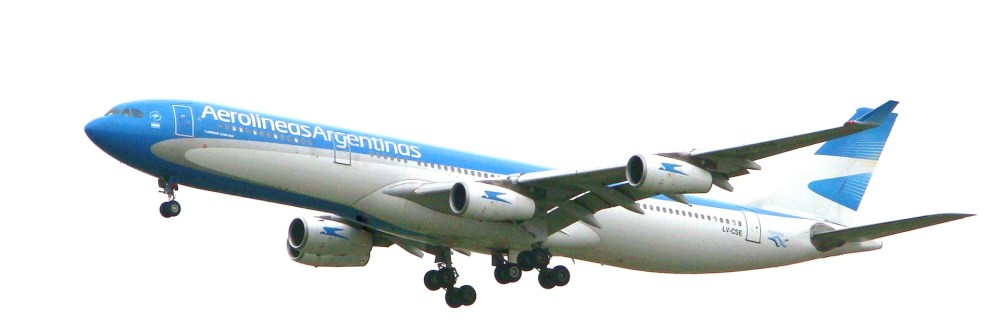
Un Airbus A340-300 subre colisión en plataforma de Aeropuerto Ezeiza

El vuelo AR1133 de Aerolíneas Argentinas aterrizó este lunes a las 06:58 hs en el Aeropuerto Ezeiza cuando el Airbus A340-313 proveniente de Madrid colisionó con la manguera de un autobomba en plataforma. Según informó la Junta de Investigaciones de Accidentes de Aviación Civil (JIACC), cuando la aeronave realizaba las habituales maniobras de rodaje hacia la plataforma en la que luego descendieron los pasajeros, impactó con su ala izquierda un vehículo de bomberos, provocando daños en la puntera. Lo particular del caso es que el camión y los bomberos se encontraban en esa zona para homenajear al piloto del Airbus A340-313, matrícula LV-FPU, que esta madrugada se jubiló con la operación que llegó desde España.

Existe una tradición en el sector aeronáutico que cuando los comandantes que dejan la actividad son homenajeados con un puente de agua cuando realizan su último vuelo. En esta oportunidad, lo que debía ser un hecho festivo casi provoca un accidente grave. Fuentes oficiales informaron que no hubo heridos por el toque del avión con el camión de Bomberos, pero sí será necesario reparar el ala antes de que la aeronave vuelva a prestar servicio.AW-Icon-TXT-01

AW-700034343

Incident AR1133 Aerolíneas Argentinas

An Airbus A340-300 collision on platform of Ezeiza Airport

The AR1133 flight of Aerolíneas Argentinas landed this Monday at 06:58 a.m. at the Ezeiza Airport when the Airbus A340-313 from Madrid collided with the hose of a pumper on the platform. According to the Civil Aviation Accident Investigation Board (JIACC), when the aircraft performed the usual taxiing maneuvers to the platform where passengers then descended, a fire vehicle hit its left wing, causing damage to the toe . The particular case is that the truck and firefighters were in that area to honor the pilot of the Airbus A340-313, registration LV-FPU, which this morning retired with the operation that arrived from Spain.

There is a tradition in the aeronautical sector that when the commanders who leave the activity are honored with a water bridge when they make their last flight. On this occasion, what should have been a festive event almost caused a serious accident. Official sources reported that there were no injuries due to the touch of the plane with the fire truck, but it will be necessary to repair the wing before the aircraft returns to service. A \ W

video-camera_318-50337.jpg


Ξ A I R G W A Y S Ξ
SOURCE: Airgways.com
DBk: Argentina.gob.ar/jiacc / Infobae.com / Aerolineas.com / Aa2000.com.ar
AW-POST: 201811192347AR

A\W   A I R G W A Y S ®

Lion Air JT-610 | Día 22

AW-77000021AW | 2018 11 19 23:22 | AIR INVESTIGATION / AVIATION SAFETY

AW-7007378El accidente de Lion Air plantea interrogantes sobre el secreto de la industria

Un Boeing 737-8 MAX, registro PK-LQP de la aerolínea Lion Air realiza el vuelo JT-610 desde Jakarta a Pangkal Pinang (Indonesia) con 181 pasajeros y 8 tripulantes, estaba saliendo de Jakarta cuando la aeronave alcanzó una altitud máxima de unos 5.400 pies, luego el contacto por radar se perdió a unos 35nm al noreste de Jakarta sobre el Mar de Java a las 06:33L (23:33Z, 28 Octubre 2018).

Software silencioso

Si bien la investigación aún se encuentra en sus primeras etapas, y los funcionarios no están emitiendo ninguna conclusión en este momento (se analizarán todas las posibilidades, incluido el terrorismo), un sistema de software se ha convertido en un tema de gran controversia.

A medida que la búsqueda continuaba para obtener pistas valiosas, Boeing, el fabricante del 737, considerado uno de los más seguros del mundo, admitió públicamente que se instaló un software estándar y silencioso llamado Sistema de Aumento de Características de Maniobra (MCAS), en la computadora. En resumen, diseñado para funcionar silenciosamente en segundo plano, el sistema corrigió la lectura del Ángulo de Ataque (AOA). Un incidente pudo haber existido junto con un indicador de Ángulo de Ataque (AOA) o una indicación de velocidad del aire que funciona mal, los expertos ahora dicen que el sistema MCAS podría ser engañado para que emita comandos incrementales de punta hacia abajo del estabilizador.

La British Broadcasting Corporation informó que el Comité Nacional de Seguridad del Transporte de Indonesia (KNKT), dijo que un sensor de Ángulo de Ataque había sido cambiado en la aeronave Boeing 737-8 MAX PK-LQP el día antes del accidente. Si bien los problemas de software son poco frecuentes en el mercado de la aviación comercial actual, sí ocurren. El problema es que las aerolíneas y los fabricantes de aeronaves permanecen en secreto, un hecho que es demasiado obvio tras el accidente de Lion Air.

El capitán John Weaks, Presidente del Southwest Airlines Pilots Union (SWAPA) expresó: «Estamos enojados porque Boeing no les dijo a las compañías y los pilotos no se dieron cuenta, obviamente, también. Pero lo que necesitamos ahora es asegurarnos de que no haya nada más que Boeing no haya dicho a las compañías ni a los pilotos».

Historial incidentes como factores de análisis

El secreto y la falta de transparencia no son nuevos entre los fabricantes de aviones. Hace varios años, un gran jet bimotor de cuerpo ancho se dirigía a un destino importante en Asia con una carga completa de pasajeros. El nombre de la aerolínea norteamericana y el destino se mantendrán confidenciales, para proteger las identidades de los pilotos y la tripulación. Era de noche, y las azafatas habían terminado de servir la cena: todos se estaban acomodando en un vuelo tranquilo. Las pantallas LCD de cabina de vidrio que muestran información crucial para los pilotos, como la velocidad del aire, la altitud, la ubicación y otros datos, se quedaron en blanco, dejando a la aeronave prácticamente ciega. El capitán dijo: «Estamos muertos», se puso de pie y se dirigió al baño, dejando al copiloto sorprendido solo en la cabina del piloto, para defenderse por sí mismo. Afortunadamente, este último era un especialista en aterrizaje, uno de los mejores que tenía la aerolínea. Un hombre que podría aterrizar en casi cualquier condición climática, cuando se le solicite.

Inmediatamente se hizo cargo de las comunicaciones y usando los controles que aún tenía, los instrumentos de respaldo, pudo aterrizar a la aeronave en la oscuridad de la noche evitando un desastre aéreo. El incidente causó un gran pánico, el fabricante de la aeronave descubrió que la computadora simplemente se ha reiniciado, en pleno vuelo. Algo que nunca había hecho antes. Se creó e instaló una solución en todos los aviones del mundo. Si no fuera por uno de los tripulantes que habló del incidente a un confidente, nadie lo habría sabido, ni siquiera los pasajeros.

A fines de la década de 1990 un avión de pasajeros Airbus A340 de Air Canada partía de Frankfurt con destino a Vancouver. Después de la rotación, los pasajeros escucharon un fuerte estruendo, el tren de aterrizaje ventral se había desprendido literalmente del avión cayendo al terreno. Air Canada contactó rápidamente con la sede de Airbus, solo para descubrir que incluso no estaba seguro de si la aeronave podría aterrizar en los tres trenes de aterrizaje restantes. Nunca había sido probado. Pero después de volar durante dos horas, quemando y botando combustible, la tripulación bajó el tren de aterrizaje restante mediante procedimientos manuales de extensión de engranajes y el avión aterrizó de manera segura. Se evitó el desastre.

Southwest, cambios antes del accidente

Southwest Airlines cambió sensores defectuosos de los Boeing 737 MAX. La compañía estadounidense Southwest Airlines, la mayor operadora de los nuevos aviones Boeing 737-8 MAX ha informado que cambió tres semanas antes del accidente del vuelo JT-610 de Lion Air, dos sensores de control de vuelo que funcionaban mal y que, según las conclusiones preliminares, provocaron la catástrofe en Indonesia.

Incidentes antes del JT-610

El resumen del historial de operaciones de mantenimiento de Southwest Airlines, después de que los pilotos de la aerolínea informaran que no lograban ajustar las configuraciones del acelerador. El 6 Noviembre 2018, una semana después del siniestro de Lion Air en el Mar de Java, Boeing publicó un boletín de operaciones manuales para que los pilotos aprendan a lidiar con situaciones en que un sensor del Ángulo de Ataque (AOA) emita datos incorrectos.

Al día siguiente, la Administración Federal de Aviación de Estados Unidos (FAA) dio tres días de plazo a las aerolíneas para actualizar los manuales de vuelos en sus aviones Boeing 737-8 y 737-9. La advertencia ha tomado por sorpresa a muchos pilotos que operan estos modelos, pues supuestamente nadie había avisado a las aerolíneas que los últimos Boeing 737 MAX incorporan un sistema automático para evitar la entrada en pérdida.

El anemómetro del Boeing 737-8 MAX de Lion Air siniestrado tuvo defectos en los últimos 4 vuelos. Según las conclusiones preliminares, la aeronave comenzó el despegue con un ángulo de ataque correcto, pero los sensores marcaron que su nariz estaba en un ángulo muy elevado, tras lo cual el compensador del estabilizador horizontal respondió bajándola, con el subsiguiente descenso brusco que la tripulación ya no pudo controlar.

Actualización investigación accidente Lion Air JT-610

A medida que continúa la investigación sobre el desafortunado vuelo JT-610 Lion Air, ahora se están preguntando si los pilotos realmente sabían cómo volar el avión, y es posible que no hayan tenido pleno conocimiento del último modelo, el Boeing 737-8 MAX.

Una demanda contra Boeing fue presentada el jueves pasado. Los padres de un pasajero están demandando a Boeing, alegando que el avión tenía un diseño inseguro. La demanda alega que «Boeing no pudo comunicar una nueva característica de seguridad que no existía en los 737 anteriores».

Por su parte, el Director Operativo de Lion Air acusa a Boeing de «retener información» de los pilotos de la compañía en los manuales sobre una característica de seguridad que puede bajar automáticamente la nariz del avión para evitar un bloqueo.

Pero el Director General de Boeing, Dennis Muilenburg, ha informado la semana pasada que la información estaba disponible como parte del manual de capacitación. Luego, el miércoles de la semana pasada, un portavoz de Boeing declaró en un correo electrónico que la compañía no podía «discutir detalles específicos de una investigación en curso». La compañía además expresó que «proporcionó dos actualizaciones para nuestros operadores en todo el mundo que vuelven a enfatizar los procedimientos existentes para estas situaciones. Confiamos en la seguridad del 737-8 MAX. La seguridad sigue siendo nuestra principal prioridad y es un valor fundamental para todos en Boeing».

Lion Air ha tenido un historial de seguridad irregular y deficitaria con la prohibición del espacio aéreo europeo y estadounidense en el período 2007-2016 y donde muchas aerolíneas de Indonesia están bajo la lupa de los organismos internacionales de aviación. Cuando las prohibiciones a Lion Air se levantaron por parte de la Organización Internacional de Aviación Civil (OACI) otorgó a Lion Air la máxima calificación en términos de seguridad en este año 2018. Los expertos en aviación consideran que la compra de la flota de Boeing 737-8 MAX puede haber sido una parte tangible de ese aumento a una calificación de seguridad superior.

La Grabadora de Voz de la Cabina del vuelo (CVR) todavía no se ha localizado. El ‘ping’ para ayudar a localizar la grabadora dejó de emitir sonido aproximadamente una semana después del accidente. El CVR proporcionaría evidencia vital de las acciones y conversaciones del piloto que llevaron al incidente.AW-Icon-TXT-01


AW-700066666Lion Air JT-610 | Day 22

Lion_Air_logoThe Lion Air accident raises questions about the secrecy of the industry

A Boeing 737-8 MAX, registration PK-LQP of the airline Lion Air performs flight JT-610 from Jakarta to Pangkal Pinang (Indonesia) with 181 passengers and 8 crew, was leaving Jakarta when the aircraft reached a maximum altitude of about 5,400 feet, then radar contact was lost at about 35nm northeast of Jakarta over the Java Sea at 06: 33L (23: 33Z, 28 October 2018).

Silent software

While the investigation is still in its early stages, and officials are not issuing any conclusions at this time (all possibilities, including terrorism) will be analyzed, a software system has become a subject of great controversy.

As the search continued to obtain valuable clues, Boeing, the maker of the 737, considered one of the safest in the world, publicly admitted that a standard and silent software called Maneuver Characteristics Increase System (MCAS) was installed in Computer. In short, designed to work silently in the background, the system corrected the reading of the Attack Angle (AOA). An incident may have existed along with an Attack Angle Indicator (AOA) or a malfunctioning airspeed indication, experts now say that the MCAS system could be tricked into issuing incremental commands up and down the stabilizer.

The British Broadcasting Corporation reported that the National Transport Safety Committee of Indonesia (KNKT) said that an Angle of Attack sensor had been changed on the Boeing 737-8 MAX PK-LQP aircraft the day before the accident. While software problems are rare in the current commercial aviation market, they do occur. The problem is that airlines and aircraft manufacturers remain secret, a fact that is all too obvious after the Lion Air accident.

Captain John Weaks, President of the Southwest Airlines Pilots Union (SWAPA) said: «We are angry because Boeing did not tell the companies and the pilots did not notice, obviously, but what we need now is to make sure there is not nothing else that Boeing has not told the companies or the pilots».

Incident history as analysis factors

Secrecy and lack of transparency are not new among aircraft manufacturers. Several years ago, a large wide-body twin-engine jet was heading to an important destination in Asia with a full load of passengers. The name of the North American airline and the destination will be kept confidential, to protect the identities of the pilots and the crew. It was night, and the stewardesses had finished serving dinner: they were all settling into a quiet flight. Glass cockpit LCD screens that show crucial information for pilots, such as air speed, altitude, location and other data, went blank, leaving the aircraft virtually blind. The captain said: «We are dead», he got up and went to the bathroom, leaving the copilot surprised alone in the cockpit, to defend himself. Fortunately, the latter was a landing specialist, one of the best the airline had. A man who could land in almost any weather condition, when requested.

Immediately he took over the communications and using the controls he still had, the backup instruments, he was able to land the aircraft in the dark of night avoiding an aerial disaster. The incident caused a great panic, the manufacturer of the aircraft discovered that the computer has simply restarted, in full flight. Something I had never done before. A solution was created and installed on every aircraft in the world. If it were not for one of the crew members who spoke of the incident to a confidant, nobody would have known, not even the passengers.

In the late 1990s, an Airbus A340 passenger plane from Air Canada departed from Frankfurt bound for Vancouver. After the rotation, the passengers heard a loud roar, the ventral landing gear had literally detached from the plane falling to the ground. Air Canada quickly contacted Airbus headquarters, only to discover that it was not even sure if the aircraft could land on the remaining three landing gear. It had never been tested. But after flying for two hours, burning and dumping fuel, the crew lowered the remaining landing gear by manual gear extension procedures and the plane landed safely. Disaster was avoided.

Southwest, changes before the accident

Southwest Airlines changed defective sensors from the Boeing 737 MAX. The US company Southwest Airlines, the largest operator of the new Boeing 737-8 MAX aircraft has reported that it changed three weeks before the crash of Lion Air’s JT-610 flight, two flight control sensors that malfunctioned and, according to preliminary conclusions, caused the catastrophe in Indonesia.

Incidents before the JT-610

The summary of Southwest Airlines’ maintenance operations history, after airline pilots reported that they could not adjust throttle settings. On November 6, 2018, a week after the Lion Air incident in the Java Sea, Boeing published a manual operations bulletin for pilots to learn how to deal with situations in which an Attack Angle Sensor (AOA) issues incorrect data.

The next day, the Federal Aviation Administration of the United States (FAA) gave airlines three days to update the flight manuals on their Boeing 737-8 and 737-9 aircraft. The warning has taken by surprise many pilots who operate these models, because supposedly nobody had warned the airlines that the latest Boeing 737 MAX incorporate an automatic system to avoid the stall.

The anemometer of the Boeing 737-8 MAX of the ill-fated Lion Air had defects in the last 4 flights. According to the preliminary findings, the aircraft started the takeoff with a correct angle of attack, but the sensors marked that its nose was at a very high angle, after which the compensator of the horizontal stabilizer responded by lowering it, with the subsequent sharp decrease that the crew He could not control anymore.

Lion Air JT-610 accident investigation update

As research continues on the unfortunate JT-610 Lion Air flight, they are now wondering if the pilots really knew how to fly the plane, and they may not have had full knowledge of the latest model, the Boeing 737-8 MAX .

A lawsuit against Boeing was filed last Thursday. The parents of a passenger are suing Boeing, claiming that the plane had an unsafe design. The lawsuit alleges that «Boeing could not communicate a new security feature that did not exist in the previous 737».

For his part, the Chief Operating Officer of Lion Air accuses Boeing of «withholding information» from the company’s pilots in the manuals on a safety feature that can automatically lower the nose of the aircraft to avoid a blockage.

But the CEO of Boeing, Dennis Muilenburg, reported last week that the information was available as part of the training manual. Then, on Wednesday of last week, a spokesperson for Boeing stated in an email that the company could not «discuss specific details of an ongoing investigation.» The company also said that it «provided two updates for our operators around the world that re-emphasize the existing procedures for these situations. We trust in the safety of the 737-8 MAX.Security remains our top priority and is a fundamental value for our customers. everyone in Boeing».

Lion Air has had a history of irregular security and deficit with the banning of European and American airspace in the period 2007-2016 and where many Indonesian airlines are under the scrutiny of international aviation organizations. When the bans to Lion Air were lifted by the International Civil Aviation Organization (ICAO) granted Lion Air the highest rating in terms of safety in this year 2018. Aviation experts consider that the purchase of the Boeing 737 fleet -8 MAX may have been a tangible part of that increase to a higher safety rating.

The Flight Cockpit Voice Recorder (CVR) has not yet been located. The ‘ping’ to help locate the recorder stopped sounding about a week after the accident. The CVR would provide vital evidence of the pilot’s actions and conversations that led to the incident. A \ W


Ξ A I R G W A Y S Ξ
SOURCE: Airgways.com
DBk: Faa.gov / Ntsb.gov / Dephub.go.id / Atimes.com / Thethaiger.com / Airgways.com
AW-POST: 201811192322AR

A\W   A I R G W A Y S ®

1er Boeing 737 MAX 200 sale de fábrica

AW | 2018 11 19 15:31 | INDUSTRY

Boeing-Logo.svg.pngEl primer Boeing 737-8 MAX 200 sale de la línea de ensamblaje en Renton, WA

El primer Boeing 737-8 MAX 200 para Ryanair salió de la fábrica de Renton, Washington. La primer aeronave tendrá capacidad para 197 pasajeros, 8 más que los 737-800 (189 pax alta densidad) con los que opera Ryanair.

Desarrollo del MAX 200

En septiembre de 2014, Boeing lanzó una versión de alta densidad del 737-8 MAX, el 737-8 MAX 200, nombrado para asientos de hasta 200 pasajeros en una configuración de alta densidad de clase única con asientos de línea delgada; se requiere una puerta de salida adicional debido a la mayor capacidad de pasajeros. Boeing afirma que esta versión será 20% más rentable por asiento que los modelos 737 actuales, y será la más eficiente en el mercado cuando se entregue, incluidos los costos operativos un 5% más bajos que los 737-8 MAX. Tres de los ocho carros de galley se retiran para acomodar más espacio para pasajeros. El 1 Diciembre 2014 se completó un pedido de 100 aviones por parte de la aerolínea low cost irlandesa Ryanair. Junto con las mejoras aerodinámicas y los nuevos motores, Ryanair ahorrará un 18% de los costos por pasajero.

MAX 200 «Slim»

Las aeronaves Boeing 737-8 MAX 200 incorporan 8 asientos más que en la variante standard Boeing 737-8 MAX. Aunque los dos modelos guardan las mismas longitudes del fuselaje, el MAX 200 reduce más espacio dentro de la cabina de pasajeros. Algunas modificaciones efectuadas en el MAX 200 son los asientos más delgados tipo ‘slimline’. El nuevo modelo de asientos reducen los respaldos siendo más delgados. Los baños se han reducidos sustancialmente y son más estrechos, distribuidos dos en la parte trasera del fuselaje y uno en la parte delantera.

La nueva variante Boeing 737-8 MAX 200 entrará en servicio en el segundo trimestre de 2019 (2Q2019) y el cliente de lanzamiento es la aerolínea irlandesa Ryanair que espera incorporarlo para continuar maximizando sus ganancias en vuelos de bajo costo.AW-Icon-TXT-01

Imagen relacionada

First Boeing 737 MAX 200 leaves the factory

The first Boeing 737-8 MAX 200 leaves the assembly line in Renton, WA

The first Boeing 737-8 MAX 200 for Ryanair left the Renton factory in Washington. The first aircraft will have capacity for 197 passengers, 8 more than the 737-800 (189 pax high density) with which Ryanair operates.

Development of the MAX 200

In September 2014, Boeing launched a high-density version of the 737-8 MAX, the 737-8 MAX 200, named for seats of up to 200 passengers in a high-density, single-class configuration with thin-line seats; An additional exit door is required due to the greater passenger capacity. Boeing says that this version will be 20% more profitable per seat than the current 737 models, and will be the most efficient in the market when delivered, including operating costs 5% lower than the 737-8 MAX. Three of the eight galley cars are removed to accommodate more passenger space. On December 1, 2014, an order for 100 planes was completed by the Irish low-cost airline Ryanair. Along with aerodynamic improvements and new engines, Ryanair will save 18% of costs per passenger.

MAX 200 «Slim»

The Boeing 737-8 MAX 200 aircraft incorporate 8 more seats than the standard Boeing 737-8 MAX variant. Although both models have the same fuselage lengths, the MAX 200 reduces more space inside the passenger cab. Some modifications made to the MAX 200 are the slimmest slimline seats. The new seat model reduces the backrest by being thinner. The bathrooms have been substantially reduced and narrower, with two distributed in the rear of the fuselage and one in the front.

The new Boeing 737-8 MAX 200 variant will come into service in the second quarter of 2019 (2Q2019) and the launch partner is the Irish airline Ryanair that hopes to incorporate it to continue maximizing its profits on low-cost flights. A \ W


Ξ A I R G W A Y S Ξ
SOURCE: Airgways.com
DBk: Woody Aeroimages / Boeing.com / Ryanair.com
AW-POST: 201811191531AR

A\W   A I R G W A Y S ®

Aerolíneas continúa reduciendo costos

IMG_20180225_234640

AW | 2018 11 19 14:30 | AIRLINES

Aerolineas-Argentinas-logo.pngAerolíneas Argentinas reduce gastos operativos

El Ministerio de Transporte de Argentina ha informado reducir los costos operativos en el Grupo Aerolíneas en gastos superfluos que creen necesarios eliminar o modificar.

Dentro de los puntos que la aerolínea estima modificar se encuentran temas relacionados a la tripulación de viaje y tareas de logísticas. En cuanto a la tripulación: El Gobierno sostienen que se deberá eliminar el asiento de descanso en clase business, pues eso representaría un ahorro para la empresa de US$ 1,5 millón por año. Pernocte: Noches de posta en Roma. Las 30 habitaciones que alquila la compañia se modificarán, representando un ahorro para la empresa de US$ 2,6 millones al año. Licencias: Se reducirá las licencias a los empleados a lo más indispensable.

En cuanto a la logística: Tareas en rampa: Las tarea de función de Carga de Combustible estará a cargo solamente del funcionario o empleado de la petrolera, no necesariamente lo fiscalizará el área de Mantenimiento. Despacho centralizado: Aunque Aerolíneas ya tiene centralizado el despacho operativo, la intención del Ministerio de Transporte es que se pueda elaborar toda la documentación del Plan de Vuelos desde un solo lugar y no tener empleados en cada aeropuerto, en el país y en el exterior. Este punto generará conflictos gremiales.AW-Icon-TXT-01

AW-0 (17).JPG

Aerolíneas continues to reduce costs

Aerolíneas Argentinas reduces operating expenses

The Ministry of Transport of Argentina has reported reducing operating costs in the Aerolíneas Group in superfluous expenses that they believe necessary to eliminate or modify.

Among the points that the airline plans to modify are issues related to the trip crew and logistics tasks. As for the crew: The Government maintains that the rest seat should be eliminated in business class, because that would represent a saving for the company of US$ 1.5 million per year. Overnight: Post nights in Rome. The 30 rooms that the company rents will be modified, representing a saving for the company of US$ 2.6 million per year. Licenses: Licenses will be reduced to employees to the most indispensable.

Regarding the logistics: Ramp tasks: The task of function of Fuel Load will be in charge only of the official or employee of the oil company, not necessarily it will be supervised by the maintenance area. Centralized dispatch: Although Aerolíneas already has the operational dispatch centralized, the intention of the Ministry of Transportation is that all the Flight Plan documentation can be prepared from one place and not have employees at each airport, in the country and abroad. This point will generate union conflicts. A \ W


Ξ A I R G W A Y S Ξ
SOURCE: Airgways.com
DBk: Argentina.gob.ar/transporte / Aerolineas.com / Airgways.com
AW-POST: 201811191430AR

A\W   A I R G W A Y S ®