AW | 2018 04 23 05:23 | AIR INVESTIGATION / AVIATION SAFETY
La República Popular de Donetsk entrega a los Países Bajos restos del MH-017
La Oficina del Fiscal General de la autoproclamada República Popular de Donetsk (DNR) ha entregado a los Países Bajos algunos de los restos del accidente del vuelo MH-017 del avión derribado Boeing 777-200ER de Malaysia Airlines.
La catástrofe tuvo lugar el 17 Julio 2014 en el área de conflicto militar entre representantes de las repúblicas de Lugansk y Donetsk no reconocidas y las tropas del gobierno ucraniano.
El Boeing 777-200ER, fue derribado en el espacio aéreo sobre el Donbass. El jefe del Ministerio de Asuntos Exteriores de Rusia, Sergey Lavrov, antes de eso anunció que la Federación de Rusia está ayudando a estudiar las circunstancias del accidente del vuelo MH-017. A bordo había 298 personas, incluidas mujeres y niños. La Comisión Internacional de Estudios cree que el avión fue derribado desde el territorio controlado por la milicia, con la ayuda del sistema de defensa aérea Buk-M1, que llegó al Donbass desde la Federación Rusa.
DNR delivers to the Netherlands remains accident of the MH17
The People’s Republic of Donetsk delivers to the Netherlands remains of the MH-017
The Office of the General Prosecutor of the self-proclaimed Donetsk People’s Republic (DNR) has delivered to the Netherlands some of the wreckage of Flight MH-017 of Malaysia Airlines’ Boeing 777-200ER plane downed.
The catastrophe took place on July 17, 2014 in the area of military conflict between representatives of the unrecognized Lugansk and Donetsk republics and the Ukrainian government troops.
The Boeing 777-200ER, was shot down in the airspace over the Donbass. The head of the Ministry of Foreign Affairs of Russia Sergey Lavrov, before that announced that the Russian Federation is helping to study the circumstances of the accident of flight MH-017. On board there were 298 people, including women and children. The International Commission of Studies believes that the plane was shot down from the territory controlled by the militia, with the help of the air defense system Buk-M1, which arrived in Donbass from the Russian Federation. A \ W
DNR поставляет в Нидерланды, остается несчастным случаем MH17
Народная Республика Донецка доставляет в Нидерланды остатки MH-017
Канцелярия Генерального прокурора самопровозглашенной Донецкой Народной Республики (DNR) доставила в Нидерланды часть обломков самолета MH-017 самолета Boeing 777-200ER авиакомпании «Малайзия».
Катастрофа состоялась 17 июля 2014 года в области военного конфликта между представителями непризнанных Луганской и Донецкой республик и украинских правительственных войск.
Boeing 777-200ER, был сбит в воздушном пространстве над Донбасом. Глава МИД России Сергей Лавров, до этого, объявил, что Российская Федерация помогает изучить обстоятельства аварии полета MH-017. На борту находилось 298 человек, включая женщин и детей. Международная комиссия по исследованиям считает, что самолет был сбит с территории, контролируемой милицией, с помощью системы противовоздушной обороны «Бук-М1», которая прибыла в Донбасс из Российской Федерации. A\W
Ξ A I R G W A Y S Ξ
SOURCE: Airgways.com
DBk: Navkolo.me
AW-POST: 201804230523AR
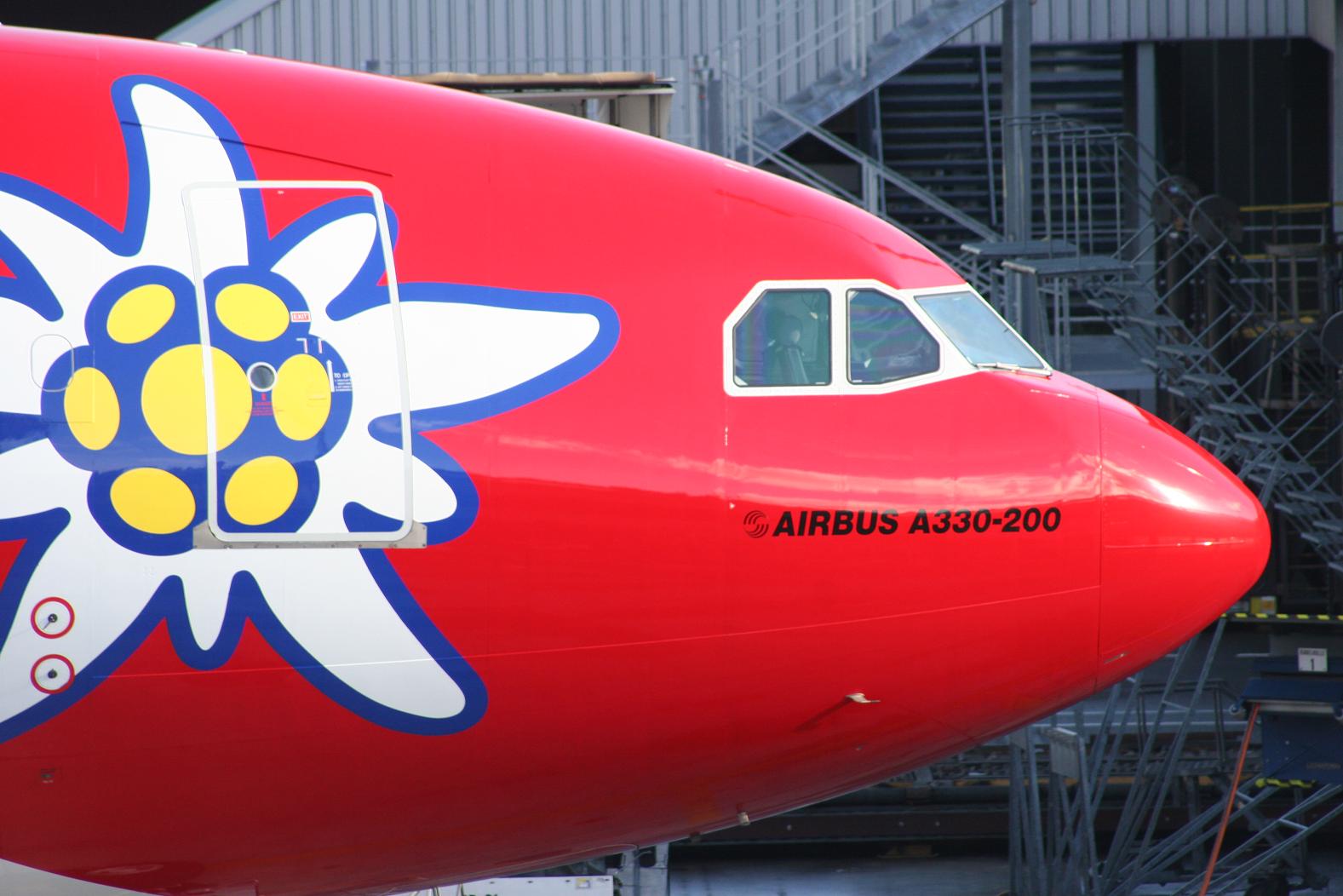
Edelweiss Air recibe autorización para volar a Argentina
El Boletín Oficial de Argentina ha emitido por medio del Ministerio de Transporte la aprobación de los vuelos de Edelweiss Air AG. La aerolínea suiza recibió autorización «para explotar servicios regulares internacionales de transporte aéreo de pasajeros, correo y carga entre puntos en la Confederación Suiza, puntos en la República Argentina, puntos intermedios y puntos más allá utilizando aeronaves de gran porte, de conformidad con los derechos de tráfico acordados bilateralmente».
Bajo la Resolución 227/2018, de la Administración Nacional de Aviación Civil (ANAC), se establece que «la empresa suiza operará sus servicios de conformidad con las autorizaciones, las designaciones y las asignaciones de frecuencias efectuadas por el Gobierno de su país y con estricta sujeción a lo acordado en el marco bilateral aplicable en materia de transporte aéreo, así como también a las leyes y demás normas nacionales e internacionales vigentes y a las condiciones de reciprocidad de tratamiento por parte de las autoridades de la Confederación Suiza para con las empresas de bandera argentina que soliciten similares servicios».
Edelweiss Air deberá presentar en la ANAC los trámites relacionados a las exigencias operativas y normas regulatorias vigentes para las aprobaciones de las aeronaves, equipos, normas, como así la programación de los vuelos y cuadros tarifarios vigentes.
Edelweiss non-stop Zurich-Buenos Aires
Edelweiss Air receives funding to fly to Argentina
The Official Gazette of Argentina has issued through the Ministry of Transport the approval of the flights of Edelweiss Air AG. The Swiss airline received authorization «to operate regular international services of air transportation of passengers, mail and cargo between points in the Swiss Confederation, points in the Argentine Republic, intermediate points and points beyond using large aircraft, in accordance with the rights of bilaterally agreed traffic».
Under Resolution 227/2018, of the National Civil Aviation Administration (ANAC), it is established that «the Swiss company will operate its services in accordance with the authorizations, designations and frequency assignments made by the Government of its country and with strict adherence to what has been agreed in the bilateral framework applicable to air transport, as well as to the laws and other national and international regulations in force and to the conditions of reciprocity of treatment by the authorities of the Swiss Confederation for the companies of Argentine flag that request similar services».
Edelweiss Air must present in the ANAC the procedures related to the operative requirements and current regulatory norms for the approvals of the aircraft, equipment, norms, as well as the programming of the flights and tariff schedules in force. A \ W
Ξ A I R G W A Y S Ξ
SOURCE: Airgways.com
DBk: Argentina.gob.ar/transporte/aereo / Flyedelweiss.com / Wikimedia.org
AW-POST: 201804230507AR
Southwest cancela el 1% de sus operaciones por mantenimiento de aeronaves
Southwest Airlines ha informado que la cantidad de cancelaciones y retrasos en los vuelos es mínima, dados los 4.000 vuelos diarios programados. Las cancelaciones representan aproximadamente el 1% de sus operaciones de vuelo.
La Administración Federal de Aviación dice que dentro de dos semanas planea emitir un pedido para que las aerolíneas inspeccionen motores como los que se encuentran en un avión de Southwest Airlines forzado a aterrizar el martes debido a una falla del motor que dejó un pasajero muerto. La Administración Federal de Aviación ha comunicado que dentro de dos semanas planea emitir un pedido para que las aerolíneas inspeccionen motores CFM56-7B del consorcio General Electric-Safran.
«Continuaremos nuestro trabajo para minimizar las interrupciones de vuelo realizando inspecciones durante la noche mientras las aeronaves no están volando, y utilizando aviones de repuesto, cuando estén disponibles», dijo la aerolínea en un comunicado a Arizona Republic. «Los clientes en los vuelos afectados serán notificados de cualquier cambio en sus planes de viaje a través de actualizaciones proactivas. Como siempre, se recomienda a los clientes que verifiquen el estado de su vuelo en Southwest.com».
Southwest Airlines cancels 1% ops for maintenance
Southwest cancels 1% of its operations for aircraft maintenance
Southwest Airlines has reported that the number of cancellations and delays in flights is minimal, given the 4,000 scheduled daily flights. Cancellations represent approximately 1% of your flight operations.
The Federal Aviation Administration says it plans to issue an order within two weeks for airlines to inspect engines like those on a Southwest Airlines plane forced to land on Tuesday due to an engine failure that left a passenger dead. The Federal Aviation Administration has announced that within two weeks it plans to issue an order for airlines to inspect CFM56-7B engines from the General Electric-Safran consortium.
«We will continue our work to minimize flight interruptions by conducting inspections at night while the aircraft are not flying, and using spare aircraft, when available», the airline said in a statement to the Arizona Republic. «Customers on affected flights will be notified of any changes to their travel plans through proactive updates, as always, customers are advised to check the status of their flight on Southwest.com». A \ W
Ξ A I R G W A Y S Ξ
SOURCE: Airgways.com
DBk: Southwest.com / Amfa11.com
AW-POST: 201804230449AR
Los motores de 680 Boeing 737 Next Generation deben pasar rápidamente a control
Las autoridades aeronáuticas estadounidense Federal Aviation Administration (FAA) y European Aviation Safety Agency (EASA) han emitido inspecciones de emergencia de los motores a reacción utilizados en casi 680 Boeing 737 Next Generation. Numerosas aerolíneas emplean el modelo de turbina CFM56-7B en la flota de aviones Boeing 737 Next Generation. Es la situación del Boeing 737, el avión más vendido de todo el mundo.
Alrededor de 680 motores CFM56-7B que propulsan a los Boeing 737-600/700/800/900/900ER incluyendo los modelos Boeing Business Jet BBJ1, BBJ2 serán paralizados en 20 días. En los Estados Unidos afectará las inspecciones a unos 220 motores CFM56-7B.
CFM International
La serie CFM International CFM56 (designación militar estadounidense F108) es una familia de motores de turbohélice de puente alto fabricados por CFM International (CFMI), con un rango de empuje de 18,500 a 34,000 libras-fuerza (82 a 150 kilonewtons). CFMI es una empresa de propiedad conjunta 50-50 de Safran Aircraft Engines (anteriormente conocida como Snecma), Francia, y GE Aviation (GE), Estados Unidos. Ambas compañías son responsables de producir los componentes y cada uno tiene su propia línea de ensamblaje final. GE produce el compresor de alta presión, el combustor y la turbina de alta presión, Snecma fabrica el ventilador, la caja de cambios, el escape y la turbina de baja presión, y algunos componentes están fabricados por Avio de Italia. Los motores son ensamblados por GE en Evendale, Ohio, y por Snecma en Villaroche, Francia. Los motores completados son comercializados por CFMI. A pesar de las restricciones iniciales de exportación, es uno de los motores de avión turbofan más comunes en el mundo, en cuatro variantes principales.
El CFM56 se lanzó por primera vez en 1974. En abril de 1979, la empresa conjunta no había recibido una orden única en cinco años y estaba a dos semanas de ser disuelta. El programa se guardó cuando Delta Airlines, United Airlines y Flying Tigers eligieron el CFM56 para reiniciar sus DC-8 y poco después fue elegido para reacondicionar la flota KC-135 Stratotanker de la Fuerza Aérea de los EEUU sigue siendo su mayor cliente. Los primeros motores entraron en servicio en 1982. Varios fallos de la pala del ventilador se experimentaron incidentes durante los primeros servicios del CFM56, incluida una falla que fue la causa del desastre aéreo de Kegworth, y algunas variantes del motor experimentaron problemas causados por el vuelo a través de la lluvia y el granizo. Ambos problemas se resolvieron con modificaciones del motor.
CFM56-7B: el exclusivo motor Boeing 737NG
Seleccionado por Boeing como el motor de una sola fuente para su gama Next Generation 737, el CFM56-7B desarrolla 19,500 a 27,300 libras de empuje. Gracias a las actualizaciones del núcleo y la turbina de baja presión, la última configuración CFM56-7BE ofrece importantes mejoras de rendimiento para los operadores, incluida una reducción del 1% en el consumo de combustible y un 4% de reducción en los costos de mantenimiento, así como una mayor vida útil de las piezas. El CFM56-7BE es totalmente intercambiable con otros motores y módulos CFM56-7B, y los kits de actualización pueden instalarse fácilmente en los modelos CFM56-7B y CFM56-7B/3, proporcionando la máxima flexibilidad para los operadores.
MOTOR CFM56-7B
Para fines de agosto, según CFM, todas las palas de la turbina con 20,000 ciclos también deberían revisarse en el mostrador. Y todas las hojas deben someterse a un chequeo cada 20,000 ciclos cada 3,000 ciclos, que es una vez cada dos años para un uso típico. En total, hay alrededor de 14,000 motores de este tipo en uso.
Análisis motores CFM56-7B
Los primeros análisis apuntan a que se produjo una rotura de la pala del motor por una fatiga del metal. Las inspecciones siguen a un incidente con un Boeing 737-700 de la compañía estadounidense Southwest Airlines el Martes, 17 Abril 2018. Durante el vuelo WN1380, una cuchilla de la turbina se rompió, después de lo cual el metal desprendido causó la muerte de una pasajera al incrustarse sobre la ventana. La Comandante de la aeronave pudo llevar el avión a Filadelfia.
La FAA estadounidense y la EASA europea le han dado a las aerolíneas 20 días para revisar las palas de las turbinas de los motores de los Boeing 737 Next Generation.
Los motores, tipo CFM56-7B, están fabricados por CFM International, una filial conjunta de la americana General Electric y Safran francés. La compañía recomienda realizar inspecciones ultrasónicas en las palas de la turbina que ya han completado más de 30,000 ciclos de uso. Un ciclo incluye un despegue y una acción de aterrizaje.
Vuelo WN1380
Una exploración preliminar sugiere que el hecho ocurrido en el vuelo WN1380 de Southwest Airlines con una aeronave Boeing 737-700 se originó porque se desprendió una hoja de la turbina rotora (álabes) del motor. Aparentemente se había roto, de acuerdo con el presidente de la NTSB, Robert Sumwalt. La parte del motor dañado lo hallaron en la ciudad de Bernville, en el estado de Pensilvania, a 112 kilómetros del campo de aviación de Filadelfia. El Boeing 737-700 de Southwest Airlines había efectuado 40.000 despegues y aterrizajes desde el año 2000. La empresa aérea afirmó que el domingo pasado, dos días antes del incidente, habían inspeccionado el avión.
INCIDENTE GRAVE EN MOTOR CFM56-7B EN VUELO WN1380 DE SOUTHWEST AIRLINES
El incidente se generó 20 minutos después de que el Boeing 737-700 despegara en el campo de aviación de La Guardia, en Nueva York. El avión llevaba 148 personas y se dirigía a Dallas (Texas). A las 11:15 hs, cuando la nave volaba a 30.000 pies de altura (9.000 metros), los pasajeros oyeron una explosión, que ordenó a los pilotos hacer un aterrizaje de emergencia en Filadelfia.
El estallido quebró una ventanilla y una mujer fue succionada por el aire. Aunque la rescataron y trasladaron al hospital, finalmente, murió. La fallecida, que iba en la fila 17A. La identificaron como Jennifer Riordan una ejecutiva bancaria, de 43 años de edad, quien tenía dos hijos. Falta de mantenimiento Una exploración preliminar sugiere que el hecho se originó porque hacía falta una hoja de la turbina del motor. Aparentemente se había roto, de acuerdo con el presidente de la NTSB, Robert Sumwalt. La parte del motor dañado lo hallaron en la ciudad de Bernville, en el estado de Pensilvania, a 112 kilómetros del campo de aviación de Filadelfia. Numerosos aviones usan el modelo de turbina CFM56-7B, implicado en el hecho de Southwest. Es la situación del Boeing 737, el avión más vendido de todo el mundo. El 737 accidentado había efectuado 40.000 despegues y aterrizajes desde el año 2000. La empresa aérea afirmó que el domingo pasado, dos días antes del incidente, habían inspeccionado el avión.
Próximamente, la FAA emitirá una instrucción de aeronavegabilidad que exigirá inspecciones de los motores del modelo CFM56-7B, el mismo que explotó en pleno vuelo. “La directiva solicitará una inspección de las aspas de las turbinas ultrasónicas, cuando alcancen cierto número de despegues y aterrizajes. Algún aspa que falle en la inspección va a tener que ser reemplazada”, enseña la FAA en su sitio web.
The impact review engines CFM56-7B in the world
The 680 Boeing 737 Next Generation engines should quickly move to control
The US Federal Aviation Administration (FAA) and European Aviation Safety Agency (EASA) have issued emergency inspections of jet engines used in nearly 680 Boeing 737 Next Generation. Numerous airlines use the CFM56-7B turbine model in the Boeing 737 Next Generation aircraft fleet. It is the situation of the Boeing 737, the best-selling aircraft in the world.
Around 680 CFM56-7B engines that propel the Boeing 737-600/700/800/900/900ER including the Boeing Business Jet models BBJ1, BBJ2 will be paralyzed in 20 days. In the United States, inspections will affect about 220 CFM56-7B engines. The review process affects many airlines in the world.
CFM International
The CFM International CFM56 series (US military designation F108) is a family of high bridge turboprop engines manufactured by CFM International (CFMI), with a thrust range of 18,500 to 34,000 pounds-force (82 to 150 kilonewtons). CFMI is a 50-50 jointly owned company of Safran Aircraft Engines (formerly known as Snecma), France, and GE Aviation (GE), United States. Both companies are responsible for producing the components and each has its own final assembly line. GE produces the high pressure compressor, the combustor and the high pressure turbine, Snecma manufactures the fan, the gearbox, the exhaust and the low pressure turbine, and some components are manufactured by Avio of Italy. The engines are assembled by GE in Evendale, Ohio, and by Snecma in Villaroche, France. The completed motors are marketed by CFMI. Despite initial export restrictions, it is one of the most common turbofan airplane engines in the world, in four major variants.
CFM56 was launched for the first time in 1974. By April 1979, the joint venture had not received a single order in five years and was two weeks away from being dissolved. The program was saved when Delta Airlines, United Airlines and Flying Tigers chose the CFM56 to restart their DC-8 and shortly thereafter was chosen to overhaul the KC-135 Stratotanker fleet of the US Air Force. UU he is still his biggest client. The first engines entered service in 1982. Several fan blade failures experienced incidents during the first services of the CFM56, including a fault that was the cause of the Kegworth air disaster, and some engine variants experienced problems caused by the flight through rain and hail. Both problems were solved with engine modifications.
CFM56-7B: the exclusive Boeing 737NG engine
Selected by Boeing as the single-source engine for its Next Generation 737 range, the CFM56-7B develops 19,500 to 27,300 pounds of thrust. Thanks to core and low pressure turbine upgrades, the latest CFM56-7BE configuration offers significant performance improvements for operators, including a 1% reduction in fuel consumption and a 4% reduction in maintenance costs , as well as a longer life of the pieces. The CFM56-7BE is fully interchangeable with other CFM56-7B motors and modules, and upgrade kits can be easily installed on the CFM56-7B and CFM56-7B / 3 models, providing maximum flexibility for operators.
By the end of August, according to CFM, all turbine blades with 20,000 cycles should also be checked at the counter. And all the sheets must undergo a check every 20,000 cycles every 3,000 cycles, which is once every two years for typical use. In total, there are about 14,000 engines of this type in use.
MODEL OF MOTOR CMF56-7B
FUNCTIONING OF CFM56-7B
Engine analysis CFM56-7B
The first analyzes indicate that there was a breakage of the motor blade due to metal fatigue. The inspections follow an incident with a Boeing 737-700 from the American company Southwest Airlines on Tuesday, April 17, 2018. During flight WN1380, a blade of the turbine broke, after which the detached metal caused the death of a Passenger to be embedded on the window. The Commander of the aircraft was able to take the plane to Philadelphia.
The US FAA and the European EASA have given the airlines 20 days to check the turbine blades of the Boeing 737 Next Generation engines.
The engines, type CFM56-7B, are manufactured by CFM International, a joint subsidiary of American General Electric and French Safran. The company recommends performing ultrasonic inspections on turbine blades that have already completed more than 30,000 cycles of use. A cycle includes a takeoff and a landing action.
Flight WN1380
A preliminary exploration suggests that the incident occurred on Southwest Airlines flight WN1380 with a Boeing 737-700 aircraft originated because a blade of the turbine rotors (blades) of the engine was detached. Apparently it had been broken, according to NTSB president Robert Sumwalt. The damaged part of the engine was found in the city of Bernville, in the state of Pennsylvania, 112 kilometers from the Philadelphia airfield. The Boeing 737-700 of Southwest Airlines had made 40,000 takeoffs and landings since 2000. The airline said that last Sunday, two days before the incident, they had inspected the plane.
The incident was generated 20 minutes after the Boeing 737-700 took off at the La Guardia airfield in New York. The plane was carrying 148 people and was heading to Dallas (Texas). At 11:15 hs, when the ship was flying at 30,000 feet high (9,000 meters) passengers heard an explosion, which ordered the pilots to make an emergency landing in Philadelphia.
The explosion broke a window and a woman was sucked into the air. Although she was rescued and transferred to the hospital, she finally died. The deceased, who was in row 17A. She was identified as Jennifer Riordan, a bank executive, 43 years old, who had two children. Lack of maintenance A preliminary exploration suggests that the fact originated because a blade of the engine turbine was missing. Apparently it had been broken, according to NTSB president Robert Sumwalt. The damaged part of the engine was found in the city of Bernville, in the state of Pennsylvania, 112 kilometers from the Philadelphia airfield. Many aircraft use the turbine model CFM56-7B, implicated in the fact of Southwest. It is the situation of the Boeing 737, the best-selling aircraft in the world. The injured 737 had made 40,000 takeoffs and landings since 2000. The airline said that last Sunday, two days before the incident, they had inspected the plane.
In the near future, the FAA will issue an airworthiness instruction that will require inspections of the CFM56-7B model engines, which exploded in mid-flight. «The directive will request an inspection of the blades of the ultrasonic turbines, when they reach a certain number of takeoffs and landings. Any blade that fails inspection will have to be replaced, «the FAA teaches on its website. A \ W
Efecto colateral de la estructura defectuosa del motor CFM56-7B
Los funcionarios de la industria se preguntan si el diseño de la góndola del motor del Boeing 737 Next Generation constituye un desafío aún mayor que simplemente garantizar que todos los álabes vulnerables del ventilador sean inspeccionados, encontrados y reemplazados.
Dos días después de la investigación del accidente a bordo del Southwest WN1380, la Junta Nacional de Seguridad en el Transporte aumenta su enfoque no solo en el motor CFM56-7B y las aspas del ventilador, sino también en la estructura circundante que causó daños sustanciales y una fatalidad a bordo. el avión
La NTSB aún no ha hecho ninguna recomendación a Boeing ni a la Administración Federal de Aviación con respecto al diseño de la góndola, pero el portavoz de NTSB Keith Holloway dijo que una revisión detallada de la estructura «definitivamente será parte de esta investigación».
Actualmente, hay más de 12,000 estructuras de captación y entrada de motores volando sobre Boeing 737 en todo el mundo, el más numeroso de todos los aviones comerciales.
Con este minucioso análisis, los funcionarios de la industria se preguntan en silencio si el diseño estructural de la góndola del motor del Boeing 737 constituye un desafío aún mayor que simplemente garantizar que todos los álabes vulnerables del ventilador sean inspeccionados, encontrados y reemplazados.
Boeing se negó a comentar
El NTSB dijo el miércoles que piezas de la estructura de entrada se encontraron en Pensilvania, a unas 60 millas de Filadelfia, donde el avión aterrizó de manera segura.
Un segundo incidente
El accidente del martes no fue un hecho aislado. El vuelo WN3472 de Southwest Airlines en Agosto de 2016 se vio obligado a realizar un aterrizaje de emergencia en Pensacola, Florida, luego de una falla similar de uno de sus módulos de motor CFM56-7B.
Al igual que en el caso del vuelo 1380, la falla borró la entrada del motor. En el incidente de 2016, la falla provocó que los desechos volaran hacia el ala, el fuselaje y el borde de ataque del estabilizador horizontal. La extensión del daño a la aeronave fue menos severa que la de 1380, pero el incidente no fue menos grave. Nadie fue herido a bordo de ese vuelo.
En ambos casos, se ha identificado el agrietamiento por fatiga en las paletas del ventilador del motor CFM56-7B como el foco de cada investigación. Southwest está inspeccionando toda su flota en los próximos 30 días y se espera que la Administración Federal de Aviación emita nuevas directivas de inspección a las aerolíneas en los próximos días.
La falla de una paleta del ventilador del motor girando a velocidades supersónicas es la más espectacular de las pruebas requeridas durante el desarrollo de un motor turboventilador. La prueba destruye el motor, pero la ingeniosa ingeniería significa que la fuerza explosiva debe garantizar que «el motor sea capaz de contener el daño sin incendiarse y sin fallar sus accesorios de montaje», según las normas.
Eso es crucial para la seguridad de la aeronave, asegurando que los fragmentos estén contenidos en la carcasa y expulsados de manera segura de la parte trasera del motor. En el caso de los vuelos WN1380 y WN3462 de Southwest Airlines, la hoja de titanio estaba contenida de forma segura, pero la falla desencadenó una reacción en cadena que dañó significativamente ambas aeronaves. Y en el caso del vuelo 1380, causó la primera fatalidad en una aerolínea estadounidense desde 2009.
Actualización: El presidente de NTSB, Robert Sumwalt, dijo que se encontraron pruebas de pintura azul y roja en el borde delantero del ala izquierda del vuelo 1380, una indicación de la trayectoria de los capós tras la falla inicial del motor.
Pero la contención de la cuchilla no es el único aspecto de esa prueba dramática. De acuerdo con las regulaciones federales, las violentas vibraciones y tensiones de la falla no pueden causar una falla en cascada de la estructura que rodea el motor. Un alto funcionario de un fabricante de motores describió el requisito de esta manera:
«La estructura del avión debe ser capaz de soportar la carga transitoria. Entonces, el motor está diseñado y demostrado para contener fragmentos de alta energía. Pero la góndola y, de hecho, toda la estructura del avión tiene sus propios requisitos. Tiene que soportar las cargas transitorias de este evento. Entonces, en pocas palabras, el motor no debe liberar fragmentos de alta energía, y en este caso la góndola debe ser capaz de la carga de desequilibrio (cargas límite)».
En resumen, la estructura alrededor del motor puede deformarse (según las regulaciones federales), pero no puede fallar y representar un peligro para la aeronave. La carga límite se define como la fuerza más punitiva que se esperaría en la operación. La carga máxima se define como el 150% de la carga límite)
Si bien el motor de CFM International cumplió con los requisitos de certificación estipulados en las reglamentaciones federales, ambos incidentes incluyeron un aspecto que no se puede replicar en el terreno.
Los motores que fallaron enfrentaron un «viento de 500 millas por hora sobre todo lo demás» cuando el motor falló, dijo un funcionario de la industria informado sobre la investigación, «solo se puede probar tanto en una celda de prueba».
Precisamente, qué cambios, si los hubiera, podrían ser obligatorios para el diseño de la góndola aún no se ha determinado en esta fase temprana de la investigación. Pero el funcionario de la industria dijo que una parte tan crucial del avión «se remonta al diseño básico del motor y el fuselaje». A \ W
Collateral effect of the defective structure of the engine CFM56-7B
Industry officials are wondering if the design of the Boeing 737 Next Generation engine nacelle is an even greater challenge than simply ensuring that all vulnerable blades of the fan are inspected, found and replaced.
Two days after the investigation of the accident on board the Southwest WN1380, the National Transportation Safety Board increases its focus not only on the CFM56-7B engine and fan blades, but also on the surrounding structure that caused substantial damage and a fatality on board. the plane
The NTSB has yet to make any recommendations to Boeing or the Federal Aviation Administration regarding the design of the nacelle, but NTSB spokesman Keith Holloway said a detailed review of the structure «will definitely be part of this investigation».
Currently, there are more than 12,000 intake and engine intake structures flying over the Boeing 737 worldwide, the largest of all commercial aircraft.
With this detailed analysis, industry officials silently question whether the structural design of the Boeing 737 engine nacelle is an even greater challenge than simply ensuring that all vulnerable blades of the fan are inspected, found and replaced.
Boeing declined to comment
The NTSB said Wednesday that parts of the entrance structure were found in Pennsylvania, about 60 miles from Philadelphia, where the plane landed safely.
A second incident
The accident on Tuesday was not an isolated incident. Flight WN3472 of Southwest Airlines in August 2016 was forced to make an emergency landing in Pensacola, Florida, after a similar failure of one of its engine modules CFM56-7B.
As in the case of flight 1380, the fault cleared the motor input. In the incident of 2016, the fault caused the debris to fly towards the wing, the fuselage and the leading edge of the horizontal stabilizer. The extent of the damage to the aircraft was less severe than that of 1380, but the incident was no less serious. No one was injured on board that flight.
In both cases, fatigue cracking has been identified in the fan blades of the CFM56-7B engine as the focus of each investigation. Southwest is inspecting its entire fleet in the next 30 days and the Federal Aviation Administration is expected to issue new inspection directives to airlines in the coming days.
The failure of a motor fan blade rotating at supersonic speeds is the most spectacular of the tests required during the development of a turbofan engine. The test destroys the engine, but the ingenious engineering means that the explosive force must ensure that «the engine is able to contain the damage without igniting and without failing its mounting accessories», according to the standards.
This is crucial for the safety of the aircraft, ensuring that the fragments are contained in the housing and safely ejected from the rear of the engine. In the case of Southwest Airlines flights WN1380 and WN3462, the titanium blade was contained safely, but the failure triggered a chain reaction that significantly damaged both aircraft. And in the case of flight WN1380, it caused the first fatality on a US airline since 2009.
Update: NTSB President Robert Sumwalt said that blue and red paint were found on the leading edge of the left wing of flight 1380, an indication of the trajectory of the bonnets after the initial engine failure.
But the containment of the blade is not the only aspect of that dramatic test. According to federal regulations, the violent vibrations and stresses of the fault can not cause a cascading failure of the structure surrounding the motor. A senior official of an engine manufacturer described the requirement this way:
«The aircraft structure must be able to withstand the transient load, so the engine is designed and proven to contain high-energy fragments, but the gondola and, in fact, the entire structure of the aircraft has its own requirements. The transient loads of this event, then, in short, the engine must not release high-energy fragments, and in this case the nacelle must be capable of imbalance loading (limit loads)».
In summary, the structure around the engine can be deformed (according to federal regulations), but it can not fail and represent a danger to the aircraft. The limit load is defined as the most punitive force that would be expected in the operation. The maximum load is defined as 150% of the limit load)
While the CFM International engine complied with the certification requirements stipulated in the federal regulations, both incidents included an aspect that can not be replicated in the field.
The engines that failed faced a «wind of 500 miles per hour on everything else» when the engine failed, said an industry official informed of the investigation, «you can only test so much in a test cell».
Precisely, what changes, if any, could be mandatory for the design of the nacelle has yet to be determined at this early stage of the investigation. But the industry official said such a crucial part of the plane «goes back to the basic design of the engine and fuselage». A\W
Ξ A I R G W A Y S Ξ
SOURCE: Airgways.com
DBk: Safran-aircraft-engines.com / Faa.gov / Ntsb.gov / Boeing.com / Jonostrower.com / Airgways.com / Wikimedia.org
AW-POST: 201804221635011550AR
AW | 2018 04 22 13:20 | AVIATION SAFETY / AIR INVESTIGATION
Frustran posible atentado terrorista en vuelo de Etihad Airways en 2017 en Australia
La policía australiana acusó a dos hermanos de un presunto plan de derribar un vuelo de Etihad Airways que viajaba de Sydney a Abu Dhabi 15 de Julio 2017. Las autoridades han dicho que el supuesto plan estaba vinculado al grupo Estado Islámico. En ese momento, la policía australiana dijo que una bomba casera, escondida dentro de un picadora de carne, debía ser transportada a un vuelo el 15 de Julio 2017, pero no pasó de la seguridad después de que el plan fue abortado por un motivo desconocido. La policía dijo que cuando la trama de la bomba falló, los dos sospechosos comenzaron una segunda trama que involucró la creación de un dispositivo químico improvisado diseñado para liberar sulfuro de hidrógeno, o «gas huevo podrido». Los hermanos libaneses y australianos Khaled Khayat, de 49 años, y Mahmoud Khayat, de 32, fueron luego arrestados en Sydney y acusados de «prepararse para un ataque terrorista o planearlo».
En un discurso en Jerusalén el miércoles, el Primer Ministro israelí, Benjamin Netanyahu, atribuyó a las agencias de inteligencia de su país la prevención de «una matanza inimaginable». Israel no reveló qué vuelo estaba en el centro de su advertencia.
El Ministro de Asuntos Interiores de Australia, Peter Dutton, dijo que Israel estaba involucrado «directamente» en descubrir la supuesta conspiración. «El vuelo de Etihad casi desapareció del cielo y habría provocado la muerte de cientos de personas, por lo que estamos muy agradecidos por la asistencia que Israel brindó en ese asunto», dijo Dutton a la estación de radio local 2GB. Líbano ha dicho que también proporcionó información a Australia sobre el caso. El supuesto complot fue uno de los más sofisticados que se haya intentado en Australia, dijo la policía.
Frustrated terrorist attack in Australia in 2017
Frustrated possible terrorist attack in flight of Etihad Airways in 2017 in Australia
Australian police accused two brothers of an alleged plan to shoot down an Etihad Airways flight traveling from Sydney to Abu Dhabi July 15, 2017. Authorities have said that the alleged plan was linked to the Islamic State group. At that time, the Australian police said that a homemade bomb, hidden inside a meat grinder, was to be transported to a flight on July 15, 2017, but did not go beyond security after the plan was aborted for an unknown reason . Police said that when the plot of the bomb failed, the two suspects began a second plot that involved the creation of an improvised chemical device designed to release hydrogen sulfide, or «rotten egg gas». The Lebanese and Australian brothers Khaled Khayat, 49, and Mahmoud Khayat, 32, were later arrested in Sydney and accused of «preparing for a terrorist attack or planning it».
In a speech in Jerusalem on Wednesday, Israeli Prime Minister Benjamin Netanyahu attributed the prevention of «unimaginable killing» to his country’s intelligence agencies. Israel did not reveal which flight was at the center of its warning.
Australian Interior Minister Peter Dutton said Israel was «directly» involved in uncovering the alleged conspiracy. «The Etihad flight almost disappeared from the sky and would have killed hundreds of people, so we are very grateful for the assistance that Israel provided in that matter», Dutton told the 2GB local radio station. Lebanon has said that it also provided information to Australia about the case. The alleged plot was one of the most sophisticated in Australia, police said. A \ W
Ξ A I R G W A Y S Ξ
SOURCE: Airgways.com
DBk: Atsb.gov.au
AW-POST: 201804221320AR
American Airlines incorporará más frecuencias hacia Argentina
Jim Butler, Vicepresidente Senior de Internacional y Carga de AA, visitó Argentina en el marco de la Asamblea Anual del Consejo Mundial de Viajes y Turismo celebrado en Argentina.
American Airlines presentó las nuevas rutas que comenzarán a operar entre la Argentina y Estados Unidos: Buenos Aires-Los Ángeles y Córdoba-Miami.
«La performance de la aerolínea en la Argentina es una de las mejores del mundo», señaló Jim Butler, el Vicepresidente de Cargas y Operaciones a nivel mundial. Jim Buttler expresó que la ruta Buenos Aires-Miami es una de las más efectivas del mundo.
Con cuatro vuelos diarios, 600 empleados en el ámbito local y una inversión de U$S 30 millones de dólares en mantenimiento y repuestos, la compañía estadounidense apunta a reforzar su presencia en el país con nuevas rutas, que incluyen el desembarco de American Airlines en el interior del país, en el Aeropuerto de Córdoba.
American Airlines strengthens its presence in Argentina
American Airlines will incorporate more frequencies to Argentina
Jim Butler, Senior Vice President of International and Cargo of AA, visited Argentina in the framework of the Annual Assembly of the World Travel and Tourism Council held in Argentina.
American Airlines presented the new routes that will start operating between Argentina and the United States: Buenos Aires-Los Angeles and Córdoba-Miami.
«The performance of the airline in Argentina is one of the best in the world», said Jim Butler, the Vice President of Cargo and Operations worldwide. Jim Buttler said that the Buenos Aires-Miami route is one of the most effective in the world.
With four daily flights, 600 employees in the local area and an investment of US$ 30 million in maintenance and spare parts, the US company aims to strengthen its presence in the country with new routes, which include the disembarkation of American Airlines in the interior of the country, at the Córdoba Airport. A\W
Ξ A I R G W A Y S Ξ
SOURCE: Airgways.com
DBk: Aa.com
AW-POST: 201804221300AR
AW | 2018 04 22 12:43 | AVIATION SAFETY / AIR INVESTIGATION
US-Bangladesh Airlines encuentra inconsistencias en el informe del accidente del Bombardier Q400
Contradicciones en el informe del accidente del vuelo BS211 de la aerolínea US-Bangla Airlines en el Aeropuerto de Katmandú, Nepal, ha llevado a las autoridades de la aerolínea a revisar el informe inicial de la prueba proporcionado por la Autoridad de Aviación Civil de Nepal sobre el accidente de su avión Bombardier 8-Q400 en el Aeropuerto Internacional Tribhuvan de Katmandú el 12 de Marzo 2018.
El Presidente Ejecutivo de la compañía, Asif Kabir, ha emitido un informe sobre el informe en una conferencia de prensa en el Hotel Sonargaon en la ciudad de Katmandú hoy Domingo.
Informe de la Autoridad Aviación Civil Nepal
Las autoridades nepalesas proporcionaron el informe un mes después del trágico accidente aéreo. «En el informe, se afirmó que las autoridades involucradas de Nepal comenzaron a apagar el incendio dos minutos después del accidente del avión, pero después de hablar con los testigos y las víctimas lesionadas, descubrimos que el número de bajas habría sido menor si las autoridades de Nepal hubieran comenzado su trabajo dos minutos del accidente».
Postura de US-Bangla Airlines
El CEO de US-Bangla airlines expresó: «A pesar de nuestra completa fe en todos los involucrados, diremos que el informe no cubre todos los temas que se suponía que debía hacer. No rechazamos el informe, pero hay algunas inconsistencias en el mismo. También dijo en el informe inicial que no pudieron llegar a una conclusión sobre la interrupción en la conversación entre el piloto del avión y la torre de control de tráfico aéreo en el Aeropuerto Internacional Tribhuvan».
Accidente BS211
El 12 de Marzo 2018, el vuelo BS 211 de la aerolínea US-Bangla Airlines salió de Dhaka rumbo a Katmandú con 67 pasajeros y cuatro tripulantes. El avión se estrelló durante el aterrizaje en el aeropuerto de Katmandú, matando a 49 en el acto y dos más después de que fueron trasladados al hospital. Veintisiete de los muertos eran ciudadanos de Bangladesh.
El Bombardier de 76 asientos transportaba 71 personas, incluidos cuatro miembros de la tripulación, a bordo cuando se estrelló en un campo cerca del Aeropuerto Internacional Tribhuvan de Katmandú el 12 de marzo, matando a 50 personas e hiriendo a otras. Entre los fallecidos, 27 son bangladesíes (incluidos los cuatro miembros de la tripulación), 22 nepalíes y uno es ciudadano chino.
Desarrollo de investigaciones
De acuerdo con las reglas de la Organización de Aviación Civil Internacional (OACI), se debe presentar un informe inicial dentro de un mes de cualquier accidente. Una investigación del gobierno de Nepal presentó un informe de cinco páginas sobre el accidente el 9 de Abril 2018. Según el informe, el avión modelo Bombardier 8-Q400 no estaba en ‘comunicación estándar’ con el control del tráfico aéreo antes de estrellarse al costado de la pista. La sonda no llegó a ninguna conclusión sobre por qué las líneas de comunicación entre el piloto y la sala de control de tráfico aéreo se vieron obstaculizadas en ese momento o por qué el avión se estrelló.
BOMBARDIER 8-Q400 ACCIDENTADO EN EL AEROPUERTO INTERNACIONAL DE KATMANDÚ, NEPAL
El 12 de Abril, el representante de Bangladesh ante la comisión, el consultor de operaciones de vuelo de la Asociación de Aviación Civil de Bangladesh, Salauddin M Rahmatullah, dijo en una conferencia de prensa que el motivo del accidente se determinaría en el informe final de la investigación. Según el informe inicial, la pista Tribhuvan, la calle de rodaje y la pista de aterrizaje fueron preparadas para el modelo de avión involucrado en el choque. El servicio de bomberos y los trabajadores de rescate pudieron comenzar a trabajar en el accidente dentro de los dos minutos establecidos en las regulaciones, dijo.
Las autoridades de US-Bangla Airlines también plantearon una pregunta sobre la transferencia de seis oficiales de tránsito aéreo estacionados en la torre de control de tráfico del Aeropuerto Internacional Tribhuvan después del incidente. Respondiendo a una pregunta, Asif dijo: «Esperamos que el informe final de la prueba sea justo y se sepa con qué motivo se debe el accidente. Por lo que escuchamos de los testigos locales y los pasajeros heridos, creemos que los trabajadores de rescate no llegaron al avión en dos minutos. Si lo hicieran habría habido muchas menos víctimas».
La grabadora de voz y el registrador de datos de vuelo del avión accidentado el Bombardier 8-Q400 se enviaron a Canadá para su análisis de los parámetros y estudio para determinar las causas del accidente del vuelo BS211 en el Aeropuerto de Katmandú. Su investigación está en curso.
Inconsistencies BS 211 US-Bangladesh Airlines
US-Bangladesh Airlines finds inconsistencies in Bombardier Q400 accident report
Contradictions in the report of the BS211 flight accident of the US-Bangla Airlines at the Kathmandu Airport, Nepal, has prompted the airline authorities to review the initial test report provided by the Civil Aviation Authority of Nepal. the crash of his Bombardier Q400 aircraft at the Tribhuvan International Airport in Kathmandu on March 12, 2018.
The Executive President of the company, Asif Kabir, has issued a report on the report at a press conference at the Hotel Sonargaon in the city of Kathmandu today Sunday.
Report of the Civil Aviation Authority Nepal
The Nepalese authorities provided the report a month after the tragic plane crash. «In the report, it was stated that the involved authorities in Nepal began to put out the fire two minutes after the plane crash, but after speaking with the witnesses and the injured victims, we discovered that the number of casualties would have been lower if the authorities from Nepal would have started their work two minutes after the accident».
Posture of US-Bangla Airlines
The CEO of US-Bangla airlines said: «Despite our complete faith in all involved, we will say that the report does not cover all the issues that it was supposed to do, we do not reject the report, but there are some inconsistencies in it. He also said in the initial report that they could not reach a conclusion about the interruption in the conversation between the pilot of the plane and the air traffic control tower at Tribhuvan International Airport».
Accident BS211
On March 12, 2018, the BS 211 flight of the US-Bangla Airlines airline left Dhaka for Kathmandu with 67 passengers and four crew members. The plane crashed during the landing at Kathmandu airport, killing 49 on the spot and two more after they were taken to the hospital. Twenty-seven of the dead were citizens of Bangladesh.
The 76-seat Bombardier was carrying 71 people, including four crew members, on board when it crashed in a field near the Tribhuvan International Airport in Kathmandu on March 12, killing 50 people and wounding others. Among those killed, 27 are Bangladeshi (including the four crew members), 22 are Nepalese and one is a Chinese citizen.
Development of investigations
In accordance with the rules of the International Civil Aviation Organization (ICAO), an initial report must be submitted within one month of any accident. An investigation by the government of Nepal presented a five-page report on the accident on April 9, 2018. According to the report, the model DASH-8 Q400 aircraft was not in ‘standard communication’ with air traffic control before crashing to the side track. The probe did not come to any conclusion as to why the lines of communication between the pilot and the air traffic control room were hampered at that time or why the plane crashed.
On April 12, the Bangladeshi representative to the commission, the flight operations consultant of the Bangladesh Civil Aviation Association, Salauddin M Rahmatullah, told a press conference that the cause of the accident would be determined in the final report of the investigation. According to the initial report, the Tribhuvan runway, the taxiway and the runway were prepared for the aircraft model involved in the crash. The fire service and rescue workers could start working on the accident within the two minutes established in the regulations, he said.
The US-Bangla Airlines authorities also raised a question about the transfer of six air traffic officers stationed in the traffic control tower of Tribhuvan International Airport after the incident. Responding to a question, Asif said: «We hope that the final report of the test is fair and we know for what reason the accident is due. From what we hear from local witnesses and injured passengers, we believe that the rescue workers They arrived at the plane in two minutes, and if they did, there would have been far fewer casualties».
The voice recorder and the flight data recorder of the crash aircraft Bombardier 8-Q400 were sent to Canada for analysis of the parameters and study to determine the causes of the BS211 flight accident at the Kathmandu Airport. Your investigation is ongoing. A\W
Ξ A I R G W A Y S Ξ
SOURCE: Airgways.com
DBk: Caanepal.org.np/en / Icao.org / Bombardier.com / Us-banglaairlines.com
AW-POST: 201804221243AR
La FAA ordena inspecciones de motor más cerradas después de la falla de Southwest Airlines.
La Administración Federal de Aviación (FAA) emitió una Directiva de Aeronavegabilidad de Emergencia (EAD) que requiere que los operadores inspeccionen las aspas del ventilador en ciertos motores CFM56-7B dentro de los 20 días.
La directiva se basa en un boletín de servicio internacional de CFM emitido hoy y en la información recopilada de la investigación de la falla del motor Southwest Airlines del martes. El requisito de inspección se aplica a los motores CFM56-7B. Específicamente, los motores con más de 30,000 ciclos totales de nuevos deben completar las inspecciones dentro de los 20 días. El EAD entra en vigencia a partir de la publicación. El fabricante del motor estima que las medidas correctivas actuales afectan a 352 motores en los EEUU y 681 en todo el mundo.
La Administración Federal de Aviación emitió el viernes una orden de emergencia instruyendo a las aerolíneas con el mismo tipo de motor que el que falló catastróficamente el martes en un Boeing 737-700 de Southwest Airlines para inspeccionar más a fondo los álabes de los ventiladores de los motores.
La agencia dijo a las aerolíneas que realicen inspecciones ultrasónicas, que pueden detectar fallas o grietas no visibles a simple vista, dentro de los próximos 20 días en las paletas de los motores con más de 30,000 ciclos. Un ciclo incluye un arranque, despegue, aterrizaje y apagado del motor.
El pedido de la FAA se produjo poco después de que el fabricante de los motores, CFM International, emitiera directrices para las inspecciones ultrasónicas. CFM, una empresa conjunta de General Electric y la compañía francesa Safran Aircraft Engines, fue más allá de la FAA, recomendando que los álabes de ventilador con 20,000 ciclos sean inspeccionados a fines de agosto. También recomendó inspecciones de todas las otras aspas del ventilador cuando alcanzan los 20,000 ciclos, y repitiendo las inspecciones cada 3,000 ciclos, que, dijo, «representa aproximadamente dos años en servicio».
La FAA dijo que estaba actuando porque determinó que el agrietamiento de la pala del ventilador «es probable que exista o se desarrolle en otros productos del mismo tipo de diseño».
La orden de la agencia no aborda los motores menos utilizados, pero dijo que estaba «considerando la elaboración de normas adicionales para abordar estas diferencias». Las aerolíneas no están legalmente obligadas a seguir las pautas de la compañía. Están sujetos a la directiva FAA.
FAA issues Emergency Airworthiness Directive on engines CFM56-7B
The FAA orders more closed engine inspections after the failure of Southwest Airlines.
The Federal Aviation Administration (FAA) issued an Emergency Airworthiness Directive (EAD) that requires operators to inspect the fan blades on certain CFM56-7B engines within 20 days.
The directive is based on an international CFM service bulletin issued today and on information gathered from Tuesday’s Southwest Airlines engine failure investigation. The inspection requirement applies to the CFM56-7B engines. Specifically, engines with more than 30,000 total new cycles must complete inspections within 20 days. The EAD becomes effective as of publication. The engine manufacturer estimates that current corrective measures affect 352 engines in the US and 681 worldwide.
The Federal Aviation Administration issued an emergency order on Friday instructing airlines with the same type of engine as the one that failed catastrophically on Tuesday on a Southwest Airlines Boeing 737 to inspect more closely the blades of the engine fans.
The agency told the airlines to perform ultrasonic inspections, which can detect faults or cracks not visible to the naked eye, within the next 20 days on the palettes of engines with more than 30,000 cycles. A cycle includes a start, take-off, landing and shutdown of the engine.
The FAA’s request came shortly after the engine manufacturer, CFM International, issued guidelines for ultrasonic inspections. CFM, a joint venture of General Electric and the French company Safran Aircraft Engines, went beyond the FAA, recommending that the fan blades with 20,000 cycles be inspected at the end of August. He also recommended inspections of all other fan blades when they reach 20,000 cycles, and repeating inspections every 3,000 cycles, which, he said, «represents approximately two years in service». The FAA said it was acting because it determined that the cracking of the fan blade «is likely to exist or develop in other products of the same design type».
The agency’s order does not address the least used engines, but said it was «considering the development of additional rules to address these differences». Airlines are not legally required to follow company guidelines. They are subject to the FAA directive. A \ W
Desde la apertura de la aviación comercial en Argentina con la «Revolución de los Aviones» el mercado de las aerolíneas esta atravesando profundos cambios en los consumidores
Cuando la «Revolución de los Aviones» se inició en Argentina en Agosto 2017 el Ministerio de Transporte anunció no solo que la Argentina experimentaría un aumento constante del flujo de pasajeros, sino además una mejora en la infraestructura aeroportuaria y otros beneficios colaterales que traerían inversiones al país.
El mercado argentino
La profundización de estos cambios en la denominada «Revolución de los Aviones» viene contemplada con mejoras en los servicios a los pasajeros y oportunidades de más rutas domésticas e internacionales.
El mayor reto de las políticas implementadas será regular efectivamente la oferta-demanda teniendo presente las singularidades del sector aeronáutico. Cuando se habla de políticas en la aviación, debemos entender que está relacionada con los aspectos sociales, culturales, políticos y comerciales.
El nuevo escenario permitirá entender que Argentina aumentará fuertemente su competitividad interna y externa donde las aerolíneas comenzarán a implementar políticas atractivas para los usuarios del transporte aéreo. Pero el Estado deberá jugar un papel proponderante en vigilar el desarrolló de la aviación.
La Revolución de los Aviones
Muchas líneas aéreas han participado de los concursos efectuado por el Estado de Argentina. Algunos proyectos tal vez nunca se materializarán, otros tal vez comiencen con un inicio feliz y terminen en el olvido, entre otros, podremos observar algunas quiebras o fusiones de líneas aéreas. Pero a todas las obliga a participar ajustándose al mercado y su nuevo escenario, aunque un tanto turbulento.
En el caso del Grupo Aerolíneas Argentinas/Austral, ha comenzado a percibir cambios en su política de fijación de precios, su mutación parcial hacia el negocio de bajo costo, como una forma de ajustarse a la fuerte competencia que ha generado la introducción de nuevos operadores al mercado aéreo argentino. Aerolíneas Argentinas ofrecerá un servicio diferenciado con una tarifa más conveniente y más accesible llegando al nivel de precios low-cost. Aerolíneas/Austral implementarán la posibilidad de que se copie esa estructura de negocios, en la cual se cobra por separado del pasaje la comida a bordo, el equipaje y los servicios incluidos en el precio total. «Tenemos que copiar lo bueno que tienen estas compañías y de esa manera optimizar los recursos de la empresa», expresó el CEO Mario Dell’Acqua al argumentar sobre los cambios, en una conferencia de prensa ofrecida en el marco del World Trade & Travel Council 2018.
Latam Airlines no está exenta de los cambio que se avecinan en Argentina. La junta administrativa ha anunciado la creación de una línea aérea low cost para reducir el impacto que se está desarrollando en Chile, Argentina y Brasil, como así en otras unidades de negocios en Latinoamérica.
En el mercado de low cost Flybondi Líneas Aéreas inició su start-up con complicaciones en la logística, ya que el nuevo Aeropuerto El Palomar fue el centro de las complicadas operaciones de la aerolínea, sumado a algunos percances operativos.
Norwegian Air Argentina tiene sus propios desafíos. Aunque parecía más ordenada que Flybondi, el temple noruego le ha jugado una mala pasada, enfrentando las dificultades financieras, podría tener un efecto arrastre en la toma de decisiones en la filial de Argentina. Existen versiones sobre el inicio de sus operaciones postergando su start-up de Agosto para cerca de fin de año 2018.
Avianca Argentina desde el mismo desembarco en Argentina atravesó las dificultades propias de denuncias relacionadas con los supuestos favoritismo del Estado argentino y la conexión con la venta de MacAir Jet S.A. al Synergy Group. Esas desprolijidades minaron de problemas a la aerolínea de capitales colombianos, pero finalmente ha podido levantar vuelo incorporando sus aviones ATR 72-600 para el inicio de sus operaciones sin dificultades operativas y adaptándose al mercado rápidamente.
Entre otras líneas aéreas, LASA Líneas Aéreas de la Provincia de Neuquén, tiene algunas complicaciones con el centro de mantenimiento que necesita para sus aviones. Polar Líneas Aéreas acelera su puesta en marcha desde San Luis. Flyest Líneas Aéreas, SAPSA Líneas Aéreas y American Jet Líneas Aéreas prosiguen un tanto cautelosa, brindando servicios comerciales y charters entre otros destinos.
Andes Líneas Aéreas está experimentando un aumento favorable del tráfico de pasajeros incorporando nuevos aviones a su flota, convirtiéndose en una de las aerolíneas de mayor crecimiento en Argentina.
Finalmente están las líneas aéreas que todavía «no han salido del cascarón», entre ellas Buenos Aires Internacional Airlines, Alas Mediterráneas, Alas del Sur Líneas Aéreas, entre otras. Aunque los procesos de start-up no sean palpables, no se tienen informaciones certeras al respecto.
Gremios vs mercado aéreo
Los gremios aeronáuticos han alertado muchas veces acerca de la degradación del servicio aéreo a partir de la llegada de empresas de bajo costo, con rutas y frecuencias que se solapan con las que tienen la línea aérea de mayor envergadura, el Grupo Aerolíneas. Además de las denuncias de precarización del servicio y la seguridad en la aviación comercial.
Las políticas claras y efectivas del Estado serán claves para el éxito del proyecto de la Revolución de los Aviones y en esto también estamos involucrados todos los usuarios del transporte aerocomercial.
«Revolutionizing the Aircraft» in Argentina
Since the opening of commercial aviation in Argentina with the «Aircraft Revolution» the airline market is going through profound changes in consumers
When the «Aircraft Revolution» began in Argentina in August 2017, the Ministry of Transportation announced not only that Argentina would experience a steady increase in passenger flow, but also an improvement in airport infrastructure and other collateral benefits that would bring investments to the airport. country.
The Argentine market
The deepening of these changes in the so-called «Aircraft Revolution» is contemplated with improvements in passenger services and opportunities for more domestic and international routes.
The biggest challenge of the policies implemented will be to effectively regulate supply and demand, keeping in mind the singularities of the aeronautical sector. When talking about policies in aviation, we must understand that it is related to social, cultural, political and commercial aspects.
The new scenario will allow us to understand that Argentina will greatly increase its internal and external competitiveness, where airlines will begin to implement attractive policies for air transport users. But the State should play a leading role in monitoring the development of aviation.
The Aircraft Revolution
Many airlines have participated in the competitions carried out by the State of Argentina. Some projects may never materialize, others may start with a happy start and end in oblivion, among others, we may observe some bankruptcies or airline mergers. But it forces all to participate by adjusting to the market and its new scenario, albeit a bit turbulent.
In the case of the Aerolíneas Argentinas/Austral Group, it has begun to perceive changes in its pricing policy, its partial mutation towards the low-cost business, as a way of adjusting to the strong competition generated by the introduction of new operators. to the Argentine aerial market. Aerolíneas Argentinas will offer a differentiated service with a more convenient and more accessible rate, reaching the low-cost price level. Aerolíneas/Austral will implement the possibility of copying that business structure, in which the food on board, luggage and services included in the total price are charged separately from the ticket. «We have to copy the good that these companies have and in that way optimize the resources of the company», said CEO Mario Dell’Acqua when arguing about the changes, in a press conference offered in the framework of the World Trade & Travel Council 2018
Latam Airlines is not exempt from the changes that are coming in Argentina. The board of directors has announced the creation of a low cost airline to reduce the impact that is developing in Chile, Argentina and Brazil, as well as in other business units in Latin America.
In the low-cost market, Flybondi Líneas Aéreas started its start-up with complications in logistics, as the new El Palomar Airport was the center of the airline’s complicated operations, added to some operational mishaps.
Norwegian Air Argentina has its own challenges. Although she seemed more orderly than Flybondi, the Norwegian temper has played a trick on her, facing the financial difficulties, it could have a drag on decision-making in the Argentine branch. There are versions about the beginning of its operations postponing its August start-up for the end of the year 2018.
Avianca Argentina from the same landing in Argentina went through the own difficulties of denunciations related to the supposed favoritism of the Argentine State and the connection with the sale of MacAir Jet S.A. to the Synergy Group. These untidiness mined the airline of Colombian capital, but finally it has been able to take flight incorporating its ATR 72-600 aircraft for the start of its operations without operational difficulties and quickly adapting to the market.
Among other airlines, LASA Líneas Aéreas of the Province of Neuquén has some complications with the maintenance center it needs for its aircraft. Polar Líneas Aéreas accelerates its start-up from San Luis. Flyest Líneas Aéreas, SAPSA Líneas Aéreas and American Jet Líneas Aéreas continue to be somewhat cautious, providing commercial services and charters among other destinations.
Andes Líneas Aéreas is experiencing a favorable increase in passenger traffic and incorporating new avenues to its fleet, becoming one of the fastest growing airlines in Argentina.
Finally, there are the airlines that have not yet «they have not left the shell», among them Buenos Aires International Airlines, Alas Mediterráneas, Alas del Sur Líneas Aéreas, among others. Although the processes of start-up are not palpable, there is no accurate information about it.
Guilds vs air market
The aeronautical unions have warned many times about the degradation of air service from the arrival of low-cost companies, with routes and frequencies that overlap those with the largest airline, the Aerolíneas Group. In addition to the allegations of precarization of the service and security in commercial aviation.
The clear and effective policies of the State will be key to the success of the Aircraft Revolution project and in this we are also involved all users of air transport. A \ W
Ξ A I R G W A Y S Ξ
SOURCE: Airgways.com
DBk: Airgways.com / Argentina.gob.ar/transporte
AW-POST: 201804211221AR
Pakistán estrena un nuevo y moderno Aeropuerto de Islamabad
Una nueva puerta de entrada a Pakistán transformará su percepción sobre el país. El muy esperado Aeropuerto Internacional de Islamabad (IIA) está listo para comenzar las operaciones de vuelos nacionales e internacionales el 3 Mayo 2018, reemplazando el antiguo Aeropuerto Internacional Benazir Bhutto en la ciudad gemela de Rawalpindi, de acuerdo con la Autoridad de Aviación Civil (CAA).
El nuevo aeropuerto es el aeropuerto internacional más grande de Pakistán, diseñado para hasta 15 millones de pasajeros al año en la primera fase, y hasta 25 millones en el futuro. El Aeropuerto Benazir Bhutto en 2017 vio 4.7 millones de pasajeros. Con más de 19 kilómetros cuadrados, el nuevo aeropuerto en forma de Y se encuentra a 30 km del corazón del centro de negocios de Islamabad, Blue Area. Será el primer aeropuerto de Pakistán en acomodar el Airbus A380 de dos pisos. Se espera que el Primer Ministro, Shahid Khaqan Abbasi, inaugure formalmente el aeropuerto.
New Islamabad Airport
Pakistan opens a new and modern Islamabad Airport
A new gateway to Pakistan will transform your perception of the country. The highly anticipated Islamabad International Airport (IIA) is ready to begin domestic and international flight operations on May 3, 2018, replacing the former Benazir Bhutto International Airport in the twin city of Rawalpindi, according to the Civil Aviation Authority (CAA).
The new airport is the largest international airport in Pakistan, designed for up to 15 million passengers a year in the first phase, and up to 25 million in the future. The Benazir Bhutto Airport in 2017 saw 4.7 million passengers. With more than 19 square kilometers, the new Y-shaped airport is 30 km from the heart of the Islamabad business center, Blue Area. It will be the first airport in Pakistan to accommodate the two-story Airbus A380. The Prime Minister, Shahid Khaqan Abbasi, is expected to formally inaugurate the airport. A\W
Ξ A I R G W A Y S Ξ
SOURCE: Airgways.com
DBk: Gulfnews.com / Homespakistan.com
AW-POST: 201804211035AR



 Edelweiss Air recibe autorización para volar a Argentina



 Los motores de 680 Boeing 737 Next Generation deben pasar rápidamente a control

 los motores a reacción utilizados en casi 680 Boeing 737 Next Generation. Numerosas aerolíneas emplean el modelo de turbina CFM56-7B en la flota de aviones Boeing 737 Next Generation. Es la situación del Boeing 737, el avión más vendido de todo el mundo.


 MOTOR CFM56-7B
 INCIDENTE GRAVE EN MOTOR CFM56-7B EN VUELO WN1380 DE SOUTHWEST AIRLINES


 MODEL OF MOTOR CMF56-7B

 Efecto colateral de la estructura defectuosa del motor CFM56-7B
 Los funcionarios de la industria se preguntan si el diseño de la góndola del motor del Boeing 737 Next Generation constituye un desafío aún mayor que simplemente garantizar que todos los álabes vulnerables del ventilador sean inspeccionados, encontrados y reemplazados.


 Ξ A I R G W A Y S Ξ


 American Airlines incorporará más frecuencias hacia Argentina


 US-Bangladesh Airlines encuentra inconsistencias en el informe del accidente del Bombardier Q400
 BOMBARDIER 8-Q400 ACCIDENTADO EN EL AEROPUERTO INTERNACIONAL DE KATMANDÚ, NEPAL


 La FAA ordena inspecciones de motor más cerradas después de la falla de Southwest Airlines.


 required to follow company guidelines. They are subject to the FAA directive. A \ W

 Desde la apertura de la aviación comercial en Argentina con la «Revolución de los Aviones» el mercado de las aerolíneas esta atravesando profundos cambios en los consumidores

 En el mercado de low cost Flybondi Líneas Aéreas inició su start-up con complicaciones en la logística, ya que el nuevo Aeropuerto El Palomar fue el centro de las complicadas operaciones de la aerolínea, sumado a algunos percances operativos.


 Ξ A I R G W A Y S Ξ

 Una nueva puerta de entrada a Pakistán transformará su percepción sobre el país. El muy esperado Aeropuerto Internacional de Islamabad (IIA) está listo para comenzar las operaciones de vuelos nacionales e internacionales el 3 Mayo 2018, reemplazando el antiguo Aeropuerto Internacional Benazir Bhutto en la ciudad gemela de Rawalpindi, de acuerdo con la Autoridad de Aviación Civil (CAA).


