AW | 2017 03 02 14:10 | INDUSTRY
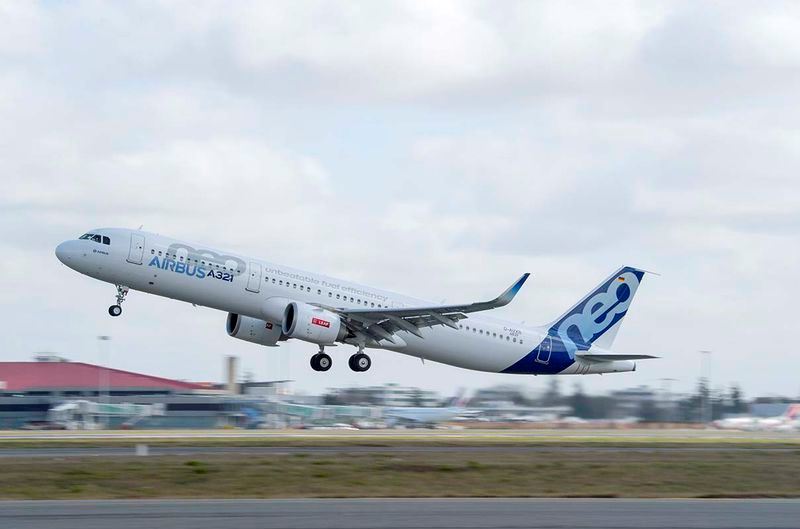
 La Agencia Europea de Seguridad Aérea (EASA) y la Administración Federal de Aviación (FAA) han entregado hoy a Airbus sus certificados de aeronavegabilidad para el A321NEO equipado con los motores CFM LEAP-1A.
La aeronave, equipada con motores LEAP-1A de la CFM International, recibió la certificación de tipo da Agencia Europea de Seguridad Aérea (EASA) y de la Administración Federal de Aviación (FAA) de los Estados Unidos. En deciembre del año pasado el modelo ya había sido homologado por las mismas instituciones con el motor Pratt & Whitney PW1100G.
El certificado tipo de EASA está firmado por el director de Certificación de la Agencia, Trevor Woods, mientras que el de la FAA lo ha hecho Michael J. Kaszycki, director en funciones de la Dirección de Transporte Aéreo – Servicio de Certificación de Aeronaves. Ambos certificados fueron entregados al vicepresidente senior del Programa Familia A320 de Airbus, Klaus Roewe, y al ingeniero jefe del programa Pierre-Henri Brousse.
Fabrice Brégier, presidente de Airbus Commercial Aircraft ha manifestado: “El A321NEO ofrece a los operadores el perfecto equilibrio entre eficiencia de consumo, confort y comportamiento medioambiental. Es el claro líder del mercado en la categoría de aviones de más de 200 plazas. La certificación de hoy es un merecido tributo a todos los equipos que han sido decisivos para alcanzar este hito imprescindible”.
Para lograr estos certificados, Airbus ha efectuado más de 400 horas en más de 160 vuelos de certificación. Antes de la versión con estos motores CFM LEAP-1A ya había sido certificada la variante con los Pratt & Whitney PW1100G-JM.
El principal atractivo de la nueva serie “NEO” (New Option Engine) del A320 es el bajo consumo de combustible, que es inferior a un 20% con respecto a los modelos de igual porte pero de anterior generación. Otro recurso que colabora con el aumento de la eficiencia son los “Sharklets” nen los estremos de las alas, dispositivos que reducen el arrastre aerodinámico de la aeronave.
Airbus también está desarrollando el A319NEO, que será el modelo más pequeño de la nueva serie, a la vez que todabía no existen planes para el reemplazo del A318. La versión renovada del A319 está programada para llegar al mercado a partir de 2020.
El A320NEO debutó en enero de 2016, con la compañía aérea alemana Lufthansa. La cartera de pedidos ha ascendido a 3.380 órdenes al 24 de enero de 2017. 

Airbus A321NEO certification with CFM LEAP-1A engines
 The European Aviation Safety Agency (EASA) and the Federal Aviation Administration (FAA) today delivered to Airbus their airworthiness certificates for the A321NEO equipped with CFM LEAP-1A engines.
The aircraft, equipped with LEAP-1A engines from CFM International, received the type certification from the European Aviation Safety Agency (EASA) and the Federal Aviation Administration (FAA) of the United States. In December of last year the model had already been homologated by the same institutions with the engine Pratt & Whitney PW1100G.
The EASA type certificate is signed by the Certification Director of the Agency, Trevor Woods, while the FAA has done so by Michael J. Kaszycki, acting director of the Air Transport Directorate – Aircraft Certification Service. Both certificates were delivered to the senior vice president of the Airbus A320 Family Program, Klaus Roewe, and the chief engineer of the Pierre-Henri Brousse program.
Fabrice Brégier, president of Airbus Commercial Aircraft said: «The A321NEO offers operators the perfect balance between fuel efficiency, comfort and environmental performance. It is the clear market leader in the category of aircraft with more than 200 seats. The certification of today is a well-deserved tribute to all the teams that have been decisive to reach this essential milestone «.
To achieve these certificates, Airbus has performed more than 400 hours on more than 160 certification flights. Before the version with these motors CFM LEAP-1A had already been certified the variant with the Pratt & Whitney PW1100G-JM.
The main attraction of the new «NEO» series (New Option Engine) of the A320 is the low fuel consumption, which is less than 20% compared to the same-sized but older models. Another resource that contributes to the increase in efficiency is the «Sharklets» in the wings of the wings, devices that reduce the aerodynamic drag of the aircraft.
Airbus is also developing the A319NEO, which will be the smallest model of the new series, while there are still no plans for the replacement of the A318. The revamped version of the A319 is scheduled to hit the market in 2020.
The A320NEO debuted in January 2016, with the German airline Lufthansa. The order book has amounted to 3,380 orders as of January 24, 2017. A\W
Ξ A I R G W A Y S Ξ
SOURCE: A I R G W A Y S
DBk: Airbus.com / Safran-nacelles.com
AW-POST: 201703021410AR
A\W A I R G W A Y S ®
 airgways.com