Primer vuelo B787-10 para 31/MAR/2017

787-10 Dreamliner First Flight

AW | 2017 03 29 11:04 | INDUSTRY

https://i0.wp.com/www.boeing.com/resources/boeingdotcom/commercial/787/expandable-tiles/assets/images/787-10-characteristics/360/rotate0.pngBoeing espera volar su Dreamliner más grande a finales de marzo

The Boeing Co. dijo el miércoles que planea lanzar su nuevo 787-10 Dreamliner por primera vez el 31 de marzo. Según un informe de la empresa Post y Courier, la compañía dijo que la fecha estaría sujeta a cambios debido al clima y otros Factores y que el primer vuelo, cuando suceda, sería transmitido en vivo en su sitio web. AIRGWAYS ® Icon-AW

https://airwaysmag.com/wp-content/uploads/2017/02/787-10.jpg

First flight B787-10 for March,31 2017

Boeing hopes to fly its largest Dreamliner at the end of March

The Boeing Co. on Wednesday said it plans to fly its new 787-10 Dreamliner for the first time on March 31. According to a report from the Post and Courier, the company said that date would be subject to change due to weather and other factors and that the first flight, when it does happen, would be broadcast live on its website. A\W


Ξ A I R G W A Y S Ξ
SOURCE: Bizjournals.com
DBk: Boeing.com / Airwaysmag.com
AW-POST: 201703291104AR

A\W   A I R G W A Y S ®

Cancelan más de 30 vuelos de Aerolíneas y Austral por fallas en sistema despacho

https://i.ytimg.com/vi/LlJK8Cs5iBI/maxresdefault.jpg

AW | 2017 03 29 00:22 | AIR TRAFFIC

Los problemas se registraron en el Aeroparque Jorge Newbery. Desde la compañía informaron que el problema ya fue resuelto y que desde esta madrugada los vuelos comenzarán a salir normalmente. AIRGWAYS ® Icon-AW

Cancelan más de 30 vuelos de Aerolíneas y Austral por fallas en el sistema de despacho

«Cancelan más de 30 vuelos de Aerolíneas y Austral por fallas en el sistema de despacho»

Terminal colapsada. Los pasajeros esperan novedades después de que se cancelaran más de 30 vuelos en Aeroparque.

Más de 30 vuelos fueron cancelados por la caída del sistema de despacho de los vuelos de Aerolíneas Argentinas y Austral en el Aeroparque Jorge Newbery. Desde Aerolíneas informaron esta noche a Clarín que están «reubicando a los pasajeros en los vuelos siguientes a medida que haya disponibilidad».

Informaron además que desde las 04.35, horario del primer vuelo de mañana de Aerolíneas Argentinas (hacia Ushuaia), los viajes comenzarán a salir normalmente.

Desde Aerolíneas Argentinas informaron a Télam que el sistema presentó una falla cerca de las 17 pero ya volvió a funcionar y comenzó la reprogramación de vuelos.

Entre los servicios afectados se encontraban los que se dirigían a destinos como Neuquén, Río de Janeiro, Córdoba, Bahía Blanca, Resistencia, Santa Rosa y Río Gallegos.

Aerolíneas Argentinas recomendó a los pasajeros comunicarse al teléfono 0810-222-86527. Algunos vuelos de las otras aerolíneas también vieron afectada su operación, aunque sin tantas demoras. El colapso en Aeroparque generó quejas de los usuarios y una gran cantidad de reclamos por redes sociales. AIRGWAYS ® Icon-AW

Cancel more than 30 Aerolíneas and Austral flights due to dispatch system failures


The problems were registered at the Jorge Newbery Airport. From the company they informed that the problem has already been solved and that from this dawn the flights will begin to leave normally.


«Cancel more than 30 Aerolíneas and Austral flights due to dispatch system failures»

Collapsed terminal. Passengers expect news after more than 30 flights are canceled at Aeroparque.

More than 30 flights were canceled due to the fall of the system of dispatch of the flights of Aerolíneas Argentinas and Austral in the Aeroparque Jorge Newbery. Since Airlines informed Clarín tonight that they are «relocating passengers on subsequent flights as availability».

They also informed that from 04.35, schedule of the first morning flight of Aerolíneas Argentinas (towards Ushuaia), the trips will begin to leave normally.

From Aerolineas Argentinas informed Télam that the system presented a fault near 17 but it has returned to work and began the reprogramming of flights.

Among the services affected were those who were traveling to destinations such as Neuquén, Rio de Janeiro, Cordoba, Bahía Blanca, Resistencia, Santa Rosa and Rio Gallegos.

Aerolíneas Argentinas recommended passengers to call 0810-222-86527. Some flights of the other airlines also were affected his operation, although without so many delays. The collapse in Aeroparque generated complaints from users and a large number of complaints by social networks. A\W


Ξ A I R G W A Y S Ξ
SOURCE: Clarin.com
DBk: Ytimg.com / Clarin.com
AW-POST: 201703290022AR

A\W   A I R G W A Y S ®

Accidente B737 Peruvian Airlines

Resultado de imagen para Peruvian Airlines Boeing 737 air crash

AW | 2017 03 28 23:39 | AIR INVESTIGATION

El avión de Peruvian Airlines estalla en llamas en el aire y patina fuera de la pista en los Andes pero los 141 pasajeros a bordo escapan ilesos


Los aviones Boeing 737 salen de la pista del Aeropuerto Francisco Carle en Jauja
Todas las 141 personas a bordo se escaparon sin «lesiones considerables», dijo la aerolínea
El Ministerio de Transporte peruano dijo que el 737 se incendió durante un «aterrizaje forzado»


Se han producido escenas impactantes que muestran las secuelas de un accidente de avión en Perú. Los videos enviados a las redes sociales mostraron un Boeing 737 de las Aerolíneas Peruanas que había salido de la pista del aeropuerto Francisco Carle en Jauja, a unas 165 millas al este de Lima.

«Milagrosamente, las 141 personas a bordo del avión escaparon sin «heridas considerables», dijo la aerolínea en un comunicado. El avión giró a la derecha, saliendo de la pista … el alto profesionalismo de nuestra tripulación de cabina evitó un incidente importante «, dijo la aerolínea.

El Ministerio de Transporte y Comunicaciones peruano dijo que el avión se incendió como consecuencia de un «aterrizaje forzado». Las imágenes en las redes sociales muestran que los bomberos trabajan desesperadamente para apagar un incendio en la parte trasera del avión.

Un sendero de fuego se puede ver extendido varios metros desde la parte posterior del avión en videos compartidos en línea. Las densas columnas de humo negro también eran visibles por encima del 737. El incidente está bajo investigación. AIRGWAYS ® Icon-AW


Air crash B737 Peruvian Airlines

Peruvian Airlines plane bursts into flames midair and skids off the runway in the Andes but all 141 passengers on board escape unscathed

The Boeing 737 aircraft skid off the runway at Francisco Carle Airport in Jauja
All 141 people on board escaped without ‘considerable injuries’, the airline said
Peruvian Ministry of Transport said the 737 caught fire during a ‘forced landing’

Shocking footage has emerged showing the aftermath of a plane crash in Peru. Videos posted to social media showed a Peruvian Airlines Boeing 737 that had skid off the runway at Francisco Carle Airport in Jauja – about 165 miles east of Lima.

«Miraculously, all 141 people on board the plane escaped without ‘considerable injuries’, the airline said in a statement. The aircraft turned on the right side, skidding off the runway… the high professionalism of our cabin crew prevented a major incident,'» the airline said.

The Peruvian Ministry of Transport and Communication has said the aircraft caught fire as a consequence of a ‘forced landing’. Pictures on social media show firefighters working desperately to put out a blaze at the back of the aircraft.

A trail of fire can be seen extended several meters from the back of the plane in videos shared online. Thick plumes of black smoke were also visible above the 737. The incident is under investigation.  A\W


Ξ A I R G W A Y S Ξ
SOURCE: Dailymail.co.uk
DBk: Peruvian Airlines
AW-POST: 201703282339AR

A\W   A I R G W A Y S ®

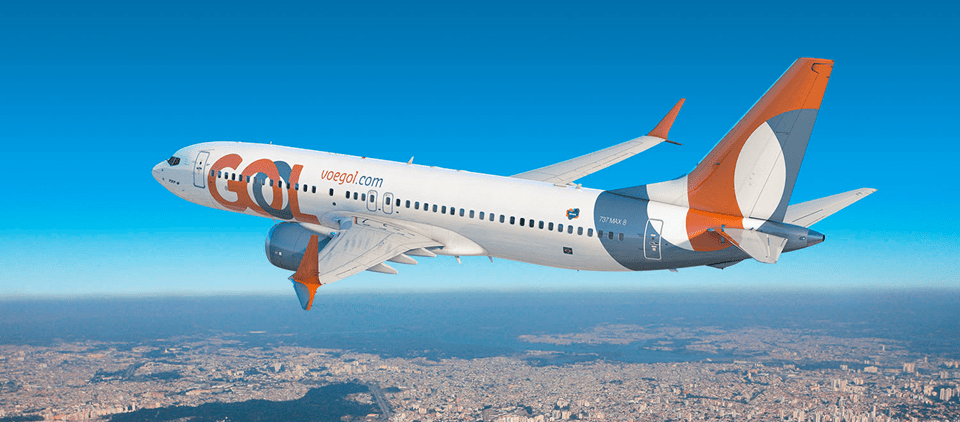
GOL anuncia configuración B737-8 MAX

Aeronave-MAX

AW | 2017 03 28 10:07 | AIRLINES

Gol_airlines_logoGOL Linhas Aéreas anuncia la configuración del próximo avión de la compañía a incorporar, el Boeing 737-8 MAX


Sao Paulo, Brasil · La mayor aerolínea nacional de Brasil, anuncia hoy el uso de nuevas tecnologías de cabina y asientos para configurar su flota de nuevos Boeing 737-8 MAX y reconfigurar su flota de aviones Boeing 737-800 Next Generation (NG) Número de escaños en un 5%, de 177 a 186 escaños actuales. La nueva configuración que se completará en julio de 2018 mantendrá los espacios de GOL + Conforto en toda la flota de la Compañía, que tienen un tono de 34 pulgadas (espacio de 86.3cm entre asientos) y un respaldo de respaldo 50% mayor, además de la clase GOL Premium en todos los vuelos internacionales .

GOL tiene una flota única de aviones Boeing 737, 93 del modelo 800 NG y 28 del modelo 700, convirtiendo a la Compañía en líder en costo, puntualidad y eficiencia operacional. Una flota estandarizada es fundamental para operar el modelo de transportista de bajo costo («LCC»), ya que permite optimizar la tripulación y el mantenimiento, además de permitir flexibilidad operativa y alta utilización de la aeronave. Actualmente, GOL es el principal cliente de la familia 737 en América Latina y uno de los cinco más grandes del mundo.

Según Celso Ferrer, vicepresidente de planificación de GOL, «esta nueva configuración nos permitirá seguir siendo líderes de confort en el mercado interno brasileño, reforzando nuestro compromiso con la satisfacción del cliente».  GOL es la aerolínea con mayor número de asientos en la categoría «A» del mercado, según la clasificación ANAC. Con esta reconfiguración, el 737-800 NG de GOL reducirá los costos de operación y tendrá el mismo costo por asiento comparado con el modelo A320neo, considerando el promedio actual de longitud de etapas de la mayoría de las rutas nacionales y sudamericanas.

«El Boeing 737-8 MAX, equipado con tecnologías de última generación, ofrece un rendimiento operativo aún mejor en comparación con el A320NEO, con un significativo 8% menos de coste por asiento», añade Celso Ferrer. GOL tiene una orden de 120 aeronaves 737 MAX-8 para entrega hasta el año 2028, de las cuales 25 serán entre 2018 y 2020. La Compañía tiene flexibilidad en su plan de flota y aumentará el número de entregas en este período, reduciendo aún más sus costos operativos . «GOL es un socio clave y valioso, estamos comprometidos con su éxito a medida que pasan al 737 MAX, que les proporcionará el avión más eficiente y cómodo en su clase», dijo Van Rex Gallard, vicepresidente de Boeing.

Los nuevos 737 MAX-8s de GOL, que empiezan a llegar en la segunda mitad de 2018, también estarán configurados con 186 plazas y espacios GOL + Conforto, además de la clase GOL Premium en todos los vuelos internacionales. Los aviones 737 MAX-8 tienen autonomía de vuelo de hasta 6.500 km (frente a los 5.500 km del 737-800 NG), lo que ofrece la posibilidad de ofrecer vuelos directos de Brasil a Miami, Ft. Lauderdale, Orlando y Cancún, destinos muy populares para los brasileños.

Los clientes de GOL seguirán disfrutando de la comodidad de la configuración de cabina de Sky Interior, con sistema de iluminación LED, sillones de cuero ecológico y nuevos contenedores de equipaje, conocidos como «Space Bins», con una capacidad de almacenamiento 50% mayor. Además, la aeronave estará equipada con antenas Wi-Fi, lo que permitirá a los clientes de GOL acceder a Internet y una completa plataforma de entretenimiento a bordo durante los vuelos. «Con la comodidad y el valor del cliente como una de sus principales prioridades, GOL continúa innovando y siendo líder en satisfacción del cliente y operaciones de bajo costo», dijo Van Rex Gallard.

Todos estos cambios aumentan la disponibilidad de asientos, mejoran la productividad y reducen los costos operativos de GOL y, junto con la llegada del 737 MAX-8, marcan la reanudación del crecimiento y la modernización de la flota de la Compañía. «Estos movimientos demuestran el compromiso y la determinación de lograr nuestro objetivo: ser una referencia mundial en la prestación del mejor servicio de pasajeros al menor costo», concluye Celso Ferrer. AIRGWAYS ® Icon-AW

Resultado de imagen para GOL Boeing 737 MAX

GOL announces configuration of Boeing 737-8 MAX

Resultado de imagen para GOL Boeing 737 MAX

GOL Linhas Aéreas announces the configuration of the next aircraft of the company to incorporate, the Boeing 737-8 MAX

Sao Paulo, Brasil · Brazil’s largest domestic airline, announces today the use of new cabin and seats technologies to configure its fleet of new Boeing 737-8 MAX aircraft and reconfigure its fleet of Boeing 737-800 Next Generation (NG) aircraft, increasing the number of seats by 5%, from current 177 to 186 seats. The new configuration to be completed by July 2018 will maintain GOL+Conforto spaces throughout the Company’s fleet, which have 34-inch pitch (86.3cm space between seats) and 50% greater seatback recline, as well as GOL Premium class on all international flights.

GOL has a unique fleet of Boeing 737 aircraft, 93 of the 800 NG model and 28 of the 700 model, making the Company Brazil’s leader in cost, punctuality and operational efficiency. A standardized fleet is fundamental to operate the low cost carrier («LCC») model, as it allows the optimization of crew and maintenance, besides allowing operational flexibility and high utilization of the aircraft. Currently, GOL is the main customer of the 737 family in Latin America and one of the five largest in the world.

According to Celso Ferrer, GOL’s vice president of planning, «this new configuration will allow us to remain leaders of comfort in the Brazilian domestic market, reinforcing our commitment to customer satisfaction». GOL is the airline with the largest number of seats in category «A» in the market, according to the ANAC classification standard. With this reconfiguration, GOL’s 737-800 NG will reduce operating costs and will have the same cost per seat compared to the A320neo model, considering the current average stage-length of most domestic and South American routes.

«The Boeing 737-8 MAX, equipped with state-of-the-art technologies, delivers even better operating performance compared to the A320neo, with a significant 8% less cost per seat», adds Celso Ferrer. GOL has an order for 120 737 MAX-8 aircraft for delivery up to 2028, with 25 of them between 2018 and 2020. The Company has flexibility in its fleet plan and will increase the number of deliveries in this period, further reducing its operational costs. «GOL is a key and valued partner, we are committed to its success as they transition to the 737 MAX, which will provide them most efficient and comfortable aircraft in its class» said Van Rex Gallard, vice president of Boeing.

GOL’s new 737 MAX-8s aircraft, which begin to arrive in the second half of 2018, also will be configured with 186 seats and GOL+Conforto spaces, as well as GOL Premium class on all international flights. The 737 MAX-8 aircraft have flight autonomy of up to 6,500 km (compared to 5,500 km of the 737-800 NG) which gives the opportunity to offer non-stop flights from Brazil to Miami, Ft. Lauderdale, Orlando and Cancun, very popular destinations for Brazilians.

GOL’s customers will continue to enjoy the comfort of Sky Interior cabin configuration, with LED lighting system, eco-leather armchairs and new luggage bins, known as «Space bins», with a 50% greater storage capacity (largest in its category). In addition, the aircraft will be equipped with Wi-Fi antennas, allowing GOL customers to access the internet and a complete on-board entertainment platform during flights. «With customer comfort and value as one of its main priorities, GOL continues to innovate and be a leader in customer satisfaction and low cost operations» said Van Rex Gallard.

All of these changes increase seat availability improve productivity and reduce GOL’s operating costs and, together with the arrival of the 737 MAX-8, mark the resumption of growth and modernization of the Company’s fleet. «These movements demonstrate the commitment and determination to achieve our purpose: to be a global reference in providing the best passenger air travel service at the lowest cost», concludes Celso Ferrer. A\W

Ξ A I R G W A Y S Ξ
SOURCE: Yahoo.com
DBk: Voegol.com.br / Boeing.com
AW-POST: 2017031007AR

A\W   A I R G W A Y S ®

Aeropuerto Córdoba cerrado por niebla

AW | 2017 03 28 09:44 | AIRPORTS

 Lo confirmó el jefe del Aeropuerto Córdoba, Sergio Rezza. «No hay arribos ni partidas», dijo. Pero aclaró: «En breve se normalizará la actividad».

El aeropuerto internacional Ambrosio Taravella, de la ciudad de Córdoba, se encuentra inoperable esta mañana por la escasa visibilidad que ocasiona la densa neblina que se registra desde las primeras horas de esta madrugada.

«No hay arribos ni partidas», dijo al tiempo que aclaró: «En breve se normalizará la actividad». Los vuelos demorados serán reprogramados.  AIRGWAYS ® Icon-AW

Airport of Córdoba is closed for fog

It was confirmed by the head of Cordoba Airport, Sergio Rezza. «There are no arrivals or departures,» he said. But he clarified: «Soon activity will be normalized».

The Ambrosio Taravella international airport in the city of Córdoba is inoperable this morning because of the poor visibility caused by the dense fog that is recorded from the early hours of this morning.

«There are no arrivals or departures,» he said while clarifying: «Soon activity will be normalized.» Delayed flights will be rescheduled. A\W


Ξ A I R G W A Y S Ξ
SOURCE: Cadena3.com
DBk: Cadena3.com
AW-POST: 201703280944AR

A\W   A I R G W A Y S ®

Gol pagará R$ 4 millones por accidente del vuelo 1907 a los indios del Amazonas

108832_697x437_crop_560b384b7fbfd

AW | 2017 03 27 17:58 | AIR INVESTIGATION

 
Accidente con del vuelo 1907 de Gol que dejó 154 muertos tuvo lugar en 2006 y dado a los indios, abandonaron la región donde se estrelló el avión


El Ministerio Público de la Federación firmó un acuerdo entre los kayapó de la etnia Mebêngôkre y la aerolínea Gol. Los indios de indígenas Capoto Jarina recibirán una indemnización de R$ 4 millones por daño ambiental y materiales causados por caídas del plano de Gol Airlines. El accidente ocurrió en la región de Xingu, en septiembre de 2006 y dejó 154 muertos. Después de la caída, los indios dejaron la zona debido a los materiales y las pérdidas inmateriales.

Las discusiones entre el MPF, líderes indígenas y representantes de la empresa, negociado por la Casa de las comunidades indígenas y tradicionales del cuerpo, llegaron a la conclusión de que el accidente provocó daños en la región. Los restos de la aeronave están todavía en su lugar, el accidente de avión derramó gran cantidad de queroseno en el suelo y, de acuerdo con las creencias indígenas, espíritus de las víctimas permanecen en su lugar. Las pérdidas causadas a los indios a abandonar la región en la que vivían.

El acuerdo alcanzado el 17 de marzo establece que el importe de la compensación será depositado en un período de 60 días después de la aprobación administrativa del término del acuerdo de la 6ª Cámara de la Coordinación de la opinión MPF. El informe de la fantástica, TV Globo, señala que el dinero será depositado en una cuenta bancaria administrada por Raoni Instituto y será utilizada a favor de los indígenas étnica Mebêngôkre Kayapó y todos los miembros de otros grupos étnicos y pueblos que habitan en la tierra indígena Capoto Jarina.

El MPF se ha comprometido a supervisar el uso de los recursos financieros y, junto con la Fundación Nacional del Indio (Funai), supervisar la aplicación del acuerdo. Gol cree que el acuerdo firmado se basa en el respeto de la compañía por la cultura indígena.

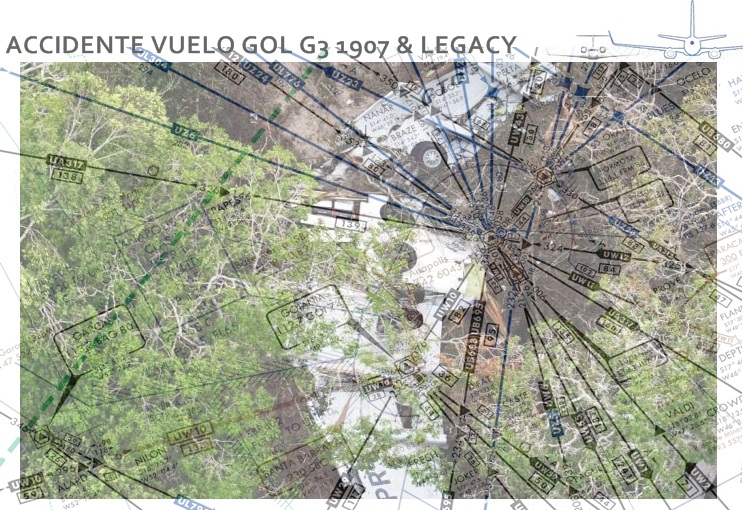
Accidente del vuelo G31907

El accidente de un avión de Gol Airlines (vuelo 1907) y el jet privado Legacy, que dejó 154 muertos en Mato Grosso, se llevó a cabo el 29 de septiembre de 2006. Los dos aviones chocaron en el aire mientras vuelan sobre la Serra do Cachimbo, en Estado del norte. Todos los pasajeros Boeing 737-800 de Gol murieron. En abril del año pasado, los pilotos del Legacy, Joseph Lepore y Jean Paul Paladino, fueron condenados a tres años y un mes de prisión por el accidente. Ambos viven en los Estados Unidos.

Después de la colisión, el Boeing se desintegró en el aire y cayó en una región de densos árboles cerca del pueblo indio. El legado, a pesar de sufrir graves daños a su ala y estabilizador horizontal izquierdo, aterrizó sin problemas con sus siete ocupantes ilesos, la base aérea de Cachimbo. Varias familias siguen luchando en los tribunales por la compensación.  AIRGWAYS ® Icon-AW

https://upload.wikimedia.org/wikipedia/commons/3/34/Crash_site_of_flight_GLO_1907.jpg

Gol will pay R$ 4 mi. to Indians for plane crash


Accident with Gol plane that left 154 dead happened in 2006 and caused the Indians, they left the region the region where the aircraft crashed


The Federal Public Ministry has signed an agreement between the Mẽbêngôkre Kayapó Indians and Gol Airlines. The Indians of Capoto Jarina Indigenous Land will receive a compensation of R $ 4 million due to the environmental and material damages caused by the fall to the plane of the company Gol Linhas Aéreas. The accident happened in the Xingu region in September 2006 and left 154 dead. After the fall, the Indians left the region due to material and immaterial damages.

Discussions between MPF, indigenous leaders and company representatives, mediated by the Chamber of Indigenous Populations and Traditional Communities of the organization, concluded that the air accident caused damage in the region. The wreckage of the aircraft is still in place, the plane’s dropping poured a large amount of kerosene into the ground and, according to indigenous beliefs, the spirits of the victims remain in place. The damages caused the Indians to leave the region where they lived.

The agreement signed on March 17 establishes that the amount of the indemnity will be deposited in a period of 60 days, after the administrative homologation of the agreement term by the 6th MPF Review Coordination Chamber. The report by TV Globo’s Fantástico points out that the money will be deposited in a bank account managed by the Raoni Institute and will be used in favor of the Mẽbêngôkre Kayapó indigenous people and all members of the other ethnic groups and villages that inhabit the Capoto Jarina indigenous land.

The MPF has committed to supervise the use of financial resources and, together with the National Indian Foundation (Funai), will monitor the execution of the agreement. Gol believes that the agreement was based on the company’s respect for indigenous culture.

Accident of flight G3 1907

The crash involving a Gol Linhas Aéreas aircraft (flight 1907) and the Legacy jet, which left 154 dead in Mato Grosso, occurred on September 29, 2006. The two aircraft collided in the air as they flew over the Serra do Cachimbo, upstate. All Gol Boeing 737-800 passengers died. In April last year, Legacy pilots Joseph Lepore and Jean Paul Paladino were sentenced to three years and one month in prison for the accident. Both live in the United States.

After the collision, the Boeing shattered in the air and fell in a region of dense trees near the indigenous village. The Legacy, despite suffering severe damage to its wing and horizontal left stabilizer, landed safely with its seven uninjured occupants at Cachimbo’s Air Base. Several families are still fighting in damages. A\W

https://i0.wp.com/www.ebc.com.br/sites/_portalebc2014/files/atoms_image/acidente-da-gol.jpg

Gol vai pagar R$ 4 milhões a índios por queda de avião

Acidente com avião da Gol que deixou 154 mortos aconteceu em 2006 e fez os índios abandorem a região onde caiu a aeronave

O Ministério Público Federal firmou um acordo entre os índios da etnia Mẽbêngôkre Kayapó e a companhia aérea Gol. Os índios da Terra Indígena Capoto Jarina vão receber uma indenização de R$ 4 milhões devido aos danos ambientais e materiais causados pela queda ao avião da empresa Gol Linhas Aéreas. O acidente aconteceu na região do Xingu em setembro de 2006 e deixou 154 mortos. Após a queda, os índios abandonaram a região devido aos prejuízos materiais e imaterais.
PUB

As discussões entre o MPF, lideranças indígenas e representantes da empresa, intermediadas pela Câmara de Populações Indígenas e Comunidades Tradicionais do órgão, chegaram à conclusão de que o acidente aéreo causou danos na região. Os destroços da aeronave ainda estão no local, a queda do avião derramou grande quantidade de querosene no solo e, segundo as crenças indígenas, espíritos das vítimas permanecem no local. Os prejuízos fizeram com que os índios abandonassem a região onde viviam.

O acordo firmado no dia 17 de março estabelece que o valor da indenização será depositado em um prazo de 60 dias, após a homologação administrativa do termo de acordo pela 6ª Câmara de Coordenação de Revisão do MPF. A reportagem do Fantástico, da TV Globo, destaca que o dinheiro será depositado em uma conta bancária gerida pelo Instituto Raoni e serão empregados em favor da etnia indígena Mẽbêngôkre Kayapó e todos os membros das outras etnias e aldeias que habitam a terra indígena Capoto Jarina.

O MPF se comprometeu a fiscalizar o emprego dos recursos financeiros e, juntamente com a Fundação Nacional do Índio (Funai), acompanhará a execução do acordo. A Gol entende que o acordo firmado teve como premissa o respeito da companhia à cultura indígena.

Acidente do vôo G3 1907

O acidente envolvendo um avião da Gol Linhas Aéreas (voo 1907) e o jato Legacy, que deixou 154 mortos em Mato Grosso, ocorreu no dia 29 de setembro de 2006. As duas aeronaves colidiram no ar, enquanto sobrevoavam a Serra do Cachimbo, no norte do Estado. Todos os passageiros do Boeing 737-800 da Gol morreram. Em abril do ano passado, os pilotos do Legacy, Joseph Lepore e Jean Paul Paladino, foram condenados a três anos e um mês de prisão pelo acidente. Ambos vivem nos Estados Unidos.

Após a colisão, o Boeing se despedaçou no ar e caiu em uma região de árvores densas próxima à aldeia indígena. O Legacy, apesar de sofrer danos graves a sua asa e estabilizador horizontal esquerdo, pousou em segurança com seus sete ocupantes não lesionados, na base Aérea do Cachimbo. Várias famílias ainda lutam na justiça por indenizações. A\W

Ξ A I R G W A Y S Ξ
SOURCE: Noticiasaominuto.com.br
DBk: Noticiasaominuto.com.br / Ebc.com.br / Airgways / Wikimedia.org
AW-POST: 201703271758AR

A\W   A I R G W A Y S ®

Transformación digital de Southwest

https://i0.wp.com/media.bizj.us/view/img/6325941/stlsouthwestairlinesplanes6x4x300px%2A1200xx1800-1014-0-96.jpg

AW | 2017 03 27 17:10 | AIRLINES

Desarrollar un nuevo software es difícil en cualquier empresa, pero es aún más difícil cuando sus empleados siguen enviando faxes


El centro de Southwest Airlines en Dallas existe en un mundo de constante agitación. Love Field, uno de los dos principales aeropuertos de la ciudad, está tan cerca de un aeropuerto privado de Southwest como es probable que encuentres. En cualquier día dado, Southwest opera 180 vuelos fuera del aeropuerto; Aparte de algunos vuelos de Virgin America y Delta, Love Field es el hogar de Southwest. La sede corporativa de Southwest está ubicada allí.

Ahora este aeropuerto ocupado y los 8 millones de aviadores que sirve cada año están en el centro de un proyecto increíblemente complicado: el esfuerzo de Southwest para digitalizar franjas masivas de la experiencia de la aerolínea y emigrar a empleados que trabajaban con herramientas antiguas como diarios, Y las pizarras blancas a las comunicaciones digitales del siglo XXI.

Una gran parte de esta migración es un proyecto llamado OpsSuite, un paquete de aplicaciones basado en web que maneja muchas de las tareas que aseguran que los viajeros lo hacen con seguridad desde el destino A hasta el destino B. Con las herramientas de OpsSuite, los empleados de Southwest supervisan las asignaciones y el uso, El equipaje se carga en el avión, y el seguimiento de una gran cantidad de otros datos del viajero. Si un empleado dentro de un aeropuerto necesita información de un avión que está sentado en la puerta, utilizan OpsSuite. Si los trabajadores de LAX quieren saber cuáles son las ramificaciones logísticas de una tormenta en Dallas, usan OpsSuite. Una gran cantidad de datos pasa por los datos de OpsSuite que la compañía aérea necesita saber para operar. Actualmente basado en la web en PCs convencionales y portátiles, Southwest planea llevar la funcionalidad de OpsSuite a teléfonos y tabletas en los próximos años. Este cambio hará que las comunicaciones de los empleados sean significativamente más fáciles en la aerolínea, que tiene operaciones repartidas por decenas de aeropuertos.


«Los reemplazos o actualizaciones de software en las aerolíneas a menudo se asemejan a un juego de Jenga».

OpsSuite es parte de una revisión tecnológica de $ 800 millones en Southwest que incluye $300 millones invertidos en nueva tecnología para operaciones y $ 500 millones en un nuevo sistema de reservas. Southwest, que se enorgullece de los bajos costos de consumo y por lo tanto se muestra reticente a gastar más en operaciones, ha sido más lenta para migrar a soluciones digitales que muchos de sus rivales. Por ejemplo, a diferencia de Southwest, los empleados de JetBlue y Delta usan con frecuencia tabletas para registrar información. A pesar de que el cambio cuesta dinero, Southwest necesita tales innovaciones para mantenerse competitivas -y la aerolínea espera, para 2020, ver aumentos significativos de ganancias como resultado del software y las mejoras relacionadas con el flujo de trabajo.

Southwest Airlines maneja inmensas cantidades de datos en el curso de un día típico

¿Por qué todavía existen máquinas de fax?

OpsSuite fue construido por Southwest y una empresa de diseño de software y UX de Austin, Projekt202, que se especializa en lo que ellos llaman «complejas transformaciones digitales» para sus clientes. Projekt202 trabaja con clientes como Mercedes-Benz Servicios Financieros, Capital One, Neiman Marcus y Samsung para mejorar la experiencia de usuario en productos existentes en línea y desarrollar nuevas herramientas digitales y sitios web.

Jenny Bean, director creativo de Projekt202, dice que el proyecto comenzó hace más de tres años.

Uno de los mayores puntos de venta de OpsSuite es facilitar a los empleados y contratistas de Southwest ver cuándo se completó una tarea y permitir a los empleados a miles de millas de distancia colaborar digitalmente en tareas como el seguimiento de aviones en tránsito, Y supervisar el mantenimiento del equipo sin recoger el teléfono o enviar un fax.

«Mucho de lo que ayuda [el Suroeste] es poder encontrar marcas de tiempo o maneras de empezar a rastrear eso», dice Bean. Debido a que los empleados de Southwest trabajan en aeropuertos extremadamente ocupados, el cambio a aplicaciones-algo que la industria aérea ha tardado en adoptar en comparación con campos tan complicados como la atención de salud- facilita considerablemente el proceso de comunicación detrás de cámaras, ya que los empleados recurren a pizarras o faxes Cuando las llamadas telefónicas se hacen poco prácticas por las ruidosas condiciones de trabajo del aeropuerto.

De hecho, OpsSuite se ocupa de una gran cantidad de datos, según una presentación de Slideshare publicada por Southwest, la plataforma consume más de 10 millones de mensajes publicados diariamente tanto por los empleados como por el software que utilizan. Antes del despliegue de OpsSuite, los empleados de Southwest utilizaban una compleja red de programas de software antiguos, diarios de papel y comunicaciones telefónicas para estas tareas.

Las aerolíneas como Southwest necesitan productos como OpsSuite debido a los desafíos únicos que enfrentan. Por un lado, las líneas aéreas sirven a millones de viajeros diariamente y necesitan mantener cantidades masivas de datos fluyendo entre colegas que pueden estar a cientos o miles de millas de distancia. Por otro lado, las compañías aéreas no pueden permitirse grandes interrupciones de los problemas de software, lo que hace que las implementaciones de software sean especialmente difíciles. Los errores de TI en las aerolíneas pueden retrasar significativamente a los viajeros o incluso arriesgar vidas. Debido a que las aerolíneas se basan en sistemas informáticos complejos para realizar un seguimiento de aviones, pasajeros y carga, los cortes de TI pueden aumentar la probabilidad de que los pilotos o el personal del tráfico aéreo cometan errores.

Un fallo importante de la computadora aterrizó los vuelos domésticos de United en enero de 2017, y un apagón de cinco horas en Delta costó a la aerolínea $ 150 millones. Southwest tampoco es inmune a este tipo de problemas; Un fallo de los sistemas en 2016, que Southwest remonta a un fracaso del router, costó un estimado de $ 54 millones y llevó a días de retrasos. De acuerdo con un memo del empleado por el CEO de Southwest Gary Kelly que fue publicado más tarde por Bloomberg, «Cuando el enrutador falló, los datos. . . Apilados como un atasco de autopista. . . Nos guste o no, vivimos con alguna tecnología antigua «.

Las actualizaciones de software en los aeropuertos pueden ir fácilmente mal en una escala enorme; Un reciente despliegue de software mal hecho en Aduanas y Protección Fronteriza llevó a un retraso masivo procesando pasajeros en aeropuertos a través de los Estados Unidos.

Como resultado de este conservadurismo, las aerolíneas y los aeropuertos frecuentemente utilizan herramientas más antiguas como las computadoras basadas en Windows 3.1 y las máquinas de fax, que salieron de moda en gran parte de la América corporativa hace años.
Reunir OpsSuite implicó un gran número de pasos para Southwest y Projekt202.


«Un trasplante simultáneo de corazón, trasplante de cerebro y lifting facial»


Los reemplazos de software o las actualizaciones en las aerolíneas a menudo se asemejan a un juego de Jenga. Henry Harteveldt de Atmosphere Research Group, un analista de la industria, dice: «Estos sistemas son increíblemente complejos. Cambiar cualquiera de ellos equivale a hacer un trasplante simultáneo de corazón, un trasplante cerebral y un lifting facial «.

A medida que OpsSuite se despliega, reemplaza la complicada y anticuada red de sistemas de tecnología y comunicaciones que ya estaban en su lugar. Harteveldt señala que, debido a la naturaleza única de la aviación, la industria de las líneas aéreas comerciales no invierte tanto en tecnología como en porcentaje de ingresos que otras industrias. Esto significa que los sistemas más antiguos permanecen en el lugar más tiempo en las aerolíneas que podrían en, por ejemplo, una empresa de comercio electrónico. Como resultado, actualizar sistemas y software es mucho más complicado porque los sistemas que están reemplazando son más antiguos.

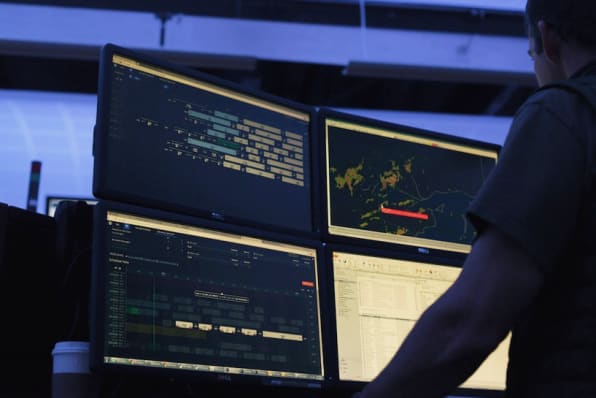
De hecho, Mark Sims, arquitecto gerente de Projekt202, dice que «Southwest está pasando por un ejercicio de actualización de su tecnología y aplicaciones que tienen 15, 20 y 25 años. Los sistemas de esa época tienden a ser aplicaciones de escritorio, y vimos en el Network Operations Center que los usuarios a veces tienen seis o siete monitores en su escritorio «, dice. (El Centro de Operaciones de la Red es una instalación del centro de $ 30 millones donde cientos de despachadores de vuelo, operaciones de la tripulación lideran y coordinadores de servicio al cliente supervisan los más de 3.000 vuelos que Southwest hace cada día). «Tienen dos o tres monitores conectados a una máquina Windows , Dos o tres a una máquina Linux, otro a una máquina ACARS-hay muchas plataformas diferentes «, señala. El Centro de Operaciones de Red, en realidad, es lo más parecido a un Control de Misión que tiene Southwest.
«Southwest está pasando por un ejercicio de actualización de su tecnología y aplicaciones que tienen 15, 20 y 25 años».

«Las aerolíneas tienden a ejecutar configuraciones de TI altamente especializadas», explica Harteveldt. «A diferencia de la banca minorista y algunas otras industrias donde hay un montón de software y sistemas ampliamente disponibles que pueden ser utilizados, las aerolíneas tienden a utilizar software específico de la industria sólo de un puñado de proveedores. El desafío único para las aerolíneas es que un número reducido de aplicaciones en realidad, a su vez, cientos o quizás miles de otras aplicaciones «. Las aerolíneas necesitan cientos o miles de aplicaciones específicas para ayudar a los planificadores de vuelo, pilotos, equipos de mantenimiento y representantes de servicio al cliente Hacer sus trabajos muy diferentes. Debido a que las aerolíneas utilizan un puñado de productos de software de alto nivel como OpsSuite y luego construyen una gran cantidad de productos encima de ellos, y cualquier despliegue de software corre el riesgo de problemas que pueden retrasar los vuelos, estas configuraciones pueden ser extremadamente complicadas.


El peor enemigo de una aerolínea: retrasos

David Loose, gerente senior de tecnología en Southwest, que supervisa las operaciones aeroportuarias y las áreas de carga, dice que las «operaciones irregulares», causadas por mal tiempo, cancelaciones y otras causas, crean problemas en espiral para las aerolíneas. OpsSuite ayuda a Southwest a lidiar con estos problemas de manera mucho más eficiente, transmitiendo información en tiempo real al personal y agilizando la comunicación entre empleados de diferentes departamentos; En algunos aspectos, funciona un poco como un Slack o WhatsApp para los empleados.

Operaciones irregulares como el cierre de un aeropuerto relacionado con el clima, agrega Loose, «puede resultar en una interrupción importante en las operaciones de una aerolínea y en su desempeño a tiempo, OTP, que es la capacidad de la aerolínea de operar sus vuelos según lo programado. En la industria de las aerolíneas hipercompetitivas y operacionales, OTP es una medida estrechamente controlada. Un par de puntos porcentuales arriba o abajo en el OTP de una aerolínea es enorme, dado los costos de los vuelos retrasados a las aerolíneas y sus clientes». Al trabajar en tándem con otras herramientas de software de Southwest, OpsSuite ahorra dinero para la empresa al permitir a los empleados comunicarse más rápidamente y compartir información cuando cada segundo cuenta. Una gran parte de este despliegue de software muy costoso para Southwest es asegurarse de que la aerolínea (y sus empleados) cosechen los beneficios de una comunicación más rápida y una coordinación más fácil cuando las cosas van mal.

Cuando un vuelo se retrasa o cancela, los problemas se acumulan para la aerolínea. Los aviones que debían volar a otro aeropuerto y partir de ese segundo aeropuerto ya no pueden llegar a tiempo para su próximo vuelo programado. Es un escenario que cada aerolínea comercial tiene que hacer frente, y uno que requiere una importante brujería de TI para resolver.

OpsSuite está siendo utilizado por Southwest para manejar la gestión de puertas, la gestión de giros (el tiempo entre la llegada de un avión a un aeropuerto y su salida), la gestión de retardo de asfalto y como empate para empleados con un sistema llamado «The Baker» que Ayuda a encontrar rutas alternativas para pasajeros individuales si sus vuelos se retrasan o se cancelan.

«The Baker» es un complicado sistema de enrutamiento de vuelos que utiliza Southwest para mover a los pasajeros a donde necesitan ir.

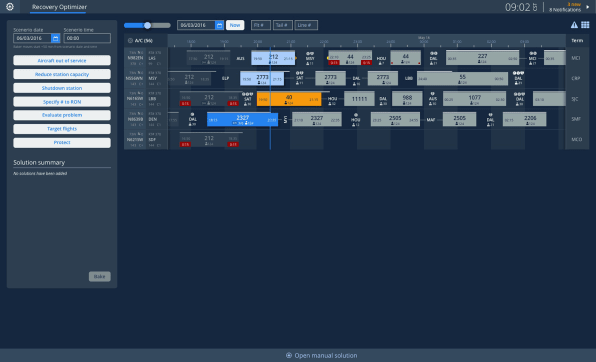
El Baker es otra parte de la transformación digital de Southwest y se implementó a principios de 2016. Debidamente llamado un «motor de optimización de recuperación», ayudó a conducir a tiempo de rendimiento en días con mal tiempo u otros desafíos que fue de 10% -15% Mayor que días similares antes de la adopción del sistema. Durante tres tormentas de nieve importantes en el invierno de 2016, contribuyó a un desempeño a tiempo de más del 70%, que superó en gran medida a sus rivales Delta y American durante esas tormentas.

El sistema Baker ayuda a Southwest a hacer cosas como predecir retrasos potenciales y encontrar aviones para aeropuertos si hay problemas meteorológicos. Las aerolíneas suelen tener un avión volar desde otro destino, descargar pasajeros, y luego tener un nuevo grupo de pasajeros bordo y volar a otro destino; Una tormenta en una parte del país puede conducir a retrasos en otra parte del país como resultado. Este sistema permite a los despachadores y otros empleados resolver los problemas relacionados con el clima mucho más rápidamente de lo que era antes.

Según Southwest, la aerolínea está expandiendo actualmente OpsSuite y la transformación digital en el proceso de embarque real. Southwest espera completar ese proceso en 2018; Este proceso incluye la expansión de OpsSuite a lugares como el Network Operations Control Center. La implementación de OpsSuite allí ofrece un software moderno para las tareas que se habían completado previamente en papel o con programas de computadora sustancialmente antiguos. Sus operaciones afectan a todas las partes de la aerolínea, desde la emisión de billetes a la carga hasta el servicio al cliente.

Rodando hacia fuera

Una gran parte de la razón por la que OpsSuite tarda tanto en implementarse es que la aerolínea necesita asegurarse de que el software funciona de manera segura en nuevos entornos y que los empleados de Southwest están acostumbrados a cambiar de tecnología.

Jeffery Hillis, director senior de Southwest para tecnología, dice que una gran parte de OpsSuite se está asegurando de que la aerolínea sea capaz de enviar rápidamente información a los empleados. Debido a que los aeropuertos son lugares de alta presión donde incluso un retraso de un minuto puede llevar a clientes furiosos o vuelos retrasados, este es un cambio pequeño pero importante.

OpsSuite ya ha llevado a mejoras en el desempeño de Southwest. Peter Eckert, cofundador de Projekt202, dice que una de las primeras partes de OpsSuite a desplegarse fue una herramienta que ayuda con la toma de decisiones cuando la aerolínea está lidiando con retrasos o mal tiempo. La herramienta revisó y evaluó automáticamente las soluciones potenciales, tales como reencaminar vuelos o cambiar los aviones no utilizados de un aeropuerto a otro y asignarles una puntuación. Estas puntuaciones se registraron en el sistema de Southwest para acelerar la recuperación en días futuros con mal tiempo.

«Para mejorar la experiencia del cliente de una aerolínea, hay un montón de lugares para mirar», dice Eckert Fast Company. «Irónicamente, días después del lanzamiento de la primera prueba (de OpsSuite), el aeropuerto de Austin fue golpeado con una tormenta de tamaño Texas que cortó el poder a la instalación entera durante 24 horas. Utilizando el nuevo conjunto de herramientas incluido en su sistema OpsSuite, el personal de Southwest pudo recuperarse del evento meteorológico más rápido que nunca, incluso más rápido que otras aerolíneas. En general, hemos visto mejoras significativas en sus indicadores de desempeño a tiempo en días de clima inclemente con el despliegue de este nuevo sistema «.

La mejora de la recuperación en días con tiempo inclemente, Projekt202 agrega, es aproximadamente el 15%.


Precios de las acciones frente a TI

El esfuerzo de Southwest es parte de un cambio de mar más grande en la industria de las aerolíneas. Debido a que las actualizaciones de software en las aerolíneas son tan complicadas, se han producido en gran medida como resultado de las fusiones, tanto la fusión de Alaska Airlines con Virgin America, y la fusión de United con Continental dio lugar a una serie de cambios de TI, por ejemplo.

La última adquisición importante de Southwest fue AirTran, a finales de 2014. Como aerolínea, Southwest ha preferido un crecimiento lento a adquisiciones repentinas y en gran escala. Este conservadurismo ha beneficiado a los accionistas de Southwest y, sin duda, a sus pasajeros y empleados, pero también significa un backend tecnológico que se quedó atrás de los competidores de la aerolínea. Al mismo tiempo, el enfoque parece funcionar para Southwest como una empresa: Southwest es la aerolínea de mayor rendimiento en el Dow Jones Transportation Average, y se expandió para atender varios destinos internacionales en 2014.

Desatender las inversiones en tecnología, sin embargo, puede causar grandes dolores de cabeza para las compañías aéreas en el futuro. Para el suroeste, la ecuación es simple: necesitan mejorar su juego tecnológico empleado para mantenerse competitivo y atraer a los mejores talentos. Como una corporación que cotiza en bolsa, han estado al frente de la priorización de cosas tales como su rendimiento de las acciones, los precios de los billetes y métricas de cambio. Ahora tienen que mostrar el mismo compromiso con las experiencias de sus empleados en la empresa. Para el suroeste, esas máquinas de fax y las pizarras incómodas podrían ser una cosa del pasado. AIRGWAYS ® Icon-AW

Resultado de imagen para fastcompany.com logo

Sobre el Autor
Con sede en Los Ángeles, Neal Ungerleider cubre la ciencia y la tecnología de Fast Company.


https://s-media-cache-ak0.pinimg.com/originals/9f/20/1b/9f201b5717a6db037f813c41328d6809.png

Southwest Airlines’ digital transformation takes off

Rolling out new software is hard in any company, but it’s even harder when your employees still send faxes

Southwest Airlines’ hub in Dallas exists in a world of constant hecticness. Love Field, one of the city’s two main airports, is as close to a private Southwest airport as you’re likely to find. On any given day, Southwest operates 180 flights out of the airport; apart from a few Virgin America and Delta flights, Love Field is Southwest’s home turf. Southwest’s corporate headquarters is even located there.

Now this busy airport and the 8 million fliers it serves each year are at the center of an amazingly complicated project: Southwest’s effort to digitize massive swaths of the airline experience and migrate employees used to working with ancient tools like logbooks, radio, pneumatic tubes, and whiteboards to 21st century-style digital communications.

A big part of this migration is a project called OpsSuite–a web-based app package that handles many of the tasks that ensure travelers make it safely from destination A to destination B. With OpsSuite tools, Southwest’s employees monitor gate assignments and use, ensure luggage is loaded onto aircraft, and track a myriad amount of other traveler data. If an employee inside an airport needs information from a plane that is sitting at the gate, they use OpsSuite. If workers at LAX want to know what the logistical ramifications are of a storm in Dallas, they use OpsSuite. A whole lot of data goes through OpsSuite–data the airline needs to know in order to operate. Currently based over the web on conventional PCs and laptops, Southwest plans to bring OpsSuite’s functionality to phones and tablets in the coming years. This change will make employee communications significantly easier at the airline, which has operations spread across dozens of airports.


«Software replacements or upgrades at airlines often resemble a game of Jenga. «


OpsSuite is part of a larger $800 million technological overhaul at Southwest that includes $300 million invested in new technology for operations and $500 million in a new reservation system. Southwest, which prides itself on low consumer costs and therefore is hesitant to overspend on operations, has been slower to migrate to digital solutions than many of its rivals. For instance, unlike Southwest, JetBlue and Delta employees frequently use tablets to record information. Even though the change costs money, Southwest needs such innovations to stay competitive–and the airline does expect, by 2020, to see significant earning boosts as a result of the software and related workflow improvements.

Southwest Airlines handles immense amounts of data in the course of a typical day

Why Fax Machines Still Exist

OpsSuite was built by Southwest and an Austin-based software design and UX firm, Projekt202, which specializes in what they call “complex digital transformations” for their clients. Projekt202 works with clients like Mercedes-Benz Financial Services, Capital One, Neiman Marcus, and Samsung to both improve the user experience in existing online products and develop new digital tools and websites.

Jenny Bean, Projekt202’s acting creative director, says the project began over three years ago.

One of OpsSuite’s biggest selling points is making it easier for Southwest’s employees and contractors to see when a task was completed, and allowing employees thousands of miles apart to collaborate digitally on tasks like tracking in-transit aircraft, making sure gates are prepped for arrival, and overseeing equipment maintenance without picking up the phone or sending a fax.

“A lot of what [Southwest] help with is being able to find time stamps or ways to start tracking that,” Bean says. Because Southwest’s employees work in extremely busy airports, switching to apps–something the airline industry has been slow to adopt compared to similarly complicated fields like health care–significantly eases the behind-the-scenes communications process, since employees often turn to whiteboards or faxes when phone calls are rendered impractical by noisy airport working conditions.

Indeed, OpsSuite deals with a massive amount of data–according to a Slideshare presentation published by Southwest, the platform consumes more than 10 million messages posted daily both by employees and the software they use. Before OpsSuite’s deployment, employees at Southwest used a complex web of older software programs, paper logbooks, and phone communications for these tasks.

Airlines like Southwest need products like OpsSuite because of the unique challenges they face. On the one hand, airlines serve millions of travelers daily and need to keep massive amounts of data flowing between colleagues who may be hundreds or thousands of miles apart. On the other hand, airlines can’t afford major disruption from software issues, which makes software deployments especially challenging. IT errors at airlines can significantly delay travelers or even risk lives. Because airlines rely on complex IT systems to keep track of planes, passengers, and cargo, IT outages can increase the likelihood of pilots or air traffic personnel making errors.

A major computer outage grounded United domestic flights in January 2017, and a five-hour-long systems outage at Delta cost the airline $150 million. Southwest isn’t immune from these sorts of issues either; a systems outage in 2016, which Southwest traces back to a router failure, cost an estimated $54 million and led to days of delays. According to an employee memo by Southwest CEO Gary Kelly that was later published by Bloomberg, “When the router failed, the data . . . piled up like a freeway traffic jam . . . Like it or not, we live with some old technology.”

Software upgrades at airports can easily go wrong on a huge scale; one recent software deployment gone wrong at Customs and Border Protection led to a massive delay processing passengers at airports across the U.S.

As a result of this conservatism, airlines and airports frequently use older tools like Windows 3.1-based computers and fax machines, which went out of fashion in much of corporate America years ago.

Putting together OpsSuite involved a large number of steps for Southwest and Projekt202.
”A Simultaneous Heart Transplant, Brain Transplant, And Face-Lift”

Software replacements or upgrades at airlines often resemble a game of Jenga. Henry Harteveldt of Atmosphere Research Group, an industry analyst, says, “These systems are incredibly complex. Changing out any one of them is equivalent to doing a simultaneous heart transplant, brain transplant, and face-lift.”

As OpsSuite rolls out, it replaces the complicated and antiquated web of tech and communications systems that were already in place. Harteveldt notes that, due to aviation’s unique nature, the commercial airline industry does not invest as much in technology as a percentage of revenue than some other industries. This means that older systems stay in place longer at airlines than they might at, say, an e-commerce company. As a result, upgrading systems and software is much more complicated because the systems they are replacing are older.

In fact, Mark Sims, managing architect at Projekt202, says that “Southwest is going through an exercise of upgrading their technology and applications that are 15, 20, and even 25 years old. Systems of that age tend to be desktop applications, and we saw in the Network Operations Center that the users sometimes have six or seven monitors on their desk,” he says. (The Network Operations Center is a $30 million center facility where hundreds of flight dispatchers, crew operations leads, and customer service coordinators oversee the more than 3,000 flights Southwest makes every day.) “They have two or three monitors hooked up to a Windows machine, two or three to a Linux machine, another to an ACARS machine–there are lots of different platforms,” he notes. The Network Operations Center, really, is the closest thing to a Mission Control that Southwest has.


«Southwest is going through an exercise of upgrading their technology and applications that are 15, 20, and even 25 years old. «


“Airlines tend to run highly specialized IT setups,” Harteveldt explains. “Unlike retail banking and some other industries where there is a lot of widely available software and systems that might be used, airlines tend to use industry-specific software only from a handful of providers. The unique challenge for airlines also is that a small number of applications actually power, in turn, hundreds or perhaps thousands of other applications.” Airlines need hundreds or thousands of specific applications to help flight planners, pilots, maintenance teams, and customer service representatives do their very different jobs. Because airlines use a handful of high-level software products like OpsSuite and then build a large number of products on top of them–and any software rollout risks problems which can delay flights–these setups can be extremely complicated.

An Airline’s Worst Enemy: Delays

David Loose, a senior technology manager at Southwest who oversees airport operations and cargo areas, says “irregular operations”–delays caused by bad weather, cancellations, and other causes, end up creating spiraling problems for airlines. OpsSuite helps Southwest deal with these issues much more efficiently by transmitting real-time info to personnel and streamlining communication between employees in different departments; in some ways, it functions a bit like a Slack or WhatsApp for employees.

Irregular operations such as a weather-related airport closing, Loose adds, “can result in a major disruption to an airline’s operations and its on-time performance, or OTP, which is the airline’s ability to operate its flights on schedule. In the hypercompetitive, operationally focused airlines industry, OTP is a closely monitored metric. A couple of percentage points up or down in an airline’s OTP is huge, given the costs of delayed flights to the airlines and their customers.” By working in tandem with other Southwest software tools, OpsSuite saves money for the company by enabling employees to communicate more quickly and share information when every second counts. A big part of this highly expensive software rollout for Southwest is making sure the airline (and its employees) reap the benefits of faster communication and easier coordination when things go wrong.

When a flight is delayed or canceled, problems stack up for the airline. Planes that were supposed to fly to another airport and depart from that second airport can no longer make it in time for their next scheduled flight. It’s a scenario that every commercial airline has to deal with, and one that requires significant IT wizardry to resolve.

OpsSuite is now being used by Southwest to handle gate management, turn management (the time between a plane’s arrival at an airport and its departure), tarmac delay management, and as a tie-in for employees with a system called “The Baker” that helps finds alternative routes for individual passengers if their flights are delayed or cancelled.

“The Baker” is a complicated flight routing system Southwest uses to move passengers where they need to go

The Baker is another part of Southwest’s digital transformation and was implemented at the beginning of 2016. Properly called a “recovery optimization engine,” it helped lead to on-time performance on days with poor weather or other challenges that was 10%-15% higher than similar days before the system was adopted. During three major snowstorms in the winter of 2016, it contributed to on-time performance of over 70%–which largely outperformed rivals Delta and American during those storms.

The Baker’s system helps Southwest do things like predict potential delays and find airplanes for airports if there are weather problems. Airlines typically have an airplane fly in from another destination, unload passengers, and then have a new group of passengers board and fly to another destination; a storm in one part of the country can lead to delays in another part of the country as a result. This system allows dispatchers and other employees to solve weather-related issues much more quickly than it was before.

According to Southwest, the airline is currently expanding OpsSuite and the digital transformation to the actual boarding process. Southwest hopes to complete that process in 2018; this process includes expansion of OpsSuite to places like the Network Operations Control Center. OpsSuite’s rollout there offers modern software for tasks that were previously completed on paper or with substantially older computer programs–their operations impact every part of the airline, from ticketing to cargo to customer service.

Rolling Out

A big part of the reason OpsSuite takes so long to implement is that the airline needs to make sure software works safely in new environments, and that Southwest’s employees–who are used to these older methods–are comfortable switching over to very different technology.

Jeffery Hillis, Southwest’s senior director for technology, says a big part of OpsSuite is making sure that the airline is able to quickly push out information to employees. Because airports are high-pressure places where even a one-minute delay can lead to irate customers or delayed flights, this is a small but important change.

OpsSuite has already led to improvements in Southwest’s performance. Peter Eckert, Projekt202’s cofounder, says one of the first parts of OpsSuite to roll out was a tool that helps with decision making when the airline is dealing with delays or bad weather. The tool automatically reviewed and evaluated potential solutions–things such as rerouting flights or shifting unused airplanes from one airport to another–and assigned them a score. These scores were then recorded in Southwest’s system to speed recovery on future days with inclement weather.

“To improve the customer experience of an airline, there are a lot of places to look,” Eckert tells Fast Company. “Ironically, days after the launch of (OpsSuite’s) first test, the airport in Austin was hit with a Texas-sized storm that cut power to the entire facility for 24 hours. Using the new tool set included in their OpsSuite system, Southwest personnel were able to recover from the weather event faster than ever before, including faster than other airlines. Overall, we saw significant improvements in their on-time performance metrics on inclement weather days with the deployment of this new system.”

The recovery improvement on days with inclement weather, Projekt202 adds, is approximately 15%.

Stock Prices Versus IT

Southwest’s effort is part of a larger sea change in the airline industry. Because software upgrades at airlines are so complicated, they’ve largely taken place as a result of mergers–both Alaska Airlines’ merger with Virgin America, and United’s merger with Continental resulted in a host of IT changes, for instance.

The last major acquisition by Southwest was AirTran, at the end of 2014. As an airline, Southwest has preferred slow growth to sudden, large-scale acquisitions. This conservatism has benefited Southwest’s shareholders and, arguably, their passengers and employees–but it’s also meant a tech backend that lagged behind the airline’s competitors. At the same time, the approach appears to work for Southwest as a company: Southwest is the highest-performing airline stock on the Dow Jones Transportation Average, and expanded to serve several international destinations in 2014.

Neglecting technology investments, however, can cause big headaches for airlines down the road. For Southwest, the equation is simple: They need to upgrade their employee technology game to stay competitive and attract the best talent. As a publicly traded corporation, they’ve been up front about prioritizing such things as their stock performance, ticket prices, and turnaround metrics. Now they need to show the same commitment to their employees’ experiences at the company. For Southwest, those cumbersome fax machines and whiteboards might just be a thing of the past. A\W

Resultado de imagen para fastcompany.com logo

About the author

Based in Los Angeles, Neal Ungerleider covers science and technology for Fast Company.


AW-Icon Red-1000

Ξ A I R G W A Y S Ξ
SOURCE: Fastcompany.com
DBk: Fastcompany.com / Bizj.us / Pinimg.com
AW-POST: 201703271710AR

A\W   A I R G W A Y S ®

Gol expande sus servicios a Argentina

https://www.voegol.com.br/pt/a-gol-site/imprensa/PublishingImages/GOL-e-Copa-Airlines-ampliam-parceria-codeshare/aviao-gol.jpg

AW | 2017 03 27 16:02 | AIRLINES ROUTES

Gol_airlines_logoLa Anac Argentina autorizó oficialmente a Gol a operar la rutas de VARIG

El Gobierno Argentino autorizó a la empresa brasileña Gol Líneas Aéreas a volar a Ezeiza, Córdoba y Rosario con aeronaves de gran porte para trasladar pasajeros y carga. La

312275815_orig (2)

medida fue oficializada con la publicación en el Boletín Oficial de la Resolución 182/2017 de la Administración Nacional de Aviación Civil (ANAC), con la firma del director Juan Pedro Irigoin.

Al tomar la decisión de permitir a la compañía brasileña volar desde ciudades del gigante sudamericano a Ezeiza, Córdoba y Buenos Aires, Irigoin modificó tres resoluciones oficiales de los años 2007 y 2010.

La resolución fue publicada en el Boletín Oficial y establece la sustitución de los artículos que otorgaban autorizaciones a Varig por los que autorizan la operación de los mismos servicios a Gol

La Administración Nacional de Aviación Civil (ANAC) oficializó la autorización a la aerolínea brasileña Gol para operar rutas entre las ciudades de Río de Janeiro, San Pablo y Buenos Aires, y entre Porto Alegre, Córdoba y Rosario, que anteriormente estaban concedidas a Varig,

Gol adquirió Varig en 2007 por u$s 320 millones, pero durante varios años mantuvo las operaciones de la aerolínea comprada bajo su nombre original.

La resolución de la ANAC fue publicada hoy en el Boletín Oficial y establece la sustitución de los artículos que otorgaban autorizaciones a Varig por los que autorizan la operación de los mismos servicios a Gol.

La Resolución 600 del 19 de setiembre de 2007 de la Secretaría de Transporte concedió la autorización para operar las rutas a Varig, y en la actual se la reemplazó por otra que posibilita a Gol a “explotar servicios regulares internacionales de transporte aéreo de pasajeros, correo y carga» en las rutas que unen Río De Janeiro (Galeao) y San Pablo (Guarulhos), con Buenos Aires (Ezeiza) y viceversa.

En tanto, la Resolución 477 del 19 de mayo de 2010 de la ANAC, permitió a Varig operar con equipos Boeing 737, lo cual también se reemplazó por la autorización a Gol para que realice esas operaciones.

Esa misma resolución avalaba a Varig para operar las rutas entre la brasileña Porto Alegre y las ciudades argentinas de Córdoba y Rosario, y ahora también reemplazada por la misma autorización a Gol.

Tras un largo proceso de reestructuración de la emblemática Varig, el 28 de marzo de 2007 Gol la compró por u$s 320 millones, y anunció que continuaría operando bajo su nombre original.

El nuevo propietario reestructuró radicalmente la flota, la red, eliminó la cabina de primera clase de la aeronave, y transformó poco a poco la marca Varig en el brazo del Grupo Gol especializado en destinos internacionales y de larga distancia.

El 29 de septiembre de 2008 Gol se fusionó con Varig y se convirtió en una línea aérea con dos marcas diferentes.

Pero en junio de 2009, Varig dejó de operar sus propios vuelos y comenzó a utilizar los números de vuelo de Gol, lo que llevó a que finalmente la marca fuera una sola, la de la aerolínea compradora. AIRGWAYS ® Icon-AW

https://airgways.com/wp-content/uploads/2017/03/40837-img_0755.jpg

Gol Linhas Aéreas expands its services in Argentina


The Argentine Anac officially authorized to Gol to operate the routes of VARIG

The Argentine Government authorized the Brazilian company Gol Líneas Aéreas to fly to Ezeiza, Cordoba and Rosario with large aircraft to transfer passengers and cargo. The measure was officialized with the publication in the Official Bulletin of Resolution 182/2017 of the National Civil Aviation Administration (ANAC), with the signature of the director Juan Pedro Irigoin.

In making the decision to allow the Brazilian company to fly from cities of the South American giant to Ezeiza, Cordoba and Buenos Aires, Irigoin modified three official resolutions of the years 2007 and 2010.

The resolution was published in the Official Gazette and establishes the substitution of the articles that granted authorizations to Varig by those who authorize the operation of the same services to Gol

The National Civil Aviation Administration (ANAC) officially authorized the Brazilian airline Gol to operate routes between the cities of Rio de Janeiro, San Pablo and Buenos Aires, and between Porto Alegre, Córdoba and Rosario, previously granted to Varig,

Gol acquired Varig in 2007 for US $ 320 million, but for several years maintained the operations of the airline purchased under its original name.

The resolution of the ANAC was published today in the Official Gazette and establishes the substitution of the articles that granted authorizations to Varig by those who authorize the operation of the same services to Gol.

Resolution 600 of September 19, 2007 of the Ministry of Transport granted the authorization to operate the routes to Varig, and in the current one it was replaced by another one that enables Gol to «operate regular international air passenger services, And cargo «on the routes connecting Rio De Janeiro (Galeao) and São Paulo (Guarulhos), with Buenos Aires (Ezeiza) and vice versa.

Meanwhile, Resolution 477 of May 19, 2010 of ANAC, allowed Varig to operate with Boeing 737 equipment, which was also replaced by the authorization to Gol to carry out such operations.

That same resolution endorsed Varig to operate the routes between the Brazilian Porto Alegre and the Argentine cities of Cordoba and Rosario, and now also replaced by the same authorization to Gol.

After a long process of restructuring the emblematic Varig, on March 28, 2007 Gol bought it for USS 320 million, and announced that it would continue to operate under its original name.

The new owner radically restructured the fleet, the network, eliminated the first-class cockpit of the aircraft, and gradually transformed the Varig brand into the arm of Grupo Gol specializing in international and long-haul destinations.

On September 29, 2008 Gol merged with Varig and became an airline with two different brands.

But in June 2009, Varig stopped operating its own flights and began to use Gol’s flight numbers, which eventually led to the brand being only one, the one of the buying airline. A\W

A GOL Linhas Aéreas seus serviços na Argentina se expande


Anac Gol Argentina oficialmente autorizada a operar as rotas da VARIG

O governo argentino autorizou a companhia brasileira Gol Linhas Aéreas voar para Ezeiza, Córdoba e Rosário com aeronaves de grande porte para transferir passageiros e carga. A medida foi oficializada com a publicação no Boletim Oficial da Resolução 182/2017 da Administração Nacional de Aviação Civil (ANAC), com a assinatura do diretor Juan Pedro Irigoin.

Ao tomar a decisão de permitir a empresa brasileira a voar a partir de cidades do gigante sul-americano de Ezeiza, Córdoba e Buenos Aires, Irigoin modificado três resoluções oficiais dos anos de 2007 e 2010.

A resolução foi publicada no Diário Oficial e prevê a substituição de itens que as autorizações Varig concedida ao autorizar o funcionamento dos mesmos serviços para Gol

A Administração Nacional de Aviação Civil (ANAC) anunciou oficialmente a autorização para a companhia aérea brasileira Gol para operar rotas entre as cidades do Rio de Janeiro, São Paulo e Buenos Aires, e entre Porto Alegre, Córdoba e Rosário, que foram anteriormente concedida a Varig,

Gol Varig adquirida em 2007 por US $ s 320 milhões, mas por vários anos manteve as operações da companhia aérea comprada sob seu nome original.

Resolução ANAC foi publicada hoje no Diário Oficial e prevê a substituição de itens que as autorizações Varig concedida ao autorizar o funcionamento dos mesmos serviços a Gol.

Resolução 600 de 19 de Setembro de 2007, do Ministério dos Transportes concedeu a autorização para operar as rotas para a Varig, ea corrente é substituído por outro que permite objetivo de «operar o transporte aéreo regular internacional de passageiros, correio e carregar «na rotas que ligam o Rio de Janeiro (Galeão) e São Paulo (Guarulhos) com Buenos Aires (Ezeiza) e vice-versa.

Enquanto isso, a Resolução 477 de 19 de maio de 2010 ANAC permissão para operar o equipamento Varig Boeing 737, que também foi substituído com o objetivo de autorização para efectuar estas operações.

Essa mesma resolução Varig garantido para operar rotas entre Porto Alegre brasileira e cidades argentinas de Córdoba e Rosario, e agora passa a ter a mesma autorização a Gol.

Depois de um longo processo de reestruturação da flagship Varig, em 28 de março de 2007 Gol comprou por u $ s 320 milhões, e anunciou que iria continuar operando sob seu nome original.

O novo proprietário reestruturado radicalmente a frota, rede, eliminou a cabine de primeira classe do avião, e gradualmente transformou a marca Varig no braço do Grupo Gol especializada em destinos internacionais e de longa distância.

Em 29 de setembro de 2008 GOL Varig fundiu-se com e tornou-se uma companhia aérea com duas marcas diferentes.

Mas em junho de 2009, a Varig deixou de operar seus próprios voos e começou a usar números. A\W

Ξ A I R G W A Y S Ξ
SOURCE: Ambito.com
DBk: Voegol.com.br / Bp.blogspot.com
AW-POST: 201703271602AR

A\W   A I R G W A Y S ®

Boliviana de Aviación (BoA) se expande

https://i0.wp.com/comunicacion.gob.bo/sites/default/files/media/images/BOA%20aeronaves.jpg

AW | 2017 03 27 12:37 | AIRLINES

Resultado de imagen para Boliviana de Aviación BoA  logoAerolínea estatal Boliviana de Aviación adquiere seis aeronaves Boeing y Canadair

La Paz, Bolivia · La aerolínea estatal Boliviana de Aviación (BoA) ya adquirió seis aeronaves de las 20 en operación, después de ocho años de vuelos, reveló hoy el gerente general de la compañía, Ronald Casso.

Según la autoridad, el resto de los aviones que no son de la propiedad de BoA siguen en calidad de leasing (alquiler con opción de compra) y su número asciende a 14.

Además, precisó que los usuarios ahora pueden comprar boletos a través de la web de la empresa y pagar por medio de un banco.

Casso subrayó que el proyecto de BoA es continuar con su crecimiento para darles más beneficios a los clientes, tanto nacionales como extranjeros.

https://i0.wp.com/www.comunicacion.gob.bo/sites/default/files/media/images/BoA.jpg

BoA INCORPORA PARA SUS OPERACIONES REGIONALES EL CRJ-200

El pasado 14 de marzo, el gerente general anunció que la aerolínea invertirá casi 15 millones de dólares para añadir a su flota seis aeronaves de corto, mediano y largo alcance este año, dos Bombardier CRJ-200, un Boeing 737-300 y otro Boeing 737-700, y dos de este último modelo Boeing 767-300.

También indicó que en los últimos años se registraron dos cambios importantes entre la población para escoger en sus viajes a BoA.

El primero se refiere a la preferencia del transporte aéreo y el segundo a una mayor elección de los medios electrónicos para la búsqueda o reserva de pasajes por medio del portal de la empresa.

La funcionalidad de la página web de BoA tiene una segunda etapa, porque por medio de este sistema, el usuario podrá utilizar el banco de su preferencia para pagar su boleto y concluir la transacción, añadió.

De acuerdo con datos de la Dirección General de Aeronáutica Civil, BoA hasta noviembre de 2016, registró una participación de mercado en el transporte de pasajeros del 80 por ciento, y con relación a los vuelos internacionales, transportó a 305 mil dos personas, lo que significa un alza del ocho por ciento respecto a similar período de 2015, cuando la cifra llegó a 282 mil 917.

La compañía estatal prevé que este año cerrará con unos ingresos cercanos a los mil 500 millones de bolivianos (más de 215 millones de dólares), un crecimiento del 20 por ciento con relación a 2015 y con más de 36 mil operaciones desde su creación.

Casso anunció que en una semana el directorio de BoA aprobará los estados financieros de la empresa para la gestión 2016, y adelantó que las utilidades netas superarán los 50 millones de bolivianos (más de siete millones de dólares). AIRGWAYS ® Icon-AW

https://vicepresidencia.gob.bo/IMG/jpg/g10-6.jpg

https://i0.wp.com/www.paginasiete.bo/u/fotografias/fotosnoticias/2016/2/12/96670.jpg

https://i0.wp.com/modocharlie.com/wp-content/uploads/2015/09/Boeing-737-700NG-BoA-CP-2922-1.jpg

http://gobernaciondecochabamba.bo/serving/image/6530

https://i0.wp.com/www.comunicacion.gob.bo/sites/default/files/media/images/IMG_8842.jpg

Boliviana de Aviación (BoA) expands


State Airline Boliviana de Aviación  acquires six Boeing and Canadair aircraft


Bolivia’s state-owned airline Boliviana de Aviación (BoA) has already acquired six of the 20 aircraft in operation after eight years of flights, company CEO Ronald Casso said on Friday.

According to the authority, the rest of the planes that are not of the property of BoA continue in quality of leasing (rent with option of purchase) and their number ascends to 14.

In addition, he said that users can now buy tickets through the company’s website and pay through a bank.

Casso stressed that the BoA project is to continue its growth to give more benefits to customers, both domestic and foreign.

Last March 14, the general manager announced that the airline will invest almost 15 million dollars to add to its fleet six short, medium and long-range aircraft this year, two Bombardier  CRJ-200, a Boeing 737-300 and another Boeing 737-700, and two of the latter model Boeing 767-300.

He also indicated that in recent years there were two major changes among the population to choose on their trips to BoA.

The first refers to the preference of air transport and the second to a greater choice of electronic means for the search or booking of tickets through the company portal.

The functionality of the BoA website has a second stage, because through this system, the user can use the bank of their choice to pay their ticket and conclude the transaction, he added.

According to data from the Directorate General of Civil Aviation, BoA until November 2016, registered a market share in passenger transport of 80 percent, and in relation to international flights, transported 305 thousand people, which Means an increase of eight percent compared to similar period of 2015, when the number reached 282 thousand 917.

The state company expects to close this year with revenues close to 1.5 billion bolivianos (more than 215 million dollars), a growth of 20 percent compared to 2015 and more than 36 thousand operations since its inception.

Casso announced that in a week BoA’s board will approve the company’s financial statements for the 2016 management, and anticipated that net profits will exceed 50 million bolivianos (more than seven million dollars). A\W


Ξ A I R G W A Y S Ξ
SOURCE: Prensa-latina.cu
DBk: Comunicacion.bog.bo / Modocharlie.com / Vicepresidencia.gob.bo / Paginasiete.bo / Gobernaciondecochabamba.bo
AW-POST: 201703271237AR

A\W   A I R G W A Y S ®

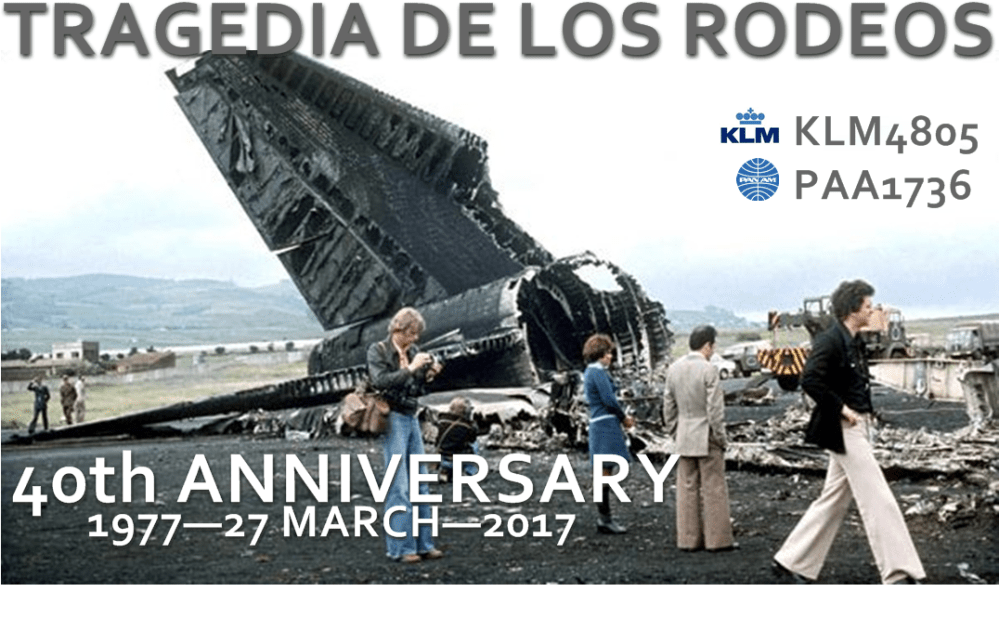
40º ANIVERSARIOS DE LOS RODEOS

AW-747T747

AW | 2017 03 26 16:25 | AIRLINES HISTORY

40º ANIVERSARIO DE LA TRAGEDIA AÉREA MÁS GRANDE DEL MUNDO DE LA AVIACIÓN COMERCIAL EN EL AEROPUERTO DE LOS RODEOS

Resultado de imagen para Boeing 747 KLM PAN AM air crash

TRAGEDIA DE TENERIFE

KLM FLIGHT: KLM4805

PAN AM FLIGHT: PAA1736

Fecha 27 de marzo de 1977
Causa Niebla intensa y error humano.
Lugar Aeropuerto de Los Rodeos, San Cristóbal de La Laguna, España
Coordenadas 28°28′54″N 16°20′18″O

28°28′54″N 16°20′18″O

Fallecidos 583
Heridos 61
Primer implicado PAN AM PAA1736
Tipo Boeing 747-121
Operador Pan Am
Registro N736PA
Nombre Clipper Victor-(Antes, Clipper Young-America)
Pasajeros 378
Tripulación 16
Supervivientes 61
Segundo implicado KLM  KLM4805
Tipo Boeing 747-206B
Operador KLM
Registro PH-BUF
Nombre Rijn (Río Rin)
Pasajeros 234
Tripulación 14
Supervivientes 0

Cronología de la mayor tragedia de la aviación mundial

Mañana, 27 de marzo de 2017, a las 17:06 horas, se cumplen cuatro décadas del choque de dos ‘Jumbos’ en la pista del Aeropuerto de Los Rodeos, España, que se llevó por delante la vida de 583 personas.

Es prácticamente imposible que se vuelva a repetir una cadena de acontecimientos como la que desembocó en la que sigue siendo, 40 años después, la mayor tragedia de la aviación comercial. Porque fueron tantas las casualidades que la catástrofe del aeropuerto de Los Rodeos es un ejemplo de manual de la ley de Murphy: si algo puede salir mal, saldrá mal. Y todo lo que pasó aquel domingo 27 de marzo de 1977 en la instalación tinerfeña salió mal, rematadamente mal. Tanto que 583 personas se dejaron la vida en la pista del aeródromo hará mañana cuatro décadas.

El parte meteorológico anunciaba nubosidad en el norte de la Isla, pero ese domingo amaneció despejado y con sol. Era un día tranquilo y apacible, ideal para comer fuera e incluso ir a la playa. En las cafeterías y bares se hablaba de la mala situación económica del Club Deportivo Tenerife, el máximo representante del fútbol isleño, que estaba en ese momento en Segunda División -como ahora-, y que se estaba planteando vender a una de sus estrellas, el ariete paraguayo Crispín Maciel.

Los que no eran futboleros charlaban sobre lo que se denominó La guerra del espárrago, una verdura que se consideraba en ese momento un alimento de lujo y cuyo precio no paraba de subir, o sobre el abaratamiento de los tomates de exportación. En las carteleras de los cines destacaban películas como Karla contra los jaguares, El hombre del valle maldito o Los vividores, este último un western de Robert Altman. Algunas se emitían en blanco y negro y otras en color.

Sin que nadie se lo imaginara, una premonición está desde primera hora en las portadas de los periódicos locales, cuyas ediciones costaban entonces 15 pesetas. Destacan el cese de emisiones del programa de radio La voz de Canarias libre que el independentista Antonio Cubillo venía presentando desde su exilio en Argelia. Cubillo, un abogado laboralista tinerfeño, huyó de la dictadura franquista en 1962, estableció su nueva residencia en Argel y en 1964 montó el Movimiento por la Autodeterminación e Independencia del Archipiélago Canario (Mpaiac). Desde esa emisora clandestina, aunque apoyada por Argelia, el abogado había lanzado proclamas separatistas y contra los godos, como llamaban y siguen llamando despectivamente los canarios a los peninsulares.

¿Y por qué era premonitorio? Porque Cubillo y el Mpaiac iban a protagonizar el primer acontecimiento que desencadenó la tragedia. Pasadas las 12:20 horas, en el aeropuerto de la otra isla capitalina de Canarias, Gran Canaria, a solo 30 minutos en avión de Tenerife, una voz anónima, joven y masculina llama a la centralita de las oficinas de Iberia. La empleada que cogió la llamada se quedó paralizada. No sabía qué hacer. Le acababan de anunciar que iban a estallar dos bombas en las dependencias del aeropuerto de Gando. Apenas unos minutos después, sobre las 12:30, sin tiempo para que las fuerzas de seguridad se desplegaran, estalla un primer artefacto en una floristería situada en la terminal.

Bomba en Gando

La gente corre por todos lados despavorida en medio de la humareda y restos del falso techo, mobiliario, cristaleras y macetas de la tienda. Mientras, nueve personas que han sido alcanzadas por la onda expansiva, entre ellas la dependienta de la floristería, tratan de incorporarse y salir del shock. Marcelina Sánchez, la empleada del comercio, es la más grave al estar más próxima a la bomba. Las secuelas le impidieron volver a caminar y provocaron recurrentes ingresos hospitalarios e intervenciones quirúrgicas hasta su defunción en julio de 1993, a los 41 años. En 2015, el Ministerio del Interior la reconoció como víctima de terrorismo.

A los agentes de la Policía Armada -ahora Policía Nacional- y la Guardia Civil se unen unidades especiales del Ejército, que buscan el segundo explosivo que había anunciado el comunicante anónimo. No aparece pero el temor a que se vuelvan a producir más explosiones lleva a las autoridades a ordenar el cierre total del Aeropuerto de Gando y desvío de los vuelos que tenían previsto aterrizar en Gran Canaria. Entre ellos hay dos Jumbos en pleno vuelo: uno de KLM procedente de Amsterdam y con destino a Las Palmas y otro de Pan American que partió de Los Angeles con destino a Grecia, con escala también en Las Palmas. La mayoría de pasajeros tenían como objetivo pasar unas vacaciones.

Dos ‘Jumbos’ en el aire

La decisión altera completamente los planes de ambos Boeing 747, que siguieron siendo los gigantes de la aviación durante muchos años hasta que aparecieron los Airbus 380. Sin embargo, quienes peor se lo toman son los dos únicos controladores aéreos que había ese domingo en la torre del aeropuerto tinerfeño de Los Rodeos. De repente, de una jornada tranquila pasan a una situación de estrés total. No dan abasto.

El Jumbo de la KLM holandesa aterriza primero en Los Rodeos, a las 13:38 horas. Para ahorrar tiempo, de manera que no se excedan las horas máximas diarias de vuelo y no tener que pernoctar en Gran Canaria, su comandante, el capitán Jacob van Zanten, decide llenar los tanques con 55.000 litros de combustible mientras espera a que se reabra Gando. El avión de la Pan Am toma tierra más de media hora después, a las 14:15 horas.

El cielo sigue despejado. Van Zanten, que era la imagen comercial de KLM y había estado apartado de la rutina de los vuelos para centrarse en las campañas publicitarias y la preparación de los futuros pilotos, se muestra desde el primer momento desesperado por reemprender la marcha. Desde Amsterdam, KLM le comunica que si despegaba de Las Palmas a las 19:00 horas no excedería su límite de horas de vuelo diarias. Por eso se niega a que los pasajeros abandonen la nave. No obstante, 20 minutos después, recula al ver que Gando sigue cerrado.

A eso de las 14:40 horas, poco después de que aterrice el Boeing 747 de Pan Am, llega por fin una buena noticia, aunque a la postre solo sería un espejismo. Gando reabre su pista y las dos aeronaves pueden empezar a prepararse para reemprender la marcha. A las 16:30 horas, cuando empiezan a aparecer nubes sobre el aeropuerto tinerfeño, la tripulación estadounidense llevaba casi 11 horas trabajando y empieza a notar el cansancio. La tripulación del KLM llevaba 9 horas, también está fatigada y aun le queda un vuelo a Gran Canaria y otro a Amsterdam.

Los Rodeos, el único aeropuerto que había en Tenerife -solo un año después se inauguró un segundo aeródromo, el Reina Sofía-, tenía unas instalaciones muy deficientes, incapaces de soportar el tráfico que se concentró aquel 27 de marzo de 1977. Pero los dos controladores y el escaso personal que había aquel domingo no tenían más remedio que solventar la emergencia.

Operación fatal de repostaje

El permiso para que el KLM despegara primero no llegó hasta que prácticamente terminó la operación de repostaje. A las 16:45 horas, el capitán firmó el registro de combustible y a las 16:00 empezó las comprobaciones previas al inicio del vuelo. El Pan Am también recibió autorización para la preparación de la puesta en marcha mientras el KLM encendía los motores.

Los aviones, ordenados en fila de a uno, toman posiciones para el despegue. Los primeros en marcharse son un Douglas DC-8 y dos Boeing: un 727 y un 737. Los siguientes en despegar serán el Boeing 747 de la KLM y el mismo modelo de la Pan Am. Son casi las cinco de la tarde y ya no queda nada de las espléndidas condiciones del tiempo con que se levantó el día. Una niebla espesa invade de repente Los Rodeos, la visibilidad se reduce de forma drástica y las luces de la pista no funcionan. Estas olas de nubes que invaden la instalación forman parte de un fenómeno frecuente que se produce en esta zona de Tenerife, perteneciente al municipio de La Laguna, a solo 7 kilómetros de la capital, Santa Cruz.

La niebla de Los Rodeos

En este punto se dan unas condiciones climáticas particulares que hacen que en algunas épocas del año se posen las nubes. La altitud del aeropuerto, a poco más de 600 metros sobre el nivel del mar, hace que se den dos tipos de fenómenos. Por un lado, los vientos alisios empujan masas de aire húmedo y nubosidad, que se va estancando en este punto. Además, las características orográficas de Los Rodeos, que forma un anillo montañoso, hacen que la nubosidad «no se renueve» y se acumule.

A las 16:56 horas, el KLM solicita permiso para despegar, avanza hasta el final de la pista y efectúa un giro de 180 grados. El capitán Van Zanten acelera motores. A las 17:02 el Pan Am se comunica con la torre de control y recibe la orden de recorrer la pista principal, detrás del KLM, y abandonarla por la tercera salida. Tres minutos más tarde, a las 17:05 horas, mientras el Pan Am avanza en busca de la tercera salida, el KLM comunica a la torre que está «en el despegue». Estas palabras no están incluidas en los protocolos y los controladores no terminan de comprenderlas. Responden al KLM que espere. Sin embargo, la tripulación holandesa no espera pues en ese preciso instante desde el Pan Am se intentan comunicar con la torre y se producen interferencias. No escuchan la respuesta completa.

Los pilotos del Pan Am siguen buscando la tercera salida pero no la encuentran porque se la han saltado. Quizá porque no la vieron, quizá porque apreciaron que en esa tercera salida era imposible girar y concluyeron que no se trataba de la C3 o quizá porque contaron a partir de la segunda y por tanto en realidad iban a tomar la C4, tal como explicó después del choque el comandante estadounidense Victor Grubbs.

Momentos cruciales

El Jumbo de KLM inicia la maniobra de despegue a las 17:04 horas, mientras el de Pan Am y la torre de control siguen intercambiando mensajes en los que queda patente que el avión norteamericano sigue maniobrando en la pista. El ingeniero de vuelo del KLM los escucha y se lo comunica a Van Zanten pero este no parece prestarle atención y sigue adelante. El ingeniero es el más joven e inexperto de la cabina. No insiste.

Van Zanten era un piloto de reconocido prestigio. Había sido piloto comercial 27 años y contaba con más de 11.700 horas de vuelo. Era el instructor más veterano de la compañía y los años anteriores había pasado la mayor parte del tiempo formando a nuevos pilotos. De hecho, no había volado en los tres meses anteriores a la catástrofe.

Imagen relacionada

https://i0.wp.com/www.baaa-acro.com/wp-content/uploads/1977/03/N736PA-32.jpg

https://i0.wp.com/static3.businessinsider.com/image/53331db669bedd226b8b456a/how-a-tiny-island-runway-became-the-site-of-the-deadliest-plane-crash-ever.jpg

El KLM, sin un permiso específico para despegar y con escasísima visibilidad, inicia la marcha. Los controladores se limitan a señalar «pista despejada». Willem Schreuder, mecánico de vuelo de KLM, dice: «¿No está despejado, entonces?». Van Zanten le responde: «¿Qué has dicho?». Pero Van Zanten tiene la decisión tomada y recorre 1.300 metros por la pista hasta superar los 200 kilómetros por hora. Entonces es cuando avista al Pan Am, que se aproxima de frente. Los separan apenas unos 500 metros. El comandante del Pan Am, Víctor Grubbs, acelera a máxima potencia e intenta apartarse. «Allí está? mírenlo. ¡Maldición, DIOS, está viniendo hacia nosotros!», dice Bragg por radio. Van Zanten levanta el morro del avión e inicia el despegue.

Se hace el silencio

Las comunicaciones se interrumpen de repente. Los controladores llaman pero no hay respuesta. Empiezan a temerse lo peor. Son las 17:06:50 y se acaba de producir el impacto. La neblina actúa como silenciador pero no impide que se escuchen las explosiones en unos kilómetros a la redonda. Hay quienes piensan que el Teide ha entrado en erupción. Pero no hay lava, hay hierros retorcidos en la pista de Los Rodeos que nadie ve hasta pasada media hora, cuando la neblina se abre. El KLM choca contra la parte superior del morro del Pan Am, cae el suelo y se desliza más de 300 metros envuelto en llamas. Las más de 55 toneladas de combustible impiden que el avión se eleve antes y hacen que se convierta en una enorme bola de fuego que nadie ve por la neblina. Viajan 234 pasajeros y 14 tripulantes. No hay supervivientes. Mientras tanto, el Pan Am también se encuentra en llamas. Una turbina desprendida del KLM arrasa parte de la cabina. Hay 378 pasajeros y 16 tripulantes. Solo 70 personas consiguen escapar a través de las grietas que se abren en la aeronave en la parte delantera y trasera antes de que las llamas arrasen el avión. Nueve acaban falleciendo en las siguientes horas.

Muchos isleños se habían quedado en casa para ver el partido de fútbol entre España y Hungría, que acabó con empate a uno, con gol del mítico Juanito. Se empiezan a enterar por radio de que se había producido un accidente en Los Rodeos pero la información es tan confusa que nadie puede imaginar la magnitud de la tragedia.

El esfuerzo para el rescate, identificación y repatriación de los cadáveres fue monumental. La mayor parte de los cuerpos estaban calcinados y muchos desmembrados. Las más de 500 personas que trabajaron en el despliegue jamás olvidarán lo que vieron aquel día en las pistas y el hangar. Tenerife no tenía tantos ataúdes. Hubo que traer y hacer centenares a toda prisa. AIRGWAYS ® Icon-AW


http://static4.businessinsider.com/image/53332662eab8eaac6586ebb1-1200-750/tenerife%20north%20airport%20(los%20rodeos).jpg

FOTOGRAFÍA ACTUAL DEL AEROPUERTO TENERIFE (EX-LOS RODEOS)

Robina: «Yo me preguntaba: ¿Por qué no estoy muerta?»

Resultado de imagen para Robina van Lanschot y su marido, Paul Wessels

El 27 de marzo de 1977 dos Boeing chocaron en el aeropuerto de Tenerife

El accidente causó 583 muertos

En el avión holandés de la KLM sólo ella se salvó

Aeropuerto de Los Rodeos, Tenerife. Sobre las 15.00 horas del domingo 27 de marzo de 1977. Faltan dos horas, seis minutos y 50 segundos para que se produzca el accidente más letal de la historia de la aviación mundial. Dos Boeing 747, uno procedente de Holanda y otro de EEUU, van a chocar con el resultado de 583 personas fallecidas.

Nos hemos situado un poco antes del siniestro, a las tres de la tarde, porque es en torno a esa hora cuando aparece en escena nuestra protagonista. Robina van Lanschot, 24 años, holandesa rubia y espigada, guía turística con trabajo y residencia en España, se dirige al mostrador de la compañía KLM y le traslada al empleado lo que se dispone a hacer, aunque vaya en contra de las normas. Va a comunicarle la decisión que le salvará la vida.

-Disculpe, mire, yo no voy a subir otra vez en el avión, me voy a quedar aquí, en Tenerife.

-Lo siento, señorita, no puede hacer eso. Usted está en la lista de pasajeros, sus maletas están a bordo, tiene que volar hasta el destino, tiene que embarcar de nuevo.

-No voy a embarcar, ya le digo, no voy a ir a Gran Canaria.

Pese a las protestas del trabajador de KLM, Robina deja en el mostrador la tarjeta de salida temporal del avión que le han facilitado, abandona su maleta en el Boeing 747, y sale del aeropuerto en dirección contraria a la muerte.

Robina aún conserva el billete de aquel vuelo 4805 de KLM

Según se lee en el billete que 40 años después conserva intacto y que reproducimos junto a estas líneas, Robina ha partido a las 10.00 horas de Amsterdam, en el vuelo KLM 4805 y en dirección al aeropuerto de Gando, en Las Palmas de Gran Canaria. Con ella viajan otras 234 personas y 14 miembros de la tripulación. Todos los pasajeros y todo el personal del avión fallecerán en el accidente. Todos menos ella.

«Estábamos volando a Las Palmas y entonces el capitán anunció que no podíamos aterrizar allí. Dijo: «Vamos a Tenerife»», comienza Robina el relato de lo sucedido cuatro décadas atrás. Habla desde su casa en Noordwijkerhout, la pequeña localidad a 40 kilómetros al sureste de Amsterdam donde vive.

Un aviso similar se escucha en el interior del vuelo PAA 1736 que la Pan Am ha fletado desde Los Ángeles, con escala en Nueva York y destino final en Las Palmas de Gran Canaria: 378 pasajeros y 19 tripulantes de los que fallecerán 326 y nueve, respectivamente.

Ninguno de los comandantes, ni el holandés Jacob van Zanten ni el americano Victor Grubbs, comunica a sus pasajeros por qué están siendo obligados a desviarse a Tenerife. Quizás ni lo sepan. Una pequeña bomba, reivindicada por los independentistas del MPAIAC (Movimiento por la Autodeterminación e Independencia del Archipiélago Canario), ha estallado en la terminal del aeropuerto de Las Palmas y el grupo ha amenazado con la explosión de un segundo artefacto, así que Gando se ha cerrado. Todos los aviones están siendo redireccionados momentáneamente a Los Rodeos. Allí deberán aguardar hasta que se reabra el aeropuerto grancanario y puedan aterrizar donde tenían previsto. El KLM en el que viaja Robina llega a Tenerife a las 13.38 horas y a los pasajeros se les permite bajar para estirar las piernas mientras esperan, encontrando así Robina su oportunidad para burlar a la muerte. A los de la Pan Am, que han aterrizado a las 14.15 horas en Tenerife, no se les da la opción de salir del avión sin embargo.

-¿Por qué me empeñé en no subir al avión? -repite Robina la pregunta que le formulamos-. Yo entonces vivía en Puerto de la Cruz, [una localidad del norte de la isla de Tenerife], y quería irme a casa, con mi novio y con mi perro. Pensé: «Bien, yo ya estoy en Tenerife, vivo aquí, no quiero ir a Gran Canaria y regresar con el barco». Porque ese era el plan, volar a Gran Canaria y coger el barco a Tenerife…

-Y aquella decisión fue la más importante que ha tomado nunca…

-Sí. Tuve esa idea, se me ocurrió no embarcar y realmente no sé por qué. Simplemente no quería ir. Y esa decisión tuvo un impacto enorme en mi vida, especialmente los primeros años tras el accidente: perdí a mis amigos, mi vida cambió completamente.

Entre los seres queridos a los que dijo adiós figura Yvonne Wessels, la hermana de aquel novio que esperaba a Robina en casa y que hoy es su marido: Paul Wessels. Con él ha tenido tres hijos: Christiaan (33), Tobias (30) y Benjamin (27). Tras el accidente Robina entró en estado de shock y se negó a hablar de lo sucedido con nadie, salvo con Paul.

Un día, 20 años después de la tragedia, sus hijos, que entonces tendrían 13, 10, y siete años señalaron el retrato de aquella mujer rubia que ocupaba un lugar privilegiado en el salón y preguntaron: «¿Quién es?».

«Es Yvonne, la hermana de papá, y falleció en un accidente de avión», les contó Robina sin mencionar ni que ella iba sentada a su lado en aquel vuelo ni que antes de escoger el camino de la salvación intentó que Yvonne la acompañara: «Le dije: «Ey, Yvonne, ¿por qué no te quedas en Tenerife conmigo? No tienes por qué ir a Las Palmas, ya recuperaremos las maletas». Pero ella decidió seguir».
Años de silencio

En 2002, coincidiendo con el 25 aniversario de la catástrofe, Robina se prestó a contar por primera vez su historia en un libro: Tragedia en Tenerife, de Ene Reijnoudt y Niek Fuerte, publicado en Holanda. Como no quería que Christiaan, Tobias y Benjamin se enteraran por sus páginas de que su madre era la única superviviente del vuelo KLM 4805, ella misma les desveló por primera vez la historia completa antes de que llegara a las librerías. Cuatro años después, en 2006, intervino brevemente en el documental estadounidense The Deadliest Plane Crash -«El accidente de avión más mortífero»-. Y esas dos han sido las únicas veces que ha divulgado su testimonio hasta ahora.

-¿Por qué, tras años de silencio, se ha prestado a esta entrevista?

-Ha pasado tanto tiempo que ahora puedo hablar de ello sin tener que llorar o emocionarme demasiado. Nunca he visto fotografías del accidente, siempre he procurado tenerlas lejos, muy lejos. Y si mi marido y yo veíamos alguna sin querer era tan sobrecogedor que dijimos: «Hablamos del tema el uno con el otro y con eso es suficiente». Y ahora estoy emocionada de nuevo al hablar con usted así que para mí no es bueno recordar aquello.

Resultado de imagen para Robina van Lanschot y su marido, Paul Wessels

Robina y su marido, Paul Wessels. Por verlo a él se bajó del avión en Tenerife

Robina Van Lanschot llegó a Tenerife en septiembre de 1976 para trabajar como guía turística de Holland Internacional. Otra empleada de la compañía, Yvonne Wessels, le hizo un hueco en su apartamento en Puerto de la Cruz y le enseñó cómo moverse por la isla. Robina recogía a los turistas en el aeropuerto, los acompañaba a los hoteles, reservaba excursiones, los llevaba al médico si enfermaban…

En diciembre de 1976, tres meses antes del accidente, Paul Wessels llegó a Tenerife para visitar a su hermana Yvonne, conoció a su compañera de piso, Robina, y los dos jóvenesse enamoraron. En el citado documental The Deadliest Plane Crash se dice que Robina fue «salvada por el amor», puesto que fue la presencia de Paul en la isla lo que la empujó a querer bajarse en Tenerife a toda costa.

«Volvíamos de hacer un curso en Holanda», se retrotrae nuestra protagonista a aquel vuelo del 27 de marzo de 1977. «Habíamos estado unos días en la sede de la compañía y visitando a nuestras familias. La noche antes de partir dormí en la casa de los padres de mi marido y de Yvonne, los conocí por primera vez. Un hermano de Yvonne nos llevó al aeropuerto. En el avión íbamos sentadas juntas con otros colegas de la compañía, éramos cinco».

Cuando a las 17 horas 06 minutos 50 segundos el KLM -que estaba despegando sin el pertinente permiso de la torre de control- chocó con el Pan Am -que aún circulaba por la única pista de Los Rodeos-, Robina van Lanschot se encontraba tranquilamente sentada en el jardín de su casa con Paul. No recuerda si llegó allí en taxi o en autobús y tiene otras grandes lagunas en los meses que siguieron al accidente, fruto del enorme shock. Sí sabe que aquella romántica tarde la quebró abruptamente la llamada de uno de los jefes de Robina. Paul descolgó el teléfono.

-¿Están Robina e Yvonne?

-Robina está aquí, pero Yvonne está yendo a Gran Canaria.

-Algo terrible ha sucedido.

«Dijo que algo terrible había sucedido pero no sabía exactamente qué», cuenta Robina. «No era como ahora que hay internet, email… Mi español no era muy bueno, pero una de mis colegas lo hablaba bien así que ella llamó a los hospitales a ver si los encontrábamos. Al final mi marido llamó a su casa a Holanda y su padre le dijo que no había supervivientes en el KLM. En Holanda lo supieron antes que nosotros».

Al día siguiente, lunes 28, responsables de Holland Internacional, la empresa de Robina, llegaron a Tenerife: «Regresas con nosotros a Holanda», dijeron. Antes de aterrizar en el aeropuerto de Schiphol, en Amsterdam, a Robina le colocaron el uniforme de una de las azafatas de Transavia, la compañía con la que volaba, para que pudiera despistar a la prensa, que esperaba ansiosa a la «única superviviente». A\W

AW-747T747

40th ANNIVERSARY OF THE RODEOS

40th ANNIVERSARY OF THE WORLD’S LARGEST AIR TRAGEDY OF COMMERCIAL AVIATION AT THE RODEOS AIRPORT


Tomorrow, at 17:06 hours, marks four decades of the clash of two ‘Jumbos’ on the runway of Tenerife airport Los Rodeos, which took the lives of 583 people ahead


It is practically impossible to repeat a chain of events like the one that ended in what remains, 40 years later, the greatest tragedy of commercial aviation. Because there were so many casualties that the Los Rodeos airport catastrophe is an example of a Murphy law manual: if something can go wrong, it will go wrong. And everything that happened that Sunday 27 of March of 1977 in the facility from Tenerife came out bad, completely wrong. So much so that 583 people left their lives on the runway of the airfield will make tomorrow four decades.

The weather forecast announced cloudiness in the north of the island, but that day dawned clear and sunny. It was a quiet and peaceful day, ideal for eating out and even going to the beach. In the cafes and bars there was talk of the poor economic situation of Club Deportivo Tenerife, the highest representative of island football, who was at that time in Second Division – as now – and was considering selling to one of its stars, the Paraguayan striker Crispín Maciel.

Those who were not footballers talked about what was called The Asparagus War, a vegetable that was considered at that time a luxury food and whose price did not stop rising, or the cheapening tomatoes export. On the billboards of the cinemas they emphasized films like Karla against the jaguars, the man of the cursed valley or the vividores, the latter a western of Robert Altman. Some were emitted in black and white and others in color.

Without anybody imagining it, a premonition is from first hour in the covers of the local newspapers, whose editions cost then 15 pesetas. They emphasize the cessation of broadcasts of the radio program La voz de Canarias libre that the independentista Antonio Cubillo had been presenting since its exile in Algeria. Cubillo, a labor lawyer from Tenerife, fled Franco’s dictatorship in 1962, established his new residence in Algiers, and in 1964 he set up the Movement for Self-Determination and Independence of the Canary Archipelago (Mpaiac). From that clandestine station, although supported by Algeria, the lawyer had launched separatist proclamations and against the Goths, as the Canary Islands called and still call contemptuously the peninsulares.

And why was it premonitory? Because Cubillo and the Mpaiac were going to star in the first event that triggered the tragedy. After 12:20 hours, at the airport of the other Canary Island, Gran Canaria, only 30 minutes by plane from Tenerife, an anonymous voice, young and masculine calls the switchboard of the offices of Iberia. The employee who took the call was paralyzed. Not know what to do. They had just announced that two bombs were going to explode in the outbuildings of Gando’s airport. Just a few minutes later, about 12:30, with no time for security forces to deploy, a first artifact explodes in a florist at the terminal.

Bomb in Gando

People rush everywhere in the middle of the smoke and remains of the false ceiling, furniture, glass and pots of the store. Meanwhile, nine people who have been hit by the blast, including the flower shop clerk, try to get up and out of shock. Marcelina Sánchez, the employee of commerce, is the most serious to be closer to the bomb. The sequels prevented him from walking again and caused recurrent hospital admissions and surgical interventions until his death in July 1993 at age 41. In 2015, the Ministry of the Interior recognized her as a victim of terrorism.

To the agents of the Armed Police – now National Police – and the Civil Guard are united special units of the Army, that look for the second explosive that had announced the anonymous communicant. It does not appear but the fear that more explosions will occur again leads the authorities to order the total closure of Gando airport and diversion of the flights that were planned to land in Gran Canaria. Among them there are two Jumbos in flight: one from KLM from Amsterdam to Las Palmas and another from Pan American from Los Angeles to Greece, with a stopover in Las Palmas. The majority of passengers had as their goal to spend a vacation.

Two ‘Jumbos’ in the air

The decision completely disrupts the plans of both Boeing 747s, which remained the giants of aviation for many years until the Airbus 380 appeared. However, those who take it worst are the only two air traffic controllers that had that Sunday in the tower Of the Tenerife airport of Los Rodeos. Suddenly, from a quiet day they go into a situation of total stress. They do not give enough.

The Dutch KLM Jumbo lands first at Los Rodeos at 1:38 p.m. To save time, so as not to exceed the maximum daily flight hours and not having to spend the night in Gran Canaria, its commander, Captain Jacob van Zanten, decides to fill the tanks with 55,000 liters of fuel while waiting for Gando to reopen . The Pan Am plane takes land more than half an hour later, at 2:15 p.m.

The sky is still clear. Van Zanten, who was the commercial image of KLM and had been away from the routine of flights to focus on advertising campaigns and the preparation of future pilots, shows from the outset desperate to restart the march. From Amsterdam, KLM informs you that if you depart from Las Palmas at 19:00 hours you would not exceed your daily flight limit. That is why he refuses to let passengers leave the ship. However, 20 minutes later, he recovers to see that Gando is still closed.

At about 14:40 hours, shortly after the Pan Am Boeing 747 landed, good news finally arrives, although in the end it would only be a mirage. Gando reopens his track and the two aircraft can begin to prepare to restart the march. At 16:30 hours, when clouds begin to appear on Tenerife airport, the American crew had been working for almost 11 hours and began to feel tired. The crew of the KLM was 9 hours, is also fatigued and still has one flight to Gran Canaria and another to Amsterdam.

Los Rodeos, the only airport on Tenerife – only a year later a second airfield, the Reina Sofía, was inaugurated, had very poor facilities, unable to withstand the traffic that was concentrated on March 27, 1977. But the two Controllers and the scarce personnel that had that Sunday had no choice but to solve the emergency.

Fatal refueling operation

The permission for the KLM to take off first did not arrive until the refueling operation was almost finished. At 16:45 hours, the captain signed the fuel register and at 16:00 began the checks prior to the start of the flight. Pan Am also received clearance for commissioning preparation while the KLM started the engines.

The planes, arranged in a row of one, take positions for takeoff. The first to leave is a Douglas DC-8 and two Boeing: a 727 and a 737. The next to take off will be the Boeing 747 of the KLM and the same model of Pan Am. It is almost five in the afternoon and no longer There remains nothing of the splendid conditions of the time with which the day arose. A thick fog suddenly invades Los Rodeos, the visibility is drastically reduced and the runway lights do not work. These waves of clouds that invade the installation are part of a frequent phenomenon that occurs in this area of Tenerife, belonging to the municipality of La Laguna, just 7 kilometers from the capital, Santa Cruz.

The fog of Los Rodeos

At this point there are particular climatic conditions that cause clouds to settle at certain times of the year. The altitude of the airport, to little more than 600 meters on the level of the sea, makes that give two types of phenomena. On the one hand, the trade winds push masses of humid air and cloudiness, which is stagnating at this point. In addition, the orographic features of Los Rodeos, which forms a mountain ring, make the cloud cover «not renewed» and accumulate.

At 16:56 hours, the KLM requests permission to take off, advances to the end of the track and makes a 180 degree turn. Captain Van Zanten accelerates engines. At 17:02 the Pan Am communicates with the control tower and receives the order to cross the main track, behind the KLM, and leave it by the third exit. Three minutes later, at 5:05 p.m., while the Pan Am advances in search of the third exit, the KLM communicates to the tower that it is «in the takeoff». These words are not included in the protocols and the drivers do not completely understand them. They answer to the KLM that waits. However, the Dutch crew does not wait because at that precise moment since the Pan Am try to communicate with the tower and interference occurs. They do not listen to the complete answer.

The Pan Am riders are still looking for the third start but they can not find it because they have skipped it. Perhaps because they did not see it, perhaps because they appreciated that in that third exit it was impossible to turn and they concluded that it was not the C3 or perhaps because they counted from the second and therefore in fact they were going to take the C4, as it explained later Of the crash the American commander Victor Grubbs.

Crucial Moments

The KLM Jumbo starts the takeoff maneuver at 17:04 hours, while the Pan Am and the control tower are still exchanging messages in which it is clear that the North American plane is still maneuvering on the track. The flight engineer of the KLM listens to them and it communicates to Van Zanten but this one does not seem to pay attention to him and it goes ahead. The engineer is the youngest and most inexperienced in the cabin. He does not insist.

Van Zanten was a recognized pilot. He had been a commercial pilot for 27 years and had more than 11,700 flight hours. He was the company’s most senior instructor and had spent most of his time training new drivers. In fact, he had not flown in the three months prior to the catastrophe.

The KLM, without a specific permission to take off and with very little visibility, starts the march. Controllers are limited to «clear runway». Willem Schreuder, KLM’s flight mechanic, says, «Is not it clear, then?» Van Zanten replies, «What did you say?» But Van Zanten has the decision taken and travels 1,300 meters down the track to exceed 200 kilometers per hour. That’s when he sees the Pan Am approaching. They separate them only about 500 meters. The Pan Am commander, Victor Grubbs, accelerates to full power and tries to pull away. «Damn it, GOD, it’s coming at us!» Bragg says on the radio. Van Zanten lifts the nose of the plane and starts takeoff.

Silence is made

Communications are interrupted suddenly. Controllers call but there is no answer. The worst are beginning to be feared. It’s 17:06:50 and the impact just came. The fog acts as a muffler but does not prevent the explosions from being heard in a few kilometers. There are those who think Teide has erupted. But there is no lava, there are twisted irons in the track of Los Rodeos that nobody sees until after half an hour, when the mist opens. The KLM crashes into the top of the Pan Am nose, the ground falls and slides more than 300 meters in flames. The more than 55 tons of fuel prevent the plane from rising before and make it a huge ball of fire that no one sees through the fog. 234 passengers and 14 crew members travel. There are no survivors. Meanwhile, the Pan Am is also in flames. A turbine detached from the KLM destroys part of the cabin. There are 378 passengers and 16 crew. Only 70 people manage to escape through the cracks that open in the aircraft at the front and back before the flames sweep the plane. Nine end up dying in the next few hours.

Many islanders had stayed home to watch the football match between Spain and Hungary, which ended with a draw to a goal by the legendary Juanito. They begin to find out by radio that an accident had happened in Los Rodeos but the information is so confused that nobody can imagine the magnitude of the tragedy.

The effort for the rescue, identification and repatriation of the corpses was monumental. Most of the bodies were calcined and many dismembered. The more than 500 people who worked in the deployment will never forget what they saw that day on the slopes and hangar. Tenerife did not have so many coffins. We had to bring and make hundreds in a hurry. A\W


Robina: «I was wondering, why am I not dead?»

Resultado de imagen para Robina van Lanschot y su marido, Paul Wessels


On 27 March 1977 two Boeing crashed at Tenerife airport

The accident caused 583 deaths

In the Dutch plane of the KLM only she was saved

Los Rodeos Airport, Tenerife. About 3:00 p.m. on Sunday, March 27, 1977. Two hours, six minutes and 50 seconds are left before the most deadly accident in the history of world aviation. Two Boeing 747s, one from the Netherlands and another from the US, are going to hit the result of 583 people dead.

We have settled a little before the incident, at three in the afternoon, because it is around that time when our protagonist appears on the scene. Robina van Lanschot, 24, Dutch blonde and eared, tour guide with work and residence in Spain, goes to the counter of the company KLM and transfers to the employee what is prepared to do, even if it goes against the rules. He will tell you the decision that will save your life.

«Excuse me, look, I’m not going to get on the plane again, I’m going to stay here in Tenerife.

«I’m sorry, miss, you can not do that.» You are on the passenger list, your bags are on board, you have to fly to the destination, you have to board again.

«I’m not going to board, I tell you, I’m not going to Gran Canaria.

Despite the protests of the KLM worker, Robina leaves the temporary exit card of the plane that has been provided, leaves his suitcase on the Boeing 747, and leaves the airport in the opposite direction of death.

According to what is read on the ticket, which remains untouched 40 years later and reproduced along these lines, Robina departed at 10 am on Amsterdam, on flight KLM 4805 and in the direction of Gando airport, in Las Palmas de Gran Canaria. With it travels another 234 people and 14 members of the crew. All the passengers and all the personnel of the airplane will die in the accident. All but her.

«We were flying to Las Palmas and then the captain announced that we could not land there. He said: «Let’s go to Tenerife», begins Robina the story of what happened four decades ago. He speaks from his home in Noordwijkerhout, the small town 40 kilometers southeast of Amsterdam where he lives.

A similar warning is heard inside the PAA 1736 flight that Pan Am has chartered from Los Angeles, with stopover in New York and final destination in Las Palmas de Gran Canaria: 378 passengers and 19 crew of who will die 326 and nine, respectively.

None of the commanders, the Dutchman Jacob van Zanten or the American Victor Grubbs, communicates to their passengers why they are being forced to divert to Tenerife. Maybe they do not even know it. A small bomb, claimed by independents of the MPAIAC (Movement for Self-Determination and Independence of the Canary Archipelago), has exploded at the Las Palmas airport terminal and the group has threatened to explode a second device, so Gando has closed. All airplanes are being redirected momentarily to Los Rodeos. There they must wait until the airport is reopened Grancanario and can land where they had planned. The KLM in which Robina travels arrives in Tenerife at 13.38 hours and passengers are allowed to go down to stretch their legs while waiting, thus finding Robina their opportunity to outwit death. Those of Pan Am, who have landed at 14:15 hours in Tenerife, are not given the option to leave the plane however.

«Why did I bother not to board the plane?» Robina repeated the question we asked. I then lived in Puerto de la Cruz, [a town in the north of the island of Tenerife], and I wanted to go home, with my boyfriend and my dog. I thought, «Well, I’m already in Tenerife, I live here, I do not want to go to Gran Canaria and return with the boat.» Because that was the plan, fly to Gran Canaria and take the boat to Tenerife …

«And that decision was the most important one you’ve ever taken …»

-Yes. I had that idea, I thought of not boarding and I really do not know why. I just did not want to go. And that decision had a huge impact on my life, especially the first few years after the accident: I lost my friends, my life changed completely.

Among the loved ones to whom he said goodbye is Yvonne Wessels, the sister of that boyfriend who was waiting for Robina at home and who today is her husband: Paul Wessels. With him he has had three children: Christiaan (33), Tobias (30) and Benjamin (27). After the accident Robina went into shock and refused to talk about what happened to anyone, except with Paul.

One day, 20 years after the tragedy, her children, who would then be 13, 10, and seven years old, pointed to the portrait of that blond woman who had a privileged place in the room and asked: «Who is it?»

«It’s Yvonne, Papa’s sister, and she died in a plane crash,» Robina told them without mentioning that she was sitting next to him on that flight or that before choosing the path of salvation he tried to get Yvonne to accompany her: «I said,» Hey, Yvonne, why do not you stay in Tenerife with me? You do not have to go to Las Palmas, we’ll get our bags back. » But she decided to go on. »
Years of silence

In 2002, coinciding with the 25th anniversary of the catastrophe, Robina was able to tell her story for the first time in a book: Tragedy in Tenerife by Ene Reijnoudt and Niek Fuerte, published in Holland. Since she did not want Christiaan, Tobias, and Benjamin to find out from their pages that her mother was the only survivor of the KLM 4805 flight, she first revealed the whole story to them before she reached the bookstores. Four years later, in 2006, he briefly appeared in the US documentary The Deadliest Plane Crash – «The Most Deadly Plane Accident». And those two have been the only times he has spread his testimony until now.

-Why, after years of silence, has he lent himself to this interview?

«It’s been so long now that I can talk about it without having to cry or get too excited. I have never seen photographs of the accident, I have always tried to have them far, far away. And if my husband and I were to see one inadvertently it was so overwhelming that we said: «We talk about the subject with each other and that is enough.» And now I’m excited again when talking to you so it’s not good for me to remember that.

Robina Van Lanschot arrived in Tenerife in September 1976 to work as a tour guide for Holland International. Another company employee, Yvonne Wessels, made a dent in her apartment in Puerto de la Cruz and showed her how to move around the island. Robina collected the tourists at the airport, accompanied them to the hotels, booked excursions, took them to the doctor if they became ill …

In December 1976, three months before the accident, Paul Wessels arrived in Tenerife to visit his sister Yvonne, met his roommate, Robina, and the two young people fell in love. In the documentary The Deadliest Plane Crash it is said that Robina was «saved by love», since it was Paul’s presence on the island that pushed her to want to get off Tenerife at all costs.

«We went back to a course in Holland», our protagonist goes back to that flight of March 27, 1977. «We had been a few days at the headquarters of the company and visiting our families. The night before I left I slept in the house of my husband’s parents and Yvonne, I met them for the first time. Yvonne’s brother took us to the airport. On the plane we sat together with other colleagues in the company, there were five of us. «

When the KLM, which was taking off without the pertinent permission of the control tower, struck at 17 hours 06 minutes 50 seconds with the Pan Am, which still circulated on the only track in Los Rodeos, Robina van Lanschot was sitting quietly In the garden of his house with Paul. He does not remember if he got there by taxi or bus and has other large lagoons in the months that followed the accident, the result of the enormous shock. She knows that that romantic afternoon was abruptly broken by the call of one of the chiefs of Robina. Paul picked up the phone.

«Are Robina and Yvonne?»

«Robina is here, but Yvonne is going to Gran Canaria.»

«Something terrible has happened.

«He said something terrible had happened but he did not know exactly what,» says Robina. «It was not like now that there is internet, email … My Spanish was not very good, but one of my colleagues spoke it well so she called the hospitals to see if we found them. In the end my husband called home to Holland and his father told him that there were no survivors in the KLM. In Holland they knew it before us. «

The next day, on Monday 28, officials from Holland International, Robina’s company, arrived in Tenerife: «You’re coming back with us to Holland,» they said. Before landing at Schiphol Airport in Amsterdam, Robina was given the uniform of one of Transavia’s stewardesses, the company with which she was flying, so that she could fool the press, who waited anxiously for the «only survivor» . A\W


Ξ A I R G W A Y S Ξ
SOURCE: Laopinion.es / Elmundo.es
DBk: Baaa-acro.com / Laopinion.es / Businessinsider.com
AW-POST: 201703261625AR

A\W   A I R G W A Y S ®