Sindicato SEPLA rompe con Ryanair

Resultado de imagen para Ryanair España

AW | 2018 05 11 13:40 | AIRLINES

Resultado de la imagen para logotipo de seplaEl Sindicato de España tomará medidas de presión para derogar contratos basados bajo legislación española

El Sindicato de pilotos SEPLA ha decidido romper la mesa de Resultado de la imagen para ryanair pngnegociación que mantenía con la aerolínea irlandesa Ryanair desde el pasado mes de Marzo 2018. La agrupación que nuclea a unos 500 de los 800 pilotos de la low cost basados en España, ha comunicado la decisión de tomar estas medidas.

El sindicato SEPLA analizará las distintas opciones a su alcance para que la compañía Ryanair reconozca, bajo legislación española, los contratos del personal que trabaja en este país y debe de utilizar la figura de los falsos autónomos o pilotos contratados a través de brokers.

La notificación de los pilotos afirma que la aerolínea no ha tenido en cuenta las propuestas que aportó el Sindicato de reconocer horas sindicales. El SEPLA proponía que los siete delegados sindicales en Ryanair tuvieran tres días al mes, con garantía salarial, para dedicarlos a la tarea de representación de los trabajadores. Estas jornadas exentas de servicio no serían intercambiables entre ellos ni acumulables una vez concluido el mes. AIRWAYS® AW-Icon TXT

Resultado de imagen para Ryanair España

Spanish pilots union breaks with Ryanair

The Union of Spain will take measures of pressure to repeal contracts based on Spanish legislation

Resultado de la imagen para ryanair pngThe SEPLA Pilots Union has decided to break the negotiating table that it had with the Irish airline Ryanair since last March 2018. The grouping that brings together some 500 of the 800 pilots of the low cost based in Spain, has communicated the decision to take these measures.

The SEPLA union will analyze the different options at its disposal so that the Ryanair company recognizes, under Spanish legislation, the contracts of the personnel working in this country and must use the figure of the false self-employed or pilots hired through brokers.

The notice of the pilots affirms that the airline has not taken into account the proposals that the Syndicate contributed to recognize union hours. The SEPLA proposed that the seven trade union delegates in Ryanair have three days a month, with a salary guarantee, to dedicate them to the task of representing the workers. These days exempted from service would not be interchangeable between them or accumulated after the end of the month. A \ W


Ξ A I R G W A Y S Ξ
SOURCE:  Airgways.com
DBk: Sepla.es / Rtv.es / Elconfidencial.com
AW-POST: 201805111340AR

A\W   A I R G W A Y S ®

Entrevista pilotos vuelo SW1380

Resultado de la imagen para Southwest sw1380 Tammie Jo Shults Darren Ellisor

AW | 2018 05 10 14:31 | AIRLINES

Entrevista a pilotos del vuelo SW1380 de Southwest Airlines

AW-70888775.jpgEl piloto de Southwest Airlines aclamado como un «héroe» por aterrizar de forma segura el vuelo SW1380 después de una mortal explosión del motor el mes pasado, dijo que a medida que el caos se desarrollaba en el aire, se sintió como un flashback en su entrenamiento naval.

La capitana Tammie Jo Shults y su copiloto, Darren Ellisor, hablaron con el 20/20 de ABC en su primera entrevista desde el aterrizaje de emergencia. Una pasajera, Jennifer Riordan, murió después de sufrir heridas fatales cuando fue succionada a través de una ventana que fue destrozada por la metralla de la explosión del motor. Otros pasajeros describieron una escena aterradora a bordo

«Mis primeros pensamientos fueron, ‘Oh, aquí vamos’, simplemente porque parecía un flashback de algunos de los vuelos de la Armada que habíamos hecho», dijo Shults en un clip de la entrevista 20/20 publicada el miércoles.

Los pilotos del avión estadounidense Boeing 737-700 que sufrió una explosión en el motor en el aire tuvieron que usar señales de mano para comunicarse debido al rugido ensordecedor, dijeron en una nueva entrevista.

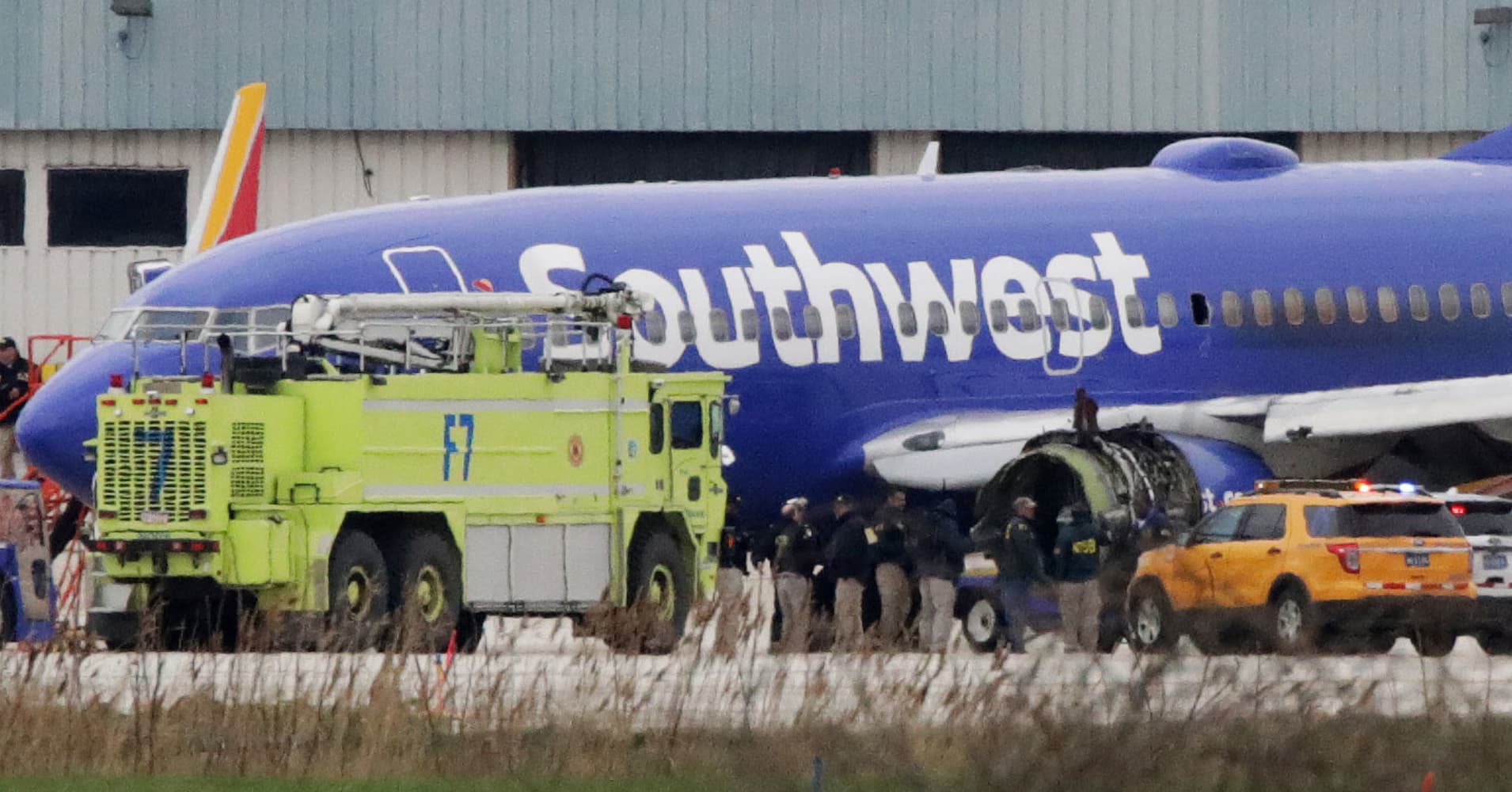
La explosión a bordo del vuelo SW1380 de Southwest Airlines el 17 Abril, que ocurrió cerca de Filadelfia en un vuelo con destino a Dallas desde el aeropuerto LaGuardia de Nueva York, provocó que parte del motor destrozara una ventana y que un pasajero fuera parcialmente succionado del avión. Jennifer Riordan, de 43 años, ejecutiva bancaria de Nuevo México, murió más tarde.

El copiloto Darren Ellisor recordó una escena caótica donde todo salió mal de repente. «Estábamos pasando cerca de 32,000 pies cuando escuchamos un gran estallido y una descompresión rápida. El avión giró y se inclinó hacia la izquierda un poco más de 40 grados y tuvimos una vibración muy severa del motor número uno. Hubo temblores, todo. Y todo eso pasó de una vez», dijo Ellisor en el programa 20/20 de la cadena estadounidense ABC.

La piloto Tammie Jo Shults dijo que el problema le recordó los rudos vuelos militares. «Mis primeros pensamientos fueron en realidad, ‘Oh, aquí vamos’, solo porque parecía un recuerdo de algunos de los aviones de la Armada que habíamos hecho», dijo. en medio del pánico, los dos aviadores ni siquiera podían oírse mientras intentaban aterrizar el avión, una terrible experiencia que tomó 22 minutos desde el momento en que el motor explotó hasta que aterrizaron en Filadelfia.

Darren Ellisor dijo que el avión viajaba a unos 32,000 pies cuando escucharon un «gran golpe» y sintieron que el avión se inclinaba hacia la izquierda. «Tuvimos una vibración muy severa del motor N ° 1», dijo. «Estaba sacudiendo todo, y todo sucedió de una vez».  AIRWAYS® AW-Icon TXT

Resultado de la imagen para Tammie Jo Shults Darren Ellisor

Pilots interview flight SW1380

PNGPIX-COM-Southwest-Airlines-Logo-PNG-Transparent.png

Interview with pilots of Southwest Airlines flight SW1380

The Southwest Airlines pilot hailed as a «hero» for safely landing the SW1380 flight after a deadly engine explosion last month, said that as chaos unfolded in the air, it felt like a flashback in his naval training.

Captain Tammie Jo Shults and her co-pilot, Darren Ellisor, spoke with ABC 20/20 in their first interview since the emergency landing. A passenger, Jennifer Riordan, died after suffering fatal injuries when she was sucked through a window that was shattered by shrapnel from the engine explosion. Other passengers described a terrifying scene on board.

Resultado de la imagen para Tammie Jo Shults Darren EllisorFLIGHT PILOTS SW1380 RECEIVING HONORS FROM THE UNITED STATES GOVERNMENT

«My first thoughts were, ‘Oh, here we go,’ simply because it looked like a flashback to some of the Navy flights we had made», Shults said in a clip from the 20/20 interview published on Wednesday.

The pilots of the American plane Boeing 737-700 that suffered an explosion in the engine in the air had to use hand signals to communicate due to the deafening roar, they said in a new interview.

The explosion aboard Southwest Airlines flight SW1380 on April 17, which occurred near Philadelphia on a flight to Dallas from LaGuardia airport in New York, caused part of the engine to shatter a window and a passenger to be partially sucked out of the window. airplane. Jennifer Riordan, 43, a New Mexico bank executive, died later.

SouthwestAirlinesBoeing737-700.jpgBOEING 737-700 OF SOUTHWEST AIRLINES

Co-pilot Darren Ellisor recalled a chaotic scene where everything went wrong suddenly. «We were going about 32,000 feet when we heard a big bang and a quick decompression. The plane turned and tilted to the left a little over 40 degrees and we had a very severe vibration of the number one engine, there were tremors, everything. that happened at once», Ellisor said on the US network’s 20/20 program ABC.

Pilot Tammie Jo Shults said the problem reminded her of rough military flights. «My first thoughts were actually, ‘Oh, here we go,’ just because it seemed like a memory of some of the Navy planes we had made», he said. In the panic, the two aviators could not even hear each other as they tried to land the plane, a terrible experience that took 22 minutes from the moment the engine exploded until they landed in Philadelphia.

Darren Ellisor said the plane was traveling at about 32,000 feet when they heard a «big blow» and felt the plane was leaning to the left. «We had a very severe vibration of the No. 1 engine,» he said. «I was shaking everything, and everything happened at once». A\W


Ξ A I R G W A Y S Ξ
SOURCE:  Airgways.com
DBk: Times.com / News.com.au / Usatoday.com / Wfla.com / Cntraveler.com
AW-POST: 201805101431AR

A\W   A I R G W A Y S ®

Vigilancia de seguridad de la FAA de aerolíneas estadounidenses

Resultado de imagen para American Airlines

AW | 2018 05 10 13:47 | AVIATION SAFETY

Resultado de imagen para DOT dEPARTMENT TRANSPORT LOGODepartamento de Transporte de Estados Unidos de EEUU examinará a la Administración Federal de Aviación (FAA) y el manejo de la supervisión del mantenimiento de las aerolíneas estadounidenses

Una revisión federal ordenada en junio pasado se centró inicialmente en la supervisión de la Federal Aviation Administration (FAA) del mantenimiento de la compañía aérea, pero los funcionarios del Departamento de Transporte de Estados Unidos (DOT) dijeron que las revisiones iniciales y las solicitudes de los miembros del Congreso los llevaron a «ajustar el alcance de esta auditoría».

Resultado de imagen para FAA LOGOLa revisión del Inspector General del Departamento de Transporte anunciada el miércoles sigue un informe publicado en un programa conocido, «60 Minutes», que cuestionó los estándares de seguridad de Allegiant Airlines y la supervisión de la aerolínea por parte de la FAA. El senador estadounidense Bill Nelson de Florida pidió una investigación después del informe. «El público viajero merece conocer toda la historia cuando se trata de la supervisión de la FAA del mantenimiento de la aerolínea. Espero que el inspector general no deje piedra sin remover», dijo Nelson en un comunicado.

American Airlines también recibió la notificación acerca de los compromisos que recaerá sobe la compañía texana un control más exhaustivo. American por su parte dijo que trabajaría con el inspector general. «American Airlines se sorprendió al enterarse de la revisión de la Oficina del Inspector General y mantenemos nuestro sólido historial de seguridad. Nuestro equipo está trabajando para comprender por qué somos parte de su revisión», dijo el portavoz Ross Feinstein en un comunicado.

Resultado de imagen para American AirlinesAMERICAN AIRLINES SERÁ SOMETIDA A EXAMEN POR LOS REGULADORES DOT Y FAA

Allegiant Air en un comunicado dijo que sigue los mandatos federales de seguridad y celebra la auditoría. «Agradecemos cualquier análisis de nuestra cultura de operación y seguridad, en cualquier momento. Mostrará lo que sabemos que es verdad, que Allegiant opera al más alto nivel de seguridad, en estricto cumplimiento de todas las normas y directrices de la FAA», dijo la portavoz Hilarie Gray.

El Departamento de Transporte dijo en un memorando que había iniciado la auditoría después de descubrir que la FAA había pasado de «enfatizar las medidas de cumplimiento a trabajar con los transportistas para abordar las causas fundamentales del incumplimiento de las normas de seguridad». El DOT dijo que también encontró discrepancias significativas en las relaciones y las prácticas de intercambio de información entre las aerolíneas y sus oficinas de supervisión de la FAA. «Nuestros objetivos ahora son evaluar los procesos de FAA para investigar denuncias de prácticas de mantenimiento incorrectas en dos aerolíneas, Allegiant Airlines y American Airlines», según extracto del memorándum.

La FAA dijo que trabajará con el inspector general. Después del informe del programa «60 Minutes», la FAA dijo: «La FAA tiene tolerancia cero para el comportamiento intencional e imprudente, las violaciones flagrantes o la negativa a cooperar en acciones correctivas por parte de las compañías aéreas. Cuando se justifica, la agencia lleva a cabo acciones legales de cumplimiento rutinario contra los infractores». AIRWAYS® AW-Icon TXT

Resultado de imagen para American Airlines

FAA security surveillance of US airlines

Resultado de imagen para DOT dEPARTMENT TRANSPORT LOGOUS Department of Transportation US will examine the Federal Aviation Administration (FAA) and the management of maintenance supervision of US airlines

A federal review ordered last June focused initially on the Federal Aviation Administration (FAA) oversight of airline maintenance, but officials with the US Department of Transportation (DOT) said that the initial reviews and requests from members of Congress for the led to «adjust the scope of this audit».

The Transportation Department Inspector General’s review announced on Wednesday follows a report published in a well-known program, «60 Minutes», which questioned Allegiant Airlines’ safety standards and the airline’s oversight by the FAA. US Senator Bill Nelson of Florida requested an investigation after the report. «The traveling public deserves to know the whole story when it comes to the FAA’s oversight of the airline’s maintenance, I hope the inspector general does not leave stone unturned», Nelson said in a statement.

American Airlines also received notification about the commitments that will be borne by the Texas company more comprehensive control. American for its part said it would work with the inspector general. «American Airlines was surprised to learn of the Office of the Inspector General’s review and we maintain our strong safety record, and our team is working to understand why we are part of its review», spokesman Ross Feinstein said in a statement.

Aero Icarus.jpg

Allegiant Air said in a statement that it follows federal security mandates and holds the audit. «We appreciate any analysis of our operation and safety culture at any time, it will show what we know to be true, that Allegiant operates at the highest level of safety, in strict compliance with all FAA rules and guidelines», said the spokeswoman Hilarie Gray.

The Department of Transportation said in a memo that it had started the audit after discovering that the FAA had gone from «emphasizing compliance measures to working with carriers to addressing the root causes of non-compliance with safety standards». The DOT said it also found significant discrepancies in relationships and information exchange practices between the airlines and their FAA oversight offices. «Our goals now are to evaluate the FAA processes to investigate allegations of improper maintenance practices on two airlines, Allegiant Airlines and American Airlines», according to the memorandum.

The FAA said it will work with the inspector general. After the «60 Minutes» program report, the FAA said: «The FAA has zero tolerance for intentional and reckless behavior, flagrant violations or refusal to cooperate in corrective actions by airlines. agency carries out legal actions of routine compliance against offenders». A \ W


Ξ A I R G W A Y S Ξ
SOURCE:  Airgways.com
DBk: Transportation.gov / Faa.gov / Aa.com / Allegiantair.com
AW-POST: 201805101347AR

A\W   A I R G W A Y S ®

Impacto en Boeing sobre revocación Pacto Irán


Resultado de imagen para US-Iran pact airlines

AW | 2018 05 09 12:46 | INDUSTRY / GOVERNMENT

Estados Unidos cancela el acuerdo nuclear con Irán cancelando posibilidades de ventas de Boeing

La retirada de Estados Unidos de un acuerdo nuclear con Irán cierra de golpe lo que había sido una breve apertura para las ventas históricas de aviones de Boeing Co. y Airbus SE a la República Islámica.

El anuncio del presidente Donald Trump de que EEUU buscaría volver a imponer sanciones dejó pocas esperanzas de que los duopolistas de fabricación de aviones puedan consumar 40 mil millones de dólares en acuerdos de aviones alcanzados por las compañías iraníes durante el breve deshielo. Las licencias de exportación de ambas compañías a Irán serán revocadas, dijo a reporteros el secretario del Tesoro, Steven Mnuchin.

Los pedidos de aviones, muy necesarios para modernizar los aviones de época de la República Islámica, podrían haber convertido a Teherán en un centro de aviación que podría competir mejor con Dubai y Qatar, las superpotencias de la aviación de la región.

También representan una oportunidad perdida para Boeing, con sede en Chicago, y Toulouse, con sede en Francia, Airbus. El fabricante de aviones europeo está sujeto a las restricciones de exportación de Estados Unidos a Irán porque más del 10 por ciento de las piezas en sus aviones se originan en compañías estadounidenses como United Technologies Corp., Rockwell Collins Inc. y General Electric Co.

Airbus dijo que «analizará cuidadosamente» las implicaciones de la retirada estadounidense del acuerdo nuclear con la República Islámica antes de decidir cómo proceder. «Esto podría tomar algo de tiempo», dijo un portavoz de la compañía por correo electrónico.

Respuesta de Boeing

«Consultaremos con el gobierno de los EE. UU. Sobre los próximos pasos. Como lo hemos hecho a lo largo de este proceso, continuaremos siguiendo el ejemplo del gobierno de EEUU», dijo en un comunicado Gordon Johndroe, vicepresidente de Boeing.

Mientras que la administración Obama había autorizado las ventas de Airbus y Boeing a Iran Air a finales de 2016, los fabricantes de aviones manejaban las órdenes de manera muy diferente. Airbus registró las ventas en su cartera de pedidos y entregó tres jets, mientras que su empresa ATR despachó ocho turbopropulsores.

Boeing nunca cerró su transacción con Iran Air, y restó importancia a las perspectivas del acuerdo histórico después de que Trump asumió el cargo. En los últimos meses, el mayor exportador de EE. UU. Ha alineado silenciosamente a otros clientes para algunos de los aviones 777-300ER que alguna vez fueron destinados a Iran Air este año.

«Mirando hacia atrás, tomaron enfoques muy diferentes: Boeing fue muy conservador en la reserva y construcción, y Airbus fue muy agresivo», dijo Richard Aboulafia, un consultor aeroespacial de Teal Group.

Órdenes de Airbus

Airbus tiene 95 aviones no entregados con destino a Iran Air en su cartera de pedidos. Incluyen 16 pedidos cruciales para su mayor A350 de fuselaje ancho y 28 para su A330neo aún por entregar. Otros 12 turbopropulsores más pequeños fabricados por ATR aún están por entregarse a la compañía nacional de bandera de Irán.

La reacción del inversor fue silenciada desde que Trump había sido crítico con el pacto nuclear. Las acciones de Boeing cayeron menos de un 1 por ciento a $ 338.49 al cierre de las operaciones en Nueva York, mientras que las acciones de Airbus registraron pocos cambios en París.

«No tenemos entregas iraníes que estén programadas o sean parte del horizonte este año, por lo que se han diferido en línea con los procesos del gobierno de EEUU», dijo el CEO de Boeing Dennis Muilenburg a los inversores el 25 de abril. «Si esas órdenes se concretan, si finalmente entregamos aviones, esos representan oportunidades para nosotros».

Otros fabricantes dijeron que estaban revisando la decisión de los EE. UU. Y enfatizaron su cumplimiento con los controles de exportación. En un comunicado enviado por correo electrónico, General Electric Co. dijo que «adapta nuestras actividades según sea necesario para cumplir con estos cambios en las leyes de los EEUU», dijo Siemens AG, «esperamos que los gobiernos establezcan las reglas y estén a la espera de mayor orientación por parte del comunidad».  AIRWAYS® AW-Icon TXT

Resultado de imagen para US-Iran pact airlines

Impact on Boeing on revocation Pact Iran

The United States cancels the nuclear agreement with Iran, canceling Boeing sales possibilities

The US withdrawal from a nuclear deal with Iran slammed what had been a brief opening for the historic sales of Boeing Co. and Airbus SE aircraft to the Islamic Republic.

President Donald Trump’s announcement that the US would seek to re-impose sanctions left little hope that aircraft manufacturing duopolists could consummate U$S 40 billion in aircraft deals reached by Iranian companies during the brief meltdown. The export licenses of both companies to Iran will be revoked, Treasury Secretary Steven Mnuchin told reporters.

Aircraft orders, much needed to modernize the Islamic Republic’s vintage aircraft, could have turned Tehran into an aviation hub that could compete better with Dubai and Qatar, the region’s aviation superpowers.

They also represent a missed opportunity for Boeing, based in Chicago, and Toulouse, based in France, Airbus. The European aircraft manufacturer is subject to US export restrictions on Iran because more than 10 percent of parts in its aircraft originate from US companies such as United Technologies Corp., Rockwell Collins Inc. and General Electric Co.

Airbus said it would «carefully analyze» the implications of the US withdrawal from the nuclear deal with the Islamic Republic before deciding how to proceed. «This could take some time», a company spokesperson said by email.

Reply from Boeing

«We will consult with the US government on the next steps, as we have done throughout this process, we will continue to follow the example of the US government», Gordon Johndroe, vice president of Boeing, said in a statement.

While the Obama administration had authorized Airbus and Boeing sales to Iran Air at the end of 2016, aircraft manufacturers handled orders very differently. Airbus registered sales in its order book and delivered three jets, while its ATR company dispatched eight turboproppers.

Boeing never closed its deal with Iran Air, and downplayed the prospects for the historic deal after Trump took office. In recent months, the largest exporter of US it has quietly aligned other customers for some of the 777-300ER aircraft that were once destined for Iran Air this year.

«Looking back, they took very different approaches: Boeing was very conservative in the reserve and construction, and Airbus was very aggressive», said Richard Aboulafia, an aerospace consultant for the Teal Group.

Airbus orders

Airbus has 95 aircraft not delivered to Iran Air in its order book. They include 16 crucial orders for their largest wide-body A350 and 28 for their A330neo yet to be delivered. Another 12 smaller turboprops manufactured by ATR are still to be delivered to the national flag company of Iran.

The investor’s reaction was silenced since Trump had been critical of the nuclear pact. Boeing shares fell less than 1 percent to U$S 338.49 at the close of trading in New York, while Airbus shares saw little change in Paris.

«We do not have Iranian deliveries that are scheduled or are part of the horizon this year, so they have been deferred in line with the processes of the US government», Boeing CEO Dennis Muilenburg told investors on April 25.  «If those orders are finalized, if we finally deliver planes, those represent opportunities for us».

Other manufacturers said they were reviewing the US decision. UU And they emphasized their compliance with export controls. In an e-mailed statement, General Electric Co. said it «adapts our activities as necessary to comply with these changes in the laws of the US», Siemens AG said, «We hope that governments will set the rules and await further guidance from the community». A \ W


Ξ A I R G W A Y S Ξ
SOURCE:  Airgways.com
DBk: Bloomberg.com / News.zedid.com / Timesofisrael.com
AW-POST: 201805091246AR

A\W   A I R G W A Y S ®

Sideral realiza primer vuelo pasajeros

737-300-Sideral.jpeg

AW | 2018 05 09 12:33 | AIRLINES

Resultado de imagen para Sideral Linhas Aéreas logoLa aerolínea brasileña Sideral Linhas Aéreas efectuó primer vuelo con pasajeros

La compañía aérea de Brasil especializada en carga aérea inició su primer vuelo comercial con pasajeros efectuando un enlace charter entre el Aeropuerto de Curitiba y el Aeropuerto de Rosario (Argentina) en el día de ayer Martes 8 Mayo 2018.

Sideral Linhas Aéreas ha homologado su primer Boeing 737-300 para pasajeros con una capacidad para transportar 144 pax. El vuelo charter fue fleteado por la empresa de futbol Atlêtico Paranaense de Curitiba para un encuentro con el equipo de futbol Newell’s Old Boys de la ciudad de Rosario.

El nuevo Boeing 737-300 PR-SDW fue fabricado en 1993 y empleado por diferentes compañías chinas como China Xinjiang Airlines y China Southern Airlines. La homologación de la nueva aeronave fue realizada en Diciembre 2017 y aprobada por la ANAC Brasil.  AIRWAYS® AW-Icon TXT

12094_Boeing-737-300_PR-SDW.jpg

Sideral Linhas Aéreas performs 1st flight pax

The Brazilian airline Sideral Linhas Aéreas made the first flight with passengers

The Brazilian airline specialized in air cargo started its first commercial flight with passengers, making a charter link between Curitiba Airport and Rosario Airport (Argentina) on Tuesday 8 May 2018.

Sideral Linhas Aéreas has approved its first Boeing 737-300 for passengers with a capacity to transport 144 passengers. The charter flight was chartered by the football company Atlêtico Paranaense of Curitiba for a match with the football team Newell’s Old Boys of the city of Rosario.

The new Boeing 737-300 PR-SDW was manufactured in 1993 and used by different Chinese companies such as China Xinjiang Airlines and China Southern Airlines. The approval of the new aircraft was made in December 2017 and approved by the ANAC Brazil. A \ W


Sideral Linhas Aéreas realiza 1º voo

A companhia aérea brasileira Sideral Linhas Aéreas fez o primeiro voo com passageiros

A companhia aérea brasileira especializada em carga aérea iniciou seu primeiro vôo comercial com passageiros, fazendo uma ligação entre o Aeroporto de Curitiba e o Aeroporto de Rosário (Argentina) na terça-feira, 8 de maio de 2018.

A Sideral Linhas Aéreas aprovou seu primeiro Boeing 737-300 para passageiros com capacidade para transportar 144 passageiros. O voo charter foi afretado pela empresa de futebol Atlêtico Paranaense, de Curitiba, para uma partida com o time de futebol Newell’s Old Boys, da cidade de Rosario.

O novo PR-SDW Boeing 737-300 foi fabricado em 1993 e usado por diferentes empresas chinesas como a China Xinjiang Airlines e a China Southern Airlines. A aprovação da nova aeronave foi feita em dezembro de 2017 e aprovada pela ANAC Brasil. A \ W


Ξ A I R G W A Y S Ξ
SOURCE:  Airgways.com
DBk: Siderallinhasaereas.com.br / Vinicius C. Rego / Aeroin.net
AW-POST: 201805091233AR

A\W   A I R G W A Y S ®

Lufthansa Group confirman B-777ER/F

Lufthansa_Cargo,_D-ALFD,_Boeing_777-FBT_(23590458205).jpg

AW | 2018 05 09 12:12 | AIRLINES

Resultado de imagen para Lufthansa Cargo logoEl pedido incluye dos Boeing 777-300ER para Swiss Airlines y dos Boeing 777F para Lufthansa Cargo

Boeing y el Grupo Lufthansa completaron un pedido de cuatro aviones 777 más, valorados en U$S 1,400 millones a precios de lista. La compra es parte de los planes de la compañía de aviación para modernizar su flota con nuevos aviones de fuselaje ancho.

«El pedido para el nuevo avión de larga distancia destaca la estrategia del Grupo Lufthansa de asignar predominantemente el crecimiento dentro de su sistema de múltiples hub donde el costo y la calidad ofrecen las mejores condiciones para inversiones rentables», dijo el Grupo Lufthansa en un comunicado de la compañía.

Resultado de imagen para Swiss air lines logoEl pedido proporciona dos aviones Boeing 777-300ER (Extended Range) más para Swiss International Air Lines, la compañía nacional de Suiza y miembro del Grupo Lufthansa. Swiss Air Lines actualmente opera 10 Boeing 777-300ER, uno de los aviones de pasajeros de doble pasillo más lufthansa-logo.jpgeficientes, capaces y confiables en aviación. La aerolínea dice que el Boeing 777-300ER ha servido como la columna vertebral de su flota de largo recorrido y los aviones adicionales les permitirán expandir aún más su red. El Boeing 777-300ER puede acomodar hasta 386 pasajeros en una configuración de tres clases y tiene un alcance máximo de 7.930 millas náuticas (14.685 km).

AW-70008777.png

El pedido también proporciona dos cargueros Boeing 777F más para Lufthansa Cargo, uno de los transportistas aéreos líderes en el mundo que presta servicios a casi 300 destinos. «Nos sentimos honrados de que Lufthansa Group, un líder de la aviación en Europa y en todo el mundo, esté expandiendo su flota de 777 aviones», dijo Ihssane Mounir, vicepresidente senior de Ventas Comerciales y Marketing de The Boeing Company. «El pedido es otro testimonio del enorme valor del 777 y su combinación única de largo alcance, excelente eficiencia y confiabilidad líder». El 777 Freighter, el avión de carga bimotor más grande y de mayor alcance de la industria, puede volar 4.900 millas náuticas (9.070 kilómetros) con una carga útil de 102 toneladas métricas (102.000 kg). AIRWAYS® AW-Icon TXT

Imagen relacionada

Lufthansa Group confirm order Boeing 777ER / F

The order includes two Boeing 777-300ER for Swiss Airlines and two Boeing 777F for Lufthansa Cargo

Boeing and the Lufthansa Group completed an order for four more 777 aircraft, valued at US $ 1,400 million at list prices. The purchase is part of the plans of the aviation company to modernize its fleet with new wide-body aircraft.

«The order for the new long-haul aircraft highlights the Lufthansa Group’s strategy of predominantly assigning growth within its multi-hub system where cost and quality offer the best conditions for profitable investments», the Lufthansa Group said in a statement. of the company.

Resultado de imagen para Swiss air lines logoThe order provides two more Boeing 777-300ER (Extended Range) aircraft for Swiss International Air Lines, the Swiss national carrier and a member of the Lufthansa Group. Swiss Air Lines currently operates 10 Boeing 777-300ER, one of the most efficient, capable and reliable double-aisle passenger Resultado de imagen para Lufthansa Cargo logoaircraft in aviation. The airline says the Boeing 777-300ER has served as the backbone of its long-haul fleet and the additional aircraft will allow it to further expand its network. The Boeing 777-300ER can accommodate up to 386 passengers in a three-class configuration and has a maximum range of 7,930 nautical miles (14,685 km).

Resultado de imagen para Lufthansa cargo Boeing 777F pngThe order also provides two more Boeing 777F freighters for Lufthansa Cargo, one of the world’s leading air carriers serving nearly 300 destinations. «We are honored that Lufthansa Group, an aviation leader in Europe and around the world, is expanding its fleet of 777 aircraft», said Ihssane Mounir, senior vice president of Commercial Sales and Marketing for The Boeing Company. «The order is another testament to the enormous value of the 777 and its unique combination of long-range, excellent efficiency and leading reliability». The 777 Freighter, the industry’s largest and largest twin-engine cargo plane, can fly 4,900 nautical miles (9,070 kilometers) with a payload of 102 metric tons (102,000 kg). A \ W


Ξ A I R G W A Y S Ξ
SOURCE:  Airgways.com
DBk: Boeing.com / Lufthansa.com / Airgways.com
AW-POST: 201805091212AR

A\W   A I R G W A Y S ®

Record inversiones en navegación aérea en la República Argentina

AW-70022837.png

AW | 2018 05 09 11:27 | AIRLINES MARKET / AIR TRAFFIC

Resultado de imagen para EANA LOGOInvierten 140 millones de dólares para mejorar los sistemas de navegación aérea

Avanza la compra de nueva tecnología que mejore la eficiencia en las operaciones de aeropuertos de la Capital y del interior del país. Forma parte del plan de modernización de aeropuertos que desde el 2016 lleva adelante el gobierno nacional en el marco de la Revolución de los Aviones.

En el marco de la Revolución de los Aviones, el Ministerio de Transporte de la Nación, a través de la Empresa Argentina de Navegación Aérea (EANA) lleva adelante un plan de inversiones en tecnología de navegación aérea, que compromete erogaciones del orden de los U$S 140 millones de dólares. Este plan de inversiones arrancó este año y se extenderá hasta 2023. Comprende en 2018 nuevo equipamiento en la torre de control del Aeroparque Jorge Newbery, en la Capital, con una inversión de unos cuatro millones de dólares; y un nuevo sistema de aterrizaje por Instrumentos (ILS/DME) en el Aeropuerto Presidente Perón, de la ciudad de Neuquén (€ 900.000 euros), entre otras acciones.

Este mes produjo la apertura de las primeras licitaciones públicas correspondientes al plan de inversiones, destinadas a la adquisición de ocho sistemas ILS/DME, catorce radio-ayudas de navegación VOR, y equipamiento de comunicaciones para la actualización de la Red de Telecomunicaciones Aeronáuticas (ATN). Por dicha red circula toda la información aeronáutica, como señales de datos radar, comunicaciones entre centros de control y torres de control, información meteorológica, planes de vuelo y notificaciones aeronáuticas (NOTAM).

La red ATN actual no permite administrar la calidad de su servicio, ni priorizar la circulación de datos críticos. La inversión a realizarse apunta a dotarla de mayor capacidad y disponibilidad, para mejorar la eficiencia de los servicios asociados a ella. EANA está definiendo además los detalles de la licitación por la cual adquirirá 31 unidades AWOS (Sistema Automático de Observación Meteorológica), destinadas a sendos aeropuertos.

También este año se invertirán AR$70 millones en la instalación de un Sistema Avanzado de Guiado y Control de Movimientos en Superficie (A-SMGCS) en el Aeropuerto Internacional de Ezeiza Ministro Pistarini. Este sistema contribuye a mantener el aeropuerto en estado operativo en cualquier condición meteorológica y dentro de los parámetros de seguridad operacional requeridos; evitar colisiones entre aeronaves y vehículos en condiciones de visibilidad degradada; y mantener la agilidad de las operaciones aéreas. En dicho aeropuerto funcionará asimismo un simulador de control de tránsito aéreo, a un costo de AR$23 millones de pesos.

Por otra parte, EANA ha dado pasos muy importantes para la modernización de los Servicios de Navegación Aérea en los últimos dos años. En 2017, se instaló un nuevo sistema de Aterrizaje por Instrumentos (ILS/DME) para el Aeropuerto Internacional de Rio Grande, con una inversión aproximada de € 900.000 euros; se equipó la nueva torre de control del Aeropuerto de Cataratas del Iguazú, con una inversión de un millón de dólares contando sólo los equipos de moderna tecnología instalados; se reubicaron las antenas del sistema ILS del Aeropuerto Tte. Benjamín Matienzo, de la Ciudad de Tucumán (debido a la extensión de su pista); se actualizó el radar del Aeropuerto El Plumerillo, de la Ciudad de Mendoza; se instaló un radar secundario móvil Mamboretá (INVAP, de fabricación nacional) en Ezeiza como solución a potenciales contingencias, y se instaló el AWOS del Aeropuerto de Ing. Taravella, de la Ciudad de Córdoba.

En tanto, en 2016 se puso en servicio un nuevo Sistema de Aterrizaje por Instrumentos (ILS/DME) en el Aeropuerto Domingo Faustino Sarmiento, de la ciudad de San Juan, con una inversión aproximada de € 900.000 euros.

La modernización de la navegación aérea del país pasa también por nuevas maneras de operar. EANA desarrolla una intensa labor de rediseño de procedimientos instrumentales en los aeropuertos, empleando la tecnología de navegación basada en la performance (PBN según su sigla en inglés), de amplia difusión en todo el mundo.

La tecnología PBN permite elevar la eficiencia de los vuelos con trayectorias simplificadas y abreviadas y reducir el consumo de combustible, y con ello también las emisiones atmosféricas. Con PBN aumenta la operatividad de los aeropuertos en condiciones meteorológicas desfavorables. Menores cancelaciones y desvíos generan mayores beneficios para las comunidades de referencia de los aeropuertos.

En 2017, EANA implementó 55 procedimientos PBN. En el transcurso del 2018 lleva implementados 28 y al finalizar el año agregará otros 109. Para 2019 estima introducir 90 procedimientos PBN más. También introdujo 22 nuevos procedimientos instrumentales convencionales en 2017 y 20 en lo que va de 2018 (estimándose un total de 60 sólo en 2018).

“El Plan de Inversiones en materia de navegación aérea anunciado por el Ministro Guillermo Dietrich en agosto del año pasado es una realidad palpable, y si bien nos gustaría que todo transcurra más rápidamente, tenemos el compromiso de implementarlo de manera profesional y con gran responsabilidad en la asignación de los recursos públicos, en el marco de los compromisos que emanan del Programa de Integridad y Transparencia (PIT), impulsado por la Empresa” dijo Agustín Rodríguez Grellet, Presidente de EANA. “La renovación de nuestros sistemas de navegación aérea, la intensa labor de capacitación de nuestro personal y las mejoras medibles en la calidad de nuestro servicio contribuyen de manera estratégica al avance sostenido de la Revolución de los Aviones que impulsa el Ministerio de Transporte”.

Incremento flujo pax cabotaje Argentina

En Abril volaron más de un millón de personas, un 10% más respecto del mismo mes de 2017. Con este nuevo registro, el acumulado para el período Enero–Abril alcanza un 11% contra el primer cuatrimestre del año pasado. El Aeropuerto de Mar del Plata creció un 83%, con 17.000 pasajeros en el mes.

En el marco del plan la Revolución de los Aviones que está impulsando el Ministerio de Transporte de la Nación, el sector aerocomercial argentino continúa creciendo. Según los datos estadísticos elaborados por la Empresa Argentina de Navegación Aérea (EANA) a partir del Sistema Integrado de Aviación (SIAC), durante el mes de Abril 2018 viajaron 1.037.000 pasajeros en vuelos comerciales de cabotaje, lo que representa un 10% más respecto del mismo mes del año pasado. En tanto, si se contabiliza los vuelos de cabotaje e internacionales, hubo en total de 2,30 millones de pasajeros, un 10,5% más respecto del mismo mes de 2017.Dab2fceW4AA54q9Durante el fin de semana largo (27-30 Abril), se transportaron 309.500 pasajeros. De los cuales, el 41% volaron en servicios de cabotaje. Flybondi cerró abril habiendo superado los 100.000 pasajeros llegando a 128.000 en lo que va del año. Analizando las variaciones por aeropuerto, en pasajeros de cabotaje hubo un incremento del 83% para Mar del Plata, donde volaron 17 mil pasajeros en el mes; seguido por Paraná con un crecimiento del 77%; Bariloche con el 31%, Corrientes, con el 30% y Córdoba ocupando el quinto lugar con un incremento interanual del 29%

Siguiendo la tendencia vista en meses anteriores, se registraron importantes crecimientos en la cantidad de pasajeros en rutas de cabotaje que no pasan por los aeropuertos de Ezeiza ni Aeroparque. Por ejemplo, la conexión Córdoba – Tucumán tuvo un incremento del 153%; Córdoba–Jujuy, del 143%; Córdoba–Bariloche, 99% y Córdoba–Neuquén, del 82%; entre otras (todas en ambos sentidos). A la vez, se siguen reforzando conexiones que utilizan al Aeropuerto de El Palomar, por el cual transitaron 28 mil pasajeros en Abril.

En el plano internacional, el total de pasajeros creció un 11% contra abril del 2017. Adicionalmente, en el mes, 210 mil pasajeros volaron desde/hacia el exterior desde los aeropuertos del interior del país, lo que marca un crecimiento del 33% vs igual período del año pasado (157 mil pasajeros). Entre ellas, las rutas más utilizadas son las que unen las ciudades de Córdoba y Mendoza con Santiago de Chile: con 30 y 28 mil pasajeros, respectivamente.

El desarrollo del crecimiento aerocomercial que impulsa el Ministerio de Transporte de la Nación con el plan «La Revolución de los Aviones» incluye la modernización de la infraestructura en 19 aeropuertos del país, la incorporación de nueva tecnología de navegación aérea, nuevo equipamiento para la operación logística y otras obras complementarias para mejorar la aviación civil. En total, se invertirán 22.000 millones de pesos durante los próximos dos años para todo el sector aéreo. AIRWAYS® AW-Icon TXT

Record air navigation investments Argentina

Resultado de imagen para EANA Argentina logoThey invest 140 million dollars to improve air navigation systems

Advances the purchase of new technology that improves the efficiency of airport operations in the capital and in the interior of the country. It is part of the airport modernization plan that since 2016 has been carried out by the national government within the framework of the Aircraft Revolution.

In the framework of the Aircraft Revolution, the Ministry of Transportation of the Nation, through the Argentine Air Navigation Company (EANA) carries out an investment plan in air navigation technology, which commits disbursements of the order of the U$S 140 million dollars. This investment plan started this year and will continue until 2023. It includes 2018 new equipment in the control tower of Aeroparque Jorge Newbery, in the Capital, with an investment of about four million dollars; and a new instrument landing system (ILS/DME) at Presidente Perón Airport, in the city of Neuquén (€ 900,000), among other actions.

Resultado de imagen para EANA Argentina JORGE NEWBERY AIRPORT

This month saw the opening of the first public tenders corresponding to the investment plan, aimed at the acquisition of eight ILS/DME systems, fourteen radio navigation aids VOR, and communications equipment for the updating of the Aeronautical Telecommunications Network (ATN). All the aeronautical information circulates through this network, such as radar data signals, communications between control centers and control towers, meteorological information, flight plans and aeronautical notifications (NOTAMs).

The current ATN network does not allow to manage the quality of its service, nor to prioritize the circulation of critical data. The investment to be made aims to provide it with greater capacity and availability, to improve the efficiency of the services associated with it. EANA is also defining the details of the tender for which it will acquire 31 AWOS (Automatic Meteorological Observation System) units, destined to both airports.

Also this year, AR$ 70 million will be invested in the installation of an Advanced System of Guidance and Control of Surface Movements (A-SMGCS) at the Ezeiza International Airport Ministro Pistarini. This system contributes to keep the airport in an operational state in any meteorological condition and within the required safety parameters; avoid collisions between aircraft and vehicles in conditions of degraded visibility; and maintain the agility of air operations. In this airport, an air traffic control simulator will also operate, at a cost of AR$ 23 million pesos.

On the other hand, EANA has taken very important steps for the modernization of Air Navigation Services in the last two years. In 2017, a new instrument landing system (ILS/DME) was installed for the Rio Grande International Airport, with an approximate investment of € 900,000; the new control tower of the Iguazú Falls Airport was equipped, with an investment of one million dollars, counting only the modern technology equipment installed; the antennas of the ILS system of the Tte Airport were relocated Benjamín Matienzo, from the City of Tucumán (due to the extension of his track); the radar of El Plumerillo Airport, of the City of Mendoza, was updated; a Mamboretá mobile secondary radar (INVAP, of national manufacture) was installed in Ezeiza as a solution to potential contingencies, and the AWOS of Ing. Taravella Airport, of the City of Córdoba, was installed.

Meanwhile, in 2016 a new Instrument Landing System (ILS/DME) was put into service at Domingo Faustino Sarmiento Airport, in the city of San Juan, with an approximate investment of € 900,000.

The modernization of air navigation in the country also involves new ways of operating. EANA develops an intense task of redesigning instrumental procedures at airports, using performance-based navigation technology (PBN), widely disseminated throughout the world.

PBN technology makes it possible to increase the efficiency of flights with simplified and abbreviated trajectories and reduce fuel consumption, and thus also atmospheric emissions. With PBN increases the operation of airports in unfavorable weather conditions. Less cancellations and diversions generate greater benefits for the reference communities of the airports.

In 2017, EANA implemented 55 PBN procedures. In the course of 2018 it has implemented 28 and at the end of the year it will add another 109. By 2019 it estimates to introduce 90 more PBN procedures. It also introduced 22 new conventional instrumental procedures in 2017 and 20 so far in 2018 (a total of 60 is estimated only in 2018).

AW-7023471.pngINTEGRITY AND TRANSPARENCY PROGRAM (PIT)

«The Air Navigation Investment Plan announced by Minister Guillermo Dietrich in August of last year is a tangible reality, and although we would like everything to happen more quickly, we are committed to implementing it professionally and with great responsibility in the allocation of public resources, within the framework of the commitments that emanate from the Integrity and Transparency Program (PIT), promoted by the company» said Agustín Rodríguez Grellet, President of EANA. «The renewal of our air navigation systems, the intense training of our personnel and measurable improvements in the quality of our service contribute strategically to the sustained progress of the Aircraft Revolution promoted by the Ministry of Transport».

Pax cabotage flow increase Argentina

In April, more than one million people flew, 10% more than the same month of 2017. With this new record, the accumulated for the period January-April reaches 11% against the first quarter of last year. The Mar del Plata Airport grew by 83%, with 17,000 passengers in the month.

In the framework of the plan the Revolution of the Airplanes that is impelling the Ministry of Transport of the Nation, the Argentine commercial aviation sector continues growing. According to statistical data prepared by the Argentine Air Navigation Company (EANA) from the Integrated Aviation System (SIAC), during the month of April 2018 1,037,000 passengers traveled on commercial cabotage flights, representing 10% more regarding the same month of last year. Meanwhile, if domestic and international flights are counted, there were a total of 2.30 million passengers, 10.5% more than in the same month of 2017.

During the long weekend (27-30 April), 309,500 passengers were transported. Of which, 41% flew in cabotage services. Flybondi closed April having exceeded 100,000 passengers, reaching 128,000 so far this year. Analyzing the variations by airport, in passengers of cabotage there was an increase of 83% for Mar del Plata, where 17 thousand passengers flew in the month; followed by Paraná with a growth of 77%; Bariloche with 31%, Corrientes, with 30% and Córdoba occupying the fifth place with an interannual increase of 29%

Following the trend seen in previous months, there were significant growth in the number of passengers on cabotage routes that do not pass through Ezeiza or Aeroparque airports. For example, the Córdoba – Tucumán connection had an increase of 153%; Córdoba-Jujuy, of 143%; Córdoba-Bariloche, 99% and Córdoba-Neuquén, 82%; among others (all in both directions). At the same time, connections continue to be reinforced that use El Palomar Airport, through which 28 thousand passengers traveled in April.

At the international level, the total number of passengers grew by 11% compared to April 2017. Additionally, in the month, 210 thousand passengers flew from / to the outside from the airports of the interior of the country, which marks a growth of 33% vs same period last year (157 thousand passengers). Among them, the most used routes are those that connect the cities of Córdoba and Mendoza with Santiago de Chile: with 30 and 28 thousand passengers, respectively.

The development of aero commercial growth promoted by the Ministry of Transportation of the Nation with the plan «The Revolution of the Aircraft» includes the modernization of infrastructure in 19 airports in the country, the incorporation of new air navigation technology, new equipment for the operation logistics and other complementary works to improve civil aviation. In total, 22,000 million pesos will be invested over the next two years for the entire aviation sector. A \ W

DATA > FOR MORE INFORMATION: https://www.eana.com.ar/media/1756/informe-mensual-201804-online-1.pdf

Ξ A I R G W A Y S Ξ
SOURCE:  Airgways.com
DBk: Eana.com.ar / Ramtv.aero
AW-POST: 201805091127AR

A\W   A I R G W A Y S ®

Ventas Sukhoi Superjet SSJ100R a Irán

Resultado de imagen para SSJ-100 Iran Aseman

AW | 2018 05 08 12:11 | INDUSTRY

Sukhoi Civil Aircraft anuncia ventas de SSJ-100 a República de Irán

Sukhoi Civil Aircraft (SCAC) ha anunciado que tiene durante el Salón Aeronáutico de Eurasia en Turquía firmó un acuerdo con las dos líneas aéreas iraníes Iran Aseman y Iran Air Tours para la entrega de 20 aviones regionales del tipo Superjet SSJ100R. El avión para Irán constará de 50-60% de partes de proveedores rusos.

Sukhoi Civil Aircarft (SCAC), fabricante del motor a reacción regional Sukhoi Superjet SSJ100, firmó un memorando de entendimiento con dos aerolíneas iraníes a fines de abril en Eurasia Airshow. Irán Aseman e Irán Airtour quieren comprar 20 aviones Sukhoi Superjet 100 SSJ100R del fabricante ruso. En la versión R, el fabricante prescinde en gran medida de las piezas y componentes de los fabricantes estadounidenses para evitar posibles restricciones de ventas por parte del gobierno de EEUU.

Resultado de imagen para SSJ-100 Iran AsemanIRANAIR YA VUELA EL SUKHOI SUPERJET SSJ-100

SSJ100R es un superjet ruso

Los superjets destinados a Irán están marcados con la letra R en el código de tipo SSJ100R, ya que consisten de 50 a 60 por ciento de partes de proveedores rusos. Por el contrario, los SSJ100 construidos hasta la fecha constan de un 70 por ciento de componentes y sistemas de fabricantes occidentales y, por lo tanto, están sujetos a restricciones de exportación. Según Alexander Rubstov, presidente de SCAC, su compañía ha estado trabajando con proveedores rusos durante algún tiempo para equipar al SSJ100 con una mayor proporción de sistemas y componentes rusos. Para el SSJ100R se fabrican en Rusia la turbina de gas auxiliar (APU), el sistema de navegación inercial, la cabina, el sistema eléctrico e hidráulico y otros componentes.

Los mayores clientes de exportación para el Sukhoi Superjet son actualmente la línea aérea mexicana Internet con una flota de 22 SSJ100 y el irlandés CityJet, que ha pedido 15 SSJ100, y ya ha tomado seis copias de estos 15. Sin embargo, Interjet tiene problemas con el suministro de repuestos de la flota SSJ100. Por lo tanto, la aerolínea retiró cuatro de sus superjets de servicio activo hace seis meses y los utiliza como un donante de repuesto para los otros especímenes.  AIRWAYS® AW-Icon TXT

Sales Sukhoi Superjet SSJ100R to Iran

Sukhoi Civil Aircraft announces sales of SSJ-100 to the Republic of Iran

Sukhoi Civil Aircraft (SCAC) has announced that it has during the Eurasia Air Show in Turkey signed an agreement with the two Iranian airlines Iran Aseman and Iran Air Tours for the delivery of 20 regional aircraft Superjet type SSJ100R. The plane for Iran will consist of 50-60% of parts of Russian suppliers.

Sukhoi Civil Aircarft (SCAC), manufacturer of the Sukhoi Superjet SSJ100 regional jet engine, signed a memorandum of understanding with two Iranian airlines at the end of April at Eurasia Airshow. Iran Aseman and Iran Airtour want to buy 20 Sukhoi Superjet 100 SSJ100R aircraft from the Russian manufacturer. In the R version, the manufacturer largely bypasses the parts and components of the US manufacturers to avoid possible sales restrictions by the US government. UU

SSJ100R is a Russian superjet

The superjets destined to Iran are marked with the letter R in the type code SSJ100R, since they consist of 50 to 60 percent of parts of Russian suppliers. On the contrary, the SSJ100 built to date consist of 70 percent components and systems from Western manufacturers and, therefore, are subject to export restrictions. According to Alexander Rubstov, president of SCAC, his company has been working with Russian suppliers for some time to equip the SSJ100 with a greater proportion of Russian systems and components. For the SSJ100R the auxiliary gas turbine (APU), the inertial navigation system, the cab, the electrical and hydraulic system and other components are manufactured in Russia.

The largest export customers for the Sukhoi Superjet are currently the Mexican airline Internet with a fleet of 22 SSJ100 and the Irish CityJet, which has ordered 15 SSJ100, and has already taken six copies of these 15. However, Interjet has problems with the supply of spare parts for the SSJ100 fleet. Therefore, the airline withdrew four of its active service superjets six months ago and uses them as a spare donor for the other specimens. A \ W


Ξ A I R G W A Y S Ξ
SOURCE:  Airgways.com
DBk: Sukhoi.com
AW-POST: 201805081211AR

A\W   A I R G W A Y S ®

Avianca Centroamérica con A320NEO

Avianca-A320-NEO-2.jpg

AW | 2018 05 08 12:01 | AIRLINES

airbus-logo-3d-1024x905Avianca Centroamérica incorpora Airbus A320NEO a su flota de aeronaves

La aerolínea Avianca Centroamérica, miembro de Avianca Holding ha anunciado la incorporación de una nueva aeronave Airbus A320NEO que cubrirá las rutas entre la región y Estados Unidos. La nueva aeronave iniciará operaciones desde el Aeropuerto Internacional El Salvador Monseñor Óscar Arnulfo Romero y Galdámez, con un vuelo hacia Nueva York, Estados Unidos. No obstante, funcionará para los diferentes destinos ya disponibles de la aerolínea, informó Hernán Rincón, Presidente Ejecutivo y CEO de Avianca.

Avianca_Logo_2013

Airbus A320NEO

La versión NEO con tecnología New Engine Option (NEO) garantiza una operación eco-eficiente, afirmó Avianca, pues ahorra hasta el 15 % en combustible y reduce los índices de contaminación acústica y ambiental, al generar un 50 % menos de ruido. También se estima que la emisión de gases se reduce en cerca de 5,000 toneladas de dióxido de carbono (CO2) al año. El A320NEO cuenta con 153 sillas, 12 en clase ejecutiva y 141 en clase económica. En la clase ejecutiva, además de ofrecer mayor espacio entre las sillas con más de 40 pulgadas de espacio se brinda una de las mejores soluciones ergonómicas en el mercado por su composición y diseño. Además, toda la cabina está equipada con un sistema de iluminación LED, que permite una mejor ambientación del trayecto para el bienestar de los viajeros.

El avión cuenta con un renovado Sistema de Entretenimiento a Bordo que facilita la navegación a través de pantallas individuales y que cuenta con un puerto USB para que los viajeros conecten sus dispositivos. La inclusión de la funcionalidad Wireless les permite a los clientes controlar el contenido de sus pantallas desde sus dispositivos portátiles, a través de la aplicación Avianca Entertainment disponible en las tiendas de Apple y Android.

La aerolínea informó que durante 2018 incorporarán tres naves más con la tecnología NEO. La segunda llegará a finales de mayo, la siguiente en junio y la última en octubre. A la fecha, Avianca ya dispone de seis naves A321NEO y 130 aviones Airbus de diferentes modelos, convirtiéndose en uno de los principales operadores de este fabricante en el mundo.  AIRWAYS® AW-Icon TXT

Imagen relacionada

Avianca Centroamerica incorporates A320NEO

Avianca Centroamerica incorporates Airbus A320NEO to its fleet of aircraft

The airline Avianca Centroamérica, member of Avianca Holding has announced the incorporation of a new Airbus A320NEO aircraft that will cover the routes between the region and the United States. The new aircraft will start operations from the International Airport El Salvador Monsignor Óscar Arnulfo Romero y Galdámez, with a flight to New York, United States. However, it will work for the different destinations already available from the airline, said Hernán Rincón, Executive President and CEO of Avianca.

Airbus A320NEOResultado de imagen para Avianca  A320neo

The NEO version with New Engine Option (NEO) technology guarantees an eco-efficient operation, Avianca said, saving up to 15% in fuel and reducing noise and environmental pollution rates by generating 50% less noise. It is also estimated that the emission of gases is reduced by about 5,000 tons of carbon dioxide (CO2) per year. The A320NEO has 153 seats, 12 in business class and 141 in economy class. In the executive class, in addition to offering more space between the chairs with more than 40 inches of space, it is one of the best ergonomic solutions on the market due to its composition and design. In addition, the entire cabin is equipped with an LED lighting system, which allows a better ambience of the journey for the well-being of travelers.

The aircraft has a renewed Onboard Entertainment System that facilitates navigation through individual screens and has a USB port for travelers to connect their devices. The inclusion of Wireless functionality allows customers to control the content of their screens from their portable devices, through the Avianca Entertainment application available in Apple and Android stores.

The airline reported that during 2018 will incorporate three more ships with NEO technology. The second will arrive at the end of May, the next in June and the last in October. To date, Avianca already has six A321NEO ships and 130 Airbus aircraft of different models, becoming one of the main operators of this manufacturer in the world. A\W


Ξ A I R G W A Y S Ξ
SOURCE:  Airgways.com
DBk: Avianca.com / Elmundo.sv
AW-POST: 201805081201AR

A\W   A I R G W A Y S ®