Renovación Aeropuerto Ciudad del Cabo

Resultado de imagen para Cape Town AirportAW | 2019 08 15 11:13 | AIRPORTS

Image result for airports company south africaAeropuerto de Ciudad del Cabo inyectarán multimillonarias inversiones en los próximos cinco años

El Aeropuerto Internacional de Ciudad del Cabo (CTIA) recibirá una inversión de capital estimada de R7.5 mil millones en los próximos cinco años. Para 2024, CTIA contará con una pista nueva y realineada, así como con terminales nacionales e internacionales renovados, dice el Gerente Senior de Asuntos Corporativos de Airports Company South Africa (ACSA), Deidre Davids. “Es importante que el aeropuerto pueda satisfacer la creciente demanda de pasajeros y carga. La nueva pista y la infraestructura asociada facilitarán un mayor acceso aéreo a Ciudad del Cabo y el Cabo Occidental y permitirán el crecimiento del tráfico de pasajeros y carga que es esencial para el turismo y la actividad económica», expresa la gerente aeroportuaria.

Programa expansión

El próximo programa de expansión está vinculado directamente a facilitar el crecimiento actual y futuro del aeropuerto principal del Cabo Occidental. CTIA ha experimentado un fuerte crecimiento en los últimos tres años, con un total de pasajeros que utilizan el aeropuerto aumentando de 8.4 millones en el año fiscal 2013-14 a 9.7 millones en 2015-16, y a 10.8 millones en el año fiscal 2018-19 un aumento del 29%. Los pasajeros internacionales que hacen uso del aeropuerto han aumentado de 1.4 millones en 2013/14 a 1.6 millones en 2015/16, y a 2.4 millones en el año fiscal 2018/19, un aumento del 71%.

El crecimiento en el número de pasajeros se puede atribuir a la iniciativa Air Access, señala Davids. Esta iniciativa tiene como objetivo retener la base aérea actual y atraer nuevas aerolíneas. «Desde su inicio, hemos visto 15 nuevas rutas y 19 expansiones de ruta hacia y desde CTIA».

Ciudad del Cabo ahora está vinculada directamente a ciudades y países como Singapur, Suiza, Viena y Hong Kong. Hacia finales de año, la ciudad tendrá un vuelo directo a Nueva York cuando United Airlines presente su ruta de Ciudad del Cabo. CTIA ha sido nombrado el aeropuerto líder de África durante tres años por los World Travel Awards, así como el mejor aeropuerto de África durante cuatro años por Skytrax.

La nueva alineación de la pista

CTIA necesita asegurarse de que es capaz de satisfacer la creciente demanda a través de tener la infraestructura adecuada, dice Davids. Sin embargo, la pista principal actual del aeropuerto está demasiado cerca de los edificios de la terminal. «Al realinearlo y moverlo, podremos hacer espacio para la futura expansión hacia el este de las terminales», explica.

CTIA también construirá calles de rodaje paralelas y de salida rápida. La pista principal realineada tendrá una longitud de 3 500 m y se construirá según las especificaciones internacionales del Código F para aviones más grandes. El desarrollo mejorará el acceso para aviones más grandes con una envergadura de 65 mo más, como el Airbus A380. También permitirá que la cantidad de aviones que pueden aterrizar y despegar en CTIA aumente de 30 por hora a 45 por hora. El proyecto para realinear la pista tendrá un costo en la región de R$ 3.8 mil millones.

ACSA obtuvo la autorización ambiental para el proyecto en febrero del año pasado. El proyecto se encuentra actualmente en la fase de preparación de la licitación, y se espera que la construcción comience a principios de 2020. ACSA prevé una construcción de 24 meses y un período de puesta en marcha de seis meses.

Nueva terminal de llegadas nacionales

Lo más destacado de la expansión de la nueva terminal de llegadas nacionales será una ruta de salida rápida disponible para los pasajeros que solo tienen equipaje de mano y no necesitan recoger maletas, dice Davids. El desarrollo también verá aumentar significativamente el tamaño de la sala de equipajes para acomodar carruseles adicionales de recogida de equipajes. Un diseño reconfigurado verá un área nueva y más grande para recibir y saludar. El área minorista actual también se ampliará. La construcción y puesta en marcha de este proyecto demorará aproximadamente 2.5 años. El costo del proyecto será de aproximadamente R688 millones, y la construcción comenzará a principios de 2020. La construcción del proyecto llevará unos 30 meses.

Terminal internacional mejorada

El aumento del 71% de pasajeros a través de la terminal internacional en los últimos cinco años significa que esta instalación pronto alcanzará su capacidad, señala Davids. «El proyecto es de vital importancia para garantizar que podamos satisfacer la creciente demanda de pasajeros». Los viajeros internacionales hacia y desde Ciudad del Cabo tendrán que enfrentar un período de construcción de tres años a medida que se reconstruya la terminal.

Si todo va de acuerdo al plan, la construcción de la nueva terminal internacional comenzará a fines de este año, y la instalación se pondrá en servicio en diciembre de 2023. El costo del proyecto será de aproximadamente R2.8 mil millones. Se ha designado un equipo profesional y actualmente está completando la documentación de la licitación. El proyecto verá la expansión del área de facturación para pasajeros internacionales, así como la adición de dos carruseles de recogida de equipaje. También habrá una reconfiguración de las áreas de seguridad, aduanas, control de pasaportes y llegadas.

Davids espera que CTIA enfrente un poco de dolor en los próximos cinco años a medida que el aeropuerto expanda su huella: “El mayor desafío siempre es operar el aeropuerto mientras está en construcción. Anticipamos que será un viaje lleno de baches, pero valdrá la pena. La intención es garantizar que el aeropuerto sea más eficiente y centrado en el pasajero. Entendemos la magnitud del desafío, pero somos afortunados de tener un equipo de personas apasionadas por lo que hacen y que se asegurarán de que los pasajeros sigan recibiendo una buena experiencia en el aeropuerto, independientemente de la construcción».

Otros aeropuertos

Los otros dos grandes aeropuertos internacionales de Sudáfrica también han mostrado un crecimiento saludable en los últimos años. Según el sitio web de ACSA, airports.co.za, los pasajeros internacionales que utilizan el Aeropuerto Internacional OR Tambo aumentaron de 8,6 millones de pasajeros en el año fiscal 2013/14 a 9,2 millones en 2018/19, lo que representa un aumento del 7%. El total de pasajeros que se movieron por el aeropuerto aumentó en un 12%, de 19.1 millones a 21.3 millones durante el mismo período.

Los pasajeros internacionales que utilizan el Aeropuerto Internacional Rey Shaka crecieron de una base baja de 277 866 en 2013/14 a 367 707 en 2018/19, un aumento del 32%. El total de pasajeros que hacen uso de este aeropuerto relativamente nuevo de Durban creció un 33%, de 4.5 millones en 2013/14 a 6 millones en 2018/19.

La Asociación Internacional de Transporte Aéreo (IATA) dijo en un pronóstico de 2017 que el número de viajes de pasajeros aéreos hacia, desde y dentro de Sudáfrica aumentará más del doble, de 23,6 millones en 2016 a más de 54 millones para 2036. Esto será el resultado de una tasa de crecimiento anual promedio en los viajes aéreos locales e internacionales del país del 4,3%, significativamente por encima de la tasa esperada del 3,5% para la industria global agregada.

El Director General y CEO de IATA, Alexandre de Juniac, dijo a los periodistas a fines del año pasado que la industria global de las aerolíneas estaba «acercándose a una crisis de infraestructura». IATA proyectó que los viajes aéreos globales aumentarían en cuatro mil millones de viajes para 2037 y que la planificación actual de la infraestructura por parte de los gobiernos no era lo suficientemente ambiciosa para satisfacer esa capacidad. Comentó que la gestión del tráfico aéreo se estaba abrochando, con demoras en varios aeropuertos del mundo a medida que el crecimiento de la demanda superó el crecimiento de la capacidad. Señaló una encuesta de pasajeros, en la que el 70% de los pasajeros indicó una sensación de hacinamiento en los aeropuertos.AW-Icon-AW-TXT

Resultado de imagen para Cape Town Airport SAACape Town Airport Renovation

Image result for airports company south africaCape Town airport will inject billionaires investments in the next five years

The Cape Town International Airport (CTIA) will receive an estimated capital investment of R7.5 billion over the next five years. By 2024, CTIA will have a new and realigned track, as well as renewed national and international terminals, says Senior Corporate Affairs Manager for Airports Company South Africa (ACSA), Deidre Davids. “It is important that the airport can meet the growing demand for passengers and cargo. The new runway and associated infrastructure will facilitate greater air access to Cape Town and the Western Cape and will allow the growth of passenger and cargo traffic that is essential for tourism and economic activity», says the airport manager.

Expansion program

The next expansion program is directly linked to facilitate the current and future growth of the main airport of the Western Cape. CTIA has experienced strong growth over the past three years, with a total of passengers using the airport increasing from 8.4 million in fiscal year 2013-14 to 9.7 million in 2015-16, and 10.8 million in fiscal year 2018-19 an increase of 29%. International passengers making use of the airport have increased from 1.4 million in 2013/14 to 1.6 million in 2015/16, and to 2.4 million in fiscal year 2018/19, an increase of 71%.

The growth in the number of passengers can be attributed to the Air Access initiative, says Davids. This initiative aims to retain the current air base and attract new airlines. «Since its inception, we have seen 15 new routes and 19 route expansions to and from CTIA».

Cape Town is now directly linked to cities and countries such as Singapore, Switzerland, Vienna and Hong Kong. By the end of the year, the city will have a direct flight to New York when United Airlines presents its route from Cape Town. CTIA has been named the leading airport in Africa for three years by the World Travel Awards, as well as the best airport in Africa for four years by Skytrax.

Resultado de imagen para Cape Town Airport

The new track alignment

CTIA needs to make sure that it is able to meet the growing demand through having the right infrastructure, says Davids. However, the current main runway of the airport is too close to the terminal buildings. «By realigning and moving it, we can make room for future expansion eastward of the terminals», he explains.

CTIA will also build parallel taxiways and fast exit. The realigned main runway will be 3,500 m long and will be built according to the international F Code specifications for larger aircraft. The development will improve access for larger aircraft with a wingspan of 65 m or more, such as the Airbus A380. It will also allow the number of planes that can land and take off in CTIA to increase from 30 per hour to 45 per hour. The project to realign the track will cost R$ 3.8 billion in the region.

ACSA obtained the environmental authorization for the project in February last year. The project is currently in the tender preparation phase, and construction is expected to begin in early 2020. ACSA plans a 24-month construction and a six-month commissioning period.

New national arrivals terminal

The highlight of the expansion of the new national arrivals terminal will be a quick departure route available for passengers who only have hand luggage and do not need to collect luggage, says Davids. The development will also see a significant increase in the size of the luggage room to accommodate additional baggage claim carousels. A reconfigured design will see a new and larger area to receive and greet. The current retail area will also be expanded. The construction and commissioning of this project will take approximately 2.5 years. The cost of the project will be approximately R688 million, and construction will begin in early 2020. Construction of the project will take about 30 months.

Enhanced International Terminal

The 71% increase in passengers through the international terminal in the last five years means that this facility will soon reach capacity, says Davids. «The project is vitally important to ensure that we can meet the growing demand for passengers». International travelers to and from Cape Town will have to face a three-year construction period as the terminal is rebuilt.

If all goes according to plan, construction of the new international terminal will begin later this year and the facility will be inaugurated in December 2023. The cost of the project will be approximately R$ 2.8 billion. A professional team has been assigned and is currently completing the tender documentation. The project foresees the expansion of the international passenger check-in area, as well as the addition of two baggage claim carousels. There will also be a reconfiguration of security, customs, passport and arrival control areas.

Davids expects CTIA to face some pain over the next five years as the airport expands its footprint: “The biggest challenge is always operating the airport while it is under construction. We anticipate it will be a bumpy trip, but it will be worth it. The intention is to ensure that the airport is more efficient and passenger focused. We understand the magnitude of the challenge, but we are fortunate to have a team of people who are passionate about what they do and will ensure that passengers continue to have a good experience at the airport, regardless of construction».

Other airports

South Africa’s other two major international airports have also shown healthy growth in recent years. According to the ACSA website, airports.com, international passengers using OR Tambo International Airport increased from 8.6 million passengers in fiscal 2013/14 to 9.2 million in 2018/19, which means that represents a 7% increase. The total number of passengers traveling by the airport increased by 12% from 19.1 million to 21.3 million during the same period.

International passengers using King Shaka International Airport grew from a low base of 277 866 in 2013/14 to 367 707 in 2018/19, an increase of 32%. The total number of passengers using this relatively new Durban airport grew by 33% from 4.5 million in 2013/14 to 6 million in 2018/19.

The International Air Transport Association (IATA) said in a 2017 forecast that the number of air travel to and from South Africa will more than double from 23.6 million in 2016 to over 54 million in 2036. This will be the result of an average annual growth rate in the country’s local and international air travel of 4.3%, significantly above the expected rate of 3.5% for the aggregate global sector.

IATA CEO and CEO Alexandre de Juniac told reporters late last year that the global aviation industry was «approaching an infrastructure crisis». IATA projected that global air travel would increase by four billion trips by 2037 and that current infrastructure planning by governments was not ambitious enough to meet this capacity. He noted that air traffic management was slowing, with delays at several airports around the world as demand growth exceeded capacity growth. He noted a survey of passengers, in which 70% of passengers indicated a feeling of overcrowding at airports. A W

Resultado de imagen para Cape Town AirportKaapstad-lughawe-opknapping

Kaapstad se lughawe sal in die volgende vyf jaar miljardêrs-beleggings inspuit

Image result for ACSA airports company logoDie Kaapstadse Internasionale Lughawe (CTIA) sal oor die volgende vyf jaar ‘n geraamde kapitaalbelegging van R7,5 miljard ontvang. Teen 2024 sal CTIA ‘n nuwe en heraangepaste baan hê, sowel as hernude nasionale en internasionale terminale, sê Deidre Davids, bestuurder van korporatiewe aangeleenthede vir die lughawemaatskappy Suid-Afrika (ACSA). “Dit is belangrik dat die lughawe in die groeiende vraag na passasiers en vrag kan voorsien. Die nuwe aanloopbaan en gepaardgaande infrastruktuur sal groter lugtoegang tot Kaapstad en die Wes-Kaap vergemaklik en die groei van passasiers- en vragverkeer moontlik maak, wat noodsaaklik is vir toerisme en ekonomiese aktiwiteit”, sê die lughawe-bestuurder.

Uitbreidingsprogram

Die volgende uitbreidingsprogram word direk gekoppel om die huidige en toekomstige groei van die hooflughawe van die Wes-Kaap te vergemaklik. CTIA het die afgelope drie jaar sterk groei beleef, met ‘n totaal van passasiers wat die lughawe gebruik van 8,4 miljoen in die boekjaar 2013-14 tot 9,7 miljoen in 2015-16 en 10,8 miljoen in die boekjaar 2018-19. ‘n styging van 29%. Internasionale passasiers wat van die lughawe gebruik maak, het toegeneem van 1,4 miljoen in 2013/14 tot 1,6 miljoen in 2015/16, en tot 2,4 miljoen in die boekjaar 2018/19, ‘n toename van 71%.

Die groei in die aantal passasiers kan toegeskryf word aan die Air Access-inisiatief, sê Davids. Hierdie inisiatief het ten doel om die huidige lugbasis te behou en nuwe lugdienste te lok. ‘Sedert sy ontstaan ​​het ons 15 nuwe roetes en 19 uitbreidings na en van CTIA gesien’.

Kaapstad is nou direk gekoppel aan stede en lande soos Singapoer, Switserland, Wene en Hong Kong. Aan die einde van die jaar sal die stad ‘n direkte vlug na New York hê wanneer United Airlines sy roete vanaf Kaapstad aanbied. CTIA is al drie jaar aangewys as die toonaangewende lughawe in Afrika deur die World Travel Awards, asook die beste lughawe in Afrika deur Skytrax vir vier jaar.

Die nuwe baanbelyning

CTIA moet seker maak dat hy in die groeiende vraag kan voorsien deur die regte infrastruktuur te hê, sê Davids. Die huidige hoofbaan van die lughawe is egter te naby aan die terminale geboue. «Deur dit te ontwerp en te skuif, kan ons ruimte maak vir toekomstige uitbreiding oos van die terminale», verduidelik hy.

CTIA sal ook parallelle taxibaanweë bou en vinnig afrit. Die herboude hoofbaan is 3.500 m lank en word gebou volgens die internasionale F-kode spesifikasies vir groter vliegtuie. Die ontwikkeling sal toegang verbeter vir groter vliegtuie met ‘n vlerkspan van 65 m of meer, soos die Airbus A380. Dit sal ook toelaat dat die aantal vliegtuie wat in CTIA kan land en opstyg van 30 per uur tot 45 per uur toeneem. Die projek om die baan aan te pas, kos R$ 3,8 miljard in die streek.

ACSA het in Februarie verlede jaar die omgewingsmagtiging vir die projek verkry. Die projek is tans in die tendervoorbereidingsfase en die konstruksie sal na verwagting vroeg in 2020 begin. ACSA beplan ‘n konstruksieperiode van 24 maande en ‘n ses maande lange ingebruiknemingstyd.

Nuwe nasionale aankomsterminal

Die hoogtepunt van die uitbreiding van die nuwe nasionale aankomsterminal is ‘n vinnige vertrekroete wat beskikbaar is vir passasiers wat net handbagasie het en nie bagasie hoef in te samel nie, sê Davids. Die ontwikkeling sal ook ‘n beduidende toename in die grootte van die bagasieruim hê om bykomende karusels vir bagasie-eise in te slaan. Met ‘n herkonfigureerde ontwerp is daar ‘n nuwe en groter gebied om te ontvang en te groet. Die huidige kleinhandelgebied sal ook uitgebrei word. Die konstruksie en inbedryfstelling van hierdie projek sal ongeveer 2,5 jaar duur. Die koste van die projek beloop ongeveer R688 miljoen, en die konstruksie begin vroeg in 2020. Die konstruksie van die projek sal ongeveer 30 maande duur.

Verbeterde internasionale terminale

Die toename van 71% in passasiers deur die internasionale terminale die afgelope vyf jaar beteken dat hierdie fasiliteit binnekort kapasiteit sal bereik, sê Davids. «Die projek is uiters belangrik om te verseker dat ons in die groeiende vraag na passasiers kan voorsien.» Internasionale reisigers van en na Kaapstad sal ‘n konstruksieperiode van drie jaar moet ondervind, aangesien die terminale herbou word.

As alles volgens plan verloop, sal die konstruksie van die nuwe internasionale terminale aan die einde van hierdie jaar begin, en die installasie word in Desember 2023 in gebruik geneem. Die koste van die projek is ongeveer R2,8 miljard. ‘N Professionele span is aangewys en is tans besig om die tenderdokumentasie te voltooi. Die projek sal die uitbreiding van die check-in-area vir internasionale passasiers insluit, sowel as die toevoeging van twee karusels vir bagasie-eise. Daar sal ook ‘n herkonfigurasie van sekuriteits, doeane, paspoortbeheer en aankomergebiede wees.

Davids verwag dat CTIA in die volgende vyf jaar ‘n bietjie pyn sal ervaar, aangesien die lughawe sy voetspoor uitbrei: «Die grootste uitdaging is om die lughawe altyd te bedryf terwyl hy in aanbou is. Ons verwag dat dit ‘n hobbelige reis gaan wees, maar dit sal die moeite werd wees. Die bedoeling is om te verseker dat die lughawe doeltreffender en gefokus op die passasier is. Ons verstaan ​​die omvang van die uitdaging, maar ons is gelukkig om ‘n span mense te hê wat passievol is oor wat hulle doen en wat sal sorg dat passasiers voortgaan om ‘n goeie ervaring op die lughawe te ontvang, ongeag die konstruksie».

Ander lughawens

Die ander twee belangrikste internasionale lughawens in Suid-Afrika het ook die afgelope paar jaar gesonde groei getoon. Luidens die ACSA-webwerf, Airport.co.za, het internasionale passasiers wat die OR Tambo Internasionale Lughawe gebruik, toegeneem van 8,6 miljoen passasiers in die boekjaar 2013/14 tot 9,2 miljoen in 2018/19, wat Dit verteenwoordig ‘n styging van 7%. Die totale aantal passasiers wat deur die lughawe beweeg het met 12% gestyg, van 19,1 miljoen tot 21,3 miljoen gedurende dieselfde tydperk.

Internasionale passasiers wat die King Shaka Internasionale Lughawe gebruik, het van ‘n lae basis van 277 866 in 2013/14 tot 367 707 in 2018/19 gegroei, ‘n toename van 32%. Die totale aantal passasiers wat van hierdie relatief nuwe Durbanse lughawe gebruik maak, het met 33% gegroei, van 4,5 miljoen in 2013/14 tot 6 miljoen in 2018/19.

Die Internasionale Lugvervoervereniging (IATA) het in ‘n voorspelling van 2017 gesê dat die aantal reisigers na en van Suid-Afrika meer as verdubbel, van 23,6 miljoen in 2016 tot meer as 54 miljoen teen 2036. Dit sal die resultaat wees van ‘n gemiddelde jaarlikse groeikoers in plaaslike en internasionale lugreise van die land van 4,3%, aansienlik hoër as die verwagte koers van 3,5% vir die totale wêreldbedryf.

Die uitvoerende hoof en uitvoerende hoof van IATA, Alexandre de Juniac, het einde verlede jaar aan verslaggewers gesê dat die wêreldwye lugvaartbedryf »n infrastruktuurkrisis nader». IATA het voorspel dat wêreldwye lugreise teen 2037 met vier biljoen reise sou toeneem en dat die huidige infrastruktuurbeplanning deur regerings nie ambisieus genoeg was om aan hierdie kapasiteit te voldoen nie. Hy het opgemerk dat die bestuur van lugverkeer besig is om te buk, met vertragings in verskeie lughawens regoor die wêreld, aangesien die vraaggroei kapasiteitsgroei oorskry het. Hy het kennis geneem van ‘n passasiersopname waarin 70% van die passasiers ‘n gevoel van oorbevolking op lughawens aandui. A \ W


Ξ A I R G W A Y S Ξ
SOURCE: Airgways.com
DBk: Airports.co.za / Getaway.co.za / Iol.co.za / Thefullgull.com / Listwand.com
AW-POST: 201908151113AR

A\W   A I R G W A Y S ®

Vietnam recibe 1er Boeing 787-10

AW-7000877870.jpgAW | 2019 08 16 10:25 | AIRLINES / INDUSTRY

Resultado de imagen para Vietnam Airlines logoVietnam Airlines toma entrega de su primer Boeing 787-10 Dreamliner

La aerolínea Vietnam Airlines ha recibido su primer Boeing 787-10 a su flota, el más largo de la familia 787. La nueva aeronave se enfocará en algunos de los destinos más concurridos del mundo. El 787-10 es el avión de doble pasillo más eficiente que vuela hoy y puede cubrir más del 95 por ciento de las rutas de doble pasillo.

Boeing-Company-Logo.jpg

Boeing entregó el primero de los ocho aviones 787-10 Dreamliner a Vietnam Airlines hoy en arrendamiento de Air Lease Corporation. La aerolínea de bandera vietnamita planea colocar el 787-10, el avión de doble pasillo más eficiente en combustible de la industria, en las rutas más concurridas de su red en expansión.

«Darle la bienvenida al miembro más grande de la familia 787 a nuestra flota en crecimiento asegura que continuemos presumiendo de tener una de las flotas más jóvenes y modernas de Asia y también agrega una ventaja competitiva a las operaciones de Vietnam Airlines. Apreciamos el rendimiento inmejorable de eficiencia con la reducción de consumo de combustible. y excelente comodidad y servicios para los pasajeros. En nuestro viaje para convertirnos en una aerolínea de 5 estrellas, estamos seguros de que la flota Boeing 787-10 elevará aún más la experiencia del cliente en la ruta de Hanoi a Ho Chi Minh , así como en muchas rutas internacionales», dijo Pham Ngoc Minh , Presidente de la Junta de Directores de Vietnam Airlines.

El nuevo 787-10 complementará la flota existente de aviones de 787-9 de Vietnam Airlines. Ambos cuentan con la tecnología ultra eficiente de Dreamliner y comodidades agradables para los pasajeros. El 787-10 es más largo que el 787-9, brinda el espacio para transportar 40 pasajeros más y más carga y ayuda a ofrecer los costos operativos más bajos por asiento de cualquier jet de pasillo doble en servicio hoy en día. Vietnam Airlines está equipando sus modelos 787-10 con 367 asientos: 24 en clase ejecutiva y 343 en clase económica. Además de su tamaño y eficiencia de combustible, el 787-10 puede cubrir largas distancias. Con un alcance publicado de 6.430 millas náuticas (11.910 km), el 787-10 puede volar más del 95 por ciento de las rutas de doble pasillo del mundo.

«ALC se complace en anunciar esta importante primera entrega 787-10 a Vietnam Airlines con Boeing y ser el primer arrendador en presentarle a la aerolínea el -10. Este primero de los ocho 787-10 de ALC contribuirá significativamente a la actualización de la flota principal de fuselaje ancho de Vietnam Airlines con la última tecnología. ALC valora nuestro papel de largo plazo como asesor al planificar el crecimiento y reemplazo de la flota de Vietnam Airlines para mantener la posición de liderazgo de la aerolínea en el sudeste asiático y en todo el mundo», dijo Steven F. Udvar-Házy, Presidente Ejecutivo de Air Lease Corporation.

Con la entrega a Vietnam Airlines, el 787-10 continúa expandiendo su presencia global. Más de 30 de este modelo Dreamliner se han entregado a seis operadores desde que el avión entró en servicio comercial el año pasado. Las aerolíneas están desplegando el 787-10 en todo el mundo, especialmente en Asia, ya que alberga más de la mitad de los 787-10 destinos.

«Vietnam Airlines ha logrado un crecimiento impresionante en los últimos años y ayudó a impulsar el rápido aumento de la aviación comercial en el sudeste asiático . Vemos un potencial aún mayor por delante y el 787-10 ofrece la combinación perfecta de tamaño y eficiencia para que Vietnam Airlines sirva a la alta demanda rutas, mientras que el 787-9 de mayor alcance ofrece la flexibilidad para conectar las principales ciudades del mundo con destinos populares en Vietnam y los países vecinos. Estamos entusiasmados de asociarnos una vez más con ALC para llevar un avión de última generación a un cliente valioso. Estamos seguros de que el 787-10 ayudará a Vietnam Airlines a continuar creciendo su red regional e internacional y mejorar su premio- servicio ganador», dijo Ihssane Mounir, Vicepresidente Senior de Ventas Comerciales y Marketing de The Boeing Company.

Para optimizar el rendimiento de su flota 787, Vietnam Airlines utiliza soluciones de servicios globales de Boeing como Airplane Health Management (AHM) para capturar datos de vuelos en tiempo real y permitir el mantenimiento predictivo. AHM funciona con Boeing AnalytX, una colección de software y servicios de consultoría que transforman los datos sin procesar en una mayor eficiencia durante cada fase del vuelo.AW-Icon-AW-TXT

Resultado de imagen para Vietnam Airlines Boeing 787-10Resultado de imagen para Vietnam Airlines 1st Boeing 787-10Vietnam receives 1st Boeing 787-10

Vietnam Airlines takes delivery of its first Boeing 787-10 Dreamliner

Resultado de imagen para Vietnam Airlines logoVietnam Airlines has received its first Boeing 787-10 to its fleet, the longest in the 787 family. The new aircraft will focus on some of the world’s busiest destinations. The 787-10 is the most efficient double-aisle plane that flies today and can cover more than 95 percent of double-aisle routes.

Boeing delivered the first of eight 787-10 Dreamliner planes to Vietnam Airlines today under lease from Air Lease Corporation. The Vietnamese flag airline plans to place 787-10, the industry’s most fuel-efficient double-aisle aircraft, on the busiest routes in its expanding network.

«Welcoming the largest member of the 787 family to our growing fleet ensures that we continue to boast of having one of the youngest and most modern fleets in Asia and also adds a competitive advantage to Vietnam Airlines operations. We appreciate the unbeatable performance. of efficiency with the reduction of fuel consumption and excellent comfort and services for passengers.On our journey to become a 5-star airline, we are confident that the Boeing 787-10 fleet will further elevate the customer experience in the route from Hanoi to Ho Chi Minh, as well as on many international routes», said Pham Ngoc Minh, Chairman of the Board of Directors of Vietnam Airlines.

The new 787-10 will complement the existing fleet of 787-9 aircraft of Vietnam Airlines. Both feature Dreamliner’s ultra efficient technology and pleasant comfort for passengers. The 787-10 is longer than the 787-9, provides the space to transport 40 more passengers and more cargo and helps to offer the lowest operating costs per seat of any double aisle jet in service today. Vietnam Airlines is equipping its 787-10 models with 367 seats: 24 in executive class and 343 in economy class. In addition to its size and fuel efficiency, the 787-10 can cover long distances. With a published range of 6,430 nautical miles (11,910 km), the 787-10 can fly more than 95 percent of the world’s double-aisle routes.

«ALC is pleased to announce this important first 787-10 delivery to Vietnam Airlines with Boeing and be the first landlord to introduce the airline on -10. This first of the eight 787-10 of ALC will contribute significantly to the fleet update Vietnam Airlines wide-body mainframe with the latest technology ALC values ​​our long-term role as an advisor in planning the growth and replacement of the Vietnam Airlines fleet to maintain the leading position of the airline in Southeast Asia and throughout the world», said Steven F. Udvar-Házy, Executive President of Air Lease Corporation.

With the delivery to Vietnam Airlines, 787-10 continues to expand its global presence. More than 30 of this Dreamliner model have been delivered to six operators since the aircraft entered commercial service last year. Airlines are deploying 787-10 worldwide, especially in Asia, as it hosts more than half of the 787-10 destinations.

«Vietnam Airlines has achieved impressive growth in recent years and helped drive the rapid rise of commercial aviation in Southeast Asia. We see even greater potential ahead and the 787-10 offers the perfect combination of size and efficiency so that Vietnam Airlines serves high demand routes, while the 787-9 wide-ranging route offers the flexibility to connect the world’s major cities to popular destinations in Vietnam and neighboring countries. We are excited to partner once again with LAC to bring a next-generation aircraft to a valuable customer. We are confident that 787-10 will help Vietnam Airlines continue to grow its regional and international network and improve its award-winning service», said Ihssane Mounir, Senior Vice President of Commercial Sales and Marketing at The Boeing Company.

To optimize the performance of its 787 fleet, Vietnam Airlines uses global Boeing service solutions such as Airplane Health Management (AHM) to capture flight data in real time and allow predictive maintenance. AHM works with Boeing AnalytX, a collection of consulting software and services that transform raw data into greater efficiency during each phase of the flight. A \ W

AW-700032454.jpgViệt Nam nhận chiếc Boeing 787-10 đầu tiên

Resultado de imagen para Vietnam Airlines logoVietnam Airlines sẽ giao chiếc Boeing 787-10 Dreamliner đầu tiên của mình

Vietnam Airlines đã nhận được chiếc Boeing 787-10 đầu tiên cho đội bay của mình, chiếc dài nhất trong gia đình 787. Máy bay mới sẽ tập trung vào một số điểm đến bận rộn nhất thế giới. 787-10 là máy bay hai lối đi hiệu quả nhất bay hiện nay và có thể bao phủ hơn 95% các tuyến đường hai chiều.

Boeing đã giao chiếc máy bay đầu tiên trong số 8 máy bay 787-10 Dreamliner cho Vietnam Airlines theo hợp đồng thuê của Air Hire Corporation. Hãng hàng không cờ Việt Nam có kế hoạch đặt 787-10, máy bay hai lối đi tiết kiệm nhiên liệu nhất, trên các tuyến đường bận rộn nhất trong mạng lưới mở rộng của nó.

«Chào đón thành viên lớn nhất trong gia đình 787 vào đội bay đang phát triển của chúng tôi đảm bảo rằng chúng tôi tiếp tục tự hào có một trong những đội tàu trẻ nhất và hiện đại nhất ở châu Á và cũng có thêm lợi thế cạnh tranh cho các hoạt động của Vietnam Airlines. Chúng tôi đánh giá cao hiệu suất vượt trội. về hiệu quả với việc giảm mức tiêu thụ nhiên liệu và sự thoải mái và dịch vụ tuyệt vời cho hành khách. Trên hành trình trở thành hãng hàng không 5 sao, chúng tôi tin tưởng rằng đội máy bay Boeing 787-10 sẽ nâng cao hơn nữa trải nghiệm của khách hàng trong đường bay từ Hà Nội đến Hồ Chí Minh, cũng như trên nhiều tuyến quốc tế», ông Phạm Ngọc Minh, Chủ tịch Hội đồng quản trị của Vietnam Airlines nói.

787-10 mới sẽ bổ sung cho đội máy bay 787-9 hiện có của Vietnam Airlines. Cả hai đều có công nghệ cực kỳ hiệu quả của Dreamliners và sự thoải mái dễ chịu cho hành khách. 787-10 dài hơn 787-9, cung cấp không gian để vận chuyển thêm 40 hành khách và nhiều hàng hóa hơn và giúp cung cấp chi phí vận hành thấp nhất trên mỗi ghế của bất kỳ máy bay phản lực hai chiều nào đang hoạt động hiện nay. Vietnam Airlines đang trang bị các mẫu 787-10 với 367 chỗ ngồi: 24 ở hạng điều hành và 343 ở hạng phổ thông. Ngoài kích thước và hiệu quả nhiên liệu, 787-10 có thể đi được quãng đường dài. Với phạm vi được công bố là 6.430 hải lý (11.910 km), 787-10 có thể bay hơn 95% các tuyến đường hai chiều của thế giới.

«ALC vui mừng thông báo chuyến hàng 787-10 quan trọng đầu tiên này cho Vietnam Airlines với Boeing và là chủ nhà đầu tiên giới thiệu hãng hàng không vào -10. Lần đầu tiên trong số 887-10 của ALC sẽ đóng góp đáng kể vào việc cập nhật đội bay Máy tính lớn của Vietnam Airlines với công nghệ mới nhất ALC đánh giá cao vai trò lâu dài của chúng tôi với tư cách là cố vấn trong kế hoạch tăng trưởng và thay thế đội bay của Vietnam Airlines để duy trì vị trí hàng đầu của hãng hàng không ở Đông Nam Á và trên toàn thế giới», Steven F. Udvar-Házy, Chủ tịch điều hành của Air Hire Corporation cho biết.

Với việc giao hàng cho Vietnam Airlines, 787-10 tiếp tục mở rộng sự hiện diện toàn cầu. Hơn 30 mẫu Dreamcraft này đã được giao cho sáu nhà khai thác kể từ khi máy bay đi vào dịch vụ thương mại vào năm ngoái. Các hãng hàng không đang triển khai 787-10 trên toàn thế giới, đặc biệt là ở châu Á, vì nó có hơn một nửa trong số 787-10 điểm đến.

«Vietnam Airlines đã đạt được sự tăng trưởng ấn tượng trong những năm gần đây và giúp thúc đẩy sự phát triển nhanh chóng của hàng không thương mại ở Đông Nam Á. Chúng tôi thấy tiềm năng lớn hơn nữa và 787-10 mang đến sự kết hợp hoàn hảo giữa kích thước và hiệu quả để Vietnam Airlines phục vụ các tuyến có nhu cầu cao, trong khi tuyến rộng 787-9 mang đến sự linh hoạt để kết nối các thành phố lớn của thế giới với các điểm đến phổ biến ở Việt Nam và các nước láng giềng. Chúng tôi rất vui mừng được hợp tác một lần nữa với LAC để mang lại Chúng tôi tin tưởng rằng 787-10 sẽ giúp Vietnam Airlines tiếp tục phát triển mạng lưới khu vực và quốc tế và cải thiện dịch vụ giành giải thưởng của mình», Ihssane Mounir, Phó chủ tịch tiếp thị và bán hàng thương mại tại Công ty Boeing

Để tối ưu hóa hiệu suất của đội bay 787, Vietnam Airlines sử dụng các giải pháp dịch vụ toàn cầu của Boeing như Airplane Health Management (AHM) để thu thập dữ liệu chuyến bay trong thời gian thực và cho phép bảo trì dự đoán. AHM hợp tác với Boeing AnalytX, một bộ phần mềm tư vấn và dịch vụ giúp chuyển đổi dữ liệu thô thành hiệu quả cao hơn trong mỗi giai đoạn của chuyến bay. A\W


Ξ A I R G W A Y S Ξ
SOURCE: Airgways.com
DBk: Boeing.com / Usatoday.com / Airliners.net / Aviationtribune.com
AW-POST: 201908161025011417AR

A\W   A I R G W A Y S ®


Flybondi apunta expansión regional

Resultado de imagen para flybondi brasilAW | 2019 08 16 00:16 | AIRLINES ROUTES

Isologotype FBFuertes expectativas crecimiento de Flybondi en el exterior

Flybondi Líneas Aéreas apuesta por el modelo de ultra bajo costo que promete traer los mejores costos de la región y democratizar los viajes aéreos. La nueva aerolínea low cost argentina proyecta su expansión regional a la República de Brasil con una fuerte demanda de pasajes con un factor de ocupación al 100% proyectados para el inicio de las operaciones Buenos Aires/El Palomar-Rio Janeiro para Octubre 2019, la expansión de más rutas a Florianópolis en Diciembre 2019.

Fuerte expectativa en Brasil

El arribo de Flybondi a Brasil está generando una demanda de pasajes aéreos desde Julio 2019, según Mauricio Sana, Director Comercial (CCO) de Flybondi. «Tenemos altos niveles de ocupación desde los primeros vuelos en octubre y ya hemos anunciado aumentos de frecuencia para la temporada alta de verano, y Río tendrá una cuarta frecuencia semanal, además del nuevo vuelo Florianópolis-Buenos Aires», expresó.

Además, el ejecutivo dice que la compañía continúa evaluando nuevas rutas que unen la capital de Argentina con otras ciudades de Brasil. “Estamos evaluando regularmente nuevas rutas y la expansión regional tiene a Brasil como foco de oportunidades. En última instancia, nuestras decisiones de crecimiento se basan en las condiciones comerciales y de tráfico que muestran los diferentes mercados”, agregó. Según el ejecutivo, no solo hubo un factor que llevó a la decisión de operar vuelos en Brasil, sino un conjunto de particularidades que ayudaron a que se iniciaran las operaciones hacia Brasil. «También lo veo de esta manera: Flybondi, de hecho, ha racionalizado todo el mercado de las aerolíneas al generar cambios estratégicos incluso en los competidores, y ahora queremos lograr algo similar en Brasil, donde no hay un operador de ultra bajo costo en este momento. Brasil siempre ha sido un mercado natural para los argentinos y las oportunidades se presentan principalmente por el flujo de pasajeros», expresó Mauricio Sana, CCO de Flybondi.

Apertura mercado aéreo

Desde Flybondi evaluaron como estratégicos y de alto impacto los cambios promovidos por el Gobierno de Brasil que incluyen la apertura total de capital extranjero y la prohibición del equipaje de mano gratuito en vuelos domésticos, un tema que causó controversia antes de que se sancionara la Medida Provisional. “La reducción de restricciones como el ‘equipaje de mano gratuito’ hace que el precio del boleto sea más transparente. Cuando hay restricciones, los precios simplemente se enmascaran y los clientes no saben lo que están comprando o lo que no necesitan. Una de las grandes ventajas comerciales de las aerolíneas de bajo costo es que le dan la libertad de elegir qué servicios usar y cuáles no, lo que no necesariamente le dará el precio más alto», dijo el ejecutivo de Flybondi.

Brasil había gozado de cambios radicales con la introducción al mercado aéreo de Gol Linhas Aéreas con su fundación en 2000 y a partir del 2001 incursiona con tarifas low cost, generando un cambio en la manera de volar dentro de Brasil como hacia la región. En el caso de Flybondi Líneas Aéreas, la transformación ha iniciado fuertes cambios en los usuarios domésticos coma ahora hacia rutas regionales., un modelo que se está consolidando cada vez más.AW-Icon-AW-TXT

Resultado de imagen para flybondi brasilFlybondi aims for regional expansion

Flybondi strong expectations abroad

Resultado de imagen para flybondi brasilFlybondi Líneas Aéreas is committed to the ultra-low-cost model that promises to bring the best costs in the region and democratize air travel. The new Argentine low cost airline projects its regional expansion to the Republic of Brazil with a strong demand for tickets with a 100% occupancy factor projected for the start of operations Buenos Aires / El Palomar-Rio Janeiro for October 2019, the expansion of more routes to Florianopolis in December 2019.

Strong expectation in Brazil

The arrival of Flybondi to Brazil is generating a demand for air tickets since July 2019, according to Mauricio Sana, Commercial Director (CCO) of Flybondi. «We have high occupancy levels since the first flights in October and we have already announced frequency increases for the high summer season, and Rio will have a fourth weekly frequency, in addition to the new Florianópolis-Buenos Aires flight», he said.

In addition, the executive says that the company continues to evaluate new routes that link the capital of Argentina with other cities in Brazil. “We are regularly evaluating new routes and regional expansion has Brazil as the focus of opportunities. Ultimately, our growth decisions are based on the commercial and traffic conditions that different markets show”, he added. According to the executive, there was not only one factor that led to the decision to operate flights in Brazil, but also a set of particularities that helped to start operations towards Brazil. «I also see it this way: Flybondi, in fact, has streamlined the entire airline market by generating strategic changes even in competitors, and now we want to achieve something similar in Brazil, where there is no ultra low cost operator in this At the moment, Brazil has always been a natural market for Argentines and opportunities are presented mainly by the flow of passengers», said Mauricio Sana, CCO of Flybondi.

Air market opening

From Flybondi evaluated as strategic and high impact the changes promoted by the Government of Brazil that include the total opening of foreign capital and the prohibition of free hand luggage on domestic flights, an issue that caused controversy before the Provisional Measure was sanctioned. “The reduction of restrictions such as ‘free hand luggage’ makes the ticket price more transparent. When there are restrictions, prices are simply masked and customers do not know what they are buying or what they do not need. One of the great commercial advantages of low-cost airlines is that they give you the freedom to choose which services to use and which not, which will not necessarily give you the highest price», said the Flybondi executive.

Brazil had enjoyed radical changes with the introduction to the Gol Linhas Aéreas air market with its founding in 2000 and as of 2001, it has a low cost tariff, generating a change in the way of flying within Brazil and towards the region. In the case of Flybondi Líneas Aéreas, the transformation has initiated strong changes in domestic users now comma towards regional routes, a model that is consolidating more and more. A \ W

capa.livro_.pngFlybondi visa expansão regional

Flybondi fortes expectativas no exterior

AW-Flybondi_Aircraft-001 (2)A Flybondi Líneas Aéreas está comprometida com o modelo de custo ultra baixo que promete trazer os melhores custos na região e democratizar as viagens aéreas. A nova companhia aérea argentina de baixo custo projeta sua expansão regional para a República do Brasil com uma forte demanda por passagens com um fator de ocupação de 100% projetado para o início das operações Buenos Aires/El Palomar-Rio Janeiro para outubro de 2019 de mais rotas para Florianópolis em dezembro de 2019.

Forte expectativa no Brasil

A chegada da Flybondi ao Brasil está gerando uma demanda por passagens aéreas desde julho de 2019, segundo Mauricio Sana, diretor comercial (CCO) da Flybondi. «Temos altos níveis de ocupação desde os primeiros vôos em outubro e já anunciamos aumentos de frequência para a alta temporada de verão, e o Rio terá uma quarta frequência semanal, além do novo voo Florianópolis-Buenos Aires», afirmou.

Além disso, o executivo diz que a empresa continua avaliando novas rotas que ligam a capital da Argentina com outras cidades do Brasil. “Estamos avaliando regularmente novas rotas e a expansão regional tem o Brasil como foco de oportunidades. Em última análise, nossas decisões de crescimento são baseadas nas condições comerciais e de tráfego que diferentes mercados mostram”, acrescentou. Segundo o executivo, não houve apenas um fator que levou à decisão de operar voos no Brasil, mas também um conjunto de particularidades que ajudaram a iniciar as operações em direção ao Brasil. «Eu também vejo isso da seguinte maneira: a Flybondi, de fato, simplificou todo o mercado de companhias aéreas, gerando mudanças estratégicas até mesmo em concorrentes, e agora queremos alcançar algo semelhante no Brasil, onde não há nenhum operador de custo ultrabaixo. No momento, o Brasil sempre foi um mercado natural para os argentinos e as oportunidades são apresentadas principalmente pelo fluxo de passageiros», disse Mauricio Sana, CCO da Flybondi.

Abertura do mercado aéreo

A Flybondi avaliou como estratégico e de alto impacto as mudanças promovidas pelo Governo do Brasil que incluem a abertura total do capital estrangeiro e a proibição da bagagem de mão livre nos vôos domésticos, assunto que causou polêmica antes que a Medida Provisória fosse sancionada. “A redução de restrições como ‘bagagem de mão livre’ torna o preço do ingresso mais transparente. Quando há restrições, os preços são simplesmente mascarados e os clientes não sabem o que estão comprando ou o que não precisam. Uma das grandes vantagens comerciais das companhias aéreas de baixo custo é que elas lhe dão a liberdade de escolher quais serviços usar e quais não, o que não necessariamente lhe dará o preço mais alto», disse o executivo da Flybondi.

O Brasil desfrutou de mudanças radicais com a introdução do mercado aéreo da Gol Linhas Aéreas, com sua fundação em 2000 e, a partir de 2001, possui uma tarifa de baixo custo, gerando uma mudança na forma de voar dentro do Brasil e para a região. No caso da Flybondi Líneas Aéreas, a transformação deu início a fortes mudanças nos usuários domésticos, agora vírgula para as rotas regionais, um modelo que está se consolidando cada vez mais. A \ W


Ξ A I R G W A Y S Ξ
SOURCE: Airgways.com
DBk: Flybondi.com / Brasilturis.com.br / Airgways.com
AW-POST: 201908160016AR

A\W   A I R G W A Y S ®

Embraer registra balance positivo

AW-7000-Embraer.jpgAW | 2019 08 15 23:33 | INDUSTRY

embraer logo.jpgLa compañía aeronáutica Embraer SA registra superávit 2Q2019interna_highlights_195.png

Embraer SA revirtió cinco trimestres de pérdidas y registró un ingreso neto atribuible a los accionistas de R$ 26,1 millones de reales en el segundo trimestre de 2019. La división Executive Aviation registra ventas con nuevos aviones Praetor en el mercado y ayuda a la compañía a registrar su primera ganancia en los últimos cinco trimestres. Los costos de separación de la aviación comercial alcanzan R$ 122 millones de reales.

En los primeros tres meses de este año, la pérdida fue de R$ 134,7 millones. En el segundo trimestre de 2018, la caída financiera fue de R$ 485 millones. Por otro lado, la compañía informó una pérdida neta ajustada, que no tiene en cuenta el impuesto sobre la renta y algunos impuestos, de R$ 57,6 millones, por encima de la pérdida neta ajustada de R$ 21,4 millones del año anterior. Según Nelson Salgado, Vicepresidente Ejecutivo de Relaciones Financieras e Inversores de Embraer, la pérdida se vio afectada por las fluctuaciones monetarias y el «bajo resultado operativo debido a los costos [de la separación comercial debido a la transacción de Boeing]». Dicho costo se estimó en R$ 122 millones en el primer semestre.

En el segundo trimestre de este año (2Q2019), Embraer entregó 51 aviones, 26 comerciales y 25 ejecutivos (19 ligeros y 6 grandes). Así, acumuló 73 aviones entregados en el primer semestre, con 37 comerciales y 36 ejecutivos. A finales de Junio 2019, el fabricante de aviones tenía una cartera de pedidos en firme de R$ 16.9 mil millones. Al final del primer trimestre, la cartera era de R$ 16 mil millones.

Aviación ejecutiva

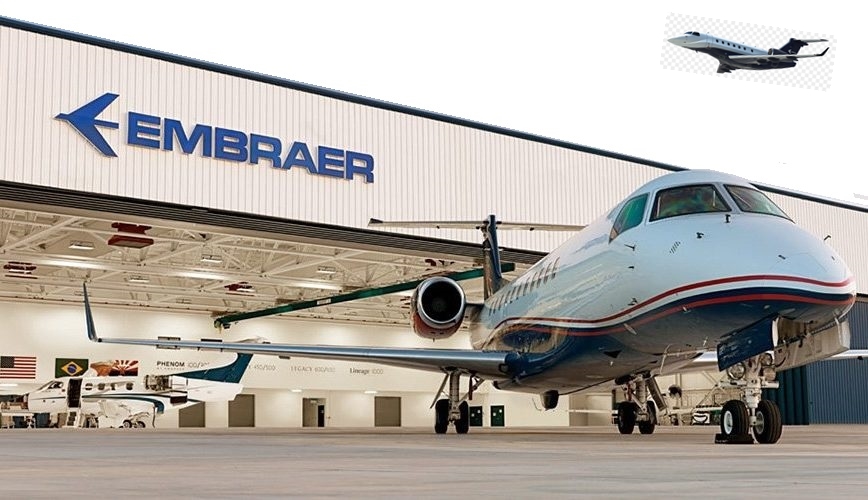
Resultado de imagen para Embraer Praetor pngLa división business ha logrado equilibrar la balanza económica de la industria de la aviación brasileña. Nelson Salgado dijo que la entrada de dos nuevos jets ejecutivos en el mercado, Praetor 500 y Praetor 600, aumentó las ventas de Embraer en este segmento, por encima del crecimiento del mercado. «Embraer ha crecido más rápido que la industria, y recién estamos comenzando», dijo. El Praetor 500 fue certificado por ANAC (Agencia Nacional de Aviación Civil) este Martes, durante la feria internacional Labace, en São Paulo. Praetor 600 recibió la certificación en Mayo 2019.

La compañía Embraer lanza una aplicación para clientes para personalizar jets de aviación ejecutiva. Para agilizar el proceso de personalización de los aviones de Aviación Ejecutiva, Embraer ha lanzado una aplicación para iPad que permite a los clientes evaluar y validar varias configuraciones, con visualización inmediata de las opciones seleccionadas de diseño interior y exterior. La aplicación muestra los materiales y colores disponibles, lo que permite al cliente seleccionar cada detalle, simular múltiples esquemas de pintura, elegir composición y patrones de color, guardar opciones para una comparación posterior y refinar la selección final. «Priorizamos la experiencia y la productividad del cliente, lo que puede ampliar los límites de la creatividad con la aplicación. Fue un proceso de varias reuniones», dijo Frank Chávez, Director de Diseño de Interiores.AW-Icon-AW-TXT

Resultado de imagen para Embraer sedeEmbraer records positive balance

The aeronautical company Embraer SA registers superhabit 2Q2019

1280px-Embraer_logo.svg.pngEmbraer SA reversed five quarters of losses and recorded a net income attributable to shareholders of R$ 26.1 million reais in the second quarter of 2019. The Executive Aviation division records sales with new Praetor aircraft in the market and helps the company to record your first profit in the last five quarters. Commercial aviation separation costs reach R$ 122 million reais.

In the first three months of this year, the loss was R$ 134.7 million. In the second quarter of 2018, the financial fall was R$ 485 million. On the other hand, the company reported an adjusted net loss, which does not take into account income tax and some taxes, of R$ 57.6 million, above the adjusted net loss of R$ 21.4 million of the year previous. According to Nelson Salgado, Executive Vice President of Financial and Investor Relations at Embraer, the loss was affected by monetary fluctuations and the «low operating result due to the costs [of the commercial separation due to the Boeing transaction]», said cost was estimated at R$ 122 million in the first half.

In the second quarter of this year (2Q2019), Embraer delivered 51 aircraft, 26 commercial and 25 executives (19 light and 6 large). Thus, it accumulated 73 aircraft delivered in the first half, with 37 commercials and 36 executives. At the end of June 2019, the aircraft manufacturer had a firm order book of R$ 16.9 billion. At the end of the first quarter, the portfolio was R$ 16 billion.

Executive aviation

AW-70776555.pngThe business division has managed to balance the economic balance of the Brazilian aviation industry. Nelson Salgado said the entry of two new executive jets into the market, Praetor 500 and Praetor 600, increased Embraer’s sales in this segment, above market growth. «Embraer has grown faster than the industry, and we are just beginning», he said. The Praetor 500 was certified by Anac (National Civil Aviation Agency) this Tuesday, during the Labace international fair, in São Paulo. Praetor 600 received certification in May 2019.

The Embraer company launches an application for clients to customize executive aviation jets. To streamline the process of personalization of Executive Aviation aircraft, Embraer has launched an iPad application that allows customers to evaluate and validate various configurations, with immediate visualization of selected interior and exterior design options. The application shows the available materials and colors, allowing the customer to select every detail, simulate multiple paint schemes, choose composition and color patterns, save options for later comparison and refine the final selection. «We prioritize customer experience and productivity, which can extend the limits of creativity with the application. It was a multi-meeting process», said Frank Chavez, Director of Interior Design. A \ W

Resultado de imagen para Embraer sedeEmbraer registra saldo positivo

embraer logo (1)Empresa aeronáutica Embraer SA registra superávit 2T2019
A Embraer SA reverteu cinco trimestres de perdas e registrou lucro líquido atribuível aos acionistas de R$ 26,1 milhões no segundo trimestre de 2019. A divisão de aviação executiva registra vendas com novas aeronaves Praetor no mercado e ajuda a empresa para registrar seu primeiro lucro nos últimos cinco trimestres. Os custos de separação da aviação comercial atingem R$ 122 milhões de reais.

Nos primeiros três meses deste ano, a perda foi de R$ 134,7 milhões. No segundo trimestre de 2018, a queda financeira foi de R$ 485 milhões. Por outro lado, a companhia registrou uma perda líquida ajustada, que não leva em conta o imposto de renda e alguns tributos, de R$ 57,6 milhões, acima do prejuízo líquido ajustado de R$ 21,4 milhões do ano. anterior Segundo Nelson Salgado, vice-presidente executivo de Finanças e Relações com Investidores da Embraer, a perda foi afetada por flutuações monetárias e pelo «baixo resultado operacional devido aos custos [da separação comercial devido à transação da Boeing]». O referido custo foi estimado em R$ 122 milhões no primeiro semestre.

No segundo trimestre deste ano (2T2019), a Embraer entregou 51 aeronaves, 26 comerciais e 25 executivos (19 leves e 6 grandes). Assim, acumulou 73 aeronaves entregues no primeiro semestre, com 37 comerciais e 36 executivos. No final de junho de 2019, o fabricante de aeronaves tinha uma carteira de pedidos firme de R$ 16,9 bilhões. No final do primeiro trimestre, a carteira era de R$ 16 bilhões.

AW-7001-Emb.jpgAviação executiva

A divisão de negócios conseguiu equilibrar o equilíbrio econômico do setor de aviação brasileiro. Nelson Salgado disse que a entrada de dois novos jatos executivos no mercado, o Praetor 500 e o Praetor 600, aumentou as vendas da Embraer neste segmento, acima do crescimento do mercado. «A Embraer cresceu mais rápido do que a indústria e estamos apenas começando», disse ele. O Praetor 500 foi certificado pela Anac (Agência Nacional de Aviação Civil) nesta terça-feira, durante a feira internacional Labace, em São Paulo. O Praetor 600 recebeu certificação em maio de 2019.

A empresa Embraer lança um aplicativo para clientes para customizar jatos de aviação executiva. Para agilizar o processo de personalização de aeronaves da Aviação Executiva, a Embraer lançou um aplicativo para iPad que permite aos clientes avaliar e validar várias configurações, com visualização imediata de opções selecionadas de desenho de interiores e exteriores. O aplicativo mostra os materiais e cores disponíveis, permitindo que o cliente selecione todos os detalhes, simule vários esquemas de pintura, escolha padrões de composição e cor, salve opções para comparação posterior e refine a seleção final. «Priorizamos a experiência e a produtividade do cliente, o que pode estender os limites da criatividade com o aplicativo. Foi um processo de vários encontros», disse Frank Chavez, Diretor de Desenho de Interiores. A \ W


Ξ A I R G W A Y S Ξ
SOURCE: Airgways.com
DBk: Embraer.com / Airgways.com
AW-POST: 201908152333AR

A\W   A I R G W A Y S ®

Obras Aeropuerto Santos Dumont

Resultado de imagen para Aeropuerto Rio Santos DumontAW | 2019 08 15 20:11 | AIRPORTS / AIRLINES ROUTES

Aeropuerto Dumont perderá el 80% de los vuelos durante trabajos de pista principal

Las nuevas reglas de seguridad limitan el tamaño de las aeronaves en las operaciones comerciales. La remodelación de la pista principal del Aeropuerto Rio/Santos Dumont, que comienza el 24 Agosto y finalizan para el 21 Septiembre 2019, tendrá un mayor impacto para el pasajero que hace diez años, cuando se realizó un mantenimiento similar. Por razones de seguridad, los cambios en la legislación han reducido el límite de tamaño para las aeronaves que pueden operar desde la pista del aeropuerto.

Por el efecto de las obras proyectadas, más del 80% de los 260 vuelos diarios de la terminal se transferirán al Aeropuerto Rio/Galeão, en la Zona Norte. Las aerolíneas modificarán sus itinerarios de vuelos: Latam Airlines no tiene aviones en su flota capaces de aterrizar en la carretera auxiliar Santos Dumont durante los 29 días de construcción. Gol Linhas Aéreas tiene aviones que se ajustan a los parámetros, pero ha decidido cancelar las operaciones. En cuanto a Azul Linhas Aéreas mantendrá la mitad de los vuelos en el Aeropuerto Rio/Santos Dumont, incluido el debut en el puente aéreo Río-Sao Paulo, anunciado el Lunes 12 Agosto 2019. La entrada de Azul Linhas Aéreas al puente aéreo Río/Santos Dumont-Sao Paulo se estrenará cuando Latam Airlines y Gol Linhas Aéreas transferirán sus vuelos a Rio/Galeão.

AW-70200541.png

Durante los trabajos de ampliación de la pista principal, los pasajeros que desean volar entre el Aeropuerto Rio/Santos Dumont y São Paulo/Congonhas deberá utilizar la transportadora Azul Linhas Aéreas. Eso podría llevar a Gol Linhas Aéreas a revisar su decisión por el tipo de flota Boeing 737 un tanto más idónea para pistas cortas. Gol Linhas Aéreas ha informado que seguirá transfiriéndose al Aeropuerto Rio/Galeão. Latam Airlines ya está más limitada por la flota de aeronaves Airbus A320.

Normativas seguridad aeropuertos

Las reglas de seguridad están fuera del control de las aerolíneas y los aeropuertos. Son determinados por el regulador, revisados ​​periódicamente, siguiendo los estándares internacionales, lo cual es correcto. Diez años atrás el Aeropuerto Rio/Santos Dumont pudo manejar ciertos tipos de aeronaves en la pista secundaria y ahora ya no lo tiene, tiene que ver con los límites de expansión física del aeropuerto, la evolución de las flotas de aviones corporativos y la legislación. explica Guilherme Amaral, socio del área de Derecho Aeronáutico de ASBZ Advogados.

El trabajo de mantenimiento de la pista principal se realiza periódicamente, con una validez de aproximadamente diez años. En 2009, la renovación fue más larga, del 21 Septiembre al 30 Noviembre, según el operador del aeropuerto Infraero. En ese período, como lo será ahora, la pista auxiliar se utilizará para aterrizajes y despegues, observando las limitaciones técnicas.

AW-70200540

Pista más estrecha

En ese momento, dice Infraero, Gol Linhas Aéreas y Latam Airlines mantuvieron solo el puente aéreo en el aeropuerto, transfiriendo los otros vuelos a Galeão. Esta vez, los aviones más grandes, incluidos en la categoría 4C por la Agencia Nacional de Aviación Civil (ANAC), como el Airbus 319 empleado por Latam Airlines y el Boeing 737-800, utilizados por Gol Linhas Aéreas en el puente aéreo, ya no cumplen con los criterios para utilizar la pista auxiliar, que tiene 30 metros de ancho. Poco después del trabajo de 2009, se estableció que estos aviones solo deberían operar en pistas de 45 metros de ancho. El principal Santos Dumont tiene 42 metros, pero se le permitió recibir el avión porque siempre operaba con modelos 4C. Sin embargo, para mantener la tolerancia, el aeropuerto debe demostrar regularmente a ANAC que mantiene altos niveles de seguridad. En Marzo 2009, entró en vigencia una nueva revisión de la regulación realizada por Anac, que alteró el proceso de aprobación de obras mediante análisis de seguridad operacional para cumplir con los estándares internacionales. Esto llevó al aplazamiento de la pista principal, de modo que el auxiliar primero sufriría cambios y podría recibir aviones de categoría 3C, como el A318, Boeing 737-700 que está en la flota de Gol y Embraer E195 en la flota de Azul Linhas Aéreas. La intervención fue solicitada por empresas que operan en Santos Dumont, entre ellas Azul Linhas Aéreas.

Los cambios se discuten previamente entre reguladores, aeropuertos y empresas. La seguridad es una prioridad y el trabajo es obligatorio. Dentro de las limitaciones técnicas, cada empresa decide, de acuerdo con su flota y red, cómo actuará. El mercado ha cambiado, fue más difícil mover aviones y cambiar la red de vuelo temporalmente, dice Ronaldo Jenkins, Ejecutivo de la Asociación Brasileña de Aerolíneas (ABEAR).

La dificultad proviene del hecho de que las compañías vuelan con aviones cada vez más grandes y llenos. Entre 2009 y 2018, el número de despegues en el Aeropuerto Rio/Santos Dumont aumentó en un 23%, según ANAC. En este período, el número de pasajeros que pagaron aumentó 78,8% y la ocupación de la aeronave pasó de 55,5% a 73,7%. En Junio 2019 alcanzó el 77,1%. Actualmente, cuatro aerolíneas operan en Rio/Santos Dumont: Latam Airlines, con 43,9% de los vuelos; Meta Linhas Aéreas, con 34.5%, Azul Linhas Aéreas con 20,4%; y Passaredo Linhas Aéreas, con 1,2%. AW-Icon-AW-TXT

AW-700050455.jpgWorks Santos Dumont Airport

Dumont Airport will lose 80% of flights during main runway works

The new safety rules limit the size of aircraft in commercial operations. The remodeling of the main track of Santos Dumont, which begins on August 24 and ends by September 21, 2019, will have a greater impact on the passenger than ten years ago, when similar maintenance was performed. For security reasons, changes in legislation have reduced the size limit for aircraft that can operate from the airport runway.

Due to the effect of the planned works, more than 80% of the 260 daily flights of the terminal will be transferred to Rio/Galeão Airport, in the North Zone. The airlines will modify their flight itineraries: Latam Airlines does not have airplanes in its fleet capable of landing on the Santos Dumont auxiliary road during the 29 days of construction. Gol Linhas Aéreas has airplanes that fit the parameters, but has decided to cancel operations. As for Azul Linhas Aéreas, it will keep half of the flights at the Rio/Santos Dumont Airport, including its debut at the Rio-Sao Paulo air bridge, announced on Monday, August 12, 2019. The entry of Azul Linhas Aéreas to the Rio / air bridge Santos Dumont-Sao Paulo will be released when Latam Airlines and Gol Linhas Aéreas will transfer their flights to Rio/Galeão.

AW-70200542.png

During the expansion of the main runway, passengers wishing to fly between Rio/Santos Dumont Airport and São Paulo/Congonhas must use the Blue Linhas Aéreas conveyor. That could lead Gol Linhas Aéreas to review its decision for the type of Boeing 737 fleet somewhat more suitable for short runways. Gol Linhas Aéreas has reported that it will continue to transfer to Rio/Galeão Airport. Latam Airlines is already more limited by the Airbus A320 aircraft fleet.

Airport security regulations

Security rules are beyond the control of airlines and airports. They are determined by the regulator, periodically reviewed, following international standards, which is correct. Ten years ago Rio/Santos Dumont Airport was able to handle certain types of aircraft on the secondary runway and now it does not have it, it has to do with the limits of physical expansion of the airport, the evolution of corporate aircraft fleets and legislation. explains Guilherme Amaral, a member of the area of ​​Aeronautical Law of ASBZ Advogados.

The maintenance work of the main track is carried out periodically, with a validity of approximately ten years. In 2009, the renovation was longer, from September 21 to November 30, according to the Infraero airport operator. In that period, as it will be now, the auxiliary runway will be used for landings and take-offs, observing the technical limitations.

Narrow airstrip

At that time, says Infraero, Gol Linhas Aéreas and Latam Airlines maintained only the airlift at the airport, transferring the other flights to Galeão. This time, the largest aircraft, included in category 4C by the National Civil Aviation Agency (ANAC), such as the Airbus 319 used by Latam Airlines and the Boeing 737-800, used by Gol Linhas Aéreas on the airlift, already They do not meet the criteria to use the auxiliary track, which is 30 meters wide. Shortly after the 2009 work, it was established that these planes should only operate on runways 45 meters wide. The main Santos Dumont is 42 meters, but he was allowed to receive the plane because he always operated with 4C models. However, to maintain tolerance, the airport must regularly demonstrate to ANAC that it maintains high levels of security. In March 2009, a new revision of the regulation carried out by Anac entered into force, which altered the process of approval of works through safety analysis to comply with international standards. This led to the postponement of the main runway, so that the auxiliary would first undergo changes and could receive category 3C aircraft, such as the A318, Boeing 737-700 which is in the Gol fleet and Embraer E195 in the Azul Linhas Aéreas fleet. The intervention was requested by companies operating in Santos Dumont, including Azul Linhas Aéreas.

The changes are discussed previously between regulators, airports and companies. Safety is a priority and work is mandatory. Within the technical limitations, each company decides, according to its fleet and network, how it will act. The market has changed, it was harder to move planes and change the flight network temporarily, says Ronaldo Jenkins, Executive of the Brazilian Association of Airlines (ABEAR).

The difficulty stems from the fact that companies fly with increasingly large and full planes. Between 2009 and 2018, the number of take-offs at Rio/Santos Dumont Airport increased by 23%, according to ANAC. In this period, the number of passengers who paid increased 78.8% and the occupation of the aircraft increased from 55.5% to 73.7%. In June 2019 it reached 77.1%. Currently, four airlines operate in Rio/Santos Dumont: Latam Airlines, with 43.9% of flights; Meta Linhas Aéreas, with 34.5%, Azul Linhas Aéreas with 20.4%; and Passaredo Linhas Aéreas, with 1.2%. A\W

Resultado de imagen para Aeropuerto Rio Santos Dumont takeoffObras Santos Dumont Airport

Aeroporto de Dumont perderá 80% dos voos durante obras da pista principal

AW-70004555As novas regras de segurança limitam o tamanho das aeronaves em operações comerciais. A reforma da pista principal do Santos Dumont, que começa em 24 de agosto e termina em 21 Setembro 2019, terá um impacto maior no passageiro do que há dez anos, quando manutenção semelhante foi realizada. Por razões de segurança, mudanças na legislação reduziram o limite de tamanho para aeronaves que podem operar a partir da pista do aeroporto.

Devido ao efeito das obras projetadas, mais de 80% dos 260 voos diários do terminal serão transferidos para o Aeroporto Rio/Galeão, na Zona Norte. As companhias aéreas modificarão seus itinerários de voo: A Latam Airlines não possui aviões em sua frota capaz de pousar na estrada auxiliar Santos Dumont durante os 29 dias de construção. A Gol Linhas Aéreas possui aviões que se encaixam nos parâmetros, mas decidiu cancelar as operações. Já a Azul Linhas Aéreas manterá metade dos vôos no aeroporto Rio/Santos Dumont, incluindo sua estréia na ponte aérea Rio-São Paulo, anunciada na segunda-feira, 12 de agosto de 2019. A entrada da Azul Linhas Aéreas na ponte aéreo Rio/Santos Dumont-São Paulo será lançado quando a Latam Airlines e a Gol Linhas Aéreas transferirem seus voos para o Rio/Galeão.

AW-70200543.png

Durante a ampliação da pista principal, os passageiros que desejarem voar entre o Aeroporto Rio/Santos Dumont e São Paulo/Congonhas deverão utilizar o transportador Blue Linhas Aéreas. Isso poderia levar a Gol Linhas Aéreas a rever sua decisão sobre o tipo de frota Boeing 737, um pouco mais adequada para pistas curtas. A Gol Linhas Aéreas informou que continuará a transferir para o Aeroporto Rio/Galeão. A Latam Airlines já é mais limitada pela frota de aeronaves Airbus A320.

Regulamentos de segurança nos aeroportos

As regras de segurança estão além do controle das companhias aéreas e aeroportos. Eles são determinados pelo regulador, revisados ​​periodicamente, seguindo padrões internacionais, o que é correto. Há dez anos o aeroporto Rio/Santos Dumont conseguiu manobrar certos tipos de aeronaves na pista secundária e agora não tem, tem a ver com os limites da expansão física do aeroporto, a evolução das frotas de aeronaves corporativas e a legislação. explica Guilherme Amaral, membro da área de Direito Aeronáutico da ASBZ Advogados.

O trabalho de manutenção da via principal é realizado periodicamente, com validade de aproximadamente dez anos. Em 2009, a reforma foi maior, de 21 de setembro a 30 de novembro, segundo a operadora do aeroporto Infraero. Nesse período, como será agora, a pista auxiliar será utilizada para pousos e decolagens, observando as limitações técnicas.

Pista de pouso estreita

Na época, diz a Infraero, a Gol Linhas Aéreas e a Latam Airlines mantinham apenas o transporte aéreo no aeroporto, transferindo os demais voos para o Galeão. Desta vez, a maior aeronave, incluída na categoria 4C pela Agência Nacional de Aviação Civil (ANAC), como o Airbus 319, utilizado pela Latam Airlines e o Boeing 737-800, usado pela Gol Linhas Aéreas no transporte aéreo, já Eles não atendem aos critérios para usar a pista auxiliar, que tem 30 metros de largura. Logo após o trabalho de 2009, ficou estabelecido que esses aviões deveriam operar somente em pistas de 45 metros de largura. O principal Santos Dumont é de 42 metros, mas ele foi autorizado a receber o avião, porque ele sempre operou com modelos 4C. No entanto, para manter a tolerância, o aeroporto deve demonstrar regularmente à Anac que mantém altos níveis de segurança. Em março de 2009, uma nova revisão da regulamentação realizada pela ANAC entrou em vigor, o que alterou o processo de aprovação de obras por meio de análises de segurança para atender às normas internacionais. Isso levou ao adiamento da pista principal, de modo que o auxiliar passaria por mudanças e poderia receber aeronaves da categoria 3C, como o A318, o Boeing 737-700, que está na frota da Gol, e o Embraer E195, na frota da Azul Linhas Aéreas. A intervenção foi solicitada por empresas que operam em Santos Dumont, incluindo a Azul Linhas Aéreas.

As mudanças são discutidas anteriormente entre reguladores, aeroportos e empresas. A segurança é uma prioridade e o trabalho é obrigatório. Dentro das limitações técnicas, cada empresa decide, de acordo com sua frota e rede, como vai agir. O mercado mudou, foi mais difícil mudar de avião e mudar temporariamente a rede de vôos, diz Ronaldo Jenkins, executivo da Associação Brasileira de Empresas Aéreas (ABEAR).

A dificuldade decorre do fato de as empresas voarem com aviões cada vez maiores e mais completos. Entre 2009 e 2018, o número de decolagens no Aeroporto Rio/Santos Dumont aumentou 23%, segundo a ANAC. Nesse período, o número de passageiros que pagaram aumentou 78,8% e a ocupação da aeronave aumentou de 55,5% para 73,7%. Em junho de 2019 atingiu 77,1%. Atualmente, quatro companhias aéreas operam no Rio/Santos Dumont: Latam Airlines, com 43,9% dos voos; Meta Linhas Aéreas, com 34,5%, a Azul Linhas Aéreas, com 20,4%; e a Passaredo Linhas Aéreas, com 1,2%. A \ W

Ξ A I R G W A Y S Ξ
SOURCE: Airgways.com
DBk: Infraero.gov.br / Oglobo.com / Airgways.com
AW-POST: 201908152011AR

A\W   A I R G W A Y S ®

Flybondi con tikets «presidenciales»

AW-703300035.pngAW | 2019 08 01 14:17 | AIRLINES

AW-7000001AW-Flybondi_Aircraft-001 (2)Lanzamiento promoción de pasajes aéreos para elecciones a Presidente en Argentina

En una campaña de marketing la aerolínea low cost Flybondi Líneas Aéreas ofrece un beneficio a quienes hayan usado sus servicios para votar en la Elecciones Primarias del 11 Agosto 2019 en la República Argentina. La empresa Flybondi comunicó que ofrecerá vuelos gratis para que los argentinos con domicilio en otras provincias puedan viajar a votar en las elecciones generales del 27 Octubre 2019.

Flybondi ofrece pasajes gratis para que los usuarios vuelvan a votar a sus ciudades respectivas para las elecciones a Presidente de la Nación. Los requisitos son haber volado por la aerolínea low cost desde el 8 Agosto con regreso a la ciudad de origen hasta el 12 Agosto 2019 y llenar un formulario web. La promoción aplica a vuelos de ida y vuelta, pero no incluye tasas e impuestos y está sujeto a disponibilidad hasta agotar stock. Para acceder al beneficio deben completar un formulario online antes del viernes 16/8/2019.

Actualmente, Flybondi es el tercer operador de mayor importancia en el mercado aéreo en Argentina. La compañía Aerolíneas Argentinas/Austral Líneas Aéreas y Latam Airlines Argentina constituyen las principales transportadoras del país, según la Administración Nacional de Aviación Civil (ANAC). Norwegian Air Argentina, JetSmart Airlines Argentina y Andes Líneas Aéreas desarrollan un tráfico modesto dentro del país austral.AW-Icon-AW-TXT

32321855_619737138376831_4119904145547198464_n.jpgFlybondi with «presidential» tikets

Launching promotion of air tickets for elections to President in Argentina

large_logo - copia.pngIn a marketing campaign the low cost airline Flybondi Líneas Aéreas offers a benefit to those who have used their services to vote in the Primary Elections of August 11, 2019 in the Argentine Republic. The Flybondi company announced that it will offer free flights so that Argentines residing in other provinces can travel to vote in the general elections of October 27, 2019.

Flybondi offers free tickets for users to vote again in their respective cities for elections to President of the Nation. The requirements are to have flown by the low cost airline from August 8 with return to the city of origin until August 12, 2019 and fill out a web form. The promotion applies to round-trip flights, but does not include taxes and fees and is subject to availability while supplies last. To access the benefit you must complete an online form before Friday 16 August 2019.

Currently, Flybondi is the third most important operator in the air market in Argentina. The company Aerolíneas Argentinas/Austral Líneas Aéreas and Latam Airlines Argentina are the main transporters of the country, according to the National Civil Aviation Administration (ANAC). Norwegian Air Argentina, JetSmart Airlines Argentina and Andes Líneas Aéreas develop a modest traffic within the southern country. A \ W


Ξ A I R G W A Y S Ξ
SOURCE: Airgways.com
DBk: Flybondi.com / Airgways.com
AW-POST: 201908011417AR

A\W   A I R G W A Y S ®

Reactivando rutas aéreas en Brasil

IMG_0019.JPGAW | 2019 08 15 16:06 | AIRLINES MARKET

ALTA sostiene desarrollo progresivo de rutas en Brasil

Tras la fuerte apuesta de las aerolíneas brasileñas en el puente aéreo Sao Paulo/Congonhas-Rio Janeiro/Santos Dumont por los slots de Avianca Brasil, desde la Asociación de Transporte Aéreo de América Latina y el Caribe (ALTA) sostienen que aumentarán las perspectivas de nuevas rutas domésticas en Brasil.

La finalización de las operaciones de Avianca Brasil en Mayo 2019 ha activado a las demás aerolíneas a buscar las franjas horarias de la quebrada aerolínea en los aeropuertos de Congonhas (SP) y Santos Dumont (RJ). Los slots se han convertido en un tema de disputa entre sus competidores. Las tres empresas más grandes del país han luchado públicamente por los tiempos de despegue y aterrizaje de Avianca, con el objetivo de aumentar sus respectivas redes en la ruta más concurrida de América Latina y el Caribe, el puente aéreo Río-São Paulo.

Visión de ALTA

“El puente Santos Dumont-Congonhas es el enlace principal del país, una ruta súper premium. Pero también tenemos otras conexiones que pueden crecer y volverse muy relevantes”, dijo Luis Felipe de Oliveira, Director Ejecutivo de la Asociación de Transporte Aéreo de América Latina y el Caribe (ALTA). Un ejemplo, señalado por él, es el centro de Fortaleza que ahora ofrece vuelos internacionales a los Estados Unidos y Europa. Como Brasilia, que mientras invierte en infraestructura, gana nuevas rutas internacionales, o Galeão, que tiene una capacidad ociosa. «Una vez que descentralicemos algunas rutas y aeropuertos, especialmente el eje Rio-SP, aumentaremos la conectividad y el atractivo del país en general», dice Oliveira.

El mercado aéreo de Brasil se ha contraído por la falta de demanda a raíz del cierre de Avianca Brasil y la volatilidad de los precios de los tickets aéreos que ha generado. Según los últimos datos publicados por Alta, el mercado interno brasileño, por efecto del cierre de las operaciones de Avianca Brasil, disminuyó por segundo mes consecutivo. Sin embargo, esto ya debería cambiar en futuros informes. «Con todos estos movimientos de tragamonedas, creemos que veremos números positivos nuevamente en Agosto, cuando la oferta y la demanda definitivamente serán abastecidas por nuevos vuelos, rutas y aviones», expresa el ejecutivo. A partir del 3Q2019 el crecimiento del país en tráfico de pasajeros podría estar entre los 5% a 7%.AW-Icon-AW-TXT

IMG_0557.JPGReactivating air routes in Brazil

ALTA supports progressive development of routes in Brazil

After the strong commitment of the Brazilian airlines on the Sao Paulo/Congonhas-Rio Janeiro/Santos Dumont airlift by the Avianca Brasil slots, from the Air Transport Association of Latin America and the Caribbean (ALTA) argue that the prospects for New domestic routes in Brazil.

The completion of Avianca Brasil’s operations in May 2019 has activated the other airlines to look for the slots of the airline ravine at the airports of Congonhas (SP) and Santos Dumont (RJ). Slots have become a subject of dispute among their competitors. The three largest companies in the country have fought publicly for the take-off and landing times of Avianca, with the aim of increasing their respective networks on the busiest route in Latin America and the Caribbean, the Rio-São Paulo air bridge.

ALTA’s vision

“The Santos Dumont-Congonhas bridge is the main link in the country, a super premium route. But we also have other connections that can grow and become very relevant”, said Luis Felipe de Oliveira, Executive Director of the Air Transport Association of Latin America and the Caribbean (ALTA). An example, pointed out by him, is the center of Fortaleza that now offers international flights to the United States and Europe. Like Brasilia, which while investing in infrastructure, wins new international routes, or Galeão, which has an idle capacity. «Once we decentralize some routes and airports, especially the Rio-SP axis, we will increase the connectivity and attractiveness of the country in general», says Oliveira.

The Brazilian air market has contracted due to the lack of demand following the closure of Avianca Brasil and the volatility of the prices of the air tickets it has generated. According to the latest data published by Alta, the Brazilian domestic market, as a result of the closure of Avianca Brasil’s operations, decreased for the second consecutive month. However, this should already change in future reports. «With all these slots movements, we believe that we will see positive numbers again in August, when supply and demand will definitely be supplied by new flights, routes and planes», the executive said. As of 3Q2019, the country’s growth in passenger traffic could be between 5% to 7%. A \ W

AW-70087504.pngReativando rotas aéreas no Brasil

ALTA apoia desenvolvimento progressivo de rotas no Brasil

Após o forte compromisso das companhias aéreas brasileiras no transporte aéreo entre São Paulo/Congonhas-Rio Santos/Santos Dumont pela Avianca Brasil, da Associação de Transporte Aéreo da América Latina e Caribe (ALTA) argumentam que as perspectivas de novas rotas domésticas em Brasil.

A conclusão das operações da Avianca Brasil em maio de 2019 ativou as demais companhias aéreas a procurar as faixas horárias da ravina da companhia aérea nos aeroportos de Congonhas (SP) e Santos Dumont (RJ). Slots tornaram-se um assunto de disputa entre seus concorrentes. As três maiores empresas do país lutaram publicamente pelos horários de pouso e decolagem da Avianca, com o objetivo de aumentar suas respectivas redes na rota mais movimentada da América Latina e Caribe, a ponte aérea Rio-São Paulo.

Visão da ALTA

“A ponte Santos Dumont-Congonhas é o principal elo do país, uma rota super premium. Mas também temos outras conexões que podem crescer e se tornar muito relevantes”, disse Luis Felipe de Oliveira, diretor executivo da Associação de Transporte Aéreo da América Latina e Caribe (ALTA). Um exemplo, apontado por ele, é o centro de Fortaleza que agora oferece voos internacionais para os Estados Unidos e Europa. Como Brasília, que ao investir em infraestrutura, ganha novas rotas internacionais, ou o Galeão, que tem capacidade ociosa. «Uma vez que descentralizamos algumas rotas e aeroportos, especialmente o eixo Rio-SP, aumentaremos a conectividade e atratividade do país em geral», diz Oliveira.

O mercado aéreo brasileiro se contraiu devido à falta de demanda após o fechamento da Avianca Brasil e a volatilidade dos preços dos bilhetes aéreos que gerou. De acordo com os últimos dados publicados pela Alta, o mercado interno brasileiro, como resultado do fechamento das operações da Avianca Brasil, diminuiu pelo segundo mês consecutivo. No entanto, isso já deve mudar em relatórios futuros. «Com todos esses movimentos de slots, acreditamos que veremos números positivos novamente em agosto, quando a oferta e a demanda serão definitivamente supridas por novos vôos, rotas e aviões», disse o executivo. A partir do 3T2019, o crescimento do tráfego de passageiros no país pode estar entre 5% e 7%. A \ W


Ξ A I R G W A Y S Ξ
SOURCE: Airgways.com
DBk: Alta.aero / Airgways.com
AW-POST: 201908151606AR

A\W   A I R G W A Y S ®

Obras ILS Aeropuerto Mar del Plata

Resultado de imagen para Aeropuerto Mar del PlataAW | 2019 08 15 15:38 | AIRPORTS

Inicio obras nuevo ILS de Aeropuerto Mar del Plata

El Aeropuerto Mar del Plata/Astor Piazzolla (SAZM) ha iniciado la obra civil por parte de la Empresa Argentina de Navegación Aérea (EANA) para la instalación del nuevo Sistema de Aterrizaje por Instrumentos (ILS) cuya puesta en servicio está prevista para mediados de Octubre 2019.

El actual ILS de SAZM con una antigüedad de 24 años en operación será reemplazado para ofrecer un mayor nivel de seguridad operacional y mejor calidad de servicio, con menores interrupciones por revisiones técnicas. Esta mayor disponibilidad permitirá que más vuelos puedan aterrizar con mal tiempo en el Aeropuerto Mar del Plata, principal destino turístico estival. Asimismo, la renovación traerá consigo una fuerte reducción en los costos de mantenimiento. La estandarización con otros sistemas similares, tanto ya instalados como por instalar, facilitará la obtención de repuestos.

El plan de renovación de ILS llevado adelante por EANA incluye la reciente adquisición de otros ocho sistemas. Su instalación comenzará luego del de SAZM y concluirá en 2020. Dichos ILS están destinados a los aeropuertos de Bariloche, Córdoba, Corrientes, Esquel, Posadas, Resistencia, Santa Rosa y Ushuaia.

Nueva Manga

El aeropuerto de la costa atlántica ha recibido una nueva manga telescópica en Julio 2019, estrenándola con el arribo del Boeing 737-500 Presidencial denominado Tango 04, en el marco de una visita del Presidente de Argentina, Mauricio Macri. El aeropuerto está en profundos cambios de mejoras llevadas adelante por Aeropuertos Argentina 2000 (AA2000) y el Ministerio de Transporte de la Nación.

En total se invirtieron más de AR$ 320 millones en los trabajos, que abarcaron la reformulación de los diferentes sectores para optimizar su uso, la modernización de la infraestructura. La incorporación de una manga a la terminal implicó además la construcción de la infraestructura de soporte y un segundo nivel al edificio, conectado a través de una escalera mecánica y un ascensor, contemplando la accesibilidad de las personas con movilidad reducida.AW-Icon-AW-TXT

AW-700Aviaciononline.jpgAW-701Aviaciononline.jpgILS Mar del Plata Airport works

Home new works ILS of Mar del Plata Airport

Mar del Plata/Astor Piazzolla Airport (SAZM) has started the civil work by the Argentine Air Navigation Company (EANA) for the installation of the new Instrument Landing System (ILS) whose commissioning is scheduled for mid October 2019

The current SAZM ILS with 24 years in operation will be replaced to provide a higher level of safety and better quality of service, with lower interruptions due to technical reviews. This greater availability will allow more flights to land in bad weather at Mar del Plata Airport, the main summer tourist destination. Likewise, the renovation will result in a sharp reduction in maintenance costs. Standardization with other similar systems, both installed and to be installed, will facilitate the obtaining of spare parts.

The ILS renewal plan carried out by EANA includes the recent acquisition of eight other systems. Its installation will begin after SAZM and will end in 2020. These ILS are destined for the airports of Bariloche, Córdoba, Corrientes, Esquel, Posadas, Resistencia, Santa Rosa and Ushuaia.

New manga

The Atlantic coast airport has received a new telescopic sleeve in July 2019, premiering it with the arrival of the Presidential Boeing 737-500 called Tango 04, as part of a visit by the President of Argentina, Mauricio Macri. The airport is in deep changes of improvements carried out by Aeropuertos Argentina 2000 (AA2000) and the Ministry of Transportation of the Nation.

In total, more than AR$ 320 million was invested in the works, which included the reformulation of the different sectors to optimize their use, the modernization of the infrastructure. The addition of a sleeve to the terminal also involved the construction of the support infrastructure and a second level to the building, connected through an escalator and an elevator, contemplating the accessibility of people with reduced mobility. A\W


Ξ A I R G W A Y S Ξ
SOURCE: Airgways.com
DBk: Eana.com.ar / Airgways.com / Tn.com.ar / Aviaciononline.com
AW-POST: 201908151538AR

A\W   A I R G W A Y S ®

Accidente A321 Ural Airlines

Resultado de imagen para A321 Ural Airlines accidentAW | 2019 08 15 12:46 | AVIATION SAFETY

Vuelo U6-178 de Ural Airlines efectúa aterrizaje forzoso

Un Airbus A321-100 de la compañía Ural Airlines tuvo un aterrizaje forzoso en Moscú el 15 Agosto 2019 producido por el choque de las aves contra ambos motores lo que ha obligado a aterrizar en el campo de maíz.

Un Airbus A321-100 de Ural Airlines con registro VQ-BOZ que realizaba el vuelo U6-178 Moscú/Zhukovsky (Rusia) a Simferopol (Ucrania) con 226 pasajeros y 7 tripulantes, estaba en la subida inicial a través de 750 pies fuera de la Pista 12 de Zkukovsky aproximadamente 06:15L (03:15Z) cuando el avión voló a través de una bandada de pájaros que fueron ingeridos en ambos motores CFM56. Ambos motores produjeron una falla, uno emitió ruidos como si el motor se balanceara hacia arriba y hacia abajo, lo que obligó a la tripulación a detener la escalada a 750 pies y aterrizar la aeronave en un campo de maíz a unos 2,77 nm más allá de la pista con el equipo retraído. La posición aproximada de la aeronave es: N55.512 E38 .252. Los ocupantes de la aeronave evacuaron a través de toboganes, contabilizando 10 heridos (incluidos tres niños). El avión sufrió daños sustanciales.

La aerolínea Ural Airlines informó que la aeronave recibió un gran impacto de bandadas de pájaros al salir del Aeropuerto Moscú/Zhukovsky e hizo un aterrizaje forzoso. El Ministerio de Emergencia de Rusia informó que 226 pasajeros, incluidos 6 niños y 7 tripulantes, estaban a bordo, todos evacuados. Diez pasajeros, incluidos 3 niños, necesitaron atención médica. El avión fue encontrado fuera del aeropuerto, el motor de la derecha humeaba pero no hubo incendios, no hubo fugas de combustible, la cabina fue inspeccionada por personas adentro, los motores fueron rociados para enfriar. Se desplegaron ocho autobuses en el lugar del accidente para devolver a los pasajeros al Aeropuerto de Zhukovsky.

El Ministerio de Transporte de Rusia informó que el avión sufrió un impacto de pájaro en ambos motores mientras volaba a través de una bandada de gaviotas y aterrizó en un campo a más de 1 km del aeropuerto. El avión aterrizó, la tripulación apagó ambos motores justo antes de aterrizar. Se creó una comisión especial para investigar el accidente. La causa del aterrizaje forzoso fue la falla del motor de la derecha, que se incendió después de un choque con un pájaro.

Rosaviatsia informó que justo después de despegar, el avión chocó con una bandada de gaviotas, su entrada en los motores causó interrupciones significativas en su trabajo. La tripulación decidió aterrizar en línea recta. El aterrizaje forzoso tuvo lugar en un campo de maíz entre el marcador medio y el exterior (del sistema de aterrizaje ILS en dirección opuesta). El avión aterrizó con el equipo retraído, ambos motores se apagaron justo antes de aterrizar. Los 226 pasajeros y 7 tripulantes fueron evacuados a través de toboganes. Los pasajeros afectados fueron trasladados de inmediato a un centro médico en Zhukovsky, los otros pasajeros fueron trasladados al Aeropuerto de Zhukovsky. La fiscalía estatal ha abierto una investigación penal.

La tripulación de vuelo dijo a los medios rusos que el problema comenzó justo después del despegue, cuando un pájaro golpeó el motor de la izquierda, lo que provocó que fallara por completo, seguido por otro golpe de pájaro en el motor de la derecha, que posteriormente proporcionó un empuje insuficiente para permanecer en el aire. El capitán tomó el control y aterrizó el avión en un campo abierto.AW-Icon-AW-TXT

Impresiones del lugar del accidente.Impresiones del lugar del accidente.

Resultado de imagen para A321 Ural Airlines accidentResultado de imagen para A321 Ural Airlines accidentA321-100 Ural Airlines accident

Ural Airlines flight U6-178 makes forced landing

An Airbus A321-100 of the Ural Airlines company had a forced landing in Moscow on August 15, 2019 produced by the collision of the birds against both engines which has forced to land in the cornfield.

An Airbus A321-100 of Ural Airlines with VQ-BOZ registration that made the flight U6-178 Moscow/Zhukovsky (Russia) to Simferopol (Ukraine) with 226 passengers and 7 crewmen, was on the initial ascent through 750 feet outside Zkukovsky Runway 12 approximately 06: 15L (03:15Z) when the plane flew through a flock of birds that were ingested in both CFM56 engines. Both engines produced a failure, one emitted noises as if the engine swayed up and down, forcing the crew to stop climbing at 750 feet and landing the aircraft in a cornfield at about 2.77 nm more beyond the track with the team retracted. The approximate position of the aircraft is: N55.512 E38 .252. The occupants of the aircraft evacuated through slides, counting 10 injured (including three children). The plane suffered substantial damage.

The Ural Airlines airline reported that the aircraft received a large impact of flocks of birds when leaving Moscow/Zhukovsky Airport and made a forced landing. The Russian Ministry of Emergency reported that 226 passengers, including 6 children and 7 crew members, were on board, all evacuated. Ten passengers, including 3 children, needed medical attention. The plane was found outside the airport, the engine on the right was smoking but there were no fires, no fuel leaks, the cabin was inspected by people inside, the engines were sprayed to cool. Eight buses were deployed at the scene of the accident to return passengers to Zhukovsky Airport.

The Russian Ministry of Transport reported that the plane suffered a bird impact on both engines while flying through a flock of seagulls and landed in a field more than 1 km from the airport. The plane landed, the crew turned off both engines just before landing. A special commission was created to investigate the accident. The cause of the forced landing was the failure of the right engine, which caught fire after a collision with a bird.AW-70089788.jpg

Rosaviatsia reported that just after taking off, the plane collided with a flock of seagulls, its entry into the engines caused significant interruptions in its work. The crew decided to land in a straight line. The forced landing took place in a cornfield between the middle and the outer marker (of the ILS landing system in the opposite direction). The plane landed with the equipment retracted, both engines shut down just before landing. The 226 passengers and 7 crew members were evacuated through slides. The affected passengers were immediately transferred to a medical center in Zhukovsky, the other passengers were transferred to Zhukovsky Airport. The state prosecutor has opened a criminal investigation.

The flight crew told Russian media that the problem began just after takeoff, when a bird hit the engine on the left, which caused it to fail completely, followed by another bird hit on the engine on the right, which subsequently provided insufficient thrust to remain in the air. The captain took control and landed the plane in an open field. A \ W

Resultado de imagen para A321 Ural Airlines accidentResultado de imagen para A321 Ural Airlines accidentResultado de imagen para A321 Ural Airlines accidentА321 Авиакомпания Уральские авиалинии

Рейс U6-178 Уральские авиалинии совершает вынужденную посадку

Аэробус A321-100 авиакомпании Уральские авиалинии совершил вынужденную посадку в Москве 15 августа 2019 года, вызванную столкновением птиц с обоими двигателями, которые вынуждены были приземлиться на кукурузном поле.

Аэробус A321-100 авиакомпании Уральские авиалинии с регистрацией VQ-BOZ, который совершил рейс U6-178 Москва/Жуковский (Россия) в Симферополь (Украина) с 226 пассажирами и 7 членами экипажа, находился на начальном восхождении через 750 футов снаружи Взлетно-посадочная полоса Zkukovsky 12 приблизительно 06: 15L (03: 15Z), когда самолет пролетел через стаю птиц, которые проглотили оба двигателя CFM56. Оба двигателя дали сбой, один из них издавал шумы, как будто двигатель качался вверх и вниз, заставляя экипаж прекратить подниматься на 750 футов и посадить самолет на кукурузном поле на расстоянии около 2,77 нм. за трассой команда отозвана. Ориентировочное положение самолета: N55.512 E38.252. Пассажиры самолета эвакуируются через горки, насчитывая 10 раненых (в том числе трое детей). Самолет получил значительные повреждения.

Авиакомпания Уральские авиалинии сообщила, что при вылете из аэропорта Москва-Жуковский самолет получил большой удар стая птиц и совершил вынужденную посадку. МЧС России сообщило, что на борту находились 226 пассажиров, в том числе 6 детей и 7 членов экипажа, все они были эвакуированы. Десять пассажиров, в том числе трое детей, нуждались в медицинской помощи. Самолет был найден за пределами аэропорта, двигатель справа курил, но не было ни пожаров, ни утечек топлива, кабина была осмотрена людьми внутри, двигатели были разбрызганы для охлаждения. Восемь автобусов были развернуты на месте происшествия для возвращения пассажиров в аэропорт Жуковского.

Российское министерство транспорта сообщило, что самолет столкнулся с птицами на обоих двигателях во время полета через стаю чаек и приземлился на поле более чем в 1 км от аэропорта. Самолет приземлился, экипаж выключил оба двигателя непосредственно перед посадкой. Для расследования аварии была создана специальная комиссия. Причиной вынужденной посадки стала поломка правого двигателя, который загорелся после столкновения с птицей.

Росавиация сообщила, что сразу после взлета самолет столкнулся со стаей чаек, его попадание в двигатели вызвало значительные перебои в его работе. Экипаж решил приземлиться по прямой. Вынужденная посадка произошла на кукурузном поле между серединой и внешним маркером (системы посадки ILS в противоположном направлении). Самолет приземлился с убранной техникой, оба двигателя были остановлены непосредственно перед посадкой. 226 пассажиров и 7 членов экипажа были эвакуированы через слайды. Пострадавшие пассажиры были немедленно переведены в медицинский центр в Жуковском, остальные пассажиры были переведены в аэропорт Жуковского. Государственный обвинитель возбудил уголовное дело.

Летный экипаж сообщил российским СМИ, что проблема началась сразу после взлета, когда птица ударила двигатель слева, что привело к его полному выходу из строя, после чего другая птица ударила двигатель справа, что впоследствии обеспечил недостаточную тягу, чтобы оставаться в воздухе. Капитан взял под свой контроль и приземлился самолет в открытом поле. A\W

Resultado de imagen para A321 Ural Airlines accidentАварія Уральські авіалінії A321

Рейс Ural Airlines U6-178 робить вимушені посадки

Аеробус A321-100 компанії Уральські авіалінії 15 серпня 2019 року здійснив вимушену посадку в Москві, спричинену зіткненням птахів проти обох двигунів, що змусило приземлитися на кукурудзяному полі.

Airbus A321-100 Уральських авіакомпаній з реєстрацією VQ-BOZ, який здійснив рейс U6-178 Москва/Жуковський (Росія) до Сімферополя (Україна) з 226 пасажирами та 7 екіпажами, був на початковому підйомі через 750 футів назовні Зкуковська злітно-посадкова смуга 12 приблизно в 06: 15 л (03: 15Z), коли літак пролетів через зграю птахів, які потрапили в обидва двигуни CFM56. Обидва двигуни вийшли з ладу, один видавав шуми, ніби двигун коливався вгору і вниз, змушуючи екіпаж перестати підніматися на відстані 750 футів і висаджувати літак на кукурудзяному полі приблизно на 2,77 нм більше поза доріжкою з відведеною командою. Орієнтовне положення літака: N55.512 E38 .252. Окупанти літака евакуювали через гірки, нарахувавши 10 поранених (з них троє дітей). Літак зазнав значної шкоди.

Авіакомпанія Уральські авіалінії повідомила, що літальний апарат отримав великий удар зграями птахів під час вильоту з аеропорту Москва/Жуковський та здійснив вимушену посадку. Міністерство надзвичайних ситуацій Росії повідомило, що 226 пасажирів, у тому числі 6 дітей та 7 членів екіпажу, перебували на борту, усіх евакуювали. Десять пасажирів, у тому числі 3 дитини, потребували медичної допомоги. Літак знайшли за межами аеропорту, двигун праворуч курив, але пожежі, витоку палива не було, салон оглядали люди всередині, двигуни розпилювали для охолодження. На місці аварії було розміщено вісім автобусів для повернення пасажирів в аеропорт Жуковського.

Міністерство транспорту Росії повідомило, що літак зазнав пташиного удару по обох двигунах під час прольоту через зграю чайок і приземлився в полі більше 1 км від аеропорту. Літак приземлився, екіпаж вимкнув обидва двигуни безпосередньо перед посадкою. Для розслідування аварії була створена спеціальна комісія. Причиною вимушеної посадки став збій правильного двигуна, який загорівся після зіткнення з птахом.

Росавіація повідомила, що одразу після зльоту літак зіткнувся з зграєю чайок, його входження в двигуни спричинило значні перебої в його роботі. Екіпаж вирішив приземлитися по прямій лінії. Вимушена посадка відбулася на кукурудзяному полі між середнім та зовнішнім маркером (системи посадки ILS у зворотному напрямку). Літак приземлився з висунутим обладнанням, обидва двигуни вимкнулися безпосередньо перед посадкою. 226 пасажирів та 7 членів екіпажу були евакуйовані через гірки. Постраждалих пасажирів негайно перевезли до медичного центру в Жуковському, інших пасажирів перевезли до аеропорту Жуковського. Державний прокурор відкрив кримінальне розслідування.

Екіпаж екіпажу повідомив російським ЗМІ, що проблема почалася одразу після зльоту, коли птах вдарив двигун зліва, що призвело до його повного виходу з ладу, після чого інший птах потрапив у двигун праворуч, який згодом забезпечили недостатню тягу, щоб залишатися у повітрі. Капітан взяв під контроль і висадив літак у відкритому полі. A\W


video-camera_318-50337


Ξ A I R G W A Y S Ξ
SOURCE: Airgways.com
DBk: Ruaviation.com / Favt.ru / Avherald.com / Airgways.com / Cnn.com / Aviation24.be / Washingtonpost.com / Inews.co.uk / News.sky.com / Tass.com / Baza/Telegram
AW-POST: 201908151246AR

A\W   A I R G W A Y S ®

Retrasos en Programa Boeing 797

Resultado de imagen para Boeing 787 takeoff airgways.comAW | 2019 08 14 15:43 | INDUSTRY

Boeing-Company-LogoLa crisis del 737 MAX atenta con la planificación del futuro Boeing 797

Los problemas generados con el Boeing 737 MAX, el retraso del rollout del Boeing 777-9 y las situaciones financieras necesarias para iniciar un nuevo programa, atentan con el inicio del proyecto Boeing 797 o NMA (New Mid-market Airplane). La conexión a tierra en el mundo de la línea Boeing 737 MAX le está costando a la compañía aeroespacial miles de millones de dólares y causando problemas a las aerolíneas de todo el mundo.

La crisis del 737 MAX podría retrasar o incluso poner fin a los planes de Boeing para un nuevo avión de tamaño medio, comúnmente denominado Boeing 797. Antes de la crisis, la industria de la aviación esperaba que Boeing siguiera adelante con los planes para el nuevo proyecto. Ahora varios expertos dicen que las posibilidades son de 50-50, en el mejor de los casos. «Hice una presentación en Enero donde dije que tenía una probabilidad del 65%. Ahora todavía está en nuestras previsiones, pero está colgando de un hilo», dijo Richard Aboulafia, analista aeroespacial del Grupo Teal.

Posición de Boeing

The Boeing Company dice que continúa trabajando en los planes para el avión potencial, incluso ante la crisis del 737 MAX, que comenzó a raíz de dos accidentes en los últimos 10 meses: un avión Boeing 737-8 MAX Lion Air en Octubre 2018 y otra aeronave similar de Ethiopian Airlines en Marzo 2019.

AW-7010056544.png

«El MAX ha sido nuestra prioridad y priorizamos los recursos y las personas que se centran en el MAX. Pero tenemos un equipo dedicado que continúa trabajando … el potencial NMA», dijo Dennis Muilenburg, CEO de Boeing, en una conferencia de inversores organizada la semana pasada por Jefferies.

Nuevo 797

El Boeing 797 sería un avión de largo alcance con capacidad para unos 250 pasajeros. Es el reemplazo natural del Boeing 757, siendo más que un avión de pasillo único actual como el 737 MAX, pero menos que un avión típico de fuselaje ancho como el 787 Dreamliner. El nuevo avión permitiría a las aerolíneas servir rutas largas donde podría no haber suficiente tráfico para llenar un avión más grande, permitiendo a los pasajeros tener vuelos sin escalas en lugar de transferir en un hub de distribución. Se espera que se construya con materiales compuestos livianos para darle muy buena economía de combustible y rango. «Existe una demanda indudable de un avión mediano. Es realmente un lugar ideal para muchas aerolíneas», dijo John Grant, analista senior de OAG.

Pero Muilenburg dijo en abril de 2018 que Boeing sopesaría los planes para el nuevo avión durante el próximo año, lo que aumentó las expectativas de que se anunciaría una decisión de avanzar con el avión a mediados de 2019. Pero para cuando Boeing estaba dedicando la mayor parte de su atención a la crisis del 737 MAX, no a un avión nuevo. «Ahora no estarán en condiciones de hacer un anuncio hasta 2020 como muy pronto. Eso le da a Airbus una gran ventaja», dijo Grant.

Si Boeing sigue adelante con sus planes para el nuevo avión, todavía espera tenerlo en el aire para 2025. Pero Muilenburg dijo que Boeing primero tendrá que decidir si tiene sentido gastar US$ 15 mil millones para desarrollar el avión. «Nos aseguraremos de que el caso de negocios tenga sentido para nosotros y nuestros clientes, si es así, iremos. Si no, tenemos otras inversiones que podemos hacer», dijo.

Ventaja de Airbus

Como Boeing centra la mayor parte de su atención en el 737 MAX, Airbus ha obtenido una ventaja inesperada en el segmento de tamaño medio, anunciando que continuará con su propio A321XLR (eXtra Long Range). Eso podría llevar a algunas aerolíneas a comprometerse con la versión Airbus del jet mediano de largo alcance.

«Airbus ya recibió más de 200 pedidos de un avión que no existe en este momento», dijo Grant. Debido a que Boeing aún no ha anunciado una decisión para construir el avión, no tiene ninguna orden. Cuando un analista le preguntó el mes pasado cuánto tiempo podría esperar United Airlines antes de decidir qué avión ordenaría para esa parte del mercado, el Director Financiero Gerald Laderman dijo: “Tenemos algo de tiempo. Pero tienes razón, nos gustaría ver algo de claridad para que podamos tomar la decisión».

Una vez que una aerolínea elige un cierto tipo de avión, generalmente se queda con él. Es mucho más costoso tener dos tipos diferentes de aviones en la misma clase de avión, porque los pilotos no pueden moverse libremente entre los aviones de diferentes fabricantes. Cada avión requiere entrenamiento especializado. Los pilotos no pueden moverse fácilmente entre diferentes marcas de automóviles o camiones. Y poseer dos aviones de diferentes fabricantes también aumenta los costos de repuestos y mantenimiento. Por lo tanto, Boeing debe tomar una decisión sobre el 797 pronto incluso mientras se concentra en tratar de arreglar el MAX. “Ciertamente, existe cierta presión por parte de algunos clientes. Es una gran decisión. Pero es mejor esperar un poco más y tomar la decisión correcta”, dijo Cai von Rumohr.

Si Boeing sigue adelante con sus planes para el nuevo avión, todavía espera tenerlo en el aire para 2025. Pero Muilenburg dijo que Boeing primero tendrá que decidir si tiene sentido gastar US$ 15 mil millones para desarrollar el avión. «Nos aseguraremos de que el caso de negocios tenga sentido para nosotros y nuestros clientes, si es así, iremos. Si no, tenemos otras inversiones que podemos hacer», dijo. Si Boeing decide o no ingresar al segmento podría marcar una gran diferencia para los pasajeros en vuelos de larga distancia.

El Airbus A321XLR será un avión de pasillo único, y algunos analistas y pasajeros han sugerido que los pasajeros no estarán contentos de sentarse en un vuelo de 10 horas en avión de pasillo único. Si Boeing ingresa al segmento, se espera que haga un jet de cuerpo ancho más cómodo, que podría tener asientos más anchos y más espacio para moverse durante un vuelo largo.

Pero los cuerpos anchos son más caros de construir y operar, lo que podría ser otro factor que mantiene a Boeing fuera del segmento. Si construye uno, se espera que use materiales compuestos más livianos para mantener el peso y los costos operativos en línea con un chorro de pasillo único. Es probable que sea más difícil mover un avión más ancho por el aire tan eficientemente como un avión estrecho, dijo von Rumohr.

Resultado de imagen para Boeing 787 takeoff airgways.comÓrdenes de caída

Las órdenes de Boeing han sido severamente limitadas desde el inicio de la puesta a tierra del 737 MAX en Marzo 2019. El Martes informó que tenía 31 pedidos de nuevos aviones en julio, con la mayoría de los pedidos del 787 Dreamliner. Aún no ha anunciado ningún pedido en firme para el 737 MAX desde la conexión a tierra. Y debido a que no puede entregar ninguno de los aviones 737 MAX que continúa construyendo, las entregas cayeron a solo 19 desde 39 el año anterior. Las entregas son importantes para la empresa porque es cuando obtiene la mayor parte del dinero de la venta de un avión.

Desición crucial

Las decisiones de The Boeing Company en la larga espera para dar luz verde al Programa Boeing 797 está poniendo en jaque a la propia industria americana. Si Boeing cree que el 737 MAX podrá salir ganador en la lucha del mercado medio, el Airbus A321XLR está demostrando ser el claro vencedor. Boeing no puede alargar las prestaciones del Boeing 737-10 MAX más allá de sus límites operativos, por lo que el natural reemplazo del intercontinental Boeing 757 es un nuevo concepto para competir mejor con el constructor europeo, si así no lo entendiesen, Airbus ganaría la batalla por muchas décadas por delante.AW-Icon-TXT-01


Resultado de imagen para Boeing 797 airgways.comDelays in the Boeing 797 Program

The 737 MAX crisis attentive to the planning of the future Boeing 797

The problems generated with the Boeing 737 MAX, the delay of the rollout of the Boeing Boeing-Logo.svg777-9 and the financial situations necessary to start a new program, threaten the start of the Boeing 797 project or NMA (New Mid-market Airplane). The worldwide grounding of the Boeing 737 MAX line is costing the aerospace company billions of dollars and causing problems for airlines around the world.

The 737 MAX crisis could delay or even end Boeing’s plans for a new medium-sized aircraft, commonly called the Boeing 797. Before the crisis, the aviation industry expected Boeing to move forward with plans for the new draft. Now several experts say the chances are 50-50, at best. «I made a presentation in January where I said I had a 65% chance. Now it’s still in our forecasts, but it’s hanging by a thread,» said Richard Aboulafia, aerospace analyst at the Teal Group.

Boeing position

The Boeing Company says it continues to work on plans for the potential aircraft, even in the face of the 737 MAX crisis, which began following two accidents in the last 10 months: a Boeing 737-8 MAX Lion Air in October 2018 and another similar Ethiopian Airlines aircraft in March 2019.

AW-7010056545.png

«The MAX has been our priority and we prioritize the resources and people who focus on the MAX. But we have a dedicated team that continues to work … the potential NMA», said Dennis Muilenburg, CEO of Boeing, at an investor conference Organized last week by Jefferies.

New 797

The Boeing 797 would be a long-range aircraft with capacity for about 250 passengers. It is the natural replacement of the Boeing 757, being more than a current single-aisle aircraft like the 737 MAX, but less than a typical wide-body aircraft such as the 787 Dreamliner. The new plane would allow airlines to serve long routes where there might not be enough traffic to fill a larger plane, allowing passengers to have nonstop flights instead of transferring into a distribution hub. It is expected to be constructed with lightweight composite materials to give it very good fuel economy and range. «There is an unquestionable demand for a medium-sized plane. It’s really an ideal place for many airlines», said John Grant, senior analyst at OAG.

But Muilenburg said in April 2018 that Boeing would weigh plans for the new plane over the next year, which raised expectations that a decision to move forward with the plane would be announced in mid-2019. But by the time Boeing was dedicating the largest Part of your attention to the 737 MAX crisis, not to a new plane. «Now they won’t be able to make an announcement until 2020 at the earliest. That gives Airbus a huge advantage», Grant said.

If Boeing continues with its plans for the new plane, it still hopes to have it in the air by 2025. But Muilenburg said that Boeing will first have to decide if it makes sense to spend US$ 15 billion to develop the plane. «We will make sure that the business case makes sense to us and our clients, if so, we will go. If not, we have other investments that we can make», he said.

Airbus advantage

As Boeing focuses most of its attention on the 737 MAX, Airbus has gained an unexpected advantage in the medium-sized segment, announcing that it will continue with its own A321XLR (eXtra Long Range). That could lead some airlines to commit to the Airbus version of the medium-range long-range jet.

«Airbus has already received more than 200 orders for a plane that does not exist at this time», Grant said. Because Boeing has not yet announced a decision to build the plane, it has no orders. When an analyst asked him last month how long United Airlines could wait before deciding which plane he would order for that part of the market, Chief Financial Officer Gerald Laderman said: “We have some time. But you’re right, we’d like to see some clarity so we can make the decision».

Once an airline chooses a certain type of plane, it usually stays with it. It is much more expensive to have two different types of aircraft in the same class of aircraft, because pilots cannot move freely between planes of different manufacturers. Each plane requires specialized training. Pilots cannot easily move between different brands of cars or trucks. And owning two planes from different manufacturers also increases spare and maintenance costs. Therefore, Boeing must make a decision about 797 soon even while concentrating on trying to fix the Max. “Certainly, there is some pressure from some customers. It is a great decision. But it is better to wait a little longer and make the right decision”, said Cai von Rumohr.

If Boeing continues with its plans for the new plane, it still hopes to have it in the air by 2025. But Muilenburg said that Boeing will first have to decide if it makes sense to spend US$ 15 billion to develop the plane. «We will make sure that the business case makes sense to us and our clients, if so, we will go. If not, we have other investments that we can make», he said. Whether or not Boeing decides to enter the segment could make a big difference for passengers on long-distance flights.

The Airbus A321XLR will be a single-aisle aircraft, and some analysts and passengers have suggested that passengers will not be happy to sit on a 10-hour single-plane flight. If Boeing enters the segment, it is expected to make a more comfortable wide-body jet, which could have wider seats and more space to move during a long flight.

But wide bodies are more expensive to build and operate, which could be another factor that keeps Boeing out of the segment. If you build one, you are expected to use lighter composite materials to maintain weight and operating costs in line with a single aisle jet. It is likely to be more difficult to move a wider plane through the air as efficiently as a narrow plane, von Rumohr said.

Fall orders

Boeing’s orders have been severely limited since the start of the 737 MAX grounding in March 2019. On Tuesday it reported that it had 31 orders for new aircraft in July, with most orders for the 787 Dreamliner. You have not yet announced any firm orders for the 737 MAX from grounding. And because it can’t deliver any of the 737 MAX planes it continues to build, deliveries dropped to just 19 from 39 the previous year. Deliveries are important to the company because that is when you get most of the money from the sale of an airplane.

Crucial decision

The decisions of The Boeing Company in the long wait to give the green light to the Boeing 797 Program are putting the American industry itself in check. If Boeing believes that the 737 MAX will be able to win in the mid-market fight, the Airbus A321XLR is proving to be the clear winner. Boeing cannot extend the performance of the Boeing 737-10 MAX beyond its operational limits, so the natural replacement of the Boeing 757 intercontinental is a new concept to better compete with the European builder, if they did not understand it, Airbus would win the Battle for many decades ahead. A \ W


Ξ A I R G W A Y S Ξ
SOURCE: Airgways.com
DBk: Boeing.com / Airgways.com
AW-POST: 201908141543AR

A\W   A I R G W A Y S ®