
AW | 2018 11 13 19:37 | AVIATION SAFETY
 Últimos detalles del accidente del Boeing 737-8 MAX de Lion Air
El Boeing 737-8 MAX, registro PK-LQP realiza el vuelo JT-610 de Lion Air desde Jakarta a Pangkal Pinang (Indonesia) con 181 pasajeros y 8 tripulantes, estaba saliendo de Jakarta cuando la aeronave alcanzó una altitud máxima de unos 5400 pies, luego altura perdida, el contacto por radar se perdió a unos 35nm al noreste de Jakarta sobre el Mar de Java a las 06:33L (23:33Z, 28 Octubre 2018).
Actualizaciones JT-610
Un comunicado reciente de la NTSB establece que el Ángulo de Ataque (AOA) no sería determinante en el accidente. El organismo de investigación NTSC comentó el daño del sensor AOA de Lion Air no es crítico. Aunque el cambio del ángulo de ataque del sensor (AOA) es de acuerdo con el procedimiento, el problema en la cabina del piloto es aún más complejo. «El principio es que NTSC no está buscando a nadie equivocado, pero hace recomendaciones para evitarlo», dijo Soerjanto Tjahjono, Presidente del Comité Nacional de Seguridad del Transporte (NTSC).
Soerjanto Tjahjono afirmó que se dirigía a la oficina cuando descubrió que Lion Air había perdido contacto. En ese momento su cabeza estaba llena de preguntas y esperaba que las noticias no terminaran mal. Pero se aseguró de que la investigación continuará su curso. Comunicarán las partes implicadas entre ellas Boeing y la Junta Nacional de Seguridad del Transporte (NTSB), junto con los organismos reguladores de Indonesia.
Los hallazgos del NTSC muestran que el vuelo JT-610 de Lion Air JT-610 sufrió daños en el indicador de velocidad en los últimos cuatro vuelos. El problema está relacionado con el indicador de Velocidad de Aire. Después del análisis de los registros de vuelos, resulta que el problema también está relacionado con el sensor Ángulo de Ataque (AOA) de la aeronave. La fuerte hipótesis marca entonces que el avión Boeing 737-8 MAX ha leído datos de AOA que cambian justo antes de caer.
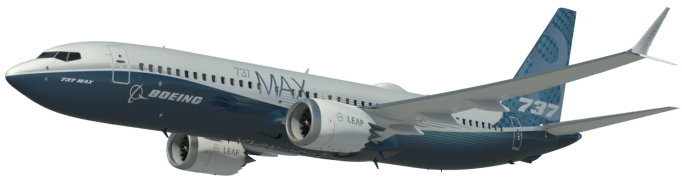 Revisiones del Boeing 737 MAX
Discutimos con Boeing y el equipo NTSB (Junta Nacional de Seguridad en el Transporte), así como con la Administración Federal de Aviación (FAA). Han emitido un boletín de seguridad para todas las aerolíneas en el mundo que usan aviones Boeing 737-8 MAX, basado en el incidente de Lion Air.
En el boletín, Boeing dio una guía para apagarlo para continuar volando manualmente para realizar un aterrizaje efectivo. Este boletín es una referencia de la FAA para Directivas de aeronavegabilidad (AD) u Órdenes de Aeronavegabilidad. Entonces, la FAA emitió AD a los operadores en Estados Unidos para revisar el Manual de Operaciones de la Tripulación de Vuelo (FCOM) o el manual utilizado por los pilotos como referencia para los aviones que vuelan. El Director General de Aviación Civil de Indonesia ordenará a los operadores nacionales que revisen el FCOM.
La revisión del manual del piloto fue una de las conclusiones del NTSB sobre el accidente de Lion Air. Esto no es una conclusión, pero en este momento hay una condición que otros operadores de aeronaves deben saber de inmediato, para que el mismo incidente no se repita. Recomendamos hablar con la NTSB y publicar el boletín del fabricante. Las Directivas de Aeronavegabilidad (AD) también salió de la FAA, que más tarde fue adoptada por el Director General de Aviación Civil de Indonesia (KNKT).
Manual del Piloto anterior no había ninguna indicación de que hubiera un mal funcionamiento del sensor AOA. El manual fue revisado más tarde por Boeing, por lo que antes de eso no había nada todavía. La compañía de fábrica de aeronaves actualizó el manual de mitigación de la operación después del accidente. Eso es algo natural en el mundo de la aviación, porque el manual anterior no cubría las condiciones actuales. Una vez que hay un evento o algo siempre se revisa. Los manuales son de hecho dinámicos, cambiando a menudo.
Recomendaciones Manual Operaciones
Los boletines son generalmente de operadores, alrededor del 95%, porque el operador entiende mejor cómo operar la aeronave y su mantenimiento. Durante la investigación, el NTSB revisó la distribución de bodega en las operaciones del Boeing 737-8 MAX, pero el asunto es poco significativo en el caso del accidente.
El daño al sensor del Ángulo de Ataque (AOA) se considera insignificante. Tanto la KNKT, FAA, NTSB y Boeing no han visto que tengan inconvenientes directos en el accidente. El efecto de una AOA en estado crítico podría poner a la aeronave en alto riesgo, pero hay métodos para medirla, generalmente saldrá en la Check List antes del próximo vuelo. Por lo tanto, a partir de la evaluación que se produjo con la NTSB, la FAA y los expertos, se consideró que el daño al sensor no requería esa acción remota.
Pero surge una pregunta: ¿el interruptor del sensor AOA realizado en el Lion Air JT-610 ha estado de acuerdo con el procedimiento? Cuando los operadores compran aviones, se ha proporcionado toda la capacitación y el manual está completo. Lo que debe reemplazarse es todo lo que se ha sistematizado desde una computadora del centro de mantenimiento que emitirá un mensaje. Cuando un vuelo arriba, los mecánicos ven el Libro de Registro de Vuelo y luego el mecánico también revisará el centro de mantenimiento de su computadora. Si existe un inconveniente, Mantenimiento lo reparará por completo y subirá a la cabina para realizar la prueba. Se comprueba todo el sistema y el vuelo estará listo. En el caso de que en el Registro de Vuelo no esté allí, Mantenimiento deberá revisar todo los sistemas.
Errores de operación
La investigación no significa culpar o buscar el mal. La tarea será la investigación de encontrar la causa y evitar que vuelva a ocurrir el mismo incidente. El objetivo es solo para la seguridad, porque el valor de la seguridad es costoso. NTSB emitirá recomendaciones más adelante, tanto para fabricantes, reguladores, operadores o todas las partes involucradas. Inclusive no está relacionada la falta de seguridad a las llamadas aerolíneas low cost, pues el objetivo de toda compañía aérea es resguardar la seguridad de cualquier siniestro que pudiera ocurrir.
Impacto del Boeing 737-8 MAX
El JT-610 de Lion Air se estrelló en el mar solo 13 minutos después de despegar de Jakarta el 29 Octubre 2018, matando a las 189 personas a bordo. Este es el peor desastre de la aviación de Indonesia desde 1997.
Antes de que el avión se estrellara contra el mar, el piloto pidió que el control del tráfico aéreo regresara al aeropuerto. El investigador Scott Dunham (NTSB) del Comisionado de Transporte de los Estados Unidos dijo que el avión se estrelló a una velocidad de al menos 1.000 km/h, lo que provocó que la aeronave se estrellara desintegrándose a gran velocidad de impacto.
Lion Air, compensación económica
Lion Air dijo que estaba compensando $ 102.058,00 por la familia de cada víctima en el vuelo. Boeing también emitió una guía sobre cómo debería actuar la tripulación en caso de un error en el sensor, luego de que el Comité Nacional de Seguridad de Tránsito de Indonesia encontró que uno de los sensores del Boeing 737-8 MAX proporcionó datos falsos.
Boeing ignora fallos
El constructor aeronáutico Boeing ignoró información sobre los potenciales peligros asociados al sistema antibloqueo de sus Boeing 737-MAX, que pueden haber contribuido al choque mortal de un avión de Lion Air a fines de Octubre 2018. El fabricante de aviones estadounidense no hizo comentarios sobre esta información. «Estamos tomando medidas para comprender completamente todos los aspectos de este accidente», aseguró un portavoz de la compañía Lion Air en una declaración escrita.
También señaló que el grupo está trabajando estrechamente con los investigadores y las autoridades pertinentes, y recordó que la seguridad era una prioridad. Expertos en seguridad involucrados en la investigación, funcionarios de la Administración Federal de Aviación (FAA) y pilotos de líneas aéreas, indicaron que el sistema automatizado para prevenir el bloqueo de los aviones Boeing 737-MAX puede en condiciones inusuales de vuelo empujarlo hacia abajo inesperadamente y con tanta fuerza que la tripulación no puede volver a subirlo, generando el potencial peligro de accidente. Este escenario se habría discutido con las empresas clientes en un boletín de seguridad solo una semana después del accidente, detallando la sorpresa de muchos pilotos al enterarse de las noticias. La información es aún más problemática porque los pilotos no pudieron ser entrenados en caso de un mal funcionamiento técnico.
La Comisión Nacional de Seguridad de Transporte (KNKT) de Indonesia tiene previsto publicar un informe preliminar sobre el accidente el 28 o 29 Noviembre 2018, informó el Director de Soerjanto Tjahjono.
 Lion Air JT-610 | Day 16
Latest details of the accident of the Boeing 737-8 MAX of Lion Air
The Boeing 737-8 MAX, registration PK-LQP performs flight JT-610 of Lion Air from Jakarta to Pangkal Pinang (Indonesia) with 181 passengers and 8 crew, was leaving Jakarta when the aircraft reached a maximum altitude of about 5400 feet, then height lost, radar contact was lost about 35 nm north-east of Jakarta over the Java Sea at 06: 33L (23: 33Z, 28 October 2018).
Updates JT-610
A recent statement from the NTSB states that the Attack Angle (AOA) would not be decisive in the accident. The NTSC research agency commented the damage of the Lion Air AOA sensor is not critical. Although the change of the angle of attack of the sensor (AOA) is according to the procedure, the problem in the cockpit is even more complex. «The principle is that NTSC is not looking for anyone wrong, but makes recommendations to avoid it», said Soerjanto Tjahjono, Chairman of the National Transportation Safety Committee (NTSC).
Soerjanto Tjahjono said that he was going to the office when he discovered that Lion Air had lost contact. At that time his head was full of questions and he hoped that the news would not end badly. But he made sure that the investigation will continue its course. Boeing and the National Transportation Safety Board (NTSB), together with Indonesian regulators, will communicate among them.
The NTSC findings show that the JT-610 flight of Lion Air JT-610 suffered damage to the speed indicator on the last four flights. The problem is related to the Air Speed indicator. After analyzing the flight records, it turns out that the problem is also related to the aircraft’s Attack Angle Sensor (AOA). The strong hypothesis then marks that the Boeing 737-8 MAX aircraft has read data from AOA that change just before falling.
Boeing 737 MAX Reviews
We discussed with Boeing and the NTSB (National Transportation Safety Board), as well as with the Federal Aviation Administration (FAA). They have issued a security bulletin for all the airlines in the world that use Boeing 737-8 MAX aircraft, based on the Lion Air incident.
In the bulletin, Boeing gave a guide to turn it off to continue flying manually to make an effective landing. This bulletin is a reference of the FAA for Airworthiness Directives (AD) or Airworthiness Orders. Then, the FAA issued AD to operators in the United States to review the Flight Crew Operations Manual (FCOM) or the manual used by pilots as a reference for flying aircraft. The Director General of Civil Aviation of Indonesia will order national operators to review the FCOM.
The revision of the pilot’s manual was one of the conclusions of the NTSB on the Lion Air accident. This is not a conclusion, but at this time there is a condition that other aircraft operators should know immediately, so that the same incident does not happen again. We recommend talking to the NTSB and publishing the manufacturer’s bulletin. The Airworthiness Directives (AD) also came out of the FAA, which was later adopted by the Director General of Civil Aviation of Indonesia (KNKT).
Previous Pilot’s Manual There was no indication that there was a malfunction of the AOA sensor. The manual was later revised by Boeing, so before that there was nothing yet. The aircraft factory company updated the mitigation manual for the operation after the accident. That is something natural in the world of aviation, because the previous manual did not cover the current conditions. Once there is an event or something is always reviewed. The manuals are in fact dynamic, changing often.
 AIRCRAFT BOEING 737-8 MAX PK-LQP ACCIDENTED IN THE SEA OF JAVA, INDONESIA
Recommendations Manual Operations
The bulletins are generally of operators, around 95%, because the operator understands better how to operate the aircraft and its maintenance. During the investigation, the NTSB reviewed the warehouse distribution in the Boeing 737-8 MAX operations, but the matter is not significant in the case of the accident.
Damage to the Attack Angle Sensor (AOA) is considered negligible. Both the KNKT, FAA, NTSB and Boeing have not seen any direct drawbacks in the accident. The effect of an AOA in critical condition could put the aircraft at high risk, but there are methods to measure it, it will generally be on the Check List before the next flight. Therefore, from the evaluation that occurred with the NTSB, the FAA and the experts, it was considered that the damage to the sensor did not require that remote action.
But a question arises: has the AOA sensor switch made on the Lion Air JT-610 been in accordance with the procedure? When operators buy airplanes, all the training has been provided and the manual is complete. What must be replaced is everything that has been systematized from a maintenance center computer that will issue a message. When a flight arrives, the mechanics see the Flight Registration Book and then the mechanic will also check the maintenance center of their computer. If there is a problem, Maintenance will repair it completely and will go up to the cabin to perform the test. The entire system is checked and the flight will be ready. In the event that the Flight Register is not there, Maintenance should review all systems.
Operating errors
Research does not mean blaming or looking for evil. The task will be the investigation of finding the cause and preventing the same incident from happening again. The objective is only for security, because the value of security is expensive. NTSB will issue recommendations later, for manufacturers, regulators, operators or all parties involved. Even the lack of security is not related to the so-called low cost airlines, since the objective of every airline is to safeguard the security of any accident that may occur.
Impact of the Boeing 737-8 MAX
The Lion Air JT-610 crashed into the sea only 13 minutes after taking off from Jakarta on October 29, 2018, killing the 189 people on board. This is the worst aviation disaster in Indonesia since 1997.
Before the plane crashed into the sea, the pilot asked for air traffic control to return to the airport. Investigator Scott Dunham (NTSB) of the United States Transportation Commissioner said that the plane crashed at a speed of at least 1,000 km/h, which caused the aircraft to crash disintegrating at high impact speed.
Lion Air, financial compensation
Lion Air said it was compensating $ 102,058.00 for the family of each victim on the flight. Boeing also issued a guide on how the crew should act in the event of a sensor error, after the Indonesian National Traffic Safety Committee found that one of the Boeing 737-8 MAX sensors provided false data.
Boeing ignores failures
The aeronautical constructor Boeing ignored information on the potential hazards associated with the anti-lock system of its Boeing 737-MAX, which may have contributed to the fatal crash of a Lion Air aircraft at the end of October 2018. The US aircraft manufacturer did not comment on this information. «We are taking steps to fully understand all aspects of this accident», a spokesman for the Lion Air company said in a written statement.
He also noted that the group is working closely with researchers and relevant authorities, and recalled that safety was a priority. Security experts involved in the investigation, officials of the Federal Aviation Administration (FAA) and airline pilots, indicated that the automated system to prevent the blockage of Boeing 737-MAX aircraft can «in unusual flight conditions push it down unexpectedly and with such force that the crew can not raise it again, generating the potential danger of an accident This scenario would have been discussed with the client companies in a security bulletin just a week after the accident, detailing the surprise of many pilots when they found out The information is even more problematic because the pilots could not be trained in case of a technical malfunction.
The National Transport Safety Commission (KNKT) of Indonesia plans to publish a preliminary report on the accident on 28 or 29 November 2018, informed the Director of Soerjanto Tjahjono. A \ W
Ξ A I R G W A Y S Ξ
SOURCE: Airgways.com
DBk: Ntsb.gov / Faa.gov / Dephub.go.id / Beritagar.id / Airgways.com
AW-POST: 201811131937AR
A\W A I R G W A Y S ®
 airgways.com