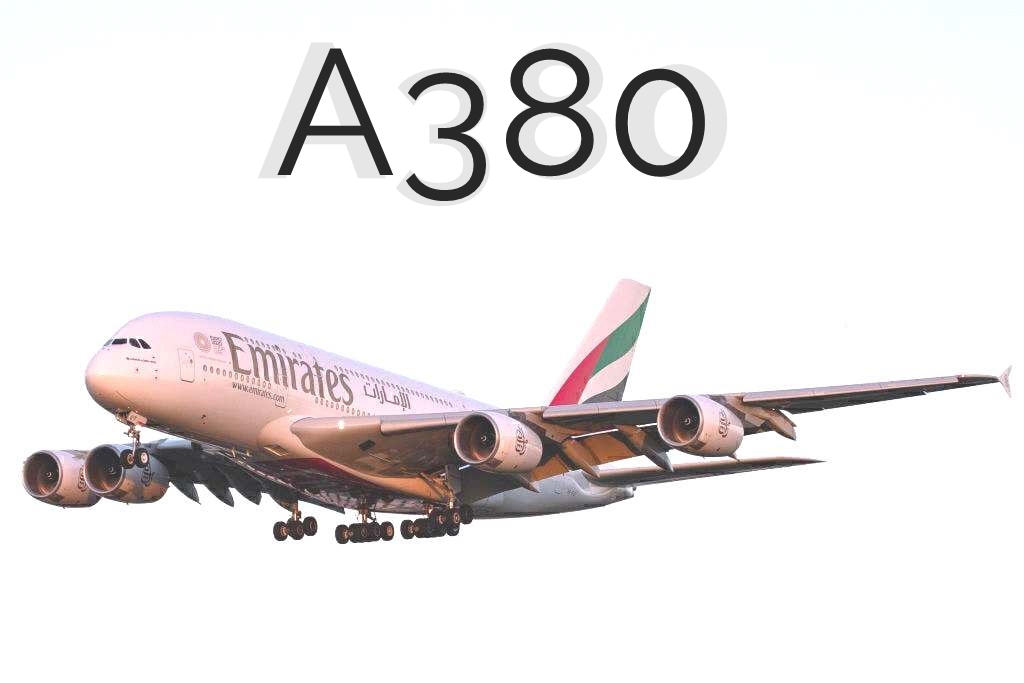
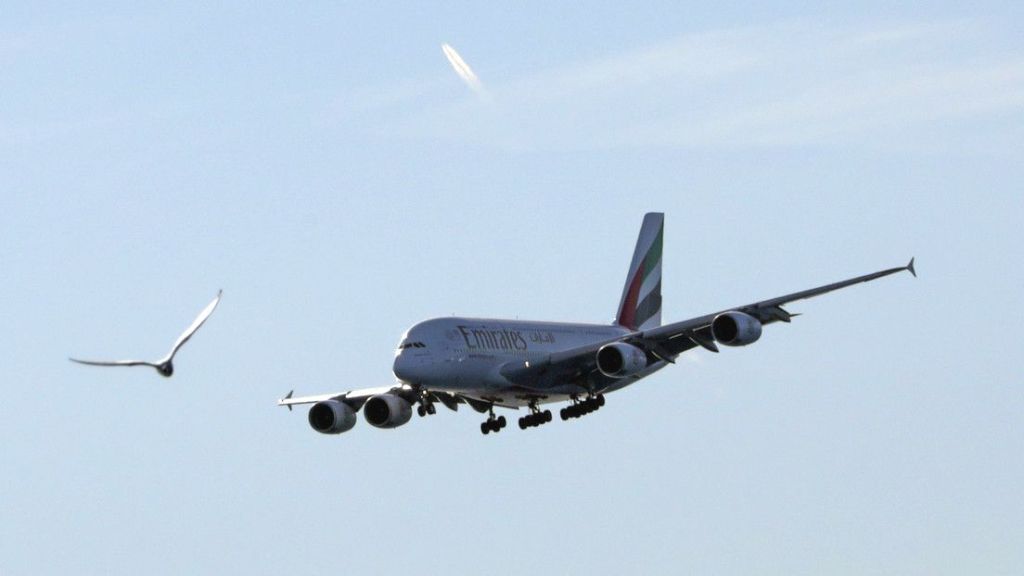
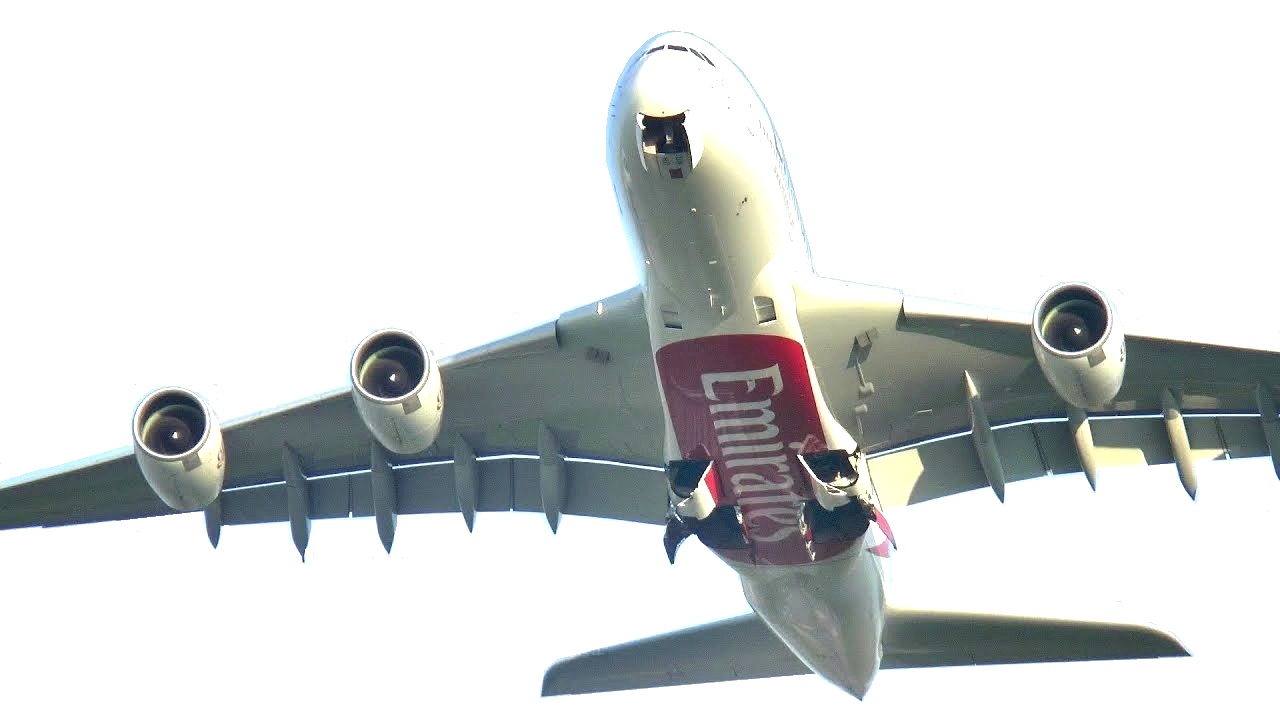
Airbus Group ha realizado el último vuelo de prueba previo a la entrega del A380 Superjumbo. El avión con el número MSN 272 es el A380 número 123 que será entregado a Emirates Airline y partió de las instalaciones de Airbus en Hamburgo, Alemania para una gira por el noreste de Alemania y dejó un sincero adiós al programa A380 en el cielo.
El Airbus A380 pasará a la historia como una aeronave mega-transporte A380 del consorcio europeo después de los frecuentes problemas económicos que han determinado a escala mundial el cierre de la línea determinado en Febrero de 2019. El programa A380 concluye con la próxima entrega a la aerolínea árabe Emirates Airline programada para recibir el último A380 a finales de este mes de Diciembre 2021 o principios de 2022.
El Airbus A380 final finalmente saldrá de la línea de ensamblaje a fines de Diciembre de 2021 y se entregará a Emirates, teniendo la flota más grande del A380. Según los informes, la compañía de Emiratos Árabes Unidos está programado para recibir el Airbus A380 final a finales de este mes. Antes de la entrega, Airbus realizó el último vuelo de prueba previo a la entrega para este avión masivo.
Con la entrega del A380, la producción llegará a su conclusión, poniendo fin a un capítulo que comenzó el 27 de Abril de 2005. Curiosamente, es el programa con una duración más corta que cualquier otro programa, pero con un historial de seguridad impecable. Dentro de los catorce años posteriores a la entrada en servicio de la aeronave, el programa llega a su finalización, mientras que su competidor más directo, el Boeing 747 Jumbo continúa volando por más de cincuenta años en los cielos del mundo, pero sobrevive la línea de aeronaves cargueras 747 Freighter.
La conclusión de la línea de producción no significará necesariamente el fin del Programa A380, pues Airbus continuará dando asistencia a muchas aeronaves en servicio en el mundo, incluyendo a su mayor cliente A380, Emirates Airline. Al menos, podrían continuar volando una década adicional, mientras que otras aerolíneas que poseen el A380 han dado de baja al coloso del aire europeo.
Airbus last test flight A380
Final test flight of the Airbus A380 Superjumbo
Airbus Group has conducted the last test flight prior to the delivery of the A380 Superjumbo. The aircraft with the number MSN 272 is the A380 number 123 that will be delivered to Emirates Airline and departed from the Airbus facilities in Hamburg, Germany for a tour of Northeast Germany and left a heartfelt goodbye to the A380 program in the sky.
The Airbus A380 will go down in history as an A380 mega-carrier aircraft of the European consortium after frequent economic problems that have led to the worldwide closure of the line determined in February 2019. The A380 program concludes with the next delivery to the Arab airline Emirates Airline scheduled to receive the last A380 in late December 2021 or early 2022.
The final Airbus A380 will finally roll off the assembly line at the end of December 2021 and be delivered to Emirates, having the largest fleet of A380s. The UAE company is reportedly scheduled to receive the final Airbus A380 later this month. Prior to delivery, Airbus conducted the final pre-delivery test flight for this massive aircraft.
With the delivery of the A380, production will come to a conclusion, ending a chapter that began on April 27, 2005. Interestingly, it is the program with a shorter duration than any other program, but with an impeccable safety record. Within fourteen years after the aircraft entered service, the program comes to an end, while its most direct competitor, the Boeing 747 Jumbo, continues to fly for more than fifty years in the skies of the world, but the line survives. of cargo aircraft 747 Freighter.
Completion of the production line will not necessarily mean the end of the A380 Program, as Airbus will continue to support many aircraft in service around the world, including its largest A380 customer, Emirates Airline. At least they could continue to fly for an additional decade, while other airlines that own the A380 have decommissioned the European air colossus.
El cibercrimen de la aviación está en aumento a medida que los nuevos sistemas de aerolíneas y el trabajo remoto aumentan el área de ataque de superficie digital. Combinado con las inminentes regulaciones cibernéticas en varias jurisdicciones, hace que las medidas apropiadas de ciberseguridad de la aviación sean más importantes que nunca. Actualmente, existen tres áreas que las aerolíneas deben considerar: servicios de pasajeros, operaciones y control de aeronaves. Los servicios de pasajeros cubren todo, desde la reserva inicial hasta la gestión de la identidad y una experiencia de viaje a medida. El fraude, en particular la venta de boletos, es la principal preocupación y, en un año normal, le cuesta a las aerolíneas alrededor de US$ 1 mil millones. Pero los reclamos de reembolso falsos y la explotación de los Programas de Viajero Frecuente (FFP) de las aerolíneas se han vuelto tan frecuentes como los delitos con tarjetas de crédito. Además de lidiar con el fraude, las aerolíneas deben trabajar arduamente para proteger los datos de los pasajeros. Todo lo que la industria está tratando de hacer para agilizar y simplificar la experiencia de viaje aéreo implica el uso de datos. Todo lo recopilado debe equilibrarse con la ética de los datos y las buenas prácticas requieren la minimización de los datos, solo utilizando los datos que se necesitan. Sin embargo, muchos de los avances en los procesos aeroportuarios, como la facilitación biométrica, requieren que los pasajeros proporcionen datos personales importantes. Las leyes de privacidad, como el Reglamento General de Protección de Datos (GDPR) de la Unión Europea, establecen altos estándares para proteger estos datos y la mayoría de los pasajeros parecen felices de compartir información cuando sea necesario.
La última Encuesta Global de Pasajeros de la IATA encontró que: El 73% de los pasajeros están dispuestos a compartir sus datos biométricos para mejorar los procesos aeroportuarios (frente al 46% en 2019). El 88% compartirá información de inmigración antes de la salida para un procesamiento acelerado. Poco más de un tercio de los pasajeros (36%) han experimentado el uso de datos biométricos al viajar. De estos, el 86% quedó satisfecho con la experiencia. Sin embargo, la protección de datos sigue siendo un tema clave con un 56% que indica preocupación por las violaciones de datos. Y los pasajeros quieren claridad sobre con quién se comparten sus datos (52%) y cómo se usan / procesan (51%).
«Las preocupaciones de privacidad no son exclusivas de la aviación, pero eso no hace ninguna diferencia.La aviación todavía tiene que abordarlos y poner en marcha medidas de ciberseguridad», dice Manon Gaudet, Subdirectora de Ciberseguridad de la Aviación. Sin embargo, insiste en que no se trata solo de lograr el cumplimiento de la normativa: «No queremos seguridad en la lista de verificación. Las aerolíneas deben implementar sistemas basados en el riesgo».
Problemas de confianza
La confianza en el intercambio de datos también está en el corazón de los problemas cibernéticos operativos. Los datos tienen que fluir a través de la cadena de valor de la aviación y eso significa que los sistemas se hablen entre sí y que todas las partes tengan confianza en que los datos están protegidos. Pero la confianza es un concepto que no puede ser ordenado por los gobiernos. Por lo tanto, alcanzarlo es un desafío para la industria, especialmente porque están involucradas empresas de todos los tamaños, sin mencionar los diferentes niveles de ciberseguridad. Manon Gaudet dice que es fundamental que las organizaciones compartan vulnerabilidades o temores para que el ecosistema cibernético en general pueda ser protegido. Compartir conocimientos ayuda a prevenir futuros ataques y crea resiliencia cibernética. Significa que el punto más débil en la experiencia de los pasajeros de extremo a extremo se puede llevar a un nivel requerido y mantiene a todas las empresas por delante de las tendencias y desarrollos de ataque. «Recuerde, los atacantes no tienen problemas de confianza. No solo están trabajando con inteligencia artificial y nuevas técnicas, sino que también se ofrecen servicios entre sí para aprovechar diferentes capacidades de ataque».
En cuanto a los sistemas de aeronaves, este es potencialmente el aspecto más serio de los esfuerzos de ciberseguridad. Las aeronaves están cada vez más conectadas al suelo y eso abre la posibilidad de que los atacantes busquen interferir con los sistemas a bordo de las aeronaves, incluidos los sistemas críticos de vuelo. Todas las estrategias de ciberseguridad deben comenzar con la seguridad de estos.
Estrategia de ciberseguridad
Para las aerolíneas que buscan mejorar su ciberseguridad, el consejo de Manon Gaudet es «entrar en un experto. No trates de resolverlo tú mismo. Hay muchos ataques diferentes y muchas formas diferentes en que un ataque podría afectar a una aerolínea. Tienes que trabajar a través de todos los diferentes escenarios, especialmente aquellos que podrían tener un impacto en la seguridad».
En el Simposio Digital, de Datos y Retailing de la IATA, Martin Ninnemann, Director de Desarrollo de Negocios de Unisys, identificó seis elementos clave en la implementación de una estrategia de ciberseguridad: Protocolos criptográficos para garantizar la protección de extremo a extremo de los flujos de datos. Comunidades Virtuales de Interés para limitar la accesibilidad a los datos. Encubrimiento, para que los usuarios solo puedan ver la infraestructura que necesitan ver. Aislamiento dinámico, lo que significa identificar y apagar un punto de entrada, como un PC o servidor en particular, idealmente en cuestión de segundos, no minutos u horas. Integración con sistemas de gestión de identidad para facilitar operaciones fluidas. Transparencia con las aplicaciones para que los sistemas propietarios existentes puedan continuar con normalidad. Todo lo anterior, sugirió, se puede hacer sin cambiar la arquitectura existente. No hay ningún requisito para arrancar y reemplazar.
Manon Gaudet agrega una cultura de ciberseguridad a la lista. Afortunadamente, las aerolíneas no tienen que crear esto desde cero. «Una cultura de seguridad ya está omnipresente en toda la aviación y la ciberseguridad es solo una extensión de esto. No se trata de crear una cultura aislada. Está conectado con la idea de la mejora continua de la seguridad y las aerolíneas lo entienden completamente. Esto dará a las aerolíneas un cortafuegos humano. Puedes tener toda la tecnología del mundo, pero debes empoderar al personal. Los humanos son una de las mayores defensas de las aerolíneas contra los ciberataques, pero también puede ser su debilidad, por lo que la concienciación y la formación son clave».
Iniciativas de la industria
Para ayudar a las aerolíneas, hay una serie de iniciativas de la industria en marcha. Un enfoque común de la ciberseguridad es esencial. La cooperación no solo fortalecerá la red de información general, sino que también permitirá a las organizaciones hablar el mismo lenguaje cibernético. Términos como autenticación deben significar lo mismo para todas las empresas.
IATA estableció el Grupo de Trabajo de Gestión Cibernética (CMWG) para evaluar las necesidades de la industria y proporcionar la orientación adecuada. También existe el Grupo Directivo de Seguridad Cibernética de Sistemas Interconectados de Aeronaves (AISCS-SG), un foro informal que se ocupa particularmente de los sistemas interconectados relacionados con la seguridad de vuelo. IATA también está trabajando con el Consejo Internacional de Coordinación de Asociaciones de Industrias Aeroespaciales (ICCAIA) en el Aircraft Cyber Security eXchange Restricted FORUM (rFORUM) para ayudar a las aerolíneas a comprender mejor los riesgos asociados con la introducción de nuevas tecnologías y compartir esas preocupaciones con los fabricantes de equipos originales (OEM y titulares de aprobación de diseño (DAH).
A nivel de la OACI, existe el Grupo de Estudio de la Secretaría sobre Ciberseguridad (SSGC) y sus diferentes subgrupos, que están ocupados revisando el Plan de Acción de Ciberseguridad de la OACI (CyAP) y el Marco de Confianza, incluidos los nuevos requisitos de superposición segura de la aviación civil. La Agencia Europea de Seguridad Aérea (EASA) y EUROCAE también están consultando con la IATA sobre nuevas regulaciones. «No hay escasez de esfuerzo. Pero necesitamos más aportes de las aerolíneas para desarrollar la orientación correcta para que podamos satisfacer las necesidades de la industria en esta área crítica. Todas las organizaciones de aviación deben llegar a un nivel mínimo viable de ciberseguridad porque un solo ataque a un elemento crítico podría afectar a toda la industria. Sin embargo, eso no significa que todos tengan que implementar los últimos sistemas. Siempre se trata de adaptarse porque ninguna aerolínea puede hacer un reemplazo mayorista de sistemas cada año. El hecho es que nunca podremos lograr el 100% de ciberseguridad. Pero podemos reducir el riesgo y es esencial que lo hagamos. Los sistemas digitales críticos que forman parte de la infraestructura de aviación civil deben protegerse lo mejor que podamos», concluye Manon Gaudet.
IATA pursues cybersecurity
Taking cybersecurity to the next level
Aviation cybercrime is on the rise as new airline systems and remote work increase the digital surface area of attack. Combined with looming cyber regulations in various jurisdictions, it makes proper aviation cybersecurity measures more important than ever. Currently, there are three areas that airlines must consider: passenger services, aircraft operations and control. Passenger services cover everything from initial booking to identity management and a tailor-made travel experience. Fraud, particularly ticket sales, is the main concern and, in a normal year, costs airlines around US$ 1 billion. But false refund claims and exploitation of airlines’ Frequent Flyer Programs (FFPs) have become as prevalent as credit card crimes. In addition to dealing with fraud, airlines must work hard to protect passenger data. Everything the industry is trying to do to streamline and simplify the air travel experience involves the use of data. Everything collected must be balanced with data ethics and good practices require data minimization, only using the data that is needed. However, many of the advances in airport processes, such as biometric facilitation, require passengers to provide important personal data. Privacy laws, such as the General Data Protection Regulation (GDPR) of the European Union, set high standards to protect this data and most passengers seem happy to share information when necessary.
The latest IATA Global Passenger Survey found that: 73% of passengers are willing to share their biometric data to improve airport processes (up from 46% in 2019). 88% will share immigration information prior to departure for expedited processing. Just over a third of passengers (36%) have experienced the use of biometric data when traveling. Of these, 86% were satisfied with the experience. However, data protection remains a key issue with 56% indicating concern about data breaches. And passengers want clarity on who their data is shared with (52%) and how it is used / processed (51%).
«Privacy concerns are not unique to aviation, but that makes no difference. Aviation has yet to address them and put cybersecurity measures in place», says Manon Gaudet, Deputy Director of Aviation Cybersecurity. However, she insists that it is not just about achieving regulatory compliance: «We do not want safety on the checklist. Airlines must implement risk-based systems».
Trust issues
Confidence in data sharing is also at the heart of operational cyber problems. Data has to flow through the aviation value chain and that means systems are talking to each other and all parties have confidence that the data is protected. But trust is a concept that cannot be mandated by governments. Therefore, reaching it is a challenge for the industry, especially since companies of all sizes are involved, not to mention the different levels of cybersecurity. Manon Gaudet says that it is essential that organizations share vulnerabilities or fears so that the cyber ecosystem in general can be protected. Sharing knowledge helps prevent future attacks and builds cyber resilience. It means that the weakest point in the end-to-end passenger experience can be brought to a required level and keeps all businesses ahead of attack trends and developments. «Remember, attackers have no trust issues. Not only are they working with artificial intelligence and new techniques, they are also offering services to each other to take advantage of different attack capabilities».
When it comes to aircraft systems, this is potentially the most serious aspect of cybersecurity efforts. Aircraft are increasingly connected to the ground and that opens up the possibility for attackers to seek to interfere with systems on board aircraft, including critical flight systems. All cybersecurity strategies must start with their security.
Cybersecurity strategy
For airlines looking to improve their cybersecurity, Manon Gaudet’s advice is to «get into an expert. Don’t try to figure it out yourself. There are many different attacks and many different ways that an attack could affect an airline. You have to work at across all the different scenarios, especially those that could have an impact on security».
At the IATA Digital, Data and Retailing Symposium, Martin Ninnemann, Director of Business Development at Unisys, identified six key elements in implementing a cybersecurity strategy: Cryptographic protocols to ensure end-to-end protection of flows of data. Virtual Communities of Interest to limit accessibility to data. Cloaking, so that users can only see the infrastructure they need to see. Dynamic isolation, which means identifying and shutting down an entry point, such as a particular PC or server, ideally in a matter of seconds, not minutes or hours. Integration with identity management systems to facilitate smooth operations. Transparency with applications so that existing proprietary systems can continue as normal. All of the above, he suggested, can be done without changing the existing architecture. There is no requirement to start and replace.
Manon Gaudet adds a culture of cybersecurity to the list. Fortunately, airlines don’t have to create this from scratch. «A culture of safety is already ubiquitous throughout aviation and cybersecurity is just an extension of this. It is not about creating an isolated culture. It is connected to the idea of continuous safety improvement and is fully understood by airlines. This will give the airlines a human firewall», he adds. «You can have all the technology in the world, but you have to empower your staff. Humans are one of the airlines’ greatest defenses against cyberattacks, but it can also be their weakness, so awareness and training are key».
Industry Initiatives
To help airlines, there are a number of industry initiatives underway. A common approach to cybersecurity is essential. The cooperation will not only strengthen the general information network, but also allow organizations to speak the same cyber language. Terms like authentication should mean the same for all companies.
IATA established the Cyber Management Working Group (CMWG) to assess industry needs and provide appropriate guidance. There is also the Aircraft Interconnected Systems Cyber Security Steering Group (AISCS-SG), an informal forum that deals particularly with interconnected systems related to flight safety. IATA is also working with the International Council for the Coordination of Aerospace Industries Associations (ICCAIA) on the Aircraft Cyber Security eXchange Restricted FORUM (rFORUM) to help airlines better understand the risks associated with the introduction of new technologies and share those concerns. with Original Equipment Manufacturers (OEMs and Design Approval Holders (DAH).
At ICAO level, there is the Secretariat Study Group on Cybersecurity (SSGC) and its different subgroups, which are busy reviewing the ICAO Cybersecurity Action Plan (CyAP) and the Trust Framework, including the new requirements. safe overlay of civil aviation. The European Aviation Safety Agency (EASA) and EUROCAE are also consulting with IATA on new regulations. «There is no shortage of effort. But we need more input from airlines to develop the right guidance so that we can meet the needs of the industry in this critical area. All aviation organizations must reach a minimum viable level of cybersecurity because a single Attacking a critical element could affect the entire industry. However, that doesn’t mean everyone has to implement the latest systems. It’s always about adapting because no airline can do a wholesale replacement of systems every year. The fact is, never We can achieve 100% cybersecurity. But we can reduce risk and it is essential that we do so. Critical digital systems that are part of the civil aviation infrastructure must be protected to the best of our ability», concludes Manon Gaudet.
Teresina—Parnaíba marca inicio operación Ruta de las Emociones Operaciones en asociación con GOL y Latam
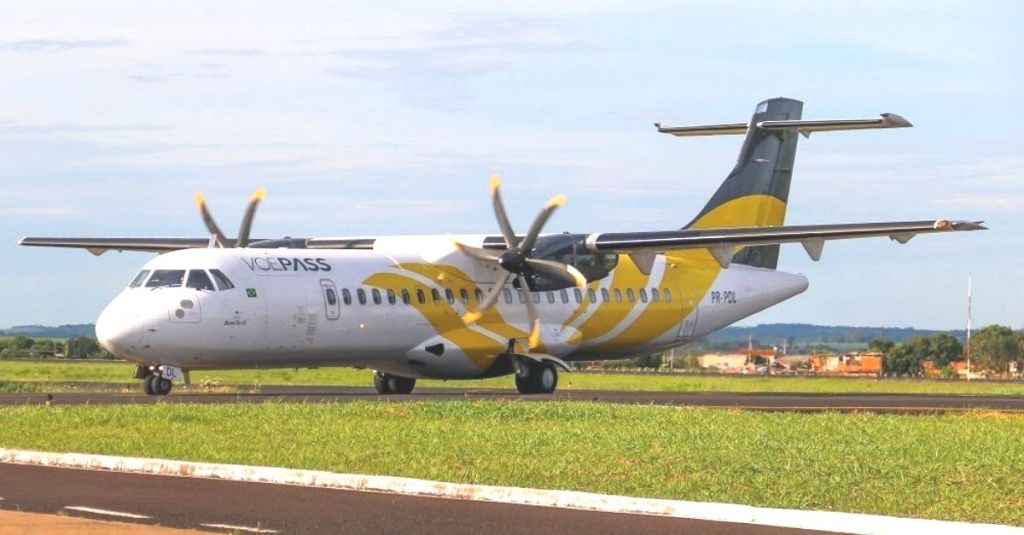
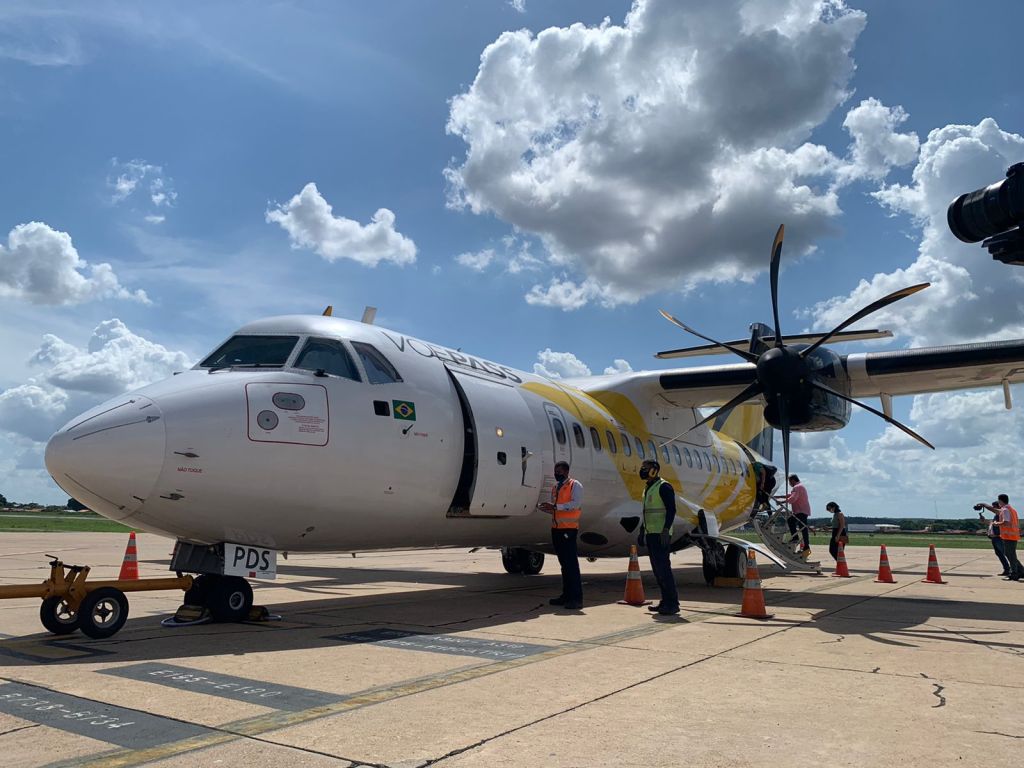
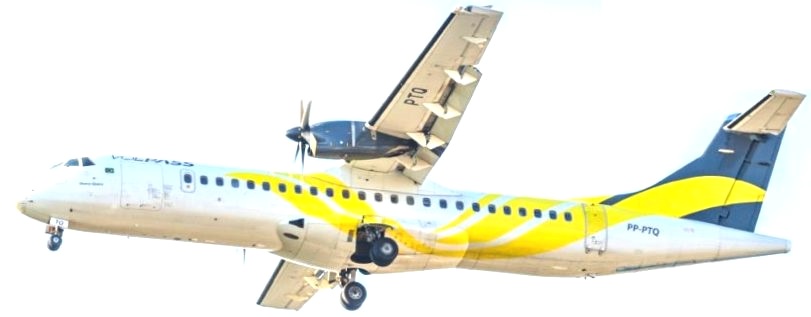
La aerolínea regional VoePass Linhas Aéreas ha iniciado la conexión Teresina—Parnaíba en el Estado de Piauí. El enlace fortalece la Ruta de las Emociones. El vuelo inaugural el Domingo 12/12 de la aerolínea VoePass Airlines marca el primer despegue desde el Aeropuerto Teresina/Senador Petrônio Portela con destino al Aeropuerto Parnaíba/João Silva Filho, con un tiempo de vuelo de menos de cincuenta minutos.
El modelo de avión ATR 42-600 partió de la Capital a las 14:00 hs con una tripulación de cuatro profesionales y pasajeros, entre ellos el Ministro Principal de la Casa Civil, Ciro Nogueira, líderes políticos, representantes de la compañía y periodistas. El avión aterrizó en la costa de Piaui a las 14:50 hs. y fue recibido con chorros de agua en conmemoración del inicio de las actividades. «Estoy muy contento de cumplir la promesa que le había hecho al alcalde Mão Santa, de hacer este vuelo fundamental para conectar Parnaíba con Fortaleza, Jericoacoara, y especialmente con nuestra Capital, con un vuelo de 45 minutos. Es el primer paso en una recuperación económica de la región tan importante para nuestro estado», dijo Ciro Nogueira.
Para Eduardo Busch, CEO de la empresa, la ruta Teresina—Parnaíba tiene como objetivo satisfacer una demanda no solo del sector turístico, sino también del segmento de negocios, que se está expandiendo en el estado y entre otros estados del Noreste. «Además de fortalecer nuestra estrategia de expansión de malla a medida que la reanudación de la demanda de viajes aéreos de placer y negocios ha ido creciendo, VoePass Linhas Aéreas tiene como objetivo satisfacer la alta demanda en la región intranordeste principalmente en este período de temporada alta», dice Eduardo Busch.
La operación aérea de la Ruta de las Emociones debe fortalecer lugares como el Delta de Parnaíba y Jericoacoara, en Ceará. Los vuelos son desde Teresina y Fortaleza en asociación con GOL Linhas Aéreas. La distribución se ampliará pronto con Latam, que finaliza las configuraciones de los socios.
José Luiz Felício Filho, Presidente de VoePass, comenta que los vuelos se realizan seis veces por semana, y en pocos días, con hasta dos viajes a Teresina. Agrega que, próximamente, el aeropuerto de Barreirinhas (MA) se completará y entrará en la Ruta. «La reanudación viene muy fuerte por el turismo interno y regional. Tenemos todo para desarrollar estas regiones», añade.
El Director General de Sebrae-PI, Mário Lacerda, también estuvo presente en el vuelo de lanzamiento de VoePass sobre la importancia de viajar para el crecimiento económico de las ciudades que forman parte de la Ruta de las Emociones. Destacó que los viajes permitirán un aumento en el número de turistas en la costa de Piauí y otros estados socios. «Tenemos empresarios marcando la diferencia, equipos significativos, ya sean posadas, hoteles, restaurantes, traslado receptivo a la altura de cualquier parte de Brasil y del mundo. Todavía necesitamos ciertas acciones de infraestructura. Si tenemos aranceles compatibles y resiliencia para creer en lo que ya existe aquí como potencial económico en Parnaíba y región, y lo que va a generar turismo es absoluta certeza que será pionero en explorar este nuevo potencial», expresa Mário Lacerda.
La Consejera Deliberante de Sebrae (PI), Freitas Neto, aprovechó para destacar que este es el primer paso a dar para posibilitar un turismo que traerá retorno económico, ya sea en aumento de mano de obra, aumento de ingresos, además de oportunidades y mejora de la vida para la población de la región. «El Sebrae lleva mucho tiempo luchando para que esta ruta de la Ruta de las Emociones sea factible, sobre todo dentro de Piauí», dijo Freitas Neto.
Voepass links Teresina and Parnaíba
Flight Teresina—Parnaíba marks start operation Route of Emotions Operations in association with GOL and Latam
The regional airline VoePass Linnhas Aéreas has started the Teresina-Parnaíba connection in the State of Piauí. The link strengthens the Route of Emotions. The ianugural flight on Sunday 12/12 of the airline VoePass Airlines marks the first takeoff from Teresina/Senador Petrônio Portela Airport to Parnaíba/João Silva Filho Airport, with a flight time of less than fifty minutes.
The aircraft model ATR 42-600 left the Capital at 02:00 p.m. with a crew of four professionals and passengers, including the Chief Minister of the Civil House, Ciro Nogueira, political leaders, company representatives and journalists. The plane landed on the coast of Piaui at 02:50 p.m. and was received with jets of water in commemoration of the beginning of the activities. «I am very happy to fulfill the promise that I had made to Mayor Mão Santa, to make this fundamental flight to connect Parnaíba with Fortaleza, Jericoacoara, and especially with our Capital, with a 45-minute flight. It is the first step in a recovery economic of the region so important for our state», said Ciro Nogueira.
For Eduardo Busch, CEO of the company, the Teresina-Parnaíba route aims to satisfy a demand not only from the tourism sector, but also from the business segment, which is expanding in the state and among other states in the Northeast. «In addition to strengthening our mesh expansion strategy as the resumption of demand for business and leisure air travel has grown, VoePass Linhas Aéreas aims to meet the high demand in the intra-northeast region mainly in this peak season period», says Eduardo Busch.
The air operation of the Route of Emotions should strengthen places such as the Parnaíba Delta and Jericoacoara, in Ceará. The flights are from Teresina and Fortaleza in association with GOL Linhas Aéreas. Distribution will expand soon with Latam finalizing partner setups.
José Luiz Felício Filho, President of VoePass, comments that the flights are made six times a week, and in a few days, with up to two trips to Teresina. He adds that, soon, the Barreirinhas (MA) airport will be completed and will enter the Route. «The resumption is very strong due to internal and regional tourism. We have everything to develop these regions», he adds.
The general director of Sebrae-PI, Mário Lacerda, was also present at the VoePass launch flight on the importance of travel for the economic growth of the cities that are part of the Route of Emotions. He stressed that the trips will allow an increase in the number of tourists on the coast of Piauí and other partner states. «We have entrepreneurs making a difference, significant teams, be they inns, hotels, restaurants, receptive transfer to match any part of Brazil and the world. We still need certain infrastructure actions. If we have compatible tariffs and resilience to believe in what It already exists here as an economic potential in Parnaíba and the region, and what will generate tourism is absolute certainty that it will be a pioneer in exploring this new potential», says Mário Lacerda.
The Deliberative Counselor of Sebrae (PI), Freitas Neto, took the opportunity to highlight that this is the first step to take to enable tourism that will bring economic return, either in increased workforce, increased income, as well as opportunities and improvement. of life for the population of the region. «The Sebrae has been fighting for a long time to make this route of the Route of Emotions feasible, especially within Piauí», said Freitas Neto.
Voepass liga Teresina e Parnaíba
Teresina—Parnaíba marca o início da operação da Rota das Emoções Operações em associação com GOL e Latam
A regional VoePass Linhas Aéreas iniciou a conexão Teresina—Parnaíba no Estado do Piauí. A ligação fortalece a Rota das Emoções. O vôo ianugural, no Domingo 12/12, da companhia aérea VoePass Airlines marca a primeira decolagem do Aeroporto Teresina/Senador Petrônio Portela para o Aeroporto de Parnaíba/João Silva Filho, com duração de vôo inferior a cinquenta minutos.
A aeronave modelo ATR 42-600 saiu da Capital às 14:00 hs. com uma tripulação de quatro profissionais e passageiros, entre eles o ministro-chefe da Casa Civil, Ciro Nogueira, lideranças políticas, representantes da empresa e jornalistas. O avião pousou no litoral do Piauí às 14:50 hs. e foi recebido com jatos de água em comemoração ao início das atividades. “Fico muito feliz em cumprir a promessa que fiz ao Prefeito Mão Santa, de fazer esse vôo fundamental para ligar Parnaíba a Fortaleza, Jericoacoara, e principalmente com a nossa Capital, com um vôo de 45 minutos. É o primeiro passo. uma recuperação econômica da região tão importante para o nosso estado”, disse Ciro Nogueira.
Para Eduardo Busch, presidente da empresa, a rota Teresina—Parnaíba visa atender a uma demanda não só do setor de turismo, mas também do segmento empresarial, que está em expansão no estado e entre outros estados do Nordeste. “Além de fortalecer nossa estratégia de expansão da malha à medida que a retomada da demanda por viagens aéreas de negócios e lazer vem crescendo, a VoePass Linhas Aéreas tem como objetivo atender a alta demanda no intra-nordeste principalmente neste período de alta temporada”, afirma Eduardo Busch.
A operação aérea da Rota das Emoções deve fortalecer locais como o Delta do Parnaíba e Jericoacoara, no Ceará. Os vôos são de Teresina e Fortaleza em parceria com a GOL Linhas Aéreas. A distribuição será expandida em breve com a finalização das configurações de parceiros da Latam.
José Luiz Felício Filho, Presidente da VoePass, comenta que os voos são feitos seis vezes por semana, e em poucos dias, com até duas viagens para Teresina. Ele acrescenta que, em breve, o aeroporto de Barreirinhas (MA) será concluído e entrará na Rota. “A retomada é muito forte devido ao turismo interno e regional. Temos tudo para desenvolver essas regiões”, acrescenta.
O Diretor Geral do Sebrae-PI, Mário Lacerda, também esteve presente no vôo de lançamento do VoePass sobre a importância das viagens para o crescimento econômico das cidades que fazem parte da Rota das Emoções. Ele ressaltou que as viagens vão permitir um aumento no número de turistas no litoral piauiense e em outros estados parceiros. “Temos empresários fazendo a diferença, equipes expressivas, sejam pousadas, hotéis, restaurantes, traslados receptivos a combinar com qualquer parte do Brasil e do mundo. Ainda precisamos de certas ações de infraestrutura. Se tivermos tarifas compatíveis e resiliência para acreditar no que já existe aqui como potencial econômico em Parnaíba e região, e o que vai gerar turismo é a certeza absoluta de que será pioneira na exploração desse novo potencial”, afirma Mário Lacerda.
O Conselheiro Deliberativo do Sebrae (PI), Freitas Neto, aproveitou a oportunidade para destacar que este é o primeiro passo a ser dado para viabilizar um turismo que traga retorno econômico, seja em aumento de mão de obra, aumento de renda, bem como oportunidades e melhorias. vida para a população da região. “O Sebrae luta há muito tempo para viabilizar essa rota da Rota das Emoções, principalmente no Piauí”, disse Freitas Neto.
Retoma atención presencial sin turno en algunas sucursales
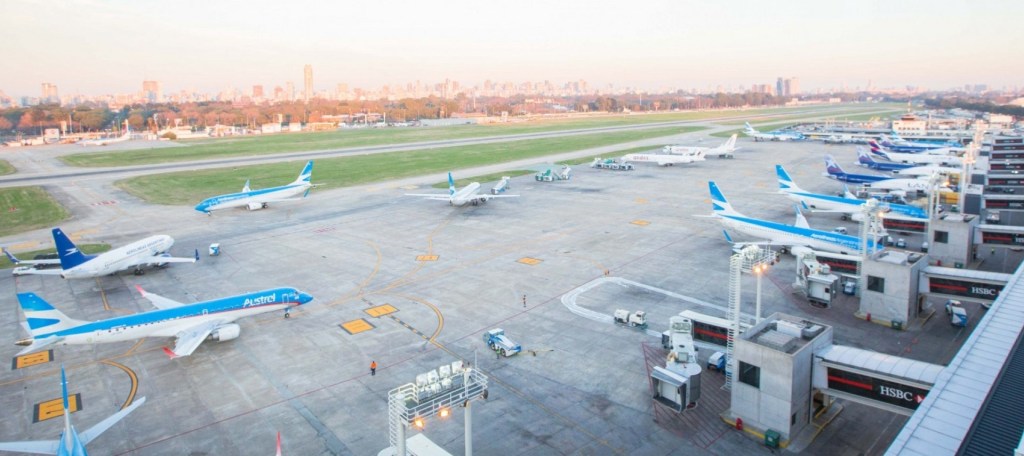
A partir de este Lunes 13 de Diciembre de 2021, Aerolíneas Argentinas volverá a brindar atención al público de manera presencial en algunas de sus sucursales del país sin tener que solicitar turno con antelación.
Según informan en la página web, estas son las sucursales que estarán abiertas al público sin turno y sus horarios: El Calafate: Av. Del Libertador 1361, de Lunes a Viernes de 09:30 a 17:00 hs. Mar del Plata: Moreno 2442, de Lunes a Viernes de 09:30 a 17:00 hs. Mendoza: Paseo Sarmiento 82, de Lunes a Viernes de 09:30 a 17:00 hs. Neuquén: Santa Fe 52, de Lunes a Viernes de 09:30 a 17:00 hs. Salta: Caseros 475, de Lunes a Viernes de 09:00 a 16:30 hs. Santa Fe: 25 de mayo 2287, de Lunes a Viernes de 09:30 a 17:00 hs. Tucumán: 9 de Julio 110, de Lunes a Viernes de 09:00 a 16:30 hs. Ushuaia: Maipú 823, de Lunes a Viernes de 09:30 a 17:00 hs. A su vez, recuerdan que en las sucursales no se atenderán reclamos, devoluciones ni gestiones sobre tickets que hayan emitido agencias de viaje. Para estos casos, habrá que comunicarse mediante el Contact Center de Argentina 0810-222-86527, todos los días de 07:00 a 23:00 hs. o por Whatsapp de Lunes a Viernes de 09:00 a 18:00 hs.
Aerolíneas Argentinas no ha habilitado todas las sucursales del país, pero representa un acercamiento hacia la normalidad del restablecimiento del servicio de atención presencial de la aerolínea.
Aerolíneas returns public attention
Resumes face-to-face care without a shift in some branches
Starting this Monday, December 13, 2021, Aerolíneas Argentinas will once again provide service to the public in person at some of its branches in the country without having to request an appointment in advance.
As reported on the website, these are the branches that will be open to the public without a shift and their hours: El Calafate: Av. Del Libertador 1361, Monday through Friday from 09:30 to 17:00. Mar del Plata: Moreno 2442, Monday to Friday from 09:30 to 17:00. Mendoza: Paseo Sarmiento 82, from Monday to Friday from 09:30 to 17:00. Neuquén: Santa Fe 52, Monday to Friday from 09:30 to 17:00. Salta: Caseros 475, Monday to Friday from 09:00 to 16:30. Santa Fe: May 25, 2287, Monday to Friday from 09:30 a.m. to 05:00 p.m. Tucumán: July 9, 110, Monday to Friday from 09:00 to 16:30. Ushuaia: Maipú 823, from Monday to Friday from 09:30 to 17:00. At the same time, they remember that the branches will not attend to claims, returns or procedures on tickets issued by travel agencies. For these cases, it will be necessary to communicate through the Argentina Contact Center 0810-222-86527, every day from 07:00 to 23:00. or by WhatsApp from Monday to Friday from 09:00 to 18:00.
Aerolíneas Argentinas has not enabled all the branches in the country, but it represents an approach towards the normality of the restoration of the airline’s face-to-face service.
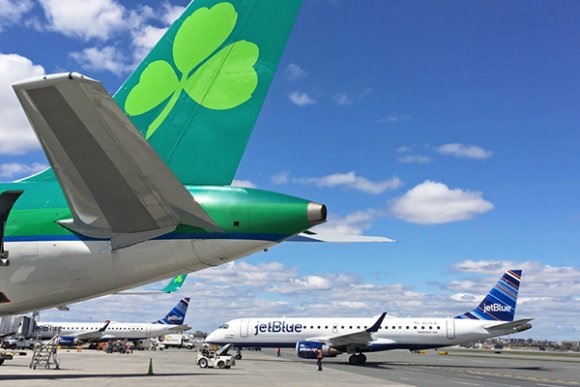
Aer Lingus-JetBlue amplían asociación de código compartido
JetBlue Airways y Aer Lingus han anunciado una expansión de su asociación de código compartido entre Estados Unidos e Irlanda. La ampliación del codeshare en cuatro rutas de Estados Unidos a Irlanda operadas por Aer Lingus. El código compartido ayudará a expandir el alcance de JetBlue en Europa mientras se prepara para lanzar más servicios al otro lado del Atlántico.
JetBlue Airways y Aer Lingus amplían su acuerdo de código compartido «B6» de JetBlue se encontrará en cuatro rutas de Aer Lingus desde los Estados Unidos a Irlanda. Desde el Aeropuerto Internacional John F. Kennedy/JFK de Nueva York, JetBlue Airways colocará su código en los vuelos de Aer Lingus al Aeropuerto de Dublín/DUB y al Aeropuerto de Shannon/SNN. Desde el Aeropuerto Internacional Logan de Boston/BOS, el código de JetBlue se encontrará en las rutas operadas por Aer Lingus a DUB y SNN.
JetBlue Airways anuncia que la asociación con Aer Lingus ofrece itinerarios de un solo boleto para clientes que buscan viajar entre los Estados Unidos e Irlanda. Esto incluye traslados de vuelo, check-in de una sola parada y traslado de equipaje. Además, Irlanda es el hogar de instalaciones aduaneras de pre-despacho, lo que permite que los vuelos de Aer Lingus aterricen en los Estados Unidos como operaciones nacionales, lo que lleva a menos tiempo en tierra en Nueva York y Boston. Tanto DUB como SNN tienen instalaciones de autorización previa.
«Conectar a nuestros clientes con más de los destinos a los que quieren volar garantiza que JetBlue crezca su relevancia en el noreste, y al expandir nuestra asociación con Aer Lingus, estamos introduciendo nuevas opciones para los viajeros que vuelan entre los Estados Unidos e Irlanda. Más de trece años después de que Aer Lingus se convirtiera en nuestro primer socio internacional de aerolíneas, nuestra relación continúa fortaleciéndose de manera que brinda más beneficios a los clientes de ambos lados del Atlántico», expresó la aerolínea JetBlue Airways.
JetBlue Airways y Aer Lingus son socios desde 2008. En 2013, las dos aerolíneas anunciaron un acuerdo unilateral de código compartido que puso el código «EI» de Aer Lingus en más de treinta rutas de JetBlue, centrándose en las conexiones desde los Estados Unidos a Irlanda a través de Nueva York o Boston.
JetBlue, expansión europea
JetBlue Airways inauguró sus primeros vuelos de larga distancia a Europa en Agosto 2021. Actualmente, la aerolínea continúa volando a Londres desde su centro de operaciones en JFK/Nueva York utilizando su avión Airbus A321LR. La aerolínea de presupuesto americana posee tres (3) A321LR, con una orden de diez (10) adicionales y trece (13) A321XLR en orden. Estas aeronaves permitirán desarrollar los servicios transatlánticos de manera cómoda y segura, sin limitaciones operativas.
Las nuevas órdenes permitirán a JetBlue Airways continuar su expansión en toda Europa. La introducción del A321XLR ofreciendo hasta 4.700 millas náuticas de alcance, abre nuevas oportunidades para que JetBlue se expanda aún más en Europa en los principales mercados como Grecia, Italia y Europa del Este. En el futuro, JetBlue está buscando agregar su código para seleccionar rutas de Aer Lingus más allá de Irlanda. Esto permitiría principalmente a la aerolínea ofrecer conexiones a otros puntos del interior de Europa. En el caso de la aerolínea irlandesa Aer Lingus continuará estableciendo conexiones en su red europea y transatlántica.
JetBlue-Aer Lingus expand codeshare
Aer Lingus-JetBlue Extend Codeshare Partnership
JetBlue Airways and Aer Lingus have announced an expansion of their codeshare partnership between the United States and Ireland. The expansion of codeshare on four routes from the United States to Ireland operated by Aer Lingus. The codeshare will help expand JetBlue’s reach in Europe as it prepares to launch more services across the Atlantic.
JetBlue Airways and Aer Lingus extend their JetBlue «B6» codeshare agreement to be found on four Aer Lingus routes from the United States to Ireland. From New York’s John F. Kennedy International Airport/JFK, JetBlue Airways will place your code on Aer Lingus flights to Dublin Airport/DUB and Shannon Airport/SNN. From Boston Logan International Airport/BOS, the JetBlue code will be found on Aer Lingus-operated routes to DUB and SNN.
JetBlue Airways announces that partnership with Aer Lingus offers single ticket itineraries for customers looking to travel between the United States and Ireland. This includes flight transfers, one-stop check-in, and luggage transfer. Additionally, Ireland is home to pre-clearance customs facilities, allowing Aer Lingus flights to land in the United States as domestic operations, leading to less time on the ground in New York and Boston. Both DUB and SNN have pre-authorization facilities.
«Connecting our customers to more of the destinations they want to fly to ensures that JetBlue grows its relevance in the Northeast, and by expanding our partnership with Aer Lingus, we are introducing new options for travelers flying between the United States and Ireland. More than thirteen years after Aer Lingus became our first international airline partner, our relationship continues to strengthen in ways that provide more benefits to customers on both sides of the Atlantic», said JetBlue Airways.
JetBlue Airways and Aer Lingus have been partners since 2008. In 2013, the two airlines announced a unilateral codeshare agreement that put the Aer Lingus code «EI» on more than thirty JetBlue routes, focusing on connections from the United States to Ireland through New York or Boston.
JetBlue, European expansion
JetBlue Airways launched its first long-haul flights to Europe in August 2021. Currently, the airline continues to fly to London from its hub in JFK/New York using its Airbus A321LR aircraft. The American budget airline owns three (3) A321LRs, with an order of ten (10) additional and thirteen (13) A321XLRs on order. These aircraft will allow the development of transatlantic services in a comfortable and safe way, without operational limitations.
The new orders will allow JetBlue Airways to continue its expansion across Europe. The introduction of the A321XLR offering up to 4,700 nautical miles of range opens up new opportunities for JetBlue to further expand in Europe in major markets such as Greece, Italy and Eastern Europe. In the future, JetBlue is looking to add its code to select Aer Lingus routes beyond Ireland. This would mainly allow the airline to offer connections to other points in the interior of Europe. In the case of the Irish airline Aer Lingus will continue to establish connections in its European and transatlantic network.
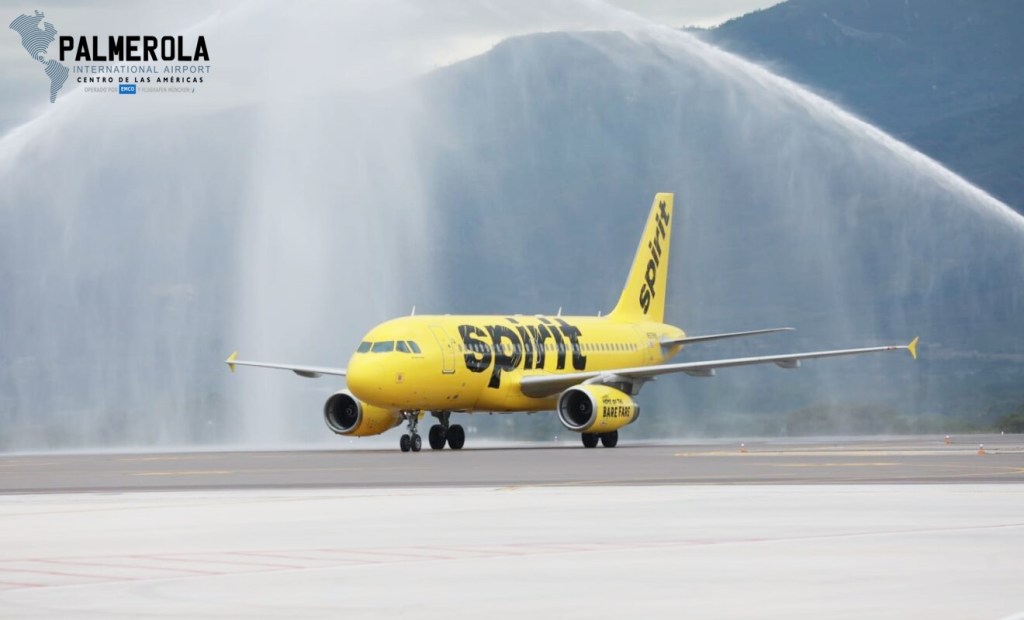
Aeropuerto Palmerola de Honduras inicia operaciones comerciales
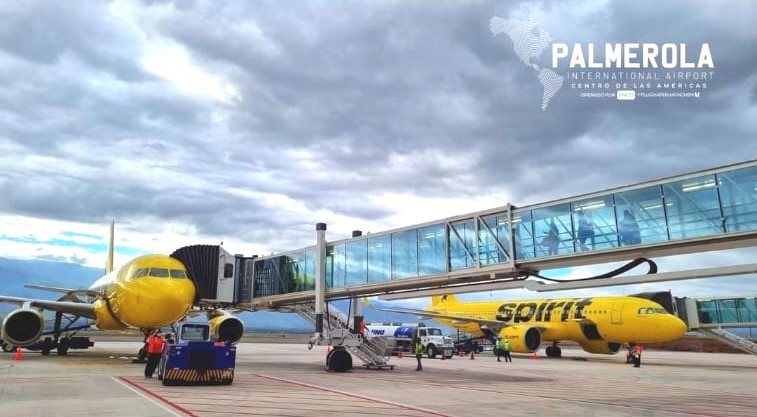
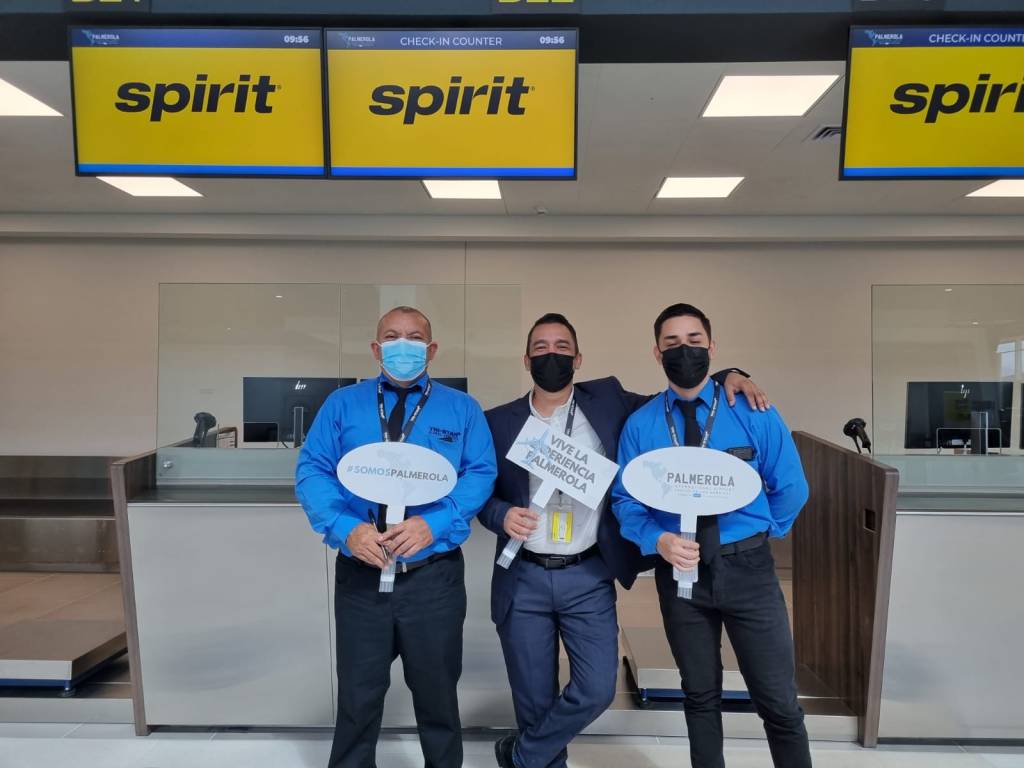
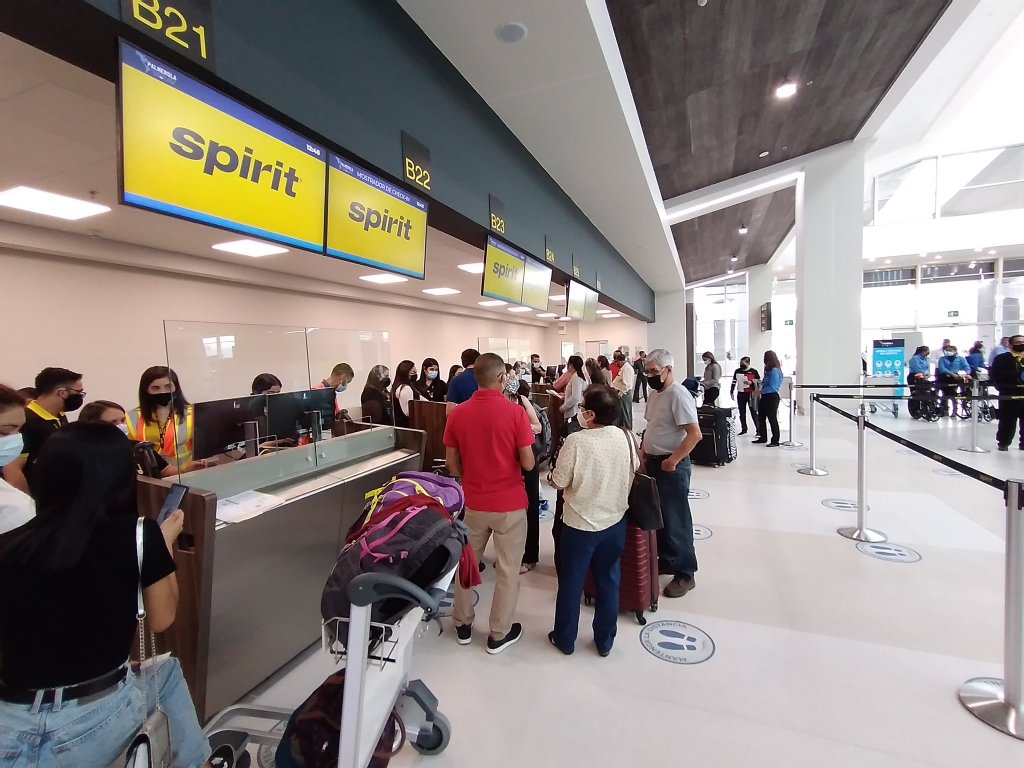
El nuevo Aeropuerto Internacional de Palmerola/XPL ha iniciado este Sábado 11/12 operaciones aerocomerciales inaugurando la apertura de esta nueva aeroestación en la República de Honduras con un vuelo proveniente de Estados Unidos de Spirit Airlines. El primer vuelo arribó a Palmerola hacia las 13:26 hora local (10:26 GMT) procedente de Houston (Estados Unidos), mientras que el segundo, desde Miami, llegó una hora después. “Después de seis años en construcción, el Sábado se apertura Palmerola con vuelo de @SpiritAirlines y tickets a US$ 149 ida y vuelta a Miami y Houston. Próximamente, seguiremos anunciado las nuevas rutas de bajo costo”, indicaba el Presidente Ejecutivo de la división Aeropuertos Grupo Emco, Lenir Pérez, en un mensaje en Twitter.
Decenas de pasajeros llegaron temprano este Sábado 11/12 a Palmerola para conseguir su boleto a bajo costo hacia Miami y Houston, y conocer las instalaciones del aeropuerto internacional, situado en el central departamento de Comayagua, capital del país, fundada por los españoles.
Aeropuerto Palmerola
El Aeropuerto Internacional Palmerola fue licitado en 2015 en el primer mandato de Hernández a través de una Alianza Público-Privada y fue adjudicada al consorcio conformado por Emco y el operador internacional de Munich, que invirtió unos US$ 87 millones de Dólares en el contrato por un lapso de treinta años. El consorcio encargado proyecta que Palmerola pueda recibir 1,7 millones de pasajeros al año, frente a los 290.000 que recibió Toncontín en 2019. La obra, cuya pista comprende una construcción de 39.000 metros cuadrados, funciona en el mismo sitio donde opera una base de la Fuerza Aérea Hondureña construida por Estados Unidos a inicios del decenio de los 80 del siglo pasado. Las obras de Palmerola fueron financiadas parcialmente por España con US$ 53 millones de Dólares como parte de programa de conversión de deuda con Honduras, mientras que US$ 23 millones fueron aportados por el Gobierno hondureño.
La Asociación Internacional de Transporte Aéreo (IATA) notificó que reconoce a Palmerola como el nuevo aeropuerto para la zona metropolitana de Tegucigalpa. Mediante resolución 763, sección 1.6.3, IATA aceptó que confirmó que Palmerola es el nuevo aeropuerto para Tegucigalpa.
El nuevo aeropuerto operará las veinticuatro horas (H24), con once (11) puertas de embargue, de ellas cuatro (4) remotas, y una pista de casi 2.500 metros. El Aeropuerto Palmerola proporcionará maximizar las operaciones del anterior Aeropuerto Tocontín, debido a las limitaciones por su ubicación geográfica. Las aerolíneas internacionales que operan en el Aeropuerto Toncontín, con una pista de 1.900 metros en Tegucigalpa, resulta difícil su aproximación en la cabecera sur de la misma, que está próxima a una zona de cerros lo que provoca limitaciones a las operaciones aéreas.
La introducción de vuelos económicos responde a la Ley de Pasajes Baratos que impulsó el Gobierno hondureño para incentivar el turismo en el país centroamericano. La aerolínea panameña Copa Airlines comenzará el próximo 15 de Diciembre de 2021 las operaciones en el Aeropuerto Internacional de Palmerola.
The new Palmerola International Airport/XPL has started this Saturday 11/12 commercial air operations, inaugurating the opening of this new air station in the Republic of Honduras with a flight from the United States of Spirit Airlines. The first flight arrived in Palmerola at around 01:26 pm local time (10:26 GMT) from Houston (United States), while the second, from Miami, arrived an hour later. “After six years under construction, Palmerola will open on Saturday with a @SpiritAirlines flight and tickets for US$ 149 round trip to Miami and Houston. In the near future, we will continue to announce the new low-cost routes”, indicated the Executive President of the Grupo Emco Airports division, Lenir Pérez, in a message on Twitter.
Dozens of passengers arrived early this Saturday 11/12 to Palmerola to get their low-cost ticket to Miami and Houston, and to see the facilities of the international airport, located in the central department of Comayagua, capital of the country, founded by the Spanish.
Palmerola airport
Palmerola International Airport was tendered in 2015 in Hernández’s first term through a Public-Private Alliance and was awarded to the consortium made up of Emco and the Munich international operator, which invested some US$ 87 million in the contract for a span of thirty years. The consortium in charge projects that Palmerola can receive 1.7 million passengers per year, compared to the 290,000 that Toncontín received in 2019. The work, whose runway includes a construction of 39,000 square meters, works on the same site where it operates a base of the Honduran Air Force built by the United States in the early 1980s. The Palmerola works were partially financed by Spain with US$ 53 million dollars as part of the debt conversion program with Honduras, while US$ 23 million were contributed by the Honduran government.
The International Air Transport Association (IATA) notified that it recognizes Palmerola as the new airport for the metropolitan area of Tegucigalpa. Through resolution 763, section 1.6.3, IATA accepted that it confirmed that Palmerola is the new airport for Tegucigalpa.
The new airport will operate 24 hours a day (H24), with eleven (11) embarkation gates, of which four (4) are remote, and a runway of almost 2,500 meters. The Palmerola Airport will provide to maximize the operations of the former Tocontín Airport, due to the limitations of its geographical location. The international airlines that operate at the Toncontin Airport, with a 1,900-meter runway in Tegucigalpa, find it difficult to approach it at the southern end of the same, which is close to an area of hills, which causes limitations to air operations.
The introduction of cheap flights responds to the Cheap Tickets Law promoted by the Honduran government to encourage tourism in the Central American country. The Panamanian airline Copa Airlines will begin operations at the Palmerola International Airport on December 15, 2021.
JetSmart inaugura primera ruta directa Santiago con Medellín
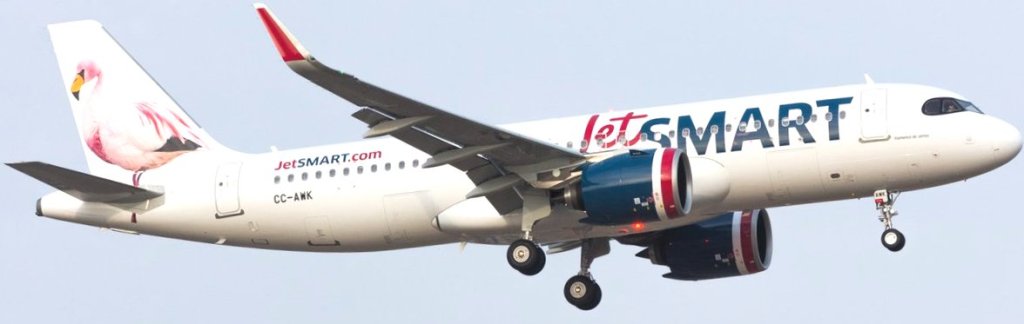
Este Miércoles 08/12 JetSmart Airlines Chile ha inaugurado el servicio non-stop Santiago de Chile—Medellín, abriendo un nuevo capítulo en conexiones entre Chile y Colombia. La aerolínea de presupuesto chilena ha establecido que la ruta tendrá inicialmente dos frecuencias semanales (2Frq/S), programada para los días Miércoles y Sábado. Con la apertura del nuevo destino, la aerolínea ha lanzado una oferta promocional denominada 1ERVUELO, que aplica hasta un 30% de descuento sobre el precio normal. El beneficio estará disponible hasta el próximo 07/12 para vuelos realizados entre el 15 de Enero y el 31 de Agosto de 2022. JetSmart Airlines cuenta con una política de flexibilidad que permite realizar cambios en caso que el vuelo haya sido cancelado o la persona tenga alguna dificultad para viajar en la fecha programada.
“Seguimos conectando personas y ciudades, en toda Sudamérica, con aviones A320 nuevos y precios bajos. Desde nuestra primera ruta a Colombia en 2019, hemos ya sumado servicio a Bogotá, Cali y ahora Medellín; así como desde Antofagasta a Cali. Y con ello contribuir a que las familias se reencuentren y se reactive el turismo y la economía de la región”, señaló el CEO de JetSmart Airlines, Estuardo Ortiz.
La aerolínea ultra low cost actualmente cuenta con cuatro rutas directas entre Chile y Colombia, tres de ellas partiendo desde Santiago hacia Bogotá, Cali y Medellín y desde su base de operaciones en Antofagasta hacia Cali. “Es una nueva conexión que demuestra el gran avance que Colombia ha tenido en la labor de recuperar y reactivar la industria turística. Además, con esta noticia seguimos dinamizando las relaciones comerciales con Chile, un mercado clave para la promoción de nuestro país como destino ideal para los viajes y los negocios”, explicó Flavia Santoro, Presidenta de ProColombia. A su vez, el Gerente General del Aeropuerto Nuevo Pudahuel, Xavier Lortat Jacob, señaló que la nueva ruta es un paso importante en la recuperación gradual de veintiséis rutas aéreas abiertas por la concesión desde que comenzó a operar en 2015. “Buscamos diversificar las opciones de viaje con nuevas rutas, lo que implica más alternativas para los pasajeros y, a través de la competencia, mejores precios”, aseguró Xavier Lortat Jacob.
JetSmart inaugurates Santiago—Medellín
JetSmart inaugurates first direct route connects Santiago—Medellín
This Wednesday 12/08 JetSmart Airlines Chile has inaugurated the non-stop service Santiago de Chile-Medellín, opening a new chapter in connections between Chile and Colombia. The Chilean budget airline has established that the route will initially have two weekly frequencies (2Frq/S), scheduled for Wednesday and Saturday. With the opening of the new destination, the airline has launched a promotional offer called 1ERVUELO, which applies up to a 30% discount on the normal price. The benefit will be available until next 07/12 for flights made between January 15 and August 31, 2022. JetSmart Airlines has a flexibility policy that allows changes to be made in case the flight has been canceled or the person has some difficulty to travel on the scheduled date.
“We continue to connect people and cities, throughout South America, with new A320 aircraft and low prices. Since our first route to Colombia in 2019, we have already added service to Bogotá, Cali and now Medellín; as well as from Antofagasta to Cali. And with this help families to meet again and to reactivate tourism and the economy of the region», said the CEO of JetSmart Airlines, Estuardo Ortiz.
The ultra low cost airline currently has four direct routes between Chile and Colombia, three of them departing from Santiago to Bogotá, Cali and Medellín and from its base of operations in Antofagasta to Cali. “It is a new connection that shows the great progress that Colombia has had in the work of recovering and reactivating the tourism industry. Furthermore, with this news we continue to boost commercial relations with Chile, a key market for promoting our country as an ideal destination for travel and business”, explained Flavia Santoro, President of ProColombia. In turn, the General Manager of the Nuevo Pudahuel Airport, Xavier Lortat Jacob, pointed out that the new route is an important step in the gradual recovery of twenty-six air routes opened by the concession since it began operating in 2015. “We seek to diversify the options of travel with new routes, which implies more alternatives for passengers and, through competition, better prices”, assured Xavier Lortat Jacob.
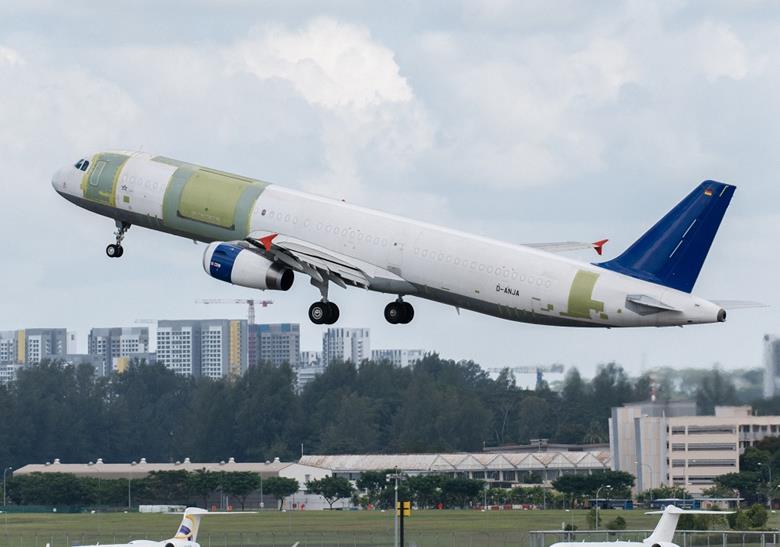
Elbe Flugzeugwerke (EFW), una empresa conjunta formada por Airbus Group y ST Engineering, ha concluido el primer Airbus A320 convertido de Pasajero a Carguero (PTF) ha tomado vuelo por primera vez. El Programa denominado A320P2F forma parte de un programa de conversiones situado en el Parque Aeroespacial Seletar de la República de Singapur. El A320P2F, con el número de serie S/N2737, realizó un viaje al este de Singapur el 8 de Diciembre de 2021. El primer Airbus A320-232 convertido posee quince años de antigüedad y comenzó su vida en Latam Airlines Brasil, como así también voló para IndiGo Airlines desde Abril de 2018.
A320PTF, nueva vida
Tras la reconversión a cargueros, las aeronaves pueden prolongar su vida útil transportando mercaderías. La conversión de aeronaves A320PTF tendrán varias pruebas de vuelo antes de recibir un Certificado de Tipo Suplementario (STC) de la Agencia de Seguridad Aérea de la Unión Europea (EASA). ST Engineering Aerospace Resources (STEAR) arrendará el cuerpo estrecho a Vaayu Group, que operará cinco unidades en total. Los servicios con el A320P2F convertido comenzarán el próximo año 2022.
El avión A320PFT puede acomodar diez (10) contenedores ULD y una posición de palet en la cubierta principal. Además, se pueden colocar siete contenedores ULD en la cubierta inferior. EFW destaca que el avión tiene una carga útil y un volumen considerablemente mayores que la competencia. El avión puede proporcionar 21 toneladas de carga útil de más de 1.800 NM (3.330 km) y 17 toneladas hasta 2.560 NM (4.740 km).
«Las características notables de la conversión del A320P2F incluyen: una puerta de carga de la cubierta principal en el fuselaje delantero en el lado izquierdo, que se acciona hidráulicamente y se bloquea eléctricamente y mide 142 «de ancho y 85″ de altura; una barrera de carga rígida 9G con un diseño liviano y duradero para un uso óptimo del espacio disponible; un revestimiento de carga liviano; un sistema de carga operado manualmente con soporte completo de ULD de fuselaje estrecho estándar de la industria; paneles de piso reforzados y rejilla de piso para atender a cargas de funcionamiento más altas; y un compartimento de carga Clase-E que cumple plenamente con los requisitos de la industria», ha expresado EFW a través de una declaración.
En medio del inicio de la crisis sanitaria mundial, las aerolíneas se encargaron de adaptar y convertir las unidades de sus flotas. Como resultado, en Mayo 2021, el Departamento de Mantenimiento e Ingeniería de SriLankan Airlines completó una conversión de un A320 en un preighter. El registro 4R-EXQ pasó a volar con FitsAir y puede transportar carga en su vientre. No obstante, la empresa conjunta Airbus promociona con orgullo su A320P2F con matrícula D-AAES como el primero de su tipo.
Perspectivas A320PTF
En general, existe una creciente demanda de soluciones de carga en medio de los requisitos cambiantes de la sociedad. La necesidad de suministros cruciales y el aumento del comercio electrónico están impulsando este cambio. Se necesitan aproximadamente 2.440 aviones para satisfacer la demanda en las próximas dos décadas y se espera que poco menos de la mitad de los aviones sean conversiones de fuselaje estrecho PTF. Las conversiones de cargueros de pasillo único han sido durante mucho tiempo una solución para las necesidades de carga. En el pasado, el Boeing 707 y el Douglas DC-8 eran elementos básicos en la industria. Incluso hasta ahora, las modificaciones de carga del 727, 737-200, DC-9 y MD-80 se han visto en los cielos.
Además, los 757-200, 737-300 y 737-400 han sido los principales pilar de la conversión de cargueros. También fuimos testigos del lanzamiento del programa 737-800BCF en 2016. Junto con el A321P2F existente, Airbus espera ver el éxito con el inicio de las operaciones con el A320P2F en 2022.
First A320 convertible
EFW company converts first A320CEO
Elbe Flugzeugwerke (EFW), a joint venture formed by Airbus Group and ST Engineering, has completed the first Airbus A320 converted from Passenger to Freighter (PTF) has taken flight for the first time. The A320P2F Program is part of a conversion program located in the Seletar Aerospace Park of the Republic of Singapore. The A320P2F, with the serial number S/N2737, made a trip to the east of Singapore on December 8, 2021. The first converted Airbus A320-232 is fifteen years old and began life at Latam Airlines Brazil, as well as flew for IndiGo Airlines since April 2018.
A320PTF, new life
After conversion to freighters, aircraft can extend their useful life by transporting goods. The conversion of A320PTF aircraft will have several flight tests before receiving a Supplemental Type Certificate (STC) from the European Union Aviation Safety Agency (EASA). ST Engineering Aerospace Resources (STEAR) will lease the narrow body to Vaayu Group, which will operate five units in total. Services with the converted A320P2F will start next year 2022.
The A320PFT aircraft can accommodate ten (10) ULD containers and one pallet position on the main deck. Additionally, seven ULD containers can be placed on the lower deck. EFW highlights that the aircraft has a considerably higher payload and volume than the competition. The aircraft can provide 21 tonnes of payload over 1,800 NM (3,330 km) and 17 tonnes up to 2,560 NM (4,740 km).
Notable features of the A320P2F conversion include: a main deck cargo door in the forward fuselage on the left side, which is hydraulically actuated and electrically locked and measures 142 «wide and 85″ high; a barrier 9G rigid cargo liner with a lightweight, durable design for optimal use of available space; a lightweight cargo liner; an industry standard narrow-body ULD full-support, hand-operated cargo system; reinforced floor panels and roof rack. floor to cater to higher operating loads; and an E-Class cargo compartment that fully meets the requirements of the industry», has expressed EFW through a statement.
In the midst of the onset of the global health crisis, airlines took it upon themselves to adapt and convert the units of their fleets. As a result, in May 2021, the SriLankan Airlines Maintenance and Engineering Department completed a conversion of an A320 into a preighter. The 4R-EXQ registry went on to fly with FitsAir and can carry cargo on its belly. However, the joint venture Airbus proudly promotes its A320P2F with registration D-AAES as the first of its kind.
Outlook A320PTF
In general, there is a growing demand for charging solutions amid the changing requirements of society. The need for crucial supplies and the rise of e-commerce are driving this change. Approximately 2,440 aircraft are needed to meet demand over the next two decades and just under half of the aircraft are expected to be PTF narrow-body conversions. Single aisle freighter conversions have long been a solution to cargo needs. In the past, the Boeing 707 and Douglas DC-8 were staples in the industry. Even so far, cargo modifications to the 727, 737-200, DC-9 and MD-80 have been seen in the skies.
In addition, the 757-200, 737-300 and 737-400 have been the main mainstays of the freighter conversion. We also witnessed the launch of the 737-800BCF program in 2016. Along with the existing A321P2F, Airbus expects to see success with the start of operations with the A320P2F in 2022.
PREIGHTER: Un preighter, también conocido como carga en cabina, es un avión originalmente destinado a transportar pasajeros pero que se opera temporalmente como un avión de carga mediante la carga de carga en la cabina de pasajeros. El término es un acrónimo de «pasajero» y «carguero» y se atribuye al Director Ejecutivo de Lufthansa, Carsten Spohr; llegó a utilizarse cuando las aerolíneas comerciales respondieron a la pandemia de COVID-19 de 2020.
PREIGHTER: A preighter, also known as cargo in cabin, is an aircraft originally intended to carry passengers but which is operated temporarily as a cargo aircraft by loading freight in the passenger cabin. The term is a portmanteau of «passenger» and «freighter» and is attributed to Lufthansa chief executive Carsten Spohr; it came to use as commercial airlines responded to the 2020 COVID-19 pandemic.
El Gobierno de la Provincia de la La Rioja mostró un fuerte interés en que más compañías aéreas puedan iniciar rutas, entre ellas se encuentra JetSmart Airlines Argentina. La ultra bajo costo mantuvo reuniones con diversos entes gubernamentales durante varios meses, con el fin de establecer nuevos enlaces en el 2022, ante la inminente llegada de nuevas aeronaves.
Mientras tanto, el Organismo Regulador del Sistema Nacional de Aeropuertos (ORSNA), en conjunto con Aeropuertos Argentina 2000 (AA2000), continúan con la ampliación de la nueva terminal de pasajeros en el Aeropuerto de La Rioja, lo que permitirá ampliar las operaciones de las aeronaves en la plataforma de la aeroestación. Entre otras mejoras se encuentra el mejoramiento de la playa de estacionamiento vehicular.
Aunque la pandemia redujo significativamente los vuelos de la provincia cuyana a cuatro vuelos semanales de Aerolíneas Argentinas con aeronaves Embraer E190, sirviendo Buenos Aires—La Rioja—Catamarca, se espera que para Enero 2022, La Rioja disponga de seis vuelos semanales de manera directas con la Capital Federal. Anteriormente, la aeroestación poseía doce frecuencias semanales movilizando 61.547 pasajeros, siendo su pico en 2017 al movilizar 72.852 viajeros.
La reunión ha avanzado entre la Gobernación riojana y la aerolínea low cost argentina, continuarán focalizados en arribar a acuerdos concretos para que la oferta de vuelos sea varia y quiebre el monopolio aéreo que continúa en esta región del país.
JetSmart analyzes La Rioja
JetSmart studies flying to La Rioja, Argentina
The Government of the Province of La Rioja showed strong interest in allowing more airlines to start routes, including JetSmart Airlines Argentina. The ultra-low cost held meetings with various government entities for several months, in order to establish new links in 2022, given the imminent arrival of new aircraft.
Meanwhile, the Regulatory Body of the National Airport System (ORSNA), in conjunction with Airports Argentina 2000 (AA2000), continue with the expansion of the new passenger terminal at La Rioja Airport, which will allow expanding the operations of the aircraft on the apron of the airstation. Among other improvements is the improvement of the vehicular parking lot.
Although the pandemic significantly reduced flights from the Cuyo province to four weekly flights by Aerolineas Argentinas with Embraer E190 aircraft, serving Buenos Aires-La Rioja-Catamarca, it is expected that by January 2022, La Rioja will have six weekly direct flights with the Federal Capital. Previously, the air station had twelve weekly frequencies, mobilizing 61,547 passengers, with its peak in 2017, mobilizing 72,852 passengers.
The meeting has advanced between the Riojan Government and the Argentine low cost airline, they will continue to focus on reaching concrete agreements so that the flight offer is varied and breaks the air monopoly that continues in this region of the country.
El Aeropuerto Posadas/PSS de Argentina ha anunciado el cierre de sus operaciones de manera transitoria desde Marzo 2022 para la realización de obras de mejoramiento. Trasladan vuelos de cabotaje a Iguazú. El Aeropuerto de Posadas, localizada en la Provincia de Misiones, entrará en el mes de Marzo 2022 a un proceso de refacciones y remodelación por el espacio de cinco meses. Los vuelos regulares de línea serán atendidos por el Aeropuerto Iguazú/IGR, mientras que Apóstoles y Oberá se utilizará para los vuelos chárter y privados.
El Gobierno de Misiones en la presentación de un estudio dado a conocer desde la Cámara de Comercio e Industria de Posadas, anunció las refacciones que marcarán un mejoramiento y revalorización de la aeroestación. Las mejoras del aeropuerto comprenden obras en el suelo de la terminal que será el de mayor refacciones. El Aeropuerto Posadas podría volver a estar operativo en Julio o Agosto del 2022 tras la finalización de las obras.
Buscando reactivación
La Provincia de Misiones está un 20% por debajo de lo que era el movimiento aéreo con respecto a aerolíneas y otras compañías en el 2019 pre-pandemia. Previo a las mejoras de la aeroestación, entre Diciembre 2021 y Marzo 2022 está previsto recuperar las rutas entre Tucumán—Iguazú, Rosario—Iguazú, Córdoba—Posadas y Rosario—Posadas. También, está previsto recuperar la ruta de Posadas—Córdoba, y también lograr unir Posadas—Rosario. Se están buscando alternativas de conexiones con las capitales de todo el país, como Paraná, Santa Fe, Resistencia, entre otros destinos. Hasta el momento, la ciudad de Posadas se mantiene con 2 o 3 vuelos diarios. Aerolíneas Argentinas, opera con una frecuencia diaria y otras compañías como Flybondi Líneas Aéreas posee entre tres a cuatro frecuencias semanales.
Posadas Airport works
Airport closure for spare parts March 2022
The Posadas Airport/PSS in Argentina has announced the temporary closure of its operations from March 2022 to carry out improvement works. They transfer domestic flights to Iguazú. Posadas Airport, located in the Province of Misiones, will enter in March 2022 a process of spare parts and remodeling for the space of five months. Regular line flights will be served by the Iguazú/IGR Airport, while Apóstoles and Oberá will be used for charter and private flights.
The Government of Misiones in the presentation of a study released by the Chamber of Commerce and Industry of Posadas, announced the spare parts that will mark an improvement and re-heating of the air station. The airport improvements include works on the terminal floor, which will be the one with the largest repairs. Posadas Airport could be operational again in July or August 2022 after the completion of the works.
Searching revival
The Province of Misiones is 20% below what was the air movement with respect to airlines and other companies in the pre-pandemic 2019. Prior to the improvements to the air station, between December 2021 and March 2022 it is planned to recover the routes between Tucumán—Iguazú, Rosario—Iguazú, Córdoba—Posadas and Rosario—Posadas. Also, it is planned to recover the Posadas—Córdoba route, and also to unite Posadas-Rosario. Alternative connections are being sought with capitals throughout the country, such as Paraná, Santa Fe, Resistencia, among other destinations. So far, the city of Posadas is maintained with 2 or 3 daily flights. Aerolíneas Argentinas operates on a daily basis and other companies such as Flybondi Líneas Aéreas have between three to four weekly frequencies.





























 airgways.com