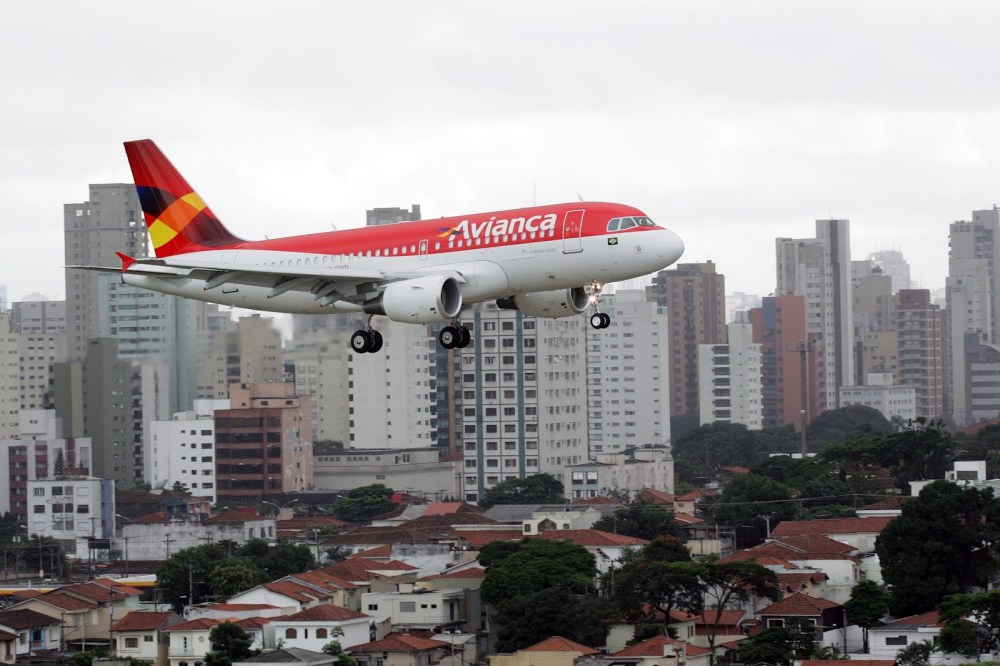
Volar en la República Argentina ahora es ni tan «low-cost» ni tan «low-fare»
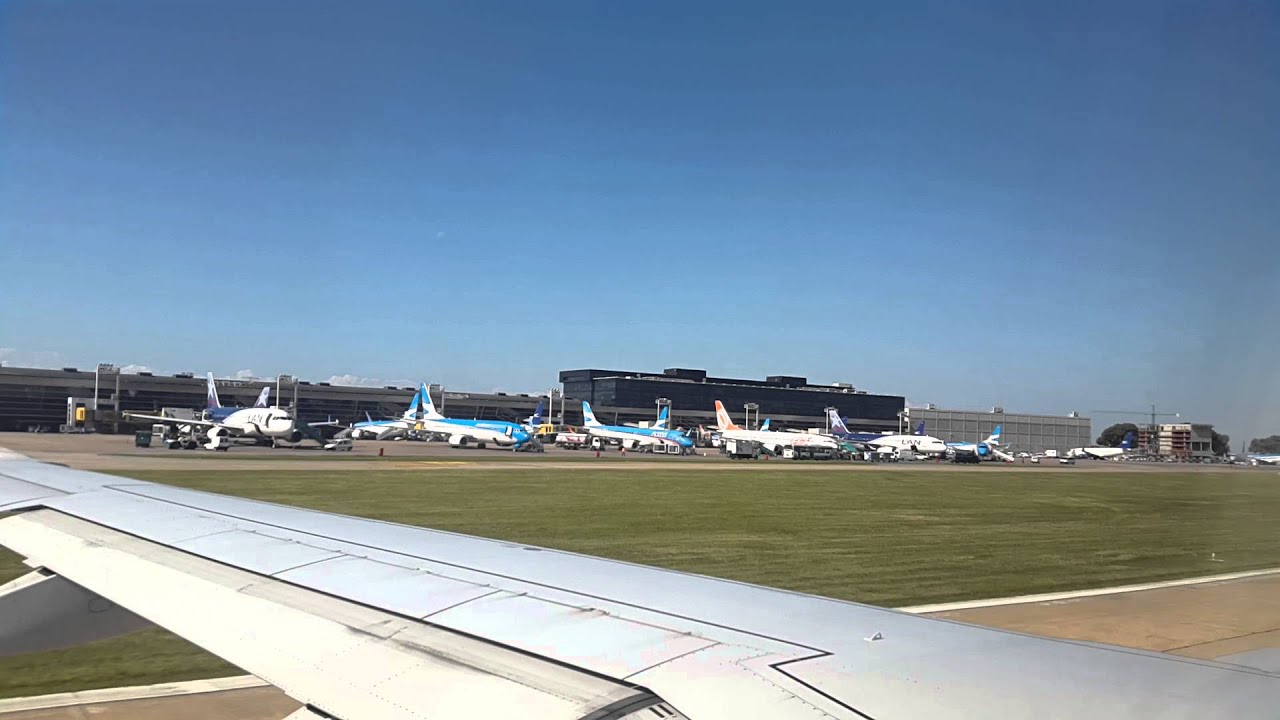
https://i.ytimg.com/vi/-CpJR1ZHXqk/maxresdefault.jpg

AW | 2017 03 26 12:03 | AIRLINES MARKET

El Ministro de Transporte Guillermo Dietrich expresó que las compañías aéreas que han pasado por la Audiencia Pública son líneas aéreas que manejan «precios bajos», pero que no tienen el mismo modelo empresarial que las low cost europeas

 «En Argentina no hay aerolíneas low cost» comunicó el Ministro de Transporte de Argentina

El ministro de Transporte de la Nación, Guillermo Dietrich, explicó que las líneas aéreas que operan hoy en la Argentina «no son low cost, son empresas que tienen tarifas bajas y el costo de las mismas es a arbitrio exclusivo de cada empresa». «Las nuevas compañías se están instalando en el país, son empresas que se registran en el país y compran aviones y ponen oficinas en Argentina y contratan personal local, esa es la realidad».

Las declaraciones del Ministro de Transporte vienen a aclarar la confusión generalizada en la opinión argentina sobre el término «low-cost» utilizado para definir a las empresas que tienen un modelos de trabajo «low-cost, low fare», «bajo cost, bajo precio».

Una aerolínea «low cost-low fare», son aerolíneas que poseen un costo operativo bajo y promueven pasajes a precios muy convenientes en el mercado donde sólo comprende el transporte punto a punto, un servicio básico, en la que el pasajero puede decidir si decide comprar otros servicios que puede recibir durante el vuelo.

Modelos low-cost y modelo tradicional
Un modelos bien establecido en Europa es la compañía irlandesa Ryanair, donde es posible obtener un boleto desde Dublin a Roma, por ejemplo, a tan sólo 50 euros, pero esto habilita al pasajero a llevar solamente un equipaje de mano. En este mismo vuelo, una valija de 15 kilogramos de peso tendrá un costo adicional de 15 euros; una de 20 kilos 25 euros y el monto se duplica si hay una tercera valija, siempre que se abonen de manera anticipada. Además, el servicio de a bordo hay que abonarlo aparte.

En tanto, el mismo trayecto en una compañía «tradicional» como Lufthansa, por ejemplo, tiene un costo de 249 euros, e incluye el equipaje así como el servicio de a bordo.

Hay condiciones esenciales que hacen a una verdadera low cost, como por ejemplo aviones nuevos que permiten mayor eficacia y productividad, una única flota que ahorra costos en mantenimiento, capacitación, tripulación y stock de repuesto, entre otras cuestiones.

También convenios laborables flexibles, y aeropuertos de segundo nivel dispuestos inclusive a subvencionar a las aerolíneas para que operen allí. También la venta de pasajes se hace de manera directa vía internet, evitando la mediación de las agencias de viajes, entre otras cuestiones.

La realidad indica que ninguna de las empresas existentes ni las que aspiran a entrar en Argentina reúnen las condiciones de las aerolíneas denominadas de «bajo costo». Al menos no en términos similares a los que existen en el mercado aerocomercial internacional.

De las firmas que se presentaron a la licitación, sólo Flybondi intenta parecerse a fuerza de declaraciones en los medios a una «low cost» porque, una vez que reciba la aprobación gubernamental, promete operar fuera de Aeroparque y ofrece por ejemplo volar a Córdoba por un costo cercano a los $ 600 pesos por tramo.

https://i0.wp.com/www.aeropuertos.net/wp-content/uploads/2016/06/EsperandoAEPSABE-1.jpg

Aerolíneas Argentinas y Latam están lejos de ser «low cost», aunque desde comienzos de este año hayan imitado algunas de las prácticas de esas empresas, como por ejemplo suprimir en los vuelos de menos de dos horas el servicio de a bordo; o cobrar extra las ubicaciones preferenciales o más cómodas, así como contar con la posibilidad de cambiar fechas y horarios.

La tercera aerolínea que está operando en el cabotaje local, Andes, se define a sí misma como «una compañía con precios baratos», y no como «low cost».

«Nosotros estamos operando desde hace 10 años con un alto grado de eficiencia y calidad y ofrecemos precios bajos, pero no somos una aerolínea de bajo costo. Tenemos servicio de a bordo, operamos en los aeropuertos principales y tenemos estándares de seguridad reconocidos a nivel internacional«, dijo a Télam el gerente General de la firma, Horacio Preneste.

No obstante, hay aerolíneas «low cost» operando en Argentina que son extranjeras y no realizan vuelos de cabotaje local como la chilena SKY Airline y las brasileras GOL Linheas Aéreas y Azul Linheas Aéreas. Son de bajo costo en su país, pero en territorio argentino operan con «precios bajos» y servicio normal en cuanto a equipaje y gastronomía a bordo.

En tanto la compañía Level, la nueva aerolínea modelo «low cost» del grupo IAG (International Airlines Group) anunció para junio la puesta en marcha de la ruta Barcelona – Buenos Aires con aviones A330-200 y capacidad para 293 asientos, a un costo de 249 euros por trayecto.

Distintos operadores aéreos consultados por Télam aclararon que una oferta o una promoción especial por parte de una línea aérea nada tienen que ver con las empresas que solamente permiten llevar un bolso de mano, un objeto personal -como la cartera- y un abrigo con la compra del boleto, cobrando aparte el equipaje despachado, la elección del asiento, la comida a bordo y, en algunos casos, hasta el entretenimiento.

Añadieron que «hoy Argentina no tiene empresas low cost operando en el mercado de cabotaje», y pusieron en duda que en algún momento cercano pueda haberlas, debido a que la infraestructura y los costos operativos y aeroportuarios no dan margen para que eso ocurra». AIRGWAYS ® Icon-AW

https://i0.wp.com/aviacionaldia.com/wp-content/uploads/2016/08/avion.png

Flying in the Argentine Republic is now neither so «low-cost» nor so «low-fare»

Transport Minister Guillermo Dietrich said that the airlines that have passed the Public Hearing are airlines that handle «low prices» but do not have the same business model as the European low cost airlines

«In Argentina there are no low cost airlines,» said the Minister of Transport of Argentina

The Minister of Transportation of the Nation, Guillermo Dietrich, explained that the airlines that operate today in Argentina «are not low cost, they are companies that have low rates and the cost of the same is at the exclusive discretion of each company.» «The new companies are being installed in the country, they are companies that register in the country and buy planes and set up offices in Argentina and hire local personnel, that’s the reality.»

The declarations of the Minister of Transport clarify the general confusion in the Argentine opinion about the term «low-cost» used to define the companies that have a «low-cost, low fare», «low cost, low price».

A «low cost-low fare» airline is an airline that has a low operating cost and promotes very convenient fares in the market where it only includes point-to-point transport, a basic service, in which the passenger can decide if he decides Purchase other services you may receive during the flight.

https://i0.wp.com/www.eldiario24.com/d24ar/fotos/cache/notas/2017/03/26/750x380_396204_20170326100725.jpg

MINISTER OF TRANSPORT OF ARGENTINA, GUILLERMO DIETRICH

Low-cost models and traditional model
A well-established model in Europe is the Irish company Ryanair, where it is possible to get a ticket from Dublin to Rome, for example, only 50 euros, but this enables the passenger to carry only hand luggage. In this same flight, a bag of 15 kilograms of weight will have an additional cost of 15 euros; One of 20 kilos 25 euros and the amount is doubled if there is a third bag, provided they are paid in advance. In addition, the onboard service must be paid separately.

Meanwhile, the same journey in a «traditional» company as Lufthansa, for example, costs 249 euros, and includes luggage as well as the on-board service.

There are essential conditions that make a real low cost, such as new aircraft that allow greater efficiency and productivity, a single fleet that saves costs in maintenance, training, crew and spare stock, among other issues.

Also flexible labor agreements, and second-level airports even willing to subsidize airlines to operate there. Also the sale of tickets is done directly via the internet, avoiding the mediation of travel agencies, among other issues.

The reality is that none of the existing companies or those aspiring to enter Argentina meet the conditions of the so-called «low cost» airlines. At least not in terms similar to those that exist in the international air-trade market.

Of the signatures submitted to the bidding, only Flybondi tries to resemble media statements at a «low cost» because, once it receives government approval, it promises to operate outside of Aeroparque (Buenos Aires) and offers, for example, flying to Córdoba by a cost close to $ 600 pesos (U$D 38,50) per tranche.

Aerolíneas Argentinas and Latam are far from being «low cost», although since the beginning of this year they have imitated some of the practices of these companies, such as eliminating on board flights of less than two hours on board; or charge extra preferential or more comfortable locations, as well as having the possibility to change dates and times.

The third airline that is operating in local cabotage, Andes, defines itself as «a company with cheap prices,» not as «low cost.»

«We have been operating for 10 years with a high degree of efficiency and quality and offer low prices, but we are not a low cost airline. We have on board service, we operate at the main airports and we have internationally recognized safety standards «Horacio Preneste, general manager of the firm, told Télam.

However, there are «low cost» airlines operating in Argentina that are foreign and do not operate local coastal flights such as the Chilean SKY Airline and the Brazilian GOL Linheas Aéreas and Azul Linheas Aéreas. They are of low cost in their country, but in Argentine territory they operate with «low prices» and normal service as for luggage and gastronomy on board.

Meanwhile, the company Level, the new low cost airline of the group IAG (International Airlines Group) announced for June the start of the route Barcelona – Buenos Aires with airplanes A330-200 and capacity for 293 seats, at a cost Of 249 euros per way.

Different air operators consulted by Télam clarified that a special offer or promotion by an airline has nothing to do with companies that only carry a handbag, a personal object – such as the wallet – and a coat with the purchase Of the ticket, charging separately checked baggage, choice of seat, food on board and, in some cases, even entertainment.

They added that «today Argentina does not have low cost companies operating in the cabotage market, and they questioned than at some point in time there may be them, because infrastructure and operating and airport costs do not allow room for that to occur». A\W

Ξ A I R G W A Y S Ξ
SOURCE: Telam.com.ar / Airgways
DBk: Ytimg.com / Aeropuertos.net / Aviacionaldia.com
AW-POST: 201703261203AR

A\W   A I R G W A Y S ®
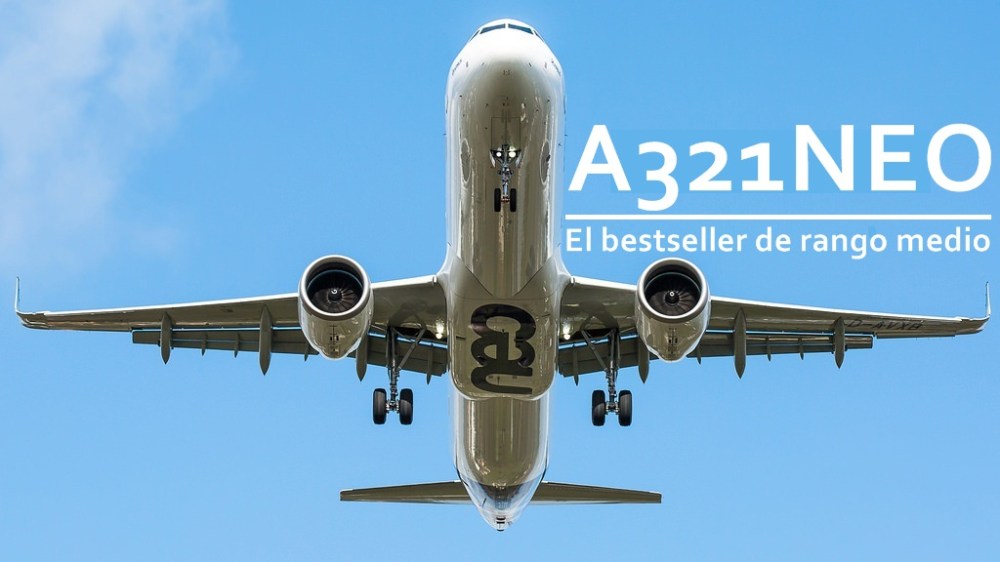
A321NEO LR «bestseller» de rango medio

25783822476_9b084503a2_b - copia

AW | 2017 03 26 00:00 | INDUSTRY

 logo_airbus_2014-svg

Airbus A321NEO LR está ganando la batalla de alcance medio

Airbus Group está decidido a dar batalla por el rango medio, un mercado que no supo aprovechar la industria norteamericana con una mejora en el Boeing 757 o con un avión nuevo.

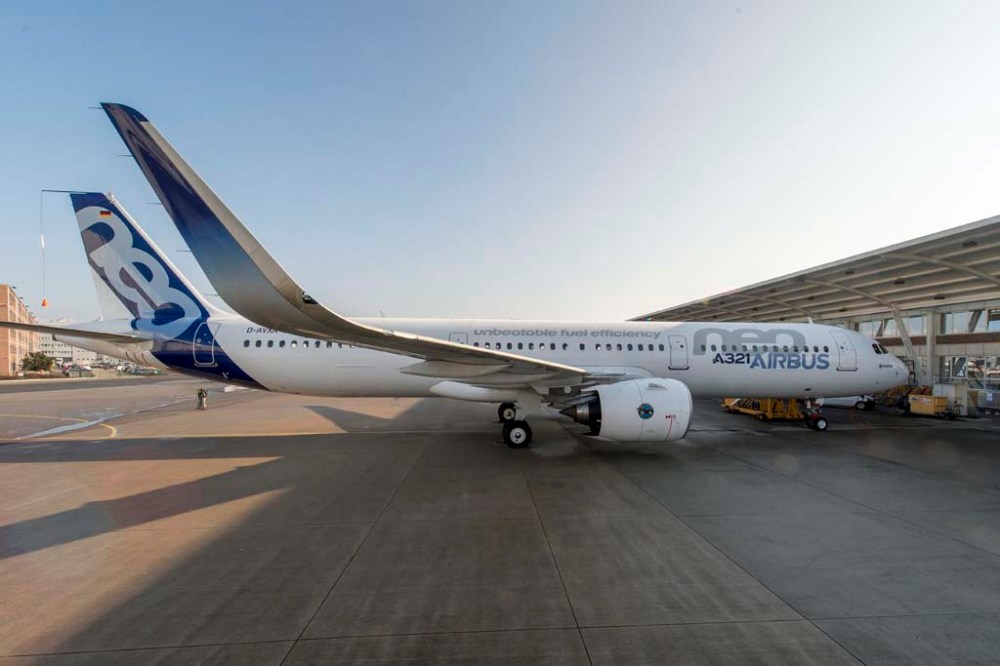
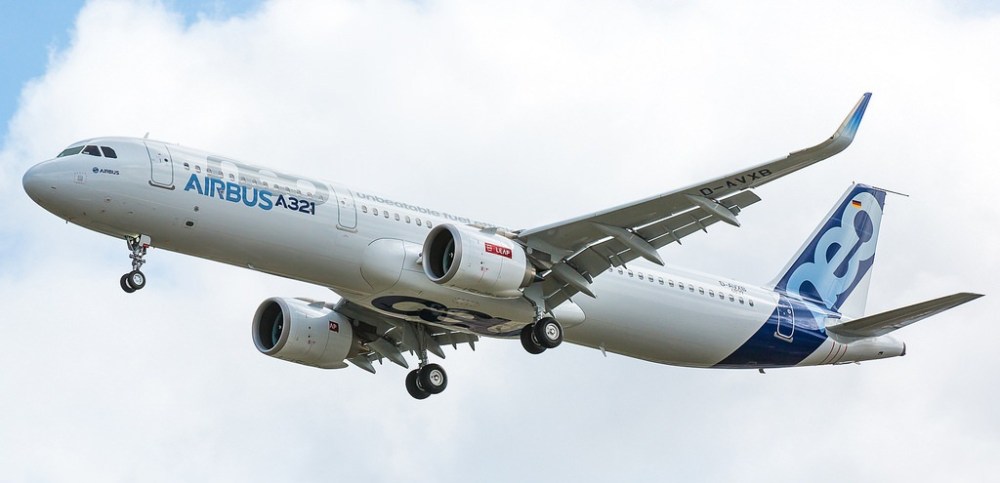
El Airbus A321NEO, realizó el primer vuelo el 12 de Febrero de 2016 en la planta de la fábrica en Hamburgo, Alemania. Lleva dos motores CFM LEAP-1A.

La versión A321NEO LR

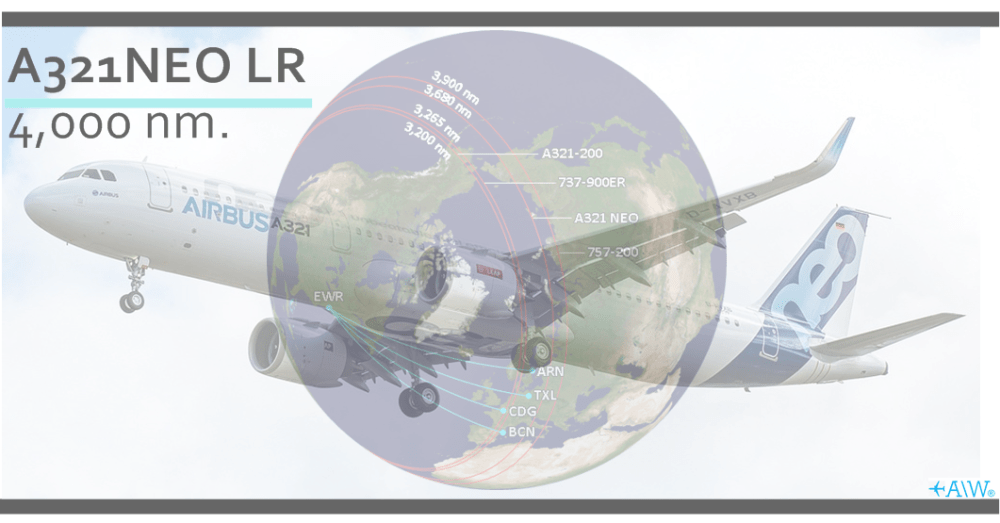
El avión fue fabricado para volar distancias medias, y se están fabricando dos variantes, uno es el Airbus A321NEO que es el básico y otro es el Airbus A321NEO LR, de rango largo, que será el reemplazo directo del Boeing 757-200, ya que ofrece un alcance de 7400 km, para 206 pasajeros en dos clases, 220 en una clase estándar y 240 en alta densidad.

AW-7321N37

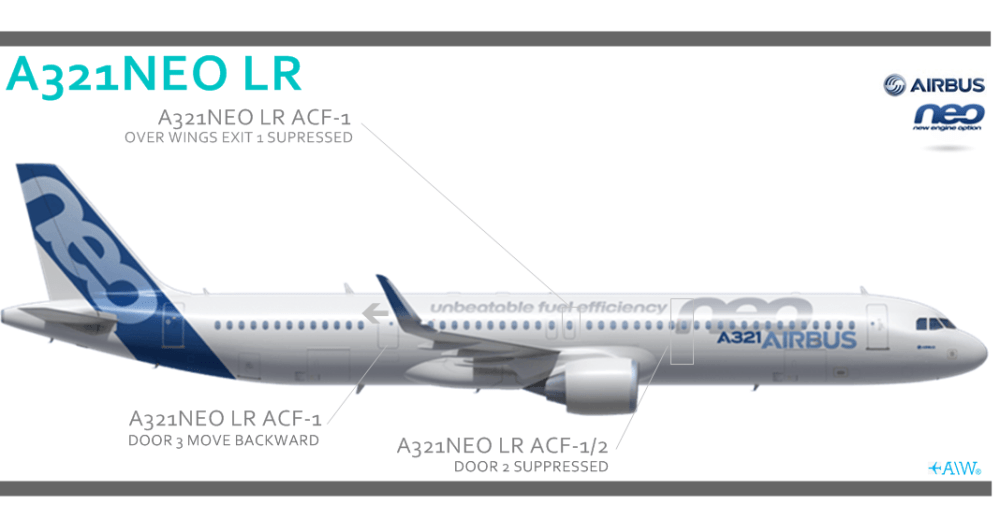
La versión LR traerá algunas modificaciones significativas. Las vesiones básicas tanto del A321CEO como del A321NEO conservan las puertas de 1, 2, 3 y 4 a lo largo de todo el fuselaje. A diferencia, los A321NEO ACF, Airbus Cabin Flex, poseen dos configuraciones. Asignaremos nombres a fin de diferenciarlas: A321NEO ACF-1 Y A321NEO ACF-2. En ambas eliminan las puertas Nº 2 de ambos lado del fuselaje para dar mayor capacidad de pasajeros. La primera cofiguración, A321NEO ACF-1 elimina la sección de las primeras dos salidas de emergencias a ambos lados del fuselaje, mientras que la versión A321NEO ACF-2 conserva las cuatro salidas, dos de cada lado del fuselaje. En la versión A321NEO ACF-1 las puertas Nº 3 se mueven hacia popa y la Nº 4 conserva su tamaño y ubicación en ambas versiones. Las configuraciones de pax están ubicadas entre los siguientes segmentos: para el A321CEO/NEO en su versión básica llevará 220 pax, mientras que las versiones A321NEO ACF-1 y A321NEO ACF-2 llevarán 195 y 240 respectivamentes.

AW-7321N57
El «bestseller» se llama A321

Las ventas del A321 que también se fabrica en Mobile, Alabama, Estados Unidos van 5 a 1 respecto de su rival de Boeing. Hasta los más fervorosos compradores de Boeing han tenido que admitir que el Airbus A321 es excepcional y han cambiado las opciones de mercado.

Estirando las performance del Boeing 737MAX
Boeing tiene un problema estructural con respecto a la generación de la familia del Boeing 737. Aunque fue concebido hace muchos años, ya no se puede extender más. Pero existe un problema insalvable: ese modelo exige un motor más grande, como el que efectivamente usará Airbus, pero eso no se puede con el sistema de aterrizaje actual, muy bajo y pensado en los años sesenta. Incluso en este caso, quedaría por resolver el problema del alcance, muy superior en los Airbus A321NEO. El Boeing 737-10 MAX es una prueba del desafío de la empresa norteamericana por extender lo máximo posible el fuselaje. Pero el Boeing 737-10 MAX queda lejos de la capacidad operativa del A321NEO. Aunque la Boeing está incorporando motores más potentes, con la presente estructura tan baja del avión no se puede avanzar más. Hay que rediseñar todo de nuevo. Por eso entró en una etapa de prueba de factibilidad con respecto a su nuevo integrante de la familia, el Boeing 797 que se ubicaría en el mercado de rango medio, pero el fabricante sabe que un nuevo diseño es más complejo, insume más costos directos y no podría ofrecer un producto lo más cercano para recuperar el mercado perdido con el Boeing 757.

Mientras Boeing debate las prestaciones del Boeing 737-10 MAX y del nuevo avión comercial, el Boeing 797, aumenta la distancia en favor del A321, que tiene unas ventas excepcionales. El problema de Boeing es aún más dramático: el A321NEO en realidad está reemplazando al B-757 que Boeing decidió dejar de fabricar en 2004; tiene más alcance, es de un pasillo y tiene más de 200 asientos. No es un mercado tan amplio como el del 737, pero es un mercado interesante que ahora parece imponerse en el mercado con el auge de los vuelos transoceánicos punto a punto.

Los clientes se inclinan por el A321

IndiGo Airlines Airbus A320-200neo

INDIGO AIRLINES CAMBIARÍA ALGUNOS A320NEO POR A321NEO

El caso de Norwegian Air. En la actualidad posee una flota de «todo Boeing», que por mucho tiempo ha sido cliente fiel a la industria americana. Cambiar o incorporar nuevos aviones en el mismo segmento incorporaría costos operativos más elevados. Cuando el A321 salió enescena pronto el escenario fue cambiando, hasta que el A321NEO LR prorrumpe en el mercado ofreciendo prestaciones muy similares al Boeing 757: 240 pasajeros, pasillo único, 4000-4600 mn. y un consumo inferior a todos sus competidores directos lo hacen el favorito como aeronave de alcance medio. Norwegian, desde luego, no lo dejará pasar. Ni decenas de otras aerolíneas como Middle East Airlines (MEA) que recientemente ha ordenado A321 con opción de cambios al A321NEO. La compañía indú Indigo Airlines está negociando cambiar algunos de sus A320NEO’s por A321NEO’s un indicativo de la tendencia de las líneas aéreas a incorporar aviones con mejores y mayores prestaciones. Otro ejemplo, la nueva propiedad de la portuguesa TAP ha decidido relanzar la compañía. Pero TAP tiene un problema, sus mercados naturales no tienen gran demanda, por lo que necesita aviones de menos capacidad. Por eso ha optado por el A321NEO: menos consumo, largo recorrido, menos pasajeros. La fórmula ideal. Así, la lista de clientes es interminable. AIRGWAYS ® Icon-AW

A321NEO, el «Best-seller»

Airbus-A321neo

EL A321NEO POSEE UNAS PRESTACIONES INMEJORABLES

La calidad líder de la industria y la eficiencia de la familia A320 de Airbus, de la que el A321 es miembro, se está mejorando con sus nuevas versiones NEO de motor. Incorporando los «Sharklets» de Airbus y dos nuevas opciones de motor, la familia A320NEO ofrece el máximo beneficio con cambios mínimos desde los A319s, A320s y A321 de la línea de base, proporcionando mejoras de combustible por asiento del 20%, además de un rango adicional de hasta 500 millas náuticas / 900 km o 2 toneladas de carga útil adicional.

Para el A321NEO, que realizó su primer vuelo en febrero de 2016, Airbus aumenta la capacidad de asientos con un uso optimizado del espacio de la cabina, un aumento de los límites de salida y una nueva configuración de la puerta de la cabina. Esta opción «Cabin-Flex» aumentará la capacidad máxima certificada del jetliner a 240 asientos, mientras que sigue acomodando el estándar de confort moderno de Airbus de por lo menos asientos de 18 pulgadas de ancho.

El A321LR, una nueva variante del Airbus A321NEO, cuya entrega comenzará en 2019, tendrá el mayor alcance de cualquier avión de pasillo de un solo pasillo, capaz de volar rutas de hasta 4.000 nm. Se adapta perfectamente a las rutas transatlánticas y permite a las compañías aéreas aprovechar nuevos mercados de larga distancia que no eran accesibles con aviones de pasillo único. A\W

25579589552_0469fe5155_b

A321NEO LR the mid-range «bestseller»

96x96_new_engine_option_02Airbus A321NEO LR is winning the mid-range battle
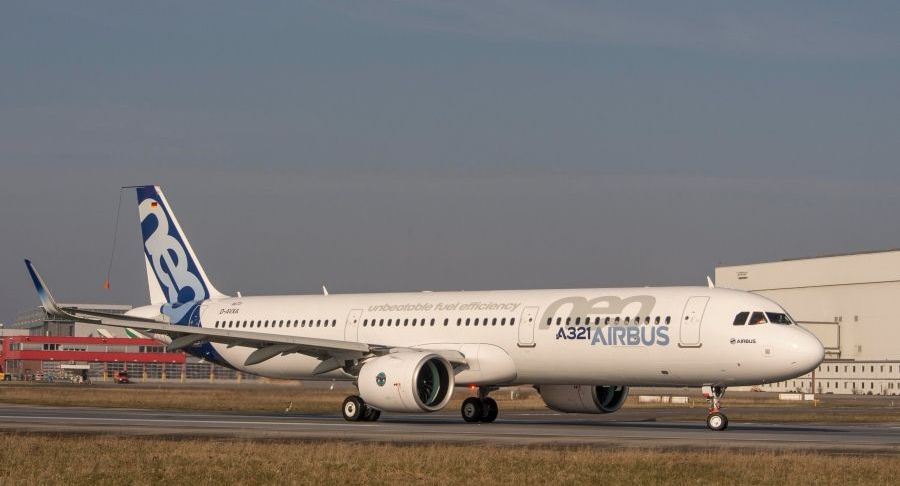


Airbus Group is determined to fight for the middle range, a market that did not know to take advantage of the North American industry with an improvement in the Boeing 757 or with a new airplane.

The Airbus A321NEO made the first flight on February 12, 2016 at the plant in Hamburg, Germany. It has two CFM LEAP-1A motors.

The A321NEO LR

The aircraft was built to fly average distances, and two variants are being manufactured, one is the Airbus A321NEO which is the basic one and the other is the Airbus A321NEO LR, long range, which will be the direct replacement of the Boeing 757-200, since Offers a range of 7400 km, 206 passengers in two classes, 220 in a standard class and 240 in high density.

The LR version will bring some significant modifications. The basic vesicles of both the A321CEO and the A321NEO retain the doors of 1, 2, 3 and 4 along the entire fuselage. In contrast, the A321NEO ACF, Airbus Cabin Flex, have two configurations. We will assign names to differentiate them: A321NEO ACF-1 AND A321NEO ACF-2. In both they eliminate the doors Nº 2 of both side of the fuselage to give greater capacity of passengers. The first configuration, A321NEO ACF-1 eliminates the section of the first two emergency exits on both sides of the fuselage, while the A321NEO ACF-2 retains the four exits, two on each side of the fuselage. In the A321NEO version ACF-1 the doors Nº 3 move aft and the No. 4 retains its size and location in both versions. The pax configurations are located between the following segments: for the A321CEO / NEO in its basic version it will carry 220 pax, whereas the A321NEO versions ACF-1 and A321NEO ACF-2 will carry 195 and 240 respectively.

The «bestseller» is called A321
Sales of the A321 that is also manufactured in Mobile, Alabama, United States are 5 to 1 compared to its Boeing rival. Even the most fervent Boeing buyers have had to admit that the Airbus A321 is exceptional and has changed the market options.

Extending the performance of the Boeing 737MAX
Boeing has a structural problem with the generation of the Boeing 737 family. Although conceived many years ago, it can no longer be extended. But there is an insurmountable problem: that model requires a larger engine, such as Airbus will actually use, but that can not be done with the current, very low landing system in the 1960s. Even in this case, the scope problem would be solved, much higher in the Airbus A321NEO. The Boeing 737-10 MAX is a test of the North American company’s challenge of extending the fuselage as much as possible. But the Boeing 737-10 MAX is far from the A321NEO’s operational capability. Although the Boeing is incorporating more powerful engines, with the present structure so low of the airplane can not advance more. We have to redesign it all again. That is why it entered a stage of feasibility test with respect to its new member of the family, the Boeing 797 that would be placed in the market of average range, but the manufacturer knows that a new design is more complex, it insumes more direct costs and Could not offer a product as close to recovering the market lost with the Boeing 757.

While Boeing discusses the benefits of the Boeing 737-10 MAX and the new commercial aircraft, the Boeing 797, the distance increases in favor of the A321, which has exceptional sales. The problem of Boeing is even more dramatic: the A321NEO is actually replacing the B-757 that Boeing decided to stop manufacturing in 2004; Has more reach, is of a corridor and has more than 200 seats. It is not as wide a market as the 737, but it is an interesting market that now seems to be prevailing in the market with the rise of transoceanic point-to-point flights.

Clients lean on the A321

The case of Norwegian Air. At present it owns a fleet of «all Boeing», that for a long time has been faithful client to the American industry. Changing or incorporating new aircraft into the same segment would incorporate higher operating costs. When the A321 left the scene, the stage soon changed, until the A321NEO LR burst into the market offering very similar features to the Boeing 757: 240 passengers, single aisle, 4000-4600 nm. And lower fuel consumption than all its direct competitors make it the favorite as a mid-range aircraft. Norwegian, of course, will not let it pass. Dozens of other airlines like Middle East Airlines (MEA) have recently ordered A321 with option changes to the A321NEO. The indigo company Indigo Airlines is negotiating to change some of its A320NEO’s by A321NEO’s an indication of the tendency of the airlines to incorporate airplanes with better and greater benefits. The market problem. Something very deep is changing in the medium and long radio markets, which we are not yet seeing at airports but that is the trend that is looming: the planes of a corridor return with force. Norwegian has announced that it will fly from United States to Europe with the A321neo for 69 dollars the ticket. At the moment, Wow, an Icelandic airline, is covering these services through Reykjavik with its not so competitive B757s, but apparently it does business. Icelandair is in the same, using its city like hub. So the market for these planes is reborn. A\W

A321NEO, the «best-seller»

Carnoc.com tj_16031009352129

The industry-leading quality and efficiency of Airbus’ A320 Family, of which the A321 is a member – is being further enhanced with its new engine option NEO jetliner versions. Incorporating Airbus’ “Sharklets” and two new engine choices, the A320NEO Family offers maximum benefit with minimal changes from baseline A319s, A320s and A321s, delivering per seat fuel improvements of 20 per cent, along with additional range of up to 500 nautical miles/900 km or 2 tonnes of extra payload.

For the A321NEO, which performed its maiden flight in February 2016, Airbus is increasing seating capacity with optimised use of cabin space, increased exit limits and a new cabin door configuration. This “Cabin-Flex” option will increase the jetliner’s maximum certified capacity to 240 seats, while still accommodating Airbus’ modern comfort standard of at least 18-inch wide seats.

The A321LR, a new variant of Airbus A321NEO, deliveries of which will begin in 2019, will have the longest range of any single-aisle jetliner, able to fly routes of up to 4,000 nm. It is ideally suited to transatlantic routes, and enables airlines to tap into new long-haul markets that were not previously accessible with current single-aisle aircraft. A\W

AW-Icon Red-1000

Ξ A I R G W A Y S Ξ
SOURCE: AIRGWAYS
DBk: Airbus.com / Airgways
AW-POST: 201703260000AR

A\W   A I R G W A Y S ®

Vuelos internacionales desviados al Aeropuerto Internacional de Córdoba

Ver imagen en Twitter

AW | 2017 03 24 17:17 | AIR TRAFFIC

 Los vuelos AA907 de American Airlines y el UA819 de United Airlines que iban a Ezeiza fueron desviados a Córdoba por razones meteorológicas

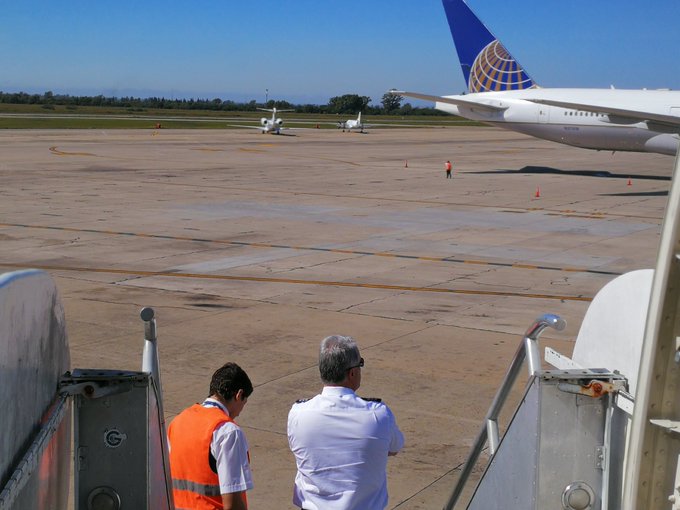
Los aviones salieron desde EE.UU. rumbo a Ezeiza pero la niebla los obligó a desviarse hacia la ciudad de Córdoba pero no pudieron seguir su rumbo por falta de personal y deberán esperar hasta este sábado.

Cientos de pasajeros que esperaban volver desde Estados Unidos a Buenos Aires esperan desde hace horas en el Aeropuerto Ingeniero Taravella, de Córdoba sin poder llegar a su destino.

Se trata del vuelo AA907 de American Airlines que salió de Miami y el vuelo de United Airlines UA819 proveniente de Houston. Ambos debían aterrizar en Ezeiza, pero fueron desviados a Córdoba por la densa niebla.

Según uno de los pasajeros del viaje de Miami, el piloto del Boeing 777 les transmitió que las autoridades aeronáuticas le informaron que el despegue estaba demorado porque hoy era feriado y no había empleados disponibles para realizar la carga necesaria de combustible.

Luego de al menos tres horas de espera y sin alternativas para que los aviones lleguen a Ezeiza, las autoridades migratorias de Pajas Blancas decidieron permitir el ingreso al país de los pasajeros.

No obstante, la situación continuaba confusa, entre otros aspectos, porque la empresa que provee los servicios en tierra, Intercargo, no tiene acuerdo con American Airlines, lo que impedía a los pasajeros poder retirar su equipaje. Por otro lado, el personal de pista comunicó que la tripulación se venció, por lo que no podrá volver a volar los aviones.

Sin embargo, Sergio Adrián Ressa, jefe de Aeropuerto, desmintió en Cadena 3 la información y explicó los motivos por los que la aeronave no continuó su viaje.

«Dos vuelos, uno de United y otro de American Airlines debieron aterrizar en Córdoba por una fuerte tormenta en Buenos Aires. United cargó combustible y se fue. Mientras que el de American Airlines se le venció la tripulación, es decir que no puede seguir vuelo hasta que la tripulación se recupere y pueda seguir viaje», explicó.

Consultado sobre el significado del vencimiento de la tripulación, Ressa señaló que «después de cierta cantidad de horas, la tripulación de vuelos internacionales se vence. Esto ya está legislado internacionalmente. La tripulación no puede continuar y tiene que cambiar, pero como American Airlines no tiene tripulación, ésta tiene que descansar y continuar mañana», dijo.

International flights diverted at the Córdoba International Airport


American Airlines AA907 and United Airlines UA819 flights to Ezeiza were diverted to Córdoba for weather reasons

The planes left from the USA. Heading to Ezeiza but the fog forced them to deviate towards the city of Cordova but they could not follow its course due to lack of personnel and must wait until this Saturday.

Hundreds of passengers hoping to return from the United States to Buenos Aires have been waiting for hours at the Ingeniero Taravella Airport in Cordoba without being able to reach their destination.

This is American Airlines flight AA907 that left Miami and United Airlines flight UA819 from Houston. Both were to land in Ezeiza, but were diverted to Cordoba by the dense fog.

According to one of the passengers on the Miami trip, the Boeing 777 pilot told them that the aviation authorities informed him that the takeoff was delayed because today was a holiday and there were no employees available to carry the necessary fuel load.

After at least three hours of waiting and no alternatives for the planes to arrive in Ezeiza, the immigration authorities of Pajas Blancas decided to allow the passengers to enter the country.

However, the situation remained unclear, inter alia, because the company providing the ground services, Intercargo, has no agreement with American Airlines, which prevented passengers from being able to pick up their luggage. On the other hand, the track staff reported that the crew was beat, so they can not fly again.

However, Sergio Adrián Ressa, head of the Airport, denied in Cadena 3 the information and explained the reasons why the aircraft did not continue his trip.

«Two flights, one from United and one from American Airlines, were due to land in Cordoba by a heavy storm in Buenos Aires, United loaded with fuel and left, while the American Airlines won the crew, which means that it can not continue flight Until the crew recovers and can continue traveling», he explained.

Ressa said that «after a certain number of hours, the crew of international flights will expire. The crew can not continue and has to change, but as American Airlines does not Has crew, it has to rest and continue tomorrow», he said. A\W

Ξ A I R G W A Y S Ξ
SOURCE: AIRGWAYS / Minutouno.com
DBk: Minutouno.com / Twitter.com
AW-POST: 201703241717AR

A\W   A I R G W A Y S ®

¿Segunda Audiencia Pública Argentina?

imagen-068

AW | 2017 03 24 15:07 | AIRLINES GOVERNMENT

El organismo gubernamental de la ANAC podría concretar la segunda Audiencia Pública de Rutas Aéreas, apoyado por el anuncio del Presidente de la Nación

Las líneas aéreas interesadas en solicitar rutas para operar en la Argentina están entre ellas: Norwegian Air Argentina, Royal Class, Amaszonas, Flyest, Avian, Alas Mediterráneas, Sky Airline, Azul Linhas Aéreas y la renombrada Southern Winds.

Todas estas compañías podrían solicitar audiencia para la próxima reunióncon el gobierno argentina. En tanto Avian podría presentarse para operar un hub desde Tucumán, pero antes debería esperar a que se resuelva la discusión sobre el “conflicto de intereses”. Flyest Líneas Aéreas pretende volar sobre las rutas de Sol, pero ahora bajo la firma española Air Nostrum. Alas Mediterráneas, una empresa cordobesa cuyo presidente y principal accionista es Claudio Ortiz Belgoff, empresario que compró la compañía en 2010. Fundada hace dos años atrás, la aerolínea nunca llegó a volar por cuestiones de permisos no otorgados en la era kirchnerista. La intención ahora es armar un hub en Córdoba para desde allí volar inicialmente con Saab 340 (aviones de la ex-Sol) a Buenos Aires, Río Cuarto, Rosario, Catamarca, San Luis y Santiago del Estero. Southern Wings, empresa fundada en 1996 por los hermanos Juan y Cristian Maggio, quebró por cuestiones político-judiciales. Los hermanos Maggio fueron sobreseídos en 2012 así petenden volver al mercado aéreo. En cuanto a la aerolínea Sky Airlines (Chile) y la brasileña Azul se encuentran en proceso de crear compañías en Argentina.

https://upload.wikimedia.org/wikipedia/commons/6/63/320ep_-_Southern_Winds_Boeing_737-200%3B_LV-AHV@AEP%3B23.09.2004_(8064672583).jpg

Aunque en la primera Audiencia Pública en Argentina, las cosas parecen no haber salido tan bien por los efectos de los resultados esperados en cuanto a las acreditaciones de avales por parte de las líneas aéreas, a esto se suman los escándalos de Avian (Avianca) y Flybondi pues el Gobierno decidió frenar la adjudicación por sospechas de conflicto de intereses. La tercera compañía que mejores resultados obtuvo en la audiencia tampoco parece tener los papeles en orden. Es que según se deduce del expediente 003391/2016 de la ANAC, la empresa Alas del Sur no puede acreditar la mínima capacidad técnica necesaria para las rutas que solicitó. Parece casi una empresa fantasma.  AIRGWAYS ® Icon-AW

https://upload.wikimedia.org/wikipedia/commons/9/9b/AEP_finalcorta.jpg

Second Air Public Hearing in Argentina?


The government agency of the ANAC could finalize the second Public Hearing of Air Routes, supported by the announcement of the President of the Nation


Airlines interested in requesting routes to operate in Argentina include: Norwegian Air Argentina, Royal Class, Amaszonas, Flyest, Avian, Mediterranean Airlines, Sky Airline, Azul Linhas Aéreas and the renowned Southern Winds.

All of these companies could request a hearing for the next meeting with the Argentine government. While Avian may appear to operate a hub from Tucuman, but rather should wait for the resolution of the «conflict of interest» discussion to be resolved. Flyest Airlines aims to fly on the routes of Sol, but now under the Spanish company Air Nostrum. Alas Mediterráneas, a Cordoban company whose president and main shareholder is Claudio Ortiz Belgoff, an entrepreneur who bought the company in 2010. Founded two years ago, the airline never got to fly because of issues not granted in the Kirchner era. The intention now is to set up a hub in Cordoba to fly from there initially with Saab 340 (ex-Sol aircraft) to Buenos Aires, Río Cuarto, Rosario, Catamarca, San Luis and Santiago del Estero. Southern Wings, founded in 1996 by the brothers Juan and Cristian Maggio, broke for political-judicial issues. The Maggio brothers were dismissed in 2012 so they refuse to return to the air market. As for the airline Sky Airlines (Chile) and the Brazilian Blue are in the process of creating companies in Argentina.

Although at the first Public Hearing in Argentina, things do not seem to have worked out so well due to the effects of the expected results in terms of accreditation of endorsements by airlines, to which are added the Avian (Avianca) scandals and Flybondi because the Government decided to stop the award for suspicion of conflict of interest. The third best-performing company in the audience does not seem to have the papers in order either. Is that according to the file 003391/2016 of the ANAC, the company Alas del Sur can not credit the minimum technical capacity necessary for the routes that requested. It seems almost a ghost business. A\W


Ξ A I R G W A Y S Ξ
SOURCE: AIRGWAYS
DBk: Wikipedia.org / Aeropuertocordoba.blogspot.com
AW-POST: 201703241507AR

A\W   A I R G W A Y S ®

Azul vuelo directo Campinas – Bariloche

https://i0.wp.com/revistaembarque.com/wp-content/uploads/2016/08/jpg5C373cab56-462f-4744-8bca-dc71b98aeeb1-1.jpg

AW | 2017 03 24 12:05 | AIRLINES ROUTES

 Azul confirma vuelos directos desde Viracopos a Bariloche en julio y agosto


Según la compañía, la ruta se llevará a cabo semanalmente los sábados durante el período de invierno. La venta de entradas está todavía pendiente de la aprobación de las autoridades.

Blue Airlines anunció el jueves (23), los vuelos directos desde el Aeropuerto Internacional de Viracopos en Campinas (SP), a Bariloche, Argentina, una de las principales rutas turísticas del país, conocido principalmente por las estaciones de esquí. Según la compañía, los partidos siempre se realizan los sábados con la aeronave A320neo, con capacidad para 174 personas.

Siempre según la compañía, la ruta Campinas-Bariloche ocurrirá durante el período de invierno entre el 1 de julio y 12 de agosto. Los vuelos en el modo de alquiler (charter), serán los que en Brasil para volar a la ciudad. La salida de Viracopos será a las 9 de la mañana los sábados y los alrededores de Bariloche se llevará a cabo a las 14:30 horas, los sábados.

La compañía está esperando la aprobación de las autoridades de Brasil y Argentina para empezar a vender entradas. En total, 18 ciudades brasileñas pasajeros pueden llevar en relación aeropuerto de Viracopos. Ellos son: Brasilia, Cuiabá, Campo Grande, Belo Horizonte, Curitiba, Fortaleza, Río de Janeiro (SDU y GIG), Goiania, Joinville, João Pessoa, Bauru, Petrolina, Porto Alegre, Ribeirao Preto, Recife, Sao José do Rio Preto , Teresina y Uberlândia.  AIRGWAYS ® Icon-AW

Azul direct flight Campinas – Bariloche

Azul confirms direct flights from Viracopos to Bariloche in July and August


According to the company, route will happen weekly, on Saturdays, during the winter period. Sale of tickets still pending approval from authorities

Azul Linhas Aéreas announced on Thursday (23) direct flights from Viracopos International Airport, in Campinas (SP), to Bariloche, Argentina, one of the main touristic routes of the country, known mainly for the ski resorts. According to the company, departures will always take place on Saturdays with the A320neo aircraft, with capacity for 174 people.

According to the company, the Campinas-Bariloche route will happen during the winter period, between July 1 and August 12. The charter flights will be the only ones in Brazil to fly to the city. The departure of Viracopos will be at 9am on Saturdays and the return from Bariloche will take place at 2:30 p.m., also on Saturdays.

The company is waiting for the approval of the Brazilian and Argentine authorities to start selling the tickets. In all, passengers from 18 Brazilian cities can connect to Viracopos Airport. They are: Brasília, Cuiabá, Campo Grande, Belo Horizonte, Curitiba, Fortaleza, Rio de Janeiro (SDU and GIG), Goiânia, Joinville, João Pessoa, Bauru, Petrolina, Porto Alegre, Ribeirão Preto, Recife, São José do Rio Preto , Teresina and Uberlândia. A\W

Azul voos directos Campinas – Bariloche

Azul confirma voos diretos de Viracopos para Bariloche em julho e agosto

De acordo com a companhia, rota vai acontecer semanalmente, aos sábados, durante o período do inverno. Venda de passagens ainda aguarda aprovação de autoridades

Azul Linhas Aéreas anunciou, nesta quinta-feira (23), voos diretos do Aeroporto Internacional de Viracopos, em Campinas (SP), para Bariloche, na Argentina, um dos principais roteiros turísticos do país, conhecido principalmente pelas estações de esqui. De acordo com a companhia, as partidas serão realizadas sempre aos sábados com a aeronave A320neo, com capacidade para 174 pessoas.

Ainda segundo a empresa, a rota Campinas-Bariloche vai acontecer durante o período de inverno, entre 1º de julho e 12 de agosto. Os voos, no modo charter (fretados), serão os únicos do Brasil a voar para a cidade. A partida de Viracopos será às 9h aos sábados e a volta de Bariloche acontecerá às 14h30, também aos sábados.

A companhia aguarda a aprovação das autoridades brasileiras e argentinas para começar a vender as passagens. Ao todo, passageiros de 18 cidades brasileiras podem realizar conexão no Aeroporto de Viracopos. São elas: Brasília, Cuiabá, Campo Grande, Belo Horizonte, Curitiba, Fortaleza, Rio de Janeiro (SDU e GIG), Goiânia, Joinville, João Pessoa, Bauru, Petrolina, Porto Alegre, Ribeirão Preto, Recife, São José do Rio Preto, Teresina e Uberlândia. A\W

Ξ A I R G W A Y S Ξ
SOURCE: Globo.com
DBk: Azul Airlines
AW-POST: 201703241205011550AR

A\W   A I R G W A Y S ®

American Airlines negocia participación en China Southern Airlines

https://i0.wp.com/www.airportsinternational.com/wp-content/uploads/2012/01/A380_CSN_A380_take_off_to_Beijing_PM.jpg

AW | 2017 03 24 11:37 | AIRLINES ALLIANCE

American Airlines Group está en conversaciones avanzadas sobre un acuerdo en el que la aerolínea más grande del mundo adquiriría una participación en China Southern Airlines, según personas familiarizadas con el asunto.

Las negociaciones se centran en una inversión de unos US $ 200 millones por parte de Fort Worth, con sede en Texas, con acciones de Hong Kong de China Southern, dijo la gente, que pidió no ser identificado porque las negociaciones son confidenciales.

La venta probablemente se llevaría a cabo a través de una colocación privada, dijo una de las personas. China Southern tiene un valor de mercado de alrededor de US $ 10 mil millones.

Una inversión en China Southern permitiría a American fortalecer su presencia en un mercado que la Asociación de Transporte Aéreo Internacional (IATA) predice que superará a Estados Unidos, convirtiéndose en el mayor en el mundo en términos de número de pasajeros en 2024.

Delta Air Lines adquirió una participación minoritaria en China Eastern Airlines en 2015. Bajo las discusiones, la aerolínea estadounidense nombraría un observador sin derecho a voto a la junta de la compañía china, dijeron las personas. Los detalles de un acuerdo están sujetos a cambios y una transacción podría fallar.

Los representantes de China Southern no pudieron hacer comentarios inmediatamente cuando contactaron después de horas de oficina regulares. Un portavoz de American Airlines no quiso hacer comentarios. AIRGWAYS ® Icon-AW

478848

American Airlines negotiates shareholding in China Southern

American Airlines Group is in advanced talks on an agreement in which the world’s largest airline would acquire a stake in China Southern Airlines, according to people familiar with the matter.

Negotiations focus on an investment of about US $ 200 million by Fort Worth, Texas-based American in Hong Kong-listed shares of China Southern, said the people, who asked not to be identified because Negotiations are confidential.

The sale was likely to take place through a private placement, one of the people said. China Southern has a market value of about US $ 10 billion.

An investment in China Southern would allow American to strengthen its presence in a market that the International Air Transport Association (IATA) predicts will surpass the United States, to become the largest in the world in terms of passenger numbers by 2024.

Delta Air Lines acquired a minority stake in China Eastern Airlines in 2015. Under the discussions, the US airline would appoint a non-voting observer to the Chinese company’s board, the people said. The details of an agreement are subject to change and a transaction could fail.

Representatives of China Southern could not immediately comment when contacted after regular business hours. A spokesman for American Airlines declined to comment. A\W

Ξ A I R G W A Y S Ξ
SOURCE:Portaldeturismo.pe
DBk: Ian Marsch / Airportsinternational.com
AW-POST: 201703241137AR

A\W   A I R G W A Y S ®

Alaska Airlines absorberá Virgin America

http://www.trbimg.com/img-5765749a/turbine/la-fi-travel-briefcase-virgin-20160618-snap

AW | 2017 03 24 11:16 | AIRLINES ALLIANCE

Virgin America desaparecerá como marca para el 2019


En octubre de 2014, Sir Richard Branson, fundador de Virgin America, voló en el primer vuelo de la aerolínea desde el Aeropuerto DFW al Dallas Love Field.

Después de meses de bromas, Alaska Airlines tiene malas noticias para los clientes fieles de Virgin America, el nombre de su aerolínea está siendo objeto de dumping.

103518204-GettyImages-76025495.1910x1000

Resultado de imagen para Alaska Virgin America

ALASKA Y VIRGIN AMERICA ANUNCIAN «TWOGETHER» A SU SINERGIA


Alaska anunció el miércoles que retirará la marca Virgin, probablemente en 2019, añadiendo ese nombre a una lista que incluye Continental y US Airways que desaparecieron en la última década.

El lanzamiento de una nueva aerolínea lleva mucho dinero y paciencia, una razón por la que el debut de Virgin America en 2007 fue tan llamativo. El otro era su ambiente de la cadera incluyendo la iluminación del humor y los asistentes de vuelo jóvenes, atractivos. AIRGWAYS ® Icon-AW

https://alaskaairblog.files.wordpress.com/2016/04/asplusvx-tails-e1460075300324.jpg?w=1500&h=692&crop=1

Alaska Airlines to absorb Virgin America

Virgin America will disappear as a brand for 2019

In October 2014, Sir Richard Branson, founder of Virgin America, flew on the airlines first flight from DFW Airport to Dallas’ Love Field. Texas country star Kacey Musgraves was aboard the short flight and sang for passengers.

After months of teasing, Alaska Airlines has bad news for loyal customers of Virgin America, their airline’s name is being dumped.

Alaska announced late Wednesday that it will retire the Virgin brand, probably in 2019, adding that name to a list including Continental and US Airways that disappeared in the past decade.

https://i1.wp.com/travellatte.net/wp-content/uploads/2016/04/Route-Maps-Alaska-Virgin.jpg

THE FUSION OF BOTH COMPANIES WILL EXTEND THE US SERVICES NETWORK

Launching a new airline takes lots of money and patience — one reason that Virgin America’s debut in 2007 was so eye-catching. The other was its hip vibe including mood lighting and young, attractive flight attendants. A\W

Ξ A I R G W A Y S Ξ
SOURCE: Star-telegram.com
DBk: Alaska.com / Travellatte.net / Trbimg.com
AW-POST: 201703241116AR

A\W   A I R G W A Y S ®

El desafío del mercado del Boeing 797

Resultado de imagen para Boeing headquarter

AW | 2017 03 24 01:57 | INDUSTRY

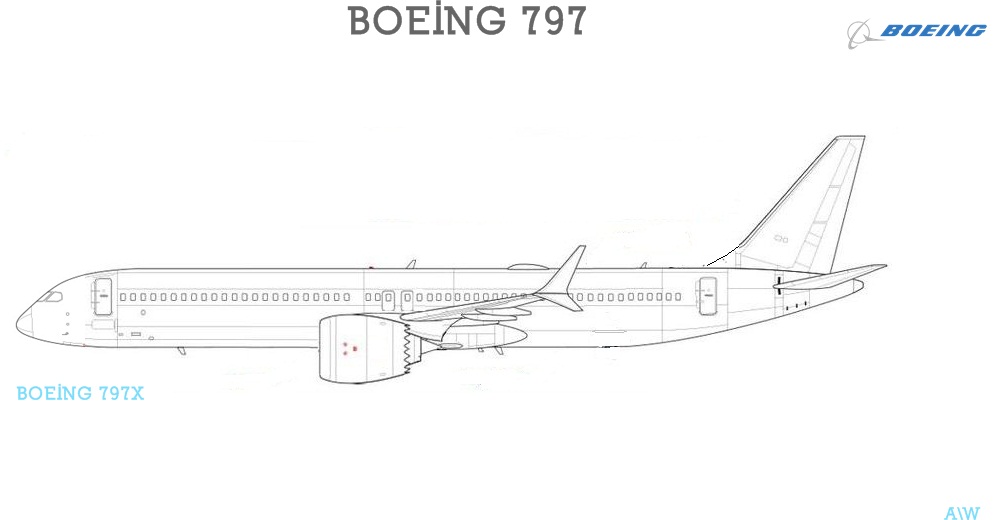
El Boeing 797X cubrirá probablemente la gama de 220-260 asientos. La gama del diseño será 4.500-5.000 millas náuticas. Las aeronaves podrían desbloquear un potencial de ingresos de 150 mil millones de dólares

Uno de los desarrollos de Boeing  es el Boeing 797X. Desde que el Airbus A321 y el Airbus A321NEO han superado con éxito a los Boeing 737-900ER y Boeing 737 MAX 9 por un amplio margen, analistas, profesionales de la industria y entusiastas de la aviación han estado esperando a que Boeing no sólo pueda competir Con el Airbus A321, sino también cómo van a reemplazar de manera eficaz y eficiente los aviones más pequeños de cuerpo ancho.

En el pasado, se ha visto cómo Boeing estaría llenando la brecha que dejó y cómo el posicionamiento del producto de cuerpo estrecho de Boeing es una de las causas de la incapacidad de Boeing para competir con el Airbus A321 y su incapacidad para proporcionar un reemplazo para El avión de cuerpo ancho más pequeño.

De los artículos enlazados arriba, se puede observar que la discusión sobre un avión MoM (Medio del Mercado) o NMA (New Midsize Airplane) no es nueva, y ha mantenido a los analistas, así como Boeing ocupado durante bastante tiempo.

Boeing 737 MAX 10 Concepts MoM Airbus A321_zpspv3sexao

Capacidad del Boeing 797X

Una de las primeras cosas que debe ser notado es que los requisitos para una NMA han estado cambiando hacia un principio, ya que Boeing admitió la necesidad de un avión de este tipo no hace mucho tiempo. Al principio, existía la posibilidad de que una aeronave de gama media se extendiera desde la capacidad de un MAX 8 hasta el Boeing 757-200. Para Boeing, esto resolvería dos problemas, siendo el primero la edad del concepto Boeing 737 que es difícil de optimizar y el segundo problema es la limitada capacidad del Boeing 737-900ER y del Boeing 737 MAX 9 para competir con los homólogos de Airbus.

Boeing, sin embargo ha optado por un Boeing 737 MAX 10. Esta decisión es comprensible ya que el Boeing 737 MAX 10 es una solución relativamente barata que podría ver la entrada de servicio antes que un diseño totalmente nuevo. El MAX 10, prácticamente igual que toda la familia MAX, es un avión de reserva que debería añadir presión sobre los precios a Airbus y mantener algo del mercado. Esto sería beneficioso para Boeing cuando comience a desarrollar nuevas familias de aviones que cubran el segmento de pasillo único o el mercado de NMA.

Otra razón por la cual Boeing no está cambiando su producto de cuerpo estrecho es el hecho de que Bombardier  compite fuertemente con Boeing en el lado inferior de la gama de productos. Mover a la familia significaría que Bombardier se quedaría sin mayor competencia. Actualmente Boeing es capaz de descuentos en su avión más pequeño para competir con Bombardier, esto le da a Bombardier una carrera por su dinero.

Así que Boeing parece haber elegido centrarse en el mercado NMA y dejar los retos de la sustitución MAX para más adelante.

La capacidad del Boeing 797X es probable esté ubicada en el segmento entre 220 pasajeros y 260 pasajeros, o posiblemente 270.


Distancia

La gama del jet de 220 pasajeros en junio de 2015 se preveía para ser 4.500nm. Esto situaría la aeronave en territorio del Boeing 757 en términos de capacidad, pero con una capacidad de alcance ligeramente superior. La gama ahora se espera que esté entre 4.500 y 5000nm. En combinación con la nueva banda de capacidad, esto significa que el Boeing 797 es efectivamente un reemplazo natural para el Boeing 757 y Boeing 767. En lugar de mirar hacia abajo para cubrir el Boeing 737 MAX con el Boeing 797, Boeing ha buscado y parece estar planeando para cubrir el espacio del mercado del Boeing 767.


Posicionamiento Boeing 797X

El posicionamiento del Boeing 797 se hace más claro si lo marcamos en un diagrama de carga.

El Airbus A321NEO LR se comercializa activamente como un reemplazo Boeing 757, cae entre el espacio MoM y el espacio tradicional de un solo pasillo.

En lugar de presentar un reemplazo, Boeing parece estar apuntando a un avión con mayor alcance que el Boeing 757-200 y que está entre las capacidades del Boeing 767-200 y Boeing 767-300 por un lado y la variante Extended Range (ER) por el otro. Esto también se puede decir de otra manera: El Boeing 797-X con sus aviones va a cubrir el rango de capacidad de los Boeing 767-200 y Boeing 767-300 con un rango más grande. Al hacerlo, Boeing se está convirtiendo en estilo Airbus desarrollando algo para lo cual la competencia aún no tiene respuesta.


El mercado
Definir el potencial del mercado es difícil, no sólo porque no puede resumir las órdenes de todas las variantes Boeing 757 y Boeing 767 y decir que es el potencial de mercado del Boeing 797. El Boeing 797 no será capaz de capturar todo el mercado. Se calcula llegar a un potencial de aproximadamente 2.000 aviones. En estos cálculos, agregamos las ventas de las versiones de rango extendido del Boeing 767, así, la razón es que el Boeing 787 no es realmente un avión tipo 767. La gama del Boeing 787-8 supera ampliamente el rango de las variantes 767ER. Boeing tampoco está muy dispuesto a vender el Boeing 787-8, ya que los márgenes de beneficio no son lo suficientemente atractivos para construir el avión. Así que en el futuro se ofrecerá el Boeing 797 a los clientes que no requieren la gama de Boeing 787. Los clientes que requieren la gama de Boeing 787 se ofrecerá el 787-9.
Hace más de un año, John Wojick dijo a Aviation Week que esperaba que un avión NMA vendiera fácilmente más de 2.000 unidades. Esta cifra tiene en cuenta la creciente demanda de viajes aéreos, pero probablemente también una posición de punto dulce para el Boeing 797 para capturar la mayoría del mercado NMA y potencialmente los clientes delAirbus A330-800NEO que no requieren la capacidad de alcance de la A330NEO.

Eficiencia

Conseguir el diseño correcto es importante, porque sobrediseño llevará a mayores costos de operación para los clientes, pero también dará lugar a mayores costos de desarrollo y producción. Además, el diseño excesivo, por ejemplo, el ala resultará en un mayor peso que requiere motores más grandes, que posteriormente requiera de nuevo un ala más grande.

Al igual que con cualquier aeronave, la eficiencia es uno de los principales impulsores del éxito comercial. El avión probablemente hará uso de un ala ligera de alta eficiencia similar a los del Boeing 787 y Boeing 777X. El fuselaje podría ser diseñado a partir de materiales compuestos, pero podría ser una de las cosas que podrían caer para mantener bajos los costos de desarrollo y los precios de venta. Una cosa que parece ser cierto es que el avión será un avión de pasillo doble con una configuración de 2-3-2 asientos.

Para los motores, es importante dimensionarlos correctamente. Con los desarrollos de Trent XWB, Trent 1000 TEN, CFM LEAP 1A / B / C, serie GEnx, GE90X y PW1100G, los desarrolladores de turbofan han estado ocupados durante los últimos años en una amplia gama de empuje. Así que incluso si Boeing hubiera querido lanzar el Boeing 797 antes, probablemente no sería posible ya que los desarrolladores estaban trabajando en otros productos.

Para el Boeing 797X, creo que un rango de empuje de 40,000-50,000 lbf debería ser suficiente. Más interesante será ver quién va a suministrar esos turbofans. Hay una alta probabilidad de que más de 1 desarrollador proporcionará los turbofans. De esta manera el potencial del Boeing 797X será compartido entre varios desarrolladores, pero el Boeing 797X será un producto más fuerte donde los clientes pueden seleccionar un turbofan preferido. Para Pratt & Whitney, habrá ocasiones de transferir el conocimiento del turbofan adaptado del PW1100 más pequeño usado en el Airbus A320NEO al mercado del pasillo gemelo. Para PW, esto sería enorme ya que han sido expulsados del mercado de pasillos gemelos hace mucho tiempo. CFM podría entrar con un turbofan más grande similar a la familia CFM LEAP utilizada en el Boeing 737 MAX, Airbus A320NEO y Comac C919. Rolls Royce ha comenzado a trabajar en un turbofán Rolls Royce Advance, el cual debería ser capaz de entrar en servicio entre 2020 y 2025, mientras que planea un Rolls Royce UltraFan, que será de servicio después de 2025. Así, mientras que CFM y PW tratarán de ampliar su Turbofan para cumplir con el rango de empuje requerido, Rolls Royce tendrá que bajar de la Trent XWB. Sin embargo, los tres desarrolladores de turbofan estarán deseando un pedazo del pastel.

 Costos de desarrollo y precio de venta

El desarrollo de un avión completamente nuevo cuesta miles de millones, y Boeing ha aprendido una lección cuando desarrolló el Boeing 787 y acumuló miles de millones en costos de desarrollo y costos de producción. Eso es algo que Boeing no puede permitirse una vez más, no sólo porque es frágil la credibilidad de la empresa como un fabricante de aviones, sino también porque tendrá poco o ningún espacio para hacer del Boeing 797 un éxito.

Que Boeing realmente tiene que hacerlo bien con el Boeing 797 se hizo aún más claro cuando el presidente de Air Lease Corp., Udvar-Hazy, dijo que las aerolíneas quieren pagar entre $ 70 y $ 80 millones. En 2002, el Boeing 757 tenía un precio de lista de 111 millones de dólares traducido a 2016 dólares, mientras que el Boeing 767-200 tenía precios de lista de 151 millones de dólares. Aplicando descuentos del 40% que eran comunes en ese momento, llegamos a un rango de precios de $ 66.6- $ 90 millones. Con diseños de aviones cada vez más complejos el precio de venta sube y el más pequeño Boeing widebody, el Boeing 787-8, se vende por un precio que es del 30-75%. Creo que eso demuestra claramente el reto que le espera a Boeing para mantener los costos de desarrollo en un rango predefinido para que pueda poner un precio razonable en el Boeing 797.


Riesgos
 

Ningún desarrollo es sin riesgo y eso también cuenta para el Boeing 797. Un riesgo significativo que Boeing podría enfrentar es el riesgo de exceso de costos. Tenemos que esperar aquí que Boeing haya aprendido del desarrollo de Boeing 787, no sólo de la ingeniería sino también en el sentido de la gestión financiera y la transferencia de riesgo a la cadena de suministro. 

Otros riesgos incluyen el retraso en el mercado, que puede ser causado por una variedad de razones por ejemplo, retrasos en el diseño y proceso de prueba de vuelo o retrasos en el desarrollo del motor. Todo esto puede afectar el éxito comercial del Boeing 797.


Conclusión
 

En general, las reacciones a un Boeing 797 son positivas, pero el camino entre diseñar y hacer que el avión sea un éxito comercial es largo. Sin embargo, es positivo que Boeing esté tratando de colocar el Boeing 797 en un punto en el que es difícil para Airbus llegar, pero donde todavía hay una demanda sin respuesta. Boeing parece estar dejando algo que Airbus reclame su corona como tener el reemplazo del Boeing 757-200, mientras que se mueve la familia de aviones en el rango de asientos en un lugar donde los transportistas, así como las compañías de bajo costo pueden utilizar con éxito el Boeing 797. AIRGWAYS ® Icon-AW

https://airgways.com/wp-content/uploads/2017/03/87918-fsscr006.jpg

The challenge of the Boeing 797 market

The Boeing 797X will probably cover the range of 220-260 seats. The design range will be 4,500-5,000 nautical miles. The aircraft could unlock a potential revenue of $ 150 thousand millions of dollars

One of the developments of Boeing or, rather, future developments – is the Boeing 797X. Since the Airbus A321 and Airbus A321NEO have successfully outperformed the Boeing 737-900ER and Boeing 737 MAX 9 by a wide margin, analysts, industry professionals and aviation enthusiasts have been waiting for Boeing not only to be able to compete With the Airbus A321, but also how they will effectively and efficiently replace smaller, wide-body aircraft.

In the past, Boeing would be filling the gap it has left and how the positioning of Boeing’s narrow-body product is one of the causes of Boeing’s inability to compete with the Airbus A321 and its inability to provide a replacement for The smallest wide-body aircraft.

Boeing 737 MAX 10 Concepts MoM Airbus A321_zpspv3sexao

It can be seen that the discussion about a MoM (New Market) or New Midsize Airplane is not new, and has kept analysts as well as Boeing busy for quite some time.

In this article, I will be seeing what we already know about the Boeing 797X. I will focus on what your general specification will be like and what you should be able to. In a separate article, I’ll take a closer look at the market potential of an airplane of this type.
Capacity

One of the first things to note is that the requirements for an NMA have been shifting upwards, as Boeing has admitted the need for such an aircraft not so long ago. At the outset, it was possible for a mid-range aircraft to extend from the MAX 8 capacity to the Boeing 757-200. For Boeing, this would solve two problems, the first being the age of the Boeing 737 concept that is difficult to optimize and the second problem is the limited capacity of the Boeing 737-900ER and the Boeing 737 MAX 9 to compete with Airbus counterparts.

Boeing, however has chosen to explore the possibility of a Boeing 737 MAX 10, which is likely to be launched by year-end. This decision is understandable since the Boeing 737 MAX 10 is a relatively cheap solution that could see service entry sooner than an all-new design. In my view the MAX 10, pretty much just like the entire MAX family, is a placeholder aircraft that should add pricing pressure to Airbus and keep some of the market. This would be beneficial to Boeing when it starts developing new aircraft families that cover either the single aisle segment or the NMA market.

Another reason why Boeing is not shifting up its narrow body product is the fact that Bombardier is heavily competing with Boeing on the lower side of the product range. Moving the family up would mean that Bombardier is left without major competition. Currently Boeing is able to heavily discount its smaller aircraft to compete with Bombardier, this gives Bombardier a run for their money.

So Boeing seems to have chosen to focus on the NMA market and leave the challenges of the MAX replacement for later.

Whereas at first I expected the capacity band to be between 160 and 240 passengers with 3 or 4 variants, the capacity of the Boeing 797X is likely between 220 passengers and 260 passengers, possibly 270.

Range

The range of the 220-passenger jet in June 2015 was envisioned to be 4,500nm. This would place the aircraft in territory of the Boeing 757 in terms of capacity but with a slightly higher range capability. The range is now expected to be between 4,500 and 5000nm. In combination with the new capacity band, this means that the Boeing 797 is effectively a replacement for the Boeing 757 and Boeing 767. Instead of looking down to cover the Boeing 737 MAX with the Boeing 797, Boeing has looked up and seems to be planning to cover the Boeing 767 market space.

Boeing 797X positioning

The positioning of the Boeing 797 becomes clearer if we maket. What can be seen is that, whereas the Airbus A321NEO LR is being actively marketed as a Boeing 757 replacement, it falls in between the MoM space and traditional single-aisle space. The design space for the NMA can be seen and what is interesting to observe is that it is likely not going to be one-on-one replacement of the Boeing 757.

Rather than bringing up a replacement, Boeing seems to be aiming for 1 aircraft with higher range than the Boeing 757-200 and aircraft that is in between the capabilities of the Boeing 767-200 and Boeing 767-300 on one hand and the Extended Range variants on the other. This can also be said differently: The Boeing 797-X with its 2 aircraft is going to cover the Boeing 767-200 and Boeing 767-300 capacity range with a bigger range. By doing so, Boeing is actually going Airbus-style by developing something for which competition has no answer yet.

Market

THE BOEING 757

Defining the market potential is difficult, not only because you cannot just sum up the orders of all Boeing 757 and Boeing 767 variants and say that is the market potential of the Boeing 797. Both 797 aircraft need to be in a sweet spot, and even then, Boeing will not be able to capture the entire market. If we were going to sum up things anyways then we get to a potential of roughly 2,000 aircraft. In these calculations, we added the sales of the Extended Range versions of the Boeing 767 as well, the reason being that the Boeing 787 is not really a 767-like aircraft. The range of the Boeing 787-8 exceeds the range of the 767ER variants by a wide margin. Boeing is also not very willing to sell the Boeing 787-8, since the profit margins are not attractive enough to build the aircraft. So in the future they will be offering the Boeing 797 to customers that do not require the range of the Boeing 787. Customers that require the range of the Boeing 787 will be offered the 787-9.

Over a year ago, John Wojick told Aviation Week that it expected an NMA aircraft to easily sell over 2,000 units. This figure takes into account growing demand for air travel, but likely also a sweet spot position for the Boeing 797 to capture the majority of the NMA market and potentially Airbus A330-800NEO customers that do not require the range capability of the A330NEO.

Efficiency

Getting the design right is important, because overdesigning will lead to higher operating costs for the customers but will also result in higher development and production costs. Additionally, overdesigning for instance the wing will result in higher weight requiring bigger engines, which subsequently again requires a bigger wing.

Like with any aircraft, efficiency is one of the main drivers of commercial success. The aircraft will likely make use of a high efficiency light-weight wing similar to the ones on the Boeing 787 and Boeing 777X. The fuselage could be designed out of composites, but might be one of the things that might be dropped to keep the development costs and sales prices low. One thing that seems to be certain is that the aircraft will be a twin aisle aircraft with a 2-3-2 seat configuration

For the engines, it is important to size them correctly. With the developments of the Trent XWB, Trent 1000 TEN, CFM LEAP 1A/B/C, GEnx series, GE90X and PW1100G, turbofan developers have been occupied for the past couple of years in a wide range of the thrust spectrum. So even if Boeing would have wanted to launch the Boeing 797 earlier, it probably would not be possible since developers were working on other products.

For the Boeing 797X, a thrust range of 40,000-50,000 lbf should be sufficient. More interesting will be to see who is going to supply those turbofans. There is a high probability that more than 1 developer will be providing the turbofans. This way the potential of the Boeing 797X will be shared between multiple developers, but the Boeing 797X will be a stronger product where customers can select a preferred turbofan. For Pratt & Whitney, there will be chances to transfer the knowledge from the smaller PW1100 geared turbofan used on the Airbus A320NEO to the twin aisle market. For PW, this would be huge since they have been pushed out of the twin aisle market a long time ago. CFM could enter with a bigger turbofan similar to the CFM LEAP family used on the Boeing 737 MAX, Airbus A320NEO and Comac C919. Rolls Royce has started working on a Rolls Royce Advance turbofan, which should be able to enter service between 2020 and 2025, while it plans a Rolls Royce UltraFan, which will be serviceable after 2025. So while CFM and PW will try to scale up their turbofan to meet the required thrust range, Rolls Royce will have to scale down from the Trent XWB. Nevertheless, all three turbofan developers will be wanting a piece of the pie.

Development costs and sales price

Developing an all-new aircraft costs billions, and Boeing has learned a lesson when it developed the Boeing 787 and accumulated billions in development and production costs overruns. That is something that Boeing cannot afford itself once more – not only because it will brittle the company’s credibility as a jet maker but also because it will have little to no space left to make the Boeing 797 a success.

That Boeing really has to get it all right with the Boeing 797 became even clearer when the chairman of Air Lease Corp., Udvar-Hazy, said that airlines want to pay will be between $70 and $80 million. In 2002, the biggest Boeing 757 had a list price of $111 million dollars translated to 2016-dollars while the Boeing 767-200 had list prices of $151 million. Applying discounts of 40% that were common at that time, we get to a price range of $66.6-$90 million. With aircraft designs becoming more and more complex the sales price goes up and the smallest Boeing widebody, the Boeing 787-8, sells for a price that is 30-75%. I think that clearly shows the challenge that lies ahead for Boeing to keep development costs in a predefined range so that it can put a reasonable price tag on the Boeing 797.
Risks

No development is without risk and that also counts for the Boeing 797. A significant risk that Boeing might face is the risk of cost overruns. We have to hope here that Boeing has learned from the Boeing 787 development, not only engineering-wise but also in the sense of financial management and risk transfer to the supply chain.

Other risks include being late to the market, which can be caused by a variety of reasons for instance delays in the design and flight testing process or delays in the engine development. These all can affect the commercial success of the Boeing 797.
Conclusion

All in all, reactions to a Boeing 797 are positive, but the road between designing and making the aircraft a commercial success is a long one. Positive, however, is that Boeing is trying to place the Boeing 797 in a spot where it is hard for Airbus to reach but where there still is an unaddressed demand. Boeing seems to be somewhat letting Airbus claim its crown as having the Boeing 757-200 replacement, while it moves it 2-aircraft family up in the seating range in a spot where legacy carriers as well as low-cost carriers can successfully utilize the Boeing 797. A\W

aw-icon-red-1000

Ξ A I R G W A Y S Ξ
SOURCE: Seekingalpha.com
DBk: Boeing.com / Airgways
AW-POST: 201703240157AR

A\W   A I R G W A Y S ®

Boeing 787-10 primer vuelo 31/03

https://i0.wp.com/www.boeing.com/resources/boeingdotcom/commercial/787-10/assets/images/787-10_wallpaper.jpg

AW | 2017 03 23 18:53 | INDUSTRY

Boeing fija el 31 de marzo para el 787-10 primer vuelo


Boeing conducirá el primer vuelo del 787-10 el 31 de marzo, sujeto al clima y otros factores. El primer vuelo será operado por un 787-10 equipado con motores Rolls-Royce Trent 1000. La aeronave también se ofrece con los generadores eléctricos General Electric GEnx.

Boeing está montando exclusivamente el 787-10 en North Charleston, Carolina del Sur, donde el jet salió en una ceremonia de febrero encabezada por el presidente de Estados Unidos, Donald Trump.

La variante más grande de la familia 787 está programada para la primera entrega en el primer semestre de 2018. Boeing ha asegurado 149 órdenes para el 787-10. AIRGWAYS ® Icon-AW

https://i0.wp.com/www.aspireaviation.com/wp-content/uploads/2012/10/Boeing-787-10X.jpg

Boeing sets 31 March for 787-10 first flight

Boeing will conduct first flight of the 787-10 on 31 March, subject to weather and other factors.

The maiden flight will be operated by a 787-10 equipped with Rolls-Royce Trent 1000 engines. The aircraft is also offered with General Electric GEnx powerplants.

https://i0.wp.com/images.hamodia.com/hamod-uploads/2013/06/BIZ-6-Boeing-Nets-Orders-For-102-Stretch-787s-975x1024.jpg

COMPARISON OF BOEING 787-10 & A350-1000

Boeing is exclusively assembling the 787-10 in North Charleston, South Carolina, where the jet rolled out in a February ceremony headlined by US President Donald Trump.

The largest variant of the 787 family is scheduled for first delivery in the first half of 2018. Boeing has secured 149 orders for the 787-10. A\W

Ξ A I R G W A Y S Ξ
SOURCE: Flightglobal.com
DBk: Boeoing.com / Reuters.com
AW-POST: 201703231853AR

A\W   A I R G W A Y S ®

Presencia de Airbus en Latinoamérica

maxresdefault.jpg

AW | 2017 03 23 17:38 | INDUSTRY

airbus-logo1 Airbus ha triplicado su presencia y captado un 60% de mercado
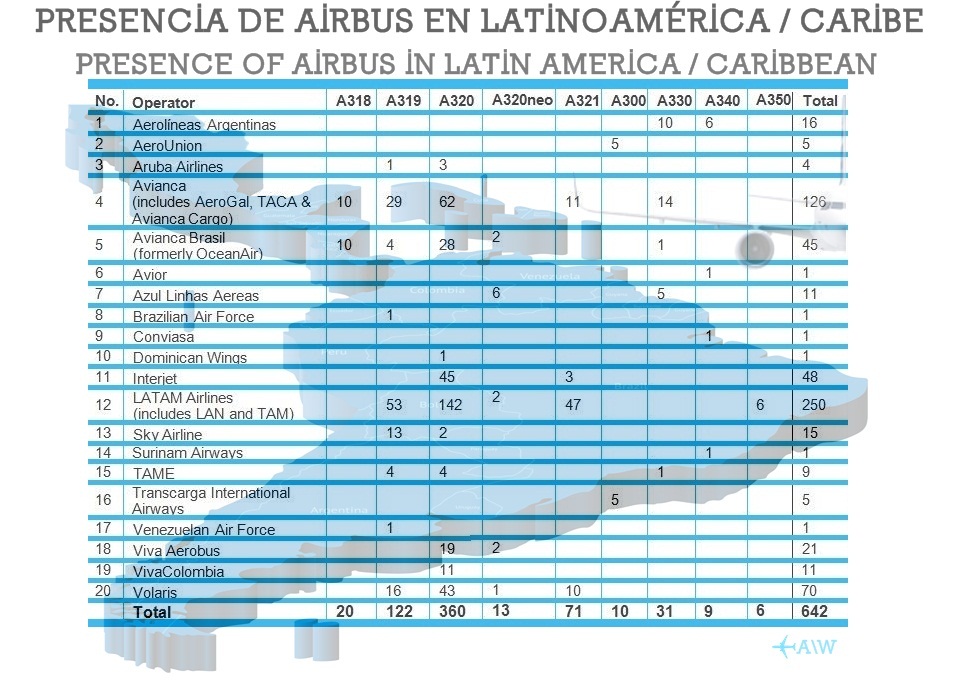
Airbus en Latinoamérica posee más de 1.000 aviones vendidos y una cartera de pedidos de casi 450 aeronaves, cerca de 650 son aviones de Airbus que operan actualmente en Latinoamérica y Caribe. En los últimos 10 años, Airbus ha triplicado su flota en servicio; y desde 1990 ha captado más del 60 por ciento de los pedidos netos en la región.

Con el fin de asegurar la cercanía y a su vez ofrecer un servicio eficiente a los clientes de Latinoamérica y el Caribe, Airbus estableció sus oficinas en Miami además de destinar a 14 representantes técnicos en toda la región para ofrecer apoyo en el terreno a todos sus operadores.

Airbus-en-Latinoamerica_71761

Airbus aumentó su presencia en América Latina en 1998 cuando la aerolínea basada en Chile LAN Airlines, la salvadoreña TACA Airlines y la brasileña TAM Airlines realizaron el mayor pedido conjunto de la historia de la aviación comercial de América Latina: 90 aeronaves de pasillo único con opción a 90 aviones adicionales. Desde entonces, las tres aerolíneas en conjunto han pedido casi 600 aviones de la Familia A320, reconocida como el referente en aviones de pasillo único.

LATAM Airlines Group, como resultado de la fusión entre LAN y TAM en 2012, se consolidó como uno de los mayores clientes de Airbus en el mundo. TAM se convirtió en operador de aviones Airbus en 1998, cuando comenzó a volar el primero de sus A330-200. Para 2013, LATAM ya se había convertido en el mayor cliente de Airbus del hemisferio sur. En enero de 2016, LATAM se convirtió en el primer operador del A350 XWB en el continente americano. La aerolínea pidió 27 de los altamente ‎eficientes aviones de largo alcance.

En agosto de 2016, LATAM Airlines Group recibió el primer A320neo de las Américas. LATAM ha pedido más de 360 aviones y actualmente dispone de más de 250 en operación. Su cartera de pedidos combinada llega casi a los 70 aviones.

Por su parte Avianca, anteriormente conocida como AviancaTaca, se ha decantado por la modernización y expansión de su flota con aviones Airbus. El pasado año, la aerolínea adquirió 100 aviones A320NEO, el mayor pedido único realizado en la historia de la aviación de Latinoamérica. En 2012, Avianca Cargo, conocida anteriormente como Tampa Cargo, se convirtió en el primer operador del carguero A330-200F de la región. Actualmente, Avianca ha realizado pedidos que suman aproximadamente 300 aviones Airbus y opera casi 130 aeronaves del mismo fabricante. Avianca cuenta con una cartera de pedidos de aproximadamente 140 aviones Airbus. Además Synergy Aerospace Corp, el mayor accionista de Avianca y propietario de Avianca Brasil, recientemente firmó un acuerdo de compra por 62 aviones de la Familia A320neo. Synergy se convirtió en un cliente de Airbus en 2007 tras el pedido de 10 A350 XWB. La compañía ordenó también 20 aeronaves de la Familia A320, seis A330-200 de pasajeros y un carguero A330-200F.

Airbus dio la bienvenida a Avianca Brasil en 2010. Actualmente la aerolínea opera más de 40 aeronaves de la Familia A320, incluidos dos A320neo y un A330 carguero. Airbus también está presente en Brasil con Azul Linhas Aereas, que ha realizado un pedido de 35 aeronaves de la Familia A320NEO y actualmente opera seis A320neo y cinco A330. Azul ha iniciado recientemente rutas internacionales con una flota de cinco A330-200 arrendados y pronto integrará más aviones Airbus de fuselaje ancho a su flota.

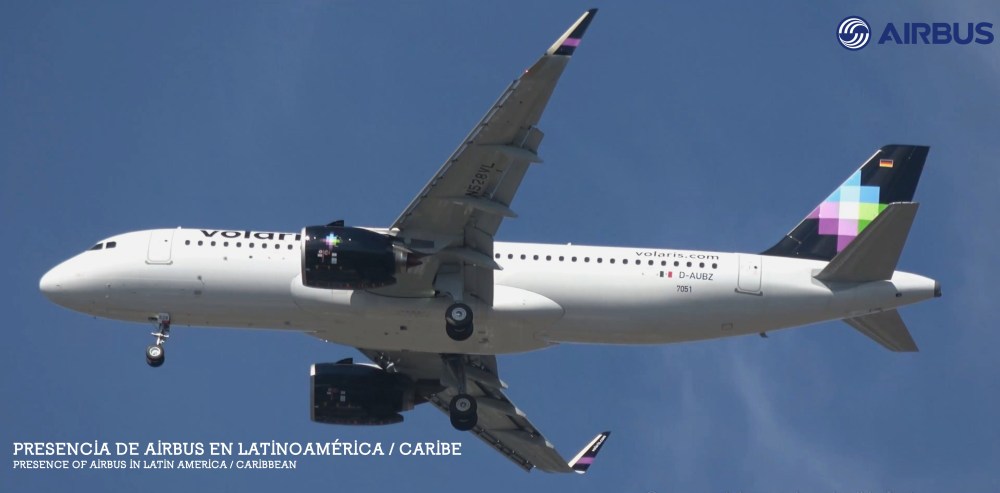
Airbus también dispone de tres grandes clientes en México: las aerolíneas de bajo costo Interjet, VivaAerobus y Volaris. En el año 2013, VivaAerobus, el operador exclusivo de aviones Airbus, compró 52 aeronaves de la Familia A320, incluidos 40 A320NEO y 12 A320CEO. Este ha sido el mayor pedido de aviones Airbus ejecutado por una aerolínea mexicana. VivaAerobus opera 21 aviones A320, incluidos dos A320neo. Volaris se convirtió en operador de Airbus en 2006, y ha sido un operador cuya flota está íntegramente compuesta por aviones Airbus desde entonces. La aerolínea ha pedido un total de 74 aviones, incluyendo 30 A320NEO y fue el primer operador del A320NEO de Norte América. En la actualidad, Volaris opera 70 aviones de la Familia A320, incluido un A320NEO. Por otro lado, Interjet se convirtió en cliente de Airbus en el año 2005, y desde entonces ha pedido 60 aviones A320, incluidos 40 A320NEO. Actualmente, Interjet opera 48 aviones de la Familia A320. Por último, la aerolínea mexicana de carga aérea AeroUnion opera cinco aviones de carga modelo A300.

Aerolíneas Argentinas comenzó su relación con Airbus en 1994 operando el A310-300. En los últimos años, la aerolínea nacional de Argentina recibió cuatro nuevos aviones A330-200 con el fin de renovar y consolidar su flota de aviones de fuselaje ancho en los últimos y recientes años. Actualmente, la aerolínea opera un total de 16 aeronaves de fuselaje ancho compuestos por diez A330 y seis A340.

La compañía aérea colombiana de bajo costo VivaColombia se convirtió en un operador de Airbus en 2012. Hoy en día opera 11 aviones A320. Asimismo, Sky Airline, la aerolínea de bajo costo chilena (cuya flota está compuesta únicamente por aeronaves Airbus) opera en la actualidad 15 aviones de la Familia A320.

Airbus también tiene presencia en Ecuador a través de la aerolínea TAME (que opera ocho aviones de la Familia A320 y un A330); en Aruba con Aruba Airlines (con tres A320 y un A319); en Venezuela con Conviasa (con un A340) y Transcarga International Airways (con cinco A300); en Surinam con Surinam Airways (con un A340) y en República Dominicana junto con Dominican Wings (con un A320). Las Fuerzas Aéreas venezolanas y brasileñas operan cada una un jet corporativo de Airbus basado en el A319. AIRGWAYS ® Icon-AW

https://airgways.com/wp-content/uploads/2017/03/7cf17-1o-airbusa319daaviancabrasilsobrevoasp-abrilde2010-fotodemarcosfernandes.jpg

Airbus presence in Latin America


logo_airbus_2014-svgAirbus has tripled its presence and captured 60% of the market

Airbus in Latin America has more than 1,000 aircraft sold and a order book of almost 450 aircraft, about 650 are Airbus aircraft currently operating in Latin America and the Caribbean. In the last 10 years, Airbus has tripled its fleet in service; And since 1990 has captured more than 60 percent of net orders in the region.

In order to ensure proximity and offer an efficient service to customers in Latin America and the Caribbean, Airbus established its offices in Miami, as well as assigning 14 technical representatives throughout the region to offer support to all its operators in the field .

Airbus increased its presence in Latin America in 1998 when Chilean-based airline LAN Airlines, Salvadoran TACA Airlines and Brazil’s TAM Airlines made the largest joint order in the history of commercial aviation in Latin America: 90 single-aisle aircraft with option To 90 additional aircraft. Since then, the three airlines together have ordered almost 600 aircraft of the A320 Family, recognized as the benchmark in single-aisle aircraft.

Airbus-en-Latinoamerica_71761

LATAM Airlines Group, as a result of the merger between LAN and TAM in 2012, consolidated itself as one of Airbus’ largest customers in the world. TAM became Airbus operator in 1998, when the first of its A330-200s began flying. By 2013, LATAM had already become the largest Airbus customer in the Southern Hemisphere. In January 2016, LATAM became the first operator of the A350 XWB in the American continent. The airline ordered 27 of the highly efficient long-range aircraft.

In August 2016, LATAM Airlines Group received the first A320neo of the Americas. LATAM has ordered more than 360 aircraft and currently has more than 250 in operation. Its combined order book reaches almost 70 aircraft.

For its part, Avianca, previously known as AviancaTaca, has opted for the modernization and expansion of its fleet with Airbus aircraft. Last year, the airline acquired 100 A320NEO aircraft, the largest single order ever made in Latin American aviation history. In 2012, Avianca Cargo, formerly known as Tampa Cargo, became the first operator of the A330-200F freighter in the region. Currently, Avianca has placed orders totaling approximately 300 Airbus aircraft and operates almost 130 aircraft of the same manufacturer. Avianca has a backlog of approximately 140 Airbus aircraft. In addition Synergy Aerospace Corp, Avianca’s largest shareholder and owner of Avianca Brazil, recently signed a purchase agreement for 62 aircraft of the A320NEO family. Synergy became an Airbus customer in 2007 after ordering 10 A350 XWBs. The company also ordered 20 A320 Family aircraft, six A330-200 passengers and one A330-200F freighter.

Airbus welcomed Avianca Brazil in 2010. The airline currently operates more than 40 aircraft of the A320 Family, including two A320neo and one A330 freighter. Airbus is also present in Brazil with Azul Linhas Aereas, which has ordered 35 aircraft of the A320neo Family and currently operates six A320neo and five A330. Azul has recently commenced international routes with a fleet of five leased A330-200s and will soon integrate more Airbus wide-body aircraft into its fleet.

https://i0.wp.com/fly-news.es/fly-test/wp-content/uploads/A320neo-MSN7126.jpg

Airbus also has three major customers in Mexico: the low-cost airlines Interjet, VivaAerobus and Volaris. In the year 2013, VivaAerobus, the exclusive operator of Airbus aircraft, purchased 52 aircraft of the A320 Family, including 40 A320NEO and 12 A320CEO. This has been the largest order of Airbus aircraft executed by a Mexican airline. VivaAerobus operates 21 A320 aircraft, including two A320neo. Volaris became an Airbus operator in 2006, and has been an operator whose fleet is composed entirely of Airbus aircraft since then. The airline has ordered a total of 74 aircraft, including 30 A320NEO and was the first operator of the A320NEO of North America. Currently, Volaris operates 70 aircraft of the A320 Family, including an A320neo. On the other hand, Interjet became an Airbus customer in 2005, and has since ordered 60 A320 aircraft, including 40 A320NEO. Currently, Interjet operates 48 aircraft of the A320 Family. Finally, Mexican air cargo airline AeroUnion operates five model A300 cargo aircraft.

Aerolíneas Argentinas began its relationship with Airbus in 1994 operating the A310-300. In recent years, the national airline of Argentina has received four new A330-200 aircraft in order to renew and consolidate its fleet of wide-body aircraft in recent and recent years. Currently, the airline operates a total of 16 wide-body aircraft composed of ten A330s and six A340s.

The low-cost Colombian airline VivaColombia became an Airbus operator in 2012. Today it operates 11 A320 aircraft. Likewise, Sky Airline, the Chilean low-cost airline (whose fleet is composed only of Airbus aircraft) currently operates 15 A320 Family aircraft.

Airbus also has presence in Ecuador through the TAME airline (which operates eight aircraft of the A320 Family and an A330); In Aruba with Aruba Airlines (with three A320 and one A319); In Venezuela with Conviasa (with an A340) and Transcarga International Airways (with five A300); In Surinam with Surinam Airways (with an A340) and Dominican Republic along with Dominican Wings (with an A320). The Venezuelan and Brazilian Air Forces each operate an Airbus corporate jet based on the A319. A\W

aw-icon-red-1000

Ξ A I R G W A Y S Ξ
SOURCE: Entornointeligente.com
DBk: Airgways / Bp.blogspot.com / Flynews.es / Maxresdefault.com
AW-POST: 201703231738AR

A\W   A I R G W A Y S ®