AW | 2017 04 01 15:50 | INDUSTRY
El ala del MC-21 debe reforzarse después de pruebas estáticas
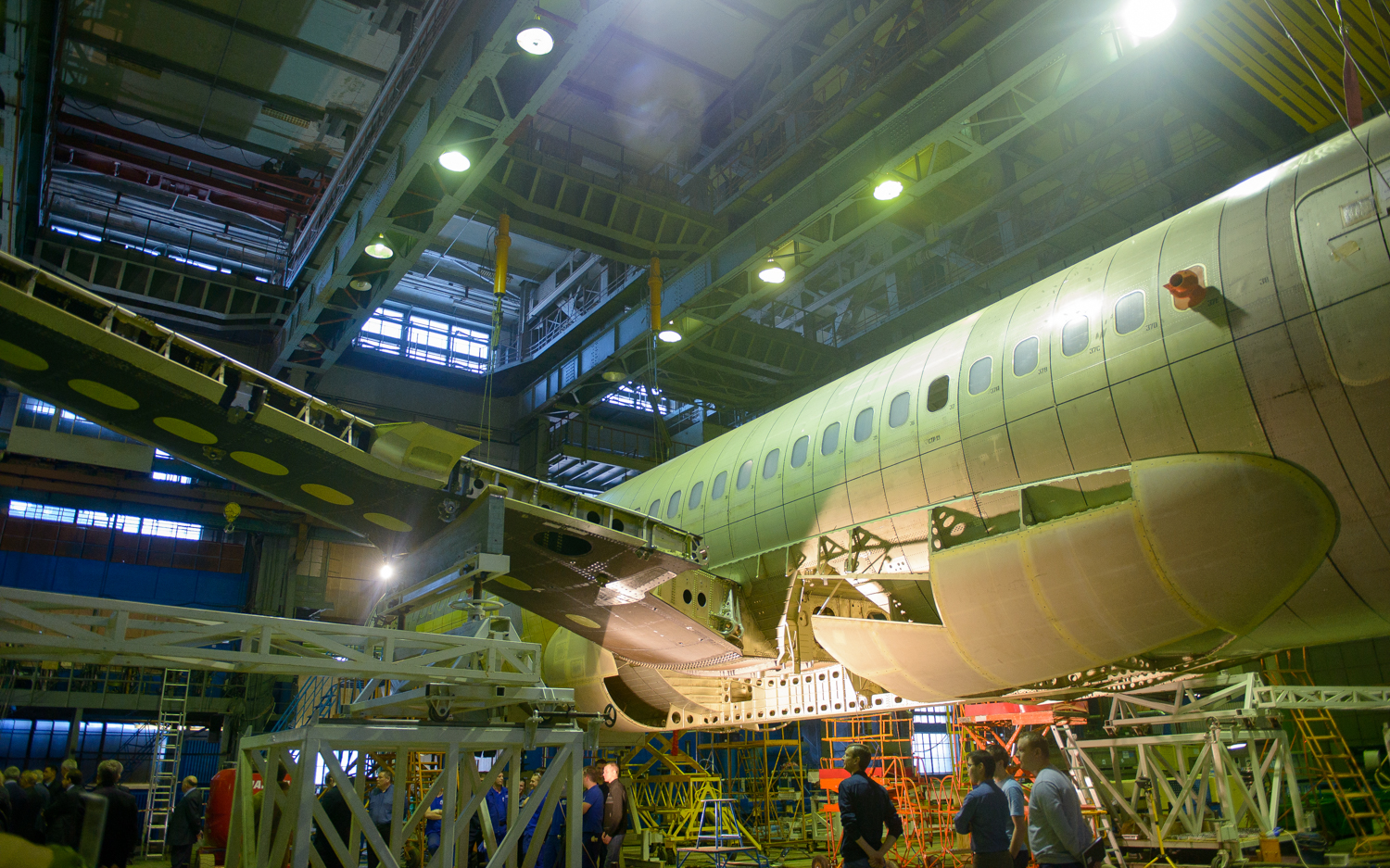
El programa de Irkut MC-21-300 de Rusia ha pasado un hito importante en las pruebas estáticas. La caja de ala compuesta de la aeronave fue destruida exponiéndola a cargas superiores al 90% de la carga final. El diseñador de la aeronave, Irkut Corporation, dijo a Russian Aviation Insider que las pruebas de fatiga de las alas se habían completado a finales de febrero. El factor de reserva demostrado por el ala es suficiente para iniciar pruebas de vuelo, pero la compañía todavía tiene la intención de reforzar la estructura del ala.
Antes del inicio de la prueba, las áreas de la estructura del ala que experimentan cargas máximas en vuelo fueron dañadas intencionalmente en la máxima medida que no dejó rastros visualmente distintos.

ENSAYOS DE PRUEBA DE FATIGA EN ALAS DEL MC-21
Los ensayos se llevaron a cabo en un ala aliviada; el ala reforzada pesará 25 kg más. El refuerzo se realizará sin desacoplar el ala del fuselaje. La modificación será documentada, y todos los prototipos subsiguientes recibirán un ala reforzada.
El ala podría ser reforzada después del primer vuelo del prototipo, pero esto requeriría más tiempo ya que el combustible tendría que ser drenado y los tanques secados. En cambio, Irkut optó por probar el ala aliviada, porque «[un ala] es más fácil de reforzar que aliviar», dijo un portavoz. La compañía pudo haber considerado la experiencia reciente de la aeropartista china Comac, que produjo un ala excesivamente reforzada en su avión de pasajeros C919 y ahora tendrá que hacerlo más ligero.
El portavoz de Irkut dijo que el programa está avanzando a tiempo. Los sistemas del MC-21 están siendo probados en el conjunto de prototipos para volar por primera vez en abril, como se dijo anteriormente por el viceprimer ministro Dmitry Rogozin.
Los ensayos estáticos se están llevando a cabo en el Instituto Aerohidrodinámico Central (TsAGI) en Zhukovsky fuera de Moscú. Como se informó anteriormente, son una de las etapas de la prueba de fatiga, que precede al primer vuelo.
El MC-21-300, el primer miembro de la planificada familia MC-21, está diseñado para asentar entre 163 y 211 pasajeros. La versión más pequeña MC-21-200 con 132 a 165 asientos. El avión será certificado inicialmente con los motores PW1400G de Pratt & Whitney; el aerogenerador alternativo Aviadvigatel PD-14 de fabricación rusa está actualmente en desarrollo.
 El MC-21 está preparado para competir contra el Airbus A320NEO, el Boeing 737MAX y el Comac C919.
Reinforcement of MC-21 wings
MC-21 wing to be reinforced following static tests
Russia’s Irkut MC-21-300 narrowbody pogram has passed an important milestone in static tests. The aircraft’s composite wingbox was destroyed by exposing it to loads that were higher than 90% of the ultimate load. The aircraft’s designer, Irkut Corporation, told Russian Aviation Insider that the wing fatigue testing had been completed at the end of February. The reserve factor demonstrated by the wing is sufficient for starting flight tests, but the company still intends to reinforce the wing structure.
Before the start of the testing, the areas of the wing structure which would experience maximum loads in flight were intentionally damaged to the maximum extent that did not leave any visually distinct traces.
The tests were carried out on an alleviated wing; the reinforced wing will weigh 25 kg more. The reinforcement will be performed without unmating the wing from the fuselage. The modification will be documented, and all the subsequent prototypes will receive a reinforced wing.
The wing could be reinforced after the prototype’s maiden flight, but this would take more time as the fuel would have to be drained and the tanks dried. Instead, Irkut opted for testing the alleviated wing, because “[a wing] is easier to reinforce than alleviate”, a spokesperson said. The company may have considered the recent experience of Chinese airframer Comac, which produced an overly reinforced wing on its C919 airliner and will now have to make it lighter.
The Irkut spokesperson said that the program is proceeding on schedule. The MC-21’s systems are being tested on the prototype set to first fly in April, as stated earlier by Deputy Prime Minister Dmitry Rogozin.
The static tests are being carried out at the Central Aerohydrodynamic Institute (TsAGI) in Zhukovsky outside Moscow. As reported earlier, tthey are one of the stages of fatigue testing, which precedes the first flight.
The MC-21-300, the first member of the planned MC-21 family, is designed to seat between 163 and 211 passengers. The smaller MC-21-200 version with 132 to 165 seats is to follow. The aircraft will be initially certified with Pratt&Whitney PW1400G engines; the alternative Russian-made Aviadvigatel PD-14 powerplant is currently under development.
The MC-21 is set to compete against the Airbus A320NEO, the Boeing 737MAX, and the Comac C919. A\W
Ξ A I R G W A Y S Ξ
SOURCE: Rusaviainsider.com
DBk: Aex.ru / Aviationweek.com / Rusaviainsider.com [Leonid Faerberg]
AW-POST: 201704061416AR
A\W A I R G W A Y S ®
 airgways.com