AW | 2019 01 19 05:47 | AIRLINES
 Aerolíneas Argentinas estima alcanzar déficit cero entre 2020-2021
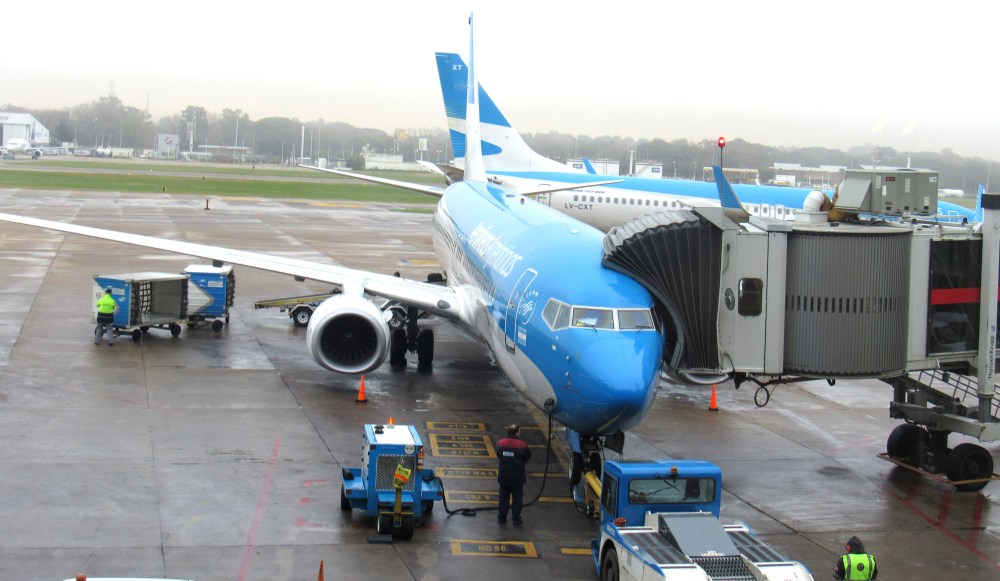
El Director de Comunicación de Aerolíneas Argentinas, Marcelo Cantón ha comunicado: “En 2020 o 2021 vamos a llegar al subsidio cero”. Está satisfecho con los resultados de 2018 y augura un mejor 2019. Marcelo Cantón, Director de Asuntos Corporativos y Comunicaciones de la aerolínea, habla de la inserción de la empresa en el siglo XXI: “En los últimos tres años la compañía estatal compró 24 aviones modernos, reacondicionó el resto de la flota y sumó 18 rutas más que las que volaba en Diciembre 2015, cuando nos hicimos cargo de la administración”. Pronostica un gran crecimiento del mercado aéreo y estima que en 2021 Aerolíneas dejará de recibir dinero del Estado argentino.
Mercado aéreo
En la Argentina hay un proceso de federalización del transporte aéreo. Cada vez más argentinos eligen volar sin pasar por Buenos Aires. El hub Córdoba une 17 destinos sin escalas en Aeroparque ni Ezeiza. Además, en abril arranca la desregionalización de Aeroparque. Es un cambio profundo en el sistema de transporte argentino. Hoy el mercado aéreo internacional se mueve con los hubs Aeroparque, Ezeiza y Córdoba. A partir de Abril 2019 en Aeroparque sólo van a quedar destinos internacionales a Montevideo y Punta del Este. Todos los demás rumbos extranjeros pasarán por Ezeiza, que por tanto empieza a adquirir otro sentido para las compañías aéreas.
Aerolíneas ha desarrollado más rutas internas federales sin pasar por Buenos Aires. El Hub Córdoba está permitiendo potenciar vuelos internos que antes eran poco rentables. En la actualidad existe mercado para ello.
Argentina necesita continuar potenciando el flujo de tráfico aéreo. Las estadísticas regionales indican que Brasil y Perú poseen el doble de vuelos que Argentina y un tercio que Chile. En los últimos diez años se produjo una revolución del mercado aéreo internacional que Argentina no acompañó. Un 10 % de la población efectivamente vuela, cuando podríamos estar en el doble o el triple. Esto está hablando de un negocio con mucha potencialidad hacia adelante y explica también la llegada de nuevas compañías: la tasa de crecimiento que se ve en el mercado argentino no es la misma que la de los países donde el sistema aéreo ya está bien instalado.
Subsidios
El Estado ha llegado a aportar US$ 132 dólares de subsidio por cada pasaje que Aerolíneas emitía. Hoy se bajó a 15 dólares de subsidio por ticket. Hemos trabajado mucho en subir los ingresos y bajar los gastos. Se ha pulido mucho la manera de hacer las compras. En 2015, mil personas tenían autorización para firmar compras. Hoy las compras las hace una dirección de compras y debe haber cinco o seis personas que pueden firmar una licitación. Eso evita la posibilidad de corrupción. Se ha hecho todo mucho más transparente y se empezaron a renegociar contratos. Sólo en renegociaciones se ahorraron más de 130 millones de dólares.
Hacia Déficit Cero
Las expectativas en el momento dorado del 1Q2018 eran cerrar el año con 80 millones de dólares de subsidio y en 2019 no pedirle más plata al Estado. Al final tuvimos que pedir US$ 198 millones. En las actuales condiciones esperamos cerrar 2019 con 40 millones de dólares de subsidio. Hicimos una apuesta de que en el mediano plazo vamos a llegar a cero. No nos atrevemos a comprometernos para que sea en 2020, pero si no fuera en 2020 tendría que ser en 2021. «No hay espacio para que una empresa aérea le saque dinero del bolsillo a gente que no vuela. Si hay 4 millones de argentinos que vuelan, hay 44 millones de argentinos que ponen plata en Aerolíneas. Es injusto», expresó el Director de Comunicaciones.
 Aerolíneas, to reach zero deficit in 2020-2021
Aerolíneas Argentinas expects to reach zero deficit between 2020-2021
The Communications Director of Aerolíneas Argentinas, Marcelo Cantón, has announced: «In 2020 or 2021, we will reach the zero subsidy». He is satisfied with the results of 2018 and predicts a better 2019. Marcelo Cantón, Director of Corporate Affairs and Communications of the airline, talks about the insertion of the company in the XXI century: «In the last three years the state company bought 24 modern aircraft, reconditioned the rest of the fleet and added 18 more routes than the ones that flew in December 2015, when we took over the administration». It forecasts a great growth of the air market and estimates that in 2021 Aerolíneas will stop receiving money from the Argentine State.
Air market
In Argentina there is a process of federalization of air transport. More and more Argentines choose to fly without going through Buenos Aires. The Córdoba hub connects 17 non-stop destinations in Aeroparque and Ezeiza. In addition, the deregionalization of Aeroparque starts in April. It is a profound change in the Argentine transportation system. Today the international air market moves with the hubs Aeroparque, Ezeiza and Córdoba. As of April 2019 in Aeroparque, only international destinations will go to Montevideo and Punta del Este. All other foreign routes will pass through Ezeiza, which therefore begins to acquire another meaning for airlines.
Aerolíneas has developed more federal internal routes without going through Buenos Aires. The Hub Córdoba is allowing to boost internal flights that were previously unprofitable. Currently there is a market for this.
Argentina needs to continue strengthening the flow of air traffic. Regional statistics indicate that Brazil and Peru have twice as many flights as Argentina and a third as Chile. In the last ten years there was a revolution of the international air market that Argentina did not accompany. 10% of the population actually flies, when we could be in double or triple. This is talking about a business with great potential forward and also explains the arrival of new companies: the growth rate seen in the Argentine market is not the same as that of countries where the air system is already well installed.
Subsidies
The State has contributed US$ 132 subsidy for each ticket that Aerolíneas issued. Today it went down to US$ 15 subsidy per ticket. We have worked hard to raise revenues and lower expenses. The way of shopping has been very polished. In 2015, a thousand people were authorized to sign purchases. Today purchases are made by a shopping address and there must be five or six people who can sign a bid. That avoids the possibility of corruption. Everything has become much more transparent and contracts have been renegotiated. Only in renegotiations more than 130 million dollars were saved.
Towards Zero Deficit
Expectations in the golden moment of 1Q2018 were to close the year with 80 million dollars of subsidy and in 2019 not to ask for more money from the State. In the end we had to ask for US $ 198 million. In the current conditions we expect to close 2019 with 40 million dollars of subsidy. We made a bet that in the medium term we will reach zero. We do not dare to commit ourselves to be in 2020, but if it were not in 2020 it would have to be in 2021. «There is no room for an airline to take money out of their pocket to people who do not fly in. If there are 4 million Argentines who fly, there are 44 million Argentines who put money in Aerolíneas», said the Communications Director. A \ W
Ξ A I R G W A Y S Ξ
SOURCE: Airgways.com
DBk: Aerolíneas.com / Airgways.com / Clarin.com
AW-POST: 2019011990547AR
A\W A I R G W A Y S ®
 airgways.com