Thai Airways declara la quiebra
AW | 2020 06 18 11:03 | AIRLINES

Thai Airways primera compañía asiática hacia la quiebra

Thai Airways Logo - PNG y Vector

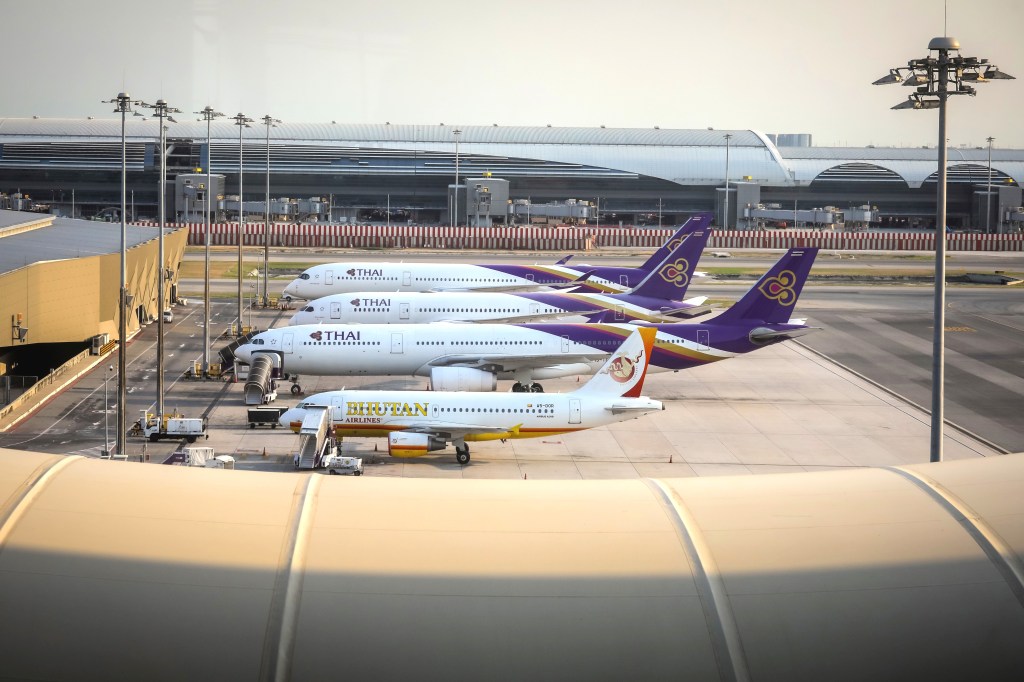
Thai Airways se enfrenta a un procedimiento de quiebra por los próximos 5 años. Lo decidió este 18/06 el Tribunal Central de Quiebras de Bangkok, aceptando el pedido de la compañía aérea, afectada por la crisis de Coronavirus, convirtiéndose es el primer operador aéreo asiático en presentar instancia de quiebra después del estallido de la crisis sanitaria pandémica.

La industria del transporte aéreo entró en crisis en Febrero 2020, después que en gran parte la mayoría de los países asiáticos cerraran los cielos interrumpiendo las conexiones con el extranjero para contener la pandemia. La quiebra de Thai Airways muestra la necesidad urgente de una reforma del sector estatal. Una vez que el orgullo de Tailandia, los pasajeros que vuelan en todo el mundo, ahora los aviones de Thai Airways International están en tierra y la compañía se declaró en quiebra a fines de Mayo 2020. Esta bancarrota, y la pérdida de la aerolínea del estado de empresa estatal, han suscitado dudas sobre el desempeño y el futuro de otras empresas estatales tailandesas, que incluyen algunas de sus corporaciones más grandes. En un momento de mayor gasto público e incertidumbre debido a la pandemia, el Gobierno tailandés debería considerar esto como un punto de inflexión y comenzar el proceso de reforma.

Una de las razones por las que Thai Airways sobrevivió durante tanto tiempo a pesar de sus ineficiencias fue porque disfrutó de protección estatal hasta hace dos décadas, pero no pudo responder al aumento de la competencia.

Aerolíneas «infectadas»

También Cathay Pacific y Singapore Airlines están bajo presión. Ambas compañías dependen demasiado de los vuelos internacionales. Según Goldman Sachs, el operador asiático de Hong Kong perderá el 5% de los tráficos respecto al 2019; para la compañía de Singapur la pérdida será del 2%. Hasta ahora en el resto del mundo son 6 las compañías que se han declarado en bancarrota o han suspendido las propias actividades por los efectos del Coronavirus. Entre ellas, la Virgin Australia terminó bajo administración controlada el 21 Abril 2020, después que el gobierno australiano rechazó el pedido de la dirigencia de la empresa para un salvataje estatal.

La organización internacional para el transporte aéreo estima que el tráfico volverá a niveles pre-emergencia Covid-19 sólo en 2023. También están bajo presión Cathay Pacific y Singapore Airlines. Varias aerolíneas han declarado la bancarrota o han suspendido las actividades para reestructurarse en el resto del mundo. Estiman que el transporte aéreo mundial volverá a niveles pre-emergencia sólo hacia el 2023. undefined

Thai Airways declares bankruptcy

Thai Airways first Asian company to go bankrupt

Thai Airways is facing bankruptcy for the next 5 years. The Central Bankruptcy Court of Bangkok decided this 06/18, accepting the request of the airline, affected by the Coronavirus crisis, becoming the first Asian airline operator to file for bankruptcy after the outbreak of the pandemic health crisis.

The air transport industry went into crisis in February 2020, after most of the Asian countries closed the skies, interrupting foreign connections to contain the pandemic. The bankruptcy of Thai Airways shows the urgent need for a reform of the state sector. Once the pride of Thailand, passengers flying around the world, now Thai Airways International planes are grounded and the company filed for bankruptcy in late May 2020. This bankruptcy, and the loss of the airline’s As a state-owned company, they have raised questions about the performance and future of other Thai state-owned companies, which include some of their largest corporations. At a time of increased public spending and uncertainty due to the pandemic, the Thai government should view this as a turning point and begin the reform process.

One of the reasons Thai Airways survived for so long despite its inefficiencies was because it enjoyed state protection until two decades ago, but was unable to respond to increased competition.

«Infected» airlines

Cathay Pacific and Singapore Airlines are also under pressure. Both companies rely too heavily on international flights. According to Goldman Sachs, the Asian operator in Hong Kong will lose 5% of traffic compared to 2019; for the Singapore company the loss will be 2%. So far in the rest of the world there are 6 companies that have declared bankruptcy or have suspended their own activities due to the effects of the Coronavirus. Among them, Virgin Australia ended under controlled administration on April 21, 2020, after the Australian government rejected the company’s leadership’s request for a state bailout.

Traffic is expected to return to pre-emergency Covid-19 levels only in 2023, the International Air Transport Organization. Cathay Pacific and Singapore Airlines are also under pressure. Several airlines have declared bankruptcy or suspended activities to restructure in the rest of the world. They estimate that global air transport will return to pre-emergency levels only by 2023. undefined

การบินไทยประกาศล้มละลาย

การบินไทยเป็น บริษัท แรกในเอเชียที่ล้มละลาย

สายการบินไทยกำลังจะล้มละลายในอีก 5 ปีข้างหน้า ศาลล้มละลายกลางแห่งกรุงเทพมหานครได้มีมติเมื่อวันที่ 06/18 ที่ผ่านมาว่าได้รับการร้องขอจากสายการบินที่ได้รับผลกระทบจากวิกฤต Coronavirus ซึ่งกลายเป็นผู้ประกอบการสายการบินแห่งแรกในเอเชียที่ยื่นฟ้องล้มละลายหลังจากการระบาดของโรคระบาด

อุตสาหกรรมการขนส่งทางอากาศเข้าสู่ภาวะวิกฤตในเดือนกุมภาพันธ์ 2563 หลังจากที่ประเทศส่วนใหญ่ในเอเชียปิดท้องฟ้าโดยขัดขวางการเชื่อมต่อต่างประเทศเพื่อป้องกันการแพร่ระบาด การล้มละลายของการบินไทยแสดงให้เห็นถึงความจำเป็นเร่งด่วนในการปฏิรูปภาครัฐ เมื่อความภาคภูมิใจของประเทศไทยผู้โดยสารที่บินไปทั่วโลกตอนนี้เครื่องบินของการบินไทยมีเหตุผลและ บริษัท ได้ยื่นฟ้องล้มละลายในปลายเดือนพฤษภาคม 2020 การล้มละลายครั้งนี้และการสูญเสียของสายการบิน ในฐานะที่เป็น บริษัท ของรัฐพวกเขาได้ตั้งคำถามเกี่ยวกับผลการดำเนินงานและอนาคตของ บริษัท อื่น ๆ ของรัฐไทยซึ่งรวมถึง บริษัท ที่ใหญ่ที่สุดบางแห่งด้วย ในช่วงเวลาของการใช้จ่ายภาครัฐที่เพิ่มขึ้นและความไม่แน่นอนเนื่องจากการแพร่ระบาดของโรครัฐบาลควรมองว่าสิ่งนี้เป็นจุดเปลี่ยนและเริ่มกระบวนการปฏิรูป

หนึ่งในเหตุผลที่สายการบินไทยรอดมาได้นานแม้จะไร้ประสิทธิภาพก็เพราะมันได้รับความคุ้มครองจากรัฐจนถึงสองทศวรรษที่ผ่านมา แต่ไม่สามารถตอบสนองต่อการแข่งขันที่เพิ่มขึ้น

สายการบิน «ติดเชื้อ»

สายการบินคาเธ่ย์แปซิฟิคและสิงคโปร์อยู่ภายใต้แรงกดดันเช่นกัน ทั้งสอง บริษัท พึ่งพาเที่ยวบินระหว่างประเทศเป็นอย่างมาก จากข้อมูลของ Goldman Sachs ผู้ประกอบการในเอเชียในฮ่องกงจะเสียการจราจร 5% เมื่อเทียบกับปี 2562 สำหรับ บริษัท สิงคโปร์การสูญเสียจะเป็น 2% จนถึงขณะนี้ในส่วนที่เหลือของโลกมี 6 บริษัท ที่ประกาศล้มละลายหรือหยุดกิจกรรมของตัวเองเนื่องจากผลกระทบของ Coronavirus ในหมู่พวกเขาเวอร์จิ้นออสเตรเลียสิ้นสุดวันที่ 21 เมษายน 2563 ภายใต้การควบคุมของรัฐบาลออสเตรเลียหลังจากที่รัฐบาลออสเตรเลียปฏิเสธคำร้องขอความเป็นผู้นำของ บริษัท เพื่อขอความช่วยเหลือจากรัฐ

องค์กรขนส่งทางอากาศระหว่างประเทศประมาณการว่าปริมาณการจราจรจะกลับสู่ระดับก่อนเกิดเหตุฉุกเฉิน Covid-19 ในปี 2566 เท่านั้นสายการบินคาเธ่ย์แปซิฟิคและสิงคโปร์แอร์ไลน์ก็อยู่ภายใต้แรงกดดันเช่นกัน สายการบินหลายแห่งได้ประกาศล้มละลายหรือระงับกิจกรรมการปรับโครงสร้างในส่วนที่เหลือของโลก พวกเขาประเมินว่าการขนส่งทางอากาศทั่วโลกจะกลับสู่ระดับก่อนเกิดเหตุฉุกเฉินภายในปี 2566 undefined

Ξ A I R G W A Y S Ξ
PUBLISHER: Airgways.com
DBk: Thaiairways.com / Airgways.com / Nikkei.com / Afp.com / Wikiwand.com
AW-POST: 202006181103AR

A\W   A I R G W A Y S ®

APLA expropiación aviones Latam

AW | 2020 06 18 01:37 | AIRLINES / AVIATION ORGANISMS

APLA solicita expropiación aeronaves de Latam Argentina

El Secretario de la Asociación de Pilotos de Líneas Aéreas (APLA) ha expresado públicamente la recomendación de expropiar las aeronaves de Latam Airlines Argentina, pero aclaró no considerar que la empresa aérea deba ser expropiada. El representante de APLA, Pablo Biró, solicitará que Latam Airlines Argentina no pueda llevarse los aviones del país. Además, consideró que Alberto Fernández está siendo víctima de una extorsión por parte de la aerolínea y adelantó que la situación de Latam será una prueba para el Presidente de la Nación.«Alberto Fernández está recibiendo una extorsión de Lan. Lo veo con toda claridad. Es un mensaje político. Esto es una prueba a Alberto Fernández porque lo votamos para que cambie la política aerocomercial, precisamente para que nos saque de encima fondos especuladores. Estos empresarios inescrupulosos que juegan con el destino de 1.700 familias, como si no hubiera sido suficiente los millones de dólares que se llevaron de Argentina», dijo el gremialista y Piloto de Aerolíneas Argentinas, Pablo Biró.

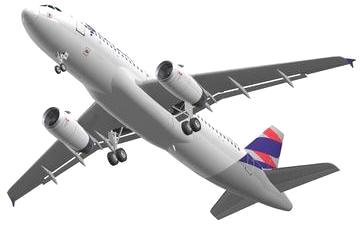
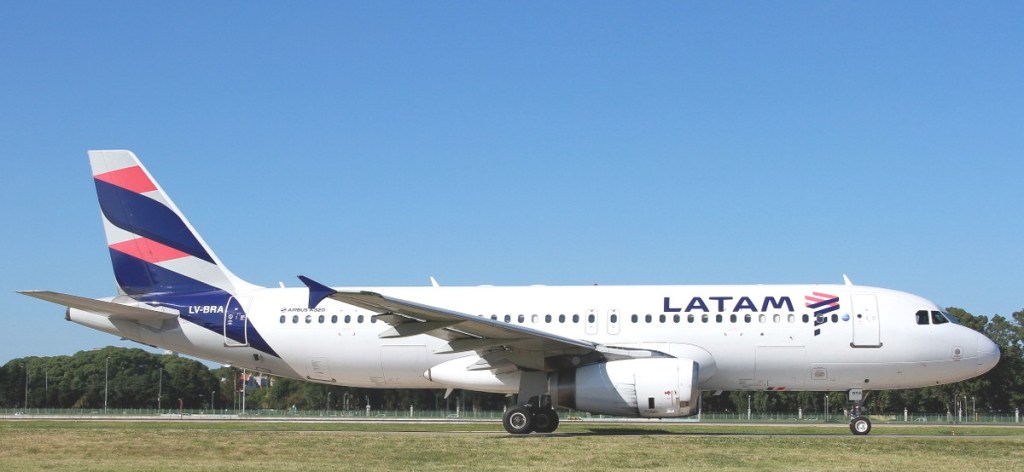
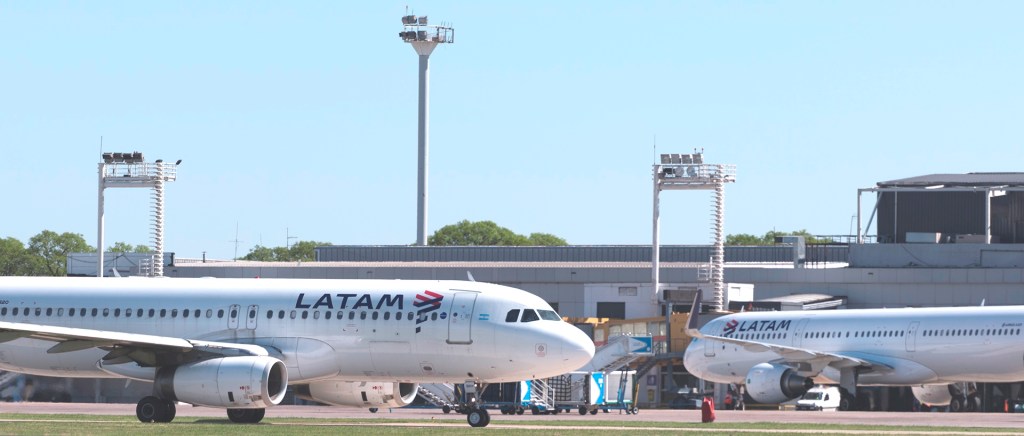
Latam Argentina

«La expropiación no la veo posible porque acá no se está hablando de soberanía alimentaria ni una necesidad de fondo. No veo un escenario de una expropiación en una compañía aérea hoy, porque es una prioridad baja», explicó el gremialista aeronáutico. Pero están evaluando presentar una nota solicitando a la Agencia Nacional de Aviación Civil (ANAC) de Argentina no permitir el retiro de las aeronaves de la compañía, ni tampoco desmatricular los aviones argentinos por considerar únicos bienes tangibles.

El gremio de pilotos pide que no le permitan a LATAM llevarse del ...
GREMIALISTA PABLO BIRÓ DE LA ASOCIACIÓN DE PILOTOS DE LÍNEAS AÉREAS (APLA) QUE NUCLEA A PILOTOS DE AEROLÍNEAS

Latam Airlines Argentina ha comunicado este Miércoles 17/06 el anuncio de cese de las operaciones en el país por tiempo indeterminado, pero muy probablemente sea este el final definitivo de las operaciones en Argentina. «Nosotros en base a lo que haga el Gobierno nos vamos a posicionar porque necesitamos que se defienda el trabajo argentino», advirtió el sindicalista acerca de la pérdida de empleo de los 1.700 trabajadores de la aviación.

En otro orden, acusan a la empresa de connivencia política con el anterior Gobierno Macrista, al considerar un vaciamiento del capital de Latam Argentina hacia la empresa matriz. «Para la Revolución de los Aviones se presuponía que iban a venir turistas, que iban a dejar dólares y que iban a volar barato, con un modelo que no es sustentable», sentenció Pablo Biró.

EL GRUPO AEROLÍNEAS ARGENTINAS/AUSTRAL SERÁ CONSIDERADO GRUPO DOMINANTE DE MERCADO AÉREO ARGENTINO

Voces de repudio

Tras el anuncio del cierre de las operaciones de la línea aérea Latam Airlines Argentina, en las redes sociales varios usuarios expresaron su indignación y tristeza por la decisión que deja el mercado aeronáutico argentino sin un jugador clave.

Muchos mensajes publicados en Twitter relacionaron el cese de vuelos de cabotaje de Latam Airlines en la Argentina con la intervención de la cerealera Vicentin en la Provincia de Santa Fe, que realizó el Gobierno de Alberto Fernández. Entre otros inconvenientes, también hablaron de los conflictos con los gremios del sector aeronáutico alegando que la «patota sindical» ha ganado terreno.

Dianco Chiacchiarini, Delegado nacional de la CC-ARI por Río Negro expresó: «Una empresa aérea que invirtió, generó muchísimos empleos y decide retirarse del país debido a las condiciones de inviabilidad del mercado por las medidas del Gobierno es siempre una muy mala señal para la Argentina. Mucho más grave cuando asoma el fantasma de la expropiación», tuiteó. El periodista Pablo Rossi trazó un paralelismo con la Revolución Cubana liderada por Fidel Castro que derrocó al dictador Fulgencio Batista en 1950 y terminó instalando otra dictadura que sigue vigente. «Sigan jugando a la Sierra Maestra desde Puerto Madero y al Estado expropiador. Vayan contra la propiedad privada que por cada Vicentin tendrán 10 LATAM huyendo de la Argentina», posteó en la red social.

Lidia Ascárate, diputada nacional por Tucumán de Juntos por el Cambio, también relacionó la intervención y muy probable expropiación de la cerealera Vicentin con la decisión de Latam de cerrar su filial argentina. «Latam Airlines anunció el cierre de su filial argentina como consecuencia de la pandemia y de dificultades para generar acuerdos que propicias en condiciones viables para operar. La expropiación de Vicentin fue el disparador para que otras empresas tomen la misma decisión».

En el colectivo de la gente, muchos piensan en la jugada política de posicionar a Aerolíneas Argentinas/Austral Líneas Aéreas para que concentre alrededor del 80% del mercado doméstico del país, una situación que posiciona al grupo como empresa monopólica del sector aeronáutico, una expresión retrógrada para estos tiempos de verdadera solidaridad.

APLA requests aircraft expropriation of Latam

APLA unions request expropriation of Latam Argentina aircraft

The Secretary of the Airline Pilots Association (APLA) has publicly expressed the recommendation to expropriate Latam Airlines Argentina‘s aircraft, but clarified that he does not consider that the airline should be expropriated. The representative of APLA, Pablo Biró, will request that Latam Airlines Argentina cannot take the country’s planes. In addition, he considered that Alberto Fernández is being the victim of extortion by the airline and announced that the situation in Latam will be a test for the President of the Nation. «Alberto Fernández is receiving extortion from Lan. I see it very clearly It is a political message This is a test to Alberto Fernández because we voted for him to change the commercial policy, precisely to get rid of speculative funds These unscrupulous businessmen who play with the destiny of 1,700 families, as if it had not been enough the millions of dollars that were taken from Argentina», said the unionist and Pilot of Aerolíneas Argentinas, Pablo Biró.

Latam Argentina

«I do not see expropriation as possible because here we are not talking about food sovereignty or a need for substance. I do not see a scenario of expropriation in an airline today, because it is a low priority», the aeronautical union leader explained. But they are evaluating presenting a note requesting the National Civil Aviation Agency (ANAC) of Argentina not to allow the withdrawal of the company’s aircraft, nor to de-register the Argentine planes as they consider only tangible assets.

Latam Airlines Argentina has communicated this Wednesday 17/06 the announcement of cessation of operations in the country for an undetermined time, but this will most likely be the final end of operations in Argentina. «We, based on what the Government does, will position ourselves because we need the Argentine work to be defended», the unionist warned about the loss of employment of the 1,700 aviation workers.

In another order, they accuse the company of political collusion with the previous Macrista Government, when considering an emptying of the capital of Latam Argentina towards the parent company. «For the Aircraft Revolution, it was assumed that tourists were going to come, that they were going to leave dollars and that they were going to fly cheaply, with a model that is not sustainable», said Pablo Biró.

Voices of repudiation

After the announcement of the closure of the operations of the airline Latam Airlines Argentina, on social networks several users expressed their outrage and sadness at the decision that the Argentine aeronautical market leaves without a key player.

Many messages published on Twitter related the cessation of cabotage flights by Latam Airlines in Argentina with the intervention of the cereal company Vicentin in the Province of Santa Fe, carried out by the Government of Alberto Fernández. Among other drawbacks, they also spoke of conflicts with unions in the aeronautical sector, alleging that the «union gang» has gained ground.

Dianco Chiacchiarini, National Delegate of the CC-ARI for Río Negro expressed: «An airline that invested, generated many jobs and decides to withdraw from the country due to the unfeasibility of the market due to government measures is always a very bad sign for Argentina. Much more serious when the specter of expropriation appears», he tweeted. The journalist Pablo Rossi drew a parallel with the Cuban Revolution led by Fidel Castro, who overthrew the dictator Fulgencio Batista in 1950 and ended up installing another dictatorship that is still in force. «Keep playing Sierra Maestra from Puerto Madero and the expropriating state. Go against the private property that for each Vicentin will have 10 LATAM fleeing from Argentina», he posted on the social network.

Lidia Ascárate, national deputy for Tucumán de Juntos por el Cambio, also related the intervention and very likely expropriation of the cereal company Vicentin with Latam’s decision to close its Argentine subsidiary. «Latam Airlines announced the closure of its Argentine subsidiary as a result of the pandemic and difficulties in generating agreements that are conducive to viable conditions to operate. Vicentin’s expropriation was the trigger for other companies to make the same decision».

In the group of people, many think of the political move to position Aerolíneas Argentinas/Austral Líneas Aéreas to concentrate around 80% of the country’s domestic market, a situation that positions the group as a monopolistic company in the aeronautical sector, an expression retrograde for these times of true solidarity.

Ξ A I R G W A Y S Ξ
PUBLISHER: Airgways.com
DBk: Airgways.com / Apla.org.ar / Latam.com
AW-POST: 202006180137AR

A\W   A I R G W A Y S ®

Actualización línea Spirit Aerosystems

AW | 2020 06 18 00:05 | INDUSTRY

Actualización sobre la producción de Boeing 737 MAX

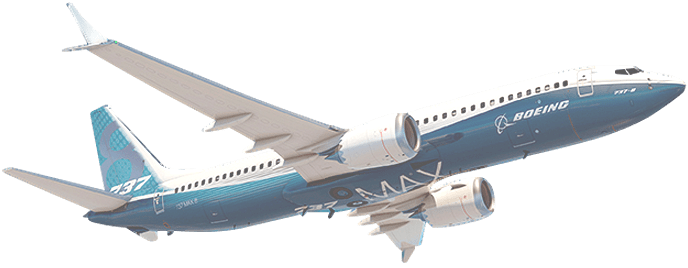
El 4 Junio 2020 Spirit AeroSystems recibió una notificación de The Boeing Company para efectuar una pausa de la línea de fabricación de las estructuras de fuselajes de los Boeing 737 MAX a cuatro unidades y evitar el reinicio de la producción en 16 unidades para ser entregado en 2020, hasta que se indique lo contrario. Esto es para respaldar la alineación de Boeing de los plazos de entrega a corto plazo con las necesidades de sus clientes por el impacto de la pandemia en los viajes aéreos y las operaciones de las aerolíneas, y para mitigar el gasto de posibles costos de producción innecesarios.

Dinámica de la industria

Sobre la base de la información en la carta, la correspondencia posterior a Boeing con fecha 9 Junio 2020 y las discusiones de Spirit AeroSystems con Boeing en relación con la producción, la compañía con sede en Wichita, Kansas, cree que habrá una reducción de su línea 737 MAX del total de 125 unidades auxiliares. Spirit AeroSystems aún no tiene información definitiva sobre cuál será la magnitud de la reducción, pero espera que sea más de 20 aeronaves.

La conexión a tierra del Boeing 737 MAX junto con la pandemia de Coronavirus es una situación desafiante, dinámica y en evolución. Durante este tiempo, Spirit AeroSystems planea trabajar con Boeing para determinar un plan de producción definitivo para 2020 y administrar el sistema de producción 737 MAX y la cadena de suministro. Debido a los asuntos descrito anteriormente, Spirit ha elegido para colocar ciertos empleados cesantes directamente asociados con el trabajo de producción y funciones de apoyo para el programa 737 MAX en un cese temporal en Wichita de 21 días de calendario a partir del 15 Junio 2020. Además, Spirit AeroSystems declarará una reducción inmediata de la fuerza de trabajo por hora en Tulsa y McAlester para el 12 Junio 2020.

Spirit Aerosystems production update

Boeing 737 MAX Production Update

On June 4, 2020, Spirit AeroSystems received a notification from The Boeing Company to pause the manufacturing line of the fuselage structures of the Boeing 737 MAX to four units and avoid restarting production in 16 units to be delivered in 2020, until otherwise indicated. This is to support Boeing’s alignment of short-term lead times with its customers’ needs due to the pandemic’s impact on air travel and airline operations, and to mitigate the expense of potential unnecessary production costs.

Industry dynamics

Based on information in the letter, post-Boeing correspondence dated June 9, 2020, and Spirit AeroSystems’ discussions with Boeing regarding production, the Wichita, Kansas-based company believes there will be a reduction in its line 737 MAX of the total of 125 auxiliary units. Spirit AeroSystems does not yet have definitive information on what the magnitude of the reduction will be, but expects it to be more than 20 aircraft.

Grounding the Boeing 737 MAX in conjunction with the Coronavirus pandemic is a challenging, dynamic and evolving situation. During this time, Spirit AeroSystems plans to work with Boeing to determine a final production plan for 2020 and to manage the 737 MAX production system and supply chain. Due to the issues described above, Spirit has chosen to place certain layoff employees directly associated with production work and support functions for the 737 MAX program on a temporary cessation in Wichita of 21 calendar days beginning June 15, 2020. In addition , Spirit AeroSystems will declare an immediate reduction in the hourly workforce in Tulsa and McAlester by June 12, 2020.

Ξ A I R G W A Y S Ξ
PUBLISHER: Airgways.com
DBk: Spirit.aero / Boeing.com / Airgways.com
AW-POST: 202006180005AR

A\W   A I R G W A Y S ®

Senado critica FAA por obstaculización

AW | 2020 06 17 18:04 | AVIATION SAFETY / GOVERNMENT

Legisladores critican a la FAA por no revelar documentos en Boeing 737 MAX

La Audiencia del Senado de los Estados Unidos se ha llevado a cabo con la presencia del representante de la Administración Federal de Aviación (FAA). El Presidente del Comité del Senado Mike Pence acusó a la Administración Federal de Aviación de obstaculizar los intentos de los legisladores de comprender cómo la agencia aprobó un avión Boeing que luego sufrió dos accidentes mortales y si la FAA toma represalias contra los denunciantes en sus filas.

La imagen tiene un atributo ALT vacío; su nombre de archivo es faa-logo-2.jpg

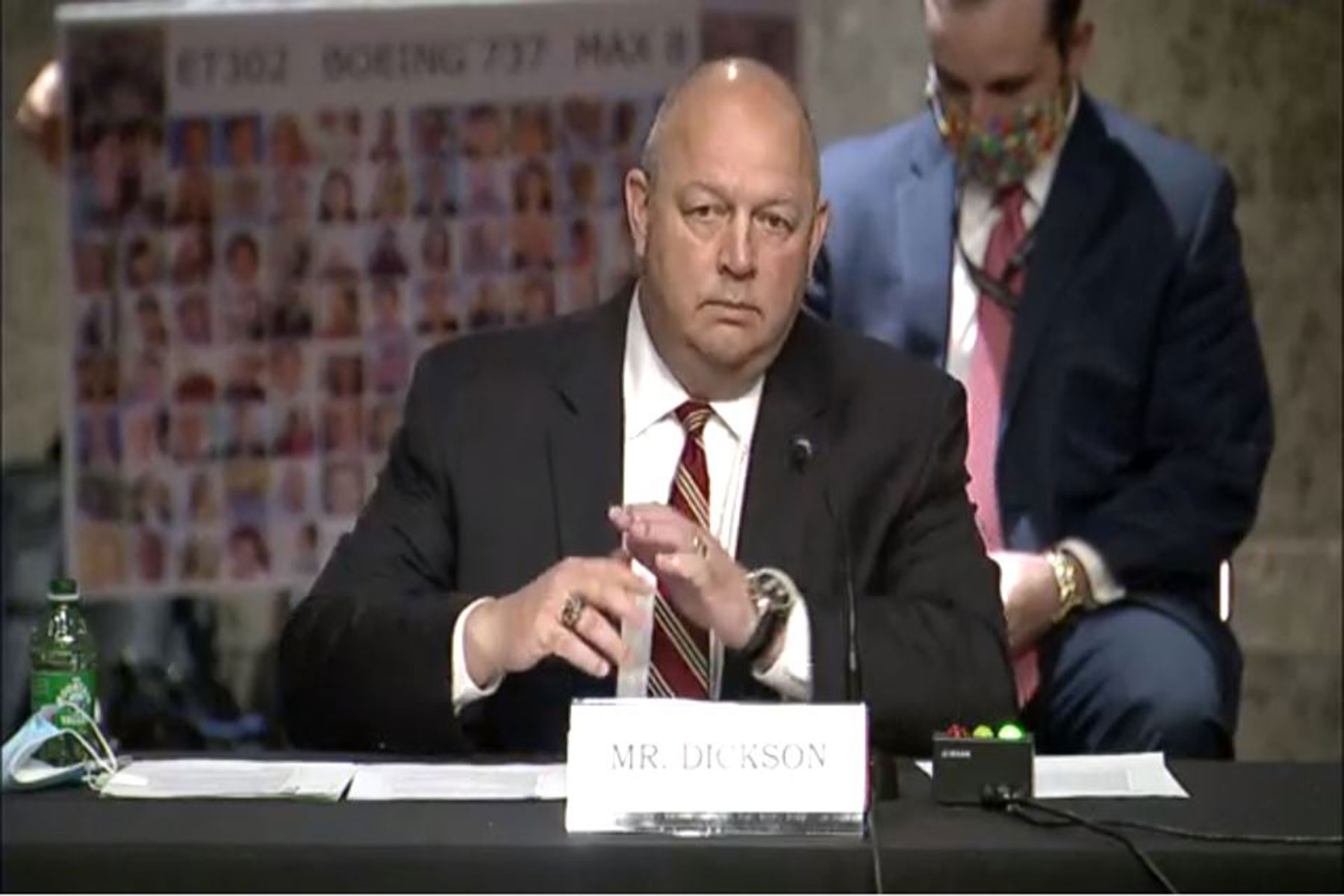
El intercambio particularmente tenso en una audiencia del Comité de Comercio del Senado sobre certificación de aeronaves, el Senador Ted Cruz acusó a Steve Dickson de hablar en voz pasiva como una forma de evitar la responsabilidades después de que el Jefe de la FAA le dijera que se cometieron errores.

El Jefe de la FAA, Steve Dickson, reconoció el Miércoles 17/06 que The Boeing Company y la agencia de seguridad aérea de los Estados Unidos cometieron errores en el proceso de desarrollo del avión Boeing 737 MAX que estuvo en tierra durante más de un año después de dos accidentes aéreos.

Exposiciones de FAA

«Así que algunos desconocidos cometieron errores no especificados para los cuales no hubo repercusiones¿Qué errores se cometieron y quién los cometió?», expresó el Senados Ted Cruz. Después de una pausa, Steve Dickson dijo: “El fabricante cometió errores y la FAA cometió errores en su supervisión. Las implicaciones completas del sistema de control de vuelo no se entendieron a medida que se realizaban cambios de diseño».

Los investigadores del Congreso durante más de un año han estado buscando documentos y entrevistas con funcionarios de la FAA para arrojar más luz sobre la certificación de la aeronave Boeing 737 MAX y los sistemas de seguridad clave, incluido el llamado Sistema de Control de Vuelo MCAS, que han sido criticados en dos accidentes fatales. Otros senadores dijeron en la audiencia que la agencia estaba bloqueando su investigación sobre el desarrollo del 737 MAX, y dijeron que la FAA era como «un perro mirando televisión» cuando se trataba de vigilar el trabajo de Boeing. «Este registro de demora y falta de respuesta muestra claramente en el mejor de los casos una falta de voluntad para cooperar. Su equipo en la FAA ha intentado deliberadamente mantenernos en la oscuridad», dijo el senador Roger Wicker a Steve Dickson.El Jefe de la FAA le dijo a Roger Wicker que estaba «totalmente comprometido con el proceso de supervisión. Creo que es incorrecto retratar a la agencia como que no responde. Todavía hay trabajo en curso», dijo Dickson, señalando su cooperación en múltiples investigaciones.

La principal Demócrata del Comité, la Senadora Maria Cantwell de Washington, donde Boeing construye el 737 MAX, se unió a Roger Wicker para criticar el fracaso de la FAA en entregar documentos. Otros demócratas acusaron a la FAA de tener una cultura del secreto. El Senador Richard Blumenthal, D-Conn., Respondió: «La FAA tiene que hacer el trabajo, no solo supervisarlo».

Ley Supervisión

La audiencia se produjo un día después de que Wicker y Maria Cantwell, que ocupaban el puesto Demócrata en el Comité, introdujeron una legislación bipartidista que fortalecería la supervisión de la FAA sobre la forma en que Boeing diseña los aviones. La propuesta marca el paso más significativo hacia las reformas luego de los accidentes de los Boeing 737-8 MAX del vuelo JT-610 de Lion Air el 29 Octubre 2018 en Indonesia y del vuelo ET-302 de Ethiopian Airlines el 10 Marzo 2019 en Etiopía, donde murieron 346 personas en un lapso de cinco meses y desencadenaron investigaciones sobre cómo Boeing y la FAA determinan los protocolos de supervisión de los aviones para el cumplimiento de los requisitos de seguridad en la aviación.

Boeing no logró obtener la aprobación regulatoria para devolver el 737 MAX al servicio comercial desde que el avión aterrizó en todo el mundo en Marzo 2019, sumiendo al fabricante con sede en Chicago en una crisis que se prolonga por los efectos de la pandemia de Coronavirus.

La Ley de Reforma de la Certificación y Seguridad de las Aeronaves de 2020, presentada el Martes 16/06, otorgaría a la agencia una nueva autoridad para contratar o remover a los empleados de Boeing que realizan tareas de certificación de la FAA, y otorgaría nuevas protecciones de denunciantes a los empleados, entre otras disposiciones. Al principio de la audiencia, Dickson le dijo a Cantwell que no creía que aumentaría la seguridad del proceso si la FAA designaba a los propios empleados de certificación, pero acordó analizar la propuesta del Senado. También dijo a los legisladores que había muchos elementos en la legislación que están exactamente en el punto. «Esos recursos adicionales serían muy útiles», dijo, refiriéndose a otra provisión de ley que autorizaría US$ 150 millones durante 10 años para la nueva capacitación de la FAA y para contratar personal especializado para desarrollar estándares técnicos para nuevas tecnologías y operaciones.

La FAA permite que cerca de 80 fabricantes usen sus propios ingenieros llamados «designados» para certificar la seguridad de sus aviones. Los funcionarios de la FAA y algunos legisladores dicen que la práctica es necesaria e incluso beneficiosa debido a la experiencia de los expertos y el limitado presupuesto de la FAA. En 2019, el líder de la FAA en ese momento estimó que costaría casi US$ 2 mil millones al año para que la FAA realice todo el trabajo que ahora realizan los fabricantes. Sin embargo, el programa de Autorización de Designación de Organización (ODA), fue muy criticado después de que se reveló que los funcionarios de la FAA tenían poca comprensión de un sistema clave de Control de Vuelo MCAS en el Boeing 737 MAX.

El Jefe de la FAA estadounidense, Steve Dickson expresó como lo ha hecho muchas veces, que la FAA aprobará el trabajo de la compañía aeroespacial Boeing cuando esté convencido de que el avión está a salvo.

Senate Frustrated by “Stonewalling” Of FAA Safety Policies ...

US Senate criticizes FAA for obstruction

Lawmakers Criticize FAA For Failing To Reveal Documents On Boeing 737 MAX

The United States Senate Hearing has been held in the presence of the representative of the Federal Aviation Administration (FAA). Senate Committee Chairman Mike Pence accused the Federal Aviation Administration of hindering lawmakers’ attempts to understand how the agency approved a Boeing plane that later suffered two fatal accidents and whether the FAA retaliates against whistleblowers in its ranks.

The particularly tense exchange at a Senate Commerce Committee hearing on aircraft certification, Senator Ted Cruz accused Steve Dickson of speaking passively as a way to avoid liability after the FAA chief told him to they made mistakes.

FAA Chief Steve Dickson acknowledged Wednesday 06/17 that The Boeing Company and the United States Aviation Safety Agency made mistakes in the process of developing the Boeing 737 MAX aircraft that was grounded for more than a year. after two plane crashes.

FAA exhibitions

«So some strangers made unspecified errors for which there were no repercussions. What errors were made and who committed them?», said Senate Ted Cruz. After a pause, Steve Dickson said: “The manufacturer made mistakes and the FAA made errors in its oversight. The full implications of the flight control system were not understood as design changes were made».

Congressional investigators for more than a year have been searching for documents and interviews with FAA officials to shed more light on the certification of the Boeing 737 MAX aircraft and key security systems, including the so-called MCAS Flight Control System, who have been criticized in two fatal accidents. Other senators said in the hearing that the agency was blocking its investigation into the development of the 737 MAX, and said the FAA was like «a dog watching television» when it came to monitoring Boeing’s work. «This record of delay and lack of response clearly shows an unwillingness to cooperate at best. His team in the FAA has deliberately tried to keep us in the dark», Senator Roger Wicker told Steve Dickson. The FAA told Roger Wicker that he was «fully committed to the oversight process. I think it is wrong to portray the agency as unresponsive. There is still work in progress», said Dickson, noting his cooperation in multiple investigations.

The committee’s top Democrat, Senator Maria Cantwell of Washington, where Boeing builds the 737 MAX, joined Roger Wicker in criticizing the FAA’s failure to deliver documents. Other Democrats accused the FAA of having a culture of secrecy. Senator Richard Blumenthal, D-Conn., Responded, «the FAA has to do the job, not just supervise it».

Supervision Law

The hearing came a day after Wicker and Maria Cantwell, who were sitting on the Democratic bench in the Committee, introduced bipartisan legislation that would strengthen FAA oversight of how Boeing designs the planes. The proposal marks the most significant step towards reforms after the accidents of the Boeing 737-8 MAX on Lion Air flight JT-610 on October 29, 2018 in Indonesia and Ethiopian Airlines flight ET-302 on March 10, 2019 in Ethiopia, where 346 people died in a span of five months and triggered investigations into how Boeing and the FAA determine aircraft monitoring protocols for compliance with aviation security requirements.

Boeing has failed to obtain regulatory approval to return the 737 MAX to commercial service since the plane landed worldwide in March 2019, plunging the Chicago-based manufacturer into a crisis that is prolonged by the effects of the Coronavirus pandemic.

The Aircraft Certification and Safety Reform Act of 2020, introduced Tuesday, 06/16, would grant the agency a new authority to hire or remove Boeing employees who perform FAA certification duties, and would grant new protections of whistleblowers to employees, among other provisions. Earlier in the hearing, Dickson told Cantwell that he did not believe it would increase process security if the FAA appointed the certification employees themselves, but agreed to review the Senate proposal. He also told lawmakers that there were many elements in the legislation that were exactly on point. «Those additional resources would be very helpful», he said, referring to another provision in the law that would authorize US$ 150 million over 10 years for new FAA training and to hire specialized personnel to develop technical standards for new technologies and operations.

The FAA allows about 80 manufacturers to use their own so-called «designated» engineers to certify the safety of their aircraft. FAA officials and some lawmakers say the practice is necessary and even beneficial due to expert experience and the FAA’s limited budget. In 2019, the FAA leader at the time estimated that it would cost almost US$ 2 billion a year for the FAA to do all the work that manufacturers now do. However, the Organization Designation Authorization (ODA) program was heavily criticized after it was revealed that FAA officials had little understanding of a key MCAS Flight Control system on the Boeing 737 MAX.

FAA Chief Steve Dickson has expressed, as he has done many times, that the FAA will approve the work of the Boeing aerospace company when it is convinced that the plane is safe.

Ξ A I R G W A Y S Ξ
PUBLISHER: Airgways.com
DBk: Senate.gov / Faa.gov / Reuters.com / Airgways.com
AW-POST: 202006171804AR

A\W   A I R G W A Y S ®

Latam abandona ops en Argentina

AW | 2020 06 17 15:33 | AIRLINES

Latam Airlines deja de operar en Argentina

Latam Airlines Argentina anunció formalmente que deja de operar en Argentina. Tras el impacto económico por la crisis sanitaria mundial nuevamente la compañía es otra víctima de la pandemia. Tras la entrada de Latam Airlines Group al Capítulo 11 de la Ley de Quiebras de Estados Unidos, la compañía iniciaba un proceso de reestructuración de la aérea chilena. Pero el alcance de los fuertes ajustes económicos introdujo nuevos cambios en las macroeconomías del grupo aéreo.

El management de la empresa de origen chileno-brasileño analizaba la situación frete a un nuevo capítulo post-pandemia. Las operaciones en Argentina no estaban afectadas en los ajustes del grupo, pero la expansión de la crisis económico-financiera de la compañía hicieron que la filial Argentina entrara en el radar de los próximos ajustes. Latam Group analizada la reducción de las operaciones de doce aeronaves actuales a cuatro aeronaves para mantener unos pocos destinos y no desarmar la empresa. Tras una evaluación de los números rojos de los últimos años, han permitido determinar el levantamiento de la filial Argentina.

Proceso salida

Con el anuncio de Latam Airlines de dejar las operaciones en Argentina, se inicia el proceso para cancelación de operador aéreo nacional (AOC) y levantar la base. Esa compañía tiene 1.715 empleados que quedarán sin trabajo. Solamente existirán las operaciones de Latam Airlines de las filiales chilena, peruana y brasileña para vuelos internacionales, no así en vuelos de cabotaje.

Latam Group acoge Capítulo 11

Los pasos de Latam Airlines Group se convirtieron en tema nacional en varios países. En Estados Unidos, la corporación se presentó en el llamado Capítulo 11 de la Ley de Bancarrotas americana, iniciando el proceso de Concurso Preventivo. Pero fuera de aquel paraguas protector del proceso quedaron las filiales en la Argentina, Paraguay y Brasil. Las posibilidades de acudir a la casa matriz a buscar asistencia financiera se estrecharon. Según el balance de 2019, ha perdido US$ 133,4 millones, un leve incremento de los US$ 132 millones del rojo de 2018. Mientras, en Brasil, ganó US$ 185,7 millones en 2019, y US$ 356 millones en 2018.

Los planes en la filial Brasil son expansivos, anunciando un acuerdo de código compartido con Azul Linhas Aéreas que incluirá inicialmente 50 rutas nacionales, que no se superponen, hacia y desde las ciudades de Brasilia, Belo Horizonte, Recife, Porto Alegre, Curitiba, Campinas y Sao Paulo.

Latam Argentina vs Gobierno

La aerolínea Latam Airlines Argentina ingresó al país en 2005, cuando derrapó el proceso de crear la primer aerolínea estatal Líneas Aéreas Federales, más conocida como LAFSA. Por varios conflictos político-empresarial, la crisis se instaló en aquel experimento y, ante la posibilidad de un monopolio de Aerolíneas Argentinas, autorizó la entrada de Lan Airlines en un proceso muy rápido se formalizaron los ingresos al mercado de Argentina. La filial aérea poseía 12 aeronaves Airbus A320-200 con una couta de mercado de alrededor de 18%.

El Gobierno al mando de Aerolíneas Argentinas/Austral Líneas Aéreas inició una etapa compleja con Latam Airlines. La confusión del Estado como operador comercial, regulador y contralor generaron un entramado difícil de sobrellevar. En los últimos tiempos, los ejecutivos de la compañía intentaron generar un diálogo más fluido con el Gobierno. Primero se anunció un recorte salarial de un máximo de 50% de los sueldos de los empleados de la línea aérea, mientras dure la emergencia por la pandemia. En todo el mundo le aprobaron el plan de crisis, pero en la Argentina fueron intimados por el Ministerio de Trabajo a pagar el 100% del sueldo. Con estas presiones a cuesta, la crisis se hizo efectiva eclosionando en el cierre de las operaciones en Argentina. La compañía iniciará un proceso preventivo de crisis para terminar la relación laboral con los empleados de la empresa, como así también una autorización del Ministerio de Trabajo.

Perspectiva mercado post-pandemia

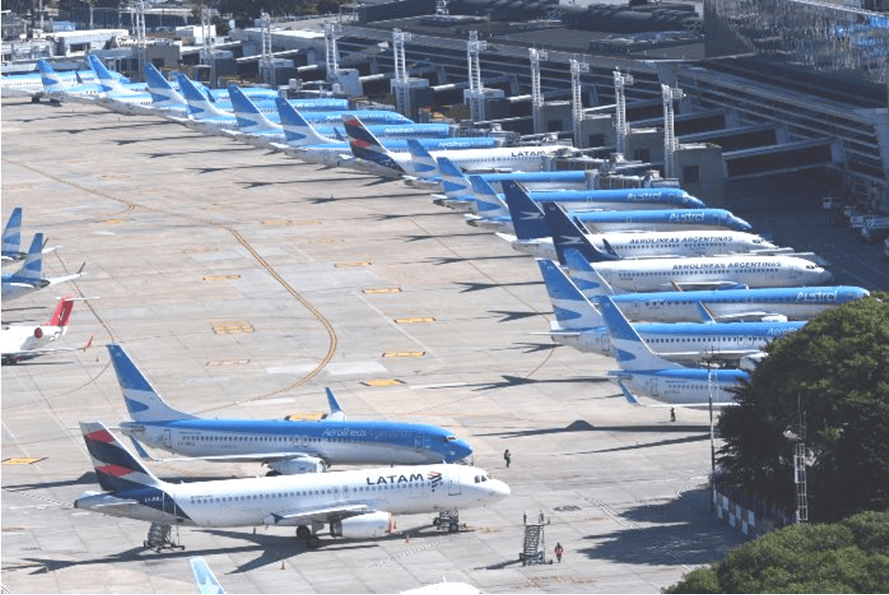
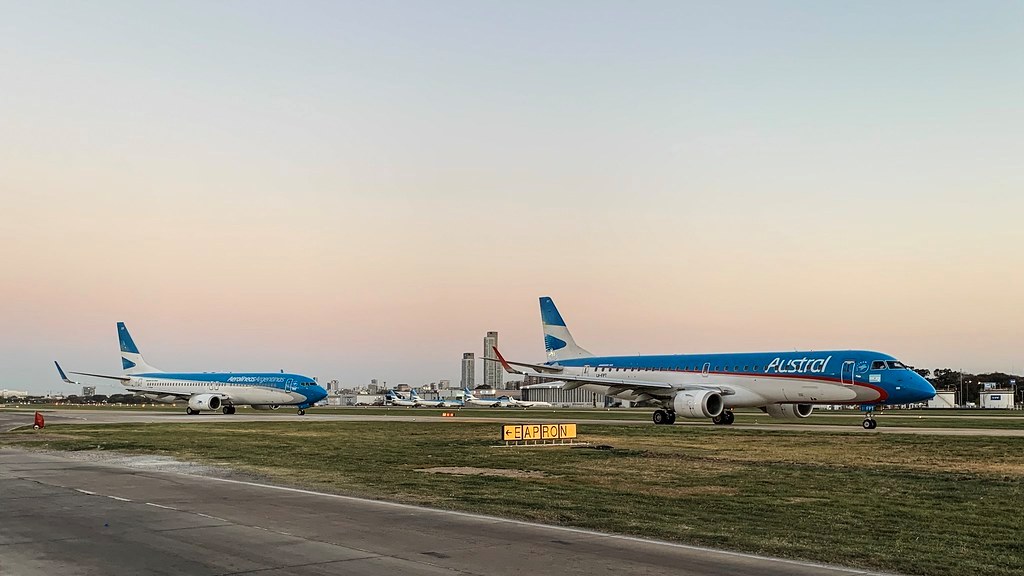
El mercado aéreo doméstico en Argentina continúa modificándose en sincronía con los efectos de la crisis sanitaria y económica. El sertor de la aviación comercial continúa concentrándose en un número reducido de operadores posicionando a Aerolíneas Argentinas/Austral Líneas Aéreas en adelante con un 80% del mercado aéreo doméstico. Las low cost Flybondi y JetSmart Airlines Argentina captarán sustancialmente un aumento de la cuota de mercado. En cuanto a Austral Líneas Aéreas estiman poder orientarla como línea aérea low cost o sea absorbida en el proceso de sinergia con Aerolíneas Argentinas. Andes Líneas Aéreas han determinado el reinicio de sus operaciones permitiendo poder captar una mayor participación de las rutas de cabotaje.

Con la desaparición de Latam Airlines Argentina como operador aéreo local, el mercado continúa en un proceso de contracción donde es necesario establecer reglas claras para beneficio de los usuarios del transporte aéreo y permitir que el mercado estimule la pluralidad de compañías aéreas para beneficios de todos.

Latam Argentina leaves ops in the country

Latam Airlines stops operating in Argentina

Latam Airlines Argentina formally announced that it ceases to operate in Argentina. After the economic impact of the global health crisis, the company is again another victim of the pandemic. Following Latam Airlines Group’s entry into Chapter 11 of the United States Bankruptcy Law, the company began a process of restructuring the Chilean airline. But the scope of the strong economic adjustments introduced new changes in the macroeconomics of the airline group.

The management of the company of Chilean-Brazilian origin analyzed the situation in the face of a new post-pandemic chapter. Operations in Argentina were not affected by the group’s adjustments, but the expansion of the company’s economic-financial crisis made the Argentine subsidiary enter the radar of the next adjustments. Latam Group analyzed the reduction of operations from twelve current aircraft to four aircraft to maintain a few destinations and not disarm the company. After an evaluation of the red numbers of the last years, they have allowed determining the lifting of the Argentine subsidiary.

Output process

With the announcement of Latam Airlines to cease operations in Argentina, the process to cancel the national air operator (AOC) and lift the base begins. That company has 1,715 employees who will be unemployed. Only the operations of Latam Airlines of the Chilean, Peruvian and Brazilian subsidiaries will exist for international flights, but not for domestic flights.

Latam hosts Chapter 11

The steps of the Latam Airlines Group became a national issue in several countries. In the United States, the corporation filed in the so-called Chapter 11 of the American Bankruptcy Law, initiating the Preventive Bankruptcy process. But outside that protective umbrella of the process were the subsidiaries in Argentina, Paraguay and Brazil. The possibilities of going to the parent company to seek financial assistance were narrowed. According to the balance of 2019, it has lost US$ 133.4 million, a slight increase from the US$ 132 million of the red of 2018. While, in Brazil, it earned US$ 185.7 million in 2019, and US$ 356 million in 2018.

The plans in the Brazilian subsidiary are expansive, announcing a code share agreement with Azul Linhas Aéreas that will initially include 50 national routes, which do not overlap, to and from the cities of Brasilia, Belo Horizonte, Recife, Porto Alegre, Curitiba, Campinas and Sao Paulo.

Latam Argentina vs Government

Latam Airlines Argentina entered the country in 2005, when it skidded the process of creating the first state-owned airline, Líneas Aéreas Federales, better known as LAFSA. Due to various political-business conflicts, the crisis settled in that experiment and, faced with the possibility of a monopoly on Aerolineas Argentinas, authorized the entry of Lan Airlines in a very fast process, income to the Argentine market was formalized. The airline subsidiary owned 12 Airbus A320-200 aircraft with a market share of around 18%.

The Government under the command of Aerolíneas Argentinas/Austral Líneas Aéreas began a complex stage with Latam Airlines. The confusion of the State as a commercial operator, regulator and controller generated a framework that was difficult to cope with. In recent times, company executives have tried to create a more fluid dialogue with the government. First, a salary cut of a maximum of 50% of the salaries of airline employees was announced, for the duration of the pandemic emergency. Throughout the world they approved the crisis plan, but in Argentina they were intimidated by the Ministry of Labor to pay 100% of the salary. With these downward pressures, the crisis became effective hatching at the close of operations in Argentina. The company will initiate a crisis prevention process to end the employment relationship with company employees, as well as an authorization from the Ministry of Labor.

Post-pandemic market perspective

The domestic air market in Argentina continues to change in sync with the effects of the health and economic crisis. The commercial aviation sertor continues to focus on a reduced number of operators, positioning Aerolineas Argentinas/Austral Líneas Aéreas with 80% of the domestic air market. Low-cost Flybondi and JetSmart Airlines Argentina will substantially capture an increase in market share. As for Austral Líneas Aéreas, they estimate that they can guide it as a low cost airline or that it be absorbed in the process of synergy with Aerolíneas Argentinas. Andes Líneas Aéreas has determined the restart of its operations allowing to capture a greater participation of the cabotage routes.

With the disappearance of Latam Airlines Argentina as a local air operator, the market continues in a process of contraction where it is necessary to establish clear rules for the benefit of air transport users and allow the market to stimulate the plurality of airlines for the benefit of all.

Ξ A I R G W A Y S Ξ
PUBLISHER: Airgways.com
DBk: Latam.com / Airgways.com
AW-POST: 202006171533AR

A\W   A I R G W A Y S ®

Argentina adapta vuelos post-pandemia

AW | 2020 06 17 14:00 | AIRLINES MARKET / GOVERNMENT

Planifican cronograma vuelos post-pandemia

Argentina iniciará la apertura de vuelos domésticos a partir de la segunda quincena de Julio 2020 como había comunicado el Gobierno. Ahora necesitarán determinar una nueva programación de horarios de vuelos para coordinar con los aeropuertos.

Argentina prorrogó la cuarentena hasta el 28 Junio 2020 pero a partir de ahora se sectorizará las áreas para definir qué lugares se relajará la cuarentena y qué áreas continuarán en ella. El Ministerio de Transporte de la Nación, a cargo de Mario Meoni, ha manifestado que se está analizando la posibilidad de habilitar el mes próximo los vuelos entre localidades que tengan bajo índice de contagios.

Aerolíneas preparan pistas

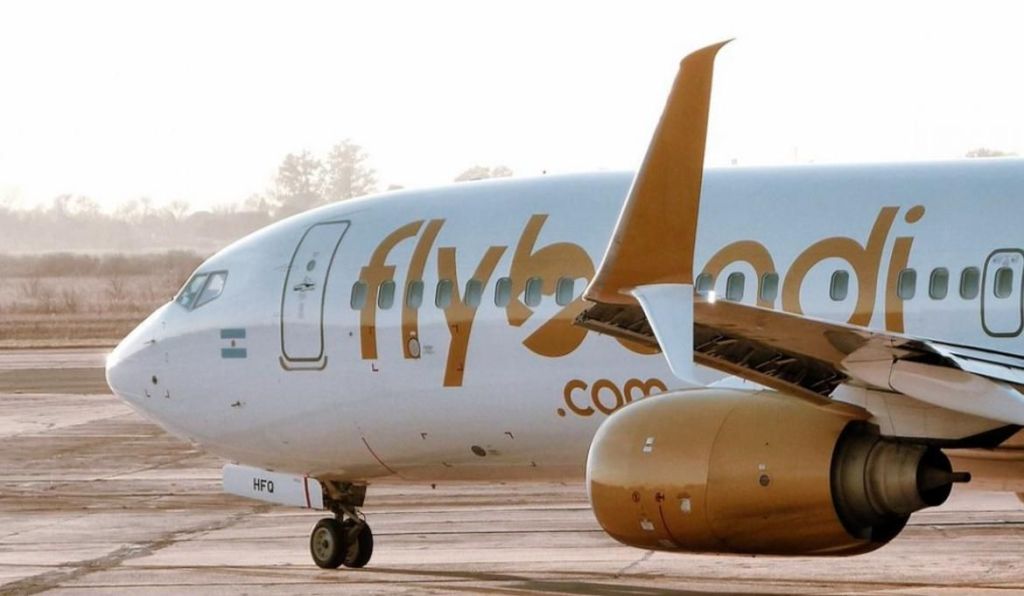
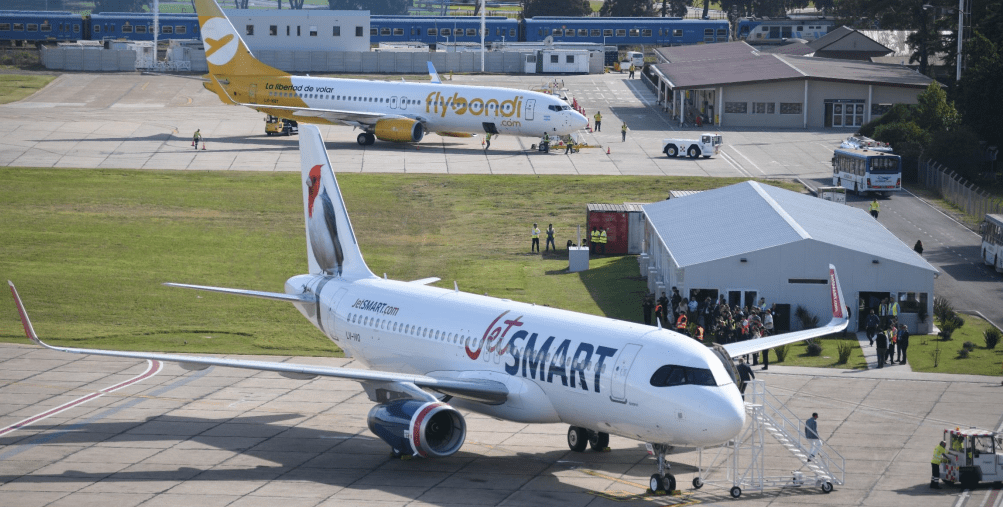
La aerolínea Flybondi ha expresado que están preparados para operar las rutas hoy vigentes, con las mismas frecuencias, y que están a la espera de las disposiciones del Gobierno. Desde la compañía manifiestan que no han recibido ninguna comunicación formal sobre las condiciones en que se permitirían los viajes de cabotaje. De todos modos, indicaron que ya han tenido contactos con varios gobiernos provinciales y cámaras del sector turístico para intentar aprovechar una de las tradicionales temporadas altas en aquellos sitios donde hay pocos casos.

Flybondi ha implementado un protocolo de cuidado a fines de Febrero 2020 y ahora lo ha reforzado, con recomendaciones de la Asociación Internacional de Transporte Aéreo (IATA), el Consejo Internacional de Aeropuertos (ACI), la Organización Mundial de la Salud (OMS) y el Ministerio de Salud de la Nación. Además del uso de barbijo por parte del personal y los pasajeros, se contemplan medidas complementarias, como la exclusividad del check-in web, la entrega de alimentos en empaques cerrados y desinfectados y la distancia de las valijas en el carrusel, entre otras medidas. La aerolínea low cost ha destacado la importancia de la reactivación económica, el turismo que permitirán un vuelco inmediato en las economías regionales, donde se muestran confiados que las aerolíneas low cost tendrán la preferencia a la hora de volver a volar.

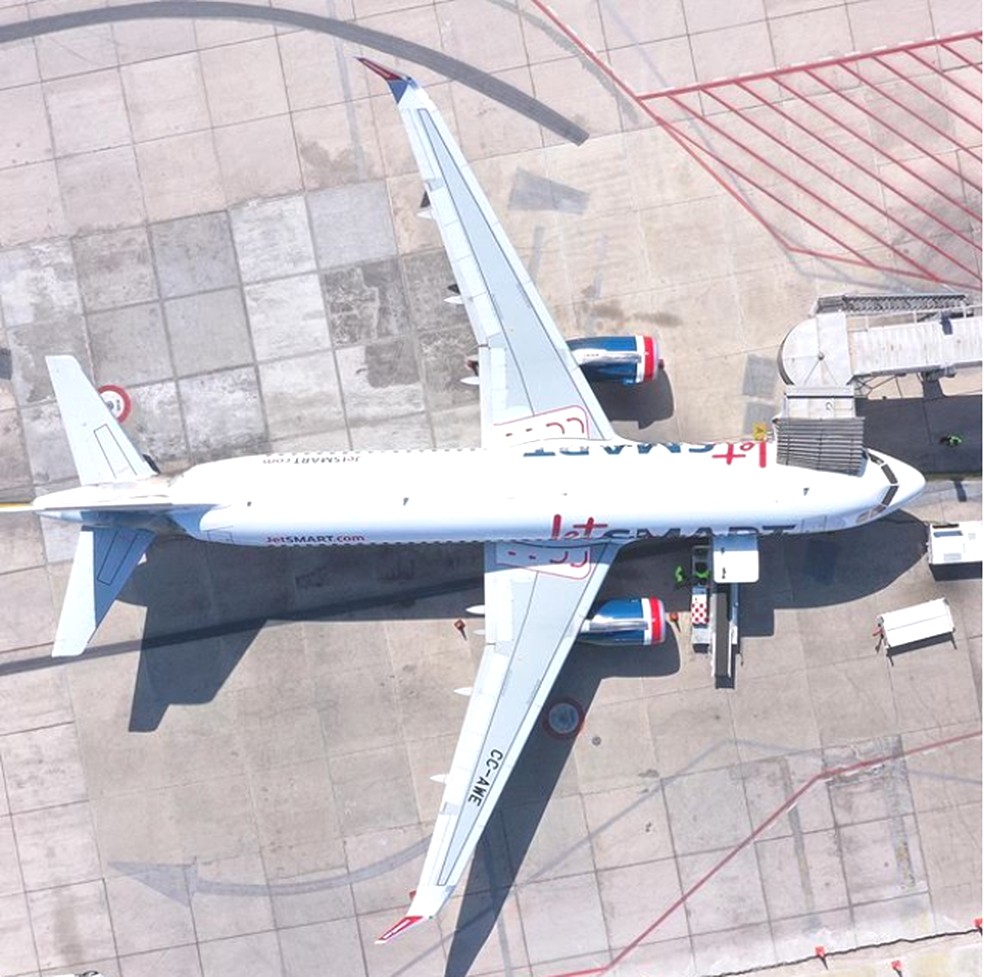
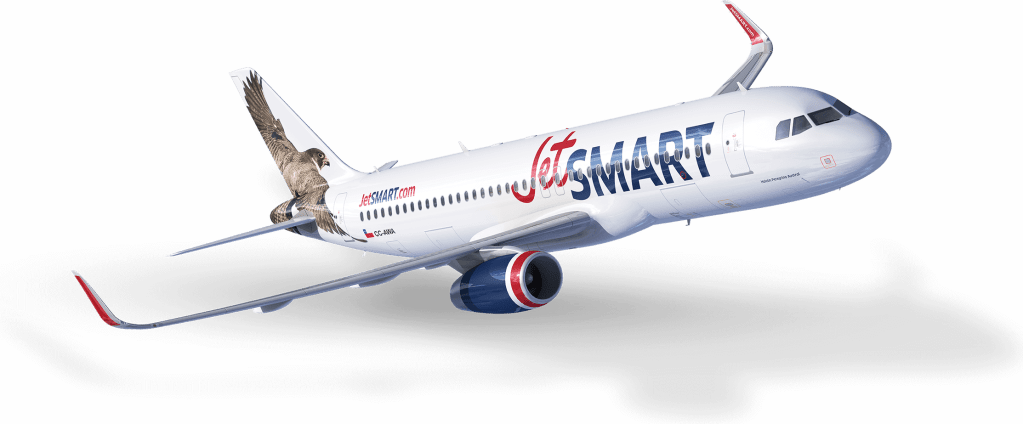
JetSmart Airlines Argentina ha comunicado por medio del Gerente General, Gonzalo Pérez Corral, que se anticipaba la posibilidad de empezar a volar entre las provincias con pocos casos de Coronavirus y aseguró que están listos para retomar la actividad.

Aerolíneas Argentinas/Austral Líneas Aéreas expresaron que aún no hay información sobre fechas ni programación regular futura. Se están realizando vuelos domésticos especiales pedido de los gobiernos provinciales, que los solicitan a través del Ministerio de Transporte.

Aeropuerto El Palomar

Las aerolíneas de presupuesto deberán reprogramar yrediagramar las operaciones en el Aeroopuerto Internacional Ezeiza, estableciendo una nueva base para los vuelos hacia el interior del país, debido a la principal preocupación por el posible cierre del Aeropuerto Internacional El Palomar, anunciado por Aeropuertos Argentina 2000 (AA2000). En el caso de JetSmart Airlines Argentina esperan poder ingresar con sus propios aviones al Aeropuerto Buenos Aires/Newbery, ya que por ahora solo pueden hacerlo con las aeronaves Boeing 737-800, ex-Norwegian Air Argentina.

Aviación post-pandemia

El nuevo escenario podría crear y eliminar rutas aéreas en el país. En 2017, la Administración Nacional de Aviación Civil (ANAC) permitió el ingreso en el mercado de las aerolíneas comerciales a nuevos competidores y diversas empresas, entre ellas varias low-cost, expandieron la oferta de rutas y de conexiones directas entre provincias y de éstas con el exterior. Sin embargo, la diferencia monetaria cambiaria a partir de Mayo 2018 el mercado aéreo ha ido modificándose vertiginosamente, suprimiendo rutas y aerolíneas locales como extranjeras.

Turismo argentino

El sector turístico en Argentina ha sido uno de los más golpeados por la pandemia y uno de los pocos que aún no tiene una fecha definida de retorno a la actividad. En este contexto, el Gobierno Nacional había prohibido la venta de pasajes aéreos hasta el 31 Agosto 2020, pero desde el Gobierno de Argentina han autorizado la apertura para la segunda quincena de Julio 2020.

Perspectivas

El Gobierno de Argentina había establecido la prohibición de la venta de pasajes para volar hasta el 31/08. Las aerolíneas sostienen que las ventas a partir de la reanudación de los vuelos es aún muy acotada y no alcanza para cubrir los costos. La aerolínea JetSmart Airlines realizó una encuesta de la que participaron 11 mil personas y la mayoría manifestó su intención de volver a viajar, aunque muchos lo harían entre 3 y 6 meses después de la pandemia.

Argentina adapts post-pandemic flights

Post-pandemic flight schedule planned

Argentina will start the opening of domestic flights from the second half of July 2020 as the Government had communicated. Now they will need to determine a new flight schedule to coordinate with airports.

Argentina extended the quarantine until June 28, 2020, but from now on the areas will be sectorized to define which places the quarantine will relax and which areas will continue in it. The Ministry of Transport of the Nation, in charge of Mario Meoni, has stated that it is analyzing the possibility of enabling next month flights between towns that have low rates of infection.

Airlines prepare tracks

The Flybondi airline has expressed that they are prepared to operate the routes currently in force, with the same frequencies, and that they are waiting for the government’s provisions. The company states that they have not received any formal communication on the conditions under which cabotage trips would be allowed. Anyway, they indicated that they have already had contacts with various provincial governments and chambers of the tourism sector to try to take advantage of one of the traditional high seasons in those places where there are few cases.

Flybondi has implemented a care protocol at the end of February 2020 and has now reinforced it, with recommendations from the International Air Transport Association (IATA), the International Airports Council (ACI), the World Health Organization (WHO) and the Ministry of Health of the Nation. In addition to the use of a chinstrap by staff and passengers, complementary measures are contemplated, such as the exclusivity of web check-in, the delivery of food in closed and disinfected packages and the distance of the suitcases on the carousel, among other measures. The low cost airline has highlighted the importance of economic revival, tourism that will allow an immediate turnaround in regional economies, where they are confident that low cost airlines will have the preference when it comes to flying again.

JetSmart Airlines Argentina has communicated through the General Manager, Gonzalo Pérez Corral, that the possibility of starting to fly between the provinces with few cases of Coronavirus was anticipated and assured that they are ready to resume activity.

Aerolíneas Argentinas/Austral Líneas Aéreas have expressed that there is still no information on dates or future regular programming. Special domestic flights are being carried out at the request of the provincial governments, which request them through the Ministry of Transport.

El Palomar airport

Budget airlines should reschedule and reschedule operations at Ezeiza International Airport, establishing a new base for flights into the country, due to the main concern over the possible closure of El Palomar International Airport, announced by Aeropuertos Argentina 2000 (AA2000). In the case of JetSmart Airlines Argentina, they hope to enter the Buenos Aires/Newbery Airport with their own aircraft, since for now they can only do so with Boeing 737-800 aircraft, ex-Norwegian Air Argentina.

Post-pandemic aviation

The new scenario could create and eliminate air routes in the country. In 2017, the National Civil Aviation Administration (ANAC) allowed commercial airlines to enter the market for new competitors and various companies, including several low-cost companies, expanded the offer of routes and direct connections between and between provinces. with the outside. However, the currency difference from May 2018 the air market has been changing rapidly, suppressing local and foreign routes and airlines.

Argentine tourism

The tourism sector in Argentina has been one of the hardest hit by the pandemic and one of the few that still does not have a definite date of return to activity. In this context, the National Government had prohibited the sale of air tickets until August 31, 2020, but from the Government of Argentina they have authorized the opening for the second half of July 2020.

Perspectives

The Government of Argentina had established a ban on the sale of tickets to fly until 08/31. The airlines maintain that sales after the resumption of flights is still very limited and is not enough to cover costs. The airline JetSmart Airlines carried out a survey in which 11,000 people participated and the majority stated their intention to travel again, although many would do so 3-6 months after the pandemic.

Ξ A I R G W A Y S Ξ
PUBLISHER: Airgways.com
DBk: Airgways.com / Argentina.gob.ar/transporte / Hiveminer.com
AW-POST: 202006171400AR

A\W   A I R G W A Y S ®

Qatar Airways pospone órdenes

AW | 2020 06 17 11:57 | AIRLINES / INDUSTRY

Qatar Airways difiere los pedidos aeronaves hacia 2020/2021

Qatar Airways ha suspendido las entregas de órdenes de nuevas aeronaves solicitadas a The Boeing Company o Airbus Group SE en el período 2020-2021, ha comunicado el Miércoles 17/06 el Presidente Ejecutivo Akbar Al-Baker, y agregó que habría un efecto secundario en las entregas futuras debido a la pandemia Coronavirus.

Qatar Airways ha ordenado aeronaves valoradas en decenas de miles de millones de dólares a los dos mayores fabricantes de aviones del mundo. Pero después de una fuerte caída en la demanda de viajes aéreos, dice que no tiene espacio para nuevos aviones y que en cambio reducirá su flota de alrededor de 200 aviones. “Se aplazarán muchas entregas. Ya hemos notificado tanto a Boeing como a Airbus que no tomaremos ningún avión este año o el próximo. Todos los otros aviones que tenemos en el pedido que se suponía que nos iban a entregar en los próximos dos o tres años, ahora se retrasarán hasta casi ocho a 10 años», dijo Al-Baker en una entrevista en el Sky News de Gran Bretaña.

Al-Baker repitió una advertencia a los fabricantes de aviones de que una negativa a cumplir con la solicitud de la aerolínea podría poner en peligro futuros negocios entre ellos. «Si no cumplen con nuestros requisitos, entonces tendremos que revisar nuestras relaciones comerciales a largo plazo con ellos. Ya le informamos a Boeing que tendremos que reemplazarlos con algún otro tipo de avión ya no necesitaremos más de los 737 MAX», dijo el CEO de Qatar Airways. La aerolínea había solicitado 30 pedidos firmes para el 737 MAX de Boeing. Akbar Al-Baker también dijo que Qatar Airways continuaría apoyando al propietario de British Airways, IAG, después de aumentar su participación en el grupo de aerolíneas en Febrero 2020. “Es una inversión estratégica. Seguiremos siendo inversionistas en IAG. Si es necesario, sí, inyectaremos capital en IAG».

Blockade 'may force Qatar Airways bailout'

Qatar Airways postpones aircraft orders

Qatar Airways deferred aircraft orders to 2020/2021

Qatar Airways has suspended deliveries of orders for new aircraft requested to The Boeing Company or Airbus Group SE in the period 2020-2021, Chief Executive Officer Akbar Al-Baker announced on Wednesday 17/06, adding that there would be a side effect on future deliveries due to the Coronavirus pandemic.

Qatar Airways has ordered tens of billions of dollars of aircraft from the world’s two largest aircraft manufacturers. But after a sharp drop in demand for air travel, he says he has no room for new planes and will instead reduce his fleet to around 200 planes. “Many deliveries will be postponed. We have already notified both Boeing and Airbus that we will not be taking any aircraft this year or next. All the other planes that we have in the order that they were supposed to deliver to us in the next two or three years, will now be delayed for almost eight to 10 years», Al-Baker said in an interview on Britain’s Sky News .

Al-Baker repeated a warning to aircraft manufacturers that a refusal to comply with the airline’s request could jeopardize future business between them. «If they do not meet our requirements, then we will have to review our long-term business relationships with them. We have already informed Boeing that we will have to replace them with some other type of aircraft as we will no longer need more than the 737 MAX», said the CEO of Qatar Airways. The airline had requested 30 firm orders for Boeing’s 737 MAX. Akbar Al-Baker also said Qatar Airways would continue to support British Airways owner IAG after increasing its stake in the airline group in February 2020. “It is a strategic investment. We will continue to be investors in IAG. If necessary, yes, we will inject capital into IAG».

الخطوط الجوية القطرية تؤجل طلبيات الطائرات

أرجأت الخطوط الجوية القطرية طلبيات الطائرات حتى 2020/2021

علقت الخطوط الجوية القطرية تسليم الطلبيات الخاصة بالطائرات الجديدة المطلوبة لشركة بوينج أو مجموعة إيرباص SE في الفترة 2020-2021 ، أبلغ الرئيس التنفيذي أكبر الباكر يوم الأربعاء 17/06 ، مضيفًا أنه سيكون هناك تأثير جانبي على عمليات التسليم في المستقبل بسبب وباء فيروس كورونا.

طلبت الخطوط الجوية القطرية عشرات المليارات من الدولارات من الطائرات من أكبر مصنعي الطائرات في العالم. ولكن بعد الانخفاض الحاد في الطلب على السفر بالطائرة ، يقول إنه ليس لديه مكان لطائرات جديدة وسيخفض أسطوله بدلاً من ذلك إلى حوالي 200 طائرة. «سيتم تأجيل العديد من الولادات. لقد أبلغنا بالفعل كل من بوينج وإيرباص بأننا لن نأخذ أي طائرة هذا العام أو التالي. وقال الباكر في مقابلة مع قناة سكاي نيوز البريطانية إن جميع الطائرات الأخرى التي لدينا من أجل تسليمها إلينا في العامين أو الثلاثة أعوام المقبلة ستتأخر الآن لمدة تتراوح من ثماني إلى عشر سنوات «.

وكرر البكر تحذيرا لمصنعي الطائرات من أن رفض الامتثال لطلب شركة الطيران يمكن أن يعرض للخطر الأعمال المستقبلية بينهما. قال الرئيس التنفيذي لـ: «إذا لم يلبوا متطلباتنا ، فسنضطر إلى مراجعة علاقاتنا التجارية طويلة الأمد معهم. لقد أبلغنا بوينج بالفعل أننا سنضطر إلى استبدالها بنوع آخر من الطائرات لأننا لن نحتاج بعد الآن إلى أكثر من طائرة 737 ماكس». الخطوط الجوية القطرية. طلبت شركة الطيران 30 طلبًا قويًا لشراء طائرة بوينج 737 ماكس. كما قال أكبر الباكر أن الخطوط الجوية القطرية ستواصل دعم مالك الخطوط الجوية البريطانية IAG بعد زيادة حصتها في مجموعة الخطوط الجوية في فبراير 2020. «إنه استثمار استراتيجي. سنستمر في أن نكون مستثمرين في IAG. إذا لزم الأمر ، نعم ، سنضخ رأس المال في IAG».

Ξ A I R G W A Y S Ξ
PUBLISHER: Airgways.com
DBk: Arabnews.com / Qatarairways.com / Airgways.com / Telegraph.co.uk
AW-POST: 202006171157AR

A\W   A I R G W A Y S ®

Singapur detiene expansión de Changi

Changi Airport bags Skytrax best airport title for 7th straight ...

AW | 2020 06 17 11:07 | AIRPORTS / GOVERNMENT

Detienen obras Aeropuerto Changi por caída severa del tráfico

El Gobierno de Singapur anunció que la expansión en su galardonado Aeropuerto de Changi se ha detenido. Específicamente, la desaceleración de la expansión afecta a la mega Terminal 5 de Changi. El Ministro de Transporte de Singapur, Khaw Boon Waw, dijo que la construcción de la Terminal 5 se detendría durante al menos dos años en medio de la incertidumbre sobre cómo la pandemia cambiará el sector de la aviación.

La finalización de las obras de la Terminal 5 estaba programada para la década de 2030, junto con la actualización de T2 habría llevado la capacidad del Aeropuerto Changi a 140 millones de pasajeros por año. El Aeropuerto Changi ha tenido un tráfico de 68 millones de pasajeros el año pasado. Pero ese número cayó un 70 por ciento en Marzo y un 99,5 por ciento en Abril, según datos de Straits Times.

En sintonía con la depreciación de las economías mundiales y la disminución del tráfico de pasajeros, el Aeropuerto Amsterdam/Schiphol anunció que también pondría en stand-by los planes de expansión en su nueva terminal. Esto se debe a que la primera terminal de Changi fue modelada después de Schiphol con parte del equipo de diseño de este último involucrado. Asimismo, Singapore Airlines (SIA) adoptó el plan de negocios de KLM de los Países Bajos. Ambas aerolíneas son dueños del tráfico de sexta libertad. En otras palabras, son expertos en llevar a los pasajeros a través de sus centros. Al igual que con Schiphol, Changi fue diseñado para las necesidades de tránsito en lugar de viajeros de punto a punto. Las cosas han cambiado a lo largo de los años (ambos ahora manejan muchos más viajeros de punto a punto), pero tanto Schiphol como Changi dependen del tráfico de tránsito para una proporción importante de sus negocios. Significa que los flujos de tráfico pueden verse afectados por eventos en otros países que pueden disminuir la demanda de viajes a través de estos centros.

PlaceTech | Edifícios mais inteligentes do mundo: Jewel at Changi ...

Singapore halts Changi expansion

Changi Airport works stop due to severe traffic drop

The Government of Singapore announced that expansion at its award-winning Changi Airport has been halted. Specifically, the expansion slowdown affects Changi mega Terminal 5. Singapore’s Transportation Minister Khaw Boon Waw said construction of Terminal 5 would be halted for at least two years amid uncertainty about how the pandemic will change the aviation sector.

Completion of Terminal 5 works was scheduled for the 2030s, along with the T2 upgrade would have brought the capacity of Changi Airport to 140 million passengers per year. Changi Airport has had a traffic of 68 million passengers last year. But that number fell 70 percent in March and 99.5 percent in April, according to Straits Times data.

Changi Airport Terminal 5 - KPF
THE PROJECTIONS OF THE EXPANSIONS OF THE NEW TERMINAL 5 OF THE CHANGI INTERNATIONAL AIRPORT IN SINGAPURE

In line with the depreciation of world economies and the decrease in passenger traffic, Amsterdam/Schiphol Airport announced that it would also put on standby the expansion plans in its new terminal. This is because the first Changi terminal was modeled after Schiphol with part of the latter’s design team involved. In addition, Singapore Airlines (SIA) adopted the KLM business plan for the Netherlands. Both airlines own sixth freedom traffic. In other words, they are adept at getting passengers through their hubs. As with Schiphol, Changi was designed for transit needs rather than point-to-point commuters. Things have changed over the years (both now handle many more point-to-point travelers), but both Schiphol and Changi rely on transit traffic for a significant proportion of their business. It means that traffic flows can be affected by events in other countries that can decrease the demand for travel through these centers.

Ξ A I R G W A Y S Ξ
PUBLISHER: Airgways.com
DBk: Changiairport.com / Airgways.com / Businesstraveller.com / Straitstimes.com / Placetech.net
AW-POST: 202006171107AR

A\W   A I R G W A Y S ®
ANAC ordena habilitaciones

AW | 2020 06 16 20:06 | AIRLINES / GOVERNMENT

Gobierno de Argentina evita caducidad de licencias

El Gobierno Argentina mediante ha publicado en el Boletín Oficial Nº 1061/2020 este Martes 16/06 ha autorizado las actividades vinculadas con vuelos de entrenamiento o de mantenimiento de las aeronaves, por lo que de esa forma erradicó el peligro de que caduquen las licencias que habilitan a los pilotos, por lo que la mayoría de las aerolíneas no podrían retornar a los servicios de cabotaje en el transcurso de la apertura para Julio 2020.

Las aerolíneas necesitaban mantener activos a las Tripulaciones de Vuelo como así también al área de Mantenimiento. En el caso de los pilotos, era prioritario las renovaciones de las calificaciones en un simulador o que realicen vuelos de entrenamiento sin pasajeros, solo para los alcances legales de entrenamiento y habilitaciones correspondientes. Ambas opciones fueron habilitadas en la decisión administrativa 1061/2020, que si bien tiene fecha del sábado pasado fue publicada hoy en el Boletín Oficial, cuando ya se cumplieron 90 días corridos desde el 18 de marzo, fecha en la que el Gobierno ya había comenzado a aplicar medidas de cierre de fronteras.

La imagen tiene un atributo ALT vacío; su nombre de archivo es aw-jetsmart_ar.png

JetSmart Airlines Argentina

Las aerolíneas de bajo costo JetSmart Airlines Argentina y Flybondi Líneas Aéreas tienen a casi toda su tripulación vencida. «De los 97 pilotos que tenemos la gran mayoría se nos venció ayer y solo nos quedan cuatro habilitados para volar hasta mañana», explicó Gonzalo Pérez Corral, Gerente General de JetSmart Argentina. La empresa solicitó la realización de un vuelo de entrenamiento mañana, sin pasajeros, para poder conservar al menos la habilitación de los cuatro tripulantes que les quedan. De lo contrario, no tendrían personal para concretar un vuelo especial entre Perú y la Argentina que según aseguró la empresa tiene en trámite de autorización local pero ya recibió el visto bueno con las autoridades del país andino.

Flybondi Líneas Aéreas

«Desde el momento en que cesaron las operaciones en Marzo hemos estado esperando una decisión de la ANAC para mantener la vigencia de la habilitaciones de los pilotos y la operatividad potencial de las aerolíneas para cuando se levanten las restricciones. Hoy, cuando se publica la resolución, de los 58 pilotos que tiene la empresa tenemos 56 vencidos y otros dos se vencen esta medianoche. La resolución llegó fuera de tiempo. Entramos en otro cuello de botella que es esperar otra decisión oficial para resolver esta situación», ha expresado Eduardo Gaspari, Director de Operaciones de Flybondi.

Habilitaciones de ANAC

Fuentes de la ANAC Argentina informaron que la habilitación para las licencias operativas no se efectuó con anterioridad por decisión de las autoridades sanitarias. La resolución lleva la firma del Jefe de Gabinete, Santiago Cafiero, y del Ministro de Salud, Ginés González García, que son quienes tienen la autoridad para dictar las excepciones al aislamiento obligatorio. Desde la ANAC expresaron: «ANAC lo viene pidiendo hace tiempo porque conoce la demanda del sector, pero recién ahora llegó la autorización».

La normativa vigente señala que para mantener las licencias vigentes y evitar el vencimiento respectivos para volar, los pilotos deben haber realizado al menos tres aterrizajes y tres despegues dentro de los 90 días consecutivos anteriores. En este contexto de vuelos prácticamente paralizados, la única alternativa que tienen las aerolíneas para mantenerlos activos es que renueven sus calificaciones en un simulador, tecnología de la que solo dispone Aerolíneas Argentinas en el país, o que realicen vuelos de entrenamiento, sin pasajeros y solo a los fines de conservar las calificaciones.

Para el CEO de Jetsmart Argentina, Pérez Corral, «sería mejor que prorroguen las habilitaciones por 120 días en vez de 90. Así quedaríamos todas las empresas en condiciones de volver a operar y no solo Aerolíneas Argentinas».

Los simuladores aparecen como la opción más eficiente, en el país solo Aerolíneas Argentinas cuenta con esa tecnología. Los simuladores están en su Centro de Formación y Entrenamiento de Pilotos de la República Argentina (Cefepra), en Ezeiza, y son utilizados por su propio personal. En cambio, Flybondi suele hacer su entrenamiento periódico alquilando equipos en Brasil, Estados Unidos o Panamá, mientras que JetSmart lo hace en Chile o Miami.

Apertura aviación

La semana pasada, el Gobierno de Argentina ha aprobado el retorno de los vuelos de cabotaje que comenzarán a operar a partir de la segunda quincena de Julio, con servicios coordinados entre provincias y también desde y hacia Buenos Aires. «Estamos elaborando un cronograma con Aerolíneas Argentinas que procuraremos validar con el Ministerio de Salud para la realización de vuelos regulares semanales, que no tendrán las frecuencias de la normalidad pre-pandemia, pero la idea es contar con entre 32 y 38 vuelos semanales. La apertura será para todas las compañías», confirmaron fuentes del Ministerio de Transporte de la Nación.

El Vicepresidente de la Asociación Internacional de Transporte Aéreo (IATA) para América, Peter Cerda, manifestó su optimismo respecto a la reanudación de los vuelos regulares de cabotaje en Argentina para Julio 2020 y la posibilidad de que algunos corredores de vuelos internacionales se puedan concretar antes de la fecha que se ha establecido del 1 Septiembre 2020. «Estamos manteniendo un diálogo permanente, abierto y muy positivo con el gobierno argentino. Nos estamos comunicando al menos una vez por semana para seguir trabajando sobre los tres temas que hemos planteado desde el comienzo de la crisis provocada por la pandemia», expresó Peter Cerda.

La imagen tiene un atributo ALT vacío; su nombre de archivo es 0029291536.jpg

Argentina authorizes pilot training

The Government of Argentina avoids expiration of licenses

The Government Argentina through has published in the Official Gazette No. 1061/2020 this Tuesday 16/06 has authorized the activities related to training flights or maintenance of the aircraft, so it eradicated the danger of licenses expiring that enable pilots, so most airlines would not be able to return to cabotage services during the opening for July 2020.

The airlines needed to keep the Flight Crews active as well as the Maintenance area. In the case of pilots, it was a priority to renew the qualifications in a simulator or to carry out training flights without passengers, only for the legal scope of training and corresponding ratings. Both options were enabled in administrative decision 1061/2020, which, although it has a date of last Saturday, was published today in the Official Gazette, when 90 days have already passed since March 18, the date on which the Government had already begun to apply border closure measures.

JetSmart Airlines Argentina

Low-cost airlines JetSmart Airlines Argentina and Flybondi Lineas Aereas have almost all of their crews expired. «Of the 97 pilots we have, the vast majority were defeated yesterday and we only have four qualified to fly until tomorrow», explained Gonzalo Pérez Corral, General Manager of JetSmart Argentina. The company requested that a training flight be conducted tomorrow, without passengers, in order to retain at least the qualification of the four remaining crew members. Otherwise, they would not have personnel to make a special flight between Peru and Argentina, which, according to the company, is in the process of local authorization but has already received the approval with the authorities of the Andean country.

Flybondi Líneas Aéreas

«From the moment operations ceased in March, we have been waiting for an ANAC decision to maintain the validity of the pilot ratings and the potential operation of the airlines for when the restrictions are lifted. Today, when the resolution is published Of the 58 pilots that the company has, we have 56 expired and another two expire this midnight. The resolution came out of time. We entered another bottleneck that is to wait for another official decision to resolve this situation», said Eduardo Gaspari, Flybondi Operations Director.

ANAC ratings

ANAC Argentina sources reported that the authorization for operating licenses was not previously carried out by decision of the health authorities. The resolution bears the signature of the Chief of Staff, Santiago Cafiero, and the Minister of Health, Ginés González García, who are the ones who have the authority to dictate the exceptions to compulsory isolation. From ANAC they expressed: «ANAC has been asking for it for a long time because it knows the demand of the sector, but only now has the authorization arrived».

The current regulations state that to maintain the current licenses and avoid the respective expiration to fly, pilots must have made at least three landings and three takeoffs within the previous 90 consecutive days. In this context of practically paralyzed flights, the only alternative that airlines have to keep them active is to renew their qualifications in a simulator, a technology that is only available to Aerolíneas Argentinas in the country, or to carry out training flights, without passengers and only for the purpose of retaining grades.

For the CEO of Jetsmart Argentina, Pérez Corral, «it would be better if the authorizations were extended for 120 days instead of 90. That way, all the companies would be able to return to operating and not just Aerolineas Argentinas».

Simulators appear as the most efficient option, in the country only Aerolineas Argentinas has this technology. The simulators are in its Pilot Education and Training Center of the Argentine Republic (Cefepra), in Ezeiza, and are used by its own personnel. Instead, Flybondi usually does his periodic training renting equipment in Brazil, the United States or Panama, while JetSmart does it in Chile or Miami.

Aviation opening

Last week, the Government of Argentina approved the return of cabotage flights that will begin to operate from the second half of July, with coordinated services between provinces and also to and from Buenos Aires. «We are preparing a schedule with Aerolíneas Argentinas that we will try to validate with the Ministry of Health for regular weekly flights, which will not have the normal pre-pandemic frequencies, but the idea is to have between 32 and 38 weekly flights. opening will be for all companies», confirmed sources from the Ministry of Transport of the Nation.

The Vice President of the International Air Transport Association (IATA) for America, Peter Cerda, expressed his optimism regarding the resumption of regular cabotage flights in Argentina for July 2020 and the possibility that some international flight corridors may materialize earlier of the date that has been established as September 1, 2020. «We are maintaining a permanent, open and very positive dialogue with the Argentine government. We are communicating at least once a week to continue working on the three issues that we have raised since the beginning of the crisis caused by the pandemic», said Peter Cerda.

Ξ A I R G W A Y S Ξ
PUBLISHER: Airgways.com
DBk: Argentina.gob.ar / Anac.gov.ar / Airgways.com
AW-POST: 202006162006AR

A\W   A I R G W A Y S ®

Azul-Latam Brasil firman codeshare

AW | 2020 06 16 18:15 | AIRLINES ALLIANCE

Azul Linhas Aéreas y Latam Brasil firman acuerdo código compartido

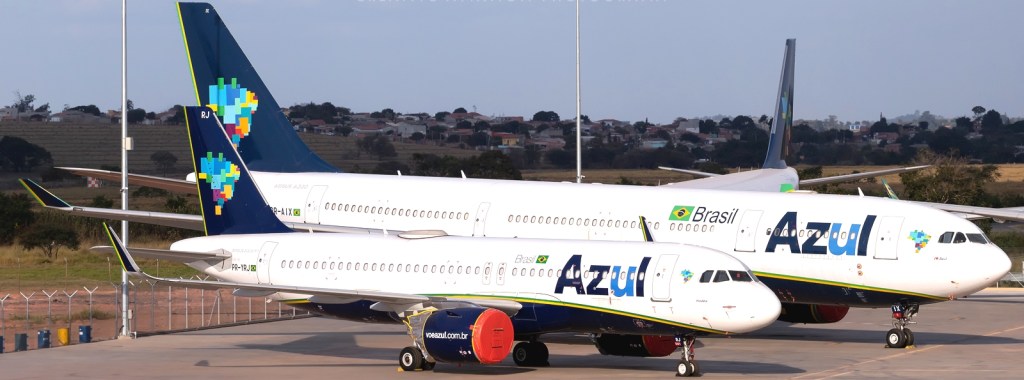
Azul Linhas Aéreas y Latam Airlines Brasil firman un acuerdo de código compartido que inicialmente incluirá cincuenta rutas nacionales, que no se superponen, hacia y desde las ciudades de Brasilia, Belo Horizonte, Recife, Porto-Alegre, Campinas, Curitiba y Sao Paulo, fortaleciendo mayores opciones de viaje y conexiones. Las dos aerolíneas también firmaron un acuerdo de viajero frecuente, permitiendo a 12 millones de miembros de TudoAzul y a 37 millones de socios de LATAM Pass acumular puntos en el programa de su elección.

El acuerdo de código compartido inicialmente incluirá 50 rutas nacionales, que no se superponen, hacia y desde las ciudades de Brasilia, Belo Horizonte, Recife, Porto-Alegre, Campinas, Curitiba y Sao Paulo, brindando mayores opciones de viaje y conexiones. Estos códigos compartidos también facilitarán una experiencia de viaje más fluida entre los vuelos de Azul y LATAM, con los procesos de check-in y envío de equipaje hasta destino final, añadieron las compañías.

“Con la amplia selección de Azul de destinos en Brasil y los centros de conexión de LATAM, nuestras redes y tipos de flota complementarios ofrecerán a los pasajeros la más amplia gama de opciones de viaje”, dijo John Rodgerson, CEO de Azul Linhas Aéreas.

«Este acuerdo es una señal del compromiso a largo plazo de LATAM con el mercado brasileño y proporcionará a los clientes acceso a dos de las redes de destinos más relevantes del país», destacó Jerome Cadier, CEO de Latam Airlines Brasil. Cadier destacó que el anuncio del acuerdo es parte de la contribución de LATAM en generar respuestas innovadoras para impulsar las economías de la región en medio de la crisis de la pandemia de Coronavirus.

Previo a la crisis sanitaria, Azul Linhas Aéreas y Latam Airlines Brasil volaban un total de 137 destinos en Brasil, con 298 rutas y 1.632 despegues diarios. En 2019, ambas aerolíneas recibieron reconocimientos por su experiencia de viaje y puntualidad. Azul Linhas Aéreas Brasileiras es la aerolínea más grande de Brasil por número de salidas de vuelos y ciudades atendidas. Antes de la pandemia ofrecía 916 vuelos diarios a 116 destinos con una flota de 140 aviones.

Azul-Latam Brasil sign codeshare

Azul Linhas Aéreas and Latam Brasil sign code share agreement

Azul Linhas Aéreas and Latam Airlines Brasil sign a code share agreement that will initially include fifty non-overlapping national routes to and from the cities of Brasilia, Belo Horizonte, Recife, Porto-Alegre, Campinas, Curitiba and Sao Paulo, strengthening greater travel options and connections. The two airlines also signed a frequent flyer agreement, allowing 12 million TudoAzul members and 37 million LATAM Pass members to accumulate points in the program of their choice.

The code-share agreement will initially include 50 non-overlapping national routes to and from the cities of Brasilia, Belo Horizonte, Recife, Porto-Alegre, Campinas, Curitiba and Sao Paulo, providing greater travel and connection options. These shared codes will also facilitate a smoother travel experience between Azul and LATAM flights, with check-in processes and shipment of luggage to final destination, the companies added.

«With Azul’s wide selection of destinations in Brazil and LATAM connection hubs, our complementary networks and fleet types will offer passengers the widest range of travel options», said John Rodgerson, CEO of Azul Linhas Aéreas.

«This agreement is a sign of LATAM’s long-term commitment to the Brazilian market and will provide customers with access to two of the most relevant destination networks in the country», said Jerome Cadier, CEO of Latam Airlines Brasil. Cadier noted that the announcement of the agreement is part of LATAM’s contribution in generating innovative responses to boost the economies of the region in the midst of the Coronavirus pandemic crisis.

Before the health crisis, Azul Linhas Aéreas and Latam Airlines Brasil flew a total of 137 destinations in Brazil, with 298 routes and 1,632 daily departures. In 2019, both airlines received awards for their travel experience and punctuality. Azul Linhas Aéreas Brasileiras is the largest airline in Brazil by number of flight departures and cities served. Before the pandemic, it offered 916 daily flights to 116 destinations with a fleet of 140 aircraft.

Azul-Latam Brasil assina código compartilhado

Azul e Latam Brasil assinam contrato de codeshare

A Azul Linhas Aéreas e a Latam Airlines Brasil assinam um acordo de compartilhamento de código que inicialmente incluirá cinquenta rotas nacionais não sobrepostas de e para as cidades de Brasília, Belo Horizonte, Recife, Porto Alegre, Campinas, Curitiba e São Paulo, fortalecendo maiores opções de viagens e conexões. As duas companhias aéreas também assinaram um contrato de passageiro frequente, permitindo que 12 milhões de membros do TudoAzul e 37 milhões de membros do LATAM Pass acumulem pontos no programa de sua escolha.

O contrato de compartilhamento de código incluirá inicialmente 50 rotas domésticas não sobrepostas de e para as cidades de Brasília, Belo Horizonte, Recife, Porto-Alegre, Campinas, Curitiba e São Paulo, oferecendo maiores opções de viagens e conexões. Esses códigos compartilhados também facilitarão uma experiência de viagem mais suave entre os vôos Azul e LATAM, com processos de check-in e envio de bagagem para o destino final, acrescentaram as empresas.

«Com a ampla seleção de destinos da Azul no Brasil e nos centros de conexão da América Latina, nossas redes e tipos de frotas complementares oferecerão aos passageiros a mais ampla gama de opções de viagem», disse John Rodgerson, CEO da Azul Linhas Aéreas.

«Este acordo é um sinal do compromisso de longo prazo da LATAM com o mercado brasileiro e fornecerá aos clientes acesso a duas das redes de destinos mais relevantes do país», disse Jerome Cadier, CEO da Latam Airlines Brasil. Cadier observou que o anúncio do acordo faz parte da contribuição da LATAM na geração de respostas inovadoras para impulsionar as economias da região em meio à crise da pandemia de Coronavírus.

Antes da crise da saúde, a Azul Linhas Aéreas e a Latam Airlines Brasil voaram um total de 137 destinos no Brasil, com 298 rotas e 1.632 partidas diárias. Em 2019, ambas as companhias aéreas receberam prêmios por sua experiência de viagem e pontualidade. A Azul Linhas Aéreas Brasileiras é a maior companhia aérea do Brasil em número de partidas e cidades servidas. Antes da pandemia, oferecia 916 vôos diários para 116 destinos com uma frota de 140 aeronaves.

Ξ A I R G W A Y S Ξ
PUBLISHER: Airgways.com
DBk: Latam.com / Voeazul.com.br / Airgways.com
AW-POST: 202006161815AR

A\W   A I R G W A Y S ®