La aerolínea malaya lanza promociones 20% bonificaciones
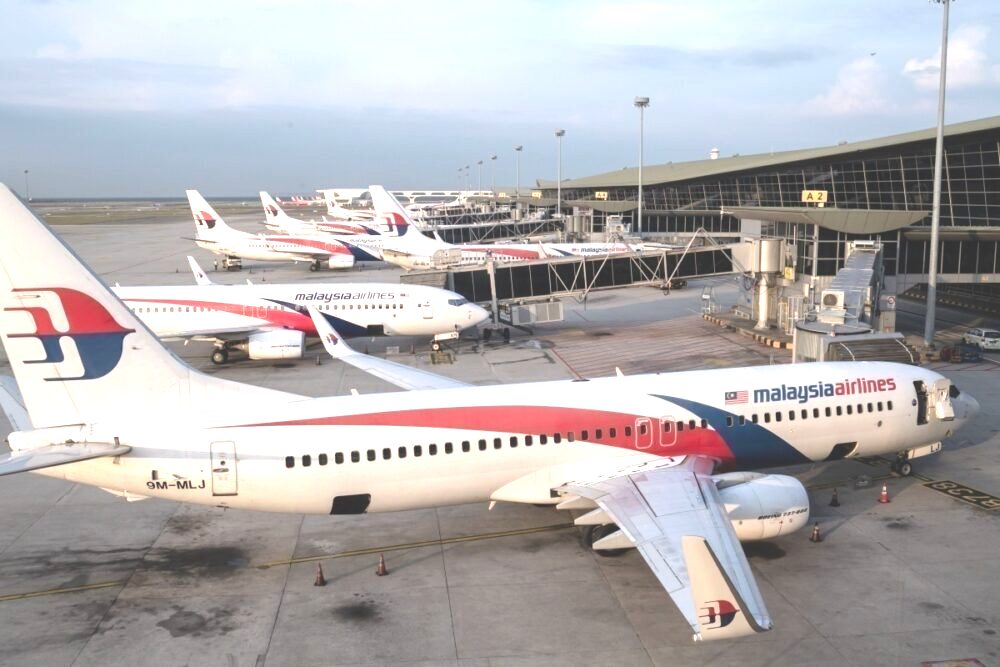
Malaysia Airlines lanzará su feria nacional en línea el Miércoles 23/09 promocionando la escena del turismo local para continuar mostrando signos positivos de reactivación y camino hacia la recuperación. La Feria Nacional de Malaysia Airlines (MADF) ofrece un 20% de descuento en todos los boletos de avión en clase económica a todos los destinos nacionales del 23 al 30 de Septiembre de 2020 para viajes inmediatos hasta el 30 de Junio de 2021.
La promoción está disponible a través del sitio web oficial y la aplicación móvil de la aerolínea. “Para ahorros más significativos, las compras a través de la aplicación móvil de Malaysia Airlines dan derecho a los pasajeros a un descuento adicional del cinco por ciento además de los boletos que se ofrecen. Los titulares de tarjetas de débito, crédito y prepago de CIMB también pueden disfrutar del cinco por ciento de descuento adicional cuando obtienen las ofertas MADF 2020 para todas las compras de boletos a través del sitio web oficial de la aerolínea”, dijo Malaysia Airlines en un comunicado.
Los titulares de tarjetas pueden optar por el plan de pago a plazos Easy Pay de CIMB al cero por ciento ingresando el código de promoción, MH20CIMB5, que también está disponible en el sitio web de Malaysia Airlines. El plan permite a los pasajeros optar por un esquema de pago a plazos flexible con un interés del cero por ciento durante un máximo de 12 meses. Además, los titulares de tarjetas de crédito CIMB Enrich ganarán hasta 1.000 millas Enrich con una reserva mínima de 500 RM.
Todos los pasajeros de Malaysia Airlines podrán disfrutar de los privilegios y servicios de una aerolínea de primer nivel de servicio completo, con una asignación de equipaje de mano de siete kilogramos, refrigerios / comidas y bebidas de cortesía, así como acceso al sistema de entretenimiento a bordo especialmente seleccionado de Malaysia Airlines.
Malaysia launches travel promotions
Malaysian airline launches promotions 20% bonuses
Malaysia Airlines will launch its national online fair on Wednesday 09/23 promoting the local tourism scene to continue to show positive signs of revival and road to recovery. The Malaysia Airlines National Fair (MADF) offers a 20% discount on all economy class airline tickets to all domestic destinations from September 23 to 30, 2020 for immediate travel until June 30, 2021.
The promotion is available through the airline’s official website and mobile app. “For more significant savings, purchases through the Malaysia Airlines mobile app entitle passengers to an additional five percent discount on top of the tickets on offer. Holders of CIMB debit, credit and prepaid cards can also enjoy the additional five percent discount when they get the MADF 2020 offers for all ticket purchases through the airline’s official website”, Malaysia Airlines said in a release.
Cardholders can opt for CIMB’s Easy Pay installment plan at zero percent by entering the promo code, MH20CIMB5, which is also available on the Malaysia Airlines website. The plan allows passengers to opt for a flexible installment payment scheme with zero percent interest for up to 12 months. Additionally, CIMB Enrich credit card holders will earn up to 1,000 Enrich miles with a minimum reserve of RM 500.
All Malaysia Airlines passengers will be able to enjoy the privileges and services of a full-service, top-tier airline, with a seven kilogram carry-on allowance, complimentary snacks/meals and beverages, as well as access to the entertainment system at specially selected board of Malaysia Airlines.
Malaysia melancarkan promosi pelancongan
Syarikat penerbangan Malaysia melancarkan promosi 20% bonus
Malaysia Airlines akan melancarkan pameran dalam talian nasionalnya pada hari Rabu 09/23 yang mempromosikan tempat pelancongan tempatan untuk terus menunjukkan tanda positif kebangkitan dan jalan menuju pemulihan. Pameran Nasional Malaysia Airlines (MADF) menawarkan potongan 20% untuk semua tiket penerbangan kelas ekonomi ke semua destinasi domestik dari 23 hingga 30 September 2020 untuk perjalanan segera sehingga 30 Jun 2021.
Promosi boleh didapati melalui laman web rasmi dan aplikasi mudah alih syarikat penerbangan. «Untuk penjimatan yang lebih ketara, pembelian melalui aplikasi mudah alih Malaysia Airlines memberi penumpang diskaun tambahan lima peratus di atas tiket yang ditawarkan. Pemegang kad debit, kredit dan prabayar CIMB juga dapat menikmati potongan lima peratus tambahan apabila mereka mendapat tawaran MADF 2020 untuk semua pembelian tiket melalui laman web rasmi syarikat penerbangan”, kata Malaysia Airlines dalam melepaskan.
Pemegang kad boleh memilih pelan ansuran CIMB Easy Pay pada kadar nol peratus dengan memasukkan kod promo, MH20CIMB5, yang juga tersedia di laman web Malaysia Airlines. Pelan ini membolehkan penumpang memilih skim pembayaran ansuran fleksibel dengan faedah sifar peratus sehingga 12 bulan. Selain itu, pemegang kad kredit CIMB Enrich akan memperoleh sehingga 1,000 batu Enrich dengan simpanan minimum RM 500.
Semua penumpang Malaysia Airlines akan dapat menikmati keistimewaan dan perkhidmatan syarikat penerbangan kelas atas, perkhidmatan penuh, dengan elaun membawa tujuh kilogram, makanan ringan/makanan dan minuman percuma, serta akses ke sistem hiburan di lembaga penerbangan Malaysia Airlines yang dipilih khas.
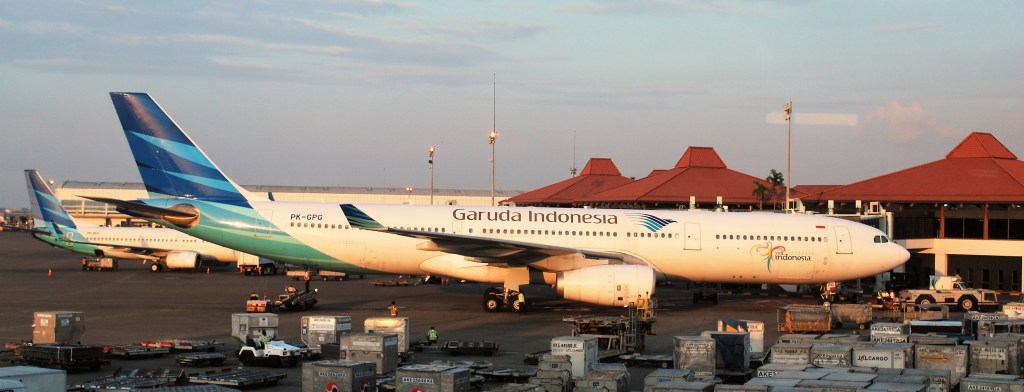
Garuda Indonesia continúa fortaleciéndose a pesar pandemia
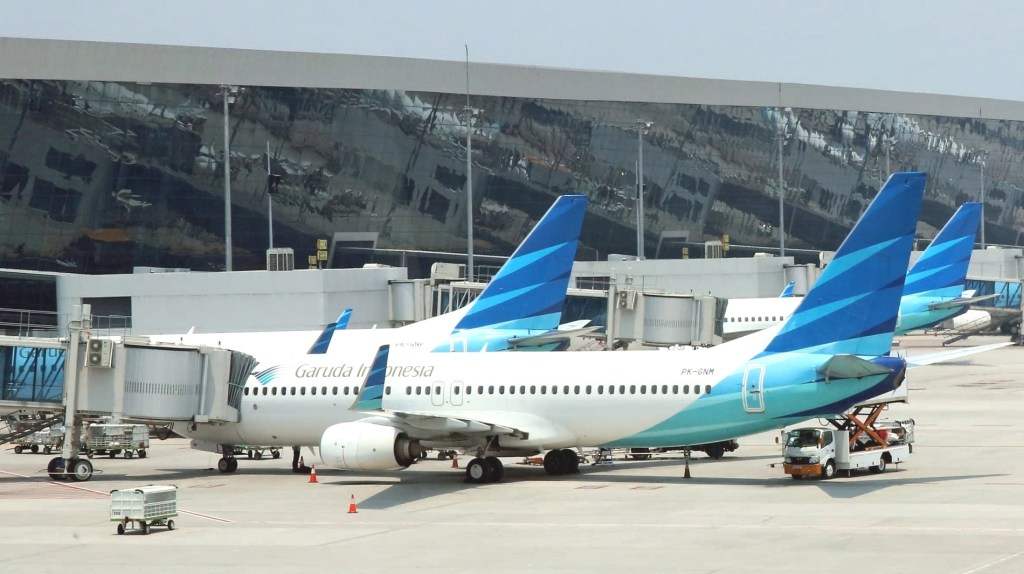
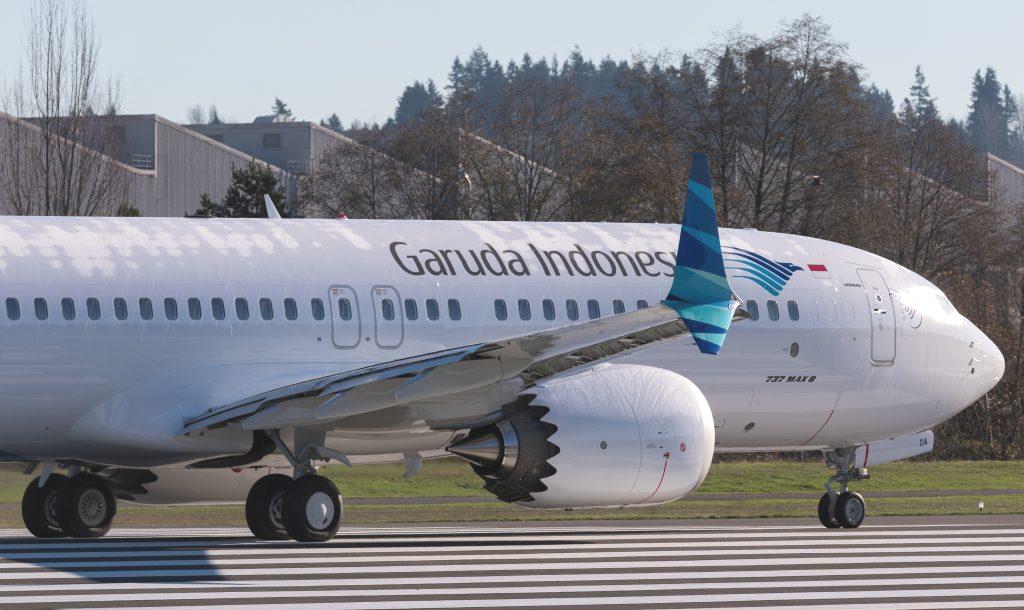
La aerolínea de bandera de la República de Indonesia, Garuda Indonesia Airlines dijo que mejores condiciones en los préstamos para aviones le ayudarán a evitar caer en la bancarrota mientras la nación se enfrenta a los crecientes casos de Coronavirus. «Discutimos los riesgos, los beneficios, los pros y los contras, y el liderazgo de la compañía decidió no hacerlo», dijo el Director Presidente de PT Garuda Indonesia, Irfan Setiaputra.
Garuda Airlines espera un préstamo puente de US$ 790.4 millones del Gobierno para este 2020, según Infran Setiaputra, incorporándose a industria de la aviación en Enero 2020 justo antes de que comenzara la expansión del Coronavirus. La inyección ayudaría después de que la aerolínea sufriera una pérdida neta de US$ 713 millones de dólares en los seis meses hasta junio, aunque está demorando más de lo inicialmente esperado, dijo Infran Setiaputra.
Las aerolíneas de todo el mundo están bajo una inmensa presión debido a que la pandemia y las estrictas restricciones al movimiento diezmaron la demanda de viajes. Varios se han derrumbado, se han declarado en quiebra o se están reestructurando, incluido Thai Airways International Pcl, que este mes obtuvo la aprobación judicial para proceder con un plan de reorganización empresarial.
Infran Setiaputra dijo que había asegurado a los arrendadores que la empresa no entraría en quiebra. «Creo que eso les ha dado mucha confianza y ahora ven a Garuda como una de las aerolíneas de esta región con buenas perspectivas de recuperación». Sin embargo, el telón de fondo está empeorando en Indonesia, que tiene casi un cuarto de millón de casos de virus. Hubo 4.176 infecciones confirmadas solo el lunes, un registro diario, y un funcionario del grupo de trabajo que maneja la respuesta a la pandemia advirtió que el sistema de salud de Yakarta está abrumado. Los últimos datos muestran que los viajes aéreos por el vasto archipiélago indonesio repuntaron en julio desde mínimos profundos. Un total de 1,46 millones de personas volaron a nivel nacional ese mes, en comparación con solo 87.000 en mayo, según la oficina central de estadísticas del país. Las cifras todavía estaban muy por debajo de los primeros meses del año antes de que el virus se propagara por la nación del sudeste asiático.
La disminución del tráfico ha condicionado a Garuda Airlines hasta tal punto que extendió el pago de un sukuk de US$ 500 millones de dólares, un bono islámico, por tres años. La aerolínea también perdió un pago de un valor respaldado por activos y se enfrenta a una demanda en Londres por las tarifas de alquiler de aviones. El Puntaje Z de Garuda, un modelo utilizado para predecir las quiebras, está estancado en su nivel más bajo en al menos una década.
Setiaputra tomó el timón de la empresa en enero después de que el jefe anterior fuera despedido por presuntamente contrabandear una motocicleta Harley-Davidson clásica y dos bicicletas plegables Brompton a Indonesia en un vuelo de Garuda desde Toulouse. La pandemia fue un bautismo de fuego para un ejecutivo con experiencia en tecnología y minería. «Esto fue realmente difícil para mí, no tenía conocimientos previos sobre la industria», dijo Infran Setiaputra, de 55 años. Garuda Airlines ha renegociado con algunos arrendadores de aviones para obtener tarifas más bajas y plazos más largos, y también recortó los salarios, liberando algo de efectivo muy necesario. Muchas otras aerolíneas han tomado medidas similares, y no se espera que la industria se recupere por completo antes de 2024, según estimaciones de la Asociación Internacional de Transporte Aéreo (IATA).
La República de Indonesia ha cerrado sus fronteras a la mayoría de los visitantes extranjeros, dejando las esperanzas de Garuda puestas en los viajeros nacionales y otras fuentes de ingresos como la carga. Esta semana, está comenzando vuelos directos para transportar atún fresco directamente desde Manado, la capital de la provincia de Sulawesi del Norte, a Tokio.
Infran Setiaputra dijo que el número de pasajeros de Garuda Airlines podría volver a alrededor del 50 por ciento de los niveles anteriores al coronavirus para fines de este año. «Va a mejorar. El problema para nosotros es cómo acelerar las cosas», dijo Infran Setiaputra.
Garuda reaffirming its economy
Garuda Indonesia continues to strengthen despite pandemic
The flag carrier of the Republic of Indonesia, Garuda Indonesia Airlines said that better terms on aircraft loans will help it avoid bankruptcy as the nation grapples with increasing cases of Coronavirus. «We discussed the risks, benefits, pros and cons, and the leadership of the company decided not to», said PT Garuda Indonesia CEO Irfan Setiaputra.
Garuda Airlines expects a bridge loan of US$ 790.4 million from the Government for this 2020, according to Infran Setiaputra, joining the aviation industry in January 2020 just before the expansion of the Coronavirus began. The injection would help after the airline suffered a net loss of US$ 713 million in the six months through June, although it is taking longer than initially expected, Infran Setiaputra said.
Airlines around the world are under immense pressure as the pandemic and tight restrictions on movement decimated travel demand. Several have collapsed, filed for bankruptcy or are restructuring, including Thai Airways International Pcl, which this month obtained court approval to proceed with a business reorganization plan.
Infran Setiaputra said it had assured the lessors that the company would not go bankrupt. «I think that has given them a lot of confidence and now they see Garuda as one of the airlines in this region with good prospects for recovery». However, the backdrop is worsening in Indonesia, which has nearly a quarter of a million virus cases. There were 4,176 confirmed infections on Monday alone, a daily record, and an official with the task force handling the response to the pandemic warned that Jakarta’s health system is overwhelmed. The latest data shows that air travel across the vast Indonesian archipelago rebounded in July from deep lows. A total of 1.46 million people flew domestically that month, compared with just 87,000 in May, according to the country’s central statistics office. The numbers were still well below the first few months of the year before the virus spread through the Southeast Asian nation.
The decrease in traffic has conditioned Garuda Airlines to such an extent that it extended the payment of a US$ 500 million sukuk, an Islamic bond, for three years. The airline also missed a payment on an asset-backed security and is facing a lawsuit in London over jet rental fees. Garuda’s Z-Score, a model used to predict bankruptcies, is stuck at its lowest level in at least a decade.
Setiaputra took the helm of the company in January after the previous boss was fired for allegedly smuggling a classic Harley-Davidson motorcycle and two Brompton folding bikes to Indonesia on a Garuda flight from Toulouse. The pandemic was a baptism of fire for an executive with a background in technology and mining. «This was really difficult for me, I had no prior knowledge about the industry», said Infran Setiaputra, 55. Garuda Airlines has renegotiated with some aircraft lessors for lower rates and longer terms, and also cut wages, freeing up some much-needed cash. Many other airlines have taken similar steps, and the industry is not expected to fully recover before 2024, according to estimates by the International Air Transport Association (IATA).
The Republic of Indonesia has closed its borders to most foreign visitors, leaving Garuda’s hopes pinned on domestic travelers and other sources of income such as cargo. This week, it is starting direct flights to transport fresh tuna directly from Manado, the capital of North Sulawesi province, to Tokyo.
Infran Setiaputra said Garuda Airlines passenger numbers could return to around 50 percent of pre-coronavirus levels by the end of this year. «It’s going to get better. The problem for us is how to speed things up«, Infran Setiaputra said.
Garuda menegaskan kembali ekonominya
Garuda Indonesia terus menguat meski terjadi pandemi
Maskapai penerbangan nasional Republik Indonesia, Garuda Indonesia Airlines mengatakan bahwa persyaratan pinjaman pesawat yang lebih baik akan membantunya menghindari kebangkrutan karena negara bergulat dengan meningkatnya kasus virus Corona. “Kami membahas risiko, keuntungan, pro dan kontra, dan pimpinan perusahaan memutuskan untuk tidak melakukannya”, kata Direktur Utama PT Garuda Indonesia Irfan Setiaputra.
Garuda Airlines mengharapkan pinjaman jembatan sebesar US$ 790,4 juta dari Pemerintah untuk tahun 2020 ini, menurut Infran Setiaputra, bergabung dengan industri penerbangan pada Januari 2020 tepat sebelum perluasan virus Corona dimulai. Suntikan tersebut akan membantu setelah maskapai mengalami kerugian bersih US$ 713 juta dalam enam bulan hingga Juni, meskipun memakan waktu lebih lama dari yang diperkirakan sebelumnya, kata Infran Setiaputra.
Maskapai penerbangan di seluruh dunia berada di bawah tekanan besar karena pandemi dan pembatasan yang ketat pada pergerakan mengurangi permintaan perjalanan. Beberapa telah pingsan, mengajukan pailit atau sedang melakukan restrukturisasi, termasuk Thai Airways International Pcl, yang bulan ini memperoleh persetujuan pengadilan untuk melanjutkan rencana reorganisasi bisnis.
Infran Setiaputra menyatakan telah meyakinkan para lessor bahwa perusahaan tidak akan bangkrut. «Saya pikir itu telah memberi mereka banyak kepercayaan dan sekarang mereka melihat Garuda sebagai salah satu maskapai penerbangan di wilayah ini dengan prospek pemulihan yang baik». Namun, keadaan memburuk di Indonesia, yang memiliki hampir seperempat juta kasus virus. Ada 4.176 infeksi yang dikonfirmasi pada hari Senin saja, catatan harian, dan seorang pejabat dengan satuan tugas yang menangani tanggapan terhadap pandemi memperingatkan bahwa sistem kesehatan Jakarta kewalahan. Data terbaru menunjukkan bahwa perjalanan udara melintasi kepulauan Indonesia yang luas pulih pada bulan Juli dari posisi terendah yang dalam. Sebanyak 1,46 juta orang terbang di dalam negeri bulan itu, dibandingkan dengan hanya 87.000 pada Mei, menurut kantor pusat statistik negara itu. Jumlahnya masih jauh di bawah beberapa bulan pertama tahun ini sebelum virus menyebar ke seluruh negara Asia Tenggara itu.
Penurunan trafik ini membuat Garuda Airlines terlalu banyak memperpanjang pembayaran sukuk senilai US $ 500 juta, obligasi syariah, selama tiga tahun. Maskapai ini juga melewatkan pembayaran atas keamanan yang didukung aset dan menghadapi gugatan di London atas biaya sewa jet. Garuda’s Z-Score, model yang digunakan untuk memprediksi kebangkrutan, tertahan di level terendah dalam setidaknya satu dekade.
Setiaputra memimpin perusahaan pada Januari setelah bos sebelumnya dipecat karena diduga menyelundupkan sepeda motor klasik Harley-Davidson dan dua sepeda lipat Brompton ke Indonesia dalam penerbangan Garuda dari Toulouse. Pandemi adalah baptisan api bagi seorang eksekutif dengan latar belakang teknologi dan pertambangan. «Ini sangat sulit bagi saya, saya tidak memiliki pengetahuan sebelumnya tentang industri ini», kata Infran Setiaputra, 55 tahun. Garuda Airlines telah melakukan negosiasi ulang dengan beberapa lessor pesawat untuk tarif yang lebih rendah dan jangka waktu yang lebih lama, dan juga memotong gaji, membebaskan sejumlah uang tunai yang sangat dibutuhkan. Banyak maskapai lain telah mengambil langkah serupa, dan industri diperkirakan tidak akan pulih sepenuhnya sebelum 2024, menurut perkiraan oleh Asosiasi Transportasi Udara Internasional (IATA).
Republik Indonesia telah menutup perbatasannya untuk sebagian besar pengunjung asing, meninggalkan harapan Garuda yang tertuju pada pelancong domestik dan sumber pendapatan lain seperti kargo. Pekan ini, maskapai tersebut memulai penerbangan langsung untuk mengangkut tuna segar langsung dari Manado, ibu kota provinsi Sulawesi Utara, ke Tokyo.
Infran Setiaputra mengatakan jumlah penumpang Garuda Airlines dapat kembali ke sekitar 50 persen dari level sebelum virus korona pada akhir tahun ini. «Ini akan menjadi lebih baik. Masalah bagi kami adalah bagaimana cara mempercepat», kata Infran Setiaputra.
Nuevos estudios indican COVID-19 puede propagarse vuelos largos
Dos nuevos estudios publicados en una revista científica plantean dudas sobre si la transmisión del Coronavirus en vuelos de aerolíneas comerciales prolongados podría ser más común de lo que se pensaba. Uno observó a dos pasajeros y dos asistentes de vuelo en el mismo vuelo de 15 horas desde Boston a Hong Kong, quienes luego dieron positivo por COVID-19. Se encontró que la secuencia genética del virus en los cuatro era idéntica, lo que según el estudio «sugiere fuertemente que el virus puede transmitirse durante los viajes aéreos». El otro estudio examinó un vuelo de 10 horas desde Londres a Hanoi, Vietnam, en el que se encontró que 16 a bordo tenían el virus, 12 de los cuales estaban sentados en clase ejecutiva dentro de dos asientos o filas de la única persona sintomática. «La proximidad de los asientos estaba fuertemente asociada con un mayor riesgo de infección», concluyó el estudio.
Los estudios, ambos publicados en la revista Emerging Infectious Diseases (CDC), son significativos porque los viajeros han regresado lentamente al aire a medida que se sabe más sobre cómo evitar contraer COVID-19. Ambos involucran vuelos que ocurrieron en Marzo 2020 y no especifican si los pasajeros llevaban máscaras.
Profilaxis
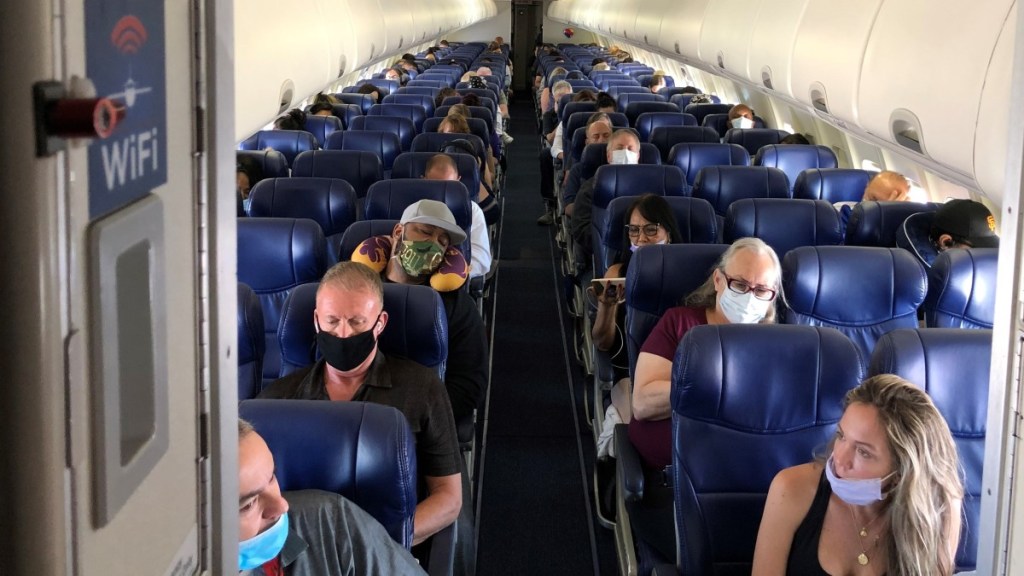
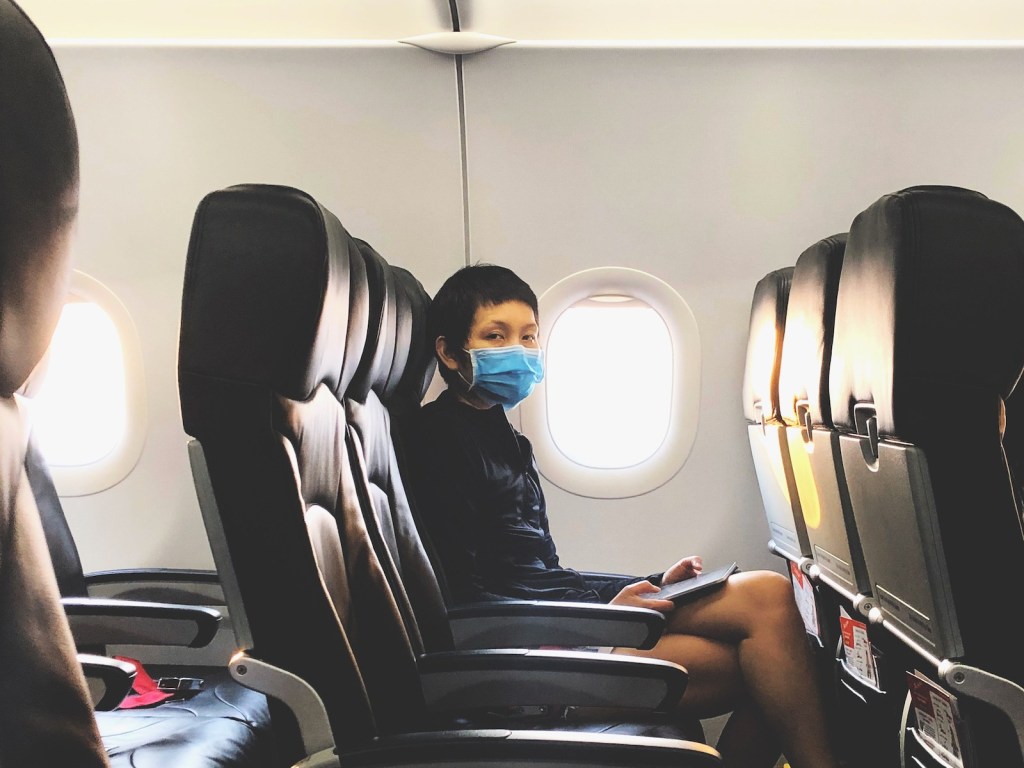
Las aerolíneas ahora exigen que todos los pasajeros y la tripulación a bordo de los vuelos usen máscaras. Además, muchas aerolíneas han estado volando sus aviones a capacidad reducida, bloqueando los asientos del medio para permitir una mayor distancia entre los pasajeros. Los pasajeros deben usar máscaras mientras viajan en un avión para las principales aerolíneas de Estados Unidos y en el aeropuerto. Se sabía menos sobre cómo limitar la transmisión del coronavirus cuando ocurrieron los vuelos estudiados y antes de que las precauciones como las máscaras y el distanciamiento social se volvieran comunes, al menos en los Estados Unidos.
El primer estudio, realizado por investigadores en el Reino Unido y Hong Kong, comenzó examinando los registros de 1.110 que habían contraído COVID-19 para ver quién había viajado, lo que llevó al descubrimiento del grupo de cuatro que habían estado a bordo del mismo vuelo largo. en un Boeing 777. El estudio pudo demostrar que la secuencia viral era exclusiva de los cuatro, con la clara posibilidad de que dos pasajeros, una pareja casada sentada uno detrás del otro en clase ejecutiva, hubieran contraído COVID-19 antes de abordar el vuelo. «El único lugar donde las cuatro personas estuvieron muy cerca durante un período prolongado fue dentro del avión», afirma el estudio. El otro estudio fue realizado por investigadores vietnamitas y australianos, identificando a una mujer de negocios de 27 años que había estado experimentando dolor de garganta y tos como la que probablemente había propagado la infección. Después del viaje en el vuelo 54 de Vietnam Airlines, se montó un esfuerzo de rastreo de contactos para tratar de limitar la propagación. Se encontró que 11 de los pasajeros infectados en clase ejecutiva estaban sentados relativamente cerca de la mujer. El estudio señala que la clase ejecutiva ya está mucho menos concurrida que la económica, lo que parecería hacer menos probable la transmisión. El pasajero infectado estaba sentado en un asiento de la ventana del lado derecho. Los infectados más tarde incluyeron a los dos pasajeros frente a ella y nueve en los pasillos centrales más cercanos a ella. Solo uno estaba en el lado izquierdo de la cabina. Dos pasajeros en la sección económica del avión también contrajeron el virus, pero el estudio sugiere que sus casos podrían provenir de entrar en contacto con el virus durante la inmigración y el reclamo de equipaje, ya que los pasajeros en las clases se mantienen separados.
«La última guía de la industria de viajes aéreos internacionales clasifica el riesgo de transmisión en vuelo como muy bajo y recomienda solo el uso de máscaras faciales sin medidas adicionales para aumentar la distancia física a bordo, como bloquear los asientos del medio. Nuestros hallazgos desafían estas recomendaciones», afirma el estudio.
Airlines vs long flights transmission
New studies indicate COVID-19 may spread over long flights
Two new studies published in a scientific journal raise questions about whether transmission of the Coronavirus on long commercial airline flights could be more common than previously thought. One observed two passengers and two flight attendants on the same 15-hour flight from Boston to Hong Kong, who later tested positive for COVID-19. The genetic sequence of the virus in all four was found to be identical, which the study said «strongly suggests that the virus can be transmitted during air travel». The other study examined a 10-hour flight from London to Hanoi, Vietnam, in which 16 on board were found to have the virus, 12 of whom were sitting in business class within two seats or rows of the single symptomatic person. «The proximity of the seats was strongly associated with an increased risk of infection», the study concluded.
The studies, both published in the journal Emerging Infectious Diseases (CDC), are significant because travelers have slowly returned to the air as more is known about how to avoid contracting COVID-19. Both involve flights that occurred in March 2020 and do not specify whether the passengers were wearing masks.
Prophylaxis
Airlines now require that all passengers and crew on board flights wear masks. Additionally, many airlines have been flying their planes at reduced capacity, blocking the middle seats to allow greater distance between passengers. Passengers must wear masks while traveling on a plane for major United States airlines and at the airport. Less was known about limiting the transmission of the coronavirus when the flights studied occurred and before precautions such as masks and social distancing became common, at least in the United States.
The first study, conducted by researchers in the UK and Hong Kong, began by examining the records of 1,110 who had contracted COVID-19 to see who had traveled, leading to the discovery of the group of four who had been aboard the same flight. long. in a Boeing 777. The study was able to show that the viral sequence was unique to the four, with the clear possibility that two passengers, a married couple sitting behind each other in business class, had contracted COVID-19 before boarding the flight. «The only place where the four people were very close for an extended period was inside the plane», the study states. The other study was conducted by Vietnamese and Australian researchers, identifying a 27-year-old businesswoman who had been experiencing a sore throat and cough as the one that had likely spread the infection. After the trip on Vietnam Airlines Flight 54, a contact tracing effort was mounted to try to limit the spread. Eleven of the infected business class passengers were found to be seated relatively close to the woman. The study notes that the business class is already much less crowded than the economy class, which would appear to make transmission less likely. The infected passenger was sitting in a window seat on the right side. Those infected later included the two passengers in front of her and nine in the central aisles closest to her. Only one was on the left side of the cabin. Two passengers in the economy section of the plane also contracted the virus, but the study suggests their cases could stem from coming into contact with the virus during immigration and baggage claim, as passengers in classes are kept separate.
«The latest international air travel industry guide classifies the risk of in-flight transmission as very low and recommends only the use of face masks without additional measures to increase physical distance on board, such as blocking the middle seats. Our findings challenge these recommendations», states the study.
AW | 2020 09 22 11:01 | AVIATION ORGANISMS / GOVERNMENT
IATA solicita a Argentina reconsiderar impuesto gravámen del 35%
La Asociación Internacional del Transporte Aéreo (IATA) ha solicitado a las autoridades de la República Argentina una revisión de los gravámenes del impuesto PAIS a los pasajes aéreos internacionales. En un carta dirigida a la titular de AFIP, Mercedes Marcó del Pont, la IATA ha afirmado que el impuesto “podría afectar aún más al sector de los viajes y el turismo del país, profundamente golpeado hasta ahora por la pandemia”. La Asociación de Transporte Aéreo Internacional (IATA) solicitó al Gobierno que reconsidere el impuesto del 35% que se le aplica a los tickets aéreos internacionales a partir de las nuevas restricciones que estableció la semana pasada el Banco Central.
La suspensión de la aviación en el país durante más de seis meses ya dio lugar al cierre de una aerolínea nacional y el anuncio de tres aerolíneas internacionales que no volverán al mercado una vez que se permita la reanudación de los vuelos. “La imposición del nuevo impuesto reducirá aún más el atractivo del país para las aerolíneas. IATA prevé que la demanda en el mercado argentino en 2020 disminuirá por lo menos un 67% con respecto a 2019. Como resultado, los ingresos de las aerolíneas generados por el mercado se reducirán en USD 3.260 millones, lo que pondrá en peligro 19.820 empleos directos y disminuirá la contribución de la aviación al PIB del país en USD 1.630 millones”, afirmó la asociación de la IATA.
“Esta decisión no podría haber llegado en un peor momento. Debido a las medidas implementadas para enfrentar el COVID-19, la aviación en Argentina ha estado en tierra durante medio año. Aún no contamos con una fecha oficial para el reinicio de los vuelos domésticos e internacionales y nos imponen más impuestos gubernamentales. Así no se puede reactivar la demanda, ni se permitirá a esta industria ser un catalizador de beneficios sociales y económicos que contribuya a mejorar la debilitada economía del país y su población una vez que se reanuden las operaciones tras la pandemia”, dijo María Jose Taveira, Country Manager de IATA para Argentina, Paraguay y Uruguay.
La imposición del nuevo impuesto contradice directamente las políticas aceptadas en materia de tributación publicadas por la Organización de Aviación Civil Internacional (OACI), un organismo especializado de las Naciones Unidas.
Cabe recordar que el Banco Central estableció la semana pasada nuevas restricciones en el mercado de cambios para la compra de divisas. Concretamente, instruyó a la Administración Federal de Ingresos Públicos (AFIP) imponer un anticipo del 35% de impuesto a la Ganancias o a Bienes Personales para la compra del Dólar ahorro y ordenó que los gastos con tarjeta en moneda extranjera se hagan a cuenta del cupo de hasta US$ 200 mensuales de manera retroactiva al 1 de Septiembre 2020. Los cambios formaron parte de una batería de medidas tomadas en consonancia con el Ministerio de Economía y la Comisión Nacional de Valores (CNV) e incluye mayores exigencias para la apertura de cajas de ahorro en moneda extranjera, entre otros ítems. Quienes opten por comprar el cupo de USD 200 deben pagar, además del 30% del Impuesto PAIS, un adelanto del 35% a cuenta de Ganancias o Bienes Personales. El precio del Dólar solidario, por tanto, surgirá de subirle a la cotización oficial un 65%.
En el comunicado, IATA remarcó que Argentina ya impone impuestos sustanciales a los boletos de avión internacionales vendidos en el país.
Impuesto generados en Argentina
-Impuesto PAIS: 30% de la tarifa aérea pagada en pesos argentinos.
Impuesto DNT (Fondo Nacional de Turismo): 7% de la tarifa aérea* pagada
Tasa de aeropuerto para salidas internacionales: USD 51
ANAC (Impuesto de la Autoridad de Aviación Civil): USD 8
Impuesto de inmigración: US$ 10
Nuevo impuesto gubernamental adicional: 35% de la tarifa aérea pagada
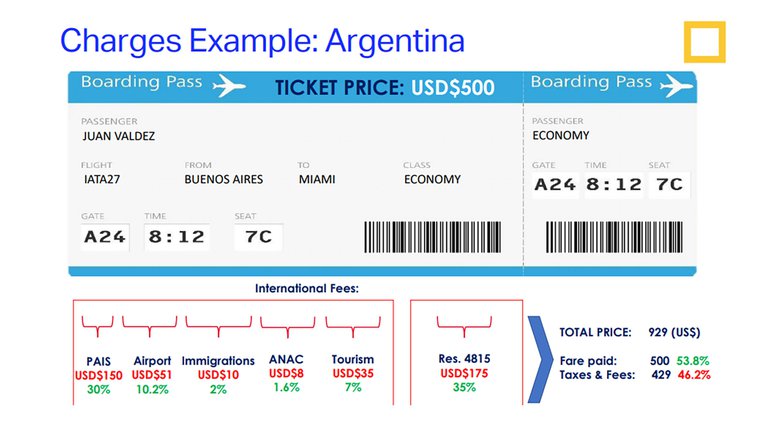
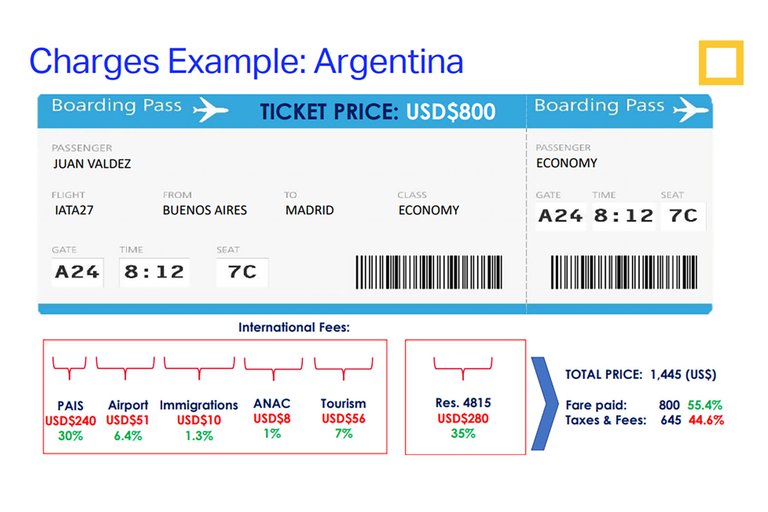
El organismo dio dos ejemplos sobre el recargo de impuestos que tiene un vuelo internacional a Miami y a Madrid. En el primer caso, un ticket de USD 500 tiene un adicional de impuestos de US$ 429, por lo cual su precio final es de US$ 929. En el segundo, un viaje a Madrid de USD 800, tiene un adicional de USD 645, teniendo en cuenta los impuestos mencionados anteriormente.
En ese contexto, IATA se manifestó que se opone firmemente a cualquier forma de impuesto o tasa en la que los ingresos resultantes no se reinviertan en la industria de la aviación y se destinen simplemente a aumentar los ingresos del Gobierno en general. “La imposición del nuevo impuesto contradice directamente las políticas aceptadas en materia de tributación publicadas por la Organización de Aviación Civil Internacional (OACI), un organismo especializado de las Naciones Unidas”, destacó.
Argentina contraviene Convenio Chicago
Argentina, como nación signataria del Convenio de Aviación Civil Internacional (Convenio de Chicago) y Estado Contratante de la OACI, está obligada a adherirse al Artículo 15 del Convenio de Chicago que establece que “ningún Estado contratante impondrá derechos, impuestos u otros gravámenes por el mero derecho de tránsito, entrada o salida de su territorio de cualquier aeronave de un Estado contratante o de las personas o bienes que se encuentren a bordo”. Los criterios de la OACI sobre Impuestos en la Esfera del Transporte Aéreo Internacional incluidos en el Documento 8632, que establece entre otras cosas, que “cada Estado contratante reducirá en el máximo grado posible y tratará de eliminar, tan pronto como lo permita su situación económica, toda forma de imposición sobre la venta o el uso del transporte aéreo internacional, incluso los impuestos sobre los ingresos brutos de los explotadores y los impuestos recaudados directamente de los pasajeros o expedidores”.
IATA claims for PAIS tax
IATA requests Argentina to reconsider the 35% tax
The International Air Transport Association (IATA) has asked the authorities of the Argentine Republic for a review of the PAIS tax levies on international air tickets. In a letter addressed to the head of AFIP, Mercedes Marcó del Pont, the IATA has stated that the tax «could further affect the country’s travel and tourism sector, which has hitherto been deeply affected by the pandemic». The International Air Transport Association (IATA) asked the Government to reconsider the 35% tax that is applied to international air tickets based on the new restrictions established last week by the Central Bank.
The suspension of aviation in the country for more than six months has already led to the closure of a national airline and the announcement of three international airlines that will not return to the market once the resumption of flights is allowed. “The imposition of the new tax will further reduce the attractiveness of the country for airlines. IATA expects that demand in the Argentine market in 2020 will decrease by at least 67% compared to 2019. As a result, the airline revenues generated by the market will be reduced by US$ 3.26 billion, putting 19,820 direct jobs at risk. and the contribution of aviation to the country’s GDP will decrease by US$ 1.63 billion”, stated the IATA association.
“This decision could not have come at a worse time. Due to the measures implemented to face COVID-19, aviation in Argentina has been on the ground for half a year. We still do not have an official date for the restart of domestic and international flights and we are imposed more government taxes. Thus, demand cannot be reactivated, nor will this industry be allowed to be a catalyst for social and economic benefits that contributes to improving the country’s weakened economy and its population once operations resume after the pandemic”, said María Jose Taveira, IATA Country Manager for Argentina, Paraguay and Uruguay.
The imposition of the new tax is in direct contradiction to accepted tax policies published by the International Civil Aviation Organization (ICAO), a specialized agency of the United Nations.
It should be remembered that the Central Bank last week established new restrictions on the exchange market for the purchase of foreign currency. Specifically, it instructed the Federal Administration of Public Revenue (AFIP) to impose an advance of 35% of income tax or Personal Assets for the purchase of the saving dollar and ordered that the expenses with a card in foreign currency be made on account of the up to US$ 200 per month retroactively to September 1, 2020. The changes were part of a battery of measures taken in line with the Ministry of Economy and the National Securities Commission (CNV) and includes greater requirements for the opening of credit boxes. savings in foreign currency, among other items. Those who choose to buy the quota of USD 200 must pay, in addition to 30% of the PAIS Tax, an advance of 35% on account of Profits or Personal Assets. The price of the solidarity dollar, therefore, will arise from raising the official price by 65%.
In the statement, IATA noted that Argentina already imposes substantial taxes on international airline tickets sold in the country.
Tax generated in Argentina
-PAIS Tax: 30% of the airfare paid in Argentine pesos.
DNT Tax (National Tourism Fund): 7% of the airfare * paid
Airport tax for international departures: USD 51
ANAC (Tax of the Civil Aviation Authority): USD 8
Immigration tax: US $ 10
New additional government tax: 35% of the airfare paid
The agency gave two examples of the tax surcharge for an international flight to Miami and Madrid. In the first case, a ticket of US$ 500 has an additional tax of US$ 429, for which its final price is US$ 929. In the second, a trip to Madrid of US$ 800, has an additional of US$ 645, taking into account the taxes mentioned above.
In that context, IATA stated that it strongly opposes any form of tax or fee where the resulting revenue is not reinvested in the aviation industry and is simply used to increase the revenue of the Government in general. «The imposition of the new tax directly contradicts the accepted policies on taxation published by the International Civil Aviation Organization (ICAO), a specialized agency of the United Nations», he said.
Argentina violates the Chicago Agreement
Argentina, as a signatory nation of the International Civil Aviation Convention (Chicago Convention) and ICAO Contracting State, is obliged to adhere to Article 15 of the Chicago Convention, which establishes that “no Contracting State shall impose duties, taxes or other charges for the mere right of transit, entry or exit from its territory of any aircraft of a Contracting State or of the persons or property on board”. The ICAO criteria on Taxes in the Sphere of International Air Transport included in Document 8632, which establishes, among other things, that “each Contracting State will reduce to the maximum extent possible and will try to eliminate, as soon as its economic situation allows , any form of taxation on the sale or use of international air transport, including taxes on the gross income of the operators and taxes collected directly from passengers or shippers”.
AW | 2020 09 22 10:02 | AIRLINES MARKET / GOVERNMENT
Argentina vuelve a suspender el reinicio de vuelos regulares 12/10
El Gobierno de Argentina ha comunicado el Lunes 21/09 la notificación a las líneas aéreas del país la nueva postergación del reinicio de los vuelos regulares de cabotaje. La decisión tomada por el Estado y recibida por las aerolíneas, indica que la suspensión de operaciones aéreas continuará vigente hasta el 12 de Octubre 2020, postergando la continuidad de la puesta en tierra de los viajes.
Las compañías aéreas que estaban preparadas para volver el 01/10 vuelven a tener nuevamente su reinicio pospuesto, sumando más incertidumbre para el sector aéreo en Argentina. Las aerolíneas han sido notificadas este Lunes 21/09 que no pueden operar ningún tipo de vuelo, salvo los especiales autorizados por ANAC, hasta el 12 de Octubre 2020, en coincidencia con la nueva extensión del período de aislamiento social preventivo y obligatorio a causa de la pandemia.
Las aerolíneas están desconcertadas ante la incertidumbre y el nivel de improvisación en las medidas establecida por el Gobierno, que ya ha aplazado en dos oportunidades la reapertura de la aviación comercial, una el 01/09 y la otra el 01/10 comercial, pues la nueva fecha prevista para el 12 de Octubre 2020 continúa siendo provisoria.
El Ministerio de Transporte y ANAC aseguraron que los protocolos para operar ya estaban aprobados por el Ministerio de Salud y habían fijado fecha para el 1 de Octubre 2020. Para poder volver a volar, las compañías tenían que recibir los protocolos sanitarios acordados entre las carteras de Salud y Transporte, pero esto todavía no sucedió a pesar de que faltaban apenas diez días para terminar el mes.
Perspectivas
Las compañías aéreas anticipan que el panorama de vuelos en una primera etapa no será muy diferente al actual, debido a cuarentena dura impuesta en el país, existirán pocas rutas disponibles con una capacidad muy limitada de transporte. Un escenario similar plantean para el caso de los vuelos internacionales, no prevén agregar una cantidad de servicios similares a los que había antes de la pandemia. El impacto en los servicios estarán marcados por las restricciones sanitarias, como así también por la crisis económica provocada por la paralización de actividades que ha afectado el poder adquisitivo a los futuros usuarios del transporte aéreo.
Argentina delays restart flights
Argentina once again suspends the restart of regular flights
The Government of Argentina has communicated on Monday 09/21 the notification to the country’s airlines of the new postponement of the restart of regular domestic flights. The decision taken by the State and received by the airlines, indicates that the suspension of air operations will continue in force until October 12, 2020, postponing the continuity of the grounding of the trips.
The airlines that were prepared to return on 10/01 once again have their restart postponed, adding more uncertainty for the air sector in Argentina. The airlines have been notified this Monday 09/21 that they cannot operate any type of flight, except the special ones authorized by ANAC, until October 12, 2020, coinciding with the new extension of the period of preventive and mandatory social isolation due to the pandemic.
The airlines are puzzled by the uncertainty and the level of improvisation in the measures established by the Government, which has already postponed the reopening of commercial aviation on two occasions, one on 01/09 and the other on 01/10 commercial, since the The new date scheduled for October 12, 2020 remains provisional.
The Ministry of Transport and ANAC assured that the protocols to operate were already approved by the Ministry of Health and had set a date for October 1, 2020. In order to be able to fly again, the companies had to receive the sanitary protocols agreed between the portfolios of Health and Transportation, but this still did not happen despite the fact that there were barely ten days to finish the month.
Perspectives
The airlines anticipate that the panorama of flights in a first stage will not be very different from the current one, due to the hard quarantine imposed in the country, there will be few routes available with a very limited transport capacity. They pose a similar scenario in the case of international flights, they do not foresee adding a number of services similar to those that existed before the pandemic. The impact on services will be marked by sanitary restrictions, as well as by the economic crisis caused by the stoppage of activities that has affected the purchasing power of future air transport users.
Compañía prepara mudanza línea 787 a North Charleston
The Boeing Company está preparando el traslado de la línea de ensamblaje del Boeing 787 a Carolina del Sur como parte de una estrategia de apoyar dos plantas ha sido severamente probada por la caída de la demanda a nivel mundial. Boeing se encuentra en el punto de decisión de trasladar más producción del 787 Dreamliner a Carolina del Sur, como una estrategia de reducción de costos acelerada por los efectos de la pandemia afectando la línea de producción en la fábrica al norte de Seattle (WA).
Boeing estaba produciendo un número récord de 787 en su centro de fuselaje ancho en Everett al norte de Seattle hacia finales de 2019. La estrategia de apoyar dos plantas ha sido severamente probada por la caída del Coronavirus en los viajes internacionales, además de una desaceleración cíclica en la demanda de grandes aviones. La decisión marca un momento decisivo en una saga de una década que ha visto al 787 emerger como una fuente de ingresos alternativa al 737 MAX, encallado durante 18 meses después de accidentes fatales.
Boeing trasladaría el resto de la producción del 787 de su base tradicional a North Charleston en el Estado de Carolina del Sur. Podría anunciarse a fines de Octubre 2020 cuando Boeing informe ganancias. La presión para tomar una decisión es inminente, ya que los proveedores necesitan saber qué partes fabricar para los aviones a reacción en 2022. Sin embargo, varias fuentes advirtieron que la decisión aún estaba sujeta a aprobación final y podría requerir un análisis adicional.
Boeing dijo que no tenía nada que agregar a los comentarios anteriores sobre la producción. En Julio 2020, dijo que recortaría la producción de 787 a seis por mes hacia 2021, en comparación con un pico reciente de catorce unidades. También lanzó un estudio sobre la forma más eficiente de producir el jet ligero, incluida la posibilidad de fusionar el ensamblaje en un solo lugar.
La decisión anterior de trasladar parte de la producción al estado no sindicalizado de Carolina del Sur fue la culminación de una estrategia liderada por la junta de hace años para reducir la dependencia del estado de Washington, donde Boeing ha tenido relaciones tormentosas con los sindicatos en el pasado. Pero la débil demanda ha obligado a Boeing a elegir entre romper sus objetivos de diversificación industrial o destruir la planta de Everett altamente integrada, el edificio más grande del mundo por volumen.
La revisión ya ha afectado a sindicatos y políticos en el Estado de Washington que ven a Boeing vacilar en su compromiso con su lugar de nacimiento en el área de Seattle, algo que la compañía niega. John Holden, Presidente de la Asociación Internacional de Maquinistas del Estado de Washington, ha dicho a los miembros que Boeing podría estar amenazando con un movimiento para ganar concesiones contractuales.
Impacto Everett
Carolina del Sur ofrece mano de obra más barata y la variante Boeing 787-10 más grande no se puede construir fácilmente en otro lugar debido a su tamaño. Pero duplicar la inversión en el estado sureño no deja de tener un costo. Boeing debe sopesar las posibilidades de que concentrar la producción del 787 en el sur facilite la organización de los sindicatos allí, dijo una fuente de la industria. Boeing apunta a volver a una tasa de 10-11 787 mensuales en algún momento. Ejecutar tales tarifas en Carolina del Sur requeriría una inversión para expandir la instalación.
Por otro lado, fuentes de alto nivel de la industria dicen que la producción podría disminuir antes de que vuelva a subir, lo que aumenta aún más la presión sobre Boeing para que reorganice la producción del 787 allí para ahorrar costos. Boeing también enfrenta decisiones difíciles sobre Everett a medida que disminuye la demanda de aviones de dos pasillos. Actualmente, construye el 747, 767, 777 y algunos 787 allí. Después de 2022, solo quedarían los 767/KC-46 y 777/777X, y Boeing no lanzaría más de cinco aviones al mes, aproximadamente tres veces menos que hace un año.
Después de que Boeing canceló los planes para un nuevo avión de gama media, no hay un relleno obvio para el espacio vacío del 787, lo que significa que los programas de tarifas bajas restantes absorberían una mayor parte de los gastos generales de la fábrica.
Un escenario atípico que llama la atención es el traslado de la producción del 737 MAX de Renton al sur de Seattle a Everett. Pero eso es poco probable en el corto plazo dado el alto volumen de aviones pedidos y la prioridad de hacer volar el 737 MAX.
Desesperado por ahorrar efectivo, Boeing también tiene que equilibrar las necesidades a corto plazo con el horizonte de planificación notoriamente a largo plazo de la industria, pero sin la confianza habitual en sus propias previsiones de demanda, ya que la economía posterior a la crisis sigue siendo incierta. “Si hacen una versión mejorada del 787 en cinco u ocho años, tendrían que hacerlo desde la distancia o replicar las costosas instalaciones de diseño e ingeniería que tienen en Everett”, dijo el Analista de Teal Group, Richard Aboulafia.
Boeing 787 moving to South Carolina
Company prepares moving line 787 to North Charleston
The Boeing Company is preparing to move the Boeing 787 assembly line to South Carolina as part of a strategy to support two plants has been severely tested by falling demand worldwide. Boeing is at the decision point of moving more production of the 787 Dreamliner to South Carolina, as a cost reduction strategy accelerated by the effects of the pandemic affecting the production line at the factory north of Seattle (WA).
Boeing was producing a record number of 787s at its widebody hub in Everett north of Seattle towards the end of 2019. The strategy of supporting two plants has been severely tested by the Coronavirus drop in international travel, in addition to a cyclical slowdown. in demand for large aircraft. The decision marks a watershed moment in a decade-long saga that has seen the 787 emerge as an alternative revenue stream to the 737 MAX, stranded for 18 months after fatal accidents.
Boeing would move the rest of the 787 production from its traditional base to North Charleston in the State of South Carolina. It could be announced in late October 2020 when Boeing reports earnings. The pressure to make a decision is imminent, as suppliers need to know what parts to make for the jets in 2022. However, several sources cautioned that the decision was still subject to final approval and could require further analysis.
Boeing said it had nothing to add to previous comments on production. In July 2020, it said it would cut production from 787 to six a month by 2021, compared to a recent peak of fourteen units. He also launched a study on the most efficient way to produce the light jet, including the possibility of merging the assembly in one place.
The earlier decision to move some production to the non-union state of South Carolina was the culmination of a long-standing board-led strategy to reduce reliance on Washington state, where Boeing has had stormy relations with unions in the past. But weak demand has forced Boeing to choose between breaking its industrial diversification goals or destroying the highly integrated Everett plant, the world’s largest building by volume.
The review has already affected unions and politicians in Washington State who see Boeing waver in its commitment to its Seattle-area birthplace, something the company denies. John Holden, President of the International Association of Machinists d, has told members that Boeing could be threatening a move to win contract concessions.
Everett Impact
South Carolina offers cheaper labor, and the larger Boeing 787-10 variant cannot easily be built elsewhere due to its size. But doubling the investment in the southern state is not without a cost. Boeing must weigh the possibilities that concentrating 787 production in the south will make it easier for unions to organize there, an industry source said. Boeing aims to return to a rate of 10-11 787 per month at some point. Running such fees in South Carolina would require an investment to expand the facility.
On the other hand, high-level industry sources say production could decline before it rises again, further increasing pressure on Boeing to reorganize production of the 787 there to save costs. Boeing also faces tough decisions about Everett as demand for two-aisle jets declines. He currently builds the 747, 767, 777 and some 787s there. After 2022, only the 767/KC-46 and 777/777X would remain, and Boeing would launch no more than five planes a month, roughly three times less than a year ago.
After Boeing canceled plans for a new mid-range aircraft, there is no obvious fill for the 787’s empty space, meaning the remaining low-fare programs would absorb a larger share of the factory’s overhead.
One striking outlier scenario is the relocation of 737 MAX production from Renton south of Seattle to Everett. But that’s unlikely in the short term given the high volume of aircraft ordered and the priority of flying the 737 MAX.
Desperate to save cash, Boeing also has to balance short-term needs with the industry’s notoriously long-term planning horizon, but without the usual reliance on its own demand forecasts, as the post-crisis economy remains uncertain. «If they make an upgraded version of the 787 in five or eight years, they would have to do it from a distance or replicate the expensive design and engineering facilities that they have at Everett», said Teal Group Analyst Richard Aboulafia.
Compañía rusa presentará cambios renobados en línea SSJ-100
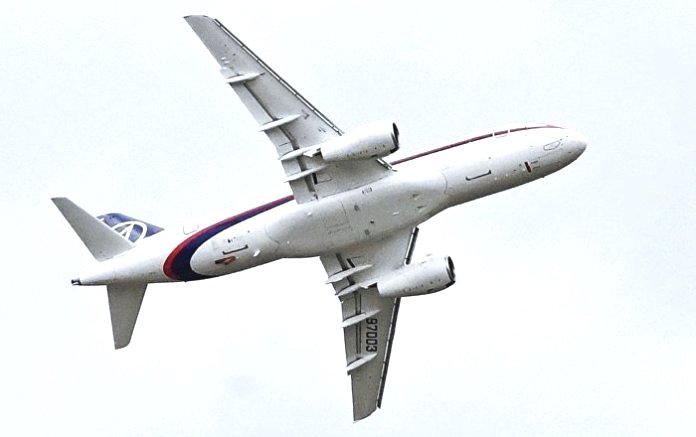
La compañía Sukhoi Aircraft ha anunciado la actualización del Programa SSJ-100 de su aeronave regional rusa de cara a renovar sus capacidades para aplicar una versión mejorada para que entre en producción en 2025 con la denominación Sukhoi Superjet SSJ-100 New, en el que muchos de los componentes importados del extranjero van a ser sustituidos por los de producción nacional, declaró el Vice Primer Ministro ruso Yuri Borísov.
Actualmente la mayor parte de los sistemas del SSJ-100 provienen de otros países. El 10% de estos componentes se produce en Estados Unidos, lo cual limita sustancialmente las posibilidades de venderlo en el mercado internacional. Cualquier venta de este avión en su versión básica requiere la autorización de Washington. Ejemplo de esto, fue la iniciativa de venta de cuarenta aeronaves del modelo básico a las aerolíneas iraníes en 2019 que han fracasado.
Sin embargo, en tres años esta situación puede cambiar radicalmente con la llegada del SSJ-100 New. Su producción en masa marcará un gran avance en el desarrollo de la industria aeronáutica del país, indicó el funcionario. En particular, el servicio de prensa del Consorcio de Tecnologías Radio-Electrónicas destacó que el SSJ100 New tendrá un sistema de navegación inercial de fabricación rusa. Este sistema permite determinar la ubicación exacta de la aeronave y los parámetros de movimiento, siendo su principal ventaja una autonomía completa que implica su independencia de las fuentes de señal terrestres y espaciales. La modernización también contempla el desarrollo de motores rusos para el avión y un ala nueva. «La fecha prevista para finalizar los trabajos de investigación y de desarrollo es 2023. Después de este año se prevén iniciar las pruebas de vuelo de este avión», reveló el funcionario ruso. Según Borísov, para construir una aeronave así Rusia necesitará certificar de nuevo no solo algunos de sus sistemas de a bordo, sino que todo el avión e incluso las empresas que cooperarán con el fabricante.
El desarrollo del Sukhoi Superjet 100 New se realiza en concordancia con la orden del Presidente ruso Vladímir Putin del 25 de Enero de 2018, recordó el Viceprimer Ministro. A su vez, en Mayo 2020 el fabricante de la aeronave SSJ100 y subsidiaria de la Irkut Corporation, comenzó a publicar de acuerdo al calendario previsto toda la documentación técnica necesaria para producir la versión modernizada de la aeronave.
Sukhoi presents SSJ100 New
Russian company to present renewed changes online SSJ-100
The Sukhoi Aircraft company has announced the update of the SSJ-100 Program of its Russian regional aircraft in order to renew its capabilities to apply an improved version so that it enters production in 2025 with the name Sukhoi Superjet SSJ-100 New, in which many of components imported from abroad will be replaced by domestically produced ones, declared Russian Deputy Prime Minister Yuri Borisov.
Currently most of the SSJ-100 systems come from other countries. 10% of these components are produced in the United States, which substantially limits the possibilities of selling it in the international market. Any sale of this aircraft in its basic version requires authorization from Washington. An example of this was the initiative to sell forty aircraft of the basic model to Iranian airlines in 2019 that have failed.
However, in three years this situation may radically change with the arrival of the SSJ-100 New. Its mass production will mark a great advance in the development of the country’s aeronautical industry, the official said. In particular, the press service of the Consortium of Radio-Electronic Technologies highlighted that the SSJ100 New will have a Russian-made inertial navigation system. This system makes it possible to determine the exact location of the aircraft and the parameters of movement, its main advantage being a complete autonomy that implies its independence from ground and space signal sources. The modernization also includes the development of Russian engines for the aircraft and a new wing. «The planned date for completing the research and development work is 2023. After this year, flight tests of this aircraft are scheduled to begin», the Russian official revealed. According to Borisov, to build such an aircraft, Russia will need to re-certify not only some of its on-board systems, but the entire aircraft and even the companies that will cooperate with the manufacturer.
The development of the Sukhoi Superjet 100 New is carried out in accordance with the order of Russian President Vladimir Putin of January 25, 2018, recalled the Deputy Prime Minister. In turn, in May 2020 the manufacturer of the aircraft SSJ100 and a subsidiary of the Irkut Corporation, began to publish all the technical documentation necessary to produce the modernized version of the aircraft according to the scheduled schedule.
Сухой представляет новый SSJ100
Российская компания представит обновленные изменения на сайте SSJ-100
Компания Sukhoi Aircraft объявила об обновлении программы SSJ-100 своего российского регионального самолета, чтобы обновить свои возможности по применению улучшенной версии, чтобы он поступил в производство в 2025 году под названием Sukhoi Superjet SSJ-100 New, в котором многие из Компоненты, импортируемые из-за рубежа, будут заменены на отечественные, заявил вице-премьер Юрий Борисов.
В настоящее время большая часть систем SSJ-100 поступает из других стран. 10% этих компонентов производится в США, что существенно ограничивает возможности их продажи на международном рынке. Для продажи этого самолета в базовой версии требуется разрешение Вашингтона. Примером этого стала инициатива по продаже сорока самолетов базовой модели иранским авиакомпаниям в 2019 году, которые потерпели неудачу.
Однако через три года эта ситуация может кардинально измениться с появлением SSJ-100 New, серийное производство которого станет большим шагом вперед в развитии авиационной промышленности страны, сказал чиновник. В частности, в пресс-службе Консорциума радиоэлектронных технологий подчеркнули, что на SSJ100 New будет установлена инерциальная навигационная система российского производства. Эта система позволяет определять точное местоположение самолета и параметры движения, ее основным преимуществом является полная автономность, подразумевающая его независимость от наземных и космических источников сигнала. Модернизация также включает разработку российских двигателей для самолета и нового крыла. «Планируемый срок завершения научно-исследовательских и опытно-конструкторских работ 2023 год. После этого года планируется начать летные испытания этого самолета», сообщил российский чиновник. По словам Борисова, для создания такого самолета России потребуется повторно сертифицировать не только некоторые из своих бортовых систем, но и весь самолет и даже компании, которые будут сотрудничать с производителем.
Разработка Sukhoi Superjet 100 New осуществляется в соответствии с распоряжением президента России Владимира Путина от 25 января 2018 года, напомнил вице-премьер. В свою очередь, в мае 2020 года производитель самолета SSJ100 и дочернее предприятие корпорации «Иркут» начали публиковать всю техническую документацию, необходимую для производства модернизированной версии самолета в соответствии с установленным графиком.
Airbus anuncia diseños aviones propulsados por hidrógeno
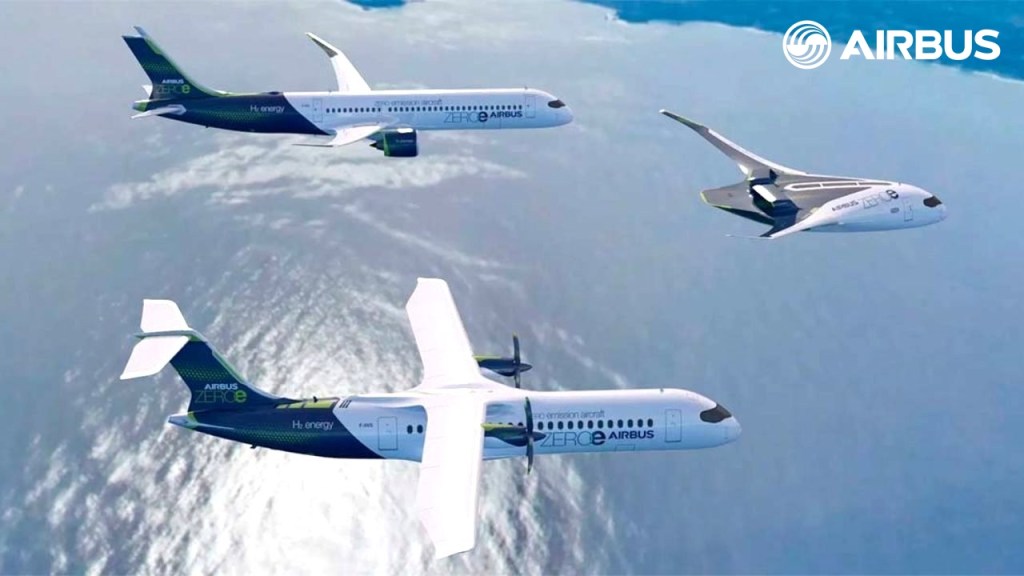
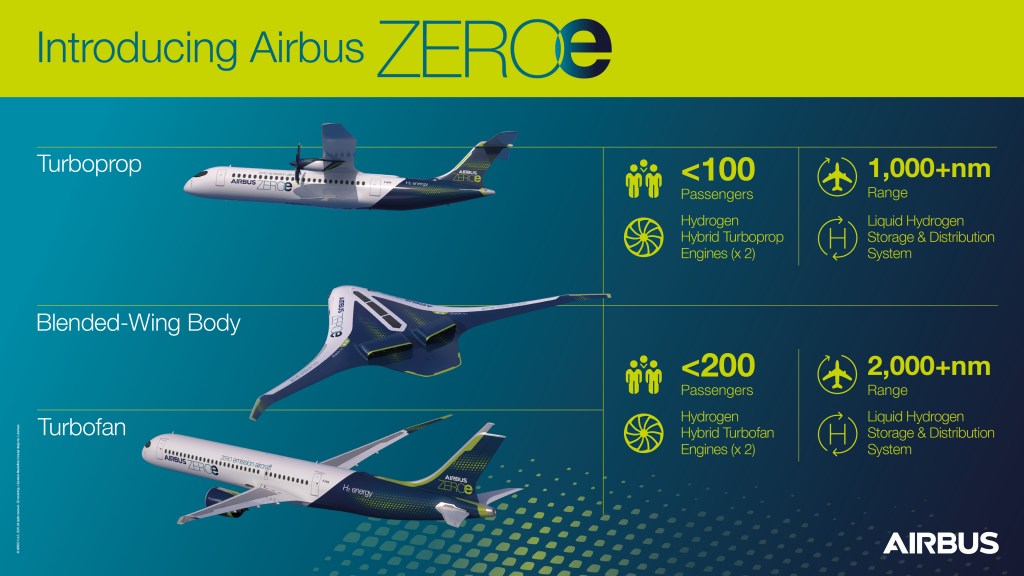
El gigante aeroespacial europeo Airbus Group SE ha dado a conocer los detalles de tres aviones conceptuales alimentados con hidrógeno denominados ZEROe el Lunes 21/09, en un nuevo concepto más ecológico para el entorno proyectando alcanzar su materialización hacia 2035. Los nuevos diseños de diferentes tamaños y prestaciones estaría enfocados en desarrollar cero emisiones, para lo que la compañía aeroespacial está analizando la combustión de hidrógeno como parte del desarrollo de las nuevas aeronaves.
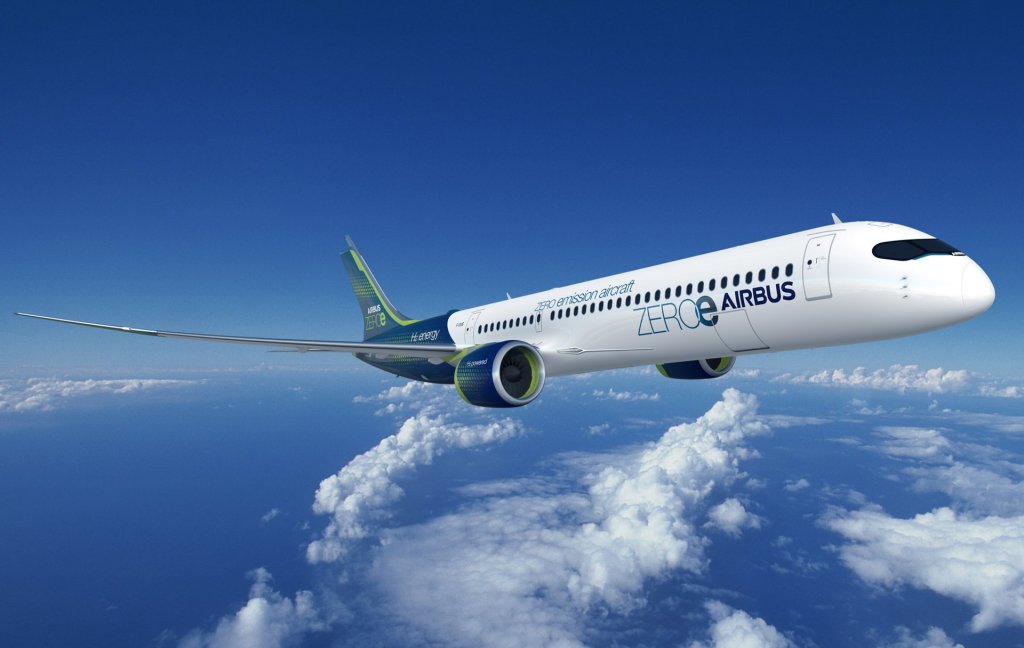
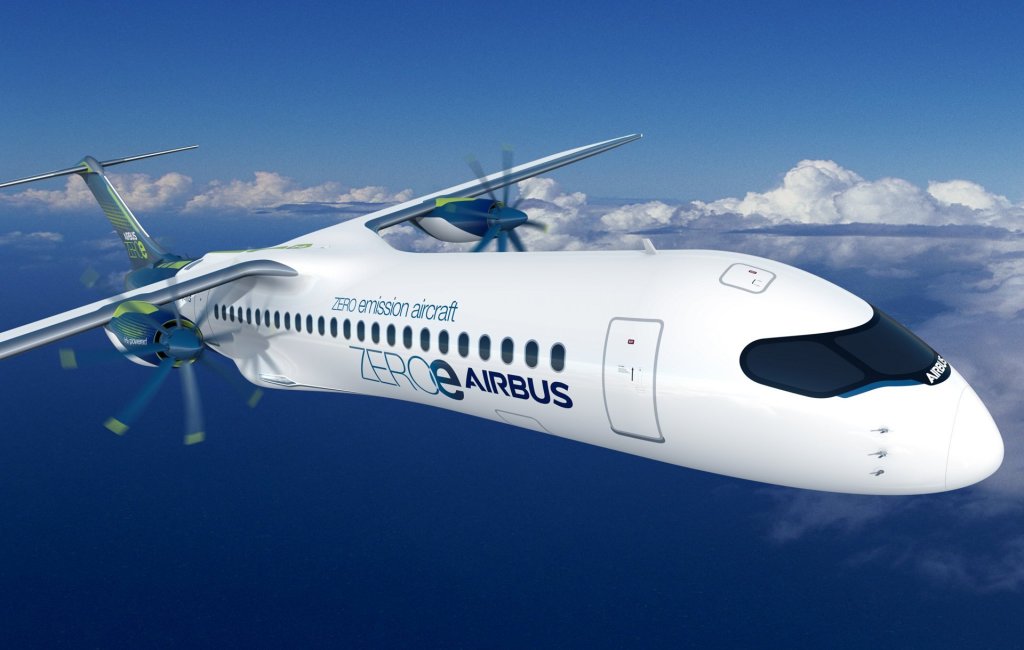
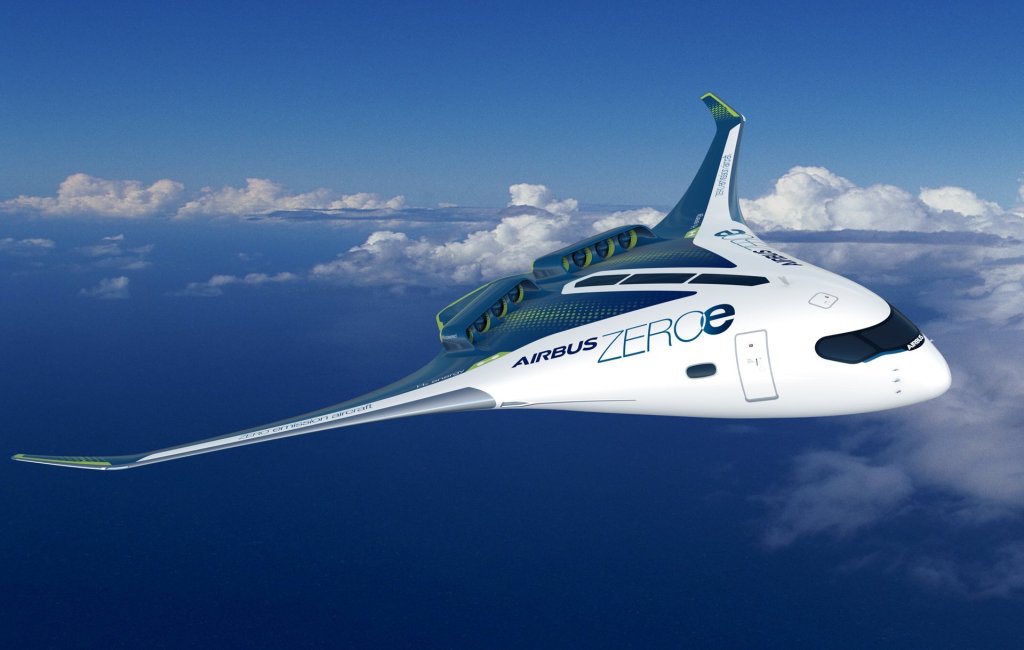
Existen tres desarrollos hacia el futuro. Una aeronave con motores turbofan y transportaría entre 120 y 200 pasajeros, con un alcance de más de 2000 millas náuticas, sería propulsado con lo que la compañía describió como un motor de turbina de gas modificado que funciona con hidrógeno, en lugar de combustible de hidrocarburo. Según los diseños, el hidrógeno líquido se almacenaría detrás del mamparo de presión trasero, en la parte trasera del avión. Otro diseño, que utiliza motores turbohélice, también se propulsa con motores de turbina de gas modificados, tiene un alcance de más de 1.000 millas náuticas, pero lleva menos pasajeros. Un tercer diseño ofrece una visión radical de cómo podrían verse los aviones en los años futuros. Con un transporte de hasta 200 pasajeros, el concepto de “cuerpo de ala combinada” haría que las alas se fusionaran con el cuerpo principal de la aeronave.
Hidrógeno en la aviación
Si bien la adopción generalizada de la energía del hidrógeno en los aviones aún está lejos, las formas de transporte terrestres ya están utilizando la tecnología, aunque a pequeña escala. Los autobuses de hidrógeno se han introducido en Londres, la capital del Reino Unido, por ejemplo.
“Creo firmemente que el uso de hidrógeno, tanto en combustibles sintéticos como como fuente de energía primaria para aviones comerciales, tiene el potencial de reducir significativamente el impacto climático de la aviación. Estos conceptos nos ayudarán a explorar y madurar el diseño y la disposición del primer avión comercial de cero emisiones y climáticamente neutro del mundo, que pretendemos poner en servicio para 2035”, dijo el CEO de Airbus, Guillaume Faury, en un comunicado.
Hidrógeno en aeronaves
Por otra parte, la empresa europea Alstom ha desarrollado el Coradia iLint, un tren que aprovecha la tecnología de pilas de combustible para convertir oxígeno e hidrógeno en electricidad. Según la compañía, puede alcanzar velocidades de hasta 140 kilómetros por hora (87 millas por hora), es silencioso y emite solo vapor y agua.
Dentro de la aviación, una serie de aviones de bajas y cero emisiones han subido a los cielos en los últimos años. En Junio 2020, un avión de batería eléctrica sobrevoló en un viaje descrito como el primer vuelo eléctrico a escala comercial del Reino Unido. Mientras tanto, en mayo, un avión Cessna 208B Grand Caravan con un motor totalmente eléctrico de 750 caballos de fuerza completó su vuelo inaugural , después de despegar de un aeropuerto en Moses Lake, Washington. Otros ejemplos de aviones innovadores incluyen el Solar Impulse 2, un avión tripulado impulsado por el sol. En 2016 logró circunnavegar el mundo sin usar combustible, aunque el viaje se completó en 17 tramos separados.
Perspectivas
Lejos de las posible ventajas que pueda brindar el empleo de hidrógeno en la aviación comercial, sin duda, marcará un efecto bisagra en el transporte aéreo, modificando conceptos, costos y modalidades en el mundo del viaje, aunque continuamos un tanto reacios a grandes cambios futurísticos en las estructuras de las aeronaves.
Airbus eco-friendly ZEROe designs
Airbus announces hydrogen-powered aircraft designs
The European aerospace giant Airbus Group SE has unveiled the details of three hydrogen-fueled concept aircraft called ZEROe on Monday 09/21, in a new, more environmentally friendly concept, projecting to reach its realization by 2035. The new designs of different sizes and benefits would be focused on developing zero emissions, for which the aerospace company is analyzing the combustion of hydrogen as part of the development of the new aircraft.
There are three developments for the future. An aircraft powered by turbofan engines and carrying between 120 and 200 passengers, with a range of more than 2,000 nautical miles, would be powered by what the company described as a modified gas turbine engine that runs on hydrogen, rather than hydrocarbon fuel. According to the designs, liquid hydrogen would be stored behind the rear pressure bulkhead at the rear of the plane. Another design, using turboprop engines, is also powered by modified gas turbine engines, has a range of more than 1,000 nautical miles, but carries fewer passengers. A third design offers a radical vision of what airplanes might look like in future years. Carrying up to 200 passengers, the «combined wing body» concept would cause the wings to merge with the main body of the aircraft.
Discover the three zero-emission concept aircraft known as ZEROe in this infographic. These turbofan, turboprop, and blended-wing-body configurations are all hydrogen hybrid aircraft.
Hydrogen in aviation
While the widespread adoption of hydrogen energy in airplanes is still a long way off, land forms of transportation are already using the technology, albeit on a small scale. Hydrogen buses have been introduced in London, the capital of the United Kingdom, for example.
“I strongly believe that the use of hydrogen, both in synthetic fuels and as a primary energy source for commercial aircraft, has the potential to significantly reduce the climate impact of aviation. These concepts will help us explore and mature the design and layout of the world’s first climate-neutral, zero-emission commercial aircraft, which we intend to put into service by 2035”, said Airbus CEO Guillaume Faury in a statement.
Hydrogen in aircraft
On the other hand, the European company Alstom has developed the Coradia iLint, a train that takes advantage of fuel cell technology to convert oxygen and hydrogen into electricity. According to the company, it can reach speeds of up to 140 kilometers per hour (87 miles per hour), is quiet, and emits only steam and water.
Within aviation, a number of low- and zero-emission aircraft have taken to the skies in recent years. In June 2020, a battery-electric aircraft flew overhead on a journey described as the UK’s first commercial-scale electric flight. Meanwhile, in May, a Cessna 208B Grand Caravan aircraft with a 750-horsepower fully electric motor completed its maiden flight, after taking off from an airport in Moses Lake, Washington. Other examples of innovative aircraft include the Solar Impulse 2, a manned aircraft powered by the sun. In 2016 it managed to circumnavigate the world without using fuel, although the journey was completed in 17 separate sections.
Perspectives
Far from the possible advantages that the use of hydrogen in commercial aviation can offer, it will undoubtedly have a hinge effect in air transport, modifying concepts, costs and modalities in the world of travel, although we continue to be somewhat reluctant to major future changes in aircraft structures.
La Justicia de Argentina rechaza cierre del Aeropuerto El Palomar
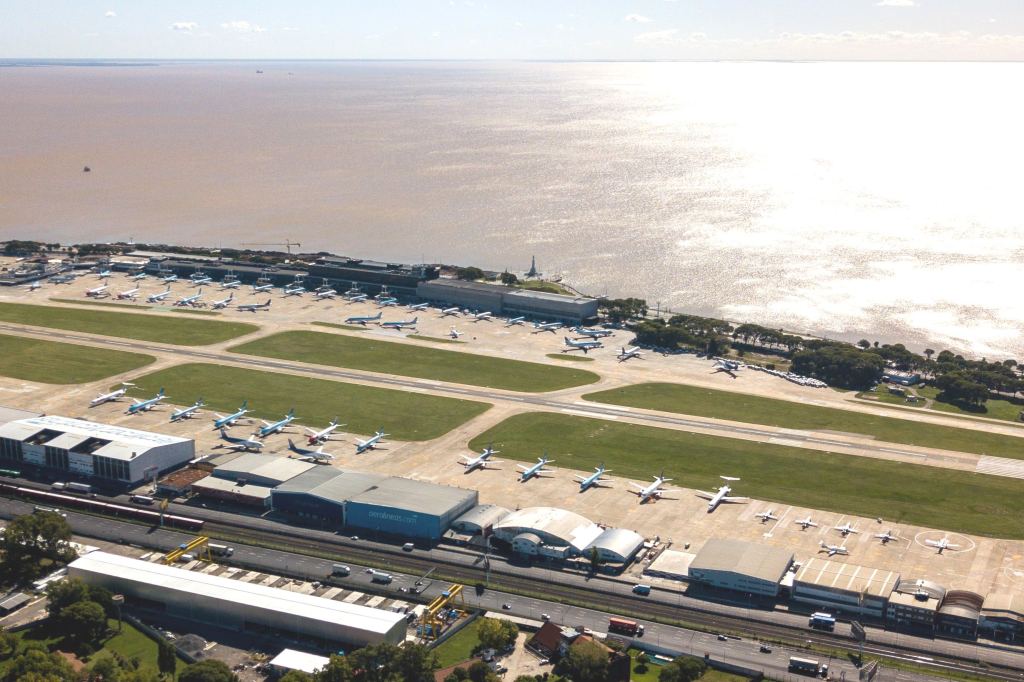
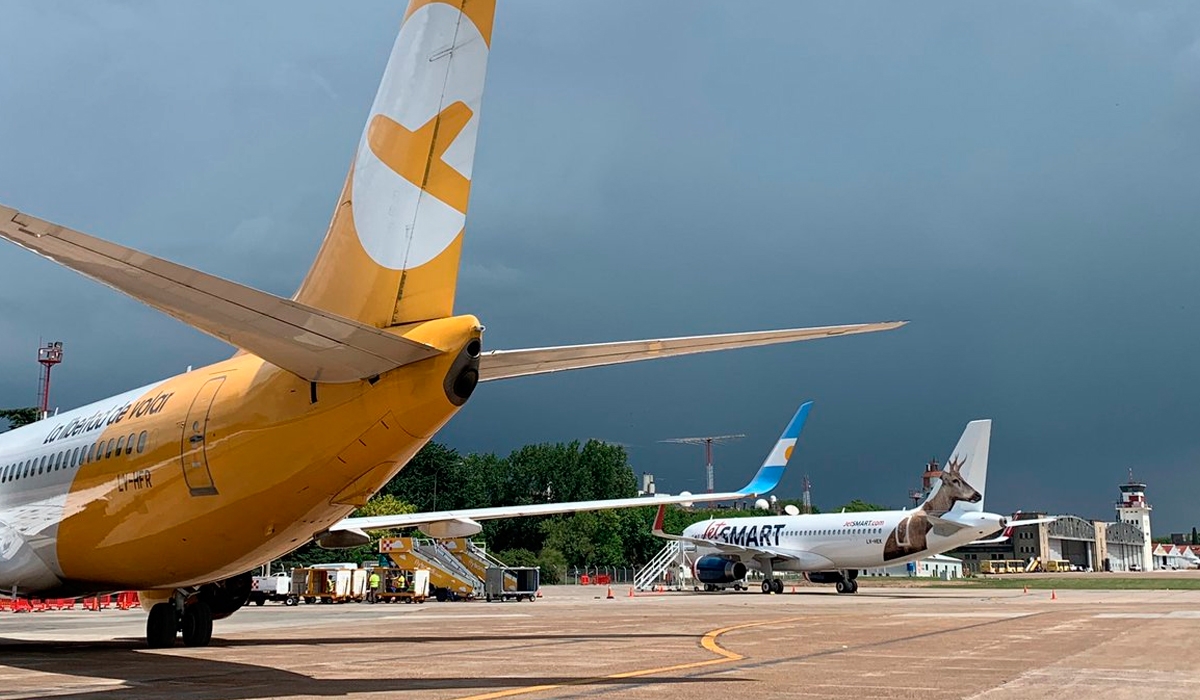
La Justicia de Argentina ha comunicado este Jueves 17/09 ha determinado la continuidad de las operaciones en el Aeropuerto Internacional El Palomar, rechazando el cierre impuesto en el reclamo del Gobierno. De esta manera el aeropuerto low cost continuará operando vuelos de cabotaje y regionales pero con las restricciones horarias nocturnas de 22:00 a 07:00 horas.
La Justicia rechazó el cierre. El abogado Lucas Marisi había solicitado el cierre del aeropuerto junto a otros vecinos en uno de los amparos que presentó antes de la inauguración del aeropuerto en Febrero de 2018. La última denuncia fue radicada el 17 de Diciembre 2019 y argumentaba exceso en los límites sonoros. Respecto a este reclamo, el abogado denunciaba que desde el Ministerio de Transporte en el anterior Gobierno y de la ANAC falsificaban los límites máximos de ruido para ocultar el daño ambiental y el impacto acústico. Por parte del actual Gobierno, desde el Ministerio de Transporte habían argumentado que tres aeropuertos eran demasiado para el área metropolitana de Buenos Aires, por lo que había decidido cerrar la aeroestación por considerarla antieconómica. Finalmente, la Jueza Federal de San Martín a cargo del caso, Martina Forns, resolvió rechazar el pedido de cierre total del aeropuerto.
Retorno a El Palomar
Las aerolíneas de presupuesto Flybondi Líneas Aéreas y JetSmart Airlines Argentina reiniciarán las operaciones aerocomerciales estipuladas previsionalmente para el 1 de Octubre 2020. Las dos aerolíneas low cost han iniciado la apertura de venta de tickets aéreos desde la aeroestación, pero falta determinar qué destinos estarán aprobados para volar desde El Palomar hacia el interior del país.
Justice endorses continuity El Palomar
Argentina’s Justice rejects the closure of El Palomar Airport
The Justice of Argentina has communicated this Thursday 17/09 it has determined the continuity of operations at the El Palomar International Airport, rejecting the closure imposed on the Government’s claim. In this way, the low cost airport will continue to operate domestic and regional flights, but with night time restrictions from 22:00 to 07:00 hs.
Justice rejected the closure. The lawyer Lucas Marisi had requested the closure of the airport along with other neighbors in one of the appeals that he presented before the opening of the airport in February 2018. The last complaint was filed on December 17, 2019 and argued excess in the noise limits. Regarding this claim, the lawyer denounced that the Ministry of Transport in the previous Government and the ANAC falsified the maximum noise limits to hide the environmental damage and the acoustic impact. On the part of the current Government, the Ministry of Transport had argued that three airports were too much for the metropolitan area of Buenos Aires, so it had decided to close the air station as it was considered uneconomic. Finally, the Federal Judge of San Martín in charge of the case, Martina Forns, decided to reject the request for the total closure of the airport.
Return to El Palomar
The budget airlines Flybondi Líneas Aéreas and JetSmart Airlines Argentina will restart the commercial aviation operations stipulated in anticipation for October 1, 2020. The two low cost airlines have begun to open the sale of air tickets from the air station, but it remains to be determined which destinations will be approved for fly from El Palomar to the interior of the country.
Nuevo Presidente de Iberia augura austeridad tiempos post-pandemia
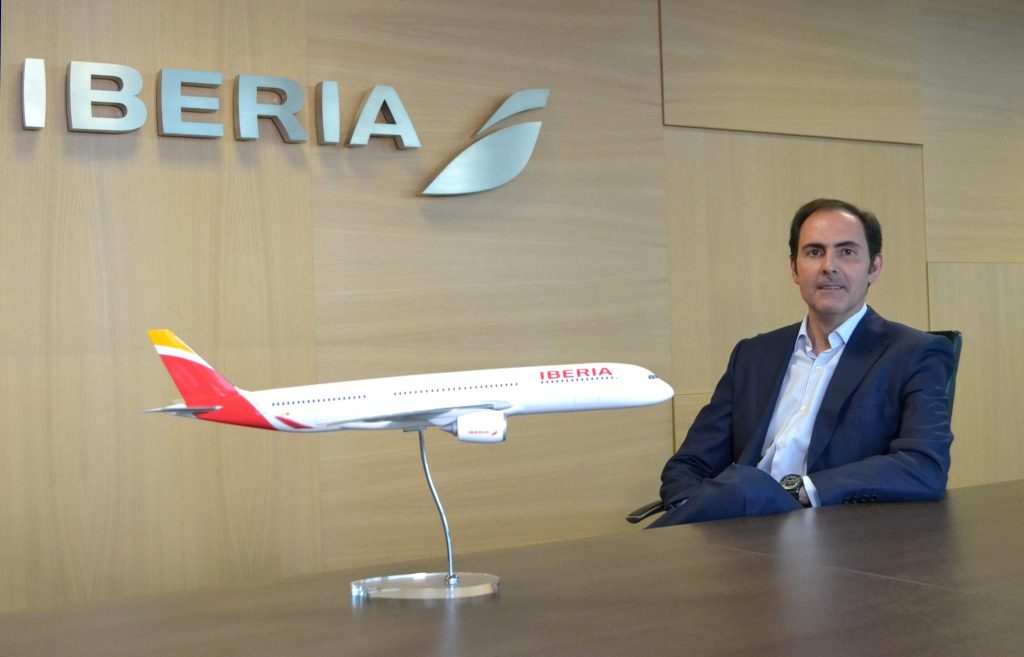
El Nuevo Presidente de Iberia, Javier Sánchez Prieto, se ha dirigido en una carta a los empleados de Iberia, a quienes ha anunciado que “la austeridad será necesaria al menos durante los próximos 24 meses porque la situación, he de confesar, es muy compleja”. A semana posterior de cambio de dirección de Luis Gallego, Javier Sánchez Prieto asegura que su prioridad es tratar de preservar el empleo a medio y largo plazo y destaca que en esta línea de austeridad, una de sus primeras decisiones ha sido la reducción de los miembros del Comité de Dirección.
El nuevo CEO de Iberia en sus primeras declaraciones tras su nombramiento, había resaltado que “el equipo de Iberia ha demostrado en los últimos años que es capaz de hacer frente a todo tipo de retos y dificultades, logrando escribir en los últimos años una historia de éxito. Estoy seguro de que todos juntos lo conseguiremos una vez más”, ha expresado Javier Sánchez Prieto. Iberia conforma el grupo IAG que ha salido favorecida por el acceso a fuentes de financiación que de otro modo no estarían disponibles, en un momento donde las aerolíneas están recurriendo a los estados para sobrevivir.
New austerity stage for Iberia
New Iberia President predicts austerity in post-pandemic times
The New President of Iberia, Javier Sánchez Prieto, has addressed in a letter to Iberia employees, to whom he has announced that “austerity will be necessary at least for the next 24 months because the situation, I must confess, is very complex”. A week after Luis Gallego’s change of direction, Javier Sánchez Prieto assures that his priority is to try to preserve employment in the medium and long term and highlights that in this line of austerity, one of his first decisions has been the reduction of members of the Steering Committee.
The new CEO of Iberia in his first statements after his appointment, had highlighted that “the Iberia team has shown in recent years that it is capable of facing all kinds of challenges and difficulties, managing to write in recent years a history of success. I am sure that all together we will achieve it one more time”, expressed Javier Sánchez Prieto. Iberia makes up the IAG group that has benefited from access to sources of financing that would not otherwise be available, at a time when airlines are turning to the states to survive.














 airgways.com