Evolución vuelos transatlánticos
AW | 2021 11 01 00:31 | AVIATION HISTORY

Historia evolución vuelos jet transatlánticos

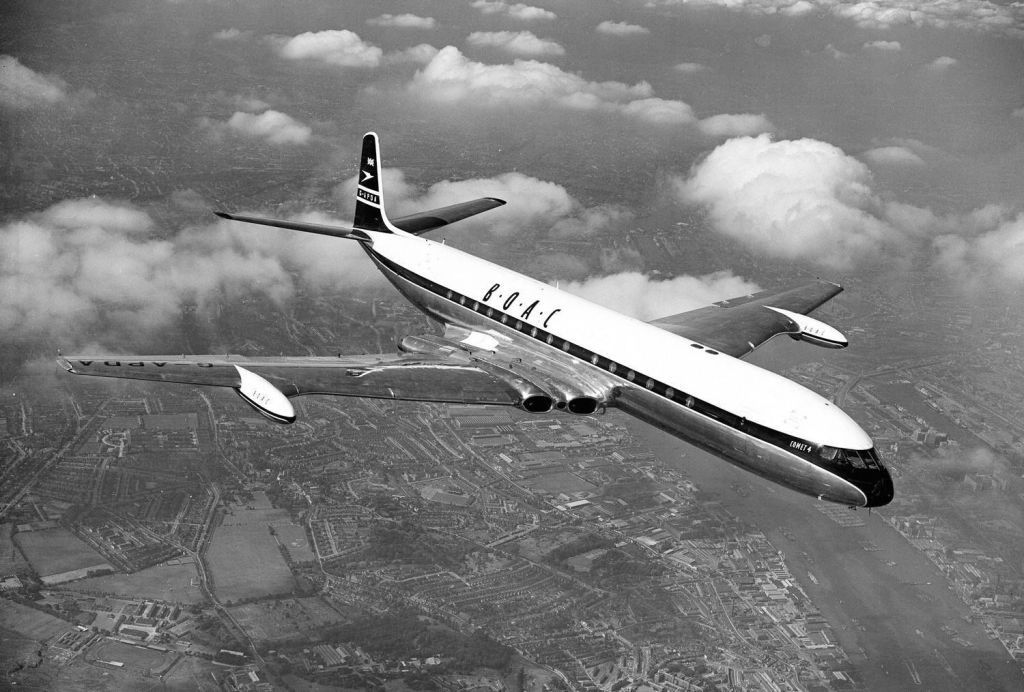
El vuelo transatlántico durante décadas había estado dominado por aviones de fuselaje ancho diseñados para viajes de larga distancia de alta capacidad. Históricamente, estos aviones de doble pasillo eran eficientes porque podían transportar más pasajeros y carga a costos operativos más bajos, lo que efectivamente hacía bajar los precios de los boletos. Sin embargo, desde el aumento de los aviones mejorados de pasillo único con capacidades de largo alcance, la industria está cambiando y las aerolíneas están comenzando a poner aviones de fuselaje estrecho en vuelos a través del Atlántico. Los vuelos transatlánticos a reacción no comenzaron con aviones de fuselaje ancho, sino con el de Havilland DH.106 Comet 4 operado por British Overseas Airways Corporation. El avión de pasillo único voló el primer vuelo comercial programado regularmente a través del Atlántico en 1958. El avión, que fue el primer avión comercial del mundo, tenía un pasillo y una capacidad de 81 pasajeros.

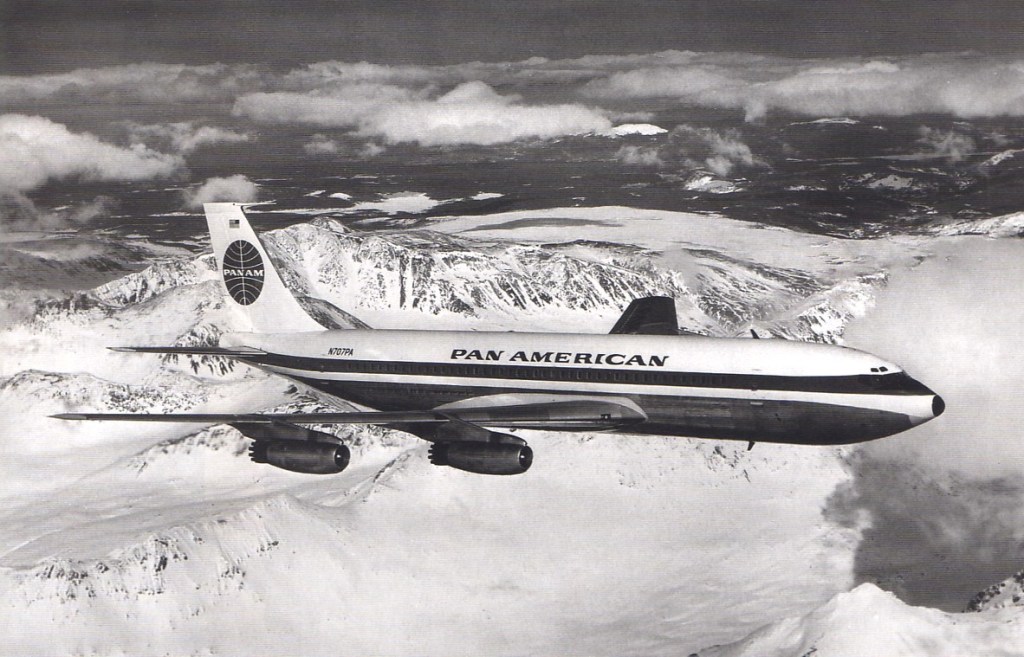
Poco después, Boeing lanzó su primer avión de fuselaje estrecho de larga distancia, el Boeing 707 de cuatro motores, utilizando las lecciones aprendidas del Comet 4. El primer viaje transatlántico de la aeronave fue operado por Pan Am desde Nueva York a París. Después del comienzo de la era del jet, hubo un aumento en la demanda de viajes aéreos en la década de 1950 y principios de la década de 1960. Para manejar el aumento, los fabricantes se dieron cuenta de que necesitaban diseñar aviones más grandes, comenzando así la era de los aviones de fuselaje ancho. El primer avión de fuselaje ancho fue el famoso Boeing 747, que revolucionó los viajes aéreos de larga distancia. El jumbo-jet duplicó la capacidad del 707 y resolvió el problema de los aeropuertos congestionados y llenos de viajeros. Pan Am fue el primer operador del 747, que se configuró con una capacidad de 347 pasajeros. La aerolínea lanzó el avión en una ruta desde Nueva York al aeropuerto londinense de Heathrow/LHR. El 747 encendió el mercado de fuselaje ancho, que se centró en la ingeniería de aviones más anchos que pudieran acomodar a más pasajeros y al mismo tiempo reducir las tarifas. El avión tenía cuatro motores, un segundo nivel por encima de la nariz y el costo de asiento-milla más bajo de la industria en ese momento.

Transatlantic flights evolution
History evolution transatlantic jet flights

Transatlantic flight for decades had been dominated by wide-body aircraft designed for high-capacity long-haul travel. Historically, these twin-aisle jets were efficient because they could carry more passengers and cargo at lower operating costs, effectively driving down ticket prices. However, since the rise of improved single-aisle aircraft with long-range capabilities, the industry is changing and airlines are beginning to put narrow-body aircraft on flights across the Atlantic. Transatlantic jet flights began not with wide-body aircraft, but with the de Havilland DH.106 Comet 4 operated by British Overseas Airways Corporation. The single-aisle aircraft flew the first regularly scheduled commercial flight across the Atlantic in 1958. The aircraft, which was the world’s first commercial aircraft, had one aisle and a capacity of 81 passengers.

Soon after, Boeing launched its first long-haul narrow-body aircraft, the four-engine Boeing 707, using lessons learned from the Comet 4. The aircraft’s first transatlantic voyage was operated by Pan Am from New York to Paris. After the start of the jet age, there was a surge in demand for air travel in the 1950s and early 1960s. To handle the surge, manufacturers realized they needed to design larger aircraft, starting thus the era of wide-body aircraft. The first wide-body aircraft was the famous Boeing 747, which revolutionized long-haul air travel. The jumbo-jet doubled the capacity of the 707 and solved the problem of congested and crowded airports. Pan Am was the first operator of the 747, which was configured with a capacity of 347 passengers. The airline launched the plane on a route from New York to London Heathrow Airport/LHR. The 747 ignited the wide-body market, which focused on engineering wider jets that could accommodate more passengers while lowering fares. The aircraft had four engines, a second tier above the nose, and the lowest seat-mile cost in the industry at the time.

PUBLISHER: Airgways.com
DBk: Airgways.com
AW-POST: 202111010031AR

A\W   A I R G W A Y S ®
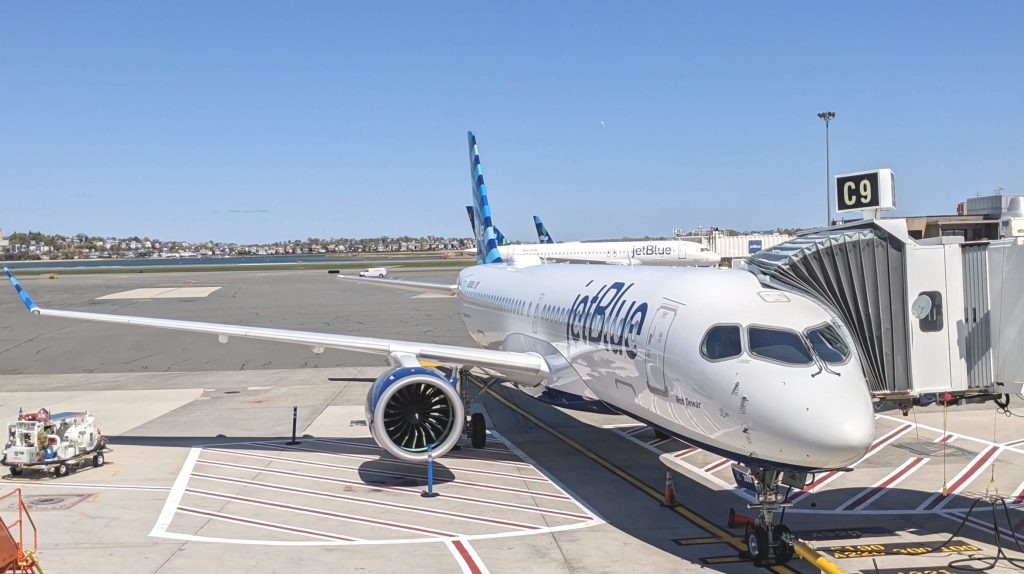
JetBlue arriba a San Antonio (TX)

AW | 2021 11 01 00:22 | AIRLINES ROUTES

JetBlue se expande bajo la alianza NEA

JetBlue_Airways.svg

JetBlue Airways ha aterrizado en su destino número 106 con vuelos al Aeropuerto Internacional de San Antonio/SAT, la cuarta ciudad de la aerolínea en el Estado de Texas. La inauguración del destino San Antonio este Domingo 31 de Octubre de 2021 se produjo cuando JetBlue agregó algunas rutas nuevas a su red, habilitadas por la Alianza del Noreste (NEA) con American Airlines.

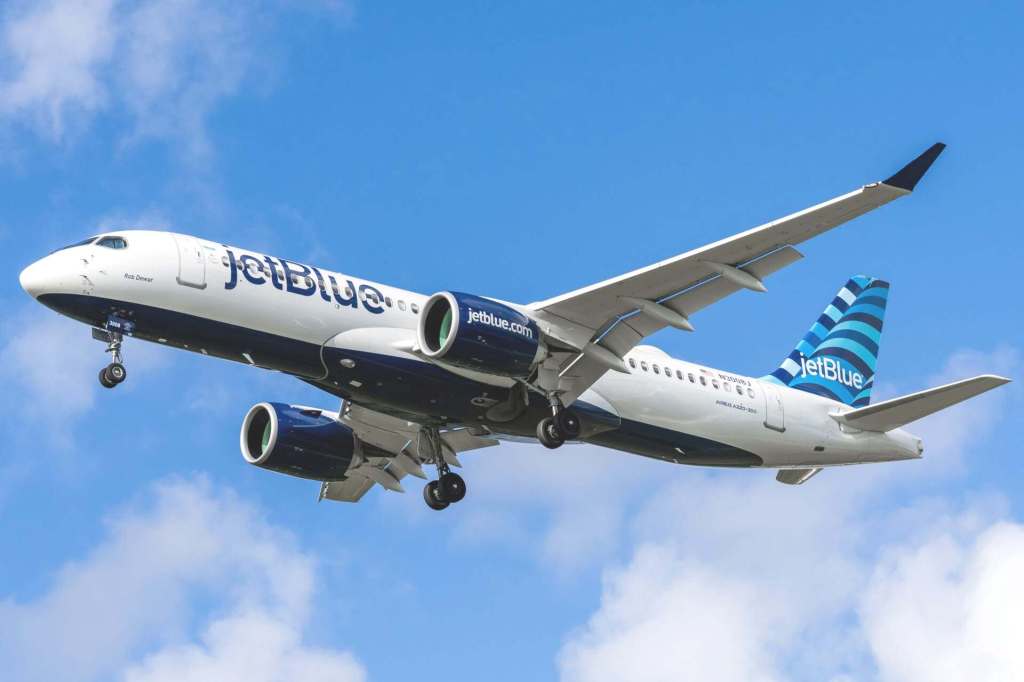
Las rutas Boston—San Antonio se desarrollará con equipos Airbus A220-300. De Nueva York—San Antonio funcionará con un Airbus A320. JetBlue Airways inauguró las operaciones de Airbus A220-300 a principios de este año. Los aviones de la aerolínea han estado volando a varios destinos, pero completamente desde Boston. El A220 se puede encontrar volando a lugares como Austin y Houston en Texas y destinos en Florida como Tampa. El primer vuelo de JetBlue en aterrizar en San Antonio fue un Airbus A320 desde Nueva York/JFK a las 12:15 hora local. El vuelo inaugural de Boston a San Antonio aterrizó a las 13:35 hora local. JetBlue está trabajando actualmente en la densificación de su flota de A320 de 150 a 162 asientos. Tanto el A320 como el A220 cuentan con entretenimiento bajo demanda en el respaldo del asiento. JetBlue también ofrece WiFi de cortesía para los clientes.

Andrea Lusso, Vicepresidenta de planificación de redes de JetBlue,declaró lo siguiente respecto a las nuevas rutas designadas: «El nuevo servicio a San Antonio es un indicador de la creciente demanda entre el suroeste y el noreste y el regreso de nuestros clientes a los cielos. Dado que San Antonio es el destino desatendido más grande de Boston, estamos entusiasmados de ofrecer a nuestros clientes que viajan por negocios y placer nuestro galardonado servicio y la oportunidad de explorar la rica historia y las experiencias culturales de la ciudad».

Alianza NEA

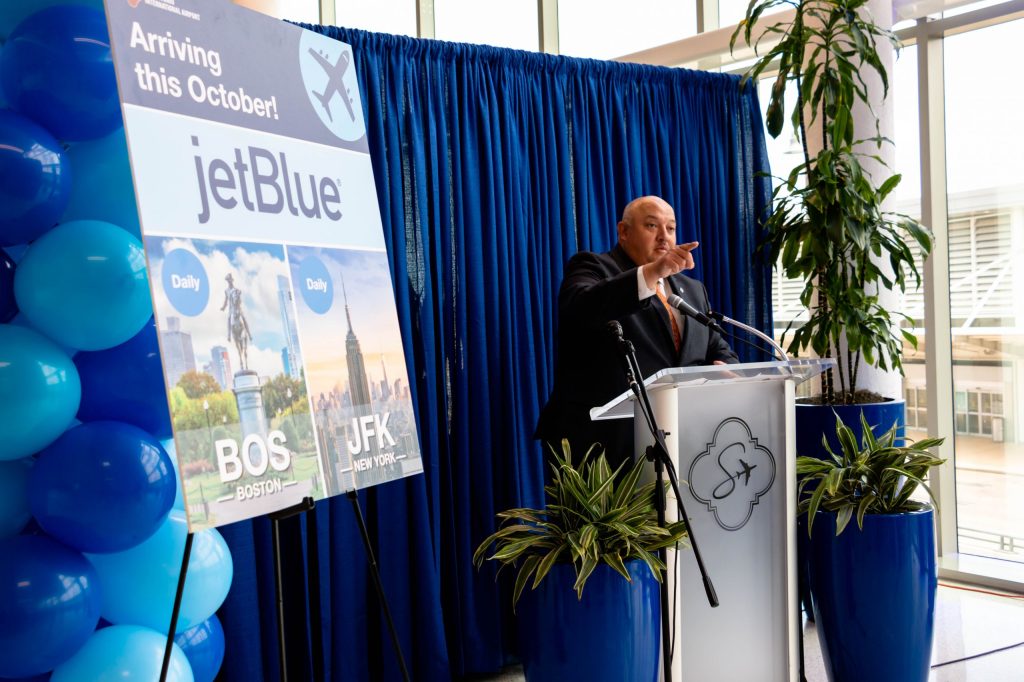
El 31 de octubre, los aviones de JetBlue aterrizaron en el Aeropuerto Internacional de San Antonio (SAT). JetBlue vuela una vez al día al Aeropuerto Internacional Logan de Boston (BOS) y al Aeropuerto Internacional John F. Kennedy de Nueva York (JFK). Ambas rutas sin escalas fueron anunciadas como parte de la expansión de JetBlue en el noreste de los Estados Unidos bajo la NEA.

Bajo la NEA con American Airlines, JetBlue ha agregado más vuelos desde Nueva York y Boston a los principales destinos que han recibido comparativamente menos servicios. Otras rutas ahora son posibles gracias a las rutas internacionales de larga distancia de American desde Nueva York y la capacidad de JetBlue para acceder a los leales viajeros estadounidenses. Por ejemplo, JetBlue lanzará nuevos servicios a Puerto Vallarta, Kansas City y Milwaukee desde Nueva York. Kansas City y Milwaukee también estarán conectados a Boston. JetBlue también planea agregar vuelos a San Pedro Sula, Vancouver y Asheville. San Antonio es la última ciudad en recibir nuevos vuelos de JetBlue, y ciertamente no es la última. Envalentonado por el regreso de la demanda de negocios y ocio, JetBlue está buscando servir a tantos destinos como sea posible bajo su asociación con American Airlines.

Crecimiento en LaGuardia

El domingo también marcó la expansión de LaGuardia/LGA de JetBlue. La aerolínea agregó operaciones de terminal dividida en LGA para aumentar los vuelos bajo las ranuras a las que accede la NEA. El servicio de transporte de JetBlue a Boston desde LGA se ejecutará desde la Terminal Aérea Marina, mientras que el resto de los vuelos se ejecutarán desde la Terminal B. Además, el Domingo 31/10, JetBlue inauguró nuevos vuelos desde LaGuardia a tres destinos vacacionales: Jacksonville y Sarasota (Florida) y Savannah (Georgia). Estos tres nuevos vuelos se ejecutan a bordo de Embraer E190 de 100 asientos.

JetBlue arrives in San Antonio (TX)

JetBlue expands under the NEA alliance

JetBlue Airways has landed at its 106th destination with flights to San Antonio International Airport/SAT, the airline’s fourth city in the State of Texas. The inauguration of the San Antonio destination this Sunday, October 31, 2021, occurred when JetBlue added some new routes to its network, enabled by the Northeast Alliance (NEA) with American Airlines.

The Boston-San Antonio routes will be developed with Airbus A220-300 equipment. From New York — San Antonio will operate an Airbus A320. JetBlue Airways launched Airbus A220-300 operations earlier this year. The airline’s planes have been flying to various destinations, but entirely from Boston. The A220 can be found flying to places like Austin and Houston in Texas and destinations in Florida like Tampa. The first JetBlue flight to land in San Antonio was an Airbus A320 from New York/JFK at 12:15 local time. The maiden flight from Boston to San Antonio landed at 01:35 p.m. local time. JetBlue is currently working on densifying its A320 fleet from 150 to 162 seats. Both the A320 and A220 have on-demand entertainment in the seat back. JetBlue also offers complimentary WiFi for customers.

Andrea Lusso, Vice President of Network Planning for JetBlue, stated the following regarding the new designated routes: «The new service to San Antonio is an indicator of the growing demand between the Southwest and Northeast and the return of our customers to the skies. As San Antonio is Boston’s largest underserved destination, we are excited to offer our business and leisure clients our award-winning service and the opportunity to explore the city’s rich history and cultural experiences».

NEA Alliance

On October 31, JetBlue planes landed at San Antonio International Airport (SAT). JetBlue flies once a day to Boston Logan International Airport (BOS) and New York John F. Kennedy International Airport (JFK). Both nonstop routes were announced as part of JetBlue’s expansion into the northeastern United States under the NEA. Under the NEA with American Airlines, JetBlue has added more flights from New York and Boston to major destinations that have received comparatively fewer services. Other routes are now made possible by American’s long-haul international routes from New York and JetBlue’s ability to access loyal American travelers. For example, JetBlue will launch new services to Puerto Vallarta, Kansas City and Milwaukee from New York. Kansas City and Milwaukee will also be connected to Boston. JetBlue also plans to add flights to San Pedro Sula, Vancouver and Asheville. San Antonio is the latest city to receive new JetBlue flights, and it’s certainly not the last. Emboldened by the return in demand for business and leisure, JetBlue is looking to serve as many destinations as possible under its partnership with American Airlines.

Growth in LaGuardia

Sunday also marked JetBlue’s LaGuardia/LGA expansion. The airline added split terminal operations in LGA to increase flights under the slots accessed by the NEA. JetBlue’s shuttle service to Boston from LGA will run from the Marine Air Terminal, while the rest of the flights will run from Terminal B. In addition, on Sunday 10/31, JetBlue inaugurated new flights from LaGuardia to three vacation destinations: Jacksonville and Sarasota (Florida) and Savannah (Georgia). These three new flights run aboard the 100-seat Embraer E190.

PUBLISHER: Airgways.com
DBk: Jetblue.com / Airgways.com
AW-POST: 202111010022AR

A\W   A I R G W A Y S ®