AW | 2017 06 09 20:17 | AIRLINES / GOVERNMENT
Los consejos directivos de los gremios aeronáuticos empezaron a delinear un plan de lucha en contra de la política aerocomercial que les abre las puertas a las low cost, baja la calidad del servicio y afecta a la empresa de bandera
Los gremios aeronáuticos argentinos, con excepción de los aeronavegantes, acordaron ayer iniciar un plan de lucha contra la política aerocomercial del gobierno. Comenzará con rondas informativas con los jefes de bloque de las cámaras de diputados y senadores y con gobernadores para explicarles la situación que atraviesa la línea de bandera y el mercado en su conjunto. Es un paso previo a una serie de presentaciones judiciales y medidas de mayor peso que podrían aplicarse para tratar de evitar que se continúe degradando la actividad y se pierdan más puestos de trabajo. Los sindicatos apuntan a la pérdida de controles del espacio áereo y al error de apostar al arribo de empresas de low cost (bajo costo) como impulsoras de la actividad y del desarrollo de las provincias. “Queremos que entiendan que esto es pan para hoy y hambre para mañana”, señaló a este diario Pablo Biró, secretario general de la Asociación de Pilotos de Líneas Aéreas (APLA).
“Esto sí es histórico. Estamos más que contentos. No pasó ni siquiera en el 2001”, sostuvo Biró desde la mesa en la que todavía quedaban sus pares de los otros cuatro sindicatos que dieron un paso fundamental de cara a la conformación de un frente gremial. Hace una semana Biró, junto a Ricardo Cirielli, de la Asociación de Personal Técnico Aeronáutico (APTA); Edgardo Llano, de la Asociación Personal Aeronáutico (APA); Rubén Fernández, de Unión del Personal Superior y Profesional de Empresas Aerocomerciales (UPSA), y Genaro Trucco, de Unión de Aviadores de Líneas Aereas (UALA) acordaron iniciar este frente.
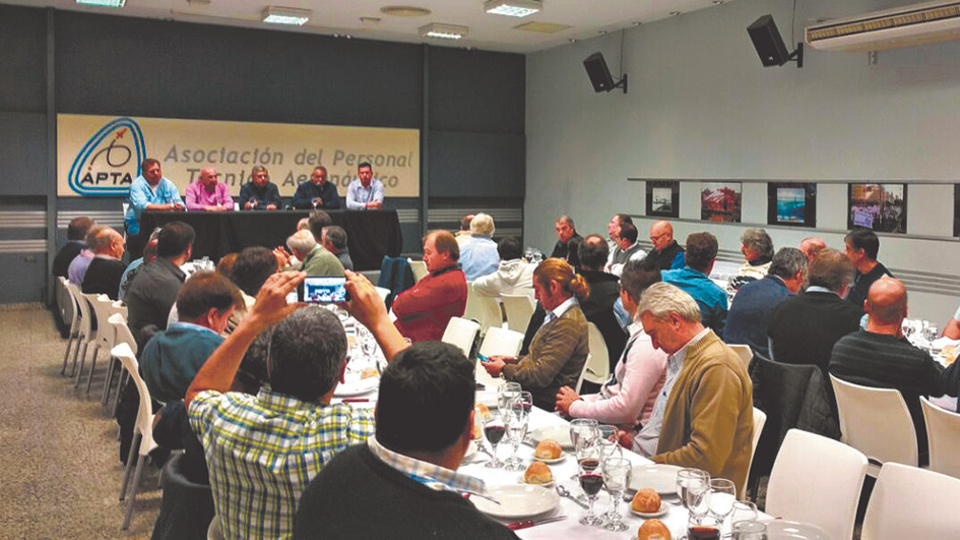
Estos gremios ya habían compartido algunas contiendas en los noventa. Sin embargo, ayer por primera vez los cinco consejos directivos, unos 50 asistentes, se dieron cita en la sede da APTA para analizar la situación y posibles medidas a adoptar. Los temores que despierta la política aerocomercial llevaron a que secretarios enfrentados históricamente, como Llano y Cirielli, compartieran mesa y acordaran sumar sus fortalezas. El que decidió mantenerse fuera del convite fue Juan Pablo Brey, de la Asociación Argentina de Aeronavegantes (AAA), a quien acusan de anteponer aspiraciones personales antes que ser parte del frente sindical.
Los cinco secretarios generales expusieron sobre la situación y alertaron respecto de la degradación de la seguridad y el servicio que generará la apertura irrestricta del negocio a firmas low cost. Un ejemplo es que esta semana la compañía Latam informó que comenzará a cobrar la comida y la bebida en vuelos de cabotaje para competir con las low cost. Se sumará también el cobro de un adicional por el equipaje que se despache a la bodega del avión. Desde Aerolíneas también había circulado la posibilidad de que se cobren adicionales para no perder mercado frente a las compañías de bajo costo.
El mes próximo el Gobierno llevará cabo una nueva audiencia pública para repartir más rutas entre empresas interesadas. Ya se encuentran listadas 14 compañías para ser parte del negocio. Los gremios pretenden comenzar con sus reuniones antes de eso, para evitar que se siga degradando el mercado. “Una vez que otorgas una ruta o se cierra un acuerdo con otro país para código compartido, no se puede deshacer con un cambio de gobierno. El daño ya está hecho”, advirtió Biró.
Las acciones comenzarán con reuniones con los jefes de bloque en el Congreso, tanto de la oposición como del oficialismo. “No queremos que nos tilden de opositores. Seguramente hay legisladores que no conocen bien el daño que se está infringiendo al mercado aerocomercial”, agregó Biró. “Lo que buscamos con esto es cuidar al usuario argentino, que no sea engañado con falsas promesas de que van a tener precios baratos y mejores condiciones de seguridad”, se sumó Cirielli.
Las empresas low cost suelen solicitar a las gobernaciones subsidios e inversiones en infraestructura bajo la promesa de que llegarán vuelos a esas jurisdicciones. De esta manera van conformando el negocio con apoyo de dineros públicos y una vez consolidadas imponen sus tarifas, lejos de los actuales precios promocionales, alertan los gremialistas. Al mismo tiempo, le generan competencia a Aerolíneas Argentinas, ya que el 95 por ciento de las rutas que solicitaron coinciden con los destinos más rentables de la empresa de bandera. 
Guild front Argentine takes height
The steering councils of the aeronautical guilds began to outline a plan of struggle against the commercial air policy that opens the doors to the low cost to them, lowers the quality of the service and affects to the company of flag
The Argentinean aeronautical guilds, with the exception of the air carriers, agreed yesterday to initiate a plan of fight against the government’s aerial commercial policy. It will begin with information rounds with the block leaders of the deputies and senators’ chambers and with governors to explain the situation that crosses the flag line and the market as a whole. It is a step in advance of a series of court hearings and weighty measures that could be applied to try to avoid further degrading activity and lose more jobs. The unions point to the loss of air space controls and the mistake of betting on the arrival of low cost companies as drivers of activity and the development of the provinces. «We want you to understand that this is bread for today and hungry for tomorrow,» Pablo Biró, general secretary of the Association of Airline Pilots (APLA), told the daily.
«This is historic. We are more than happy. It did not happen even in 2001», Biró said from the table where his peers still remained of the other four unions that took a fundamental step towards forming a trade union front. A week ago, Biró, together with Ricardo Cirielli, of the Association of Technical Aeronautical Personnel (APTA); Edgardo Llano, of the Personal Aeronautical Association (APA); Rubén Fernández, of Union of the Superior and Professional Personnel of Aerocomercial Companies (UPSA), and Genaro Trucco, of Union of Airlines of Air Lines (UALA) agreed to start this front.
These guilds had already shared some contests in the 1990s. However, yesterday for the first time the five boards, about 50 attendees, gathered at APTA headquarters to analyze the situation and possible measures to adopt. The fears aroused by the commercial policy led historically faced secretaries, such as Llano and Cirielli, to share a table and agreed to add their strengths. The one who decided to stay out of the treaty was Juan Pablo Brey, of the Argentine Association of Airmen (AAA), whom they accuse of putting personal aspirations before being part of the union front.
The five secretaries general spoke about the situation and alerted about the degradation of security and the service that will generate the unrestricted opening of the business to low cost firms. An example is that this week the company Latam reported that it will start charging food and drink on coastal flights to compete with the low cost. An additional charge will also be added for the baggage that is dispatched to the hold of the aircraft. From Aerolíneas also had circulated the possibility that they are charged additional to not lose market in front of the companies of low cost.
Next month, the Government will hold a new public hearing to distribute more routes between interested companies. Already 14 companies are listed to be part of the business. The guilds intend to start their meetings before that, to avoid further degradation of the market. «Once you grant a route or close an agreement with another country for code-sharing, it can not be undone with a change of government. The damage is already done», warned Biró.
The actions will begin with meetings with the block leaders in Congress, both the opposition and the ruling party. «We do not want to be branded as opponents. Surely there are lawmakers who are not well aware of the damage that is being infringed on the commercial air market», Biró added. «What we are looking for with this is to take care of the Argentinean user, who is not deceived with false promises that they will have cheap prices and better security conditions,» added Cirielli.
Low-cost companies often apply for subsidies and infrastructure investments from governorates under the promise of flights to those jurisdictions. In this way they form the business with the support of public money and once consolidated impose their rates, far from the current promotional prices, warn the trade unionists. At the same time, they generate competition for Aerolíneas Argentinas, since 95 percent of the routes they requested coincide with the most profitable destinations of the flagship company. A \ W
Ξ A I R G W A Y S Ξ
SOURCE: Pagina12.com.ar
DBk: Pagina12.com.ar
AW-POST: 201706092017AR
A\W A I R G W A Y S ®
 airgways.com