EasyJet toma el primer Airbus A320NEO
AW | 2017 06 14 18:08 | AIRLINES
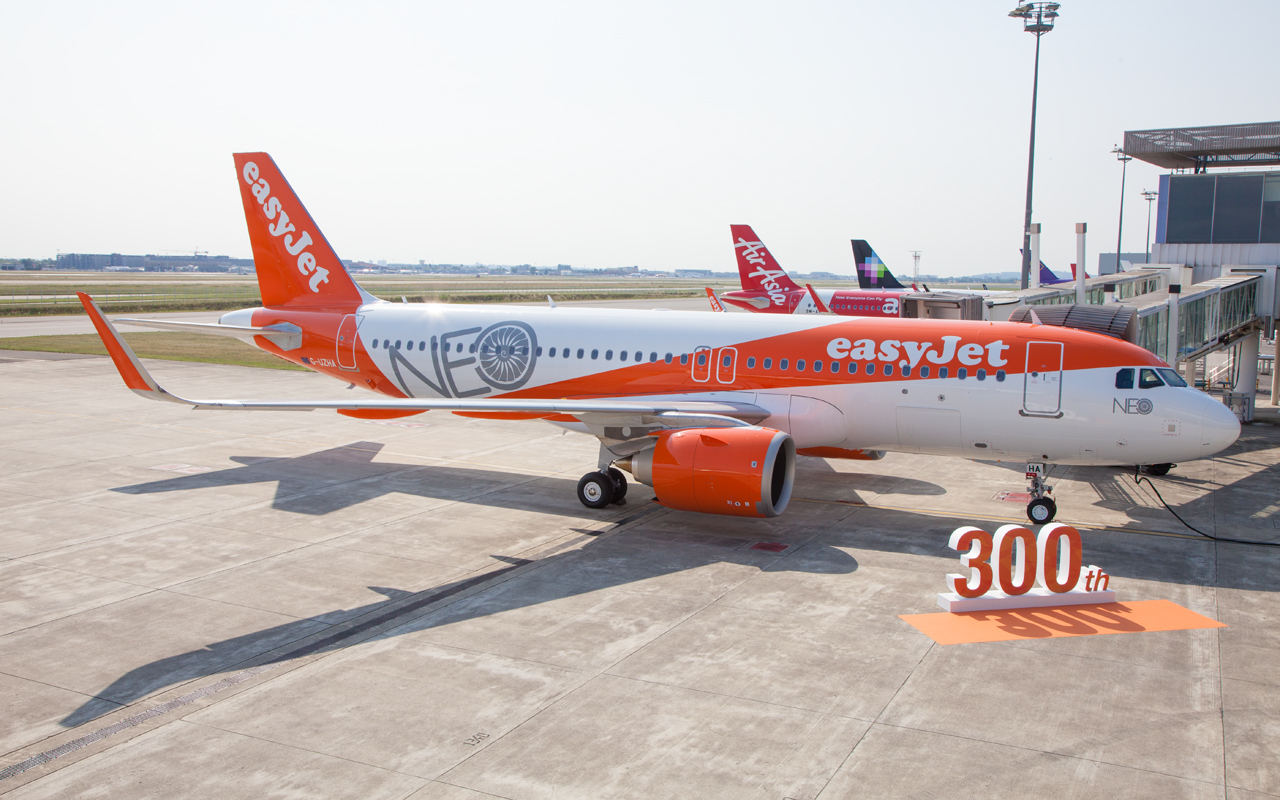
EasyJet ha recibido su primer Airbus A320NEO, dando inicio a las entregas de una orden para 130 de los reactores gemelos rearmados
Con la entrega del 14 de junio, easyJet se convirtió en el 25º operador de A320NEO. La aeronave de 186 asientos con sede en Londres Luton entrará en servicio comercial el 15 de junio y se mezclará con el resto de la recién reconfigurada flota A320 de 186 asientos de easyJet, que suele servir a aeropuertos primarios, pero no operará rutas específicas. EasyJet también opera 180 asientos A320 y A319 de 156 asientos.
«[Este avión] abre un nuevo capítulo en la historia de easyJet, marca un hito de nuestro 300 avión [Airbus] y reducirá significativamente nuestro costo por asiento que nos permite ofrecer tarifas bajas», dijo la consejera delegada de easyJet, Carolyn McCall. Ceremonia de entrega en Toulouse.
Los motores LEAP 1A del CFM International de A320NEO ofrecen una mejor eficiencia de combustible del 15% y McCall se apresuró a subrayar la importancia de esta ganancia de eficiencia, que según ella es «relevante a cualquier precio de combustible».
«Cuando estábamos hablando del neo para comenzar, el combustible era más alto [del precio] que es hoy, pero el combustible sigue siendo el coste individual más grande para una línea aérea y por lo tanto que la eficacia de combustible es increíblemente importante para una línea aérea, sin importar el precio de combustible», dijo.
Las ganancias del NEO provienen principalmente de los motores del tipo. «Hace siete años, nos comprometimos a poner en el mercado un motor con un 15% más de eficiencia que la actual generación de motores. Siete años después, lo hicimos. Hemos vendido 12.500 motores LEAP. No habría sido un éxito si no hubiéramos sido seleccionados por easyJet», dijo el director general de CFM International, Gaël Méheust, en Toulouse.
Junto con las ganancias de eficiencia, el neo alimentado por LEAP tiene una mejor huella ambiental. Desde el 2000, easyJet dijo que ha reducido sus emisiones en un tercio de 116g a menos de 80g por pasajero-kilómetro y la neo entrega significa que ahora está fijando una nueva meta.
«Con la adición del A320NEO y el A321NEO, hemos planeado mejoras», dijo McCall. «EasyJet está fijando una meta aún más dura de emisiones de carbono de 72 g para 2022. Eso es una reducción del 10% desde hoy y una mejora de 38% respecto a 2000. Ese objetivo es increíblemente importante para easyJet y eso es lo que pretendemos lograr».
Al 31 de marzo, easyJet operaba una flota de 266 aviones Airbus, que comprendían 144 A319 y 122 A320. El LCC tiene otros 27 A320CEO’s bajo pedido, además de 100 A320NEO’s y 30 que recientemente se convirtió en A321NEO’s de 235 asientos para entrega a partir de julio de 2018.
En los últimos ocho años, easyJet ha cambiado su enfoque del A319 al A320. La LCC adquirió dos A321 cuando compró GB Airways, pero éstos eran la densidad incorrecta del asiento, así que fueron eliminados progresivamente.
EasyJet aumentó su densidad de A320 mediante la adaptación de su flota existente y la línea de montaje en los recién llegados, antes de optar por el A321NEO. «El ascenso es una verdadera ventaja para nosotros. Esperamos en el A321 [orden] hasta el NEO», dijo, añadiendo que la mayoría de los rivales directos de easyJet ya han seguido este camino y por lo tanto tienen ganancias limitadas a hacer.
McCall dijo que la conversión a A321NEO’s más grande está relacionada con la principal estrategia aeroportuaria de easyJet, para maximizar la capacidad y minimizar el ruido en los hubs congestionados por ranuras. El A321NEO’s tendrá rango similar a la flota existente de easyJet, dijo.
EasyJet tiene derechos de compra no ejercidos sobre 100 A320NEO’s, que pueden convertirse en A321NEO’s. «Podremos tomar más A321NEO’s en el futuro bajo el acuerdo marco de 2013 que tenemos con Airbus, pero no nos hemos comprometido a más», dijo McCall, agregando que el plan de flota se revisa regularmente y se dará una nueva actualización En los resultados del tercer trimestre de la aerolínea.
Hablando en la ceremonia, el CEO de Airbus Tom Enders dijo que el A321NEO es un «poco retrasado», pero los vuelos de prueba y el trabajo de certificación está en curso. Hasta la fecha, Airbus ha entregado un total de 117 A320NEO’s. 
EasyJet takes first Airbus A320neo
UK low-cost carrier (LCC) easyJet has received its first Airbus A320NEO, kicking off deliveries from an order for 130 of the re-engined twinjets
With the June 14 handover, easyJet became the 25th A320NEO operator. The 186-seat London Luton-based aircraft will enter commercial service June 15 and will be mixed in with the rest of easyJet’s newly reconfigured 186-seat A320 fleet, which tends to serve primary airports, but will not operate any specific routes. EasyJet also operates 180-seat A320s and 156-seat A319s.
“[This aircraft] opens a new chapter in easyJet’s history, it marks a milestone of our 300th [Airbus] aircraft and will significantly reduce our cost per seat that allows us to offer low fares,” easyJet CEO Carolyn McCall said, speaking at the handover ceremony in Toulouse.
The A320NEO’s CFM International LEAP 1A engines deliver 15% better fuel efficiency and McCall was quick to stress the significance of this efficiency gain, which she said is “relevant at any fuel price.”
“When we were talking about the neo to begin with, fuel was higher [priced] than it is today, but fuel is still the largest single cost for an airline and therefore that fuel efficiency is incredibly important for an airline, regardless of the fuel price,” she said.
The gains of the neo primarily stem from the type’s engines. “Seven years ago, we committed to bringing to market an engine with 15% better efficiency than the current generation of engines. Seven years later, we did it. We have sold 12,500 LEAP engines. It would not have been a success had we not been selected by easyJet,” CFM International CEO Gaël Méheust said in Toulouse.
Alongside the efficiency gains, the LEAP-powered neo has a better environmental footprint. Since 2000, easyJet said it has cut its emissions by a third from 116g to fewer than 80g per passenger kilometer and the neo delivery means it is now setting a new goal.
“With the addition of the A320NEO and A321NEO, we’ve further planned improvements,” McCall said. “EasyJet is now setting an even tougher carbon emissions target of 72g by 2022. That’s a 10% reduction from today and a 38% improvement from 2000. That target is incredibly important to easyJet and that is what we intend to achieve.”
As of March 31, easyJet operated a fleet of 266 Airbus aircraft, comprising 144 A319s and 122 A320s. The LCC has another 27 A320CEO’s on order, plus 100 A320NEO’s and 30 that it recently converted to 235-seat A321NEO’s for delivery from July 2018.
Over the last eight years, easyJet has switched its focus from the A319 to the A320. The LCC acquired two A321s when it bought GB Airways, but these were the wrong seat density, so they were phased out.
EasyJet then increased its A320 density by retrofitting its existing fleet and line fitting them on new arrivals, before opting for the A321NEO. “The upgauge is a real advantage for us. We waited on the A321 [order] until the NEO,” she said, adding that most of easyJet’s direct rivals have already followed this path and therefore have limited gains to make.
McCall said the conversion to larger A321neos is linked with easyJet’s primary airport strategy, to maximize capacity and minimize noise at slot-congested hubs. The A321NEO’s will have similar range to easyJet’s existing fleet, she said.
EasyJet has unexercised purchase rights on 100 A320NEO’s, which can be converted to A321NEO’s. “We are able to take more A321NEO’s in the future under the 2013 framework agreement we have with Airbus, but we have not committed to more,” McCall said, adding the fleet plan is reviewed on a regular basis and a further update will be given at the airline’s third-quarter results.
Speaking at the ceremony, Airbus CEO Tom Enders said the A321NEO is a “little delayed,” but the test flights and certification work is ongoing. To date, Airbus has delivered a total of 117 A320NEO’s. A \ W
Ξ A I R G W A Y S Ξ
SOURCE: Atwonline.com
DBk: Luchtvaartnieuws.nl / Flightglobal.com
AW-POST: 201706141808AR
A\W A I R G W A Y S ®





 airgways.com