
AW | 2017 06 30 22:47 | INDSUTRY
The Boeing Co. estima demanda para el Boeing 747 de 81 aviones para los próximos 20 años
 The Boeing Company ha proyectado una disminuición muy pronunciada de la demanda del sector de aviones de pasajeros de gran tamaño (VLA). Esta disminución prevista del Jumbo, tiene sus raíces en la propia industria de la aviación dado por el aumento de la confianza en los aviones twin-engine y mayor radio de acción. Los Boeing 777, Boeing 787, Airbus A350 permiten llegar a distancias donde el Boeing 747 y A380 lo hacen con un costo operativo mucho mayor.
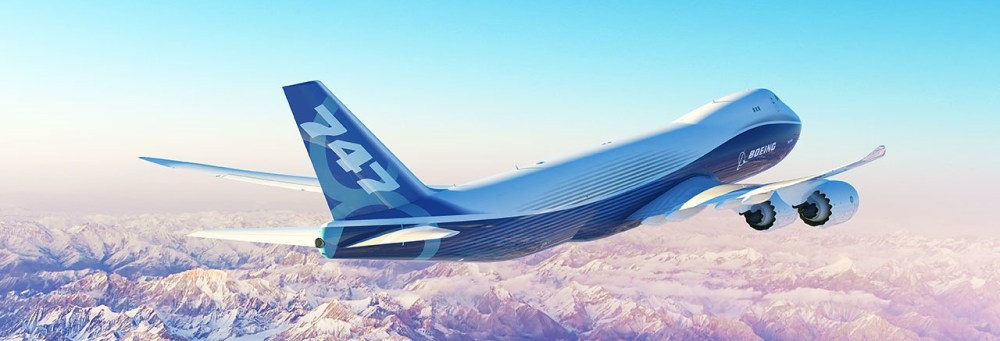
Boeing prevé que sólo se construirán 81 aviones grandes en los próximos 20 años, dijo el vicepresidente de Boeing Commercial Airplanes, Randy Tinseth en Bruselas, Bélgica. El fabricante norteamericano entregará el décimo Boeing 747-8I (Intercontinental) a Korean Air para julio 2017. Randy Tinseth estimó que la producción de la versión de pasajeros del avión más grande de Boeing ha llegado a su fin. «No estoy seguro si será el último Boeing 747-8I construido para una aerolínea. Al mirar el 747-8, vemos su futuro como un carguero o un avión VIP o Boeing Business Jet».
El impulso de los «Jumbos cargueros»
Desde la Boeing siempre se sintieron confiados con el mercado carguero en cualquiera de las unidades de negocios en los programas de línea Boeing 737, 757, 767, 777 y 747. Siempre existió mercado, y muchas aeronaves de uso de pasajeros fueron convertidos a aviones de cargo. Randy Tinseth dijo que el pedido de 14 Boeing 747-8 de United Parcel Service (UPS) en octubre de 2016 ha dado un impulso al programa 747-8.
Confianza en los «Twin-engines»
Los Boeing 777 y Boeing 787 son aeronaves bimotores que han tenido un aumento considerable de la demanda por su despacho de confiabilidad y seguridad, incluyendo a estas aeronaves en ETOP. El mercado está determinando qué aeronave se posiciona. Un ejemplo es la cantidad de aviones Jumbos que existían en los aeropuertos del mundo, ahora, la realidad es que en lugar de ellos hay Boeing 787 y Boeing 777. Randy Tinseth reflexionó: «Cuando miras en Tokio Narita, en el pasado lo que viste eran sólo 747. Quince años más tarde, cambió a 777 y ahora va a ser el 787.» El Boeing 787 «Dreamliner» ha abierto 150 nuevas rutas en todo el mundo desde su primer vuelo comercial en 2011.
Boeing proyecta unas estimaciones de 41.030 nuevas aeronaves para los próximos 20  años, con un valor de unos 6.1 billones de dólares. De ese total, el 40% se destinaría a Asia, el 20% a Europa, 20% América del Norte y otros 20% al resto del mundo.
 Aunque las proyecciones de la demanda de las líneas de producción en las factorías de la Boeing tienden a la alza de record de producción de los Boeing 737NG/MAX; los Jumbos están hace varios años en franco retroceso. Una vez, cuando el Boeing 747 despegó allá por los años 1970 con su cliente de lanzamiento Pan Am Airways, comenzaba una era llena de esperanzas de aquel «Jumbo» muy querido, el rey de los cielos.

Boeing projects low demand for «Jumbo»
 The Boeing Co. estimates demand for the Boeing 747 from 81 aircraft for the next 20 years
The Boeing Co. has projected a steep decline in demand from the large passenger aircraft sector (VLA). This projected decrease in Jumbo has its roots in the aviation industry itself, given the increased confidence in twin-engine aircraft and greater range of action. The Boeing 777, Boeing 787, Airbus A350 allow to reach distances where the Boeing 747 and A380 do so with a much higher operating cost.

Boeing expects that only 81 large aircraft will be built in the next 20 years, said Boeing Commercial Airplanes vice president Randy Tinseth in Brussels, Belgium. The North American manufacturer will deliver the tenth Boeing 747-8I (Intercontinental) to Korean Air for July 2017. Randy Tinseth estimated that production of the passenger version of Boeing’s largest airplane has come to an end. «I’m not sure if it will be the last Boeing 747-8I built for an airline. Looking at the 747-8, we see its future as a freighter or a VIP or Boeing Business Jet.»
The impulse of the «Jumbos freighters»
From Boeing they always felt confident with the freighter market in any of the business units in the line programs Boeing 737, 757, 767, 777 and 747. There was always a market, and many passenger aircraft were converted to aircraft of position. Randy Tinseth said the order for 14 Boeing 747-8 from United Parcel Service (UPS) in October 2016 has given a boost to the 747-8 program.
Confidence in the «Twin-engines»
The Boeing 777 and Boeing 787 are twin-engine aircraft that have seen a significant increase in demand for their reliability and safety clearance, including these aircraft in ETOP. The market is determining which aircraft is positioned. An example is the number of jumbo jets that existed at the world’s airports, now the reality is that instead of them there are Boeing 787 and Boeing 777. Randy Tinseth reflected: «When you look at Tokyo Narita, in the past what you saw Were only 747. Fifteen years later, it changed to 777 and now it’s going to be the 787». The Boeing 787 «Dreamliner» has opened 150 new routes around the world since its first commercial flight in 2011.
Boeing projects estimates of 41,030 new aircraft for the next 20 years, worth about $ 6.1 trillion. Of that total, 40% would go to Asia, 20% to Europe, 20% to North America and another 20% to the rest of the world.
Although projections of demand for production lines at Boeing factories tend to boom the production record of the Boeing 737NG / MAX line; The Jumbos are several years back. Once, when the Boeing 747 took off back in the 1970s with its launch customer Pan Am Airways, an era filled with hopes of that beloved «Jumbo», the king of the skies. A \ W
Ξ A I R G W A Y S Ξ
SOURCE: Airgways.com
DBk: Cozlog.wordpress.com / Goodfon.com / Boeing.com
AW-POST: 201706302247AR
A\W A I R G W A Y S ®
 airgways.com