China Southern Airlines contempla destinos de Brasil y Argentina

598922

AW | 2017 06 10 05:32 | AIRLINES ROUTES

Resultado de imagen para China Southern AirlinesChina Southern Airlines contempla destinos de Brasil y Argentina para expandir su alcance global

La aerolínea más grande de Asia, por pasajeros volados también planea comenzar el servicio a Johannesburgo a raíz de su inauguración de los vuelos de Nairobi en 2015

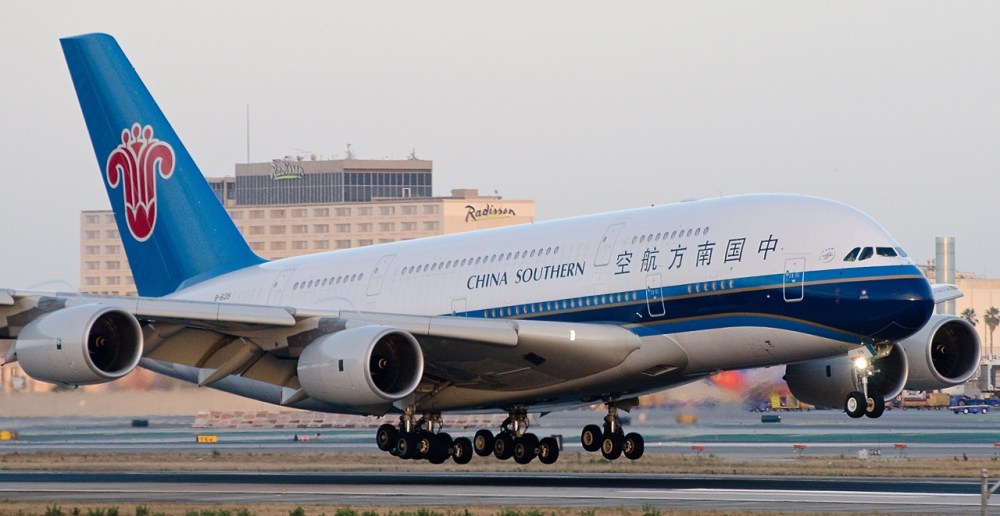
La mayor aerolínea de Asia en términos de pasajeros planeó establecer rutas de pasajeros a Brasil y Argentina dentro de los próximos cinco años, completando su alcance mundial, dijo el vicepresidente de marketing Wu Guoxiang en una entrevista. Mientras tanto, la aerolínea también planea iniciar el servicio de pasajeros a Johannesburgo, Sudáfrica, después de inaugurar el servicio a Nairobi, Kenia en 2015, para construir su alcance en África. La aerolínea espera tener un servicio de pasajeros de tres a cinco destinos cada uno en Sudamérica y África dentro de los próximos cinco años, dijo Wu.

China Southern está haciendo del «mercado de transferencia» un componente clave de su expansión de red, refiriéndose a la estrategia que ayudó a que Emirates Airline fuera uno de los competidores más formidables del mundo entre aerolíneas globales.

Aprovechando su gran mercado interno -en el centro de una megalópolis de rápida urbanización con una población de más de 100 millones de habitantes- le da a China Southern una ventaja sobre otras aerolíneas que buscan crecimiento mediante el desarrollo de un mercado de transferencias, dijo Wu. Un mayor volumen de pasajeros en comparación con otros operadores en la región da a China Southern la capacidad de atraer a los clientes que buscan la forma más barata de cruzar los hemisferios.

«Debido a que tenemos una gran cantidad de pasajeros nacionales, por lo que tenemos el poder y la oportunidad de lanzar nuevas rutas», dijo Wu. «Hemos pasado cerca de 10 años construyendo nuestra red internacional, así que para muchos nuevos destinos somos un recién llegado, así que debemos dejar que el mercado nos conozca. La manera más sencilla es ofrecer un precio más bajo. «

Wu se negó a comentar que China Southern está en conversaciones para vender una participación en sí de US $ 200 millones a American Airlines, diciendo sólo que las dos compañías están hablando de «cómo cooperar en el futuro». Las negociaciones se centran en «el código compartido, la coordinación de la red, la asistencia en tierra, el mantenimiento y la capacitación».

En cuanto a hacer un cambio formal de la alianza de la aerolínea Sky Team a la alianza Oneworld, que incluye a estadounidense, Wu dijo: «Hasta ahora, no tenemos ninguna decisión sobre si cambiar alianzas.» Wu habló con el South China Morning Post en Chicago , Una parada en una «gira mundial» alabando la base de la compañía aérea de Guangzhou.

Como parte de la gira, el vicealcalde de la ciudad, Cai Chaolin, se reunió con su homólogo, el alcalde adjunto de Chicago, Steve Koch, y los jefes de algunas de las compañías multinacionales de Chicago, incluyendo Boeing Co y Walgreens Boots Alliance. Su objetivo era atraer participantes potenciales al Foro Mundial Fortune 2017, que se reunirá en Guangzhou en diciembre.

Reflejando la expansión global de China Southern, los funcionarios de Cai y Guangzhou continuarán viajando por la ciudad durante los próximos meses, con planes de visitar Londres y Múnich.

En un guiño a la ciudad de los Estados Unidos, Wu dijo que China Southern quiere comenzar el servicio de pasajeros a Chicago el próximo año. Se negó a especificar un plazo debido a que la empresa aún está en negociaciones con las autoridades de aviación de EE.UU. para obtener la aprobación del plan. AIRGWAYS ® Icon-AW

China Southern Airlines eyes Brazil and Argentina destinations


China Southern Airlines eyes Brazil and Argentina destinations to expand its global reach

Asia’s largest carrier by passengers flown also plans to start service to Johannesburg in the wake of its 2015 inauguration of Nairobi flights

Asia’s largest carrier in terms of passengers flown plans to establish passenger routes to Brazil and Argentina within the next five years, completing its worldwide reach, senior vice president of marketing Wu Guoxiang said in an interview. Meanwhile, the airline also plans to start passenger service to Johannesburg, South Africa, after inaugurating service to Nairobi, Kenya in 2015, to build out its reach in Africa. The airline expects to have passenger service to three to five destinations each in South America and Africa within the next five years, Wu said.

China Southern is making the “transfer market” a key component of its network expansion, referring to the strategy that helped make Emirates Airline one of the world’s most formidable competitors among global airlines.

Leveraging its large domestic market – at the centre of a rapidly urbanising megalopolis with a population of more than 100 million people – gives China Southern an edge over other airlines pursuing growth by developing a transfer market, Wu said. Higher passenger volume relative to other carriers in the region gives China Southern the ability to entice customers looking for the cheapest way to cross hemispheres.

“Because we have a huge amount of domestic passengers, so we have the power and opportunity to launch new routes,” Wu said. “We’ve spent about 10 years building our international network, so for many new destinations we’re a newcomer, so we must let the market know us. The simple way is to provide a lower price.”

Wu declined to comment on reports that China Southern is in talks to sell a stake in itself worth US$200 million to American Airlines, saying only that the two airlines are talking about “how to cooperate in the future”. Negotiations are focused on “code-sharing, network coordination, ground-handling, maintenance and training”.

As for making a formal switch from the Sky Team airline alliance to the Oneworld alliance, which includes American, Wu said: “Up to now, we have no decision about whether to switch alliances.” Wu spoke with the South China Morning Post in Chicago, one stop on a “world tour” touting the airline’s home base of Guangzhou.

As part of the tour, the city’s vice mayor, Cai Chaolin, met with his counterpart, Chicago deputy mayor Steve Koch, and the heads of some of Chicago’s multinational companies, including Boeing Co and Walgreens Boots Alliance. Their aim was to attract potential participants to the 2017 Fortune Global Forum, set to convene in Guangzhou in December.

Reflecting China Southern’s global expansion, Cai and Guangzhou officials will continue city-hopping over the next few months, with plans to visit London and Munich.

In a nod to the midwestern US city, Wu said China Southern aims to start passenger service to Chicago next year. He declined to specify a time frame because the company is still engaged in negotiations with US aviation authorities to gain approval for the plan.

A \ W


Ξ A I R G W A Y S Ξ
SOURCE:  Scmp.com
DBk:  Paweł Glink
AW-POST: 201706100532AR

A\W   A I R G W A Y S ®

LIAT Airlines, cautelar contra huelga

ATR-LIAT-72-600

AW | 2017 06 09 21:03 | AIRLINES / GOVERNMENT

Aerolínea caribeña busca medida cautelar contra pilotos en huelga

La aerolínea caribeña LIAT busca una medida cautelar para poner fin a la huelga de pilotos que provocó la cancelación y retrasos de varios de sus vuelos desde el miércoles último.

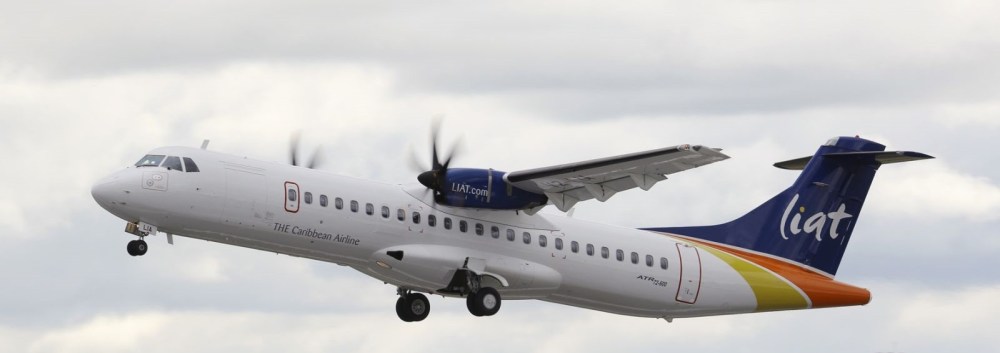
LIAT Airlines tiene su sede principal en la capital St. John, Antigua y Barbuda, y solicitó al Tribunal Industrial la emisión de una orden judicial que inste a los aviadores a reanudar sus labores. Los pilotos de LIAT demandan mejoras salariales y se niegan a volar los aviones ATR-72, adquiridos por la aerolínea en 2013 como parte de la modernización de la flota.

En una carta abierta a la compañía, la Asociación de Pilotos de Aerolíneas de las Islas de Sotavento, precisó que no debe someter a sus miembros a una mayor responsabilidad sin la debida compensación monetaria.

Los ATR-72 presentan mayor capacidad en términos de cantidad de pasajeros y carga útil que los Dash-8 utilizados hasta la fecha. El sindicato aseguró que pilotos afiliados no volarán los nuevos aparatos hasta que la compañía honre el paquete salarial acordado en enero. La aerolínea, cuyos principales accionistas son los gobiernos de Antigua y Barbuda, Barbados, Dominica y San Vicente y las Granadinas, precisó que como consecuencia del paro se cancelaron todos los vuelos programados con aviones ATR-72. AIRGWAYS ® Icon-AW

30787422315_ddcd4e75d3_o

LIAT Airlines, injunction against strike

Caribbean airline seeks injunction against striking pilots

The Caribbean airline LIAT is seeking a precautionary measure to end the pilot strike that caused the cancellation and delays of several of its flights since last Wednesday.

LIAT Airlines is headquartered in the capital St. John, Antigua and Barbuda, and has asked the Industrial Tribunal to issue a court order urging aviators to resume their work. The LIAT pilots demand salary improvements and refuse to fly the ATR-72 aircraft, acquired by the airline in 2013 as part of the fleet modernization.

In an open letter to the company, the Airline Pilots Association of the Leeward Islands specified that it should not subject its members to greater liability without proper monetary compensation.

The ATR-72s have greater capacity in terms of passenger numbers and payload than the Dash-8 used to date. The union said that affiliated pilots will not fly the new gadgets until the company honors the salary package agreed in January. The airline, whose main shareholders are the governments of Antigua and Barbuda, Barbados, Dominica and St. Vincent and the Grenadines, said that as a result of the strike all flights scheduled with ATR-72 aircraft were canceled. A \ W


Ξ A I R G W A Y S Ξ
SOURCE:  Airgways.com
DBk:  Atraircraft.com
AW-POST: 201706092103AR

A\W   A I R G W A Y S ®

CAA sudafricana certifica Embraer E190

AW | 2017 06 09 20:50 | INDUSTRY

El Embraer E190 ha ganado la certificación de tipo de la Autoridad de Aviación Civil de Sudáfrica (CAA)

La aerolínea regional sudafricana Airlink recibió recientemente su primer Embraer E190, que pronto entrará en servicio. Airlink ha decidido añadir otros 11 ERJ 140 a su flota y pronto operará 30 Embraer Regional Jets de los tres tipos-ERJ 135, ERJ 140 y ERJ 145-, los cuales deberían ser entregados a mediados de 2018. Embraer dijo que ve la demanda del mercado de alrededor de 50 jets E en Sudáfrica. AIRGWAYS ® Icon-AW


South African CAA certifies Embraer E190

The Embraer E190 has won type certification from South Africa’s Civil Aviation Authority (CAA)

South African regional airline Airlink recently took delivery of its first Embraer E190, which will soon go into service. Airlink has decided to add a further 11 ERJ 140s to its fleet and will soon operate 30 Embraer Regional Jets of all three types—ERJ 135, ERJ 140 and the ERJ 145—which should all be delivered by mid-2018. Embraer said it sees market demand for around 50 E-jets in South Africa. A \ W


Ξ A I R G W A Y S Ξ
SOURCE:  Atwonline.com
DBk:  Embraer.com
AW-POST: 201706092050AR

A\W   A I R G W A Y S ®

Corsair inaugura vuelos a Cuba

AW | 2017 06 09 20:40 | AIRLINES ROUTES

Aerolínea francesa Corsair inauguró vuelos a Cuba

Corsair inauguró el jueves sus viajes a Cuba un nuevo destino, La Habana. La compañía francesa unirá París-La Habana non-stop con una frecuencia en principio de dos vuelos semanales utilizando avionews Boeing 747.

En este primer vuelo de la nueva ruta viajó el presidente y director general de la compañía aérea francesa, Pascal de Izaguirre, quien avanzó que “Corsair” planea una tercera frecuencia a Cuba para el próximo invierno que hará el trayecto entre París y el balneario turístico de Varadero, en el centro de la isla. El directivo, también presidente del grupo turoperador TUI Francia, uno de los más importantes de Europa y el primero del país europeo en Cuba, señaló que buscan permitir a sus clientes la posibilidad de descubrir este destino que calificó de “extraordinario”. La oferta de la compañía incluye una amplia gama de circuitos guiados, clásicos o más insólitos, combinados, estancias en balnearios, en hotel, en club de vacaciones, así como estancias en casas de particulares locales, según reportó la agencia cubana Prensa Latina.

Los vuelos a Cuba se incorporan a las frecuencias de la aerolíneas francesa Air France, con nueve frecuencias, y Air Caraibes, que desde diciembre de 2016 viaja desde París a La Habana los viernes y también a Santiago de Cuba.

El turismo francés ha mostrado un “boom” hacia la nación caribeña, que en 2016 rompió récord con un flujo total de 180,000 visitantes y un aumento del 32 por ciento con respecto al 2015, según datos del Ministerio del Turismo cubano. En los dos primeros meses del 2017 viajaron más de 50.000 franceses a la isla, lo que representa un incremento del 30 por ciento respecto a igual periodo del año pasado.

Corsair es una compañía aérea francesa regular, especializada en vuelos de larga distancia, a su vez filial del grupo TUI en Francia, que emplea a 1.150 colaboradores y transporta un 1,2 millones de pasajeros al año con destino al Caribe, el océano Índico, Canadá y África Occidental. AIRGWAYS ® Icon-AW

Corsair inaugurates flights to Cuba

French airline Corsair inaugurated flights to Cuba

Corsair inaugurated on Thursday its trips to Cuba a new destination, Havana. The French company will link Paris-Havana non-stop with a frequency in principle of two weekly flights using avionews Boeing 747.

In this first flight of the new route traveled the president and general director of the French airline, Pascal de Izaguirre, who advanced that «Corsair» plans a third frequency to Cuba for the next winter that will make the trip between Paris and the tourist resort Of Varadero, in the center of the island. The director, also president of the tour group TUI France, one of the most important in Europe and the first of the European country in Cuba, said that they seek to allow their customers the possibility of discovering this destination that he described as «extraordinary.» The company’s offer includes a wide range of guided tours, classic or more unusual, combined, stays in spas, in hotel, in holiday club, as well as stays in homes of private individuals, according to Cuban news agency Prensa Latina.

Flights to Cuba are added to the frequencies of the French airline Air France, with nine frequencies, and Air Caraibes, which since December 2016 travels from Paris to Havana on Fridays and also to Santiago de Cuba.

French tourism has shown a «boom» to the Caribbean nation, which broke a record in 2016 with a total flow of 180,000 visitors and a 32 percent increase over 2015, according to data from the Cuban Tourism Ministry. In the first two months of 2017, more than 50,000 French people traveled to the island, representing a 30 percent increase over the same period last year.

Corsair is a regular French airline, which specializes in long-haul flights, in turn a subsidiary of the TUI group in France, employing 1,150 employees and transporting 1.2 million passengers a year to the Caribbean, the Indian Ocean, Canada and West Africa.   A \ W


Ξ A I R G W A Y S Ξ
SOURCE:  Airgways.com
DBk:  Elnuevoherald.com / Havana-live.com
AW-POST: 201706092040AR

A\W   A I R G W A Y S ®

Frente gremial argentino toma altura

De los seis gremios aeronáuticos, cinco avanzaron en la definición de acciones conjuntas.

AW | 2017 06 09 20:17 | AIRLINES / GOVERNMENT

Los consejos directivos de los gremios aeronáuticos empezaron a delinear un plan de lucha en contra de la política aerocomercial que les abre las puertas a las low cost, baja la calidad del servicio y afecta a la empresa de bandera

Los gremios aeronáuticos argentinos, con excepción de los aeronavegantes, acordaron ayer iniciar un plan de lucha contra la política aerocomercial del gobierno. Comenzará con rondas informativas con los jefes de bloque de las cámaras de diputados y senadores y con gobernadores para explicarles la situación que atraviesa la línea de bandera y el mercado en su conjunto. Es un paso previo a una serie de presentaciones judiciales y medidas de mayor peso que podrían aplicarse para tratar de evitar que se continúe degradando la actividad y se pierdan más puestos de trabajo. Los sindicatos apuntan a la pérdida de controles del espacio áereo y al error de apostar al arribo de empresas de low cost (bajo costo) como impulsoras de la actividad y del desarrollo de las provincias. “Queremos que entiendan que esto es pan para hoy y hambre para mañana”, señaló a este diario Pablo Biró, secretario general de la Asociación de Pilotos de Líneas Aéreas (APLA).

“Esto sí es histórico. Estamos más que contentos. No pasó ni siquiera en el 2001”, sostuvo Biró desde la mesa en la que todavía quedaban sus pares de los otros cuatro sindicatos que dieron un paso fundamental de cara a la conformación de un frente gremial. Hace una semana Biró, junto a Ricardo Cirielli, de la Asociación de Personal Técnico Aeronáutico (APTA); Edgardo Llano, de la Asociación Personal Aeronáutico (APA); Rubén Fernández, de Unión del Personal Superior y Profesional de Empresas Aerocomerciales (UPSA), y Genaro Trucco, de Unión de Aviadores de Líneas Aereas (UALA) acordaron iniciar este frente.

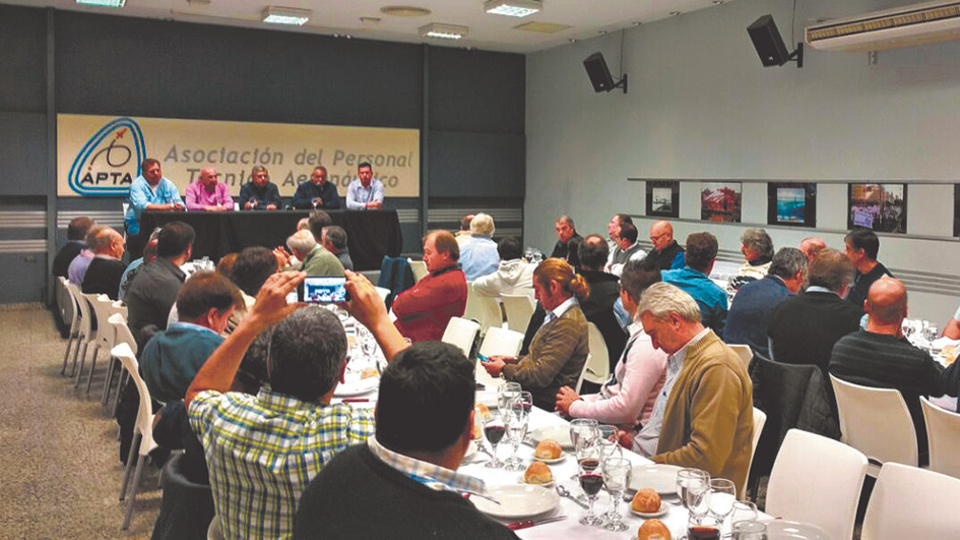
Estos gremios ya habían compartido algunas contiendas en los noventa. Sin embargo, ayer por primera vez los cinco consejos directivos, unos 50 asistentes, se dieron cita en la sede da APTA para analizar la situación y posibles medidas a adoptar. Los temores que despierta la política aerocomercial llevaron a que secretarios enfrentados históricamente, como Llano y Cirielli, compartieran mesa y acordaran sumar sus fortalezas. El que decidió mantenerse fuera del convite fue Juan Pablo Brey, de la Asociación Argentina de Aeronavegantes (AAA), a quien acusan de anteponer aspiraciones personales antes que ser parte del frente sindical.

Los cinco secretarios generales expusieron sobre la situación y alertaron respecto de la degradación de la seguridad y el servicio que generará la apertura irrestricta del negocio a firmas low cost. Un ejemplo es que esta semana la compañía Latam informó que comenzará a cobrar la comida y la bebida en vuelos de cabotaje para competir con las low cost. Se sumará también el cobro de un adicional por el equipaje que se despache a la bodega del avión. Desde Aerolíneas también había circulado la posibilidad de que se cobren adicionales para no perder mercado frente a las compañías de bajo costo.

El mes próximo el Gobierno llevará cabo una nueva audiencia pública para repartir más rutas entre empresas interesadas. Ya se encuentran listadas 14 compañías para ser parte del negocio. Los gremios pretenden comenzar con sus reuniones antes de eso, para evitar que se siga degradando el mercado. “Una vez que otorgas una ruta o se cierra un acuerdo con otro país para código compartido, no se puede deshacer con un cambio de gobierno. El daño ya está hecho”, advirtió Biró.

Las acciones comenzarán con reuniones con los jefes de bloque en el Congreso, tanto de la oposición como del oficialismo. “No queremos que nos tilden de opositores. Seguramente hay legisladores que no conocen bien el daño que se está infringiendo al mercado aerocomercial”, agregó Biró. “Lo que buscamos con esto es cuidar al usuario argentino, que no sea engañado con falsas promesas de que van a tener precios baratos y mejores condiciones de seguridad”, se sumó Cirielli.

Las empresas low cost suelen solicitar a las gobernaciones subsidios e inversiones en infraestructura bajo la promesa de que llegarán vuelos a esas jurisdicciones. De esta manera van conformando el negocio con apoyo de dineros públicos y una vez consolidadas imponen sus tarifas, lejos de los actuales precios promocionales, alertan los gremialistas. Al mismo tiempo, le generan competencia a Aerolíneas Argentinas, ya que el 95 por ciento de las rutas que solicitaron coinciden con los destinos más rentables de la empresa de bandera. AIRGWAYS ® Icon-AW

De los seis gremios aeronáuticos, cinco avanzaron en la definición de acciones conjuntas.

Guild front Argentine takes height

The steering councils of the aeronautical guilds began to outline a plan of struggle against the commercial air policy that opens the doors to the low cost to them, lowers the quality of the service and affects to the company of flag

The Argentinean aeronautical guilds, with the exception of the air carriers, agreed yesterday to initiate a plan of fight against the government’s aerial commercial policy. It will begin with information rounds with the block leaders of the deputies and senators’ chambers and with governors to explain the situation that crosses the flag line and the market as a whole. It is a step in advance of a series of court hearings and weighty measures that could be applied to try to avoid further degrading activity and lose more jobs. The unions point to the loss of air space controls and the mistake of betting on the arrival of low cost companies as drivers of activity and the development of the provinces. «We want you to understand that this is bread for today and hungry for tomorrow,» Pablo Biró, general secretary of the Association of Airline Pilots (APLA), told the daily.

«This is historic. We are more than happy. It did not happen even in 2001», Biró said from the table where his peers still remained of the other four unions that took a fundamental step towards forming a trade union front. A week ago, Biró, together with Ricardo Cirielli, of the Association of Technical Aeronautical Personnel (APTA); Edgardo Llano, of the Personal Aeronautical Association (APA); Rubén Fernández, of Union of the Superior and Professional Personnel of Aerocomercial Companies (UPSA), and Genaro Trucco, of Union of Airlines of Air Lines (UALA) agreed to start this front.

These guilds had already shared some contests in the 1990s. However, yesterday for the first time the five boards, about 50 attendees, gathered at APTA headquarters to analyze the situation and possible measures to adopt. The fears aroused by the commercial policy led historically faced secretaries, such as Llano and Cirielli, to share a table and agreed to add their strengths. The one who decided to stay out of the treaty was Juan Pablo Brey, of the Argentine Association of Airmen (AAA), whom they accuse of putting personal aspirations before being part of the union front.

The five secretaries general spoke about the situation and alerted about the degradation of security and the service that will generate the unrestricted opening of the business to low cost firms. An example is that this week the company Latam reported that it will start charging food and drink on coastal flights to compete with the low cost. An additional charge will also be added for the baggage that is dispatched to the hold of the aircraft. From Aerolíneas also had circulated the possibility that they are charged additional to not lose market in front of the companies of low cost.

Next month, the Government will hold a new public hearing to distribute more routes between interested companies. Already 14 companies are listed to be part of the business. The guilds intend to start their meetings before that, to avoid further degradation of the market. «Once you grant a route or close an agreement with another country for code-sharing, it can not be undone with a change of government. The damage is already done», warned Biró.

The actions will begin with meetings with the block leaders in Congress, both the opposition and the ruling party. «We do not want to be branded as opponents. Surely there are lawmakers who are not well aware of the damage that is being infringed on the commercial air market», Biró added. «What we are looking for with this is to take care of the Argentinean user, who is not deceived with false promises that they will have cheap prices and better security conditions,» added Cirielli.

Low-cost companies often apply for subsidies and infrastructure investments from governorates under the promise of flights to those jurisdictions. In this way they form the business with the support of public money and once consolidated impose their rates, far from the current promotional prices, warn the trade unionists. At the same time, they generate competition for Aerolíneas Argentinas, since 95 percent of the routes they requested coincide with the most profitable destinations of the flagship company. A \ W


Ξ A I R G W A Y S Ξ
SOURCE:  Pagina12.com.ar
DBk:  Pagina12.com.ar
AW-POST: 201706092017AR

A\W   A I R G W A Y S ®

La CE actualiza las normas de conectividad aérea y competencia

AW | 2017 06 09 19:52 | AIR TRAFFIC

La Comisión Europea (CE) ha lanzado este jueves el paquete “Aviación abierta y conectada” que incluye cuatro iniciativas centradas en alcanzar las dos prioridades fundamentales de la Estrategia de Aviación para Europa, aprobada en 2015: mantener el liderazgo en la aviación comercial internacional y resolver el problema de capacidad que tienen actualmente los cielos europeos.

Estas iniciativas tienen por objeto salvaguardar la competencia en la aviación y de conexiones, facilitar las inversiones en aerolíneas europeas y mejorar la eficiencia y la conectividad aérea de los cielos europeos. “Esto reforzará la competitividad de la aviación europea, que es un fuerte impulsor de la creación de empleo, el crecimiento económico y el comercio. Los mercados de aviación abiertos y conectados ofrecen vuelos de mejor calidad a una mayor variedad de destinos de viajes en todo el mundo”, explica la CE en un comunicado.

La comisaria de Transportes de Unión Europea (UE), Violeta Bulc, ha apuntado que quieren “garantizar que Europa siga siendo un líder en la aviación internacional, bien conectado a mercados en rápido crecimiento, con cielos europeos eficientes. Debe proporcionar beneficios concretos para los pasajeros, los trabajadores y la industria de la aviación». La Comisión Europea presenta su estrategia de aviación y conectividadLa Comisión Europea presenta su estrategia de aviación y conectividad

Liderazgo y competencia

La conectividad aérea europea en el transporte aéreo internacional depende igualmente de las compañías aéreas extranjeras y de las comunitarias.

En este punto la CE señala que «cuando se viaja hacia o desde la UE, a todas las compañías aéreas se les conceden los mismos derechos, lo cual puede que no ocurra igual con las aerolíneas europeas cuando operan fuera. A falta de normas internacionales, las compañías aéreas de la UE pueden estar sujetas a prácticas que afecten a la competencia. A largo plazo, esto también podría afectar la conectividad de la UE, afectando la competitividad en el continente y limitando las opciones para los viajeros».

En tal sentido, la Comisión propone un nuevo instrumento para garantizar que las compañías aéreas de la UE puedan competir sobre la base de la igualdad de oportunidades y que se pueda salvaguardar la conectividad. Permitirá a la UE tomar medidas apropiadas, en caso de que determinadas prácticas pongan en peligro la conectividad de la UE.

Para crecer y prosperar en un entorno competitivo, las líneas aéreas de la UE también necesitan acceder a inversiones, incluida la inversión extranjera. «Hoy, la Comisión está adoptando directrices sobre la propiedad y el control de las líneas aéreas de la UE, aportando más claridad y certeza a los inversores y a las compañías aéreas, facilitando las inversiones que ayudarán a crear nuevos puestos de trabajo».

Límites al crecimiento

La CE destaca que el principal desafío para el crecimiento de la aviación europea es abordar las limitaciones de capacidad, eficiencia y conectividad de los cielos europeos.

«La conectividad tiene un impacto directo en la actividad económica y en la movilidad de las personas: más vuelos significan más crecimiento y más puestos de trabajo. Sin embargo, en determinadas regiones europeas el transporte aéreo sigue siendo un reto, por lo que los Estados miembros y las autoridades locales pueden introducir obligaciones de servicio público para garantizar suficientes conexiones con el resto de su territorio y con Europa». La CE está adoptando directrices sobre las normas vigentes en esta materia que permitirá a las autoridades locales cubrir las deficiencias de conectividad. AIRGWAYS ® Icon-AW

The EC updates the standards of air connectivity and competition

The European Commission (EC) launched the «Open and Connected Aviation» package on Thursday, which includes four initiatives focused on meeting the two key priorities of the Aviation Strategy for Europe, adopted in 2015: maintaining leadership in international commercial aviation and Solve the problem of capacity that the eropeos skies currently have.

These initiatives are aimed at safeguarding competition in aviation and connections, facilitating investments in European airlines and improving the efficiency and aerial connectivity of European skies. «This will strengthen the competitiveness of European aviation, which is a strong driver of job creation, economic growth and trade. Open and connected aviation markets offer better quality flights to a wider variety of travel destinations around the world», the EC said in a statement.

European Union (EU) Transport Commissioner Violeta Bulc has said they want to «ensure that Europe remains a leader in international aviation, well connected to fast-growing markets with efficient European skies. It must provide concrete benefits for passengers, workers and the aviation industry». The European Commission presents its aviation and connectivity strategyThe European Commission presents its aviation and connectivity strategy

Leadership and competence

European air connectivity in international air transport also depends on foreign and community airlines.

At this point the EC states that «when traveling to or from the EU, all airlines are granted the same rights, which may not be the same with European airlines when operating abroad.In the absence of international standards, EU airlines may be subject to practices that affect competition. In the long term, this could also affect EU connectivity, affecting competitiveness on the continent and limiting options for travelers».

In this regard, the Commission proposes a new instrument to ensure that EU airlines can compete on the basis of equal opportunities and that connectivity can be safeguarded. It will enable the EU to take appropriate action, should certain practices jeopardize EU connectivity.

To grow and thrive in a competitive environment, EU airlines also need access to investment, including foreign investment. «Today, the Commission is adopting guidelines on ownership and control of EU airlines, bringing more clarity and certainty to investors and airlines, facilitating investments that will help create new jobs.»

Limits to growth

The EC stresses that the main challenge for the growth of European aviation is to address the limitations of capacity, efficiency and connectivity of European skies.

«Connectivity has a direct impact on economic activity and people’s mobility: more flights mean more growth and more jobs. However, in some European regions air transport remains a challenge, Member States and local authorities may introduce public service obligations to ensure sufficient connections with the rest of their territory and with Europe». The EC is adopting guidelines on existing standards in this area that will allow local authorities to cover connectivity deficiencies. A \ W


Ξ A I R G W A Y S Ξ
SOURCE:  Hosteltur.com
DBk:  Wikimedia.org / Airchive.com
AW-POST: 201706091952AR

A\W   A I R G W A Y S ®

Aprobación para el nuevo Aeropuerto de Ciudad de México

Resultado de imagen para Nuevo Aeropuerto Mexico

AW | 2017 06 09 19:40 | AIRPORTS

La cancelación del proyecto de infraestructura más importante en décadas sería una catástrofe económica y ambiental

Uno de los saldos más relevantes de la elección del Estado de México es que el Nuevo Aeropuerto Internacional de la Ciudad de México (NAICM) queda, al parecer, a salvo de manipulación y extorsión políticas e ignorancia. El resultado alternativo del proceso electoral, como todo el mundo sabe, significaría probablemente el derrumbe del proyecto, o al menos, retrocesos, obstáculos considerables y costosos para su desarrollo.

La verdad es que se trata del proyecto de infraestructura más importante en décadas. Implica resolver problemas de conectividad y tráfico aéreo no sólo de la Zona Metropolitana de la Ciudad de México, sino de buena parte del país. Ello, con base en la opinión, análisis, diseño de instituciones y actores de mayor relevancia en la materia, tanto nacionales como internacionales. También, por supuesto, el NAICM es una expresión y mensaje de alto valor simbólico para el mundo, de un país que es el decimotercero en economía del planeta y potencia emergente que aspira a un peso específico cada vez más significativo en el concierto global.

La cancelación del proyecto sería catastrófica, no sólo en términos económicos, financieros y de empleo, sino de operación aeroportuaria, y por supuesto, de imagen internacional. No existen opciones racionales al proyecto en Texcoco, y la pérdida de casi 30,000 millones de pesos que se han invertido conllevaría un profundo y absurdo quebranto al erario, aparte del escarnio de la comunidad internacional. Más allá, significaría dejar sin mitigación y compensación todos los impactos ambientales, hidrológicos y urbanos asociados a la etapa de construcción, que lleva un avance notable en acondicionamiento del terreno, pistas, desplante y cimentación de la terminal. La mitigación y compensación de impactos es inherente al proyecto y en parte se deriva de la Manifestación de Impacto Ambiental. La cancelación del proyecto sería también, por tanto, una catástrofe ambiental. Por fortuna, ese riesgo parece haber sido conjurado.

El desarrollo del NAICM integra un Programa Institucional Ambiental, que incorpora el Plan de Manejo Ambiental, Plan de Restauración Ecológica, un Programa de Rescate de Flora y Fauna y un Programa de Conservación y Manejo de Aves. Algo inédito en México es que el NAICM será el primer aeropuerto verdaderamente sustentable, en la medida en que tendrá la Certificación LEED Platino, la cual califica la localización y accesibilidad y transporte en el sitio, la selección del mismo, el uso eficiente del agua, uso de materiales sustentables, calidad ambiental interior y eficiencia energética. A ello se suma un ambicioso proyecto para instalar una central de generación de electricidad solar fotovoltaica que satisfará gran parte de las necesidades energéticas del NAICM. Por lo mismo, el NAICM ha sido distinguido por la comunidad financiera internacional a través de una exitosa acogida y colocación de un Bono Verde por 2,000 millones de dólares.

Es fundamental ahora asegurar que el NAICM se constituya en el catalizador de un proceso virtuoso y sostenible para el oriente del Valle de México y que induzca en su entorno regional una dinámica equilibrada de desarrollo, que integre componentes urbanos, de movilidad y transporte, hidrológicos, ambientales y de logística. No debe permitirse que el NAICM derive en medio del caos urbano y ambiental, lo que demeritaría su mensaje y funcionalidad y acarrearía serios problemas para el Estado de México, la Ciudad de México y los municipios involucrados.

Por ello, es vital la creación de una Zona Económica Especial en el oriente del Valle de México con el pivote del NAICM, que ofrezca visión y gobernanza regional integrales, equilibrio, viabilidad y sustentabilidad, a través de un Plan Maestro Regional en coordinación y concurrencia entre diversas instancias de gobierno local y federal. AIRGWAYS ® Icon-AW

Approval for the new airport in Mexico City

The cancellation of the most important infrastructure project in decades would be an economic and environmental catastrophe

One of the most important balances of the election of the State of Mexico is that the New Mexico City International Airport (NAICM) is apparently safe from manipulation and extortion policies and ignorance. The alternative outcome of the electoral process, as everyone knows, would probably mean the collapse of the project, or at least, setbacks, considerable and costly obstacles to its development.

The truth is that this is the most important infrastructure project in decades. It implies solving problems of connectivity and air traffic not only of the Metropolitan Zone of Mexico City, but of a good part of the country. This, based on the opinion, analysis, design of institutions and actors of greater relevance in the matter, both national and international. Also, of course, the NAICM is an expression and message of high symbolic value to the world, of a country that is the thirteenth in economy of the planet and emerging power that aspires to a specific weight increasingly significant in the global concert.

The cancellation of the project would be catastrophic, not only in terms of economic, financial and employment, but also airport operation, and of course, international image. There are no rational options to the project in Texcoco, and the loss of almost 30 billion pesos that have been invested would entail a deep and absurd breach of the treasury, aside from the scorn of the international community. Beyond that, it would mean leaving all the environmental, hydrological and urban impacts associated with the construction phase, without any mitigation and compensation, leading to a remarkable advance in the conditioning of the terrain, tracks, curb and foundation of the terminal. The mitigation and compensation of impacts is inherent to the project and partly derives from the Manifestation of Environmental Impact. The cancellation of the project would therefore also be an environmental catastrophe. Fortunately, that risk seems to have been averted.

The development of the NAICM integrates an Environmental Institutional Program, which incorporates the Environmental Management Plan, Ecological Restoration Plan, a Flora and Fauna Rescue Program and a Bird Conservation and Management Program. Something unheard of in Mexico is that NAICM will be the first truly sustainable airport, to the extent that it will have the LEED Platino Certification, which qualifies the location and accessibility and transportation on the site, selection of the same, efficient use of water, Use of sustainable materials, indoor environmental quality and energy efficiency. To this is added an ambitious project to install a photovoltaic solar electricity generation center that will satisfy most of the energy needs of the NAICM. Therefore, the NAICM has been distinguished by the international financial community through a successful reception and placement of a Green Bond for 2,000 million dollars.

It is now essential to ensure that NAICM is the catalyst for a virtuous and sustainable process for the eastern Valley of Mexico and to induce in its regional environment a balanced development dynamic that integrates urban, mobility and transport components, hydrological, Environmental and logistic. NAICM should not be allowed to drift amidst urban and environmental chaos, which would deplete its message and functionality and bring serious problems for the State of Mexico, Mexico City and the municipalities involved.

For this reason, it is vital to create a Special Economic Zone in the eastern Valley of Mexico with the pivot of NAICM, which offers integral vision and regional governance, balance, viability and sustainability, through a Regional Master Plan in coordination and concurrence Between various levels of local and federal government. A \ W


Ξ A I R G W A Y S Ξ
SOURCE:  Eleconomista.com.mx
DBk:  Vanguardia.com.mx / Ejecentral.com.mx
AW-POST: 201706091940AR

A\W   A I R G W A Y S ®

Incremento de pax en Aerolíneas

AW | 2017 06 09 19:21 | AIRLINES

Aerolíneas Argentinas mejora en puntualidad y aumento de pax

Aerolíneas Argentinas ha aumentado la cantidad de pax en un 21% más de pasajeros hasta la fecha con respecto al año 2016 y un 24,6% en comparación con 2015. La tasa de ocupación llegó casi al 79,3% y una puntualidad mejorada en un 88% en todos sus vuelos.

La compañía argentina informó en un comunicado que se registró un aumento en las ventas, producto de la amplia oferta de pasajes para la temporada de invierno y los resultados del hot week.

Cifras de alto vuelo
Durante mayo, el Grupo Aerolíneas transportó 964.722 pasajeros, a una tasa de ocupación de 79,3%, contra el 68,48% registrado en 2016 y 70,19% alcanzado en 2015. Aerolíneas [*] alcanzó durante mayo un 88% de puntualidad con 9.279 tramos volados y un cumplimiento en las partidas de 99,1%; y el promedio de todo el año, incluyendo mayo 2017, es de un 88%.

Las ventas han tenido un aumento del 26% en relación con mayo de 2016 y de un 17% respecto de mayo de 2015. “Estos resultados son la consecuencia de la amplia oferta que la empresa presentó para la temporada invernal y las ventas durante el hot week, se vendieron 17,6% más de pasajes que en 2016 y 32% más que en 2015″, expresó la aerolínea. “Estamos llevando adelante la ‘Revolución de los Aviones’ para duplicar la cantidad de pasajeros de cabotaje y Aerolíneas Argentinas tiene en eso un rol fundamental. Nuestra línea aérea lidera este enorme desarrollo y lo demuestra todos los días con su imparable crecimiento», indicó al respecto el ministro de Transporte de la Nación, Guillermo Dietrich.

El presidente del Grupo Aerolíneas, Mario Dell’Acqua, remarcó que “los resultados son fruto del esfuerzo y del compromiso en todos los niveles de la empresa, con un equipo que quiere ver a Aerolíneas crecer y liderar en esta nueva etapa del mercado. Con mejores conexiones, horarios apropiados, más puntualidad y un producto más sólido, estamos haciendo que gente que nunca viajó en avión nos elija”. AIRGWAYS ® Icon-AW


Increase of pax in Aerolíneas

AIRGWAYS 1053

Aerolíneas Argentinas improves on punctuality and increase of pax

Aerolíneas Argentinas has increased the number of passengers by 21% more passengers to date than in 2016 and 24.6% compared to 2015. The occupancy rate reached almost 79.3% and an improved punctuality in 88% on all flights. The Argentine company said in a statement that it saw an increase in sales, due to the wide offer of tickets for the winter season and the results of the hot week.

High-flying numbers
During May, the Aerolíneas Group transported 964,722 passengers, at an occupancy rate of 79.3%, against 68.48% registered in 2016 and 70.19% reached in 2015. In May, Aerolíneas [*] met 88% of punctuality with 9,279 passengers flight segments and a compliance in the items of 99.1%; And the year-round average, including May 2017, is 88%.

Sales have increased by 26% compared to May 2016 and by 17% compared to May 2015. «These results are the consequence of the wide offer that the company presented for the winter season and sales during the hot Week, 17.6% more tickets were sold than in 2016 and 32% more than in 2015. We are carrying out the ‘Aircraft Revolution’ to double the number of passengers on the coast and Aerolíneas Argentinas has» said Guillermo Dietrich, Minister of Transport of the Nation. «This is a fundamental role, and our airline is leading this enormous development, and demonstrates it every day with its unstoppable growth. «

Aerolíneas Group, President Mario Dell’Acqua remarked that «the results are the result of effort and commitment at all levels of the company, with a team that wants to see Aerolíneas grow and lead in this new stage of the market. With better connections, proper schedules, more punctuality and a more solid product, we are making people who never traveled by plane choose us».  A \ W


[*] NOTA AL LECTOR: En algunos casos el lector encontrará la cita “Aerolíneas” en nuestras publicaciones de Airgways.com haciendo referencia particular a Aerolíneas Argentinas, debido a que es una palabra o expresión de localismo en Argentina;  pero en cuyos casos no son preferenciales.
NOTE TO READERS: In some cases the reader will find the appointment “Aerolíneas” in our publications Airgways.com with particular reference to Aerolíneas Argentinas, because it is a word or expression of localism in Argentina; but in whose cases are not preferred.


AW-Airgways.com-Icon001

Ξ A I R G W A Y S Ξ
SOURCE:  Airgways
DBk:  Airgways.com / Ytimg.com
AW-POST: 201706091921AR

A\W   A I R G W A Y S ®

Evacuación Aeropuerto Manchester

Manchester Airport Terminal 2 has been evacuated

AW | 2017 06 09 16:21 | AIRLINES

El aeropuerto de Manchester ha sido evacuado después de que se encontró una ‘bolsa sospechosa’ en el áerea del Duty Free de la Terminal 2.

La policía informó que recibió un llamado alrededor de las 2:45 en el que se reportó la presencia de una bolsa desatendida, por lo que llevó a cabo una evacuación “preventiva” de todos los pasajeros y personal. Expertos realizaron una explosión controlada.

Usuarios de Twitter han reportado la evacuación y el dispositivo de seguridad puestos por la policía.

Un portavoz del aeropuerto de Manchester dijo: “Debido a una bolsa desatendida que se encuentra en la Terminal Dos, una evacuación controlada se está llevando a cabo, como es el procedimiento estándar».  AIRGWAYS ® Icon-AW


Manchester Airport Evacuation

Manchester airport has been evacuated after a ‘suspicious bag’ was found on the Duty Free airport in Terminal 2.

Police reported that they received a call at 2:45 am where an unattended bag was reported, so they carried out a «preventive» evacuation of all passengers and staff. Experts made a controlled explosion.

Twitter users have reported the evacuation and security device posted by the police.

A spokesman for Manchester Airport said: «Because of an unattended bag that is in Terminal Two, a controlled evacuation is taking place, as is the standard procedure». A \ W


Ξ A I R G W A Y S Ξ
SOURCE:  Thesun.co.uk
DBk: Thesun.co.uk
AW-POST: 20170600091621AR

A\W   A I R G W A Y S ®

Boeing prepara terreno para el B797

AW | 2017 06 08 23:17 | INDUSTRY

Boeing-Company-LogoBoeing revisa hasta los robots del  777X en la fábrica de Everett, señales de que un 797 espera

Antes del Salón del Aire de París de este mes, los ejecutivos de Boeing mostraron que la compleja remodelación de su planta de fabricación Everett para el próximo 777X ha hecho un rápido progreso y ha ofrecido fuertes indicios de que un avión 797 de mediano alcance está esperando en las alas.

En un negocio que se desarrolla a lo largo de décadas, la atención del liderazgo de Boeing está inquebrantablemente fijada en dos futuros programas de jet clave que serán críticos para esta región.

En las sesiones de información antes del Salón del Aire de París de este mes, los ejecutivos de Boeing mostraron que la compleja remodelación de su planta de fabricación de Everett para el próximo 777X ha avanzado rápidamente desde diciembre. Todo necesita unirse perfectamente para que el nuevo avión grande entre en servicio con éxito en 2020.

Y un alto ejecutivo ofreció fuertes indicios de que Boeing ha hecho planes detallados para el futuro lanzamiento de un nuevo 797 jet, construido de una manera radicalmente diferente que será «transformacional» para la compañía y podría tener ramificaciones cruciales para el estado de Washington.

Los nuevos métodos de producción automatizados para ambos programas de jet son centrales para el pensamiento de Boeing. En su primera comparecencia ante los periodistas, el nuevo presidente ejecutivo de los aviones comerciales, Kevin McAllister, dijo que Boeing buscará la tecnología -tanto en sus aviones como en sus fábricas- para diferenciarse del rival europeo Airbus, así como de los contendientes canadienses, chinos y rusos que han Entró en el negocio de grandes aviones comerciales. «Tenemos un competidor muy formidable y tenemos competidores emergentes», dijo McAllister. «Nunca podemos estar quietos.»

Inversión pesada 777X
Un exceso de largo plazo de aviones de fuselaje ancho ha deprimido las órdenes de los aviones más grandes y ha forzado a Boeing a reducir la producción de aviones 777 en Everett, ya recortar más de 8.400 empleos locales en el último año.

Sin embargo, a pesar de ese dolor a corto plazo, Boeing sigue confiando en la tendencia a largo plazo del crecimiento del tráfico aéreo y se prepara ahora para un futuro mejor. Por lo tanto, ha invertido mucho en el nuevo y automatizado equipo de fabricación 777X en Everett.

Se han producido las primeras piezas de prueba de preproducción, se está ajustando el sistema y los ingenieros se están preparando para comenzar a construir piezas para el primer avión, que será montado el próximo año y probado hasta el punto de rotura en el suelo.

Dentro del vasto Centro de Alas Compuestas, las máquinas robóticas de «colocación automatizada de fibras» – diseñadas y construidas por la firma de ingeniería Electroimpact, de Mukilteo – están a pocos días de colocar la fibra de carbono para comenzar a fabricar los largueros compuestos de una sola pieza para el primer avión.

Otras máquinas de laminación de fibra de carbono construyen las capas de ala compuestas y las varillas de rigidez largas llamadas largueros.

Durante una gira dirigida por Eric Lindblad, vicepresidente de 777X, el masivo horno de alta presión llamado autoclave estaba horneando un juego de largueros, mientras que otra máquina automatizada estaba recortando y perforando una piel de ala inferior.

En un edificio adyacente, dos líneas de producción de equipos se preparan y listos en los próximos meses para tomar los aleros recién horneados 777X y agregar los accesorios principales que soportarán las superficies móviles del ala, así como el tren de aterrizaje.

Otro robot, este suministrado por la firma española de ingeniería MTorres, perforará y fijará los postes de costilla y los refuerzos a los largueros, cada uno de ellos de 105 pies de largo, 6 pies de ancho en el extremo interior y un pie de ancho en el extremo externo. En tres estaciones subsiguientes, los mecánicos añaden manualmente los accesorios complejos más grandes.

Dentro del edificio principal de la asamblea de Everett, Boeing ha fijado las estaciones donde las alas serán ensambladas. Este equipo es otro diseño de Electroimpact, prácticamente idéntico al que construyó para la fábrica de asientos de Airbus A350 en Broughton, Gales – «pero la próxima generación, con más capacidad», dijo Jason Clark, vicepresidente de operaciones de 777 / 777X.

Los largueros delanteros y traseros de cada ala se cargan longitudinalmente en la estación junto con las costillas de ala metálicas entrecruzadas hechas en Frederickson, condado de Pierce, para formar una estructura ladderlike. Luego se coloca una piel de ala en la parte superior o inferior y los robots perforan y sujetan todos juntos.

Lindblad dijo que Boeing cargará en los próximos meses una práctica de ala derecha, una con la estructura geométrica completa pero sin los sistemas internos instalados, que utilizará para asegurarse de que todo el equipo automatizado funciona como debería.

Cambiar todo
Todo este equipo específico para 777X es la parte relativamente sencilla del proyecto. Mucho más difícil es que Boeing está cambiando simultáneamente cómo hace el actual 777, de modo que el mismo equipo de ensamblaje final maneje bien un 777-300ER actual con un ala de metal o un 777X mucho más grande con un ala de fibra de carbono.

Su objetivo es pasar de un modelo a otro sin interrupciones, tanto en la versión actual como en la próxima generación durante la transición. Pero eso implica cambiar completamente todo.

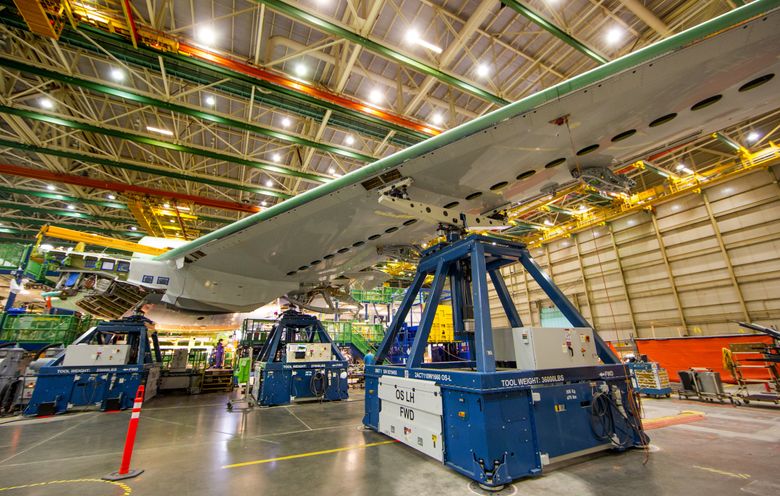
Los sistemas eléctricos, hidráulicos y de combustible del ala ahora están instalados con las alas colocadas en el piso de fábrica, cada ala apoyada en los gatos, en lugar de la antigua forma de trabajar en ella, ya que colgaba verticalmente dentro de una plantilla fija de cuatro pisos.

Y esos gatos controlados por ordenador se mueven al unísono para transportar las alas a lo largo del piso al fuselaje central, donde las alas se unen al cuerpo.

Si se trata de un ala 777 o un ala 777X, que tiene un barrido diferente y se encuentra con el fuselaje en un ángulo diferente – sólo cambiar las instrucciones de software.

Desde diciembre, Boeing ha realizado con éxito 10 777s utilizando este sistema de unión corporal, que continúa refinando.

La construcción de las secciones de fuselaje en forma de barril también se cambia completamente. Los grandes paneles de aluminio que llegan de Japón ahora están cosidos entre sí por robots en lugar de ser manualmente sujetados por la mecánica ya que los paneles se mantienen en plantillas fijas.

El año pasado, este nuevo conjunto robótico de fuselaje estaba causando problemas de calidad, con muchos barriles de fuselaje llegando al montaje final lleno de sujetadores temporales o con agujeros mal perforados.

Ahora los fuselajes construidos por robots están notablemente libres de sujetadores temporales. Y el andamio que todavía los rodeaba en diciembre como mecánicos luchó para solucionar los problemas se ha ido.

Brad Zaback, vicepresidente adjunto y gerente general del 777, dijo que los robots del fuselaje ahora están produciendo cada fuselaje delantero, cada fuselaje del centro y cada otro fuselaje en popa para los 777 actuales que se están construyendo. Dijo que el trabajo de fuselaje en popa cambiará completamente a los robots a finales de este año.

Ya, dijo, la instalación de fuselaje robótico está produciendo un trabajo de alta calidad, «tan bueno como hemos tenido» bajo el sistema de ensamblaje de jig-jig anterior.

Un 777 mecánico de la asamblea final estuvo de acuerdo en que la calidad general del trabajo robótico había aumentado inmensamente desde el año pasado. Sin embargo, nada en un entorno de fábrica es siempre perfecto.

Cuando el cañón de fuselaje en popa destinado a ser parte de un 777 para Saudi Arabian Airlines llegó a la bahía de montaje final el fin de semana pasado, sus juntas circunferenciales fueron clavadas en sujetadores temporales – un signo de trabajo inconcluso significativo que fue el resultado de un problema en el ajuste el piso.

Esa fue una de las secciones traseras construidas de la vieja manera en las plantillas fijas, no por los robots, dijo la portavoz de Boeing, Karen Crabtree.

El 797 está llegando

La transformación del 777X requiere una importante construcción y remodelación en 5 millones de pies cuadrados del espacio de fábrica de Everett, incluso mientras continúa la producción de los aviones actuales.

Claramente, se necesitan nervios de acero para emprender un proyecto de este tipo. Como si eso no fuese lo suficientemente difícil, los ingenieros de Boeing se están preparando para un nuevo y completo proyecto. AIRGWAYS ® Icon-AW


The Boeing 777 wings are attached to the wing box using three hydraulic jacks allowing more flexibility in attaching and working on the wings. (The 777X wings will also be attached using these jacks.)  (Mike Siegel/The Seattle Times)

Boeing prepares ground for B797

Boeing revs up robots for 777X in Everett factory, signals that a 797 awaits

Before this month’s Paris Air Show 2017, Boeing executives showed the complex refashioning of its Everett manufacturing facility for the forthcoming 777X has made rapid progress and offered strong hints that a medium-range Boeing 797 plane is waiting in the wings.

In a business that plays out over decades, the attention of Boeing’s leadership is unshakably fixed on two key future jet programs that will be critical to this region.

In briefings before this month’s Paris Air Show, Boeing executives showed that the complex refashioning of its Everett manufacturing facility for the forthcoming 777X has made rapid progress since December. It all needs to come together perfectly for the large new jet to successfully enter service in 2020.

And a top executive offered strong hints that Boeing has made detailed plans for the future launch of an all-new 797 jet — built in a radically different way that will be “transformational” for the company and could have crucial ramifications for Washington state.

New automated production methods for both jet programs are central to Boeing’s thinking. In his first appearance before journalists, new Commercial Airplanes Chief Executive Kevin McAllister said Boeing will look to technology — both on its airplanes and in its factories — to differentiate itself from European rival Airbus as well as the Canadian, Chinese and Russian contenders that have newly entered the large commercial jet business. “We have a very formidable competitor and we have emergent competitors,” said McAllister. “We can never stand still.”

Heavy 777X investment
A near-term glut of widebody aircraft has depressed orders for the biggest jets and forced Boeing to slash 777 jet production in Everett — and to cut more than 8,400 local jobs in the past year.

Yet despite that near-term pain, Boeing remains confident in the long-term trend of air-traffic growth and is prepping now for a brighter future. So it has invested heavily in new, automated 777X manufacturing equipment in Everett.

The first preproduction test parts have been produced, the system is being fine-tuned and engineers are gearing up to start building parts for the first airplane, which will be assembled next year and tested to breaking point on the ground.

Inside the vast Composite Wing Center, robotic “automated fiber placement” machines — designed and built by Mukilteo-based engineering firm Electroimpact — are days away from laying down the carbon fiber to begin making the long single-piece composite spars for the first airplane.

Other carbon-fiber lamination machines build the composite wing skins and the long stiffening rods called stringers.

During a tour led by Eric Lindblad, vice president of 777X, the massive high-pressure oven called an autoclave was baking a set of stringers while nearby another automated machine was trimming and drilling a lower wing skin.

In an adjacent building, two production lines of equipment are primed and ready in the next few months to take the freshly baked 777X spars and add the major fittings that will support the movable surfaces of the wing as well as the landing gear.

Another robot — this one supplied by Spanish engineering firm MTorres — will drill and fasten the rib posts and stiffeners to the spars — each of them 105 feet long, 6 feet wide at the inboard end and a foot wide at the outboard end. In three subsequent stations, mechanics manually add the bigger complex fittings.

Inside the main Everett assembly building, Boeing has set up the stations where the wings will be assembled. This equipment is another Electroimpact design, virtually identical to one it built for the Airbus A350 wing-assembly factory in Broughton, Wales — “but the next generation, with more capability,” said Jason Clark, vice president of 777/777X operations.

The front and rear spars of each wing are loaded lengthwise into the station along with crisscrossing metal wing ribs made in Frederickson, Pierce County, to form a ladderlike structure. Then a wing skin is placed on top or underneath and robots drill and fasten it all together.

Lindblad said Boeing in the coming months will load a practice right-hand wing, one with the full geometric structure but without the internal systems installed, which it will use to make sure all the automated equipment works as it should.

Changing everything
All of this 777X-specific equipment is the relatively straightforward part of the project. Much trickier is that Boeing is simultaneously changing how it makes the current 777, so that the same final assembly equipment will handle either a current 777-300ER with a metal wing or a much bigger 777X with a carbon-fiber wing.

It aims to seamlessly switch from one model to the next, with both current and next-generation versions going down the same line during the transition. But that entails completely changing everything.

The wing’s electrical, hydraulic and fuel systems are now installed with the wings laid flat on the factory floor, each wing sitting on jacks, instead of the former way of working on it as it hung vertically inside a four-story fixed jig.

And those computer-controlled jacks move in unison to transport the wings along the floor to the center fuselage, where the wings are joined to the body.

Whether it’s a 777 wing or a 777X wing, which has a different sweep and meets the fuselage at a different angle — only the software instructions change.

Since December, Boeing has successfully made 10 777s using this body-join system, which it continues to refine.

The construction of the barrel-shaped fuselage sections is also completely changed. The large aluminum panels that arrive from Japan are now stitched together by robots instead of being manually fastened by mechanics as the panels are held in fixed jigs.

Last year, this new robotic fuselage assembly was causing quality problems, with many fuselage barrels arriving at final assembly full of temporary fasteners or with mis-drilled holes.

Now the fuselages built by robots are noticeably free of temporary fasteners. And the scaffolding that still surrounded them in December as mechanics struggled to fix the problems is gone.

Brad Zaback, 777 deputy vice president and general manager, said fuselage robots are now producing every forward fuselage, every center fuselage and every other aft fuselage for the current 777s being built. He said the aft fuselage work will switch entirely to the robots later this year.

Already, he said, the robotic-fuselage facility is producing high quality work, “as good as we’ve ever had” under the former fixed-jig assembly system.

One 777 final-assembly mechanic agreed that the general quality of the robotic work had increased immensely since last year. Yet nothing in a factory setting is always perfect.

When the aft fuselage barrel destined to be part of a 777 for Saudi Arabian Airlines arrived in the final-assembly bay last weekend, its circumferential joins were studded in temporary fasteners — a sign of significant unfinished work that was the result of a problem in fitting the floor.

That was one of the aft sections built the old way in the fixed jigs, not by the robots, said Boeing spokeswoman Karen Crabtree.

The 797 is coming

The 777X transformation requires major construction and remodeling in 5 million square feet of Everett’s factory space, even as production of the current planes continues.

Clearly, it takes nerves of steel to undertake such a project. As if that were not difficult enough, Boeing’s backroom engineers are getting ready for a further-out, all-new project.

A \ W


Ξ A I R G W A Y S Ξ
SOURCE:  Seattletimes.com
DBk:  Seattletimes.com
AW-POST: 201706082317AR

A\W   A I R G W A Y S ®