AW | 2018 01 25 17:02 | AVIATION SAFETY / AIR INVESTIGATION
El naufragio del vuelo MH370 de Malaysia Airlines, si se encuentra, podría conservarse «como una cápsula del tiempo» debido a la profundidad, la quietud y la temperatura de las aguas en el sur del océano Índico
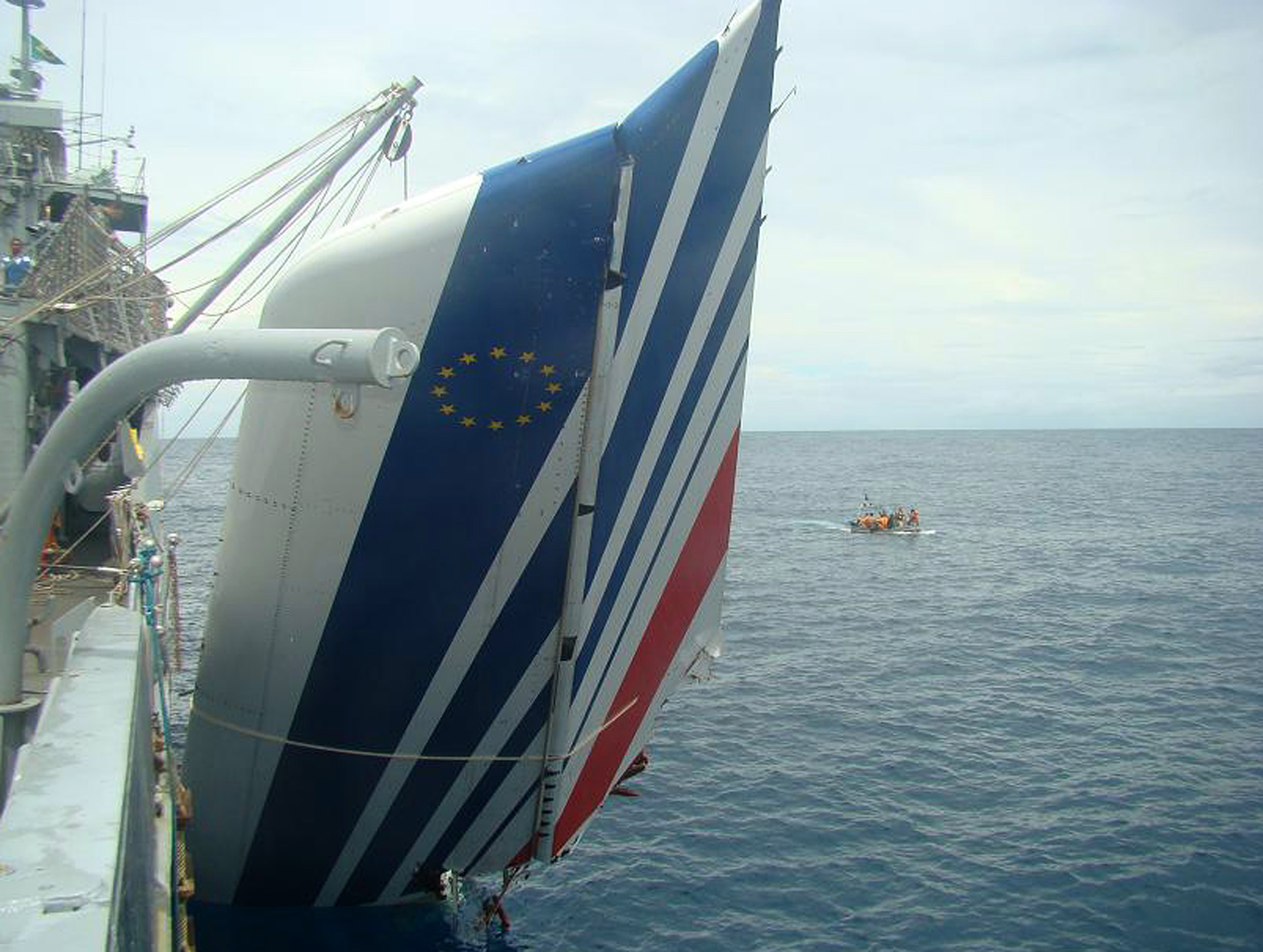
El hombre que codirigió la búsqueda de Air France AF447, que se estrelló en el Océano Atlántico en 2009, dice que si MH370 está en el fondo del mar o cerca de él, los restos y cuerpos podrían conservarse en gran medida, y aún así darles a los investigadores pistas sobre por qué el avión desapareció tan lejos del curso.
El vuelo AF447 de Air France estuvo en el agua a casi cuatro kilómetros de profundidad durante casi dos años antes de que los buscadores finalmente lo encontraran y recuperaran la grabadora de datos de vuelo y la grabadora de voz de la cabina. Ambas grabadoras todavía estaban en condiciones suficientes para arrojar luz sobre los minutos finales del avión, a pesar de haber estado inmersas a tal profundidad durante tanto tiempo. «Incluso si entra agua, tienen formas de quitarle información. Ahora en este caso [MH370] es un poco diferente, porque el avión estuvo volando durante unas siete horas, y no sé qué tipo de información quedaría en la caja negra. Se sigue reescribiendo», dice el oceanógrafo estadounidense David Gallo.
Los oceanógrafos australianos dicen que el Océano Índico en el área de la búsqueda actual de MH370, que comenzó este lunes, incluye varios volcanes y crestas, y se reduce a unos 5 km de profundidad.
Debido a la completa ausencia de luz en ese océano profundo, los investigadores de Air France usaron señales de sonar de vehículos submarinos no tripulados para encontrar el avión y luego mapear su forma y posición. Una vez que se encontraron los restos del naufragio, usaron cámaras para crear un mosaico finamente detallado de todo el sitio del naufragio. El Dr. David Gallo dice que los casi cuatro años de búsqueda infructuosa de MH370 no significan que el avión desaparecido de Malasia no será encontrado. 

Lessons from the AF447 for the MH370 search
The wreck of Malaysia Airlines flight MH370, if found, could be conserved «as a time capsule» due to the depth, stillness and temperature of the waters in the southern Indian Ocean
The man who co-directed the search for Air France AF447, which crashed into the Atlantic Ocean in 2009, says that if MH370 is at or near the bottom of the sea, the remains and bodies could be preserved to a large extent, and still give them to the researchers clues as to why the plane disappeared so far from the course.
Air France’s AF447 flight was almost four kilometers deep in the water for almost two years before the search engines finally found it and retrieved the flight data recorder and cockpit voice recorder. Both recorders were still in sufficient condition to shed light on the final minutes of the plane, despite having been immersed at such depth for so long. «Even if water comes in, they have ways to take away information, now in this case [MH370] is a bit different, because the plane was flying for about seven hours, and I do not know what kind of information would be in the black box», says US oceanographer David Gallo.
Australian oceanographers say that the Indian Ocean in the area of the current MH370 search, which began on Monday, includes several volcanoes and ridges, and is reduced to about 5 km deep.
Due to the complete absence of light in that deep ocean, Air France investigators used sonar signals from unmanned underwater vehicles to find the plane and then map its shape and position. Once the wreck was found, they used cameras to create a finely detailed mosaic of the entire wreck site. Dr. David Gallo says that the nearly four years of unsuccessful search of MH370 does not mean that the missing plane from Malaysia will not be found. A \ W
Ξ A I R G W A Y S Ξ
SOURCE: Airgways.com
DBk: Fab.mil.br
AW-POST: 201801251702AR
A\W A I R G W A Y S ®
 airgways.com